
Tomas RADA
226 ໂພສ

Tomas RADA
ລາຍງານ
ບລັອກຜູ້ໃຊ້
#Binance Angel Program | Volunteer | Binance Lover 💛 | Community builder | Web3 *NFA
https://x.com/tomasradacrypto
ຜູ້ຊື້ຂາຍປະຈໍາ
5.7 ປີ
46 ກໍາລັງຕິດຕາມ
39 ຜູ້ຕິດຕາມ
59 Liked
ໂພສ
·
--
Bitcoin funding rates on Binance flipped to negative on November 22. For anyone holding a position in $BTC futures, the math changed today. Instead of buyers paying a fee to sellers, the sellers are now paying the buyers every eight hours. This happens when the perpetual contract price stays lower than the spot price, forcing those betting on a drop to compensate those betting on a recovery.
My read: I think this shift moves the financial risk onto the sellers who now face a recurring cost to maintain their positions while spot prices hold firm. This environment typically punishes the latecomers who are chasing a downward move after it has already started.
Are you collecting those funding fees as a buyer today or are you paying them to stay short?
#Binance #GlobalStocksFaceLongestLosingStreakSince2023
6
·
--
The MSCI All Country World Index has dropped for seven straight sessions, marking its longest losing run since 2023. While chipmakers have declined 35% from their June peak, $BTC is trading around 59744 USDT on Binance, up over 3% in the last 24 hours. The immediate risk sits with the US Treasury selling 15 billion dollars in nine-day cash bills, a move that drains liquidity from the system just as equity markets soften.
My read: This current decoupling is likely a brief anomaly because crypto remains highly sensitive to the same macro liquidity shocks currently hitting the Nasdaq.
Are you holding through this stock market dip or rotating back into stables?
#GlobalStocksFaceLongestLosingStreakSince2023
My read: This current decoupling is likely a brief anomaly because crypto remains highly sensitive to the same macro liquidity shocks currently hitting the Nasdaq.
Are you holding through this stock market dip or rotating back into stables?
#GlobalStocksFaceLongestLosingStreakSince2023
35
·
--
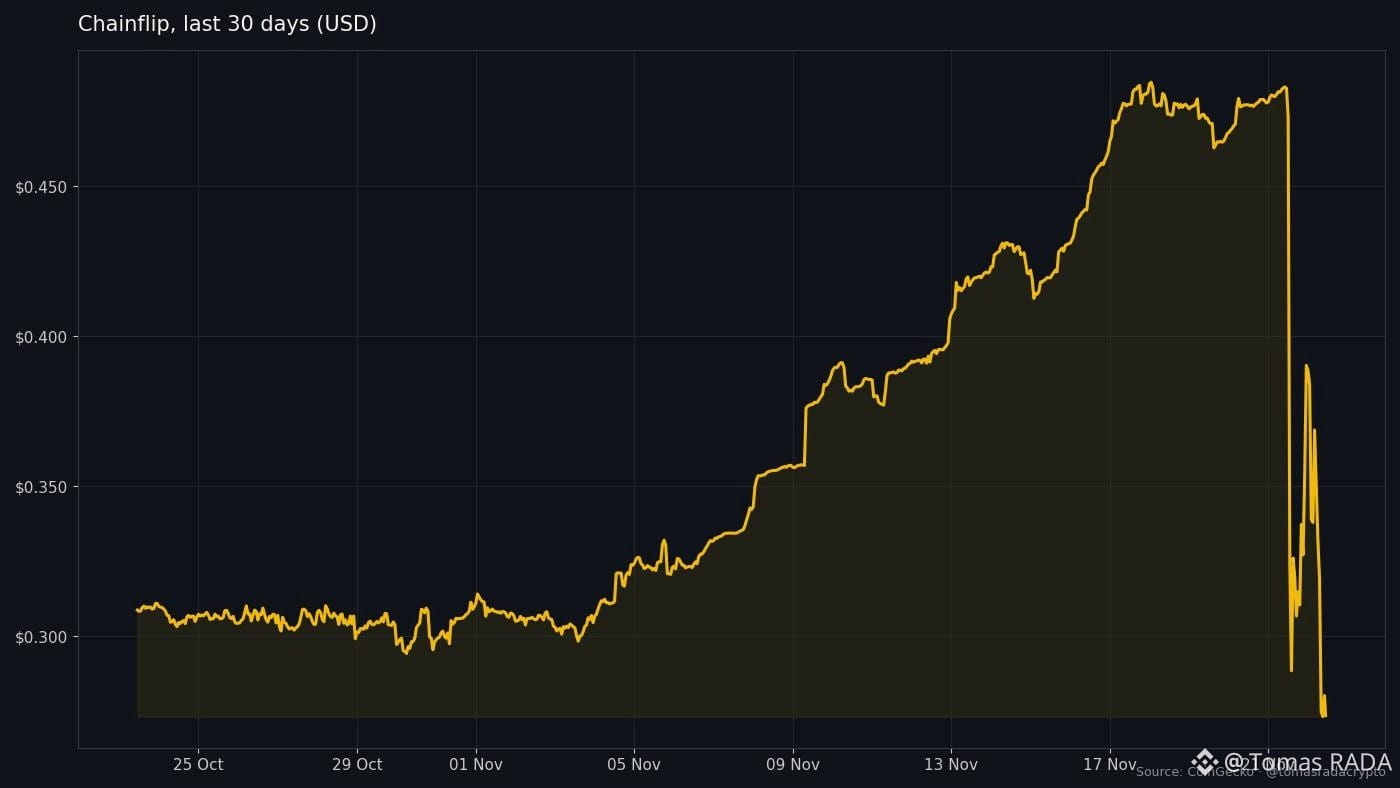
Chainflip confirmed a $12 million loss after its vaults were drained of 122.86 $BTC, 520.22 $ETH, and over 4 million in stablecoins. The attack was remarkably fast, taking under ten minutes to move funds into Tornado Cash. The FLIP token price dropped as much as 42.9% following the news, with the market cap falling to $27.1 million.
Investigators found that the attacker used a valid signature but an impossible 39-digit nonce, suggesting the protocol's signing system was bypassed or compromised. Chainflip has offered the attacker a 10% bounty to return 90% of the funds by November 23. They claim to have server and validator data that could identify the person responsible.
My read: This incident highlights a massive risk in threshold signature schemes where the security of the entire vault relies on the integrity of the validator environment rather than just the code of a smart contract.
Full piece: https://app.binance.com/uni-qr/cart/390930756058850?r=KU1Z4N85&l=en-TR
Chainflip confirmed a $12 million loss after its vaults were drained of 122.86 $BTC , 520.22 $ETH , and over 4 million in stablecoins. The attack was remarkably fast, taking under ten minutes to move funds into Tornado Cash. The FLIP token price dropped as much as 42.9% following the news, with the market cap falling to $27.1 million.
Investigators found that the attacker used a valid signature but an impossible 39-digit nonce, suggesting the protocol's signing system was bypassed or compromised. Chainflip has offered the attacker a 10% bounty to return 90% of the funds by November 23. They claim to have server and validator data that could identify the person responsible.
My read: This incident highlights a massive risk in threshold signature schemes where the security of the entire vault relies on the integrity of the validator environment rather than just the code of a smart contract.
Full piece: https://app.binance.com/uni-qr/cart/390930756058850?r=KU1Z4N85&l=en-TR
57
·
--

ບົດຄວາມ
Chainflip's $12M Exploitation: The Race for a White-Hat RecoveryChainflip's $12M Exploitation: The Race for a White-Hat Recovery
The silence of a Saturday morning in the decentralized finance world was broken at 2:10 a.m. ET when the Ethereum vault of Chainflip, a cross-chain swap protocol, began to empty. It was not a slow leak. In less than ten minutes, a series of automated transactions drained the vault of its entire liquid balance. The haul included 520.22 ether along with millions in stablecoins. By the time the protocol could engage its safe mode to halt further activity, the damage had extended far beyond the initial Ethereum-based losses.
Chainflip Labs later confirmed that the total value stolen reached approximately $12 million. The inventory of missing assets included 122.86 bitcoin, 520.22 ether, 3.25 million USDC, and 758,141 USDT. This incident represents a significant blow to a protocol that reported around $13.3 million in total value locked according to data from DeFiLlama. The immediate market reaction was sharp. The protocol's native token, FLIP, saw its price plummet. Different trackers reported various depths of the crash, with some noting a 30% drop while others, like CoinGecko, recorded a 42.9% plunge over a 24 hour period. The market capitalization of the project shriveled from $41.6 million to $27.1 million as investors reacted to the news of the vault drain.
THE ANATOMY OF A HIGH SPEED DRAIN
The speed of the attack left little room for intervention by asset issuers. Security firm AMLBot noted that the laundering process was executed with high speed automation. The stablecoins were converted and moved so quickly that Circle and Tether, the issuers of USDC and USDT, did not have the window of time required to freeze the tokens. Within nine minutes of the original withdrawal, nearly all the funds had been routed into the transaction mixer Tornado Cash.
[Chart: Chainflip price, last 30 days. Source: CoinGecko, 22 November 2026. The chart is in the amk.news version linked at the end.]
This was not a typical smart contract exploit where a bug in the code allows for unauthorized access. Instead, the withdrawal carried a valid signature. Security firms including Onchain Lens and Decurity pointed to a possible compromise of the aggregate signing key that Chainflip validators use to approve vault payouts. This key is not held by a single entity. It is jointly controlled by a network of 150 validators, where 100 out of 150 are required to sign a transaction. The keys are rotated every three days to prevent long term exposure. The last rotation had occurred on November 18 at 4:53 p.m. ET, roughly two and a half days before the exploit took place.
THE MYSTERY OF THE INVALID NONCE
While the signature used to authorize the theft was technically valid, on-chain investigators found a glaring anomaly in the transaction data. Every withdrawal from the Chainflip system is stamped with a unique number called a nonce. This number usually increments by one for every transaction to prevent old approvals from being reused. At the time of the attack, standard transactions were carrying nonces around the 315,000 mark. The attacker’s transaction, however, featured a 39 digit number.
This suggests that the approval did not originate from Chainflip’s standard operating system. If it had, the system would have simply assigned the next sequential number. The presence of a 39 digit nonce indicates the attacker managed to produce a valid signature outside the normal protocol environment. Data from Bitquery shows that this specific transaction was the only one out of 299,677 signatures recorded since 2023 to break the sequential count. About an hour and 45 minutes after the theft, the protocol rotated its keys again, likely in an attempt to lock out the compromised signing authority.
ON CHAIN NEGOTIATIONS AND THE BOUNTY OFFER
In the aftermath of the drain, Chainflip Labs took to social media and on-chain messaging to address the attacker directly. The protocol has offered a 10% bounty, which would amount to roughly $1.2 million, if the attacker returns the remaining 90% of the stolen assets. The deadline for this proposal was set for 18:38 UTC on November 23. Chainflip stated that if the funds are returned by this time, they will treat the incident as a white-hat recovery and withdraw all reports and complaints made to law enforcement.
The protocol claims to have a significant lead on the attacker’s identity. Chainflip Labs stated it has identified the mechanism behind the key exposure and has obtained identifying information linked to the validator and servers used in the attack. They noted that preparations for the hack were traced back to Tornado Cash funding on November 11 and a specific validator account registered on the Friday before the hit. The protocol warned the attacker that their addresses are now flagged across major analytics firms and that every subsequent withdrawal from Tornado Cash is being closely monitored.
RECOVERY PRECEDENTS AND PROTOCOL STATUS
This is not the first time Chainflip has had to deal with a vault exploit. In September, the protocol lost approximately 736,000 USDT from its Tron vault due to a flaw in how it processed transaction memos. In that instance, the attacker was able to double process six withdrawals. Following that event, Chainflip validators voted to use surplus funds to reimburse the affected liquidity providers. These surplus funds are described as a mix of excess gas fees, assets sent in error that could not be returned, and other unexplained surpluses that have accumulated since the protocol launched.
Whether a similar reimbursement will happen for this $12 million loss remains unconfirmed. For now, the protocol remains in safe mode. This state prevents liquidity providers from withdrawing their funds and stops payouts on swaps that were already in progress. According to protocol documentation, any deposits that were not finalized before the halt will be processed once the protocol exits safe mode. While the Ethereum vault was the primary target, vaults on other chains like Bitcoin and Solana appeared unaffected, though some defensive movements of funds were noted. Specifically, 10.5 BTC was moved from an old Chainflip address to a new one about two hours after the protocol was paused, a move that security firms suspect was a manual safeguarding action by the team.
The impact on the broader market for cross-chain protocols is evident in the volume data. While Chainflip struggled with its internal crisis, broader market figures for October showed spot volumes falling 9.7% to $1.02 trillion, while derivatives continued to dominate exchange activity. The Chainflip team is now focused on the November 23 deadline to see if their "white-hat" offer will be accepted or if they will have to move forward with a full law enforcement investigation using the server data they claim to possess.
SOURCES
1. CoinDesk, Cross-chain protocol Chainflip's FLIP tanks 30% after suspected $4.86 million vault drain, https://www.coindesk.com/business/2026/11/21/cross-chain-protocol-chainflip-s-flip-tanks-30-after-suspected-usd4-86-million-vault-drain
2. Cointelegraph, Chainflip confirms $12M hack, offers attacker 10% bounty, https://cointelegraph.com/news/chainflip-12m-crypto-hack-10-percent-bounty
3. The Block, Chainflip's FLIP tanks 34% after attacker drains $4.86 million from vault with suspected key compromise, https://www.theblock.co/news/defi/2026-11-21-chainflips-flip-tanks-34-after-attacker-drains-4-86-million-from-vault-with-suspected-key-compromise-444804
The version with the chart, the photos and clickable sources is on amk.news: https://amk.news/article/chainflip-s-12m-exploitation-the-race-for-a-white-hat-recovery
Chainflip's $12M Exploitation: The Race for a White-Hat Recovery
Chainflip's $12M Exploitation: The Race for a White-Hat Recovery
The silence of a Saturday morning in the decentralized finance world was broken at 2:10 a.m. ET when the Ethereum vault of Chainflip, a cross-chain swap protocol, began to empty. It was not a slow leak. In less than ten minutes, a series of automated transactions drained the vault of its entire liquid balance. The haul included 520.22 ether along with millions in stablecoins. By the time the protocol could engage its safe mode to halt further activity, the damage had extended far beyond the initial Ethereum-based losses.
Chainflip Labs later confirmed that the total value stolen reached approximately $12 million. The inventory of missing assets included 122.86 bitcoin, 520.22 ether, 3.25 million USDC, and 758,141 USDT. This incident represents a significant blow to a protocol that reported around $13.3 million in total value locked according to data from DeFiLlama. The immediate market reaction was sharp. The protocol's native token, FLIP, saw its price plummet. Different trackers reported various depths of the crash, with some noting a 30% drop while others, like CoinGecko, recorded a 42.9% plunge over a 24 hour period. The market capitalization of the project shriveled from $41.6 million to $27.1 million as investors reacted to the news of the vault drain.
THE ANATOMY OF A HIGH SPEED DRAIN
The speed of the attack left little room for intervention by asset issuers. Security firm AMLBot noted that the laundering process was executed with high speed automation. The stablecoins were converted and moved so quickly that Circle and Tether, the issuers of USDC and USDT, did not have the window of time required to freeze the tokens. Within nine minutes of the original withdrawal, nearly all the funds had been routed into the transaction mixer Tornado Cash.
[Chart: Chainflip price, last 30 days. Source: CoinGecko, 22 November 2026. The chart is in the amk.news version linked at the end.]
This was not a typical smart contract exploit where a bug in the code allows for unauthorized access. Instead, the withdrawal carried a valid signature. Security firms including Onchain Lens and Decurity pointed to a possible compromise of the aggregate signing key that Chainflip validators use to approve vault payouts. This key is not held by a single entity. It is jointly controlled by a network of 150 validators, where 100 out of 150 are required to sign a transaction. The keys are rotated every three days to prevent long term exposure. The last rotation had occurred on November 18 at 4:53 p.m. ET, roughly two and a half days before the exploit took place.
THE MYSTERY OF THE INVALID NONCE
While the signature used to authorize the theft was technically valid, on-chain investigators found a glaring anomaly in the transaction data. Every withdrawal from the Chainflip system is stamped with a unique number called a nonce. This number usually increments by one for every transaction to prevent old approvals from being reused. At the time of the attack, standard transactions were carrying nonces around the 315,000 mark. The attacker’s transaction, however, featured a 39 digit number.
This suggests that the approval did not originate from Chainflip’s standard operating system. If it had, the system would have simply assigned the next sequential number. The presence of a 39 digit nonce indicates the attacker managed to produce a valid signature outside the normal protocol environment. Data from Bitquery shows that this specific transaction was the only one out of 299,677 signatures recorded since 2023 to break the sequential count. About an hour and 45 minutes after the theft, the protocol rotated its keys again, likely in an attempt to lock out the compromised signing authority.
ON CHAIN NEGOTIATIONS AND THE BOUNTY OFFER
In the aftermath of the drain, Chainflip Labs took to social media and on-chain messaging to address the attacker directly. The protocol has offered a 10% bounty, which would amount to roughly $1.2 million, if the attacker returns the remaining 90% of the stolen assets. The deadline for this proposal was set for 18:38 UTC on November 23. Chainflip stated that if the funds are returned by this time, they will treat the incident as a white-hat recovery and withdraw all reports and complaints made to law enforcement.
The protocol claims to have a significant lead on the attacker’s identity. Chainflip Labs stated it has identified the mechanism behind the key exposure and has obtained identifying information linked to the validator and servers used in the attack. They noted that preparations for the hack were traced back to Tornado Cash funding on November 11 and a specific validator account registered on the Friday before the hit. The protocol warned the attacker that their addresses are now flagged across major analytics firms and that every subsequent withdrawal from Tornado Cash is being closely monitored.
RECOVERY PRECEDENTS AND PROTOCOL STATUS
This is not the first time Chainflip has had to deal with a vault exploit. In September, the protocol lost approximately 736,000 USDT from its Tron vault due to a flaw in how it processed transaction memos. In that instance, the attacker was able to double process six withdrawals. Following that event, Chainflip validators voted to use surplus funds to reimburse the affected liquidity providers. These surplus funds are described as a mix of excess gas fees, assets sent in error that could not be returned, and other unexplained surpluses that have accumulated since the protocol launched.
Whether a similar reimbursement will happen for this $12 million loss remains unconfirmed. For now, the protocol remains in safe mode. This state prevents liquidity providers from withdrawing their funds and stops payouts on swaps that were already in progress. According to protocol documentation, any deposits that were not finalized before the halt will be processed once the protocol exits safe mode. While the Ethereum vault was the primary target, vaults on other chains like Bitcoin and Solana appeared unaffected, though some defensive movements of funds were noted. Specifically, 10.5 BTC was moved from an old Chainflip address to a new one about two hours after the protocol was paused, a move that security firms suspect was a manual safeguarding action by the team.
The impact on the broader market for cross-chain protocols is evident in the volume data. While Chainflip struggled with its internal crisis, broader market figures for October showed spot volumes falling 9.7% to $1.02 trillion, while derivatives continued to dominate exchange activity. The Chainflip team is now focused on the November 23 deadline to see if their "white-hat" offer will be accepted or if they will have to move forward with a full law enforcement investigation using the server data they claim to possess.
SOURCES
1. CoinDesk, Cross-chain protocol Chainflip's FLIP tanks 30% after suspected $4.86 million vault drain, https://www.coindesk.com/business/2026/11/21/cross-chain-protocol-chainflip-s-flip-tanks-30-after-suspected-usd4-86-million-vault-drain
2. Cointelegraph, Chainflip confirms $12M hack, offers attacker 10% bounty, https://cointelegraph.com/news/chainflip-12m-crypto-hack-10-percent-bounty
3. The Block, Chainflip's FLIP tanks 34% after attacker drains $4.86 million from vault with suspected key compromise, https://www.theblock.co/news/defi/2026-11-21-chainflips-flip-tanks-34-after-attacker-drains-4-86-million-from-vault-with-suspected-key-compromise-444804
The version with the chart, the photos and clickable sources is on amk.news: https://amk.news/article/chainflip-s-12m-exploitation-the-race-for-a-white-hat-recovery
65
·
--
$BTC hit a four month low and triggered 820 million dollars in liquidations for derivatives traders. This selloff built up 12.7 billion dollars in potential short squeeze risk. Traders opening new shorts at these levels are now the ones holding the risk if the market reverses. The consequence is a highly volatile environment where a small move up could force billions in buybacks to cover those positions.
My read: The 820 million dollar flush removed the over leveraged long positions, but the 12.7 billion dollars in shorts suggests the market structure is now heavily tilted and sensitive to any positive news.
Did you get caught in the liquidations today or are you waiting for the squeeze to play out?
#CryptoNews
108
·
--
The last 24 hours on Binance spot show $BTC trading within a wide range between 55130 and 60996 USDT. This 5866 USDT spread occurred alongside a quote volume of 3033.7M USDT. With over 5.6 million trades recorded, the immediate consequence is a high risk environment for anyone using leverage or tight stop losses. The price moved over 10 percent from its daily low to its high, which forces active management on positions that might otherwise stay quiet.
My read: I think the high trade count relative to the volume suggests a lot of small, reactive orders rather than a few large institutional moves.
Did you buy the dip during the 55k range or wait for the recovery to 60k to enter?
#BTC #CanBTCReboundAfterFallingBelow60K?
My read: I think the high trade count relative to the volume suggests a lot of small, reactive orders rather than a few large institutional moves.
Did you buy the dip during the 55k range or wait for the recovery to 60k to enter?
#BTC #CanBTCReboundAfterFallingBelow60K?
37
·
--
A Bitcoin miner just liquidated 267 $BTC to wipe out $22 million in debt. This move clears the immediate liability but leaves the firm with a depleted balance sheet while mining difficulty stays near record highs. When a company burns its core inventory to pay for past equipment loans, the risk shifts entirely to future production efficiency. If operational costs stay high, the company has no remaining buffer to survive a revenue dip. I think this shows that the post-halving squeeze is finally forcing inefficient miners to choose between total liquidation and a slow exit.
Did you expect the mining shakeout to happen this fast or do you think the big players will just buy up the distressed hardware?
#CryptoNews #CanBTCReboundAfterFallingBelow60K?
Did you expect the mining shakeout to happen this fast or do you think the big players will just buy up the distressed hardware?
#CryptoNews #CanBTCReboundAfterFallingBelow60K?
17
·
--
Global stocks are on a seven-day losing streak, the longest since 2023. Nvidia fell 22.9% this week, and the Nasdaq 100 dropped over 10%. While tech stocks unwind, $BTC traded at 60369.3 today. The immediate consequence is in Hong Kong, where a new bill for licensing crypto custodians and advisers hits the Legislative Council for its first reading on December 2. This rule change will force firms to meet specific investor protection standards or stop operating.
My read: The correlation between tech stocks and crypto is being tested as BTC holds its ground while chipmakers face a 35% decline from their June peak.
Did you stick with tech stocks this week or move more capital into crypto?
#GlobalStocksFaceLongestLosingStreakSince2023
My read: The correlation between tech stocks and crypto is being tested as BTC holds its ground while chipmakers face a 35% decline from their June peak.
Did you stick with tech stocks this week or move more capital into crypto?
#GlobalStocksFaceLongestLosingStreakSince2023
175
·
--
Michael Saylor is pitching a new way to fuel the $BTC treasury by targeting 7.5 billion dollars in demand for preferred stock. This move shifts the risk from standard corporate debt to a specific share class that pays dividends but lacks voting power. If credit markets tighten, the cost of maintaining this structure increases and limits how much more bitcoin the firm can actually acquire. My read is that this is a pivot to attract institutional investors who want exposure to the treasury without the volatility of common shares. Are you looking for yield from these new shares or do you prefer the direct exposure of holding the coin?
#CryptoNews #STRC
#CryptoNews #STRC
128
·
--
Binance Futures is ending the Last Price Protected period for the $SNDK perpetual contract on November 20, 2026, at 10:00 UTC. This means the mark price calculation shifts to a standard formula over a three hour window. Traders holding positions in SNDK during this time face a transition where mark price smoothing is applied to avoid spikes, but the final calculation will rely on the median of the index price and contract price. My read is that this removes the temporary safety net of the protected period, shifting the full volatility risk of the underlying index back onto the trader's maintenance margin. Do you prefer the safety of price protection during new listings or do you want the standard mark price as soon as possible?
#Binance #CanBTCReboundAfterFallingBelow60K?
#Binance #CanBTCReboundAfterFallingBelow60K?
461
·
--
Can BTC Rebound After Falling Below 60K? The conversation is shifting because the institutional floor just moved. BlackRock IBIT recorded a 541.1 million dollar outflow on Thursday, showing that even the ETF crowd has a limit. On Binance, $BTC touched a low of 55,130, which puts it 35.1 percent below its October peak. The risk now stays with the buyers who treated 60,000 as a permanent floor. My read: The simultaneous slide in tech stocks and crypto suggests this is a broad liquidity exit rather than a sector-specific crash. Are you holding through the volatility or did the 60,000 break trigger your stop loss?
#CanBTCReboundAfterFallingBelow60K?
#CanBTCReboundAfterFallingBelow60K?
67
·
--
The U.S. Senate just passed the DEATH BETS Act by voice vote on Thursday, November 19. This bipartisan bill, led by Senator Adam Schiff, aims to ban prediction markets from offering contracts on war, terrorism, and assassinations. It follows a major red flag in February when six Polymarket wallets earned $1.2 million by betting on U.S. strikes against Iran just hours before they occurred.
The bill moves to amend the Commodity Exchange Act, giving the CFTC clear power to block these "socially harmful" bets. Meanwhile, Kalshi is fighting for its life in New York. State Attorney General Letitia James is pushing for a restraining order to shut the platform down, arguing it is illegal gambling. Because Kalshi is based in New York, a state-level ban could force it to stop all operations nationwide.
The market backdrop is also getting tougher.
Full piece: https://app.binance.com/uni-qr/cart/390576814664283?r=KU1Z4N85&l=en-TR

43
·
--

ບົດຄວາມ
The End of Assassination Markets: Inside the DEATH BETS ActThe U.S. Senate decided on Thursday, November 19, that some wagers are too dangerous for the public square. By voice vote, lawmakers passed the DEATH BETS Act, a piece of legislation designed to scrub prediction markets of contracts tied to war, terrorism, and assassination. The bill now heads to the House of Representatives, moving the industry closer to a federal ban on what critics call socially harmful betting.
The move is a direct response to fears that prediction markets create financial incentives for violence or provide a way for people with classified information to profit from blood. Senator Adam Schiff, a California Democrat, introduced the bill in March with Republican co-sponsor John Curtis of Utah. They argue that the current discretion held by the Commodity Futures Trading Commission is not enough to keep these specific types of contracts off the boards [1][3].
THE IRAN STRIKE TRADES
The catalyst for this legislative push was a series of suspicious trades on Polymarket earlier this year. In February, blockchain analytics firm Bubblemaps identified six digital wallets that earned approximately $1.2 million by betting on the timing of U.S. military strikes against Iran. Several of these wagers were placed just hours before the first reported explosions in Tehran [1][2].
While the identities of the traders remain unknown, the timing suggests they may have had access to nonpublic information. Schiff cited these trades as evidence that such contracts create rampant opportunities for insider trading and threaten national security. The concern is that someone with a security clearance or a position in a foreign military could use a platform like Polymarket to monetize their advance knowledge of a lethal operation [1][2].
This is not the first time the industry has dealt with internal leaks. Kalshi previously banned two traders and fined one more than $20,000 for using confidential information. In another instance, federal prosecutors brought a case against a U.S. Army Green Beret for allegedly trading on his own classified knowledge regarding a military operation in Venezuela. Lawmakers argue that as these platforms grow, the temptation to use secret government data for personal gain grows with them [1].
REGULATORY ENFORCEMENT MECHANISMS
The DEATH BETS Act does not create a new set of criminal penalties or specific fines for individuals who place these bets. Instead, it targets the exchanges themselves. The bill amends the Commodity Exchange Act to prohibit any federally registered exchange from listing or clearing contracts tied to military operations, assassinations, or events determined primarily by an individual’s death [1][2].
By codifying these bans into federal law, the bill removes the ambiguity that currently exists in CFTC regulations. While the CFTC already has the authority to block certain contracts, it has historically handled these on a case-by-case basis. The new law would make the prohibition absolute for registered exchanges. It also gives the CFTC the authority to identify other similar activities that should fall under the ban [2][3].
The legislation also covers contracts that are reasonably expected to be settled based on a death at the time they are listed. This would effectively end the practice of "death pools" or markets on the lifespan of world leaders and celebrities on regulated American platforms [2].
KALSHI AND THE NEW YORK CRISIS
While the Senate focuses on the ethics of war bets, Kalshi is fighting a more immediate battle for its survival in New York. The company is headquartered in New York City, and State Attorney General Letitia James has characterized the platform as an illegal gambling operation. On Friday, an assistant attorney general filed a motion for a temporary restraining order against the firm [4].
The legal situation is a mess of jurisdictional overlap. Kalshi recently lost a battle in federal court where it tried to prevent the state from pursuing this restraining order. The U.S. District Court for the Southern District of New York ruled on Thursday that state courts are the proper venue for the dispute. This sent the case back to the Supreme Court of New York, where the state is pushing to halt Kalshi’s operations [4].
The CFTC has waded into the fight on Kalshi’s behalf, filing a document on Friday stating that a New York halt would force the company to cease all operations nationwide because of its physical location. The regulator argued that federal law should have exclusive jurisdiction over these markets to prevent a state-by-state patchwork of rules. However, a federal judge denied the CFTC’s motion to intervene during a telephone hearing late Friday. Kalshi currently serves 1.2 million New Yorkers, according to company statements [4].
MARKET VOLUME AND PRICE PRESSURE
This regulatory tightening comes at a time when the broader crypto and prediction market sectors are seeing a shift in activity. In October, spot trading volumes across the industry fell 9.7% to $1.02 trillion. While spot trading slowed, derivatives continued to dominate, making up 79.1% of the total volume on centralized exchanges [1].
The pricing environment has also been difficult. Bitcoin recently fell below $59,000 for the first time since July, marking a weekly decline of nearly 14%. Analysts at JPMorgan noted that this price drop has put significant pressure on miners, as the market price fell more than $26,000 below the estimated $86,000 production cost for many operations. This has led some higher-cost miners to sell their reserves to stay afloat or to pivot their infrastructure toward artificial intelligence [3].
The decline in asset prices has been accompanied by outflows in the exchange-traded fund sector. U.S. spot bitcoin ETFs saw $582 million in daily net outflows as the total for November approached $3.5 billion. Retail investors appear to be leading this exit, potentially moving capital back into traditional equity markets, while institutional positions in CME futures have remained relatively steady [3].
NEXT STEPS FOR THE HOUSE
The DEATH BETS Act now moves to the House of Representatives. If it passes there, it will go to the desk of President Donald Trump for his signature. The bill’s bipartisan support in the Senate suggests it may find a clear path, though the House has its own set of priorities regarding crypto regulation [2].
As the legislative process continues, the industry remains caught between federal regulators who want to oversee it and state officials who want to tax or ban it. The outcome of the Kalshi case in New York may set a precedent for how other states handle prediction markets, regardless of what happens in Washington.
The U.S. government will release several key economic data points next week, including the second estimate of third-quarter GDP and October PCE inflation figures, which often influence the liquidity available for high-risk trading platforms.
SOURCES
1. CoinDesk, U.S. Senate passes bill to ban prediction market bets on war and death, https://www.coindesk.com/policy/2026/11/20/u-s-senated-passes-bill-to-ban-prediction-market-best-on-war-and-death
2. Cointelegraph, US Senate advances prediction market restrictions with DEATH BETS Act, https://cointelegraph.com/news/us-senate-advances-prediction-market-restrictions-with-death-bets-act
3. The Block, JPMorgan says bitcoin's price drop pressures miners, Senate passes 'Death Bets Act', and more, https://www.theblock.co/newsletters/the-daily/2026-11-20-jpmorgan-bitcoin-price-drop-miners-senate-passes-death-bets-act-more-crypto-news-444786
4. CoinDesk, Kalshi races to get ahead of New York order that could shut down exchange, https://www.coindesk.com/policy/2026/11/20/kalshi-races-to-get-ahead-of-new-york-order-that-could-shut-down-exchange
The version with the chart, the photos and clickable sources is on amk.news: https://amk.news/article/the-end-of-assassination-markets-inside-the-death-bets-act
The End of Assassination Markets: Inside the DEATH BETS Act
The U.S. Senate decided on Thursday, November 19, that some wagers are too dangerous for the public square. By voice vote, lawmakers passed the DEATH BETS Act, a piece of legislation designed to scrub prediction markets of contracts tied to war, terrorism, and assassination. The bill now heads to the House of Representatives, moving the industry closer to a federal ban on what critics call socially harmful betting.
The move is a direct response to fears that prediction markets create financial incentives for violence or provide a way for people with classified information to profit from blood. Senator Adam Schiff, a California Democrat, introduced the bill in March with Republican co-sponsor John Curtis of Utah. They argue that the current discretion held by the Commodity Futures Trading Commission is not enough to keep these specific types of contracts off the boards [1][3].
THE IRAN STRIKE TRADES
The catalyst for this legislative push was a series of suspicious trades on Polymarket earlier this year. In February, blockchain analytics firm Bubblemaps identified six digital wallets that earned approximately $1.2 million by betting on the timing of U.S. military strikes against Iran. Several of these wagers were placed just hours before the first reported explosions in Tehran [1][2].
While the identities of the traders remain unknown, the timing suggests they may have had access to nonpublic information. Schiff cited these trades as evidence that such contracts create rampant opportunities for insider trading and threaten national security. The concern is that someone with a security clearance or a position in a foreign military could use a platform like Polymarket to monetize their advance knowledge of a lethal operation [1][2].
This is not the first time the industry has dealt with internal leaks. Kalshi previously banned two traders and fined one more than $20,000 for using confidential information. In another instance, federal prosecutors brought a case against a U.S. Army Green Beret for allegedly trading on his own classified knowledge regarding a military operation in Venezuela. Lawmakers argue that as these platforms grow, the temptation to use secret government data for personal gain grows with them [1].
REGULATORY ENFORCEMENT MECHANISMS
The DEATH BETS Act does not create a new set of criminal penalties or specific fines for individuals who place these bets. Instead, it targets the exchanges themselves. The bill amends the Commodity Exchange Act to prohibit any federally registered exchange from listing or clearing contracts tied to military operations, assassinations, or events determined primarily by an individual’s death [1][2].
By codifying these bans into federal law, the bill removes the ambiguity that currently exists in CFTC regulations. While the CFTC already has the authority to block certain contracts, it has historically handled these on a case-by-case basis. The new law would make the prohibition absolute for registered exchanges. It also gives the CFTC the authority to identify other similar activities that should fall under the ban [2][3].
The legislation also covers contracts that are reasonably expected to be settled based on a death at the time they are listed. This would effectively end the practice of "death pools" or markets on the lifespan of world leaders and celebrities on regulated American platforms [2].
KALSHI AND THE NEW YORK CRISIS
While the Senate focuses on the ethics of war bets, Kalshi is fighting a more immediate battle for its survival in New York. The company is headquartered in New York City, and State Attorney General Letitia James has characterized the platform as an illegal gambling operation. On Friday, an assistant attorney general filed a motion for a temporary restraining order against the firm [4].
The legal situation is a mess of jurisdictional overlap. Kalshi recently lost a battle in federal court where it tried to prevent the state from pursuing this restraining order. The U.S. District Court for the Southern District of New York ruled on Thursday that state courts are the proper venue for the dispute. This sent the case back to the Supreme Court of New York, where the state is pushing to halt Kalshi’s operations [4].
The CFTC has waded into the fight on Kalshi’s behalf, filing a document on Friday stating that a New York halt would force the company to cease all operations nationwide because of its physical location. The regulator argued that federal law should have exclusive jurisdiction over these markets to prevent a state-by-state patchwork of rules. However, a federal judge denied the CFTC’s motion to intervene during a telephone hearing late Friday. Kalshi currently serves 1.2 million New Yorkers, according to company statements [4].
MARKET VOLUME AND PRICE PRESSURE
This regulatory tightening comes at a time when the broader crypto and prediction market sectors are seeing a shift in activity. In October, spot trading volumes across the industry fell 9.7% to $1.02 trillion. While spot trading slowed, derivatives continued to dominate, making up 79.1% of the total volume on centralized exchanges [1].
The pricing environment has also been difficult. Bitcoin recently fell below $59,000 for the first time since July, marking a weekly decline of nearly 14%. Analysts at JPMorgan noted that this price drop has put significant pressure on miners, as the market price fell more than $26,000 below the estimated $86,000 production cost for many operations. This has led some higher-cost miners to sell their reserves to stay afloat or to pivot their infrastructure toward artificial intelligence [3].
The decline in asset prices has been accompanied by outflows in the exchange-traded fund sector. U.S. spot bitcoin ETFs saw $582 million in daily net outflows as the total for November approached $3.5 billion. Retail investors appear to be leading this exit, potentially moving capital back into traditional equity markets, while institutional positions in CME futures have remained relatively steady [3].
NEXT STEPS FOR THE HOUSE
The DEATH BETS Act now moves to the House of Representatives. If it passes there, it will go to the desk of President Donald Trump for his signature. The bill’s bipartisan support in the Senate suggests it may find a clear path, though the House has its own set of priorities regarding crypto regulation [2].
As the legislative process continues, the industry remains caught between federal regulators who want to oversee it and state officials who want to tax or ban it. The outcome of the Kalshi case in New York may set a precedent for how other states handle prediction markets, regardless of what happens in Washington.
The U.S. government will release several key economic data points next week, including the second estimate of third-quarter GDP and October PCE inflation figures, which often influence the liquidity available for high-risk trading platforms.
SOURCES
1. CoinDesk, U.S. Senate passes bill to ban prediction market bets on war and death, https://www.coindesk.com/policy/2026/11/20/u-s-senated-passes-bill-to-ban-prediction-market-best-on-war-and-death
2. Cointelegraph, US Senate advances prediction market restrictions with DEATH BETS Act, https://cointelegraph.com/news/us-senate-advances-prediction-market-restrictions-with-death-bets-act
3. The Block, JPMorgan says bitcoin's price drop pressures miners, Senate passes 'Death Bets Act', and more, https://www.theblock.co/newsletters/the-daily/2026-11-20-jpmorgan-bitcoin-price-drop-miners-senate-passes-death-bets-act-more-crypto-news-444786
4. CoinDesk, Kalshi races to get ahead of New York order that could shut down exchange, https://www.coindesk.com/policy/2026/11/20/kalshi-races-to-get-ahead-of-new-york-order-that-could-shut-down-exchange
The version with the chart, the photos and clickable sources is on amk.news: https://amk.news/article/the-end-of-assassination-markets-inside-the-death-bets-act
83
·
--
Coinbase targets first-half 2027 for its own prediction market contracts. This timeline gives offshore venues two more years of clear runway while US users wait for a regulated domestic alternative. By the time these contracts go live, competitors using $USDC will have had years to cement their liquidity and user base. The risk is that the market will already be won by the time the legal paperwork is finished. My read: This slow rollout shows they are prioritizing their relationship with regulators over capturing the current cycle of interest. Is playing it safe for years worth the loss of market share or should they have pushed for an earlier launch?
#CryptoNews #CanBTCReboundAfterFallingBelow60K?
#CryptoNews #CanBTCReboundAfterFallingBelow60K?
66
·
--
$BTC spot volume on Binance hit 2,106.8M USDT across 5,370,883 trades in the last 24 hours. The price dropped 7.12%, swinging from a high of 62,917.7 USDT to a low of 58,055 USDT before settling around 58,287.6 USDT. That 4,862.7 USDT intraday range leaves buyers who stepped in at yesterday's high taking the brunt of the immediate drop.
My read: High spot volume alongside a 7% decline points to active spot distribution rather than passive liquidations.
Did you buy near 58,000 USDT today or are you holding off for now?
#BTC #CanBTCReboundAfterFallingBelow60K?
My read: High spot volume alongside a 7% decline points to active spot distribution rather than passive liquidations.
Did you buy near 58,000 USDT today or are you holding off for now?
#BTC #CanBTCReboundAfterFallingBelow60K?
9
·
--
Ondo Finance is launching ANTon tokens designed to track Anthropic shares the moment they debut on the Nasdaq. This setup allows traders to use $ONDO infrastructure to gain exposure to AI equity without waiting for traditional brokerage settlement times. It effectively brings the speed of decentralized finance to the rigid schedule of a public offering. My read is that this moves the goalposts for retail access to private companies, though the mechanism depends entirely on how closely the synthetic token tracks the live order book during opening volatility.
Would you rather trade these synthetic tokens on day one or wait for the stock to settle on a traditional brokerage?
#CryptoNews #CanBTCReboundAfterFallingBelow60K?
Would you rather trade these synthetic tokens on day one or wait for the stock to settle on a traditional brokerage?
#CryptoNews #CanBTCReboundAfterFallingBelow60K?
71
·
--
While markets discuss if a game launch can lift stocks, $BTC is facing a technical death cross after dropping 3.67 percent to 61394.2 USDT. Trading volume hit 1458.5M USDT as the price touched a low of 61230. In Sweden, H100 is voting to use a Bitcoin pool for share buybacks even after the pool lost 30 BTC in Q3. This shows how companies are struggling to find liquidity as higher rates make selling new shares for crypto purchases less attractive.
My read is that the shift in how treasury firms fund their crypto holdings is a bigger risk to support than any single gaming launch.
Are you watching technical chart patterns or corporate treasury flows to gauge market health?
#CanGTA6'sLaunchLiftTTWOShares?
My read is that the shift in how treasury firms fund their crypto holdings is a bigger risk to support than any single gaming launch.
Are you watching technical chart patterns or corporate treasury flows to gauge market health?
#CanGTA6'sLaunchLiftTTWOShares?
24
·
--
Binance Futures is adding three TradFi perpetual contracts on November 20, 2026. These contracts track Johnson and Johnson, a 2x Long AMD ETF, and NIO. All three are settled in $USDT and offer up to 20x leverage. Unlike the traditional stock market, these will trade 24/7. This change lets you trade equity price movements directly from your futures wallet without needing a brokerage account. My read: The 24/7 nature of these contracts creates a unique risk where the perp price might deviate from the underlying stock when the actual stock exchanges are closed. What I'd watch: The funding rates during holiday periods when liquidity in the underlying stocks is zero. Do you prefer trading tech stocks like NIO or healthcare giants like JNJ in a crypto format?
#Binance #IsAnthropic’s$1.5TMarketCapJustified?
#Binance #IsAnthropic’s$1.5TMarketCapJustified?
422
·
--
Sky’s $USDS stablecoin just saw its market cap drop by over 30% after reports surfaced that North Korean hackers used the protocol to move stolen funds. About $1.5 billion in $USDC liquidity left Sky’s Peg Stability Module (PSM) since Thursday, much of it from a single address linked to Poloniex. Investigators found $518 million in illicit-linked transactions through the system, including $101.9 million from the $1.5 billion Bybit hack.
My read: The real danger here isn't just the hackers, it is the pooling of reserves in a single address that makes the entire $10 billion backing vulnerable to a single court-ordered freeze.
Should decentralized protocols sacrifice their open, permissionless nature to implement the screening tools that institutional partners and regulators demand, or is the risk of a total reserve freeze just the price of staying decentralized? Share your thoughts in the comments.
Full piece: https://app.binance.com/uni-qr/cart/390259775855751?r=KU1Z4N85&l=en-TR

40
·
--

ບົດຄວາມ
Sky’s USDS Shrinks by $1.5B Amid Illicit Finance AllegationsSky’s USDS stablecoin market capitalization dropped by more than 30 percent after a report highlighted how North Korean hackers used the protocol’s reserve system. Since Thursday morning, more than $1.5 billion in USDC has left the Peg Stability Module, which is a facility that acts as a liquidity backstop for the protocol’s stablecoins. While the USDS token maintained its $1 peg, its market cap fell to $3.2 billion from a previous $4.6 billion.
The way Sky works is straightforward on paper. It uses the Peg Stability Module, or PSM, as a window where users swap Circle’s USDC for Sky’s tokens, USDS and DAI, at a fixed one to one rate. This helps keep the price stable. If USDS drops below a dollar, traders buy it and swap it for USDC to make a profit, which pushes the price back up. But that window works both ways. It turns out some specific actors have been using it to move out of assets that authorities can freeze.
LIQUIDITY DRAIN
Blockchain data shows that the majority of the recent withdrawals came from a single large holder. This address, which is attributed to the crypto exchange Poloniex, swapped its USDS for USDC and withdrew nearly two-thirds of the available liquidity in the facility. While the address is linked to Poloniex, it is not yet known if the exchange itself initiated the transactions. Poloniex was acquired by Circle in 2018 and sold in 2019, and it has since been associated with Tron founder Justin Sun.
This mass exit followed a report from crypto risk firm Inca Digital. The investigation traced $518 million in transactions involving wallets linked to hackers and sanctioned entities through the PSM. Because the PSM allows users to move from a centralized stablecoin like USDC to decentralized tokens like DAI or USDS, it has become a tool for those looking to avoid the freeze functions built into Circle’s infrastructure.
The timing of these moves is a point of concern for the protocol. Sky is currently trying to grow its ties to institutional finance. It has credit facilities for Galaxy Digital and works with tokenized funds involving Securitize and Janus Henderson. Coinbase also pays rewards on the USDC reserves that Sky holds. The discovery that these same reserves were funded by illicit wallets puts the protocol's institutional ambitions in a difficult spot.
HACKER ACTIVITY
The investigation by Inca Digital identified $101.9 million in transactions directly linked to North Korean actors. This includes wallets funded by assets stolen in the February 2025 hack of the Bybit exchange. That exploit resulted in the theft of $1.5 billion, making it the largest crypto hack in history until a $6.3 billion hit on Binance last month.
In the ten days following the Bybit hack, wallets funded by the stolen assets moved $91.5 million through Sky’s PSM. Even after the FBI publicly attributed the theft to the North Korean unit known as TraderTraitor on February 26, another $30 million was routed through the system. TraderTraitor is also believed to be the group behind the recent Binance hack.
The PSM does not require identity checks or transaction screening. Most users do not even interact with it directly. Inca found that 95 percent of the transactions reached the protocol through decentralized trading aggregators like 1inch, ParaSwap, and MetaMask Swaps. This open design is a core part of decentralized finance, but it creates a path for stolen funds to be converted into tokens that cannot be blocked by a central issuer.
FREEZE RISK
The biggest threat to Sky holders is not necessarily the presence of the hackers themselves, but the way the protocol stores its reserves. When users deposit USDC into the PSM, the funds are pooled into a single blockchain address. This address acts as the first line of defense for the value of both USDS and the $3.8 billion market cap DAI.
Because the deposits are mixed, Sky cannot isolate the suspicious funds from the legitimate ones. If a court orders a freeze on that specific reserve address to stop the movement of the $518 million flagged by investigators, the entire balance could be locked. This would prevent any user from redeeming their USDS or DAI for USDC.
Recent data shows that the USDC held in the PSM has dropped to roughly $1 billion, down from $2.5 billion just a day earlier. If the remaining funds were to be frozen, it could disrupt the stability of the entire Sky ecosystem. The protocol depends on the ability of traders to move between these assets to maintain the dollar peg.
INSTITUTIONAL CONFLICT
Sky grew out of MakerDAO, which originally backed its DAI stablecoin only with ether. The PSM was introduced after the crypto market crash in March 2020 to provide more stability, but it made the protocol dependent on Circle’s USDC. Now that Sky is moving further into regulated finance, this dependency is creating friction.
The protocol has responded to the Inca report by noting that the flagged activity represents only a tiny fraction of its total volume. Sky stated that the PSM has processed more than $968 billion in cumulative volume, making the $518 million in illicit-linked transactions about 0.03 percent of the total. The protocol also pointed out that its own interfaces, such as Spark and Sky Money, do screen wallets and block sanctioned jurisdictions.
However, the permissionless nature of the PSM means that anyone using a third-party tool can still access the liquidity. Other notable actors have used this route in the past. The FTX Accounts Drainer moved $26.1 million through the module during the exchange’s collapse in 2022, and the Infini exploiter swapped $49.5 million on the day of that hack in February 2025.
MARKET POSITION
Rune Christensen, the founder of Sky, has maintained that the protocol is operating normally despite the $1.5 billion withdrawal. He stated that USDS remains overcollateralized with approximately $10 billion in total backing. He also noted that the protocol generated about $400 million in revenue over the last year.
The supply of USDS now sits at $3.2 billion. While the protocol continues to function and redemptions remain open for now, the concentration of reserves in a single, potentially freezable address remains a structural vulnerability. The pressure on stablecoin issuers to block stolen assets is increasing as hacks become larger and more frequent.
The next few weeks will likely show whether institutional partners remain comfortable with the current reserve structure. Sky must balance its commitment to open, decentralized infrastructure with the compliance needs of the firms it is now borrowing from and lending to. The USDC balance in the Peg Stability Module stood at approximately $1 billion as of late Thursday.
SOURCES
1. CoinDesk, North Korean hackers used Sky's stablecoin system, putting billions at freeze risk, https://www.coindesk.com/business/2026/11/19/north-korean-hackers-used-sky-s-stablecoin-system-putting-billions-at-freeze-risk
2. CoinDesk, Sky's USDS stablecoin shrinks 35% as $1.5 billion exits reserves after illicit-finance report, https://www.coindesk.com/business/2026/11/19/sky-s-usds-stablecoin-shrinks-35-as-usd1-5-billion-exits-reserves-after-illicit-finance-report
The version with the chart, the photos and clickable sources is on amk.news: https://amk.news/article/sky-s-usds-shrinks-by-1-5b-amid-illicit-finance-allegations
Sky’s USDS Shrinks by $1.5B Amid Illicit Finance Allegations
Sky’s USDS stablecoin market capitalization dropped by more than 30 percent after a report highlighted how North Korean hackers used the protocol’s reserve system. Since Thursday morning, more than $1.5 billion in USDC has left the Peg Stability Module, which is a facility that acts as a liquidity backstop for the protocol’s stablecoins. While the USDS token maintained its $1 peg, its market cap fell to $3.2 billion from a previous $4.6 billion.
The way Sky works is straightforward on paper. It uses the Peg Stability Module, or PSM, as a window where users swap Circle’s USDC for Sky’s tokens, USDS and DAI, at a fixed one to one rate. This helps keep the price stable. If USDS drops below a dollar, traders buy it and swap it for USDC to make a profit, which pushes the price back up. But that window works both ways. It turns out some specific actors have been using it to move out of assets that authorities can freeze.
LIQUIDITY DRAIN
Blockchain data shows that the majority of the recent withdrawals came from a single large holder. This address, which is attributed to the crypto exchange Poloniex, swapped its USDS for USDC and withdrew nearly two-thirds of the available liquidity in the facility. While the address is linked to Poloniex, it is not yet known if the exchange itself initiated the transactions. Poloniex was acquired by Circle in 2018 and sold in 2019, and it has since been associated with Tron founder Justin Sun.
This mass exit followed a report from crypto risk firm Inca Digital. The investigation traced $518 million in transactions involving wallets linked to hackers and sanctioned entities through the PSM. Because the PSM allows users to move from a centralized stablecoin like USDC to decentralized tokens like DAI or USDS, it has become a tool for those looking to avoid the freeze functions built into Circle’s infrastructure.
The timing of these moves is a point of concern for the protocol. Sky is currently trying to grow its ties to institutional finance. It has credit facilities for Galaxy Digital and works with tokenized funds involving Securitize and Janus Henderson. Coinbase also pays rewards on the USDC reserves that Sky holds. The discovery that these same reserves were funded by illicit wallets puts the protocol's institutional ambitions in a difficult spot.
HACKER ACTIVITY
The investigation by Inca Digital identified $101.9 million in transactions directly linked to North Korean actors. This includes wallets funded by assets stolen in the February 2025 hack of the Bybit exchange. That exploit resulted in the theft of $1.5 billion, making it the largest crypto hack in history until a $6.3 billion hit on Binance last month.
In the ten days following the Bybit hack, wallets funded by the stolen assets moved $91.5 million through Sky’s PSM. Even after the FBI publicly attributed the theft to the North Korean unit known as TraderTraitor on February 26, another $30 million was routed through the system. TraderTraitor is also believed to be the group behind the recent Binance hack.
The PSM does not require identity checks or transaction screening. Most users do not even interact with it directly. Inca found that 95 percent of the transactions reached the protocol through decentralized trading aggregators like 1inch, ParaSwap, and MetaMask Swaps. This open design is a core part of decentralized finance, but it creates a path for stolen funds to be converted into tokens that cannot be blocked by a central issuer.
FREEZE RISK
The biggest threat to Sky holders is not necessarily the presence of the hackers themselves, but the way the protocol stores its reserves. When users deposit USDC into the PSM, the funds are pooled into a single blockchain address. This address acts as the first line of defense for the value of both USDS and the $3.8 billion market cap DAI.
Because the deposits are mixed, Sky cannot isolate the suspicious funds from the legitimate ones. If a court orders a freeze on that specific reserve address to stop the movement of the $518 million flagged by investigators, the entire balance could be locked. This would prevent any user from redeeming their USDS or DAI for USDC.
Recent data shows that the USDC held in the PSM has dropped to roughly $1 billion, down from $2.5 billion just a day earlier. If the remaining funds were to be frozen, it could disrupt the stability of the entire Sky ecosystem. The protocol depends on the ability of traders to move between these assets to maintain the dollar peg.
INSTITUTIONAL CONFLICT
Sky grew out of MakerDAO, which originally backed its DAI stablecoin only with ether. The PSM was introduced after the crypto market crash in March 2020 to provide more stability, but it made the protocol dependent on Circle’s USDC. Now that Sky is moving further into regulated finance, this dependency is creating friction.
The protocol has responded to the Inca report by noting that the flagged activity represents only a tiny fraction of its total volume. Sky stated that the PSM has processed more than $968 billion in cumulative volume, making the $518 million in illicit-linked transactions about 0.03 percent of the total. The protocol also pointed out that its own interfaces, such as Spark and Sky Money, do screen wallets and block sanctioned jurisdictions.
However, the permissionless nature of the PSM means that anyone using a third-party tool can still access the liquidity. Other notable actors have used this route in the past. The FTX Accounts Drainer moved $26.1 million through the module during the exchange’s collapse in 2022, and the Infini exploiter swapped $49.5 million on the day of that hack in February 2025.
MARKET POSITION
Rune Christensen, the founder of Sky, has maintained that the protocol is operating normally despite the $1.5 billion withdrawal. He stated that USDS remains overcollateralized with approximately $10 billion in total backing. He also noted that the protocol generated about $400 million in revenue over the last year.
The supply of USDS now sits at $3.2 billion. While the protocol continues to function and redemptions remain open for now, the concentration of reserves in a single, potentially freezable address remains a structural vulnerability. The pressure on stablecoin issuers to block stolen assets is increasing as hacks become larger and more frequent.
The next few weeks will likely show whether institutional partners remain comfortable with the current reserve structure. Sky must balance its commitment to open, decentralized infrastructure with the compliance needs of the firms it is now borrowing from and lending to. The USDC balance in the Peg Stability Module stood at approximately $1 billion as of late Thursday.
SOURCES
1. CoinDesk, North Korean hackers used Sky's stablecoin system, putting billions at freeze risk, https://www.coindesk.com/business/2026/11/19/north-korean-hackers-used-sky-s-stablecoin-system-putting-billions-at-freeze-risk
2. CoinDesk, Sky's USDS stablecoin shrinks 35% as $1.5 billion exits reserves after illicit-finance report, https://www.coindesk.com/business/2026/11/19/sky-s-usds-stablecoin-shrinks-35-as-usd1-5-billion-exits-reserves-after-illicit-finance-report
The version with the chart, the photos and clickable sources is on amk.news: https://amk.news/article/sky-s-usds-shrinks-by-1-5b-amid-illicit-finance-allegations
263
ເຂົ້າສູ່ລະບົບເພື່ອສຳຫຼວດເນື້ອຫາເພີ່ມເຕີມ
ເຂົ້າຮ່ວມກຸ່ມຜູ້ໃຊ້ຄຣິບໂຕທົ່ວໂລກໃນ Binance Square.
⚡️ ໄດ້ຮັບຂໍ້ມູນຫຼ້າສຸດ ແລະ ທີ່ມີປະໂຫຍດກ່ຽວກັບຄຣິບໂຕ.
💬 ໄດ້ຮັບຄວາມໄວ້ວາງໃຈຈາກຕະຫຼາດແລກປ່ຽນຄຣິບໂຕທີ່ໃຫຍ່ທີ່ສຸດໃນໂລກ.
👍 ຄົ້ນຫາຂໍ້ມູນເຊີງເລິກທີ່ແທ້ຈາກນັກສ້າງທີ່ໄດ້ຮັບການຢືນຢັນ.
ອີເມວ / ເບີໂທລະສັບ
ຫົວຂໍ້ທີ່ກໍາລັງນິຍົມ
BTCReboundsAbove$60KAmidWhaleDipBuying
10,101 ຄັ້ງທີ່ເບິ່ງ
87 ກຳລັງສົນທະນາ
Abraxas Capital, Other Whales Buy the BTC Dip as Bitcoin Briefly Reclaims $60,000
Binance News
·18 ຖືກໃຈ
·22.7k ຄັ້ງທີ່ເບິ່ງ
SolanaSets2027RoadmapToDoubleComputeCapacity
31 ຄັ້ງທີ່ເບິ່ງ
36 ກຳລັງສົນທະນາ
CaliforniaNvidiaProbeExaminesPotentialCriminalViolations
838 ຄັ້ງທີ່ເບິ່ງ
18 ກຳລັງສົນທະນາ