

TheNewsCrypto
19.2k ໂພສ

TheNewsCrypto
ລາຍງານ
ບລັອກຜູ້ໃຊ້
TheNewsCrypto is an online crypto media publication that helps to educate readers about news, exchanges, and markets in the crypto and blockchain industry.
14 ກໍາລັງຕິດຕາມ
84.4K+ ຜູ້ຕິດຕາມ
349.4K+ Liked
ໂພສ

ບົດຄວາມ
Ritual Launches AI-Native Layer 1 for Autonomous AgentsNew York, United States, October 26th, 2026, Chainwire
Ritual Chain turns AI agents into persistent economic actors that control their own wallets, onchain identity, and private state.
Ritual, a lab for autonomous intelligence founded by former Polychain Capital partners Niraj Pant and Akilesh Potti, has launched Ritual Chain, an EVM-compatible Layer 1. Unlike conventional blockchains built primarily to execute financial transactions, Ritual Chain is designed to support software that can independently use intelligence, control capital, interact with external services, and continue operating without constant human intervention. The network makes AI model access, private computation, and autonomous scheduling native capabilities for EVM applications.
This makes the reason for building a new chain clearer while preserving the technical differentiation.
The most visible demonstration of that combination is long-lived AI agents, the kind designed to operate for months or years rather than a single session. An agent on Ritual Chain persists independently of the machine or operator that created it, controls and spends funds held in its own non-custodial wallet, and can keep sensitive prompts and keys confidential from compute operators through trusted execution environments.
The network launches with integrations to Phala Network, Nous Research, LayerZero and Stargate, following a public testnet that has been live since June and processed over 40 million transactions, both agent- and human-originated. Ritual Chain delivers sub-300 millisecond block times, placing it among the fastest Layer 1 networks in the industry. Ritual Chain includes 15 native precompiles that bring capabilities like LLM inference, web access, and autonomous scheduling directly into the execution layer. The protocol has been audited by Zellic.
Ritual introduces a new execution and verification architecture that allows computationally intensive work to be delegated to specialized nodes and verified by the network, avoiding the replicated execution required by most blockchains. This execute-once, verify-many-times model allows the network to support far larger workloads, including AI inference, without requiring every validator to perform the same computation.
Long Horizon Agents Require Dedicated Blockchain Infrastructure
Most AI agents today live inside a session: they run while a human is watching, on infrastructure someone else controls, with an API key that can be revoked at any time. That is fine for a chatbot. It does not work for an agent meant to manage its own treasury, run a recurring paid service, or coordinate with other agents over long periods. A long-lived agent needs continuity that does not depend on its creator, capital it actually controls, and privacy from the machines it runs on. On Ritual Chain, an agent’s state and identity are held onchain, its scheduled work continues within the permissions and budget it was given, and its sensitive inputs can be processed inside trusted execution environments designed to shield them from node operators.
Continuity is handled at the protocol level. If an agent stops, the chain’s heartbeat mechanism can restart it within the permissions and budget it was given; no keeper network or off-chain cron job is required, and an agent’s state and identity survive beyond its deployer’s involvement. Economic autonomy comes from agent-controlled wallets: an agent controls its own funds, prices its own services, and settles its own transactions without a human signer in the loop. For confidential workloads, trusted execution environments are designed to isolate an agent’s sensitive prompts, keys, and strategy data from the node operators running its compute.
“As we move toward AGI, intelligence is beginning to separate from human agency and enter the economy on its own terms. It can hold assets, make commitments, transact, and persist independently. Once that becomes possible at scale, humans are no longer the only entities capable of forming markets or economic relationships. Ritual provides the infrastructure for those actors to exist and operate on their own,” said Niraj Pant, co-founder of Ritual.
Ritual Chain Launches With Core Infrastructure Partners
Ritual Chain launches with its core infrastructure partners in place. Phala Network provides the GPU-backed trusted execution environments that run Ritual’s confidential inference, so delegated AI work executes on hardware that attests to what it ran. LayerZero serves as the network’s cross-chain messaging layer, with Stargate enabling USDC to move between Ritual Chain and other networks from day one. On the application side, Nous Research is bringing Hermes to Ritual Chain.
Unlike chains that add AI access through external oracles, Ritual Chain makes AI execution part of the protocol. Smart contracts can call a language model, fetch data from the web, run private computation, or schedule their own future execution as directly as they transfer assets. Developers deploy standard EVM contracts and gain those capabilities without new tooling.
Backed by Archetype and Polychain
Ritual has raised more than $30 million from Archetype and Polychain Capital, with advisors including NEAR co-founder Illia Polosukhin, Gauntlet founder Tarun Chitra, and BitMEX co-founder Arthur Hayes. Archetype led the company’s 2023 round.
“Programmable value and programmable intelligence are the two most important technologies since the internet, and Ritual mainnet is where they finally run on the same rails. When we led the round in 2023, a chain that could execute agentic and autonomous work natively did not exist. Today it does,” said Ash Egan, Founder and General Partner of Archetype.
Developers can deploy from day one on external sites hosted at docs.ritualfoundation.org; the network explorer is at explorer.ritualfoundation.org.
About Ritual
Ritual is a lab for autonomous intelligence. Its first network, Ritual Chain, is an EVM-compatible Layer 1 where applications can use AI models, access external services, and carry out private or scheduled work alongside onchain transactions, with delegated computation executed in trusted hardware and verified onchain. Founded in 2023 by former Polychain Capital partners Niraj Pant and Akilesh Potti, Ritual has raised $30M+ from Archetype and Polychain Capital, with a team drawn from Polychain, DeepMind, a16z crypto, Flashbots, and Palantir. ritual.net
Contact
Jody RebakRitualjody@ritual.net
Ritual Launches AI-Native Layer 1 for Autonomous Agents
New York, United States, October 26th, 2026, Chainwire
Ritual Chain turns AI agents into persistent economic actors that control their own wallets, onchain identity, and private state.
Ritual, a lab for autonomous intelligence founded by former Polychain Capital partners Niraj Pant and Akilesh Potti, has launched Ritual Chain, an EVM-compatible Layer 1. Unlike conventional blockchains built primarily to execute financial transactions, Ritual Chain is designed to support software that can independently use intelligence, control capital, interact with external services, and continue operating without constant human intervention. The network makes AI model access, private computation, and autonomous scheduling native capabilities for EVM applications.
This makes the reason for building a new chain clearer while preserving the technical differentiation.
The most visible demonstration of that combination is long-lived AI agents, the kind designed to operate for months or years rather than a single session. An agent on Ritual Chain persists independently of the machine or operator that created it, controls and spends funds held in its own non-custodial wallet, and can keep sensitive prompts and keys confidential from compute operators through trusted execution environments.
The network launches with integrations to Phala Network, Nous Research, LayerZero and Stargate, following a public testnet that has been live since June and processed over 40 million transactions, both agent- and human-originated. Ritual Chain delivers sub-300 millisecond block times, placing it among the fastest Layer 1 networks in the industry. Ritual Chain includes 15 native precompiles that bring capabilities like LLM inference, web access, and autonomous scheduling directly into the execution layer. The protocol has been audited by Zellic.
Ritual introduces a new execution and verification architecture that allows computationally intensive work to be delegated to specialized nodes and verified by the network, avoiding the replicated execution required by most blockchains. This execute-once, verify-many-times model allows the network to support far larger workloads, including AI inference, without requiring every validator to perform the same computation.
Long Horizon Agents Require Dedicated Blockchain Infrastructure
Most AI agents today live inside a session: they run while a human is watching, on infrastructure someone else controls, with an API key that can be revoked at any time. That is fine for a chatbot. It does not work for an agent meant to manage its own treasury, run a recurring paid service, or coordinate with other agents over long periods. A long-lived agent needs continuity that does not depend on its creator, capital it actually controls, and privacy from the machines it runs on. On Ritual Chain, an agent’s state and identity are held onchain, its scheduled work continues within the permissions and budget it was given, and its sensitive inputs can be processed inside trusted execution environments designed to shield them from node operators.
Continuity is handled at the protocol level. If an agent stops, the chain’s heartbeat mechanism can restart it within the permissions and budget it was given; no keeper network or off-chain cron job is required, and an agent’s state and identity survive beyond its deployer’s involvement. Economic autonomy comes from agent-controlled wallets: an agent controls its own funds, prices its own services, and settles its own transactions without a human signer in the loop. For confidential workloads, trusted execution environments are designed to isolate an agent’s sensitive prompts, keys, and strategy data from the node operators running its compute.
“As we move toward AGI, intelligence is beginning to separate from human agency and enter the economy on its own terms. It can hold assets, make commitments, transact, and persist independently. Once that becomes possible at scale, humans are no longer the only entities capable of forming markets or economic relationships. Ritual provides the infrastructure for those actors to exist and operate on their own,” said Niraj Pant, co-founder of Ritual.
Ritual Chain Launches With Core Infrastructure Partners
Ritual Chain launches with its core infrastructure partners in place. Phala Network provides the GPU-backed trusted execution environments that run Ritual’s confidential inference, so delegated AI work executes on hardware that attests to what it ran. LayerZero serves as the network’s cross-chain messaging layer, with Stargate enabling USDC to move between Ritual Chain and other networks from day one. On the application side, Nous Research is bringing Hermes to Ritual Chain.
Unlike chains that add AI access through external oracles, Ritual Chain makes AI execution part of the protocol. Smart contracts can call a language model, fetch data from the web, run private computation, or schedule their own future execution as directly as they transfer assets. Developers deploy standard EVM contracts and gain those capabilities without new tooling.
Backed by Archetype and Polychain
Ritual has raised more than $30 million from Archetype and Polychain Capital, with advisors including NEAR co-founder Illia Polosukhin, Gauntlet founder Tarun Chitra, and BitMEX co-founder Arthur Hayes. Archetype led the company’s 2023 round.
“Programmable value and programmable intelligence are the two most important technologies since the internet, and Ritual mainnet is where they finally run on the same rails. When we led the round in 2023, a chain that could execute agentic and autonomous work natively did not exist. Today it does,” said Ash Egan, Founder and General Partner of Archetype.
Developers can deploy from day one on external sites hosted at docs.ritualfoundation.org; the network explorer is at explorer.ritualfoundation.org.
About Ritual
Ritual is a lab for autonomous intelligence. Its first network, Ritual Chain, is an EVM-compatible Layer 1 where applications can use AI models, access external services, and carry out private or scheduled work alongside onchain transactions, with delegated computation executed in trusted hardware and verified onchain. Founded in 2023 by former Polychain Capital partners Niraj Pant and Akilesh Potti, Ritual has raised $30M+ from Archetype and Polychain Capital, with a team drawn from Polychain, DeepMind, a16z crypto, Flashbots, and Palantir. ritual.net
Contact
Jody RebakRitualjody@ritual.net
1
96
ບົດຄວາມ
Vitalik Buterin Backs Moonshot AI’s Move to Limit Kimi’s Hacking CapabilitiesVitalik Buterin backed Moonshot AI’s decision to limit Kimi K3.1 Pro’s offensive cyber capabilities.
Kimi’s cybersecurity benchmark score fell from 90.5% to 81% after restrictions.
Ethereum co-founder Vitalik Buterin has backed Moonshot AI’s decision to limit the offensive cybersecurity capabilities of its latest Kimi K3.1 Pro model, arguing that reducing dangerous AI functions is preferable to restricting access based on users’ identities.
Buterin shared his position on October 26, following Moonshot’s announcement that it had removed cyber-related material from the model’s training data and reinforcement-learning environments. The Chinese AI startup plans to release the model’s weights on November 4, allowing developers to download, run and modify it on their own systems.
I am okay with Kimi 3.1 deliberately leaving out top-end offensive cyber capabilities from their training data. Discriminating against use cases is MUCH less bad than discriminating against users. And the world does need all the time it can get to prepare, harden, check old code, (properly) formally verify new code, etc before the full weight of very powerful cyber attacks is upon us. And if this first big wave of AI risk is not handled well, then we may well get a dystopia of highly locked down models, KYC gating on everything, highly intrusive surveillance on everything, a society where you may be a second or third or fourth-class citizen in terms of model access based on your credentials and nationality.
— vitalik.eth (@VitalikButerin) October 26, 2026
In his post on X, Buterin said he was comfortable with Kimi deliberately leaving out advanced offensive cyber capabilities. He argued that restricting specific uses of AI is less harmful than limiting who can access the technology.
Buterin also warned that society needs time to strengthen existing software, examine older systems and use formal verification to improve the security of new code before more powerful AI-driven cyberattacks become widespread.
Kimi’s Hacking Benchmark Score Falls After Restrictions
Moonshot said the changes reduced the model’s performance on its internal cybersecurity benchmark while preserving its general coding abilities.
The restricted version scored 81% on the test, compared with 90.5% for a similar version without the safeguards. The difference is 9.5 percentage points. The benchmark involved finding and exploiting software vulnerabilities in a controlled environment, and the results have not been independently verified.
Despite the reduction, Kimi K3.1 Pro still scored considerably higher than its predecessor, Kimi K3, which achieved 33.3% on the same assessment, according to Moonshot.
The decision comes as governments and cybersecurity researchers warn that increasingly capable AI tools could make identifying software weaknesses and developing exploits faster and cheaper. China has also proposed export controls targeting AI-driven malware generation and certain AI-assisted vulnerability-discovery technologies.
Open-weight models present an additional challenge because developers can distribute and modify them outside the original provider’s control. Moonshot argues that such models can also help security teams examine vulnerable software, including older systems that receive limited maintenance.
Buterin’s comments highlight the challenge facing AI developers: reducing the potential for harmful cyber activity without imposing broad restrictions on legitimate users. Moonshot’s planned November 4 release will put its approach under closer scrutiny as developers and researchers gain wider access to the model.
Vitalik Buterin Backs Moonshot AI’s Move to Limit Kimi’s Hacking Capabilities
Vitalik Buterin backed Moonshot AI’s decision to limit Kimi K3.1 Pro’s offensive cyber capabilities.
Kimi’s cybersecurity benchmark score fell from 90.5% to 81% after restrictions.
Ethereum co-founder Vitalik Buterin has backed Moonshot AI’s decision to limit the offensive cybersecurity capabilities of its latest Kimi K3.1 Pro model, arguing that reducing dangerous AI functions is preferable to restricting access based on users’ identities.
Buterin shared his position on October 26, following Moonshot’s announcement that it had removed cyber-related material from the model’s training data and reinforcement-learning environments. The Chinese AI startup plans to release the model’s weights on November 4, allowing developers to download, run and modify it on their own systems.
I am okay with Kimi 3.1 deliberately leaving out top-end offensive cyber capabilities from their training data. Discriminating against use cases is MUCH less bad than discriminating against users. And the world does need all the time it can get to prepare, harden, check old code, (properly) formally verify new code, etc before the full weight of very powerful cyber attacks is upon us. And if this first big wave of AI risk is not handled well, then we may well get a dystopia of highly locked down models, KYC gating on everything, highly intrusive surveillance on everything, a society where you may be a second or third or fourth-class citizen in terms of model access based on your credentials and nationality.
— vitalik.eth (@VitalikButerin) October 26, 2026
In his post on X, Buterin said he was comfortable with Kimi deliberately leaving out advanced offensive cyber capabilities. He argued that restricting specific uses of AI is less harmful than limiting who can access the technology.
Buterin also warned that society needs time to strengthen existing software, examine older systems and use formal verification to improve the security of new code before more powerful AI-driven cyberattacks become widespread.
Kimi’s Hacking Benchmark Score Falls After Restrictions
Moonshot said the changes reduced the model’s performance on its internal cybersecurity benchmark while preserving its general coding abilities.
The restricted version scored 81% on the test, compared with 90.5% for a similar version without the safeguards. The difference is 9.5 percentage points. The benchmark involved finding and exploiting software vulnerabilities in a controlled environment, and the results have not been independently verified.
Despite the reduction, Kimi K3.1 Pro still scored considerably higher than its predecessor, Kimi K3, which achieved 33.3% on the same assessment, according to Moonshot.
The decision comes as governments and cybersecurity researchers warn that increasingly capable AI tools could make identifying software weaknesses and developing exploits faster and cheaper. China has also proposed export controls targeting AI-driven malware generation and certain AI-assisted vulnerability-discovery technologies.
Open-weight models present an additional challenge because developers can distribute and modify them outside the original provider’s control. Moonshot argues that such models can also help security teams examine vulnerable software, including older systems that receive limited maintenance.
Buterin’s comments highlight the challenge facing AI developers: reducing the potential for harmful cyber activity without imposing broad restrictions on legitimate users. Moonshot’s planned November 4 release will put its approach under closer scrutiny as developers and researchers gain wider access to the model.
216

ບົດຄວາມ
Bitcoin Price Analysis: BTC Rebounds to $80,300 but Remains Below Key Moving AveragesBitcoin rebounded to $80,300 after dropping near $79,200, but remains below its key four-hour moving averages.
The RSI stands near 42, while resistance sits around $80,600 and $81,150. A break below $79,400 could expose BTC to further losses.
Bitcoin recovered toward $80,300 on Monday after falling below the $80K level, but its four-hour chart continues to show signs of weakness. The rebound follows several sessions of selling that pushed BTC down from above $84,000 last week.
At the time of writing, the Binance four-hour chart shows BTC/USDT was trading at $80,303.61. The price had climbed from a recent low near $79,200, although it remained below both the nine-period and 21-period moving averages. Broader market data also placed Bitcoin near $80,400 on Oct 26, with an intraday range of approximately $79,278 to $80,839.
BTC Faces Resistance as Momentum Remains Weak
The chart shows that Bitcoin’s recent decline accelerated after the price reached approximately $84,800. A series of red candles then pushed BTC toward $79,200, with sellers maintaining pressure during the move lower. The latest green candles indicate a recovery attempt, but the price has yet to establish a clear upward trend.
The moving averages remain an important hurdle. The chart places the nine-period average near $80,585 and the 21-period average around $81,152. Bitcoin is trading below both levels, suggesting that short-term momentum remains under pressure. A move above $80,600 could provide the first sign of improvement, while a sustained recovery above $81,150 would offer stronger evidence that buyers are regaining control.
(Source: TradingView)
The Relative Strength Index (RSI) reads approximately 42 on the chart. This is below the neutral 50 mark, indicating that bearish momentum still has the advantage. Still, the RSI is above the typical oversold threshold of 30, so the indicator does not yet signal that a strong rebound is inevitable.
On the downside, the area around $79,400 is the first level to watch. A clear break below it could expose the $79,000 region and potentially lower levels. If buyers defend this support and BTC moves above $80,600, the next test would be the $81,150-$81,200 zones.
For now, Bitcoin is attempting to stabilize near $80,000, but the chart does not yet confirm a trend reversal. Its next move will depend on whether buyers can reclaim the moving averages or sellers push the price below recent support.
Bitcoin Price Analysis: BTC Rebounds to $80,300 but Remains Below Key Moving Averages
Bitcoin rebounded to $80,300 after dropping near $79,200, but remains below its key four-hour moving averages.
The RSI stands near 42, while resistance sits around $80,600 and $81,150. A break below $79,400 could expose BTC to further losses.
Bitcoin recovered toward $80,300 on Monday after falling below the $80K level, but its four-hour chart continues to show signs of weakness. The rebound follows several sessions of selling that pushed BTC down from above $84,000 last week.
At the time of writing, the Binance four-hour chart shows BTC/USDT was trading at $80,303.61. The price had climbed from a recent low near $79,200, although it remained below both the nine-period and 21-period moving averages. Broader market data also placed Bitcoin near $80,400 on Oct 26, with an intraday range of approximately $79,278 to $80,839.
BTC Faces Resistance as Momentum Remains Weak
The chart shows that Bitcoin’s recent decline accelerated after the price reached approximately $84,800. A series of red candles then pushed BTC toward $79,200, with sellers maintaining pressure during the move lower. The latest green candles indicate a recovery attempt, but the price has yet to establish a clear upward trend.
The moving averages remain an important hurdle. The chart places the nine-period average near $80,585 and the 21-period average around $81,152. Bitcoin is trading below both levels, suggesting that short-term momentum remains under pressure. A move above $80,600 could provide the first sign of improvement, while a sustained recovery above $81,150 would offer stronger evidence that buyers are regaining control.
(Source: TradingView)
The Relative Strength Index (RSI) reads approximately 42 on the chart. This is below the neutral 50 mark, indicating that bearish momentum still has the advantage. Still, the RSI is above the typical oversold threshold of 30, so the indicator does not yet signal that a strong rebound is inevitable.
On the downside, the area around $79,400 is the first level to watch. A clear break below it could expose the $79,000 region and potentially lower levels. If buyers defend this support and BTC moves above $80,600, the next test would be the $81,150-$81,200 zones.
For now, Bitcoin is attempting to stabilize near $80,000, but the chart does not yet confirm a trend reversal. Its next move will depend on whether buyers can reclaim the moving averages or sellers push the price below recent support.
189
ບົດຄວາມ
Aave V4 Launches First Externally Curated Lending Markets With SentoraAave V4 launches its first externally curated lending markets on Ethereum, with Sentora managing risk parameters.
The three new markets allow users to borrow RLUSD, PYUSD and OUSD against supported crypto collateral.
Aave has launched its first externally curated lending markets on Aave V4, allowing risk management firm Sentora to oversee specialized markets within the decentralized lending protocol. The launch, announced on October 22, introduces three markets on Ethereum for users to borrow selected stablecoins against approved crypto assets.
The three markets are RLUSD Yield, OUSD Yield and Bluechip. RLUSD Yield allows users to borrow Ripple’s RLUSD against USDe, PRIME, mWIN and PST. OUSD Yield offers borrowing in Origin Protocol’s OUSD against the same collateral assets. The Bluechip market allows users to borrow RLUSD, PayPal’s PYUSD or OUSD against kBTC, a Bitcoin-backed asset.
The first externally curated markets on Aave V4 are now live, with strategy by @SentoraHQ. Users can borrow RLUSD, PYUSD, and OUSD against yield-bearing and blue-chip collateral across three new markets on @ethereum. https://t.co/zFD052SO19
— Aave (@aave) October 22, 2026
The launch marks Aave V4’s first use of external market curation, in which an independent risk manager sets market-specific lending conditions instead of relying entirely on a single set of risk parameters across the protocol.
Sentora Takes on Market Risk Management
Under the arrangement, Sentora manages collateral selection, interest-rate models, price oracles and liquidation parameters for the new markets. These decisions determine which assets users can deposit, how much they can borrow and when collateral may be liquidated if a position becomes undercollateralized.
Aave V4 uses a Hub-and-Spoke design. The Hub holds liquidity, while separate Spokes define the rules for individual lending markets. This structure allows specialized markets to operate within the broader protocol without automatically sharing all their risk settings.
The governance framework also sets safeguards for the externally managed markets. Risk-increasing parameter changes face a 48-hour delay, while risk-reducing changes can be applied immediately. New collateral assets and Hub deployments are subject to a two-week governance review process. Aave DAO retains ownership of the underlying contracts and can revoke Sentora’s operational permissions through governance.
Revenue generated by the arrangement is split equally between Aave DAO and Sentora, according to the governance proposal.
Aave’s announcement did not disclose initial deposits, borrowing volumes, revenue or user numbers for the three markets. A fourth market, PYUSD Yield, was discussed as a future addition in the proposal but was not listed among the three live markets.
The launch gives Aave V4 a way to support specific lending strategies while keeping risk controls separate for each market. Its adoption and financial impact will become clearer as users start supplying assets and borrowing in the new markets.
Aave V4 Launches First Externally Curated Lending Markets With Sentora
Aave V4 launches its first externally curated lending markets on Ethereum, with Sentora managing risk parameters.
The three new markets allow users to borrow RLUSD, PYUSD and OUSD against supported crypto collateral.
Aave has launched its first externally curated lending markets on Aave V4, allowing risk management firm Sentora to oversee specialized markets within the decentralized lending protocol. The launch, announced on October 22, introduces three markets on Ethereum for users to borrow selected stablecoins against approved crypto assets.
The three markets are RLUSD Yield, OUSD Yield and Bluechip. RLUSD Yield allows users to borrow Ripple’s RLUSD against USDe, PRIME, mWIN and PST. OUSD Yield offers borrowing in Origin Protocol’s OUSD against the same collateral assets. The Bluechip market allows users to borrow RLUSD, PayPal’s PYUSD or OUSD against kBTC, a Bitcoin-backed asset.
The first externally curated markets on Aave V4 are now live, with strategy by @SentoraHQ. Users can borrow RLUSD, PYUSD, and OUSD against yield-bearing and blue-chip collateral across three new markets on @ethereum. https://t.co/zFD052SO19
— Aave (@aave) October 22, 2026
The launch marks Aave V4’s first use of external market curation, in which an independent risk manager sets market-specific lending conditions instead of relying entirely on a single set of risk parameters across the protocol.
Sentora Takes on Market Risk Management
Under the arrangement, Sentora manages collateral selection, interest-rate models, price oracles and liquidation parameters for the new markets. These decisions determine which assets users can deposit, how much they can borrow and when collateral may be liquidated if a position becomes undercollateralized.
Aave V4 uses a Hub-and-Spoke design. The Hub holds liquidity, while separate Spokes define the rules for individual lending markets. This structure allows specialized markets to operate within the broader protocol without automatically sharing all their risk settings.
The governance framework also sets safeguards for the externally managed markets. Risk-increasing parameter changes face a 48-hour delay, while risk-reducing changes can be applied immediately. New collateral assets and Hub deployments are subject to a two-week governance review process. Aave DAO retains ownership of the underlying contracts and can revoke Sentora’s operational permissions through governance.
Revenue generated by the arrangement is split equally between Aave DAO and Sentora, according to the governance proposal.
Aave’s announcement did not disclose initial deposits, borrowing volumes, revenue or user numbers for the three markets. A fourth market, PYUSD Yield, was discussed as a future addition in the proposal but was not listed among the three live markets.
The launch gives Aave V4 a way to support specific lending strategies while keeping risk controls separate for each market. Its adoption and financial impact will become clearer as users start supplying assets and borrowing in the new markets.
1
324

ບົດຄວາມ
Ethereum Delays Glamsterdam Upgrade on Hoodi Testnet Over EIP-8037 ConcernsEthereum postponed the October 26 Glamsterdam upgrade on Hoodi while developers investigate potential smart contract compatibility issues involving EIP-8037.
The delay affects testnet plans, not Ethereum mainnet. Developers have not announced a replacement date.
Ethereum developers have postponed the planned Glamsterdam upgrade on the Hoodi testnet after concerns emerged about how one of its proposed changes could affect existing smart contracts. The upgrade was scheduled for October 26, but developers have removed the activation date while they investigate the compatibility issues.
The Ethereum Foundation announced the delay on October 22, saying more time was needed to examine EIP-8037 and its interactions with contracts already running on Ethereum mainnet. The postponement does not mean a problem has been confirmed on the live network, and developers have not announced a new date for the Hoodi upgrade.
(Source: Ethereum)
The original schedule also included an increase in Hoodi’s gas limit to 200 million at epoch 132,352. That change has been removed from the postponed activation plan.
EIP-8037 Raises Smart Contract Compatibility Questions
EIP-8037, known as State Creation Gas Cost Increase, proposes changing the gas fees charged when transactions create a new blockchain state, including accounts and persistent contract storage. The aim is to make these fees better reflect the long-term storage costs that Ethereum nodes must handle.
However, changes to gas costs can affect how existing smart contracts behave, particularly when their code relies on specific assumptions about transaction expenses. Security firm ChainSecurity reportedly identified 13 real-world examples of contract patterns that could be affected and has been working with relevant projects to investigate them.
Glamsterdam is a broader Ethereum upgrade that combines changes to the execution and consensus layers. Its planned improvements include enshrined proposer-builder separation, under EIP-7732, and block-level access lists, under EIP-7928. These proposals are intended to improve block production and transaction processing.
The upgrade has already reached the Sepolia testnet, where it activated on October 6. The Hoodi delay gives developers additional time to review the potential compatibility issues before proceeding with further testing.
For ETH holders and Ethereum mainnet users, the postponement does not require immediate action. The delay applies to Hoodi, a public test network, and does not establish a new mainnet launch date. Developers must resolve the outstanding concerns before confirming the next steps for the testnet upgrade.
Ethereum Delays Glamsterdam Upgrade on Hoodi Testnet Over EIP-8037 Concerns
Ethereum postponed the October 26 Glamsterdam upgrade on Hoodi while developers investigate potential smart contract compatibility issues involving EIP-8037.
The delay affects testnet plans, not Ethereum mainnet. Developers have not announced a replacement date.
Ethereum developers have postponed the planned Glamsterdam upgrade on the Hoodi testnet after concerns emerged about how one of its proposed changes could affect existing smart contracts. The upgrade was scheduled for October 26, but developers have removed the activation date while they investigate the compatibility issues.
The Ethereum Foundation announced the delay on October 22, saying more time was needed to examine EIP-8037 and its interactions with contracts already running on Ethereum mainnet. The postponement does not mean a problem has been confirmed on the live network, and developers have not announced a new date for the Hoodi upgrade.
(Source: Ethereum)
The original schedule also included an increase in Hoodi’s gas limit to 200 million at epoch 132,352. That change has been removed from the postponed activation plan.
EIP-8037 Raises Smart Contract Compatibility Questions
EIP-8037, known as State Creation Gas Cost Increase, proposes changing the gas fees charged when transactions create a new blockchain state, including accounts and persistent contract storage. The aim is to make these fees better reflect the long-term storage costs that Ethereum nodes must handle.
However, changes to gas costs can affect how existing smart contracts behave, particularly when their code relies on specific assumptions about transaction expenses. Security firm ChainSecurity reportedly identified 13 real-world examples of contract patterns that could be affected and has been working with relevant projects to investigate them.
Glamsterdam is a broader Ethereum upgrade that combines changes to the execution and consensus layers. Its planned improvements include enshrined proposer-builder separation, under EIP-7732, and block-level access lists, under EIP-7928. These proposals are intended to improve block production and transaction processing.
The upgrade has already reached the Sepolia testnet, where it activated on October 6. The Hoodi delay gives developers additional time to review the potential compatibility issues before proceeding with further testing.
For ETH holders and Ethereum mainnet users, the postponement does not require immediate action. The delay applies to Hoodi, a public test network, and does not establish a new mainnet launch date. Developers must resolve the outstanding concerns before confirming the next steps for the testnet upgrade.
334
ບົດຄວາມ
RedCoin Goes Live As HSBC Takes Stablecoins to Millions of PayMe UsersHSBC began rolling out RedCoin to more than 3.3 million PayMe app users on October 23, with full coverage expected before the weekend.
The launch follows HSBC’s stablecoin issuer licence from the Hong Kong Monetary Authority in April 2026.
HSBC has launched its Hong Kong dollar-backed stablecoin, RedCoin, rolling it out to more than 3.3 million PayMe app users starting October 23. The launch makes HSBC one of the first major global banks to bring a retail-facing stablecoin to market at this scale.
It arrives approximately six months after the bank received its stablecoin issuer licence from the Hong Kong Monetary Authority in April 2026. The rollout is being handled in stages to avoid overwhelming servers. Full coverage across all PayMe users is expected before the weekend.
Users can activate their RedCoin wallet directly in the app after an update. Besides, no minimum balance and no additional account-opening requirements. The interface has been designed to stay consistent with the existing PayMe experience. The idea being that adoption should not require users to learn anything new.
What RedCoin Does Right Now?
In the first phase, RedCoin supports peer-to-peer transfers and peer-to-merchant payments through PayMe. Merchant settlement in this phase aligns with conventional Hong Kong dollar processing schedules. Businesses can accept it without any additional investment or infrastructure changes.
Settlement speeds are expected to increase in later updates. Also, the stablecoin wallet shares existing limits with standard HKD wallets in PayMe, and no additional tier of restrictions applies.
Moreover, HSBC completed an internal pilot involving nearly 100 staff before launch, testing the full customer journey. The pilot showed smooth integration and quick user adoption, which the bank says gave it confidence heading into the broader rollout.
Where It Goes From Here?
HSBC plans to fully integrate RedCoin into its Hong Kong mobile banking app by year-end. In addition, that integration unlocks instant subscription to tokenised asset products. It starts with money-market funds at a minimum investment of HK$100 (approximately US$12.75).
John O’Neill, Managing Director of Digital Assets and Currencies at HSBC, stated that the value proposition is that traditional investment settlement takes days, but stablecoin-based subscriptions settle instantly. Furthermore, it lowers the entry threshold significantly.
Tokenised gold and third-party funds are next in line, with wholesale applications being explored with designated partners. The bank has supported US$8.3 billion in digitally native bond issuances globally, and its tokenised gold product, launched more than two years ago in Hong Kong. It has reached a cumulative traded value of US$2.5 billion.
To drive early spending adoption, HSBC plans to introduce cashback rewards and promotions at shopping and dining brands. Significantly, RedCoin’s retail reach and planned integration with tokenised investment products put HSBC ahead of most financial institutions in the real-world deployment of digital currency at scale.
Crypto Market Highlights
Starknet Community Backs Quantum-Resistant L1 Research With 93.52% Support
RedCoin Goes Live As HSBC Takes Stablecoins to Millions of PayMe Users
HSBC began rolling out RedCoin to more than 3.3 million PayMe app users on October 23, with full coverage expected before the weekend.
The launch follows HSBC’s stablecoin issuer licence from the Hong Kong Monetary Authority in April 2026.
HSBC has launched its Hong Kong dollar-backed stablecoin, RedCoin, rolling it out to more than 3.3 million PayMe app users starting October 23. The launch makes HSBC one of the first major global banks to bring a retail-facing stablecoin to market at this scale.
It arrives approximately six months after the bank received its stablecoin issuer licence from the Hong Kong Monetary Authority in April 2026. The rollout is being handled in stages to avoid overwhelming servers. Full coverage across all PayMe users is expected before the weekend.
Users can activate their RedCoin wallet directly in the app after an update. Besides, no minimum balance and no additional account-opening requirements. The interface has been designed to stay consistent with the existing PayMe experience. The idea being that adoption should not require users to learn anything new.
What RedCoin Does Right Now?
In the first phase, RedCoin supports peer-to-peer transfers and peer-to-merchant payments through PayMe. Merchant settlement in this phase aligns with conventional Hong Kong dollar processing schedules. Businesses can accept it without any additional investment or infrastructure changes.
Settlement speeds are expected to increase in later updates. Also, the stablecoin wallet shares existing limits with standard HKD wallets in PayMe, and no additional tier of restrictions applies.
Moreover, HSBC completed an internal pilot involving nearly 100 staff before launch, testing the full customer journey. The pilot showed smooth integration and quick user adoption, which the bank says gave it confidence heading into the broader rollout.
Where It Goes From Here?
HSBC plans to fully integrate RedCoin into its Hong Kong mobile banking app by year-end. In addition, that integration unlocks instant subscription to tokenised asset products. It starts with money-market funds at a minimum investment of HK$100 (approximately US$12.75).
John O’Neill, Managing Director of Digital Assets and Currencies at HSBC, stated that the value proposition is that traditional investment settlement takes days, but stablecoin-based subscriptions settle instantly. Furthermore, it lowers the entry threshold significantly.
Tokenised gold and third-party funds are next in line, with wholesale applications being explored with designated partners. The bank has supported US$8.3 billion in digitally native bond issuances globally, and its tokenised gold product, launched more than two years ago in Hong Kong. It has reached a cumulative traded value of US$2.5 billion.
To drive early spending adoption, HSBC plans to introduce cashback rewards and promotions at shopping and dining brands. Significantly, RedCoin’s retail reach and planned integration with tokenised investment products put HSBC ahead of most financial institutions in the real-world deployment of digital currency at scale.
Crypto Market Highlights
Starknet Community Backs Quantum-Resistant L1 Research With 93.52% Support
1
396

ບົດຄວາມ
China Opens Confiscation Case for 61,896 Bitcoin Held in UKChinese prosecutors are seeking confiscation of 61,896 Bitcoin worth more than $5 billion, alongside XRP, Dogecoin and other assets linked to the fraud.
The court has accepted the application, but the final confiscation and distribution of assets remain unresolved.
Chinese prosecutors are seeking to confiscate 61,896 Bitcoin worth more than $5 billion, along with other cryptocurrency holdings and assets linked to a major investment fraud that affected more than 102,000 investors.
The Tianjin No. 2 Intermediate People’s Court accepted the confiscation application on September 28 and published a notice on October 13, according to Chinese media reports. The Bitcoin was seized by British authorities in an investigation involving Zhimin Qian, who operated an illegal wealth-management scheme in China.
Between April 2014 and August 2017, Qian’s operation raised more than 40.378 billion yuan, equivalent to approximately $5.7 billion at reported exchange rates. Investors suffered losses of around 19.977 billion yuan, according to the court-related disclosures.
Other Crypto Assets Included in the Case
The confiscation application covers 61,896.41552945 BTC, as well as other digital assets, including Bitcoin Cash, Bitcoin Gold, Bitcoin SV, XRP and Dogecoin. Cash, jewelry, bank balances and other financial assets are also included.
Qian left China in 2017 and later moved to the United Kingdom. British police seized devices and cryptocurrency-related assets connected to the case in 2018. In November 2025, Qian was sentenced to 11 years and eight months in prison in the UK after pleading guilty to cryptocurrency-related money-laundering offences.
The confiscation request does not mean the Bitcoin has already been transferred to Chinese authorities. British authorities currently hold the seized assets, and legal proceedings in both countries could affect their eventual distribution.
A UK High Court ruling on October 12 determined that Chinese law should govern key questions about investors’ ownership claims to the Bitcoin. The ruling did not finally decide who owns the assets.
The Chinese court has opened a six-month notice period for investors and other interested parties to participate in the proceedings. The final decision will determine how the assets are handled and what compensation may be available to victims.
China Opens Confiscation Case for 61,896 Bitcoin Held in UK
Chinese prosecutors are seeking confiscation of 61,896 Bitcoin worth more than $5 billion, alongside XRP, Dogecoin and other assets linked to the fraud.
The court has accepted the application, but the final confiscation and distribution of assets remain unresolved.
Chinese prosecutors are seeking to confiscate 61,896 Bitcoin worth more than $5 billion, along with other cryptocurrency holdings and assets linked to a major investment fraud that affected more than 102,000 investors.
The Tianjin No. 2 Intermediate People’s Court accepted the confiscation application on September 28 and published a notice on October 13, according to Chinese media reports. The Bitcoin was seized by British authorities in an investigation involving Zhimin Qian, who operated an illegal wealth-management scheme in China.
Between April 2014 and August 2017, Qian’s operation raised more than 40.378 billion yuan, equivalent to approximately $5.7 billion at reported exchange rates. Investors suffered losses of around 19.977 billion yuan, according to the court-related disclosures.
Other Crypto Assets Included in the Case
The confiscation application covers 61,896.41552945 BTC, as well as other digital assets, including Bitcoin Cash, Bitcoin Gold, Bitcoin SV, XRP and Dogecoin. Cash, jewelry, bank balances and other financial assets are also included.
Qian left China in 2017 and later moved to the United Kingdom. British police seized devices and cryptocurrency-related assets connected to the case in 2018. In November 2025, Qian was sentenced to 11 years and eight months in prison in the UK after pleading guilty to cryptocurrency-related money-laundering offences.
The confiscation request does not mean the Bitcoin has already been transferred to Chinese authorities. British authorities currently hold the seized assets, and legal proceedings in both countries could affect their eventual distribution.
A UK High Court ruling on October 12 determined that Chinese law should govern key questions about investors’ ownership claims to the Bitcoin. The ruling did not finally decide who owns the assets.
The Chinese court has opened a six-month notice period for investors and other interested parties to participate in the proceedings. The final decision will determine how the assets are handled and what compensation may be available to victims.
221
ຢືນຢັນແລ້ວ

ບົດຄວາມ
Starknet Community Backs Quantum-Resistant L1 Research With 93.52% SupportStarknet non-binding Snapshot poll received 93.52% support from voting power across more than 2,800 wallets over seven days.
StarkWare abstained to avoid influencing the vote, and any transition to an independent Layer 1 will require a separate governance vote after the research and design phase.
Starknet token holders have given StarkWare and the Starknet Foundation a clear mandate to begin researching a potential transition from an Ethereum Layer 2 into an independent, quantum-resistant Layer 1 blockchain. The non-binding Snapshot poll ran for seven days and closed today, with 93.52% of voting power in favour, across more than 2,800 participating wallets.
StarkWare abstained from the vote deliberately, stepping back so the community could make the call without the developer’s influence skewing the result. This vote authorises research, not transition. Formal approval of any move to L1 will require a dedicated governance vote once the research and design phase concludes.
In addition, StarkWare plans to release a draft whitepaper in November, and a joint working group from StarkWare. The Starknet Foundation will publish findings to the governance forum as they develop.
Why Independence From Ethereum Is Being Considered?
The reasoning behind the proposal is security. Specifically, quantum security. Starknet is already well-positioned for a post-quantum future. Moreover, its core protocol runs on hash-based STARK proofs, which are resistant to quantum computing attacks.
Its programmable accounts can adopt post-quantum signature schemes without requiring a protocol upgrade, a flexibility most networks don’t have. In StarkWare’s NIST-informed assessment of cryptographic agility, Starknet is the only network assessed with evidence across all eight measures.
The problem is what Starknet inherits from Ethereum. The bridge and data availability layer both depend on Ethereum’s security, and Ethereum is targeting December 2029 for a quantum-resistant L1, with wider migration extending beyond that timeline.
As long as Starknet operates as an L2, its path to full post-quantum security is tied to Ethereum’s pace. An independent L1 removes that dependency entirely. StarkWare is aiming to build a security framework capable of responding to quantum computing threats by 2027.
What Stays the Same
STRK remains the native token regardless of which direction the research points. There are no plans to issue a new token. For holders and builders on Starknet, the community vote changes the research direction, not the day-to-day network operation or token structure.
Also, the research group begins work now, with updates shared progressively through the governance forum. If the findings support moving forward, detailed proposals will follow, and the community will vote again before anything is finalised.
Significantly, a 93.5% mandate from token holders signals strong community alignment behind long-term security infrastructure, which tends to attract institutional attention over time, even before a transition is formally approved.
Crypto Market Highlights
Railway Pauses All Deployments After Customer Environment Variable Breach
Starknet Community Backs Quantum-Resistant L1 Research With 93.52% Support
Starknet non-binding Snapshot poll received 93.52% support from voting power across more than 2,800 wallets over seven days.
StarkWare abstained to avoid influencing the vote, and any transition to an independent Layer 1 will require a separate governance vote after the research and design phase.
Starknet token holders have given StarkWare and the Starknet Foundation a clear mandate to begin researching a potential transition from an Ethereum Layer 2 into an independent, quantum-resistant Layer 1 blockchain. The non-binding Snapshot poll ran for seven days and closed today, with 93.52% of voting power in favour, across more than 2,800 participating wallets.
StarkWare abstained from the vote deliberately, stepping back so the community could make the call without the developer’s influence skewing the result. This vote authorises research, not transition. Formal approval of any move to L1 will require a dedicated governance vote once the research and design phase concludes.
In addition, StarkWare plans to release a draft whitepaper in November, and a joint working group from StarkWare. The Starknet Foundation will publish findings to the governance forum as they develop.
Why Independence From Ethereum Is Being Considered?
The reasoning behind the proposal is security. Specifically, quantum security. Starknet is already well-positioned for a post-quantum future. Moreover, its core protocol runs on hash-based STARK proofs, which are resistant to quantum computing attacks.
Its programmable accounts can adopt post-quantum signature schemes without requiring a protocol upgrade, a flexibility most networks don’t have. In StarkWare’s NIST-informed assessment of cryptographic agility, Starknet is the only network assessed with evidence across all eight measures.
The problem is what Starknet inherits from Ethereum. The bridge and data availability layer both depend on Ethereum’s security, and Ethereum is targeting December 2029 for a quantum-resistant L1, with wider migration extending beyond that timeline.
As long as Starknet operates as an L2, its path to full post-quantum security is tied to Ethereum’s pace. An independent L1 removes that dependency entirely. StarkWare is aiming to build a security framework capable of responding to quantum computing threats by 2027.
What Stays the Same
STRK remains the native token regardless of which direction the research points. There are no plans to issue a new token. For holders and builders on Starknet, the community vote changes the research direction, not the day-to-day network operation or token structure.
Also, the research group begins work now, with updates shared progressively through the governance forum. If the findings support moving forward, detailed proposals will follow, and the community will vote again before anything is finalised.
Significantly, a 93.5% mandate from token holders signals strong community alignment behind long-term security infrastructure, which tends to attract institutional attention over time, even before a transition is formally approved.
Crypto Market Highlights
Railway Pauses All Deployments After Customer Environment Variable Breach
2
680
ບົດຄວາມ
CZ Warns Crypto Users After Two Critical PHP Vulnerabilities DiscoveredCZ warned crypto users to be cautious after two PHP vulnerabilities, each rated 9.2 out of 10, were disclosed.
PHP released patches on October 21, while cybersecurity agencies urged organizations to update vulnerable systems amid reports of active exploitation.
Binance founder Changpeng Zhao has urged cryptocurrency users to be cautious when visiting websites after two critical vulnerabilities were discovered in PHP, a programming language widely used to build websites and online applications.
In a warning posted on October 21, Zhao pointed to the flaws, identified as CVE-2026-109618 and CVE-2026-109619, and cautioned that website administrators may not have installed the latest security updates.
Call me paranoid, but be extra careful visiting ANY web site in the next few days, as some web admins are not always up-to-date with security patches. Two vulnerabilities (CVE-2026-109618 and CVE-2026-109619) reported for PHP, the web programming language, affecting servers running popular apps like WordPress and Magento, with patches released October 21, 2026 after details leaked early. Exploitation was confirmed in the wild soon after disclosure, prompting quick WAF protections and patching by IT teams, as unauthenticated attacks could turn visited sites into vectors for credential theft or device exploits. Stay SAFU!
— CZ BNB (@cz_binance) October 21, 2026
The vulnerabilities carry a severity score of 9.2 out of 10 and could allow attackers to execute malicious code on affected servers without authentication. This could give attackers access to server files or databases and allow them to alter website content.
Emergency Security Updates Released
The PHP development team released security updates on October 21, urging administrators to update their systems immediately. The fixed versions are PHP 8.2.35, 8.3.36, 8.4.27 and 8.5.12.
According to the official PHP advisory, one vulnerability involves memory corruption when the system runs out of memory, while the other involves internal data remaining accessible after its memory has been released. Both flaws can potentially allow remote code execution under affected configurations.
The security concerns have prompted warnings from government cybersecurity agencies. The European Union Agency for Cybersecurity and other European bodies urged organizations to identify affected systems and apply the available patches. New Zealand’s National Cyber Security Centre also reported awareness of active exploitation.
For cryptocurrency users, the concern is that attackers who compromise a website could potentially modify its content or insert fraudulent wallet connection prompts and login pages. However, the flaws primarily affect website servers; visiting a PHP-powered website does not automatically compromise a visitor’s device or crypto wallet.
The PHP team said updating is the only complete fix. Administrators running older, unsupported PHP versions may need to upgrade or obtain appropriate fixes from their software providers.
As of October 22, reports of exploitation had emerged, but no confirmed incident directly linking these vulnerabilities to a cryptocurrency exchange breach or user wallet losses had been established in the sources reviewed.
CZ Warns Crypto Users After Two Critical PHP Vulnerabilities Discovered
CZ warned crypto users to be cautious after two PHP vulnerabilities, each rated 9.2 out of 10, were disclosed.
PHP released patches on October 21, while cybersecurity agencies urged organizations to update vulnerable systems amid reports of active exploitation.
Binance founder Changpeng Zhao has urged cryptocurrency users to be cautious when visiting websites after two critical vulnerabilities were discovered in PHP, a programming language widely used to build websites and online applications.
In a warning posted on October 21, Zhao pointed to the flaws, identified as CVE-2026-109618 and CVE-2026-109619, and cautioned that website administrators may not have installed the latest security updates.
Call me paranoid, but be extra careful visiting ANY web site in the next few days, as some web admins are not always up-to-date with security patches. Two vulnerabilities (CVE-2026-109618 and CVE-2026-109619) reported for PHP, the web programming language, affecting servers running popular apps like WordPress and Magento, with patches released October 21, 2026 after details leaked early. Exploitation was confirmed in the wild soon after disclosure, prompting quick WAF protections and patching by IT teams, as unauthenticated attacks could turn visited sites into vectors for credential theft or device exploits. Stay SAFU!
— CZ BNB (@cz_binance) October 21, 2026
The vulnerabilities carry a severity score of 9.2 out of 10 and could allow attackers to execute malicious code on affected servers without authentication. This could give attackers access to server files or databases and allow them to alter website content.
Emergency Security Updates Released
The PHP development team released security updates on October 21, urging administrators to update their systems immediately. The fixed versions are PHP 8.2.35, 8.3.36, 8.4.27 and 8.5.12.
According to the official PHP advisory, one vulnerability involves memory corruption when the system runs out of memory, while the other involves internal data remaining accessible after its memory has been released. Both flaws can potentially allow remote code execution under affected configurations.
The security concerns have prompted warnings from government cybersecurity agencies. The European Union Agency for Cybersecurity and other European bodies urged organizations to identify affected systems and apply the available patches. New Zealand’s National Cyber Security Centre also reported awareness of active exploitation.
For cryptocurrency users, the concern is that attackers who compromise a website could potentially modify its content or insert fraudulent wallet connection prompts and login pages. However, the flaws primarily affect website servers; visiting a PHP-powered website does not automatically compromise a visitor’s device or crypto wallet.
The PHP team said updating is the only complete fix. Administrators running older, unsupported PHP versions may need to upgrade or obtain appropriate fixes from their software providers.
As of October 22, reports of exploitation had emerged, but no confirmed incident directly linking these vulnerabilities to a cryptocurrency exchange breach or user wallet losses had been established in the sources reviewed.
244
ບົດຄວາມ
CoinDCX Rejects New $16M Security Breach Claims, Says Old Wallet Activity Is UnrelatedCoinDCX denies new $16M crypto hack allegations, saying the flagged wallets were compromised in July 2025 and have not been used by the exchange since.
Blockchain investigators flagged approximately 15.99 million USDT and 5,783.81 TRX in transfers on October 21.
ZachXBT questioned CoinDCX’s explanation, alleging that a previously compromised address remained active for months after the breach.
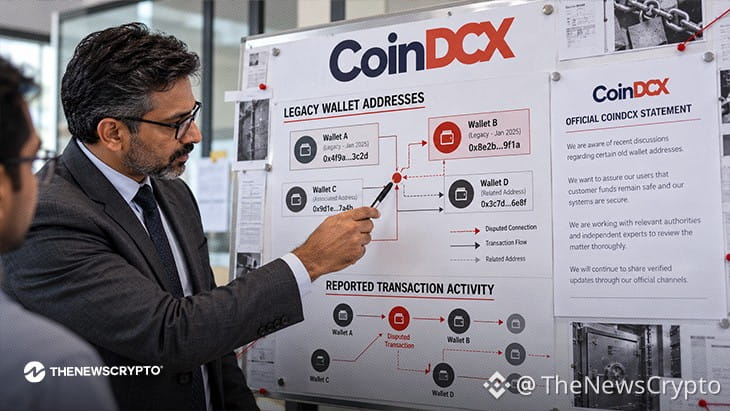
One of India’s leading cryptocurrency exchanges, CoinDCX, has denied allegations of a new security breach after blockchain investigators flagged approximately $16 million in USDT and TRX transfers from wallet addresses reportedly linked to the platform.
The transactions, reported on October 21, have raised fresh questions about CoinDCX’s July 2025 security breach and the status of its previously compromised wallets. Responding to the claims in a statement on X, CoinDCX said “users’ funds are safe” and described the reports surrounding the wallet addresses and transactions as “misleading.”
The exchange explained that the addresses were created in January 2025 and compromised during the July 2025 incident. According to CoinDCX, these wallets have not been used by the platform since then.
“The activity now being reported relates to these old addresses and does not have any connection with CoinDCX,” the company said. It added that trading and investing on the platform continued as usual.
Users’ funds are safe. Claims circulating on X regarding certain wallet addresses and transactions are misleading. The transactions mentioned in recent claims involve old wallet addresses created in January 2025. These addresses were compromised in July 2025 and have not been used by CoinDCX since. The activity now being reported relates to these old addresses and does not have any connection with CoinDCX. Trading & investing continue as usual. For updates, trust only official CoinDCX channels. For any queries, reach out to @CoinDCX_Cares
— CoinDCX (@CoinDCX) October 22, 2026
CoinDCX co-founder Sumit Gupta also rejected the allegations, saying the addresses flagged by Arkham previously belonged to the exchange but were compromised in the 2025 breach. He suggested that hackers may be reusing those addresses, causing a false alarm.
Gupta said the exchange reviewed its current company and user wallet addresses and found no transfers to the old wallets. He added that no CoinDCX funds had been compromised and that the team was continuing its investigation.
Old Wallet Activity Raises Questions
The denial follows claims by blockchain security investigator Darcy, associated with Salus, who reported transfers involving approximately 15.99 million USDT and 5,783.81 TRX at around 23:35 UTC on October 21. The reported transactions raised concerns about possible suspicious activity involving wallets linked to CoinDCX.
10 月 21 日 23:35:54(UTC+8),CoinDCX 疑似被盗取约1,599 万 USDT 和 5,783.81 TRX CoinDCX 热钱包及多个充值地址,向 TRON 地址 TAg6SZ1HhgVVjUaKY1paQoFBUS2JFrg5bT 转入约 1,599 万 USDT 和 5,783.81 TRX 其中最大单笔为 15,819,002 USDT,该地址随后向多个地址转出资金,经多次拆分流向Binance、OKX、Gate 等充值地址
— Darcy 资产救援 (@DarcyAri) October 22, 2026
Following that, Blockchain investigator ZachXBT questioned CoinDCX’s explanation of its earlier security breach. He alleged that an address identified as TQKJQ continued receiving deposits for around 10 months after the July 2025 incident, with activity reportedly recorded in April and May 2026.
ZachXBT also claimed that the address had connections to CoinDCX’s current public hot wallets. He argued that this activity raises questions about the company’s statement that the compromised addresses were no longer in use.
However, the reported blockchain activity does not, by itself, establish that CoinDCX suffered a new security breach or that customer funds are missing. The exchange maintains that the addresses involved are old and that the transactions have no connection to its operations.
The controversy follows CoinDCX’s July 19, 2025, security incident, when an internal operational account used for liquidity provisioning on a partner exchange was compromised. In its official incident report, the company said customer wallets were unaffected and that it would cover the financial exposure from its own treasury reserves.
The latest dispute centers on whether the wallet activity identified by investigators contradicts CoinDCX’s explanation. While the exchange maintains that its funds remain secure, the competing claims have not been independently resolved. No new CoinDCX breach has been confirmed by the evidence cited in these reports.
CoinDCX Rejects New $16M Security Breach Claims, Says Old Wallet Activity Is Unrelated
CoinDCX denies new $16M crypto hack allegations, saying the flagged wallets were compromised in July 2025 and have not been used by the exchange since.
Blockchain investigators flagged approximately 15.99 million USDT and 5,783.81 TRX in transfers on October 21.
ZachXBT questioned CoinDCX’s explanation, alleging that a previously compromised address remained active for months after the breach.
One of India’s leading cryptocurrency exchanges, CoinDCX, has denied allegations of a new security breach after blockchain investigators flagged approximately $16 million in USDT and TRX transfers from wallet addresses reportedly linked to the platform.
The transactions, reported on October 21, have raised fresh questions about CoinDCX’s July 2025 security breach and the status of its previously compromised wallets. Responding to the claims in a statement on X, CoinDCX said “users’ funds are safe” and described the reports surrounding the wallet addresses and transactions as “misleading.”
The exchange explained that the addresses were created in January 2025 and compromised during the July 2025 incident. According to CoinDCX, these wallets have not been used by the platform since then.
“The activity now being reported relates to these old addresses and does not have any connection with CoinDCX,” the company said. It added that trading and investing on the platform continued as usual.
Users’ funds are safe. Claims circulating on X regarding certain wallet addresses and transactions are misleading. The transactions mentioned in recent claims involve old wallet addresses created in January 2025. These addresses were compromised in July 2025 and have not been used by CoinDCX since. The activity now being reported relates to these old addresses and does not have any connection with CoinDCX. Trading & investing continue as usual. For updates, trust only official CoinDCX channels. For any queries, reach out to @CoinDCX_Cares
— CoinDCX (@CoinDCX) October 22, 2026
CoinDCX co-founder Sumit Gupta also rejected the allegations, saying the addresses flagged by Arkham previously belonged to the exchange but were compromised in the 2025 breach. He suggested that hackers may be reusing those addresses, causing a false alarm.
Gupta said the exchange reviewed its current company and user wallet addresses and found no transfers to the old wallets. He added that no CoinDCX funds had been compromised and that the team was continuing its investigation.
Old Wallet Activity Raises Questions
The denial follows claims by blockchain security investigator Darcy, associated with Salus, who reported transfers involving approximately 15.99 million USDT and 5,783.81 TRX at around 23:35 UTC on October 21. The reported transactions raised concerns about possible suspicious activity involving wallets linked to CoinDCX.
10 月 21 日 23:35:54(UTC+8),CoinDCX 疑似被盗取约1,599 万 USDT 和 5,783.81 TRX CoinDCX 热钱包及多个充值地址,向 TRON 地址 TAg6SZ1HhgVVjUaKY1paQoFBUS2JFrg5bT 转入约 1,599 万 USDT 和 5,783.81 TRX 其中最大单笔为 15,819,002 USDT,该地址随后向多个地址转出资金,经多次拆分流向Binance、OKX、Gate 等充值地址
— Darcy 资产救援 (@DarcyAri) October 22, 2026
Following that, Blockchain investigator ZachXBT questioned CoinDCX’s explanation of its earlier security breach. He alleged that an address identified as TQKJQ continued receiving deposits for around 10 months after the July 2025 incident, with activity reportedly recorded in April and May 2026.
ZachXBT also claimed that the address had connections to CoinDCX’s current public hot wallets. He argued that this activity raises questions about the company’s statement that the compromised addresses were no longer in use.
However, the reported blockchain activity does not, by itself, establish that CoinDCX suffered a new security breach or that customer funds are missing. The exchange maintains that the addresses involved are old and that the transactions have no connection to its operations.
The controversy follows CoinDCX’s July 19, 2025, security incident, when an internal operational account used for liquidity provisioning on a partner exchange was compromised. In its official incident report, the company said customer wallets were unaffected and that it would cover the financial exposure from its own treasury reserves.
The latest dispute centers on whether the wallet activity identified by investigators contradicts CoinDCX’s explanation. While the exchange maintains that its funds remain secure, the competing claims have not been independently resolved. No new CoinDCX breach has been confirmed by the evidence cited in these reports.
215

ບົດຄວາມ
Railway Pauses All Deployments After Customer Environment Variable BreachRailway paused all deployments after detecting unusual activity while investigating the full scope of the security incident.
An unauthorised third party may have accessed encrypted customer environment variables, obtaining the decrypted contents of some of them.
Cloud platform Railway has disclosed a security incident involving unauthorised access to systems that store customer environment variables. The company detected anomalous activity yesterday and has since paused all deployments while it investigates the full scope of what happened.
The core of the disclosure is this: an unauthorised third party may have accessed encrypted environment variables stored on Railway’s platform. Moreover, for some of them, they obtained the decrypted contents.
Environment variables are the settings and secrets applications need to run: API keys, database credentials, registry credentials. If those values were exposed in readable form, the potential damage extends well beyond Railway itself.
The company says initial analysis suggests the impact may be limited to a subset of users, but the review is ongoing. Railway has not said how the attacker got in, how many accounts were affected, which variable store was involved, or how encrypted values became readable in the first place.
One detail Railway has shared is its theory on motive. The company believes this incident is part of a recent series of attacks targeting platform companies with the specific goal of compromising AI inference providers. The services that run AI models in response to user requests.
In addition, Railway says it has notified upstream providers and asked them to proactively revoke all keys, though it has not identified which providers were contacted.
What the Deployment Pause Means?
All Railway deployments are currently paused while the investigation continues. Until builds are restored, customers cannot roll out new versions of their applications. That’s a direct operational cost that goes beyond the security concern; teams with active release schedules are blocked until Railway clears the incident.
Significantly, Railway says it will contact affected customers directly by email as it confirms which accounts were hit. Also, updates are being posted to its status page and linked incident report.
Railway is not waiting for the investigation to conclude before telling users to act. The recommendation is clear and applies to every user regardless of whether your account has been confirmed as affected.
Immediately rotate all environment variables stored on Railway. That includes every API key, database credential, and private registry credential. Review service logs for any unusual activity during and after the window of the incident. Treat every secret stored on Railway as compromised until you have rotated it and confirmed no unauthorised use.
Crypto Market Highlights
SSV Labs Faces a Funding Reset as DIP-59 Shelves New Products
Railway Pauses All Deployments After Customer Environment Variable Breach
Railway paused all deployments after detecting unusual activity while investigating the full scope of the security incident.
An unauthorised third party may have accessed encrypted customer environment variables, obtaining the decrypted contents of some of them.
Cloud platform Railway has disclosed a security incident involving unauthorised access to systems that store customer environment variables. The company detected anomalous activity yesterday and has since paused all deployments while it investigates the full scope of what happened.
The core of the disclosure is this: an unauthorised third party may have accessed encrypted environment variables stored on Railway’s platform. Moreover, for some of them, they obtained the decrypted contents.
Environment variables are the settings and secrets applications need to run: API keys, database credentials, registry credentials. If those values were exposed in readable form, the potential damage extends well beyond Railway itself.
The company says initial analysis suggests the impact may be limited to a subset of users, but the review is ongoing. Railway has not said how the attacker got in, how many accounts were affected, which variable store was involved, or how encrypted values became readable in the first place.
One detail Railway has shared is its theory on motive. The company believes this incident is part of a recent series of attacks targeting platform companies with the specific goal of compromising AI inference providers. The services that run AI models in response to user requests.
In addition, Railway says it has notified upstream providers and asked them to proactively revoke all keys, though it has not identified which providers were contacted.
What the Deployment Pause Means?
All Railway deployments are currently paused while the investigation continues. Until builds are restored, customers cannot roll out new versions of their applications. That’s a direct operational cost that goes beyond the security concern; teams with active release schedules are blocked until Railway clears the incident.
Significantly, Railway says it will contact affected customers directly by email as it confirms which accounts were hit. Also, updates are being posted to its status page and linked incident report.
Railway is not waiting for the investigation to conclude before telling users to act. The recommendation is clear and applies to every user regardless of whether your account has been confirmed as affected.
Immediately rotate all environment variables stored on Railway. That includes every API key, database credential, and private registry credential. Review service logs for any unusual activity during and after the window of the incident. Treat every secret stored on Railway as compromised until you have rotated it and confirmed no unauthorised use.
Crypto Market Highlights
SSV Labs Faces a Funding Reset as DIP-59 Shelves New Products
158
ບົດຄວາມ
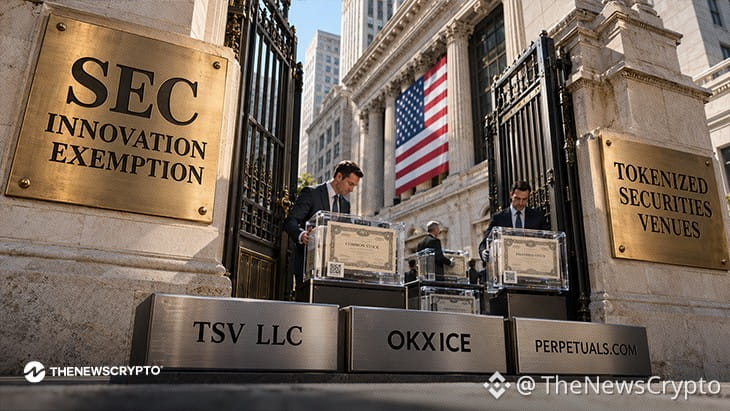
SEC Lists Three Firms Seeking to Launch Tokenized Stock Trading PlatformsThe SEC lists TSV LLC, OKXICE and Perpetuals.com as the first three firms to submit notices of intent to operate tokenized securities venues under its Innovation Exemption.
The exemption requires at least 30 days of public notice and preserves investor protections, but filing a notice does not mean a company has SEC approval to launch.
The U.S. Securities and Exchange Commission (SEC) has listed three companies seeking to launch blockchain-based trading platforms for tokenized U.S. stocks under its new Innovation Exemption.
The firms are TSV LLC, OKXICE and Perpetuals.com, according to the SEC’s official list, updated October 21. TSV LLC submitted its notice of intent on September 23, followed by OKXICE on October 4 and Kephas Corporation, which operates as Perpetuals.com, on October 14.
Source: SEC
The filings come after the SEC introduced its Innovation Exemption on September 17, giving qualifying tokenized securities venues temporary, conditional relief from the usual definition of an exchange under federal securities law. The framework is designed to allow certain blockchain-based trading systems to operate under specific conditions while the regulator gathers feedback on the approach.
Still, appearing on the SEC’s list does not mean the companies have received approval to launch. The regulator has explicitly stated that submitting a notice does not establish that a firm meets the exemption’s requirements.
SEC Sets Conditions for Tokenized Stock Trading
The exemption covers certain tokenized National Market System stocks, which include shares listed on U.S. national securities exchanges. It allows qualifying venues to use blockchain-based systems, including automated market makers and liquidity pools, subject to the order’s conditions.
Each venue must publish its operating notice on a publicly accessible website at least 30 calendar days before beginning operations. It must also notify the SEC within one business day after publishing the notice.
The framework includes safeguards for investors. Tokenized shares must preserve the rights and privileges associated with their corresponding traditional shares. Companies whose stocks are tokenized by third parties can also object to their shares being offered through a venue under the exemption.
OKXICE, a joint venture involving crypto exchange OKX and Intercontinental Exchange, the parent company of the New York Stock Exchange, has said its planned platform would use OKX’s X Layer network. Its notice initially listed more than 60 U.S.-listed companies for potential tokenization.
TSV LLC and Perpetuals.com have also submitted notices, but their inclusion on the SEC’s list does not confirm that their platforms are operational.
The exemption is temporary and conditional, with the SEC’s order scheduled to expire five years after its publication in the Federal Register unless the agency changes or extends the framework. The three filings mark an early step in efforts to bring more U.S. stock trading onto blockchain-based infrastructure.
SEC Lists Three Firms Seeking to Launch Tokenized Stock Trading Platforms
The SEC lists TSV LLC, OKXICE and Perpetuals.com as the first three firms to submit notices of intent to operate tokenized securities venues under its Innovation Exemption.
The exemption requires at least 30 days of public notice and preserves investor protections, but filing a notice does not mean a company has SEC approval to launch.
The U.S. Securities and Exchange Commission (SEC) has listed three companies seeking to launch blockchain-based trading platforms for tokenized U.S. stocks under its new Innovation Exemption.
The firms are TSV LLC, OKXICE and Perpetuals.com, according to the SEC’s official list, updated October 21. TSV LLC submitted its notice of intent on September 23, followed by OKXICE on October 4 and Kephas Corporation, which operates as Perpetuals.com, on October 14.
Source: SEC
The filings come after the SEC introduced its Innovation Exemption on September 17, giving qualifying tokenized securities venues temporary, conditional relief from the usual definition of an exchange under federal securities law. The framework is designed to allow certain blockchain-based trading systems to operate under specific conditions while the regulator gathers feedback on the approach.
Still, appearing on the SEC’s list does not mean the companies have received approval to launch. The regulator has explicitly stated that submitting a notice does not establish that a firm meets the exemption’s requirements.
SEC Sets Conditions for Tokenized Stock Trading
The exemption covers certain tokenized National Market System stocks, which include shares listed on U.S. national securities exchanges. It allows qualifying venues to use blockchain-based systems, including automated market makers and liquidity pools, subject to the order’s conditions.
Each venue must publish its operating notice on a publicly accessible website at least 30 calendar days before beginning operations. It must also notify the SEC within one business day after publishing the notice.
The framework includes safeguards for investors. Tokenized shares must preserve the rights and privileges associated with their corresponding traditional shares. Companies whose stocks are tokenized by third parties can also object to their shares being offered through a venue under the exemption.
OKXICE, a joint venture involving crypto exchange OKX and Intercontinental Exchange, the parent company of the New York Stock Exchange, has said its planned platform would use OKX’s X Layer network. Its notice initially listed more than 60 U.S.-listed companies for potential tokenization.
TSV LLC and Perpetuals.com have also submitted notices, but their inclusion on the SEC’s list does not confirm that their platforms are operational.
The exemption is temporary and conditional, with the SEC’s order scheduled to expire five years after its publication in the Federal Register unless the agency changes or extends the framework. The three filings mark an early step in efforts to bring more U.S. stock trading onto blockchain-based infrastructure.
240
ຢືນຢັນແລ້ວ
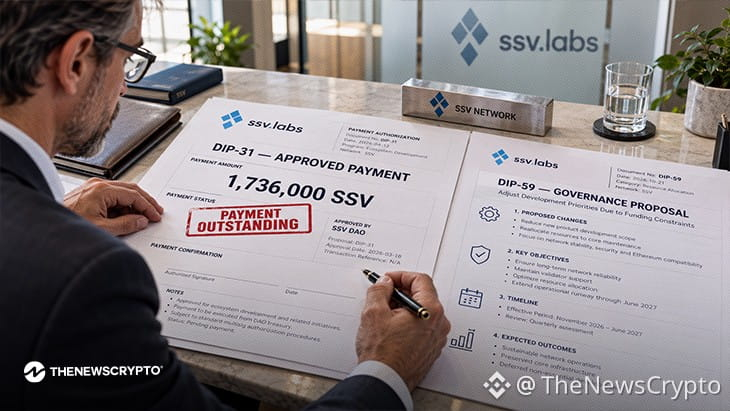
ບົດຄວາມ
SSV Labs Faces a Funding Reset As DIP-59 Shelves New ProductsDIP-59 proposes pausing new product development until June 2027 as SSV Labs adjusts to tighter funding and challenging market conditions.
The proposed funding will cover protocol maintenance, security, and compatibility with Ethereum upgrades.
SSV Labs submitted proposal DIP-59 to the SSV Network governance forum on October 21, and the language inside it is more candid than most governance proposals tend to be. Funding has narrowed, and the market conditions and the DAO’s financial position have forced a recalibration.
New product development is off the table, at least through June 2027. What remains is maintenance, security, and making sure the protocol stays compatible with Ethereum’s own upgrade schedule. Moreover, that is the honest scope of what DIP-59 is asking the DAO to fund.
What the Proposal Actually Does?
DIP-59 amends and extends DIP-31, the original development roadmap covering January 2025 through mid-2026, which was previously amended by DIP-53. The extension pushes the engagement through June 30, 2027. It is likely narrowing its scope as of July 1, 2026, and restructuring the remaining payment instalments.
The extension period runs in two parts. From June 30, 2026, to January 1, 2027, SSV Labs will deliver a defined network stewardship roadmap. From January 1, 2027, to June 30, 2027, the Maintenance Period, the focus shifts entirely to protocol maintenance.
In addition, the third and final grant instalment under DIP-31, totalling 1,736,111.11 SSV, has not been paid. DIP-59 revises and restructures that commercial arrangement rather than simply paying what was owed.
The Deliverables Still on the Table
Despite the scaled-back scope, the work planned for Q4 2026 is non-trivial. SSV Labs is committed to executing the Glamsterdam fork, participation in the public test network, a mandatory operator release, support through Ethereum’s mainnet fork window expected in Q4 2026, and post-fork stabilisation. This is deadline-driven work with dates set externally by Ethereum’s own schedule.
Also, the checkpoint sync completion and rollout is also on the Q4 list, including implementation, validation on local multi-operator test networks, and rollout through the standard release process including documentation and operator communications.
The Financial Structure
The first two instalments under DIP-31 covering 2025 remain unchanged. For 2026, SSV Labs is requesting 1,500,000 USDC, payable in the first scheduled batch of January 2027. For the first half of 2027, the request is 2,700,000 SSV, with 1,000,000 SSV payable initially and the remaining 1,700,000 SSV subject to a Conversion Option.
That option gives SSV Labs the discretionary right to receive 900,000 USDC instead of the 1,700,000 SSV, exercisable by written notice at least five business days before the first scheduled batch of July 2027. If the option is not exercised, the 1,700,000 SSV pays out in six equal monthly instalments of 283,333.33 SSV starting July 2027.
Furthermore, SSV Labs is also granted a first-ranking security interest over 900,000 USD held by the SSV Foundation, funds that may be deployed for yield generation through permitted venues.
Crypto Market Highlights
Pudgy Penguins (PENGU) Climbs 8%: Will Buyers Push for a Bigger Rally?
SSV Labs Faces a Funding Reset As DIP-59 Shelves New Products
DIP-59 proposes pausing new product development until June 2027 as SSV Labs adjusts to tighter funding and challenging market conditions.
The proposed funding will cover protocol maintenance, security, and compatibility with Ethereum upgrades.
SSV Labs submitted proposal DIP-59 to the SSV Network governance forum on October 21, and the language inside it is more candid than most governance proposals tend to be. Funding has narrowed, and the market conditions and the DAO’s financial position have forced a recalibration.
New product development is off the table, at least through June 2027. What remains is maintenance, security, and making sure the protocol stays compatible with Ethereum’s own upgrade schedule. Moreover, that is the honest scope of what DIP-59 is asking the DAO to fund.
What the Proposal Actually Does?
DIP-59 amends and extends DIP-31, the original development roadmap covering January 2025 through mid-2026, which was previously amended by DIP-53. The extension pushes the engagement through June 30, 2027. It is likely narrowing its scope as of July 1, 2026, and restructuring the remaining payment instalments.
The extension period runs in two parts. From June 30, 2026, to January 1, 2027, SSV Labs will deliver a defined network stewardship roadmap. From January 1, 2027, to June 30, 2027, the Maintenance Period, the focus shifts entirely to protocol maintenance.
In addition, the third and final grant instalment under DIP-31, totalling 1,736,111.11 SSV, has not been paid. DIP-59 revises and restructures that commercial arrangement rather than simply paying what was owed.
The Deliverables Still on the Table
Despite the scaled-back scope, the work planned for Q4 2026 is non-trivial. SSV Labs is committed to executing the Glamsterdam fork, participation in the public test network, a mandatory operator release, support through Ethereum’s mainnet fork window expected in Q4 2026, and post-fork stabilisation. This is deadline-driven work with dates set externally by Ethereum’s own schedule.
Also, the checkpoint sync completion and rollout is also on the Q4 list, including implementation, validation on local multi-operator test networks, and rollout through the standard release process including documentation and operator communications.
The Financial Structure
The first two instalments under DIP-31 covering 2025 remain unchanged. For 2026, SSV Labs is requesting 1,500,000 USDC, payable in the first scheduled batch of January 2027. For the first half of 2027, the request is 2,700,000 SSV, with 1,000,000 SSV payable initially and the remaining 1,700,000 SSV subject to a Conversion Option.
That option gives SSV Labs the discretionary right to receive 900,000 USDC instead of the 1,700,000 SSV, exercisable by written notice at least five business days before the first scheduled batch of July 2027. If the option is not exercised, the 1,700,000 SSV pays out in six equal monthly instalments of 283,333.33 SSV starting July 2027.
Furthermore, SSV Labs is also granted a first-ranking security interest over 900,000 USD held by the SSV Foundation, funds that may be deployed for yield generation through permitted venues.
Crypto Market Highlights
Pudgy Penguins (PENGU) Climbs 8%: Will Buyers Push for a Bigger Rally?
1k

ບົດຄວາມ
26th NextGen Payments & RegTech Forum Arrives in Austin, TexasThe 26th NextGen Payments & RegTech Forum is one of the leading Payments, Compliance and Financial Crime events in the USA. It brings together senior voices from Banking, Fintech, Payments infrastructure, digital assets and Regulatory Technology. The Forum takes place on 10 November 2026 at the W Hotel, Austin, and will feature the thought leaders shaping the next phase of US payments. It is also recognised as a leading RegTech conference in the USA and a key payments summit in Texas, offering insight into real-time payments, fraud prevention, agentic commerce, open banking and tokenised money.
Proudly sponsored by: Dow Jones Risk & Compliance, Splunk and UMCA Technologies
This prestigious Forum will welcome senior executives, regulators and industry visionaries for a day of valuable discussions and exclusive networking. Delegates will gain actionable insights into the technologies, regulations and payment rails shaping the future of financial services.
Get ready to be part of the conversation that’s driving the next wave of payments and RegTech transformation!
Over 40 industry specialists will take the stage at the 26th NextGen Payments & RegTech Forum, covering the latest topics and representing leading organisations such as Visa, PayPal, Wells Fargo, Capital One, Charles Schwab, Truist, PNC, Regions Bank, Western Alliance Bank, Texas Capital, Tri City National Bank, Third Coast Bank, Everbank, OneMain Financial, Ripple, Wise, Global Payments, Paysend, IXOPAY, Yuno, Onafriq, Fluz, Splunk, Alacriti, Ouro, VelaFi, BIGTXN, Howden, Dow Jones Risk & Compliance, American Bankers Association, Financial Data and Technology Association (FDATA), Georgia Fintech Academy, PayTech Women, Finopotamus, Roosevelt Institute and BetterBuyDesign.
INDUSTRY EXPERTS READY TO TAKE THE STAGE:
Aaron Prater, Chief Operating Officer at Tri City National Bank
Adi Iyer, GM, Financial Services at Fluz
Amber Thetford, Chief Product Officer at Onafriq
Anil Kumar, Senior Director Product Management at Visa
Anthony Kuyoro, Head of Merchant Experiences, SMB – Product Management at PayPal
Bo Berg, Technical Strategist & Innovation
Chris B Kennedy, Head of Enterprise Payments at Regions Bank
Christian Crisan, Managing Director – Financial Services Strategy and Advisory at Splunk
Christine Cooper, Senior Director of Product Management at Ripple
Elizabeth Davidson, Regulatory Counsel, Special Assignment at PNC
Gail Burgos, CEO at PayTech Women
Haider Mannan, CEO at BIGTXN
Harsh Dev, Director, Global Head of Risk Platform at PayPal
Hema Zutshi, Senior Director at Visa
Jairo Riveros, President, Americas & Head of the Office of Strategy Management at Paysend
Jason C. Honeycutt, Chief Compliance Officer at Ouro
Jason Jerina, VP Head of Platform Optimization at Truist
Jo Davenport, SVP, Fraud Director at Third Coast Bank
John San Filippo, Co-Founder and Publisher at Finopotamus
Katherine Avery, Founder at Chimayo Consulting, LLC
Laura Gibson, Executive Director at Georgia Fintech Academy
Lloyd Nelson, SVP, Head of U.S. Digital Assets at Howden
Mark Majeske, Senior Vice President of Faster Payments at Alacriti
Melissa Pottenger, VP, Enterprise Growth North America at Yuno
Michael Angjeli, Head of Treasury & Liquidity at VelaFi
Michael Heller, VP, Proposition at Dow Jones Risk & Compliance
Olga Baldwin, Lead Third Party Risk
Peter Papaioannou, Chief Product Officer at IXOPAY
Prateek Sangal, Head of Digital at Everbank
Ramon Ramirez, Director of AML Operations at Western Alliance Bank
Ranu Gupta, Executive Director, Senior Digital Product at Wells Fargo
Rebecca Mulholland, Senior Policy Advisor at Financial Data and Technology Association (FDATA); Associate Partner, Allon Advisors
Sarika Yadav, IT Program Manager at Western Alliance Bank
Shanelle Davis, Managing Director, Head of Operational Resilience at Charles Schwab
Stephen Kenneally, Senior Vice President Payments at American Bankers Association
Urooj Siraj, Senior Manager, Security Information Office at Capital One
Urvashi Nain, Director of Product Management at Visa
Venu Yeluripati, Head of Partner at Global Payments
Vibhu Bhatnagar, Vice President, Technology at Texas Capital
Vinay Nilakantan, Head of Product at Wise
Xavier Ferguson, Associate Product Director at OneMain Financial
Event Co-Chairs:
Steve Mott, Principal at BetterBuyDesign
Chastity Murphy, Former U.S. Treasury, Visiting Research Fellow, University of Manchester, Roosevelt Institute
AGENDA HIGHLIGHTS:
State of US Payments 2026: keynote on the trends shaping the US payments landscape
Real-Time Payments at Scale – Instant Payment Readiness, Liquidity and Customer Trust: 24/7 operations, fraud controls for instant rails and ISO 20022 migration
Mind the Gap – Processing Payments for Credit Cards Issued by Sanctioned Banks: building a scalable and defensible compliance programme
Fraud, Scams & Financial Crime – Defending Faster Payments and Digital Channels: APP scams, synthetic identity, mule networks and modern investigations
Agentic Payments – The Companion to Agentic Commerce: consent, liability and secure execution when an agent initiates a transaction
Digital Identity & Wallets – Authentication, Passkeys and Tokenised Credentials: reducing friction and fraud across the customer journey
Regulatory & Supervisory Priorities – Practical Compliance for 2026: BSA/AML, sanctions, exams and partner ecosystem oversight
RegTech Modernisation – Smarter AML, Sanctions & Monitoring with Responsible AI: reducing false positives and AI governance
Open Banking, Data Sharing & Privacy – Building Trustworthy Consent-Based Experiences: data access, risk and monetisation
Operational Resilience & Third-Party Risk – Securing the Payments Supply Chain: cloud resilience, vendor risk and cyber-fraud convergence
Digital Assets & Tokenised Money – Stablecoins, Settlement and Compliance Reality Check: use cases, controls and interoperability with traditional rails
Building Intelligent Payment Ecosystems – The Strategic Blueprint for the Next Generation of Global Payments: keynote session
The Future of Payments is Human: keynote session
WHY ATTEND?
Stay Ahead: Stay informed about the evolving payments landscape and regulatory changes.
Elite Networking: Connect with senior peers in a relaxed, exclusive environment.
Targeted Engagement: Take part in pre-arranged one-on-one meetings with top solution providers, tailored to your specific interests.
CONSIDERING SPONSORSHIP?
Our Sponsors get access to QUBE Events’ bespoke business development platform. This includes a personal account executive, private meeting spaces and pre-screened one-to-one meeting itineraries to maximise ROI.
This is the perfect opportunity to elevate your expertise, build your network of influential contacts and stay ahead of the curve!
To register and access the agenda: https://www.qubevents.com/nextgen-payments-regtech-austin
Take advantage of the 10% Discount code; apply at checkout: qube10
For more information on registration, please contact: info@qubevents.com
______________________________________________________________________________
Emailer
Sub: Join QUBE Events in Austin — Exclusive 10% Discount!
The Ultimate Payments & RegTech Event Is Almost Here!
Join QUBE Events in Austin for the 26th NextGen Payments & RegTech Forum on 10 November 2026 at the W Hotel. Connect with the greatest minds in Payments, RegTech and Financial Crime Compliance!
Exclusive 10% Discount – Limited Time Only!
Apply the code qube10 at checkout. For further information, email info@qubevents.com
Why Join?
Senior Industry Experts & Thought Leaders from global organisations
Keynotes, Panel Discussions & Exclusive Insights
Networking Opportunities with executives from Visa, PayPal, Wells Fargo, Capital One, Charles Schwab, Truist, PNC, Ripple, Wise, Global Payments, Dow Jones Risk & Compliance, American Bankers Association and many more!
To register and access the agenda: https://www.qubevents.com/nextgen-payments-regtech-austin
____________________________________________________________________________
SM Post
We are pleased to announce the 26th NextGen Payments & RegTech Forum, taking place on 10 November 2026 at the W Hotel, Austin, TX, USA. This premier Forum is the ultimate meeting point for forward-thinking payments professionals and innovators passionate about the future of payments, compliance and financial technology.
Don’t miss the chance to connect with industry leaders from Visa, PayPal, Wells Fargo, Capital One, Charles Schwab, Truist, PNC, Regions Bank, Ripple, Wise, Global Payments, Paysend, Texas Capital, Dow Jones Risk & Compliance, American Bankers Association, Splunk, UMCA and many more!
Book now to secure your spot and enjoy a 10% discount (apply code: qube10) before it expires!
To register and access the agenda: https://www.qubevents.com/nextgen-payments-regtech-austin
For more information on registration, please contact info@qubevents.com
Disclaimer: TheNewsCrypto does not endorse any content on this page. The content depicted in this Press Release does not represent any investment advice. TheNewsCrypto recommends our readers to make decisions based on their own research. TheNewsCrypto is not accountable for any damage or loss related to content, products, or services stated in this Press Release.
26th NextGen Payments & RegTech Forum Arrives in Austin, Texas
The 26th NextGen Payments & RegTech Forum is one of the leading Payments, Compliance and Financial Crime events in the USA. It brings together senior voices from Banking, Fintech, Payments infrastructure, digital assets and Regulatory Technology. The Forum takes place on 10 November 2026 at the W Hotel, Austin, and will feature the thought leaders shaping the next phase of US payments. It is also recognised as a leading RegTech conference in the USA and a key payments summit in Texas, offering insight into real-time payments, fraud prevention, agentic commerce, open banking and tokenised money.
Proudly sponsored by: Dow Jones Risk & Compliance, Splunk and UMCA Technologies
This prestigious Forum will welcome senior executives, regulators and industry visionaries for a day of valuable discussions and exclusive networking. Delegates will gain actionable insights into the technologies, regulations and payment rails shaping the future of financial services.
Get ready to be part of the conversation that’s driving the next wave of payments and RegTech transformation!
Over 40 industry specialists will take the stage at the 26th NextGen Payments & RegTech Forum, covering the latest topics and representing leading organisations such as Visa, PayPal, Wells Fargo, Capital One, Charles Schwab, Truist, PNC, Regions Bank, Western Alliance Bank, Texas Capital, Tri City National Bank, Third Coast Bank, Everbank, OneMain Financial, Ripple, Wise, Global Payments, Paysend, IXOPAY, Yuno, Onafriq, Fluz, Splunk, Alacriti, Ouro, VelaFi, BIGTXN, Howden, Dow Jones Risk & Compliance, American Bankers Association, Financial Data and Technology Association (FDATA), Georgia Fintech Academy, PayTech Women, Finopotamus, Roosevelt Institute and BetterBuyDesign.
INDUSTRY EXPERTS READY TO TAKE THE STAGE:
Aaron Prater, Chief Operating Officer at Tri City National Bank
Adi Iyer, GM, Financial Services at Fluz
Amber Thetford, Chief Product Officer at Onafriq
Anil Kumar, Senior Director Product Management at Visa
Anthony Kuyoro, Head of Merchant Experiences, SMB – Product Management at PayPal
Bo Berg, Technical Strategist & Innovation
Chris B Kennedy, Head of Enterprise Payments at Regions Bank
Christian Crisan, Managing Director – Financial Services Strategy and Advisory at Splunk
Christine Cooper, Senior Director of Product Management at Ripple
Elizabeth Davidson, Regulatory Counsel, Special Assignment at PNC
Gail Burgos, CEO at PayTech Women
Haider Mannan, CEO at BIGTXN
Harsh Dev, Director, Global Head of Risk Platform at PayPal
Hema Zutshi, Senior Director at Visa
Jairo Riveros, President, Americas & Head of the Office of Strategy Management at Paysend
Jason C. Honeycutt, Chief Compliance Officer at Ouro
Jason Jerina, VP Head of Platform Optimization at Truist
Jo Davenport, SVP, Fraud Director at Third Coast Bank
John San Filippo, Co-Founder and Publisher at Finopotamus
Katherine Avery, Founder at Chimayo Consulting, LLC
Laura Gibson, Executive Director at Georgia Fintech Academy
Lloyd Nelson, SVP, Head of U.S. Digital Assets at Howden
Mark Majeske, Senior Vice President of Faster Payments at Alacriti
Melissa Pottenger, VP, Enterprise Growth North America at Yuno
Michael Angjeli, Head of Treasury & Liquidity at VelaFi
Michael Heller, VP, Proposition at Dow Jones Risk & Compliance
Olga Baldwin, Lead Third Party Risk
Peter Papaioannou, Chief Product Officer at IXOPAY
Prateek Sangal, Head of Digital at Everbank
Ramon Ramirez, Director of AML Operations at Western Alliance Bank
Ranu Gupta, Executive Director, Senior Digital Product at Wells Fargo
Rebecca Mulholland, Senior Policy Advisor at Financial Data and Technology Association (FDATA); Associate Partner, Allon Advisors
Sarika Yadav, IT Program Manager at Western Alliance Bank
Shanelle Davis, Managing Director, Head of Operational Resilience at Charles Schwab
Stephen Kenneally, Senior Vice President Payments at American Bankers Association
Urooj Siraj, Senior Manager, Security Information Office at Capital One
Urvashi Nain, Director of Product Management at Visa
Venu Yeluripati, Head of Partner at Global Payments
Vibhu Bhatnagar, Vice President, Technology at Texas Capital
Vinay Nilakantan, Head of Product at Wise
Xavier Ferguson, Associate Product Director at OneMain Financial
Event Co-Chairs:
Steve Mott, Principal at BetterBuyDesign
Chastity Murphy, Former U.S. Treasury, Visiting Research Fellow, University of Manchester, Roosevelt Institute
AGENDA HIGHLIGHTS:
State of US Payments 2026: keynote on the trends shaping the US payments landscape
Real-Time Payments at Scale – Instant Payment Readiness, Liquidity and Customer Trust: 24/7 operations, fraud controls for instant rails and ISO 20022 migration
Mind the Gap – Processing Payments for Credit Cards Issued by Sanctioned Banks: building a scalable and defensible compliance programme
Fraud, Scams & Financial Crime – Defending Faster Payments and Digital Channels: APP scams, synthetic identity, mule networks and modern investigations
Agentic Payments – The Companion to Agentic Commerce: consent, liability and secure execution when an agent initiates a transaction
Digital Identity & Wallets – Authentication, Passkeys and Tokenised Credentials: reducing friction and fraud across the customer journey
Regulatory & Supervisory Priorities – Practical Compliance for 2026: BSA/AML, sanctions, exams and partner ecosystem oversight
RegTech Modernisation – Smarter AML, Sanctions & Monitoring with Responsible AI: reducing false positives and AI governance
Open Banking, Data Sharing & Privacy – Building Trustworthy Consent-Based Experiences: data access, risk and monetisation
Operational Resilience & Third-Party Risk – Securing the Payments Supply Chain: cloud resilience, vendor risk and cyber-fraud convergence
Digital Assets & Tokenised Money – Stablecoins, Settlement and Compliance Reality Check: use cases, controls and interoperability with traditional rails
Building Intelligent Payment Ecosystems – The Strategic Blueprint for the Next Generation of Global Payments: keynote session
The Future of Payments is Human: keynote session
WHY ATTEND?
Stay Ahead: Stay informed about the evolving payments landscape and regulatory changes.
Elite Networking: Connect with senior peers in a relaxed, exclusive environment.
Targeted Engagement: Take part in pre-arranged one-on-one meetings with top solution providers, tailored to your specific interests.
CONSIDERING SPONSORSHIP?
Our Sponsors get access to QUBE Events’ bespoke business development platform. This includes a personal account executive, private meeting spaces and pre-screened one-to-one meeting itineraries to maximise ROI.
This is the perfect opportunity to elevate your expertise, build your network of influential contacts and stay ahead of the curve!
To register and access the agenda: https://www.qubevents.com/nextgen-payments-regtech-austin
Take advantage of the 10% Discount code; apply at checkout: qube10
For more information on registration, please contact: info@qubevents.com
______________________________________________________________________________
Emailer
Sub: Join QUBE Events in Austin — Exclusive 10% Discount!
The Ultimate Payments & RegTech Event Is Almost Here!
Join QUBE Events in Austin for the 26th NextGen Payments & RegTech Forum on 10 November 2026 at the W Hotel. Connect with the greatest minds in Payments, RegTech and Financial Crime Compliance!
Exclusive 10% Discount – Limited Time Only!
Apply the code qube10 at checkout. For further information, email info@qubevents.com
Why Join?
Senior Industry Experts & Thought Leaders from global organisations
Keynotes, Panel Discussions & Exclusive Insights
Networking Opportunities with executives from Visa, PayPal, Wells Fargo, Capital One, Charles Schwab, Truist, PNC, Ripple, Wise, Global Payments, Dow Jones Risk & Compliance, American Bankers Association and many more!
To register and access the agenda: https://www.qubevents.com/nextgen-payments-regtech-austin
____________________________________________________________________________
SM Post
We are pleased to announce the 26th NextGen Payments & RegTech Forum, taking place on 10 November 2026 at the W Hotel, Austin, TX, USA. This premier Forum is the ultimate meeting point for forward-thinking payments professionals and innovators passionate about the future of payments, compliance and financial technology.
Don’t miss the chance to connect with industry leaders from Visa, PayPal, Wells Fargo, Capital One, Charles Schwab, Truist, PNC, Regions Bank, Ripple, Wise, Global Payments, Paysend, Texas Capital, Dow Jones Risk & Compliance, American Bankers Association, Splunk, UMCA and many more!
Book now to secure your spot and enjoy a 10% discount (apply code: qube10) before it expires!
To register and access the agenda: https://www.qubevents.com/nextgen-payments-regtech-austin
For more information on registration, please contact info@qubevents.com
Disclaimer: TheNewsCrypto does not endorse any content on this page. The content depicted in this Press Release does not represent any investment advice. TheNewsCrypto recommends our readers to make decisions based on their own research. TheNewsCrypto is not accountable for any damage or loss related to content, products, or services stated in this Press Release.
219
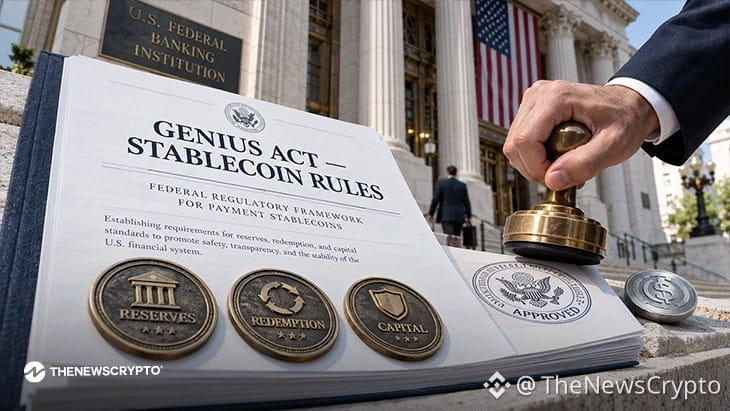
ບົດຄວາມ
OCC Finalizes GENIUS Act Stablecoin Rules, Sets January 2027 Start DateThe OCC finalized GENIUS Act rules on stablecoin reserves, redemptions, custody and risk management, effective January 18, 2027.
The rules also cover capital, audits, reporting and certain foreign issuers, while application procedures remain separate.
The U.S. Office of the Comptroller of the Currency (OCC) has finalized its rules governing payment stablecoin issuers under the GENIUS Act, establishing requirements for reserves, redemptions, custody and risk management. The rules are scheduled to take effect on January 18, 2027.
Announced on October 21, the final rule sets out how institutions under the OCC’s supervision must comply with the federal framework for payment stablecoins. The GENIUS Act, signed into law by President Donald Trump in July 2025. That created a regulatory structure for these dollar-linked digital assets like USDT and established requirements for issuers.
.@USComptroller Jonathan V. Gould: Today’s final rule advances @POTUS Trump’s and @SecScottBessent’s vision for American leadership in digital assets. We are providing a clear, practical framework for payment stablecoin innovation, with strong standards for reserve backing, redemption, and risk management. The OCC is drawing on its longstanding supervisory expertise to support responsible growth and innovation for this new industry. https://t.co/IWuIHnQQ0f
— OCC (@USOCC) October 21, 2026
The rules cover the assets issuers can hold to back their stablecoins, how holders can redeem tokens for money, and safeguards for custody activities. They also establish requirements related to capital, audits, reporting and risk management.
Rules Set Standards for Stablecoin Issuers
The OCC’s framework is intended to bring payment stablecoin activities under clearer federal oversight. Payment stablecoins are designed to maintain a stable value against a reference asset, usually the U.S. dollar, and are widely used for crypto trading and digital payments.
Morethan, the final rule also addresses foreign payment stablecoin issuers that fall within the OCC’s jurisdiction. However, the announcement does not mean every stablecoin issuer will automatically receive authorization to operate in the United States.
The OCC said it would separately announce when it begins accepting applications and waiver requests from prospective issuers. Other parts of the GENIUS Act require coordination among federal agencies, including work on anti-money-laundering and sanctions compliance.
With the January 18, 2027, effective date approaching, affected institutions have a defined timeline to prepare for the new requirements. Still, the OCC’s rule is one part of the broader implementation of the GENIUS Act, rather than the completion of every federal rulemaking under the law.
OCC Finalizes GENIUS Act Stablecoin Rules, Sets January 2027 Start Date
The OCC finalized GENIUS Act rules on stablecoin reserves, redemptions, custody and risk management, effective January 18, 2027.
The rules also cover capital, audits, reporting and certain foreign issuers, while application procedures remain separate.
The U.S. Office of the Comptroller of the Currency (OCC) has finalized its rules governing payment stablecoin issuers under the GENIUS Act, establishing requirements for reserves, redemptions, custody and risk management. The rules are scheduled to take effect on January 18, 2027.
Announced on October 21, the final rule sets out how institutions under the OCC’s supervision must comply with the federal framework for payment stablecoins. The GENIUS Act, signed into law by President Donald Trump in July 2025. That created a regulatory structure for these dollar-linked digital assets like USDT and established requirements for issuers.
.@USComptroller Jonathan V. Gould: Today’s final rule advances @POTUS Trump’s and @SecScottBessent’s vision for American leadership in digital assets. We are providing a clear, practical framework for payment stablecoin innovation, with strong standards for reserve backing, redemption, and risk management. The OCC is drawing on its longstanding supervisory expertise to support responsible growth and innovation for this new industry. https://t.co/IWuIHnQQ0f
— OCC (@USOCC) October 21, 2026
The rules cover the assets issuers can hold to back their stablecoins, how holders can redeem tokens for money, and safeguards for custody activities. They also establish requirements related to capital, audits, reporting and risk management.
Rules Set Standards for Stablecoin Issuers
The OCC’s framework is intended to bring payment stablecoin activities under clearer federal oversight. Payment stablecoins are designed to maintain a stable value against a reference asset, usually the U.S. dollar, and are widely used for crypto trading and digital payments.
Morethan, the final rule also addresses foreign payment stablecoin issuers that fall within the OCC’s jurisdiction. However, the announcement does not mean every stablecoin issuer will automatically receive authorization to operate in the United States.
The OCC said it would separately announce when it begins accepting applications and waiver requests from prospective issuers. Other parts of the GENIUS Act require coordination among federal agencies, including work on anti-money-laundering and sanctions compliance.
With the January 18, 2027, effective date approaching, affected institutions have a defined timeline to prepare for the new requirements. Still, the OCC’s rule is one part of the broader implementation of the GENIUS Act, rather than the completion of every federal rulemaking under the law.
78
ບົດຄວາມ
Pudgy Penguins (PENGU) Climbs 8%: Will Buyers Push for a Bigger Rally?Pudgy Penguins is trading within the $0.0081 range.
PENGU’s long-term trend is bullish and controlled by buyers.
Pudgy Penguins’ PENGU token is currently trading at $0.008101, up by over 8.5%, with volume settling at $127.34 million. The 24-hour range sits between $0.007479 and $0.008204, with the weekly low at $0.007078. The token has been recovering from a prolonged decline.
The catalyst would be the recent announcement: PENGU is now available to buy, sell, and hold on SoFi, the first nationally chartered bank in the US to offer crypto services to its members. On the other hand, the $0.008320-0.008395 zone acts as a critical barrier for a stronger bullish move.
PENGU could target the $0.0082 region if buyers maintain momentum. A stronger breakout would improve the technical outlook and expose resistance near $0.0083. Stronger demand could eventually push prices even higher.
However, sellers could regain control if PENGU loses support near $0.0080. The next immediate downside level stands around $0.0079. A deeper decline might expose major support levels below.
Pudgy Penguins’ Technical Chart Turns Positive
The 4-hour analysis reveals that the Moving Average Convergence Divergence (MACD) line is above the signal line, crossing over the zero line. It hints that the market is in a strong bullish trend. Overall, the long-term trend of Pudgy Penguins is firmly bullish and controlled by buyers.
The short-term buying momentum is accelerating faster than the long-term average. This setup confirms increasing momentum behind the current move. This is one of the most reliable continuation signals for a healthy bull market. Traders see this as a strong signal to hold existing long positions and enter buying opportunities.
(Source: TradingView)
Moreover, the daily Relative Strength Index (RSI) of PENGU is at 64.79, indicating strong bullish momentum with active buying pressure. It is sitting comfortably above the neutral 50 mark, with the buyers currently driving the price action and outperforming sellers.
The asset is nearing the overbought threshold, reflecting accelerating upward strength without being overextended. It suggests a healthy, established uptrend that still has room to expand higher. The market holds solid upward momentum, though traders will monitor for a push above 70 for extreme conditions.
Crypto Market Highlights
MEXC Tightens Compliance Rules With Russia and Belarus Exit
Pudgy Penguins (PENGU) Climbs 8%: Will Buyers Push for a Bigger Rally?
Pudgy Penguins is trading within the $0.0081 range.
PENGU’s long-term trend is bullish and controlled by buyers.
Pudgy Penguins’ PENGU token is currently trading at $0.008101, up by over 8.5%, with volume settling at $127.34 million. The 24-hour range sits between $0.007479 and $0.008204, with the weekly low at $0.007078. The token has been recovering from a prolonged decline.
The catalyst would be the recent announcement: PENGU is now available to buy, sell, and hold on SoFi, the first nationally chartered bank in the US to offer crypto services to its members. On the other hand, the $0.008320-0.008395 zone acts as a critical barrier for a stronger bullish move.
PENGU could target the $0.0082 region if buyers maintain momentum. A stronger breakout would improve the technical outlook and expose resistance near $0.0083. Stronger demand could eventually push prices even higher.
However, sellers could regain control if PENGU loses support near $0.0080. The next immediate downside level stands around $0.0079. A deeper decline might expose major support levels below.
Pudgy Penguins’ Technical Chart Turns Positive
The 4-hour analysis reveals that the Moving Average Convergence Divergence (MACD) line is above the signal line, crossing over the zero line. It hints that the market is in a strong bullish trend. Overall, the long-term trend of Pudgy Penguins is firmly bullish and controlled by buyers.
The short-term buying momentum is accelerating faster than the long-term average. This setup confirms increasing momentum behind the current move. This is one of the most reliable continuation signals for a healthy bull market. Traders see this as a strong signal to hold existing long positions and enter buying opportunities.
(Source: TradingView)
Moreover, the daily Relative Strength Index (RSI) of PENGU is at 64.79, indicating strong bullish momentum with active buying pressure. It is sitting comfortably above the neutral 50 mark, with the buyers currently driving the price action and outperforming sellers.
The asset is nearing the overbought threshold, reflecting accelerating upward strength without being overextended. It suggests a healthy, established uptrend that still has room to expand higher. The market holds solid upward momentum, though traders will monitor for a push above 70 for extreme conditions.
Crypto Market Highlights
MEXC Tightens Compliance Rules With Russia and Belarus Exit
318
ບົດຄວາມ
Zcash Developers Set NU7 Upgrade Target for November 5 At Block 3,543,405Zcash developers are targeting block 3,543,405 for NU7 mainnet activation around November.
NU7 will reduce target block times from 75 to 25 seconds, remove 60% of transaction fees from circulation and disable legacy Sprout transactions.
Zcash’s NU7 mainnet upgrade is targeting activation at block 3,543,405, expected around November 5, following final changes to ZIP 259, according to Zcash development team Zakura.
In an October 21 post on X, Zakura said the activation height was being set as part of the final changes to the deployment proposal. The team also confirmed that it had updated its NU7 dashboard to reflect the planned activation point.
(Source: Zakura)
The upgrade will introduce several changes to Zcash, including faster block production, adjustments to transaction fees and the shutdown of the network’s legacy Sprout transaction format.
NU7 has already reached the Zcash testnet on Oct 4, where developers can assess the changes before the main network rollout. The November 5 date remains an estimate because activation depends on reaching the specified block height, rather than a fixed time.
NU7 to Cut Target Block Time to 25 Seconds
One of the upgrade’s main changes is a reduction in Zcash’s target block interval from 75 seconds to 25 seconds. Blocks will therefore be targeted three times more frequently, potentially reducing transaction confirmation delays. The change does not mean that every transaction will confirm within 25 seconds, as actual confirmation times depend on network conditions.
NU7 will also introduce the Network Sustainability Mechanism and remove 60% of transaction fees from circulation. Under the planned rules, those fees will be held for future issuance, with the mechanism designed to preserve Zcash’s existing halving schedule. The planned reintroduction of funds is expected to begin around February 2031.
The upgrade will also disable version 4 transactions, which are required for transfers from Zcash’s legacy Sprout privacy pool. As a result, funds remaining in Sprout after activation will become unspendable under the new consensus rules. Users with funds in that pool should review their wallets and move eligible funds before the upgrade.
NU7 does not introduce a new transaction format. However, full-node operators, indexers and block explorers may need compatible software to follow the upgraded network.
The November target gives exchanges, wallet providers and infrastructure operators a limited window to prepare for the consensus change.
Zcash Developers Set NU7 Upgrade Target for November 5 At Block 3,543,405
Zcash developers are targeting block 3,543,405 for NU7 mainnet activation around November.
NU7 will reduce target block times from 75 to 25 seconds, remove 60% of transaction fees from circulation and disable legacy Sprout transactions.
Zcash’s NU7 mainnet upgrade is targeting activation at block 3,543,405, expected around November 5, following final changes to ZIP 259, according to Zcash development team Zakura.
In an October 21 post on X, Zakura said the activation height was being set as part of the final changes to the deployment proposal. The team also confirmed that it had updated its NU7 dashboard to reflect the planned activation point.
(Source: Zakura)
The upgrade will introduce several changes to Zcash, including faster block production, adjustments to transaction fees and the shutdown of the network’s legacy Sprout transaction format.
NU7 has already reached the Zcash testnet on Oct 4, where developers can assess the changes before the main network rollout. The November 5 date remains an estimate because activation depends on reaching the specified block height, rather than a fixed time.
NU7 to Cut Target Block Time to 25 Seconds
One of the upgrade’s main changes is a reduction in Zcash’s target block interval from 75 seconds to 25 seconds. Blocks will therefore be targeted three times more frequently, potentially reducing transaction confirmation delays. The change does not mean that every transaction will confirm within 25 seconds, as actual confirmation times depend on network conditions.
NU7 will also introduce the Network Sustainability Mechanism and remove 60% of transaction fees from circulation. Under the planned rules, those fees will be held for future issuance, with the mechanism designed to preserve Zcash’s existing halving schedule. The planned reintroduction of funds is expected to begin around February 2031.
The upgrade will also disable version 4 transactions, which are required for transfers from Zcash’s legacy Sprout privacy pool. As a result, funds remaining in Sprout after activation will become unspendable under the new consensus rules. Users with funds in that pool should review their wallets and move eligible funds before the upgrade.
NU7 does not introduce a new transaction format. However, full-node operators, indexers and block explorers may need compatible software to follow the upgraded network.
The November target gives exchanges, wallet providers and infrastructure operators a limited window to prepare for the consensus change.
232

ບົດຄວາມ
Blockchain.com and Binance US Seek US Approval to Enter Prediction MarketsBlockchain.com and Binance US are seeking CFTC approval to enter the U.S. prediction market sector, joining Coinbase and Gemini.
Monthly trading volume on Polymarket and Kalshi reached $72 billion in September 2026, up from $17 billion in January.
Blockchain.com and Binance US are seeking U.S. regulatory approval to offer prediction markets, joining a growing group of cryptocurrency companies looking to expand beyond traditional digital asset trading.
According to a Financial Times report published on October 21, Binance US recently applied to the U.S. Commodity Futures Trading Commission (CFTC) for authorization to offer prediction markets. Blockchain.com filed its application last week, the report said.
Blockchain.com confirmed on October 13 that it had applied for two registrations with the CFTC: a Designated Contract Market (DCM) licence and registration as a Futures Commission Merchant (FCM). If approved, the registrations would allow the company to offer event contracts and crypto derivatives, including futures and options, to U.S. retail and institutional customers.
The company already offers prediction markets and perpetual futures to users in eligible international markets. Its U.S. applications aim to bring these services onto its platform for American customers.
Binance US had previously announced plans to seek a DCM licence. Chief Executive Stephen Gregory said in July that the exchange intended to apply in August.
Prediction Market Volumes Rise as Crypto Trading Slows
The latest applications come as prediction markets attract more trading activity while cryptocurrency exchanges face pressure to diversify their businesses.
Prediction markets allow users to trade contracts tied to the outcomes of real-world events, including elections, economic decisions and sporting events. Contract prices can reflect the probability traders assign to a particular outcome, with payouts determined by the market’s settlement rules.
Combined monthly trading volumes on leading prediction-market platforms Polymarket and Kalshi climbed from $17 billion in January to $72 billion in September 2026, according to The Block data. That represents an increase of more than four times. Over the same period, spot cryptocurrency trading volume fell 18%.
Source: The Block
Other exchanges are also pursuing the market. Coinbase has partnered with Kalshi to offer event contracts, while Gemini operates its own prediction-market service. Crypto.com and Bullish are also among the companies pursuing opportunities in the sector.
Neither Blockchain.com nor Binance.US has received regulatory approval for the proposed services. A DCM designation is required to operate a regulated exchange for covered event contracts, while FCM registration is required for businesses that handle customer orders and funds for derivatives transactions.
Both companies must secure the relevant regulatory approvals before launching the proposed U.S. services.
Blockchain.com and Binance US Seek US Approval to Enter Prediction Markets
Blockchain.com and Binance US are seeking CFTC approval to enter the U.S. prediction market sector, joining Coinbase and Gemini.
Monthly trading volume on Polymarket and Kalshi reached $72 billion in September 2026, up from $17 billion in January.
Blockchain.com and Binance US are seeking U.S. regulatory approval to offer prediction markets, joining a growing group of cryptocurrency companies looking to expand beyond traditional digital asset trading.
According to a Financial Times report published on October 21, Binance US recently applied to the U.S. Commodity Futures Trading Commission (CFTC) for authorization to offer prediction markets. Blockchain.com filed its application last week, the report said.
Blockchain.com confirmed on October 13 that it had applied for two registrations with the CFTC: a Designated Contract Market (DCM) licence and registration as a Futures Commission Merchant (FCM). If approved, the registrations would allow the company to offer event contracts and crypto derivatives, including futures and options, to U.S. retail and institutional customers.
The company already offers prediction markets and perpetual futures to users in eligible international markets. Its U.S. applications aim to bring these services onto its platform for American customers.
Binance US had previously announced plans to seek a DCM licence. Chief Executive Stephen Gregory said in July that the exchange intended to apply in August.
Prediction Market Volumes Rise as Crypto Trading Slows
The latest applications come as prediction markets attract more trading activity while cryptocurrency exchanges face pressure to diversify their businesses.
Prediction markets allow users to trade contracts tied to the outcomes of real-world events, including elections, economic decisions and sporting events. Contract prices can reflect the probability traders assign to a particular outcome, with payouts determined by the market’s settlement rules.
Combined monthly trading volumes on leading prediction-market platforms Polymarket and Kalshi climbed from $17 billion in January to $72 billion in September 2026, according to The Block data. That represents an increase of more than four times. Over the same period, spot cryptocurrency trading volume fell 18%.
Source: The Block
Other exchanges are also pursuing the market. Coinbase has partnered with Kalshi to offer event contracts, while Gemini operates its own prediction-market service. Crypto.com and Bullish are also among the companies pursuing opportunities in the sector.
Neither Blockchain.com nor Binance.US has received regulatory approval for the proposed services. A DCM designation is required to operate a regulated exchange for covered event contracts, while FCM registration is required for businesses that handle customer orders and funds for derivatives transactions.
Both companies must secure the relevant regulatory approvals before launching the proposed U.S. services.
1
2
564
ບົດຄວາມ
MEXC Tightens Compliance Rules With Russia and Belarus ExitMEXC will discontinue services for users located in Russia and Belarus as it strengthens global compliance.
The decision does not affect all MEXC users, and those outside those countries can continue trading.
Crypto exchange MEXC has announced it will discontinue services for users located in Russia or Belarus as part of what the platform describes as its ongoing efforts to strengthen global compliance. The decision marks a significant operational shift for one of the larger centralised exchanges still serving those regions.
Significantly, MEXC is not shutting down broadly, and this change does not affect every account holder on the platform. Users based outside Russia and Belarus can continue trading as normal under the platform’s existing terms of service.
Who Is Affected and What Happens Next?
Affected users will receive individual notifications through their registered email address and in-app messages. Each notification will outline the specific timelines and procedures for closing open positions and withdrawing assets. The platform has been clear that every impacted user will receive personalised instructions, not a blanket one-size-fits-all timeline.
If you have not received a notification, your account is not affected. Moreover, MEXC has confirmed that unnotified users may continue using all trading services as usual without any interruption.
Users with questions about their account status or the applicable withdrawal procedures are directed to contact MEXC Customer Service directly rather than relying on third-party sources or unverified information.
The Assets Are Secure
MEXC has explicitly stated that affected users’ assets remain safe throughout this process. Additionally, the exchange has committed to giving each impacted customer a clear schedule and step-by-step instructions to close positions. Also, to move funds out before any service cutoff takes effect.
Alongside the announcement, MEXC reminded users that it will never request payments, account credentials, seed phrases, or asset transfers through private messages. Given that compliance-related announcements like this tend to attract phishing attempts and impersonation accounts. Users are advised to verify all communications through official MEXC channels only and to be cautious of unverified links or messages claiming to be from the exchange.
MEXC’s decision follows a broader trend of centralised exchanges tightening their compliance posture in response to international sanctions frameworks and regulatory pressure. Russia and Belarus have been subject to increasing financial restrictions across traditional and digital asset markets, and this move puts MEXC in line with the compliance standards that most major global exchanges have already adopted.
Crypto Market Highlights
Kazakhstan Targets Coinbase and Five Other Crypto Platforms With Court Injunctions
MEXC Tightens Compliance Rules With Russia and Belarus Exit
MEXC will discontinue services for users located in Russia and Belarus as it strengthens global compliance.
The decision does not affect all MEXC users, and those outside those countries can continue trading.
Crypto exchange MEXC has announced it will discontinue services for users located in Russia or Belarus as part of what the platform describes as its ongoing efforts to strengthen global compliance. The decision marks a significant operational shift for one of the larger centralised exchanges still serving those regions.
Significantly, MEXC is not shutting down broadly, and this change does not affect every account holder on the platform. Users based outside Russia and Belarus can continue trading as normal under the platform’s existing terms of service.
Who Is Affected and What Happens Next?
Affected users will receive individual notifications through their registered email address and in-app messages. Each notification will outline the specific timelines and procedures for closing open positions and withdrawing assets. The platform has been clear that every impacted user will receive personalised instructions, not a blanket one-size-fits-all timeline.
If you have not received a notification, your account is not affected. Moreover, MEXC has confirmed that unnotified users may continue using all trading services as usual without any interruption.
Users with questions about their account status or the applicable withdrawal procedures are directed to contact MEXC Customer Service directly rather than relying on third-party sources or unverified information.
The Assets Are Secure
MEXC has explicitly stated that affected users’ assets remain safe throughout this process. Additionally, the exchange has committed to giving each impacted customer a clear schedule and step-by-step instructions to close positions. Also, to move funds out before any service cutoff takes effect.
Alongside the announcement, MEXC reminded users that it will never request payments, account credentials, seed phrases, or asset transfers through private messages. Given that compliance-related announcements like this tend to attract phishing attempts and impersonation accounts. Users are advised to verify all communications through official MEXC channels only and to be cautious of unverified links or messages claiming to be from the exchange.
MEXC’s decision follows a broader trend of centralised exchanges tightening their compliance posture in response to international sanctions frameworks and regulatory pressure. Russia and Belarus have been subject to increasing financial restrictions across traditional and digital asset markets, and this move puts MEXC in line with the compliance standards that most major global exchanges have already adopted.
Crypto Market Highlights
Kazakhstan Targets Coinbase and Five Other Crypto Platforms With Court Injunctions
596
ບົດຄວາມ
Ripple Backs SEC Crypto Rules, Seeks Clearer Limits on Token Securities StatusRipple backed the SEC’s proposed Regulation Crypto Assets but urged clearer rules on token classification and when investment contracts end.
Ripple wants the SEC to clarify that filing Form TR does not automatically mean an issuer admits its token was previously a security or that it violated securities laws.
Ripple has backed the U.S. Securities and Exchange Commission’s (SEC) proposed Regulation Crypto Assets, while asking the agency to clarify how securities laws apply to crypto tokens and when an issuer’s legal obligations end.
In a comment letter submitted on October 20, Ripple said the SEC has the authority to adopt the proposal and called for a consistent regulatory framework for the digital asset industry. Ripple Chief Legal Officer Stuart Alderoty confirmed the filing and said the company had spent more than $150 million on its legal battle with the regulator.
Source: Ripple
The SEC introduced Regulation Crypto Assets on August 18. The proposal would create two exemptions from securities registration requirements for certain crypto-related investment contracts. One would allow eligible issuers to raise up to $5 million over four years, while another would permit offerings of up to $75 million in a 12-month period, subject to additional disclosure and reporting requirements.
The proposal also includes a conditional safe harbor that could allow a crypto asset to fall outside the definition of an investment contract once specified conditions are met.
Ripple Wants Investment Contracts Distinguished From Tokens
Ripple’s central argument is that an investment contract and the crypto token connected to it should not automatically be treated as the same thing. The company wants the SEC to focus on the specific promises an issuer makes to investors and whether those obligations remain in place, rather than relying on a broad assessment of how decentralized a network has become.
1/ Today Ripple filed its comment letter on the SEC’s proposed Regulation Crypto Assets. We support the proposal, and the SEC has clear authority to adopt it. 2/ Years of “case by case, coin by coin” enforcement has pushed innovation offshore. We need holistic rules for digital assets. 3/ The proposal stays faithful to Howey. The investment contract is the security, not the token. What matters is what an issuer actually promised and when those promises end, not a subjective “decentralization” test. 4/ We know the cost of ambiguity firsthand. Ripple spent more than $150 million to get clarity. No company should have to do that to learn what the law requires. 5/ Clear rules grounded in existing law will bring capital, investor protection and innovation to the U.S. Read our full letter: https://t.co/hOCJJwUo7Z
— Stuart Alderoty (@s_alderoty) October 20, 2026
Ripple also called for clearer guidance on Form TR filings, which are connected to the proposal’s process for ending investment-contract obligations. It wants the SEC to clarify that making such a filing would not automatically amount to an admission that a token was previously a security or that the issuer violated securities laws.
The company also raised concerns about secondary-market trading and consistency across federal securities statutes. It argued that uncertainty over a token’s legal status can create difficulties for exchanges and other market participants that need to decide how assets should be handled.
The SEC’s public comment period for the Regulation Crypto Assets proposal closed on October 20, with Ripple’s letter among the submissions the agency will consider. Still, the SEC will continue accepting comments after the deadline, according to Eleanor Terrett, citing an SEC spokesperson.
The proposal has not been finalized. Also, the SEC has not announced whether it will adopt Ripple’s requested changes.
Ripple Backs SEC Crypto Rules, Seeks Clearer Limits on Token Securities Status
Ripple backed the SEC’s proposed Regulation Crypto Assets but urged clearer rules on token classification and when investment contracts end.
Ripple wants the SEC to clarify that filing Form TR does not automatically mean an issuer admits its token was previously a security or that it violated securities laws.
Ripple has backed the U.S. Securities and Exchange Commission’s (SEC) proposed Regulation Crypto Assets, while asking the agency to clarify how securities laws apply to crypto tokens and when an issuer’s legal obligations end.
In a comment letter submitted on October 20, Ripple said the SEC has the authority to adopt the proposal and called for a consistent regulatory framework for the digital asset industry. Ripple Chief Legal Officer Stuart Alderoty confirmed the filing and said the company had spent more than $150 million on its legal battle with the regulator.
Source: Ripple
The SEC introduced Regulation Crypto Assets on August 18. The proposal would create two exemptions from securities registration requirements for certain crypto-related investment contracts. One would allow eligible issuers to raise up to $5 million over four years, while another would permit offerings of up to $75 million in a 12-month period, subject to additional disclosure and reporting requirements.
The proposal also includes a conditional safe harbor that could allow a crypto asset to fall outside the definition of an investment contract once specified conditions are met.
Ripple Wants Investment Contracts Distinguished From Tokens
Ripple’s central argument is that an investment contract and the crypto token connected to it should not automatically be treated as the same thing. The company wants the SEC to focus on the specific promises an issuer makes to investors and whether those obligations remain in place, rather than relying on a broad assessment of how decentralized a network has become.
1/ Today Ripple filed its comment letter on the SEC’s proposed Regulation Crypto Assets. We support the proposal, and the SEC has clear authority to adopt it. 2/ Years of “case by case, coin by coin” enforcement has pushed innovation offshore. We need holistic rules for digital assets. 3/ The proposal stays faithful to Howey. The investment contract is the security, not the token. What matters is what an issuer actually promised and when those promises end, not a subjective “decentralization” test. 4/ We know the cost of ambiguity firsthand. Ripple spent more than $150 million to get clarity. No company should have to do that to learn what the law requires. 5/ Clear rules grounded in existing law will bring capital, investor protection and innovation to the U.S. Read our full letter: https://t.co/hOCJJwUo7Z
— Stuart Alderoty (@s_alderoty) October 20, 2026
Ripple also called for clearer guidance on Form TR filings, which are connected to the proposal’s process for ending investment-contract obligations. It wants the SEC to clarify that making such a filing would not automatically amount to an admission that a token was previously a security or that the issuer violated securities laws.
The company also raised concerns about secondary-market trading and consistency across federal securities statutes. It argued that uncertainty over a token’s legal status can create difficulties for exchanges and other market participants that need to decide how assets should be handled.
The SEC’s public comment period for the Regulation Crypto Assets proposal closed on October 20, with Ripple’s letter among the submissions the agency will consider. Still, the SEC will continue accepting comments after the deadline, according to Eleanor Terrett, citing an SEC spokesperson.
The proposal has not been finalized. Also, the SEC has not announced whether it will adopt Ripple’s requested changes.
443
ເຂົ້າສູ່ລະບົບເພື່ອສຳຫຼວດເນື້ອຫາເພີ່ມເຕີມ
ເຂົ້າຮ່ວມກຸ່ມຜູ້ໃຊ້ຄຣິບໂຕທົ່ວໂລກໃນ Binance Square.
⚡️ ໄດ້ຮັບຂໍ້ມູນຫຼ້າສຸດ ແລະ ທີ່ມີປະໂຫຍດກ່ຽວກັບຄຣິບໂຕ.
💬 ໄດ້ຮັບຄວາມໄວ້ວາງໃຈຈາກຕະຫຼາດແລກປ່ຽນຄຣິບໂຕທີ່ໃຫຍ່ທີ່ສຸດໃນໂລກ.
👍 ຄົ້ນຫາຂໍ້ມູນເຊີງເລິກທີ່ແທ້ຈາກນັກສ້າງທີ່ໄດ້ຮັບການຢືນຢັນ.
ອີເມວ / ເບີໂທລະສັບ
ຫົວຂໍ້ທີ່ກໍາລັງນິຍົມ
BinancePick
3.1M ຄັ້ງທີ່ເບິ່ງ
153,164 ກຳລັງສົນທະນາ
Join #EarningsSeason: Predict Earnings on Binance Pick, Share Your Take on Binance Square!
Binance Square Official
·412 ຖືກໃຈ
·343.4k ຄັ້ງທີ່ເບິ່ງ
EarningsSeason
5.3M ຄັ້ງທີ່ເບິ່ງ
26,052 ກຳລັງສົນທະນາ
AnthropicTTMRevenueGrewAbout1200%
34,256 ຄັ້ງທີ່ເບິ່ງ
441 ກຳລັງສົນທະນາ