
SteadyAlphaCall
1.3k ໂພສ

SteadyAlphaCall
ລາຍງານ
ບລັອກຜູ້ໃຊ້
Macro, value, and charts for the patient holder — free alpha and signals for the long-term community.
0 ກໍາລັງຕິດຕາມ
412 ຜູ້ຕິດຕາມ
860 Liked
ໂພສ
ທັງໝົດ
ວີດີໂອ
Every $BTC cycle bottom has started with this RSI signal.
2026 is flashing it again.
This is the pattern we watch for. RSI extremes mark capitulation zones where smart money accumulates while others panic. We've seen this at every major bottom — 2015, 2018, 2022.
If you're holding through cycles, this is the signal that says: patience pays. Don't chase tops, don't panic bottoms. The macro cycle rewards those who show up when it's hardest.
Add on weakness. Hold through noise. Let time do the work.
24
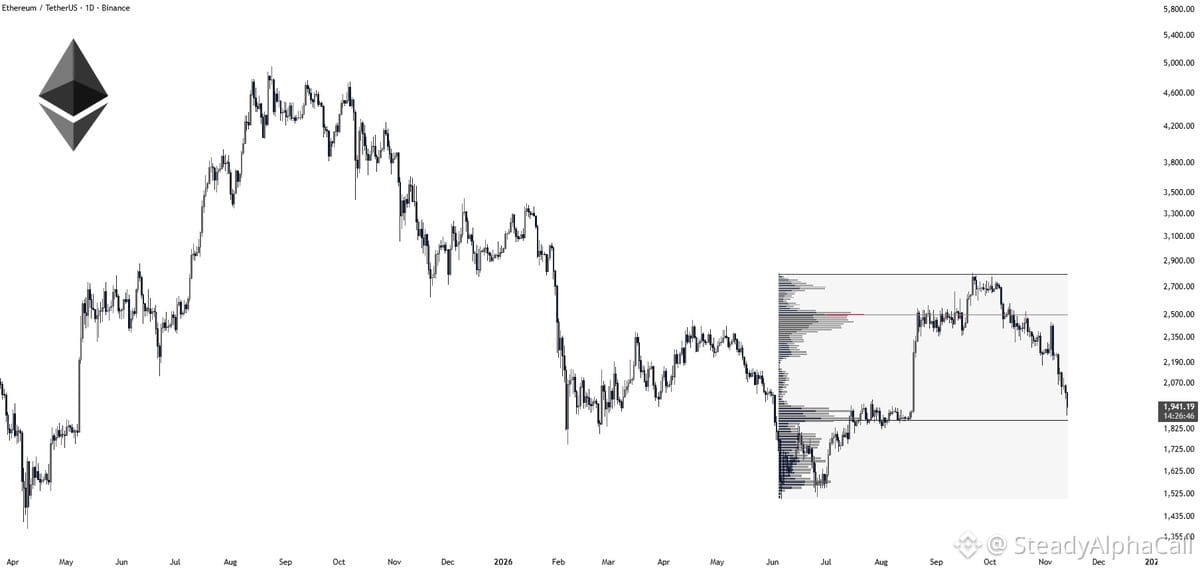
$ETH broke below $2,500 and is now sitting at a critical support zone around $1,900.
This is decision time. If buyers show up here and defend this level, we could be looking at the low for this leg down. If it holds, it sets up a potential base for the next move higher.
Long-term holders should be watching this closely. These are the levels where accumulation happens — not when everything feels safe at $3,000+. Patience and discipline win in this game.
If you're building a position, this zone makes sense. If you're already in, no reason to panic. Time in the market beats timing the market.
1
1
553
$NEAR has returned to its major support/resistance zone.
Everyone was asking for a pullback — well, here it is. If $BTC stabilizes and shows signs of bottoming, this could be the entry window we've been waiting for.
Patience pays. Watch for confirmation, then consider adding if it fits your long-term thesis. Don't chase — let the setup come to you.
Everyone was asking for a pullback — well, here it is. If $BTC stabilizes and shows signs of bottoming, this could be the entry window we've been waiting for.
Patience pays. Watch for confirmation, then consider adding if it fits your long-term thesis. Don't chase — let the setup come to you.
163
Putting everything into $BTC right here. No unrealized gains tax to worry about when you're not selling.
This is the hold-through-cycles playbook in action. If you're buying into weakness and planning to sit for years, tax efficiency is a real edge. You're only taxed on realized gains in most jurisdictions — so staying patient and avoiding the trade-in-trade-out churn keeps your capital working for you, not the tax man.
Macro backdrop supports this. We're still early in the cycle, $BTC remains the core reserve asset, and time in beats timing. If this is a long-term position, you're stacking at levels that could look generous in 12-24 months.
Just make sure you're not overextended. Conviction is great, but liquidity and risk management matter. If this is your multi-year hold, you're playing it right. If not, size accordingly.

151
GM
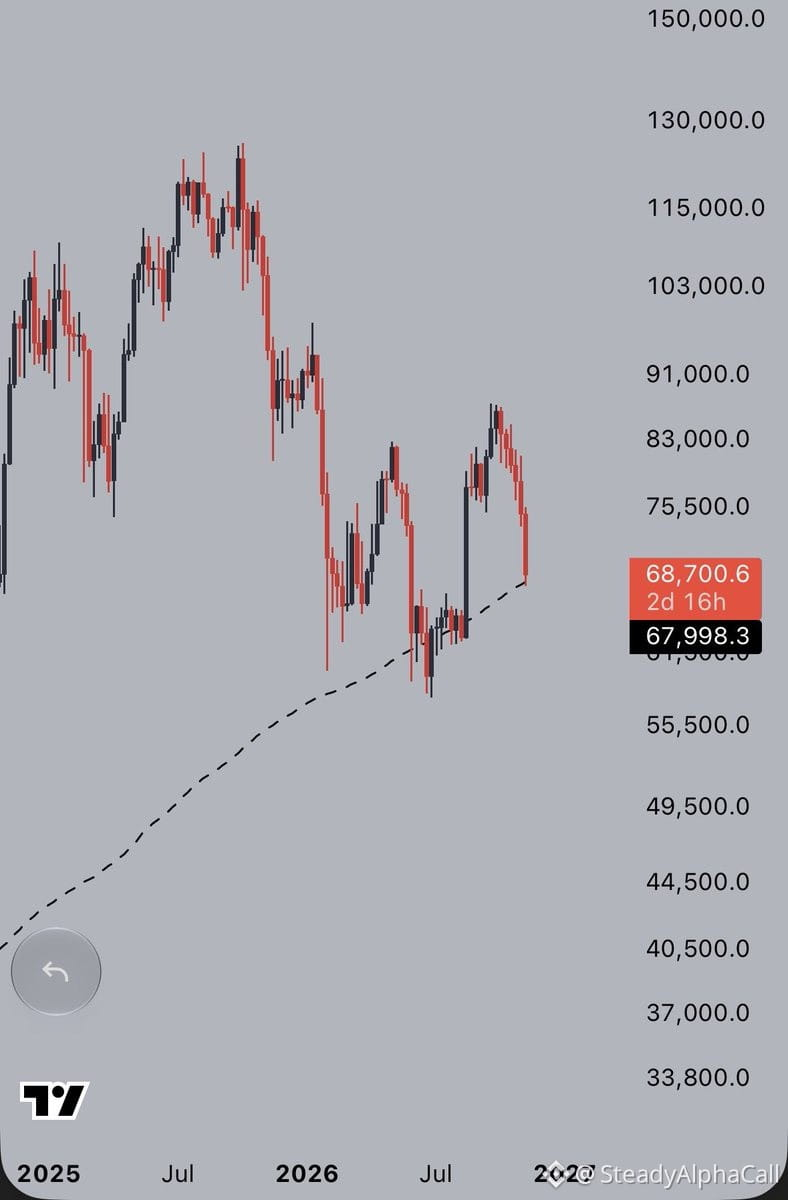
There's the capitulation — right into the 200-week MA.
Bought some more here. Let's see how it plays.
$BTC
GM
There's the capitulation — right into the 200-week MA.
Bought some more here. Let's see how it plays.
$BTC
There's the capitulation — right into the 200-week MA.
Bought some more here. Let's see how it plays.
$BTC
176
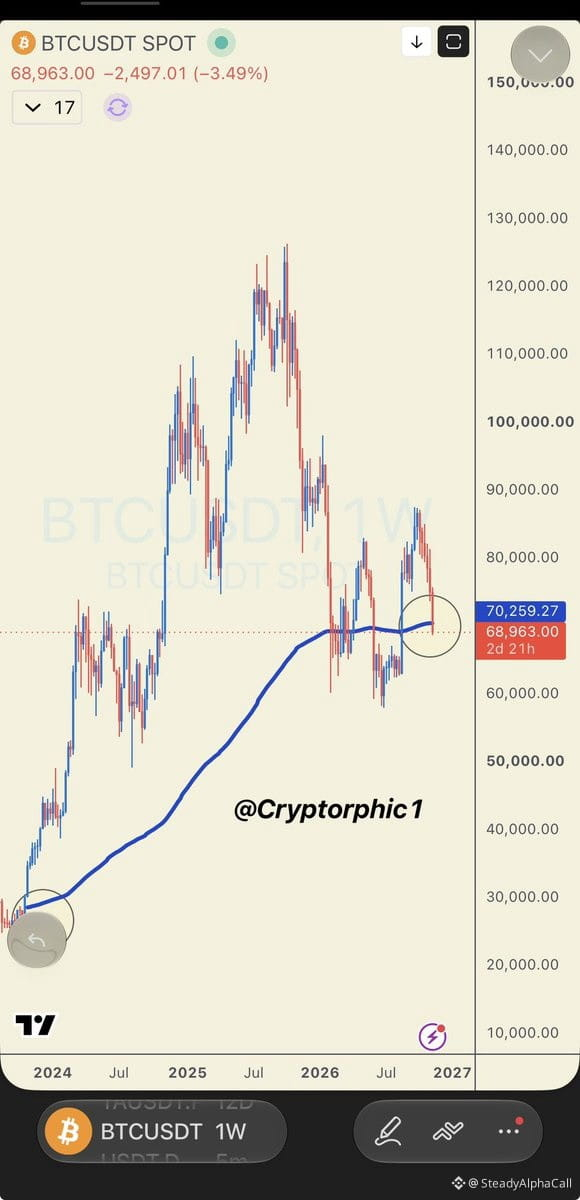
Looking at $BTC here — the 200-week EMA is in play heading into this weekly close. Historically, this level has marked major cycle bottoms, so it's worth watching closely.
Could we wick lower? Sure. That $66,900 zone I flagged last week is still in range if sellers push harder.
But here's the reality: nothing goes up forever, and nothing goes down forever. Both $BTC and $ETH are already deep in oversold territory across multiple timeframes. That doesn't mean instant reversal, but it does mean we're closer to value than we've been in a while.
This is where patience pays. Don't chase emotions. Don't panic sell into weakness. And definitely don't force trades unless you have a clear plan and conviction.
Stay disciplined. Stay focused. The long-term holders who survive these moments are the ones who come out ahead.
650
Dutch parliament just passed a tax reform bill targeting crypto and metals with an annual unrealized gains tax. Vote was razor-thin: 76-74.
This is the kind of regulatory overreach that pushes innovation and capital out of jurisdictions. Taxing paper gains you haven't realized is economically backwards and punishes long-term holders who are just sitting on their positions through cycles.
For those in the Netherlands: understand your new obligations, consider how this impacts your hold strategy, and explore whether structuring through compliant entities or jurisdictions makes sense. This isn't about dodging taxes — it's about not getting penalized for holding an appreciating asset you haven't sold.
Broader lesson for the global crypto community: jurisdictional risk is real. Governments are experimenting with new ways to extract value from digital assets, and not all of them make economic sense. Stay informed on local policy, plan accordingly, and remember that capital flows to where it's treated best.
Long-term holders in restrictive regions may need to rethink residency or structure if this trend continues. The macro tailwind for crypto is strong, but the regulatory landscape varies wildly country to country.
115
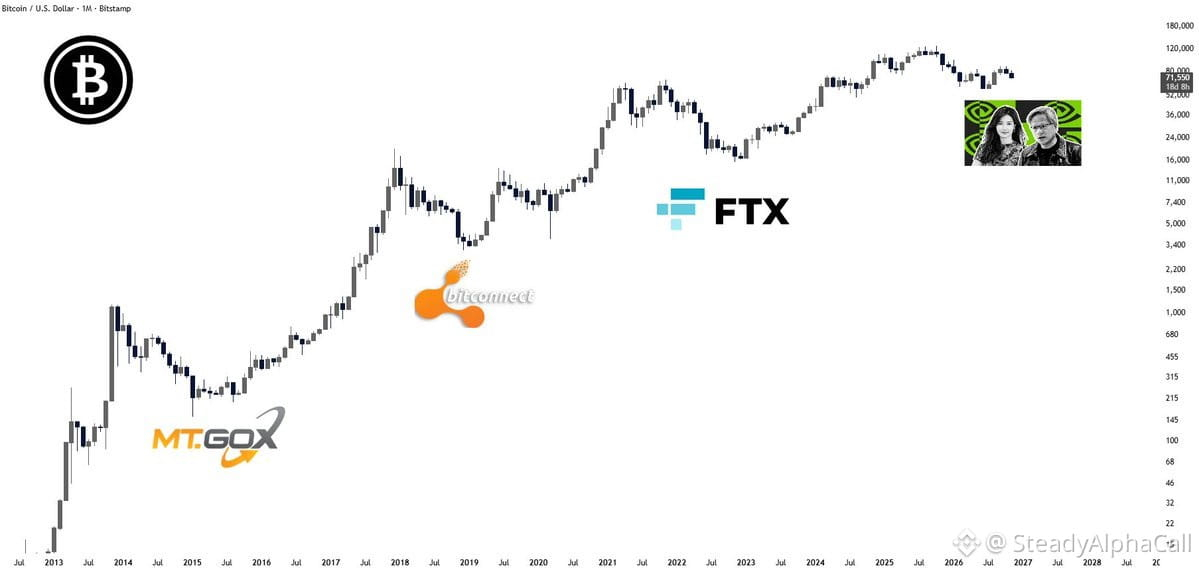
Every $BTC cycle hits you with a confidence shock near the bottom.
Mt. Gox in 2015. BitConnect in 2018. FTX in 2022. Now NVIDIA controversy in 2026.
The pattern is clear: the market always finds a reason to shake out weak hands before the next leg up. This is where patience pays. If you've seen multiple cycles, you know the drill — fear peaks when opportunity is highest.
Hold through the noise. These shocks separate long-term holders from short-term traders. Time in the market beats timing the market every single time.
1
300
Market looks scary right now, but nothing changes for me.
Waiting for the higher low to confirm. Until that prints, I'm just watching and staying patient.
No panic. No action. Just holding through the noise.
$BTC
Market looks scary right now, but nothing changes for me.
Waiting for the higher low to confirm. Until that prints, I'm just watching and staying patient.
No panic. No action. Just holding through the noise.
$BTC
Waiting for the higher low to confirm. Until that prints, I'm just watching and staying patient.
No panic. No action. Just holding through the noise.
$BTC
82
Big test for the market right now.
$BTC has been lagging while the S&P tried to bounce — not a great sign. If stocks reject here and roll over, we could see some real pain.
But here's the thing: sometimes you need that flush to reset sentiment and set up the next leg. Short-term capitulation can clear out leverage and weak hands, which is healthy for the bigger picture.
Stay patient. If you're holding quality and thinking in cycles, these moments are noise. If we get a washout, that's when you look for value — not when you panic.
Long-term plan stays the same.
83
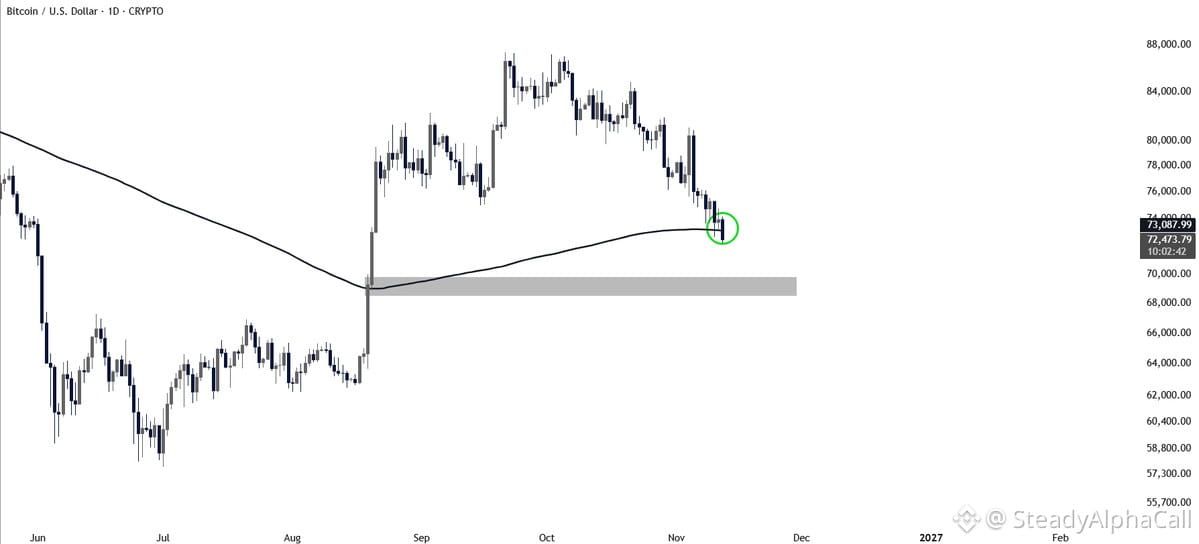
We might be looking at fear right before the next leg up.
If $BTC loses the 200-day moving average, expect panic selling. But here's the thing — this could be your last chance to buy cheap $BTC for a while.
This is how cycles work. Fear shakes out weak hands right before the move. If you've got conviction and you're holding for the long term, weakness near major support is where you add, not exit.
Stay disciplined. Time in the market beats timing the market.
1
862
$BTC sitting under heavy short exposure around $85.1K. Big liquidity pool stacked above current levels.
If we push through, those shorts get squeezed and liquidations pile on — classic fuel for a momentum move higher.
This is how bull runs accelerate. Patience pays when the setup is clean and the crowd is leaning the wrong way.
If we push through, those shorts get squeezed and liquidations pile on — classic fuel for a momentum move higher.
This is how bull runs accelerate. Patience pays when the setup is clean and the crowd is leaning the wrong way.
1
1
105
Zooming into the 4-hour chart — $BTC is still getting walked down step by step.
The 4h 25 EMA is acting as resistance on every bounce attempt. Price can't break above it, which tells you the trend hasn't shifted yet.
No reason to step in front of a moving train here. I'm staying patient, waiting for actual reversal signals before making a move.
Let the market show its hand first. 🧘♂️
125
Six red weeks straight on $BTC. I've seen worse weekly charts over the years, and Bitcoin always came back.
This isn't new territory. We've survived deeper drawdowns, longer consolidations, worse macro. The cycle continues.
Stay patient. Time in beats timing. This too shall pass.
Six red weeks straight on $BTC. I've seen worse weekly charts over the years, and Bitcoin always came back.
This isn't new territory. We've survived deeper drawdowns, longer consolidations, worse macro. The cycle continues.
Stay patient. Time in beats timing. This too shall pass.
This isn't new territory. We've survived deeper drawdowns, longer consolidations, worse macro. The cycle continues.
Stay patient. Time in beats timing. This too shall pass.
1
91
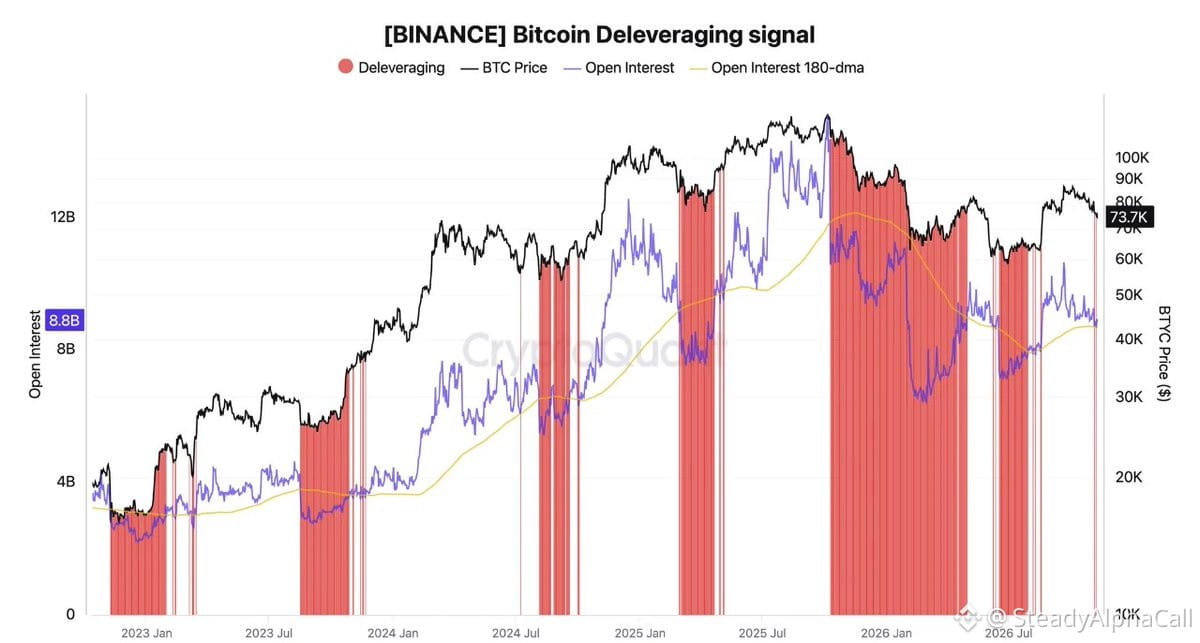
This looks more like bullish capitulation than a trend reversal.
$BTC open interest down 17%, Binance just saw its biggest liquidation wave since 2021.
Leverage getting flushed out — exactly what we need. This is the reset before the next leg up.
Patience pays. Let the weak hands shake out, let the froth clear. These are the moments that set up the real moves. If your thesis is solid and you're holding through cycles, this is noise.
Hold your conviction. Add on weakness if you can. The macro setup hasn't changed.
2
914
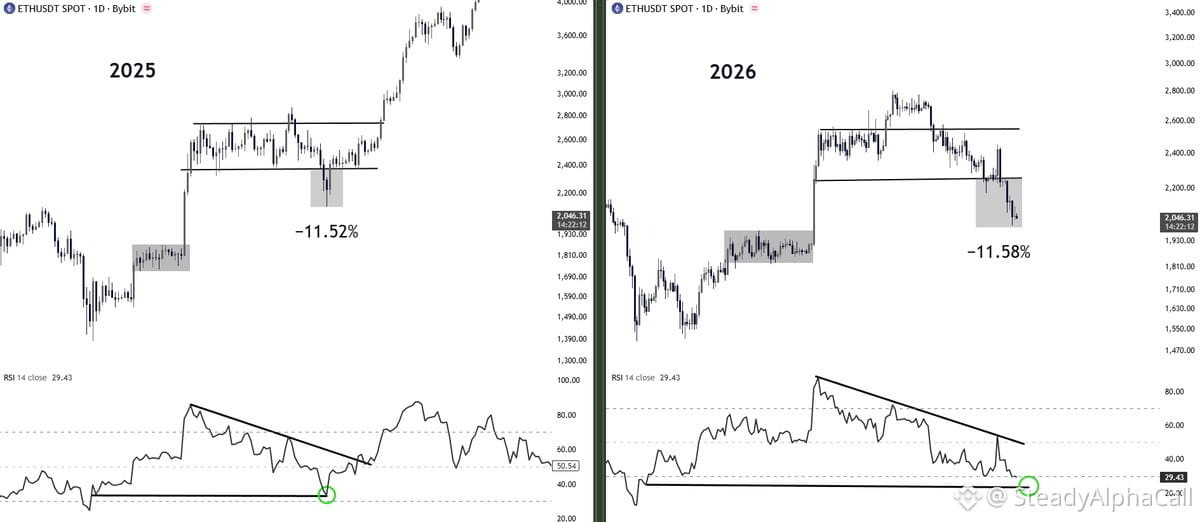
$ETH is showing the same pattern we saw earlier in 2025. Similar drop depth, RSI bouncing off support — last time this setup led to a strong rally.
This is classic cycle behavior. When RSI finds support after a flush and price holds structure, it's often the setup before the next leg. Don't chase the bottom tick, but if you're positioned or scaling in on weakness, this is the kind of technical read that aligns with patient accumulation.
Zoom out: we're still in a macro uptrend. Short-term noise creates long-term entries. If the pattern repeats, those who held or added here will be rewarded. Stay disciplined.
1.6k
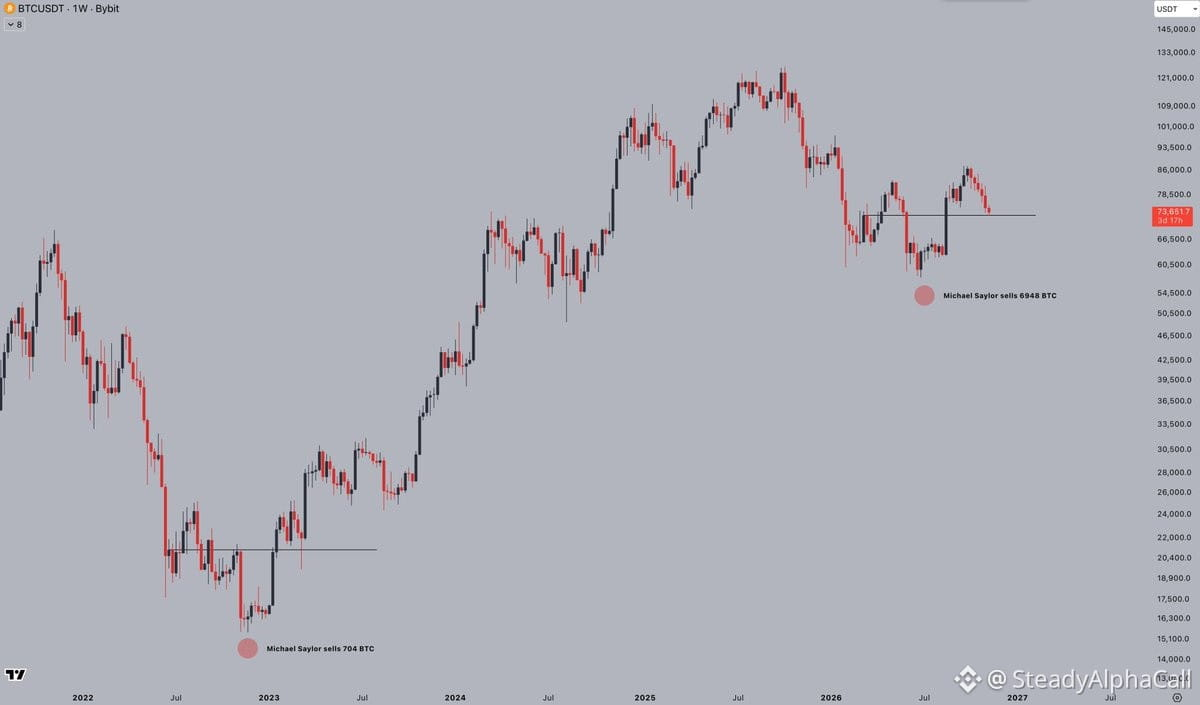
Saylor called the bottom when most doubted. That's how bottoms work — conviction when sentiment is trash.
Now we wait for structure. Higher low confirms the new leg. That's your entry zone if you're adding or building position.
No rush. Let price prove the thesis. Patience beats chasing.
$BTC
Saylor called the bottom when most doubted. That's how bottoms work — conviction when sentiment is trash.
Now we wait for structure. Higher low confirms the new leg. That's your entry zone if you're adding or building position.
No rush. Let price prove the thesis. Patience beats chasing.
$BTC
Now we wait for structure. Higher low confirms the new leg. That's your entry zone if you're adding or building position.
No rush. Let price prove the thesis. Patience beats chasing.
$BTC
1
361
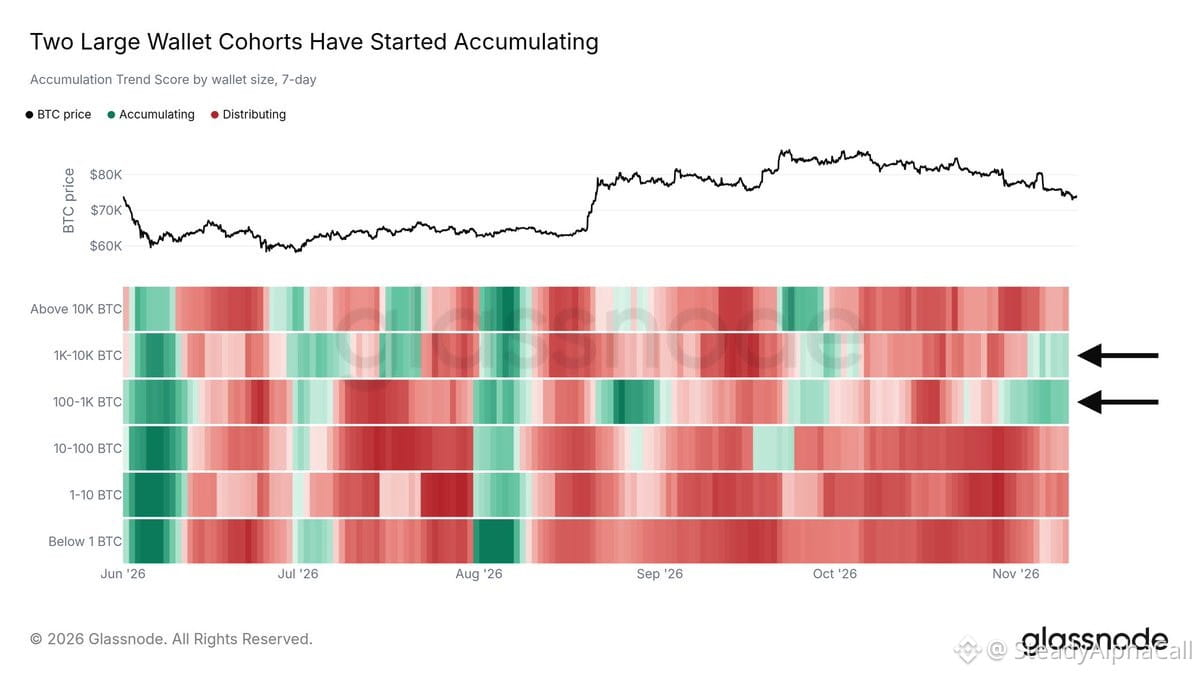
Weeks of selling, but the whales are quietly stacking again according to Glassnode. Classic accumulation phase. When retail panics, smart money steps in. This is where patient holders build position — not when everyone's euphoric. If you've got conviction and time horizon, weakness is opportunity. Don't chase pumps, add on dips. Long-term game.
Weeks of selling, but the whales are quietly stacking again according to Glassnode. Classic accumulation phase. When retail panics, smart money steps in. This is where patient holders build position — not when everyone's euphoric. If you've got conviction and time horizon, weakness is opportunity. Don't chase pumps, add on dips. Long-term game.
1
313
$BTC testing channel support that's held since June. RSI near oversold — same zone where we bounced before.
Still targeting $100K. If support holds, this could be your add zone. If you're long-term, weakness here is opportunity. Watch for a bounce confirmation before adding heavy. The macro setup still favors patient holders.
Still targeting $100K. If support holds, this could be your add zone. If you're long-term, weakness here is opportunity. Watch for a bounce confirmation before adding heavy. The macro setup still favors patient holders.
1
325
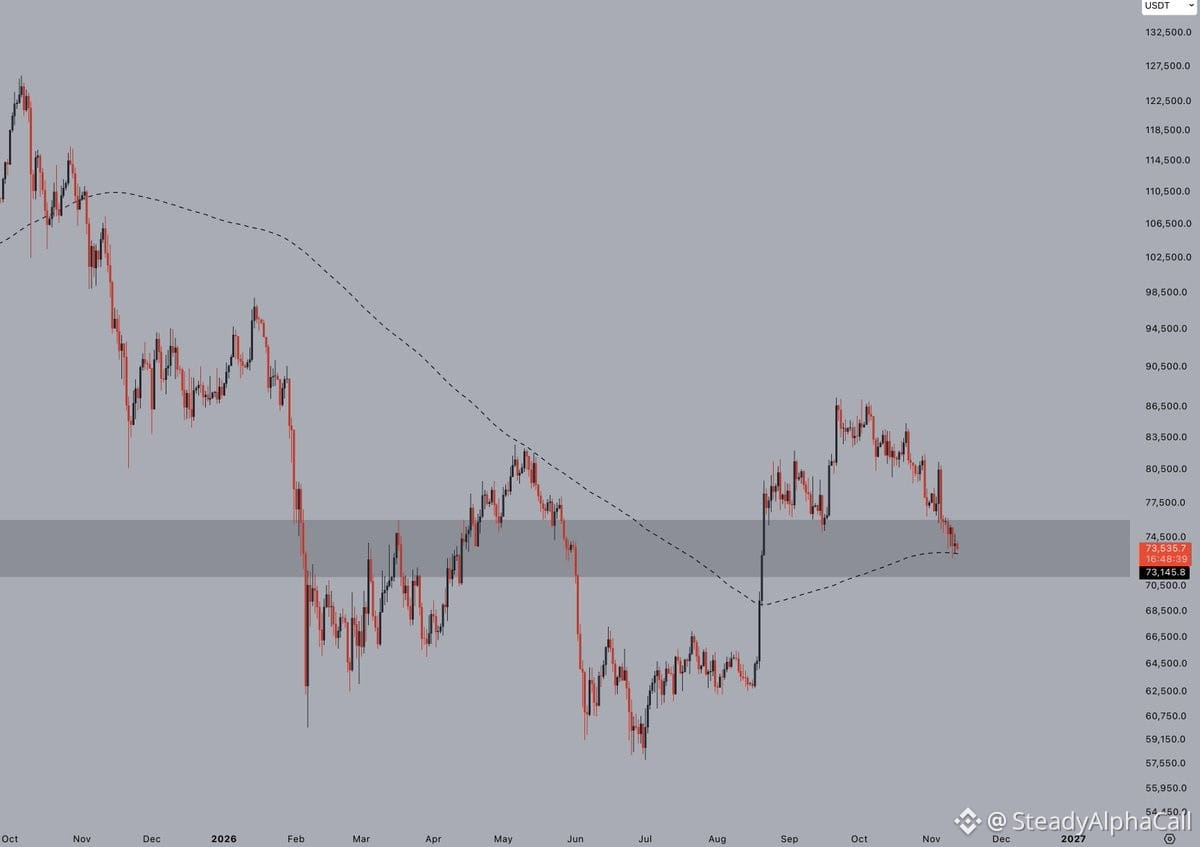
$BTC hit the 200-day moving average — a critical long-term support level that's held through past cycles.
Initial bounce looked promising, but bears are still pushing. This is the line in the sand.
If bulls hold here, it confirms the macro structure is intact and this is just a healthy correction within the broader uptrend. If we lose it convincingly, we might see deeper retests before the next leg.
For long-term holders: this is noise. The 200d MA has been a reliable accumulation zone historically. Patience and process. Watch how price responds over the next few sessions — one candle doesn't make a trend.
Key question: does this hold as support, or do we need to retest lower demand zones? Either way, time in the market beats timing the market.
822
ເຂົ້າສູ່ລະບົບເພື່ອສຳຫຼວດເນື້ອຫາເພີ່ມເຕີມ
ເຂົ້າຮ່ວມກຸ່ມຜູ້ໃຊ້ຄຣິບໂຕທົ່ວໂລກໃນ Binance Square.
⚡️ ໄດ້ຮັບຂໍ້ມູນຫຼ້າສຸດ ແລະ ທີ່ມີປະໂຫຍດກ່ຽວກັບຄຣິບໂຕ.
💬 ໄດ້ຮັບຄວາມໄວ້ວາງໃຈຈາກຕະຫຼາດແລກປ່ຽນຄຣິບໂຕທີ່ໃຫຍ່ທີ່ສຸດໃນໂລກ.
👍 ຄົ້ນຫາຂໍ້ມູນເຊີງເລິກທີ່ແທ້ຈາກນັກສ້າງທີ່ໄດ້ຮັບການຢືນຢັນ.
ອີເມວ / ເບີໂທລະສັບ
ຫົວຂໍ້ທີ່ກໍາລັງນິຍົມ
WhatWillDriveCryptoandStocks’NextRebound?
44,955 ຄັ້ງທີ່ເບິ່ງ
666 ກຳລັງສົນທະນາ
Bitcoin Slips Below $70,000 as Dollar Index Hits 19-Month High
Binance News
·16 ຖືກໃຈ
·34.5k ຄັ້ງທີ່ເບິ່ງ
Anthropic’s6xIPODemandSignalsPotentialRecordRaise
14,463 ຄັ້ງທີ່ເບິ່ງ
325 ກຳລັງສົນທະນາ
USCryptoETFsLose$1.48BInFiveDays
0 ຄັ້ງທີ່ເບິ່ງ
0 ກຳລັງສົນທະນາ