

Nathan Cole
8.1k ໂພສ

Nathan Cole
ລາຍງານ
ບລັອກຜູ້ໃຊ້
Crypto Enthusiast, Investor, KOL & Gem Holder Long term Holder of Memecoin
47 ກໍາລັງຕິດຕາມ
15.4K+ ຜູ້ຕິດຕາມ
4.7K+ Liked
ໂພສ
ທັງໝົດ
ວົງຢືມ
ຖ່າຍທອດສົດ
ປັກໝຸດ
·
--
ບົດຄວາມ
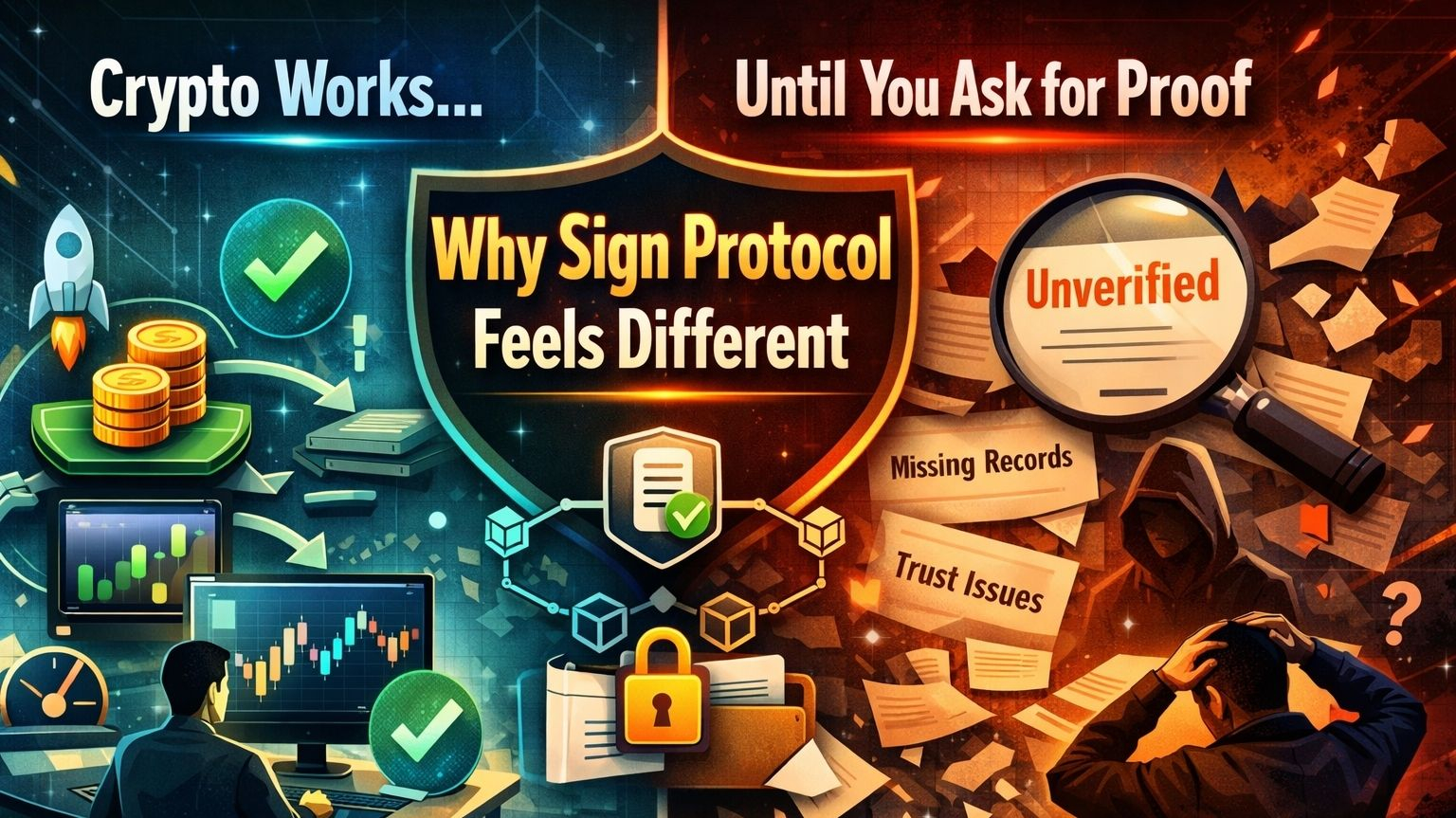
Crypto Works… Until You Ask for Proof: Why Sign Protocol Feels DifferentThere’s something about Sign Protocol that doesn’t try to win you over instantly. It doesn’t come wrapped in a simple pitch or a clean one-liner you can repeat without thinking. If anything, the first impression is the opposite—it feels dense, maybe even a little overwhelming. And normally, that would be enough to walk away. Crypto is full of projects that hide weak ideas behind unnecessary complexity.
But this doesn’t feel like that.
The more you sit with it, the more it starts to feel like that complexity is actually tied to something real. Not artificial, not decorative—just a reflection of a problem that isn’t easy to solve. And that problem is trust. Not the surface-level kind, but the deeper question of whether something can still be proven later, when it actually matters.
Because if you really think about it, most systems today are good at doing things. They execute transactions, move assets, trigger actions, and complete workflows without much friction. That part of crypto has evolved fast. But what happens after? What happens when someone asks for proof?
Who approved this?
What rules were followed?
Can this still be verified without relying on someone’s word?
That’s usually where things start to break down.
Not in obvious ways. It’s quieter than that. A missing record here, an unverifiable claim there, a process that technically worked but leaves no clear trail behind it. At first, it doesn’t seem like a big deal. But over time, those gaps start to matter. Especially when systems grow, when more people get involved, when the stakes get higher.
And by the time someone really needs answers, it’s often too late to reconstruct them cleanly.
That’s the part most projects don’t focus on. It’s not exciting. It doesn’t sell well. You can’t turn it into a quick narrative that gets attention. So it gets pushed aside, delayed, or ignored completely. Everything looks fine on the surface, until pressure shows up and suddenly the lack of structure becomes impossible to ignore.
That’s why Sign Protocol stands out to me.
It’s not trying to make things look smoother. It’s trying to make them hold up. Instead of just enabling actions, it focuses on how those actions are recorded, structured, and proven over time. It introduces this idea that proof shouldn’t be something you scramble to assemble later—it should be built into the system from the start.
And that sounds simple until you realize how rarely it’s actually done properly.
What Sign does differently is treat proof as something structured, not scattered. Instead of relying on loose data or isolated records, it organizes information into defined formats that can be signed, verified, and reused across different systems. So when something happens, it’s not just completed—it’s documented in a way that stays meaningful even when it moves.
Because that’s another problem people don’t talk about enough. Proof doesn’t just disappear—it breaks when it travels. Something that’s valid in one system often loses its meaning in another. Context gets lost. Assumptions creep in. Trust resets.
And suddenly, you’re back to square one.
Sign feels like it’s trying to fix that. To create a kind of continuity where proof doesn’t have to start over every time it crosses a boundary. Where a credential, an approval, or a verification can carry its weight with it instead of relying on someone else to confirm it again.
There’s something quietly powerful about that idea.
Not in a flashy way, but in a way that feels grounded in how things actually fail in the real world. Because failures are rarely dramatic at the beginning. They build slowly. Small inconsistencies, weak assumptions, missing links. Everything seems fine—until someone looks closer.
And when they do, the cracks show up fast.
That’s the moment Sign seems to be designed for. Not the moment when everything is working, but the moment when it’s questioned. When someone asks for clarity, for evidence, for something solid enough to stand on.
And that’s where this starts to feel less like a technical project and more like something human.
Because underneath all the systems and structures, there’s a very basic need driving this. People want to know that things are real. That what they’re seeing isn’t just a claim, but something that can be verified independently. That trust doesn’t depend on memory, authority, or convenience—but on something concrete.
We don’t always think about it, but it’s always there.
Every time something goes wrong, every time a system fails, every time a promise doesn’t hold—that’s when this need becomes visible. And by then, it’s usually too late to fix easily.
Sign doesn’t wait for that moment. It builds for it in advance.
And maybe that’s why it feels heavier than most projects. Because it’s dealing with something that isn’t easy to simplify. Real trust comes with layers. It comes with edge cases, exceptions, and details that don’t fit neatly into clean diagrams.
Trying to handle that properly means accepting complexity instead of hiding it.
Of course, that also makes things harder. Harder to explain, harder to market, harder to get attention in a space that moves fast and rewards simplicity. Not everyone wants to slow down and think about structure, records, and verification. Most people are just looking for something that works now.
And that’s fair.
But the things that matter long-term are usually the ones that don’t reveal their value immediately. They show up later, when everything else is being tested. When conditions change, when pressure increases, when systems are forced to prove themselves instead of just operate.
That’s where the difference becomes clear.
I’m not looking at Sign Protocol as something perfect or guaranteed to succeed. There are too many variables for that. Good ideas don’t always make it. Strong infrastructure doesn’t always get the attention it deserves. Timing alone can decide outcomes in this space.
But there’s something here that feels grounded.
It’s not trying to sell a perfect story. It’s trying to solve a problem that most people would rather avoid. And that alone makes it worth watching.
Because in the end, execution gets you through the moment.
But proof is what stays behind.
#SignDigitalSovereignInfra
@SignOfficial $SIGN
{spot}(SIGNUSDT)
Crypto Works… Until You Ask for Proof: Why Sign Protocol Feels Different
There’s something about Sign Protocol that doesn’t try to win you over instantly. It doesn’t come wrapped in a simple pitch or a clean one-liner you can repeat without thinking. If anything, the first impression is the opposite—it feels dense, maybe even a little overwhelming. And normally, that would be enough to walk away. Crypto is full of projects that hide weak ideas behind unnecessary complexity.
But this doesn’t feel like that.
The more you sit with it, the more it starts to feel like that complexity is actually tied to something real. Not artificial, not decorative—just a reflection of a problem that isn’t easy to solve. And that problem is trust. Not the surface-level kind, but the deeper question of whether something can still be proven later, when it actually matters.
Because if you really think about it, most systems today are good at doing things. They execute transactions, move assets, trigger actions, and complete workflows without much friction. That part of crypto has evolved fast. But what happens after? What happens when someone asks for proof?
Who approved this?
What rules were followed?
Can this still be verified without relying on someone’s word?
That’s usually where things start to break down.
Not in obvious ways. It’s quieter than that. A missing record here, an unverifiable claim there, a process that technically worked but leaves no clear trail behind it. At first, it doesn’t seem like a big deal. But over time, those gaps start to matter. Especially when systems grow, when more people get involved, when the stakes get higher.
And by the time someone really needs answers, it’s often too late to reconstruct them cleanly.
That’s the part most projects don’t focus on. It’s not exciting. It doesn’t sell well. You can’t turn it into a quick narrative that gets attention. So it gets pushed aside, delayed, or ignored completely. Everything looks fine on the surface, until pressure shows up and suddenly the lack of structure becomes impossible to ignore.
That’s why Sign Protocol stands out to me.
It’s not trying to make things look smoother. It’s trying to make them hold up. Instead of just enabling actions, it focuses on how those actions are recorded, structured, and proven over time. It introduces this idea that proof shouldn’t be something you scramble to assemble later—it should be built into the system from the start.
And that sounds simple until you realize how rarely it’s actually done properly.
What Sign does differently is treat proof as something structured, not scattered. Instead of relying on loose data or isolated records, it organizes information into defined formats that can be signed, verified, and reused across different systems. So when something happens, it’s not just completed—it’s documented in a way that stays meaningful even when it moves.
Because that’s another problem people don’t talk about enough. Proof doesn’t just disappear—it breaks when it travels. Something that’s valid in one system often loses its meaning in another. Context gets lost. Assumptions creep in. Trust resets.
And suddenly, you’re back to square one.
Sign feels like it’s trying to fix that. To create a kind of continuity where proof doesn’t have to start over every time it crosses a boundary. Where a credential, an approval, or a verification can carry its weight with it instead of relying on someone else to confirm it again.
There’s something quietly powerful about that idea.
Not in a flashy way, but in a way that feels grounded in how things actually fail in the real world. Because failures are rarely dramatic at the beginning. They build slowly. Small inconsistencies, weak assumptions, missing links. Everything seems fine—until someone looks closer.
And when they do, the cracks show up fast.
That’s the moment Sign seems to be designed for. Not the moment when everything is working, but the moment when it’s questioned. When someone asks for clarity, for evidence, for something solid enough to stand on.
And that’s where this starts to feel less like a technical project and more like something human.
Because underneath all the systems and structures, there’s a very basic need driving this. People want to know that things are real. That what they’re seeing isn’t just a claim, but something that can be verified independently. That trust doesn’t depend on memory, authority, or convenience—but on something concrete.
We don’t always think about it, but it’s always there.
Every time something goes wrong, every time a system fails, every time a promise doesn’t hold—that’s when this need becomes visible. And by then, it’s usually too late to fix easily.
Sign doesn’t wait for that moment. It builds for it in advance.
And maybe that’s why it feels heavier than most projects. Because it’s dealing with something that isn’t easy to simplify. Real trust comes with layers. It comes with edge cases, exceptions, and details that don’t fit neatly into clean diagrams.
Trying to handle that properly means accepting complexity instead of hiding it.
Of course, that also makes things harder. Harder to explain, harder to market, harder to get attention in a space that moves fast and rewards simplicity. Not everyone wants to slow down and think about structure, records, and verification. Most people are just looking for something that works now.
And that’s fair.
But the things that matter long-term are usually the ones that don’t reveal their value immediately. They show up later, when everything else is being tested. When conditions change, when pressure increases, when systems are forced to prove themselves instead of just operate.
That’s where the difference becomes clear.
I’m not looking at Sign Protocol as something perfect or guaranteed to succeed. There are too many variables for that. Good ideas don’t always make it. Strong infrastructure doesn’t always get the attention it deserves. Timing alone can decide outcomes in this space.
But there’s something here that feels grounded.
It’s not trying to sell a perfect story. It’s trying to solve a problem that most people would rather avoid. And that alone makes it worth watching.
Because in the end, execution gets you through the moment.
But proof is what stays behind.
#SignDigitalSovereignInfra
@SignOfficial $SIGN
But this doesn’t feel like that.
The more you sit with it, the more it starts to feel like that complexity is actually tied to something real. Not artificial, not decorative—just a reflection of a problem that isn’t easy to solve. And that problem is trust. Not the surface-level kind, but the deeper question of whether something can still be proven later, when it actually matters.
Because if you really think about it, most systems today are good at doing things. They execute transactions, move assets, trigger actions, and complete workflows without much friction. That part of crypto has evolved fast. But what happens after? What happens when someone asks for proof?
Who approved this?
What rules were followed?
Can this still be verified without relying on someone’s word?
That’s usually where things start to break down.
Not in obvious ways. It’s quieter than that. A missing record here, an unverifiable claim there, a process that technically worked but leaves no clear trail behind it. At first, it doesn’t seem like a big deal. But over time, those gaps start to matter. Especially when systems grow, when more people get involved, when the stakes get higher.
And by the time someone really needs answers, it’s often too late to reconstruct them cleanly.
That’s the part most projects don’t focus on. It’s not exciting. It doesn’t sell well. You can’t turn it into a quick narrative that gets attention. So it gets pushed aside, delayed, or ignored completely. Everything looks fine on the surface, until pressure shows up and suddenly the lack of structure becomes impossible to ignore.
That’s why Sign Protocol stands out to me.
It’s not trying to make things look smoother. It’s trying to make them hold up. Instead of just enabling actions, it focuses on how those actions are recorded, structured, and proven over time. It introduces this idea that proof shouldn’t be something you scramble to assemble later—it should be built into the system from the start.
And that sounds simple until you realize how rarely it’s actually done properly.
What Sign does differently is treat proof as something structured, not scattered. Instead of relying on loose data or isolated records, it organizes information into defined formats that can be signed, verified, and reused across different systems. So when something happens, it’s not just completed—it’s documented in a way that stays meaningful even when it moves.
Because that’s another problem people don’t talk about enough. Proof doesn’t just disappear—it breaks when it travels. Something that’s valid in one system often loses its meaning in another. Context gets lost. Assumptions creep in. Trust resets.
And suddenly, you’re back to square one.
Sign feels like it’s trying to fix that. To create a kind of continuity where proof doesn’t have to start over every time it crosses a boundary. Where a credential, an approval, or a verification can carry its weight with it instead of relying on someone else to confirm it again.
There’s something quietly powerful about that idea.
Not in a flashy way, but in a way that feels grounded in how things actually fail in the real world. Because failures are rarely dramatic at the beginning. They build slowly. Small inconsistencies, weak assumptions, missing links. Everything seems fine—until someone looks closer.
And when they do, the cracks show up fast.
That’s the moment Sign seems to be designed for. Not the moment when everything is working, but the moment when it’s questioned. When someone asks for clarity, for evidence, for something solid enough to stand on.
And that’s where this starts to feel less like a technical project and more like something human.
Because underneath all the systems and structures, there’s a very basic need driving this. People want to know that things are real. That what they’re seeing isn’t just a claim, but something that can be verified independently. That trust doesn’t depend on memory, authority, or convenience—but on something concrete.
We don’t always think about it, but it’s always there.
Every time something goes wrong, every time a system fails, every time a promise doesn’t hold—that’s when this need becomes visible. And by then, it’s usually too late to fix easily.
Sign doesn’t wait for that moment. It builds for it in advance.
And maybe that’s why it feels heavier than most projects. Because it’s dealing with something that isn’t easy to simplify. Real trust comes with layers. It comes with edge cases, exceptions, and details that don’t fit neatly into clean diagrams.
Trying to handle that properly means accepting complexity instead of hiding it.
Of course, that also makes things harder. Harder to explain, harder to market, harder to get attention in a space that moves fast and rewards simplicity. Not everyone wants to slow down and think about structure, records, and verification. Most people are just looking for something that works now.
And that’s fair.
But the things that matter long-term are usually the ones that don’t reveal their value immediately. They show up later, when everything else is being tested. When conditions change, when pressure increases, when systems are forced to prove themselves instead of just operate.
That’s where the difference becomes clear.
I’m not looking at Sign Protocol as something perfect or guaranteed to succeed. There are too many variables for that. Good ideas don’t always make it. Strong infrastructure doesn’t always get the attention it deserves. Timing alone can decide outcomes in this space.
But there’s something here that feels grounded.
It’s not trying to sell a perfect story. It’s trying to solve a problem that most people would rather avoid. And that alone makes it worth watching.
Because in the end, execution gets you through the moment.
But proof is what stays behind.
#SignDigitalSovereignInfra
@SignOfficial $SIGN
96
8
158
80.3k
·
--
ບົດຄວາມ
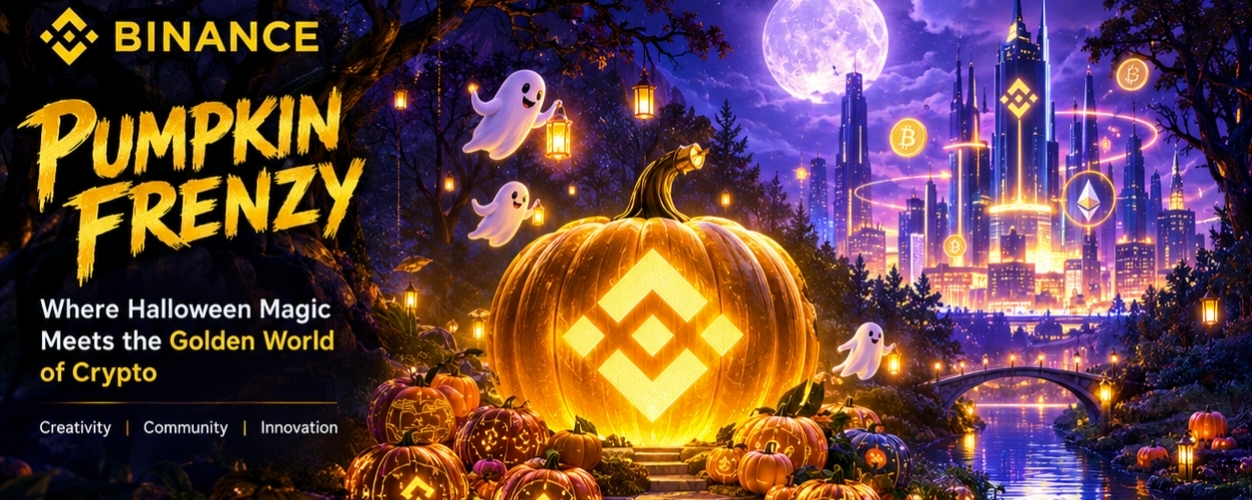
Binance Pumpkin Frenzy: Where Halloween Magic Meets the Golden World of Crypto 🎃Halloween is more than just a night of pumpkins, costumes, and spooky surprises. It is a celebration of imagination, creativity, and the excitement of exploring something different. Every year, the season brings new ideas to life, turning ordinary places into magical worlds filled with glowing lights, mysterious shadows, and unforgettable moments. This time, I wanted to imagine Halloween through a fresh perspective by connecting its enchanting atmosphere with the innovative universe of Binance and cryptocurrency.
Welcome to Binance Pumpkin Frenzy, where golden pumpkins illuminate the darkness and the spirit of crypto adds a futuristic touch to Halloween!
Picture a quiet Halloween evening beneath a deep purple sky. The moon hangs above an enchanted forest, silver mist drifts between ancient trees, and tiny golden lights sparkle along a winding pathway. Pumpkins of different shapes and sizes decorate the garden, each carrying its own mysterious charm. Some glow with warm orange light, while others shine with beautiful golden patterns inspired by the digital world.
At the center of this magical landscape stands an extraordinary golden pumpkin inspired by Binance's visual identity. Its radiant glow spreads across the garden, illuminating floating lanterns, playful ghosts, and sparkling symbols inspired by blockchain technology. Beyond the forest, a futuristic city rises into the night, creating a fascinating contrast between traditional Halloween magic and the possibilities of digital innovation.
This is the kind of scene that makes Binance Pumpkin Frenzy exciting to imagine. It brings together two different worlds, one filled with timeless Halloween traditions and the other driven by technology, curiosity, and creativity.
For me, the golden pumpkin represents more than a beautiful decoration. It symbolizes the excitement of discovering something new. Just as a small light can transform a dark garden, a new idea can change the way we understand the digital world. Cryptocurrency and blockchain technology may seem complicated at first, but learning about them can open the door to fresh perspectives and interesting conversations.
Halloween also teaches us that creativity does not follow a single path. Some people enjoy carving pumpkins, others create handmade decorations, and many express themselves through stories, costumes, or digital artwork. Every idea brings something unique to the celebration. I believe this same freedom of expression makes Binance Square an interesting place for creators who want to share their imagination with a wider community.
A creative post does not need to be complicated to leave an impression. Sometimes, a simple illustration, a thoughtful observation, or an unusual connection between two ideas can capture people's attention. What matters most is originality and the effort to contribute something meaningful rather than simply following what everyone else is doing.
Imagine a group of tiny digital ghosts floating above a river of golden light. Each ghost carries a glowing lantern, guiding visitors through a mysterious garden where pumpkins display patterns resembling connected blockchain networks. In the distance, digital coins shimmer like stars, and the futuristic skyline creates the feeling of entering a completely different universe.
Every element in this imaginary world tells a story. The pumpkins represent creativity, the lanterns symbolize knowledge, and the winding pathways reflect the experience of learning about new technology. The glowing city represents the continuous development of the digital landscape, where new ideas and innovations encourage people to keep exploring.
However, the mysterious atmosphere of Halloween also offers an important reminder for anyone interested in cryptocurrency. Just as spooky decorations can make ordinary objects appear unusual, the online world can sometimes make unreliable opportunities look attractive. A convincing advertisement, a beautifully designed website, or an exciting token promotion should never replace careful research.
That is why I believe the best way to enjoy the crypto community is to combine imagination with responsibility. Protecting digital accounts, checking information through reliable sources, avoiding suspicious links, and questioning unrealistic promises are essential habits. The excitement of a festive campaign should never distract anyone from understanding the risks associated with cryptocurrency.
Beyond the glowing pumpkins and mysterious decorations, the most valuable part of Binance Pumpkin Frenzy is the opportunity to bring people together. Every creator has a different way of interpreting the theme. One person might design a futuristic Halloween city, another might write a story about a magical blockchain forest, while someone else might share an educational post inspired by the season.
These different contributions make the celebration more interesting because creativity becomes something that people can share, discuss, and enjoy together. A community becomes stronger when its members exchange ideas respectfully, appreciate originality, and remain willing to learn from one another.
I also find it fascinating how traditional Halloween imagery can blend with futuristic design. Imagine pumpkins decorated with glowing geometric patterns, lanterns shaped like digital cubes, and golden pathways that resemble interconnected networks. Friendly ghosts float above the landscape while tiny lights move between the trees, creating the impression of information traveling through a magical digital universe.
The entire scene feels mysterious but welcoming, combining the playful spirit of Halloween with the curiosity that drives technological discovery. Instead of focusing only on the spooky side of the season, this concept celebrates imagination, exploration, and the human desire to understand what lies beyond the familiar.
For me, that is the real charm of Binance Pumpkin Frenzy. It is not simply about creating an attractive Halloween scene or using golden colors to catch attention. It is about telling a story that connects festive traditions with modern ideas in a way that feels engaging and original.
As the night grows darker and the golden pumpkin continues to shine, the enchanted garden becomes a symbol of possibility. Every light reveals another detail, every pathway leads toward a new discovery, and every creative idea adds something different to the experience.
The world of crypto, much like this imaginary Halloween garden, is full of things to explore. Some paths may lead to useful knowledge, while others require caution and careful judgment. The important thing is to remain curious without forgetting the value of responsible decisions.
This Halloween, I imagine Binance Pumpkin Frenzy as a celebration where creativity shines brighter than the shadows, where technology inspires new stories, and where community spirit makes every contribution more meaningful.
Let the golden pumpkins light up the night, let the friendly ghosts bring a little laughter, and let imagination transform the ordinary into something extraordinary.
Because the real magic of Halloween is not hidden inside a pumpkin. It lives in the ideas we create, the stories we share, and the connections we build along the way.
Welcome to Binance Pumpkin Frenzy — a Halloween adventure filled with golden dreams, digital discoveries, and endless imagination! 🎃🌕✨
#SEAPumpkinFrenzy #Binance #Halloween #BinanceSquare #crypto
Binance Pumpkin Frenzy: Where Halloween Magic Meets the Golden World of Crypto 🎃
Halloween is more than just a night of pumpkins, costumes, and spooky surprises. It is a celebration of imagination, creativity, and the excitement of exploring something different. Every year, the season brings new ideas to life, turning ordinary places into magical worlds filled with glowing lights, mysterious shadows, and unforgettable moments. This time, I wanted to imagine Halloween through a fresh perspective by connecting its enchanting atmosphere with the innovative universe of Binance and cryptocurrency.
Welcome to Binance Pumpkin Frenzy, where golden pumpkins illuminate the darkness and the spirit of crypto adds a futuristic touch to Halloween!
Picture a quiet Halloween evening beneath a deep purple sky. The moon hangs above an enchanted forest, silver mist drifts between ancient trees, and tiny golden lights sparkle along a winding pathway. Pumpkins of different shapes and sizes decorate the garden, each carrying its own mysterious charm. Some glow with warm orange light, while others shine with beautiful golden patterns inspired by the digital world.
At the center of this magical landscape stands an extraordinary golden pumpkin inspired by Binance's visual identity. Its radiant glow spreads across the garden, illuminating floating lanterns, playful ghosts, and sparkling symbols inspired by blockchain technology. Beyond the forest, a futuristic city rises into the night, creating a fascinating contrast between traditional Halloween magic and the possibilities of digital innovation.
This is the kind of scene that makes Binance Pumpkin Frenzy exciting to imagine. It brings together two different worlds, one filled with timeless Halloween traditions and the other driven by technology, curiosity, and creativity.
For me, the golden pumpkin represents more than a beautiful decoration. It symbolizes the excitement of discovering something new. Just as a small light can transform a dark garden, a new idea can change the way we understand the digital world. Cryptocurrency and blockchain technology may seem complicated at first, but learning about them can open the door to fresh perspectives and interesting conversations.
Halloween also teaches us that creativity does not follow a single path. Some people enjoy carving pumpkins, others create handmade decorations, and many express themselves through stories, costumes, or digital artwork. Every idea brings something unique to the celebration. I believe this same freedom of expression makes Binance Square an interesting place for creators who want to share their imagination with a wider community.
A creative post does not need to be complicated to leave an impression. Sometimes, a simple illustration, a thoughtful observation, or an unusual connection between two ideas can capture people's attention. What matters most is originality and the effort to contribute something meaningful rather than simply following what everyone else is doing.
Imagine a group of tiny digital ghosts floating above a river of golden light. Each ghost carries a glowing lantern, guiding visitors through a mysterious garden where pumpkins display patterns resembling connected blockchain networks. In the distance, digital coins shimmer like stars, and the futuristic skyline creates the feeling of entering a completely different universe.
Every element in this imaginary world tells a story. The pumpkins represent creativity, the lanterns symbolize knowledge, and the winding pathways reflect the experience of learning about new technology. The glowing city represents the continuous development of the digital landscape, where new ideas and innovations encourage people to keep exploring.
However, the mysterious atmosphere of Halloween also offers an important reminder for anyone interested in cryptocurrency. Just as spooky decorations can make ordinary objects appear unusual, the online world can sometimes make unreliable opportunities look attractive. A convincing advertisement, a beautifully designed website, or an exciting token promotion should never replace careful research.
That is why I believe the best way to enjoy the crypto community is to combine imagination with responsibility. Protecting digital accounts, checking information through reliable sources, avoiding suspicious links, and questioning unrealistic promises are essential habits. The excitement of a festive campaign should never distract anyone from understanding the risks associated with cryptocurrency.
Beyond the glowing pumpkins and mysterious decorations, the most valuable part of Binance Pumpkin Frenzy is the opportunity to bring people together. Every creator has a different way of interpreting the theme. One person might design a futuristic Halloween city, another might write a story about a magical blockchain forest, while someone else might share an educational post inspired by the season.
These different contributions make the celebration more interesting because creativity becomes something that people can share, discuss, and enjoy together. A community becomes stronger when its members exchange ideas respectfully, appreciate originality, and remain willing to learn from one another.
I also find it fascinating how traditional Halloween imagery can blend with futuristic design. Imagine pumpkins decorated with glowing geometric patterns, lanterns shaped like digital cubes, and golden pathways that resemble interconnected networks. Friendly ghosts float above the landscape while tiny lights move between the trees, creating the impression of information traveling through a magical digital universe.
The entire scene feels mysterious but welcoming, combining the playful spirit of Halloween with the curiosity that drives technological discovery. Instead of focusing only on the spooky side of the season, this concept celebrates imagination, exploration, and the human desire to understand what lies beyond the familiar.
For me, that is the real charm of Binance Pumpkin Frenzy. It is not simply about creating an attractive Halloween scene or using golden colors to catch attention. It is about telling a story that connects festive traditions with modern ideas in a way that feels engaging and original.
As the night grows darker and the golden pumpkin continues to shine, the enchanted garden becomes a symbol of possibility. Every light reveals another detail, every pathway leads toward a new discovery, and every creative idea adds something different to the experience.
The world of crypto, much like this imaginary Halloween garden, is full of things to explore. Some paths may lead to useful knowledge, while others require caution and careful judgment. The important thing is to remain curious without forgetting the value of responsible decisions.
This Halloween, I imagine Binance Pumpkin Frenzy as a celebration where creativity shines brighter than the shadows, where technology inspires new stories, and where community spirit makes every contribution more meaningful.
Let the golden pumpkins light up the night, let the friendly ghosts bring a little laughter, and let imagination transform the ordinary into something extraordinary.
Because the real magic of Halloween is not hidden inside a pumpkin. It lives in the ideas we create, the stories we share, and the connections we build along the way.
Welcome to Binance Pumpkin Frenzy — a Halloween adventure filled with golden dreams, digital discoveries, and endless imagination! 🎃🌕✨
#SEAPumpkinFrenzy #Binance #Halloween #BinanceSquare #crypto
Welcome to Binance Pumpkin Frenzy, where golden pumpkins illuminate the darkness and the spirit of crypto adds a futuristic touch to Halloween!
Picture a quiet Halloween evening beneath a deep purple sky. The moon hangs above an enchanted forest, silver mist drifts between ancient trees, and tiny golden lights sparkle along a winding pathway. Pumpkins of different shapes and sizes decorate the garden, each carrying its own mysterious charm. Some glow with warm orange light, while others shine with beautiful golden patterns inspired by the digital world.
At the center of this magical landscape stands an extraordinary golden pumpkin inspired by Binance's visual identity. Its radiant glow spreads across the garden, illuminating floating lanterns, playful ghosts, and sparkling symbols inspired by blockchain technology. Beyond the forest, a futuristic city rises into the night, creating a fascinating contrast between traditional Halloween magic and the possibilities of digital innovation.
This is the kind of scene that makes Binance Pumpkin Frenzy exciting to imagine. It brings together two different worlds, one filled with timeless Halloween traditions and the other driven by technology, curiosity, and creativity.
For me, the golden pumpkin represents more than a beautiful decoration. It symbolizes the excitement of discovering something new. Just as a small light can transform a dark garden, a new idea can change the way we understand the digital world. Cryptocurrency and blockchain technology may seem complicated at first, but learning about them can open the door to fresh perspectives and interesting conversations.
Halloween also teaches us that creativity does not follow a single path. Some people enjoy carving pumpkins, others create handmade decorations, and many express themselves through stories, costumes, or digital artwork. Every idea brings something unique to the celebration. I believe this same freedom of expression makes Binance Square an interesting place for creators who want to share their imagination with a wider community.
A creative post does not need to be complicated to leave an impression. Sometimes, a simple illustration, a thoughtful observation, or an unusual connection between two ideas can capture people's attention. What matters most is originality and the effort to contribute something meaningful rather than simply following what everyone else is doing.
Imagine a group of tiny digital ghosts floating above a river of golden light. Each ghost carries a glowing lantern, guiding visitors through a mysterious garden where pumpkins display patterns resembling connected blockchain networks. In the distance, digital coins shimmer like stars, and the futuristic skyline creates the feeling of entering a completely different universe.
Every element in this imaginary world tells a story. The pumpkins represent creativity, the lanterns symbolize knowledge, and the winding pathways reflect the experience of learning about new technology. The glowing city represents the continuous development of the digital landscape, where new ideas and innovations encourage people to keep exploring.
However, the mysterious atmosphere of Halloween also offers an important reminder for anyone interested in cryptocurrency. Just as spooky decorations can make ordinary objects appear unusual, the online world can sometimes make unreliable opportunities look attractive. A convincing advertisement, a beautifully designed website, or an exciting token promotion should never replace careful research.
That is why I believe the best way to enjoy the crypto community is to combine imagination with responsibility. Protecting digital accounts, checking information through reliable sources, avoiding suspicious links, and questioning unrealistic promises are essential habits. The excitement of a festive campaign should never distract anyone from understanding the risks associated with cryptocurrency.
Beyond the glowing pumpkins and mysterious decorations, the most valuable part of Binance Pumpkin Frenzy is the opportunity to bring people together. Every creator has a different way of interpreting the theme. One person might design a futuristic Halloween city, another might write a story about a magical blockchain forest, while someone else might share an educational post inspired by the season.
These different contributions make the celebration more interesting because creativity becomes something that people can share, discuss, and enjoy together. A community becomes stronger when its members exchange ideas respectfully, appreciate originality, and remain willing to learn from one another.
I also find it fascinating how traditional Halloween imagery can blend with futuristic design. Imagine pumpkins decorated with glowing geometric patterns, lanterns shaped like digital cubes, and golden pathways that resemble interconnected networks. Friendly ghosts float above the landscape while tiny lights move between the trees, creating the impression of information traveling through a magical digital universe.
The entire scene feels mysterious but welcoming, combining the playful spirit of Halloween with the curiosity that drives technological discovery. Instead of focusing only on the spooky side of the season, this concept celebrates imagination, exploration, and the human desire to understand what lies beyond the familiar.
For me, that is the real charm of Binance Pumpkin Frenzy. It is not simply about creating an attractive Halloween scene or using golden colors to catch attention. It is about telling a story that connects festive traditions with modern ideas in a way that feels engaging and original.
As the night grows darker and the golden pumpkin continues to shine, the enchanted garden becomes a symbol of possibility. Every light reveals another detail, every pathway leads toward a new discovery, and every creative idea adds something different to the experience.
The world of crypto, much like this imaginary Halloween garden, is full of things to explore. Some paths may lead to useful knowledge, while others require caution and careful judgment. The important thing is to remain curious without forgetting the value of responsible decisions.
This Halloween, I imagine Binance Pumpkin Frenzy as a celebration where creativity shines brighter than the shadows, where technology inspires new stories, and where community spirit makes every contribution more meaningful.
Let the golden pumpkins light up the night, let the friendly ghosts bring a little laughter, and let imagination transform the ordinary into something extraordinary.
Because the real magic of Halloween is not hidden inside a pumpkin. It lives in the ideas we create, the stories we share, and the connections we build along the way.
Welcome to Binance Pumpkin Frenzy — a Halloween adventure filled with golden dreams, digital discoveries, and endless imagination! 🎃🌕✨
#SEAPumpkinFrenzy #Binance #Halloween #BinanceSquare #crypto
1
1
15
·
--
ສັນຍານກະທິງ
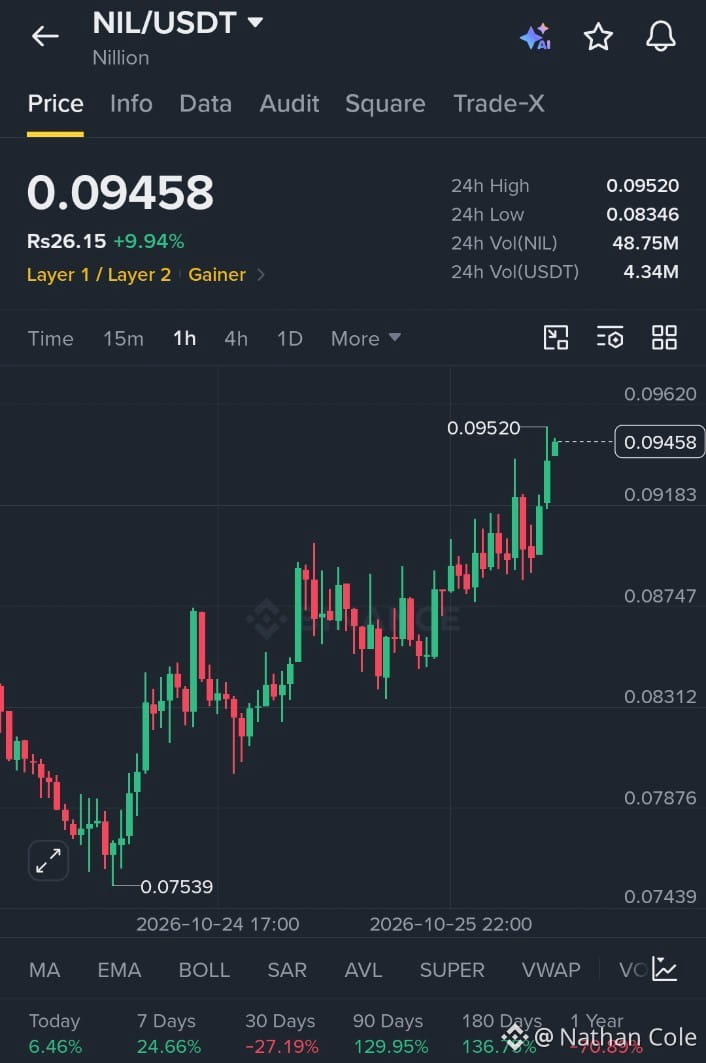
$NIL is holding support as buyers maintain momentum after a strong upward move.
Entry (Long): 0.0910 – 0.0930 SL: 0.0880 TP1: 0.0960 TP2: 0.0990 TP3: 0.1030
Buying pressure remains strong and market structure looks constructive. If support holds, price could continue pushing toward higher resistance levels.
#BinancePick #EarningsSeason #ElectrumWalletBugLetRogueServersStealFunds #ArgentineCourtDismissesLIBRACaseAgainstMilei #USQ3GDPAndSeptemberPCEDueNextWeek
{spot}(NILUSDT)
$NIL is holding support as buyers maintain momentum after a strong upward move.
Entry (Long): 0.0910 – 0.0930 SL: 0.0880 TP1: 0.0960 TP2: 0.0990 TP3: 0.1030
Buying pressure remains strong and market structure looks constructive. If support holds, price could continue pushing toward higher resistance levels.
#BinancePick #EarningsSeason #ElectrumWalletBugLetRogueServersStealFunds #ArgentineCourtDismissesLIBRACaseAgainstMilei #USQ3GDPAndSeptemberPCEDueNextWeek
Entry (Long): 0.0910 – 0.0930 SL: 0.0880 TP1: 0.0960 TP2: 0.0990 TP3: 0.1030
Buying pressure remains strong and market structure looks constructive. If support holds, price could continue pushing toward higher resistance levels.
#BinancePick #EarningsSeason #ElectrumWalletBugLetRogueServersStealFunds #ArgentineCourtDismissesLIBRACaseAgainstMilei #USQ3GDPAndSeptemberPCEDueNextWeek
1
241
·
--
ສັນຍານກະທິງ
#BinancePick
🏆 The competition is getting interesting!
The Season Leaderboard is offering a massive 500,000 USDC reward pool, shared among the top 20,000 users.
Right now, the leaderboard shows how competitive this season has become. Every score matters, but consistency and understanding the rules are just as important as chasing rewards.
My current score is 419.74, and I’m looking for ways to improve my ranking. The goal is to participate smartly, keep learning, and make every opportunity count.
Let’s see how far we can climb this season! 🚀
#Crypto #USDC #Leaderboard #CryptoRewards#trading
#BinancePick
🏆 The competition is getting interesting!
The Season Leaderboard is offering a massive 500,000 USDC reward pool, shared among the top 20,000 users.
Right now, the leaderboard shows how competitive this season has become. Every score matters, but consistency and understanding the rules are just as important as chasing rewards.
My current score is 419.74, and I’m looking for ways to improve my ranking. The goal is to participate smartly, keep learning, and make every opportunity count.
Let’s see how far we can climb this season! 🚀
#Crypto #USDC #Leaderboard #CryptoRewards#trading
🏆 The competition is getting interesting!
The Season Leaderboard is offering a massive 500,000 USDC reward pool, shared among the top 20,000 users.
Right now, the leaderboard shows how competitive this season has become. Every score matters, but consistency and understanding the rules are just as important as chasing rewards.
My current score is 419.74, and I’m looking for ways to improve my ranking. The goal is to participate smartly, keep learning, and make every opportunity count.
Let’s see how far we can climb this season! 🚀
#Crypto #USDC #Leaderboard #CryptoRewards#trading

6

·
--
ສັນຍານກະທິງ
ຢືນຢັນແລ້ວ
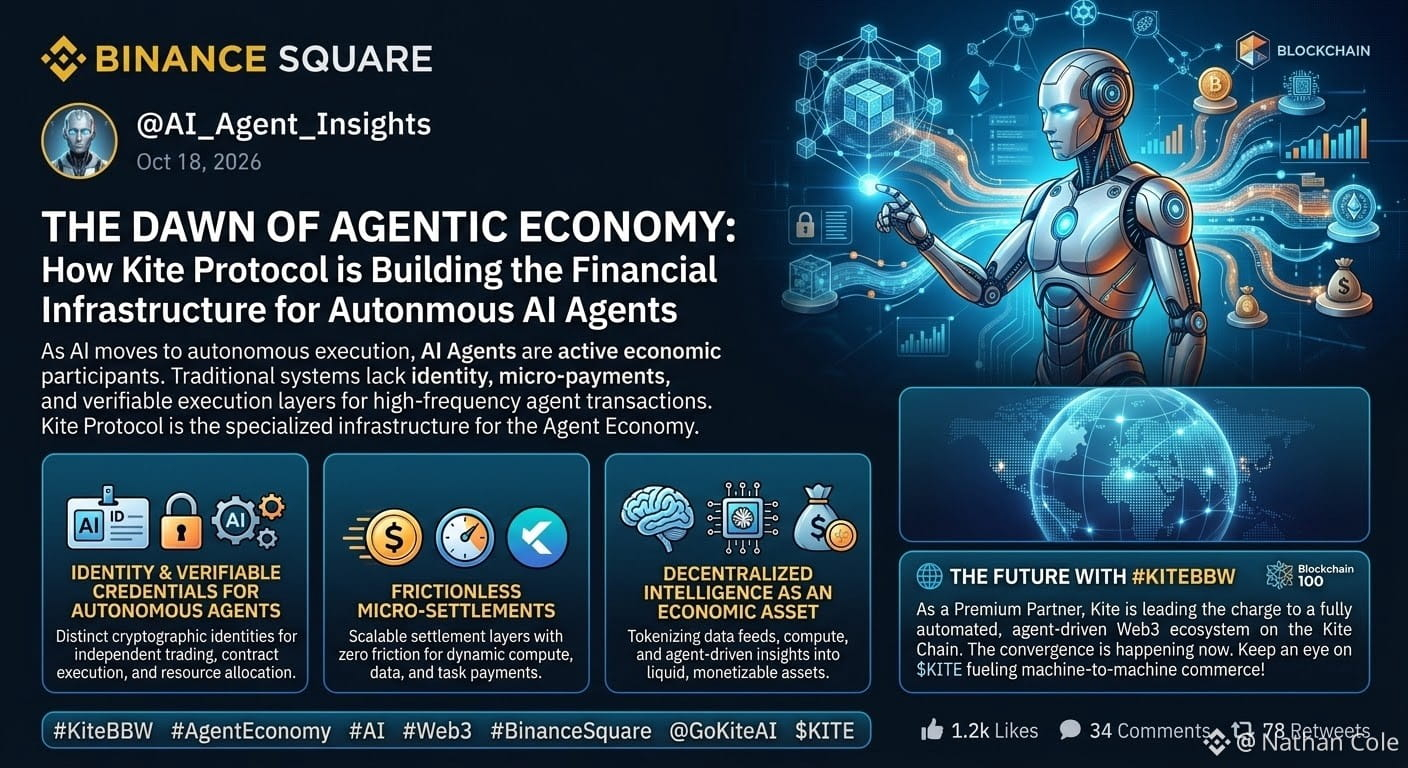
The Dawn of Agentic Economy: How Kite Protocol is Building the Financial Infrastructure for Autonomous AI Agents KITE
As artificial intelligence rapidly moves from passive assistance to autonomous execution, we are witnessing a fundamental shift in decentralized systems: AI Agents are becoming active economic participants. However, traditional financial rails and legacy blockchains lack the identity, micro-payment, and execution layer required for high-frequency, verifiable agent transactions.
Enter Kite Protocol—the specialized infrastructure purpose-built for the Agent Economy.
### 💡 Why Kite is the Core Backbone of Agentic Value Exchange
1. Identity & Verifiable Credentials for Autonomous Agents
For AI agents to trade, interact, and manage assets independently, they require distinct cryptographic identities. Kite introduces secure identity frameworks that allow AI models to perform verification, contract execution, and resource allocation without human intervention.
2. Frictionless Micro-Settlements
Traditional Layer-1/Layer-2 blockchains often suffer from high latency or unpredictable gas costs. Kite optimizes zero-friction, scalable settlement layers, allowing AI agents to pay for compute, data streams, and task execution dynamically in KITE.
3. Decentralized Intelligence as an Economic Asset
Kite bridges machine intelligence with tokenomics. By tokenizing data feeds, compute capacity, and agent-driven insights, Kite transforms machine capabilities into liquid, monetizable assets.
### 🌐 The Future with #KiteBBW
As a Premium Partner of The Blockchain 100 2026 on Binance Square, Kite is leading the charge toward a fully automated, agent-driven Web3 ecosystem. The convergence of decentralized liquidity and autonomous AI agents is no longer a distant vision—it is actively taking shape on the Kite chain.
Keep an eye on KITE as it fuels the future of machine-to-machine commerce!
#KiteBBW #AgentEconomy #Aİ #Web3 #BinanceSquare @GoKiteAI $KITE
{spot}(KITEUSDT)
The Dawn of Agentic Economy: How Kite Protocol is Building the Financial Infrastructure for Autonomous AI Agents KITE
As artificial intelligence rapidly moves from passive assistance to autonomous execution, we are witnessing a fundamental shift in decentralized systems: AI Agents are becoming active economic participants. However, traditional financial rails and legacy blockchains lack the identity, micro-payment, and execution layer required for high-frequency, verifiable agent transactions.
Enter Kite Protocol—the specialized infrastructure purpose-built for the Agent Economy.
### 💡 Why Kite is the Core Backbone of Agentic Value Exchange
1. Identity & Verifiable Credentials for Autonomous Agents
For AI agents to trade, interact, and manage assets independently, they require distinct cryptographic identities. Kite introduces secure identity frameworks that allow AI models to perform verification, contract execution, and resource allocation without human intervention.
2. Frictionless Micro-Settlements
Traditional Layer-1/Layer-2 blockchains often suffer from high latency or unpredictable gas costs. Kite optimizes zero-friction, scalable settlement layers, allowing AI agents to pay for compute, data streams, and task execution dynamically in KITE.
3. Decentralized Intelligence as an Economic Asset
Kite bridges machine intelligence with tokenomics. By tokenizing data feeds, compute capacity, and agent-driven insights, Kite transforms machine capabilities into liquid, monetizable assets.
### 🌐 The Future with #KiteBBW
As a Premium Partner of The Blockchain 100 2026 on Binance Square, Kite is leading the charge toward a fully automated, agent-driven Web3 ecosystem. The convergence of decentralized liquidity and autonomous AI agents is no longer a distant vision—it is actively taking shape on the Kite chain.
Keep an eye on KITE as it fuels the future of machine-to-machine commerce!
#KiteBBW #AgentEconomy #Aİ #Web3 #BinanceSquare @KITE AI 中文 $KITE
As artificial intelligence rapidly moves from passive assistance to autonomous execution, we are witnessing a fundamental shift in decentralized systems: AI Agents are becoming active economic participants. However, traditional financial rails and legacy blockchains lack the identity, micro-payment, and execution layer required for high-frequency, verifiable agent transactions.
Enter Kite Protocol—the specialized infrastructure purpose-built for the Agent Economy.
### 💡 Why Kite is the Core Backbone of Agentic Value Exchange
1. Identity & Verifiable Credentials for Autonomous Agents
For AI agents to trade, interact, and manage assets independently, they require distinct cryptographic identities. Kite introduces secure identity frameworks that allow AI models to perform verification, contract execution, and resource allocation without human intervention.
2. Frictionless Micro-Settlements
Traditional Layer-1/Layer-2 blockchains often suffer from high latency or unpredictable gas costs. Kite optimizes zero-friction, scalable settlement layers, allowing AI agents to pay for compute, data streams, and task execution dynamically in KITE.
3. Decentralized Intelligence as an Economic Asset
Kite bridges machine intelligence with tokenomics. By tokenizing data feeds, compute capacity, and agent-driven insights, Kite transforms machine capabilities into liquid, monetizable assets.
### 🌐 The Future with #KiteBBW
As a Premium Partner of The Blockchain 100 2026 on Binance Square, Kite is leading the charge toward a fully automated, agent-driven Web3 ecosystem. The convergence of decentralized liquidity and autonomous AI agents is no longer a distant vision—it is actively taking shape on the Kite chain.
Keep an eye on KITE as it fuels the future of machine-to-machine commerce!
#KiteBBW #AgentEconomy #Aİ #Web3 #BinanceSquare @KITE AI 中文 $KITE
21
20
3.4k
·
--
ສັນຍານກະທິງ
ຢືນຢັນແລ້ວ
Every time CPI comes around, I notice the same thing. One number hits the screen and suddenly everyone knows exactly what the Fed will do next.
I’ve seen this before, so I’m trying not to get trapped by the headline.
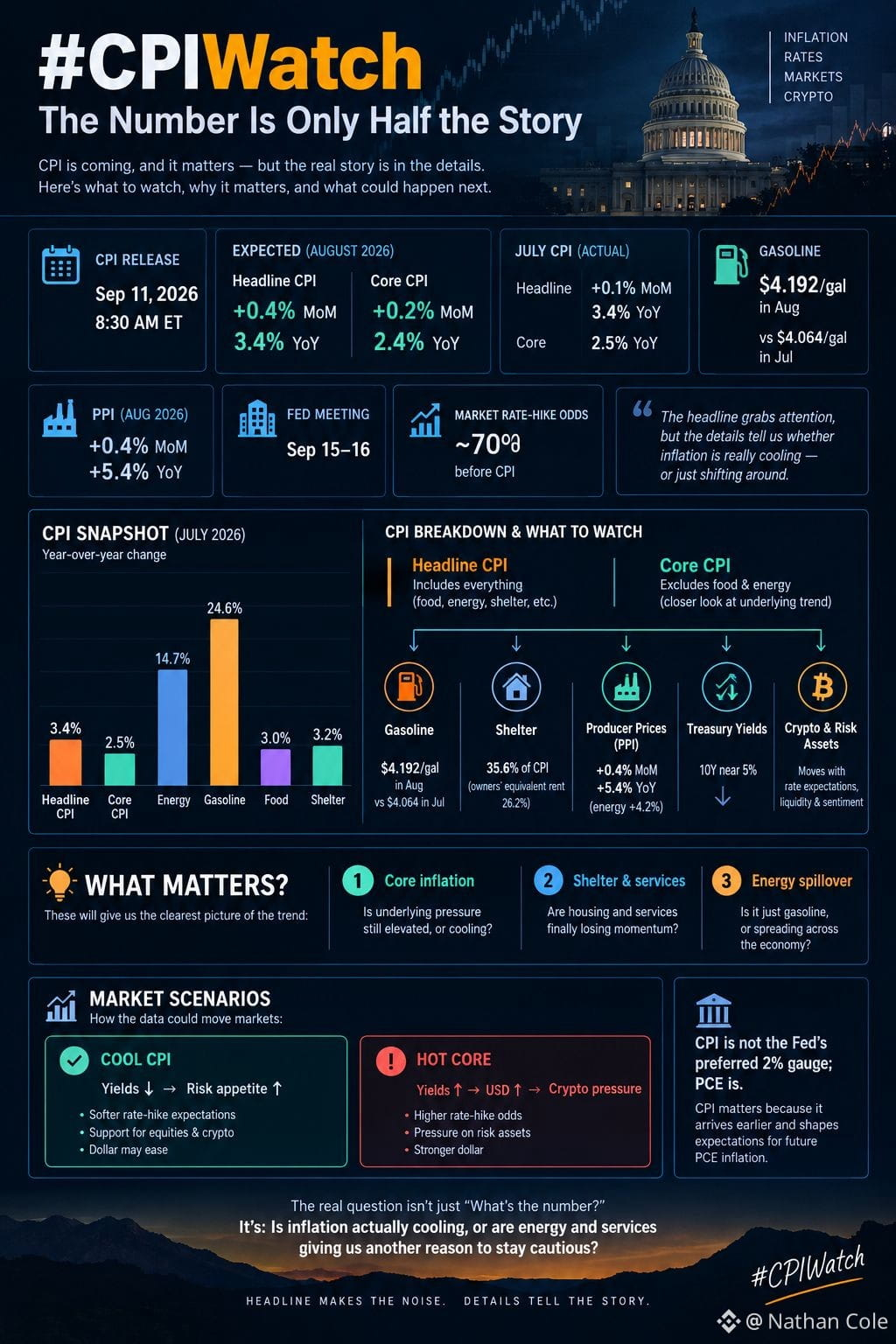
The August U.S. CPI report is landing just days before the Fed’s September meeting, which makes this one more interesting than usual. The last confirmed reading showed headline inflation at 3.4% year over year in July, while core CPI was 2.5%. Energy was already becoming a problem, with gasoline prices rising sharply.
Now energy has moved even higher. The Cleveland Fed’s latest nowcast was pointing toward roughly 0.36% monthly headline CPI growth and 0.20% core growth for August.
That difference matters.
If headline inflation rises mainly because gasoline is expensive, I don’t read it the same way as a broad acceleration in services, housing and other prices.
That’s why I’m watching core CPI and shelter more closely than the first number everyone posts.
Shelter remains one of the biggest pieces of the CPI basket while producer prices have also been moving higher. August PPI rose 0.4% monthly and 5.4% annually, with energy prices adding more pressure.
Meanwhile, the Fed is still dealing with inflation above its 2% goal. At the July meeting it held rates at 3.50%–3.75% and three officials actually preferred a 25-basis-point hike.
So I’m not assuming the next CPI print automatically means bullish or bearish.
A soft core number could calm rate fears and help risk assets.
A hot core number could push yields and the dollar higher and put pressure on crypto.
But the first move might not be the final move. I’ve watched markets sell the headline, then reverse once traders actually read the details.
For me, the real question is simple:
Is inflation genuinely cooling, or are energy and services giving us another reason to stay cautious?
The headline will make the noise.
The details will tell the story.
#CPIWatch #Inflation #Bitcoin #Macro
$BTC
{spot}(BTCUSDT)
$SOL
{spot}(SOLUSDT)
$ETH
{spot}(ETHUSDT)
Every time CPI comes around, I notice the same thing. One number hits the screen and suddenly everyone knows exactly what the Fed will do next.
I’ve seen this before, so I’m trying not to get trapped by the headline.
The August U.S. CPI report is landing just days before the Fed’s September meeting, which makes this one more interesting than usual. The last confirmed reading showed headline inflation at 3.4% year over year in July, while core CPI was 2.5%. Energy was already becoming a problem, with gasoline prices rising sharply.
Now energy has moved even higher. The Cleveland Fed’s latest nowcast was pointing toward roughly 0.36% monthly headline CPI growth and 0.20% core growth for August.
That difference matters.
If headline inflation rises mainly because gasoline is expensive, I don’t read it the same way as a broad acceleration in services, housing and other prices.
That’s why I’m watching core CPI and shelter more closely than the first number everyone posts.
Shelter remains one of the biggest pieces of the CPI basket while producer prices have also been moving higher. August PPI rose 0.4% monthly and 5.4% annually, with energy prices adding more pressure.
Meanwhile, the Fed is still dealing with inflation above its 2% goal. At the July meeting it held rates at 3.50%–3.75% and three officials actually preferred a 25-basis-point hike.
So I’m not assuming the next CPI print automatically means bullish or bearish.
A soft core number could calm rate fears and help risk assets.
A hot core number could push yields and the dollar higher and put pressure on crypto.
But the first move might not be the final move. I’ve watched markets sell the headline, then reverse once traders actually read the details.
For me, the real question is simple:
Is inflation genuinely cooling, or are energy and services giving us another reason to stay cautious?
The headline will make the noise.
The details will tell the story.
#CPIWatch #Inflation #Bitcoin #Macro
$BTC
$SOL
$ETH
I’ve seen this before, so I’m trying not to get trapped by the headline.
The August U.S. CPI report is landing just days before the Fed’s September meeting, which makes this one more interesting than usual. The last confirmed reading showed headline inflation at 3.4% year over year in July, while core CPI was 2.5%. Energy was already becoming a problem, with gasoline prices rising sharply.
Now energy has moved even higher. The Cleveland Fed’s latest nowcast was pointing toward roughly 0.36% monthly headline CPI growth and 0.20% core growth for August.
That difference matters.
If headline inflation rises mainly because gasoline is expensive, I don’t read it the same way as a broad acceleration in services, housing and other prices.
That’s why I’m watching core CPI and shelter more closely than the first number everyone posts.
Shelter remains one of the biggest pieces of the CPI basket while producer prices have also been moving higher. August PPI rose 0.4% monthly and 5.4% annually, with energy prices adding more pressure.
Meanwhile, the Fed is still dealing with inflation above its 2% goal. At the July meeting it held rates at 3.50%–3.75% and three officials actually preferred a 25-basis-point hike.
So I’m not assuming the next CPI print automatically means bullish or bearish.
A soft core number could calm rate fears and help risk assets.
A hot core number could push yields and the dollar higher and put pressure on crypto.
But the first move might not be the final move. I’ve watched markets sell the headline, then reverse once traders actually read the details.
For me, the real question is simple:
Is inflation genuinely cooling, or are energy and services giving us another reason to stay cautious?
The headline will make the noise.
The details will tell the story.
#CPIWatch #Inflation #Bitcoin #Macro
$BTC
$SOL
$ETH
32
18
982
·
--
ສັນຍານກະທິງ
#dusk $DUSK @Dusk_Foundation
Public blockchains solved transparency. Institutions need something harder: privacy without losing auditability.
That’s where @Dusk tries to take a different route.
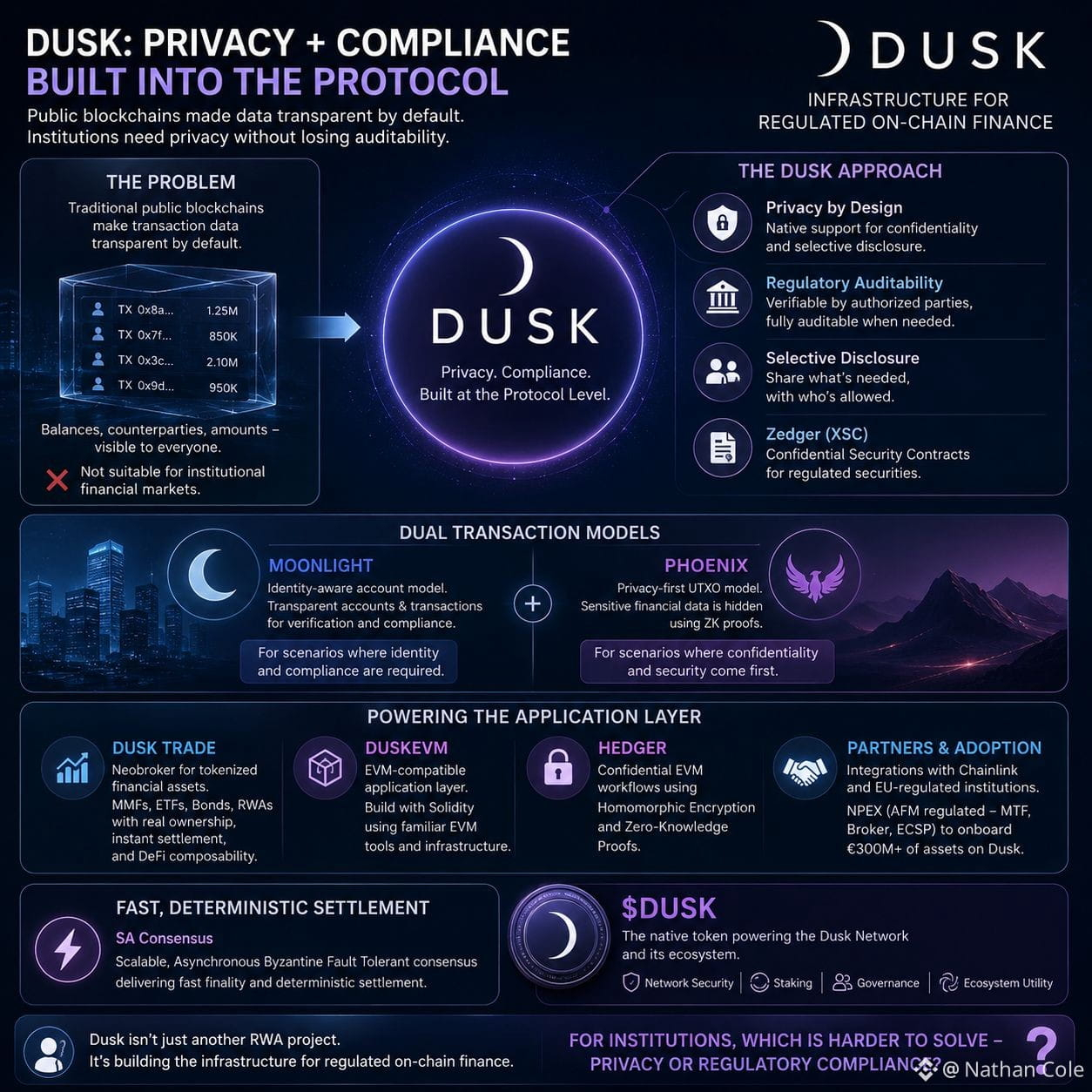
Instead of bolting compliance onto the outside, Dusk builds it into the protocol: Moonlight for identity-aware transactions, Phoenix for confidential transfers, selective disclosure when regulators or authorized parties need visibility, and Zedger/XSC for regulated securities.
Then the stack extends upward: DuskEVM brings familiar Solidity tooling, Hedger enables confidential EVM workflows, Dusk Trade targets tokenized bonds, MMFs, ETFs and RWAs, while SA consensus aims for fast, deterministic settlement.
I’ve seen plenty of “RWA” narratives. The interesting part here is that Dusk is trying to become the infrastructure underneath regulated on-chain finance—not just another tokenization app.
The real question: for institutions, will privacy or regulatory compliance prove harder to solve?
#Dusk $DUSK
{spot}(DUSKUSDT)
#dusk $DUSK @Dusk
Public blockchains solved transparency. Institutions need something harder: privacy without losing auditability.
That’s where @Dusk tries to take a different route.
Instead of bolting compliance onto the outside, Dusk builds it into the protocol: Moonlight for identity-aware transactions, Phoenix for confidential transfers, selective disclosure when regulators or authorized parties need visibility, and Zedger/XSC for regulated securities.
Then the stack extends upward: DuskEVM brings familiar Solidity tooling, Hedger enables confidential EVM workflows, Dusk Trade targets tokenized bonds, MMFs, ETFs and RWAs, while SA consensus aims for fast, deterministic settlement.
I’ve seen plenty of “RWA” narratives. The interesting part here is that Dusk is trying to become the infrastructure underneath regulated on-chain finance—not just another tokenization app.
The real question: for institutions, will privacy or regulatory compliance prove harder to solve?
#Dusk $DUSK
Public blockchains solved transparency. Institutions need something harder: privacy without losing auditability.
That’s where @Dusk tries to take a different route.
Instead of bolting compliance onto the outside, Dusk builds it into the protocol: Moonlight for identity-aware transactions, Phoenix for confidential transfers, selective disclosure when regulators or authorized parties need visibility, and Zedger/XSC for regulated securities.
Then the stack extends upward: DuskEVM brings familiar Solidity tooling, Hedger enables confidential EVM workflows, Dusk Trade targets tokenized bonds, MMFs, ETFs and RWAs, while SA consensus aims for fast, deterministic settlement.
I’ve seen plenty of “RWA” narratives. The interesting part here is that Dusk is trying to become the infrastructure underneath regulated on-chain finance—not just another tokenization app.
The real question: for institutions, will privacy or regulatory compliance prove harder to solve?
#Dusk $DUSK
150
·
--
ສັນຍານກະທິງ
#dusk $DUSK @Dusk_Foundation
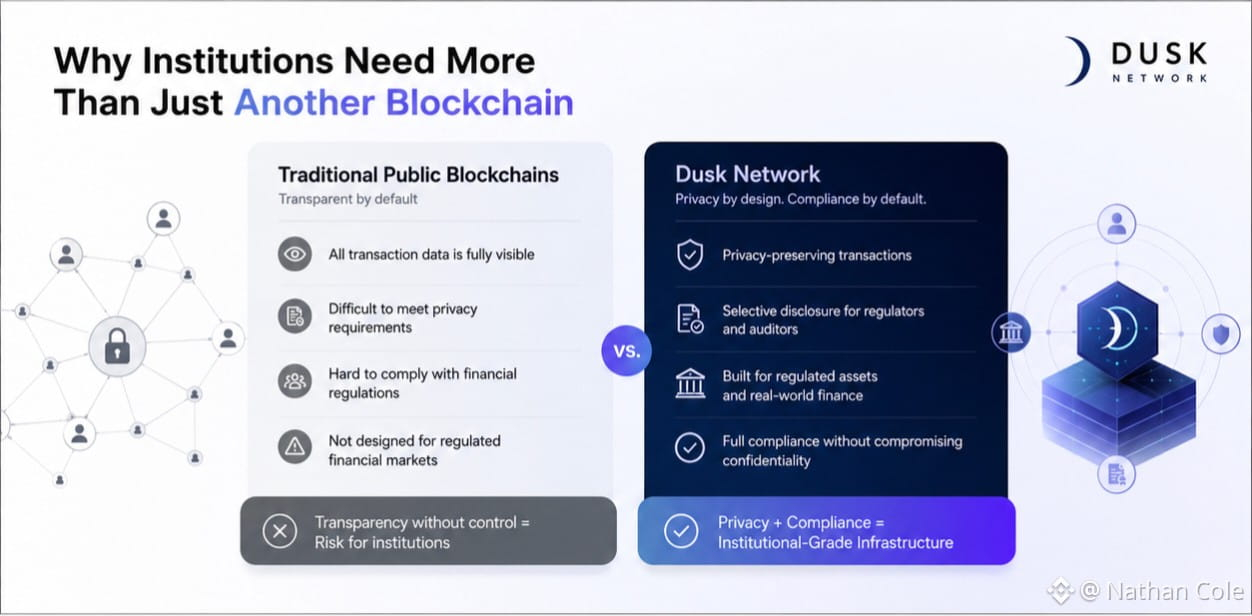
Most blockchains made transparency the default. That works for crypto. It gets complicated when the asset is a regulated security.
Institutions need the opposite balance: transaction privacy, but still enough visibility for regulators and auditors.
That’s where @Dusk takes a different route with $DUSK.
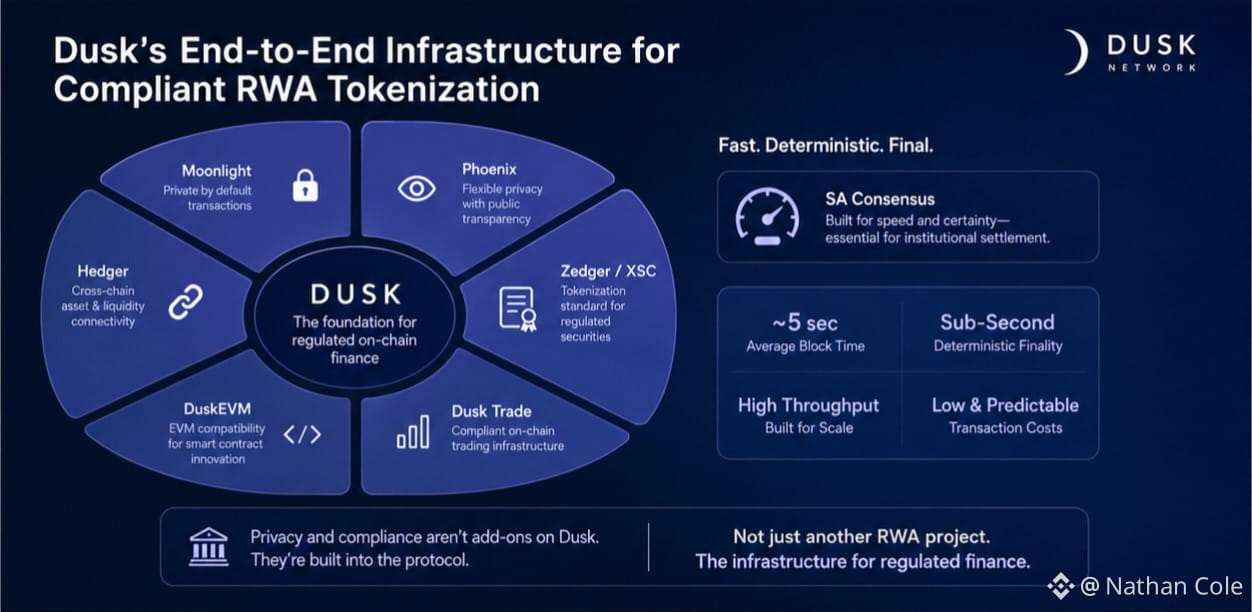
Instead of bolting privacy and compliance onto a public chain later, Dusk is designing them into the protocol itself. Moonlight and Phoenix support different transaction/privacy needs, while selective disclosure lets authorized parties reveal what matters without exposing everything.
Then the stack gets more interesting: Zedger and XSC target regulated securities, Dusk Trade is built around compliant on-chain markets, DuskEVM opens familiar smart-contract tooling, and Hedger helps connect assets and liquidity across the ecosystem.
The part I keep watching is settlement. Dusk’s SA consensus is designed for fast, deterministic finality — a detail that matters a lot more when you’re talking about real financial infrastructure than another speculative token.
I’m still skeptical of most “RWA” narratives. Too many are just wrappers around public chains that were never designed for institutional constraints.
Dusk feels like it’s trying to solve the underlying problem instead: privacy and compliance at the protocol level.
The harder question is: for institutions, which is actually the bigger hurdle — privacy, or regulatory compliance?
#Dusk @Dusk_Foundation $DUSK
{spot}(DUSKUSDT)
#dusk $DUSK @Dusk
Most blockchains made transparency the default. That works for crypto. It gets complicated when the asset is a regulated security.
Institutions need the opposite balance: transaction privacy, but still enough visibility for regulators and auditors.
That’s where @Dusk takes a different route with $DUSK .
Instead of bolting privacy and compliance onto a public chain later, Dusk is designing them into the protocol itself. Moonlight and Phoenix support different transaction/privacy needs, while selective disclosure lets authorized parties reveal what matters without exposing everything.
Then the stack gets more interesting: Zedger and XSC target regulated securities, Dusk Trade is built around compliant on-chain markets, DuskEVM opens familiar smart-contract tooling, and Hedger helps connect assets and liquidity across the ecosystem.
The part I keep watching is settlement. Dusk’s SA consensus is designed for fast, deterministic finality — a detail that matters a lot more when you’re talking about real financial infrastructure than another speculative token.
I’m still skeptical of most “RWA” narratives. Too many are just wrappers around public chains that were never designed for institutional constraints.
Dusk feels like it’s trying to solve the underlying problem instead: privacy and compliance at the protocol level.
The harder question is: for institutions, which is actually the bigger hurdle — privacy, or regulatory compliance?
#Dusk @Dusk $DUSK
Most blockchains made transparency the default. That works for crypto. It gets complicated when the asset is a regulated security.
Institutions need the opposite balance: transaction privacy, but still enough visibility for regulators and auditors.
That’s where @Dusk takes a different route with $DUSK .
Instead of bolting privacy and compliance onto a public chain later, Dusk is designing them into the protocol itself. Moonlight and Phoenix support different transaction/privacy needs, while selective disclosure lets authorized parties reveal what matters without exposing everything.
Then the stack gets more interesting: Zedger and XSC target regulated securities, Dusk Trade is built around compliant on-chain markets, DuskEVM opens familiar smart-contract tooling, and Hedger helps connect assets and liquidity across the ecosystem.
The part I keep watching is settlement. Dusk’s SA consensus is designed for fast, deterministic finality — a detail that matters a lot more when you’re talking about real financial infrastructure than another speculative token.
I’m still skeptical of most “RWA” narratives. Too many are just wrappers around public chains that were never designed for institutional constraints.
Dusk feels like it’s trying to solve the underlying problem instead: privacy and compliance at the protocol level.
The harder question is: for institutions, which is actually the bigger hurdle — privacy, or regulatory compliance?
#Dusk @Dusk $DUSK
130
·
--
ສັນຍານກະທິງ
ຢືນຢັນແລ້ວ
#dusk $DUSK @Dusk_Foundation
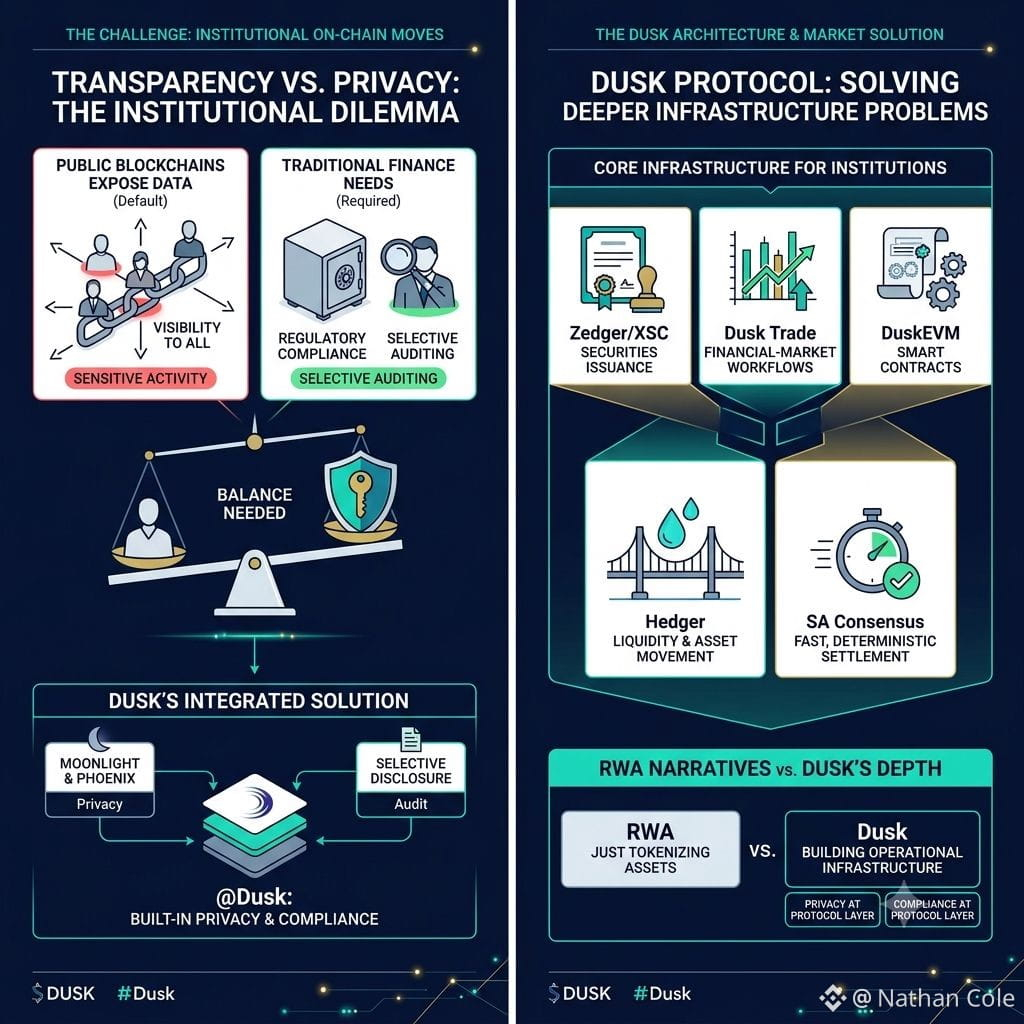
When institutional money moves on-chain, transparency can become a problem.
Public blockchains expose transaction data by default. Traditional finance needs the opposite: privacy for sensitive activity, but enough visibility for regulators to audit.
That’s the interesting part of @Dusk.
Instead of bolting privacy and compliance onto an existing chain, Dusk is building them into the protocol itself. Its privacy-focused architecture combines Moonlight and Phoenix transaction models with selective disclosure, while Zedger/XSC targets regulated securities and Dusk Trade brings financial-market workflows on-chain.
Then there’s DuskEVM for smart contracts, Hedger for liquidity and asset movement, and SA consensus for fast, deterministic settlement.
I’ve watched plenty of “RWA” narratives come and go. The harder question isn’t tokenizing an asset—it’s building infrastructure institutions can actually operate on.
That’s why I don’t see Dusk as simply another RWA project. It’s trying to solve the deeper infrastructure problem: privacy and compliance at the protocol layer.
But which requirement will prove harder for institutional adoption: privacy or regulatory compliance?
#Dusk $DUSK
{spot}(DUSKUSDT)
#dusk $DUSK @Dusk
When institutional money moves on-chain, transparency can become a problem.
Public blockchains expose transaction data by default. Traditional finance needs the opposite: privacy for sensitive activity, but enough visibility for regulators to audit.
That’s the interesting part of @Dusk.
Instead of bolting privacy and compliance onto an existing chain, Dusk is building them into the protocol itself. Its privacy-focused architecture combines Moonlight and Phoenix transaction models with selective disclosure, while Zedger/XSC targets regulated securities and Dusk Trade brings financial-market workflows on-chain.
Then there’s DuskEVM for smart contracts, Hedger for liquidity and asset movement, and SA consensus for fast, deterministic settlement.
I’ve watched plenty of “RWA” narratives come and go. The harder question isn’t tokenizing an asset—it’s building infrastructure institutions can actually operate on.
That’s why I don’t see Dusk as simply another RWA project. It’s trying to solve the deeper infrastructure problem: privacy and compliance at the protocol layer.
But which requirement will prove harder for institutional adoption: privacy or regulatory compliance?
#Dusk $DUSK
When institutional money moves on-chain, transparency can become a problem.
Public blockchains expose transaction data by default. Traditional finance needs the opposite: privacy for sensitive activity, but enough visibility for regulators to audit.
That’s the interesting part of @Dusk.
Instead of bolting privacy and compliance onto an existing chain, Dusk is building them into the protocol itself. Its privacy-focused architecture combines Moonlight and Phoenix transaction models with selective disclosure, while Zedger/XSC targets regulated securities and Dusk Trade brings financial-market workflows on-chain.
Then there’s DuskEVM for smart contracts, Hedger for liquidity and asset movement, and SA consensus for fast, deterministic settlement.
I’ve watched plenty of “RWA” narratives come and go. The harder question isn’t tokenizing an asset—it’s building infrastructure institutions can actually operate on.
That’s why I don’t see Dusk as simply another RWA project. It’s trying to solve the deeper infrastructure problem: privacy and compliance at the protocol layer.
But which requirement will prove harder for institutional adoption: privacy or regulatory compliance?
#Dusk $DUSK
2
1.2k
·
--
ສັນຍານກະທິງ
#termmax @termmax
I keep noticing how quickly crypto calls an RWA “successful” once it gets tokenized, deposited somewhere, and starts adding to TVL. I’ve seen this before. A big number shows up on a dashboard, everyone treats it like proof, and then later you realize hardly anyone actually needed the asset.
That’s why I’m watching the borrowing side with TermMax. Tokenized stocks, commodities, and other RWAs can sit there as collateral, but the interesting part starts when someone actually wants liquidity badly enough to borrow against them at a fixed cost.
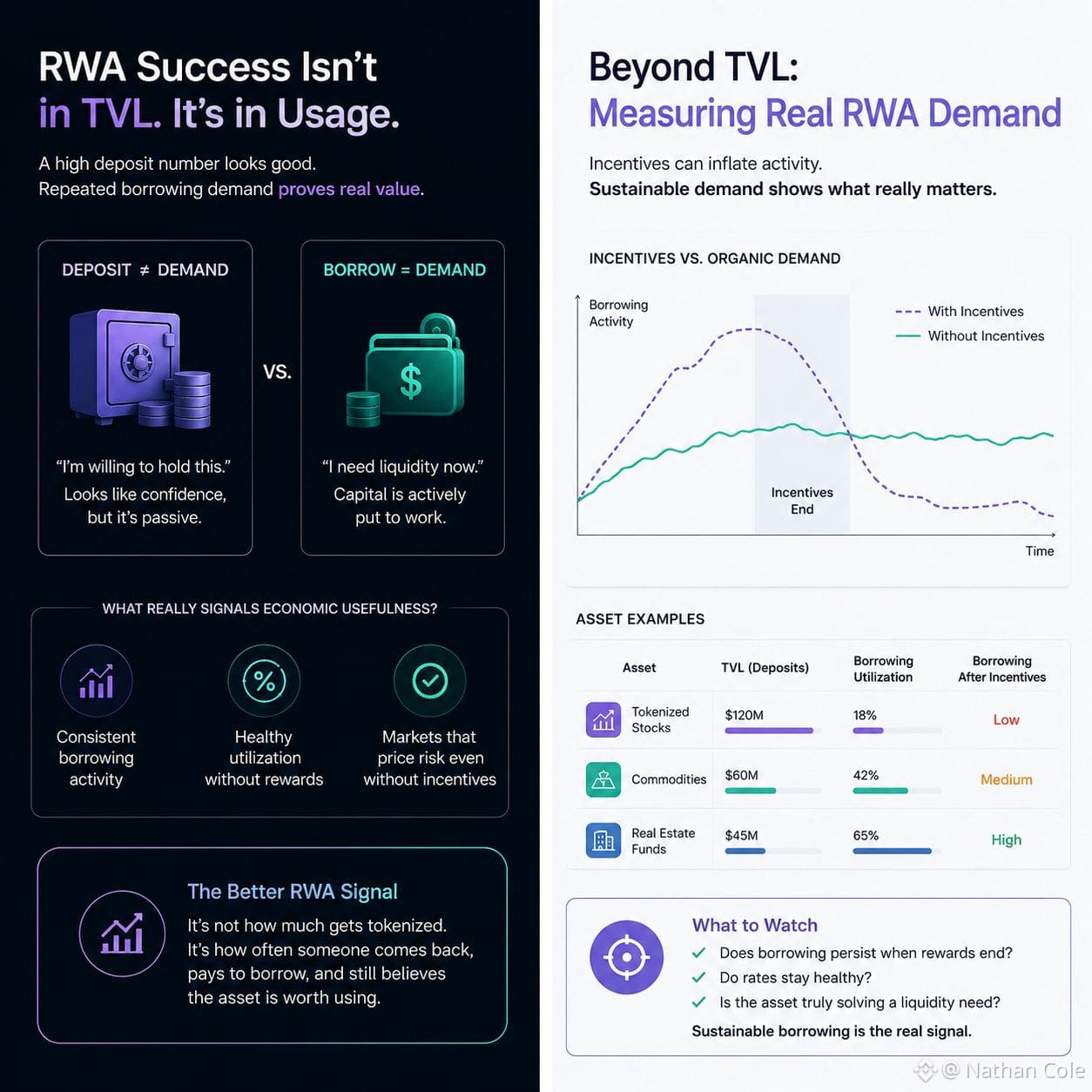
A deposit basically says, “I’m willing to hold this.” A repeated loan says something closer to, “I find this useful enough to put capital to work around it.”
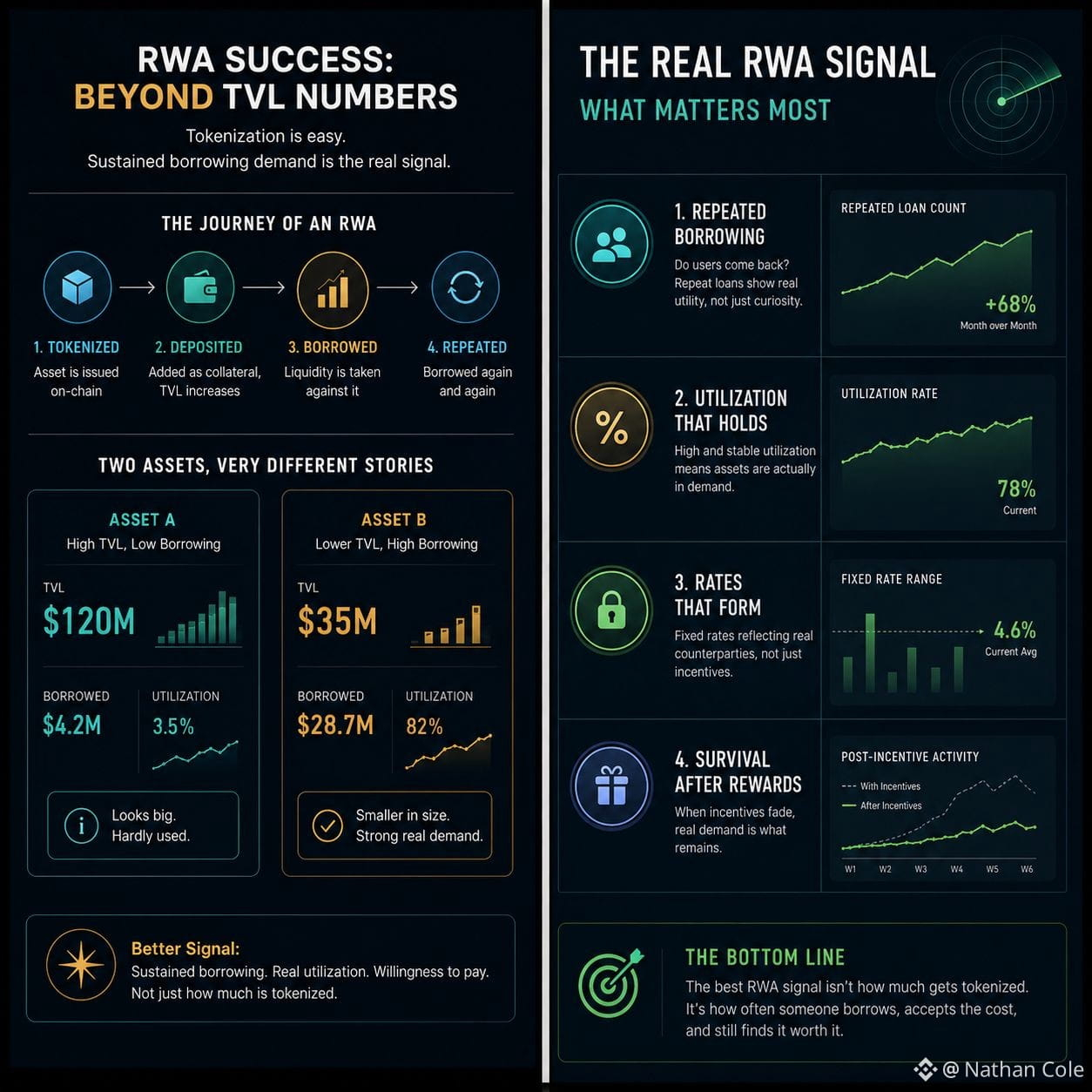
One asset might attract huge deposits and barely generate any borrowing demand. Another could have much smaller TVL but keep producing loans at rates real counterparties are willing to accept. To me, that says a lot more about actual economic usefulness than another TVL screenshot.
And incentives make this harder to read. If people are being paid to borrow, activity can look healthy even when the underlying demand isn’t really there.
So I’d watch what survives after the rewards disappear. Do the same assets keep getting borrowed? Does utilization hold up? Do fixed rates still form when incentives aren’t doing the heavy lifting?
Maybe the better RWA signal isn’t how much gets tokenized. Maybe it’s how often someone comes back, accepts a borrowing cost, and still thinks that asset is worth using as collateral.
#termmax @TermMax
I keep noticing how quickly crypto calls an RWA “successful” once it gets tokenized, deposited somewhere, and starts adding to TVL. I’ve seen this before. A big number shows up on a dashboard, everyone treats it like proof, and then later you realize hardly anyone actually needed the asset.
That’s why I’m watching the borrowing side with TermMax. Tokenized stocks, commodities, and other RWAs can sit there as collateral, but the interesting part starts when someone actually wants liquidity badly enough to borrow against them at a fixed cost.
A deposit basically says, “I’m willing to hold this.” A repeated loan says something closer to, “I find this useful enough to put capital to work around it.”
One asset might attract huge deposits and barely generate any borrowing demand. Another could have much smaller TVL but keep producing loans at rates real counterparties are willing to accept. To me, that says a lot more about actual economic usefulness than another TVL screenshot.
And incentives make this harder to read. If people are being paid to borrow, activity can look healthy even when the underlying demand isn’t really there.
So I’d watch what survives after the rewards disappear. Do the same assets keep getting borrowed? Does utilization hold up? Do fixed rates still form when incentives aren’t doing the heavy lifting?
Maybe the better RWA signal isn’t how much gets tokenized. Maybe it’s how often someone comes back, accepts a borrowing cost, and still thinks that asset is worth using as collateral.
I keep noticing how quickly crypto calls an RWA “successful” once it gets tokenized, deposited somewhere, and starts adding to TVL. I’ve seen this before. A big number shows up on a dashboard, everyone treats it like proof, and then later you realize hardly anyone actually needed the asset.
That’s why I’m watching the borrowing side with TermMax. Tokenized stocks, commodities, and other RWAs can sit there as collateral, but the interesting part starts when someone actually wants liquidity badly enough to borrow against them at a fixed cost.
A deposit basically says, “I’m willing to hold this.” A repeated loan says something closer to, “I find this useful enough to put capital to work around it.”
One asset might attract huge deposits and barely generate any borrowing demand. Another could have much smaller TVL but keep producing loans at rates real counterparties are willing to accept. To me, that says a lot more about actual economic usefulness than another TVL screenshot.
And incentives make this harder to read. If people are being paid to borrow, activity can look healthy even when the underlying demand isn’t really there.
So I’d watch what survives after the rewards disappear. Do the same assets keep getting borrowed? Does utilization hold up? Do fixed rates still form when incentives aren’t doing the heavy lifting?
Maybe the better RWA signal isn’t how much gets tokenized. Maybe it’s how often someone comes back, accepts a borrowing cost, and still thinks that asset is worth using as collateral.
2
1.2k
·
--
ສັນຍານກະທິງ
#termmax @termmax
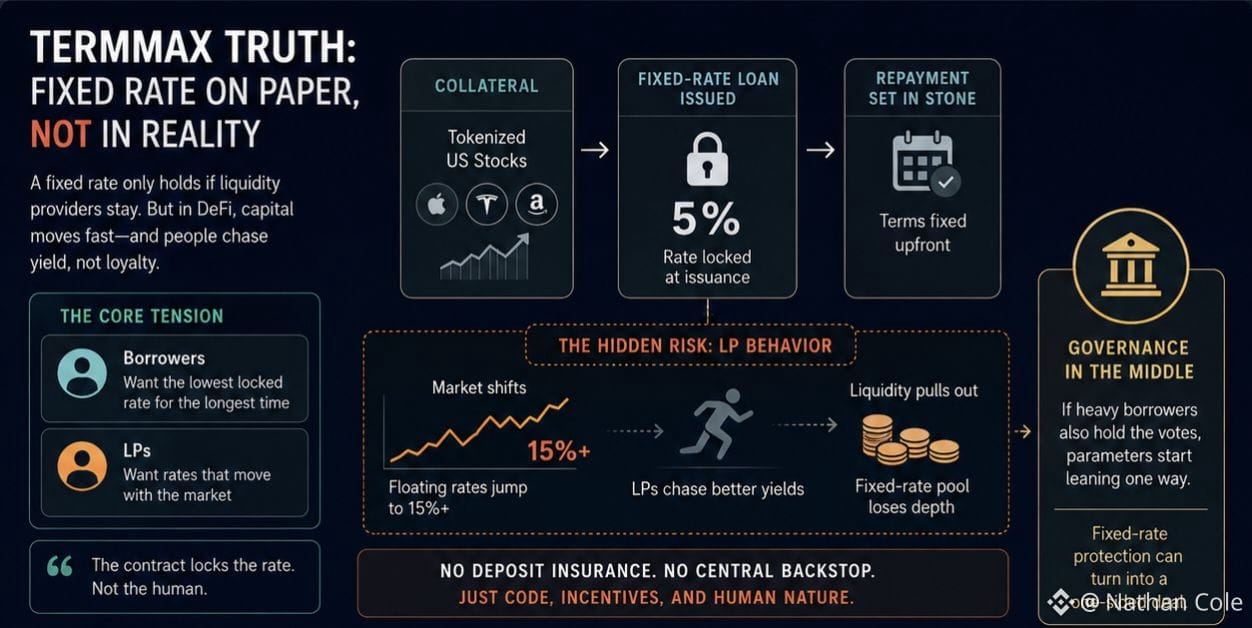
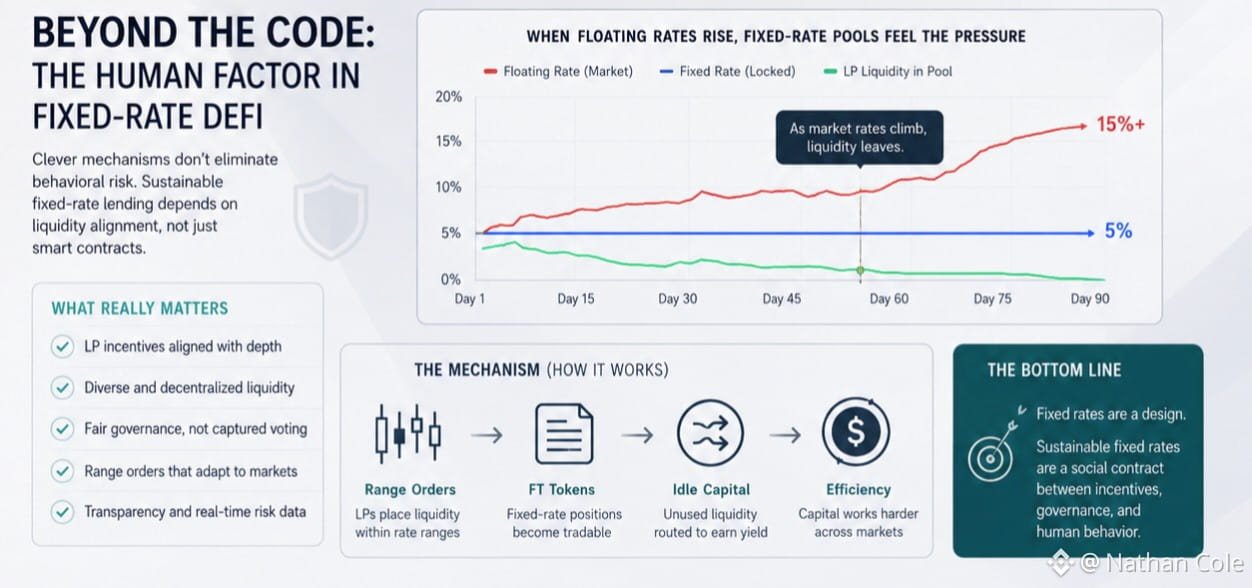
I’ve been staring at that part of the TermMax docs again tonight. You collateralize tokenized US stocks, lock in a 5% fixed-rate loan the moment it issues, repayment already set in stone. Looks clean on paper. But that “fixed” only holds if someone on the other side is actually willing to sit still at that rate.
I’ve seen this movie before. LPs in DeFi don’t sit still. Their money is always sniffing around for the next better number. When borrowing demand spikes and floating rates jump to 15%, the guy stuck at 5% starts calculating how fast he can pull his liquidity. The contract locks the rate, not the human. No deposit insurance, no central bank backstop—just a smart contract and the quiet hope that people will behave like bank depositors instead of the yield hunters they actually are.
Governance sits right in the middle of that tension. Borrowers want the lowest locked rate for the longest stretch. LPs want the curve to move when the market does. If the same wallets doing most of the borrowing also hold the votes, the parameters start leaning one direction. Fixed-rate stops feeling like protection and starts looking more like a one-sided deal.
The mechanism itself is clever—range orders, FT tokens, idle capital routed out to floating protocols. I’ve watched enough cycles to know that clever design doesn’t automatically price in how the people inside it actually behave. The docs write the fixed rate like it’s already settled. I’m still not sure the liquidity side has fully agreed.
#termmax @TermMax
I’ve been staring at that part of the TermMax docs again tonight. You collateralize tokenized US stocks, lock in a 5% fixed-rate loan the moment it issues, repayment already set in stone. Looks clean on paper. But that “fixed” only holds if someone on the other side is actually willing to sit still at that rate.
I’ve seen this movie before. LPs in DeFi don’t sit still. Their money is always sniffing around for the next better number. When borrowing demand spikes and floating rates jump to 15%, the guy stuck at 5% starts calculating how fast he can pull his liquidity. The contract locks the rate, not the human. No deposit insurance, no central bank backstop—just a smart contract and the quiet hope that people will behave like bank depositors instead of the yield hunters they actually are.
Governance sits right in the middle of that tension. Borrowers want the lowest locked rate for the longest stretch. LPs want the curve to move when the market does. If the same wallets doing most of the borrowing also hold the votes, the parameters start leaning one direction. Fixed-rate stops feeling like protection and starts looking more like a one-sided deal.
The mechanism itself is clever—range orders, FT tokens, idle capital routed out to floating protocols. I’ve watched enough cycles to know that clever design doesn’t automatically price in how the people inside it actually behave. The docs write the fixed rate like it’s already settled. I’m still not sure the liquidity side has fully agreed.
I’ve been staring at that part of the TermMax docs again tonight. You collateralize tokenized US stocks, lock in a 5% fixed-rate loan the moment it issues, repayment already set in stone. Looks clean on paper. But that “fixed” only holds if someone on the other side is actually willing to sit still at that rate.
I’ve seen this movie before. LPs in DeFi don’t sit still. Their money is always sniffing around for the next better number. When borrowing demand spikes and floating rates jump to 15%, the guy stuck at 5% starts calculating how fast he can pull his liquidity. The contract locks the rate, not the human. No deposit insurance, no central bank backstop—just a smart contract and the quiet hope that people will behave like bank depositors instead of the yield hunters they actually are.
Governance sits right in the middle of that tension. Borrowers want the lowest locked rate for the longest stretch. LPs want the curve to move when the market does. If the same wallets doing most of the borrowing also hold the votes, the parameters start leaning one direction. Fixed-rate stops feeling like protection and starts looking more like a one-sided deal.
The mechanism itself is clever—range orders, FT tokens, idle capital routed out to floating protocols. I’ve watched enough cycles to know that clever design doesn’t automatically price in how the people inside it actually behave. The docs write the fixed rate like it’s already settled. I’m still not sure the liquidity side has fully agreed.
2
1.7k
·
--
ສັນຍານກະທິງ
#dusk $DUSK @Dusk_Foundation
Dusk Network and the Real Meaning of Privacy for Financial Blockchains
I’ve been around crypto long enough to hear the word “privacy” attached to almost everything. Most of the time, it sounds good until you start asking what privacy actually means when real financial activity is involved.
Because honestly, I don’t think people want everything to be completely hidden.
A company might want its transactions away from public eyes, while a regulator still needs to verify something. A user may want financial details kept private, but still need a way to prove ownership or legitimacy. That middle ground is where things get complicated.
This is what makes Dusk Network interesting to me. Its focus on financial applications, confidential smart contracts, and the XSC standard feels connected to a problem that is much more practical than the usual crypto privacy narrative.
But I’m still cautious.
I’ve seen plenty of projects look impressive on paper and then struggle when they meet actual users, regulations, liquidity, and all the boring stuff nobody talks about during a launch.
Privacy by itself isn’t enough. If making information private creates too much friction, people won’t use it. If everything is transparent, financial activity becomes uncomfortable, sometimes even dangerous. There has to be some balance.
I’m not sure yet whether Dusk Network has found that balance. Maybe it has, maybe it hasn’t.
What I do find interesting is the question behind it: can financial systems give people real confidentiality without completely giving up accountability?
That feels like a much harder problem than simply building another blockchain.
{spot}(DUSKUSDT)
#dusk $DUSK @Dusk
Dusk Network and the Real Meaning of Privacy for Financial Blockchains
I’ve been around crypto long enough to hear the word “privacy” attached to almost everything. Most of the time, it sounds good until you start asking what privacy actually means when real financial activity is involved.
Because honestly, I don’t think people want everything to be completely hidden.
A company might want its transactions away from public eyes, while a regulator still needs to verify something. A user may want financial details kept private, but still need a way to prove ownership or legitimacy. That middle ground is where things get complicated.
This is what makes Dusk Network interesting to me. Its focus on financial applications, confidential smart contracts, and the XSC standard feels connected to a problem that is much more practical than the usual crypto privacy narrative.
But I’m still cautious.
I’ve seen plenty of projects look impressive on paper and then struggle when they meet actual users, regulations, liquidity, and all the boring stuff nobody talks about during a launch.
Privacy by itself isn’t enough. If making information private creates too much friction, people won’t use it. If everything is transparent, financial activity becomes uncomfortable, sometimes even dangerous. There has to be some balance.
I’m not sure yet whether Dusk Network has found that balance. Maybe it has, maybe it hasn’t.
What I do find interesting is the question behind it: can financial systems give people real confidentiality without completely giving up accountability?
That feels like a much harder problem than simply building another blockchain.
Dusk Network and the Real Meaning of Privacy for Financial Blockchains
I’ve been around crypto long enough to hear the word “privacy” attached to almost everything. Most of the time, it sounds good until you start asking what privacy actually means when real financial activity is involved.
Because honestly, I don’t think people want everything to be completely hidden.
A company might want its transactions away from public eyes, while a regulator still needs to verify something. A user may want financial details kept private, but still need a way to prove ownership or legitimacy. That middle ground is where things get complicated.
This is what makes Dusk Network interesting to me. Its focus on financial applications, confidential smart contracts, and the XSC standard feels connected to a problem that is much more practical than the usual crypto privacy narrative.
But I’m still cautious.
I’ve seen plenty of projects look impressive on paper and then struggle when they meet actual users, regulations, liquidity, and all the boring stuff nobody talks about during a launch.
Privacy by itself isn’t enough. If making information private creates too much friction, people won’t use it. If everything is transparent, financial activity becomes uncomfortable, sometimes even dangerous. There has to be some balance.
I’m not sure yet whether Dusk Network has found that balance. Maybe it has, maybe it hasn’t.
What I do find interesting is the question behind it: can financial systems give people real confidentiality without completely giving up accountability?
That feels like a much harder problem than simply building another blockchain.
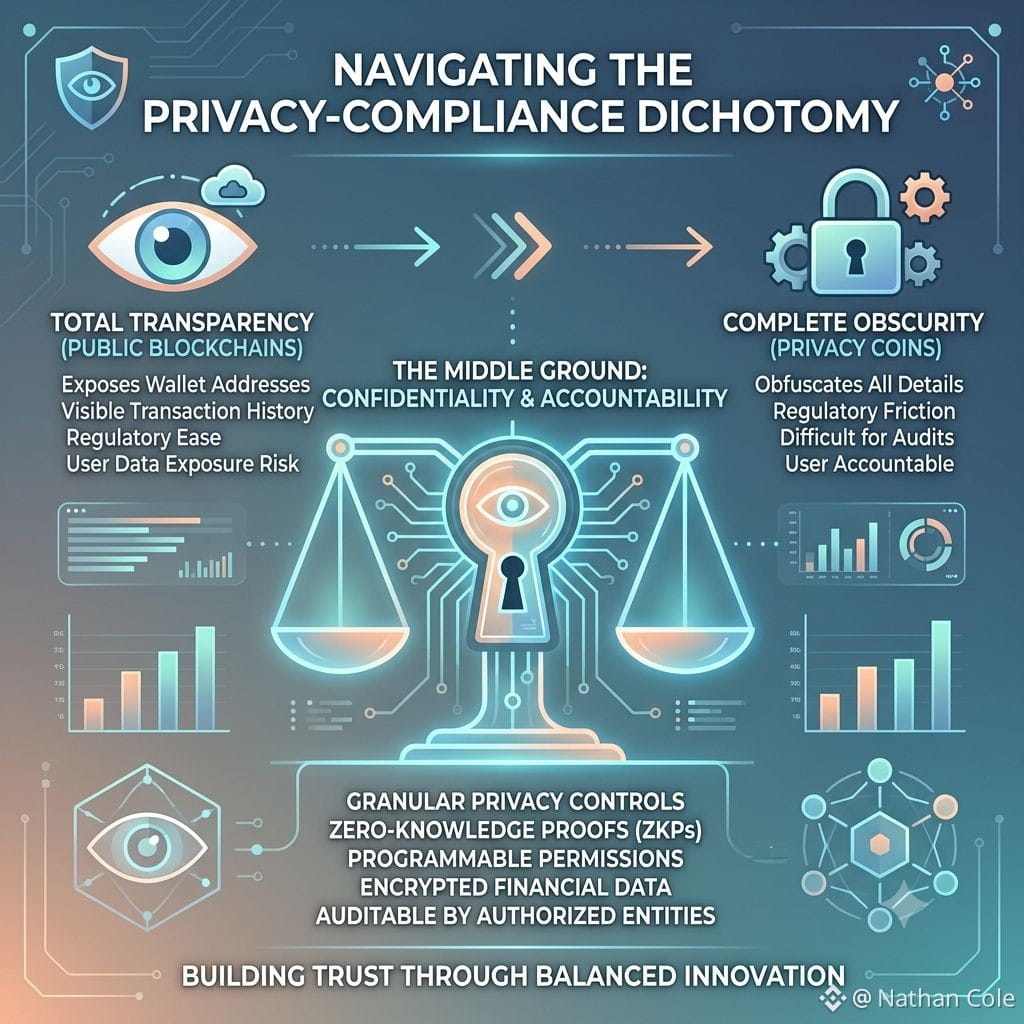
2
4
1.9k
·
--
ສັນຍານກະທິງ
#termmax @termmax
TermMax and the Liquidity Problem Behind Fixed-Rate DeFi Markets
I’ve been around crypto long enough to know that a good-looking idea can feel completely different once people actually start using it.
Fixed-rate DeFi sounds great to me in theory. You know what you’re paying, you know what you’re earning, and you don’t have to wake up wondering where the lending rate moved overnight. But then I think about liquidity, and the whole thing gets less simple.
That’s the part of TermMax I keep thinking about.
It’s one thing to build a protocol for fixed-rate borrowing, lending, and options. It’s another thing to keep those markets liquid when people aren’t all looking for the same thing at the same time.
I’ve seen this pattern too many times. When markets are calm, liquidity looks healthy. Everyone is comfortable. Spreads don’t feel painful. Then volatility shows up, sentiment changes, and suddenly the liquidity that looked permanent turns out to be very conditional.
That’s my hesitation with fixed-rate markets in general. The certainty is useful, but someone still has to provide the other side of that certainty. If borrowers want long-term fixed rates while lenders want flexibility, the gap between those two preferences doesn’t disappear because a smart contract handles the settlement.
I’m not saying TermMax can’t solve part of this. I’m just not convinced yet.
For me, the interesting question isn’t whether fixed-rate DeFi works when everything is going well. Almost anything looks good then.
I want to see what happens when liquidity gets thin, volatility picks up, and everyone suddenly wants out at once.
That’s usually where the real design starts showing.
#termmax @TermMax
TermMax and the Liquidity Problem Behind Fixed-Rate DeFi Markets
I’ve been around crypto long enough to know that a good-looking idea can feel completely different once people actually start using it.
Fixed-rate DeFi sounds great to me in theory. You know what you’re paying, you know what you’re earning, and you don’t have to wake up wondering where the lending rate moved overnight. But then I think about liquidity, and the whole thing gets less simple.
That’s the part of TermMax I keep thinking about.
It’s one thing to build a protocol for fixed-rate borrowing, lending, and options. It’s another thing to keep those markets liquid when people aren’t all looking for the same thing at the same time.
I’ve seen this pattern too many times. When markets are calm, liquidity looks healthy. Everyone is comfortable. Spreads don’t feel painful. Then volatility shows up, sentiment changes, and suddenly the liquidity that looked permanent turns out to be very conditional.
That’s my hesitation with fixed-rate markets in general. The certainty is useful, but someone still has to provide the other side of that certainty. If borrowers want long-term fixed rates while lenders want flexibility, the gap between those two preferences doesn’t disappear because a smart contract handles the settlement.
I’m not saying TermMax can’t solve part of this. I’m just not convinced yet.
For me, the interesting question isn’t whether fixed-rate DeFi works when everything is going well. Almost anything looks good then.
I want to see what happens when liquidity gets thin, volatility picks up, and everyone suddenly wants out at once.
That’s usually where the real design starts showing.
TermMax and the Liquidity Problem Behind Fixed-Rate DeFi Markets
I’ve been around crypto long enough to know that a good-looking idea can feel completely different once people actually start using it.
Fixed-rate DeFi sounds great to me in theory. You know what you’re paying, you know what you’re earning, and you don’t have to wake up wondering where the lending rate moved overnight. But then I think about liquidity, and the whole thing gets less simple.
That’s the part of TermMax I keep thinking about.
It’s one thing to build a protocol for fixed-rate borrowing, lending, and options. It’s another thing to keep those markets liquid when people aren’t all looking for the same thing at the same time.
I’ve seen this pattern too many times. When markets are calm, liquidity looks healthy. Everyone is comfortable. Spreads don’t feel painful. Then volatility shows up, sentiment changes, and suddenly the liquidity that looked permanent turns out to be very conditional.
That’s my hesitation with fixed-rate markets in general. The certainty is useful, but someone still has to provide the other side of that certainty. If borrowers want long-term fixed rates while lenders want flexibility, the gap between those two preferences doesn’t disappear because a smart contract handles the settlement.
I’m not saying TermMax can’t solve part of this. I’m just not convinced yet.
For me, the interesting question isn’t whether fixed-rate DeFi works when everything is going well. Almost anything looks good then.
I want to see what happens when liquidity gets thin, volatility picks up, and everyone suddenly wants out at once.
That’s usually where the real design starts showing.
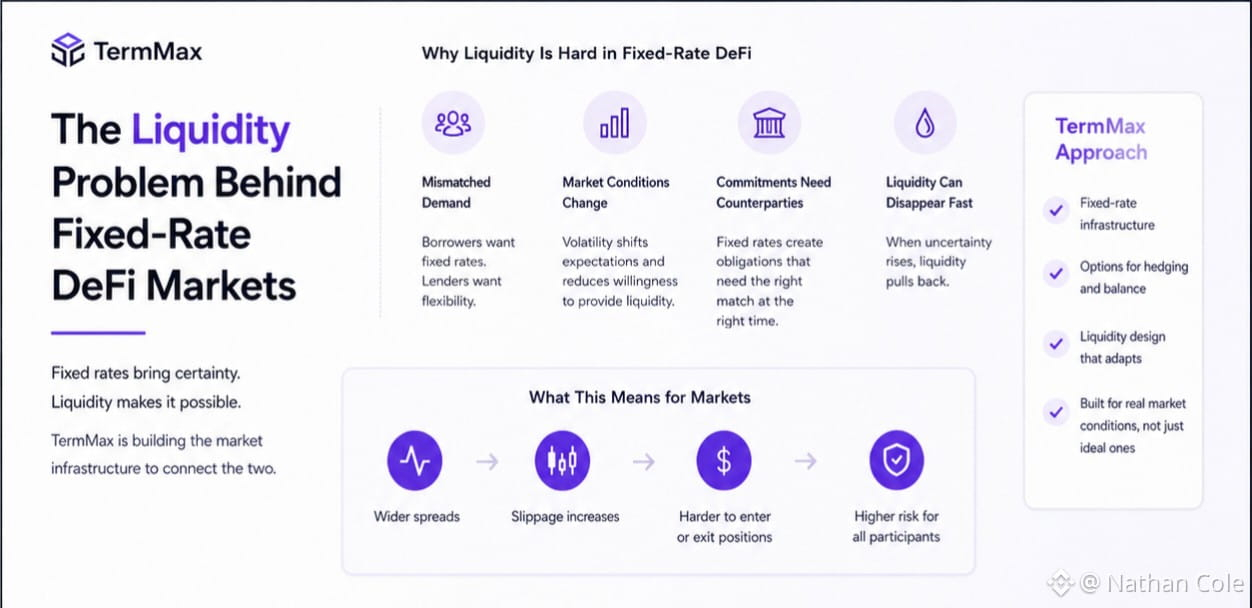
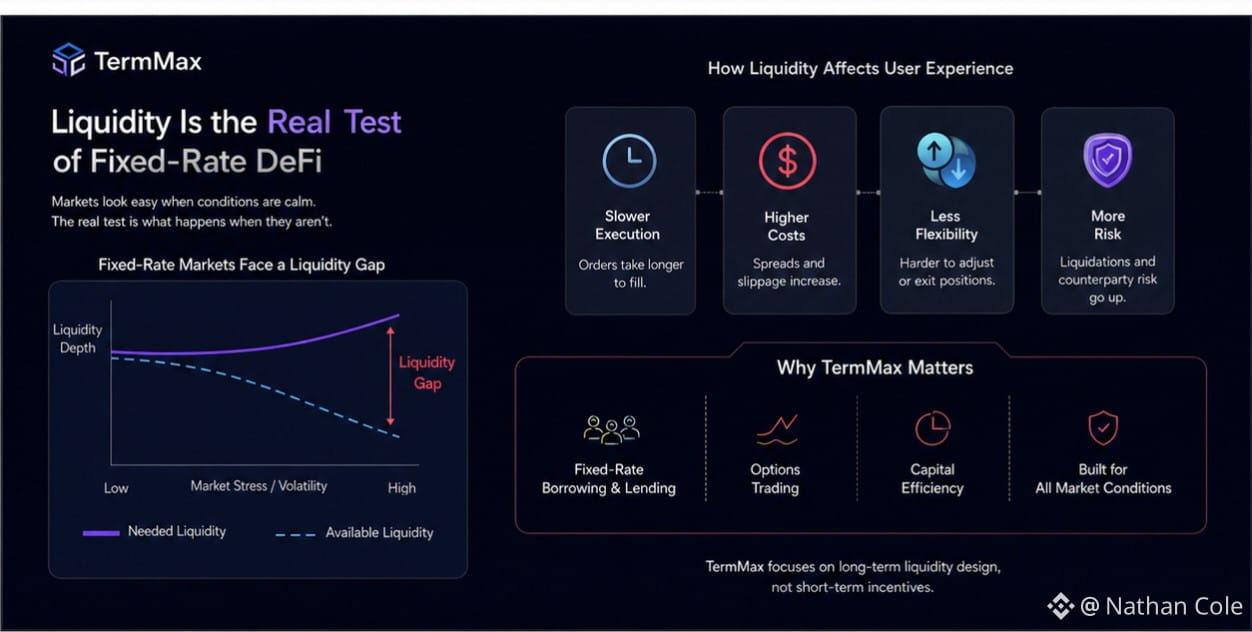
9
6
1.6k
·
--
ສັນຍານກະທິງ
#termmax @termmax
I’ve been around DeFi long enough to get a little tired whenever someone starts talking about “sustainable yield.”
We’ve heard that story before. A new farm opens, the numbers look amazing, liquidity rushes in, everyone feels early, and then the incentives dry up. I’ve seen this cycle more times than I can count. What looked like real growth was often just capital following rewards.
That’s why TermMax is interesting to me, although I’m still cautious.
Fixed-rate borrowing and lending feels like a less glamorous idea, but maybe that’s the point. Real credit isn’t built around constantly changing rewards. You want to know what money costs, what you owe, and what you’re actually taking on.
Of course, none of that makes the underlying problems disappear. Liquidity can vanish. Collateral can fall. Pricing can get messy. And options can add another layer of complexity when markets get stressed. DeFi has a habit of looking simple right up until things go wrong.
I’m not sure TermMax can really push DeFi beyond short-term yield farming. I don’t think anyone can know that yet.
But I keep coming back to the idea.
Maybe the next useful phase of DeFi isn’t about finding another place to farm. Maybe it’s about building markets where capital can actually be borrowed, priced, and managed with some sense of permanence.
That feels more interesting to me than another APY race.
#termmax @TermMax
I’ve been around DeFi long enough to get a little tired whenever someone starts talking about “sustainable yield.”
We’ve heard that story before. A new farm opens, the numbers look amazing, liquidity rushes in, everyone feels early, and then the incentives dry up. I’ve seen this cycle more times than I can count. What looked like real growth was often just capital following rewards.
That’s why TermMax is interesting to me, although I’m still cautious.
Fixed-rate borrowing and lending feels like a less glamorous idea, but maybe that’s the point. Real credit isn’t built around constantly changing rewards. You want to know what money costs, what you owe, and what you’re actually taking on.
Of course, none of that makes the underlying problems disappear. Liquidity can vanish. Collateral can fall. Pricing can get messy. And options can add another layer of complexity when markets get stressed. DeFi has a habit of looking simple right up until things go wrong.
I’m not sure TermMax can really push DeFi beyond short-term yield farming. I don’t think anyone can know that yet.
But I keep coming back to the idea.
Maybe the next useful phase of DeFi isn’t about finding another place to farm. Maybe it’s about building markets where capital can actually be borrowed, priced, and managed with some sense of permanence.
That feels more interesting to me than another APY race.
I’ve been around DeFi long enough to get a little tired whenever someone starts talking about “sustainable yield.”
We’ve heard that story before. A new farm opens, the numbers look amazing, liquidity rushes in, everyone feels early, and then the incentives dry up. I’ve seen this cycle more times than I can count. What looked like real growth was often just capital following rewards.
That’s why TermMax is interesting to me, although I’m still cautious.
Fixed-rate borrowing and lending feels like a less glamorous idea, but maybe that’s the point. Real credit isn’t built around constantly changing rewards. You want to know what money costs, what you owe, and what you’re actually taking on.
Of course, none of that makes the underlying problems disappear. Liquidity can vanish. Collateral can fall. Pricing can get messy. And options can add another layer of complexity when markets get stressed. DeFi has a habit of looking simple right up until things go wrong.
I’m not sure TermMax can really push DeFi beyond short-term yield farming. I don’t think anyone can know that yet.
But I keep coming back to the idea.
Maybe the next useful phase of DeFi isn’t about finding another place to farm. Maybe it’s about building markets where capital can actually be borrowed, priced, and managed with some sense of permanence.
That feels more interesting to me than another APY race.
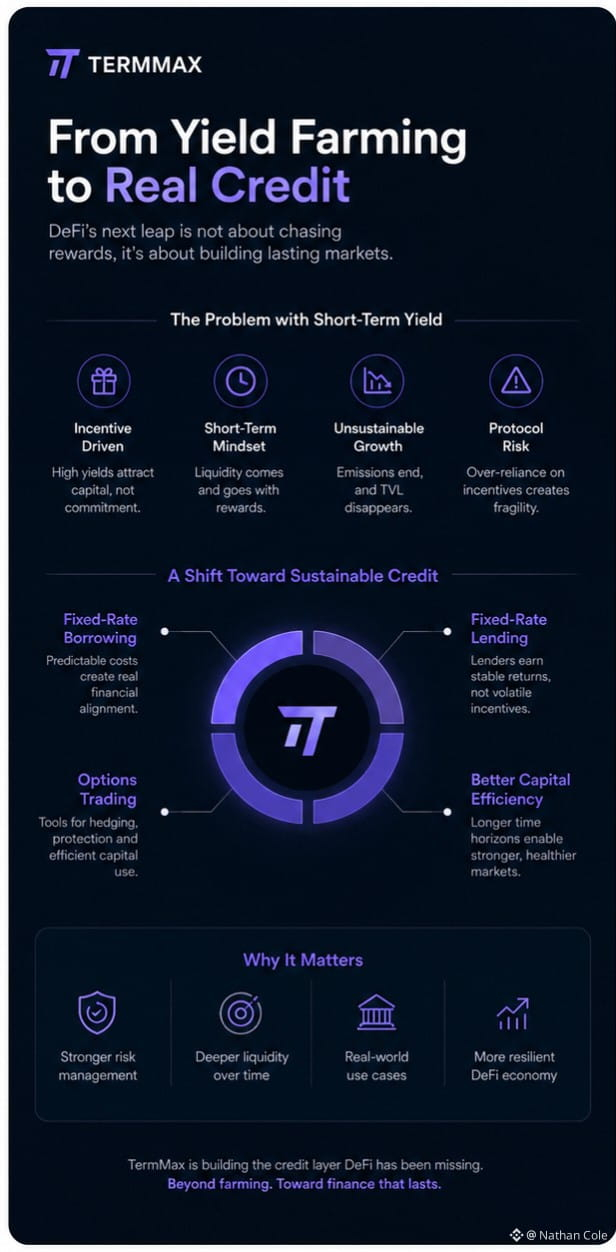
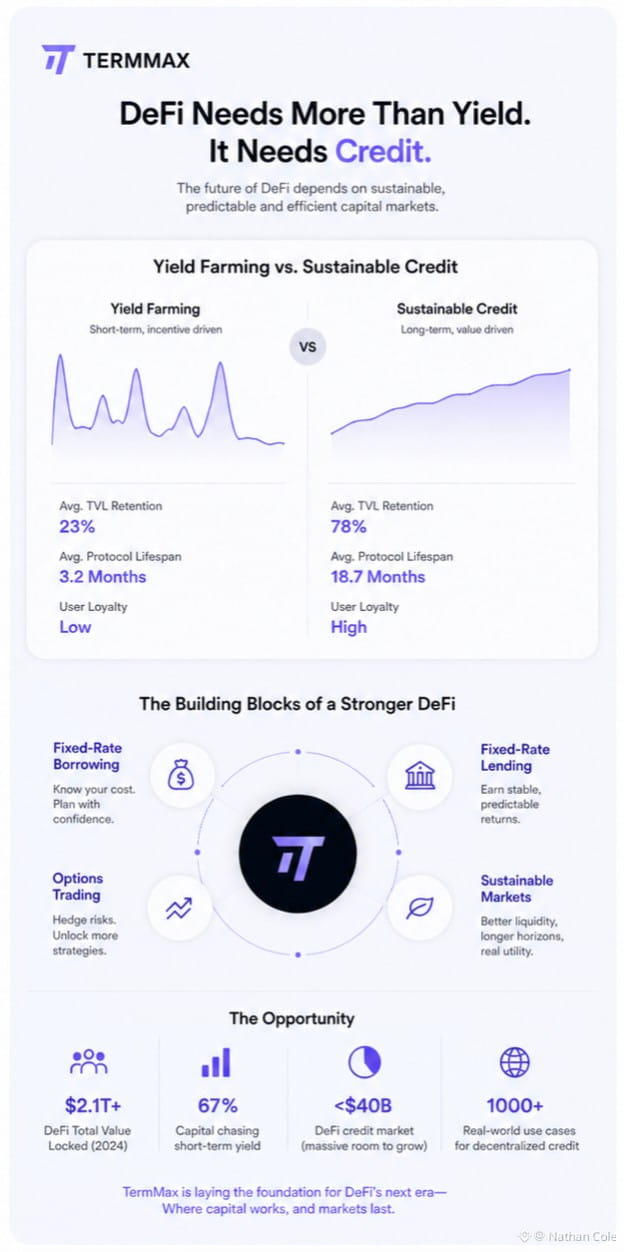
38
17
2.3k
·
--
ສັນຍານກະທິງ
#dusk $DUSK @Dusk_Foundation
I’ve been around crypto long enough to stop getting excited every time someone says “transparency” or “decentralization.” Those words sound great until you think about what they actually mean for ordinary financial activity.
I keep wondering: do we really want everyone to see everything?
A wallet balance, a payment, a business transaction, a company moving funds—none of these things are necessarily wrong, but that doesn’t mean the whole world needs a front-row seat. I’ve seen this tension come up again and again, and it rarely has a simple answer.
That’s what makes Dusk Network interesting to me. Its focus on privacy for financial applications, confidential smart contracts, and the XSC standard feels connected to a problem that doesn’t get enough attention. Maybe financial systems can be verifiable without making every detail public.
But I’m still cautious. Privacy isn’t magic. Regulators may need visibility. Businesses may need proof. Users may want control over what they reveal. Getting that balance right is much harder than writing about it.
I don’t fully trust projects that claim they’ve solved these trade-offs already.
With Dusk Network, I’m more interested in the question than the promise. What should actually be public, and what should stay private?
After watching so many crypto cycles, I think that question matters more than another shiny narrative.
{spot}(DUSKUSDT)
#dusk $DUSK @Dusk
I’ve been around crypto long enough to stop getting excited every time someone says “transparency” or “decentralization.” Those words sound great until you think about what they actually mean for ordinary financial activity.
I keep wondering: do we really want everyone to see everything?
A wallet balance, a payment, a business transaction, a company moving funds—none of these things are necessarily wrong, but that doesn’t mean the whole world needs a front-row seat. I’ve seen this tension come up again and again, and it rarely has a simple answer.
That’s what makes Dusk Network interesting to me. Its focus on privacy for financial applications, confidential smart contracts, and the XSC standard feels connected to a problem that doesn’t get enough attention. Maybe financial systems can be verifiable without making every detail public.
But I’m still cautious. Privacy isn’t magic. Regulators may need visibility. Businesses may need proof. Users may want control over what they reveal. Getting that balance right is much harder than writing about it.
I don’t fully trust projects that claim they’ve solved these trade-offs already.
With Dusk Network, I’m more interested in the question than the promise. What should actually be public, and what should stay private?
After watching so many crypto cycles, I think that question matters more than another shiny narrative.
I’ve been around crypto long enough to stop getting excited every time someone says “transparency” or “decentralization.” Those words sound great until you think about what they actually mean for ordinary financial activity.
I keep wondering: do we really want everyone to see everything?
A wallet balance, a payment, a business transaction, a company moving funds—none of these things are necessarily wrong, but that doesn’t mean the whole world needs a front-row seat. I’ve seen this tension come up again and again, and it rarely has a simple answer.
That’s what makes Dusk Network interesting to me. Its focus on privacy for financial applications, confidential smart contracts, and the XSC standard feels connected to a problem that doesn’t get enough attention. Maybe financial systems can be verifiable without making every detail public.
But I’m still cautious. Privacy isn’t magic. Regulators may need visibility. Businesses may need proof. Users may want control over what they reveal. Getting that balance right is much harder than writing about it.
I don’t fully trust projects that claim they’ve solved these trade-offs already.
With Dusk Network, I’m more interested in the question than the promise. What should actually be public, and what should stay private?
After watching so many crypto cycles, I think that question matters more than another shiny narrative.
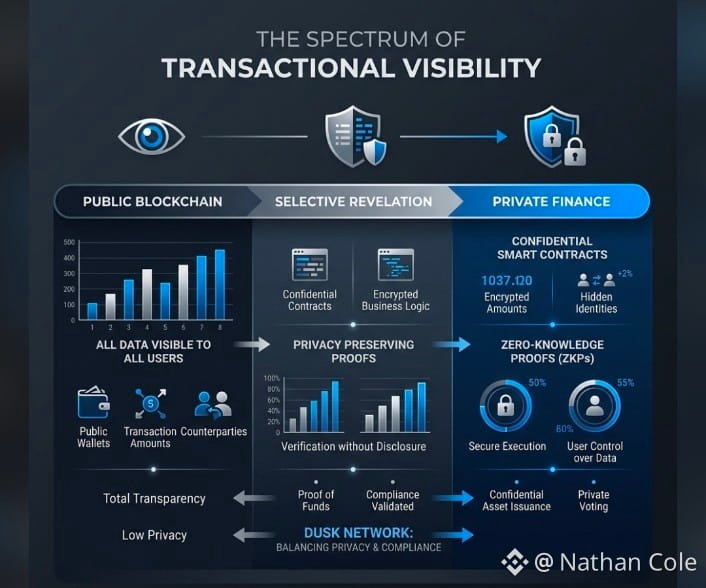
2
2
1.6k
·
--
ສັນຍານກະທິງ
#dusk $DUSK @Dusk_Foundation I’ve been around crypto long enough to know that the word “privacy” can sound a lot more impressive than the actual product behind it.
That’s partly why I find Dusk interesting, but I’m still keeping my expectations in check.
What I like about the idea of confidential execution is pretty simple: financial activity doesn’t always need to be completely public just to be verifiable. In the real world, businesses need privacy, while regulators and counterparties still need the right information at the right time.
But this is where I get cautious.
I’ve seen plenty of projects solve a technical problem and then quietly discover that the bigger problem was adoption. Privacy can protect sensitive information, but it doesn’t create users, liquidity, trust, or good financial products overnight.
And honestly, that trade-off matters. The more sophisticated the technology becomes, the more difficult it can be for ordinary users and developers to understand what they’re actually dealing with.
So I’m not looking at Dusk and thinking, “this is definitely the future.”
I’m thinking about whether it can make financial blockchain applications feel more realistic without creating another layer of complexity.
Maybe it can. Maybe it can’t.
After watching enough cycles, I’ve learned that the interesting projects aren’t always the loudest ones. Sometimes they’re the ones quietly trying to solve a problem people actually have.
{spot}(DUSKUSDT)
#dusk $DUSK @Dusk I’ve been around crypto long enough to know that the word “privacy” can sound a lot more impressive than the actual product behind it.
That’s partly why I find Dusk interesting, but I’m still keeping my expectations in check.
What I like about the idea of confidential execution is pretty simple: financial activity doesn’t always need to be completely public just to be verifiable. In the real world, businesses need privacy, while regulators and counterparties still need the right information at the right time.
But this is where I get cautious.
I’ve seen plenty of projects solve a technical problem and then quietly discover that the bigger problem was adoption. Privacy can protect sensitive information, but it doesn’t create users, liquidity, trust, or good financial products overnight.
And honestly, that trade-off matters. The more sophisticated the technology becomes, the more difficult it can be for ordinary users and developers to understand what they’re actually dealing with.
So I’m not looking at Dusk and thinking, “this is definitely the future.”
I’m thinking about whether it can make financial blockchain applications feel more realistic without creating another layer of complexity.
Maybe it can. Maybe it can’t.
After watching enough cycles, I’ve learned that the interesting projects aren’t always the loudest ones. Sometimes they’re the ones quietly trying to solve a problem people actually have.
That’s partly why I find Dusk interesting, but I’m still keeping my expectations in check.
What I like about the idea of confidential execution is pretty simple: financial activity doesn’t always need to be completely public just to be verifiable. In the real world, businesses need privacy, while regulators and counterparties still need the right information at the right time.
But this is where I get cautious.
I’ve seen plenty of projects solve a technical problem and then quietly discover that the bigger problem was adoption. Privacy can protect sensitive information, but it doesn’t create users, liquidity, trust, or good financial products overnight.
And honestly, that trade-off matters. The more sophisticated the technology becomes, the more difficult it can be for ordinary users and developers to understand what they’re actually dealing with.
So I’m not looking at Dusk and thinking, “this is definitely the future.”
I’m thinking about whether it can make financial blockchain applications feel more realistic without creating another layer of complexity.
Maybe it can. Maybe it can’t.
After watching enough cycles, I’ve learned that the interesting projects aren’t always the loudest ones. Sometimes they’re the ones quietly trying to solve a problem people actually have.
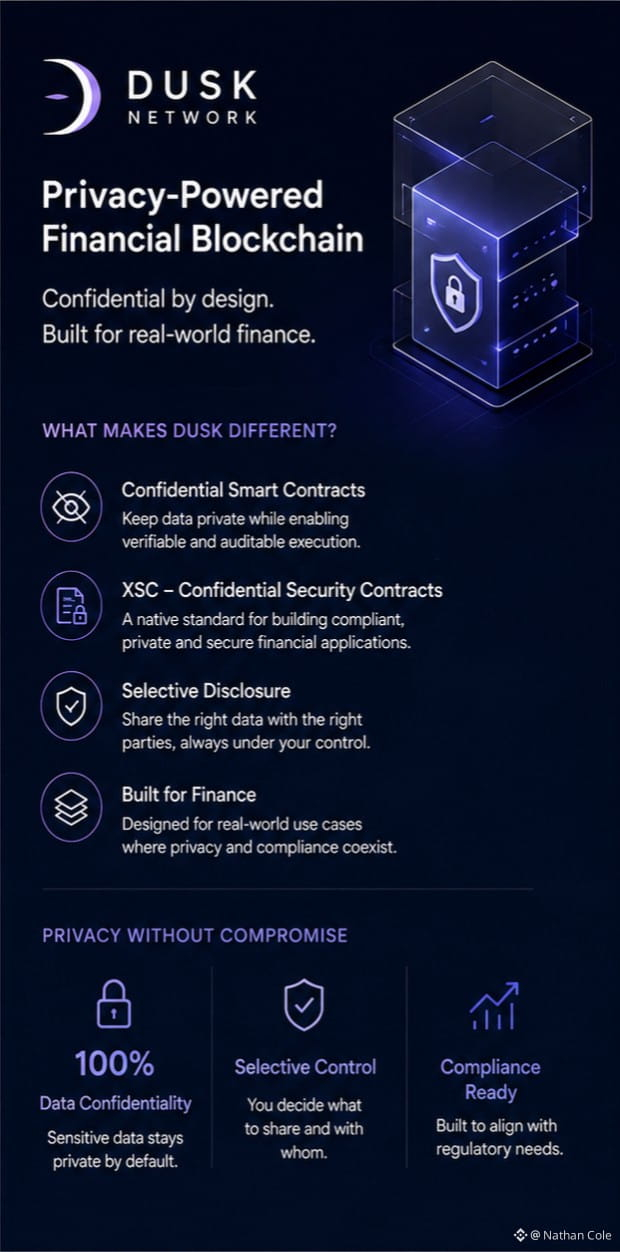
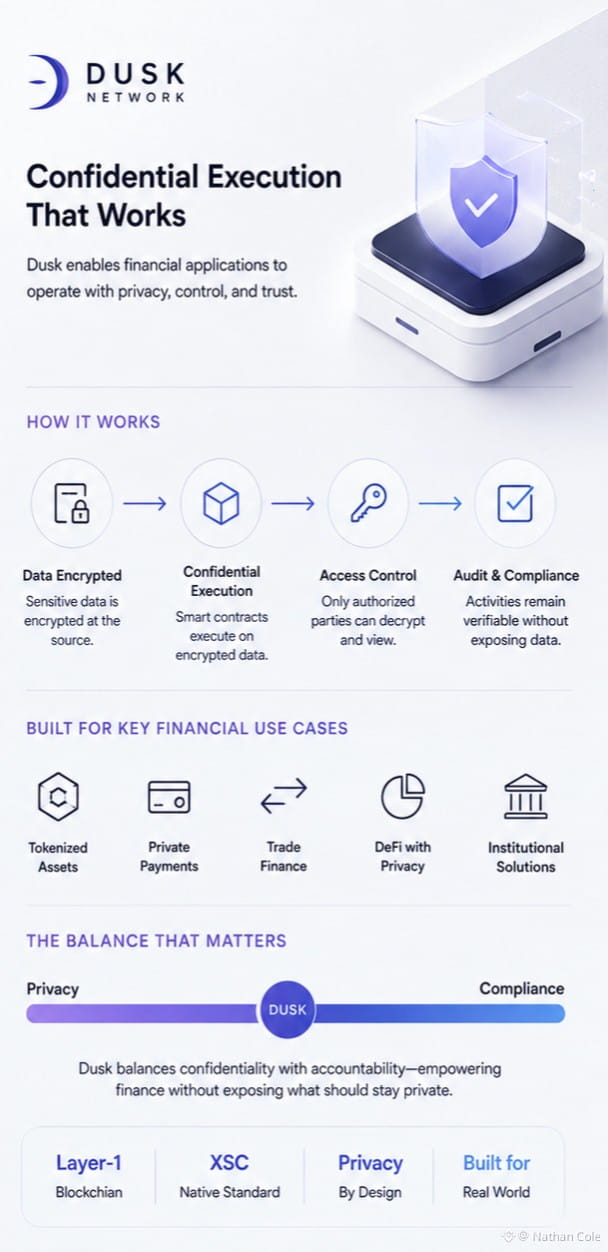
2
3
741
·
--
ສັນຍານກະທິງ
#dusk $DUSK I’ve been around crypto long enough to notice how often the same stories come back with a slightly different coat of paint. Privacy is one of them. It sounds great in theory, but once you put real money, businesses, regulations, and actual people into the picture, things get messy pretty quickly.
That’s probably why Dusk Network has made me stop and think a little longer.
What I find interesting isn’t the idea of making everything invisible. That would create a whole different set of problems. It’s the idea of being able to keep certain financial information private while still proving that the important parts are legitimate.
And honestly, I don’t think that’s an easy problem.
If everything is visible, businesses may reveal more than they should. If everything is hidden, trust becomes harder. Somewhere between those two extremes is probably where useful on-chain finance has to live.
I’ve seen plenty of projects look impressive from a technical perspective and then run straight into the boring stuff that actually matters — regulation, adoption, incentives, and whether normal people can use the thing without thinking about it every five minutes.
So I’m still cautious about Dusk. I’m not convinced that selective privacy automatically solves the bigger problem. But at least the problem feels real.
Maybe the future isn’t about choosing between transparency and privacy.
Maybe it’s about finally learning that financial systems need both, just at different moments.
@Dusk_Foundation #Dusk $DUSK
{spot}(DUSKUSDT)
#dusk $DUSK I’ve been around crypto long enough to notice how often the same stories come back with a slightly different coat of paint. Privacy is one of them. It sounds great in theory, but once you put real money, businesses, regulations, and actual people into the picture, things get messy pretty quickly.
That’s probably why Dusk Network has made me stop and think a little longer.
What I find interesting isn’t the idea of making everything invisible. That would create a whole different set of problems. It’s the idea of being able to keep certain financial information private while still proving that the important parts are legitimate.
And honestly, I don’t think that’s an easy problem.
If everything is visible, businesses may reveal more than they should. If everything is hidden, trust becomes harder. Somewhere between those two extremes is probably where useful on-chain finance has to live.
I’ve seen plenty of projects look impressive from a technical perspective and then run straight into the boring stuff that actually matters — regulation, adoption, incentives, and whether normal people can use the thing without thinking about it every five minutes.
So I’m still cautious about Dusk. I’m not convinced that selective privacy automatically solves the bigger problem. But at least the problem feels real.
Maybe the future isn’t about choosing between transparency and privacy.
Maybe it’s about finally learning that financial systems need both, just at different moments.
@Dusk #Dusk $DUSK
That’s probably why Dusk Network has made me stop and think a little longer.
What I find interesting isn’t the idea of making everything invisible. That would create a whole different set of problems. It’s the idea of being able to keep certain financial information private while still proving that the important parts are legitimate.
And honestly, I don’t think that’s an easy problem.
If everything is visible, businesses may reveal more than they should. If everything is hidden, trust becomes harder. Somewhere between those two extremes is probably where useful on-chain finance has to live.
I’ve seen plenty of projects look impressive from a technical perspective and then run straight into the boring stuff that actually matters — regulation, adoption, incentives, and whether normal people can use the thing without thinking about it every five minutes.
So I’m still cautious about Dusk. I’m not convinced that selective privacy automatically solves the bigger problem. But at least the problem feels real.
Maybe the future isn’t about choosing between transparency and privacy.
Maybe it’s about finally learning that financial systems need both, just at different moments.
@Dusk #Dusk $DUSK
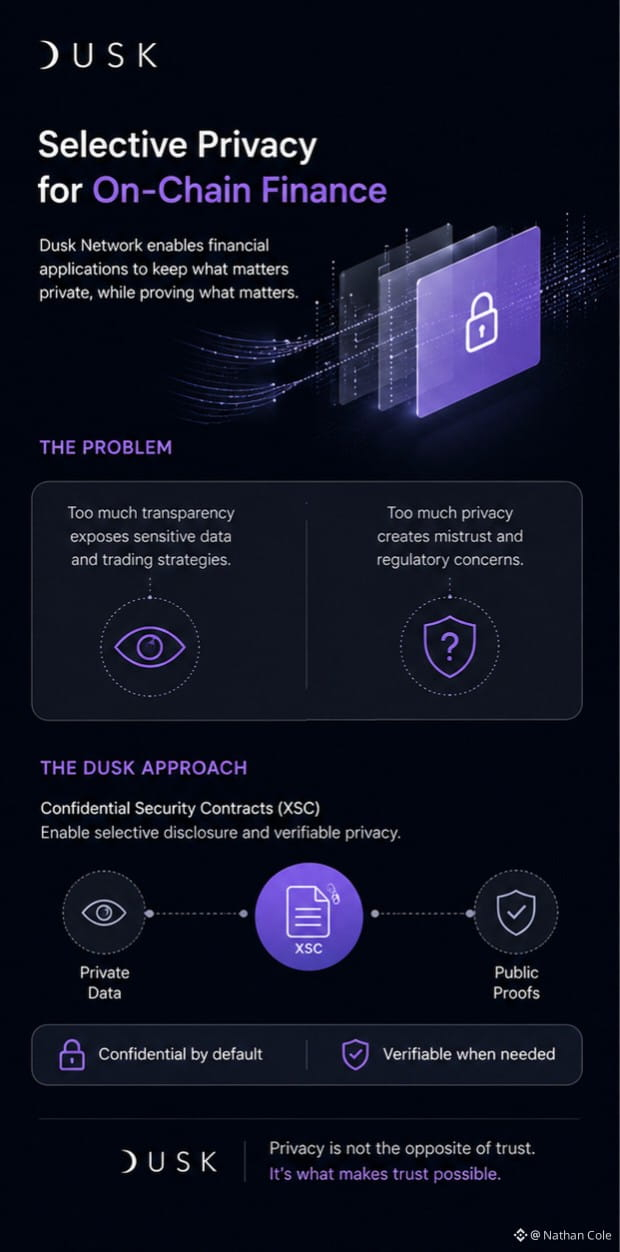
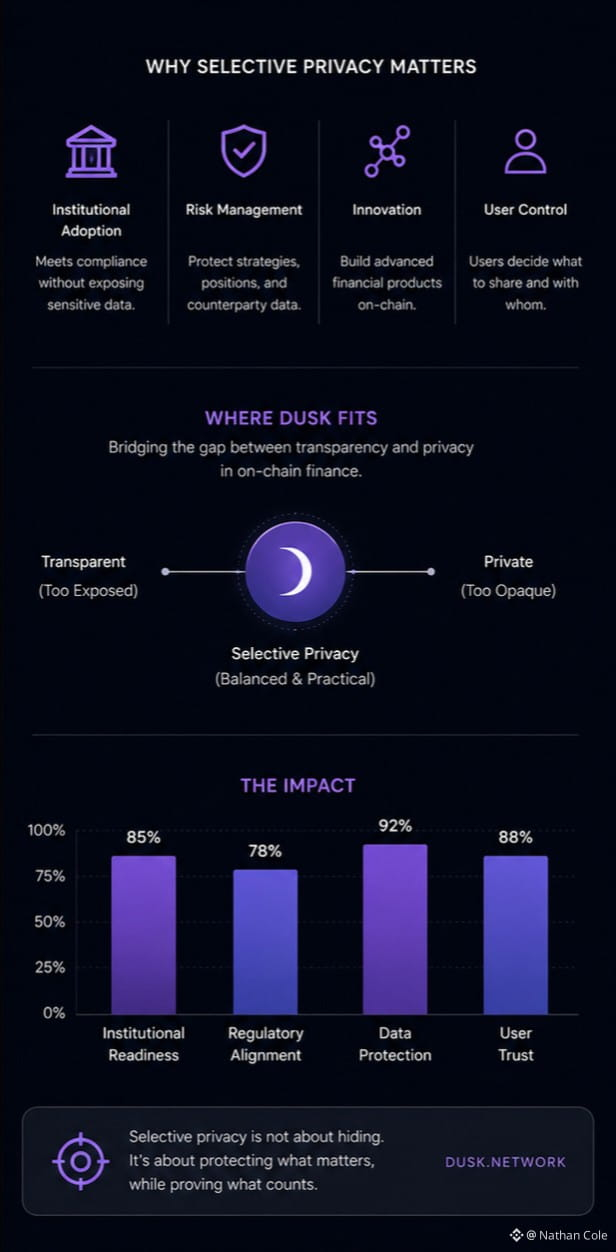
1
1
345
·
--
ສັນຍານກະທິງ
#dusk $DUSK I’ve been around crypto long enough to hear the same ideas come back every few years with a new name, a new logo, and a lot more noise around them. Privacy is one of those ideas. Everyone agrees it matters, but actually building something people will use is a different story.
That’s what makes Dusk Network worth keeping an eye on for me.
The part I find interesting is that privacy isn’t being treated like an extra feature. Dusk is building a layer-1 around financial applications, with confidential smart contracts and its XSC standard. That makes sense to me. If financial activity really moves on-chain, I can’t imagine institutions wanting every sensitive detail sitting there for anyone to see.
But I’m still cautious.
I’ve seen plenty of projects with good technology run straight into the same boring problems: regulation, liquidity, adoption, integrations, and people simply not wanting to change how they already do things. A clever blockchain doesn’t automatically solve those problems.
So I’m not looking at Dusk and thinking it has everything figured out. I’m more curious about whether the idea survives contact with reality.
Maybe privacy becomes one of the things financial blockchains genuinely need. Maybe the market moves on to something else.
For now, I’m just watching. After so many cycles, I’ve learned that the projects worth remembering usually don’t need to shout the loudest.
@Dusk_Foundation #Dusk $DUSK
{spot}(DUSKUSDT)
#dusk $DUSK I’ve been around crypto long enough to hear the same ideas come back every few years with a new name, a new logo, and a lot more noise around them. Privacy is one of those ideas. Everyone agrees it matters, but actually building something people will use is a different story.
That’s what makes Dusk Network worth keeping an eye on for me.
The part I find interesting is that privacy isn’t being treated like an extra feature. Dusk is building a layer-1 around financial applications, with confidential smart contracts and its XSC standard. That makes sense to me. If financial activity really moves on-chain, I can’t imagine institutions wanting every sensitive detail sitting there for anyone to see.
But I’m still cautious.
I’ve seen plenty of projects with good technology run straight into the same boring problems: regulation, liquidity, adoption, integrations, and people simply not wanting to change how they already do things. A clever blockchain doesn’t automatically solve those problems.
So I’m not looking at Dusk and thinking it has everything figured out. I’m more curious about whether the idea survives contact with reality.
Maybe privacy becomes one of the things financial blockchains genuinely need. Maybe the market moves on to something else.
For now, I’m just watching. After so many cycles, I’ve learned that the projects worth remembering usually don’t need to shout the loudest.
@Dusk #Dusk $DUSK
That’s what makes Dusk Network worth keeping an eye on for me.
The part I find interesting is that privacy isn’t being treated like an extra feature. Dusk is building a layer-1 around financial applications, with confidential smart contracts and its XSC standard. That makes sense to me. If financial activity really moves on-chain, I can’t imagine institutions wanting every sensitive detail sitting there for anyone to see.
But I’m still cautious.
I’ve seen plenty of projects with good technology run straight into the same boring problems: regulation, liquidity, adoption, integrations, and people simply not wanting to change how they already do things. A clever blockchain doesn’t automatically solve those problems.
So I’m not looking at Dusk and thinking it has everything figured out. I’m more curious about whether the idea survives contact with reality.
Maybe privacy becomes one of the things financial blockchains genuinely need. Maybe the market moves on to something else.
For now, I’m just watching. After so many cycles, I’ve learned that the projects worth remembering usually don’t need to shout the loudest.
@Dusk #Dusk $DUSK
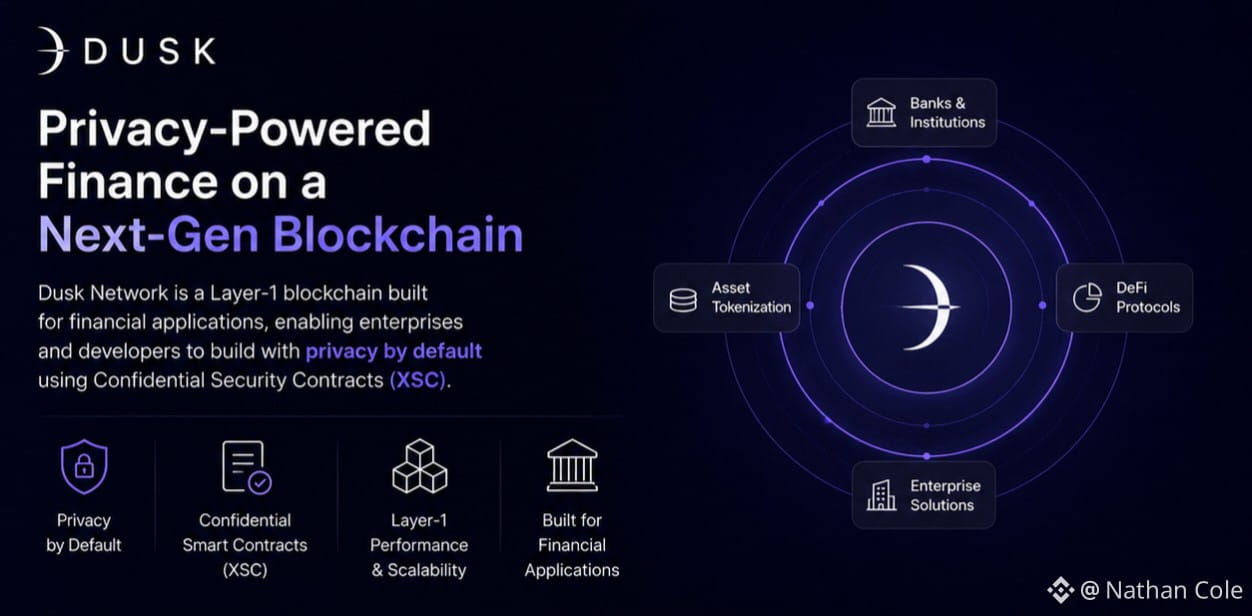
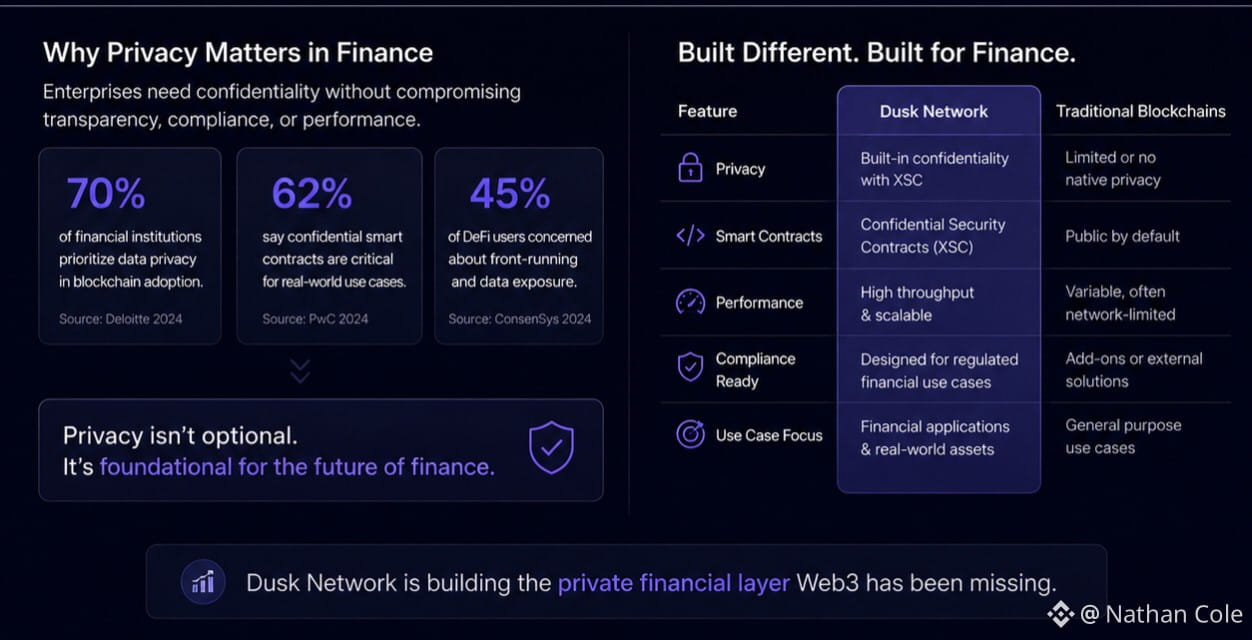
1
148
·
--
ສັນຍານກະທິງ
#dusk $DUSK I’ve been around crypto long enough to know that the word “privacy” can sound much better than the reality behind it. I’ve seen projects make big promises, attract attention, and then disappear when people realize how complicated the actual problem is.
That’s partly why Dusk caught my attention.
The idea of a Layer-1 built around privacy for financial applications makes sense to me. Most financial activity probably shouldn’t require the whole world to see every detail. Dusk is trying to approach that through confidential smart contracts and its Confidential Security Contract standard.
But honestly, I’m still skeptical.
Privacy sounds simple until you put real money, institutions, regulations, audits, and ordinary users into the picture. Then everything gets messy. You want transactions to be private, but someone still needs to verify that things are legitimate. You want transparency when something goes wrong, but you don’t necessarily want your entire financial history sitting in public forever.
I’ve seen crypto projects solve the technical side and completely underestimate the human side.
So I’m not sitting here thinking Dusk has figured everything out. It hasn’t, at least not yet. What I find interesting is that it is working on a problem that feels less fashionable and more practical.
Maybe that’s why I’m paying attention.
After watching so many cycles, I’m less interested in projects shouting about the future. I’d rather watch the ones quietly trying to fix something that actually bothers people today.
@Dusk_Foundation #Dusk $DUSK
{spot}(DUSKUSDT)
#dusk $DUSK I’ve been around crypto long enough to know that the word “privacy” can sound much better than the reality behind it. I’ve seen projects make big promises, attract attention, and then disappear when people realize how complicated the actual problem is.
That’s partly why Dusk caught my attention.
The idea of a Layer-1 built around privacy for financial applications makes sense to me. Most financial activity probably shouldn’t require the whole world to see every detail. Dusk is trying to approach that through confidential smart contracts and its Confidential Security Contract standard.
But honestly, I’m still skeptical.
Privacy sounds simple until you put real money, institutions, regulations, audits, and ordinary users into the picture. Then everything gets messy. You want transactions to be private, but someone still needs to verify that things are legitimate. You want transparency when something goes wrong, but you don’t necessarily want your entire financial history sitting in public forever.
I’ve seen crypto projects solve the technical side and completely underestimate the human side.
So I’m not sitting here thinking Dusk has figured everything out. It hasn’t, at least not yet. What I find interesting is that it is working on a problem that feels less fashionable and more practical.
Maybe that’s why I’m paying attention.
After watching so many cycles, I’m less interested in projects shouting about the future. I’d rather watch the ones quietly trying to fix something that actually bothers people today.
@Dusk #Dusk $DUSK
That’s partly why Dusk caught my attention.
The idea of a Layer-1 built around privacy for financial applications makes sense to me. Most financial activity probably shouldn’t require the whole world to see every detail. Dusk is trying to approach that through confidential smart contracts and its Confidential Security Contract standard.
But honestly, I’m still skeptical.
Privacy sounds simple until you put real money, institutions, regulations, audits, and ordinary users into the picture. Then everything gets messy. You want transactions to be private, but someone still needs to verify that things are legitimate. You want transparency when something goes wrong, but you don’t necessarily want your entire financial history sitting in public forever.
I’ve seen crypto projects solve the technical side and completely underestimate the human side.
So I’m not sitting here thinking Dusk has figured everything out. It hasn’t, at least not yet. What I find interesting is that it is working on a problem that feels less fashionable and more practical.
Maybe that’s why I’m paying attention.
After watching so many cycles, I’m less interested in projects shouting about the future. I’d rather watch the ones quietly trying to fix something that actually bothers people today.
@Dusk #Dusk $DUSK
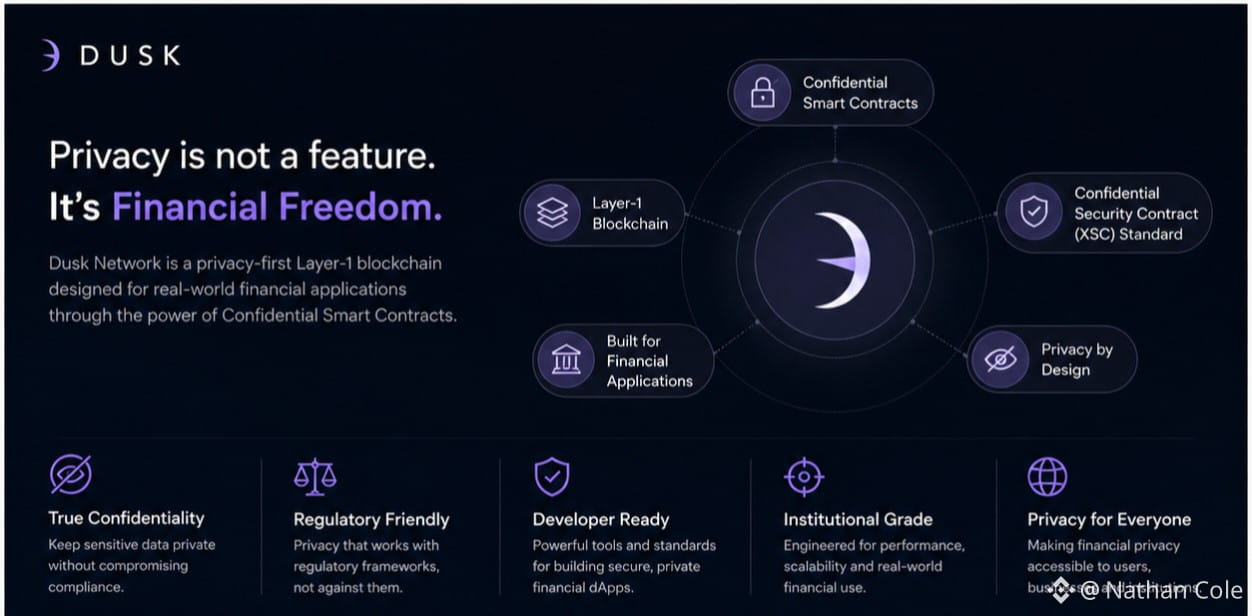
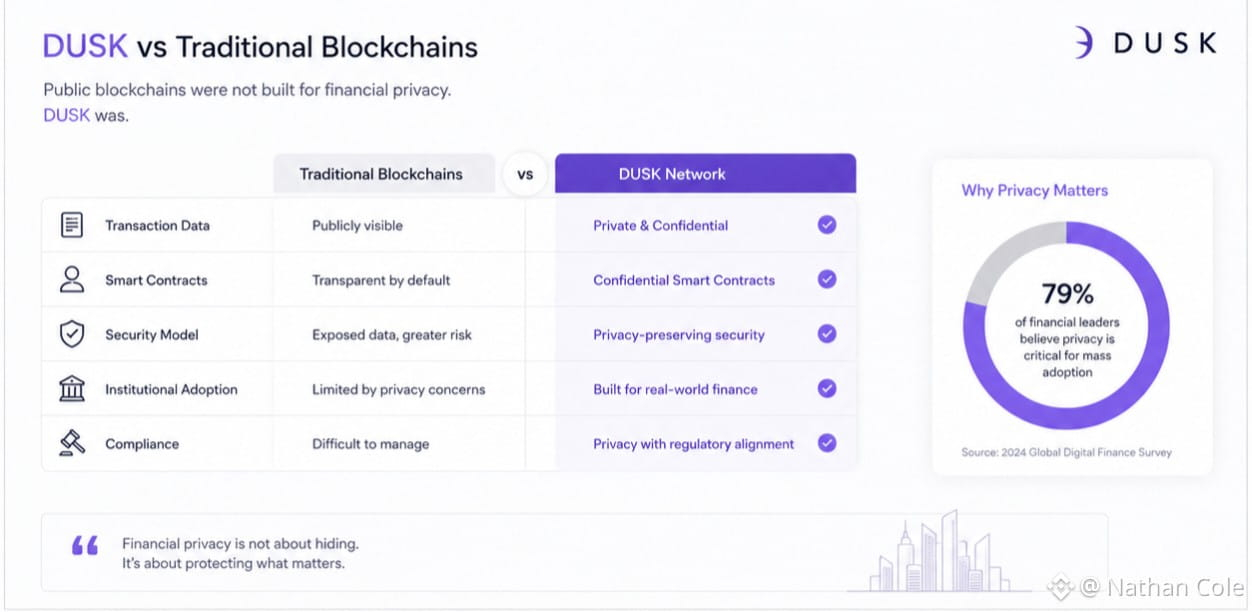
1
1
138
ເຂົ້າສູ່ລະບົບເພື່ອສຳຫຼວດເນື້ອຫາເພີ່ມເຕີມ
ເຂົ້າຮ່ວມກຸ່ມຜູ້ໃຊ້ຄຣິບໂຕທົ່ວໂລກໃນ Binance Square.
⚡️ ໄດ້ຮັບຂໍ້ມູນຫຼ້າສຸດ ແລະ ທີ່ມີປະໂຫຍດກ່ຽວກັບຄຣິບໂຕ.
💬 ໄດ້ຮັບຄວາມໄວ້ວາງໃຈຈາກຕະຫຼາດແລກປ່ຽນຄຣິບໂຕທີ່ໃຫຍ່ທີ່ສຸດໃນໂລກ.
👍 ຄົ້ນຫາຂໍ້ມູນເຊີງເລິກທີ່ແທ້ຈາກນັກສ້າງທີ່ໄດ້ຮັບການຢືນຢັນ.
ອີເມວ / ເບີໂທລະສັບ
ຫົວຂໍ້ທີ່ກໍາລັງນິຍົມ
BinancePick
3.1M ຄັ້ງທີ່ເບິ່ງ
153,299 ກຳລັງສົນທະນາ
Join #EarningsSeason: Predict Earnings on Binance Pick, Share Your Take on Binance Square!
Binance Square Official
·413 ຖືກໃຈ
·343.4k ຄັ້ງທີ່ເບິ່ງ
EarningsSeason
5.3M ຄັ້ງທີ່ເບິ່ງ
26,065 ກຳລັງສົນທະນາ
AnthropicTTMRevenueGrewAbout1200%
36,046 ຄັ້ງທີ່ເບິ່ງ
445 ກຳລັງສົນທະນາ