

Square Alpha
7.6k ໂພສ

Square Alpha
ລາຍງານ
ບລັອກຜູ້ໃຊ້
Web3 trader & market analyst – uncovering early opportunities, charts, and airdrops – pure alpha, no hype
ຜູ້ຊື້ຂາຍປະຈໍາ
5.5 ປີ
304 ກໍາລັງຕິດຕາມ
12.3K+ ຜູ້ຕິດຕາມ
12.5K+ Liked
ໂພສ
ທັງໝົດ
ວົງຢືມ
ຖ່າຍທອດສົດ
·
--
ສັນຍານກະທິງ
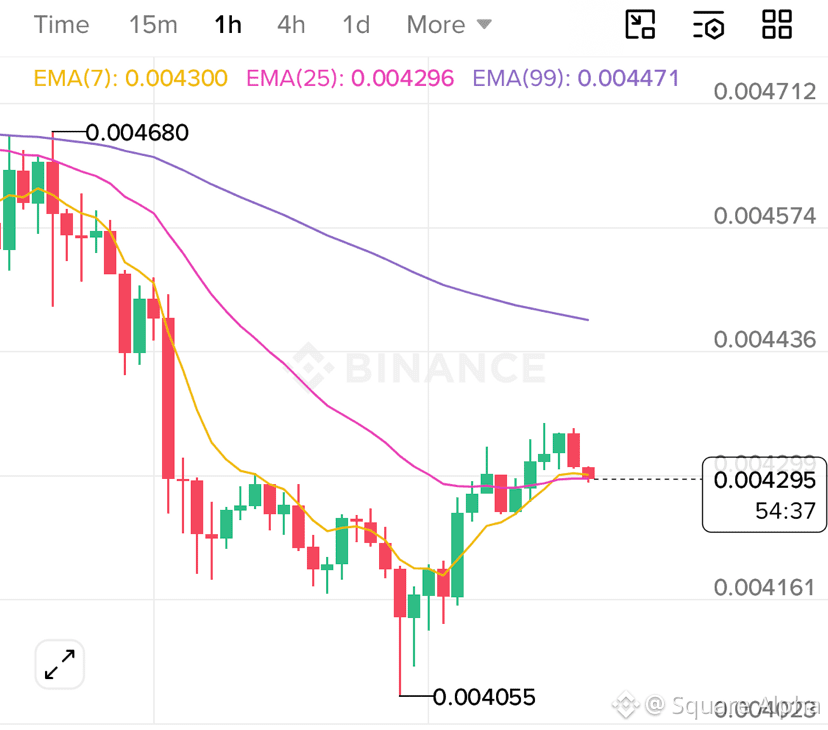
💥 $PUMP dug itself out of the 0.004055 hole and is now coiling at the EMA knot — recovery mode activated! 😤
📊 LONG (1H):
→ Entry: 0.00425 – 0.00430
→ SL: 0.00414
→ TP1: 0.00447
→ TP2: 0.00468, full send 0.0048
why: every pullback since the bottom has been shallower than the last, RSI(6) flipped over 50 and is holding there, and price is pressing into the EMA7/25 knot like it wants through. I've watched two dip attempts this week get bought before they even turned red. Once that knot flips to support, the falling EMA99 at 0.00447 is the magnet — and above it, the 0.00468 high is wide open.
1h close below 0.00414 and the idea is dead, I'll say it out loud. who's riding the recovery? 👇
#pump #pumpfun
{spot}(PUMPUSDT)
💥 $PUMP dug itself out of the 0.004055 hole and is now coiling at the EMA knot — recovery mode activated! 😤
📊 LONG (1H):
→ Entry: 0.00425 – 0.00430
→ SL: 0.00414
→ TP1: 0.00447
→ TP2: 0.00468, full send 0.0048
why: every pullback since the bottom has been shallower than the last, RSI(6) flipped over 50 and is holding there, and price is pressing into the EMA7/25 knot like it wants through. I've watched two dip attempts this week get bought before they even turned red. Once that knot flips to support, the falling EMA99 at 0.00447 is the magnet — and above it, the 0.00468 high is wide open.
1h close below 0.00414 and the idea is dead, I'll say it out loud. who's riding the recovery? 👇
#pump #pumpfun
📊 LONG (1H):
→ Entry: 0.00425 – 0.00430
→ SL: 0.00414
→ TP1: 0.00447
→ TP2: 0.00468, full send 0.0048
why: every pullback since the bottom has been shallower than the last, RSI(6) flipped over 50 and is holding there, and price is pressing into the EMA7/25 knot like it wants through. I've watched two dip attempts this week get bought before they even turned red. Once that knot flips to support, the falling EMA99 at 0.00447 is the magnet — and above it, the 0.00468 high is wide open.
1h close below 0.00414 and the idea is dead, I'll say it out loud. who's riding the recovery? 👇
#pump #pumpfun
325
·
--
ສັນຍານກະທິງ
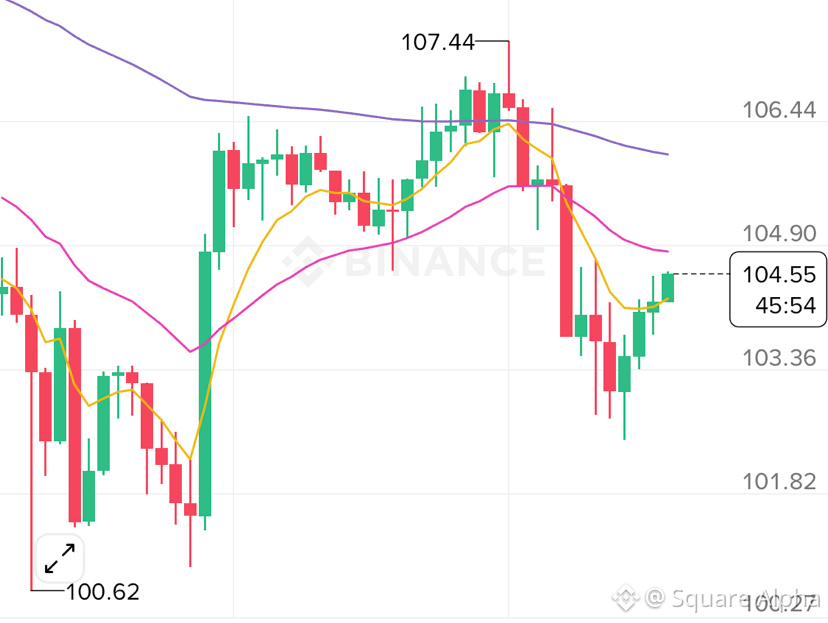
💥 $SOL keeps printing higher lows while everyone calls it weak — that 106 ceiling is next! 😤
📊 LONG (1H):
→ Entry: 104.0 – 104.6
→ SL: 102.3
→ TP1: 106.0
→ TP2: 107.44, full send 109
why: lows keep rising (100.62 → 102.5), meaning sellers push less depth every attempt, and the recovery candles have been stacking green for six hours straight while RSI(6) flipped back over 50. I’ve been watching the 102.5 defense all morning — buyers stepped in twice and didn’t blink. The downtrending EMA99 at 106 is the magnet, and a clean break of it squeezes everyone who shorted the flush.
1h close below 102.3 and the idea is dead, I’ll say it out loud. who’s loading the higher low? 👇
#sol #Solana
{spot}(SOLUSDT)
💥 $SOL keeps printing higher lows while everyone calls it weak — that 106 ceiling is next! 😤
📊 LONG (1H):
→ Entry: 104.0 – 104.6
→ SL: 102.3
→ TP1: 106.0
→ TP2: 107.44, full send 109
why: lows keep rising (100.62 → 102.5), meaning sellers push less depth every attempt, and the recovery candles have been stacking green for six hours straight while RSI(6) flipped back over 50. I’ve been watching the 102.5 defense all morning — buyers stepped in twice and didn’t blink. The downtrending EMA99 at 106 is the magnet, and a clean break of it squeezes everyone who shorted the flush.
1h close below 102.3 and the idea is dead, I’ll say it out loud. who’s loading the higher low? 👇
#sol #Solana
📊 LONG (1H):
→ Entry: 104.0 – 104.6
→ SL: 102.3
→ TP1: 106.0
→ TP2: 107.44, full send 109
why: lows keep rising (100.62 → 102.5), meaning sellers push less depth every attempt, and the recovery candles have been stacking green for six hours straight while RSI(6) flipped back over 50. I’ve been watching the 102.5 defense all morning — buyers stepped in twice and didn’t blink. The downtrending EMA99 at 106 is the magnet, and a clean break of it squeezes everyone who shorted the flush.
1h close below 102.3 and the idea is dead, I’ll say it out loud. who’s loading the higher low? 👇
#sol #Solana
1
260
·
--
ສັນຍານກະທິງ
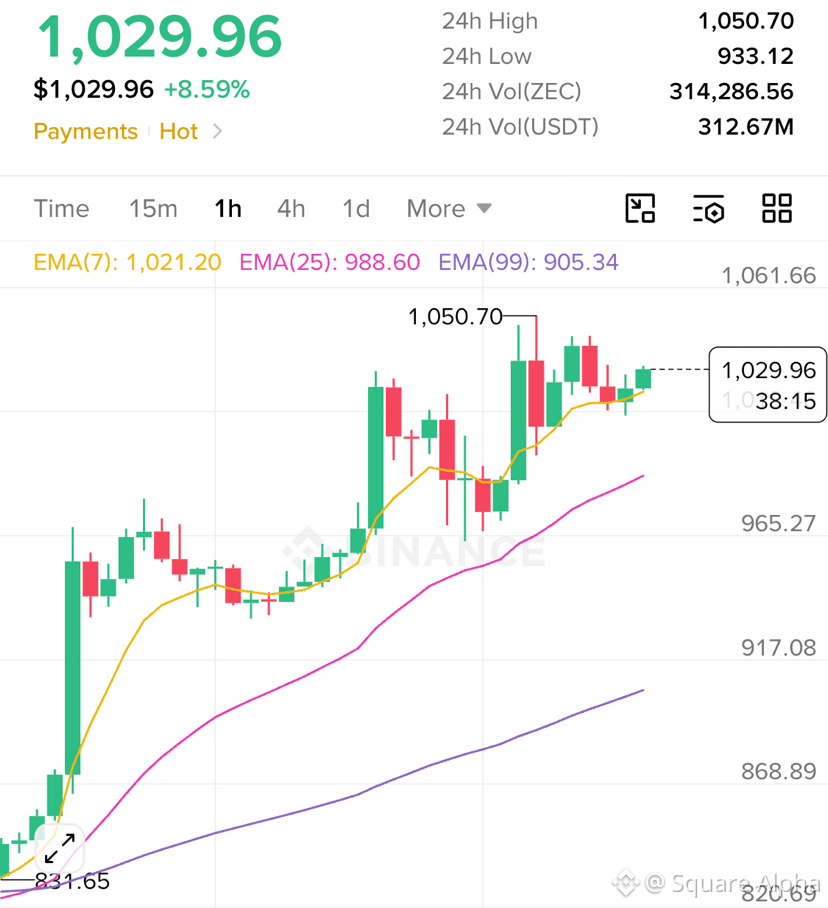
💥 $ZEC is camping above $1,000 like it owns the place — the big psychological level just flipped to support! 😤
LONG (1H):
→ Entry: 1,015 – 1,030
→ SL: 985
→ TP1: 1,050.70
→ TP2: 1,080, full send 1,100
why: higher lows all run, RSI at 62 with actual room before cooked, and I've watched every tag of the EMA7 get bought within the candle all week. Price coiling right under 1,050 with the $1,000 floor underneath = breakout setup with a clean risk line. Old resistance becoming support is the strongest flip in trading.
1h close below 985 and the idea is dead, I'll say it out loud. who's riding ZEC to 1,100? 👇
#zec #zcash $ZEC
{spot}(ZECUSDT)
💥 $ZEC is camping above $1,000 like it owns the place — the big psychological level just flipped to support! 😤
LONG (1H):
→ Entry: 1,015 – 1,030
→ SL: 985
→ TP1: 1,050.70
→ TP2: 1,080, full send 1,100
why: higher lows all run, RSI at 62 with actual room before cooked, and I've watched every tag of the EMA7 get bought within the candle all week. Price coiling right under 1,050 with the $1,000 floor underneath = breakout setup with a clean risk line. Old resistance becoming support is the strongest flip in trading.
1h close below 985 and the idea is dead, I'll say it out loud. who's riding ZEC to 1,100? 👇
#zec #zcash $ZEC
LONG (1H):
→ Entry: 1,015 – 1,030
→ SL: 985
→ TP1: 1,050.70
→ TP2: 1,080, full send 1,100
why: higher lows all run, RSI at 62 with actual room before cooked, and I've watched every tag of the EMA7 get bought within the candle all week. Price coiling right under 1,050 with the $1,000 floor underneath = breakout setup with a clean risk line. Old resistance becoming support is the strongest flip in trading.
1h close below 985 and the idea is dead, I'll say it out loud. who's riding ZEC to 1,100? 👇
#zec #zcash $ZEC
1
1
240
·
--
ສັນຍານກະທິງ
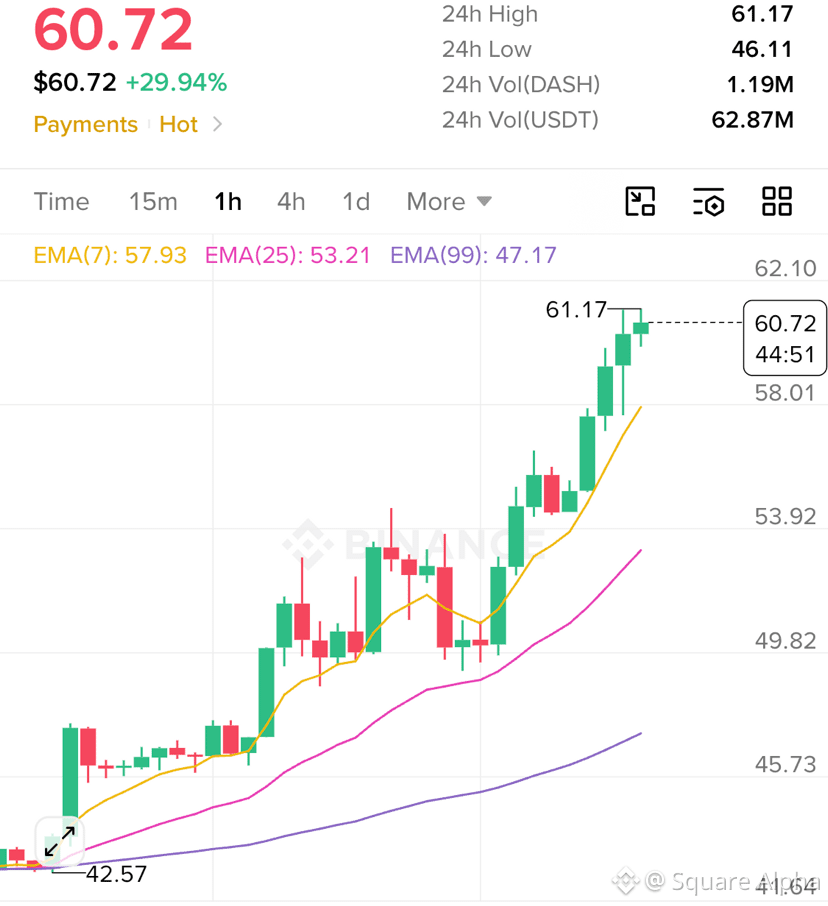
💥 $DASH is +30% and refusing to cool off — every single dip gets eaten within candles! 😤
📊 LONG (1H):
→ Entry: 59.0 – 60.0
→ SL: 57.0
→ TP1: 61.17
→ TP2: 63.5, full send 65
why: higher lows the whole way from 42, EMAs fanned out green, and price holding at the highs instead of blowing off. I've watched five dips this run get bought before they even finished printing. RSI is hot, yeah — but in a real momentum run, hot is the norm, not the exit.
1h close below 57 and the idea is dead, I'll say it out loud. who's riding the staircase? 👇
#DASH #Payments
{spot}(DASHUSDT)
💥 $DASH is +30% and refusing to cool off — every single dip gets eaten within candles! 😤
📊 LONG (1H):
→ Entry: 59.0 – 60.0
→ SL: 57.0
→ TP1: 61.17
→ TP2: 63.5, full send 65
why: higher lows the whole way from 42, EMAs fanned out green, and price holding at the highs instead of blowing off. I've watched five dips this run get bought before they even finished printing. RSI is hot, yeah — but in a real momentum run, hot is the norm, not the exit.
1h close below 57 and the idea is dead, I'll say it out loud. who's riding the staircase? 👇
#DASH #Payments
📊 LONG (1H):
→ Entry: 59.0 – 60.0
→ SL: 57.0
→ TP1: 61.17
→ TP2: 63.5, full send 65
why: higher lows the whole way from 42, EMAs fanned out green, and price holding at the highs instead of blowing off. I've watched five dips this run get bought before they even finished printing. RSI is hot, yeah — but in a real momentum run, hot is the norm, not the exit.
1h close below 57 and the idea is dead, I'll say it out loud. who's riding the staircase? 👇
#DASH #Payments
1
216
·
--
ສັນຍານກະທິງ
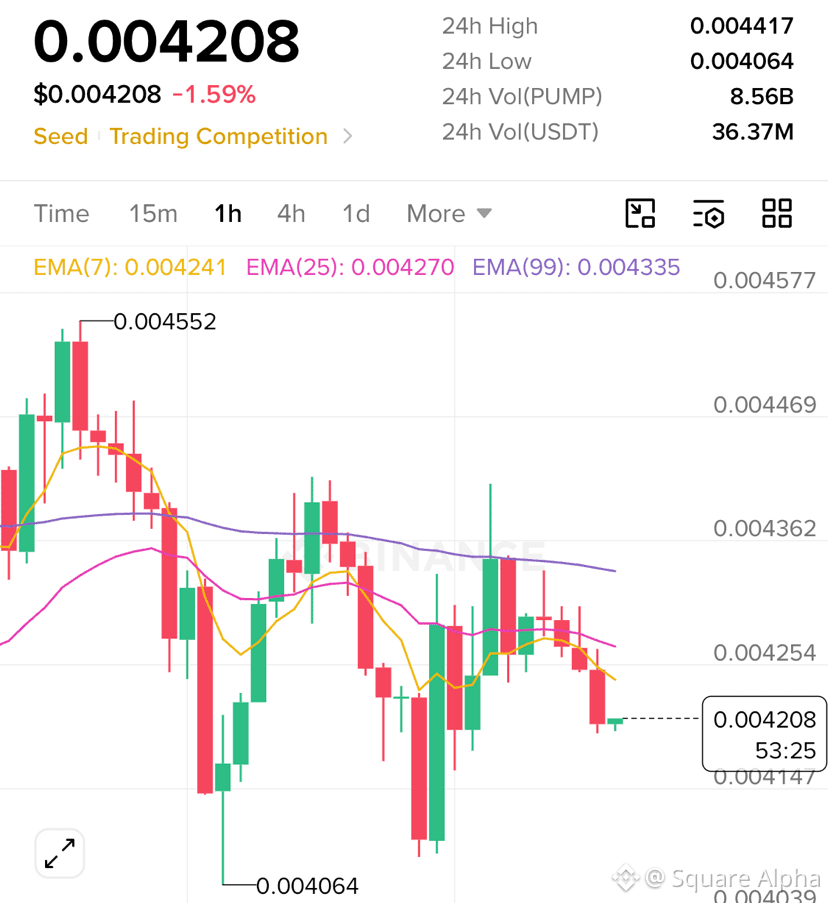
💥 $PUMP 's floor held twice and the sellers just ran out of ammo — coil loading under the wall! 😤
📊 LONG (1H):
→ Entry: 0.00415 – 0.00421
→ SL: 0.00403
→ TP1: 0.00433
→ TP2: 0.00455, full send 0.0047
why: 0.004064 got knocked twice and didn't break, and red volume is shrinking to nothing = sellers exhausted. I've seen this exact coil snap up on this coin before, and a close above 0.00433 squeezes every short on the book.
0.00403 breaks and the idea is dead, I'll say it out loud. who's buying the floor? 👇
#pump #pumpfun $PUMP
{spot}(PUMPUSDT)
💥 $PUMP 's floor held twice and the sellers just ran out of ammo — coil loading under the wall! 😤
📊 LONG (1H):
→ Entry: 0.00415 – 0.00421
→ SL: 0.00403
→ TP1: 0.00433
→ TP2: 0.00455, full send 0.0047
why: 0.004064 got knocked twice and didn't break, and red volume is shrinking to nothing = sellers exhausted. I've seen this exact coil snap up on this coin before, and a close above 0.00433 squeezes every short on the book.
0.00403 breaks and the idea is dead, I'll say it out loud. who's buying the floor? 👇
#pump #pumpfun $PUMP
📊 LONG (1H):
→ Entry: 0.00415 – 0.00421
→ SL: 0.00403
→ TP1: 0.00433
→ TP2: 0.00455, full send 0.0047
why: 0.004064 got knocked twice and didn't break, and red volume is shrinking to nothing = sellers exhausted. I've seen this exact coil snap up on this coin before, and a close above 0.00433 squeezes every short on the book.
0.00403 breaks and the idea is dead, I'll say it out loud. who's buying the floor? 👇
#pump #pumpfun $PUMP
160
·
--
ສັນຍານກະທິງ
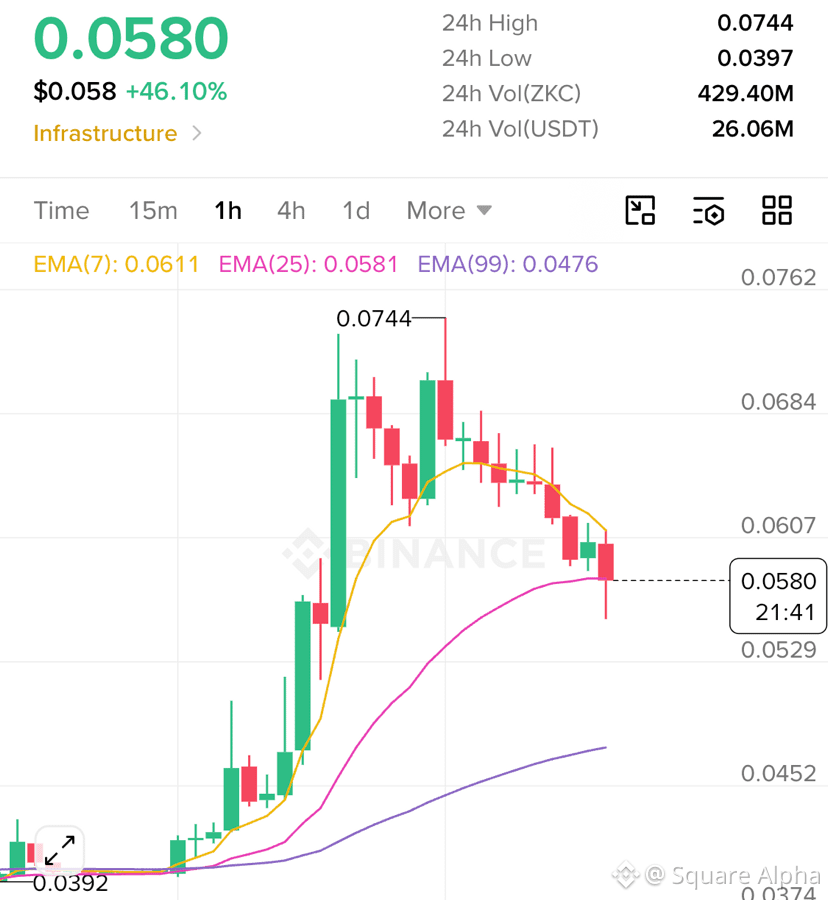
💥 $ZKC is +46% on the day and the first real dip just landed on the EMA25 — momentum runs live or die at this exact line! 😤
📊 LONG (1H):
→ Entry: 0.0565 – 0.0585
→ SL: 0.0542
→ TP1: 0.0611
→ TP2: 0.0660, and 0.0744 full send
here’s why:
1️⃣ still +46% on the day even after this pullback — that’s a momentum day, not a dead cat
2️⃣ price is tagging the EMA25, the first line momentum runs respect, and I watched the last two wicks into this zone get bought within the candle
3️⃣ RSI(6) washed from 90+ down to 32 = fuel reset, not a trend break — as long as this line holds
if a 1h candle closes below 0.0542, the thesis is dead and I’ll say so out loud in the next post. that’s the deal.
I’ll come back with the chart and show you what happened. who’s buying the dip with me? 👇
#ZKC #boundless $ZKC
{spot}(ZKCUSDT)
💥 $ZKC is +46% on the day and the first real dip just landed on the EMA25 — momentum runs live or die at this exact line! 😤
📊 LONG (1H):
→ Entry: 0.0565 – 0.0585
→ SL: 0.0542
→ TP1: 0.0611
→ TP2: 0.0660, and 0.0744 full send
here’s why:
1️⃣ still +46% on the day even after this pullback — that’s a momentum day, not a dead cat
2️⃣ price is tagging the EMA25, the first line momentum runs respect, and I watched the last two wicks into this zone get bought within the candle
3️⃣ RSI(6) washed from 90+ down to 32 = fuel reset, not a trend break — as long as this line holds
if a 1h candle closes below 0.0542, the thesis is dead and I’ll say so out loud in the next post. that’s the deal.
I’ll come back with the chart and show you what happened. who’s buying the dip with me? 👇
#ZKC #boundless $ZKC
📊 LONG (1H):
→ Entry: 0.0565 – 0.0585
→ SL: 0.0542
→ TP1: 0.0611
→ TP2: 0.0660, and 0.0744 full send
here’s why:
1️⃣ still +46% on the day even after this pullback — that’s a momentum day, not a dead cat
2️⃣ price is tagging the EMA25, the first line momentum runs respect, and I watched the last two wicks into this zone get bought within the candle
3️⃣ RSI(6) washed from 90+ down to 32 = fuel reset, not a trend break — as long as this line holds
if a 1h candle closes below 0.0542, the thesis is dead and I’ll say so out loud in the next post. that’s the deal.
I’ll come back with the chart and show you what happened. who’s buying the dip with me? 👇
#ZKC #boundless $ZKC
131
·
--
ສັນຍານກະທິງ
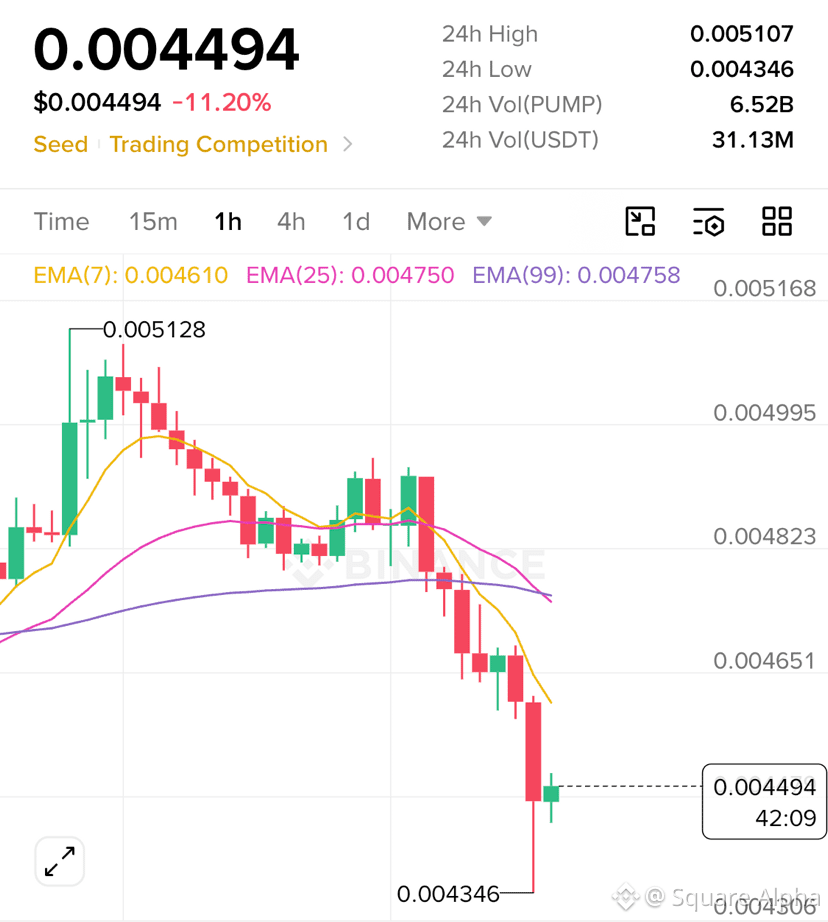
💥 $PUMP just printed a capitulation wick — and here's the part most people missed 👇
LONG (1H):
→ Entry: 0.00445 – 0.00450
→ SL: 0.00430
→ TP1: 0.00461
→ TP2: 0.00475, and 0.0049 full send
here's why:
1️⃣ that red volume bar = 3x the weekly average → panic sold out in ONE candle, not a slow bleed
2️⃣ RSI 20 = most washed since the 0.0036 bottom, and that one bounced +40%
3️⃣ price is back at the exact zone where the last two flushes got bought (0.0043–0.0045)
if 0.00430 breaks, the thesis is dead and I'll say so out loud in the next post. that's the deal.
I'll come back tomorrow with the chart and show you what happened. who's in? 👇
#pump #pumpfun $PUMP
{spot}(PUMPUSDT)
💥 $PUMP just printed a capitulation wick — and here's the part most people missed 👇
LONG (1H):
→ Entry: 0.00445 – 0.00450
→ SL: 0.00430
→ TP1: 0.00461
→ TP2: 0.00475, and 0.0049 full send
here's why:
1️⃣ that red volume bar = 3x the weekly average → panic sold out in ONE candle, not a slow bleed
2️⃣ RSI 20 = most washed since the 0.0036 bottom, and that one bounced +40%
3️⃣ price is back at the exact zone where the last two flushes got bought (0.0043–0.0045)
if 0.00430 breaks, the thesis is dead and I'll say so out loud in the next post. that's the deal.
I'll come back tomorrow with the chart and show you what happened. who's in? 👇
#pump #pumpfun $PUMP
LONG (1H):
→ Entry: 0.00445 – 0.00450
→ SL: 0.00430
→ TP1: 0.00461
→ TP2: 0.00475, and 0.0049 full send
here's why:
1️⃣ that red volume bar = 3x the weekly average → panic sold out in ONE candle, not a slow bleed
2️⃣ RSI 20 = most washed since the 0.0036 bottom, and that one bounced +40%
3️⃣ price is back at the exact zone where the last two flushes got bought (0.0043–0.0045)
if 0.00430 breaks, the thesis is dead and I'll say so out loud in the next post. that's the deal.
I'll come back tomorrow with the chart and show you what happened. who's in? 👇
#pump #pumpfun $PUMP
494
·
--
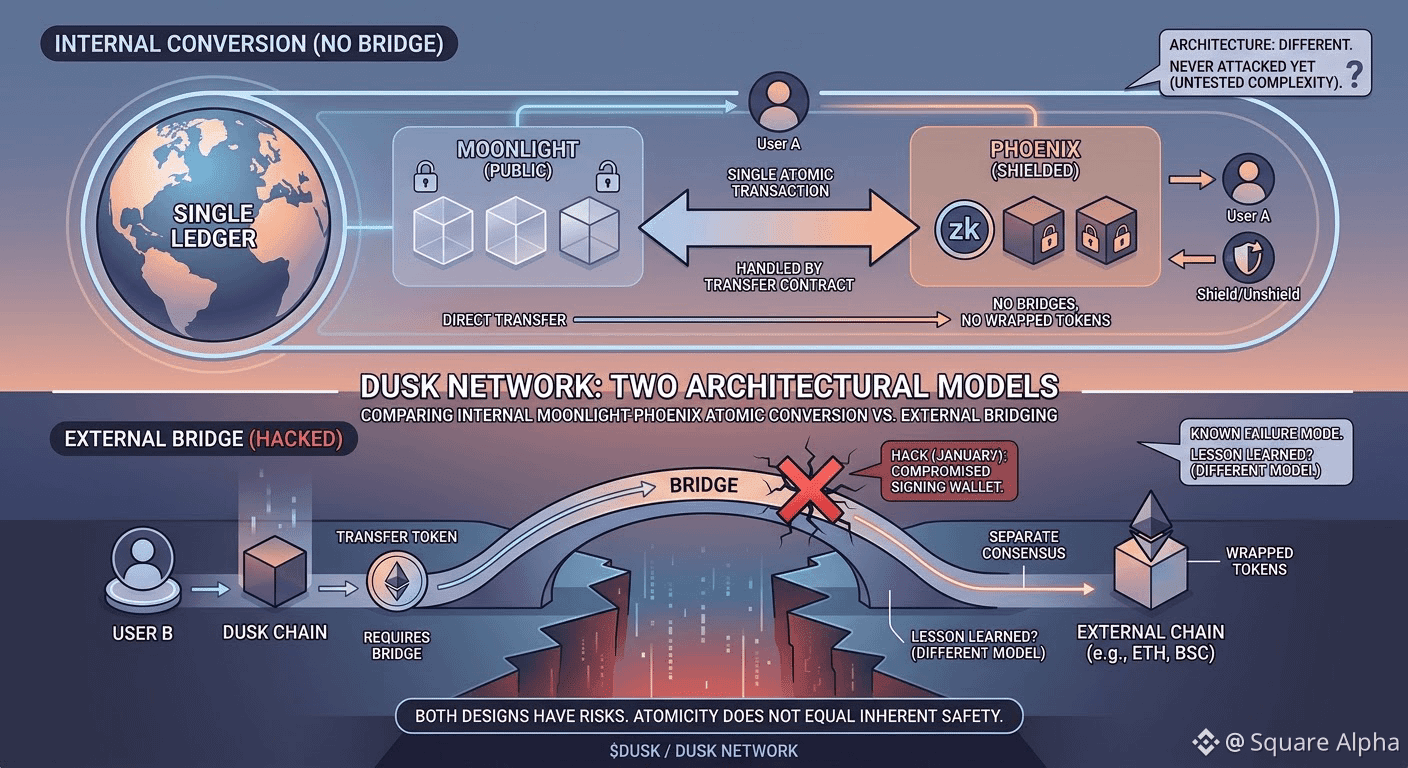
went back into dusk’s own docs today specifically to check something after writing about their bridge hack last week, and found a detail that connects to it directly.
dusk runs two transaction models on the same ledger. moonlight is public — normal, transparent, like most chains. phoenix is shielded — private, zk-based. switching between them, shield to unshield or back, is a single atomic transaction handled by dusk’s own transfer contract.
no bridge. no wrapped token. per their own docs: “handled by the transfer contract in a single atomic transaction — no bridges, no wrapped tokens.”
that phrase stopped me, because january’s hack — the one that actually happened — went through exactly the thing this mechanism is built to avoid. a separate bridge, to an external chain, with a compromised signing wallet as the point of failure.
so the part of dusk that already got hit relied on bridging. the part converting between public and private modes internally, deliberately, does not.
i want to read that as “they learned the lesson before they needed to.” but i can’t actually confirm the internal shield/unshield mechanism is safer, only that it’s architecturally different — no external bridge doesn’t automatically mean no attack surface, just a different one. atomic same-ledger conversion between two totally different transaction models is still complex code that’s never been tested by a real attacker the way the bridge already has.
one part of dusk has a known failure mode now. the other part just hasn’t been attacked yet. those aren’t the same thing as safe, even if the design looks more careful.
#dusk @Dusk_Foundation $DUSK
{spot}(DUSKUSDT)
went back into dusk’s own docs today specifically to check something after writing about their bridge hack last week, and found a detail that connects to it directly.
dusk runs two transaction models on the same ledger. moonlight is public — normal, transparent, like most chains. phoenix is shielded — private, zk-based. switching between them, shield to unshield or back, is a single atomic transaction handled by dusk’s own transfer contract.
no bridge. no wrapped token. per their own docs: “handled by the transfer contract in a single atomic transaction — no bridges, no wrapped tokens.”
that phrase stopped me, because january’s hack — the one that actually happened — went through exactly the thing this mechanism is built to avoid. a separate bridge, to an external chain, with a compromised signing wallet as the point of failure.
so the part of dusk that already got hit relied on bridging. the part converting between public and private modes internally, deliberately, does not.
i want to read that as “they learned the lesson before they needed to.” but i can’t actually confirm the internal shield/unshield mechanism is safer, only that it’s architecturally different — no external bridge doesn’t automatically mean no attack surface, just a different one. atomic same-ledger conversion between two totally different transaction models is still complex code that’s never been tested by a real attacker the way the bridge already has.
one part of dusk has a known failure mode now. the other part just hasn’t been attacked yet. those aren’t the same thing as safe, even if the design looks more careful.
#dusk @Dusk $DUSK
dusk runs two transaction models on the same ledger. moonlight is public — normal, transparent, like most chains. phoenix is shielded — private, zk-based. switching between them, shield to unshield or back, is a single atomic transaction handled by dusk’s own transfer contract.
no bridge. no wrapped token. per their own docs: “handled by the transfer contract in a single atomic transaction — no bridges, no wrapped tokens.”
that phrase stopped me, because january’s hack — the one that actually happened — went through exactly the thing this mechanism is built to avoid. a separate bridge, to an external chain, with a compromised signing wallet as the point of failure.
so the part of dusk that already got hit relied on bridging. the part converting between public and private modes internally, deliberately, does not.
i want to read that as “they learned the lesson before they needed to.” but i can’t actually confirm the internal shield/unshield mechanism is safer, only that it’s architecturally different — no external bridge doesn’t automatically mean no attack surface, just a different one. atomic same-ledger conversion between two totally different transaction models is still complex code that’s never been tested by a real attacker the way the bridge already has.
one part of dusk has a known failure mode now. the other part just hasn’t been attacked yet. those aren’t the same thing as safe, even if the design looks more careful.
#dusk @Dusk $DUSK
1
2
172
·
--
ສັນຍານກະທິງ
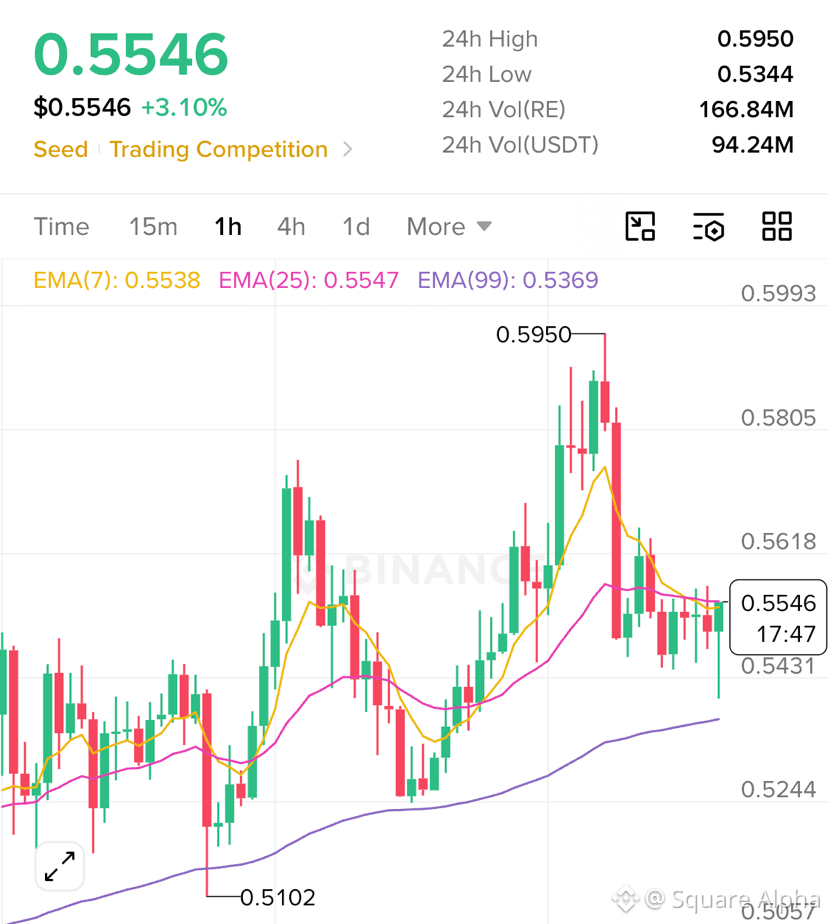
💥 $RE flushed the weak hands from 0.595 to 0.543 and is now coiling right at the EMA cluster — next leg loading! 😤
📊 LONG (1H):
→ Entry: 0.548 – 0.556
→ SL: 0.532
→ TP1: 0.580
→ TP2: 0.595, and 0.64 full send
the read: I've watched the 0.543 floor hold three times this week while RSI cooled from cooked back to 50 — that's a reload, not a reversal. And the fundamentals are actually spicy: reUSD just went live on Solana, the token governs a real on-chain reinsurance market, and only ~16% of supply is circulating. Thin float + real RWA narrative + a coiled chart = my favorite kind of setup. This coin has a habit of printing +30% candles out of nowhere.
who's loading the coil with me? 👇
#RE #ReProtocol #RWA #setup #signal
{spot}(REUSDT)
💥 $RE flushed the weak hands from 0.595 to 0.543 and is now coiling right at the EMA cluster — next leg loading! 😤
📊 LONG (1H):
→ Entry: 0.548 – 0.556
→ SL: 0.532
→ TP1: 0.580
→ TP2: 0.595, and 0.64 full send
the read: I've watched the 0.543 floor hold three times this week while RSI cooled from cooked back to 50 — that's a reload, not a reversal. And the fundamentals are actually spicy: reUSD just went live on Solana, the token governs a real on-chain reinsurance market, and only ~16% of supply is circulating. Thin float + real RWA narrative + a coiled chart = my favorite kind of setup. This coin has a habit of printing +30% candles out of nowhere.
who's loading the coil with me? 👇
#RE #ReProtocol #RWA #setup #signal
📊 LONG (1H):
→ Entry: 0.548 – 0.556
→ SL: 0.532
→ TP1: 0.580
→ TP2: 0.595, and 0.64 full send
the read: I've watched the 0.543 floor hold three times this week while RSI cooled from cooked back to 50 — that's a reload, not a reversal. And the fundamentals are actually spicy: reUSD just went live on Solana, the token governs a real on-chain reinsurance market, and only ~16% of supply is circulating. Thin float + real RWA narrative + a coiled chart = my favorite kind of setup. This coin has a habit of printing +30% candles out of nowhere.
who's loading the coil with me? 👇
#RE #ReProtocol #RWA #setup #signal
108
·
--
ສັນຍານກະທິງ
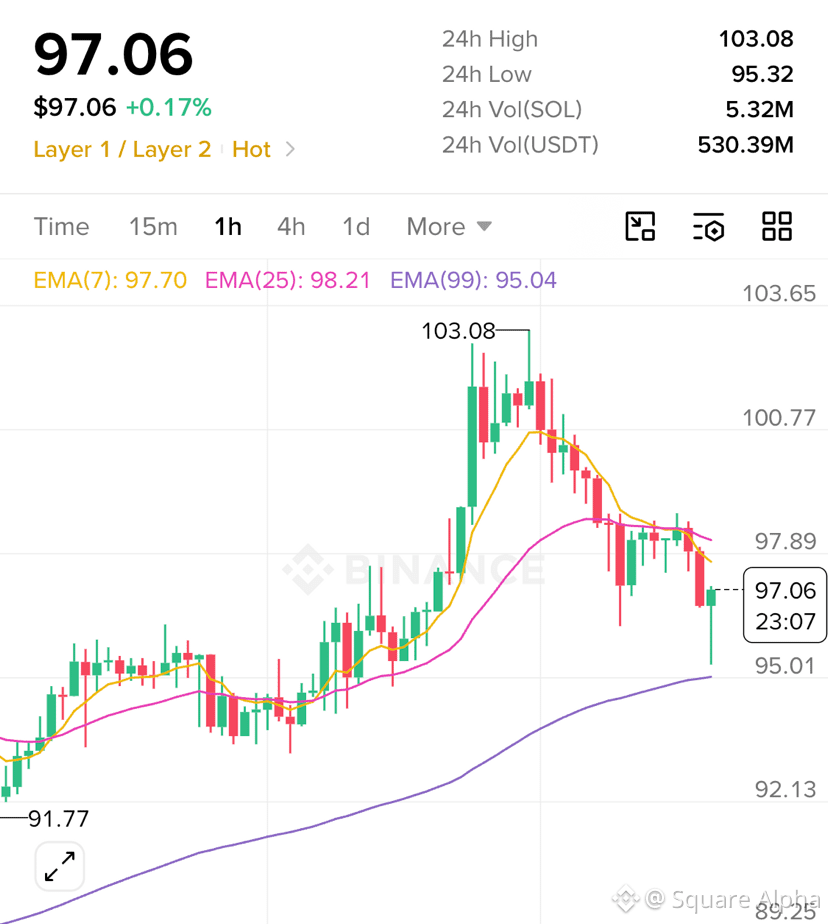
💥 $SOL just printed a huge lower wick right at the EMA99 — dip buyers showed up exactly on schedule! 😤
📊 LONG (1H):
→ Entry: 96.5 – 97.2
→ SL: 94.6
→ TP1: 98.2
→ TP2: 100.7, and 103 full send
the read: the run from 89 to 103 was the trend, this drop is just the cool-down. RSI went from 80 to 33 in a few candles — that’s a reset, not a funeral. I’ve been watching 95 all week like a hawk, and that wick to 95.3 getting bought instantly tells me big money is still defending the line. Rising EMA99 + wick defense + washed RSI = the exact recipe for the next leg up.
who’s buying the wick with me? 👇
#sol #Solana #setup #signal $SOL
{spot}(SOLUSDT)
💥 $SOL just printed a huge lower wick right at the EMA99 — dip buyers showed up exactly on schedule! 😤
📊 LONG (1H):
→ Entry: 96.5 – 97.2
→ SL: 94.6
→ TP1: 98.2
→ TP2: 100.7, and 103 full send
the read: the run from 89 to 103 was the trend, this drop is just the cool-down. RSI went from 80 to 33 in a few candles — that’s a reset, not a funeral. I’ve been watching 95 all week like a hawk, and that wick to 95.3 getting bought instantly tells me big money is still defending the line. Rising EMA99 + wick defense + washed RSI = the exact recipe for the next leg up.
who’s buying the wick with me? 👇
#sol #Solana #setup #signal $SOL
📊 LONG (1H):
→ Entry: 96.5 – 97.2
→ SL: 94.6
→ TP1: 98.2
→ TP2: 100.7, and 103 full send
the read: the run from 89 to 103 was the trend, this drop is just the cool-down. RSI went from 80 to 33 in a few candles — that’s a reset, not a funeral. I’ve been watching 95 all week like a hawk, and that wick to 95.3 getting bought instantly tells me big money is still defending the line. Rising EMA99 + wick defense + washed RSI = the exact recipe for the next leg up.
who’s buying the wick with me? 👇
#sol #Solana #setup #signal $SOL
137
·
--
ສັນຍານກະທິງ
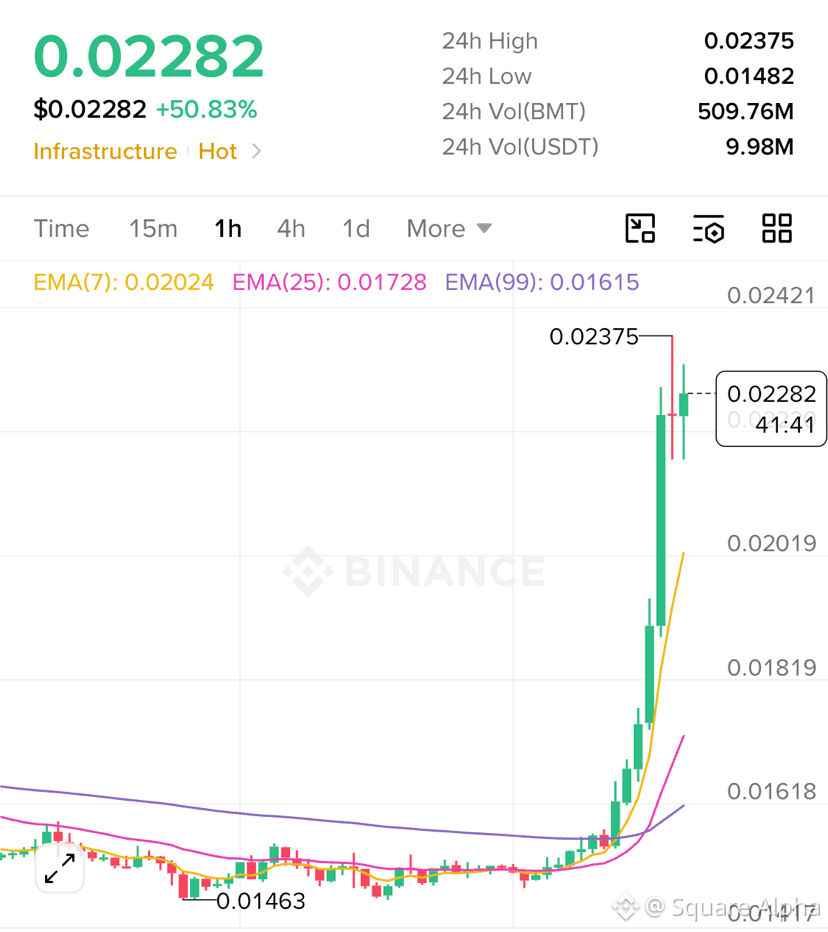
💥 $BMT just got the Korean listing treatment — airdrop + new exchange in the same week, no wonder it's vertical! 😤
LONG (1H):
→ Entry: 0.0202 – 0.0210
→ SL: 0.0185
→ TP1: 0.02375
→ TP2: 0.0260, and 0.030 full send
the read: this isn't a random meme pump. Binance dropped BMT into the HODLer airdrop, Bithumb listed it days later, and open interest hit $15M — spot and leverage both piling in. I’ve traded a few Korean listing runs before and they rarely end in one candle; the first dip is usually the entry everyone wishes they took. RSI is maxed at 98, yeah — so I’m not chasing the green, I’m letting it come back to EMA7 and buying that. Listing season + a tool everyone actually uses to catch insider wallets = my favorite combo.
who’s riding the Korean wave? 👇
#BMT #Bubblemaps
{spot}(BMTUSDT)
💥 $BMT just got the Korean listing treatment — airdrop + new exchange in the same week, no wonder it's vertical! 😤
LONG (1H):
→ Entry: 0.0202 – 0.0210
→ SL: 0.0185
→ TP1: 0.02375
→ TP2: 0.0260, and 0.030 full send
the read: this isn't a random meme pump. Binance dropped BMT into the HODLer airdrop, Bithumb listed it days later, and open interest hit $15M — spot and leverage both piling in. I’ve traded a few Korean listing runs before and they rarely end in one candle; the first dip is usually the entry everyone wishes they took. RSI is maxed at 98, yeah — so I’m not chasing the green, I’m letting it come back to EMA7 and buying that. Listing season + a tool everyone actually uses to catch insider wallets = my favorite combo.
who’s riding the Korean wave? 👇
#BMT #Bubblemaps
LONG (1H):
→ Entry: 0.0202 – 0.0210
→ SL: 0.0185
→ TP1: 0.02375
→ TP2: 0.0260, and 0.030 full send
the read: this isn't a random meme pump. Binance dropped BMT into the HODLer airdrop, Bithumb listed it days later, and open interest hit $15M — spot and leverage both piling in. I’ve traded a few Korean listing runs before and they rarely end in one candle; the first dip is usually the entry everyone wishes they took. RSI is maxed at 98, yeah — so I’m not chasing the green, I’m letting it come back to EMA7 and buying that. Listing season + a tool everyone actually uses to catch insider wallets = my favorite combo.
who’s riding the Korean wave? 👇
#BMT #Bubblemaps
128
·
--
ສັນຍານກະທິງ
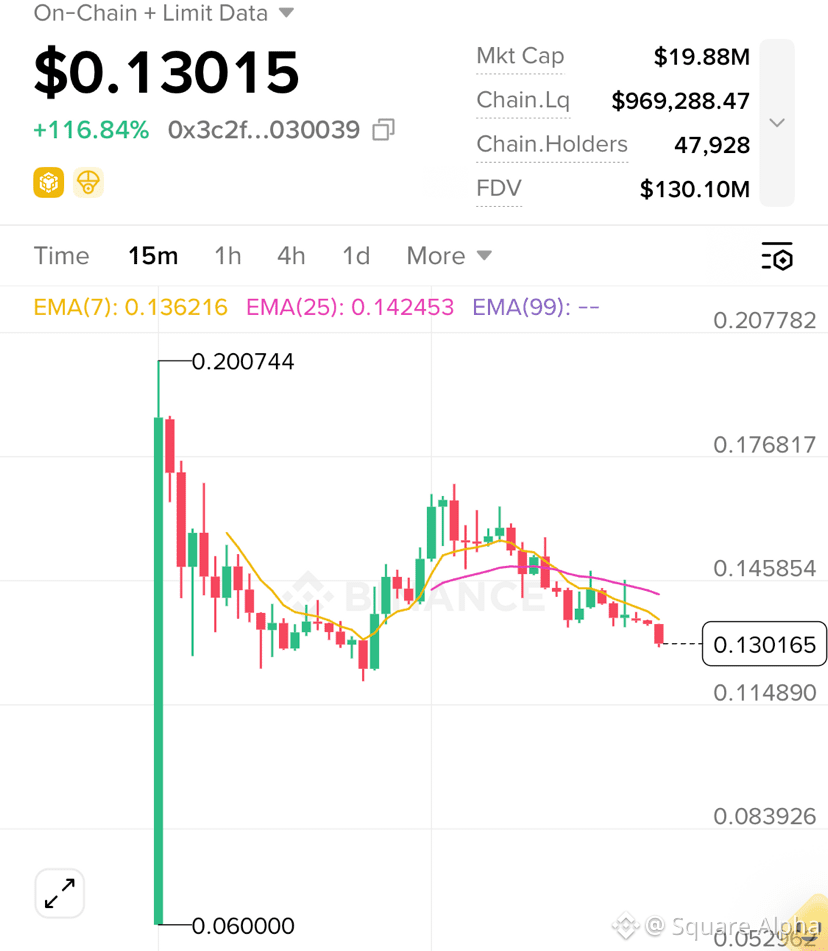
💥 $TMX is +116% on the day and the dip is sitting right on its launch floor — oversold bounce loading! 😤
📊 LONG (15M):
→ Entry: 0.128 – 0.132
→ SL: 0.118
→ TP1: 0.1425
→ TP2: 0.160, and 0.20 full send
been watching the 0.122 floor get tested three times and it holds every single time — that's not luck, that's buyers defending their line. RSI at 24 is a coiled spring, and here's the part nobody talks about: $19.9M mcap against a $130M FDV means the float is tiny, and tiny floats don’t need much fuel to rip. I missed the first leg from 0.06 and I’m still mad about it lol, not missing the second one. 48K holders and growing, launch-day energy still in the room.
fear washed out, floor holding, spring loaded. who’s buying the floor with me? 👇
#TMX #TermMax
{alpha}(560x3c2f61f2e27c865981d2e7aaf6b2cdf823030039)
💥 $TMX is +116% on the day and the dip is sitting right on its launch floor — oversold bounce loading! 😤
📊 LONG (15M):
→ Entry: 0.128 – 0.132
→ SL: 0.118
→ TP1: 0.1425
→ TP2: 0.160, and 0.20 full send
been watching the 0.122 floor get tested three times and it holds every single time — that's not luck, that's buyers defending their line. RSI at 24 is a coiled spring, and here's the part nobody talks about: $19.9M mcap against a $130M FDV means the float is tiny, and tiny floats don’t need much fuel to rip. I missed the first leg from 0.06 and I’m still mad about it lol, not missing the second one. 48K holders and growing, launch-day energy still in the room.
fear washed out, floor holding, spring loaded. who’s buying the floor with me? 👇
#TMX #TermMax
📊 LONG (15M):
→ Entry: 0.128 – 0.132
→ SL: 0.118
→ TP1: 0.1425
→ TP2: 0.160, and 0.20 full send
been watching the 0.122 floor get tested three times and it holds every single time — that's not luck, that's buyers defending their line. RSI at 24 is a coiled spring, and here's the part nobody talks about: $19.9M mcap against a $130M FDV means the float is tiny, and tiny floats don’t need much fuel to rip. I missed the first leg from 0.06 and I’m still mad about it lol, not missing the second one. 48K holders and growing, launch-day energy still in the room.
fear washed out, floor holding, spring loaded. who’s buying the floor with me? 👇
#TMX #TermMax
241
·
--
ສັນຍານກະທິງ
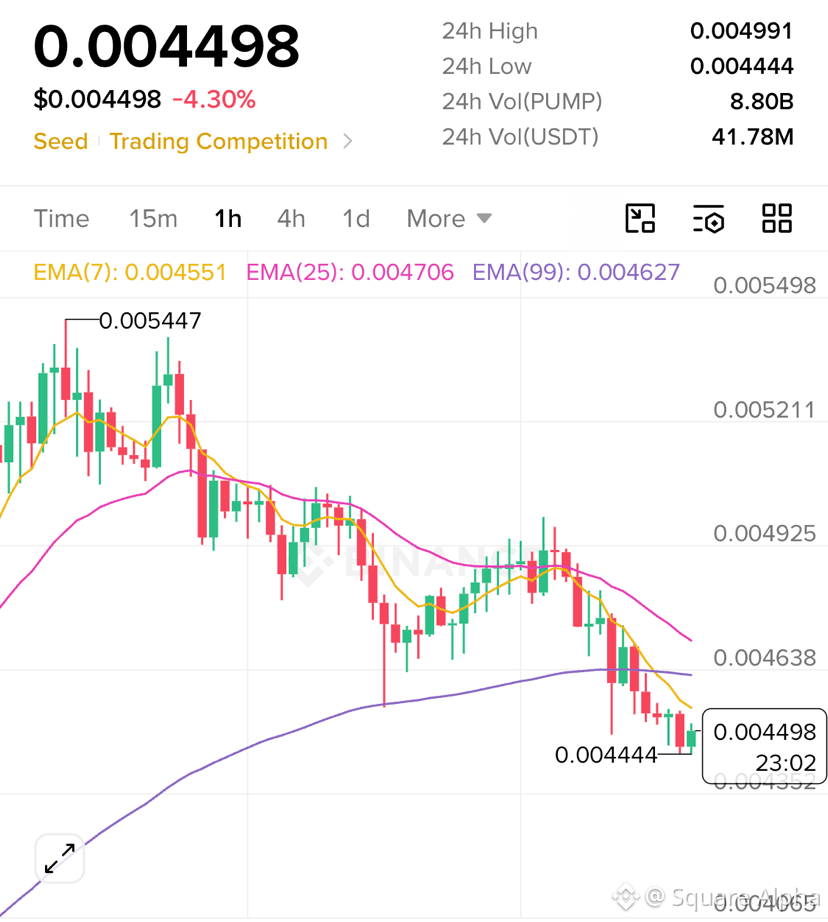
💥 $PUMP is -17% off the top, RSI washed, and that long wick just proved dip buyers are alive — bounce loading! 😤
📊 LONG (1H):
→ Entry: 0.00445 – 0.00450
→ SL: 0.00432
→ TP1: 0.00463
→ TP2: 0.00472, and 0.00490 full send
been staring at this wick for an hour and honestly? I watched the 0.004444 dip get eaten live, in real time. RSI at 30 is a coiled spring, and the protocol is still printing record revenue while the buyback machine hums. I got shaken out on the last leg down (my own fault, got impatient lol) but I’m not missing the bounce twice.
fear this deep is where bounces are born. who’s buying with me? 👇
#PUMP
{spot}(PUMPUSDT)
💥 $PUMP is -17% off the top, RSI washed, and that long wick just proved dip buyers are alive — bounce loading! 😤
📊 LONG (1H):
→ Entry: 0.00445 – 0.00450
→ SL: 0.00432
→ TP1: 0.00463
→ TP2: 0.00472, and 0.00490 full send
been staring at this wick for an hour and honestly? I watched the 0.004444 dip get eaten live, in real time. RSI at 30 is a coiled spring, and the protocol is still printing record revenue while the buyback machine hums. I got shaken out on the last leg down (my own fault, got impatient lol) but I’m not missing the bounce twice.
fear this deep is where bounces are born. who’s buying with me? 👇
#PUMP
📊 LONG (1H):
→ Entry: 0.00445 – 0.00450
→ SL: 0.00432
→ TP1: 0.00463
→ TP2: 0.00472, and 0.00490 full send
been staring at this wick for an hour and honestly? I watched the 0.004444 dip get eaten live, in real time. RSI at 30 is a coiled spring, and the protocol is still printing record revenue while the buyback machine hums. I got shaken out on the last leg down (my own fault, got impatient lol) but I’m not missing the bounce twice.
fear this deep is where bounces are born. who’s buying with me? 👇
#PUMP
249
·
--
ເປັນຄວາມຈິງບາງສ່ວນ
I opened Dusk today expecting another privacy-focused L1 making the usual “private blockchain” pitch.
Instead, I started digging into how it handles privacy without completely ignoring regulation.
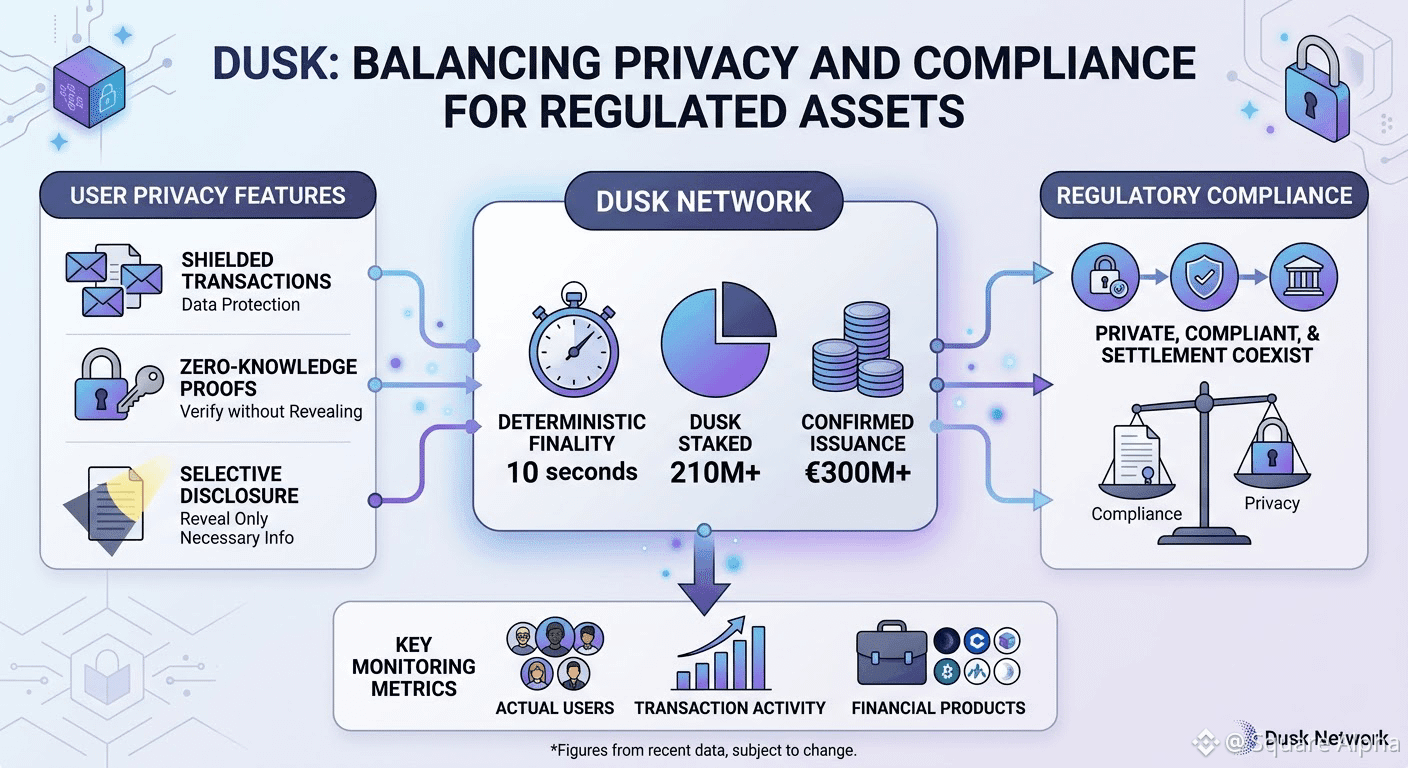
The Dusk docs were the first thing I checked. What stood out was the combination of shielded transactions, zero-knowledge proofs, and selective disclosure. Privacy isn’t simply about hiding everything; the design allows specific information to be revealed when needed.
That made me look closer.
Dusk says more than 210M DUSK is currently staked, while the network targets roughly 10-second deterministic finality. It also highlights €300M+ in confirmed issuance.
I wouldn’t take those numbers alone as proof that Dusk has found product-market fit. Issuance figures and staking participation tell you something, but sustained usage tells you much more.
The part I find more interesting is the direction: Dusk is building around regulated assets where privacy, compliance, and settlement have to coexist.
That’s a harder problem than simply making transactions private.
So I’m watching what happens after the narrative gets quieter: actual users, transaction activity, and whether financial products keep coming back to the network.
#dusk @Dusk_Foundation $DUSK
{spot}(DUSKUSDT)
I opened Dusk today expecting another privacy-focused L1 making the usual “private blockchain” pitch.
Instead, I started digging into how it handles privacy without completely ignoring regulation.
The Dusk docs were the first thing I checked. What stood out was the combination of shielded transactions, zero-knowledge proofs, and selective disclosure. Privacy isn’t simply about hiding everything; the design allows specific information to be revealed when needed.
That made me look closer.
Dusk says more than 210M DUSK is currently staked, while the network targets roughly 10-second deterministic finality. It also highlights €300M+ in confirmed issuance.
I wouldn’t take those numbers alone as proof that Dusk has found product-market fit. Issuance figures and staking participation tell you something, but sustained usage tells you much more.
The part I find more interesting is the direction: Dusk is building around regulated assets where privacy, compliance, and settlement have to coexist.
That’s a harder problem than simply making transactions private.
So I’m watching what happens after the narrative gets quieter: actual users, transaction activity, and whether financial products keep coming back to the network.
#dusk @Dusk $DUSK
Instead, I started digging into how it handles privacy without completely ignoring regulation.
The Dusk docs were the first thing I checked. What stood out was the combination of shielded transactions, zero-knowledge proofs, and selective disclosure. Privacy isn’t simply about hiding everything; the design allows specific information to be revealed when needed.
That made me look closer.
Dusk says more than 210M DUSK is currently staked, while the network targets roughly 10-second deterministic finality. It also highlights €300M+ in confirmed issuance.
I wouldn’t take those numbers alone as proof that Dusk has found product-market fit. Issuance figures and staking participation tell you something, but sustained usage tells you much more.
The part I find more interesting is the direction: Dusk is building around regulated assets where privacy, compliance, and settlement have to coexist.
That’s a harder problem than simply making transactions private.
So I’m watching what happens after the narrative gets quieter: actual users, transaction activity, and whether financial products keep coming back to the network.
#dusk @Dusk $DUSK
2
169
·
--
ສັນຍານກະທິງ
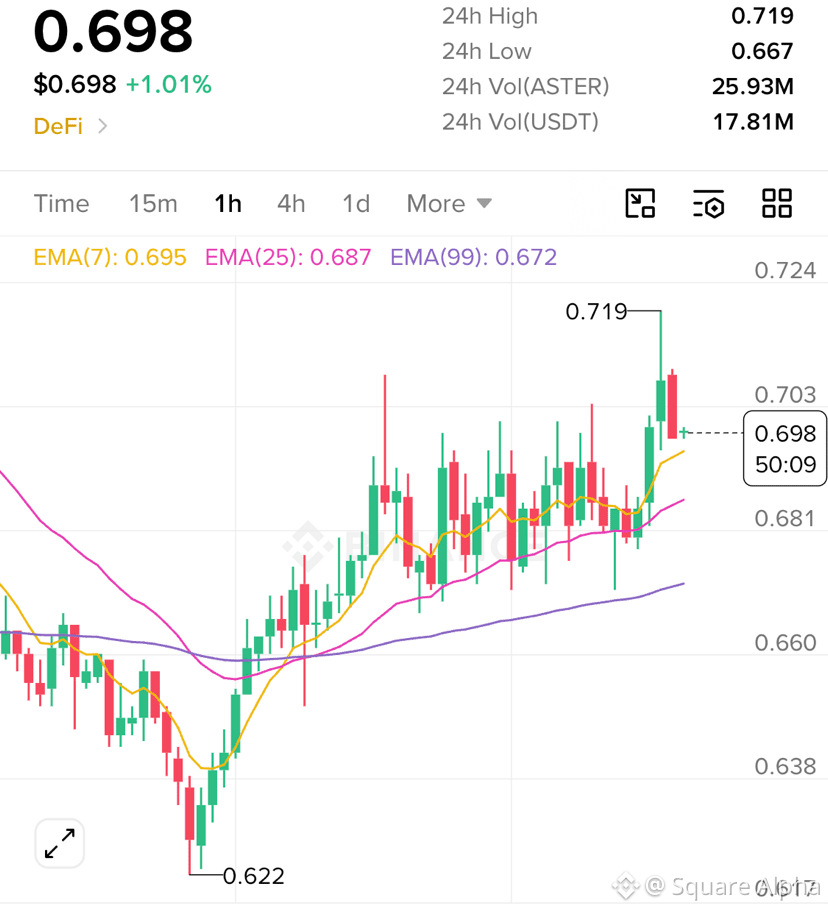
💥 $ASTER just tagged 0.719 and is catching its breath — breakouts reload, they don’t die! 😤
📊 LONG (1H):
→ Entry: 0.690 – 0.698
→ SL: 0.678
→ TP1: 0.719
→ TP2: 0.74, and 0.777 full send
The read: staircase structure intact, EMAs fanned out green, and the pullback is holding right at EMA7 like it’s standing on a floor. RSI mid-50s = plenty of fuel left. A clean close above 0.719 opens the air pocket straight to 0.74 — and the 0.777 memory is still fresh in everyone’s mind.
Who’s riding the breakout? 👇
#Aster
{spot}(ASTERUSDT)
💥 $ASTER just tagged 0.719 and is catching its breath — breakouts reload, they don’t die! 😤
📊 LONG (1H):
→ Entry: 0.690 – 0.698
→ SL: 0.678
→ TP1: 0.719
→ TP2: 0.74, and 0.777 full send
The read: staircase structure intact, EMAs fanned out green, and the pullback is holding right at EMA7 like it’s standing on a floor. RSI mid-50s = plenty of fuel left. A clean close above 0.719 opens the air pocket straight to 0.74 — and the 0.777 memory is still fresh in everyone’s mind.
Who’s riding the breakout? 👇
#Aster
📊 LONG (1H):
→ Entry: 0.690 – 0.698
→ SL: 0.678
→ TP1: 0.719
→ TP2: 0.74, and 0.777 full send
The read: staircase structure intact, EMAs fanned out green, and the pullback is holding right at EMA7 like it’s standing on a floor. RSI mid-50s = plenty of fuel left. A clean close above 0.719 opens the air pocket straight to 0.74 — and the 0.777 memory is still fresh in everyone’s mind.
Who’s riding the breakout? 👇
#Aster
246
·
--
ສັນຍານກະທິງ
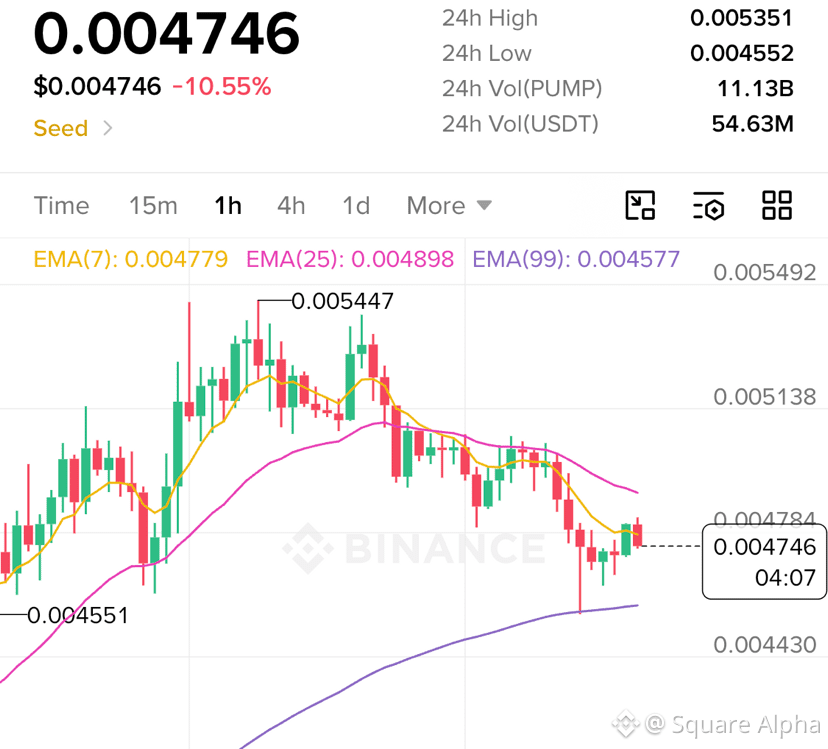
💥 $PUMP just flushed -10% straight into its strongest floor — that’s a shakeout, not a trend change! 😤
📊 LONG (1H):
→ Entry: 0.00458 – 0.00475
→ SL: 0.00440
→ TP1: 0.00490
→ TP2: 0.00515, and 0.00545 full send
The read: the EMA99 is still climbing and never got lost, the whole uptrend from 0.0036 is intact, and RSI at 37 is washed out. This flush cleared the leverage and the weak hands in one candle. Last floor + oversold + rising trend = the exact spot where bounces come fast and violent. Dips here are being eaten alive.
Who’s buying this flush? 👇
#pump #pumpfun
{spot}(PUMPUSDT)
💥 $PUMP just flushed -10% straight into its strongest floor — that’s a shakeout, not a trend change! 😤
📊 LONG (1H):
→ Entry: 0.00458 – 0.00475
→ SL: 0.00440
→ TP1: 0.00490
→ TP2: 0.00515, and 0.00545 full send
The read: the EMA99 is still climbing and never got lost, the whole uptrend from 0.0036 is intact, and RSI at 37 is washed out. This flush cleared the leverage and the weak hands in one candle. Last floor + oversold + rising trend = the exact spot where bounces come fast and violent. Dips here are being eaten alive.
Who’s buying this flush? 👇
#pump #pumpfun
📊 LONG (1H):
→ Entry: 0.00458 – 0.00475
→ SL: 0.00440
→ TP1: 0.00490
→ TP2: 0.00515, and 0.00545 full send
The read: the EMA99 is still climbing and never got lost, the whole uptrend from 0.0036 is intact, and RSI at 37 is washed out. This flush cleared the leverage and the weak hands in one candle. Last floor + oversold + rising trend = the exact spot where bounces come fast and violent. Dips here are being eaten alive.
Who’s buying this flush? 👇
#pump #pumpfun
210
·
--
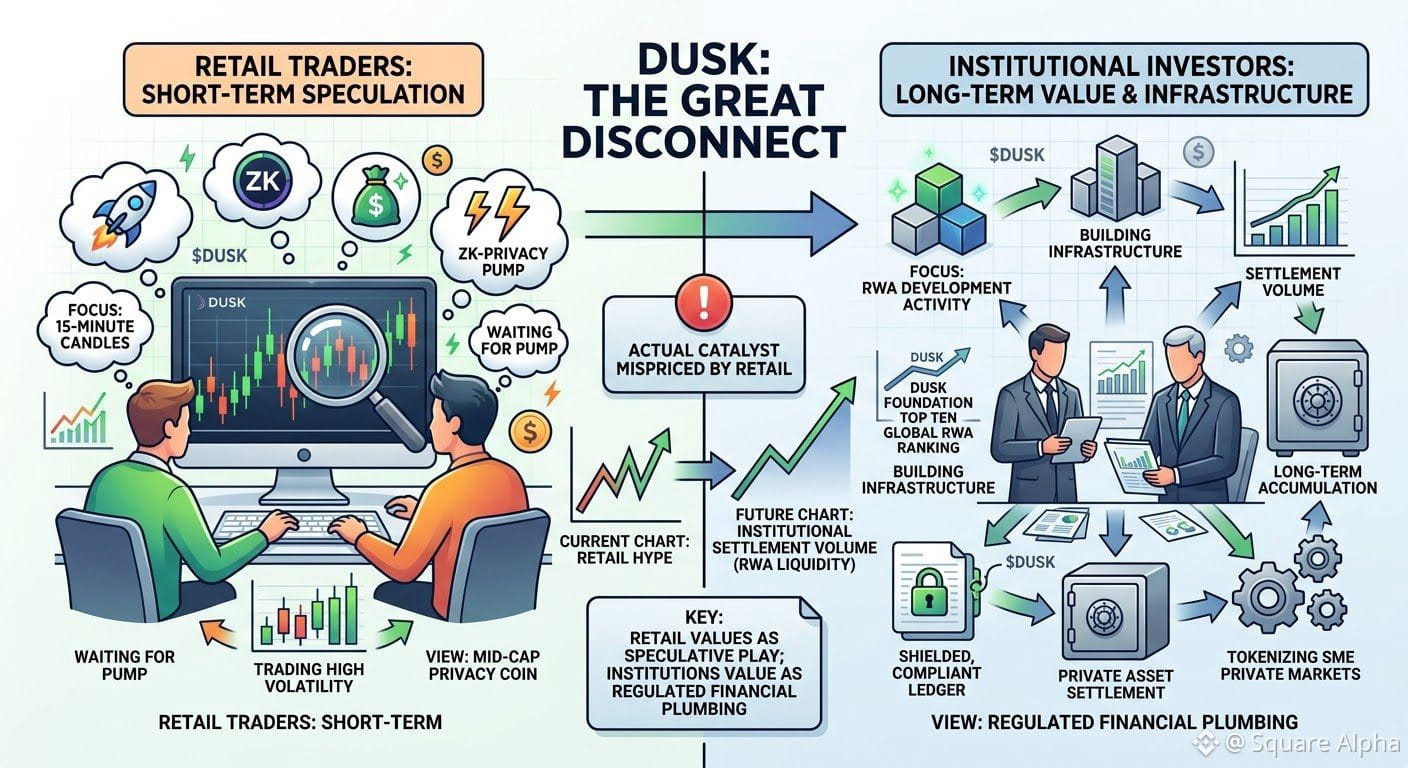
Checking the $DUSK chart today, it’s hovering right around the $0.074 level. The timeline is treating it like a standard mid-cap privacy coin breakout, with retail traders staring at 15-minute candles and waiting for a quick ZK-privacy pump.
But watching the institutional headlines over the last 48 hours, it hit me that the market is completely mispricing the actual catalyst.
While retail is focused on the short-term chart, blockchain analytics firms just quietly ranked the @Dusk_Foundation in the global top ten for real-world asset development activity. At the same time, the team is actively pushing infrastructure to tokenize SME private markets.
The massive disconnect between the retail chart and the institutional reality finally made sense to me when looking at their compliance architecture. Traditional finance doesn’t want a fast, public mempool for corporate bonds. They need a heavily shielded, legally compliant ledger to settle private assets without leaking data to high-frequency trading bots.
My final read on today’s price action is simple. The retail market is still valuing the token as a speculative tech play, while the actual buyers are treating it as regulated financial plumbing. Once the RWA liquidity floodgades open later this year, the chart will stop reflecting retail hype and start reflecting institutional settlement volume.
#dusk @Dusk_Foundation $DUSK
{spot}(DUSKUSDT)
Checking the $DUSK chart today, it’s hovering right around the $0.074 level. The timeline is treating it like a standard mid-cap privacy coin breakout, with retail traders staring at 15-minute candles and waiting for a quick ZK-privacy pump.
But watching the institutional headlines over the last 48 hours, it hit me that the market is completely mispricing the actual catalyst.
While retail is focused on the short-term chart, blockchain analytics firms just quietly ranked the @Dusk in the global top ten for real-world asset development activity. At the same time, the team is actively pushing infrastructure to tokenize SME private markets.
The massive disconnect between the retail chart and the institutional reality finally made sense to me when looking at their compliance architecture. Traditional finance doesn’t want a fast, public mempool for corporate bonds. They need a heavily shielded, legally compliant ledger to settle private assets without leaking data to high-frequency trading bots.
My final read on today’s price action is simple. The retail market is still valuing the token as a speculative tech play, while the actual buyers are treating it as regulated financial plumbing. Once the RWA liquidity floodgades open later this year, the chart will stop reflecting retail hype and start reflecting institutional settlement volume.
#dusk @Dusk $DUSK
But watching the institutional headlines over the last 48 hours, it hit me that the market is completely mispricing the actual catalyst.
While retail is focused on the short-term chart, blockchain analytics firms just quietly ranked the @Dusk in the global top ten for real-world asset development activity. At the same time, the team is actively pushing infrastructure to tokenize SME private markets.
The massive disconnect between the retail chart and the institutional reality finally made sense to me when looking at their compliance architecture. Traditional finance doesn’t want a fast, public mempool for corporate bonds. They need a heavily shielded, legally compliant ledger to settle private assets without leaking data to high-frequency trading bots.
My final read on today’s price action is simple. The retail market is still valuing the token as a speculative tech play, while the actual buyers are treating it as regulated financial plumbing. Once the RWA liquidity floodgades open later this year, the chart will stop reflecting retail hype and start reflecting institutional settlement volume.
#dusk @Dusk $DUSK
5
5
170
·
--
ສັນຍານກະທິງ
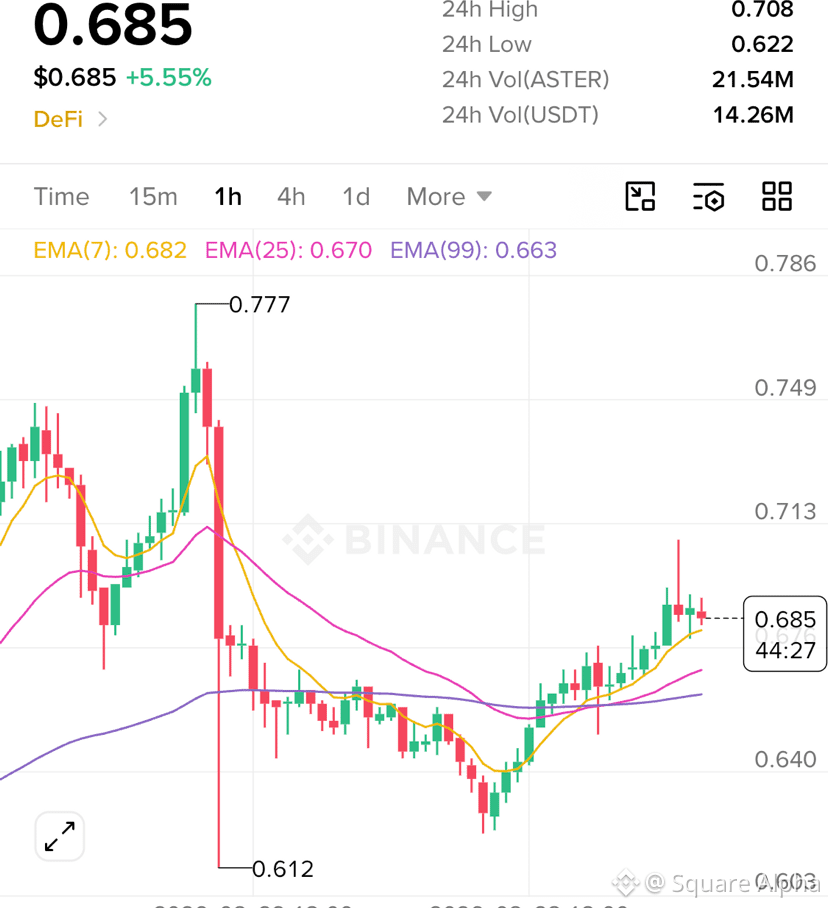
$ASTER quietly climbed back above every EMA while everyone was watching other coins 😌
LONG (1H):
→ Entry: 0.675 – 0.685
→ SL: 0.658 — EMA stack lost = idea lost
→ TP1: 0.708
→ TP2: 0.74, and 0.777 if it goes full send
The read: recovery from 0.612 is a clean staircase, the 0.777 nuke got fully digested, and RSI still has room before cooked. A close above 0.708 opens the air pocket above.
0.658 breaks and I was wrong, small scratch, move on. Until then I'm riding the quiet recovery.
Will ASTER tag 0.777 again this week? 👇
#Aster #defi
{spot}(ASTERUSDT)
$ASTER quietly climbed back above every EMA while everyone was watching other coins 😌
LONG (1H):
→ Entry: 0.675 – 0.685
→ SL: 0.658 — EMA stack lost = idea lost
→ TP1: 0.708
→ TP2: 0.74, and 0.777 if it goes full send
The read: recovery from 0.612 is a clean staircase, the 0.777 nuke got fully digested, and RSI still has room before cooked. A close above 0.708 opens the air pocket above.
0.658 breaks and I was wrong, small scratch, move on. Until then I'm riding the quiet recovery.
Will ASTER tag 0.777 again this week? 👇
#Aster #defi
LONG (1H):
→ Entry: 0.675 – 0.685
→ SL: 0.658 — EMA stack lost = idea lost
→ TP1: 0.708
→ TP2: 0.74, and 0.777 if it goes full send
The read: recovery from 0.612 is a clean staircase, the 0.777 nuke got fully digested, and RSI still has room before cooked. A close above 0.708 opens the air pocket above.
0.658 breaks and I was wrong, small scratch, move on. Until then I'm riding the quiet recovery.
Will ASTER tag 0.777 again this week? 👇
#Aster #defi
238
·
--
ສັນຍານກະທິງ
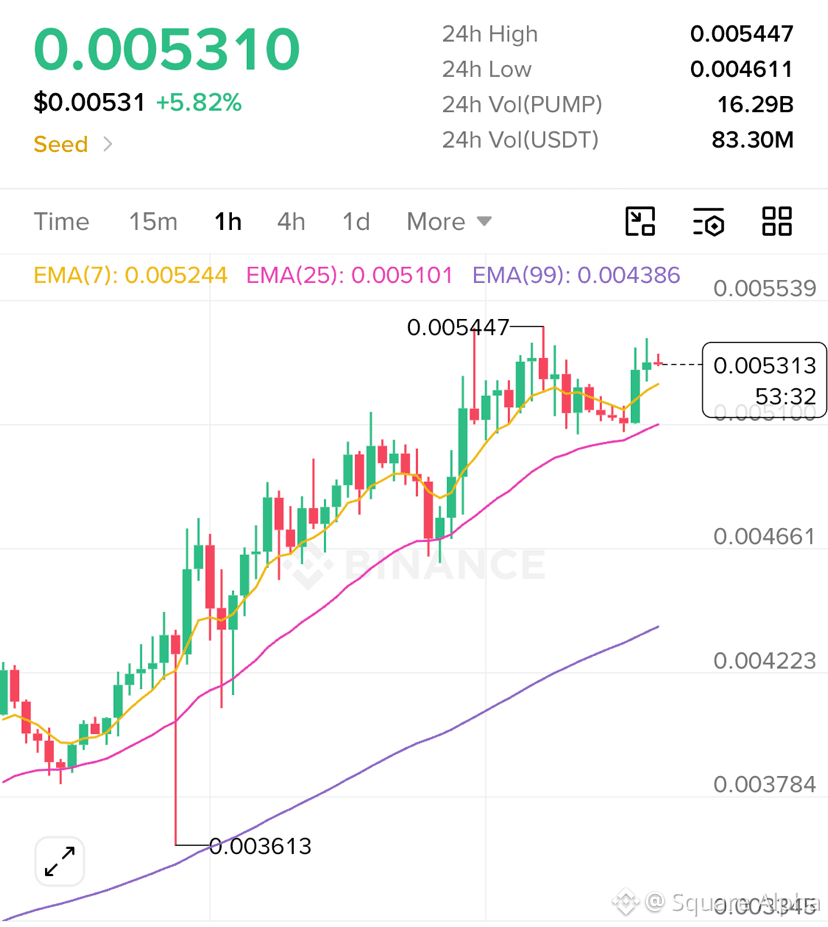
$PUMP is doing the staircase again — coiling right under the high 😌
📊 LONG (1H):
→ Entry: 0.0052 – 0.0053
→ SL: 0.00495 — EMA25 gone = idea gone
→ TP1: 0.00545
→ TP2: 0.0060 full send
The read: higher lows, RSI 62 with room to run, EMAs stacked green, every dip bought within a few candles. A clean break of 0.00545 opens the round-number zone above.
0.00495 breaks and I was wrong, small scratch, move on. Until then I'm riding the staircase.
Who's holding PUMP to 0.006? 👇
#pump #pumpfun $PUMP
{spot}(PUMPUSDT)
$PUMP is doing the staircase again — coiling right under the high 😌
📊 LONG (1H):
→ Entry: 0.0052 – 0.0053
→ SL: 0.00495 — EMA25 gone = idea gone
→ TP1: 0.00545
→ TP2: 0.0060 full send
The read: higher lows, RSI 62 with room to run, EMAs stacked green, every dip bought within a few candles. A clean break of 0.00545 opens the round-number zone above.
0.00495 breaks and I was wrong, small scratch, move on. Until then I'm riding the staircase.
Who's holding PUMP to 0.006? 👇
#pump #pumpfun $PUMP
📊 LONG (1H):
→ Entry: 0.0052 – 0.0053
→ SL: 0.00495 — EMA25 gone = idea gone
→ TP1: 0.00545
→ TP2: 0.0060 full send
The read: higher lows, RSI 62 with room to run, EMAs stacked green, every dip bought within a few candles. A clean break of 0.00545 opens the round-number zone above.
0.00495 breaks and I was wrong, small scratch, move on. Until then I'm riding the staircase.
Who's holding PUMP to 0.006? 👇
#pump #pumpfun $PUMP
160
·
--
ສັນຍານກະທິງ
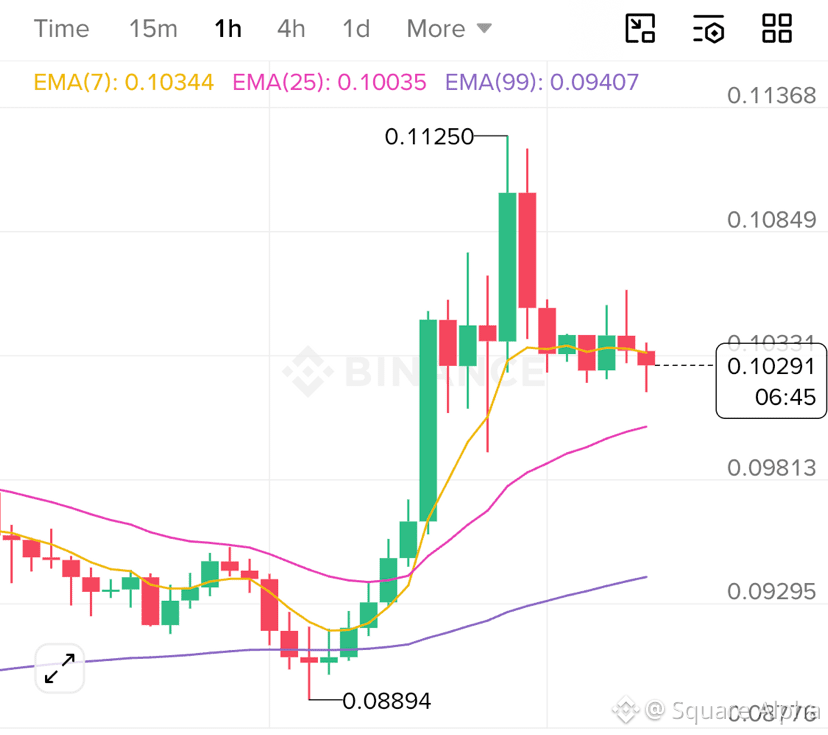
$XPL spiked to 0.1125, shook out the weak hands, now coiling at 0.103 😌
Tiny-volume dip + RSI reset = textbook bull flag.
📊 LONG (1H):
→ Entry: 0.100 – 0.103 (flag zone, EMA25 sitting right here)
→ SL: 0.0975 — flag broken = I'm out
→ TP1: 0.1125
→ TP2: 0.12 full send
The read: spike on real volume, dip on nothing, and the EMA25 climbing straight into my entry zone. That's accumulation, not exhaustion.
0.0975 breaks and I was wrong — small scratch, move on. But flags like this usually resolve up, and I'm positioned before the resolve, not after.
Who's holding XPL through this? 👇
#XPL #Plasma
{spot}(XPLUSDT)
$XPL spiked to 0.1125, shook out the weak hands, now coiling at 0.103 😌
Tiny-volume dip + RSI reset = textbook bull flag.
📊 LONG (1H):
→ Entry: 0.100 – 0.103 (flag zone, EMA25 sitting right here)
→ SL: 0.0975 — flag broken = I'm out
→ TP1: 0.1125
→ TP2: 0.12 full send
The read: spike on real volume, dip on nothing, and the EMA25 climbing straight into my entry zone. That's accumulation, not exhaustion.
0.0975 breaks and I was wrong — small scratch, move on. But flags like this usually resolve up, and I'm positioned before the resolve, not after.
Who's holding XPL through this? 👇
#XPL #Plasma
Tiny-volume dip + RSI reset = textbook bull flag.
📊 LONG (1H):
→ Entry: 0.100 – 0.103 (flag zone, EMA25 sitting right here)
→ SL: 0.0975 — flag broken = I'm out
→ TP1: 0.1125
→ TP2: 0.12 full send
The read: spike on real volume, dip on nothing, and the EMA25 climbing straight into my entry zone. That's accumulation, not exhaustion.
0.0975 breaks and I was wrong — small scratch, move on. But flags like this usually resolve up, and I'm positioned before the resolve, not after.
Who's holding XPL through this? 👇
#XPL #Plasma
216
ເຂົ້າສູ່ລະບົບເພື່ອສຳຫຼວດເນື້ອຫາເພີ່ມເຕີມ
ເຂົ້າຮ່ວມກຸ່ມຜູ້ໃຊ້ຄຣິບໂຕທົ່ວໂລກໃນ Binance Square.
⚡️ ໄດ້ຮັບຂໍ້ມູນຫຼ້າສຸດ ແລະ ທີ່ມີປະໂຫຍດກ່ຽວກັບຄຣິບໂຕ.
💬 ໄດ້ຮັບຄວາມໄວ້ວາງໃຈຈາກຕະຫຼາດແລກປ່ຽນຄຣິບໂຕທີ່ໃຫຍ່ທີ່ສຸດໃນໂລກ.
👍 ຄົ້ນຫາຂໍ້ມູນເຊີງເລິກທີ່ແທ້ຈາກນັກສ້າງທີ່ໄດ້ຮັບການຢືນຢັນ.
ອີເມວ / ເບີໂທລະສັບ