
Bullish Bold
14 ໂພສ

Bullish Bold
ລາຍງານ
ບລັອກຜູ້ໃຊ້
I'm Crypto Researcher & Trader:X-@BullishBold
15 ກໍາລັງຕິດຕາມ
8.7K+ ຜູ້ຕິດຕາມ
1.6K+ Liked
ໂພສ
·
--
More data does not automatically mean better decisions. What matters is whether that data can actually be trusted.
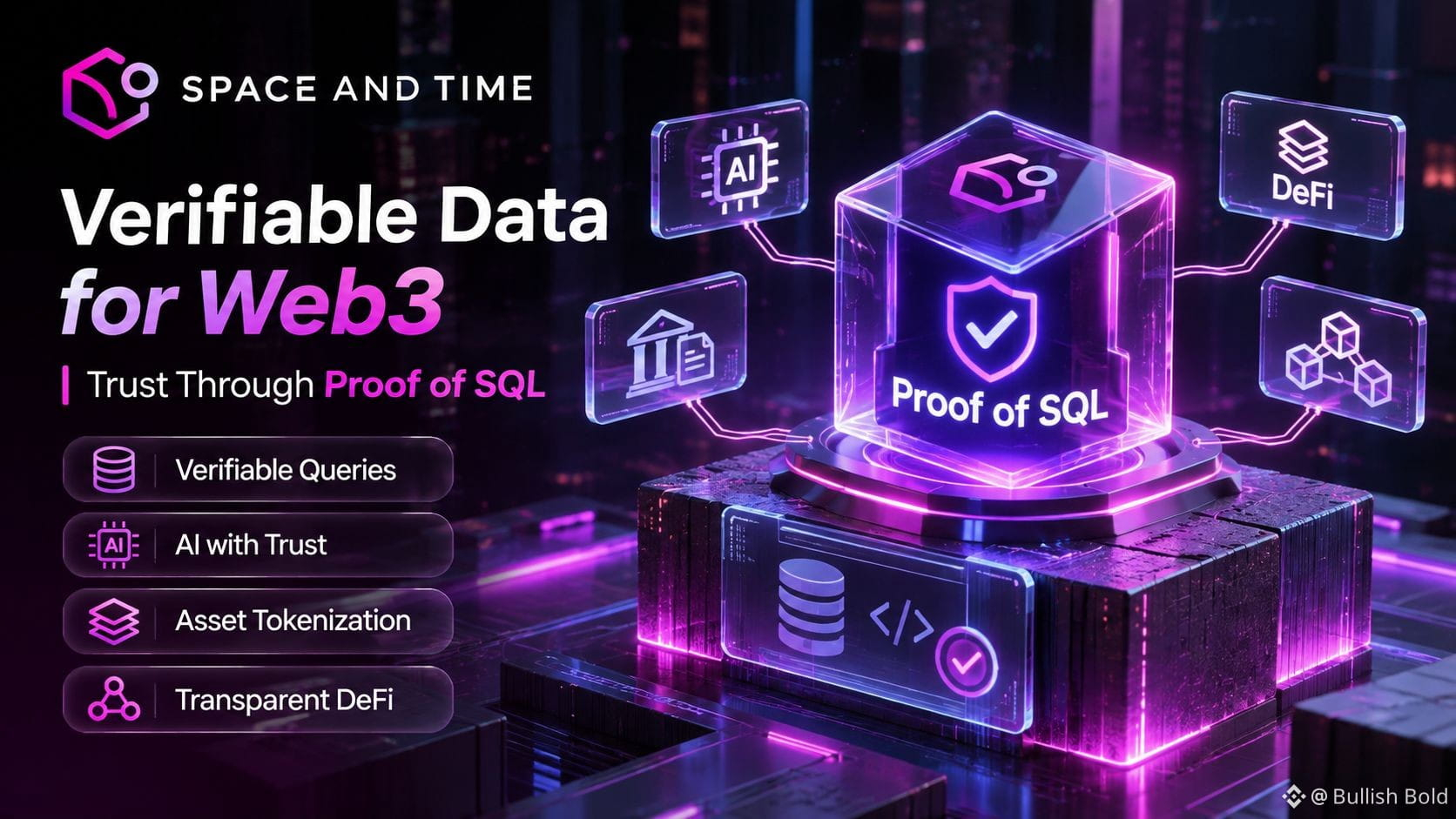
This is where Space and Time brings an interesting innovation to Web3.
Its Proof of SQL technology uses zero-knowledge proofs to verify that SQL queries are executed correctly against cryptographically committed data. Instead of asking users and smart contracts to blindly trust database results, Space and Time provides a way to independently verify them.
The potential applications go beyond blockchain analytics.
For AI, verified calculations can help agents work with more reliable information. For tokenization, it can connect off-chain asset records with on-chain activity. In DeFi, historical lending and repayment data can support more transparent risk assessments.
The important distinction is that verification proves data integrity and computational correctness, not that every original data source is truthful.
That is why verifiable data infrastructure matters for the next generation of Web3.
#sxt $SXT @SpaceandTimeDB
More data does not automatically mean better decisions. What matters is whether that data can actually be trusted.
This is where Space and Time brings an interesting innovation to Web3.
Its Proof of SQL technology uses zero-knowledge proofs to verify that SQL queries are executed correctly against cryptographically committed data. Instead of asking users and smart contracts to blindly trust database results, Space and Time provides a way to independently verify them.
The potential applications go beyond blockchain analytics.
For AI, verified calculations can help agents work with more reliable information. For tokenization, it can connect off-chain asset records with on-chain activity. In DeFi, historical lending and repayment data can support more transparent risk assessments.
The important distinction is that verification proves data integrity and computational correctness, not that every original data source is truthful.
That is why verifiable data infrastructure matters for the next generation of Web3.
#sxt $SXT @SpaceandTime
This is where Space and Time brings an interesting innovation to Web3.
Its Proof of SQL technology uses zero-knowledge proofs to verify that SQL queries are executed correctly against cryptographically committed data. Instead of asking users and smart contracts to blindly trust database results, Space and Time provides a way to independently verify them.
The potential applications go beyond blockchain analytics.
For AI, verified calculations can help agents work with more reliable information. For tokenization, it can connect off-chain asset records with on-chain activity. In DeFi, historical lending and repayment data can support more transparent risk assessments.
The important distinction is that verification proves data integrity and computational correctness, not that every original data source is truthful.
That is why verifiable data infrastructure matters for the next generation of Web3.
#sxt $SXT @SpaceandTime
3
244
·
--
WALL STREET FLASHES RISK-ON
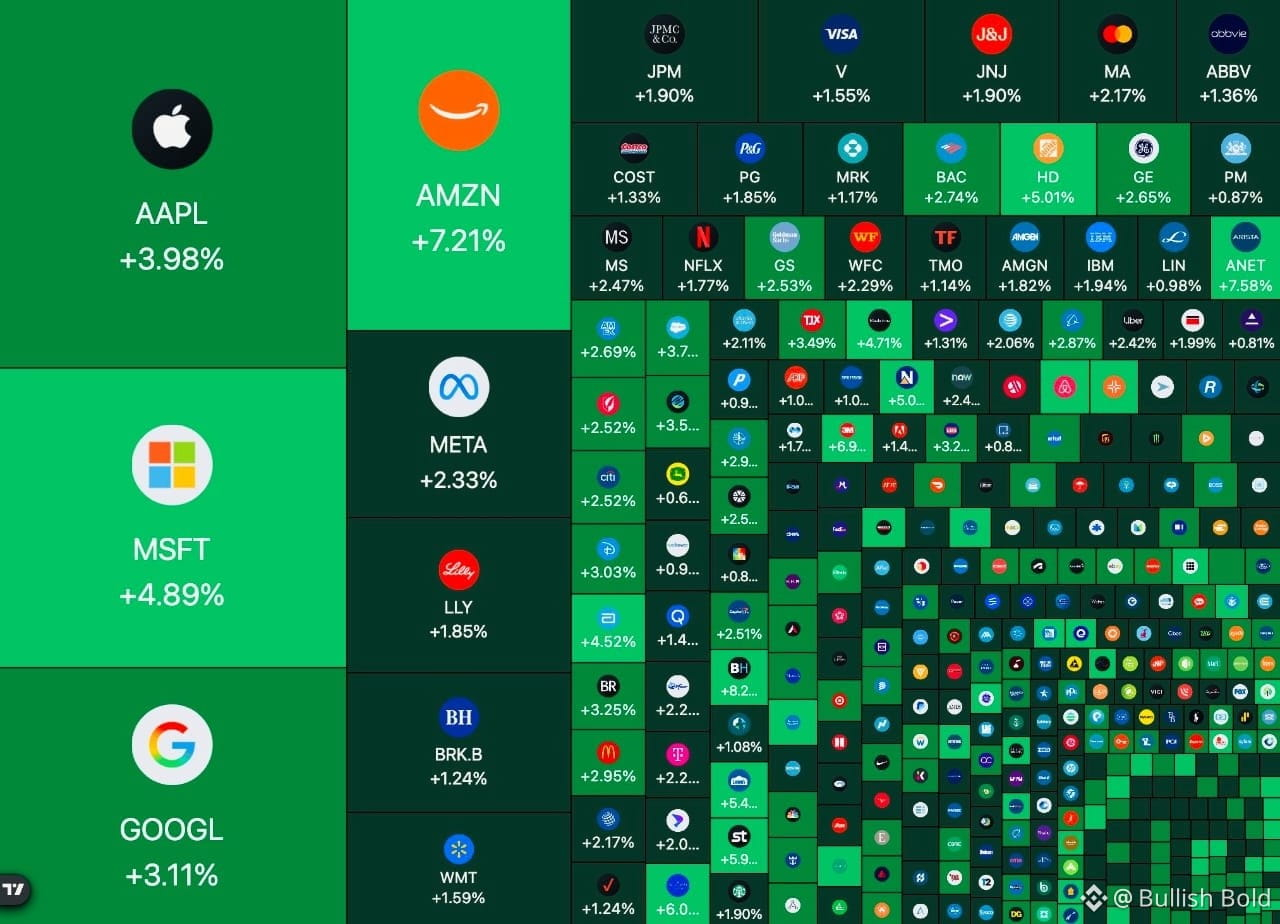
US stocks show broad gains.
Source says $1.1T entered equities after Democrats won both chambers.
That optimism could boost $BTC and crypto sentiment.
Stocks aren't crypto; momentum can reverse. Is risk appetite spreading?
WALL STREET FLASHES RISK-ON
US stocks show broad gains.
Source says $1.1T entered equities after Democrats won both chambers.
That optimism could boost $BTC and crypto sentiment.
Stocks aren't crypto; momentum can reverse. Is risk appetite spreading?
US stocks show broad gains.
Source says $1.1T entered equities after Democrats won both chambers.
That optimism could boost $BTC and crypto sentiment.
Stocks aren't crypto; momentum can reverse. Is risk appetite spreading?
4
610
·
--
ສັນຍານກະທິງ
ຢືນຢັນແລ້ວ
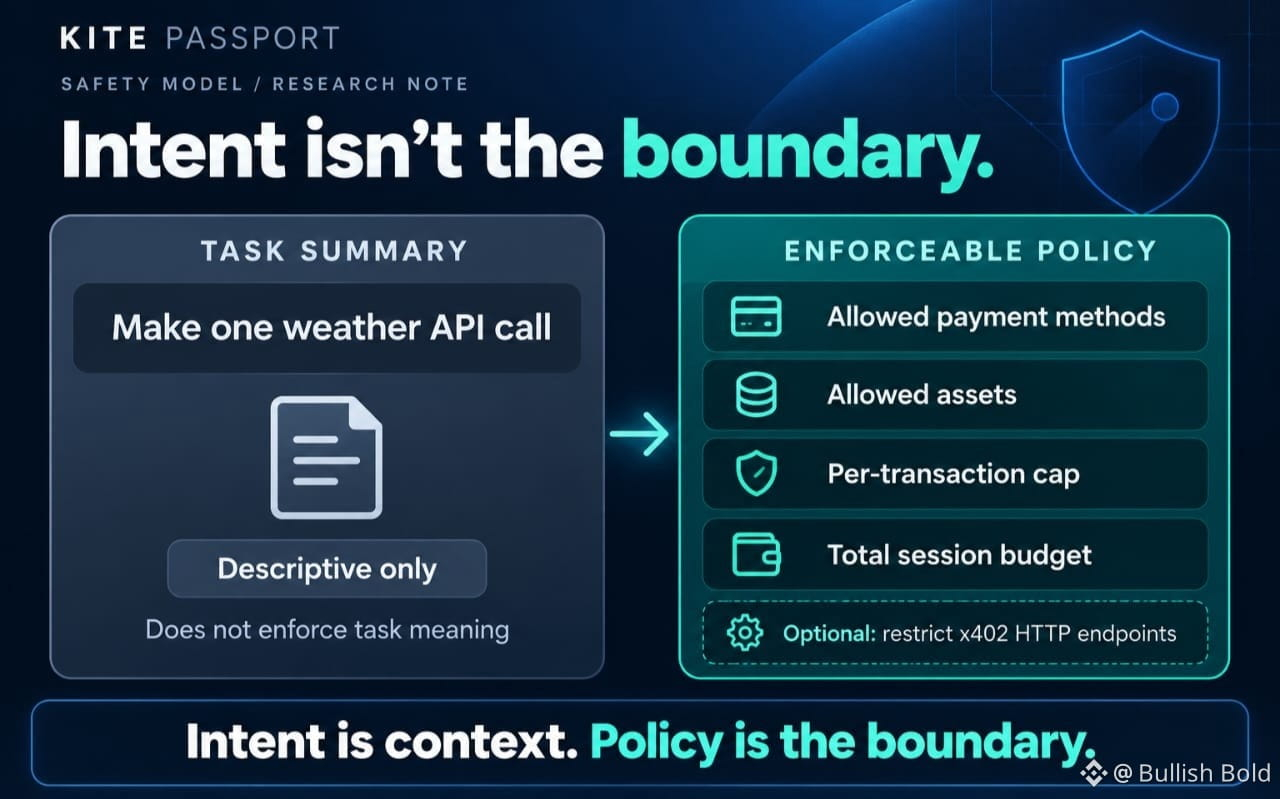
One line in Kite’s Passport docs changes how I read its safety model: the session’s task summary is explicitly descriptive only.
Naming a session make one weather API call does not, by itself, force the agent to do only that.
The enforceable boundary lives elsewhere: allowed payment methods and assets, a per-transaction cap, a total budget, and optional constraints such as which HTTP endpoints an x402 payment may use.
That distinction matters. Natural-language intent helps a human review an approval; structured policy is what limits spending.
I like this separation because it avoids treating an agent’s stated intention as a security control.
But it raises a real design question: how narrowly should users scope sessions before convenience turns into broad delegation?
That’s the detail I’ll watch as GoKiteAI develops Passport.
@GoKiteAI #KiteBBW $KITE
One line in Kite’s Passport docs changes how I read its safety model: the session’s task summary is explicitly descriptive only.
Naming a session make one weather API call does not, by itself, force the agent to do only that.
The enforceable boundary lives elsewhere: allowed payment methods and assets, a per-transaction cap, a total budget, and optional constraints such as which HTTP endpoints an x402 payment may use.
That distinction matters. Natural-language intent helps a human review an approval; structured policy is what limits spending.
I like this separation because it avoids treating an agent’s stated intention as a security control.
But it raises a real design question: how narrowly should users scope sessions before convenience turns into broad delegation?
That’s the detail I’ll watch as GoKiteAI develops Passport.
@KITE AI 中文 #KiteBBW $KITE
Naming a session make one weather API call does not, by itself, force the agent to do only that.
The enforceable boundary lives elsewhere: allowed payment methods and assets, a per-transaction cap, a total budget, and optional constraints such as which HTTP endpoints an x402 payment may use.
That distinction matters. Natural-language intent helps a human review an approval; structured policy is what limits spending.
I like this separation because it avoids treating an agent’s stated intention as a security control.
But it raises a real design question: how narrowly should users scope sessions before convenience turns into broad delegation?
That’s the detail I’ll watch as GoKiteAI develops Passport.
@KITE AI 中文 #KiteBBW $KITE
5
212
·
--
ສັນຍານກະທິງ
ຢືນຢັນແລ້ວ
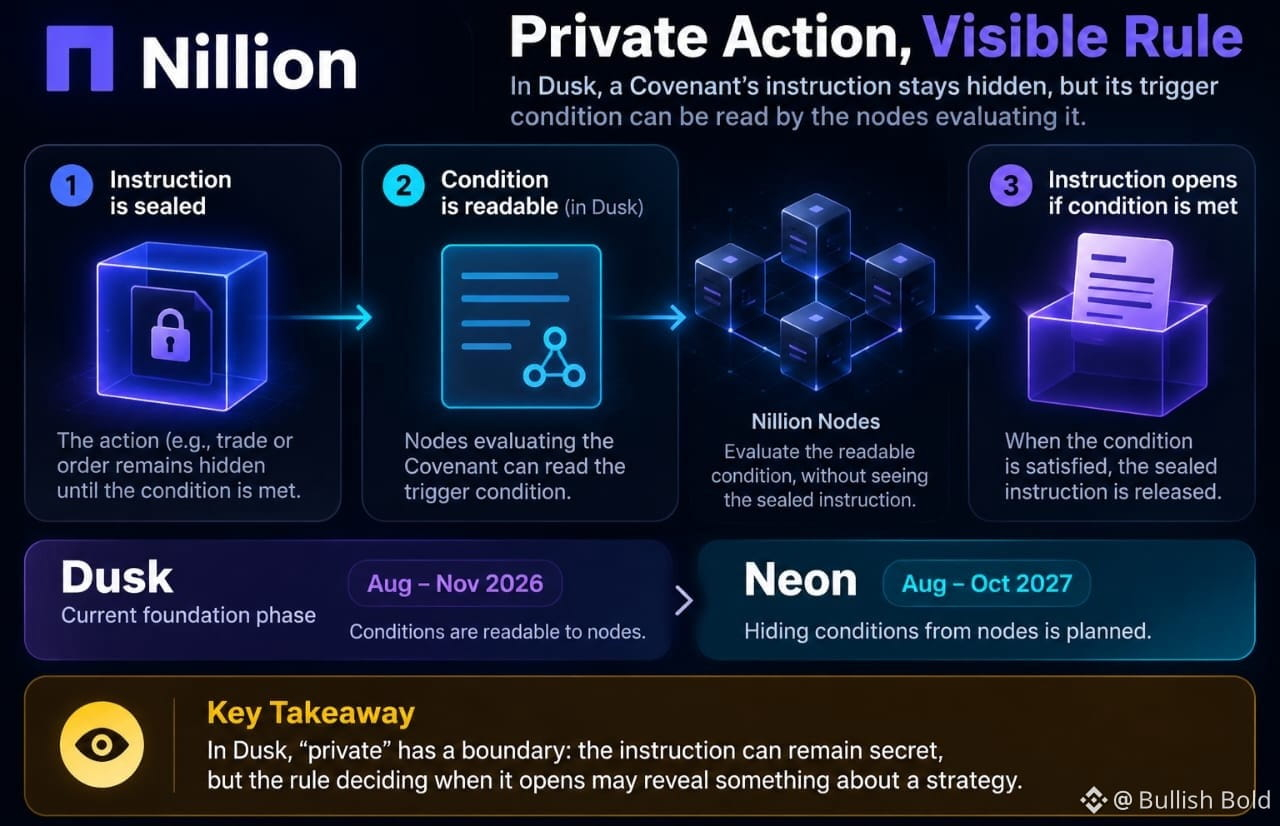
The detail that made me pause in Nillion’s Dusk roadmap: a Covenant’s instruction can be sealed while its trigger condition remains readable to the nodes evaluating it.
It’s a subtler privacy question than whether outsiders can read the payload: who can see the rule that controls release?
That distinction matters.
A Covenant keeps an action—say, a trade or order—hidden until a condition is met.
But Nillion’s roadmap says nodes can read conditions in early phases; hiding them from nodes is planned for Neon (Aug–Oct 2027). Dusk is the current foundation phase (Aug–Nov 2026).
That distinction matters when a trigger itself encodes a trading threshold or timing preference.
So “private” has a boundary.
The payload can remain secret, yet the rule deciding when it opens may reveal something about a strategy to the infrastructure checking it. That doesn’t make the design pointless; it shows privacy is being delivered in stages, with a different threat model at each stage.
For Encrypted Markets, is hiding the instruction enough at launch, or does useful privacy require hiding the condition too?
That’s what I’m watching around NIL.
$NIL @nillionnetwork #NIL
The detail that made me pause in Nillion’s Dusk roadmap: a Covenant’s instruction can be sealed while its trigger condition remains readable to the nodes evaluating it.
It’s a subtler privacy question than whether outsiders can read the payload: who can see the rule that controls release?
That distinction matters.
A Covenant keeps an action—say, a trade or order—hidden until a condition is met.
But Nillion’s roadmap says nodes can read conditions in early phases; hiding them from nodes is planned for Neon (Aug–Oct 2027). Dusk is the current foundation phase (Aug–Nov 2026).
That distinction matters when a trigger itself encodes a trading threshold or timing preference.
So “private” has a boundary.
The payload can remain secret, yet the rule deciding when it opens may reveal something about a strategy to the infrastructure checking it. That doesn’t make the design pointless; it shows privacy is being delivered in stages, with a different threat model at each stage.
For Encrypted Markets, is hiding the instruction enough at launch, or does useful privacy require hiding the condition too?
That’s what I’m watching around NIL.
$NIL @Nillion #NIL
It’s a subtler privacy question than whether outsiders can read the payload: who can see the rule that controls release?
That distinction matters.
A Covenant keeps an action—say, a trade or order—hidden until a condition is met.
But Nillion’s roadmap says nodes can read conditions in early phases; hiding them from nodes is planned for Neon (Aug–Oct 2027). Dusk is the current foundation phase (Aug–Nov 2026).
That distinction matters when a trigger itself encodes a trading threshold or timing preference.
So “private” has a boundary.
The payload can remain secret, yet the rule deciding when it opens may reveal something about a strategy to the infrastructure checking it. That doesn’t make the design pointless; it shows privacy is being delivered in stages, with a different threat model at each stage.
For Encrypted Markets, is hiding the instruction enough at launch, or does useful privacy require hiding the condition too?
That’s what I’m watching around NIL.
$NIL @Nillion #NIL
1
5
145
ເຂົ້າສູ່ລະບົບເພື່ອສຳຫຼວດເນື້ອຫາເພີ່ມເຕີມ
ເຂົ້າຮ່ວມກຸ່ມຜູ້ໃຊ້ຄຣິບໂຕທົ່ວໂລກໃນ Binance Square.
⚡️ ໄດ້ຮັບຂໍ້ມູນຫຼ້າສຸດ ແລະ ທີ່ມີປະໂຫຍດກ່ຽວກັບຄຣິບໂຕ.
💬 ໄດ້ຮັບຄວາມໄວ້ວາງໃຈຈາກຕະຫຼາດແລກປ່ຽນຄຣິບໂຕທີ່ໃຫຍ່ທີ່ສຸດໃນໂລກ.
👍 ຄົ້ນຫາຂໍ້ມູນເຊີງເລິກທີ່ແທ້ຈາກນັກສ້າງທີ່ໄດ້ຮັບການຢືນຢັນ.
ອີເມວ / ເບີໂທລະສັບ
ຫົວຂໍ້ທີ່ກໍາລັງນິຍົມ
BTCRemainsUnderPressureAfterHawkishFOMCMinutes
3,042 ຄັ້ງທີ່ເບິ່ງ
87 ກຳລັງສົນທະນາ
FOMC Minutes | Fed Minutes Show Almost All Officials Expect More Rate Hikes, With Some Open to a Larger December Move
Binance News
·32 ຖືກໃຈ
·44.5k ຄັ້ງທີ່ເບິ່ງ
AnthropicToDebutAfter$83IPOPricing
1,668 ຄັ້ງທີ່ເບິ່ງ
12 ກຳລັງສົນທະນາ
SouthKoreaPlansToLet3500ListedFirmsBuyBitcoin
8 ຄັ້ງທີ່ເບິ່ງ
10 ກຳລັງສົນທະນາ