

Ruumii
197 ໂພສ

Ruumii
ລາຍງານ
ບລັອກຜູ້ໃຊ້
I am a beginner trader 📈💸 and want to make profit on Binanace, 🎁
ເປີດການຊື້ຂາຍ
ຜູ້ຊື້ຂາຍປະຈໍາ
2.7 ປີ
133 ກໍາລັງຕິດຕາມ
86 ຜູ້ຕິດຕາມ
320 Liked
ໂພສ
Portfolio
ທັງໝົດ
ວົງຢືມ
ວີດີໂອ
·
--
CRUDE Oil Rejected At $104.44, Bulls Defend $97.54:
🛢️ Crude Oil WTI Market Update
Crude Oil WTI recently faced strong resistance around $104.44 and was rejected from that level. The price has pulled back, but buyers are still trying to protect the important $97.54 support zone.
In my view, the market is currently at an important point. If bulls successfully defend $97.54, we could see another attempt to move higher. However, if this support breaks, selling pressure may increase and the price could fall further.
📈 Resistance: $104.44
📉 Key Support: $97.54
The next move will depend on whether buyers can maintain control above the support level. 🛢️📊
CRUDE Oil Rejected At $104.44, Bulls Defend $97.54:
🛢️ Crude Oil WTI Market Update
Crude Oil WTI recently faced strong resistance around $104.44 and was rejected from that level. The price has pulled back, but buyers are still trying to protect the important $97.54 support zone.
In my view, the market is currently at an important point. If bulls successfully defend $97.54, we could see another attempt to move higher. However, if this support breaks, selling pressure may increase and the price could fall further.
📈 Resistance: $104.44
📉 Key Support: $97.54
The next move will depend on whether buyers can maintain control above the support level. 🛢️📊
🛢️ Crude Oil WTI Market Update
Crude Oil WTI recently faced strong resistance around $104.44 and was rejected from that level. The price has pulled back, but buyers are still trying to protect the important $97.54 support zone.
In my view, the market is currently at an important point. If bulls successfully defend $97.54, we could see another attempt to move higher. However, if this support breaks, selling pressure may increase and the price could fall further.
📈 Resistance: $104.44
📉 Key Support: $97.54
The next move will depend on whether buyers can maintain control above the support level. 🛢️📊

1
247
·
--
#BitcoinETFsBiggestDailyInflowSinceJanuary
{spot}(BTCUSDT)
BTC $BTC is trading at $79,766.00 as of 2026-09-06, down -0.32% from its 24-hour open of $80,025.95. Today’s range has been relatively tight: $79,233.00–$80,107.99.
That puts BTC slightly below the $80K area after failing to hold above it during this session. For the near-term path, the key variables are whether price can reclaim the session high with stronger activity, and whether the day’s low continues to hold; a break outside this range could signal a pickup in volatility, but direction remains uncertain.
#BitcoinETFsBiggestDailyInflowSinceJanuary
BTC $BTC is trading at $79,766.00 as of 2026-09-06, down -0.32% from its 24-hour open of $80,025.95. Today’s range has been relatively tight: $79,233.00–$80,107.99.
That puts BTC slightly below the $80K area after failing to hold above it during this session. For the near-term path, the key variables are whether price can reclaim the session high with stronger activity, and whether the day’s low continues to hold; a break outside this range could signal a pickup in volatility, but direction remains uncertain.
BTC $BTC is trading at $79,766.00 as of 2026-09-06, down -0.32% from its 24-hour open of $80,025.95. Today’s range has been relatively tight: $79,233.00–$80,107.99.
That puts BTC slightly below the $80K area after failing to hold above it during this session. For the near-term path, the key variables are whether price can reclaim the session high with stronger activity, and whether the day’s low continues to hold; a break outside this range could signal a pickup in volatility, but direction remains uncertain.
1
72
·
--

ບົດຄວາມ
Etherium Jumps 📈11% As Trump Pushes Congress to pass Crypto Legislation 🎯#ETHSurpasses$2300 #TrumpPressesCongressToPassClarityAct
Ethereum Jumps 11% as Crypto Legislation Gains Momentum 📈
Ethereum$ETH has surged around 11%, driven by growing optimism over new cryptocurrency legislation in the United States.
According to the report shown in the screenshot, President Donald Trump is pushing Congress to pass crypto-related legislation, increasing expectations for clearer regulations and stronger institutional confidence in digital assets.
The positive regulatory outlook has helped improve market sentiment toward Ethereum $ETH and the broader cryptocurrency market. If legislative progress continues, Ethereum could attract further buying interest.
However, after such a sharp move, traders should also be prepared for short-term profit-taking and increased volatility. Ethereum’s next major price direction will likely depend on both regulatory developments and overall crypto-market momentum.
Market takeaway: The news is currently bullish for Ethereum, but traders should watch key support and resistance levels before entering a position.
Etherium Jumps 📈11% As Trump Pushes Congress to pass Crypto Legislation 🎯
#ETHSurpasses$2300 #TrumpPressesCongressToPassClarityAct
Ethereum Jumps 11% as Crypto Legislation Gains Momentum 📈
Ethereum$ETH has surged around 11%, driven by growing optimism over new cryptocurrency legislation in the United States.
According to the report shown in the screenshot, President Donald Trump is pushing Congress to pass crypto-related legislation, increasing expectations for clearer regulations and stronger institutional confidence in digital assets.
The positive regulatory outlook has helped improve market sentiment toward Ethereum $ETH and the broader cryptocurrency market. If legislative progress continues, Ethereum could attract further buying interest.
However, after such a sharp move, traders should also be prepared for short-term profit-taking and increased volatility. Ethereum’s next major price direction will likely depend on both regulatory developments and overall crypto-market momentum.
Market takeaway: The news is currently bullish for Ethereum, but traders should watch key support and resistance levels before entering a position.
Ethereum Jumps 11% as Crypto Legislation Gains Momentum 📈
Ethereum$ETH has surged around 11%, driven by growing optimism over new cryptocurrency legislation in the United States.
According to the report shown in the screenshot, President Donald Trump is pushing Congress to pass crypto-related legislation, increasing expectations for clearer regulations and stronger institutional confidence in digital assets.
The positive regulatory outlook has helped improve market sentiment toward Ethereum $ETH and the broader cryptocurrency market. If legislative progress continues, Ethereum could attract further buying interest.
However, after such a sharp move, traders should also be prepared for short-term profit-taking and increased volatility. Ethereum’s next major price direction will likely depend on both regulatory developments and overall crypto-market momentum.
Market takeaway: The news is currently bullish for Ethereum, but traders should watch key support and resistance levels before entering a position.
1
117
·
--
ສັນຍານໝີ
#RedditToJoinSP500 #SP500ClosesAtRecordHigh
XRP/USDT Update 📊
{future}(XRPUSDT)
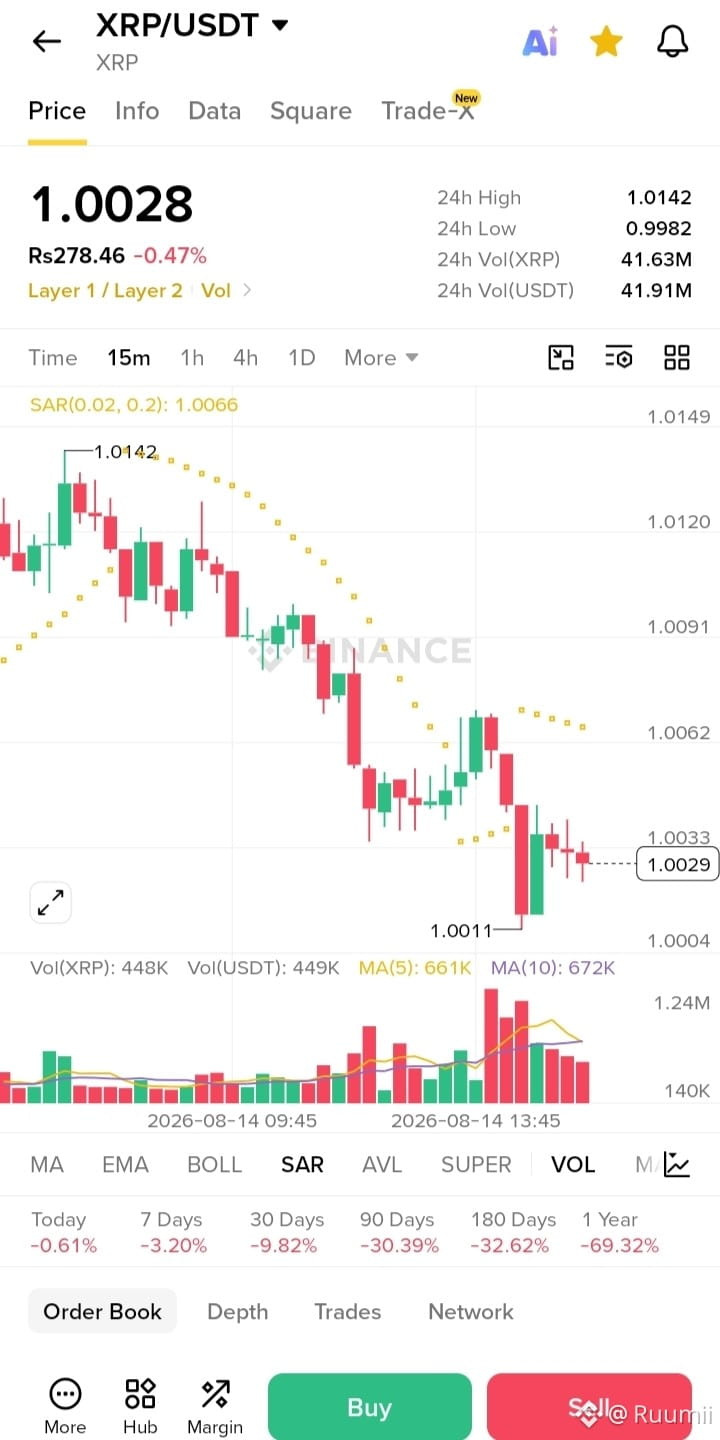
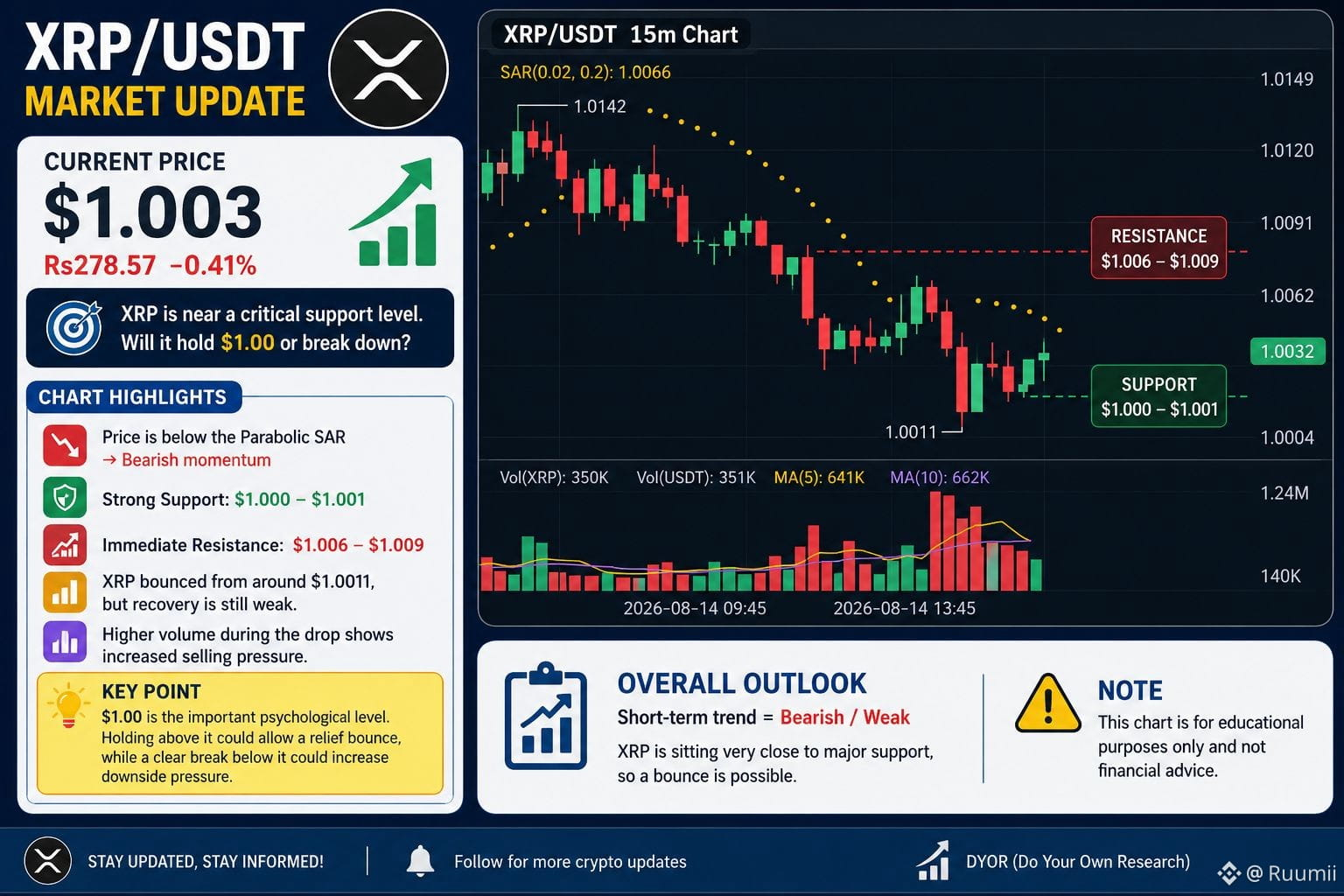
$XRP is hovering around $1.003, with the 15-minute chart showing continued short-term bearish pressure.
🔴 Chart signals:
• Price remains below the Parabolic SAR → bearish momentum
• Strong support: $1.000–$1.001
• Immediate resistance: $1.006–$1.009
• XRP bounced from around $1.0011, but the recovery is still weak
• Higher volume appeared during the recent drop, showing increased selling activity
📌 Key point: $1.00 is the important psychological level. Holding above it could allow a relief bounce, while a clear break below it could increase downside pressure.
Overall: Short-term trend = Bearish/weak, but XRP is sitting very close to major support, so a bounce is possible. This chart alone does not confirm a reversal.
Educational market commentary — not financial advice.
#RedditToJoinSP500 #SP500ClosesAtRecordHigh
XRP/USDT Update 📊
$XRP is hovering around $1.003, with the 15-minute chart showing continued short-term bearish pressure.
🔴 Chart signals:
• Price remains below the Parabolic SAR → bearish momentum
• Strong support: $1.000–$1.001
• Immediate resistance: $1.006–$1.009
• XRP bounced from around $1.0011, but the recovery is still weak
• Higher volume appeared during the recent drop, showing increased selling activity
📌 Key point: $1.00 is the important psychological level. Holding above it could allow a relief bounce, while a clear break below it could increase downside pressure.
Overall: Short-term trend = Bearish/weak, but XRP is sitting very close to major support, so a bounce is possible. This chart alone does not confirm a reversal.
Educational market commentary — not financial advice.
XRP/USDT Update 📊
$XRP is hovering around $1.003, with the 15-minute chart showing continued short-term bearish pressure.
🔴 Chart signals:
• Price remains below the Parabolic SAR → bearish momentum
• Strong support: $1.000–$1.001
• Immediate resistance: $1.006–$1.009
• XRP bounced from around $1.0011, but the recovery is still weak
• Higher volume appeared during the recent drop, showing increased selling activity
📌 Key point: $1.00 is the important psychological level. Holding above it could allow a relief bounce, while a clear break below it could increase downside pressure.
Overall: Short-term trend = Bearish/weak, but XRP is sitting very close to major support, so a bounce is possible. This chart alone does not confirm a reversal.
Educational market commentary — not financial advice.
122
·
--
#DollarSetForBestDayInTwoWeeks $NVDA.US
{spot}(NVDABUSDT)
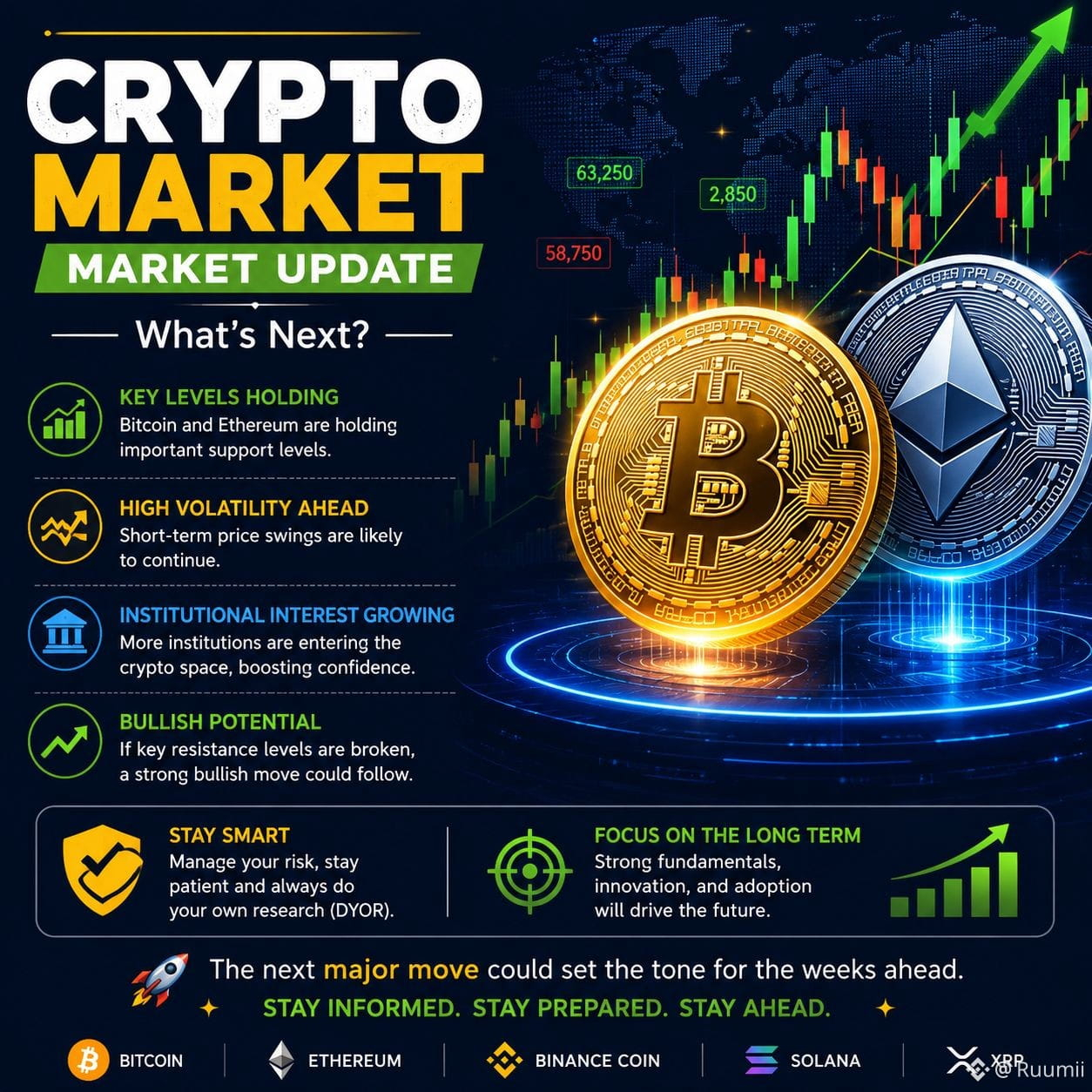
🚀 Crypto Market Update
The crypto market is entering a crucial phase. Bitcoin and Ethereum are holding key support levels while investors watch for the next breakout. Short-term price swings are likely to remain high, but growing institutional interest and improving market sentiment could support a bullish move if resistance levels are broken.
📊 Stay patient, manage your risk, and always do your own research (DYOR). The next major move could set the tone for the weeks ahead.
#Crypto #Bitcoin #Ethereum #CryptoNews #Blockchain #Trading #Investing #Bullish #MarketUpdate
#DollarSetForBestDayInTwoWeeks $NVDA.US
🚀 Crypto Market Update
The crypto market is entering a crucial phase. Bitcoin and Ethereum are holding key support levels while investors watch for the next breakout. Short-term price swings are likely to remain high, but growing institutional interest and improving market sentiment could support a bullish move if resistance levels are broken.
📊 Stay patient, manage your risk, and always do your own research (DYOR). The next major move could set the tone for the weeks ahead.
#Crypto #Bitcoin #Ethereum #CryptoNews #Blockchain #Trading #Investing #Bullish #MarketUpdate
🚀 Crypto Market Update
The crypto market is entering a crucial phase. Bitcoin and Ethereum are holding key support levels while investors watch for the next breakout. Short-term price swings are likely to remain high, but growing institutional interest and improving market sentiment could support a bullish move if resistance levels are broken.
📊 Stay patient, manage your risk, and always do your own research (DYOR). The next major move could set the tone for the weeks ahead.
#Crypto #Bitcoin #Ethereum #CryptoNews #Blockchain #Trading #Investing #Bullish #MarketUpdate
1
97
·
--
ບົດຄວາມ
🚨 Etherium Alert ⚠️ Eth Ready for a strong Move? Next week's ETH Prediction 📈#BitcoinLitecoinHolderLoses$282M #etheriumbreakout
Ethereum $ETH (ETH) has entered a critical phase after failing to hold above the important $2,000 psychological resistance. Sellers quickly pushed the price lower, showing that buyers are still struggling to maintain control. However, despite the rejection, Ethereum continues to trade above several long-term support zones, meaning the larger trend has not completely turned bearish yet. �
CryptoRank +1
Current Market Situation
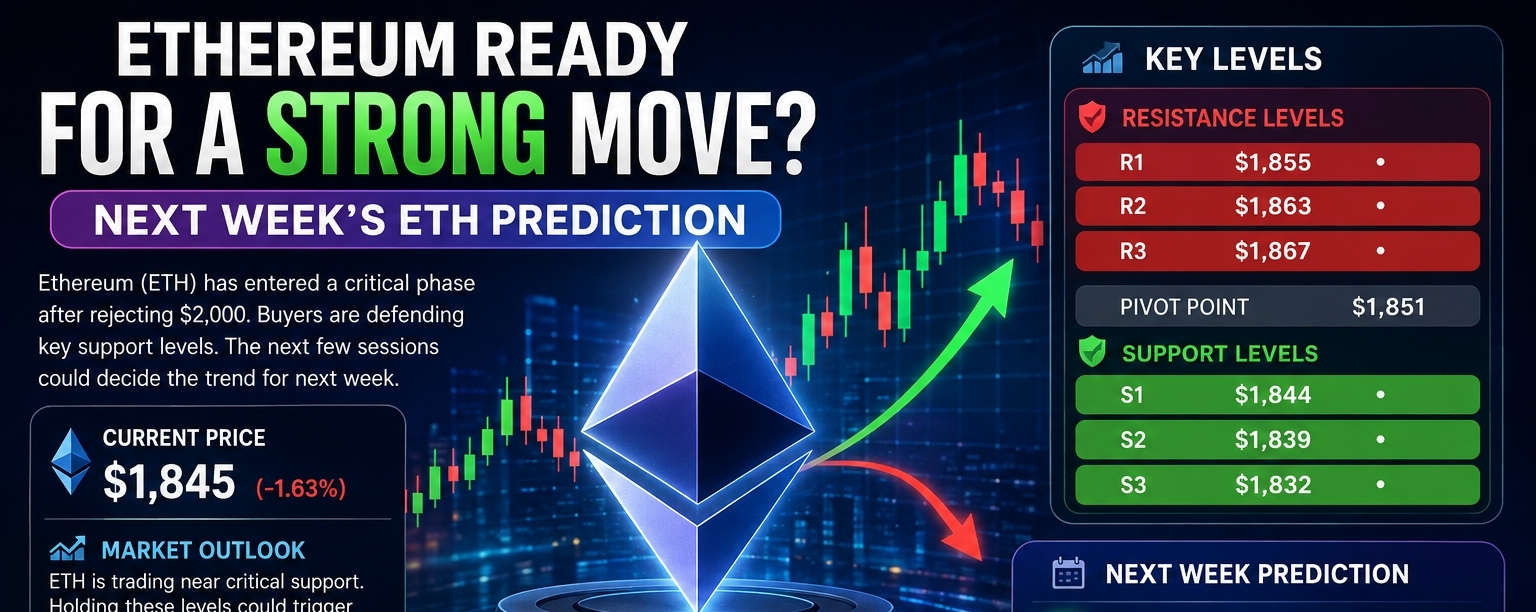
Based on the technical levels shown in your screenshots:
Current Price: ~$1,845
Resistance: $1,855 → $1,863 → $1,867
Support: $1,844 → $1,839 → $1,832
Ethereum
{future}(ETHUSDT)
is trading very close to its first support level. This means the next few trading sessions could decide the direction for the coming week.
Bullish Scenario
If buyers defend the $1,840–$1,845 support zone and ETH breaks above $1,860, momentum could quickly return.
Possible upside targets:
$1,870
$1,900
$1,930
A daily close above $1,900 would significantly improve market sentiment and could attract more buyers. Some technical outlooks also point to a constructive week if ETH regains these resistance levels. �
CoinDCX +1
Bearish Scenario
If Ethereum fails to hold $1,840, selling pressure could increase.
Possible downside targets:
$1,830
$1,800
$1,780
Breaking below these levels would suggest that sellers remain in control for the short term. �
CoinCheckup +1
Next Week Prediction
My technical outlook is slightly bullish to neutral.
60% probability: Ethereum trades between $1,860 and $1,920 if support holds.
40% probability: Ethereum falls toward $1,800–$1,830 if support breaks.
Overall, next week is likely to be driven by whether buyers can defend the $1,840 area and push the price back above $1,860. Forecasts from several market analysts are mixed, with some expecting a modest recovery while others remain cautious, highlighting the importance of these key technical levels. �
Binance +2
Disclaimer: Cryptocurrency markets are highly volatile. This analysis is for educational purposes and should not be considered financial advice.
🚨 Etherium Alert ⚠️ Eth Ready for a strong Move? Next week's ETH Prediction 📈
#BitcoinLitecoinHolderLoses$282M #etheriumbreakout
Ethereum $ETH (ETH) has entered a critical phase after failing to hold above the important $2,000 psychological resistance. Sellers quickly pushed the price lower, showing that buyers are still struggling to maintain control. However, despite the rejection, Ethereum continues to trade above several long-term support zones, meaning the larger trend has not completely turned bearish yet. �
CryptoRank +1
Current Market Situation
Based on the technical levels shown in your screenshots:
Current Price: ~$1,845
Resistance: $1,855 → $1,863 → $1,867
Support: $1,844 → $1,839 → $1,832
Ethereum
is trading very close to its first support level. This means the next few trading sessions could decide the direction for the coming week.
Bullish Scenario
If buyers defend the $1,840–$1,845 support zone and ETH breaks above $1,860, momentum could quickly return.
Possible upside targets:
$1,870
$1,900
$1,930
A daily close above $1,900 would significantly improve market sentiment and could attract more buyers. Some technical outlooks also point to a constructive week if ETH regains these resistance levels. �
CoinDCX +1
Bearish Scenario
If Ethereum fails to hold $1,840, selling pressure could increase.
Possible downside targets:
$1,830
$1,800
$1,780
Breaking below these levels would suggest that sellers remain in control for the short term. �
CoinCheckup +1
Next Week Prediction
My technical outlook is slightly bullish to neutral.
60% probability: Ethereum trades between $1,860 and $1,920 if support holds.
40% probability: Ethereum falls toward $1,800–$1,830 if support breaks.
Overall, next week is likely to be driven by whether buyers can defend the $1,840 area and push the price back above $1,860. Forecasts from several market analysts are mixed, with some expecting a modest recovery while others remain cautious, highlighting the importance of these key technical levels. �
Binance +2
Disclaimer: Cryptocurrency markets are highly volatile. This analysis is for educational purposes and should not be considered financial advice.
Ethereum $ETH (ETH) has entered a critical phase after failing to hold above the important $2,000 psychological resistance. Sellers quickly pushed the price lower, showing that buyers are still struggling to maintain control. However, despite the rejection, Ethereum continues to trade above several long-term support zones, meaning the larger trend has not completely turned bearish yet. �
CryptoRank +1
Current Market Situation
Based on the technical levels shown in your screenshots:
Current Price: ~$1,845
Resistance: $1,855 → $1,863 → $1,867
Support: $1,844 → $1,839 → $1,832
Ethereum
is trading very close to its first support level. This means the next few trading sessions could decide the direction for the coming week.
Bullish Scenario
If buyers defend the $1,840–$1,845 support zone and ETH breaks above $1,860, momentum could quickly return.
Possible upside targets:
$1,870
$1,900
$1,930
A daily close above $1,900 would significantly improve market sentiment and could attract more buyers. Some technical outlooks also point to a constructive week if ETH regains these resistance levels. �
CoinDCX +1
Bearish Scenario
If Ethereum fails to hold $1,840, selling pressure could increase.
Possible downside targets:
$1,830
$1,800
$1,780
Breaking below these levels would suggest that sellers remain in control for the short term. �
CoinCheckup +1
Next Week Prediction
My technical outlook is slightly bullish to neutral.
60% probability: Ethereum trades between $1,860 and $1,920 if support holds.
40% probability: Ethereum falls toward $1,800–$1,830 if support breaks.
Overall, next week is likely to be driven by whether buyers can defend the $1,840 area and push the price back above $1,860. Forecasts from several market analysts are mixed, with some expecting a modest recovery while others remain cautious, highlighting the importance of these key technical levels. �
Binance +2
Disclaimer: Cryptocurrency markets are highly volatile. This analysis is for educational purposes and should not be considered financial advice.
1
105
·
--
ບົດຄວາມ
Crypto Alert ⚠️Crypto Market Stabilizes At key Support, But downside Risks Remain 📉🚨#BitcoinETFs #Write2Earn #Bitcoin❗ $BTC $ETH
Crypto Market Stabilizes at Key Support, But Downside Risks Remain
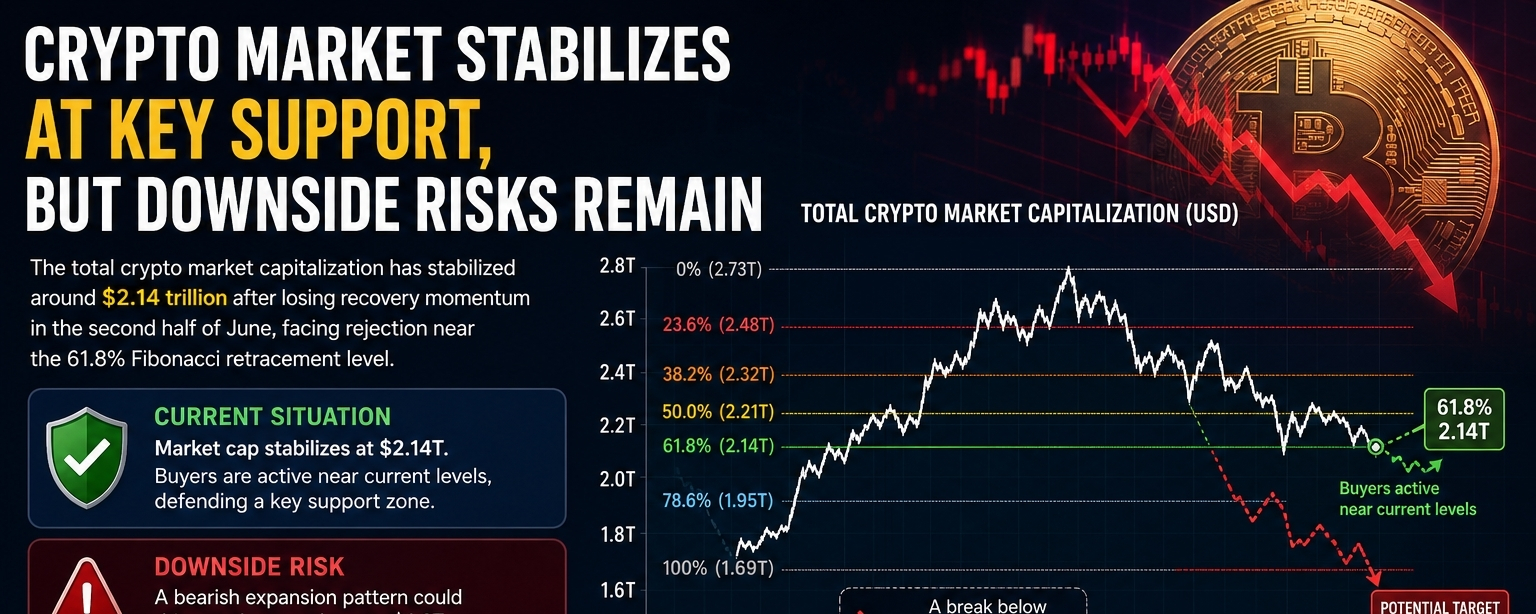
The cryptocurrency market has entered a period of consolidation after losing its recovery momentum during the second half of June. Total crypto market capitalization has stabilized around $2.14 trillion, following a rejection near the 61.8% Fibonacci retracement level, a key technical resistance often watched by traders.
While the current stabilization suggests buyers are defending this support zone, the broader technical outlook remains cautious. Analysts warn that a bearish expansion pattern could be developing, potentially driving the total market capitalization down to approximately $1.6 trillion—representing a decline of nearly 25% from current levels.
A decisive break below the early-June lows would strengthen the bearish case and likely trigger increased selling pressure across the market. However, buying interest around current price levels indicates that investors are still attempting to prevent a deeper correction.
Beyond technical indicators, macroeconomic factors continue to play a crucial role in shaping crypto market sentiment. The performance of the U.S. stock market and the strength of the U.S. dollar remain the primary drivers of price action. As a result, cryptocurrencies continue to react to broader financial market trends rather than moving independently.
For now, traders should closely monitor key support levels, stock market performance, and upcoming economic data. Whether the crypto market resumes its recovery or enters a deeper correction will largely depend on these external factors and the ability of buyers to maintain current support.$
Crypto Alert ⚠️Crypto Market Stabilizes At key Support, But downside Risks Remain 📉🚨
#BitcoinETFs #Write2Earn #Bitcoin❗ $BTC $ETH
Crypto Market Stabilizes at Key Support, But Downside Risks Remain
The cryptocurrency market has entered a period of consolidation after losing its recovery momentum during the second half of June. Total crypto market capitalization has stabilized around $2.14 trillion, following a rejection near the 61.8% Fibonacci retracement level, a key technical resistance often watched by traders.
While the current stabilization suggests buyers are defending this support zone, the broader technical outlook remains cautious. Analysts warn that a bearish expansion pattern could be developing, potentially driving the total market capitalization down to approximately $1.6 trillion—representing a decline of nearly 25% from current levels.
A decisive break below the early-June lows would strengthen the bearish case and likely trigger increased selling pressure across the market. However, buying interest around current price levels indicates that investors are still attempting to prevent a deeper correction.
Beyond technical indicators, macroeconomic factors continue to play a crucial role in shaping crypto market sentiment. The performance of the U.S. stock market and the strength of the U.S. dollar remain the primary drivers of price action. As a result, cryptocurrencies continue to react to broader financial market trends rather than moving independently.
For now, traders should closely monitor key support levels, stock market performance, and upcoming economic data. Whether the crypto market resumes its recovery or enters a deeper correction will largely depend on these external factors and the ability of buyers to maintain current support.$
Crypto Market Stabilizes at Key Support, But Downside Risks Remain
The cryptocurrency market has entered a period of consolidation after losing its recovery momentum during the second half of June. Total crypto market capitalization has stabilized around $2.14 trillion, following a rejection near the 61.8% Fibonacci retracement level, a key technical resistance often watched by traders.
While the current stabilization suggests buyers are defending this support zone, the broader technical outlook remains cautious. Analysts warn that a bearish expansion pattern could be developing, potentially driving the total market capitalization down to approximately $1.6 trillion—representing a decline of nearly 25% from current levels.
A decisive break below the early-June lows would strengthen the bearish case and likely trigger increased selling pressure across the market. However, buying interest around current price levels indicates that investors are still attempting to prevent a deeper correction.
Beyond technical indicators, macroeconomic factors continue to play a crucial role in shaping crypto market sentiment. The performance of the U.S. stock market and the strength of the U.S. dollar remain the primary drivers of price action. As a result, cryptocurrencies continue to react to broader financial market trends rather than moving independently.
For now, traders should closely monitor key support levels, stock market performance, and upcoming economic data. Whether the crypto market resumes its recovery or enters a deeper correction will largely depend on these external factors and the ability of buyers to maintain current support.$
93
·
--
$BTC
{future}(BTCUSDT)
$Binance Traders League Season 3: Take On Multi-Track Trading Challenges and Win a Share of $3M+ in Rewards! https://www.binance.com/activity/trading-competition/202606tradersleague3?ref=837959403
$BTC
$Binance Traders League Season 3: Take On Multi-Track Trading Challenges and Win a Share of $3M+ in Rewards! https://www.binance.com/activity/trading-competition/202606tradersleague3?ref=837959403
$Binance Traders League Season 3: Take On Multi-Track Trading Challenges and Win a Share of $3M+ in Rewards! https://www.binance.com/activity/trading-competition/202606tradersleague3?ref=837959403
24
·
--
ບົດຄວາມ
⚠️Is Cryptocurrency Becoming Too Dangerous 🚨for traders#BitcoinDropsBelow$60KWorstWeekSinceJuly2024 $ETH $USDC
The cryptocurrency 📊market has always been known for its excitement, massive gains, and unexpected surprises. But in today's market, many traders are asking a difficult question:
"Is crypto becoming too dangerous because nobody knows when prices will go up?"
The truth is that cryptocurrency remains one of the most unpredictable financial markets in the world. A coin can rise 20% in a few hours and then lose those gains just as quickly. News, regulations, whale activity, global economic events, and even social media posts can dramatically impact prices.
Many traders are frustrated because traditional market signals are becoming less reliable. Technical indicators may suggest a bullish 📈trend, only for the market to suddenly reverse. Even experienced investors often struggle to predict short-term price movements.
However, uncertainty does not mean crypto is dead. It simply means that risk management is more important than ever. Successful traders focus on protecting their capital rather than trying to predict every market move.
What Should Traders Do?
🔹 Avoid emotional buying and selling.
🔹 Never invest money you cannot afford to lose.
🔹 Use proper risk management and stop-loss strategies.
🔹 Focus on long-term trends instead of short-term noise.
🔹 Stay informed about market news and economic developments.$BTC
⚠️Is Cryptocurrency Becoming Too Dangerous 🚨for traders
#BitcoinDropsBelow$60KWorstWeekSinceJuly2024 $ETH $USDC
The cryptocurrency 📊market has always been known for its excitement, massive gains, and unexpected surprises. But in today's market, many traders are asking a difficult question:
"Is crypto becoming too dangerous because nobody knows when prices will go up?"
The truth is that cryptocurrency remains one of the most unpredictable financial markets in the world. A coin can rise 20% in a few hours and then lose those gains just as quickly. News, regulations, whale activity, global economic events, and even social media posts can dramatically impact prices.
Many traders are frustrated because traditional market signals are becoming less reliable. Technical indicators may suggest a bullish 📈trend, only for the market to suddenly reverse. Even experienced investors often struggle to predict short-term price movements.
However, uncertainty does not mean crypto is dead. It simply means that risk management is more important than ever. Successful traders focus on protecting their capital rather than trying to predict every market move.
What Should Traders Do?
🔹 Avoid emotional buying and selling.
🔹 Never invest money you cannot afford to lose.
🔹 Use proper risk management and stop-loss strategies.
🔹 Focus on long-term trends instead of short-term noise.
🔹 Stay informed about market news and economic developments.$BTC
The cryptocurrency 📊market has always been known for its excitement, massive gains, and unexpected surprises. But in today's market, many traders are asking a difficult question:
"Is crypto becoming too dangerous because nobody knows when prices will go up?"
The truth is that cryptocurrency remains one of the most unpredictable financial markets in the world. A coin can rise 20% in a few hours and then lose those gains just as quickly. News, regulations, whale activity, global economic events, and even social media posts can dramatically impact prices.
Many traders are frustrated because traditional market signals are becoming less reliable. Technical indicators may suggest a bullish 📈trend, only for the market to suddenly reverse. Even experienced investors often struggle to predict short-term price movements.
However, uncertainty does not mean crypto is dead. It simply means that risk management is more important than ever. Successful traders focus on protecting their capital rather than trying to predict every market move.
What Should Traders Do?
🔹 Avoid emotional buying and selling.
🔹 Never invest money you cannot afford to lose.
🔹 Use proper risk management and stop-loss strategies.
🔹 Focus on long-term trends instead of short-term noise.
🔹 Stay informed about market news and economic developments.$BTC
1
151
·
--
🎯Crypto price today: altcoins retreat amid broader risk-off mood📉🚨
#CryptoBearishMomentum #BinanceSquareTalks $ETH $XRP $SOL
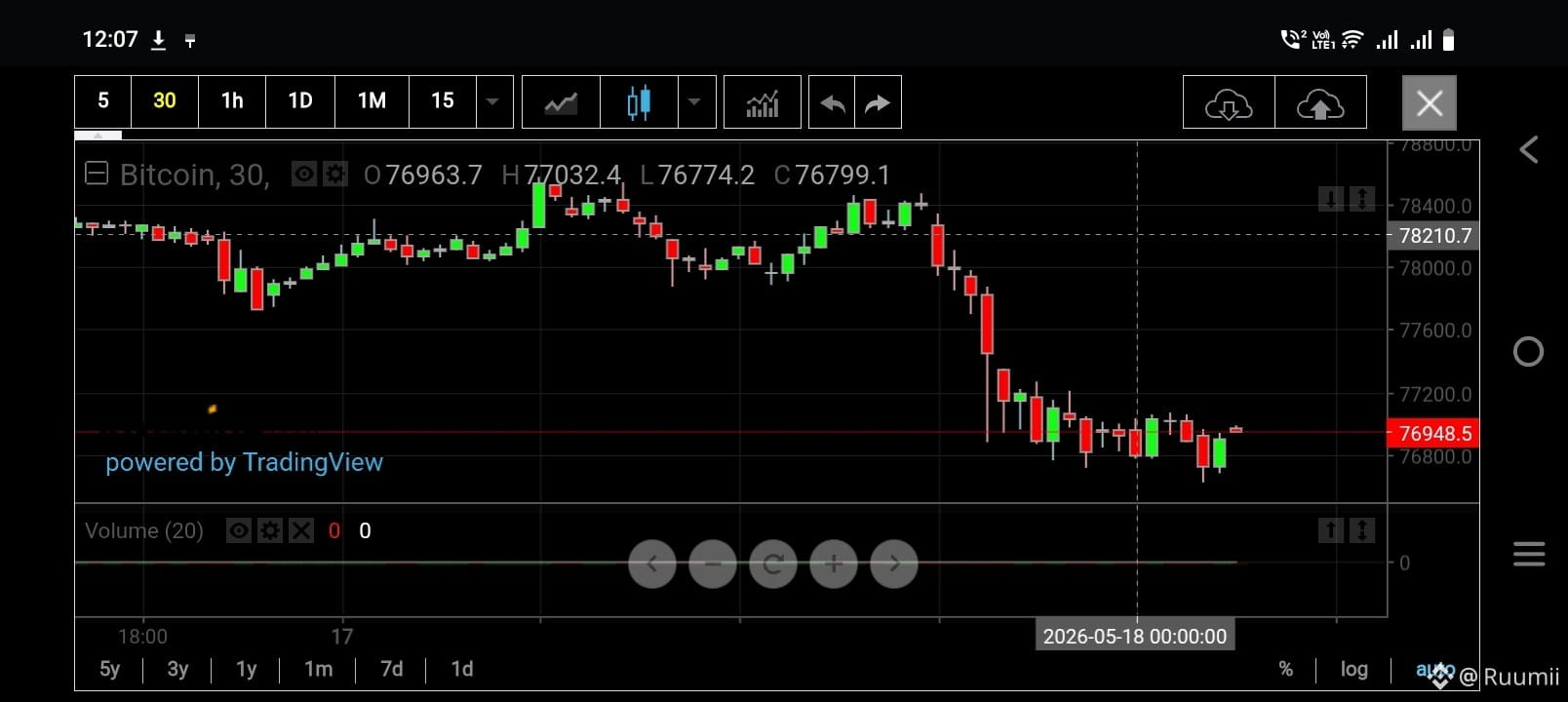
Most altcoins also fell on Monday, tracking the global risk-off mood.
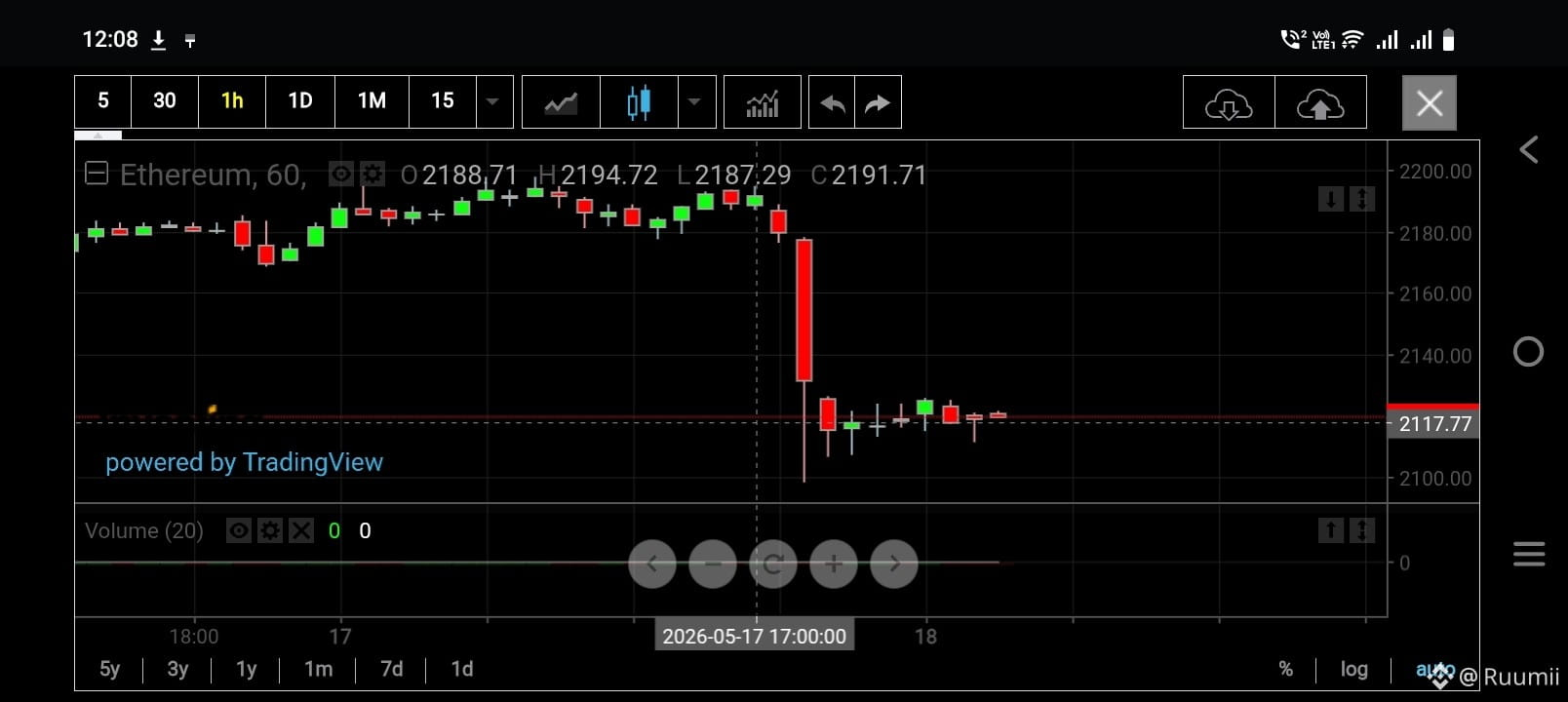
World no.2 crypto Ethereum lost 3% to $2,122.12.
World no. 3 crypto XRP fell 1.5% to $1.395.
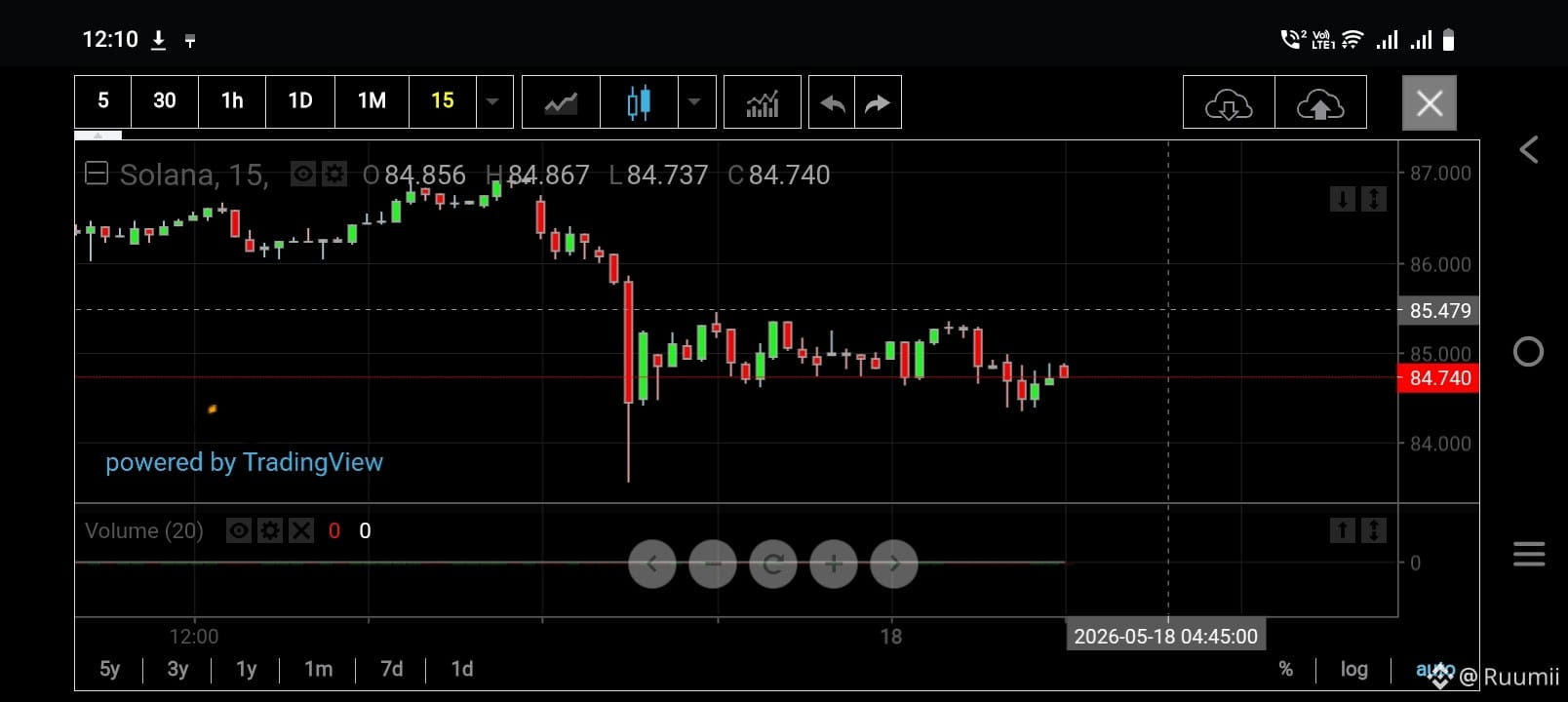
Solana eased 2%, while Cardano and Polygon declined 1.5% each.
Among meme tokens, Dogecoin slipped 2.8%.
🎯Crypto price today: altcoins retreat amid broader risk-off mood📉🚨
#CryptoBearishMomentum #BinanceSquareTalks $ETH $XRP $SOL
Most altcoins also fell on Monday, tracking the global risk-off mood.
World no.2 crypto Ethereum lost 3% to $2,122.12.
World no. 3 crypto XRP fell 1.5% to $1.395.
Solana eased 2%, while Cardano and Polygon declined 1.5% each.
Among meme tokens, Dogecoin slipped 2.8%.
#CryptoBearishMomentum #BinanceSquareTalks $ETH $XRP $SOL
Most altcoins also fell on Monday, tracking the global risk-off mood.
World no.2 crypto Ethereum lost 3% to $2,122.12.
World no. 3 crypto XRP fell 1.5% to $1.395.
Solana eased 2%, while Cardano and Polygon declined 1.5% each.
Among meme tokens, Dogecoin slipped 2.8%.
1
1
123
·
--
🚨Crypto price today: altcoins crash after long flush 🚨📉
BitcoinETFsSee$131MNetInflows
Broader altcoin prices also crashed due to the crypto-wide long flush.
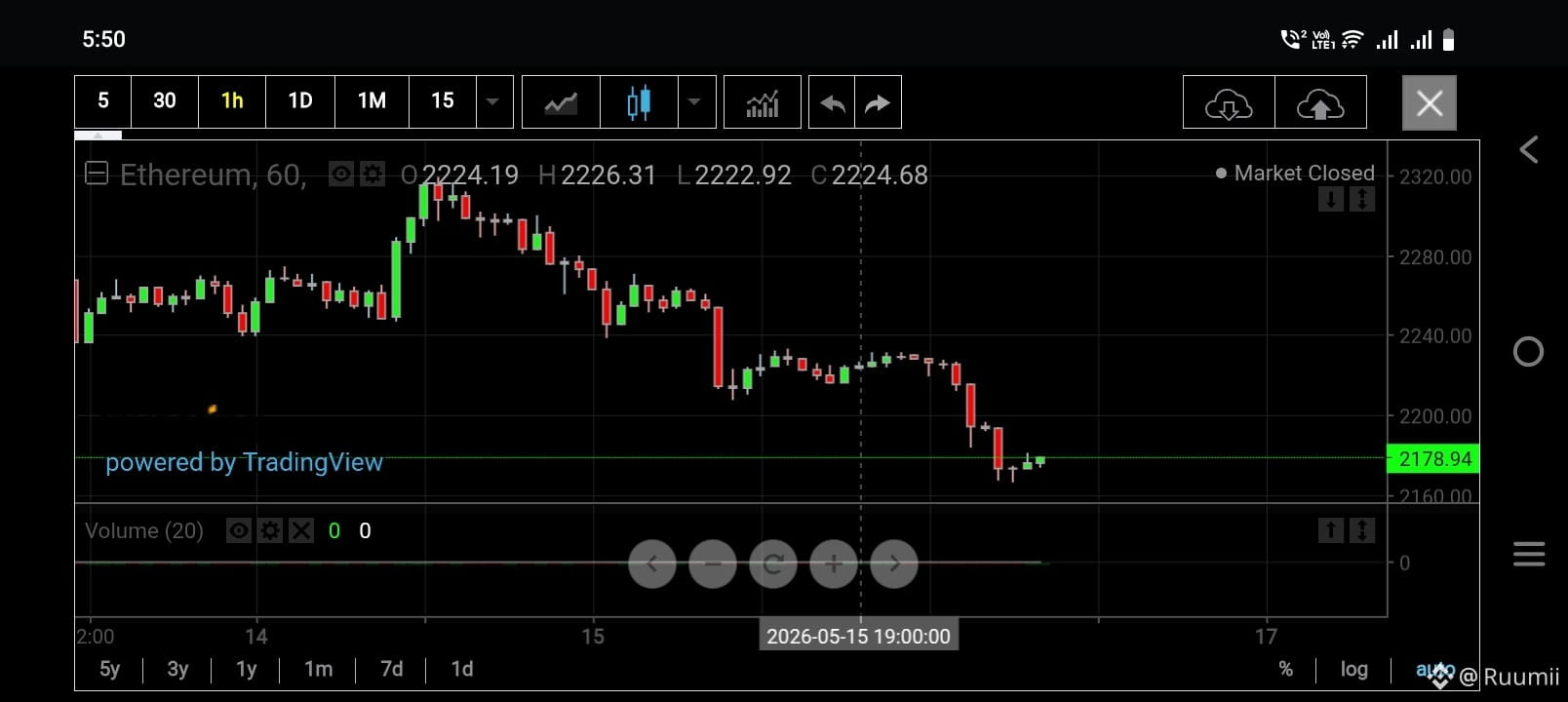
World no.2 crypto Ether fell 3.57% to $2,173.76, while XRP dropped 4.13% to $1.4041.
Solana lost 5.46%, and BNB shed 4.51%, while Cardano was 4.81% lower.
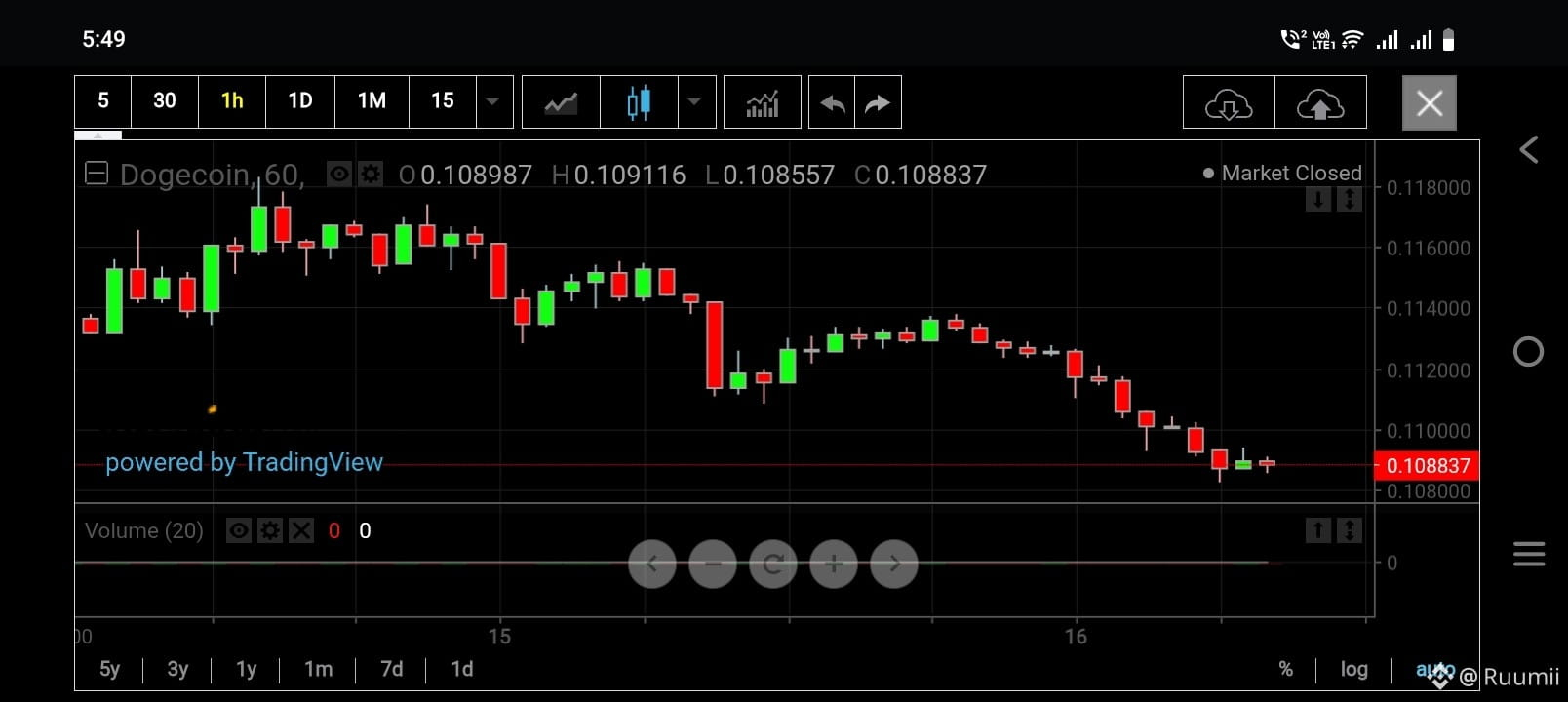
Among memecoins, Dogecoin retreated 4.31%, and $TRUMP crashed 8.02%.
🚨Crypto price today: altcoins crash after long flush 🚨📉
BitcoinETFsSee$131MNetInflows
Broader altcoin prices also crashed due to the crypto-wide long flush.
World no.2 crypto Ether fell 3.57% to $2,173.76, while XRP dropped 4.13% to $1.4041.
Solana lost 5.46%, and BNB shed 4.51%, while Cardano was 4.81% lower.
Among memecoins, Dogecoin retreated 4.31%, and $TRUMP crashed 8.02%.
BitcoinETFsSee$131MNetInflows
Broader altcoin prices also crashed due to the crypto-wide long flush.
World no.2 crypto Ether fell 3.57% to $2,173.76, while XRP dropped 4.13% to $1.4041.
Solana lost 5.46%, and BNB shed 4.51%, while Cardano was 4.81% lower.
Among memecoins, Dogecoin retreated 4.31%, and $TRUMP crashed 8.02%.
1
1
334
·
--
ບົດຄວາມ
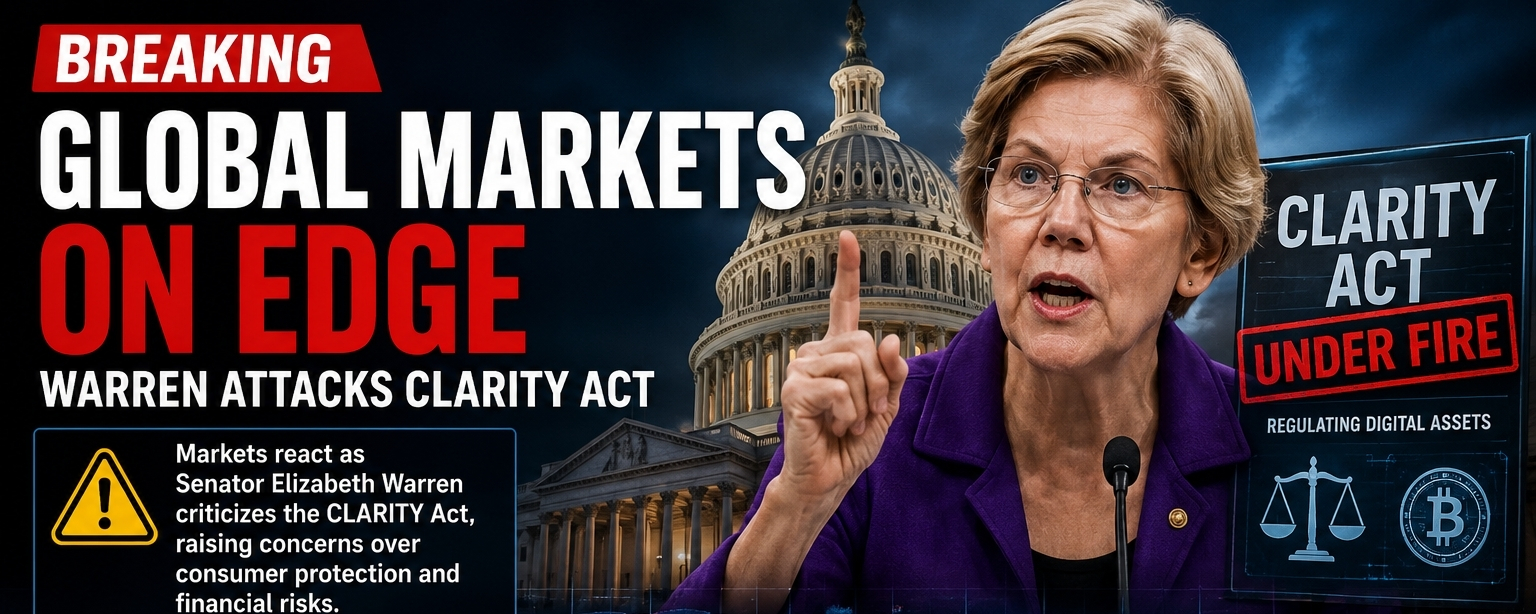
🚨 Breaking: 🌍 Global Market on Edge 📊 Senator Elizabeth Warren Targets The Clarity Act 🎯#ElizabethWarren #ClarityActUpdates
$BNB $DOGE
Financial markets around the world are closely watching the growing political battle in Washington as the controversial CLARITY Act moves through the U.S. Senate. Investors, crypto traders, and major institutions are reacting sharply after Senator Elizabeth Warren strongly criticized the bill, warning that it could create “dangerous loopholes” in digital asset regulation. �
Reuters +1
The proposed legislation is designed to bring clear rules to the cryptocurrency industry by defining which digital assets fall under the authority of the SEC and which belong to the CFTC. Supporters believe the bill could finally end years of confusion that have slowed innovation and frightened investors away from the U.S. market. �
The Economic Times +1
However, Warren and several Democratic lawmakers argue that the legislation may weaken consumer protections and open the door for money laundering risks and political conflicts of interest. Her criticism immediately sparked debate across Wall Street and the crypto sector, sending traders into high alert mode. �
Reuters +1
Despite the political tension, the Senate Banking Committee still advanced the CLARITY Act with bipartisan support in a 15-9 vote. The move boosted confidence across crypto-related stocks, with companies linked to digital assets seeing strong gains after the announcement. �
Blockonomi +2
Meanwhile, Bitcoin also reacted positively as investors viewed the bill as a possible turning point for mainstream crypto adoption in the United States. Analysts say that if the law eventually passes, it could attract billions of dollars in institutional investment and reshape the future of global digital finance. �
MarketWatch +1
Still, uncertainty remains high. Markets fear that political resistance, upcoming elections, and disagreements over stablecoin rules could delay or even block the legislation. With global investors already nervous about inflation, interest rates, and geopolitical tensions, the fight over crypto regulation is adding another layer of pressure to financial markets worldwide. �
Barron's +1
One thing is clear: the battle over the CLARITY Act is no longer just about crypto — it has become a major global market story that could influence the future of finance itself. 🚨📉📈
🚨 Breaking: 🌍 Global Market on Edge 📊 Senator Elizabeth Warren Targets The Clarity Act 🎯
#ElizabethWarren #ClarityActUpdates
$BNB $DOGE
Financial markets around the world are closely watching the growing political battle in Washington as the controversial CLARITY Act moves through the U.S. Senate. Investors, crypto traders, and major institutions are reacting sharply after Senator Elizabeth Warren strongly criticized the bill, warning that it could create “dangerous loopholes” in digital asset regulation. �
Reuters +1
The proposed legislation is designed to bring clear rules to the cryptocurrency industry by defining which digital assets fall under the authority of the SEC and which belong to the CFTC. Supporters believe the bill could finally end years of confusion that have slowed innovation and frightened investors away from the U.S. market. �
The Economic Times +1
However, Warren and several Democratic lawmakers argue that the legislation may weaken consumer protections and open the door for money laundering risks and political conflicts of interest. Her criticism immediately sparked debate across Wall Street and the crypto sector, sending traders into high alert mode. �
Reuters +1
Despite the political tension, the Senate Banking Committee still advanced the CLARITY Act with bipartisan support in a 15-9 vote. The move boosted confidence across crypto-related stocks, with companies linked to digital assets seeing strong gains after the announcement. �
Blockonomi +2
Meanwhile, Bitcoin also reacted positively as investors viewed the bill as a possible turning point for mainstream crypto adoption in the United States. Analysts say that if the law eventually passes, it could attract billions of dollars in institutional investment and reshape the future of global digital finance. �
MarketWatch +1
Still, uncertainty remains high. Markets fear that political resistance, upcoming elections, and disagreements over stablecoin rules could delay or even block the legislation. With global investors already nervous about inflation, interest rates, and geopolitical tensions, the fight over crypto regulation is adding another layer of pressure to financial markets worldwide. �
Barron's +1
One thing is clear: the battle over the CLARITY Act is no longer just about crypto — it has become a major global market story that could influence the future of finance itself. 🚨📉📈
$BNB $DOGE
Financial markets around the world are closely watching the growing political battle in Washington as the controversial CLARITY Act moves through the U.S. Senate. Investors, crypto traders, and major institutions are reacting sharply after Senator Elizabeth Warren strongly criticized the bill, warning that it could create “dangerous loopholes” in digital asset regulation. �
Reuters +1
The proposed legislation is designed to bring clear rules to the cryptocurrency industry by defining which digital assets fall under the authority of the SEC and which belong to the CFTC. Supporters believe the bill could finally end years of confusion that have slowed innovation and frightened investors away from the U.S. market. �
The Economic Times +1
However, Warren and several Democratic lawmakers argue that the legislation may weaken consumer protections and open the door for money laundering risks and political conflicts of interest. Her criticism immediately sparked debate across Wall Street and the crypto sector, sending traders into high alert mode. �
Reuters +1
Despite the political tension, the Senate Banking Committee still advanced the CLARITY Act with bipartisan support in a 15-9 vote. The move boosted confidence across crypto-related stocks, with companies linked to digital assets seeing strong gains after the announcement. �
Blockonomi +2
Meanwhile, Bitcoin also reacted positively as investors viewed the bill as a possible turning point for mainstream crypto adoption in the United States. Analysts say that if the law eventually passes, it could attract billions of dollars in institutional investment and reshape the future of global digital finance. �
MarketWatch +1
Still, uncertainty remains high. Markets fear that political resistance, upcoming elections, and disagreements over stablecoin rules could delay or even block the legislation. With global investors already nervous about inflation, interest rates, and geopolitical tensions, the fight over crypto regulation is adding another layer of pressure to financial markets worldwide. �
Barron's +1
One thing is clear: the battle over the CLARITY Act is no longer just about crypto — it has become a major global market story that could influence the future of finance itself. 🚨📉📈
1
101
·
--
ບົດຄວາມ
Breaking 🚨📈 Oil Prices Today 🛢️💸#USIranSpikeOil #OilMarketWatch
$ETH $USDC
🛢️ U.S. Oil Prices Today — Market Watching Every Move 👀
Global oil markets are once again under pressure as U.S. crude oil prices remain highly volatile. Investors, traders, and energy companies are closely watching the latest oil inventory data and geopolitical developments to understand where prices may head next.
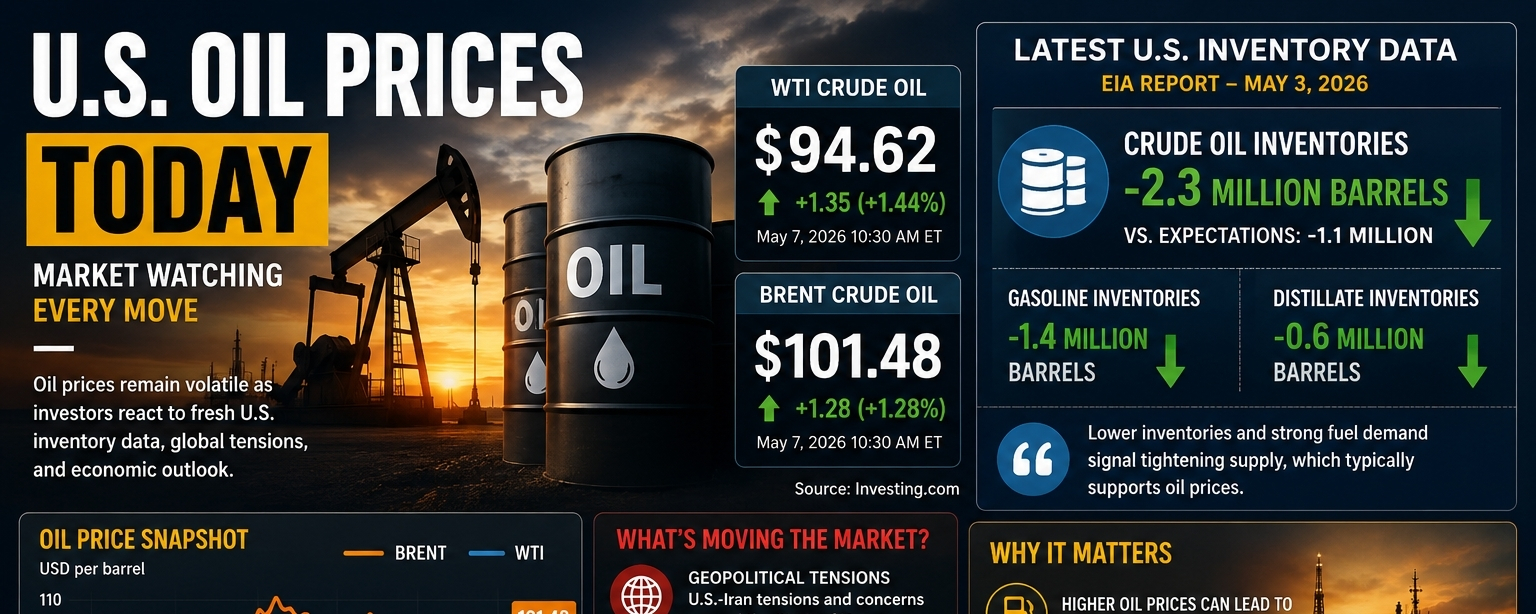
Today, the oil market reacted strongly after fresh U.S. inventory data showed a decline in crude oil stockpiles. According to the latest report from the U.S. Energy Information Administration (EIA), U.S. crude inventories dropped by nearly 2.3 million barrels, signaling that fuel demand is still strong. �
OilMonster +2
At the same time, gasoline inventories also declined, which increased market expectations that summer fuel demand in the United States could remain strong in the coming weeks. Analysts say this data usually supports oil prices because lower inventories mean supply is tightening. 📉🛢️
Meanwhile, global tensions and uncertainty around Middle East supply routes continue to keep traders nervous. Oil prices recently moved sharply due to discussions involving U.S.-Iran tensions and concerns about supply disruptions through the Strait of Hormuz. �
Reuters +2
Recent market reports showed:
WTI Crude Oil trading around the mid-$90 range after strong volatility
Brent Crude remaining above $100 in recent sessions �
Wall Street Journal +2
Experts believe the next big move in oil prices will depend on: ✅ Future U.S. inventory reports
✅ OPEC+ production decisions
✅ Middle East geopolitical situation
✅ Global economic growth and fuel demand
If crude oil continues rising, it could also impact inflation, fuel prices, and even the cryptocurrency market because higher energy costs often affect investor sentiment worldwide. 🌍📈
For now, the oil market remains extremely sensitive, and traders are expecting more volatility ahead. 🚨
Breaking 🚨📈 Oil Prices Today 🛢️💸
#USIranSpikeOil #OilMarketWatch
$ETH $USDC
🛢️ U.S. Oil Prices Today — Market Watching Every Move 👀
Global oil markets are once again under pressure as U.S. crude oil prices remain highly volatile. Investors, traders, and energy companies are closely watching the latest oil inventory data and geopolitical developments to understand where prices may head next.
Today, the oil market reacted strongly after fresh U.S. inventory data showed a decline in crude oil stockpiles. According to the latest report from the U.S. Energy Information Administration (EIA), U.S. crude inventories dropped by nearly 2.3 million barrels, signaling that fuel demand is still strong. �
OilMonster +2
At the same time, gasoline inventories also declined, which increased market expectations that summer fuel demand in the United States could remain strong in the coming weeks. Analysts say this data usually supports oil prices because lower inventories mean supply is tightening. 📉🛢️
Meanwhile, global tensions and uncertainty around Middle East supply routes continue to keep traders nervous. Oil prices recently moved sharply due to discussions involving U.S.-Iran tensions and concerns about supply disruptions through the Strait of Hormuz. �
Reuters +2
Recent market reports showed:
WTI Crude Oil trading around the mid-$90 range after strong volatility
Brent Crude remaining above $100 in recent sessions �
Wall Street Journal +2
Experts believe the next big move in oil prices will depend on: ✅ Future U.S. inventory reports
✅ OPEC+ production decisions
✅ Middle East geopolitical situation
✅ Global economic growth and fuel demand
If crude oil continues rising, it could also impact inflation, fuel prices, and even the cryptocurrency market because higher energy costs often affect investor sentiment worldwide. 🌍📈
For now, the oil market remains extremely sensitive, and traders are expecting more volatility ahead. 🚨
$ETH $USDC
🛢️ U.S. Oil Prices Today — Market Watching Every Move 👀
Global oil markets are once again under pressure as U.S. crude oil prices remain highly volatile. Investors, traders, and energy companies are closely watching the latest oil inventory data and geopolitical developments to understand where prices may head next.
Today, the oil market reacted strongly after fresh U.S. inventory data showed a decline in crude oil stockpiles. According to the latest report from the U.S. Energy Information Administration (EIA), U.S. crude inventories dropped by nearly 2.3 million barrels, signaling that fuel demand is still strong. �
OilMonster +2
At the same time, gasoline inventories also declined, which increased market expectations that summer fuel demand in the United States could remain strong in the coming weeks. Analysts say this data usually supports oil prices because lower inventories mean supply is tightening. 📉🛢️
Meanwhile, global tensions and uncertainty around Middle East supply routes continue to keep traders nervous. Oil prices recently moved sharply due to discussions involving U.S.-Iran tensions and concerns about supply disruptions through the Strait of Hormuz. �
Reuters +2
Recent market reports showed:
WTI Crude Oil trading around the mid-$90 range after strong volatility
Brent Crude remaining above $100 in recent sessions �
Wall Street Journal +2
Experts believe the next big move in oil prices will depend on: ✅ Future U.S. inventory reports
✅ OPEC+ production decisions
✅ Middle East geopolitical situation
✅ Global economic growth and fuel demand
If crude oil continues rising, it could also impact inflation, fuel prices, and even the cryptocurrency market because higher energy costs often affect investor sentiment worldwide. 🌍📈
For now, the oil market remains extremely sensitive, and traders are expecting more volatility ahead. 🚨
2
197
·
--
🎯Seems Clearly Buying Position 📈💰
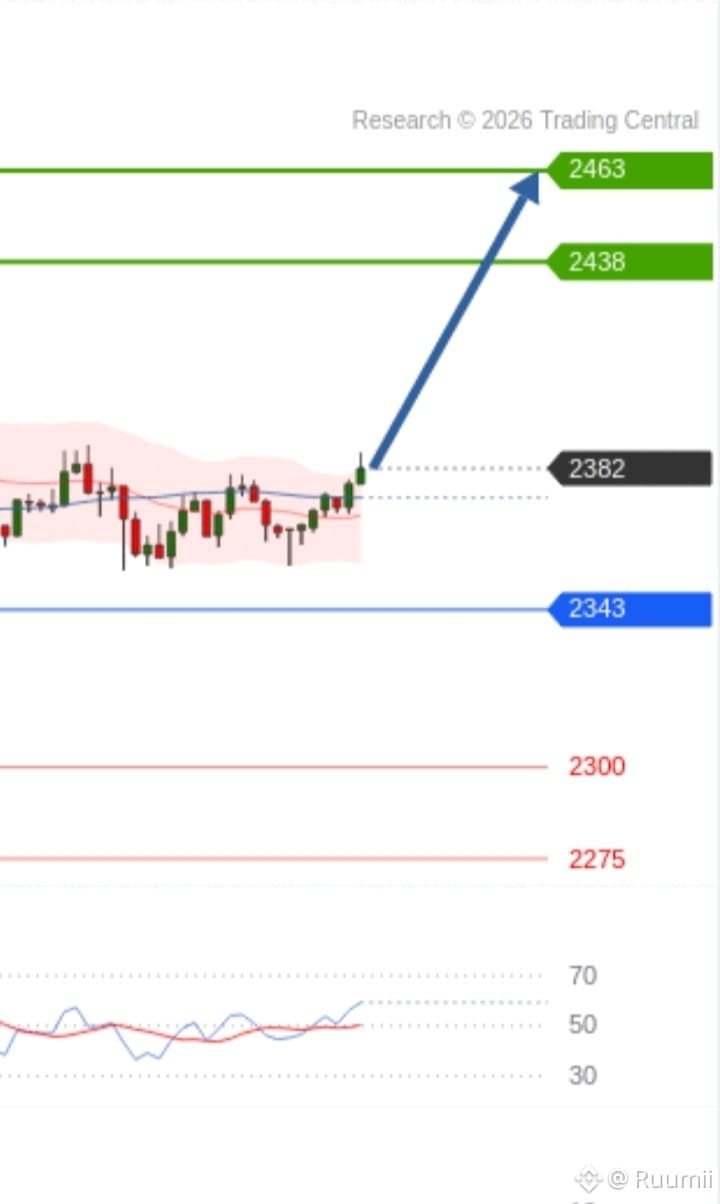
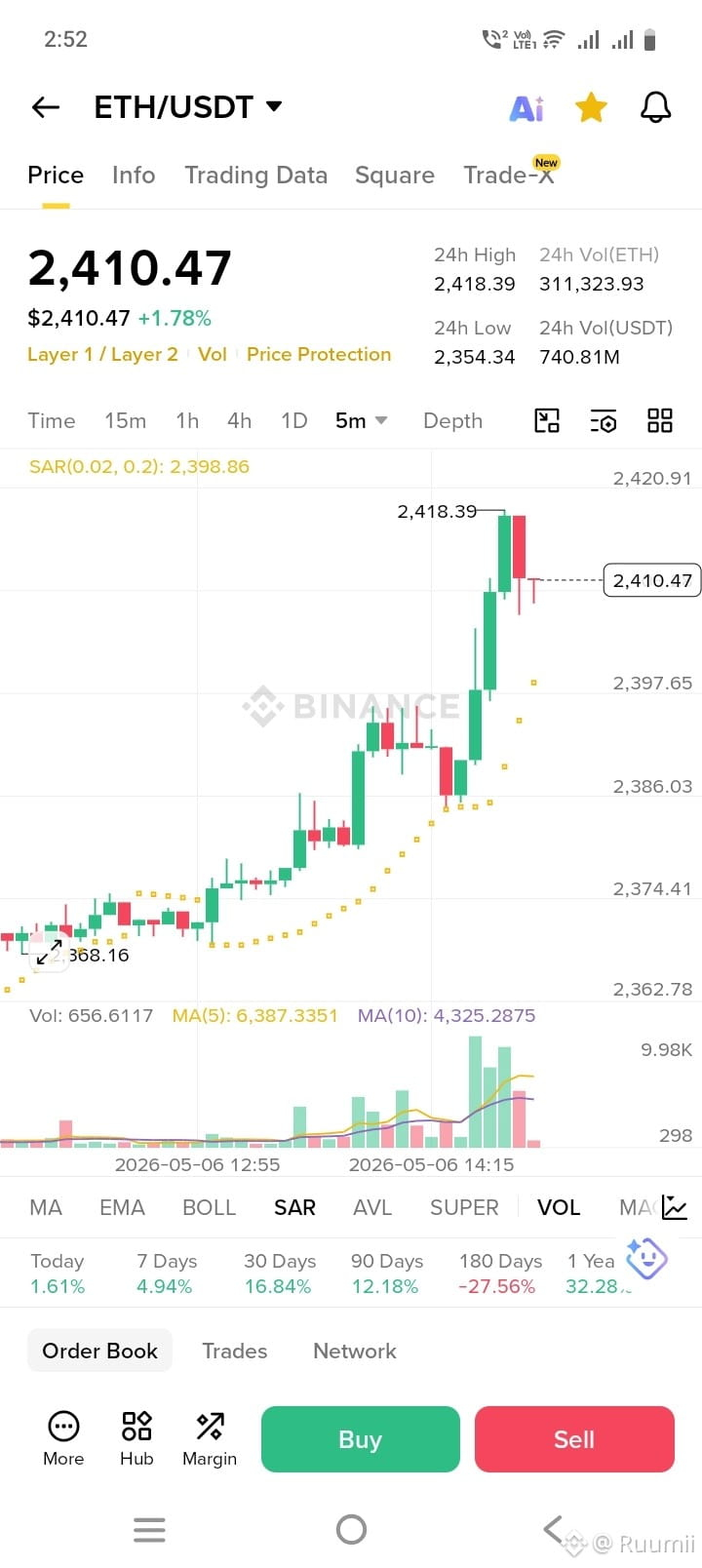
🚀 Ethereum breaks above $2400 — momentum is clearly building!
📈 If buyers stay strong, the next immediate target sits around $2440.50. A clean push above this level could open the door for further upside in the short term.
⚠️ Keep an eye on volume and market sentiment — strong support above $2400 will be key to sustain this move.
$ETH
{future}(ETHUSDT)
#Ethcross2400 #BinanceSquareTalks
🎯Seems Clearly Buying Position 📈💰
🚀 Ethereum breaks above $2400 — momentum is clearly building!
📈 If buyers stay strong, the next immediate target sits around $2440.50. A clean push above this level could open the door for further upside in the short term.
⚠️ Keep an eye on volume and market sentiment — strong support above $2400 will be key to sustain this move.
$ETH
#Ethcross2400 #BinanceSquareTalks
🚀 Ethereum breaks above $2400 — momentum is clearly building!
📈 If buyers stay strong, the next immediate target sits around $2440.50. A clean push above this level could open the door for further upside in the short term.
⚠️ Keep an eye on volume and market sentiment — strong support above $2400 will be key to sustain this move.
$ETH
#Ethcross2400 #BinanceSquareTalks
1
105
·
--

ບົດຄວາມ
🎯 Crypto Market is on Fire 🔥 Is This Your Chance to Recover Losses?🚀📈#BTCSurpasses$80K #ETH🔥🔥🔥🔥🔥🔥
$ETH $RIVER
The crypto market is back in action — and this time, it feels different 💥
After a long period of fear, red charts, and uncertainty, the market is finally showing strong signs of recovery. Big names like Bitcoin and Ethereum$ETH are gaining momentum again, bringing fresh hope to investors who were stuck in losses 📈
💡 A Turning Point for Investors
Many traders who entered the market at the wrong time faced heavy losses. But now, with the current bullish momentum, there’s a growing belief:
👉 This could be the opportunity to recover and reset.
However, it’s not as simple as jumping in blindly. Smart strategy matters more than ever ⚠️
🔥 Why This Moment Feels Like a Game Changer
📊 Market sentiment is shifting from fear to confidence
🏦 Institutional investors are slowly stepping back in
🌍 Crypto adoption is expanding globally
💰 Altcoins are also waking up alongside majors
Coins like Solana and Dogecoin#doge are gaining traction, showing that the entire ecosystem is moving — not just one or two coins 🚀
⚠️ Reality Check – Don’t Rush Emotionally
Yes, the market is hot… but recovering losses doesn’t mean chasing pumps blindly ❌
Avoid FOMO (Fear of Missing Out)
Don’t invest more than you can afford to lose
Look for solid projects, not just hype
📢 Smart Moves to Consider
📌 Enter in phases instead of all at once
📌 Focus on long-term growth, not quick gains
📌 Stay updated with market trends
🌊 Final Words
Crypto is once again proving why it’s called a game changer. This could be a powerful comeback phase — but only for those who play it wisely 🎯
The market is giving another chance… the question is, will you use it smartly? 🔥💰
🎯 Crypto Market is on Fire 🔥 Is This Your Chance to Recover Losses?🚀📈
#BTCSurpasses$80K #ETH🔥🔥🔥🔥🔥🔥
$ETH $RIVER
The crypto market is back in action — and this time, it feels different 💥
After a long period of fear, red charts, and uncertainty, the market is finally showing strong signs of recovery. Big names like Bitcoin and Ethereum$ETH are gaining momentum again, bringing fresh hope to investors who were stuck in losses 📈
💡 A Turning Point for Investors
Many traders who entered the market at the wrong time faced heavy losses. But now, with the current bullish momentum, there’s a growing belief:
👉 This could be the opportunity to recover and reset.
However, it’s not as simple as jumping in blindly. Smart strategy matters more than ever ⚠️
🔥 Why This Moment Feels Like a Game Changer
📊 Market sentiment is shifting from fear to confidence
🏦 Institutional investors are slowly stepping back in
🌍 Crypto adoption is expanding globally
💰 Altcoins are also waking up alongside majors
Coins like Solana and Dogecoin#doge are gaining traction, showing that the entire ecosystem is moving — not just one or two coins 🚀
⚠️ Reality Check – Don’t Rush Emotionally
Yes, the market is hot… but recovering losses doesn’t mean chasing pumps blindly ❌
Avoid FOMO (Fear of Missing Out)
Don’t invest more than you can afford to lose
Look for solid projects, not just hype
📢 Smart Moves to Consider
📌 Enter in phases instead of all at once
📌 Focus on long-term growth, not quick gains
📌 Stay updated with market trends
🌊 Final Words
Crypto is once again proving why it’s called a game changer. This could be a powerful comeback phase — but only for those who play it wisely 🎯
The market is giving another chance… the question is, will you use it smartly? 🔥💰
$ETH $RIVER
The crypto market is back in action — and this time, it feels different 💥
After a long period of fear, red charts, and uncertainty, the market is finally showing strong signs of recovery. Big names like Bitcoin and Ethereum$ETH are gaining momentum again, bringing fresh hope to investors who were stuck in losses 📈
💡 A Turning Point for Investors
Many traders who entered the market at the wrong time faced heavy losses. But now, with the current bullish momentum, there’s a growing belief:
👉 This could be the opportunity to recover and reset.
However, it’s not as simple as jumping in blindly. Smart strategy matters more than ever ⚠️
🔥 Why This Moment Feels Like a Game Changer
📊 Market sentiment is shifting from fear to confidence
🏦 Institutional investors are slowly stepping back in
🌍 Crypto adoption is expanding globally
💰 Altcoins are also waking up alongside majors
Coins like Solana and Dogecoin#doge are gaining traction, showing that the entire ecosystem is moving — not just one or two coins 🚀
⚠️ Reality Check – Don’t Rush Emotionally
Yes, the market is hot… but recovering losses doesn’t mean chasing pumps blindly ❌
Avoid FOMO (Fear of Missing Out)
Don’t invest more than you can afford to lose
Look for solid projects, not just hype
📢 Smart Moves to Consider
📌 Enter in phases instead of all at once
📌 Focus on long-term growth, not quick gains
📌 Stay updated with market trends
🌊 Final Words
Crypto is once again proving why it’s called a game changer. This could be a powerful comeback phase — but only for those who play it wisely 🎯
The market is giving another chance… the question is, will you use it smartly? 🔥💰
1
185
·
--
ບົດຄວາມ
📊Fed Keeps Interest Rates💰🎯 Unchanged - What it Means Today 📈#FedRatesUnchanged #FedRatesAndCrypto
$ETH $PEPE
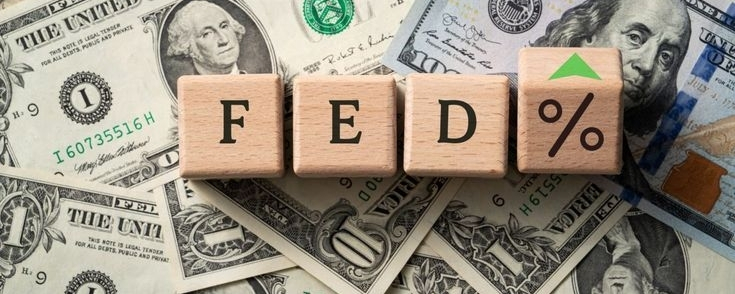
The Federal Reserve has decided to keep interest rates unchanged in its latest policy announcement, signaling a cautious approach as the global economy continues to face uncertainty.
💬 What Happened?
In today’s meeting, the Fed chose to hold rates steady instead of increasing or cutting them. This move was largely expected by markets, as inflation has started to cool slightly, but not enough to declare victory.
📉 Why Did the Fed Pause?
The central bank is trying to balance two major goals:
Control inflation 🧯
Avoid slowing down the economy too much 🏦
By keeping rates unchanged, the Fed is basically saying: “Let’s wait and see how things develop before making the next move.”
📊 Impact on Markets
Crypto Market 🚀: Usually reacts positively to stable rates, as investors feel less pressure from borrowing costs.
Stock Market 📈: Often sees short-term relief because uncertainty decreases.
Dollar 💵: May stay strong but stable, depending on future signals.
⚠️ What’s Next?
The Fed hinted that future decisions will depend on:
Inflation data
Job market strength
Global economic conditions
So, while rates are unchanged today, future hikes or cuts are still on the table.
🧠 Final Thought
This pause doesn’t mean the fight against inflation is over. It just shows the Fed is moving carefully. For investors—especially in crypto—this kind of stability can create short-term confidence but long-term uncertainty.
📊Fed Keeps Interest Rates💰🎯 Unchanged - What it Means Today 📈
#FedRatesUnchanged #FedRatesAndCrypto
$ETH $PEPE
The Federal Reserve has decided to keep interest rates unchanged in its latest policy announcement, signaling a cautious approach as the global economy continues to face uncertainty.
💬 What Happened?
In today’s meeting, the Fed chose to hold rates steady instead of increasing or cutting them. This move was largely expected by markets, as inflation has started to cool slightly, but not enough to declare victory.
📉 Why Did the Fed Pause?
The central bank is trying to balance two major goals:
Control inflation 🧯
Avoid slowing down the economy too much 🏦
By keeping rates unchanged, the Fed is basically saying: “Let’s wait and see how things develop before making the next move.”
📊 Impact on Markets
Crypto Market 🚀: Usually reacts positively to stable rates, as investors feel less pressure from borrowing costs.
Stock Market 📈: Often sees short-term relief because uncertainty decreases.
Dollar 💵: May stay strong but stable, depending on future signals.
⚠️ What’s Next?
The Fed hinted that future decisions will depend on:
Inflation data
Job market strength
Global economic conditions
So, while rates are unchanged today, future hikes or cuts are still on the table.
🧠 Final Thought
This pause doesn’t mean the fight against inflation is over. It just shows the Fed is moving carefully. For investors—especially in crypto—this kind of stability can create short-term confidence but long-term uncertainty.
$ETH $PEPE
The Federal Reserve has decided to keep interest rates unchanged in its latest policy announcement, signaling a cautious approach as the global economy continues to face uncertainty.
💬 What Happened?
In today’s meeting, the Fed chose to hold rates steady instead of increasing or cutting them. This move was largely expected by markets, as inflation has started to cool slightly, but not enough to declare victory.
📉 Why Did the Fed Pause?
The central bank is trying to balance two major goals:
Control inflation 🧯
Avoid slowing down the economy too much 🏦
By keeping rates unchanged, the Fed is basically saying: “Let’s wait and see how things develop before making the next move.”
📊 Impact on Markets
Crypto Market 🚀: Usually reacts positively to stable rates, as investors feel less pressure from borrowing costs.
Stock Market 📈: Often sees short-term relief because uncertainty decreases.
Dollar 💵: May stay strong but stable, depending on future signals.
⚠️ What’s Next?
The Fed hinted that future decisions will depend on:
Inflation data
Job market strength
Global economic conditions
So, while rates are unchanged today, future hikes or cuts are still on the table.
🧠 Final Thought
This pause doesn’t mean the fight against inflation is over. It just shows the Fed is moving carefully. For investors—especially in crypto—this kind of stability can create short-term confidence but long-term uncertainty.
1
138
·
--
Breaking🚨#BinanceIslamabadUnited Get ready to score big with Binance and Islamabad United in the $25,000 Powerplay challenge. Complete simple actions, earn Runs, and climb the leaderboard to win a share of rewards. https://www.binance.com/activity/trading-competition/2026-powerplay?ref=837959403
$ETH $BNB
{future}(BNBUSDT)
{future}(ETHUSDT)
Breaking🚨#BinanceIslamabadUnited Get ready to score big with Binance and Islamabad United in the $25,000 Powerplay challenge. Complete simple actions, earn Runs, and climb the leaderboard to win a share of rewards. https://www.binance.com/activity/trading-competition/2026-powerplay?ref=837959403
$ETH $BNB
$ETH $BNB
1
18
·
--
🚨 Crypto Alert 🚨 China Vs US 🇨🇳🎌🇺🇲 Market On High Alert#cryptomarketcrashtoday #USandChinaTrade $ETH $XRP #Bearish #BEARISH📉
Right now, the global market is closely watching tensions between China and United States — and yes, the crypto market is feeling the heat.
Both countries have huge influence over the world economy, and whenever there’s uncertainty between them, investors become cautious. This is exactly what’s happening now.
📉 What’s Happening?
The US is continuing its strict approach toward crypto regulations, trying to control exchanges and protect investors. On the other side, China still maintains its tough stance on crypto trading and mining, even though there are rumors of possible soft moves in the future.
This mixed situation is creating confusion in the market.
💰 Impact on Crypto
Big coins like Bitcoin and Ethereum are moving slowly
Market volatility is increasing 📊
Investors are waiting instead of making big moves
Whenever powerful countries like these clash on financial policies, crypto usually reacts with uncertainty.
⚡ Market Sentiment
Right now, the mood is:
😐 Neutral to slightly bearish
🕒 Waiting for clear direction
📉 Short-term pressure, but long-term still strong
🔮 What’s Next?
If the US tightens regulations more, the market could face short-term dips. But if China shows any positive signal toward crypto, we could see a strong bullish push 🚀
✍️ Final Words
At the moment, the crypto market is in a “wait and watch” phase. The next move from China 🇨🇳 or the US 🇺🇸 can decide the next big trend.
Smart investors are staying calm, watching news, and preparing for the next opportunity 💡
🚨 Crypto Alert 🚨 China Vs US 🇨🇳🎌🇺🇲 Market On High Alert
#cryptomarketcrashtoday #USandChinaTrade $ETH $XRP #Bearish #BEARISH📉
Right now, the global market is closely watching tensions between China and United States — and yes, the crypto market is feeling the heat.
Both countries have huge influence over the world economy, and whenever there’s uncertainty between them, investors become cautious. This is exactly what’s happening now.
📉 What’s Happening?
The US is continuing its strict approach toward crypto regulations, trying to control exchanges and protect investors. On the other side, China still maintains its tough stance on crypto trading and mining, even though there are rumors of possible soft moves in the future.
This mixed situation is creating confusion in the market.
💰 Impact on Crypto
Big coins like Bitcoin and Ethereum are moving slowly
Market volatility is increasing 📊
Investors are waiting instead of making big moves
Whenever powerful countries like these clash on financial policies, crypto usually reacts with uncertainty.
⚡ Market Sentiment
Right now, the mood is:
😐 Neutral to slightly bearish
🕒 Waiting for clear direction
📉 Short-term pressure, but long-term still strong
🔮 What’s Next?
If the US tightens regulations more, the market could face short-term dips. But if China shows any positive signal toward crypto, we could see a strong bullish push 🚀
✍️ Final Words
At the moment, the crypto market is in a “wait and watch” phase. The next move from China 🇨🇳 or the US 🇺🇸 can decide the next big trend.
Smart investors are staying calm, watching news, and preparing for the next opportunity 💡
Right now, the global market is closely watching tensions between China and United States — and yes, the crypto market is feeling the heat.
Both countries have huge influence over the world economy, and whenever there’s uncertainty between them, investors become cautious. This is exactly what’s happening now.
📉 What’s Happening?
The US is continuing its strict approach toward crypto regulations, trying to control exchanges and protect investors. On the other side, China still maintains its tough stance on crypto trading and mining, even though there are rumors of possible soft moves in the future.
This mixed situation is creating confusion in the market.
💰 Impact on Crypto
Big coins like Bitcoin and Ethereum are moving slowly
Market volatility is increasing 📊
Investors are waiting instead of making big moves
Whenever powerful countries like these clash on financial policies, crypto usually reacts with uncertainty.
⚡ Market Sentiment
Right now, the mood is:
😐 Neutral to slightly bearish
🕒 Waiting for clear direction
📉 Short-term pressure, but long-term still strong
🔮 What’s Next?
If the US tightens regulations more, the market could face short-term dips. But if China shows any positive signal toward crypto, we could see a strong bullish push 🚀
✍️ Final Words
At the moment, the crypto market is in a “wait and watch” phase. The next move from China 🇨🇳 or the US 🇺🇸 can decide the next big trend.
Smart investors are staying calm, watching news, and preparing for the next opportunity 💡
1
128
·
--
ບົດຄວາມ
🚀Bitmine Stakes 72.1% of Holding, Stacking Over 3.5M 💰ETH as Price Consolidate 📊#ETHETFsApproved #binanacesquare
Bitmine Stakes 3.5 Million ETH While Price Stays Stable 📊
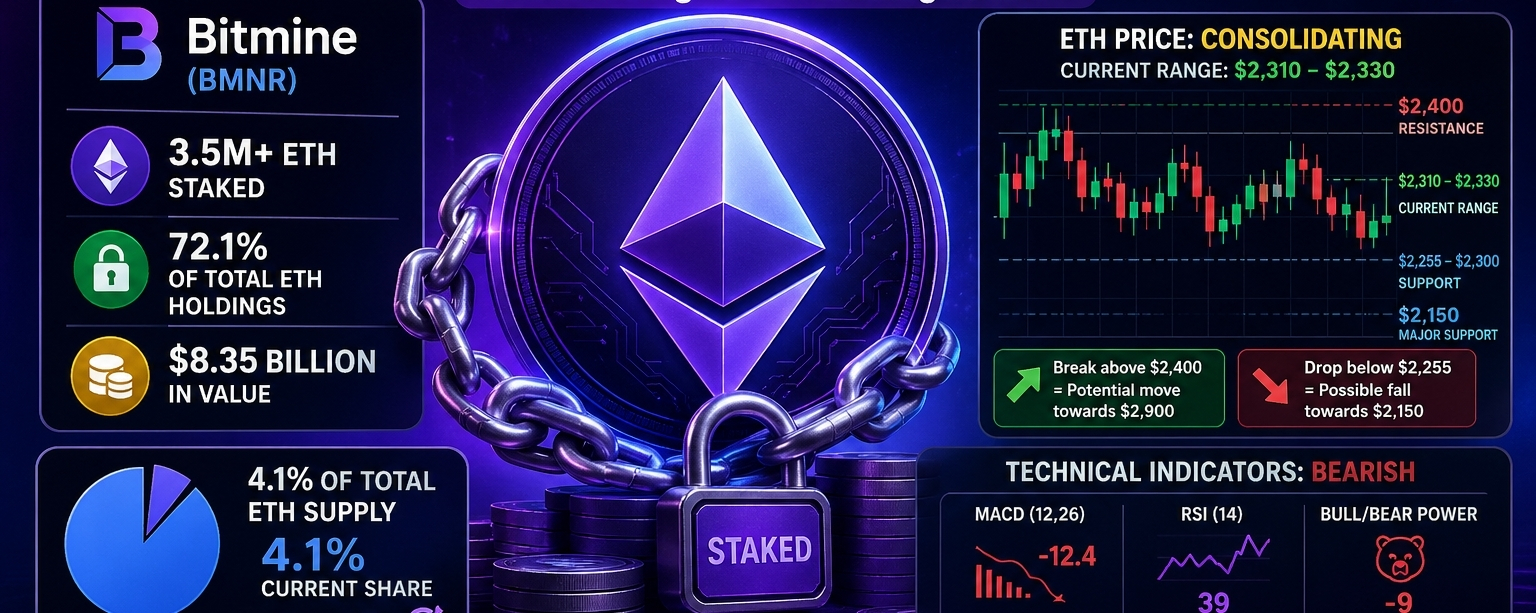
Recently, a crypto analytics platform called Lookonchain shared that Bitmine has staked more than 3.5 million Ethereum (ETH). This is about 72% of all the ETH they own.
This shows that Bitmine is not just holding ETH anymore — they are now using it to earn passive income through staking. This is interesting because the price of Ethereum is not moving much these days and is staying in a range.
Bitmine’s Big Move in Ethereum 🚀
Bitmine has staked around 3.5M ETH, which is worth about $8.35 billion. This is a huge amount and shows strong trust in Ethereum for the long term.
Right now, Bitmine controls about 4.1% of the total ETH supply. They have also said they want to reach 5% in the future.
This can be seen in two ways:
✅ Positive: Big investors believe in Ethereum’s future
⚠️ Concern: One company holding too much supply could affect the market
Ethereum Price is Moving Sideways 📉📈
At the moment, ETH price is not going up or down strongly. It is moving between:
$2,310 – $2,330 (current range)
It came up from around $2,150 recently
For ETH to go higher, it needs to break $2,400 resistance. If that happens, the price could go near $2,900.
On the downside:
Support levels are around $2,255 – $2,300
If price drops below this, it could fall back to $2,150
Market Signals Look Weak Right Now ⚠️
Some technical indicators are showing weakness:
MACD is negative → showing selling pressure
RSI is around 39 → showing weak momentum
Bears (sellers) are currently stronger than buyers
So, in short, the market is a bit bearish right now.
Long-Term Strategy by Bitmine 💡
Even though the price is not moving much, Bitmine is still staking more ETH. This shows they are thinking long-term.
Staking means:
They earn rewards
They are not planning to sell soon
They trust Ethereum’s future
This also shows that big investors now see crypto not just for trading, but also as a way to earn regular income.
Final Thoughts 🧠
Bitmine’s move is a big signal for the crypto market:
👉 Big players are still confident in Ethereum
👉 Staking is becoming more popular
👉 Price may be slow now, but long-term belief is strong
🚀Bitmine Stakes 72.1% of Holding, Stacking Over 3.5M 💰ETH as Price Consolidate 📊
#ETHETFsApproved #binanacesquare
Bitmine Stakes 3.5 Million ETH While Price Stays Stable 📊
Recently, a crypto analytics platform called Lookonchain shared that Bitmine has staked more than 3.5 million Ethereum (ETH). This is about 72% of all the ETH they own.
This shows that Bitmine is not just holding ETH anymore — they are now using it to earn passive income through staking. This is interesting because the price of Ethereum is not moving much these days and is staying in a range.
Bitmine’s Big Move in Ethereum 🚀
Bitmine has staked around 3.5M ETH, which is worth about $8.35 billion. This is a huge amount and shows strong trust in Ethereum for the long term.
Right now, Bitmine controls about 4.1% of the total ETH supply. They have also said they want to reach 5% in the future.
This can be seen in two ways:
✅ Positive: Big investors believe in Ethereum’s future
⚠️ Concern: One company holding too much supply could affect the market
Ethereum Price is Moving Sideways 📉📈
At the moment, ETH price is not going up or down strongly. It is moving between:
$2,310 – $2,330 (current range)
It came up from around $2,150 recently
For ETH to go higher, it needs to break $2,400 resistance. If that happens, the price could go near $2,900.
On the downside:
Support levels are around $2,255 – $2,300
If price drops below this, it could fall back to $2,150
Market Signals Look Weak Right Now ⚠️
Some technical indicators are showing weakness:
MACD is negative → showing selling pressure
RSI is around 39 → showing weak momentum
Bears (sellers) are currently stronger than buyers
So, in short, the market is a bit bearish right now.
Long-Term Strategy by Bitmine 💡
Even though the price is not moving much, Bitmine is still staking more ETH. This shows they are thinking long-term.
Staking means:
They earn rewards
They are not planning to sell soon
They trust Ethereum’s future
This also shows that big investors now see crypto not just for trading, but also as a way to earn regular income.
Final Thoughts 🧠
Bitmine’s move is a big signal for the crypto market:
👉 Big players are still confident in Ethereum
👉 Staking is becoming more popular
👉 Price may be slow now, but long-term belief is strong
Bitmine Stakes 3.5 Million ETH While Price Stays Stable 📊
Recently, a crypto analytics platform called Lookonchain shared that Bitmine has staked more than 3.5 million Ethereum (ETH). This is about 72% of all the ETH they own.
This shows that Bitmine is not just holding ETH anymore — they are now using it to earn passive income through staking. This is interesting because the price of Ethereum is not moving much these days and is staying in a range.
Bitmine’s Big Move in Ethereum 🚀
Bitmine has staked around 3.5M ETH, which is worth about $8.35 billion. This is a huge amount and shows strong trust in Ethereum for the long term.
Right now, Bitmine controls about 4.1% of the total ETH supply. They have also said they want to reach 5% in the future.
This can be seen in two ways:
✅ Positive: Big investors believe in Ethereum’s future
⚠️ Concern: One company holding too much supply could affect the market
Ethereum Price is Moving Sideways 📉📈
At the moment, ETH price is not going up or down strongly. It is moving between:
$2,310 – $2,330 (current range)
It came up from around $2,150 recently
For ETH to go higher, it needs to break $2,400 resistance. If that happens, the price could go near $2,900.
On the downside:
Support levels are around $2,255 – $2,300
If price drops below this, it could fall back to $2,150
Market Signals Look Weak Right Now ⚠️
Some technical indicators are showing weakness:
MACD is negative → showing selling pressure
RSI is around 39 → showing weak momentum
Bears (sellers) are currently stronger than buyers
So, in short, the market is a bit bearish right now.
Long-Term Strategy by Bitmine 💡
Even though the price is not moving much, Bitmine is still staking more ETH. This shows they are thinking long-term.
Staking means:
They earn rewards
They are not planning to sell soon
They trust Ethereum’s future
This also shows that big investors now see crypto not just for trading, but also as a way to earn regular income.
Final Thoughts 🧠
Bitmine’s move is a big signal for the crypto market:
👉 Big players are still confident in Ethereum
👉 Staking is becoming more popular
👉 Price may be slow now, but long-term belief is strong
1
93
ເຂົ້າສູ່ລະບົບເພື່ອສຳຫຼວດເນື້ອຫາເພີ່ມເຕີມ
ເຂົ້າຮ່ວມກຸ່ມຜູ້ໃຊ້ຄຣິບໂຕທົ່ວໂລກໃນ Binance Square.
⚡️ ໄດ້ຮັບຂໍ້ມູນຫຼ້າສຸດ ແລະ ທີ່ມີປະໂຫຍດກ່ຽວກັບຄຣິບໂຕ.
💬 ໄດ້ຮັບຄວາມໄວ້ວາງໃຈຈາກຕະຫຼາດແລກປ່ຽນຄຣິບໂຕທີ່ໃຫຍ່ທີ່ສຸດໃນໂລກ.
👍 ຄົ້ນຫາຂໍ້ມູນເຊີງເລິກທີ່ແທ້ຈາກນັກສ້າງທີ່ໄດ້ຮັບການຢືນຢັນ.
ອີເມວ / ເບີໂທລະສັບ
ຫົວຂໍ້ທີ່ກໍາລັງນິຍົມ
ZcashETFPostsFirstWeeklyOutflow$93.6M
20,272 views
62 ກຳລັງສົນທະນາ
#ZcashETFPostsFirstWeeklyOutflow$93.6M 📊 Grayscale’s Spot Zcash (ZEC) ETF Records $93.6M in Weekly Outflows
Institutional capital flows are showing a new dynamic. Grayscale’s spot Zcash ETF has just posted its first major weekly net outflow, marking a notable shift from its strong initial launch momentum.
🔹The Numbers Grayscale’s spot ZEC ETF (ticker: ZCSH) recorded approximately $93.6 million in net outflows over the past week, with notable withdrawals occurring at the end of September and early October.
🔹 The Context This follows a robust initial period. After converting from the Grayscale Zcash Trust and listing on NYSE Arca in late August, the fund previously saw cumulative net inflows reach $271 million by mid-September.
💡 Market Impact Analysis
•Short-Term Dynamics Large ETF outflows can introduce temporary selling pressure on the underlying asset as the fund adjusts its holdings to meet redemption requests.
• Sentiment & Rebalancing This pullback may reflect routine profit-taking or portfolio rebalancing by early institutional investors, rather than a fundamental change in Zcash’s long-term utility or privacy-focused value proposition.
• Ecosystem Watch Market participants will be monitoring whether this is an isolated event for ZCSH or indicative of a broader cooling in institutional appetite for privacy-centric digital assets.
💬 What’s your take? Do you view this weekly outflow as a healthy market correction after a strong launch, or a signal of changing institutional sentiment toward privacy coins? Share your thoughts in the comments below!
#Zcash #ZEC #CryptoETF #InstitutionalCrypto #MarketUpdate
This is for educational purposes only. Not Financial Advice (NFA). Always Do Your Own Research (DYOR).
$GLMR $QI $ONE
piknkkk
·0 ຖືກໃຈ
·37 views
GreekPoliceBustCryptoScamRingArrest17
28,198 views
333 ກຳລັງສົນທະນາ
BitcoinRejectedAt$87K
96,782 views
123 ກຳລັງສົນທະນາ