

RISKK TAKER
750 ໂພສ

RISKK TAKER
ລາຍງານ
ບລັອກຜູ້ໃຊ້
RISK TAKER, Technical Analyst, Trader, My post NFA
ເປີດການຊື້ຂາຍ
ຜູ້ຊື້ຂາຍຊົ່ວຄາວ
9.1 ເດືອນ
8 ກໍາລັງຕິດຕາມ
38 ຜູ້ຕິດຕາມ
1.0K+ Liked
ໂພສ
Portfolio
ທັງໝົດ
ວົງຢືມ
ວີດີໂອ
·
--
Circle recorded $11.7 billion in USDC redemptions against $10.9 billion in new issuance during the seven days ending October 29.
That leaves a net reduction of approximately $800 million, bringing USDC's circulating supply down to $70 billion, according to Circle's official transparency data. 
This is worth watching because stablecoin supply often reflects the amount of dollar liquidity available across crypto markets.
When redemptions consistently exceed new issuance, it can point to reduced demand for holding or deploying that stablecoin. That could mean less available liquidity for trading and DeFi activity.
However, it doesn't automatically mean investors are leaving crypto. Capital could simply be moving into other stablecoins or back into traditional financial markets. $USDC
{spot}(USDCUSDT)
$SOL
{future}(SOLUSDT)
Circle recorded $11.7 billion in USDC redemptions against $10.9 billion in new issuance during the seven days ending October 29.
That leaves a net reduction of approximately $800 million, bringing USDC's circulating supply down to $70 billion, according to Circle's official transparency data. 
This is worth watching because stablecoin supply often reflects the amount of dollar liquidity available across crypto markets.
When redemptions consistently exceed new issuance, it can point to reduced demand for holding or deploying that stablecoin. That could mean less available liquidity for trading and DeFi activity.
However, it doesn't automatically mean investors are leaving crypto. Capital could simply be moving into other stablecoins or back into traditional financial markets. $USDC
$SOL

1
63
·
--
Russia is taking another major step toward bringing cryptocurrency into its traditional financial system.
The Moscow Exchange plans to introduce crypto trading across its regular morning and evening sessions starting December 1, under the country’s new regulatory framework.
The initial offering will focus on Bitcoin, Ethereum and USDT, with trading expected to run from 6:50 AM to 11:50 PM Moscow time.
This is significant because it gives crypto exposure a place within one of Russia’s major regulated financial markets, potentially making access easier for traditional investors.
There are still restrictions, though. Non qualified investors face an annual purchase limit of 300,000 rubles through each intermediary.
Traditional finance and crypto are getting closer, and Russia is now making its move. $BTC
{future}(BTCUSDT)
$ETH
{future}(ETHUSDT)
Russia is taking another major step toward bringing cryptocurrency into its traditional financial system.
The Moscow Exchange plans to introduce crypto trading across its regular morning and evening sessions starting December 1, under the country’s new regulatory framework.
The initial offering will focus on Bitcoin, Ethereum and USDT, with trading expected to run from 6:50 AM to 11:50 PM Moscow time.
This is significant because it gives crypto exposure a place within one of Russia’s major regulated financial markets, potentially making access easier for traditional investors.
There are still restrictions, though. Non qualified investors face an annual purchase limit of 300,000 rubles through each intermediary.
Traditional finance and crypto are getting closer, and Russia is now making its move. $BTC
$ETH


1
9
·
--
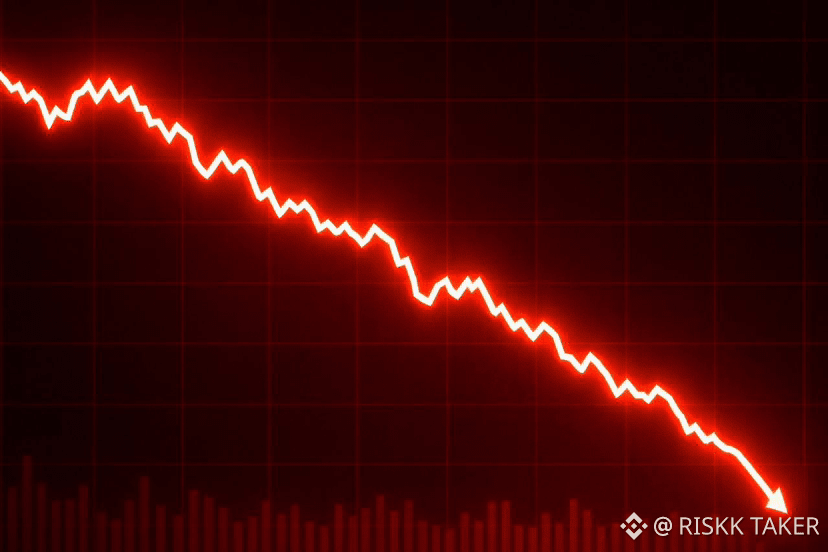
October ended very differently from what investors expected. Instead of the usual seasonal rally, several major crypto assets and technology stocks suffered heavy losses.
Here’s how some of the biggest names performed:
> $BTC: -7.3%
> $ETH: -16.3%
> $SOL: -18.8%
> $BNB: -8.4%
> $XRP: -16.2%
> $AMD: -17.5%
> $Intel: -45.3%
> Micron: -16.9%
> Meta: -15.2%
> $Nvidia: -10.4%
> Reddit: -35.6%
> $SpaceX: -10.7%
> Google: -18.7%
> Coinbase: -23.0%
> Robinhood: -24.5%
The pressure wasn't limited to crypto. Tech stocks also faced a major sell-off as concerns around AI spending, valuations and broader risk appetite weighed on markets.
October was a reminder that even historically bullish months offer no guarantees. Now all eyes are on November to see whether buyers return or the correction continues.
1
55
·
--
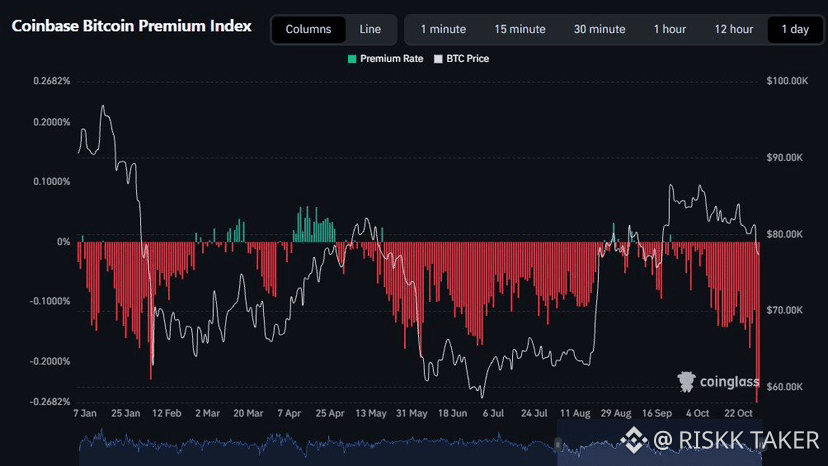
🇺🇸 US BITCOIN BUYERS ARE STILL STAYING ON THE SIDELINES
The Coinbase Bitcoin Premium Index has remained negative for 38 consecutive days, reaching -0.2434% on October 31.
This means BTC is trading at a discount on Coinbase compared with Binance, pointing to weaker relative buying demand on one of the major US trading platforms.
The timing is worth watching. Bitcoin has already faced weak spot demand throughout October, and this prolonged discount suggests US buying pressure has yet to make a meaningful comeback.
If the trend continues, it could make it harder for BTC to build a strong recovery, especially if global demand also starts fading.
However, a negative premium doesn’t mean every US investor is selling. It measures the price difference between exchanges, not total investor activity.
The signal traders want to see is a sustained return to positive territory. That could indicate US spot demand is finally picking up again.
$LSK
{future}(LSKUSDT)
$BTC
{future}(BTCUSDT)
🇺🇸 US BITCOIN BUYERS ARE STILL STAYING ON THE SIDELINES
The Coinbase Bitcoin Premium Index has remained negative for 38 consecutive days, reaching -0.2434% on October 31.
This means BTC is trading at a discount on Coinbase compared with Binance, pointing to weaker relative buying demand on one of the major US trading platforms.
The timing is worth watching. Bitcoin has already faced weak spot demand throughout October, and this prolonged discount suggests US buying pressure has yet to make a meaningful comeback.
If the trend continues, it could make it harder for BTC to build a strong recovery, especially if global demand also starts fading.
However, a negative premium doesn’t mean every US investor is selling. It measures the price difference between exchanges, not total investor activity.
The signal traders want to see is a sustained return to positive territory. That could indicate US spot demand is finally picking up again.
$LSK
$BTC
1
187
·
--
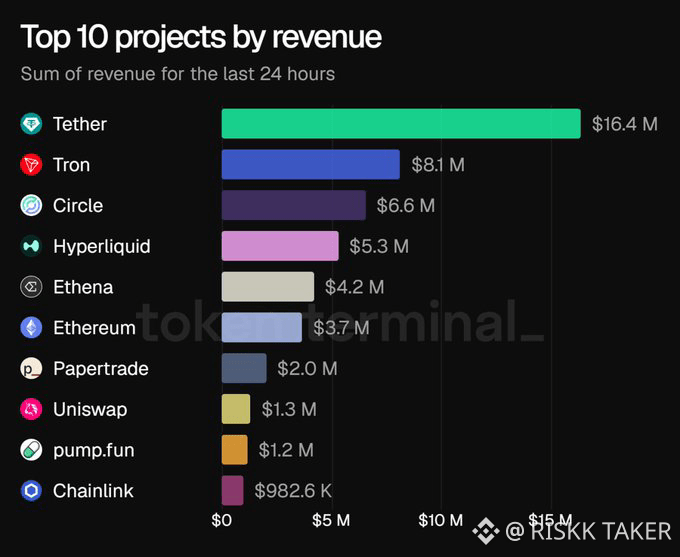
Tether reportedly generated $16.4 million in 24 hour revenue, putting it ahead of Tron at $8.1 million and Circle at $6.6 million, according to Token Terminal.
That’s a significant gap, especially considering how much of Tether’s income comes from the reserves backing USDT rather than transaction fees. Its holdings in assets like US Treasury bills generate interest, creating a major revenue stream as USDT supply grows.
This highlights an important part of the stablecoin business: issuing a dollar pegged token can become an extremely profitable operation at scale.
For the wider market, stablecoin adoption isn’t just about transaction volume anymore. It’s also creating a powerful financial business around reserve management.
Tether is showing just how much money can be made behind the scenes of crypto. $BNB
{future}(BNBUSDT)
$HYPE
{future}(HYPEUSDT)
Tether reportedly generated $16.4 million in 24 hour revenue, putting it ahead of Tron at $8.1 million and Circle at $6.6 million, according to Token Terminal.
That’s a significant gap, especially considering how much of Tether’s income comes from the reserves backing USDT rather than transaction fees. Its holdings in assets like US Treasury bills generate interest, creating a major revenue stream as USDT supply grows.
This highlights an important part of the stablecoin business: issuing a dollar pegged token can become an extremely profitable operation at scale.
For the wider market, stablecoin adoption isn’t just about transaction volume anymore. It’s also creating a powerful financial business around reserve management.
Tether is showing just how much money can be made behind the scenes of crypto. $BNB
$HYPE
1
454
·
--
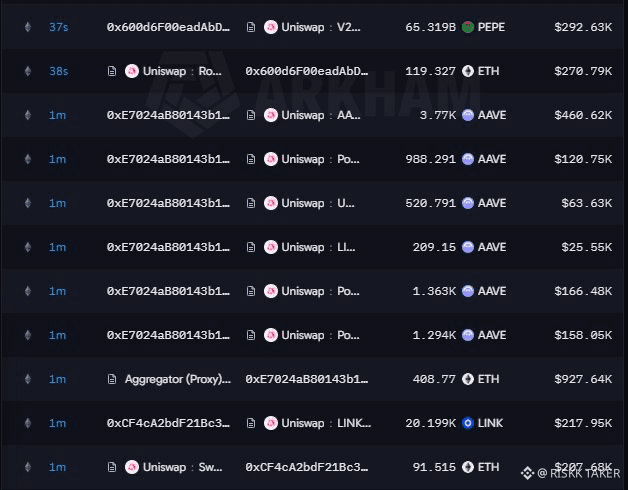
JUST IN: The Binance hacker is dumping $PEPE, $UNI, $LINK, $ONDO and other cryptocurrencies for $ETH.
The hacker is still holding hundreds of millions in altcoins, potentially increasing selling pressure.
Binance user funds remain safe, and losses will be covered.
JUST IN: The Binance hacker is dumping $PEPE, $UNI, $LINK, $ONDO and other cryptocurrencies for $ETH.
The hacker is still holding hundreds of millions in altcoins, potentially increasing selling pressure.
Binance user funds remain safe, and losses will be covered.
The hacker is still holding hundreds of millions in altcoins, potentially increasing selling pressure.
Binance user funds remain safe, and losses will be covered.
1
184
·
--
If the reported losses are confirmed, this incident would surpass Bybit’s $1.5 billion hack in 2025 and the Ronin Network’s $625 million exploit in 2022
The scale of the alleged breach is staggering, with billions in crypto reportedly involved and Tether and Circle freezing substantial amounts of USDT and USDC linked to the incident.
Binance says it is investigating and has stated that no impact on user funds has been confirmed so far.
The next update from Binance could be critical for market confidence.
$HYPE
{future}(HYPEUSDT)
$BNB
{future}(BNBUSDT)
$USDC
{future}(USDCUSDT)
If the reported losses are confirmed, this incident would surpass Bybit’s $1.5 billion hack in 2025 and the Ronin Network’s $625 million exploit in 2022
The scale of the alleged breach is staggering, with billions in crypto reportedly involved and Tether and Circle freezing substantial amounts of USDT and USDC linked to the incident.
Binance says it is investigating and has stated that no impact on user funds has been confirmed so far.
The next update from Binance could be critical for market confidence.
$HYPE
$BNB
$USDC
1
379
·
--
🚨 BREAKING: BINANCE REPORTEDLY HIT BY A $5.6 BILLION HACK
Reports of a massive security breach involving the world’s largest crypto exchange are spreading.
The alleged stolen assets include:
* $1.45B in $BTC
* $875M in $ETH
* $234M in $TRX
* $50M in $XAUT
* $1.57B in $USDT
* $823M in $USDC
* $75M in $WBETH
* $88.5M in $RLUSD
* $447.5M in other cryptocurrencies
If confirmed, this would rank among the largest exchange security breaches in crypto history.
The reported scale of the incident could shake market confidence, trigger panic withdrawals and put fresh pressure on crypto prices.

2
748
·
--
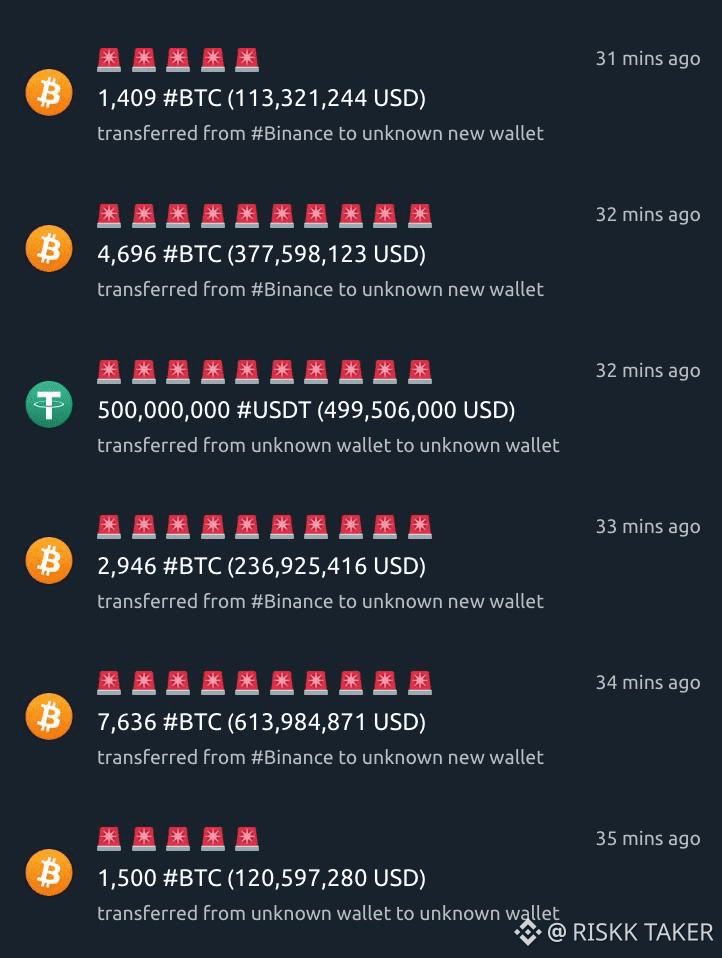
🚨 BREAKING 🚨
POSSIBLE BINANCE HACK HAPPENING RIGHT NOW.
$3,500,000,000 has reportedly flowed out of Binance wallets.
Tether has already frozen $971,000,000 USDT linked to it.
Still no statement from Binance.
🚨 BREAKING 🚨
POSSIBLE BINANCE HACK HAPPENING RIGHT NOW.
$3,500,000,000 has reportedly flowed out of Binance wallets.
Tether has already frozen $971,000,000 USDT linked to it.
Still no statement from Binance.
POSSIBLE BINANCE HACK HAPPENING RIGHT NOW.
$3,500,000,000 has reportedly flowed out of Binance wallets.
Tether has already frozen $971,000,000 USDT linked to it.
Still no statement from Binance.
1
46
·
--
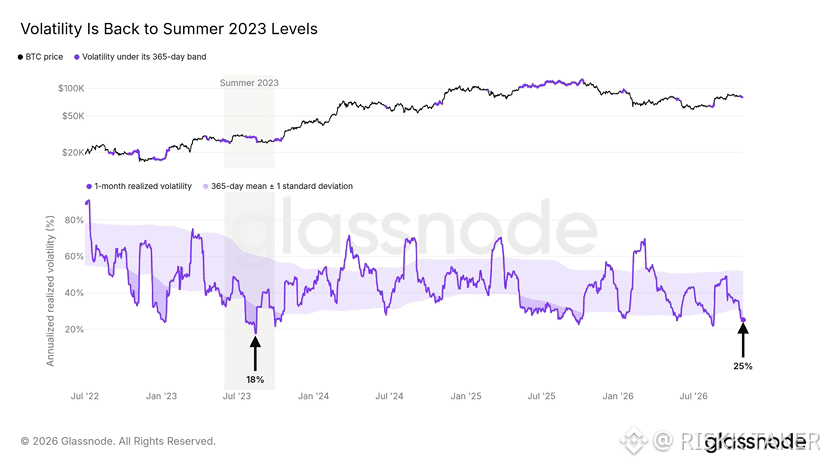
There’s an interesting parallel developing between Bitcoin’s current market and the summer of 2023.
Back then, BTC made an initial recovery, meme coins and altcoins caught fire, and volatility eventually dropped to unusually low levels. A similar sequence has played out this year, with Bitcoin’s volatility now back around summer 2023 levels.
The important part is what happened next. In 2023, Bitcoin eventually broke out and gained roughly 50% from the start of October through year end.
Could history repeat itself? Possibly, but low volatility doesn’t tell us which direction the next major move will take. In fact, Glassnode notes that the previous volatility low came just before a sharp move downward in August 2023.
For traders, the key is to watch for a breakout backed by stronger spot demand and trading volume. The setup is familiar, but confirmation matters more than the resemblance.$BNB
{future}(BNBUSDT)
There’s an interesting parallel developing between Bitcoin’s current market and the summer of 2023.
Back then, BTC made an initial recovery, meme coins and altcoins caught fire, and volatility eventually dropped to unusually low levels. A similar sequence has played out this year, with Bitcoin’s volatility now back around summer 2023 levels.
The important part is what happened next. In 2023, Bitcoin eventually broke out and gained roughly 50% from the start of October through year end.
Could history repeat itself? Possibly, but low volatility doesn’t tell us which direction the next major move will take. In fact, Glassnode notes that the previous volatility low came just before a sharp move downward in August 2023.
For traders, the key is to watch for a breakout backed by stronger spot demand and trading volume. The setup is familiar, but confirmation matters more than the resemblance.$BNB
1
86
·
--
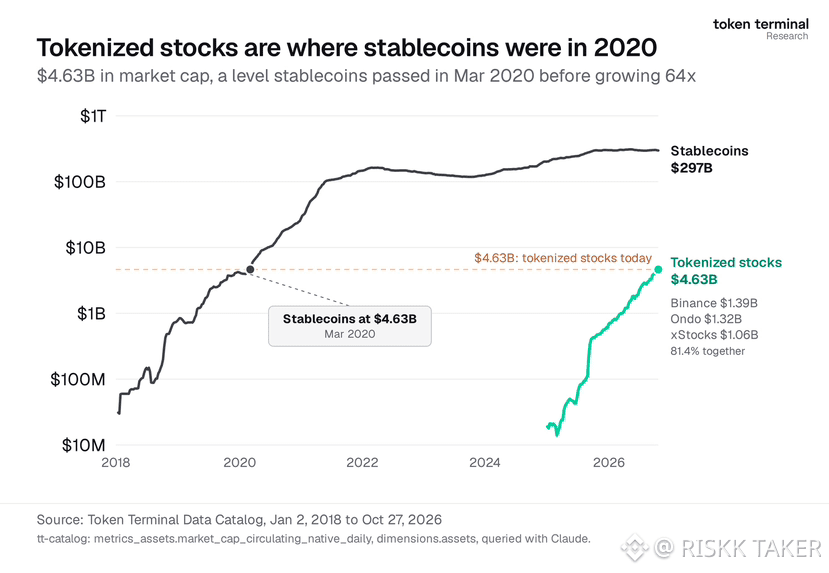
Tokenized stocks have reached a $4.63 billion market cap, bringing back comparisons with stablecoins, which were around the same size in March 2020 before eventually growing to nearly $300 billion.
The comparison is interesting because tokenization could make traditional equities easier to access through blockchain infrastructure, with potential benefits such as fractional ownership and trading beyond conventional market hours, depending on the product.
But there’s an important distinction: matching stablecoins’ early market cap doesn’t mean tokenized stocks will repeat their 64x growth. Stablecoins solve a different problem, and tokenized equities face their own regulatory, liquidity and adoption challenges.
For the sector, the next milestone isn’t just a bigger market cap. It’s whether trading volume, user demand and access across platforms continue to grow.
Tokenized stocks are gaining traction, but sustained adoption will determine whether this becomes a much larger market.
$BNB
{future}(BNBUSDT)
$PEPE
{spot}(PEPEUSDT)
Tokenized stocks have reached a $4.63 billion market cap, bringing back comparisons with stablecoins, which were around the same size in March 2020 before eventually growing to nearly $300 billion.
The comparison is interesting because tokenization could make traditional equities easier to access through blockchain infrastructure, with potential benefits such as fractional ownership and trading beyond conventional market hours, depending on the product.
But there’s an important distinction: matching stablecoins’ early market cap doesn’t mean tokenized stocks will repeat their 64x growth. Stablecoins solve a different problem, and tokenized equities face their own regulatory, liquidity and adoption challenges.
For the sector, the next milestone isn’t just a bigger market cap. It’s whether trading volume, user demand and access across platforms continue to grow.
Tokenized stocks are gaining traction, but sustained adoption will determine whether this becomes a much larger market.
$BNB
$PEPE
1
68
·
--
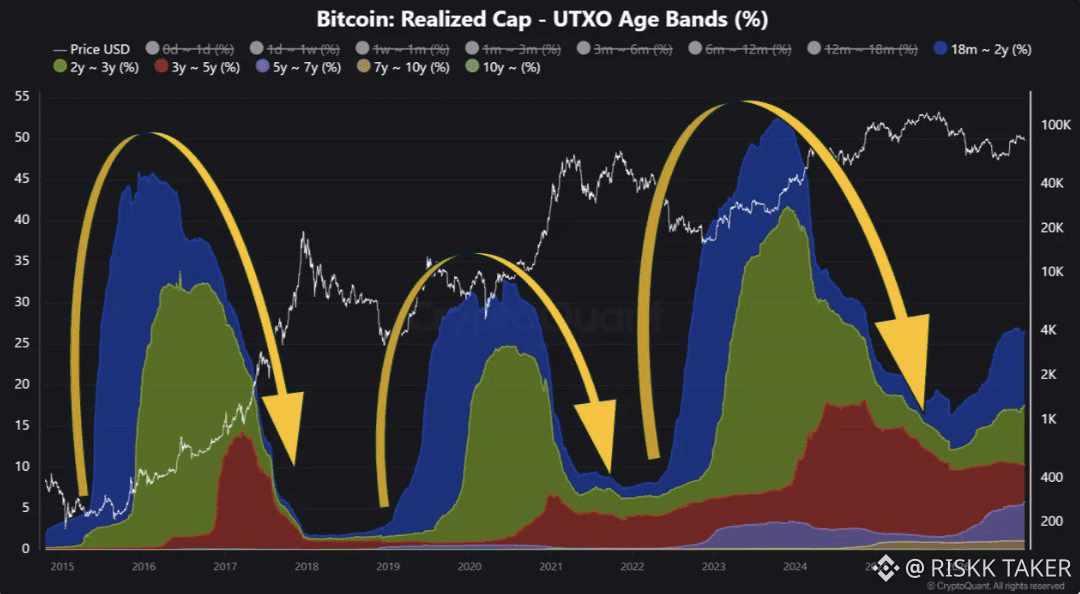
BITCOIN NEXT RALLY MAY BE TAKING SHAPE
Bitcoin’s long term holder behavior is showing a pattern that has historically appeared before strong rallies.
According to CryptoQuant, the share of Bitcoin’s realized cap held in coins untouched for 18 months or longer peaked at 26.98% on September 16, before easing to 26.59%. Similar declines have preceded major rallies in previous cycles.
The idea is that as older coins begin moving again, the market may be entering a new phase where long held supply changes hands and fresh demand absorbs it.
But this signal alone doesn’t confirm a rally. Long-term holders moving coins can also mean profit-taking, and without stronger spot demand, the bullish setup could fail.
The key now is confirmation, whether BTC demand improves while this metric continues to decline.
The pattern is worth watching, but price action still has to prove the thesis.
$BTC
{future}(BTCUSDT)
BITCOIN NEXT RALLY MAY BE TAKING SHAPE
Bitcoin’s long term holder behavior is showing a pattern that has historically appeared before strong rallies.
According to CryptoQuant, the share of Bitcoin’s realized cap held in coins untouched for 18 months or longer peaked at 26.98% on September 16, before easing to 26.59%. Similar declines have preceded major rallies in previous cycles.
The idea is that as older coins begin moving again, the market may be entering a new phase where long held supply changes hands and fresh demand absorbs it.
But this signal alone doesn’t confirm a rally. Long-term holders moving coins can also mean profit-taking, and without stronger spot demand, the bullish setup could fail.
The key now is confirmation, whether BTC demand improves while this metric continues to decline.
The pattern is worth watching, but price action still has to prove the thesis.
$BTC
2
244
·
--
Ripple and Robinhood have announced a strategic partnership covering stablecoins, institutional trading and treasury management.
The deal puts Ripple’s RLUSD stablecoin on Robinhood Chain and Bitstamp by Robinhood, with availability in the Robinhood app expected later this year. Robinhood will also use RLUSD on the XRP Ledger for institutional settlement.
The potential upside is broader distribution for RLUSD and more real-world use of stablecoins beyond crypto trading. If adoption grows, it could strengthen activity across Ripple’s payments infrastructure and the XRP Ledger ecosystem.
But RLUSD adoption doesn’t automatically mean increased demand for XRP. The stablecoin and XRP are different assets, and the market impact will depend on actual usage and transaction activity.
The real metric to watch is whether this partnership translates into meaningful stablecoin circulation and settlement volume, not just another headline.
$XRP
{future}(XRPUSDT)
$HOOD
{future}(HOODUSDT)
Ripple and Robinhood have announced a strategic partnership covering stablecoins, institutional trading and treasury management.
The deal puts Ripple’s RLUSD stablecoin on Robinhood Chain and Bitstamp by Robinhood, with availability in the Robinhood app expected later this year. Robinhood will also use RLUSD on the XRP Ledger for institutional settlement.
The potential upside is broader distribution for RLUSD and more real-world use of stablecoins beyond crypto trading. If adoption grows, it could strengthen activity across Ripple’s payments infrastructure and the XRP Ledger ecosystem.
But RLUSD adoption doesn’t automatically mean increased demand for XRP. The stablecoin and XRP are different assets, and the market impact will depend on actual usage and transaction activity.
The real metric to watch is whether this partnership translates into meaningful stablecoin circulation and settlement volume, not just another headline.
$XRP
$HOOD

1
184
·
--
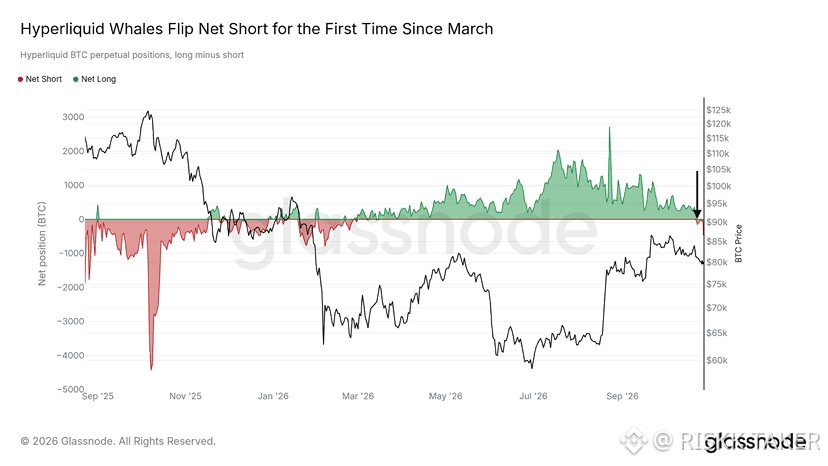
Large Hyperliquid traders are now net short BTC for the first time since March, after successfully riding the previous bottom with long positions. Their positioning reportedly flipped last week.
This puts Bitcoin at an interesting point. If selling pressure builds and BTC loses key support, these traders could be positioned to profit from a deeper correction.
But there’s a risk to that trade.
If BTC starts recovering instead, crowded short positions could be forced to close, adding buying pressure and potentially triggering a short squeeze.
Current whale data also shows significant short exposure, although the exact picture depends on which wallets and trader groups are tracked.
whale positioning is worth watching, but it isn’t a reliable prediction on its own. BTC’s price reaction, open interest and liquidation data will help show whether this bearish shift is well-timed or becoming a crowded trade. $HYPE
{future}(HYPEUSDT)
$BTC
{future}(BTCUSDT)
Large Hyperliquid traders are now net short BTC for the first time since March, after successfully riding the previous bottom with long positions. Their positioning reportedly flipped last week.
This puts Bitcoin at an interesting point. If selling pressure builds and BTC loses key support, these traders could be positioned to profit from a deeper correction.
But there’s a risk to that trade.
If BTC starts recovering instead, crowded short positions could be forced to close, adding buying pressure and potentially triggering a short squeeze.
Current whale data also shows significant short exposure, although the exact picture depends on which wallets and trader groups are tracked.
whale positioning is worth watching, but it isn’t a reliable prediction on its own. BTC’s price reaction, open interest and liquidation data will help show whether this bearish shift is well-timed or becoming a crowded trade. $HYPE
$BTC
1
189
·
--
🐋 XRP WHALES NOW CONTROL 68.5% OF SUPPLY
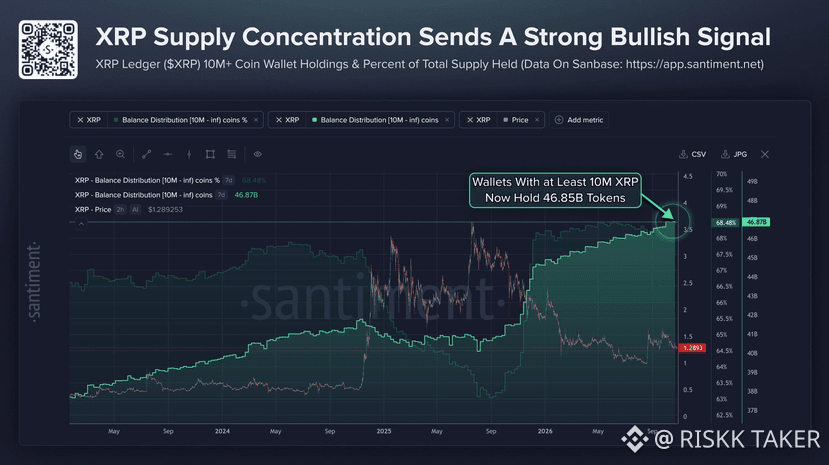
Wallets holding at least 10 million XRP now control 46.87 billion tokens, representing 68.5% of the total supply. Santiment says this is the highest share since November 2022, while XRP trades around $1.29.
This concentration could support XRP if large holders continue accumulating and absorb tokens being sold by smaller investors. With fewer tokens circulating among smaller holders, renewed demand could also amplify a price recovery.
But there’s another side: whale accumulation doesn’t guarantee a rally. Large holders can influence liquidity, and recent reports also point to rising XRP balances on exchanges, which could increase selling pressure.
For traders, $1.30 is a key level to watch, while holding $1.20 could help preserve the recovery setup. A breakdown would weaken the bullish case.
The whale data is encouraging, but price action and exchange flows will show whether accumulation is translating into real market strength.
$XRP
{future}(XRPUSDT)
🐋 XRP WHALES NOW CONTROL 68.5% OF SUPPLY
Wallets holding at least 10 million XRP now control 46.87 billion tokens, representing 68.5% of the total supply. Santiment says this is the highest share since November 2022, while XRP trades around $1.29.
This concentration could support XRP if large holders continue accumulating and absorb tokens being sold by smaller investors. With fewer tokens circulating among smaller holders, renewed demand could also amplify a price recovery.
But there’s another side: whale accumulation doesn’t guarantee a rally. Large holders can influence liquidity, and recent reports also point to rising XRP balances on exchanges, which could increase selling pressure.
For traders, $1.30 is a key level to watch, while holding $1.20 could help preserve the recovery setup. A breakdown would weaken the bullish case.
The whale data is encouraging, but price action and exchange flows will show whether accumulation is translating into real market strength.
$XRP
1
591
·
--
📊 RWA PERPETUALS APPROACH $20B IN OPEN INTEREST
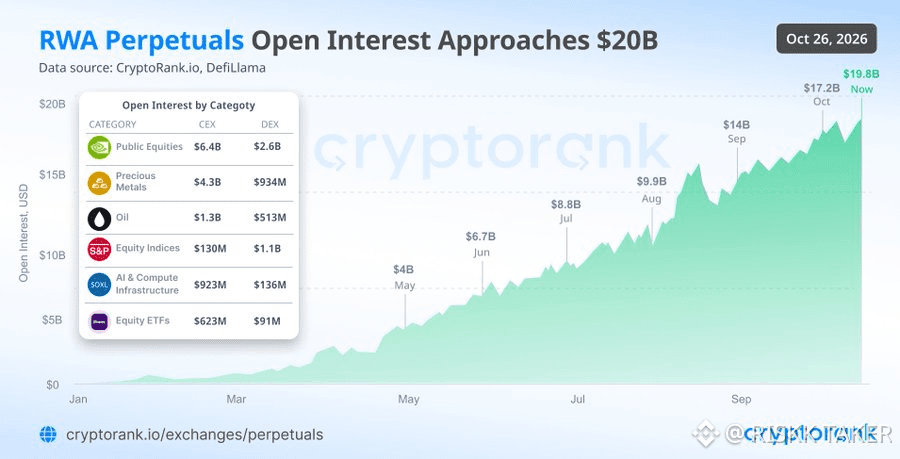
CryptoRank data shows open interest in real world asset (RWA) perpetual futures has climbed close to $20 billion, up roughly 192% since June.
These contracts give traders leveraged exposure to traditional assets such as stocks, gold, oil and equity indices through crypto trading platforms.
The growth signals that traders are increasingly using crypto infrastructure to trade beyond Bitcoin and altcoins.
For the market, this could be a positive sign for the expansion of tokenized finance, attracting more activity and competition between centralized and decentralized exchanges.
But there’s a risk behind the headline, open interest measures outstanding positions, not actual buying or guaranteed demand. More leverage can also mean larger liquidations when prices move sharply.
The real story isn’t just the $20B figure. It’s how quickly RWA derivatives are becoming a bigger part of crypto trading.
$DOOD
{future}(DOODUSDT)
📊 RWA PERPETUALS APPROACH $20B IN OPEN INTEREST
CryptoRank data shows open interest in real world asset (RWA) perpetual futures has climbed close to $20 billion, up roughly 192% since June.
These contracts give traders leveraged exposure to traditional assets such as stocks, gold, oil and equity indices through crypto trading platforms.
The growth signals that traders are increasingly using crypto infrastructure to trade beyond Bitcoin and altcoins.
For the market, this could be a positive sign for the expansion of tokenized finance, attracting more activity and competition between centralized and decentralized exchanges.
But there’s a risk behind the headline, open interest measures outstanding positions, not actual buying or guaranteed demand. More leverage can also mean larger liquidations when prices move sharply.
The real story isn’t just the $20B figure. It’s how quickly RWA derivatives are becoming a bigger part of crypto trading.
$DOOD
78
·
--
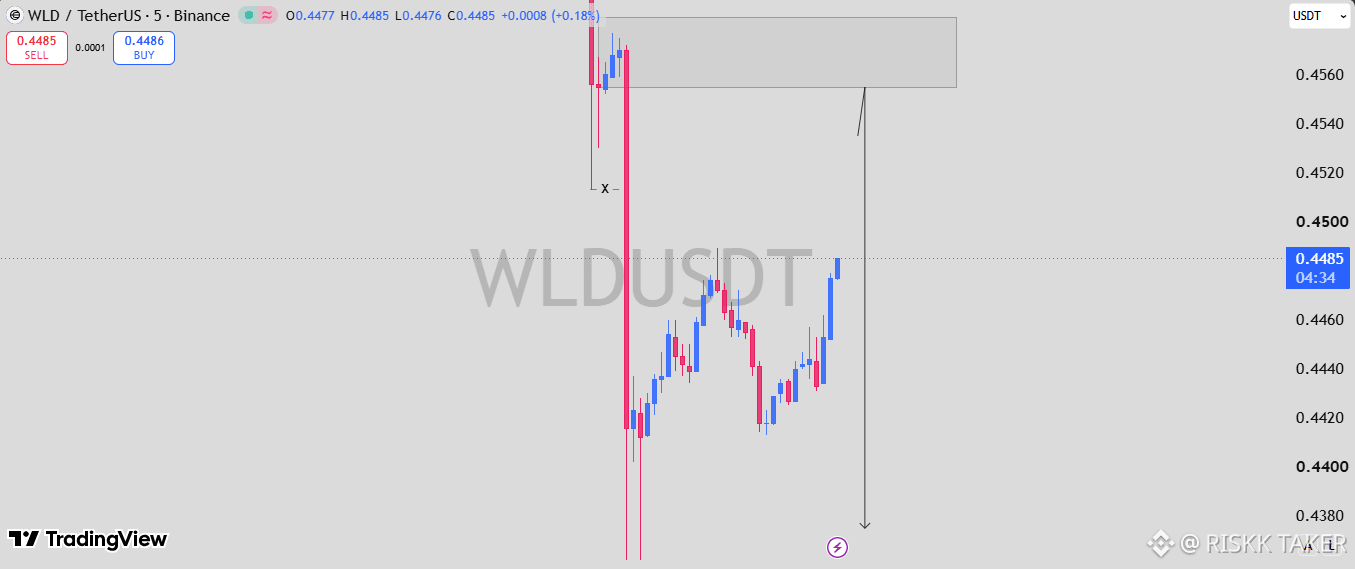
WLD is currently trading around $0.4485 following a strong downward move and a subsequent recovery from the $0.441 region.
On the 5 minute chart, this rebound suggests that buyers are attempting to recover some of the lost ground, but price is approaching a clearly marked supply zone that could become decisive for the next move.
The resistance area between $0.455 and $0.458 is the primary zone of interest. If WLD pushes into this region and encounters strong selling pressure, the recovery could lose momentum and develop into another bearish continuation.
The chart projection points toward approximately $0.438 as a potential downside target, representing a return toward the lower end of the recent price range.
For this scenario to develop, I would want to see clear rejection or a bearish shift in short-term market structure around the supply zone. A direct breakout above resistance followed by sustained price acceptance would weaken the setup and require a reassessment.
The current rebound is worth monitoring, but it is not sufficient evidence of a confirmed trend reversal. The next reaction at resistance should provide a clearer indication of whether sellers can regain control.
$WLD
{future}(WLDUSDT)
WLD is currently trading around $0.4485 following a strong downward move and a subsequent recovery from the $0.441 region.
On the 5 minute chart, this rebound suggests that buyers are attempting to recover some of the lost ground, but price is approaching a clearly marked supply zone that could become decisive for the next move.
The resistance area between $0.455 and $0.458 is the primary zone of interest. If WLD pushes into this region and encounters strong selling pressure, the recovery could lose momentum and develop into another bearish continuation.
The chart projection points toward approximately $0.438 as a potential downside target, representing a return toward the lower end of the recent price range.
For this scenario to develop, I would want to see clear rejection or a bearish shift in short-term market structure around the supply zone. A direct breakout above resistance followed by sustained price acceptance would weaken the setup and require a reassessment.
The current rebound is worth monitoring, but it is not sufficient evidence of a confirmed trend reversal. The next reaction at resistance should provide a clearer indication of whether sellers can regain control.
$WLD
2
261
·
--
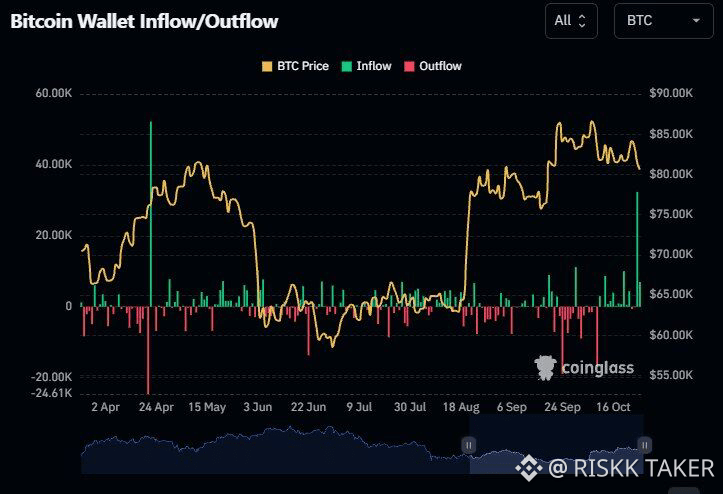
Around 32,380 BTC worth $2.6 billion flowed into exchanges in a single day, marking the largest daily inflow since April 2026.
This matters because Bitcoin holders often move coins to exchanges when preparing to sell, potentially increasing available supply.
There’s also a historical pattern worth watching: the last comparable spike was followed by a BTC price peak a few weeks later. That doesn’t guarantee another top, but it raises a question about whether holders are preparing to take profits.
The key now is whether these deposits translate into actual selling and whether buyers can absorb the supply.
Big exchange inflows aren’t a sell signal on their own, but they’re worth watching closely.
$BTC
{future}(BTCUSDT)
Around 32,380 BTC worth $2.6 billion flowed into exchanges in a single day, marking the largest daily inflow since April 2026.
This matters because Bitcoin holders often move coins to exchanges when preparing to sell, potentially increasing available supply.
There’s also a historical pattern worth watching: the last comparable spike was followed by a BTC price peak a few weeks later. That doesn’t guarantee another top, but it raises a question about whether holders are preparing to take profits.
The key now is whether these deposits translate into actual selling and whether buyers can absorb the supply.
Big exchange inflows aren’t a sell signal on their own, but they’re worth watching closely.
$BTC
1
72
·
--
$PEPE $IRYS $BONK to the moon!
{spot}(BONKUSDT)
{future}(IRYSUSDT)
{spot}(PEPEUSDT)
$PEPE $IRYS $BONK to the moon!

RISKK TAKER
·
--
The Ultimate Pump is Coming
1
179
·
--
PEPE is pushing higher despite cautious market sentiment, climbing 10.2% in 24 hours and 20.6% over the past week to reclaim a $2.08 billion market cap.
Spot trading volume reached roughly $483 million, showing that traders are actively chasing the move.
What makes this rally interesting is that it’s happening without strong bullish sentiment across the wider market. With the Fear & Greed Index at 47, PEPE appears to be attracting speculative interest even while broader confidence remains mixed.
The next test is whether buying volume can sustain the move or early buyers start taking profits. Meme coins can run hard, but those gains can reverse just as quickly.
Watch volume alongside price, a rally needs continued demand to stay alive.
$PEPE
{spot}(PEPEUSDT)
PEPE is pushing higher despite cautious market sentiment, climbing 10.2% in 24 hours and 20.6% over the past week to reclaim a $2.08 billion market cap.
Spot trading volume reached roughly $483 million, showing that traders are actively chasing the move.
What makes this rally interesting is that it’s happening without strong bullish sentiment across the wider market. With the Fear & Greed Index at 47, PEPE appears to be attracting speculative interest even while broader confidence remains mixed.
The next test is whether buying volume can sustain the move or early buyers start taking profits. Meme coins can run hard, but those gains can reverse just as quickly.
Watch volume alongside price, a rally needs continued demand to stay alive.
$PEPE


3
90
ເຂົ້າສູ່ລະບົບເພື່ອສຳຫຼວດເນື້ອຫາເພີ່ມເຕີມ
ເຂົ້າຮ່ວມກຸ່ມຜູ້ໃຊ້ຄຣິບໂຕທົ່ວໂລກໃນ Binance Square.
⚡️ ໄດ້ຮັບຂໍ້ມູນຫຼ້າສຸດ ແລະ ທີ່ມີປະໂຫຍດກ່ຽວກັບຄຣິບໂຕ.
💬 ໄດ້ຮັບຄວາມໄວ້ວາງໃຈຈາກຕະຫຼາດແລກປ່ຽນຄຣິບໂຕທີ່ໃຫຍ່ທີ່ສຸດໃນໂລກ.
👍 ຄົ້ນຫາຂໍ້ມູນເຊີງເລິກທີ່ແທ້ຈາກນັກສ້າງທີ່ໄດ້ຮັບການຢືນຢັນ.
ອີເມວ / ເບີໂທລະສັບ
ຫົວຂໍ້ທີ່ກໍາລັງນິຍົມ
BinanceSAFUFundTransferCompleted7499BTC
33,741 ຄັ້ງທີ່ເບິ່ງ
739 ກຳລັງສົນທະນາ
Binance Says SAFU Fund Transfer Completed, Covering 7,499 BTC
Binance News
·44 ຖືກໃຈ
·23.7k ຄັ້ງທີ່ເບິ່ງ
BinanceRecovery90% of stolen assets
128,953 ຄັ້ງທີ່ເບິ່ງ
165 ກຳລັງສົນທະນາ
YiHe:ProofOfReserves:10TokensAt100%Backing
131,036 ຄັ້ງທີ່ເບິ່ງ
723 ກຳລັງສົນທະນາ