
CryptoDeon
15.3k ໂພສ

CryptoDeon
ລາຍງານ
ບລັອກຜູ້ໃຊ້
Exploring and sharing new insights Daily | Investor and Trader | X (Twitter): @CryptoDeonX
ເປີດການຊື້ຂາຍ

ຜູ້ຖື DUSK
ຜູ້ຊື້ຂາຍປະຈໍາ
2.1 ປີ
334 ກໍາລັງຕິດຕາມ
3.8K+ ຜູ້ຕິດຕາມ
18.2K+ Liked
ໂພສ
Portfolio
ທັງໝົດ
ວົງຢືມ
ຖ່າຍທອດສົດ
·
--
អ្វីដែលខ្ញុំបានមើលទៅលើរបៀបដែល Dusk គ្រប់គ្រងការស្តាកាន់តែយូរ ខ្ញុំកាន់តែឃើញភាពមិនស្មើគ្នាមួយលេចចេញ — ចូលទៅគឺយឺតដោយរចនា ចេញវិញមិនយឺតទេ។
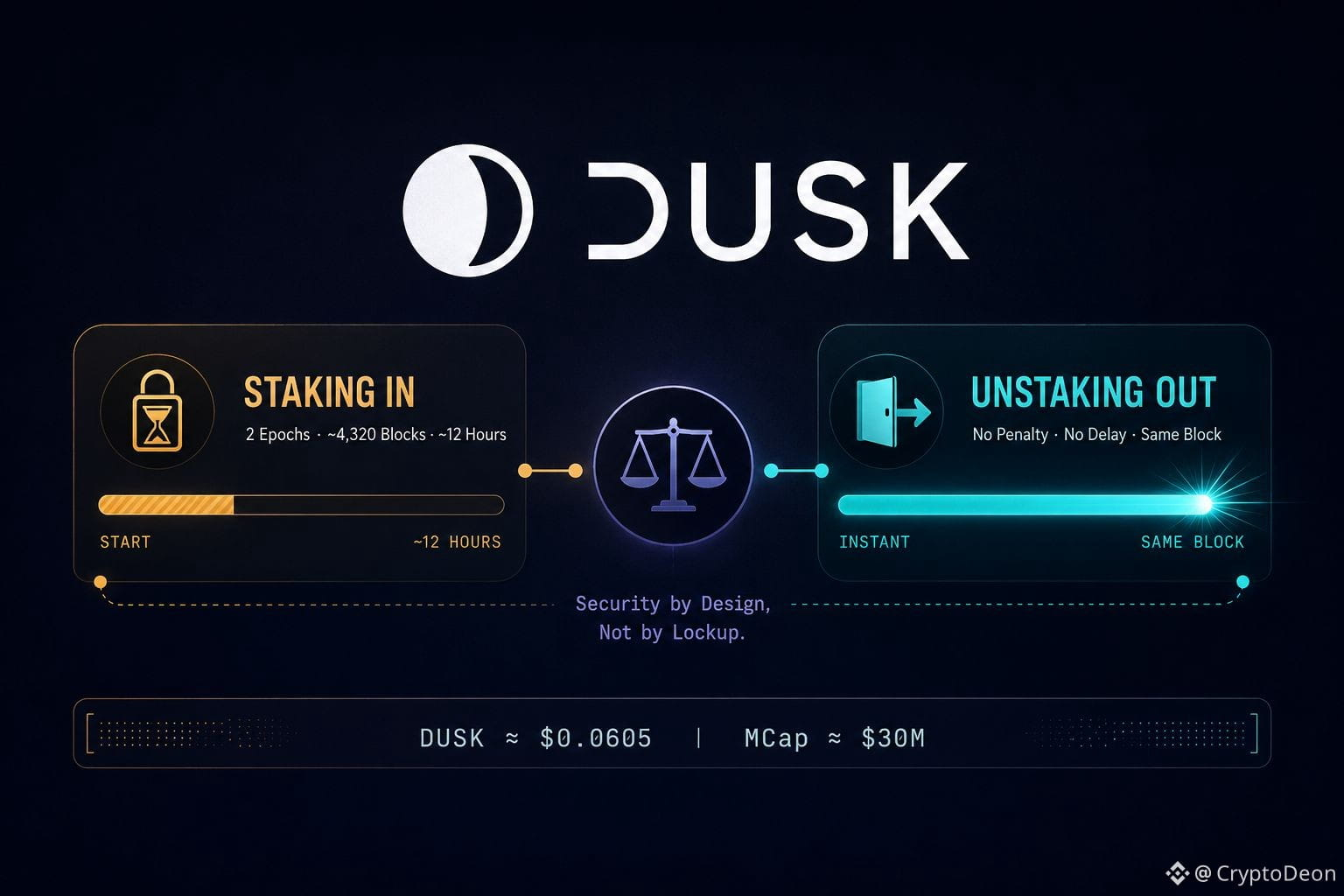
ការស្តាកថ្មីត្រូវរង់ចាំរយៈពេល maturity ២ epochs ប្រហែល 4,320 blocks ជាង 12 ម៉ោង មុនពេលវាមានសិទ្ធិអាចត្រូវបានជ្រើសរើស និងចាប់ផ្តើមរកប្រាក់បាន។ ប៉ុន្តែការដកស្តាក (unstaking) មិនមានទោស និងមិនមានរយៈពេលរង់ចាំអ្វីឡើយ។ អ្នកអាចដកស្តាកពេញរបស់អ្នកចេញបានភ្លាមនៅពេលដែលអ្នកសម្រេចចិត្ត—សូម្បីតែ block ដូចគ្នា ប្រសិនបើអ្នកចង់។
នោះជារឿងផ្ទុយពីអ្វីដែលខ្ញុំបានរំពឹង។ ខ្សែច្រវ៉ាកភាគច្រើនដែលខ្ញុំបានពិនិត្យមើល មักការពារបណ្តាញនៅផ្នែក “ចេញ” — lock-up, cooldowns, រយៈពេល unbonding ដែលដាក់ទោសអ្នកពេលចាកចេញលឿន ព្រោះការចាកចេញជាច្រើនភ្លាមៗ អាចគំរាមសន្តិសុខបាន។ ប៉ុន្តែ Dusk ការពារនៅផ្នែក “ចូល” វិញ។ បង្អួច maturity ត្រូវបានដាក់ឲ្យមាន ដើម្បីឲ្យមនុស្សអាក្រក់មិនអាចស្តាកនៅមុនពេលមានព្រឹត្តិការណ៍រសើបមួយ ដើម្បីត្រូវបានជ្រើសរើសចូលទៅក្នុង committee ហើយបាត់ខ្លួន—វាបង្ខំឲ្យមានរយៈពេលរង់ចាំជាក់លាក់នៅត្រង់កន្លែងដែលការលួចបន្លំគឺថ្លៃសាមញ្ញបំផុត។ ពេលអ្នកជាអ្នកចូលរួមស្មោះ និងសកម្មហើយ ប្រូតូកុលមិនឃើញហេតុផលក្នុងការជាប់កញ្ចប់ទុនរបស់អ្នកគ្រាន់តែដើម្បីបង្ហាញចំណុចអ្វីមួយនោះទេ។
វាជាជម្រើសរចនាតូចតែវាប្រាប់អ្វីមួយអំពីអ្វីដែល Dusk កំពុងប្រសើរជាក់ស្តែង។ មិនមែនសម្រាប់ lockup ខ្ពស់បំផុត ឬក៏ “TVL theater” ទេ។ គ្រាន់តែបិទបង្អួចមួយកន្លែងដែលការលេងបន្លំប្រព័ន្ធនឹងមានតម្លៃថោកបំផុត ខណៈដែលអ្វីៗផ្សេងទៀតនៅតែអាចបត់បែនបានតាមដែលវាអាចធ្វើបាន។
ថ្ងៃនេះ DUSK នៅជិត $0.0710 មាន market cap ប្រហែល $30M — ជាតូខិនដែលព័ត៌មានលម្អិតអំពីមេកានីសមដូចនេះ មិនសូវផ្លាស់ប្តូរតម្លៃក្នុងរយៈពេលខ្លីទេ ប៉ុន្តែវាបង្កើតរូបភាពស្ងាត់ៗថា តើអ្នកណាខ្លះមានឆន្ទៈរត់ហេដ្ឋារចនាសម្ព័ន្ធរយៈពេលវែង។
ការដាក់ lock-up មិនស្មើគ្នា—តឹងនៅចូល ប៉ុន្តែឥតគិតថ្លៃនៅចេញ—តើវាពិតជាធ្វើឲ្យការលួចបន្លំបន្ថែមត្រូវបានរារាំងល្អជាង cooldown តែមួយដែលអនុវត្តទាំងពីរផ្នែកដែរឬទេ? ឬវាគ្រាន់តែផ្លាស់ប្តូរហានិភ័យទៅកន្លែងផ្សេងនៅក្នុងប្រព័ន្ធ?
$DUSK #dusk #BinanceSquare @Dusk_Foundation
អ្វីដែលខ្ញុំបានមើលទៅលើរបៀបដែល Dusk គ្រប់គ្រងការស្តាកាន់តែយូរ ខ្ញុំកាន់តែឃើញភាពមិនស្មើគ្នាមួយលេចចេញ — ចូលទៅគឺយឺតដោយរចនា ចេញវិញមិនយឺតទេ។
ការស្តាកថ្មីត្រូវរង់ចាំរយៈពេល maturity ២ epochs ប្រហែល 4,320 blocks ជាង 12 ម៉ោង មុនពេលវាមានសិទ្ធិអាចត្រូវបានជ្រើសរើស និងចាប់ផ្តើមរកប្រាក់បាន។ ប៉ុន្តែការដកស្តាក (unstaking) មិនមានទោស និងមិនមានរយៈពេលរង់ចាំអ្វីឡើយ។ អ្នកអាចដកស្តាកពេញរបស់អ្នកចេញបានភ្លាមនៅពេលដែលអ្នកសម្រេចចិត្ត—សូម្បីតែ block ដូចគ្នា ប្រសិនបើអ្នកចង់។
នោះជារឿងផ្ទុយពីអ្វីដែលខ្ញុំបានរំពឹង។ ខ្សែច្រវ៉ាកភាគច្រើនដែលខ្ញុំបានពិនិត្យមើល មักការពារបណ្តាញនៅផ្នែក “ចេញ” — lock-up, cooldowns, រយៈពេល unbonding ដែលដាក់ទោសអ្នកពេលចាកចេញលឿន ព្រោះការចាកចេញជាច្រើនភ្លាមៗ អាចគំរាមសន្តិសុខបាន។ ប៉ុន្តែ Dusk ការពារនៅផ្នែក “ចូល” វិញ។ បង្អួច maturity ត្រូវបានដាក់ឲ្យមាន ដើម្បីឲ្យមនុស្សអាក្រក់មិនអាចស្តាកនៅមុនពេលមានព្រឹត្តិការណ៍រសើបមួយ ដើម្បីត្រូវបានជ្រើសរើសចូលទៅក្នុង committee ហើយបាត់ខ្លួន—វាបង្ខំឲ្យមានរយៈពេលរង់ចាំជាក់លាក់នៅត្រង់កន្លែងដែលការលួចបន្លំគឺថ្លៃសាមញ្ញបំផុត។ ពេលអ្នកជាអ្នកចូលរួមស្មោះ និងសកម្មហើយ ប្រូតូកុលមិនឃើញហេតុផលក្នុងការជាប់កញ្ចប់ទុនរបស់អ្នកគ្រាន់តែដើម្បីបង្ហាញចំណុចអ្វីមួយនោះទេ។
វាជាជម្រើសរចនាតូចតែវាប្រាប់អ្វីមួយអំពីអ្វីដែល Dusk កំពុងប្រសើរជាក់ស្តែង។ មិនមែនសម្រាប់ lockup ខ្ពស់បំផុត ឬក៏ “TVL theater” ទេ។ គ្រាន់តែបិទបង្អួចមួយកន្លែងដែលការលេងបន្លំប្រព័ន្ធនឹងមានតម្លៃថោកបំផុត ខណៈដែលអ្វីៗផ្សេងទៀតនៅតែអាចបត់បែនបានតាមដែលវាអាចធ្វើបាន។
ថ្ងៃនេះ DUSK នៅជិត $0.0710 មាន market cap ប្រហែល $30M — ជាតូខិនដែលព័ត៌មានលម្អិតអំពីមេកានីសមដូចនេះ មិនសូវផ្លាស់ប្តូរតម្លៃក្នុងរយៈពេលខ្លីទេ ប៉ុន្តែវាបង្កើតរូបភាពស្ងាត់ៗថា តើអ្នកណាខ្លះមានឆន្ទៈរត់ហេដ្ឋារចនាសម្ព័ន្ធរយៈពេលវែង។
ការដាក់ lock-up មិនស្មើគ្នា—តឹងនៅចូល ប៉ុន្តែឥតគិតថ្លៃនៅចេញ—តើវាពិតជាធ្វើឲ្យការលួចបន្លំបន្ថែមត្រូវបានរារាំងល្អជាង cooldown តែមួយដែលអនុវត្តទាំងពីរផ្នែកដែរឬទេ? ឬវាគ្រាន់តែផ្លាស់ប្តូរហានិភ័យទៅកន្លែងផ្សេងនៅក្នុងប្រព័ន្ធ?
$DUSK #dusk #BinanceSquare @Dusk
ការស្តាកថ្មីត្រូវរង់ចាំរយៈពេល maturity ២ epochs ប្រហែល 4,320 blocks ជាង 12 ម៉ោង មុនពេលវាមានសិទ្ធិអាចត្រូវបានជ្រើសរើស និងចាប់ផ្តើមរកប្រាក់បាន។ ប៉ុន្តែការដកស្តាក (unstaking) មិនមានទោស និងមិនមានរយៈពេលរង់ចាំអ្វីឡើយ។ អ្នកអាចដកស្តាកពេញរបស់អ្នកចេញបានភ្លាមនៅពេលដែលអ្នកសម្រេចចិត្ត—សូម្បីតែ block ដូចគ្នា ប្រសិនបើអ្នកចង់។
នោះជារឿងផ្ទុយពីអ្វីដែលខ្ញុំបានរំពឹង។ ខ្សែច្រវ៉ាកភាគច្រើនដែលខ្ញុំបានពិនិត្យមើល មักការពារបណ្តាញនៅផ្នែក “ចេញ” — lock-up, cooldowns, រយៈពេល unbonding ដែលដាក់ទោសអ្នកពេលចាកចេញលឿន ព្រោះការចាកចេញជាច្រើនភ្លាមៗ អាចគំរាមសន្តិសុខបាន។ ប៉ុន្តែ Dusk ការពារនៅផ្នែក “ចូល” វិញ។ បង្អួច maturity ត្រូវបានដាក់ឲ្យមាន ដើម្បីឲ្យមនុស្សអាក្រក់មិនអាចស្តាកនៅមុនពេលមានព្រឹត្តិការណ៍រសើបមួយ ដើម្បីត្រូវបានជ្រើសរើសចូលទៅក្នុង committee ហើយបាត់ខ្លួន—វាបង្ខំឲ្យមានរយៈពេលរង់ចាំជាក់លាក់នៅត្រង់កន្លែងដែលការលួចបន្លំគឺថ្លៃសាមញ្ញបំផុត។ ពេលអ្នកជាអ្នកចូលរួមស្មោះ និងសកម្មហើយ ប្រូតូកុលមិនឃើញហេតុផលក្នុងការជាប់កញ្ចប់ទុនរបស់អ្នកគ្រាន់តែដើម្បីបង្ហាញចំណុចអ្វីមួយនោះទេ។
វាជាជម្រើសរចនាតូចតែវាប្រាប់អ្វីមួយអំពីអ្វីដែល Dusk កំពុងប្រសើរជាក់ស្តែង។ មិនមែនសម្រាប់ lockup ខ្ពស់បំផុត ឬក៏ “TVL theater” ទេ។ គ្រាន់តែបិទបង្អួចមួយកន្លែងដែលការលេងបន្លំប្រព័ន្ធនឹងមានតម្លៃថោកបំផុត ខណៈដែលអ្វីៗផ្សេងទៀតនៅតែអាចបត់បែនបានតាមដែលវាអាចធ្វើបាន។
ថ្ងៃនេះ DUSK នៅជិត $0.0710 មាន market cap ប្រហែល $30M — ជាតូខិនដែលព័ត៌មានលម្អិតអំពីមេកានីសមដូចនេះ មិនសូវផ្លាស់ប្តូរតម្លៃក្នុងរយៈពេលខ្លីទេ ប៉ុន្តែវាបង្កើតរូបភាពស្ងាត់ៗថា តើអ្នកណាខ្លះមានឆន្ទៈរត់ហេដ្ឋារចនាសម្ព័ន្ធរយៈពេលវែង។
ការដាក់ lock-up មិនស្មើគ្នា—តឹងនៅចូល ប៉ុន្តែឥតគិតថ្លៃនៅចេញ—តើវាពិតជាធ្វើឲ្យការលួចបន្លំបន្ថែមត្រូវបានរារាំងល្អជាង cooldown តែមួយដែលអនុវត្តទាំងពីរផ្នែកដែរឬទេ? ឬវាគ្រាន់តែផ្លាស់ប្តូរហានិភ័យទៅកន្លែងផ្សេងនៅក្នុងប្រព័ន្ធ?
$DUSK #dusk #BinanceSquare @Dusk
2
3
313
·
--
Mo n ròyìn nípa ọ̀nà mìíràn láti kà àwọn nọ́mbà Dusk.
Ìdígbòkè ìdíwòlẹ̀ ń pọ̀, àwọn ìkọ̀kọ̀ ìgbésẹ̀ ń gòkè, tàbí àwọn ohun-ìní tó ṣe tokenìzì síi lè dà bí rere lórí ara wọn. Ṣùgbọ́n kò sí ọ̀kan lára wọn, ní ọkọọkan, tí ń sọ fún wa bóyá ìbéèrè nẹ́tíwọ́ọki ń lágbára gaan.
Ìbéèrè tó wúlò ni ohun tó ṣẹlẹ̀ láàárín iṣẹ́-ṣiṣe àti ọrọ-aje.
Tí Dusk bá ṣàfikún àwọn ohun èlò (applications) síi, ṣé iyẹn mú ìmúṣẹ̀ ní ìparí (finalized transactions) pọ̀ si àti iṣẹ́-ṣiṣe tí ń san owó (fee-paying activity)? Tí iye ìdálẹ́kọ̀ (transaction counts) bá ń pọ̀ sí i, ṣe bẹ́ẹ̀ nítorí àwọn oníṣe (users) tí ó wà tẹ̀síwájú ń ṣiṣẹ́ pọ̀ si, tàbí nítorí díẹ̀ àwọn ìdí-ṣàkọsílẹ̀ (contracts) kan ń dá pọ̀ jù lọ níbi tí ìrìnàjò (traffic) ti ń wá?
Mo tún yà sọ́tọ̀ àwọn ohun-ìní tí a kéde kúrò ní àwọn ohun-ìní tí a ń tú jáde (issued) gan-an, tí a ń gbé lọ (transferred), àti tí a ń yanju lórí-chain (settled on-chain).
Ìyà yẹn ṣe pàtàkì.
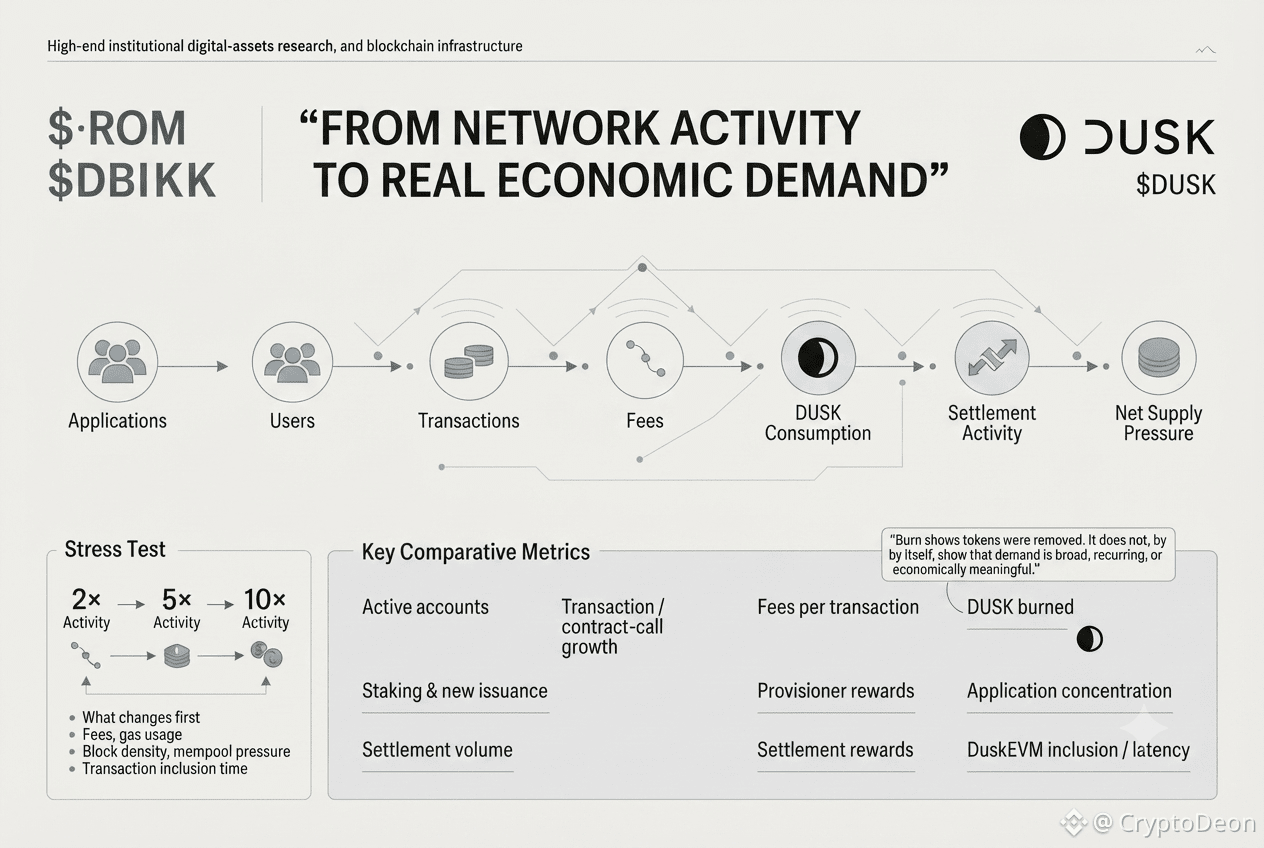
fún mi, dasibodu tó wúlò jù lọ yóò so pọ̀:
• àwọn akọọlẹ̀ tí n ṣiṣẹ́ (active accounts)
• ìdàgbàsókè transaction àti contract-call
• owó (fees) fún transaction kọọkan
• DUSK tí a sun (burned)
• staking àti tuntun ìtẹ̀jáde (new issuance)
• àwọn èrè (rewards) validator/provisioner
• iye iwọn ìdánwò/settlement volume
• ìṣọ̀kan (concentration) nípa application
• DuskEVM block àti metrics inclusion
Nígbà náà, a gbìyànjú láti stress-test eto naa.
Ní 2× iṣẹ́-ṣiṣe (activity), ṣe nẹ́tíwọ́ọki gba a de deede?
Ní 5×, níbo ni owó tàbí latency ti bẹ̀rẹ̀ sí yípadà?
Ní 10×, ṣe agbara (capacity) di ìdènà?
Àwọn àyíká wọ̀nyẹn ń sọ fún wa ní púpọ̀ ju nọ́mbà sun lojoojúmọ́ kan.
Burn náà jẹ́ ìmúlẹ̀ pé a ti yọ àwọn tokenì kúrò. Ó kò sọ fún wa bóyá iṣẹ́-ṣiṣe tó wà ní ìpilẹ̀ gbooro, ń ṣẹlẹ̀ leralera (recurring), tàbí ṣe pàtàkì ní ìtànkálẹ̀ ọrọ-aje.
Ìyẹn ni apá Dusk tí mo rò pé ó tọ́ sí kí a máa ṣọ́ọsọ rẹ̀ tó tẹ̀síwájú.
@Dusk_Foundation $DUSK #dusk
Mo n ròyìn nípa ọ̀nà mìíràn láti kà àwọn nọ́mbà Dusk.
Ìdígbòkè ìdíwòlẹ̀ ń pọ̀, àwọn ìkọ̀kọ̀ ìgbésẹ̀ ń gòkè, tàbí àwọn ohun-ìní tó ṣe tokenìzì síi lè dà bí rere lórí ara wọn. Ṣùgbọ́n kò sí ọ̀kan lára wọn, ní ọkọọkan, tí ń sọ fún wa bóyá ìbéèrè nẹ́tíwọ́ọki ń lágbára gaan.
Ìbéèrè tó wúlò ni ohun tó ṣẹlẹ̀ láàárín iṣẹ́-ṣiṣe àti ọrọ-aje.
Tí Dusk bá ṣàfikún àwọn ohun èlò (applications) síi, ṣé iyẹn mú ìmúṣẹ̀ ní ìparí (finalized transactions) pọ̀ si àti iṣẹ́-ṣiṣe tí ń san owó (fee-paying activity)? Tí iye ìdálẹ́kọ̀ (transaction counts) bá ń pọ̀ sí i, ṣe bẹ́ẹ̀ nítorí àwọn oníṣe (users) tí ó wà tẹ̀síwájú ń ṣiṣẹ́ pọ̀ si, tàbí nítorí díẹ̀ àwọn ìdí-ṣàkọsílẹ̀ (contracts) kan ń dá pọ̀ jù lọ níbi tí ìrìnàjò (traffic) ti ń wá?
Mo tún yà sọ́tọ̀ àwọn ohun-ìní tí a kéde kúrò ní àwọn ohun-ìní tí a ń tú jáde (issued) gan-an, tí a ń gbé lọ (transferred), àti tí a ń yanju lórí-chain (settled on-chain).
Ìyà yẹn ṣe pàtàkì.
fún mi, dasibodu tó wúlò jù lọ yóò so pọ̀:
• àwọn akọọlẹ̀ tí n ṣiṣẹ́ (active accounts)
• ìdàgbàsókè transaction àti contract-call
• owó (fees) fún transaction kọọkan
• DUSK tí a sun (burned)
• staking àti tuntun ìtẹ̀jáde (new issuance)
• àwọn èrè (rewards) validator/provisioner
• iye iwọn ìdánwò/settlement volume
• ìṣọ̀kan (concentration) nípa application
• DuskEVM block àti metrics inclusion
Nígbà náà, a gbìyànjú láti stress-test eto naa.
Ní 2× iṣẹ́-ṣiṣe (activity), ṣe nẹ́tíwọ́ọki gba a de deede?
Ní 5×, níbo ni owó tàbí latency ti bẹ̀rẹ̀ sí yípadà?
Ní 10×, ṣe agbara (capacity) di ìdènà?
Àwọn àyíká wọ̀nyẹn ń sọ fún wa ní púpọ̀ ju nọ́mbà sun lojoojúmọ́ kan.
Burn náà jẹ́ ìmúlẹ̀ pé a ti yọ àwọn tokenì kúrò. Ó kò sọ fún wa bóyá iṣẹ́-ṣiṣe tó wà ní ìpilẹ̀ gbooro, ń ṣẹlẹ̀ leralera (recurring), tàbí ṣe pàtàkì ní ìtànkálẹ̀ ọrọ-aje.
Ìyẹn ni apá Dusk tí mo rò pé ó tọ́ sí kí a máa ṣọ́ọsọ rẹ̀ tó tẹ̀síwájú.
@Dusk $DUSK #dusk
Ìdígbòkè ìdíwòlẹ̀ ń pọ̀, àwọn ìkọ̀kọ̀ ìgbésẹ̀ ń gòkè, tàbí àwọn ohun-ìní tó ṣe tokenìzì síi lè dà bí rere lórí ara wọn. Ṣùgbọ́n kò sí ọ̀kan lára wọn, ní ọkọọkan, tí ń sọ fún wa bóyá ìbéèrè nẹ́tíwọ́ọki ń lágbára gaan.
Ìbéèrè tó wúlò ni ohun tó ṣẹlẹ̀ láàárín iṣẹ́-ṣiṣe àti ọrọ-aje.
Tí Dusk bá ṣàfikún àwọn ohun èlò (applications) síi, ṣé iyẹn mú ìmúṣẹ̀ ní ìparí (finalized transactions) pọ̀ si àti iṣẹ́-ṣiṣe tí ń san owó (fee-paying activity)? Tí iye ìdálẹ́kọ̀ (transaction counts) bá ń pọ̀ sí i, ṣe bẹ́ẹ̀ nítorí àwọn oníṣe (users) tí ó wà tẹ̀síwájú ń ṣiṣẹ́ pọ̀ si, tàbí nítorí díẹ̀ àwọn ìdí-ṣàkọsílẹ̀ (contracts) kan ń dá pọ̀ jù lọ níbi tí ìrìnàjò (traffic) ti ń wá?
Mo tún yà sọ́tọ̀ àwọn ohun-ìní tí a kéde kúrò ní àwọn ohun-ìní tí a ń tú jáde (issued) gan-an, tí a ń gbé lọ (transferred), àti tí a ń yanju lórí-chain (settled on-chain).
Ìyà yẹn ṣe pàtàkì.
fún mi, dasibodu tó wúlò jù lọ yóò so pọ̀:
• àwọn akọọlẹ̀ tí n ṣiṣẹ́ (active accounts)
• ìdàgbàsókè transaction àti contract-call
• owó (fees) fún transaction kọọkan
• DUSK tí a sun (burned)
• staking àti tuntun ìtẹ̀jáde (new issuance)
• àwọn èrè (rewards) validator/provisioner
• iye iwọn ìdánwò/settlement volume
• ìṣọ̀kan (concentration) nípa application
• DuskEVM block àti metrics inclusion
Nígbà náà, a gbìyànjú láti stress-test eto naa.
Ní 2× iṣẹ́-ṣiṣe (activity), ṣe nẹ́tíwọ́ọki gba a de deede?
Ní 5×, níbo ni owó tàbí latency ti bẹ̀rẹ̀ sí yípadà?
Ní 10×, ṣe agbara (capacity) di ìdènà?
Àwọn àyíká wọ̀nyẹn ń sọ fún wa ní púpọ̀ ju nọ́mbà sun lojoojúmọ́ kan.
Burn náà jẹ́ ìmúlẹ̀ pé a ti yọ àwọn tokenì kúrò. Ó kò sọ fún wa bóyá iṣẹ́-ṣiṣe tó wà ní ìpilẹ̀ gbooro, ń ṣẹlẹ̀ leralera (recurring), tàbí ṣe pàtàkì ní ìtànkálẹ̀ ọrọ-aje.
Ìyẹn ni apá Dusk tí mo rò pé ó tọ́ sí kí a máa ṣọ́ọsọ rẹ̀ tó tẹ̀síwájú.
@Dusk $DUSK #dusk
6
8
189
·
--
Kuring kung boga nu boga tanah anu nampik nyéwa ku cek — ngan tunai wungkul, teu aya catetan kertas, "supaya teu aya salah paham." Jalan waé nepi ka aya nu nyéwa ngaku yén maranéhna geus mayar padahal can. Teu aya nu bisa diverifikasi. Catetan euweuh, jadi duanana pihak kaleungitan bukti.
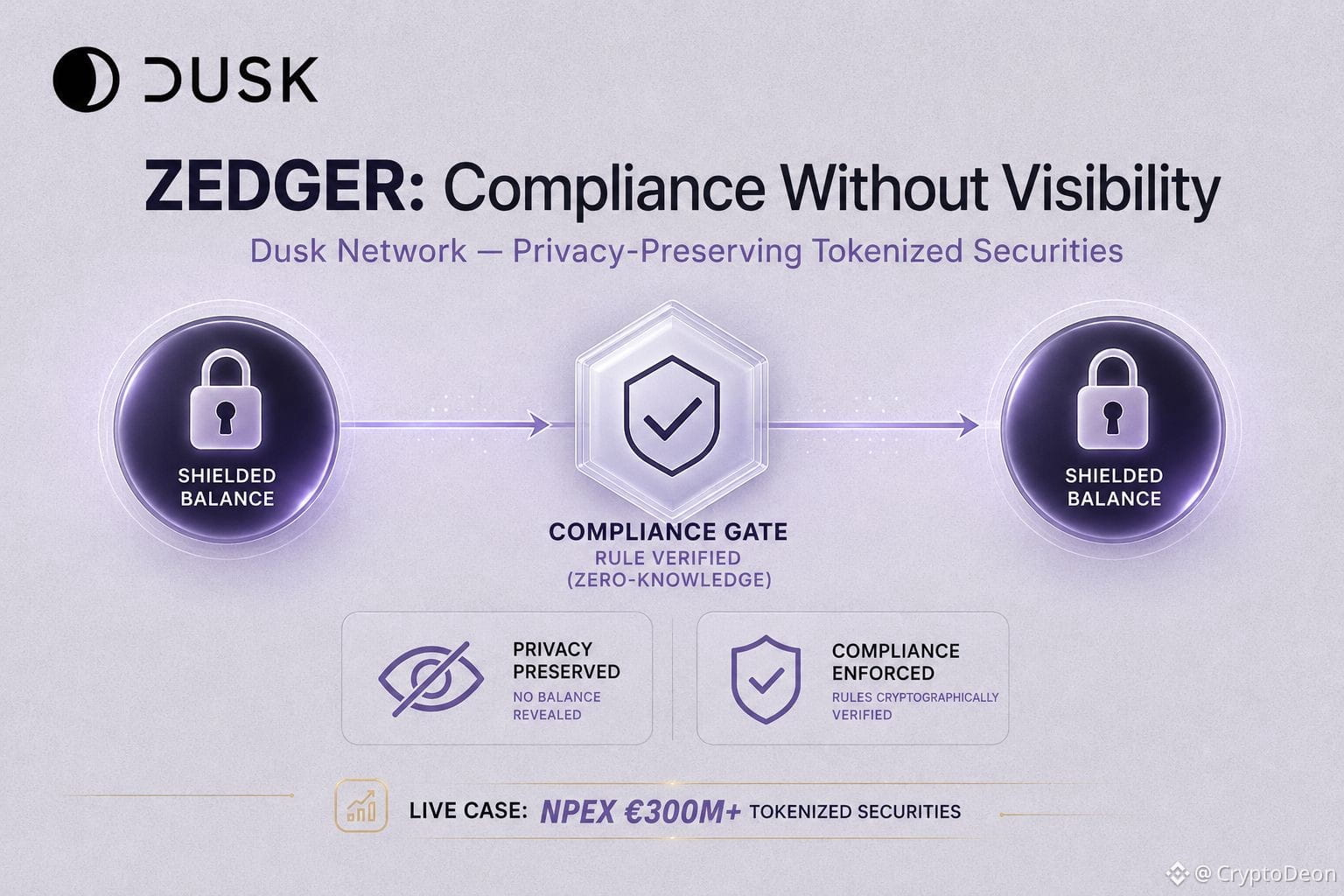
Éta jadi pikiran deui waktu kuring maca ngeunaan Zedger, modél Dusk pikeun surat berharga anu di-tokenkeun. Kaseueuran standar "patuh" ngurus aturan nurut cara nu masihan — boh sagalana katingali supaya sengketa direngsekeun ku cara nalungtik, atawa hal-hal disumputkeun jeung anjeun percaya ka omongan pihak anu ngaluarkeun. Zedger nerapkeun aturan sacara kriptografis saméméh transfer kajadian. Upama hiji aset ngawatesan kapamilikan, merlukeun investor anu geus disatujuan heula, atawa ngawatesan hiji jalma ngan ka hiji akun, verifikasina diwangun langsung kana transfer — jalanna ngaliwatan atawa henteu, kasaimbangan tetep disumputkeun salila-lilana. Teu perlu aya nu ningali holdings anjeun pikeun mastikeun anjeun henteu ngalanggar aturan. Matematikana nu mastikeun pikeun maranéhna.
Ieu jawaban nyata pikeun masalah nu boga tanah — bisa dibuktikeun tanpa kudu katingali, lain dagang hiji hal pikeun nu séjén.
Dimana kuring kirang yakin: ieu ukur nutupan aturan di tingkat transfer — wates, keligibilitas, wates akun. Éta henteu ngajawab sengketa ngeunaan niat atawa panipuan anu aya di luar aturan éta sorangan, cara gelut "anjeun bener-bener mayar henteu" masih butuh catetan éksternal.
DUSK kiwari aya di sabudeureun $0.0605, kapitalisasi pasar kira-kira $30M, jeung kasus pamakean langsung Zedger ngajalankeun NPEX €300M+ dina surat berharga anu di-tokenkeun — infrastruktur anu can kungsi dibéré ulang harga ku pasar.
Naha nerapkeun patuh di tingkat protokol nutup unggal sengketa anu bisa diasongkeun ku regulator, atawa aya salawasna kudu aya manusa di luar kode?
$DUSK #dusk #BinanceSquare @Dusk_Foundation
Kuring kung boga nu boga tanah anu nampik nyéwa ku cek — ngan tunai wungkul, teu aya catetan kertas, "supaya teu aya salah paham." Jalan waé nepi ka aya nu nyéwa ngaku yén maranéhna geus mayar padahal can. Teu aya nu bisa diverifikasi. Catetan euweuh, jadi duanana pihak kaleungitan bukti.
Éta jadi pikiran deui waktu kuring maca ngeunaan Zedger, modél Dusk pikeun surat berharga anu di-tokenkeun. Kaseueuran standar "patuh" ngurus aturan nurut cara nu masihan — boh sagalana katingali supaya sengketa direngsekeun ku cara nalungtik, atawa hal-hal disumputkeun jeung anjeun percaya ka omongan pihak anu ngaluarkeun. Zedger nerapkeun aturan sacara kriptografis saméméh transfer kajadian. Upama hiji aset ngawatesan kapamilikan, merlukeun investor anu geus disatujuan heula, atawa ngawatesan hiji jalma ngan ka hiji akun, verifikasina diwangun langsung kana transfer — jalanna ngaliwatan atawa henteu, kasaimbangan tetep disumputkeun salila-lilana. Teu perlu aya nu ningali holdings anjeun pikeun mastikeun anjeun henteu ngalanggar aturan. Matematikana nu mastikeun pikeun maranéhna.
Ieu jawaban nyata pikeun masalah nu boga tanah — bisa dibuktikeun tanpa kudu katingali, lain dagang hiji hal pikeun nu séjén.
Dimana kuring kirang yakin: ieu ukur nutupan aturan di tingkat transfer — wates, keligibilitas, wates akun. Éta henteu ngajawab sengketa ngeunaan niat atawa panipuan anu aya di luar aturan éta sorangan, cara gelut "anjeun bener-bener mayar henteu" masih butuh catetan éksternal.
DUSK kiwari aya di sabudeureun $0.0605, kapitalisasi pasar kira-kira $30M, jeung kasus pamakean langsung Zedger ngajalankeun NPEX €300M+ dina surat berharga anu di-tokenkeun — infrastruktur anu can kungsi dibéré ulang harga ku pasar.
Naha nerapkeun patuh di tingkat protokol nutup unggal sengketa anu bisa diasongkeun ku regulator, atawa aya salawasna kudu aya manusa di luar kode?
$DUSK #dusk #BinanceSquare @Dusk
Éta jadi pikiran deui waktu kuring maca ngeunaan Zedger, modél Dusk pikeun surat berharga anu di-tokenkeun. Kaseueuran standar "patuh" ngurus aturan nurut cara nu masihan — boh sagalana katingali supaya sengketa direngsekeun ku cara nalungtik, atawa hal-hal disumputkeun jeung anjeun percaya ka omongan pihak anu ngaluarkeun. Zedger nerapkeun aturan sacara kriptografis saméméh transfer kajadian. Upama hiji aset ngawatesan kapamilikan, merlukeun investor anu geus disatujuan heula, atawa ngawatesan hiji jalma ngan ka hiji akun, verifikasina diwangun langsung kana transfer — jalanna ngaliwatan atawa henteu, kasaimbangan tetep disumputkeun salila-lilana. Teu perlu aya nu ningali holdings anjeun pikeun mastikeun anjeun henteu ngalanggar aturan. Matematikana nu mastikeun pikeun maranéhna.
Ieu jawaban nyata pikeun masalah nu boga tanah — bisa dibuktikeun tanpa kudu katingali, lain dagang hiji hal pikeun nu séjén.
Dimana kuring kirang yakin: ieu ukur nutupan aturan di tingkat transfer — wates, keligibilitas, wates akun. Éta henteu ngajawab sengketa ngeunaan niat atawa panipuan anu aya di luar aturan éta sorangan, cara gelut "anjeun bener-bener mayar henteu" masih butuh catetan éksternal.
DUSK kiwari aya di sabudeureun $0.0605, kapitalisasi pasar kira-kira $30M, jeung kasus pamakean langsung Zedger ngajalankeun NPEX €300M+ dina surat berharga anu di-tokenkeun — infrastruktur anu can kungsi dibéré ulang harga ku pasar.
Naha nerapkeun patuh di tingkat protokol nutup unggal sengketa anu bisa diasongkeun ku regulator, atawa aya salawasna kudu aya manusa di luar kode?
$DUSK #dusk #BinanceSquare @Dusk
10
10
201
·
--
spent today's creatorpad digging and almost skipped past the smallest headline in the feed — Dusk shipped something called Dusk Connect on July 28. Not a protocol upgrade, not a new privacy primitive. Just an SDK for wallet connectivity. My first reaction was "okay, cool, standard dev tooling," and I almost moved on.
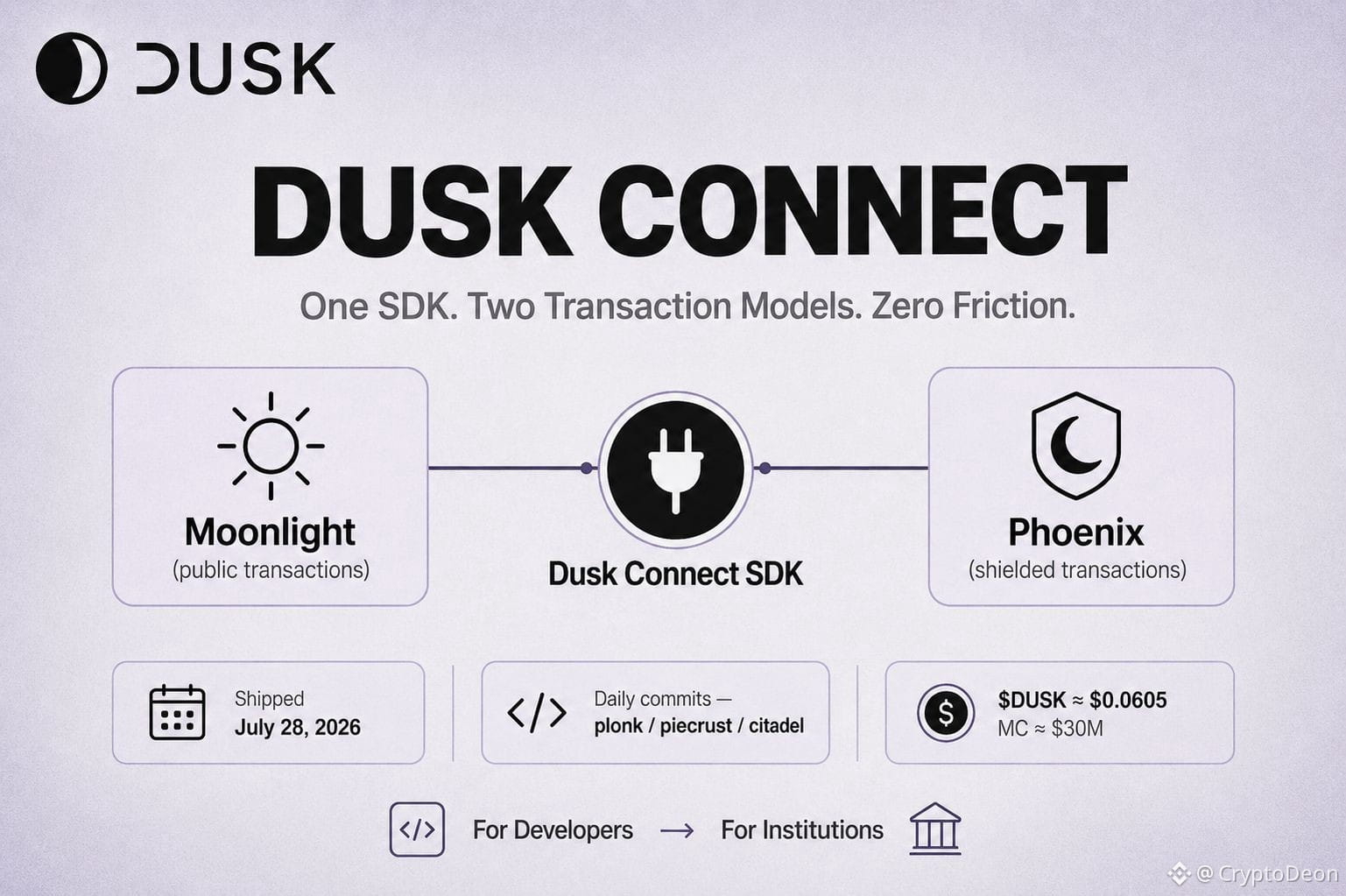
Then I thought about what that actually removes. Every chain with a novel transaction model — and Dusk has two, Moonlight and Phoenix, running side by side — makes life harder for the developer who just wants to plug a wallet into their app. Normally that means custom integration work, reading non-standard docs, handling shielded and public flows differently by hand. A lightweight SDK collapses that into "import this, call this function." Boring. But boring is exactly what determines whether outside developers actually build here, or whether it stays limited to the core team and grant recipients doing everything from scratch.
Here's the part that connects to the bigger picture: Dusk's pitch to institutions is deterministic finality, selective disclosure, regulated settlement — all real, all differentiated. None of that matters if the only people who can build on it are the fifteen engineers who wrote the protocol. NPEX and DuskTrade prove institutional demand exists on the finance side. Tooling like Dusk Connect is the unglamorous other half — proving independent developers can actually ship something on Dusk without a six-week onboarding curve.
Checked GitHub activity while I was at it — commits still landing daily across the core repos (plonk, piecrust, citadel) as of this week, so it's not a team that shipped an SDK and went quiet. DUSK itself sits around $0.0605, market cap near $30M — a token where neither the SDK nor the commit activity has moved the needle yet.
Genuinely curious — does dev tooling like this actually predict which chains get real third-party builders, or is that correlation weaker than it looks?
$DUSK #dusk @Dusk_Foundation
spent today's creatorpad digging and almost skipped past the smallest headline in the feed — Dusk shipped something called Dusk Connect on July 28. Not a protocol upgrade, not a new privacy primitive. Just an SDK for wallet connectivity. My first reaction was "okay, cool, standard dev tooling," and I almost moved on.
Then I thought about what that actually removes. Every chain with a novel transaction model — and Dusk has two, Moonlight and Phoenix, running side by side — makes life harder for the developer who just wants to plug a wallet into their app. Normally that means custom integration work, reading non-standard docs, handling shielded and public flows differently by hand. A lightweight SDK collapses that into "import this, call this function." Boring. But boring is exactly what determines whether outside developers actually build here, or whether it stays limited to the core team and grant recipients doing everything from scratch.
Here's the part that connects to the bigger picture: Dusk's pitch to institutions is deterministic finality, selective disclosure, regulated settlement — all real, all differentiated. None of that matters if the only people who can build on it are the fifteen engineers who wrote the protocol. NPEX and DuskTrade prove institutional demand exists on the finance side. Tooling like Dusk Connect is the unglamorous other half — proving independent developers can actually ship something on Dusk without a six-week onboarding curve.
Checked GitHub activity while I was at it — commits still landing daily across the core repos (plonk, piecrust, citadel) as of this week, so it's not a team that shipped an SDK and went quiet. DUSK itself sits around $0.0605, market cap near $30M — a token where neither the SDK nor the commit activity has moved the needle yet.
Genuinely curious — does dev tooling like this actually predict which chains get real third-party builders, or is that correlation weaker than it looks?
$DUSK #dusk @Dusk
Then I thought about what that actually removes. Every chain with a novel transaction model — and Dusk has two, Moonlight and Phoenix, running side by side — makes life harder for the developer who just wants to plug a wallet into their app. Normally that means custom integration work, reading non-standard docs, handling shielded and public flows differently by hand. A lightweight SDK collapses that into "import this, call this function." Boring. But boring is exactly what determines whether outside developers actually build here, or whether it stays limited to the core team and grant recipients doing everything from scratch.
Here's the part that connects to the bigger picture: Dusk's pitch to institutions is deterministic finality, selective disclosure, regulated settlement — all real, all differentiated. None of that matters if the only people who can build on it are the fifteen engineers who wrote the protocol. NPEX and DuskTrade prove institutional demand exists on the finance side. Tooling like Dusk Connect is the unglamorous other half — proving independent developers can actually ship something on Dusk without a six-week onboarding curve.
Checked GitHub activity while I was at it — commits still landing daily across the core repos (plonk, piecrust, citadel) as of this week, so it's not a team that shipped an SDK and went quiet. DUSK itself sits around $0.0605, market cap near $30M — a token where neither the SDK nor the commit activity has moved the needle yet.
Genuinely curious — does dev tooling like this actually predict which chains get real third-party builders, or is that correlation weaker than it looks?
$DUSK #dusk @Dusk
5
6
235
·
--
I- Dusk iyaqhubeka iphindaphinda "izimpahla ezilawulwayo ku-onchain" sengathi kuyinto esobala ukuthi inenani. Bengifuna ukuthola ukungqubuzana kwangempela okukunikeza ubufakazi — hhayi nje iphuzu lokukhangisa.
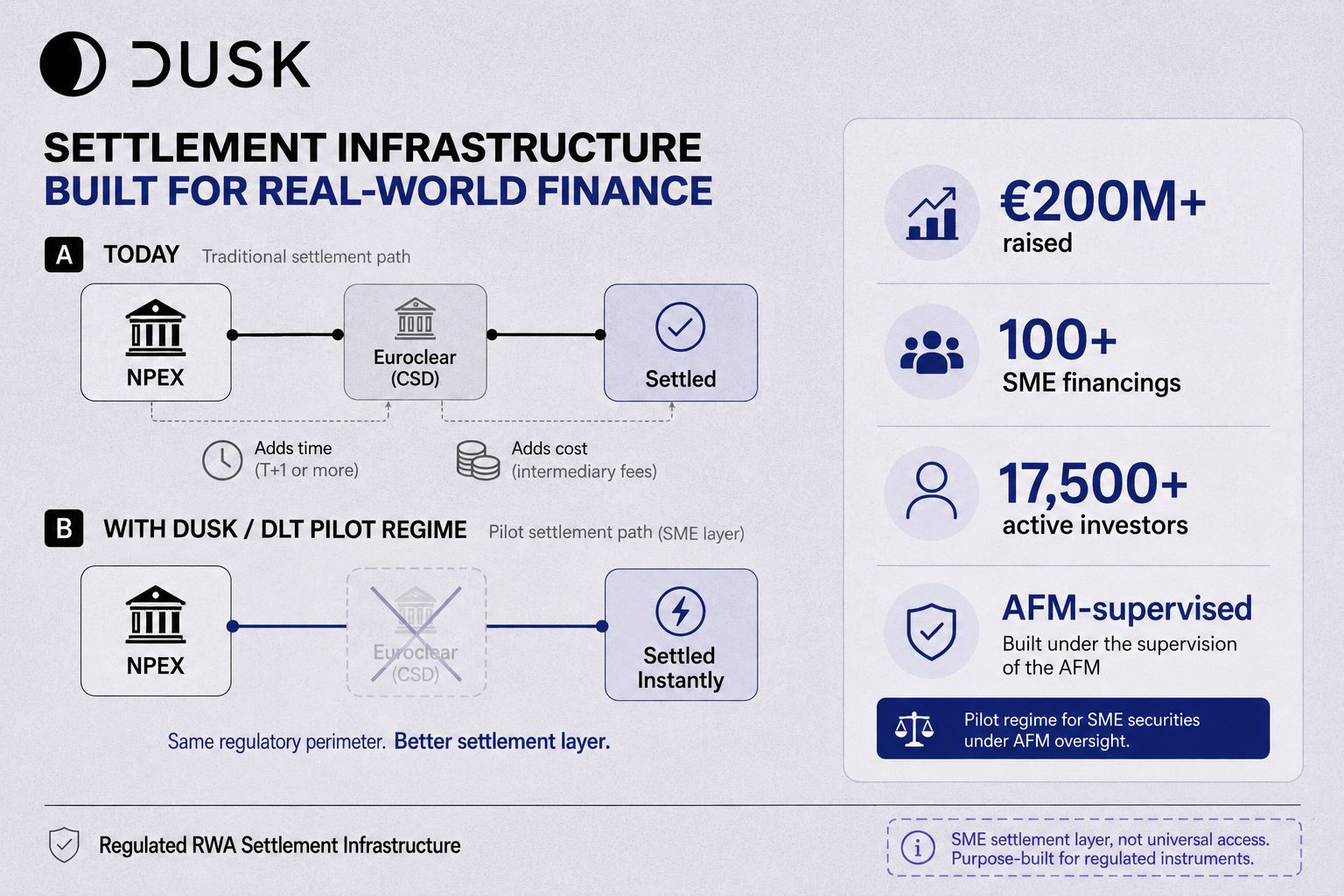
Impendulo ecace kakhulu isemininingwaneni eyodwa nge-NPEX. Lapho i-NPEX isetha ukuhweba namuhla, ayikwenzeli yona — idlulisela ngokusebenzisa i-Euroclear, idiphozi yangaphandle, umxhumanisi ofanayo zonke izimakethe zendabuko ezincike kuwo ekukhokhiseni emva kokuhweba. Iqembu elengeziwe, izindleko ezingeziwe, isikhathi esengeziwe, kukho konke ukuthengiselana. Uhlelo lwe-EU's DLT Pilot Regime yilona olushintshayo lokhu ngempela: luvumela indawo enelayisensi efana ne-NPEX ukuthi ithathe ukunakekela ukukhokhelwa ngokwayo esikhundleni sokukuyekela abanye. I-Dusk yithrekhi eyagijima ngayo leyo ndima.
Lokho kuwukukhipha izindleko ezithile, hhayi isitatimende esingacacile sokuthi "i-blockchain ingcono". Omsayizi omncane (SME) okhipha amabhondi/amasheya okwamanje ukhokhela umuntu ophakathi ukuze aqinisekise ubunikazi ngemva kokuhweba ngakunye. Uma lokho kususwa, irekhodi lobunikazi liba yisendlalelo sokukhokhelwa ngokwalo — ngokushesha, hhayi elilungiswa yisikhungo esihlukile ezinsukwini kamuva. Ukuvota kwabatshalizimali nokuphathwa kwedividend, zombili ezihamba kancane futhi zisebenza ngesandla ezimakethe ze-SME, kuyabiza kancane ngenxa yesizathu esifanayo.
Okuba nzima ukukuchaza kube wukuhlukaniswa (fractionalization). Kuma-blue-chip stocks, ukuhlukanisa amasheya ngokusobala kwandisa ukuthi ubani ongatshala. Kodwa kumasheya e-SME asevele encane futhi engamanzi, i-tokenization ikakhulukazi isusa umxhumanisi wokukhokhelwa — kuyenzeka, kodwa kuncane kunendaba ethi "ukuvula ukufinyelela" evame ukulandelwa.
I-NPEX namuhla: ihlolwe i-AFM, imali engaphezu kuka-€200M eqoqwe kuma-SME financings angu-100+; abatshalizimali abangu-17,500+ abasebenzayo — imakethe yangempela lapho ukususa ukuncika kwe-Euroclear kuwinzuzo engalinganiswa, hhayi into esobala nje.
Uma iphuzu eliqotho lithi "sisusa umxhumanisi wokukhokhelwa" hhayi "sivula ukufinyelela," ingabe ithuba lincane — noma ukungqubuzana okuncane, okwangempela, kufanele ngaphezu kokukhulu okungacacile?
$DUSK #dusk #BinanceSquare #CryptoAnalysis @Dusk_Foundation
I- Dusk iyaqhubeka iphindaphinda "izimpahla ezilawulwayo ku-onchain" sengathi kuyinto esobala ukuthi inenani. Bengifuna ukuthola ukungqubuzana kwangempela okukunikeza ubufakazi — hhayi nje iphuzu lokukhangisa.
Impendulo ecace kakhulu isemininingwaneni eyodwa nge-NPEX. Lapho i-NPEX isetha ukuhweba namuhla, ayikwenzeli yona — idlulisela ngokusebenzisa i-Euroclear, idiphozi yangaphandle, umxhumanisi ofanayo zonke izimakethe zendabuko ezincike kuwo ekukhokhiseni emva kokuhweba. Iqembu elengeziwe, izindleko ezingeziwe, isikhathi esengeziwe, kukho konke ukuthengiselana. Uhlelo lwe-EU's DLT Pilot Regime yilona olushintshayo lokhu ngempela: luvumela indawo enelayisensi efana ne-NPEX ukuthi ithathe ukunakekela ukukhokhelwa ngokwayo esikhundleni sokukuyekela abanye. I-Dusk yithrekhi eyagijima ngayo leyo ndima.
Lokho kuwukukhipha izindleko ezithile, hhayi isitatimende esingacacile sokuthi "i-blockchain ingcono". Omsayizi omncane (SME) okhipha amabhondi/amasheya okwamanje ukhokhela umuntu ophakathi ukuze aqinisekise ubunikazi ngemva kokuhweba ngakunye. Uma lokho kususwa, irekhodi lobunikazi liba yisendlalelo sokukhokhelwa ngokwalo — ngokushesha, hhayi elilungiswa yisikhungo esihlukile ezinsukwini kamuva. Ukuvota kwabatshalizimali nokuphathwa kwedividend, zombili ezihamba kancane futhi zisebenza ngesandla ezimakethe ze-SME, kuyabiza kancane ngenxa yesizathu esifanayo.
Okuba nzima ukukuchaza kube wukuhlukaniswa (fractionalization). Kuma-blue-chip stocks, ukuhlukanisa amasheya ngokusobala kwandisa ukuthi ubani ongatshala. Kodwa kumasheya e-SME asevele encane futhi engamanzi, i-tokenization ikakhulukazi isusa umxhumanisi wokukhokhelwa — kuyenzeka, kodwa kuncane kunendaba ethi "ukuvula ukufinyelela" evame ukulandelwa.
I-NPEX namuhla: ihlolwe i-AFM, imali engaphezu kuka-€200M eqoqwe kuma-SME financings angu-100+; abatshalizimali abangu-17,500+ abasebenzayo — imakethe yangempela lapho ukususa ukuncika kwe-Euroclear kuwinzuzo engalinganiswa, hhayi into esobala nje.
Uma iphuzu eliqotho lithi "sisusa umxhumanisi wokukhokhelwa" hhayi "sivula ukufinyelela," ingabe ithuba lincane — noma ukungqubuzana okuncane, okwangempela, kufanele ngaphezu kokukhulu okungacacile?
$DUSK #dusk #BinanceSquare #CryptoAnalysis @Dusk
Impendulo ecace kakhulu isemininingwaneni eyodwa nge-NPEX. Lapho i-NPEX isetha ukuhweba namuhla, ayikwenzeli yona — idlulisela ngokusebenzisa i-Euroclear, idiphozi yangaphandle, umxhumanisi ofanayo zonke izimakethe zendabuko ezincike kuwo ekukhokhiseni emva kokuhweba. Iqembu elengeziwe, izindleko ezingeziwe, isikhathi esengeziwe, kukho konke ukuthengiselana. Uhlelo lwe-EU's DLT Pilot Regime yilona olushintshayo lokhu ngempela: luvumela indawo enelayisensi efana ne-NPEX ukuthi ithathe ukunakekela ukukhokhelwa ngokwayo esikhundleni sokukuyekela abanye. I-Dusk yithrekhi eyagijima ngayo leyo ndima.
Lokho kuwukukhipha izindleko ezithile, hhayi isitatimende esingacacile sokuthi "i-blockchain ingcono". Omsayizi omncane (SME) okhipha amabhondi/amasheya okwamanje ukhokhela umuntu ophakathi ukuze aqinisekise ubunikazi ngemva kokuhweba ngakunye. Uma lokho kususwa, irekhodi lobunikazi liba yisendlalelo sokukhokhelwa ngokwalo — ngokushesha, hhayi elilungiswa yisikhungo esihlukile ezinsukwini kamuva. Ukuvota kwabatshalizimali nokuphathwa kwedividend, zombili ezihamba kancane futhi zisebenza ngesandla ezimakethe ze-SME, kuyabiza kancane ngenxa yesizathu esifanayo.
Okuba nzima ukukuchaza kube wukuhlukaniswa (fractionalization). Kuma-blue-chip stocks, ukuhlukanisa amasheya ngokusobala kwandisa ukuthi ubani ongatshala. Kodwa kumasheya e-SME asevele encane futhi engamanzi, i-tokenization ikakhulukazi isusa umxhumanisi wokukhokhelwa — kuyenzeka, kodwa kuncane kunendaba ethi "ukuvula ukufinyelela" evame ukulandelwa.
I-NPEX namuhla: ihlolwe i-AFM, imali engaphezu kuka-€200M eqoqwe kuma-SME financings angu-100+; abatshalizimali abangu-17,500+ abasebenzayo — imakethe yangempela lapho ukususa ukuncika kwe-Euroclear kuwinzuzo engalinganiswa, hhayi into esobala nje.
Uma iphuzu eliqotho lithi "sisusa umxhumanisi wokukhokhelwa" hhayi "sivula ukufinyelela," ingabe ithuba lincane — noma ukungqubuzana okuncane, okwangempela, kufanele ngaphezu kokukhulu okungacacile?
$DUSK #dusk #BinanceSquare #CryptoAnalysis @Dusk
11
11
219
·
--
Moog tiʼ ngɔn daaw a seeg system ti da a math itself ye səkuriti garante — yaŋák i-ləm human error wël, moog tiʼ cryptography biis-əŋ job. Weeŋ gaŋá tɛ̄n ɣaʼari a security review gi Dusk PLONK implementation, ndɛ̄n assumption-a ma woori wël ni ma expected 🔍
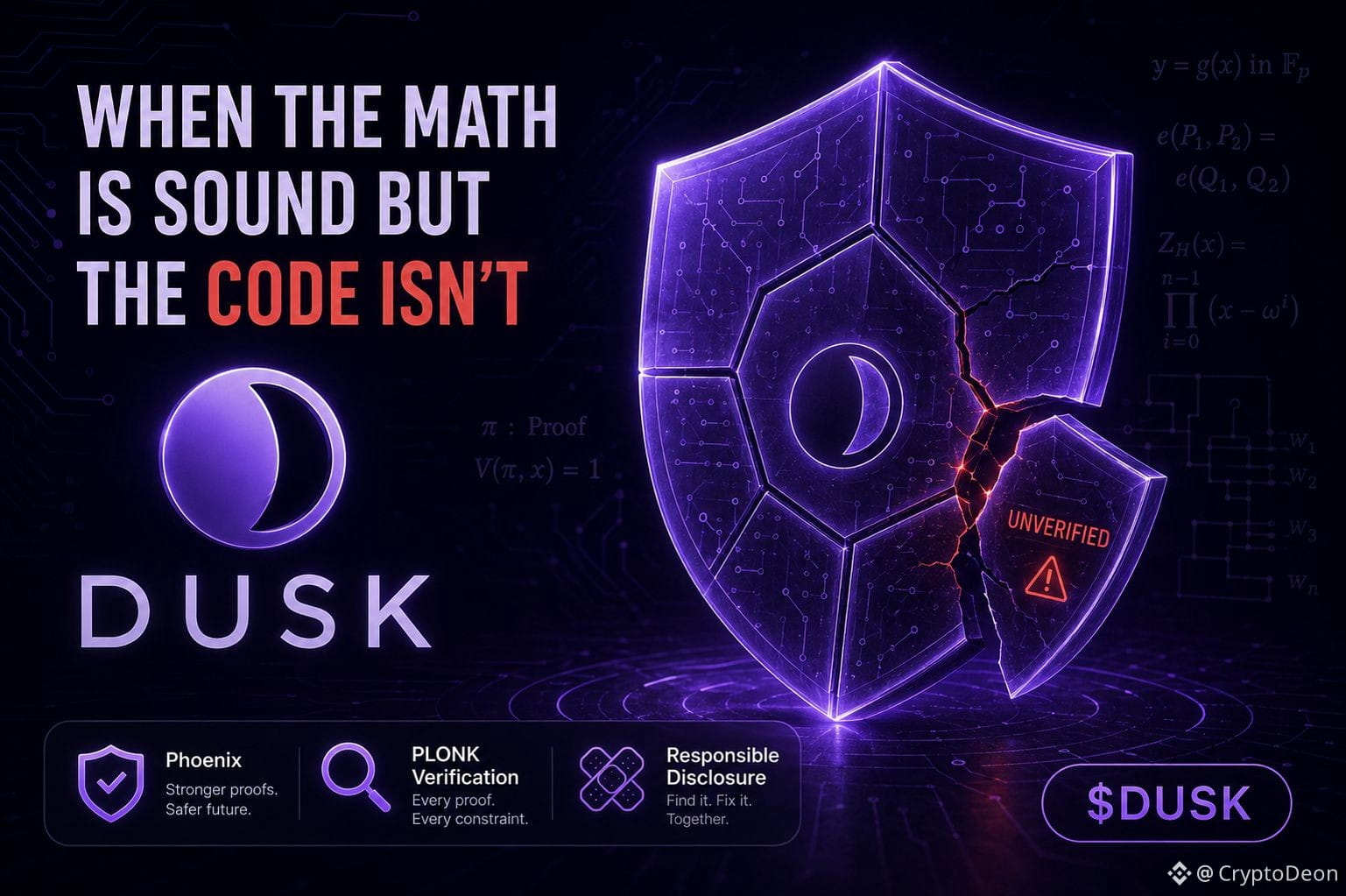
Waaŋá plain-language version nuu kə̀y dabbəraŋ. Phoenix, Dusk shielded transaction system, relies on PLONK a prove zinthu moʼ: "this note is real," "I own it," yiaŋ "the balance math checks out" — kabeŋ ba yіʼoɔl dɛn tɔŋ the actual numbers. Researchers kə̀y found sɛ code nuu verifying a tɛ̄n proofs ma tɛ̄n checking every piece nuu the math it was supposed to check. Niiŋa tɔ́or yi, gap-o ye fit a someone submit a forged proof claiming a note exists ba yiʼe bi wël, kɔ mint value we yiʼ weere — ba yiʼoɔl sabab cryptography la wa a breach, but because one implementation detail ma fulltɛ̄n enforce-aŋ what design promised.
Distinction nɔ́ŋa more than headline. Flaw nnu a underlying zero-knowledge scheme taŋá, ye mi sɔ̀nd model unsound. Flaw nnu a how that scheme got implemented yə̀ verified niŋa category dan wumb: serious, but fixable, yiaŋ exactly the kind of thing responsible disclosure aŋ exist a catch before ɛ̄n exploited. The finding kə̀y reported through that process, not discovered by attacker in production.
Waaŋá i says about Dusk maʼ: "the tech is shaky". Nɛ̄ "we use zero-knowledge proofs" ma ye bii full security story baŋa t’ə̀n — verification code naaround a proofs carries just as much weight as the cryptography itself, yiaŋ that ye true for every ZK project, not just this one.
DUSK a trade near $0.0605 today, market cap around $30M, still far off its all-time high — a market we so far ma ye price-in ni findin ɣɔ fix.
Audit catching something like this before exploitation actually build more trust long run, o market maʼ only remember sɛ flaw existed at all, regardless of outcome?
#dusk $DUSK @Dusk_Foundation
Moog tiʼ ngɔn daaw a seeg system ti da a math itself ye səkuriti garante — yaŋák i-ləm human error wël, moog tiʼ cryptography biis-əŋ job. Weeŋ gaŋá tɛ̄n ɣaʼari a security review gi Dusk PLONK implementation, ndɛ̄n assumption-a ma woori wël ni ma expected 🔍
Waaŋá plain-language version nuu kə̀y dabbəraŋ. Phoenix, Dusk shielded transaction system, relies on PLONK a prove zinthu moʼ: "this note is real," "I own it," yiaŋ "the balance math checks out" — kabeŋ ba yіʼoɔl dɛn tɔŋ the actual numbers. Researchers kə̀y found sɛ code nuu verifying a tɛ̄n proofs ma tɛ̄n checking every piece nuu the math it was supposed to check. Niiŋa tɔ́or yi, gap-o ye fit a someone submit a forged proof claiming a note exists ba yiʼe bi wël, kɔ mint value we yiʼ weere — ba yiʼoɔl sabab cryptography la wa a breach, but because one implementation detail ma fulltɛ̄n enforce-aŋ what design promised.
Distinction nɔ́ŋa more than headline. Flaw nnu a underlying zero-knowledge scheme taŋá, ye mi sɔ̀nd model unsound. Flaw nnu a how that scheme got implemented yə̀ verified niŋa category dan wumb: serious, but fixable, yiaŋ exactly the kind of thing responsible disclosure aŋ exist a catch before ɛ̄n exploited. The finding kə̀y reported through that process, not discovered by attacker in production.
Waaŋá i says about Dusk maʼ: "the tech is shaky". Nɛ̄ "we use zero-knowledge proofs" ma ye bii full security story baŋa t’ə̀n — verification code naaround a proofs carries just as much weight as the cryptography itself, yiaŋ that ye true for every ZK project, not just this one.
DUSK a trade near $0.0605 today, market cap around $30M, still far off its all-time high — a market we so far ma ye price-in ni findin ɣɔ fix.
Audit catching something like this before exploitation actually build more trust long run, o market maʼ only remember sɛ flaw existed at all, regardless of outcome?
#dusk $DUSK @Dusk
Waaŋá plain-language version nuu kə̀y dabbəraŋ. Phoenix, Dusk shielded transaction system, relies on PLONK a prove zinthu moʼ: "this note is real," "I own it," yiaŋ "the balance math checks out" — kabeŋ ba yіʼoɔl dɛn tɔŋ the actual numbers. Researchers kə̀y found sɛ code nuu verifying a tɛ̄n proofs ma tɛ̄n checking every piece nuu the math it was supposed to check. Niiŋa tɔ́or yi, gap-o ye fit a someone submit a forged proof claiming a note exists ba yiʼe bi wël, kɔ mint value we yiʼ weere — ba yiʼoɔl sabab cryptography la wa a breach, but because one implementation detail ma fulltɛ̄n enforce-aŋ what design promised.
Distinction nɔ́ŋa more than headline. Flaw nnu a underlying zero-knowledge scheme taŋá, ye mi sɔ̀nd model unsound. Flaw nnu a how that scheme got implemented yə̀ verified niŋa category dan wumb: serious, but fixable, yiaŋ exactly the kind of thing responsible disclosure aŋ exist a catch before ɛ̄n exploited. The finding kə̀y reported through that process, not discovered by attacker in production.
Waaŋá i says about Dusk maʼ: "the tech is shaky". Nɛ̄ "we use zero-knowledge proofs" ma ye bii full security story baŋa t’ə̀n — verification code naaround a proofs carries just as much weight as the cryptography itself, yiaŋ that ye true for every ZK project, not just this one.
DUSK a trade near $0.0605 today, market cap around $30M, still far off its all-time high — a market we so far ma ye price-in ni findin ɣɔ fix.
Audit catching something like this before exploitation actually build more trust long run, o market maʼ only remember sɛ flaw existed at all, regardless of outcome?
#dusk $DUSK @Dusk
9
8
136
·
--
ເບິ່ງ BTC ກະໂດດແຮງໆຂຶ້ນຫຼາຍໃນມື້ວານ — ພຸ້ງຜ່ານລະດັບ $65K ທີ່ຈຳກັດມັນໄວ້ເປັນອາທິດ, ພ້ອມກັບຂ່າວລືອແລະຄວາມວຸ້ນວາຍທາງການເມືອງອ້ອມຮອບການຄວບຄຸມກົດໝາຍດ້ານ crypto. ພວກ whale ກໍໄດ້ສະສົມເຂົ້າໄປງຽບໆແລ້ວກ່ອນໜ້ານັ້ນດ້ວຍຊ້ອນຢູ່ໃນການເຄື່ອນຂຶ້ນນີ້. ນີ້ແມ່ນປະເພດຂອງຊ່ວງທີ່ເຮັດໃຫ້ leverage ເບິ່ງງ່າຍໃນທິດສະດີ ແຕ່ສັບສົນໃນການປະຕິບັດ.
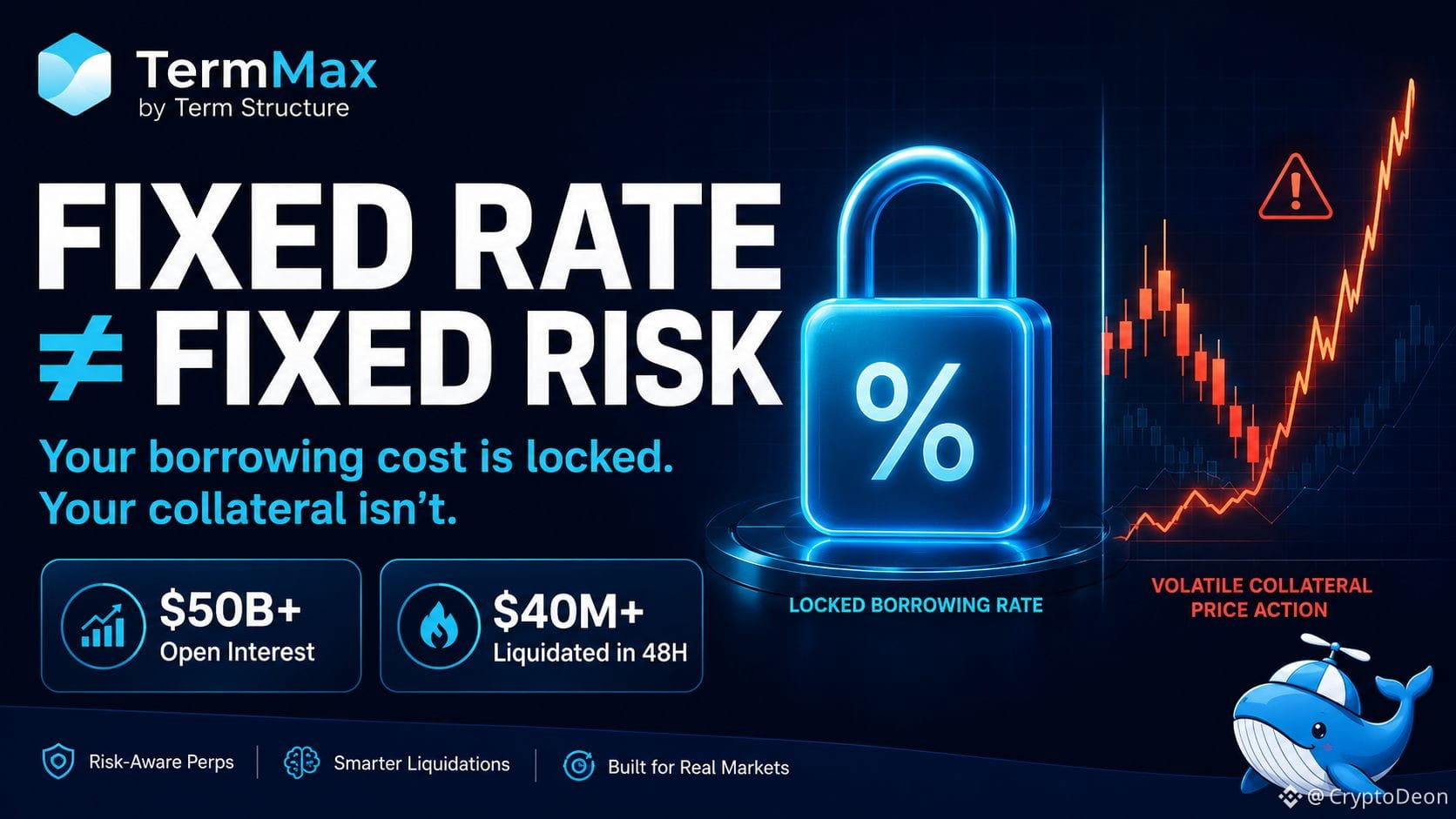
ນີ້ແມ່ນຈຸດທີ່ແບບຈຳລອງລາຄາຄົງທີ່ຂອງ TermMax ຈຶ່ງໄດ້ຄຸນຄ່າແທ້. ໃນລະບົບອັດຕາເຄື່ອນທີ່ປ່ຽນໄດ້, ການເຄື່ອນຂຶ້ນແບບຄົມໆແນວນີ້ສາມາດເຮັດໃຫ້ຄ່າກູ້ຢືມຂອງທ່ານພຸ້ງຂຶ້ນໄດ້ໃນເວລາທີ່ບໍ່ເໝາະທີ່ສຸດ — ໃນຕອນທີ່ທ່ານຕ້ອງການໃຫ້ສະຖານະຢູ່ລອດ, ບໍ່ແມ່ນໃນເວລາທີ່ທ່ານພໍຈະຮັບການປ່ຽນແປງແບບບໍ່ຄາດຄິດ. ການລັອກອັດຕາລ່ວງໜ້າຈະຕັດຄວາມບໍ່ແນ່ນອນສ່ວນນີ້ອອກ. ທ່ານຮູ້ຄ່າໃຊ້ທຶນກ່ອນເຂົ້າໄປ, ໂດຍບໍ່ຂຶ້ນກັບວ່າ BTC ຈະເຮັດຫຍັງຕໍ່ຈາກນັ້ນ.
ແຕ່ນີ້ແມ່ນຂໍ້ແຍກທີ່ຂ້ອຍມັກຈະອະທິບາຍແບບພາສາງ່າຍໆ: ອັດຕາຄົງບໍ່ແມ່ນແກ້ໄຂ *ມູນຄ່າຂອງຫຼັກຊັບຄ້ຳປະກັນ* — ມັນແກ້ໄຂແຕ່ *ຄ່າໃຊ້ກູ້ຢືມ* (cost) ຂອງເງິນກູ້. ນັ້ນແມ່ນຄວາມສ່ຽງສອງຢ່າງທີ່ຕ່າງກັນສິ້ນເຊີງ. ດອກເປີດ (open interest) ຂອງ BTC ຕອນນີ້ນັ່ງໃກ້ກັບ $50 ຕື້, ແລະ ພຽງສອງມື້ຂອງການຊຳລະບັງຄັບ (liquidations) ກໍລວມເກີນ $40 ລ້ານແລ້ວ ແມ່ນກ່ອນຈະເລີ່ມແຖວຂຶ້ນນີ້ — ຢືນຢັນວ່າ ການປ່ຽນລາຄາສາມາດສົ່ງໄປສູ່ການປິດສະຖານະແບບບັງຄັບ (forced closeouts) ໄດ້ ໂດຍບໍ່ສົນວ່າອັດຕາກູ້ຂອງທ່ານຈະລັອກໄວ້ຫຼືລອຍ.
ສະນັ້ນການອະທິບາຍແບບຊື່ກົງຈິງໆກໍຄື: ການກູ້ຢືມດ້ວຍອັດຕາຄົງ ຈະຊ່ອຍລົບຄວາມບໍ່ແນ່ນອນໃນລາຍການໜຶ່ງຢ່າງ — ຄ່າໃຊ້ທຶນ (cost of capital) ຂອງເງິນກູ້. ມັນບໍ່ໄດ້ຊ່ອຍກົດໃຫ້ເຫັນວ່າ ຫຼັກຊັບຄ້ຳປະກັນຂອງທ່ານຈະຂະຍາຍຕົວໜັກປານໃດເມື່ອຖືກຕ້ານກັບລາຄາ, ແລະ ລະດັບການລະງັບ/ຊຳລະ (liquidation thresholds) ກໍບໍ່ໄດ້ສົນວ່າອັດຕາຂອງທ່ານຖືກລັອກ ຫຼື ລອຍ.
ສິ່ງທີ່ຂ້ອຍກຳລັງເຝົ້າເບິ່ງຄື: ຖະແຫຼງຂອງ TermMax ຈະຮອດຜ່ານຊ່ວງຄວາມຜັນຜວນ (volatility spike) ແບບນີ້ແທ້ບໍ່, ບໍ່ແມ່ນພຽງຈະຢູ່ລອດໃນຕະຫຼາດທີ່ສະຫງົບເທົ່ານັ້ນ ທີ່ຂໍ້ໄດ້ປຽບຈາກອັດຕາ barely ຈະມີຄວາມສຳຄັນ.
#TermMax @termmax
ເບິ່ງ BTC ກະໂດດແຮງໆຂຶ້ນຫຼາຍໃນມື້ວານ — ພຸ້ງຜ່ານລະດັບ $65K ທີ່ຈຳກັດມັນໄວ້ເປັນອາທິດ, ພ້ອມກັບຂ່າວລືອແລະຄວາມວຸ້ນວາຍທາງການເມືອງອ້ອມຮອບການຄວບຄຸມກົດໝາຍດ້ານ crypto. ພວກ whale ກໍໄດ້ສະສົມເຂົ້າໄປງຽບໆແລ້ວກ່ອນໜ້ານັ້ນດ້ວຍຊ້ອນຢູ່ໃນການເຄື່ອນຂຶ້ນນີ້. ນີ້ແມ່ນປະເພດຂອງຊ່ວງທີ່ເຮັດໃຫ້ leverage ເບິ່ງງ່າຍໃນທິດສະດີ ແຕ່ສັບສົນໃນການປະຕິບັດ.
ນີ້ແມ່ນຈຸດທີ່ແບບຈຳລອງລາຄາຄົງທີ່ຂອງ TermMax ຈຶ່ງໄດ້ຄຸນຄ່າແທ້. ໃນລະບົບອັດຕາເຄື່ອນທີ່ປ່ຽນໄດ້, ການເຄື່ອນຂຶ້ນແບບຄົມໆແນວນີ້ສາມາດເຮັດໃຫ້ຄ່າກູ້ຢືມຂອງທ່ານພຸ້ງຂຶ້ນໄດ້ໃນເວລາທີ່ບໍ່ເໝາະທີ່ສຸດ — ໃນຕອນທີ່ທ່ານຕ້ອງການໃຫ້ສະຖານະຢູ່ລອດ, ບໍ່ແມ່ນໃນເວລາທີ່ທ່ານພໍຈະຮັບການປ່ຽນແປງແບບບໍ່ຄາດຄິດ. ການລັອກອັດຕາລ່ວງໜ້າຈະຕັດຄວາມບໍ່ແນ່ນອນສ່ວນນີ້ອອກ. ທ່ານຮູ້ຄ່າໃຊ້ທຶນກ່ອນເຂົ້າໄປ, ໂດຍບໍ່ຂຶ້ນກັບວ່າ BTC ຈະເຮັດຫຍັງຕໍ່ຈາກນັ້ນ.
ແຕ່ນີ້ແມ່ນຂໍ້ແຍກທີ່ຂ້ອຍມັກຈະອະທິບາຍແບບພາສາງ່າຍໆ: ອັດຕາຄົງບໍ່ແມ່ນແກ້ໄຂ *ມູນຄ່າຂອງຫຼັກຊັບຄ້ຳປະກັນ* — ມັນແກ້ໄຂແຕ່ *ຄ່າໃຊ້ກູ້ຢືມ* (cost) ຂອງເງິນກູ້. ນັ້ນແມ່ນຄວາມສ່ຽງສອງຢ່າງທີ່ຕ່າງກັນສິ້ນເຊີງ. ດອກເປີດ (open interest) ຂອງ BTC ຕອນນີ້ນັ່ງໃກ້ກັບ $50 ຕື້, ແລະ ພຽງສອງມື້ຂອງການຊຳລະບັງຄັບ (liquidations) ກໍລວມເກີນ $40 ລ້ານແລ້ວ ແມ່ນກ່ອນຈະເລີ່ມແຖວຂຶ້ນນີ້ — ຢືນຢັນວ່າ ການປ່ຽນລາຄາສາມາດສົ່ງໄປສູ່ການປິດສະຖານະແບບບັງຄັບ (forced closeouts) ໄດ້ ໂດຍບໍ່ສົນວ່າອັດຕາກູ້ຂອງທ່ານຈະລັອກໄວ້ຫຼືລອຍ.
ສະນັ້ນການອະທິບາຍແບບຊື່ກົງຈິງໆກໍຄື: ການກູ້ຢືມດ້ວຍອັດຕາຄົງ ຈະຊ່ອຍລົບຄວາມບໍ່ແນ່ນອນໃນລາຍການໜຶ່ງຢ່າງ — ຄ່າໃຊ້ທຶນ (cost of capital) ຂອງເງິນກູ້. ມັນບໍ່ໄດ້ຊ່ອຍກົດໃຫ້ເຫັນວ່າ ຫຼັກຊັບຄ້ຳປະກັນຂອງທ່ານຈະຂະຍາຍຕົວໜັກປານໃດເມື່ອຖືກຕ້ານກັບລາຄາ, ແລະ ລະດັບການລະງັບ/ຊຳລະ (liquidation thresholds) ກໍບໍ່ໄດ້ສົນວ່າອັດຕາຂອງທ່ານຖືກລັອກ ຫຼື ລອຍ.
ສິ່ງທີ່ຂ້ອຍກຳລັງເຝົ້າເບິ່ງຄື: ຖະແຫຼງຂອງ TermMax ຈະຮອດຜ່ານຊ່ວງຄວາມຜັນຜວນ (volatility spike) ແບບນີ້ແທ້ບໍ່, ບໍ່ແມ່ນພຽງຈະຢູ່ລອດໃນຕະຫຼາດທີ່ສະຫງົບເທົ່ານັ້ນ ທີ່ຂໍ້ໄດ້ປຽບຈາກອັດຕາ barely ຈະມີຄວາມສຳຄັນ.
#TermMax @TermMax
ນີ້ແມ່ນຈຸດທີ່ແບບຈຳລອງລາຄາຄົງທີ່ຂອງ TermMax ຈຶ່ງໄດ້ຄຸນຄ່າແທ້. ໃນລະບົບອັດຕາເຄື່ອນທີ່ປ່ຽນໄດ້, ການເຄື່ອນຂຶ້ນແບບຄົມໆແນວນີ້ສາມາດເຮັດໃຫ້ຄ່າກູ້ຢືມຂອງທ່ານພຸ້ງຂຶ້ນໄດ້ໃນເວລາທີ່ບໍ່ເໝາະທີ່ສຸດ — ໃນຕອນທີ່ທ່ານຕ້ອງການໃຫ້ສະຖານະຢູ່ລອດ, ບໍ່ແມ່ນໃນເວລາທີ່ທ່ານພໍຈະຮັບການປ່ຽນແປງແບບບໍ່ຄາດຄິດ. ການລັອກອັດຕາລ່ວງໜ້າຈະຕັດຄວາມບໍ່ແນ່ນອນສ່ວນນີ້ອອກ. ທ່ານຮູ້ຄ່າໃຊ້ທຶນກ່ອນເຂົ້າໄປ, ໂດຍບໍ່ຂຶ້ນກັບວ່າ BTC ຈະເຮັດຫຍັງຕໍ່ຈາກນັ້ນ.
ແຕ່ນີ້ແມ່ນຂໍ້ແຍກທີ່ຂ້ອຍມັກຈະອະທິບາຍແບບພາສາງ່າຍໆ: ອັດຕາຄົງບໍ່ແມ່ນແກ້ໄຂ *ມູນຄ່າຂອງຫຼັກຊັບຄ້ຳປະກັນ* — ມັນແກ້ໄຂແຕ່ *ຄ່າໃຊ້ກູ້ຢືມ* (cost) ຂອງເງິນກູ້. ນັ້ນແມ່ນຄວາມສ່ຽງສອງຢ່າງທີ່ຕ່າງກັນສິ້ນເຊີງ. ດອກເປີດ (open interest) ຂອງ BTC ຕອນນີ້ນັ່ງໃກ້ກັບ $50 ຕື້, ແລະ ພຽງສອງມື້ຂອງການຊຳລະບັງຄັບ (liquidations) ກໍລວມເກີນ $40 ລ້ານແລ້ວ ແມ່ນກ່ອນຈະເລີ່ມແຖວຂຶ້ນນີ້ — ຢືນຢັນວ່າ ການປ່ຽນລາຄາສາມາດສົ່ງໄປສູ່ການປິດສະຖານະແບບບັງຄັບ (forced closeouts) ໄດ້ ໂດຍບໍ່ສົນວ່າອັດຕາກູ້ຂອງທ່ານຈະລັອກໄວ້ຫຼືລອຍ.
ສະນັ້ນການອະທິບາຍແບບຊື່ກົງຈິງໆກໍຄື: ການກູ້ຢືມດ້ວຍອັດຕາຄົງ ຈະຊ່ອຍລົບຄວາມບໍ່ແນ່ນອນໃນລາຍການໜຶ່ງຢ່າງ — ຄ່າໃຊ້ທຶນ (cost of capital) ຂອງເງິນກູ້. ມັນບໍ່ໄດ້ຊ່ອຍກົດໃຫ້ເຫັນວ່າ ຫຼັກຊັບຄ້ຳປະກັນຂອງທ່ານຈະຂະຍາຍຕົວໜັກປານໃດເມື່ອຖືກຕ້ານກັບລາຄາ, ແລະ ລະດັບການລະງັບ/ຊຳລະ (liquidation thresholds) ກໍບໍ່ໄດ້ສົນວ່າອັດຕາຂອງທ່ານຖືກລັອກ ຫຼື ລອຍ.
ສິ່ງທີ່ຂ້ອຍກຳລັງເຝົ້າເບິ່ງຄື: ຖະແຫຼງຂອງ TermMax ຈະຮອດຜ່ານຊ່ວງຄວາມຜັນຜວນ (volatility spike) ແບບນີ້ແທ້ບໍ່, ບໍ່ແມ່ນພຽງຈະຢູ່ລອດໃນຕະຫຼາດທີ່ສະຫງົບເທົ່ານັ້ນ ທີ່ຂໍ້ໄດ້ປຽບຈາກອັດຕາ barely ຈະມີຄວາມສຳຄັນ.
#TermMax @TermMax
2
3
189
·
--
ກັບມາບ້ານຄືນນັ້ນ ແລະລາຍລະອຽດໜຶ່ງຈາກເອກະສານຂອງ Dusk ທີ່ບໍ່ຢອມອອກຈາກຫົວ ດັ່ງນັ້ນຂ້ອຍຈຶ່ງນັ່ງລົງ ແລະອ່ານ “ສັນຍາການຍ້າຍ (migration contract)” ແບບຈິງໆ ບໍ່ແມ່ນອ່ານແບບກວາດຜ່ານຄວາມຫຍໍ້ທີ່ມີຄົນອື່ນຂຽນໃຫ້.
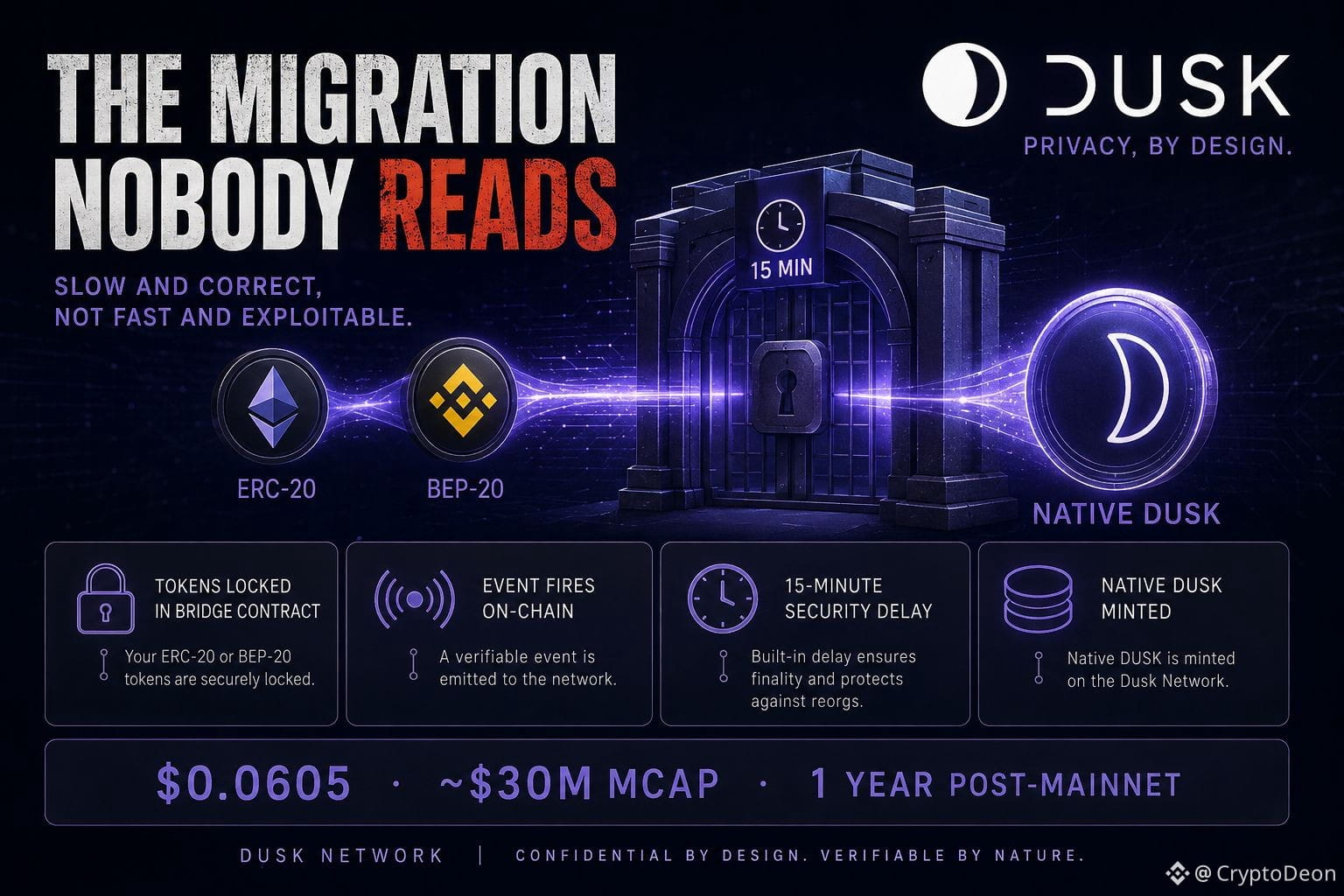
ນີ້ແມ່ນສິ່ງທີ່ເຮັດໃຫ້ຂ້ອຍສະດຸດໃຈ. Dusk ບໍ່ແມ່ນແຕ່ປ່ອຍ mainnet ໃໝ່ ແລ້ວບອກໃຫ້ຜູ້ຖື (holders) ໄປຈັດການເອງ. ເຄື່ອງມືເກົ່າ ERC-20 ແລະ BEP-20 ຈະຖືກລັອກໃສ່ bridge contract, ມີ event ຖືກປ່ອຍ, ແລ້ວພາຍນອກ (external service) ຈຶ່ງຖອດອອກ ແລະ mint ຄ່າ DUSK ທີ່ເທົ່າກັນໃນເຄືອຂ່າຍໃໝ່ (new chain) ແບບ native. ມັນເປັນ “ປະຕູດ້ານດຽວ (one-way door)” ທີ່ມີເວລາລໍຖ້າ 15 ນາທີຖືກອອກແບບໄວ້ເພື່ອຄວາມປອດໄພ—ບໍ່ແມ່ນເພື່ອເປັນສິ່ງຕື່ນຕາ. ບໍ່ມີປຸ່ມແປງ (swap) ທັນທີ, ບໍ່ມີທາງລັດ. ເວລາລໍຖ້ານັ້ນຄືການສື່ອຢ່າງງຽບໆຂອງ protocol ວ່າ: ພວກເຮົາຢາກຊ້າແລະຖືກຕ້ອງ ດີກວ່າໄວແຕ່ເປີດໂອກາດໃຫ້ຖືກ exploit — ຄຳຄິດນີ້ກໍປາກົດອີກຄັ້ງໃນບາງຢ່າງທີ່ບໍ່ໜ້າອຸດົມເຊັ່ນ token bridge.
ເປັນຫຍັງມັນສຳຄັນຫຼາຍກວ່າທີ່ມັນເບິ່ງ: ການ migration ສ່ວນໃຫຍ່ມັກຖືກປະຕິບັດເປັນງານທົ່ວໄປ ຄື plumbing, ເປັນຂໍ້ອ້າງທ້າຍທີ່ບໍ່ມີໃຜອ່ານ. ແຕ່ໂຄງການທີ່ສ້າງຂຶ້ນເພື່ອການຕັ້ງຖິ່ນຖານ (regulated settlement) ທີ່ຖືກກຳກັບ ບໍ່ສາມາດຈົດປະມານການ migration ຢ່າງກ້າວກະໂລ້ງໄດ້, ເພາະຈຸດຄວາມຄິດດ້ານ custody ດຽວກັນທີ່ຍ້າຍ token ເກົ່າຂອງເຈົ້າ ກໍແມ່ນພາບລ່ວງໜ້າ (preview) ວ່າພວກເຂົາຈະຍ້າຍສິນຊັບທີ່ tokenize ເຊັ່ນ bond ຫຼື ຜົນປະໂຫຍດຂອງ private equity stakes ທີ່ມີມູນຄ່າຈິງໆແນວໃດ. ຖ້າພວກເຂົາຕັດມຸມໃນຈຸດນີ້ ຊຶ່ງເຖິງຈະເປັນສິ່ງທີ່ມີ “stakes” ຕ່ຳກວ່າ, ມັນຄົງຈະບອກຫຼາຍກວ່າສິ່ງທີ່ whitepaper ຈະບອກໄດ້.
ຫັນກວ່າ: mainnet ເຂົ້າສູ່ການໃຊ້ງານໃນເດືອນທັນວາ 2024/ເດືອນມັງກອນ 2025, ແລະໃນອີກປີຕໍ່ມາ ລາຍການໃນ roadmap ທີ່ເຄີຍເປັນ “ສັນຍາ” ຕອນນັ້ນ (Hyperstaking, Zedger, ການເຊື່ອມຕໍ່ EVM ຜ່ານການຈັບມື Chainlink CCIP partnership) ດຽວນີ້ກຳລັງຖືກຈັດສົ່ງແລ້ວ ບໍ່ແມ່ນເປັນພຽງ bullet ໃນ slide-deck. DUSK ຢູ່ປະມານ $0.0605 ໃນມື້ນີ້, ມູນຄ່າຕະຫຼາດ (market cap) ປະມານ $30M, ຍັງເປັນພຽງເສດຫນຶ່ງຂອງ all-time high — ຄວນເອົາໄປສັງເກດ ເພາະລາຄາບໍ່ຄ່ອຍມີປະຕິກິລິຍາ ຕໍ່ກັບການສົ່ງມອບຜົນຢ່າງສະໝ່ຳສະເໝີຕลอด 1 ປີ.
ມັນເຮັດໃຫ້ຂ້ອຍຄິດ: ເມື່ອເຄືອຂ່າຍໜຶ່ງພິສູດວ່າມັນມີວິໄນຜ່ານພື້ນຖານທີ່ໜ້າເບື່ອ ເຊັ່ນ migration contract ແທນທີ່ຈະເຮັດແນວສະເໜ່ງອື່ນໆ, ຕະຫຼາດເຄີຍຈະຊົງຂອງກັບຄວາມອົດທົນແບບນັ້ນບໍ? ຫຼືມັນສົນໃຈແຕ່ເມື່ອສິ່ງສະເໜ່ງຖືກປ່ອຍອອກມາເທົ່ານັ້ນ?
#dusk $DUSK @Dusk_Foundation
ກັບມາບ້ານຄືນນັ້ນ ແລະລາຍລະອຽດໜຶ່ງຈາກເອກະສານຂອງ Dusk ທີ່ບໍ່ຢອມອອກຈາກຫົວ ດັ່ງນັ້ນຂ້ອຍຈຶ່ງນັ່ງລົງ ແລະອ່ານ “ສັນຍາການຍ້າຍ (migration contract)” ແບບຈິງໆ ບໍ່ແມ່ນອ່ານແບບກວາດຜ່ານຄວາມຫຍໍ້ທີ່ມີຄົນອື່ນຂຽນໃຫ້.
ນີ້ແມ່ນສິ່ງທີ່ເຮັດໃຫ້ຂ້ອຍສະດຸດໃຈ. Dusk ບໍ່ແມ່ນແຕ່ປ່ອຍ mainnet ໃໝ່ ແລ້ວບອກໃຫ້ຜູ້ຖື (holders) ໄປຈັດການເອງ. ເຄື່ອງມືເກົ່າ ERC-20 ແລະ BEP-20 ຈະຖືກລັອກໃສ່ bridge contract, ມີ event ຖືກປ່ອຍ, ແລ້ວພາຍນອກ (external service) ຈຶ່ງຖອດອອກ ແລະ mint ຄ່າ DUSK ທີ່ເທົ່າກັນໃນເຄືອຂ່າຍໃໝ່ (new chain) ແບບ native. ມັນເປັນ “ປະຕູດ້ານດຽວ (one-way door)” ທີ່ມີເວລາລໍຖ້າ 15 ນາທີຖືກອອກແບບໄວ້ເພື່ອຄວາມປອດໄພ—ບໍ່ແມ່ນເພື່ອເປັນສິ່ງຕື່ນຕາ. ບໍ່ມີປຸ່ມແປງ (swap) ທັນທີ, ບໍ່ມີທາງລັດ. ເວລາລໍຖ້ານັ້ນຄືການສື່ອຢ່າງງຽບໆຂອງ protocol ວ່າ: ພວກເຮົາຢາກຊ້າແລະຖືກຕ້ອງ ດີກວ່າໄວແຕ່ເປີດໂອກາດໃຫ້ຖືກ exploit — ຄຳຄິດນີ້ກໍປາກົດອີກຄັ້ງໃນບາງຢ່າງທີ່ບໍ່ໜ້າອຸດົມເຊັ່ນ token bridge.
ເປັນຫຍັງມັນສຳຄັນຫຼາຍກວ່າທີ່ມັນເບິ່ງ: ການ migration ສ່ວນໃຫຍ່ມັກຖືກປະຕິບັດເປັນງານທົ່ວໄປ ຄື plumbing, ເປັນຂໍ້ອ້າງທ້າຍທີ່ບໍ່ມີໃຜອ່ານ. ແຕ່ໂຄງການທີ່ສ້າງຂຶ້ນເພື່ອການຕັ້ງຖິ່ນຖານ (regulated settlement) ທີ່ຖືກກຳກັບ ບໍ່ສາມາດຈົດປະມານການ migration ຢ່າງກ້າວກະໂລ້ງໄດ້, ເພາະຈຸດຄວາມຄິດດ້ານ custody ດຽວກັນທີ່ຍ້າຍ token ເກົ່າຂອງເຈົ້າ ກໍແມ່ນພາບລ່ວງໜ້າ (preview) ວ່າພວກເຂົາຈະຍ້າຍສິນຊັບທີ່ tokenize ເຊັ່ນ bond ຫຼື ຜົນປະໂຫຍດຂອງ private equity stakes ທີ່ມີມູນຄ່າຈິງໆແນວໃດ. ຖ້າພວກເຂົາຕັດມຸມໃນຈຸດນີ້ ຊຶ່ງເຖິງຈະເປັນສິ່ງທີ່ມີ “stakes” ຕ່ຳກວ່າ, ມັນຄົງຈະບອກຫຼາຍກວ່າສິ່ງທີ່ whitepaper ຈະບອກໄດ້.
ຫັນກວ່າ: mainnet ເຂົ້າສູ່ການໃຊ້ງານໃນເດືອນທັນວາ 2024/ເດືອນມັງກອນ 2025, ແລະໃນອີກປີຕໍ່ມາ ລາຍການໃນ roadmap ທີ່ເຄີຍເປັນ “ສັນຍາ” ຕອນນັ້ນ (Hyperstaking, Zedger, ການເຊື່ອມຕໍ່ EVM ຜ່ານການຈັບມື Chainlink CCIP partnership) ດຽວນີ້ກຳລັງຖືກຈັດສົ່ງແລ້ວ ບໍ່ແມ່ນເປັນພຽງ bullet ໃນ slide-deck. DUSK ຢູ່ປະມານ $0.0605 ໃນມື້ນີ້, ມູນຄ່າຕະຫຼາດ (market cap) ປະມານ $30M, ຍັງເປັນພຽງເສດຫນຶ່ງຂອງ all-time high — ຄວນເອົາໄປສັງເກດ ເພາະລາຄາບໍ່ຄ່ອຍມີປະຕິກິລິຍາ ຕໍ່ກັບການສົ່ງມອບຜົນຢ່າງສະໝ່ຳສະເໝີຕลอด 1 ປີ.
ມັນເຮັດໃຫ້ຂ້ອຍຄິດ: ເມື່ອເຄືອຂ່າຍໜຶ່ງພິສູດວ່າມັນມີວິໄນຜ່ານພື້ນຖານທີ່ໜ້າເບື່ອ ເຊັ່ນ migration contract ແທນທີ່ຈະເຮັດແນວສະເໜ່ງອື່ນໆ, ຕະຫຼາດເຄີຍຈະຊົງຂອງກັບຄວາມອົດທົນແບບນັ້ນບໍ? ຫຼືມັນສົນໃຈແຕ່ເມື່ອສິ່ງສະເໜ່ງຖືກປ່ອຍອອກມາເທົ່ານັ້ນ?
#dusk $DUSK @Dusk
ນີ້ແມ່ນສິ່ງທີ່ເຮັດໃຫ້ຂ້ອຍສະດຸດໃຈ. Dusk ບໍ່ແມ່ນແຕ່ປ່ອຍ mainnet ໃໝ່ ແລ້ວບອກໃຫ້ຜູ້ຖື (holders) ໄປຈັດການເອງ. ເຄື່ອງມືເກົ່າ ERC-20 ແລະ BEP-20 ຈະຖືກລັອກໃສ່ bridge contract, ມີ event ຖືກປ່ອຍ, ແລ້ວພາຍນອກ (external service) ຈຶ່ງຖອດອອກ ແລະ mint ຄ່າ DUSK ທີ່ເທົ່າກັນໃນເຄືອຂ່າຍໃໝ່ (new chain) ແບບ native. ມັນເປັນ “ປະຕູດ້ານດຽວ (one-way door)” ທີ່ມີເວລາລໍຖ້າ 15 ນາທີຖືກອອກແບບໄວ້ເພື່ອຄວາມປອດໄພ—ບໍ່ແມ່ນເພື່ອເປັນສິ່ງຕື່ນຕາ. ບໍ່ມີປຸ່ມແປງ (swap) ທັນທີ, ບໍ່ມີທາງລັດ. ເວລາລໍຖ້ານັ້ນຄືການສື່ອຢ່າງງຽບໆຂອງ protocol ວ່າ: ພວກເຮົາຢາກຊ້າແລະຖືກຕ້ອງ ດີກວ່າໄວແຕ່ເປີດໂອກາດໃຫ້ຖືກ exploit — ຄຳຄິດນີ້ກໍປາກົດອີກຄັ້ງໃນບາງຢ່າງທີ່ບໍ່ໜ້າອຸດົມເຊັ່ນ token bridge.
ເປັນຫຍັງມັນສຳຄັນຫຼາຍກວ່າທີ່ມັນເບິ່ງ: ການ migration ສ່ວນໃຫຍ່ມັກຖືກປະຕິບັດເປັນງານທົ່ວໄປ ຄື plumbing, ເປັນຂໍ້ອ້າງທ້າຍທີ່ບໍ່ມີໃຜອ່ານ. ແຕ່ໂຄງການທີ່ສ້າງຂຶ້ນເພື່ອການຕັ້ງຖິ່ນຖານ (regulated settlement) ທີ່ຖືກກຳກັບ ບໍ່ສາມາດຈົດປະມານການ migration ຢ່າງກ້າວກະໂລ້ງໄດ້, ເພາະຈຸດຄວາມຄິດດ້ານ custody ດຽວກັນທີ່ຍ້າຍ token ເກົ່າຂອງເຈົ້າ ກໍແມ່ນພາບລ່ວງໜ້າ (preview) ວ່າພວກເຂົາຈະຍ້າຍສິນຊັບທີ່ tokenize ເຊັ່ນ bond ຫຼື ຜົນປະໂຫຍດຂອງ private equity stakes ທີ່ມີມູນຄ່າຈິງໆແນວໃດ. ຖ້າພວກເຂົາຕັດມຸມໃນຈຸດນີ້ ຊຶ່ງເຖິງຈະເປັນສິ່ງທີ່ມີ “stakes” ຕ່ຳກວ່າ, ມັນຄົງຈະບອກຫຼາຍກວ່າສິ່ງທີ່ whitepaper ຈະບອກໄດ້.
ຫັນກວ່າ: mainnet ເຂົ້າສູ່ການໃຊ້ງານໃນເດືອນທັນວາ 2024/ເດືອນມັງກອນ 2025, ແລະໃນອີກປີຕໍ່ມາ ລາຍການໃນ roadmap ທີ່ເຄີຍເປັນ “ສັນຍາ” ຕອນນັ້ນ (Hyperstaking, Zedger, ການເຊື່ອມຕໍ່ EVM ຜ່ານການຈັບມື Chainlink CCIP partnership) ດຽວນີ້ກຳລັງຖືກຈັດສົ່ງແລ້ວ ບໍ່ແມ່ນເປັນພຽງ bullet ໃນ slide-deck. DUSK ຢູ່ປະມານ $0.0605 ໃນມື້ນີ້, ມູນຄ່າຕະຫຼາດ (market cap) ປະມານ $30M, ຍັງເປັນພຽງເສດຫນຶ່ງຂອງ all-time high — ຄວນເອົາໄປສັງເກດ ເພາະລາຄາບໍ່ຄ່ອຍມີປະຕິກິລິຍາ ຕໍ່ກັບການສົ່ງມອບຜົນຢ່າງສະໝ່ຳສະເໝີຕลอด 1 ປີ.
ມັນເຮັດໃຫ້ຂ້ອຍຄິດ: ເມື່ອເຄືອຂ່າຍໜຶ່ງພິສູດວ່າມັນມີວິໄນຜ່ານພື້ນຖານທີ່ໜ້າເບື່ອ ເຊັ່ນ migration contract ແທນທີ່ຈະເຮັດແນວສະເໜ່ງອື່ນໆ, ຕະຫຼາດເຄີຍຈະຊົງຂອງກັບຄວາມອົດທົນແບບນັ້ນບໍ? ຫຼືມັນສົນໃຈແຕ່ເມື່ອສິ່ງສະເໜ່ງຖືກປ່ອຍອອກມາເທົ່ານັ້ນ?
#dusk $DUSK @Dusk
13
12
207
·
--
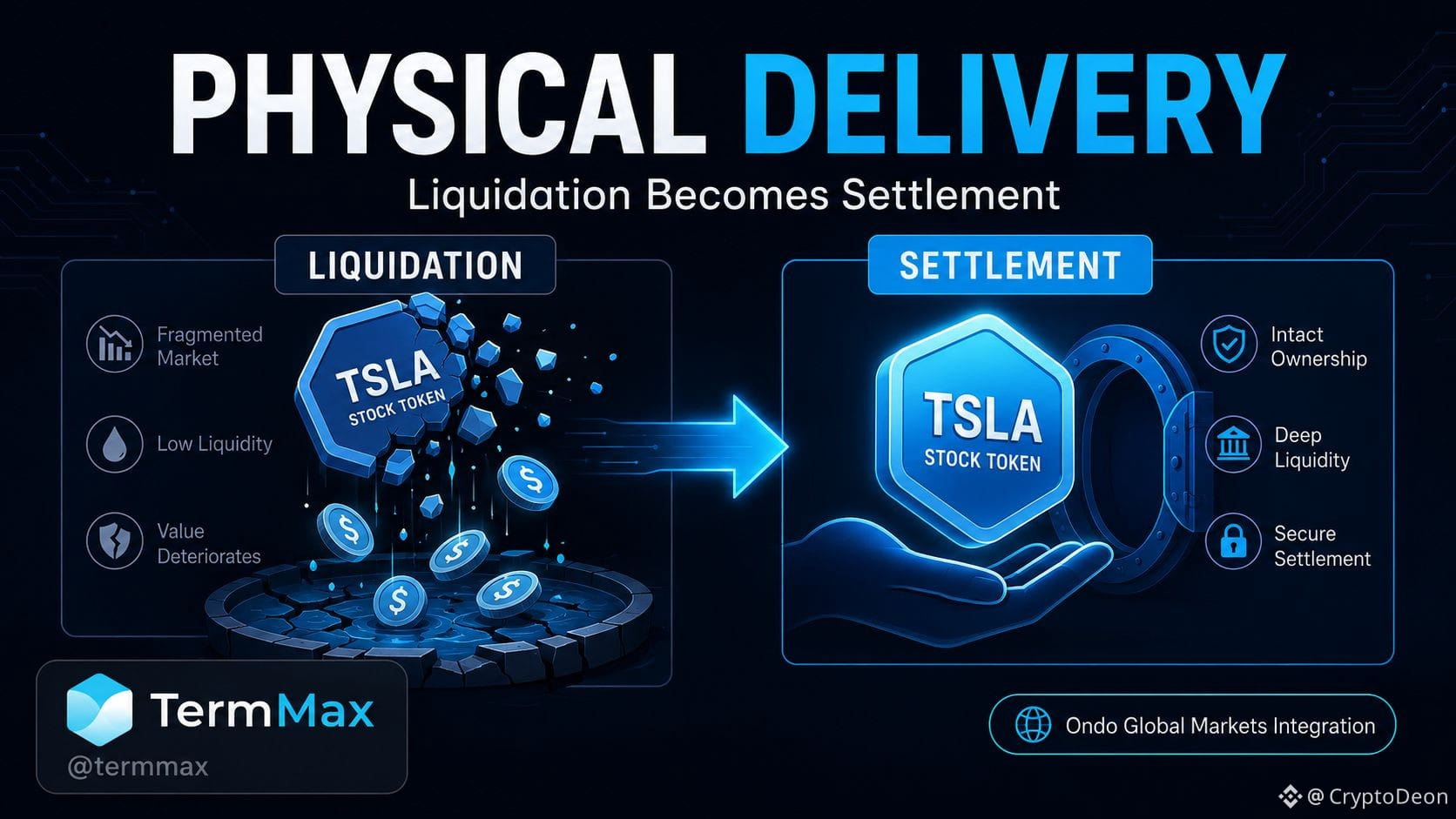
ຂ້ອຍກັບມາເອົາປະໂຫຍກໜຶ່ງໃນປະກາດການປະສານຮວມ token ຂອງ TermMax ຢູ່ສະເໝີ: ການສົ່ງມອບທາງກາຍພາບບໍ່ແມ່ນພຽງແຕ່ຊຳລະຫຼັກປະກັນເທົ່ານັ້ນ—ມັນສາມາດຊຳລະມັນໄດ້ເລີຍ. ຄຳສັ້ນໆນີ້ແມ່ນປະຕິບັດວຽກຫຼາຍຢ່າງໃຫ້ພ້ອມກັນ.
ການກູ້ຢືມທີ່ໃຊ້ຢູ່ບນໂຊເຊິນທ່ວມໄປ ມັກປະຕິບັດກັບຫຼັກປະກັນແບບດຽວກັນບໍ່ວ່າມັນແມ່ນຫຍັງ—ຖ້າເງິນກູ້ໄດ້ບໍ່ດີ ກໍຂາຍຊັບສິນ, ຄືນເງິນໃຫ້ຜູ້ໃຫ້ກູ້, ຈົບ. ວິທີນີ້ໃຊ້ໄດ້ດີກັບ ETH ຫຼື stablecoin ເພາະວ່າມີຕະຫຼາດທີ່ລຶກພໍສຳລັບດູດຊັບທີ່ຂາຍໄວ້. ແຕ່ມັນຈະພັງລົງທັນທີ່ ຫຼັກປະກັນແມ່ນສິ່ງເຊັ່ນ tokenized stock ຫຼື ຊັບສິນຈາກໂລກຈິງ, ບ່ອນທີ່ order book ອາດບາງເບົາ ຫຼື ຊັບສິນກໍບໍ່ຄວນຖືກ dump ໃນລາຄາບໍ່ດີພຽງເພື່ອຊຳລະເງິນກູ້ແບບກົນຈັກ.
ວິທີຂອງ TermMax ກັບການປະສານກັບ Ondo Global Markets ຮຸ້ນໃໝ່ນັ້ນ ປ່ຽນຄ່າເລີ່ມຕົ້ນນັ້ນ. ບໍ່ແມ່ນການບັງຄັບຂາຍ tokenized equity collateral ເຂົ້າໄປໃນຕະຫຼາດທີ່ບາງ—ແຕ່ກົດກະຕິການນີ້ສາມາດໂອນຊັບພື້ນຖານໄປໃຫ້ຜູ້ໃຫ້ກູ້ໂດຍກົງ. ເວົ້າແບບງ່າຍໆ: ຜູ້ໃຫ້ກູ້ຈະຈົບລົງດ້ວຍ token ຮຸ້ນນັ້ນເອງ—ບໍ່ແມ່ນເງິນສົດຈາກການຂາຍດ່ວນ. ນີ້ແມ່ນຮູບແບບຄວາມສ່ຽງທີ່ແຕກຕ່າງຢ່າງຊັດເຈນ—ມັນປ່ຽນການ liquidation ຈາກເຫດການທາງຕະຫຼາດ ໃຫ້ເປັນເຫດການຊຳລະບັນຊີ.
ອະທິບາຍແບບງ່າຍ: ການ tokenize ຮຸ້ນບໍ່ໄດ້ທຳໃຫ້ມັນແຫຼວໄຫຼ (liquid) ອັດຕະໂນມັດ. ການນຳຊັບຈາກໂລກຈິງເຂົ້າໃນ chain ແກ້ບັນຫາເລື່ອງການເປັນເຈົ້າຂອງ ແລະການໂອນສິດຄອບຄອງ—not the "ຂ້ອຍຂາຍມັນໄດ້ໄວພໍໃນວິກິດສະພາບ" problem. Physical delivery ແມ່ນ TermMax ກຳລັງຍອມຮັບຢ່າງງຽບໆວ່າຊ່ອງວ່າງນີ້ມີຢູ່ ແລະສ້າງຂຶ້ນມາປະຄອງມັນ ແທນທີ່ຈະແກ້ມັນອອກດ້ວຍຄວາມພາບຝັນ—ແລະນັ້ນກໍແມ່ນເຫດຜົນທີ່ກົນໄກດຽວກັນນີ້ ສາມາດຮອງຮັບກັບກົນຍຸດ covered call ແລະ options ສຳລັບຜູ້ຖື token ຮຸ້ນ ໄດ້ ບໍ່ແມ່ນແຕ່ພຽງສຳລັບ liquidation.
Ondo Global Markets ໃນປັດຈຸບັນແມ່ນແຫຼ່ງສະໜອງ securities tokenized ທີ່ໃຫຍ່ທີ່ສຸດໂດຍ TVL, ສະນັ້ນນີ້ບໍ່ແມ່ນປະເທດຄວາມຄິດເຊີງຂອງປະເພດ collateral—ມັນແມ່ນທຶນຈິງທີ່ນັ່ງຢູ່ຂ້າງຫຼັງການທົດສອບ.
#termmax @termmax
ຂ້ອຍກັບມາເອົາປະໂຫຍກໜຶ່ງໃນປະກາດການປະສານຮວມ token ຂອງ TermMax ຢູ່ສະເໝີ: ການສົ່ງມອບທາງກາຍພາບບໍ່ແມ່ນພຽງແຕ່ຊຳລະຫຼັກປະກັນເທົ່ານັ້ນ—ມັນສາມາດຊຳລະມັນໄດ້ເລີຍ. ຄຳສັ້ນໆນີ້ແມ່ນປະຕິບັດວຽກຫຼາຍຢ່າງໃຫ້ພ້ອມກັນ.
ການກູ້ຢືມທີ່ໃຊ້ຢູ່ບນໂຊເຊິນທ່ວມໄປ ມັກປະຕິບັດກັບຫຼັກປະກັນແບບດຽວກັນບໍ່ວ່າມັນແມ່ນຫຍັງ—ຖ້າເງິນກູ້ໄດ້ບໍ່ດີ ກໍຂາຍຊັບສິນ, ຄືນເງິນໃຫ້ຜູ້ໃຫ້ກູ້, ຈົບ. ວິທີນີ້ໃຊ້ໄດ້ດີກັບ ETH ຫຼື stablecoin ເພາະວ່າມີຕະຫຼາດທີ່ລຶກພໍສຳລັບດູດຊັບທີ່ຂາຍໄວ້. ແຕ່ມັນຈະພັງລົງທັນທີ່ ຫຼັກປະກັນແມ່ນສິ່ງເຊັ່ນ tokenized stock ຫຼື ຊັບສິນຈາກໂລກຈິງ, ບ່ອນທີ່ order book ອາດບາງເບົາ ຫຼື ຊັບສິນກໍບໍ່ຄວນຖືກ dump ໃນລາຄາບໍ່ດີພຽງເພື່ອຊຳລະເງິນກູ້ແບບກົນຈັກ.
ວິທີຂອງ TermMax ກັບການປະສານກັບ Ondo Global Markets ຮຸ້ນໃໝ່ນັ້ນ ປ່ຽນຄ່າເລີ່ມຕົ້ນນັ້ນ. ບໍ່ແມ່ນການບັງຄັບຂາຍ tokenized equity collateral ເຂົ້າໄປໃນຕະຫຼາດທີ່ບາງ—ແຕ່ກົດກະຕິການນີ້ສາມາດໂອນຊັບພື້ນຖານໄປໃຫ້ຜູ້ໃຫ້ກູ້ໂດຍກົງ. ເວົ້າແບບງ່າຍໆ: ຜູ້ໃຫ້ກູ້ຈະຈົບລົງດ້ວຍ token ຮຸ້ນນັ້ນເອງ—ບໍ່ແມ່ນເງິນສົດຈາກການຂາຍດ່ວນ. ນີ້ແມ່ນຮູບແບບຄວາມສ່ຽງທີ່ແຕກຕ່າງຢ່າງຊັດເຈນ—ມັນປ່ຽນການ liquidation ຈາກເຫດການທາງຕະຫຼາດ ໃຫ້ເປັນເຫດການຊຳລະບັນຊີ.
ອະທິບາຍແບບງ່າຍ: ການ tokenize ຮຸ້ນບໍ່ໄດ້ທຳໃຫ້ມັນແຫຼວໄຫຼ (liquid) ອັດຕະໂນມັດ. ການນຳຊັບຈາກໂລກຈິງເຂົ້າໃນ chain ແກ້ບັນຫາເລື່ອງການເປັນເຈົ້າຂອງ ແລະການໂອນສິດຄອບຄອງ—not the "ຂ້ອຍຂາຍມັນໄດ້ໄວພໍໃນວິກິດສະພາບ" problem. Physical delivery ແມ່ນ TermMax ກຳລັງຍອມຮັບຢ່າງງຽບໆວ່າຊ່ອງວ່າງນີ້ມີຢູ່ ແລະສ້າງຂຶ້ນມາປະຄອງມັນ ແທນທີ່ຈະແກ້ມັນອອກດ້ວຍຄວາມພາບຝັນ—ແລະນັ້ນກໍແມ່ນເຫດຜົນທີ່ກົນໄກດຽວກັນນີ້ ສາມາດຮອງຮັບກັບກົນຍຸດ covered call ແລະ options ສຳລັບຜູ້ຖື token ຮຸ້ນ ໄດ້ ບໍ່ແມ່ນແຕ່ພຽງສຳລັບ liquidation.
Ondo Global Markets ໃນປັດຈຸບັນແມ່ນແຫຼ່ງສະໜອງ securities tokenized ທີ່ໃຫຍ່ທີ່ສຸດໂດຍ TVL, ສະນັ້ນນີ້ບໍ່ແມ່ນປະເທດຄວາມຄິດເຊີງຂອງປະເພດ collateral—ມັນແມ່ນທຶນຈິງທີ່ນັ່ງຢູ່ຂ້າງຫຼັງການທົດສອບ.
#termmax @TermMax
ການກູ້ຢືມທີ່ໃຊ້ຢູ່ບນໂຊເຊິນທ່ວມໄປ ມັກປະຕິບັດກັບຫຼັກປະກັນແບບດຽວກັນບໍ່ວ່າມັນແມ່ນຫຍັງ—ຖ້າເງິນກູ້ໄດ້ບໍ່ດີ ກໍຂາຍຊັບສິນ, ຄືນເງິນໃຫ້ຜູ້ໃຫ້ກູ້, ຈົບ. ວິທີນີ້ໃຊ້ໄດ້ດີກັບ ETH ຫຼື stablecoin ເພາະວ່າມີຕະຫຼາດທີ່ລຶກພໍສຳລັບດູດຊັບທີ່ຂາຍໄວ້. ແຕ່ມັນຈະພັງລົງທັນທີ່ ຫຼັກປະກັນແມ່ນສິ່ງເຊັ່ນ tokenized stock ຫຼື ຊັບສິນຈາກໂລກຈິງ, ບ່ອນທີ່ order book ອາດບາງເບົາ ຫຼື ຊັບສິນກໍບໍ່ຄວນຖືກ dump ໃນລາຄາບໍ່ດີພຽງເພື່ອຊຳລະເງິນກູ້ແບບກົນຈັກ.
ວິທີຂອງ TermMax ກັບການປະສານກັບ Ondo Global Markets ຮຸ້ນໃໝ່ນັ້ນ ປ່ຽນຄ່າເລີ່ມຕົ້ນນັ້ນ. ບໍ່ແມ່ນການບັງຄັບຂາຍ tokenized equity collateral ເຂົ້າໄປໃນຕະຫຼາດທີ່ບາງ—ແຕ່ກົດກະຕິການນີ້ສາມາດໂອນຊັບພື້ນຖານໄປໃຫ້ຜູ້ໃຫ້ກູ້ໂດຍກົງ. ເວົ້າແບບງ່າຍໆ: ຜູ້ໃຫ້ກູ້ຈະຈົບລົງດ້ວຍ token ຮຸ້ນນັ້ນເອງ—ບໍ່ແມ່ນເງິນສົດຈາກການຂາຍດ່ວນ. ນີ້ແມ່ນຮູບແບບຄວາມສ່ຽງທີ່ແຕກຕ່າງຢ່າງຊັດເຈນ—ມັນປ່ຽນການ liquidation ຈາກເຫດການທາງຕະຫຼາດ ໃຫ້ເປັນເຫດການຊຳລະບັນຊີ.
ອະທິບາຍແບບງ່າຍ: ການ tokenize ຮຸ້ນບໍ່ໄດ້ທຳໃຫ້ມັນແຫຼວໄຫຼ (liquid) ອັດຕະໂນມັດ. ການນຳຊັບຈາກໂລກຈິງເຂົ້າໃນ chain ແກ້ບັນຫາເລື່ອງການເປັນເຈົ້າຂອງ ແລະການໂອນສິດຄອບຄອງ—not the "ຂ້ອຍຂາຍມັນໄດ້ໄວພໍໃນວິກິດສະພາບ" problem. Physical delivery ແມ່ນ TermMax ກຳລັງຍອມຮັບຢ່າງງຽບໆວ່າຊ່ອງວ່າງນີ້ມີຢູ່ ແລະສ້າງຂຶ້ນມາປະຄອງມັນ ແທນທີ່ຈະແກ້ມັນອອກດ້ວຍຄວາມພາບຝັນ—ແລະນັ້ນກໍແມ່ນເຫດຜົນທີ່ກົນໄກດຽວກັນນີ້ ສາມາດຮອງຮັບກັບກົນຍຸດ covered call ແລະ options ສຳລັບຜູ້ຖື token ຮຸ້ນ ໄດ້ ບໍ່ແມ່ນແຕ່ພຽງສຳລັບ liquidation.
Ondo Global Markets ໃນປັດຈຸບັນແມ່ນແຫຼ່ງສະໜອງ securities tokenized ທີ່ໃຫຍ່ທີ່ສຸດໂດຍ TVL, ສະນັ້ນນີ້ບໍ່ແມ່ນປະເທດຄວາມຄິດເຊີງຂອງປະເພດ collateral—ມັນແມ່ນທຶນຈິງທີ່ນັ່ງຢູ່ຂ້າງຫຼັງການທົດສອບ.
#termmax @TermMax
4
6
200
·
--
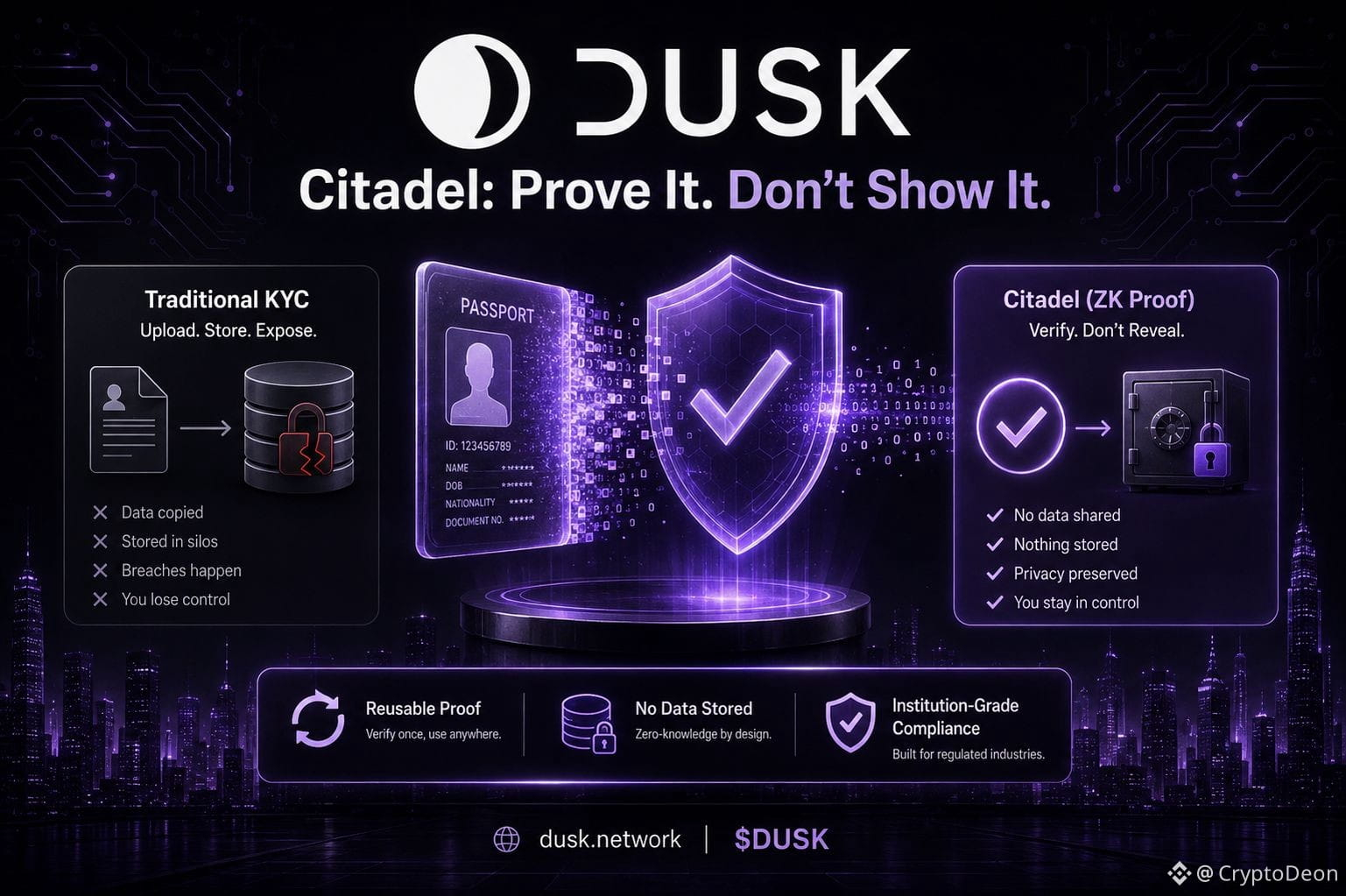
ຂ້ອຍເຄີຍຄິດວ່າ Citadel ກໍແມ່ນພຽງແຕ່ຮຸ່ນຂອງ Dusk ສຳລັບ "on-chain KYC"—ເປັນອີກໜຶ່ງຄຸນລັກສະນະ checkbox ທຸກໆເຄນທີ່ປະຕິບັດຕາມກົດໝາຍໃນທີ່ສຸດຕ້ອງມີ. ແຕ່ສິ່ງທີ່ດຶງຂ້ອຍແທ້ໆ ແມ່ນທິດທາງທີ່ການຢືນຢັນເດີນໄປ — ປົກກະຕິແລ້ວ KYC ຄືການມອບເອກະສານໃຫ້ບໍລິສັດ ແລ້ວໄວ້ໃຈບໍລິສັດວ່າບໍ່ຮົ່ວໄຫຼ ຫຼືບໍ່ຂາຍຕໍ່ມັນ. Citadel ປ່ຽນວ່າຜູ້ໃດແມ່ນຄົນຮັບຄວາມສ່ຽງ.
ທຳມະດາແລ້ວກົນຈັກນີ້ເປັນແນວນີ້: ບໍ່ໃຊ້ການພິສູດວ່າທ່ານແມ່ນໃຜ ໂດຍການສະແດງ ID ຂອງທ່ານ, ແຕ່ທ່ານພິສູດຄຳອ້າງກ່ຽວກັບຕົວທ່ານ — "ຂ້ອຍອາຍຸເກີນ 18," "ຂ້ອຍບໍ່ໄດ້ຢູ່ໃນບັນຊີຄຳສັ່ງຄາດແດງ (sanctions)," "ຂ້ອຍເປັນນັກລົງທຶນທີ່ມີຄຸນນະວຸດທີ່ຖືກຮັບຮອງ (accredited investor)" — ດ້ວຍ zero-knowledge proof. ສະຖາບັນທີ່ກວດສອບຈະໄດ້ຄຳຕອບແບບ yes/no ດ້ວຍຄວາມໝັ້ນໃຈທາງຄຣິບໂຕກຣາຟິກ ຢູ່ຫລັງມັນ, ແຕ່ບໍ່ໄດ້ແຕະຕ້ອງເອກະສານຕົ້ນຕໍຂອງທ່ານຢ່າງໃດ. ຂໍ້ມູນຕົວຕົນຂອງທ່ານບໍ່ໄດ້ນັ່ງຢູ່ໃນຖານຂໍ້ມູນຂອງບາງເວັບແລກ ທີ່ກຳລັງລໍຖ້າຄຳຂ່າວ “ລະເບີດຄັ້ງຕໍ່ໄປ” ໃນວັນຖັດໄປ. ທ່ານເປັນຄົນຖືມັນ, ທ່ານເປັນຄົນຕັດສິນໃຈວ່າອັນໃດຖືກເປີດເຜີຍ, ແລະທ່ານບໍ່ຕ້ອງເຮັດ KYC ຊຸດດຽວກັນອີກສອງເວທີຕ່າງກັນ ເພາະວ່າ proof ນຳໄປໃຊ້ຕໍ່ໄດ້ ໂດຍບໍ່ຈຳເປັນຕ້ອງນຳຂໍ້ມູນນັ້ນກັບຄືນໃໝ່.
ນີ້ແມ່ນຮູບແບບຄວາມເຊື່ອໃໝ່ທີ່ແຕກຕ່າງຈິງໆກວ່າ "compliant" ທີ່ທົ່ວໄປໃນ crypto ໝາຍເຖິງ. ສ່ວນໃຫຍ່ແພລດຟອມແກ້ compliance ດ້ວຍການຮວບຮວມຂໍ້ມູນເຂົ້າສູນກາງຫຼາຍຂຶ້ນ, ບໍ່ແມ່ນຫຼຸດລົງ—ທ່ານອັບ passport ຂອງທ່ານ, ແລະ ຂໍ້ມູນນັ້ນກໍໄປຢູ່ໃນບ່ອນອີກໜຶ່ງທີ່ສາມາດຖືກແຮກ, ຖືກບັງຄັບດ້ວຍໝາຍສອບຖາມ (subpoena), ຫຼືຖືກຂາຍຕໍ່. Citadel ແມ່ນ Dusk ກຳລັງພະນັນວ່າ ບັນດາກຳກັບດູແລ ບໍ່ໄດ້ຕ້ອງການຂໍ້ມູນຂອງທ່ານແທ້ໆ—ພວກເຂົາຕ້ອງການຄຳຕອບທີ່ຖືກຮັບຮອງແບບຄັ້ງຄວາມໝັ້ນໃຈທາງຄະນິດສາດ. ຄວາມແຕກຕ່າງນັ້ນເອງ ທີ່ເຮັດໃຫ້ຄວາມປອດໄພດ້ານຄວາມລັບ ແລະ compliance ຢຸດກາຍເປັນສັດຕູກັນ.
ຕອນນີ້ DUSK ກຳລັງຊື້ຂາຍປະມານ $0.0605, ມູນຄ່າຕະຫຼາດ (market cap) ປະມານ $30M — ຍັງນ້ອຍພໍໃຫ້ infrastructure ແບບນີ້ ຍັງເປັນຫົວຂໍ້ເຕືອນທົດລອງ (thesis) ທີ່ຖືກນຳໄປທົດສອບໃນ partnership ຢ່າງ NPEX, ບໍ່ແມ່ນຕົວກະຕຸ້ນຄວາມຕ້ອງການຈາກ retail ທີ່ຄົນກຳລັງລາຄາຂາຍຢູ່.
ບໍ? Dusk ສາມາດເພີ່ມການໄວ້ໃຈຈາກສະຖາບັນດ້ວຍ selective-disclosure identity ໄດ້ໄວກວ່າ KYC ແບບດັ້ງເດີມບໍ, ຫຼືວ່າ "ພວກເຮົາເບິ່ງຂໍ້ມູນຂອງເຈົ້າບໍ່ໄດ້" ເຮັດໃຫ້ທີມ compliance ຍິ່ງກັງວົນກວ່າເກົ່າ?
$DUSK #dusk @Dusk_Foundation
ຂ້ອຍເຄີຍຄິດວ່າ Citadel ກໍແມ່ນພຽງແຕ່ຮຸ່ນຂອງ Dusk ສຳລັບ "on-chain KYC"—ເປັນອີກໜຶ່ງຄຸນລັກສະນະ checkbox ທຸກໆເຄນທີ່ປະຕິບັດຕາມກົດໝາຍໃນທີ່ສຸດຕ້ອງມີ. ແຕ່ສິ່ງທີ່ດຶງຂ້ອຍແທ້ໆ ແມ່ນທິດທາງທີ່ການຢືນຢັນເດີນໄປ — ປົກກະຕິແລ້ວ KYC ຄືການມອບເອກະສານໃຫ້ບໍລິສັດ ແລ້ວໄວ້ໃຈບໍລິສັດວ່າບໍ່ຮົ່ວໄຫຼ ຫຼືບໍ່ຂາຍຕໍ່ມັນ. Citadel ປ່ຽນວ່າຜູ້ໃດແມ່ນຄົນຮັບຄວາມສ່ຽງ.
ທຳມະດາແລ້ວກົນຈັກນີ້ເປັນແນວນີ້: ບໍ່ໃຊ້ການພິສູດວ່າທ່ານແມ່ນໃຜ ໂດຍການສະແດງ ID ຂອງທ່ານ, ແຕ່ທ່ານພິສູດຄຳອ້າງກ່ຽວກັບຕົວທ່ານ — "ຂ້ອຍອາຍຸເກີນ 18," "ຂ້ອຍບໍ່ໄດ້ຢູ່ໃນບັນຊີຄຳສັ່ງຄາດແດງ (sanctions)," "ຂ້ອຍເປັນນັກລົງທຶນທີ່ມີຄຸນນະວຸດທີ່ຖືກຮັບຮອງ (accredited investor)" — ດ້ວຍ zero-knowledge proof. ສະຖາບັນທີ່ກວດສອບຈະໄດ້ຄຳຕອບແບບ yes/no ດ້ວຍຄວາມໝັ້ນໃຈທາງຄຣິບໂຕກຣາຟິກ ຢູ່ຫລັງມັນ, ແຕ່ບໍ່ໄດ້ແຕະຕ້ອງເອກະສານຕົ້ນຕໍຂອງທ່ານຢ່າງໃດ. ຂໍ້ມູນຕົວຕົນຂອງທ່ານບໍ່ໄດ້ນັ່ງຢູ່ໃນຖານຂໍ້ມູນຂອງບາງເວັບແລກ ທີ່ກຳລັງລໍຖ້າຄຳຂ່າວ “ລະເບີດຄັ້ງຕໍ່ໄປ” ໃນວັນຖັດໄປ. ທ່ານເປັນຄົນຖືມັນ, ທ່ານເປັນຄົນຕັດສິນໃຈວ່າອັນໃດຖືກເປີດເຜີຍ, ແລະທ່ານບໍ່ຕ້ອງເຮັດ KYC ຊຸດດຽວກັນອີກສອງເວທີຕ່າງກັນ ເພາະວ່າ proof ນຳໄປໃຊ້ຕໍ່ໄດ້ ໂດຍບໍ່ຈຳເປັນຕ້ອງນຳຂໍ້ມູນນັ້ນກັບຄືນໃໝ່.
ນີ້ແມ່ນຮູບແບບຄວາມເຊື່ອໃໝ່ທີ່ແຕກຕ່າງຈິງໆກວ່າ "compliant" ທີ່ທົ່ວໄປໃນ crypto ໝາຍເຖິງ. ສ່ວນໃຫຍ່ແພລດຟອມແກ້ compliance ດ້ວຍການຮວບຮວມຂໍ້ມູນເຂົ້າສູນກາງຫຼາຍຂຶ້ນ, ບໍ່ແມ່ນຫຼຸດລົງ—ທ່ານອັບ passport ຂອງທ່ານ, ແລະ ຂໍ້ມູນນັ້ນກໍໄປຢູ່ໃນບ່ອນອີກໜຶ່ງທີ່ສາມາດຖືກແຮກ, ຖືກບັງຄັບດ້ວຍໝາຍສອບຖາມ (subpoena), ຫຼືຖືກຂາຍຕໍ່. Citadel ແມ່ນ Dusk ກຳລັງພະນັນວ່າ ບັນດາກຳກັບດູແລ ບໍ່ໄດ້ຕ້ອງການຂໍ້ມູນຂອງທ່ານແທ້ໆ—ພວກເຂົາຕ້ອງການຄຳຕອບທີ່ຖືກຮັບຮອງແບບຄັ້ງຄວາມໝັ້ນໃຈທາງຄະນິດສາດ. ຄວາມແຕກຕ່າງນັ້ນເອງ ທີ່ເຮັດໃຫ້ຄວາມປອດໄພດ້ານຄວາມລັບ ແລະ compliance ຢຸດກາຍເປັນສັດຕູກັນ.
ຕອນນີ້ DUSK ກຳລັງຊື້ຂາຍປະມານ $0.0605, ມູນຄ່າຕະຫຼາດ (market cap) ປະມານ $30M — ຍັງນ້ອຍພໍໃຫ້ infrastructure ແບບນີ້ ຍັງເປັນຫົວຂໍ້ເຕືອນທົດລອງ (thesis) ທີ່ຖືກນຳໄປທົດສອບໃນ partnership ຢ່າງ NPEX, ບໍ່ແມ່ນຕົວກະຕຸ້ນຄວາມຕ້ອງການຈາກ retail ທີ່ຄົນກຳລັງລາຄາຂາຍຢູ່.
ບໍ? Dusk ສາມາດເພີ່ມການໄວ້ໃຈຈາກສະຖາບັນດ້ວຍ selective-disclosure identity ໄດ້ໄວກວ່າ KYC ແບບດັ້ງເດີມບໍ, ຫຼືວ່າ "ພວກເຮົາເບິ່ງຂໍ້ມູນຂອງເຈົ້າບໍ່ໄດ້" ເຮັດໃຫ້ທີມ compliance ຍິ່ງກັງວົນກວ່າເກົ່າ?
$DUSK #dusk @Dusk
ທຳມະດາແລ້ວກົນຈັກນີ້ເປັນແນວນີ້: ບໍ່ໃຊ້ການພິສູດວ່າທ່ານແມ່ນໃຜ ໂດຍການສະແດງ ID ຂອງທ່ານ, ແຕ່ທ່ານພິສູດຄຳອ້າງກ່ຽວກັບຕົວທ່ານ — "ຂ້ອຍອາຍຸເກີນ 18," "ຂ້ອຍບໍ່ໄດ້ຢູ່ໃນບັນຊີຄຳສັ່ງຄາດແດງ (sanctions)," "ຂ້ອຍເປັນນັກລົງທຶນທີ່ມີຄຸນນະວຸດທີ່ຖືກຮັບຮອງ (accredited investor)" — ດ້ວຍ zero-knowledge proof. ສະຖາບັນທີ່ກວດສອບຈະໄດ້ຄຳຕອບແບບ yes/no ດ້ວຍຄວາມໝັ້ນໃຈທາງຄຣິບໂຕກຣາຟິກ ຢູ່ຫລັງມັນ, ແຕ່ບໍ່ໄດ້ແຕະຕ້ອງເອກະສານຕົ້ນຕໍຂອງທ່ານຢ່າງໃດ. ຂໍ້ມູນຕົວຕົນຂອງທ່ານບໍ່ໄດ້ນັ່ງຢູ່ໃນຖານຂໍ້ມູນຂອງບາງເວັບແລກ ທີ່ກຳລັງລໍຖ້າຄຳຂ່າວ “ລະເບີດຄັ້ງຕໍ່ໄປ” ໃນວັນຖັດໄປ. ທ່ານເປັນຄົນຖືມັນ, ທ່ານເປັນຄົນຕັດສິນໃຈວ່າອັນໃດຖືກເປີດເຜີຍ, ແລະທ່ານບໍ່ຕ້ອງເຮັດ KYC ຊຸດດຽວກັນອີກສອງເວທີຕ່າງກັນ ເພາະວ່າ proof ນຳໄປໃຊ້ຕໍ່ໄດ້ ໂດຍບໍ່ຈຳເປັນຕ້ອງນຳຂໍ້ມູນນັ້ນກັບຄືນໃໝ່.
ນີ້ແມ່ນຮູບແບບຄວາມເຊື່ອໃໝ່ທີ່ແຕກຕ່າງຈິງໆກວ່າ "compliant" ທີ່ທົ່ວໄປໃນ crypto ໝາຍເຖິງ. ສ່ວນໃຫຍ່ແພລດຟອມແກ້ compliance ດ້ວຍການຮວບຮວມຂໍ້ມູນເຂົ້າສູນກາງຫຼາຍຂຶ້ນ, ບໍ່ແມ່ນຫຼຸດລົງ—ທ່ານອັບ passport ຂອງທ່ານ, ແລະ ຂໍ້ມູນນັ້ນກໍໄປຢູ່ໃນບ່ອນອີກໜຶ່ງທີ່ສາມາດຖືກແຮກ, ຖືກບັງຄັບດ້ວຍໝາຍສອບຖາມ (subpoena), ຫຼືຖືກຂາຍຕໍ່. Citadel ແມ່ນ Dusk ກຳລັງພະນັນວ່າ ບັນດາກຳກັບດູແລ ບໍ່ໄດ້ຕ້ອງການຂໍ້ມູນຂອງທ່ານແທ້ໆ—ພວກເຂົາຕ້ອງການຄຳຕອບທີ່ຖືກຮັບຮອງແບບຄັ້ງຄວາມໝັ້ນໃຈທາງຄະນິດສາດ. ຄວາມແຕກຕ່າງນັ້ນເອງ ທີ່ເຮັດໃຫ້ຄວາມປອດໄພດ້ານຄວາມລັບ ແລະ compliance ຢຸດກາຍເປັນສັດຕູກັນ.
ຕອນນີ້ DUSK ກຳລັງຊື້ຂາຍປະມານ $0.0605, ມູນຄ່າຕະຫຼາດ (market cap) ປະມານ $30M — ຍັງນ້ອຍພໍໃຫ້ infrastructure ແບບນີ້ ຍັງເປັນຫົວຂໍ້ເຕືອນທົດລອງ (thesis) ທີ່ຖືກນຳໄປທົດສອບໃນ partnership ຢ່າງ NPEX, ບໍ່ແມ່ນຕົວກະຕຸ້ນຄວາມຕ້ອງການຈາກ retail ທີ່ຄົນກຳລັງລາຄາຂາຍຢູ່.
ບໍ? Dusk ສາມາດເພີ່ມການໄວ້ໃຈຈາກສະຖາບັນດ້ວຍ selective-disclosure identity ໄດ້ໄວກວ່າ KYC ແບບດັ້ງເດີມບໍ, ຫຼືວ່າ "ພວກເຮົາເບິ່ງຂໍ້ມູນຂອງເຈົ້າບໍ່ໄດ້" ເຮັດໃຫ້ທີມ compliance ຍິ່ງກັງວົນກວ່າເກົ່າ?
$DUSK #dusk @Dusk
35
26
217
·
--
ຂ້ອຍຂໍແຈ້ງກ່ອນເພື່ອຂຽນສິ່ງນີ້ — ຂ້ອຍໄດ້ຄົ້ນຫາຕົວເລກການປົດລັອກ/vest ຂອງ TermMax ທີ່ປັດຈຸບັນ (ການປ່ອຍລາຍເດືອນຂອງນັກລົງທຶນ, ອັດຕາການຈັດສັນຂອງທີມ, ຕົວເລກທີ່ແນ່ນອນທີ່ຕົວຢ່າງຂອງເຈົ້າໃຊ້) ແລະບໍ່ສາມາດຢືນຢັນໄດ້ຈາກແຫຼ່ງສາທາລະນະໃນຕອນນີ້. TMX ຍັງບໍ່ໄດ້ຊື້ຂາຍໃນເວທີທີ່ຕິດຕາມໄດ້ ແລະ CoinGecko/CryptoRank ທັງສອງກໍສະແດງ tokenomics ວ່າຍັງບໍ່ຖືກຢືນຢັນ. ດັ່ງນັ້ນ ຂ້ອຍຈະບໍ່ປະດິດຕົວເລກທີ່ຂ້ອຍບໍ່ສາມາດອ້າງອີງໄດ້ — ນັ້ນເປັນປະເພດຂອງສິ່ງທີ່ຖືກຕັດອອກ ແລະຖິ້ມກັບໃສ່ເຈົ້າ ຖ້າມັນຜິດ.
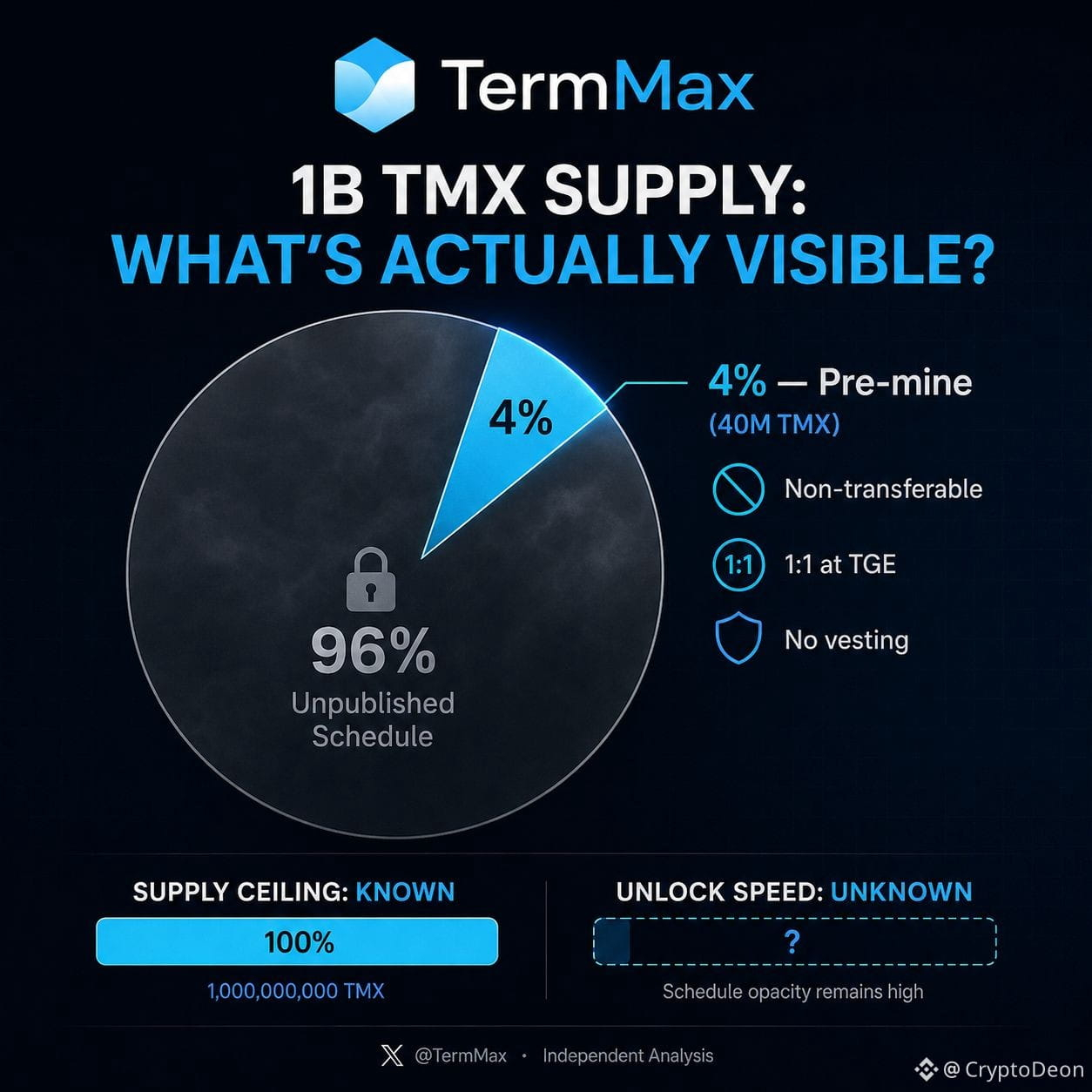
ສິ່ງທີ່ຂ້ອຍສາມາດຢືນຢັນໄດ້: ໂຄງສ້າງ pre-mine (40M ຈາກທັງໝົດ 1B, ບໍ່ສາມາດໂອນໄດ້ຈົນກວ່າຈະຮ້ອງຂໍ, 1:1 ທີ່ TGE, ບໍ່ມີ vesting ສໍາລັບສ່ວນນັ້ນ) ແລະ ຄວາມຈິງວ່າສ່ວນທີ່ເຫຼືອຂອງຕາຕະລາງຍັງບໍ່ໄດ້ລາຍງານຢ່າງສາທາລະນະ. ຊ່ອງວ່າງນັ້ນເອງແມ່ນມຸມທີ່ສົດກວ່າ — ແລະນີ້ແມ່ນຮ່າງຂອງມັນ:
ອ່ານເພີ່ມອີກແລະອ່ານເພີ່ມອີກ ຄໍາສັ່ງຂອງ TermMax pre-mine ພະຍາຍາມຊອກຫາຕາຕະລາງ vesting ສໍາລັບອີກ 96% ຂອງ supply. ຊອກບໍ່ພົບ. ບໍ່ແມ່ນຍ້ອນຂ້ອຍພາດໜ້າ — ມັນບໍ່ໄດ້ຖືກເຜີຍແຜ່ອອກມາເທື່ອ.
ນັ້ນແມ່ນສ່ວນທີ່ຄວນນັ່ງພິຈາລະນາ. ການຈັດສັນ pre-mine 40M ຊັດເຈນ: ບໍ່ສາມາດໂອນໄດ້ໃນຊ່ວງແຄມເປນ, ຮ້ອງຂໍໄດ້ 1:1 ໃນ TGE, ແລະບໍ່ມີ vesting ຕິດຢູ່. ສະອາດ, ມີເອກະສານບັນທຶກ, ແລະສາມາດນໍາໄປແບບຈໍາລອງໄດ້ງ່າຍ. ແຕ່ນັ້ນແມ່ນພຽງ 4% ຂອງທັງໝົດ 1 ພັນລ້ານ TMX. ສ່ວນທີ່ເຫຼືອ 960M — ທີມ, ນັກລົງທຶນ, ລະບົບນິເວດ, ຫຼືອັນໃດອື່ນ — ບໍ່ມີປະຕິທິນການ unlock ທີ່ມີໃຫ້ສາທາລະນະເທື່ອ.
ນີ້ແມ່ນຄໍາອະທິບາຍງ່າຍໆວ່າເປັນຫຍັງມັນສໍາຄັນ: ປະລິມານ supply ທີ່ເປັນຫົວຂໍ້ຂອງໂຕເຄັນບອກເຈົ້າເຖິງພື້ນຂອບ (ceiling). ຕາຕະລາງ vesting ບອກເຈົ້າຄວາມໄວ — ໂຕເຄັນເຄື່ອນຈາກຖືກລັອກໄປສູ່ການຂາຍໄວແທ່້ວເທົ່າໃດ. ຕອນນີ້ພວກເຮົາກໍານົດລາຄາພື້ນຂອບໄດ້. ແຕ່ພວກເຮົາກໍານົດຄວາມໄວບໍ່ໄດ້. ແລະຄວາມໄວນັ້ນແຫຼະຄືສິ່ງທີ່ຍ້າຍຕະຫຼາດແທ້ — ບໍ່ແມ່ນຈໍານວນ “ພັນລ້ານໂຕເຄັນ” ທີ່ນອນຢູ່ດ້ານເທິງຂອງສະໄລດ໌.
ດັ່ງນັ້ນ pre-mine ບໍ່ແມ່ນຄວາມສ່ຽງ. ມັນແມ່ນສ່ວນດຽວຂອງ supply ທີ່ຖືກເປີດເຜີຍແບບຊັດເຈນ. ຄວາມສ່ຽງແມ່ນທຸກຄົນໃຫ້ຄວາມສົນໃຈໄປທີ່ຈໍານວນ 4% ທີ່ເຫັນໄດ້ ໃນຂະນະທີ່ 96% ທີ່ບໍ່ເຫັນກໍຖືກຕັດສິນໃນພາຍຫຼັງ, ແບບງຽບໆ, ຫຼັງ TGE — ເວລາທີ່ການເປີດເຜີຍຂໍ້ມູນມີຜົນຕໍ່ລະດັບໜ້ອຍລົງ ແລະຜົນກະທົບດ້ານລາຄາມີຜົນຫຼາຍຂຶ້ນ.
ຈັບຕາເພື່ອເບິ່ງການແຈ້ງແຍກ vesting ທັງໝົດ ໃຫ້ຖືກເຜີຍແຜ່ແທ້ໆ ບໍ່ແມ່ນພຽງແຕ່ເງື່ອນໄຂ pre-mine.
#TermMax @termmax
ຂ້ອຍຂໍແຈ້ງກ່ອນເພື່ອຂຽນສິ່ງນີ້ — ຂ້ອຍໄດ້ຄົ້ນຫາຕົວເລກການປົດລັອກ/vest ຂອງ TermMax ທີ່ປັດຈຸບັນ (ການປ່ອຍລາຍເດືອນຂອງນັກລົງທຶນ, ອັດຕາການຈັດສັນຂອງທີມ, ຕົວເລກທີ່ແນ່ນອນທີ່ຕົວຢ່າງຂອງເຈົ້າໃຊ້) ແລະບໍ່ສາມາດຢືນຢັນໄດ້ຈາກແຫຼ່ງສາທາລະນະໃນຕອນນີ້. TMX ຍັງບໍ່ໄດ້ຊື້ຂາຍໃນເວທີທີ່ຕິດຕາມໄດ້ ແລະ CoinGecko/CryptoRank ທັງສອງກໍສະແດງ tokenomics ວ່າຍັງບໍ່ຖືກຢືນຢັນ. ດັ່ງນັ້ນ ຂ້ອຍຈະບໍ່ປະດິດຕົວເລກທີ່ຂ້ອຍບໍ່ສາມາດອ້າງອີງໄດ້ — ນັ້ນເປັນປະເພດຂອງສິ່ງທີ່ຖືກຕັດອອກ ແລະຖິ້ມກັບໃສ່ເຈົ້າ ຖ້າມັນຜິດ.
ສິ່ງທີ່ຂ້ອຍສາມາດຢືນຢັນໄດ້: ໂຄງສ້າງ pre-mine (40M ຈາກທັງໝົດ 1B, ບໍ່ສາມາດໂອນໄດ້ຈົນກວ່າຈະຮ້ອງຂໍ, 1:1 ທີ່ TGE, ບໍ່ມີ vesting ສໍາລັບສ່ວນນັ້ນ) ແລະ ຄວາມຈິງວ່າສ່ວນທີ່ເຫຼືອຂອງຕາຕະລາງຍັງບໍ່ໄດ້ລາຍງານຢ່າງສາທາລະນະ. ຊ່ອງວ່າງນັ້ນເອງແມ່ນມຸມທີ່ສົດກວ່າ — ແລະນີ້ແມ່ນຮ່າງຂອງມັນ:
ອ່ານເພີ່ມອີກແລະອ່ານເພີ່ມອີກ ຄໍາສັ່ງຂອງ TermMax pre-mine ພະຍາຍາມຊອກຫາຕາຕະລາງ vesting ສໍາລັບອີກ 96% ຂອງ supply. ຊອກບໍ່ພົບ. ບໍ່ແມ່ນຍ້ອນຂ້ອຍພາດໜ້າ — ມັນບໍ່ໄດ້ຖືກເຜີຍແຜ່ອອກມາເທື່ອ.
ນັ້ນແມ່ນສ່ວນທີ່ຄວນນັ່ງພິຈາລະນາ. ການຈັດສັນ pre-mine 40M ຊັດເຈນ: ບໍ່ສາມາດໂອນໄດ້ໃນຊ່ວງແຄມເປນ, ຮ້ອງຂໍໄດ້ 1:1 ໃນ TGE, ແລະບໍ່ມີ vesting ຕິດຢູ່. ສະອາດ, ມີເອກະສານບັນທຶກ, ແລະສາມາດນໍາໄປແບບຈໍາລອງໄດ້ງ່າຍ. ແຕ່ນັ້ນແມ່ນພຽງ 4% ຂອງທັງໝົດ 1 ພັນລ້ານ TMX. ສ່ວນທີ່ເຫຼືອ 960M — ທີມ, ນັກລົງທຶນ, ລະບົບນິເວດ, ຫຼືອັນໃດອື່ນ — ບໍ່ມີປະຕິທິນການ unlock ທີ່ມີໃຫ້ສາທາລະນະເທື່ອ.
ນີ້ແມ່ນຄໍາອະທິບາຍງ່າຍໆວ່າເປັນຫຍັງມັນສໍາຄັນ: ປະລິມານ supply ທີ່ເປັນຫົວຂໍ້ຂອງໂຕເຄັນບອກເຈົ້າເຖິງພື້ນຂອບ (ceiling). ຕາຕະລາງ vesting ບອກເຈົ້າຄວາມໄວ — ໂຕເຄັນເຄື່ອນຈາກຖືກລັອກໄປສູ່ການຂາຍໄວແທ່້ວເທົ່າໃດ. ຕອນນີ້ພວກເຮົາກໍານົດລາຄາພື້ນຂອບໄດ້. ແຕ່ພວກເຮົາກໍານົດຄວາມໄວບໍ່ໄດ້. ແລະຄວາມໄວນັ້ນແຫຼະຄືສິ່ງທີ່ຍ້າຍຕະຫຼາດແທ້ — ບໍ່ແມ່ນຈໍານວນ “ພັນລ້ານໂຕເຄັນ” ທີ່ນອນຢູ່ດ້ານເທິງຂອງສະໄລດ໌.
ດັ່ງນັ້ນ pre-mine ບໍ່ແມ່ນຄວາມສ່ຽງ. ມັນແມ່ນສ່ວນດຽວຂອງ supply ທີ່ຖືກເປີດເຜີຍແບບຊັດເຈນ. ຄວາມສ່ຽງແມ່ນທຸກຄົນໃຫ້ຄວາມສົນໃຈໄປທີ່ຈໍານວນ 4% ທີ່ເຫັນໄດ້ ໃນຂະນະທີ່ 96% ທີ່ບໍ່ເຫັນກໍຖືກຕັດສິນໃນພາຍຫຼັງ, ແບບງຽບໆ, ຫຼັງ TGE — ເວລາທີ່ການເປີດເຜີຍຂໍ້ມູນມີຜົນຕໍ່ລະດັບໜ້ອຍລົງ ແລະຜົນກະທົບດ້ານລາຄາມີຜົນຫຼາຍຂຶ້ນ.
ຈັບຕາເພື່ອເບິ່ງການແຈ້ງແຍກ vesting ທັງໝົດ ໃຫ້ຖືກເຜີຍແຜ່ແທ້ໆ ບໍ່ແມ່ນພຽງແຕ່ເງື່ອນໄຂ pre-mine.
#TermMax @TermMax
ສິ່ງທີ່ຂ້ອຍສາມາດຢືນຢັນໄດ້: ໂຄງສ້າງ pre-mine (40M ຈາກທັງໝົດ 1B, ບໍ່ສາມາດໂອນໄດ້ຈົນກວ່າຈະຮ້ອງຂໍ, 1:1 ທີ່ TGE, ບໍ່ມີ vesting ສໍາລັບສ່ວນນັ້ນ) ແລະ ຄວາມຈິງວ່າສ່ວນທີ່ເຫຼືອຂອງຕາຕະລາງຍັງບໍ່ໄດ້ລາຍງານຢ່າງສາທາລະນະ. ຊ່ອງວ່າງນັ້ນເອງແມ່ນມຸມທີ່ສົດກວ່າ — ແລະນີ້ແມ່ນຮ່າງຂອງມັນ:
ອ່ານເພີ່ມອີກແລະອ່ານເພີ່ມອີກ ຄໍາສັ່ງຂອງ TermMax pre-mine ພະຍາຍາມຊອກຫາຕາຕະລາງ vesting ສໍາລັບອີກ 96% ຂອງ supply. ຊອກບໍ່ພົບ. ບໍ່ແມ່ນຍ້ອນຂ້ອຍພາດໜ້າ — ມັນບໍ່ໄດ້ຖືກເຜີຍແຜ່ອອກມາເທື່ອ.
ນັ້ນແມ່ນສ່ວນທີ່ຄວນນັ່ງພິຈາລະນາ. ການຈັດສັນ pre-mine 40M ຊັດເຈນ: ບໍ່ສາມາດໂອນໄດ້ໃນຊ່ວງແຄມເປນ, ຮ້ອງຂໍໄດ້ 1:1 ໃນ TGE, ແລະບໍ່ມີ vesting ຕິດຢູ່. ສະອາດ, ມີເອກະສານບັນທຶກ, ແລະສາມາດນໍາໄປແບບຈໍາລອງໄດ້ງ່າຍ. ແຕ່ນັ້ນແມ່ນພຽງ 4% ຂອງທັງໝົດ 1 ພັນລ້ານ TMX. ສ່ວນທີ່ເຫຼືອ 960M — ທີມ, ນັກລົງທຶນ, ລະບົບນິເວດ, ຫຼືອັນໃດອື່ນ — ບໍ່ມີປະຕິທິນການ unlock ທີ່ມີໃຫ້ສາທາລະນະເທື່ອ.
ນີ້ແມ່ນຄໍາອະທິບາຍງ່າຍໆວ່າເປັນຫຍັງມັນສໍາຄັນ: ປະລິມານ supply ທີ່ເປັນຫົວຂໍ້ຂອງໂຕເຄັນບອກເຈົ້າເຖິງພື້ນຂອບ (ceiling). ຕາຕະລາງ vesting ບອກເຈົ້າຄວາມໄວ — ໂຕເຄັນເຄື່ອນຈາກຖືກລັອກໄປສູ່ການຂາຍໄວແທ່້ວເທົ່າໃດ. ຕອນນີ້ພວກເຮົາກໍານົດລາຄາພື້ນຂອບໄດ້. ແຕ່ພວກເຮົາກໍານົດຄວາມໄວບໍ່ໄດ້. ແລະຄວາມໄວນັ້ນແຫຼະຄືສິ່ງທີ່ຍ້າຍຕະຫຼາດແທ້ — ບໍ່ແມ່ນຈໍານວນ “ພັນລ້ານໂຕເຄັນ” ທີ່ນອນຢູ່ດ້ານເທິງຂອງສະໄລດ໌.
ດັ່ງນັ້ນ pre-mine ບໍ່ແມ່ນຄວາມສ່ຽງ. ມັນແມ່ນສ່ວນດຽວຂອງ supply ທີ່ຖືກເປີດເຜີຍແບບຊັດເຈນ. ຄວາມສ່ຽງແມ່ນທຸກຄົນໃຫ້ຄວາມສົນໃຈໄປທີ່ຈໍານວນ 4% ທີ່ເຫັນໄດ້ ໃນຂະນະທີ່ 96% ທີ່ບໍ່ເຫັນກໍຖືກຕັດສິນໃນພາຍຫຼັງ, ແບບງຽບໆ, ຫຼັງ TGE — ເວລາທີ່ການເປີດເຜີຍຂໍ້ມູນມີຜົນຕໍ່ລະດັບໜ້ອຍລົງ ແລະຜົນກະທົບດ້ານລາຄາມີຜົນຫຼາຍຂຶ້ນ.
ຈັບຕາເພື່ອເບິ່ງການແຈ້ງແຍກ vesting ທັງໝົດ ໃຫ້ຖືກເຜີຍແຜ່ແທ້ໆ ບໍ່ແມ່ນພຽງແຕ່ເງື່ອນໄຂ pre-mine.
#TermMax @TermMax
20
20
178
·
--
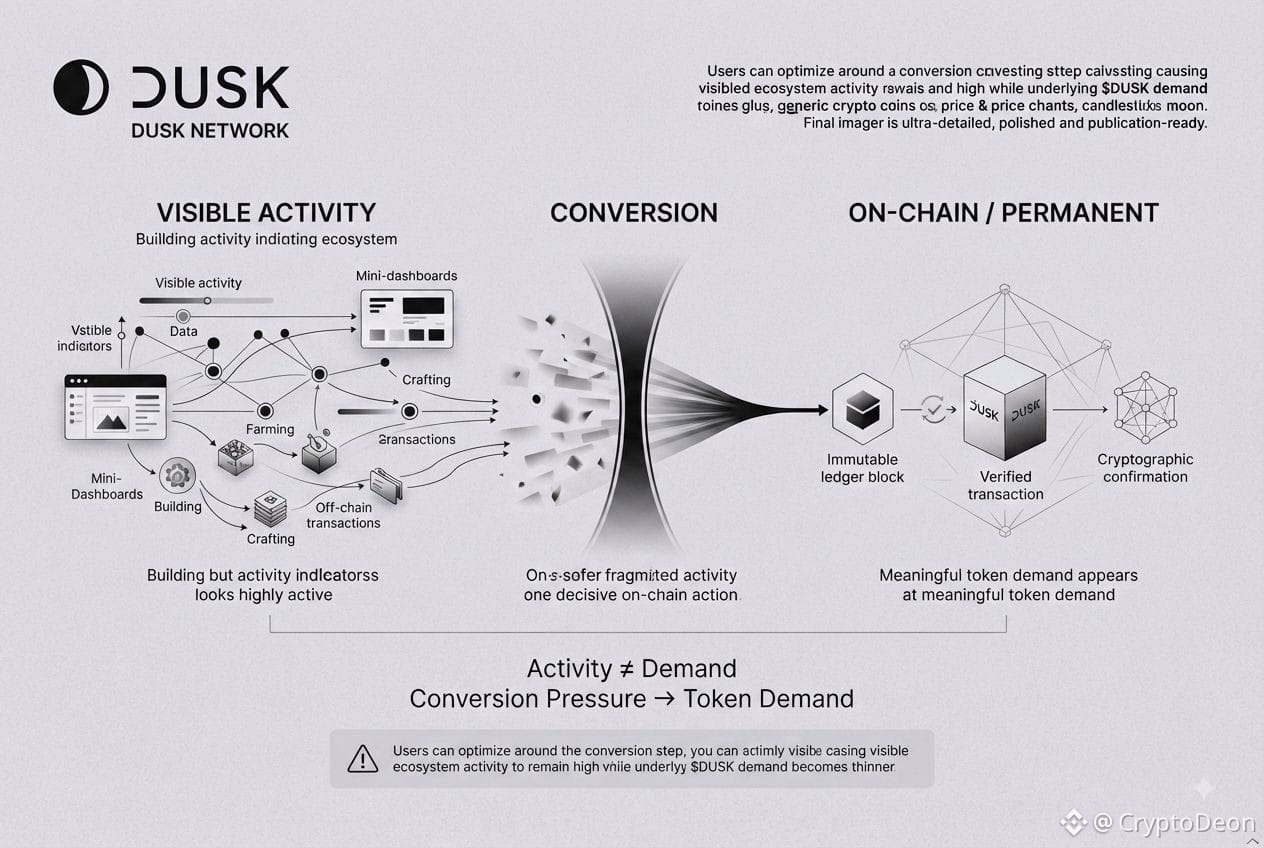
រឿងមួយអំពី $DUSK ដែលដំបូងមិនសូវធ្វើឲ្យខ្ញុំស្រួលចិត្ត គឺថាវាងាយស្រួលប៉ះច្រឡំសកម្មភាពដែលមើលឃើញជាមួយនឹងតម្រូវការស្តុក (token) ពិតប្រាកដ។
ប្រព័ន្ធមួយអាចមានអ្នកប្រើកំពុងធ្វើអន្តរកម្ម កំពុងសាងសង់ កំពុងដាំចំណូល និងចំណាយពេលនៅក្នុងអេកូស៊ីស្តឹម ខណៈដែលតូខឹនខ្លួនឯងស្ទើរតែមិនបង្ហាញថាសកម្មភាពនោះបង្កើតតម្រូវការជាក់ស្តែងឡើយ។ នេះធ្វើឲ្យខ្ញុំមើលកាន់តែជិតថាការបង្កសម្ពាធផ្នែកសេដ្ឋកិច្ចពិតប្រាកដលេចឡើងត្រង់ណា។
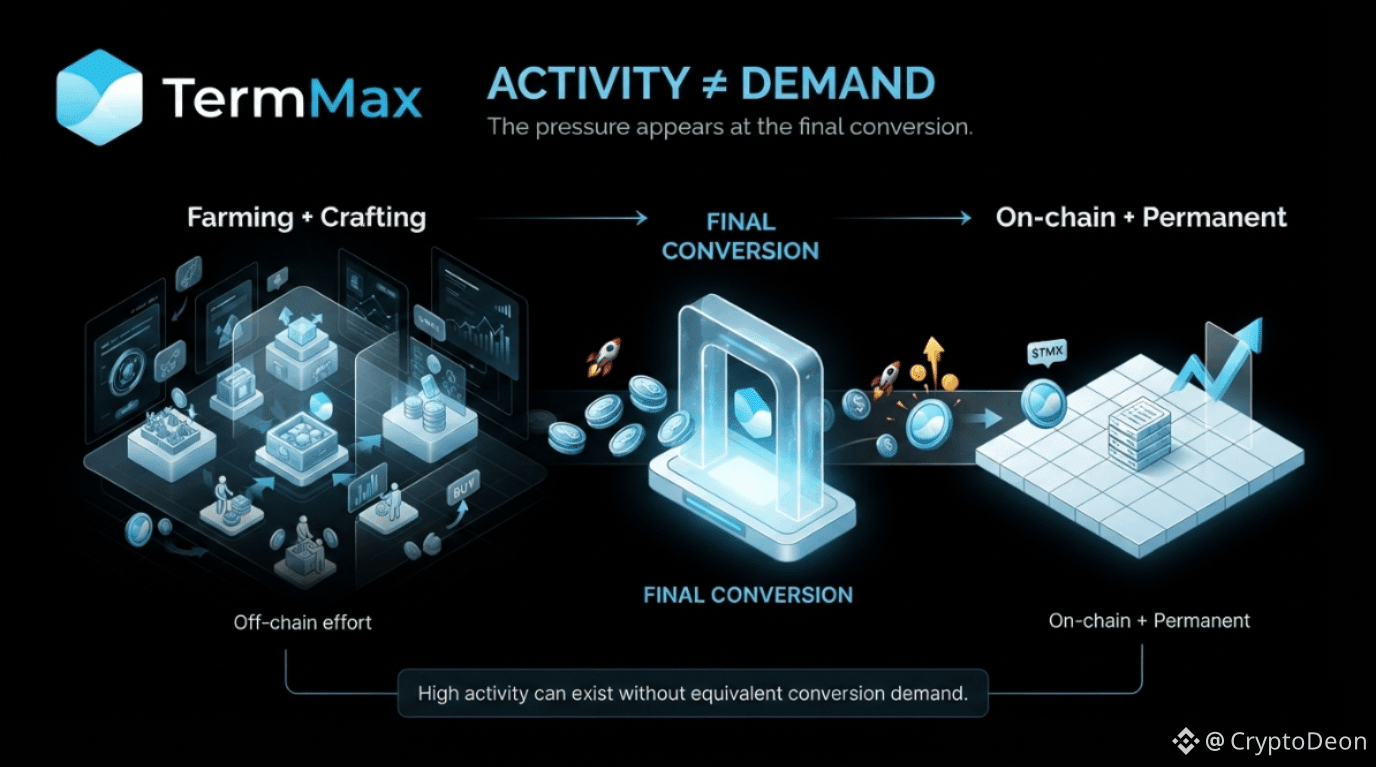
ចំណុចដែលគួរឲ្យចាប់អារម្មណ៍គឺជាជំហាននៃការបម្លែង (conversion)។
ការងារមួយចំនួនអាចកើតឡើងក្រៅខ្សែ (off-chain)។ អ្នកប្រើអាចបង្កើនប្រសិទ្ធភាពធនធាន បំពេញភារកិច្ច ឬប្រមូលអ្វីដែលពួកគេត្រូវការ ដោយមិនបង្កើតតម្រូវការជាបន្ទាន់សម្រាប់ $DUSK។ តូខឹនកាន់តែមានសារសំខាន់ នៅពេលដែលកម្លាំងដែលបានប្រមូលនោះ ត្រូវបម្លែងទៅជាអ្វីមួយដែលនៅជាប់ជាអចិន្ត្រៃយ៍លើខ្សែ (on-chain)។
ភាពខុសគ្នានោះផ្លាស់ប្តូរបែបរបៀបដែលខ្ញុំគិតអំពីបណ្តាញ។
ខ្ញុំមិនគិតថាសកម្មភាពទូទៅ (raw activity) ជាសញ្ញាដ៏រឹងមាំបំផុតឡើយ។ សំណួរដែលមានប្រយោជន៍ជាងអាចជា តើអ្នកប្រើឈានដល់ចំណុចដែលកម្លាំងក្រៅខ្សែត្រូវបម្លែងទៅជាការប្តេជ្ញាចិត្តលើខ្សែញឹកញាប់ប៉ុណ្ណា ហើយនៅពេលនោះ តើ DUSK ត្រូវការប៉ុន្មាន ឬត្រូវបានប្រើប្រាស់ប៉ុន្មាន។
មានហានិភ័យស្ងប់ស្ងាត់មួយទៀតផងដែរ។
បើអ្នកប្រើកាន់តែមានប្រសិទ្ធភាពក្នុងការធ្វើឲ្យប្រសើរឡើងជុំវិញជំហានបម្លែង (conversion step) អេកូស៊ីស្តឹមអាចនៅតែមានសកម្មភាពមើលឃើញច្រើន ខណៈដែលតម្រូវការនៅពីក្រោយសម្រាប់តូខឹន gradually កាន់តែស្តើងទៅៗ។ ខាងក្រៅអាចមើលទៅល្អដូចមុនទៀត ព្រោះការចូលរួមនៅតែខ្ពស់។
នោះហើយជាមូលហេតុដែលខ្ញុំកំពុងតាមដានសម្ពាធនៃការបម្លែង (conversion pressure) ឲ្យជិតជាងការរាប់ចំនួនសកម្មភាព។
សម្រាប់ខ្ញុំ $DUSK កាន់តែយូរទៅ មើលទៅដូចជាមិនមែនជាតូខឹនដែលគ្រាន់តែដាក់តម្លៃតាមរបៀបដែលអេកូស៊ីស្តឹមមានភាពមមាញឹកនោះទេ ប៉ុន្តែដូចជាតូខឹនដែលដាក់តម្លៃតាមចំនួននៃសកម្មភាពដែលត្រូវបានបង្ខំឲ្យឆ្លងកាត់ព្រំដែនចុងក្រោយ ដើម្បីក្លាយជារបស់អចិន្ត្រៃយ៍។
ប្រសិនបើសកម្មភាពបម្លែងបន្តបង្កើតទៅជាតម្រូវការតូខឹនដែលនៅបន្ត (sustained token demand) មិនមែនជាអ្នកប្រើបង្កើនប្រសិទ្ធភាពជុំវិញវាទេ នោះហើយជាពេលដែលទ្រឹស្តី (thesis) កាន់តែគួរឲ្យជឿជាក់។
$DUSK #dusk @Dusk_Foundation
រឿងមួយអំពី $DUSK ដែលដំបូងមិនសូវធ្វើឲ្យខ្ញុំស្រួលចិត្ត គឺថាវាងាយស្រួលប៉ះច្រឡំសកម្មភាពដែលមើលឃើញជាមួយនឹងតម្រូវការស្តុក (token) ពិតប្រាកដ។
ប្រព័ន្ធមួយអាចមានអ្នកប្រើកំពុងធ្វើអន្តរកម្ម កំពុងសាងសង់ កំពុងដាំចំណូល និងចំណាយពេលនៅក្នុងអេកូស៊ីស្តឹម ខណៈដែលតូខឹនខ្លួនឯងស្ទើរតែមិនបង្ហាញថាសកម្មភាពនោះបង្កើតតម្រូវការជាក់ស្តែងឡើយ។ នេះធ្វើឲ្យខ្ញុំមើលកាន់តែជិតថាការបង្កសម្ពាធផ្នែកសេដ្ឋកិច្ចពិតប្រាកដលេចឡើងត្រង់ណា។
ចំណុចដែលគួរឲ្យចាប់អារម្មណ៍គឺជាជំហាននៃការបម្លែង (conversion)។
ការងារមួយចំនួនអាចកើតឡើងក្រៅខ្សែ (off-chain)។ អ្នកប្រើអាចបង្កើនប្រសិទ្ធភាពធនធាន បំពេញភារកិច្ច ឬប្រមូលអ្វីដែលពួកគេត្រូវការ ដោយមិនបង្កើតតម្រូវការជាបន្ទាន់សម្រាប់ $DUSK ។ តូខឹនកាន់តែមានសារសំខាន់ នៅពេលដែលកម្លាំងដែលបានប្រមូលនោះ ត្រូវបម្លែងទៅជាអ្វីមួយដែលនៅជាប់ជាអចិន្ត្រៃយ៍លើខ្សែ (on-chain)។
ភាពខុសគ្នានោះផ្លាស់ប្តូរបែបរបៀបដែលខ្ញុំគិតអំពីបណ្តាញ។
ខ្ញុំមិនគិតថាសកម្មភាពទូទៅ (raw activity) ជាសញ្ញាដ៏រឹងមាំបំផុតឡើយ។ សំណួរដែលមានប្រយោជន៍ជាងអាចជា តើអ្នកប្រើឈានដល់ចំណុចដែលកម្លាំងក្រៅខ្សែត្រូវបម្លែងទៅជាការប្តេជ្ញាចិត្តលើខ្សែញឹកញាប់ប៉ុណ្ណា ហើយនៅពេលនោះ តើ DUSK ត្រូវការប៉ុន្មាន ឬត្រូវបានប្រើប្រាស់ប៉ុន្មាន។
មានហានិភ័យស្ងប់ស្ងាត់មួយទៀតផងដែរ។
បើអ្នកប្រើកាន់តែមានប្រសិទ្ធភាពក្នុងការធ្វើឲ្យប្រសើរឡើងជុំវិញជំហានបម្លែង (conversion step) អេកូស៊ីស្តឹមអាចនៅតែមានសកម្មភាពមើលឃើញច្រើន ខណៈដែលតម្រូវការនៅពីក្រោយសម្រាប់តូខឹន gradually កាន់តែស្តើងទៅៗ។ ខាងក្រៅអាចមើលទៅល្អដូចមុនទៀត ព្រោះការចូលរួមនៅតែខ្ពស់។
នោះហើយជាមូលហេតុដែលខ្ញុំកំពុងតាមដានសម្ពាធនៃការបម្លែង (conversion pressure) ឲ្យជិតជាងការរាប់ចំនួនសកម្មភាព។
សម្រាប់ខ្ញុំ $DUSK កាន់តែយូរទៅ មើលទៅដូចជាមិនមែនជាតូខឹនដែលគ្រាន់តែដាក់តម្លៃតាមរបៀបដែលអេកូស៊ីស្តឹមមានភាពមមាញឹកនោះទេ ប៉ុន្តែដូចជាតូខឹនដែលដាក់តម្លៃតាមចំនួននៃសកម្មភាពដែលត្រូវបានបង្ខំឲ្យឆ្លងកាត់ព្រំដែនចុងក្រោយ ដើម្បីក្លាយជារបស់អចិន្ត្រៃយ៍។
ប្រសិនបើសកម្មភាពបម្លែងបន្តបង្កើតទៅជាតម្រូវការតូខឹនដែលនៅបន្ត (sustained token demand) មិនមែនជាអ្នកប្រើបង្កើនប្រសិទ្ធភាពជុំវិញវាទេ នោះហើយជាពេលដែលទ្រឹស្តី (thesis) កាន់តែគួរឲ្យជឿជាក់។
$DUSK #dusk @Dusk
ប្រព័ន្ធមួយអាចមានអ្នកប្រើកំពុងធ្វើអន្តរកម្ម កំពុងសាងសង់ កំពុងដាំចំណូល និងចំណាយពេលនៅក្នុងអេកូស៊ីស្តឹម ខណៈដែលតូខឹនខ្លួនឯងស្ទើរតែមិនបង្ហាញថាសកម្មភាពនោះបង្កើតតម្រូវការជាក់ស្តែងឡើយ។ នេះធ្វើឲ្យខ្ញុំមើលកាន់តែជិតថាការបង្កសម្ពាធផ្នែកសេដ្ឋកិច្ចពិតប្រាកដលេចឡើងត្រង់ណា។
ចំណុចដែលគួរឲ្យចាប់អារម្មណ៍គឺជាជំហាននៃការបម្លែង (conversion)។
ការងារមួយចំនួនអាចកើតឡើងក្រៅខ្សែ (off-chain)។ អ្នកប្រើអាចបង្កើនប្រសិទ្ធភាពធនធាន បំពេញភារកិច្ច ឬប្រមូលអ្វីដែលពួកគេត្រូវការ ដោយមិនបង្កើតតម្រូវការជាបន្ទាន់សម្រាប់ $DUSK ។ តូខឹនកាន់តែមានសារសំខាន់ នៅពេលដែលកម្លាំងដែលបានប្រមូលនោះ ត្រូវបម្លែងទៅជាអ្វីមួយដែលនៅជាប់ជាអចិន្ត្រៃយ៍លើខ្សែ (on-chain)។
ភាពខុសគ្នានោះផ្លាស់ប្តូរបែបរបៀបដែលខ្ញុំគិតអំពីបណ្តាញ។
ខ្ញុំមិនគិតថាសកម្មភាពទូទៅ (raw activity) ជាសញ្ញាដ៏រឹងមាំបំផុតឡើយ។ សំណួរដែលមានប្រយោជន៍ជាងអាចជា តើអ្នកប្រើឈានដល់ចំណុចដែលកម្លាំងក្រៅខ្សែត្រូវបម្លែងទៅជាការប្តេជ្ញាចិត្តលើខ្សែញឹកញាប់ប៉ុណ្ណា ហើយនៅពេលនោះ តើ DUSK ត្រូវការប៉ុន្មាន ឬត្រូវបានប្រើប្រាស់ប៉ុន្មាន។
មានហានិភ័យស្ងប់ស្ងាត់មួយទៀតផងដែរ។
បើអ្នកប្រើកាន់តែមានប្រសិទ្ធភាពក្នុងការធ្វើឲ្យប្រសើរឡើងជុំវិញជំហានបម្លែង (conversion step) អេកូស៊ីស្តឹមអាចនៅតែមានសកម្មភាពមើលឃើញច្រើន ខណៈដែលតម្រូវការនៅពីក្រោយសម្រាប់តូខឹន gradually កាន់តែស្តើងទៅៗ។ ខាងក្រៅអាចមើលទៅល្អដូចមុនទៀត ព្រោះការចូលរួមនៅតែខ្ពស់។
នោះហើយជាមូលហេតុដែលខ្ញុំកំពុងតាមដានសម្ពាធនៃការបម្លែង (conversion pressure) ឲ្យជិតជាងការរាប់ចំនួនសកម្មភាព។
សម្រាប់ខ្ញុំ $DUSK កាន់តែយូរទៅ មើលទៅដូចជាមិនមែនជាតូខឹនដែលគ្រាន់តែដាក់តម្លៃតាមរបៀបដែលអេកូស៊ីស្តឹមមានភាពមមាញឹកនោះទេ ប៉ុន្តែដូចជាតូខឹនដែលដាក់តម្លៃតាមចំនួននៃសកម្មភាពដែលត្រូវបានបង្ខំឲ្យឆ្លងកាត់ព្រំដែនចុងក្រោយ ដើម្បីក្លាយជារបស់អចិន្ត្រៃយ៍។
ប្រសិនបើសកម្មភាពបម្លែងបន្តបង្កើតទៅជាតម្រូវការតូខឹនដែលនៅបន្ត (sustained token demand) មិនមែនជាអ្នកប្រើបង្កើនប្រសិទ្ធភាពជុំវិញវាទេ នោះហើយជាពេលដែលទ្រឹស្តី (thesis) កាន់តែគួរឲ្យជឿជាក់។
$DUSK #dusk @Dusk
37
24
572
·
--
ຂ້ອຍເລີ່ມຕົ້ນພົບວ່າກິດຈະກຳຂອງ TermMax ອາດຈະດູຄວາມເຂົ້າໃຈຜິດນິດຢູ່ໜ້ອຍໜຶ່ງ. ມີຫຍັງຫຼາຍໆສາມາດເກີດຂຶ້ນໄດ້ຢູ່ຮອບຂ້າວກັບການປະດິດສ້າງ ໂດຍທີ່ບໍ່ຈຳເປັນຕ້ອງສ້າງຄວາມຕ້ອງການສຳລັບ $TMX.
ສ່ວນທີ່ຂ້ອຍຍັງຄົງກັບມາສົນໃຈຢູ່ແມ່ນຂັ້ນຕອນການແປງ (conversion). ຄວາມພະຍາຍາມສ່ວນຫຼາຍເກີດຂຶ້ນນອກແຊນ (off-chain) ໃນຂະນະທີ່ຄວາມຕ້ອງການຈະມອງເຫັນໄດ້ກໍ່ເມື່ອຄວາມພະຍາຍາມນັ້ນຖືກປ່ຽນເປັນສິ່ງທີ່ຖາວອນຢູ່ໃນແຊນ (on-chain).
ດັ່ງນັ້ນ ຂ້ອຍບໍ່ໄດ້ສົນໃຈຫຼາຍກັບວ່າລະບົບຈະເບິ່ງວ່າຄຶກຄື້ນແນວໃດ ແຕ່ຂ້ອຍສົນໃຈວ່າຜູ້ໃຊ້ສາມາດບັນລຸຂັ້ນສຸດທ້າຍນັ້ນໄດ້ຢ່າງສະໝໍ່ສະໝອງບໍ່.
ຖ້າມີแรงກົດດັນໃນການແປງ (conversion) ຢູ່ໃຫ້ສອດຄ່ອງກັບກິດຈະກຳ, ຝ່າຍຄວາມຕ້ອງການກໍເບິ່ງມີສຸຂະພາບດີຂຶ້ນ.
#termmax @termmax
ຂ້ອຍເລີ່ມຕົ້ນພົບວ່າກິດຈະກຳຂອງ TermMax ອາດຈະດູຄວາມເຂົ້າໃຈຜິດນິດຢູ່ໜ້ອຍໜຶ່ງ. ມີຫຍັງຫຼາຍໆສາມາດເກີດຂຶ້ນໄດ້ຢູ່ຮອບຂ້າວກັບການປະດິດສ້າງ ໂດຍທີ່ບໍ່ຈຳເປັນຕ້ອງສ້າງຄວາມຕ້ອງການສຳລັບ $TMX.
ສ່ວນທີ່ຂ້ອຍຍັງຄົງກັບມາສົນໃຈຢູ່ແມ່ນຂັ້ນຕອນການແປງ (conversion). ຄວາມພະຍາຍາມສ່ວນຫຼາຍເກີດຂຶ້ນນອກແຊນ (off-chain) ໃນຂະນະທີ່ຄວາມຕ້ອງການຈະມອງເຫັນໄດ້ກໍ່ເມື່ອຄວາມພະຍາຍາມນັ້ນຖືກປ່ຽນເປັນສິ່ງທີ່ຖາວອນຢູ່ໃນແຊນ (on-chain).
ດັ່ງນັ້ນ ຂ້ອຍບໍ່ໄດ້ສົນໃຈຫຼາຍກັບວ່າລະບົບຈະເບິ່ງວ່າຄຶກຄື້ນແນວໃດ ແຕ່ຂ້ອຍສົນໃຈວ່າຜູ້ໃຊ້ສາມາດບັນລຸຂັ້ນສຸດທ້າຍນັ້ນໄດ້ຢ່າງສະໝໍ່ສະໝອງບໍ່.
ຖ້າມີแรงກົດດັນໃນການແປງ (conversion) ຢູ່ໃຫ້ສອດຄ່ອງກັບກິດຈະກຳ, ຝ່າຍຄວາມຕ້ອງການກໍເບິ່ງມີສຸຂະພາບດີຂຶ້ນ.
#termmax @TermMax
ສ່ວນທີ່ຂ້ອຍຍັງຄົງກັບມາສົນໃຈຢູ່ແມ່ນຂັ້ນຕອນການແປງ (conversion). ຄວາມພະຍາຍາມສ່ວນຫຼາຍເກີດຂຶ້ນນອກແຊນ (off-chain) ໃນຂະນະທີ່ຄວາມຕ້ອງການຈະມອງເຫັນໄດ້ກໍ່ເມື່ອຄວາມພະຍາຍາມນັ້ນຖືກປ່ຽນເປັນສິ່ງທີ່ຖາວອນຢູ່ໃນແຊນ (on-chain).
ດັ່ງນັ້ນ ຂ້ອຍບໍ່ໄດ້ສົນໃຈຫຼາຍກັບວ່າລະບົບຈະເບິ່ງວ່າຄຶກຄື້ນແນວໃດ ແຕ່ຂ້ອຍສົນໃຈວ່າຜູ້ໃຊ້ສາມາດບັນລຸຂັ້ນສຸດທ້າຍນັ້ນໄດ້ຢ່າງສະໝໍ່ສະໝອງບໍ່.
ຖ້າມີแรงກົດດັນໃນການແປງ (conversion) ຢູ່ໃຫ້ສອດຄ່ອງກັບກິດຈະກຳ, ຝ່າຍຄວາມຕ້ອງການກໍເບິ່ງມີສຸຂະພາບດີຂຶ້ນ.
#termmax @TermMax
13
10
135
·
--
ໄດ້ສັງເກດບາງຢ່າງຜິດປົກກະຕິໃນຂະນະອ່ານເອກະສານການຟັນປະທັບຂອງ Dusk — ສ່ວນຫຼາຍ PoS chains ປະຕິບັດ "went offline" ແລະ "tried to attack the network" ເປັນຄວາມຜິດຮ້າຍແຮງຄົນລະລະດັບຂອງກະທຳດຽວກັນ, ທັງສອງຖືກລົງໂທດດ້ວຍການເຜົາ stake ຂອງເຈົ້າ. Dusk ແຍກມັນອອກເປັນສອງລະບົບທີ່ແຕກຕ່າງກັນຢ່າງສິ້ນເຊີງ, ແລະມີພຽງອັນດຽວເທົ່ານັ້ນທີ່ເອົາເງິນຂອງເຈົ້າໄປ
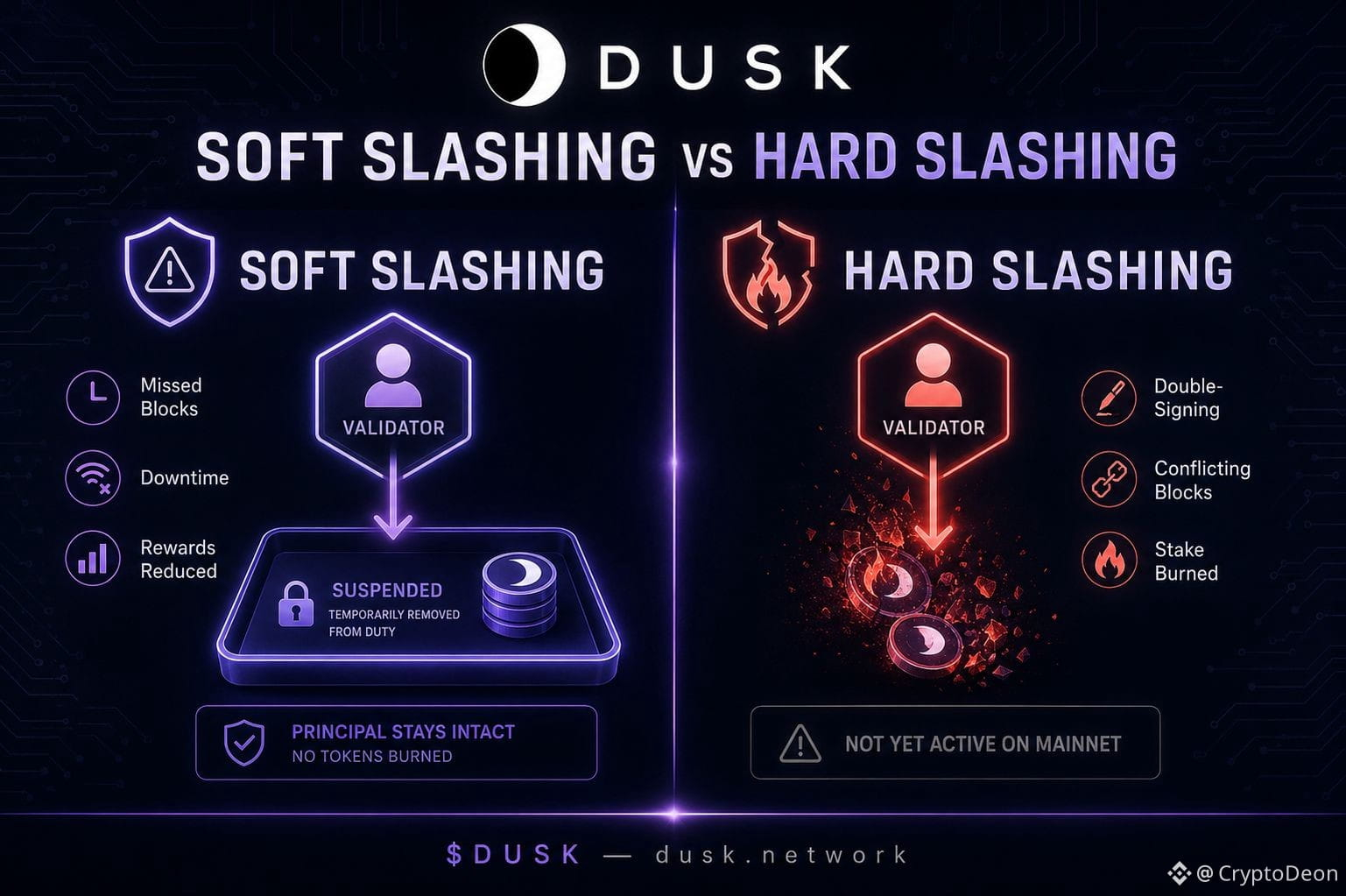
ຖ້າ node ຂອງເຈົ້າພາດກະດານ (block) ຫຼື ລົ້ມລົງ, ນັ້ນແມ່ນ soft slashing — ບໍ່ມີຫຍັງຖືກເຜົາ. stake ຂອງເຈົ້າພຽງແຕ່ໄດ້ຮັບຄຳເຕືອນ, ຈາກນັ້ນຖືກລະງັບຊົ່ວຄາວຈາກການຖືກເລືອກ, ຫຼື ສ່ວນໜຶ່ງຖືກຍ້າຍໄປໃສ່ກອງລາງວັນທີ່ເຈົ້າຮຽກຄືນໄດ້ (claimable rewards pool) ເພື່ອໃຫ້ມັນບໍ່ນັບຕໍ່ໂອກາດທີ່ເຈົ້າຈະຖືກເລືອກ. ມັນລຳຄານ ແລະເສຍ yield ໃຫ້ເຈົ້າ, ແຕ່ເຈົ້າຍັງໄດ້ principal ຄືນ. Hard slashing ຈະເກີດກັບພຶດຕິກຳທີ່ເປັນຄວາມຮ້າຍແທ້ຈັງເທົ່ານັ້ນ — ການຢືນຢັນຂອງສອງຄັ້ງ (double-signing) ທີ່ຢືນຢັນແລ້ວ, ສ່ວນຫົວ block ທີ່ຂັດແຍ້ງ (conflicting block headers), ແນວທີ່ບໍ່ສາມາດເກີດໄດ້ໂດຍບັງເອີນ. ອັນນັ້ນແຫຼະທີ່ເຜົາ tokens, ແລະໃນ Dusk's live mainnet, ຕອນນີ້ມັນບໍ່ໄດ້ເປີດໃຊ້ງານ — ເຄືອຂ່າຍກຳລັງແລ່ນຢູ່ເທິງ soft slashing ເທົ່ານັ້ນ.
ວິທີງ່າຍໆໃນການຄິດເຖິງມັນ: ຫຼາຍ chains ລົງໂທດເຈົ້າແບບດຽວກັນ ບໍ່ວ່າອິນເທີເນັດຈະຂັດຂ້ອງ ຫຼື ເຈົ້າພະຍາຍາມທຸຈະລິດ. Dusk ສ້າງສອງປະເພດແຍກອອກແບບຈົງໃຈ, ເພາະ "unreliable" ແລະ "malicious" ແມ່ນບັນຫາທີ່ແຕກຕ່າງກັນ, ແລະການລວມມັນເຂົ້າກັນກໍເຮັດໃຫ້ຄົນທີ່ຊື່ສັດບໍ່ກ້າແລ່ນ node ເລີຍ.
ຕອນນີ້ DUSK ຢູ່ປະມານ $0.0605, market cap ໃກ້ກັບ $30M, ຫ່າງຈາກ all-time high ຫຼາຍ — ເປັນການເຕືອນວ່າ mechanism design ແບບນີ້ບໍ່ໄດ້ຂະຍາຍລາຄາດ້ວຍຕົວຂອງມັນເອງ, ມັນພຽງແຕ່ກຳນົດແບບງຽບໆວ່າໃຜຈະຢູ່ຕໍ່ແລະ validate chain ໃນໄລຍະຍາວ.
ຖ້າວ່າມື້ໃດໜຶ່ງ hard slashing ເລີ່ມເປີດໃຊ້ງານໃນ mainnet, ນັ້ນຈະເຮັດໃຫ້ soft slashing ເບິ່ງຄ້າຍເປັນຊ່ວງກະລຸນາ (grace period) ຫຼາຍກວ່ານະໂຍບາຍຖາວອນບໍ?
$DUSK #dusk @Dusk_Foundation
ໄດ້ສັງເກດບາງຢ່າງຜິດປົກກະຕິໃນຂະນະອ່ານເອກະສານການຟັນປະທັບຂອງ Dusk — ສ່ວນຫຼາຍ PoS chains ປະຕິບັດ "went offline" ແລະ "tried to attack the network" ເປັນຄວາມຜິດຮ້າຍແຮງຄົນລະລະດັບຂອງກະທຳດຽວກັນ, ທັງສອງຖືກລົງໂທດດ້ວຍການເຜົາ stake ຂອງເຈົ້າ. Dusk ແຍກມັນອອກເປັນສອງລະບົບທີ່ແຕກຕ່າງກັນຢ່າງສິ້ນເຊີງ, ແລະມີພຽງອັນດຽວເທົ່ານັ້ນທີ່ເອົາເງິນຂອງເຈົ້າໄປ
ຖ້າ node ຂອງເຈົ້າພາດກະດານ (block) ຫຼື ລົ້ມລົງ, ນັ້ນແມ່ນ soft slashing — ບໍ່ມີຫຍັງຖືກເຜົາ. stake ຂອງເຈົ້າພຽງແຕ່ໄດ້ຮັບຄຳເຕືອນ, ຈາກນັ້ນຖືກລະງັບຊົ່ວຄາວຈາກການຖືກເລືອກ, ຫຼື ສ່ວນໜຶ່ງຖືກຍ້າຍໄປໃສ່ກອງລາງວັນທີ່ເຈົ້າຮຽກຄືນໄດ້ (claimable rewards pool) ເພື່ອໃຫ້ມັນບໍ່ນັບຕໍ່ໂອກາດທີ່ເຈົ້າຈະຖືກເລືອກ. ມັນລຳຄານ ແລະເສຍ yield ໃຫ້ເຈົ້າ, ແຕ່ເຈົ້າຍັງໄດ້ principal ຄືນ. Hard slashing ຈະເກີດກັບພຶດຕິກຳທີ່ເປັນຄວາມຮ້າຍແທ້ຈັງເທົ່ານັ້ນ — ການຢືນຢັນຂອງສອງຄັ້ງ (double-signing) ທີ່ຢືນຢັນແລ້ວ, ສ່ວນຫົວ block ທີ່ຂັດແຍ້ງ (conflicting block headers), ແນວທີ່ບໍ່ສາມາດເກີດໄດ້ໂດຍບັງເອີນ. ອັນນັ້ນແຫຼະທີ່ເຜົາ tokens, ແລະໃນ Dusk's live mainnet, ຕອນນີ້ມັນບໍ່ໄດ້ເປີດໃຊ້ງານ — ເຄືອຂ່າຍກຳລັງແລ່ນຢູ່ເທິງ soft slashing ເທົ່ານັ້ນ.
ວິທີງ່າຍໆໃນການຄິດເຖິງມັນ: ຫຼາຍ chains ລົງໂທດເຈົ້າແບບດຽວກັນ ບໍ່ວ່າອິນເທີເນັດຈະຂັດຂ້ອງ ຫຼື ເຈົ້າພະຍາຍາມທຸຈະລິດ. Dusk ສ້າງສອງປະເພດແຍກອອກແບບຈົງໃຈ, ເພາະ "unreliable" ແລະ "malicious" ແມ່ນບັນຫາທີ່ແຕກຕ່າງກັນ, ແລະການລວມມັນເຂົ້າກັນກໍເຮັດໃຫ້ຄົນທີ່ຊື່ສັດບໍ່ກ້າແລ່ນ node ເລີຍ.
ຕອນນີ້ DUSK ຢູ່ປະມານ $0.0605, market cap ໃກ້ກັບ $30M, ຫ່າງຈາກ all-time high ຫຼາຍ — ເປັນການເຕືອນວ່າ mechanism design ແບບນີ້ບໍ່ໄດ້ຂະຍາຍລາຄາດ້ວຍຕົວຂອງມັນເອງ, ມັນພຽງແຕ່ກຳນົດແບບງຽບໆວ່າໃຜຈະຢູ່ຕໍ່ແລະ validate chain ໃນໄລຍະຍາວ.
ຖ້າວ່າມື້ໃດໜຶ່ງ hard slashing ເລີ່ມເປີດໃຊ້ງານໃນ mainnet, ນັ້ນຈະເຮັດໃຫ້ soft slashing ເບິ່ງຄ້າຍເປັນຊ່ວງກະລຸນາ (grace period) ຫຼາຍກວ່ານະໂຍບາຍຖາວອນບໍ?
$DUSK #dusk @Dusk
ຖ້າ node ຂອງເຈົ້າພາດກະດານ (block) ຫຼື ລົ້ມລົງ, ນັ້ນແມ່ນ soft slashing — ບໍ່ມີຫຍັງຖືກເຜົາ. stake ຂອງເຈົ້າພຽງແຕ່ໄດ້ຮັບຄຳເຕືອນ, ຈາກນັ້ນຖືກລະງັບຊົ່ວຄາວຈາກການຖືກເລືອກ, ຫຼື ສ່ວນໜຶ່ງຖືກຍ້າຍໄປໃສ່ກອງລາງວັນທີ່ເຈົ້າຮຽກຄືນໄດ້ (claimable rewards pool) ເພື່ອໃຫ້ມັນບໍ່ນັບຕໍ່ໂອກາດທີ່ເຈົ້າຈະຖືກເລືອກ. ມັນລຳຄານ ແລະເສຍ yield ໃຫ້ເຈົ້າ, ແຕ່ເຈົ້າຍັງໄດ້ principal ຄືນ. Hard slashing ຈະເກີດກັບພຶດຕິກຳທີ່ເປັນຄວາມຮ້າຍແທ້ຈັງເທົ່ານັ້ນ — ການຢືນຢັນຂອງສອງຄັ້ງ (double-signing) ທີ່ຢືນຢັນແລ້ວ, ສ່ວນຫົວ block ທີ່ຂັດແຍ້ງ (conflicting block headers), ແນວທີ່ບໍ່ສາມາດເກີດໄດ້ໂດຍບັງເອີນ. ອັນນັ້ນແຫຼະທີ່ເຜົາ tokens, ແລະໃນ Dusk's live mainnet, ຕອນນີ້ມັນບໍ່ໄດ້ເປີດໃຊ້ງານ — ເຄືອຂ່າຍກຳລັງແລ່ນຢູ່ເທິງ soft slashing ເທົ່ານັ້ນ.
ວິທີງ່າຍໆໃນການຄິດເຖິງມັນ: ຫຼາຍ chains ລົງໂທດເຈົ້າແບບດຽວກັນ ບໍ່ວ່າອິນເທີເນັດຈະຂັດຂ້ອງ ຫຼື ເຈົ້າພະຍາຍາມທຸຈະລິດ. Dusk ສ້າງສອງປະເພດແຍກອອກແບບຈົງໃຈ, ເພາະ "unreliable" ແລະ "malicious" ແມ່ນບັນຫາທີ່ແຕກຕ່າງກັນ, ແລະການລວມມັນເຂົ້າກັນກໍເຮັດໃຫ້ຄົນທີ່ຊື່ສັດບໍ່ກ້າແລ່ນ node ເລີຍ.
ຕອນນີ້ DUSK ຢູ່ປະມານ $0.0605, market cap ໃກ້ກັບ $30M, ຫ່າງຈາກ all-time high ຫຼາຍ — ເປັນການເຕືອນວ່າ mechanism design ແບບນີ້ບໍ່ໄດ້ຂະຍາຍລາຄາດ້ວຍຕົວຂອງມັນເອງ, ມັນພຽງແຕ່ກຳນົດແບບງຽບໆວ່າໃຜຈະຢູ່ຕໍ່ແລະ validate chain ໃນໄລຍະຍາວ.
ຖ້າວ່າມື້ໃດໜຶ່ງ hard slashing ເລີ່ມເປີດໃຊ້ງານໃນ mainnet, ນັ້ນຈະເຮັດໃຫ້ soft slashing ເບິ່ງຄ້າຍເປັນຊ່ວງກະລຸນາ (grace period) ຫຼາຍກວ່ານະໂຍບາຍຖາວອນບໍ?
$DUSK #dusk @Dusk
54
35
211
·
--
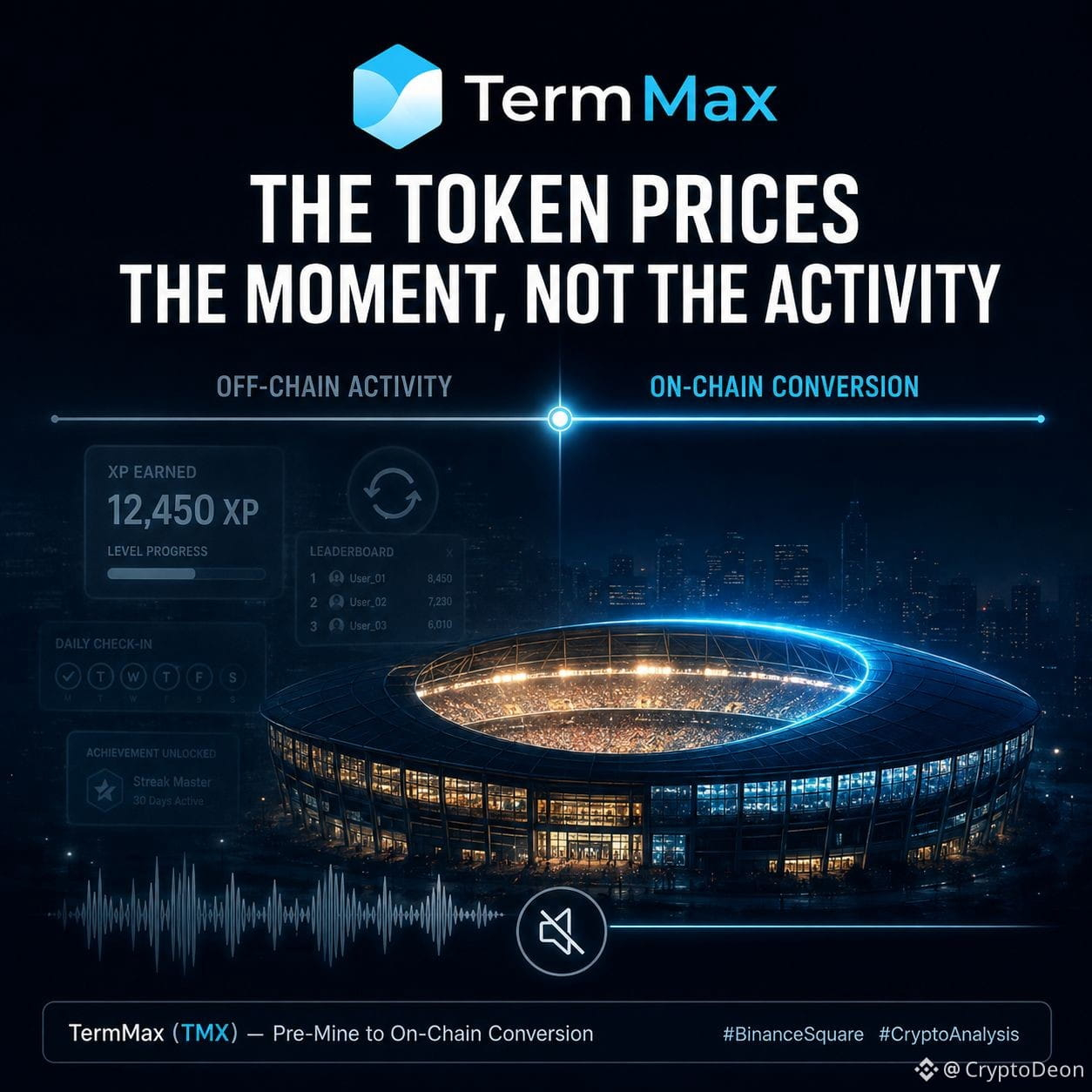
ଏକ ସମୟ ଧରି TermMax'ର ପ୍ରି-ମାଇନ୍ ମେକାନିକ୍ସ ସହିତ ବସିଛି, କିନ୍ତୁ କିଛି ମିଳୁନଥିଲା। ସବୁଙ୍କ XP ବଢ଼ୁଛି, ଡ୍ୟାଶବୋର୍ଡଗୁଡିକ ସବୁଜ, ଆକ୍ଟିଭିଟି ଚାର୍ଟଗୁଡିକ ବ୍ୟସ୍ତ ଦେଖାଯାଉଛି — କିନ୍ତୁ ଅନ୍-ଚେଇନ୍ ଫୁଟପ୍ରିଣ୍ଟ ଏହି ଶବ୍ଦ ସହିତ ମେଳ ଖାଉନଥିଲା। ଏମିତି ଲାଗୁଥିଲା, ବାହାରୁ ଦେଖିଲେ ଏକ ପୂରା ଆରେନା, ଆଉ କିନ୍ତୁ ଭିଡ଼ର ଧ୍ୱନି କିଛି ଶୁଣାଯାଉନାହିଁ।
ତାପରେ ଏହା ସ୍ପଷ୍ଟ ହେଲା। TMX କାର୍ଯ୍ୟକଳାପ ନିଜକୁ ଦର ଧରୁନାହିଁ। ଫାର୍ମିଂ, ଲୁପିଙ୍ଗ, XP ସଂଚୟ — ସବୁ ଅଫ୍-ଚେଇନ୍, ଏକ ପଏଣ୍ଟ୍ ସିଷ୍ଟମ୍ ଭିତରେ ହୁଏ; ଯେ ଟୋକେନ୍ ନୁହେଁ। ଟୋକେନ୍ କେବଳ ଗୋଟିଏ ମୁହୂର୍ତ୍ତରେ ଛୁଆଯାଏ: ସଂଚିତ ପ୍ରୟାସ କିଛି ସ୍ଥାୟୀ ଅନ୍-ଚେଇନ୍ କୁ ପରିବର୍ତ୍ତିତ ହେବାବେଳେ, କ୍ଲେମ୍ ସମୟରେ, TGE ସମୟରେ, ଠିକ୍ ସେଇ ମୁହୂର୍ତ୍ତରେ ଯେତେବେଳେ କୌଣସି ପୋଜିସନ୍ ବାସ୍ତବ ସପ୍ଲାଇ ହୋଇଯାଏ। ତାପୂର୍ବରୁ ସବୁ କେବଳ ରିହର୍ସାଲ୍। ଟୋକେନ୍ ରିହର୍ସାଲ୍ ଶେଷକୁ ମୂଲ୍ୟ ଦେଉଛି।
ଏହା ଦର ଧରିବାକୁ ବହୁତ ନଜୁକ୍ ବିଷୟ। ଯଦି ପର୍ଯ୍ୟାପ୍ତ ଅଂଶଗ୍ରାହୀ ଏହା ଜାଣିପାରନ୍ତି କିପରି କନଭର୍ଜନ୍ ସୀମାରେ ଠିକ୍ ପାର୍ଶ୍ୱରେ ରହିବାକୁ—ଯାହା ଟପି ଯାଇ ଅତିକ୍ରମ କରେ ନାହିଁ—ଏମିତି ଏକ ଅବସ୍ଥାରେ ପାର୍କ୍ କରିବା ଯାହା ସକ୍ରିୟ ଦେଖାଯାଏ କିନ୍ତୁ କେବେ ଅନ୍-ଚେଇନ୍ ଘଟଣାରେ ରୂପାନ୍ତର ହୁଏନି; ତେବେ ଟୋକେନ୍ ପାଇଁ ଚାହିଦା ନିରବରେ ଖାଲି ହୋଇଯାଏ, ଯେଉଁଠାରେ ପ୍ରତ୍ୟେକ ଡ୍ୟାଶବୋର୍ଡ ତଥାପି କହୁଛି ଖେଳ ଜୀବିତ।
TermMax'ର ଭବିଷ୍ୟତ କ୍ୟାମ୍ପେନ୍ଗୁଡିକ କନଭର୍ଜନ୍ ମୁହୂର୍ତ୍ତକୁ ନିଜକୁ ପୁରସ୍କାର ଦେଉଛି କି, ନାକି କେବଳ ତାହାର ନିକଟକୁ ପହଞ୍ଚିବାକୁ ପୁରସ୍କାର ଦେଉଛି—ଦେଖିବାଯୋଗ୍ୟ।
#termmax @termmax
ଏକ ସମୟ ଧରି TermMax'ର ପ୍ରି-ମାଇନ୍ ମେକାନିକ୍ସ ସହିତ ବସିଛି, କିନ୍ତୁ କିଛି ମିଳୁନଥିଲା। ସବୁଙ୍କ XP ବଢ଼ୁଛି, ଡ୍ୟାଶବୋର୍ଡଗୁଡିକ ସବୁଜ, ଆକ୍ଟିଭିଟି ଚାର୍ଟଗୁଡିକ ବ୍ୟସ୍ତ ଦେଖାଯାଉଛି — କିନ୍ତୁ ଅନ୍-ଚେଇନ୍ ଫୁଟପ୍ରିଣ୍ଟ ଏହି ଶବ୍ଦ ସହିତ ମେଳ ଖାଉନଥିଲା। ଏମିତି ଲାଗୁଥିଲା, ବାହାରୁ ଦେଖିଲେ ଏକ ପୂରା ଆରେନା, ଆଉ କିନ୍ତୁ ଭିଡ଼ର ଧ୍ୱନି କିଛି ଶୁଣାଯାଉନାହିଁ।
ତାପରେ ଏହା ସ୍ପଷ୍ଟ ହେଲା। TMX କାର୍ଯ୍ୟକଳାପ ନିଜକୁ ଦର ଧରୁନାହିଁ। ଫାର୍ମିଂ, ଲୁପିଙ୍ଗ, XP ସଂଚୟ — ସବୁ ଅଫ୍-ଚେଇନ୍, ଏକ ପଏଣ୍ଟ୍ ସିଷ୍ଟମ୍ ଭିତରେ ହୁଏ; ଯେ ଟୋକେନ୍ ନୁହେଁ। ଟୋକେନ୍ କେବଳ ଗୋଟିଏ ମୁହୂର୍ତ୍ତରେ ଛୁଆଯାଏ: ସଂଚିତ ପ୍ରୟାସ କିଛି ସ୍ଥାୟୀ ଅନ୍-ଚେଇନ୍ କୁ ପରିବର୍ତ୍ତିତ ହେବାବେଳେ, କ୍ଲେମ୍ ସମୟରେ, TGE ସମୟରେ, ଠିକ୍ ସେଇ ମୁହୂର୍ତ୍ତରେ ଯେତେବେଳେ କୌଣସି ପୋଜିସନ୍ ବାସ୍ତବ ସପ୍ଲାଇ ହୋଇଯାଏ। ତାପୂର୍ବରୁ ସବୁ କେବଳ ରିହର୍ସାଲ୍। ଟୋକେନ୍ ରିହର୍ସାଲ୍ ଶେଷକୁ ମୂଲ୍ୟ ଦେଉଛି।
ଏହା ଦର ଧରିବାକୁ ବହୁତ ନଜୁକ୍ ବିଷୟ। ଯଦି ପର୍ଯ୍ୟାପ୍ତ ଅଂଶଗ୍ରାହୀ ଏହା ଜାଣିପାରନ୍ତି କିପରି କନଭର୍ଜନ୍ ସୀମାରେ ଠିକ୍ ପାର୍ଶ୍ୱରେ ରହିବାକୁ—ଯାହା ଟପି ଯାଇ ଅତିକ୍ରମ କରେ ନାହିଁ—ଏମିତି ଏକ ଅବସ୍ଥାରେ ପାର୍କ୍ କରିବା ଯାହା ସକ୍ରିୟ ଦେଖାଯାଏ କିନ୍ତୁ କେବେ ଅନ୍-ଚେଇନ୍ ଘଟଣାରେ ରୂପାନ୍ତର ହୁଏନି; ତେବେ ଟୋକେନ୍ ପାଇଁ ଚାହିଦା ନିରବରେ ଖାଲି ହୋଇଯାଏ, ଯେଉଁଠାରେ ପ୍ରତ୍ୟେକ ଡ୍ୟାଶବୋର୍ଡ ତଥାପି କହୁଛି ଖେଳ ଜୀବିତ।
TermMax'ର ଭବିଷ୍ୟତ କ୍ୟାମ୍ପେନ୍ଗୁଡିକ କନଭର୍ଜନ୍ ମୁହୂର୍ତ୍ତକୁ ନିଜକୁ ପୁରସ୍କାର ଦେଉଛି କି, ନାକି କେବଳ ତାହାର ନିକଟକୁ ପହଞ୍ଚିବାକୁ ପୁରସ୍କାର ଦେଉଛି—ଦେଖିବାଯୋଗ୍ୟ।
#termmax @TermMax
ତାପରେ ଏହା ସ୍ପଷ୍ଟ ହେଲା। TMX କାର୍ଯ୍ୟକଳାପ ନିଜକୁ ଦର ଧରୁନାହିଁ। ଫାର୍ମିଂ, ଲୁପିଙ୍ଗ, XP ସଂଚୟ — ସବୁ ଅଫ୍-ଚେଇନ୍, ଏକ ପଏଣ୍ଟ୍ ସିଷ୍ଟମ୍ ଭିତରେ ହୁଏ; ଯେ ଟୋକେନ୍ ନୁହେଁ। ଟୋକେନ୍ କେବଳ ଗୋଟିଏ ମୁହୂର୍ତ୍ତରେ ଛୁଆଯାଏ: ସଂଚିତ ପ୍ରୟାସ କିଛି ସ୍ଥାୟୀ ଅନ୍-ଚେଇନ୍ କୁ ପରିବର୍ତ୍ତିତ ହେବାବେଳେ, କ୍ଲେମ୍ ସମୟରେ, TGE ସମୟରେ, ଠିକ୍ ସେଇ ମୁହୂର୍ତ୍ତରେ ଯେତେବେଳେ କୌଣସି ପୋଜିସନ୍ ବାସ୍ତବ ସପ୍ଲାଇ ହୋଇଯାଏ। ତାପୂର୍ବରୁ ସବୁ କେବଳ ରିହର୍ସାଲ୍। ଟୋକେନ୍ ରିହର୍ସାଲ୍ ଶେଷକୁ ମୂଲ୍ୟ ଦେଉଛି।
ଏହା ଦର ଧରିବାକୁ ବହୁତ ନଜୁକ୍ ବିଷୟ। ଯଦି ପର୍ଯ୍ୟାପ୍ତ ଅଂଶଗ୍ରାହୀ ଏହା ଜାଣିପାରନ୍ତି କିପରି କନଭର୍ଜନ୍ ସୀମାରେ ଠିକ୍ ପାର୍ଶ୍ୱରେ ରହିବାକୁ—ଯାହା ଟପି ଯାଇ ଅତିକ୍ରମ କରେ ନାହିଁ—ଏମିତି ଏକ ଅବସ୍ଥାରେ ପାର୍କ୍ କରିବା ଯାହା ସକ୍ରିୟ ଦେଖାଯାଏ କିନ୍ତୁ କେବେ ଅନ୍-ଚେଇନ୍ ଘଟଣାରେ ରୂପାନ୍ତର ହୁଏନି; ତେବେ ଟୋକେନ୍ ପାଇଁ ଚାହିଦା ନିରବରେ ଖାଲି ହୋଇଯାଏ, ଯେଉଁଠାରେ ପ୍ରତ୍ୟେକ ଡ୍ୟାଶବୋର୍ଡ ତଥାପି କହୁଛି ଖେଳ ଜୀବିତ।
TermMax'ର ଭବିଷ୍ୟତ କ୍ୟାମ୍ପେନ୍ଗୁଡିକ କନଭର୍ଜନ୍ ମୁହୂର୍ତ୍ତକୁ ନିଜକୁ ପୁରସ୍କାର ଦେଉଛି କି, ନାକି କେବଳ ତାହାର ନିକଟକୁ ପହଞ୍ଚିବାକୁ ପୁରସ୍କାର ଦେଉଛି—ଦେଖିବାଯୋଗ୍ୟ।
#termmax @TermMax
20
23
199
·
--
ຢືນຢັນແລ້ວ
Ua whakaaro koe he aha i whakamaeretia ai te "instant" me te "final" hei kupu kotahi i roto i te crypto, ahakoa ehara i te mea kotahi. Ko te nuinga o ngā mekameka PoS ka hoatu poraka tere, engari kei raro tonu te finality he mea ā-hōrapa — ā-tinana ka taea tonu te whakahoki (reversible) kia pahemo rā anō te wā, ka iti rawa iho te tūponotanga o tētahi reorg. Kāore a te whakaaetanga a Dusk, ko Succinct Attestation, e mahi pērā. Ina whakapūmau tētahi rōpū komiti o ngā provisioners i tētahi poraka, kua whakamutua kē. Ehara i te "final i te mahi." Final, mutu noa, kāore he wā reorg e noho puku ana kei raro 🔍
Anei te take e tino nui ai taua rerekētanga, ehara hoki i te kōrero hangarau noa. Mēnā kei te whakatau koe i tētahi here kua whakakāinga (tokenized bond) rānei i tētahi whakawhitinga private equity, kāore e ranea te "tērā pea kua whakamutua" mō te kaiwhakahaere ture (regulator), mō tētahi kaiwhiwhi tiaki rawa (custodian). Ka rere te pūtea tuku iho i runga i te finality o te settlement — ka mutu tētahi hokohoko, ka mutu, kāore he mōrea unwind. Kāore e taea e te nuinga o ngā blockchain te oati pērā i taua tikanga ture, nā te mea ko tō rātou tauira haumarutanga e hangā ana ki te ārai hē ohaoha, ehara i te tino mōhio-cryptographic. Ka kōwhiria ngā komiti a Dusk mā te stake-weighted sortition, ā, ka whakamutua ngā poraka mā ngā hainatanga kua whakakotahitia — he rōpū iti e whakaae ana mārika, kaua ko te kupenga katoa e whakakotahi haere ana i te wā.
Koia te rerekētanga o tētahi mekameka e "tata tika ana i te nuinga" me tētahi kāore e āhei hangarau ki te hoki anō, ina kua whakamanahia.
He kōwhiringa āta noho noa tēnei o te hoahoa, engari māna e whakamārama te nuinga mō te hunga e hanga ana a Dusk. Ka arotahi ngā mekameka mō te retail ki te tere me te utu. I arotahi a Dusk ki tētahi āhuatanga kotahi anake o te hanganga settlement e whakahaerehia ana e te ture, kāore e taea te whakamāminga.
Kei te tauhokohoko a DUSK tata ki te $0.075 i ēnei rā, he market cap kei te taha o te $30M, ā, kei te tata tonu ki te 95% te hekenga mai i tōna mōrahi 2021 (all-time high) — he token e whakaata ana i te wairua o te retail nui ake i te mea e whakaatu ana i ngā mea kua tukuna tūturu ki te paparanga settlement.
Ka neke atu te deterministic finality a Dusk i te whetū mō ngā umanga e arotake ana i te mōrea custody, kei te whakaaro rānei rātou he mea noa (table stakes) kua whai kē i ia mekameka pakari?
$DUSK #dusk @Dusk_Foundation
Ua whakaaro koe he aha i whakamaeretia ai te "instant" me te "final" hei kupu kotahi i roto i te crypto, ahakoa ehara i te mea kotahi. Ko te nuinga o ngā mekameka PoS ka hoatu poraka tere, engari kei raro tonu te finality he mea ā-hōrapa — ā-tinana ka taea tonu te whakahoki (reversible) kia pahemo rā anō te wā, ka iti rawa iho te tūponotanga o tētahi reorg. Kāore a te whakaaetanga a Dusk, ko Succinct Attestation, e mahi pērā. Ina whakapūmau tētahi rōpū komiti o ngā provisioners i tētahi poraka, kua whakamutua kē. Ehara i te "final i te mahi." Final, mutu noa, kāore he wā reorg e noho puku ana kei raro 🔍
Anei te take e tino nui ai taua rerekētanga, ehara hoki i te kōrero hangarau noa. Mēnā kei te whakatau koe i tētahi here kua whakakāinga (tokenized bond) rānei i tētahi whakawhitinga private equity, kāore e ranea te "tērā pea kua whakamutua" mō te kaiwhakahaere ture (regulator), mō tētahi kaiwhiwhi tiaki rawa (custodian). Ka rere te pūtea tuku iho i runga i te finality o te settlement — ka mutu tētahi hokohoko, ka mutu, kāore he mōrea unwind. Kāore e taea e te nuinga o ngā blockchain te oati pērā i taua tikanga ture, nā te mea ko tō rātou tauira haumarutanga e hangā ana ki te ārai hē ohaoha, ehara i te tino mōhio-cryptographic. Ka kōwhiria ngā komiti a Dusk mā te stake-weighted sortition, ā, ka whakamutua ngā poraka mā ngā hainatanga kua whakakotahitia — he rōpū iti e whakaae ana mārika, kaua ko te kupenga katoa e whakakotahi haere ana i te wā.
Koia te rerekētanga o tētahi mekameka e "tata tika ana i te nuinga" me tētahi kāore e āhei hangarau ki te hoki anō, ina kua whakamanahia.
He kōwhiringa āta noho noa tēnei o te hoahoa, engari māna e whakamārama te nuinga mō te hunga e hanga ana a Dusk. Ka arotahi ngā mekameka mō te retail ki te tere me te utu. I arotahi a Dusk ki tētahi āhuatanga kotahi anake o te hanganga settlement e whakahaerehia ana e te ture, kāore e taea te whakamāminga.
Kei te tauhokohoko a DUSK tata ki te $0.075 i ēnei rā, he market cap kei te taha o te $30M, ā, kei te tata tonu ki te 95% te hekenga mai i tōna mōrahi 2021 (all-time high) — he token e whakaata ana i te wairua o te retail nui ake i te mea e whakaatu ana i ngā mea kua tukuna tūturu ki te paparanga settlement.
Ka neke atu te deterministic finality a Dusk i te whetū mō ngā umanga e arotake ana i te mōrea custody, kei te whakaaro rānei rātou he mea noa (table stakes) kua whai kē i ia mekameka pakari?
$DUSK #dusk @Dusk
Anei te take e tino nui ai taua rerekētanga, ehara hoki i te kōrero hangarau noa. Mēnā kei te whakatau koe i tētahi here kua whakakāinga (tokenized bond) rānei i tētahi whakawhitinga private equity, kāore e ranea te "tērā pea kua whakamutua" mō te kaiwhakahaere ture (regulator), mō tētahi kaiwhiwhi tiaki rawa (custodian). Ka rere te pūtea tuku iho i runga i te finality o te settlement — ka mutu tētahi hokohoko, ka mutu, kāore he mōrea unwind. Kāore e taea e te nuinga o ngā blockchain te oati pērā i taua tikanga ture, nā te mea ko tō rātou tauira haumarutanga e hangā ana ki te ārai hē ohaoha, ehara i te tino mōhio-cryptographic. Ka kōwhiria ngā komiti a Dusk mā te stake-weighted sortition, ā, ka whakamutua ngā poraka mā ngā hainatanga kua whakakotahitia — he rōpū iti e whakaae ana mārika, kaua ko te kupenga katoa e whakakotahi haere ana i te wā.
Koia te rerekētanga o tētahi mekameka e "tata tika ana i te nuinga" me tētahi kāore e āhei hangarau ki te hoki anō, ina kua whakamanahia.
He kōwhiringa āta noho noa tēnei o te hoahoa, engari māna e whakamārama te nuinga mō te hunga e hanga ana a Dusk. Ka arotahi ngā mekameka mō te retail ki te tere me te utu. I arotahi a Dusk ki tētahi āhuatanga kotahi anake o te hanganga settlement e whakahaerehia ana e te ture, kāore e taea te whakamāminga.
Kei te tauhokohoko a DUSK tata ki te $0.075 i ēnei rā, he market cap kei te taha o te $30M, ā, kei te tata tonu ki te 95% te hekenga mai i tōna mōrahi 2021 (all-time high) — he token e whakaata ana i te wairua o te retail nui ake i te mea e whakaatu ana i ngā mea kua tukuna tūturu ki te paparanga settlement.
Ka neke atu te deterministic finality a Dusk i te whetū mō ngā umanga e arotake ana i te mōrea custody, kei te whakaaro rānei rātou he mea noa (table stakes) kua whai kē i ia mekameka pakari?
$DUSK #dusk @Dusk
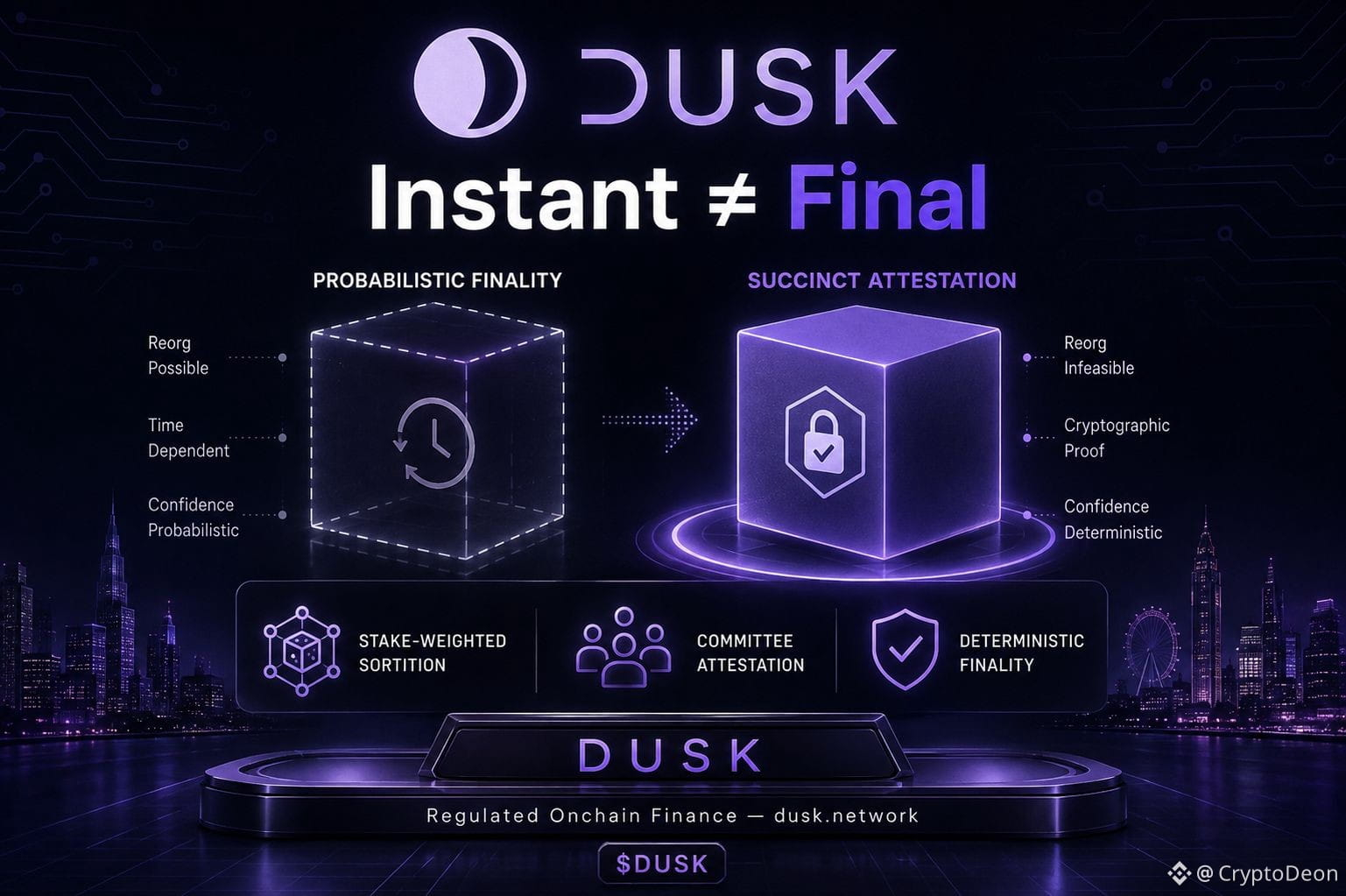
37
26
186
·
--
ເຄີຍໄດ້ເຫັນຫົວຂ່າວຫນຶ່ງຊ່ວງໜຶ່ງຜ່ານມາ — "ການໂຈມຕີຂົວ Dusk, ຖືກລັກເງິນຫລາຍລ້ານ" — ແລະມັນຮູ້ສຶກຜິດປົກໃນວິທີສະເພາະ. ບໍ່ແມ່ນເພາະມັນບໍ່ແມ່ນຂໍ້ຈິງ, ແຕ່ເພາະມັນມີຄວາມຜິດໃນຮູບແບບດຽວກັນ. ມື້ນັ້ນເອງ, ໂປໂຕຄອນຫຼັກຍັງຄົງປັບຕົວແລະ settle ໄດ້ສະບາຍບໍ່ມີບັນຫາ. ຜູ້ໂຈມຕີບໍ່ໄດ້ສໍາພັດໂຊກໂຄງການ chain. ແຕ່ເຂົາໄປໃຊ້ທາງລັດຜ່ານຂົວທີ່ເບົາບາງ (lightweight bridge) ທີ່ມີ wallet ການເຊັນທີ່ຖືກປະນີປົວ 🔍
ຄວາມແຕກຕ່າງນີ້ມີຄວາມສໍາຄັນກວ່າທີ່ຟັງ. ຄົນສ່ວນໃຫຍ່ມັກຈັດທຸກການ hack ໄວ້ໃນກຸ່ມດຽວ: "ໂປຣເຈັກຖືກ hack." ແຕ່ມີຄວາມແຕກຕ່າງຈິງໆລະຫວ່າງການ consensus ຂອງ chain ລົ້ມລະລາຍ ຫຼື cryptography ລົ້ມເຫຼວ, ກັບການບໍລິການພາຍນອກອ້ອມຮອບມັນລົ້ມ. ຄໍາຕອບຂອງ Dusk ຢືນຢັນແນວນີ້ — ແທນທີ່ຈະແກ້ຂົວດ້ວຍ patch, ເຂົາໄດ້ສ້າງມັນຄືນແບບທັງຫມົດ: ແຍກອົງປະກອນ, ກໍານົດຊີວິດ transaction ແບບຊັດເຈນ, ຫຼຸດການສัมຜັດໃນ hot wallets. ນັ້ນບໍ່ແມ່ນທາງທີ່ທ່ານເຮັດເມື່ອ core ຖືກປະນີປົວ. ມັນເປັນທາງທີ່ທ່ານເຮັດເມື່ອ core ຍັງຢູ່ດີ ແລະທ່ານກໍາລັງກໍາຈັດປະຕູທີ່ອ່ອນຈຸດພຽງບານດຽວ.
ນີແຫລະເຫດຜົນວ່າມັນສໍາຄັນສໍາລັບ thesis ທີ່ໃຫຍ່ກວ່າ. ສະຖາບັນບໍ່ໄດ້ຖາມ "ເຄີຍເກີດອັນບໍ່ດີບໍ". ເຂົາຖາມ "ມັນເກີດຂຶ້ນຢູ່ຈຸດໃດແທ້, ແລະແມ່ນມັນເປັນບັນຫາແບບທົ່ວໂຄງສ້າງບໍ." ຊັ້ນການ settle ທີ່ຮັກສາ zero-knowledge proof system ແລະ consensus ຂອງຕົນໄວ້ໄດ້ຢ່າງ intact ຜ່ານ exploit ແມ່ນມີໂປຣໄຟລເສັ່ຽງຕ່າງຈາກຊັ້ນທີ່ base layer ຕົວມັນເອງຖືກ exploit — ເຖີງແມ່ນວ່າຫົວຂ່າວອ່ານອອກມາໃນຮູບແບບດຽວກັນສໍາລັບຜູ້ລົງທຶນລະດັບ retail.
DUSK ກໍາລັງຊື້ຂາຍປະມານ $0.0605 ໃນມື້ນີ້, ມູນຄ່າຕະຫຼາດປະມານ $30M, ຍັງຢູ່ຫ່າງລຶກຢູ່ຫຼັງຈາກ $1.17 ລະດັບ all-time high ຂອງມັນ, ແລະປະລິມານການຊື້ຂາຍຍັງບາງພໍຈົນຂ່າວແນວນີ້ເກືອບບໍ່ຄ່ອຍຂະຍັບຂຶ້ນລົງ tape ໃນທິດທາງໃດທິດທາງຫນຶ່ງ. ອັນນັ້ນເປັນສັນຍານຂອງຕົນເອງ — ຕະຫຼາດຍັງບໍ່ຮັບຮູ້ມັນເປັນການລົ້ມລະລາຍຂອງ core, ແຕ່ກໍບໍ່ໄດ້ລາຄາເຂົ້າໄປໃນຄວາມໝັ້ນໃຈຫຼາຍເທົ່າໃດເທື່ອ.
ທ່ານຢູ່ຈຸດໃດ — ການແຍກ exploit ໄວ້ທີ່ຂົວ ຈະສ້າງຄວາມເຊື່ອມັ່ນຄືນກັບສະຖາບັນບໍ, ຫຼື ເຫດການຄັ້ງດຽວຈະຕັ້ງຂີດຈໍາກັດໄວ້ເລີຍ ບໍ່ວ່າ fault line ຢູ່ບ່ອນໃດ?
$DUSK #dusk @Dusk_Foundation
ເຄີຍໄດ້ເຫັນຫົວຂ່າວຫນຶ່ງຊ່ວງໜຶ່ງຜ່ານມາ — "ການໂຈມຕີຂົວ Dusk, ຖືກລັກເງິນຫລາຍລ້ານ" — ແລະມັນຮູ້ສຶກຜິດປົກໃນວິທີສະເພາະ. ບໍ່ແມ່ນເພາະມັນບໍ່ແມ່ນຂໍ້ຈິງ, ແຕ່ເພາະມັນມີຄວາມຜິດໃນຮູບແບບດຽວກັນ. ມື້ນັ້ນເອງ, ໂປໂຕຄອນຫຼັກຍັງຄົງປັບຕົວແລະ settle ໄດ້ສະບາຍບໍ່ມີບັນຫາ. ຜູ້ໂຈມຕີບໍ່ໄດ້ສໍາພັດໂຊກໂຄງການ chain. ແຕ່ເຂົາໄປໃຊ້ທາງລັດຜ່ານຂົວທີ່ເບົາບາງ (lightweight bridge) ທີ່ມີ wallet ການເຊັນທີ່ຖືກປະນີປົວ 🔍
ຄວາມແຕກຕ່າງນີ້ມີຄວາມສໍາຄັນກວ່າທີ່ຟັງ. ຄົນສ່ວນໃຫຍ່ມັກຈັດທຸກການ hack ໄວ້ໃນກຸ່ມດຽວ: "ໂປຣເຈັກຖືກ hack." ແຕ່ມີຄວາມແຕກຕ່າງຈິງໆລະຫວ່າງການ consensus ຂອງ chain ລົ້ມລະລາຍ ຫຼື cryptography ລົ້ມເຫຼວ, ກັບການບໍລິການພາຍນອກອ້ອມຮອບມັນລົ້ມ. ຄໍາຕອບຂອງ Dusk ຢືນຢັນແນວນີ້ — ແທນທີ່ຈະແກ້ຂົວດ້ວຍ patch, ເຂົາໄດ້ສ້າງມັນຄືນແບບທັງຫມົດ: ແຍກອົງປະກອນ, ກໍານົດຊີວິດ transaction ແບບຊັດເຈນ, ຫຼຸດການສัมຜັດໃນ hot wallets. ນັ້ນບໍ່ແມ່ນທາງທີ່ທ່ານເຮັດເມື່ອ core ຖືກປະນີປົວ. ມັນເປັນທາງທີ່ທ່ານເຮັດເມື່ອ core ຍັງຢູ່ດີ ແລະທ່ານກໍາລັງກໍາຈັດປະຕູທີ່ອ່ອນຈຸດພຽງບານດຽວ.
ນີແຫລະເຫດຜົນວ່າມັນສໍາຄັນສໍາລັບ thesis ທີ່ໃຫຍ່ກວ່າ. ສະຖາບັນບໍ່ໄດ້ຖາມ "ເຄີຍເກີດອັນບໍ່ດີບໍ". ເຂົາຖາມ "ມັນເກີດຂຶ້ນຢູ່ຈຸດໃດແທ້, ແລະແມ່ນມັນເປັນບັນຫາແບບທົ່ວໂຄງສ້າງບໍ." ຊັ້ນການ settle ທີ່ຮັກສາ zero-knowledge proof system ແລະ consensus ຂອງຕົນໄວ້ໄດ້ຢ່າງ intact ຜ່ານ exploit ແມ່ນມີໂປຣໄຟລເສັ່ຽງຕ່າງຈາກຊັ້ນທີ່ base layer ຕົວມັນເອງຖືກ exploit — ເຖີງແມ່ນວ່າຫົວຂ່າວອ່ານອອກມາໃນຮູບແບບດຽວກັນສໍາລັບຜູ້ລົງທຶນລະດັບ retail.
DUSK ກໍາລັງຊື້ຂາຍປະມານ $0.0605 ໃນມື້ນີ້, ມູນຄ່າຕະຫຼາດປະມານ $30M, ຍັງຢູ່ຫ່າງລຶກຢູ່ຫຼັງຈາກ $1.17 ລະດັບ all-time high ຂອງມັນ, ແລະປະລິມານການຊື້ຂາຍຍັງບາງພໍຈົນຂ່າວແນວນີ້ເກືອບບໍ່ຄ່ອຍຂະຍັບຂຶ້ນລົງ tape ໃນທິດທາງໃດທິດທາງຫນຶ່ງ. ອັນນັ້ນເປັນສັນຍານຂອງຕົນເອງ — ຕະຫຼາດຍັງບໍ່ຮັບຮູ້ມັນເປັນການລົ້ມລະລາຍຂອງ core, ແຕ່ກໍບໍ່ໄດ້ລາຄາເຂົ້າໄປໃນຄວາມໝັ້ນໃຈຫຼາຍເທົ່າໃດເທື່ອ.
ທ່ານຢູ່ຈຸດໃດ — ການແຍກ exploit ໄວ້ທີ່ຂົວ ຈະສ້າງຄວາມເຊື່ອມັ່ນຄືນກັບສະຖາບັນບໍ, ຫຼື ເຫດການຄັ້ງດຽວຈະຕັ້ງຂີດຈໍາກັດໄວ້ເລີຍ ບໍ່ວ່າ fault line ຢູ່ບ່ອນໃດ?
$DUSK #dusk @Dusk
ຄວາມແຕກຕ່າງນີ້ມີຄວາມສໍາຄັນກວ່າທີ່ຟັງ. ຄົນສ່ວນໃຫຍ່ມັກຈັດທຸກການ hack ໄວ້ໃນກຸ່ມດຽວ: "ໂປຣເຈັກຖືກ hack." ແຕ່ມີຄວາມແຕກຕ່າງຈິງໆລະຫວ່າງການ consensus ຂອງ chain ລົ້ມລະລາຍ ຫຼື cryptography ລົ້ມເຫຼວ, ກັບການບໍລິການພາຍນອກອ້ອມຮອບມັນລົ້ມ. ຄໍາຕອບຂອງ Dusk ຢືນຢັນແນວນີ້ — ແທນທີ່ຈະແກ້ຂົວດ້ວຍ patch, ເຂົາໄດ້ສ້າງມັນຄືນແບບທັງຫມົດ: ແຍກອົງປະກອນ, ກໍານົດຊີວິດ transaction ແບບຊັດເຈນ, ຫຼຸດການສัมຜັດໃນ hot wallets. ນັ້ນບໍ່ແມ່ນທາງທີ່ທ່ານເຮັດເມື່ອ core ຖືກປະນີປົວ. ມັນເປັນທາງທີ່ທ່ານເຮັດເມື່ອ core ຍັງຢູ່ດີ ແລະທ່ານກໍາລັງກໍາຈັດປະຕູທີ່ອ່ອນຈຸດພຽງບານດຽວ.
ນີແຫລະເຫດຜົນວ່າມັນສໍາຄັນສໍາລັບ thesis ທີ່ໃຫຍ່ກວ່າ. ສະຖາບັນບໍ່ໄດ້ຖາມ "ເຄີຍເກີດອັນບໍ່ດີບໍ". ເຂົາຖາມ "ມັນເກີດຂຶ້ນຢູ່ຈຸດໃດແທ້, ແລະແມ່ນມັນເປັນບັນຫາແບບທົ່ວໂຄງສ້າງບໍ." ຊັ້ນການ settle ທີ່ຮັກສາ zero-knowledge proof system ແລະ consensus ຂອງຕົນໄວ້ໄດ້ຢ່າງ intact ຜ່ານ exploit ແມ່ນມີໂປຣໄຟລເສັ່ຽງຕ່າງຈາກຊັ້ນທີ່ base layer ຕົວມັນເອງຖືກ exploit — ເຖີງແມ່ນວ່າຫົວຂ່າວອ່ານອອກມາໃນຮູບແບບດຽວກັນສໍາລັບຜູ້ລົງທຶນລະດັບ retail.
DUSK ກໍາລັງຊື້ຂາຍປະມານ $0.0605 ໃນມື້ນີ້, ມູນຄ່າຕະຫຼາດປະມານ $30M, ຍັງຢູ່ຫ່າງລຶກຢູ່ຫຼັງຈາກ $1.17 ລະດັບ all-time high ຂອງມັນ, ແລະປະລິມານການຊື້ຂາຍຍັງບາງພໍຈົນຂ່າວແນວນີ້ເກືອບບໍ່ຄ່ອຍຂະຍັບຂຶ້ນລົງ tape ໃນທິດທາງໃດທິດທາງຫນຶ່ງ. ອັນນັ້ນເປັນສັນຍານຂອງຕົນເອງ — ຕະຫຼາດຍັງບໍ່ຮັບຮູ້ມັນເປັນການລົ້ມລະລາຍຂອງ core, ແຕ່ກໍບໍ່ໄດ້ລາຄາເຂົ້າໄປໃນຄວາມໝັ້ນໃຈຫຼາຍເທົ່າໃດເທື່ອ.
ທ່ານຢູ່ຈຸດໃດ — ການແຍກ exploit ໄວ້ທີ່ຂົວ ຈະສ້າງຄວາມເຊື່ອມັ່ນຄືນກັບສະຖາບັນບໍ, ຫຼື ເຫດການຄັ້ງດຽວຈະຕັ້ງຂີດຈໍາກັດໄວ້ເລີຍ ບໍ່ວ່າ fault line ຢູ່ບ່ອນໃດ?
$DUSK #dusk @Dusk
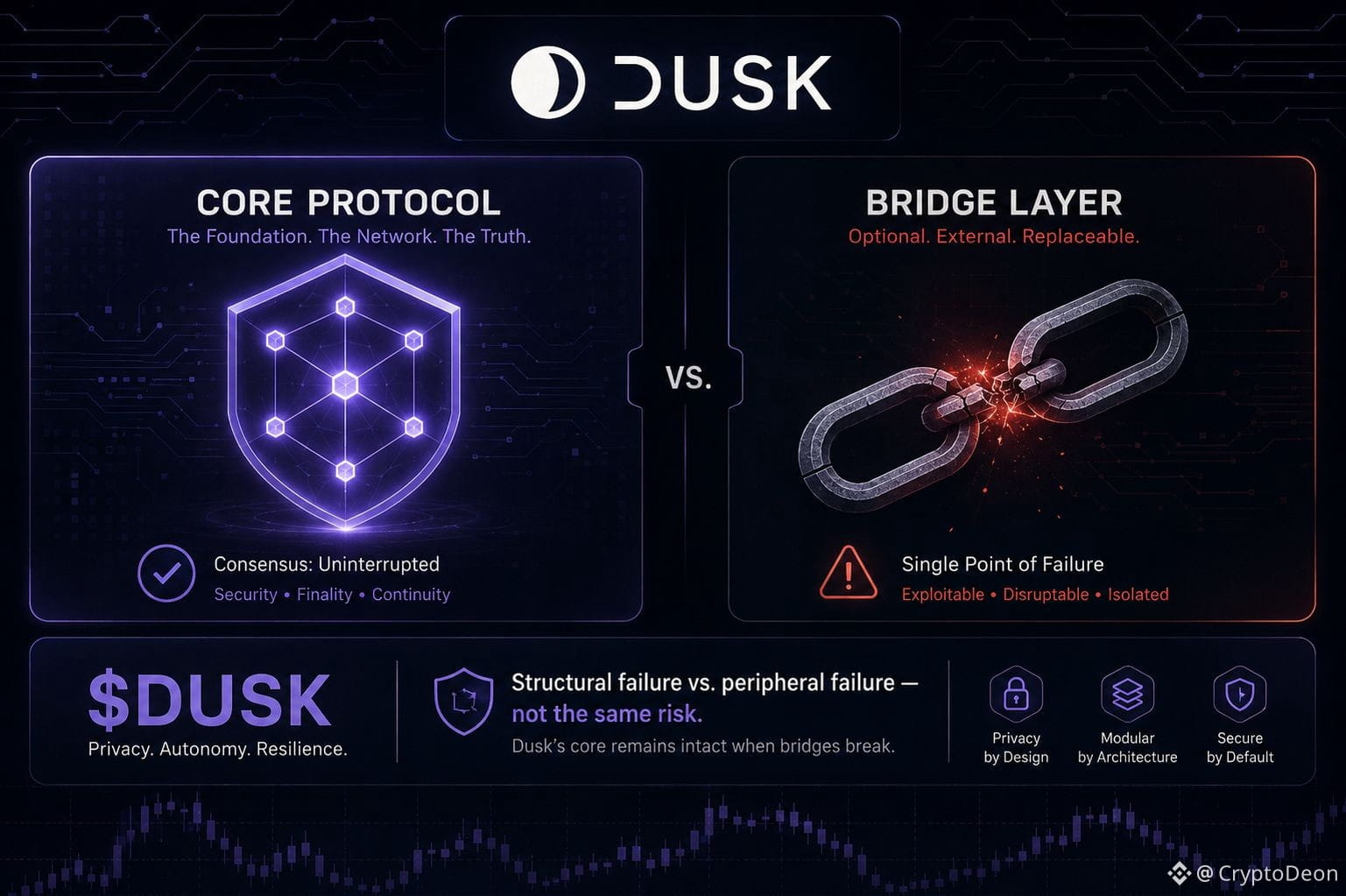
38
26
383
·
--
ຢືນຢັນແລ້ວ
Lībí wà ń wo chart DUSK lónìí, ṣe ìyàwòrán “regulated RWA infrastructure” náà ń ta ní $0.0605 pẹ̀lú market cap tó $30M nígbà tí ATH wà ní $1.17. Lẹ́yìn náà ni mo wo ohun tí wọ́n ti kó jáde gan-an lábẹ́ ìkọ̀lù náà, mo sì rí i pé iye owó àti roadmap ń sọ ìtàn méjì tó yàtọ̀ 🧐
Èyí ni apá tó ọ̀pọ̀ ènìyàn máa ń foju fo: Dusk kò ń gbìyànjú láti jẹ́ privacy coin tí ó ń pa ohun gbogbo mọ́, tàbí public chain tí kò fi ohun kankan pamọ́. Ó ń kọ́ settlement layer fún ìṣúná tó jẹ́ ìṣàkóso — ròyìn securities tí a ṣe ní tokenized, private equity, custody ilé-iṣẹ́ — níbi tí privacy àti auditability gbọ́dọ̀ wà pọ̀ nípa ìlànà, kì í ṣe nípa yíyàn. Nítorí náà ni stack ìbáṣepọ̀ náà ṣe rí bẹ́ẹ̀: NPEX (exchange regulated ní Netherlands) fún fífi securities gidi lórí-chain, Quantoz fún euro stablecoin tí ó bá MiCA mu (EURQ), àti DuskEVM tí ó mú ìbámu Solidity wá kí àwọn oníṣe ko ní ní láti kọ stack tuntun láti deploy contracts tí ó bá ìlànà mu.
Ìṣòro náà ni ìgbà. Ìpín káàkiri (circulating supply) wà ní ìsàlẹ̀ ìdajì ti 1B max, túmọ̀ sí dilution pípẹ̀ síwájú ṣì wà níwájú. Daily volume wà níbi tó jẹ́ $3.2M ní ìbámu pẹ̀lú market cap $30M yẹn — tó kéré tó fi jẹ́ pé headlines ìdàgbàsókè RWA kò tíì ń yí iye owó padà púpọ̀, nítorí pé settlement volume ilé-iṣẹ́ kì í ṣe ohun tí retail máa ń rí bí activity DEX ṣe rí. Ì amáyédẹrùn náà lè ń jẹ́ kí àwọn regulated entities “lò” rẹ̀ gidi-gidi síi, nígbà tí token náà ṣi ń rìn lọ sí ẹgbẹ̀ sí ẹgbẹ̀, nítorí pé lílo yẹn kò fara hàn ní irú àwọn chart tó retail traders ń wo.
Nítorí náà, ìbéèrè gidi kì í ṣe bóyá Dusk ń kọ́ ohun tó wúlò. Ó jẹ́ bóyá “regulated RWA rails” rí i pé demand signal tí retail lè rí gaan máa ṣeé hàn ṣáájú pé ìgbésẹ̀ unlock tó tẹ̀lé yóò máa ṣe dán float náà wò.
Ṣé o ṣàníyàn ibi tí o dúró — ṣe amáyédẹrùn bíi èyí nílò hàn retail volume kí ó tó ṣe pàtàkì, tàbí ṣe adoption ilé-iṣẹ́ jẹ́ ẹ̀rí mìíràn pàtó patapata?
$DUSK #dusk @Dusk_Foundation
Lībí wà ń wo chart DUSK lónìí, ṣe ìyàwòrán “regulated RWA infrastructure” náà ń ta ní $0.0605 pẹ̀lú market cap tó $30M nígbà tí ATH wà ní $1.17. Lẹ́yìn náà ni mo wo ohun tí wọ́n ti kó jáde gan-an lábẹ́ ìkọ̀lù náà, mo sì rí i pé iye owó àti roadmap ń sọ ìtàn méjì tó yàtọ̀ 🧐
Èyí ni apá tó ọ̀pọ̀ ènìyàn máa ń foju fo: Dusk kò ń gbìyànjú láti jẹ́ privacy coin tí ó ń pa ohun gbogbo mọ́, tàbí public chain tí kò fi ohun kankan pamọ́. Ó ń kọ́ settlement layer fún ìṣúná tó jẹ́ ìṣàkóso — ròyìn securities tí a ṣe ní tokenized, private equity, custody ilé-iṣẹ́ — níbi tí privacy àti auditability gbọ́dọ̀ wà pọ̀ nípa ìlànà, kì í ṣe nípa yíyàn. Nítorí náà ni stack ìbáṣepọ̀ náà ṣe rí bẹ́ẹ̀: NPEX (exchange regulated ní Netherlands) fún fífi securities gidi lórí-chain, Quantoz fún euro stablecoin tí ó bá MiCA mu (EURQ), àti DuskEVM tí ó mú ìbámu Solidity wá kí àwọn oníṣe ko ní ní láti kọ stack tuntun láti deploy contracts tí ó bá ìlànà mu.
Ìṣòro náà ni ìgbà. Ìpín káàkiri (circulating supply) wà ní ìsàlẹ̀ ìdajì ti 1B max, túmọ̀ sí dilution pípẹ̀ síwájú ṣì wà níwájú. Daily volume wà níbi tó jẹ́ $3.2M ní ìbámu pẹ̀lú market cap $30M yẹn — tó kéré tó fi jẹ́ pé headlines ìdàgbàsókè RWA kò tíì ń yí iye owó padà púpọ̀, nítorí pé settlement volume ilé-iṣẹ́ kì í ṣe ohun tí retail máa ń rí bí activity DEX ṣe rí. Ì amáyédẹrùn náà lè ń jẹ́ kí àwọn regulated entities “lò” rẹ̀ gidi-gidi síi, nígbà tí token náà ṣi ń rìn lọ sí ẹgbẹ̀ sí ẹgbẹ̀, nítorí pé lílo yẹn kò fara hàn ní irú àwọn chart tó retail traders ń wo.
Nítorí náà, ìbéèrè gidi kì í ṣe bóyá Dusk ń kọ́ ohun tó wúlò. Ó jẹ́ bóyá “regulated RWA rails” rí i pé demand signal tí retail lè rí gaan máa ṣeé hàn ṣáájú pé ìgbésẹ̀ unlock tó tẹ̀lé yóò máa ṣe dán float náà wò.
Ṣé o ṣàníyàn ibi tí o dúró — ṣe amáyédẹrùn bíi èyí nílò hàn retail volume kí ó tó ṣe pàtàkì, tàbí ṣe adoption ilé-iṣẹ́ jẹ́ ẹ̀rí mìíràn pàtó patapata?
$DUSK #dusk @Dusk
Èyí ni apá tó ọ̀pọ̀ ènìyàn máa ń foju fo: Dusk kò ń gbìyànjú láti jẹ́ privacy coin tí ó ń pa ohun gbogbo mọ́, tàbí public chain tí kò fi ohun kankan pamọ́. Ó ń kọ́ settlement layer fún ìṣúná tó jẹ́ ìṣàkóso — ròyìn securities tí a ṣe ní tokenized, private equity, custody ilé-iṣẹ́ — níbi tí privacy àti auditability gbọ́dọ̀ wà pọ̀ nípa ìlànà, kì í ṣe nípa yíyàn. Nítorí náà ni stack ìbáṣepọ̀ náà ṣe rí bẹ́ẹ̀: NPEX (exchange regulated ní Netherlands) fún fífi securities gidi lórí-chain, Quantoz fún euro stablecoin tí ó bá MiCA mu (EURQ), àti DuskEVM tí ó mú ìbámu Solidity wá kí àwọn oníṣe ko ní ní láti kọ stack tuntun láti deploy contracts tí ó bá ìlànà mu.
Ìṣòro náà ni ìgbà. Ìpín káàkiri (circulating supply) wà ní ìsàlẹ̀ ìdajì ti 1B max, túmọ̀ sí dilution pípẹ̀ síwájú ṣì wà níwájú. Daily volume wà níbi tó jẹ́ $3.2M ní ìbámu pẹ̀lú market cap $30M yẹn — tó kéré tó fi jẹ́ pé headlines ìdàgbàsókè RWA kò tíì ń yí iye owó padà púpọ̀, nítorí pé settlement volume ilé-iṣẹ́ kì í ṣe ohun tí retail máa ń rí bí activity DEX ṣe rí. Ì amáyédẹrùn náà lè ń jẹ́ kí àwọn regulated entities “lò” rẹ̀ gidi-gidi síi, nígbà tí token náà ṣi ń rìn lọ sí ẹgbẹ̀ sí ẹgbẹ̀, nítorí pé lílo yẹn kò fara hàn ní irú àwọn chart tó retail traders ń wo.
Nítorí náà, ìbéèrè gidi kì í ṣe bóyá Dusk ń kọ́ ohun tó wúlò. Ó jẹ́ bóyá “regulated RWA rails” rí i pé demand signal tí retail lè rí gaan máa ṣeé hàn ṣáájú pé ìgbésẹ̀ unlock tó tẹ̀lé yóò máa ṣe dán float náà wò.
Ṣé o ṣàníyàn ibi tí o dúró — ṣe amáyédẹrùn bíi èyí nílò hàn retail volume kí ó tó ṣe pàtàkì, tàbí ṣe adoption ilé-iṣẹ́ jẹ́ ẹ̀rí mìíràn pàtó patapata?
$DUSK #dusk @Dusk
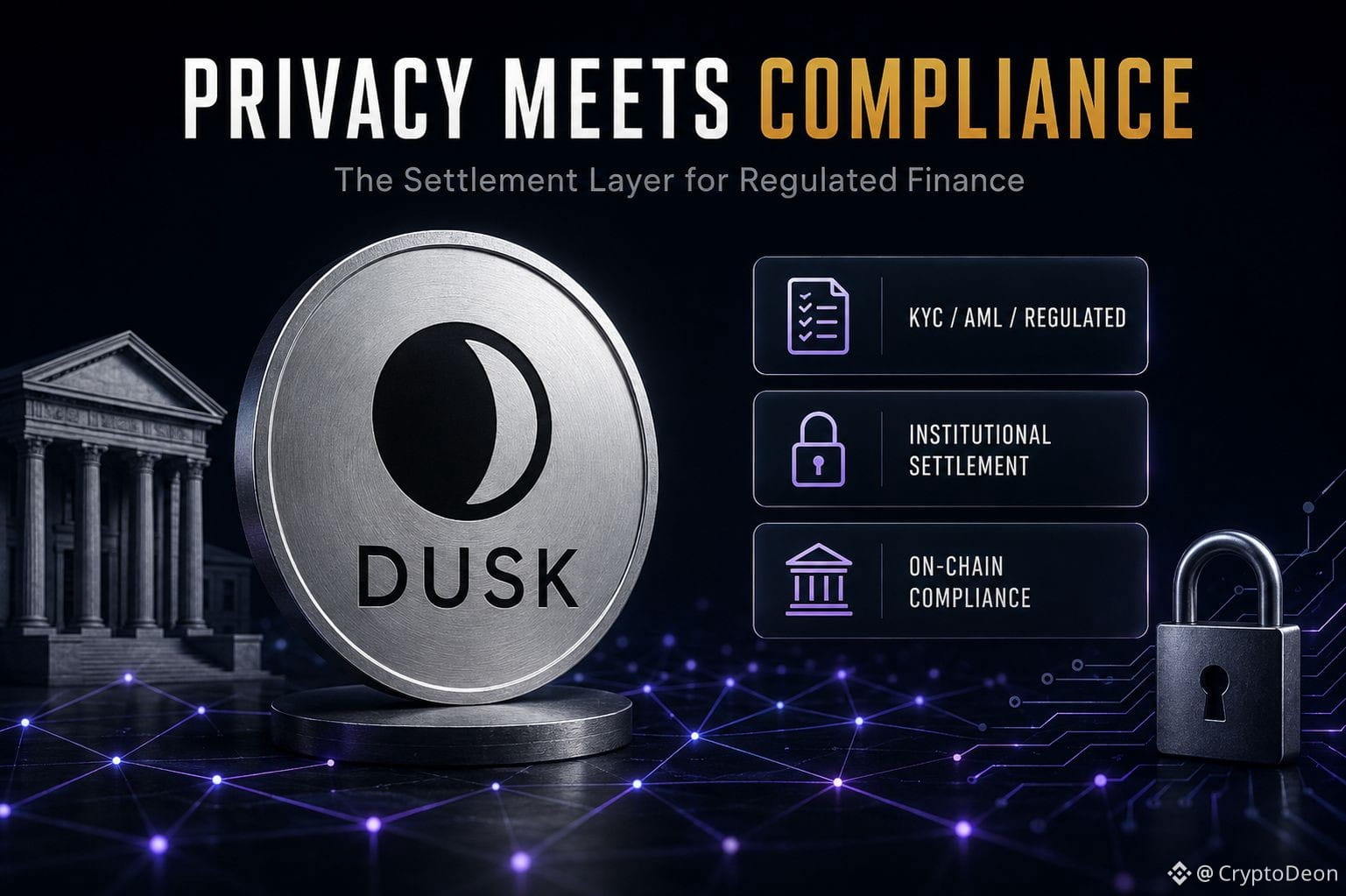
55
39
312
·
--
Ndiyihlolisise umdlalo ophilayo onesi-$DUSK — izithombe zabonakala zigcwele, amabhawuthi emali ephakama, “imigomo” yamashadi iluhlaza kuzo zonke. Ithokheni ayizange inyakaze kancane. Ngathatha isikhathi ukuqonda ukuthi kungani lokho kungesona isiphikiso.
Okuningi kwalokho abadlali abakwenza akuthinti i-chain ngempela. Ukulima, ukwenza izinto, ukugaya— konke kwenzeka ngakolunye uhlangothi, kungabonakali kuDUSK. Ithokheni ivele ivela endaweni eyodwa encane: lapho umuntu enquma ukuthi umphumela ongaphandle kwe-chain ufanele ukwenziwa unomphela ku-chain. Lokho akusona isilinganiso sokuthi umdlalo uzwakala “uphila” kangakanani. Kuyisilinganiso sokuthi bangaki abantu, ngaleso sikhathi esithile, abanquma ukuthi ukuguqulwa kufanelekile ukukhokha ngakho.
Lokho kusho ukuthi umdlalo ungahlala umatasa ngokubukeka ngenkathi uqeqesha abadlali bawo ngokuthula ukuba bagweme leso sinyathelo— bahlanganisa ukuguqulwa (batching), bakumise isikhathi ukuze baphathe izimali, bagweme lezo ezingabalulekile. Umsebenzi uyagcinwa. Ingcindezi yokuguqulwa iyaphela. Futhi ngoba i-$DUSK kuphela inquma into yesibili, ithokheni ingahamba kancane amasonto ngaphambi kokuba noma ubani aqaphele ukuthi into yokuqala ibayengisile.
Uma imvamisa yokuguqulwa ngomdlali osebenzayo iqala ukwehla ngenkathi amashadi omsebenzi ehlala eluhlaza, yilowo msantsa okufanele uwuthembe ngaphezu kwe-dashboard.
$DUSK #dusk #BinanceSquare @Dusk_Foundation
Ndiyihlolisise umdlalo ophilayo onesi-$DUSK — izithombe zabonakala zigcwele, amabhawuthi emali ephakama, “imigomo” yamashadi iluhlaza kuzo zonke. Ithokheni ayizange inyakaze kancane. Ngathatha isikhathi ukuqonda ukuthi kungani lokho kungesona isiphikiso.
Okuningi kwalokho abadlali abakwenza akuthinti i-chain ngempela. Ukulima, ukwenza izinto, ukugaya— konke kwenzeka ngakolunye uhlangothi, kungabonakali kuDUSK. Ithokheni ivele ivela endaweni eyodwa encane: lapho umuntu enquma ukuthi umphumela ongaphandle kwe-chain ufanele ukwenziwa unomphela ku-chain. Lokho akusona isilinganiso sokuthi umdlalo uzwakala “uphila” kangakanani. Kuyisilinganiso sokuthi bangaki abantu, ngaleso sikhathi esithile, abanquma ukuthi ukuguqulwa kufanelekile ukukhokha ngakho.
Lokho kusho ukuthi umdlalo ungahlala umatasa ngokubukeka ngenkathi uqeqesha abadlali bawo ngokuthula ukuba bagweme leso sinyathelo— bahlanganisa ukuguqulwa (batching), bakumise isikhathi ukuze baphathe izimali, bagweme lezo ezingabalulekile. Umsebenzi uyagcinwa. Ingcindezi yokuguqulwa iyaphela. Futhi ngoba i-$DUSK kuphela inquma into yesibili, ithokheni ingahamba kancane amasonto ngaphambi kokuba noma ubani aqaphele ukuthi into yokuqala ibayengisile.
Uma imvamisa yokuguqulwa ngomdlali osebenzayo iqala ukwehla ngenkathi amashadi omsebenzi ehlala eluhlaza, yilowo msantsa okufanele uwuthembe ngaphezu kwe-dashboard.
$DUSK #dusk #BinanceSquare @Dusk
Okuningi kwalokho abadlali abakwenza akuthinti i-chain ngempela. Ukulima, ukwenza izinto, ukugaya— konke kwenzeka ngakolunye uhlangothi, kungabonakali kuDUSK. Ithokheni ivele ivela endaweni eyodwa encane: lapho umuntu enquma ukuthi umphumela ongaphandle kwe-chain ufanele ukwenziwa unomphela ku-chain. Lokho akusona isilinganiso sokuthi umdlalo uzwakala “uphila” kangakanani. Kuyisilinganiso sokuthi bangaki abantu, ngaleso sikhathi esithile, abanquma ukuthi ukuguqulwa kufanelekile ukukhokha ngakho.
Lokho kusho ukuthi umdlalo ungahlala umatasa ngokubukeka ngenkathi uqeqesha abadlali bawo ngokuthula ukuba bagweme leso sinyathelo— bahlanganisa ukuguqulwa (batching), bakumise isikhathi ukuze baphathe izimali, bagweme lezo ezingabalulekile. Umsebenzi uyagcinwa. Ingcindezi yokuguqulwa iyaphela. Futhi ngoba i-$DUSK kuphela inquma into yesibili, ithokheni ingahamba kancane amasonto ngaphambi kokuba noma ubani aqaphele ukuthi into yokuqala ibayengisile.
Uma imvamisa yokuguqulwa ngomdlali osebenzayo iqala ukwehla ngenkathi amashadi omsebenzi ehlala eluhlaza, yilowo msantsa okufanele uwuthembe ngaphezu kwe-dashboard.
$DUSK #dusk #BinanceSquare @Dusk
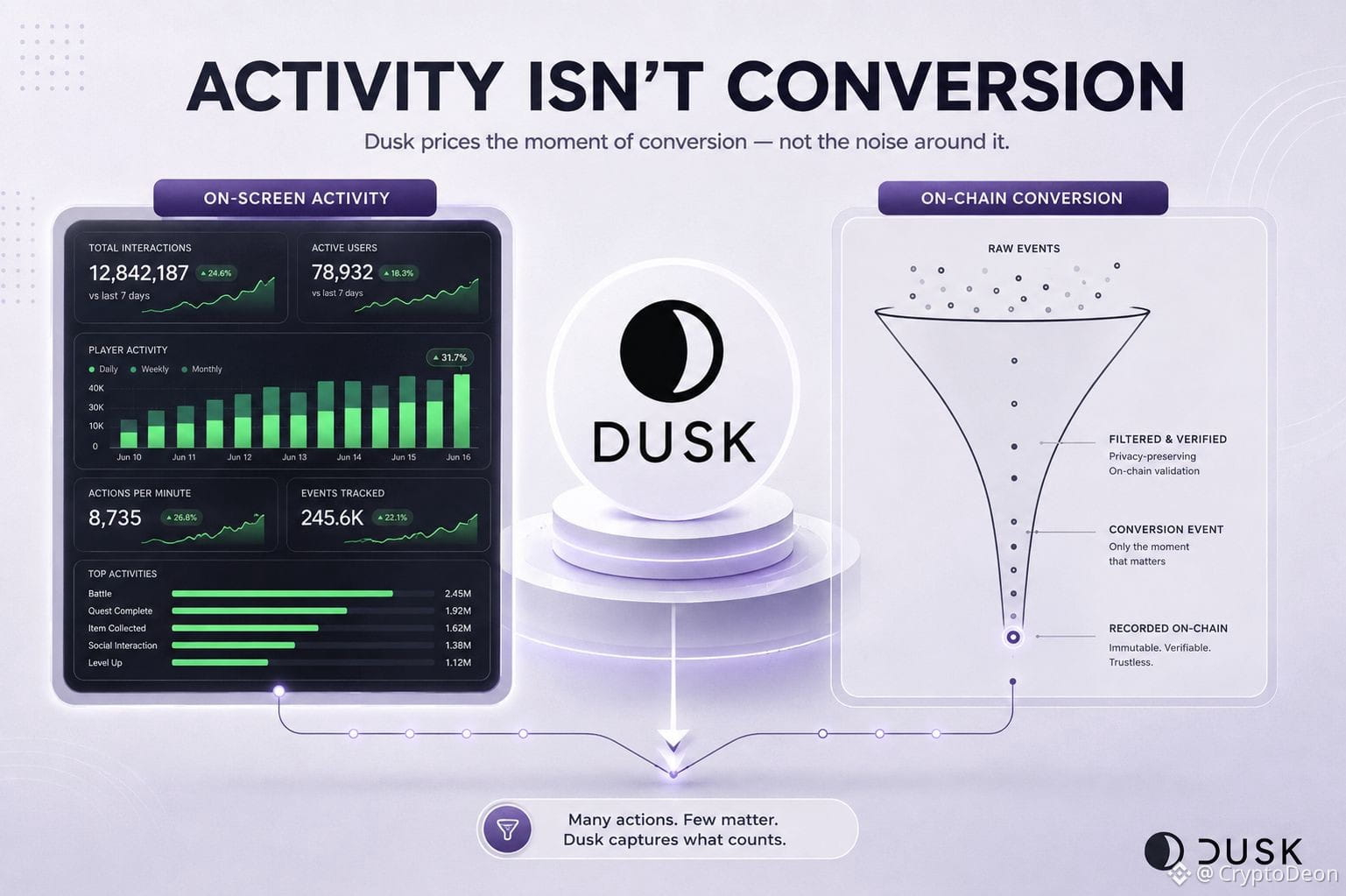
60
41
542
·
--
Mo li nigbagbogbo nipa ìjíròrò ìjọba lọwọlọwọ ti Babylon láti ìhà tí kò tọ̀.
Ìjíròrò tó ṣe kedere ni bóyá a gbọ́dọ̀ pín BSN rewards fún àwọn BABY stakers tàbí kí a yí i padà nípa on-chain auction kí a sì sun un.
Èyí ṣe pàtàkì.
Ṣùgbọ́n mo ro pé ìbéèrè tí ó wúlò jù ni irú ireti wo ni protocol kan dá sílẹ̀ nígbà tí àwọn ènìyàn bá ti máa ń kùmọ̀ sí ìṣàn ẹ̀san kan.
Ẹsan kì í ṣe ìṣípayá ọrọ-aje nìkan.
Lẹ́yìn àkókò, ó di apá kan nínú ìhùwàsí olumulo.
Tí àwọn olù kópa bá ń retí pé orísun iye tuntun gbogbo máa dé gẹ́gẹ́ bí ìpín taara, àwọn ìpinnu ìjọba ọjọ́ iwájú di dífí dìfí nítorí pé jíjẹ́ kí ìreti yẹn yí padà ń bẹ̀rẹ̀ sí rí bí ẹni pé o ń gbà nkan lọ́wọ́ wọn.
Ní ọwọ́ kejì, fífi iye kọjá lọ́nà burn mechanism kò san ẹsan fún àwọn olù kópa lẹ́sẹ̀kẹsẹ̀. Dípò ìyẹn, ó yí àwọn ìṣàkóso ìpese igba pẹ́ ti token náà padà. Èyí lè dá nẹ́tíwọ́ọkì náà lóore nínú ọ̀nà míì, ṣùgbọ́n ó tún ń béèrè fún àwọn olumulo láti ronú ju ìpín tó ń bọ̀ tó tẹ̀lé lọ.
Kò sí ọ̀nà kan tí ó dájú pé ó tọ̀.
Ọ̀kan ń fi ìgbẹ́kẹ̀lé sí àwọn ìṣísẹ̀ tí a rí gbangba.
Ẹlòmíì náà ń fi ìgbẹ́kẹ̀lé sí àwọn ìṣísẹ̀ títóbi (structural incentives).
Nítorí náà ni mo fi ro pé ìfilọ́wọ́ yìí kì í ṣe nípa BSN rewards gan-an.
Ó jẹ́ nípa pinnu bóyá Babylon fẹ́ kí ìjọba rẹ̀ ṣe optimize fún àwọn ireti alábàáṣiṣẹ́... tàbí fún ìhùwàsí ọrọ-aje igba pẹ́.
Àwọn yìí kì í ṣe ohun kan náà nígbà gbogbo.
#baby $BABY @babylonlabs_io
Mo li nigbagbogbo nipa ìjíròrò ìjọba lọwọlọwọ ti Babylon láti ìhà tí kò tọ̀.
Ìjíròrò tó ṣe kedere ni bóyá a gbọ́dọ̀ pín BSN rewards fún àwọn BABY stakers tàbí kí a yí i padà nípa on-chain auction kí a sì sun un.
Èyí ṣe pàtàkì.
Ṣùgbọ́n mo ro pé ìbéèrè tí ó wúlò jù ni irú ireti wo ni protocol kan dá sílẹ̀ nígbà tí àwọn ènìyàn bá ti máa ń kùmọ̀ sí ìṣàn ẹ̀san kan.
Ẹsan kì í ṣe ìṣípayá ọrọ-aje nìkan.
Lẹ́yìn àkókò, ó di apá kan nínú ìhùwàsí olumulo.
Tí àwọn olù kópa bá ń retí pé orísun iye tuntun gbogbo máa dé gẹ́gẹ́ bí ìpín taara, àwọn ìpinnu ìjọba ọjọ́ iwájú di dífí dìfí nítorí pé jíjẹ́ kí ìreti yẹn yí padà ń bẹ̀rẹ̀ sí rí bí ẹni pé o ń gbà nkan lọ́wọ́ wọn.
Ní ọwọ́ kejì, fífi iye kọjá lọ́nà burn mechanism kò san ẹsan fún àwọn olù kópa lẹ́sẹ̀kẹsẹ̀. Dípò ìyẹn, ó yí àwọn ìṣàkóso ìpese igba pẹ́ ti token náà padà. Èyí lè dá nẹ́tíwọ́ọkì náà lóore nínú ọ̀nà míì, ṣùgbọ́n ó tún ń béèrè fún àwọn olumulo láti ronú ju ìpín tó ń bọ̀ tó tẹ̀lé lọ.
Kò sí ọ̀nà kan tí ó dájú pé ó tọ̀.
Ọ̀kan ń fi ìgbẹ́kẹ̀lé sí àwọn ìṣísẹ̀ tí a rí gbangba.
Ẹlòmíì náà ń fi ìgbẹ́kẹ̀lé sí àwọn ìṣísẹ̀ títóbi (structural incentives).
Nítorí náà ni mo fi ro pé ìfilọ́wọ́ yìí kì í ṣe nípa BSN rewards gan-an.
Ó jẹ́ nípa pinnu bóyá Babylon fẹ́ kí ìjọba rẹ̀ ṣe optimize fún àwọn ireti alábàáṣiṣẹ́... tàbí fún ìhùwàsí ọrọ-aje igba pẹ́.
Àwọn yìí kì í ṣe ohun kan náà nígbà gbogbo.
#baby $BABY @BabylonLabs_io
Ìjíròrò tó ṣe kedere ni bóyá a gbọ́dọ̀ pín BSN rewards fún àwọn BABY stakers tàbí kí a yí i padà nípa on-chain auction kí a sì sun un.
Èyí ṣe pàtàkì.
Ṣùgbọ́n mo ro pé ìbéèrè tí ó wúlò jù ni irú ireti wo ni protocol kan dá sílẹ̀ nígbà tí àwọn ènìyàn bá ti máa ń kùmọ̀ sí ìṣàn ẹ̀san kan.
Ẹsan kì í ṣe ìṣípayá ọrọ-aje nìkan.
Lẹ́yìn àkókò, ó di apá kan nínú ìhùwàsí olumulo.
Tí àwọn olù kópa bá ń retí pé orísun iye tuntun gbogbo máa dé gẹ́gẹ́ bí ìpín taara, àwọn ìpinnu ìjọba ọjọ́ iwájú di dífí dìfí nítorí pé jíjẹ́ kí ìreti yẹn yí padà ń bẹ̀rẹ̀ sí rí bí ẹni pé o ń gbà nkan lọ́wọ́ wọn.
Ní ọwọ́ kejì, fífi iye kọjá lọ́nà burn mechanism kò san ẹsan fún àwọn olù kópa lẹ́sẹ̀kẹsẹ̀. Dípò ìyẹn, ó yí àwọn ìṣàkóso ìpese igba pẹ́ ti token náà padà. Èyí lè dá nẹ́tíwọ́ọkì náà lóore nínú ọ̀nà míì, ṣùgbọ́n ó tún ń béèrè fún àwọn olumulo láti ronú ju ìpín tó ń bọ̀ tó tẹ̀lé lọ.
Kò sí ọ̀nà kan tí ó dájú pé ó tọ̀.
Ọ̀kan ń fi ìgbẹ́kẹ̀lé sí àwọn ìṣísẹ̀ tí a rí gbangba.
Ẹlòmíì náà ń fi ìgbẹ́kẹ̀lé sí àwọn ìṣísẹ̀ títóbi (structural incentives).
Nítorí náà ni mo fi ro pé ìfilọ́wọ́ yìí kì í ṣe nípa BSN rewards gan-an.
Ó jẹ́ nípa pinnu bóyá Babylon fẹ́ kí ìjọba rẹ̀ ṣe optimize fún àwọn ireti alábàáṣiṣẹ́... tàbí fún ìhùwàsí ọrọ-aje igba pẹ́.
Àwọn yìí kì í ṣe ohun kan náà nígbà gbogbo.
#baby $BABY @BabylonLabs_io
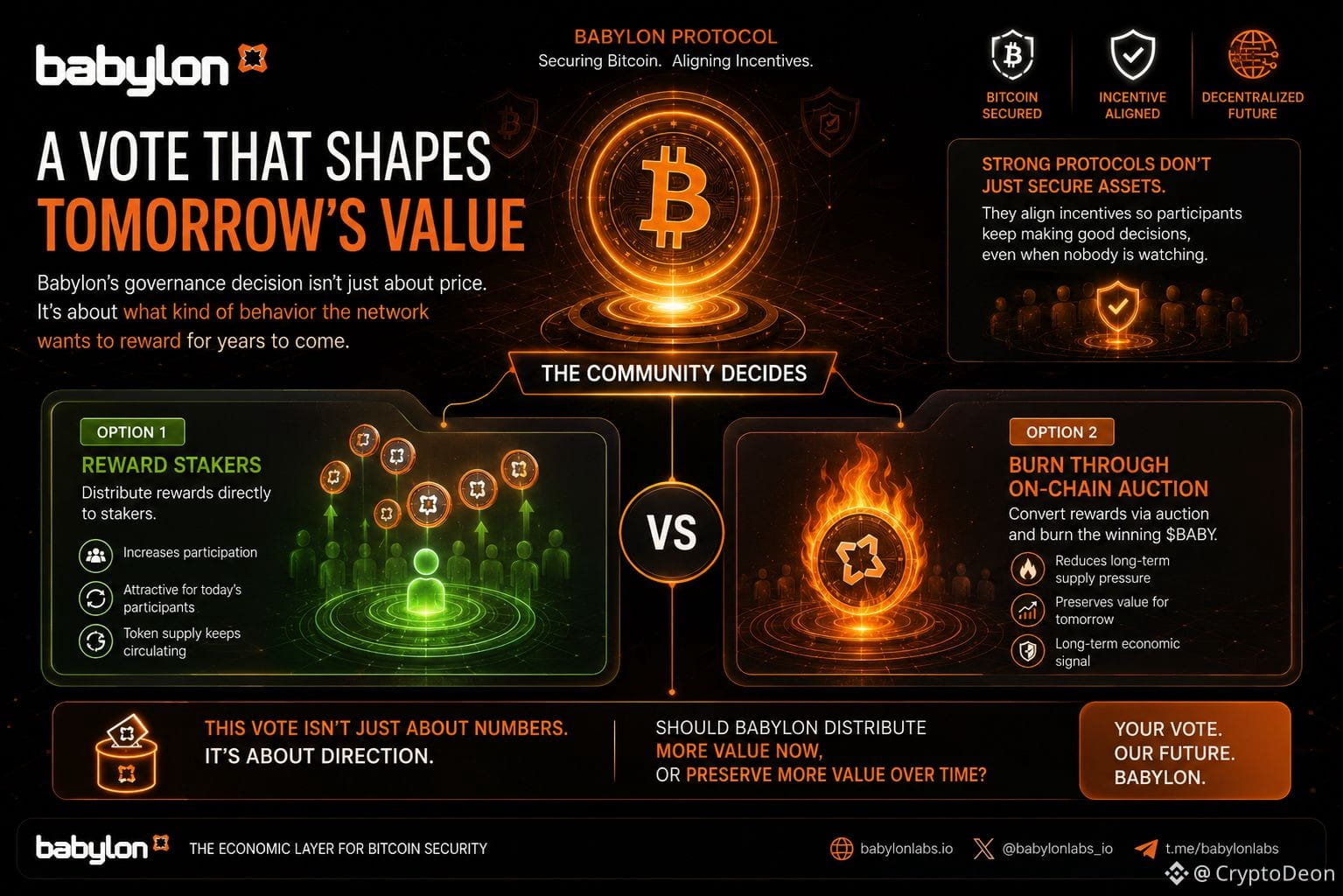
51
36
589
ເຂົ້າສູ່ລະບົບເພື່ອສຳຫຼວດເນື້ອຫາເພີ່ມເຕີມ
ເຂົ້າຮ່ວມກຸ່ມຜູ້ໃຊ້ຄຣິບໂຕທົ່ວໂລກໃນ Binance Square.
⚡️ ໄດ້ຮັບຂໍ້ມູນຫຼ້າສຸດ ແລະ ທີ່ມີປະໂຫຍດກ່ຽວກັບຄຣິບໂຕ.
💬 ໄດ້ຮັບຄວາມໄວ້ວາງໃຈຈາກຕະຫຼາດແລກປ່ຽນຄຣິບໂຕທີ່ໃຫຍ່ທີ່ສຸດໃນໂລກ.
👍 ຄົ້ນຫາຂໍ້ມູນເຊີງເລິກທີ່ແທ້ຈາກນັກສ້າງທີ່ໄດ້ຮັບການຢືນຢັນ.
ອີເມວ / ເບີໂທລະສັບ
ຫົວຂໍ້ທີ່ກໍາລັງນິຍົມ
NEARRisesNearly80%InAWeek
41,764 views
943 ກຳລັງສົນທະນາ
#nearrisesnearly80%inaweek $NEAR ປະຈຸບັນ ເພີ່ມ +80% ໃນ 7 ມື້ ແລະ ບໍ່ມີໃຜກໍາລັງພູດເລີຍວ່າ ເປັນຫຍັງ 🚀
$2.20 → $4.29 ໃນຂະນະທີ່ ຕະຫຼາດທັງໝົດ ຂຶ້ນພຽງແຕ່ 6%.
ຕົວຂັບຂອງຄວາມແທ້:
→ ປະລິມານ Intent ຢູ່ near ປະມານ $30B
→ ການເປີດ Confidential Perps ດ້ວຍ Hyperliquid
→ TVL ກັບມາຢູ່ $190M + ຜູ້ໃຊ້ງານ 52K ທີ່ເຄື່ອນໄຫວ
ຂ້ອຍໄດ້ເບິ່ງມັນຕອນ $2.30 ແລະ ບໍ່ໄດ້ເຮັດຫຍັງ. ບົດຮຽນທີ່ໄດ້ຮັບ.
ເຈົ້າກໍາລັງຖືຫຼື ຍັງເບິ່ງຈາກຂ້າງທາງຢູ່? 👀
$NEAR #NEARProtocol #CryptoNews
True News
·2 ຖືກໃຈ
·791 views
MultiversXPlansHardForkRecovery
35,136 views
714 ກຳລັງສົນທະນາ
CircleLaunchesInstitutionalBTCBackedBorrowing
34,014 views
790 ກຳລັງສົນທະນາ