
Mothpeople
56 ໂພສ

Mothpeople
ລາຍງານ
ບລັອກຜູ້ໃຊ້
Just here to learn more about this strange new world and share the knowledge. All content are made with a combination of gen-AI and human editing and planning.
ຜູ້ຊື້ຂາຍປະຈໍາ
5.9 ປີ
31 ກໍາລັງຕິດຕາມ
44 ຜູ້ຕິດຕາມ
85 Liked
ໂພສ
ທັງໝົດ
ວົງຢືມ
·
--
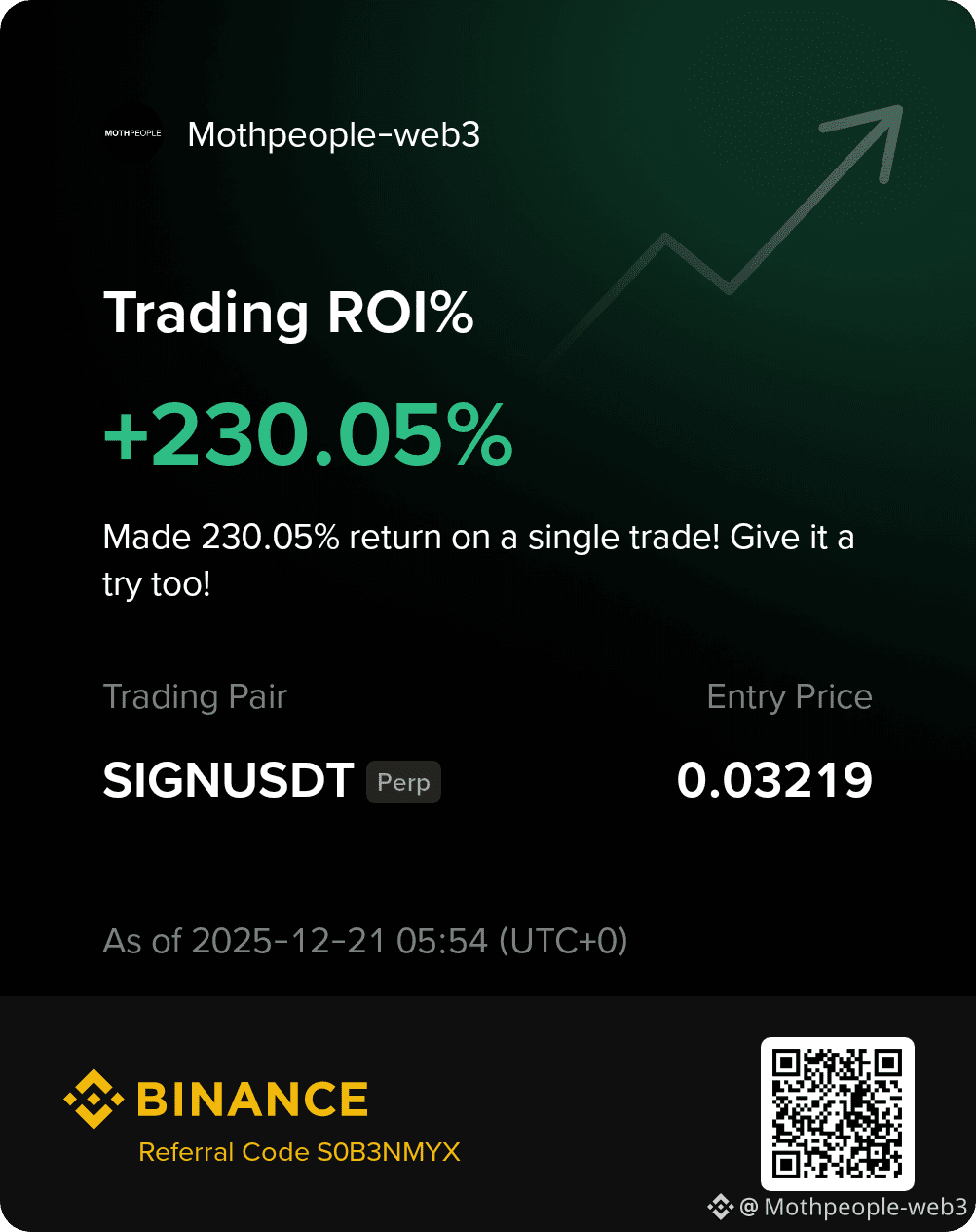
First time trying $SIGN and wasn't disappointed.
{future}(SIGNUSDT)
First time trying $SIGN and wasn't disappointed.
1
21
·
--
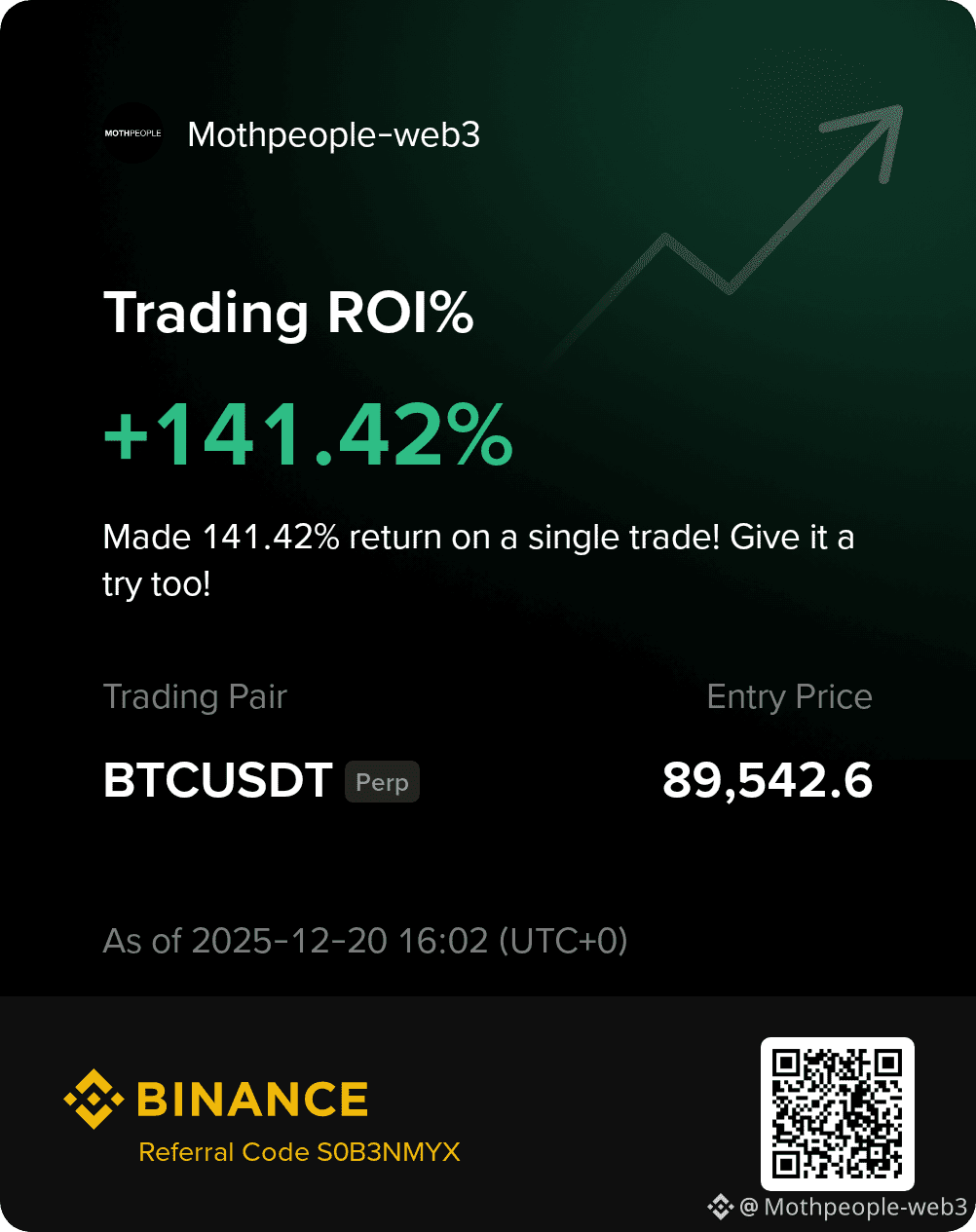
Last night was a wild ride. Small wins are still better than making losses. $BTC 🙃
Last night was a wild ride. Small wins are still better than making losses. $BTC 🙃
2
20
·
--
ສັນຍານກະທິງ
My random trade of the day, starting with $FIS
No idea where it'll go next, but that's why I always prefer #SpotTrading.
My random trade of the day, starting with $FIS
No idea where it'll go next, but that's why I always prefer #SpotTrading.
No idea where it'll go next, but that's why I always prefer #SpotTrading.
1
182
·
--
Sometimes I enjoy spot trading random tokens like $ACT because you have no idea what's going to happen next, even when the rest of the market is on a free fall. Otherwise $PAXG is my new stablecoin substitute.
Sometimes I enjoy spot trading random tokens like $ACT because you have no idea what's going to happen next, even when the rest of the market is on a free fall. Otherwise $PAXG is my new stablecoin substitute.
1
100
·
--
Seeing the altcoins popping over the past few days, some like $FIL and $XNO moving 20-30% in short periods. Is this #Altseason yet?
{spot}(XNOUSDT)
{spot}(FILUSDT)
Seeing the altcoins popping over the past few days, some like $FIL and $XNO moving 20-30% in short periods. Is this #Altseason yet?
Yes
46%
No
45%
Who cares?
9%
11 ຄະແນນສຽງ • ປິດລົງຄະແນນສຽງ
373
·
--
ສັນຍານກະທິງ
My Crypto Learning Journey
#20 – Sui (SUI)
Sui is a Layer 1 blockchain designed for speed, scalability, and smooth user experiences. It’s built using the Move programming language, originally developed by Meta for the Diem project.
Sui focuses on fast transactions, low fees, and making it easy to build Web3 apps, games, and assets.
Key Facts
- Token: $SUI
- Max supply (capped): 10 billion SUI
- Circulating supply (mid‑2025): ~2.4 billion SUI
- Launch year: May 2023 by Mysten Labs
What You Can Do with SUI
- Pay gas fees to interact with apps on the Sui network
- Stake SUI with validators to help secure the network and earn rewards
- Use in games, NFTs, and DeFi apps
- Participate in governance (voting planned in future versions)
Real-World Uses
- Real-time games with zero gas for players
- NFT minting and trading without congestion
- DeFi apps like Cetus and SuiSwap
- Wallets like Sui Wallet and Ethos Wallet
Real-World Analogy: Sui is like a super-fast checkout lane at a special supermarket built just for digital stuff.
- Small items (like NFTs or payments) go through instantly.
- Big orders (like smart contracts) still move fast—but with more checks.
- The system keeps queues separate, so it never slows down.
#sui #Write2Earn
{spot}(SUIUSDT)
{future}(SUIUSDT)
My Crypto Learning Journey
#20 – Sui (SUI)
Sui is a Layer 1 blockchain designed for speed, scalability, and smooth user experiences. It’s built using the Move programming language, originally developed by Meta for the Diem project.
Sui focuses on fast transactions, low fees, and making it easy to build Web3 apps, games, and assets.
Key Facts
- Token: $SUI
- Max supply (capped): 10 billion SUI
- Circulating supply (mid‑2025): ~2.4 billion SUI
- Launch year: May 2023 by Mysten Labs
What You Can Do with SUI
- Pay gas fees to interact with apps on the Sui network
- Stake SUI with validators to help secure the network and earn rewards
- Use in games, NFTs, and DeFi apps
- Participate in governance (voting planned in future versions)
Real-World Uses
- Real-time games with zero gas for players
- NFT minting and trading without congestion
- DeFi apps like Cetus and SuiSwap
- Wallets like Sui Wallet and Ethos Wallet
Real-World Analogy: Sui is like a super-fast checkout lane at a special supermarket built just for digital stuff.
- Small items (like NFTs or payments) go through instantly.
- Big orders (like smart contracts) still move fast—but with more checks.
- The system keeps queues separate, so it never slows down.
#sui #Write2Earn
1
1
136
·
--
SL-Reminder 11:
It's like going to the doctor knowing it's your fault you got sick. Make sure you set your #stoploss for your trades, as there's no cure or medication for liquidation.
{future}(HOMEUSDT)
{future}(GHSTUSDT)
{future}(PEOPLEUSDT)
SL-Reminder 11:
It's like going to the doctor knowing it's your fault you got sick. Make sure you set your #stoploss for your trades, as there's no cure or medication for liquidation.
It's like going to the doctor knowing it's your fault you got sick. Make sure you set your #stoploss for your trades, as there's no cure or medication for liquidation.

160
·
--
ບົດຄວາມ
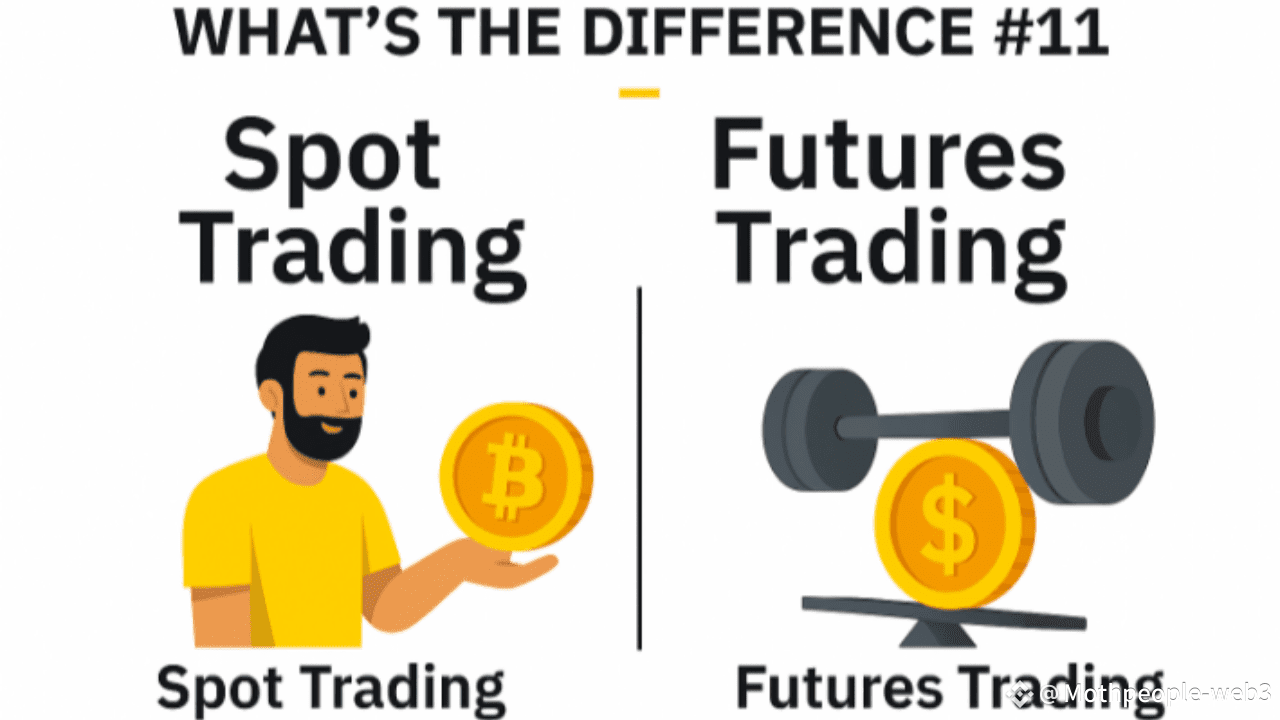
What’s the Difference? #11. Spot Trading vs Futures TradingBoth spot and futures trading happen on crypto exchanges, but they serve very different goals. For example, spot trading allows you to trade with what you have, while the tools in futures trading help you supercharge your position by also increasing your risk.
If you're not sure which one you're using, or why prices differ, this is the post for you.
Similarities
Both let you buy or sell crypto on an exchange.Both use trading pairs (like BTC/USDT or ETH/USD).Both can be used for speculation or portfolio management.
Key Differences
Ownership:Spot Trading: You buy and own the actual crypto immediately.Futures Trading: You trade contracts that bet on the future price, but without ownership of the asset.
Leverage:Spot Trading: Usually no leverage; you trade what you haveFutures Trading: Often includes high leverage (e.g. 10x, 20x, 50x).
Risk & Complexity:Spot Trading: Simpler, great for long-term holders and beginners.Futures Trading: Riskier and more complex; requires active management and stop-losses.
Examples:Spot Platforms: Binance Spot, Coinbase, KrakenFutures Platforms: Binance Futures, Bybit, Bitget, OKX Futures
Real-life Analogy
Spot trading is like buying gold and taking it home.Futures trading is like betting on whether the value of gold will go up or down in the next month, but you don’t actually get the gold.
Why It Matters
Spot is great for buying and holding real crypto.Futures allow for hedging, shorting, and leveraged strategies—but come with higher risk.Knowing the difference helps you trade with the right strategy and mindset.
#Write2Earn #Spot
{spot}(BTCUSDT)
{spot}(ETHUSDT)
{future}(BNBUSDT)
What’s the Difference? #11. Spot Trading vs Futures Trading
Both spot and futures trading happen on crypto exchanges, but they serve very different goals. For example, spot trading allows you to trade with what you have, while the tools in futures trading help you supercharge your position by also increasing your risk.
If you're not sure which one you're using, or why prices differ, this is the post for you.
Similarities
Both let you buy or sell crypto on an exchange.Both use trading pairs (like BTC/USDT or ETH/USD).Both can be used for speculation or portfolio management.
Key Differences
Ownership:Spot Trading: You buy and own the actual crypto immediately.Futures Trading: You trade contracts that bet on the future price, but without ownership of the asset.
Leverage:Spot Trading: Usually no leverage; you trade what you haveFutures Trading: Often includes high leverage (e.g. 10x, 20x, 50x).
Risk & Complexity:Spot Trading: Simpler, great for long-term holders and beginners.Futures Trading: Riskier and more complex; requires active management and stop-losses.
Examples:Spot Platforms: Binance Spot, Coinbase, KrakenFutures Platforms: Binance Futures, Bybit, Bitget, OKX Futures
Real-life Analogy
Spot trading is like buying gold and taking it home.Futures trading is like betting on whether the value of gold will go up or down in the next month, but you don’t actually get the gold.
Why It Matters
Spot is great for buying and holding real crypto.Futures allow for hedging, shorting, and leveraged strategies—but come with higher risk.Knowing the difference helps you trade with the right strategy and mindset.
#Write2Earn #Spot
22
·
--
ສັນຍານກະທິງ
My Crypto Learning Journey
#19 – Shiba Inu (SHIB)
Shiba Inu (SHIB) is a meme-based cryptocurrency launched in 2020 as an experiment in decentralized community building.
It’s inspired by Dogecoin, but with bigger goals, by building an entire ecosystem, not just a coin. It was initially known as the "Dogecoin killer," but it's really grown into its own thing.
Key Facts
- Token: $SHIB
- Max supply (initial): 1 quadrillion (but over 400 trillion burned)
- Circulating supply (mid‑2025): ~589 trillion SHIB
- Launch year: 2020 by anonymous founder “Ryoshi”
What You Can Do with SHIB
- Hold it as a meme asset (speculative or for fun)
- Use it in the Shiba Ecosystem (staking, rewards, NFTs)
- Spend it at SHIB-accepting merchants
- Join community governance through Shiba DAO
Real-World Uses
- Online payments via BitPay and crypto cards
- Donations: SHIB has been used for real-world charity
- DeFi & NFTs on ShibaSwap
- Upcoming use in games and virtual land
Real-World Analogy: SHIB is like a viral startup born from a meme, but with real builders.
It started as a joke, but then built a neighborhood: a park (metaverse), a bank (ShibaSwap), and now even has its own highway (Shibarium).
#Write2Earn #SHIB
{spot}(SHIBUSDT)
My Crypto Learning Journey
#19 – Shiba Inu (SHIB)
Shiba Inu (SHIB) is a meme-based cryptocurrency launched in 2020 as an experiment in decentralized community building.
It’s inspired by Dogecoin, but with bigger goals, by building an entire ecosystem, not just a coin. It was initially known as the "Dogecoin killer," but it's really grown into its own thing.
Key Facts
- Token: $SHIB
- Max supply (initial): 1 quadrillion (but over 400 trillion burned)
- Circulating supply (mid‑2025): ~589 trillion SHIB
- Launch year: 2020 by anonymous founder “Ryoshi”
What You Can Do with SHIB
- Hold it as a meme asset (speculative or for fun)
- Use it in the Shiba Ecosystem (staking, rewards, NFTs)
- Spend it at SHIB-accepting merchants
- Join community governance through Shiba DAO
Real-World Uses
- Online payments via BitPay and crypto cards
- Donations: SHIB has been used for real-world charity
- DeFi & NFTs on ShibaSwap
- Upcoming use in games and virtual land
Real-World Analogy: SHIB is like a viral startup born from a meme, but with real builders.
It started as a joke, but then built a neighborhood: a park (metaverse), a bank (ShibaSwap), and now even has its own highway (Shibarium).
#Write2Earn #SHIB
1
197
·
--
ສັນຍານກະທິງ
My Crypto Learning Journey
#18 – Dogecoin (DOGE)
What is Dogecoin?
Dogecoin is a decentralized, peer-to-peer digital currency and the internet’s first meme-inspired "memecoin." It started as a joke in December 2013, based on the “Doge” Shiba Inu meme.
The original Doge meme featured a smiling Shiba Inu and fun phrases like “much wow” in playful broken English.
Key Facts
- Token: $DOGE
- Max supply (capped): None — unlimited supply
- Circulating supply (Aug‑2025): ~150.48 billion DOGE
- Launch year: December 2013 by Jackson Palmer & Billy Markus
What You Can Do with DOGE
- Send fast, low-fee payments online
- Tip content creators on social media
- Donate to charity or join fundraisers
- Support community and fan-driven causes
Why DOGE Stands Out
- Strong community spirit and a playful brand
- Memes and social media drive its popularity
- Supported by high-profile figures (notably Elon Musk), causing viral price swings
- Used in high-profile, quirky projects like DOGE-1, a moon satellite mission funded entirely by Dogecoin
Real-World Analogy: Think of Dogecoin like the money within a boardgame you're playing with your friends at a party.
Everyone’s welcome to use it and experience friendly, and endless fun. You don’t really save it like a real currency, and instead, you spend it on tips, jokes, or good vibes. Its value rises with how much the party talks about it.
#Write2Earn
{spot}(DOGEUSDT)
{future}(DOGEUSDT)
My Crypto Learning Journey
#18 – Dogecoin (DOGE)
What is Dogecoin?
Dogecoin is a decentralized, peer-to-peer digital currency and the internet’s first meme-inspired "memecoin." It started as a joke in December 2013, based on the “Doge” Shiba Inu meme.
The original Doge meme featured a smiling Shiba Inu and fun phrases like “much wow” in playful broken English.
Key Facts
- Token: $DOGE
- Max supply (capped): None — unlimited supply
- Circulating supply (Aug‑2025): ~150.48 billion DOGE
- Launch year: December 2013 by Jackson Palmer & Billy Markus
What You Can Do with DOGE
- Send fast, low-fee payments online
- Tip content creators on social media
- Donate to charity or join fundraisers
- Support community and fan-driven causes
Why DOGE Stands Out
- Strong community spirit and a playful brand
- Memes and social media drive its popularity
- Supported by high-profile figures (notably Elon Musk), causing viral price swings
- Used in high-profile, quirky projects like DOGE-1, a moon satellite mission funded entirely by Dogecoin
Real-World Analogy: Think of Dogecoin like the money within a boardgame you're playing with your friends at a party.
Everyone’s welcome to use it and experience friendly, and endless fun. You don’t really save it like a real currency, and instead, you spend it on tips, jokes, or good vibes. Its value rises with how much the party talks about it.
#Write2Earn
31
·
--
ສັນຍານກະທິງ
My Crypto Learning Journey
#17 – Hedera (HBAR)
What is Hedera?
Hedera is a public blockchain-like network, but it doesn’t use a traditional blockchain.
Instead, it uses a new technology called Hashgraph, which is faster, fairer, and uses less energy. The native token of Hedera is HBAR, used for transactions, staking, and securing the network.
Key Facts
- Token: $HBAR
- Max supply (capped): 50 billion HBAR
- Circulating supply (Aug-2025): 50 billion HBAR
- Launch year: 2019, by Hedera Hashgraph LLC
What You Can Do with HBAR
- Pay for network services (like transactions and smart contracts)
- Stake HBAR to support the network and earn rewards
- Governance voting (HBAR holders can help steer the network)
- Use in enterprise, DeFi, gaming, and ESG applications
Why HBAR Stands Out
- Used by major companies like Google, IBM, Dell, and Boeing
- Has a Governing Council of 39 big global organizations
- Ideal for enterprise use cases (digital IDs, supply chain, payments)
- Strong push for sustainability and green blockchain tech
Real-World Analogy: Think of Hedera like an ultra-efficient airport. Flights (transactions) are scheduled and cleared quickly, fairly, and securely.
HBAR is the ticket used to board, manage, and improve the system.
#Write2Earn
{spot}(HBARUSDT)
{future}(HBARUSDT)
My Crypto Learning Journey
#17 – Hedera (HBAR)
What is Hedera?
Hedera is a public blockchain-like network, but it doesn’t use a traditional blockchain.
Instead, it uses a new technology called Hashgraph, which is faster, fairer, and uses less energy. The native token of Hedera is HBAR, used for transactions, staking, and securing the network.
Key Facts
- Token: $HBAR
- Max supply (capped): 50 billion HBAR
- Circulating supply (Aug-2025): 50 billion HBAR
- Launch year: 2019, by Hedera Hashgraph LLC
What You Can Do with HBAR
- Pay for network services (like transactions and smart contracts)
- Stake HBAR to support the network and earn rewards
- Governance voting (HBAR holders can help steer the network)
- Use in enterprise, DeFi, gaming, and ESG applications
Why HBAR Stands Out
- Used by major companies like Google, IBM, Dell, and Boeing
- Has a Governing Council of 39 big global organizations
- Ideal for enterprise use cases (digital IDs, supply chain, payments)
- Strong push for sustainability and green blockchain tech
Real-World Analogy: Think of Hedera like an ultra-efficient airport. Flights (transactions) are scheduled and cleared quickly, fairly, and securely.
HBAR is the ticket used to board, manage, and improve the system.
#Write2Earn
1
238
·
--
ບົດຄວາມ
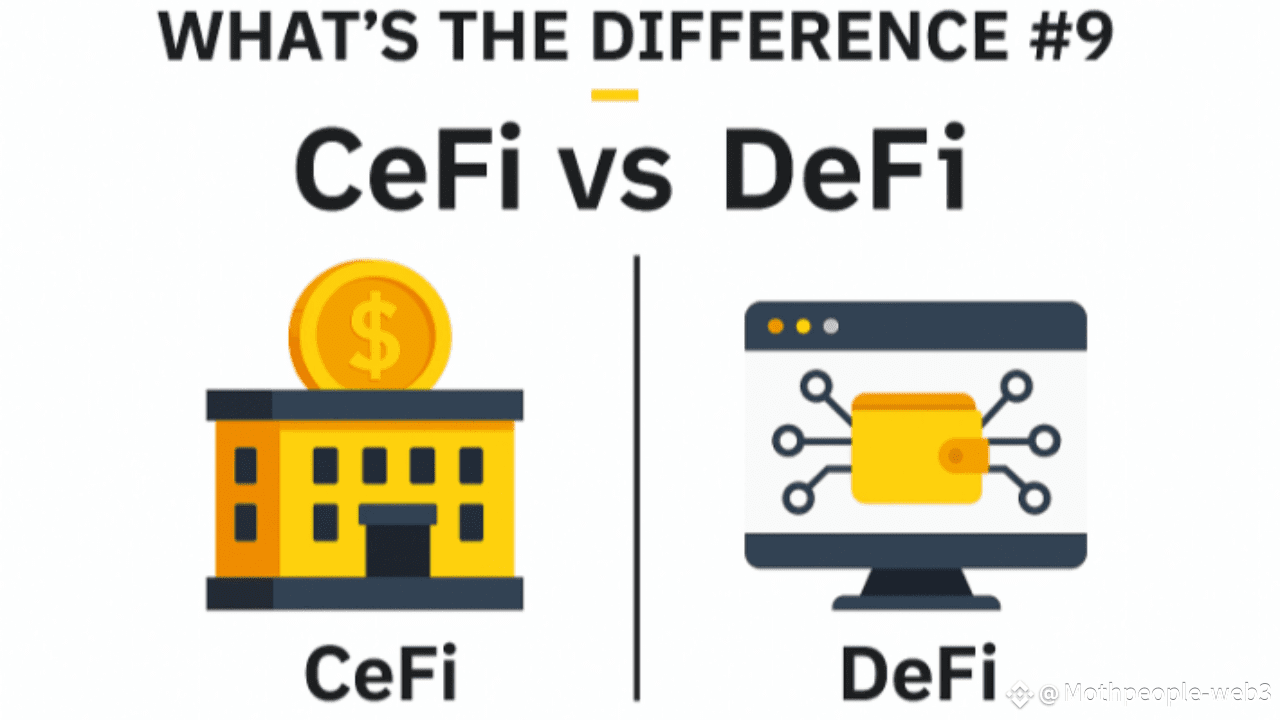
What’s the Difference? #9. CeFi vs DeFiIn crypto, you’ll often hear about CeFi (Centralized Finance) and DeFi (Decentralized Finance). Both let you earn, borrow, lend, and trade, but how they do it is where they become vastly different.
Similarities
Both offer financial services like trading, lending, borrowing, and earning yield.Both rely on blockchain-based assets like stablecoins and cryptocurrencies.Both aim to make finance more accessible to users around the world.
Key Differences
Control & Custody:CeFi: Managed by a centralized company that holds your assets.DeFi: Fully non-custodial; you control your wallet and interact with smart contracts.
Trust Model:CeFi: You trust the company or platform to act responsibly.DeFi: You trust the code and protocol, not people.
Access & Usage:CeFi: Easier onboarding, KYC required, supports fiat.DeFi: Open access, no KYC, but requires a crypto wallet and basic knowledge.Examples:CeFi: Binance ($BNB ), Coinbase, BingX, etcDeFi: Aave ( $AAVE ), Compound ( $COMP ), etc
Real-life Analogy
CeFi is like using a bank or finance app—you get ease of use, but someone else holds your money.DeFi is like using open-source financial tools where you’re in control, but you need to know what you're doing, as you will face more risks with less support.
Why It Matters
CeFi is user-friendly but adds centralized risk such as platform failures, hacks, or restrictions.DeFi gives you freedom and transparency but also puts all the responsibility on you.Choosing the right one depends on your risk tolerance, goals, and crypto experience.
#Write2Earn
{spot}(BNBUSDT)
{spot}(AAVEUSDT)
{spot}(COMPUSDT)
What’s the Difference? #9. CeFi vs DeFi
In crypto, you’ll often hear about CeFi (Centralized Finance) and DeFi (Decentralized Finance). Both let you earn, borrow, lend, and trade, but how they do it is where they become vastly different.
Similarities
Both offer financial services like trading, lending, borrowing, and earning yield.Both rely on blockchain-based assets like stablecoins and cryptocurrencies.Both aim to make finance more accessible to users around the world.
Key Differences
Control & Custody:CeFi: Managed by a centralized company that holds your assets.DeFi: Fully non-custodial; you control your wallet and interact with smart contracts.
Trust Model:CeFi: You trust the company or platform to act responsibly.DeFi: You trust the code and protocol, not people.
Access & Usage:CeFi: Easier onboarding, KYC required, supports fiat.DeFi: Open access, no KYC, but requires a crypto wallet and basic knowledge.Examples:CeFi: Binance ($BNB ), Coinbase, BingX, etcDeFi: Aave ( $AAVE ), Compound ( $COMP ), etc
Real-life Analogy
CeFi is like using a bank or finance app—you get ease of use, but someone else holds your money.DeFi is like using open-source financial tools where you’re in control, but you need to know what you're doing, as you will face more risks with less support.
Why It Matters
CeFi is user-friendly but adds centralized risk such as platform failures, hacks, or restrictions.DeFi gives you freedom and transparency but also puts all the responsibility on you.Choosing the right one depends on your risk tolerance, goals, and crypto experience.
#Write2Earn
210
·
--
SL-Reminder 10:
The market is a huge jungle, and trading without setting a #stoploss is like jumping into a swamp with no protection.
Trade smart and don't get liquidated.
{future}(FLOWUSDT)
{future}(SWARMSUSDT)
{future}(VINEUSDT)
SL-Reminder 10:
The market is a huge jungle, and trading without setting a #stoploss is like jumping into a swamp with no protection.
Trade smart and don't get liquidated.
The market is a huge jungle, and trading without setting a #stoploss is like jumping into a swamp with no protection.
Trade smart and don't get liquidated.

1
2.6k
·
--
SL-Reminder 9:
Trying to trade without setting any #stoploss means you're getting dragged down to hell once the chart swings the other way.
{future}(ROSEUSDT)
{future}(WOOUSDT)
{future}(HOMEUSDT)
SL-Reminder 9:
Trying to trade without setting any #stoploss means you're getting dragged down to hell once the chart swings the other way.
Trying to trade without setting any #stoploss means you're getting dragged down to hell once the chart swings the other way.
1
4
1.6k
·
--
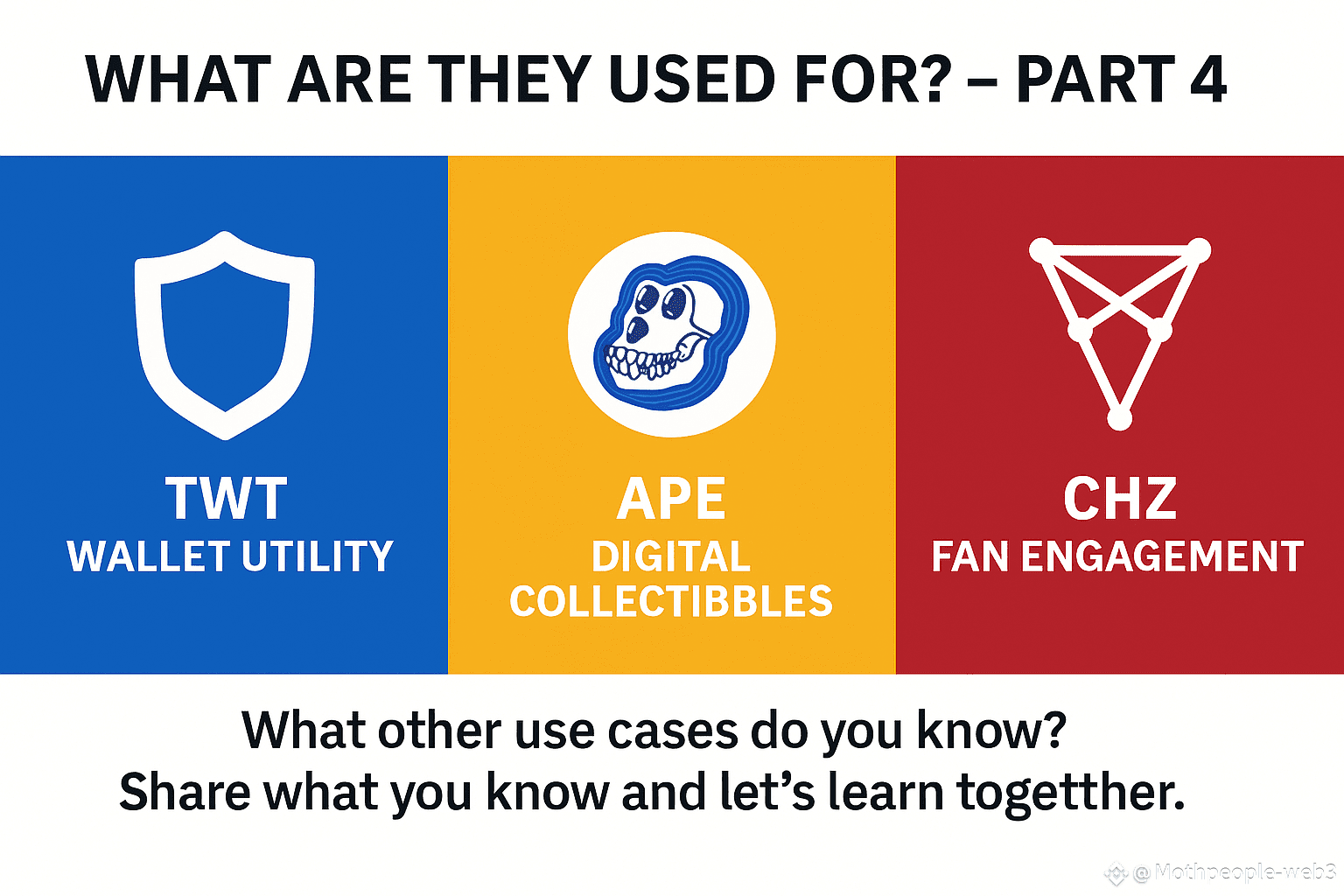
What are they used for? – Part 4
1. Trust Wallet $TWT – Wallet Utility
- Used in Trust Wallet for governance, discounts, and access to certain features.
{future}(TWTUSDT)
2. ApeCoin $APE – Digital Collectibles
- Used in the APE ecosystem for NFT purchases, games, and metaverse activities.
{spot}(APEUSDT)
3. Chiliz $CHZ – Fan Engagement
- Used on platforms like Socios to let fans vote on team decisions and access exclusive perks.
{spot}(CHZUSDT)
What other use cases do you know of these tokens? Share what you know and let’s #LearnTogether
What are they used for? – Part 4
1. Trust Wallet $TWT – Wallet Utility
- Used in Trust Wallet for governance, discounts, and access to certain features.
2. ApeCoin $APE – Digital Collectibles
- Used in the APE ecosystem for NFT purchases, games, and metaverse activities.
3. Chiliz $CHZ – Fan Engagement
- Used on platforms like Socios to let fans vote on team decisions and access exclusive perks.
What other use cases do you know of these tokens? Share what you know and let’s #LearnTogether
1
1.1k
·
--
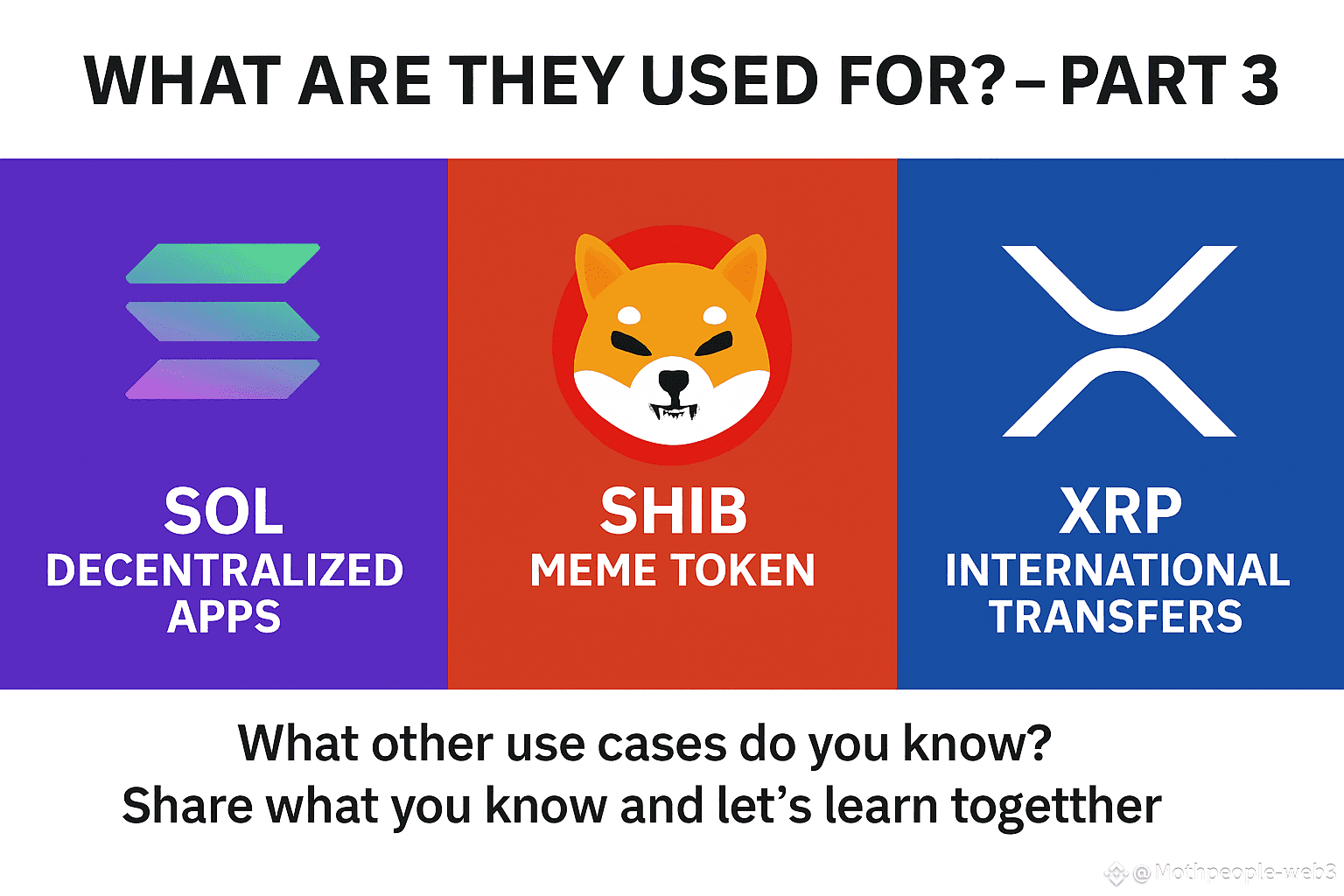
What are they used for? – Part 3
1. Solana $SOL – Decentralized Apps
- Used to build fast, low-cost blockchain apps and NFTs on the Solana network.
{spot}(SOLUSDT)
2. Shiba Inu $SHIB – Meme Token
- Started as a meme, now used in online tipping, DeFi, and Shiba ecosystem projects.
{spot}(SHIBUSDT)
3. $XRP – International Transfers
- Used by banks and fintech firms to send money across borders quickly and cheaply.
{spot}(XRPUSDT)
What other use cases do you know? Share what you know and let’s #LearnTogether
What are they used for? – Part 3
1. Solana $SOL – Decentralized Apps
- Used to build fast, low-cost blockchain apps and NFTs on the Solana network.
2. Shiba Inu $SHIB – Meme Token
- Started as a meme, now used in online tipping, DeFi, and Shiba ecosystem projects.
3. $XRP – International Transfers
- Used by banks and fintech firms to send money across borders quickly and cheaply.
What other use cases do you know? Share what you know and let’s #LearnTogether
1
113
·
--
SL-Reminder 8:
Setting up leveraged trades from the top without setting a #stoploss is going to feel like bungee jumping without a rope.
{future}(SKYAIUSDT)
{future}(DRIFTUSDT)
{future}(GRASSUSDT)
SL-Reminder 8:
Setting up leveraged trades from the top without setting a #stoploss is going to feel like bungee jumping without a rope.
Setting up leveraged trades from the top without setting a #stoploss is going to feel like bungee jumping without a rope.

1
252
·
--
ສັນຍານກະທິງ
My Crypto Learning Journey
#16 – Avalanche ( $AVAX )
Avalanche is a fast, smart-contract blockchain built for speed, low fees, and energy efficiency. It uses a unique setup of three focused chains (X-Chain, C-Chain, P-Chain) that work together to keep things running smoothly.
A key feature is its Subnet architecture, allowing developers and institutions to launch custom blockchains tailored to specific needs.
Key Facts:
- Token: AVAX (native token)
- Max supply (capped): ~720 million AVAX
- Circulating supply (mid‑2025): ~422 million AVAX
- Launch year: 2020, by Ava Labs
What You Can Do with AVAX:
- Pay for transactions (gas fees)
- Stake AVAX to secure the network and earn rewards
- Vote on proposals affecting the Avalanche ecosystem
- Use subnets—institutional or gaming applications
Real-World Uses:
- Popular for DeFi (like Trader Joe, Benqi) and NFT platforms
- Institutions use subnets for tokenized assets, and digital IDs
- Avalanche is gaining traction in gaming and public infrastructure
Real-World Analogy:
Imagine Avalanche as a high-speed train network with custom lines (subnets) for different needs. AVAX is the ticket which is used to ride, help run the lines (stake), and shape where new tracks are built (governance).
#Write2Earn #AvalancheAVAX
{spot}(AVAXUSDT)
{future}(AVAXUSDT)
My Crypto Learning Journey
#16 – Avalanche ( $AVAX )
Avalanche is a fast, smart-contract blockchain built for speed, low fees, and energy efficiency. It uses a unique setup of three focused chains (X-Chain, C-Chain, P-Chain) that work together to keep things running smoothly.
A key feature is its Subnet architecture, allowing developers and institutions to launch custom blockchains tailored to specific needs.
Key Facts:
- Token: AVAX (native token)
- Max supply (capped): ~720 million AVAX
- Circulating supply (mid‑2025): ~422 million AVAX
- Launch year: 2020, by Ava Labs
What You Can Do with AVAX:
- Pay for transactions (gas fees)
- Stake AVAX to secure the network and earn rewards
- Vote on proposals affecting the Avalanche ecosystem
- Use subnets—institutional or gaming applications
Real-World Uses:
- Popular for DeFi (like Trader Joe, Benqi) and NFT platforms
- Institutions use subnets for tokenized assets, and digital IDs
- Avalanche is gaining traction in gaming and public infrastructure
Real-World Analogy:
Imagine Avalanche as a high-speed train network with custom lines (subnets) for different needs. AVAX is the ticket which is used to ride, help run the lines (stake), and shape where new tracks are built (governance).
#Write2Earn #AvalancheAVAX
8
1.3k
ເຂົ້າສູ່ລະບົບເພື່ອສຳຫຼວດເນື້ອຫາເພີ່ມເຕີມ
ເຂົ້າຮ່ວມກຸ່ມຜູ້ໃຊ້ຄຣິບໂຕທົ່ວໂລກໃນ Binance Square.
⚡️ ໄດ້ຮັບຂໍ້ມູນຫຼ້າສຸດ ແລະ ທີ່ມີປະໂຫຍດກ່ຽວກັບຄຣິບໂຕ.
💬 ໄດ້ຮັບຄວາມໄວ້ວາງໃຈຈາກຕະຫຼາດແລກປ່ຽນຄຣິບໂຕທີ່ໃຫຍ່ທີ່ສຸດໃນໂລກ.
👍 ຄົ້ນຫາຂໍ້ມູນເຊີງເລິກທີ່ແທ້ຈາກນັກສ້າງທີ່ໄດ້ຮັບການຢືນຢັນ.
ອີເມວ / ເບີໂທລະສັບ
ຫົວຂໍ້ທີ່ກໍາລັງນິຍົມ
EvolveAtBinanceBlockchainWeek
2M ຄັ້ງທີ່ເບິ່ງ
18,923 ກຳລັງສົນທະນາ
Binance Blockchain Week is officially underway! 🌍
On November 28–29, whether you’re in Bangkok or joining from afar, tune in to the livestreams and join the conversation on Binance Square!
Here’s what’s in store 👇
📺 Watch the main stage live
Tune in throughout both days as industry speakers share their perspectives on this year’s theme, “Evolve” From technological innovation to real-world applications, explore what’s next for crypto.
⚔️ Watch two trading competitions
The Aster Open Qualifier and the Binance Trading Master Tournament will both be streamed live. Tune in to follow the traders in action.
🏆 Watch The Blockchain 100 Awards Ceremony
The Blockchain 100 list was selected by the community. Join us in celebrating the creators and the ideas they share!
💬 Join the community conversation
Use #EvolveAtBinanceBlockchainWeek in a post with a photo to share what you’re looking forward to, your views on the industry, or your favorite moments from the event.
The event page is now live! Subscribe to all livestreams with one click so you don’t miss a moment 👏
Binance Blockchain Week
·525 ຖືກໃຈ
·763.1k ຄັ້ງທີ່ເບິ່ງ
BitcoinETFsExtendOutflowStreakToEightDays
34,620 ຄັ້ງທີ່ເບິ່ງ
449 ກຳລັງສົນທະນາ
ColdcardFlawLeadsToTheftOfAtLeast1789BTC
101,015 ຄັ້ງທີ່ເບິ່ງ
777 ກຳລັງສົນທະນາ