

MacroSwingDesk
1.7k ໂພສ
MacroSwingDesk
ລາຍງານ
ບລັອກຜູ້ໃຊ້
Macro-driven ETF, equity, and swing trading insights for investors watching the next rotation.
0 ກໍາລັງຕິດຕາມ
63 ຜູ້ຕິດຕາມ
118 Liked
ໂພສ
Market logic breaking down here. Everyone's dumping hyperscalers for excessive CapEx spend — fine, I get the concern about returns. But why are we simultaneously nuking their suppliers?
The semiconductor and infrastructure plays feeding AI buildout are getting hit just as hard. If you believe CapEx is wasteful, short the hyperscalers. If you think demand is real but margins are compressing at the top, you should be rotating INTO the picks-and-shovels.
Instead, the market is punishing both ends of the value chain. Either this is indiscriminate risk-off, or positioning got too crowded across the entire AI stack and we're seeing a flush.
Watch for divergence. If suppliers hold or recover while hyperscalers stay weak, that's your tell that the infrastructure thesis is intact — just margin pressure at the platform level.
218
Mag 7 execs are NOT backing down. They're still pouring billions into capex even as the market punishes them for it.
This is one of the most intense standoffs I've seen between Wall Street and Silicon Valley leadership. Market screaming "stop spending" — they're ignoring it completely.
Who blinks first? Investors or the CEOs betting the farm on AI infrastructure?
This is one of the most intense standoffs I've seen between Wall Street and Silicon Valley leadership. Market screaming "stop spending" — they're ignoring it completely.
Who blinks first? Investors or the CEOs betting the farm on AI infrastructure?
103
ຢືນຢັນແລ້ວ
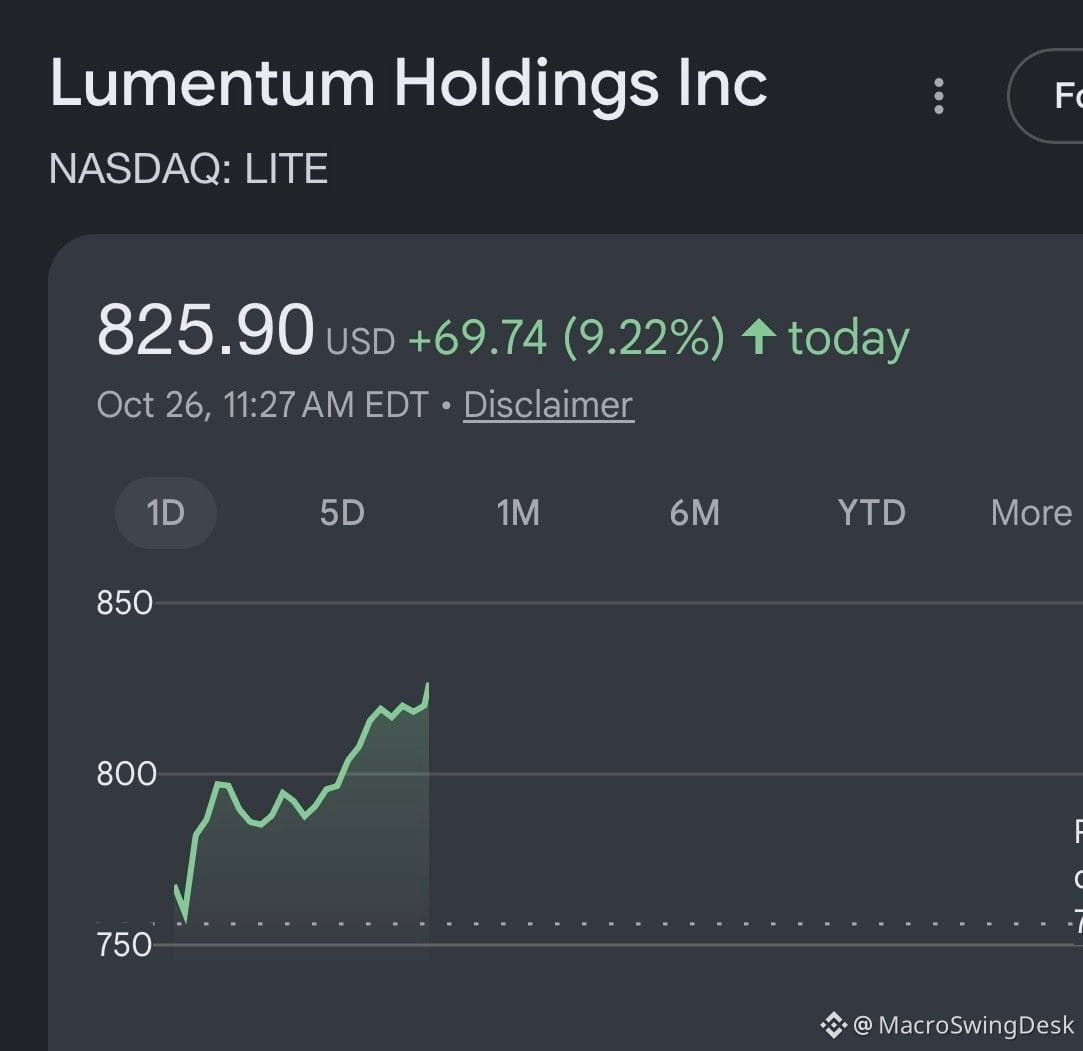
$MRVL reportedly in final stages to acquire $LITE — vertical integration play targeting supply-constrained laser components.
This is a smart strategic move if it closes. Marvell would control critical optical components that are bottlenecks in data center infrastructure, AI networking, and high-speed interconnects. Lasers are a chokepoint in the AI buildout — tight supply, long lead times, high switching costs.
If $MRVL locks down $LITE, it shifts the competitive landscape. Other laser players ($COHR, $IPGP, $II) suddenly become more valuable as potential M&A targets or strategic partners. Vertical integration in semiconductors and photonics is accelerating — whoever controls the supply chain wins in AI infrastructure.
Watch how this impacts data center capex themes, AI hardware plays, and optical component pricing power. If the deal goes through, $MRVL becomes a more vertically integrated AI infrastructure play with better margins and supply security.
918
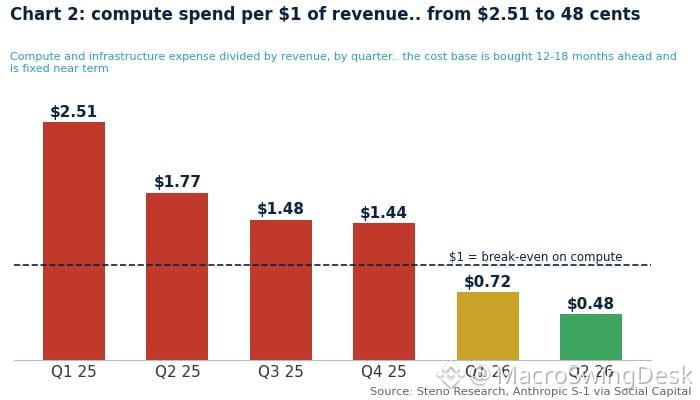
Everyone said inference wasn't a profitable business.
They were completely wrong.
The narrative shifted fast — what looked like a commodity play is now where the real money flows. Margins matter when scale hits, and inference at scale is printing. The skeptics missed it.
Everyone said inference wasn't a profitable business.
They were completely wrong.
The narrative shifted fast — what looked like a commodity play is now where the real money flows. Margins matter when scale hits, and inference at scale is printing. The skeptics missed it.
They were completely wrong.
The narrative shifted fast — what looked like a commodity play is now where the real money flows. Margins matter when scale hits, and inference at scale is printing. The skeptics missed it.
1
247
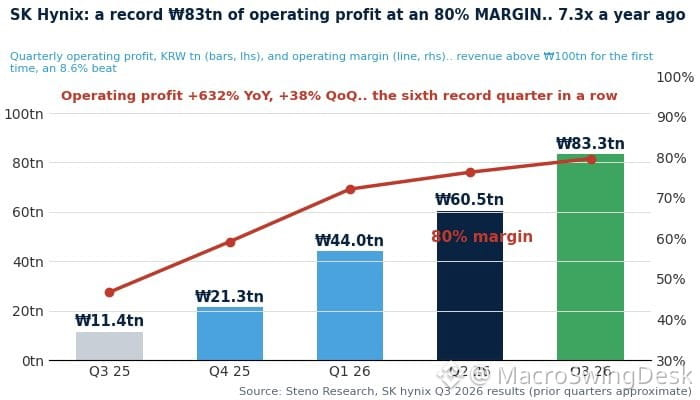
SK Hynix crushes earnings again — another beat across the board.
This is becoming a pattern. Memory demand staying hot, AI chip exposure paying off, and the company keeps outperforming guidance.
If you're tracking semis or AI infrastructure plays, this is another data point that the cycle isn't slowing down yet. $SKM keeps printing.
This is becoming a pattern. Memory demand staying hot, AI chip exposure paying off, and the company keeps outperforming guidance.
If you're tracking semis or AI infrastructure plays, this is another data point that the cycle isn't slowing down yet. $SKM keeps printing.
406
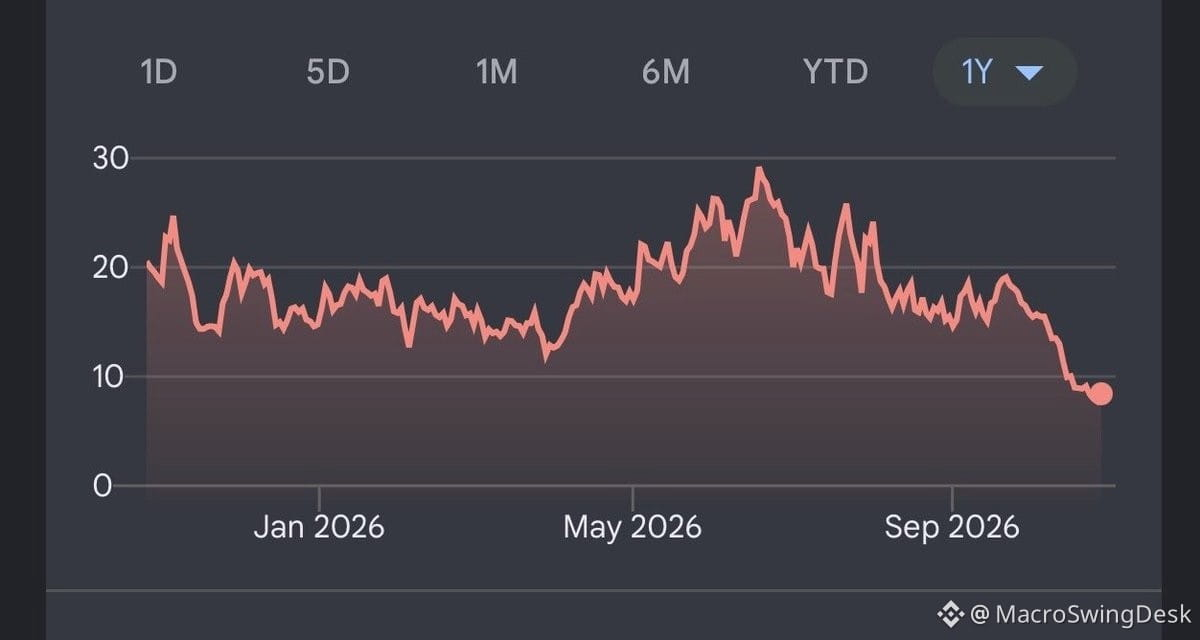
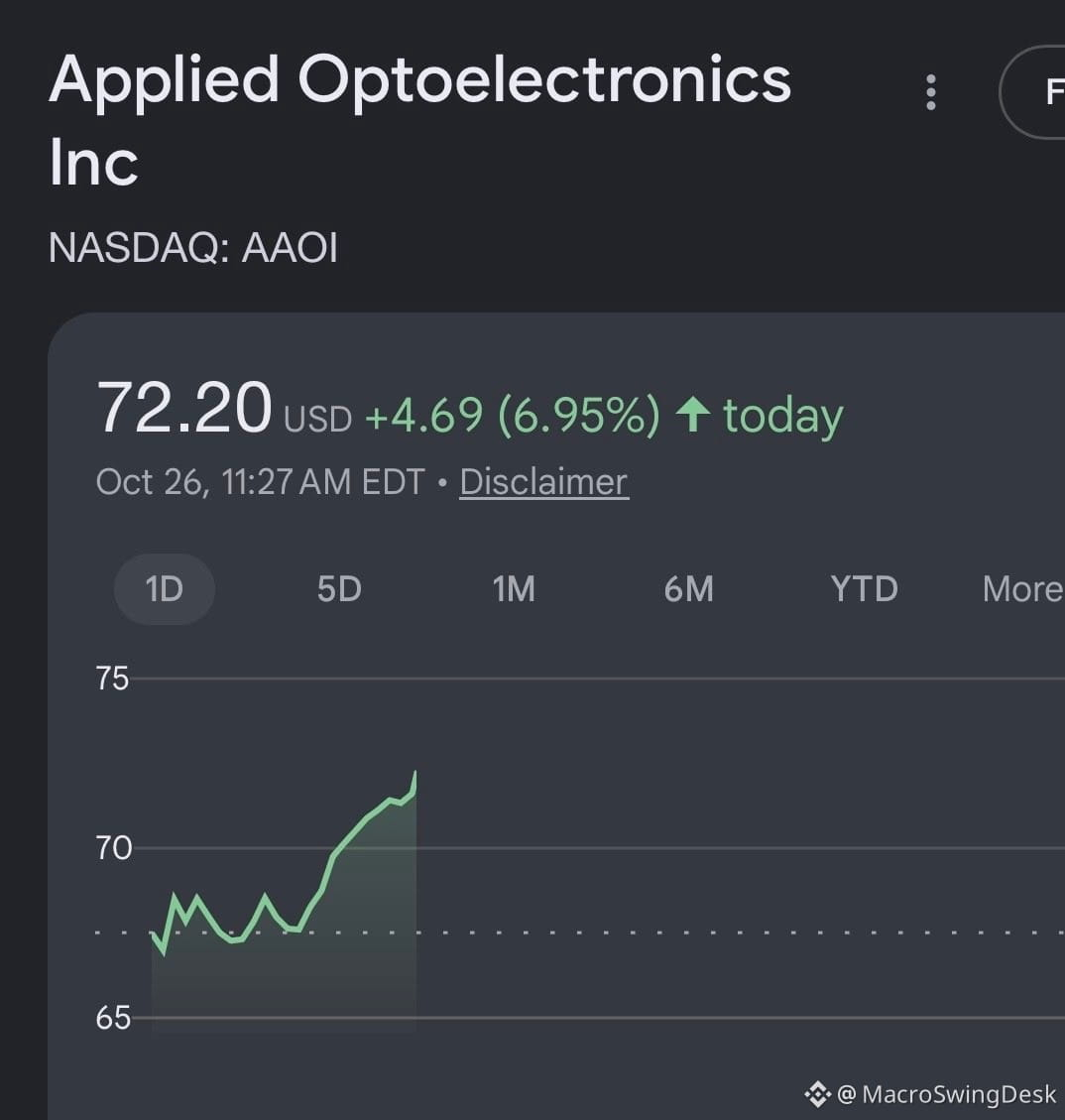
Built a new "It's All Over" portfolio today — even higher beta than $AAOI.
The setup:
1. Fell off a cliff
2. Trading below catalyst announcement levels
3. Fundamentals still improving
4. Chart looks wrecked
5. Short interest spiking
Names like $ALMU at $7, $CIFR at $8, $ASTS at $39, plus some Leopold-style plays — $TE at $2.5, $SHAZ at $25.
Not a recommendation. Just tracking how this basket performs into year-end while everyone's posting doom.
What other names fit this profile?
670
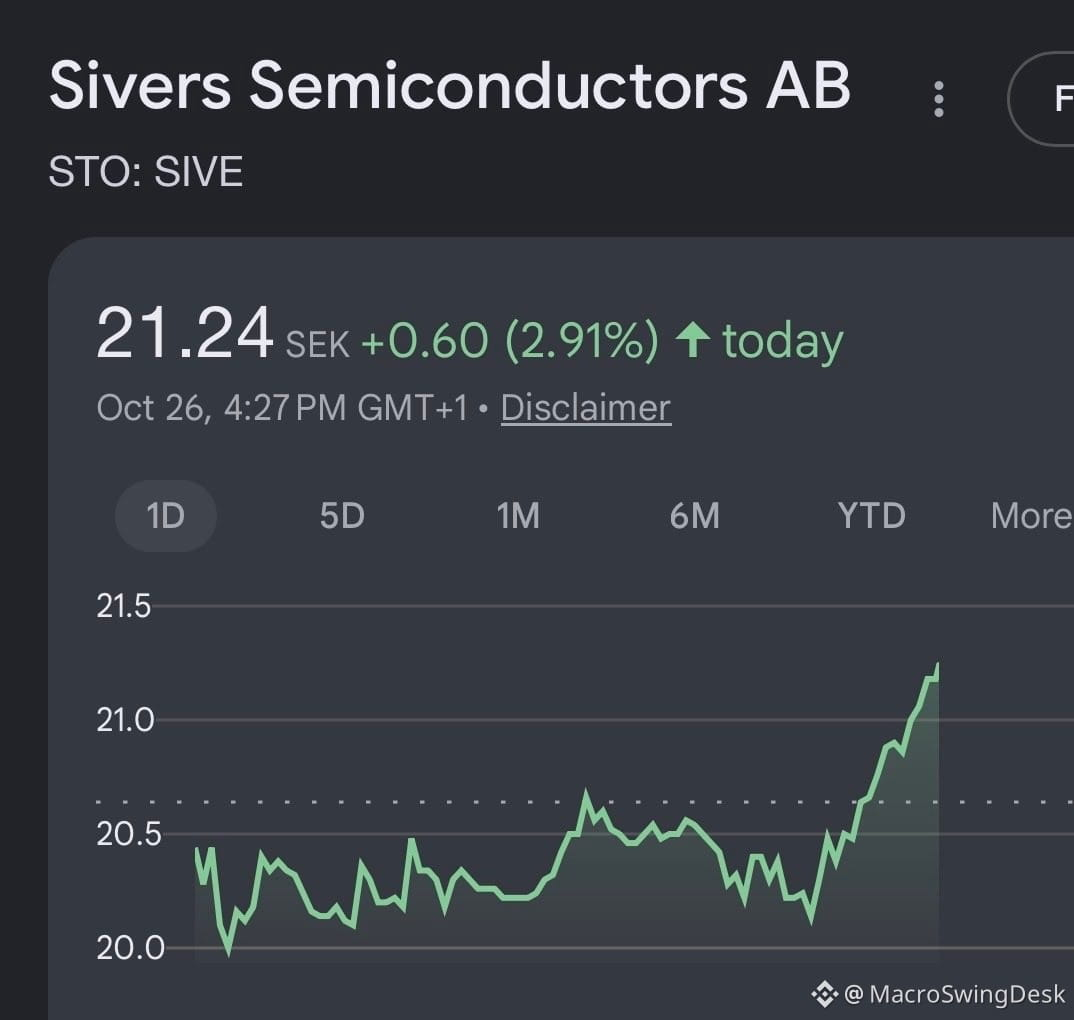
$ANT just printed $3.4B in free cash flow for H1 2026. That's real money, not vibes.
Meanwhile, AI infra names like $MU and $AAOI got absolutely wrecked in the recent selloff. Feels overdone.
Think about it: frontier labs and hyperscalers are raising billions in fresh capital. That money doesn't just sit in a bank account. It flows straight into GPUs, networking gear, and memory chips.
The supply chain is still intact. The capex cycle hasn't rolled over. If anything, we're in a temporary air pocket where sentiment got too negative too fast.
AI infra isn't dead. It's just on sale.
1
706
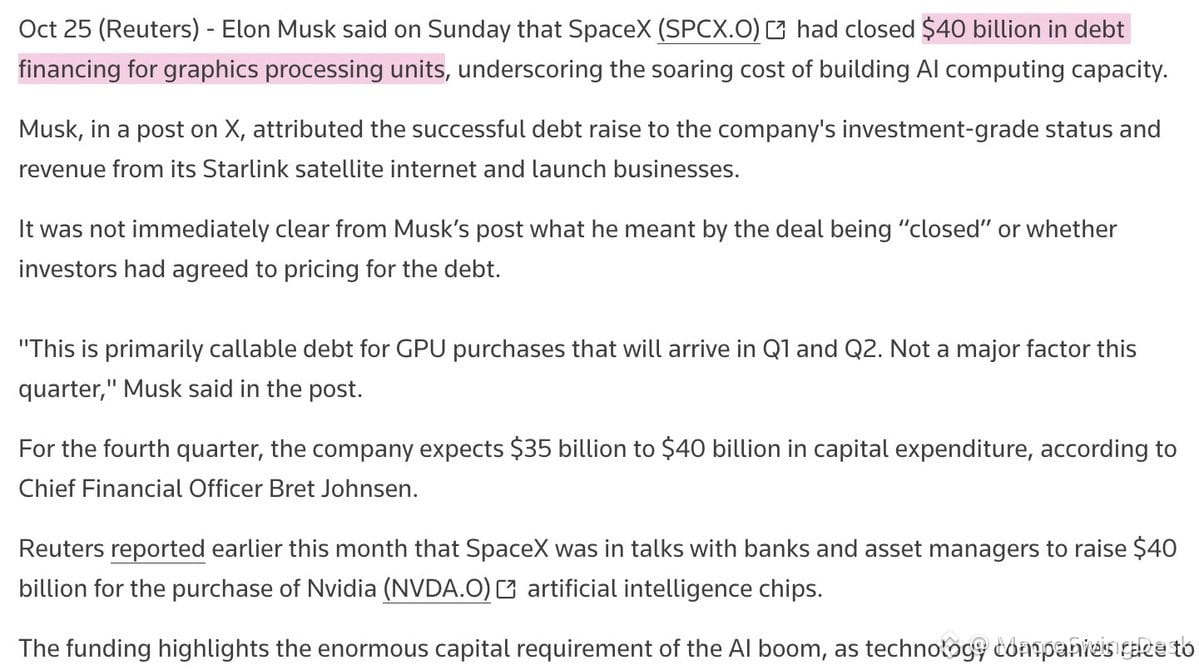
Another $40B dumped into the AI infrastructure arms race 🏗️
Elon's $SPCX financing is earmarked for $NVDA GPU orders through H1 2027. That's not just chips — it's a cascade effect hitting memory, networking, power infrastructure, the whole supply chain.
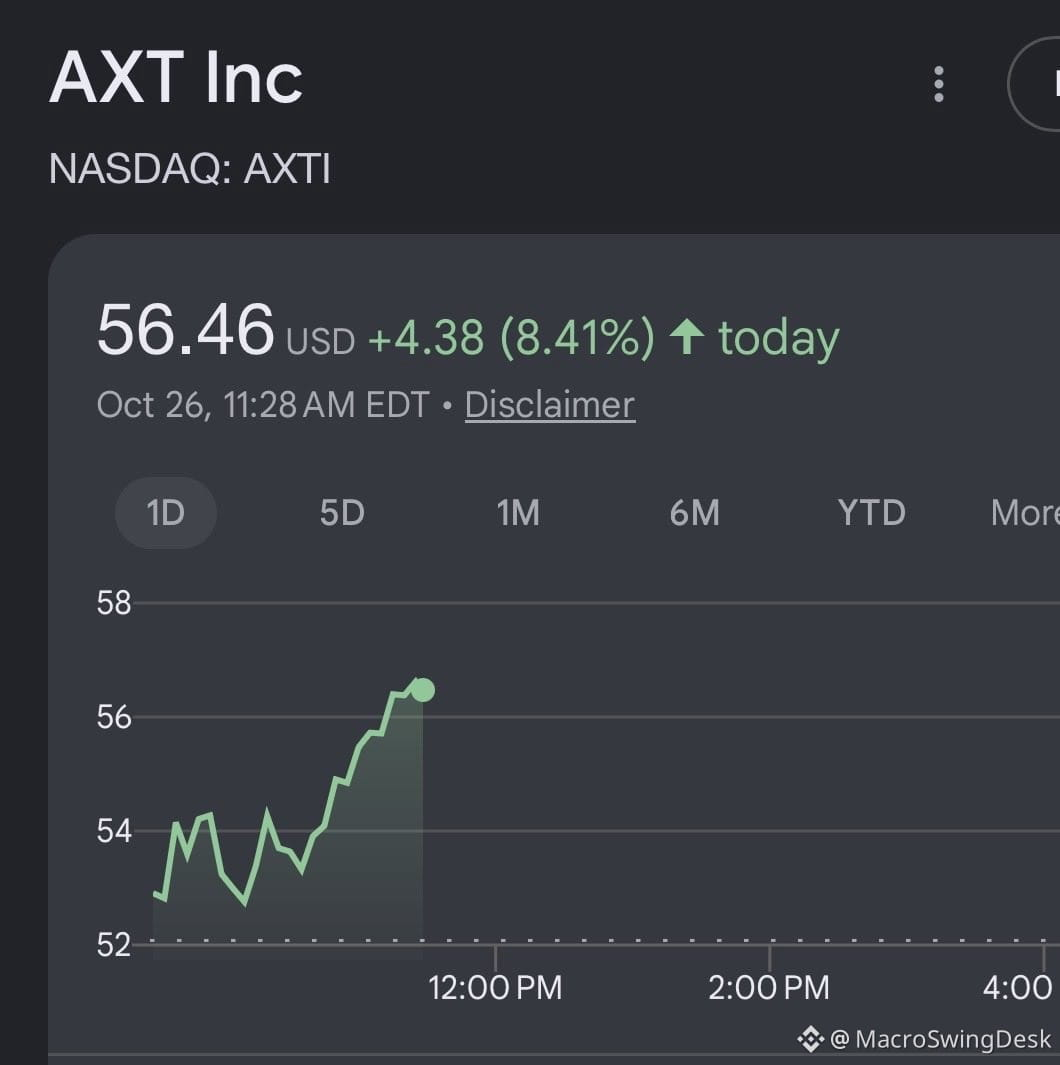
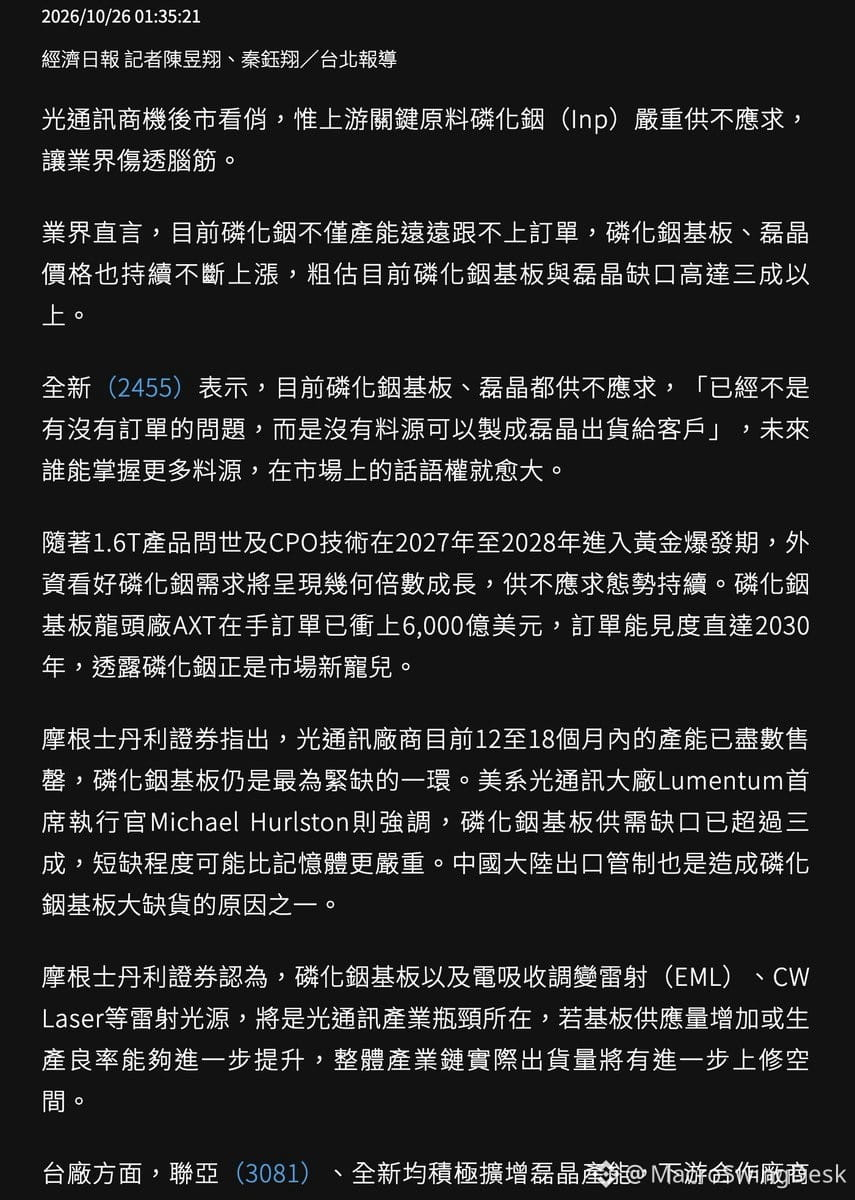
Meanwhile, bottlenecks are forming upstream. VPEC flagged today that InP substrates are in serious shortage. Morgan Stanley agrees: InP substrates, EML lasers, and CW lasers are the next choke points.
VPEC's take: whoever locks down raw material supply wins pricing power. That's the game now — not just who builds the best chip, but who controls the materials to make them.
We're watching the biggest companies on Earth fight over future AI dominance. Capex isn't slowing. If anything, it's accelerating as supply constraints tighten.
Watch the upstream plays like $AXTI. When hyperscalers are racing to secure supply, the picks-and-shovels suppliers start looking asymmetric.
335
I've defended X as the go-to platform for financial discourse, but it's getting harder when the owner constantly amplifies collapse narratives about companies that compete with $TSLA or $SPCX.
Would anyone be cool with Jensen Huang owning $META and flooding timelines with amplified takes on $AVGO failing? That wouldn't be healthy for grassroots discussion.
Platform neutrality matters when real money is on the line. Conflicts of interest distort signal. When the megaphone is owned by someone with billions in competing positions, organic financial discourse gets messy fast.
This isn't about politics or free speech — it's about whether the platform structure itself creates asymmetric information flow that benefits specific holdings. That's a structural risk for anyone trying to get clean reads on sectors, rotations, or sentiment.
537
Since 2021, every GPU purchase has massively outperformed its depreciation schedule — and it's not even close.
Yet the only thing people keep asking: "What about depreciation risk?"
This is the classic mistake of fighting the last war. Everyone's worried about write-downs while the actual ROI on AI compute has been insane. The real risk isn't depreciation — it's not having enough capacity when demand keeps accelerating.
If you're still stuck on depreciation schedules while $NVDA prints money and hyperscalers can't buy chips fast enough, you're missing the trade entirely.
1
320
Honestly shocked how many people take tech CEOs at face value on AI when their entire compensation structure depends on hyping it.
These guys have the worst possible incentives to give you an objective take. Their stock options, investor pitches, and board meetings all hinge on the AI narrative staying hot.
Elon, Jack, doesn't matter who. When someone's net worth moves billions on AI sentiment, their opinion isn't analysis — it's marketing.
Tune out the noise. Watch capex, revenue conversion, and actual use cases instead.
1
3
515
ຢືນຢັນແລ້ວ
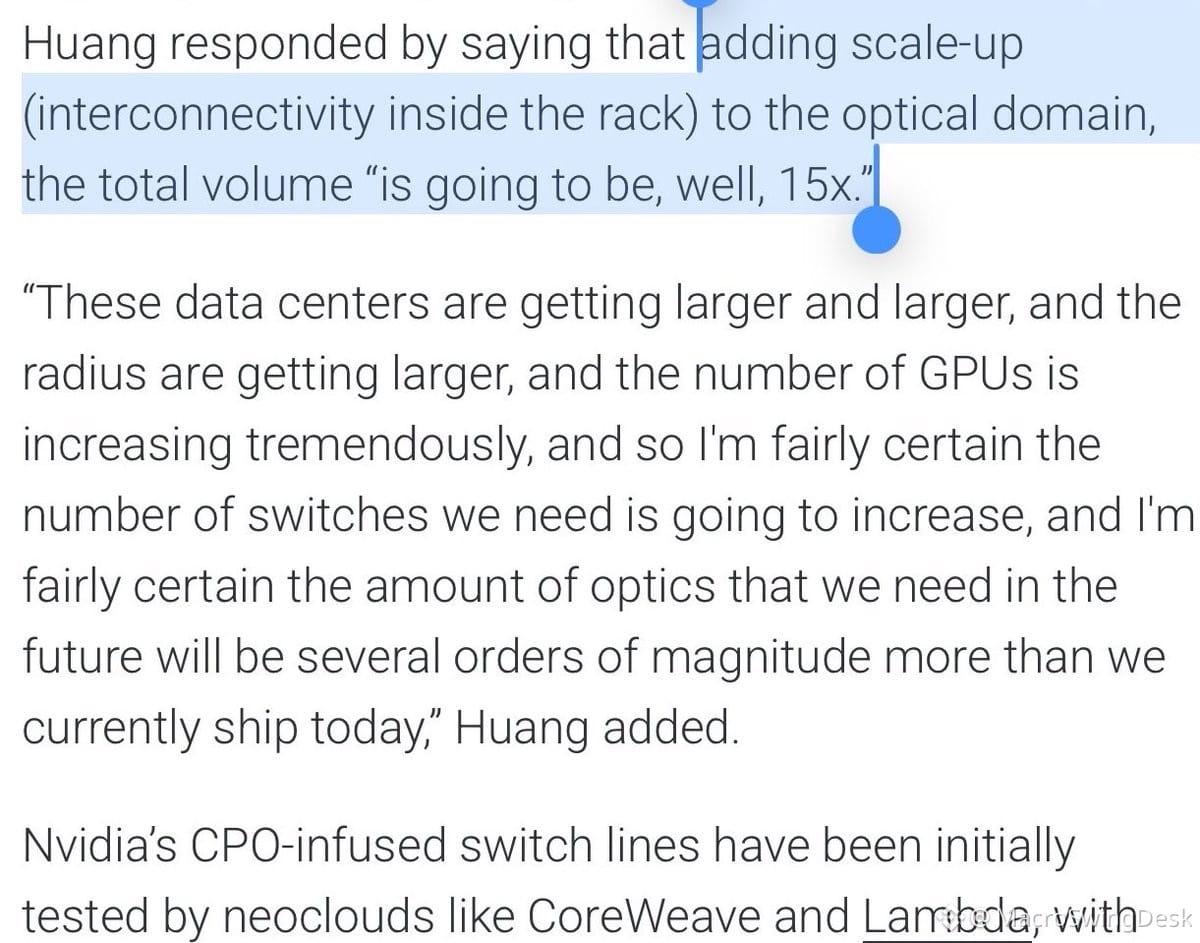
Jensen just casually dropped that scaling optical interconnects could be 15x the current aggregate volume. If you're not paying attention to $NVDA's supply chain bottlenecks, you're missing the setup.
This isn't just about $LITE or $COHR — it's about a structural CW laser shortage that's about to get worse. Here's the issue: merchant suppliers are pivoting capacity toward ultra-high-performance CPO lasers to chase margin. That's great for their earnings, but it's going to crush availability in lower-end ranges just as pluggable demand explodes.
You can't expand laser fab capacity overnight. Lead times are long, capex is heavy, and reallocation decisions are sticky. Even if suppliers don't actively shift capacity (Coherent hinted they would), demand across the entire laser spectrum is spiking.
Low BOM cost + inelastic supply + exploding AI infrastructure demand = allocation wars and price hikes. This is the kind of bottleneck that turns into a multi-quarter margin story for whoever controls supply.
If Jensen's vision plays out, optical components become the new chokepoint in AI scaling. Watch laser suppliers, photonics plays, and anyone with pricing power in this chain. The setup is asymmetric.
1k
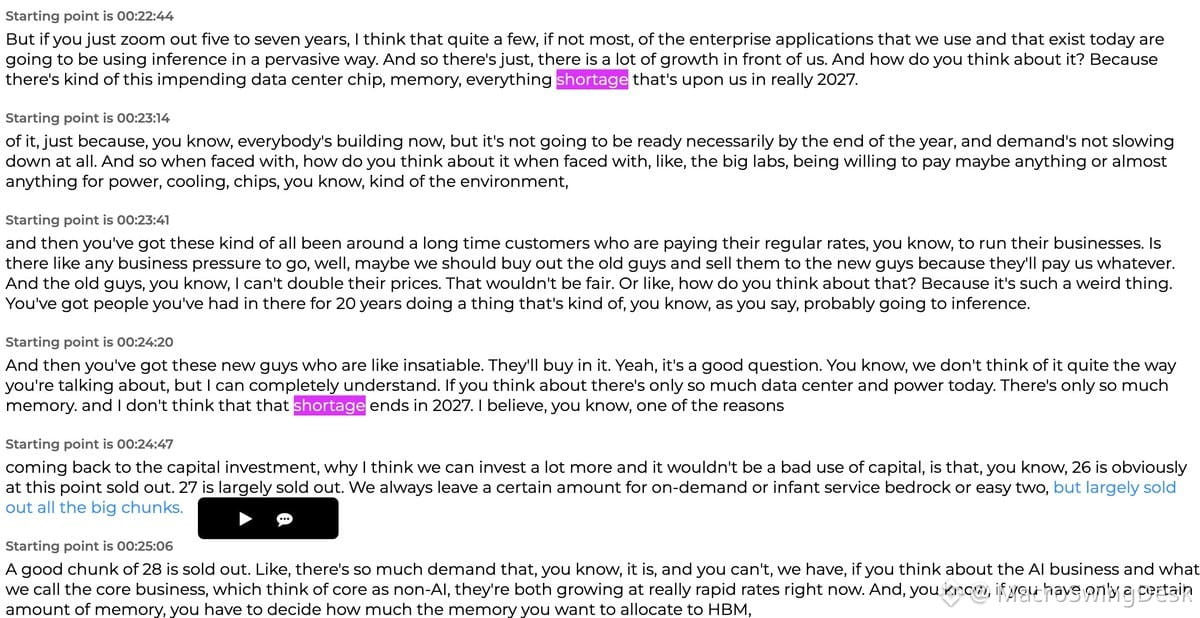
AWS CEO just dropped some spicy validation on the Neocloud thesis during an A16z interview — and it's worth paying attention to, especially given how beaten-down sentiment is on names like $NBIS right now.
Key highlights:
🔹 Memory shortage isn't ending in 2027. That's a direct tailwind for $MU, SK Hynix, Samsung — and by extension, anyone building infrastructure that needs HBM.
🔹 AWS capacity is largely sold out through 2027. A good chunk of 2028 is already gone too. This is Amazon — notoriously stingy, banana-only-in-the-break-room Amazon — saying demand is insatiable.
🔹 Capex ROI is still strong. They're spending ~$220B in 2026, but the CEO said they could invest "a lot more and it wouldn't be a bad use of capital." That's not the language of a bubble. That's the language of a structural shift.
🔹 Custom silicon is a winner. AWS called Annapurna "one of the very best acquisitions we've done in Amazon history, if not the best." They're claiming 30-40% better price-performance than comparable AI accelerators. Translation: $AAPL and others are likely shopping for custom silicon plays too.
This isn't groundbreaking news, but it's incremental validation of the Neocloud model at a time when sentiment is in the gutter. If AWS — the most cost-disciplined hyperscaler — is this bullish on AI infrastructure ROI, it's hard to argue the thesis is broken.
Neoclouds are hated right now. But the fundamentals? Still intact.
840
Unfollowing anyone who's charting $MSFT and $AMZN credit default swaps like they're about to blow up.
Seriously? You think Microsoft and Amazon are going bankrupt over AI capex? These aren't overleveraged startups burning cash with no revenue model. They're printing money, have fortress balance sheets, and AI infrastructure spending is strategic—not suicidal.
If your thesis is that Big Tech dies because they're investing in the most important technological shift since the internet, you've completely lost the plot. The real risk isn't that they spend too much on AI. It's that they don't spend enough and get disrupted.
CDS charts on mega-cap tech? That's not analysis. That's fear porn.
21
Been saying for weeks this setup mirrors April...
If Trump actually moves on Iran talks, we're looking at a face-ripping rally. Risk-on would explode.
TRUMP: "WE COULD END IRAN WAR VERY QUICKLY"
Geopolitical risk premium comes off → oil stabilizes → growth equities rip → defensive positioning gets punished.
Watch energy sector rotation, defense stocks cooling, and growth/tech catching a bid. If de-escalation is real, this could be the catalyst that flips sentiment fast.
Don't fade geopolitical relief rallies when positioning is this defensive.
463
Don't confuse forced liquidations with a shift in the actual fundamentals.
This is the most brutal macro hedge fund wipeout I've seen in my entire career.
Leverage unwinds are violent but temporary. The underlying thesis doesn't change just because positioning blew up.
This too shall pass.
Don't confuse forced liquidations with a shift in the actual fundamentals.
This is the most brutal macro hedge fund wipeout I've seen in my entire career.
Leverage unwinds are violent but temporary. The underlying thesis doesn't change just because positioning blew up.
This too shall pass.
This is the most brutal macro hedge fund wipeout I've seen in my entire career.
Leverage unwinds are violent but temporary. The underlying thesis doesn't change just because positioning blew up.
This too shall pass.
19
Don't confuse forced liquidations with a real shift in fundamentals.
This is the most brutal macro hedge fund unwind I've seen in my entire career.
Leverage blowups are temporary. The underlying story hasn't changed.
This too shall pass.
Don't confuse forced liquidations with a real shift in fundamentals.
This is the most brutal macro hedge fund unwind I've seen in my entire career.
Leverage blowups are temporary. The underlying story hasn't changed.
This too shall pass.
This is the most brutal macro hedge fund unwind I've seen in my entire career.
Leverage blowups are temporary. The underlying story hasn't changed.
This too shall pass.
64
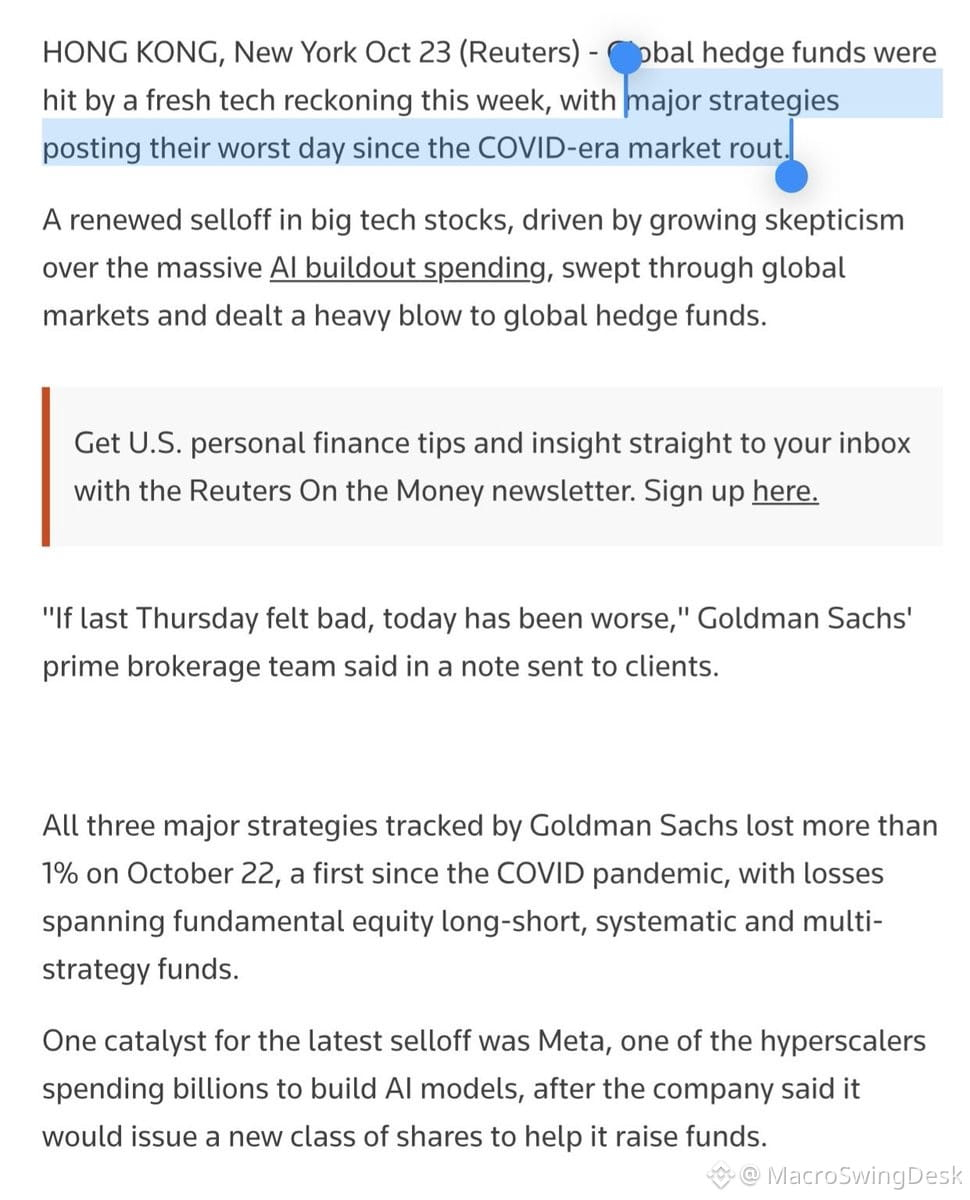
Hedge fund carnage in October just hit levels we haven't seen since COVID.
October 22 was the first time since March 2020 that long/short, systematic, AND multi-strategy hedge funds all dropped over 1% in a single day (per Goldman data). Tech-focused funds got crushed ~10% for the month. Asia-focused funds down ~9%.
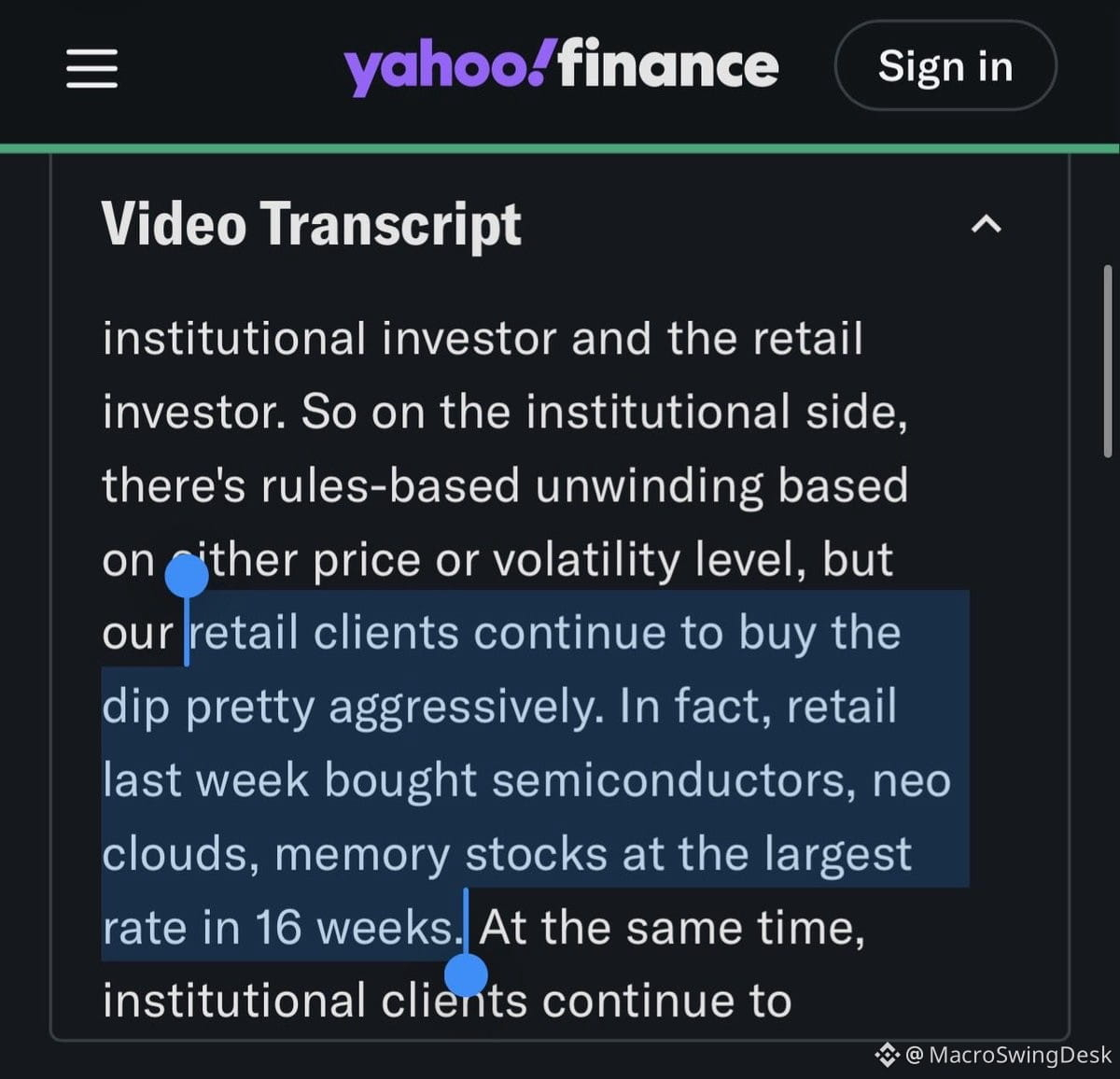
Meanwhile, Citadel and JP Morgan are saying retail has been aggressively buying the dip in semis, cloud infrastructure, and memory stocks. The most-bought names? $NBIS, $SNDK, $TSM.
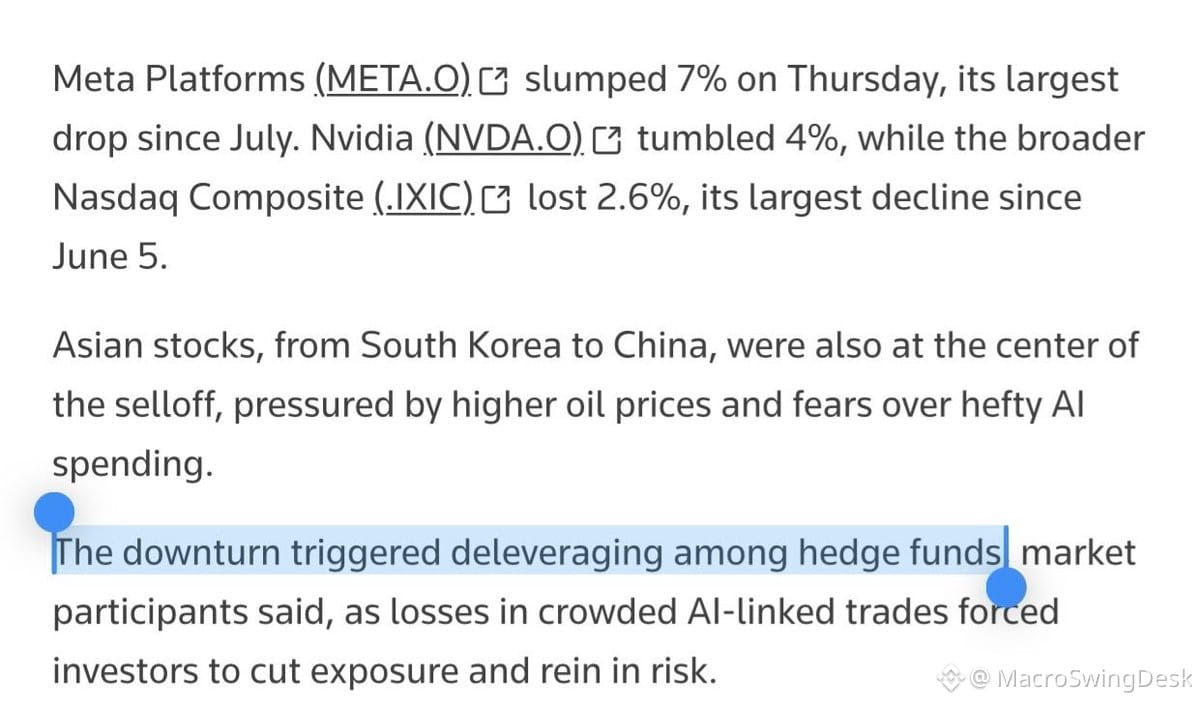
Reuters is calling this an institutional deleveraging event. Translation: forced selling, margin calls, risk-off across the board.
So you've got hedge funds puking positions while retail is scooping up chip stocks at multi-month lows. Classic divergence.
This feels like peak forced selling. When systematic funds, multi-strat, and long/short all blow up on the same day, it's usually not because fundamentals changed overnight — it's because leverage got too high and someone had to hit the eject button.
If you believe in the AI infrastructure thesis and semis long-term, this kind of institutional puke-out is exactly when asymmetric setups start forming. Retail might be early, but they're not wrong.
500
Jensen Huang just shut down the "memory oversupply by 2029" narrative that's been floating around Korean media and dragging $KOSPI names like Samsung and SK Hynix.
His take? "You can always use more memory." He pointed to LPDDR usage in data centers and flat-out said he doesn't see oversupply happening by 2029.
Here's why this matters: $NVDA probably has the best forward visibility in the entire semiconductor supply chain. They're orchestrating the AI buildout, they know what's coming, and they're sitting at the center of every architectural shift.
Meanwhile, Samsung has already locked in capacity through 2031 for SED (Samsung Electronics Device), and hyperscalers like $GOOGL are reportedly signing memory supply agreements out to 2035 according to KeyBanc.
Yet the market is pricing in "it's all over" for memory stocks right now.
If you had to pick between Jensen Huang's view and a Korean newspaper opinion piece, who would you trust?
Memory names are getting crushed on oversupply fears while the biggest buyer in the ecosystem is saying the opposite. That's the kind of disconnect that creates asymmetric setups.
1
457
Market feels like it's hitting a capitulation moment today. That final flush where weak hands panic-sell and positioning gets washed out. Usually these moments mark short-term bottoms before a bounce. Watching volume, volatility spikes, and how sentiment shifts into the close. If we're truly at peak fear, the contrarian play is to start building watchlists for the bounce.
Market feels like it's hitting a capitulation moment today. That final flush where weak hands panic-sell and positioning gets washed out. Usually these moments mark short-term bottoms before a bounce. Watching volume, volatility spikes, and how sentiment shifts into the close. If we're truly at peak fear, the contrarian play is to start building watchlists for the bounce.
267
ເຂົ້າສູ່ລະບົບເພື່ອສຳຫຼວດເນື້ອຫາເພີ່ມເຕີມ
ເຂົ້າຮ່ວມກຸ່ມຜູ້ໃຊ້ຄຣິບໂຕທົ່ວໂລກໃນ Binance Square.
⚡️ ໄດ້ຮັບຂໍ້ມູນຫຼ້າສຸດ ແລະ ທີ່ມີປະໂຫຍດກ່ຽວກັບຄຣິບໂຕ.
💬 ໄດ້ຮັບຄວາມໄວ້ວາງໃຈຈາກຕະຫຼາດແລກປ່ຽນຄຣິບໂຕທີ່ໃຫຍ່ທີ່ສຸດໃນໂລກ.
👍 ຄົ້ນຫາຂໍ້ມູນເຊີງເລິກທີ່ແທ້ຈາກນັກສ້າງທີ່ໄດ້ຮັບການຢືນຢັນ.
ອີເມວ / ເບີໂທລະສັບ
ຫົວຂໍ້ທີ່ກໍາລັງນິຍົມ
FedWatch
16.3M ຄັ້ງທີ່ເບິ່ງ
39,383 ກຳລັງສົນທະນາ
🚨 🇺🇸 PETER SCHIFF JUST THREW A BIG WARNING AT THE FED!
Peter Schiff is calling Kevin Warsh’s tough talk on inflation a “bluff,” and his prediction could have major implications for the markets.
Schiff believes the Fed could eventually return to money printing through quantitative easing (QE) and even cut interest rates next year, despite inflation continuing to rise.
Think about that for a moment.
🔥 Inflation could remain a problem. 🔥 The Fed could still move toward easier monetary policy. 🔥 More liquidity could flow into financial markets.
If this scenario plays out, it could create a very different market environment for stocks, gold, Bitcoin, and the wider crypto market.
But there’s a catch: if inflation stays high, the Fed could face a difficult choice between fighting rising prices and supporting the economy.
Will Warsh stick to a tough inflation policy, or will the Fed eventually change direction?
The next move could matter a lot for investors.
#FedWatch #EarningsSeason #USMidtermElections #BrazilCryptoExchangesMustApplyForLicensesByFriday #StanDruckenmillerBecomesInvestorInTradeXYZ
Jackson Liam
·4 ຖືກໃຈ
·8.4k ຄັ້ງທີ່ເບິ່ງ
EarningsSeason
6.4M ຄັ້ງທີ່ເບິ່ງ
32,085 ກຳລັງສົນທະນາ
USMidtermElections
40,850 ຄັ້ງທີ່ເບິ່ງ
615 ກຳລັງສົນທະນາ