
LEDGER QUEEN
2k ໂພສ

LEDGER QUEEN
May Allah Save Us From Evil Eyes
ເປີດການຊື້ຂາຍ
ຜູ້ຊື້ຂາຍປະຈໍາ
8.6 ເດືອນ
88 ກໍາລັງຕິດຕາມ
21.9K+ ຜູ້ຕິດຕາມ
3.6K+ Liked
ໂພສ
Portfolio
ທັງໝົດ
ວົງຢືມ
ຖ່າຍທອດສົດ
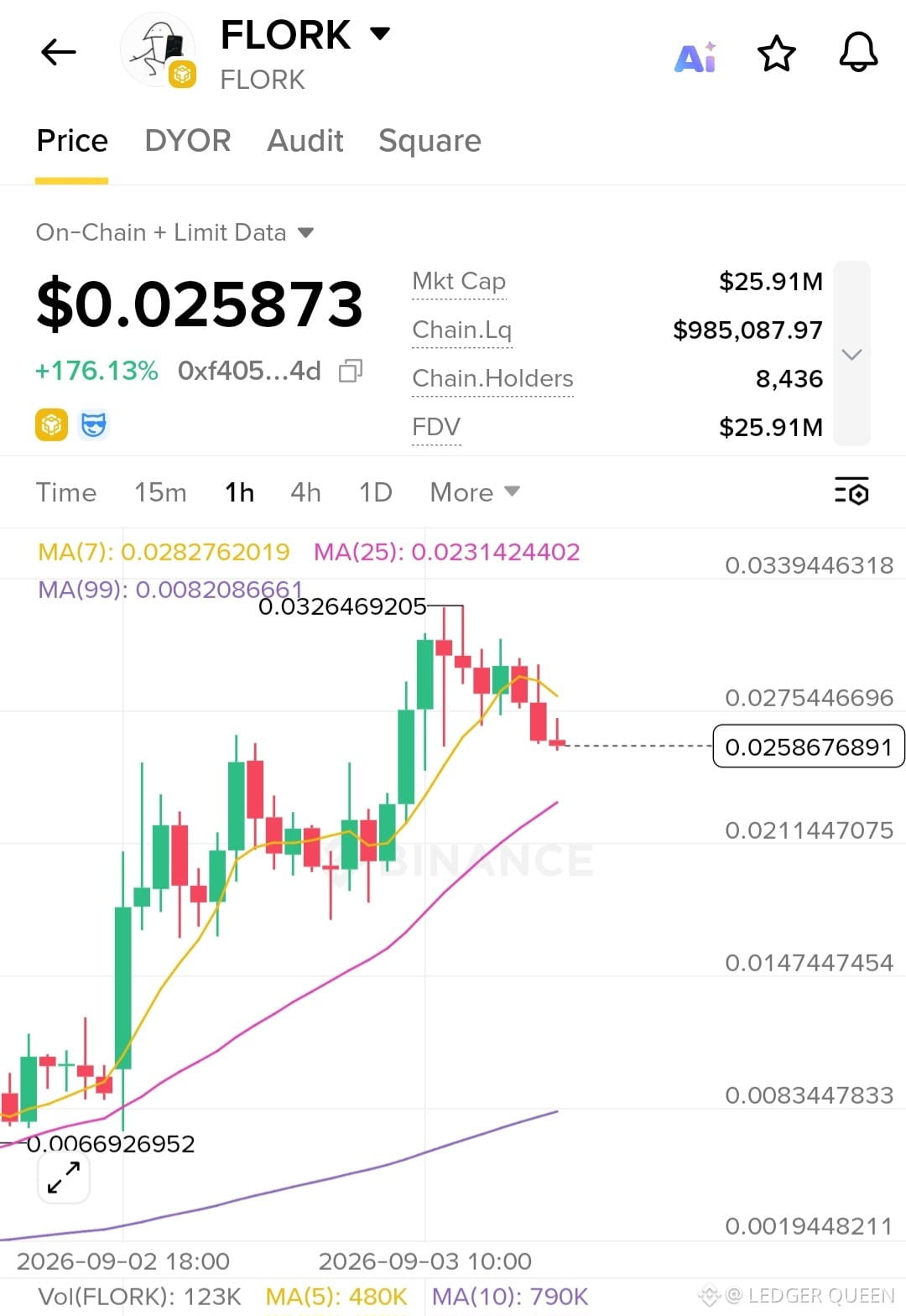
🔥 FLORK JUST WENT PARABOLIC! 🚀
$FLORK is at $0.02587 (+176.13%) with a $25.91M market cap and $985K on-chain liquidity. 👀
📈 1H chart: Massive run from $0.00669 → $0.03265, now cooling near $0.02587.
🎯 Resistance: $0.02754 → $0.03265
🛡️ Support: $0.02314 → $0.02114
🔥 8,436 holders | FDV $25.91M
Momentum is crazy, but volatility is EXTREME. The next breakout or pullback could be violent. ⚡
$MARSCOIN
$AKE
$FLORK is at $0.02587 (+176.13%) with a $25.91M market cap and $985K on-chain liquidity. 👀
📈 1H chart: Massive run from $0.00669 → $0.03265, now cooling near $0.02587.
🎯 Resistance: $0.02754 → $0.03265
🛡️ Support: $0.02314 → $0.02114
🔥 8,436 holders | FDV $25.91M
Momentum is crazy, but volatility is EXTREME. The next breakout or pullback could be violent. ⚡
$MARSCOIN
$AKE
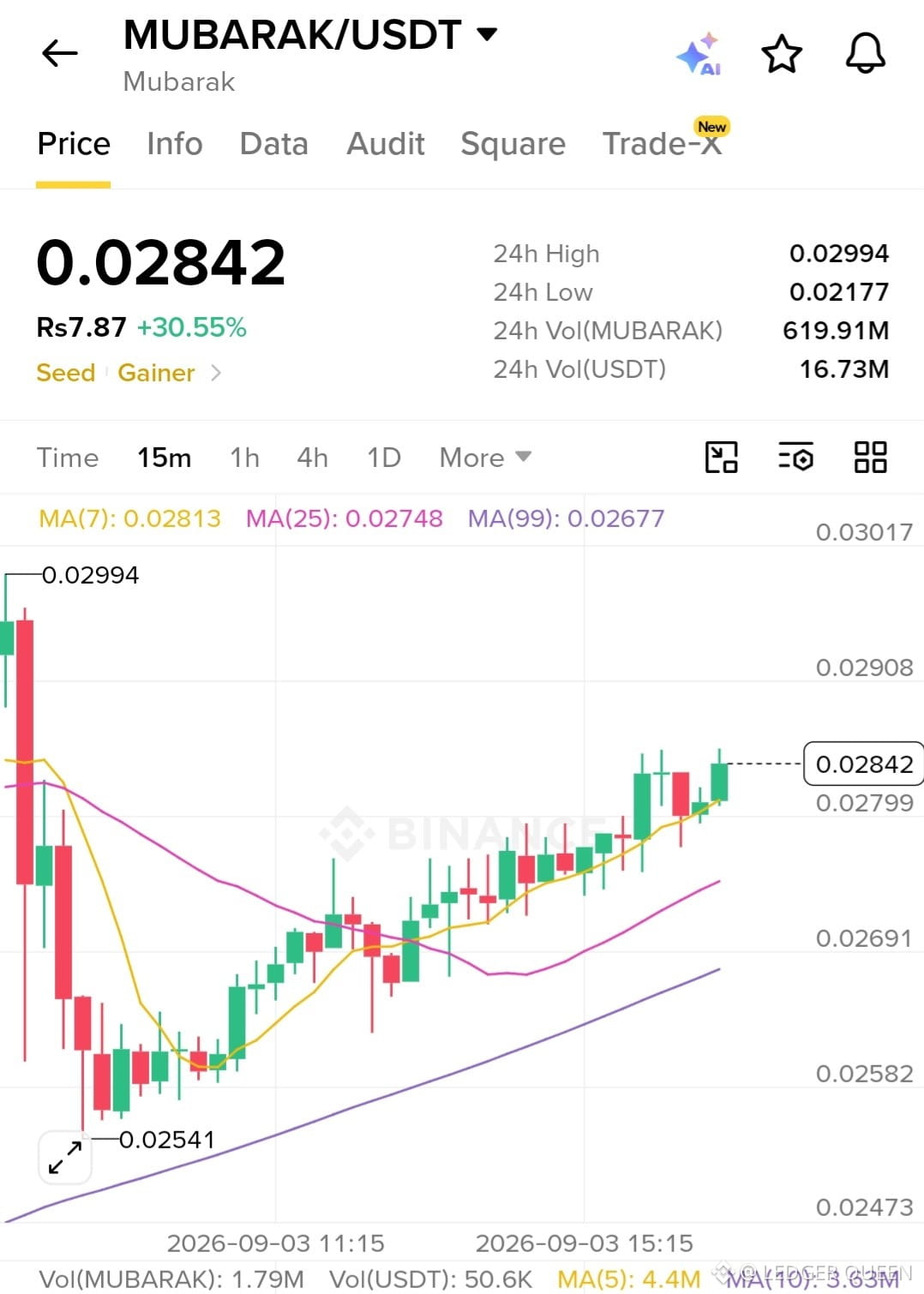
🔥 MUBARAK/USDT IS WAKING UP! 🚀
$MUBARAK is trading around 0.02842 USDT (+30.55%), after touching a 24H high of 0.02994 and low of 0.02177. 24H volume is massive at 619.91M MUBARAK / $16.73M USDT. 👀
📈 15M chart: Price is holding above MA(7) 0.02813, MA(25) 0.02748 & MA(99) 0.02677 — bullish structure still intact.
🎯 Watch: 0.02994 → 0.03017 resistance
🛡️ Support: 0.02799 → 0.02748 → 0.02677
Momentum is heating up, but that 0.030 area is the real test. ⚡
Today +5.97% | 7D +48.72% | 30D +123.08% | 90D +160.49%
$MUBARAK is trading around 0.02842 USDT (+30.55%), after touching a 24H high of 0.02994 and low of 0.02177. 24H volume is massive at 619.91M MUBARAK / $16.73M USDT. 👀
📈 15M chart: Price is holding above MA(7) 0.02813, MA(25) 0.02748 & MA(99) 0.02677 — bullish structure still intact.
🎯 Watch: 0.02994 → 0.03017 resistance
🛡️ Support: 0.02799 → 0.02748 → 0.02677
Momentum is heating up, but that 0.030 area is the real test. ⚡
Today +5.97% | 7D +48.72% | 30D +123.08% | 90D +160.49%
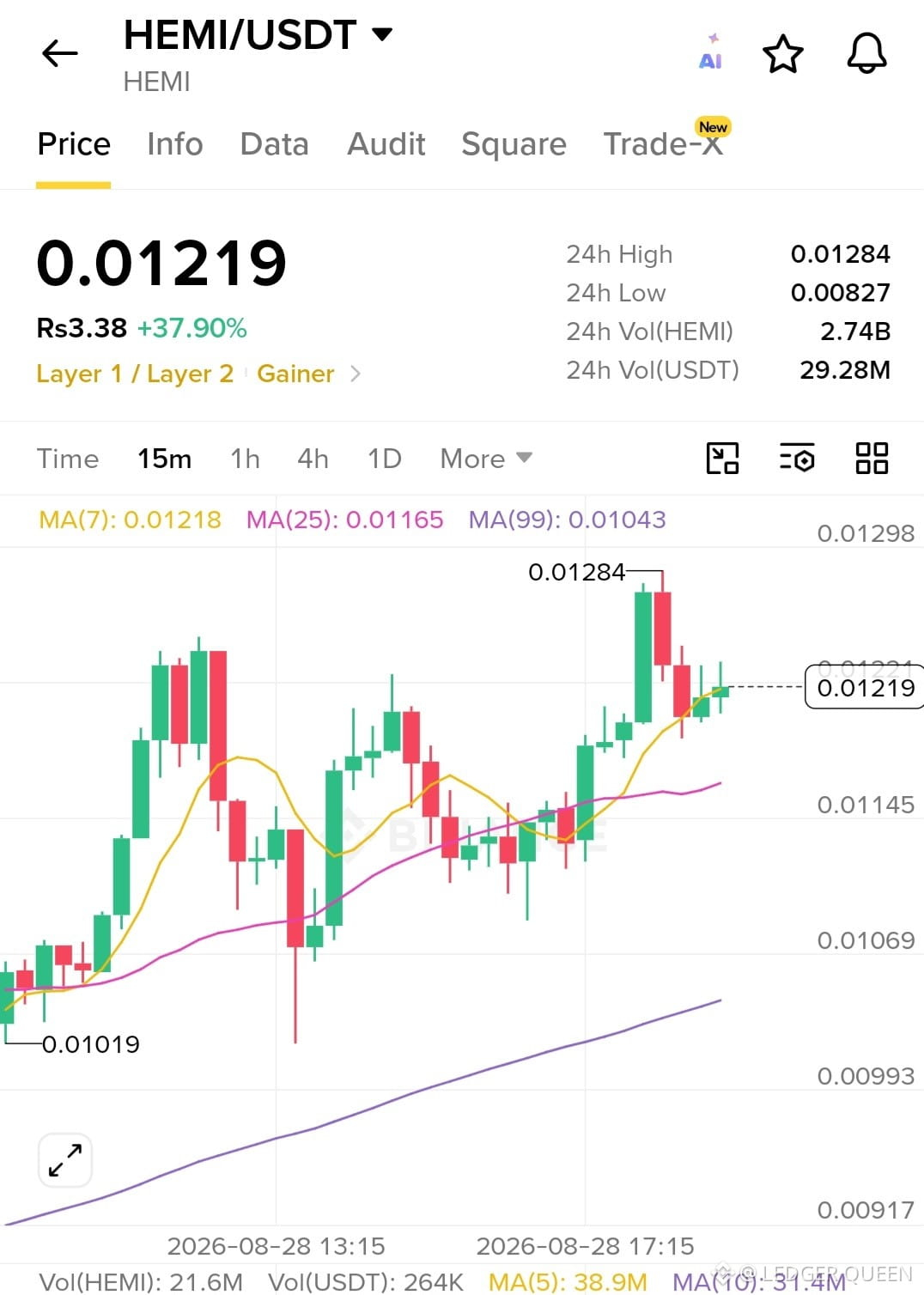
🚀 HEMI is heating up!
$HEMI /USDT is now at 0.01219 USDT (+37.90%) 🔥
📈 24H High: 0.01284
📉 24H Low: 0.00827
💰 24H Volume: $29.28M
⚡ HEMI Volume: 2.74B
The chart is still showing bullish momentum, with price above MA25 (0.01165) and MA99 (0.01043). 👀
Now the big question: can $HEMI break 0.01284 and push toward a new high? 🚀
Momentum is strong — but volatility is too. DYOR.
#SOLJumps20%OnTheWeek
$HEMI /USDT is now at 0.01219 USDT (+37.90%) 🔥
📈 24H High: 0.01284
📉 24H Low: 0.00827
💰 24H Volume: $29.28M
⚡ HEMI Volume: 2.74B
The chart is still showing bullish momentum, with price above MA25 (0.01165) and MA99 (0.01043). 👀
Now the big question: can $HEMI break 0.01284 and push toward a new high? 🚀
Momentum is strong — but volatility is too. DYOR.
#SOLJumps20%OnTheWeek
#dusk $DUSK @Dusk
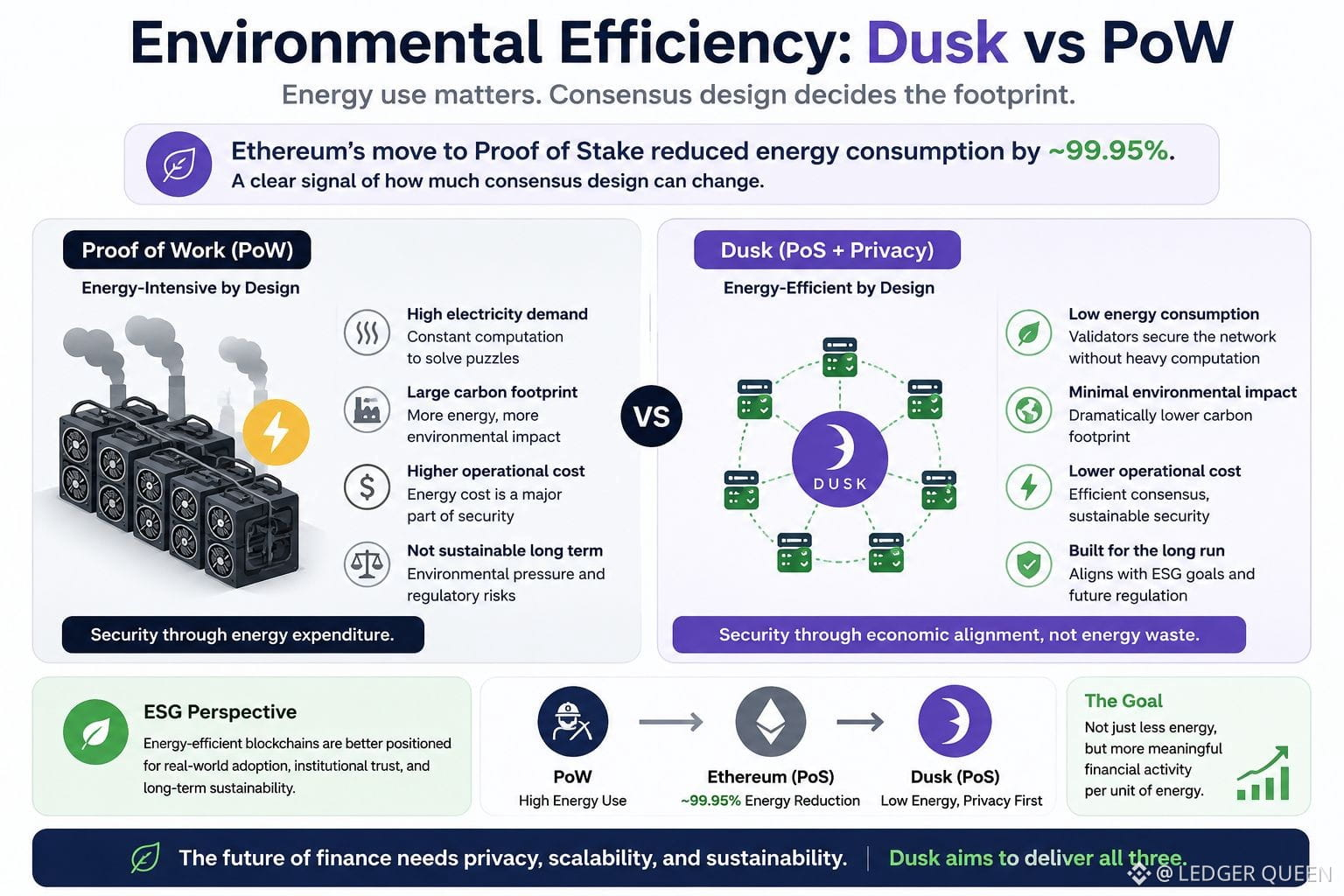
I keep seeing energy efficiency discussed in crypto like it is just another metric, but the more I think about it, the more it feels tied to whether a network can actually scale responsibly.
Ethereum’s shift away from PoW is a useful reference here. The move to Proof of Stake reduced Ethereum’s energy use by about 99.95%, showing how much consensus design can matter. Dusk takes a PoS-based approach too, with provisioners helping secure the network instead of relying on energy-intensive mining. That matters because security does not have to mean turning electricity into computational competition.
What caught my attention is how this fits the bigger Dusk thesis. The network is built around privacy and financial use cases, so energy efficiency is not really the headline feature. Still, if confidential onchain activity grows over time, having a consensus model that avoids PoW-style energy demand seems like a sensible foundation. Maybe I am overthinking it, but ESG considerations could become more relevant as blockchain infrastructure gets evaluated alongside traditional financial systems.
I am still not completely convinced that low energy consumption alone says much about a network’s overall efficiency. Hardware, validator participation, network usage, and actual economic activity all matter too. But I keep wondering whether this is the more interesting question: not simply how little energy a blockchain uses, but how much useful financial activity it can support for that energy. If Dusk can prove that over time, the environmental angle becomes much more meaningful.
$BMT
$STX
I keep seeing energy efficiency discussed in crypto like it is just another metric, but the more I think about it, the more it feels tied to whether a network can actually scale responsibly.
Ethereum’s shift away from PoW is a useful reference here. The move to Proof of Stake reduced Ethereum’s energy use by about 99.95%, showing how much consensus design can matter. Dusk takes a PoS-based approach too, with provisioners helping secure the network instead of relying on energy-intensive mining. That matters because security does not have to mean turning electricity into computational competition.
What caught my attention is how this fits the bigger Dusk thesis. The network is built around privacy and financial use cases, so energy efficiency is not really the headline feature. Still, if confidential onchain activity grows over time, having a consensus model that avoids PoW-style energy demand seems like a sensible foundation. Maybe I am overthinking it, but ESG considerations could become more relevant as blockchain infrastructure gets evaluated alongside traditional financial systems.
I am still not completely convinced that low energy consumption alone says much about a network’s overall efficiency. Hardware, validator participation, network usage, and actual economic activity all matter too. But I keep wondering whether this is the more interesting question: not simply how little energy a blockchain uses, but how much useful financial activity it can support for that energy. If Dusk can prove that over time, the environmental angle becomes much more meaningful.
$BMT
$STX
#dusk $DUSK @Dusk
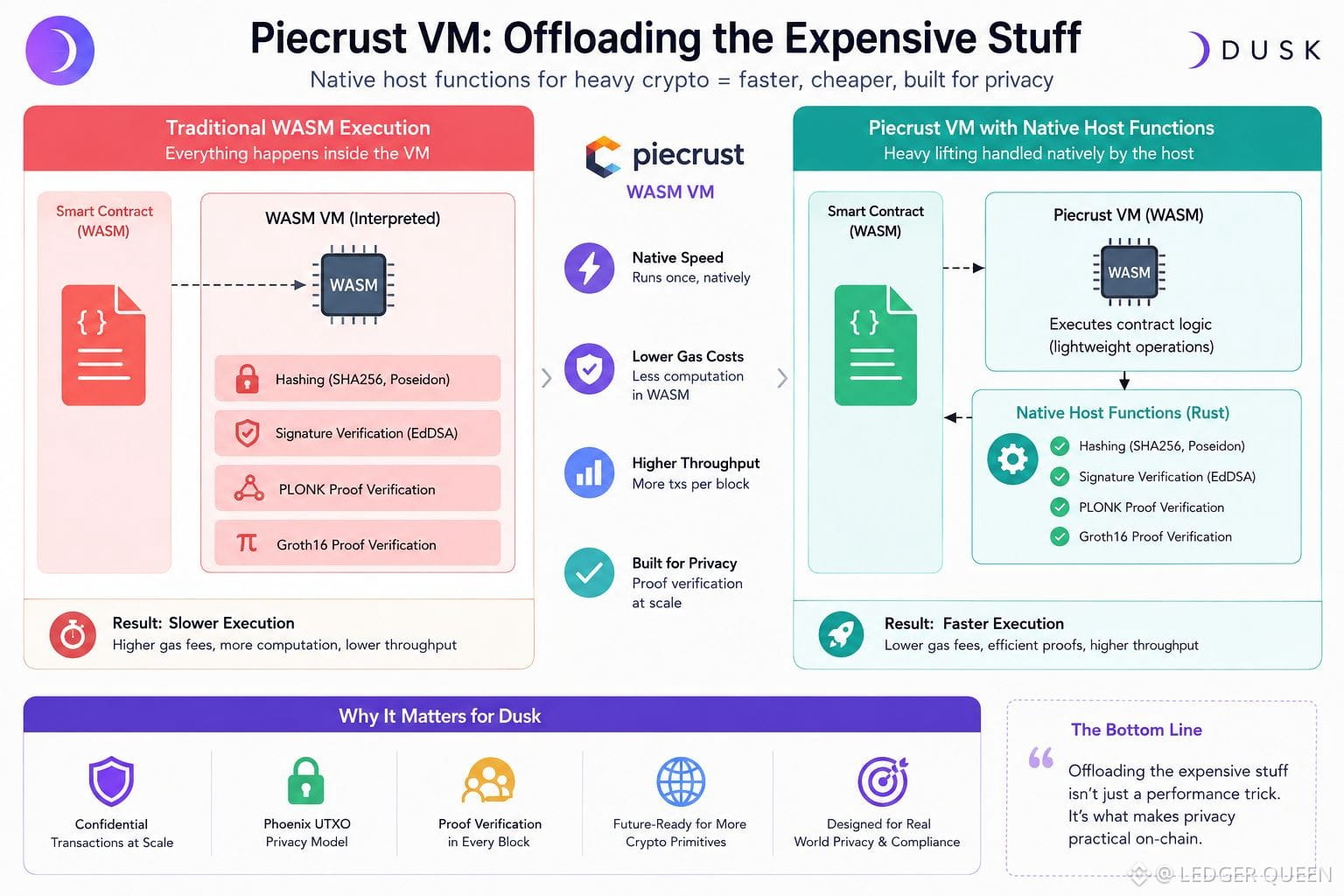
Been digging into Dusk Network's setup lately and one detail kept pulling my attention more than the usual "privacy chain" pitch. It's the way Piecrust, their WASM based VM, handles the expensive stuff.
Here's the thing about smart contract execution that people don't talk about enough. Every instruction costs real computation, and on most chains, if a contract needs to hash something or verify a proof, it does that work inside the VM itself, line by line, in WASM bytecode. That's fine for simple logic. It gets brutal once you're dealing with zero knowledge proofs, which is basically Dusk's whole reason for existing. What caught my attention was Piecrust's approach of pushing that heavy lifting, hashing, signature checks, PLONK and Groth16 proof validation, out to native host functions instead of making the contract compute it in WASM. The host runs it once, natively, and hands the result back.
I keep wondering how much this actually matters in practice versus on paper. But the logic tracks. Native code for cryptographic operations is just faster than WASM interpreting the same math, sometimes by a wide margin depending on the operation. For a chain built around confidential transactions and Phoenix's UTXO privacy model, where proof verification isn't optional but constant, that gap adds up fast across every block.
What still feels unresolved to me is how this scales once contract complexity grows beyond the current use cases. Native host functions solve today's bottleneck, but I'm not fully convinced it stays elegant as more custom cryptographic primitives get requested. Anyone actually building on Piecrust seeing friction there yet?
$ONG
$AMP
Been digging into Dusk Network's setup lately and one detail kept pulling my attention more than the usual "privacy chain" pitch. It's the way Piecrust, their WASM based VM, handles the expensive stuff.
Here's the thing about smart contract execution that people don't talk about enough. Every instruction costs real computation, and on most chains, if a contract needs to hash something or verify a proof, it does that work inside the VM itself, line by line, in WASM bytecode. That's fine for simple logic. It gets brutal once you're dealing with zero knowledge proofs, which is basically Dusk's whole reason for existing. What caught my attention was Piecrust's approach of pushing that heavy lifting, hashing, signature checks, PLONK and Groth16 proof validation, out to native host functions instead of making the contract compute it in WASM. The host runs it once, natively, and hands the result back.
I keep wondering how much this actually matters in practice versus on paper. But the logic tracks. Native code for cryptographic operations is just faster than WASM interpreting the same math, sometimes by a wide margin depending on the operation. For a chain built around confidential transactions and Phoenix's UTXO privacy model, where proof verification isn't optional but constant, that gap adds up fast across every block.
What still feels unresolved to me is how this scales once contract complexity grows beyond the current use cases. Native host functions solve today's bottleneck, but I'm not fully convinced it stays elegant as more custom cryptographic primitives get requested. Anyone actually building on Piecrust seeing friction there yet?
$ONG
$AMP
#dusk $DUSK @Dusk
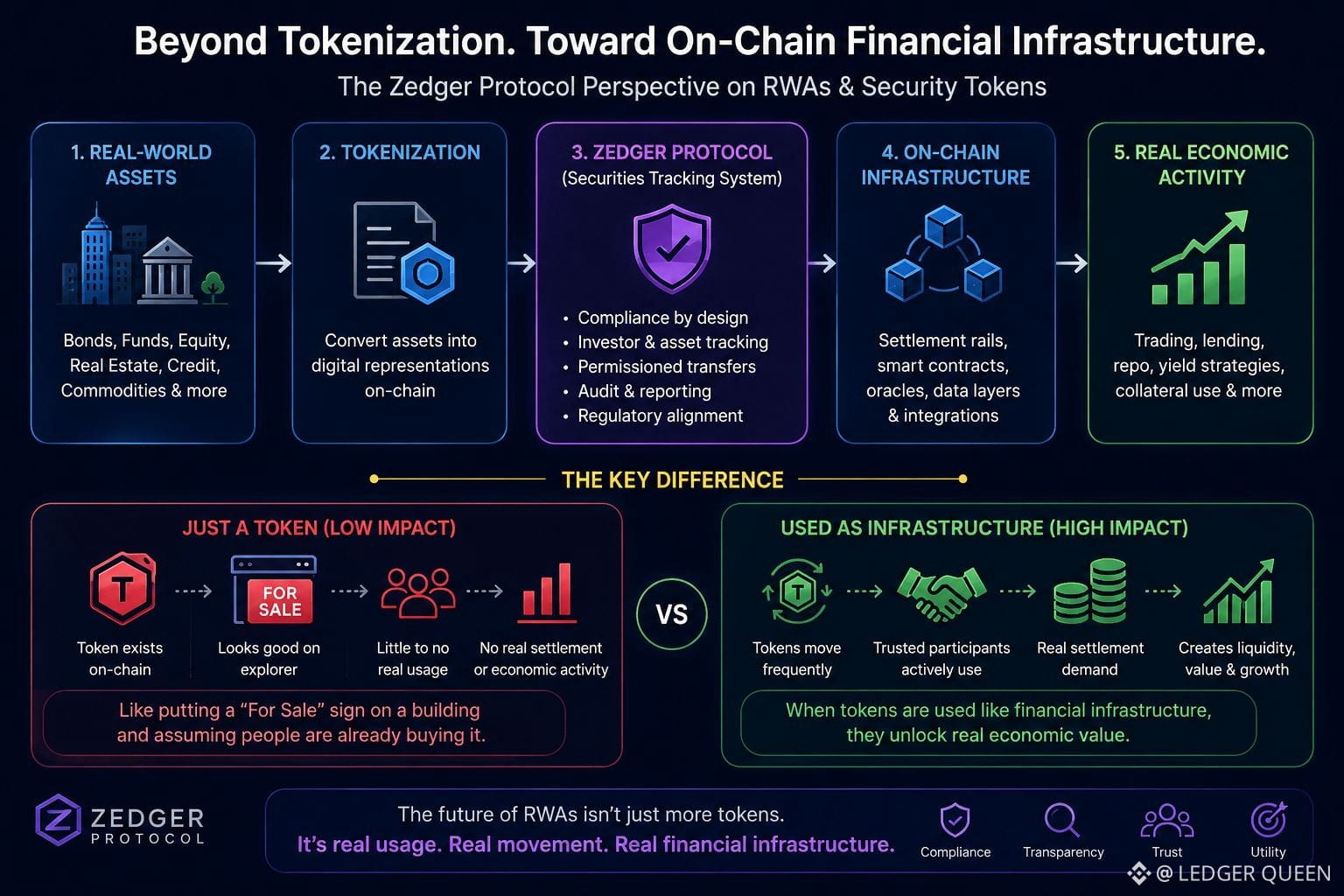
I got curious about Zedger Protocol after seeing how much attention RWAs and tokenized securities are getting lately. The idea sounds simple: take assets from traditional finance and make them usable on-chain.
But the part I keep coming back to is security tokens. Tokenizing an asset is one thing. Making that token compliant, transferable, and actually useful on-chain is a much harder problem.
That’s the tension with RWA narratives in general. A token can exist on a blockchain without creating meaningful economic activity. It’s a bit like putting a “for sale” sign on a building and assuming that means people are already buying it.
For me, Zedger’s interesting angle is whether it can connect regulated securities + on-chain infrastructure in a way that goes beyond simply creating digital representations of real-world assets.
I’m not looking at RWA projects just by counting how many assets they can tokenize anymore. I’m more interested in what happens after tokenization: Who uses them? How often do they move? Is there real settlement demand?
That’s the metric I’d watch with Zedger.
Because the real RWA breakthrough won’t be when everything becomes a token.
It’ll be when people actually start using those tokens like financial infrastructure.
$PROM
$PORTAL
I got curious about Zedger Protocol after seeing how much attention RWAs and tokenized securities are getting lately. The idea sounds simple: take assets from traditional finance and make them usable on-chain.
But the part I keep coming back to is security tokens. Tokenizing an asset is one thing. Making that token compliant, transferable, and actually useful on-chain is a much harder problem.
That’s the tension with RWA narratives in general. A token can exist on a blockchain without creating meaningful economic activity. It’s a bit like putting a “for sale” sign on a building and assuming that means people are already buying it.
For me, Zedger’s interesting angle is whether it can connect regulated securities + on-chain infrastructure in a way that goes beyond simply creating digital representations of real-world assets.
I’m not looking at RWA projects just by counting how many assets they can tokenize anymore. I’m more interested in what happens after tokenization: Who uses them? How often do they move? Is there real settlement demand?
That’s the metric I’d watch with Zedger.
Because the real RWA breakthrough won’t be when everything becomes a token.
It’ll be when people actually start using those tokens like financial infrastructure.
$PROM
$PORTAL
#dusk $DUSK @Dusk
Missed one vote by forty seconds last month and spent the next hour refreshing my dashboard convinced I'd lost my stake. Turned out I hadn't. That sent me down a rabbit hole into how Dusk's reward system actually works and the design answered that worry better than I expected.
The reward split gives the block generator up to eighty percent of it with a chunk of that extra portion tied to how many credits get included in the certificate. Ten percent goes to a development fund and the last ten splits evenly between validation and ratification committees. Nothing shocking there. What caught my attention was how deliberately weighted toward the generator it is. It felt strange at first that so much goes to one role but it makes sense once you think about who's actually doing the heavy lifting each block.
The part that actually matters is the fault system. Dusk separates minor faults from major ones instead of treating every mistake the same. Miss a vote because your node hiccuped and you get suspended for a bit with some stake temporarily locked. Nothing burned. Do something provably malicious like signing conflicting votes and that's a different category entirely with real stake burned. I remember reading protocols years ago that just torched stake for any downtime and honestly that always felt punitive rather than protective.
Maybe I'm overthinking it but this distinction feels like the real design insight here. It doesn't punish honest operators for infrastructure problems while still making intentional attacks expensive. Whether that balance holds up under real network stress at scale is something I'm still curious about. Slashing systems always look cleaner on paper than they behave once thousands of validators are actually running them.
$TUT
$ZRO
How should Dusk handle validator faults?
Missed one vote by forty seconds last month and spent the next hour refreshing my dashboard convinced I'd lost my stake. Turned out I hadn't. That sent me down a rabbit hole into how Dusk's reward system actually works and the design answered that worry better than I expected.
The reward split gives the block generator up to eighty percent of it with a chunk of that extra portion tied to how many credits get included in the certificate. Ten percent goes to a development fund and the last ten splits evenly between validation and ratification committees. Nothing shocking there. What caught my attention was how deliberately weighted toward the generator it is. It felt strange at first that so much goes to one role but it makes sense once you think about who's actually doing the heavy lifting each block.
The part that actually matters is the fault system. Dusk separates minor faults from major ones instead of treating every mistake the same. Miss a vote because your node hiccuped and you get suspended for a bit with some stake temporarily locked. Nothing burned. Do something provably malicious like signing conflicting votes and that's a different category entirely with real stake burned. I remember reading protocols years ago that just torched stake for any downtime and honestly that always felt punitive rather than protective.
Maybe I'm overthinking it but this distinction feels like the real design insight here. It doesn't punish honest operators for infrastructure problems while still making intentional attacks expensive. Whether that balance holds up under real network stress at scale is something I'm still curious about. Slashing systems always look cleaner on paper than they behave once thousands of validators are actually running them.
$TUT
$ZRO
How should Dusk handle validator faults?
🟢 Suspend
100%
🔥 Slash
0%
⚖️ Both
0%
🤔 Depends
0%
1 ຄະແນນສຽງ • ປິດລົງຄະແນນສຽງ
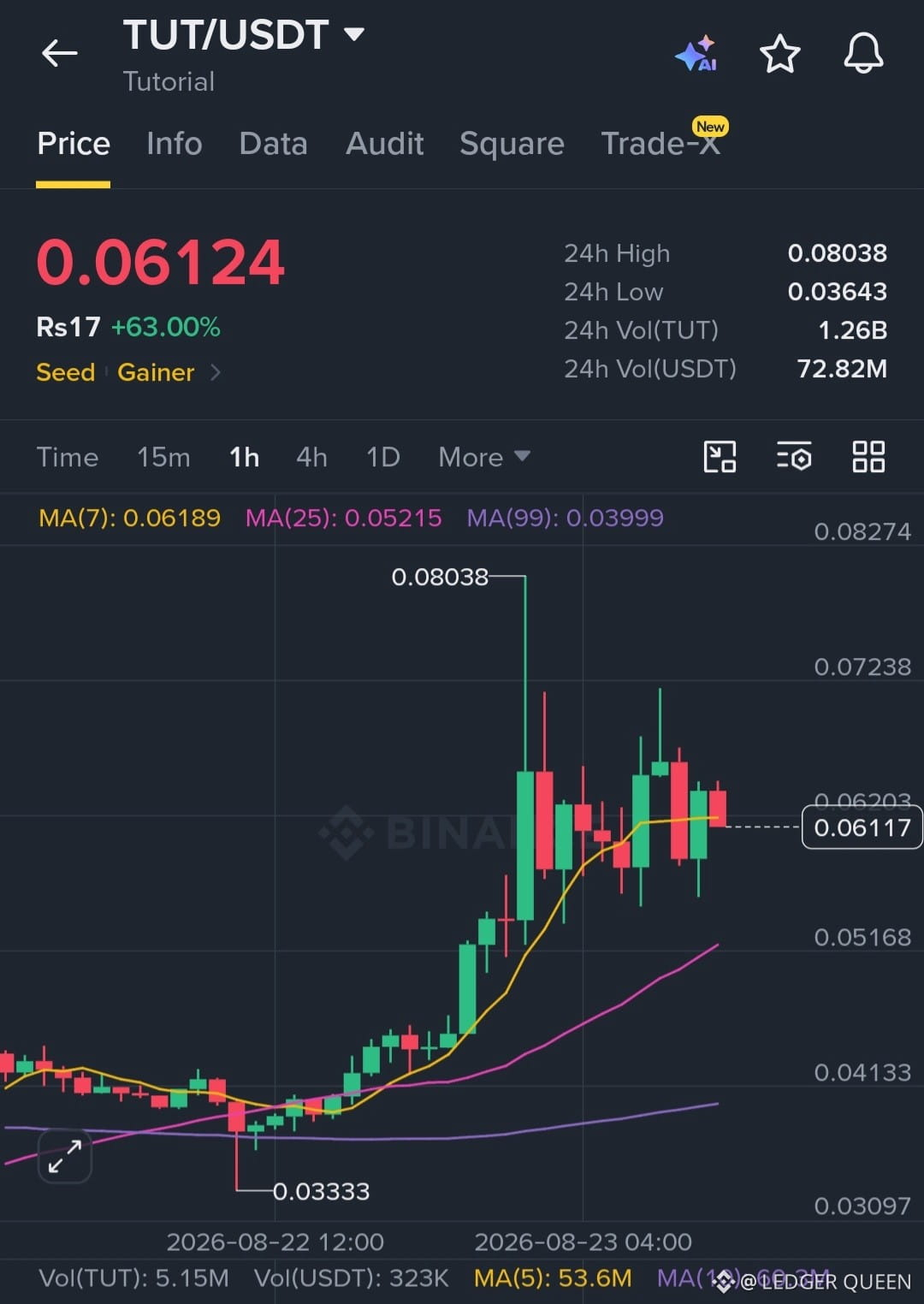
$TUT is moving FAST 🚀
Price: $0.06124 (+63%)
24h High: $0.08038
24h Low: $0.03643
24h Volume: $1.26B TUT / $72.82M USDT
On the 1H chart, TUT is holding above MA(25) $0.05215 and MA(99) $0.03999, while MA(7) sits at $0.06189. After touching $0.08038, price is consolidating around $0.061—watching whether bulls can reclaim the high. 👀🔥
7D: +76.16% | 30D: +334.85% | 90D: +478.56%
This chart is getting interesting. ⚡📈
#AnthropicIPOCouldTopSpaceXRecordReportsSay
#NvidiaAIServerPricesRiseOver15%
#BSTREndsCantorSPACGoPublicPlan
#USCanadaTradeTalksCollapseCanadaVowsRetaliation
#SandboxSANDSuspectedInfiniteMintFlawOnBase
Price: $0.06124 (+63%)
24h High: $0.08038
24h Low: $0.03643
24h Volume: $1.26B TUT / $72.82M USDT
On the 1H chart, TUT is holding above MA(25) $0.05215 and MA(99) $0.03999, while MA(7) sits at $0.06189. After touching $0.08038, price is consolidating around $0.061—watching whether bulls can reclaim the high. 👀🔥
7D: +76.16% | 30D: +334.85% | 90D: +478.56%
This chart is getting interesting. ⚡📈
#AnthropicIPOCouldTopSpaceXRecordReportsSay
#NvidiaAIServerPricesRiseOver15%
#BSTREndsCantorSPACGoPublicPlan
#USCanadaTradeTalksCollapseCanadaVowsRetaliation
#SandboxSANDSuspectedInfiniteMintFlawOnBase
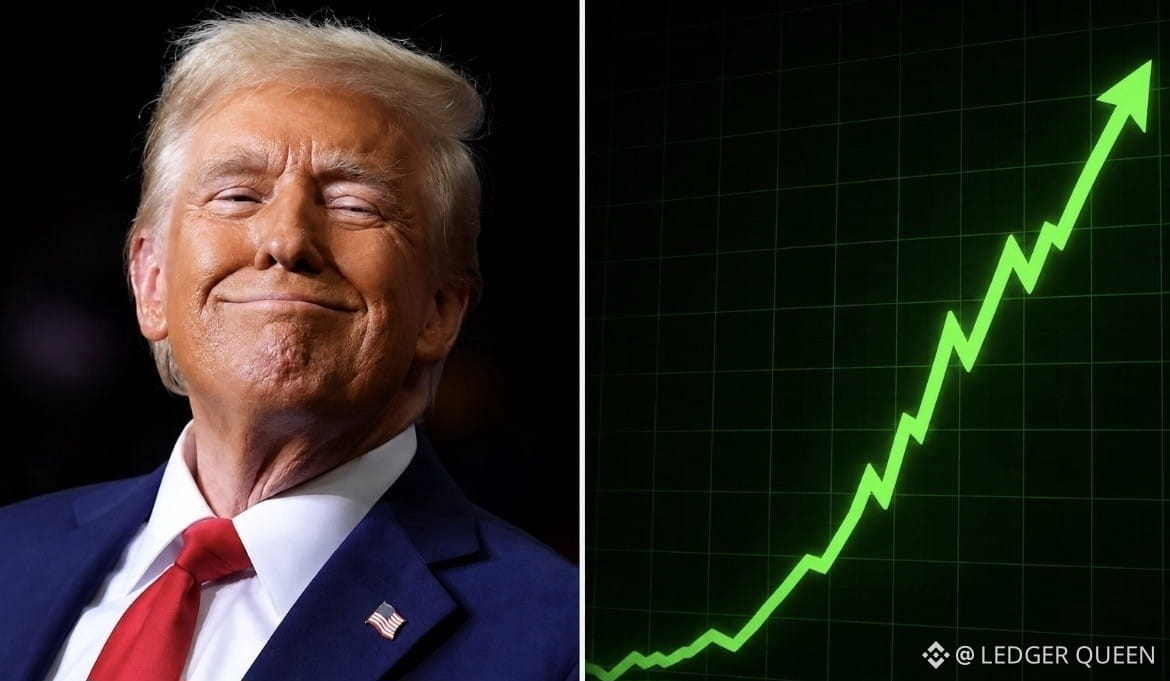
THIS IS INSANE
President Trump disclosed 1051 stock trades in June, bringing his total to over 25,000 across both presidencies.
The last four presidents COMBINED made just 29 trades.
$TUT
$PORTAL
$PUMP
President Trump disclosed 1051 stock trades in June, bringing his total to over 25,000 across both presidencies.
The last four presidents COMBINED made just 29 trades.
$TUT
$PORTAL
$PUMP
#dusk $DUSK @Dusk
I'll admit it. First time I saw "nullifier" in the Phoenix docs, I genuinely thought it was some kind of penalty mechanism. I remember opening the whitepaper expecting a quick skim and ending up stuck on that one page for almost an hour, rereading the same paragraph like it would suddenly make sense on the fourth try.
Here is the simple version I finally landed on. A note is basically a private receipt. It says you own something but it does not shout your name or your balance to the whole chain. Think of it like a sealed envelope sitting inside a giant filing cabinet. Nobody can peek inside unless you choose to open it.
The Merkle tree is that filing cabinet. Every note gets tucked into a branch and the whole structure gets compressed into one tiny fingerprint at the top. The chain only needs to check that fingerprint. It never needs to see every single envelope. That part felt strange at first. So much data hidden yet still provably correct.
Nullifiers are the clever bit though. When you spend a note you do not delete it since deleting would leak information. Instead you publish a nullifier which proves the note existed and is now used without revealing which one. It is like tearing a ticket stub in a way nobody can trace back to your seat.
Maybe I am overthinking this but the more I sit with it the more it feels like privacy and verification stop being opposites here. I still wonder how this holds up at real scale under heavy load. Curious if others have tested it beyond the surface level docs.
$SC
$POL
What makes nullifiers most interesting to you?
I'll admit it. First time I saw "nullifier" in the Phoenix docs, I genuinely thought it was some kind of penalty mechanism. I remember opening the whitepaper expecting a quick skim and ending up stuck on that one page for almost an hour, rereading the same paragraph like it would suddenly make sense on the fourth try.
Here is the simple version I finally landed on. A note is basically a private receipt. It says you own something but it does not shout your name or your balance to the whole chain. Think of it like a sealed envelope sitting inside a giant filing cabinet. Nobody can peek inside unless you choose to open it.
The Merkle tree is that filing cabinet. Every note gets tucked into a branch and the whole structure gets compressed into one tiny fingerprint at the top. The chain only needs to check that fingerprint. It never needs to see every single envelope. That part felt strange at first. So much data hidden yet still provably correct.
Nullifiers are the clever bit though. When you spend a note you do not delete it since deleting would leak information. Instead you publish a nullifier which proves the note existed and is now used without revealing which one. It is like tearing a ticket stub in a way nobody can trace back to your seat.
Maybe I am overthinking this but the more I sit with it the more it feels like privacy and verification stop being opposites here. I still wonder how this holds up at real scale under heavy load. Curious if others have tested it beyond the surface level docs.
$SC
$POL
What makes nullifiers most interesting to you?
🔒 Privacy
50%
✅ Preventing double-spends
50%
🌳 Merkle verification
0%
🤔 Still learning
0%
2 ຄະແນນສຽງ • ປິດລົງຄະແນນສຽງ
#dusk $DUSK @Dusk
Privacy onchain sounds great until you ask a simple question: who actually needs to see the transaction?
That keeps pulling me back to Dusk. Its pitch isn't privacy for hiding everything, but infrastructure for financial applications where some information simply shouldn't be public. It's a layer 1 built around confidential smart contracts and the Confidential Security Contract standard. For regulated markets, that distinction could matter a lot. A pension fund settling a bond trade may need the transaction verified without exposing every detail on a public ledger.
What caught my attention is the gap between the thesis and the current footprint. DUSK is around $0.072, with roughly $43M market cap, $11.9M in 24 hour volume and about $9.9M open interest. Those numbers don't prove adoption, obviously, but they do make me wonder how quickly the institutional settlement narrative can translate into consistent onchain activity.
There are some interesting pieces being put in place. NPEX has been linked with plans to bring tokenized bonds and equities onto the network, while the Chainlink CCIP integration points toward cross chain settlement. There's also a 15M DUSK developer fund aimed at bringing builders in. Still, partnerships and infrastructure only get you so far. The real test is whether actual financial users stick around.
Maybe I am overthinking it, but Dusk feels like a bet on what financial blockchains may need later. If confidential settlement becomes normal, being early could matter. If the users don't arrive, the technology alone won't save the thesis. That's the part I'm still watching.
$ONG
$ENA
What will drive Dusk most?
Privacy onchain sounds great until you ask a simple question: who actually needs to see the transaction?
That keeps pulling me back to Dusk. Its pitch isn't privacy for hiding everything, but infrastructure for financial applications where some information simply shouldn't be public. It's a layer 1 built around confidential smart contracts and the Confidential Security Contract standard. For regulated markets, that distinction could matter a lot. A pension fund settling a bond trade may need the transaction verified without exposing every detail on a public ledger.
What caught my attention is the gap between the thesis and the current footprint. DUSK is around $0.072, with roughly $43M market cap, $11.9M in 24 hour volume and about $9.9M open interest. Those numbers don't prove adoption, obviously, but they do make me wonder how quickly the institutional settlement narrative can translate into consistent onchain activity.
There are some interesting pieces being put in place. NPEX has been linked with plans to bring tokenized bonds and equities onto the network, while the Chainlink CCIP integration points toward cross chain settlement. There's also a 15M DUSK developer fund aimed at bringing builders in. Still, partnerships and infrastructure only get you so far. The real test is whether actual financial users stick around.
Maybe I am overthinking it, but Dusk feels like a bet on what financial blockchains may need later. If confidential settlement becomes normal, being early could matter. If the users don't arrive, the technology alone won't save the thesis. That's the part I'm still watching.
$ONG
$ENA
What will drive Dusk most?
🔐 Privacy
0%
🏦 Institutions
0%
🌉 Cross-chain
0%
👨💻 Builders
100%
1 ຄະແນນສຽງ • ປິດລົງຄະແນນສຽງ
#termmax @TermMax
One thing I keep coming back to with fixed-rate DeFi is that the rate itself might not be the hardest problem. Finding enough liquidity on both sides at the same maturity probably is.
With floating markets, liquidity can move around continuously and the rate adjusts with it. Fixed-rate markets feel different. A borrower wants a predictable cost until maturity, while a lender wants a predictable return over that same period. Maybe the interesting part of TermMax is not just the fixed rate, but whether it can keep these markets usable when demand gets uneven.
That also makes maturity an important detail. A market can look attractive at launch, but what matters to me is how the liquidity behaves as maturity gets closer. If someone wants to exit early, can they do it without taking a painful price hit? If a new borrower arrives, is there enough supply at a rate that actually makes sense? I am not completely convinced fixed-rate DeFi scales smoothly without deep secondary liquidity.
The options side makes the design even more interesting because it adds another way to structure exposure instead of treating lending as a single product. But flexibility can also make a protocol harder to understand, especially for users who just want a simple borrowing or lending position. Maybe that balance between simple outcomes and complex underlying markets is where the real test sits. I keep wondering whether liquidity depth, not the headline rate, will ultimately decide how useful this model becomes.
$ONG
$NEIRO
$PEOPLE
What matters most for fixed-rate DeFi?
One thing I keep coming back to with fixed-rate DeFi is that the rate itself might not be the hardest problem. Finding enough liquidity on both sides at the same maturity probably is.
With floating markets, liquidity can move around continuously and the rate adjusts with it. Fixed-rate markets feel different. A borrower wants a predictable cost until maturity, while a lender wants a predictable return over that same period. Maybe the interesting part of TermMax is not just the fixed rate, but whether it can keep these markets usable when demand gets uneven.
That also makes maturity an important detail. A market can look attractive at launch, but what matters to me is how the liquidity behaves as maturity gets closer. If someone wants to exit early, can they do it without taking a painful price hit? If a new borrower arrives, is there enough supply at a rate that actually makes sense? I am not completely convinced fixed-rate DeFi scales smoothly without deep secondary liquidity.
The options side makes the design even more interesting because it adds another way to structure exposure instead of treating lending as a single product. But flexibility can also make a protocol harder to understand, especially for users who just want a simple borrowing or lending position. Maybe that balance between simple outcomes and complex underlying markets is where the real test sits. I keep wondering whether liquidity depth, not the headline rate, will ultimately decide how useful this model becomes.
$ONG
$NEIRO
$PEOPLE
What matters most for fixed-rate DeFi?
🔹 Liquidity depth
40%
🔹 Secondary markets
0%
🔹 Better rates
40%
🔹 Simple UX
20%
5 ຄະແນນສຽງ • ປິດລົງຄະແນນສຽງ
ຢືນຢັນແລ້ວ
#termmax @TermMax
I was looking at TermMax on DefiLlama and one thing felt a little strange.
The dashboard shows about $31.29M in TVL right now. At first glance, that sounds pretty healthy.
But then I looked at the fees chart.
And that’s where the picture gets more interesting. The fee activity looks tiny compared with the amount of capital sitting in the protocol. So I started wondering: how much of that TVL represents people actually using TermMax, and how much is simply capital sitting there because the incentives make it worthwhile?
That distinction matters.
It’s a bit like seeing a packed restaurant parking lot and assuming everyone inside is ordering food. Maybe they are. Or maybe half the cars are there because there’s some giveaway happening next door.
I caught myself thinking about this because TermMax’s whole proposition is actually pretty useful: fixed-rate borrowing/lending gives users something DeFi usually struggles with — predictability. Options add another layer for structuring positions.
So I’m not reading the TVL as meaningless. I’m just not treating it as proof of product-market fit either.
And there’s a very interesting test coming: TMX TGE is scheduled for August 25, with XP, AP and MP rewards becoming claimable after TGE.
That changes the incentive equation.
What happens to usage once the reward-driven reason to interact becomes less important?
That’s the metric I’ll be watching. Not how many wallets showed up, but how many users keep borrowing, lending and trading because they actually need what TermMax provides.
TVL can tell you where the capital is. Usage tells you why it stayed.
$BOME
$MAGMA
$USELESS
After TermMax TGE, what matters most?
I was looking at TermMax on DefiLlama and one thing felt a little strange.
The dashboard shows about $31.29M in TVL right now. At first glance, that sounds pretty healthy.
But then I looked at the fees chart.
And that’s where the picture gets more interesting. The fee activity looks tiny compared with the amount of capital sitting in the protocol. So I started wondering: how much of that TVL represents people actually using TermMax, and how much is simply capital sitting there because the incentives make it worthwhile?
That distinction matters.
It’s a bit like seeing a packed restaurant parking lot and assuming everyone inside is ordering food. Maybe they are. Or maybe half the cars are there because there’s some giveaway happening next door.
I caught myself thinking about this because TermMax’s whole proposition is actually pretty useful: fixed-rate borrowing/lending gives users something DeFi usually struggles with — predictability. Options add another layer for structuring positions.
So I’m not reading the TVL as meaningless. I’m just not treating it as proof of product-market fit either.
And there’s a very interesting test coming: TMX TGE is scheduled for August 25, with XP, AP and MP rewards becoming claimable after TGE.
That changes the incentive equation.
What happens to usage once the reward-driven reason to interact becomes less important?
That’s the metric I’ll be watching. Not how many wallets showed up, but how many users keep borrowing, lending and trading because they actually need what TermMax provides.
TVL can tell you where the capital is. Usage tells you why it stayed.
$BOME
$MAGMA
$USELESS
After TermMax TGE, what matters most?
🔘 TVL stays
66%
🔘 Real usage grows
0%
🔘 Trading grows
17%
🔘 Users leave
17%
6 ຄະແນນສຽງ • ປິດລົງຄະແນນສຽງ
🚨 BREAKING:
🇺🇸 TODAY'S WHITE HOUSE CRYPTO MEETING WAS MASSIVE:
→ U.S. IS CONSIDERING BUYING “SIZABLE” AMOUNTS OF BTC & CRYPTO
→ TRUMP PUSHED CONGRESS TO PASS THE CLARITY ACT
→ U.S. WANTS TO STAY AHEAD IN BITCOIN & CRYPTO
→ 🇺🇸 HYPERLIQUID IS WORKING TOWARD ENTERING THE U.S. MARKET
→ TRUMP ALSO CALLED FOR LOWER INTEREST RATES
THE U.S. IS CLEARLY GOING ALL-IN ON CRYPTO
$RE
$MUBARAK
$TREE
🇺🇸 TODAY'S WHITE HOUSE CRYPTO MEETING WAS MASSIVE:
→ U.S. IS CONSIDERING BUYING “SIZABLE” AMOUNTS OF BTC & CRYPTO
→ TRUMP PUSHED CONGRESS TO PASS THE CLARITY ACT
→ U.S. WANTS TO STAY AHEAD IN BITCOIN & CRYPTO
→ 🇺🇸 HYPERLIQUID IS WORKING TOWARD ENTERING THE U.S. MARKET
→ TRUMP ALSO CALLED FOR LOWER INTEREST RATES
THE U.S. IS CLEARLY GOING ALL-IN ON CRYPTO
$RE
$MUBARAK
$TREE

#termmax @TermMax
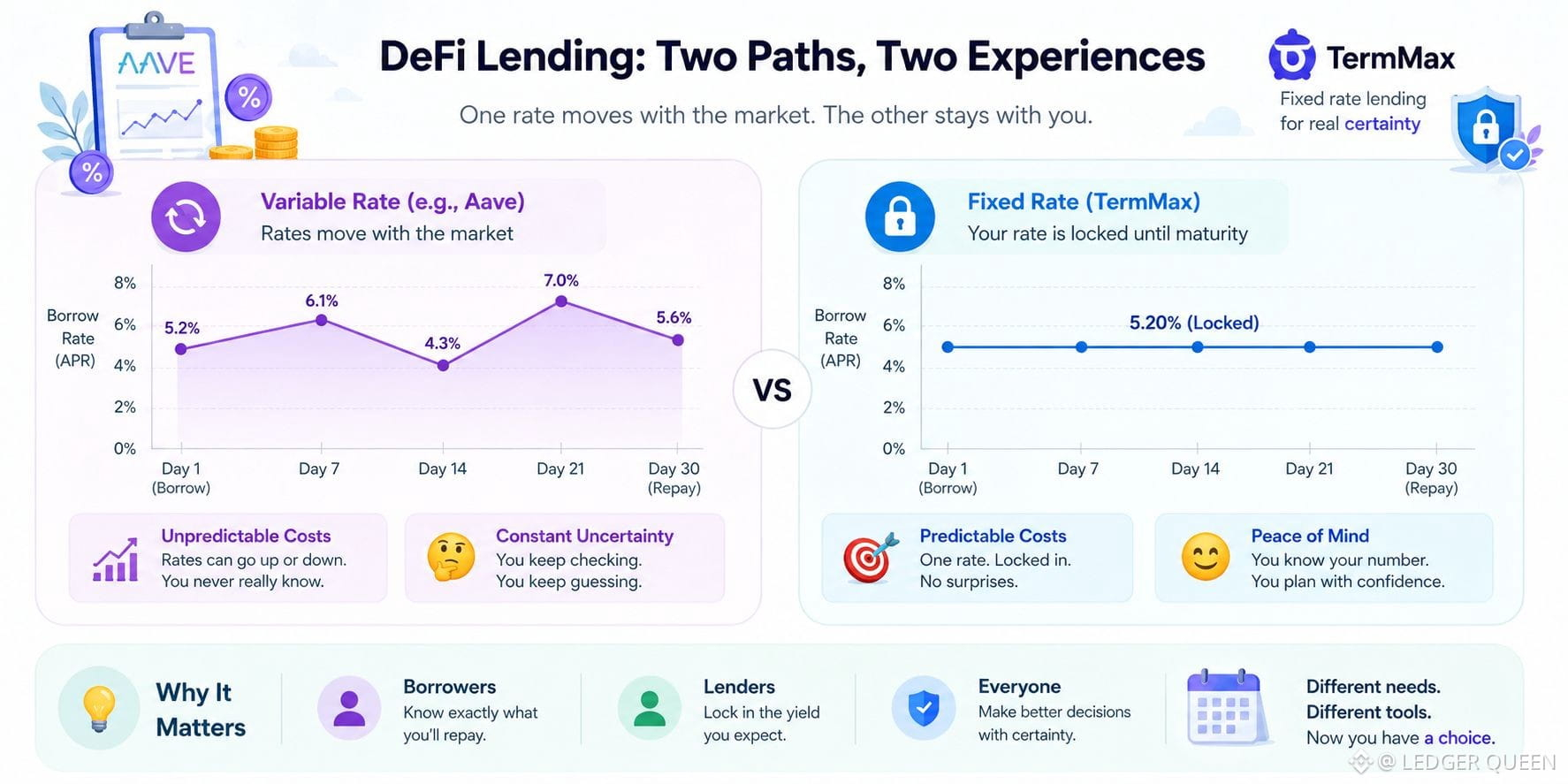
I checked my Aave dashboard the other day and the rate had moved again since the last time I looked. Not by much. Enough to make me stop and wonder why I even keep checking.
That is the part of DeFi lending nobody warns you about early on. You borrow at one rate and by the time you actually pay it back the number has drifted somewhere else entirely. Same thing with lending. You deposit expecting a certain yield and a week later it looks different for reasons that are never fully clear to you.
It reminds me a little of variable rate mortgages back home. Everyone tells you the rate could go either way and somehow it always seems to move against you rather than in your favor. Maybe that is just how these things feel psychologically even when the math is neutral.
This is where TermMax caught my attention. The rate gets locked until a set maturity date. Sounds almost too simple honestly. I kept expecting some catch buried underneath but the core idea really is just that basic. You know your number going in and it stays your number.
I am not fully sure yet if fixed rate lending becomes the default way people borrow on chain or stays a smaller niche for people who value certainty over chasing yield. Probably depends on how much liquidity actually shows up over time. For now I just like that the option finally exists somewhere.
$RE
$HEMI
$TREE
I checked my Aave dashboard the other day and the rate had moved again since the last time I looked. Not by much. Enough to make me stop and wonder why I even keep checking.
That is the part of DeFi lending nobody warns you about early on. You borrow at one rate and by the time you actually pay it back the number has drifted somewhere else entirely. Same thing with lending. You deposit expecting a certain yield and a week later it looks different for reasons that are never fully clear to you.
It reminds me a little of variable rate mortgages back home. Everyone tells you the rate could go either way and somehow it always seems to move against you rather than in your favor. Maybe that is just how these things feel psychologically even when the math is neutral.
This is where TermMax caught my attention. The rate gets locked until a set maturity date. Sounds almost too simple honestly. I kept expecting some catch buried underneath but the core idea really is just that basic. You know your number going in and it stays your number.
I am not fully sure yet if fixed rate lending becomes the default way people borrow on chain or stays a smaller niche for people who value certainty over chasing yield. Probably depends on how much liquidity actually shows up over time. For now I just like that the option finally exists somewhere.
$RE
$HEMI
$TREE
#dusk $DUSK @Dusk
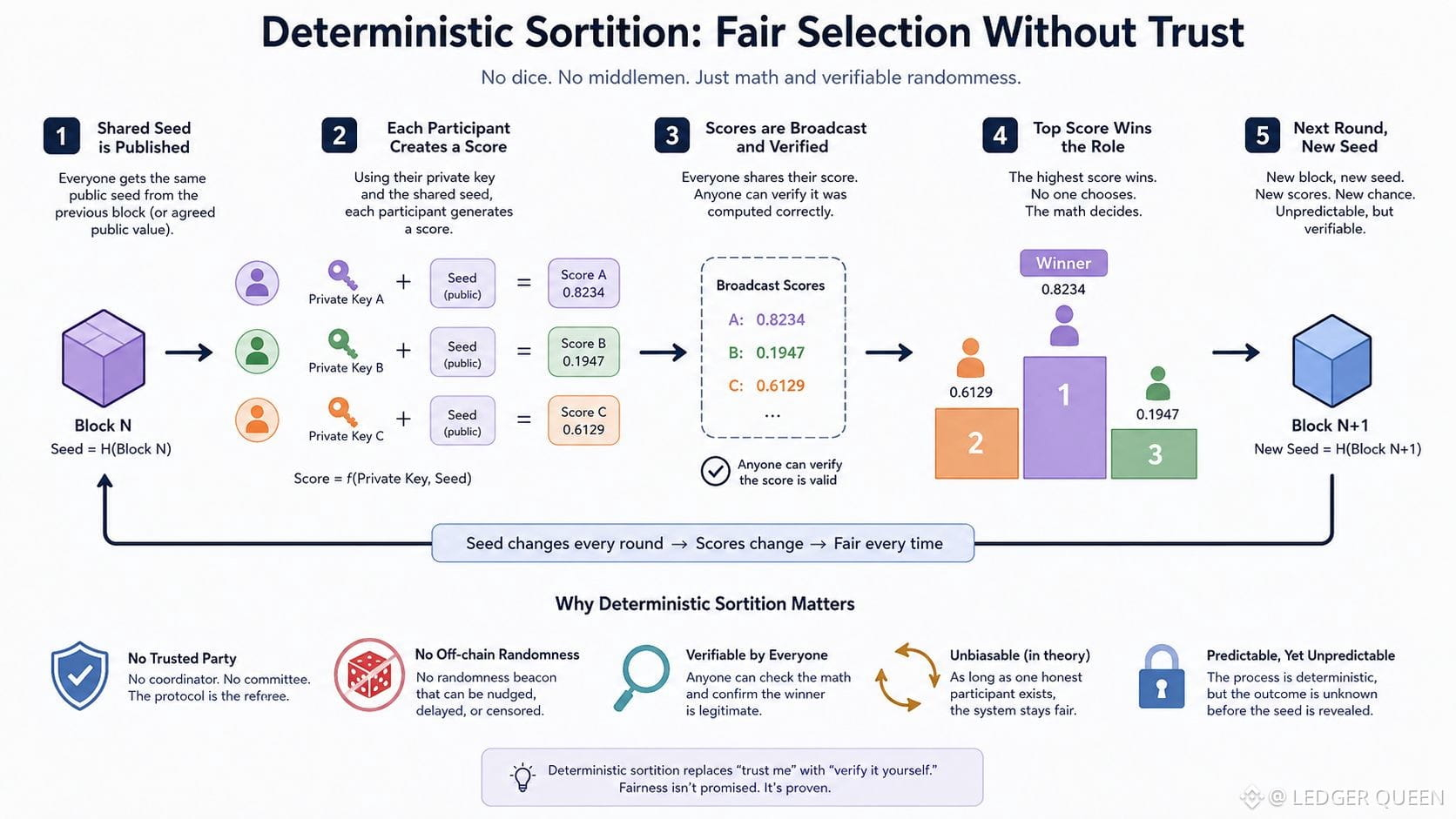
Ever notice how most "random" selection in blockchain still feels like it needs someone watching the dice? That question sat with me for a while before I actually looked into deterministic sortition properly.
The idea is simpler than it sounds once you break it down. Every participant generates a score using their own private key combined with a shared seed. That seed usually comes from the previous block or some agreed on public value. Because the seed is known to everyone but the private key isn't the resulting score can be verified by others without anyone needing to trust a coordinator. Nobody assigns the role. The math just produces a winner and everyone can check the work after the fact.
What struck me first was how this removes the awkward middle step in older systems. No committee picking validators. No off chain randomness beacon that could theoretically be nudged. The seed changes every round so the score changes too. It felt strange at first almost too clean for something claiming to replace trust with arithmetic. Maybe I'm overthinking it but there's something satisfying about a system where fairness isn't promised. It's proven.
I remember reading early Algorand style papers and thinking this was mostly academic. Seeing it work in live networks changes that impression a bit. Still not sure how it holds up under extreme network splits or coordinated timing attacks. That part I haven't fully settled in my head.
Anyway this is one of those mechanisms I keep circling back to. Not because it's flashy but because it quietly answers a question most people never bother asking.
$ALLO
$ACE
Ever notice how most "random" selection in blockchain still feels like it needs someone watching the dice? That question sat with me for a while before I actually looked into deterministic sortition properly.
The idea is simpler than it sounds once you break it down. Every participant generates a score using their own private key combined with a shared seed. That seed usually comes from the previous block or some agreed on public value. Because the seed is known to everyone but the private key isn't the resulting score can be verified by others without anyone needing to trust a coordinator. Nobody assigns the role. The math just produces a winner and everyone can check the work after the fact.
What struck me first was how this removes the awkward middle step in older systems. No committee picking validators. No off chain randomness beacon that could theoretically be nudged. The seed changes every round so the score changes too. It felt strange at first almost too clean for something claiming to replace trust with arithmetic. Maybe I'm overthinking it but there's something satisfying about a system where fairness isn't promised. It's proven.
I remember reading early Algorand style papers and thinking this was mostly academic. Seeing it work in live networks changes that impression a bit. Still not sure how it holds up under extreme network splits or coordinated timing attacks. That part I haven't fully settled in my head.
Anyway this is one of those mechanisms I keep circling back to. Not because it's flashy but because it quietly answers a question most people never bother asking.
$ALLO
$ACE
#termmax @TermMax
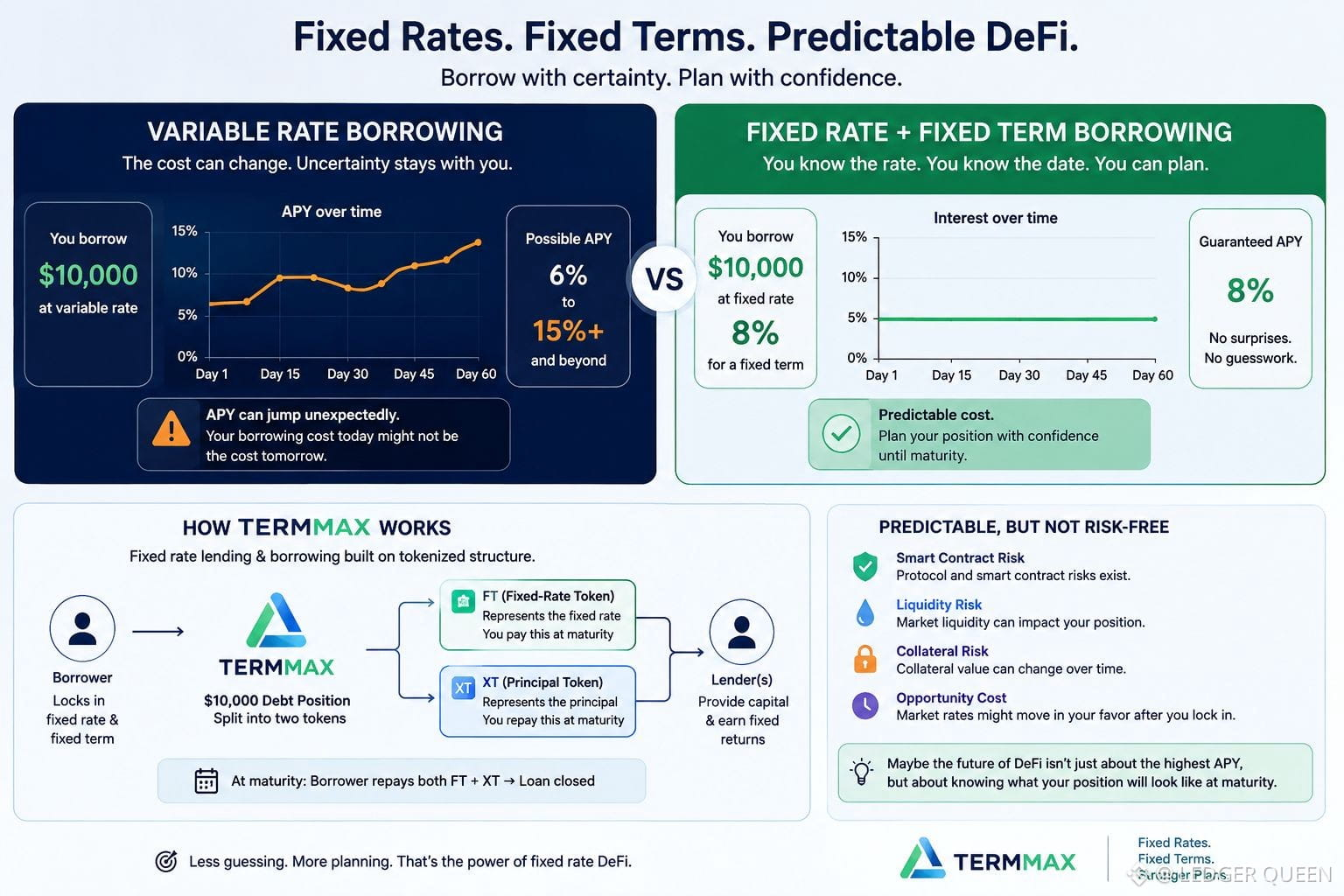
I used to think fixed rates in DeFi sounded a little boring. Then I started thinking about what borrowing actually feels like when the number keeps moving underneath you.
With a variable rate, borrowing $10,000 today might look affordable, but the APY can change as market conditions shift. If rates jump, your expected cost changes too. Maybe the position still works, maybe it doesn’t. That uncertainty is easy to ignore when markets are calm.
A fixed rate plus fixed maturity is different. You agree on the rate and the date upfront, so if you borrow $10,000 at a fixed 8% for a defined term, you know the interest calculation going in. No guessing whether next week’s APY will suddenly be 12% or 15%. That predictability can make planning a lot easier.
That’s what I find interesting about TermMax. Its lending and borrowing structure is built around fixed rates and fixed terms rather than relying entirely on floating rates. It feels strange at first because DeFi has trained us to watch APYs constantly. But maybe that’s exactly the point.
Still, predictable doesn’t mean risk free. There are smart contract risks, liquidity considerations, collateral risks, and the opportunity cost if market rates move in your favor after you lock in.
Maybe I’m overthinking it, but I’m curious whether fixed term DeFi becomes more useful as users care less about chasing the highest APY and more about actually knowing what their position will look like at maturity.
$SOL
$ACE
$XRP
I used to think fixed rates in DeFi sounded a little boring. Then I started thinking about what borrowing actually feels like when the number keeps moving underneath you.
With a variable rate, borrowing $10,000 today might look affordable, but the APY can change as market conditions shift. If rates jump, your expected cost changes too. Maybe the position still works, maybe it doesn’t. That uncertainty is easy to ignore when markets are calm.
A fixed rate plus fixed maturity is different. You agree on the rate and the date upfront, so if you borrow $10,000 at a fixed 8% for a defined term, you know the interest calculation going in. No guessing whether next week’s APY will suddenly be 12% or 15%. That predictability can make planning a lot easier.
That’s what I find interesting about TermMax. Its lending and borrowing structure is built around fixed rates and fixed terms rather than relying entirely on floating rates. It feels strange at first because DeFi has trained us to watch APYs constantly. But maybe that’s exactly the point.
Still, predictable doesn’t mean risk free. There are smart contract risks, liquidity considerations, collateral risks, and the opportunity cost if market rates move in your favor after you lock in.
Maybe I’m overthinking it, but I’m curious whether fixed term DeFi becomes more useful as users care less about chasing the highest APY and more about actually knowing what their position will look like at maturity.
$SOL
$ACE
$XRP
#dusk $DUSK @Dusk
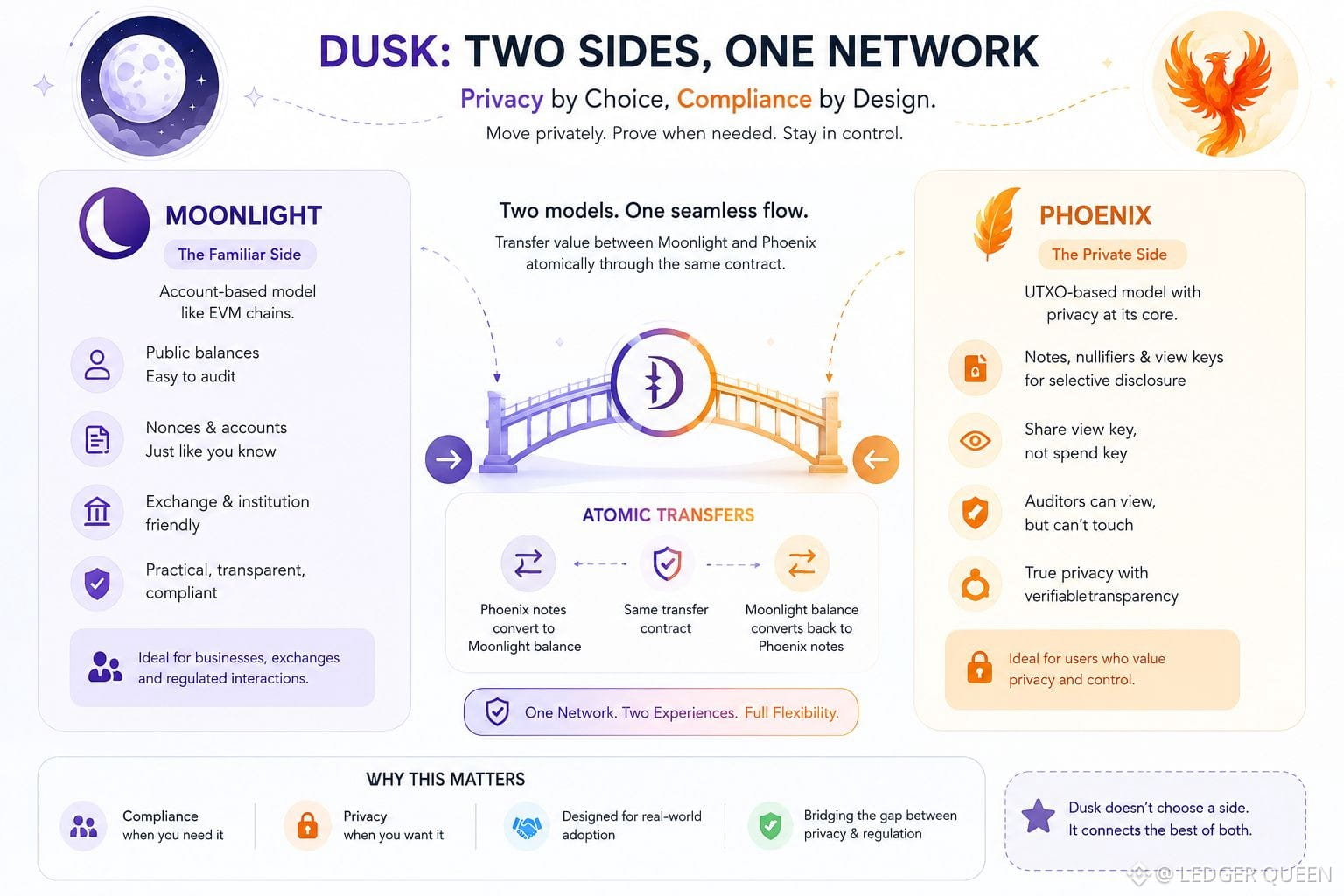
Moonlight vs Phoenix — Dusk's Two Sides
Anyone else remember the first time they had to explain to a friend why "privacy coin" and "compliant with regulators" aren't actually contradictions? That was my Dusk moment. I kept trying to fit it into either the Monero box or the Ethereum box, and it just... didn't fit either. Turns out that's the point.
Moonlight is the part that feels familiar. Account-based, balances sitting out in the open, nonces doing their usual bookkeeping. If you've used any EVM chain you already know this model in your bones. It's the practical layer — the one exchanges actually want to deal with, because auditing an account is a lot less work than untangling a privacy pool. I remember thinking this was almost a concession, like Dusk was giving up on the privacy pitch. I don't think that anymore.
Phoenix is the other half, and it's UTXO-based, which immediately puts it in Zcash territory conceptually, though the implementation is its own thing with notes, nullifiers, and view keys for selective disclosure. What got me was realizing you can share a view key without exposing your spend key — so an auditor can look without being able to touch. Maybe I'm overthinking the analogy, but it felt like handing someone a window instead of a key.
What actually interests me isn't picking a side. It's that Dusk lets value move between the two — Phoenix notes convert into a Moonlight balance and back, atomically, through the same transfer contract. That's the quieter engineering story here, and it's the one I keep coming back to. Whether institutions actually use that flexibility the way the whitepaper imagines, I genuinely don't know yet. Watching that part play out.
$RED
$CLO
Moonlight vs Phoenix — Dusk's Two Sides
Anyone else remember the first time they had to explain to a friend why "privacy coin" and "compliant with regulators" aren't actually contradictions? That was my Dusk moment. I kept trying to fit it into either the Monero box or the Ethereum box, and it just... didn't fit either. Turns out that's the point.
Moonlight is the part that feels familiar. Account-based, balances sitting out in the open, nonces doing their usual bookkeeping. If you've used any EVM chain you already know this model in your bones. It's the practical layer — the one exchanges actually want to deal with, because auditing an account is a lot less work than untangling a privacy pool. I remember thinking this was almost a concession, like Dusk was giving up on the privacy pitch. I don't think that anymore.
Phoenix is the other half, and it's UTXO-based, which immediately puts it in Zcash territory conceptually, though the implementation is its own thing with notes, nullifiers, and view keys for selective disclosure. What got me was realizing you can share a view key without exposing your spend key — so an auditor can look without being able to touch. Maybe I'm overthinking the analogy, but it felt like handing someone a window instead of a key.
What actually interests me isn't picking a side. It's that Dusk lets value move between the two — Phoenix notes convert into a Moonlight balance and back, atomically, through the same transfer contract. That's the quieter engineering story here, and it's the one I keep coming back to. Whether institutions actually use that flexibility the way the whitepaper imagines, I genuinely don't know yet. Watching that part play out.
$RED
$CLO
#termmax @TermMax
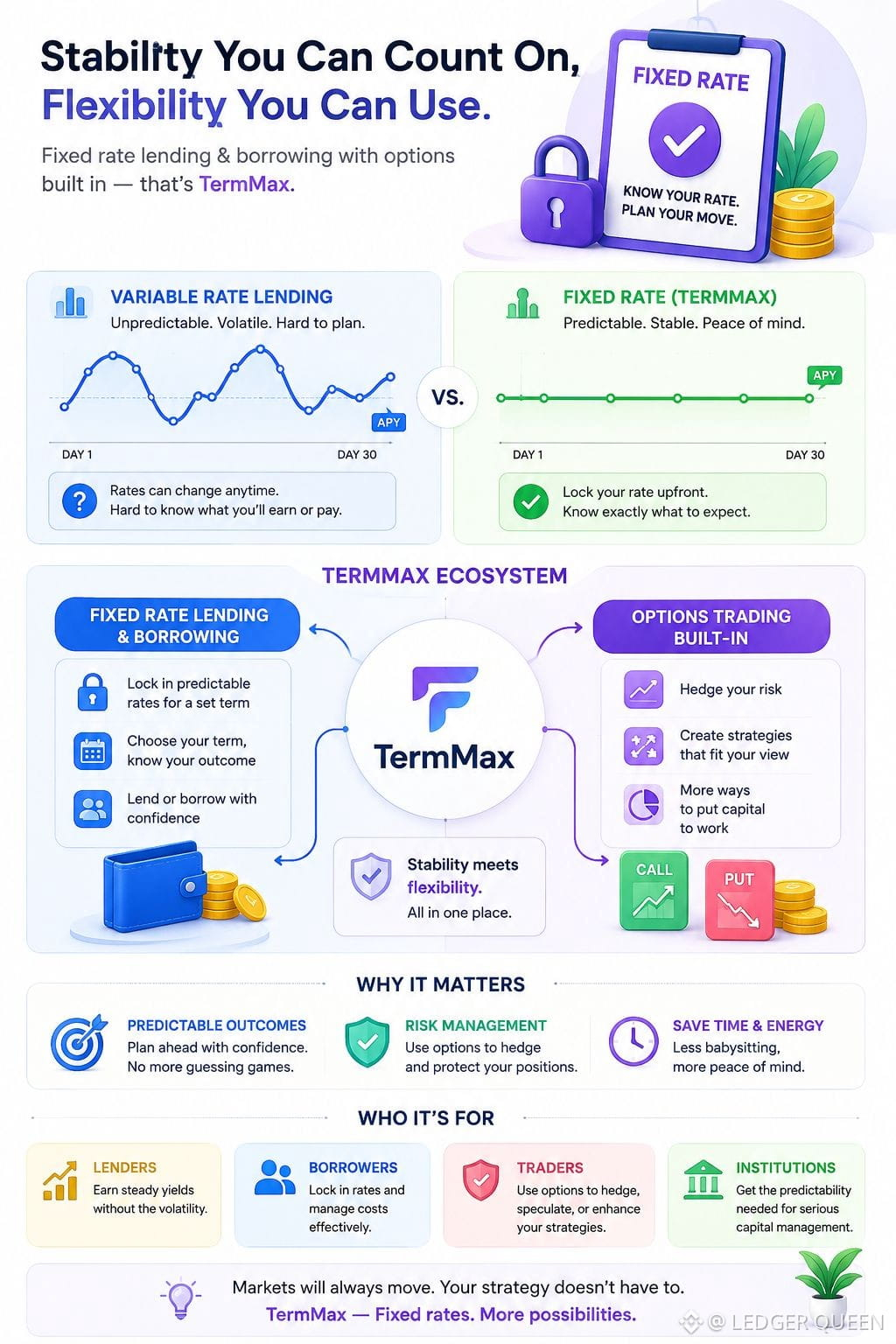
Been staring at my lending positions again tonight wondering why fixed rates still feel like a niche idea in a space obsessed with floating everything. Variable APYs jump around so much that half the time I am just guessing what I will actually earn or pay by the time a position matures. Maybe that is why TermMax caught my attention. Fixed rate borrowing and lending sounds almost boring on paper but there is something calming about knowing your number ahead of time.
I remember when I first tried a fixed term lending product elsewhere and it felt strange at first. Like I was giving something up. No upside if rates spiked in my favor. But then I realized thats sort of the point. You are trading uncertainty for peace of mind. TermMax leans into that same logic while also folding in options trading which honestly surprised me. I did not expect a fixed rate protocol to also let you play with option structures in the same ecosystem.
The combination makes we wonder if this is where lending protocols are quietly heading. Not everyone wants to babysit a position every few hours. Some of us just want predictable outcomes especially during choppy market weeks like this one.
Still not sure how liquidity depth will hold up long term or how it competes once bigger names lean into fixed rate products too. Maybe I am overthinking it. But watching a protocol try to merge stability with flexibility feels worth paying attention to. Curious where this goes next honestly.
$GPS
$TUT
$STAR
Been staring at my lending positions again tonight wondering why fixed rates still feel like a niche idea in a space obsessed with floating everything. Variable APYs jump around so much that half the time I am just guessing what I will actually earn or pay by the time a position matures. Maybe that is why TermMax caught my attention. Fixed rate borrowing and lending sounds almost boring on paper but there is something calming about knowing your number ahead of time.
I remember when I first tried a fixed term lending product elsewhere and it felt strange at first. Like I was giving something up. No upside if rates spiked in my favor. But then I realized thats sort of the point. You are trading uncertainty for peace of mind. TermMax leans into that same logic while also folding in options trading which honestly surprised me. I did not expect a fixed rate protocol to also let you play with option structures in the same ecosystem.
The combination makes we wonder if this is where lending protocols are quietly heading. Not everyone wants to babysit a position every few hours. Some of us just want predictable outcomes especially during choppy market weeks like this one.
Still not sure how liquidity depth will hold up long term or how it competes once bigger names lean into fixed rate products too. Maybe I am overthinking it. But watching a protocol try to merge stability with flexibility feels worth paying attention to. Curious where this goes next honestly.
$GPS
$TUT
$STAR
ຢືນຢັນແລ້ວ
#dusk $DUSK @Dusk
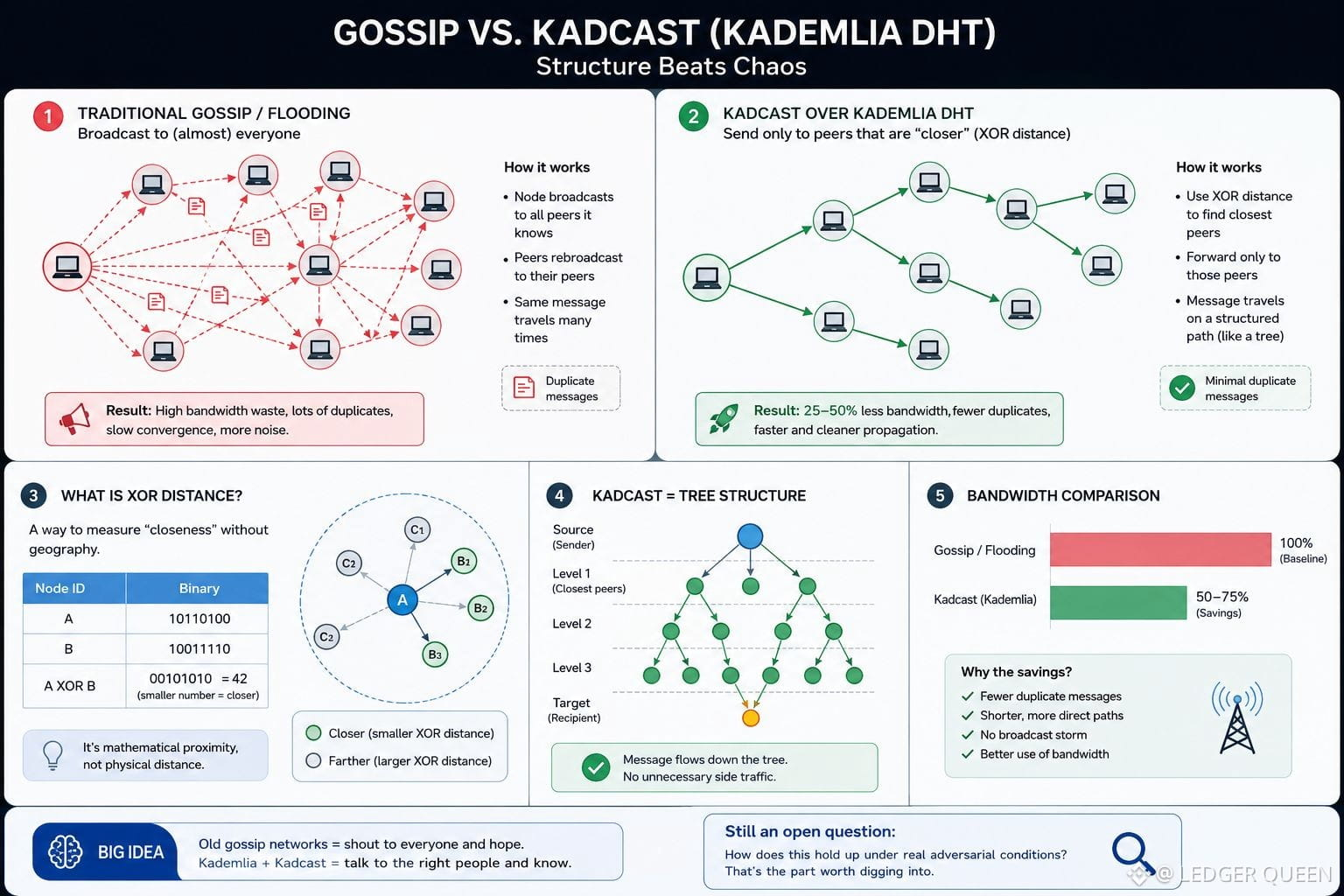
I keep thinking about how much bandwidth gets wasted in normal gossip networks. Every node just yells information to whoever it knows and hopes it lands somewhere useful. It reminds me of group chats where five people repeat the same message because nobody trusts the first version. That is basically how old P2P broadcast worked before something like Kadcast came along.
Kademlia DHT works differently. Instead of shouting to everyone a node only talks to peers that are closest to it in something called XOR distance. Think of a neighborhood where you do not call every person in the city when you need directions. You ask the neighbor down the street because they are structurally closer to your problem. XOR distance is basically a mathematical way of measuring who is closest without relying on geography at all.
I remember when I first read about Kadcast reducing bandwidth by 25 to 50 percent and honestly I was skeptical. That is a big number for something that sounds like a small routing trick. But once you picture a tree structure instead of flat flooding it starts making sense. Fewer duplicate messages. Less noise. More direct paths between peers.
Maybe I am overthinking this but it feels like blockchain networks are slowly learning what internet infrastructure learned decades ago. Structure beats chaos even when chaos feels more decentralized on the surface.
I am still not fully sure how this holds up under real adversarial conditions though. That part I want to dig into more before I trust it completely.
$PORTAL
$ACE
I keep thinking about how much bandwidth gets wasted in normal gossip networks. Every node just yells information to whoever it knows and hopes it lands somewhere useful. It reminds me of group chats where five people repeat the same message because nobody trusts the first version. That is basically how old P2P broadcast worked before something like Kadcast came along.
Kademlia DHT works differently. Instead of shouting to everyone a node only talks to peers that are closest to it in something called XOR distance. Think of a neighborhood where you do not call every person in the city when you need directions. You ask the neighbor down the street because they are structurally closer to your problem. XOR distance is basically a mathematical way of measuring who is closest without relying on geography at all.
I remember when I first read about Kadcast reducing bandwidth by 25 to 50 percent and honestly I was skeptical. That is a big number for something that sounds like a small routing trick. But once you picture a tree structure instead of flat flooding it starts making sense. Fewer duplicate messages. Less noise. More direct paths between peers.
Maybe I am overthinking this but it feels like blockchain networks are slowly learning what internet infrastructure learned decades ago. Structure beats chaos even when chaos feels more decentralized on the surface.
I am still not fully sure how this holds up under real adversarial conditions though. That part I want to dig into more before I trust it completely.
$PORTAL
$ACE
ເຂົ້າສູ່ລະບົບເພື່ອສຳຫຼວດເນື້ອຫາເພີ່ມເຕີມ