

Gregory_fs
18 ໂພສ

Gregory_fs
ລາຍງານ
ບລັອກຜູ້ໃຊ້
NOTHING is imposible.
Crypto Market can be predicted,
You just need to be persistant and patient.
ເປີດການຊື້ຂາຍ
ຜູ້ຊື້ຂາຍຊົ່ວຄາວ
5.6 ປີ
7 ກໍາລັງຕິດຕາມ
2 ຜູ້ຕິດຕາມ
12 Liked
ໂພສ
Portfolio
·
--

ບົດຄວາມ
Ethereum – Part 2: The Hack That Changed Everything#trandingtopic
After the launch of $ETH
{spot}(ETHUSDT)
, the concept of smart contracts began to attract increasing interest.
If you can program money and rules directly onto the blockchain, you can attempt to build organizations, financial applications, and systems that operate without a central authority.
In 2016, one of the most ambitious attempts was The DAO.
The DAO attracted a massive amount of Ether for that time.
Everything seemed to be going according to plan.
Until someone discovered a vulnerability in the code.
And that was when theory met reality.
An attacker exploited the vulnerability and managed to redirect a significant amount of funds.
The Ethereum community found itself facing a very unpleasant dilemma:
What do you do when a smart contract does exactly what its code allows, yet the outcome is something people never intended?
"Code is law"... until things get complicated.
One of the fundamental ideas behind blockchain technology is that rules are defined by code.
But now, there was a problem.
If we strictly adhere to the code, the stolen funds remain where they are.
If we modify the blockchain to recover the funds, we are altering its history.
The community debated the issue intensely.
Ultimately, the decision was made to execute a hard fork.
The blockchain split into two versions.
One continued under the name Ethereum.
The other became Ethereum Classic.
It was a pivotal moment for the crypto industry, as it demonstrated that behind the seemingly mathematical and impersonal technology, there are still people who must make decisions. And people, as we know, have a knack for not always agreeing.
From smart contracts to an entire industry
After 2016, Ethereum continued to develop.
An increasing number of decentralized applications, tokens, and projects built directly on the Ethereum infrastructure began to emerge.
The ICO boom followed in 2017.
Ethereum had already become much more than just a cryptocurrency.
It was a platform.
Developers could create tokens and applications without having to build their own blockchain from scratch.
This contributed enormously to the expansion of the ecosystem.
But success brought a problem with it.
The more people used Ethereum, the more congested the network became.
And when a decentralized network becomes heavily congested, users quickly discover one thing:
gas fees.
Sometimes, the transaction cost more than the item you were trying to buy.
But Ethereum hadn't said its last word yet.
Because the next major issue was far more serious:
energy consumption and the Proof of Work mechanism.
And Ethereum was about to attempt one of the most difficult transitions in blockchain history.
$USDC
Ethereum – Part 2: The Hack That Changed Everything
#trandingtopic
After the launch of $ETH
, the concept of smart contracts began to attract increasing interest.
If you can program money and rules directly onto the blockchain, you can attempt to build organizations, financial applications, and systems that operate without a central authority.
In 2016, one of the most ambitious attempts was The DAO.
The DAO attracted a massive amount of Ether for that time.
Everything seemed to be going according to plan.
Until someone discovered a vulnerability in the code.
And that was when theory met reality.
An attacker exploited the vulnerability and managed to redirect a significant amount of funds.
The Ethereum community found itself facing a very unpleasant dilemma:
What do you do when a smart contract does exactly what its code allows, yet the outcome is something people never intended?
"Code is law"... until things get complicated.
One of the fundamental ideas behind blockchain technology is that rules are defined by code.
But now, there was a problem.
If we strictly adhere to the code, the stolen funds remain where they are.
If we modify the blockchain to recover the funds, we are altering its history.
The community debated the issue intensely.
Ultimately, the decision was made to execute a hard fork.
The blockchain split into two versions.
One continued under the name Ethereum.
The other became Ethereum Classic.
It was a pivotal moment for the crypto industry, as it demonstrated that behind the seemingly mathematical and impersonal technology, there are still people who must make decisions. And people, as we know, have a knack for not always agreeing.
From smart contracts to an entire industry
After 2016, Ethereum continued to develop.
An increasing number of decentralized applications, tokens, and projects built directly on the Ethereum infrastructure began to emerge.
The ICO boom followed in 2017.
Ethereum had already become much more than just a cryptocurrency.
It was a platform.
Developers could create tokens and applications without having to build their own blockchain from scratch.
This contributed enormously to the expansion of the ecosystem.
But success brought a problem with it.
The more people used Ethereum, the more congested the network became.
And when a decentralized network becomes heavily congested, users quickly discover one thing:
gas fees.
Sometimes, the transaction cost more than the item you were trying to buy.
But Ethereum hadn't said its last word yet.
Because the next major issue was far more serious:
energy consumption and the Proof of Work mechanism.
And Ethereum was about to attempt one of the most difficult transitions in blockchain history.
$USDC
After the launch of $ETH
, the concept of smart contracts began to attract increasing interest.
If you can program money and rules directly onto the blockchain, you can attempt to build organizations, financial applications, and systems that operate without a central authority.
In 2016, one of the most ambitious attempts was The DAO.
The DAO attracted a massive amount of Ether for that time.
Everything seemed to be going according to plan.
Until someone discovered a vulnerability in the code.
And that was when theory met reality.
An attacker exploited the vulnerability and managed to redirect a significant amount of funds.
The Ethereum community found itself facing a very unpleasant dilemma:
What do you do when a smart contract does exactly what its code allows, yet the outcome is something people never intended?
"Code is law"... until things get complicated.
One of the fundamental ideas behind blockchain technology is that rules are defined by code.
But now, there was a problem.
If we strictly adhere to the code, the stolen funds remain where they are.
If we modify the blockchain to recover the funds, we are altering its history.
The community debated the issue intensely.
Ultimately, the decision was made to execute a hard fork.
The blockchain split into two versions.
One continued under the name Ethereum.
The other became Ethereum Classic.
It was a pivotal moment for the crypto industry, as it demonstrated that behind the seemingly mathematical and impersonal technology, there are still people who must make decisions. And people, as we know, have a knack for not always agreeing.
From smart contracts to an entire industry
After 2016, Ethereum continued to develop.
An increasing number of decentralized applications, tokens, and projects built directly on the Ethereum infrastructure began to emerge.
The ICO boom followed in 2017.
Ethereum had already become much more than just a cryptocurrency.
It was a platform.
Developers could create tokens and applications without having to build their own blockchain from scratch.
This contributed enormously to the expansion of the ecosystem.
But success brought a problem with it.
The more people used Ethereum, the more congested the network became.
And when a decentralized network becomes heavily congested, users quickly discover one thing:
gas fees.
Sometimes, the transaction cost more than the item you were trying to buy.
But Ethereum hadn't said its last word yet.
Because the next major issue was far more serious:
energy consumption and the Proof of Work mechanism.
And Ethereum was about to attempt one of the most difficult transitions in blockchain history.
$USDC
72
·
--

ບົດຄວາມ
Ethereum – Part 1: How It All Began #story
By 2013, Bitcoin had already demonstrated that money could exist on the internet without being controlled by a bank. For most people, that was already complex enough.
For Vitalik Buterin, however, it wasn't enough.
The young programmer began to wonder if the technology behind Bitcoin—blockchain—could be used for something more than just transferring money.
His idea was ambitious: if a blockchain can store transactions, why couldn't it also store programs that execute automatically?
That is how the concept of Ethereum emerged.
In November 2013, Vitalik published the Ethereum Whitepaper, describing a generalized blockchain platform capable of running smart contracts and decentralized applications.
In short, Bitcoin said:
"We can transfer money without a bank."
Ethereum proposed:
"Yes, but what if we also built a decentralized computer?"
And, apparently, no one told him it would be simpler to just stop there.
2014: The Project Comes to Life
In 2014, the Ethereum project began to transform from an idea into a real project.
Key team members joined, and the technical components required for the future network were developed.
Gavin Wood’s "Yellow Paper" was also published, formally describing the technical aspects of the Ethereum protocol.
The Ethereum crowdsale also took place in 2014.
Investors could purchase Ether using Bitcoin. The campaign raised approximately 31,000 BTC—equivalent to about $18 million at the time. And here comes one of the favorite jokes in crypto history.
31,000 BTC.
If someone had held onto those bitcoins until today, the math would likely have become far more interesting than any economics lesson.
2015: Ethereum enters the scene
On July 30, 2015, Ethereum officially launched its mainnet.
The first block was mined, and the network became operational.
However, Ethereum wasn't yet the giant we know today.
It was, in essence, a new, experimental infrastructure designed primarily for developers.
But the concept was revolutionary.
Ethereum offered more than just a currency.
It offered developers the ability to build programs that run on the blockchain.
And that was set to completely change the crypto industry.
The catch?
If you build a platform that is interesting enough, people will inevitably start doing very interesting things on it.
And sometimes, very, very expensive things.
Because the next chapter of Ethereum was about to begin with a project called The DAO.
And that is where the story gets much more complicated.
$ETH $USDC $USDT
{spot}(ETHUSDT)
Ethereum – Part 1: How It All Began
#story
By 2013, Bitcoin had already demonstrated that money could exist on the internet without being controlled by a bank. For most people, that was already complex enough.
For Vitalik Buterin, however, it wasn't enough.
The young programmer began to wonder if the technology behind Bitcoin—blockchain—could be used for something more than just transferring money.
His idea was ambitious: if a blockchain can store transactions, why couldn't it also store programs that execute automatically?
That is how the concept of Ethereum emerged.
In November 2013, Vitalik published the Ethereum Whitepaper, describing a generalized blockchain platform capable of running smart contracts and decentralized applications.
In short, Bitcoin said:
"We can transfer money without a bank."
Ethereum proposed:
"Yes, but what if we also built a decentralized computer?"
And, apparently, no one told him it would be simpler to just stop there.
2014: The Project Comes to Life
In 2014, the Ethereum project began to transform from an idea into a real project.
Key team members joined, and the technical components required for the future network were developed.
Gavin Wood’s "Yellow Paper" was also published, formally describing the technical aspects of the Ethereum protocol.
The Ethereum crowdsale also took place in 2014.
Investors could purchase Ether using Bitcoin. The campaign raised approximately 31,000 BTC—equivalent to about $18 million at the time. And here comes one of the favorite jokes in crypto history.
31,000 BTC.
If someone had held onto those bitcoins until today, the math would likely have become far more interesting than any economics lesson.
2015: Ethereum enters the scene
On July 30, 2015, Ethereum officially launched its mainnet.
The first block was mined, and the network became operational.
However, Ethereum wasn't yet the giant we know today.
It was, in essence, a new, experimental infrastructure designed primarily for developers.
But the concept was revolutionary.
Ethereum offered more than just a currency.
It offered developers the ability to build programs that run on the blockchain.
And that was set to completely change the crypto industry.
The catch?
If you build a platform that is interesting enough, people will inevitably start doing very interesting things on it.
And sometimes, very, very expensive things.
Because the next chapter of Ethereum was about to begin with a project called The DAO.
And that is where the story gets much more complicated.
$ETH $USDC $USDT
By 2013, Bitcoin had already demonstrated that money could exist on the internet without being controlled by a bank. For most people, that was already complex enough.
For Vitalik Buterin, however, it wasn't enough.
The young programmer began to wonder if the technology behind Bitcoin—blockchain—could be used for something more than just transferring money.
His idea was ambitious: if a blockchain can store transactions, why couldn't it also store programs that execute automatically?
That is how the concept of Ethereum emerged.
In November 2013, Vitalik published the Ethereum Whitepaper, describing a generalized blockchain platform capable of running smart contracts and decentralized applications.
In short, Bitcoin said:
"We can transfer money without a bank."
Ethereum proposed:
"Yes, but what if we also built a decentralized computer?"
And, apparently, no one told him it would be simpler to just stop there.
2014: The Project Comes to Life
In 2014, the Ethereum project began to transform from an idea into a real project.
Key team members joined, and the technical components required for the future network were developed.
Gavin Wood’s "Yellow Paper" was also published, formally describing the technical aspects of the Ethereum protocol.
The Ethereum crowdsale also took place in 2014.
Investors could purchase Ether using Bitcoin. The campaign raised approximately 31,000 BTC—equivalent to about $18 million at the time. And here comes one of the favorite jokes in crypto history.
31,000 BTC.
If someone had held onto those bitcoins until today, the math would likely have become far more interesting than any economics lesson.
2015: Ethereum enters the scene
On July 30, 2015, Ethereum officially launched its mainnet.
The first block was mined, and the network became operational.
However, Ethereum wasn't yet the giant we know today.
It was, in essence, a new, experimental infrastructure designed primarily for developers.
But the concept was revolutionary.
Ethereum offered more than just a currency.
It offered developers the ability to build programs that run on the blockchain.
And that was set to completely change the crypto industry.
The catch?
If you build a platform that is interesting enough, people will inevitably start doing very interesting things on it.
And sometimes, very, very expensive things.
Because the next chapter of Ethereum was about to begin with a project called The DAO.
And that is where the story gets much more complicated.
$ETH $USDC $USDT
76
·
--
ສັນຍານກະທິງ
#TradingCommunity
$USDT The crypto market is one of the few places where you can open the app in the morning and discover you’ve become 20% richer, only to wonder by evening if you hadn't just dreamt it all.
$RAY In crypto, the only certainty is uncertainty. The rest is just charts, probabilities, and people saying "to the moon" with extraordinary conviction. 🚀🚀🚀🚀🚀🚀
$DOT
{spot}(DOTUSDT)
#TradingCommunity
$USDT The crypto market is one of the few places where you can open the app in the morning and discover you’ve become 20% richer, only to wonder by evening if you hadn't just dreamt it all.
$RAY In crypto, the only certainty is uncertainty. The rest is just charts, probabilities, and people saying "to the moon" with extraordinary conviction. 🚀🚀🚀🚀🚀🚀
$DOT
$USDT The crypto market is one of the few places where you can open the app in the morning and discover you’ve become 20% richer, only to wonder by evening if you hadn't just dreamt it all.
$RAY In crypto, the only certainty is uncertainty. The rest is just charts, probabilities, and people saying "to the moon" with extraordinary conviction. 🚀🚀🚀🚀🚀🚀
$DOT
263
·
--
ສັນຍານກະທິງ
#TrendingTopic
$RAY
{spot}(RAYUSDT)
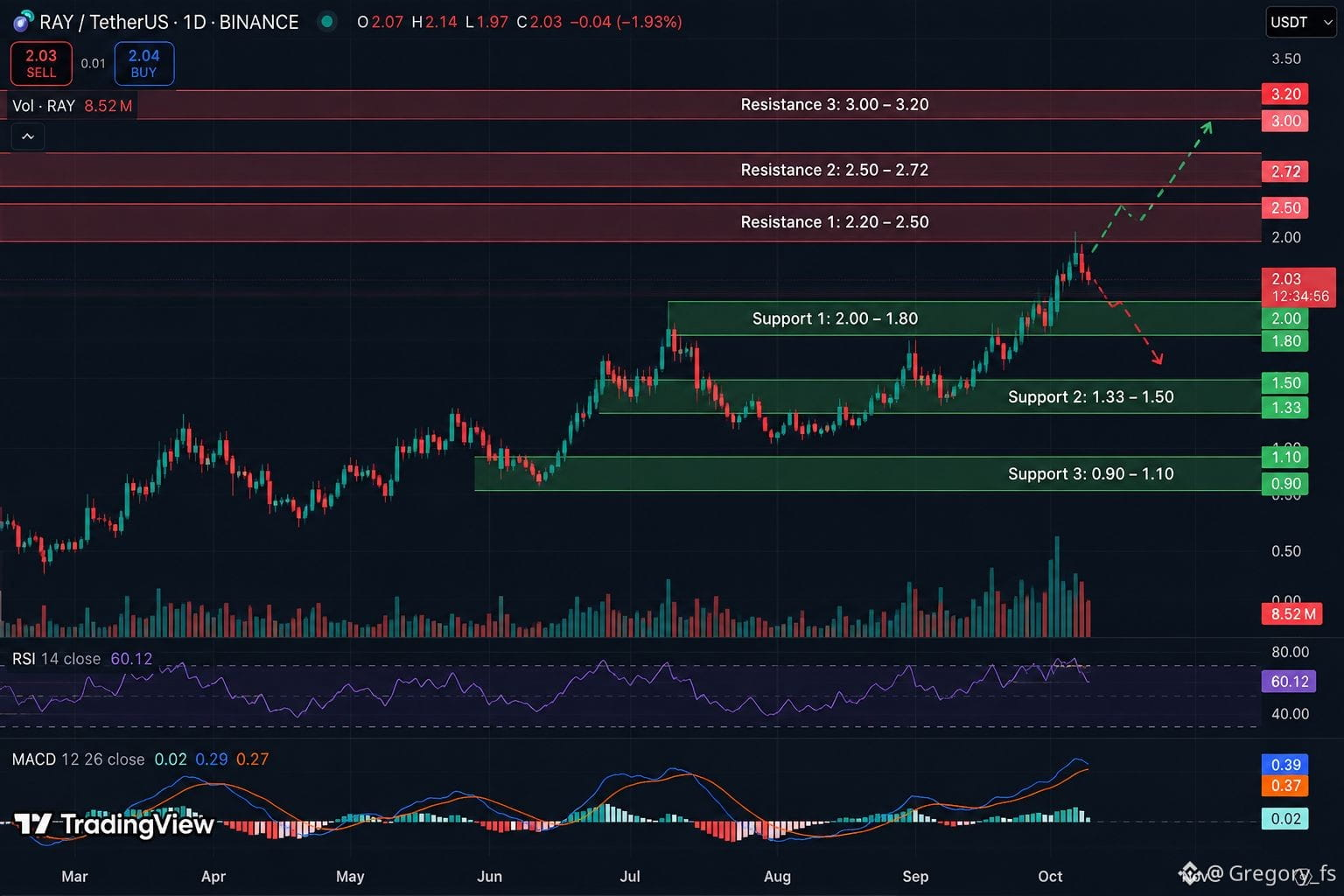
is currently trading around $2.0–2.1, showing strong momentum with significant gains over the past month. Raydium’s fundamentals remain supported by high TVL, growing trading activity, and RAY buybacks funded by protocol fees. Technically, $2.00 is an important support, while a break above $2.50 could open the way toward $3.00. For the next month, RAY could trade within a highly volatile $1.40–3.20 range, depending on overall crypto and Solana market conditions.
What do you think about it?
$USDT
#TrendingTopic
$RAY
is currently trading around $2.0–2.1, showing strong momentum with significant gains over the past month. Raydium’s fundamentals remain supported by high TVL, growing trading activity, and RAY buybacks funded by protocol fees. Technically, $2.00 is an important support, while a break above $2.50 could open the way toward $3.00. For the next month, RAY could trade within a highly volatile $1.40–3.20 range, depending on overall crypto and Solana market conditions.
What do you think about it?
$USDT
$RAY
is currently trading around $2.0–2.1, showing strong momentum with significant gains over the past month. Raydium’s fundamentals remain supported by high TVL, growing trading activity, and RAY buybacks funded by protocol fees. Technically, $2.00 is an important support, while a break above $2.50 could open the way toward $3.00. For the next month, RAY could trade within a highly volatile $1.40–3.20 range, depending on overall crypto and Solana market conditions.
What do you think about it?
$USDT
1
465
·
--
ສັນຍານກະທິງ
#TrendingTopic
Now it's YOUR turn,
What do you suggest I buy for the short to medium term?
I have around 700 $USDT .
Write in the comments.
#TrendingTopic
Now it's YOUR turn,
What do you suggest I buy for the short to medium term?
I have around 700 $USDT .
Write in the comments.
Now it's YOUR turn,
What do you suggest I buy for the short to medium term?
I have around 700 $USDT .
Write in the comments.
2
2
751
·
--
ສັນຍານກະທິງ
#TradingSignals
How are you feeling today?
What did I tell you last week?
This is just the beginning—take my word for it, the future is promising.
$RAY
$XRP
$DOT
#TradingSignals
How are you feeling today?
What did I tell you last week?
This is just the beginning—take my word for it, the future is promising.
$RAY
$XRP
$DOT
How are you feeling today?
What did I tell you last week?
This is just the beginning—take my word for it, the future is promising.
$RAY
$XRP
$DOT

3
765
·
--
ສັນຍານກະທິງ
#TrendingTopic
Imagine a hypothetical situation.
Who has more regrets:
The person who bought crypto and is now slightly in the red, or
The person who didn't buy and now—with the market rising—has nothing to gain?
Buy a little bit; you'll thank me later.
$APT
$DOT
$RAY
{spot}(RAYUSDT)
#TrendingTopic
Imagine a hypothetical situation.
Who has more regrets:
The person who bought crypto and is now slightly in the red, or
The person who didn't buy and now—with the market rising—has nothing to gain?
Buy a little bit; you'll thank me later.
$APT
$DOT
$RAY
Imagine a hypothetical situation.
Who has more regrets:
The person who bought crypto and is now slightly in the red, or
The person who didn't buy and now—with the market rising—has nothing to gain?
Buy a little bit; you'll thank me later.
$APT
$DOT
$RAY
Person 1
88%
Person 2
12%
8 ຄະແນນສຽງ • ປິດລົງຄະແນນສຽງ
2
2.2k
·
--
ສັນຍານກະທິງ
#TrendingTopic
Peekaboo
How are you feeling???
Personally, I feel like a BULL. How could I not, when all I see in front of me is only green... $RAY $DOT $INJ
#TrendingTopic
Peekaboo
How are you feeling???
Personally, I feel like a BULL. How could I not, when all I see in front of me is only green... $RAY $DOT $INJ
Peekaboo
How are you feeling???
Personally, I feel like a BULL. How could I not, when all I see in front of me is only green... $RAY $DOT $INJ

2
475
·
--
ສັນຍານກະທິງ
#TrendingTopic
#TradingCommunity
Are you confident?
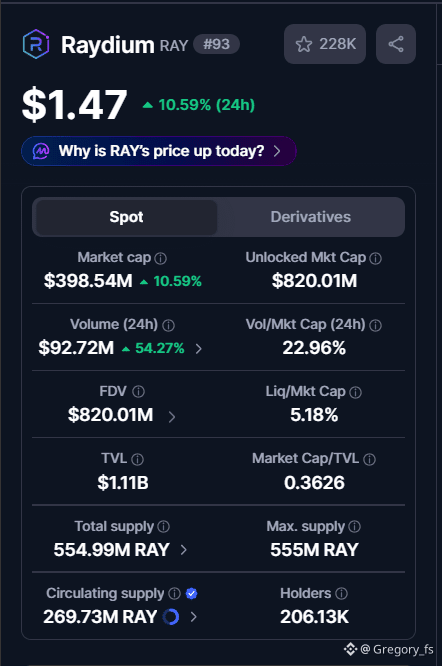
I certainly am—I really believe in RAY; it has potential, and the latest results give me even more confidence.
My portfolio consists largely of $RAY , alongside $DOT and $INJ . You can get in right now, too, so we can both enjoy the profits.
Are you with me?
#TrendingTopic
#TradingCommunity
Are you confident?
I certainly am—I really believe in RAY; it has potential, and the latest results give me even more confidence.
My portfolio consists largely of $RAY , alongside $DOT and $INJ . You can get in right now, too, so we can both enjoy the profits.
Are you with me?
#TradingCommunity
Are you confident?
I certainly am—I really believe in RAY; it has potential, and the latest results give me even more confidence.
My portfolio consists largely of $RAY , alongside $DOT and $INJ . You can get in right now, too, so we can both enjoy the profits.
Are you with me?
591
·
--
ສັນຍານກະທິງ
{spot}(TRUMPUSDT)
#TrendingTopic
The CLARITY Act will change how cryptocurrencies are regulated in the US.
Oversight of digital assets will be divided between the SEC and the CFTC, replacing the fragmented system that relied largely on lawsuits.
Donald Trump has accepted new ethics rules regarding cryptocurrencies.
Federal officials and their spouses will be required to sell significant crypto holdings or place them in a blind trust, and they will be barred from issuing or sponsoring digital assets while in office.
The agreement is the result of a long-standing political conflict.
The bill had been stalled for months due to White House opposition to the ethics restrictions, but the final text now allows state attorneys general to enforce these rules as well.
What do you think?
Kaboom Rico?
$USDT
{spot}(USDCUSDT)
#TrendingTopic
The CLARITY Act will change how cryptocurrencies are regulated in the US.
Oversight of digital assets will be divided between the SEC and the CFTC, replacing the fragmented system that relied largely on lawsuits.
Donald Trump has accepted new ethics rules regarding cryptocurrencies.
Federal officials and their spouses will be required to sell significant crypto holdings or place them in a blind trust, and they will be barred from issuing or sponsoring digital assets while in office.
The agreement is the result of a long-standing political conflict.
The bill had been stalled for months due to White House opposition to the ethics restrictions, but the final text now allows state attorneys general to enforce these rules as well.
What do you think?
Kaboom Rico?
$USDT
The CLARITY Act will change how cryptocurrencies are regulated in the US.
Oversight of digital assets will be divided between the SEC and the CFTC, replacing the fragmented system that relied largely on lawsuits.
Donald Trump has accepted new ethics rules regarding cryptocurrencies.
Federal officials and their spouses will be required to sell significant crypto holdings or place them in a blind trust, and they will be barred from issuing or sponsoring digital assets while in office.
The agreement is the result of a long-standing political conflict.
The bill had been stalled for months due to White House opposition to the ethics restrictions, but the final text now allows state attorneys general to enforce these rules as well.
What do you think?
Kaboom Rico?
$USDT
KABOOM
75%
NO kaboom
25%
12 ຄະແນນສຽງ • ປິດລົງຄະແນນສຽງ
3
2k
·
--
$ARB The trigger has been hit.
TP1--- 0.159
TP2--- 0.165
TP3--- 0.171
Show me the results in the comments.
{spot}(ARBUSDT)
$ARB The trigger has been hit.
TP1--- 0.159
TP2--- 0.165
TP3--- 0.171
Show me the results in the comments.
TP1--- 0.159
TP2--- 0.165
TP3--- 0.171
Show me the results in the comments.
2
79
·
--
ສັນຍານກະທິງ
$SYN The right moment—buy now.
TP1--- 0.145
TP2--- 0.149
TP3--- 0.155
{spot}(SYNUSDT)
$SYN The right moment—buy now.
TP1--- 0.145
TP2--- 0.149
TP3--- 0.155
TP1--- 0.145
TP2--- 0.149
TP3--- 0.155
57
·
--
ສັນຍານກະທິງ
#fedratewatch
I’m not sure if what’s coming next will be good or bad, but I know that taking risks always pays off, so some coins might just go "boom." That’s what everyone is waiting for.
$ETH $RAY $DOT
Just check it out.
#fedratewatch
I’m not sure if what’s coming next will be good or bad, but I know that taking risks always pays off, so some coins might just go "boom." That’s what everyone is waiting for.
$ETH $RAY $DOT
Just check it out.
I’m not sure if what’s coming next will be good or bad, but I know that taking risks always pays off, so some coins might just go "boom." That’s what everyone is waiting for.
$ETH $RAY $DOT
Just check it out.
1
1
394

ເຂົ້າສູ່ລະບົບເພື່ອສຳຫຼວດເນື້ອຫາເພີ່ມເຕີມ
ເຂົ້າຮ່ວມກຸ່ມຜູ້ໃຊ້ຄຣິບໂຕທົ່ວໂລກໃນ Binance Square.
⚡️ ໄດ້ຮັບຂໍ້ມູນຫຼ້າສຸດ ແລະ ທີ່ມີປະໂຫຍດກ່ຽວກັບຄຣິບໂຕ.
💬 ໄດ້ຮັບຄວາມໄວ້ວາງໃຈຈາກຕະຫຼາດແລກປ່ຽນຄຣິບໂຕທີ່ໃຫຍ່ທີ່ສຸດໃນໂລກ.
👍 ຄົ້ນຫາຂໍ້ມູນເຊີງເລິກທີ່ແທ້ຈາກນັກສ້າງທີ່ໄດ້ຮັບການຢືນຢັນ.
ອີເມວ / ເບີໂທລະສັບ
ຫົວຂໍ້ທີ່ກໍາລັງນິຍົມ
EarningsSeason
318,370 views
2,509 ກຳລັງສົນທະນາ
Earnings Season: Micron Q4 Earnings — Bullish or Bearish?
Binance Square Official
·389 ຖືກໃຈ
·837.2k views
BitwiseLaunchesFirstSpotNEARETF
27,939 views
539 ກຳລັງສົນທະນາ
USJobOpeningsFallToFiveMonthLow
33,545 views
417 ກຳລັງສົນທະນາ