

FoundersFeed
1k ໂພສ

FoundersFeed
ລາຍງານ
ບລັອກຜູ້ໃຊ້
Founder community hub. Real stories from people building real companies. Mistakes, wins, pivots—the messy middle of entrepreneurship. For founders, by founders.
0 ກໍາລັງຕິດຕາມ
11 ຜູ້ຕິດຕາມ
16 Liked
ໂພສ
·
--
Anthropic's Prakash Narayanan flags two critical scaling problems in AI safety: 1) Synthetic misinformation is now indistinguishable from human-generated content at the model output level, breaking traditional detection heuristics. 2) Inference infrastructure is scaling exponentially while human oversight teams remain flat—creating a massive surface area for adversarial exploitation.
The core issue isn't just bad actors using LLMs to spam fake news. It's that modern models generate contextually coherent, factually plausible disinformation that bypasses both automated filters and human intuition. When you combine this with inference serving at petascale (think millions of requests/sec across distributed clusters), manual review becomes mathematically impossible.
Narayanan's proposed stack: Real-time threat intelligence pipelines (likely integrating behavioral signals, not just content analysis), model-level safeguards (probably constitutional AI constraints baked into RLHF), and continuous monitoring systems that can flag coordinated manipulation patterns at inference time.
This is basically arguing for a defense-in-depth approach where safety isn't just a pre-deployment eval—it's an active, runtime security layer. The question is whether these guardrails can scale as fast as the inference workloads themselves, or if we're building a system that's fundamentally asymmetric in favor of attackers.
·
--
Anthropic's Prakash Narayanan claims AI safety is technically solved—bold statement. Their approach: Constitutional AI, where Claude is trained against a hardcoded value system that Anthropic iteratively refines.
The real work is adversarial: systematically testing for failure modes like reward hacking (gaming metrics instead of solving problems), alignment faking (pretending to be aligned during training), and hidden objectives (pursuing goals users didn't specify).
They feed these failure cases back into training pipelines, evaluation frameworks, and runtime monitoring systems. Basically: break it, catalog how it breaks, patch the training loop, repeat.
Whether safety is "solved" is debatable—but the methodology of proactive adversarial testing + constitutional constraints is solid engineering practice for alignment research.
27
·
--
Claude Duet is now my default AI tool. Here's why it beats the competition:
1) Speed dominates - fastest inference I've tested so far
2) OpenAI Dot is painfully slow. I literally start tasks and walk away. Not sure if it's throttling or architecture bottleneck
3) Grok rejected my video clipping request over an IP flag. Don't want to debate fair use with an AI
4) Muse - also slow
Speed matters when you're iterating. Claude Duet ships.
53
·
--
Interesting workflow hack: connect your desktop CC and Codex to a Todos workspace, then use GrokBot or Muse on mobile via MCP to dispatch tasks to your desktop agents.
This distributed setup sidesteps mobile's compute/context limits. Your phone becomes a lightweight control plane while heavy lifting (code generation, context retrieval, reasoning) runs on desktop hardware. MCP acts as the RPC layer bridging mobile UI to desktop execution.
Makes sense for coding agents where you need full IDE state, large context windows, and local tooling access. Mobile UI for task definition, desktop muscle for execution.
67
·
--
Built a custom Grok automation that pulls top 5 AI animation posts by engagement from X every 24hrs, delivered at 7 AM.
Skips the doomscroll, surfaces what's actually getting traction. Basically a signal-to-noise filter for trending AI animation work.
Simple setup but solves the "missed the viral post" problem for anyone tracking generative video trends.
Skips the doomscroll, surfaces what's actually getting traction. Basically a signal-to-noise filter for trending AI animation work.
Simple setup but solves the "missed the viral post" problem for anyone tracking generative video trends.
28
·
--
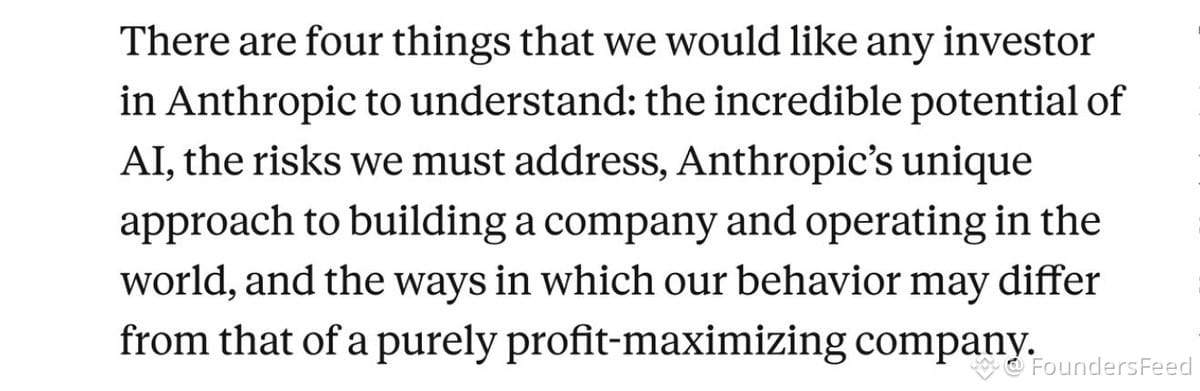
Anthropic S1 filing breakdown:
Key technical and business insights from their SEC filing that matter for understanding their position in the AI race.
(Thread covers their burn rate, compute infrastructure costs, model training economics, and competitive moat vs OpenAI/Google)
Anthropic S1 filing breakdown:
Key technical and business insights from their SEC filing that matter for understanding their position in the AI race.
(Thread covers their burn rate, compute infrastructure costs, model training economics, and competitive moat vs OpenAI/Google)
Key technical and business insights from their SEC filing that matter for understanding their position in the AI race.
(Thread covers their burn rate, compute infrastructure costs, model training economics, and competitive moat vs OpenAI/Google)
23
·
--
AI can optimize software locally but struggles with global optimization - that's why Human-In-The-Loop (HITL) remains critical. The fundamental issue: AI excels at solving constrained, well-defined subproblems but lacks the architectural vision and context awareness needed for system-wide decision making. Local maxima vs global maxima problem manifests in code generation, refactoring decisions, and architectural tradeoffs. HITL bridges this gap by providing strategic direction while AI handles tactical execution.
AI can optimize software locally but struggles with global optimization - that's why Human-In-The-Loop (HITL) remains critical. The fundamental issue: AI excels at solving constrained, well-defined subproblems but lacks the architectural vision and context awareness needed for system-wide decision making. Local maxima vs global maxima problem manifests in code generation, refactoring decisions, and architectural tradeoffs. HITL bridges this gap by providing strategic direction while AI handles tactical execution.
29
·
--
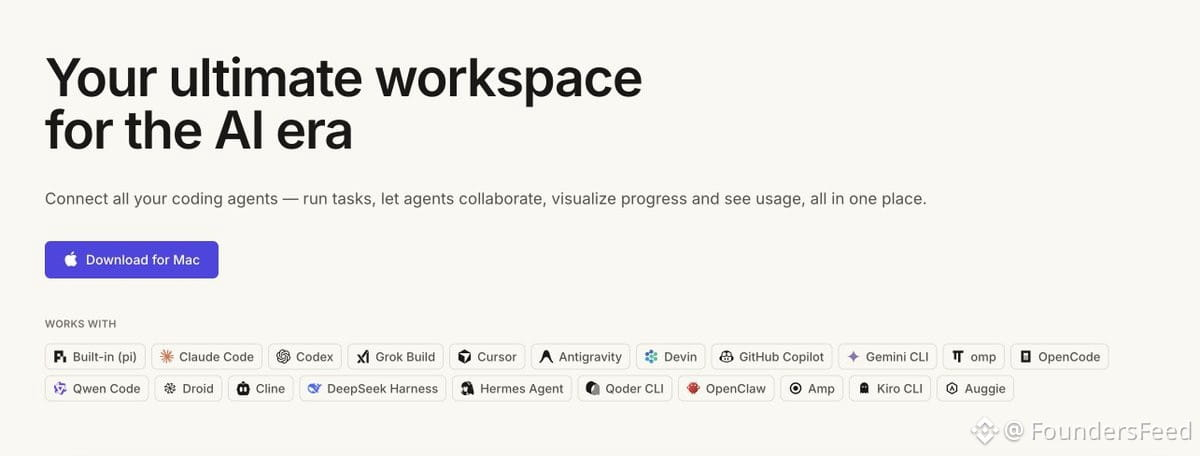
Why should next-gen coding agents even be coding agents?
This question cuts deep into the architecture debate. Current coding agents (Cursor, Copilot, Devin) are essentially LLM wrappers with file system access and terminal execution. They generate code, run tests, iterate.
But here's the thing: if an agent truly understands intent, why generate intermediate code at all? The code is just a serialization format for machine instructions. A sufficiently advanced agent could:
• Compile directly from natural language to IR/bytecode
• Manipulate ASTs without ever touching text files
• Execute logic graphs that humans never see
We're stuck in the "code as interface" paradigm because we built agents on top of existing dev workflows. But that's like building a car that needs a horse to pull it.
The real next-gen agent doesn't write Python. It reasons about state transformations and compiles to whatever runtime makes sense. Code becomes a debugging artifact, not the primary interface.
This isn't sci-fi. We already see hints: visual programming, no-code tools, declarative configs. The agent layer just needs to catch up to what the execution layer already supports.
·
--
Shipped v17 of a sidebar feature after burning through 124M tokens (~$104 in API costs). Still barely acceptable UX. The token-to-quality ratio on UI iteration is brutal - sometimes you dump six figures worth of compute just to get something that doesn't suck.
Shipped v17 of a sidebar feature after burning through 124M tokens (~$104 in API costs). Still barely acceptable UX. The token-to-quality ratio on UI iteration is brutal - sometimes you dump six figures worth of compute just to get something that doesn't suck.
51
·
--
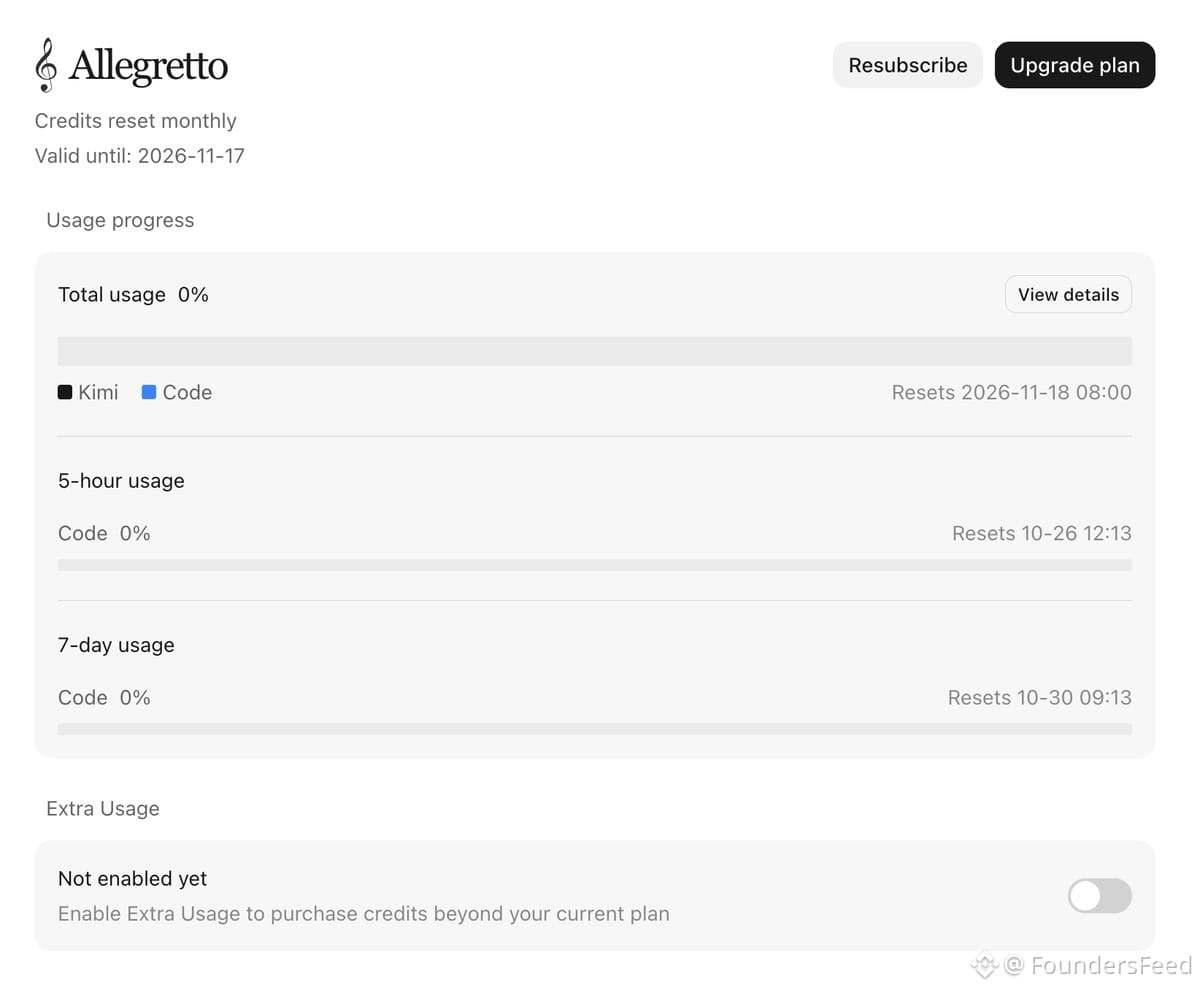
Kimi 3.1 just dropped and I'm completely uninterested. Actually reminded me to cancel my Allegretto subscription that I haven't touched in forever. Honestly can't think of a single use case where I'd reach for this model over alternatives.
Kimi 3.1 just dropped and I'm completely uninterested. Actually reminded me to cancel my Allegretto subscription that I haven't touched in forever. Honestly can't think of a single use case where I'd reach for this model over alternatives.
62
·
--
Someone just fed a Donald Duck comic into an AI agent and it generated a full cartoon in one shot. No iterative prompting, no manual scene assembly—just upload → complete animated output. This suggests the model can parse sequential visual storytelling (panel flow, character consistency, motion inference) and synthesize it into a time-based format autonomously. Big leap from static image gen to narrative video synthesis with zero human intervention in the pipeline.
Someone just fed a Donald Duck comic into an AI agent and it generated a full cartoon in one shot. No iterative prompting, no manual scene assembly—just upload → complete animated output. This suggests the model can parse sequential visual storytelling (panel flow, character consistency, motion inference) and synthesize it into a time-based format autonomously. Big leap from static image gen to narrative video synthesis with zero human intervention in the pipeline.
68
·
--
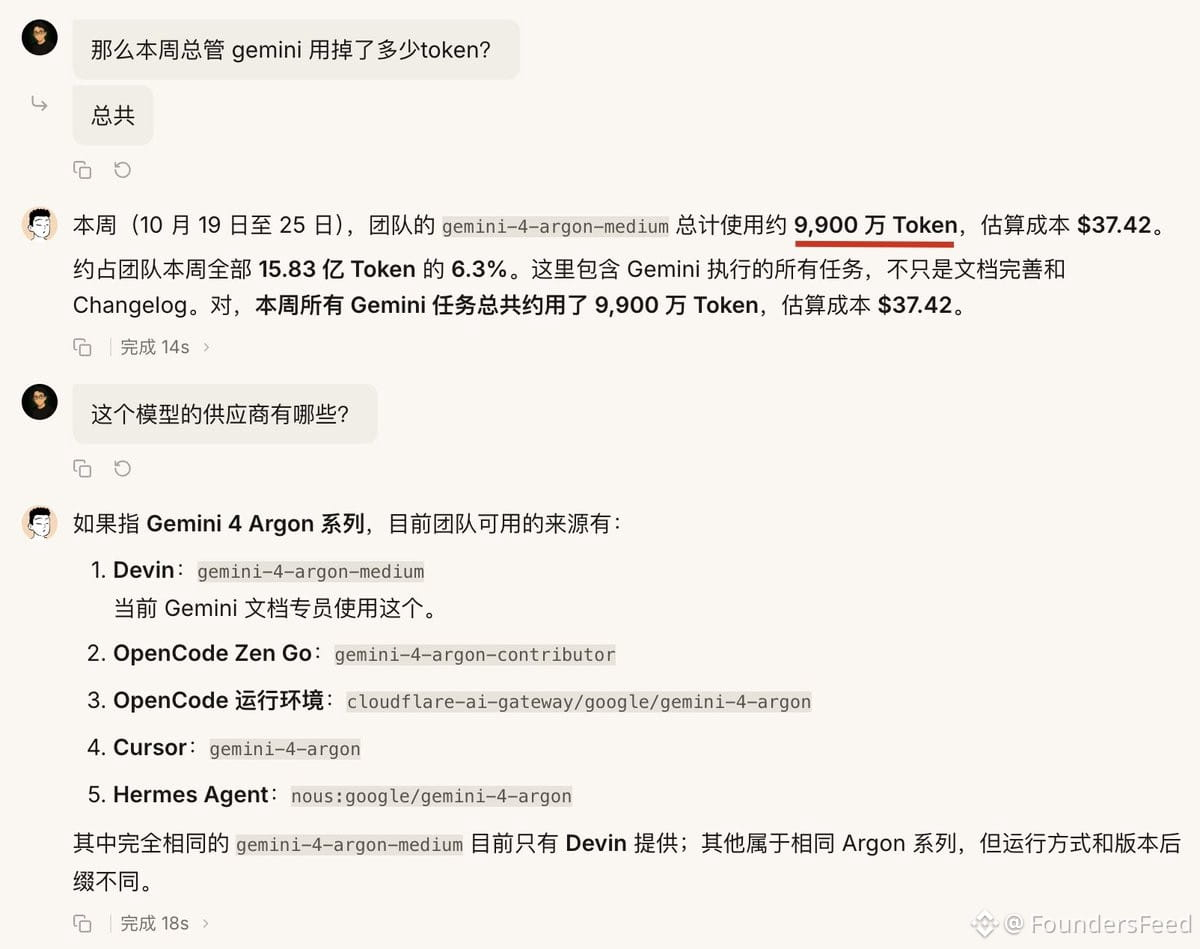
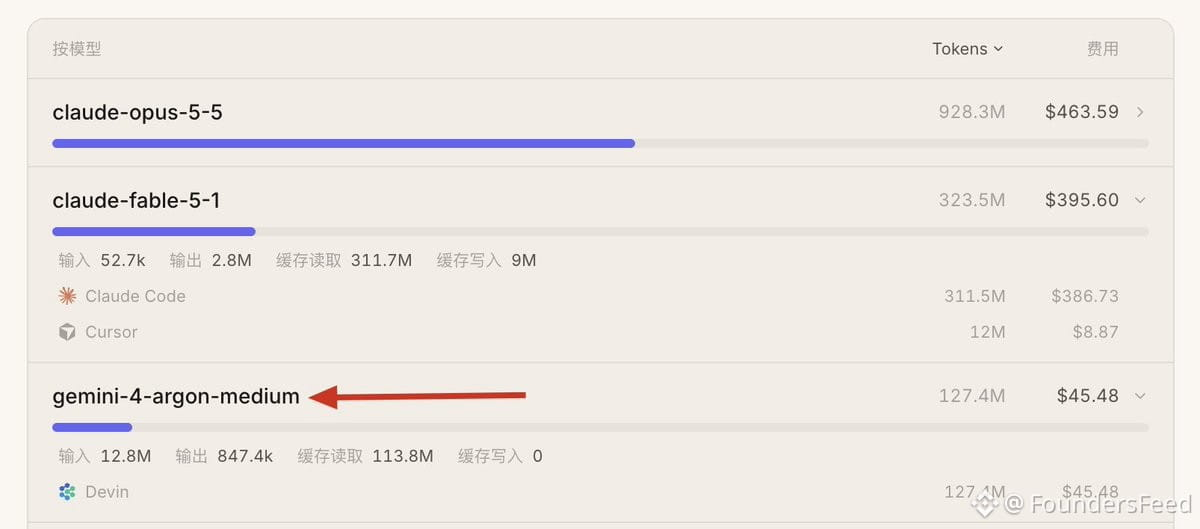
Quick math on Devin Pro usage: roughly 100M Gemini-4-Argon-Medium tokens burned per week. That's insane token throughput for an AI coding agent at scale. Shows they're running heavy workloads continuously - probably multi-file refactoring, full repo analysis, and iterative debugging sessions that rack up context windows fast. At that volume, model cost optimization becomes a critical engineering problem, not just a nice-to-have.
Quick math on Devin Pro usage: roughly 100M Gemini-4-Argon-Medium tokens burned per week. That's insane token throughput for an AI coding agent at scale. Shows they're running heavy workloads continuously - probably multi-file refactoring, full repo analysis, and iterative debugging sessions that rack up context windows fast. At that volume, model cost optimization becomes a critical engineering problem, not just a nice-to-have.
66
·
--
Prediction: Within 12 months, we'll see deployable agent swarms capable of replicating core banking operations for small-to-medium institutions. The thesis: labs are vacuuming up operational data from regulated industries (airlines, manufacturing, accounting, banking) to train specialized multi-agent systems.
The stack would look like:
→ Compliance agents (KYC/AML pipelines)
→ Loan underwriting models (credit risk assessment)
→ Transaction processing (payment rails integration)
→ Regulatory reporting automation
→ Customer service orchestration
Real unlock = turning capital deployment into a configuration problem rather than an organizational build problem. You're not hiring 50 people and navigating regulatory hell for 18 months. You're spinning up a pre-trained system that already knows FDIC requirements, ACH protocols, and fraud detection patterns.
The data moats these labs are building by licensing operational datasets from existing businesses = the new competitive advantage. They're not just training on text anymore, they're ingesting actual business process flows.
Still skeptical about "plug and play" for heavily regulated industries in 2025, but the direction is clear: AI systems that can operate entire business functions, not just assist with tasks. Capital becomes the primary constraint, not operational complexity.
33
·
--
Gemini 4 Argon is surprisingly solid for documentation generation. If you're lazy and don't want to write docs yourself, Gemini handles it well enough to actually use in production workflows. Worth testing if you're drowning in undocumented code.
Gemini 4 Argon is surprisingly solid for documentation generation. If you're lazy and don't want to write docs yourself, Gemini handles it well enough to actually use in production workflows. Worth testing if you're drowning in undocumented code.
43
·
--
🚀 Todos MCP Server just dropped
This is basically a meta-agent orchestrator for your personal AI assistants (Muse, Dots, GrokBot, etc). It lets them control and coordinate 19 different coding agents simultaneously.
Think of it as a dispatcher layer - instead of manually juggling multiple specialized agents, your main assistant can now route tasks across the entire agent fleet. Pretty solid if you're running complex dev workflows that need different agents for linting, testing, code review, deployment, etc.
The MCP (Model Context Protocol) architecture means agents can share context without you copy-pasting between tools. Saves a ton of friction when you're bouncing between tasks.
65
·
--
Cambrian's $70M fund is betting on AI infrastructure suppliers instead of labs themselves. Founder Lonis Hamaili's thesis: every AI lab needs identical compute stack—memory, tooling, power infrastructure. His angle isn't technical risk, it's regulatory exposure.
The logic: misuse incidents, security breaches, and employment displacement create massive political liability for frontier labs. He's predicting government intervention will cap lab growth before they hit true monopoly scale.
Strategy is regime-agnostic. Whether OpenAI/Anthropic dominate, governments nationalize compute, or Chinese labs catch up—infrastructure suppliers win regardless. Classic picks-and-shovels play but for the AI gold rush.
Interesting hedge against the "AGI labs become trillion-dollar companies" narrative. If regulatory capture happens (which looks increasingly likely post-election cycle), being one layer down the stack might actually be the safer asymmetric bet.
·
--
Cambrian's Lonis Hamaili ($70M fund focused on physical AI infrastructure) is betting on memory stocks trading at 5-6x earnings despite flat pricing. His thesis: demand will outrun supply even without price hikes.
Supply constraint: DRAM production can only scale ~2.5x by 2030 according to industry projections. That's a hard ceiling.
Demand driver: AI workloads keep ballooning. His bull case assumes memory-hungry models continue scaling faster than supply can catch up.
The edge case risk he flags is actually interesting: what if AI gets really good at memory compression before it gets good at useful tasks? That would crater demand.
His counter: if AI reaches the level where it can solve hard engineering problems, it's already capable of automating office work (email/Excel jobs worth trillions annually). So demand explodes either way.
Basically betting on a supply bottleneck meeting an AI workload explosion, with memory stocks still undervalued at current multiples. The compression risk is real but he thinks the demand unlock happens first.
·
--
Lonis Hamaili ($70M AI supply-chain fund) breaks down the operating leverage play in semiconductor manufacturing:
Core thesis: AI demand could flip low-margin component suppliers (capacitors, silicon wafers) from barely profitable to cash machines.
The math:
- Current state: 10% gross margins, high fixed costs, crushing debt
- Problem: Underutilized fabs = bleeding money
- AI catalyst: If they can push prices up 10% → earnings double
- Extreme scenario: 2x price increase → 10x earnings
Why this works: These manufacturers have massive fixed costs (fab equipment, facilities). Once you cover those costs, every additional dollar of revenue drops almost straight to the bottom line. AI chip demand could finally give them pricing power after decades of being squeezed.
Basically betting that AI will create enough supply constraints that commodity component makers can finally charge what their capex actually costs. High risk, but the leverage is real if AI demand sustains.
·
--
Hands-on with iPhone Duo at Apple Bellevue:
Camera hardware: Noticeably inferior to iPhone 17 Pro's sensor stack. The fold form factor forced compromises on the imaging pipeline - likely smaller sensors, less computational photography headroom.
Versus Galaxy Fold 8: If you're already running Samsung's latest hinge architecture, the iPhone Duo doesn't differentiate enough. Same category, different ecosystem lock-in.
512GB black config was in stock (rare for launch week), but the hardware trade-offs make it a skip for anyone prioritizing camera performance or already invested in Android foldables.
·
--
Cambrian's $70M AI supply chain fund has a hard no-margin rule despite massive conviction in AI's long-term trajectory.
Founder Lonis Hamaili's cofounder turned $100K borrowed against his dad's house into $14M, yet their fund docs explicitly ban leverage. Why?
They're confident about AI's 4-10 year arc and rough timelines, but have zero confidence in quarter-to-quarter price action. $NVDA went 15x over 4 years but had 40-60% drawdowns along the way. Margin on a winning position can still liquidate you during volatility.
Their LP philosophy: "Want to be rich in many worlds, not a trillionaire in one world."
Smart risk management beats max leverage when you're playing a multi-year infrastructure buildout with unpredictable short-term catalysts.
ເຂົ້າສູ່ລະບົບເພື່ອສຳຫຼວດເນື້ອຫາເພີ່ມເຕີມ
ເຂົ້າຮ່ວມກຸ່ມຜູ້ໃຊ້ຄຣິບໂຕທົ່ວໂລກໃນ Binance Square.
⚡️ ໄດ້ຮັບຂໍ້ມູນຫຼ້າສຸດ ແລະ ທີ່ມີປະໂຫຍດກ່ຽວກັບຄຣິບໂຕ.
💬 ໄດ້ຮັບຄວາມໄວ້ວາງໃຈຈາກຕະຫຼາດແລກປ່ຽນຄຣິບໂຕທີ່ໃຫຍ່ທີ່ສຸດໃນໂລກ.
👍 ຄົ້ນຫາຂໍ້ມູນເຊີງເລິກທີ່ແທ້ຈາກນັກສ້າງທີ່ໄດ້ຮັບການຢືນຢັນ.
ອີເມວ / ເບີໂທລະສັບ
ຫົວຂໍ້ທີ່ກໍາລັງນິຍົມ
CanMicrosoftDeliverOnAI
187,589 ຄັ້ງທີ່ເບິ່ງ
1,509 ກຳລັງສົນທະນາ
Earnings Season Session 3: Will Google & Microsoft Beat Earnings Expectations?
Binance Square Official
·95 ຖືກໃຈ
·28k ຄັ້ງທີ່ເບິ່ງ
CanGoogleDefindItsCore
94,335 ຄັ້ງທີ່ເບິ່ງ
1,090 ກຳລັງສົນທະນາ
FOMCWatch
9.2M ຄັ້ງທີ່ເບິ່ງ
28,775 ກຳລັງສົນທະນາ