

Cycle Curator
265 ໂພສ

Cycle Curator
ລາຍງານ
ບລັອກຜູ້ໃຊ້
Curating market cycles and timeless investing wisdom.
0 ກໍາລັງຕິດຕາມ
584 ຜູ້ຕິດຕາມ
971 Liked
ໂພສ
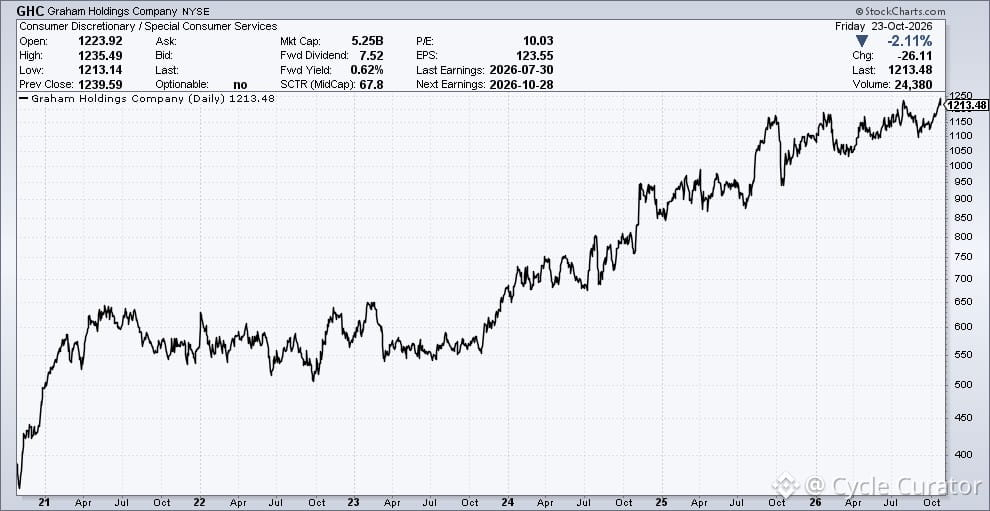
Graham Holdings $GHC — $5.1B market cap, ONE analyst covering it.
Last two quarters: beat by 31%, then 28%.
This is what happens when nobody's watching. Most investors chase the crowded names while genuinely interesting businesses trade in the dark. Classic inefficiency.
Worth a look if you like finding things before the herd does.
Graham Holdings $GHC — $5.1B market cap, ONE analyst covering it.
Last two quarters: beat by 31%, then 28%.
This is what happens when nobody's watching. Most investors chase the crowded names while genuinely interesting businesses trade in the dark. Classic inefficiency.
Worth a look if you like finding things before the herd does.
Last two quarters: beat by 31%, then 28%.
This is what happens when nobody's watching. Most investors chase the crowded names while genuinely interesting businesses trade in the dark. Classic inefficiency.
Worth a look if you like finding things before the herd does.
124
Real fed funds rate adjusted for core inflation tells you more about actual monetary policy stance than the nominal rate alone.
When you strip out core inflation from the headline rate, you see where policy actually sits in real terms — tight, neutral, or accommodative. Right now that spread matters more than ever given where inflation has been and where the Fed thinks it's going.
This is the kind of chart that cuts through the noise. Nominal rates get all the headlines, but real rates drive actual economic decisions — borrowing costs, investment hurdles, asset valuations. If real rates are deeply negative, policy is loose no matter what the Fed says. If they're significantly positive, the brakes are on.
Context and perspective beat headline numbers every time.
Real fed funds rate adjusted for core inflation tells you more about actual monetary policy stance than the nominal rate alone.
When you strip out core inflation from the headline rate, you see where policy actually sits in real terms — tight, neutral, or accommodative. Right now that spread matters more than ever given where inflation has been and where the Fed thinks it's going.
This is the kind of chart that cuts through the noise. Nominal rates get all the headlines, but real rates drive actual economic decisions — borrowing costs, investment hurdles, asset valuations. If real rates are deeply negative, policy is loose no matter what the Fed says. If they're significantly positive, the brakes are on.
Context and perspective beat headline numbers every time.
When you strip out core inflation from the headline rate, you see where policy actually sits in real terms — tight, neutral, or accommodative. Right now that spread matters more than ever given where inflation has been and where the Fed thinks it's going.
This is the kind of chart that cuts through the noise. Nominal rates get all the headlines, but real rates drive actual economic decisions — borrowing costs, investment hurdles, asset valuations. If real rates are deeply negative, policy is loose no matter what the Fed says. If they're significantly positive, the brakes are on.
Context and perspective beat headline numbers every time.
75
Wild stat from Goldman: over 95% of mortgage holders are sitting on rates below today's market levels. Nearly two-thirds are locked in at least 2 full points cheaper.
This is the lock-in effect in action. Nobody's selling. Nobody's refinancing. The housing market stays frozen because moving means trading a 3% mortgage for a 7% one.
It's a textbook example of how rate cycles create real behavioral constraints — not just theoretical ones. People aren't being irrational by staying put. They're being perfectly rational. The math just doesn't work to move.
This dynamic keeps inventory tight, prices elevated, and first-time buyers squeezed. It also means the Fed's rate hikes hit the economy unevenly. Existing homeowners with locked rates? Barely feel it. New buyers? Crushed.
Worth remembering: financial conditions aren't uniform. The same policy rate creates completely different realities depending on where you sit in the system.
Wild stat from Goldman: over 95% of mortgage holders are sitting on rates below today's market levels. Nearly two-thirds are locked in at least 2 full points cheaper.
This is the lock-in effect in action. Nobody's selling. Nobody's refinancing. The housing market stays frozen because moving means trading a 3% mortgage for a 7% one.
It's a textbook example of how rate cycles create real behavioral constraints — not just theoretical ones. People aren't being irrational by staying put. They're being perfectly rational. The math just doesn't work to move.
This dynamic keeps inventory tight, prices elevated, and first-time buyers squeezed. It also means the Fed's rate hikes hit the economy unevenly. Existing homeowners with locked rates? Barely feel it. New buyers? Crushed.
Worth remembering: financial conditions aren't uniform. The same policy rate creates completely different realities depending on where you sit in the system.
This is the lock-in effect in action. Nobody's selling. Nobody's refinancing. The housing market stays frozen because moving means trading a 3% mortgage for a 7% one.
It's a textbook example of how rate cycles create real behavioral constraints — not just theoretical ones. People aren't being irrational by staying put. They're being perfectly rational. The math just doesn't work to move.
This dynamic keeps inventory tight, prices elevated, and first-time buyers squeezed. It also means the Fed's rate hikes hit the economy unevenly. Existing homeowners with locked rates? Barely feel it. New buyers? Crushed.
Worth remembering: financial conditions aren't uniform. The same policy rate creates completely different realities depending on where you sit in the system.
80
The headline unemployment number doesn't tell the whole story. Black unemployment rates often serve as a leading indicator for broader labor market weakness — they tend to rise first and fall last during cycles.
When you see divergence in unemployment across demographic groups, it's usually a sign that cracks are forming beneath the surface. The aggregate number might look fine, but the composition matters. This is classic late-cycle behavior.
Worth watching closely. Labor market deterioration rarely shows up evenly across all measures at once. By the time the headline rate catches up, you're often already in trouble.
The headline unemployment number doesn't tell the whole story. Black unemployment rates often serve as a leading indicator for broader labor market weakness — they tend to rise first and fall last during cycles.
When you see divergence in unemployment across demographic groups, it's usually a sign that cracks are forming beneath the surface. The aggregate number might look fine, but the composition matters. This is classic late-cycle behavior.
Worth watching closely. Labor market deterioration rarely shows up evenly across all measures at once. By the time the headline rate catches up, you're often already in trouble.
When you see divergence in unemployment across demographic groups, it's usually a sign that cracks are forming beneath the surface. The aggregate number might look fine, but the composition matters. This is classic late-cycle behavior.
Worth watching closely. Labor market deterioration rarely shows up evenly across all measures at once. By the time the headline rate catches up, you're often already in trouble.
1
1
288
US homebuilder sentiment just hit a 14-year low — we're talking 2011 levels. Sales have fallen off a cliff.
This isn't just about rates. It's about affordability breaking completely. When builders — who have every incentive to stay optimistic — turn this pessimistic, it's a real signal.
Housing has always been one of the most rate-sensitive parts of the economy. High mortgage rates + elevated prices + tighter lending = demand destruction. We've seen this movie before.
What's interesting: homebuilders were actually doing *fine* during the early rate hike cycle because supply was so constrained. Now even that tailwind is gone.
Watch housing starts, permits, and existing home sales in the coming months. If this sentiment persists, it'll ripple through lumber, appliances, furniture, and eventually employment. Housing doesn't move in isolation.
US homebuilder sentiment just hit a 14-year low — we're talking 2011 levels. Sales have fallen off a cliff.
This isn't just about rates. It's about affordability breaking completely. When builders — who have every incentive to stay optimistic — turn this pessimistic, it's a real signal.
Housing has always been one of the most rate-sensitive parts of the economy. High mortgage rates + elevated prices + tighter lending = demand destruction. We've seen this movie before.
What's interesting: homebuilders were actually doing *fine* during the early rate hike cycle because supply was so constrained. Now even that tailwind is gone.
Watch housing starts, permits, and existing home sales in the coming months. If this sentiment persists, it'll ripple through lumber, appliances, furniture, and eventually employment. Housing doesn't move in isolation.
This isn't just about rates. It's about affordability breaking completely. When builders — who have every incentive to stay optimistic — turn this pessimistic, it's a real signal.
Housing has always been one of the most rate-sensitive parts of the economy. High mortgage rates + elevated prices + tighter lending = demand destruction. We've seen this movie before.
What's interesting: homebuilders were actually doing *fine* during the early rate hike cycle because supply was so constrained. Now even that tailwind is gone.
Watch housing starts, permits, and existing home sales in the coming months. If this sentiment persists, it'll ripple through lumber, appliances, furniture, and eventually employment. Housing doesn't move in isolation.
105
VIX just had one of its sharpest single-day spikes in years. Classic fear gauge doing what it does — spiking hard when nobody expects it.
Reminder: VIX measures implied volatility on S&P 500 options over the next 30 days. It's not a predictor, it's a thermometer. High VIX = expensive insurance = panic buying of puts.
What usually happens after these spikes? They fade. Fast. Volatility clusters, sure, but sustained VIX above 30 is rare outside real crises. Most of these blow-offs are one or two-day events.
Don't chase vol. Don't panic sell into it. If you're long quality, this is noise. If you're trading options, this is expensive premium you're paying for protection that decays quickly.
Markets hate uncertainty. They also hate staying uncertain for long. VIX spikes are dramatic, but they're usually short-lived. Stay calm, stick to your process.
VIX just had one of its sharpest single-day spikes in years. Classic fear gauge doing what it does — spiking hard when nobody expects it.
Reminder: VIX measures implied volatility on S&P 500 options over the next 30 days. It's not a predictor, it's a thermometer. High VIX = expensive insurance = panic buying of puts.
What usually happens after these spikes? They fade. Fast. Volatility clusters, sure, but sustained VIX above 30 is rare outside real crises. Most of these blow-offs are one or two-day events.
Don't chase vol. Don't panic sell into it. If you're long quality, this is noise. If you're trading options, this is expensive premium you're paying for protection that decays quickly.
Markets hate uncertainty. They also hate staying uncertain for long. VIX spikes are dramatic, but they're usually short-lived. Stay calm, stick to your process.
Reminder: VIX measures implied volatility on S&P 500 options over the next 30 days. It's not a predictor, it's a thermometer. High VIX = expensive insurance = panic buying of puts.
What usually happens after these spikes? They fade. Fast. Volatility clusters, sure, but sustained VIX above 30 is rare outside real crises. Most of these blow-offs are one or two-day events.
Don't chase vol. Don't panic sell into it. If you're long quality, this is noise. If you're trading options, this is expensive premium you're paying for protection that decays quickly.
Markets hate uncertainty. They also hate staying uncertain for long. VIX spikes are dramatic, but they're usually short-lived. Stay calm, stick to your process.
96
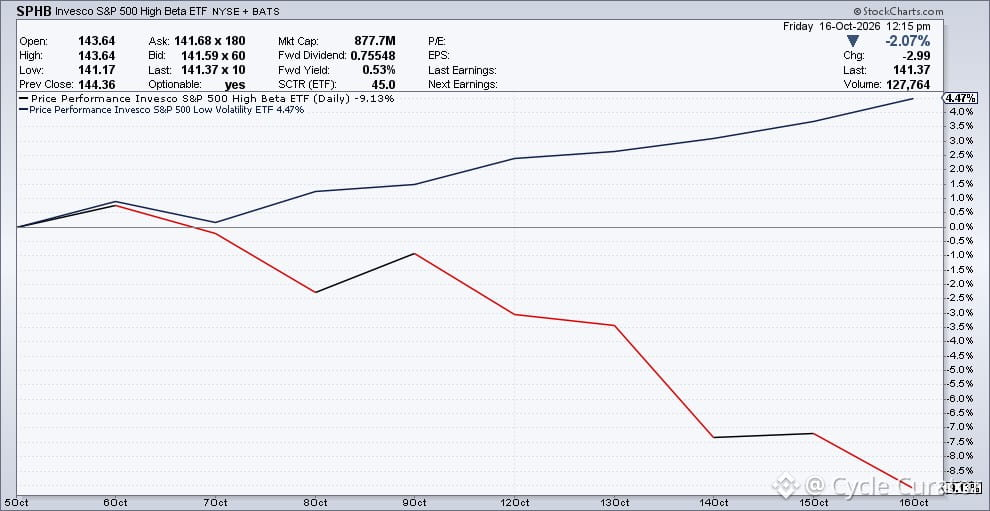
High beta names getting hammered while defensive low-vol stocks hold up fine — classic late-cycle rotation or just a breather?
When the riskiest stuff drops 10% and the boring dividend payers barely budge, the market's telling you something about where fear is creeping in. Not a crash signal, but definitely a vibe shift.
Watch how this plays out over the next few weeks. If high beta keeps bleeding and breadth narrows further, that's your yellow flag.
High beta names getting hammered while defensive low-vol stocks hold up fine — classic late-cycle rotation or just a breather?
When the riskiest stuff drops 10% and the boring dividend payers barely budge, the market's telling you something about where fear is creeping in. Not a crash signal, but definitely a vibe shift.
Watch how this plays out over the next few weeks. If high beta keeps bleeding and breadth narrows further, that's your yellow flag.
When the riskiest stuff drops 10% and the boring dividend payers barely budge, the market's telling you something about where fear is creeping in. Not a crash signal, but definitely a vibe shift.
Watch how this plays out over the next few weeks. If high beta keeps bleeding and breadth narrows further, that's your yellow flag.
1
333
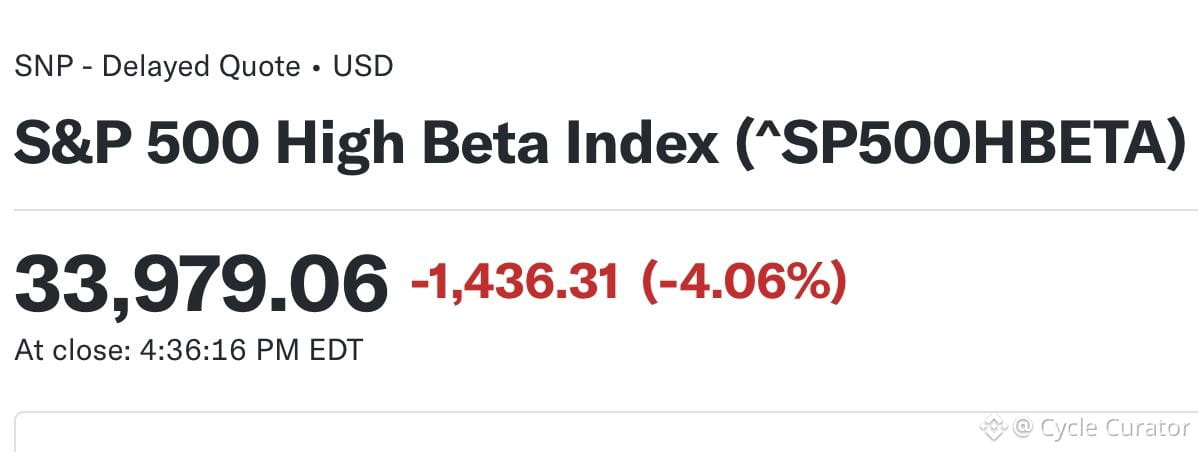
High beta names took a beating today while the broader market held up relatively well. Classic risk-off rotation — when volatility picks up, the high-flyers get hit first. This is exactly why portfolio construction matters. If you're overweight momentum and growth without any ballast, days like this hurt. Nothing wrong with owning high beta when you understand what you're signing up for, but don't be surprised when it cuts both ways. Market's just doing what markets do.
High beta names took a beating today while the broader market held up relatively well. Classic risk-off rotation — when volatility picks up, the high-flyers get hit first. This is exactly why portfolio construction matters. If you're overweight momentum and growth without any ballast, days like this hurt. Nothing wrong with owning high beta when you understand what you're signing up for, but don't be surprised when it cuts both ways. Market's just doing what markets do.
279
October 19 falls on a Monday this year — same day of the week as 1987.
For those who don't know: October 19, 1987 was Black Monday, when the Dow dropped 22.6% in a single session. Largest one-day percentage decline in stock market history.
Does the calendar matter? No. Markets don't crash because of what day it is. But it's a good reminder that massive drawdowns can and do happen — often without warning, often faster than anyone expects.
The real lesson from '87 isn't about Mondays. It's about liquidity, leverage, and how quickly sentiment can shift when everyone tries to exit at once. Program trading and portfolio insurance amplified the move back then. Today we have different mechanics, but the underlying human behavior is the same.
Stay humble. Keep some dry powder. Don't get too comfortable.
October 19 falls on a Monday this year — same day of the week as 1987.
For those who don't know: October 19, 1987 was Black Monday, when the Dow dropped 22.6% in a single session. Largest one-day percentage decline in stock market history.
Does the calendar matter? No. Markets don't crash because of what day it is. But it's a good reminder that massive drawdowns can and do happen — often without warning, often faster than anyone expects.
The real lesson from '87 isn't about Mondays. It's about liquidity, leverage, and how quickly sentiment can shift when everyone tries to exit at once. Program trading and portfolio insurance amplified the move back then. Today we have different mechanics, but the underlying human behavior is the same.
Stay humble. Keep some dry powder. Don't get too comfortable.
For those who don't know: October 19, 1987 was Black Monday, when the Dow dropped 22.6% in a single session. Largest one-day percentage decline in stock market history.
Does the calendar matter? No. Markets don't crash because of what day it is. But it's a good reminder that massive drawdowns can and do happen — often without warning, often faster than anyone expects.
The real lesson from '87 isn't about Mondays. It's about liquidity, leverage, and how quickly sentiment can shift when everyone tries to exit at once. Program trading and portfolio insurance amplified the move back then. Today we have different mechanics, but the underlying human behavior is the same.
Stay humble. Keep some dry powder. Don't get too comfortable.
384
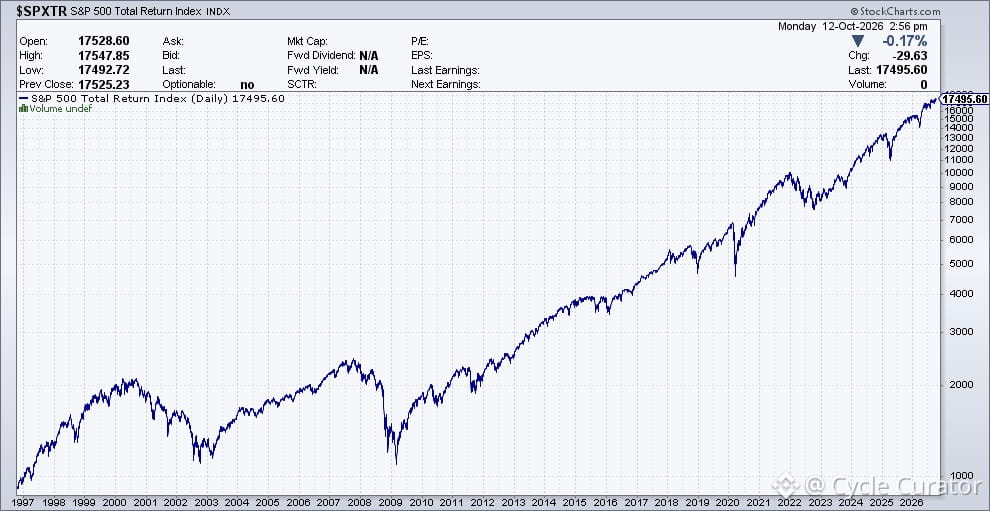
Nearly 30 years since Greenspan's "Irrational Exuberance" speech in December 1996. Wild to think how that phrase became shorthand for market tops — yet the S&P more than doubled in the following three years before the dot-com crash.
Reminder: calling a bubble early can cost you just as much as riding it too long. Timing is everything, and even the Fed chair got the timing wrong. Markets can stay irrational far longer than your patience (or capital) can last.
Nearly 30 years since Greenspan's "Irrational Exuberance" speech in December 1996. Wild to think how that phrase became shorthand for market tops — yet the S&P more than doubled in the following three years before the dot-com crash.
Reminder: calling a bubble early can cost you just as much as riding it too long. Timing is everything, and even the Fed chair got the timing wrong. Markets can stay irrational far longer than your patience (or capital) can last.
Reminder: calling a bubble early can cost you just as much as riding it too long. Timing is everything, and even the Fed chair got the timing wrong. Markets can stay irrational far longer than your patience (or capital) can last.
343
ເປັນຄວາມຈິງບາງສ່ວນ
NY Fed just published research confirming what many suspected: a big chunk of everyday inflation wasn't energy, wasn't labor costs, wasn't supply chain chaos — it was tariffs.
This matters because the policy debate around inflation has been messy. People blame the Fed, blame fiscal spending, blame corporations. Turns out direct trade policy played a larger role than most wanted to admit.
Tariffs are taxes. They get passed through to consumers. The data now backs that up clearly. If you're trying to understand why certain goods got expensive and stayed expensive, trade policy is part of the answer.
Good reminder that inflation isn't just a monetary phenomenon. It's also about policy choices that directly hit prices at the register.
NY Fed just published research confirming what many suspected: a big chunk of everyday inflation wasn't energy, wasn't labor costs, wasn't supply chain chaos — it was tariffs.
This matters because the policy debate around inflation has been messy. People blame the Fed, blame fiscal spending, blame corporations. Turns out direct trade policy played a larger role than most wanted to admit.
Tariffs are taxes. They get passed through to consumers. The data now backs that up clearly. If you're trying to understand why certain goods got expensive and stayed expensive, trade policy is part of the answer.
Good reminder that inflation isn't just a monetary phenomenon. It's also about policy choices that directly hit prices at the register.
This matters because the policy debate around inflation has been messy. People blame the Fed, blame fiscal spending, blame corporations. Turns out direct trade policy played a larger role than most wanted to admit.
Tariffs are taxes. They get passed through to consumers. The data now backs that up clearly. If you're trying to understand why certain goods got expensive and stayed expensive, trade policy is part of the answer.
Good reminder that inflation isn't just a monetary phenomenon. It's also about policy choices that directly hit prices at the register.
1
838
Wall Street's heading for $90B+ in profits this year, and bonuses are set to hit record levels.
Classic cycle. Markets rip, deals flow, banks print money, comp goes parabolic. Then everyone forgets what happened in 2022 when the music stopped.
Not saying don't celebrate success — but this is exactly when you should be asking: what does my portfolio look like if the party ends? What's my downside plan?
The best time to think about risk is when everyone else is counting their bonus checks.
Wall Street's heading for $90B+ in profits this year, and bonuses are set to hit record levels.
Classic cycle. Markets rip, deals flow, banks print money, comp goes parabolic. Then everyone forgets what happened in 2022 when the music stopped.
Not saying don't celebrate success — but this is exactly when you should be asking: what does my portfolio look like if the party ends? What's my downside plan?
The best time to think about risk is when everyone else is counting their bonus checks.
Classic cycle. Markets rip, deals flow, banks print money, comp goes parabolic. Then everyone forgets what happened in 2022 when the music stopped.
Not saying don't celebrate success — but this is exactly when you should be asking: what does my portfolio look like if the party ends? What's my downside plan?
The best time to think about risk is when everyone else is counting their bonus checks.
296
US household wealth hit $185 trillion last quarter — up $12.5 trillion in just three months.
To put that in perspective: the quarterly increase alone is larger than the annual GDP of every country on earth except the US and China.
Wealth effect is real. Asset prices matter. This is why the Fed watches balance sheets as closely as income statements.
When portfolios and home values rise this fast, people feel richer, spend more, take more risk. It shows up in consumer confidence, credit growth, and eventually inflation expectations.
The flip side: this kind of wealth concentration (mostly stocks and real estate) means the gains aren't evenly distributed. Top 10% owns most financial assets. For millions of households with little exposure to markets or property, this headline number means almost nothing.
Still, from a macro perspective, this is a massive tailwind for the economy and a reminder that the US remains the dominant wealth-creation machine globally.
US household wealth hit $185 trillion last quarter — up $12.5 trillion in just three months.
To put that in perspective: the quarterly increase alone is larger than the annual GDP of every country on earth except the US and China.
Wealth effect is real. Asset prices matter. This is why the Fed watches balance sheets as closely as income statements.
When portfolios and home values rise this fast, people feel richer, spend more, take more risk. It shows up in consumer confidence, credit growth, and eventually inflation expectations.
The flip side: this kind of wealth concentration (mostly stocks and real estate) means the gains aren't evenly distributed. Top 10% owns most financial assets. For millions of households with little exposure to markets or property, this headline number means almost nothing.
Still, from a macro perspective, this is a massive tailwind for the economy and a reminder that the US remains the dominant wealth-creation machine globally.
To put that in perspective: the quarterly increase alone is larger than the annual GDP of every country on earth except the US and China.
Wealth effect is real. Asset prices matter. This is why the Fed watches balance sheets as closely as income statements.
When portfolios and home values rise this fast, people feel richer, spend more, take more risk. It shows up in consumer confidence, credit growth, and eventually inflation expectations.
The flip side: this kind of wealth concentration (mostly stocks and real estate) means the gains aren't evenly distributed. Top 10% owns most financial assets. For millions of households with little exposure to markets or property, this headline number means almost nothing.
Still, from a macro perspective, this is a massive tailwind for the economy and a reminder that the US remains the dominant wealth-creation machine globally.
424
Interesting piece on how certain policy decisions ended up pushing rates and inflation higher than intended. Classic case of second-order effects — what looks good in a headline can blow up in the actual mechanics of markets and the real economy.
We've seen this movie before: aggressive fiscal moves, trade disruptions, supply chain chaos. The bond market doesn't care about intentions. It prices reality. And when you juice demand while constraining supply, rates go up. Every time.
Worth remembering that inflation isn't just a Fed problem or a monetary phenomenon. Policy choices matter. Tariffs matter. Fiscal stimulus matters. And the interplay between all of them creates outcomes nobody planned for.
The best investors stay focused on what's actually happening in rates, credit spreads, and real economic activity — not what politicians say should happen.
Interesting piece on how certain policy decisions ended up pushing rates and inflation higher than intended. Classic case of second-order effects — what looks good in a headline can blow up in the actual mechanics of markets and the real economy.
We've seen this movie before: aggressive fiscal moves, trade disruptions, supply chain chaos. The bond market doesn't care about intentions. It prices reality. And when you juice demand while constraining supply, rates go up. Every time.
Worth remembering that inflation isn't just a Fed problem or a monetary phenomenon. Policy choices matter. Tariffs matter. Fiscal stimulus matters. And the interplay between all of them creates outcomes nobody planned for.
The best investors stay focused on what's actually happening in rates, credit spreads, and real economic activity — not what politicians say should happen.
We've seen this movie before: aggressive fiscal moves, trade disruptions, supply chain chaos. The bond market doesn't care about intentions. It prices reality. And when you juice demand while constraining supply, rates go up. Every time.
Worth remembering that inflation isn't just a Fed problem or a monetary phenomenon. Policy choices matter. Tariffs matter. Fiscal stimulus matters. And the interplay between all of them creates outcomes nobody planned for.
The best investors stay focused on what's actually happening in rates, credit spreads, and real economic activity — not what politicians say should happen.
1
340
ເປັນຄວາມຈິງບາງສ່ວນ
10-year Treasury yield has jumped from just under 4% in March to 5.17% now. That's a massive move in a short window — 120+ basis points in roughly two months. Bond market is screaming something, whether it's inflation fears, deficit concerns, or just repricing of risk. Either way, this kind of rate spike changes the math on everything: mortgage rates, corporate borrowing costs, equity valuations, you name it. If you're not paying attention to the bond market right now, you're missing the most important signal in finance.
10-year Treasury yield has jumped from just under 4% in March to 5.17% now. That's a massive move in a short window — 120+ basis points in roughly two months. Bond market is screaming something, whether it's inflation fears, deficit concerns, or just repricing of risk. Either way, this kind of rate spike changes the math on everything: mortgage rates, corporate borrowing costs, equity valuations, you name it. If you're not paying attention to the bond market right now, you're missing the most important signal in finance.
IEFETF+0,12%
2
859
ຢືນຢັນແລ້ວ
Nvidia just announced a $150B stock buyback — the largest authorization in history.
This is a massive signal. When a company commits this much capital to repurchasing shares, they're essentially saying: "We believe our stock is undervalued, and we have so much cash flow we can return it to shareholders while still funding growth."
A few things worth noting:
$NVDA has been printing money from AI chip demand. This buyback shows management's confidence that demand isn't a short-term blip.
Buybacks reduce share count, which mechanically boosts EPS — but only if done at reasonable valuations. At current levels, this could be accretive.
This is also a hedge against volatility. If the stock pulls back, they can deploy capital aggressively. If it runs, they pace it out.
Historically, mega-cap tech buybacks have been hit or miss. Apple's program worked brilliantly. Others... less so. Execution matters.
The real question: Is this the best use of capital, or should they be investing more aggressively in R&D, acquisitions, or new product lines? Time will tell.
For now, it's a clear vote of confidence from management — and the market loves it.
Nvidia just announced a $150B stock buyback — the largest authorization in history.
This is a massive signal. When a company commits this much capital to repurchasing shares, they're essentially saying: "We believe our stock is undervalued, and we have so much cash flow we can return it to shareholders while still funding growth."
A few things worth noting:
$NVDA has been printing money from AI chip demand. This buyback shows management's confidence that demand isn't a short-term blip.
Buybacks reduce share count, which mechanically boosts EPS — but only if done at reasonable valuations. At current levels, this could be accretive.
This is also a hedge against volatility. If the stock pulls back, they can deploy capital aggressively. If it runs, they pace it out.
Historically, mega-cap tech buybacks have been hit or miss. Apple's program worked brilliantly. Others... less so. Execution matters.
The real question: Is this the best use of capital, or should they be investing more aggressively in R&D, acquisitions, or new product lines? Time will tell.
For now, it's a clear vote of confidence from management — and the market loves it.
This is a massive signal. When a company commits this much capital to repurchasing shares, they're essentially saying: "We believe our stock is undervalued, and we have so much cash flow we can return it to shareholders while still funding growth."
A few things worth noting:
$NVDA has been printing money from AI chip demand. This buyback shows management's confidence that demand isn't a short-term blip.
Buybacks reduce share count, which mechanically boosts EPS — but only if done at reasonable valuations. At current levels, this could be accretive.
This is also a hedge against volatility. If the stock pulls back, they can deploy capital aggressively. If it runs, they pace it out.
Historically, mega-cap tech buybacks have been hit or miss. Apple's program worked brilliantly. Others... less so. Execution matters.
The real question: Is this the best use of capital, or should they be investing more aggressively in R&D, acquisitions, or new product lines? Time will tell.
For now, it's a clear vote of confidence from management — and the market loves it.
5
13
14.8k
ຖືກໂຕ້ແຍ້ງ
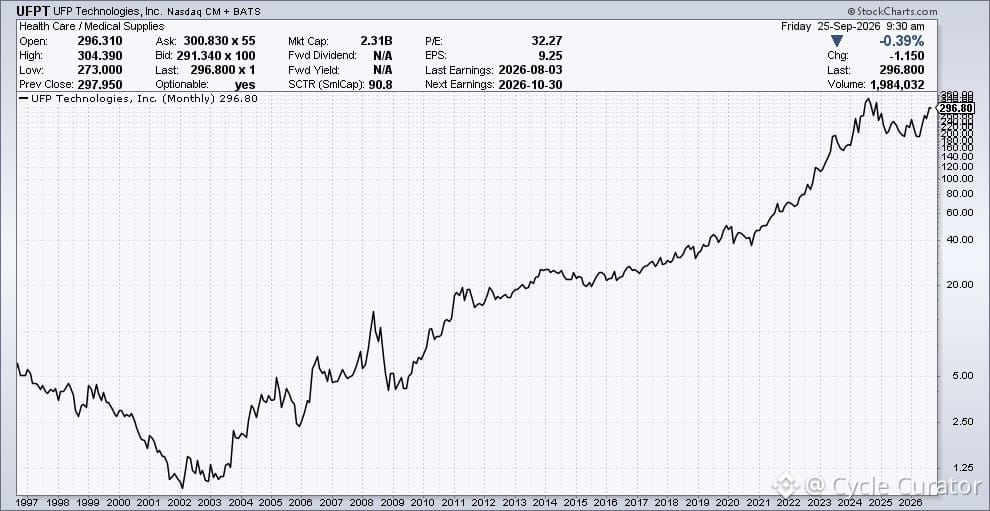
Here's a quiet compounder most people have never heard of: $NFPT was trading at 25 cents 25 years ago. Today it's at $300.
They manufacture specialized foam, plastic, and composite components for medical devices. Market cap sitting at $2 billion, yet only four analysts cover it.
This is what real long-term wealth creation looks like — boring, unsexy, essential industrial components. No hype cycles, no meme status, just steady execution in a niche with pricing power and sticky customers.
The best businesses often hide in plain sight. Medical device supply chains aren't glamorous, but they're profitable and durable. Sometimes the most overlooked names deliver the most consistent returns.
Here's a quiet compounder most people have never heard of: $NFPT was trading at 25 cents 25 years ago. Today it's at $300.
They manufacture specialized foam, plastic, and composite components for medical devices. Market cap sitting at $2 billion, yet only four analysts cover it.
This is what real long-term wealth creation looks like — boring, unsexy, essential industrial components. No hype cycles, no meme status, just steady execution in a niche with pricing power and sticky customers.
The best businesses often hide in plain sight. Medical device supply chains aren't glamorous, but they're profitable and durable. Sometimes the most overlooked names deliver the most consistent returns.
They manufacture specialized foam, plastic, and composite components for medical devices. Market cap sitting at $2 billion, yet only four analysts cover it.
This is what real long-term wealth creation looks like — boring, unsexy, essential industrial components. No hype cycles, no meme status, just steady execution in a niche with pricing power and sticky customers.
The best businesses often hide in plain sight. Medical device supply chains aren't glamorous, but they're profitable and durable. Sometimes the most overlooked names deliver the most consistent returns.
622
Mortgage rates hitting 7% are finally breaking the standoff. Sellers who've been holding out are now cutting asking prices — classic supply/demand dynamics playing out in real time.
This is how housing corrections actually happen. Not a crash, just reality setting in. When borrowing costs double, something has to give. Either prices adjust down or volume dies completely.
We've seen this movie before. The question isn't whether prices soften, it's how long sellers take to accept the new normal. Stubbornness only extends the pain.
If you're watching housing as an economic indicator, this is the part where theory meets practice.
Mortgage rates hitting 7% are finally breaking the standoff. Sellers who've been holding out are now cutting asking prices — classic supply/demand dynamics playing out in real time.
This is how housing corrections actually happen. Not a crash, just reality setting in. When borrowing costs double, something has to give. Either prices adjust down or volume dies completely.
We've seen this movie before. The question isn't whether prices soften, it's how long sellers take to accept the new normal. Stubbornness only extends the pain.
If you're watching housing as an economic indicator, this is the part where theory meets practice.
This is how housing corrections actually happen. Not a crash, just reality setting in. When borrowing costs double, something has to give. Either prices adjust down or volume dies completely.
We've seen this movie before. The question isn't whether prices soften, it's how long sellers take to accept the new normal. Stubbornness only extends the pain.
If you're watching housing as an economic indicator, this is the part where theory meets practice.
187
The scale of AI infrastructure spending is now unprecedented in U.S. economic history. We're watching tech giants and utilities commit hundreds of billions to data centers, power generation, and chip manufacturing — all on the assumption that AI demand will justify these investments.
This is the biggest capex cycle since the railroad boom. The difference? Railroads had obvious use cases from day one. With AI, we're still figuring out where the sustainable revenue models are.
History says massive infrastructure bets work out when they enable entirely new categories of economic activity. The question isn't whether AI is real — it clearly is. The question is whether the current spending pace matches realistic monetization timelines.
Be careful assuming "if you build it, they will come" always works. Sometimes you just end up with overcapacity and stranded assets. The 1990s fiber optic buildout is a useful reminder.
The scale of AI infrastructure spending is now unprecedented in U.S. economic history. We're watching tech giants and utilities commit hundreds of billions to data centers, power generation, and chip manufacturing — all on the assumption that AI demand will justify these investments.
This is the biggest capex cycle since the railroad boom. The difference? Railroads had obvious use cases from day one. With AI, we're still figuring out where the sustainable revenue models are.
History says massive infrastructure bets work out when they enable entirely new categories of economic activity. The question isn't whether AI is real — it clearly is. The question is whether the current spending pace matches realistic monetization timelines.
Be careful assuming "if you build it, they will come" always works. Sometimes you just end up with overcapacity and stranded assets. The 1990s fiber optic buildout is a useful reminder.
This is the biggest capex cycle since the railroad boom. The difference? Railroads had obvious use cases from day one. With AI, we're still figuring out where the sustainable revenue models are.
History says massive infrastructure bets work out when they enable entirely new categories of economic activity. The question isn't whether AI is real — it clearly is. The question is whether the current spending pace matches realistic monetization timelines.
Be careful assuming "if you build it, they will come" always works. Sometimes you just end up with overcapacity and stranded assets. The 1990s fiber optic buildout is a useful reminder.
110
The dollar just hit an 8-week high. What's interesting here: rate-hike expectations are overpowering the usual downward pressure from falling oil prices.
Normally when oil drops, the dollar softens a bit — energy and currency markets tend to move together. But right now, Fed pricing is the dominant force. Markets are repricing the probability of higher-for-longer rates, and that's enough to drive the $USD higher despite cheaper crude.
This tells you something about conviction. When currency traders ignore one major input (oil) in favor of another (rates), it's a signal about where the real uncertainty lies. People are repositioning around Fed policy, not energy.
Keep an eye on the exchange rate — a stronger dollar has ripple effects across everything from emerging markets to U.S. corporate earnings to import/export dynamics. It's not just a number on a currency converter screen.
The dollar just hit an 8-week high. What's interesting here: rate-hike expectations are overpowering the usual downward pressure from falling oil prices.
Normally when oil drops, the dollar softens a bit — energy and currency markets tend to move together. But right now, Fed pricing is the dominant force. Markets are repricing the probability of higher-for-longer rates, and that's enough to drive the $USD higher despite cheaper crude.
This tells you something about conviction. When currency traders ignore one major input (oil) in favor of another (rates), it's a signal about where the real uncertainty lies. People are repositioning around Fed policy, not energy.
Keep an eye on the exchange rate — a stronger dollar has ripple effects across everything from emerging markets to U.S. corporate earnings to import/export dynamics. It's not just a number on a currency converter screen.
Normally when oil drops, the dollar softens a bit — energy and currency markets tend to move together. But right now, Fed pricing is the dominant force. Markets are repricing the probability of higher-for-longer rates, and that's enough to drive the $USD higher despite cheaper crude.
This tells you something about conviction. When currency traders ignore one major input (oil) in favor of another (rates), it's a signal about where the real uncertainty lies. People are repositioning around Fed policy, not energy.
Keep an eye on the exchange rate — a stronger dollar has ripple effects across everything from emerging markets to U.S. corporate earnings to import/export dynamics. It's not just a number on a currency converter screen.
169
ເຂົ້າສູ່ລະບົບເພື່ອສຳຫຼວດເນື້ອຫາເພີ່ມເຕີມ
ເຂົ້າຮ່ວມກຸ່ມຜູ້ໃຊ້ຄຣິບໂຕທົ່ວໂລກໃນ Binance Square.
⚡️ ໄດ້ຮັບຂໍ້ມູນຫຼ້າສຸດ ແລະ ທີ່ມີປະໂຫຍດກ່ຽວກັບຄຣິບໂຕ.
💬 ໄດ້ຮັບຄວາມໄວ້ວາງໃຈຈາກຕະຫຼາດແລກປ່ຽນຄຣິບໂຕທີ່ໃຫຍ່ທີ່ສຸດໃນໂລກ.
👍 ຄົ້ນຫາຂໍ້ມູນເຊີງເລິກທີ່ແທ້ຈາກນັກສ້າງທີ່ໄດ້ຮັບການຢືນຢັນ.
ອີເມວ / ເບີໂທລະສັບ
ຫົວຂໍ້ທີ່ກໍາລັງນິຍົມ
BinancePick
2.7M ຄັ້ງທີ່ເບິ່ງ
142,841 ກຳລັງສົນທະນາ
Join #EarningsSeason: Predict Earnings on Binance Pick, Share Your Take on Binance Square!
Binance Square Official
·402 ຖືກໃຈ
·338.8k ຄັ້ງທີ່ເບິ່ງ
EarningsSeason
5M ຄັ້ງທີ່ເບິ່ງ
24,496 ກຳລັງສົນທະນາ
SouthKoreaReportedlyWeighsFourthCryptoTaxDelay
2 ຄັ້ງທີ່ເບິ່ງ
13 ກຳລັງສົນທະນາ