

Crypto Sat
11.5k ໂພສ

Crypto Sat
 Square Verified+
ລາຍງານ
ບລັອກຜູ້ໃຊ້
Signals Provider - Scalping & Swing | Insights | Latest Updates I X & CMC - CryptoSatRed ✅
ຜູ້ຊື້ຂາຍປະຈໍາ
5.3 ປີ
31 ກໍາລັງຕິດຕາມ
45.0K+ ຜູ້ຕິດຕາມ
61.5K+ Liked
ໂພສ
ທັງໝົດ
ວົງຢືມ
ວີດີໂອ
ຖ່າຍທອດສົດ
ປັກໝຸດ
·
--
YA HOOO!
WE FINALLY HIT 45K FOLLOWERS ON BINANCE SQUARE
3 years of creating, countless ups and downs, profit and loss signals, and so many lessons along the way.
It wasn’t always easy. There were days when reach dropped, growth slowed down, and things didn’t go as planned. But I kept pushing myself and showing up every day.
And My lovely, loyal followers who kept encouraging me, supporting my work, and standing with me through every phase.
A HUGE THANK YOU to everyone who follows, likes, shares, comments, and believes in my work. You guys are a big reason I keep going!
Love you all. ❤️🔥
YA HOOO!
WE FINALLY HIT 45K FOLLOWERS ON BINANCE SQUARE
3 years of creating, countless ups and downs, profit and loss signals, and so many lessons along the way.
It wasn’t always easy. There were days when reach dropped, growth slowed down, and things didn’t go as planned. But I kept pushing myself and showing up every day.
And My lovely, loyal followers who kept encouraging me, supporting my work, and standing with me through every phase.
A HUGE THANK YOU to everyone who follows, likes, shares, comments, and believes in my work. You guys are a big reason I keep going!
Love you all. ❤️🔥
WE FINALLY HIT 45K FOLLOWERS ON BINANCE SQUARE
3 years of creating, countless ups and downs, profit and loss signals, and so many lessons along the way.
It wasn’t always easy. There were days when reach dropped, growth slowed down, and things didn’t go as planned. But I kept pushing myself and showing up every day.
And My lovely, loyal followers who kept encouraging me, supporting my work, and standing with me through every phase.
A HUGE THANK YOU to everyone who follows, likes, shares, comments, and believes in my work. You guys are a big reason I keep going!
Love you all. ❤️🔥
Crypto Sat
·
--
3 years ago we started the CryptoSat community… and honestly, I still feel like this is just the beginning. So much more to achieve, so many more milestones to unlock together. ❤️
At the beginning, a lot of people helped me build this community into something strong and powerful. I still remember every one of them. Some are still with me, some disappeared with time… that’s life. People change, situations change, and days keep moving.
Meanwhile, I’m still here… a solo warrior managing 6 platforms every single day — Binance Square, Telegram, X, Gate Moments, Bitget Insights, and CMC 😅
Sometimes I feel like I’m just posting random content and disturbing all of you daily 😂
But truthfully? I enjoy every second of it.
In real life, I’m actually an introvert. Social media became the only place where I can express myself freely, share thoughts, charts, wins, losses, and connect with people who understand this journey. Sounds kinda crazy, right? 😄
Life isn’t always easy. Fighting real-life situations alone while trying to stay consistent online every single day is challenging… but at the same time, I enjoy the process. That’s what keeps me going.
Every day, some people join the community and some leave.
But one thing remains permanent…
CryptoSat is still here. ❤️😅
JOIN OUR TRADING GROUP
At the beginning, a lot of people helped me build this community into something strong and powerful. I still remember every one of them. Some are still with me, some disappeared with time… that’s life. People change, situations change, and days keep moving.
Meanwhile, I’m still here… a solo warrior managing 6 platforms every single day — Binance Square, Telegram, X, Gate Moments, Bitget Insights, and CMC 😅
Sometimes I feel like I’m just posting random content and disturbing all of you daily 😂
But truthfully? I enjoy every second of it.
In real life, I’m actually an introvert. Social media became the only place where I can express myself freely, share thoughts, charts, wins, losses, and connect with people who understand this journey. Sounds kinda crazy, right? 😄
Life isn’t always easy. Fighting real-life situations alone while trying to stay consistent online every single day is challenging… but at the same time, I enjoy the process. That’s what keeps me going.
Every day, some people join the community and some leave.
But one thing remains permanent…
CryptoSat is still here. ❤️😅
JOIN OUR TRADING GROUP
6
17
430
ປັກໝຸດ
·
--
TRADING STRATEGY ✍️
MARGIN MODE ✅
Using CROSS MARGIN
Leverage Capital per trade(not
per entry)
1x to 10x Upto 8%
11x to 25x Upto 5%
26x to 50x Upto 3%
Morethan 51x Upto 2%
⚠️ Hold 2 to 3 trades , when you're using cross margin and maintain risk ratio less than 5%
Using ISOLATED MARGIN
😀Use leverage 5x to 10x only and invest 5 to 8% funds
ENTRY STRATEGY ✅
Take 2 to 3 entries ( DCA STRATEGY )
RESTRICTING TAKING ENTRIES ✅
Existing users
If you took the trade at entry 1 then it achieved tp2 quickly , Don't take further entries.
New users
Don't take entries after tp2 hit.
SECURING PROFITS ✅
🟢 If 2 or 3 Entry Points(EPs) achieved , then you should shift Target points. If entry 2 achieved , then Ep 1 will be 1st TP.
🟢Always exit 20% (tp1) , 30% (tp2) and remaining tps , exit equal portions
🟢Move SL to Entry-Price after tp3
🟢Take profits at every tp , Don't be greedy and hold only for final tp.
1% RISK RULE is more safe ✅
Like 😀 & Share 😀
[JOIN OUR TRADING GROUP](https://app.binance.com/uni-qr/group-chat-landing?channelToken=-E5sVvNOuX03e3NZfTUjZg&type=1&entrySource=sharing_link)
TRADING STRATEGY ✍️
MARGIN MODE ✅
Using CROSS MARGIN
Leverage Capital per trade(not
per entry)
1x to 10x Upto 8%
11x to 25x Upto 5%
26x to 50x Upto 3%
Morethan 51x Upto 2%
⚠️ Hold 2 to 3 trades , when you're using cross margin and maintain risk ratio less than 5%
Using ISOLATED MARGIN
😀Use leverage 5x to 10x only and invest 5 to 8% funds
ENTRY STRATEGY ✅
Take 2 to 3 entries ( DCA STRATEGY )
RESTRICTING TAKING ENTRIES ✅
Existing users
If you took the trade at entry 1 then it achieved tp2 quickly , Don't take further entries.
New users
Don't take entries after tp2 hit.
SECURING PROFITS ✅
🟢 If 2 or 3 Entry Points(EPs) achieved , then you should shift Target points. If entry 2 achieved , then Ep 1 will be 1st TP.
🟢Always exit 20% (tp1) , 30% (tp2) and remaining tps , exit equal portions
🟢Move SL to Entry-Price after tp3
🟢Take profits at every tp , Don't be greedy and hold only for final tp.
1% RISK RULE is more safe ✅
Like 😀 & Share 😀
JOIN OUR TRADING GROUP
MARGIN MODE ✅
Using CROSS MARGIN
Leverage Capital per trade(not
per entry)
1x to 10x Upto 8%
11x to 25x Upto 5%
26x to 50x Upto 3%
Morethan 51x Upto 2%
⚠️ Hold 2 to 3 trades , when you're using cross margin and maintain risk ratio less than 5%
Using ISOLATED MARGIN
😀Use leverage 5x to 10x only and invest 5 to 8% funds
ENTRY STRATEGY ✅
Take 2 to 3 entries ( DCA STRATEGY )
RESTRICTING TAKING ENTRIES ✅
Existing users
If you took the trade at entry 1 then it achieved tp2 quickly , Don't take further entries.
New users
Don't take entries after tp2 hit.
SECURING PROFITS ✅
🟢 If 2 or 3 Entry Points(EPs) achieved , then you should shift Target points. If entry 2 achieved , then Ep 1 will be 1st TP.
🟢Always exit 20% (tp1) , 30% (tp2) and remaining tps , exit equal portions
🟢Move SL to Entry-Price after tp3
🟢Take profits at every tp , Don't be greedy and hold only for final tp.
1% RISK RULE is more safe ✅
Like 😀 & Share 😀
JOIN OUR TRADING GROUP

34
19
183
3.8k
·
--
ສັນຍານໝີ
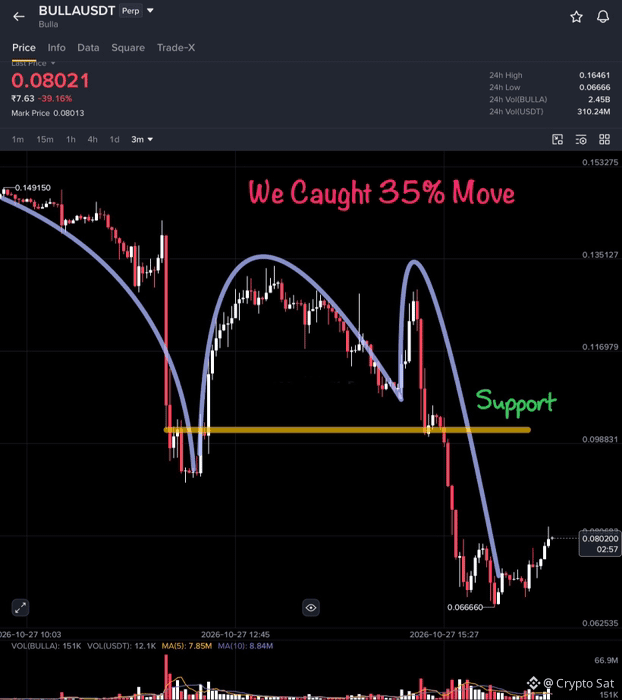
$BULLA — TOP GAINER YESTERDAY, TOP LOSER TODAY!
Guys, this market is crazy!
Yesterday, #BULLA was the #1 gainer, pumping nearly 100% from $0.08 to $0.164.
Today, it’s among the top losers, dumping around 40%.
Funny, right? The coins leading the market yesterday can become today’s biggest losers!
That’s exactly why I keep saying: trade with the trend, take your planned profits, and don’t get emotionally attached to any coin.
Once your target is reached, consider securing profits or moving your stop-loss to breakeven when appropriate. The trend can change anytime!
Now let’s look at BULLA.
Price has dropped to the $0.064–$0.068 support zone, and this is where bulls need to show strength.
If this zone holds, we could see a recovery toward $0.085, $0.09, and $0.10. The $0.10 area is a major barrier to watch.
But if price loses this support, bearish pressure could increase, with $0.05, $0.04, and $0.03 becoming possible downside levels.
I hope you caught some wonderful moves with my $AIN and BULLA calls today!
Remember, guys, the goal isn’t to catch every pump. It’s to follow the trend, protect your profits, and know when to get out.
{future}(BULLAUSDT)
{future}(AINUSDT)
$BULLA — TOP GAINER YESTERDAY, TOP LOSER TODAY!
Guys, this market is crazy!
Yesterday, #BULLA was the #1 gainer, pumping nearly 100% from $0.08 to $0.164.
Today, it’s among the top losers, dumping around 40%.
Funny, right? The coins leading the market yesterday can become today’s biggest losers!
That’s exactly why I keep saying: trade with the trend, take your planned profits, and don’t get emotionally attached to any coin.
Once your target is reached, consider securing profits or moving your stop-loss to breakeven when appropriate. The trend can change anytime!
Now let’s look at BULLA.
Price has dropped to the $0.064–$0.068 support zone, and this is where bulls need to show strength.
If this zone holds, we could see a recovery toward $0.085, $0.09, and $0.10. The $0.10 area is a major barrier to watch.
But if price loses this support, bearish pressure could increase, with $0.05, $0.04, and $0.03 becoming possible downside levels.
I hope you caught some wonderful moves with my $AIN and BULLA calls today!
Remember, guys, the goal isn’t to catch every pump. It’s to follow the trend, protect your profits, and know when to get out.
Guys, this market is crazy!
Yesterday, #BULLA was the #1 gainer, pumping nearly 100% from $0.08 to $0.164.
Today, it’s among the top losers, dumping around 40%.
Funny, right? The coins leading the market yesterday can become today’s biggest losers!
That’s exactly why I keep saying: trade with the trend, take your planned profits, and don’t get emotionally attached to any coin.
Once your target is reached, consider securing profits or moving your stop-loss to breakeven when appropriate. The trend can change anytime!
Now let’s look at BULLA.
Price has dropped to the $0.064–$0.068 support zone, and this is where bulls need to show strength.
If this zone holds, we could see a recovery toward $0.085, $0.09, and $0.10. The $0.10 area is a major barrier to watch.
But if price loses this support, bearish pressure could increase, with $0.05, $0.04, and $0.03 becoming possible downside levels.
I hope you caught some wonderful moves with my $AIN and BULLA calls today!
Remember, guys, the goal isn’t to catch every pump. It’s to follow the trend, protect your profits, and know when to get out.

X-Trường
·
--
xin cập nhật bulla tôi đang bị mắc kẹt lệnh long thưa sir
1
895
·
--
ສັນຍານກະທິງ
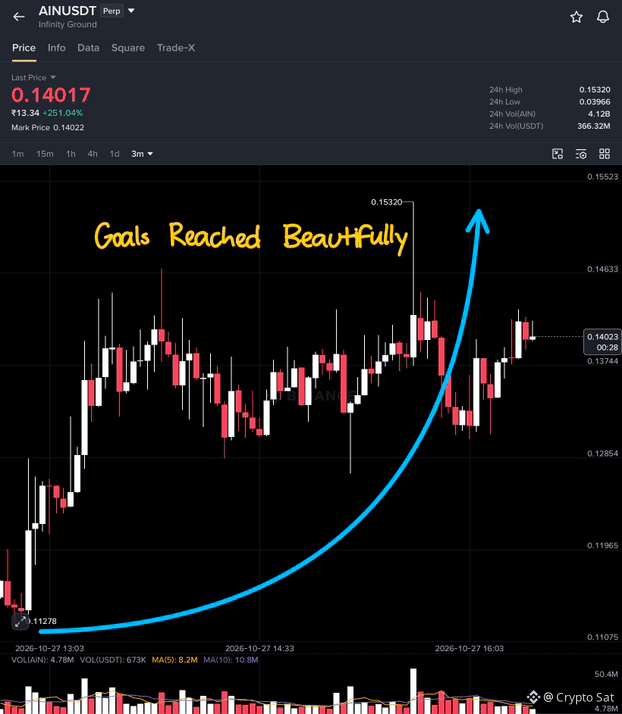
Our 2nd $AIN Signal also achieved it’s Targets buddiesss 🔥
We Caught 15% move without any Leverage 🥰
{future}(AINUSDT)
Our 2nd $AIN Signal also achieved it’s Targets buddiesss 🔥
We Caught 15% move without any Leverage 🥰
We Caught 15% move without any Leverage 🥰
Crypto Sat
·
--
ສັນຍານກະທິງ$AIN exploded to $0.1198 🚀
That’s approximately a 68.7% move from $0.071!
We caught perfect entry this time , This is the 2nd Success trade in Today’s Signals
Crypto Sat Traders, this is why planning entries matters more than chasing green candles
That’s approximately a 68.7% move from $0.071!
We caught perfect entry this time , This is the 2nd Success trade in Today’s Signals
Crypto Sat Traders, this is why planning entries matters more than chasing green candles
1
592
·
--
ສັນຍານໝີ
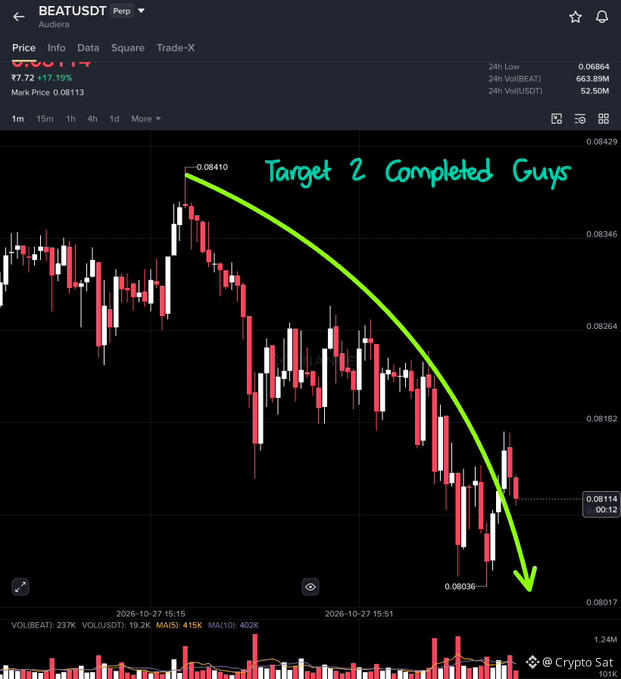
$BEAT 2nd Target Completed ✅
Strictly recommended sl to tp1 once tp3 hits 👍
$BEAT 2nd Target Completed ✅
Strictly recommended sl to tp1 once tp3 hits 👍
Strictly recommended sl to tp1 once tp3 hits 👍
Crypto Sat
·
--
ສັນຍານໝີ💰 $BEAT /USDT
🔻SHORT
✳️ ENTRY (Use DCA STRATEGY) : 8300, 8400, 8500
🎯 TARGETS - 8140, 8060, 7900, 7700, 7400
🀄️ LEVERAGE - cross 10x
🔴 STOPLOSS - 8620
#CryptoSatSignals
🔻SHORT
✳️ ENTRY (Use DCA STRATEGY) : 8300, 8400, 8500
🎯 TARGETS - 8140, 8060, 7900, 7700, 7400
🀄️ LEVERAGE - cross 10x
🔴 STOPLOSS - 8620
#CryptoSatSignals
1
437
·
--
ສັນຍານກະທິງ
ຢືນຢັນແລ້ວ
STRATEGY SPENT $204.9M LAST WEEK, AND NOT even $1 WENT INTO BITCOIN 😱
Strategy's Oct 26 SEC filing shows no $BTC bought or sold from Oct 19 to 25, its first pause since mid-September, and no shares sold through its ATM. Instead it bought back 2,068,459 STRC preferred shares for $204.9M, paid from USD Cash.
The numbers behind the pause:
1. USD Cash fell 46%, from $447.3M to $242.4M in one week. The separate $4.83B USD Reserve for dividends and interest is untouched.
2. Since Oct 1, Strategy has spent ~$664M on STRC buybacks vs $72.3M on 851 BTC. weeks before brought only 250 and 267 BTC.
3. It holds 848,517 BTC at an average $75,446. With BTC near 79,870, that cushion is only ~5.9%.
{future}(BTCUSDT)
#StrategySkipsBitcoinPurchasesSpends$205MOnSTRCBuybacks
STRATEGY SPENT $204.9M LAST WEEK, AND NOT even $1 WENT INTO BITCOIN 😱
Strategy's Oct 26 SEC filing shows no $BTC bought or sold from Oct 19 to 25, its first pause since mid-September, and no shares sold through its ATM. Instead it bought back 2,068,459 STRC preferred shares for $204.9M, paid from USD Cash.
The numbers behind the pause:
1. USD Cash fell 46%, from $447.3M to $242.4M in one week. The separate $4.83B USD Reserve for dividends and interest is untouched.
2. Since Oct 1, Strategy has spent ~$664M on STRC buybacks vs $72.3M on 851 BTC. weeks before brought only 250 and 267 BTC.
3. It holds 848,517 BTC at an average $75,446. With BTC near 79,870, that cushion is only ~5.9%.
#StrategySkipsBitcoinPurchasesSpends$205MOnSTRCBuybacks
Strategy's Oct 26 SEC filing shows no $BTC bought or sold from Oct 19 to 25, its first pause since mid-September, and no shares sold through its ATM. Instead it bought back 2,068,459 STRC preferred shares for $204.9M, paid from USD Cash.
The numbers behind the pause:
1. USD Cash fell 46%, from $447.3M to $242.4M in one week. The separate $4.83B USD Reserve for dividends and interest is untouched.
2. Since Oct 1, Strategy has spent ~$664M on STRC buybacks vs $72.3M on 851 BTC. weeks before brought only 250 and 267 BTC.
3. It holds 848,517 BTC at an average $75,446. With BTC near 79,870, that cushion is only ~5.9%.
#StrategySkipsBitcoinPurchasesSpends$205MOnSTRCBuybacks

1
198
·
--
ສັນຍານກະທິງ
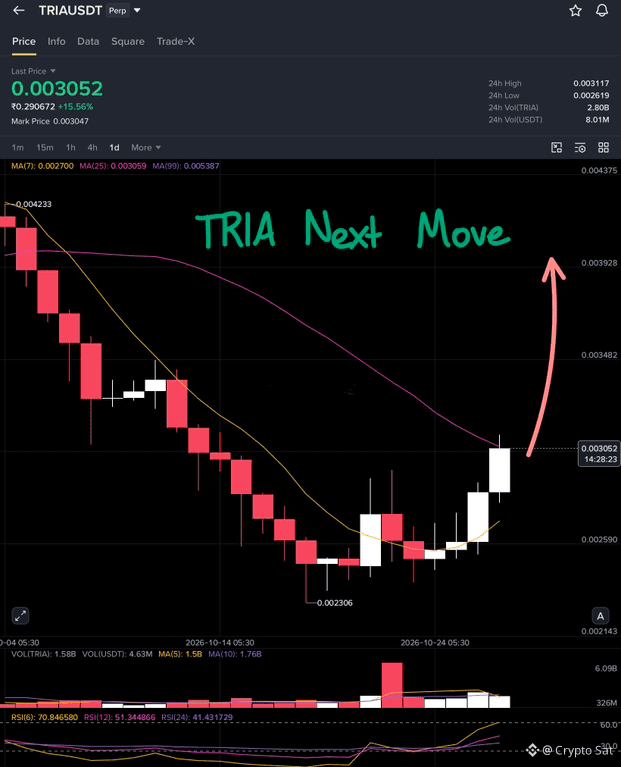
$TRIA is finally showing some recovery after a long downtrend!
Price bounced from the $0.002306 low and is now trading around $0.00305, up more than 15% today.
Now comes the crucial part: Price is testing the MA25 resistance around $0.00306.
If buyers break this barrier and sustain above it, the next move could be toward $0.0035–$0.0040. 👀
Preferred entry: 0.00295–0.00280
Stop-loss: 0.00273
Targets - 0.0031, 0.0032, 0.00335, 0.0035, 0.0037, 0.0040
RSI is recovering, and the recent candles show buyers stepping in.
{future}(TRIAUSDT)
$TRIA is finally showing some recovery after a long downtrend!
Price bounced from the $0.002306 low and is now trading around $0.00305, up more than 15% today.
Now comes the crucial part: Price is testing the MA25 resistance around $0.00306.
If buyers break this barrier and sustain above it, the next move could be toward $0.0035–$0.0040. 👀
Preferred entry: 0.00295–0.00280
Stop-loss: 0.00273
Targets - 0.0031, 0.0032, 0.00335, 0.0035, 0.0037, 0.0040
RSI is recovering, and the recent candles show buyers stepping in.
Price bounced from the $0.002306 low and is now trading around $0.00305, up more than 15% today.
Now comes the crucial part: Price is testing the MA25 resistance around $0.00306.
If buyers break this barrier and sustain above it, the next move could be toward $0.0035–$0.0040. 👀
Preferred entry: 0.00295–0.00280
Stop-loss: 0.00273
Targets - 0.0031, 0.0032, 0.00335, 0.0035, 0.0037, 0.0040
RSI is recovering, and the recent candles show buyers stepping in.
2
385
·
--
ສັນຍານກະທິງ
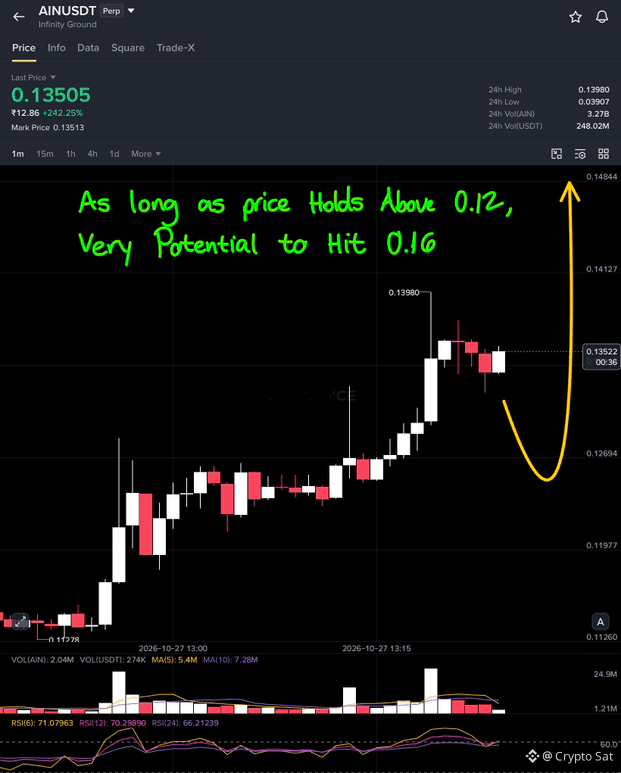
Our $AIN trade this morning gave us around 68% profit in spot within just 1 hour and 30 minutes!
You may have missed my previous call, guys, but you dare to miss this one toooo?
Price is now trading around $0.135, up more than 242% today.
I’m looking for another opportunity.
As long as AIN holds above $0.12, the bullish structure remains interesting. If buyers push through $0.14 with strength, we could see the next expansion toward $0.15–$0.16.
If price pulls back, I’m watching the $0.12–$0.125 zone for a possible retest and bounce.
Price is showing serious strength, but after such a massive rally, sharp corrections are possible too. Wait for a good entry instead of jumping in out of FOMO.
One profitable trade is done. Now let’s hunt for the next opportunity! 🔥
{future}(AINUSDT)
Our $AIN trade this morning gave us around 68% profit in spot within just 1 hour and 30 minutes!
You may have missed my previous call, guys, but you dare to miss this one toooo?
Price is now trading around $0.135, up more than 242% today.
I’m looking for another opportunity.
As long as AIN holds above $0.12, the bullish structure remains interesting. If buyers push through $0.14 with strength, we could see the next expansion toward $0.15–$0.16.
If price pulls back, I’m watching the $0.12–$0.125 zone for a possible retest and bounce.
Price is showing serious strength, but after such a massive rally, sharp corrections are possible too. Wait for a good entry instead of jumping in out of FOMO.
One profitable trade is done. Now let’s hunt for the next opportunity! 🔥
You may have missed my previous call, guys, but you dare to miss this one toooo?
Price is now trading around $0.135, up more than 242% today.
I’m looking for another opportunity.
As long as AIN holds above $0.12, the bullish structure remains interesting. If buyers push through $0.14 with strength, we could see the next expansion toward $0.15–$0.16.
If price pulls back, I’m watching the $0.12–$0.125 zone for a possible retest and bounce.
Price is showing serious strength, but after such a massive rally, sharp corrections are possible too. Wait for a good entry instead of jumping in out of FOMO.
One profitable trade is done. Now let’s hunt for the next opportunity! 🔥
Crypto Sat
·
--
ສັນຍານກະທິງ$AIN exploded to $0.1198 🚀
That’s approximately a 68.7% move from $0.071!
We caught perfect entry this time , This is the 2nd Success trade in Today’s Signals
Crypto Sat Traders, this is why planning entries matters more than chasing green candles
That’s approximately a 68.7% move from $0.071!
We caught perfect entry this time , This is the 2nd Success trade in Today’s Signals
Crypto Sat Traders, this is why planning entries matters more than chasing green candles
1
597
·
--
ສັນຍານໝີ
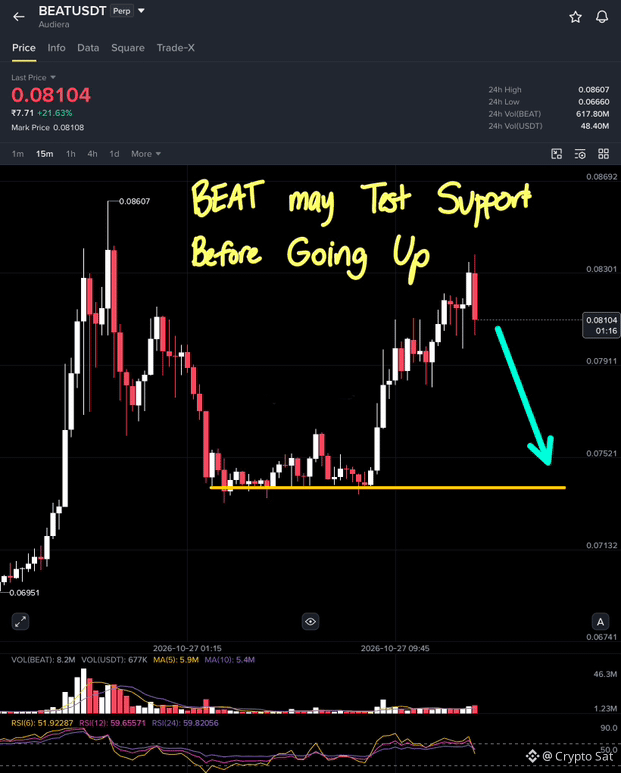
💰 $BEAT /USDT
🔻SHORT
✳️ ENTRY (Use DCA STRATEGY) : 8300, 8400, 8500
🎯 TARGETS - 8140, 8060, 7900, 7700, 7400
🀄️ LEVERAGE - cross 10x
🔴 STOPLOSS - 8620
{future}(BEATUSDT)
#CryptoSatSignals
💰 $BEAT /USDT
🔻SHORT
✳️ ENTRY (Use DCA STRATEGY) : 8300, 8400, 8500
🎯 TARGETS - 8140, 8060, 7900, 7700, 7400
🀄️ LEVERAGE - cross 10x
🔴 STOPLOSS - 8620
#CryptoSatSignals
🔻SHORT
✳️ ENTRY (Use DCA STRATEGY) : 8300, 8400, 8500
🎯 TARGETS - 8140, 8060, 7900, 7700, 7400
🀄️ LEVERAGE - cross 10x
🔴 STOPLOSS - 8620
#CryptoSatSignals
1
3
355
·
--
ສັນຍານກະທິງ
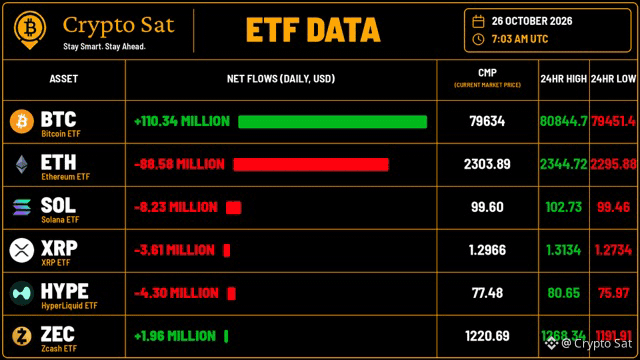
ETF Flows Update (26 October 2026)
• $BTC : +$110.34 Million
• $ETH : -$88.58 Million
• $XRP : -$3.61 Million
• $SOL : -$8.23 Million
• $HYPE : -$4.30 Million
• $ZEC : +$1.96 Million
Bitcoin ETF recorded solid inflows of $110.34M on October 26. Ethereum saw notable outflows of $88.58M, Solana posted outflows of $8.23M, XRP saw outflows of $3.61M, Hyperliquid recorded outflows of $4.30M, while ZEC attracted modest inflows of $1.96M.
{future}(SOLUSDT)
{future}(ZECUSDT)
{future}(BTCUSDT)
#BitmineAdds10452ETH
ETF Flows Update (26 October 2026)
• $BTC : +$110.34 Million
• $ETH : -$88.58 Million
• $XRP : -$3.61 Million
• $SOL : -$8.23 Million
• $HYPE : -$4.30 Million
• $ZEC : +$1.96 Million
Bitcoin ETF recorded solid inflows of $110.34M on October 26. Ethereum saw notable outflows of $88.58M, Solana posted outflows of $8.23M, XRP saw outflows of $3.61M, Hyperliquid recorded outflows of $4.30M, while ZEC attracted modest inflows of $1.96M.
#BitmineAdds10452ETH
• $BTC : +$110.34 Million
• $ETH : -$88.58 Million
• $XRP : -$3.61 Million
• $SOL : -$8.23 Million
• $HYPE : -$4.30 Million
• $ZEC : +$1.96 Million
Bitcoin ETF recorded solid inflows of $110.34M on October 26. Ethereum saw notable outflows of $88.58M, Solana posted outflows of $8.23M, XRP saw outflows of $3.61M, Hyperliquid recorded outflows of $4.30M, while ZEC attracted modest inflows of $1.96M.
#BitmineAdds10452ETH
1
3
254
·
--
ສັນຍານກະທິງ
RIPPLE GETS FINAL OCC APPROVAL FOR ITS NATIONAL TRUST BANK 🏦
Big step for Ripple in the US regulatory space.
Ripple says its Ripple National Trust Bank has received final approval from the US Office of the Comptroller of the Currency (OCC), following conditional approval in December 2025.
The bank can manage reserves backing Ripple’s RLUSD stablecoin and provide crypto custody services. But here’s an important detail: RLUSD will still be issued by Ripple’s New York-regulated trust company.
Circle received the same final approval in July, while Coinbase, Crypto dot com and Bridge remain at the conditional-approval stage.
Regulated crypto custody and stablecoin infrastructure are becoming increasingly important as crypto firms build deeper connections with the traditional financial system.
This is a meaningful regulatory milestone for Ripple, especially around custody and RLUSD infrastructure. It doesn’t automatically mean wider RLUSD adoption, but it strengthens Ripple’s position in the regulated crypto market.
{future}(XRPUSDT)
{spot}(COINBUSDT)
{stock_us}(CRCL.US)
#RippleWinsFullApprovalAsNationalTrustBank
RIPPLE GETS FINAL OCC APPROVAL FOR ITS NATIONAL TRUST BANK 🏦
Big step for Ripple in the US regulatory space.
Ripple says its Ripple National Trust Bank has received final approval from the US Office of the Comptroller of the Currency (OCC), following conditional approval in December 2025.
The bank can manage reserves backing Ripple’s RLUSD stablecoin and provide crypto custody services. But here’s an important detail: RLUSD will still be issued by Ripple’s New York-regulated trust company.
Circle received the same final approval in July, while Coinbase, Crypto dot com and Bridge remain at the conditional-approval stage.
Regulated crypto custody and stablecoin infrastructure are becoming increasingly important as crypto firms build deeper connections with the traditional financial system.
This is a meaningful regulatory milestone for Ripple, especially around custody and RLUSD infrastructure. It doesn’t automatically mean wider RLUSD adoption, but it strengthens Ripple’s position in the regulated crypto market.
#RippleWinsFullApprovalAsNationalTrustBank
Big step for Ripple in the US regulatory space.
Ripple says its Ripple National Trust Bank has received final approval from the US Office of the Comptroller of the Currency (OCC), following conditional approval in December 2025.
The bank can manage reserves backing Ripple’s RLUSD stablecoin and provide crypto custody services. But here’s an important detail: RLUSD will still be issued by Ripple’s New York-regulated trust company.
Circle received the same final approval in July, while Coinbase, Crypto dot com and Bridge remain at the conditional-approval stage.
Regulated crypto custody and stablecoin infrastructure are becoming increasingly important as crypto firms build deeper connections with the traditional financial system.
This is a meaningful regulatory milestone for Ripple, especially around custody and RLUSD infrastructure. It doesn’t automatically mean wider RLUSD adoption, but it strengthens Ripple’s position in the regulated crypto market.
#RippleWinsFullApprovalAsNationalTrustBank

1
254
·
--
ສັນຍານກະທິງ
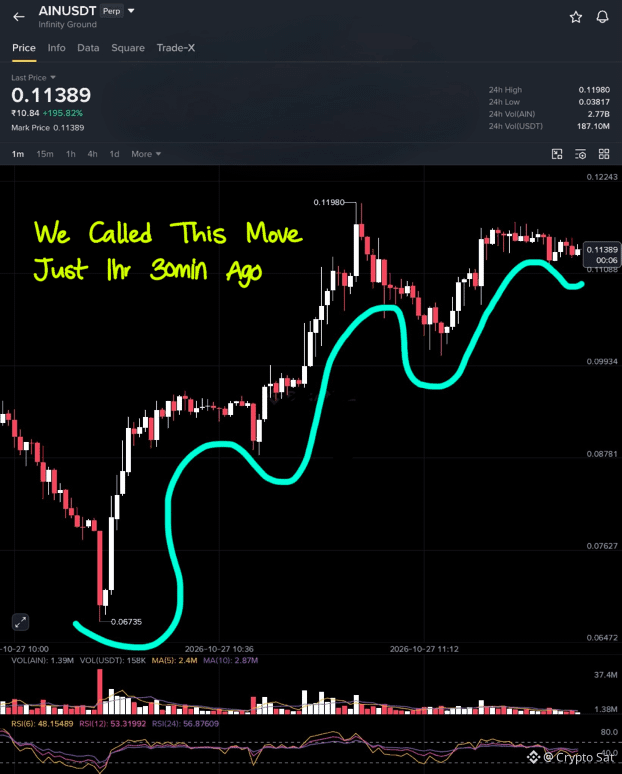
$AIN exploded to $0.1198 🚀
That’s approximately a 68.7% move from $0.071!
We caught perfect entry this time , This is the 2nd Success trade in Today’s Signals
Crypto Sat Traders, this is why planning entries matters more than chasing green candles
$AIN exploded to $0.1198 🚀
That’s approximately a 68.7% move from $0.071!
We caught perfect entry this time , This is the 2nd Success trade in Today’s Signals
Crypto Sat Traders, this is why planning entries matters more than chasing green candles
That’s approximately a 68.7% move from $0.071!
We caught perfect entry this time , This is the 2nd Success trade in Today’s Signals
Crypto Sat Traders, this is why planning entries matters more than chasing green candles
Crypto Sat
·
--
ສັນຍານກະທິງGuys, who bought the $AIN Dip ?
Just now 1st target completed 👍
Stoploss to entry price once 0.1 hits 😎
Just now 1st target completed 👍
Stoploss to entry price once 0.1 hits 😎
2
4
484
·
--
ສັນຍານກະທິງ
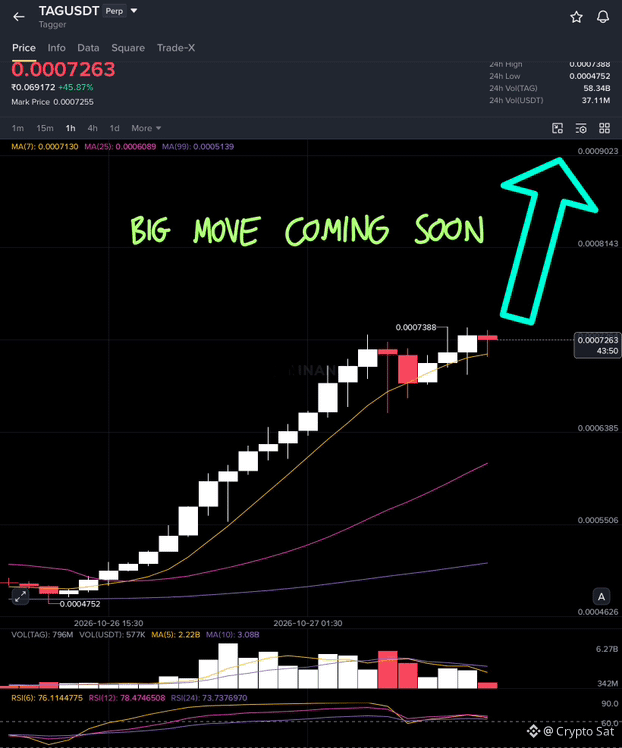
$TAG is trading at a crucial resistance zone around $0.00073–$0.00074 after a strong rally from $0.0004752. Price is up nearly 46% today, and the 1H chart is showing a strong bullish structure.
If buyers break $0.00074 and sustain above it, we could see another explosive move toward higher levels.
For those looking to take a long trade, here’s the setup I’m watching:
Entry: 0.00071–0.00066
Stop-loss: 0.00065
Targets - 0.000733, 0.00076, 0.00080, 0.00085, 0.00090, 0.00100
MA7 is above MA25 and MA99, keeping the short-term structure bullish. But RSI is already elevated, so a pullback before the breakout is possible.
{future}(TAGUSDT)
#OCCUrgesCommunityBanksToEnterStablecoinPayments
$TAG is trading at a crucial resistance zone around $0.00073–$0.00074 after a strong rally from $0.0004752. Price is up nearly 46% today, and the 1H chart is showing a strong bullish structure.
If buyers break $0.00074 and sustain above it, we could see another explosive move toward higher levels.
For those looking to take a long trade, here’s the setup I’m watching:
Entry: 0.00071–0.00066
Stop-loss: 0.00065
Targets - 0.000733, 0.00076, 0.00080, 0.00085, 0.00090, 0.00100
MA7 is above MA25 and MA99, keeping the short-term structure bullish. But RSI is already elevated, so a pullback before the breakout is possible.
#OCCUrgesCommunityBanksToEnterStablecoinPayments
If buyers break $0.00074 and sustain above it, we could see another explosive move toward higher levels.
For those looking to take a long trade, here’s the setup I’m watching:
Entry: 0.00071–0.00066
Stop-loss: 0.00065
Targets - 0.000733, 0.00076, 0.00080, 0.00085, 0.00090, 0.00100
MA7 is above MA25 and MA99, keeping the short-term structure bullish. But RSI is already elevated, so a pullback before the breakout is possible.
#OCCUrgesCommunityBanksToEnterStablecoinPayments
1
1
276
·
--
ສັນຍານກະທິງ
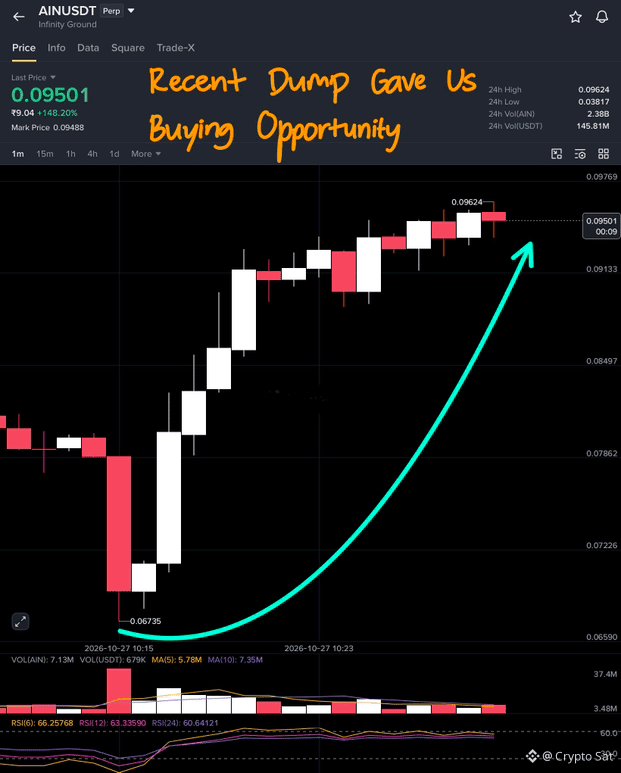
Guys, who bought the $AIN Dip ?
Just now 1st target completed 👍
Stoploss to entry price once 0.1 hits 😎
{future}(AINUSDT)
Guys, who bought the $AIN Dip ?
Just now 1st target completed 👍
Stoploss to entry price once 0.1 hits 😎
Just now 1st target completed 👍
Stoploss to entry price once 0.1 hits 😎
Crypto Sat
·
--
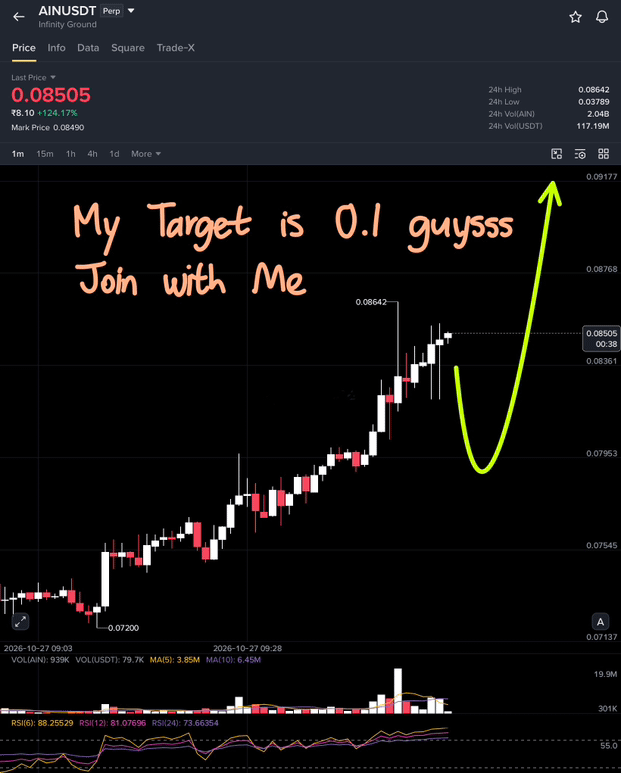
$AIN IS FLYING, GUYS!
124% UP TODAY 🔥
Price is showing serious strength, currently trading around $0.085 after climbing from $0.03789 to a high of $0.08642.
Momentum is strong, and I’m watching for the next expansion toward $0.10–$0.12.
Targets - 0.9, 0.10, 0.11, 0.12
But RSI is already extremely overbought after this massive pump, so don’t be surprised if we see a pullback before the next leg up.
My preferred safe entry zone is $0.077–$0.071, if price corrects into this area and buyers show strength. Enter small fund at cmp , later dca at safe entry zone👍
If momentum continues, $0.10 could be the next major milestone.
124% UP TODAY 🔥
Price is showing serious strength, currently trading around $0.085 after climbing from $0.03789 to a high of $0.08642.
Momentum is strong, and I’m watching for the next expansion toward $0.10–$0.12.
Targets - 0.9, 0.10, 0.11, 0.12
But RSI is already extremely overbought after this massive pump, so don’t be surprised if we see a pullback before the next leg up.
My preferred safe entry zone is $0.077–$0.071, if price corrects into this area and buyers show strength. Enter small fund at cmp , later dca at safe entry zone👍
If momentum continues, $0.10 could be the next major milestone.
1
1
513
·
--
ຢືນຢັນແລ້ວ
ONE COMPANY NOW OWNS 4.95% OF ALL ETHER, AND IT'S ABOUT 58,000 ETH AWAY FROM ITS 5% TARGET 🚨
Bitmine (NYSE: BMNR) added 10,452 $ETH in the week to Oct 25, bringing its treasury to 6,051,933 ETH, worth ~$14.3B at its $2,356 reference price. Chairman Tom Lee says the company has bought Ethereum every single week since June 30, 2025, and insists a "crypto bull market is underway"
What stands out:
1. The pace is slowing: 12,535 ETH the week before, 10,452 this week. Closing the gap to 5% of 122.2M supply still takes ~58,000 ETH.
2. 5,227,037 ETH (~86%) is staked, which Bitmine projects at ~$318M a year in staking revenue.
3. It also bought back 2.04M of its own shares last week at $22.48. Buybacks this year total $399.6M.
Meanwhile ETH is down ~14% since Oct 1 (2,705 → 2,318), and its daily RSI near 26 is deep in oversold territory.
{future}(ETHUSDT)
{future}(BMNRUSDT)
#BitmineAdds10452ETH
ONE COMPANY NOW OWNS 4.95% OF ALL ETHER, AND IT'S ABOUT 58,000 ETH AWAY FROM ITS 5% TARGET 🚨
Bitmine (NYSE: BMNR) added 10,452 $ETH in the week to Oct 25, bringing its treasury to 6,051,933 ETH, worth ~$14.3B at its $2,356 reference price. Chairman Tom Lee says the company has bought Ethereum every single week since June 30, 2025, and insists a "crypto bull market is underway"
What stands out:
1. The pace is slowing: 12,535 ETH the week before, 10,452 this week. Closing the gap to 5% of 122.2M supply still takes ~58,000 ETH.
2. 5,227,037 ETH (~86%) is staked, which Bitmine projects at ~$318M a year in staking revenue.
3. It also bought back 2.04M of its own shares last week at $22.48. Buybacks this year total $399.6M.
Meanwhile ETH is down ~14% since Oct 1 (2,705 → 2,318), and its daily RSI near 26 is deep in oversold territory.
#BitmineAdds10452ETH
Bitmine (NYSE: BMNR) added 10,452 $ETH in the week to Oct 25, bringing its treasury to 6,051,933 ETH, worth ~$14.3B at its $2,356 reference price. Chairman Tom Lee says the company has bought Ethereum every single week since June 30, 2025, and insists a "crypto bull market is underway"
What stands out:
1. The pace is slowing: 12,535 ETH the week before, 10,452 this week. Closing the gap to 5% of 122.2M supply still takes ~58,000 ETH.
2. 5,227,037 ETH (~86%) is staked, which Bitmine projects at ~$318M a year in staking revenue.
3. It also bought back 2.04M of its own shares last week at $22.48. Buybacks this year total $399.6M.
Meanwhile ETH is down ~14% since Oct 1 (2,705 → 2,318), and its daily RSI near 26 is deep in oversold territory.
#BitmineAdds10452ETH

1
300
·
--
ສັນຍານໝີ
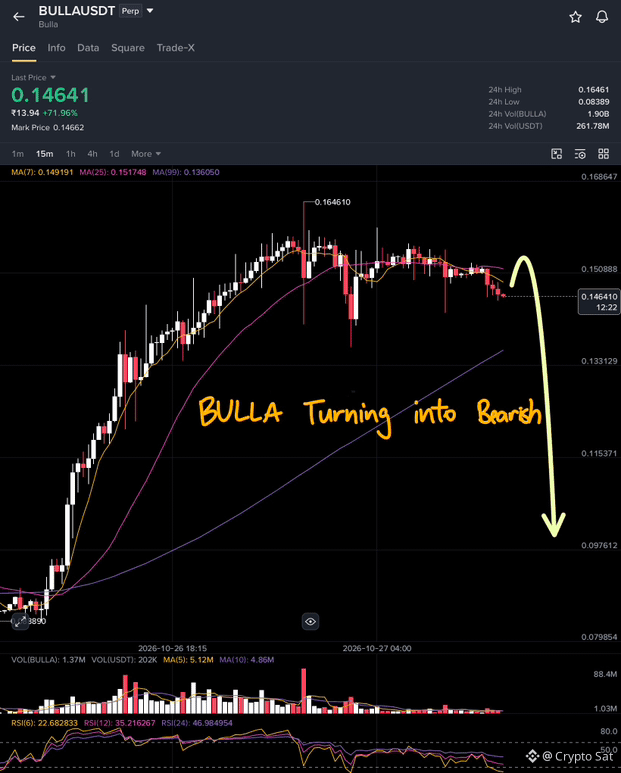
💰 $BULLA /USDT
🔻SHORT
✳️ ENTRY (Use DCA STRATEGY) : 15100, 15500, 15850
🎯 TARGETS - 14400, 13830, 13000, 12000, 10700, 9500
🀄️ LEVERAGE - cross 10x
🔴 STOPLOSS - 16100
{future}(BULLAUSDT)
#CryptoSatRed
💰 $BULLA /USDT
🔻SHORT
✳️ ENTRY (Use DCA STRATEGY) : 15100, 15500, 15850
🎯 TARGETS - 14400, 13830, 13000, 12000, 10700, 9500
🀄️ LEVERAGE - cross 10x
🔴 STOPLOSS - 16100
#CryptoSatRed
🔻SHORT
✳️ ENTRY (Use DCA STRATEGY) : 15100, 15500, 15850
🎯 TARGETS - 14400, 13830, 13000, 12000, 10700, 9500
🀄️ LEVERAGE - cross 10x
🔴 STOPLOSS - 16100
#CryptoSatRed
2
457
·
--
$AIN IS FLYING, GUYS!
124% UP TODAY 🔥
Price is showing serious strength, currently trading around $0.085 after climbing from $0.03789 to a high of $0.08642.
Momentum is strong, and I’m watching for the next expansion toward $0.10–$0.12.
Targets - 0.9, 0.10, 0.11, 0.12
But RSI is already extremely overbought after this massive pump, so don’t be surprised if we see a pullback before the next leg up.
My preferred safe entry zone is $0.077–$0.071, if price corrects into this area and buyers show strength. Enter small fund at cmp , later dca at safe entry zone👍
If momentum continues, $0.10 could be the next major milestone.
{future}(AINUSDT)
$AIN IS FLYING, GUYS!
124% UP TODAY 🔥
Price is showing serious strength, currently trading around $0.085 after climbing from $0.03789 to a high of $0.08642.
Momentum is strong, and I’m watching for the next expansion toward $0.10–$0.12.
Targets - 0.9, 0.10, 0.11, 0.12
But RSI is already extremely overbought after this massive pump, so don’t be surprised if we see a pullback before the next leg up.
My preferred safe entry zone is $0.077–$0.071, if price corrects into this area and buyers show strength. Enter small fund at cmp , later dca at safe entry zone👍
If momentum continues, $0.10 could be the next major milestone.
124% UP TODAY 🔥
Price is showing serious strength, currently trading around $0.085 after climbing from $0.03789 to a high of $0.08642.
Momentum is strong, and I’m watching for the next expansion toward $0.10–$0.12.
Targets - 0.9, 0.10, 0.11, 0.12
But RSI is already extremely overbought after this massive pump, so don’t be surprised if we see a pullback before the next leg up.
My preferred safe entry zone is $0.077–$0.071, if price corrects into this area and buyers show strength. Enter small fund at cmp , later dca at safe entry zone👍
If momentum continues, $0.10 could be the next major milestone.
1
2
614
·
--
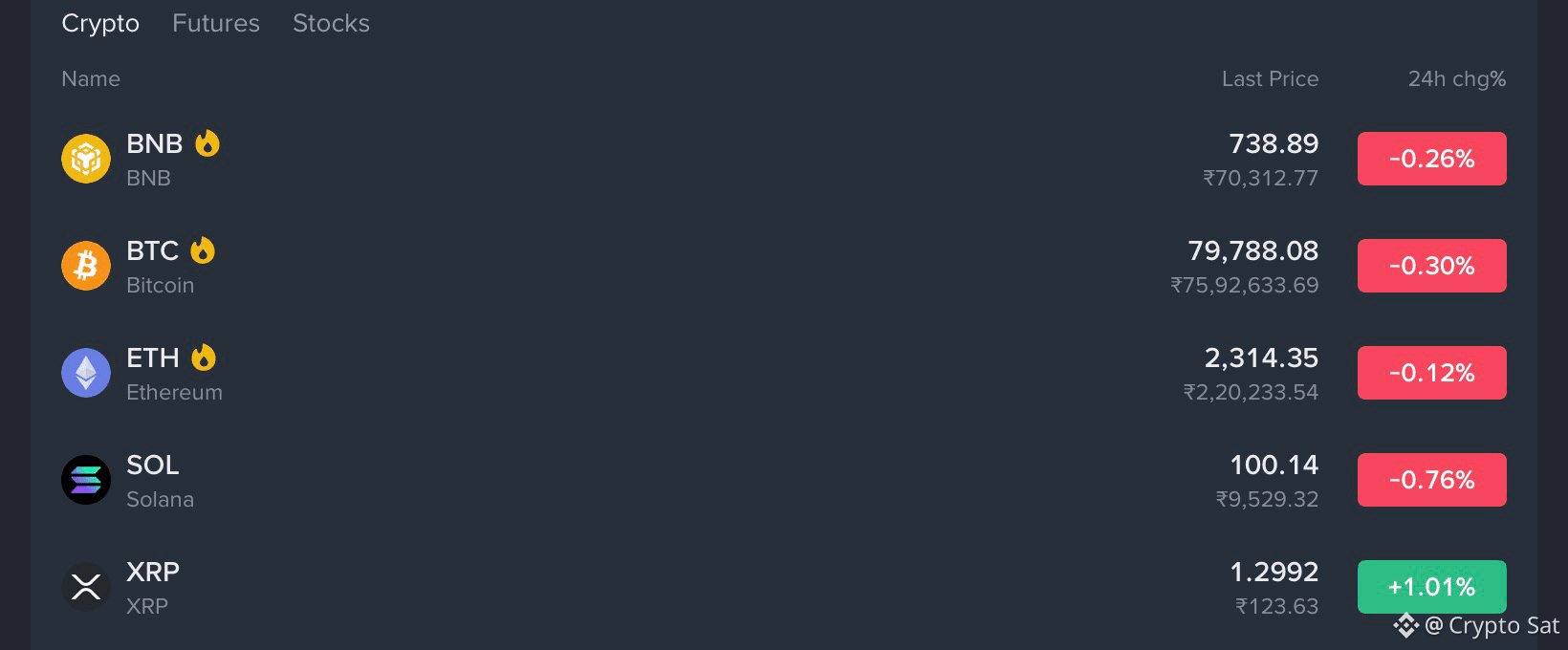
Morning Buddies ☕
$BTC is around $79.7K (-0.3%), $ETH around $2,314 (-0.12%), and $XRP is leading the big caps at $1.30 (+1.01%).
Calm markets are when the patient folks make their plans.
What are you watching this week?
Bitcoin Recovery to 84k or Dump to 74k!!
Morning Buddies ☕
$BTC is around $79.7K (-0.3%), $ETH around $2,314 (-0.12%), and $XRP is leading the big caps at $1.30 (+1.01%).
Calm markets are when the patient folks make their plans.
What are you watching this week?
Bitcoin Recovery to 84k or Dump to 74k!!
$BTC is around $79.7K (-0.3%), $ETH around $2,314 (-0.12%), and $XRP is leading the big caps at $1.30 (+1.01%).
Calm markets are when the patient folks make their plans.
What are you watching this week?
Bitcoin Recovery to 84k or Dump to 74k!!
2
305
·
--
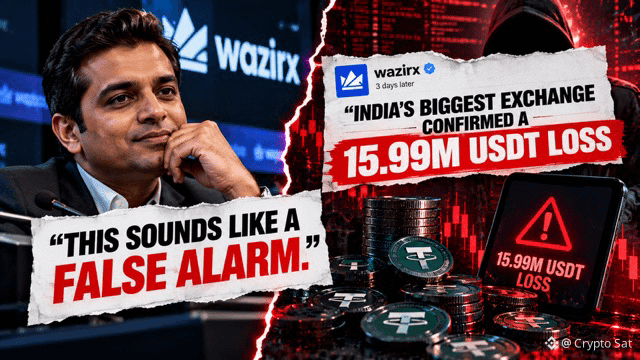
"THIS SOUNDS LIKE A FALSE ALARM."
3 DAYS LATER, INDIA'S BIGGEST EXCHANGE CONFIRMED A 15.99M USDT LOSS
On Oct 22, sleuth Darcy (FlashRescue) flagged ~15.99M USDT and 5,783 TRX leaving CoinDCX wallets to one Tron address, the biggest transfer 15,819,002 USDT, later split toward Binance, OKX and Gate deposit addresses (The Block). CEO Sumit Gupta replied that the wallets "are not breached" and called it a false alarm.
How it unravelled:
1. ZachXBT showed one "retired" address was used by a liquidity provider for 10 months after the July 2025 hack, sweeping user deposits as late as April–May 2026.
2. On Oct 25, CoinDCX's blog admitted its sweeping service "failed for a particular period", so deposits piled up in old, compromised wallets. Loss: 15.99M USDT, absorbed by the company.
3. CoinDCX says user balances, trading and withdrawals were unaffected, and conceded it could have disclosed faster (CoinDesk). ZachXBT told users to withdraw.
History matters here: this is the same exchange that lost ~$44M in July 2025.
The loss is covered, the trust isn't. When an exchange denies first and admits later, I treat its "funds are safe" line as unverified until proof of reserves says otherwise. Not your keys, not your coins.
The funds moved on Tron. $TRX trades ~0.3307, just under its daily MA20 (0.3313).
4H chart:
• Testing: 0.3297–0.3316 (MA20 to recent high)
• If defended: 0.3334 (MA200), then 0.3372
• If lost: 0.3287, then 0.3275
Daily chart:
• Testing: 0.3266–0.3312
• If defended: 0.3349 (MA50), then 0.3492
• If lost: 0.3242, then 0.3208 (Sep 1 low)
Hold 0.3275 → push toward 0.3349
Lose 0.3275 → 0.3208 next
{future}(TRXUSDT)
#SouthKoreaReportedlyWeighsFourthCryptoTaxDelay
"THIS SOUNDS LIKE A FALSE ALARM."
3 DAYS LATER, INDIA'S BIGGEST EXCHANGE CONFIRMED A 15.99M USDT LOSS
On Oct 22, sleuth Darcy (FlashRescue) flagged ~15.99M USDT and 5,783 TRX leaving CoinDCX wallets to one Tron address, the biggest transfer 15,819,002 USDT, later split toward Binance, OKX and Gate deposit addresses (The Block). CEO Sumit Gupta replied that the wallets "are not breached" and called it a false alarm.
How it unravelled:
1. ZachXBT showed one "retired" address was used by a liquidity provider for 10 months after the July 2025 hack, sweeping user deposits as late as April–May 2026.
2. On Oct 25, CoinDCX's blog admitted its sweeping service "failed for a particular period", so deposits piled up in old, compromised wallets. Loss: 15.99M USDT, absorbed by the company.
3. CoinDCX says user balances, trading and withdrawals were unaffected, and conceded it could have disclosed faster (CoinDesk). ZachXBT told users to withdraw.
History matters here: this is the same exchange that lost ~$44M in July 2025.
The loss is covered, the trust isn't. When an exchange denies first and admits later, I treat its "funds are safe" line as unverified until proof of reserves says otherwise. Not your keys, not your coins.
The funds moved on Tron. $TRX trades ~0.3307, just under its daily MA20 (0.3313).
4H chart:
• Testing: 0.3297–0.3316 (MA20 to recent high)
• If defended: 0.3334 (MA200), then 0.3372
• If lost: 0.3287, then 0.3275
Daily chart:
• Testing: 0.3266–0.3312
• If defended: 0.3349 (MA50), then 0.3492
• If lost: 0.3242, then 0.3208 (Sep 1 low)
Hold 0.3275 → push toward 0.3349
Lose 0.3275 → 0.3208 next
#SouthKoreaReportedlyWeighsFourthCryptoTaxDelay
3 DAYS LATER, INDIA'S BIGGEST EXCHANGE CONFIRMED A 15.99M USDT LOSS
On Oct 22, sleuth Darcy (FlashRescue) flagged ~15.99M USDT and 5,783 TRX leaving CoinDCX wallets to one Tron address, the biggest transfer 15,819,002 USDT, later split toward Binance, OKX and Gate deposit addresses (The Block). CEO Sumit Gupta replied that the wallets "are not breached" and called it a false alarm.
How it unravelled:
1. ZachXBT showed one "retired" address was used by a liquidity provider for 10 months after the July 2025 hack, sweeping user deposits as late as April–May 2026.
2. On Oct 25, CoinDCX's blog admitted its sweeping service "failed for a particular period", so deposits piled up in old, compromised wallets. Loss: 15.99M USDT, absorbed by the company.
3. CoinDCX says user balances, trading and withdrawals were unaffected, and conceded it could have disclosed faster (CoinDesk). ZachXBT told users to withdraw.
History matters here: this is the same exchange that lost ~$44M in July 2025.
The loss is covered, the trust isn't. When an exchange denies first and admits later, I treat its "funds are safe" line as unverified until proof of reserves says otherwise. Not your keys, not your coins.
The funds moved on Tron. $TRX trades ~0.3307, just under its daily MA20 (0.3313).
4H chart:
• Testing: 0.3297–0.3316 (MA20 to recent high)
• If defended: 0.3334 (MA200), then 0.3372
• If lost: 0.3287, then 0.3275
Daily chart:
• Testing: 0.3266–0.3312
• If defended: 0.3349 (MA50), then 0.3492
• If lost: 0.3242, then 0.3208 (Sep 1 low)
Hold 0.3275 → push toward 0.3349
Lose 0.3275 → 0.3208 next
#SouthKoreaReportedlyWeighsFourthCryptoTaxDelay
1
2
358
·
--
ສັນຍານກະທິງ
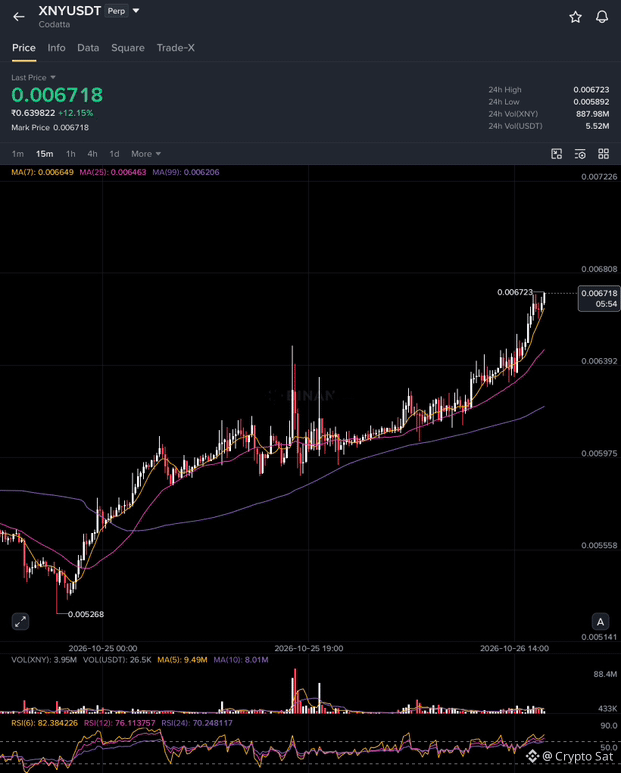
💰 $XNY /USDT
🔼 LONG
✳️ ENTRY (Use DCA STRATEGY) : 6640, 6550, 6480
🎯 TARGETS - 6730, 6815, 6920, 7062, 7200, 7500
🀄️ LEVERAGE - cross 20x
🔴 STOPLOSS - 6400
{future}(XNYUSDT)
#CryptoSatRed
💰 $XNY /USDT
🔼 LONG
✳️ ENTRY (Use DCA STRATEGY) : 6640, 6550, 6480
🎯 TARGETS - 6730, 6815, 6920, 7062, 7200, 7500
🀄️ LEVERAGE - cross 20x
🔴 STOPLOSS - 6400
#CryptoSatRed
🔼 LONG
✳️ ENTRY (Use DCA STRATEGY) : 6640, 6550, 6480
🎯 TARGETS - 6730, 6815, 6920, 7062, 7200, 7500
🀄️ LEVERAGE - cross 20x
🔴 STOPLOSS - 6400
#CryptoSatRed
2
1
3
925
ເຂົ້າສູ່ລະບົບເພື່ອສຳຫຼວດເນື້ອຫາເພີ່ມເຕີມ
ເຂົ້າຮ່ວມກຸ່ມຜູ້ໃຊ້ຄຣິບໂຕທົ່ວໂລກໃນ Binance Square.
⚡️ ໄດ້ຮັບຂໍ້ມູນຫຼ້າສຸດ ແລະ ທີ່ມີປະໂຫຍດກ່ຽວກັບຄຣິບໂຕ.
💬 ໄດ້ຮັບຄວາມໄວ້ວາງໃຈຈາກຕະຫຼາດແລກປ່ຽນຄຣິບໂຕທີ່ໃຫຍ່ທີ່ສຸດໃນໂລກ.
👍 ຄົ້ນຫາຂໍ້ມູນເຊີງເລິກທີ່ແທ້ຈາກນັກສ້າງທີ່ໄດ້ຮັບການຢືນຢັນ.
ອີເມວ / ເບີໂທລະສັບ
ຫົວຂໍ້ທີ່ກໍາລັງນິຍົມ
FOMCWatch
8.9M ຄັ້ງທີ່ເບິ່ງ
26,854 ກຳລັງສົນທະນາ
TradFi News | Warsh Must Explain Why the Fed Is Holding This Week While Keeping a December Hike Alive
Binance News
·6 ຖືກໃຈ
·766 ຄັ້ງທີ່ເບິ່ງ
EthereumDropsBelow$2300
4,155 ຄັ້ງທີ່ເບິ່ງ
94 ກຳລັງສົນທະນາ
BitcoinSlipsBelow$80KAgain
12,140 ຄັ້ງທີ່ເບິ່ງ
66 ກຳລັງສົນທະນາ