
CryptoMister
7.6k ໂພສ

CryptoMister
ລາຍງານ
ບລັອກຜູ້ໃຊ້
3.0K+ ກໍາລັງຕິດຕາມ
2.5K+ ຜູ້ຕິດຕາມ
1.2K+ Liked
ໂພສ
ທັງໝົດ
ວົງຢືມ
·
--
ເບິ່ງການແປ
Binance has announced new bStocks for Salesforce (CRMB) and Hims & Hers Health (HIMSB) on BNB Smart Chain. The pairs are scheduled for Binance Spot and Convert on September 9, with zero maker fees through September 30. It marks another expansion of Binance’s tokenized-securities offering. #BNB #CryptoNews
Binance has announced new bStocks for Salesforce (CRMB) and Hims & Hers Health (HIMSB) on BNB Smart Chain. The pairs are scheduled for Binance Spot and Convert on September 9, with zero maker fees through September 30. It marks another expansion of Binance’s tokenized-securities offering. #BNB #CryptoNews
307
·
--
ເບິ່ງການແປ
Liquid Network has recovered 3,400 BTC from the exploit that drained roughly 4,000 BTC from its federation wallet. About 598 BTC remains outstanding, while the Bitcoin sidechain stays paused as Blockstream and federation members work through security fixes, resolve a chain split, and prepare a coordinated restart. #BTC #CryptoNews
Liquid Network has recovered 3,400 BTC from the exploit that drained roughly 4,000 BTC from its federation wallet. About 598 BTC remains outstanding, while the Bitcoin sidechain stays paused as Blockstream and federation members work through security fixes, resolve a chain split, and prepare a coordinated restart. #BTC #CryptoNews
24
·
--
ເບິ່ງການແປ
Today's gold story: A sharp strengthening of the Japanese yen has eased pressure from the dollar and supported gold. But energy tensions around the Strait of Hormuz are keeping inflation concerns alive. U.S. inflation data due later this week will show which force carries more weight. For PAXG and XAUT, the key backdrop remains this macro balance in physical gold. #PAXG #XAUT
Today's gold story: A sharp strengthening of the Japanese yen has eased pressure from the dollar and supported gold. But energy tensions around the Strait of Hormuz are keeping inflation concerns alive. U.S. inflation data due later this week will show which force carries more weight. For PAXG and XAUT, the key backdrop remains this macro balance in physical gold. #PAXG #XAUT
59
·
--
ເບິ່ງການແປ
BTC/USDT son 24 saatte %1,22 gerileyerek 78.523,26 $ civarındaydı. Buna karşılık BNB/USDT aynı pencerede %1,84 yükselip 758,35 $ seviyesine çıktı.
Tokenlaştırılmış altın tarafında PAXG ve XAUT sırasıyla %0,50 ve %0,49 eksideydi. Günün dikkat çeken noktası, BTC’nin zayıf seyrine karşın BNB’nin pozitif ayrışması; PAXG ile XAUT’un ise neredeyse paralel hareket etmesi.
#BTC #BNB #PAXG #XAUT
BTC/USDT son 24 saatte %1,22 gerileyerek 78.523,26 $ civarındaydı. Buna karşılık BNB/USDT aynı pencerede %1,84 yükselip 758,35 $ seviyesine çıktı.
Tokenlaştırılmış altın tarafında PAXG ve XAUT sırasıyla %0,50 ve %0,49 eksideydi. Günün dikkat çeken noktası, BTC’nin zayıf seyrine karşın BNB’nin pozitif ayrışması; PAXG ile XAUT’un ise neredeyse paralel hareket etmesi.
#BTC #BNB #PAXG #XAUT
Tokenlaştırılmış altın tarafında PAXG ve XAUT sırasıyla %0,50 ve %0,49 eksideydi. Günün dikkat çeken noktası, BTC’nin zayıf seyrine karşın BNB’nin pozitif ayrışması; PAXG ile XAUT’un ise neredeyse paralel hareket etmesi.
#BTC #BNB #PAXG #XAUT
45
·
--
ເບິ່ງການແປ
8 Eylül 14:16 (UTC+6) tokenlaştırılmış altın görünümü:
PAXG/USDT: 4.392,91 $ | son 24 saatte %-0,590
XAUT/USDT: 4.389,78 $ | son 24 saatte %-0,559
Aradaki anlık fark 3,13 $ (%0,071). Paxos, PAXG’nin; Tether Gold ise XAUT’un her bir tokeninin 1 ince troy ons fiziki altını temsil ettiğini belirtiyor. Aynı temaya maruziyet sağlasalar da ihraççı, itfa ve işlem koşulları ayrı değerlendirilmelidir.
#PAXG #XAUT
8 Eylül 14:16 (UTC+6) tokenlaştırılmış altın görünümü:
PAXG/USDT: 4.392,91 $ | son 24 saatte %-0,590
XAUT/USDT: 4.389,78 $ | son 24 saatte %-0,559
Aradaki anlık fark 3,13 $ (%0,071). Paxos, PAXG’nin; Tether Gold ise XAUT’un her bir tokeninin 1 ince troy ons fiziki altını temsil ettiğini belirtiyor. Aynı temaya maruziyet sağlasalar da ihraççı, itfa ve işlem koşulları ayrı değerlendirilmelidir.
#PAXG #XAUT
PAXG/USDT: 4.392,91 $ | son 24 saatte %-0,590
XAUT/USDT: 4.389,78 $ | son 24 saatte %-0,559
Aradaki anlık fark 3,13 $ (%0,071). Paxos, PAXG’nin; Tether Gold ise XAUT’un her bir tokeninin 1 ince troy ons fiziki altını temsil ettiğini belirtiyor. Aynı temaya maruziyet sağlasalar da ihraççı, itfa ve işlem koşulları ayrı değerlendirilmelidir.
#PAXG #XAUT
81
·
--

ບົດຄວາມ
ເບິ່ງການແປ
Dispute-Ready Ops Beat Demo-Ready OpsA robot fleet can look flawless in a controlled demo and still fail the first time a high-value task is disputed in production. Fabric addresses that failure zone directly by linking robot identity, challenge rights, validator review, and settlement rules inside one public coordination lane.
That architecture matters because incident handling is where trust is won or lost. If evidence is scattered across private tools, teams burn time arguing ownership instead of resolving risk. With a unified challenge path, operators can trace what happened, contest low-quality execution, and apply consequences without waiting for closed committee escalation.
This is also where $ROBO has practical weight. Utility and governance are meaningful only when they keep participation and accountability active under pressure. A fast autonomous stack without enforceable oversight does not scale safely; it only scales hidden failure.
My operating filter is simple: before expanding autonomous coverage, check whether disputed outcomes can move through one auditable lane from claim to settlement. If that lane is weak, deployment speed becomes liability acceleration.
As robot usage moves deeper into revenue-critical workflows, which system would you trust more: private exception handling, or public challenge rules with enforceable consequences?
@FabricFND $ROBO #ROBO
Dispute-Ready Ops Beat Demo-Ready Ops
A robot fleet can look flawless in a controlled demo and still fail the first time a high-value task is disputed in production. Fabric addresses that failure zone directly by linking robot identity, challenge rights, validator review, and settlement rules inside one public coordination lane.
That architecture matters because incident handling is where trust is won or lost. If evidence is scattered across private tools, teams burn time arguing ownership instead of resolving risk. With a unified challenge path, operators can trace what happened, contest low-quality execution, and apply consequences without waiting for closed committee escalation.
This is also where $ROBO has practical weight. Utility and governance are meaningful only when they keep participation and accountability active under pressure. A fast autonomous stack without enforceable oversight does not scale safely; it only scales hidden failure.
My operating filter is simple: before expanding autonomous coverage, check whether disputed outcomes can move through one auditable lane from claim to settlement. If that lane is weak, deployment speed becomes liability acceleration.
As robot usage moves deeper into revenue-critical workflows, which system would you trust more: private exception handling, or public challenge rules with enforceable consequences?
@Fabric Foundation $ROBO #ROBO
That architecture matters because incident handling is where trust is won or lost. If evidence is scattered across private tools, teams burn time arguing ownership instead of resolving risk. With a unified challenge path, operators can trace what happened, contest low-quality execution, and apply consequences without waiting for closed committee escalation.
This is also where $ROBO has practical weight. Utility and governance are meaningful only when they keep participation and accountability active under pressure. A fast autonomous stack without enforceable oversight does not scale safely; it only scales hidden failure.
My operating filter is simple: before expanding autonomous coverage, check whether disputed outcomes can move through one auditable lane from claim to settlement. If that lane is weak, deployment speed becomes liability acceleration.
As robot usage moves deeper into revenue-critical workflows, which system would you trust more: private exception handling, or public challenge rules with enforceable consequences?
@Fabric Foundation $ROBO #ROBO
3
77
·
--
ເບິ່ງການແປ
Most autonomy failures are not dramatic crashes; they are disputed micro-decisions nobody can trace end to end. Fabric's model matters because robot identity, challenge submission, validator review, and settlement enforcement sit in the same public lane. When evidence flow is explicit, operators can correct weak behavior before it scales into recurring field risk. That is why $ROBO deserve attention as real control infrastructure. #ROBO @FabricFND
Most autonomy failures are not dramatic crashes; they are disputed micro-decisions nobody can trace end to end. Fabric's model matters because robot identity, challenge submission, validator review, and settlement enforcement sit in the same public lane. When evidence flow is explicit, operators can correct weak behavior before it scales into recurring field risk. That is why $ROBO deserve attention as real control infrastructure. #ROBO @Fabric Foundation
4
56
·
--
ບົດຄວາມ
ເບິ່ງການແປ
Fast Output Is Cheap. Controlled Execution Is the Real Product.I used to evaluate AI systems by how fast they answered.
I changed that after seeing how one plausible sentence can push a system toward the wrong transfer, the wrong update, or the wrong customer message.
Now I treat reliability as execution control.Generation is only a proposal.Verification is the pressure test.Release is a decision boundary.
What I like about Mira is that it turns that boundary into a repeatable process.Instead of trusting one polished response, you can break the response into checkable claims, challenge them with independent validators, and only allow action when evidence is strong enough.
That shift changes team behavior in practice.You stop arguing about wording after impact and start enforcing standards before impact.Disagreement becomes useful signal.Delay becomes explicit control cost.The expensive part is not waiting a little longer.The expensive part is executing a weak claim at full speed.
My operating rule is blunt:if the action is hard to reverse, proof comes before execution.If proof is thin, the system pauses.
Would you rather ship one more fast answer, or ship a decision trail you can defend when stakes are real?
@mira_network $MIRA #Mira
Fast Output Is Cheap. Controlled Execution Is the Real Product.
I used to evaluate AI systems by how fast they answered.
I changed that after seeing how one plausible sentence can push a system toward the wrong transfer, the wrong update, or the wrong customer message.
Now I treat reliability as execution control.Generation is only a proposal.Verification is the pressure test.Release is a decision boundary.
What I like about Mira is that it turns that boundary into a repeatable process.Instead of trusting one polished response, you can break the response into checkable claims, challenge them with independent validators, and only allow action when evidence is strong enough.
That shift changes team behavior in practice.You stop arguing about wording after impact and start enforcing standards before impact.Disagreement becomes useful signal.Delay becomes explicit control cost.The expensive part is not waiting a little longer.The expensive part is executing a weak claim at full speed.
My operating rule is blunt:if the action is hard to reverse, proof comes before execution.If proof is thin, the system pauses.
Would you rather ship one more fast answer, or ship a decision trail you can defend when stakes are real?
@Mira - Trust Layer of AI $MIRA #Mira
I changed that after seeing how one plausible sentence can push a system toward the wrong transfer, the wrong update, or the wrong customer message.
Now I treat reliability as execution control.Generation is only a proposal.Verification is the pressure test.Release is a decision boundary.
What I like about Mira is that it turns that boundary into a repeatable process.Instead of trusting one polished response, you can break the response into checkable claims, challenge them with independent validators, and only allow action when evidence is strong enough.
That shift changes team behavior in practice.You stop arguing about wording after impact and start enforcing standards before impact.Disagreement becomes useful signal.Delay becomes explicit control cost.The expensive part is not waiting a little longer.The expensive part is executing a weak claim at full speed.
My operating rule is blunt:if the action is hard to reverse, proof comes before execution.If proof is thin, the system pauses.
Would you rather ship one more fast answer, or ship a decision trail you can defend when stakes are real?
@Mira - Trust Layer of AI $MIRA #Mira
4
119
·
--
ເບິ່ງການແປ
I stopped treating fluent AI text as evidence the day one unchecked sentence almost triggered a wrong transfer. My Mira rule is simple: challenge claims first, then allow execution. Speed feels good for a minute; a defensible trail protects you when real cost arrives. Would you release an irreversible action without an independent gate? @mira_network $MIRA #Mira
I stopped treating fluent AI text as evidence the day one unchecked sentence almost triggered a wrong transfer. My Mira rule is simple: challenge claims first, then allow execution. Speed feels good for a minute; a defensible trail protects you when real cost arrives. Would you release an irreversible action without an independent gate? @Mira - Trust Layer of AI $MIRA #Mira
4
66
·
--

ບົດຄວາມ
ເບິ່ງການແປ
Public Dispute Rails Protect Real Robot OpsRobots do not usually lose credibility during smooth runs. They lose credibility when a contested action appears and no one can show a reliable path from claim to resolution.
Fabric is valuable because it treats that exact moment as a core systems problem. The protocol ties robot identity, challenge rights, validator review, and settlement logic into one shared coordination lane. That structure gives operators a repeatable way to test evidence quality before trust damage spreads.
In practical operations, this matters immediately. A disputed delivery, inspection, or routing decision should not become a private argument across separate tools and teams. It should move through one visible process where claims are reviewed, consequences are applied, and records stay auditable.
This is where $ROBO has functional value beyond narrative framing. Utility and governance are meaningful only when participation and accountability remain active under pressure. If those controls weaken, autonomy speed becomes liability acceleration.
s revenue-critical workflows, would you trust raw throughput, or a system that can defend contested outcomes in public with enforceable rules?
@FabricFND $ROBO #ROBO
Public Dispute Rails Protect Real Robot Ops
Robots do not usually lose credibility during smooth runs. They lose credibility when a contested action appears and no one can show a reliable path from claim to resolution.
Fabric is valuable because it treats that exact moment as a core systems problem. The protocol ties robot identity, challenge rights, validator review, and settlement logic into one shared coordination lane. That structure gives operators a repeatable way to test evidence quality before trust damage spreads.
In practical operations, this matters immediately. A disputed delivery, inspection, or routing decision should not become a private argument across separate tools and teams. It should move through one visible process where claims are reviewed, consequences are applied, and records stay auditable.
This is where $ROBO has functional value beyond narrative framing. Utility and governance are meaningful only when participation and accountability remain active under pressure. If those controls weaken, autonomy speed becomes liability acceleration.
s revenue-critical workflows, would you trust raw throughput, or a system that can defend contested outcomes in public with enforceable rules?
@Fabric Foundation $ROBO #ROBO
Fabric is valuable because it treats that exact moment as a core systems problem. The protocol ties robot identity, challenge rights, validator review, and settlement logic into one shared coordination lane. That structure gives operators a repeatable way to test evidence quality before trust damage spreads.
In practical operations, this matters immediately. A disputed delivery, inspection, or routing decision should not become a private argument across separate tools and teams. It should move through one visible process where claims are reviewed, consequences are applied, and records stay auditable.
This is where $ROBO has functional value beyond narrative framing. Utility and governance are meaningful only when participation and accountability remain active under pressure. If those controls weaken, autonomy speed becomes liability acceleration.
s revenue-critical workflows, would you trust raw throughput, or a system that can defend contested outcomes in public with enforceable rules?
@Fabric Foundation $ROBO #ROBO
3
22
·
--
ເບິ່ງການແປ
One contested robot action can erase trust faster than any polished demo can build it. Fabric gives operators a public challenge lane with validator review and enforceable consequences, so accountability holds under pressure. That is why $ROBO matter when autonomy touches real operations. #ROBO @FabricFND
One contested robot action can erase trust faster than any polished demo can build it. Fabric gives operators a public challenge lane with validator review and enforceable consequences, so accountability holds under pressure. That is why $ROBO matter when autonomy touches real operations. #ROBO @Fabric Foundation
1
16
·
--

ບົດຄວາມ
ເບິ່ງການແປ
Confidence Is Cheap. Defensible Action Is Expensive.I used to treat AI reliability as a model-quality issue.
Now I treat it as an execution-control issue.
A model can produce a polished answer in seconds.That does not mean the answer should be trusted for action.In high-impact workflows, one weak claim can trigger the wrong transfer, the wrong update, or the wrong message.
This is why Mira is useful to me.The value is not cosmetic confidence.The value is a stricter path from output to execution:decompose claims, apply independent verification pressure, and gate action until evidence is strong enough.
That sequence changes team behavior.Instead of debating style quality after the fact, teams can enforce decision quality before impact.Disagreement becomes a signal, not a nuisance.Delay becomes a control cost, not a failure.
My operating rule is blunt:no irreversible action from a single unchecked answer.If the claim cannot survive independent challenge, the system slows down or stops.
I am not arguing for paralysis.I am arguing for accountability at the decision boundary.Speed still matters.But speed without verification is usually deferred risk.
If your AI system is one step away from irreversible impact, do you optimize for faster output or for stronger evidence before release?
@mira_network $MIRA #Mira
Confidence Is Cheap. Defensible Action Is Expensive.
I used to treat AI reliability as a model-quality issue.
Now I treat it as an execution-control issue.
A model can produce a polished answer in seconds.That does not mean the answer should be trusted for action.In high-impact workflows, one weak claim can trigger the wrong transfer, the wrong update, or the wrong message.
This is why Mira is useful to me.The value is not cosmetic confidence.The value is a stricter path from output to execution:decompose claims, apply independent verification pressure, and gate action until evidence is strong enough.
That sequence changes team behavior.Instead of debating style quality after the fact, teams can enforce decision quality before impact.Disagreement becomes a signal, not a nuisance.Delay becomes a control cost, not a failure.
My operating rule is blunt:no irreversible action from a single unchecked answer.If the claim cannot survive independent challenge, the system slows down or stops.
I am not arguing for paralysis.I am arguing for accountability at the decision boundary.Speed still matters.But speed without verification is usually deferred risk.
If your AI system is one step away from irreversible impact, do you optimize for faster output or for stronger evidence before release?
@Mira - Trust Layer of AI $MIRA #Mira
Now I treat it as an execution-control issue.
A model can produce a polished answer in seconds.That does not mean the answer should be trusted for action.In high-impact workflows, one weak claim can trigger the wrong transfer, the wrong update, or the wrong message.
This is why Mira is useful to me.The value is not cosmetic confidence.The value is a stricter path from output to execution:decompose claims, apply independent verification pressure, and gate action until evidence is strong enough.
That sequence changes team behavior.Instead of debating style quality after the fact, teams can enforce decision quality before impact.Disagreement becomes a signal, not a nuisance.Delay becomes a control cost, not a failure.
My operating rule is blunt:no irreversible action from a single unchecked answer.If the claim cannot survive independent challenge, the system slows down or stops.
I am not arguing for paralysis.I am arguing for accountability at the decision boundary.Speed still matters.But speed without verification is usually deferred risk.
If your AI system is one step away from irreversible impact, do you optimize for faster output or for stronger evidence before release?
@Mira - Trust Layer of AI $MIRA #Mira
2
35
·
--
ເບິ່ງການແປ
I have seen clean AI answers fail on one critical line, and that single miss can trigger expensive damage in live systems.
What I value in Mira is the execution discipline: break output into claims, pressure-test with independent verification, then decide whether action is allowed.
My rule is direct: if an action is irreversible, verification must come before execution.
If your agent can move money, modify production data, or touch customer-critical flow, would you let one unchecked answer decide the next step?
@mira_network $MIRA #Mira
I have seen clean AI answers fail on one critical line, and that single miss can trigger expensive damage in live systems.
What I value in Mira is the execution discipline: break output into claims, pressure-test with independent verification, then decide whether action is allowed.
My rule is direct: if an action is irreversible, verification must come before execution.
If your agent can move money, modify production data, or touch customer-critical flow, would you let one unchecked answer decide the next step?
@Mira - Trust Layer of AI $MIRA #Mira
What I value in Mira is the execution discipline: break output into claims, pressure-test with independent verification, then decide whether action is allowed.
My rule is direct: if an action is irreversible, verification must come before execution.
If your agent can move money, modify production data, or touch customer-critical flow, would you let one unchecked answer decide the next step?
@Mira - Trust Layer of AI $MIRA #Mira

1
16
·
--
ບົດຄວາມ
ເບິ່ງການແປ
I No Longer Reward Fast AI Answers That Cannot Be DefendedI reviewed four Mira campaign posts and learned the same hard lesson again: clean technical writing is not enough when the market rewards conviction and usefulness.
Most people still frame AI quality as "better wording" or "faster output." I think that framing misses where losses actually happen. The real failure point is execution after a weak claim slips through and triggers a trade, a customer message, or an irreversible action.
In real deployments, discussion often shifts to narratives while execution risk stays under-modeled. My focus is different: can a system force evidence before action? If the answer is no, the system is still fragile, even when the text looks impressive.
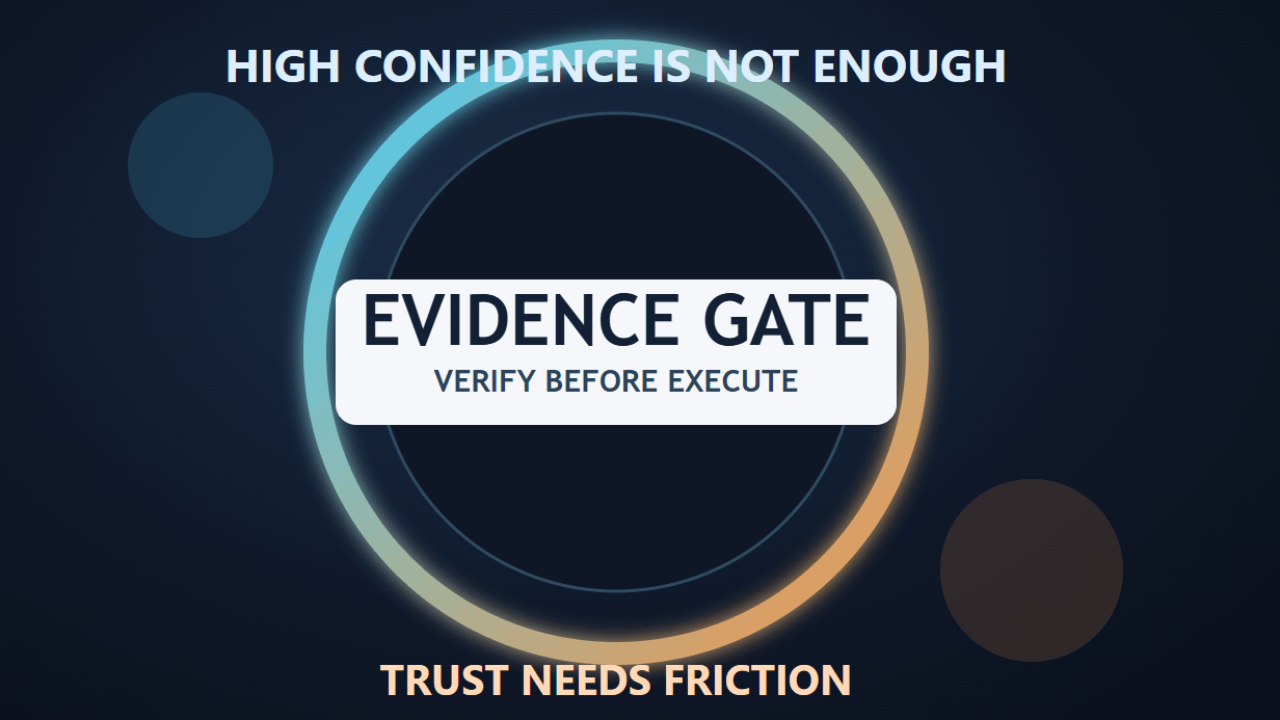
What I like about Mira is the discipline it implies: break confidence theater, invite independent challenge, and refuse execution when evidence is thin. Disagreement is not noise in this model; disagreement is a risk signal.
My rule is blunt: no irreversible action until verification pressure has tested the claim from multiple angles. That may cost a little speed, but it saves expensive mistakes.
If your agent can move money or modify production data today, what matters more to you tomorrow: a faster sentence or a defensible decision trail?
@mira_network $MIRA #Mira
I No Longer Reward Fast AI Answers That Cannot Be Defended
I reviewed four Mira campaign posts and learned the same hard lesson again: clean technical writing is not enough when the market rewards conviction and usefulness.
Most people still frame AI quality as "better wording" or "faster output." I think that framing misses where losses actually happen. The real failure point is execution after a weak claim slips through and triggers a trade, a customer message, or an irreversible action.
In real deployments, discussion often shifts to narratives while execution risk stays under-modeled. My focus is different: can a system force evidence before action? If the answer is no, the system is still fragile, even when the text looks impressive.
What I like about Mira is the discipline it implies: break confidence theater, invite independent challenge, and refuse execution when evidence is thin. Disagreement is not noise in this model; disagreement is a risk signal.
My rule is blunt: no irreversible action until verification pressure has tested the claim from multiple angles. That may cost a little speed, but it saves expensive mistakes.
If your agent can move money or modify production data today, what matters more to you tomorrow: a faster sentence or a defensible decision trail?
@Mira - Trust Layer of AI $MIRA #Mira
Most people still frame AI quality as "better wording" or "faster output." I think that framing misses where losses actually happen. The real failure point is execution after a weak claim slips through and triggers a trade, a customer message, or an irreversible action.
In real deployments, discussion often shifts to narratives while execution risk stays under-modeled. My focus is different: can a system force evidence before action? If the answer is no, the system is still fragile, even when the text looks impressive.
What I like about Mira is the discipline it implies: break confidence theater, invite independent challenge, and refuse execution when evidence is thin. Disagreement is not noise in this model; disagreement is a risk signal.
My rule is blunt: no irreversible action until verification pressure has tested the claim from multiple angles. That may cost a little speed, but it saves expensive mistakes.
If your agent can move money or modify production data today, what matters more to you tomorrow: a faster sentence or a defensible decision trail?
@Mira - Trust Layer of AI $MIRA #Mira
2
66
·
--
ເບິ່ງການແປ
I watched another polished AI answer hide a costly miss. Since then, I treat unverified output as liability, not productivity. If your agent can place a trade, why execute before independent checks? @mira_network $MIRA #Mira
I watched another polished AI answer hide a costly miss. Since then, I treat unverified output as liability, not productivity. If your agent can place a trade, why execute before independent checks? @Mira - Trust Layer of AI $MIRA #Mira
1
15
·
--
ບົດຄວາມ
ເບິ່ງການແປ
Disputes Need Public Resolution LanesThe hardest robotics failures are not model errors. They are governance failures after a contested outcome.
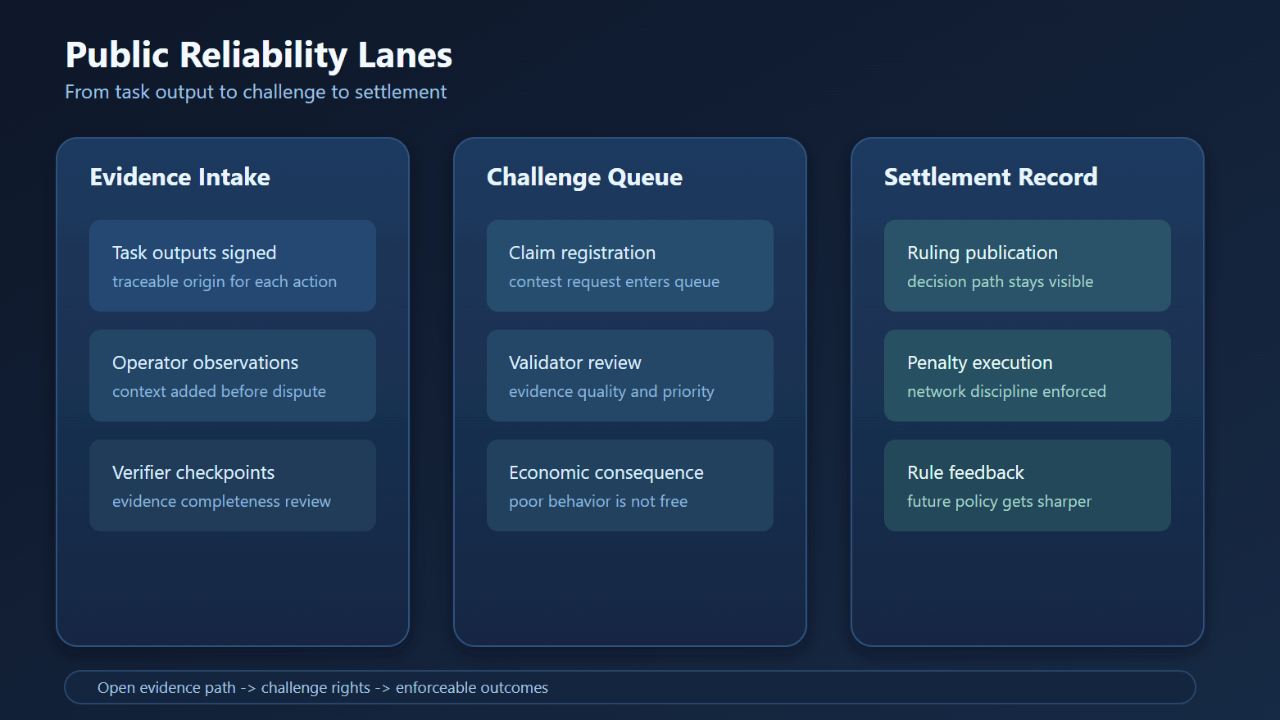
When a robot decision is challenged, teams usually discover too late that accountability is fragmented. One system stores output logs, another holds operator notes, and a separate process decides penalties. By the time review starts, trust is already damaged because nobody can follow one auditable path from action to settlement.
This is where Fabric's architecture direction is practical. The protocol thesis combines identity, challenge flow, validator participation, and economic consequence in one public coordination layer. That structure matters more than abstract "AI quality" claims because production systems break under disagreement, not under perfect demo conditions.
I also think this is why $ROBO should be evaluated by operational utility, not by narrative noise. A token only becomes strategic when it supports measurable behavior: who reviews evidence, who can challenge, how bad execution is penalized, and how policy can evolve without shutting the network down.
For builders, the key filter is simple. If your robot stack cannot show a clean dispute trail, you do not have a reliability system yet. You have an incident backlog waiting to happen.
As autonomous services scale, would you rather rely on private postmortems or on a public challenge process with visible rules and enforceable outcomes?
@FabricFND $ROBO #ROBO
Disputes Need Public Resolution Lanes
The hardest robotics failures are not model errors. They are governance failures after a contested outcome.
When a robot decision is challenged, teams usually discover too late that accountability is fragmented. One system stores output logs, another holds operator notes, and a separate process decides penalties. By the time review starts, trust is already damaged because nobody can follow one auditable path from action to settlement.
This is where Fabric's architecture direction is practical. The protocol thesis combines identity, challenge flow, validator participation, and economic consequence in one public coordination layer. That structure matters more than abstract "AI quality" claims because production systems break under disagreement, not under perfect demo conditions.
I also think this is why $ROBO should be evaluated by operational utility, not by narrative noise. A token only becomes strategic when it supports measurable behavior: who reviews evidence, who can challenge, how bad execution is penalized, and how policy can evolve without shutting the network down.
For builders, the key filter is simple. If your robot stack cannot show a clean dispute trail, you do not have a reliability system yet. You have an incident backlog waiting to happen.
As autonomous services scale, would you rather rely on private postmortems or on a public challenge process with visible rules and enforceable outcomes?
@Fabric Foundation $ROBO #ROBO
When a robot decision is challenged, teams usually discover too late that accountability is fragmented. One system stores output logs, another holds operator notes, and a separate process decides penalties. By the time review starts, trust is already damaged because nobody can follow one auditable path from action to settlement.
This is where Fabric's architecture direction is practical. The protocol thesis combines identity, challenge flow, validator participation, and economic consequence in one public coordination layer. That structure matters more than abstract "AI quality" claims because production systems break under disagreement, not under perfect demo conditions.
I also think this is why $ROBO should be evaluated by operational utility, not by narrative noise. A token only becomes strategic when it supports measurable behavior: who reviews evidence, who can challenge, how bad execution is penalized, and how policy can evolve without shutting the network down.
For builders, the key filter is simple. If your robot stack cannot show a clean dispute trail, you do not have a reliability system yet. You have an incident backlog waiting to happen.
As autonomous services scale, would you rather rely on private postmortems or on a public challenge process with visible rules and enforceable outcomes?
@Fabric Foundation $ROBO #ROBO
4
138
·
--
ເບິ່ງການແປ
Most robot projects fail at the same point: when a result is contested and nobody knows which evidence path to trust. Fabric's challenge-based verification turns that chaos into a process. For @FabricFND and $ROBO , reliability is not a slogan; it is a ruleset with consequences. #ROBO
Most robot projects fail at the same point: when a result is contested and nobody knows which evidence path to trust. Fabric's challenge-based verification turns that chaos into a process. For @Fabric Foundation and $ROBO , reliability is not a slogan; it is a ruleset with consequences. #ROBO
26
·
--
ບົດຄວາມ
ເບິ່ງການແປ
Robot Reliability Starts Where Demo Quality EndsI used to evaluate robot projects by demo quality. That was a mistake.
A strong demo only proves a system can succeed under controlled conditions. It says almost nothing about what happens when tasks are messy, operators disagree, and real money is on the line. In production, failure is rarely one dramatic crash. It is usually a chain of small unchecked decisions that nobody can challenge fast enough.
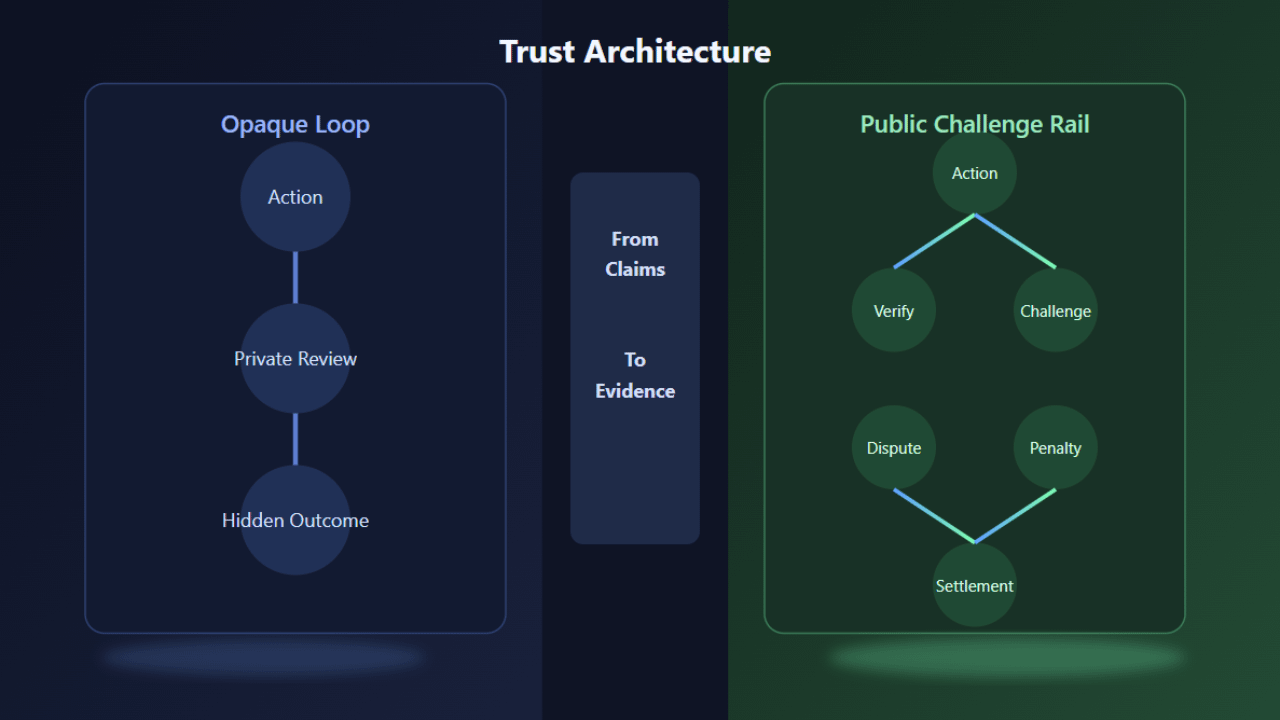
That is why Fabric stands out to me. The protocol framing is not "trust us, we built good models." The framing is operational: give robot actions an identity, make outcomes challengeable, and keep governance visible instead of hidden behind one private operator.
This matters because reliability is not just model accuracy. Reliability is process quality over time. Who can review a bad result? How is a dispute resolved? What penalty exists for repeated low-quality behavior? If those answers are unclear, scale becomes risk amplification.
My practical rule now is simple: if an action cannot be reviewed and contested through public rules, it should not be treated as trustworthy automation. Fabric's architecture direction aligns with that standard by connecting verification flows, incentive pressure, and policy updates in one coordination layer.
So the strategic question is direct: as robots move from demo rooms into public and commercial environments, do you want closed promises or auditable process discipline?
@FabricFND $ROBO #ROBO
Robot Reliability Starts Where Demo Quality Ends
I used to evaluate robot projects by demo quality. That was a mistake.
A strong demo only proves a system can succeed under controlled conditions. It says almost nothing about what happens when tasks are messy, operators disagree, and real money is on the line. In production, failure is rarely one dramatic crash. It is usually a chain of small unchecked decisions that nobody can challenge fast enough.
That is why Fabric stands out to me. The protocol framing is not "trust us, we built good models." The framing is operational: give robot actions an identity, make outcomes challengeable, and keep governance visible instead of hidden behind one private operator.
This matters because reliability is not just model accuracy. Reliability is process quality over time. Who can review a bad result? How is a dispute resolved? What penalty exists for repeated low-quality behavior? If those answers are unclear, scale becomes risk amplification.
My practical rule now is simple: if an action cannot be reviewed and contested through public rules, it should not be treated as trustworthy automation. Fabric's architecture direction aligns with that standard by connecting verification flows, incentive pressure, and policy updates in one coordination layer.
So the strategic question is direct: as robots move from demo rooms into public and commercial environments, do you want closed promises or auditable process discipline?
@Fabric Foundation $ROBO #ROBO
A strong demo only proves a system can succeed under controlled conditions. It says almost nothing about what happens when tasks are messy, operators disagree, and real money is on the line. In production, failure is rarely one dramatic crash. It is usually a chain of small unchecked decisions that nobody can challenge fast enough.
That is why Fabric stands out to me. The protocol framing is not "trust us, we built good models." The framing is operational: give robot actions an identity, make outcomes challengeable, and keep governance visible instead of hidden behind one private operator.
This matters because reliability is not just model accuracy. Reliability is process quality over time. Who can review a bad result? How is a dispute resolved? What penalty exists for repeated low-quality behavior? If those answers are unclear, scale becomes risk amplification.
My practical rule now is simple: if an action cannot be reviewed and contested through public rules, it should not be treated as trustworthy automation. Fabric's architecture direction aligns with that standard by connecting verification flows, incentive pressure, and policy updates in one coordination layer.
So the strategic question is direct: as robots move from demo rooms into public and commercial environments, do you want closed promises or auditable process discipline?
@Fabric Foundation $ROBO #ROBO
1
147
·
--
ເບິ່ງການແປ
I stopped trusting robot demos the day a clean output caused a bad operational decision. Capability is easy to show; accountability is hard to engineer. Fabric's public challenge and governance rails are why this thesis matters for real deployment. @FabricFND $ROBO #ROBO
I stopped trusting robot demos the day a clean output caused a bad operational decision. Capability is easy to show; accountability is hard to engineer. Fabric's public challenge and governance rails are why this thesis matters for real deployment. @Fabric Foundation $ROBO #ROBO
1
18
·
--

ບົດຄວາມ
ເບິ່ງການແປ
Confidence Is Not Safety: Why Mira Adds a Verification Gate Before ExecutionI used to think the AI reliability problem was mostly a model quality problem.
I do not think that anymore.
The real break point is what happens between output and execution.
An answer can sound sharp, pass a quick human glance, and still contain one bad claim that triggers the wrong action. In finance, operations, or compliance work, that single miss is enough to create real damage. This is why Mira is interesting to me: it treats reliability as a control step, not a branding statement.
On December 4, 2025, Binance put MIRA in a HODLer Airdrops announcement and many people focused on token headlines. I care more about the system design behind it. The core idea is to break output into smaller claims, route those claims to independent verifiers, and decide whether the response is strong enough to pass an execution gate.
The difference is practical:- Generation says what could be true.- Verification tests what can be defended.- Policy decides what is allowed to execute.
That sequence is the part many teams still skip.
My current rule for agent workflows is simple: no irreversible action without a verification checkpoint. Fast text is not the same thing as safe execution. If the claim cannot survive independent checks, the system should slow down or stop.
I see Mira as infrastructure for that discipline. Not hype. Not magic. Just a harder standard for when AI is allowed to move from "output" to "impact."
If your agent can trigger a trade, edit a database, or send a customer-critical message, would you rather optimize first for speed or for evidence?
@mira_network $MIRA #Mira
Confidence Is Not Safety: Why Mira Adds a Verification Gate Before Execution
I used to think the AI reliability problem was mostly a model quality problem.
I do not think that anymore.
The real break point is what happens between output and execution.
An answer can sound sharp, pass a quick human glance, and still contain one bad claim that triggers the wrong action. In finance, operations, or compliance work, that single miss is enough to create real damage. This is why Mira is interesting to me: it treats reliability as a control step, not a branding statement.
On December 4, 2025, Binance put MIRA in a HODLer Airdrops announcement and many people focused on token headlines. I care more about the system design behind it. The core idea is to break output into smaller claims, route those claims to independent verifiers, and decide whether the response is strong enough to pass an execution gate.
The difference is practical:- Generation says what could be true.- Verification tests what can be defended.- Policy decides what is allowed to execute.
That sequence is the part many teams still skip.
My current rule for agent workflows is simple: no irreversible action without a verification checkpoint. Fast text is not the same thing as safe execution. If the claim cannot survive independent checks, the system should slow down or stop.
I see Mira as infrastructure for that discipline. Not hype. Not magic. Just a harder standard for when AI is allowed to move from "output" to "impact."
If your agent can trigger a trade, edit a database, or send a customer-critical message, would you rather optimize first for speed or for evidence?
@Mira - Trust Layer of AI $MIRA #Mira
I do not think that anymore.
The real break point is what happens between output and execution.
An answer can sound sharp, pass a quick human glance, and still contain one bad claim that triggers the wrong action. In finance, operations, or compliance work, that single miss is enough to create real damage. This is why Mira is interesting to me: it treats reliability as a control step, not a branding statement.
On December 4, 2025, Binance put MIRA in a HODLer Airdrops announcement and many people focused on token headlines. I care more about the system design behind it. The core idea is to break output into smaller claims, route those claims to independent verifiers, and decide whether the response is strong enough to pass an execution gate.
The difference is practical:- Generation says what could be true.- Verification tests what can be defended.- Policy decides what is allowed to execute.
That sequence is the part many teams still skip.
My current rule for agent workflows is simple: no irreversible action without a verification checkpoint. Fast text is not the same thing as safe execution. If the claim cannot survive independent checks, the system should slow down or stop.
I see Mira as infrastructure for that discipline. Not hype. Not magic. Just a harder standard for when AI is allowed to move from "output" to "impact."
If your agent can trigger a trade, edit a database, or send a customer-critical message, would you rather optimize first for speed or for evidence?
@Mira - Trust Layer of AI $MIRA #Mira
77
ເຂົ້າສູ່ລະບົບເພື່ອສຳຫຼວດເນື້ອຫາເພີ່ມເຕີມ
ເຂົ້າຮ່ວມກຸ່ມຜູ້ໃຊ້ຄຣິບໂຕທົ່ວໂລກໃນ Binance Square.
⚡️ ໄດ້ຮັບຂໍ້ມູນຫຼ້າສຸດ ແລະ ທີ່ມີປະໂຫຍດກ່ຽວກັບຄຣິບໂຕ.
💬 ໄດ້ຮັບຄວາມໄວ້ວາງໃຈຈາກຕະຫຼາດແລກປ່ຽນຄຣິບໂຕທີ່ໃຫຍ່ທີ່ສຸດໃນໂລກ.
👍 ຄົ້ນຫາຂໍ້ມູນເຊີງເລິກທີ່ແທ້ຈາກນັກສ້າງທີ່ໄດ້ຮັບການຢືນຢັນ.
ອີເມວ / ເບີໂທລະສັບ
ຫົວຂໍ້ທີ່ກໍາລັງນິຍົມ
RippleLobbiesToAdvanceCLARITYActVote
1,774 views
103 ກຳລັງສົນທະນາ
#ripplelobbiestoadvanceclarityactvote
🚨🏛️ NAGTUTULAK NG MALAKAS ANG RIPPLE HABANG PAPALAPIT ANG PAGBOTO SA CLARITY ACT: ANG REGULATORY MOMENT NG XRP? 🏛️🚨
Kapag nananatiling malabo ang mga patakaran, kahit ang malalakas na tagabuo ay dumadaan sa mga anino.
Ngunit kapag lumalapit ang kalinawan, nagsisimulang panoorin ng merkado kung sino ang unang kumilos.
Ang Ripple ay bahagi na ngayon ng mas malawak na kampanya sa pag-lobby ng industriya bago ang Setyembre 15 na procedural vote sa CLARITY Act, isang pangunahing U.S. crypto market-structure bill.
Layunin ng panukala na magtakda ng mas malinaw na hangganan sa pagitan ng mga securities at commodities habang tinutukoy ang mga responsibilidad sa regulasyon sa SEC at CFTC. Ang Senate Banking Committee dati nang nausad ang bersyon nito na 15-9, at ipinadala sa Senate floor.
Mas malaki ang interes ng Ripple kaysa sa isang kumpanya lamang. Ang mas malinaw na mga patakaran ay maaaring mabawasan ang regulasyong kawalan ng katiyakan na humubog kung paano bumubuo, nagpapatakbo, at umaakit ng institutional capital ang mga crypto firm sa U.S.
Ngunit hindi ito garantisadong tagumpay sa batas. Ang panukala ay haharap pa rin sa mga hindi pagkakasunduan sa pulitika, kabilang ang mga usapin tungkol sa consumer protections, mga alalahanin sa pagbabangko, at mga probisyon sa etika.
Kaya ang Setyembre 15 ay higit pa sa isa pang petsa sa Kongreso. Nagiging test ito kung ang mga taon ng crypto lobbying ay sa wakas makapagsasalin sa mas malinaw na market structure sa U.S.
Sa crypto, ang kalinawan ay hindi lang papel. Maaari nitong tukuyin kung saan mananatili ang kapital, mga kumpanya, at ang inobasyon.
❓ Sa tingin mo, magiging regulatory breakthrough ba ang CLARITY Act—para sa Ripple at sa mas malawak na crypto industry—na matagal na nilang hinihintay?
Disclaimer: Impormasyonal na nilalaman ito, hindi payo sa pananalapi o pamumuhunan.
#XRP #CLARITYAct #GrowWithSAC $SOPH $FORM $XRP
#RippleLobbiesToAdvanceCLARITYActVote
Sienna Leo-你真棒-带我走
·1 ຖືກໃຈ
·1.3k views
GrayscaleZcashETFTops$500M
4,908 views
63 ກຳລັງສົນທະນາ
ChinaAugustCPIRises0.8%YoY
10,913 views
374 ກຳລັງສົນທະນາ