

Marcus Corvinus
16k ໂພສ

Marcus Corvinus
 Square Verified+
ລາຍງານ
ບລັອກຜູ້ໃຊ້
Marcus is Here. Crypto since 2015. Web3 builder. Verified KOL on Binance Square. Let's grow together: X- @CryptoBull009

Traders League Badge Beginner

Top Voices
129 ກໍາລັງຕິດຕາມ
78.8K+ ຜູ້ຕິດຕາມ
95.2K+ Liked
2 ຫຼຽນລາງວັນ
ໂພສ
ທັງໝົດ
ວົງຢືມ
ປັກໝຸດ
·
--
ສັນຍານກະທິງ
136
10
190
22k
ປັກໝຸດ
ບົດຄວາມ
Why Binance Square Feels Like My Home in CryptoI’ll say it the simple way.
I don’t like wearing “square.” I never did. I don’t like boxes, fixed lanes, or platforms that force you to think in one direction.
But Binance Square isn’t a box.
It’s more like a live crypto street—open, noisy in a good way, full of real people, real opinions, and real updates happening at the same time. Every time I open it, I feel like I’m stepping into the place where crypto is actually being discussed properly, not just posted.
And that’s why I keep choosing it.
Binance Square doesn’t feel like a feed, it feels like a place
Most places feel like endless scrolling.
Binance Square feels like a place people meet.
You can literally watch the market mood change in real time. One moment everyone is calm, next moment something breaks out and the entire community is discussing it from different angles—news, charts, fundamentals, risk, narratives, timing. It feels alive because it’s not one-way content. It’s two-way conversation.
That’s what I mean when I say there is a full real community here. Everything gets discussed. Nothing feels too small, too early, or too “niche” to talk about.
If it matters in crypto, it’s already here.
The value-to-value creator culture is rare
What makes Binance Square special isn’t just that people post. It’s how people post.
There are creators here who consistently bring value. You can feel it immediately:
Posts that make you understand a move instead of fear it
Breakdowns that explain why something matters
Updates that feel fresh, not recycled
Warnings that save people from bad decisions
Research that feels like time was actually spent on it
This is the kind of environment where you naturally grow, because your mind stays sharp. You don’t just consume content, you learn patterns.
And when a platform becomes “value-to-value,” it stops being entertainment and starts becoming education.
Every crypto update feels different here
This is one of the biggest reasons I stay.
Even when everyone is talking about the same topic, Binance Square doesn’t feel copy-pasted. You’ll see ten people cover one update, but each one brings a different angle—market structure, macro view, on-chain perspective, risk management, timing, sentiment.
So instead of getting bored, you get layered understanding.
That’s why I can say this confidently:
Anything about the crypto space is always available on Binance Square.
Not just available—explained, debated, broken down, and updated.
It’s where the whole crypto world gets connected in one place
Crypto is not only charts.
It’s also:
narrativesnew listings and rotationsstablecoin flowsbig wallets movingtoken unlock pressurehype cycles and reality checkssecurity issues and scamsregulation impactscommunity sentiment
On Binance Square, all of this lives together. That matters because crypto never moves because of one reason. It moves because many reasons collide.
This is why Binance Square feels complete: you’re not forced to leave the platform just to understand what’s going on.
The campaigns keep the community active and moving
One thing I genuinely like is the campaign culture. It keeps the community alive. It creates momentum. It makes creators show up, think, compete, and improve.
Campaigns don’t just give rewards—they create direction. They push people to contribute more, write better, and stay consistent. It keeps the ecosystem warm, not cold.
And if you’re active, you feel it immediately. You feel like you’re part of something happening, not just watching from outside.
Why I always prioritize Binance Square above everything else
I’m not even trying to “compare” in a loud way, but the difference is clear.
In other places, crypto discussion often turns into noise: people repeat the same lines, chase attention, and argue without adding any clarity. It’s loud, but it’s not helpful.
Binance Square has noise too sometimes—crypto is crypto—but it has a stronger backbone:
More focus on actual market reality
More creators trying to be useful
More community discussion that adds something
More learning if you pay attention
So even if other platforms exist, Binance Square still stays above them for me because I actually leave this place smarter than I entered.
My personal story with Binance Square (63.9K followers, and still learning daily)
This part matters to me.
I’m sitting at 63.9K followers on Binance Square, and that number didn’t happen from luck.
It happened because I stayed consistent.
I learned. I posted. I improved. I studied the market. I listened to the community. I kept showing up. And the more I stayed active, the more the platform gave me something back—knowledge, reach, growth, and opportunities.
I can say it honestly:
I learn almost everything from Binance Square about the crypto space.
Not because I can’t learn elsewhere, but because Binance Square gives it to me in the most practical format:
The update
The reaction
The debate
The lesson
The next move
And yes… I’ve earned from Binance Square in ways people wouldn’t even imagine. Not just “a little.” I mean real value. The kind of value that comes when you become consistent, active, and serious about what you’re doing.
I stay active, I participate, and I take every campaign seriously
I’m not the type to appear once and disappear for weeks.
I stay active.
I comment, I engage, I post, I contribute. And whenever there’s a campaign, I’m not watching it… I’m in it.
Because campaigns are not just rewards to me. They’re a signal that Binance Square is alive and expanding. They’re a reason to stay sharp, push harder, and stay consistent.
That’s why I actively participate in every campaign—because it keeps me connected to the community and keeps my growth moving forward.
Binance Square is the only “Square” I actually like
So yeah… I don’t like wearing square.
But Binance Square is the exception.
Because it doesn’t make me feel boxed in. It makes me feel plugged in—to the market, to creators, to discussions, to real-time updates, and to a community that actually understands crypto.
That’s why it’s my all-time favorite.
And that’s why, no matter what else exists out there, I’ll keep prioritizing Binance Square above everything else.
Because for me, Binance Square isn’t just where I post.
It’s where I grow.
#Square #squarecreator #BinanceSquare
Why Binance Square Feels Like My Home in Crypto
I’ll say it the simple way.
I don’t like wearing “square.” I never did. I don’t like boxes, fixed lanes, or platforms that force you to think in one direction.
But Binance Square isn’t a box.
It’s more like a live crypto street—open, noisy in a good way, full of real people, real opinions, and real updates happening at the same time. Every time I open it, I feel like I’m stepping into the place where crypto is actually being discussed properly, not just posted.
And that’s why I keep choosing it.
Binance Square doesn’t feel like a feed, it feels like a place
Most places feel like endless scrolling.
Binance Square feels like a place people meet.
You can literally watch the market mood change in real time. One moment everyone is calm, next moment something breaks out and the entire community is discussing it from different angles—news, charts, fundamentals, risk, narratives, timing. It feels alive because it’s not one-way content. It’s two-way conversation.
That’s what I mean when I say there is a full real community here. Everything gets discussed. Nothing feels too small, too early, or too “niche” to talk about.
If it matters in crypto, it’s already here.
The value-to-value creator culture is rare
What makes Binance Square special isn’t just that people post. It’s how people post.
There are creators here who consistently bring value. You can feel it immediately:
Posts that make you understand a move instead of fear it
Breakdowns that explain why something matters
Updates that feel fresh, not recycled
Warnings that save people from bad decisions
Research that feels like time was actually spent on it
This is the kind of environment where you naturally grow, because your mind stays sharp. You don’t just consume content, you learn patterns.
And when a platform becomes “value-to-value,” it stops being entertainment and starts becoming education.
Every crypto update feels different here
This is one of the biggest reasons I stay.
Even when everyone is talking about the same topic, Binance Square doesn’t feel copy-pasted. You’ll see ten people cover one update, but each one brings a different angle—market structure, macro view, on-chain perspective, risk management, timing, sentiment.
So instead of getting bored, you get layered understanding.
That’s why I can say this confidently:
Anything about the crypto space is always available on Binance Square.
Not just available—explained, debated, broken down, and updated.
It’s where the whole crypto world gets connected in one place
Crypto is not only charts.
It’s also:
narrativesnew listings and rotationsstablecoin flowsbig wallets movingtoken unlock pressurehype cycles and reality checkssecurity issues and scamsregulation impactscommunity sentiment
On Binance Square, all of this lives together. That matters because crypto never moves because of one reason. It moves because many reasons collide.
This is why Binance Square feels complete: you’re not forced to leave the platform just to understand what’s going on.
The campaigns keep the community active and moving
One thing I genuinely like is the campaign culture. It keeps the community alive. It creates momentum. It makes creators show up, think, compete, and improve.
Campaigns don’t just give rewards—they create direction. They push people to contribute more, write better, and stay consistent. It keeps the ecosystem warm, not cold.
And if you’re active, you feel it immediately. You feel like you’re part of something happening, not just watching from outside.
Why I always prioritize Binance Square above everything else
I’m not even trying to “compare” in a loud way, but the difference is clear.
In other places, crypto discussion often turns into noise: people repeat the same lines, chase attention, and argue without adding any clarity. It’s loud, but it’s not helpful.
Binance Square has noise too sometimes—crypto is crypto—but it has a stronger backbone:
More focus on actual market reality
More creators trying to be useful
More community discussion that adds something
More learning if you pay attention
So even if other platforms exist, Binance Square still stays above them for me because I actually leave this place smarter than I entered.
My personal story with Binance Square (63.9K followers, and still learning daily)
This part matters to me.
I’m sitting at 63.9K followers on Binance Square, and that number didn’t happen from luck.
It happened because I stayed consistent.
I learned. I posted. I improved. I studied the market. I listened to the community. I kept showing up. And the more I stayed active, the more the platform gave me something back—knowledge, reach, growth, and opportunities.
I can say it honestly:
I learn almost everything from Binance Square about the crypto space.
Not because I can’t learn elsewhere, but because Binance Square gives it to me in the most practical format:
The update
The reaction
The debate
The lesson
The next move
And yes… I’ve earned from Binance Square in ways people wouldn’t even imagine. Not just “a little.” I mean real value. The kind of value that comes when you become consistent, active, and serious about what you’re doing.
I stay active, I participate, and I take every campaign seriously
I’m not the type to appear once and disappear for weeks.
I stay active.
I comment, I engage, I post, I contribute. And whenever there’s a campaign, I’m not watching it… I’m in it.
Because campaigns are not just rewards to me. They’re a signal that Binance Square is alive and expanding. They’re a reason to stay sharp, push harder, and stay consistent.
That’s why I actively participate in every campaign—because it keeps me connected to the community and keeps my growth moving forward.
Binance Square is the only “Square” I actually like
So yeah… I don’t like wearing square.
But Binance Square is the exception.
Because it doesn’t make me feel boxed in. It makes me feel plugged in—to the market, to creators, to discussions, to real-time updates, and to a community that actually understands crypto.
That’s why it’s my all-time favorite.
And that’s why, no matter what else exists out there, I’ll keep prioritizing Binance Square above everything else.
Because for me, Binance Square isn’t just where I post.
It’s where I grow.
#Square #squarecreator #BinanceSquare
I don’t like wearing “square.” I never did. I don’t like boxes, fixed lanes, or platforms that force you to think in one direction.
But Binance Square isn’t a box.
It’s more like a live crypto street—open, noisy in a good way, full of real people, real opinions, and real updates happening at the same time. Every time I open it, I feel like I’m stepping into the place where crypto is actually being discussed properly, not just posted.
And that’s why I keep choosing it.
Binance Square doesn’t feel like a feed, it feels like a place
Most places feel like endless scrolling.
Binance Square feels like a place people meet.
You can literally watch the market mood change in real time. One moment everyone is calm, next moment something breaks out and the entire community is discussing it from different angles—news, charts, fundamentals, risk, narratives, timing. It feels alive because it’s not one-way content. It’s two-way conversation.
That’s what I mean when I say there is a full real community here. Everything gets discussed. Nothing feels too small, too early, or too “niche” to talk about.
If it matters in crypto, it’s already here.
The value-to-value creator culture is rare
What makes Binance Square special isn’t just that people post. It’s how people post.
There are creators here who consistently bring value. You can feel it immediately:
Posts that make you understand a move instead of fear it
Breakdowns that explain why something matters
Updates that feel fresh, not recycled
Warnings that save people from bad decisions
Research that feels like time was actually spent on it
This is the kind of environment where you naturally grow, because your mind stays sharp. You don’t just consume content, you learn patterns.
And when a platform becomes “value-to-value,” it stops being entertainment and starts becoming education.
Every crypto update feels different here
This is one of the biggest reasons I stay.
Even when everyone is talking about the same topic, Binance Square doesn’t feel copy-pasted. You’ll see ten people cover one update, but each one brings a different angle—market structure, macro view, on-chain perspective, risk management, timing, sentiment.
So instead of getting bored, you get layered understanding.
That’s why I can say this confidently:
Anything about the crypto space is always available on Binance Square.
Not just available—explained, debated, broken down, and updated.
It’s where the whole crypto world gets connected in one place
Crypto is not only charts.
It’s also:
narrativesnew listings and rotationsstablecoin flowsbig wallets movingtoken unlock pressurehype cycles and reality checkssecurity issues and scamsregulation impactscommunity sentiment
On Binance Square, all of this lives together. That matters because crypto never moves because of one reason. It moves because many reasons collide.
This is why Binance Square feels complete: you’re not forced to leave the platform just to understand what’s going on.
The campaigns keep the community active and moving
One thing I genuinely like is the campaign culture. It keeps the community alive. It creates momentum. It makes creators show up, think, compete, and improve.
Campaigns don’t just give rewards—they create direction. They push people to contribute more, write better, and stay consistent. It keeps the ecosystem warm, not cold.
And if you’re active, you feel it immediately. You feel like you’re part of something happening, not just watching from outside.
Why I always prioritize Binance Square above everything else
I’m not even trying to “compare” in a loud way, but the difference is clear.
In other places, crypto discussion often turns into noise: people repeat the same lines, chase attention, and argue without adding any clarity. It’s loud, but it’s not helpful.
Binance Square has noise too sometimes—crypto is crypto—but it has a stronger backbone:
More focus on actual market reality
More creators trying to be useful
More community discussion that adds something
More learning if you pay attention
So even if other platforms exist, Binance Square still stays above them for me because I actually leave this place smarter than I entered.
My personal story with Binance Square (63.9K followers, and still learning daily)
This part matters to me.
I’m sitting at 63.9K followers on Binance Square, and that number didn’t happen from luck.
It happened because I stayed consistent.
I learned. I posted. I improved. I studied the market. I listened to the community. I kept showing up. And the more I stayed active, the more the platform gave me something back—knowledge, reach, growth, and opportunities.
I can say it honestly:
I learn almost everything from Binance Square about the crypto space.
Not because I can’t learn elsewhere, but because Binance Square gives it to me in the most practical format:
The update
The reaction
The debate
The lesson
The next move
And yes… I’ve earned from Binance Square in ways people wouldn’t even imagine. Not just “a little.” I mean real value. The kind of value that comes when you become consistent, active, and serious about what you’re doing.
I stay active, I participate, and I take every campaign seriously
I’m not the type to appear once and disappear for weeks.
I stay active.
I comment, I engage, I post, I contribute. And whenever there’s a campaign, I’m not watching it… I’m in it.
Because campaigns are not just rewards to me. They’re a signal that Binance Square is alive and expanding. They’re a reason to stay sharp, push harder, and stay consistent.
That’s why I actively participate in every campaign—because it keeps me connected to the community and keeps my growth moving forward.
Binance Square is the only “Square” I actually like
So yeah… I don’t like wearing square.
But Binance Square is the exception.
Because it doesn’t make me feel boxed in. It makes me feel plugged in—to the market, to creators, to discussions, to real-time updates, and to a community that actually understands crypto.
That’s why it’s my all-time favorite.
And that’s why, no matter what else exists out there, I’ll keep prioritizing Binance Square above everything else.
Because for me, Binance Square isn’t just where I post.
It’s where I grow.
#Square #squarecreator #BinanceSquare
117
18
293
50.4k
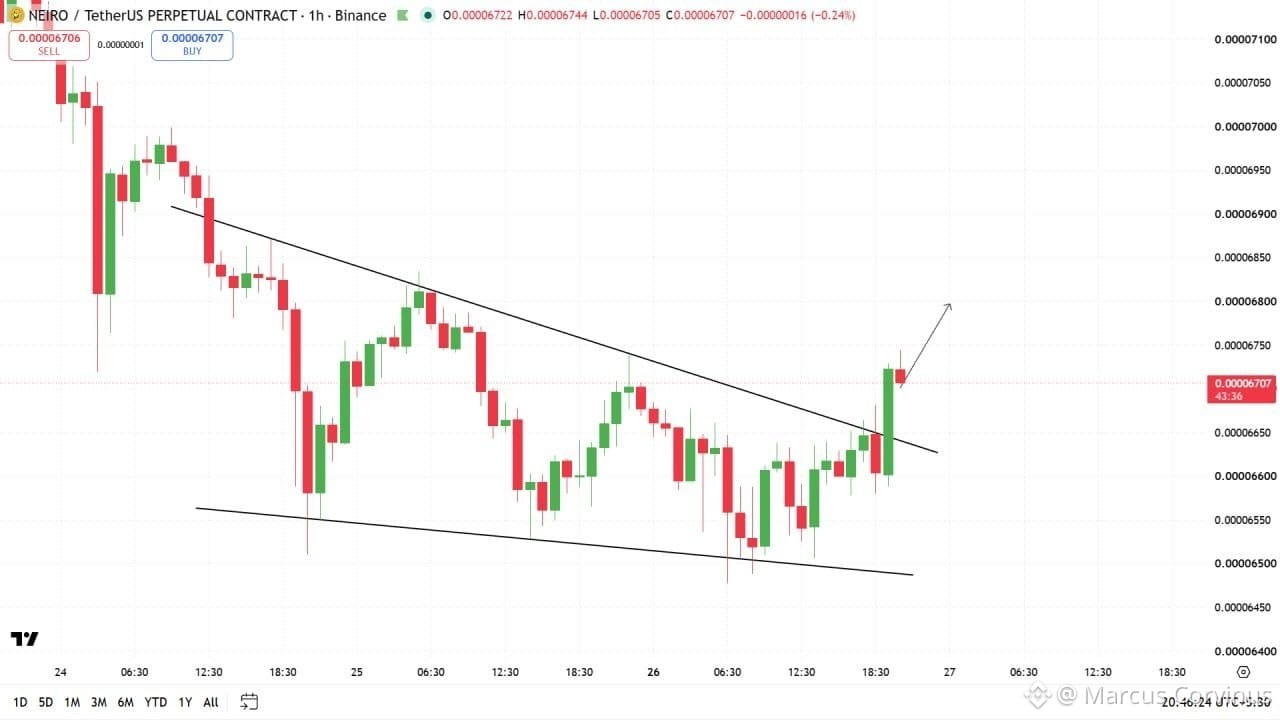
$NEIRO is showing strong bullish momentum!
NEIRO has successfully broken above the descending resistance trendline, signaling a potential bullish reversal.
Buyers are stepping in with strong momentum, and this breakout could trigger a powerful upward move.
If bulls successfully defend the breakout zone, we could see a massive rally toward higher resistance levels.
A successful retest with strong buying volume could confirm the bullish structure and attract more buyers.
Keep your eyes on NEIRO. The next big pump could be loading!
$NEIRO is showing strong bullish momentum!
NEIRO has successfully broken above the descending resistance trendline, signaling a potential bullish reversal.
Buyers are stepping in with strong momentum, and this breakout could trigger a powerful upward move.
If bulls successfully defend the breakout zone, we could see a massive rally toward higher resistance levels.
A successful retest with strong buying volume could confirm the bullish structure and attract more buyers.
Keep your eyes on NEIRO. The next big pump could be loading!
NEIRO has successfully broken above the descending resistance trendline, signaling a potential bullish reversal.
Buyers are stepping in with strong momentum, and this breakout could trigger a powerful upward move.
If bulls successfully defend the breakout zone, we could see a massive rally toward higher resistance levels.
A successful retest with strong buying volume could confirm the bullish structure and attract more buyers.
Keep your eyes on NEIRO. The next big pump could be loading!
8
15
2k
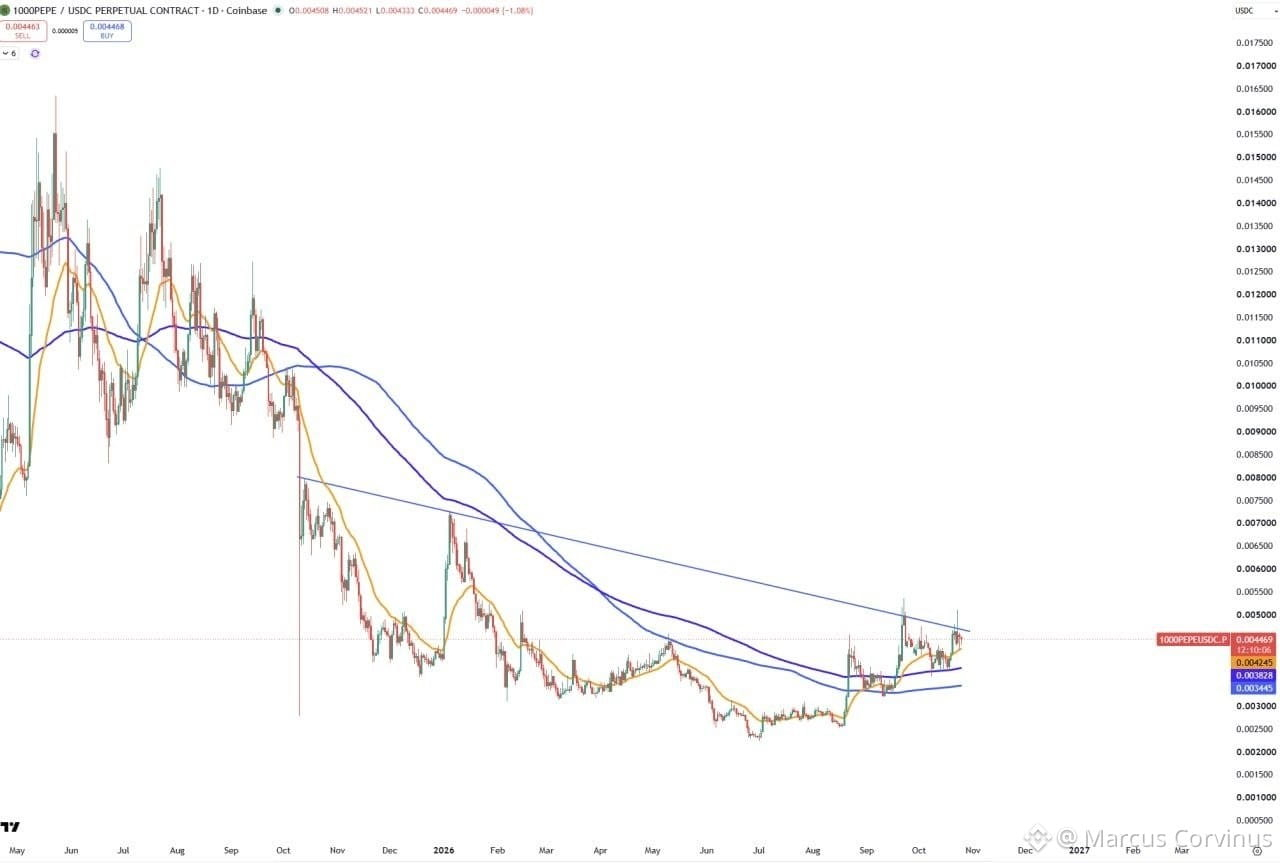
$PEPE is gearing up for a potentially explosive move!
Buy and hold as excitement builds around the next possible breakout.
Strong buying pressure and rising trading volume could fuel a massive rally.
Meme coin momentum is heating up, and PEPE could attract serious market attention.
Patient holders are watching closely as the next major move approaches.
A confirmed breakout could trigger powerful gains, but volatility remains high.
PEPE could surprise the entire crypto market. The next big move might be closer than expected!
$PEPE is gearing up for a potentially explosive move!
Buy and hold as excitement builds around the next possible breakout.
Strong buying pressure and rising trading volume could fuel a massive rally.
Meme coin momentum is heating up, and PEPE could attract serious market attention.
Patient holders are watching closely as the next major move approaches.
A confirmed breakout could trigger powerful gains, but volatility remains high.
PEPE could surprise the entire crypto market. The next big move might be closer than expected!
Buy and hold as excitement builds around the next possible breakout.
Strong buying pressure and rising trading volume could fuel a massive rally.
Meme coin momentum is heating up, and PEPE could attract serious market attention.
Patient holders are watching closely as the next major move approaches.
A confirmed breakout could trigger powerful gains, but volatility remains high.
PEPE could surprise the entire crypto market. The next big move might be closer than expected!
7
20
5.4k
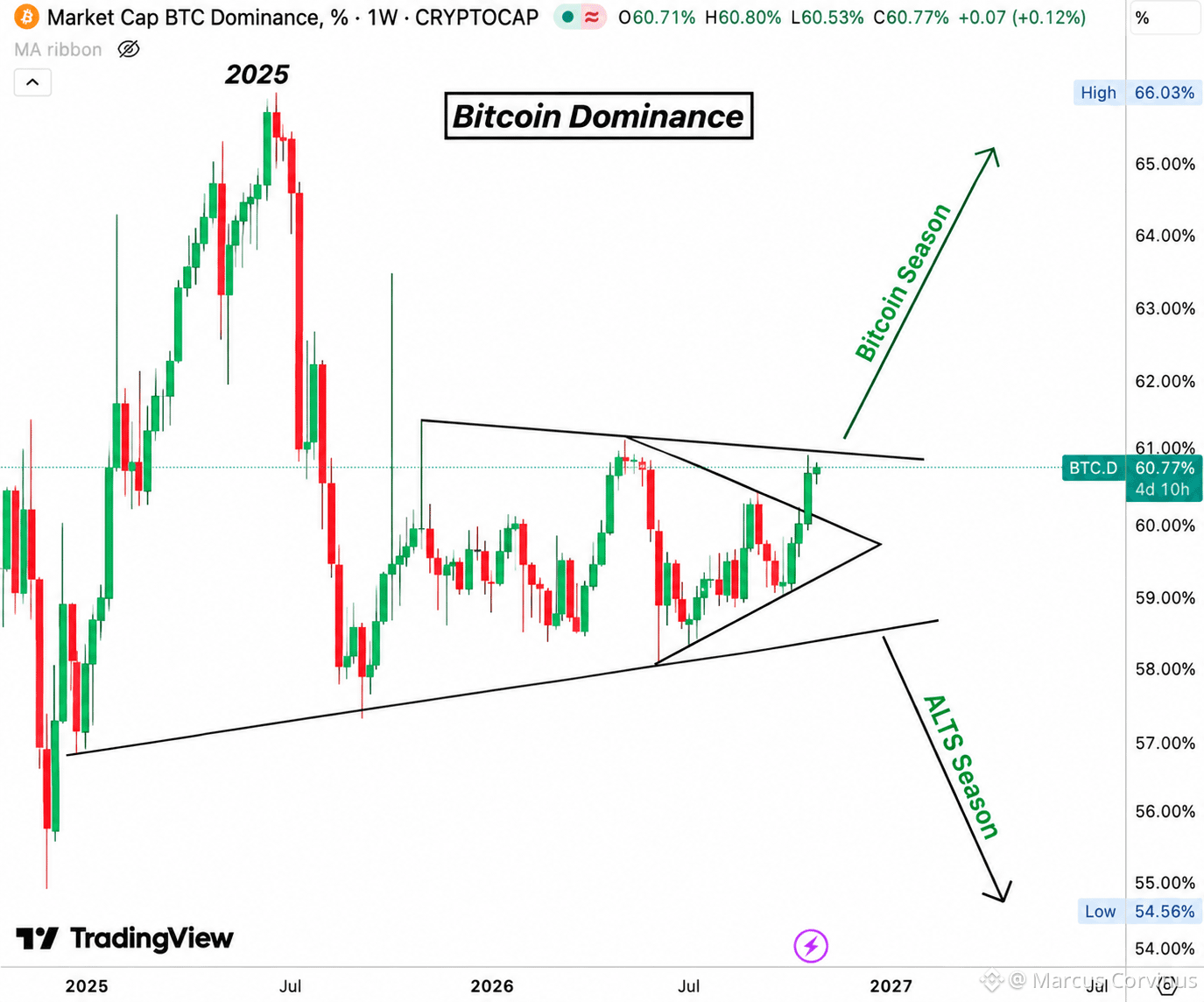
$BTC dominance is approaching a major turning point.
Bitcoin dominance is hovering near 61%, and the next breakout could shake the entire crypto market.
A breakout above 61.5% could strengthen Bitcoin's leadership.
That means BTC continues dominating while ETH and altcoins struggle to gain momentum.
But a breakdown below 58% could change everything.
Capital could start rotating into Ethereum and smaller altcoins.
This could trigger a powerful altcoin rally as market momentum begins shifting.
$ETH has shown impressive strength over the past four months.
But its next major rally could depend on Bitcoin dominance facing rejection near 61%.
If dominance starts falling, Ethereum could gain momentum and altcoins could follow.
Above 61.5%, Bitcoin season could continue.
Below 58%, altseason could gain serious momentum.
The next few weekly candles could determine which side takes control.
The market is approaching a critical decision, and the next big crypto rotation could be closer than most traders expect.
$BTC dominance is approaching a major turning point.
Bitcoin dominance is hovering near 61%, and the next breakout could shake the entire crypto market.
A breakout above 61.5% could strengthen Bitcoin's leadership.
That means BTC continues dominating while ETH and altcoins struggle to gain momentum.
But a breakdown below 58% could change everything.
Capital could start rotating into Ethereum and smaller altcoins.
This could trigger a powerful altcoin rally as market momentum begins shifting.
$ETH has shown impressive strength over the past four months.
But its next major rally could depend on Bitcoin dominance facing rejection near 61%.
If dominance starts falling, Ethereum could gain momentum and altcoins could follow.
Above 61.5%, Bitcoin season could continue.
Below 58%, altseason could gain serious momentum.
The next few weekly candles could determine which side takes control.
The market is approaching a critical decision, and the next big crypto rotation could be closer than most traders expect.
Bitcoin dominance is hovering near 61%, and the next breakout could shake the entire crypto market.
A breakout above 61.5% could strengthen Bitcoin's leadership.
That means BTC continues dominating while ETH and altcoins struggle to gain momentum.
But a breakdown below 58% could change everything.
Capital could start rotating into Ethereum and smaller altcoins.
This could trigger a powerful altcoin rally as market momentum begins shifting.
$ETH has shown impressive strength over the past four months.
But its next major rally could depend on Bitcoin dominance facing rejection near 61%.
If dominance starts falling, Ethereum could gain momentum and altcoins could follow.
Above 61.5%, Bitcoin season could continue.
Below 58%, altseason could gain serious momentum.
The next few weekly candles could determine which side takes control.
The market is approaching a critical decision, and the next big crypto rotation could be closer than most traders expect.
9
16
3.8k
·
--
ສັນຍານກະທິງ
ຢືນຢັນແລ້ວ
Aevo is bringing something different to perpetual trading, and risk control is the real story.
Most traders rely on stop losses that can trigger during sudden market wicks.
Aevo's PERPS+ takes another approach.
$AEVO represents the native token of this decentralized derivatives trading ecosystem.
With PERPS+, traders can add protection to BTC and ETH perpetual positions directly at entry.
Limit My Loss → Caps downside for a selected duration.
Get Paid to Hold → Provides upfront premium in exchange for capped profit.
Lock My Range → Defines potential profit and loss boundaries at approximately zero net cost.
While $DYDX and $HYPE are familiar names in derivatives, Aevo is focusing on giving traders more control over position outcomes.
The biggest trading advantage may not be predicting the next move, but understanding your risk before it happens.
LFG 🥂
NFA + DYOR
#AEVO #DeFi
Aevo is bringing something different to perpetual trading, and risk control is the real story.
Most traders rely on stop losses that can trigger during sudden market wicks.
Aevo's PERPS+ takes another approach.
$AEVO represents the native token of this decentralized derivatives trading ecosystem.
With PERPS+, traders can add protection to BTC and ETH perpetual positions directly at entry.
Limit My Loss → Caps downside for a selected duration.
Get Paid to Hold → Provides upfront premium in exchange for capped profit.
Lock My Range → Defines potential profit and loss boundaries at approximately zero net cost.
While $DYDX and $HYPE are familiar names in derivatives, Aevo is focusing on giving traders more control over position outcomes.
The biggest trading advantage may not be predicting the next move, but understanding your risk before it happens.
LFG 🥂
NFA + DYOR
#AEVO #DeFi
Most traders rely on stop losses that can trigger during sudden market wicks.
Aevo's PERPS+ takes another approach.
$AEVO represents the native token of this decentralized derivatives trading ecosystem.
With PERPS+, traders can add protection to BTC and ETH perpetual positions directly at entry.
Limit My Loss → Caps downside for a selected duration.
Get Paid to Hold → Provides upfront premium in exchange for capped profit.
Lock My Range → Defines potential profit and loss boundaries at approximately zero net cost.
While $DYDX and $HYPE are familiar names in derivatives, Aevo is focusing on giving traders more control over position outcomes.
The biggest trading advantage may not be predicting the next move, but understanding your risk before it happens.
LFG 🥂
NFA + DYOR
#AEVO #DeFi
124
70
15.8k
$BTC and $ETH could be preparing for a massive Uptober comeback.
I'm not giving up on Uptober until October is officially over, and this isn't blind optimism.
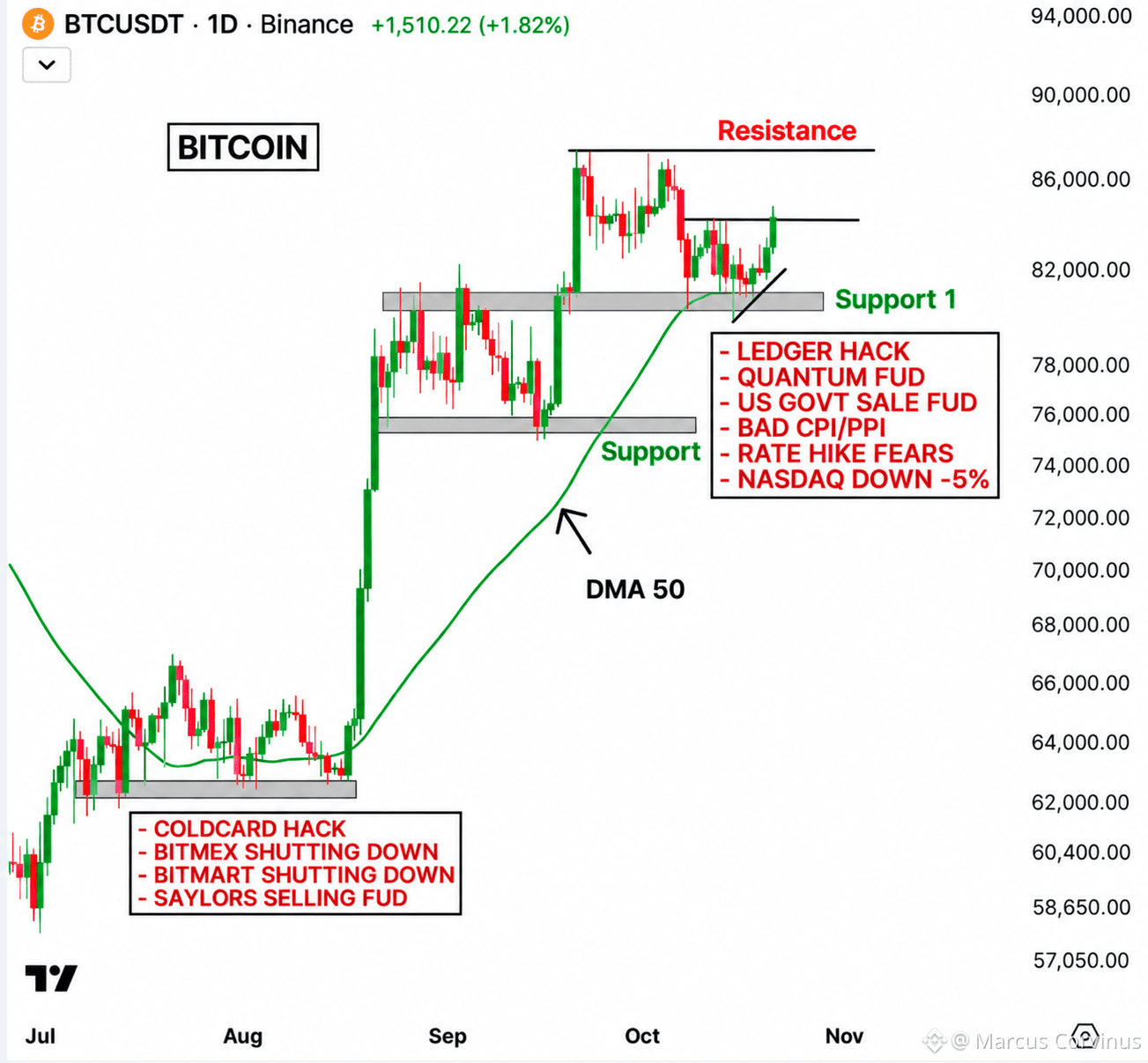
Despite all the negative news and selling pressure, both BTC and ETH are still holding their crucial WMA50 support.
We've seen this before when Bitcoin was around $62K.
Saylor selling concerns, Coldcard hack reports, exchange shutdowns, and extreme market fear dominated the headlines.
Yet Bitcoin ignored the panic and delivered an explosive $25,000 rally.
Now, $87.5K is the key resistance to watch.
A confirmed breakout above this level could trigger the next powerful leg higher, catching bears off guard and bringing buyers rushing back.
The market looks fearful, but the charts are still showing strength.
Uptober isn't over yet. The biggest surprise could still be ahead.
[Vote For Me](https://app.binance.com/uni-qr/cact26user/532?uc=app_square_share_link&us=copylink)
$BTC and $ETH could be preparing for a massive Uptober comeback.
I'm not giving up on Uptober until October is officially over, and this isn't blind optimism.
Despite all the negative news and selling pressure, both BTC and ETH are still holding their crucial WMA50 support.
We've seen this before when Bitcoin was around $62K.
Saylor selling concerns, Coldcard hack reports, exchange shutdowns, and extreme market fear dominated the headlines.
Yet Bitcoin ignored the panic and delivered an explosive $25,000 rally.
Now, $87.5K is the key resistance to watch.
A confirmed breakout above this level could trigger the next powerful leg higher, catching bears off guard and bringing buyers rushing back.
The market looks fearful, but the charts are still showing strength.
Uptober isn't over yet. The biggest surprise could still be ahead.
Vote For Me
I'm not giving up on Uptober until October is officially over, and this isn't blind optimism.
Despite all the negative news and selling pressure, both BTC and ETH are still holding their crucial WMA50 support.
We've seen this before when Bitcoin was around $62K.
Saylor selling concerns, Coldcard hack reports, exchange shutdowns, and extreme market fear dominated the headlines.
Yet Bitcoin ignored the panic and delivered an explosive $25,000 rally.
Now, $87.5K is the key resistance to watch.
A confirmed breakout above this level could trigger the next powerful leg higher, catching bears off guard and bringing buyers rushing back.
The market looks fearful, but the charts are still showing strength.
Uptober isn't over yet. The biggest surprise could still be ahead.
Vote For Me
14
10
1.2k
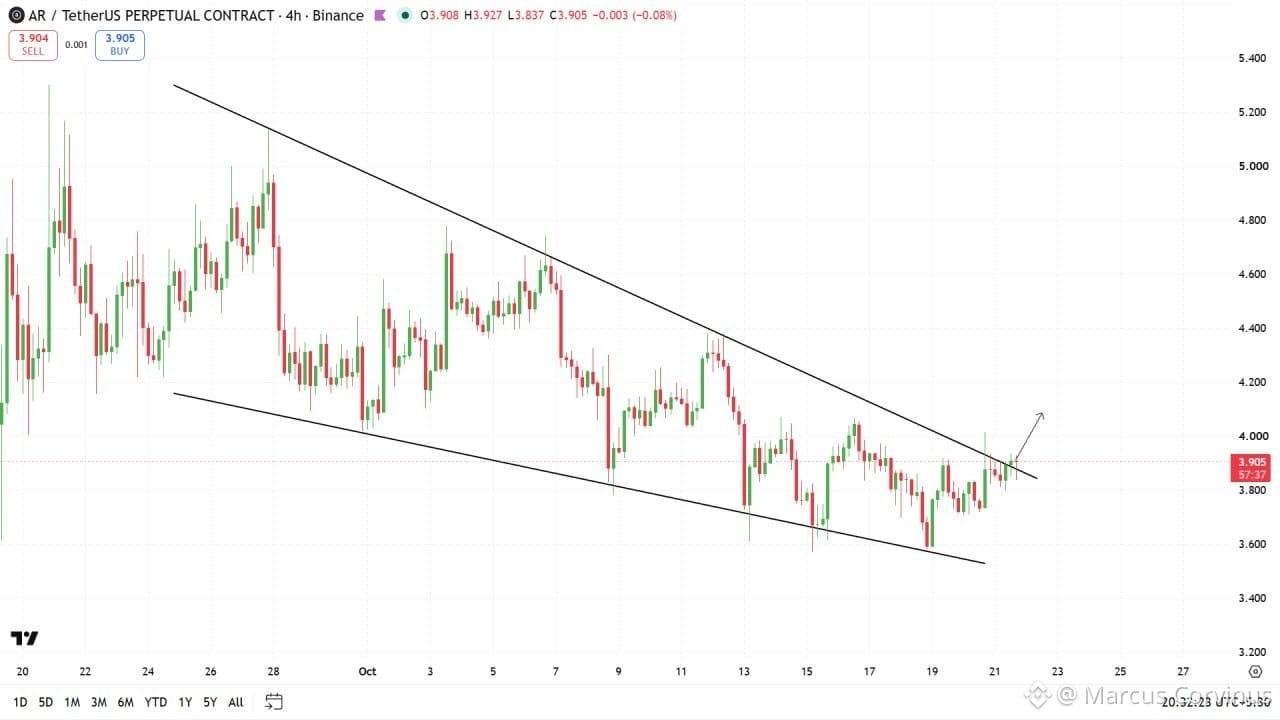
$AR is showing impressive bullish momentum after a strong breakout.
Buyers are gaining confidence, and the recent price action suggests something exciting could be developing.
The breakout has opened the door for a potential major upward move.
If the price holds above the breakout zone, buying pressure could intensify.
A successful retest could attract fresh momentum and trigger another powerful rally.
Trading volume will play a crucial role in confirming the strength of this bullish setup.
The next few candles could reveal whether bulls are ready to take full control.
Market attention is building, and an explosive price expansion could be approaching.
Keep this coin on your radar as momentum continues to develop.
The biggest move might still be ahead.
[Vote For Me](https://app.binance.com/uni-qr/cact26user/532?uc=app_square_share_link&us=copylink)
$AR is showing impressive bullish momentum after a strong breakout.
Buyers are gaining confidence, and the recent price action suggests something exciting could be developing.
The breakout has opened the door for a potential major upward move.
If the price holds above the breakout zone, buying pressure could intensify.
A successful retest could attract fresh momentum and trigger another powerful rally.
Trading volume will play a crucial role in confirming the strength of this bullish setup.
The next few candles could reveal whether bulls are ready to take full control.
Market attention is building, and an explosive price expansion could be approaching.
Keep this coin on your radar as momentum continues to develop.
The biggest move might still be ahead.
Vote For Me
Buyers are gaining confidence, and the recent price action suggests something exciting could be developing.
The breakout has opened the door for a potential major upward move.
If the price holds above the breakout zone, buying pressure could intensify.
A successful retest could attract fresh momentum and trigger another powerful rally.
Trading volume will play a crucial role in confirming the strength of this bullish setup.
The next few candles could reveal whether bulls are ready to take full control.
Market attention is building, and an explosive price expansion could be approaching.
Keep this coin on your radar as momentum continues to develop.
The biggest move might still be ahead.
Vote For Me
9
2
15
4.7k
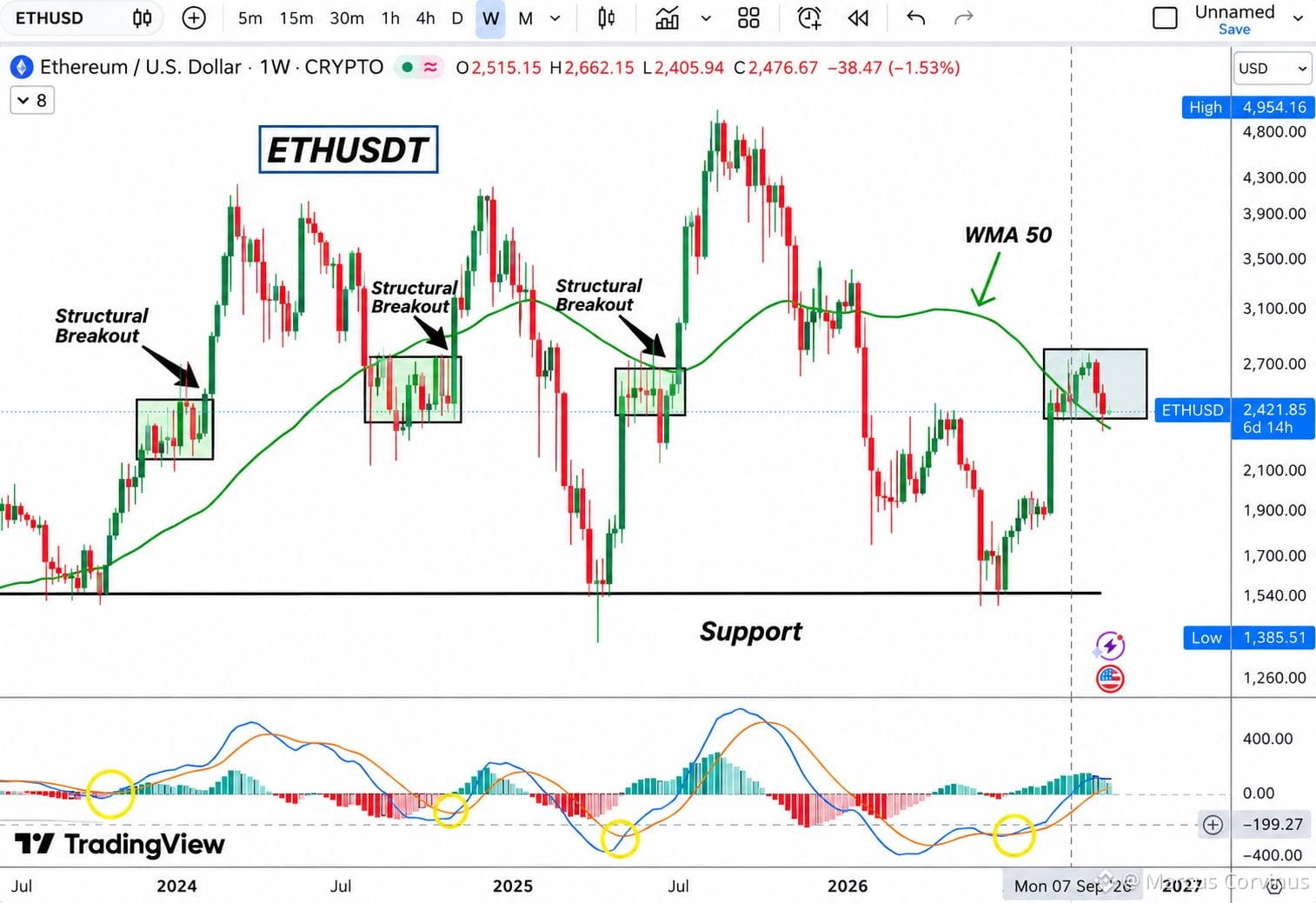
$ETH bulls aren't backing down just yet.
Despite a 5% weekly drop, Ethereum defended its 50-week moving average near $2,332, keeping the bullish structure alive.
ETH remains trapped between $2,300 and $2,800, but this range won't hold forever.
A push above $2,550 could open the door to $2,800, where the real breakout test begins.
Lose $2,300, though, and $1,900 becomes the next downside target.
Bulls still have the edge, but the next breakout will decide who truly controls the market.
[Cast Your Vote](https://app.binance.com/uni-qr/cact26user/532?uc=app_square_share_link&us=copylink)
$ETH bulls aren't backing down just yet.
Despite a 5% weekly drop, Ethereum defended its 50-week moving average near $2,332, keeping the bullish structure alive.
ETH remains trapped between $2,300 and $2,800, but this range won't hold forever.
A push above $2,550 could open the door to $2,800, where the real breakout test begins.
Lose $2,300, though, and $1,900 becomes the next downside target.
Bulls still have the edge, but the next breakout will decide who truly controls the market.
Cast Your Vote
Despite a 5% weekly drop, Ethereum defended its 50-week moving average near $2,332, keeping the bullish structure alive.
ETH remains trapped between $2,300 and $2,800, but this range won't hold forever.
A push above $2,550 could open the door to $2,800, where the real breakout test begins.
Lose $2,300, though, and $1,900 becomes the next downside target.
Bulls still have the edge, but the next breakout will decide who truly controls the market.
Cast Your Vote
16
28
10.1k
·
--
ສັນຍານກະທິງ
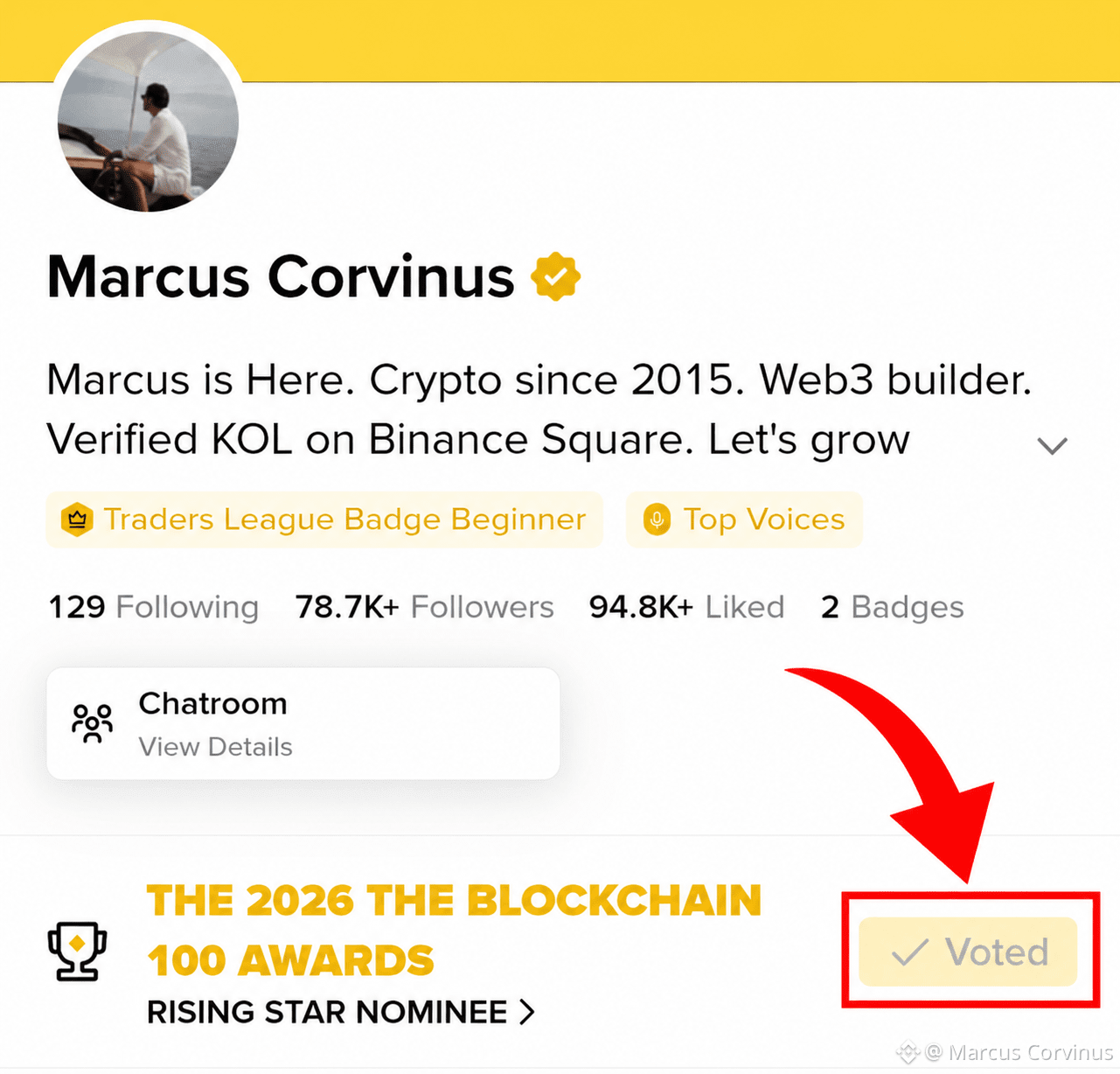
A BIG MOMENT. A NEW MILESTONE!
From sharing my passion for crypto to becoming part of an incredible Web3 community, the journey keeps getting more exciting!
I'm thrilled to be nominated for the Binance Square Top 100 Creators 2026 — Rising Star Award!
This recognition isn't just about creating content. It's about the connections we've built, the knowledge we've shared, and the community that continues to grow stronger every day.
Now it's time to turn this nomination into a victory!
Your support can make a real difference. If my content has ever brought you value, inspired you, or helped you along your crypto journey, I'd truly appreciate your vote!
[My Profile](https://app.binance.com/uni-qr/cpro/CryptoBull009?l=en&r=COXDQCEV&uc=app_square_share_link&us=copylink)
[Cast Your Vote](https://app.binance.com/uni-qr/cact26user/532?uc=app_square_share_link&us=copylink)
One community. One dream. One Rising Star!
Let's make 2026 unforgettable!
LFG 🥂
A BIG MOMENT. A NEW MILESTONE!
From sharing my passion for crypto to becoming part of an incredible Web3 community, the journey keeps getting more exciting!
I'm thrilled to be nominated for the Binance Square Top 100 Creators 2026 — Rising Star Award!
This recognition isn't just about creating content. It's about the connections we've built, the knowledge we've shared, and the community that continues to grow stronger every day.
Now it's time to turn this nomination into a victory!
Your support can make a real difference. If my content has ever brought you value, inspired you, or helped you along your crypto journey, I'd truly appreciate your vote!
My Profile
Cast Your Vote
One community. One dream. One Rising Star!
Let's make 2026 unforgettable!
LFG 🥂
From sharing my passion for crypto to becoming part of an incredible Web3 community, the journey keeps getting more exciting!
I'm thrilled to be nominated for the Binance Square Top 100 Creators 2026 — Rising Star Award!
This recognition isn't just about creating content. It's about the connections we've built, the knowledge we've shared, and the community that continues to grow stronger every day.
Now it's time to turn this nomination into a victory!
Your support can make a real difference. If my content has ever brought you value, inspired you, or helped you along your crypto journey, I'd truly appreciate your vote!
My Profile
Cast Your Vote
One community. One dream. One Rising Star!
Let's make 2026 unforgettable!
LFG 🥂

63
1
89
41.5k
·
--
ສັນຍານກະທິງ
ຢືນຢັນແລ້ວ
Pyth Network is becoming a serious force in the future of financial market data.
Most financial data moves through middlemen. Pyth goes directly to the institutions creating the prices.
• $3.25T+ cumulative volume secured
• 710+ businesses using Pyth data
• 114+ blockchains receiving feeds
• 125+ institutional publishers
• 60% of the onchain perpetuals market
The commercial growth is equally interesting.
→ Pyth Pro crossed $6M in ARR within months of launch.
→ Subscription ARR grew 109% QoQ.
→ Three straight months exceeded $1M in gross new ARR.
Pyth is expanding beyond basic price feeds.
• Pyth Pro → Institutional multi-asset pricing
• Pyth Indices → Always-on pricing for 24/7 markets
• Data Marketplace → Institutional data distribution
• AI Agents → Reliable data for autonomous finance
While $LINK focuses on broader oracle infrastructure and $ONDO targets tokenized assets, Pyth focuses on the pricing infrastructure financial markets need.
$PYTH is the native token supporting network governance and ecosystem functions, not ownership of business revenue.
-> As global financial markets move toward 24/7 operations, reliable first-party data is becoming essential infrastructure.
Let's go 🤝
NFA + DYOR
#PYTH #CryptoInfrastructure
Pyth Network is becoming a serious force in the future of financial market data.
Most financial data moves through middlemen. Pyth goes directly to the institutions creating the prices.
• $3.25T+ cumulative volume secured
• 710+ businesses using Pyth data
• 114+ blockchains receiving feeds
• 125+ institutional publishers
• 60% of the onchain perpetuals market
The commercial growth is equally interesting.
→ Pyth Pro crossed $6M in ARR within months of launch.
→ Subscription ARR grew 109% QoQ.
→ Three straight months exceeded $1M in gross new ARR.
Pyth is expanding beyond basic price feeds.
• Pyth Pro → Institutional multi-asset pricing
• Pyth Indices → Always-on pricing for 24/7 markets
• Data Marketplace → Institutional data distribution
• AI Agents → Reliable data for autonomous finance
While $LINK focuses on broader oracle infrastructure and $ONDO targets tokenized assets, Pyth focuses on the pricing infrastructure financial markets need.
$PYTH is the native token supporting network governance and ecosystem functions, not ownership of business revenue.
-> As global financial markets move toward 24/7 operations, reliable first-party data is becoming essential infrastructure.
Let's go 🤝
NFA + DYOR
#PYTH #CryptoInfrastructure
Most financial data moves through middlemen. Pyth goes directly to the institutions creating the prices.
• $3.25T+ cumulative volume secured
• 710+ businesses using Pyth data
• 114+ blockchains receiving feeds
• 125+ institutional publishers
• 60% of the onchain perpetuals market
The commercial growth is equally interesting.
→ Pyth Pro crossed $6M in ARR within months of launch.
→ Subscription ARR grew 109% QoQ.
→ Three straight months exceeded $1M in gross new ARR.
Pyth is expanding beyond basic price feeds.
• Pyth Pro → Institutional multi-asset pricing
• Pyth Indices → Always-on pricing for 24/7 markets
• Data Marketplace → Institutional data distribution
• AI Agents → Reliable data for autonomous finance
While $LINK focuses on broader oracle infrastructure and $ONDO targets tokenized assets, Pyth focuses on the pricing infrastructure financial markets need.
$PYTH is the native token supporting network governance and ecosystem functions, not ownership of business revenue.
-> As global financial markets move toward 24/7 operations, reliable first-party data is becoming essential infrastructure.
Let's go 🤝
NFA + DYOR
#PYTH #CryptoInfrastructure
88
102
36.8k
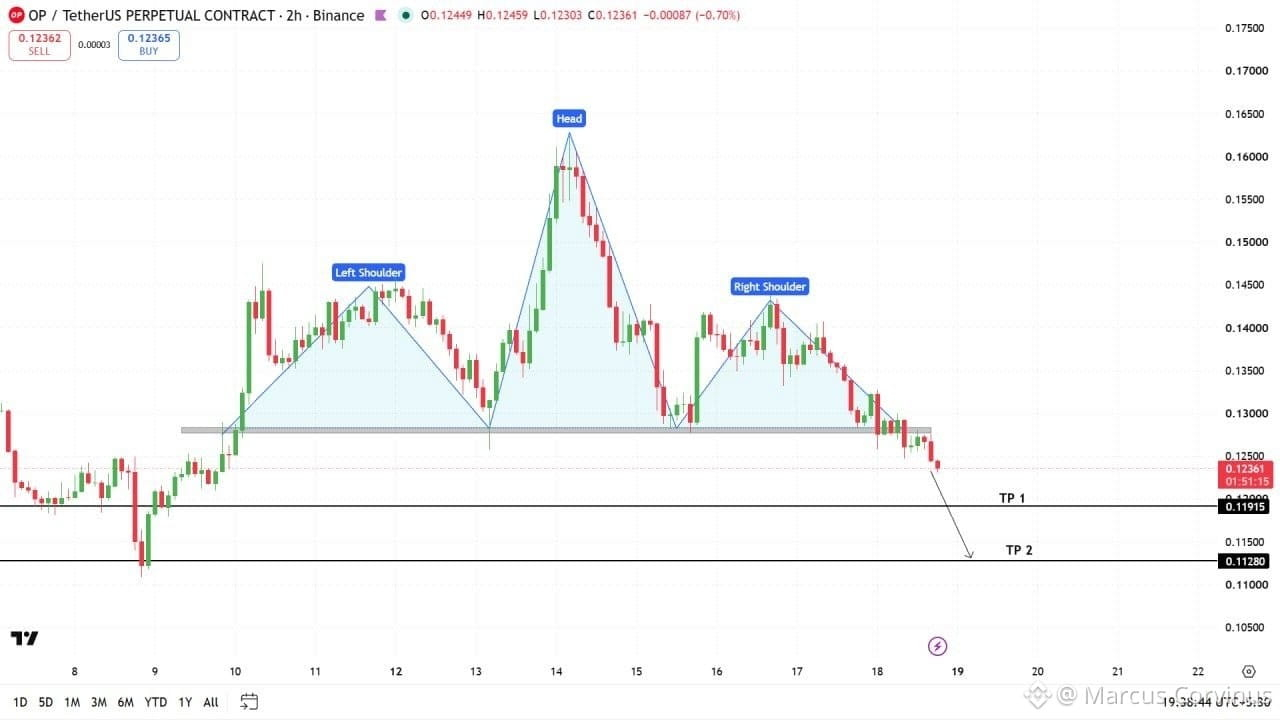
$OP is flashing serious bearish signals as the recent breakdown puts sellers in control.
The price has slipped below a key support zone, raising concerns about a deeper correction ahead.
Selling pressure is building, while buyers are struggling to regain momentum.
If the broken support turns into resistance, another sharp downward move could follow.
Lower support levels and liquidity zones are now becoming important targets to watch.
Any weak recovery could attract fresh selling pressure, making the next few candles crucial.
The market is entering a critical phase, and volatility could increase rapidly.
Keep a close eye on $OP as bears look ready to push the price even lower.
$OP is flashing serious bearish signals as the recent breakdown puts sellers in control.
The price has slipped below a key support zone, raising concerns about a deeper correction ahead.
Selling pressure is building, while buyers are struggling to regain momentum.
If the broken support turns into resistance, another sharp downward move could follow.
Lower support levels and liquidity zones are now becoming important targets to watch.
Any weak recovery could attract fresh selling pressure, making the next few candles crucial.
The market is entering a critical phase, and volatility could increase rapidly.
Keep a close eye on $OP as bears look ready to push the price even lower.
The price has slipped below a key support zone, raising concerns about a deeper correction ahead.
Selling pressure is building, while buyers are struggling to regain momentum.
If the broken support turns into resistance, another sharp downward move could follow.
Lower support levels and liquidity zones are now becoming important targets to watch.
Any weak recovery could attract fresh selling pressure, making the next few candles crucial.
The market is entering a critical phase, and volatility could increase rapidly.
Keep a close eye on $OP as bears look ready to push the price even lower.
5
15
3.1k
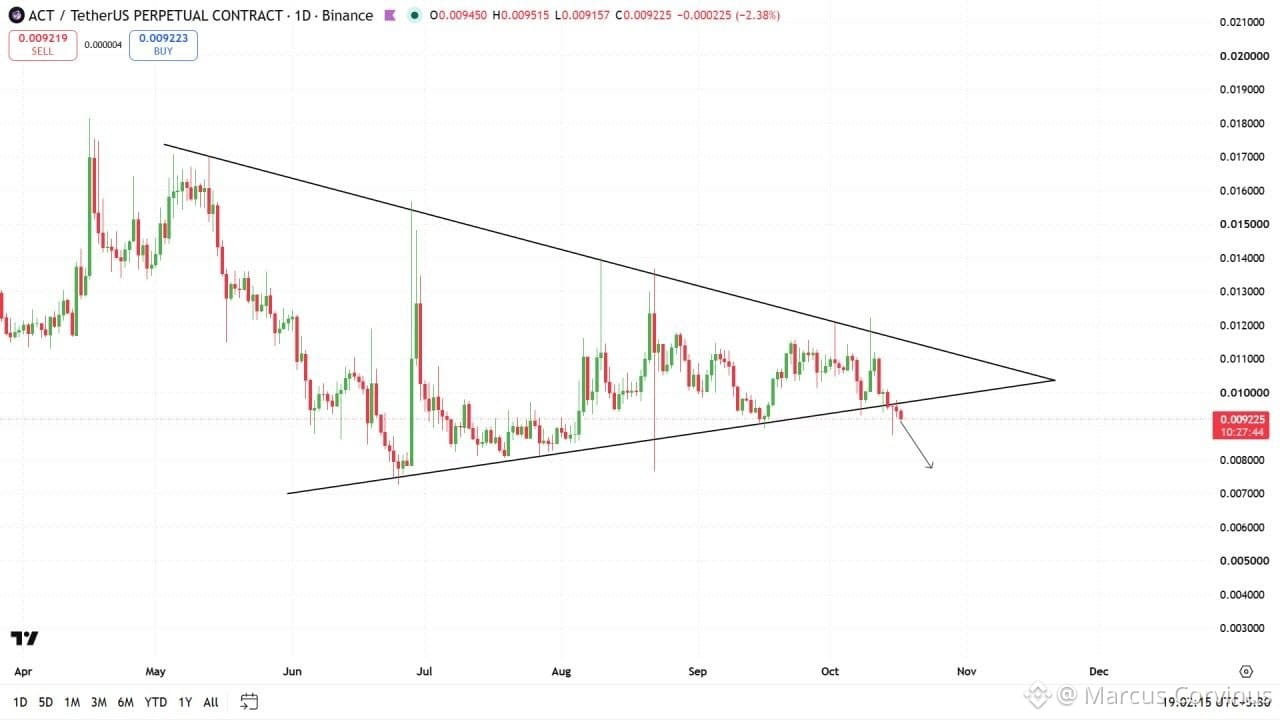
$ACT is showing serious bearish signals after a major breakdown, and the next move could catch traders off guard.
The price has broken below an important support level, suggesting that sellers are gaining strength while buyers struggle to regain control.
The market structure is turning increasingly bearish, raising concerns about another potential downward move.
• Support breakdown indicates growing selling pressure.
• Weak buying momentum suggests bulls are losing control.
• Failure to reclaim broken support could trigger further downside.
• The next major support zone may become the immediate target.
ACT is now entering a critical phase where a failed recovery could accelerate selling pressure.
If bearish momentum continues, another sharp decline could be approaching.
Traders should closely monitor price action and watch for confirmation before making their next move.
The breakdown is a warning. The next move could be even bigger.
$ACT is showing serious bearish signals after a major breakdown, and the next move could catch traders off guard.
The price has broken below an important support level, suggesting that sellers are gaining strength while buyers struggle to regain control.
The market structure is turning increasingly bearish, raising concerns about another potential downward move.
• Support breakdown indicates growing selling pressure.
• Weak buying momentum suggests bulls are losing control.
• Failure to reclaim broken support could trigger further downside.
• The next major support zone may become the immediate target.
ACT is now entering a critical phase where a failed recovery could accelerate selling pressure.
If bearish momentum continues, another sharp decline could be approaching.
Traders should closely monitor price action and watch for confirmation before making their next move.
The breakdown is a warning. The next move could be even bigger.
The price has broken below an important support level, suggesting that sellers are gaining strength while buyers struggle to regain control.
The market structure is turning increasingly bearish, raising concerns about another potential downward move.
• Support breakdown indicates growing selling pressure.
• Weak buying momentum suggests bulls are losing control.
• Failure to reclaim broken support could trigger further downside.
• The next major support zone may become the immediate target.
ACT is now entering a critical phase where a failed recovery could accelerate selling pressure.
If bearish momentum continues, another sharp decline could be approaching.
Traders should closely monitor price action and watch for confirmation before making their next move.
The breakdown is a warning. The next move could be even bigger.
8
19
2.1k
·
--
ສັນຍານກະທິງ
ຢືນຢັນແລ້ວ
Nillion is building something that could reshape how sensitive data moves across crypto and AI.
Most blockchains are transparent, but valuable information like trading strategies, AI instructions, and financial data needs protection.
Nillion approaches this through blind computation, allowing encrypted data to be stored and processed without exposing sensitive information.
• Covenants → Nillion's core product, designed to keep encrypted instructions private until specific conditions are met.
• Dusk → The first release of Covenants, bringing confidential execution capabilities to Ethereum.
This is where things become interesting.
→ Traders could prepare automated strategies without revealing their instructions before execution.
→ AI agents could perform tasks while keeping sensitive operational information protected.
→ Developers could build applications that combine automation, privacy, and blockchain infrastructure.
NIL is Nillion's native token, supporting network fees, staking, and network security.
The bigger opportunity lies in turning privacy technology into something developers and users actually need.
-> More developers could bring new applications.
-> Real usage could increase demand for confidential computation.
-> Growing adoption could strengthen the long-term utility of NIL.
What stands out to me is Nillion's shift from developing privacy infrastructure toward practical execution.
Covenants and Dusk are important steps, but sustained adoption will determine their real impact.
Nillion is working toward a future where the most valuable information can power blockchain applications without ever becoming public.
LFG 🥂
#nil $NIL @nillionnetwork
Nillion is building something that could reshape how sensitive data moves across crypto and AI.
Most blockchains are transparent, but valuable information like trading strategies, AI instructions, and financial data needs protection.
Nillion approaches this through blind computation, allowing encrypted data to be stored and processed without exposing sensitive information.
• Covenants → Nillion's core product, designed to keep encrypted instructions private until specific conditions are met.
• Dusk → The first release of Covenants, bringing confidential execution capabilities to Ethereum.
This is where things become interesting.
→ Traders could prepare automated strategies without revealing their instructions before execution.
→ AI agents could perform tasks while keeping sensitive operational information protected.
→ Developers could build applications that combine automation, privacy, and blockchain infrastructure.
NIL is Nillion's native token, supporting network fees, staking, and network security.
The bigger opportunity lies in turning privacy technology into something developers and users actually need.
-> More developers could bring new applications.
-> Real usage could increase demand for confidential computation.
-> Growing adoption could strengthen the long-term utility of NIL.
What stands out to me is Nillion's shift from developing privacy infrastructure toward practical execution.
Covenants and Dusk are important steps, but sustained adoption will determine their real impact.
Nillion is working toward a future where the most valuable information can power blockchain applications without ever becoming public.
LFG 🥂
#nil $NIL @Nillion
Most blockchains are transparent, but valuable information like trading strategies, AI instructions, and financial data needs protection.
Nillion approaches this through blind computation, allowing encrypted data to be stored and processed without exposing sensitive information.
• Covenants → Nillion's core product, designed to keep encrypted instructions private until specific conditions are met.
• Dusk → The first release of Covenants, bringing confidential execution capabilities to Ethereum.
This is where things become interesting.
→ Traders could prepare automated strategies without revealing their instructions before execution.
→ AI agents could perform tasks while keeping sensitive operational information protected.
→ Developers could build applications that combine automation, privacy, and blockchain infrastructure.
NIL is Nillion's native token, supporting network fees, staking, and network security.
The bigger opportunity lies in turning privacy technology into something developers and users actually need.
-> More developers could bring new applications.
-> Real usage could increase demand for confidential computation.
-> Growing adoption could strengthen the long-term utility of NIL.
What stands out to me is Nillion's shift from developing privacy infrastructure toward practical execution.
Covenants and Dusk are important steps, but sustained adoption will determine their real impact.
Nillion is working toward a future where the most valuable information can power blockchain applications without ever becoming public.
LFG 🥂
#nil $NIL @Nillion

111
72
3.9k
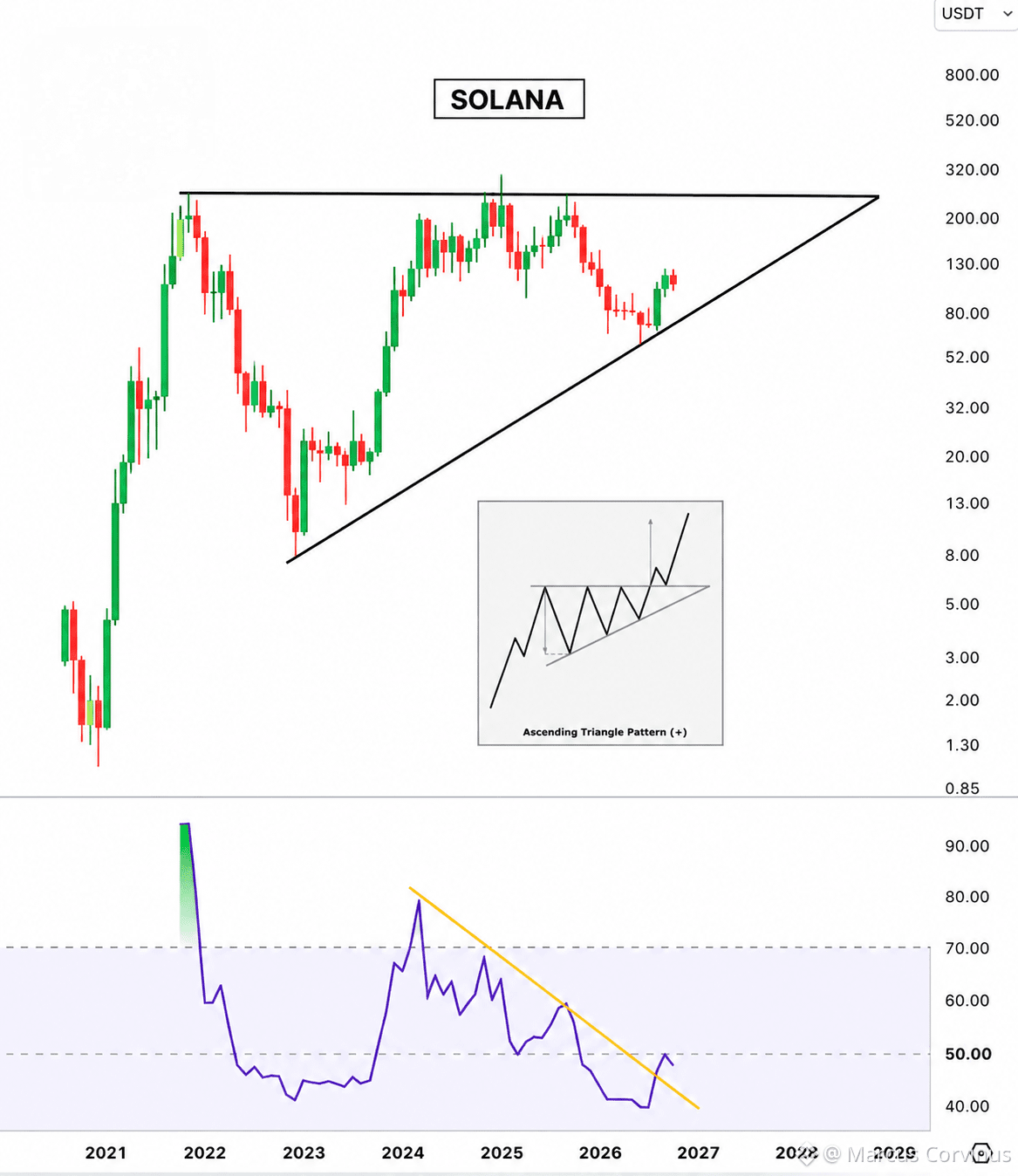
$SOL is forming a massive bullish ascending triangle on the monthly timeframe, and something big could be brewing!
After multiple attempts to break resistance, Solana continues to form higher lows while respecting its long-term ascending support trendline.
The major resistance zone sits around $250–$260, a critical level that could determine the next major move.
A confirmed monthly breakout above this zone could unleash strong bullish momentum, potentially opening the door toward $300–$350 and beyond.
Meanwhile, the monthly RSI is showing signs of recovery, with momentum attempting to break above its descending trendline.
This creates an interesting setup where both price action and momentum are approaching crucial breakout levels.
As long as the rising support holds, the broader bullish structure remains intact. However, losing that support could invalidate the setup.
If buyers successfully break resistance with strong volume, $SOL could enter a powerful new expansion phase.
The next major move could be closer than many expect!
$SOL is forming a massive bullish ascending triangle on the monthly timeframe, and something big could be brewing!
After multiple attempts to break resistance, Solana continues to form higher lows while respecting its long-term ascending support trendline.
The major resistance zone sits around $250–$260, a critical level that could determine the next major move.
A confirmed monthly breakout above this zone could unleash strong bullish momentum, potentially opening the door toward $300–$350 and beyond.
Meanwhile, the monthly RSI is showing signs of recovery, with momentum attempting to break above its descending trendline.
This creates an interesting setup where both price action and momentum are approaching crucial breakout levels.
As long as the rising support holds, the broader bullish structure remains intact. However, losing that support could invalidate the setup.
If buyers successfully break resistance with strong volume, $SOL could enter a powerful new expansion phase.
The next major move could be closer than many expect!
After multiple attempts to break resistance, Solana continues to form higher lows while respecting its long-term ascending support trendline.
The major resistance zone sits around $250–$260, a critical level that could determine the next major move.
A confirmed monthly breakout above this zone could unleash strong bullish momentum, potentially opening the door toward $300–$350 and beyond.
Meanwhile, the monthly RSI is showing signs of recovery, with momentum attempting to break above its descending trendline.
This creates an interesting setup where both price action and momentum are approaching crucial breakout levels.
As long as the rising support holds, the broader bullish structure remains intact. However, losing that support could invalidate the setup.
If buyers successfully break resistance with strong volume, $SOL could enter a powerful new expansion phase.
The next major move could be closer than many expect!
15
44
28.7k
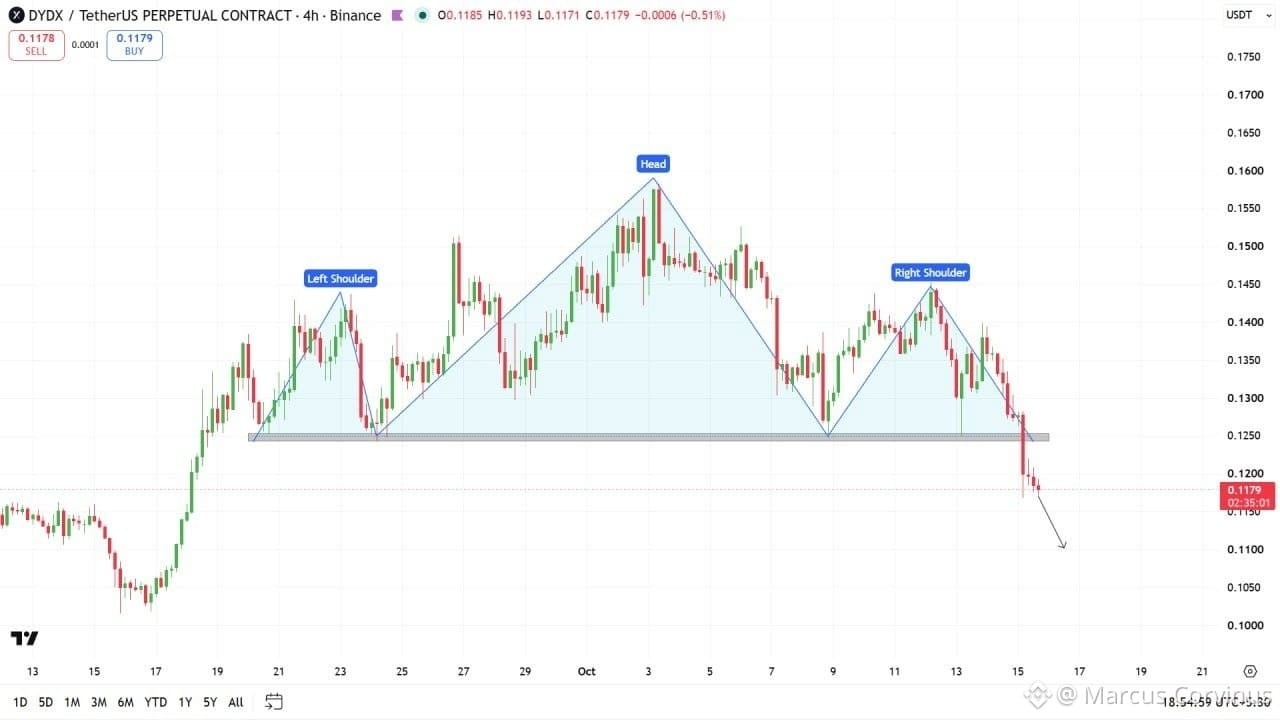
$DYDX is flashing serious bearish signals after a major breakdown!
The recent price action suggests that sellers are gaining control, and bearish momentum could intensify in the coming sessions.
The breakdown has weakened the market structure, putting DYDX in a vulnerable position as buyers struggle to regain momentum.
If the price fails to reclaim the broken support level, another wave of selling pressure could push DYDX toward lower demand zones.
Any short-term recovery might face strong resistance as traders look to exit positions near key levels.
The most critical factor now is whether buyers can defend the next support zone or whether bears will continue dominating the trend.
$DYDX could be approaching a decisive moment, and the next major move might catch unprepared traders off guard.
Keep your eyes on $DYDX. The bearish setup is developing, and the next breakdown could bring even stronger volatility!
$DYDX is flashing serious bearish signals after a major breakdown!
The recent price action suggests that sellers are gaining control, and bearish momentum could intensify in the coming sessions.
The breakdown has weakened the market structure, putting DYDX in a vulnerable position as buyers struggle to regain momentum.
If the price fails to reclaim the broken support level, another wave of selling pressure could push DYDX toward lower demand zones.
Any short-term recovery might face strong resistance as traders look to exit positions near key levels.
The most critical factor now is whether buyers can defend the next support zone or whether bears will continue dominating the trend.
$DYDX could be approaching a decisive moment, and the next major move might catch unprepared traders off guard.
Keep your eyes on $DYDX . The bearish setup is developing, and the next breakdown could bring even stronger volatility!
The recent price action suggests that sellers are gaining control, and bearish momentum could intensify in the coming sessions.
The breakdown has weakened the market structure, putting DYDX in a vulnerable position as buyers struggle to regain momentum.
If the price fails to reclaim the broken support level, another wave of selling pressure could push DYDX toward lower demand zones.
Any short-term recovery might face strong resistance as traders look to exit positions near key levels.
The most critical factor now is whether buyers can defend the next support zone or whether bears will continue dominating the trend.
$DYDX could be approaching a decisive moment, and the next major move might catch unprepared traders off guard.
Keep your eyes on $DYDX . The bearish setup is developing, and the next breakdown could bring even stronger volatility!
13
12
2.4k
·
--
ສັນຍານກະທິງ
ຢືນຢັນແລ້ວ
Aevo is changing how token economics work!
Most crypto projects still struggle with token inflation and unlock pressure. Aevo has already taken a different path.
◆ 74M AEVO burned permanently.
◆ Zero scheduled unlocks remaining.
◆ Monthly buybacks funded by trading fees.
▸ 1M AEVO rewarded weekly from the existing fixed 1B supply, not new issuance.
▸ 20M+ AEVO staked, with stakers receiving fee-generating LP positions.
$AEVO represents more than governance. Its economic model connects real trading activity with staking and supply reduction.
While $DYDX and $GMX compete in decentralized derivatives, Aevo stands out with its fee-funded buyback and burn structure.
Real trading activity. Measurable burns. A token structure built around actual usage.
LFG 🥂
NFA + DYOR
#AEVO #Crypto
Aevo is changing how token economics work!
Most crypto projects still struggle with token inflation and unlock pressure. Aevo has already taken a different path.
◆ 74M AEVO burned permanently.
◆ Zero scheduled unlocks remaining.
◆ Monthly buybacks funded by trading fees.
▸ 1M AEVO rewarded weekly from the existing fixed 1B supply, not new issuance.
▸ 20M+ AEVO staked, with stakers receiving fee-generating LP positions.
$AEVO represents more than governance. Its economic model connects real trading activity with staking and supply reduction.
While $DYDX and $GMX compete in decentralized derivatives, Aevo stands out with its fee-funded buyback and burn structure.
Real trading activity. Measurable burns. A token structure built around actual usage.
LFG 🥂
NFA + DYOR
#AEVO #Crypto
Most crypto projects still struggle with token inflation and unlock pressure. Aevo has already taken a different path.
◆ 74M AEVO burned permanently.
◆ Zero scheduled unlocks remaining.
◆ Monthly buybacks funded by trading fees.
▸ 1M AEVO rewarded weekly from the existing fixed 1B supply, not new issuance.
▸ 20M+ AEVO staked, with stakers receiving fee-generating LP positions.
$AEVO represents more than governance. Its economic model connects real trading activity with staking and supply reduction.
While $DYDX and $GMX compete in decentralized derivatives, Aevo stands out with its fee-funded buyback and burn structure.
Real trading activity. Measurable burns. A token structure built around actual usage.
LFG 🥂
NFA + DYOR
#AEVO #Crypto
91
1
64
17k
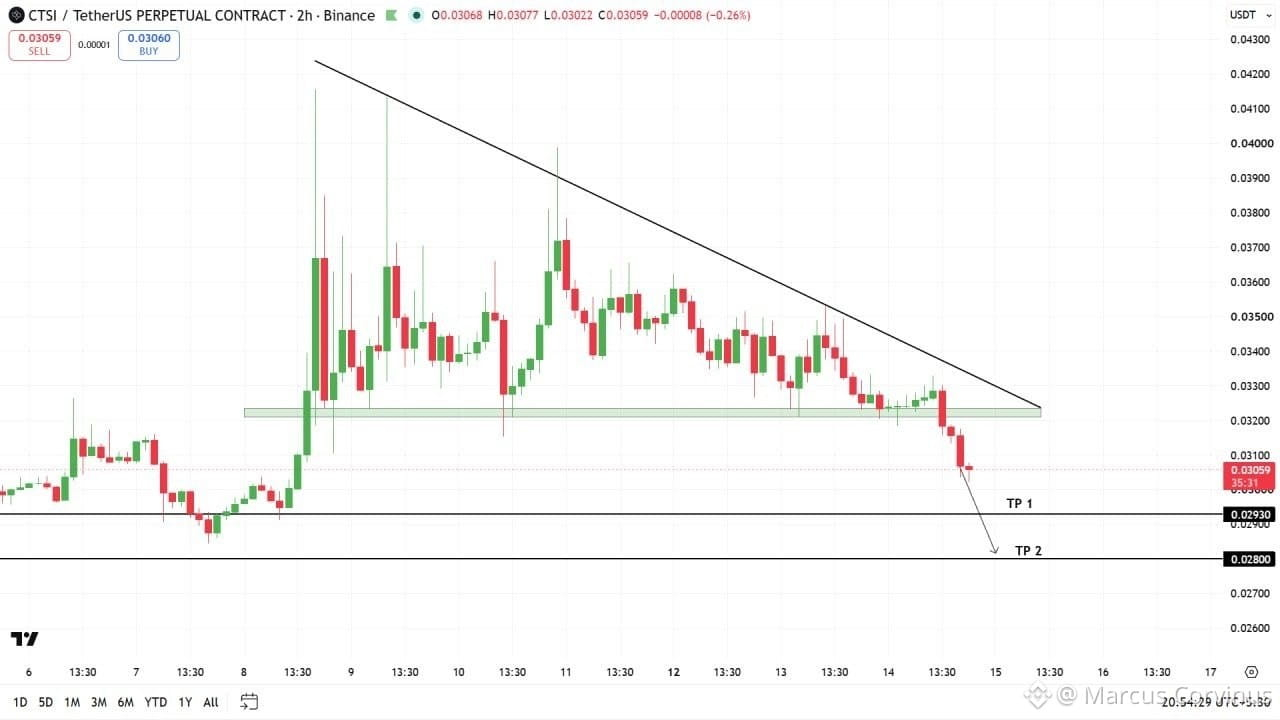
$CTSI is showing strong bearish signals after breaking below a key support level.
Selling pressure is increasing, and the recent breakdown suggests that bears are gaining control.
If $CTSI fails to reclaim its broken support, a deeper correction toward lower price levels could follow.
Weak buying momentum and continued selling pressure may accelerate the decline.
Traders should closely monitor the next support zones, as another breakdown could trigger a sharper sell-off.
$CTSI is entering a critical phase, and the next major move could bring significant volatility.
Keep watching. The bears may not be finished yet.
$CTSI is showing strong bearish signals after breaking below a key support level.
Selling pressure is increasing, and the recent breakdown suggests that bears are gaining control.
If $CTSI fails to reclaim its broken support, a deeper correction toward lower price levels could follow.
Weak buying momentum and continued selling pressure may accelerate the decline.
Traders should closely monitor the next support zones, as another breakdown could trigger a sharper sell-off.
$CTSI is entering a critical phase, and the next major move could bring significant volatility.
Keep watching. The bears may not be finished yet.
Selling pressure is increasing, and the recent breakdown suggests that bears are gaining control.
If $CTSI fails to reclaim its broken support, a deeper correction toward lower price levels could follow.
Weak buying momentum and continued selling pressure may accelerate the decline.
Traders should closely monitor the next support zones, as another breakdown could trigger a sharper sell-off.
$CTSI is entering a critical phase, and the next major move could bring significant volatility.
Keep watching. The bears may not be finished yet.
4
12
1.5k
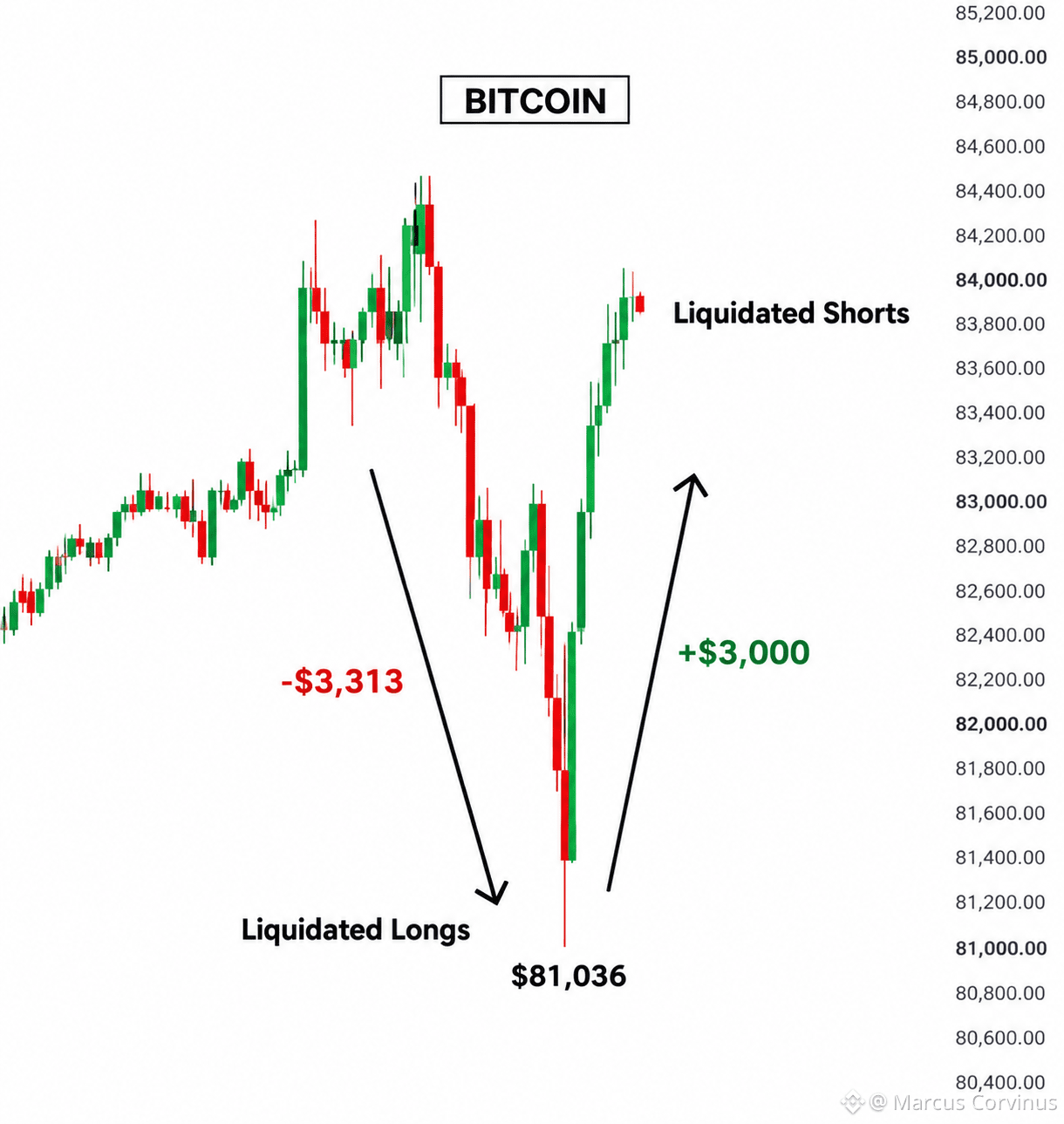
$BTC volatility is reaching insane levels.
The crypto market just witnessed a brutal battle between bulls and bears.
$BTC plunged more than $3,300 in just 18 hours.
Over $600 million in long positions were liquidated during the massive sell-off.
Bitcoin crashed toward $81,036, triggering panic across the market.
But the real shock came next.
BTC suddenly reversed direction.
Within just 8 hours, Bitcoin surged more than $3,000.
The explosive recovery triggered another $107 million in short liquidations.
Nearly $60 billion in market value was added during the powerful rebound.
First, the market crushed overleveraged bulls.
Then, it turned around and trapped aggressive bears.
Two massive moves.
Two brutal liquidation waves.
Hundreds of millions wiped out in hours.
The market is showing absolutely no mercy to leveraged traders.
BTC is trapping both bulls and bears as extreme volatility takes control.
With liquidity being swept in both directions, the next major move could be even more explosive.
$BTC volatility is reaching insane levels.
The crypto market just witnessed a brutal battle between bulls and bears.
$BTC plunged more than $3,300 in just 18 hours.
Over $600 million in long positions were liquidated during the massive sell-off.
Bitcoin crashed toward $81,036, triggering panic across the market.
But the real shock came next.
BTC suddenly reversed direction.
Within just 8 hours, Bitcoin surged more than $3,000.
The explosive recovery triggered another $107 million in short liquidations.
Nearly $60 billion in market value was added during the powerful rebound.
First, the market crushed overleveraged bulls.
Then, it turned around and trapped aggressive bears.
Two massive moves.
Two brutal liquidation waves.
Hundreds of millions wiped out in hours.
The market is showing absolutely no mercy to leveraged traders.
BTC is trapping both bulls and bears as extreme volatility takes control.
With liquidity being swept in both directions, the next major move could be even more explosive.
The crypto market just witnessed a brutal battle between bulls and bears.
$BTC plunged more than $3,300 in just 18 hours.
Over $600 million in long positions were liquidated during the massive sell-off.
Bitcoin crashed toward $81,036, triggering panic across the market.
But the real shock came next.
BTC suddenly reversed direction.
Within just 8 hours, Bitcoin surged more than $3,000.
The explosive recovery triggered another $107 million in short liquidations.
Nearly $60 billion in market value was added during the powerful rebound.
First, the market crushed overleveraged bulls.
Then, it turned around and trapped aggressive bears.
Two massive moves.
Two brutal liquidation waves.
Hundreds of millions wiped out in hours.
The market is showing absolutely no mercy to leveraged traders.
BTC is trapping both bulls and bears as extreme volatility takes control.
With liquidity being swept in both directions, the next major move could be even more explosive.
11
9
1.2k
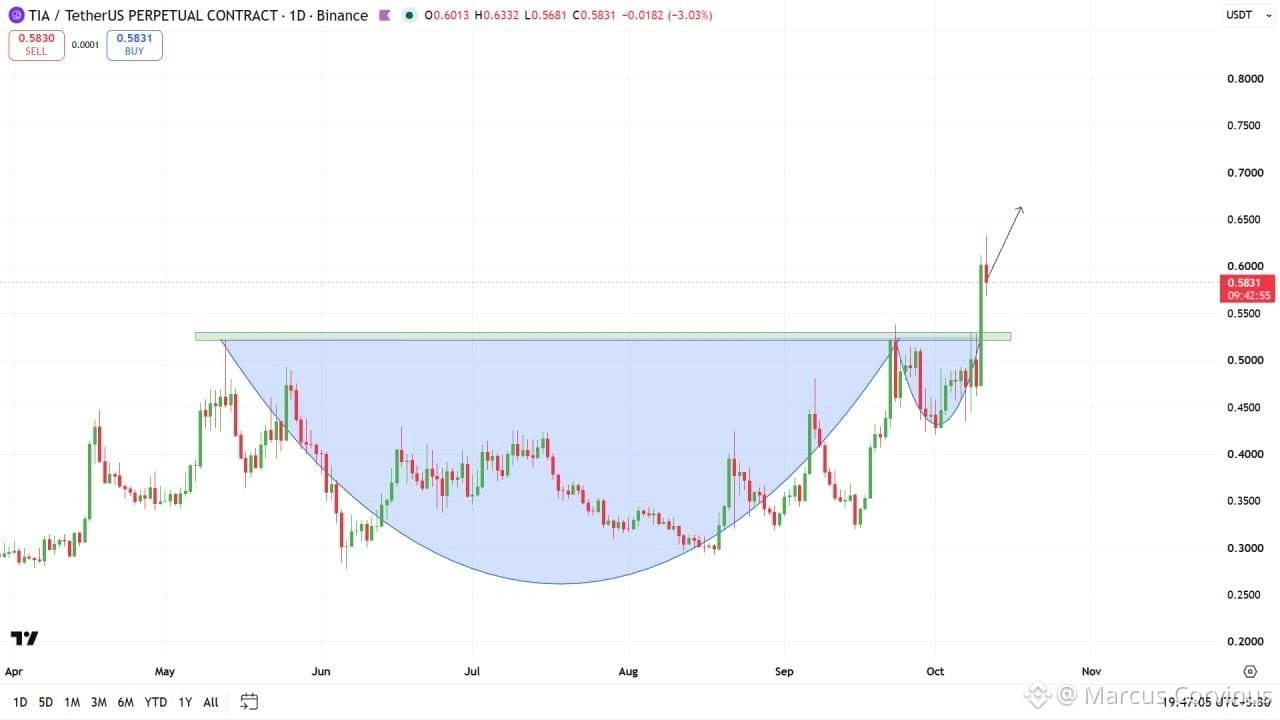
$TIA is gaining bullish momentum after a strong breakout.
Buyers are stepping in, and the market structure is showing signs of strength.
The breakout could be the beginning of a much bigger upward move.
If $TIA holds above the breakout zone, another powerful rally could follow.
Increasing buying pressure and strong volume could push the price toward higher resistance levels.
The next few candles will be crucial for confirming bullish momentum.
$TIA could be preparing for an explosive move.
Keep your eyes on $TIA. The next big pump could be closer than expected.
$TIA is gaining bullish momentum after a strong breakout.
Buyers are stepping in, and the market structure is showing signs of strength.
The breakout could be the beginning of a much bigger upward move.
If $TIA holds above the breakout zone, another powerful rally could follow.
Increasing buying pressure and strong volume could push the price toward higher resistance levels.
The next few candles will be crucial for confirming bullish momentum.
$TIA could be preparing for an explosive move.
Keep your eyes on $TIA . The next big pump could be closer than expected.
Buyers are stepping in, and the market structure is showing signs of strength.
The breakout could be the beginning of a much bigger upward move.
If $TIA holds above the breakout zone, another powerful rally could follow.
Increasing buying pressure and strong volume could push the price toward higher resistance levels.
The next few candles will be crucial for confirming bullish momentum.
$TIA could be preparing for an explosive move.
Keep your eyes on $TIA . The next big pump could be closer than expected.
7
13
4.5k
ເຂົ້າສູ່ລະບົບເພື່ອສຳຫຼວດເນື້ອຫາເພີ່ມເຕີມ
ເຂົ້າຮ່ວມກຸ່ມຜູ້ໃຊ້ຄຣິບໂຕທົ່ວໂລກໃນ Binance Square.
⚡️ ໄດ້ຮັບຂໍ້ມູນຫຼ້າສຸດ ແລະ ທີ່ມີປະໂຫຍດກ່ຽວກັບຄຣິບໂຕ.
💬 ໄດ້ຮັບຄວາມໄວ້ວາງໃຈຈາກຕະຫຼາດແລກປ່ຽນຄຣິບໂຕທີ່ໃຫຍ່ທີ່ສຸດໃນໂລກ.
👍 ຄົ້ນຫາຂໍ້ມູນເຊີງເລິກທີ່ແທ້ຈາກນັກສ້າງທີ່ໄດ້ຮັບການຢືນຢັນ.
ອີເມວ / ເບີໂທລະສັບ
ຫົວຂໍ້ທີ່ກໍາລັງນິຍົມ
FOMCWatch
8.9M ຄັ້ງທີ່ເບິ່ງ
26,683 ກຳລັງສົນທະນາ
TradFi News | Warsh Must Explain Why the Fed Is Holding This Week While Keeping a December Hike Alive
Binance News
·0 ຖືກໃຈ
·234 ຄັ້ງທີ່ເບິ່ງ
EthereumDropsBelow$2300
2,544 ຄັ້ງທີ່ເບິ່ງ
92 ກຳລັງສົນທະນາ
BitcoinSlipsBelow$80KAgain
8,090 ຄັ້ງທີ່ເບິ່ງ
59 ກຳລັງສົນທະນາ