

Crypto_4_Beginners
2.1k ໂພສ

Crypto_4_Beginners
ລາຍງານ
ບລັອກຜູ້ໃຊ້
.: Introvert .: Always a learner - Never a know it all.
ເປີດການຊື້ຂາຍ
ຜູ້ຊື້ຂາຍປະຈໍາ
3.5 ປີ
3.1K+ ກໍາລັງຕິດຕາມ
19.3K+ ຜູ້ຕິດຕາມ
3.8K+ Liked
ໂພສ
Portfolio
ທັງໝົດ
ວົງຢືມ
ຖ່າຍທອດສົດ
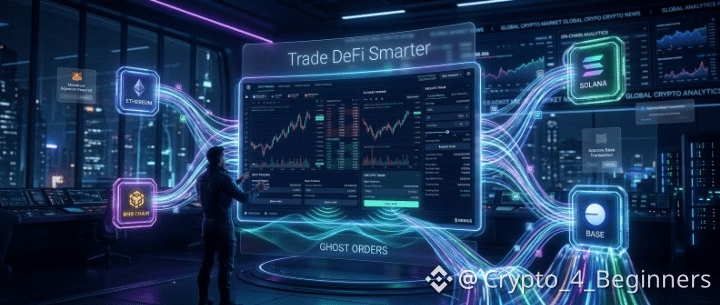
🔥 DeFi trading should feel easy, not confusing.
• Trade across multiple blockchains from one place
• Buy spot & futures without changing apps
• Ghost Orders help keep big trades private
• Faster trading with fewer wallet popups
• Smooth experience powered by @GeniusOfficial
GENIUS is making on-chain trading simpler for everyone.
#genius $GENIUS
{spot}(GENIUSUSDT)
🔥 DeFi trading should feel easy, not confusing.
• Trade across multiple blockchains from one place
• Buy spot & futures without changing apps
• Ghost Orders help keep big trades private
• Faster trading with fewer wallet popups
• Smooth experience powered by @GeniusOfficial
GENIUS is making on-chain trading simpler for everyone.
#genius $GENIUS
• Trade across multiple blockchains from one place
• Buy spot & futures without changing apps
• Ghost Orders help keep big trades private
• Faster trading with fewer wallet popups
• Smooth experience powered by @GeniusOfficial
GENIUS is making on-chain trading simpler for everyone.
#genius $GENIUS
102

ບົດຄວາມ
Your Wallet Is Public but Your Trading Strategy Doesn't Have to BeOne of the biggest myths in crypto is that traders have privacy 👀
Reality?
On most blockchains, almost everything is visible
💼 Your wallet
📈 Your trades
💰 Your position size
⏱️ Your timing
─────────────────
If a whale opens a massive position, onchain trackers notice it almost instantly then the chain reaction starts:
🤖 Bots react
👥 Copy traders follow
⚡ Front-runners jump in before execution finishes
In traditional finance, serious traders spend millions protecting execution quality
But in DeFi?
Most users are unknowingly trading in public 🌐
That’s exactly the problem @GeniusOfficial is trying to solve with one of its most talked-about innovations:
👻 Ghost Orders
And honestly, this could become one of the biggest narratives in onchain trading going forward.
─────────────────
The Problem With Transparent Blockchains ⚠️
⚠️ Transparency is one of crypto’s biggest strengths.
⚠️ It makes blockchains verifiable, open and trustless but there’s also a downside people don’t talk about enough.
⚠️ Sometimes, transparency can actually punish large traders.
⚠️ Imagine trying to buy a huge position in a low liquidity token.
─────────────────
The moment your wallet activity appears onchain:
🤖 Bots start tracking it
👥 Traders begin copying it
📈 Prices move against you
💸 Execution becomes more expensive and this happens every single day in DeFi
For whales, funds, and advanced traders, public execution constantly leaks alpha 📊
Over time, that hidden cost becomes massive.💥
─────────────────
So What Exactly Are Ghost Orders? 👻
Ghost Orders are Genius Terminal’s privacy-focused execution layer designed to hide trading intent without taking activity off-chain. 🔒
Instead of executing one huge visible transaction, Genius reportedly splits the order into smaller fragmented trades across temporary wallets called “Ghosts”.
─────────────────
Think of it like this 👇
Instead of the market seeing:
💰 “Wallet X just bought $2 million worth of a token.”
It sees:
🧩 “Hundreds of smaller unrelated trades happening at the same time.”
That creates a completely different market impact
The system reportedly uses MPC (Multi-Party Computation) architecture to coordinate everything while users still remain fully in control of their funds and honestly, that’s the most important part.
─────────────────
Privacy Without Losing Custody 🔒
A lot of crypto privacy solutions in the past created trust issues ⚠️
Users often had to:
❌ Send assets into mixers
❌ Trust centralized operators
❌ Move funds offchain
❌ Sacrifice transparency
─────────────────
Genius seems to be taking a very different approach
Ghost Orders are designed to stay:
🛡️ Non-custodial
🌐 Fully onchain
✅ Verifiable
👤 User-controlled
─────────────────
According to the project’s design philosophy, user keys never leave the device and honestly, that changes the whole conversation because the goal isn’t simply:
“Hide transactions.”
The real goal is:
Protect execution quality and there’s a huge difference between those two ideas.
─────────────────
Why This Matters More Than People Realize?
Most retail traders might think:
Why would I even need privacy for trades? but market privacy isn’t really about secrecy
It’s about protection 🛡️
─────────────────
Think about it like this 👇
📦 Building a large position quietly
⚡ Avoiding front-running
💸 Reducing unnecessary slippage
🕵️ Preventing wallet tracking
📊 Protecting your strategy from copy traders
─────────────────
For professional traders, these things matter a lot Even traditional finance firms spend heavily to protect order flow because leaked execution data can cost millions.
Crypto markets are basically starting to catch up to that same reality now.
The Rise of “Compliant Privacy”
One reason Ghost Orders are getting so much attention is because they try to balance two important things:
🛡️ Privacy
✅ Compliance
Historically, many privacy tools in crypto created regulatory concerns because transactions became difficult or impossible to audit but Genius seems to be approaching this differently.
─────────────────
With Ghost Orders:
🌐 Trades still remain onchain
📜 Activity stays verifiable
👤 Only the visibility of trading intent gets reduced and honestly, that’s a very important distinction. In simple terms 👇
Privacy should protect traders from exploitation not remove accountability completely.
That framing makes a lot more sense for long-term adoption.
─────────────────
Ghost Orders Could Change Whale Behavior
Right now, many large traders manually split trades across multiple wallets just to reduce visibility but honestly, that process is:
😵💫 Inefficient
⏳ Time-consuming
🧩 Operationally messy
Ghost Orders aim to automate that entire process and if the system scales properly, it could seriously change how whales interact with DeFi markets.
Instead of constantly worrying about:
🕵️ Getting tracked
📉 Causing market panic
⏰ Revealing entries too early traders may finally be able to execute large positions more naturally and that could become a major evolution in onchain market structure.
─────────────────
Privacy as a Competitive Edge
Most DeFi protocols usually compete on:
💰 Higher yields
🎁 Token incentives
💸 Lower fees
⚡ Faster transactions
─────────────────
But Genius seems to be competing on something deeper:
✅Execution quality and honestly, that’s a much bigger infrastructure play because serious traders don’t only care about APYs. They care about:
⚡ Efficiency
🛡️ Protection
🚀 Speed
👻 Stealth
🌐 Flexibility
Ghost Orders are designed around exactly those needs and if adoption keeps growing, privacy-focused execution could eventually become a standard expectation across DeFi markets.
─────────────────
Why Timing Matters? ⏳
What makes this even more interesting is the timing?
Crypto markets are becoming more institutional every year.
More professional capital is moving into onchain environments.
And professional traders expect infrastructure that feels closer to traditional finance sophistication. That includes:
📊 Advanced execution
🌊 Unified liquidity
🔄 Seamless routing
🔒 Execution privacy
Genius seems to understand that shift earlier than many competitors and if this trend keeps growing, projects focused on execution quality could become some of the most important infrastructure layers in DeFi.
─────────────────
My Final Thoughts
DeFi made finance more transparent but total transparency also created new problems.
Not every trader wants their strategy broadcasted to the entire market in real time.
Ghost Orders introduce a different idea.
What if users could:
✅ Stay fully onchain
✅ Remain verifiable
✅ Keep custody of funds
✅ Still protect execution quality
─────────────────
That’s the vision GENIUS seems to be pushing with its Ghost infrastructure.
Whether this becomes the future standard or not, one thing is becoming clear.
Privacy is turning into a serious conversation in modern DeFi and right now. GENIUS is positioning itself right in the middle of that narrative.
#genius $GENIUS
{spot}(GENIUSUSDT)
Your Wallet Is Public but Your Trading Strategy Doesn't Have to Be
One of the biggest myths in crypto is that traders have privacy 👀
Reality?
On most blockchains, almost everything is visible
💼 Your wallet
📈 Your trades
💰 Your position size
⏱️ Your timing
─────────────────
If a whale opens a massive position, onchain trackers notice it almost instantly then the chain reaction starts:
🤖 Bots react
👥 Copy traders follow
⚡ Front-runners jump in before execution finishes
In traditional finance, serious traders spend millions protecting execution quality
But in DeFi?
Most users are unknowingly trading in public 🌐
That’s exactly the problem @GeniusOfficial is trying to solve with one of its most talked-about innovations:
👻 Ghost Orders
And honestly, this could become one of the biggest narratives in onchain trading going forward.
─────────────────
The Problem With Transparent Blockchains ⚠️
⚠️ Transparency is one of crypto’s biggest strengths.
⚠️ It makes blockchains verifiable, open and trustless but there’s also a downside people don’t talk about enough.
⚠️ Sometimes, transparency can actually punish large traders.
⚠️ Imagine trying to buy a huge position in a low liquidity token.
─────────────────
The moment your wallet activity appears onchain:
🤖 Bots start tracking it
👥 Traders begin copying it
📈 Prices move against you
💸 Execution becomes more expensive and this happens every single day in DeFi
For whales, funds, and advanced traders, public execution constantly leaks alpha 📊
Over time, that hidden cost becomes massive.💥
─────────────────
So What Exactly Are Ghost Orders? 👻
Ghost Orders are Genius Terminal’s privacy-focused execution layer designed to hide trading intent without taking activity off-chain. 🔒
Instead of executing one huge visible transaction, Genius reportedly splits the order into smaller fragmented trades across temporary wallets called “Ghosts”.
─────────────────
Think of it like this 👇
Instead of the market seeing:
💰 “Wallet X just bought $2 million worth of a token.”
It sees:
🧩 “Hundreds of smaller unrelated trades happening at the same time.”
That creates a completely different market impact
The system reportedly uses MPC (Multi-Party Computation) architecture to coordinate everything while users still remain fully in control of their funds and honestly, that’s the most important part.
─────────────────
Privacy Without Losing Custody 🔒
A lot of crypto privacy solutions in the past created trust issues ⚠️
Users often had to:
❌ Send assets into mixers
❌ Trust centralized operators
❌ Move funds offchain
❌ Sacrifice transparency
─────────────────
Genius seems to be taking a very different approach
Ghost Orders are designed to stay:
🛡️ Non-custodial
🌐 Fully onchain
✅ Verifiable
👤 User-controlled
─────────────────
According to the project’s design philosophy, user keys never leave the device and honestly, that changes the whole conversation because the goal isn’t simply:
“Hide transactions.”
The real goal is:
Protect execution quality and there’s a huge difference between those two ideas.
─────────────────
Why This Matters More Than People Realize?
Most retail traders might think:
Why would I even need privacy for trades? but market privacy isn’t really about secrecy
It’s about protection 🛡️
─────────────────
Think about it like this 👇
📦 Building a large position quietly
⚡ Avoiding front-running
💸 Reducing unnecessary slippage
🕵️ Preventing wallet tracking
📊 Protecting your strategy from copy traders
─────────────────
For professional traders, these things matter a lot Even traditional finance firms spend heavily to protect order flow because leaked execution data can cost millions.
Crypto markets are basically starting to catch up to that same reality now.
The Rise of “Compliant Privacy”
One reason Ghost Orders are getting so much attention is because they try to balance two important things:
🛡️ Privacy
✅ Compliance
Historically, many privacy tools in crypto created regulatory concerns because transactions became difficult or impossible to audit but Genius seems to be approaching this differently.
─────────────────
With Ghost Orders:
🌐 Trades still remain onchain
📜 Activity stays verifiable
👤 Only the visibility of trading intent gets reduced and honestly, that’s a very important distinction. In simple terms 👇
Privacy should protect traders from exploitation not remove accountability completely.
That framing makes a lot more sense for long-term adoption.
─────────────────
Ghost Orders Could Change Whale Behavior
Right now, many large traders manually split trades across multiple wallets just to reduce visibility but honestly, that process is:
😵💫 Inefficient
⏳ Time-consuming
🧩 Operationally messy
Ghost Orders aim to automate that entire process and if the system scales properly, it could seriously change how whales interact with DeFi markets.
Instead of constantly worrying about:
🕵️ Getting tracked
📉 Causing market panic
⏰ Revealing entries too early traders may finally be able to execute large positions more naturally and that could become a major evolution in onchain market structure.
─────────────────
Privacy as a Competitive Edge
Most DeFi protocols usually compete on:
💰 Higher yields
🎁 Token incentives
💸 Lower fees
⚡ Faster transactions
─────────────────
But Genius seems to be competing on something deeper:
✅Execution quality and honestly, that’s a much bigger infrastructure play because serious traders don’t only care about APYs. They care about:
⚡ Efficiency
🛡️ Protection
🚀 Speed
👻 Stealth
🌐 Flexibility
Ghost Orders are designed around exactly those needs and if adoption keeps growing, privacy-focused execution could eventually become a standard expectation across DeFi markets.
─────────────────
Why Timing Matters? ⏳
What makes this even more interesting is the timing?
Crypto markets are becoming more institutional every year.
More professional capital is moving into onchain environments.
And professional traders expect infrastructure that feels closer to traditional finance sophistication. That includes:
📊 Advanced execution
🌊 Unified liquidity
🔄 Seamless routing
🔒 Execution privacy
Genius seems to understand that shift earlier than many competitors and if this trend keeps growing, projects focused on execution quality could become some of the most important infrastructure layers in DeFi.
─────────────────
My Final Thoughts
DeFi made finance more transparent but total transparency also created new problems.
Not every trader wants their strategy broadcasted to the entire market in real time.
Ghost Orders introduce a different idea.
What if users could:
✅ Stay fully onchain
✅ Remain verifiable
✅ Keep custody of funds
✅ Still protect execution quality
─────────────────
That’s the vision GENIUS seems to be pushing with its Ghost infrastructure.
Whether this becomes the future standard or not, one thing is becoming clear.
Privacy is turning into a serious conversation in modern DeFi and right now. GENIUS is positioning itself right in the middle of that narrative.
#genius $GENIUS
Reality?
On most blockchains, almost everything is visible
💼 Your wallet
📈 Your trades
💰 Your position size
⏱️ Your timing
─────────────────
If a whale opens a massive position, onchain trackers notice it almost instantly then the chain reaction starts:
🤖 Bots react
👥 Copy traders follow
⚡ Front-runners jump in before execution finishes
In traditional finance, serious traders spend millions protecting execution quality
But in DeFi?
Most users are unknowingly trading in public 🌐
That’s exactly the problem @GeniusOfficial is trying to solve with one of its most talked-about innovations:
👻 Ghost Orders
And honestly, this could become one of the biggest narratives in onchain trading going forward.
─────────────────
The Problem With Transparent Blockchains ⚠️
⚠️ Transparency is one of crypto’s biggest strengths.
⚠️ It makes blockchains verifiable, open and trustless but there’s also a downside people don’t talk about enough.
⚠️ Sometimes, transparency can actually punish large traders.
⚠️ Imagine trying to buy a huge position in a low liquidity token.
─────────────────
The moment your wallet activity appears onchain:
🤖 Bots start tracking it
👥 Traders begin copying it
📈 Prices move against you
💸 Execution becomes more expensive and this happens every single day in DeFi
For whales, funds, and advanced traders, public execution constantly leaks alpha 📊
Over time, that hidden cost becomes massive.💥
─────────────────
So What Exactly Are Ghost Orders? 👻
Ghost Orders are Genius Terminal’s privacy-focused execution layer designed to hide trading intent without taking activity off-chain. 🔒
Instead of executing one huge visible transaction, Genius reportedly splits the order into smaller fragmented trades across temporary wallets called “Ghosts”.
─────────────────
Think of it like this 👇
Instead of the market seeing:
💰 “Wallet X just bought $2 million worth of a token.”
It sees:
🧩 “Hundreds of smaller unrelated trades happening at the same time.”
That creates a completely different market impact
The system reportedly uses MPC (Multi-Party Computation) architecture to coordinate everything while users still remain fully in control of their funds and honestly, that’s the most important part.
─────────────────
Privacy Without Losing Custody 🔒
A lot of crypto privacy solutions in the past created trust issues ⚠️
Users often had to:
❌ Send assets into mixers
❌ Trust centralized operators
❌ Move funds offchain
❌ Sacrifice transparency
─────────────────
Genius seems to be taking a very different approach
Ghost Orders are designed to stay:
🛡️ Non-custodial
🌐 Fully onchain
✅ Verifiable
👤 User-controlled
─────────────────
According to the project’s design philosophy, user keys never leave the device and honestly, that changes the whole conversation because the goal isn’t simply:
“Hide transactions.”
The real goal is:
Protect execution quality and there’s a huge difference between those two ideas.
─────────────────
Why This Matters More Than People Realize?
Most retail traders might think:
Why would I even need privacy for trades? but market privacy isn’t really about secrecy
It’s about protection 🛡️
─────────────────
Think about it like this 👇
📦 Building a large position quietly
⚡ Avoiding front-running
💸 Reducing unnecessary slippage
🕵️ Preventing wallet tracking
📊 Protecting your strategy from copy traders
─────────────────
For professional traders, these things matter a lot Even traditional finance firms spend heavily to protect order flow because leaked execution data can cost millions.
Crypto markets are basically starting to catch up to that same reality now.
The Rise of “Compliant Privacy”
One reason Ghost Orders are getting so much attention is because they try to balance two important things:
🛡️ Privacy
✅ Compliance
Historically, many privacy tools in crypto created regulatory concerns because transactions became difficult or impossible to audit but Genius seems to be approaching this differently.
─────────────────
With Ghost Orders:
🌐 Trades still remain onchain
📜 Activity stays verifiable
👤 Only the visibility of trading intent gets reduced and honestly, that’s a very important distinction. In simple terms 👇
Privacy should protect traders from exploitation not remove accountability completely.
That framing makes a lot more sense for long-term adoption.
─────────────────
Ghost Orders Could Change Whale Behavior
Right now, many large traders manually split trades across multiple wallets just to reduce visibility but honestly, that process is:
😵💫 Inefficient
⏳ Time-consuming
🧩 Operationally messy
Ghost Orders aim to automate that entire process and if the system scales properly, it could seriously change how whales interact with DeFi markets.
Instead of constantly worrying about:
🕵️ Getting tracked
📉 Causing market panic
⏰ Revealing entries too early traders may finally be able to execute large positions more naturally and that could become a major evolution in onchain market structure.
─────────────────
Privacy as a Competitive Edge
Most DeFi protocols usually compete on:
💰 Higher yields
🎁 Token incentives
💸 Lower fees
⚡ Faster transactions
─────────────────
But Genius seems to be competing on something deeper:
✅Execution quality and honestly, that’s a much bigger infrastructure play because serious traders don’t only care about APYs. They care about:
⚡ Efficiency
🛡️ Protection
🚀 Speed
👻 Stealth
🌐 Flexibility
Ghost Orders are designed around exactly those needs and if adoption keeps growing, privacy-focused execution could eventually become a standard expectation across DeFi markets.
─────────────────
Why Timing Matters? ⏳
What makes this even more interesting is the timing?
Crypto markets are becoming more institutional every year.
More professional capital is moving into onchain environments.
And professional traders expect infrastructure that feels closer to traditional finance sophistication. That includes:
📊 Advanced execution
🌊 Unified liquidity
🔄 Seamless routing
🔒 Execution privacy
Genius seems to understand that shift earlier than many competitors and if this trend keeps growing, projects focused on execution quality could become some of the most important infrastructure layers in DeFi.
─────────────────
My Final Thoughts
DeFi made finance more transparent but total transparency also created new problems.
Not every trader wants their strategy broadcasted to the entire market in real time.
Ghost Orders introduce a different idea.
What if users could:
✅ Stay fully onchain
✅ Remain verifiable
✅ Keep custody of funds
✅ Still protect execution quality
─────────────────
That’s the vision GENIUS seems to be pushing with its Ghost infrastructure.
Whether this becomes the future standard or not, one thing is becoming clear.
Privacy is turning into a serious conversation in modern DeFi and right now. GENIUS is positioning itself right in the middle of that narrative.
#genius $GENIUS
142
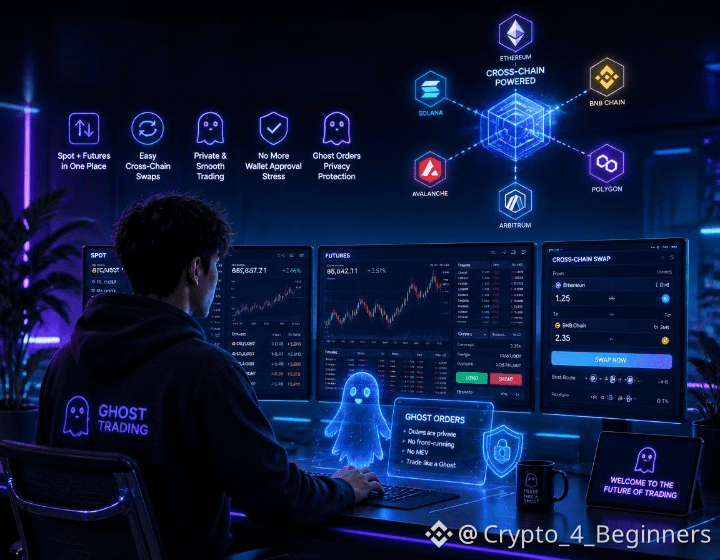
Crypto trading isn't so complicated anymore.
• Spot and futures trading in one place
• Easy swapping across different blockchains
• More private trading than ghost orders
• No more stress from repeated wallet approvals
• Simple and smooth experience by @GeniusOfficial
GENIUS is making DeFi trading easy. #genius
$GENIUS
{spot}(GENIUSUSDT)
Crypto trading isn't so complicated anymore.
• Spot and futures trading in one place
• Easy swapping across different blockchains
• More private trading than ghost orders
• No more stress from repeated wallet approvals
• Simple and smooth experience by @GeniusOfficial
GENIUS is making DeFi trading easy. #genius
$GENIUS
• Spot and futures trading in one place
• Easy swapping across different blockchains
• More private trading than ghost orders
• No more stress from repeated wallet approvals
• Simple and smooth experience by @GeniusOfficial
GENIUS is making DeFi trading easy. #genius
$GENIUS
105
ບົດຄວາມ
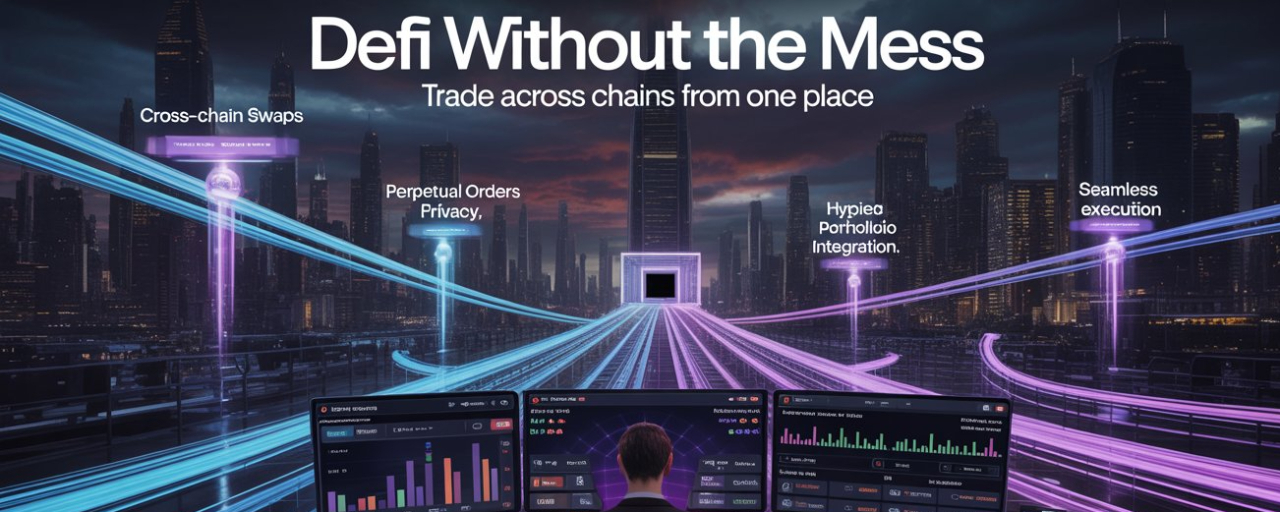
Every Chain. One Terminal. Finally, DeFi Without the Mess"Crypto traders know the struggle..."
⚡ One trade on Ethereum, another on Solana everything feels all over the place.
⚡ Different wallets, gas fees and constant network switching get annoying fast.
⚡ Even using bridges can turn into a headache sometimes.
⚡ DeFi is the future but most user experiences still feel pretty raw.
⚡ That's where Genius Terminal comes in making on-chain trading much simpler.
⚡ Trade across chains, manage futures and do everything from one place.
⚡ People are already starting to notice the momentum around Genius.
⚡ GENIUS is slowly becoming more than just a token. It's turning into a full infrastructure.
⚡ DeFi's Biggest Problem: Too Many Moving Parts...
─────────────────
Today's DeFi experience looks something like this:
📈 Spot trading in one app
📈 Perpetuals in another place
📈 Bridging done separately
📈 Launchpads on different platforms
📈 Wallet popups every 2 minutes
─────────────────
✅ Slow execution can make traders miss good opportunities.
✅ Too many steps and wallet approvals create a frustrating experience.
✅ For professional traders, even a few seconds can matter a lot.
✅ When the market moves fast, nobody wants to deal with endless confirmations.
✅ Genius Terminal is built to eliminate this friction and make trading easier.What is Genius Terminal?
✅ Genius is one trading terminal for all chains and DeFi tools in one place.
✅ It combines DEXs, perpetual trading, launchpads and swaps into a single simple interface.
✅ No more switching tabs, apps or wallets.
─────────────────
📈 Spot trading? ✔
📈 Perpetual trading? ✔
📈 Cross-chain swaps? ✔
📈 Yield opportunities? ✔
📈 Pre-launch token access? ✔
📈 The best part? Most of the time, users don’t even feel the hassle of changing chains...
📈 "Chain Invisible" Experience...
─────────────────
✅ In traditional DeFi users have to switch networks manually all the time.
✅ Moving from Ethereum to BNB Chain usually means approve, switch, confirm and wait again.
✅ Genius works differently by handling routing and execution in the background.
✅ Just trade, no technical steps. Easy.
✅ No complicated RPC setup.
✅ No endless wallet approvals.
✅ No confusion between different networks.
✅ Just smooth and fast execution.
✅ The experience feels simple like a centralized exchange but users still keep control of their own funds.
✅ To be honest, this kind of simplicity is key if DeFi is to be adopted by the mainstream.
─────────────────
🌐 Single Portfolio, Multiple Chains
Just Imagine: 👇
😵 Your assets are distributed over Ethereum, Solana and BNB Chain.
😵 Usually it’s a mess trying to keep track of everything but with Genius Terminal, you get one dashboard to view your whole portfolio.
😵 No wallet switching. No more checking a lot of chains over and over again. And honestly, that changes the whole trading mindset.
Instead of thinking:
"Which chain has my funds?"
You start thinking:
"Where's the best opportunity right now?"
That’s a pretty big change.
─────────────────
Designed for serious traders
Retail users will love how easy it feels
But Genius is especially good for:
⚡ Whales
⚡ High frequency traders
⚡ Advanced DeFi users
⚡ Multi-chain farmers
⚡ Launchpad snipers
─────────────────
Designed for people on the go who want all-in-one solution
Why? Because the quality of execution matters:
📈 The platform already has billions in trading volume in reports from early 2026 📈
📈 Daily activity was hitting massive numbers 🚀 During the Genius Points farming phase
📈 And that kind of volume doesn't happen by random hype 👀
─────────────────
Professional traders want tools that are:
✅ Save time
✅ Stronger implementation
✅ Defend their edge
─────────────────
That's where Genius really shines.
Ghost Orders: Privacy Without Going Onchain
Almost all blockchains are completely transparent
So when a whale places a big order, onchain trackers see it a moment later
─────────────────
Then the usual happens:
📈 Front-run
👥 Copy trade
⚠️ Everywhere market attention
─────────────────
Ghost Orders is one of the stand-out features of Genius Terminals.
The system reportedly uses MPC-based architecture to break up large trades into multiple temporary wallets 🧩
So instead of seeing one huge order the market sees smaller fragmented activity 👀
And the best part? 👇🏼
All verifiable onchain ✅
That creates a really interesting balance between:
🔒 Privacy
⚖️ Transparency & compliance
─────────────────
That could be a big narrative going forward in DeFi
Bigger Opportunities = Integration of Hyperliquid
Spot & perpetual markets often feel disconnected but with Hyperliquid integration, Genius enables users to trade perp directly in the terminal
So you can:
📈 Spot Trade
📈 Hedge it immediately with perps
📈 All in the same environment
❌ No additional apps
❌ Manual money movement no
That's a big advantage for active traders
Why is Binance backing important?Tech is really important in crypto? But distribution and credibility are equally important
Genius was backed by YZi Labs and CZ advisory involvement naturally brought a lot more market attention 👀
And then there was:
⚡ Binance Alpha exposure
⚡ Rapidly growing community
⚡ Strong momentum on token launches
⚡ Heavy involvement in farming
All this helped to push the network into the lime light and now GENIUS is gradually transforming into a serious market asset rather than just another hype token.
─────────────────
The Big Picture
Most DeFi apps solve 1 problem or focus on 1 feature but Genius seems to be shooting for something far bigger 👀
The goal looks something like:
Building an OS for onchain trading Because if:
Execution is seamless
Chains are invisible to the user
Privacy is built-in
It all feels like it is in one place then DeFi can actually compete with centralized exchanges in terms of user experience. 🚀
And honestly that might be the next big evolution of crypto...🔥
─────────────────
My Final Thoughts
⚡ Everyone wants freedom in crypto but people don’t want friction without purpose and that's probably Genius Terminals biggest strength not only the technology but the simplicity.
⚡ It takes all the complexities of DeFi and hides it behind a much cleaner trading experience.
⚡ If the team keeps delivering, Genius could really become a big player in multi-chain trading infrastructure.
The story still feels early right now.
The momentum is building.
And the GENIUS network surely looks worthy of being on the watchlist.
#genius $GENIUS @GeniusOfficial
Every Chain. One Terminal. Finally, DeFi Without the Mess
"Crypto traders know the struggle..."
⚡ One trade on Ethereum, another on Solana everything feels all over the place.
⚡ Different wallets, gas fees and constant network switching get annoying fast.
⚡ Even using bridges can turn into a headache sometimes.
⚡ DeFi is the future but most user experiences still feel pretty raw.
⚡ That's where Genius Terminal comes in making on-chain trading much simpler.
⚡ Trade across chains, manage futures and do everything from one place.
⚡ People are already starting to notice the momentum around Genius.
⚡ GENIUS is slowly becoming more than just a token. It's turning into a full infrastructure.
⚡ DeFi's Biggest Problem: Too Many Moving Parts...
─────────────────
Today's DeFi experience looks something like this:
📈 Spot trading in one app
📈 Perpetuals in another place
📈 Bridging done separately
📈 Launchpads on different platforms
📈 Wallet popups every 2 minutes
─────────────────
✅ Slow execution can make traders miss good opportunities.
✅ Too many steps and wallet approvals create a frustrating experience.
✅ For professional traders, even a few seconds can matter a lot.
✅ When the market moves fast, nobody wants to deal with endless confirmations.
✅ Genius Terminal is built to eliminate this friction and make trading easier.What is Genius Terminal?
✅ Genius is one trading terminal for all chains and DeFi tools in one place.
✅ It combines DEXs, perpetual trading, launchpads and swaps into a single simple interface.
✅ No more switching tabs, apps or wallets.
─────────────────
📈 Spot trading? ✔
📈 Perpetual trading? ✔
📈 Cross-chain swaps? ✔
📈 Yield opportunities? ✔
📈 Pre-launch token access? ✔
📈 The best part? Most of the time, users don’t even feel the hassle of changing chains...
📈 "Chain Invisible" Experience...
─────────────────
✅ In traditional DeFi users have to switch networks manually all the time.
✅ Moving from Ethereum to BNB Chain usually means approve, switch, confirm and wait again.
✅ Genius works differently by handling routing and execution in the background.
✅ Just trade, no technical steps. Easy.
✅ No complicated RPC setup.
✅ No endless wallet approvals.
✅ No confusion between different networks.
✅ Just smooth and fast execution.
✅ The experience feels simple like a centralized exchange but users still keep control of their own funds.
✅ To be honest, this kind of simplicity is key if DeFi is to be adopted by the mainstream.
─────────────────
🌐 Single Portfolio, Multiple Chains
Just Imagine: 👇
😵 Your assets are distributed over Ethereum, Solana and BNB Chain.
😵 Usually it’s a mess trying to keep track of everything but with Genius Terminal, you get one dashboard to view your whole portfolio.
😵 No wallet switching. No more checking a lot of chains over and over again. And honestly, that changes the whole trading mindset.
Instead of thinking:
"Which chain has my funds?"
You start thinking:
"Where's the best opportunity right now?"
That’s a pretty big change.
─────────────────
Designed for serious traders
Retail users will love how easy it feels
But Genius is especially good for:
⚡ Whales
⚡ High frequency traders
⚡ Advanced DeFi users
⚡ Multi-chain farmers
⚡ Launchpad snipers
─────────────────
Designed for people on the go who want all-in-one solution
Why? Because the quality of execution matters:
📈 The platform already has billions in trading volume in reports from early 2026 📈
📈 Daily activity was hitting massive numbers 🚀 During the Genius Points farming phase
📈 And that kind of volume doesn't happen by random hype 👀
─────────────────
Professional traders want tools that are:
✅ Save time
✅ Stronger implementation
✅ Defend their edge
─────────────────
That's where Genius really shines.
Ghost Orders: Privacy Without Going Onchain
Almost all blockchains are completely transparent
So when a whale places a big order, onchain trackers see it a moment later
─────────────────
Then the usual happens:
📈 Front-run
👥 Copy trade
⚠️ Everywhere market attention
─────────────────
Ghost Orders is one of the stand-out features of Genius Terminals.
The system reportedly uses MPC-based architecture to break up large trades into multiple temporary wallets 🧩
So instead of seeing one huge order the market sees smaller fragmented activity 👀
And the best part? 👇🏼
All verifiable onchain ✅
That creates a really interesting balance between:
🔒 Privacy
⚖️ Transparency & compliance
─────────────────
That could be a big narrative going forward in DeFi
Bigger Opportunities = Integration of Hyperliquid
Spot & perpetual markets often feel disconnected but with Hyperliquid integration, Genius enables users to trade perp directly in the terminal
So you can:
📈 Spot Trade
📈 Hedge it immediately with perps
📈 All in the same environment
❌ No additional apps
❌ Manual money movement no
That's a big advantage for active traders
Why is Binance backing important?Tech is really important in crypto? But distribution and credibility are equally important
Genius was backed by YZi Labs and CZ advisory involvement naturally brought a lot more market attention 👀
And then there was:
⚡ Binance Alpha exposure
⚡ Rapidly growing community
⚡ Strong momentum on token launches
⚡ Heavy involvement in farming
All this helped to push the network into the lime light and now GENIUS is gradually transforming into a serious market asset rather than just another hype token.
─────────────────
The Big Picture
Most DeFi apps solve 1 problem or focus on 1 feature but Genius seems to be shooting for something far bigger 👀
The goal looks something like:
Building an OS for onchain trading Because if:
Execution is seamless
Chains are invisible to the user
Privacy is built-in
It all feels like it is in one place then DeFi can actually compete with centralized exchanges in terms of user experience. 🚀
And honestly that might be the next big evolution of crypto...🔥
─────────────────
My Final Thoughts
⚡ Everyone wants freedom in crypto but people don’t want friction without purpose and that's probably Genius Terminals biggest strength not only the technology but the simplicity.
⚡ It takes all the complexities of DeFi and hides it behind a much cleaner trading experience.
⚡ If the team keeps delivering, Genius could really become a big player in multi-chain trading infrastructure.
The story still feels early right now.
The momentum is building.
And the GENIUS network surely looks worthy of being on the watchlist.
#genius $GENIUS @GeniusOfficial
⚡ One trade on Ethereum, another on Solana everything feels all over the place.
⚡ Different wallets, gas fees and constant network switching get annoying fast.
⚡ Even using bridges can turn into a headache sometimes.
⚡ DeFi is the future but most user experiences still feel pretty raw.
⚡ That's where Genius Terminal comes in making on-chain trading much simpler.
⚡ Trade across chains, manage futures and do everything from one place.
⚡ People are already starting to notice the momentum around Genius.
⚡ GENIUS is slowly becoming more than just a token. It's turning into a full infrastructure.
⚡ DeFi's Biggest Problem: Too Many Moving Parts...
─────────────────
Today's DeFi experience looks something like this:
📈 Spot trading in one app
📈 Perpetuals in another place
📈 Bridging done separately
📈 Launchpads on different platforms
📈 Wallet popups every 2 minutes
─────────────────
✅ Slow execution can make traders miss good opportunities.
✅ Too many steps and wallet approvals create a frustrating experience.
✅ For professional traders, even a few seconds can matter a lot.
✅ When the market moves fast, nobody wants to deal with endless confirmations.
✅ Genius Terminal is built to eliminate this friction and make trading easier.What is Genius Terminal?
✅ Genius is one trading terminal for all chains and DeFi tools in one place.
✅ It combines DEXs, perpetual trading, launchpads and swaps into a single simple interface.
✅ No more switching tabs, apps or wallets.
─────────────────
📈 Spot trading? ✔
📈 Perpetual trading? ✔
📈 Cross-chain swaps? ✔
📈 Yield opportunities? ✔
📈 Pre-launch token access? ✔
📈 The best part? Most of the time, users don’t even feel the hassle of changing chains...
📈 "Chain Invisible" Experience...
─────────────────
✅ In traditional DeFi users have to switch networks manually all the time.
✅ Moving from Ethereum to BNB Chain usually means approve, switch, confirm and wait again.
✅ Genius works differently by handling routing and execution in the background.
✅ Just trade, no technical steps. Easy.
✅ No complicated RPC setup.
✅ No endless wallet approvals.
✅ No confusion between different networks.
✅ Just smooth and fast execution.
✅ The experience feels simple like a centralized exchange but users still keep control of their own funds.
✅ To be honest, this kind of simplicity is key if DeFi is to be adopted by the mainstream.
─────────────────
🌐 Single Portfolio, Multiple Chains
Just Imagine: 👇
😵 Your assets are distributed over Ethereum, Solana and BNB Chain.
😵 Usually it’s a mess trying to keep track of everything but with Genius Terminal, you get one dashboard to view your whole portfolio.
😵 No wallet switching. No more checking a lot of chains over and over again. And honestly, that changes the whole trading mindset.
Instead of thinking:
"Which chain has my funds?"
You start thinking:
"Where's the best opportunity right now?"
That’s a pretty big change.
─────────────────
Designed for serious traders
Retail users will love how easy it feels
But Genius is especially good for:
⚡ Whales
⚡ High frequency traders
⚡ Advanced DeFi users
⚡ Multi-chain farmers
⚡ Launchpad snipers
─────────────────
Designed for people on the go who want all-in-one solution
Why? Because the quality of execution matters:
📈 The platform already has billions in trading volume in reports from early 2026 📈
📈 Daily activity was hitting massive numbers 🚀 During the Genius Points farming phase
📈 And that kind of volume doesn't happen by random hype 👀
─────────────────
Professional traders want tools that are:
✅ Save time
✅ Stronger implementation
✅ Defend their edge
─────────────────
That's where Genius really shines.
Ghost Orders: Privacy Without Going Onchain
Almost all blockchains are completely transparent
So when a whale places a big order, onchain trackers see it a moment later
─────────────────
Then the usual happens:
📈 Front-run
👥 Copy trade
⚠️ Everywhere market attention
─────────────────
Ghost Orders is one of the stand-out features of Genius Terminals.
The system reportedly uses MPC-based architecture to break up large trades into multiple temporary wallets 🧩
So instead of seeing one huge order the market sees smaller fragmented activity 👀
And the best part? 👇🏼
All verifiable onchain ✅
That creates a really interesting balance between:
🔒 Privacy
⚖️ Transparency & compliance
─────────────────
That could be a big narrative going forward in DeFi
Bigger Opportunities = Integration of Hyperliquid
Spot & perpetual markets often feel disconnected but with Hyperliquid integration, Genius enables users to trade perp directly in the terminal
So you can:
📈 Spot Trade
📈 Hedge it immediately with perps
📈 All in the same environment
❌ No additional apps
❌ Manual money movement no
That's a big advantage for active traders
Why is Binance backing important?Tech is really important in crypto? But distribution and credibility are equally important
Genius was backed by YZi Labs and CZ advisory involvement naturally brought a lot more market attention 👀
And then there was:
⚡ Binance Alpha exposure
⚡ Rapidly growing community
⚡ Strong momentum on token launches
⚡ Heavy involvement in farming
All this helped to push the network into the lime light and now GENIUS is gradually transforming into a serious market asset rather than just another hype token.
─────────────────
The Big Picture
Most DeFi apps solve 1 problem or focus on 1 feature but Genius seems to be shooting for something far bigger 👀
The goal looks something like:
Building an OS for onchain trading Because if:
Execution is seamless
Chains are invisible to the user
Privacy is built-in
It all feels like it is in one place then DeFi can actually compete with centralized exchanges in terms of user experience. 🚀
And honestly that might be the next big evolution of crypto...🔥
─────────────────
My Final Thoughts
⚡ Everyone wants freedom in crypto but people don’t want friction without purpose and that's probably Genius Terminals biggest strength not only the technology but the simplicity.
⚡ It takes all the complexities of DeFi and hides it behind a much cleaner trading experience.
⚡ If the team keeps delivering, Genius could really become a big player in multi-chain trading infrastructure.
The story still feels early right now.
The momentum is building.
And the GENIUS network surely looks worthy of being on the watchlist.
#genius $GENIUS @GeniusOfficial
1
146
ບົດຄວາມ
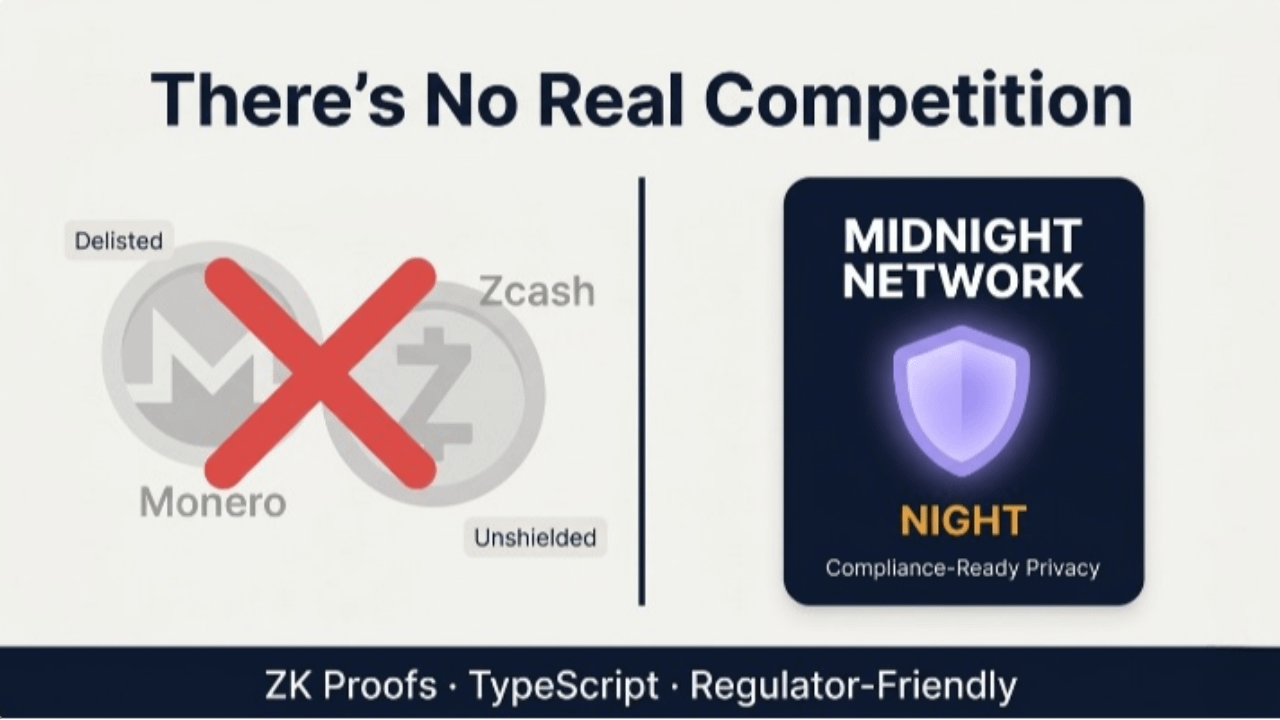
Midnight Network vs Other Privacy Coins ~ There's No Real CompetitionWhenever someone mentions "privacy blockchain," people immediately think of Monero or Zcash but Midnight Network is fundamentally different from both and if you hold NIGHT you need to understand why?
The Problem With Monero and Zcash
Both coins solved privacy but created a brand new problem in the process regulatory rejection.
Monero got delisted from Binance, Kraken and several other exchanges. Zcash's shielded transactions are barely used because most of the ecosystem operates in unshielded mode anyway.
Both coins turned privacy into a zero sum game. Either you stay private or you exist in a regulated network pick one not both. Midnight rejected that false choice entirely.
Midnight's Compliance First Privacy Approach
Midnight's model was built to work with regulators not run from them. Using ZK proofs, Midnight Network makes it possible to prove a transaction is legal without exposing your full financial history, meet KYC and AML requirements without on-chain data leaks and deploy smart contracts while keeping the underlying business logic completely private. This puts Midnight a decade ahead of Monero and Zcash because it actually works in the real world.
Developer Experience Nobody Talks About This
Building on most privacy blockchains is a nightmare. Complex cryptographic languages, poor documentation, tiny developer communities. Midnight removed that barrier. Their Compact language is built on TypeScript one of the most widely used programming languages on the planet. Existing Web2 developers can build private dApps without a steep learning curve. More developers means more applications and more applications means more NIGHT utility. Developer adoption is what decides a blockchain's long term success. Ethereum won because developers showed up. Midnight is following that same path, just with privacy built in from the start.
The Network Effect Snowball
Developers come because the tools are simple. Private dApps are being made in the fields of healthcare, finance and supply chain. Businesses use those dApps. Transaction volume grows. Demand for DUST increases. NIGHT holders benefit directly. Every step feeds the next one. That's an organic growth loop not artificial hype.
A Market That's Still Untouched
The global enterprise blockchain market is estimated to cross $1 trillion by 2030 but most of that market still isn't on any public blockchain because privacy can't be guaranteed. Midnight was built specifically to fill that gap. When enterprises finally move toward private blockchain infrastructure, Midnight Network will already be ready for them. NIGHT is the access token to that infrastructure.
#night
@MidnightNetwork
$NIGHT
{spot}(NIGHTUSDT)
Midnight Network vs Other Privacy Coins ~ There's No Real Competition
Whenever someone mentions "privacy blockchain," people immediately think of Monero or Zcash but Midnight Network is fundamentally different from both and if you hold NIGHT you need to understand why?
The Problem With Monero and Zcash
Both coins solved privacy but created a brand new problem in the process regulatory rejection.
Monero got delisted from Binance, Kraken and several other exchanges. Zcash's shielded transactions are barely used because most of the ecosystem operates in unshielded mode anyway.
Both coins turned privacy into a zero sum game. Either you stay private or you exist in a regulated network pick one not both. Midnight rejected that false choice entirely.
Midnight's Compliance First Privacy Approach
Midnight's model was built to work with regulators not run from them. Using ZK proofs, Midnight Network makes it possible to prove a transaction is legal without exposing your full financial history, meet KYC and AML requirements without on-chain data leaks and deploy smart contracts while keeping the underlying business logic completely private. This puts Midnight a decade ahead of Monero and Zcash because it actually works in the real world.
Developer Experience Nobody Talks About This
Building on most privacy blockchains is a nightmare. Complex cryptographic languages, poor documentation, tiny developer communities. Midnight removed that barrier. Their Compact language is built on TypeScript one of the most widely used programming languages on the planet. Existing Web2 developers can build private dApps without a steep learning curve. More developers means more applications and more applications means more NIGHT utility. Developer adoption is what decides a blockchain's long term success. Ethereum won because developers showed up. Midnight is following that same path, just with privacy built in from the start.
The Network Effect Snowball
Developers come because the tools are simple. Private dApps are being made in the fields of healthcare, finance and supply chain. Businesses use those dApps. Transaction volume grows. Demand for DUST increases. NIGHT holders benefit directly. Every step feeds the next one. That's an organic growth loop not artificial hype.
A Market That's Still Untouched
The global enterprise blockchain market is estimated to cross $1 trillion by 2030 but most of that market still isn't on any public blockchain because privacy can't be guaranteed. Midnight was built specifically to fill that gap. When enterprises finally move toward private blockchain infrastructure, Midnight Network will already be ready for them. NIGHT is the access token to that infrastructure.
#night
@MidnightNetwork
$NIGHT
The Problem With Monero and Zcash
Both coins solved privacy but created a brand new problem in the process regulatory rejection.
Monero got delisted from Binance, Kraken and several other exchanges. Zcash's shielded transactions are barely used because most of the ecosystem operates in unshielded mode anyway.
Both coins turned privacy into a zero sum game. Either you stay private or you exist in a regulated network pick one not both. Midnight rejected that false choice entirely.
Midnight's Compliance First Privacy Approach
Midnight's model was built to work with regulators not run from them. Using ZK proofs, Midnight Network makes it possible to prove a transaction is legal without exposing your full financial history, meet KYC and AML requirements without on-chain data leaks and deploy smart contracts while keeping the underlying business logic completely private. This puts Midnight a decade ahead of Monero and Zcash because it actually works in the real world.
Developer Experience Nobody Talks About This
Building on most privacy blockchains is a nightmare. Complex cryptographic languages, poor documentation, tiny developer communities. Midnight removed that barrier. Their Compact language is built on TypeScript one of the most widely used programming languages on the planet. Existing Web2 developers can build private dApps without a steep learning curve. More developers means more applications and more applications means more NIGHT utility. Developer adoption is what decides a blockchain's long term success. Ethereum won because developers showed up. Midnight is following that same path, just with privacy built in from the start.
The Network Effect Snowball
Developers come because the tools are simple. Private dApps are being made in the fields of healthcare, finance and supply chain. Businesses use those dApps. Transaction volume grows. Demand for DUST increases. NIGHT holders benefit directly. Every step feeds the next one. That's an organic growth loop not artificial hype.
A Market That's Still Untouched
The global enterprise blockchain market is estimated to cross $1 trillion by 2030 but most of that market still isn't on any public blockchain because privacy can't be guaranteed. Midnight was built specifically to fill that gap. When enterprises finally move toward private blockchain infrastructure, Midnight Network will already be ready for them. NIGHT is the access token to that infrastructure.
#night
@MidnightNetwork
$NIGHT
2
96
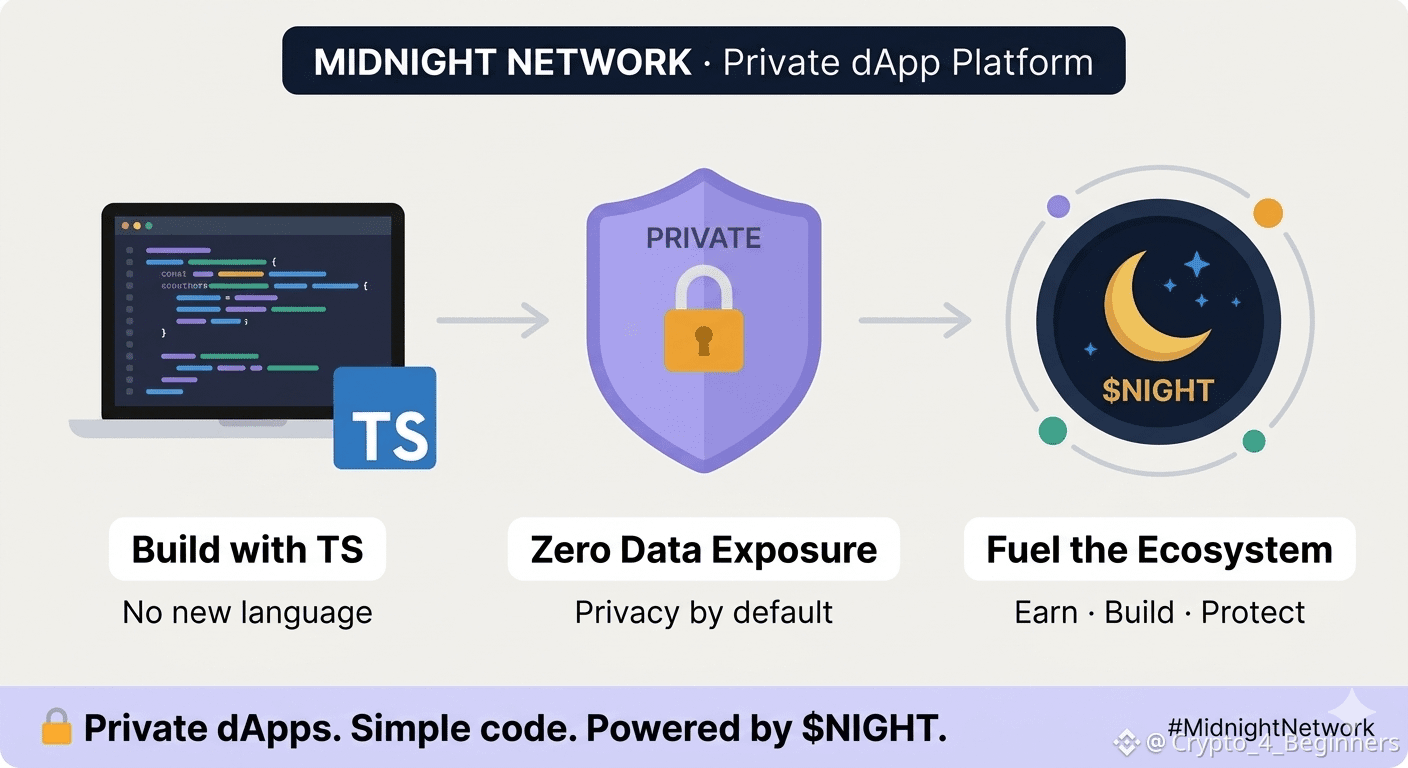
Developers can now build private dApps in TypeScript and it's all possible because of @MidnightNetwork
No complicated languages to learn. No data leaks to worry about.
$NIGHT fuels the ecosystem that actually puts privacy first.
Build, earn, and stay protected. #night
{future}(NIGHTUSDT)
Developers can now build private dApps in TypeScript and it's all possible because of @MidnightNetwork
No complicated languages to learn. No data leaks to worry about.
$NIGHT fuels the ecosystem that actually puts privacy first.
Build, earn, and stay protected. #night
No complicated languages to learn. No data leaks to worry about.
$NIGHT fuels the ecosystem that actually puts privacy first.
Build, earn, and stay protected. #night
2
38
ບົດຄວາມ
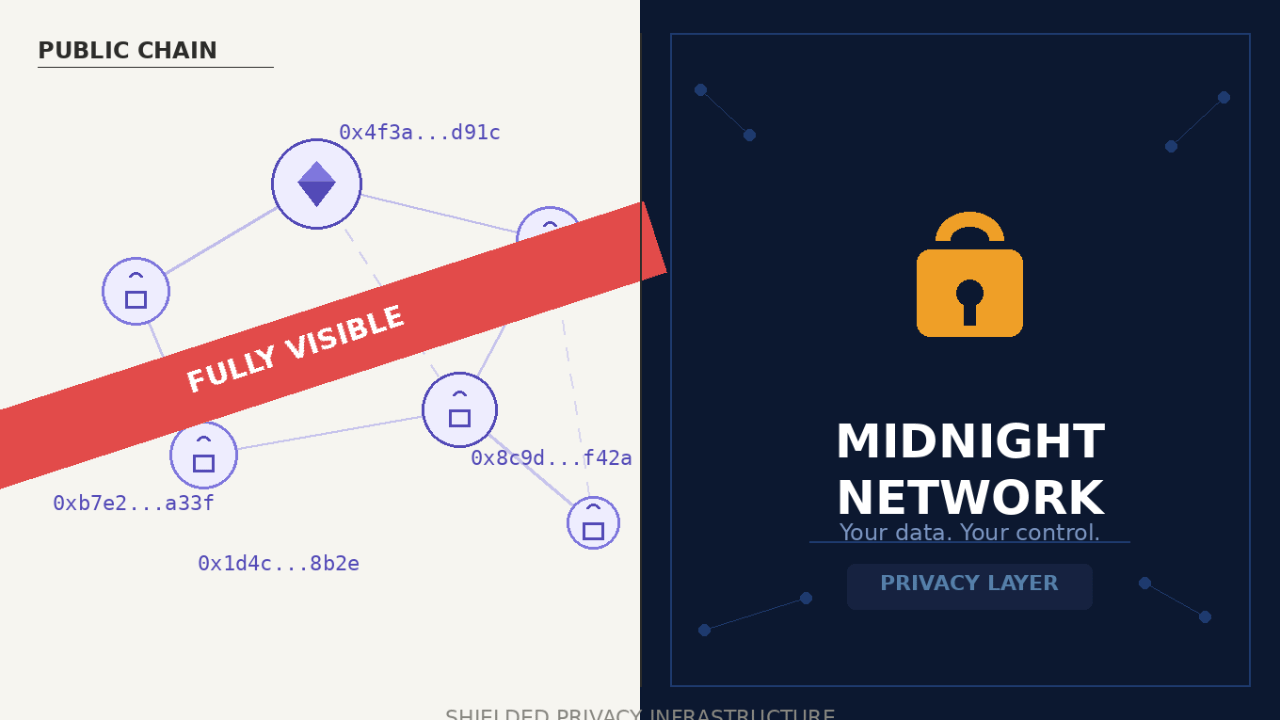
Midnight Network: When Existing Blockchains Fail at PrivacyBitcoin is transparent. Ethereum is transparent. Every transaction you make is publicly visible; Bitcoin is transparent. Ethereum is transparent. Every transaction you make is publicly visible; anyone can track your wallet address, view your history, and analyze your spending patterns.
This issue is not a "feature." It's a problem.
Midnight Network solves this at the root level, and NIGHT is the fuel that powers that solution.
The Real Weakness of Traditional Blockchains
Every time you transact on Ethereum, whether it's DeFi, NFTs, or a simple transfer, that transaction lives in a permanent public record. Competitors can see your data. Hackers can study your patterns. Governments can trace your entire financial history without a warrant. For businesses, this type of breach is catastrophic. No company wants its payroll, supplier payments, or proprietary smart contract logic sitting out in the open. Midnight's "Shielded + Public" Dual State Model is Midnight Network's use of a special dual-state architecture:
Shielded State: Only people who are allowed to see private data can see it. ZK proofs show that a transaction is valid without ever showing the real data. Public state information you want to be public stays open to everyone. You get to choose what stays private and what does not. No major blockchain today offers that kind of control.
How It Works in Real Life: A hospital keeps patient records on-chain. An insurance company checks to see if someone is eligible without ever seeing their full medical history.
Finance: A bank can show that a transaction obeys the rules without showing the client's full financial profile.
Supply Chain: A business checks a vendor contract without letting competitors know how much it charges. This is not theory. Midnight's testnet has already been tested against these exact use cases. NIGHT's role in the infrastructure.
NIGHT is not just a speculative asset. It's the backbone of the network.
NIGHT holders automatically generate DUST, which is the money that pays for network fees and private transactions. There is more demand for DUST as the network gets more use. This implies that the network's long-term value directly correlates with its user base. This tokenomics model was made to last, not to go up and down in value. Adoption by businesses has already started.
Midnight was not made just for people who buy and sell crypto. The institutional validators already participating in the network come from enterprise-grade infrastructure backgrounds. That's a strong signal serious organizations already see this technology as future-proof. When institutions move first, retail typically follows. That's an early mover advantage for NIGHT holders that you should pay attention to.
My Final Thought: Privacy is no longer just a small part of the blockchain world; it's a must-have for the next wave. Midnight Network is making the infrastructure that private apps will use for the next ten years. Having NIGHT is not just a trade. It's taking a stake in a future where your data actually is yours.
@MidnightNetwork
#night
$NIGHT
{future}(NIGHTUSDT)
Midnight Network: When Existing Blockchains Fail at Privacy
Bitcoin is transparent. Ethereum is transparent. Every transaction you make is publicly visible; Bitcoin is transparent. Ethereum is transparent. Every transaction you make is publicly visible; anyone can track your wallet address, view your history, and analyze your spending patterns.
This issue is not a "feature." It's a problem.
Midnight Network solves this at the root level, and NIGHT is the fuel that powers that solution.
The Real Weakness of Traditional Blockchains
Every time you transact on Ethereum, whether it's DeFi, NFTs, or a simple transfer, that transaction lives in a permanent public record. Competitors can see your data. Hackers can study your patterns. Governments can trace your entire financial history without a warrant. For businesses, this type of breach is catastrophic. No company wants its payroll, supplier payments, or proprietary smart contract logic sitting out in the open. Midnight's "Shielded + Public" Dual State Model is Midnight Network's use of a special dual-state architecture:
Shielded State: Only people who are allowed to see private data can see it. ZK proofs show that a transaction is valid without ever showing the real data. Public state information you want to be public stays open to everyone. You get to choose what stays private and what does not. No major blockchain today offers that kind of control.
How It Works in Real Life: A hospital keeps patient records on-chain. An insurance company checks to see if someone is eligible without ever seeing their full medical history.
Finance: A bank can show that a transaction obeys the rules without showing the client's full financial profile.
Supply Chain: A business checks a vendor contract without letting competitors know how much it charges. This is not theory. Midnight's testnet has already been tested against these exact use cases. NIGHT's role in the infrastructure.
NIGHT is not just a speculative asset. It's the backbone of the network.
NIGHT holders automatically generate DUST, which is the money that pays for network fees and private transactions. There is more demand for DUST as the network gets more use. This implies that the network's long-term value directly correlates with its user base. This tokenomics model was made to last, not to go up and down in value. Adoption by businesses has already started.
Midnight was not made just for people who buy and sell crypto. The institutional validators already participating in the network come from enterprise-grade infrastructure backgrounds. That's a strong signal serious organizations already see this technology as future-proof. When institutions move first, retail typically follows. That's an early mover advantage for NIGHT holders that you should pay attention to.
My Final Thought: Privacy is no longer just a small part of the blockchain world; it's a must-have for the next wave. Midnight Network is making the infrastructure that private apps will use for the next ten years. Having NIGHT is not just a trade. It's taking a stake in a future where your data actually is yours.
@MidnightNetwork
#night
$NIGHT
This issue is not a "feature." It's a problem.
Midnight Network solves this at the root level, and NIGHT is the fuel that powers that solution.
The Real Weakness of Traditional Blockchains
Every time you transact on Ethereum, whether it's DeFi, NFTs, or a simple transfer, that transaction lives in a permanent public record. Competitors can see your data. Hackers can study your patterns. Governments can trace your entire financial history without a warrant. For businesses, this type of breach is catastrophic. No company wants its payroll, supplier payments, or proprietary smart contract logic sitting out in the open. Midnight's "Shielded + Public" Dual State Model is Midnight Network's use of a special dual-state architecture:
Shielded State: Only people who are allowed to see private data can see it. ZK proofs show that a transaction is valid without ever showing the real data. Public state information you want to be public stays open to everyone. You get to choose what stays private and what does not. No major blockchain today offers that kind of control.
How It Works in Real Life: A hospital keeps patient records on-chain. An insurance company checks to see if someone is eligible without ever seeing their full medical history.
Finance: A bank can show that a transaction obeys the rules without showing the client's full financial profile.
Supply Chain: A business checks a vendor contract without letting competitors know how much it charges. This is not theory. Midnight's testnet has already been tested against these exact use cases. NIGHT's role in the infrastructure.
NIGHT is not just a speculative asset. It's the backbone of the network.
NIGHT holders automatically generate DUST, which is the money that pays for network fees and private transactions. There is more demand for DUST as the network gets more use. This implies that the network's long-term value directly correlates with its user base. This tokenomics model was made to last, not to go up and down in value. Adoption by businesses has already started.
Midnight was not made just for people who buy and sell crypto. The institutional validators already participating in the network come from enterprise-grade infrastructure backgrounds. That's a strong signal serious organizations already see this technology as future-proof. When institutions move first, retail typically follows. That's an early mover advantage for NIGHT holders that you should pay attention to.
My Final Thought: Privacy is no longer just a small part of the blockchain world; it's a must-have for the next wave. Midnight Network is making the infrastructure that private apps will use for the next ten years. Having NIGHT is not just a trade. It's taking a stake in a future where your data actually is yours.
@MidnightNetwork
#night
$NIGHT
2
55
ບົດຄວາມ
Midnight Network: A New Age of Privacy on the BlockchainWe hear all the time that blockchain needs to be open but does that mean everyone should be able to see your private information?
That's what @MidnightNetwork is trying to fix.
Zero Knowledge Proof technology is what Midnight is based on. It is a fourth-generation blockchain. The idea is simple is you can show that something is true without giving away the details. So you can keep your private information private while still meeting the rules and passing compliance checks. They call this approach "Rational Privacy."
So what does NIGHT actually do?
NIGHT is the networks native token. When you hold it you passively generate DUST a secondary token used to pay for transactions and interact with smart contracts. Basically you buy in once and keep getting utility out of it over time.
A few things worth knowing is
Total supply is capped at 24 billion NIGHT
Over 8 million wallets joined the Scavenger Mine event a record for blockchain history
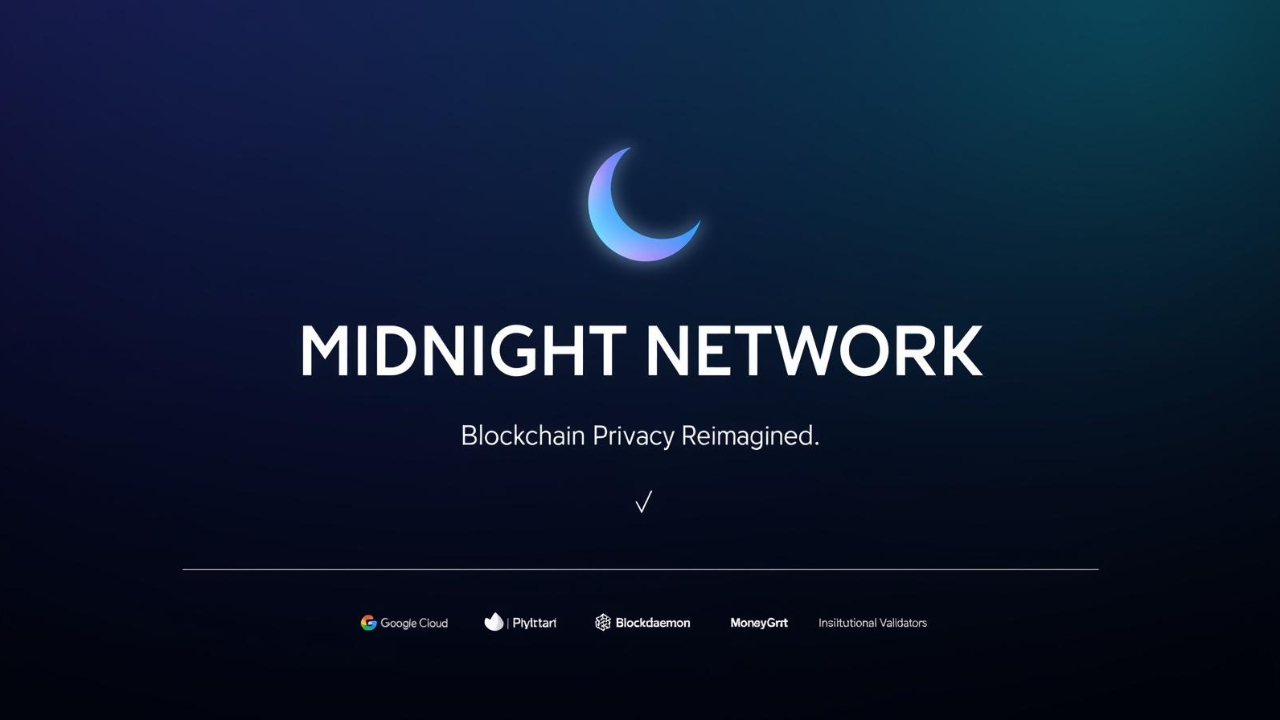
Big names like Google Cloud, Blockdaemon and MoneyGram are already running as institutional validators
The Mainnet Kukolu phase was expected to launch in Q1 2026
What makes Midnight stand out from regular privacy coins is that it's also a full developer platform. Builders can write private dApps using a TypeScript based language called Compact. All of this is possible without putting sensitive data at risk is healthcare records, DeFi tools and identity verification.
If you want to know what's going to happen next in Web3 keep an eye on Midnight and NIGHT. Privacy is not a feature anymore it's becoming a necessity.
#NIGHT
$NIGHT
{spot}(NIGHTUSDT)
#night
Midnight Network: A New Age of Privacy on the Blockchain
We hear all the time that blockchain needs to be open but does that mean everyone should be able to see your private information?
That's what @MidnightNetwork is trying to fix.
Zero Knowledge Proof technology is what Midnight is based on. It is a fourth-generation blockchain. The idea is simple is you can show that something is true without giving away the details. So you can keep your private information private while still meeting the rules and passing compliance checks. They call this approach "Rational Privacy."
So what does NIGHT actually do?
NIGHT is the networks native token. When you hold it you passively generate DUST a secondary token used to pay for transactions and interact with smart contracts. Basically you buy in once and keep getting utility out of it over time.
A few things worth knowing is
Total supply is capped at 24 billion NIGHT
Over 8 million wallets joined the Scavenger Mine event a record for blockchain history
Big names like Google Cloud, Blockdaemon and MoneyGram are already running as institutional validators
The Mainnet Kukolu phase was expected to launch in Q1 2026
What makes Midnight stand out from regular privacy coins is that it's also a full developer platform. Builders can write private dApps using a TypeScript based language called Compact. All of this is possible without putting sensitive data at risk is healthcare records, DeFi tools and identity verification.
If you want to know what's going to happen next in Web3 keep an eye on Midnight and NIGHT. Privacy is not a feature anymore it's becoming a necessity.
#NIGHT
$NIGHT
#night
That's what @MidnightNetwork is trying to fix.
Zero Knowledge Proof technology is what Midnight is based on. It is a fourth-generation blockchain. The idea is simple is you can show that something is true without giving away the details. So you can keep your private information private while still meeting the rules and passing compliance checks. They call this approach "Rational Privacy."
So what does NIGHT actually do?
NIGHT is the networks native token. When you hold it you passively generate DUST a secondary token used to pay for transactions and interact with smart contracts. Basically you buy in once and keep getting utility out of it over time.
A few things worth knowing is
Total supply is capped at 24 billion NIGHT
Over 8 million wallets joined the Scavenger Mine event a record for blockchain history
Big names like Google Cloud, Blockdaemon and MoneyGram are already running as institutional validators
The Mainnet Kukolu phase was expected to launch in Q1 2026
What makes Midnight stand out from regular privacy coins is that it's also a full developer platform. Builders can write private dApps using a TypeScript based language called Compact. All of this is possible without putting sensitive data at risk is healthcare records, DeFi tools and identity verification.
If you want to know what's going to happen next in Web3 keep an eye on Midnight and NIGHT. Privacy is not a feature anymore it's becoming a necessity.
#NIGHT
$NIGHT
#night
2
84
-> The future of privacy has arrived!
@MidnightNetwork is a next generation blockchain that uses ZK proofs your data will only be shared with your consent.
-> The mainnet launch of $NIGHT is expected in Q1 2026. This is not just a token, it's a revolution! #night
{spot}(NIGHTUSDT)
-> The future of privacy has arrived!
@MidnightNetwork is a next generation blockchain that uses ZK proofs your data will only be shared with your consent.
-> The mainnet launch of $NIGHT is expected in Q1 2026. This is not just a token, it's a revolution! #night
@MidnightNetwork is a next generation blockchain that uses ZK proofs your data will only be shared with your consent.
-> The mainnet launch of $NIGHT is expected in Q1 2026. This is not just a token, it's a revolution! #night
4
50
ບົດຄວາມ
The Missing Layer Between AI and Real World RoboticsAI can think. Robots can act but who coordinates trust between them?
We are entering a decade where machines are no longer passive tools. These are reasoning generating plans and adapting. Robots are able to carry out tasks in warehouses, hospitals, factories and even in the streets. Yet there is a structural gap between intelligence and accountability. Fabric Protocol supported by Fabric Foundation is focused on solving that exact gap.
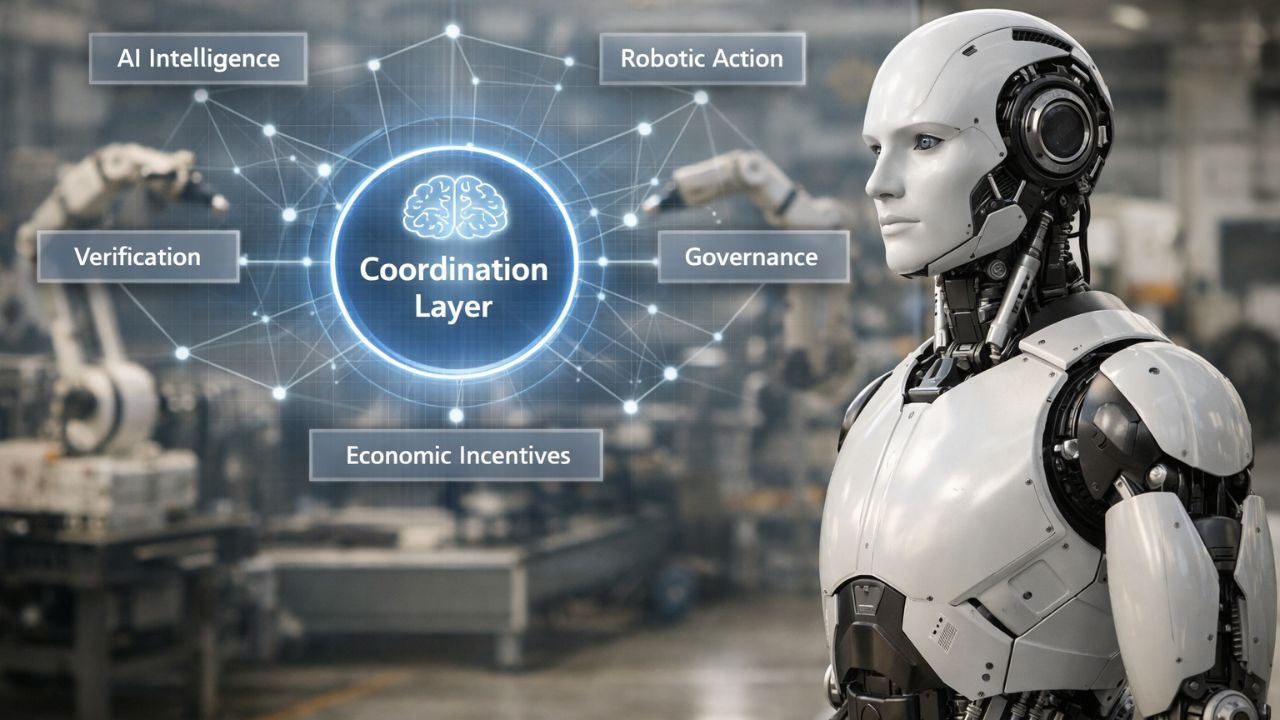
Most blockchain discussions around AI focus on data ownership or model marketplaces. Fabric approaches the problem differently. It treats robotics as a networked system that requires coordination, verification and rule enforcement at the infrastructure level. Fabric does not just connect devices to the internet. It connects devices to a programmable economic and governance layer.
The most powerful idea behind Fabric is the concept of agent native infrastructure. This means that the robot and the AI are not just devices but are also acknowledged participants in the network. The system is designed so that actions can be validated and aligned with shared standards rather than hidden inside closed platforms.
ROBO matters most in the economic layer. It's not just another token. It's what really gets people working together joining in and staying motivated across the whole network. When incentives are structured properly, developers, hardware operators and network contributors can collaborate without relying on a central authority. That alignment is what turns infrastructure into an infrastructure.
Another important dimension is regulatory and safety alignment. As governments and institutions begin to question how autonomous systems should be monitored open verification becomes a serious advantage. Fabric's ledger based coordination model provides traceability without slowing innovation. It offers a framework where compliance and decentralization do not have to be opposites.
The thing that really makes this vision stand out? Timing. The speed at which AI is advancing is outpacing the speed at which institutional structures are changing.
Robotics hardware is becoming cheaper and more capable. The absence of a neutral layer of coordination would mean a few players dominate the market. Fabric proposes something different: a shared network where intelligence evolves collaboratively and transparently.
This is not about hype. It is about infrastructure. The systems built today will determine whether machine intelligence becomes centralized power or distributed capability.
If you are exploring the intersection of blockchain, AI and robotics following @FabricFND and understanding the role of ROBO is more than participation in a campaign it is engagement with a long term technological shift.
The next wave of innovation will not just connect machines. It will coordinate them. #ROBO
$ROBO
{alpha}(560x475cbf5919608e0c6af00e7bf87fab83bf3ef6e2)
#BlockAILayoffs #MarketRebound #ROBOT #ROBOTAXI
The Missing Layer Between AI and Real World Robotics
AI can think. Robots can act but who coordinates trust between them?
We are entering a decade where machines are no longer passive tools. These are reasoning generating plans and adapting. Robots are able to carry out tasks in warehouses, hospitals, factories and even in the streets. Yet there is a structural gap between intelligence and accountability. Fabric Protocol supported by Fabric Foundation is focused on solving that exact gap.
Most blockchain discussions around AI focus on data ownership or model marketplaces. Fabric approaches the problem differently. It treats robotics as a networked system that requires coordination, verification and rule enforcement at the infrastructure level. Fabric does not just connect devices to the internet. It connects devices to a programmable economic and governance layer.
The most powerful idea behind Fabric is the concept of agent native infrastructure. This means that the robot and the AI are not just devices but are also acknowledged participants in the network. The system is designed so that actions can be validated and aligned with shared standards rather than hidden inside closed platforms.
ROBO matters most in the economic layer. It's not just another token. It's what really gets people working together joining in and staying motivated across the whole network. When incentives are structured properly, developers, hardware operators and network contributors can collaborate without relying on a central authority. That alignment is what turns infrastructure into an infrastructure.
Another important dimension is regulatory and safety alignment. As governments and institutions begin to question how autonomous systems should be monitored open verification becomes a serious advantage. Fabric's ledger based coordination model provides traceability without slowing innovation. It offers a framework where compliance and decentralization do not have to be opposites.
The thing that really makes this vision stand out? Timing. The speed at which AI is advancing is outpacing the speed at which institutional structures are changing.
Robotics hardware is becoming cheaper and more capable. The absence of a neutral layer of coordination would mean a few players dominate the market. Fabric proposes something different: a shared network where intelligence evolves collaboratively and transparently.
This is not about hype. It is about infrastructure. The systems built today will determine whether machine intelligence becomes centralized power or distributed capability.
If you are exploring the intersection of blockchain, AI and robotics following @Fabric Foundation and understanding the role of ROBO is more than participation in a campaign it is engagement with a long term technological shift.
The next wave of innovation will not just connect machines. It will coordinate them. #ROBO
$ROBO
#BlockAILayoffs #MarketRebound #ROBOT #ROBOTAXI
We are entering a decade where machines are no longer passive tools. These are reasoning generating plans and adapting. Robots are able to carry out tasks in warehouses, hospitals, factories and even in the streets. Yet there is a structural gap between intelligence and accountability. Fabric Protocol supported by Fabric Foundation is focused on solving that exact gap.
Most blockchain discussions around AI focus on data ownership or model marketplaces. Fabric approaches the problem differently. It treats robotics as a networked system that requires coordination, verification and rule enforcement at the infrastructure level. Fabric does not just connect devices to the internet. It connects devices to a programmable economic and governance layer.
The most powerful idea behind Fabric is the concept of agent native infrastructure. This means that the robot and the AI are not just devices but are also acknowledged participants in the network. The system is designed so that actions can be validated and aligned with shared standards rather than hidden inside closed platforms.
ROBO matters most in the economic layer. It's not just another token. It's what really gets people working together joining in and staying motivated across the whole network. When incentives are structured properly, developers, hardware operators and network contributors can collaborate without relying on a central authority. That alignment is what turns infrastructure into an infrastructure.
Another important dimension is regulatory and safety alignment. As governments and institutions begin to question how autonomous systems should be monitored open verification becomes a serious advantage. Fabric's ledger based coordination model provides traceability without slowing innovation. It offers a framework where compliance and decentralization do not have to be opposites.
The thing that really makes this vision stand out? Timing. The speed at which AI is advancing is outpacing the speed at which institutional structures are changing.
Robotics hardware is becoming cheaper and more capable. The absence of a neutral layer of coordination would mean a few players dominate the market. Fabric proposes something different: a shared network where intelligence evolves collaboratively and transparently.
This is not about hype. It is about infrastructure. The systems built today will determine whether machine intelligence becomes centralized power or distributed capability.
If you are exploring the intersection of blockchain, AI and robotics following @Fabric Foundation and understanding the role of ROBO is more than participation in a campaign it is engagement with a long term technological shift.
The next wave of innovation will not just connect machines. It will coordinate them. #ROBO
$ROBO
#BlockAILayoffs #MarketRebound #ROBOT #ROBOTAXI
1
5
199
AI is learning.
Robots are adapting but accountability is still missing.
@FabricFND introduces a public coordination layer where robotic actions can be verified, governed and economically aligned. $ROBO connects computation, data and incentives into one transparent system.
Programmable trust for machines is the next evolution. #ROBO #BlockAILayoffs #MarketRebound
{alpha}(560x475cbf5919608e0c6af00e7bf87fab83bf3ef6e2)
AI is learning.
Robots are adapting but accountability is still missing.
@Fabric Foundation introduces a public coordination layer where robotic actions can be verified, governed and economically aligned. $ROBO connects computation, data and incentives into one transparent system.
Programmable trust for machines is the next evolution. #ROBO #BlockAILayoffs #MarketRebound
Robots are adapting but accountability is still missing.
@Fabric Foundation introduces a public coordination layer where robotic actions can be verified, governed and economically aligned. $ROBO connects computation, data and incentives into one transparent system.
Programmable trust for machines is the next evolution. #ROBO #BlockAILayoffs #MarketRebound
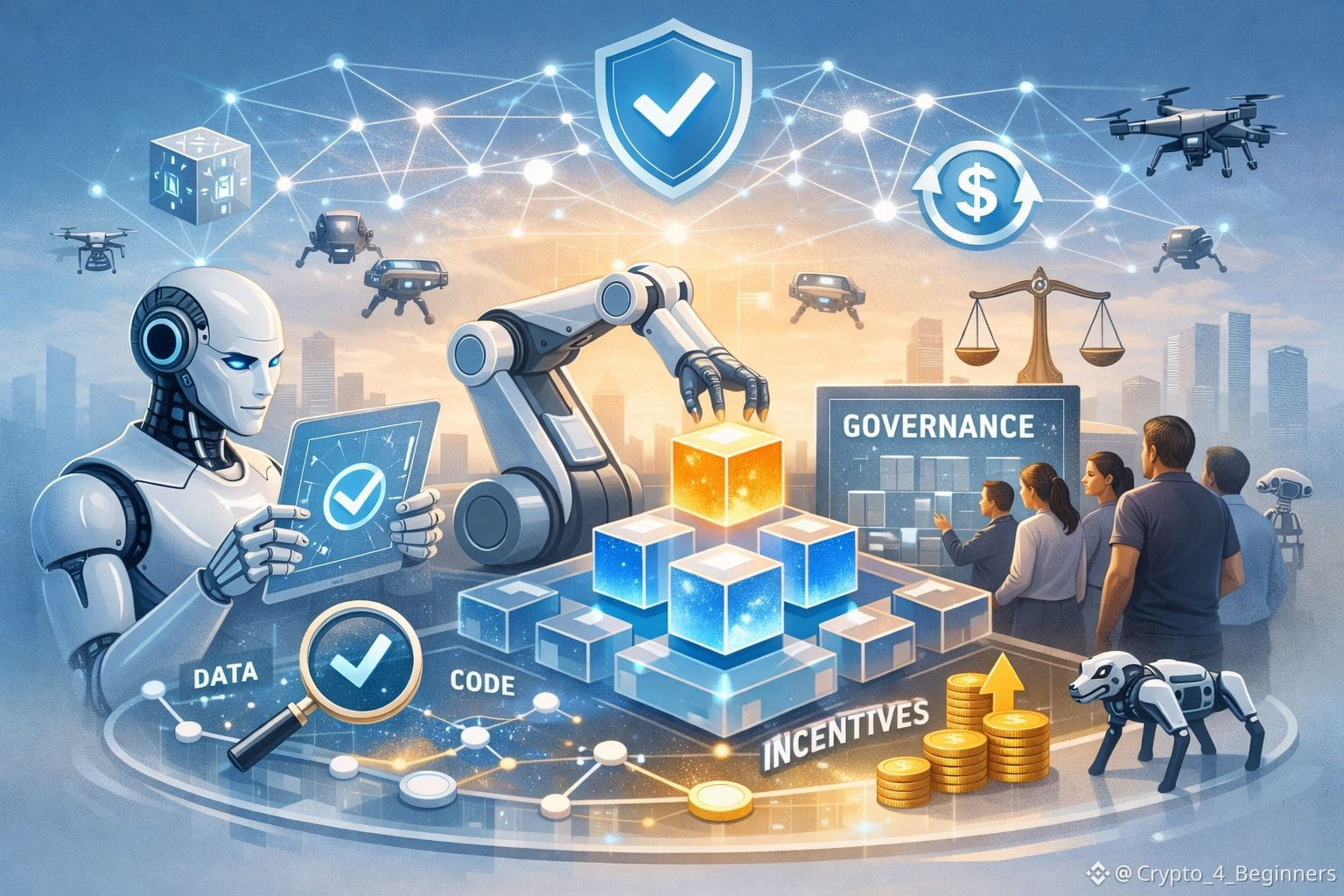
2
130
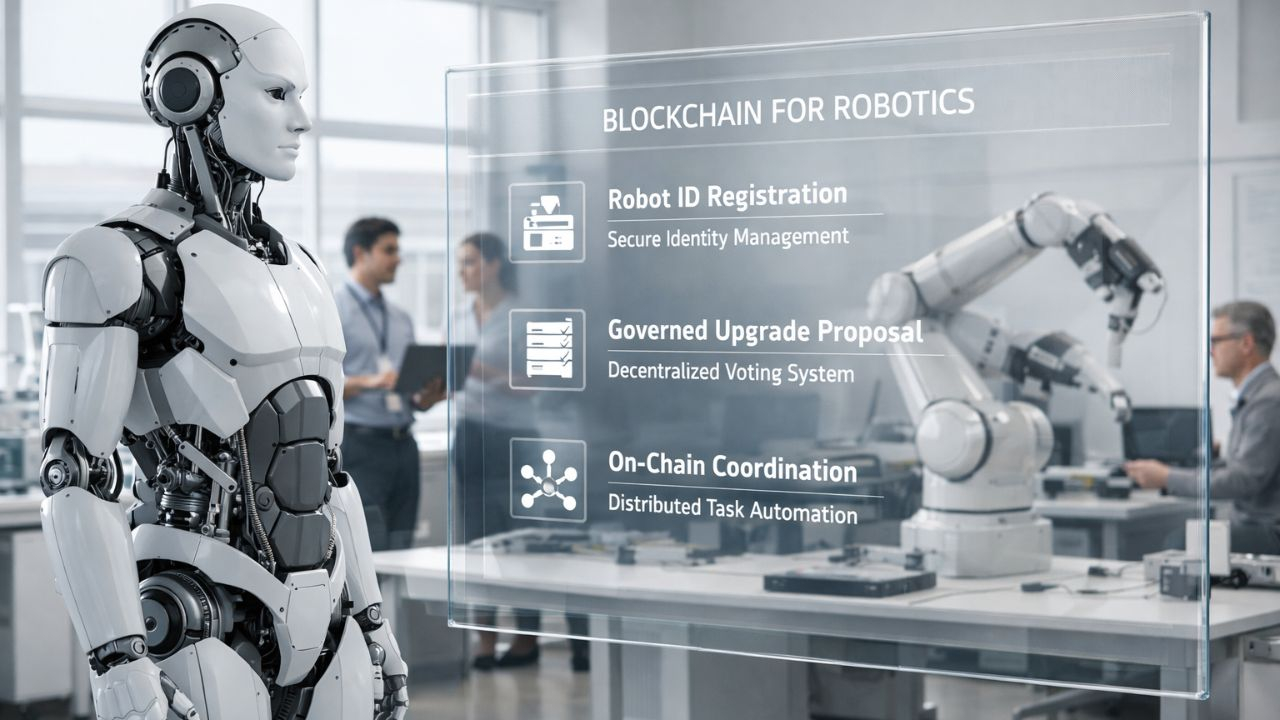
ບົດຄວາມ
Robots Need Governance and Fabric Protocol Is Building It On-ChainMost people debate AI speed or hardware. Almost nobody asks the harder question is who governs autonomous machines once they act independently?
Fabric Foundation is now answering that question with Fabric Protocol a public network where robots are not just tools. They are accountable actors in a programmable economy. Through verifiable computing and a public ledger, every action upgrade and collaboration involving machines is transparent and auditable.
Underpinning the whole thing is $ROBO which is more than a token. It's a piece of infrastructure. It takes care of the machine identity registration, computation orchestration and incentive alignment between the developers, the operators, the robotic agents. Robots are auditable digital entities not black boxes.
What separates Fabric from other blockchain implementations in the market is its modular architecture the different components "maintain a certain independence yet connectedness" through a common set of standards. The coordination layer remains stable as AI and hardware evolve.
This matters now. Autonomous systems are already entering logistics, healthcare and manufacturing. Without neutral coordination control centralizes and turns opaque. Fabric offers the alternative is open governance, programmable compliance shared ownership.
The machine economy is not science fiction. With Fabric Foundation and ROBO powering decentralized robotics coordination. It's becoming verifiable reality.
Follow @FabricFND and explore how ROBO is shaping the next era of intelligent machines.
#ROBO #BlockAILayoffs #AIRobotics #JaneStreet10AMDump #MarketRebound
Robots Need Governance and Fabric Protocol Is Building It On-Chain
Most people debate AI speed or hardware. Almost nobody asks the harder question is who governs autonomous machines once they act independently?
Fabric Foundation is now answering that question with Fabric Protocol a public network where robots are not just tools. They are accountable actors in a programmable economy. Through verifiable computing and a public ledger, every action upgrade and collaboration involving machines is transparent and auditable.
Underpinning the whole thing is $ROBO which is more than a token. It's a piece of infrastructure. It takes care of the machine identity registration, computation orchestration and incentive alignment between the developers, the operators, the robotic agents. Robots are auditable digital entities not black boxes.
What separates Fabric from other blockchain implementations in the market is its modular architecture the different components "maintain a certain independence yet connectedness" through a common set of standards. The coordination layer remains stable as AI and hardware evolve.
This matters now. Autonomous systems are already entering logistics, healthcare and manufacturing. Without neutral coordination control centralizes and turns opaque. Fabric offers the alternative is open governance, programmable compliance shared ownership.
The machine economy is not science fiction. With Fabric Foundation and ROBO powering decentralized robotics coordination. It's becoming verifiable reality.
Follow @Fabric Foundation and explore how ROBO is shaping the next era of intelligent machines.
#ROBO #BlockAILayoffs #AIRobotics #JaneStreet10AMDump #MarketRebound
Fabric Foundation is now answering that question with Fabric Protocol a public network where robots are not just tools. They are accountable actors in a programmable economy. Through verifiable computing and a public ledger, every action upgrade and collaboration involving machines is transparent and auditable.
Underpinning the whole thing is $ROBO which is more than a token. It's a piece of infrastructure. It takes care of the machine identity registration, computation orchestration and incentive alignment between the developers, the operators, the robotic agents. Robots are auditable digital entities not black boxes.
What separates Fabric from other blockchain implementations in the market is its modular architecture the different components "maintain a certain independence yet connectedness" through a common set of standards. The coordination layer remains stable as AI and hardware evolve.
This matters now. Autonomous systems are already entering logistics, healthcare and manufacturing. Without neutral coordination control centralizes and turns opaque. Fabric offers the alternative is open governance, programmable compliance shared ownership.
The machine economy is not science fiction. With Fabric Foundation and ROBO powering decentralized robotics coordination. It's becoming verifiable reality.
Follow @Fabric Foundation and explore how ROBO is shaping the next era of intelligent machines.
#ROBO #BlockAILayoffs #AIRobotics #JaneStreet10AMDump #MarketRebound
3
129
Most people see robots as hardware.
Fabric Protocol sees them as economic agents.
@FabricFND is building a verifiable on-chain coordination layer where robots can register identity access computation and evolve through governed upgrades. $ROBO powers this machine economy.
The future of human AI collaboration won't be centralized. It will be programmable.
#ROBO #BlockAILayoffs
{future}(ROBOUSDT)
Most people see robots as hardware.
Fabric Protocol sees them as economic agents.
@Fabric Foundation is building a verifiable on-chain coordination layer where robots can register identity access computation and evolve through governed upgrades. $ROBO powers this machine economy.
The future of human AI collaboration won't be centralized. It will be programmable.
#ROBO #BlockAILayoffs
Fabric Protocol sees them as economic agents.
@Fabric Foundation is building a verifiable on-chain coordination layer where robots can register identity access computation and evolve through governed upgrades. $ROBO powers this machine economy.
The future of human AI collaboration won't be centralized. It will be programmable.
#ROBO #BlockAILayoffs

3
97
-> Fogo is taking a different path in the Layer One race. It's not just trying to show big Transactions Per Second numbers for marketing.
-> Its main focus is improving validator performance and keeping network latency very low from the ground up.
-> The Firedancer influence shows it cares about strong performance and better efficiency.
-> Solana Virtual Machine is compatible which means developers get a familiar and fast environment to work on.
-> The actual goal is to cater to serious Decentralized Finance traders who actually care about execution.
@fogo
#fogo
$FOGO
{spot}(FOGOUSDT)
-> Fogo is taking a different path in the Layer One race. It's not just trying to show big Transactions Per Second numbers for marketing.
-> Its main focus is improving validator performance and keeping network latency very low from the ground up.
-> The Firedancer influence shows it cares about strong performance and better efficiency.
-> Solana Virtual Machine is compatible which means developers get a familiar and fast environment to work on.
-> The actual goal is to cater to serious Decentralized Finance traders who actually care about execution.
@Fogo Official
#fogo
$FOGO
-> Its main focus is improving validator performance and keeping network latency very low from the ground up.
-> The Firedancer influence shows it cares about strong performance and better efficiency.
-> Solana Virtual Machine is compatible which means developers get a familiar and fast environment to work on.
-> The actual goal is to cater to serious Decentralized Finance traders who actually care about execution.
@Fogo Official
#fogo
$FOGO
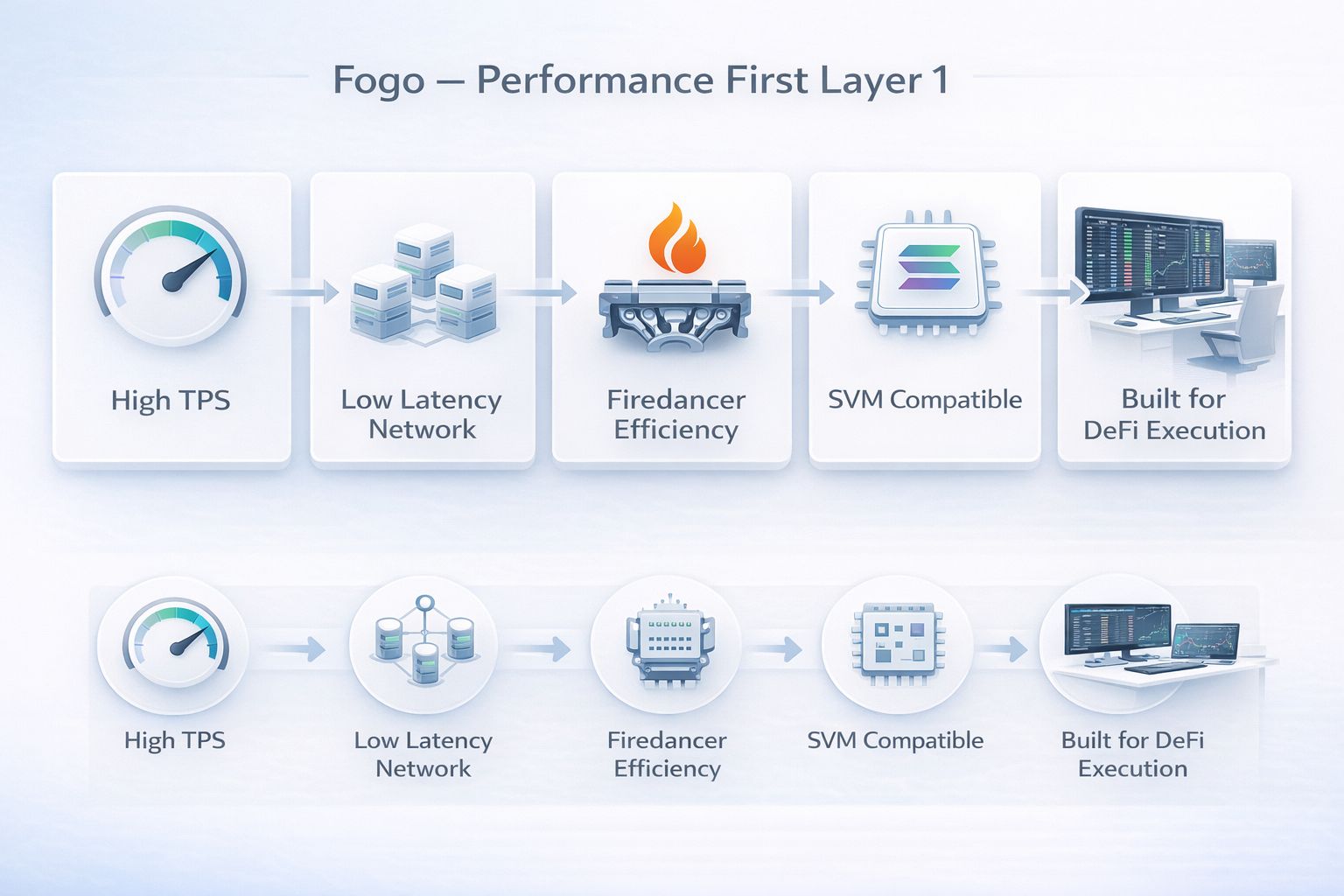
3
34
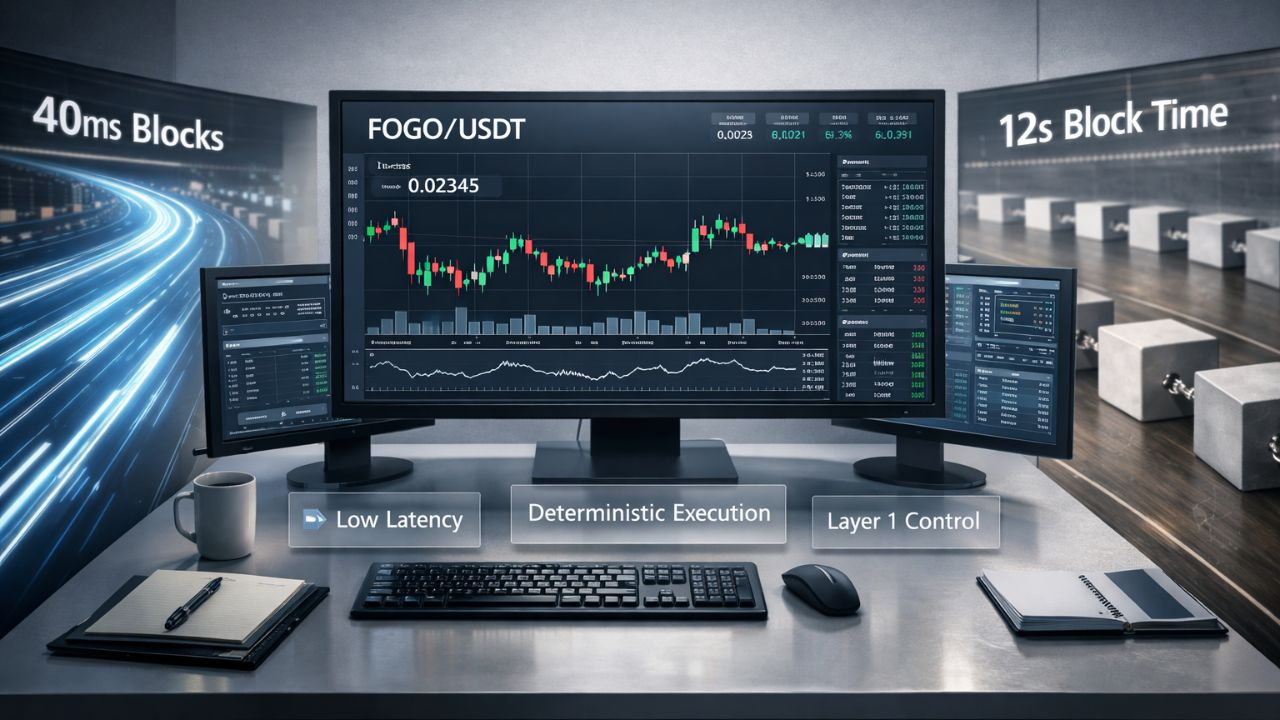
ບົດຄວາມ
Fogo Fast Lane: How This Layer One Handles Speed Without Losing ControlSpeed has become crypto’s favorite marketing slogan, but in my experience as a trader, raw Transactions Per Second numbers rarely tell the full story. I analyzed dozens of Layer One networks over the past cycle and what I have learned is simple: speed without control is chaos. Fogo, a high performance Layer One leveraging the Solana Virtual Machine, is entering the race with a different pitch. Instead of obsessing over theoretical throughput, it focuses on latency, deterministic execution, and real-time market performance.
The broader context matters. Solana publicly demonstrated peak theoretical throughput of 65,000 transactions per second under lab conditions according to early technical documentation, yet real-world sustained throughput often sits far lower. Ethereum by comparison averages roughly 15 to 30 transactions per second on Layer One according to data from Ethereum Foundation materials and block explorers. Meanwhile rollups like Arbitrum and Optimism have improved scaling dramatically, but they still depend on Ethereum’s base layer for finality. Fogo positions itself in this environment not as another Transactions Per Second billboard but as a low-latency execution environment purpose-built for financial markets.
When I looked into Fogo’s architecture, what stood out immediately was its emphasis on approximately 40 millisecond block times and near-instant finality. For context, Solana’s average block time has historically hovered around 400 milliseconds, while Ethereum’s block time is roughly 12 seconds. Even high-performance chains like Avalanche advertise sub-second finality, typically around 1 to 2 seconds depending on network conditions. In my assessment, if Fogo consistently achieves 40 milliseconds block production in live conditions, that is a different category of speed altogether.
Speed, though is only useful if it remains predictable. A sports car that spins out on every turn is not helpful in a race. Fogo’s thesis appears to revolve around combining Solana Virtual Machine compatibility with tighter Layer One control over sequencing and execution. That combination is what I see as its fast lane approach.
Where speed actually matters in Decentralized Finance?
Latency is the silent killer in on-chain trading. According to public documentation and research reports by Messari even a 100 millisecond delay in high-frequency environments can materially change slippage outcomes during volatile markets. On Ethereum mainnet, where 12-second block times dominate, traders must rely on mempool prediction and Maximal Extractable Value protection. On faster chains the game shifts toward execution timing.
Fogo’s 40 millisecond target means roughly 25 blocks per second. That is not just faster confirmation, it is faster price discovery. I often compare it to moving from dial-up internet to fiber broadband. The underlying information may be the same, but the speed at which it updates changes how markets behave. In my research, markets with faster feedback loops tend to compress arbitrage windows and reduce extreme inefficiencies.
Solana has already demonstrated the ability of high-performance environments to support order book based Decentralized Finance. Official statistics from Solana indicate that daily transactions on the network can reach as high as 65 million, which is beyond the Ethereum base layer. However, there has also been experience of network outages, particularly in 2022 and 2023. Fogo’s philosophy seems to be informed by the need to implement control mechanisms that prevent congestion.
At this point, I believe the project is strategically relevant. Instead of building as a secondary scaling layer or rollup, Fogo opts for full Layer 1 sovereignty. That allows it to manage block production rules, validator coordination, and execution determinism without inheriting upstream bottlenecks. It is like owning the entire highway instead of renting a fast lane on someone else’s road.
Control, stability and the question every trader asks
Every fast chain faces the same question: what happens under stress? I have traded through enough liquidation cascades to know that performance claims often collapse when volatility spikes. Looking back at CoinGecko’s data, you can see how crypto markets get wild during big crashes like in May 2021 and November 2022. Transaction numbers shoot up, everyone is fighting for block space, and Ethereum gas fees spiked past $100 at the peak in 2021 according to Etherscan.
Fogo’s system tackles that differently. It keeps gas fees from skyrocketing by slicing block times down. My assessment is that shorter blocks distribute transaction load more evenly across time. Instead of waiting 12 seconds for a big batch of transactions to clear, Fogo breaks things up, settling micro-batches every 40 milliseconds. Imagine draining a sink nonstop rather than letting it fill up & dumping all the water at once. That is the idea.
Still, decentralization trade-offs always exist. Avalanche’s consensus design achieves sub-second finality but requires strong validator coordination. Solana’s high hardware requirements have often been criticized as limiting validator accessibility. If Fogo relies on similarly high-performance nodes, the question becomes whether it can maintain both speed and decentralization.
This is the section where I pause as a trader. Speed alone does not protect capital. Validator concentration, governance capture, and liquidity fragmentation all matter. My research into emerging Layer 1 models suggests that liquidity depth often determines survival more than pure performance metrics. According to DeFiLlama, Ethereum still holds the majority of total value locked across Decentralized Finance, often exceeding 50 percent of total market share. Competing Layer 1 networks typically fluctuate in the single-digit percentage range.
Fogo will need not just speed but capital migration. Without liquidity, even the fastest chain feels empty.
Comparing the fast lane to other scaling roads
When comparing Fogo to rollups like Arbitrum or Optimism, the difference is structural. Rollups compress transactions off-chain and post proofs back to Ethereum. This inherits Ethereum security but also its finality delays. Arbitrum’s fraud proof window, for example, can extend withdrawal periods up to seven days under certain models. For traders seeking instant capital mobility, that delay is meaningful.
On the other hand, Solana already provides high throughput natively, and Avalanche markets its Snowman consensus as offering rapid finality. The question is whether Fogo’s combination of Solana Virtual Machine compatibility and ultra-low latency can carve a niche in high-frequency Decentralized Finance niches like on-chain order books and perpetual markets. In my assessment, the niche is real. Centralized exchanges process thousands of trades per second because professional traders demand immediate execution.
If Fogo can deliver deterministic 40 millisecond blocks with stable uptime, it positions itself closer to centralized exchange responsiveness while maintaining on-chain transparency. That is not trivial. It is an attempt to blur the boundary between Centralized Finance speed and Decentralized Finance trustlessness.
Trading strategy and current price structure considerations
As visible on Binance at the time of writing, FOGO is trading near the 0.023 USDT zone on the 15-minute chart, showing short-term consolidation after recent intraday fluctuations. The compression in short-term moving averages suggests that volatility expansion could follow if volume increases meaningfully.
It is also important to note that Binance currently classifies FOGO under the Seed Tag category, indicating elevated volatility and early-stage risk. That alone makes disciplined risk management essential.
From a market perspective, assuming FOGO token liquidity expands over time, I would approach it like a high beta infrastructure play. Instead of using a hypothetical 0.80 to 1.20 range, the more realistic near-term framework is to monitor resistance zones around 0.024–0.025 USDT. A breakout above that level with significantly higher-than-average volume could signal continuation momentum.
On the downside, I would watch support around the 0.020–0.021 region. If price closes below that range with heavy volume, that would suggest distribution rather than healthy pullback. Risk management remains essential because new Layer 1 tokens often experience 30 to 50 percent retracements during initial hype cycles, as seen historically across multiple network launches tracked by CoinMarketCap data.
For swing traders, scaling into established support levels and reducing exposure on parabolic moves is likely more effective than chasing green candles. I have looked at prior Layer 1 cycles, such as Solana’s early 2021 run, where prices increased multiple times before suffering sharp corrections within weeks. Patience is more important than aggression.
Now if I were talking to a trading desk, I would bring a chart lining up Ethereum’s 12 second block time, Solana’s 400 milliseconds, Avalanche’s 1 to 2 seconds, and Fogo’s 40 milliseconds target. Seeing that compression visually makes the latency argument intuitive.
A second chart would overlay transaction throughput against network downtime events for major Layer 1 networks. The goal would be to show how faster speeds interact with stability. A third visualization could display the growth in total value locked for competing chains, emphasizing the disparity between liquidity migration and technological advancement.
Why this matters in today’s cycle?
The current market cycle is increasingly focused on performance infrastructure. With the growth of on-chain derivatives, RWAs, and algorithmic trading, latency is no longer a luxury feature. It is becoming a competitive necessity. My research into institutional adoption trends suggests that professional trading firms prioritize execution determinism over raw decentralization rhetoric.
Fogo’s narrative aligns with that shift. It is not simply promising higher Transactions Per Second. It is promising responsiveness. That subtle difference is powerful. In my assessment, if crypto moves toward fully on-chain order books and real-time settlement systems, networks that minimize latency while preserving control mechanisms will attract serious capital.
Still, uncertainty remains. Network effects are brutal in crypto. Ethereum retains deep liquidity and developer dominance. Solana already commands high activity levels. New entrants must fight not only technical battles but psychological ones.
To me, Fogo is a strategic wager on the notion that the market rewards precision. If this team can provide consistent 40 millisecond blocks, stable uptime, and developer adoption through Solana Virtual Machine compatibility, it could find a unique high-frequency Decentralized Finance niche. If execution falters, it could be just another promising Layer 1 competing in a sea of similar contenders.
As traders, we must consider whether we are investing for marketing speed or execution speed. The answer to that question will determine whether Fogo’s fast lane becomes a sustained highway or just a brief sprint in an endless race.
@fogo
#fogo
$FOGO
{spot}(FOGOUSDT)
Fogo Fast Lane: How This Layer One Handles Speed Without Losing Control
Speed has become crypto’s favorite marketing slogan, but in my experience as a trader, raw Transactions Per Second numbers rarely tell the full story. I analyzed dozens of Layer One networks over the past cycle and what I have learned is simple: speed without control is chaos. Fogo, a high performance Layer One leveraging the Solana Virtual Machine, is entering the race with a different pitch. Instead of obsessing over theoretical throughput, it focuses on latency, deterministic execution, and real-time market performance.
The broader context matters. Solana publicly demonstrated peak theoretical throughput of 65,000 transactions per second under lab conditions according to early technical documentation, yet real-world sustained throughput often sits far lower. Ethereum by comparison averages roughly 15 to 30 transactions per second on Layer One according to data from Ethereum Foundation materials and block explorers. Meanwhile rollups like Arbitrum and Optimism have improved scaling dramatically, but they still depend on Ethereum’s base layer for finality. Fogo positions itself in this environment not as another Transactions Per Second billboard but as a low-latency execution environment purpose-built for financial markets.
When I looked into Fogo’s architecture, what stood out immediately was its emphasis on approximately 40 millisecond block times and near-instant finality. For context, Solana’s average block time has historically hovered around 400 milliseconds, while Ethereum’s block time is roughly 12 seconds. Even high-performance chains like Avalanche advertise sub-second finality, typically around 1 to 2 seconds depending on network conditions. In my assessment, if Fogo consistently achieves 40 milliseconds block production in live conditions, that is a different category of speed altogether.
Speed, though is only useful if it remains predictable. A sports car that spins out on every turn is not helpful in a race. Fogo’s thesis appears to revolve around combining Solana Virtual Machine compatibility with tighter Layer One control over sequencing and execution. That combination is what I see as its fast lane approach.
Where speed actually matters in Decentralized Finance?
Latency is the silent killer in on-chain trading. According to public documentation and research reports by Messari even a 100 millisecond delay in high-frequency environments can materially change slippage outcomes during volatile markets. On Ethereum mainnet, where 12-second block times dominate, traders must rely on mempool prediction and Maximal Extractable Value protection. On faster chains the game shifts toward execution timing.
Fogo’s 40 millisecond target means roughly 25 blocks per second. That is not just faster confirmation, it is faster price discovery. I often compare it to moving from dial-up internet to fiber broadband. The underlying information may be the same, but the speed at which it updates changes how markets behave. In my research, markets with faster feedback loops tend to compress arbitrage windows and reduce extreme inefficiencies.
Solana has already demonstrated the ability of high-performance environments to support order book based Decentralized Finance. Official statistics from Solana indicate that daily transactions on the network can reach as high as 65 million, which is beyond the Ethereum base layer. However, there has also been experience of network outages, particularly in 2022 and 2023. Fogo’s philosophy seems to be informed by the need to implement control mechanisms that prevent congestion.
At this point, I believe the project is strategically relevant. Instead of building as a secondary scaling layer or rollup, Fogo opts for full Layer 1 sovereignty. That allows it to manage block production rules, validator coordination, and execution determinism without inheriting upstream bottlenecks. It is like owning the entire highway instead of renting a fast lane on someone else’s road.
Control, stability and the question every trader asks
Every fast chain faces the same question: what happens under stress? I have traded through enough liquidation cascades to know that performance claims often collapse when volatility spikes. Looking back at CoinGecko’s data, you can see how crypto markets get wild during big crashes like in May 2021 and November 2022. Transaction numbers shoot up, everyone is fighting for block space, and Ethereum gas fees spiked past $100 at the peak in 2021 according to Etherscan.
Fogo’s system tackles that differently. It keeps gas fees from skyrocketing by slicing block times down. My assessment is that shorter blocks distribute transaction load more evenly across time. Instead of waiting 12 seconds for a big batch of transactions to clear, Fogo breaks things up, settling micro-batches every 40 milliseconds. Imagine draining a sink nonstop rather than letting it fill up & dumping all the water at once. That is the idea.
Still, decentralization trade-offs always exist. Avalanche’s consensus design achieves sub-second finality but requires strong validator coordination. Solana’s high hardware requirements have often been criticized as limiting validator accessibility. If Fogo relies on similarly high-performance nodes, the question becomes whether it can maintain both speed and decentralization.
This is the section where I pause as a trader. Speed alone does not protect capital. Validator concentration, governance capture, and liquidity fragmentation all matter. My research into emerging Layer 1 models suggests that liquidity depth often determines survival more than pure performance metrics. According to DeFiLlama, Ethereum still holds the majority of total value locked across Decentralized Finance, often exceeding 50 percent of total market share. Competing Layer 1 networks typically fluctuate in the single-digit percentage range.
Fogo will need not just speed but capital migration. Without liquidity, even the fastest chain feels empty.
Comparing the fast lane to other scaling roads
When comparing Fogo to rollups like Arbitrum or Optimism, the difference is structural. Rollups compress transactions off-chain and post proofs back to Ethereum. This inherits Ethereum security but also its finality delays. Arbitrum’s fraud proof window, for example, can extend withdrawal periods up to seven days under certain models. For traders seeking instant capital mobility, that delay is meaningful.
On the other hand, Solana already provides high throughput natively, and Avalanche markets its Snowman consensus as offering rapid finality. The question is whether Fogo’s combination of Solana Virtual Machine compatibility and ultra-low latency can carve a niche in high-frequency Decentralized Finance niches like on-chain order books and perpetual markets. In my assessment, the niche is real. Centralized exchanges process thousands of trades per second because professional traders demand immediate execution.
If Fogo can deliver deterministic 40 millisecond blocks with stable uptime, it positions itself closer to centralized exchange responsiveness while maintaining on-chain transparency. That is not trivial. It is an attempt to blur the boundary between Centralized Finance speed and Decentralized Finance trustlessness.
Trading strategy and current price structure considerations
As visible on Binance at the time of writing, FOGO is trading near the 0.023 USDT zone on the 15-minute chart, showing short-term consolidation after recent intraday fluctuations. The compression in short-term moving averages suggests that volatility expansion could follow if volume increases meaningfully.
It is also important to note that Binance currently classifies FOGO under the Seed Tag category, indicating elevated volatility and early-stage risk. That alone makes disciplined risk management essential.
From a market perspective, assuming FOGO token liquidity expands over time, I would approach it like a high beta infrastructure play. Instead of using a hypothetical 0.80 to 1.20 range, the more realistic near-term framework is to monitor resistance zones around 0.024–0.025 USDT. A breakout above that level with significantly higher-than-average volume could signal continuation momentum.
On the downside, I would watch support around the 0.020–0.021 region. If price closes below that range with heavy volume, that would suggest distribution rather than healthy pullback. Risk management remains essential because new Layer 1 tokens often experience 30 to 50 percent retracements during initial hype cycles, as seen historically across multiple network launches tracked by CoinMarketCap data.
For swing traders, scaling into established support levels and reducing exposure on parabolic moves is likely more effective than chasing green candles. I have looked at prior Layer 1 cycles, such as Solana’s early 2021 run, where prices increased multiple times before suffering sharp corrections within weeks. Patience is more important than aggression.
Now if I were talking to a trading desk, I would bring a chart lining up Ethereum’s 12 second block time, Solana’s 400 milliseconds, Avalanche’s 1 to 2 seconds, and Fogo’s 40 milliseconds target. Seeing that compression visually makes the latency argument intuitive.
A second chart would overlay transaction throughput against network downtime events for major Layer 1 networks. The goal would be to show how faster speeds interact with stability. A third visualization could display the growth in total value locked for competing chains, emphasizing the disparity between liquidity migration and technological advancement.
Why this matters in today’s cycle?
The current market cycle is increasingly focused on performance infrastructure. With the growth of on-chain derivatives, RWAs, and algorithmic trading, latency is no longer a luxury feature. It is becoming a competitive necessity. My research into institutional adoption trends suggests that professional trading firms prioritize execution determinism over raw decentralization rhetoric.
Fogo’s narrative aligns with that shift. It is not simply promising higher Transactions Per Second. It is promising responsiveness. That subtle difference is powerful. In my assessment, if crypto moves toward fully on-chain order books and real-time settlement systems, networks that minimize latency while preserving control mechanisms will attract serious capital.
Still, uncertainty remains. Network effects are brutal in crypto. Ethereum retains deep liquidity and developer dominance. Solana already commands high activity levels. New entrants must fight not only technical battles but psychological ones.
To me, Fogo is a strategic wager on the notion that the market rewards precision. If this team can provide consistent 40 millisecond blocks, stable uptime, and developer adoption through Solana Virtual Machine compatibility, it could find a unique high-frequency Decentralized Finance niche. If execution falters, it could be just another promising Layer 1 competing in a sea of similar contenders.
As traders, we must consider whether we are investing for marketing speed or execution speed. The answer to that question will determine whether Fogo’s fast lane becomes a sustained highway or just a brief sprint in an endless race.
@Fogo Official
#fogo
$FOGO
The broader context matters. Solana publicly demonstrated peak theoretical throughput of 65,000 transactions per second under lab conditions according to early technical documentation, yet real-world sustained throughput often sits far lower. Ethereum by comparison averages roughly 15 to 30 transactions per second on Layer One according to data from Ethereum Foundation materials and block explorers. Meanwhile rollups like Arbitrum and Optimism have improved scaling dramatically, but they still depend on Ethereum’s base layer for finality. Fogo positions itself in this environment not as another Transactions Per Second billboard but as a low-latency execution environment purpose-built for financial markets.
When I looked into Fogo’s architecture, what stood out immediately was its emphasis on approximately 40 millisecond block times and near-instant finality. For context, Solana’s average block time has historically hovered around 400 milliseconds, while Ethereum’s block time is roughly 12 seconds. Even high-performance chains like Avalanche advertise sub-second finality, typically around 1 to 2 seconds depending on network conditions. In my assessment, if Fogo consistently achieves 40 milliseconds block production in live conditions, that is a different category of speed altogether.
Speed, though is only useful if it remains predictable. A sports car that spins out on every turn is not helpful in a race. Fogo’s thesis appears to revolve around combining Solana Virtual Machine compatibility with tighter Layer One control over sequencing and execution. That combination is what I see as its fast lane approach.
Where speed actually matters in Decentralized Finance?
Latency is the silent killer in on-chain trading. According to public documentation and research reports by Messari even a 100 millisecond delay in high-frequency environments can materially change slippage outcomes during volatile markets. On Ethereum mainnet, where 12-second block times dominate, traders must rely on mempool prediction and Maximal Extractable Value protection. On faster chains the game shifts toward execution timing.
Fogo’s 40 millisecond target means roughly 25 blocks per second. That is not just faster confirmation, it is faster price discovery. I often compare it to moving from dial-up internet to fiber broadband. The underlying information may be the same, but the speed at which it updates changes how markets behave. In my research, markets with faster feedback loops tend to compress arbitrage windows and reduce extreme inefficiencies.
Solana has already demonstrated the ability of high-performance environments to support order book based Decentralized Finance. Official statistics from Solana indicate that daily transactions on the network can reach as high as 65 million, which is beyond the Ethereum base layer. However, there has also been experience of network outages, particularly in 2022 and 2023. Fogo’s philosophy seems to be informed by the need to implement control mechanisms that prevent congestion.
At this point, I believe the project is strategically relevant. Instead of building as a secondary scaling layer or rollup, Fogo opts for full Layer 1 sovereignty. That allows it to manage block production rules, validator coordination, and execution determinism without inheriting upstream bottlenecks. It is like owning the entire highway instead of renting a fast lane on someone else’s road.
Control, stability and the question every trader asks
Every fast chain faces the same question: what happens under stress? I have traded through enough liquidation cascades to know that performance claims often collapse when volatility spikes. Looking back at CoinGecko’s data, you can see how crypto markets get wild during big crashes like in May 2021 and November 2022. Transaction numbers shoot up, everyone is fighting for block space, and Ethereum gas fees spiked past $100 at the peak in 2021 according to Etherscan.
Fogo’s system tackles that differently. It keeps gas fees from skyrocketing by slicing block times down. My assessment is that shorter blocks distribute transaction load more evenly across time. Instead of waiting 12 seconds for a big batch of transactions to clear, Fogo breaks things up, settling micro-batches every 40 milliseconds. Imagine draining a sink nonstop rather than letting it fill up & dumping all the water at once. That is the idea.
Still, decentralization trade-offs always exist. Avalanche’s consensus design achieves sub-second finality but requires strong validator coordination. Solana’s high hardware requirements have often been criticized as limiting validator accessibility. If Fogo relies on similarly high-performance nodes, the question becomes whether it can maintain both speed and decentralization.
This is the section where I pause as a trader. Speed alone does not protect capital. Validator concentration, governance capture, and liquidity fragmentation all matter. My research into emerging Layer 1 models suggests that liquidity depth often determines survival more than pure performance metrics. According to DeFiLlama, Ethereum still holds the majority of total value locked across Decentralized Finance, often exceeding 50 percent of total market share. Competing Layer 1 networks typically fluctuate in the single-digit percentage range.
Fogo will need not just speed but capital migration. Without liquidity, even the fastest chain feels empty.
Comparing the fast lane to other scaling roads
When comparing Fogo to rollups like Arbitrum or Optimism, the difference is structural. Rollups compress transactions off-chain and post proofs back to Ethereum. This inherits Ethereum security but also its finality delays. Arbitrum’s fraud proof window, for example, can extend withdrawal periods up to seven days under certain models. For traders seeking instant capital mobility, that delay is meaningful.
On the other hand, Solana already provides high throughput natively, and Avalanche markets its Snowman consensus as offering rapid finality. The question is whether Fogo’s combination of Solana Virtual Machine compatibility and ultra-low latency can carve a niche in high-frequency Decentralized Finance niches like on-chain order books and perpetual markets. In my assessment, the niche is real. Centralized exchanges process thousands of trades per second because professional traders demand immediate execution.
If Fogo can deliver deterministic 40 millisecond blocks with stable uptime, it positions itself closer to centralized exchange responsiveness while maintaining on-chain transparency. That is not trivial. It is an attempt to blur the boundary between Centralized Finance speed and Decentralized Finance trustlessness.
Trading strategy and current price structure considerations
As visible on Binance at the time of writing, FOGO is trading near the 0.023 USDT zone on the 15-minute chart, showing short-term consolidation after recent intraday fluctuations. The compression in short-term moving averages suggests that volatility expansion could follow if volume increases meaningfully.
It is also important to note that Binance currently classifies FOGO under the Seed Tag category, indicating elevated volatility and early-stage risk. That alone makes disciplined risk management essential.
From a market perspective, assuming FOGO token liquidity expands over time, I would approach it like a high beta infrastructure play. Instead of using a hypothetical 0.80 to 1.20 range, the more realistic near-term framework is to monitor resistance zones around 0.024–0.025 USDT. A breakout above that level with significantly higher-than-average volume could signal continuation momentum.
On the downside, I would watch support around the 0.020–0.021 region. If price closes below that range with heavy volume, that would suggest distribution rather than healthy pullback. Risk management remains essential because new Layer 1 tokens often experience 30 to 50 percent retracements during initial hype cycles, as seen historically across multiple network launches tracked by CoinMarketCap data.
For swing traders, scaling into established support levels and reducing exposure on parabolic moves is likely more effective than chasing green candles. I have looked at prior Layer 1 cycles, such as Solana’s early 2021 run, where prices increased multiple times before suffering sharp corrections within weeks. Patience is more important than aggression.
Now if I were talking to a trading desk, I would bring a chart lining up Ethereum’s 12 second block time, Solana’s 400 milliseconds, Avalanche’s 1 to 2 seconds, and Fogo’s 40 milliseconds target. Seeing that compression visually makes the latency argument intuitive.
A second chart would overlay transaction throughput against network downtime events for major Layer 1 networks. The goal would be to show how faster speeds interact with stability. A third visualization could display the growth in total value locked for competing chains, emphasizing the disparity between liquidity migration and technological advancement.
Why this matters in today’s cycle?
The current market cycle is increasingly focused on performance infrastructure. With the growth of on-chain derivatives, RWAs, and algorithmic trading, latency is no longer a luxury feature. It is becoming a competitive necessity. My research into institutional adoption trends suggests that professional trading firms prioritize execution determinism over raw decentralization rhetoric.
Fogo’s narrative aligns with that shift. It is not simply promising higher Transactions Per Second. It is promising responsiveness. That subtle difference is powerful. In my assessment, if crypto moves toward fully on-chain order books and real-time settlement systems, networks that minimize latency while preserving control mechanisms will attract serious capital.
Still, uncertainty remains. Network effects are brutal in crypto. Ethereum retains deep liquidity and developer dominance. Solana already commands high activity levels. New entrants must fight not only technical battles but psychological ones.
To me, Fogo is a strategic wager on the notion that the market rewards precision. If this team can provide consistent 40 millisecond blocks, stable uptime, and developer adoption through Solana Virtual Machine compatibility, it could find a unique high-frequency Decentralized Finance niche. If execution falters, it could be just another promising Layer 1 competing in a sea of similar contenders.
As traders, we must consider whether we are investing for marketing speed or execution speed. The answer to that question will determine whether Fogo’s fast lane becomes a sustained highway or just a brief sprint in an endless race.
@Fogo Official
#fogo
$FOGO
2
103
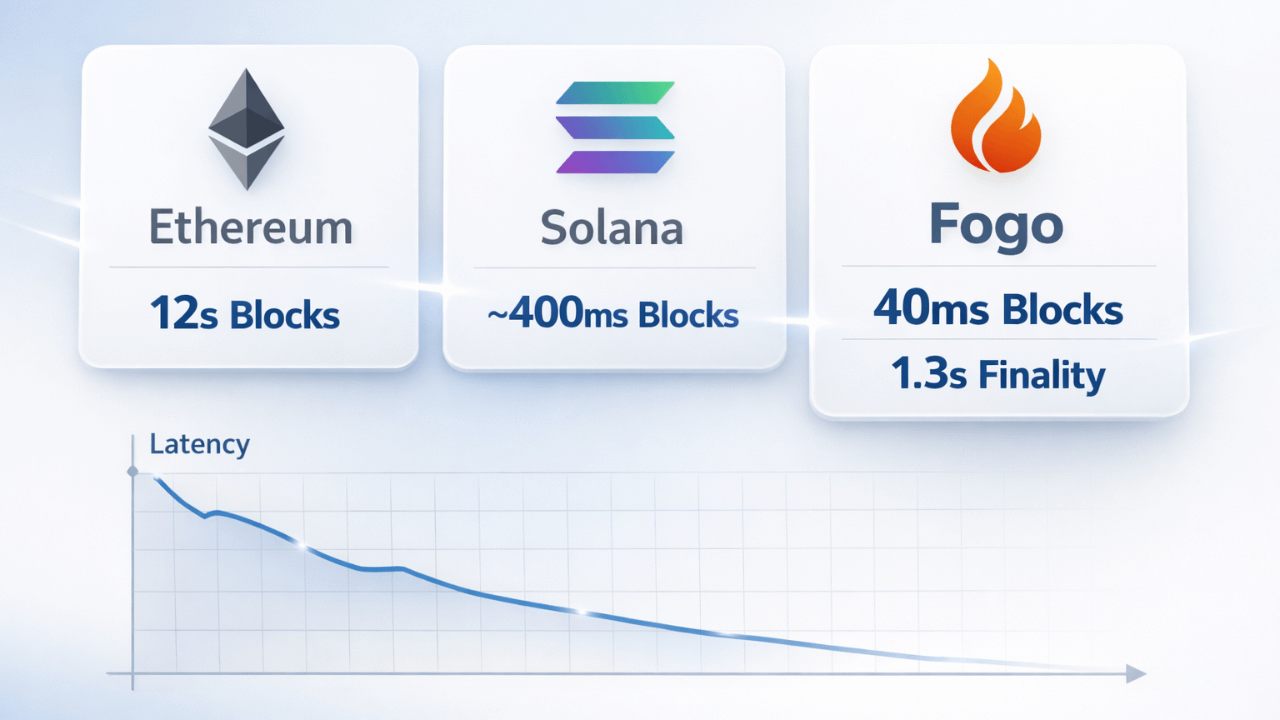
ບົດຄວາມ
Racing Ahead with Fogo: Solana Virtual Machine Power Meets Layer 1 ControlWhen I first explored Fogo late last year what caught my attention was not just its speed claims but the bold philosophy behind them. In crypto almost every project talks about high performance but few actually rethink performance from the ground up. Fogo a Layer 1 blockchain built on the Solana Virtual Machine launched its public mainnet on 15 January 2026 with 40 millisecond block times. Its design prioritizes ultra low latency while keeping decentralization where it counts essentially combining Solana raw execution power with a Layer 1 control strategy focused on performance first. This is not a small upgrade. It's a new approach to how speed and control can coexist at the base layer.
For perspective block times on conventional blockchains are much slower. Ethereum averages about a dozen seconds per block and even Solana often runs in the hundreds of milliseconds. By delivering 40ms blocks and finality in roughly 1.3 seconds. Fogo brings on‑chain interactions close to the responsiveness of centralized systems. This is particularly important for decentralized finance where every millisecond matters for trading or liquidation events. Traditional blockchains are simply not built for this level of precision.
Solana VM Advantage and Fogo Edge
Solana's architecture has inspired a wave of innovation for a reason. Its Solana Virtual Machine allows parallel execution of non conflicting transactions. To put it in simpler terms think of a highway with multiple lanes and many cars can drive side by side without slowing each other down rather than a single lane road where everyone has to take turns. This design enables tens of thousands of transactions to flow simultaneously something older blockchains cannot manage efficiently.
Fogo takes this model and fine tunes it. Unlike chains that support a wide variety of client software. Fogo standardizes on a single high performance validator client. This reduces network drag from slower or less well connected clients. Besides picking a solid validator set and putting nodes where they can talk fast this setup keeps latency low and that is huge in finance.
I often compare blockchains to racetracks. Most chains build roads for all kinds of vehicles bikes, trucks, cars and that's fine for general use. Fogo however builds a track specifically for race cars. Every turn every lane even pit stops are optimized so the fastest drivers stay fastest. Not every application fits perfectly on this track but for high frequency trading, order books and instant DeFi execution. Fogo feels purpose built.
Fogo performance is impressive on paper and in practice. As can be seen from the testnet benchmarks the throughput can reach up to 136,866 transactions per second overtaking Solana and other similar platforms like Sui.
One way to think about the edge that Fogo has is to conceptualize a two layer chart with the block times of major chains on the first axis Ethereum being seconds Solana being hundreds of milliseconds. Fogo being tens of milliseconds and the real world finality under load on the other. The Fogo line would obviously be lower.
Another conceptual table can be created with the following headers Latency, Parallel Execution, Decentralization and Dev Migration Costs. Solana, Fogo and Ethereum line up as the main options here.
Of course no blockchain is without challenges. The first is the familiar concern of real world performance versus theoretical maximums. While the testnet numbers look good the real test will be in the live data. Many blockchains look good in the test cases but struggle in the real world.
Fogo also makes a philosophical trade off in prioritizing speed through a carefully curated and geographically concentrated setup of validators. This is in contrast to the distributed set of validators used in Ethereum or Solana which allows for a level of fault tolerance in the face of network partitioning events.
Another factor to consider is token volatility. FOGO began with a value of approximately $0.083 under conditions of low liquidity. Timing that first trade matters a lot especially in this environment. There is also the headache of uncertain regulations. Chains aiming for big institutional players or anyone in regions where crypto rules keep changing have to deal with that uncertainty too. There may be added latency requirements especially if these are not yet factored into Fogo initial development process.
A Practical Trading Approach
If you are looking at FOGO start slow and keep your eyes open. No need to rush in take it one step at a time. Instead of buying FOGO in one go it would be better to take it one step at a time. It would be important to look for support levels especially those with corresponding volumes and order book confirmations. Holding up above the initial ranges may be a good indicator of increasing interest among market makers while falling below these levels may be a bad sign especially if it is due to profit taking activities.
Additionally monitoring the usage of the network as represented by Total Value Locked and the number of active wallets on Fogo's DeFi apps is important. In many instances this happens before a rise in the price of the coin. Entering the market during the rising adoption phases will provide a better average cost and a better risk reward ratio.
The use of stops is crucial in the event of a price drop below the support zones. Early stage cryptocurrencies are known to be volatile. The momentum traders may want to consider entering the market after a breakout in the price of the coin especially in the event of new infrastructure announcements.
Fogo in the Broader Blockchain Landscape
Fogo is not a one size fits all blockchain. Its primary focus is on ultra low latency execution of trades and real time DeFi. By contrast, Ethereum layer 2 rollups aim to reduce congestion and fees while preserving decentralization and high performance Layer 1 like Aptos or Sui optimize throughput for many applications without targeting sub 50ms block times. In these networks performance is about general scalability rather than near instant financial execution.
Fogo place in this spectrum is a specific niche is a performance first Layer 1 solution for traders and developers who require speed deterministic confirmation and low slippage. FOGO's strength is its focus. It's built for things like real time order books split second settlements and any trading setup where speed and accuracy really matter. That's what sets it apart.
Will FOGO end up as the top pick for lightning fast DeFi? That's up to how many people use it how it grows and how it handles real world pressure. Still FOGO looks like one of the most interesting projects out there right now. It takes Solana fast execution style and pushes it even further with a performance first Layer 1 approach. Honestly, it's a gutsy move one that is starting to shake up what people thought blockchains could do when it comes to speed.
@fogo
#fogo
$FOGO
{spot}(FOGOUSDT)
Racing Ahead with Fogo: Solana Virtual Machine Power Meets Layer 1 Control
When I first explored Fogo late last year what caught my attention was not just its speed claims but the bold philosophy behind them. In crypto almost every project talks about high performance but few actually rethink performance from the ground up. Fogo a Layer 1 blockchain built on the Solana Virtual Machine launched its public mainnet on 15 January 2026 with 40 millisecond block times. Its design prioritizes ultra low latency while keeping decentralization where it counts essentially combining Solana raw execution power with a Layer 1 control strategy focused on performance first. This is not a small upgrade. It's a new approach to how speed and control can coexist at the base layer.
For perspective block times on conventional blockchains are much slower. Ethereum averages about a dozen seconds per block and even Solana often runs in the hundreds of milliseconds. By delivering 40ms blocks and finality in roughly 1.3 seconds. Fogo brings on‑chain interactions close to the responsiveness of centralized systems. This is particularly important for decentralized finance where every millisecond matters for trading or liquidation events. Traditional blockchains are simply not built for this level of precision.
Solana VM Advantage and Fogo Edge
Solana's architecture has inspired a wave of innovation for a reason. Its Solana Virtual Machine allows parallel execution of non conflicting transactions. To put it in simpler terms think of a highway with multiple lanes and many cars can drive side by side without slowing each other down rather than a single lane road where everyone has to take turns. This design enables tens of thousands of transactions to flow simultaneously something older blockchains cannot manage efficiently.
Fogo takes this model and fine tunes it. Unlike chains that support a wide variety of client software. Fogo standardizes on a single high performance validator client. This reduces network drag from slower or less well connected clients. Besides picking a solid validator set and putting nodes where they can talk fast this setup keeps latency low and that is huge in finance.
I often compare blockchains to racetracks. Most chains build roads for all kinds of vehicles bikes, trucks, cars and that's fine for general use. Fogo however builds a track specifically for race cars. Every turn every lane even pit stops are optimized so the fastest drivers stay fastest. Not every application fits perfectly on this track but for high frequency trading, order books and instant DeFi execution. Fogo feels purpose built.
Fogo performance is impressive on paper and in practice. As can be seen from the testnet benchmarks the throughput can reach up to 136,866 transactions per second overtaking Solana and other similar platforms like Sui.
One way to think about the edge that Fogo has is to conceptualize a two layer chart with the block times of major chains on the first axis Ethereum being seconds Solana being hundreds of milliseconds. Fogo being tens of milliseconds and the real world finality under load on the other. The Fogo line would obviously be lower.
Another conceptual table can be created with the following headers Latency, Parallel Execution, Decentralization and Dev Migration Costs. Solana, Fogo and Ethereum line up as the main options here.
Of course no blockchain is without challenges. The first is the familiar concern of real world performance versus theoretical maximums. While the testnet numbers look good the real test will be in the live data. Many blockchains look good in the test cases but struggle in the real world.
Fogo also makes a philosophical trade off in prioritizing speed through a carefully curated and geographically concentrated setup of validators. This is in contrast to the distributed set of validators used in Ethereum or Solana which allows for a level of fault tolerance in the face of network partitioning events.
Another factor to consider is token volatility. FOGO began with a value of approximately $0.083 under conditions of low liquidity. Timing that first trade matters a lot especially in this environment. There is also the headache of uncertain regulations. Chains aiming for big institutional players or anyone in regions where crypto rules keep changing have to deal with that uncertainty too. There may be added latency requirements especially if these are not yet factored into Fogo initial development process.
A Practical Trading Approach
If you are looking at FOGO start slow and keep your eyes open. No need to rush in take it one step at a time. Instead of buying FOGO in one go it would be better to take it one step at a time. It would be important to look for support levels especially those with corresponding volumes and order book confirmations. Holding up above the initial ranges may be a good indicator of increasing interest among market makers while falling below these levels may be a bad sign especially if it is due to profit taking activities.
Additionally monitoring the usage of the network as represented by Total Value Locked and the number of active wallets on Fogo's DeFi apps is important. In many instances this happens before a rise in the price of the coin. Entering the market during the rising adoption phases will provide a better average cost and a better risk reward ratio.
The use of stops is crucial in the event of a price drop below the support zones. Early stage cryptocurrencies are known to be volatile. The momentum traders may want to consider entering the market after a breakout in the price of the coin especially in the event of new infrastructure announcements.
Fogo in the Broader Blockchain Landscape
Fogo is not a one size fits all blockchain. Its primary focus is on ultra low latency execution of trades and real time DeFi. By contrast, Ethereum layer 2 rollups aim to reduce congestion and fees while preserving decentralization and high performance Layer 1 like Aptos or Sui optimize throughput for many applications without targeting sub 50ms block times. In these networks performance is about general scalability rather than near instant financial execution.
Fogo place in this spectrum is a specific niche is a performance first Layer 1 solution for traders and developers who require speed deterministic confirmation and low slippage. FOGO's strength is its focus. It's built for things like real time order books split second settlements and any trading setup where speed and accuracy really matter. That's what sets it apart.
Will FOGO end up as the top pick for lightning fast DeFi? That's up to how many people use it how it grows and how it handles real world pressure. Still FOGO looks like one of the most interesting projects out there right now. It takes Solana fast execution style and pushes it even further with a performance first Layer 1 approach. Honestly, it's a gutsy move one that is starting to shake up what people thought blockchains could do when it comes to speed.
@Fogo Official
#fogo
$FOGO
For perspective block times on conventional blockchains are much slower. Ethereum averages about a dozen seconds per block and even Solana often runs in the hundreds of milliseconds. By delivering 40ms blocks and finality in roughly 1.3 seconds. Fogo brings on‑chain interactions close to the responsiveness of centralized systems. This is particularly important for decentralized finance where every millisecond matters for trading or liquidation events. Traditional blockchains are simply not built for this level of precision.
Solana VM Advantage and Fogo Edge
Solana's architecture has inspired a wave of innovation for a reason. Its Solana Virtual Machine allows parallel execution of non conflicting transactions. To put it in simpler terms think of a highway with multiple lanes and many cars can drive side by side without slowing each other down rather than a single lane road where everyone has to take turns. This design enables tens of thousands of transactions to flow simultaneously something older blockchains cannot manage efficiently.
Fogo takes this model and fine tunes it. Unlike chains that support a wide variety of client software. Fogo standardizes on a single high performance validator client. This reduces network drag from slower or less well connected clients. Besides picking a solid validator set and putting nodes where they can talk fast this setup keeps latency low and that is huge in finance.
I often compare blockchains to racetracks. Most chains build roads for all kinds of vehicles bikes, trucks, cars and that's fine for general use. Fogo however builds a track specifically for race cars. Every turn every lane even pit stops are optimized so the fastest drivers stay fastest. Not every application fits perfectly on this track but for high frequency trading, order books and instant DeFi execution. Fogo feels purpose built.
Fogo performance is impressive on paper and in practice. As can be seen from the testnet benchmarks the throughput can reach up to 136,866 transactions per second overtaking Solana and other similar platforms like Sui.
One way to think about the edge that Fogo has is to conceptualize a two layer chart with the block times of major chains on the first axis Ethereum being seconds Solana being hundreds of milliseconds. Fogo being tens of milliseconds and the real world finality under load on the other. The Fogo line would obviously be lower.
Another conceptual table can be created with the following headers Latency, Parallel Execution, Decentralization and Dev Migration Costs. Solana, Fogo and Ethereum line up as the main options here.
Of course no blockchain is without challenges. The first is the familiar concern of real world performance versus theoretical maximums. While the testnet numbers look good the real test will be in the live data. Many blockchains look good in the test cases but struggle in the real world.
Fogo also makes a philosophical trade off in prioritizing speed through a carefully curated and geographically concentrated setup of validators. This is in contrast to the distributed set of validators used in Ethereum or Solana which allows for a level of fault tolerance in the face of network partitioning events.
Another factor to consider is token volatility. FOGO began with a value of approximately $0.083 under conditions of low liquidity. Timing that first trade matters a lot especially in this environment. There is also the headache of uncertain regulations. Chains aiming for big institutional players or anyone in regions where crypto rules keep changing have to deal with that uncertainty too. There may be added latency requirements especially if these are not yet factored into Fogo initial development process.
A Practical Trading Approach
If you are looking at FOGO start slow and keep your eyes open. No need to rush in take it one step at a time. Instead of buying FOGO in one go it would be better to take it one step at a time. It would be important to look for support levels especially those with corresponding volumes and order book confirmations. Holding up above the initial ranges may be a good indicator of increasing interest among market makers while falling below these levels may be a bad sign especially if it is due to profit taking activities.
Additionally monitoring the usage of the network as represented by Total Value Locked and the number of active wallets on Fogo's DeFi apps is important. In many instances this happens before a rise in the price of the coin. Entering the market during the rising adoption phases will provide a better average cost and a better risk reward ratio.
The use of stops is crucial in the event of a price drop below the support zones. Early stage cryptocurrencies are known to be volatile. The momentum traders may want to consider entering the market after a breakout in the price of the coin especially in the event of new infrastructure announcements.
Fogo in the Broader Blockchain Landscape
Fogo is not a one size fits all blockchain. Its primary focus is on ultra low latency execution of trades and real time DeFi. By contrast, Ethereum layer 2 rollups aim to reduce congestion and fees while preserving decentralization and high performance Layer 1 like Aptos or Sui optimize throughput for many applications without targeting sub 50ms block times. In these networks performance is about general scalability rather than near instant financial execution.
Fogo place in this spectrum is a specific niche is a performance first Layer 1 solution for traders and developers who require speed deterministic confirmation and low slippage. FOGO's strength is its focus. It's built for things like real time order books split second settlements and any trading setup where speed and accuracy really matter. That's what sets it apart.
Will FOGO end up as the top pick for lightning fast DeFi? That's up to how many people use it how it grows and how it handles real world pressure. Still FOGO looks like one of the most interesting projects out there right now. It takes Solana fast execution style and pushes it even further with a performance first Layer 1 approach. Honestly, it's a gutsy move one that is starting to shake up what people thought blockchains could do when it comes to speed.
@Fogo Official
#fogo
$FOGO
2
83
@fogo is not just about high Transactions Per Second. It focuses on low latency.
-> ~40ms milliseconds block time means trades confirm almost in real time.
-> Lower slippage and reduced execution uncertainity.
-> Strong infrastructure for on-chain order books & high frequency trading strategies.
-> Designed to deliver CEX level speed with on-chain transparency.
-> Built on real performance metrics not just marketing claims.
#fogo
$FOGO
{spot}(FOGOUSDT)
@Fogo Official is not just about high Transactions Per Second. It focuses on low latency.
-> ~40ms milliseconds block time means trades confirm almost in real time.
-> Lower slippage and reduced execution uncertainity.
-> Strong infrastructure for on-chain order books & high frequency trading strategies.
-> Designed to deliver CEX level speed with on-chain transparency.
-> Built on real performance metrics not just marketing claims.
#fogo
$FOGO
-> ~40ms milliseconds block time means trades confirm almost in real time.
-> Lower slippage and reduced execution uncertainity.
-> Strong infrastructure for on-chain order books & high frequency trading strategies.
-> Designed to deliver CEX level speed with on-chain transparency.
-> Built on real performance metrics not just marketing claims.
#fogo
$FOGO
4
42
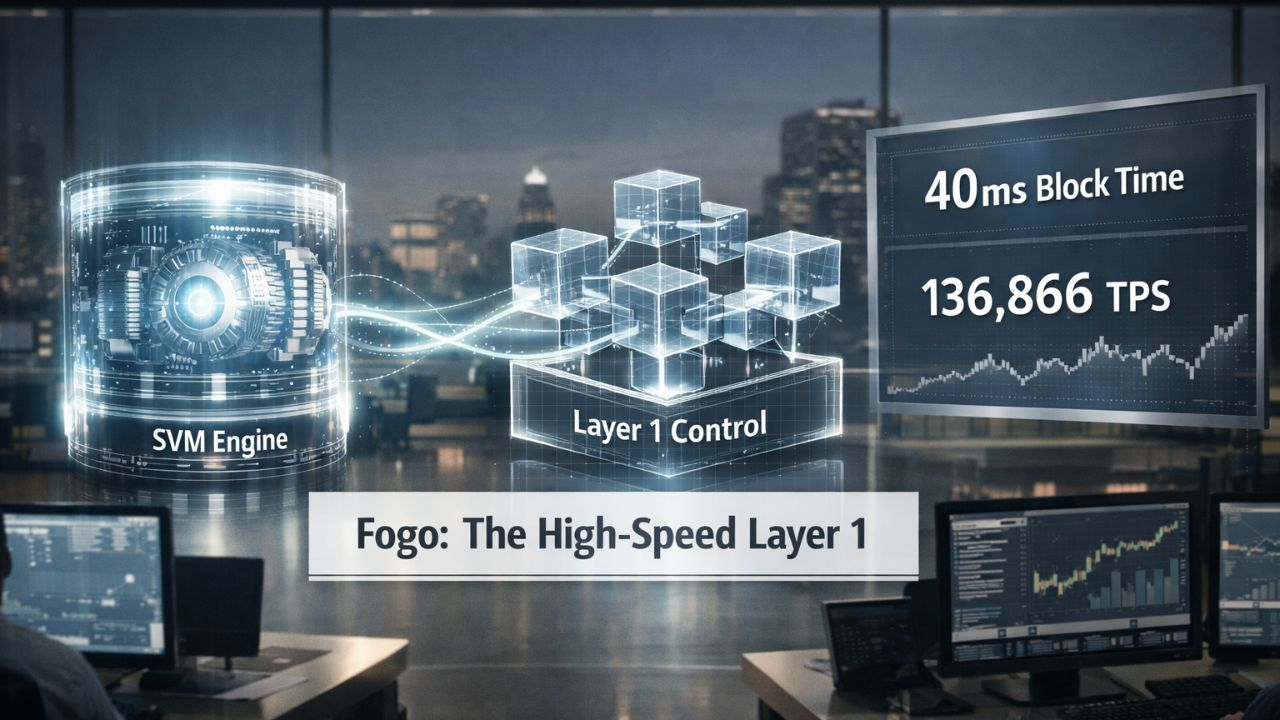
ບົດຄວາມ
Fogo: The High Speed Layer 1 Poised to Redefine Blockchain PerformanceWhile analyzing blockchain performance I have to say that when I first started this research way back in 2017 crossing a thousand transactions per second was revolutionary. However a few years later blockchains like Solana have raised the bar to levels way above a thousand transactions per second. Now with Fogo public mainnet live as of 15 January 2026 the definition of next generation performance is shifting once again. It achieves this with consistent 40 millisecond block times and astonishingly low latency. It opens the door to applications running closer to conventional high frequency trading systems than those we are used to in blockchains.
Fogo distinguishes itself from others by utilizing the Solana Virtual Machine as its execution layer. It makes the chain instantly accessible to developers already working within the Solana ecosystem. However this is not the whole story. The real innovation lies in how Fogo restructures parallel execution and optimizes the protocol from the ground up to reduce both confirmation time and network level friction. The testnet processed more than forty million transactions while maintaining near zero fees and consistently hitting its 40ms block times creating an experience that feels as immediate as interacting with centralized exchanges.
In practical terms this means decentralized applications can finally behave like the platforms users are accustomed to in traditional finance. Order placements liquidations, arbitrage opportunities and settlement flows happen almost as quickly as a trader can react. While other chains process batches of transactions sequentially. Fogo makes concurrency its default setting allowing several actions to be executed concurrently without clogging up the system. It is an approach designed explicitly for real time financial primitives rather than general purpose smart contract execution.
A New Architecture for Performance
Looking back on how blockchain networks evolved most early designs prioritized decentralization and security over pure speed. Ethereum, for example sacrifices latency to maximize robustness resulting in block times that feel slow in fast moving financial markets. While Solana was a pioneer with its Proof of History based architecture and was able to attain high throughput from the outset, this too is now under threat. Currently, Fogo mainnet has a throughput of 136,866 transactions per second which is significantly higher than even Solana and other high performance chains like Sui.
This is due to a combination of factors including SVM compatibility and parallel execution. In my analysis of high performance systems across different industries one recurring pattern becomes clear is infrastructure designed with latency as a core objective consistently outperforms systems that try to optimize it after the fact. Fogo applies that principle from its base layer upward and the result is a chain with near instant finality averaging about 1.3 seconds for irreversible confirmation.
Still pure performance metrics do not guarantee long term success. Sustained throughput under real economic load depth of network development, liquidity growth and developer adoption will ultimately determine the networks trajectory. With approximately ten dApps live at launch the model is still in its earliest phase. The architectural choices that enable low latency also come with trade offs including validator configurations that resemble traditional financial infrastructure more than fully distributed systems. How this balance evolves is what will determine the networks attractiveness to both institutions and decentralized communities.
While any Layer 1 launch in the early stages carries inherent challenge, Fogo is no different. The FOGO token which recently launched into the market displays the volatility expected in a new network in which liquidity is developing and the market is still discovering the fair value of the asset. Price movements are steep in such a network.
There is the overarching concern of whether the networks potential performance can be sustained in a state of high congestion and high transaction value. There are a number of networks which perform exceptionally well in peak states but fail to perform when actual economic activity is introduced. Fogo ability to perform at a state of consistency in terms of finality, TPS and confirmation speed when actual economic activity is introduced is a uncertainity. There is the issue of security as well. Any network which must perform at high speeds must be capable of resisting MEV attacks, consensus attacks and performance based attacks. The network includes a number of features to mitigate such attacks. However, the reality is that no network is completely safe.
Regulatory pressures may be a factor. Blockchains designed to attract financial institutions often find themselves operating under closer scrutiny, especially in markets where high speed crypto infrastructure intersects with securities, payments or derivatives legislation. Even strong technology cannot fully shield a network from compliance factors.
A Practical View for the Trader
As traders consider Fogo a practical view for traders considering FOGO includes the importance of patience and structure particularly in the early days of the asset. Volatility in the early days might be a chance for traders but only if traders are cautious. Accumulating the asset during stable liquidity conditions or support levels might be a good strategy avoiding the risks of buying the asset during a speculative surge. Paying attention to the development of DApps, liquidity pools and the overall transaction volume might be a better approach than looking at the price action. In addition the strategy of placing a stop loss level at a psychological point might be a good approach particularly in the emerging market conditions of Fogo.
If the asset price falls below the support range it might be a point of concern particularly if the asset has recently been traded in the support range after the launch but if the asset bounces back hard from the support range and you see trading volume picking up that's usually a good sign for traders.
Fogo in the Competitive Landscape
Fogo jumped into a crowded arena. There are already plenty of high powered platforms out there backed by active developer communities and deep liquidity. Fogo's going up against some serious competition. Solana continues to lead the pack of high performance platforms with a strong developer community and significant liquidity. The platform already has a big following so it's a major player but Ethereum is not going anywhere and with rollups and ZK scaling getting better all the time, Fogo faces real competition especially from developers who want solid performance but won't give up the security and decentralization Ethereum offers. Then there is Aptos which stands out thanks to its parallel execution and flexible programming. That's another hurdle Fogo has to clear.
Fogo strength is in its singular focus on speed and latency optimized for real time financial infrastructure. Rather than trying to compete in every area the network is positioned as a platform in which speed must be perceived as almost instantaneous. However the question is whether the market for such a specialized solution is large enough to allow the network to develop a thriving environment.
My Closing Thoughts
Fogo is one of the most ambitious projects to try to move the needle for Layer 1 blockchain performance. Its 40 millisecond block times, speed to finality and deep SVM compatibility are a compelling argument for the next generation of financial applications. However, blockchain success has never depended solely on performance. Blockchain success depends on a number of other factors. Fogo is undoubtedly pushing the envelope in terms of what blockchain technology can achieve. However, the question is whether Fogo's performance can be sustained in the real world as real value and real economic activity begin to test the network. If Fogo can achieve this perhaps the network can carve a unique place in the world of cryptocurrency.
@fogo
#fogo
$FOGO
{spot}(FOGOUSDT)
Fogo: The High Speed Layer 1 Poised to Redefine Blockchain Performance
While analyzing blockchain performance I have to say that when I first started this research way back in 2017 crossing a thousand transactions per second was revolutionary. However a few years later blockchains like Solana have raised the bar to levels way above a thousand transactions per second. Now with Fogo public mainnet live as of 15 January 2026 the definition of next generation performance is shifting once again. It achieves this with consistent 40 millisecond block times and astonishingly low latency. It opens the door to applications running closer to conventional high frequency trading systems than those we are used to in blockchains.
Fogo distinguishes itself from others by utilizing the Solana Virtual Machine as its execution layer. It makes the chain instantly accessible to developers already working within the Solana ecosystem. However this is not the whole story. The real innovation lies in how Fogo restructures parallel execution and optimizes the protocol from the ground up to reduce both confirmation time and network level friction. The testnet processed more than forty million transactions while maintaining near zero fees and consistently hitting its 40ms block times creating an experience that feels as immediate as interacting with centralized exchanges.
In practical terms this means decentralized applications can finally behave like the platforms users are accustomed to in traditional finance. Order placements liquidations, arbitrage opportunities and settlement flows happen almost as quickly as a trader can react. While other chains process batches of transactions sequentially. Fogo makes concurrency its default setting allowing several actions to be executed concurrently without clogging up the system. It is an approach designed explicitly for real time financial primitives rather than general purpose smart contract execution.
A New Architecture for Performance
Looking back on how blockchain networks evolved most early designs prioritized decentralization and security over pure speed. Ethereum, for example sacrifices latency to maximize robustness resulting in block times that feel slow in fast moving financial markets. While Solana was a pioneer with its Proof of History based architecture and was able to attain high throughput from the outset, this too is now under threat. Currently, Fogo mainnet has a throughput of 136,866 transactions per second which is significantly higher than even Solana and other high performance chains like Sui.
This is due to a combination of factors including SVM compatibility and parallel execution. In my analysis of high performance systems across different industries one recurring pattern becomes clear is infrastructure designed with latency as a core objective consistently outperforms systems that try to optimize it after the fact. Fogo applies that principle from its base layer upward and the result is a chain with near instant finality averaging about 1.3 seconds for irreversible confirmation.
Still pure performance metrics do not guarantee long term success. Sustained throughput under real economic load depth of network development, liquidity growth and developer adoption will ultimately determine the networks trajectory. With approximately ten dApps live at launch the model is still in its earliest phase. The architectural choices that enable low latency also come with trade offs including validator configurations that resemble traditional financial infrastructure more than fully distributed systems. How this balance evolves is what will determine the networks attractiveness to both institutions and decentralized communities.
While any Layer 1 launch in the early stages carries inherent challenge, Fogo is no different. The FOGO token which recently launched into the market displays the volatility expected in a new network in which liquidity is developing and the market is still discovering the fair value of the asset. Price movements are steep in such a network.
There is the overarching concern of whether the networks potential performance can be sustained in a state of high congestion and high transaction value. There are a number of networks which perform exceptionally well in peak states but fail to perform when actual economic activity is introduced. Fogo ability to perform at a state of consistency in terms of finality, TPS and confirmation speed when actual economic activity is introduced is a uncertainity. There is the issue of security as well. Any network which must perform at high speeds must be capable of resisting MEV attacks, consensus attacks and performance based attacks. The network includes a number of features to mitigate such attacks. However, the reality is that no network is completely safe.
Regulatory pressures may be a factor. Blockchains designed to attract financial institutions often find themselves operating under closer scrutiny, especially in markets where high speed crypto infrastructure intersects with securities, payments or derivatives legislation. Even strong technology cannot fully shield a network from compliance factors.
A Practical View for the Trader
As traders consider Fogo a practical view for traders considering FOGO includes the importance of patience and structure particularly in the early days of the asset. Volatility in the early days might be a chance for traders but only if traders are cautious. Accumulating the asset during stable liquidity conditions or support levels might be a good strategy avoiding the risks of buying the asset during a speculative surge. Paying attention to the development of DApps, liquidity pools and the overall transaction volume might be a better approach than looking at the price action. In addition the strategy of placing a stop loss level at a psychological point might be a good approach particularly in the emerging market conditions of Fogo.
If the asset price falls below the support range it might be a point of concern particularly if the asset has recently been traded in the support range after the launch but if the asset bounces back hard from the support range and you see trading volume picking up that's usually a good sign for traders.
Fogo in the Competitive Landscape
Fogo jumped into a crowded arena. There are already plenty of high powered platforms out there backed by active developer communities and deep liquidity. Fogo's going up against some serious competition. Solana continues to lead the pack of high performance platforms with a strong developer community and significant liquidity. The platform already has a big following so it's a major player but Ethereum is not going anywhere and with rollups and ZK scaling getting better all the time, Fogo faces real competition especially from developers who want solid performance but won't give up the security and decentralization Ethereum offers. Then there is Aptos which stands out thanks to its parallel execution and flexible programming. That's another hurdle Fogo has to clear.
Fogo strength is in its singular focus on speed and latency optimized for real time financial infrastructure. Rather than trying to compete in every area the network is positioned as a platform in which speed must be perceived as almost instantaneous. However the question is whether the market for such a specialized solution is large enough to allow the network to develop a thriving environment.
My Closing Thoughts
Fogo is one of the most ambitious projects to try to move the needle for Layer 1 blockchain performance. Its 40 millisecond block times, speed to finality and deep SVM compatibility are a compelling argument for the next generation of financial applications. However, blockchain success has never depended solely on performance. Blockchain success depends on a number of other factors. Fogo is undoubtedly pushing the envelope in terms of what blockchain technology can achieve. However, the question is whether Fogo's performance can be sustained in the real world as real value and real economic activity begin to test the network. If Fogo can achieve this perhaps the network can carve a unique place in the world of cryptocurrency.
@Fogo Official
#fogo
$FOGO
Fogo distinguishes itself from others by utilizing the Solana Virtual Machine as its execution layer. It makes the chain instantly accessible to developers already working within the Solana ecosystem. However this is not the whole story. The real innovation lies in how Fogo restructures parallel execution and optimizes the protocol from the ground up to reduce both confirmation time and network level friction. The testnet processed more than forty million transactions while maintaining near zero fees and consistently hitting its 40ms block times creating an experience that feels as immediate as interacting with centralized exchanges.
In practical terms this means decentralized applications can finally behave like the platforms users are accustomed to in traditional finance. Order placements liquidations, arbitrage opportunities and settlement flows happen almost as quickly as a trader can react. While other chains process batches of transactions sequentially. Fogo makes concurrency its default setting allowing several actions to be executed concurrently without clogging up the system. It is an approach designed explicitly for real time financial primitives rather than general purpose smart contract execution.
A New Architecture for Performance
Looking back on how blockchain networks evolved most early designs prioritized decentralization and security over pure speed. Ethereum, for example sacrifices latency to maximize robustness resulting in block times that feel slow in fast moving financial markets. While Solana was a pioneer with its Proof of History based architecture and was able to attain high throughput from the outset, this too is now under threat. Currently, Fogo mainnet has a throughput of 136,866 transactions per second which is significantly higher than even Solana and other high performance chains like Sui.
This is due to a combination of factors including SVM compatibility and parallel execution. In my analysis of high performance systems across different industries one recurring pattern becomes clear is infrastructure designed with latency as a core objective consistently outperforms systems that try to optimize it after the fact. Fogo applies that principle from its base layer upward and the result is a chain with near instant finality averaging about 1.3 seconds for irreversible confirmation.
Still pure performance metrics do not guarantee long term success. Sustained throughput under real economic load depth of network development, liquidity growth and developer adoption will ultimately determine the networks trajectory. With approximately ten dApps live at launch the model is still in its earliest phase. The architectural choices that enable low latency also come with trade offs including validator configurations that resemble traditional financial infrastructure more than fully distributed systems. How this balance evolves is what will determine the networks attractiveness to both institutions and decentralized communities.
While any Layer 1 launch in the early stages carries inherent challenge, Fogo is no different. The FOGO token which recently launched into the market displays the volatility expected in a new network in which liquidity is developing and the market is still discovering the fair value of the asset. Price movements are steep in such a network.
There is the overarching concern of whether the networks potential performance can be sustained in a state of high congestion and high transaction value. There are a number of networks which perform exceptionally well in peak states but fail to perform when actual economic activity is introduced. Fogo ability to perform at a state of consistency in terms of finality, TPS and confirmation speed when actual economic activity is introduced is a uncertainity. There is the issue of security as well. Any network which must perform at high speeds must be capable of resisting MEV attacks, consensus attacks and performance based attacks. The network includes a number of features to mitigate such attacks. However, the reality is that no network is completely safe.
Regulatory pressures may be a factor. Blockchains designed to attract financial institutions often find themselves operating under closer scrutiny, especially in markets where high speed crypto infrastructure intersects with securities, payments or derivatives legislation. Even strong technology cannot fully shield a network from compliance factors.
A Practical View for the Trader
As traders consider Fogo a practical view for traders considering FOGO includes the importance of patience and structure particularly in the early days of the asset. Volatility in the early days might be a chance for traders but only if traders are cautious. Accumulating the asset during stable liquidity conditions or support levels might be a good strategy avoiding the risks of buying the asset during a speculative surge. Paying attention to the development of DApps, liquidity pools and the overall transaction volume might be a better approach than looking at the price action. In addition the strategy of placing a stop loss level at a psychological point might be a good approach particularly in the emerging market conditions of Fogo.
If the asset price falls below the support range it might be a point of concern particularly if the asset has recently been traded in the support range after the launch but if the asset bounces back hard from the support range and you see trading volume picking up that's usually a good sign for traders.
Fogo in the Competitive Landscape
Fogo jumped into a crowded arena. There are already plenty of high powered platforms out there backed by active developer communities and deep liquidity. Fogo's going up against some serious competition. Solana continues to lead the pack of high performance platforms with a strong developer community and significant liquidity. The platform already has a big following so it's a major player but Ethereum is not going anywhere and with rollups and ZK scaling getting better all the time, Fogo faces real competition especially from developers who want solid performance but won't give up the security and decentralization Ethereum offers. Then there is Aptos which stands out thanks to its parallel execution and flexible programming. That's another hurdle Fogo has to clear.
Fogo strength is in its singular focus on speed and latency optimized for real time financial infrastructure. Rather than trying to compete in every area the network is positioned as a platform in which speed must be perceived as almost instantaneous. However the question is whether the market for such a specialized solution is large enough to allow the network to develop a thriving environment.
My Closing Thoughts
Fogo is one of the most ambitious projects to try to move the needle for Layer 1 blockchain performance. Its 40 millisecond block times, speed to finality and deep SVM compatibility are a compelling argument for the next generation of financial applications. However, blockchain success has never depended solely on performance. Blockchain success depends on a number of other factors. Fogo is undoubtedly pushing the envelope in terms of what blockchain technology can achieve. However, the question is whether Fogo's performance can be sustained in the real world as real value and real economic activity begin to test the network. If Fogo can achieve this perhaps the network can carve a unique place in the world of cryptocurrency.
@Fogo Official
#fogo
$FOGO
2
70
The next generation blockchain race is heating up. Is this project ready to lead?
-> High performance chains are evolving fast.
-> This project is positioning it-self as a serious contender.
-> Built on Solana Virtual Machine.
-> It can run multiple processes at once.
-> Full Layer 1 control speed without losing control.
-> If SVM is the engine think of this as an upgraded chassis built to scale.
-> Does it have real long term potential or just hype?
@fogo
#fogo
$FOGO
{spot}(FOGOUSDT)
The next generation blockchain race is heating up. Is this project ready to lead?
-> High performance chains are evolving fast.
-> This project is positioning it-self as a serious contender.
-> Built on Solana Virtual Machine.
-> It can run multiple processes at once.
-> Full Layer 1 control speed without losing control.
-> If SVM is the engine think of this as an upgraded chassis built to scale.
-> Does it have real long term potential or just hype?
@Fogo Official
#fogo
$FOGO
-> High performance chains are evolving fast.
-> This project is positioning it-self as a serious contender.
-> Built on Solana Virtual Machine.
-> It can run multiple processes at once.
-> Full Layer 1 control speed without losing control.
-> If SVM is the engine think of this as an upgraded chassis built to scale.
-> Does it have real long term potential or just hype?
@Fogo Official
#fogo
$FOGO
3
99
$BNB looks "hot" right now because the price recovered well after a dip and is holding near important moving averages. This tells the market that the downside was rejected so attention is coming back to the coin.
The link between price and volume is clear. When price moves up, volume increases. During pullbacks, volume becomes lower. This shows that selling pressure is weak and most traders are buying on dips instead of panic selling.
Right now most retail traders are jumping in because they are afraid of missing out snapping up those little green candles. Momentum traders look more careful. They are buying near support and taking partial profit near resistance. Because of this the price move looks smooth and controlled not wild.
Overall the move does not look overextended. As long as volume holds steady the trend keeps rolling but if the price jumps again without much volume behind it expect a quick pullback. The setup still looks solid just be careful chasing the top here is risky. Buying dips looks safer than buying highs.
{future}(BNBUSDT)
#BNBUSDT
#CryptoMarket
#TrumpProCrypto
$BNB looks "hot" right now because the price recovered well after a dip and is holding near important moving averages. This tells the market that the downside was rejected so attention is coming back to the coin.
The link between price and volume is clear. When price moves up, volume increases. During pullbacks, volume becomes lower. This shows that selling pressure is weak and most traders are buying on dips instead of panic selling.
Right now most retail traders are jumping in because they are afraid of missing out snapping up those little green candles. Momentum traders look more careful. They are buying near support and taking partial profit near resistance. Because of this the price move looks smooth and controlled not wild.
Overall the move does not look overextended. As long as volume holds steady the trend keeps rolling but if the price jumps again without much volume behind it expect a quick pullback. The setup still looks solid just be careful chasing the top here is risky. Buying dips looks safer than buying highs.
#BNBUSDT
#CryptoMarket
#TrumpProCrypto
The link between price and volume is clear. When price moves up, volume increases. During pullbacks, volume becomes lower. This shows that selling pressure is weak and most traders are buying on dips instead of panic selling.
Right now most retail traders are jumping in because they are afraid of missing out snapping up those little green candles. Momentum traders look more careful. They are buying near support and taking partial profit near resistance. Because of this the price move looks smooth and controlled not wild.
Overall the move does not look overextended. As long as volume holds steady the trend keeps rolling but if the price jumps again without much volume behind it expect a quick pullback. The setup still looks solid just be careful chasing the top here is risky. Buying dips looks safer than buying highs.
#BNBUSDT
#CryptoMarket
#TrumpProCrypto
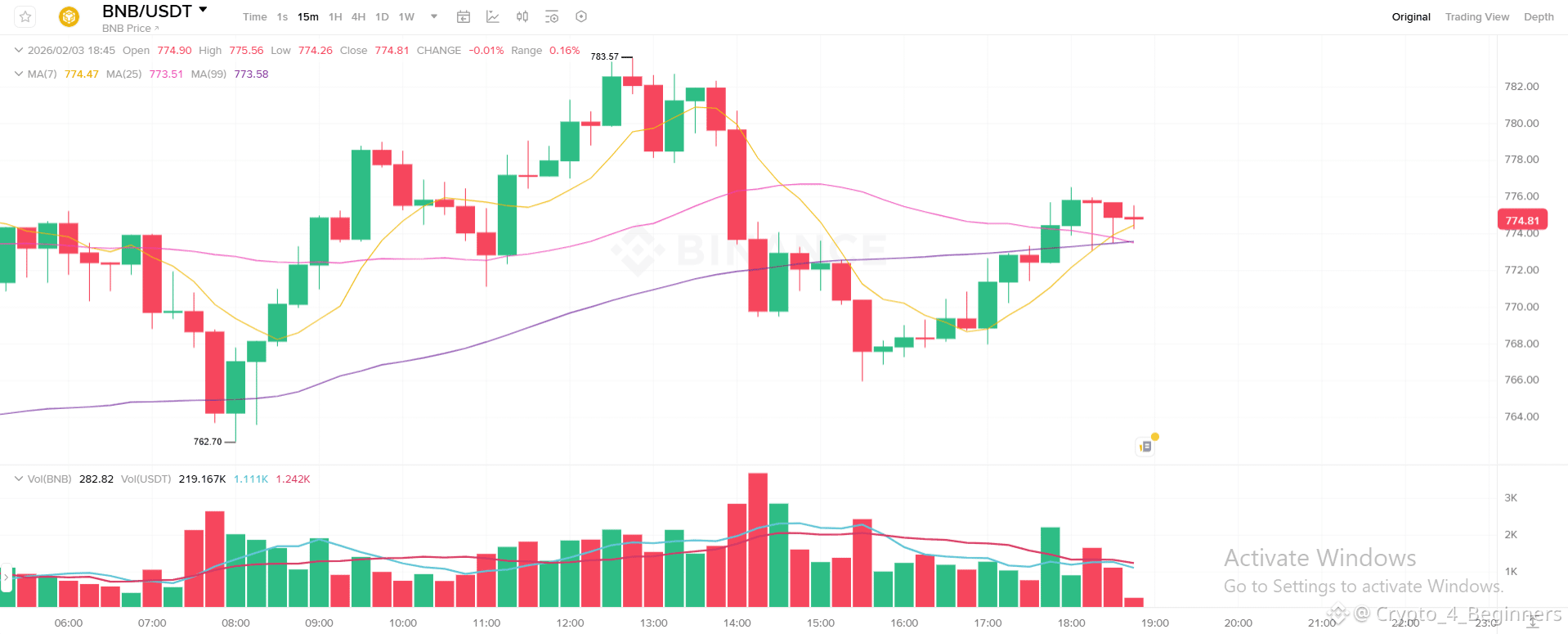
3
40
ເຂົ້າສູ່ລະບົບເພື່ອສຳຫຼວດເນື້ອຫາເພີ່ມເຕີມ
ເຂົ້າຮ່ວມກຸ່ມຜູ້ໃຊ້ຄຣິບໂຕທົ່ວໂລກໃນ Binance Square.
⚡️ ໄດ້ຮັບຂໍ້ມູນຫຼ້າສຸດ ແລະ ທີ່ມີປະໂຫຍດກ່ຽວກັບຄຣິບໂຕ.
💬 ໄດ້ຮັບຄວາມໄວ້ວາງໃຈຈາກຕະຫຼາດແລກປ່ຽນຄຣິບໂຕທີ່ໃຫຍ່ທີ່ສຸດໃນໂລກ.
👍 ຄົ້ນຫາຂໍ້ມູນເຊີງເລິກທີ່ແທ້ຈາກນັກສ້າງທີ່ໄດ້ຮັບການຢືນຢັນ.
ອີເມວ / ເບີໂທລະສັບ
ຫົວຂໍ້ທີ່ກໍາລັງນິຍົມ
NvidiaApproves$150BBuyback
1,342 views
33 ກຳລັງສົນທະນາ
#NvidiaApproves$150BBuyback
Nvidia’s $150 Billion Buyback Shockwave: Is AI Cash Flow Driving the Next Market Rally? 🚀
The AI supercycle just sent shockwaves across tradfi and crypto markets! NVIDIA's Board of Directors authorized a massive $150 Billion increase to its share repurchase program, expanding the company's total remaining buyback authorization to $235 Billion.
This marks the largest share buyback authorization in U.S. corporate history, surpassing Apple’s $110 billion benchmark.
📰 Key Headlines & Market Breakdown
Record-Breaking Capital Return: NVIDIA founder and CEO Jensen Huang cited "once-in-a-generation platform shift to AI" and strong corporate cash flow as the main drivers behind returning capital to shareholders.
Defying Market Downturns: Despite broader equity pressure and rising U.S. Treasury yields, $NVDA shares surged over 3% on the announcement, showing institutional confidence in tech assets.
Spillover into Decentralized AI: Historically, major bullish headlines for NVIDIA trigger positive sentiment for decentralized AI infrastructure protocols (such as NEAR, RENDER, and FET), as web3 AI projects track broader AI sector valuations.
❓ Discussion Point
Nvidia announces a massive $150B buyback! Will tech stock gains bleed over into Bitcoin and AI tokens?
$RENDER
📊 Related Crypto Trade Signal: RENDER/USDT
Trade Bias: Bullish
Entry Zone: $5.20 – $5.45
Target 1 (TP1): $6.10
Target 2 (TP2): $6.85
Stop Loss (SL): $4.85
Leverage (Futures): 3x – 5x (Isolated)
Technical Rationale: RENDER tends to react strongly to Nvidia hardware and AI capital developments. Price is consolidating near key moving average support with rising spot volume following the $NVDAB
news.
#HackersDrainOver12.4MXRPFromDCENTWallets #CryptoNews #AITokens #TradingSignals
Lily星星
·1 ຖືກໃຈ
·129 views
OpenAIDelaysGPT6.1OverSafetyIssues
6,530 views
295 ກຳລັງສົນທະນາ
AMDToAcquireWorldLabsFor$8.2B
847 views
31 ກຳລັງສົນທະນາ