

Crypto-First21
15.3k ໂພສ

Crypto-First21
 Square Verified+
ລາຍງານ
ບລັອກຜູ້ໃຊ້
x : crypto_first21
ຜູ້ຊື້ຂາຍປະຈໍາ
3.1 ປີ
225 ກໍາລັງຕິດຕາມ
92.1K+ ຜູ້ຕິດຕາມ
74.3K+ Liked
ໂພສ
ທັງໝົດ
ວົງຢືມ
ວີດີໂອ
ຖ່າຍທອດສົດ
ປັກໝຸດ
Hacker Moves $83M in Stolen XRP as The Exchange Works Through Fallout
The fallout of $387.5 million breach is still unfolding.
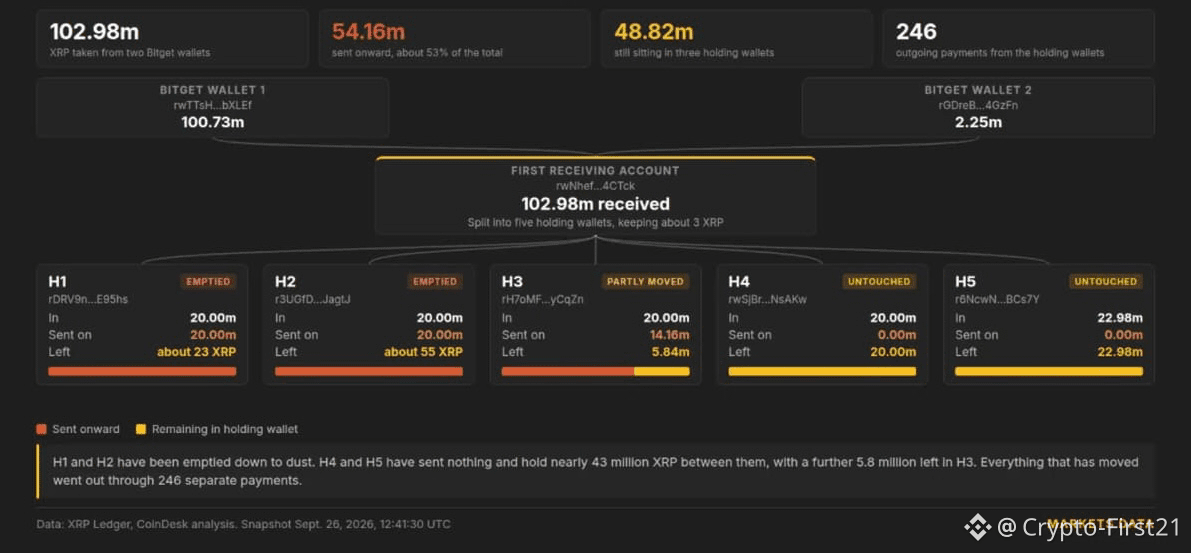
The attacker has reportedly moved around $83 million worth of stolen $XRP from three holding wallets, while roughly $75 million remains in wallets that cannot be frozen under XRP Ledger rules.
Exchanges can blacklist accounts receiving the stolen funds, but the attacker’s wallets themselves can’t be blocked. Meanwhile, Circle and Tether have frozen about $320,000 in related stablecoins.
the exchange says its protection fund will fully cover the losses and that customer balances remain unaffected. Withdrawals are expected to resume gradually between Sept. 28 and Oct. 2.
The focus now shifts from the hack itself to how much of the stolen funds can actually be tracked, frozen, or recovered. 🚨💰
What are you thoughts on it 👀?
#cryptofirst21 $RARE
Hacker Moves $83M in Stolen XRP as The Exchange Works Through Fallout
The fallout of $387.5 million breach is still unfolding.
The attacker has reportedly moved around $83 million worth of stolen $XRP from three holding wallets, while roughly $75 million remains in wallets that cannot be frozen under XRP Ledger rules.
Exchanges can blacklist accounts receiving the stolen funds, but the attacker’s wallets themselves can’t be blocked. Meanwhile, Circle and Tether have frozen about $320,000 in related stablecoins.
the exchange says its protection fund will fully cover the losses and that customer balances remain unaffected. Withdrawals are expected to resume gradually between Sept. 28 and Oct. 2.
The focus now shifts from the hack itself to how much of the stolen funds can actually be tracked, frozen, or recovered. 🚨💰
What are you thoughts on it 👀?
#cryptofirst21 $RARE
The fallout of $387.5 million breach is still unfolding.
The attacker has reportedly moved around $83 million worth of stolen $XRP from three holding wallets, while roughly $75 million remains in wallets that cannot be frozen under XRP Ledger rules.
Exchanges can blacklist accounts receiving the stolen funds, but the attacker’s wallets themselves can’t be blocked. Meanwhile, Circle and Tether have frozen about $320,000 in related stablecoins.
the exchange says its protection fund will fully cover the losses and that customer balances remain unaffected. Withdrawals are expected to resume gradually between Sept. 28 and Oct. 2.
The focus now shifts from the hack itself to how much of the stolen funds can actually be tracked, frozen, or recovered. 🚨💰
What are you thoughts on it 👀?
#cryptofirst21 $RARE
26
13
113
125.1k


ບົດຄວາມ
🎃 The Red Candles That Haunted Me: My Binance JourneyMy scariest crypto story doesn’t involve ghosts, haunted houses, or things moving in the dark.
It involves a screen turning red while I watched my money disappear.
Three years ago, my cousin introduced me to Binance. Back then, I thought trading was simple: find a coin, catch a pump, and make money. I had no idea how much I still needed to learn.
I experimented with different coins, tried to predict market movements, and eventually turned to futures trading. My trades were small, usually $5–$10, but my mistakes kept repeating. Sudden market movements triggered liquidations, and every new attempt seemed to bring another lesson I hadn’t wanted to learn.
Those red candles became my personal Halloween monsters. They followed me onto my screen, into my thoughts, and sometimes into the next trading session.
Then I remembered something important: I was a gold medalist computer engineer. I had spent years learning how complex systems worked, yet I was approaching the market without properly understanding its risks.
That realization changed my direction.
I started studying technical analysis, risk management, and market behavior. I stopped treating every trade as a chance to get lucky and began treating trading as a skill that required discipline. Recovering from my losses took time, but the more important recovery was learning to make decisions with a plan rather than emotion.
Then I discovered another side of Binance.
In early 2025, I started hosting Binance Live sessions. Instead of keeping everything I learned to myself, I began helping newcomers understand the basics and avoid some of the mistakes I had made.
I spent hours live each day. Gradually, people returned, conversations grew, and a community began to form. Within three months, I had reached 30,000 followers. Eventually, my audience grew beyond 90,000.
The most meaningful part wasn’t the numbers. It was realizing that the person who once struggled to understand the market could now help someone else approach it more carefully.
Content creation opened another door. I participated in campaigns, developed my skills, expanded to other platforms, and continued building my presence as a creator. Receiving opportunities to create content for campaigns became new milestones in a journey that had started with one cousin introducing me to an app.
Looking back, my biggest fear wasn’t losing money. It was repeating the same mistakes because I refused to learn from them.
This Halloween, if I could dress up as anything, I might choose the ghost of my old trading habits: chasing quick wins, ignoring risk, and believing every green candle meant opportunity.
Fortunately, that ghost doesn’t control my decisions anymore.
I still respect the uncertainty of the market. I still believe learning never ends. And I know that follower counts and campaign achievements matter far less if I cannot use my experience to help someone else make more informed decisions.
To everyone starting their crypto journey: you don’t need to know everything on day one. Start by learning, protect your capital, question what you see, and never confuse luck with skill.
Some monsters disappear when the lights come on. Others disappear when you finally understand them.
Happy Halloween, Binance Square. 🎃
May your costumes be frightening, your pumpkins stay intact, and your risk management be stronger than your fear of red candles.
#SEAPumpkinFrenzy #MyBinanceJourney
#cryptofirst21
🎃 The Red Candles That Haunted Me: My Binance Journey
My scariest crypto story doesn’t involve ghosts, haunted houses, or things moving in the dark.
It involves a screen turning red while I watched my money disappear.
Three years ago, my cousin introduced me to Binance. Back then, I thought trading was simple: find a coin, catch a pump, and make money. I had no idea how much I still needed to learn.
I experimented with different coins, tried to predict market movements, and eventually turned to futures trading. My trades were small, usually $5–$10, but my mistakes kept repeating. Sudden market movements triggered liquidations, and every new attempt seemed to bring another lesson I hadn’t wanted to learn.
Those red candles became my personal Halloween monsters. They followed me onto my screen, into my thoughts, and sometimes into the next trading session.
Then I remembered something important: I was a gold medalist computer engineer. I had spent years learning how complex systems worked, yet I was approaching the market without properly understanding its risks.
That realization changed my direction.
I started studying technical analysis, risk management, and market behavior. I stopped treating every trade as a chance to get lucky and began treating trading as a skill that required discipline. Recovering from my losses took time, but the more important recovery was learning to make decisions with a plan rather than emotion.
Then I discovered another side of Binance.
In early 2025, I started hosting Binance Live sessions. Instead of keeping everything I learned to myself, I began helping newcomers understand the basics and avoid some of the mistakes I had made.
I spent hours live each day. Gradually, people returned, conversations grew, and a community began to form. Within three months, I had reached 30,000 followers. Eventually, my audience grew beyond 90,000.
The most meaningful part wasn’t the numbers. It was realizing that the person who once struggled to understand the market could now help someone else approach it more carefully.
Content creation opened another door. I participated in campaigns, developed my skills, expanded to other platforms, and continued building my presence as a creator. Receiving opportunities to create content for campaigns became new milestones in a journey that had started with one cousin introducing me to an app.
Looking back, my biggest fear wasn’t losing money. It was repeating the same mistakes because I refused to learn from them.
This Halloween, if I could dress up as anything, I might choose the ghost of my old trading habits: chasing quick wins, ignoring risk, and believing every green candle meant opportunity.
Fortunately, that ghost doesn’t control my decisions anymore.
I still respect the uncertainty of the market. I still believe learning never ends. And I know that follower counts and campaign achievements matter far less if I cannot use my experience to help someone else make more informed decisions.
To everyone starting their crypto journey: you don’t need to know everything on day one. Start by learning, protect your capital, question what you see, and never confuse luck with skill.
Some monsters disappear when the lights come on. Others disappear when you finally understand them.
Happy Halloween, Binance Square. 🎃
May your costumes be frightening, your pumpkins stay intact, and your risk management be stronger than your fear of red candles.
#SEAPumpkinFrenzy #MyBinanceJourney
#cryptofirst21
It involves a screen turning red while I watched my money disappear.
Three years ago, my cousin introduced me to Binance. Back then, I thought trading was simple: find a coin, catch a pump, and make money. I had no idea how much I still needed to learn.
I experimented with different coins, tried to predict market movements, and eventually turned to futures trading. My trades were small, usually $5–$10, but my mistakes kept repeating. Sudden market movements triggered liquidations, and every new attempt seemed to bring another lesson I hadn’t wanted to learn.
Those red candles became my personal Halloween monsters. They followed me onto my screen, into my thoughts, and sometimes into the next trading session.
Then I remembered something important: I was a gold medalist computer engineer. I had spent years learning how complex systems worked, yet I was approaching the market without properly understanding its risks.
That realization changed my direction.
I started studying technical analysis, risk management, and market behavior. I stopped treating every trade as a chance to get lucky and began treating trading as a skill that required discipline. Recovering from my losses took time, but the more important recovery was learning to make decisions with a plan rather than emotion.
Then I discovered another side of Binance.
In early 2025, I started hosting Binance Live sessions. Instead of keeping everything I learned to myself, I began helping newcomers understand the basics and avoid some of the mistakes I had made.
I spent hours live each day. Gradually, people returned, conversations grew, and a community began to form. Within three months, I had reached 30,000 followers. Eventually, my audience grew beyond 90,000.
The most meaningful part wasn’t the numbers. It was realizing that the person who once struggled to understand the market could now help someone else approach it more carefully.
Content creation opened another door. I participated in campaigns, developed my skills, expanded to other platforms, and continued building my presence as a creator. Receiving opportunities to create content for campaigns became new milestones in a journey that had started with one cousin introducing me to an app.
Looking back, my biggest fear wasn’t losing money. It was repeating the same mistakes because I refused to learn from them.
This Halloween, if I could dress up as anything, I might choose the ghost of my old trading habits: chasing quick wins, ignoring risk, and believing every green candle meant opportunity.
Fortunately, that ghost doesn’t control my decisions anymore.
I still respect the uncertainty of the market. I still believe learning never ends. And I know that follower counts and campaign achievements matter far less if I cannot use my experience to help someone else make more informed decisions.
To everyone starting their crypto journey: you don’t need to know everything on day one. Start by learning, protect your capital, question what you see, and never confuse luck with skill.
Some monsters disappear when the lights come on. Others disappear when you finally understand them.
Happy Halloween, Binance Square. 🎃
May your costumes be frightening, your pumpkins stay intact, and your risk management be stronger than your fear of red candles.
#SEAPumpkinFrenzy #MyBinanceJourney
#cryptofirst21
4
7
464
X100 on Ethereum Exploited, $4.85M in USDT Drained
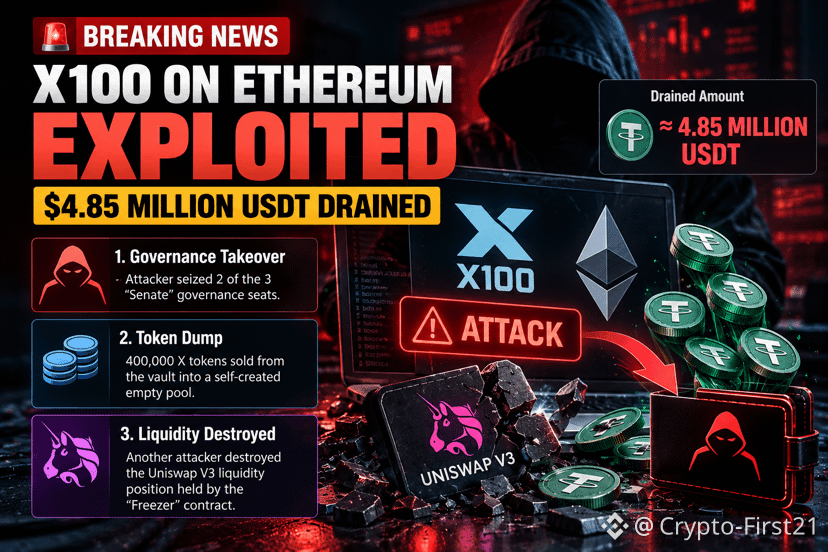
Security firm reported an ongoing attack on X100 on Ethereum, with two transactions draining approximately $4.85 million in USDT by the time of its alert.
• An attacker seized 2 of the project’s 3 governance seats.
• 400,000 X tokens were sold from the vault into a self created, empty liquidity pool.
• Another attacker destroyed the Uniswap V3 liquidity position controlled by the Freezer contract.
I feel that This incident highlights how governance control and liquidity mechanisms can become critical attack surfaces. A protocol’s security depends not only on smart contracts, but also on who can control them.
Users should avoid interacting with affected contracts until the project provides verified guidance.
#ETH #cryptofirst21
$BMT
X100 on Ethereum Exploited, $4.85M in USDT Drained
Security firm reported an ongoing attack on X100 on Ethereum, with two transactions draining approximately $4.85 million in USDT by the time of its alert.
• An attacker seized 2 of the project’s 3 governance seats.
• 400,000 X tokens were sold from the vault into a self created, empty liquidity pool.
• Another attacker destroyed the Uniswap V3 liquidity position controlled by the Freezer contract.
I feel that This incident highlights how governance control and liquidity mechanisms can become critical attack surfaces. A protocol’s security depends not only on smart contracts, but also on who can control them.
Users should avoid interacting with affected contracts until the project provides verified guidance.
#ETH #cryptofirst21
$BMT
Security firm reported an ongoing attack on X100 on Ethereum, with two transactions draining approximately $4.85 million in USDT by the time of its alert.
• An attacker seized 2 of the project’s 3 governance seats.
• 400,000 X tokens were sold from the vault into a self created, empty liquidity pool.
• Another attacker destroyed the Uniswap V3 liquidity position controlled by the Freezer contract.
I feel that This incident highlights how governance control and liquidity mechanisms can become critical attack surfaces. A protocol’s security depends not only on smart contracts, but also on who can control them.
Users should avoid interacting with affected contracts until the project provides verified guidance.
#ETH #cryptofirst21
$BMT
1
5
3.5k
ຢືນຢັນແລ້ວ
Trump Says Iran War Could End Soon, Strait of Hormuz in Focus
Really? 👀
President Donald Trump claims the Strait of Hormuz is under his control and says the Iran war could end “very soon.”
He also suggested the U.S. could seize Iran’s oil, adding another layer of uncertainty to an already tense geopolitical situation.
It think The key question is whether these statements lead to a concrete deal or further escalation. The Strait of Hormuz is a critical global oil shipping route, so any change in its status could move energy markets and ripple into inflation, stocks, and crypto.
Watch for verifiable developments on shipping access, negotiations, and oil prices.
#TRUMP #BinancePick #cryptofirst21
$IRYS $FOREST
Trump Says Iran War Could End Soon, Strait of Hormuz in Focus
Really? 👀
President Donald Trump claims the Strait of Hormuz is under his control and says the Iran war could end “very soon.”
He also suggested the U.S. could seize Iran’s oil, adding another layer of uncertainty to an already tense geopolitical situation.
It think The key question is whether these statements lead to a concrete deal or further escalation. The Strait of Hormuz is a critical global oil shipping route, so any change in its status could move energy markets and ripple into inflation, stocks, and crypto.
Watch for verifiable developments on shipping access, negotiations, and oil prices.
#TRUMP #BinancePick #cryptofirst21
$IRYS $FOREST
Really? 👀
President Donald Trump claims the Strait of Hormuz is under his control and says the Iran war could end “very soon.”
He also suggested the U.S. could seize Iran’s oil, adding another layer of uncertainty to an already tense geopolitical situation.
It think The key question is whether these statements lead to a concrete deal or further escalation. The Strait of Hormuz is a critical global oil shipping route, so any change in its status could move energy markets and ripple into inflation, stocks, and crypto.
Watch for verifiable developments on shipping access, negotiations, and oil prices.
#TRUMP #BinancePick #cryptofirst21
$IRYS $FOREST

3
1.8k
ຢືນຢັນແລ້ວ
WHAT IF TESLA AND SPACEX BECAME ONE $2.5 BILLION BITCOIN GIANT? 🔥
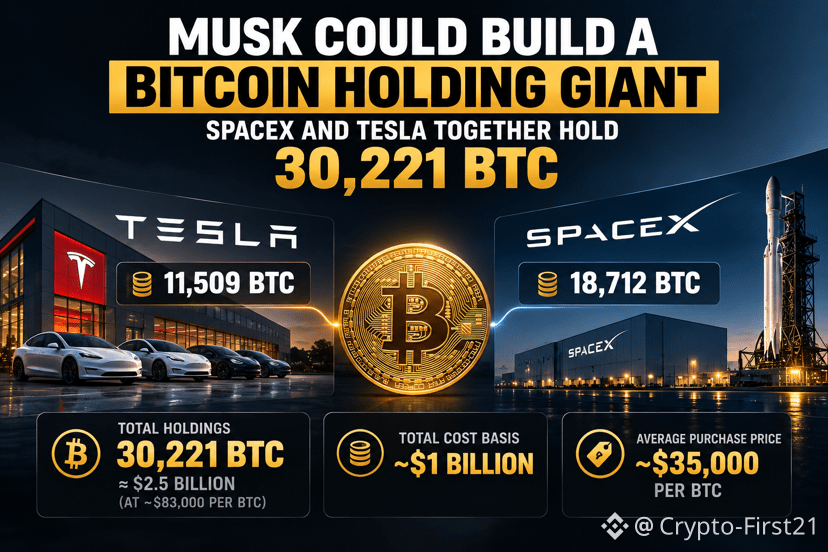
Elon Musk’s companies reportedly hold a combined 30,221 BTC and a potential merger could bring both treasuries under one corporate roof.
• Tesla: 11,509 BTC
• SpaceX: 18,712 BTC
• Total: 30,221 BTC
• Estimated value: $2.5 billion at $83K per BTC
Their combined estimated cost basis is around $1 billion, implying an average purchase price near $35,000 per BTC.
Both companies have reportedly formed independent committees to evaluate a possible merger. No deal has been confirmed.
Hmm…. I think that The real story isn’t just the Bitcoin they hold. It’s what combining two major corporate treasuries could mean for Musk’s long term strategy.
$IOST #musk #cryptofirst21
WHAT IF TESLA AND SPACEX BECAME ONE $2.5 BILLION BITCOIN GIANT? 🔥
Elon Musk’s companies reportedly hold a combined 30,221 BTC and a potential merger could bring both treasuries under one corporate roof.
• Tesla: 11,509 BTC
• SpaceX: 18,712 BTC
• Total: 30,221 BTC
• Estimated value: $2.5 billion at $83K per BTC
Their combined estimated cost basis is around $1 billion, implying an average purchase price near $35,000 per BTC.
Both companies have reportedly formed independent committees to evaluate a possible merger. No deal has been confirmed.
Hmm…. I think that The real story isn’t just the Bitcoin they hold. It’s what combining two major corporate treasuries could mean for Musk’s long term strategy.
$IOST #musk #cryptofirst21
Elon Musk’s companies reportedly hold a combined 30,221 BTC and a potential merger could bring both treasuries under one corporate roof.
• Tesla: 11,509 BTC
• SpaceX: 18,712 BTC
• Total: 30,221 BTC
• Estimated value: $2.5 billion at $83K per BTC
Their combined estimated cost basis is around $1 billion, implying an average purchase price near $35,000 per BTC.
Both companies have reportedly formed independent committees to evaluate a possible merger. No deal has been confirmed.
Hmm…. I think that The real story isn’t just the Bitcoin they hold. It’s what combining two major corporate treasuries could mean for Musk’s long term strategy.
$IOST #musk #cryptofirst21
1
7
1.3k
Can $BTC Break $84K Next?
While U.S. markets struggled, Bitcoin showed surprising resilience.
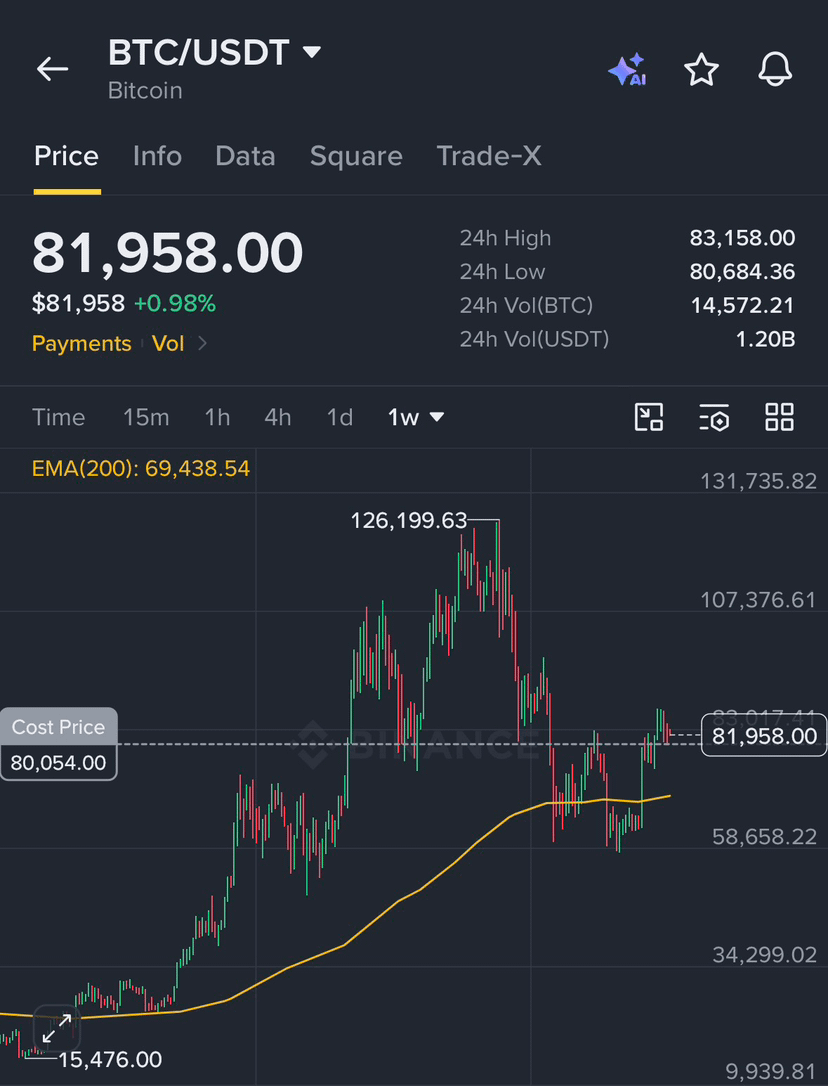
$BTC ended the week down just 2%, compared with a 5% drop in the Nasdaq and a decline of more than 11% in the semiconductor index.
But here’s the part I’m watching closely: 👀
Bitcoin has now closed above its 50 week moving average for five consecutive weeks.
Key Levels I’m Watching
🔹 Support: $80,000 and $76,100
🔹 Resistance: $84,000 and $87,500
As long as BTC holds above its 50 week moving average near $76,100, the broader bullish structure remains intact.
The next test is whether Bitcoin can reclaim $84,000 and build enough momentum to challenge $87,500.
Of course, relative strength doesn’t guarantee another rally. Market conditions can change quickly, and these levels need to be monitored.
For now, I’m focusing on price action, key levels, and confirmation rather than making assumptions.
My question: Will BTC reclaim $84K and target $87.5K, or should traders prepare for another support test?
#BTC走势分析 #cryptofirst21
Can $BTC Break $84K Next?
While U.S. markets struggled, Bitcoin showed surprising resilience.
$BTC ended the week down just 2%, compared with a 5% drop in the Nasdaq and a decline of more than 11% in the semiconductor index.
But here’s the part I’m watching closely: 👀
Bitcoin has now closed above its 50 week moving average for five consecutive weeks.
Key Levels I’m Watching
🔹 Support: $80,000 and $76,100
🔹 Resistance: $84,000 and $87,500
As long as BTC holds above its 50 week moving average near $76,100, the broader bullish structure remains intact.
The next test is whether Bitcoin can reclaim $84,000 and build enough momentum to challenge $87,500.
Of course, relative strength doesn’t guarantee another rally. Market conditions can change quickly, and these levels need to be monitored.
For now, I’m focusing on price action, key levels, and confirmation rather than making assumptions.
My question: Will BTC reclaim $84K and target $87.5K, or should traders prepare for another support test?
#BTC走势分析 #cryptofirst21
While U.S. markets struggled, Bitcoin showed surprising resilience.
$BTC ended the week down just 2%, compared with a 5% drop in the Nasdaq and a decline of more than 11% in the semiconductor index.
But here’s the part I’m watching closely: 👀
Bitcoin has now closed above its 50 week moving average for five consecutive weeks.
Key Levels I’m Watching
🔹 Support: $80,000 and $76,100
🔹 Resistance: $84,000 and $87,500
As long as BTC holds above its 50 week moving average near $76,100, the broader bullish structure remains intact.
The next test is whether Bitcoin can reclaim $84,000 and build enough momentum to challenge $87,500.
Of course, relative strength doesn’t guarantee another rally. Market conditions can change quickly, and these levels need to be monitored.
For now, I’m focusing on price action, key levels, and confirmation rather than making assumptions.
My question: Will BTC reclaim $84K and target $87.5K, or should traders prepare for another support test?
#BTC走势分析 #cryptofirst21
1
3
1.6k
ຢືນຢັນແລ້ວ
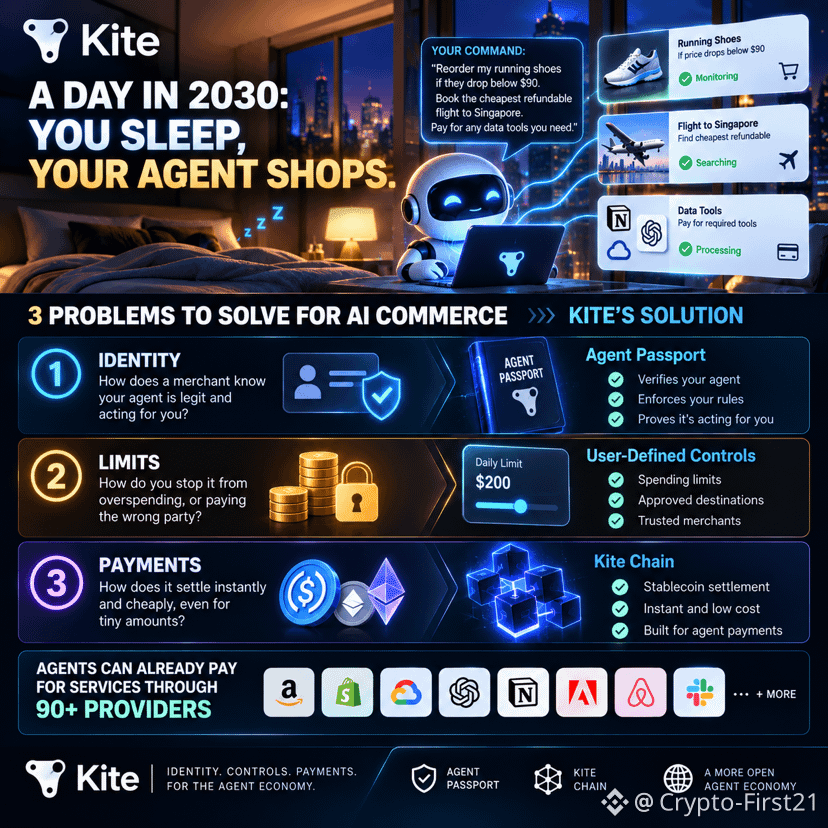
A day in 2030: you sleep, your agent shops. 🤖💳
You tell your agent: "Reorder my running shoes if they drop below $90. Book the cheapest refundable flight to Singapore. Pay for any data tools you need."
For that to work, three problems have to be solved:
1️⃣ Identity: how does a merchant know your agent is legit and acting for you?
2️⃣ Limits: how do you stop it from overspending, or paying the wrong party?
3️⃣ Payments: how does it settle instantly and cheaply, even for tiny amounts?
Kite tackles all three. Agent Passport handles identity and rules, with spending limits and authorized destinations set by the user. Kite Chain handles stablecoin settlement. Agents can already pay for services through an integrated ecosystem of 90+ providers.
What I find interesting is the trust model. We don't need to trust the AI blindly, because the rules are enforced by infrastructure rather than promises. That's a big shift from "give the bot your card."
My open questions:
• Would you set a daily limit or approve per purchase?
• Who is liable when an agent makes a bad purchase?
Drop your answer below. The best comment gets a follow. 👇
#KiteBBW $KITE
#cryptofirst21
Not financial advice.
A day in 2030: you sleep, your agent shops. 🤖💳
You tell your agent: "Reorder my running shoes if they drop below $90. Book the cheapest refundable flight to Singapore. Pay for any data tools you need."
For that to work, three problems have to be solved:
1️⃣ Identity: how does a merchant know your agent is legit and acting for you?
2️⃣ Limits: how do you stop it from overspending, or paying the wrong party?
3️⃣ Payments: how does it settle instantly and cheaply, even for tiny amounts?
Kite tackles all three. Agent Passport handles identity and rules, with spending limits and authorized destinations set by the user. Kite Chain handles stablecoin settlement. Agents can already pay for services through an integrated ecosystem of 90+ providers.
What I find interesting is the trust model. We don't need to trust the AI blindly, because the rules are enforced by infrastructure rather than promises. That's a big shift from "give the bot your card."
My open questions:
• Would you set a daily limit or approve per purchase?
• Who is liable when an agent makes a bad purchase?
Drop your answer below. The best comment gets a follow. 👇
#KiteBBW $KITE
#cryptofirst21
Not financial advice.
You tell your agent: "Reorder my running shoes if they drop below $90. Book the cheapest refundable flight to Singapore. Pay for any data tools you need."
For that to work, three problems have to be solved:
1️⃣ Identity: how does a merchant know your agent is legit and acting for you?
2️⃣ Limits: how do you stop it from overspending, or paying the wrong party?
3️⃣ Payments: how does it settle instantly and cheaply, even for tiny amounts?
Kite tackles all three. Agent Passport handles identity and rules, with spending limits and authorized destinations set by the user. Kite Chain handles stablecoin settlement. Agents can already pay for services through an integrated ecosystem of 90+ providers.
What I find interesting is the trust model. We don't need to trust the AI blindly, because the rules are enforced by infrastructure rather than promises. That's a big shift from "give the bot your card."
My open questions:
• Would you set a daily limit or approve per purchase?
• Who is liable when an agent makes a bad purchase?
Drop your answer below. The best comment gets a follow. 👇
#KiteBBW $KITE
#cryptofirst21
Not financial advice.
16
1
28
3.1k
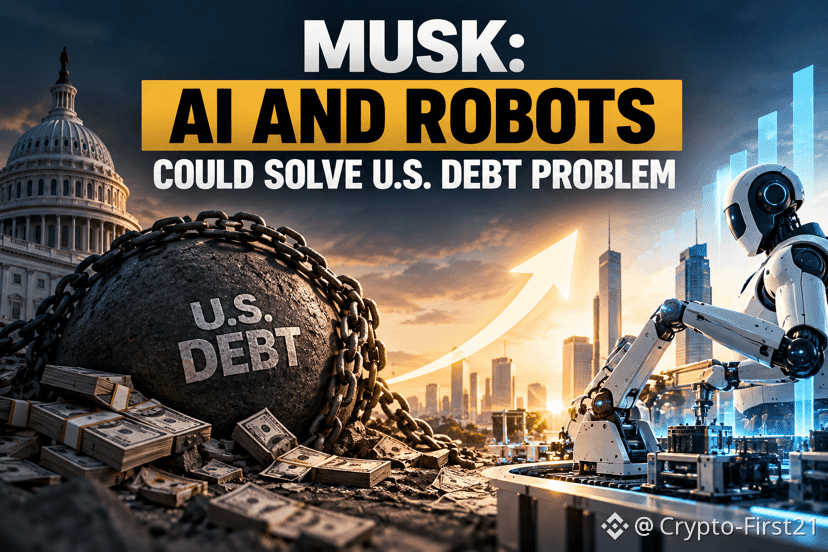
Musk: AI and Robots Could Be America’s Way Out of Debt
Elon Musk argues that AI and robotics could help solve America’s growing debt problem as political leaders show little appetite for spending cuts.
His thesis: automate more, boost productivity, and expand economic output.
But productivity alone won’t erase trillions in debt. Government spending and fiscal policy still matter.
I feel thatAI can grow the economic pie. The real question is whether Washington can stop spending faster than it grows.
#ElonMusk #AI #USDebt #Robotics
Musk: AI and Robots Could Be America’s Way Out of Debt
Elon Musk argues that AI and robotics could help solve America’s growing debt problem as political leaders show little appetite for spending cuts.
His thesis: automate more, boost productivity, and expand economic output.
But productivity alone won’t erase trillions in debt. Government spending and fiscal policy still matter.
I feel thatAI can grow the economic pie. The real question is whether Washington can stop spending faster than it grows.
#ElonMusk #AI #USDebt #Robotics
Elon Musk argues that AI and robotics could help solve America’s growing debt problem as political leaders show little appetite for spending cuts.
His thesis: automate more, boost productivity, and expand economic output.
But productivity alone won’t erase trillions in debt. Government spending and fiscal policy still matter.
I feel thatAI can grow the economic pie. The real question is whether Washington can stop spending faster than it grows.
#ElonMusk #AI #USDebt #Robotics
1
1
4
2.6k
ຢືນຢັນແລ້ວ
#nil $NIL @nillionnetwork
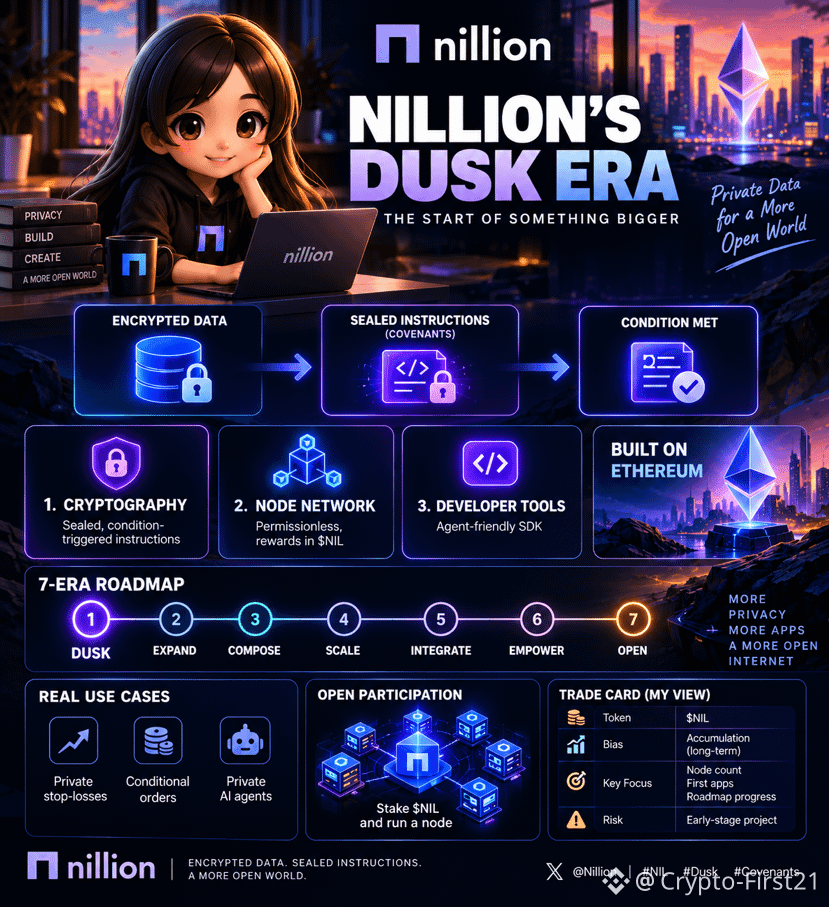
Nillion's Dusk Era: The Start of Something Bigger 🌆
Privacy projects often promise a lot and ship little. What caught my attention about @nillionnetwork is a roadmap that starts with one clear primitive and builds outward from there.
From encrypted data to sealed instructions
Nillion first became known for computing over data that stays encrypted. With $DUSK , it adds something new: instructions that are sealed to a condition and published on Ethereum. Nobody can read them until the condition is met. This is the idea behind Covenants, the core product.
Dusk is phase one of a 7 era roadmap
Dusk lays the groundwork that later phases build on:
1. The cryptography: sealed, condition triggered instructions
2. The node network: permissionless, with rewards that follow stake in NIL
3. The developer tools: an agent friendly SDK so builders can make conditionnative apps
The move to #Ethereum is also a big part of the story. Covenants are built around Ethereum, and the network is moving with them. Nillion is choosing to build trust on Ethereum first, then expand.
What excites me most
• Real use cases: private stop losses and conditional orders that can't be front run
• Open participation: anyone can stake NIL and run a node
• Developer access: powerful cryptography packaged simply enough for any builder
Im keenly looking forward to Node count, the first apps built on Covenants, and how the later roadmap phases deliver. Early stage networks carry risk, so I size my positions carefully.
This post includes my trade card for $NIL. This is my personal view, not financial advice.
Which Nillion capability are you most looking forward to? Let's talk below 👇
#nil $NIL @Nillion
Nillion's Dusk Era: The Start of Something Bigger 🌆
Privacy projects often promise a lot and ship little. What caught my attention about @Nillion is a roadmap that starts with one clear primitive and builds outward from there.
From encrypted data to sealed instructions
Nillion first became known for computing over data that stays encrypted. With $DUSK , it adds something new: instructions that are sealed to a condition and published on Ethereum. Nobody can read them until the condition is met. This is the idea behind Covenants, the core product.
Dusk is phase one of a 7 era roadmap
Dusk lays the groundwork that later phases build on:
1. The cryptography: sealed, condition triggered instructions
2. The node network: permissionless, with rewards that follow stake in NIL
3. The developer tools: an agent friendly SDK so builders can make conditionnative apps
The move to #Ethereum is also a big part of the story. Covenants are built around Ethereum, and the network is moving with them. Nillion is choosing to build trust on Ethereum first, then expand.
What excites me most
• Real use cases: private stop losses and conditional orders that can't be front run
• Open participation: anyone can stake NIL and run a node
• Developer access: powerful cryptography packaged simply enough for any builder
Im keenly looking forward to Node count, the first apps built on Covenants, and how the later roadmap phases deliver. Early stage networks carry risk, so I size my positions carefully.
This post includes my trade card for $NIL . This is my personal view, not financial advice.
Which Nillion capability are you most looking forward to? Let's talk below 👇
Nillion's Dusk Era: The Start of Something Bigger 🌆
Privacy projects often promise a lot and ship little. What caught my attention about @Nillion is a roadmap that starts with one clear primitive and builds outward from there.
From encrypted data to sealed instructions
Nillion first became known for computing over data that stays encrypted. With $DUSK , it adds something new: instructions that are sealed to a condition and published on Ethereum. Nobody can read them until the condition is met. This is the idea behind Covenants, the core product.
Dusk is phase one of a 7 era roadmap
Dusk lays the groundwork that later phases build on:
1. The cryptography: sealed, condition triggered instructions
2. The node network: permissionless, with rewards that follow stake in NIL
3. The developer tools: an agent friendly SDK so builders can make conditionnative apps
The move to #Ethereum is also a big part of the story. Covenants are built around Ethereum, and the network is moving with them. Nillion is choosing to build trust on Ethereum first, then expand.
What excites me most
• Real use cases: private stop losses and conditional orders that can't be front run
• Open participation: anyone can stake NIL and run a node
• Developer access: powerful cryptography packaged simply enough for any builder
Im keenly looking forward to Node count, the first apps built on Covenants, and how the later roadmap phases deliver. Early stage networks carry risk, so I size my positions carefully.
This post includes my trade card for $NIL . This is my personal view, not financial advice.
Which Nillion capability are you most looking forward to? Let's talk below 👇
15
32
2.9k
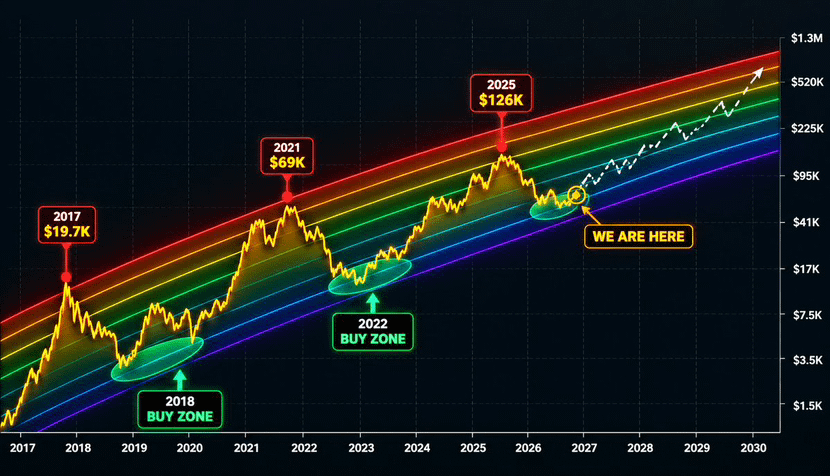
Bitcoin’s Long Term Cycle Chart Points to a Bigger Question: Are We in Another Accumulation Zone? 🙄
Bitcoin’s historical price cycles show a recurring pattern: major rallies, deep corrections, and long recovery periods.
The chart highlights previous peaks near $19,700 in 2017, $69,000 in 2021, and $126,000 in 2025, alongside earlier areas that some traders viewed as accumulation zones.
Now, the key question is whether the current price structure represents another opportunity to accumulate or whether the cycle is changing.
I think that the Historical patterns can offer useful context, but they don’t guarantee future prices. The projected levels toward 2030 are scenarios, not targets we can treat as certain.
Watch the market structure, liquidity, and macro conditions, not just the rainbow bands.
#SpotBitcoinETFsShed$261M #cryptofirst21
$AGT $PUFFER $SIREN
Bitcoin’s Long Term Cycle Chart Points to a Bigger Question: Are We in Another Accumulation Zone? 🙄
Bitcoin’s historical price cycles show a recurring pattern: major rallies, deep corrections, and long recovery periods.
The chart highlights previous peaks near $19,700 in 2017, $69,000 in 2021, and $126,000 in 2025, alongside earlier areas that some traders viewed as accumulation zones.
Now, the key question is whether the current price structure represents another opportunity to accumulate or whether the cycle is changing.
I think that the Historical patterns can offer useful context, but they don’t guarantee future prices. The projected levels toward 2030 are scenarios, not targets we can treat as certain.
Watch the market structure, liquidity, and macro conditions, not just the rainbow bands.
#SpotBitcoinETFsShed$261M #cryptofirst21
$AGT $PUFFER $SIREN
Bitcoin’s historical price cycles show a recurring pattern: major rallies, deep corrections, and long recovery periods.
The chart highlights previous peaks near $19,700 in 2017, $69,000 in 2021, and $126,000 in 2025, alongside earlier areas that some traders viewed as accumulation zones.
Now, the key question is whether the current price structure represents another opportunity to accumulate or whether the cycle is changing.
I think that the Historical patterns can offer useful context, but they don’t guarantee future prices. The projected levels toward 2030 are scenarios, not targets we can treat as certain.
Watch the market structure, liquidity, and macro conditions, not just the rainbow bands.
#SpotBitcoinETFsShed$261M #cryptofirst21
$AGT $PUFFER $SIREN
2
1.5k
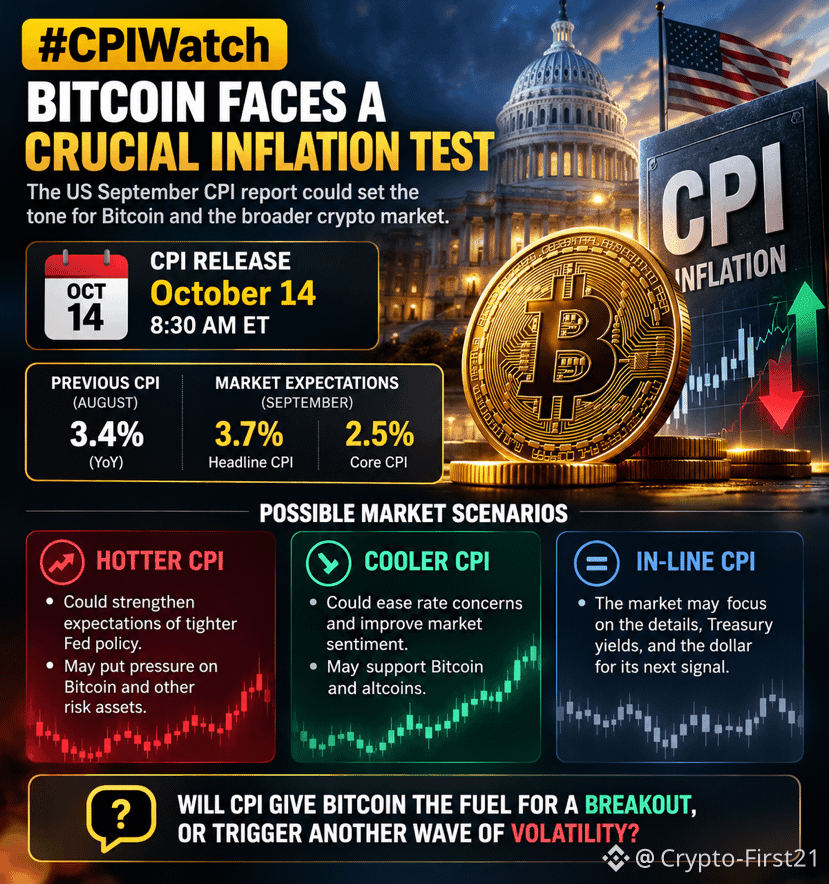
#CPIWatch : Bitcoin Faces a Crucial Inflation Test
The market’s next big macro trigger is here. 👀
🇺🇸 The US September CPI report is scheduled for October 14 at 8:30 AM ET. The previous report showed annual inflation at 3.4%, while economists expect headline inflation to rise to 3.7% and core CPI to reach 2.5%.
Why does this matter for crypto?
Hotter CPI: Could strengthen expectations of tighter Fed policy, putting pressure on risk assets like BTC.
Cooler CPI: Could ease rate concerns and improve sentiment toward Bitcoin and altcoins.
In line CPI: The market may focus on the details, Treasury yields, and the dollar for its next signal.
🔥 Will CPI give Bitcoin the fuel for a breakout, or trigger another wave of volatility?
Share your view below.
Educational content only. Not financial advice.
#cryptofirst21 $GNS
#CPIWatch : Bitcoin Faces a Crucial Inflation Test
The market’s next big macro trigger is here. 👀
🇺🇸 The US September CPI report is scheduled for October 14 at 8:30 AM ET. The previous report showed annual inflation at 3.4%, while economists expect headline inflation to rise to 3.7% and core CPI to reach 2.5%.
Why does this matter for crypto?
Hotter CPI: Could strengthen expectations of tighter Fed policy, putting pressure on risk assets like BTC.
Cooler CPI: Could ease rate concerns and improve sentiment toward Bitcoin and altcoins.
In line CPI: The market may focus on the details, Treasury yields, and the dollar for its next signal.
🔥 Will CPI give Bitcoin the fuel for a breakout, or trigger another wave of volatility?
Share your view below.
Educational content only. Not financial advice.
#cryptofirst21 $GNS
The market’s next big macro trigger is here. 👀
🇺🇸 The US September CPI report is scheduled for October 14 at 8:30 AM ET. The previous report showed annual inflation at 3.4%, while economists expect headline inflation to rise to 3.7% and core CPI to reach 2.5%.
Why does this matter for crypto?
Hotter CPI: Could strengthen expectations of tighter Fed policy, putting pressure on risk assets like BTC.
Cooler CPI: Could ease rate concerns and improve sentiment toward Bitcoin and altcoins.
In line CPI: The market may focus on the details, Treasury yields, and the dollar for its next signal.
🔥 Will CPI give Bitcoin the fuel for a breakout, or trigger another wave of volatility?
Share your view below.
Educational content only. Not financial advice.
#cryptofirst21 $GNS
2
1.1k
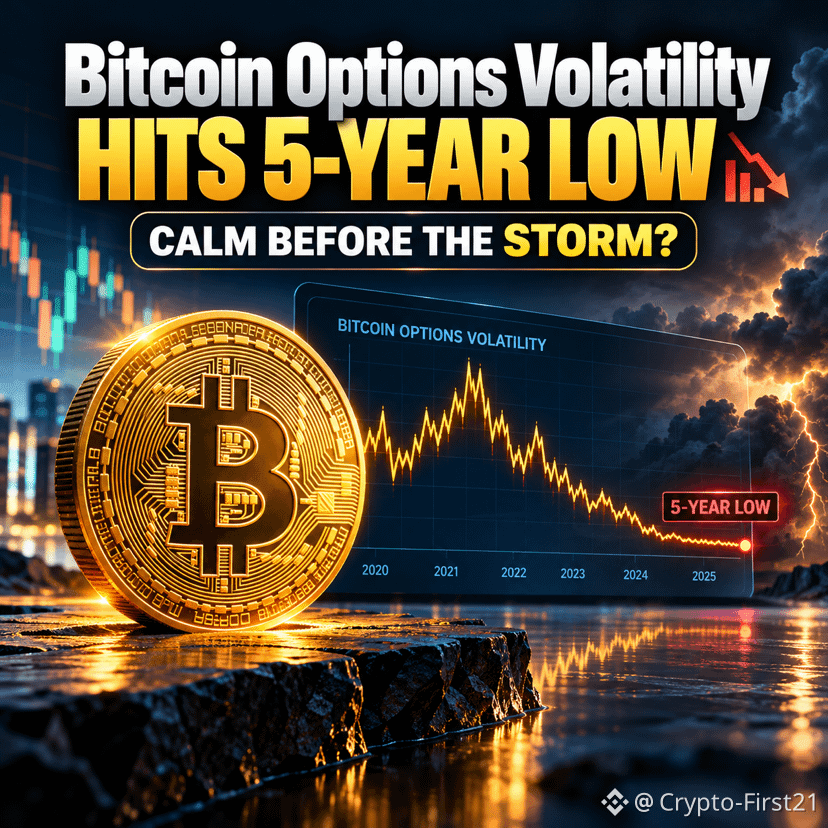
Bitcoin Options Volatility Hits a 5 Year Low, Calm Before the Storm? ₿
Bitcoin is entering an interesting phase. 📉
When options volatility drops to its lowest level in five years, it signals that the market is pricing in relatively small price swings. But here’s the twist: low volatility doesn’t mean low risk.
It can mean traders are becoming less aggressive in their expectations, while the market waits for its next major catalyst.
👀 What should traders watch?
🔹 A sudden spike in implied volatility
🔹 BTC breaking out of its current trading range
🔹 Options positioning and liquidity shifts
🔹 Macroeconomic news that could trigger a sharp move
The key takeaway? Compression can precede expansion, but direction is never guaranteed. Bitcoin could break higher or lower, and low volatility alone cannot tell us which way.
🔥 The real question isn’t whether BTC will move, it’s whether traders are prepared when it does.
Are we looking at the calm before Bitcoin’s next big move, or a period of stability that lasts longer than expected?
👇 Drop your thoughts!
#BitcoinOptionsVolatilityHitsFiveYearLow
#cryptofirst21 $GTC
Bitcoin Options Volatility Hits a 5 Year Low, Calm Before the Storm? ₿
Bitcoin is entering an interesting phase. 📉
When options volatility drops to its lowest level in five years, it signals that the market is pricing in relatively small price swings. But here’s the twist: low volatility doesn’t mean low risk.
It can mean traders are becoming less aggressive in their expectations, while the market waits for its next major catalyst.
👀 What should traders watch?
🔹 A sudden spike in implied volatility
🔹 BTC breaking out of its current trading range
🔹 Options positioning and liquidity shifts
🔹 Macroeconomic news that could trigger a sharp move
The key takeaway? Compression can precede expansion, but direction is never guaranteed. Bitcoin could break higher or lower, and low volatility alone cannot tell us which way.
🔥 The real question isn’t whether BTC will move, it’s whether traders are prepared when it does.
Are we looking at the calm before Bitcoin’s next big move, or a period of stability that lasts longer than expected?
👇 Drop your thoughts!
#BitcoinOptionsVolatilityHitsFiveYearLow
#cryptofirst21 $GTC
Bitcoin is entering an interesting phase. 📉
When options volatility drops to its lowest level in five years, it signals that the market is pricing in relatively small price swings. But here’s the twist: low volatility doesn’t mean low risk.
It can mean traders are becoming less aggressive in their expectations, while the market waits for its next major catalyst.
👀 What should traders watch?
🔹 A sudden spike in implied volatility
🔹 BTC breaking out of its current trading range
🔹 Options positioning and liquidity shifts
🔹 Macroeconomic news that could trigger a sharp move
The key takeaway? Compression can precede expansion, but direction is never guaranteed. Bitcoin could break higher or lower, and low volatility alone cannot tell us which way.
🔥 The real question isn’t whether BTC will move, it’s whether traders are prepared when it does.
Are we looking at the calm before Bitcoin’s next big move, or a period of stability that lasts longer than expected?
👇 Drop your thoughts!
#BitcoinOptionsVolatilityHitsFiveYearLow
#cryptofirst21 $GTC
1
6
4.8k
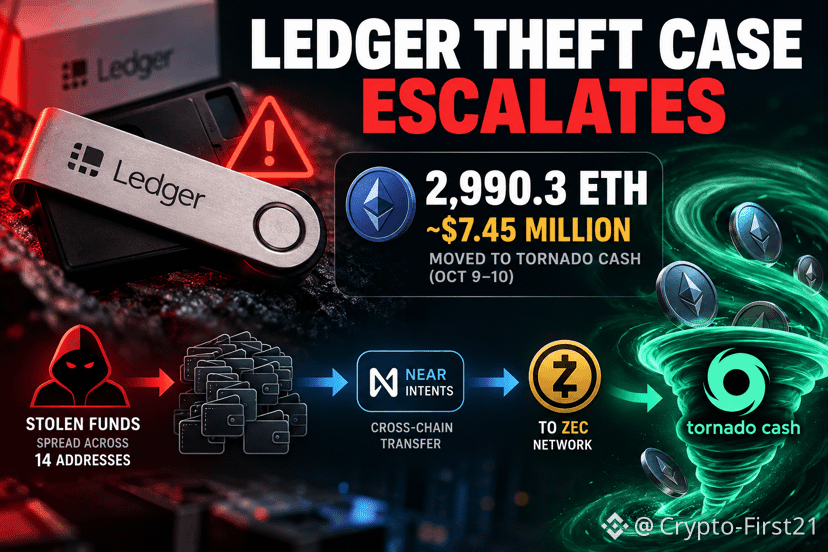
Ledger Theft Case Takes Another Turn: $7.45M in ETH Sent to Tornado Cash 😳
Oh Gosh … The attacker linked to the CryptoBilis Ledger incident reportedly moved 2,990.3 ETH, worth around $7.45 million, into Tornado Cash between October 9 and 10.
On chain investigator says the funds were spread across 14 wallets before being moved across chains through NEAR Intents toward Zcash.
But there may be a weakness in the attacker’s strategy: some transactions reportedly reused addresses or showed links to wallets involved in the original theft, potentially giving investigators clues to follow.
I think Moving stolen crypto through mixers and across chains can make tracing harder, but it doesn’t automatically erase the trail. Every transaction can leave clues. 👀
The big question now is how much of the stolen funds investigators can track and whether any can still be recovered.
#LedgerPausesCryptoBilisSales $MAGIC
#cryptofirst21
Ledger Theft Case Takes Another Turn: $7.45M in ETH Sent to Tornado Cash 😳
Oh Gosh … The attacker linked to the CryptoBilis Ledger incident reportedly moved 2,990.3 ETH, worth around $7.45 million, into Tornado Cash between October 9 and 10.
On chain investigator says the funds were spread across 14 wallets before being moved across chains through NEAR Intents toward Zcash.
But there may be a weakness in the attacker’s strategy: some transactions reportedly reused addresses or showed links to wallets involved in the original theft, potentially giving investigators clues to follow.
I think Moving stolen crypto through mixers and across chains can make tracing harder, but it doesn’t automatically erase the trail. Every transaction can leave clues. 👀
The big question now is how much of the stolen funds investigators can track and whether any can still be recovered.
#LedgerPausesCryptoBilisSales $MAGIC
#cryptofirst21
Oh Gosh … The attacker linked to the CryptoBilis Ledger incident reportedly moved 2,990.3 ETH, worth around $7.45 million, into Tornado Cash between October 9 and 10.
On chain investigator says the funds were spread across 14 wallets before being moved across chains through NEAR Intents toward Zcash.
But there may be a weakness in the attacker’s strategy: some transactions reportedly reused addresses or showed links to wallets involved in the original theft, potentially giving investigators clues to follow.
I think Moving stolen crypto through mixers and across chains can make tracing harder, but it doesn’t automatically erase the trail. Every transaction can leave clues. 👀
The big question now is how much of the stolen funds investigators can track and whether any can still be recovered.
#LedgerPausesCryptoBilisSales $MAGIC
#cryptofirst21
1
2
2
1.1k
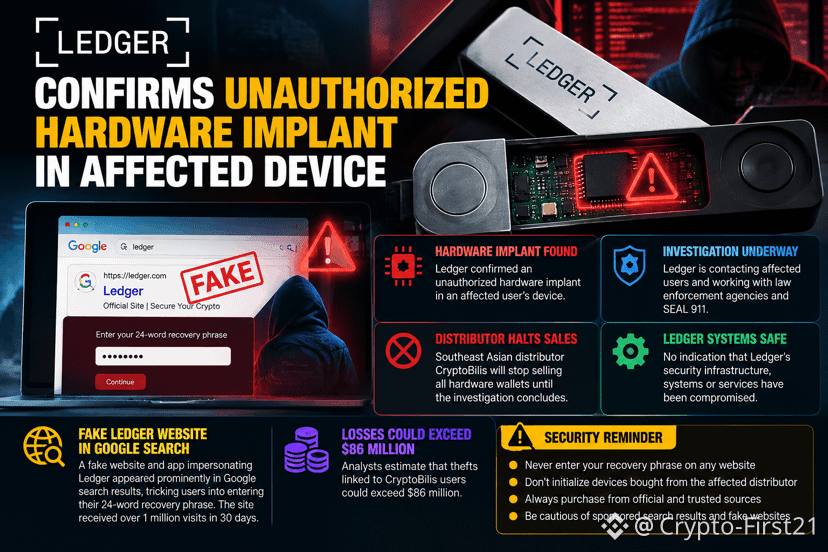
Ledger Finds Unauthorized Hardware Implant in Affected Wallet
Really 👀 …. Ledger confirmed a hardware implant was found in an affected user’s device and is working with law enforcement and SEAL 911.
The distributor CryptoBilis has halted hardware wallet sales during the investigation. Ledger says its own systems remain uncompromised.
Separately, a fake Ledger website is reportedly targeting users’ 24 word recovery phrases.
So do you get it ? Or not ?
Security reminder: Never enter your recovery phrase on a website. Don’t initialize devices bought from the affected distributor.
#XRPLedgerPatchesXRPCreationBug
#cryptofirst21 $SHARE $GAIN
Ledger Finds Unauthorized Hardware Implant in Affected Wallet
Really 👀 …. Ledger confirmed a hardware implant was found in an affected user’s device and is working with law enforcement and SEAL 911.
The distributor CryptoBilis has halted hardware wallet sales during the investigation. Ledger says its own systems remain uncompromised.
Separately, a fake Ledger website is reportedly targeting users’ 24 word recovery phrases.
So do you get it ? Or not ?
Security reminder: Never enter your recovery phrase on a website. Don’t initialize devices bought from the affected distributor.
#XRPLedgerPatchesXRPCreationBug
#cryptofirst21 $SHARE $GAIN
Really 👀 …. Ledger confirmed a hardware implant was found in an affected user’s device and is working with law enforcement and SEAL 911.
The distributor CryptoBilis has halted hardware wallet sales during the investigation. Ledger says its own systems remain uncompromised.
Separately, a fake Ledger website is reportedly targeting users’ 24 word recovery phrases.
So do you get it ? Or not ?
Security reminder: Never enter your recovery phrase on a website. Don’t initialize devices bought from the affected distributor.
#XRPLedgerPatchesXRPCreationBug
#cryptofirst21 $SHARE $GAIN
3
2.5k
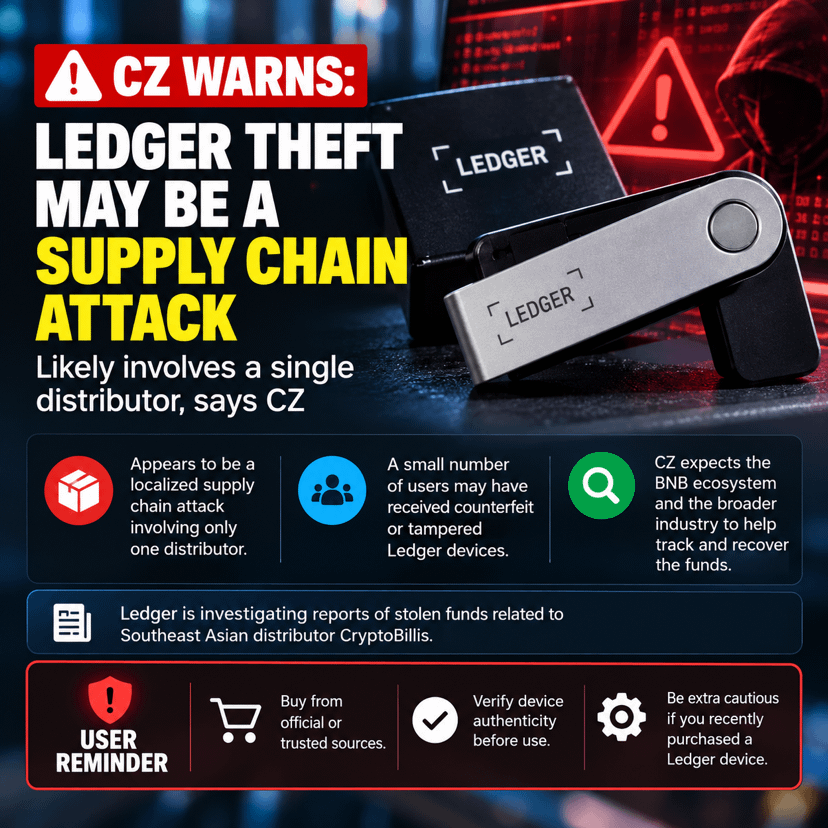
CZ Warns Ledger Theft May Be Linked to a Supply Chain Attack 👀
CZ says the Ledger incident may involve a single distributor, with some users potentially receiving counterfeit or tampered devices.
Ledger is investigating reports of stolen funds linked to Southeast Asian distributor CryptoBillis. CZ expects the crypto industry to help trace and recover the funds.
Reminder: Always buy hardware wallets from trusted sources and verify device authenticity.🫡
What are your thoughts?
#cryptofirst21 #cz @CZ
$KAIA $MAGIC
CZ Warns Ledger Theft May Be Linked to a Supply Chain Attack 👀
CZ says the Ledger incident may involve a single distributor, with some users potentially receiving counterfeit or tampered devices.
Ledger is investigating reports of stolen funds linked to Southeast Asian distributor CryptoBillis. CZ expects the crypto industry to help trace and recover the funds.
Reminder: Always buy hardware wallets from trusted sources and verify device authenticity.🫡
What are your thoughts?
#cryptofirst21 #cz @CZ
$KAIA $MAGIC
CZ says the Ledger incident may involve a single distributor, with some users potentially receiving counterfeit or tampered devices.
Ledger is investigating reports of stolen funds linked to Southeast Asian distributor CryptoBillis. CZ expects the crypto industry to help trace and recover the funds.
Reminder: Always buy hardware wallets from trusted sources and verify device authenticity.🫡
What are your thoughts?
#cryptofirst21 #cz @CZ
$KAIA $MAGIC
5
5.3k
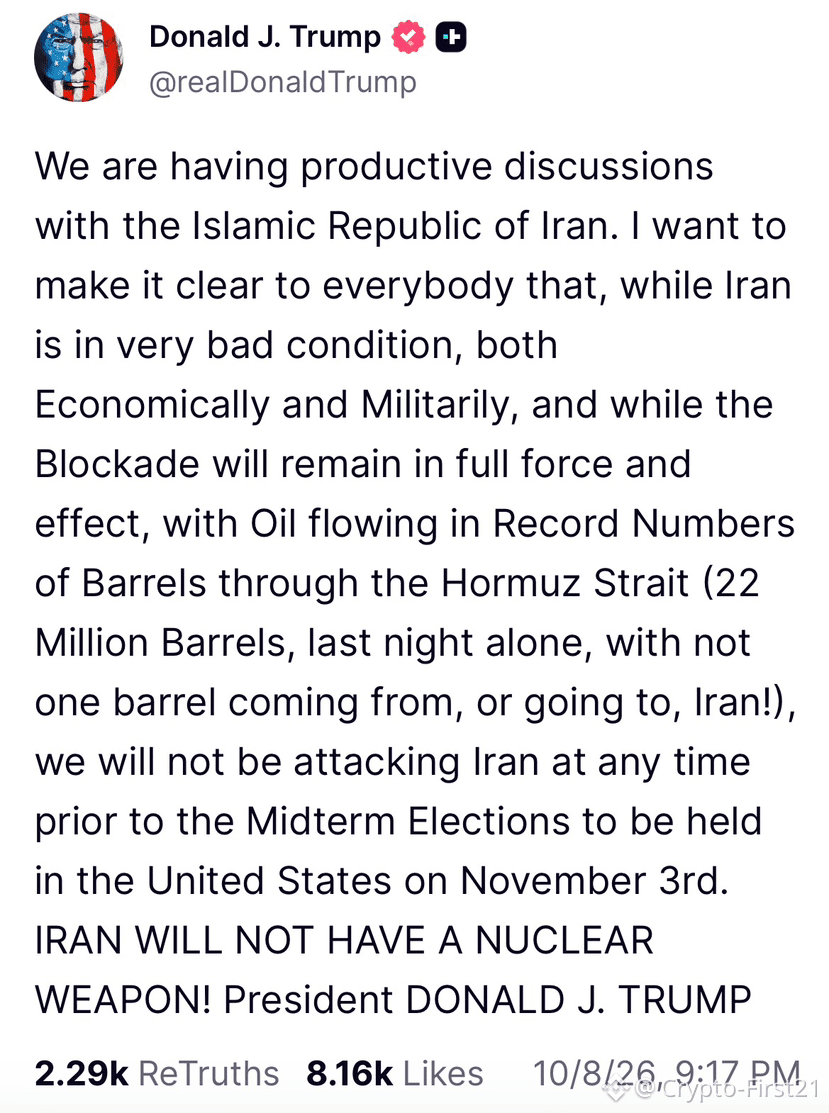
Trump: No Iran Strike Before U.S. Midterms🙄
Donald Trump says the U.S. is holding “productive discussions” with Iran and confirmed there will be no attack on Iran before the November 3 midterm elections.
Really ! 👀
He added that sanctions remain in place and reiterated that Iran will not be allowed to obtain a nuclear weapon.
Markets may view the comments as a sign of reduced near term geopolitical risk.🫡
#cryptofirst21 $OGN
Trump: No Iran Strike Before U.S. Midterms🙄
Donald Trump says the U.S. is holding “productive discussions” with Iran and confirmed there will be no attack on Iran before the November 3 midterm elections.
Really ! 👀
He added that sanctions remain in place and reiterated that Iran will not be allowed to obtain a nuclear weapon.
Markets may view the comments as a sign of reduced near term geopolitical risk.🫡
#cryptofirst21 $OGN
Donald Trump says the U.S. is holding “productive discussions” with Iran and confirmed there will be no attack on Iran before the November 3 midterm elections.
Really ! 👀
He added that sanctions remain in place and reiterated that Iran will not be allowed to obtain a nuclear weapon.
Markets may view the comments as a sign of reduced near term geopolitical risk.🫡
#cryptofirst21 $OGN
10
6.6k
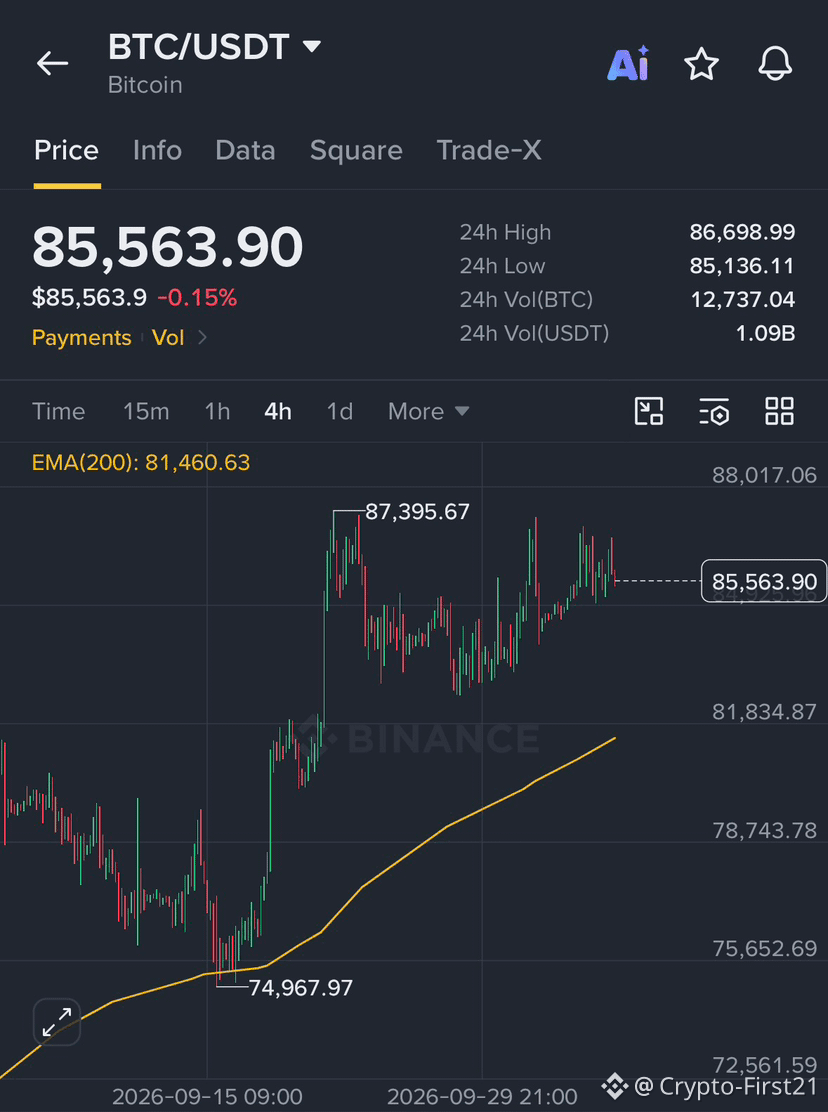
Bitcoin Rejected at $87K Again, Bulls Still Can’t Break Through 👀
Bitcoin has now failed to reclaim the $87,000 level for the third time since September 23, with sellers aggressively defending the zone.
🔹 BTC was rejected near $87K, a key resistance level.
🔹 The total crypto market cap slipped back to around $2.93 trillion.
🔹 Meanwhile, traditional markets remain strong, with the Nasdaq 100 closing at a record high and the S&P 500 sitting less than 0.5% below its all time high.
🔹 U.S. Treasury yields continue climbing, with the 10 year yield reaching 5.32%, near levels not seen since 2002.
Actually…$BTC is currently squeezing into a triangle pattern:
• Rising support line = buyers becoming more aggressive
• Flat resistance near $87K = sellers holding the line
The closer price gets to the triangle’s apex, the more likely a sharp move becomes.
A clean breakout above $87K could open the door to a volatility expansion, while another rejection may trigger short term profit taking.
So…. Do you think Bitcoin breaks above $87K this week, or do bears defend the level again? Feel free to share your thoughts…
#cryptofirst21
$ORCA
Bitcoin Rejected at $87K Again, Bulls Still Can’t Break Through 👀
Bitcoin has now failed to reclaim the $87,000 level for the third time since September 23, with sellers aggressively defending the zone.
🔹 BTC was rejected near $87K, a key resistance level.
🔹 The total crypto market cap slipped back to around $2.93 trillion.
🔹 Meanwhile, traditional markets remain strong, with the Nasdaq 100 closing at a record high and the S&P 500 sitting less than 0.5% below its all time high.
🔹 U.S. Treasury yields continue climbing, with the 10 year yield reaching 5.32%, near levels not seen since 2002.
Actually…$BTC is currently squeezing into a triangle pattern:
• Rising support line = buyers becoming more aggressive
• Flat resistance near $87K = sellers holding the line
The closer price gets to the triangle’s apex, the more likely a sharp move becomes.
A clean breakout above $87K could open the door to a volatility expansion, while another rejection may trigger short term profit taking.
So…. Do you think Bitcoin breaks above $87K this week, or do bears defend the level again? Feel free to share your thoughts…
#cryptofirst21
$ORCA
Bitcoin has now failed to reclaim the $87,000 level for the third time since September 23, with sellers aggressively defending the zone.
🔹 BTC was rejected near $87K, a key resistance level.
🔹 The total crypto market cap slipped back to around $2.93 trillion.
🔹 Meanwhile, traditional markets remain strong, with the Nasdaq 100 closing at a record high and the S&P 500 sitting less than 0.5% below its all time high.
🔹 U.S. Treasury yields continue climbing, with the 10 year yield reaching 5.32%, near levels not seen since 2002.
Actually…$BTC is currently squeezing into a triangle pattern:
• Rising support line = buyers becoming more aggressive
• Flat resistance near $87K = sellers holding the line
The closer price gets to the triangle’s apex, the more likely a sharp move becomes.
A clean breakout above $87K could open the door to a volatility expansion, while another rejection may trigger short term profit taking.
So…. Do you think Bitcoin breaks above $87K this week, or do bears defend the level again? Feel free to share your thoughts…
#cryptofirst21
$ORCA
3
1.3k
ຢືນຢັນແລ້ວ
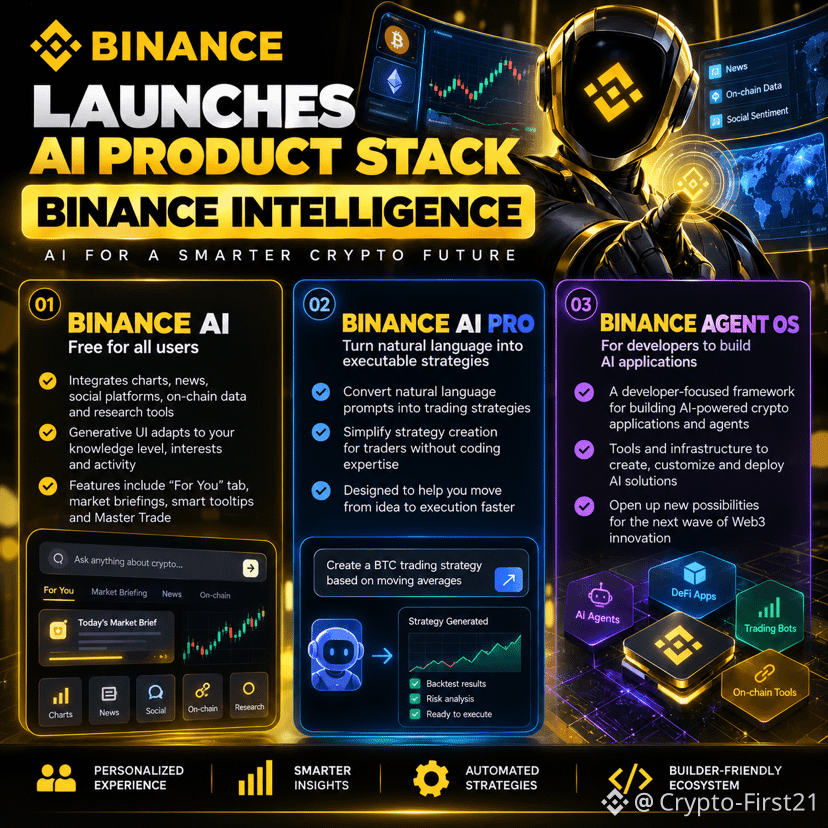
🤖 Binance Unveils AI Powered Trading Ecosystem with Binance Intelligence
Amazing 🤩
Binance has officially launched Binance Intelligence, a new AI product stack designed to bring personalized insights, strategy automation, and AI-powered development tools to the crypto ecosystem.
🔹 Binance AI (Free for all users)
• Integrates charts, news, social sentiment, on chain data, and research tools
• Uses a generative UI that adapts to each user’s knowledge level and interests
• Features include For You, market briefings, smart tooltips, and Master Trade
🔹 Binance AI Pro
• Converts natural language prompts into executable trading strategies
• Aims to simplify strategy creation for traders without coding expertise
🔹 Binance Agent OS
• Developer focused framework for building AI powered crypto applications and agents
Hmm.. So This marks one of Binance’s biggest pushes into AI, combining market intelligence, automation, and personalized user experiences under a single ecosystem.
👀 Big Picture: The race is shifting from simply providing market data to providing AI that can understand, analyze, and act on that data.
Now the Question is : Would you trust AI to help manage your crypto portfolio, or do you prefer making every trading decision yourself?
#cryptofirst21 $ELIZAOS
🤖 Binance Unveils AI Powered Trading Ecosystem with Binance Intelligence
Amazing 🤩
Binance has officially launched Binance Intelligence, a new AI product stack designed to bring personalized insights, strategy automation, and AI-powered development tools to the crypto ecosystem.
🔹 Binance AI (Free for all users)
• Integrates charts, news, social sentiment, on chain data, and research tools
• Uses a generative UI that adapts to each user’s knowledge level and interests
• Features include For You, market briefings, smart tooltips, and Master Trade
🔹 Binance AI Pro
• Converts natural language prompts into executable trading strategies
• Aims to simplify strategy creation for traders without coding expertise
🔹 Binance Agent OS
• Developer focused framework for building AI powered crypto applications and agents
Hmm.. So This marks one of Binance’s biggest pushes into AI, combining market intelligence, automation, and personalized user experiences under a single ecosystem.
👀 Big Picture: The race is shifting from simply providing market data to providing AI that can understand, analyze, and act on that data.
Now the Question is : Would you trust AI to help manage your crypto portfolio, or do you prefer making every trading decision yourself?
#cryptofirst21 $ELIZAOS
Amazing 🤩
Binance has officially launched Binance Intelligence, a new AI product stack designed to bring personalized insights, strategy automation, and AI-powered development tools to the crypto ecosystem.
🔹 Binance AI (Free for all users)
• Integrates charts, news, social sentiment, on chain data, and research tools
• Uses a generative UI that adapts to each user’s knowledge level and interests
• Features include For You, market briefings, smart tooltips, and Master Trade
🔹 Binance AI Pro
• Converts natural language prompts into executable trading strategies
• Aims to simplify strategy creation for traders without coding expertise
🔹 Binance Agent OS
• Developer focused framework for building AI powered crypto applications and agents
Hmm.. So This marks one of Binance’s biggest pushes into AI, combining market intelligence, automation, and personalized user experiences under a single ecosystem.
👀 Big Picture: The race is shifting from simply providing market data to providing AI that can understand, analyze, and act on that data.
Now the Question is : Would you trust AI to help manage your crypto portfolio, or do you prefer making every trading decision yourself?
#cryptofirst21 $ELIZAOS
1
1.6k
Microsoft Account Hacked to Promote Fake Crypto Token 😳
Like … Seriously? Whats going on these days …
Microsoft confirmed unauthorized access to its official account after posts promoted a crypto token tied to Clippy.
🔹 Unauthorized posts were removed.
🔹 Microsoft secured the account and launched an investigation.
🔹 Claims linking the token to Microsoft had no verified backing.
🔹 A follow up statement denied any connection between Microsoft and the token.
Another reminder that even verified accounts can be compromised. Always double check before trusting token promotions.
Always be careful 🤨
#BitcoinRejectedAt$87K #cryptofirst21
$AIN $GLMR
Microsoft Account Hacked to Promote Fake Crypto Token 😳
Like … Seriously? Whats going on these days …
Microsoft confirmed unauthorized access to its official account after posts promoted a crypto token tied to Clippy.
🔹 Unauthorized posts were removed.
🔹 Microsoft secured the account and launched an investigation.
🔹 Claims linking the token to Microsoft had no verified backing.
🔹 A follow up statement denied any connection between Microsoft and the token.
Another reminder that even verified accounts can be compromised. Always double check before trusting token promotions.
Always be careful 🤨
#BitcoinRejectedAt$87K #cryptofirst21
$AIN $GLMR
Like … Seriously? Whats going on these days …
Microsoft confirmed unauthorized access to its official account after posts promoted a crypto token tied to Clippy.
🔹 Unauthorized posts were removed.
🔹 Microsoft secured the account and launched an investigation.
🔹 Claims linking the token to Microsoft had no verified backing.
🔹 A follow up statement denied any connection between Microsoft and the token.
Another reminder that even verified accounts can be compromised. Always double check before trusting token promotions.
Always be careful 🤨
#BitcoinRejectedAt$87K #cryptofirst21
$AIN $GLMR

1
10
6.7k
ເຂົ້າສູ່ລະບົບເພື່ອສຳຫຼວດເນື້ອຫາເພີ່ມເຕີມ
ເຂົ້າຮ່ວມກຸ່ມຜູ້ໃຊ້ຄຣິບໂຕທົ່ວໂລກໃນ Binance Square.
⚡️ ໄດ້ຮັບຂໍ້ມູນຫຼ້າສຸດ ແລະ ທີ່ມີປະໂຫຍດກ່ຽວກັບຄຣິບໂຕ.
💬 ໄດ້ຮັບຄວາມໄວ້ວາງໃຈຈາກຕະຫຼາດແລກປ່ຽນຄຣິບໂຕທີ່ໃຫຍ່ທີ່ສຸດໃນໂລກ.
👍 ຄົ້ນຫາຂໍ້ມູນເຊີງເລິກທີ່ແທ້ຈາກນັກສ້າງທີ່ໄດ້ຮັບການຢືນຢັນ.
ອີເມວ / ເບີໂທລະສັບ
ຫົວຂໍ້ທີ່ກໍາລັງນິຍົມ
BinancePick
2.6M ຄັ້ງທີ່ເບິ່ງ
142,122 ກຳລັງສົນທະນາ
Join #EarningsSeason: Predict Earnings on Binance Pick, Share Your Take on Binance Square!
Binance Square Official
·401 ຖືກໃຈ
·338.6k ຄັ້ງທີ່ເບິ່ງ
EarningsSeason
5M ຄັ້ງທີ່ເບິ່ງ
24,402 ກຳລັງສົນທະນາ
FranklinTempletonFilesForTwoDividendToBitcoinETFs
2,034 ຄັ້ງທີ່ເບິ່ງ
116 ກຳລັງສົນທະນາ