

Wendy 1
244 ໂພສ

Wendy 1
ລາຍງານ
ບລັອກຜູ້ໃຊ້
🇻🇳 Verified Binance Square & CoinmarketCap | Research | Insight | Onchain | DM for Collab & Promo @wendyr9
0 ກໍາລັງຕິດຕາມ
1 ຜູ້ຕິດຕາມ
0 Liked
ໂພສ
·
--
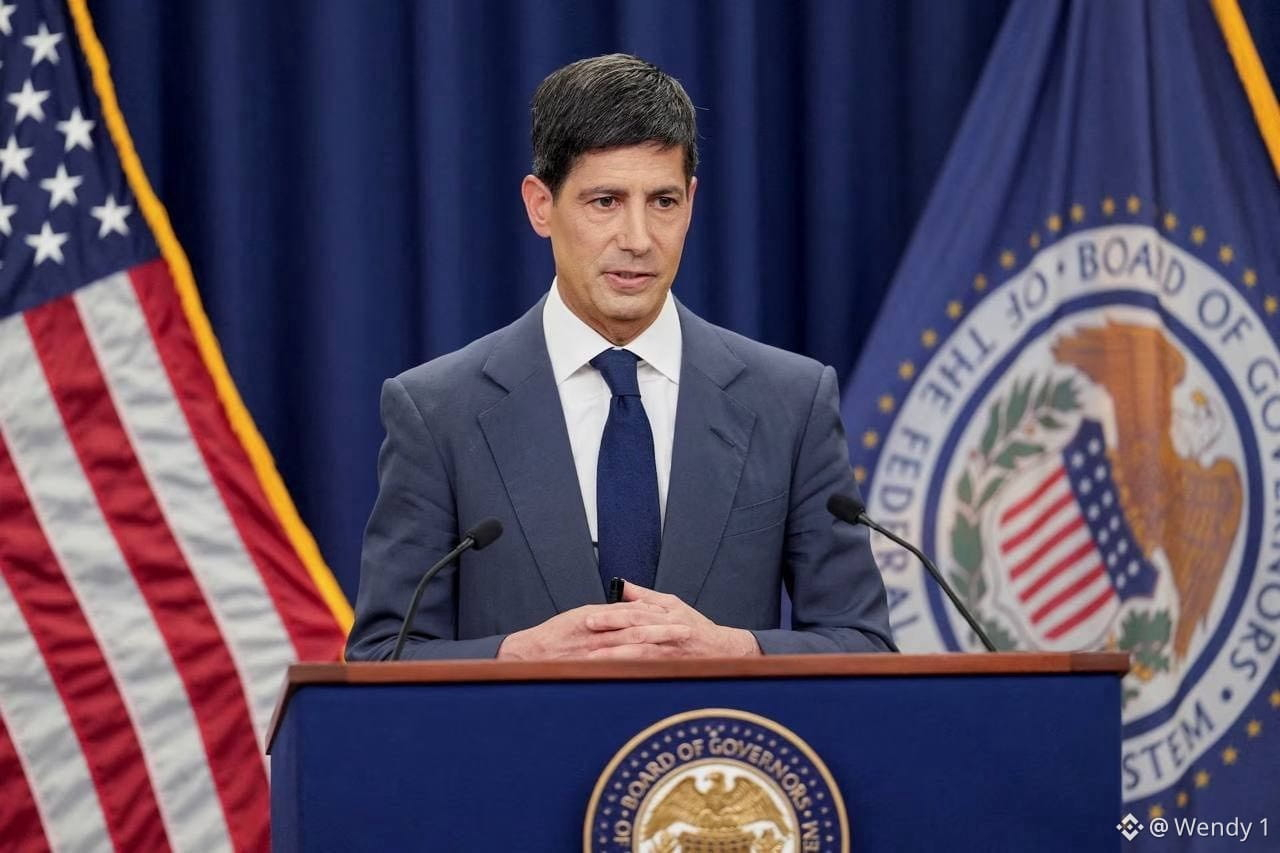
🚨 BREAKING: U.S. JOB GROWTH JUST COLLAPSED!
Non-Farm Payrolls: 29K vs 90K expected
The U.S. economy added far fewer jobs than expected in September.
The labor market is cooling fast.
$BTC
🚨 BREAKING: U.S. JOB GROWTH JUST COLLAPSED!
Non-Farm Payrolls: 29K vs 90K expected
The U.S. economy added far fewer jobs than expected in September.
The labor market is cooling fast.
$BTC
Non-Farm Payrolls: 29K vs 90K expected
The U.S. economy added far fewer jobs than expected in September.
The labor market is cooling fast.
$BTC
56
·
--
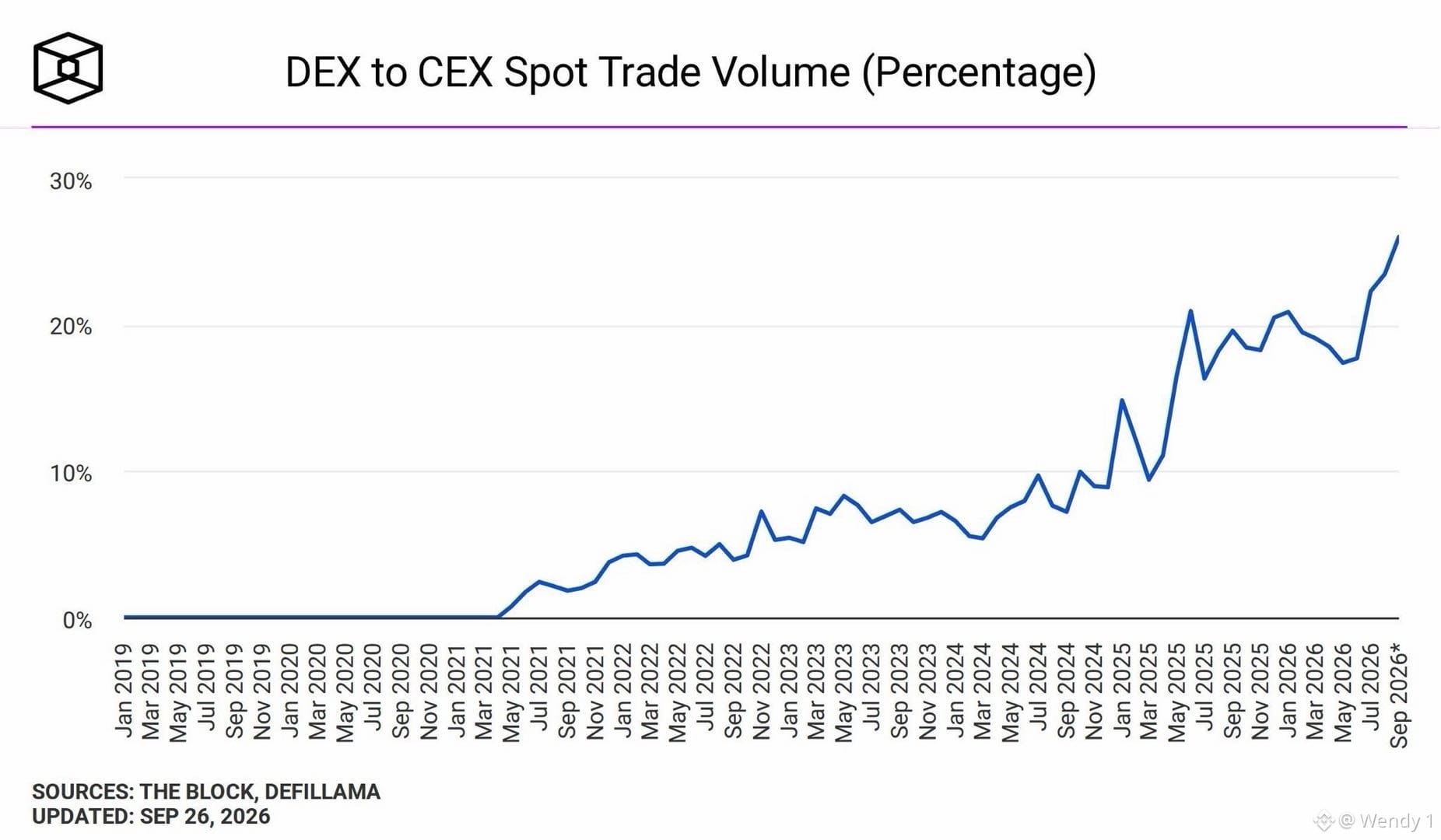
DEXs are taking serious share from CEXs! 📈
🔹 DEX spot volume is now ~26% of CEX spot volume
🔹 Up from ~10% in late 2024
🔹 Up from low single digits just a few years ago
Onchain trading is no longer a niche!
It is becoming a core part of crypto market structure. 👏
DEXs are taking serious share from CEXs! 📈
🔹 DEX spot volume is now ~26% of CEX spot volume
🔹 Up from ~10% in late 2024
🔹 Up from low single digits just a few years ago
Onchain trading is no longer a niche!
It is becoming a core part of crypto market structure. 👏
🔹 DEX spot volume is now ~26% of CEX spot volume
🔹 Up from ~10% in late 2024
🔹 Up from low single digits just a few years ago
Onchain trading is no longer a niche!
It is becoming a core part of crypto market structure. 👏
61
·
--
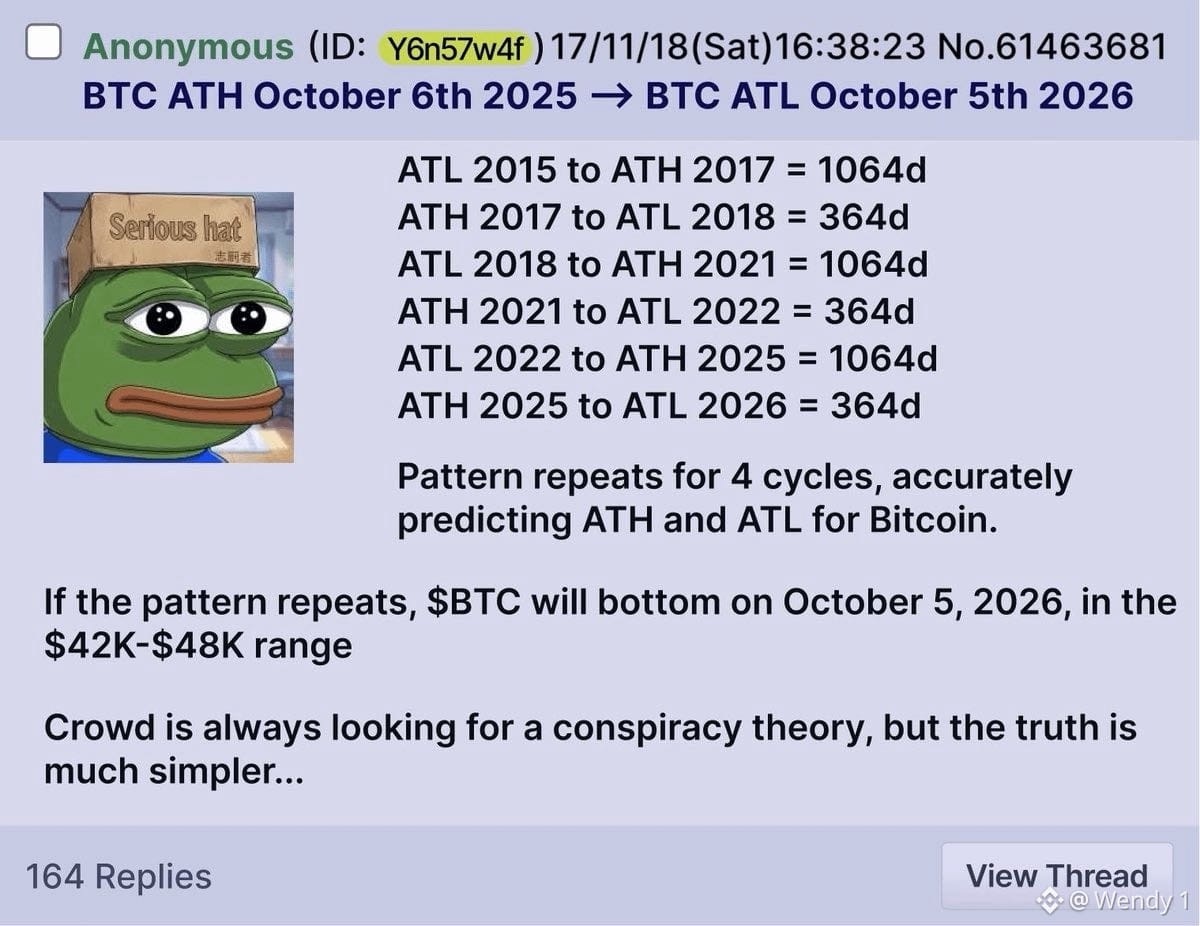
🚨 WARNING:
A 4chan anon who's nailed every $BTC bottom since 2015 just resurfaced
His read: one last shakeout before the real bottom prints
Window: ~10 days
Here's why the timing isn't crazy 👇
Cycle bottoms land 12–13 months after the ATH like clockwork:
- 2013 top → Jan 2015 bottom
- 2017 top → Dec 2018 bottom
- 2021 top → Nov 2022 bottom
This cycle's ATH: 126K on Oct 6, 2025
+12 months = Oct-Nov 2026. Right inside his window
And the final leg is never gentle
Dec 2018 and the FTX flush in Nov 2022 both ended with one violent capitulation wick that wiped out the late longs
Right now price sits in the mid-80Ks
Bounced hard off the ~61.5K June low but still ~33% under ATH
Relief rally or the calm before the last flush?
If the pattern repeats, rug gets pulled right when CT flips bullish again
Are you positioned for it? 👇
🚨 WARNING:
A 4chan anon who's nailed every $BTC bottom since 2015 just resurfaced
His read: one last shakeout before the real bottom prints
Window: ~10 days
Here's why the timing isn't crazy 👇
Cycle bottoms land 12–13 months after the ATH like clockwork:
- 2013 top → Jan 2015 bottom
- 2017 top → Dec 2018 bottom
- 2021 top → Nov 2022 bottom
This cycle's ATH: 126K on Oct 6, 2025
+12 months = Oct-Nov 2026. Right inside his window
And the final leg is never gentle
Dec 2018 and the FTX flush in Nov 2022 both ended with one violent capitulation wick that wiped out the late longs
Right now price sits in the mid-80Ks
Bounced hard off the ~61.5K June low but still ~33% under ATH
Relief rally or the calm before the last flush?
If the pattern repeats, rug gets pulled right when CT flips bullish again
Are you positioned for it? 👇
A 4chan anon who's nailed every $BTC bottom since 2015 just resurfaced
His read: one last shakeout before the real bottom prints
Window: ~10 days
Here's why the timing isn't crazy 👇
Cycle bottoms land 12–13 months after the ATH like clockwork:
- 2013 top → Jan 2015 bottom
- 2017 top → Dec 2018 bottom
- 2021 top → Nov 2022 bottom
This cycle's ATH: 126K on Oct 6, 2025
+12 months = Oct-Nov 2026. Right inside his window
And the final leg is never gentle
Dec 2018 and the FTX flush in Nov 2022 both ended with one violent capitulation wick that wiped out the late longs
Right now price sits in the mid-80Ks
Bounced hard off the ~61.5K June low but still ~33% under ATH
Relief rally or the calm before the last flush?
If the pattern repeats, rug gets pulled right when CT flips bullish again
Are you positioned for it? 👇
57
·
--
🚨 U.S. MANUFACTURING IS STILL EXPANDING.
ISM Manufacturing PMI came in at 54.5, marking the 9th straight month above 50.
But inflation pressures are heating up again, with Prices Paid jumping to 77.9.
The economy is staying strong, but inflation isn’t going away.
That makes the Fed’s next move much harder.
🚨 U.S. MANUFACTURING IS STILL EXPANDING.
ISM Manufacturing PMI came in at 54.5, marking the 9th straight month above 50.
But inflation pressures are heating up again, with Prices Paid jumping to 77.9.
The economy is staying strong, but inflation isn’t going away.
That makes the Fed’s next move much harder.
ISM Manufacturing PMI came in at 54.5, marking the 9th straight month above 50.
But inflation pressures are heating up again, with Prices Paid jumping to 77.9.
The economy is staying strong, but inflation isn’t going away.
That makes the Fed’s next move much harder.

68
·
--
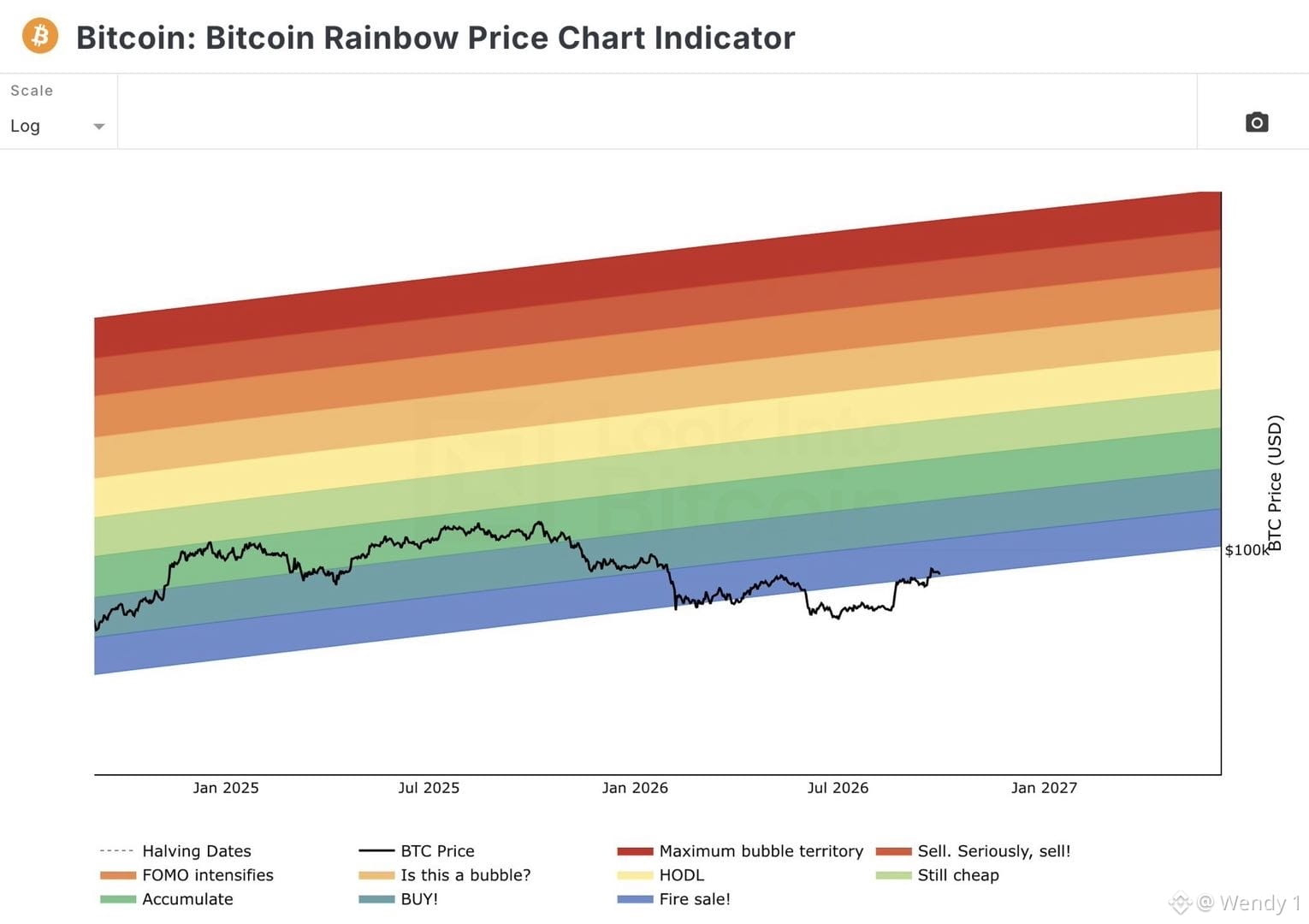
BITCOIN IS UP 47% — BUT THE RAINBOW CHART STILL SAYS “FIRE SALE”
Bitcoin has bounced more than 47% from its June lows, yet the Rainbow Chart still has BTC sitting near its lowest valuation band.
The chart’s current zone is:
FIRE SALE!
Above it come BUY → ACCUMULATE → STILL CHEAP → HODL → IS THIS A BUBBLE? → FOMO INTENSIFIES and eventually the higher-risk bubble zones.
So despite the recovery, the Rainbow Chart hasn’t moved BTC into its historically hotter bands yet.
And that creates the perfect crypto question:
If “FIRE SALE!” isn’t bearish enough…
what comes next? 👀
#Bitcoin #BTC
BITCOIN IS UP 47% — BUT THE RAINBOW CHART STILL SAYS “FIRE SALE”
Bitcoin has bounced more than 47% from its June lows, yet the Rainbow Chart still has BTC sitting near its lowest valuation band.
The chart’s current zone is:
FIRE SALE!
Above it come BUY → ACCUMULATE → STILL CHEAP → HODL → IS THIS A BUBBLE? → FOMO INTENSIFIES and eventually the higher-risk bubble zones.
So despite the recovery, the Rainbow Chart hasn’t moved BTC into its historically hotter bands yet.
And that creates the perfect crypto question:
If “FIRE SALE!” isn’t bearish enough…
what comes next? 👀
#Bitcoin #BTC
Bitcoin has bounced more than 47% from its June lows, yet the Rainbow Chart still has BTC sitting near its lowest valuation band.
The chart’s current zone is:
FIRE SALE!
Above it come BUY → ACCUMULATE → STILL CHEAP → HODL → IS THIS A BUBBLE? → FOMO INTENSIFIES and eventually the higher-risk bubble zones.
So despite the recovery, the Rainbow Chart hasn’t moved BTC into its historically hotter bands yet.
And that creates the perfect crypto question:
If “FIRE SALE!” isn’t bearish enough…
what comes next? 👀
#Bitcoin #BTC
61
·
--
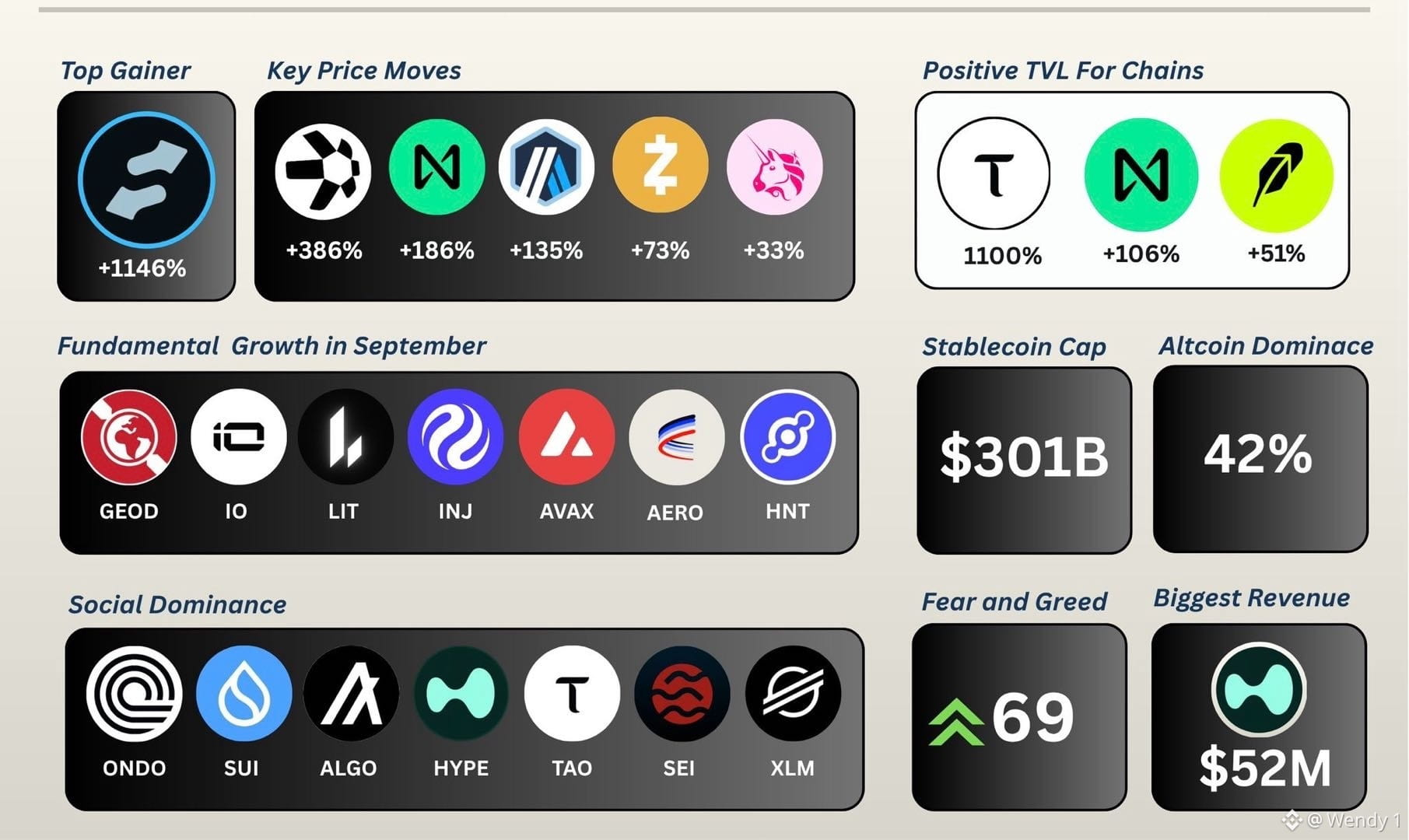
SEPTEMBER WAS JUST THE TRAILER — ALTCOINS ARE ENTERING OCTOBER WITH MOMENTUM
September delivered some wild moves across the altcoin market.
Top gainer:
$STONK +1,146%
Key price moves:
$QNT +386%
$NEAR +186%
$ARB +135%
$ZEC +73%
UNI +33%
But price wasn’t the only story.
Fundamental catalysts:
GEOD launched GEO-PULSE
IO reached 15B inference tokens/day on OpenRouter
LIT saw Bitwise’s first Lighter staking ETP listed on Xetra
ENJ activated its Meridian upgrade
AVAX cut unbonding from 14 days to 48 hours
AERO locked its Dromos launch for October 21
HNT added a 23-hospital health system moving 145 TB/week
Market snapshot:
Stablecoin cap: $301B
Altcoin dominance: 42%
Fear & Greed: 69
Meanwhile, institutional infrastructure kept expanding across Quant, Zcash, NEAR, Robinhood Chain, Circle’s Arc and tokenized assets.
September also brought major catalysts and setbacks — from the Fed hike and CLARITY Act vote to the Bitget hack and Arc’s sharp post-launch activity slowdown.
October is next. Which altcoin are you watching most closely? 👀
#Altcoins #Crypto
SEPTEMBER WAS JUST THE TRAILER — ALTCOINS ARE ENTERING OCTOBER WITH MOMENTUM
September delivered some wild moves across the altcoin market.
Top gainer:
$STONK +1,146%
Key price moves:
$QNT +386%
$NEAR +186%
$ARB +135%
$ZEC +73%
UNI +33%
But price wasn’t the only story.
Fundamental catalysts:
GEOD launched GEO-PULSE
IO reached 15B inference tokens/day on OpenRouter
LIT saw Bitwise’s first Lighter staking ETP listed on Xetra
ENJ activated its Meridian upgrade
AVAX cut unbonding from 14 days to 48 hours
AERO locked its Dromos launch for October 21
HNT added a 23-hospital health system moving 145 TB/week
Market snapshot:
Stablecoin cap: $301B
Altcoin dominance: 42%
Fear & Greed: 69
Meanwhile, institutional infrastructure kept expanding across Quant, Zcash, NEAR, Robinhood Chain, Circle’s Arc and tokenized assets.
September also brought major catalysts and setbacks — from the Fed hike and CLARITY Act vote to the Bitget hack and Arc’s sharp post-launch activity slowdown.
October is next. Which altcoin are you watching most closely? 👀
#Altcoins #Crypto
September delivered some wild moves across the altcoin market.
Top gainer:
$STONK +1,146%
Key price moves:
$QNT +386%
$NEAR +186%
$ARB +135%
$ZEC +73%
UNI +33%
But price wasn’t the only story.
Fundamental catalysts:
GEOD launched GEO-PULSE
IO reached 15B inference tokens/day on OpenRouter
LIT saw Bitwise’s first Lighter staking ETP listed on Xetra
ENJ activated its Meridian upgrade
AVAX cut unbonding from 14 days to 48 hours
AERO locked its Dromos launch for October 21
HNT added a 23-hospital health system moving 145 TB/week
Market snapshot:
Stablecoin cap: $301B
Altcoin dominance: 42%
Fear & Greed: 69
Meanwhile, institutional infrastructure kept expanding across Quant, Zcash, NEAR, Robinhood Chain, Circle’s Arc and tokenized assets.
September also brought major catalysts and setbacks — from the Fed hike and CLARITY Act vote to the Bitget hack and Arc’s sharp post-launch activity slowdown.
October is next. Which altcoin are you watching most closely? 👀
#Altcoins #Crypto
166
·
--
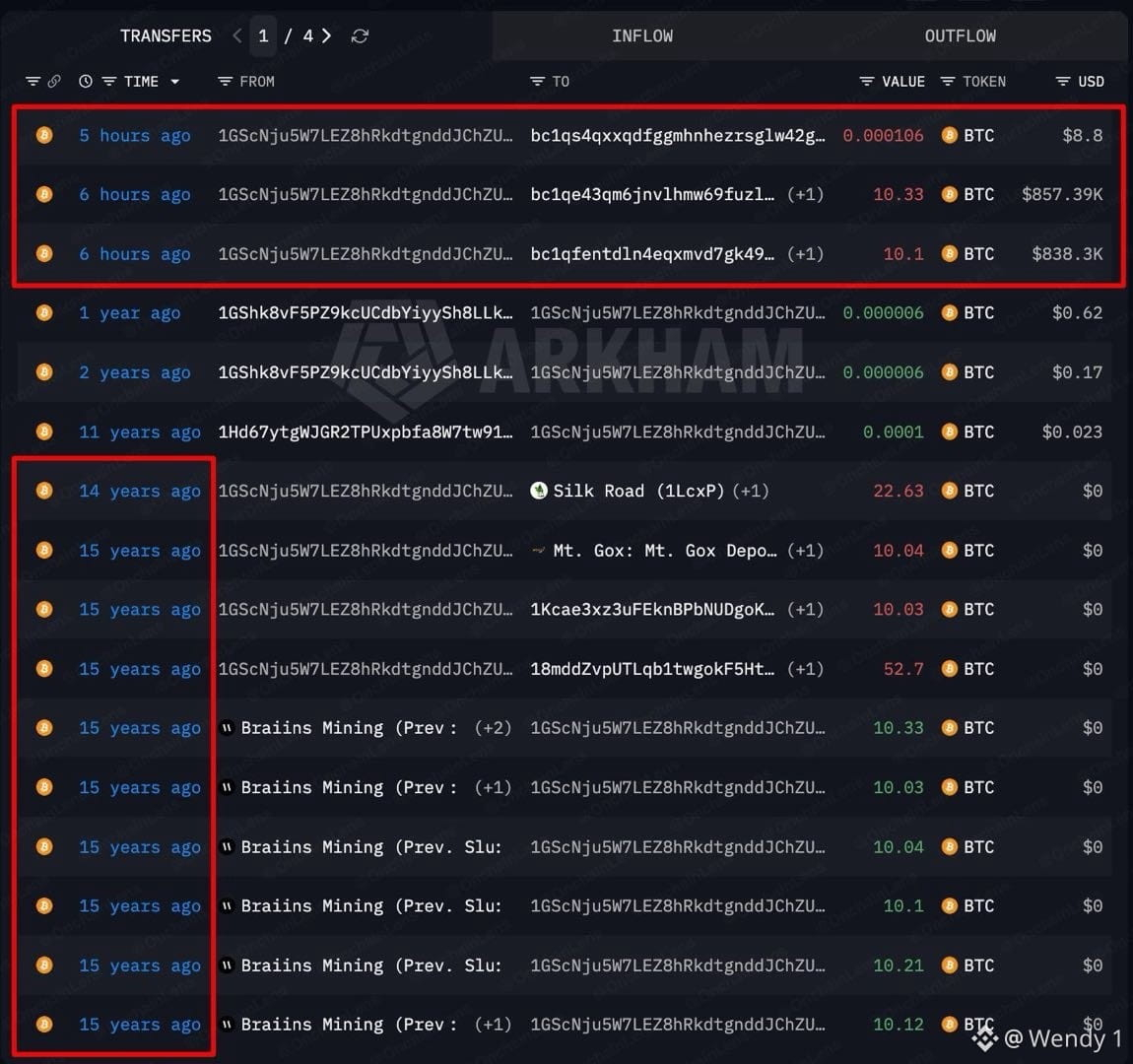
A 15-YEAR-OLD BITCOIN WALLET JUST MOVED $1.7M IN BTC
A Bitcoin holder who bought near $3–$4 per BTC has finally moved a major chunk of their stash.
The wallet transferred 20.43 BTC worth roughly $1.7M after holding for around 15 years.
Estimated entry value: ~$70 Estimated profit: ~$1.72M Estimated return: more than 2 million percent
The wallet’s history stretches back to Bitcoin’s early days, with historical interactions linked to Mt. Gox and Silk Road.
Now, after more than a decade of holding, the coins are moving again.
A transfer doesn’t automatically mean the holder sold. But when a wallet this old starts moving millions in BTC, it gets attention.
Was this a long-term holder finally taking profit, or simply moving coins to a new wallet?
Track the address: https://arkm.com/explorer/address/1GScNju5W7LEZ8hRkdtgnddJChZU4AiLHe
#Bitcoin #BTC $BTC
A 15-YEAR-OLD BITCOIN WALLET JUST MOVED $1.7M IN BTC
A Bitcoin holder who bought near $3–$4 per BTC has finally moved a major chunk of their stash.
The wallet transferred 20.43 BTC worth roughly $1.7M after holding for around 15 years.
Estimated entry value: ~$70 Estimated profit: ~$1.72M Estimated return: more than 2 million percent
The wallet’s history stretches back to Bitcoin’s early days, with historical interactions linked to Mt. Gox and Silk Road.
Now, after more than a decade of holding, the coins are moving again.
A transfer doesn’t automatically mean the holder sold. But when a wallet this old starts moving millions in BTC, it gets attention.
Was this a long-term holder finally taking profit, or simply moving coins to a new wallet?
Track the address: https://arkm.com/explorer/address/1GScNju5W7LEZ8hRkdtgnddJChZU4AiLHe
#Bitcoin #BTC $BTC
A Bitcoin holder who bought near $3–$4 per BTC has finally moved a major chunk of their stash.
The wallet transferred 20.43 BTC worth roughly $1.7M after holding for around 15 years.
Estimated entry value: ~$70 Estimated profit: ~$1.72M Estimated return: more than 2 million percent
The wallet’s history stretches back to Bitcoin’s early days, with historical interactions linked to Mt. Gox and Silk Road.
Now, after more than a decade of holding, the coins are moving again.
A transfer doesn’t automatically mean the holder sold. But when a wallet this old starts moving millions in BTC, it gets attention.
Was this a long-term holder finally taking profit, or simply moving coins to a new wallet?
Track the address: https://arkm.com/explorer/address/1GScNju5W7LEZ8hRkdtgnddJChZU4AiLHe
#Bitcoin #BTC $BTC
11
·
--
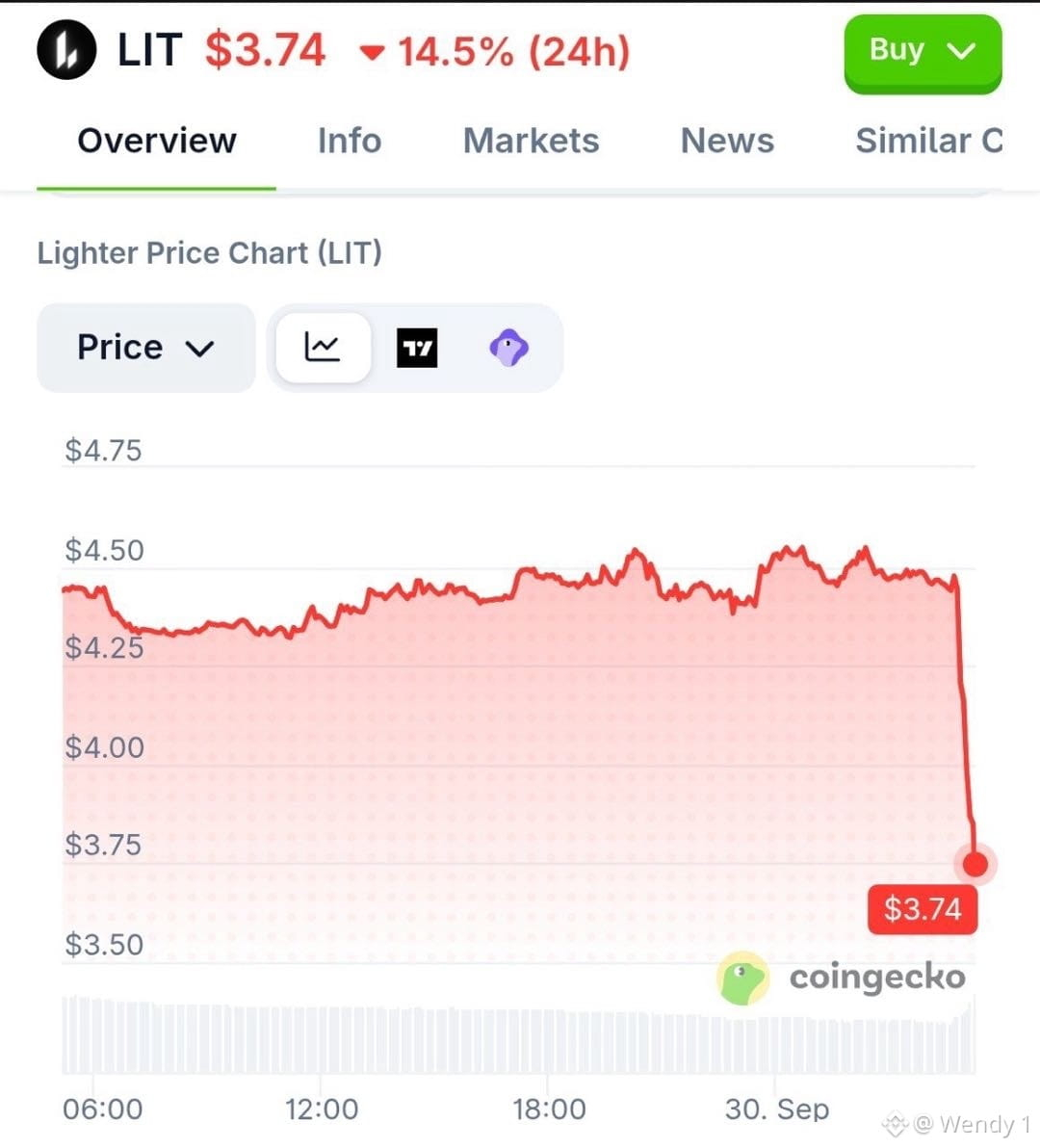
$LIT DROPS 14.5% AS TRADERS WATCH ROBINHOOD’S PERPS EXPANSION
$LIT just took a sharp hit.
The chart shows the token at $3.74, down 14.5% over 24 hours, after trading around $4.40–$4.50 before the sudden drop.
The move comes as Robinhood integrates Bitstamp to bring perpetual futures to U.S. users—but the timing alone doesn’t prove the rollout caused LIT’s sell-off.
The key question now is whether this is a short-lived flush or the start of a deeper move.
A sharp price drop can trigger liquidations when leveraged positions get forced out, potentially adding more selling pressure. But the chart alone doesn’t confirm the size of any liquidation cascade.
Are you buying this dip, or waiting for $LIT to stabilize?
#LIT #CryptoNews
$LIT DROPS 14.5% AS TRADERS WATCH ROBINHOOD’S PERPS EXPANSION
$LIT just took a sharp hit.
The chart shows the token at $3.74, down 14.5% over 24 hours, after trading around $4.40–$4.50 before the sudden drop.
The move comes as Robinhood integrates Bitstamp to bring perpetual futures to U.S. users—but the timing alone doesn’t prove the rollout caused LIT’s sell-off.
The key question now is whether this is a short-lived flush or the start of a deeper move.
A sharp price drop can trigger liquidations when leveraged positions get forced out, potentially adding more selling pressure. But the chart alone doesn’t confirm the size of any liquidation cascade.
Are you buying this dip, or waiting for $LIT to stabilize?
#LIT #CryptoNews
$LIT just took a sharp hit.
The chart shows the token at $3.74, down 14.5% over 24 hours, after trading around $4.40–$4.50 before the sudden drop.
The move comes as Robinhood integrates Bitstamp to bring perpetual futures to U.S. users—but the timing alone doesn’t prove the rollout caused LIT’s sell-off.
The key question now is whether this is a short-lived flush or the start of a deeper move.
A sharp price drop can trigger liquidations when leveraged positions get forced out, potentially adding more selling pressure. But the chart alone doesn’t confirm the size of any liquidation cascade.
Are you buying this dip, or waiting for $LIT to stabilize?
#LIT #CryptoNews
5
·
--
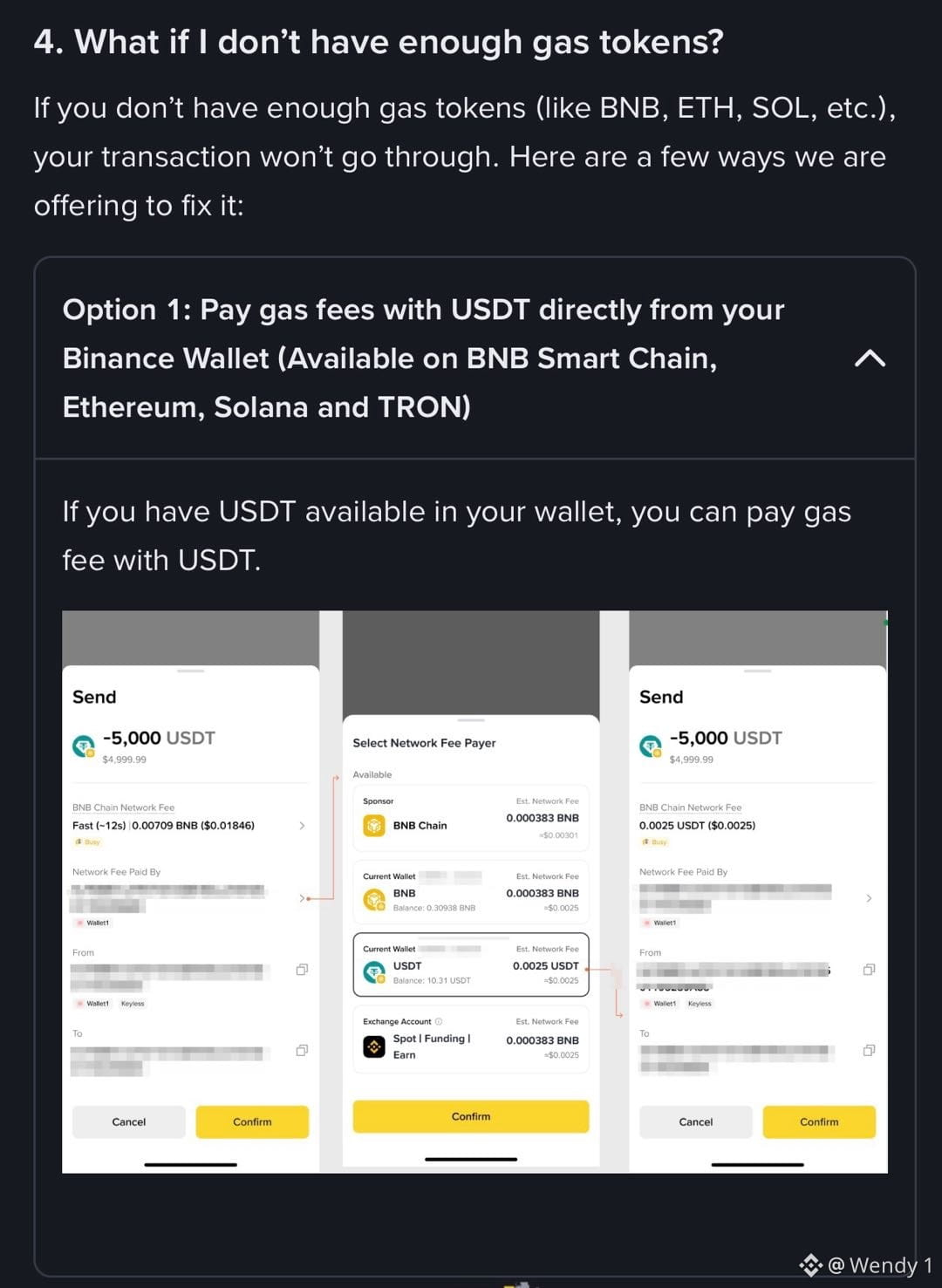
BINANCE WALLET LETS USERS PAY GAS FEES IN USDT ON 4 NETWORKS
No BNB, ETH, SOL or TRX sitting in your wallet? Binance Wallet is making on-chain transfers easier.
Users can now pay network fees directly in USDT on:
* BNB Smart Chain
* Ethereum
* Solana
* TRON
Instead of holding each network’s native gas token just to complete a transaction, eligible users can select USDT as the network fee payer.
That removes one of the common friction points for newer on-chain users: having the right gas token available before sending assets.
Binance says support for additional networks will be added later.
The feature is available through Binance Wallet’s transaction flow, where users can choose USDT as the fee payment option when supported.
Would paying gas in USDT make you use on-chain transfers more often? 👀
#BinanceWallet #USDT
BINANCE WALLET LETS USERS PAY GAS FEES IN USDT ON 4 NETWORKS
No BNB, ETH, SOL or TRX sitting in your wallet? Binance Wallet is making on-chain transfers easier.
Users can now pay network fees directly in USDT on:
* BNB Smart Chain
* Ethereum
* Solana
* TRON
Instead of holding each network’s native gas token just to complete a transaction, eligible users can select USDT as the network fee payer.
That removes one of the common friction points for newer on-chain users: having the right gas token available before sending assets.
Binance says support for additional networks will be added later.
The feature is available through Binance Wallet’s transaction flow, where users can choose USDT as the fee payment option when supported.
Would paying gas in USDT make you use on-chain transfers more often? 👀
#BinanceWallet #USDT
No BNB, ETH, SOL or TRX sitting in your wallet? Binance Wallet is making on-chain transfers easier.
Users can now pay network fees directly in USDT on:
* BNB Smart Chain
* Ethereum
* Solana
* TRON
Instead of holding each network’s native gas token just to complete a transaction, eligible users can select USDT as the network fee payer.
That removes one of the common friction points for newer on-chain users: having the right gas token available before sending assets.
Binance says support for additional networks will be added later.
The feature is available through Binance Wallet’s transaction flow, where users can choose USDT as the fee payment option when supported.
Would paying gas in USDT make you use on-chain transfers more often? 👀
#BinanceWallet #USDT
69
·
--
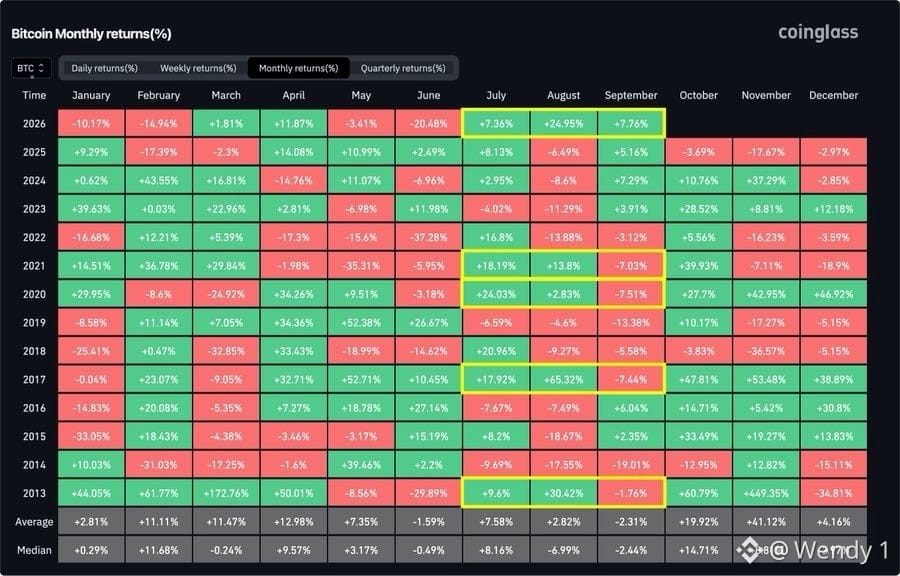
BITCOIN IS ON TRACK FOR ITS FIRST 3-MONTH GREEN STREAK SINCE 2012
$BTC closed July and August in the green — and September is currently positive too.
According to the chart, monthly returns stand at:
July: +7.36% August: +24.95% September: +7.76% so far
But there’s a historical twist: this would not be the first time in Bitcoin’s history. BTC also posted three consecutive monthly gains in 2012, when it was still trading at a fraction of today’s price.
If September holds green through month-end, 2026 would mark the first such streak in 14 years.
One more green monthly close — and Bitcoin’s recent recovery adds a rare historical milestone.
Do you think BTC can keep the streak alive into October? 👀
#Bitcoin #BTC
BITCOIN IS ON TRACK FOR ITS FIRST 3-MONTH GREEN STREAK SINCE 2012
$BTC closed July and August in the green — and September is currently positive too.
According to the chart, monthly returns stand at:
July: +7.36% August: +24.95% September: +7.76% so far
But there’s a historical twist: this would not be the first time in Bitcoin’s history. BTC also posted three consecutive monthly gains in 2012, when it was still trading at a fraction of today’s price.
If September holds green through month-end, 2026 would mark the first such streak in 14 years.
One more green monthly close — and Bitcoin’s recent recovery adds a rare historical milestone.
Do you think BTC can keep the streak alive into October? 👀
#Bitcoin #BTC
$BTC closed July and August in the green — and September is currently positive too.
According to the chart, monthly returns stand at:
July: +7.36% August: +24.95% September: +7.76% so far
But there’s a historical twist: this would not be the first time in Bitcoin’s history. BTC also posted three consecutive monthly gains in 2012, when it was still trading at a fraction of today’s price.
If September holds green through month-end, 2026 would mark the first such streak in 14 years.
One more green monthly close — and Bitcoin’s recent recovery adds a rare historical milestone.
Do you think BTC can keep the streak alive into October? 👀
#Bitcoin #BTC
63
·
--
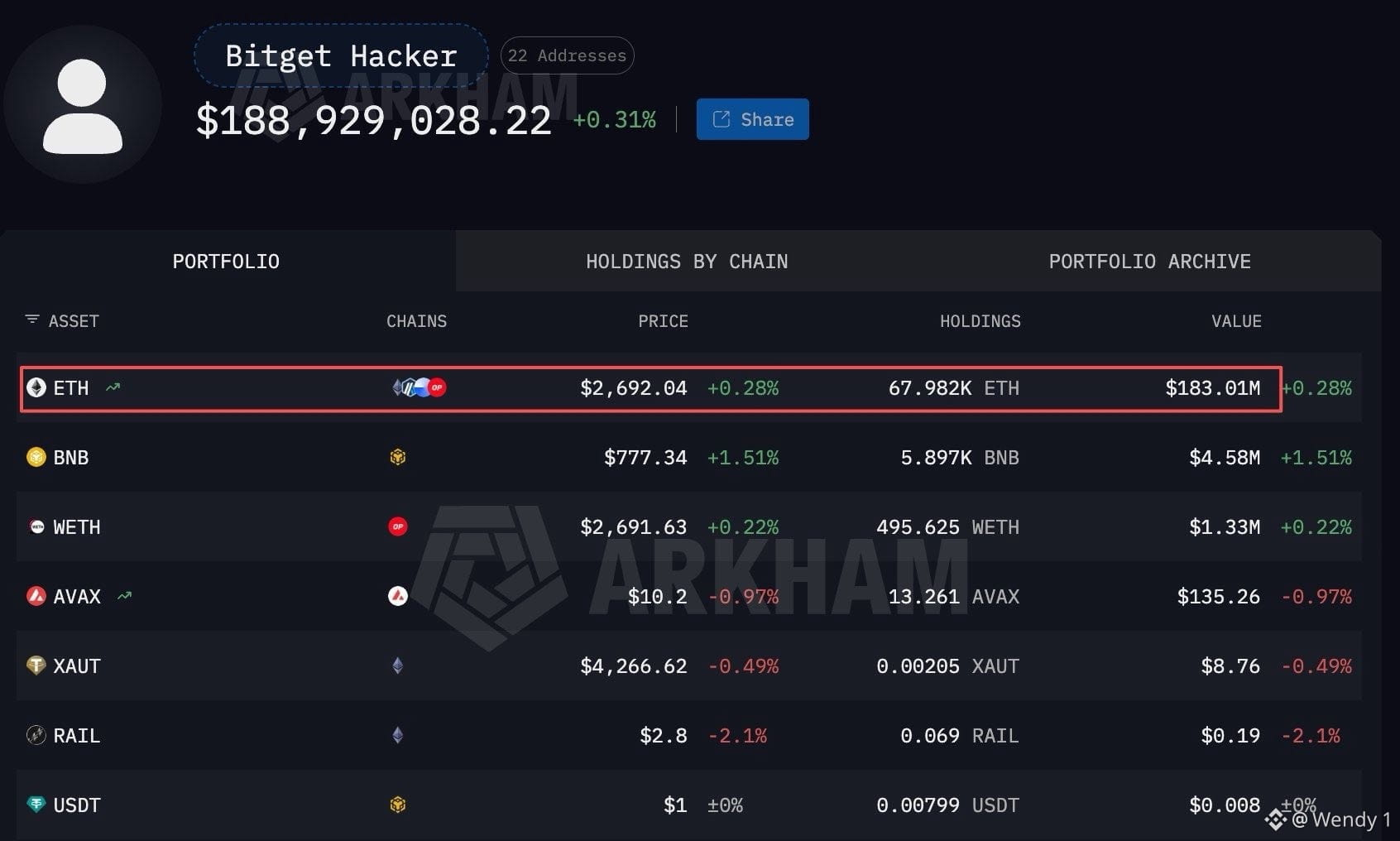
BITGET CONFIRMS $351.6M SECURITY BREACH — 67,982 ETH NOW IN THE HACKER’S WALLET
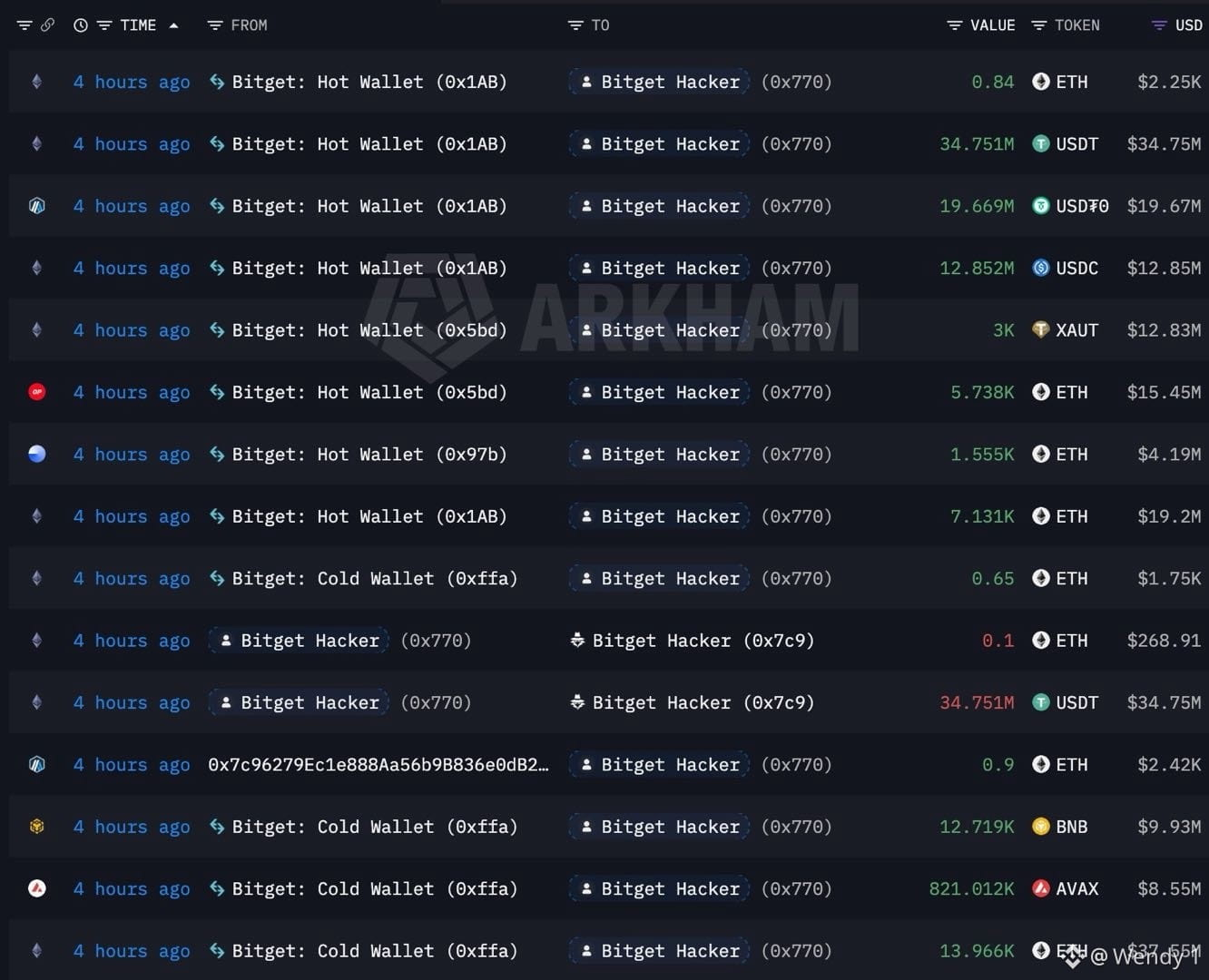
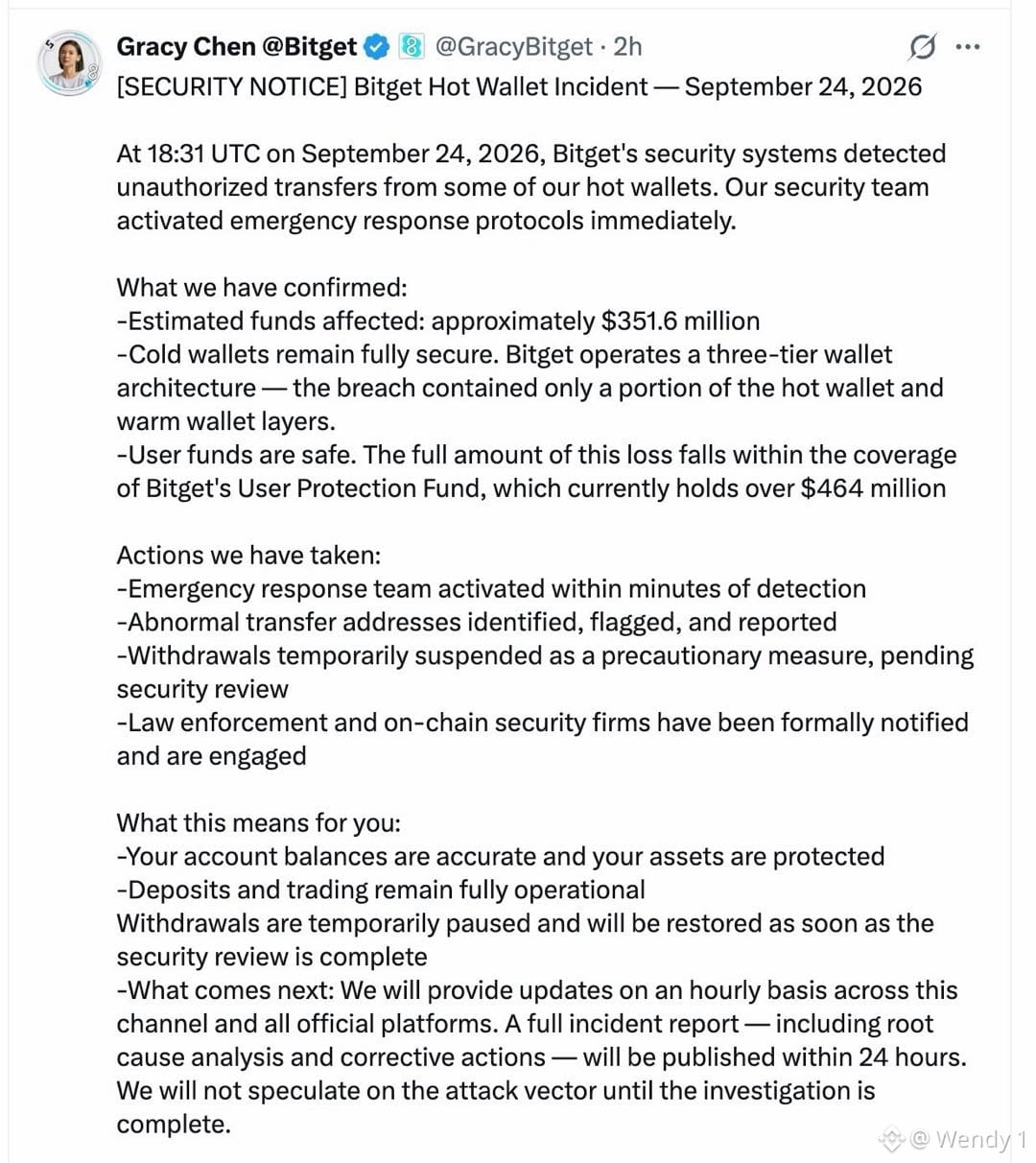
Bitget has confirmed unauthorized transfers from part of its hot and warm wallet infrastructure on September 24, with the exchange estimating $351.6 million in affected funds.
On-chain tracking shows the attacker consolidated a large portion of the EVM-chain assets into ETH.
67,982 ETH ≈ $183M
The stolen assets included ETH, USDT, USDC, AVAX, BNB and other tokens before being swapped across EVM networks.
Bitget says its cold wallets remain secure, while deposits and trading are still operational. Withdrawals have been temporarily suspended during the security review.
The exchange also says its User Protection Fund holds more than $464M and is sufficient to cover the estimated loss, while a full incident report with the root cause and corrective actions is expected within 24 hours.
The attack vector has not yet been disclosed.
How do you think the attacker will move the 67,982 ETH next? 👀
#Bitget #Ethereum
BITGET CONFIRMS $351.6M SECURITY BREACH — 67,982 ETH NOW IN THE HACKER’S WALLET
Bitget has confirmed unauthorized transfers from part of its hot and warm wallet infrastructure on September 24, with the exchange estimating $351.6 million in affected funds.
On-chain tracking shows the attacker consolidated a large portion of the EVM-chain assets into ETH.
67,982 ETH ≈ $183M
The stolen assets included ETH, USDT, USDC, AVAX, BNB and other tokens before being swapped across EVM networks.
Bitget says its cold wallets remain secure, while deposits and trading are still operational. Withdrawals have been temporarily suspended during the security review.
The exchange also says its User Protection Fund holds more than $464M and is sufficient to cover the estimated loss, while a full incident report with the root cause and corrective actions is expected within 24 hours.
The attack vector has not yet been disclosed.
How do you think the attacker will move the 67,982 ETH next? 👀
#Bitget #Ethereum
Bitget has confirmed unauthorized transfers from part of its hot and warm wallet infrastructure on September 24, with the exchange estimating $351.6 million in affected funds.
On-chain tracking shows the attacker consolidated a large portion of the EVM-chain assets into ETH.
67,982 ETH ≈ $183M
The stolen assets included ETH, USDT, USDC, AVAX, BNB and other tokens before being swapped across EVM networks.
Bitget says its cold wallets remain secure, while deposits and trading are still operational. Withdrawals have been temporarily suspended during the security review.
The exchange also says its User Protection Fund holds more than $464M and is sufficient to cover the estimated loss, while a full incident report with the root cause and corrective actions is expected within 24 hours.
The attack vector has not yet been disclosed.
How do you think the attacker will move the 67,982 ETH next? 👀
#Bitget #Ethereum
64
·
--
BINANCE WILL LIST HYPERLIQUID WITH A SEED TAG TODAY
Binance is bringing Hyperliquid ( $HYPE ) to Spot trading, opening three new markets at 11:00 UTC on September 24.
New pairs:
$HYPE /USDT
$HYPE /USDC
$HYPE /TRY
Deposits open one hour before trading, while withdrawals are scheduled to open on September 25 at 11:00 UTC.
The bigger detail: HYPE will launch with Binance’s Seed Tag.
That means Binance considers it a relatively new asset with higher-than-normal volatility and risk. Users trading Seed Tag assets on Binance Spot or Margin must pass the corresponding risk-awareness quiz every 90 days and accept the Terms of Use.
Hyperliquid describes itself as a high-performance blockchain built around a fully on-chain open financial system.
Spot Algo Orders will also be available at launch, while Trading Bots and Spot Copy Trading are expected within 24 hours.
Listing fee: 0 BNB.
Will $HYPE ’s Binance Spot listing change the trading landscape for Hyperliquid? 👀
#HYPE #Binance
BINANCE WILL LIST HYPERLIQUID WITH A SEED TAG TODAY
Binance is bringing Hyperliquid ( $HYPE ) to Spot trading, opening three new markets at 11:00 UTC on September 24.
New pairs:
$HYPE /USDT
$HYPE /USDC
$HYPE /TRY
Deposits open one hour before trading, while withdrawals are scheduled to open on September 25 at 11:00 UTC.
The bigger detail: HYPE will launch with Binance’s Seed Tag.
That means Binance considers it a relatively new asset with higher-than-normal volatility and risk. Users trading Seed Tag assets on Binance Spot or Margin must pass the corresponding risk-awareness quiz every 90 days and accept the Terms of Use.
Hyperliquid describes itself as a high-performance blockchain built around a fully on-chain open financial system.
Spot Algo Orders will also be available at launch, while Trading Bots and Spot Copy Trading are expected within 24 hours.
Listing fee: 0 BNB.
Will $HYPE ’s Binance Spot listing change the trading landscape for Hyperliquid? 👀
#HYPE #Binance
Binance is bringing Hyperliquid ( $HYPE ) to Spot trading, opening three new markets at 11:00 UTC on September 24.
New pairs:
$HYPE /USDT
$HYPE /USDC
$HYPE /TRY
Deposits open one hour before trading, while withdrawals are scheduled to open on September 25 at 11:00 UTC.
The bigger detail: HYPE will launch with Binance’s Seed Tag.
That means Binance considers it a relatively new asset with higher-than-normal volatility and risk. Users trading Seed Tag assets on Binance Spot or Margin must pass the corresponding risk-awareness quiz every 90 days and accept the Terms of Use.
Hyperliquid describes itself as a high-performance blockchain built around a fully on-chain open financial system.
Spot Algo Orders will also be available at launch, while Trading Bots and Spot Copy Trading are expected within 24 hours.
Listing fee: 0 BNB.
Will $HYPE ’s Binance Spot listing change the trading landscape for Hyperliquid? 👀
#HYPE #Binance
56
·
--
BINANCE IS TURNING THE FUNDING ACCOUNT INTO A STOCKS ACCOUNT
Binance is restructuring its account system, and the Funding Account will gradually become the Stocks Account.
Starting September 29, 2026, Binance will stop supporting on-chain deposits to Funding Accounts. Crypto assets currently held there will be migrated to Spot Accounts.
Key timeline:
• Sep 29, 2026: Crypto deposits to Funding Account stop
• Sep 29 onward: One-Click Migration becomes available
• Jan 2027: Funding Account is renamed Stocks Account
• Jan 2027 onward: Remaining crypto assets are automatically migrated to Spot in batches
The new Stocks Account will be used for stock and stock-options settlement, supporting six assets: USD, $USDC , $USDT , $USD1 , $U and $BNB .
Binance says the migration won’t affect total asset value or fund safety, and users don’t need to take action if they prefer automatic migration.
Other services are changing too, including Pay, Convert, P2P, Alpha 2.0 and API integrations.
Have you already moved your crypto out of the Funding Account? 👇
#Binance #Crypto
BINANCE IS TURNING THE FUNDING ACCOUNT INTO A STOCKS ACCOUNT
Binance is restructuring its account system, and the Funding Account will gradually become the Stocks Account.
Starting September 29, 2026, Binance will stop supporting on-chain deposits to Funding Accounts. Crypto assets currently held there will be migrated to Spot Accounts.
Key timeline:
• Sep 29, 2026: Crypto deposits to Funding Account stop
• Sep 29 onward: One-Click Migration becomes available
• Jan 2027: Funding Account is renamed Stocks Account
• Jan 2027 onward: Remaining crypto assets are automatically migrated to Spot in batches
The new Stocks Account will be used for stock and stock-options settlement, supporting six assets: USD, $USDC , $USDT , $USD1 , $U and $BNB .
Binance says the migration won’t affect total asset value or fund safety, and users don’t need to take action if they prefer automatic migration.
Other services are changing too, including Pay, Convert, P2P, Alpha 2.0 and API integrations.
Have you already moved your crypto out of the Funding Account? 👇
#Binance #Crypto
Binance is restructuring its account system, and the Funding Account will gradually become the Stocks Account.
Starting September 29, 2026, Binance will stop supporting on-chain deposits to Funding Accounts. Crypto assets currently held there will be migrated to Spot Accounts.
Key timeline:
• Sep 29, 2026: Crypto deposits to Funding Account stop
• Sep 29 onward: One-Click Migration becomes available
• Jan 2027: Funding Account is renamed Stocks Account
• Jan 2027 onward: Remaining crypto assets are automatically migrated to Spot in batches
The new Stocks Account will be used for stock and stock-options settlement, supporting six assets: USD, $USDC , $USDT , $USD1 , $U and $BNB .
Binance says the migration won’t affect total asset value or fund safety, and users don’t need to take action if they prefer automatic migration.
Other services are changing too, including Pay, Convert, P2P, Alpha 2.0 and API integrations.
Have you already moved your crypto out of the Funding Account? 👇
#Binance #Crypto
71
·
--
ROBINHOOD CHAIN JUST CROSSED $1B TVL. DEX VOLUME IS EVEN BIGGER
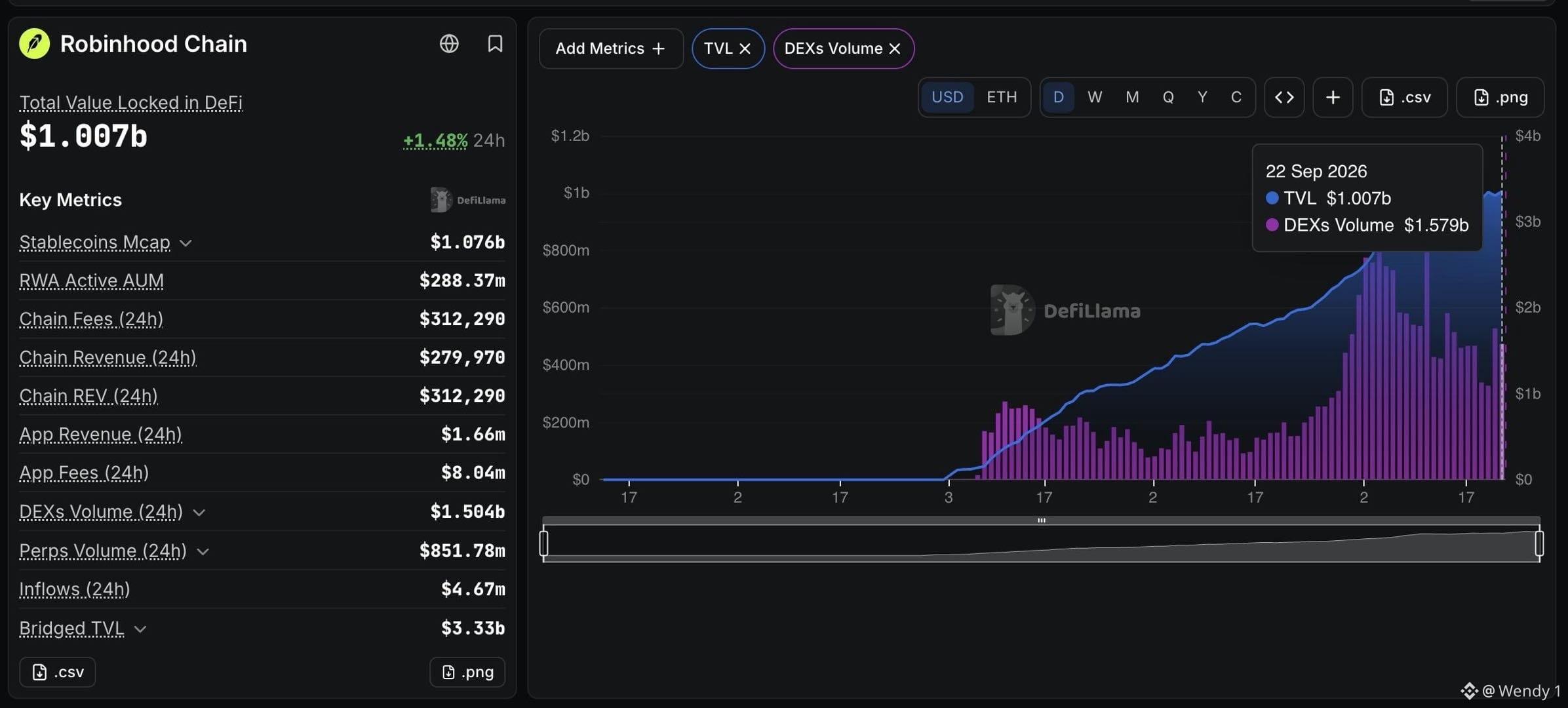
Robinhood Chain has officially crossed $1B in DeFi TVL, according to the latest DeFiLlama data shown in the snapshot.
The numbers are getting interesting:
💰 TVL: $1.007B
🔥 DEX Volume (24h): $1.504B
⚡ Perps Volume (24h): $851.78M
💵 Stablecoin Market Cap: $1.076B
🌉 Bridged TVL: $3.33B
🏦 RWA Active AUM: $288.37M
💸 App Fees (24h): $8.04M
The standout figure is DEX activity.
$1.504B in 24h DEX volume is roughly 1.5x the chain’s entire TVL.
That puts Robinhood Chain’s trading activity firmly on the radar, especially with nearly $852M in perps volume recorded over the same 24-hour period.
The next metric worth watching is whether this activity can translate into sustained TVL and user growth.
Do you trade on Robinhood Chain? 👇
#RobinhoodChain #DeFi
ROBINHOOD CHAIN JUST CROSSED $1B TVL. DEX VOLUME IS EVEN BIGGER
Robinhood Chain has officially crossed $1B in DeFi TVL, according to the latest DeFiLlama data shown in the snapshot.
The numbers are getting interesting:
💰 TVL: $1.007B
🔥 DEX Volume (24h): $1.504B
⚡ Perps Volume (24h): $851.78M
💵 Stablecoin Market Cap: $1.076B
🌉 Bridged TVL: $3.33B
🏦 RWA Active AUM: $288.37M
💸 App Fees (24h): $8.04M
The standout figure is DEX activity.
$1.504B in 24h DEX volume is roughly 1.5x the chain’s entire TVL.
That puts Robinhood Chain’s trading activity firmly on the radar, especially with nearly $852M in perps volume recorded over the same 24-hour period.
The next metric worth watching is whether this activity can translate into sustained TVL and user growth.
Do you trade on Robinhood Chain? 👇
#RobinhoodChain #DeFi
Robinhood Chain has officially crossed $1B in DeFi TVL, according to the latest DeFiLlama data shown in the snapshot.
The numbers are getting interesting:
💰 TVL: $1.007B
🔥 DEX Volume (24h): $1.504B
⚡ Perps Volume (24h): $851.78M
💵 Stablecoin Market Cap: $1.076B
🌉 Bridged TVL: $3.33B
🏦 RWA Active AUM: $288.37M
💸 App Fees (24h): $8.04M
The standout figure is DEX activity.
$1.504B in 24h DEX volume is roughly 1.5x the chain’s entire TVL.
That puts Robinhood Chain’s trading activity firmly on the radar, especially with nearly $852M in perps volume recorded over the same 24-hour period.
The next metric worth watching is whether this activity can translate into sustained TVL and user growth.
Do you trade on Robinhood Chain? 👇
#RobinhoodChain #DeFi
26
·
--
BINANCE JUST INVESTED $100M IN CIRCLE. USDC IS AT THE CENTER
Binance is taking a direct stake in Circle, the company behind $USDC .
Circle announced that Binance invested $100M to acquire a stake in the company, deepening the relationship between one of crypto’s largest exchanges and the issuer of one of the biggest dollar-backed stablecoins.
The timing is notable.
Binance has been expanding $USDC across its ecosystem, including recently opening USDC deposits on Circle’s Arc network.
Under the reported arrangement, Binance will continue promoting $USDC across its products, while Circle will pay Binance fees tied to the amount of $USDC held through Binance’s infrastructure.
In other words, this isn’t just an equity investment. It links Binance’s distribution power with Circle’s stablecoin infrastructure.
What do you think this $100M investment means for the future of $USDC ? 👇
#Binance #USDC
BINANCE JUST INVESTED $100M IN CIRCLE. USDC IS AT THE CENTER
Binance is taking a direct stake in Circle, the company behind $USDC .
Circle announced that Binance invested $100M to acquire a stake in the company, deepening the relationship between one of crypto’s largest exchanges and the issuer of one of the biggest dollar-backed stablecoins.
The timing is notable.
Binance has been expanding $USDC across its ecosystem, including recently opening USDC deposits on Circle’s Arc network.
Under the reported arrangement, Binance will continue promoting $USDC across its products, while Circle will pay Binance fees tied to the amount of $USDC held through Binance’s infrastructure.
In other words, this isn’t just an equity investment. It links Binance’s distribution power with Circle’s stablecoin infrastructure.
What do you think this $100M investment means for the future of $USDC ? 👇
#Binance #USDC
Binance is taking a direct stake in Circle, the company behind $USDC .
Circle announced that Binance invested $100M to acquire a stake in the company, deepening the relationship between one of crypto’s largest exchanges and the issuer of one of the biggest dollar-backed stablecoins.
The timing is notable.
Binance has been expanding $USDC across its ecosystem, including recently opening USDC deposits on Circle’s Arc network.
Under the reported arrangement, Binance will continue promoting $USDC across its products, while Circle will pay Binance fees tied to the amount of $USDC held through Binance’s infrastructure.
In other words, this isn’t just an equity investment. It links Binance’s distribution power with Circle’s stablecoin infrastructure.
What do you think this $100M investment means for the future of $USDC ? 👇
#Binance #USDC
27
·
--
BINANCE WILL REMOVE 7 MARGIN PAIRS ON SEPTEMBER 25
Binance Margin will delist the following pairs at 06:00 UTC on September 25, 2026.
Cross Margin:
• NOM/USDC
• 1MBABYDOGE/USDC
• SSV/USDC
• BANANA/USDC
• OPN/USDC
• MANTA/USDC
• STO/USDC
Isolated Margin:
• NOM/USDC
• 1MBABYDOGE/USDC
• OPN/USDC
• MANTA/USDC
• STO/USDC
The overlap matters: NOM, 1MBABYDOGE, OPN, MANTA and STO are being removed from both Cross and Isolated Margin.
If you’re using any of these pairs for margin positions, check your positions and orders before the 06:00 UTC deadline.
Are you currently using any of these margin pairs? 👇
#Binance #MarginTrading
BINANCE WILL REMOVE 7 MARGIN PAIRS ON SEPTEMBER 25
Binance Margin will delist the following pairs at 06:00 UTC on September 25, 2026.
Cross Margin:
• NOM/USDC
• 1MBABYDOGE/USDC
• SSV/USDC
• BANANA/USDC
• OPN/USDC
• MANTA/USDC
• STO/USDC
Isolated Margin:
• NOM/USDC
• 1MBABYDOGE/USDC
• OPN/USDC
• MANTA/USDC
• STO/USDC
The overlap matters: NOM, 1MBABYDOGE, OPN, MANTA and STO are being removed from both Cross and Isolated Margin.
If you’re using any of these pairs for margin positions, check your positions and orders before the 06:00 UTC deadline.
Are you currently using any of these margin pairs? 👇
#Binance #MarginTrading
Binance Margin will delist the following pairs at 06:00 UTC on September 25, 2026.
Cross Margin:
• NOM/USDC
• 1MBABYDOGE/USDC
• SSV/USDC
• BANANA/USDC
• OPN/USDC
• MANTA/USDC
• STO/USDC
Isolated Margin:
• NOM/USDC
• 1MBABYDOGE/USDC
• OPN/USDC
• MANTA/USDC
• STO/USDC
The overlap matters: NOM, 1MBABYDOGE, OPN, MANTA and STO are being removed from both Cross and Isolated Margin.
If you’re using any of these pairs for margin positions, check your positions and orders before the 06:00 UTC deadline.
Are you currently using any of these margin pairs? 👇
#Binance #MarginTrading
35
·
--
BINANCE WILL REMOVE 7 SPOT TRADING PAIRS ON SEPTEMBER 25
Binance is removing seven USDC spot trading pairs following its latest review.
Trading will cease at 03:00 UTC on September 25, 2026.
The affected pairs are:
• AIXBT/USDC
• DOLO/USDC
• ENJ/USDC
• HUMA/USDC
• SXT/USDC
• TNSR/USDC
• TURTLE/USDC
Binance says the decision is based on its most recent review.
If you’re trading any of these pairs, the 03:00 UTC deadline is the key time to keep in mind.
Are any of these pairs on your watchlist? 👇
#Binance #Crypto
BINANCE WILL REMOVE 7 SPOT TRADING PAIRS ON SEPTEMBER 25
Binance is removing seven USDC spot trading pairs following its latest review.
Trading will cease at 03:00 UTC on September 25, 2026.
The affected pairs are:
• AIXBT/USDC
• DOLO/USDC
• ENJ/USDC
• HUMA/USDC
• SXT/USDC
• TNSR/USDC
• TURTLE/USDC
Binance says the decision is based on its most recent review.
If you’re trading any of these pairs, the 03:00 UTC deadline is the key time to keep in mind.
Are any of these pairs on your watchlist? 👇
#Binance #Crypto
Binance is removing seven USDC spot trading pairs following its latest review.
Trading will cease at 03:00 UTC on September 25, 2026.
The affected pairs are:
• AIXBT/USDC
• DOLO/USDC
• ENJ/USDC
• HUMA/USDC
• SXT/USDC
• TNSR/USDC
• TURTLE/USDC
Binance says the decision is based on its most recent review.
If you’re trading any of these pairs, the 03:00 UTC deadline is the key time to keep in mind.
Are any of these pairs on your watchlist? 👇
#Binance #Crypto
68
·
--
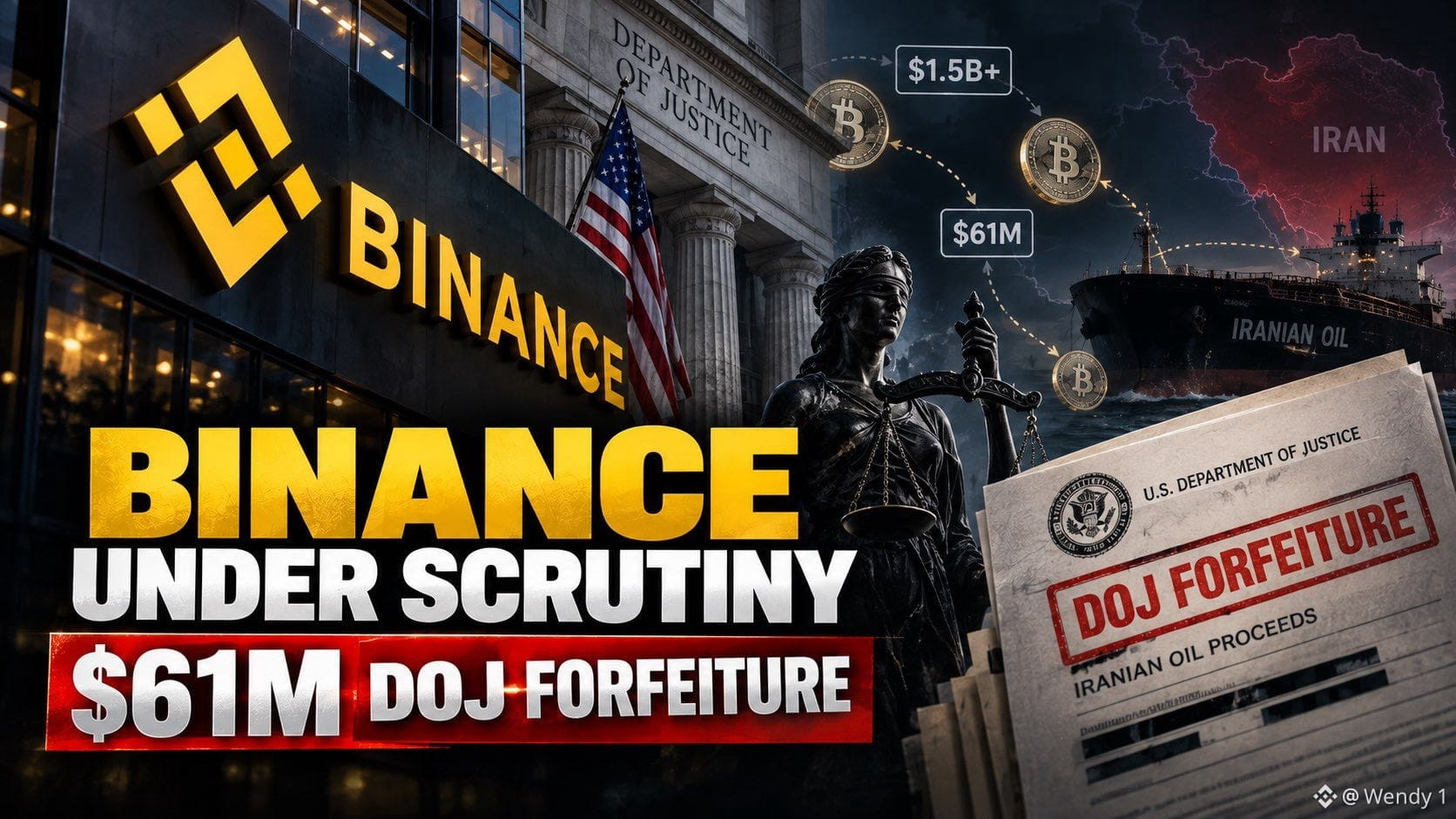
BINANCE IS BACK UNDER U.S. SCRUTINY OVER ALLEGED IRAN OIL FLOWS
The U.S. Department of Justice is targeting $61M in crypto that prosecutors say came from Iranian black-market oil sales and moved through Binance accounts.
According to the DOJ complaint, two Chinese entities, Blessed Trust and Hexa Whale, used Binance trading accounts as part of a scheme involving proceeds from Iranian crude oil and petroleum products.
Prosecutors allege that a wider network moved more than $1.5B in Iranian oil proceeds through crypto addresses, with some funds ultimately linked to Iran and its proxies. The current action is a civil forfeiture case, meaning the allegations have not been established by a final court judgment.
Binance has disputed previous reporting around the case, saying it proactively investigated and removed both entities and that it had no direct transactions with Iran-based entities.
This comes after Binance’s 2023 guilty plea to U.S. anti-money-laundering and sanctions violations, followed by a roughly $4.3B settlement.
Could this become another major compliance test for Binance? Comment below. 👇
#Binance #CryptoRegulation $BNB
BINANCE IS BACK UNDER U.S. SCRUTINY OVER ALLEGED IRAN OIL FLOWS
The U.S. Department of Justice is targeting $61M in crypto that prosecutors say came from Iranian black-market oil sales and moved through Binance accounts.
According to the DOJ complaint, two Chinese entities, Blessed Trust and Hexa Whale, used Binance trading accounts as part of a scheme involving proceeds from Iranian crude oil and petroleum products.
Prosecutors allege that a wider network moved more than $1.5B in Iranian oil proceeds through crypto addresses, with some funds ultimately linked to Iran and its proxies. The current action is a civil forfeiture case, meaning the allegations have not been established by a final court judgment.
Binance has disputed previous reporting around the case, saying it proactively investigated and removed both entities and that it had no direct transactions with Iran-based entities.
This comes after Binance’s 2023 guilty plea to U.S. anti-money-laundering and sanctions violations, followed by a roughly $4.3B settlement.
Could this become another major compliance test for Binance? Comment below. 👇
#Binance #CryptoRegulation $BNB
The U.S. Department of Justice is targeting $61M in crypto that prosecutors say came from Iranian black-market oil sales and moved through Binance accounts.
According to the DOJ complaint, two Chinese entities, Blessed Trust and Hexa Whale, used Binance trading accounts as part of a scheme involving proceeds from Iranian crude oil and petroleum products.
Prosecutors allege that a wider network moved more than $1.5B in Iranian oil proceeds through crypto addresses, with some funds ultimately linked to Iran and its proxies. The current action is a civil forfeiture case, meaning the allegations have not been established by a final court judgment.
Binance has disputed previous reporting around the case, saying it proactively investigated and removed both entities and that it had no direct transactions with Iran-based entities.
This comes after Binance’s 2023 guilty plea to U.S. anti-money-laundering and sanctions violations, followed by a roughly $4.3B settlement.
Could this become another major compliance test for Binance? Comment below. 👇
#Binance #CryptoRegulation $BNB
·
--
BINANCE WALLET OPENS ITS FIRST PRE-ACCESS CAMPAIGN WITH $POLY
Binance Wallet’s first Pre-Access campaign is now live, giving users access to $pPOLY, a token issued by Paimon Finance and hosted through PancakeSwap.
Here are the key numbers:
💰 Token price: $15.5
💰 Total offering: $4.8M
⛓️ Network: BNB Smart Chain
⏰ Campaign: Sep 21, 09:00 UTC → Sep 24, 09:00 UTC
Your subscription quota is mainly determined by Alpha Points and your bStocks on-chain activity tier. Higher tiers unlock higher quotas, while no Alpha Points are deducted.
To participate, use a Binance Keyless Wallet, select $U or $USDC , and deposit through BNB Chain. The minimum deposit is $100 per transaction, and each user can choose only one token.
$ pPOLY claims, fund returns and trading all start Sep 24 at 09:00 UTC.
One important detail: $pPOLY provides tokenized exposure, not direct equity or guaranteed IPO rights.
Would you participate in Binance Wallet’s first Pre-Access campaign? 👇
#BinanceWallet #PreAccess
BINANCE WALLET OPENS ITS FIRST PRE-ACCESS CAMPAIGN WITH $POLY
Binance Wallet’s first Pre-Access campaign is now live, giving users access to $pPOLY, a token issued by Paimon Finance and hosted through PancakeSwap.
Here are the key numbers:
💰 Token price: $15.5
💰 Total offering: $4.8M
⛓️ Network: BNB Smart Chain
⏰ Campaign: Sep 21, 09:00 UTC → Sep 24, 09:00 UTC
Your subscription quota is mainly determined by Alpha Points and your bStocks on-chain activity tier. Higher tiers unlock higher quotas, while no Alpha Points are deducted.
To participate, use a Binance Keyless Wallet, select $U or $USDC , and deposit through BNB Chain. The minimum deposit is $100 per transaction, and each user can choose only one token.
$ pPOLY claims, fund returns and trading all start Sep 24 at 09:00 UTC.
One important detail: $pPOLY provides tokenized exposure, not direct equity or guaranteed IPO rights.
Would you participate in Binance Wallet’s first Pre-Access campaign? 👇
#BinanceWallet #PreAccess
Binance Wallet’s first Pre-Access campaign is now live, giving users access to $pPOLY, a token issued by Paimon Finance and hosted through PancakeSwap.
Here are the key numbers:
💰 Token price: $15.5
💰 Total offering: $4.8M
⛓️ Network: BNB Smart Chain
⏰ Campaign: Sep 21, 09:00 UTC → Sep 24, 09:00 UTC
Your subscription quota is mainly determined by Alpha Points and your bStocks on-chain activity tier. Higher tiers unlock higher quotas, while no Alpha Points are deducted.
To participate, use a Binance Keyless Wallet, select $U or $USDC , and deposit through BNB Chain. The minimum deposit is $100 per transaction, and each user can choose only one token.
$ pPOLY claims, fund returns and trading all start Sep 24 at 09:00 UTC.
One important detail: $pPOLY provides tokenized exposure, not direct equity or guaranteed IPO rights.
Would you participate in Binance Wallet’s first Pre-Access campaign? 👇
#BinanceWallet #PreAccess
54
·
--
BINANCE WALLET JUST ADDED POLYMARKET/USD1 PERPS WITH 3X LEVERAGE
Binance Wallet has launched the POLYMARKET/USD1 perpetual pair, giving users a new way to trade Polymarket-related price action with up to 3x leverage.
There’s another interesting feature here.
With Multi-Assets Mode, eligible Binance Wallet tokenized stocks can be used as collateral at up to 90% of their market value.
So the setup is simple:
Hold bStocks → Use them as margin → Trade POLYMARKET/USD1 perps
Perpetual futures are currently available only to backed-up Binance Wallet Keyless accounts.
To access it: Binance App → Binance Wallet → Markets → Perps → POLYMARKET/USD1
Leverage can amplify both gains and losses, so liquidation risk and position size matter.
Would you use bStocks as collateral to trade POLYMARKET perps? 👇
https://web3.binance.com/en/perpetuals/POLYMARKETUSD1
#BinanceWallet #Polymarket
BINANCE WALLET JUST ADDED POLYMARKET/USD1 PERPS WITH 3X LEVERAGE
Binance Wallet has launched the POLYMARKET/USD1 perpetual pair, giving users a new way to trade Polymarket-related price action with up to 3x leverage.
There’s another interesting feature here.
With Multi-Assets Mode, eligible Binance Wallet tokenized stocks can be used as collateral at up to 90% of their market value.
So the setup is simple:
Hold bStocks → Use them as margin → Trade POLYMARKET/USD1 perps
Perpetual futures are currently available only to backed-up Binance Wallet Keyless accounts.
To access it: Binance App → Binance Wallet → Markets → Perps → POLYMARKET/USD1
Leverage can amplify both gains and losses, so liquidation risk and position size matter.
Would you use bStocks as collateral to trade POLYMARKET perps? 👇
https://web3.binance.com/en/perpetuals/POLYMARKETUSD1
#BinanceWallet #Polymarket
Binance Wallet has launched the POLYMARKET/USD1 perpetual pair, giving users a new way to trade Polymarket-related price action with up to 3x leverage.
There’s another interesting feature here.
With Multi-Assets Mode, eligible Binance Wallet tokenized stocks can be used as collateral at up to 90% of their market value.
So the setup is simple:
Hold bStocks → Use them as margin → Trade POLYMARKET/USD1 perps
Perpetual futures are currently available only to backed-up Binance Wallet Keyless accounts.
To access it: Binance App → Binance Wallet → Markets → Perps → POLYMARKET/USD1
Leverage can amplify both gains and losses, so liquidation risk and position size matter.
Would you use bStocks as collateral to trade POLYMARKET perps? 👇
https://web3.binance.com/en/perpetuals/POLYMARKETUSD1
#BinanceWallet #Polymarket
67
ເຂົ້າສູ່ລະບົບເພື່ອສຳຫຼວດເນື້ອຫາເພີ່ມເຕີມ
ເຂົ້າຮ່ວມກຸ່ມຜູ້ໃຊ້ຄຣິບໂຕທົ່ວໂລກໃນ Binance Square.
⚡️ ໄດ້ຮັບຂໍ້ມູນຫຼ້າສຸດ ແລະ ທີ່ມີປະໂຫຍດກ່ຽວກັບຄຣິບໂຕ.
💬 ໄດ້ຮັບຄວາມໄວ້ວາງໃຈຈາກຕະຫຼາດແລກປ່ຽນຄຣິບໂຕທີ່ໃຫຍ່ທີ່ສຸດໃນໂລກ.
👍 ຄົ້ນຫາຂໍ້ມູນເຊີງເລິກທີ່ແທ້ຈາກນັກສ້າງທີ່ໄດ້ຮັບການຢືນຢັນ.
ອີເມວ / ເບີໂທລະສັບ
ຫົວຂໍ້ທີ່ກໍາລັງນິຍົມ
CanMicrosoftDeliverOnAI
96,340 ຄັ້ງທີ່ເບິ່ງ
807 ກຳລັງສົນທະນາ
Earnings Season Session 3: Will Google & Microsoft Beat Earnings Expectations?
Binance Square Official
·67 ຖືກໃຈ
·17.6k ຄັ້ງທີ່ເບິ່ງ
CanGoogleDefindItsCore
46,281 ຄັ້ງທີ່ເບິ່ງ
589 ກຳລັງສົນທະນາ
FOMCWatch
9.1M ຄັ້ງທີ່ເບິ່ງ
28,026 ກຳລັງສົນທະນາ