
Mrearningpk Official
164 ໂພສ

Mrearningpk Official
ລາຍງານ
ບລັອກຜູ້ໃຊ້
Welcome
ຜູ້ຊື້ຂາຍປະຈໍາ
1.2 ປີ
95 ກໍາລັງຕິດຕາມ
272 ຜູ້ຕິດຕາມ
469 Liked
ໂພສ
ທັງໝົດ
ວົງຢືມ
ວີດີໂອ
ເບິ່ງການແປ
🚨 $BTC INFLATION PRESSURE & SELLING WAVE 📉
Bitcoin is facing fresh pressure after hotter-than-expected inflation data increased concerns around tighter monetary policy.
🇺🇸 U.S. PPI came in at 5.4% YoY, while Core PPI reached 4.6%.
🇪🇺 The ECB also raised rates by 25 bps, adding to the broader tightening narrative.
📉 This combination is weighing on risk assets, while Bitcoin is also seeing stronger selling pressure in the derivatives market.
⚠️ With U.S. CPI coming next, volatility could remain high. A hotter CPI could increase pressure on BTC, while softer inflation could bring relief to risk assets.
For now, I’m watching BTC closely and avoiding unnecessary leverage.
#bitcoin
🚨 $BTC INFLATION PRESSURE & SELLING WAVE 📉
Bitcoin is facing fresh pressure after hotter-than-expected inflation data increased concerns around tighter monetary policy.
🇺🇸 U.S. PPI came in at 5.4% YoY, while Core PPI reached 4.6%.
🇪🇺 The ECB also raised rates by 25 bps, adding to the broader tightening narrative.
📉 This combination is weighing on risk assets, while Bitcoin is also seeing stronger selling pressure in the derivatives market.
⚠️ With U.S. CPI coming next, volatility could remain high. A hotter CPI could increase pressure on BTC, while softer inflation could bring relief to risk assets.
For now, I’m watching BTC closely and avoiding unnecessary leverage.
#bitcoin
Bitcoin is facing fresh pressure after hotter-than-expected inflation data increased concerns around tighter monetary policy.
🇺🇸 U.S. PPI came in at 5.4% YoY, while Core PPI reached 4.6%.
🇪🇺 The ECB also raised rates by 25 bps, adding to the broader tightening narrative.
📉 This combination is weighing on risk assets, while Bitcoin is also seeing stronger selling pressure in the derivatives market.
⚠️ With U.S. CPI coming next, volatility could remain high. A hotter CPI could increase pressure on BTC, while softer inflation could bring relief to risk assets.
For now, I’m watching BTC closely and avoiding unnecessary leverage.
#bitcoin
72
ເບິ່ງການແປ
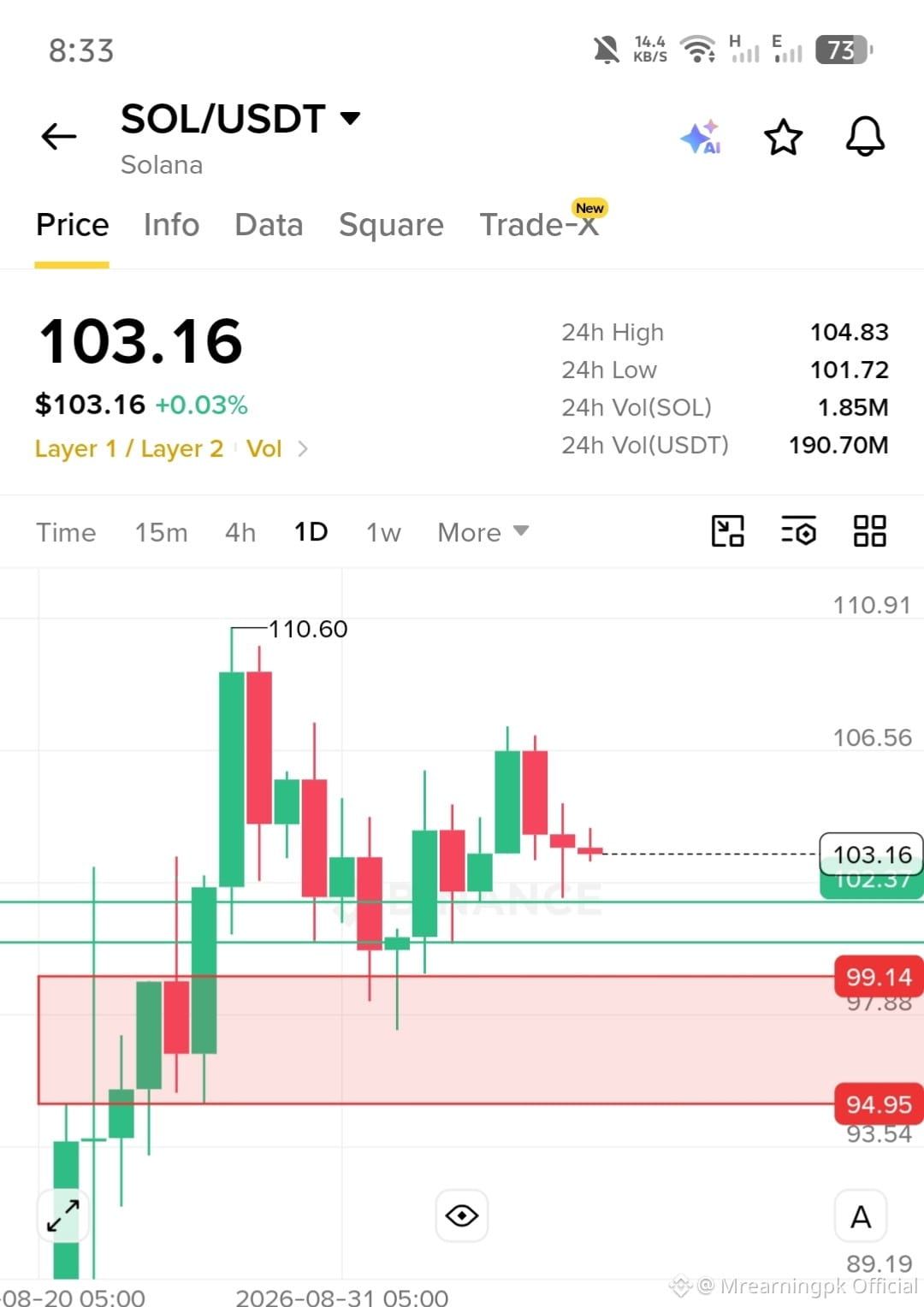
🔥 $SOL /USDT — BUY SETUP 📈
SOL is currently holding above the $102.37 support zone. As long as this level remains protected, I’m watching for a continuation toward the next resistance levels.
📥 Buy Area: $103.16 – $98
🎯 Targets:
1️⃣ $106.50
2️⃣ $110.60
🛑 Stop Loss: $94.95
A clean break above $106.50 could strengthen the bullish momentum and open the way toward $110.60. If price breaks and closes below the $94.94 support, the bullish setup becomes invalid.
⚠️ Manage risk properly and avoid over-leverage. This is my technical view, not financial advice.
🔥 $SOL /USDT — BUY SETUP 📈
SOL is currently holding above the $102.37 support zone. As long as this level remains protected, I’m watching for a continuation toward the next resistance levels.
📥 Buy Area: $103.16 – $98
🎯 Targets:
1️⃣ $106.50
2️⃣ $110.60
🛑 Stop Loss: $94.95
A clean break above $106.50 could strengthen the bullish momentum and open the way toward $110.60. If price breaks and closes below the $94.94 support, the bullish setup becomes invalid.
⚠️ Manage risk properly and avoid over-leverage. This is my technical view, not financial advice.
SOL is currently holding above the $102.37 support zone. As long as this level remains protected, I’m watching for a continuation toward the next resistance levels.
📥 Buy Area: $103.16 – $98
🎯 Targets:
1️⃣ $106.50
2️⃣ $110.60
🛑 Stop Loss: $94.95
A clean break above $106.50 could strengthen the bullish momentum and open the way toward $110.60. If price breaks and closes below the $94.94 support, the bullish setup becomes invalid.
⚠️ Manage risk properly and avoid over-leverage. This is my technical view, not financial advice.
80
ເບິ່ງການແປ
Hello traders! Here’s my technical outlook based on the current $BTC 2H chart structure.
BTCUSDT previously broke higher from a range with a strong impulsive move, shifting the overall structure bullish within an ascending channel. Price then rallied toward the $81,000 Seller Zone, where it faced resistance and pulled back.
After the pullback, BTC found support around the $77,500 Buyer Zone and the ascending support line. The recent bounce from this area suggests that buyers are still defending the support and preparing for another attempt higher. 📈
Currently, BTC is trading below the $81,000 Seller Zone while holding above the $77,500 Buyer Zone and ascending support line.
As long as BTC remains above $77,500 and respects the ascending support structure, the bullish scenario remains valid.
🎯 A continuation higher could push BTC back toward the $81,000 Seller Zone as the first major resistance/target.
However, if BTC breaks down and closes below the $77,500 Buyer Zone, the bullish structure would weaken and the possibility of further downside would increase. 📉
📌 Key Levels:
🟢 Buyer Zone: $77,500
🔴 Seller Zone: $81,000
📈 Bullish while holding above $77,500
📉 Breakdown below $77,500 = bearish confirmation
I’ll be watching how price reacts around these key levels before expecting the next major move. 👀
⚠️ This is my technical analysis, not financial advice. Always manage your risk and do your own research before taking any trade.
#BTC
Hello traders! Here’s my technical outlook based on the current $BTC 2H chart structure.
BTCUSDT previously broke higher from a range with a strong impulsive move, shifting the overall structure bullish within an ascending channel. Price then rallied toward the $81,000 Seller Zone, where it faced resistance and pulled back.
After the pullback, BTC found support around the $77,500 Buyer Zone and the ascending support line. The recent bounce from this area suggests that buyers are still defending the support and preparing for another attempt higher. 📈
Currently, BTC is trading below the $81,000 Seller Zone while holding above the $77,500 Buyer Zone and ascending support line.
As long as BTC remains above $77,500 and respects the ascending support structure, the bullish scenario remains valid.
🎯 A continuation higher could push BTC back toward the $81,000 Seller Zone as the first major resistance/target.
However, if BTC breaks down and closes below the $77,500 Buyer Zone, the bullish structure would weaken and the possibility of further downside would increase. 📉
📌 Key Levels:
🟢 Buyer Zone: $77,500
🔴 Seller Zone: $81,000
📈 Bullish while holding above $77,500
📉 Breakdown below $77,500 = bearish confirmation
I’ll be watching how price reacts around these key levels before expecting the next major move. 👀
⚠️ This is my technical analysis, not financial advice. Always manage your risk and do your own research before taking any trade.
#BTC
BTCUSDT previously broke higher from a range with a strong impulsive move, shifting the overall structure bullish within an ascending channel. Price then rallied toward the $81,000 Seller Zone, where it faced resistance and pulled back.
After the pullback, BTC found support around the $77,500 Buyer Zone and the ascending support line. The recent bounce from this area suggests that buyers are still defending the support and preparing for another attempt higher. 📈
Currently, BTC is trading below the $81,000 Seller Zone while holding above the $77,500 Buyer Zone and ascending support line.
As long as BTC remains above $77,500 and respects the ascending support structure, the bullish scenario remains valid.
🎯 A continuation higher could push BTC back toward the $81,000 Seller Zone as the first major resistance/target.
However, if BTC breaks down and closes below the $77,500 Buyer Zone, the bullish structure would weaken and the possibility of further downside would increase. 📉
📌 Key Levels:
🟢 Buyer Zone: $77,500
🔴 Seller Zone: $81,000
📈 Bullish while holding above $77,500
📉 Breakdown below $77,500 = bearish confirmation
I’ll be watching how price reacts around these key levels before expecting the next major move. 👀
⚠️ This is my technical analysis, not financial advice. Always manage your risk and do your own research before taking any trade.
#BTC
66
ເບິ່ງການແປ
🔴 $BTC SHORT — CMP
I have shorted $BTC at the current market price. If BTC retraces toward $82,000, I’ll add my 2nd entry there.
📍 1st Entry: CMP ~$80,066
📍 2nd Entry: $82,000
🎯 Targets:
78,500 → 77,000 → 75,000 → 71,000
🛑 Stop Loss: $84,500
If the daily candle closes above $84,500, the setup will be invalidated and I’ll exit the trade.
📊 I’ll manage the position according to the targets with proper risk management.
⚠️ Personal trade setup. Trade at your own risk.
#bitcoin
🔴 $BTC SHORT — CMP
I have shorted $BTC at the current market price. If BTC retraces toward $82,000, I’ll add my 2nd entry there.
📍 1st Entry: CMP ~$80,066
📍 2nd Entry: $82,000
🎯 Targets:
78,500 → 77,000 → 75,000 → 71,000
🛑 Stop Loss: $84,500
If the daily candle closes above $84,500, the setup will be invalidated and I’ll exit the trade.
📊 I’ll manage the position according to the targets with proper risk management.
⚠️ Personal trade setup. Trade at your own risk.
#bitcoin
I have shorted $BTC at the current market price. If BTC retraces toward $82,000, I’ll add my 2nd entry there.
📍 1st Entry: CMP ~$80,066
📍 2nd Entry: $82,000
🎯 Targets:
78,500 → 77,000 → 75,000 → 71,000
🛑 Stop Loss: $84,500
If the daily candle closes above $84,500, the setup will be invalidated and I’ll exit the trade.
📊 I’ll manage the position according to the targets with proper risk management.
⚠️ Personal trade setup. Trade at your own risk.
#bitcoin
2
87
ເບິ່ງການແປ
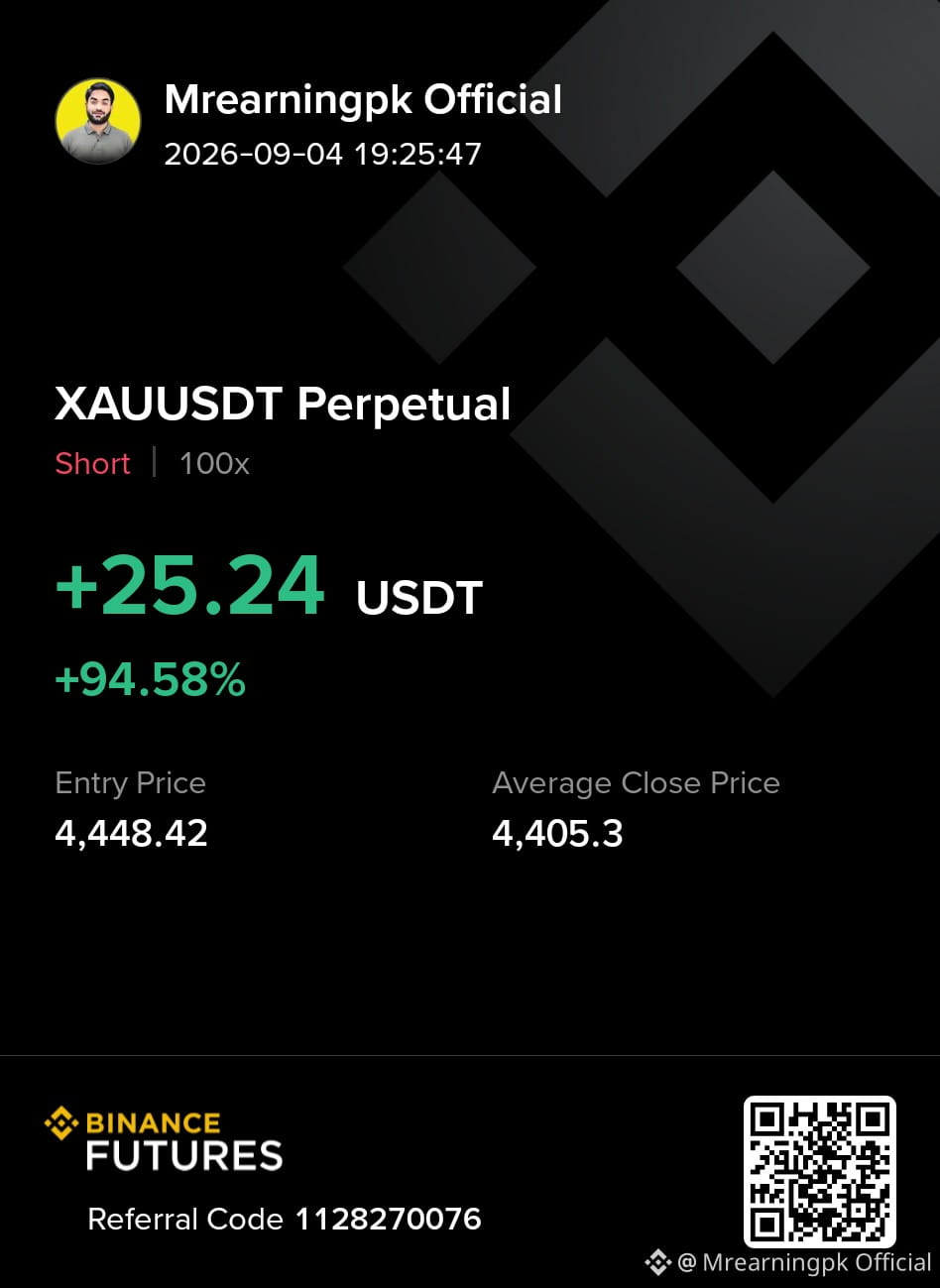
🔥 $XAUT Trade Update 🎯
Alhamdulillah! I shared this Gold short signal, and as you can see from the screenshot, TP2 at 4370 has been successfully hit. ✅
💰 Profit: +25.87 USDT
📊 ROI: +96.94%
Another setup played out beautifully. Alhamdulillah for the result! 🤲🔥
🔥 $XAUT Trade Update 🎯
Alhamdulillah! I shared this Gold short signal, and as you can see from the screenshot, TP2 at 4370 has been successfully hit. ✅
💰 Profit: +25.87 USDT
📊 ROI: +96.94%
Another setup played out beautifully. Alhamdulillah for the result! 🤲🔥
Alhamdulillah! I shared this Gold short signal, and as you can see from the screenshot, TP2 at 4370 has been successfully hit. ✅
💰 Profit: +25.87 USDT
📊 ROI: +96.94%
Another setup played out beautifully. Alhamdulillah for the result! 🤲🔥
2
236
ເບິ່ງການແປ
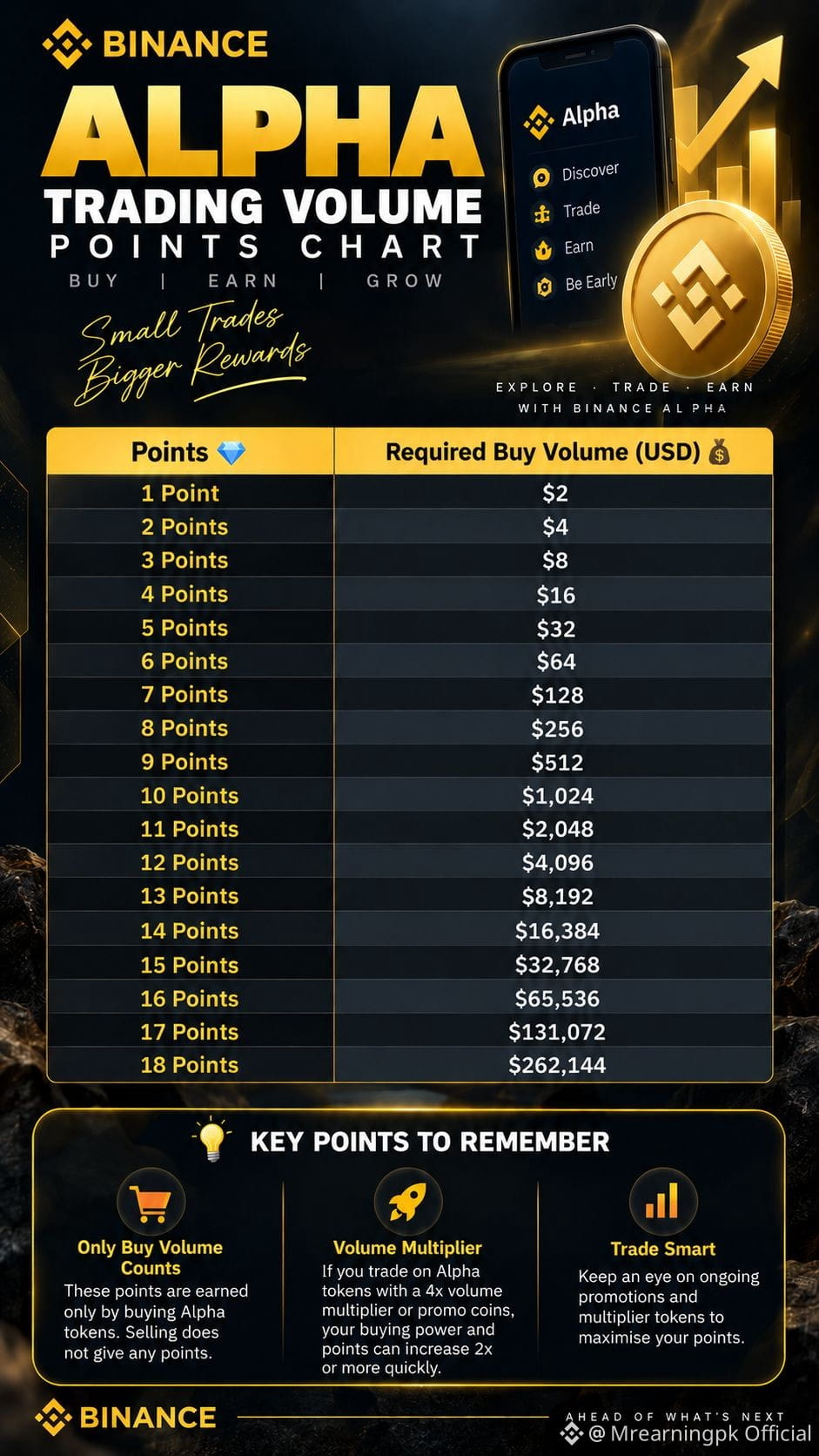
🔥 Binance Alpha Trading Volume Points Chart 💎
Want to know how much Buy Volume you need for each Alpha Point? 👀
📊 1 Point → $2
📊 2 Points → $4
📊 3 Points → $8
📊 4 Points → $16
📊 5 Points → $32
📊 6 Points → $64
📊 7 Points → $128
📊 8 Points → $256
📊 9 Points → $512
📊 10 Points → $1,024
📈 11 Points → $2,048
📈 12 Points → $4,096
📈 13 Points → $8,192
📈 14 Points → $16,384
📈 15 Points → $32,768
📈 16 Points → $65,536
📈 17 Points → $131,072
📈 18 Points → $262,144
⚠️ Important:
Only BUY volume counts for these points. Selling does not give points.
💡 If an Alpha token has a volume multiplier, your buying power can increase and help you earn points faster.
📸 Full chart attached above.
How many Alpha Points are you currently targeting? 👇
🔥 Binance Alpha Trading Volume Points Chart 💎
Want to know how much Buy Volume you need for each Alpha Point? 👀
📊 1 Point → $2
📊 2 Points → $4
📊 3 Points → $8
📊 4 Points → $16
📊 5 Points → $32
📊 6 Points → $64
📊 7 Points → $128
📊 8 Points → $256
📊 9 Points → $512
📊 10 Points → $1,024
📈 11 Points → $2,048
📈 12 Points → $4,096
📈 13 Points → $8,192
📈 14 Points → $16,384
📈 15 Points → $32,768
📈 16 Points → $65,536
📈 17 Points → $131,072
📈 18 Points → $262,144
⚠️ Important:
Only BUY volume counts for these points. Selling does not give points.
💡 If an Alpha token has a volume multiplier, your buying power can increase and help you earn points faster.
📸 Full chart attached above.
How many Alpha Points are you currently targeting? 👇
Want to know how much Buy Volume you need for each Alpha Point? 👀
📊 1 Point → $2
📊 2 Points → $4
📊 3 Points → $8
📊 4 Points → $16
📊 5 Points → $32
📊 6 Points → $64
📊 7 Points → $128
📊 8 Points → $256
📊 9 Points → $512
📊 10 Points → $1,024
📈 11 Points → $2,048
📈 12 Points → $4,096
📈 13 Points → $8,192
📈 14 Points → $16,384
📈 15 Points → $32,768
📈 16 Points → $65,536
📈 17 Points → $131,072
📈 18 Points → $262,144
⚠️ Important:
Only BUY volume counts for these points. Selling does not give points.
💡 If an Alpha token has a volume multiplier, your buying power can increase and help you earn points faster.
📸 Full chart attached above.
How many Alpha Points are you currently targeting? 👇
2
71
ເບິ່ງການແປ
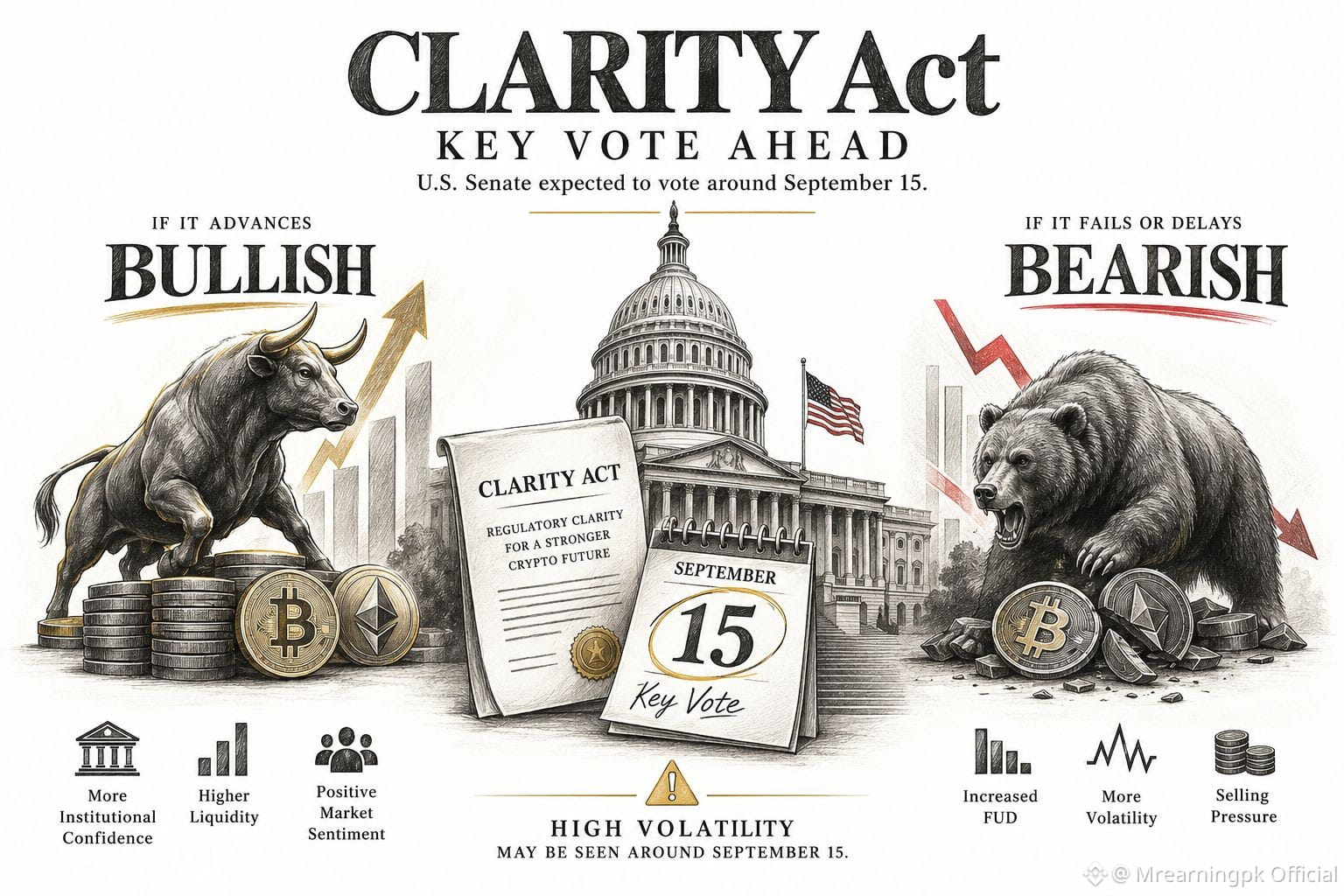
🚨 MARKET IMPORTANT UPDATE: CLARITY Act & September 15 🇺🇸
The next few days could be very important for the crypto market as the U.S. Senate is expected to hold a crucial procedural vote on the CLARITY Act around September 15. 👀
📈 BULLISH SCENARIO:
If the bill successfully advances, regulatory clarity could improve, potentially boosting institutional confidence, liquidity and overall crypto market sentiment. 🚀
📉 BEARISH SCENARIO:
If the vote fails or gets delayed, short-term disappointment could trigger increased FUD, volatility and selling pressure. 📉
💡 OUR PLAN:
For now, it’s a “Wait & Watch” situation. 👀
⚠️ High volatility may be seen around September 15, so always use a proper Stop Loss and avoid high leverage in Futures.
The market can move in either direction — manage your risk accordingly. 📊
What do you think — Bullish 🚀 or Bearish 📉?
🚨 MARKET IMPORTANT UPDATE: CLARITY Act & September 15 🇺🇸
The next few days could be very important for the crypto market as the U.S. Senate is expected to hold a crucial procedural vote on the CLARITY Act around September 15. 👀
📈 BULLISH SCENARIO:
If the bill successfully advances, regulatory clarity could improve, potentially boosting institutional confidence, liquidity and overall crypto market sentiment. 🚀
📉 BEARISH SCENARIO:
If the vote fails or gets delayed, short-term disappointment could trigger increased FUD, volatility and selling pressure. 📉
💡 OUR PLAN:
For now, it’s a “Wait & Watch” situation. 👀
⚠️ High volatility may be seen around September 15, so always use a proper Stop Loss and avoid high leverage in Futures.
The market can move in either direction — manage your risk accordingly. 📊
What do you think — Bullish 🚀 or Bearish 📉?
The next few days could be very important for the crypto market as the U.S. Senate is expected to hold a crucial procedural vote on the CLARITY Act around September 15. 👀
📈 BULLISH SCENARIO:
If the bill successfully advances, regulatory clarity could improve, potentially boosting institutional confidence, liquidity and overall crypto market sentiment. 🚀
📉 BEARISH SCENARIO:
If the vote fails or gets delayed, short-term disappointment could trigger increased FUD, volatility and selling pressure. 📉
💡 OUR PLAN:
For now, it’s a “Wait & Watch” situation. 👀
⚠️ High volatility may be seen around September 15, so always use a proper Stop Loss and avoid high leverage in Futures.
The market can move in either direction — manage your risk accordingly. 📊
What do you think — Bullish 🚀 or Bearish 📉?
1
79
ເບິ່ງການແປ
🔥 $XAUT Short Entry — 2 Parts:
📍 Entry Zone: 4432 - 4450
Gold is currently in a short setup. I’m using 2 entries within this zone instead of entering the full position at once.
🎯 Targets:
1️⃣ 4400
2️⃣ 4375
3️⃣ 4350
4️⃣ 4300
🛑 SL: 4510
📌 Trade Management:
If price enters the zone, take the short position in 2 parts and manage the position according to the targets.
⚠️ Risk management is important. Don’t over-leverage and always use a proper stop-loss.
🔥 $XAUT Short Entry — 2 Parts:
📍 Entry Zone: 4432 - 4450
Gold is currently in a short setup. I’m using 2 entries within this zone instead of entering the full position at once.
🎯 Targets:
1️⃣ 4400
2️⃣ 4375
3️⃣ 4350
4️⃣ 4300
🛑 SL: 4510
📌 Trade Management:
If price enters the zone, take the short position in 2 parts and manage the position according to the targets.
⚠️ Risk management is important. Don’t over-leverage and always use a proper stop-loss.
📍 Entry Zone: 4432 - 4450
Gold is currently in a short setup. I’m using 2 entries within this zone instead of entering the full position at once.
🎯 Targets:
1️⃣ 4400
2️⃣ 4375
3️⃣ 4350
4️⃣ 4300
🛑 SL: 4510
📌 Trade Management:
If price enters the zone, take the short position in 2 parts and manage the position according to the targets.
⚠️ Risk management is important. Don’t over-leverage and always use a proper stop-loss.
1
167
ເບິ່ງການແປ
🚨 Binance Alpha New Campaign Today | Get 5 Alpha Points FREE on Event Meme Wallet 🎁
Binance has launched a new Alpha campaign for both new and existing users. 👀
📅 Campaign: 3 Sep – 9 Sep 2026
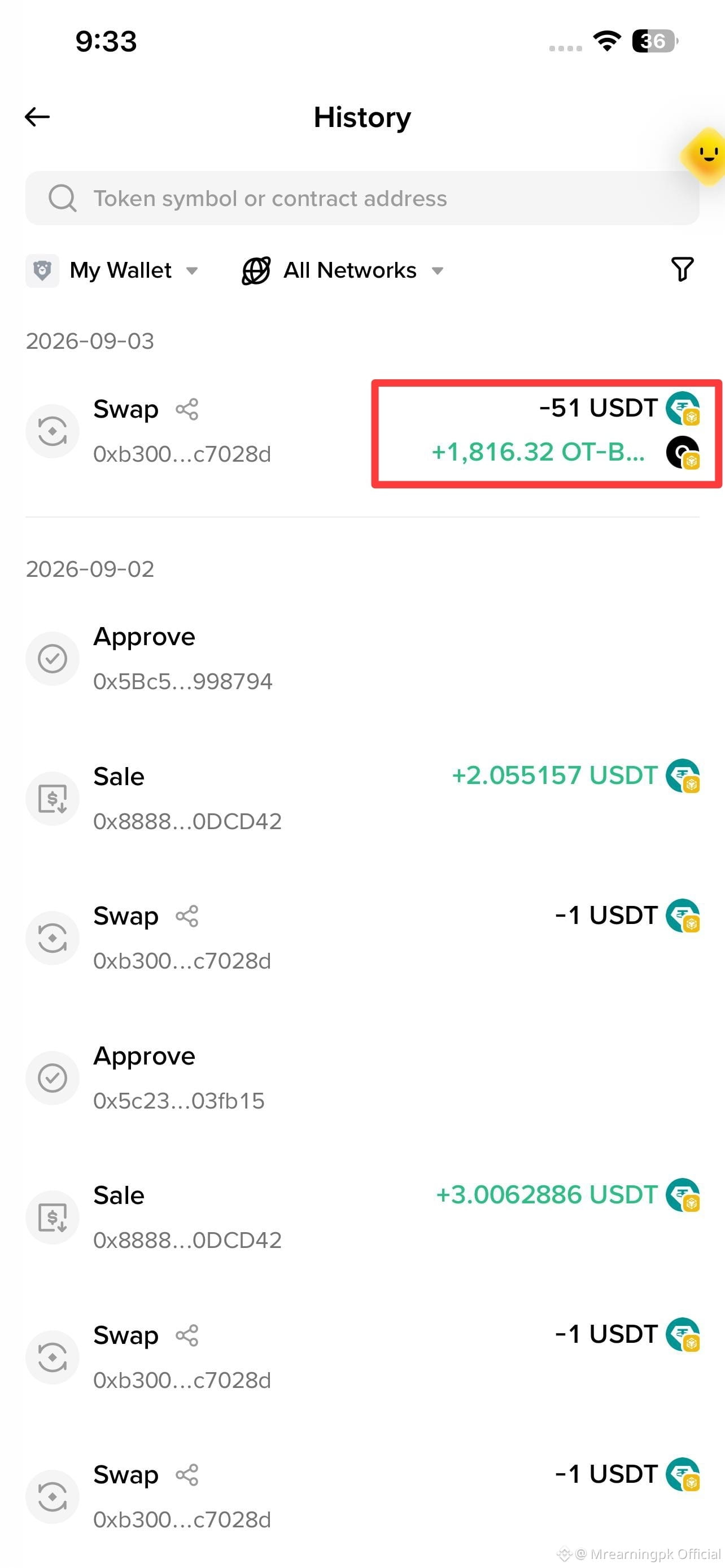
I personally tested the complete process with a $51 USDT transaction, and here’s what I found. 👇
To get the 5 extra Alpha Points:
✅ You must have at least 1 Alpha Point before trading
✅ Make a single trade of at least $50
✅ Complete the trade during the campaign period
✅ 5 Alpha Points will be credited the next day
⚠️ VERY IMPORTANT:
The $50 trade must be done in ONE transaction.
$10 + $10 + $10 + $20 will NOT count. ❌
📌 This task can only be completed once during the campaign.
Now here’s my actual result:
💰 I bought the position with $51 USDT
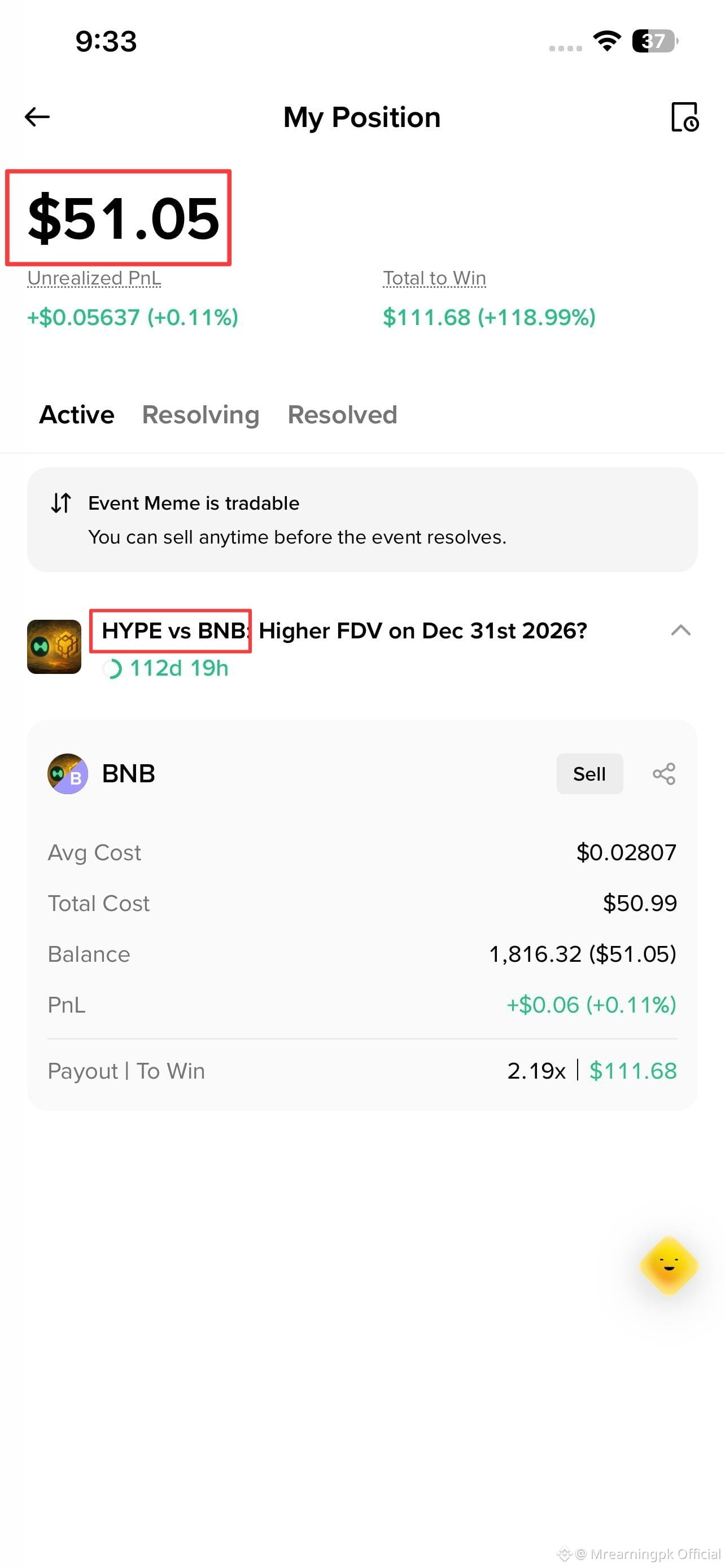
📊 Total Cost — $50.99
🪙 Position — 1,816.32 BNB
💵 Current Value — $51.05
I did NOT sell the position immediately.
Why?
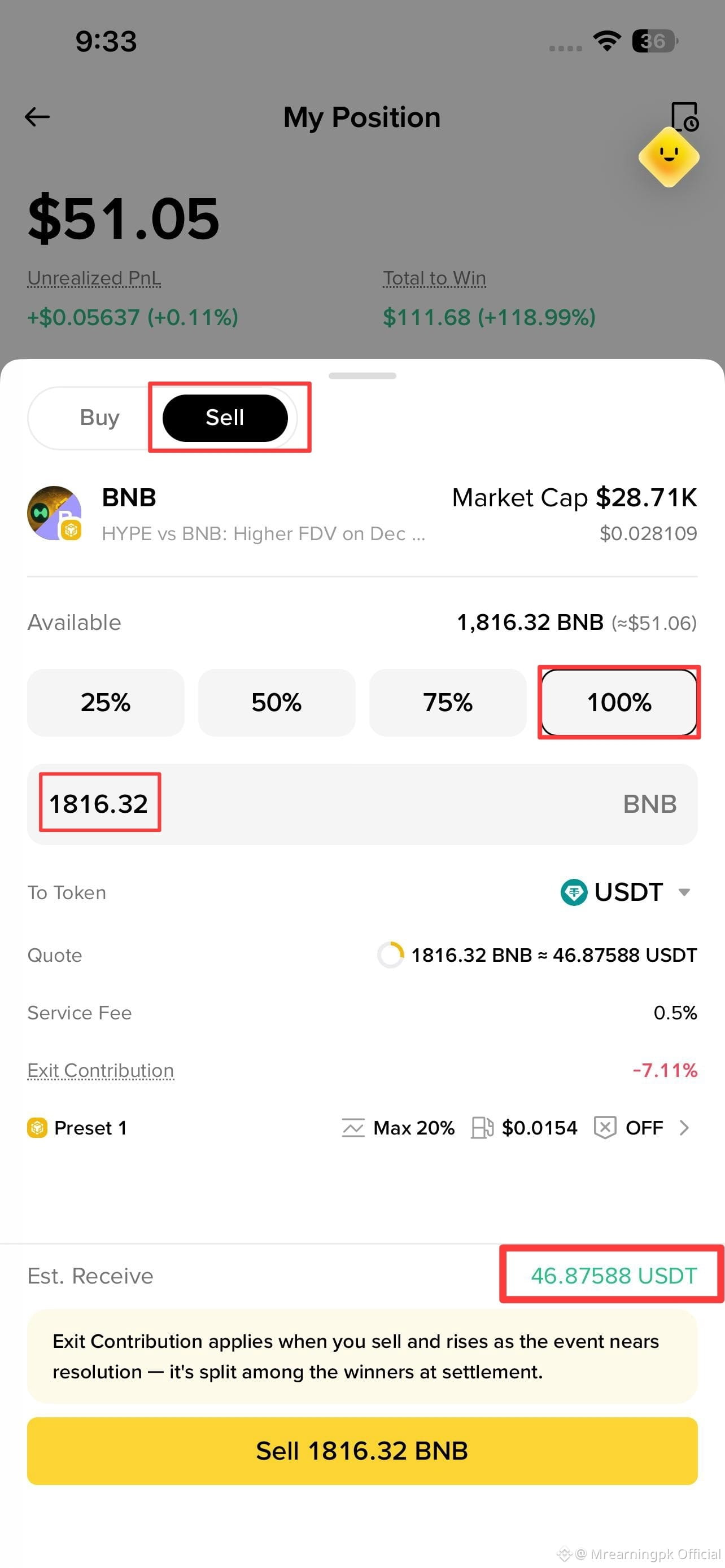
Because when I checked the sell screen, the deduction was quite high. ⚠️
💵 Estimated Receive — $46.87588 USDT
💸 Service Fee — 0.5%
📉 Exit Contribution — -7.11%
So even though my position was around $51.05, the estimated amount I would receive after selling was only $46.87588.
That’s why I decided to hold instead of selling immediately.
⚠️ My point is simple:
Before you trade just to complete this task, make sure you understand the requirements, trading costs and the amount you may actually receive when selling.
I tested it myself so you can see the actual result before deciding whether you want to participate.
🎁 Reward — 5 Extra Alpha Points
📌 Minimum Alpha Points Before Trade — 1
💰 Minimum Trade — $50 in ONE transaction
⏰ Points — Credited the next day
❌ 0 Alpha Points = No reward
❌ Multiple small trades = Won’t count
This is my personal experience after testing the task myself. Do your own calculation and understand the costs before trading. ⚠️
👀 Are you going to complete this Binance Alpha task? Let me know your thoughts below. 👇
🚨 Binance Alpha New Campaign Today | Get 5 Alpha Points FREE on Event Meme Wallet 🎁
Binance has launched a new Alpha campaign for both new and existing users. 👀
📅 Campaign: 3 Sep – 9 Sep 2026
I personally tested the complete process with a $51 USDT transaction, and here’s what I found. 👇
To get the 5 extra Alpha Points:
✅ You must have at least 1 Alpha Point before trading
✅ Make a single trade of at least $50
✅ Complete the trade during the campaign period
✅ 5 Alpha Points will be credited the next day
⚠️ VERY IMPORTANT:
The $50 trade must be done in ONE transaction.
$10 + $10 + $10 + $20 will NOT count. ❌
📌 This task can only be completed once during the campaign.
Now here’s my actual result:
💰 I bought the position with $51 USDT
📊 Total Cost — $50.99
🪙 Position — 1,816.32 BNB
💵 Current Value — $51.05
I did NOT sell the position immediately.
Why?
Because when I checked the sell screen, the deduction was quite high. ⚠️
💵 Estimated Receive — $46.87588 USDT
💸 Service Fee — 0.5%
📉 Exit Contribution — -7.11%
So even though my position was around $51.05, the estimated amount I would receive after selling was only $46.87588.
That’s why I decided to hold instead of selling immediately.
⚠️ My point is simple:
Before you trade just to complete this task, make sure you understand the requirements, trading costs and the amount you may actually receive when selling.
I tested it myself so you can see the actual result before deciding whether you want to participate.
🎁 Reward — 5 Extra Alpha Points
📌 Minimum Alpha Points Before Trade — 1
💰 Minimum Trade — $50 in ONE transaction
⏰ Points — Credited the next day
❌ 0 Alpha Points = No reward
❌ Multiple small trades = Won’t count
This is my personal experience after testing the task myself. Do your own calculation and understand the costs before trading. ⚠️
👀 Are you going to complete this Binance Alpha task? Let me know your thoughts below. 👇
Binance has launched a new Alpha campaign for both new and existing users. 👀
📅 Campaign: 3 Sep – 9 Sep 2026
I personally tested the complete process with a $51 USDT transaction, and here’s what I found. 👇
To get the 5 extra Alpha Points:
✅ You must have at least 1 Alpha Point before trading
✅ Make a single trade of at least $50
✅ Complete the trade during the campaign period
✅ 5 Alpha Points will be credited the next day
⚠️ VERY IMPORTANT:
The $50 trade must be done in ONE transaction.
$10 + $10 + $10 + $20 will NOT count. ❌
📌 This task can only be completed once during the campaign.
Now here’s my actual result:
💰 I bought the position with $51 USDT
📊 Total Cost — $50.99
🪙 Position — 1,816.32 BNB
💵 Current Value — $51.05
I did NOT sell the position immediately.
Why?
Because when I checked the sell screen, the deduction was quite high. ⚠️
💵 Estimated Receive — $46.87588 USDT
💸 Service Fee — 0.5%
📉 Exit Contribution — -7.11%
So even though my position was around $51.05, the estimated amount I would receive after selling was only $46.87588.
That’s why I decided to hold instead of selling immediately.
⚠️ My point is simple:
Before you trade just to complete this task, make sure you understand the requirements, trading costs and the amount you may actually receive when selling.
I tested it myself so you can see the actual result before deciding whether you want to participate.
🎁 Reward — 5 Extra Alpha Points
📌 Minimum Alpha Points Before Trade — 1
💰 Minimum Trade — $50 in ONE transaction
⏰ Points — Credited the next day
❌ 0 Alpha Points = No reward
❌ Multiple small trades = Won’t count
This is my personal experience after testing the task myself. Do your own calculation and understand the costs before trading. ⚠️
👀 Are you going to complete this Binance Alpha task? Let me know your thoughts below. 👇
1
203
ເບິ່ງການແປ
📍 #BITCOIN
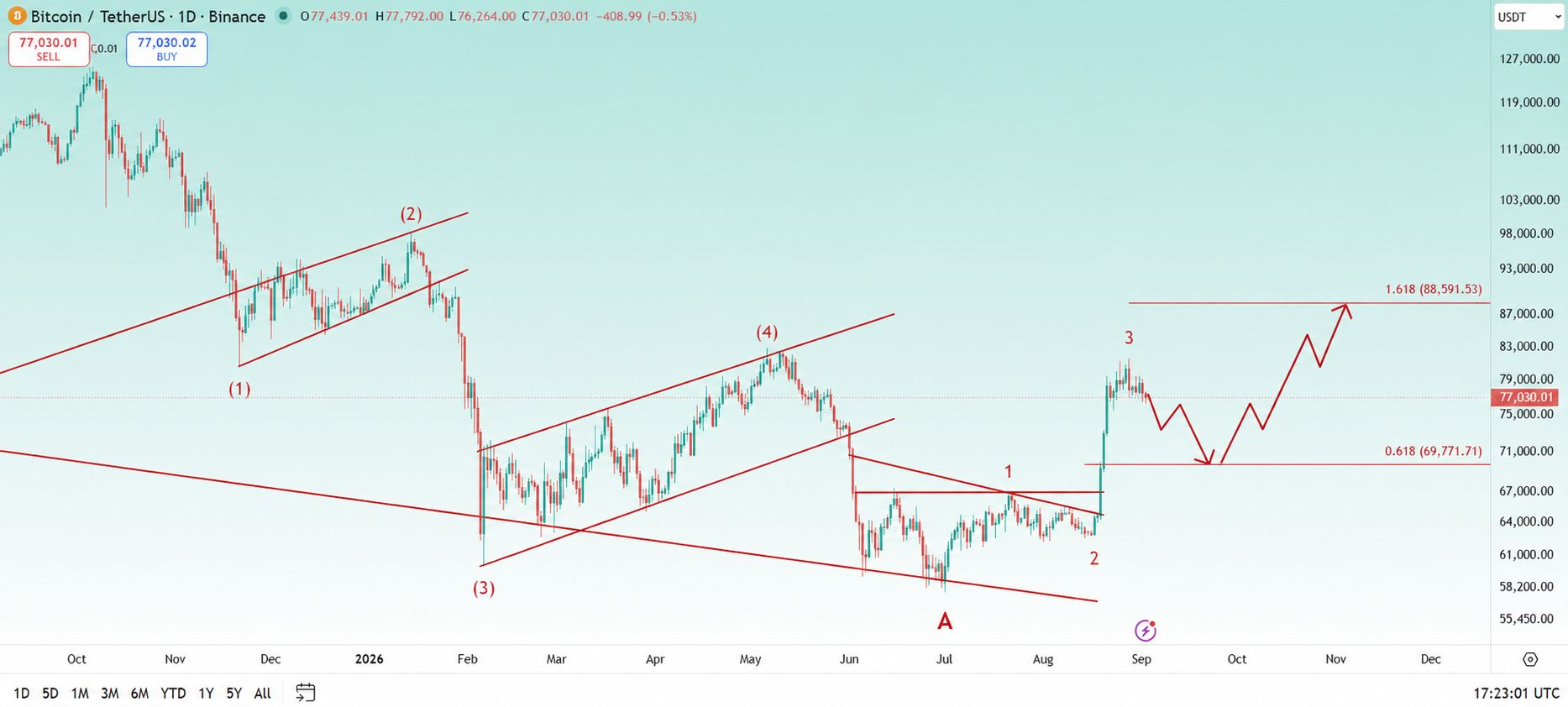
👉 In my view, Bitcoin is currently moving through a five-wave cycle.
I believe Wave 3 was completed around the $81K high, and $BTC is now going through a Wave 4 correction. 📉
For now, I expect this correction to continue toward the $70K area before the next major move.
If the structure plays out as expected, I’m looking for an upward impulse wave toward the $88K level. 📈🔥
Key levels I’m watching:
🔴 $81K — Wave 3 high
📉 ~$70K — Expected Wave 4 target
🚀 ~$88K — Potential next impulse target
This is just my current market view, not financial advice. Always do your own research before making any trade. ⚠️
📍 #BITCOIN
👉 In my view, Bitcoin is currently moving through a five-wave cycle.
I believe Wave 3 was completed around the $81K high, and $BTC is now going through a Wave 4 correction. 📉
For now, I expect this correction to continue toward the $70K area before the next major move.
If the structure plays out as expected, I’m looking for an upward impulse wave toward the $88K level. 📈🔥
Key levels I’m watching:
🔴 $81K — Wave 3 high
📉 ~$70K — Expected Wave 4 target
🚀 ~$88K — Potential next impulse target
This is just my current market view, not financial advice. Always do your own research before making any trade. ⚠️
👉 In my view, Bitcoin is currently moving through a five-wave cycle.
I believe Wave 3 was completed around the $81K high, and $BTC is now going through a Wave 4 correction. 📉
For now, I expect this correction to continue toward the $70K area before the next major move.
If the structure plays out as expected, I’m looking for an upward impulse wave toward the $88K level. 📈🔥
Key levels I’m watching:
🔴 $81K — Wave 3 high
📉 ~$70K — Expected Wave 4 target
🚀 ~$88K — Potential next impulse target
This is just my current market view, not financial advice. Always do your own research before making any trade. ⚠️
1
60
ເບິ່ງການແປ
⚠️ $BTC Is Looking Very Weak Here. BTC has once again been rejected from the $79K–$79.2K resistance zone, while sellers are slowly starting to take control. 📉
On lower timeframes, we’re also seeing a pattern of lower highs, which is another sign that buyers are losing momentum. 👀
Historically, September has often been one of the weakest months for $BTC, so this is definitely an area worth watching closely.
Right now, $BTC is still moving inside this consolidation phase.
But if this range breaks to the downside, things could move quickly. 🚨
A deeper correction toward the $60K region could come into play, especially since that’s around the area where the recent pump started.
For now, I’m watching:
🔴 $79K–$79.2K — Key resistance
📉 Lower highs — Weakness on lower timeframes Consolidation breakdown — Key trigger 🎯 $60K — Major downside area to watch
Nothing is guaranteed in the market. But if sellers continue to gain control, the downside could get aggressive. 👀📉
What do you think?
🔥 $BTC breaks down? Or do buyers step in and reclaim $79K?
Share your view below. 👇
⚠️ $BTC Is Looking Very Weak Here. BTC has once again been rejected from the $79K–$79.2K resistance zone, while sellers are slowly starting to take control. 📉
On lower timeframes, we’re also seeing a pattern of lower highs, which is another sign that buyers are losing momentum. 👀
Historically, September has often been one of the weakest months for $BTC , so this is definitely an area worth watching closely.
Right now, $BTC is still moving inside this consolidation phase.
But if this range breaks to the downside, things could move quickly. 🚨
A deeper correction toward the $60K region could come into play, especially since that’s around the area where the recent pump started.
For now, I’m watching:
🔴 $79K–$79.2K — Key resistance
📉 Lower highs — Weakness on lower timeframes Consolidation breakdown — Key trigger 🎯 $60K — Major downside area to watch
Nothing is guaranteed in the market. But if sellers continue to gain control, the downside could get aggressive. 👀📉
What do you think?
🔥 $BTC breaks down? Or do buyers step in and reclaim $79K?
Share your view below. 👇
On lower timeframes, we’re also seeing a pattern of lower highs, which is another sign that buyers are losing momentum. 👀
Historically, September has often been one of the weakest months for $BTC , so this is definitely an area worth watching closely.
Right now, $BTC is still moving inside this consolidation phase.
But if this range breaks to the downside, things could move quickly. 🚨
A deeper correction toward the $60K region could come into play, especially since that’s around the area where the recent pump started.
For now, I’m watching:
🔴 $79K–$79.2K — Key resistance
📉 Lower highs — Weakness on lower timeframes Consolidation breakdown — Key trigger 🎯 $60K — Major downside area to watch
Nothing is guaranteed in the market. But if sellers continue to gain control, the downside could get aggressive. 👀📉
What do you think?
🔥 $BTC breaks down? Or do buyers step in and reclaim $79K?
Share your view below. 👇
1
2
109
ເບິ່ງການແປ
After spending several days studying Dusk architecture, my biggest concern isn’t the mathematical elegance of ZK. It’s the far less glamorous and potentially more painful layered” business logic.
In regulated finance, hiding the transaction amount is only the beginning. The real challenge is fitting securities law, corporate law, tax requirements, and other compliance rules into a confidential smart contract.
Phoenix locks transaction details inside a black box, Moonlight enables transparent account interactions, while Citadel lets regulators “peek” when necessary. On paper, XSC can embed transfer restrictions, accredited-investor checks, mandatory lock-up periods, and other compliance requirements directly into an asset’s attributes.
But real-world finance is rarely that clean.
A compliant security token may need to handle dividends, voting rights, stock splits, mandatory buybacks, court-ordered freezes, and other edge cases. As these requirements stack up, does the underlying ZK circuitry become too complicated? Could gas costs eventually discourage institutions?
There’s an even bigger question: laws can change; code doesn’t.
If regulators suddenly require disclosure of a new category of counterparties, can @Dusk_Foundation cryptographically enforced “hard rules” adapt quickly enough? If every major regulatory change requires a hard fork, how different is that from a traditional centralized clearinghouse?
That’s what I’m most interested in seeing.
The real test isn’t how smoothly it runs on a testnet. It’s whether the first genuinely complex, compliance-heavy financial product can go live without errors, delays, or exposing sensitive information.
That will determine whether Dusk remains an “experiment” or becomes actual financial infrastructure.
$DUSK #dusk
After spending several days studying Dusk architecture, my biggest concern isn’t the mathematical elegance of ZK. It’s the far less glamorous and potentially more painful layered” business logic.
In regulated finance, hiding the transaction amount is only the beginning. The real challenge is fitting securities law, corporate law, tax requirements, and other compliance rules into a confidential smart contract.
Phoenix locks transaction details inside a black box, Moonlight enables transparent account interactions, while Citadel lets regulators “peek” when necessary. On paper, XSC can embed transfer restrictions, accredited-investor checks, mandatory lock-up periods, and other compliance requirements directly into an asset’s attributes.
But real-world finance is rarely that clean.
A compliant security token may need to handle dividends, voting rights, stock splits, mandatory buybacks, court-ordered freezes, and other edge cases. As these requirements stack up, does the underlying ZK circuitry become too complicated? Could gas costs eventually discourage institutions?
There’s an even bigger question: laws can change; code doesn’t.
If regulators suddenly require disclosure of a new category of counterparties, can @Dusk cryptographically enforced “hard rules” adapt quickly enough? If every major regulatory change requires a hard fork, how different is that from a traditional centralized clearinghouse?
That’s what I’m most interested in seeing.
The real test isn’t how smoothly it runs on a testnet. It’s whether the first genuinely complex, compliance-heavy financial product can go live without errors, delays, or exposing sensitive information.
That will determine whether Dusk remains an “experiment” or becomes actual financial infrastructure.
$DUSK #dusk
In regulated finance, hiding the transaction amount is only the beginning. The real challenge is fitting securities law, corporate law, tax requirements, and other compliance rules into a confidential smart contract.
Phoenix locks transaction details inside a black box, Moonlight enables transparent account interactions, while Citadel lets regulators “peek” when necessary. On paper, XSC can embed transfer restrictions, accredited-investor checks, mandatory lock-up periods, and other compliance requirements directly into an asset’s attributes.
But real-world finance is rarely that clean.
A compliant security token may need to handle dividends, voting rights, stock splits, mandatory buybacks, court-ordered freezes, and other edge cases. As these requirements stack up, does the underlying ZK circuitry become too complicated? Could gas costs eventually discourage institutions?
There’s an even bigger question: laws can change; code doesn’t.
If regulators suddenly require disclosure of a new category of counterparties, can @Dusk cryptographically enforced “hard rules” adapt quickly enough? If every major regulatory change requires a hard fork, how different is that from a traditional centralized clearinghouse?
That’s what I’m most interested in seeing.
The real test isn’t how smoothly it runs on a testnet. It’s whether the first genuinely complex, compliance-heavy financial product can go live without errors, delays, or exposing sensitive information.
That will determine whether Dusk remains an “experiment” or becomes actual financial infrastructure.
$DUSK #dusk
1
84
ເບິ່ງການແປ
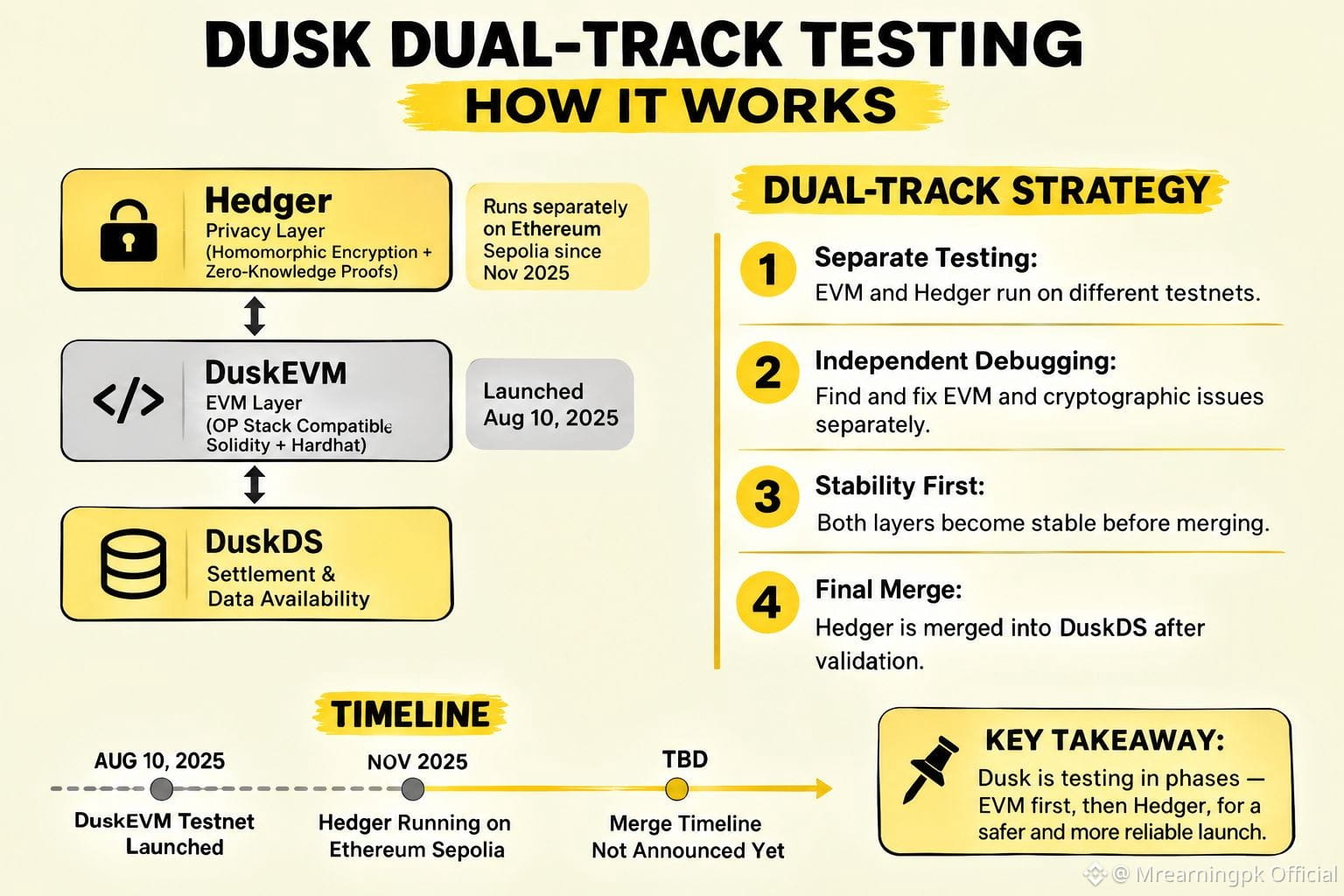
A couple of days ago, while scrolling through X, I came across a post about the DuskEVM testnet, and one detail caught my attention. On August 10, DuskEVM testnet went live, Solidity and Hardhat were running smoothly, but Hedger, the core confidential contract engine, has been running separately on Ethereum Sepolia testnet since November 2025. The official team has still not announced when the two will be merged.
When people see this 9-month gap, the first reaction is concern. A privacy-focused chain having its privacy layer and EVM layer tested separately might sound unusual.
But after going through the technical documentation, I started thinking that this dual-track testing could actually be an underestimated choice in Dusk's architecture. Dusk's stack is layered. #Dusk handles settlement and data availability, DuskEVM is the EVM layer, and Hedger is the privacy layer using homomorphic encryption and zero-knowledge proofs.
If all three layers were tested together, a cryptography bug and a contract bug could become difficult to distinguish. Testing them separately allows the team to get the EVM layer running first, let developers deploy applications, then validate Hedger separately on Sepolia, and finally merge it back into $DUSK . This makes the debugging process much clearer.
I'm not sure whether this judgment is correct. It's also possible that protocol conflicts could appear during the final merge and require some previous work to be redone. Modularity sounds good, but engineering always comes with coordination costs.
But from another angle, institutional clients are more afraid of something breaking than something being slow. A phased rollout can be more trustworthy than pushing everything at once and then having to roll back.
Launching the EVM first and merging Hedger after proper validation could simply be a way of making sure the foundation is solid.
What do you guys think about this dual-track testing strategy? I want to hear everyone's opinion.@Dusk_Foundation
A couple of days ago, while scrolling through X, I came across a post about the DuskEVM testnet, and one detail caught my attention. On August 10, DuskEVM testnet went live, Solidity and Hardhat were running smoothly, but Hedger, the core confidential contract engine, has been running separately on Ethereum Sepolia testnet since November 2025. The official team has still not announced when the two will be merged.
When people see this 9-month gap, the first reaction is concern. A privacy-focused chain having its privacy layer and EVM layer tested separately might sound unusual.
But after going through the technical documentation, I started thinking that this dual-track testing could actually be an underestimated choice in Dusk's architecture. Dusk's stack is layered. #Dusk handles settlement and data availability, DuskEVM is the EVM layer, and Hedger is the privacy layer using homomorphic encryption and zero-knowledge proofs.
If all three layers were tested together, a cryptography bug and a contract bug could become difficult to distinguish. Testing them separately allows the team to get the EVM layer running first, let developers deploy applications, then validate Hedger separately on Sepolia, and finally merge it back into $DUSK . This makes the debugging process much clearer.
I'm not sure whether this judgment is correct. It's also possible that protocol conflicts could appear during the final merge and require some previous work to be redone. Modularity sounds good, but engineering always comes with coordination costs.
But from another angle, institutional clients are more afraid of something breaking than something being slow. A phased rollout can be more trustworthy than pushing everything at once and then having to roll back.
Launching the EVM first and merging Hedger after proper validation could simply be a way of making sure the foundation is solid.
What do you guys think about this dual-track testing strategy? I want to hear everyone's opinion.@Dusk
When people see this 9-month gap, the first reaction is concern. A privacy-focused chain having its privacy layer and EVM layer tested separately might sound unusual.
But after going through the technical documentation, I started thinking that this dual-track testing could actually be an underestimated choice in Dusk's architecture. Dusk's stack is layered. #Dusk handles settlement and data availability, DuskEVM is the EVM layer, and Hedger is the privacy layer using homomorphic encryption and zero-knowledge proofs.
If all three layers were tested together, a cryptography bug and a contract bug could become difficult to distinguish. Testing them separately allows the team to get the EVM layer running first, let developers deploy applications, then validate Hedger separately on Sepolia, and finally merge it back into $DUSK . This makes the debugging process much clearer.
I'm not sure whether this judgment is correct. It's also possible that protocol conflicts could appear during the final merge and require some previous work to be redone. Modularity sounds good, but engineering always comes with coordination costs.
But from another angle, institutional clients are more afraid of something breaking than something being slow. A phased rollout can be more trustworthy than pushing everything at once and then having to roll back.
Launching the EVM first and merging Hedger after proper validation could simply be a way of making sure the foundation is solid.
What do you guys think about this dual-track testing strategy? I want to hear everyone's opinion.@Dusk
1
80
·
--
ສັນຍານໝີ
ເບິ່ງການແປ
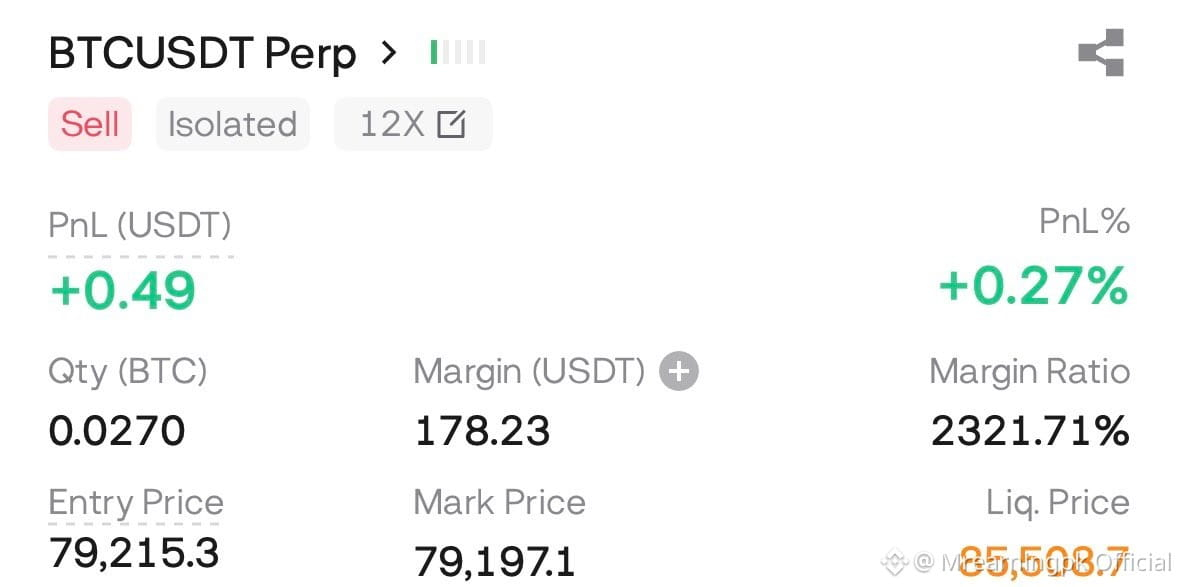
BTC/USDT SHORT – OPEN
A short trade has been placed on BTC/USDT from the price action and rejection happening on the 79K-80K level.
Trade Details
• Entry Point: 79,215.3
• Position Type: Short
• Leverage: 12X Isolated
• Amount of Trade: 0.027 BTC
• Margin: 178.23 USDT
• Mark Price: 79,197.1
The trade will be managed based on the price action and risk.
DYOR – Do Your Own Research.
This is a personal trade set up, not financial advice. Trade at your own risk.
#bitcoin
BTC/USDT SHORT – OPEN
A short trade has been placed on BTC/USDT from the price action and rejection happening on the 79K-80K level.
Trade Details
• Entry Point: 79,215.3
• Position Type: Short
• Leverage: 12X Isolated
• Amount of Trade: 0.027 BTC
• Margin: 178.23 USDT
• Mark Price: 79,197.1
The trade will be managed based on the price action and risk.
DYOR – Do Your Own Research.
This is a personal trade set up, not financial advice. Trade at your own risk.
#bitcoin
A short trade has been placed on BTC/USDT from the price action and rejection happening on the 79K-80K level.
Trade Details
• Entry Point: 79,215.3
• Position Type: Short
• Leverage: 12X Isolated
• Amount of Trade: 0.027 BTC
• Margin: 178.23 USDT
• Mark Price: 79,197.1
The trade will be managed based on the price action and risk.
DYOR – Do Your Own Research.
This is a personal trade set up, not financial advice. Trade at your own risk.
#bitcoin
1
248
ເບິ່ງການແປ
Big capital fears not that the market fails to understand, but that the market understands its own moves.
Watching #dusk institutional DeFi design, I pictured a realistic case an institutional account plans to buy a large asset in batches. Before the order fills, outsiders already deduce its intent from public trade data. Quotes, front-running and liquidity shifts follow at once.
Thus @Dusk_Foundation focus on private trading and large block matching makes sense. Yet the real interest lies beyond a simple “invisible” market.
Phoenix hides transaction data protecting amounts, balances and relationships while Zedger brings identity, eligibility and trading rules on chain. In short, Dusk separates “market invisibility” from “rule verifiability.”
This split is crucial.
Public chains are overly transparent: others see results and reverse engineer strategies from on chain data. Pure anonymity hides trades but collides with KYC, AML and source of funds checks for institutions.
Dusk aims for the middle ground: strategies stay private, yet compliance can be proven.
You need not reveal holdings or trade plans to the market, but can still prove eligibility or share required data with authorized parties when needed.
It sounds elegant, yet the hardest problems remain unsolved.
I care less whether $DUSK can build a dark pool than whether it can embed privacy, auditability and liquidity three forces that tug against one another into one market structure.
Privacy without depth yields only a polished black box compliance without strategy protection returns us to traditional finance.
The truly compelling outcome would be institutions finally willing to move large trades fully on chain.
What do you think is the first real barrier for institutions privacy, or deep enough liquidity?
#dusk $DUSK @Dusk_Foundation
Big capital fears not that the market fails to understand, but that the market understands its own moves.
Watching #dusk institutional DeFi design, I pictured a realistic case an institutional account plans to buy a large asset in batches. Before the order fills, outsiders already deduce its intent from public trade data. Quotes, front-running and liquidity shifts follow at once.
Thus @Dusk focus on private trading and large block matching makes sense. Yet the real interest lies beyond a simple “invisible” market.
Phoenix hides transaction data protecting amounts, balances and relationships while Zedger brings identity, eligibility and trading rules on chain. In short, Dusk separates “market invisibility” from “rule verifiability.”
This split is crucial.
Public chains are overly transparent: others see results and reverse engineer strategies from on chain data. Pure anonymity hides trades but collides with KYC, AML and source of funds checks for institutions.
Dusk aims for the middle ground: strategies stay private, yet compliance can be proven.
You need not reveal holdings or trade plans to the market, but can still prove eligibility or share required data with authorized parties when needed.
It sounds elegant, yet the hardest problems remain unsolved.
I care less whether $DUSK can build a dark pool than whether it can embed privacy, auditability and liquidity three forces that tug against one another into one market structure.
Privacy without depth yields only a polished black box compliance without strategy protection returns us to traditional finance.
The truly compelling outcome would be institutions finally willing to move large trades fully on chain.
What do you think is the first real barrier for institutions privacy, or deep enough liquidity?
#dusk $DUSK @Dusk
Watching #dusk institutional DeFi design, I pictured a realistic case an institutional account plans to buy a large asset in batches. Before the order fills, outsiders already deduce its intent from public trade data. Quotes, front-running and liquidity shifts follow at once.
Thus @Dusk focus on private trading and large block matching makes sense. Yet the real interest lies beyond a simple “invisible” market.
Phoenix hides transaction data protecting amounts, balances and relationships while Zedger brings identity, eligibility and trading rules on chain. In short, Dusk separates “market invisibility” from “rule verifiability.”
This split is crucial.
Public chains are overly transparent: others see results and reverse engineer strategies from on chain data. Pure anonymity hides trades but collides with KYC, AML and source of funds checks for institutions.
Dusk aims for the middle ground: strategies stay private, yet compliance can be proven.
You need not reveal holdings or trade plans to the market, but can still prove eligibility or share required data with authorized parties when needed.
It sounds elegant, yet the hardest problems remain unsolved.
I care less whether $DUSK can build a dark pool than whether it can embed privacy, auditability and liquidity three forces that tug against one another into one market structure.
Privacy without depth yields only a polished black box compliance without strategy protection returns us to traditional finance.
The truly compelling outcome would be institutions finally willing to move large trades fully on chain.
What do you think is the first real barrier for institutions privacy, or deep enough liquidity?
#dusk $DUSK @Dusk
74
ເບິ່ງການແປ
Wow, what a long wait! Airdrop results for TermMax have been announced this evening.
Finally, the long-awaited results have been announced!
Now I'm doing some calculations. The current market cap of TermMax is estimated at $180 million, with a supply of 1 billion tokens. 1% equals to 1.8 million USDT. Already boosters got 0.2%, and if Alpha gets another 0.8%, the pool will amount to 1.44 million USDT. 50,000 participants means that each one will receive around 30 USDT.
Therefore, I don't think that it is urgent to farm airdrops at the moment. If the minimum threshold is indeed 200-220 points, then there might be no sense in trying to get more. Nevertheless, taking into account that the current TVL has reached 90 million USDT, while the number of registered wallets is 1.5 million and 90,000 daily active users, it is not unlikely that Alpha will only provide 0.5%.
Yet, I think that the project itself is valuable.
TermMax was always considered by me as the fixed rate lending protocol. However, having re-examined FT, XT, and limit orders, I understand that the ambitions of the team are bigger.
FT/ XT makes an analysis of the fund's return, terms, and risks, and limit orders are even more intriguing: lenders may provide their minimal yield and borrowers may lock in the maximal interest rate. No longer are the interest rates dictated by the protocol: funds set their own prices and find their own counterparties.
From this point of view, TermMax is not only providing lending services, but, actually, creating a matching mechanism for on-chain funds.
However, liquidity is the final proof. Without order depth, even the most advanced self-pricing becomes just the situation when there's a price, but there's no market.
That is why after the airdrop, I am going to pay attention to order depth, aggregators' slippage, and whether the XT price really shows the market mood.
As for the airdrop in the afternoon?
Let's see.
This time, I'm not guessing: the real answer is how much will end up in my wallet.
#termmax @termmax
Wow, what a long wait! Airdrop results for TermMax have been announced this evening.
Finally, the long-awaited results have been announced!
Now I'm doing some calculations. The current market cap of TermMax is estimated at $180 million, with a supply of 1 billion tokens. 1% equals to 1.8 million USDT. Already boosters got 0.2%, and if Alpha gets another 0.8%, the pool will amount to 1.44 million USDT. 50,000 participants means that each one will receive around 30 USDT.
Therefore, I don't think that it is urgent to farm airdrops at the moment. If the minimum threshold is indeed 200-220 points, then there might be no sense in trying to get more. Nevertheless, taking into account that the current TVL has reached 90 million USDT, while the number of registered wallets is 1.5 million and 90,000 daily active users, it is not unlikely that Alpha will only provide 0.5%.
Yet, I think that the project itself is valuable.
TermMax was always considered by me as the fixed rate lending protocol. However, having re-examined FT, XT, and limit orders, I understand that the ambitions of the team are bigger.
FT/ XT makes an analysis of the fund's return, terms, and risks, and limit orders are even more intriguing: lenders may provide their minimal yield and borrowers may lock in the maximal interest rate. No longer are the interest rates dictated by the protocol: funds set their own prices and find their own counterparties.
From this point of view, TermMax is not only providing lending services, but, actually, creating a matching mechanism for on-chain funds.
However, liquidity is the final proof. Without order depth, even the most advanced self-pricing becomes just the situation when there's a price, but there's no market.
That is why after the airdrop, I am going to pay attention to order depth, aggregators' slippage, and whether the XT price really shows the market mood.
As for the airdrop in the afternoon?
Let's see.
This time, I'm not guessing: the real answer is how much will end up in my wallet.
#termmax @TermMax
Finally, the long-awaited results have been announced!
Now I'm doing some calculations. The current market cap of TermMax is estimated at $180 million, with a supply of 1 billion tokens. 1% equals to 1.8 million USDT. Already boosters got 0.2%, and if Alpha gets another 0.8%, the pool will amount to 1.44 million USDT. 50,000 participants means that each one will receive around 30 USDT.
Therefore, I don't think that it is urgent to farm airdrops at the moment. If the minimum threshold is indeed 200-220 points, then there might be no sense in trying to get more. Nevertheless, taking into account that the current TVL has reached 90 million USDT, while the number of registered wallets is 1.5 million and 90,000 daily active users, it is not unlikely that Alpha will only provide 0.5%.
Yet, I think that the project itself is valuable.
TermMax was always considered by me as the fixed rate lending protocol. However, having re-examined FT, XT, and limit orders, I understand that the ambitions of the team are bigger.
FT/ XT makes an analysis of the fund's return, terms, and risks, and limit orders are even more intriguing: lenders may provide their minimal yield and borrowers may lock in the maximal interest rate. No longer are the interest rates dictated by the protocol: funds set their own prices and find their own counterparties.
From this point of view, TermMax is not only providing lending services, but, actually, creating a matching mechanism for on-chain funds.
However, liquidity is the final proof. Without order depth, even the most advanced self-pricing becomes just the situation when there's a price, but there's no market.
That is why after the airdrop, I am going to pay attention to order depth, aggregators' slippage, and whether the XT price really shows the market mood.
As for the airdrop in the afternoon?
Let's see.
This time, I'm not guessing: the real answer is how much will end up in my wallet.
#termmax @TermMax
2
3
110
ເຂົ້າສູ່ລະບົບເພື່ອສຳຫຼວດເນື້ອຫາເພີ່ມເຕີມ
ເຂົ້າຮ່ວມກຸ່ມຜູ້ໃຊ້ຄຣິບໂຕທົ່ວໂລກໃນ Binance Square.
⚡️ ໄດ້ຮັບຂໍ້ມູນຫຼ້າສຸດ ແລະ ທີ່ມີປະໂຫຍດກ່ຽວກັບຄຣິບໂຕ.
💬 ໄດ້ຮັບຄວາມໄວ້ວາງໃຈຈາກຕະຫຼາດແລກປ່ຽນຄຣິບໂຕທີ່ໃຫຍ່ທີ່ສຸດໃນໂລກ.
👍 ຄົ້ນຫາຂໍ້ມູນເຊີງເລິກທີ່ແທ້ຈາກນັກສ້າງທີ່ໄດ້ຮັບການຢືນຢັນ.
ອີເມວ / ເບີໂທລະສັບ