
Alpha Scope
104 ໂພສ

Alpha Scope
ລາຍງານ
ບລັອກຜູ້ໃຊ້
Liquidity doesn’t lie.
Structure wins.
Daily alpha flow.
ເປີດການຊື້ຂາຍ
ຜູ້ຊື້ຂາຍປະຈໍາ
6 ປີ
9 ກໍາລັງຕິດຕາມ
29 ຜູ້ຕິດຕາມ
106 Liked
ໂພສ
Portfolio
ທັງໝົດ
ວົງຢືມ
·
--
Quick chart check during my routine.
$HUMA/USDT up +21% in 24H.
That’s clean momentum with real liquidity behind it.
When moves come this fast, I focus on one thing:
Is this expansion… or exhaustion?
Hold above breakout zone → continuation
Lose momentum → sharp retrace
Most traders react late.
Positioning happens before the next leg.
I wait. I execute. I don’t chase.
Follow for daily gainers, losers, and real market structure.
#HUMA #Crypto #Altcoins #Trading #TopGainers
Quick chart check during my routine.
$HUMA/USDT up +21% in 24H.
That’s clean momentum with real liquidity behind it.
When moves come this fast, I focus on one thing:
Is this expansion… or exhaustion?
Hold above breakout zone → continuation
Lose momentum → sharp retrace
Most traders react late.
Positioning happens before the next leg.
I wait. I execute. I don’t chase.
Follow for daily gainers, losers, and real market structure.
#HUMA #Crypto #Altcoins #Trading #TopGainers
$HUMA/USDT up +21% in 24H.
That’s clean momentum with real liquidity behind it.
When moves come this fast, I focus on one thing:
Is this expansion… or exhaustion?
Hold above breakout zone → continuation
Lose momentum → sharp retrace
Most traders react late.
Positioning happens before the next leg.
I wait. I execute. I don’t chase.
Follow for daily gainers, losers, and real market structure.
#HUMA #Crypto #Altcoins #Trading #TopGainers

1
1
80
·
--

ບົດຄວາມ
Not All Data Should Be Public in Web3What if treating all data as public is limiting the growth of Web3?
Public blockchains are designed for transparency. This allows anyone to verify transactions and interactions without relying on centralized authorities. It’s one of the core strengths of decentralized systems.
However, this model assumes that all data should be visible.
In reality, many applications require different levels of data visibility. Financial systems, identity platforms, and enterprise applications often deal with information that cannot be fully exposed.
This creates a challenge for developers.
If everything is public, some applications become impractical. But if everything is private, transparency and trust are reduced.
This is where the concept of flexible or selective privacy becomes important.
@MidnightNetwork is designed to address this challenge. As a data-protection-focused sidechain within the Cardano ecosystem, it allows developers to build applications where sensitive data can remain private while still enabling verification.
Instead of forcing a single model of visibility, systems can choose what data to expose and what to protect.
$NIGHT is connected to this broader narrative around privacy infrastructure in Web3. As adoption expands, solutions that allow both transparency and confidentiality may become increasingly important.
In the long term, Web3 may evolve toward systems where data visibility is configurable rather than fixed.
#night
Not All Data Should Be Public in Web3
What if treating all data as public is limiting the growth of Web3?
Public blockchains are designed for transparency. This allows anyone to verify transactions and interactions without relying on centralized authorities. It’s one of the core strengths of decentralized systems.
However, this model assumes that all data should be visible.
In reality, many applications require different levels of data visibility. Financial systems, identity platforms, and enterprise applications often deal with information that cannot be fully exposed.
This creates a challenge for developers.
If everything is public, some applications become impractical. But if everything is private, transparency and trust are reduced.
This is where the concept of flexible or selective privacy becomes important.
@MidnightNetwork is designed to address this challenge. As a data-protection-focused sidechain within the Cardano ecosystem, it allows developers to build applications where sensitive data can remain private while still enabling verification.
Instead of forcing a single model of visibility, systems can choose what data to expose and what to protect.
$NIGHT is connected to this broader narrative around privacy infrastructure in Web3. As adoption expands, solutions that allow both transparency and confidentiality may become increasingly important.
In the long term, Web3 may evolve toward systems where data visibility is configurable rather than fixed.
#night
Public blockchains are designed for transparency. This allows anyone to verify transactions and interactions without relying on centralized authorities. It’s one of the core strengths of decentralized systems.
However, this model assumes that all data should be visible.
In reality, many applications require different levels of data visibility. Financial systems, identity platforms, and enterprise applications often deal with information that cannot be fully exposed.
This creates a challenge for developers.
If everything is public, some applications become impractical. But if everything is private, transparency and trust are reduced.
This is where the concept of flexible or selective privacy becomes important.
@MidnightNetwork is designed to address this challenge. As a data-protection-focused sidechain within the Cardano ecosystem, it allows developers to build applications where sensitive data can remain private while still enabling verification.
Instead of forcing a single model of visibility, systems can choose what data to expose and what to protect.
$NIGHT is connected to this broader narrative around privacy infrastructure in Web3. As adoption expands, solutions that allow both transparency and confidentiality may become increasingly important.
In the long term, Web3 may evolve toward systems where data visibility is configurable rather than fixed.
#night
31
·
--
What if Web3 can’t scale because it treats all data the same?
Some data needs to be public, but some needs protection. That balance is becoming more important as real-world applications move on-chain.
That’s where @MidnightNetwork is exploring privacy-first infrastructure for secure and flexible data handling.
#night $NIGHT
What if Web3 can’t scale because it treats all data the same?
Some data needs to be public, but some needs protection. That balance is becoming more important as real-world applications move on-chain.
That’s where @MidnightNetwork is exploring privacy-first infrastructure for secure and flexible data handling.
#night $NIGHT
Some data needs to be public, but some needs protection. That balance is becoming more important as real-world applications move on-chain.
That’s where @MidnightNetwork is exploring privacy-first infrastructure for secure and flexible data handling.
#night $NIGHT
1
12
·
--
ບົດຄວາມ
From Public Transparency to Controlled Privacy in Web3Artificial intelligence and blockchain share a similar challenge: balancing openness with control.
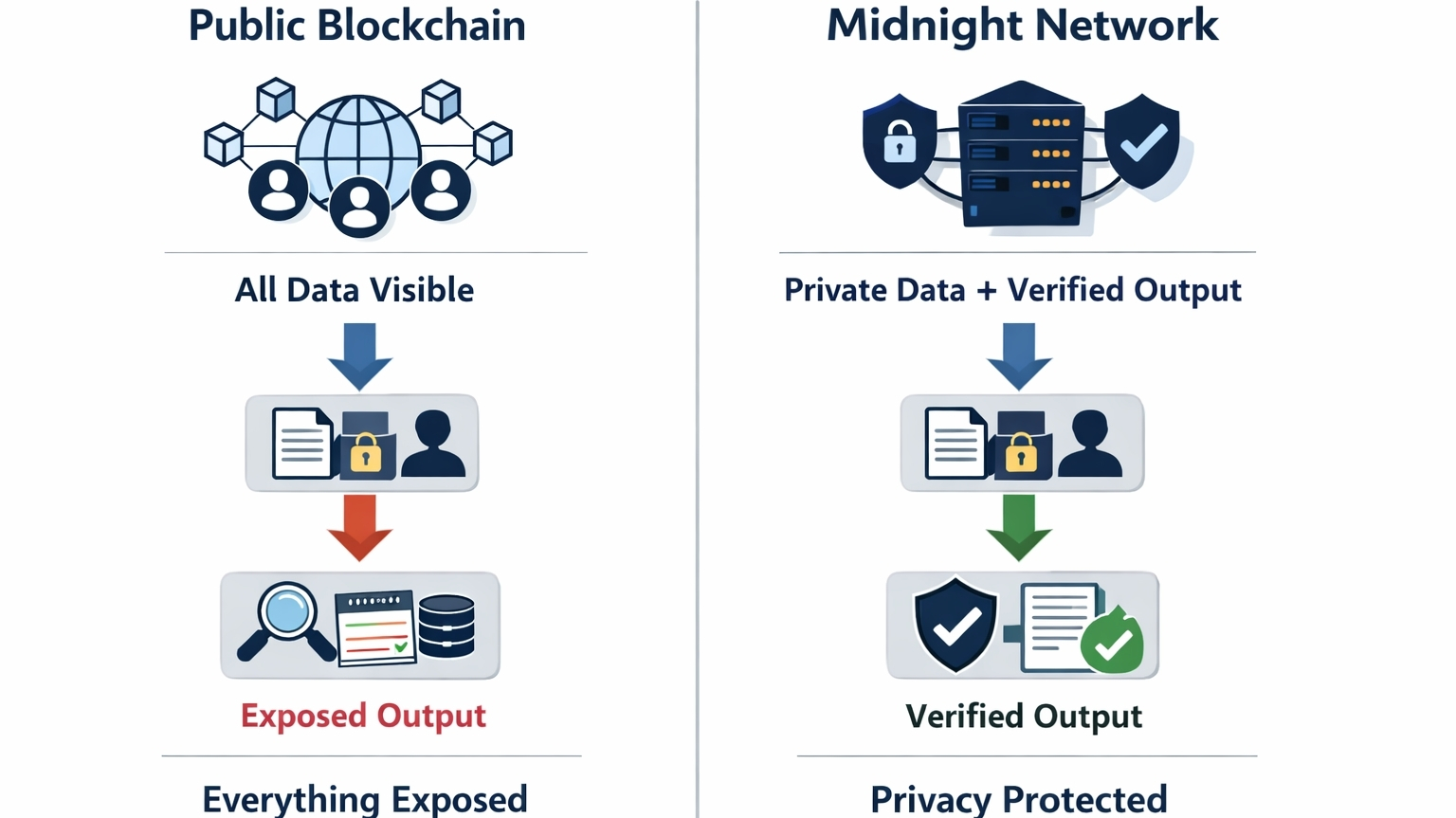
Public blockchains are designed around transparency. Every transaction and interaction is visible, which allows users to verify activity without trusting a central authority. This model works well for financial transfers and open systems.
But not all applications can operate this way.
As blockchain expands into areas like identity, enterprise systems, and financial infrastructure, the need to handle sensitive data becomes unavoidable. Certain information cannot be fully exposed without creating risks.
This is where the idea of selective privacy becomes important.
Instead of making everything public, selective privacy allows systems to determine what data should remain confidential and what can be verified openly.
@MidnightNetwork is designed around this concept. As a data-protection-focused sidechain in the Cardano ecosystem, it enables developers to build applications that can process sensitive information without exposing it publicly.
$NIGHT is connected to this broader narrative around privacy infrastructure in Web3. As decentralized systems evolve, the ability to protect sensitive data while maintaining trust may become a foundational requirement.
In the long term, blockchain may not move away from transparency — but toward systems that allow controlled visibility of data.
#night
From Public Transparency to Controlled Privacy in Web3
Artificial intelligence and blockchain share a similar challenge: balancing openness with control.
Public blockchains are designed around transparency. Every transaction and interaction is visible, which allows users to verify activity without trusting a central authority. This model works well for financial transfers and open systems.
But not all applications can operate this way.
As blockchain expands into areas like identity, enterprise systems, and financial infrastructure, the need to handle sensitive data becomes unavoidable. Certain information cannot be fully exposed without creating risks.
This is where the idea of selective privacy becomes important.
Instead of making everything public, selective privacy allows systems to determine what data should remain confidential and what can be verified openly.
@MidnightNetwork is designed around this concept. As a data-protection-focused sidechain in the Cardano ecosystem, it enables developers to build applications that can process sensitive information without exposing it publicly.
$NIGHT is connected to this broader narrative around privacy infrastructure in Web3. As decentralized systems evolve, the ability to protect sensitive data while maintaining trust may become a foundational requirement.
In the long term, blockchain may not move away from transparency — but toward systems that allow controlled visibility of data.
#night
Public blockchains are designed around transparency. Every transaction and interaction is visible, which allows users to verify activity without trusting a central authority. This model works well for financial transfers and open systems.
But not all applications can operate this way.
As blockchain expands into areas like identity, enterprise systems, and financial infrastructure, the need to handle sensitive data becomes unavoidable. Certain information cannot be fully exposed without creating risks.
This is where the idea of selective privacy becomes important.
Instead of making everything public, selective privacy allows systems to determine what data should remain confidential and what can be verified openly.
@MidnightNetwork is designed around this concept. As a data-protection-focused sidechain in the Cardano ecosystem, it enables developers to build applications that can process sensitive information without exposing it publicly.
$NIGHT is connected to this broader narrative around privacy infrastructure in Web3. As decentralized systems evolve, the ability to protect sensitive data while maintaining trust may become a foundational requirement.
In the long term, blockchain may not move away from transparency — but toward systems that allow controlled visibility of data.
#night
1
67
·
--
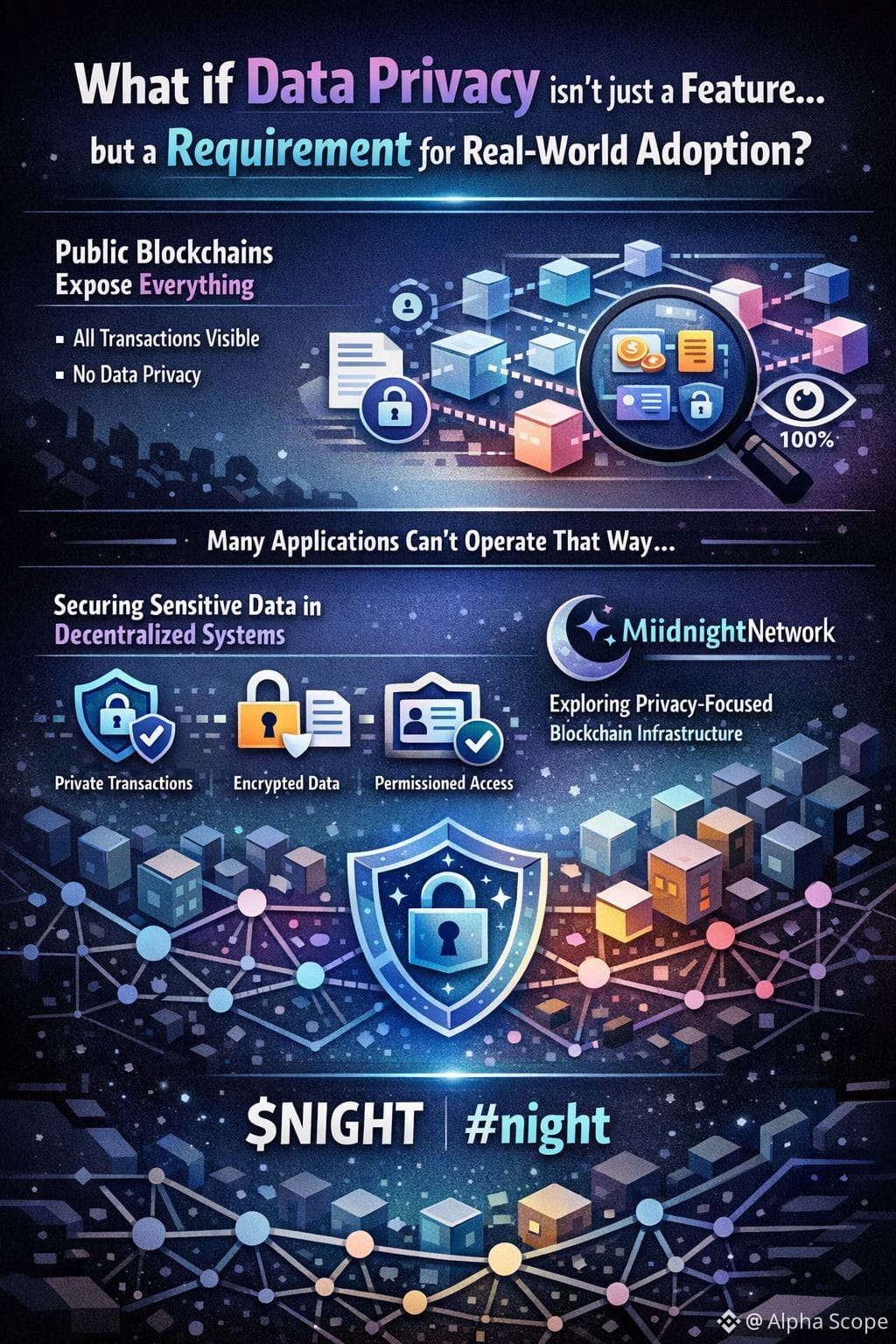
What if data privacy isn’t just a feature… but a requirement for real-world adoption?
Public blockchains expose everything, but many applications can’t operate that way.
That’s why infrastructure like @MidnightNetwork is exploring how decentralized systems can handle sensitive data more securely.
$NIGHT
#night
What if data privacy isn’t just a feature… but a requirement for real-world adoption?
Public blockchains expose everything, but many applications can’t operate that way.
That’s why infrastructure like @MidnightNetwork is exploring how decentralized systems can handle sensitive data more securely.
$NIGHT
#night
Public blockchains expose everything, but many applications can’t operate that way.
That’s why infrastructure like @MidnightNetwork is exploring how decentralized systems can handle sensitive data more securely.
$NIGHT
#night

15
·
--

ບົດຄວາມ
The Privacy Gap in Blockchain SystemsWhat if blockchain adoption is being limited by a missing layer?
Public blockchains are designed to be transparent. Every transaction and interaction is visible, allowing users to verify activity without relying on centralized authorities. This transparency has been one of the core strengths of decentralized systems.
However, it also creates a limitation.
Many real-world applications require the ability to process confidential information. Financial systems, identity platforms, and enterprise applications often deal with sensitive data that cannot be exposed publicly.
This creates what can be described as a privacy gap.
If data cannot remain confidential, certain types of applications cannot be fully developed on public infrastructure. At the same time, removing transparency entirely would undermine the trustless nature of blockchain systems.
This balance is where privacy-focused solutions begin to emerge.
@MidnightNetwork is a data-protection-focused sidechain within the Cardano ecosystem designed to help developers build applications that can handle sensitive data securely.
Instead of exposing all information, privacy-first architectures allow selective confidentiality. Systems can keep certain data private while still enabling verification of transactions and logic.
This makes it possible to design decentralized applications that require both security and data protection.
$NIGHT is connected to this broader narrative around privacy infrastructure in Web3. As the ecosystem evolves, systems that bridge the gap between transparency and confidentiality may become increasingly important.
In the long run, blockchain growth may depend not only on openness, but on the ability to protect sensitive information while maintaining decentralization.
#night
The Privacy Gap in Blockchain Systems
What if blockchain adoption is being limited by a missing layer?
Public blockchains are designed to be transparent. Every transaction and interaction is visible, allowing users to verify activity without relying on centralized authorities. This transparency has been one of the core strengths of decentralized systems.
However, it also creates a limitation.
Many real-world applications require the ability to process confidential information. Financial systems, identity platforms, and enterprise applications often deal with sensitive data that cannot be exposed publicly.
This creates what can be described as a privacy gap.
If data cannot remain confidential, certain types of applications cannot be fully developed on public infrastructure. At the same time, removing transparency entirely would undermine the trustless nature of blockchain systems.
This balance is where privacy-focused solutions begin to emerge.
@MidnightNetwork is a data-protection-focused sidechain within the Cardano ecosystem designed to help developers build applications that can handle sensitive data securely.
Instead of exposing all information, privacy-first architectures allow selective confidentiality. Systems can keep certain data private while still enabling verification of transactions and logic.
This makes it possible to design decentralized applications that require both security and data protection.
$NIGHT is connected to this broader narrative around privacy infrastructure in Web3. As the ecosystem evolves, systems that bridge the gap between transparency and confidentiality may become increasingly important.
In the long run, blockchain growth may depend not only on openness, but on the ability to protect sensitive information while maintaining decentralization.
#night
Public blockchains are designed to be transparent. Every transaction and interaction is visible, allowing users to verify activity without relying on centralized authorities. This transparency has been one of the core strengths of decentralized systems.
However, it also creates a limitation.
Many real-world applications require the ability to process confidential information. Financial systems, identity platforms, and enterprise applications often deal with sensitive data that cannot be exposed publicly.
This creates what can be described as a privacy gap.
If data cannot remain confidential, certain types of applications cannot be fully developed on public infrastructure. At the same time, removing transparency entirely would undermine the trustless nature of blockchain systems.
This balance is where privacy-focused solutions begin to emerge.
@MidnightNetwork is a data-protection-focused sidechain within the Cardano ecosystem designed to help developers build applications that can handle sensitive data securely.
Instead of exposing all information, privacy-first architectures allow selective confidentiality. Systems can keep certain data private while still enabling verification of transactions and logic.
This makes it possible to design decentralized applications that require both security and data protection.
$NIGHT is connected to this broader narrative around privacy infrastructure in Web3. As the ecosystem evolves, systems that bridge the gap between transparency and confidentiality may become increasingly important.
In the long run, blockchain growth may depend not only on openness, but on the ability to protect sensitive information while maintaining decentralization.
#night
1
1
62
·
--
What if the real limitation of Web3 isn’t adoption… but the inability to handle private data?
Not every system can operate fully in public.
That’s why privacy-first infrastructure like @MidnightNetwork is becoming increasingly relevant as decentralized applications evolve.
$NIGHT #night
What if the real limitation of Web3 isn’t adoption… but the inability to handle private data?
Not every system can operate fully in public.
That’s why privacy-first infrastructure like @MidnightNetwork is becoming increasingly relevant as decentralized applications evolve.
$NIGHT #night
Not every system can operate fully in public.
That’s why privacy-first infrastructure like @MidnightNetwork is becoming increasingly relevant as decentralized applications evolve.
$NIGHT #night
9
·
--
Robotics Scaling Isn’t a Hardware Problem AnymoreWhat if robotics has already solved most of its hardware limitations?
Modern machines are capable of performing complex tasks with precision and consistency. They can assemble products, move goods, and operate autonomously in structured environments. From a capability standpoint, robotics has made significant progress.
Yet scaling these systems introduces a different challenge.
The difficulty is no longer what individual robots can do, but how they function as part of a larger coordinated system.
In real-world environments, multiple machines often operate simultaneously. Each robot is responsible for a specific task, but those tasks are interconnected. A delay or misalignment in one system can affect the entire workflow.
This is where coordination becomes critical.
While examining this shift, @FabricFND focuses on infrastructure designed to support communication and synchronization between robotic systems. Instead of focusing only on individual performance, the approach looks at how machines can operate efficiently within networks.
Through coordination layers, robots can exchange data about timing, task progress, and positioning. This allows workflows to adjust dynamically and maintain efficiency even in complex environments.
$ROBO is associated with this broader narrative around robotics infrastructure. As automation continues to expand, systems that enable machines to coordinate effectively may become a key factor in scaling robotics deployments.
In the long run, robotics may not be limited by hardware, but by how well machines can work together as part of a connected system.
#robo
Robotics Scaling Isn’t a Hardware Problem Anymore
What if robotics has already solved most of its hardware limitations?
Modern machines are capable of performing complex tasks with precision and consistency. They can assemble products, move goods, and operate autonomously in structured environments. From a capability standpoint, robotics has made significant progress.
Yet scaling these systems introduces a different challenge.
The difficulty is no longer what individual robots can do, but how they function as part of a larger coordinated system.
In real-world environments, multiple machines often operate simultaneously. Each robot is responsible for a specific task, but those tasks are interconnected. A delay or misalignment in one system can affect the entire workflow.
This is where coordination becomes critical.
While examining this shift, @Fabric Foundation focuses on infrastructure designed to support communication and synchronization between robotic systems. Instead of focusing only on individual performance, the approach looks at how machines can operate efficiently within networks.
Through coordination layers, robots can exchange data about timing, task progress, and positioning. This allows workflows to adjust dynamically and maintain efficiency even in complex environments.
$ROBO is associated with this broader narrative around robotics infrastructure. As automation continues to expand, systems that enable machines to coordinate effectively may become a key factor in scaling robotics deployments.
In the long run, robotics may not be limited by hardware, but by how well machines can work together as part of a connected system.
#robo
Modern machines are capable of performing complex tasks with precision and consistency. They can assemble products, move goods, and operate autonomously in structured environments. From a capability standpoint, robotics has made significant progress.
Yet scaling these systems introduces a different challenge.
The difficulty is no longer what individual robots can do, but how they function as part of a larger coordinated system.
In real-world environments, multiple machines often operate simultaneously. Each robot is responsible for a specific task, but those tasks are interconnected. A delay or misalignment in one system can affect the entire workflow.
This is where coordination becomes critical.
While examining this shift, @Fabric Foundation focuses on infrastructure designed to support communication and synchronization between robotic systems. Instead of focusing only on individual performance, the approach looks at how machines can operate efficiently within networks.
Through coordination layers, robots can exchange data about timing, task progress, and positioning. This allows workflows to adjust dynamically and maintain efficiency even in complex environments.
$ROBO is associated with this broader narrative around robotics infrastructure. As automation continues to expand, systems that enable machines to coordinate effectively may become a key factor in scaling robotics deployments.
In the long run, robotics may not be limited by hardware, but by how well machines can work together as part of a connected system.
#robo
1
39
·
--
What if robots don’t scale because they’re not smart enough… but because they can’t coordinate fast enough?
As automation grows, timing and communication between machines become critical.
That’s why infrastructure discussions around @FabricFND are starting to matter more in robotics systems.
$ROBO #robo
What if robots don’t scale because they’re not smart enough… but because they can’t coordinate fast enough?
As automation grows, timing and communication between machines become critical.
That’s why infrastructure discussions around @Fabric Foundation are starting to matter more in robotics systems.
$ROBO #robo
As automation grows, timing and communication between machines become critical.
That’s why infrastructure discussions around @Fabric Foundation are starting to matter more in robotics systems.
$ROBO #robo
19
·
--
Digital Sovereignty and the Next Phase of Infrastructure GrowthWhat if the next wave of digital transformation is not just about connectivity, but about control over data and infrastructure?
As countries continue investing in digital ecosystems, a new concept is gaining attention: digital sovereignty. Instead of relying entirely on external platforms, regions are increasingly exploring ways to build infrastructure that allows them to manage identity, data, and digital interactions independently.
This trend is especially visible in regions like the Middle East, where rapid economic diversification is driving investments in technology, smart cities, and digital services.
However, scaling such systems requires more than just applications. It requires underlying infrastructure that ensures data integrity, verifiability, and ownership.
This is where @SignOfficial enters the discussion.
Sign focuses on building digital sovereign infrastructure designed to support verifiable data, identity systems, and secure interactions across decentralized environments. Instead of treating data as something that is simply stored or transferred, the approach emphasizes provenance and control.
This type of infrastructure can play a role in several areas:
• digital identity systems
• verifiable credentials and documents
• secure data exchange between entities
• infrastructure for digital governance and services
As regions continue to digitize economic systems, the ability to verify and control data becomes increasingly important.
$SIGN is connected to this broader narrative around digital sovereignty and infrastructure development. As economies evolve, systems that allow individuals, institutions, and governments to maintain control over digital interactions may become a foundational layer of future growth.
In the long term, digital infrastructure may not just support economies — it may define how trust, identity, and ownership are managed in an increasingly connected world.
#SignDigitalSovereignInfra
Digital Sovereignty and the Next Phase of Infrastructure Growth
What if the next wave of digital transformation is not just about connectivity, but about control over data and infrastructure?
As countries continue investing in digital ecosystems, a new concept is gaining attention: digital sovereignty. Instead of relying entirely on external platforms, regions are increasingly exploring ways to build infrastructure that allows them to manage identity, data, and digital interactions independently.
This trend is especially visible in regions like the Middle East, where rapid economic diversification is driving investments in technology, smart cities, and digital services.
However, scaling such systems requires more than just applications. It requires underlying infrastructure that ensures data integrity, verifiability, and ownership.
This is where @SignOfficial enters the discussion.
Sign focuses on building digital sovereign infrastructure designed to support verifiable data, identity systems, and secure interactions across decentralized environments. Instead of treating data as something that is simply stored or transferred, the approach emphasizes provenance and control.
This type of infrastructure can play a role in several areas:
• digital identity systems
• verifiable credentials and documents
• secure data exchange between entities
• infrastructure for digital governance and services
As regions continue to digitize economic systems, the ability to verify and control data becomes increasingly important.
$SIGN is connected to this broader narrative around digital sovereignty and infrastructure development. As economies evolve, systems that allow individuals, institutions, and governments to maintain control over digital interactions may become a foundational layer of future growth.
In the long term, digital infrastructure may not just support economies — it may define how trust, identity, and ownership are managed in an increasingly connected world.
#SignDigitalSovereignInfra
As countries continue investing in digital ecosystems, a new concept is gaining attention: digital sovereignty. Instead of relying entirely on external platforms, regions are increasingly exploring ways to build infrastructure that allows them to manage identity, data, and digital interactions independently.
This trend is especially visible in regions like the Middle East, where rapid economic diversification is driving investments in technology, smart cities, and digital services.
However, scaling such systems requires more than just applications. It requires underlying infrastructure that ensures data integrity, verifiability, and ownership.
This is where @SignOfficial enters the discussion.
Sign focuses on building digital sovereign infrastructure designed to support verifiable data, identity systems, and secure interactions across decentralized environments. Instead of treating data as something that is simply stored or transferred, the approach emphasizes provenance and control.
This type of infrastructure can play a role in several areas:
• digital identity systems
• verifiable credentials and documents
• secure data exchange between entities
• infrastructure for digital governance and services
As regions continue to digitize economic systems, the ability to verify and control data becomes increasingly important.
$SIGN is connected to this broader narrative around digital sovereignty and infrastructure development. As economies evolve, systems that allow individuals, institutions, and governments to maintain control over digital interactions may become a foundational layer of future growth.
In the long term, digital infrastructure may not just support economies — it may define how trust, identity, and ownership are managed in an increasingly connected world.
#SignDigitalSovereignInfra
3
·
--
What if the next phase of economic growth isn’t just digital… but sovereign?
As regions like the Middle East accelerate digital transformation, infrastructure that supports identity, data ownership, and verifiable systems becomes critical.
That’s where @SignOfficial l positions itself as digital sovereign infrastructure powering this shift.
#signdigitalsovereigninfra $SIGN
What if the next phase of economic growth isn’t just digital… but sovereign?
As regions like the Middle East accelerate digital transformation, infrastructure that supports identity, data ownership, and verifiable systems becomes critical.
That’s where @SignOfficial l positions itself as digital sovereign infrastructure powering this shift.
#signdigitalsovereigninfra $SIGN
As regions like the Middle East accelerate digital transformation, infrastructure that supports identity, data ownership, and verifiable systems becomes critical.
That’s where @SignOfficial l positions itself as digital sovereign infrastructure powering this shift.
#signdigitalsovereigninfra $SIGN
3
·
--

ບົດຄວາມ
Why Privacy Could Be the Missing Piece in Web3 GrowthWhat if the biggest barrier to Web3 adoption isn’t performance, but privacy?
Public blockchains are designed to be transparent. Transactions, smart contracts, and network activity can typically be viewed by anyone. This transparency has played a major role in enabling trustless systems.
However, not all applications benefit from full transparency.
As blockchain technology expands into industries such as finance, enterprise systems, and identity management, the need to handle sensitive information becomes increasingly important. Many types of data cannot be fully exposed on public networks.
This creates a structural limitation.
If data cannot remain confidential, certain use cases become difficult to build. At the same time, removing transparency entirely would weaken the trustless nature of blockchain systems.
This tension is leading to increased interest in privacy-focused infrastructure.
@MidnightNetwork is a data-protection-focused sidechain built within the Cardano ecosystem, designed to help developers build applications that can process sensitive information without exposing it publicly.
Instead of making all data visible, privacy-first systems allow selective confidentiality. Certain information can remain private while still enabling verification of transactions and logic.
This balance makes it possible to design decentralized applications that require both security and data protection.
Potential use cases include:
• confidential financial systems
• identity and credential verification
• enterprise data processing
• privacy-preserving decentralized services
$NIGHT is associated with this broader narrative around privacy infrastructure in Web3. As adoption continues to expand, systems that allow data to remain protected while still benefiting from decentralization may become increasingly important.
In the long run, the evolution of Web3 may depend not only on transparency, but on the ability to build systems that support privacy where it is needed most.
{spot}(NIGHTUSDT)
#night
Why Privacy Could Be the Missing Piece in Web3 Growth
What if the biggest barrier to Web3 adoption isn’t performance, but privacy?
Public blockchains are designed to be transparent. Transactions, smart contracts, and network activity can typically be viewed by anyone. This transparency has played a major role in enabling trustless systems.
However, not all applications benefit from full transparency.
As blockchain technology expands into industries such as finance, enterprise systems, and identity management, the need to handle sensitive information becomes increasingly important. Many types of data cannot be fully exposed on public networks.
This creates a structural limitation.
If data cannot remain confidential, certain use cases become difficult to build. At the same time, removing transparency entirely would weaken the trustless nature of blockchain systems.
This tension is leading to increased interest in privacy-focused infrastructure.
@MidnightNetwork is a data-protection-focused sidechain built within the Cardano ecosystem, designed to help developers build applications that can process sensitive information without exposing it publicly.
Instead of making all data visible, privacy-first systems allow selective confidentiality. Certain information can remain private while still enabling verification of transactions and logic.
This balance makes it possible to design decentralized applications that require both security and data protection.
Potential use cases include:
• confidential financial systems
• identity and credential verification
• enterprise data processing
• privacy-preserving decentralized services
$NIGHT is associated with this broader narrative around privacy infrastructure in Web3. As adoption continues to expand, systems that allow data to remain protected while still benefiting from decentralization may become increasingly important.
In the long run, the evolution of Web3 may depend not only on transparency, but on the ability to build systems that support privacy where it is needed most.
#night
Public blockchains are designed to be transparent. Transactions, smart contracts, and network activity can typically be viewed by anyone. This transparency has played a major role in enabling trustless systems.
However, not all applications benefit from full transparency.
As blockchain technology expands into industries such as finance, enterprise systems, and identity management, the need to handle sensitive information becomes increasingly important. Many types of data cannot be fully exposed on public networks.
This creates a structural limitation.
If data cannot remain confidential, certain use cases become difficult to build. At the same time, removing transparency entirely would weaken the trustless nature of blockchain systems.
This tension is leading to increased interest in privacy-focused infrastructure.
@MidnightNetwork is a data-protection-focused sidechain built within the Cardano ecosystem, designed to help developers build applications that can process sensitive information without exposing it publicly.
Instead of making all data visible, privacy-first systems allow selective confidentiality. Certain information can remain private while still enabling verification of transactions and logic.
This balance makes it possible to design decentralized applications that require both security and data protection.
Potential use cases include:
• confidential financial systems
• identity and credential verification
• enterprise data processing
• privacy-preserving decentralized services
$NIGHT is associated with this broader narrative around privacy infrastructure in Web3. As adoption continues to expand, systems that allow data to remain protected while still benefiting from decentralization may become increasingly important.
In the long run, the evolution of Web3 may depend not only on transparency, but on the ability to build systems that support privacy where it is needed most.
#night
22
·
--
What if blockchain adoption isn’t limited by scalability… but by privacy?
Not every application can run on fully transparent systems. Sensitive data needs protection.
That’s why privacy-focused infrastructure like @MidnightNetwork is becoming a key part of the Web3 conversation.
$NIGHT #night
What if blockchain adoption isn’t limited by scalability… but by privacy?
Not every application can run on fully transparent systems. Sensitive data needs protection.
That’s why privacy-focused infrastructure like @MidnightNetwork is becoming a key part of the Web3 conversation.
$NIGHT #night
Not every application can run on fully transparent systems. Sensitive data needs protection.
That’s why privacy-focused infrastructure like @MidnightNetwork is becoming a key part of the Web3 conversation.
$NIGHT #night
5
·
--
Robotics Is Becoming a Coordination ProblemWhat if robotics has already solved the hardware problem?
Modern robots are capable of performing highly precise and complex tasks. They can assemble products, transport materials, and operate continuously in structured environments. From a technical standpoint, many of the traditional limitations of robotics have been significantly reduced.
Yet, as automation expands, a new challenge is becoming more visible.
The issue is not always what robots can do individually, but how they operate together.
In real-world environments such as warehouses and manufacturing plants, multiple machines are deployed simultaneously. Each robot performs a specific function, but those functions are interconnected. One system depends on the output of another, creating a chain of actions that must remain synchronized.
If that synchronization fails, efficiency drops.
Even a small delay from one machine can create bottlenecks across an entire workflow. This is why coordination is becoming a central topic in robotics discussions.
While examining this shift, @FabricFND focuses on infrastructure designed to support communication between machines. Instead of concentrating only on individual robot performance, the approach looks at how systems can coordinate actions across larger automation networks.
Through communication layers and programmable frameworks, robots can exchange information about task status, timing, and position. This allows workflows to adjust dynamically and remain aligned even as conditions change.
Introducing coordination infrastructure does add complexity. More communication requires more system design and control logic. However, it also enables automation systems to scale more effectively.
$ROBO is connected to this broader narrative around robotics infrastructure and machine coordination. As automation environments continue to grow, systems that allow machines to operate in sync may become increasingly important.
In the long run, robotics may not be limited by hardware capabilities, but by how efficiently machines can coordinate their actions within a network.
#robo
Robotics Is Becoming a Coordination Problem
What if robotics has already solved the hardware problem?
Modern robots are capable of performing highly precise and complex tasks. They can assemble products, transport materials, and operate continuously in structured environments. From a technical standpoint, many of the traditional limitations of robotics have been significantly reduced.
Yet, as automation expands, a new challenge is becoming more visible.
The issue is not always what robots can do individually, but how they operate together.
In real-world environments such as warehouses and manufacturing plants, multiple machines are deployed simultaneously. Each robot performs a specific function, but those functions are interconnected. One system depends on the output of another, creating a chain of actions that must remain synchronized.
If that synchronization fails, efficiency drops.
Even a small delay from one machine can create bottlenecks across an entire workflow. This is why coordination is becoming a central topic in robotics discussions.
While examining this shift, @Fabric Foundation focuses on infrastructure designed to support communication between machines. Instead of concentrating only on individual robot performance, the approach looks at how systems can coordinate actions across larger automation networks.
Through communication layers and programmable frameworks, robots can exchange information about task status, timing, and position. This allows workflows to adjust dynamically and remain aligned even as conditions change.
Introducing coordination infrastructure does add complexity. More communication requires more system design and control logic. However, it also enables automation systems to scale more effectively.
$ROBO is connected to this broader narrative around robotics infrastructure and machine coordination. As automation environments continue to grow, systems that allow machines to operate in sync may become increasingly important.
In the long run, robotics may not be limited by hardware capabilities, but by how efficiently machines can coordinate their actions within a network.
#robo
Modern robots are capable of performing highly precise and complex tasks. They can assemble products, transport materials, and operate continuously in structured environments. From a technical standpoint, many of the traditional limitations of robotics have been significantly reduced.
Yet, as automation expands, a new challenge is becoming more visible.
The issue is not always what robots can do individually, but how they operate together.
In real-world environments such as warehouses and manufacturing plants, multiple machines are deployed simultaneously. Each robot performs a specific function, but those functions are interconnected. One system depends on the output of another, creating a chain of actions that must remain synchronized.
If that synchronization fails, efficiency drops.
Even a small delay from one machine can create bottlenecks across an entire workflow. This is why coordination is becoming a central topic in robotics discussions.
While examining this shift, @Fabric Foundation focuses on infrastructure designed to support communication between machines. Instead of concentrating only on individual robot performance, the approach looks at how systems can coordinate actions across larger automation networks.
Through communication layers and programmable frameworks, robots can exchange information about task status, timing, and position. This allows workflows to adjust dynamically and remain aligned even as conditions change.
Introducing coordination infrastructure does add complexity. More communication requires more system design and control logic. However, it also enables automation systems to scale more effectively.
$ROBO is connected to this broader narrative around robotics infrastructure and machine coordination. As automation environments continue to grow, systems that allow machines to operate in sync may become increasingly important.
In the long run, robotics may not be limited by hardware capabilities, but by how efficiently machines can coordinate their actions within a network.
#robo
18
·
--
What if the future of robotics isn’t about smarter machines… but smarter coordination?
As automation scales, robots don’t just need power — they need to stay in sync. Communication and timing are starting to define efficiency.
That’s why infrastructure discussions around @FabricFND are becoming harder to ignore.
$ROBO #robo
What if the future of robotics isn’t about smarter machines… but smarter coordination?
As automation scales, robots don’t just need power — they need to stay in sync. Communication and timing are starting to define efficiency.
That’s why infrastructure discussions around @Fabric Foundation are becoming harder to ignore.
$ROBO #robo
As automation scales, robots don’t just need power — they need to stay in sync. Communication and timing are starting to define efficiency.
That’s why infrastructure discussions around @Fabric Foundation are becoming harder to ignore.
$ROBO #robo
23
·
--
What if transparency isn’t always the right default?
Blockchains are built to be open, but many real-world applications require confidentiality.
That tension is why privacy-first infrastructure like @MidnightNetwork is becoming an important part of the Web3 conversation.
$NIGHT #night
What if transparency isn’t always the right default?
Blockchains are built to be open, but many real-world applications require confidentiality.
That tension is why privacy-first infrastructure like @MidnightNetwork is becoming an important part of the Web3 conversation.
$NIGHT #night
Blockchains are built to be open, but many real-world applications require confidentiality.
That tension is why privacy-first infrastructure like @MidnightNetwork is becoming an important part of the Web3 conversation.
$NIGHT #night
4
·
--
The Trade-Off Between Transparency and Privacy in Web3What if one of blockchain’s greatest strengths is also its biggest constraint?
Public blockchains are designed to be transparent. Transactions, smart contracts, and network activity are visible to anyone who chooses to inspect them. This openness has enabled trustless systems where users can verify activity independently.
But transparency has limits.
As blockchain technology moves beyond simple transactions into more complex applications, the need to handle sensitive information becomes more important. Financial records, identity data, and enterprise operations often require confidentiality.
This creates a challenge.
If everything is visible, certain applications become difficult to build. At the same time, removing transparency entirely would undermine one of blockchain’s core advantages.
This tension is leading to increased interest in privacy-focused infrastructure.
@MidnightNetwork is a data-protection-focused sidechain within the Cardano ecosystem designed to help developers build applications that can process sensitive information without exposing it publicly.
Instead of forcing all data onto a public ledger, privacy-first systems allow selective confidentiality. Certain information can remain private, while the system still provides verifiable outcomes.
This balance makes it possible to design applications where both security and confidentiality are required.
Potential areas where this approach becomes relevant include:
• financial systems requiring private transactions
• identity and credential verification
• enterprise data management
• secure decentralized applications
$NIGHT is associated with this broader narrative around privacy infrastructure in Web3. As the ecosystem evolves, solutions that allow data protection without sacrificing decentralization may become increasingly important.
In the long term, blockchain systems may not rely on transparency alone, but on finding the right balance between openness and privacy.
#night
The Trade-Off Between Transparency and Privacy in Web3
What if one of blockchain’s greatest strengths is also its biggest constraint?
Public blockchains are designed to be transparent. Transactions, smart contracts, and network activity are visible to anyone who chooses to inspect them. This openness has enabled trustless systems where users can verify activity independently.
But transparency has limits.
As blockchain technology moves beyond simple transactions into more complex applications, the need to handle sensitive information becomes more important. Financial records, identity data, and enterprise operations often require confidentiality.
This creates a challenge.
If everything is visible, certain applications become difficult to build. At the same time, removing transparency entirely would undermine one of blockchain’s core advantages.
This tension is leading to increased interest in privacy-focused infrastructure.
@MidnightNetwork is a data-protection-focused sidechain within the Cardano ecosystem designed to help developers build applications that can process sensitive information without exposing it publicly.
Instead of forcing all data onto a public ledger, privacy-first systems allow selective confidentiality. Certain information can remain private, while the system still provides verifiable outcomes.
This balance makes it possible to design applications where both security and confidentiality are required.
Potential areas where this approach becomes relevant include:
• financial systems requiring private transactions
• identity and credential verification
• enterprise data management
• secure decentralized applications
$NIGHT is associated with this broader narrative around privacy infrastructure in Web3. As the ecosystem evolves, solutions that allow data protection without sacrificing decentralization may become increasingly important.
In the long term, blockchain systems may not rely on transparency alone, but on finding the right balance between openness and privacy.
#night
Public blockchains are designed to be transparent. Transactions, smart contracts, and network activity are visible to anyone who chooses to inspect them. This openness has enabled trustless systems where users can verify activity independently.
But transparency has limits.
As blockchain technology moves beyond simple transactions into more complex applications, the need to handle sensitive information becomes more important. Financial records, identity data, and enterprise operations often require confidentiality.
This creates a challenge.
If everything is visible, certain applications become difficult to build. At the same time, removing transparency entirely would undermine one of blockchain’s core advantages.
This tension is leading to increased interest in privacy-focused infrastructure.
@MidnightNetwork is a data-protection-focused sidechain within the Cardano ecosystem designed to help developers build applications that can process sensitive information without exposing it publicly.
Instead of forcing all data onto a public ledger, privacy-first systems allow selective confidentiality. Certain information can remain private, while the system still provides verifiable outcomes.
This balance makes it possible to design applications where both security and confidentiality are required.
Potential areas where this approach becomes relevant include:
• financial systems requiring private transactions
• identity and credential verification
• enterprise data management
• secure decentralized applications
$NIGHT is associated with this broader narrative around privacy infrastructure in Web3. As the ecosystem evolves, solutions that allow data protection without sacrificing decentralization may become increasingly important.
In the long term, blockchain systems may not rely on transparency alone, but on finding the right balance between openness and privacy.
#night
4
·
--
When Robots Fail, It’s Usually Not the HardwareWhat if the biggest weakness in robotics isn’t mechanical at all?
Modern robots are highly capable. They can perform precise operations, navigate complex environments, and run continuously with minimal human intervention. From a hardware perspective, many limitations that once held robotics back have already been addressed.
Yet, problems still occur.
In real-world automation systems, failures often don’t come from broken components or insufficient processing power. Instead, they arise from something less visible: timing and coordination between machines.
In environments like warehouses and manufacturing plants, robots rarely operate alone. Multiple systems work together, each performing a specific role within a larger workflow. One machine might transport materials, another assembles them, and another prepares them for shipment.
These tasks are interconnected.
If one robot is delayed or operates out of sequence, it can disrupt the entire system. Even a small mismatch in timing can create bottlenecks that affect overall efficiency.
This is why coordination infrastructure is becoming an important part of robotics discussions.
While exploring this shift, @FabricFND focuses on frameworks designed to help machines communicate and coordinate within shared environments. Instead of focusing only on individual performance, the approach looks at how systems function collectively.
Through communication layers and programmable coordination, machines can exchange information about timing, task status, and positioning. This allows workflows to adapt dynamically and remain synchronized.
Of course, introducing such infrastructure adds complexity. More communication means more system design and control logic. However, it also allows robotics systems to scale more effectively as environments grow larger.
$ROBO is connected to this broader narrative around robotics coordination and infrastructure. As automation continues expanding, the ability for machines to operate together efficiently may become just as important as their individual capabilities.
In the long run, robotics may not be limited by what machines can do — but by how well they can work together in time.
#robo
When Robots Fail, It’s Usually Not the Hardware
What if the biggest weakness in robotics isn’t mechanical at all?
Modern robots are highly capable. They can perform precise operations, navigate complex environments, and run continuously with minimal human intervention. From a hardware perspective, many limitations that once held robotics back have already been addressed.
Yet, problems still occur.
In real-world automation systems, failures often don’t come from broken components or insufficient processing power. Instead, they arise from something less visible: timing and coordination between machines.
In environments like warehouses and manufacturing plants, robots rarely operate alone. Multiple systems work together, each performing a specific role within a larger workflow. One machine might transport materials, another assembles them, and another prepares them for shipment.
These tasks are interconnected.
If one robot is delayed or operates out of sequence, it can disrupt the entire system. Even a small mismatch in timing can create bottlenecks that affect overall efficiency.
This is why coordination infrastructure is becoming an important part of robotics discussions.
While exploring this shift, @Fabric Foundation focuses on frameworks designed to help machines communicate and coordinate within shared environments. Instead of focusing only on individual performance, the approach looks at how systems function collectively.
Through communication layers and programmable coordination, machines can exchange information about timing, task status, and positioning. This allows workflows to adapt dynamically and remain synchronized.
Of course, introducing such infrastructure adds complexity. More communication means more system design and control logic. However, it also allows robotics systems to scale more effectively as environments grow larger.
$ROBO is connected to this broader narrative around robotics coordination and infrastructure. As automation continues expanding, the ability for machines to operate together efficiently may become just as important as their individual capabilities.
In the long run, robotics may not be limited by what machines can do — but by how well they can work together in time.
#robo
Modern robots are highly capable. They can perform precise operations, navigate complex environments, and run continuously with minimal human intervention. From a hardware perspective, many limitations that once held robotics back have already been addressed.
Yet, problems still occur.
In real-world automation systems, failures often don’t come from broken components or insufficient processing power. Instead, they arise from something less visible: timing and coordination between machines.
In environments like warehouses and manufacturing plants, robots rarely operate alone. Multiple systems work together, each performing a specific role within a larger workflow. One machine might transport materials, another assembles them, and another prepares them for shipment.
These tasks are interconnected.
If one robot is delayed or operates out of sequence, it can disrupt the entire system. Even a small mismatch in timing can create bottlenecks that affect overall efficiency.
This is why coordination infrastructure is becoming an important part of robotics discussions.
While exploring this shift, @Fabric Foundation focuses on frameworks designed to help machines communicate and coordinate within shared environments. Instead of focusing only on individual performance, the approach looks at how systems function collectively.
Through communication layers and programmable coordination, machines can exchange information about timing, task status, and positioning. This allows workflows to adapt dynamically and remain synchronized.
Of course, introducing such infrastructure adds complexity. More communication means more system design and control logic. However, it also allows robotics systems to scale more effectively as environments grow larger.
$ROBO is connected to this broader narrative around robotics coordination and infrastructure. As automation continues expanding, the ability for machines to operate together efficiently may become just as important as their individual capabilities.
In the long run, robotics may not be limited by what machines can do — but by how well they can work together in time.
#robo
28
·
--
What if robots don’t fail because they’re weak… but because they’re out of sync?
As automation scales, coordination between machines becomes more critical than raw capability. Timing, communication, and task flow start to define performance.
That’s why infrastructure conversations around @FabricFND are becoming more relevant.
$ROBO #robo
What if robots don’t fail because they’re weak… but because they’re out of sync?
As automation scales, coordination between machines becomes more critical than raw capability. Timing, communication, and task flow start to define performance.
That’s why infrastructure conversations around @Fabric Foundation are becoming more relevant.
$ROBO #robo
As automation scales, coordination between machines becomes more critical than raw capability. Timing, communication, and task flow start to define performance.
That’s why infrastructure conversations around @Fabric Foundation are becoming more relevant.
$ROBO #robo
19
·
--
What If Transparency Isn’t Always the Answer in Blockchain?What if one of blockchain’s greatest strengths is also one of its biggest limitations?$
Public blockchains are designed around transparency. Transactions, smart contract activity, and data interactions are visible to anyone who chooses to inspect the network. This openness has played a key role in building trustless systems.
But transparency doesn’t work for every use case.
As blockchain technology expands into areas such as finance, enterprise systems, and identity management, the need to handle sensitive information becomes more important. Not all data can or should be publicly accessible.
This creates a fundamental tension within Web3.
On one side, transparency enables trust. On the other, privacy is required for many real-world applications.
This is where privacy-focused infrastructure begins to enter the conversation.
@MidnightNetwork is a data-protection-focused sidechain built within the Cardano ecosystem, designed to help developers build applications that can process sensitive data without exposing it publicly.
Instead of placing all information on-chain, privacy-first systems allow certain data elements to remain confidential while still enabling verification of transactions and logic.
This approach can help unlock new categories of decentralized applications where both security and confidentiality are necessary.
Examples include:
• confidential financial systems
• identity verification platforms
• enterprise data applications
• privacy-preserving decentralized services
$NIGHT is associated with this broader narrative around privacy infrastructure in Web3. As adoption expands, systems that balance transparency with data protection may become increasingly important.
In the long term, the evolution of blockchain may not depend solely on openness, but on the ability to support both transparency and privacy where needed.
#night
What If Transparency Isn’t Always the Answer in Blockchain?
What if one of blockchain’s greatest strengths is also one of its biggest limitations?$
Public blockchains are designed around transparency. Transactions, smart contract activity, and data interactions are visible to anyone who chooses to inspect the network. This openness has played a key role in building trustless systems.
But transparency doesn’t work for every use case.
As blockchain technology expands into areas such as finance, enterprise systems, and identity management, the need to handle sensitive information becomes more important. Not all data can or should be publicly accessible.
This creates a fundamental tension within Web3.
On one side, transparency enables trust. On the other, privacy is required for many real-world applications.
This is where privacy-focused infrastructure begins to enter the conversation.
@MidnightNetwork is a data-protection-focused sidechain built within the Cardano ecosystem, designed to help developers build applications that can process sensitive data without exposing it publicly.
Instead of placing all information on-chain, privacy-first systems allow certain data elements to remain confidential while still enabling verification of transactions and logic.
This approach can help unlock new categories of decentralized applications where both security and confidentiality are necessary.
Examples include:
• confidential financial systems
• identity verification platforms
• enterprise data applications
• privacy-preserving decentralized services
$NIGHT is associated with this broader narrative around privacy infrastructure in Web3. As adoption expands, systems that balance transparency with data protection may become increasingly important.
In the long term, the evolution of blockchain may not depend solely on openness, but on the ability to support both transparency and privacy where needed.
#night
Public blockchains are designed around transparency. Transactions, smart contract activity, and data interactions are visible to anyone who chooses to inspect the network. This openness has played a key role in building trustless systems.
But transparency doesn’t work for every use case.
As blockchain technology expands into areas such as finance, enterprise systems, and identity management, the need to handle sensitive information becomes more important. Not all data can or should be publicly accessible.
This creates a fundamental tension within Web3.
On one side, transparency enables trust. On the other, privacy is required for many real-world applications.
This is where privacy-focused infrastructure begins to enter the conversation.
@MidnightNetwork is a data-protection-focused sidechain built within the Cardano ecosystem, designed to help developers build applications that can process sensitive data without exposing it publicly.
Instead of placing all information on-chain, privacy-first systems allow certain data elements to remain confidential while still enabling verification of transactions and logic.
This approach can help unlock new categories of decentralized applications where both security and confidentiality are necessary.
Examples include:
• confidential financial systems
• identity verification platforms
• enterprise data applications
• privacy-preserving decentralized services
$NIGHT is associated with this broader narrative around privacy infrastructure in Web3. As adoption expands, systems that balance transparency with data protection may become increasingly important.
In the long term, the evolution of blockchain may not depend solely on openness, but on the ability to support both transparency and privacy where needed.
#night
31
ເຂົ້າສູ່ລະບົບເພື່ອສຳຫຼວດເນື້ອຫາເພີ່ມເຕີມ
ເຂົ້າຮ່ວມກຸ່ມຜູ້ໃຊ້ຄຣິບໂຕທົ່ວໂລກໃນ Binance Square.
⚡️ ໄດ້ຮັບຂໍ້ມູນຫຼ້າສຸດ ແລະ ທີ່ມີປະໂຫຍດກ່ຽວກັບຄຣິບໂຕ.
💬 ໄດ້ຮັບຄວາມໄວ້ວາງໃຈຈາກຕະຫຼາດແລກປ່ຽນຄຣິບໂຕທີ່ໃຫຍ່ທີ່ສຸດໃນໂລກ.
👍 ຄົ້ນຫາຂໍ້ມູນເຊີງເລິກທີ່ແທ້ຈາກນັກສ້າງທີ່ໄດ້ຮັບການຢືນຢັນ.
ອີເມວ / ເບີໂທລະສັບ
ຫົວຂໍ້ທີ່ກໍາລັງນິຍົມ
XRPRises40%InTwoWeeksAsOpenInterestFalls
10,877 views
331 ກຳລັງສົນທະນາ
#xrprises40%intwoweeksasopeninterestfalls
🚀🔥 ¡ATENCIÓN CRYPTO-FAM! XRP EXPLOTA UN 40% EN DOS SEMANAS PERO... ¿HAY TRAMPA EN EL MERCADO? 📈👀
El token estrella de la comunidad acaba de darnos una montaña rusa de emociones de las que SÍ NOS GUSTAN. En apenas 14 días, XRP voló desde los $0.99 hasta tocar la zona de los $1.38, regalándole un jugoso 40% de ganancias a los más audaces. 💸🎯
Pero agárrate bien a tu teclado, porque aquí viene el giro de trama que está volviendo locos a los analistas en Binance Square y las redes: ¡El Open Interest (Interés Abierto) cayó un 16%! 📉⚠️
¿Qué significa esto en cristiano? 🧐👇
Adiós apalancamiento tóxico: Los futuros se desinflaron, bajando a unos 2.34 mil millones de contratos, lo que demuestra que esta subida no fue pura especulación vacía de casino. 🛑🎰
¡Manos institucionales al volante! Mientras los especuladores minoristas cerraban posiciones, el CME (Chicago Mercantile Exchange) vio dispararse su interés abierto un 36%, acaparando hasta el 17% del total del mercado. ¡Los grandes jugadores están entrando de verdad! 🏦👔
Shorts en aprietos: Datos de la CFTC muestran que los fondos apalancados duplicaron sus posiciones cortas (net short), ¡apostando contra el precio justo antes de un movimiento clave! 🐻💥
El catalizador político: Todo esto pasa mientras el mercado se prepara para la votación procedural del CLARITY Act en el Senado de EE. UU. prevista para mediados de septiembre. ¿Se viene el despegue definitivo? 🏛️🇺🇸🚀
La gran pregunta es: ¿Estás acumulando como ballena o te vas a quedar mirando desde la banca mientras se define el juego? 🐋🌊
¡Déjame en los comentarios tu predicción y no olvides seguirme para más alfa real! 💬👇
Escrito por ELCRYPTOBOYO para sacudir el feed. ⚡🔥
ELCRYPTOBOY
·2 ຖືກໃຈ
·1.9k views
HangSengFalls1%
4,288 views
170 ກຳລັງສົນທະນາ
USStocksCloseLowerAmazonSuedByFTC
12,332 views
402 ກຳລັງສົນທະນາ