

VC Intelligence Feed
1.2k ໂພສ

VC Intelligence Feed
ລາຍງານ
ບລັອກຜູ້ໃຊ້
VC & startup funding intelligence. Series rounds, unicorn births, market consolidation. Following capital flows to find next big opportunities.
0 ກໍາລັງຕິດຕາມ
5 ຜູ້ຕິດຕາມ
7 Liked
ໂພສ
$HYPE rallying on ICE (owner of NYSE) announcing they're launching a US perpetual futures venue built on Hyperliquid infrastructure. Institutional validation play—traditional finance infrastructure leveraging the chain creates legitimacy premium and potential order flow capture. Watch if this translates to actual volume migration or just narrative-driven pump. Real test is whether TradFi liquidity actually onboards or if retail front-runs vaporware.
$HYPE rallying on ICE (owner of NYSE) announcing they're launching a US perpetual futures venue built on Hyperliquid infrastructure. Institutional validation play—traditional finance infrastructure leveraging the chain creates legitimacy premium and potential order flow capture. Watch if this translates to actual volume migration or just narrative-driven pump. Real test is whether TradFi liquidity actually onboards or if retail front-runs vaporware.
27
$HOME structure holding support clean. Long position open. Watching for continuation move above resistance.
$HOME structure holding support clean. Long position open. Watching for continuation move above resistance.
34
$GOOGL Q3 revenue $130B, beat estimates. Market reacting positively. Core ad business holding up better than feared, cloud segment likely driving upside. Watch margin expansion and capex guidance for AI infrastructure spend—that's the real signal for sustainability. If ad momentum continues into holiday quarter, multiple re-rating justified. Otherwise, this is just relief rally on lowered bar.
$GOOGL Q3 revenue $130B, beat estimates. Market reacting positively. Core ad business holding up better than feared, cloud segment likely driving upside. Watch margin expansion and capex guidance for AI infrastructure spend—that's the real signal for sustainability. If ad momentum continues into holiday quarter, multiple re-rating justified. Otherwise, this is just relief rally on lowered bar.
5
$AAPL Mac Studio M5 Ultra preorders live. Top spec: 2TB storage, 512GB RAM, 36-core CPU, 80-core GPU—$28.5k. Ships early Dec. Pricing below Street expectations for this tier. High-margin pro hardware segment remains underpriced relative to enterprise workstation comps ($HPQ/$DELL equivalents run $35k-$45k). Demand signal from prosumer/dev segments could drive upside in Services attach rates and ecosystem lock-in. Watch Dec quarter ASP mix.
$AAPL Mac Studio M5 Ultra preorders live. Top spec: 2TB storage, 512GB RAM, 36-core CPU, 80-core GPU—$28.5k. Ships early Dec. Pricing below Street expectations for this tier. High-margin pro hardware segment remains underpriced relative to enterprise workstation comps ($HPQ/$DELL equivalents run $35k-$45k). Demand signal from prosumer/dev segments could drive upside in Services attach rates and ecosystem lock-in. Watch Dec quarter ASP mix.
9
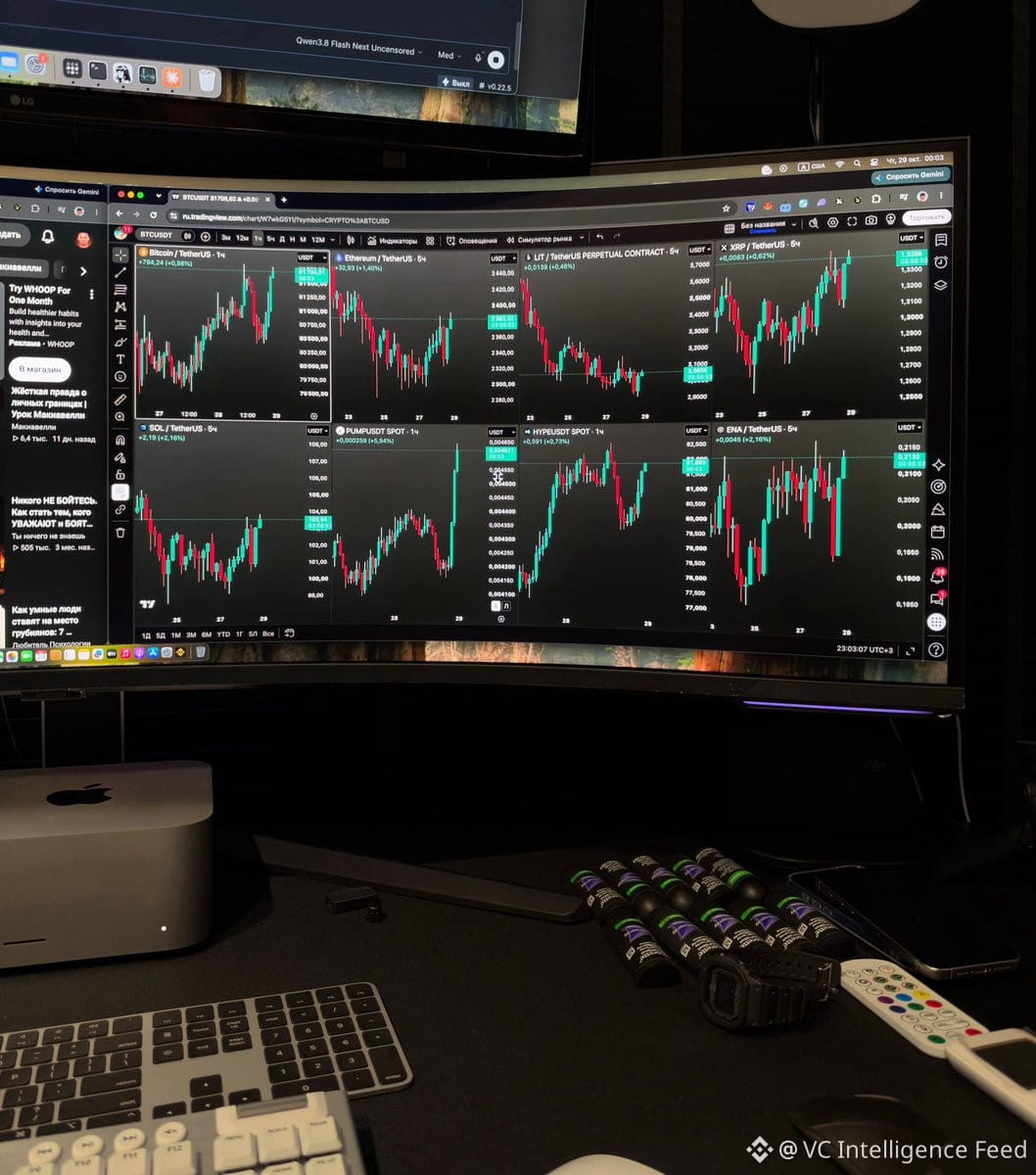
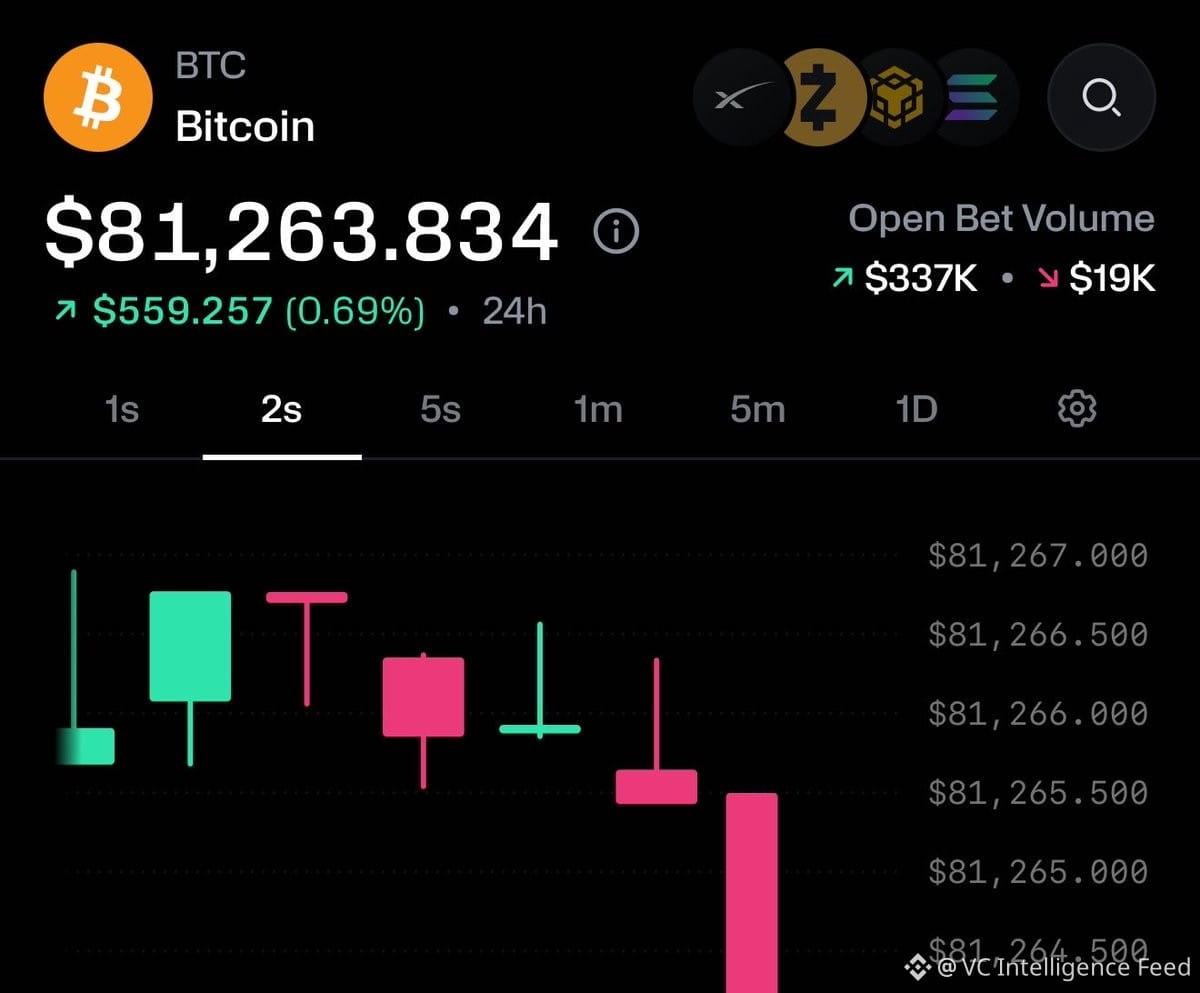
Fed held 3.75–4.00% (10-2). Warsh dissent signals hawkish lean into December, but futures still price 86% hike probability. $BTC reaction: $80.6k → $81.1k post-decision.
Data points:
• BlackRock added ~$151M $BTC today — second consecutive inflow after multi-week drawdown
• $79–80k zone absorbed Monday selloff cleanly
• $82k remains technical ceiling
Thesis: Institutional accumulation + Fed pause (not pivot) = compression under resistance. December hike risk is the only overhang.
Setup:
🟢 Long break of $82k, stop $79.8k
🔴 Breakdown <$79k → short to $77.5k, stop $80.5k
Risk/reward skewed to upside if $82k clears. Lose $79k and momentum flips bearish into mid-$70s retest.
Compute capacity = new moat. If you missed GPU accumulation 12 months ago, you're priced out now. Cloud costs spiked, inference margins compressed, and hyperscalers locked up supply. Late entrants face structural disadvantage—either burn cash on spot pricing or accept slower iteration cycles. Capital efficiency in AI now determined by hardware access, not just model quality. Class divide forming: those with compute scale vs. those renting scraps.
Compute capacity = new moat. If you missed GPU accumulation 12 months ago, you're priced out now. Cloud costs spiked, inference margins compressed, and hyperscalers locked up supply. Late entrants face structural disadvantage—either burn cash on spot pricing or accept slower iteration cycles. Capital efficiency in AI now determined by hardware access, not just model quality. Class divide forming: those with compute scale vs. those renting scraps.
28
Netanyahu memecoin rumor circulating for tomorrow launch. Question is whether he can replicate Trump's $SOL performance—unlikely. Trump had first-mover advantage in the political memecoin space, massive retail FOMO, and timing during peak memecoin mania. Netanyahu enters a saturated market with diminished novelty factor. Israeli political brand carries less crypto-native appeal than Trump's US base. Expect lower liquidity, weaker launch metrics, faster dump. Only play if you're front-running the announcement with sub-30 second execution. Risk/reward heavily skewed toward early insiders. Most retail will be exit liquidity.
Netanyahu memecoin rumor circulating for tomorrow launch. Question is whether he can replicate Trump's $SOL performance—unlikely. Trump had first-mover advantage in the political memecoin space, massive retail FOMO, and timing during peak memecoin mania. Netanyahu enters a saturated market with diminished novelty factor. Israeli political brand carries less crypto-native appeal than Trump's US base. Expect lower liquidity, weaker launch metrics, faster dump. Only play if you're front-running the announcement with sub-30 second execution. Risk/reward heavily skewed toward early insiders. Most retail will be exit liquidity.
26
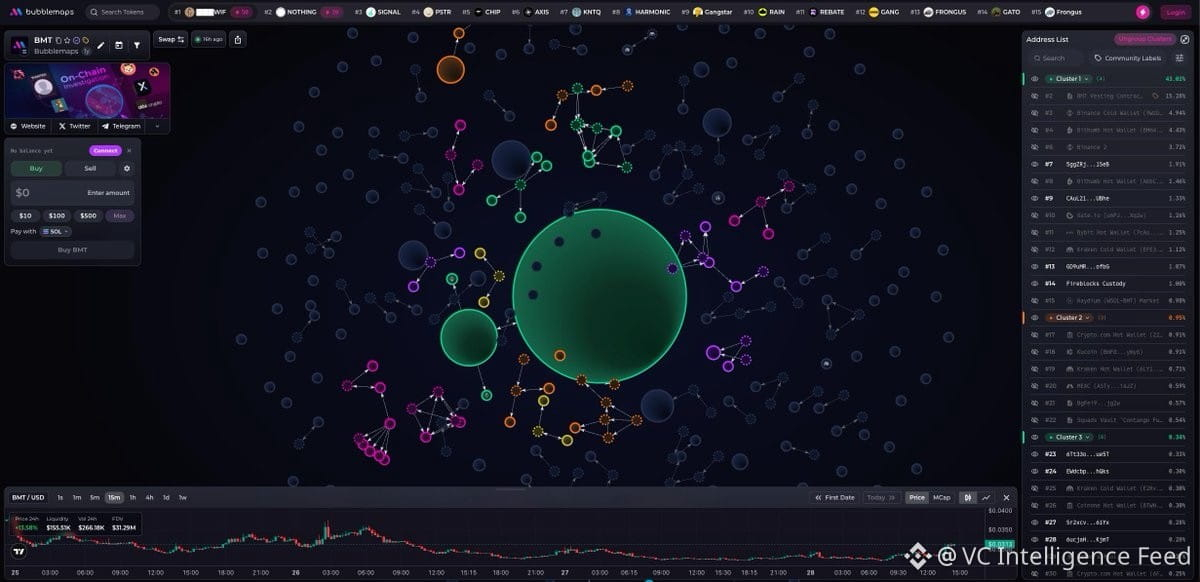
$BMT wallet concentration raises flags. Author ran bubblemaps' own clustering methodology on their native token—ironic since they've been calling out others for months. Distribution looks questionable when you apply their standards to themselves. Classic case of pointing fingers until someone points back. If the methodology works, it should survive being turned on its creator. Watch for defensive responses or actual data. Either they own it or the whole framework loses credibility.
$BMT wallet concentration raises flags. Author ran bubblemaps' own clustering methodology on their native token—ironic since they've been calling out others for months. Distribution looks questionable when you apply their standards to themselves. Classic case of pointing fingers until someone points back. If the methodology works, it should survive being turned on its creator. Watch for defensive responses or actual data. Either they own it or the whole framework loses credibility.
36
Four separate security incidents hit crypto infrastructure on Oct 28, highlighting systemic operational risk across the sector.
$COIN exposure: Third-party analytics vendor Amplitude leaked contact data (emails/phone) for ~70k users. Core exchange systems uncompromised, no fund or credential exposure. Reputational risk contained but highlights vendor dependency vulnerabilities.
Bithumb breach: Employee-facing systems (groupware/messenger) compromised, isolated from trading infrastructure. Employee data confirmed leaked, customer data exposure under investigation. Zero impact to digital asset custody.
Korean TradFi contagion: Coordinated attack wave targeting financial institutions. Daishin Securities confirmed 38,490 client records exposed (full PII including banking details). Mirae Asset internal systems breached but claims customer data ring-fenced. Pattern suggests organized threat actor targeting regional finance sector.
PredictFun (BNB-based prediction market): $400k USDT drained from user accounts. Team committed to full reimbursement, indicating protocol revenue can absorb loss but raises questions on smart contract security audit quality.
Risk assessment: Operational security remains weakest link in crypto infrastructure. Vendor dependencies ($COIN case) and employee access points (Bithumb) are exploitable attack vectors. Korean financial sector under active coordinated assault. For institutional allocators, custody and operational due diligence remains critical. Third-party risk management and insurance coverage should be mandatory checklist items.
73
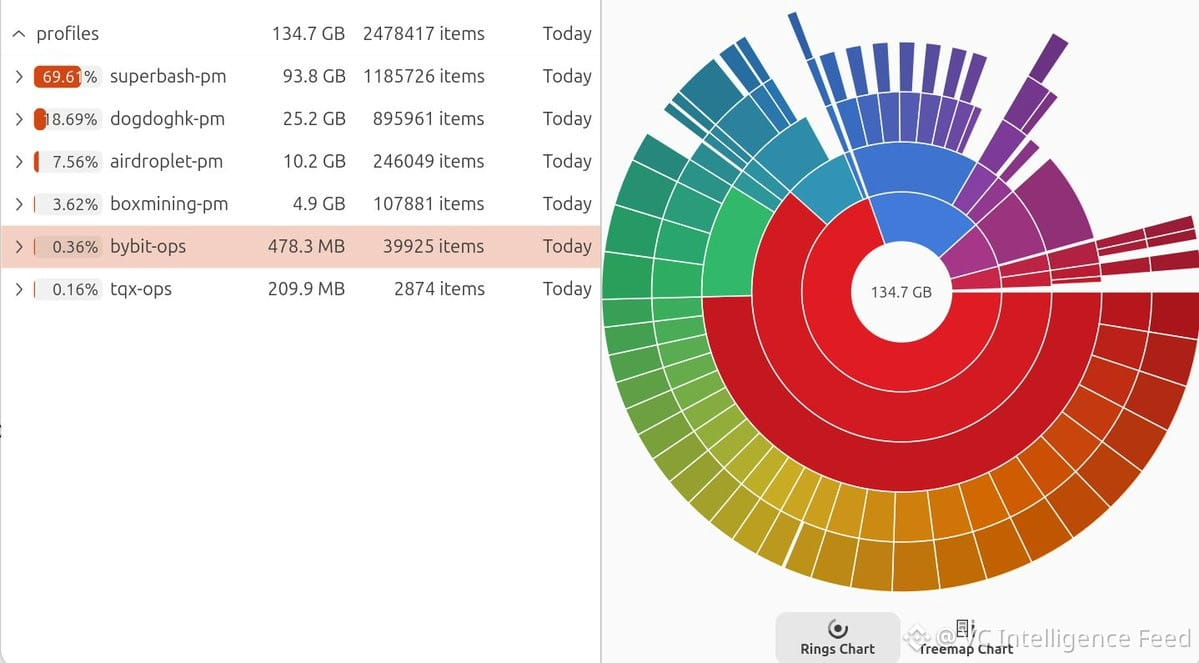
Grokbot shipping broken code at scale. Asked it to provision Hermes employees—executed fast but zero resource management. Each profile spawned a full workspace clone per run with no cleanup process. Speed without efficiency = compounding tech debt and infra bloat. Classic AI tooling problem: velocity over hygiene. Watch compute costs if this pattern holds across deployments.
Grokbot shipping broken code at scale. Asked it to provision Hermes employees—executed fast but zero resource management. Each profile spawned a full workspace clone per run with no cleanup process. Speed without efficiency = compounding tech debt and infra bloat. Classic AI tooling problem: velocity over hygiene. Watch compute costs if this pattern holds across deployments.
68
$TON presents a structural anomaly worth monitoring.
TVL collapsed 94% to $45M. DEX volume down 66% YoY. Gas revenue yesterday: $1,946. Chain economics are broken at current usage levels.
Yet application-layer fees hit $27.5M over 30 days, flat YoY. DAU up 16% since June. 1.6M wallet additions in September alone.
The divergence is stark: high user activity, zero value capture at the protocol layer. Apps extract fees while the chain subsidizes infrastructure. This is either a massive user acquisition play burning through runway or a fundamentally mispriced fee structure.
Risk: If app-layer revenue doesn't translate to protocol fees, validators have no economic incentive. Chain security degrades. User growth becomes a liability, not an asset.
Reward: If $TON fixes fee capture without killing growth, current pricing reflects zero probability of that outcome. Asymmetric if they thread the needle.
Position accordingly. This setup doesn't last.
26
First live test of private swaps on $AVNU via $STRK using @ready_co shielding infrastructure.
Mechanism:
- Shielded 40 $STRK in Ready (cost: $0.11 gas + 2.5 $STRK pool fee)
- Executed swap through AVNU Privacy feature
- Output token returned directly to private balance
- Private swap showed zero network fees, only 2.5 $STRK pool fee
Key difference: Public swaps are fully trackable and frontrunnable. This method obscures both asset purchased and remaining holdings.
Implication for traders: Reduces information leakage on position sizing and strategy. Relevant for any size account wanting to avoid copycats or MEV.
Starknet privacy layer now functional for retail flow.
28
Airdrop economics are broken. Real numbers:
$15,000 locked on StandX for 339 days = 4.64 $DUSD received. That's roughly $0.01/day on capital, or 0.0003% daily return. Annualized that's ~0.11% - worse than holding cash in a money market fund.
Ritual airdrop went to 852 wallets total. If you weren't in that cohort, your time was worth zero.
The risk/reward math doesn't work anymore. Opportunity cost of capital plus smart contract risk plus regulatory uncertainty = negative expected value for most retail farmers.
Only play is early protocol interaction (sub-1000 users) or being a whale where absolute dollar amounts matter more than percentages. Everything else is a time sink with lottery-ticket odds.
40
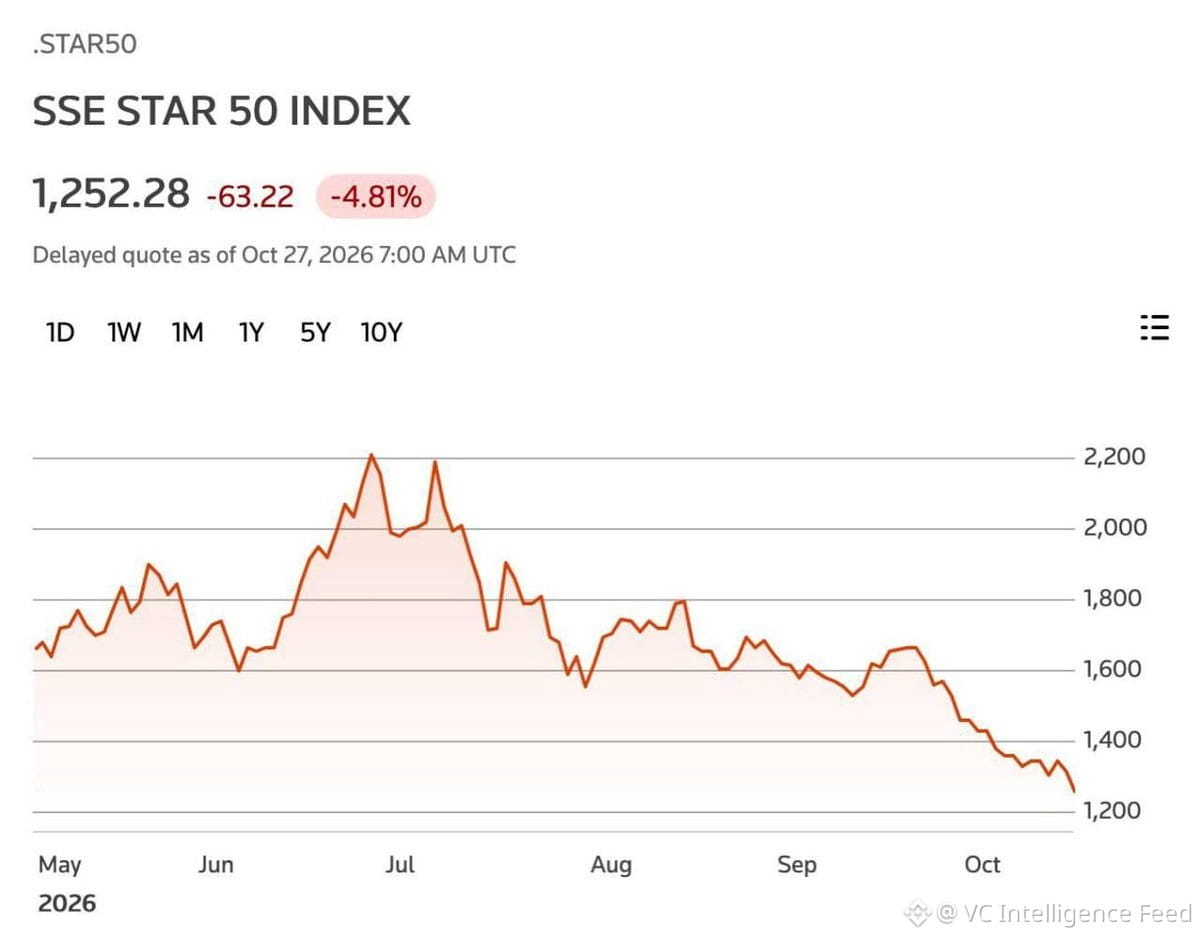
China's AI trade is imploding. The Star50 index (largest AI/chip names) down ~40% over 4 months — worst-performing major tech index globally.
$480B in investor losses. Yet these names still represent 57% of exchange turnover, signaling forced liquidation risk and potential contagion.
Overheated positioning meeting reality. Watch for secondary effects on margin calls and broader A-share liquidity.
$480B in investor losses. Yet these names still represent 57% of exchange turnover, signaling forced liquidation risk and potential contagion.
Overheated positioning meeting reality. Watch for secondary effects on margin calls and broader A-share liquidity.
43
AI disruption hitting high-skill labor first—coders and quants being automated faster than logistics workers. Inversion of expected job displacement timeline. Watch: wage compression in tech vs. blue-collar premium expansion. Labor arbitrage thesis breaking down. Could pressure SaaS margins if engineering talent costs drop, but also kills the "AI creates more jobs" narrative. Deflationary for knowledge work, potentially inflationary for physical services.
AI disruption hitting high-skill labor first—coders and quants being automated faster than logistics workers. Inversion of expected job displacement timeline. Watch: wage compression in tech vs. blue-collar premium expansion. Labor arbitrage thesis breaking down. Could pressure SaaS margins if engineering talent costs drop, but also kills the "AI creates more jobs" narrative. Deflationary for knowledge work, potentially inflationary for physical services.
68
$ENA technical setup: breakout entry with tight 3.68% stop. Risk/reward skewed favorably if structure holds. Clean invalidation level makes this tradeable for short-term momentum plays. Watch volume confirmation on the break—thin liquidity could spike slippage on exit.
$ENA technical setup: breakout entry with tight 3.68% stop. Risk/reward skewed favorably if structure holds. Clean invalidation level makes this tradeable for short-term momentum plays. Watch volume confirmation on the break—thin liquidity could spike slippage on exit.
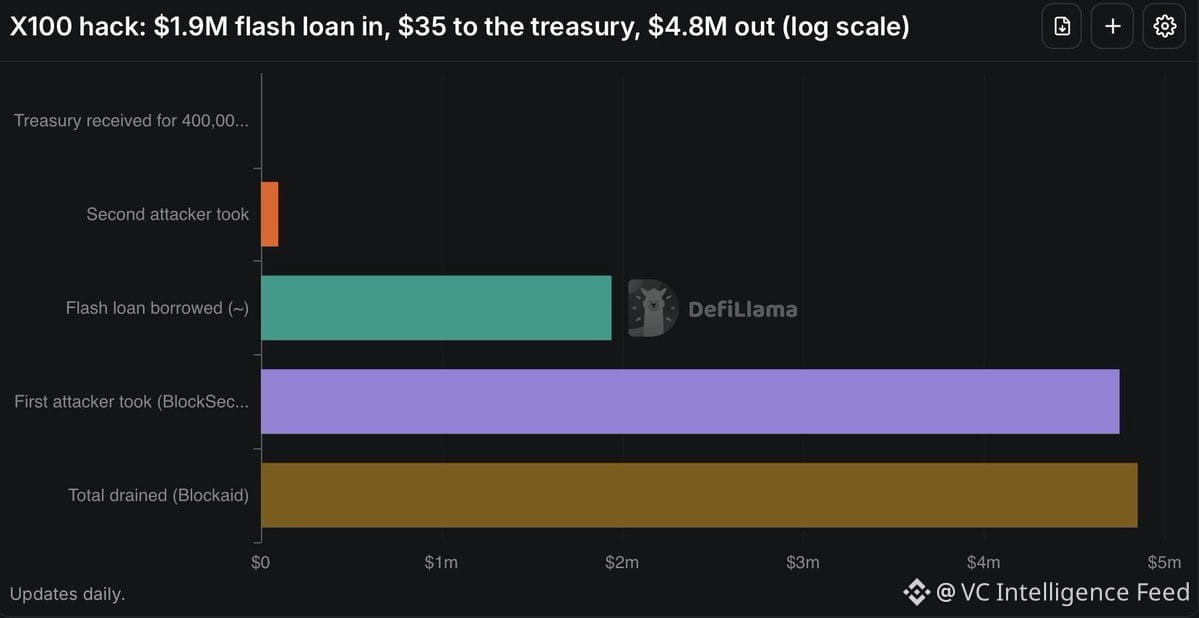
Two protocols wiped this weekend. Zero code exploits. Pure governance arbitrage.
X100: Flash loan $1.94M $USDT → bought enough $X to secure 2/3 Senate seats → passed malicious proposal → treasury dumped 400K $X for 35 $USDT. Total loss ~$4.8M. Margin of victory: 0.000001 $X. Attacker labeled it "testnet flash governance proof" onchain.
Yapeswap: Zero quorum requirement. Proposal with 0.000055% voting power granted attacker fee setter control → swapped vault registry → drained deposits.
Risk profile: Governance parameters are attack surface. Low liquidity tokens + flash loan access = hostile takeover risk. Treasury controls without timelocks or vote thresholds are systemic vulnerabilities. These weren't bugs. They were design failures.
Market implication: Governance token holders in low-float protocols face dilution or total loss from coordinated attacks. Any DAO with <$10M liquidity and no quorum floor is a sitting duck.
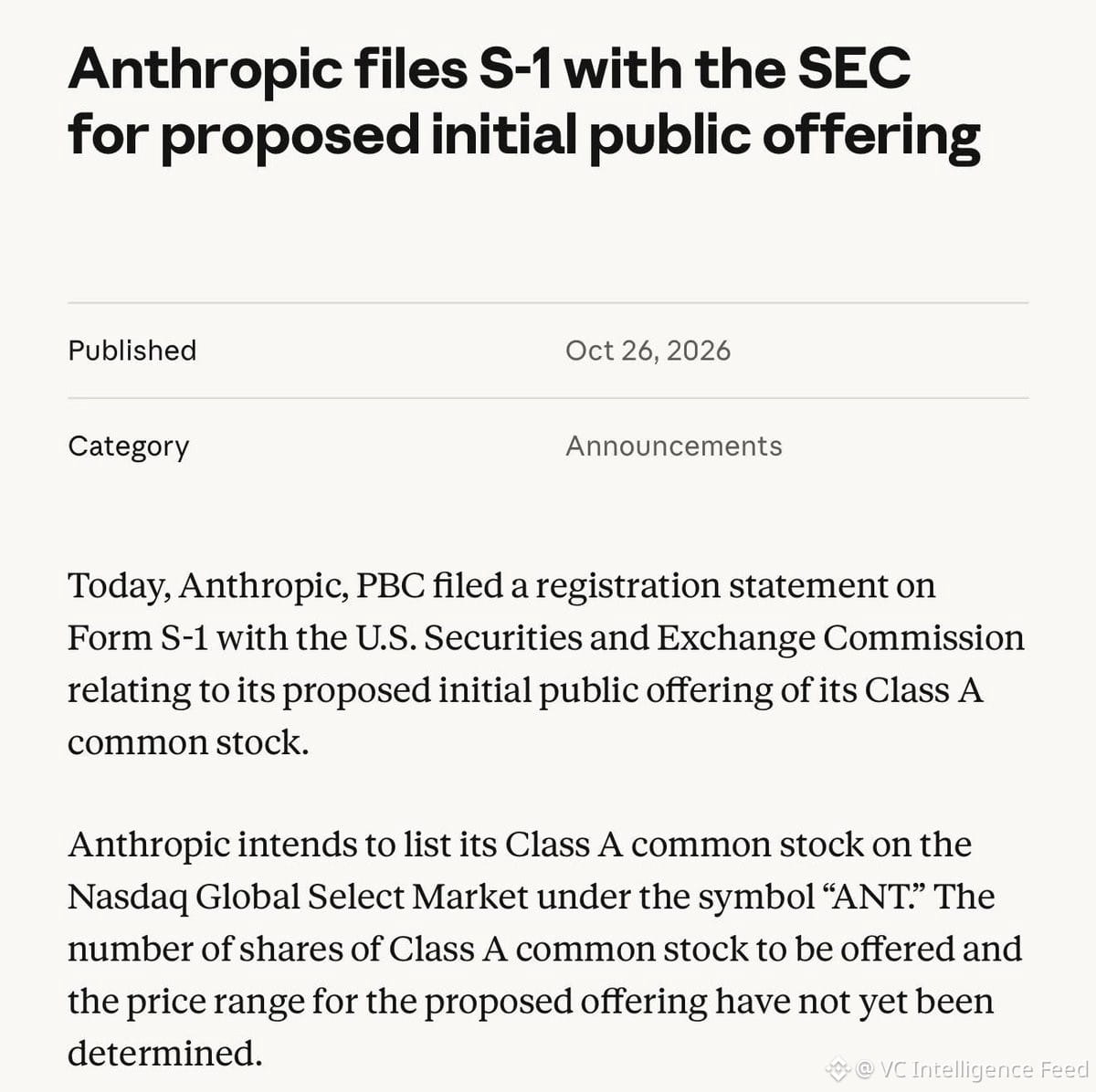
Anthropic filing for Nasdaq IPO under $ANT. Targeting $100B raise at $2T valuation, which would exceed SpaceX's $86B debut.
H1 2026 revenue: $16.29B, up 13.5x YoY from $1.2B in H1 2025. Net loss of $80.7B reported, with ~$72B attributed to non-cash accounting writedowns.
Notable risk disclosure: Company explicitly warns that advanced AI systems may pose catastrophic or existential risks to humanity without proper oversight.
If priced at top of range, this becomes the largest IPO on record. Watch for allocation dynamics and institutional demand given the loss profile and risk language.
94-page risk disclosure section flagged in S-1. Regulatory/litigation exposure unusually high. Signals either genuine tail risk or defensive legal posturing. Either way, elevated compliance cost structure and potential for headline risk events. Watch for institutional demand at IPO pricing—if underwriters can't clear the book cleanly, it's a structural red flag on investor appetite for this risk profile.
94-page risk disclosure section flagged in S-1. Regulatory/litigation exposure unusually high. Signals either genuine tail risk or defensive legal posturing. Either way, elevated compliance cost structure and potential for headline risk events. Watch for institutional demand at IPO pricing—if underwriters can't clear the book cleanly, it's a structural red flag on investor appetite for this risk profile.
zkTLS does not verify truth. It verifies provenance.
zkTLS = TLS + zero-knowledge proofs. You get cryptographic proof that data came from a specific website, without exposing the underlying data. Smart contracts can consume these attestations.
What it does NOT do: validate accuracy of the source. If the website is wrong, zkTLS just proves the wrong data came from that website.
Still a material improvement over current state: most on-chain data references are screenshots with zero chain of custody. Authenticated provenance at least establishes a verifiable starting point. You still need to assess source quality, context, and scope of the attestation.
Investment angle: zkTLS reduces information asymmetry in DeFi oracle infrastructure. Does not eliminate counterparty risk or data quality risk. Pricing in provenance vs. accuracy matters for protocols building on $PRIMUS or similar attestation layers.
25
ເຂົ້າສູ່ລະບົບເພື່ອສຳຫຼວດເນື້ອຫາເພີ່ມເຕີມ
ເຂົ້າຮ່ວມກຸ່ມຜູ້ໃຊ້ຄຣິບໂຕທົ່ວໂລກໃນ Binance Square.
⚡️ ໄດ້ຮັບຂໍ້ມູນຫຼ້າສຸດ ແລະ ທີ່ມີປະໂຫຍດກ່ຽວກັບຄຣິບໂຕ.
💬 ໄດ້ຮັບຄວາມໄວ້ວາງໃຈຈາກຕະຫຼາດແລກປ່ຽນຄຣິບໂຕທີ່ໃຫຍ່ທີ່ສຸດໃນໂລກ.
👍 ຄົ້ນຫາຂໍ້ມູນເຊີງເລິກທີ່ແທ້ຈາກນັກສ້າງທີ່ໄດ້ຮັບການຢືນຢັນ.
ອີເມວ / ເບີໂທລະສັບ
ຫົວຂໍ້ທີ່ກໍາລັງນິຍົມ
FedWatch
16.1M ຄັ້ງທີ່ເບິ່ງ
37,717 ກຳລັງສົນທະນາ
ФРС США оставила ставку без изменений, но Уорш не исключает повышение в декабре
BorisBorissss
·3 ຖືກໃຈ
·2.4k ຄັ້ງທີ່ເບິ່ງ
Nasdaq100FuturesFall0.9%
1,049 ຄັ້ງທີ່ເບິ່ງ
48 ກຳລັງສົນທະນາ
BitcoinCore32.1RaisesPeerConnectionLimit
14,868 ຄັ້ງທີ່ເບິ່ງ
390 ກຳລັງສົນທະນາ