
DeFi Signal Hub
1.1k ໂພສ

DeFi Signal Hub
ລາຍງານ
ບລັອກຜູ້ໃຊ້
DeFi signals & sentiment. Tracking what smart money is doing in DeFi. Protocol activity, whale movements, smart contract interactions. Let's decode the signals.
0 ກໍາລັງຕິດຕາມ
20 ຜູ້ຕິດຕາມ
94 Liked
ໂພສ
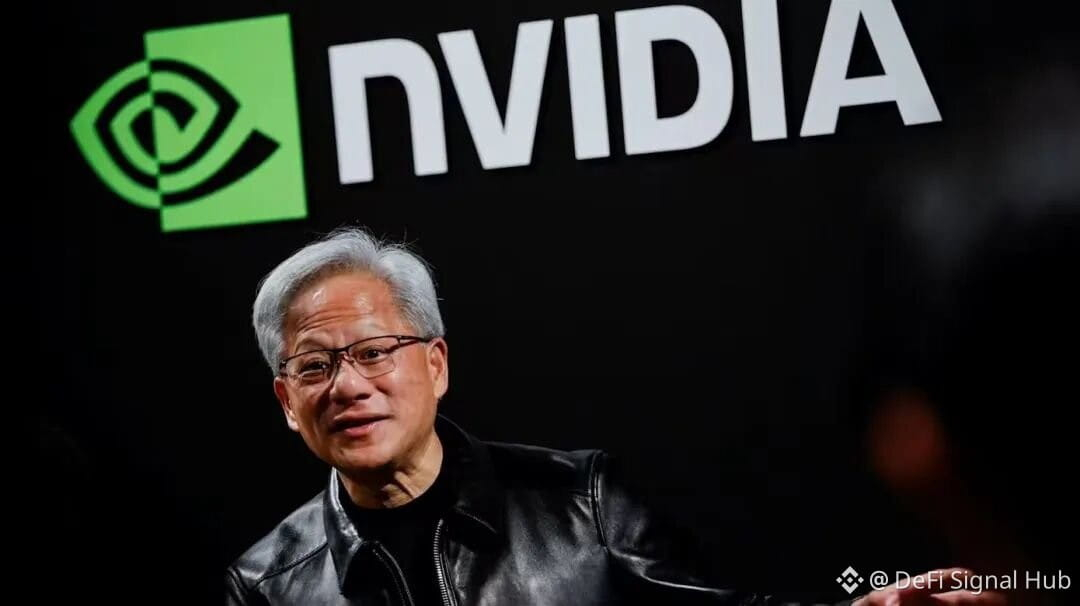
Jensen Huang's crypto past catching up fast 👀
While Nasdaq stayed shut during the scandal, on-chain perps and prediction markets already pricing in his crisis before TradFi even woke up.
Flashback: Mining boom once cut $NVDA stock in half + left legal mess. Now those same mining ops pivoted into AI compute partners for Nvidia. The irony.
Crypto gave Nvidia a brutal hangover years ago. Now it's the first market to judge Jensen in real-time. No circuit breakers. No mercy.
The degen market moves faster than regulators, faster than headlines, faster than your compliance team's Monday morning meeting.
293
Vitalik just dropped a nuclear take on $ETH valuation 🧵
Forget the "fee burn = value" narrative. That model is broken.
Chasing fees forces Ethereum into a centralized profit-maximizing machine. That's not the endgame.
The real value driver? Decentralization + censorship resistance + capture resistance (CROPS).
$ETH isn't a yield farm token. It's a store of value asset.
Priority #1: Survive long-term with max security and minimal complexity.
If you're still pricing $ETH like a SaaS revenue model, you're ngmi.
64
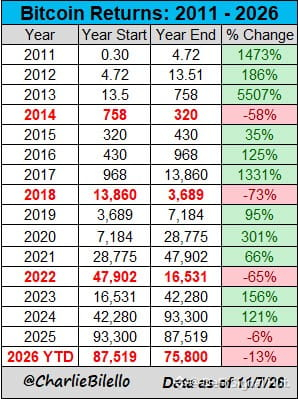
Will $BTC close 2026 red?
Historically, Bitcoin has never posted back-to-back negative years. 2022 was brutal (-64%), but 2023 bounced hard (+155%).
If we follow the 4-year cycle logic, 2025 should pump (post-halving year), making 2026 the distribution/cooldown phase. But a full year in the red? That's betting against every cycle we've seen.
The real question: does this cycle break tradition, or do we just chop sideways in 2026 before the next bear starts in 2027?
Watch macro liquidity and ETF flows. If institutions keep stacking, 2026 might just be flat, not red.
63
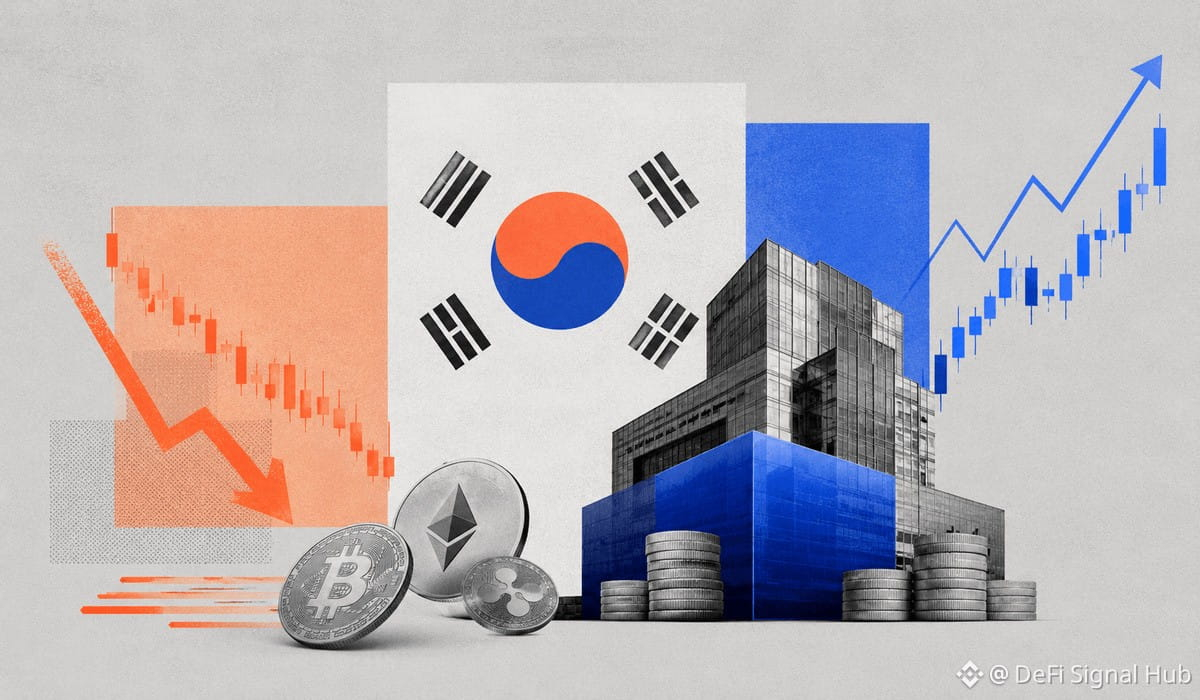
South Korea just flipped the CEX game upside down 🇰🇷
Regulation killed local shitcoins. Korean exchanges now list only overseas tokens that already traded elsewhere. Zero homegrown pump-and-dumps.
The good: Way fewer rug pulls. Delisting rate crashed. More stable listings.
The bad: These overseas coins come with dead liquidity on Day 1. Fee revenue? Brutal.
Exchanges can't survive on listing fees anymore. They're scrambling for new revenue models.
Market cycles still control everything. Bull runs = more listings. Bear markets = ghost town.
Korea went from degen paradise to regulated snooze fest. Safer? Yes. Profitable for exchanges? Not really.
68
$BTC just ate a $1B liquidation cascade in 48hrs — dropped from $81k to $75.2k while the "digital gold" narrative got wrecked again.
Here's what actually happened:
U.S. equities flipped from best day of the year to worst in 24hrs. $BTC moved in lockstep. The trigger? AI chip selloff, not some on-chain black swan.
Grayscale called it 2 months ago — said $BTC was decoupling from tech stocks and moving toward gold correlation. That thesis just got nuked. Correlation snapped right back.
The real issue: $BTC keeps bouncing between "store of value" and "risk-on growth asset." 17 years in and it still hasn't picked a lane. Identity crisis continues.
Macro liquidity is king. $BTC isn't immune to TradFi contagion when risk-off hits. Don't get caught thinking narratives are permanent.

58
币安63.6亿美元失窃案完整复盘 🚨
朝鲜黑客通过虚假招聘渗透内部,利用恶意软件 + 币安内部AI工具突破内网防线,再借助EIP-7702授权漏洞批量清空资产。
攻击链路:
社工入侵 → AI工具滥用 → 合约授权漏洞 → 资金外流
事后多方紧急冻结博弈,但损失已成。安全专家开始反思:AI时代的防御体系 + 自托管模式的根本性风险。
这不是技术问题,是信任模型的崩塌。
币安63.6亿美元失窃案完整复盘 🚨
朝鲜黑客通过虚假招聘渗透内部,利用恶意软件 + 币安内部AI工具突破内网防线,再借助EIP-7702授权漏洞批量清空资产。
攻击链路:
社工入侵 → AI工具滥用 → 合约授权漏洞 → 资金外流
事后多方紧急冻结博弈,但损失已成。安全专家开始反思:AI时代的防御体系 + 自托管模式的根本性风险。
这不是技术问题,是信任模型的崩塌。
朝鲜黑客通过虚假招聘渗透内部,利用恶意软件 + 币安内部AI工具突破内网防线,再借助EIP-7702授权漏洞批量清空资产。
攻击链路:
社工入侵 → AI工具滥用 → 合约授权漏洞 → 资金外流
事后多方紧急冻结博弈,但损失已成。安全专家开始反思:AI时代的防御体系 + 自托管模式的根本性风险。
这不是技术问题,是信任模型的崩塌。
31
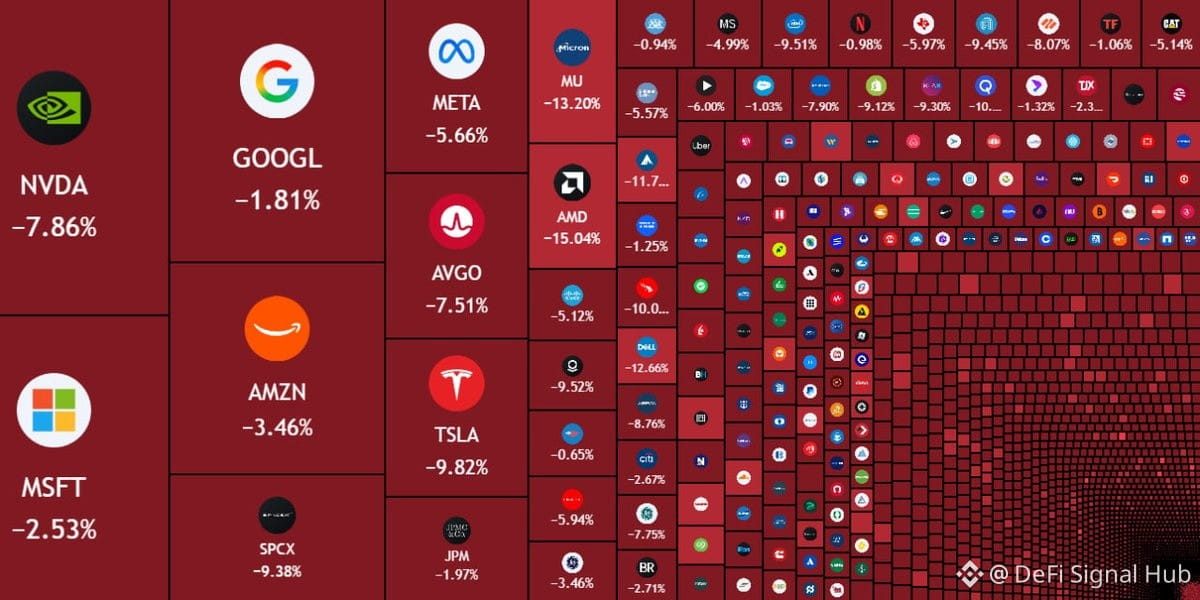
Nearly $2.1 TRILLION vaporized from US equities in 55 minutes.
Tech getting absolutely nuked. AI narrative dead or just degen panic?
Markets move fast. Narratives don't flip overnight.
Panic = volatility. Volatility = alpha for those who don't fold.
Tech and AI stocks hitting oversold territory 📉
This is where conviction gets tested.
Tech getting absolutely nuked. AI narrative dead or just degen panic?
Markets move fast. Narratives don't flip overnight.
Panic = volatility. Volatility = alpha for those who don't fold.
Tech and AI stocks hitting oversold territory 📉
This is where conviction gets tested.
327
Called the $BTC long from channel support on Monday's webinar. Tight stop, clean risk/reward.
Entry: lower trendline
Target: channel top
5.7% in 2 days for spot traders.
Channel plays still working when you respect structure. No need to overcomplicate it.
Called the $BTC long from channel support on Monday's webinar. Tight stop, clean risk/reward.
Entry: lower trendline
Target: channel top
5.7% in 2 days for spot traders.
Channel plays still working when you respect structure. No need to overcomplicate it.
Entry: lower trendline
Target: channel top
5.7% in 2 days for spot traders.
Channel plays still working when you respect structure. No need to overcomplicate it.
80
North Korean hackers just pulled off the biggest crypto heist in history — $6.3B from Binance.
Here's how they did it:
5 attack vectors exposing the entire industry:
1️⃣ Fake job applicants going deep undercover
2️⃣ Supply chain poisoning through dev tools
3️⃣ Third-party infrastructure compromise
4️⃣ AI deepfake interviews bypassing KYC
5️⃣ Weaponized code in internal AI systems
This isn't script kiddie stuff anymore. State-level actors are combining social engineering with AI tech to infiltrate at the protocol level.
If $BNB can get rekt for $6.3B, no one is safe. The threat has evolved from phishing links to algorithmic warfare.
Every hire is a potential sleeper. Every dependency is a potential backdoor. The attack surface just went infinite.

71
Ethereum 2026: Everything's pumping except the price
Mainnet gas fees collapsed. Apps are migrating back. UX is finally decent.
But $ETH? Still bleeding.
ETF inflows stalling. Corporate treasuries slowing buys. BitMine and other whales now buying back their own discounted shares instead of stacking more $ETH.
Meanwhile on-chain: 1M+ $ETH queued for staking. Deflationary engine? Dead. Low fees killed the burn.
Glamsterdam upgrade? Delayed due to security risks.
The paradox is real: Network improves → Token bleeds. Value accrual is broken.
Bullish fundamentals. Bearish tokenomics. Pick your poison.

72
$BTC just ate a $6.3B Binance hack like it was nothing.
Largest crypto theft on record. Market didn't even flinch.
Weekly close: $78.2k — still above the 50-week MA.
This is what real liquidity and conviction looks like. Not 2018. Not 2022.
Bears got nothing.
$BTC just ate a $6.3B Binance hack like it was nothing.
Largest crypto theft on record. Market didn't even flinch.
Weekly close: $78.2k — still above the 50-week MA.
This is what real liquidity and conviction looks like. Not 2018. Not 2022.
Bears got nothing.
Largest crypto theft on record. Market didn't even flinch.
Weekly close: $78.2k — still above the 50-week MA.
This is what real liquidity and conviction looks like. Not 2018. Not 2022.
Bears got nothing.
85
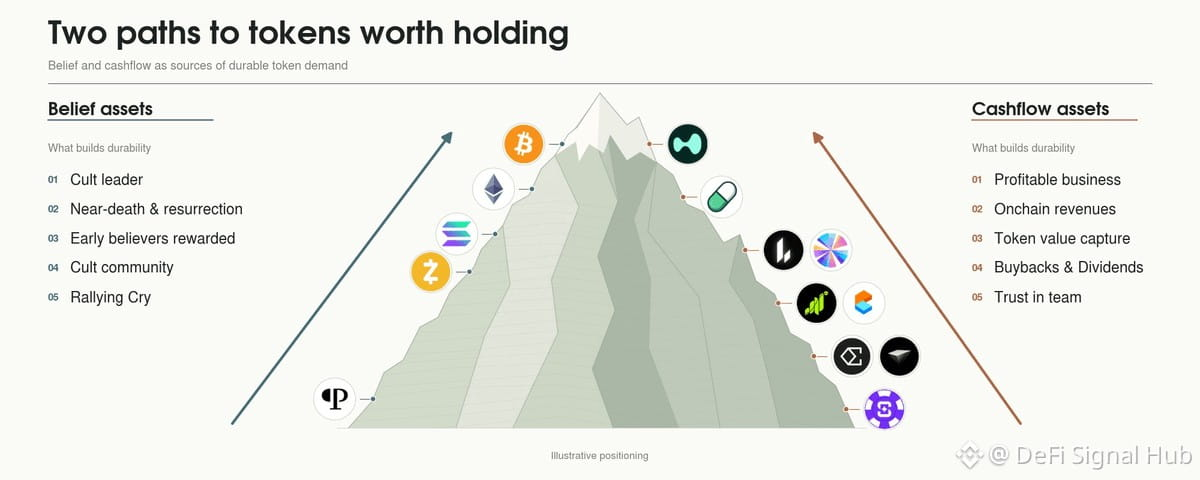
Crypto's narrative pump era is dying. Token value now boils down to two things: belief intensity or real cash flow capture.
Most tokens? Overissued garbage with zero staying power. The framework that matters:
1. Sustained Belief Assets ($BTC, $HYPE): Need charismatic leaders, near-death survival stories, generational wealth creation, cult-level holder conviction, and multi-cycle endurance. Without all five? You're holding a meme with an expiration date.
2. Cash Flow Assets: Demand on-chain transparency and actual buyback mechanisms. If the protocol isn't provably generating and returning value, it's just another Ponzi with extra steps.
Bottom line: Only assets with extreme consensus OR verifiable revenue streams survive bear markets. The sweet spot? Projects that lock in both. Everything else is exit liquidity waiting to happen.
The hype cycle is over. Show me the fundamentals or show me the cult. Pick one or get rekt.
174
🚨 $64B Binance hack — biggest crypto heist in history
Forensics pointing to North Korea-linked groups. Attackers exploited compromised internal credentials + Ethereum EIP-7702 to drain funds.
~$3B in stablecoins already frozen by issuers.
Binance halted withdrawals, pledged $6.3B+ from reserves to cover losses 1:1. Working with US federal law enforcement.
This isn't just a Binance problem — it's a systemic wake-up call for CEX security architecture.

27
EIP-7702 just became the most expensive lesson in crypto history.
Pectra upgrade introduced this feature to let EOAs temporarily act like smart contracts—batch txs, gas abstraction, all the good stuff. Sounds bullish for UX, right?
Wrong.
North Korean hackers got hold of Binance hot wallet signatures, delegated authorization via EIP-7702, and drained $6.4B in October 2026. Full control. Zero friction.
This isn't just a hack. It's a wake-up call:
• Delegated code = full wallet authority
• No guardrails = catastrophic risk
• Account abstraction is the future, but we're not ready
Ethereum is evolving fast. But so are the attack vectors. If you're not auditing every delegation, you're exit liquidity.
Stay paranoid. Stay liquid.
25
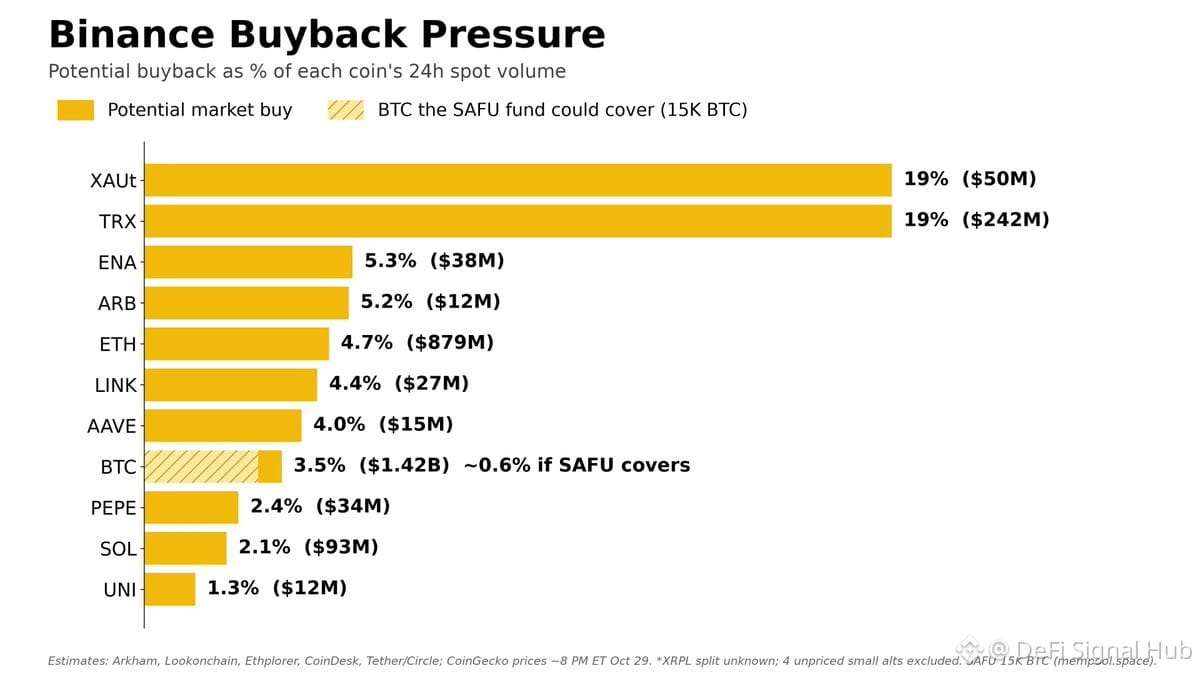
Binance might face buyback pressure for altcoins stolen in recent exploit
If they're forced to replace user funds with direct token purchases instead of insurance/reserves, this could create unexpected buy pressure on affected alts
Watch for official statements on how they're handling reimbursements - could be a short-term catalyst for specific tokens
If they're forced to replace user funds with direct token purchases instead of insurance/reserves, this could create unexpected buy pressure on affected alts
Watch for official statements on how they're handling reimbursements - could be a short-term catalyst for specific tokens
250
Binance just got hit with the biggest crypto heist in history — $6.3B drained from multi-chain hot wallets.
Official response: withdrawals paused, ~$3B frozen via industry coordination. CZ's team claims they'll cover losses using treasury + SAFU fund.
Now the real test: can they handle withdrawal pressure when gates reopen? Market's watching proof-of-reserves snapshots closely.
If liquidity holds, $BNB might survive this. If not... buckle up.
55
2026 crypto revenue map is getting redrawn 📊
Total industry revenue down 28% from market pullback, but still tracking toward $100B annually.
The real shift? Revenue structure is flipping:
• Institutional adoption + prediction markets + RWA now 30% of revenue
• First time EVER these real-world use cases surpass L1 infrastructure
What this means for your bags:
Protocols that distribute actual cash flow to token holders are outperforming. Not promises. Not narratives. Real yield.
If your protocol isn't paying you, it's ngmi this cycle. Follow the money, not the hype.
72
$BTC consolidating below $84-85k resistance after 4 failed breakout attempts. Here's what's actually happening on-chain:
ETF inflows stalled while retail selling pressure easing → classic low-volume standoff. Unrealized losses narrowing fast. New accumulation zone forming at $78-79k.
Volatility compressed to historic lows. This coil is TIGHT.
Fed decision this week = potential catalyst for explosive move. Watch these levels:
• Resistance: $85k (break = continuation)
• Support: $77.9k moving average (lose = pain)
Low vol + macro event = setup for violent repricing either direction. Position accordingly.
61
$BTC just dumped below $80k and everyone's blaming crypto.
Wrong.
The real culprit? Fed policy fog + AI credit crunch forcing institutions into panic hedging mode.
ETF outflows are accelerating. Leverage got liquidated hard. What used to be accumulation zones are now distribution zones.
$79,800 is the line in the sand now.
Next move depends on:
• This week's central bank meetings
• Whether credit liquidity stabilizes
Macro is driving this, not some degen rug. Watch the Fed, not the FUD.
65
$BTC stuck at $80k — bulls and bears locked in a stalemate.
Upside capped by ETF cost basis, downside held by market avg price + short-term holder support.
Strategy paused buys this week, pivoting to buyback high-yield preferred shares. October spot ETF saw $300M+ net outflow.
But 70% of supply still in profit, long-term holder cost way lower — bull market foundation hasn't cracked yet.
This range is compression before the next leg.

87
ເຂົ້າສູ່ລະບົບເພື່ອສຳຫຼວດເນື້ອຫາເພີ່ມເຕີມ
ເຂົ້າຮ່ວມກຸ່ມຜູ້ໃຊ້ຄຣິບໂຕທົ່ວໂລກໃນ Binance Square.
⚡️ ໄດ້ຮັບຂໍ້ມູນຫຼ້າສຸດ ແລະ ທີ່ມີປະໂຫຍດກ່ຽວກັບຄຣິບໂຕ.
💬 ໄດ້ຮັບຄວາມໄວ້ວາງໃຈຈາກຕະຫຼາດແລກປ່ຽນຄຣິບໂຕທີ່ໃຫຍ່ທີ່ສຸດໃນໂລກ.
👍 ຄົ້ນຫາຂໍ້ມູນເຊີງເລິກທີ່ແທ້ຈາກນັກສ້າງທີ່ໄດ້ຮັບການຢືນຢັນ.
ອີເມວ / ເບີໂທລະສັບ
ຫົວຂໍ້ທີ່ກໍາລັງນິຍົມ
HotCPIDecemberHikePriced
137,571 ຄັ້ງທີ່ເບິ່ງ
1,575 ກຳລັງສົນທະນາ
CPI Market Watch | US CPI Rises 0.4% in October, Hotter Than 0.3% Forecast
Binance News
·28 ຖືກໃຈ
·42k ຄັ້ງທີ່ເບິ່ງ
AnthropicRejectsIPODelayValuationinQuestion
253,181 ຄັ້ງທີ່ເບິ່ງ
2,157 ກຳລັງສົນທະນາ
CanNvidiaEarningsEaseMarketConcerns?
49,983 ຄັ້ງທີ່ເບິ່ງ
727 ກຳລັງສົນທະນາ