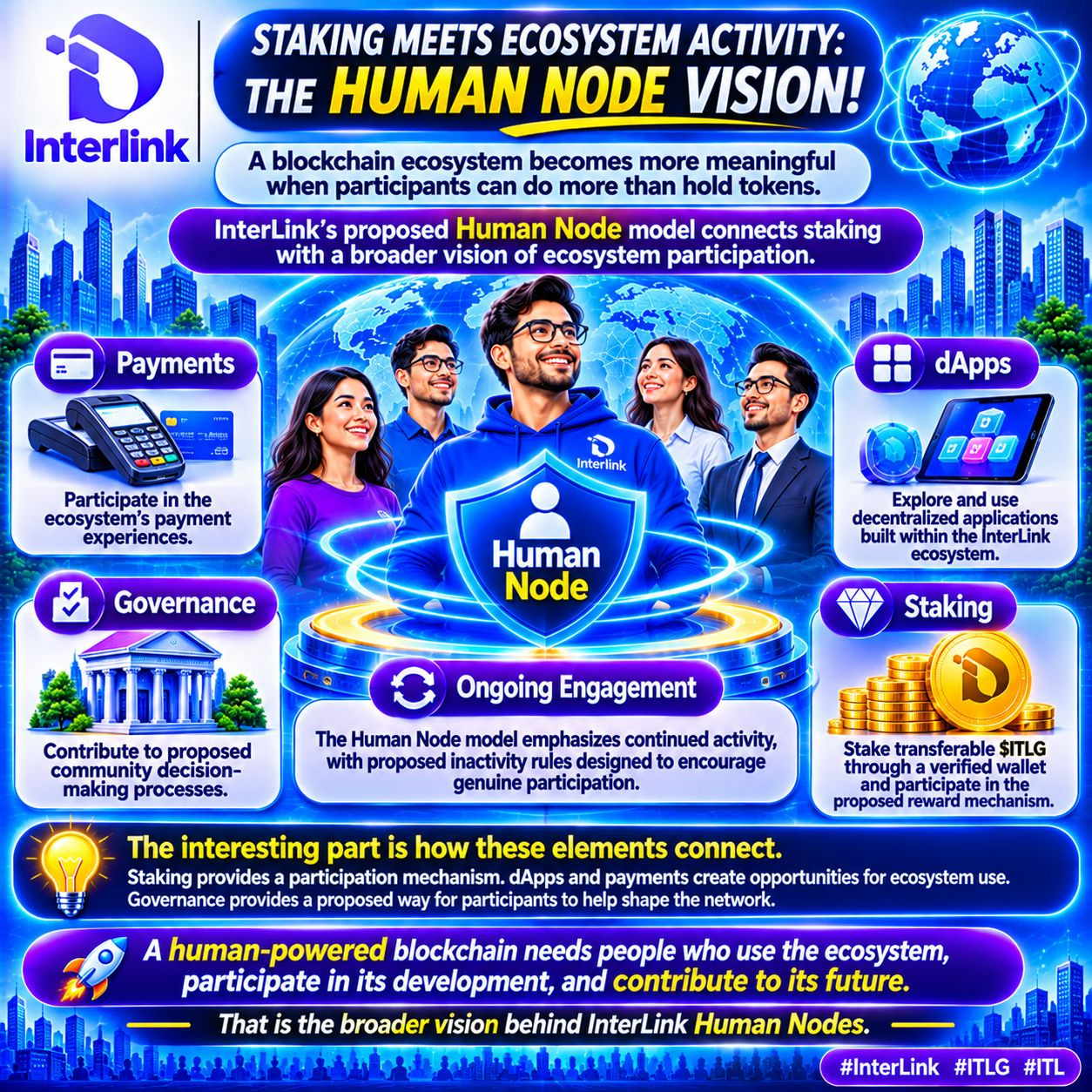
🌐 𝗦𝗧𝗔𝗞𝗜𝗡𝗚 𝗠𝗘𝗘𝗧𝗦 𝗘𝗖𝗢𝗦𝗬𝗦𝗧𝗘𝗠 𝗔𝗖𝗧𝗜𝗩𝗜𝗧𝗬: 𝗧𝗛𝗘 𝗛𝗨𝗠𝗔𝗡 𝗡𝗢𝗗𝗘 𝗩𝗜𝗦𝗜𝗢𝗡! 🚀
A blockchain ecosystem becomes more meaningful when participants can do more than hold tokens.
InterLink's proposed Human Node model connects staking with a broader vision of ecosystem participation.
Verified Human Nodes are envisioned to participate in different areas of the InterLink network.
💳 Payments: Participate in the ecosystem's payment experiences.
📱 dApps: Explore and use decentralized applications built within the InterLink ecosystem.
🗳️ Governance: Contribute to proposed community decision-making processes.
💎 Staking: Stake transferable $ITLG through a verified wallet and participate in the proposed reward mechanism.
🔄 Ongoing Engagement: The Human Node model emphasizes continued activity, with proposed inactivity rules designed to encourage genuine participation.
The interesting part is how these elements connect.
Staking provides a participation mechanism. dApps and payments create opportunities for ecosystem use. Governance provides a proposed way for participants to help shape the network.
This creates a vision where the value of a node is not defined only by its token balance.
However, actual participation opportunities, reward rules, and activity verification will depend on the final implementation.
A human-powered blockchain needs people who use the ecosystem, participate in its development, and contribute to its future.
That is the broader vision behind InterLink Human Nodes.
#InterLink #ITLG #ITL