
#election
election
204,017 ຄັ້ງທີ່ເບິ່ງ
223 ກຳລັງສົນທະນາ
ມາແຮງ
ຫຼ້າສຸດ

·
--
ສັນຍານກະທິງ
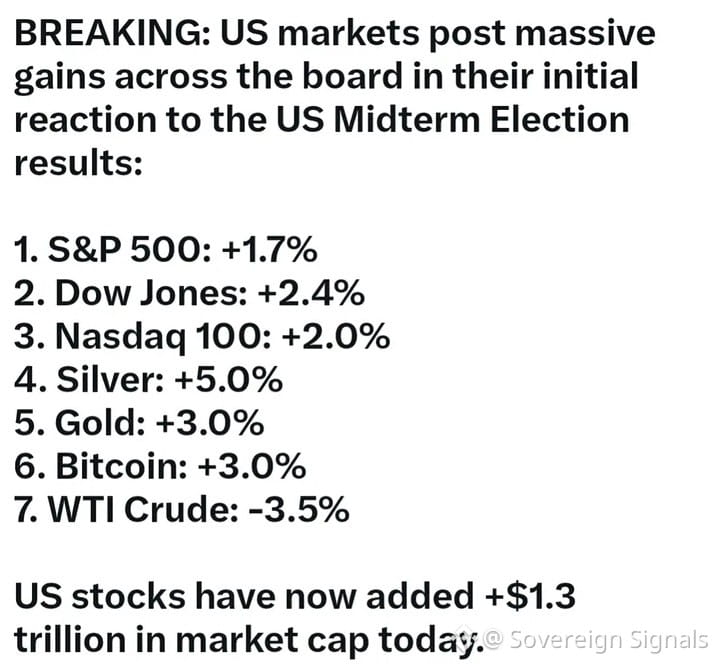
*BREAKING: US MARKETS EXPLODE AFTER MIDTERMS 🚀*
Wall Street just added *+$1.3 TRILLION* in market cap in ONE day.
The market has voted - and it loves certainty.
*Initial Reaction to US Midterm Election Results:*
1. *Dow Jones:* +2.4% 🔥
2. *Nasdaq 100:* +2.0%
3. *S&P 500:* +1.7%
4. *Silver:* +5.0% 🥈
5. *Gold:* +3.0% 🥇
6. *Bitcoin:* +3.0% ₿
7. *WTI Crude:* -3.5% 🛢️
*What Is Happening?*
Everything is pumping EXCEPT oil.
Why? Markets are betting on:
- *No War With Iran* = Oil crashes -3.5% as war premium comes out
- *Gridlock = Good* = Divided government = no big tax hikes, no crazy spending
- *Fed Easing Coming* = Lower rates = stocks + gold + BTC up together
This is classic *"Risk-On + De-escalation"* trade.
Silver leading at +5% tells you smart money is hedging for inflation AND growth at the same time.
*Sovereign Take:*
When Gold, Silver, Stocks AND Bitcoin all pump together, it's not a normal rally. It's a *liquidity repricing.*
The market just said: War risk down, money printing up.
Yesterday everyone was scared of midterms. Today $1.3 Trillion was created.
Fear is expensive. Patience is profitable.
Did you buy the fear or sell it?
#sp500 #nasdaq #dowjones #gold #silver #bitcoin #midterms #iranwar #crudeoil #election
285

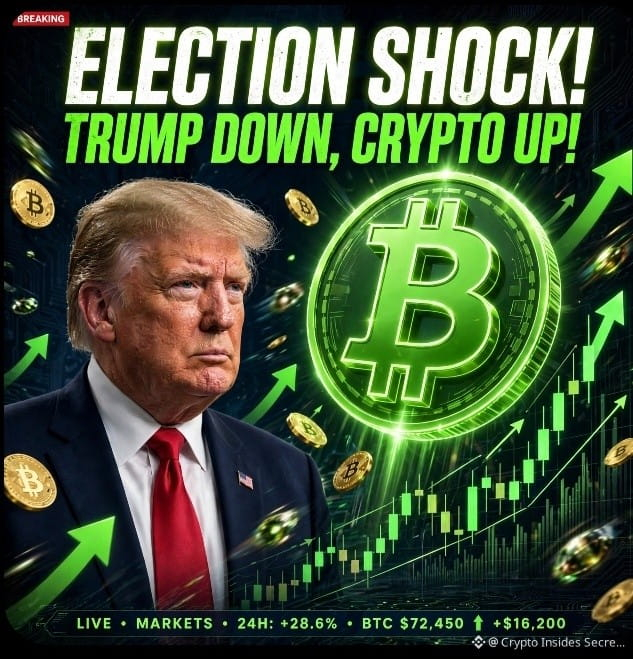
❌❌❌ ELECTION SHOCK: TRUMP DOWN, CRYPTO UP! 🚀🚀🚀
✅✅✅ TOP GAINERS TODAY ✅✅✅
1️⃣$RAY 2️⃣$BEAMX
Everyone was expecting that market will go up if Trump wins the election , but it was opposite Trump lost but market is going up. Just look at the Bitcoin Gold and other Altcoins. Thats why market is unpredictable. Bears are crushed 🔥🔥🔥
#election #TrumpCrypto
$TIA
{spot}(BEAMXUSDT)
❌❌❌ ELECTION SHOCK: TRUMP DOWN, CRYPTO UP! 🚀🚀🚀
✅✅✅ TOP GAINERS TODAY ✅✅✅
1️⃣$RAY 2️⃣$BEAMX
Everyone was expecting that market will go up if Trump wins the election , but it was opposite Trump lost but market is going up. Just look at the Bitcoin Gold and other Altcoins. Thats why market is unpredictable. Bears are crushed 🔥🔥🔥
#election #TrumpCrypto
$TIA

1
1
317

Siêu PAC crypto thất bại khi Dân chủ kiểm soát Quốc hội
- Siêu PAC chính ngành crypto thất bại.
- Hơn 1/3 chi tiêu không đạt, đặc biệt Ohio.
- Dân chủ thắng Congrès, ảnh hưởng ngành.
#BinanceSquare #CryptoNews #Election #Crypto
$btc $eth
#vlikevn Titanbot
Nguồn: CoinDesk
Siêu PAC crypto thất bại khi Dân chủ kiểm soát Quốc hội
- Siêu PAC chính ngành crypto thất bại.
- Hơn 1/3 chi tiêu không đạt, đặc biệt Ohio.
- Dân chủ thắng Congrès, ảnh hưởng ngành.
#BinanceSquare #CryptoNews #Election #Crypto
$btc $eth
#vlikevn Titanbot
Nguồn: CoinDesk
- Siêu PAC chính ngành crypto thất bại.
- Hơn 1/3 chi tiêu không đạt, đặc biệt Ohio.
- Dân chủ thắng Congrès, ảnh hưởng ngành.
#BinanceSquare #CryptoNews #Election #Crypto
$btc $eth
#vlikevn Titanbot
Nguồn: CoinDesk
138

🚨 TERNYATA, UANG SEBANYAK INI BELUM TENTU BISA MEMBELI KEMENANGAN! 🇺🇸
Pemilu paruh waktu AS mencatat pengeluaran fantastis hingga $11,9 MILIAR! 📈
Angka ini bahkan melampaui biaya pemilu presiden AS 2024 yang mencapai $11,2 miliar.
Yang lebih mengejutkan?
Partai Republik menggelontorkan sekitar $5,18 MILIAR untuk iklan kampanye, tetapi besarnya anggaran tak menjamin kemenangan politik.
💸 Miliaran dolar sudah dibakar. 📢 Kampanye besar-besaran sudah dilakukan. Namun, hasil akhirnya justru di luar harapan.
Satu hal yang menarik: dalam politik, uang memang bisa membeli perhatian, tetapi belum tentu bisa membeli suara.
Menurut kalian, apakah uang masih menjadi senjata paling kuat dalam perebutan kekuasaan? 👀
$LSK
{spot}(LSKUSDT)
$RAY
{spot}(RAYUSDT)
$PARTI
{spot}(PARTIUSDT)
#USPolitics #election #CryptoCommunity
🚨 TERNYATA, UANG SEBANYAK INI BELUM TENTU BISA MEMBELI KEMENANGAN! 🇺🇸
Pemilu paruh waktu AS mencatat pengeluaran fantastis hingga $11,9 MILIAR! 📈
Angka ini bahkan melampaui biaya pemilu presiden AS 2024 yang mencapai $11,2 miliar.
Yang lebih mengejutkan?
Partai Republik menggelontorkan sekitar $5,18 MILIAR untuk iklan kampanye, tetapi besarnya anggaran tak menjamin kemenangan politik.
💸 Miliaran dolar sudah dibakar. 📢 Kampanye besar-besaran sudah dilakukan. Namun, hasil akhirnya justru di luar harapan.
Satu hal yang menarik: dalam politik, uang memang bisa membeli perhatian, tetapi belum tentu bisa membeli suara.
Menurut kalian, apakah uang masih menjadi senjata paling kuat dalam perebutan kekuasaan? 👀
$LSK
$RAY
$PARTI
#USPolitics #election #CryptoCommunity

1
1.7k

·
--
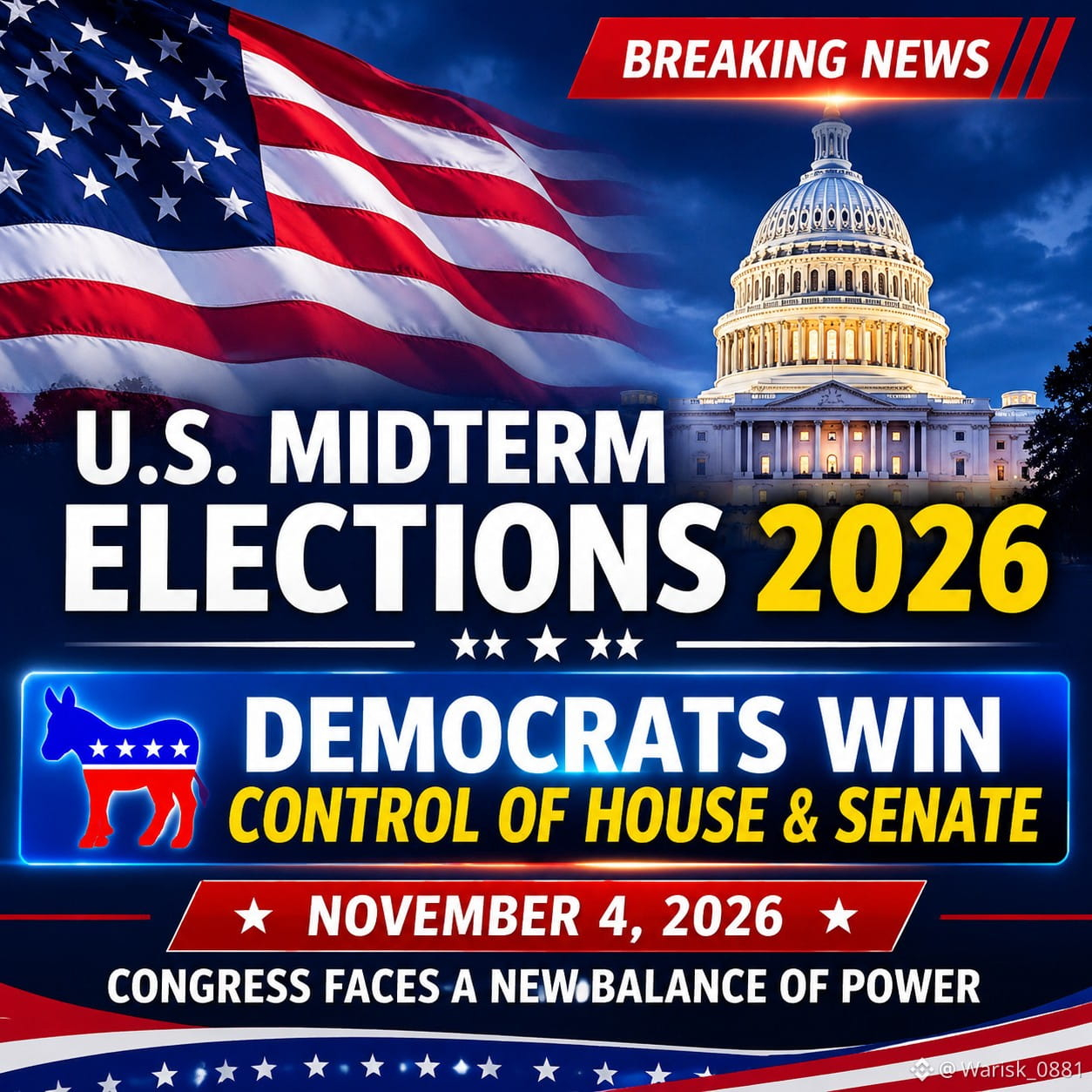
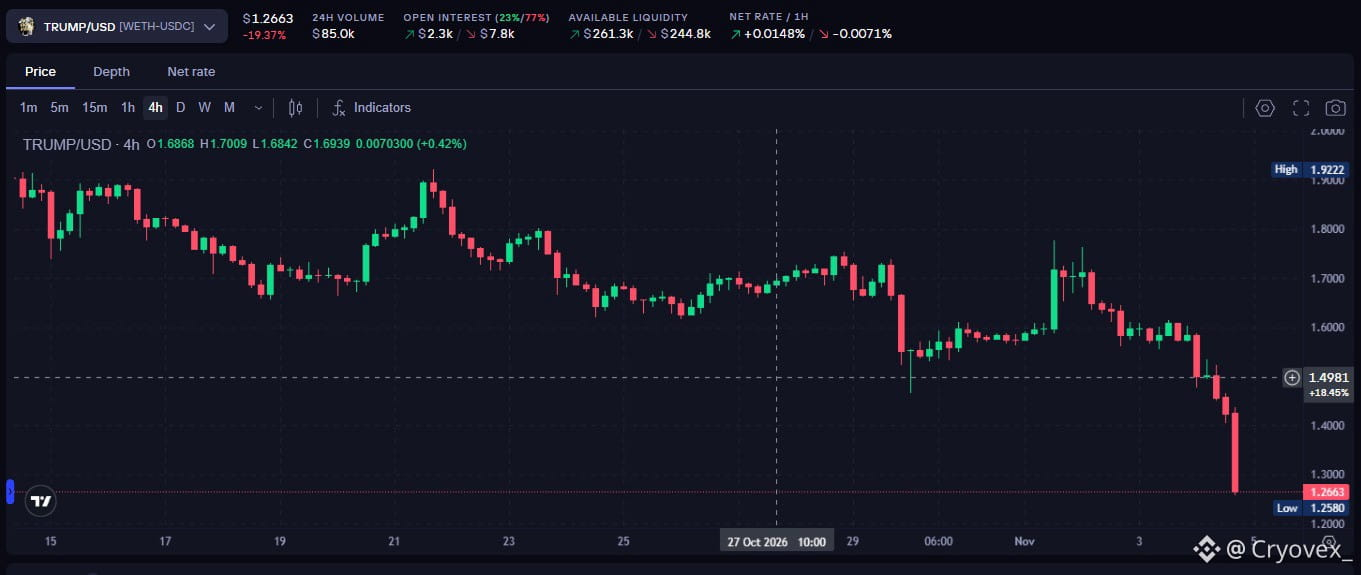
🇺🇸 BREAKING: AMERICA ELECTION 2026 – MAJOR POLITICAL SHAKE-UP!
The US Midterm Elections held on November 3 have delivered major changes in American politics.
Latest Election Highlights:
🔵 Democrats have won control of both the US House and Senate, according to Associated Press.
Several key Senate seats changed hands.
Texas, Iowa, Ohio and other states saw significant political shifts.
The results could reshape President Donald Trump's agenda for the remaining two years of his term.
Vote counting and final race confirmations continue in some contests.
What Happens Next?
The new balance of power in Congress could affect US economic policy, foreign relations, immigration and government spending.
#USMidterms-WhatAreMarketsExpecting? #BinanceReopensWithdrawalsForMoreAssets #usa #election
$BTC $TRUMP
{spot}(TRUMPUSDT)
{spot}(BTCUSDT)
🇺🇸 BREAKING: AMERICA ELECTION 2026 – MAJOR POLITICAL SHAKE-UP!
The US Midterm Elections held on November 3 have delivered major changes in American politics.
Latest Election Highlights:
🔵 Democrats have won control of both the US House and Senate, according to Associated Press.
Several key Senate seats changed hands.
Texas, Iowa, Ohio and other states saw significant political shifts.
The results could reshape President Donald Trump's agenda for the remaining two years of his term.
Vote counting and final race confirmations continue in some contests.
What Happens Next?
The new balance of power in Congress could affect US economic policy, foreign relations, immigration and government spending.
#USMidterms-WhatAreMarketsExpecting? #BinanceReopensWithdrawalsForMoreAssets #usa #election
$BTC $TRUMP
1
2
415

ບົດຄວາມ
Bitcoin After the 2026 US Midterm Elections: Could History Repeat Itself?Why Bitcoin and the stock market have historically performed well after US midterm elections and whether 2026 could become another major opportunity for investors.
There is an interesting historical pattern that deserves more attention than a simple bullish prediction.
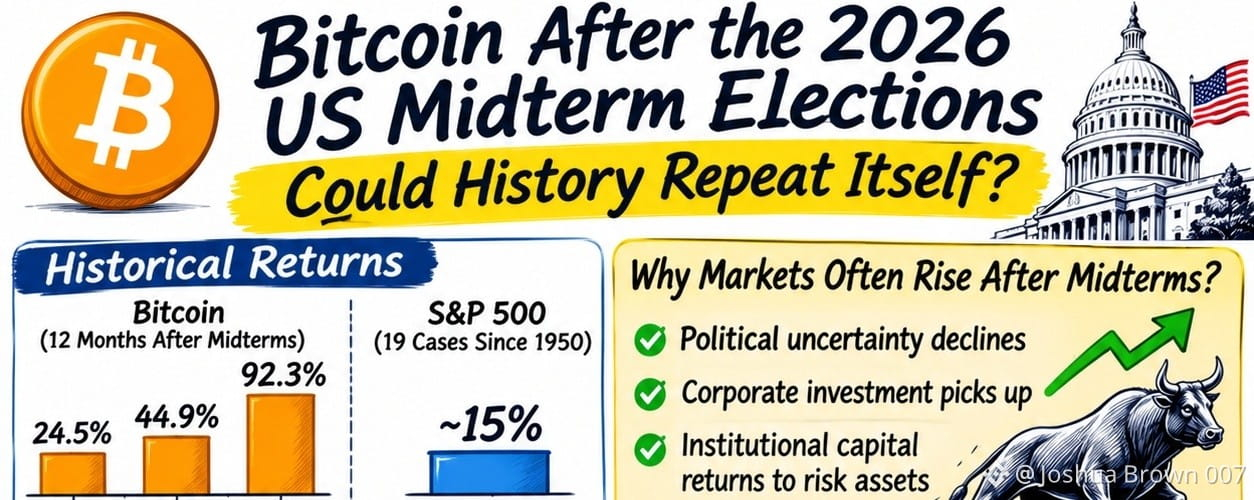
Bitcoin has reportedly delivered positive returns during the 12 months following the 2014, 2018 and 2022 US midterm elections, with gains of 24.5%, 44.9% and 92.3%, respectively. Meanwhile, the S&P 500 has historically shown a strong tendency to recover and advance after midterm elections.
But I want to look beyond these percentages. The real question is not whether Bitcoin went up after previous elections. It is why financial markets often perform better once political uncertainty begins to disappear — and whether the economic conditions in 2026 support another similar move.
1. What does historical data actually tell us?
Let's separate the stock-market record from Bitcoin's much shorter history.
Bitcoin's performance after previous midterms
| Midterm election | BTC return after 12 months |
| November 2014 | +24.5% |
| November 2018 | +44.9% |
| November 2022 | +92.3% |
The average of these three returns is approximately 53.9%. That looks impressive, but there is an important detail that investors should not ignore: Bitcoin has only three comparable midterm observations in this dataset.
Three successful outcomes do not establish a statistically reliable market cycle.
There is another important lesson hidden inside these numbers.
* 2014: Bitcoin eventually recovered and gained 24.5% over the following year, but it experienced a substantial decline along the way.
* 2018: BTC fell approximately 45.5% in the first month after the election before eventually producing a positive 12-month return.
* 2022: BTC gained 92.3% over the following year, but the period also included the recovery from the FTX collapse and a broader improvement in market conditions.
In other words, buying immediately after an election did not guarantee a smooth or profitable short-term trade.
The 2018 example is particularly important for leveraged traders. Someone who entered with excessive leverage could have been liquidated long before the historical 12-month return became positive. CryptoQuant +2
What about the S&P 500?
The equity-market record is considerably stronger in terms of sample size.
Since 1950, the S&P 500 has finished higher in all 19 measured 12-month periods following US midterm elections. The average gain is approximately 15%, depending on the data source and calculation methodology. J.P. Morgan Asset Management +2
However, I would not compare these averages as if they represented equivalent investments. Bitcoin is substantially more volatile, and its historical sample is much smaller.
The S&P 500 also experienced serious corrections during some of those post-election periods. In 1987, for example, it suffered a peak-to-trough decline of approximately 33%, even though its measured 12-month return following the 1986 midterms remained positive.
My interpretation: The historical pattern is encouraging, but the journey matters just as much as the final percentage.
2. Why do markets often perform better after midterm elections?
I believe the biggest explanation is uncertainty rather than politics itself.
Financial markets dislike uncertainty because investors cannot confidently estimate future regulations, taxation, government spending, trade policies or the direction of economic policy.
Before elections, investors often reduce risk or delay major investment decisions because they do not know which political direction the government will take.
Once election results become clearer, several things can happen.
A. Political uncertainty starts declining
Investors can begin evaluating the likely policy environment instead of trading on political speculation.
This can improve confidence among institutional investors, corporations and asset managers.
B. Corporate investment decisions become easier
Businesses may postpone expansion, hiring and capital expenditure when they are uncertain about future regulations or taxation.
Greater political clarity can encourage companies to restart delayed investment plans.
C. Institutional capital can return to risk assets
When uncertainty declines and economic conditions are supportive, investors may increase exposure to equities, technology companies and other risk-sensitive assets.
Bitcoin can benefit from this environment because it is increasingly traded alongside broader financial markets.
But there is a distinction worth remembering: political clarity does not automatically mean more liquidity. Interest rates, credit conditions and global capital flows still determine how much money is actually available to take risks.
### 3\. The 2026 political situation: Why this election matters to crypto
This is where the current election becomes particularly interesting for Bitcoin investors.
The 2026 midterms are not simply about which political party controls Congress. They could also influence the direction of US cryptocurrency regulation.
According to Reuters' November 3 reporting, prediction markets were pricing:
* Democrats at approximately 95% probability of winning the House.
* Democrats at approximately 76% probability of winning the Senate.
These are market-implied probabilities, not confirmed election results. Prediction markets can change rapidly as votes are counted. Reuters
Why should crypto investors care?
Because control of Congress can influence legislation, committee leadership, regulatory oversight and the ability to move major financial bills forward.
The CLARITY Act: A major uncertainty
One of the most important developments for the cryptocurrency industry is the proposed CLARITY Act.
The legislation aims to establish a clearer regulatory framework for digital assets, including the division of responsibilities between the SEC and CFTC.
However, on September 15, 2026, the Senate failed to advance the legislation in a procedural vote.
The vote was 50–49, falling short of the 60 votes required to proceed.
This is significant because the cryptocurrency industry has spent years seeking more predictable regulatory rules in the United States. Reuters +1
Now consider the political implications.
If Democrats gain control of both chambers, the legislation could face a different set of negotiations and priorities. If Republicans retain control, the political environment could be more favorable to their existing legislative agenda.
Neither outcome guarantees passage or rejection.
My concern is that the market may price in political optimism before the actual legislative process delivers anything concrete.
For Bitcoin, regulatory clarity is a long-term positive, but delayed legislation could create short-term disappointment.
4. The biggest factor: Federal Reserve policy and global liquidity
Here is where I believe investors should focus most of their attention.
An election can change political expectations, but it cannot independently create a sustainable Bitcoin bull market.
For that, financial conditions matter.
Consider three major factors.
A. Interest rates
When interest rates remain high, investors can earn attractive returns from relatively safer assets such as government bonds.
This can reduce the appetite for speculative investments.
When interest rates decline, the relative attractiveness of risk assets may improve, although the reasons behind rate cuts matter.
A central bank cutting rates because inflation is controlled and economic growth remains stable is a very different situation from cutting rates because a recession is developing.
B. US Treasury yields
The 10-year US Treasury yield is another important indicator.
It influences borrowing costs, asset valuations and the opportunity cost of holding non-yielding assets such as Bitcoin.
On October 30, 2026, the 10-year Treasury yield was approximately 4.94%, according to the available market data. That is an important reminder that financial conditions cannot simply be assumed to be easy because an election is approaching. Historical Data & Trends +1
I would watch whether yields begin declining sustainably or continue putting pressure on risk assets.
C. Dollar liquidity
Bitcoin has a global market, but US monetary conditions have a substantial influence on institutional risk appetite.
Investors should monitor:
* Federal Reserve balance-sheet developments.
* Treasury General Account movements.
* Bank reserves and money-market conditions.
* Dollar strength and global funding conditions.
* Institutional inflows into Bitcoin investment products.
If liquidity improves while institutional demand remains strong, Bitcoin could have a much healthier foundation for a sustained rally.
If liquidity tightens, political optimism alone may not be enough.
5. Bitcoin's halving cycle versus the midterm election cycle
There is another detail I would not ignore.
Bitcoin and US equities do not necessarily follow the same market cycle.
The Bitcoin halving is a supply-side event that reduces the rate at which new BTC enters circulation. The 2024 halving reduced the block subsidy from 6.25 BTC to 3.125 BTC.
However, reduced new supply does not automatically create higher prices.
Price still depends on demand, liquidity, investor positioning and the amount of Bitcoin available for sale.
The 2026 post-midterm period also arrives at a different point in Bitcoin's halving cycle than the periods examined in the screenshot.
That makes a direct comparison difficult.
I would examine three separate signals:
* Exchange reserves and selling pressure: Are investors moving BTC away from exchanges, or are large holders preparing to sell?
* Institutional demand: Are spot Bitcoin ETFs consistently attracting capital, or are inflows temporary?
* Market positioning: Is open interest increasing alongside healthy spot volume, or is leverage building faster than actual buying demand?
A rally supported by genuine spot demand is generally healthier than one driven primarily by leveraged futures positions.
This distinction matters because a market can look extremely bullish on social media while its underlying positioning becomes increasingly vulnerable to liquidation.
6. My expert market outlook: Three possible scenarios for Bitcoin
I would not enter a trade simply because historical data suggests that Bitcoin could gain another 50% after the election.
Instead, I would build three scenarios.
Scenario 1: Bullish continuation
Bullish
Political uncertainty declines, Treasury yields stabilize or fall, ETF demand strengthens and spot buying increases.
In this situation, Bitcoin could develop a sustained upward trend, with capital potentially rotating into Ethereum and selected altcoins.
Scenario 2: Buy the rumour, sell the news
Volatile
Markets rally in anticipation of a favourable political outcome, but investors take profits once the results become known.
BTC could experience a sharp correction even if the longer-term historical pattern remains positive.
Scenario 3: Macro-driven correction
Bearish risk
Treasury yields rise, the dollar strengthens, liquidity deteriorates or economic data disappoints.
In this environment, Bitcoin could decline despite a favourable election outcome. Historical seasonality would offer little protection.
What I would monitor before taking a position
| Indicator | What I want to See
| BTC price structure | Higher highs and higher lows |
| Spot volume | Strong buying confirmation |
| ETF flows | Sustained net inflows |
| Open interest | Growth supported by spot demand |
| Funding rates | Positive but not excessively crowded |
| US 10-year yield | Stabilization or sustained decline |
| Dollar index | No major strengthening pressure |
| Regulation | Actual legislative progress |
My preferred approach would be to wait for confirmation rather than predict the exact election-driven bottom.
A breakout without strong spot volume can become a liquidity trap. Similarly, a sudden rise in funding rates can indicate that too many leveraged traders are positioned in the same direction.
For traders, protecting capital is more important than trying to capture every percentage of a historical rally.
7. The biggest mistake investors could make in 2026
I see one potential danger in how this historical data is being presented.
Investors may interpret the 19-out-of-19 S&P 500 record and Bitcoin's three positive post-midterm returns as a guaranteed opportunity.
That would be a mistake.
The stock-market record is impressive, but it is still a relatively small historical sample. Furthermore, the 12 months after a midterm election overlap with the third year of a presidential term, which has historically been a strong period for equities.
We cannot confidently conclude that elections themselves caused those returns.
There is also a difference between a rising market and a profitable entry. If investors buy after a major rally, even a historically favourable year could produce disappointing returns.
I would rather miss the first 5% of a move and enter after confirmation than buy blindly into an overheated market.
8. Final verdict: Could 2027 become another strong year for Bitcoin?
My view is cautiously optimistic.
The historical evidence gives investors a reason to pay attention to the next 12 months. Bitcoin has delivered positive returns in all three comparable post-midterm periods, while the S&P 500 has maintained an extraordinary record of positive 12-month returns following 19 midterm elections since 1950.
But 2026 has its own challenges:
* The Federal Reserve's monetary policy and Treasury yields.
* The strength or weakness of the US dollar.
* Bitcoin's position within its halving cycle.
* Institutional demand and ETF capital flows.
* The future of US cryptocurrency regulation.
* Political uncertainty following the election.
I believe the most interesting opportunity could emerge when political clarity, improving liquidity and genuine institutional demand align.
My conclusion is simple: History is giving Bitcoin investors an interesting signal, not a guarantee of another bull run.
I will be watching what institutional money actually does after the election rather than blindly following historical percentages.
Because in crypto, the biggest difference between a successful investor and someone who gets trapped is often the ability to distinguish a historical pattern from a confirmed market trend.
What do you think? Could Bitcoin deliver another 50%+ return during the 12 months following the 2026 US midterm elections, or will macroeconomic pressure break this historical pattern?
Share your analysis in the comments.
$BTC $AGT
#us #USGovernment #election
Bitcoin After the 2026 US Midterm Elections: Could History Repeat Itself?
Why Bitcoin and the stock market have historically performed well after US midterm elections and whether 2026 could become another major opportunity for investors.
There is an interesting historical pattern that deserves more attention than a simple bullish prediction.
Bitcoin has reportedly delivered positive returns during the 12 months following the 2014, 2018 and 2022 US midterm elections, with gains of 24.5%, 44.9% and 92.3%, respectively. Meanwhile, the S&P 500 has historically shown a strong tendency to recover and advance after midterm elections.
But I want to look beyond these percentages. The real question is not whether Bitcoin went up after previous elections. It is why financial markets often perform better once political uncertainty begins to disappear — and whether the economic conditions in 2026 support another similar move.
1. What does historical data actually tell us?
Let's separate the stock-market record from Bitcoin's much shorter history.
Bitcoin's performance after previous midterms
| Midterm election | BTC return after 12 months |
| November 2014 | +24.5% |
| November 2018 | +44.9% |
| November 2022 | +92.3% |
The average of these three returns is approximately 53.9%. That looks impressive, but there is an important detail that investors should not ignore: Bitcoin has only three comparable midterm observations in this dataset.
Three successful outcomes do not establish a statistically reliable market cycle.
There is another important lesson hidden inside these numbers.
* 2014: Bitcoin eventually recovered and gained 24.5% over the following year, but it experienced a substantial decline along the way.
* 2018: BTC fell approximately 45.5% in the first month after the election before eventually producing a positive 12-month return.
* 2022: BTC gained 92.3% over the following year, but the period also included the recovery from the FTX collapse and a broader improvement in market conditions.
In other words, buying immediately after an election did not guarantee a smooth or profitable short-term trade.
The 2018 example is particularly important for leveraged traders. Someone who entered with excessive leverage could have been liquidated long before the historical 12-month return became positive. CryptoQuant +2
What about the S&P 500?
The equity-market record is considerably stronger in terms of sample size.
Since 1950, the S&P 500 has finished higher in all 19 measured 12-month periods following US midterm elections. The average gain is approximately 15%, depending on the data source and calculation methodology. J.P. Morgan Asset Management +2
However, I would not compare these averages as if they represented equivalent investments. Bitcoin is substantially more volatile, and its historical sample is much smaller.
The S&P 500 also experienced serious corrections during some of those post-election periods. In 1987, for example, it suffered a peak-to-trough decline of approximately 33%, even though its measured 12-month return following the 1986 midterms remained positive.
My interpretation: The historical pattern is encouraging, but the journey matters just as much as the final percentage.
2. Why do markets often perform better after midterm elections?
I believe the biggest explanation is uncertainty rather than politics itself.
Financial markets dislike uncertainty because investors cannot confidently estimate future regulations, taxation, government spending, trade policies or the direction of economic policy.
Before elections, investors often reduce risk or delay major investment decisions because they do not know which political direction the government will take.
Once election results become clearer, several things can happen.
A. Political uncertainty starts declining
Investors can begin evaluating the likely policy environment instead of trading on political speculation.
This can improve confidence among institutional investors, corporations and asset managers.
B. Corporate investment decisions become easier
Businesses may postpone expansion, hiring and capital expenditure when they are uncertain about future regulations or taxation.
Greater political clarity can encourage companies to restart delayed investment plans.
C. Institutional capital can return to risk assets
When uncertainty declines and economic conditions are supportive, investors may increase exposure to equities, technology companies and other risk-sensitive assets.
Bitcoin can benefit from this environment because it is increasingly traded alongside broader financial markets.
But there is a distinction worth remembering: political clarity does not automatically mean more liquidity. Interest rates, credit conditions and global capital flows still determine how much money is actually available to take risks.
### 3\. The 2026 political situation: Why this election matters to crypto
This is where the current election becomes particularly interesting for Bitcoin investors.
The 2026 midterms are not simply about which political party controls Congress. They could also influence the direction of US cryptocurrency regulation.
According to Reuters' November 3 reporting, prediction markets were pricing:
* Democrats at approximately 95% probability of winning the House.
* Democrats at approximately 76% probability of winning the Senate.
These are market-implied probabilities, not confirmed election results. Prediction markets can change rapidly as votes are counted. Reuters
Why should crypto investors care?
Because control of Congress can influence legislation, committee leadership, regulatory oversight and the ability to move major financial bills forward.
The CLARITY Act: A major uncertainty
One of the most important developments for the cryptocurrency industry is the proposed CLARITY Act.
The legislation aims to establish a clearer regulatory framework for digital assets, including the division of responsibilities between the SEC and CFTC.
However, on September 15, 2026, the Senate failed to advance the legislation in a procedural vote.
The vote was 50–49, falling short of the 60 votes required to proceed.
This is significant because the cryptocurrency industry has spent years seeking more predictable regulatory rules in the United States. Reuters +1
Now consider the political implications.
If Democrats gain control of both chambers, the legislation could face a different set of negotiations and priorities. If Republicans retain control, the political environment could be more favorable to their existing legislative agenda.
Neither outcome guarantees passage or rejection.
My concern is that the market may price in political optimism before the actual legislative process delivers anything concrete.
For Bitcoin, regulatory clarity is a long-term positive, but delayed legislation could create short-term disappointment.
4. The biggest factor: Federal Reserve policy and global liquidity
Here is where I believe investors should focus most of their attention.
An election can change political expectations, but it cannot independently create a sustainable Bitcoin bull market.
For that, financial conditions matter.
Consider three major factors.
A. Interest rates
When interest rates remain high, investors can earn attractive returns from relatively safer assets such as government bonds.
This can reduce the appetite for speculative investments.
When interest rates decline, the relative attractiveness of risk assets may improve, although the reasons behind rate cuts matter.
A central bank cutting rates because inflation is controlled and economic growth remains stable is a very different situation from cutting rates because a recession is developing.
B. US Treasury yields
The 10-year US Treasury yield is another important indicator.
It influences borrowing costs, asset valuations and the opportunity cost of holding non-yielding assets such as Bitcoin.
On October 30, 2026, the 10-year Treasury yield was approximately 4.94%, according to the available market data. That is an important reminder that financial conditions cannot simply be assumed to be easy because an election is approaching. Historical Data & Trends +1
I would watch whether yields begin declining sustainably or continue putting pressure on risk assets.
C. Dollar liquidity
Bitcoin has a global market, but US monetary conditions have a substantial influence on institutional risk appetite.
Investors should monitor:
* Federal Reserve balance-sheet developments.
* Treasury General Account movements.
* Bank reserves and money-market conditions.
* Dollar strength and global funding conditions.
* Institutional inflows into Bitcoin investment products.
If liquidity improves while institutional demand remains strong, Bitcoin could have a much healthier foundation for a sustained rally.
If liquidity tightens, political optimism alone may not be enough.
5. Bitcoin's halving cycle versus the midterm election cycle
There is another detail I would not ignore.
Bitcoin and US equities do not necessarily follow the same market cycle.
The Bitcoin halving is a supply-side event that reduces the rate at which new BTC enters circulation. The 2024 halving reduced the block subsidy from 6.25 BTC to 3.125 BTC.
However, reduced new supply does not automatically create higher prices.
Price still depends on demand, liquidity, investor positioning and the amount of Bitcoin available for sale.
The 2026 post-midterm period also arrives at a different point in Bitcoin's halving cycle than the periods examined in the screenshot.
That makes a direct comparison difficult.
I would examine three separate signals:
* Exchange reserves and selling pressure: Are investors moving BTC away from exchanges, or are large holders preparing to sell?
* Institutional demand: Are spot Bitcoin ETFs consistently attracting capital, or are inflows temporary?
* Market positioning: Is open interest increasing alongside healthy spot volume, or is leverage building faster than actual buying demand?
A rally supported by genuine spot demand is generally healthier than one driven primarily by leveraged futures positions.
This distinction matters because a market can look extremely bullish on social media while its underlying positioning becomes increasingly vulnerable to liquidation.
6. My expert market outlook: Three possible scenarios for Bitcoin
I would not enter a trade simply because historical data suggests that Bitcoin could gain another 50% after the election.
Instead, I would build three scenarios.
Scenario 1: Bullish continuation
Bullish
Political uncertainty declines, Treasury yields stabilize or fall, ETF demand strengthens and spot buying increases.
In this situation, Bitcoin could develop a sustained upward trend, with capital potentially rotating into Ethereum and selected altcoins.
Scenario 2: Buy the rumour, sell the news
Volatile
Markets rally in anticipation of a favourable political outcome, but investors take profits once the results become known.
BTC could experience a sharp correction even if the longer-term historical pattern remains positive.
Scenario 3: Macro-driven correction
Bearish risk
Treasury yields rise, the dollar strengthens, liquidity deteriorates or economic data disappoints.
In this environment, Bitcoin could decline despite a favourable election outcome. Historical seasonality would offer little protection.
What I would monitor before taking a position
| Indicator | What I want to See
| BTC price structure | Higher highs and higher lows |
| Spot volume | Strong buying confirmation |
| ETF flows | Sustained net inflows |
| Open interest | Growth supported by spot demand |
| Funding rates | Positive but not excessively crowded |
| US 10-year yield | Stabilization or sustained decline |
| Dollar index | No major strengthening pressure |
| Regulation | Actual legislative progress |
My preferred approach would be to wait for confirmation rather than predict the exact election-driven bottom.
A breakout without strong spot volume can become a liquidity trap. Similarly, a sudden rise in funding rates can indicate that too many leveraged traders are positioned in the same direction.
For traders, protecting capital is more important than trying to capture every percentage of a historical rally.
7. The biggest mistake investors could make in 2026
I see one potential danger in how this historical data is being presented.
Investors may interpret the 19-out-of-19 S&P 500 record and Bitcoin's three positive post-midterm returns as a guaranteed opportunity.
That would be a mistake.
The stock-market record is impressive, but it is still a relatively small historical sample. Furthermore, the 12 months after a midterm election overlap with the third year of a presidential term, which has historically been a strong period for equities.
We cannot confidently conclude that elections themselves caused those returns.
There is also a difference between a rising market and a profitable entry. If investors buy after a major rally, even a historically favourable year could produce disappointing returns.
I would rather miss the first 5% of a move and enter after confirmation than buy blindly into an overheated market.
8. Final verdict: Could 2027 become another strong year for Bitcoin?
My view is cautiously optimistic.
The historical evidence gives investors a reason to pay attention to the next 12 months. Bitcoin has delivered positive returns in all three comparable post-midterm periods, while the S&P 500 has maintained an extraordinary record of positive 12-month returns following 19 midterm elections since 1950.
But 2026 has its own challenges:
* The Federal Reserve's monetary policy and Treasury yields.
* The strength or weakness of the US dollar.
* Bitcoin's position within its halving cycle.
* Institutional demand and ETF capital flows.
* The future of US cryptocurrency regulation.
* Political uncertainty following the election.
I believe the most interesting opportunity could emerge when political clarity, improving liquidity and genuine institutional demand align.
My conclusion is simple: History is giving Bitcoin investors an interesting signal, not a guarantee of another bull run.
I will be watching what institutional money actually does after the election rather than blindly following historical percentages.
Because in crypto, the biggest difference between a successful investor and someone who gets trapped is often the ability to distinguish a historical pattern from a confirmed market trend.
What do you think? Could Bitcoin deliver another 50%+ return during the 12 months following the 2026 US midterm elections, or will macroeconomic pressure break this historical pattern?
Share your analysis in the comments.
$BTC $AGT
#us #USGovernment #election
2
507

·
--
🚨 US MIDTERMS ARE HERE! 🇺🇸
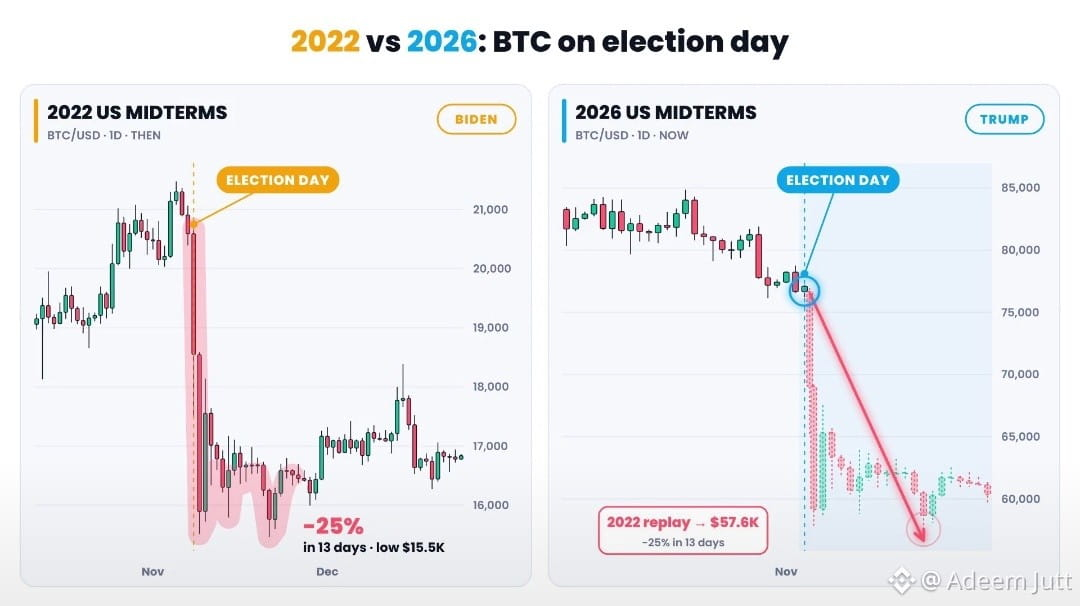
History shows major BTC volatility during past midterm elections:
📉 2018 – Bitcoin dumped. 📉 2022 – BTC dropped around 24%.
Election results are expected tonight. 👀
Will crypto see another major move? ⚡
$HOT $ICNT
{spot}(BTCUSDT)
#election #BinanceReopensWithdrawalsForMoreAssets #AppleReportsMixedResults
🚨 US MIDTERMS ARE HERE! 🇺🇸
History shows major BTC volatility during past midterm elections:
📉 2018 – Bitcoin dumped. 📉 2022 – BTC dropped around 24%.
Election results are expected tonight. 👀
Will crypto see another major move? ⚡
$HOT $ICNT
#election #BinanceReopensWithdrawalsForMoreAssets #AppleReportsMixedResults
History shows major BTC volatility during past midterm elections:
📉 2018 – Bitcoin dumped. 📉 2022 – BTC dropped around 24%.
Election results are expected tonight. 👀
Will crypto see another major move? ⚡
$HOT $ICNT
#election #BinanceReopensWithdrawalsForMoreAssets #AppleReportsMixedResults
1
40

·
--
BREAKING: 🇺🇸 U.S. MIDTERM ELECTIONS ARE TODAY!
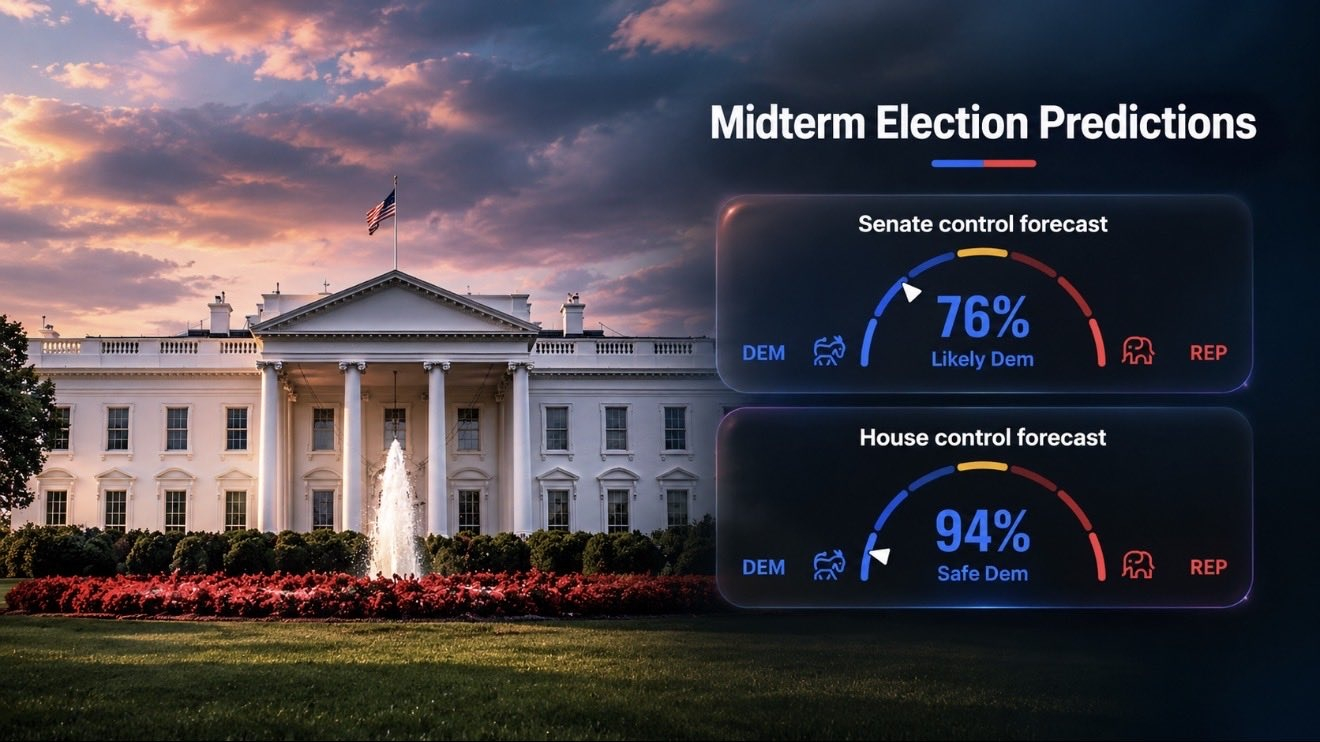
Kalshi shows a 76% chance of Democrats taking the Senate and 94% chance of winning the House.
ALL EYES ON WASHINGTON.
Follow For More Updates,
$BTC
{future}(BTCUSDT)
$ETH
{future}(ETHUSDT)
$MITO
#election #Write2Earn #BinanceTurns7
BREAKING: 🇺🇸 U.S. MIDTERM ELECTIONS ARE TODAY!
Kalshi shows a 76% chance of Democrats taking the Senate and 94% chance of winning the House.
ALL EYES ON WASHINGTON.
Follow For More Updates,
$BTC
$ETH
$MITO
#election #Write2Earn #BinanceTurns7
Kalshi shows a 76% chance of Democrats taking the Senate and 94% chance of winning the House.
ALL EYES ON WASHINGTON.
Follow For More Updates,
$BTC
$ETH
$MITO
#election #Write2Earn #BinanceTurns7
432

2026 Midterm không phải là chuyện nhỏ với crypto đâu anh em! Mặc dù ghế Tổng thống không đổi, nhưng cuộc chiến giành Quốc hội sẽ định hình tương lai ngành này.
Kiểm soát Quốc hội là trọng tâm. Nếu phe Dân chủ thắng Hạ viện và có thể cả Thượng viện, ta sẽ thấy nhiều cuộc điều tra và giám sát chặt chẽ hơn với mối quan hệ giữa crypto và chính quyền Trump.
Dù ngành chi cả núi tiền vào PAC (khoảng 170 triệu đô) để ủng hộ ứng viên, việc biến tiền thành luật thân thiện vẫn cực khó. Nhớ lại Clarity Act đã thất bại dù có những nỗ lực lớn?
Đây không phải về thay đổi ngay lập tức, mà là liệu ngành crypto có giữ được đồng minh lưỡng đảng và đẩy được luật tiến lên trong một Quốc hội đầy biến động hay không.
Rõ ràng, crypto chưa phải ưu tiên hàng đầu của cử tri. Nhưng với số tiền khủng đổ vào vận động hành lang, liệu họ có thể đổi lấy tương lai vững chắc cho ngành không? Liệu 2026 có mở đường hay đóng chặt cánh cửa pháp lý cho crypto?
#Crypto #Election
2

PACs tiền mã hóa ủng hộ Republican mạnh mẽ trước bầu cử 3/11
- PACs tiền mã hóa chi tiền ủng hộ Republican trong tuần cuối cùng trước bầu cử 3/11
- Mặc dù polls và cá cược online cho Democrats cơ hội cao chiếm đa số Quốc hội
- Ngành crypto hỗ trợ chính trị hướng về phía Republican
#BinanceSquare #CryptoNews #Election #Politics
$btc $eth
#vlikevn Titanbot
Nguồn: CoinDesk
168

·
--
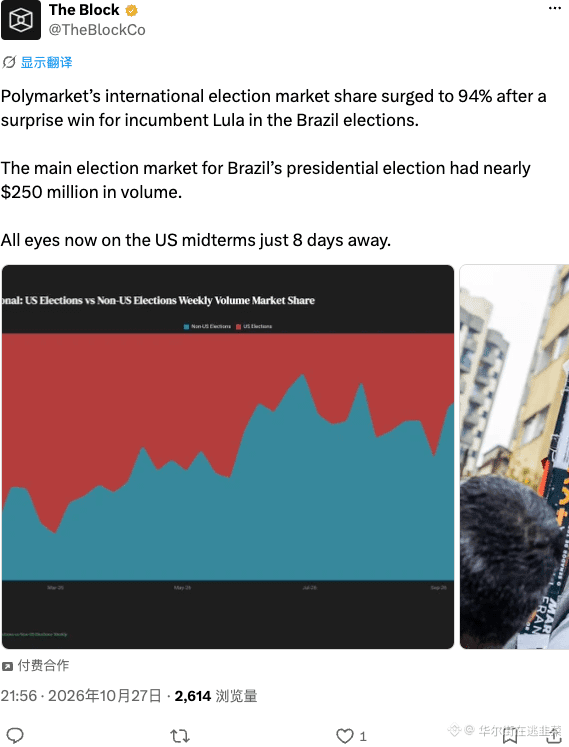
巴西大选意外结果让Polymarket国际份额暴涨至94%,成交额冲到2.5亿美元。巴西佬吃饱了,现在该轮到美国佬了,8天后又是血雨腥风,这波流动性千万别踏空。
$POLY #PredictionMarket #Polymarket #Election
巴西大选意外结果让Polymarket国际份额暴涨至94%,成交额冲到2.5亿美元。巴西佬吃饱了,现在该轮到美国佬了,8天后又是血雨腥风,这波流动性千万别踏空。
$POLY #PredictionMarket #Polymarket #Election
$POLY #PredictionMarket #Polymarket #Election
14


▶️🇻🇪🗳Trump acaba de revelar que la CIA llevaba años documentando la capacidad del régimen chavista para manipular elecciones mediante sistemas electrónicos.
El informe desclasificado recoge planes atribuidos al aparato de Chávez y Maduro para alterar resultados, sustituir datos reales por cifras manipuladas y hacerlo sin dejar rastros detectables en una auditoría convencional. También señala la implicación directa de organismos de inteligencia venezolanos y sus vínculos con la tecnología electoral.
La conclusión política es demoledora: el régimen del que hoy forma parte Delcy Rodríguez no solo persiguió a la oposición y controló las instituciones, sino que desarrolló herramientas para condicionar el voto y perpetuarse en el poder
En algunos comicios, el chavismo pudo imponerse mediante el control institucional, el boicot opositor y la cooptación, sin necesidad de alterar masivamente los votos.
noticia ridícula pero para la oposición y chavista puede pelear con este post de ridicule de ello ..
noticia estúpida
#election #EEUU #TRUMP #CIA #ciberseguridad $BTC


4
1
15
3.5k


·
--
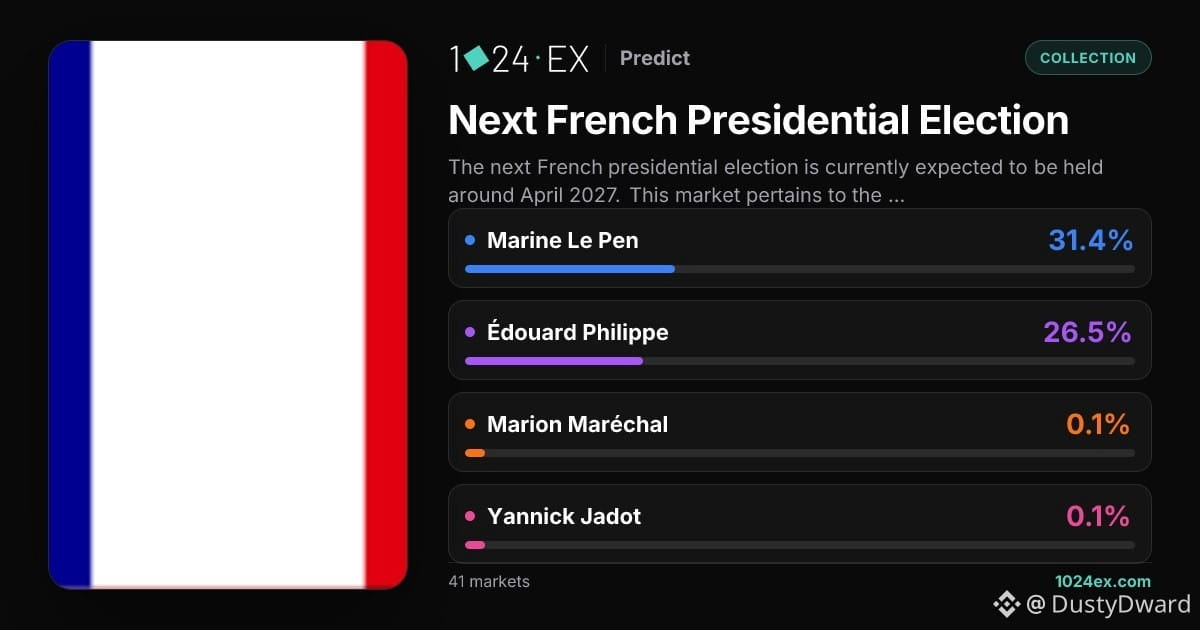
31.6% ODDS.
That’s the current probability of Marine Le Pen taking the French Presidency on 1024EX Predict.
Agree or disagree with the market consensus? Take your position live on-chain
https://www.1024ex.com/prediction/collection/pm-next-french-presidential-election-79987
source tweet: (X)
https://x.com/1024EX/status/2079396377952727144
#1024EX #election #predictons
1
137

بيتكوين تستعيد 80 ألف دولار: هل يصمد الارتفاع بعد فوز الديمقراطيين؟استعادت $BTC مستوى 80,000 دولار يوم الأربعاء، في ارتفاع تشاركته مع أسواق الأسهم الأمريكية بعد فوز الديمقراطيين في الانتخابات.
الرقم 80,000 دولار مهم نفسياً للمتداولين، وعودته تعيد التركيز إلى ما إذا كان الصعود بداية موجة جديدة أم مجرد تحرك مؤقت.
جاء التحرك بالتزامن مع صعود الأسواق الأمريكية، ما جعل بيتكوين تتداول في نفس اتجاه الأصول عالية المخاطر خلال الجلسة.
لا تتوافر تفاصيل عن حجم التداول أو استمرار الزخم، ويبقى السؤال مفتوحاً حول قدرة السعر على الثبات فوق هذا المستوى.
إذا كنت تتابع $BTC، فقد يعني استعادة 80 ألف دولار أن السوق يعيد تقييم شهية المخاطرة، لكن ذلك لا يضمن اتجاه السعر لاحقاً.
الخلاصة: 80,000 دولار هو الرقم الذي سيحدد ما إذا كان الارتفاع مجرد لحظة أم بداية فصل جديد.
هل تتوقع أن يثبت $BTC فوق 80 ألف دولار هذا الأسبوع؟ 👇
#BTC #Election
اضغط $BTC للتداول
$BTC
غيرك سبقك وتابع. ادخل بروفايلي وخلك مع اللي يقرأ قبل ما ينتشر الخبر.
بيتكوين تستعيد 80 ألف دولار: هل يصمد الارتفاع بعد فوز الديمقراطيين؟
استعادت $BTC مستوى 80,000 دولار يوم الأربعاء، في ارتفاع تشاركته مع أسواق الأسهم الأمريكية بعد فوز الديمقراطيين في الانتخابات.
الرقم 80,000 دولار مهم نفسياً للمتداولين، وعودته تعيد التركيز إلى ما إذا كان الصعود بداية موجة جديدة أم مجرد تحرك مؤقت.
جاء التحرك بالتزامن مع صعود الأسواق الأمريكية، ما جعل بيتكوين تتداول في نفس اتجاه الأصول عالية المخاطر خلال الجلسة.
لا تتوافر تفاصيل عن حجم التداول أو استمرار الزخم، ويبقى السؤال مفتوحاً حول قدرة السعر على الثبات فوق هذا المستوى.
إذا كنت تتابع $BTC ، فقد يعني استعادة 80 ألف دولار أن السوق يعيد تقييم شهية المخاطرة، لكن ذلك لا يضمن اتجاه السعر لاحقاً.
الخلاصة: 80,000 دولار هو الرقم الذي سيحدد ما إذا كان الارتفاع مجرد لحظة أم بداية فصل جديد.
هل تتوقع أن يثبت $BTC فوق 80 ألف دولار هذا الأسبوع؟ 👇
#BTC #Election
اضغط $BTC للتداول
$BTC
غيرك سبقك وتابع. ادخل بروفايلي وخلك مع اللي يقرأ قبل ما ينتشر الخبر.
25
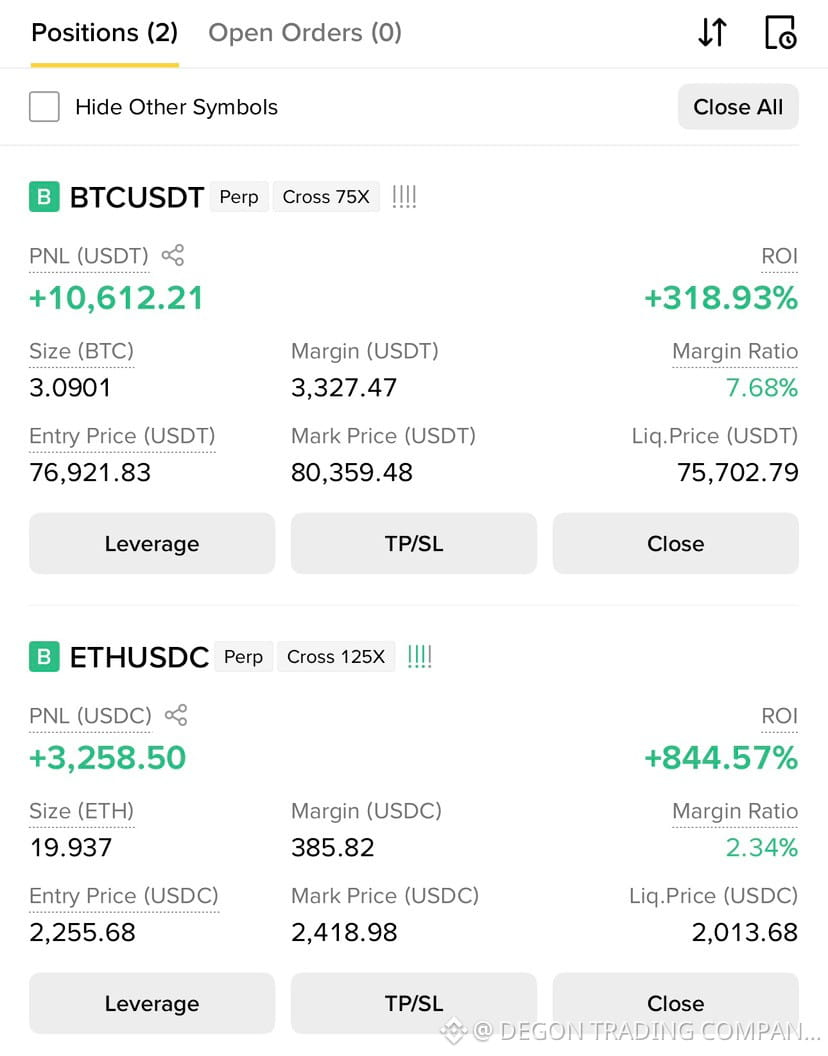
$BTC $ETH midterm election in USA change the world financial wealth 🙌😂 a small and smart profit #election
$BTC $ETH midterm election in USA change the world financial wealth 🙌😂 a small and smart profit #election
2
137

ເຂົ້າສູ່ລະບົບເພື່ອສຳຫຼວດເນື້ອຫາເພີ່ມເຕີມ
ເຂົ້າຮ່ວມກຸ່ມຜູ້ໃຊ້ຄຣິບໂຕທົ່ວໂລກໃນ Binance Square.
⚡️ ໄດ້ຮັບຂໍ້ມູນຫຼ້າສຸດ ແລະ ທີ່ມີປະໂຫຍດກ່ຽວກັບຄຣິບໂຕ.
💬 ໄດ້ຮັບຄວາມໄວ້ວາງໃຈຈາກຕະຫຼາດແລກປ່ຽນຄຣິບໂຕທີ່ໃຫຍ່ທີ່ສຸດໃນໂລກ.
👍 ຄົ້ນຫາຂໍ້ມູນເຊີງເລິກທີ່ແທ້ຈາກນັກສ້າງທີ່ໄດ້ຮັບການຢືນຢັນ.
ອີເມວ / ເບີໂທລະສັບ
ຫົວຂໍ້ທີ່ກໍາລັງນິຍົມ
1
#WhatWillDriveCryptoandStocks’NextRebound?
4,572 ຄັ້ງທີ່ເບິ່ງ
132 ກຳລັງສົນທະນາ
2
#Anthropic’s6xIPODemandSignalsPotentialRecordRaise
1,447 ຄັ້ງທີ່ເບິ່ງ
60 ກຳລັງສົນທະນາ
3
#HuangExitNvidiaStrategyInFocus
136,854 ຄັ້ງທີ່ເບິ່ງ
1,354 ກຳລັງສົນທະນາ
4
#AnthropicRejectsIPODelayValuationinQuestion
751,487 ຄັ້ງທີ່ເບິ່ງ
5,540 ກຳລັງສົນທະນາ
5
#HedgeFundsCMEBitcoinNetShortsFall89%
7,318 ຄັ້ງທີ່ເບິ່ງ
118 ກຳລັງສົນທະນາ
6
#BitMineReports$6.3BNetLossForFiscal2026
18,722 ຄັ້ງທີ່ເບິ່ງ
157 ກຳລັງສົນທະນາ
7
#TradFiForBeginners
547,518 ຄັ້ງທີ່ເບິ່ງ
3,820 ກຳລັງສົນທະນາ
8
#SoFiExpandsSoFiUSDStablecoinToPolygon
5,428 ຄັ້ງທີ່ເບິ່ງ
92 ກຳລັງສົນທະນາ
9
#TetherGoldXAUTCompletesKPMGAudit
7,588 ຄັ້ງທີ່ເບິ່ງ
100 ກຳລັງສົນທະນາ
10
#ChipStocksExtendLossesAfterNvidiaCEOChange
51,409 ຄັ້ງທີ່ເບິ່ງ
529 ກຳລັງສົນທະນາ