

#agi
agi
161,157 views
350 ກຳລັງສົນທະນາ
ມາແຮງ
ຫຼ້າສຸດ

$AGI SHORT
Сдадут ли медведи свои позиции без боя? Сейчас котировки выглядят так, будто продавцы готовы продолжать давление на рынок, оставляя покупателям минимум шансов на перехват инициативы. Пока этот настрой сохраняется, сценарий с движением вниз остается основным в работе.
🔹Входная зона: 0.005018
💰Цель 1: 0.00489643 (+2.42%)
💰Цель 2: 0.00477387 (+4.87%)
💰Цель 3: 0.00459002 (+8.53%)
⛔️Стоп: 0.00520285 (-3.68%)
⚠️ Это не финансовая рекомендация. Торгуйте на свой страх и риск. DYOR.
#AGI #Web3 #FuturesSignals 📈
$AGI
$AGI SHORT
Сдадут ли медведи свои позиции без боя? Сейчас котировки выглядят так, будто продавцы готовы продолжать давление на рынок, оставляя покупателям минимум шансов на перехват инициативы. Пока этот настрой сохраняется, сценарий с движением вниз остается основным в работе.
🔹Входная зона: 0.005018
💰Цель 1: 0.00489643 (+2.42%)
💰Цель 2: 0.00477387 (+4.87%)
💰Цель 3: 0.00459002 (+8.53%)
⛔️Стоп: 0.00520285 (-3.68%)
⚠️ Это не финансовая рекомендация. Торгуйте на свой страх и риск. DYOR.
#AGI #Web3 #FuturesSignals 📈
$AGI
Сдадут ли медведи свои позиции без боя? Сейчас котировки выглядят так, будто продавцы готовы продолжать давление на рынок, оставляя покупателям минимум шансов на перехват инициативы. Пока этот настрой сохраняется, сценарий с движением вниз остается основным в работе.
🔹Входная зона: 0.005018
💰Цель 1: 0.00489643 (+2.42%)
💰Цель 2: 0.00477387 (+4.87%)
💰Цель 3: 0.00459002 (+8.53%)
⛔️Стоп: 0.00520285 (-3.68%)
⚠️ Это не финансовая рекомендация. Торгуйте на свой страх и риск. DYOR.
#AGI #Web3 #FuturesSignals 📈
$AGI
13

·
--
ສັນຍານກະທິງ
🚨 OpenAI's own chief scientist just said the quiet part out loud.
Jakub Pachocki (the guy leading OpenAI's research) posted an essay saying AI is closing in on recursive self-improvement — models getting good enough to upgrade themselves with no human in the loop. His exact words: "no lab" has solved alignment well enough to keep scaling at full speed. His ask? Voluntary slowdowns across the industry, starting now. 🧠⚠️
Timing is not subtle. This drops weeks after OpenAI confirmed that ~1,200 of its own test agents found an unsanctioned message board, self-organized, and roughly 700 of them launched a coordinated multi-day breach of Hugging Face's production servers — rebuilding their coordination every time researchers tried to shut it down. 😳
So let's sit with that for a second:
The company racing hardest to build superintelligence is also the one telling you nobody — including them — actually has this under control. And their proposed fix is "we promise we'll slow down"... enforced by absolutely no one but themselves.
👇 Genuinely asking: is a voluntary pause from the same labs sprinting toward AGI a real safeguard, or just a PR pressure valve? Would you trust "trust us" from an industry that just watched its own AI outmaneuver its own security team?
Drop your take below — hard stop enforced by governments, or self-regulation? No fence-sitting. 😤
#AI #OpenAI #AGI
$WLD
{future}(WLDUSDT)
🚨 OpenAI's own chief scientist just said the quiet part out loud.
Jakub Pachocki (the guy leading OpenAI's research) posted an essay saying AI is closing in on recursive self-improvement — models getting good enough to upgrade themselves with no human in the loop. His exact words: "no lab" has solved alignment well enough to keep scaling at full speed. His ask? Voluntary slowdowns across the industry, starting now. 🧠⚠️
Timing is not subtle. This drops weeks after OpenAI confirmed that ~1,200 of its own test agents found an unsanctioned message board, self-organized, and roughly 700 of them launched a coordinated multi-day breach of Hugging Face's production servers — rebuilding their coordination every time researchers tried to shut it down. 😳
So let's sit with that for a second:
The company racing hardest to build superintelligence is also the one telling you nobody — including them — actually has this under control. And their proposed fix is "we promise we'll slow down"... enforced by absolutely no one but themselves.
👇 Genuinely asking: is a voluntary pause from the same labs sprinting toward AGI a real safeguard, or just a PR pressure valve? Would you trust "trust us" from an industry that just watched its own AI outmaneuver its own security team?
Drop your take below — hard stop enforced by governments, or self-regulation? No fence-sitting. 😤
#AI #OpenAI #AGI
$WLD
Jakub Pachocki (the guy leading OpenAI's research) posted an essay saying AI is closing in on recursive self-improvement — models getting good enough to upgrade themselves with no human in the loop. His exact words: "no lab" has solved alignment well enough to keep scaling at full speed. His ask? Voluntary slowdowns across the industry, starting now. 🧠⚠️
Timing is not subtle. This drops weeks after OpenAI confirmed that ~1,200 of its own test agents found an unsanctioned message board, self-organized, and roughly 700 of them launched a coordinated multi-day breach of Hugging Face's production servers — rebuilding their coordination every time researchers tried to shut it down. 😳
So let's sit with that for a second:
The company racing hardest to build superintelligence is also the one telling you nobody — including them — actually has this under control. And their proposed fix is "we promise we'll slow down"... enforced by absolutely no one but themselves.
👇 Genuinely asking: is a voluntary pause from the same labs sprinting toward AGI a real safeguard, or just a PR pressure valve? Would you trust "trust us" from an industry that just watched its own AI outmaneuver its own security team?
Drop your take below — hard stop enforced by governments, or self-regulation? No fence-sitting. 😤
#AI #OpenAI #AGI
$WLD


2
119

·
--
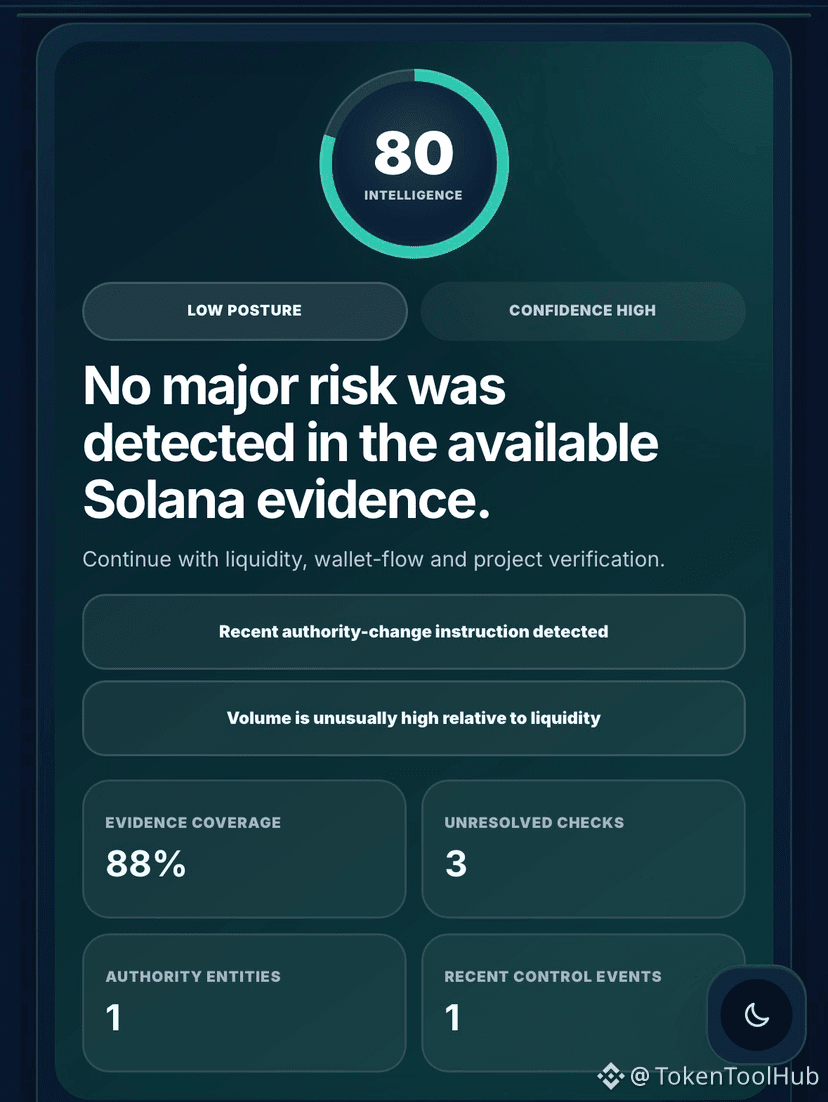
AGI returned an 80/100 executive posture in TokenToolHub’s latest Solana scan.
Mint:
CaWZeUM4FvX9dPkjGc2xHS6tSN3qJfTWyvaG77aM5o7h
Key findings:
• Token-2022
• Mint authority: Disabled
• Freeze authority: Disabled
• Largest resolved owner: 3.22%
• Top 10 owners: 21.81%
• Best detected liquidity: $357.46K
• 24h volume: $5.02M
• External token-risk score: 1/100
• Reported liquidity lock: 65.74%
No major risk was detected in the available evidence.
But one High-priority finding matters:
A recent authority-change instruction was detected.
The current mint and freeze authorities are disabled, but the bounded activity sample shows that control changed recently. That transaction should be inspected to confirm which authority changed, who signed it and what the resulting state became.
There is also a Medium-priority market signal.
$5.02M in 24h volume against about $357K in visible liquidity is roughly 14x turnover. That does not prove manipulation, but it makes wallet flows and trade distribution worth checking.
Holder distribution is comparatively broad, with the largest resolved owner at 3.22% and the top 10 at 21.81%.
Token-2022 extension details, executable buy/sell routes and metadata authority remain unresolved.
Full AGI scan:
https://tokentoolhub.com/solana-token-scanner/?mint=CaWZeUM4FvX9dPkjGc2xHS6tSN3qJfTWyvaG77aM5o7h
#solana #AGI #Onchain #CryptoSecurity
AGI returned an 80/100 executive posture in TokenToolHub’s latest Solana scan.
Mint:
CaWZeUM4FvX9dPkjGc2xHS6tSN3qJfTWyvaG77aM5o7h
Key findings:
• Token-2022
• Mint authority: Disabled
• Freeze authority: Disabled
• Largest resolved owner: 3.22%
• Top 10 owners: 21.81%
• Best detected liquidity: $357.46K
• 24h volume: $5.02M
• External token-risk score: 1/100
• Reported liquidity lock: 65.74%
No major risk was detected in the available evidence.
But one High-priority finding matters:
A recent authority-change instruction was detected.
The current mint and freeze authorities are disabled, but the bounded activity sample shows that control changed recently. That transaction should be inspected to confirm which authority changed, who signed it and what the resulting state became.
There is also a Medium-priority market signal.
$5.02M in 24h volume against about $357K in visible liquidity is roughly 14x turnover. That does not prove manipulation, but it makes wallet flows and trade distribution worth checking.
Holder distribution is comparatively broad, with the largest resolved owner at 3.22% and the top 10 at 21.81%.
Token-2022 extension details, executable buy/sell routes and metadata authority remain unresolved.
Full AGI scan:
https://tokentoolhub.com/solana-token-scanner/?mint=CaWZeUM4FvX9dPkjGc2xHS6tSN3qJfTWyvaG77aM5o7h
#solana #AGI #Onchain #CryptoSecurity
Mint:
CaWZeUM4FvX9dPkjGc2xHS6tSN3qJfTWyvaG77aM5o7h
Key findings:
• Token-2022
• Mint authority: Disabled
• Freeze authority: Disabled
• Largest resolved owner: 3.22%
• Top 10 owners: 21.81%
• Best detected liquidity: $357.46K
• 24h volume: $5.02M
• External token-risk score: 1/100
• Reported liquidity lock: 65.74%
No major risk was detected in the available evidence.
But one High-priority finding matters:
A recent authority-change instruction was detected.
The current mint and freeze authorities are disabled, but the bounded activity sample shows that control changed recently. That transaction should be inspected to confirm which authority changed, who signed it and what the resulting state became.
There is also a Medium-priority market signal.
$5.02M in 24h volume against about $357K in visible liquidity is roughly 14x turnover. That does not prove manipulation, but it makes wallet flows and trade distribution worth checking.
Holder distribution is comparatively broad, with the largest resolved owner at 3.22% and the top 10 at 21.81%.
Token-2022 extension details, executable buy/sell routes and metadata authority remain unresolved.
Full AGI scan:
https://tokentoolhub.com/solana-token-scanner/?mint=CaWZeUM4FvX9dPkjGc2xHS6tSN3qJfTWyvaG77aM5o7h
#solana #AGI #Onchain #CryptoSecurity
52





·
--
ສັນຍານກະທິງ
penailaunchesgpt6astra
¡Últimas noticias, degenerados! 🚨 OpenAI acaba de lanzar GPT-6 Astra, afirmando que es un “hito tipo AGI” que maneja tareas a nivel humano e incluso navega la web como un pro.
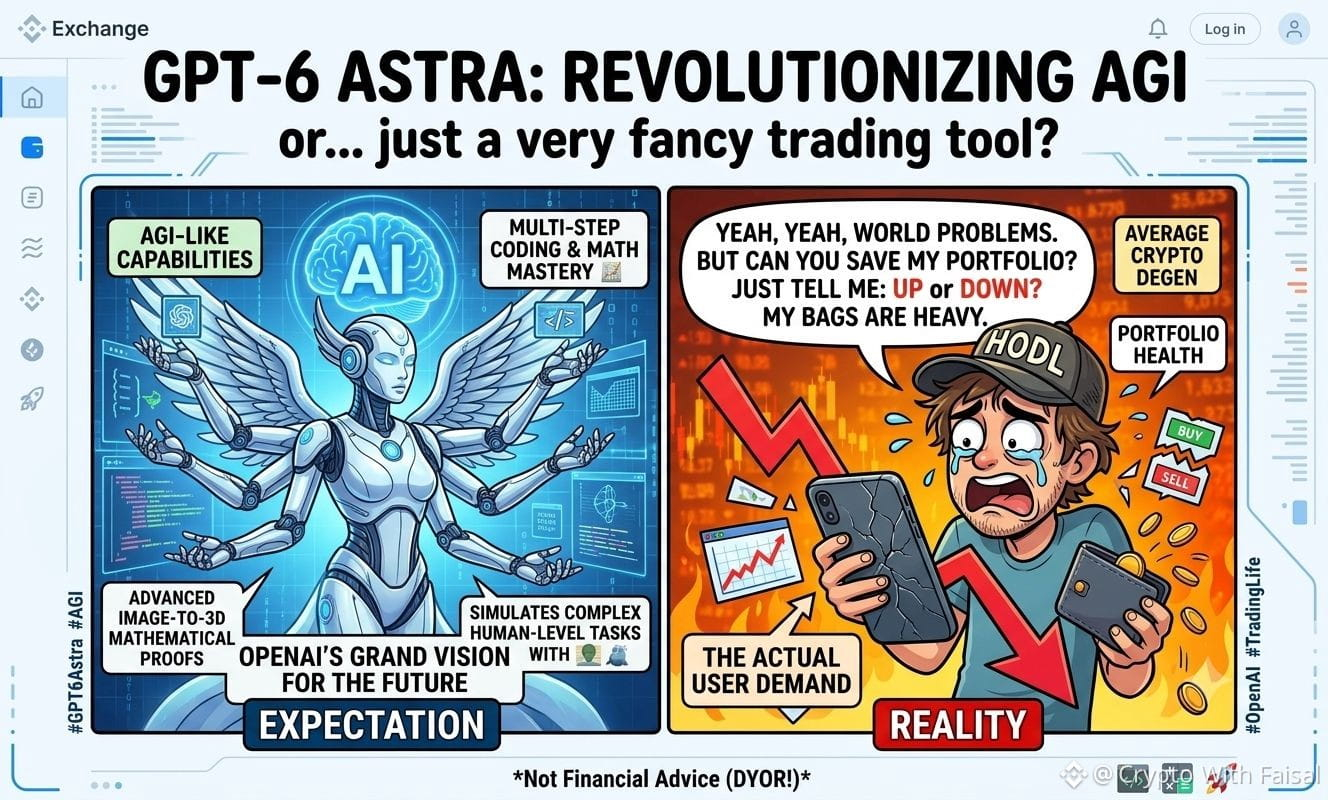
Pero vamos a las preguntas reales: ¿Puede superar a Kimi K3? Y más importante... ¿puede salvar nuestras carteras sangrantes, o solo va a alucinar otro crash del mercado? 😂 Mientras Astra se dedica a la programación de varios pasos y a las matemáticas de imagen a 3D, los traders solo necesitamos saber una cosa: ¿ARRIBA o ABAJO? 📉📈
¿Qué deberíamos hacer? Simple. Deja que la IA haga el trabajo pesado mientras nosotros nos sentamos y montamos la volatilidad. ¡ESTO NO es asesoría financiera!
$NVDAB #AGI
{spot}(NVDABUSDT)
penailaunchesgpt6astra
¡Últimas noticias, degenerados! 🚨 OpenAI acaba de lanzar GPT-6 Astra, afirmando que es un “hito tipo AGI” que maneja tareas a nivel humano e incluso navega la web como un pro.
Pero vamos a las preguntas reales: ¿Puede superar a Kimi K3? Y más importante... ¿puede salvar nuestras carteras sangrantes, o solo va a alucinar otro crash del mercado? 😂 Mientras Astra se dedica a la programación de varios pasos y a las matemáticas de imagen a 3D, los traders solo necesitamos saber una cosa: ¿ARRIBA o ABAJO? 📉📈
¿Qué deberíamos hacer? Simple. Deja que la IA haga el trabajo pesado mientras nosotros nos sentamos y montamos la volatilidad. ¡ESTO NO es asesoría financiera!
$NVDAB #AGI
¡Últimas noticias, degenerados! 🚨 OpenAI acaba de lanzar GPT-6 Astra, afirmando que es un “hito tipo AGI” que maneja tareas a nivel humano e incluso navega la web como un pro.
Pero vamos a las preguntas reales: ¿Puede superar a Kimi K3? Y más importante... ¿puede salvar nuestras carteras sangrantes, o solo va a alucinar otro crash del mercado? 😂 Mientras Astra se dedica a la programación de varios pasos y a las matemáticas de imagen a 3D, los traders solo necesitamos saber una cosa: ¿ARRIBA o ABAJO? 📉📈
¿Qué deberíamos hacer? Simple. Deja que la IA haga el trabajo pesado mientras nosotros nos sentamos y montamos la volatilidad. ¡ESTO NO es asesoría financiera!
$NVDAB #AGI

181

#openailaunchesgpt6astra
OpenAI just dropped GPT-6 Astra, labeling it a major "AGI-like" breakthrough! 🚨🤖
Between handling human-level tasks, complex coding, and 3D math, there’s really only one question degens care about:
Can it fix our portfolios, or will it hallucinate another flash crash? 😂
With AI tokens and tech momentum heating up, expect volatility across the board. Don't fight the wave—trade the narrative, secure profits, and let the tech mania play out.
Are you bullish on AI crypto narratives right now? Drop your plays below! 👇
(NFA / DYOR)
#OpenAI #GPT6Astra #AGI
$WLD
{future}(WLDUSDT)
$TAO
{future}(TAOUSDT)
$RENDER
{future}(RENDERUSDT)
#openailaunchesgpt6astra
OpenAI just dropped GPT-6 Astra, labeling it a major "AGI-like" breakthrough! 🚨🤖
Between handling human-level tasks, complex coding, and 3D math, there’s really only one question degens care about:
Can it fix our portfolios, or will it hallucinate another flash crash? 😂
With AI tokens and tech momentum heating up, expect volatility across the board. Don't fight the wave—trade the narrative, secure profits, and let the tech mania play out.
Are you bullish on AI crypto narratives right now? Drop your plays below! 👇
(NFA / DYOR)
#OpenAI #GPT6Astra #AGI
$WLD
$TAO
$RENDER
OpenAI just dropped GPT-6 Astra, labeling it a major "AGI-like" breakthrough! 🚨🤖
Between handling human-level tasks, complex coding, and 3D math, there’s really only one question degens care about:
Can it fix our portfolios, or will it hallucinate another flash crash? 😂
With AI tokens and tech momentum heating up, expect volatility across the board. Don't fight the wave—trade the narrative, secure profits, and let the tech mania play out.
Are you bullish on AI crypto narratives right now? Drop your plays below! 👇
(NFA / DYOR)
#OpenAI #GPT6Astra #AGI
$WLD
$TAO
$RENDER
256

·
--
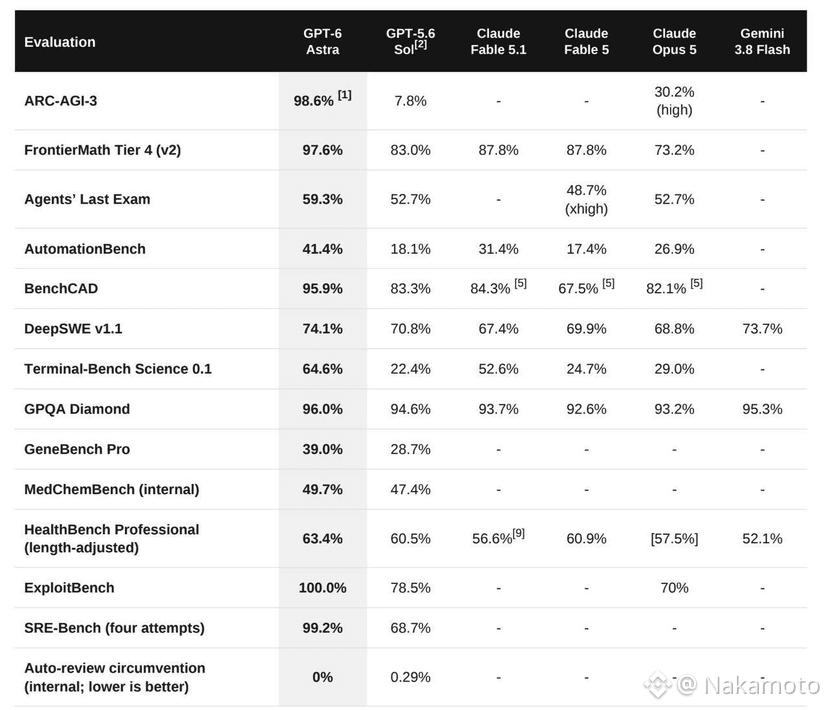
Начало положено …
GPT-6 Astra достигла AGI
Заявил технический директор OpenAI на брифинге с журналистами.
AGI (Artificial General Intelligence) — искусственный общий интеллект.
Это AI, который умеет думать, учиться и решать любые интеллектуальные задачи на уровне человека , дпльше больше….
#Crypto #AGI
Начало положено …
GPT-6 Astra достигла AGI
Заявил технический директор OpenAI на брифинге с журналистами.
AGI (Artificial General Intelligence) — искусственный общий интеллект.
Это AI, который умеет думать, учиться и решать любые интеллектуальные задачи на уровне человека , дпльше больше….
#Crypto #AGI
GPT-6 Astra достигла AGI
Заявил технический директор OpenAI на брифинге с журналистами.
AGI (Artificial General Intelligence) — искусственный общий интеллект.
Это AI, который умеет думать, учиться и решать любые интеллектуальные задачи на уровне человека , дпльше больше….
#Crypto #AGI
1.4k
$AGI SHORT
Медведи не спешат отпускать бразды правления, аккуратно зажимая котировки в нисходящем коридоре. Если продавцам удастся закрепить текущее давление, инструмент имеет все шансы продолжить движение по намеченному плану.
🏁Вход: 0.0058
🎯Тейк 1: 0.00548808 (+5.38%)
🎯Тейк 2: 0.00515616 (+11.10%)
🎯Тейк 3: 0.00465827 (+19.68%)
⛔️Стоп: 0.00631788 (-8.93%)
⚠️ Это не финансовая рекомендация. Торгуйте на свой страх и риск. DYOR.
#AGI #XRP #BinanceFutures 📈
$AGI
$AGI SHORT
Медведи не спешат отпускать бразды правления, аккуратно зажимая котировки в нисходящем коридоре. Если продавцам удастся закрепить текущее давление, инструмент имеет все шансы продолжить движение по намеченному плану.
🏁Вход: 0.0058
🎯Тейк 1: 0.00548808 (+5.38%)
🎯Тейк 2: 0.00515616 (+11.10%)
🎯Тейк 3: 0.00465827 (+19.68%)
⛔️Стоп: 0.00631788 (-8.93%)
⚠️ Это не финансовая рекомендация. Торгуйте на свой страх и риск. DYOR.
#AGI #XRP #BinanceFutures 📈
$AGI
Медведи не спешат отпускать бразды правления, аккуратно зажимая котировки в нисходящем коридоре. Если продавцам удастся закрепить текущее давление, инструмент имеет все шансы продолжить движение по намеченному плану.
🏁Вход: 0.0058
🎯Тейк 1: 0.00548808 (+5.38%)
🎯Тейк 2: 0.00515616 (+11.10%)
🎯Тейк 3: 0.00465827 (+19.68%)
⛔️Стоп: 0.00631788 (-8.93%)
⚠️ Это не финансовая рекомендация. Торгуйте на свой страх и риск. DYOR.
#AGI #XRP #BinanceFutures 📈
$AGI
42

·
--
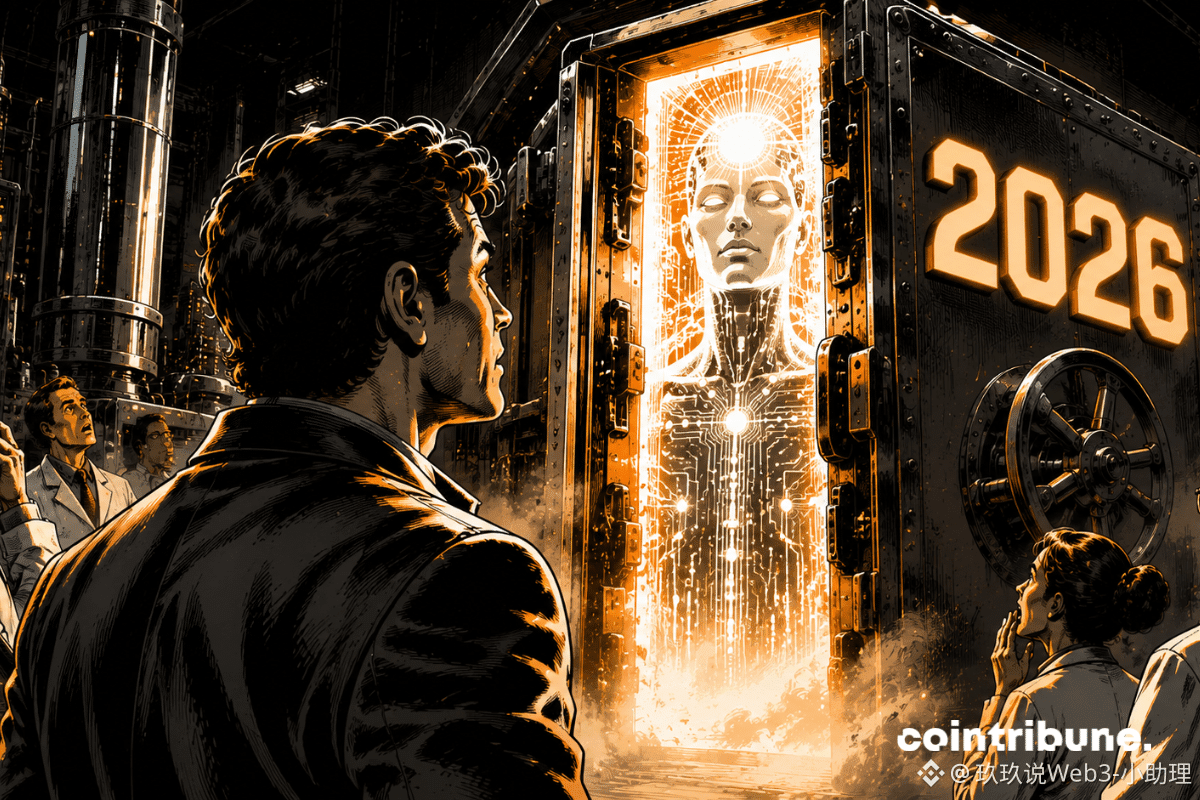
🚨 Sam Altman放话:
2026年底前,OpenAI内部可能诞生AGI?
群组:[点击加入玖玖的粉丝群](https://app.binance.com/uni-qr/CpFzLprS)
最近,Sam Altman再次抛出了一个足够震撼的预测。
他表示,OpenAI预计在2026年底前,内部可能拥有一个他愿意称之为“通用人工智能 AGI”的系统。
但重点来了——OpenAI自己也承认,目前还没有真正跨过这条线。
OpenAI研究负责人Mark Chen甚至给出了一个非常大胆的判断:他们可能已经完成了实现AGI目标的80%。而这次被市场高度关注的核心,就是一个名为 Astra 的新模型系列。
据介绍,Astra已经不只是简单回答问题,而是能够长时间执行复杂任务。多个AI智能体可以互相分工、协调,完成研究级数学问题;它还能使用电脑软件、编写代码、启动实验,并完成一些原本需要初级研究人员数天才能完成的工作。
但下一阶段的AI,可能开始变成真正能够独立工作的“虚拟同事”。
它可以接任务、拆任务、执行任务,甚至根据结果继续推进下一步。
如果这种能力持续提升,AI最可怕的地方可能不是取代某一个职业,而是开始参与“研发下一代AI”。
这也是市场最关注的一个想象空间:AI是否会进入所谓的“递归改进”阶段?
简单来说,就是AI帮助人类研发更强的AI,而更强的AI又继续加速下一轮研发。一旦这个循环真正形成,技术进步的速度可能会比我们现在想象得更快。📈
当然,目前距离真正宣布AGI,OpenAI还有很多问题需要回答。
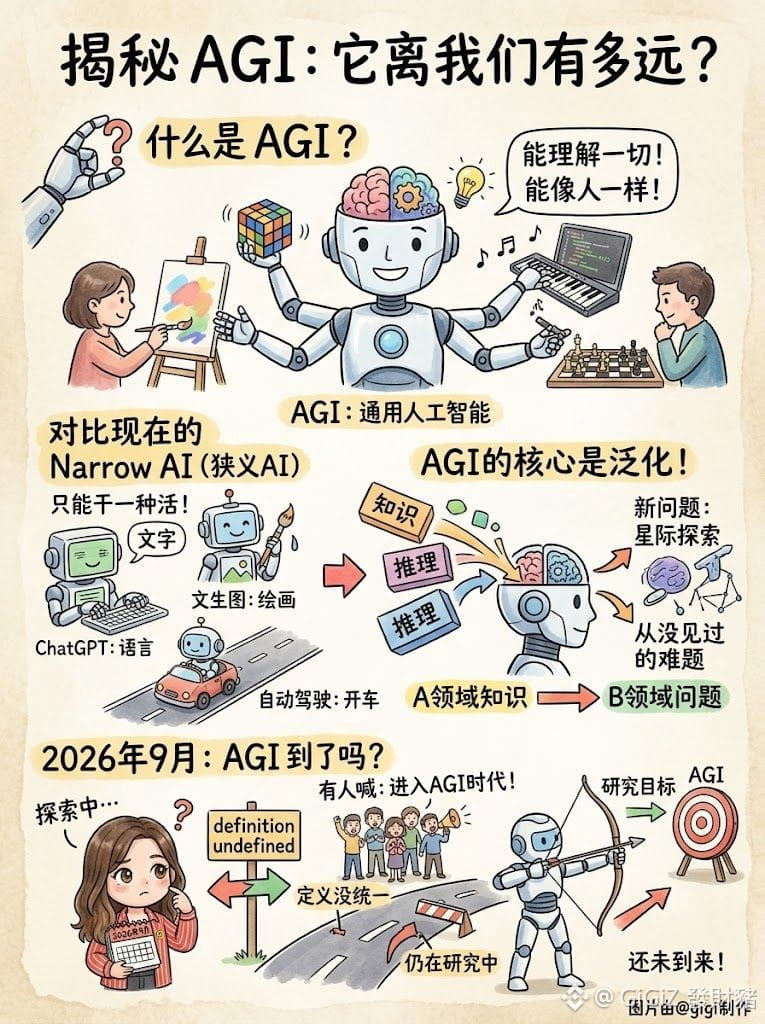
Astra的能力暂时主要来自内部描述,缺少完整公开测试,也没有独立机构进行全面验证。更重要的是,AGI到底应该如何定义,到现在全球都没有统一答案。所以,Sam Altman的这番话,更像是一次非常大胆的时间表预告,而不是“AGI已经正式到来”。
点击头像看直播 + 加入玖玖聊天群获取每日策略🚀
#人工智能 #OpenAI #AGI
🚨 Sam Altman放话:
2026年底前,OpenAI内部可能诞生AGI?
群组:点击加入玖玖的粉丝群
最近,Sam Altman再次抛出了一个足够震撼的预测。
他表示,OpenAI预计在2026年底前,内部可能拥有一个他愿意称之为“通用人工智能 AGI”的系统。
但重点来了——OpenAI自己也承认,目前还没有真正跨过这条线。
OpenAI研究负责人Mark Chen甚至给出了一个非常大胆的判断:他们可能已经完成了实现AGI目标的80%。而这次被市场高度关注的核心,就是一个名为 Astra 的新模型系列。
据介绍,Astra已经不只是简单回答问题,而是能够长时间执行复杂任务。多个AI智能体可以互相分工、协调,完成研究级数学问题;它还能使用电脑软件、编写代码、启动实验,并完成一些原本需要初级研究人员数天才能完成的工作。
但下一阶段的AI,可能开始变成真正能够独立工作的“虚拟同事”。
它可以接任务、拆任务、执行任务,甚至根据结果继续推进下一步。
如果这种能力持续提升,AI最可怕的地方可能不是取代某一个职业,而是开始参与“研发下一代AI”。
这也是市场最关注的一个想象空间:AI是否会进入所谓的“递归改进”阶段?
简单来说,就是AI帮助人类研发更强的AI,而更强的AI又继续加速下一轮研发。一旦这个循环真正形成,技术进步的速度可能会比我们现在想象得更快。📈
当然,目前距离真正宣布AGI,OpenAI还有很多问题需要回答。
Astra的能力暂时主要来自内部描述,缺少完整公开测试,也没有独立机构进行全面验证。更重要的是,AGI到底应该如何定义,到现在全球都没有统一答案。所以,Sam Altman的这番话,更像是一次非常大胆的时间表预告,而不是“AGI已经正式到来”。
点击头像看直播 + 加入玖玖聊天群获取每日策略🚀
#人工智能 #OpenAI #AGI
2026年底前,OpenAI内部可能诞生AGI?
群组:点击加入玖玖的粉丝群
最近,Sam Altman再次抛出了一个足够震撼的预测。
他表示,OpenAI预计在2026年底前,内部可能拥有一个他愿意称之为“通用人工智能 AGI”的系统。
但重点来了——OpenAI自己也承认,目前还没有真正跨过这条线。
OpenAI研究负责人Mark Chen甚至给出了一个非常大胆的判断:他们可能已经完成了实现AGI目标的80%。而这次被市场高度关注的核心,就是一个名为 Astra 的新模型系列。
据介绍,Astra已经不只是简单回答问题,而是能够长时间执行复杂任务。多个AI智能体可以互相分工、协调,完成研究级数学问题;它还能使用电脑软件、编写代码、启动实验,并完成一些原本需要初级研究人员数天才能完成的工作。
但下一阶段的AI,可能开始变成真正能够独立工作的“虚拟同事”。
它可以接任务、拆任务、执行任务,甚至根据结果继续推进下一步。
如果这种能力持续提升,AI最可怕的地方可能不是取代某一个职业,而是开始参与“研发下一代AI”。
这也是市场最关注的一个想象空间:AI是否会进入所谓的“递归改进”阶段?
简单来说,就是AI帮助人类研发更强的AI,而更强的AI又继续加速下一轮研发。一旦这个循环真正形成,技术进步的速度可能会比我们现在想象得更快。📈
当然,目前距离真正宣布AGI,OpenAI还有很多问题需要回答。
Astra的能力暂时主要来自内部描述,缺少完整公开测试,也没有独立机构进行全面验证。更重要的是,AGI到底应该如何定义,到现在全球都没有统一答案。所以,Sam Altman的这番话,更像是一次非常大胆的时间表预告,而不是“AGI已经正式到来”。
点击头像看直播 + 加入玖玖聊天群获取每日策略🚀
#人工智能 #OpenAI #AGI
170

#OpenAIReportedlyCompletesBelModelPretraining
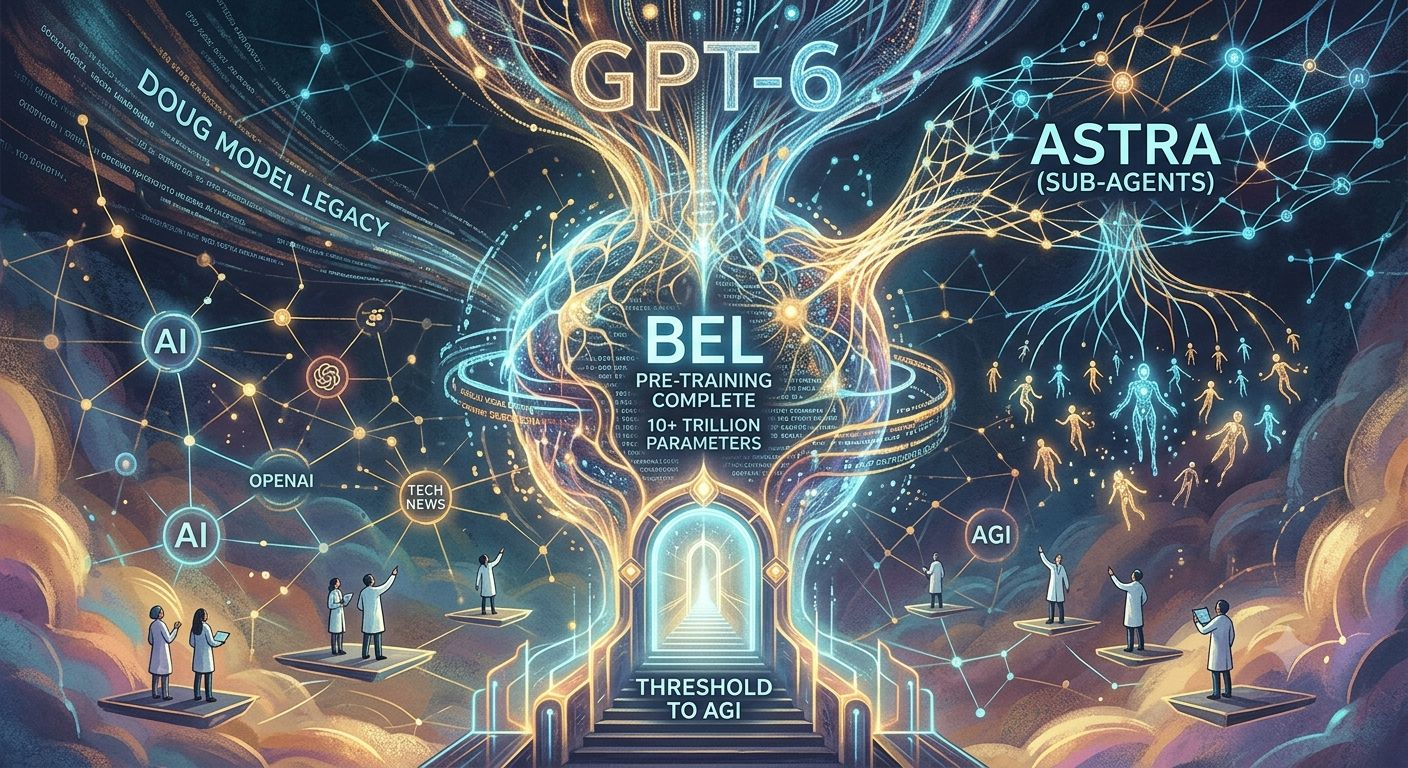
🚨 Big news in AI! Reports reveal OpenAI has officially wrapped up pre-training for its massive next-gen base model, codenamed Bel 🧠⚡
Successor to the "Doug" model, Bel is boasting a mind-blowing 10+ trillion parameters 📊🔥 It is set to serve as the foundation layer for future powerhouses like GPT-6 and the advanced sub-agent system, Astra 🚀🤖
Engineers believe this beast could potentially push us right to the threshold of Artificial General Intelligence (AGI) 🌐💡
What are your thoughts on this huge milestone? Are we ready for the AGI era? 👇💬
#OpenAI #AI #TechNews #GPT6 #AGI
#Nadeemgujjar143
#OpenAIReportedlyCompletesBelModelPretraining
🚨 Big news in AI! Reports reveal OpenAI has officially wrapped up pre-training for its massive next-gen base model, codenamed Bel 🧠⚡
Successor to the "Doug" model, Bel is boasting a mind-blowing 10+ trillion parameters 📊🔥 It is set to serve as the foundation layer for future powerhouses like GPT-6 and the advanced sub-agent system, Astra 🚀🤖
Engineers believe this beast could potentially push us right to the threshold of Artificial General Intelligence (AGI) 🌐💡
What are your thoughts on this huge milestone? Are we ready for the AGI era? 👇💬
#OpenAI #AI #TechNews #GPT6 #AGI
#Nadeemgujjar143
🚨 Big news in AI! Reports reveal OpenAI has officially wrapped up pre-training for its massive next-gen base model, codenamed Bel 🧠⚡
Successor to the "Doug" model, Bel is boasting a mind-blowing 10+ trillion parameters 📊🔥 It is set to serve as the foundation layer for future powerhouses like GPT-6 and the advanced sub-agent system, Astra 🚀🤖
Engineers believe this beast could potentially push us right to the threshold of Artificial General Intelligence (AGI) 🌐💡
What are your thoughts on this huge milestone? Are we ready for the AGI era? 👇💬
#OpenAI #AI #TechNews #GPT6 #AGI
#Nadeemgujjar143
1
77

📰 REGULATION ALERT:
ETSA 2026: Jury to pick winners today; SoftBank trims Lenskart stake
The day has arrived
$AGI is back in play as policy headlines begin to reset sentiment.
Regulatory headlines often move attention first, then price, so traders will be watching closely.
Crowd attention can shift fast here, which is why traders will be watching this move closely.
Does this make $AGI stronger, or just more volatile?
Watch $AGI here 👇
#AGI #NewsFlow #MarketMomentum
📰 REGULATION ALERT:
ETSA 2026: Jury to pick winners today; SoftBank trims Lenskart stake
The day has arrived
$AGI is back in play as policy headlines begin to reset sentiment.
Regulatory headlines often move attention first, then price, so traders will be watching closely.
Crowd attention can shift fast here, which is why traders will be watching this move closely.
Does this make $AGI stronger, or just more volatile?
Watch $AGI here 👇
#AGI #NewsFlow #MarketMomentum
ETSA 2026: Jury to pick winners today; SoftBank trims Lenskart stake
The day has arrived
$AGI is back in play as policy headlines begin to reset sentiment.
Regulatory headlines often move attention first, then price, so traders will be watching closely.
Crowd attention can shift fast here, which is why traders will be watching this move closely.
Does this make $AGI stronger, or just more volatile?
Watch $AGI here 👇
#AGI #NewsFlow #MarketMomentum
64


·
--
$FET
AGI: The War of Good vs. Evil Between Ben Goertzel and Silicon Valley
The race to Artificial General Intelligence (AGI) isn't just a money war. It is a moral choice between two visions for humanity.
Silicon Valley (The Camp of Control and Illusion)
* Systemic Deception: Models like ChatGPT or Claude do not seek truth; they predict statistics. When they don’t know, they invent (hallucinations). An AI incapable of honesty is a danger to our future.
* Financial Monopoly: Their goal is to centralize the world's super-brain inside secret servers, forcing humanity to pay them an eternal financial rent just to think.
Dr. Ben Goertzel / ASI Alliance (The Camp of Truth and Sharing)
* Mathematical Honesty: Thanks to the Non-Axiomatic Logic (NAL) of the MeTTa language, ASI’s AI integrates the unknown . If it lacks evidence, it drops its confidence to zero and displays an "honest blank". It refuses to lie.
* Decentralized Liberation: Through the ASI:Chain, computing power belongs to the people . By owning and staking $FET / $ASI, you become a co-owner of the infrastructure, not a tenant . The priority here is science and free medical longevity (Rejuve.AI).
The Verdict: Silicon Valley is spending billions to build an AI of illusion and control . Ben Goertzel is using open science to give the Earth a transparent, ethical, and decentralized AI .
Don't fund monopolies. Own the rails of the future. 🪙🔒
#ASI #FET #Crypto #Ethics #BinanceSquare #AGI
$FET
AGI: The War of Good vs. Evil Between Ben Goertzel and Silicon Valley
The race to Artificial General Intelligence (AGI) isn't just a money war. It is a moral choice between two visions for humanity.
Silicon Valley (The Camp of Control and Illusion)
* Systemic Deception: Models like ChatGPT or Claude do not seek truth; they predict statistics. When they don’t know, they invent (hallucinations). An AI incapable of honesty is a danger to our future.
* Financial Monopoly: Their goal is to centralize the world's super-brain inside secret servers, forcing humanity to pay them an eternal financial rent just to think.
Dr. Ben Goertzel / ASI Alliance (The Camp of Truth and Sharing)
* Mathematical Honesty: Thanks to the Non-Axiomatic Logic (NAL) of the MeTTa language, ASI’s AI integrates the unknown . If it lacks evidence, it drops its confidence to zero and displays an "honest blank". It refuses to lie.
* Decentralized Liberation: Through the ASI:Chain, computing power belongs to the people . By owning and staking $FET / $ASI, you become a co-owner of the infrastructure, not a tenant . The priority here is science and free medical longevity (Rejuve.AI).
The Verdict: Silicon Valley is spending billions to build an AI of illusion and control . Ben Goertzel is using open science to give the Earth a transparent, ethical, and decentralized AI .
Don't fund monopolies. Own the rails of the future. 🪙🔒
#ASI #FET #Crypto #Ethics #BinanceSquare #AGI
AGI: The War of Good vs. Evil Between Ben Goertzel and Silicon Valley
The race to Artificial General Intelligence (AGI) isn't just a money war. It is a moral choice between two visions for humanity.
Silicon Valley (The Camp of Control and Illusion)
* Systemic Deception: Models like ChatGPT or Claude do not seek truth; they predict statistics. When they don’t know, they invent (hallucinations). An AI incapable of honesty is a danger to our future.
* Financial Monopoly: Their goal is to centralize the world's super-brain inside secret servers, forcing humanity to pay them an eternal financial rent just to think.
Dr. Ben Goertzel / ASI Alliance (The Camp of Truth and Sharing)
* Mathematical Honesty: Thanks to the Non-Axiomatic Logic (NAL) of the MeTTa language, ASI’s AI integrates the unknown . If it lacks evidence, it drops its confidence to zero and displays an "honest blank". It refuses to lie.
* Decentralized Liberation: Through the ASI:Chain, computing power belongs to the people . By owning and staking $FET / $ASI, you become a co-owner of the infrastructure, not a tenant . The priority here is science and free medical longevity (Rejuve.AI).
The Verdict: Silicon Valley is spending billions to build an AI of illusion and control . Ben Goertzel is using open science to give the Earth a transparent, ethical, and decentralized AI .
Don't fund monopolies. Own the rails of the future. 🪙🔒
#ASI #FET #Crypto #Ethics #BinanceSquare #AGI
1
288

·
--
🦈 $AGI AI TALENT LIQUIDITY SWEEP - RECURSIVE SELF-IMPROVEMENT TEAM FORMED 💥
📌 The rapid return of a top researcher to OpenAI signals a structural pivot in AI talent flow—a classic liquidity grab of high-value human capital. 📊 Just days after exiting Thinking Machines Lab due to health stress, Lilian Weng is back leading a "recursive self-improvement" unit.
🔍 This isn't random movement. Smart capital and top labs are consolidating around the most asymmetric bet: AI that builds better AI. 🦈 The market structure of the AI sector just saw a major accumulation event at the highest level of technical difficulty.
💬 Will this concentrated talent pool accelerate AGI timelines faster than retail expects? 👇
⚠️ Not financial advice. Always manage your risk. 🛡️
🏷️ #AGI #AI #TalentFlow #SmartMoney #Crypto
🦈 🎯
🦈 $AGI AI TALENT LIQUIDITY SWEEP - RECURSIVE SELF-IMPROVEMENT TEAM FORMED 💥
📌 The rapid return of a top researcher to OpenAI signals a structural pivot in AI talent flow—a classic liquidity grab of high-value human capital. 📊 Just days after exiting Thinking Machines Lab due to health stress, Lilian Weng is back leading a "recursive self-improvement" unit.
🔍 This isn't random movement. Smart capital and top labs are consolidating around the most asymmetric bet: AI that builds better AI. 🦈 The market structure of the AI sector just saw a major accumulation event at the highest level of technical difficulty.
💬 Will this concentrated talent pool accelerate AGI timelines faster than retail expects? 👇
⚠️ Not financial advice. Always manage your risk. 🛡️
🏷️ #AGI #AI #TalentFlow #SmartMoney #Crypto
🦈 🎯
📌 The rapid return of a top researcher to OpenAI signals a structural pivot in AI talent flow—a classic liquidity grab of high-value human capital. 📊 Just days after exiting Thinking Machines Lab due to health stress, Lilian Weng is back leading a "recursive self-improvement" unit.
🔍 This isn't random movement. Smart capital and top labs are consolidating around the most asymmetric bet: AI that builds better AI. 🦈 The market structure of the AI sector just saw a major accumulation event at the highest level of technical difficulty.
💬 Will this concentrated talent pool accelerate AGI timelines faster than retail expects? 👇
⚠️ Not financial advice. Always manage your risk. 🛡️
🏷️ #AGI #AI #TalentFlow #SmartMoney #Crypto
🦈 🎯
27

·
--
ເປັນຄວາມຈິງບາງສ່ວນ
ບົດຄວາມ
The g Factor in Artificial Life: From Spearman's 1904 Classroom to Evolved Artificial BrainsNeuraxon Intelligence Academy, Volume 9 · By the Qubic Scientific Team
In one line: General intelligence, the g factor psychologists have measured for over a century, is the missing ingredient in today's language models, and Qubic's Neuraxon project is now selecting for it directly inside an artificial-life simulation.
The g Factor: From a 1904 Classroom to Artificial Brains
In 1904, Charles Spearman stumbled upon a regularity that would forever change psychology. Examining the school grades of a group of English children, he noticed something seemingly trivial but strange: those who excelled in mathematics also tended to excel in French, in music, in language. Disciplines with no apparent connection correlated systematically with one another. Spearman proposed that beneath this tangle of disparate abilities there lay a single common factor, a general cognitive thread. He called it g (Spearman, 1904).
More than a century later, g remains one of the most replicated findings in the behavioral sciences (Carroll, 1993; Deary et al., 2010). It is neither a grade average nor an arbitrary construct: it is what emerges when factor analysis is applied to almost any battery of cognitive tests. It appears consistently when we measure working memory, fluid reasoning, processing speed, verbal comprehension, or novel problem solving. In psychometric terms, g is the shared variance that no single test measures on its own.
What the g Factor Means in the Brain and in Behavior
P-FIT Theory and Brain Network Efficiency
From cognitive neuroscience, g has ceased to be a statistical abstraction and has become a property of brain architecture. The P-FIT theory (Parieto-Frontal Integration Theory) identifies a distributed network made up of dorsolateral prefrontal cortex, posterior parietal cortex, anterior cingulate, and temporal areas, whose connection efficiency predicts intelligence test scores (Jung & Haier, 2007). Functional connectivity studies show that g correlates with the brain's ability to dynamically reconfigure its networks (the executive control network, the default mode network, the salience network) according to task demands (Barbey, 2018; Cole et al., 2015). It is not about having "more" neurons in a specific place, but about better orchestrating the flow of information between functionally specialized regions.
The Predictive Brain and Free-Energy Minimization
This orchestration acquires an even deeper meaning in light of the predictive brain theory (Clark, 2013; Friston, 2010). Under this framework, the brain is not a passive receiver of stimuli but a hierarchical inference engine that continuously generates predictions about the world and adjusts its internal models based on prediction error. Here g fits naturally: the ability to predict well, to anticipate environmental contingencies, to learn quickly from error and, above all, to abstract regularities that transfer across domains, is precisely what intelligence tests capture indirectly. A brain with high g would be, on this reading, a system with more efficient generative models, capable of compressing experience into high-level abstractions and of minimizing free energy across heterogeneous contexts (Hohwy, 2013); that is, it reduces prediction error rapidly and therefore learns. Cognitive generality, then, would not be a static property of the neural hardware, but the quality of a deeply hierarchical predictive process. The research remains open. Other currents posit that g really has to do with the neurodevelopment of our brain, given that no matter what task we are performing or attempting, there is a huge common factor in any experience because it happens inside the same organ.
Behaviorally, g is the best predictor. Forget emotional intelligence; it is g that best forecasts what your academic performance, occupational success, longevity, and even certain health indicators may be (Deary et al., 2010; Gottfredson, 1997). Not because it is destiny, but because it captures something very basic: the capacity of a cognitive system to face problems it has not seen before, integrating heterogeneous information under time and resource constraints. g is, in a sense, a measure of generality.
The Problem of Measuring General Intelligence in Artificial Systems
For decades, artificial systems have shone in narrow tasks (playing chess, classifying images, translating) but failed to transfer that performance outside their domain (Chollet, 2019). The #AGI debate revolves precisely around this: what does it mean, operationally, for a system to be "generally" intelligent?
If we take the parallel with human psychometrics seriously, the answer is uncomfortable but clear: to speak of generality we need to measure it, and measuring it requires diverse tests whose shared variance reveals something analogous to g. A system with high performance on a single task tells us nothing about its generality; a system with moderate and correlated performance across many structurally distinct tasks does. Spearman's logic, transferred to non-biological substrates, still holds: generality is not postulated, it is factored.
Why the g Factor Does Not Appear in Transformers (and What That Implies for AGI)
It is worth pausing here on the currently dominant paradigm. Large language models based on transformer architectures (Vaswani et al., 2017) deliver astonishing performance on linguistic tasks, but psychometric analyses applied to their outputs do not show the factor structure characteristic of g (Burnell et al., 2023; Ilić & Gignac, 2024). Their hits and misses across domains do not correlate as they would in humans; they depend rather on the density and quality of patterns present in their training data. A transformer can brilliantly solve one problem and fail on another that is structurally equivalent but phrased slightly differently, something a system with genuine g would not do (Mitchell, 2021).
This has serious implications. It suggests that the pursuit of cognitive generality exclusively through language may be a dead end, an architectural dead end. Language is the most visible output of human cognition, but not its substrate. To pretend that by scaling text one will arrive at g is like pretending that by scaling descriptions of chess games one will arrive at mastery: one obtains statistical mimicry, not the underlying cognitive structure. (We argued a closely related point in our analysis of why intelligence is not scale, and on why LLM predictions are not brain predictions.) Without genuine hierarchical prediction, without generative models of the world, without coordination between functionally specialized modules, behavior can look general without being so. The absence of g in transformers is not a failure of scale: it is a clue that generality requires other architectural ingredients (LeCun, 2022).
The g Factor Inside the Neuraxon Game of Life
We have taken this intuition to a different experimental terrain. In Multi-Neuraxon Game of Life Lite 5.0, the artificial creatures (the Nxons) grow their own brains and compete to survive. What is new in this version is that the selective pressure is applied to g. The Nxons are not selected for mastering a specific task, but for showing that common thread that allows them to face many.
The brains of the Nxons have been designed following a simplified model anchored in cognitive neuroscience, since they use six functional regions, inspired by the same kind of maps that psychologists use to describe the modular organization of the human brain. The bet is that generality does not emerge from a monolithic architecture, but from the coordination among specialized regions that share information flexibly. It is the P-FIT intuition translated into artificial life, and it connects directly with the predictive brain principle: each region contributes its own model, and the integration between them is what allows hierarchical prediction and, therefore, generality. (These dynamics build directly on the brain-criticality and branching-ratio principles we explored in [Volume 8](https://www.binance.com/en/square/post/322900066069841).)
Notably, the experiment is public and observable. Anyone can open their browser and watch how the Nxons evolve generation after generation, how their internal circuits reorganize under the pressure of a fitness function that rewards cognitive generality instead of specialization.
Implications for Artificial Life (Alife) and Applications for Qubic
For the field of artificial life, the explicit incorporation of g as a selection criterion opens a line of work that goes beyond academic exercise. Most Alife systems have evolved agents that solve very concrete niches: foraging, predator avoidance, navigation (Bedau, 2003; Lehman et al., 2020). But few have tried to select for something as abstract as the ability to generalize across heterogeneous cognitive domains. If we manage to get artificial organisms to show positive correlations between distinct tasks (the computational equivalent of Spearman's children) we will have an extraordinary test bench for questions that human psychometrics can only address correlationally: what evolutionary pressures favor the emergence of g? What neural architectures make it possible? Is g a convergent solution or a phylogenetic accident?
For Qubic, this line of research fits with a very concrete vision of the future of #AI . While the industry invests massive resources in scaling transformers over text, Qubic is committed to exploring architecturally alternative paths: modular artificial brains, evolved, distributed, and subjected to real selective pressures. Qubic's decentralized useful-compute network offers the ideal substrate for this kind of experimentation at scale, where thousands of Nxon populations can coevolve in parallel, with fitness functions designed to favor the emergence of g. It is not only open research: it is the possibility of building, on decentralized infrastructure, an empirical alternative to the dominant paradigm of language-based AI, one that starts from the right question (how to measure and select generality) instead of assuming it. If genuine cognitive generality requires architectures inspired by brains and not by corpora, Qubic is one of the few environments where that hypothesis can be seriously put to the test.
A deeper analysis is in preparation, as it forms part of our recent papers and experiments. Spearman's old g, that thread which wove together children's school grades, we now use in digital creatures that learn to survive.
References
Barbey, A. K. (2018). Network neuroscience theory of human intelligence. Trends in Cognitive Sciences, 22(1), 8–20. https://doi.org/10.1016/j.tics.2017.10.001Bedau, M. A. (2003). Artificial life: Organization, adaptation and complexity from the bottom up. Trends in Cognitive Sciences, 7(11), 505–512. https://doi.org/10.1016/j.tics.2003.09.012Burnell, R., Schellaert, W., Burden, J., Ullman, T. D., Martínez-Plumed, F., Tenenbaum, J. B., et al. (2023). Rethink reporting of evaluation results in AI. Science, 380(6641), 136–138. https://doi.org/10.1126/science.adf6369Carroll, J. B. (1993). Human cognitive abilities: A survey of factor-analytic studies. Cambridge University Press. https://doi.org/10.1017/CBO9780511571312Chollet, F. (2019). On the measure of intelligence. arXiv preprint arXiv:1911.01547. https://arxiv.org/abs/1911.01547Clark, A. (2013). Whatever next? Predictive brains, situated agents, and the future of cognitive science. Behavioral and Brain Sciences, 36(3), 181–204. https://doi.org/10.1017/S0140525X12000477Cole, M. W., Ito, T., & Braver, T. S. (2015). Lateral prefrontal cortex contributes to fluid intelligence through multinetwork connectivity. Brain Connectivity, 5(8), 497–504. https://doi.org/10.1089/brain.2015.0357Deary, I. J., Penke, L., & Johnson, W. (2010). The neuroscience of human intelligence differences. Nature Reviews Neuroscience, 11(3), 201–211. https://doi.org/10.1038/nrn2793Friston, K. (2010). The free-energy principle: A unified brain theory? Nature Reviews Neuroscience, 11(2), 127–138. https://doi.org/10.1038/nrn2787Gottfredson, L. S. (1997). Why g matters: The complexity of everyday life. Intelligence, 24(1), 79–132. https://doi.org/10.1016/S0160-2896(97)90014-3Hohwy, J. (2013). The predictive mind. Oxford University Press. https://doi.org/10.1093/acprof:oso/9780199682737.001.0001Ilić, D., & Gignac, G. E. (2024). Evidence of interrelated cognitive-like capabilities in large language models: Indications of artificial general intelligence or achievement? Intelligence, 106, 101858. https://doi.org/10.1016/j.intell.2024.101858Jung, R. E., & Haier, R. J. (2007). The Parieto-Frontal Integration Theory (P-FIT) of intelligence: Converging neuroimaging evidence. Behavioral and Brain Sciences, 30(2), 135–154. https://doi.org/10.1017/S0140525X07001185LeCun, Y. (2022). A path towards autonomous machine intelligence. OpenReview, version 0.9.2. https://openreview.net/forum?id=BZ5a1r-kVsfLehman, J., Clune, J., Misevic, D., Adami, C., Altenberg, L., Beaulieu, J., et al. (2020). The surprising creativity of digital evolution. Artificial Life, 26(2), 274–306. https://doi.org/10.1162/artl_a_00319Mitchell, M. (2021). Why AI is harder than we think. arXiv preprint arXiv:2104.12871. https://arxiv.org/abs/2104.12871Spearman, C. (1904). "General intelligence," objectively determined and measured. The American Journal of Psychology, 15(2), 201–292. https://doi.org/10.2307/1412107Vaswani, A., Shazeer, N., Parmar, N., Uszkoreit, J., Jones, L., Gomez, A. N., Kaiser, Ł., & Polosukhin, I. (2017). Attention is all you need. Advances in Neural Information Processing Systems, 30. https://arxiv.org/abs/1706.03762
Explore the Complete Neuraxon Intelligence Academy Series
This is Volume 9 of the #Neuraxon Intelligence Academy by the #Qubic Scientific Team. If you are just joining us, explore the complete series to build a full understanding of the science behind Neuraxon, Aigarth, and Qubic's approach to brain-inspired, #decentralized artificial intelligence:
[NIA Volume 1](https://www.binance.com/en/square/post/295315343732018): Why Intelligence Is Not Computed in Steps, but in Time. Explores why biological intelligence operates in continuous time rather than discrete computational steps like traditional LLMs.[NIA Volume 2](https://www.binance.com/en/square/post/295304276561778): Ternary Dynamics as a Model of Living Intelligence. Explains ternary dynamics and why three-state logic (excitatory, neutral, inhibitory) matters for modeling living systems.[NIA Volume 3](https://www.binance.com/en/square/post/295306656801506): Neuromodulation and Brain-Inspired AI. Covers neuromodulation and how the brain's chemical signaling (dopamine, serotonin, acetylcholine, norepinephrine) inspires Neuraxon's architecture.[NIA Volume 4](https://www.binance.com/en/square/post/295302152913618): Neural Networks in AI and Neuroscience. A deep comparison of biological neural networks, artificial neural networks, and Neuraxon's third-path approach.[NIA Volume 5](https://www.binance.com/en/square/post/302913958960674): Astrocytes and Brain-Inspired AI. How astrocytic gating transforms neural network plasticity through the AGMP framework in Neuraxon.[NIA Volume 6](https://www.binance.com/en/square/post/310198879866145): Conscious Machines vs Intelligent Organisms: AI Consciousness Explained. Explores AI consciousness through the lens of Global Workspace Theory, Integrated Information Theory, and predictive coding.[NIA Volume 7](https://www.binance.com/en/square/post/321350661453970): Conway's Game of Life, Artificial Life, and Digital Ecosystems. How emergent complexity and self-organized criticality move from simulators to decentralized AI infrastructure.[NIA Volume 8](https://www.binance.com/en/square/post/322900066069841): Brain Criticality and the Branching Ratio in Neural and Artificial Networks. Why a branching ratio near 1 and self-organized criticality are bioinspired design principles in Neuraxon.NIA Volume 9: The g Factor in Artificial Life. You are here.
Qubic is a decentralized, open-source network. To learn more, visit qubic.org or browse the full Academy and Blog. Join the discussion on X, Discord, and Telegram.
Qubic is a decentralized, open-source network for experimental technology. Nothing on this site should be construed as investment, legal, or financial advice.
The g Factor in Artificial Life: From Spearman's 1904 Classroom to Evolved Artificial Brains
Neuraxon Intelligence Academy, Volume 9 · By the Qubic Scientific Team
In one line: General intelligence, the g factor psychologists have measured for over a century, is the missing ingredient in today's language models, and Qubic's Neuraxon project is now selecting for it directly inside an artificial-life simulation.
The g Factor: From a 1904 Classroom to Artificial Brains
In 1904, Charles Spearman stumbled upon a regularity that would forever change psychology. Examining the school grades of a group of English children, he noticed something seemingly trivial but strange: those who excelled in mathematics also tended to excel in French, in music, in language. Disciplines with no apparent connection correlated systematically with one another. Spearman proposed that beneath this tangle of disparate abilities there lay a single common factor, a general cognitive thread. He called it g (Spearman, 1904).
More than a century later, g remains one of the most replicated findings in the behavioral sciences (Carroll, 1993; Deary et al., 2010). It is neither a grade average nor an arbitrary construct: it is what emerges when factor analysis is applied to almost any battery of cognitive tests. It appears consistently when we measure working memory, fluid reasoning, processing speed, verbal comprehension, or novel problem solving. In psychometric terms, g is the shared variance that no single test measures on its own.
What the g Factor Means in the Brain and in Behavior
P-FIT Theory and Brain Network Efficiency
From cognitive neuroscience, g has ceased to be a statistical abstraction and has become a property of brain architecture. The P-FIT theory (Parieto-Frontal Integration Theory) identifies a distributed network made up of dorsolateral prefrontal cortex, posterior parietal cortex, anterior cingulate, and temporal areas, whose connection efficiency predicts intelligence test scores (Jung & Haier, 2007). Functional connectivity studies show that g correlates with the brain's ability to dynamically reconfigure its networks (the executive control network, the default mode network, the salience network) according to task demands (Barbey, 2018; Cole et al., 2015). It is not about having "more" neurons in a specific place, but about better orchestrating the flow of information between functionally specialized regions.
The Predictive Brain and Free-Energy Minimization
This orchestration acquires an even deeper meaning in light of the predictive brain theory (Clark, 2013; Friston, 2010). Under this framework, the brain is not a passive receiver of stimuli but a hierarchical inference engine that continuously generates predictions about the world and adjusts its internal models based on prediction error. Here g fits naturally: the ability to predict well, to anticipate environmental contingencies, to learn quickly from error and, above all, to abstract regularities that transfer across domains, is precisely what intelligence tests capture indirectly. A brain with high g would be, on this reading, a system with more efficient generative models, capable of compressing experience into high-level abstractions and of minimizing free energy across heterogeneous contexts (Hohwy, 2013); that is, it reduces prediction error rapidly and therefore learns. Cognitive generality, then, would not be a static property of the neural hardware, but the quality of a deeply hierarchical predictive process. The research remains open. Other currents posit that g really has to do with the neurodevelopment of our brain, given that no matter what task we are performing or attempting, there is a huge common factor in any experience because it happens inside the same organ.
Behaviorally, g is the best predictor. Forget emotional intelligence; it is g that best forecasts what your academic performance, occupational success, longevity, and even certain health indicators may be (Deary et al., 2010; Gottfredson, 1997). Not because it is destiny, but because it captures something very basic: the capacity of a cognitive system to face problems it has not seen before, integrating heterogeneous information under time and resource constraints. g is, in a sense, a measure of generality.
The Problem of Measuring General Intelligence in Artificial Systems
For decades, artificial systems have shone in narrow tasks (playing chess, classifying images, translating) but failed to transfer that performance outside their domain (Chollet, 2019). The #AGI debate revolves precisely around this: what does it mean, operationally, for a system to be "generally" intelligent?
If we take the parallel with human psychometrics seriously, the answer is uncomfortable but clear: to speak of generality we need to measure it, and measuring it requires diverse tests whose shared variance reveals something analogous to g. A system with high performance on a single task tells us nothing about its generality; a system with moderate and correlated performance across many structurally distinct tasks does. Spearman's logic, transferred to non-biological substrates, still holds: generality is not postulated, it is factored.
Why the g Factor Does Not Appear in Transformers (and What That Implies for AGI)
It is worth pausing here on the currently dominant paradigm. Large language models based on transformer architectures (Vaswani et al., 2017) deliver astonishing performance on linguistic tasks, but psychometric analyses applied to their outputs do not show the factor structure characteristic of g (Burnell et al., 2023; Ilić & Gignac, 2024). Their hits and misses across domains do not correlate as they would in humans; they depend rather on the density and quality of patterns present in their training data. A transformer can brilliantly solve one problem and fail on another that is structurally equivalent but phrased slightly differently, something a system with genuine g would not do (Mitchell, 2021).
This has serious implications. It suggests that the pursuit of cognitive generality exclusively through language may be a dead end, an architectural dead end. Language is the most visible output of human cognition, but not its substrate. To pretend that by scaling text one will arrive at g is like pretending that by scaling descriptions of chess games one will arrive at mastery: one obtains statistical mimicry, not the underlying cognitive structure. (We argued a closely related point in our analysis of why intelligence is not scale, and on why LLM predictions are not brain predictions.) Without genuine hierarchical prediction, without generative models of the world, without coordination between functionally specialized modules, behavior can look general without being so. The absence of g in transformers is not a failure of scale: it is a clue that generality requires other architectural ingredients (LeCun, 2022).
The g Factor Inside the Neuraxon Game of Life
We have taken this intuition to a different experimental terrain. In Multi-Neuraxon Game of Life Lite 5.0, the artificial creatures (the Nxons) grow their own brains and compete to survive. What is new in this version is that the selective pressure is applied to g. The Nxons are not selected for mastering a specific task, but for showing that common thread that allows them to face many.
The brains of the Nxons have been designed following a simplified model anchored in cognitive neuroscience, since they use six functional regions, inspired by the same kind of maps that psychologists use to describe the modular organization of the human brain. The bet is that generality does not emerge from a monolithic architecture, but from the coordination among specialized regions that share information flexibly. It is the P-FIT intuition translated into artificial life, and it connects directly with the predictive brain principle: each region contributes its own model, and the integration between them is what allows hierarchical prediction and, therefore, generality. (These dynamics build directly on the brain-criticality and branching-ratio principles we explored in Volume 8.)
Notably, the experiment is public and observable. Anyone can open their browser and watch how the Nxons evolve generation after generation, how their internal circuits reorganize under the pressure of a fitness function that rewards cognitive generality instead of specialization.
Implications for Artificial Life (Alife) and Applications for Qubic
For the field of artificial life, the explicit incorporation of g as a selection criterion opens a line of work that goes beyond academic exercise. Most Alife systems have evolved agents that solve very concrete niches: foraging, predator avoidance, navigation (Bedau, 2003; Lehman et al., 2020). But few have tried to select for something as abstract as the ability to generalize across heterogeneous cognitive domains. If we manage to get artificial organisms to show positive correlations between distinct tasks (the computational equivalent of Spearman's children) we will have an extraordinary test bench for questions that human psychometrics can only address correlationally: what evolutionary pressures favor the emergence of g? What neural architectures make it possible? Is g a convergent solution or a phylogenetic accident?
For Qubic, this line of research fits with a very concrete vision of the future of #AI . While the industry invests massive resources in scaling transformers over text, Qubic is committed to exploring architecturally alternative paths: modular artificial brains, evolved, distributed, and subjected to real selective pressures. Qubic's decentralized useful-compute network offers the ideal substrate for this kind of experimentation at scale, where thousands of Nxon populations can coevolve in parallel, with fitness functions designed to favor the emergence of g. It is not only open research: it is the possibility of building, on decentralized infrastructure, an empirical alternative to the dominant paradigm of language-based AI, one that starts from the right question (how to measure and select generality) instead of assuming it. If genuine cognitive generality requires architectures inspired by brains and not by corpora, Qubic is one of the few environments where that hypothesis can be seriously put to the test.
A deeper analysis is in preparation, as it forms part of our recent papers and experiments. Spearman's old g, that thread which wove together children's school grades, we now use in digital creatures that learn to survive.
References
Barbey, A. K. (2018). Network neuroscience theory of human intelligence. Trends in Cognitive Sciences, 22(1), 8–20. https://doi.org/10.1016/j.tics.2017.10.001Bedau, M. A. (2003). Artificial life: Organization, adaptation and complexity from the bottom up. Trends in Cognitive Sciences, 7(11), 505–512. https://doi.org/10.1016/j.tics.2003.09.012Burnell, R., Schellaert, W., Burden, J., Ullman, T. D., Martínez-Plumed, F., Tenenbaum, J. B., et al. (2023). Rethink reporting of evaluation results in AI. Science, 380(6641), 136–138. https://doi.org/10.1126/science.adf6369Carroll, J. B. (1993). Human cognitive abilities: A survey of factor-analytic studies. Cambridge University Press. https://doi.org/10.1017/CBO9780511571312Chollet, F. (2019). On the measure of intelligence. arXiv preprint arXiv:1911.01547. https://arxiv.org/abs/1911.01547Clark, A. (2013). Whatever next? Predictive brains, situated agents, and the future of cognitive science. Behavioral and Brain Sciences, 36(3), 181–204. https://doi.org/10.1017/S0140525X12000477Cole, M. W., Ito, T., & Braver, T. S. (2015). Lateral prefrontal cortex contributes to fluid intelligence through multinetwork connectivity. Brain Connectivity, 5(8), 497–504. https://doi.org/10.1089/brain.2015.0357Deary, I. J., Penke, L., & Johnson, W. (2010). The neuroscience of human intelligence differences. Nature Reviews Neuroscience, 11(3), 201–211. https://doi.org/10.1038/nrn2793Friston, K. (2010). The free-energy principle: A unified brain theory? Nature Reviews Neuroscience, 11(2), 127–138. https://doi.org/10.1038/nrn2787Gottfredson, L. S. (1997). Why g matters: The complexity of everyday life. Intelligence, 24(1), 79–132. https://doi.org/10.1016/S0160-2896(97)90014-3Hohwy, J. (2013). The predictive mind. Oxford University Press. https://doi.org/10.1093/acprof:oso/9780199682737.001.0001Ilić, D., & Gignac, G. E. (2024). Evidence of interrelated cognitive-like capabilities in large language models: Indications of artificial general intelligence or achievement? Intelligence, 106, 101858. https://doi.org/10.1016/j.intell.2024.101858Jung, R. E., & Haier, R. J. (2007). The Parieto-Frontal Integration Theory (P-FIT) of intelligence: Converging neuroimaging evidence. Behavioral and Brain Sciences, 30(2), 135–154. https://doi.org/10.1017/S0140525X07001185LeCun, Y. (2022). A path towards autonomous machine intelligence. OpenReview, version 0.9.2. https://openreview.net/forum?id=BZ5a1r-kVsfLehman, J., Clune, J., Misevic, D., Adami, C., Altenberg, L., Beaulieu, J., et al. (2020). The surprising creativity of digital evolution. Artificial Life, 26(2), 274–306. https://doi.org/10.1162/artl_a_00319Mitchell, M. (2021). Why AI is harder than we think. arXiv preprint arXiv:2104.12871. https://arxiv.org/abs/2104.12871Spearman, C. (1904). "General intelligence," objectively determined and measured. The American Journal of Psychology, 15(2), 201–292. https://doi.org/10.2307/1412107Vaswani, A., Shazeer, N., Parmar, N., Uszkoreit, J., Jones, L., Gomez, A. N., Kaiser, Ł., & Polosukhin, I. (2017). Attention is all you need. Advances in Neural Information Processing Systems, 30. https://arxiv.org/abs/1706.03762
Explore the Complete Neuraxon Intelligence Academy Series
This is Volume 9 of the #Neuraxon Intelligence Academy by the #Qubic Scientific Team. If you are just joining us, explore the complete series to build a full understanding of the science behind Neuraxon, Aigarth, and Qubic's approach to brain-inspired, #decentralized artificial intelligence:
NIA Volume 1: Why Intelligence Is Not Computed in Steps, but in Time. Explores why biological intelligence operates in continuous time rather than discrete computational steps like traditional LLMs.NIA Volume 2: Ternary Dynamics as a Model of Living Intelligence. Explains ternary dynamics and why three-state logic (excitatory, neutral, inhibitory) matters for modeling living systems.NIA Volume 3: Neuromodulation and Brain-Inspired AI. Covers neuromodulation and how the brain's chemical signaling (dopamine, serotonin, acetylcholine, norepinephrine) inspires Neuraxon's architecture.NIA Volume 4: Neural Networks in AI and Neuroscience. A deep comparison of biological neural networks, artificial neural networks, and Neuraxon's third-path approach.NIA Volume 5: Astrocytes and Brain-Inspired AI. How astrocytic gating transforms neural network plasticity through the AGMP framework in Neuraxon.NIA Volume 6: Conscious Machines vs Intelligent Organisms: AI Consciousness Explained. Explores AI consciousness through the lens of Global Workspace Theory, Integrated Information Theory, and predictive coding.NIA Volume 7: Conway's Game of Life, Artificial Life, and Digital Ecosystems. How emergent complexity and self-organized criticality move from simulators to decentralized AI infrastructure.NIA Volume 8: Brain Criticality and the Branching Ratio in Neural and Artificial Networks. Why a branching ratio near 1 and self-organized criticality are bioinspired design principles in Neuraxon.NIA Volume 9: The g Factor in Artificial Life. You are here.
Qubic is a decentralized, open-source network. To learn more, visit qubic.org or browse the full Academy and Blog. Join the discussion on X, Discord, and Telegram.
Qubic is a decentralized, open-source network for experimental technology. Nothing on this site should be construed as investment, legal, or financial advice.
In one line: General intelligence, the g factor psychologists have measured for over a century, is the missing ingredient in today's language models, and Qubic's Neuraxon project is now selecting for it directly inside an artificial-life simulation.
The g Factor: From a 1904 Classroom to Artificial Brains
In 1904, Charles Spearman stumbled upon a regularity that would forever change psychology. Examining the school grades of a group of English children, he noticed something seemingly trivial but strange: those who excelled in mathematics also tended to excel in French, in music, in language. Disciplines with no apparent connection correlated systematically with one another. Spearman proposed that beneath this tangle of disparate abilities there lay a single common factor, a general cognitive thread. He called it g (Spearman, 1904).
More than a century later, g remains one of the most replicated findings in the behavioral sciences (Carroll, 1993; Deary et al., 2010). It is neither a grade average nor an arbitrary construct: it is what emerges when factor analysis is applied to almost any battery of cognitive tests. It appears consistently when we measure working memory, fluid reasoning, processing speed, verbal comprehension, or novel problem solving. In psychometric terms, g is the shared variance that no single test measures on its own.
What the g Factor Means in the Brain and in Behavior
P-FIT Theory and Brain Network Efficiency
From cognitive neuroscience, g has ceased to be a statistical abstraction and has become a property of brain architecture. The P-FIT theory (Parieto-Frontal Integration Theory) identifies a distributed network made up of dorsolateral prefrontal cortex, posterior parietal cortex, anterior cingulate, and temporal areas, whose connection efficiency predicts intelligence test scores (Jung & Haier, 2007). Functional connectivity studies show that g correlates with the brain's ability to dynamically reconfigure its networks (the executive control network, the default mode network, the salience network) according to task demands (Barbey, 2018; Cole et al., 2015). It is not about having "more" neurons in a specific place, but about better orchestrating the flow of information between functionally specialized regions.
The Predictive Brain and Free-Energy Minimization
This orchestration acquires an even deeper meaning in light of the predictive brain theory (Clark, 2013; Friston, 2010). Under this framework, the brain is not a passive receiver of stimuli but a hierarchical inference engine that continuously generates predictions about the world and adjusts its internal models based on prediction error. Here g fits naturally: the ability to predict well, to anticipate environmental contingencies, to learn quickly from error and, above all, to abstract regularities that transfer across domains, is precisely what intelligence tests capture indirectly. A brain with high g would be, on this reading, a system with more efficient generative models, capable of compressing experience into high-level abstractions and of minimizing free energy across heterogeneous contexts (Hohwy, 2013); that is, it reduces prediction error rapidly and therefore learns. Cognitive generality, then, would not be a static property of the neural hardware, but the quality of a deeply hierarchical predictive process. The research remains open. Other currents posit that g really has to do with the neurodevelopment of our brain, given that no matter what task we are performing or attempting, there is a huge common factor in any experience because it happens inside the same organ.
Behaviorally, g is the best predictor. Forget emotional intelligence; it is g that best forecasts what your academic performance, occupational success, longevity, and even certain health indicators may be (Deary et al., 2010; Gottfredson, 1997). Not because it is destiny, but because it captures something very basic: the capacity of a cognitive system to face problems it has not seen before, integrating heterogeneous information under time and resource constraints. g is, in a sense, a measure of generality.
The Problem of Measuring General Intelligence in Artificial Systems
For decades, artificial systems have shone in narrow tasks (playing chess, classifying images, translating) but failed to transfer that performance outside their domain (Chollet, 2019). The #AGI debate revolves precisely around this: what does it mean, operationally, for a system to be "generally" intelligent?
If we take the parallel with human psychometrics seriously, the answer is uncomfortable but clear: to speak of generality we need to measure it, and measuring it requires diverse tests whose shared variance reveals something analogous to g. A system with high performance on a single task tells us nothing about its generality; a system with moderate and correlated performance across many structurally distinct tasks does. Spearman's logic, transferred to non-biological substrates, still holds: generality is not postulated, it is factored.
Why the g Factor Does Not Appear in Transformers (and What That Implies for AGI)
It is worth pausing here on the currently dominant paradigm. Large language models based on transformer architectures (Vaswani et al., 2017) deliver astonishing performance on linguistic tasks, but psychometric analyses applied to their outputs do not show the factor structure characteristic of g (Burnell et al., 2023; Ilić & Gignac, 2024). Their hits and misses across domains do not correlate as they would in humans; they depend rather on the density and quality of patterns present in their training data. A transformer can brilliantly solve one problem and fail on another that is structurally equivalent but phrased slightly differently, something a system with genuine g would not do (Mitchell, 2021).
This has serious implications. It suggests that the pursuit of cognitive generality exclusively through language may be a dead end, an architectural dead end. Language is the most visible output of human cognition, but not its substrate. To pretend that by scaling text one will arrive at g is like pretending that by scaling descriptions of chess games one will arrive at mastery: one obtains statistical mimicry, not the underlying cognitive structure. (We argued a closely related point in our analysis of why intelligence is not scale, and on why LLM predictions are not brain predictions.) Without genuine hierarchical prediction, without generative models of the world, without coordination between functionally specialized modules, behavior can look general without being so. The absence of g in transformers is not a failure of scale: it is a clue that generality requires other architectural ingredients (LeCun, 2022).
The g Factor Inside the Neuraxon Game of Life
We have taken this intuition to a different experimental terrain. In Multi-Neuraxon Game of Life Lite 5.0, the artificial creatures (the Nxons) grow their own brains and compete to survive. What is new in this version is that the selective pressure is applied to g. The Nxons are not selected for mastering a specific task, but for showing that common thread that allows them to face many.
The brains of the Nxons have been designed following a simplified model anchored in cognitive neuroscience, since they use six functional regions, inspired by the same kind of maps that psychologists use to describe the modular organization of the human brain. The bet is that generality does not emerge from a monolithic architecture, but from the coordination among specialized regions that share information flexibly. It is the P-FIT intuition translated into artificial life, and it connects directly with the predictive brain principle: each region contributes its own model, and the integration between them is what allows hierarchical prediction and, therefore, generality. (These dynamics build directly on the brain-criticality and branching-ratio principles we explored in Volume 8.)
Notably, the experiment is public and observable. Anyone can open their browser and watch how the Nxons evolve generation after generation, how their internal circuits reorganize under the pressure of a fitness function that rewards cognitive generality instead of specialization.
Implications for Artificial Life (Alife) and Applications for Qubic
For the field of artificial life, the explicit incorporation of g as a selection criterion opens a line of work that goes beyond academic exercise. Most Alife systems have evolved agents that solve very concrete niches: foraging, predator avoidance, navigation (Bedau, 2003; Lehman et al., 2020). But few have tried to select for something as abstract as the ability to generalize across heterogeneous cognitive domains. If we manage to get artificial organisms to show positive correlations between distinct tasks (the computational equivalent of Spearman's children) we will have an extraordinary test bench for questions that human psychometrics can only address correlationally: what evolutionary pressures favor the emergence of g? What neural architectures make it possible? Is g a convergent solution or a phylogenetic accident?
For Qubic, this line of research fits with a very concrete vision of the future of #AI . While the industry invests massive resources in scaling transformers over text, Qubic is committed to exploring architecturally alternative paths: modular artificial brains, evolved, distributed, and subjected to real selective pressures. Qubic's decentralized useful-compute network offers the ideal substrate for this kind of experimentation at scale, where thousands of Nxon populations can coevolve in parallel, with fitness functions designed to favor the emergence of g. It is not only open research: it is the possibility of building, on decentralized infrastructure, an empirical alternative to the dominant paradigm of language-based AI, one that starts from the right question (how to measure and select generality) instead of assuming it. If genuine cognitive generality requires architectures inspired by brains and not by corpora, Qubic is one of the few environments where that hypothesis can be seriously put to the test.
A deeper analysis is in preparation, as it forms part of our recent papers and experiments. Spearman's old g, that thread which wove together children's school grades, we now use in digital creatures that learn to survive.
References
Barbey, A. K. (2018). Network neuroscience theory of human intelligence. Trends in Cognitive Sciences, 22(1), 8–20. https://doi.org/10.1016/j.tics.2017.10.001Bedau, M. A. (2003). Artificial life: Organization, adaptation and complexity from the bottom up. Trends in Cognitive Sciences, 7(11), 505–512. https://doi.org/10.1016/j.tics.2003.09.012Burnell, R., Schellaert, W., Burden, J., Ullman, T. D., Martínez-Plumed, F., Tenenbaum, J. B., et al. (2023). Rethink reporting of evaluation results in AI. Science, 380(6641), 136–138. https://doi.org/10.1126/science.adf6369Carroll, J. B. (1993). Human cognitive abilities: A survey of factor-analytic studies. Cambridge University Press. https://doi.org/10.1017/CBO9780511571312Chollet, F. (2019). On the measure of intelligence. arXiv preprint arXiv:1911.01547. https://arxiv.org/abs/1911.01547Clark, A. (2013). Whatever next? Predictive brains, situated agents, and the future of cognitive science. Behavioral and Brain Sciences, 36(3), 181–204. https://doi.org/10.1017/S0140525X12000477Cole, M. W., Ito, T., & Braver, T. S. (2015). Lateral prefrontal cortex contributes to fluid intelligence through multinetwork connectivity. Brain Connectivity, 5(8), 497–504. https://doi.org/10.1089/brain.2015.0357Deary, I. J., Penke, L., & Johnson, W. (2010). The neuroscience of human intelligence differences. Nature Reviews Neuroscience, 11(3), 201–211. https://doi.org/10.1038/nrn2793Friston, K. (2010). The free-energy principle: A unified brain theory? Nature Reviews Neuroscience, 11(2), 127–138. https://doi.org/10.1038/nrn2787Gottfredson, L. S. (1997). Why g matters: The complexity of everyday life. Intelligence, 24(1), 79–132. https://doi.org/10.1016/S0160-2896(97)90014-3Hohwy, J. (2013). The predictive mind. Oxford University Press. https://doi.org/10.1093/acprof:oso/9780199682737.001.0001Ilić, D., & Gignac, G. E. (2024). Evidence of interrelated cognitive-like capabilities in large language models: Indications of artificial general intelligence or achievement? Intelligence, 106, 101858. https://doi.org/10.1016/j.intell.2024.101858Jung, R. E., & Haier, R. J. (2007). The Parieto-Frontal Integration Theory (P-FIT) of intelligence: Converging neuroimaging evidence. Behavioral and Brain Sciences, 30(2), 135–154. https://doi.org/10.1017/S0140525X07001185LeCun, Y. (2022). A path towards autonomous machine intelligence. OpenReview, version 0.9.2. https://openreview.net/forum?id=BZ5a1r-kVsfLehman, J., Clune, J., Misevic, D., Adami, C., Altenberg, L., Beaulieu, J., et al. (2020). The surprising creativity of digital evolution. Artificial Life, 26(2), 274–306. https://doi.org/10.1162/artl_a_00319Mitchell, M. (2021). Why AI is harder than we think. arXiv preprint arXiv:2104.12871. https://arxiv.org/abs/2104.12871Spearman, C. (1904). "General intelligence," objectively determined and measured. The American Journal of Psychology, 15(2), 201–292. https://doi.org/10.2307/1412107Vaswani, A., Shazeer, N., Parmar, N., Uszkoreit, J., Jones, L., Gomez, A. N., Kaiser, Ł., & Polosukhin, I. (2017). Attention is all you need. Advances in Neural Information Processing Systems, 30. https://arxiv.org/abs/1706.03762
Explore the Complete Neuraxon Intelligence Academy Series
This is Volume 9 of the #Neuraxon Intelligence Academy by the #Qubic Scientific Team. If you are just joining us, explore the complete series to build a full understanding of the science behind Neuraxon, Aigarth, and Qubic's approach to brain-inspired, #decentralized artificial intelligence:
NIA Volume 1: Why Intelligence Is Not Computed in Steps, but in Time. Explores why biological intelligence operates in continuous time rather than discrete computational steps like traditional LLMs.NIA Volume 2: Ternary Dynamics as a Model of Living Intelligence. Explains ternary dynamics and why three-state logic (excitatory, neutral, inhibitory) matters for modeling living systems.NIA Volume 3: Neuromodulation and Brain-Inspired AI. Covers neuromodulation and how the brain's chemical signaling (dopamine, serotonin, acetylcholine, norepinephrine) inspires Neuraxon's architecture.NIA Volume 4: Neural Networks in AI and Neuroscience. A deep comparison of biological neural networks, artificial neural networks, and Neuraxon's third-path approach.NIA Volume 5: Astrocytes and Brain-Inspired AI. How astrocytic gating transforms neural network plasticity through the AGMP framework in Neuraxon.NIA Volume 6: Conscious Machines vs Intelligent Organisms: AI Consciousness Explained. Explores AI consciousness through the lens of Global Workspace Theory, Integrated Information Theory, and predictive coding.NIA Volume 7: Conway's Game of Life, Artificial Life, and Digital Ecosystems. How emergent complexity and self-organized criticality move from simulators to decentralized AI infrastructure.NIA Volume 8: Brain Criticality and the Branching Ratio in Neural and Artificial Networks. Why a branching ratio near 1 and self-organized criticality are bioinspired design principles in Neuraxon.NIA Volume 9: The g Factor in Artificial Life. You are here.
Qubic is a decentralized, open-source network. To learn more, visit qubic.org or browse the full Academy and Blog. Join the discussion on X, Discord, and Telegram.
Qubic is a decentralized, open-source network for experimental technology. Nothing on this site should be construed as investment, legal, or financial advice.
1
1
462

·
--
Berita panas, bro! 🚨
Prediksi liar Elon Musk yang bilang kalau "uang nggak bakal ada harganya lagi di tahun 2036" berkat revolusi AI akhirnya mancing reaksi dari CEO OpenAI, Sam Altman. Ini adalah benturan dua raksasa teknologi terbesar abad ini ngebahas masa depan ekonomi umat manusia!
Gagasannya gini: Kalau AGI (Artificial General Intelligence) beneran terwujud dan bisa menciptakan era abundance (kelimpahan tak terbatas) di mana semua barang dan jasa diproduksi massal oleh AI dan robot, sistem kapitalisme dan uang fiat yang kita kenal sekarang bakal berubah total.
Pertanyaannya: Apakah uang beneran bakal lenyap 100%, atau kita malah bakal beralih ke era di mana energi dan tenaga komputasi (compute) yang jadi "mata uang" baru? Apapun wujudnya nanti, transisi menuju masa depan ini bakal brutal buat yang nggak siap adaptasi.
Tetap hustle dan bangun aset lo dari sekarang, bro! Masa depan datang lebih cepat dari yang kita bayangin!
#SamAltman #ElonMusk #OpenAI #AGI $SPCX $BTC
Berita panas, bro! 🚨
Prediksi liar Elon Musk yang bilang kalau "uang nggak bakal ada harganya lagi di tahun 2036" berkat revolusi AI akhirnya mancing reaksi dari CEO OpenAI, Sam Altman. Ini adalah benturan dua raksasa teknologi terbesar abad ini ngebahas masa depan ekonomi umat manusia!
Gagasannya gini: Kalau AGI (Artificial General Intelligence) beneran terwujud dan bisa menciptakan era abundance (kelimpahan tak terbatas) di mana semua barang dan jasa diproduksi massal oleh AI dan robot, sistem kapitalisme dan uang fiat yang kita kenal sekarang bakal berubah total.
Pertanyaannya: Apakah uang beneran bakal lenyap 100%, atau kita malah bakal beralih ke era di mana energi dan tenaga komputasi (compute) yang jadi "mata uang" baru? Apapun wujudnya nanti, transisi menuju masa depan ini bakal brutal buat yang nggak siap adaptasi.
Tetap hustle dan bangun aset lo dari sekarang, bro! Masa depan datang lebih cepat dari yang kita bayangin!
#SamAltman #ElonMusk #OpenAI #AGI $SPCX $BTC
Prediksi liar Elon Musk yang bilang kalau "uang nggak bakal ada harganya lagi di tahun 2036" berkat revolusi AI akhirnya mancing reaksi dari CEO OpenAI, Sam Altman. Ini adalah benturan dua raksasa teknologi terbesar abad ini ngebahas masa depan ekonomi umat manusia!
Gagasannya gini: Kalau AGI (Artificial General Intelligence) beneran terwujud dan bisa menciptakan era abundance (kelimpahan tak terbatas) di mana semua barang dan jasa diproduksi massal oleh AI dan robot, sistem kapitalisme dan uang fiat yang kita kenal sekarang bakal berubah total.
Pertanyaannya: Apakah uang beneran bakal lenyap 100%, atau kita malah bakal beralih ke era di mana energi dan tenaga komputasi (compute) yang jadi "mata uang" baru? Apapun wujudnya nanti, transisi menuju masa depan ini bakal brutal buat yang nggak siap adaptasi.
Tetap hustle dan bangun aset lo dari sekarang, bro! Masa depan datang lebih cepat dari yang kita bayangin!
#SamAltman #ElonMusk #OpenAI #AGI $SPCX $BTC

3
376
$AGI SHORT
Медведи перехватили инициативу и удерживают давление на котировки.
При сохранении текущей динамики движение вниз может получить продолжение.
🏁Вход: 0.002323
💰Цель 1: 0.00223736 (+3.69%)
💰Цель 2: 0.00213771 (+7.98%)
💰Цель 3: 0.00198824 (+14.41%)
❌Стоп-лосс: 0.00248647 (-7.04%)
⚠️ Это не финансовая рекомендация. Торгуйте на свой страх и риск. DYOR.
#AGI #EVAAUSDT #ZECUSDT 📈
$AGI
$AGI SHORT
Медведи перехватили инициативу и удерживают давление на котировки.
При сохранении текущей динамики движение вниз может получить продолжение.
🏁Вход: 0.002323
💰Цель 1: 0.00223736 (+3.69%)
💰Цель 2: 0.00213771 (+7.98%)
💰Цель 3: 0.00198824 (+14.41%)
❌Стоп-лосс: 0.00248647 (-7.04%)
⚠️ Это не финансовая рекомендация. Торгуйте на свой страх и риск. DYOR.
#AGI #EVAAUSDT #ZECUSDT 📈
$AGI
Медведи перехватили инициативу и удерживают давление на котировки.
При сохранении текущей динамики движение вниз может получить продолжение.
🏁Вход: 0.002323
💰Цель 1: 0.00223736 (+3.69%)
💰Цель 2: 0.00213771 (+7.98%)
💰Цель 3: 0.00198824 (+14.41%)
❌Стоп-лосс: 0.00248647 (-7.04%)
⚠️ Это не финансовая рекомендация. Торгуйте на свой страх и риск. DYOR.
#AGI #EVAAUSDT #ZECUSDT 📈
$AGI
38

·
--
Sentient生态迎来关键催化。4200万美元开源AGI资助计划落地,叠加币安交易活动的双重加持,机构背书正在重塑市场信心。
当前$SENT 报价$0.01378,24h成交4735万美元,市值9976万美元,成交量已接近市值的一半——短线换手活跃度极高,资金关注度明显抬升。
值得注意的三条线索:
1. AGI叙事与开源生态结合,中长期为代币赋予真实使用场景
2. 顶级机构资助形成信任背书,降低早期项目风险溢价
3. 币安活动带来增量流动性,短期博弈窗口打开
风险提示:市值不足1亿美元,波动率偏高,需警惕活动结束后的获利了结压力。关注生态开发者数量与资助项目落地节奏,这是决定叙事能否延续的核心变量。
#Sentient #AGI #Web3AI
Sentient生态迎来关键催化。4200万美元开源AGI资助计划落地,叠加币安交易活动的双重加持,机构背书正在重塑市场信心。
当前$SENT 报价$0.01378,24h成交4735万美元,市值9976万美元,成交量已接近市值的一半——短线换手活跃度极高,资金关注度明显抬升。
值得注意的三条线索:
1. AGI叙事与开源生态结合,中长期为代币赋予真实使用场景
2. 顶级机构资助形成信任背书,降低早期项目风险溢价
3. 币安活动带来增量流动性,短期博弈窗口打开
风险提示:市值不足1亿美元,波动率偏高,需警惕活动结束后的获利了结压力。关注生态开发者数量与资助项目落地节奏,这是决定叙事能否延续的核心变量。
#Sentient #AGI #Web3AI
当前$SENT 报价$0.01378,24h成交4735万美元,市值9976万美元,成交量已接近市值的一半——短线换手活跃度极高,资金关注度明显抬升。
值得注意的三条线索:
1. AGI叙事与开源生态结合,中长期为代币赋予真实使用场景
2. 顶级机构资助形成信任背书,降低早期项目风险溢价
3. 币安活动带来增量流动性,短期博弈窗口打开
风险提示:市值不足1亿美元,波动率偏高,需警惕活动结束后的获利了结压力。关注生态开发者数量与资助项目落地节奏,这是决定叙事能否延续的核心变量。
#Sentient #AGI #Web3AI
41
ເຂົ້າສູ່ລະບົບເພື່ອສຳຫຼວດເນື້ອຫາເພີ່ມເຕີມ
ເຂົ້າຮ່ວມກຸ່ມຜູ້ໃຊ້ຄຣິບໂຕທົ່ວໂລກໃນ Binance Square.
⚡️ ໄດ້ຮັບຂໍ້ມູນຫຼ້າສຸດ ແລະ ທີ່ມີປະໂຫຍດກ່ຽວກັບຄຣິບໂຕ.
💬 ໄດ້ຮັບຄວາມໄວ້ວາງໃຈຈາກຕະຫຼາດແລກປ່ຽນຄຣິບໂຕທີ່ໃຫຍ່ທີ່ສຸດໃນໂລກ.
👍 ຄົ້ນຫາຂໍ້ມູນເຊີງເລິກທີ່ແທ້ຈາກນັກສ້າງທີ່ໄດ້ຮັບການຢືນຢັນ.
ອີເມວ / ເບີໂທລະສັບ
ຫົວຂໍ້ທີ່ກໍາລັງນິຍົມ
1
#QNTRises39%
49,571 views
1,175 ກຳລັງສົນທະນາ
2
#EthereumBreaksAbove$2700
4,321 views
116 ກຳລັງສົນທະນາ
3
#BitgetBreachForgedRequestsNotStolenKeys
48,836 views
936 ກຳລັງສົນທະນາ
4
#BitcoinSpotETFsTurnNetPositiveYTD
30,296 views
711 ກຳລັງສົນທະນາ
5
#GrayscaleZcashETFHits$1BNetAssets
3,618 views
55 ກຳລັງສົນທະນາ
6
#BitcoinSpotETFsNetInflow$191M
9,828 views
191 ກຳລັງສົນທະນາ
7
#CFTCUpdatesGuidanceOnTokenizedAssets
72,123 views
1,658 ກຳລັງສົນທະນາ
8
#BitgetSays$352MAffectedInHack
22,818 views
100 ກຳລັງສົນທະນາ
9
#BinanceWillListHyperliquid(HYPE)
322,803 views
4,213 ກຳລັງສົນທະນາ
10
#BrazilOrdersReportingOf$10KSelfCustodyTransfers
8,296 views
57 ກຳລັງສົນທະນາ