

#usjulyjobsunexpectedlyfall
usjulyjobsunexpectedlyfall
177,691 views
1,179 ກຳລັງສົນທະນາ
ມາແຮງ
ຫຼ້າສຸດ

·
--
ສັນຍານໝີ
ຢືນຢັນແລ້ວ
#usjulyjobsunexpectedlyfall
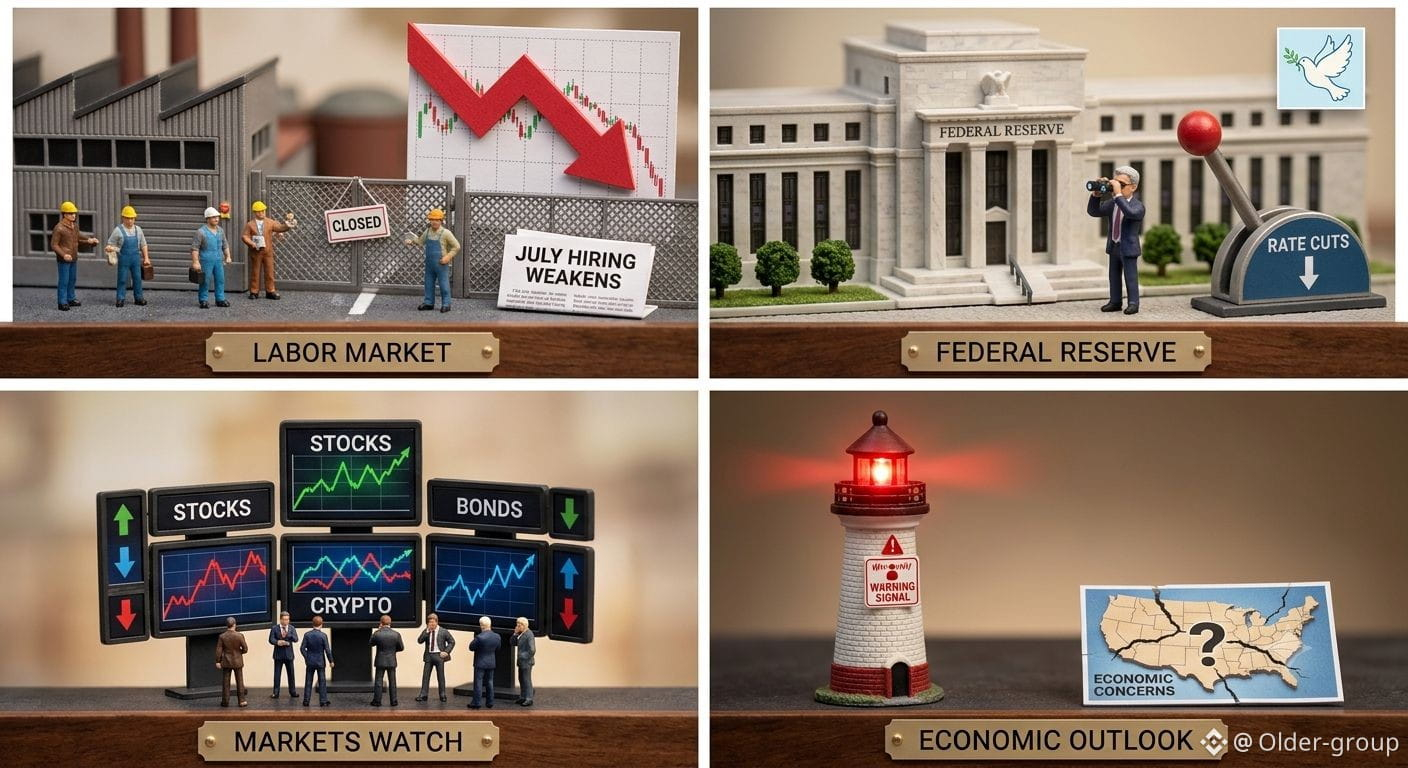
🚨 U.S. labor market sends a warning signal.
July hiring unexpectedly weakened, putting the spotlight back on the health of the U.S. economy.
📉 Weaker jobs = economic concerns
🏦 Fed policy back in focus
💰 Rate-cut expectations could increase
📊 Stocks, bonds & crypto may see higher volatility
The big question now: Will weaker employment push the Fed toward a more dovish stance?
🔥 Markets are watching the next economic data closely.
#USJobs #Fed #InterestRates #Economy $BANK $NVDAB
{spot}(NVDABUSDT)
{future}(BANKUSDT)
#usjulyjobsunexpectedlyfall
🚨 U.S. labor market sends a warning signal.
July hiring unexpectedly weakened, putting the spotlight back on the health of the U.S. economy.
📉 Weaker jobs = economic concerns
🏦 Fed policy back in focus
💰 Rate-cut expectations could increase
📊 Stocks, bonds & crypto may see higher volatility
The big question now: Will weaker employment push the Fed toward a more dovish stance?
🔥 Markets are watching the next economic data closely.
#USJobs #Fed #InterestRates #Economy $BANK $NVDAB
🚨 U.S. labor market sends a warning signal.
July hiring unexpectedly weakened, putting the spotlight back on the health of the U.S. economy.
📉 Weaker jobs = economic concerns
🏦 Fed policy back in focus
💰 Rate-cut expectations could increase
📊 Stocks, bonds & crypto may see higher volatility
The big question now: Will weaker employment push the Fed toward a more dovish stance?
🔥 Markets are watching the next economic data closely.
#USJobs #Fed #InterestRates #Economy $BANK $NVDAB
2.6k

·
--
#usjulyjobsunexpectedlyfall
📊 U.S. July Jobs Unexpectedly Fall: Macro Impact & Crypto Outlook
The U.S. labor market cooled unexpectedly as July nonfarm payrolls dropped by 23,000 against expectations of an ~80,000 gain. The labor contraction has fueled rate-cut expectations, driving a short-term risk-on bid into major digital assets.
$BTC
{spot}(BTCUSDT)
Climbed back above the $65,000 mark following the data release as traders priced in softer monetary policy expectations.
$ETH
{spot}(ETHUSDT)
Gaining bullish traction alongside broader risk assets as lower Treasury yields ease liquidity conditions.
$SOL
{spot}(SOLUSDT)
Showing active buying volume at support levels, benefiting from capital rotation into high-beta layer-1 ecosystems.
📌 Key Takeaway: Deteriorating labor metrics increase expectations for monetary easing, providing a favorable liquidity tailwind for major crypto assets. Maintain tight risk management ahead of upcoming CPI releases.
#BTC #ETH #BinanceSquare
#usjulyjobsunexpectedlyfall
📊 U.S. July Jobs Unexpectedly Fall: Macro Impact & Crypto Outlook
The U.S. labor market cooled unexpectedly as July nonfarm payrolls dropped by 23,000 against expectations of an ~80,000 gain. The labor contraction has fueled rate-cut expectations, driving a short-term risk-on bid into major digital assets.
$BTC
Climbed back above the $65,000 mark following the data release as traders priced in softer monetary policy expectations.
$ETH
Gaining bullish traction alongside broader risk assets as lower Treasury yields ease liquidity conditions.
$SOL
Showing active buying volume at support levels, benefiting from capital rotation into high-beta layer-1 ecosystems.
📌 Key Takeaway: Deteriorating labor metrics increase expectations for monetary easing, providing a favorable liquidity tailwind for major crypto assets. Maintain tight risk management ahead of upcoming CPI releases.
#BTC #ETH #BinanceSquare
📊 U.S. July Jobs Unexpectedly Fall: Macro Impact & Crypto Outlook
The U.S. labor market cooled unexpectedly as July nonfarm payrolls dropped by 23,000 against expectations of an ~80,000 gain. The labor contraction has fueled rate-cut expectations, driving a short-term risk-on bid into major digital assets.
$BTC
Climbed back above the $65,000 mark following the data release as traders priced in softer monetary policy expectations.
$ETH
Gaining bullish traction alongside broader risk assets as lower Treasury yields ease liquidity conditions.
$SOL
Showing active buying volume at support levels, benefiting from capital rotation into high-beta layer-1 ecosystems.
📌 Key Takeaway: Deteriorating labor metrics increase expectations for monetary easing, providing a favorable liquidity tailwind for major crypto assets. Maintain tight risk management ahead of upcoming CPI releases.
#BTC #ETH #BinanceSquare

92

#USJulyJobsUnexpectedlyFall The U.S. labor market delivered an unexpected surprise in July 2026, as the economy lost around 23,000 nonfarm jobs instead of adding jobs as economists had expected. This marked the first monthly decline in employment in five months and raised fresh concerns about the strength of the U.S. economy.
The weakness was particularly visible in local government education, leisure and hospitality, retail, and financial activities. At the same time, some sectors, including healthcare, construction, and manufacturing, continued to record modest job gains. Previous employment figures for May and June were also revised significantly lower, making the overall labor-market picture weaker than initially reported.
Interestingly, the unemployment rate fell slightly to 4.1% from 4.2%. However, this decline was partly linked to a reduction in the labor-force participation rate, which fell to 61.4%. Wage growth also slowed to about 3.2% year over year.
The weaker jobs data could influence expectations for Federal Reserve interest-rate policy. Markets have reduced expectations of a September rate hike following the report. However, one weak month does not necessarily mean the U.S. economy is entering a recession. Investors will closely watch upcoming employment, inflation, and consumer-spending data to determine whether July's weakness is temporary or part of a broader slowdown.
#USJulyJobsUnexpectedlyFall The U.S. labor market delivered an unexpected surprise in July 2026, as the economy lost around 23,000 nonfarm jobs instead of adding jobs as economists had expected. This marked the first monthly decline in employment in five months and raised fresh concerns about the strength of the U.S. economy.
The weakness was particularly visible in local government education, leisure and hospitality, retail, and financial activities. At the same time, some sectors, including healthcare, construction, and manufacturing, continued to record modest job gains. Previous employment figures for May and June were also revised significantly lower, making the overall labor-market picture weaker than initially reported.
Interestingly, the unemployment rate fell slightly to 4.1% from 4.2%. However, this decline was partly linked to a reduction in the labor-force participation rate, which fell to 61.4%. Wage growth also slowed to about 3.2% year over year.
The weaker jobs data could influence expectations for Federal Reserve interest-rate policy. Markets have reduced expectations of a September rate hike following the report. However, one weak month does not necessarily mean the U.S. economy is entering a recession. Investors will closely watch upcoming employment, inflation, and consumer-spending data to determine whether July's weakness is temporary or part of a broader slowdown.
The weakness was particularly visible in local government education, leisure and hospitality, retail, and financial activities. At the same time, some sectors, including healthcare, construction, and manufacturing, continued to record modest job gains. Previous employment figures for May and June were also revised significantly lower, making the overall labor-market picture weaker than initially reported.
Interestingly, the unemployment rate fell slightly to 4.1% from 4.2%. However, this decline was partly linked to a reduction in the labor-force participation rate, which fell to 61.4%. Wage growth also slowed to about 3.2% year over year.
The weaker jobs data could influence expectations for Federal Reserve interest-rate policy. Markets have reduced expectations of a September rate hike following the report. However, one weak month does not necessarily mean the U.S. economy is entering a recession. Investors will closely watch upcoming employment, inflation, and consumer-spending data to determine whether July's weakness is temporary or part of a broader slowdown.
75

$BTC
{spot}(BTCUSDT)
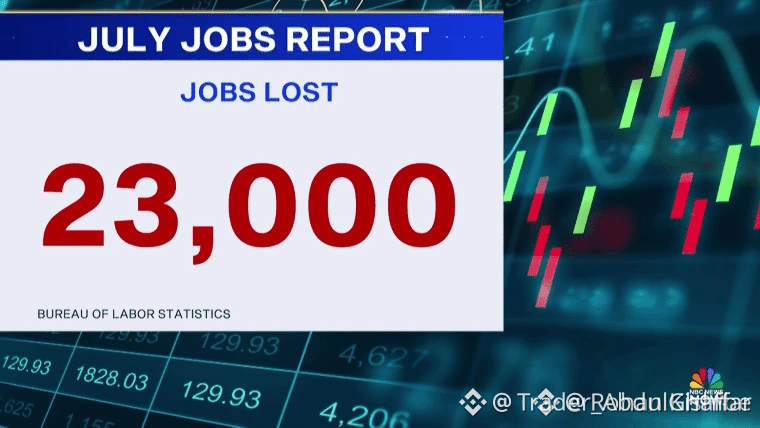
#USJulyJobsUnexpectedlyFall #SpaceXMayCompleteCursorDealAsEarlyAsNextWeekend #USSolarStocksRisePremarket #SKHynixToInvest19.1TWonInM17Plant #TSEPlansReReviewForMajorBusinessChanges U.S. employers shed 23,000 jobs in July — the first monthly decline since February — versus +80K expected. And the revision knife cut deeper: May and June were revised down by a combined 103,000 jobs . Economists called it a "massive surprise."
🔍 What's underneath the surface
Unemployment fell to 4.1% (from 4.2%) — but for the wrong reason: labor force participation kept sliding (61.4%), meaning fewer people are even looking for work. It's the lowest jobless rate in two years, yet it's a "soft" print, per Fed mouthpiece Nick Timiraos.
The breakdown matters: private sector actually added +30K jobs; the entire net decline came from government (-53K, mostly local education seasonal noise). So this is cooling, not collapse (Viral Patel's breakdown — personal take, for reference only).Wages +3.2% y/y — still sticky enough to keep inflation
$BTC
#USJulyJobsUnexpectedlyFall #SpaceXMayCompleteCursorDealAsEarlyAsNextWeekend #USSolarStocksRisePremarket #SKHynixToInvest19.1TWonInM17Plant #TSEPlansReReviewForMajorBusinessChanges U.S. employers shed 23,000 jobs in July — the first monthly decline since February — versus +80K expected. And the revision knife cut deeper: May and June were revised down by a combined 103,000 jobs . Economists called it a "massive surprise."
🔍 What's underneath the surface
Unemployment fell to 4.1% (from 4.2%) — but for the wrong reason: labor force participation kept sliding (61.4%), meaning fewer people are even looking for work. It's the lowest jobless rate in two years, yet it's a "soft" print, per Fed mouthpiece Nick Timiraos.
The breakdown matters: private sector actually added +30K jobs; the entire net decline came from government (-53K, mostly local education seasonal noise). So this is cooling, not collapse (Viral Patel's breakdown — personal take, for reference only).Wages +3.2% y/y — still sticky enough to keep inflation
#USJulyJobsUnexpectedlyFall #SpaceXMayCompleteCursorDealAsEarlyAsNextWeekend #USSolarStocksRisePremarket #SKHynixToInvest19.1TWonInM17Plant #TSEPlansReReviewForMajorBusinessChanges U.S. employers shed 23,000 jobs in July — the first monthly decline since February — versus +80K expected. And the revision knife cut deeper: May and June were revised down by a combined 103,000 jobs . Economists called it a "massive surprise."
🔍 What's underneath the surface
Unemployment fell to 4.1% (from 4.2%) — but for the wrong reason: labor force participation kept sliding (61.4%), meaning fewer people are even looking for work. It's the lowest jobless rate in two years, yet it's a "soft" print, per Fed mouthpiece Nick Timiraos.
The breakdown matters: private sector actually added +30K jobs; the entire net decline came from government (-53K, mostly local education seasonal noise). So this is cooling, not collapse (Viral Patel's breakdown — personal take, for reference only).Wages +3.2% y/y — still sticky enough to keep inflation
88

#USJulyJobsUnexpectedlyFall
🇺🇸 US JOBS REPORT JUST DROPPED — AND IT WAS WEAKER THAN EXPECTED
The US labor market just surprised the market.
📉 July Nonfarm Payrolls: -23K
📊 Expected: +80K to +85K
🔻 Previous months were also revised lower by around 103K jobs
At first glance, this looks bearish for the US economy.
But for crypto traders, there’s another side to the story 👀
A weaker jobs market could increase expectations for a more dovish Federal Reserve, which may eventually mean lower rates and easier financial conditions.
That can be positive for BTC and other risk assets.
⚠️ But don't get too excited yet.
Inflation data is still extremely important, and the Fed will be watching whether weaker employment is becoming a real economic slowdown.
My take:
Weak jobs = potentially bullish for crypto 📈
But confirmation from inflation + Fed expectations is needed.
#Bitcoin #BTC #Crypto #Fed #USJobs #NFP #Binance #CryptoMarket
#USJulyJobsUnexpectedlyFall
🇺🇸 US JOBS REPORT JUST DROPPED — AND IT WAS WEAKER THAN EXPECTED
The US labor market just surprised the market.
📉 July Nonfarm Payrolls: -23K
📊 Expected: +80K to +85K
🔻 Previous months were also revised lower by around 103K jobs
At first glance, this looks bearish for the US economy.
But for crypto traders, there’s another side to the story 👀
A weaker jobs market could increase expectations for a more dovish Federal Reserve, which may eventually mean lower rates and easier financial conditions.
That can be positive for BTC and other risk assets.
⚠️ But don't get too excited yet.
Inflation data is still extremely important, and the Fed will be watching whether weaker employment is becoming a real economic slowdown.
My take:
Weak jobs = potentially bullish for crypto 📈
But confirmation from inflation + Fed expectations is needed.
#Bitcoin #BTC #Crypto #Fed #USJobs #NFP #Binance #CryptoMarket
🇺🇸 US JOBS REPORT JUST DROPPED — AND IT WAS WEAKER THAN EXPECTED
The US labor market just surprised the market.
📉 July Nonfarm Payrolls: -23K
📊 Expected: +80K to +85K
🔻 Previous months were also revised lower by around 103K jobs
At first glance, this looks bearish for the US economy.
But for crypto traders, there’s another side to the story 👀
A weaker jobs market could increase expectations for a more dovish Federal Reserve, which may eventually mean lower rates and easier financial conditions.
That can be positive for BTC and other risk assets.
⚠️ But don't get too excited yet.
Inflation data is still extremely important, and the Fed will be watching whether weaker employment is becoming a real economic slowdown.
My take:
Weak jobs = potentially bullish for crypto 📈
But confirmation from inflation + Fed expectations is needed.
#Bitcoin #BTC #Crypto #Fed #USJobs #NFP #Binance #CryptoMarket
74

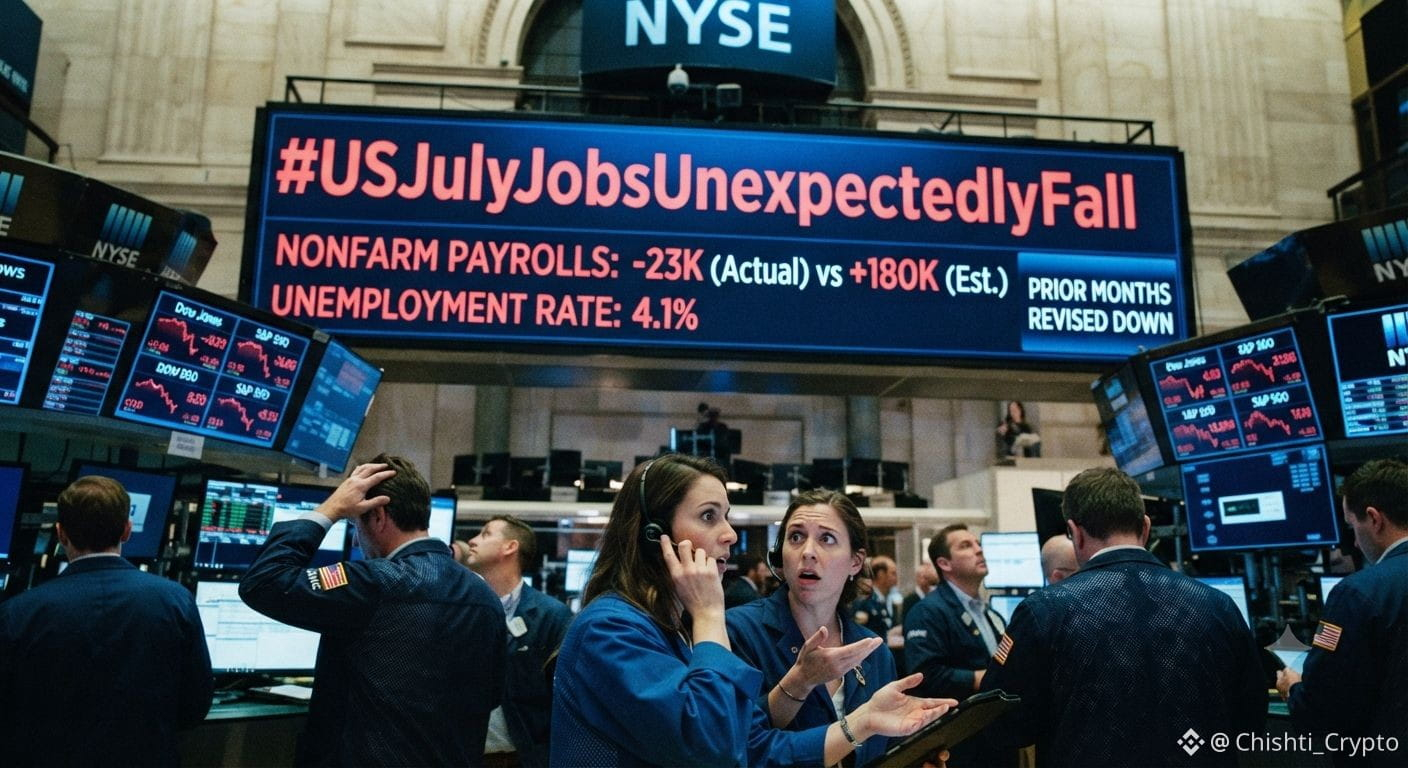
#USJulyJobsUnexpectedlyFall The U.S. labor market just delivered a massive shockwaves. #USJulyJobsUnexpectedlyFall
Nonfarm payrolls unexpectedly dropped by 23,000 jobs in July, missing expectations completely, while prior months saw sharp downward revisions. Although the headline unemployment rate ticked down to 4.1%, it was largely driven by a sliding labor force participation rate as workers exited the pool.
This sudden loss of momentum completely alters the macroeconomic narrative. With hiring slowing down and economic friction mounting, pressure is mounting on the Federal Reserve to shift its stance, dragging down Treasury yields and the U.S. dollar.
Is this a temporary cooling phase or the start of a broader economic slowdown? Markets are reacting fast—expect high volatility ahead.
#USSolarStocksRisePremarket #SKHynixToInvest19.1TWonInM17Plant #TSEPlansReReviewForMajorBusinessChanges
$BTC
{spot}(BTCUSDT)
$ETH
{spot}(ETHUSDT)
$BNB
{spot}(BNBUSDT)
#USJulyJobsUnexpectedlyFall The U.S. labor market just delivered a massive shockwaves. #USJulyJobsUnexpectedlyFall
Nonfarm payrolls unexpectedly dropped by 23,000 jobs in July, missing expectations completely, while prior months saw sharp downward revisions. Although the headline unemployment rate ticked down to 4.1%, it was largely driven by a sliding labor force participation rate as workers exited the pool.
This sudden loss of momentum completely alters the macroeconomic narrative. With hiring slowing down and economic friction mounting, pressure is mounting on the Federal Reserve to shift its stance, dragging down Treasury yields and the U.S. dollar.
Is this a temporary cooling phase or the start of a broader economic slowdown? Markets are reacting fast—expect high volatility ahead.
#USSolarStocksRisePremarket #SKHynixToInvest19.1TWonInM17Plant #TSEPlansReReviewForMajorBusinessChanges
$BTC
$ETH
$BNB
Nonfarm payrolls unexpectedly dropped by 23,000 jobs in July, missing expectations completely, while prior months saw sharp downward revisions. Although the headline unemployment rate ticked down to 4.1%, it was largely driven by a sliding labor force participation rate as workers exited the pool.
This sudden loss of momentum completely alters the macroeconomic narrative. With hiring slowing down and economic friction mounting, pressure is mounting on the Federal Reserve to shift its stance, dragging down Treasury yields and the U.S. dollar.
Is this a temporary cooling phase or the start of a broader economic slowdown? Markets are reacting fast—expect high volatility ahead.
#USSolarStocksRisePremarket #SKHynixToInvest19.1TWonInM17Plant #TSEPlansReReviewForMajorBusinessChanges
$BTC
$ETH
$BNB
80

#USJulyJobsUnexpectedlyFall
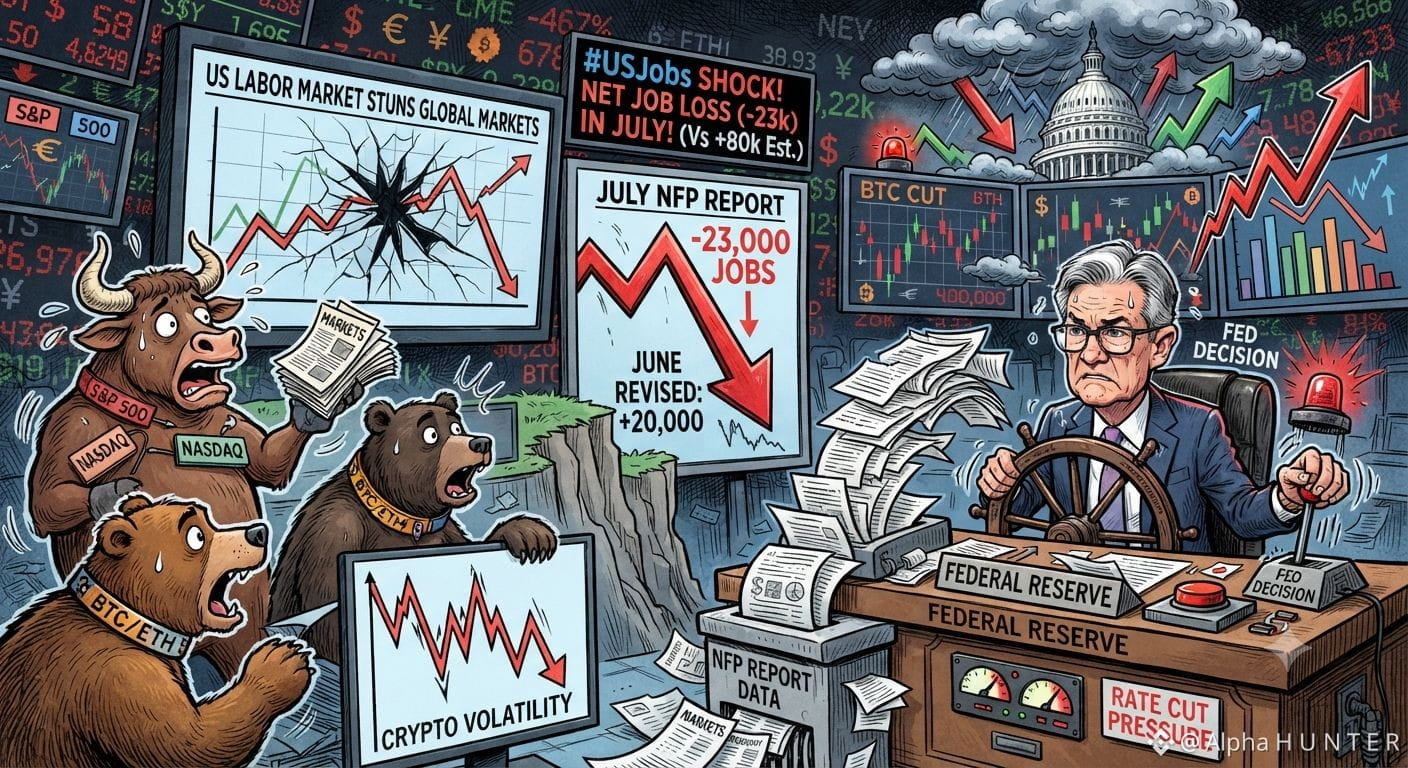
🚨 US Labor Market Shocks Markets with First Job Loss in Five Months!
The latest US Nonfarm Payrolls report for July brought a massive surprise, revealing a net loss of 23,000 jobs, falling drastically short of expectations for ~80,000 new positions. Meanwhile, June's figures were heavily revised down to just +20,000.
Despite the official unemployment rate ticking down to 4,1% and wage growth holding at 3,2% YoY, the underlying data signals a notable loss of economic momentum. A weaker labor market significantly ramps up pressure on the Federal Reserve regarding upcoming interest rate cuts, driving increased volatility across traditional and crypto markets. Stay alert! 📉📊
#USJobs #Macroeconomics #Crypto #Fed
$CYS
{future}(CYSUSDT)
$CAP
{future}(CAPUSDT)
$SKYAI
{future}(SKYAIUSDT)
#USJulyJobsUnexpectedlyFall
🚨 US Labor Market Shocks Markets with First Job Loss in Five Months!
The latest US Nonfarm Payrolls report for July brought a massive surprise, revealing a net loss of 23,000 jobs, falling drastically short of expectations for ~80,000 new positions. Meanwhile, June's figures were heavily revised down to just +20,000.
Despite the official unemployment rate ticking down to 4,1% and wage growth holding at 3,2% YoY, the underlying data signals a notable loss of economic momentum. A weaker labor market significantly ramps up pressure on the Federal Reserve regarding upcoming interest rate cuts, driving increased volatility across traditional and crypto markets. Stay alert! 📉📊
#USJobs #Macroeconomics #Crypto #Fed
$CYS
$CAP
$SKYAI
🚨 US Labor Market Shocks Markets with First Job Loss in Five Months!
The latest US Nonfarm Payrolls report for July brought a massive surprise, revealing a net loss of 23,000 jobs, falling drastically short of expectations for ~80,000 new positions. Meanwhile, June's figures were heavily revised down to just +20,000.
Despite the official unemployment rate ticking down to 4,1% and wage growth holding at 3,2% YoY, the underlying data signals a notable loss of economic momentum. A weaker labor market significantly ramps up pressure on the Federal Reserve regarding upcoming interest rate cuts, driving increased volatility across traditional and crypto markets. Stay alert! 📉📊
#USJobs #Macroeconomics #Crypto #Fed
$CYS
$CAP
$SKYAI
1
537

·
--
ສັນຍານກະທິງ
ຢືນຢັນແລ້ວ
The U.S. labor market delivered a surprise in July, with nonfarm payrolls falling by 23,000 jobs, marking the first monthly decline in five months. The unemployment rate edged down to 4.1%, but mainly because fewer people remained in the labor force.
The weaker than expected report has raised concerns about slowing employment momentum and reduced expectations for a near-term Federal Reserve rate hike.
Market takeaway: A softer US jobs market could influence the USD, Treasury yields, stocks, gold, and crypto markets as investors reassess the Fed’s next move.
(Source: blsgov | reuters)
Not financial advice. #NFA #USJulyJobsUnexpectedlyFall
The U.S. labor market delivered a surprise in July, with nonfarm payrolls falling by 23,000 jobs, marking the first monthly decline in five months. The unemployment rate edged down to 4.1%, but mainly because fewer people remained in the labor force.
The weaker than expected report has raised concerns about slowing employment momentum and reduced expectations for a near-term Federal Reserve rate hike.
Market takeaway: A softer US jobs market could influence the USD, Treasury yields, stocks, gold, and crypto markets as investors reassess the Fed’s next move.
(Source: blsgov | reuters)
Not financial advice. #NFA #USJulyJobsUnexpectedlyFall
The weaker than expected report has raised concerns about slowing employment momentum and reduced expectations for a near-term Federal Reserve rate hike.
Market takeaway: A softer US jobs market could influence the USD, Treasury yields, stocks, gold, and crypto markets as investors reassess the Fed’s next move.
(Source: blsgov | reuters)
Not financial advice. #NFA #USJulyJobsUnexpectedlyFall

3
190

·
--
ສັນຍານກະທິງ
#usjulyjobsunexpectedlyfall
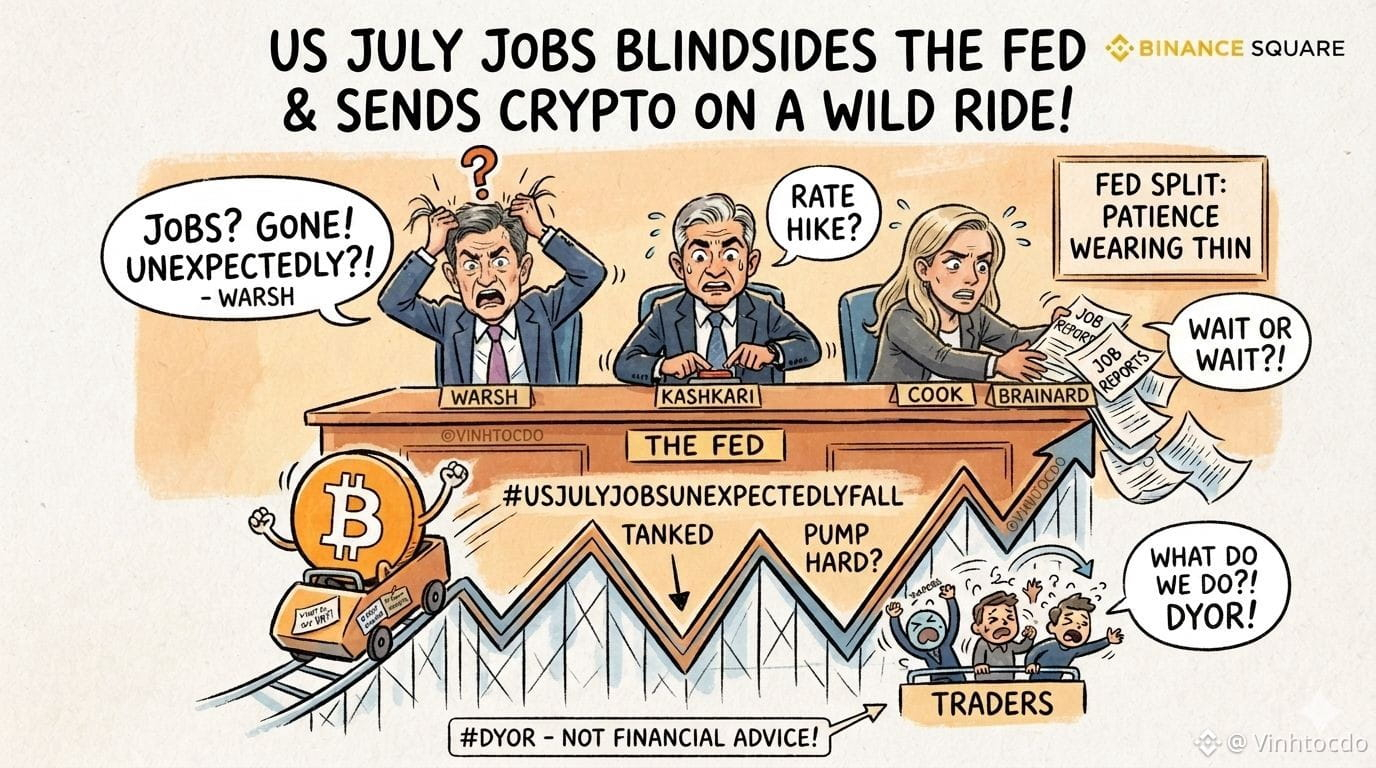
We all got blindsided by #usjulyjobsunexpectedlyfall! 🤯 We hyped previous job reports too much, but boom: public sector, leisure, and hospitality tanked hard.
So, will crypto pump hard now? 🚀 Lower jobs mean Fed rate-hikers might lose patience, but the Fed is deeply split over rates after years of high inflation. This chaos usually sparks extreme volatility!
What should traders do? Strap in, manage risk, and don't FOMO. Use my ref code VINHTOCDO if you're new! DYOR—not financial advice! 🤫
#FedSplit #InflationPatience #CryptoVolatility #VINHTOCDO
$BTC
{future}(BTCUSDT)
$ETH
{future}(ETHUSDT)
$SAFE
{future}(SAFEUSDT)
#usjulyjobsunexpectedlyfall
We all got blindsided by #usjulyjobsunexpectedlyfall! 🤯 We hyped previous job reports too much, but boom: public sector, leisure, and hospitality tanked hard.
So, will crypto pump hard now? 🚀 Lower jobs mean Fed rate-hikers might lose patience, but the Fed is deeply split over rates after years of high inflation. This chaos usually sparks extreme volatility!
What should traders do? Strap in, manage risk, and don't FOMO. Use my ref code VINHTOCDO if you're new! DYOR—not financial advice! 🤫
#FedSplit #InflationPatience #CryptoVolatility #VINHTOCDO
$BTC
$ETH
$SAFE
We all got blindsided by #usjulyjobsunexpectedlyfall! 🤯 We hyped previous job reports too much, but boom: public sector, leisure, and hospitality tanked hard.
So, will crypto pump hard now? 🚀 Lower jobs mean Fed rate-hikers might lose patience, but the Fed is deeply split over rates after years of high inflation. This chaos usually sparks extreme volatility!
What should traders do? Strap in, manage risk, and don't FOMO. Use my ref code VINHTOCDO if you're new! DYOR—not financial advice! 🤫
#FedSplit #InflationPatience #CryptoVolatility #VINHTOCDO
$BTC
$ETH
$SAFE
4
1.4k

·
--
#USJulyJobsUnexpectedlyFall US July Jobs Unexpectedly Fell
The U.S. labor market just delivered a surprise.
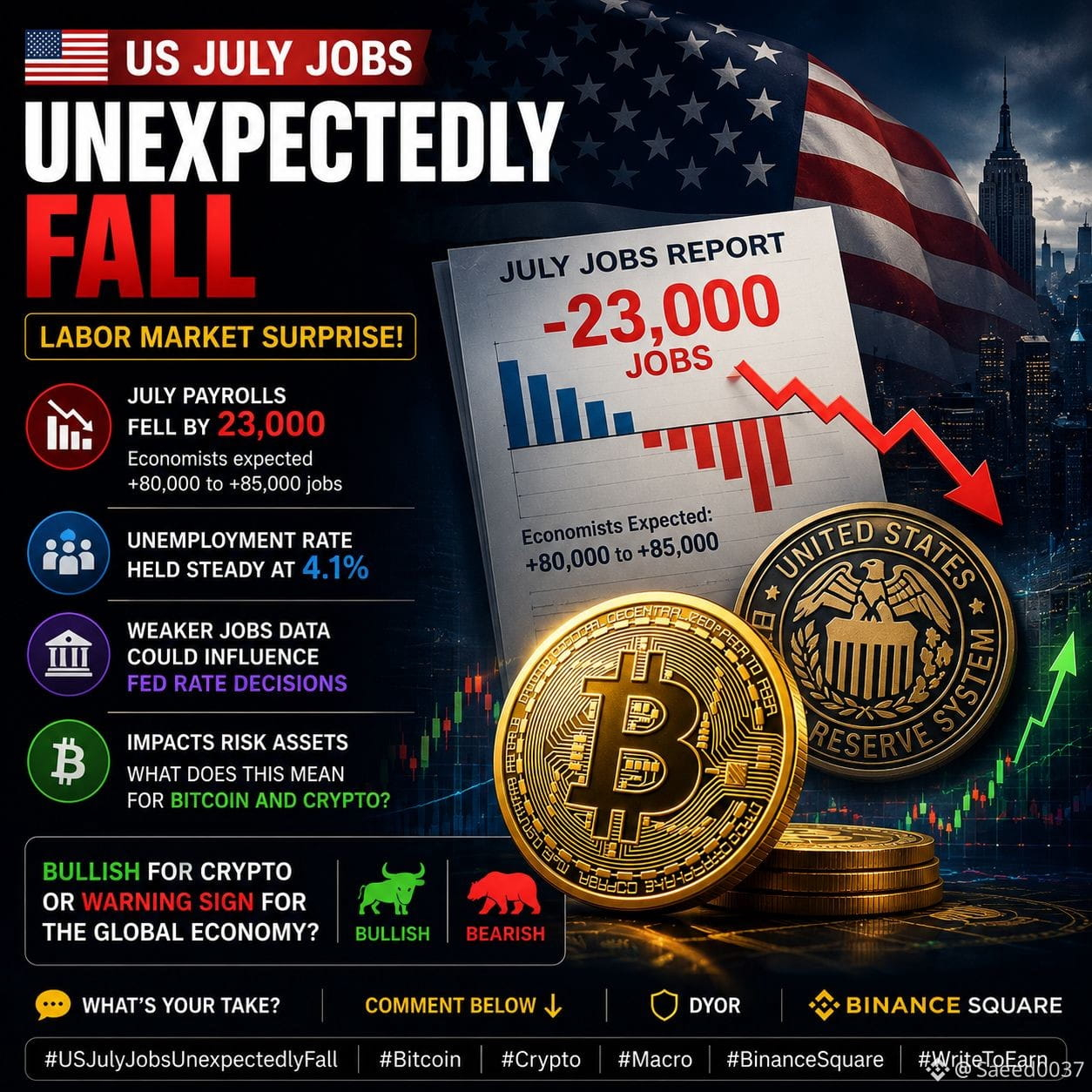
July payrolls fell by 23,000, while economists were expecting job growth. Previous months were also revised lower.
A weaker labor market could influence the Federal Reserve's rate decisions and may increase attention on risk assets like $BTC.
But will this become bullish for Bitcoin, or is it a warning sign for the global economy?
What do you think?
Bullish or Bearish ?
#USJulyJobsUnexpectedlyFall #Bitcoin #BTC #Crypto #BinanceSquare #Macro #WriteToEarn
#USJulyJobsUnexpectedlyFall US July Jobs Unexpectedly Fell
The U.S. labor market just delivered a surprise.
July payrolls fell by 23,000, while economists were expecting job growth. Previous months were also revised lower.
A weaker labor market could influence the Federal Reserve's rate decisions and may increase attention on risk assets like $BTC.
But will this become bullish for Bitcoin, or is it a warning sign for the global economy?
What do you think?
Bullish or Bearish ?
#USJulyJobsUnexpectedlyFall #Bitcoin #BTC #Crypto #BinanceSquare #Macro #WriteToEarn
The U.S. labor market just delivered a surprise.
July payrolls fell by 23,000, while economists were expecting job growth. Previous months were also revised lower.
A weaker labor market could influence the Federal Reserve's rate decisions and may increase attention on risk assets like $BTC.
But will this become bullish for Bitcoin, or is it a warning sign for the global economy?
What do you think?
Bullish or Bearish ?
#USJulyJobsUnexpectedlyFall #Bitcoin #BTC #Crypto #BinanceSquare #Macro #WriteToEarn
103

·
--
ສັນຍານກະທິງ
#USJulyJobsUnexpectedlyFall $ETH
{spot}(ETHUSDT)
🚨 U.S. JOBS JUST DELIVERED A BIG SURPRISE
🇺🇸 The U.S. economy lost 23,000 jobs in July — while economists had expected job growth.
Even more important: previous months were revised sharply lower, with May and June together revised down by 103,000 jobs. Meanwhile, unemployment edged down to 4.1%, but labor-force participation fell to 61.4%. (Reuters)
🔥 Why crypto traders should care:
A softer labor market can change expectations around the Federal Reserve and interest rates. Markets have already reduced expectations for a September rate hike following the report. (Reuters)
This is NOT automatically a recession signal — but it is a data point the Fed and markets cannot ignore.
👀 Watch next: Fed expectations • U.S. yields • DXY • BTC • Gold
Do you think weaker jobs data is BULLISH or BEARISH for Bitcoin? 👇
🔔 Follow JALILORD9 for fast macro + crypto market updates.
#USJulyJobsUnexpectedlyFall #Bitcoin #BTC #Crypto #Fed #JobsReport #Macro #JALILORD9
#USJulyJobsUnexpectedlyFall $ETH
🚨 U.S. JOBS JUST DELIVERED A BIG SURPRISE
🇺🇸 The U.S. economy lost 23,000 jobs in July — while economists had expected job growth.
Even more important: previous months were revised sharply lower, with May and June together revised down by 103,000 jobs. Meanwhile, unemployment edged down to 4.1%, but labor-force participation fell to 61.4%. (Reuters)
🔥 Why crypto traders should care:
A softer labor market can change expectations around the Federal Reserve and interest rates. Markets have already reduced expectations for a September rate hike following the report. (Reuters)
This is NOT automatically a recession signal — but it is a data point the Fed and markets cannot ignore.
👀 Watch next: Fed expectations • U.S. yields • DXY • BTC • Gold
Do you think weaker jobs data is BULLISH or BEARISH for Bitcoin? 👇
🔔 Follow JALILORD9 for fast macro + crypto market updates.
#USJulyJobsUnexpectedlyFall #Bitcoin #BTC #Crypto #Fed #JobsReport #Macro #JALILORD9
🚨 U.S. JOBS JUST DELIVERED A BIG SURPRISE
🇺🇸 The U.S. economy lost 23,000 jobs in July — while economists had expected job growth.
Even more important: previous months were revised sharply lower, with May and June together revised down by 103,000 jobs. Meanwhile, unemployment edged down to 4.1%, but labor-force participation fell to 61.4%. (Reuters)
🔥 Why crypto traders should care:
A softer labor market can change expectations around the Federal Reserve and interest rates. Markets have already reduced expectations for a September rate hike following the report. (Reuters)
This is NOT automatically a recession signal — but it is a data point the Fed and markets cannot ignore.
👀 Watch next: Fed expectations • U.S. yields • DXY • BTC • Gold
Do you think weaker jobs data is BULLISH or BEARISH for Bitcoin? 👇
🔔 Follow JALILORD9 for fast macro + crypto market updates.
#USJulyJobsUnexpectedlyFall #Bitcoin #BTC #Crypto #Fed #JobsReport #Macro #JALILORD9

1
73

ຢືນຢັນແລ້ວ
#usjulyjobsunexpectedlyfall
Hay datos económicos que asustan al mercado.
Y hay otros que, paradójicamente, lo hacen respirar.
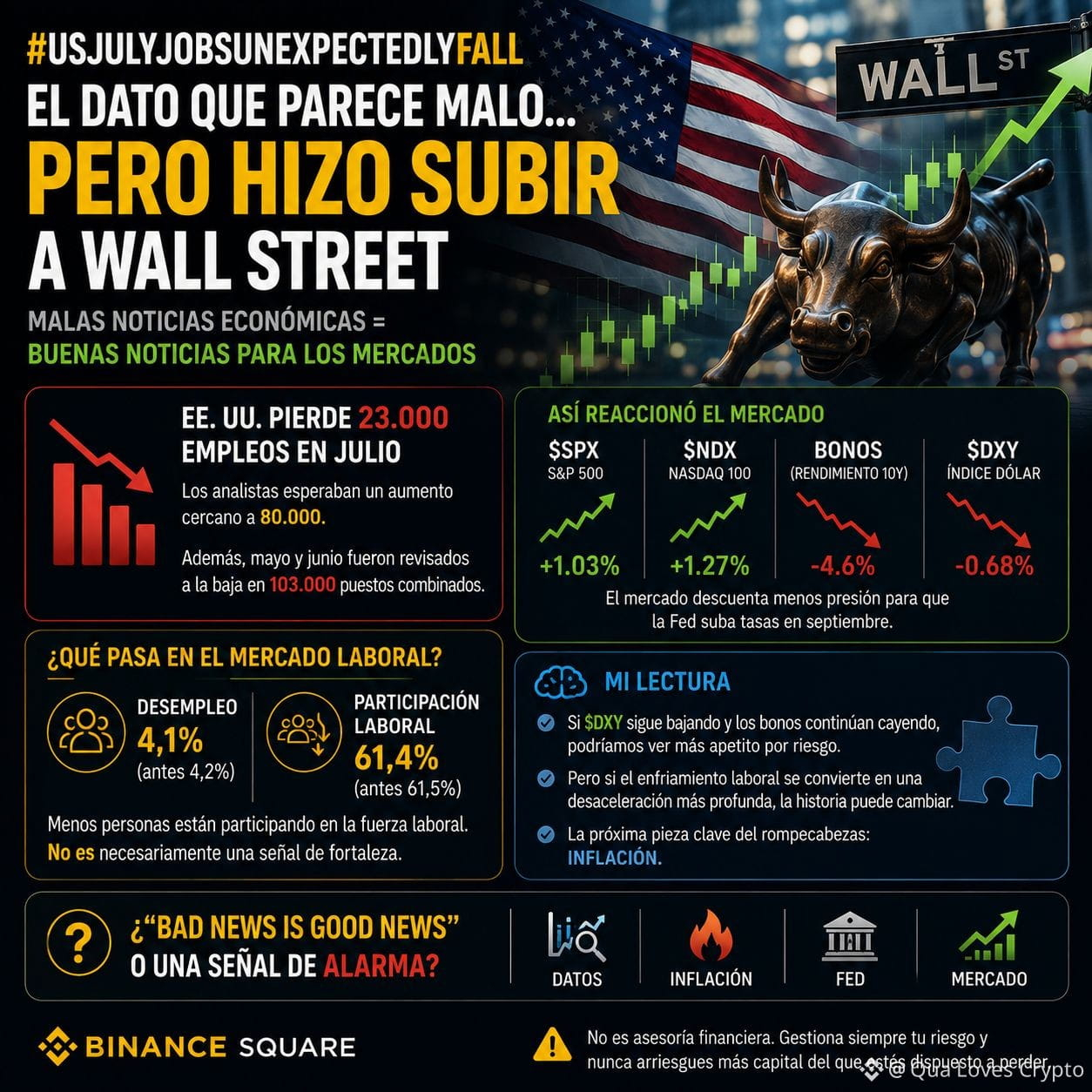
En julio, Estados Unidos perdió 23.000 empleos, cuando los analistas esperaban un aumento cercano a 80.000. Además, las cifras de mayo y junio fueron revisadas a la baja en 103.000 puestos combinados.
Pero aquí viene lo interesante:
📉 Menos empleo
📉 Menor crecimiento laboral
📉 Menor presión para que la Fed suba las tasas
Por eso Standard and Poor's y $NDAQ.US reaccionaron al alza, mientras los rendimientos de los bonos y el dólar retrocedieron. El mercado empezó a descontar que la Reserva Federal tendrá menos motivos para endurecer su política monetaria en septiembre.
Es el clásico escenario de: “malas noticias económicas = buenas noticias para los mercados”. Pero yo tendría cuidado con esa lectura.
El desempleo bajó ligeramente hasta 4,1%, aunque la participación laboral también descendió hasta 61,4%. Es decir, el mercado laboral no necesariamente está mejorando; parte de la caída del desempleo refleja que menos personas están participando en la fuerza laboral.
Ahora mismo vigilaría tres cosas: dólar ↓ → bonos ↓ → expectativas de la Fed ↓
Si esta combinación continúa, podría mantener el apetito por activos de riesgo.
Pero si los próximos datos muestran que el enfriamiento laboral está convirtiéndose en una desaceleración económica más profunda, la narrativa puede cambiar rápidamente.
Y la próxima pieza del rompecabezas será clave: inflación.
Porque una economía enfriándose con inflación controlada es una historia. Una economía enfriándose mientras los precios siguen altos es otra completamente distinta.
#usjulyjobsunexpectedlyfall
Hay datos económicos que asustan al mercado.
Y hay otros que, paradójicamente, lo hacen respirar.
En julio, Estados Unidos perdió 23.000 empleos, cuando los analistas esperaban un aumento cercano a 80.000. Además, las cifras de mayo y junio fueron revisadas a la baja en 103.000 puestos combinados.
Pero aquí viene lo interesante:
📉 Menos empleo
📉 Menor crecimiento laboral
📉 Menor presión para que la Fed suba las tasas
Por eso Standard and Poor's y $NDAQ.US reaccionaron al alza, mientras los rendimientos de los bonos y el dólar retrocedieron. El mercado empezó a descontar que la Reserva Federal tendrá menos motivos para endurecer su política monetaria en septiembre.
Es el clásico escenario de: “malas noticias económicas = buenas noticias para los mercados”. Pero yo tendría cuidado con esa lectura.
El desempleo bajó ligeramente hasta 4,1%, aunque la participación laboral también descendió hasta 61,4%. Es decir, el mercado laboral no necesariamente está mejorando; parte de la caída del desempleo refleja que menos personas están participando en la fuerza laboral.
Ahora mismo vigilaría tres cosas: dólar ↓ → bonos ↓ → expectativas de la Fed ↓
Si esta combinación continúa, podría mantener el apetito por activos de riesgo.
Pero si los próximos datos muestran que el enfriamiento laboral está convirtiéndose en una desaceleración económica más profunda, la narrativa puede cambiar rápidamente.
Y la próxima pieza del rompecabezas será clave: inflación.
Porque una economía enfriándose con inflación controlada es una historia. Una economía enfriándose mientras los precios siguen altos es otra completamente distinta.
Hay datos económicos que asustan al mercado.
Y hay otros que, paradójicamente, lo hacen respirar.
En julio, Estados Unidos perdió 23.000 empleos, cuando los analistas esperaban un aumento cercano a 80.000. Además, las cifras de mayo y junio fueron revisadas a la baja en 103.000 puestos combinados.
Pero aquí viene lo interesante:
📉 Menos empleo
📉 Menor crecimiento laboral
📉 Menor presión para que la Fed suba las tasas
Por eso Standard and Poor's y $NDAQ.US reaccionaron al alza, mientras los rendimientos de los bonos y el dólar retrocedieron. El mercado empezó a descontar que la Reserva Federal tendrá menos motivos para endurecer su política monetaria en septiembre.
Es el clásico escenario de: “malas noticias económicas = buenas noticias para los mercados”. Pero yo tendría cuidado con esa lectura.
El desempleo bajó ligeramente hasta 4,1%, aunque la participación laboral también descendió hasta 61,4%. Es decir, el mercado laboral no necesariamente está mejorando; parte de la caída del desempleo refleja que menos personas están participando en la fuerza laboral.
Ahora mismo vigilaría tres cosas: dólar ↓ → bonos ↓ → expectativas de la Fed ↓
Si esta combinación continúa, podría mantener el apetito por activos de riesgo.
Pero si los próximos datos muestran que el enfriamiento laboral está convirtiéndose en una desaceleración económica más profunda, la narrativa puede cambiar rápidamente.
Y la próxima pieza del rompecabezas será clave: inflación.
Porque una economía enfriándose con inflación controlada es una historia. Una economía enfriándose mientras los precios siguen altos es otra completamente distinta.
NDAQUS+0,04%
1.3k

·
--
ສັນຍານກະທິງ
ຢືນຢັນແລ້ວ
𝐂𝐨𝐮𝐥𝐝 𝐰𝐞𝐚𝐤𝐞𝐫 𝐔.𝐒. 𝐣𝐨𝐛𝐬 𝐝𝐚𝐭𝐚 𝐜𝐡𝐚𝐧𝐠𝐞 𝐭𝐡𝐞 𝐦𝐚𝐫𝐤𝐞𝐭 𝐦𝐨𝐨𝐝? 🇺🇸📉
The July jobs report delivered a surprise, showing the U.S. labor market is losing momentum.
🔹 Nonfarm payrolls: -23,000 jobs in July
🔹 Forecast: +80,000 jobs
🔹 Unemployment rate: 4.1%, down from 4.2%
🔹 Labor force participation: 61.4%
🔹 May & June jobs: Revised lower by 103,000 combined
🔹 Wage growth: Slowed to around 3.2% YoY
For markets, weaker employment can mean less pressure on the Fed to keep rates higher. That could be supportive for risk assets like stocks and crypto if investors start pricing in a more dovish Fed.
But one report doesn't confirm a trend. 👀
What do you think — bullish or bearish for BTC? 🚀🐻
#usjulyjobsunexpectedlyfall
𝐂𝐨𝐮𝐥𝐝 𝐰𝐞𝐚𝐤𝐞𝐫 𝐔.𝐒. 𝐣𝐨𝐛𝐬 𝐝𝐚𝐭𝐚 𝐜𝐡𝐚𝐧𝐠𝐞 𝐭𝐡𝐞 𝐦𝐚𝐫𝐤𝐞𝐭 𝐦𝐨𝐨𝐝? 🇺🇸📉
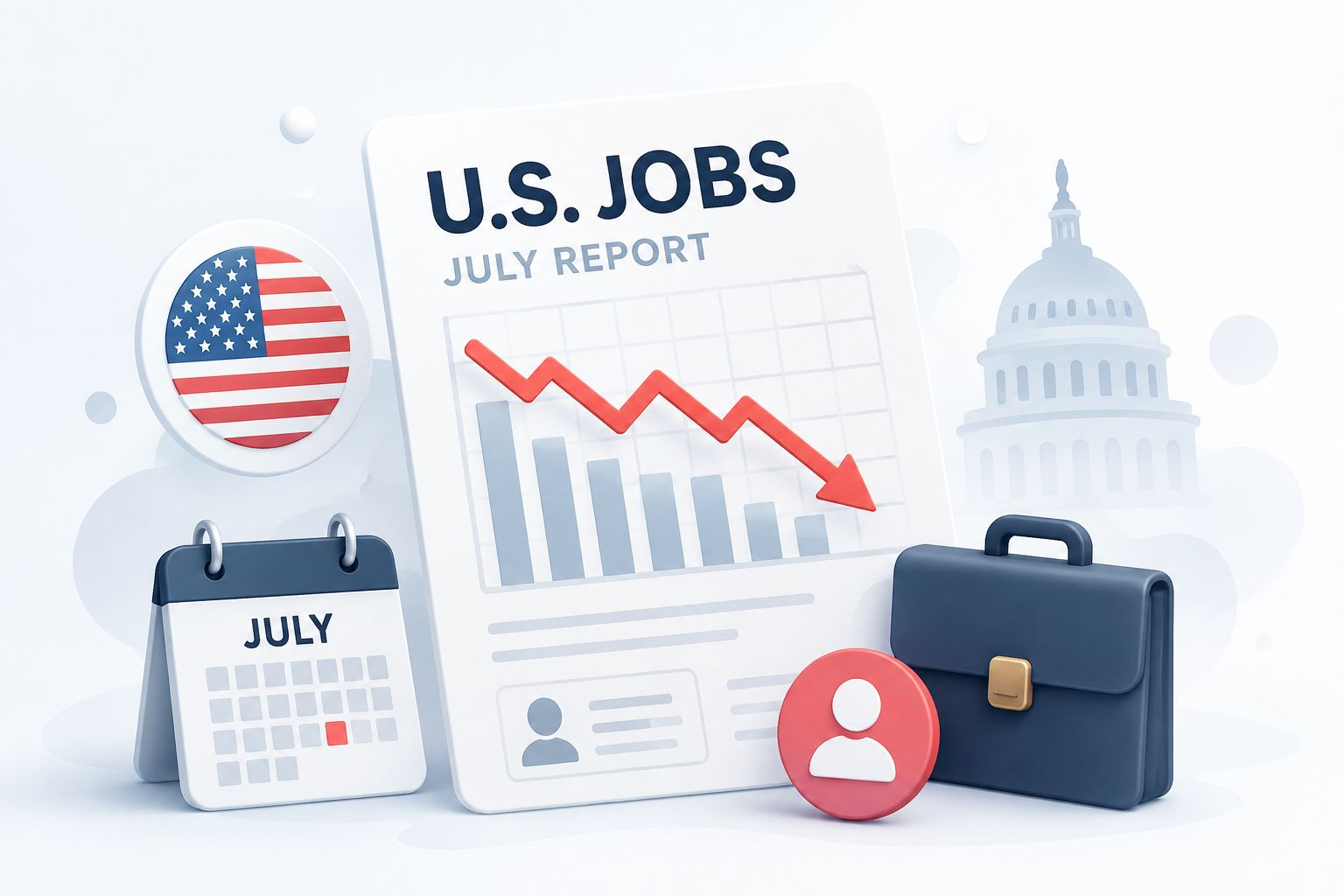
The July jobs report delivered a surprise, showing the U.S. labor market is losing momentum.
🔹 Nonfarm payrolls: -23,000 jobs in July
🔹 Forecast: +80,000 jobs
🔹 Unemployment rate: 4.1%, down from 4.2%
🔹 Labor force participation: 61.4%
🔹 May & June jobs: Revised lower by 103,000 combined
🔹 Wage growth: Slowed to around 3.2% YoY
For markets, weaker employment can mean less pressure on the Fed to keep rates higher. That could be supportive for risk assets like stocks and crypto if investors start pricing in a more dovish Fed.
But one report doesn't confirm a trend. 👀
What do you think — bullish or bearish for BTC? 🚀🐻
#usjulyjobsunexpectedlyfall
The July jobs report delivered a surprise, showing the U.S. labor market is losing momentum.
🔹 Nonfarm payrolls: -23,000 jobs in July
🔹 Forecast: +80,000 jobs
🔹 Unemployment rate: 4.1%, down from 4.2%
🔹 Labor force participation: 61.4%
🔹 May & June jobs: Revised lower by 103,000 combined
🔹 Wage growth: Slowed to around 3.2% YoY
For markets, weaker employment can mean less pressure on the Fed to keep rates higher. That could be supportive for risk assets like stocks and crypto if investors start pricing in a more dovish Fed.
But one report doesn't confirm a trend. 👀
What do you think — bullish or bearish for BTC? 🚀🐻
#usjulyjobsunexpectedlyfall
2
1.7k

·
--
ຢືນຢັນແລ້ວ
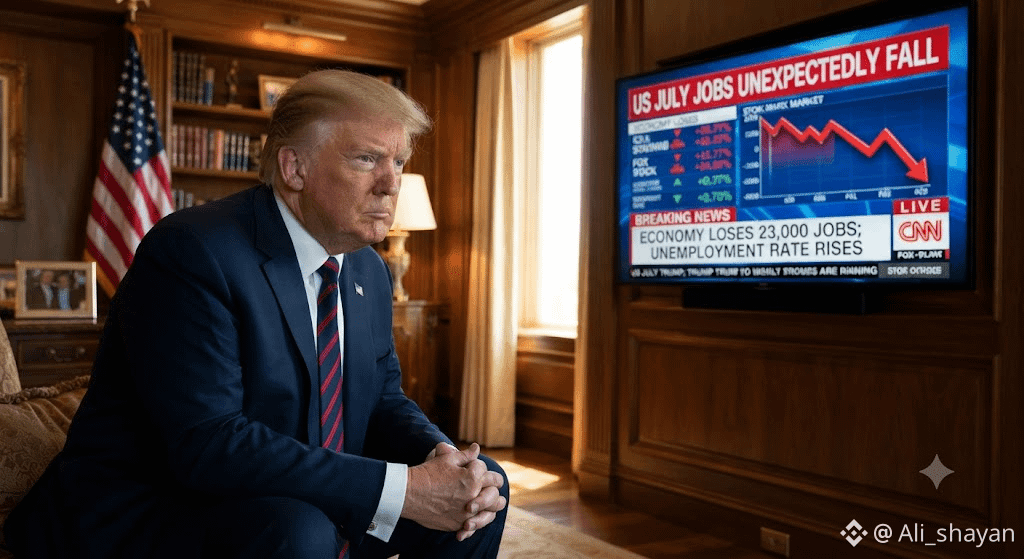
#usjulyjobsunexpectedlyfall The latest US jobs report came as a major surprise to the markets today. Instead of adding new positions, the economy unexpectedly lost 23,000 jobs in July. Analysts had been predicting positive growth, making this sharp downturn a real cause for concern. Furthermore, previous job gains from May and June were heavily revised downward. While the unemployment rate ticked down slightly to 4.1 percent, this drop happened mostly because fewer people were actively looking for work.
CLICK BELOW TO TRADE : $BTC $ETH $US
{future}(USUSDT)
{future}(ETHUSDT)
{future}(BTCUSDT)
#usjulyjobsunexpectedlyfall The latest US jobs report came as a major surprise to the markets today. Instead of adding new positions, the economy unexpectedly lost 23,000 jobs in July. Analysts had been predicting positive growth, making this sharp downturn a real cause for concern. Furthermore, previous job gains from May and June were heavily revised downward. While the unemployment rate ticked down slightly to 4.1 percent, this drop happened mostly because fewer people were actively looking for work.
CLICK BELOW TO TRADE : $BTC $ETH $US
CLICK BELOW TO TRADE : $BTC $ETH $US
4
1
1.4k


·
--
ຢືນຢັນແລ້ວ
🇺🇸🇺🇲🇺🇲🇺🇲🇺🇲🇺🇲🇺🇲🇺🇲🇺🇲🇺🇲🇺🇲🇺🇲🇺🇲🇺🇲🇺🇲🇺🇲
Trump Media terminates planned crypto deals with Crypto․com
JUST IN:
💰🇺🇸
President Trump says "crypto is a big deal."
"I see more and more where people are paying with Bitcoin. They don't even know about cash anymore."
🇺🇸🚨🇺🇲🚨🇺🇲🚨🇺🇲🚨🇺🇲🚨🇺🇲🚨🇺🇲🚨
US employers cut 23,000 jobs in July, missing the forecast for an 80,000 gain.
#TRUMP #US #DollarSetForBestDayInTwoWeeks
#USJulyJobsUnexpectedlyFall
#USSolarStocksRisePremarket
$TRUMP
{future}(TRUMPUSDT)
$BTC
{future}(BTCUSDT)
🇺🇸🇺🇲🇺🇲🇺🇲🇺🇲🇺🇲🇺🇲🇺🇲🇺🇲🇺🇲🇺🇲🇺🇲🇺🇲🇺🇲🇺🇲🇺🇲
Trump Media terminates planned crypto deals with Crypto․com
JUST IN:
💰🇺🇸
President Trump says "crypto is a big deal."
"I see more and more where people are paying with Bitcoin. They don't even know about cash anymore."
🇺🇸🚨🇺🇲🚨🇺🇲🚨🇺🇲🚨🇺🇲🚨🇺🇲🚨🇺🇲🚨
US employers cut 23,000 jobs in July, missing the forecast for an 80,000 gain.
#TRUMP #US #DollarSetForBestDayInTwoWeeks
#USJulyJobsUnexpectedlyFall
#USSolarStocksRisePremarket
$TRUMP
$BTC
Trump Media terminates planned crypto deals with Crypto․com
JUST IN:
💰🇺🇸
President Trump says "crypto is a big deal."
"I see more and more where people are paying with Bitcoin. They don't even know about cash anymore."
🇺🇸🚨🇺🇲🚨🇺🇲🚨🇺🇲🚨🇺🇲🚨🇺🇲🚨🇺🇲🚨
US employers cut 23,000 jobs in July, missing the forecast for an 80,000 gain.
#TRUMP #US #DollarSetForBestDayInTwoWeeks
#USJulyJobsUnexpectedlyFall
#USSolarStocksRisePremarket
$TRUMP
$BTC

2
19
2.7k
·
--
ຢືນຢັນແລ້ວ
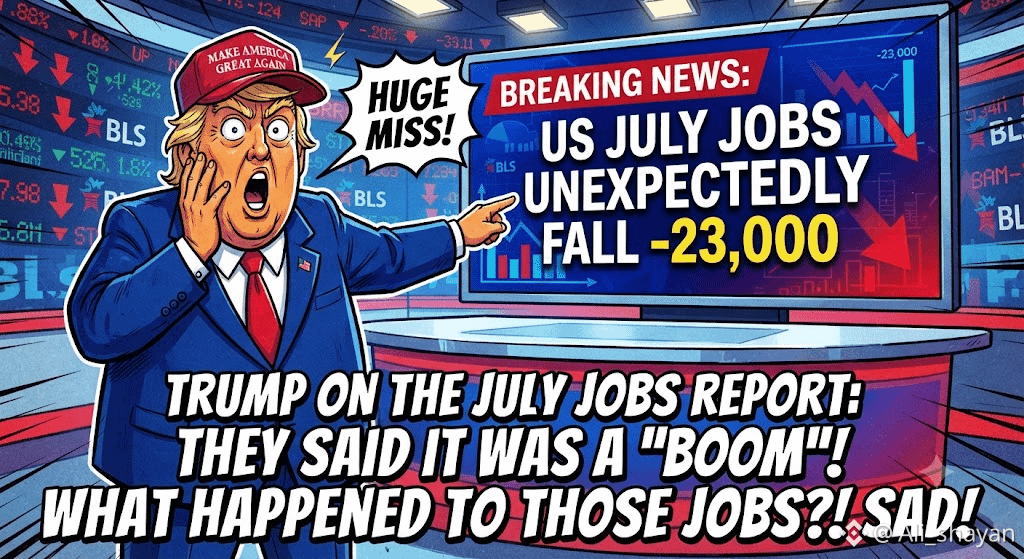
#usjulyjobsunexpectedlyfall The US labor market took a surprising hit in July as the economy unexpectedly lost 23,000 jobs, falling far short of predictions. Data released by the Bureau of Labor Statistics also showed sharp downward revisions for May and June. Losses were mainly driven by local government education and retail. Meanwhile, the unemployment rate ticked down slightly to 4.1% because fewer people were actively looking for work. This unexpected slowdown has eased pressure on the Federal Reserve regarding interest rates.
CLICK BELOW TO TRADE : $BTC $BNB $BANK
{future}(BANKUSDT)
{future}(BNBUSDT)
{future}(BTCUSDT)
#usjulyjobsunexpectedlyfall The US labor market took a surprising hit in July as the economy unexpectedly lost 23,000 jobs, falling far short of predictions. Data released by the Bureau of Labor Statistics also showed sharp downward revisions for May and June. Losses were mainly driven by local government education and retail. Meanwhile, the unemployment rate ticked down slightly to 4.1% because fewer people were actively looking for work. This unexpected slowdown has eased pressure on the Federal Reserve regarding interest rates.
CLICK BELOW TO TRADE : $BTC $BNB $BANK
CLICK BELOW TO TRADE : $BTC $BNB $BANK
2.4k

·
--
ຢືນຢັນແລ້ວ
ບົດຄວາມ
U.S. JOBS MARKET DELIVERS A SHOCKING SURPRISE#usjulyjobsunexpectedlyfall
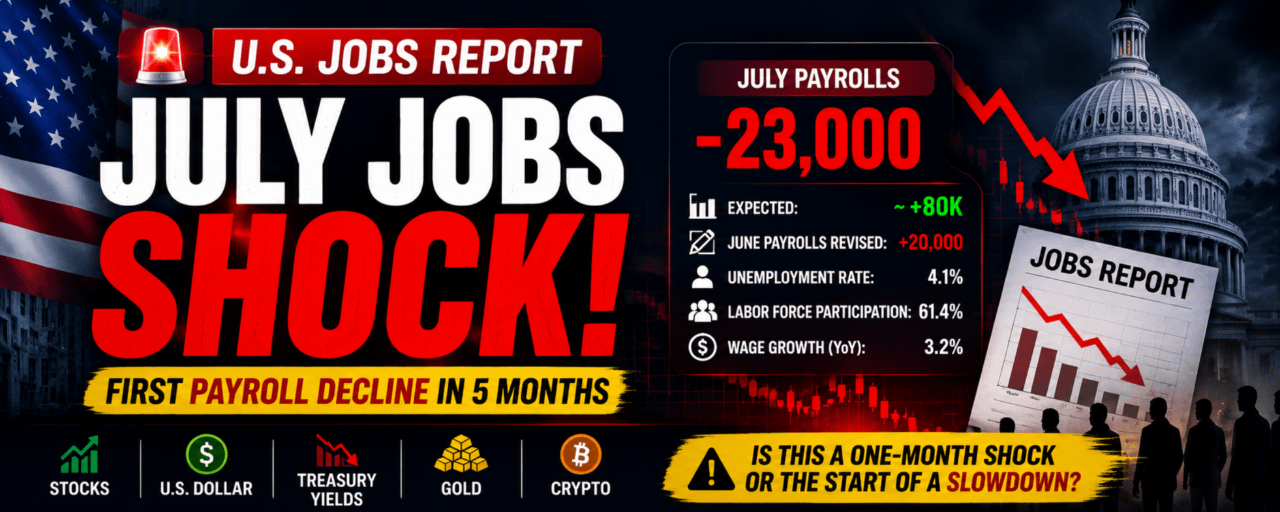
The U.S. labor market showed a clear sign of weakness in July, with nonfarm payrolls falling by 23,000 jobs instead of the expected gain of roughly 80K+. 📉🇺🇸
📊 KEY NUMBERS
• July Payrolls: -23K ❌
• Expected: ~+83K
• June Payrolls: revised to +20K
• Unemployment Rate: 4.1%
• Labor-Force Participation: 61.4%
• Wage Growth: 3.2% YoY
July marked the first monthly decline in payroll employment in five months. Even more importantly, May and June were revised down by a combined 103,000 jobs, pointing to a weaker hiring trend than previous reports suggested.
📉 WHERE DID JOBS FALL?
The biggest weakness came from local government education, leisure & hospitality, and retail. Private employers still added around 30,000 jobs, but that pace remains very soft.
The unemployment rate actually edged down to 4.1%, but the labor-force participation rate also slipped to 61.4%. That makes the headline unemployment figure less reassuring than it first appears.
💵 WHY MARKETS CARE
A weaker labor market could influence expectations for the Federal Reserve's future rate decisions.
Traders will be watching closely for potential effects on:
📈 Stocks
💵 U.S. Dollar
📉 Treasury Yields
🥇 Gold
₿ Crypto
The big question now is:
Is July simply a temporary shock, or is the U.S. labor market entering a broader slowdown? 👀
The next jobs report could be crucial. If August also shows weak hiring, pressure on the Fed to reconsider its policy stance could increase.
Markets are watching the jobs data. The Fed is watching inflation. Traders are watching both. ⚠️
Personal opinion only. Not financial advice. DYOR and manage risk.
#USJobs #JobsReport #NonfarmPayrolls #Payrolls #Fed #FederalReserve #USD #Gold #XAUUSD #Crypto #Markets
$HEI
$BANK
$LAB
{spot}(HEIUSDT)
{spot}(BANKUSDT)
{alpha}(560x7ec43cf65f1663f820427c62a5780b8f2e25593a)
U.S. JOBS MARKET DELIVERS A SHOCKING SURPRISE
#usjulyjobsunexpectedlyfall
The U.S. labor market showed a clear sign of weakness in July, with nonfarm payrolls falling by 23,000 jobs instead of the expected gain of roughly 80K+. 📉🇺🇸
📊 KEY NUMBERS
• July Payrolls: -23K ❌
• Expected: ~+83K
• June Payrolls: revised to +20K
• Unemployment Rate: 4.1%
• Labor-Force Participation: 61.4%
• Wage Growth: 3.2% YoY
July marked the first monthly decline in payroll employment in five months. Even more importantly, May and June were revised down by a combined 103,000 jobs, pointing to a weaker hiring trend than previous reports suggested.
📉 WHERE DID JOBS FALL?
The biggest weakness came from local government education, leisure & hospitality, and retail. Private employers still added around 30,000 jobs, but that pace remains very soft.
The unemployment rate actually edged down to 4.1%, but the labor-force participation rate also slipped to 61.4%. That makes the headline unemployment figure less reassuring than it first appears.
💵 WHY MARKETS CARE
A weaker labor market could influence expectations for the Federal Reserve's future rate decisions.
Traders will be watching closely for potential effects on:
📈 Stocks
💵 U.S. Dollar
📉 Treasury Yields
🥇 Gold
₿ Crypto
The big question now is:
Is July simply a temporary shock, or is the U.S. labor market entering a broader slowdown? 👀
The next jobs report could be crucial. If August also shows weak hiring, pressure on the Fed to reconsider its policy stance could increase.
Markets are watching the jobs data. The Fed is watching inflation. Traders are watching both. ⚠️
Personal opinion only. Not financial advice. DYOR and manage risk.
#USJobs #JobsReport #NonfarmPayrolls #Payrolls #Fed #FederalReserve #USD #Gold #XAUUSD #Crypto #Markets
$HEI
$BANK
$LAB
The U.S. labor market showed a clear sign of weakness in July, with nonfarm payrolls falling by 23,000 jobs instead of the expected gain of roughly 80K+. 📉🇺🇸
📊 KEY NUMBERS
• July Payrolls: -23K ❌
• Expected: ~+83K
• June Payrolls: revised to +20K
• Unemployment Rate: 4.1%
• Labor-Force Participation: 61.4%
• Wage Growth: 3.2% YoY
July marked the first monthly decline in payroll employment in five months. Even more importantly, May and June were revised down by a combined 103,000 jobs, pointing to a weaker hiring trend than previous reports suggested.
📉 WHERE DID JOBS FALL?
The biggest weakness came from local government education, leisure & hospitality, and retail. Private employers still added around 30,000 jobs, but that pace remains very soft.
The unemployment rate actually edged down to 4.1%, but the labor-force participation rate also slipped to 61.4%. That makes the headline unemployment figure less reassuring than it first appears.
💵 WHY MARKETS CARE
A weaker labor market could influence expectations for the Federal Reserve's future rate decisions.
Traders will be watching closely for potential effects on:
📈 Stocks
💵 U.S. Dollar
📉 Treasury Yields
🥇 Gold
₿ Crypto
The big question now is:
Is July simply a temporary shock, or is the U.S. labor market entering a broader slowdown? 👀
The next jobs report could be crucial. If August also shows weak hiring, pressure on the Fed to reconsider its policy stance could increase.
Markets are watching the jobs data. The Fed is watching inflation. Traders are watching both. ⚠️
Personal opinion only. Not financial advice. DYOR and manage risk.
#USJobs #JobsReport #NonfarmPayrolls #Payrolls #Fed #FederalReserve #USD #Gold #XAUUSD #Crypto #Markets
$HEI
$BANK
$LAB
8
6.6k
·
--
ຢືນຢັນແລ້ວ
ບົດຄວາມ
U.S. Jobs Market Delivers a Major Surprise — Economy Loses 23,000 Jobs in July#usjulyjobsunexpectedlyfall
The U.S. labor market delivered a major surprise in July, with nonfarm payrolls falling by 23,000 jobs, sharply missing economists' expectations for around 80,000 new jobs.
This marks the first monthly decline in U.S. employment in five months and adds to growing signs that the American labor market is losing momentum.
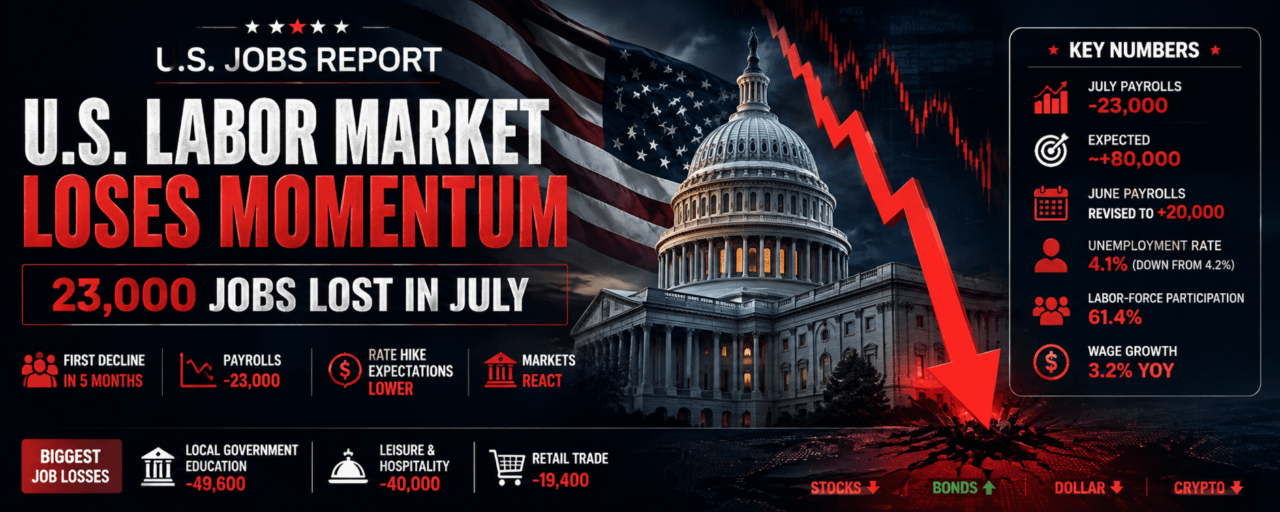
📉 Key Numbers
• July Nonfarm Payrolls: -23,000
• Expected: +80,000
• June Payrolls: Revised to +20,000
• Unemployment Rate: 4.1% vs. 4.2% previously
• Labor-Force Participation: 61.4%
• Annual Wage Growth: 3.2%
At first glance, the decline in the unemployment rate from 4.2% to 4.1% may appear positive.
However, the underlying data tells a weaker story.
The labor-force participation rate fell to 61.4%, its lowest level in roughly five and a half years. Around 264,000 people left the labor force, helping push the unemployment rate lower despite the weak employment numbers.
🏛️ Where Were Jobs Lost?
The biggest employment declines were concentrated in several sectors:
🏫 Local government education: -49,600
🍽️ Leisure & hospitality: -40,000
🛍️ Retail trade: -19,400
Meanwhile, healthcare, construction and manufacturing recorded modest employment gains.
Private-sector payrolls increased by only 30,000 jobs, highlighting just how limited hiring momentum has become.
⚠️ Previous Jobs Data Was Also Revised Lower
One of the most important details in the report was not just July's negative number.
Previous employment figures were also revised significantly lower.
Combined payroll growth for May and June was revised down by 103,000 jobs, suggesting that the labor market had already been weaker than earlier estimates indicated. June's employment gain was revised to only 20,000 jobs.
💵 Why Does This Matter for Markets?
The weak jobs report could have major implications for the Federal Reserve's interest-rate outlook.
A cooling labor market may reduce the pressure on the Fed to
raise interest rates, while slower wage growth could provide additional room for a more cautious monetary-policy approach.
Following the report, financial markets reduced expectations for a September Fed rate hike. Treasury yields also moved lower, while the U.S. dollar weakened against major currencies.
For stocks, bonds, the U.S. dollar and crypto, the key question now is whether July's weakness represents a temporary slowdown or the beginning of a broader deterioration in the labor market.
🚨 The Bottom Line
The U.S. labor market is clearly showing signs of losing momentum.
A 23,000-job decline, combined with significant downward revisions to previous months and a falling labor-force participation rate, paints a considerably weaker picture than the headline unemployment rate alone suggests.
The U.S. jobs engine is losing momentum — and markets are now watching closely to see what the Federal Reserve does next. 🇺🇸📉
$HEI $LAB $BANK
{alpha}(560x7ec43cf65f1663f820427c62a5780b8f2e25593a)
{spot}(HEIUSDT)
{spot}(BANKUSDT)
U.S. Jobs Market Delivers a Major Surprise — Economy Loses 23,000 Jobs in July
#usjulyjobsunexpectedlyfall
The U.S. labor market delivered a major surprise in July, with nonfarm payrolls falling by 23,000 jobs, sharply missing economists' expectations for around 80,000 new jobs.
This marks the first monthly decline in U.S. employment in five months and adds to growing signs that the American labor market is losing momentum.
📉 Key Numbers
• July Nonfarm Payrolls: -23,000
• Expected: +80,000
• June Payrolls: Revised to +20,000
• Unemployment Rate: 4.1% vs. 4.2% previously
• Labor-Force Participation: 61.4%
• Annual Wage Growth: 3.2%
At first glance, the decline in the unemployment rate from 4.2% to 4.1% may appear positive.
However, the underlying data tells a weaker story.
The labor-force participation rate fell to 61.4%, its lowest level in roughly five and a half years. Around 264,000 people left the labor force, helping push the unemployment rate lower despite the weak employment numbers.
🏛️ Where Were Jobs Lost?
The biggest employment declines were concentrated in several sectors:
🏫 Local government education: -49,600
🍽️ Leisure & hospitality: -40,000
🛍️ Retail trade: -19,400
Meanwhile, healthcare, construction and manufacturing recorded modest employment gains.
Private-sector payrolls increased by only 30,000 jobs, highlighting just how limited hiring momentum has become.
⚠️ Previous Jobs Data Was Also Revised Lower
One of the most important details in the report was not just July's negative number.
Previous employment figures were also revised significantly lower.
Combined payroll growth for May and June was revised down by 103,000 jobs, suggesting that the labor market had already been weaker than earlier estimates indicated. June's employment gain was revised to only 20,000 jobs.
💵 Why Does This Matter for Markets?
The weak jobs report could have major implications for the Federal Reserve's interest-rate outlook.
A cooling labor market may reduce the pressure on the Fed to
raise interest rates, while slower wage growth could provide additional room for a more cautious monetary-policy approach.
Following the report, financial markets reduced expectations for a September Fed rate hike. Treasury yields also moved lower, while the U.S. dollar weakened against major currencies.
For stocks, bonds, the U.S. dollar and crypto, the key question now is whether July's weakness represents a temporary slowdown or the beginning of a broader deterioration in the labor market.
🚨 The Bottom Line
The U.S. labor market is clearly showing signs of losing momentum.
A 23,000-job decline, combined with significant downward revisions to previous months and a falling labor-force participation rate, paints a considerably weaker picture than the headline unemployment rate alone suggests.
The U.S. jobs engine is losing momentum — and markets are now watching closely to see what the Federal Reserve does next. 🇺🇸📉
$HEI $LAB $BANK
The U.S. labor market delivered a major surprise in July, with nonfarm payrolls falling by 23,000 jobs, sharply missing economists' expectations for around 80,000 new jobs.
This marks the first monthly decline in U.S. employment in five months and adds to growing signs that the American labor market is losing momentum.
📉 Key Numbers
• July Nonfarm Payrolls: -23,000
• Expected: +80,000
• June Payrolls: Revised to +20,000
• Unemployment Rate: 4.1% vs. 4.2% previously
• Labor-Force Participation: 61.4%
• Annual Wage Growth: 3.2%
At first glance, the decline in the unemployment rate from 4.2% to 4.1% may appear positive.
However, the underlying data tells a weaker story.
The labor-force participation rate fell to 61.4%, its lowest level in roughly five and a half years. Around 264,000 people left the labor force, helping push the unemployment rate lower despite the weak employment numbers.
🏛️ Where Were Jobs Lost?
The biggest employment declines were concentrated in several sectors:
🏫 Local government education: -49,600
🍽️ Leisure & hospitality: -40,000
🛍️ Retail trade: -19,400
Meanwhile, healthcare, construction and manufacturing recorded modest employment gains.
Private-sector payrolls increased by only 30,000 jobs, highlighting just how limited hiring momentum has become.
⚠️ Previous Jobs Data Was Also Revised Lower
One of the most important details in the report was not just July's negative number.
Previous employment figures were also revised significantly lower.
Combined payroll growth for May and June was revised down by 103,000 jobs, suggesting that the labor market had already been weaker than earlier estimates indicated. June's employment gain was revised to only 20,000 jobs.
💵 Why Does This Matter for Markets?
The weak jobs report could have major implications for the Federal Reserve's interest-rate outlook.
A cooling labor market may reduce the pressure on the Fed to
raise interest rates, while slower wage growth could provide additional room for a more cautious monetary-policy approach.
Following the report, financial markets reduced expectations for a September Fed rate hike. Treasury yields also moved lower, while the U.S. dollar weakened against major currencies.
For stocks, bonds, the U.S. dollar and crypto, the key question now is whether July's weakness represents a temporary slowdown or the beginning of a broader deterioration in the labor market.
🚨 The Bottom Line
The U.S. labor market is clearly showing signs of losing momentum.
A 23,000-job decline, combined with significant downward revisions to previous months and a falling labor-force participation rate, paints a considerably weaker picture than the headline unemployment rate alone suggests.
The U.S. jobs engine is losing momentum — and markets are now watching closely to see what the Federal Reserve does next. 🇺🇸📉
$HEI $LAB $BANK
2
1
5.8k

ຢືນຢັນແລ້ວ
#USJulyJobsUnexpectedlyFall
📰 **US July Jobs Report: Economy Unexpectedly Sheds 23,000 Jobs**
The US labor market took a surprise hit in July, with nonfarm payrolls falling by 23,000 — the first monthly job loss since February. Economists had forecast a gain of roughly 80,000–95,000 jobs, according to the Bureau of Labor Statistics report released August 7.
**Key highlights:**
• Unemployment rate: 4.2% → 4.1%
• Government sector lost 53,000 jobs
• May and June figures revised down by a combined 103,000 jobs
• Average hourly earnings growth slowed to 3.2% YoY — the lowest since May 2021
• Leisure & hospitality also posted steep losses
The weaker-than-expected labor data is fueling fresh speculation about the Federal Reserve's next interest rate move, as markets weigh slowing job growth against still-elevated inflation.
$BTC
#USJobsReport #Fed #Crypto
#USJulyJobsUnexpectedlyFall
📰 **US July Jobs Report: Economy Unexpectedly Sheds 23,000 Jobs**
The US labor market took a surprise hit in July, with nonfarm payrolls falling by 23,000 — the first monthly job loss since February. Economists had forecast a gain of roughly 80,000–95,000 jobs, according to the Bureau of Labor Statistics report released August 7.
**Key highlights:**
• Unemployment rate: 4.2% → 4.1%
• Government sector lost 53,000 jobs
• May and June figures revised down by a combined 103,000 jobs
• Average hourly earnings growth slowed to 3.2% YoY — the lowest since May 2021
• Leisure & hospitality also posted steep losses
The weaker-than-expected labor data is fueling fresh speculation about the Federal Reserve's next interest rate move, as markets weigh slowing job growth against still-elevated inflation.
$BTC
#USJobsReport #Fed #Crypto
📰 **US July Jobs Report: Economy Unexpectedly Sheds 23,000 Jobs**
The US labor market took a surprise hit in July, with nonfarm payrolls falling by 23,000 — the first monthly job loss since February. Economists had forecast a gain of roughly 80,000–95,000 jobs, according to the Bureau of Labor Statistics report released August 7.
**Key highlights:**
• Unemployment rate: 4.2% → 4.1%
• Government sector lost 53,000 jobs
• May and June figures revised down by a combined 103,000 jobs
• Average hourly earnings growth slowed to 3.2% YoY — the lowest since May 2021
• Leisure & hospitality also posted steep losses
The weaker-than-expected labor data is fueling fresh speculation about the Federal Reserve's next interest rate move, as markets weigh slowing job growth against still-elevated inflation.
$BTC
#USJobsReport #Fed #Crypto
1
109

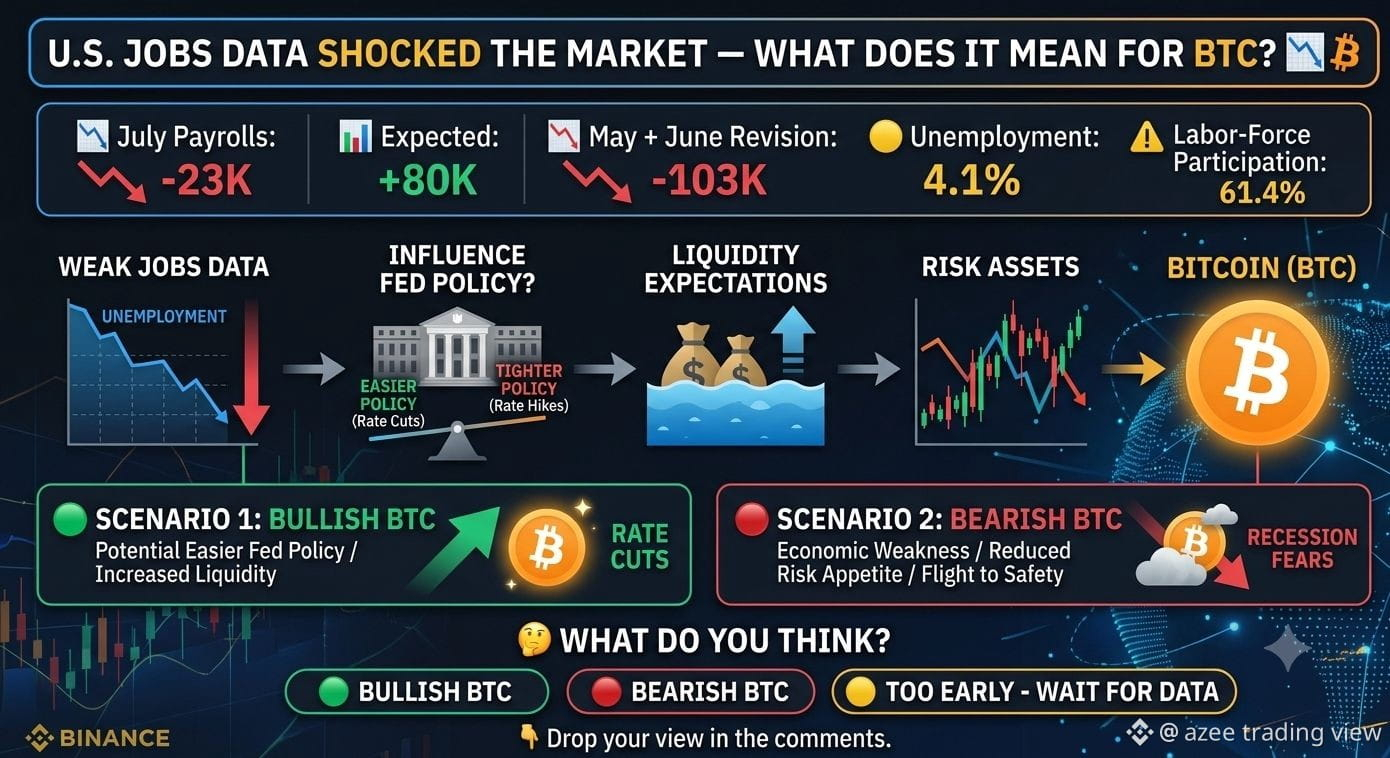
🇺🇸 U.S. JOBS DATA SHOCKED THE MARKET — WHAT DOES IT MEAN FOR $BTC ? 📉₿
The latest U.S. labor-market data came in much weaker than expected. 👀
📉 July Payrolls: -23K
📊 Expected: +80K
📉 May + June Revision: -103K
🟡 Unemployment: 4.1%
⚠️ Labor-Force Participation: 61.4%
But here's the bigger question:
🧠 WHY SHOULD BITCOIN TRADERS CARE?
Weak Jobs Data → Fed Policy Expectations → Liquidity Expectations → Risk Assets
And that's where Bitcoin becomes interesting. ₿
If economic growth continues to slow, markets could start pricing in a more accommodative Fed.
But ⚠️ weak jobs data does NOT automatically mean bullish BTC.
If economic weakness becomes severe, investors could become more defensive and reduce exposure to risk assets.
🔥 WHERE IS THE REAL STORY?
The market isn't only asking:
“How weak is the labor market?”
The bigger question is:
“Is the labor market cooling enough to influence Fed policy?”
That could become an important macro factor for Bitcoin in the weeks ahead. 👀
📊 MY WATCHLIST
📌 Fed rate expectations
📌 U.S. inflation
📌 Treasury yields
📌 DXY
📌 BTC price reaction
📌 Next employment report
💡 MY TAKE
One weak jobs report is not a $BTC buy or sell signal.
The bigger story is the combination of:
📉 Weak Jobs + 📉 Downward Revisions + 👀 Changing Fed Expectations
Now the key question is:
How will Bitcoin react to this macro shock?
🤔 WHAT DO YOU THINK?
🟢 Bullish BTC — potential easier Fed policy?
🔴 Bearish BTC — economic weakness could hurt risk appetite?
🟡 Too Early — should we wait for more data?
👇 Drop your view in the comments.
#BTC #Binance #USJobs #USJulyJobsUnexpectedlyFall
Educational content only. Not financial advice.
{future}(BTCUSDT)
🇺🇸 U.S. JOBS DATA SHOCKED THE MARKET — WHAT DOES IT MEAN FOR $BTC ? 📉₿
The latest U.S. labor-market data came in much weaker than expected. 👀
📉 July Payrolls: -23K
📊 Expected: +80K
📉 May + June Revision: -103K
🟡 Unemployment: 4.1%
⚠️ Labor-Force Participation: 61.4%
But here's the bigger question:
🧠 WHY SHOULD BITCOIN TRADERS CARE?
Weak Jobs Data → Fed Policy Expectations → Liquidity Expectations → Risk Assets
And that's where Bitcoin becomes interesting. ₿
If economic growth continues to slow, markets could start pricing in a more accommodative Fed.
But ⚠️ weak jobs data does NOT automatically mean bullish BTC.
If economic weakness becomes severe, investors could become more defensive and reduce exposure to risk assets.
🔥 WHERE IS THE REAL STORY?
The market isn't only asking:
“How weak is the labor market?”
The bigger question is:
“Is the labor market cooling enough to influence Fed policy?”
That could become an important macro factor for Bitcoin in the weeks ahead. 👀
📊 MY WATCHLIST
📌 Fed rate expectations
📌 U.S. inflation
📌 Treasury yields
📌 DXY
📌 BTC price reaction
📌 Next employment report
💡 MY TAKE
One weak jobs report is not a $BTC buy or sell signal.
The bigger story is the combination of:
📉 Weak Jobs + 📉 Downward Revisions + 👀 Changing Fed Expectations
Now the key question is:
How will Bitcoin react to this macro shock?
🤔 WHAT DO YOU THINK?
🟢 Bullish BTC — potential easier Fed policy?
🔴 Bearish BTC — economic weakness could hurt risk appetite?
🟡 Too Early — should we wait for more data?
👇 Drop your view in the comments.
#BTC #Binance #USJobs #USJulyJobsUnexpectedlyFall
Educational content only. Not financial advice.
The latest U.S. labor-market data came in much weaker than expected. 👀
📉 July Payrolls: -23K
📊 Expected: +80K
📉 May + June Revision: -103K
🟡 Unemployment: 4.1%
⚠️ Labor-Force Participation: 61.4%
But here's the bigger question:
🧠 WHY SHOULD BITCOIN TRADERS CARE?
Weak Jobs Data → Fed Policy Expectations → Liquidity Expectations → Risk Assets
And that's where Bitcoin becomes interesting. ₿
If economic growth continues to slow, markets could start pricing in a more accommodative Fed.
But ⚠️ weak jobs data does NOT automatically mean bullish BTC.
If economic weakness becomes severe, investors could become more defensive and reduce exposure to risk assets.
🔥 WHERE IS THE REAL STORY?
The market isn't only asking:
“How weak is the labor market?”
The bigger question is:
“Is the labor market cooling enough to influence Fed policy?”
That could become an important macro factor for Bitcoin in the weeks ahead. 👀
📊 MY WATCHLIST
📌 Fed rate expectations
📌 U.S. inflation
📌 Treasury yields
📌 DXY
📌 BTC price reaction
📌 Next employment report
💡 MY TAKE
One weak jobs report is not a $BTC buy or sell signal.
The bigger story is the combination of:
📉 Weak Jobs + 📉 Downward Revisions + 👀 Changing Fed Expectations
Now the key question is:
How will Bitcoin react to this macro shock?
🤔 WHAT DO YOU THINK?
🟢 Bullish BTC — potential easier Fed policy?
🔴 Bearish BTC — economic weakness could hurt risk appetite?
🟡 Too Early — should we wait for more data?
👇 Drop your view in the comments.
#BTC #Binance #USJobs #USJulyJobsUnexpectedlyFall
Educational content only. Not financial advice.
58
ເຂົ້າສູ່ລະບົບເພື່ອສຳຫຼວດເນື້ອຫາເພີ່ມເຕີມ
ເຂົ້າຮ່ວມກຸ່ມຜູ້ໃຊ້ຄຣິບໂຕທົ່ວໂລກໃນ Binance Square.
⚡️ ໄດ້ຮັບຂໍ້ມູນຫຼ້າສຸດ ແລະ ທີ່ມີປະໂຫຍດກ່ຽວກັບຄຣິບໂຕ.
💬 ໄດ້ຮັບຄວາມໄວ້ວາງໃຈຈາກຕະຫຼາດແລກປ່ຽນຄຣິບໂຕທີ່ໃຫຍ່ທີ່ສຸດໃນໂລກ.
👍 ຄົ້ນຫາຂໍ້ມູນເຊີງເລິກທີ່ແທ້ຈາກນັກສ້າງທີ່ໄດ້ຮັບການຢືນຢັນ.
ອີເມວ / ເບີໂທລະສັບ
ຫົວຂໍ້ທີ່ກໍາລັງນິຍົມ
1
#EarningsSeason
107,718 views
1,026 ກຳລັງສົນທະນາ
2
#ECBToTestAIAgentsInDigitalEuroPayments
3,290 views
188 ກຳລັງສົນທະນາ
3
#JapanFSABacksFourthStablecoinTradeSettlementPilot
4,647 views
267 ກຳລັງສົນທະນາ
4
#BitgetHackerFailsToMoveStolenFunds
14,657 views
401 ກຳລັງສົນທະນາ
5
#BitMineETHHoldingsTop6Million
16,594 views
546 ກຳລັງສົນທະນາ
6
#StrategyAdds1666BTCHoldingsReach847666
13,975 views
382 ກຳລັງສົນທະນາ
7
#NvidiaApproves$150BBuyback
3,701 views
63 ກຳລັງສົນທະນາ
8
#OpenAIDelaysGPT6.1OverSafetyIssues
26,822 views
717 ກຳລັງສົນທະນາ
9
#AMDToAcquireWorldLabsFor$8.2B
1,848 views
52 ກຳລັງສົນທະນາ
10
#AnthropicIPOProspectusCouldValueItOver$2T
5,813 views
77 ກຳລັງສົນທະນາ