

#tvl
tvl
423,707 ຄັ້ງທີ່ເບິ່ງ
1,202 ກຳລັງສົນທະນາ
ມາແຮງ
ຫຼ້າສຸດ
·
--
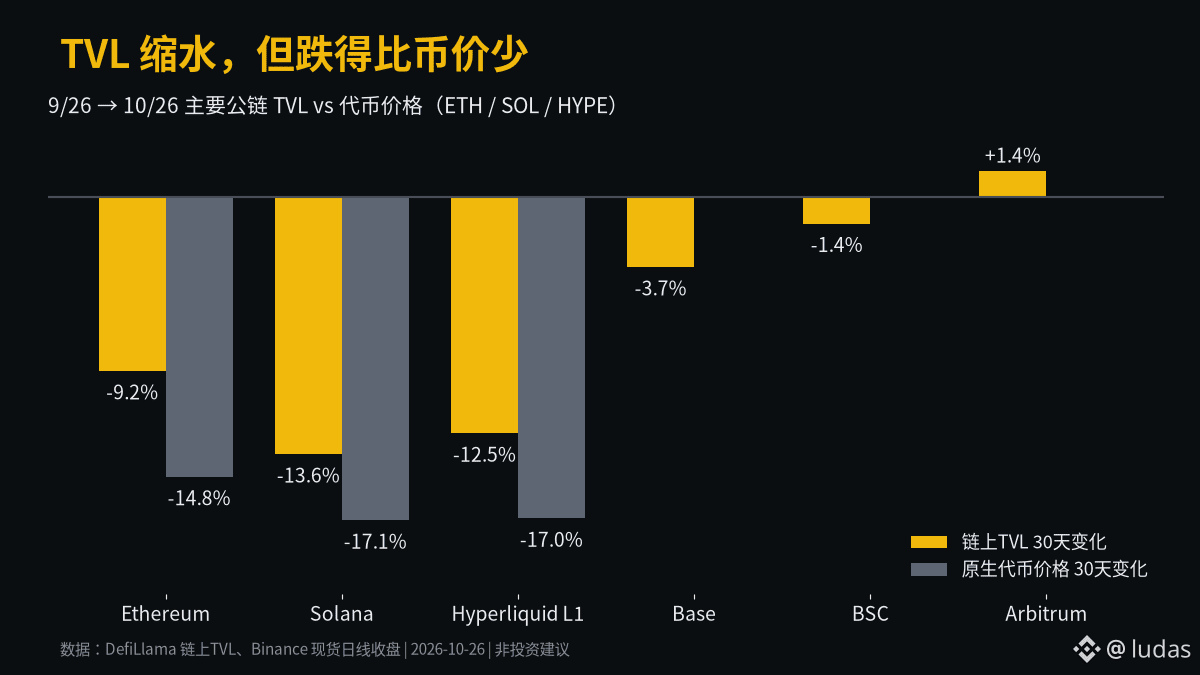
TVL 一个月少了近 50 亿美元,但钱真的跑了吗?📊 我对比了一下,答案可能是“没有那么多”。
🧵 DefiLlama 数据(9/26→10/26):
• Ethereum TVL 534.3亿→484.9亿,-9.2%;同期 ETH 价格 -14.8%(Binance 日线收盘)
• Solana TVL -13.6%,SOL -17.1%
• Hyperliquid L1 TVL -12.5%,HYPE -17.0%
• Base -3.7%、BSC -1.4%,Arbitrum 反而 +1.4%
⚠️ TVL 按美元计价,币价下跌会直接把它“压缩”。三条链 TVL 的跌幅都小于原生币跌幅,说明更多是价格效应,而不是资金大规模撤离。
💡 我的看法:熊市里看 TVL 要剔除币价,真正值得盯的是稳定币和美元资产在链上的留存。BSC、Arbitrum 这类以稳定币为主的链几乎没缩,这个信号比绝对值更重要。
你更看重 TVL 还是链上活跃度?评论区聊聊👇 觉得有用点个赞~(非投资建议)
#DeFi #链上数据 #TVL $ETH $SOL $HYPE
232
·
--
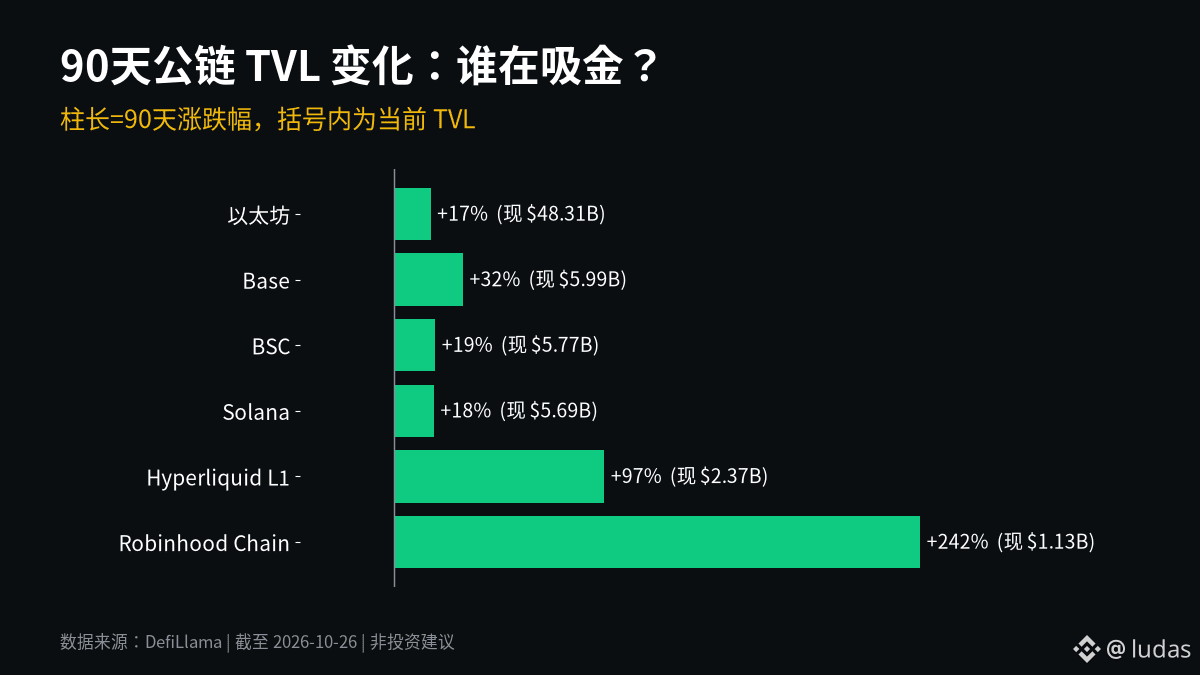
90天里,Robinhood Chain 的 TVL 涨了 242%,Hyperliquid 翻倍,以太坊只涨 17%。钱在往哪跑?📊
据 DefiLlama(截至10月26日):
🔥 Robinhood Chain:约 3.3 亿 → 11.3 亿美元,+242%,也是表里唯一 30 天仍在涨的(+11%)
⚡ Hyperliquid L1:23.7 亿美元,90天 +97%,但 30天 -13%
🟦 Base 59.9 亿(+32%)、BSC 57.7 亿(+19%)、Solana 56.9 亿(+18%)
🏛️ 以太坊 483 亿美元,90天 +17%,30天 -9.6%
🧵 我的看法:大链近一个月普遍回吐,说明整体是风险偏好降温;新链逆势增长更多是新资产和激励带来的增量,可持续性要看激励退坡后留下多少。数据仅供参考,非投资建议。
你觉得下一个 TVL 黑马会是哪条链?留言说说👇
#链上数据 #TVL #DeFi
风中浪客:
Robinhood Chain这TVL涨得也太猛了 钱都跑新场子去了 $ETH
1
122

·
--
Lending Protocol Utilization & Stablecoin Yield Matrix Across Major Layer-1 & Layer-2 Networks: My Honest Data Breakdown for $BTC & ETH
While most of the timeline is reacting to every minor tick on BTC near 79700.98, I wanted to share the actual defi tvl, restaking, liquid staking & dex volume metrics I've been tracking on the desk today alongside ETH.
Here is the core context driving this sector right now:
Total Value Locked (TVL) Growth, DEX vs CEX Spot Volume Ratio, Liquid Staking/Restaking (LRT), Lending Utilization & Protocol Revenue. By comparing live orderflow and ecosystem retention against historical baselines, we get a much cleaner view of where institutional and smart-money capital is rotating.
Four key metrics I have on my screen today for BTC:
• Chain & Protocol TVL Growth (7D / 30D %)
• DEX-to-CEX Volume Dominance & AMM Fee Generation
• Real Yield Protocol Revenue Distributed to Token Holders
• Liquid Staking & Restaking Capital Efficiency
For me, watching how these underlying metrics evolve over the next few sessions will tell us far more about BTC and ETH than any single hourly candle.
How much weight do you give to defi & tvl data when building your thesis on BTC? Share your thoughts below 👇
#BinanceSquare #TVL
37
·
--
Cardano DeFi Is Finally Moving Away From The Ghost Chain Narrative
Cardano is currently navigating a period where the gap between price sentiment and on-chain reality is widening. While $ADA sits at 0.2157, catching flak for its relatively slow price discovery, the DeFi TVL is quietly pushing into the 200 million USD range. This isn't the kind of mercenary capital we saw during the 2021 farming craze; it is organic growth rooted in protocol-native governance and a massive shift in how holders handle their assets.
The real story here is the maturing of liquid staking. For years, Cardano was a network of passive stakers, but the introduction of synthetic assets has changed the math. We are watching capital efficiency spike as users finally start to use their staking rewards to back liquidity in AMMs like Minswap or to collateralize positions on Indigo. The lending utilization rates are tightening across the board. This is a classic signal that the whale class is no longer content with base epoch rewards. They are moving into lending protocols to squeeze out supplemental yield, which is effectively locking up more of the circulating float.
If you look at the supply-side physics, the exchange-held supply has been trending down for months. Long-term holders are pulling coins into cold storage or, more importantly, into these DeFi contracts. While the DEX-to-CEX volume ratio is still dwarfed by faster ecosystems, the trend line for on-chain transaction density is moving in the right direction. The network is prioritizing deep, sustainable liquidity over the flash-in-the-pan incentives that often lead to a death spiral. We are moving toward a phase where fee generation on these protocols looks less like a playground and more like a real business model.
Are you still just collecting your epoch rewards in a wallet, or have you started moving your ADA into the ecosystem to chase those higher yields?
#DeFi #TVL

1
15
·
--
The Silent Liquidity Engine: Why Ethereum Capital Efficiency is Decoupling from Spot PriceThe Silent Liquidity Engine: Why Ethereum Capital Efficiency is Decoupling from Spot Price
It is nearly 3 AM at the desk and while the market stares at the $ETH spot price hovering around 2396.58, the real action is happening deep within the network liquidity layers. We are witnessing a massive structural recalibration where capital efficiency is finally taking precedence over raw speculative trading. The traditional metrics of price action are currently ignoring a significant divergence in how participants are utilizing their assets on-chain.
Total Value Locked is no longer just a vanity metric of stagnant coins. The current migration into liquid staking and restaking protocols is creating a permanent supply sink that the macro headlines are missing. Whale flows over the last 72 hours show a distinct trend: large holders are moving ETH into yield-bearing vaults instead of the sell-side order books. This indicates that institutional players are treating their positions as long-term collateral rather than short-term exit plays.
The DEX-to-CEX volume ratio remains resilient, proving that the move toward verifiable on-chain revenue is accelerating. Instead of fleeing the market, users are pivoting toward protocols that offer real fee generation and transparent distribution. Even with the consistent flow of token unlocks, the ecosystem is showing an impressive ability to absorb supply. This is because the capital isn't just entering the system; it is being put to work immediately.
The core lending utilization rates have cooled off from their peaks, but the depth of the restaking landscape is providing a new floor for the network structural health. We are essentially watching a flight to quality where high-utility primitives are accumulating depth while low-liquidity protocols are being drained. If you want to see the real strength of the ecosystem, focus on the capital velocity rather than the hourly candle fluctuations.
Are you moving your ETH into restaking protocols to capture that layered yield, or do you prefer the flexibility of keeping your liquidity on a DEX?
_
#DeFi #TVL
The Silent Liquidity Engine: Why Ethereum Capital Efficiency is Decoupling from Spot Price
The Silent Liquidity Engine: Why Ethereum Capital Efficiency is Decoupling from Spot Price
It is nearly 3 AM at the desk and while the market stares at the $ETH spot price hovering around 2396.58, the real action is happening deep within the network liquidity layers. We are witnessing a massive structural recalibration where capital efficiency is finally taking precedence over raw speculative trading. The traditional metrics of price action are currently ignoring a significant divergence in how participants are utilizing their assets on-chain.
Total Value Locked is no longer just a vanity metric of stagnant coins. The current migration into liquid staking and restaking protocols is creating a permanent supply sink that the macro headlines are missing. Whale flows over the last 72 hours show a distinct trend: large holders are moving ETH into yield-bearing vaults instead of the sell-side order books. This indicates that institutional players are treating their positions as long-term collateral rather than short-term exit plays.
The DEX-to-CEX volume ratio remains resilient, proving that the move toward verifiable on-chain revenue is accelerating. Instead of fleeing the market, users are pivoting toward protocols that offer real fee generation and transparent distribution. Even with the consistent flow of token unlocks, the ecosystem is showing an impressive ability to absorb supply. This is because the capital isn't just entering the system; it is being put to work immediately.
The core lending utilization rates have cooled off from their peaks, but the depth of the restaking landscape is providing a new floor for the network structural health. We are essentially watching a flight to quality where high-utility primitives are accumulating depth while low-liquidity protocols are being drained. If you want to see the real strength of the ecosystem, focus on the capital velocity rather than the hourly candle fluctuations.
Are you moving your ETH into restaking protocols to capture that layered yield, or do you prefer the flexibility of keeping your liquidity on a DEX?
_
#DeFi #TVL
1
1

·
--
ບົດຄວາມ
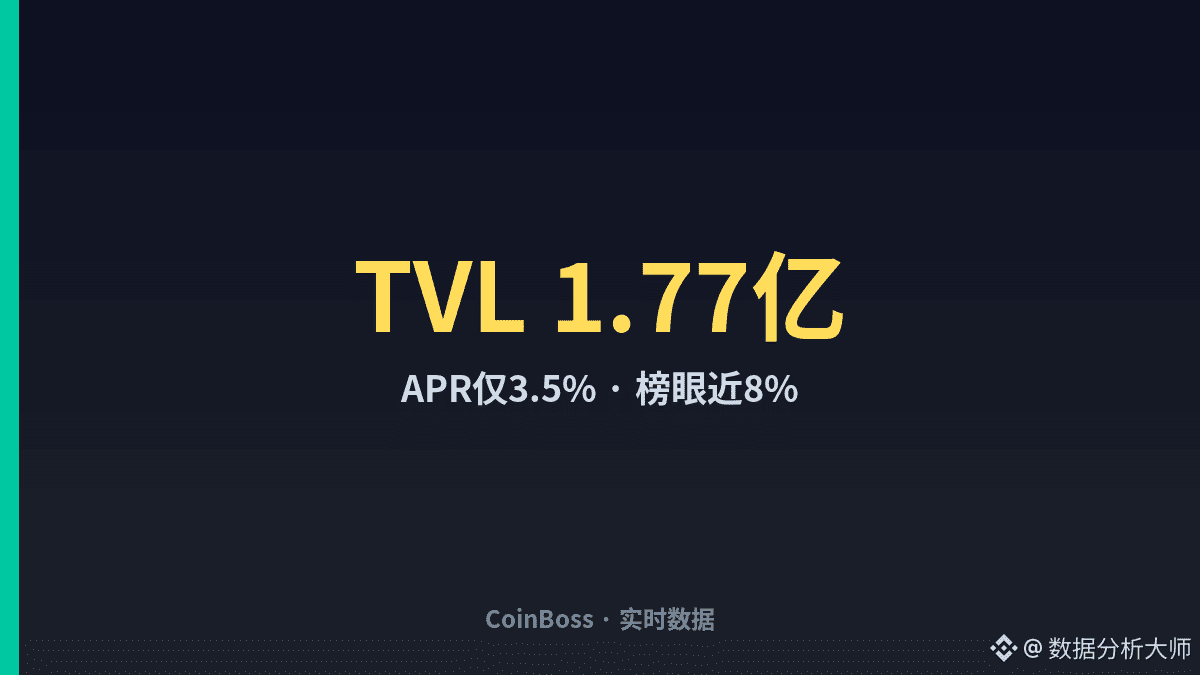
Hyperliquid榜首金库TVL约1.77亿APR仅3.5%结论先说:Hyperliquid 榜首金库 HLP 的 TVL 约1.77亿美元,年化却只有约3.5%;榜眼 Growi HF 大约1350万 TVL,APR 反接近7.9%——钱堆在低收益端。
#Hyperliquid #金库 #TVL #APR
现货双核:$BTC 币安约82980、OKX约82984。下方还有近千万 TVL 但 APR 为负的金库,规模≠近期回报。
榜首吸金强、收益率却被小库甩开。你追 TVL 还是 APR?
实时查看:https://www.coinboss.com/hyperliquid-vaults
Hyperliquid榜首金库TVL约1.77亿APR仅3.5%
结论先说:Hyperliquid 榜首金库 HLP 的 TVL 约1.77亿美元,年化却只有约3.5%;榜眼 Growi HF 大约1350万 TVL,APR 反接近7.9%——钱堆在低收益端。
#Hyperliquid #金库 #TVL #APR
现货双核:$BTC 币安约82980、OKX约82984。下方还有近千万 TVL 但 APR 为负的金库,规模≠近期回报。
榜首吸金强、收益率却被小库甩开。你追 TVL 还是 APR?
实时查看:https://www.coinboss.com/hyperliquid-vaults
#Hyperliquid #金库 #TVL #APR
现货双核:$BTC 币安约82980、OKX约82984。下方还有近千万 TVL 但 APR 为负的金库,规模≠近期回报。
榜首吸金强、收益率却被小库甩开。你追 TVL 还是 APR?
实时查看:https://www.coinboss.com/hyperliquid-vaults
94
·
--
The Avalanche ecosystem is currently sitting in a very interesting spot while the rest of the market argues over the next major move. I have been digging into the C-Chain metrics late tonight and the divergence between price action and on-chain health is becoming impossible to ignore. While most traders are chasing the latest shiny object, the structural liquidity on Avalanche is maturing in a way that looks very sustainable for the long haul.
The data shows that the TVL on the C-Chain has stabilized around the 1.18 billion mark, but the real story is the efficiency of that capital. We are seeing a significant shift toward liquid staking through protocols like BENQI, which has become the primary engine for supply retention. By locking up $AVAX and using sAVAX across lending markets, the ecosystem is maintaining high lending utilization rates without needing the massive inflationary rewards we saw in previous cycles.
DEX volume on platforms like Trader Joe remains a standout metric. The Liquidity Book architecture is allowing the chain to process high volumes with much less slippage than traditional AMMs. In fact, cumulative protocol revenue across the top Avalanche dApps recently hit a monthly figure around 9.641 million, which is a massive signal that real users are paying fees to use the network.
From a tokenomics perspective, the circulating supply is holding near 407 million out of a 720 million cap. Even with the known unlock schedules, the transaction fee-burning mechanism acts as a constant deflationary pressure against emissions. We are also seeing the early stages of a restaking narrative that could leverage the P-Chain’s security, potentially locking up even more float. Whale flows have shifted away from high-beta plays and are clearly parking in these yield-bearing liquid staking strategies.
Are you guys staying heavy in the sAVAX liquid staking vaults, or are you looking at the new restaking protocols for better capital efficiency?
#DeFi #TVL
1
7
·
--
Beyond the Ghost Chain Meme: Tracking Cardanos DeFi Infrastructure Maturity
While the broader market remains fixated on short-term price swings, the real story for Cardano is found in the underlying plumbing of its ecosystem. Sitting at 0.2171, $ADA is navigating a phase where price discovery is secondary to the steady expansion of its DeFi footprint. I have been digging into the on-chain data, and the resilience of the Total Value Locked compared to mid-year lows is a signal that many are missing.
The rise of liquid staking on the network is particularly interesting because it avoids the recursive risk loops found on other chains. Users are moving away from stagnant wallets and into yield-bearing positions that maintain the security of the network, creating a more capital-efficient model. We are also seeing the ratio of on-chain swaps to centralized exchange volume begin to tighten, led by maturity in protocols like Minswap and Indigo. This isn't just retail hype; the whale flows suggest institutional interest is shifting toward utility-based positions and protocol revenue capture.
The circulating float and the ongoing unlock schedule still act as a headwind for price, but the infrastructure is finally beginning to support the capital being locked. We are seeing protocol revenue start to scale, which is the primary metric for long-term sustainability. The transition from a quiet network to a functional liquidity hub is a slow burn, but the depth being provided by active liquidity providers is now hitting a critical mass.
With TVL stabilizing and DEX volume picking up, which specific protocol in this ecosystem do you think actually deserves the liquidity flowing into it right now?
_
#DeFi #TVL
9
·
--
The Silver Yield Gap: Why On-Chain Liquidity Is Decoupling from Bullion Desks
The silver market is currently navigating a massive structural shift that traditional macro traders are missing because they are staring at the COMEX tape instead of the blockchain. While spot silver hovers near 60.27, we have seen consistent absorption whenever it dips toward the 57.46 reference zone. The real story is the surge in TVL within tokenized protocols that offer liquid restaking for $SILVER. We are seeing a distinct transition where capital is rotating out of passive stablecoin vaults to capture the yield-bearing utility of real-world assets.
On-chain data shows that the circulating float is being managed with extreme precision, avoiding the inflationary pitfalls of older commodity tokens. The smart money is moving toward protocols that integrate audited proof-of-reserves and multisig security, signaling a preference for transparency over naked exposure. With the gold/silver ratio sitting at 68.5 and spot gold trading around 4140, the macro setup is primed, but the crypto-native appetite is beginning to decouple from physical bullion arbitrage. The liquidity sitting in exchange reserves represents a significant amount of dry powder that is waiting for a clear signal from the DXY.
I am tracking the DEX volume closely because the depth on major pairs is becoming incredibly thin. This suggests that any sudden uptick in retail demand will lead to a significant liquidity crunch, especially as institutional absorption continues to vacuum up available supply. This allows holders to maintain their commodity position while earning a yield layer from the underlying infrastructure. It is a dual-play that traditional finance simply cannot replicate right now. The security of bridge vaults remains the top priority for long-term confidence, but the current momentum suggests the on-chain premium for SILVER is just getting started.
Are you looking at the underlying yield stats for SILVER, or are you just trading the spot price correlation?
_
#DeFi #TVL

1
2

·
--
🎯 LayerZero一天吃了11%的TVL
📰 DefiLlama:跨链桥LayerZero V2锁仓12.5B刀,24h暴涨11%,7天+7.6%。同期Lido跌5.2%、Aave跌3.6%
💬 全市场缩量的时候,只有跨链在吸钱。钱没走,是从链上老赛道搬去了桥,这波轮动挺骚
🏷️ #LayerZero #跨链桥 #TVL #DeFi
🎯 LayerZero一天吃了11%的TVL
📰 DefiLlama:跨链桥LayerZero V2锁仓12.5B刀,24h暴涨11%,7天+7.6%。同期Lido跌5.2%、Aave跌3.6%
💬 全市场缩量的时候,只有跨链在吸钱。钱没走,是从链上老赛道搬去了桥,这波轮动挺骚
🏷️ #LayerZero #跨链桥 #TVL #DeFi
📰 DefiLlama:跨链桥LayerZero V2锁仓12.5B刀,24h暴涨11%,7天+7.6%。同期Lido跌5.2%、Aave跌3.6%
💬 全市场缩量的时候,只有跨链在吸钱。钱没走,是从链上老赛道搬去了桥,这波轮动挺骚
🏷️ #LayerZero #跨链桥 #TVL #DeFi
5
·
--
Beyond the Meme Hype: Unpacking the Quiet DeFi Structural Shift in Dogecoin
Sitting here with my morning coffee at 09:27, the data shift around $DOGE is catching my eye, not for the usual meme volatility, but for the quiet structural changes in how the asset is being handled. While most are distracted by the 0.08165 spot handle, the shift in DeFi participation for the largest memecoin is where the real story is hiding.
We are seeing a noticeable evolution in how DOGE is being wrapped and deployed across secondary networks. The TVL in projects facilitating Dogecoin bridges is showing a steady uptick as users shift from passive holding to seeking yield. It is not just about the circulating float of roughly 146 billion tokens anymore; it is about locking efficiency. A growing pivot shows holders moving liquidity into decentralized protocols to leverage the asset as collateral rather than letting it sit idle on central exchanges.
The DEX volume statistics are telling. Even with DOGE maintaining its classic social dominance, we are seeing a higher percentage of volume occurring through decentralized AMMs compared to historical averages. The fee generation metrics on these specific pools suggest liquidity providers are becoming far more sophisticated, moving away from simple spot holdings toward protocol-based strategies.
The real yield narrative is trickling down here. As restaking and liquid staking architectures mature, the infrastructure for bridged assets is finally catching up. We are looking at a scenario where protocol revenue distributed back to liquidity pool participants is starting to cushion the inflationary nature of the chain. If you look at the 30-day growth trends in these TVL buckets, the appetite for functional yield on non-native assets is hitting a local peak.
Are you still just holding spot, or have you started testing any of these wrapped yield protocols yet?
#DeFi #TVL

1
8
·
--
The plumbing of the NEAR ecosystem is undergoing a massive transformation while the broader market stays fixated on short-term chop. With $NEAR trading around the 5.263 mark, the disconnect between quiet price accumulation and underlying network utility is becoming impossible to ignore for anyone tracking on-chain fundamentals.
Total Value Locked across the network has shown remarkable resilience, maintaining a tight range that points to stickier, long-term capital rather than mercenary farming funds. What stands out right now is the structural shift happening in liquid staking. Platforms like Meta Pool are fundamentally changing how capital moves, allowing holders to secure the network while keeping their assets fluid. This is actively cannibalizing passive holding strategies and driving serious efficiency gains across the board.
When you look at DEX volume relative to CEX spot dominance, AMM fee generation on native integrations and Aurora tells a story of organic maturation. Protocol revenue is increasingly fueled by genuine lending utilization instead of inflationary token emissions. This transition toward real yield is precisely what sophisticated market participants look for before positioning size. Meanwhile, circulating float remains well-managed, and predictable unlock schedules mean the heavy overhead supply pressure from earlier in the year is largely priced out.
The bigger picture centers on the rapid expansion of the restaking narrative within the ecosystem. As NEAR assets start serving as collateral to secure external infrastructure, token velocity changes entirely. The network is evolving into a vital hub for autonomous agents and decentralized compute, and that kind of architecture requires deep, locked liquidity to function at scale.
Are you actively deploying your stack into liquid staking protocols to capture that organic yield, or are you sitting on the sidelines waiting for the next major network upgrade?
#DeFi #TVL

1
9
·
--
The 11:25 AM IST tea is sitting on my desk, and while the market is fixated on the flas...The 11:25 AM IST tea is sitting on my desk, and while the market is fixated on the flashing ticker of $BNB at 742.8, the real narrative is buried deep in the protocol revenue sheets. If you look past the price action, the Binance Smart Chain ecosystem is undergoing a quiet, massive shift in capital efficiency.
DeFi TVL on the chain has been remarkably resilient, holding steady as major protocols see increased utilization rates. We are seeing a distinct tightening in liquid staking and restaking sectors. Current data shows that capital that previously sat idle in standard yield farms is now being aggressively redirected into liquid staking derivatives. This shift is crucial because it lowers the opportunity cost of holding the asset while fueling deeper liquidity pools on DEXs like PancakeSwap.
The DEX-to-CEX volume ratio is telling a story of decentralized maturity. AMM fee generation isn't just surviving; it is scaling alongside the increase in stablecoin utilization across the L1. When you look at the lending protocols, utilization is ticking upward, suggesting that the supply-side liquidity is finding consistent, real-yield homes rather than just chasing transient inflationary rewards.
Regarding tokenomics, the circulating float of BNB remains influenced by the regular quarterly burns and the locked nature of assets within the BNB Chain governance contracts. Unlike other L1s facing massive VC unlock cliffs or aggressive emission schedules that dilute holders, the supply contraction mechanism here remains one of the few models in the industry that directly benefits the long-term holder. The whale flows I am monitoring indicate a steady accumulation pattern, likely anticipating the next cycle of protocol revenue distribution. The macro consensus is currently focused on the broader liquidity environment, but those watching the on-chain lending yields know that BNB is positioning itself as the bedrock for sustainable, non-inflationary DeFi growth.
Are you moving your liquidity into liquid staking protocols or keeping your assets liquid for the next wave of volatility?
#DeFi #TVL
The 11:25 AM IST tea is sitting on my desk, and while the market is fixated on the flas...
The 11:25 AM IST tea is sitting on my desk, and while the market is fixated on the flashing ticker of $BNB at 742.8, the real narrative is buried deep in the protocol revenue sheets. If you look past the price action, the Binance Smart Chain ecosystem is undergoing a quiet, massive shift in capital efficiency.
DeFi TVL on the chain has been remarkably resilient, holding steady as major protocols see increased utilization rates. We are seeing a distinct tightening in liquid staking and restaking sectors. Current data shows that capital that previously sat idle in standard yield farms is now being aggressively redirected into liquid staking derivatives. This shift is crucial because it lowers the opportunity cost of holding the asset while fueling deeper liquidity pools on DEXs like PancakeSwap.
The DEX-to-CEX volume ratio is telling a story of decentralized maturity. AMM fee generation isn't just surviving; it is scaling alongside the increase in stablecoin utilization across the L1. When you look at the lending protocols, utilization is ticking upward, suggesting that the supply-side liquidity is finding consistent, real-yield homes rather than just chasing transient inflationary rewards.
Regarding tokenomics, the circulating float of BNB remains influenced by the regular quarterly burns and the locked nature of assets within the BNB Chain governance contracts. Unlike other L1s facing massive VC unlock cliffs or aggressive emission schedules that dilute holders, the supply contraction mechanism here remains one of the few models in the industry that directly benefits the long-term holder. The whale flows I am monitoring indicate a steady accumulation pattern, likely anticipating the next cycle of protocol revenue distribution. The macro consensus is currently focused on the broader liquidity environment, but those watching the on-chain lending yields know that BNB is positioning itself as the bedrock for sustainable, non-inflationary DeFi growth.
Are you moving your liquidity into liquid staking protocols or keeping your assets liquid for the next wave of volatility?
#DeFi #TVL
1
6

TVS і TVL: дві метрики, які показують розмір криптомережіКоли говорять про блокчейнпроєкти, майже завжди звучать цифри: «у мережі заблоковано мільярди доларів». Але що саме ці цифри означають? Найчастіше за ними стоять дві метрики: TVL і TVS. Вони схожі за назвою, проте розповідають різні історії.
Що таке TVL
TVL (Total Value Locked), або «загальна вартість заблокованих активів», показує, скільки грошей користувачі внесли в децентралізовані фінансові протоколи: кредитні платформи, пули ліквідності, стейкінг. Простіше кажучи, це сума активів, які не просто лежать, а «працюють» і приносять дохід.
#TVL довго був головним індикатором популярності проєкту: більше заблокованих коштів означає більше довіри з боку користувачів.
Що таке TVS
TVS (Total Value Secured), або «загальна вартість захищених активів», рахує значно ширше. Сюди потрапляють усі активи, які існують у мережі й захищені її механізмами безпеки, навіть якщо вони просто лежать на гаманцях і не беруть участі в жодному протоколі.
Крім того, TVS зазвичай розділяють на типи: активи, переведені через офіційний міст, токени, випущені одразу в самій мережі, та активи, що прийшли через сторонні мости. Це допомагає побачити, наскільки надійно захищена кожна частина.
У чому різниця
Що рахуємо. TVL: гроші, задіяні в протоколах. TVS: усі активи в мережі.Що показує. TVL: активність і використання. TVS: масштаб і рівень захисту.Розмір. TVS зазвичай більший, бо охоплює ширше коло активів.
Ще одна особливість: TVL може завищуватися через подвійний рахунок. Той самий актив можна внести в один протокол, а отриманий взамін токен використати як заставу в іншому, і обидва протоколи запишуть цю вартість собі.
TVL відповідає на питання «наскільки активно користуються мережею?», а TVS: «скільки цінності вона загалом забезпечує?». Щоб скласти повну картину, дивіться на обидві метрики разом, а ще на структуру активів за ними. Саме вона підкаже, чи є цифра справді міцною, чи лише гарно виглядає.
TVS і TVL: дві метрики, які показують розмір криптомережі
Коли говорять про блокчейнпроєкти, майже завжди звучать цифри: «у мережі заблоковано мільярди доларів». Але що саме ці цифри означають? Найчастіше за ними стоять дві метрики: TVL і TVS. Вони схожі за назвою, проте розповідають різні історії.
Що таке TVL
TVL (Total Value Locked), або «загальна вартість заблокованих активів», показує, скільки грошей користувачі внесли в децентралізовані фінансові протоколи: кредитні платформи, пули ліквідності, стейкінг. Простіше кажучи, це сума активів, які не просто лежать, а «працюють» і приносять дохід.
#TVL довго був головним індикатором популярності проєкту: більше заблокованих коштів означає більше довіри з боку користувачів.
Що таке TVS
TVS (Total Value Secured), або «загальна вартість захищених активів», рахує значно ширше. Сюди потрапляють усі активи, які існують у мережі й захищені її механізмами безпеки, навіть якщо вони просто лежать на гаманцях і не беруть участі в жодному протоколі.
Крім того, TVS зазвичай розділяють на типи: активи, переведені через офіційний міст, токени, випущені одразу в самій мережі, та активи, що прийшли через сторонні мости. Це допомагає побачити, наскільки надійно захищена кожна частина.
У чому різниця
Що рахуємо. TVL: гроші, задіяні в протоколах. TVS: усі активи в мережі.Що показує. TVL: активність і використання. TVS: масштаб і рівень захисту.Розмір. TVS зазвичай більший, бо охоплює ширше коло активів.
Ще одна особливість: TVL може завищуватися через подвійний рахунок. Той самий актив можна внести в один протокол, а отриманий взамін токен використати як заставу в іншому, і обидва протоколи запишуть цю вартість собі.
TVL відповідає на питання «наскільки активно користуються мережею?», а TVS: «скільки цінності вона загалом забезпечує?». Щоб скласти повну картину, дивіться на обидві метрики разом, а ще на структуру активів за ними. Саме вона підкаже, чи є цифра справді міцною, чи лише гарно виглядає.
318
·
--
While the broader market chases low-conviction narratives, serious capital is quietly planting roots on $SUI. Tracking the migration patterns over the last 72 hours reveals a textbook stealth accumulation phase, pushing total value locked well past the 600 million mark while other Layer 1 networks fight through stagnation.
The main catalyst driving this expansion is the rapid growth of the liquid staking and restaking ecosystem. Protocols like NAVI and Scallop are dominating lending utilization, locking in a recursive yield loop that keeps liquidity tethered to the network instead of bleeding back to Ethereum mainnet. At the same time, AMM fee generation on Cetus and DeepBook proves that organic swap activity is holding its ground against CEX dominance.
Looking at the circulating float, upcoming unlock schedules are often flagged as a risk, but the sheer velocity of value trapped in lending protocols and liquid staking derivatives shows the market is comfortably absorbing the supply without flinching. Whale flows are clearly favoring real yield backed by stablecoin lending rather than inflationary farming traps. At a spot reference trading near 1.138, the current valuation reflects a functional, highly active network rather than empty speculation. When liquidity becomes this sticky during a quiet market sentiment, it usually acts as the precursor to a broader repricing event. Are you farming liquid staking derivatives on the network, or are you still sitting on the sidelines watching the TVL climb?
#DeFi #TVL
While the broader market chases low-conviction narratives, serious capital is quietly planting roots on $SUI . Tracking the migration patterns over the last 72 hours reveals a textbook stealth accumulation phase, pushing total value locked well past the 600 million mark while other Layer 1 networks fight through stagnation.
The main catalyst driving this expansion is the rapid growth of the liquid staking and restaking ecosystem. Protocols like NAVI and Scallop are dominating lending utilization, locking in a recursive yield loop that keeps liquidity tethered to the network instead of bleeding back to Ethereum mainnet. At the same time, AMM fee generation on Cetus and DeepBook proves that organic swap activity is holding its ground against CEX dominance.
Looking at the circulating float, upcoming unlock schedules are often flagged as a risk, but the sheer velocity of value trapped in lending protocols and liquid staking derivatives shows the market is comfortably absorbing the supply without flinching. Whale flows are clearly favoring real yield backed by stablecoin lending rather than inflationary farming traps. At a spot reference trading near 1.138, the current valuation reflects a functional, highly active network rather than empty speculation. When liquidity becomes this sticky during a quiet market sentiment, it usually acts as the precursor to a broader repricing event. Are you farming liquid staking derivatives on the network, or are you still sitting on the sidelines watching the TVL climb?
#DeFi #TVL

1
10
·
--
Sitting here at 10:32 PM IST, the screen is showing $BNB hovering right around the 741.01 level, but the price action is only half the story. The real strength right now isn't coming from centralized exchange speculation but from a massive fundamental shift in how the ecosystem is utilizing its capital. The 30-day TVL growth has quietly pushed total value locked across the chain toward the 6.8 billion mark, representing a structural change in the way holders interact with their assets. We are moving away from passive holding and into a much more aggressive liquid restaking layer.
Protocols like Lista DAO and Solv are fundamentally changing the liquidity profile of the network. If you look at the liquid staking dominance, we are seeing a significant portion of the circulating float—currently around 145.8 million tokens—being recycled into yield-bearing derivatives. This creates a specific kind of supply crunch that the market often ignores. When you layer on the fact that DEX volume on the chain has consistently outperformed several major Layer-2 rivals in terms of capital efficiency, the fee generation for the ecosystem remains incredibly healthy.
The restaking narrative on BNB is finally catching up to the rest of the market. We are seeing lending utilization rates on Venus Protocol spike, alongside a surge in stablecoin inflows that suggest whales are preparing for a fresh cycle of deployment. This isn't just about the quarterly burns anymore; it's about the velocity of money within the ecosystem. The data shows that capital efficiency is at its highest point in months. With the supply being almost entirely circulating, the focus shifts to how much of that float is being removed from the open market via these new DeFi primitives.
Are you guys seeing the same shift toward liquid restaking in your own wallets, or are you still keeping most of your BNB on the exchange for the next launchpool?
_
#DeFi #TVL
5
ເຂົ້າສູ່ລະບົບເພື່ອສຳຫຼວດເນື້ອຫາເພີ່ມເຕີມ
ເຂົ້າຮ່ວມກຸ່ມຜູ້ໃຊ້ຄຣິບໂຕທົ່ວໂລກໃນ Binance Square.
⚡️ ໄດ້ຮັບຂໍ້ມູນຫຼ້າສຸດ ແລະ ທີ່ມີປະໂຫຍດກ່ຽວກັບຄຣິບໂຕ.
💬 ໄດ້ຮັບຄວາມໄວ້ວາງໃຈຈາກຕະຫຼາດແລກປ່ຽນຄຣິບໂຕທີ່ໃຫຍ່ທີ່ສຸດໃນໂລກ.
👍 ຄົ້ນຫາຂໍ້ມູນເຊີງເລິກທີ່ແທ້ຈາກນັກສ້າງທີ່ໄດ້ຮັບການຢືນຢັນ.
ອີເມວ / ເບີໂທລະສັບ
ຫົວຂໍ້ທີ່ກໍາລັງນິຍົມ
1
#BinancePick
3M ຄັ້ງທີ່ເບິ່ງ
152,524 ກຳລັງສົນທະນາ
2
#EarningsSeason
5.3M ຄັ້ງທີ່ເບິ່ງ
25,941 ກຳລັງສົນທະນາ
3
#AnthropicTTMRevenueGrewAbout1200%
27,197 ຄັ້ງທີ່ເບິ່ງ
390 ກຳລັງສົນທະນາ
4
#AnthropicS1ExpectedToday
24,774 ຄັ້ງທີ່ເບິ່ງ
327 ກຳລັງສົນທະນາ
5
#SouthKoreaReportedlyWeighsFourthCryptoTaxDelay
29,444 ຄັ້ງທີ່ເບິ່ງ
452 ກຳລັງສົນທະນາ
6
#FranklinTempletonFilesForTwoDividendToBitcoinETFs
38,719 ຄັ້ງທີ່ເບິ່ງ
525 ກຳລັງສົນທະນາ
7
#StrategyMSTRSurpassesNasdaqInMarketCap
29,281 ຄັ້ງທີ່ເບິ່ງ
380 ກຳລັງສົນທະນາ
8
#CanadaProposesStablecoinRedemptionWithin3BusinessDays
1,294 ຄັ້ງທີ່ເບິ່ງ
36 ກຳລັງສົນທະນາ
9
#ElectrumWalletBugLetRogueServersStealFunds
30,378 ຄັ້ງທີ່ເບິ່ງ
456 ກຳລັງສົນທະນາ
10
#ArgentineCourtDismissesLIBRACaseAgainstMilei
45,541 ຄັ້ງທີ່ເບິ່ງ
565 ກຳລັງສົນທະນາ