
#smallcapsbiggains
smallcapsbiggains
21,628 ຄັ້ງທີ່ເບິ່ງ
12 ກຳລັງສົນທະນາ
ມາແຮງ
ຫຼ້າສຸດ

·
--
🔥 3 HYPE COINS I’M WATCHING RIGHT NOW 👀🚀
The Futures gainers list is showing serious meme-coin momentum. These 3 caught my attention:
🟢 $FARTCOIN — +12.17%
Strong momentum and a high-hype narrative. If volume stays elevated, it could continue attracting buyers.
🟢 $POPCAT — +14.14%
Already showing a strong move. If buyers defend the breakout area instead of giving back the gains, another push higher is possible.
🟢 $MUBARAK — +13.79%
Strong percentage gain with hype-driven momentum. A continuation above nearby resistance could bring another wave of attention.
🚨 Key: Don’t chase a huge green candle. Watch volume, support and whether the breakout actually holds.
⚠️ Hype coins can reverse extremely fast. These are watchlist ideas, not guaranteed predictions.
#Memecoins🤑🤑 #SmallCapsBigGains #Futures_Signals #Altcoins! #BinanceSquareTalks
{future}(MUBARAKUSDT)
{future}(FARTCOINUSDT)
{future}(POPCATUSDT)
🔥 3 HYPE COINS I’M WATCHING RIGHT NOW 👀🚀
The Futures gainers list is showing serious meme-coin momentum. These 3 caught my attention:
🟢 $FARTCOIN — +12.17%
Strong momentum and a high-hype narrative. If volume stays elevated, it could continue attracting buyers.
🟢 $POPCAT — +14.14%
Already showing a strong move. If buyers defend the breakout area instead of giving back the gains, another push higher is possible.
🟢 $MUBARAK — +13.79%
Strong percentage gain with hype-driven momentum. A continuation above nearby resistance could bring another wave of attention.
🚨 Key: Don’t chase a huge green candle. Watch volume, support and whether the breakout actually holds.
⚠️ Hype coins can reverse extremely fast. These are watchlist ideas, not guaranteed predictions.
#Memecoins🤑🤑 #SmallCapsBigGains #Futures_Signals #Altcoins! #BinanceSquareTalks
Mubarak
57%
Fartcoin
35%
Popcat
8%
37 ຄະແນນສຽງ • ປິດລົງຄະແນນສຽງ
3
1.2k
·
--
🚀 Three Small Caps That Could Surprise the Market
The market has been cooling off, but that’s often when the best opportunities start to appear. Here are three projects I’m watching closely:
🟢 $DEXE – Holding around a key support zone after a sharp correction. If buyers defend this level and volume returns, a recovery toward the next resistance looks possible.
🟢 $BANK – Price is consolidating near support, and momentum is slowly building. A breakout above the current range could attract fresh buyers.
🟢 $ESPORTS – Showing signs of accumulation after an extended downtrend. If it breaks resistance with strong volume, it could deliver an explosive move.
📌 Strategy: Wait for confirmation before entering. Chasing pumps is risky—let the breakout come to you.
Always use proper risk management and never invest more than you can afford to lose.
#crypto #altcoins #trading #SmallCapsBigGains
{future}(ESPORTSUSDT)
{spot}(BANKUSDT)
{spot}(DEXEUSDT)
🚀 Three Small Caps That Could Surprise the Market
The market has been cooling off, but that’s often when the best opportunities start to appear. Here are three projects I’m watching closely:
🟢 $DEXE – Holding around a key support zone after a sharp correction. If buyers defend this level and volume returns, a recovery toward the next resistance looks possible.
🟢 $BANK – Price is consolidating near support, and momentum is slowly building. A breakout above the current range could attract fresh buyers.
🟢 $ESPORTS – Showing signs of accumulation after an extended downtrend. If it breaks resistance with strong volume, it could deliver an explosive move.
📌 Strategy: Wait for confirmation before entering. Chasing pumps is risky—let the breakout come to you.
Always use proper risk management and never invest more than you can afford to lose.
#crypto #altcoins #trading #SmallCapsBigGains
Esports
30%
Bank
21%
Dexe
49%
173 ຄະແນນສຽງ • ປິດລົງຄະແນນສຽງ
2
3
4.2k
·
--
🚨 3 Small-Cap Gems I’m Watching Right Now 👀
🔹 $EUL – Trading near an important demand zone after a prolonged correction. If buying volume increases, this could be setting up for a strong recovery.
🔹 $VELVET – Quiet accumulation is taking place. A breakout above the current resistance could attract momentum traders and spark a sharp move.
🔹 $RIF – Holding key support while momentum slowly improves. If it reclaims the recent highs, a bullish continuation becomes much more likely.
⚠️ Small-cap coins are highly volatile. Wait for confirmation, avoid chasing pumps, and always use proper risk management.
Which one is on your watchlist? 🚀👇
#crypto #altcoins #SmallCapsBigGains #BİNANCE #Trading
{future}(RIFUSDT)
{future}(VELVETUSDT)
{future}(EULUSDT)
🚨 3 Small-Cap Gems I’m Watching Right Now 👀
🔹 $EUL – Trading near an important demand zone after a prolonged correction. If buying volume increases, this could be setting up for a strong recovery.
🔹 $VELVET – Quiet accumulation is taking place. A breakout above the current resistance could attract momentum traders and spark a sharp move.
🔹 $RIF – Holding key support while momentum slowly improves. If it reclaims the recent highs, a bullish continuation becomes much more likely.
⚠️ Small-cap coins are highly volatile. Wait for confirmation, avoid chasing pumps, and always use proper risk management.
Which one is on your watchlist? 🚀👇
#crypto #altcoins #SmallCapsBigGains #BİNANCE #Trading
Rif
35%
Velvet
18%
Eul
47%
34 ຄະແນນສຽງ • ປິດລົງຄະແນນສຽງ
2
2.2k
·
--
🚀 3 Small-Cap Coins I’m Watching This Week 👀
💎 $LAB – Holding key support after a healthy correction. If buyers step in with volume, it could be gearing up for the next breakout.
⚡ $VELVET – Still trading near a strong demand zone. A successful reclaim of resistance could trigger a sharp upside move.
🔥 $MAGMA – Showing signs of accumulation after its pullback. If momentum returns, this could outperform many small caps.
📈 These are high-risk, high-reward projects, so always wait for confirmation and manage your risk.
Which one are you think will perform the best? 👇
#crypto #SmallCapsBigGains #BİNANCE #trading #cryptotrading
{future}(LABUSDT)
{future}(VELVETUSDT)
{future}(MAGMAUSDT)
🚀 3 Small-Cap Coins I’m Watching This Week 👀
💎 $LAB – Holding key support after a healthy correction. If buyers step in with volume, it could be gearing up for the next breakout.
⚡ $VELVET – Still trading near a strong demand zone. A successful reclaim of resistance could trigger a sharp upside move.
🔥 $MAGMA – Showing signs of accumulation after its pullback. If momentum returns, this could outperform many small caps.
📈 These are high-risk, high-reward projects, so always wait for confirmation and manage your risk.
Which one are you think will perform the best? 👇
#crypto #SmallCapsBigGains #BİNANCE #trading #cryptotrading
Lab
78%
Velvet
15%
Magma
7%
94 ຄະແນນສຽງ • ປິດລົງຄະແນນສຽງ
1
4
3.1k

ບົດຄວາມ
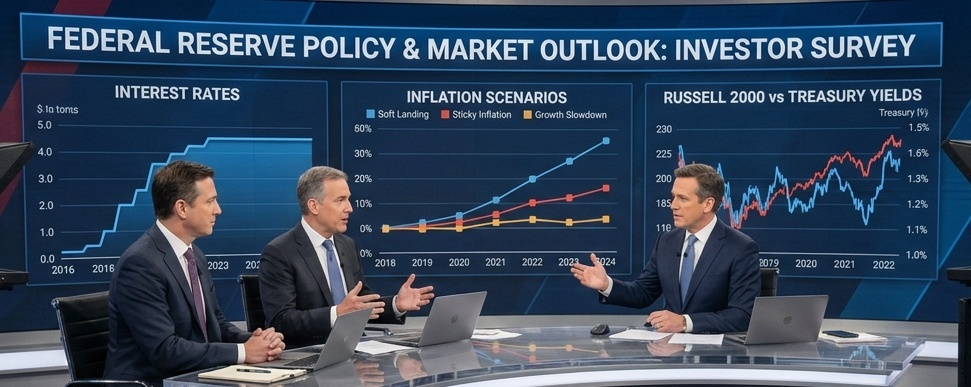
Always Meger Invester Mindset Below From 👇 👇 The Bottom Line: Discipline Over FOMOThree Macro Scenarios Shaping Small-Cap Stocks and the Fed’s Next Move
Financial markets rarely move on a single headline—they move on the tug-of-war between inflation, economic growth, and Federal Reserve expectations. Right now, traders and long-term investors alike are weighing three distinct macroeconomic paths. Each scenario carries very different consequences for rate-sensitive small-cap equities
(such as the Russell 2000 or broad market benchmarks like $IWM / $IWV)
and inverse leveraged instruments like $TZA.
Before jumping into the crowd or chasing momentum out of FOMO, ask yourself: Which macro regime are we actually heading into?
Scenario A: The Disinflation / Softer-Landing Path
If upcoming inflation prints cool steadily while employment and consumer spending hold resilient, markets are likely to price in a less restrictive Federal Reserve down the road.
* Market Impact: Lower yield pressure gives breathing room to rate-sensitive, domestically focused small-cap stocks, which tend to rally aggressively when borrowing costs ease.
* What It Means for Inverse Exposure: A broad small-cap recovery typically weighs heavily on bearish and inverse small-cap products like $TZA, especially during sustained risk-on rallies.
Scenario B: The Sticky-Inflation Path
If core inflation refuses to budge—or begins to re-accelerate—the Fed has little choice but to maintain a hawkish, higher-for-longer stance.
* Market Impact: Treasury yields stay elevated, financial conditions remain tight, and smaller companies feel the squeeze first. Because small caps rely more heavily on floating-rate debt and near-term refinancing, persistent high rates directly compress their margins.
* What It Means for Inverse Exposure: Prolonged pressure on small-cap balance sheets tends to favor inverse exposure like $TZA, though daily leveraged decay and sharp intraday swings still demand disciplined risk management.
Scenario C: The Growth-Slowdown Path
If labor market data, consumer demand, or credit conditions deteriorate meaningfully, sentiment can shift rapidly into defensive, risk-off mode.
* Market Impact: Small-cap indices often react first and hardest due to their heavy domestic and cyclical exposure. Yet there is a critical twist: if the slowdown becomes severe enough to force emergency rate-cut expectations, equities can stage violent relief rallies well before the economy actually bottoms.
* What It Means for Positioning: In a slowdown, the path matters just as much as the final Fed decision. Timing entries and exits becomes far more important than simply picking a direction.
The Bottom Line: Discipline Over FOMO
Every market cycle tempts traders to react emotionally to a single data release. Instead of letting FOMO dictate your positioning, anchor your thesis to the data: watch core inflation trends, Treasury yield direction, and credit spreads.
Which scenario do you see playing out next—A, B, or C? Share your perspective and let’s break down the probabilities together.
Write down 👇 to comment box your point of view about article $BTC $ETH $BNB #Fed ,#Economy #FOMOalert ,#SmallCapsBigGains #MacroInvesting #stockmarketupdate #CanMarketsReboundAfterThanksgiving?
Always Meger Invester Mindset Below From 👇 👇 The Bottom Line: Discipline Over FOMO
Three Macro Scenarios Shaping Small-Cap Stocks and the Fed’s Next Move
Financial markets rarely move on a single headline—they move on the tug-of-war between inflation, economic growth, and Federal Reserve expectations. Right now, traders and long-term investors alike are weighing three distinct macroeconomic paths. Each scenario carries very different consequences for rate-sensitive small-cap equities
(such as the Russell 2000 or broad market benchmarks like $IWM / $IWV)
and inverse leveraged instruments like $TZA.
Before jumping into the crowd or chasing momentum out of FOMO, ask yourself: Which macro regime are we actually heading into?
Scenario A: The Disinflation / Softer-Landing Path
If upcoming inflation prints cool steadily while employment and consumer spending hold resilient, markets are likely to price in a less restrictive Federal Reserve down the road.
* Market Impact: Lower yield pressure gives breathing room to rate-sensitive, domestically focused small-cap stocks, which tend to rally aggressively when borrowing costs ease.
* What It Means for Inverse Exposure: A broad small-cap recovery typically weighs heavily on bearish and inverse small-cap products like $TZA, especially during sustained risk-on rallies.
Scenario B: The Sticky-Inflation Path
If core inflation refuses to budge—or begins to re-accelerate—the Fed has little choice but to maintain a hawkish, higher-for-longer stance.
* Market Impact: Treasury yields stay elevated, financial conditions remain tight, and smaller companies feel the squeeze first. Because small caps rely more heavily on floating-rate debt and near-term refinancing, persistent high rates directly compress their margins.
* What It Means for Inverse Exposure: Prolonged pressure on small-cap balance sheets tends to favor inverse exposure like $TZA, though daily leveraged decay and sharp intraday swings still demand disciplined risk management.
Scenario C: The Growth-Slowdown Path
If labor market data, consumer demand, or credit conditions deteriorate meaningfully, sentiment can shift rapidly into defensive, risk-off mode.
* Market Impact: Small-cap indices often react first and hardest due to their heavy domestic and cyclical exposure. Yet there is a critical twist: if the slowdown becomes severe enough to force emergency rate-cut expectations, equities can stage violent relief rallies well before the economy actually bottoms.
* What It Means for Positioning: In a slowdown, the path matters just as much as the final Fed decision. Timing entries and exits becomes far more important than simply picking a direction.
The Bottom Line: Discipline Over FOMO
Every market cycle tempts traders to react emotionally to a single data release. Instead of letting FOMO dictate your positioning, anchor your thesis to the data: watch core inflation trends, Treasury yield direction, and credit spreads.
Which scenario do you see playing out next—A, B, or C? Share your perspective and let’s break down the probabilities together.
Write down 👇 to comment box your point of view about article $BTC $ETH $BNB #Fed ,#Economy #FOMOalert ,#SmallCapsBigGains #MacroInvesting #stockmarketupdate #CanMarketsReboundAfterThanksgiving?
126
ເຂົ້າສູ່ລະບົບເພື່ອສຳຫຼວດເນື້ອຫາເພີ່ມເຕີມ
ເຂົ້າຮ່ວມກຸ່ມຜູ້ໃຊ້ຄຣິບໂຕທົ່ວໂລກໃນ Binance Square.
⚡️ ໄດ້ຮັບຂໍ້ມູນຫຼ້າສຸດ ແລະ ທີ່ມີປະໂຫຍດກ່ຽວກັບຄຣິບໂຕ.
💬 ໄດ້ຮັບຄວາມໄວ້ວາງໃຈຈາກຕະຫຼາດແລກປ່ຽນຄຣິບໂຕທີ່ໃຫຍ່ທີ່ສຸດໃນໂລກ.
👍 ຄົ້ນຫາຂໍ້ມູນເຊີງເລິກທີ່ແທ້ຈາກນັກສ້າງທີ່ໄດ້ຮັບການຢືນຢັນ.
ອີເມວ / ເບີໂທລະສັບ
ຫົວຂໍ້ທີ່ກໍາລັງນິຍົມ
1
#CanMarketsReboundAfterThanksgiving?
87,426 ຄັ້ງທີ່ເບິ່ງ
1,172 ກຳລັງສົນທະນາ
2
#CouldSpaceX’sOrbitalDataCentersBoostAIChipDemand?
41,809 ຄັ້ງທີ່ເບິ່ງ
727 ກຳລັງສົນທະນາ
3
#EvolveAtBinanceBlockchainWeek
732,608 ຄັ້ງທີ່ເບິ່ງ
8,813 ກຳລັງສົນທະນາ
4
#KoreaFSCSeeksPowerToSuspendCryptoListings
2,754 ຄັ້ງທີ່ເບິ່ງ
62 ກຳລັງສົນທະນາ
5
#SouthKoreaPlansToRequireTetherCircleLocalReserves
1,581 ຄັ້ງທີ່ເບິ່ງ
40 ກຳລັງສົນທະນາ
6
#UKFCAReportedlyPlansDeFiAuthorizationRules
2,551 ຄັ້ງທີ່ເບິ່ງ
33 ກຳລັງສົນທະນາ
7
#ZcashDevelopersUrgeZECMoveToIronwood
3,121 ຄັ້ງທີ່ເບິ່ງ
28 ກຳລັງສົນທະນາ
8
#TetherGoldFaces$2.55BUnrealizedLoss
915 ຄັ້ງທີ່ເບິ່ງ
7 ກຳລັງສົນທະນາ
9
#CorePCEBeatLiftsFedHikeOdds
236,995 ຄັ້ງທີ່ເບິ່ງ
1,656 ກຳລັງສົນທະນາ
10
#BitcoinAndStocksSlipAgainAmidTrump’sTariffPlans
264,624 ຄັ້ງທີ່ເບິ່ງ
2,392 ກຳລັງສົນທະນາ