
#stock
stock
917,974 ຄັ້ງທີ່ເບິ່ງ
1,569 ກຳລັງສົນທະນາ
ມາແຮງ
ຫຼ້າສຸດ


·
--
ສັນຍານກະທິງ
ຢືນຢັນແລ້ວ
🚨 $TTWO : GTA 6 RELEASES NOVEMBER 19. IS $1,000 REALLY POSSIBLE?
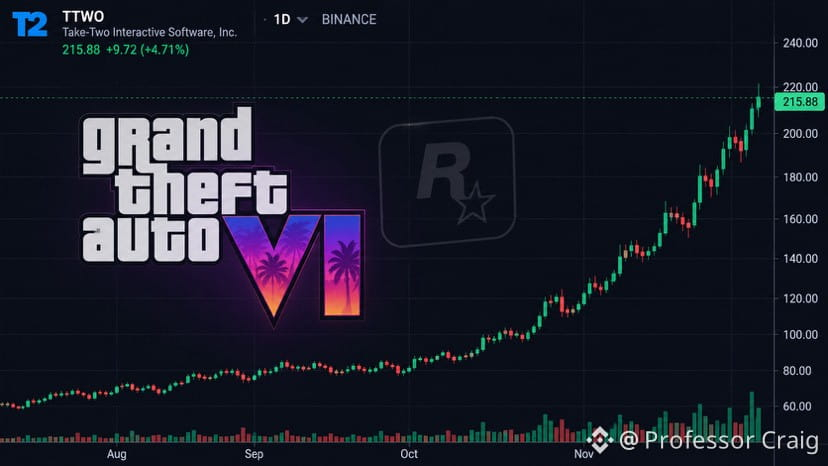
Take Two Interactive is approaching one of the most important dates in its history. Grand Theft Auto VI is officially scheduled for November 19, 2026, and the market is now entering the final days before one of the most anticipated game launches ever.
At around $215.88, the question is no longer just whether GTA 6 will sell well. The bigger question is how much revenue and long term earnings it can generate for Take Two. GTA V has sold approximately 230 million copies, while the new release has the potential to create another massive revenue cycle through game sales, online services and recurring player spending. There is another important date before launch: November 9, when Take Two reports its second quarter fiscal 2027 results. The company previously projected $8.0-$8.2 billion in fiscal 2027 net bookings, with GTA 6 expected to be a major contributor.
Now, let’s talk about $1,000.🤔
From $215.88, reaching $1,000 would require approximately 363% growth. That is an ambitious long-term scenario, not a realistic immediate price target. It would require exceptional game sales, a successful GTA Online ecosystem, stronger profit margins and sustained business growth. I see GTA 6 as a major long term catalyst for TTWO, but the stock still carries valuation, execution and launch related risks. Even a successful release does not guarantee an immediate rally.
Can Take Two become a $1,000 stock over the next several years, or are investors already pricing in too much GTA 6 excitement?
{future}(TTWOUSDT)
#gta6 #TTWOUSDT #stock #news
🚨 $TTWO : GTA 6 RELEASES NOVEMBER 19. IS $1,000 REALLY POSSIBLE?
Take Two Interactive is approaching one of the most important dates in its history. Grand Theft Auto VI is officially scheduled for November 19, 2026, and the market is now entering the final days before one of the most anticipated game launches ever.
At around $215.88, the question is no longer just whether GTA 6 will sell well. The bigger question is how much revenue and long term earnings it can generate for Take Two. GTA V has sold approximately 230 million copies, while the new release has the potential to create another massive revenue cycle through game sales, online services and recurring player spending. There is another important date before launch: November 9, when Take Two reports its second quarter fiscal 2027 results. The company previously projected $8.0-$8.2 billion in fiscal 2027 net bookings, with GTA 6 expected to be a major contributor.
Now, let’s talk about $1,000.🤔
From $215.88, reaching $1,000 would require approximately 363% growth. That is an ambitious long-term scenario, not a realistic immediate price target. It would require exceptional game sales, a successful GTA Online ecosystem, stronger profit margins and sustained business growth. I see GTA 6 as a major long term catalyst for TTWO, but the stock still carries valuation, execution and launch related risks. Even a successful release does not guarantee an immediate rally.
Can Take Two become a $1,000 stock over the next several years, or are investors already pricing in too much GTA 6 excitement?
#gta6 #TTWOUSDT #stock #news
Take Two Interactive is approaching one of the most important dates in its history. Grand Theft Auto VI is officially scheduled for November 19, 2026, and the market is now entering the final days before one of the most anticipated game launches ever.
At around $215.88, the question is no longer just whether GTA 6 will sell well. The bigger question is how much revenue and long term earnings it can generate for Take Two. GTA V has sold approximately 230 million copies, while the new release has the potential to create another massive revenue cycle through game sales, online services and recurring player spending. There is another important date before launch: November 9, when Take Two reports its second quarter fiscal 2027 results. The company previously projected $8.0-$8.2 billion in fiscal 2027 net bookings, with GTA 6 expected to be a major contributor.
Now, let’s talk about $1,000.🤔
From $215.88, reaching $1,000 would require approximately 363% growth. That is an ambitious long-term scenario, not a realistic immediate price target. It would require exceptional game sales, a successful GTA Online ecosystem, stronger profit margins and sustained business growth. I see GTA 6 as a major long term catalyst for TTWO, but the stock still carries valuation, execution and launch related risks. Even a successful release does not guarantee an immediate rally.
Can Take Two become a $1,000 stock over the next several years, or are investors already pricing in too much GTA 6 excitement?
#gta6 #TTWOUSDT #stock #news
1
91

·
--
ສັນຍານໝີ
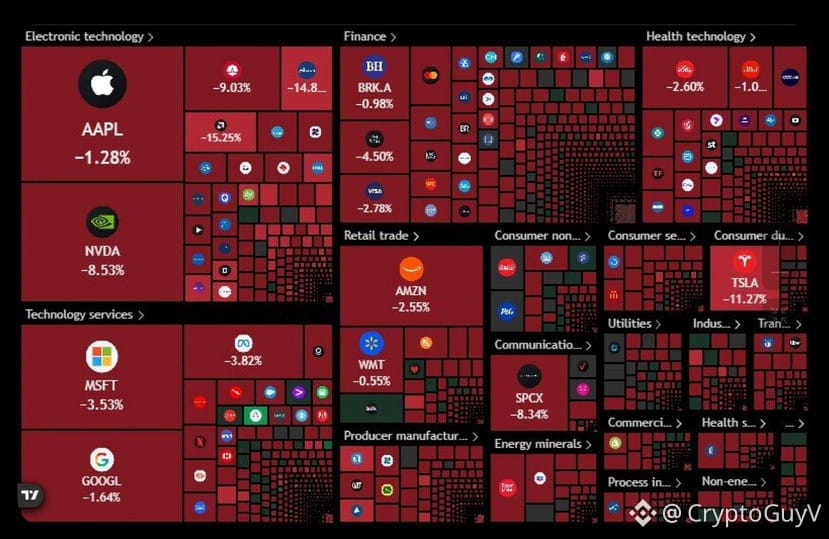
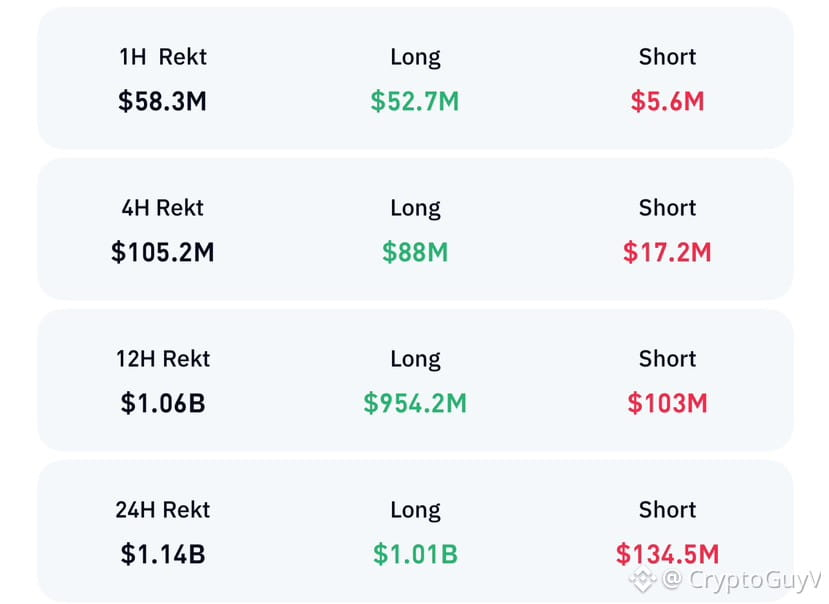
$3 trillion just got wiped from the US stock market in one day, the worst session since the April 2025 tariff crash.
And 1.1 billion liquidation in crypto
#crypto #stock
$3 trillion just got wiped from the US stock market in one day, the worst session since the April 2025 tariff crash.
And 1.1 billion liquidation in crypto
#crypto #stock
And 1.1 billion liquidation in crypto
#crypto #stock
健康资本:
这波可以,互关交流下
2
6
8.6k

·
--
ຢືນຢັນແລ້ວ
KOSPI plunged more than 8% shortly after Friday's open, triggering a market-wide circuit breaker. Samsung and SK hynix were hit hard again.
This is more than Seoul following Nasdaq.
Thursday's U.S. selloff repriced AI infrastructure spending and regulatory risk. Korea is now repricing the memory suppliers that sit upstream of nearly every AI accelerator.
But a collapse in HBM suppliers' share prices doesn't mean HBM supply has suddenly loosened.
The real test comes in customer behavior: do GPU makers maintain their HBM allocations and contract commitments, or start pushing out deliveries and renegotiating terms?
That's where a financial-market shock would become a change in industry economics.
#stock
KOSPI plunged more than 8% shortly after Friday's open, triggering a market-wide circuit breaker. Samsung and SK hynix were hit hard again.
This is more than Seoul following Nasdaq.
Thursday's U.S. selloff repriced AI infrastructure spending and regulatory risk. Korea is now repricing the memory suppliers that sit upstream of nearly every AI accelerator.
But a collapse in HBM suppliers' share prices doesn't mean HBM supply has suddenly loosened.
The real test comes in customer behavior: do GPU makers maintain their HBM allocations and contract commitments, or start pushing out deliveries and renegotiating terms?
That's where a financial-market shock would become a change in industry economics.
#stock
This is more than Seoul following Nasdaq.
Thursday's U.S. selloff repriced AI infrastructure spending and regulatory risk. Korea is now repricing the memory suppliers that sit upstream of nearly every AI accelerator.
But a collapse in HBM suppliers' share prices doesn't mean HBM supply has suddenly loosened.
The real test comes in customer behavior: do GPU makers maintain their HBM allocations and contract commitments, or start pushing out deliveries and renegotiating terms?
That's where a financial-market shock would become a change in industry economics.
#stock
2.8k
·
--
ຢືນຢັນແລ້ວ
ບົດຄວາມ
Amazon's $80 Billion Financing QuestionAWS has the demand. The next test is how much cash that demand generates after the infrastructure is paid for.
Amazon's third-quarter numbers tell two different stories.
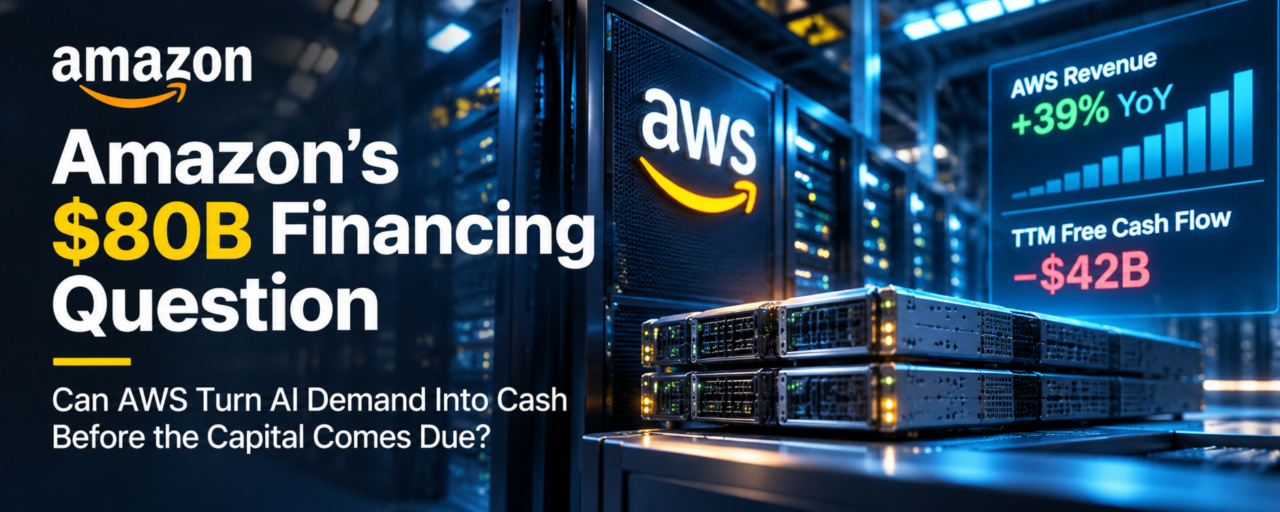
AWS revenue grew 39% to nearly $46 billion, and operating profit reached $17.8 billion. Amazon's consolidated operating margin hit a record 13.9%.
Meanwhile, trailing twelve-month free cash flow fell to negative $42.4 billion, from positive $14.8 billion a year earlier.
Operating cash flow was not the problem. It rose 29% to $168.3 billion. Capital spending grew faster, absorbing more cash than the business generated.
Amazon expects roughly $220 billion of cash capital expenditures in 2026. Its September 10-Q also says spending will increase meaningfully in 2027, primarily for technology infrastructure.
That makes the timing of returns increasingly important.
The $80 billion facility
Amazon disclosed a secured financing facility of up to approximately $80 billion for technology infrastructure purchases. Borrowings can be made from the first quarter of 2027 through the third quarter of 2028. Each borrowing matures five years after it is drawn.
The debt carries floating interest and is secured by certain purchased assets. Outstanding borrowings will be reported as long-term debt.
The filing leaves several important questions unanswered: the advance rate, interest spread, repayment schedule, exact collateral pool, recourse provisions and any residual-value support.
Without those terms, there is no basis for treating this as a non-recourse GPU financing deal or assuming that lenders will bear most of the equipment's residual-value risk.
Amazon is also not a typical GPU lessor. Its broader cash generation and corporate credit matter. A decline in used-GPU prices would not, by itself, establish a threat to Amazon's ability to repay debt.
The more useful question for shareholders is whether financing allows infrastructure investment to grow faster than the cash returns on earlier deployments.
The $578 billion commitment figure needs context
At September 30, Amazon reported approximately $578 billion in remaining performance obligations under customer contracts with original terms exceeding one year, primarily related to AWS. The weighted-average remaining life of those contracts was 6.1 years.
That is substantial revenue visibility. It is not cash in the bank.
The same filing describes an additional $100 billion expansion of AWS's commercial arrangement with OpenAI, bringing the announced multi-year commitment to $138 billion. Amazon also disclosed $50 billion of investments in OpenAI and $10 billion in Anthropic during the first nine months of 2026.
These arrangements deserve analysis on their own terms.
A cloud provider can legitimately invest in an AI developer and sell it infrastructure services. But when the provider is also a major source of capital for the customer, the quality of future cloud revenue depends partly on how independently that customer can finance its commitments over time.
There is no evidence in the filing that the contracts are invalid or that revenue has been improperly recognized. Nor can the public disclosures establish how much of the $578 billion is economically dependent on Amazon-funded customers.
What they establish is a question investors should track: how much of the contracted demand eventually becomes cash collected from sustainable customer activity?
Capital recovery matters more than the headline loan size
AWS earned an operating margin of approximately 38.7% in the third quarter. Its existing business is highly profitable.
But segment operating profit cannot tell us the return on the next generation of AI infrastructure. Amazon does not disclose the asset-level investment, utilization and cash-flow data required for that calculation.
The timing of capital recovery matters because new infrastructure must earn its return while technology is changing rapidly. Some server and networking equipment is depreciated over periods comparable to the five-year financing term, although accounting life is not necessarily economic life.
The facility's repayment terms are undisclosed, so a five-year maturity should not be mistaken for proof of a large refinancing cliff.
There is nevertheless a real investment question. If Amazon keeps adding capacity before earlier deployments have generated sufficient cash, AWS revenue and operating profit could continue rising while free cash flow remains under pressure.
That would be a capital-return problem, not necessarily a credit crisis.
What changes the investment case
The strongest outcome for Amazon would be sustained AWS growth accompanied by better infrastructure utilization and a declining capital-spending burden relative to operating cash generation.
The weaker outcome would be continued spending acceleration, growing debt commitments and customer demand that takes longer than expected to produce cash.
Amazon has demonstrated that it can attract enormous demand for cloud infrastructure. It has not disclosed enough information to measure the incremental cash return on its newest AI investments with confidence.
The $80 billion facility makes that gap more consequential.
Investors should watch the pace at which contracted demand becomes collected revenue, the cash generated by each additional wave of infrastructure, and whether financing obligations continue expanding after growth begins to mature.
The critical question for Amazon is no longer whether AWS can grow. It is how much capital shareholders must keep committing to sustain that growth—and when they begin receiving the cash return.
#Earningseasons #stock
$AMZN.US
{stock_us}(AMZN.US)
Amazon's $80 Billion Financing Question
AWS has the demand. The next test is how much cash that demand generates after the infrastructure is paid for.
Amazon's third-quarter numbers tell two different stories.
AWS revenue grew 39% to nearly $46 billion, and operating profit reached $17.8 billion. Amazon's consolidated operating margin hit a record 13.9%.
Meanwhile, trailing twelve-month free cash flow fell to negative $42.4 billion, from positive $14.8 billion a year earlier.
Operating cash flow was not the problem. It rose 29% to $168.3 billion. Capital spending grew faster, absorbing more cash than the business generated.
Amazon expects roughly $220 billion of cash capital expenditures in 2026. Its September 10-Q also says spending will increase meaningfully in 2027, primarily for technology infrastructure.
That makes the timing of returns increasingly important.
The $80 billion facility
Amazon disclosed a secured financing facility of up to approximately $80 billion for technology infrastructure purchases. Borrowings can be made from the first quarter of 2027 through the third quarter of 2028. Each borrowing matures five years after it is drawn.
The debt carries floating interest and is secured by certain purchased assets. Outstanding borrowings will be reported as long-term debt.
The filing leaves several important questions unanswered: the advance rate, interest spread, repayment schedule, exact collateral pool, recourse provisions and any residual-value support.
Without those terms, there is no basis for treating this as a non-recourse GPU financing deal or assuming that lenders will bear most of the equipment's residual-value risk.
Amazon is also not a typical GPU lessor. Its broader cash generation and corporate credit matter. A decline in used-GPU prices would not, by itself, establish a threat to Amazon's ability to repay debt.
The more useful question for shareholders is whether financing allows infrastructure investment to grow faster than the cash returns on earlier deployments.
The $578 billion commitment figure needs context
At September 30, Amazon reported approximately $578 billion in remaining performance obligations under customer contracts with original terms exceeding one year, primarily related to AWS. The weighted-average remaining life of those contracts was 6.1 years.
That is substantial revenue visibility. It is not cash in the bank.
The same filing describes an additional $100 billion expansion of AWS's commercial arrangement with OpenAI, bringing the announced multi-year commitment to $138 billion. Amazon also disclosed $50 billion of investments in OpenAI and $10 billion in Anthropic during the first nine months of 2026.
These arrangements deserve analysis on their own terms.
A cloud provider can legitimately invest in an AI developer and sell it infrastructure services. But when the provider is also a major source of capital for the customer, the quality of future cloud revenue depends partly on how independently that customer can finance its commitments over time.
There is no evidence in the filing that the contracts are invalid or that revenue has been improperly recognized. Nor can the public disclosures establish how much of the $578 billion is economically dependent on Amazon-funded customers.
What they establish is a question investors should track: how much of the contracted demand eventually becomes cash collected from sustainable customer activity?
Capital recovery matters more than the headline loan size
AWS earned an operating margin of approximately 38.7% in the third quarter. Its existing business is highly profitable.
But segment operating profit cannot tell us the return on the next generation of AI infrastructure. Amazon does not disclose the asset-level investment, utilization and cash-flow data required for that calculation.
The timing of capital recovery matters because new infrastructure must earn its return while technology is changing rapidly. Some server and networking equipment is depreciated over periods comparable to the five-year financing term, although accounting life is not necessarily economic life.
The facility's repayment terms are undisclosed, so a five-year maturity should not be mistaken for proof of a large refinancing cliff.
There is nevertheless a real investment question. If Amazon keeps adding capacity before earlier deployments have generated sufficient cash, AWS revenue and operating profit could continue rising while free cash flow remains under pressure.
That would be a capital-return problem, not necessarily a credit crisis.
What changes the investment case
The strongest outcome for Amazon would be sustained AWS growth accompanied by better infrastructure utilization and a declining capital-spending burden relative to operating cash generation.
The weaker outcome would be continued spending acceleration, growing debt commitments and customer demand that takes longer than expected to produce cash.
Amazon has demonstrated that it can attract enormous demand for cloud infrastructure. It has not disclosed enough information to measure the incremental cash return on its newest AI investments with confidence.
The $80 billion facility makes that gap more consequential.
Investors should watch the pace at which contracted demand becomes collected revenue, the cash generated by each additional wave of infrastructure, and whether financing obligations continue expanding after growth begins to mature.
The critical question for Amazon is no longer whether AWS can grow. It is how much capital shareholders must keep committing to sustain that growth—and when they begin receiving the cash return.
#Earningseasons #stock
$AMZN.US
Amazon's third-quarter numbers tell two different stories.
AWS revenue grew 39% to nearly $46 billion, and operating profit reached $17.8 billion. Amazon's consolidated operating margin hit a record 13.9%.
Meanwhile, trailing twelve-month free cash flow fell to negative $42.4 billion, from positive $14.8 billion a year earlier.
Operating cash flow was not the problem. It rose 29% to $168.3 billion. Capital spending grew faster, absorbing more cash than the business generated.
Amazon expects roughly $220 billion of cash capital expenditures in 2026. Its September 10-Q also says spending will increase meaningfully in 2027, primarily for technology infrastructure.
That makes the timing of returns increasingly important.
The $80 billion facility
Amazon disclosed a secured financing facility of up to approximately $80 billion for technology infrastructure purchases. Borrowings can be made from the first quarter of 2027 through the third quarter of 2028. Each borrowing matures five years after it is drawn.
The debt carries floating interest and is secured by certain purchased assets. Outstanding borrowings will be reported as long-term debt.
The filing leaves several important questions unanswered: the advance rate, interest spread, repayment schedule, exact collateral pool, recourse provisions and any residual-value support.
Without those terms, there is no basis for treating this as a non-recourse GPU financing deal or assuming that lenders will bear most of the equipment's residual-value risk.
Amazon is also not a typical GPU lessor. Its broader cash generation and corporate credit matter. A decline in used-GPU prices would not, by itself, establish a threat to Amazon's ability to repay debt.
The more useful question for shareholders is whether financing allows infrastructure investment to grow faster than the cash returns on earlier deployments.
The $578 billion commitment figure needs context
At September 30, Amazon reported approximately $578 billion in remaining performance obligations under customer contracts with original terms exceeding one year, primarily related to AWS. The weighted-average remaining life of those contracts was 6.1 years.
That is substantial revenue visibility. It is not cash in the bank.
The same filing describes an additional $100 billion expansion of AWS's commercial arrangement with OpenAI, bringing the announced multi-year commitment to $138 billion. Amazon also disclosed $50 billion of investments in OpenAI and $10 billion in Anthropic during the first nine months of 2026.
These arrangements deserve analysis on their own terms.
A cloud provider can legitimately invest in an AI developer and sell it infrastructure services. But when the provider is also a major source of capital for the customer, the quality of future cloud revenue depends partly on how independently that customer can finance its commitments over time.
There is no evidence in the filing that the contracts are invalid or that revenue has been improperly recognized. Nor can the public disclosures establish how much of the $578 billion is economically dependent on Amazon-funded customers.
What they establish is a question investors should track: how much of the contracted demand eventually becomes cash collected from sustainable customer activity?
Capital recovery matters more than the headline loan size
AWS earned an operating margin of approximately 38.7% in the third quarter. Its existing business is highly profitable.
But segment operating profit cannot tell us the return on the next generation of AI infrastructure. Amazon does not disclose the asset-level investment, utilization and cash-flow data required for that calculation.
The timing of capital recovery matters because new infrastructure must earn its return while technology is changing rapidly. Some server and networking equipment is depreciated over periods comparable to the five-year financing term, although accounting life is not necessarily economic life.
The facility's repayment terms are undisclosed, so a five-year maturity should not be mistaken for proof of a large refinancing cliff.
There is nevertheless a real investment question. If Amazon keeps adding capacity before earlier deployments have generated sufficient cash, AWS revenue and operating profit could continue rising while free cash flow remains under pressure.
That would be a capital-return problem, not necessarily a credit crisis.
What changes the investment case
The strongest outcome for Amazon would be sustained AWS growth accompanied by better infrastructure utilization and a declining capital-spending burden relative to operating cash generation.
The weaker outcome would be continued spending acceleration, growing debt commitments and customer demand that takes longer than expected to produce cash.
Amazon has demonstrated that it can attract enormous demand for cloud infrastructure. It has not disclosed enough information to measure the incremental cash return on its newest AI investments with confidence.
The $80 billion facility makes that gap more consequential.
Investors should watch the pace at which contracted demand becomes collected revenue, the cash generated by each additional wave of infrastructure, and whether financing obligations continue expanding after growth begins to mature.
The critical question for Amazon is no longer whether AWS can grow. It is how much capital shareholders must keep committing to sustain that growth—and when they begin receiving the cash return.
#Earningseasons #stock
$AMZN.US
AMZNUS-0,02%
1
935
·
--
Thursday's AI selloff wasn't just about AI demand.
The Nasdaq fell 5.5%, while semiconductor stocks suffered even steeper losses. Goldman Sachs' trading desk reported hedge funds selling recently purchased hyperscaler positions, with institutional buyers largely absent.
That helps explain the speed of the decline. It doesn't settle the valuation question.
Forced selling can push strong and weak businesses down together. But once liquidity returns, financing costs, delivery schedules and cash generation should matter more.
The test isn't simply whether AI stocks bounce.
It's which companies can recover without relying on another round of cheap capital.
#stock
Thursday's AI selloff wasn't just about AI demand.
The Nasdaq fell 5.5%, while semiconductor stocks suffered even steeper losses. Goldman Sachs' trading desk reported hedge funds selling recently purchased hyperscaler positions, with institutional buyers largely absent.
That helps explain the speed of the decline. It doesn't settle the valuation question.
Forced selling can push strong and weak businesses down together. But once liquidity returns, financing costs, delivery schedules and cash generation should matter more.
The test isn't simply whether AI stocks bounce.
It's which companies can recover without relying on another round of cheap capital.
#stock
The Nasdaq fell 5.5%, while semiconductor stocks suffered even steeper losses. Goldman Sachs' trading desk reported hedge funds selling recently purchased hyperscaler positions, with institutional buyers largely absent.
That helps explain the speed of the decline. It doesn't settle the valuation question.
Forced selling can push strong and weak businesses down together. But once liquidity returns, financing costs, delivery schedules and cash generation should matter more.
The test isn't simply whether AI stocks bounce.
It's which companies can recover without relying on another round of cheap capital.
#stock
69
·
--
ສັນຍານໝີ
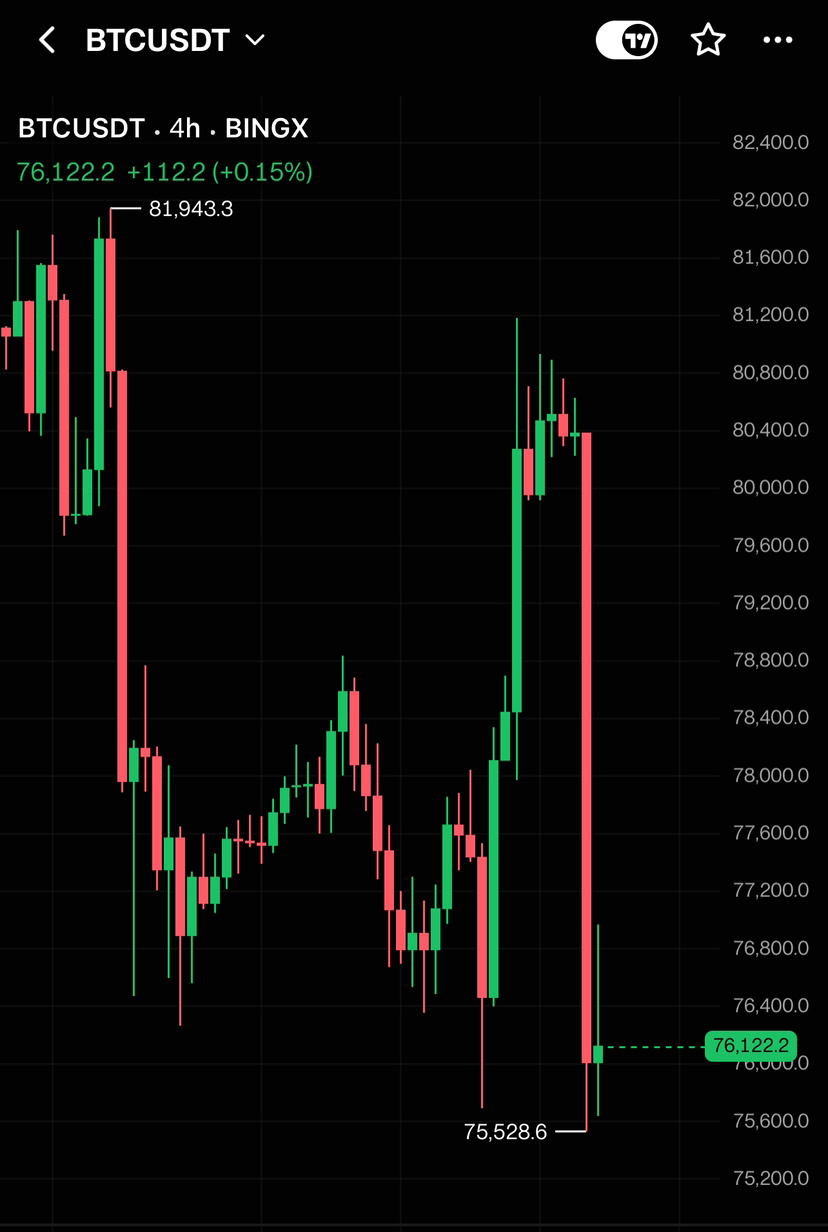
✅ $2 trillion wiped out in the US stock market in 50 minutes. What started as a correction in the semiconductor sector escalated into a massive sell‑off across the entire market – Dow Jones -2%, Nasdaq -5%, and S&P 500 -3%. Top losers: Nvidia -8%, SpaceX -10%, and Tesla -10% ☠️
The crypto market was hit by a ripple effect: liquidations exceeded $1 billion, and BTC fell below $77k.
#btc #stock
✅ $2 trillion wiped out in the US stock market in 50 minutes. What started as a correction in the semiconductor sector escalated into a massive sell‑off across the entire market – Dow Jones -2%, Nasdaq -5%, and S&P 500 -3%. Top losers: Nvidia -8%, SpaceX -10%, and Tesla -10% ☠️
The crypto market was hit by a ripple effect: liquidations exceeded $1 billion, and BTC fell below $77k.
#btc #stock
The crypto market was hit by a ripple effect: liquidations exceeded $1 billion, and BTC fell below $77k.
#btc #stock
197
·
--
IREN Earnings: The Real Test of Neocloud Economics
IREN reports FY27 Q1 earnings today. Wall Street expects roughly $222M in revenue, but the headline beat or miss isn't the most important number.
IREN is moving from selling future AI capacity to delivering it. Horizon 1 has been accepted by Microsoft under their $9.7B contract. The remaining Horizon deployments will test how reliably that capacity can come online.
Three things matter tonight:
How quickly contracted ARR converts into recognized AI Cloud revenue.
Whether construction, GPU deployment and customer acceptance remain on schedule.
How much financing, depreciation and dilution shareholders must absorb to support that growth.
The risk isn't necessarily weak AI demand. It's that capital costs begin accumulating before the assets generate revenue.
A revenue beat would be encouraging. But the stronger evidence would be on-time delivery, improving unit economics and a credible path to cash returns after financing costs.
That's the real test for IREN — and increasingly for the Neocloud sector.
#EarningSeasons #stock
$IREN.US
{stock_us}(IREN.US)
IREN Earnings: The Real Test of Neocloud Economics
IREN reports FY27 Q1 earnings today. Wall Street expects roughly $222M in revenue, but the headline beat or miss isn't the most important number.
IREN is moving from selling future AI capacity to delivering it. Horizon 1 has been accepted by Microsoft under their $9.7B contract. The remaining Horizon deployments will test how reliably that capacity can come online.
Three things matter tonight:
How quickly contracted ARR converts into recognized AI Cloud revenue.
Whether construction, GPU deployment and customer acceptance remain on schedule.
How much financing, depreciation and dilution shareholders must absorb to support that growth.
The risk isn't necessarily weak AI demand. It's that capital costs begin accumulating before the assets generate revenue.
A revenue beat would be encouraging. But the stronger evidence would be on-time delivery, improving unit economics and a credible path to cash returns after financing costs.
That's the real test for IREN — and increasingly for the Neocloud sector.
#EarningSeasons #stock
$IREN.US
IREN reports FY27 Q1 earnings today. Wall Street expects roughly $222M in revenue, but the headline beat or miss isn't the most important number.
IREN is moving from selling future AI capacity to delivering it. Horizon 1 has been accepted by Microsoft under their $9.7B contract. The remaining Horizon deployments will test how reliably that capacity can come online.
Three things matter tonight:
How quickly contracted ARR converts into recognized AI Cloud revenue.
Whether construction, GPU deployment and customer acceptance remain on schedule.
How much financing, depreciation and dilution shareholders must absorb to support that growth.
The risk isn't necessarily weak AI demand. It's that capital costs begin accumulating before the assets generate revenue.
A revenue beat would be encouraging. But the stronger evidence would be on-time delivery, improving unit economics and a credible path to cash returns after financing costs.
That's the real test for IREN — and increasingly for the Neocloud sector.
#EarningSeasons #stock
$IREN.US
MSFT-0,45%
IRENUS+21,26%
205
·
--
AI demand hasn't disappeared. The cost of financing it is becoming harder to ignore.
Oracle is raising $20B through debt and equity. Meta is planning a $60B share-sale program. A $63B vehicle will finance Broadcom chips for Anthropic, with Broadcom providing residual-value support.
These aren't equivalent structures, but they point to the same question: who ultimately bears the cost and risk of AI expansion?
For Oracle, it's debt service and dilution. For Meta, potential dilution. For Broadcom, exposure to the residual value of the equipment it supplies.
The next valuation divide may be less about who signs the largest AI contracts and more about who retains the cash flows after financing those contracts.
#stock
$ORCL.US $META.US $AVGO.US
{stock_us}(ORCL.US)
AI demand hasn't disappeared. The cost of financing it is becoming harder to ignore.
Oracle is raising $20B through debt and equity. Meta is planning a $60B share-sale program. A $63B vehicle will finance Broadcom chips for Anthropic, with Broadcom providing residual-value support.
These aren't equivalent structures, but they point to the same question: who ultimately bears the cost and risk of AI expansion?
For Oracle, it's debt service and dilution. For Meta, potential dilution. For Broadcom, exposure to the residual value of the equipment it supplies.
The next valuation divide may be less about who signs the largest AI contracts and more about who retains the cash flows after financing those contracts.
#stock
$ORCL.US $META.US $AVGO.US
Oracle is raising $20B through debt and equity. Meta is planning a $60B share-sale program. A $63B vehicle will finance Broadcom chips for Anthropic, with Broadcom providing residual-value support.
These aren't equivalent structures, but they point to the same question: who ultimately bears the cost and risk of AI expansion?
For Oracle, it's debt service and dilution. For Meta, potential dilution. For Broadcom, exposure to the residual value of the equipment it supplies.
The next valuation divide may be less about who signs the largest AI contracts and more about who retains the cash flows after financing those contracts.
#stock
$ORCL.US $META.US $AVGO.US
METAUS+1,20%
AVGOUS+0,97%
ORCLUS+0,84%
498
·
--
ຢືນຢັນແລ້ວ
Bloomberg reports Micron has largely halted work on its planned $3B–$4.5B Fab 11E in Taiwan amid a labor dispute. The DRAM/HBM facility was scheduled to come online in 2028.
Micron says existing Taiwan operations remain normal.
This isn't a current production cut. It's a potential delay to future memory supply.
The more interesting shift: AI-driven memory profits are changing labor's bargaining position, and that can affect expansion economics.
Watch tomorrow's labor talks and whether Micron revises Fab 11E's construction schedule.
#stock
$MU.US
{stock_us}(MU.US)
Bloomberg reports Micron has largely halted work on its planned $3B–$4.5B Fab 11E in Taiwan amid a labor dispute. The DRAM/HBM facility was scheduled to come online in 2028.
Micron says existing Taiwan operations remain normal.
This isn't a current production cut. It's a potential delay to future memory supply.
The more interesting shift: AI-driven memory profits are changing labor's bargaining position, and that can affect expansion economics.
Watch tomorrow's labor talks and whether Micron revises Fab 11E's construction schedule.
#stock
$MU.US
Micron says existing Taiwan operations remain normal.
This isn't a current production cut. It's a potential delay to future memory supply.
The more interesting shift: AI-driven memory profits are changing labor's bargaining position, and that can affect expansion economics.
Watch tomorrow's labor talks and whether Micron revises Fab 11E's construction schedule.
#stock
$MU.US
MUUS+5,76%
897
·
--
Astera Labs reported $585M in Q3 revenue, up 154% YoY. Scorpio fabric switches are now its largest product family.
That mix shift matters more than the headline growth.
Astera is moving beyond conditioning high-speed signals into controlling how accelerators and memory communicate within AI systems.
The next test is whether switch adoption raises Astera's content per AI rack without eroding its margins.
More connections create demand. Owning more of the switching architecture could create pricing power.
#stock
$ALAB.US
{stock_us}(ALAB.US)
Astera Labs reported $585M in Q3 revenue, up 154% YoY. Scorpio fabric switches are now its largest product family.
That mix shift matters more than the headline growth.
Astera is moving beyond conditioning high-speed signals into controlling how accelerators and memory communicate within AI systems.
The next test is whether switch adoption raises Astera's content per AI rack without eroding its margins.
More connections create demand. Owning more of the switching architecture could create pricing power.
#stock
$ALAB.US
That mix shift matters more than the headline growth.
Astera is moving beyond conditioning high-speed signals into controlling how accelerators and memory communicate within AI systems.
The next test is whether switch adoption raises Astera's content per AI rack without eroding its margins.
More connections create demand. Owning more of the switching architecture could create pricing power.
#stock
$ALAB.US
ALABUS+6,58%
68

·
--
Your stock's down 30% over 11 years. What do you do?🤔🤔
Dan Bin, a well-known Chinese investor, put this exact question to Buffett face to face: Coca-Cola dropped 30% in 11 years, so what's your take?
Buffett's answer: when stocks fall, other people get scared. Me? I love it 😂I get to buy great companies cheaper #stock #Buffett
Your stock's down 30% over 11 years. What do you do?🤔🤔
Dan Bin, a well-known Chinese investor, put this exact question to Buffett face to face: Coca-Cola dropped 30% in 11 years, so what's your take?
Buffett's answer: when stocks fall, other people get scared. Me? I love it 😂I get to buy great companies cheaper #stock #Buffett
Dan Bin, a well-known Chinese investor, put this exact question to Buffett face to face: Coca-Cola dropped 30% in 11 years, so what's your take?
Buffett's answer: when stocks fall, other people get scared. Me? I love it 😂I get to buy great companies cheaper #stock #Buffett

cloud99_bullcrypto:
The old man warren buffet drank 5 cans of cola daily and this is crazy lolzzzzz
2
16
8.2k

·
--
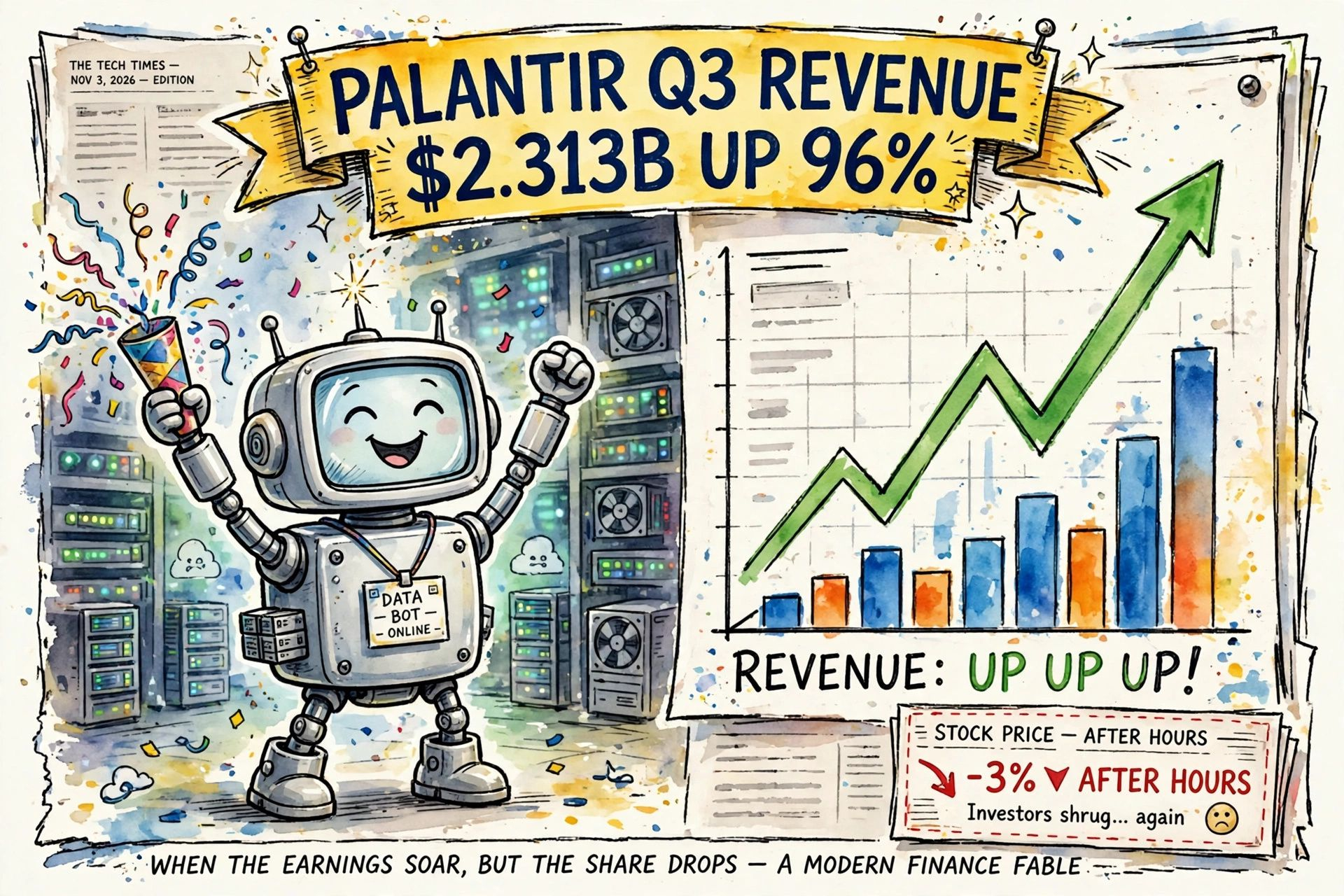
#STOCK ⚡️ Palantir (PLTR) Q3 2026 earnings explode — and the stock still fell about 3% after hours.
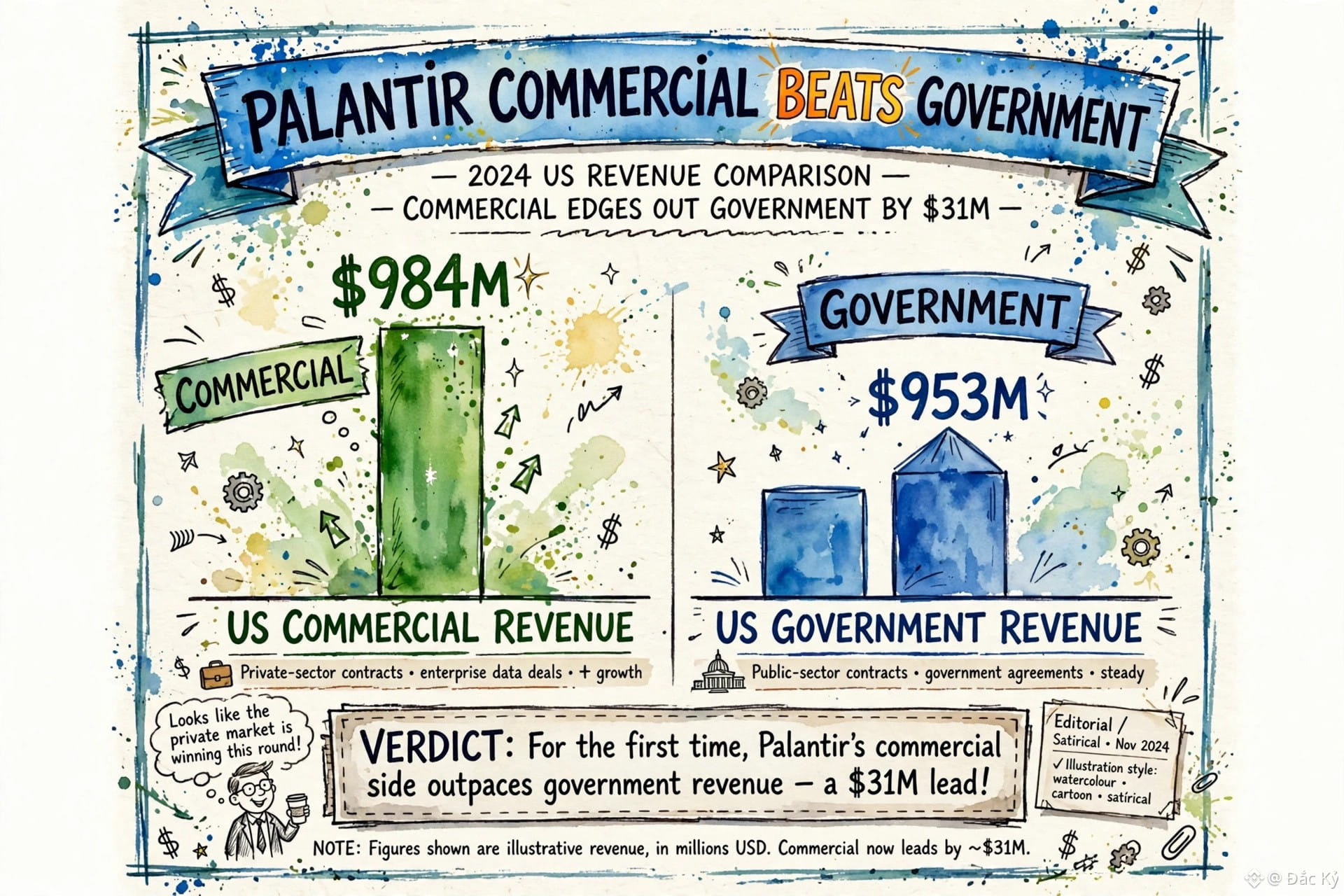
The headline is a beat on almost every line, with one historic shift: US commercial revenue has overtaken US government revenue for the first time.
Key numbers:
- Revenue: $2.313 billion, up 96%, above expectations
- Adjusted EPS: $0.44, above the $0.41 expected
- US commercial revenue: $984 million, up 148%
- US government revenue: $953 million, up 96%
- Q4 guidance: $2.649 - $2.653 billion in revenue, well above expectations
- Full-year revenue guidance raised to $8.530 - $8.534 billion, up about 91%
The takeaway: the AI commercialisation inflection, built on a data-centre model, has arrived — commercial overtaking government is the biggest signal in the report, growth and profit both beat, and guidance was raised sharply. Yet with a rich valuation, the market followed the classic "buy the rumour, sell the news" pattern, pushing the price down about 3% after hours.
#binancewithdrawalscamwarning
#STOCK ⚡️ Palantir (PLTR) Q3 2026 earnings explode — and the stock still fell about 3% after hours.
The headline is a beat on almost every line, with one historic shift: US commercial revenue has overtaken US government revenue for the first time.
Key numbers:
- Revenue: $2.313 billion, up 96%, above expectations
- Adjusted EPS: $0.44, above the $0.41 expected
- US commercial revenue: $984 million, up 148%
- US government revenue: $953 million, up 96%
- Q4 guidance: $2.649 - $2.653 billion in revenue, well above expectations
- Full-year revenue guidance raised to $8.530 - $8.534 billion, up about 91%
The takeaway: the AI commercialisation inflection, built on a data-centre model, has arrived — commercial overtaking government is the biggest signal in the report, growth and profit both beat, and guidance was raised sharply. Yet with a rich valuation, the market followed the classic "buy the rumour, sell the news" pattern, pushing the price down about 3% after hours.
#binancewithdrawalscamwarning
The headline is a beat on almost every line, with one historic shift: US commercial revenue has overtaken US government revenue for the first time.
Key numbers:
- Revenue: $2.313 billion, up 96%, above expectations
- Adjusted EPS: $0.44, above the $0.41 expected
- US commercial revenue: $984 million, up 148%
- US government revenue: $953 million, up 96%
- Q4 guidance: $2.649 - $2.653 billion in revenue, well above expectations
- Full-year revenue guidance raised to $8.530 - $8.534 billion, up about 91%
The takeaway: the AI commercialisation inflection, built on a data-centre model, has arrived — commercial overtaking government is the biggest signal in the report, growth and profit both beat, and guidance was raised sharply. Yet with a rich valuation, the market followed the classic "buy the rumour, sell the news" pattern, pushing the price down about 3% after hours.
#binancewithdrawalscamwarning
14

#STOCK⚡️ Báo cáo tài chính quý 3 năm 2026 của Palantir (PLTR) bùng nổ: doanh thu tăng gấp đôi lên 2,313 tỷ USD, doanh thu thương mại tại Mỹ lần đầu vượt doanh thu từ chính phủ, dự báo cả năm được nâng mạnh nhưng giá vẫn giảm khoảng 3% sau giờ giao dịch!
Số liệu chính:
- Doanh thu 2,313 tỷ USD (tăng 96%, vượt dự kiến)
- EPS điều chỉnh 0,44 USD (vượt dự kiến 0,41 USD)
- Doanh thu thương mại tại Mỹ 984 triệu USD (tăng 148%, lần đầu vượt doanh thu từ chính phủ Mỹ)
- Doanh thu từ chính phủ Mỹ 953 triệu USD (tăng 96%)
- Dự báo quý 4: doanh thu 2,649 - 2,653 tỷ USD (cao hơn nhiều so với dự kiến)
- Dự báo doanh thu cả năm được nâng lên mức 8,530 - 8,534 tỷ USD (tăng khoảng 91%)
Nhận định ngắn: Điểm chuyển đổi thương mại hóa AI theo mô hình trung tâm dữ liệu đã đến, doanh thu thương mại tại Mỹ lần lượt vượt quy mô hoạt động của chính phủ là điểm nhấn lớn nhất; cả tăng trưởng và lợi nhuận đều vượt xa dự kiến, dự báo cả năm cũng được nâng mạnh. Tuy nhiên với mức định giá cao, thị trường vẫn theo xu hướng "mua theo kỳ vọng, bán theo sự thật", khiến giá giảm khoảng 3% sau giờ giao dịch.
#binancewithdrawalscamwarning
#STOCK⚡️ Báo cáo tài chính quý 3 năm 2026 của Palantir (PLTR) bùng nổ: doanh thu tăng gấp đôi lên 2,313 tỷ USD, doanh thu thương mại tại Mỹ lần đầu vượt doanh thu từ chính phủ, dự báo cả năm được nâng mạnh nhưng giá vẫn giảm khoảng 3% sau giờ giao dịch!
Số liệu chính:
- Doanh thu 2,313 tỷ USD (tăng 96%, vượt dự kiến)
- EPS điều chỉnh 0,44 USD (vượt dự kiến 0,41 USD)
- Doanh thu thương mại tại Mỹ 984 triệu USD (tăng 148%, lần đầu vượt doanh thu từ chính phủ Mỹ)
- Doanh thu từ chính phủ Mỹ 953 triệu USD (tăng 96%)
- Dự báo quý 4: doanh thu 2,649 - 2,653 tỷ USD (cao hơn nhiều so với dự kiến)
- Dự báo doanh thu cả năm được nâng lên mức 8,530 - 8,534 tỷ USD (tăng khoảng 91%)
Nhận định ngắn: Điểm chuyển đổi thương mại hóa AI theo mô hình trung tâm dữ liệu đã đến, doanh thu thương mại tại Mỹ lần lượt vượt quy mô hoạt động của chính phủ là điểm nhấn lớn nhất; cả tăng trưởng và lợi nhuận đều vượt xa dự kiến, dự báo cả năm cũng được nâng mạnh. Tuy nhiên với mức định giá cao, thị trường vẫn theo xu hướng "mua theo kỳ vọng, bán theo sự thật", khiến giá giảm khoảng 3% sau giờ giao dịch.
#binancewithdrawalscamwarning
Số liệu chính:
- Doanh thu 2,313 tỷ USD (tăng 96%, vượt dự kiến)
- EPS điều chỉnh 0,44 USD (vượt dự kiến 0,41 USD)
- Doanh thu thương mại tại Mỹ 984 triệu USD (tăng 148%, lần đầu vượt doanh thu từ chính phủ Mỹ)
- Doanh thu từ chính phủ Mỹ 953 triệu USD (tăng 96%)
- Dự báo quý 4: doanh thu 2,649 - 2,653 tỷ USD (cao hơn nhiều so với dự kiến)
- Dự báo doanh thu cả năm được nâng lên mức 8,530 - 8,534 tỷ USD (tăng khoảng 91%)
Nhận định ngắn: Điểm chuyển đổi thương mại hóa AI theo mô hình trung tâm dữ liệu đã đến, doanh thu thương mại tại Mỹ lần lượt vượt quy mô hoạt động của chính phủ là điểm nhấn lớn nhất; cả tăng trưởng và lợi nhuận đều vượt xa dự kiến, dự báo cả năm cũng được nâng mạnh. Tuy nhiên với mức định giá cao, thị trường vẫn theo xu hướng "mua theo kỳ vọng, bán theo sự thật", khiến giá giảm khoảng 3% sau giờ giao dịch.
#binancewithdrawalscamwarning
26

ເປັນຄວາມຈິງບາງສ່ວນ
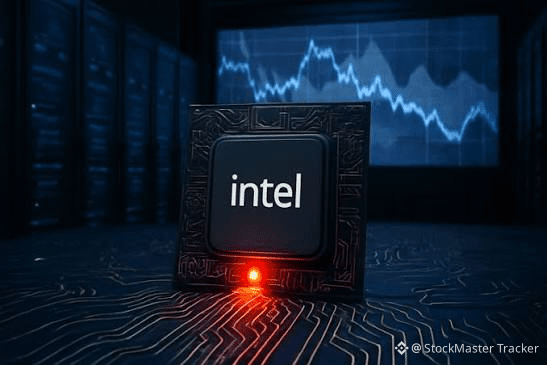
Intel just fell 28.6% in a single day, its worst drop since 1974. Here's how much the big holders lost on paper👇👇
🔻US government (Trump admin's stake): lost ~$11.4B
🔻BlackRock: lost ~$6.6B
🔻Jensen Huang's Nvidia: lost ~$5.7B (Intel is Nvidia's biggest holding)
🔻Masayoshi Son's SoftBank: lost ~$2.3B
🔻Goldman Sachs: lost ~$730M
🔻Steve Cohen's Point72: lost ~$120M
🔻Ray Dalio's Bridgewater: lost ~$850K (they only bought in Q2) #Intel #NVIDIA #stock
Intel just fell 28.6% in a single day, its worst drop since 1974. Here's how much the big holders lost on paper👇👇
🔻US government (Trump admin's stake): lost ~$11.4B
🔻BlackRock: lost ~$6.6B
🔻Jensen Huang's Nvidia: lost ~$5.7B (Intel is Nvidia's biggest holding)
🔻Masayoshi Son's SoftBank: lost ~$2.3B
🔻Goldman Sachs: lost ~$730M
🔻Steve Cohen's Point72: lost ~$120M
🔻Ray Dalio's Bridgewater: lost ~$850K (they only bought in Q2) #Intel #NVIDIA #stock
🔻US government (Trump admin's stake): lost ~$11.4B
🔻BlackRock: lost ~$6.6B
🔻Jensen Huang's Nvidia: lost ~$5.7B (Intel is Nvidia's biggest holding)
🔻Masayoshi Son's SoftBank: lost ~$2.3B
🔻Goldman Sachs: lost ~$730M
🔻Steve Cohen's Point72: lost ~$120M
🔻Ray Dalio's Bridgewater: lost ~$850K (they only bought in Q2) #Intel #NVIDIA #stock
Dr_Investor:
المعلومات ليست صحيحه أو على الأقل قديمة
1
8
8.6k

·
--
ສັນຍານໝີ
ຢືນຢັນແລ້ວ
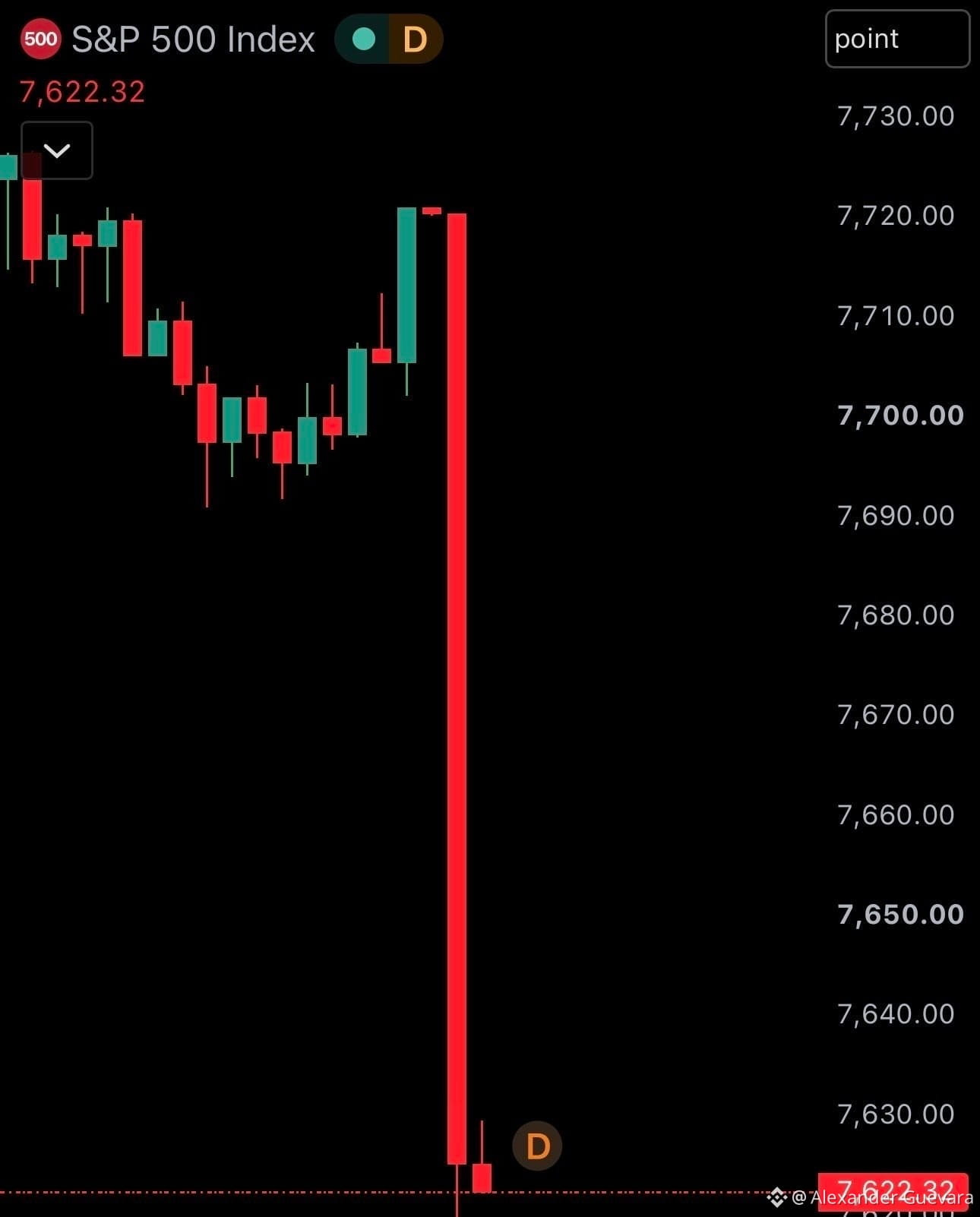
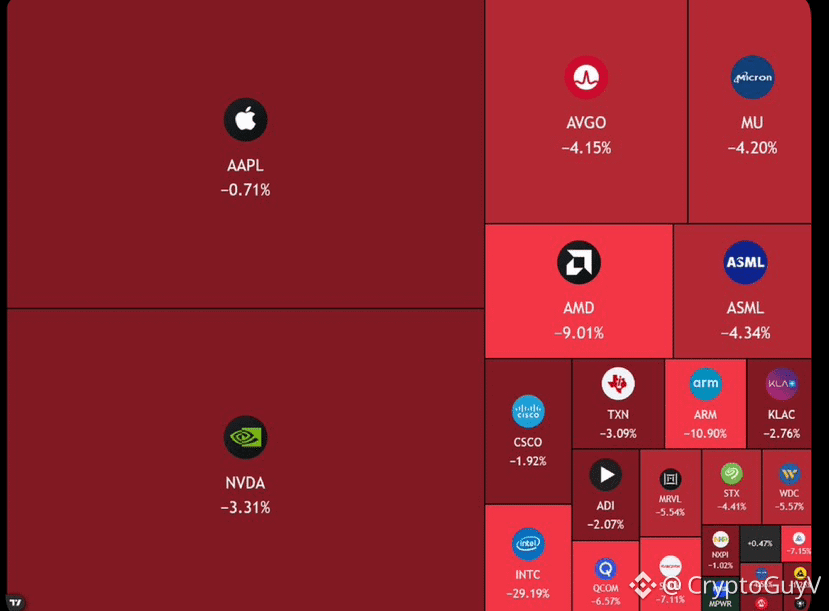
The Nasdaq has collapsed 2.7% on open.
Almost a Trillion in market cap wiped from tech stocks today.
Nvidia down 3.3%
SpaceX -3.7%
Sandisk -7.5%
AMD -9%
Intel -28%
#stock
The Nasdaq has collapsed 2.7% on open.
Almost a Trillion in market cap wiped from tech stocks today.
Nvidia down 3.3%
SpaceX -3.7%
Sandisk -7.5%
AMD -9%
Intel -28%
#stock
Almost a Trillion in market cap wiped from tech stocks today.
Nvidia down 3.3%
SpaceX -3.7%
Sandisk -7.5%
AMD -9%
Intel -28%
#stock
1
1
2.2k

ຢືນຢັນແລ້ວ
ບົດຄວາມ
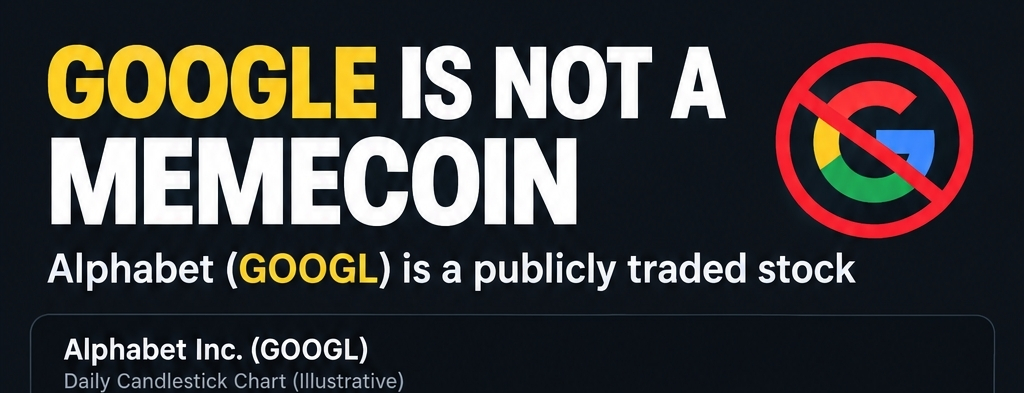
🚨 GOOGLE Is This a Buying Opportunity or a Warning Sign? 📉Guys, $GOOGL is not a random memecoin! 😂
Alphabet Inc. $GOOGL Google's parent company, is one of the major players in technology, digital advertising, cloud computing, and artificial intelligence.
Why Does Google's Stock Price Move?
Investors closely monitor several important factors:
Earnings Reports: Results that differ from expectations can move the share price sharply.Advertising Revenue: Google's advertising business is a major source of income.AI Competition: Competition in artificial intelligence could affect future growth.Cloud Business: Google Cloud's growth and profitability matter to investors.Market Sentiment: Economic conditions and investor expectations also influence prices.
🔥 The Big Question
When a major technology stock falls sharply, is it a buying opportunity or a warning sign?
The answer depends on the company's financial performance, valuation, future outlook, and broader market conditions. A falling price alone does not guarantee a bargain.
💡 Remember: Google stock is different from Google-themed crypto tokens. Always verify the asset, market, and trading pair before investing.
What do you think? 📊 Is Alphabet a long-term growth opportunity, or is competition becoming a bigger risk?
👇 Share your thoughts in the comments!
#EarningsSeason google #GoldenOpportunity #Alphabet #Stock Market #CryptoNews #BinanceSquare #Investing #Aİ $$
🚨 GOOGLE Is This a Buying Opportunity or a Warning Sign? 📉
Guys, $GOOGL is not a random memecoin! 😂
Alphabet Inc. $GOOGL Google's parent company, is one of the major players in technology, digital advertising, cloud computing, and artificial intelligence.
Why Does Google's Stock Price Move?
Investors closely monitor several important factors:
Earnings Reports: Results that differ from expectations can move the share price sharply.Advertising Revenue: Google's advertising business is a major source of income.AI Competition: Competition in artificial intelligence could affect future growth.Cloud Business: Google Cloud's growth and profitability matter to investors.Market Sentiment: Economic conditions and investor expectations also influence prices.
🔥 The Big Question
When a major technology stock falls sharply, is it a buying opportunity or a warning sign?
The answer depends on the company's financial performance, valuation, future outlook, and broader market conditions. A falling price alone does not guarantee a bargain.
💡 Remember: Google stock is different from Google-themed crypto tokens. Always verify the asset, market, and trading pair before investing.
What do you think? 📊 Is Alphabet a long-term growth opportunity, or is competition becoming a bigger risk?
👇 Share your thoughts in the comments!
#EarningsSeason google #GoldenOpportunity #Alphabet #Stock Market #CryptoNews #BinanceSquare #Investing #Aİ $$
Alphabet Inc. $GOOGL Google's parent company, is one of the major players in technology, digital advertising, cloud computing, and artificial intelligence.
Why Does Google's Stock Price Move?
Investors closely monitor several important factors:
Earnings Reports: Results that differ from expectations can move the share price sharply.Advertising Revenue: Google's advertising business is a major source of income.AI Competition: Competition in artificial intelligence could affect future growth.Cloud Business: Google Cloud's growth and profitability matter to investors.Market Sentiment: Economic conditions and investor expectations also influence prices.
🔥 The Big Question
When a major technology stock falls sharply, is it a buying opportunity or a warning sign?
The answer depends on the company's financial performance, valuation, future outlook, and broader market conditions. A falling price alone does not guarantee a bargain.
💡 Remember: Google stock is different from Google-themed crypto tokens. Always verify the asset, market, and trading pair before investing.
What do you think? 📊 Is Alphabet a long-term growth opportunity, or is competition becoming a bigger risk?
👇 Share your thoughts in the comments!
#EarningsSeason google #GoldenOpportunity #Alphabet #Stock Market #CryptoNews #BinanceSquare #Investing #Aİ $$
GOOGL-0,55%
GOOGUS+1,10%
1k
·
--
ສັນຍານໝີ
ຢືນຢັນແລ້ວ
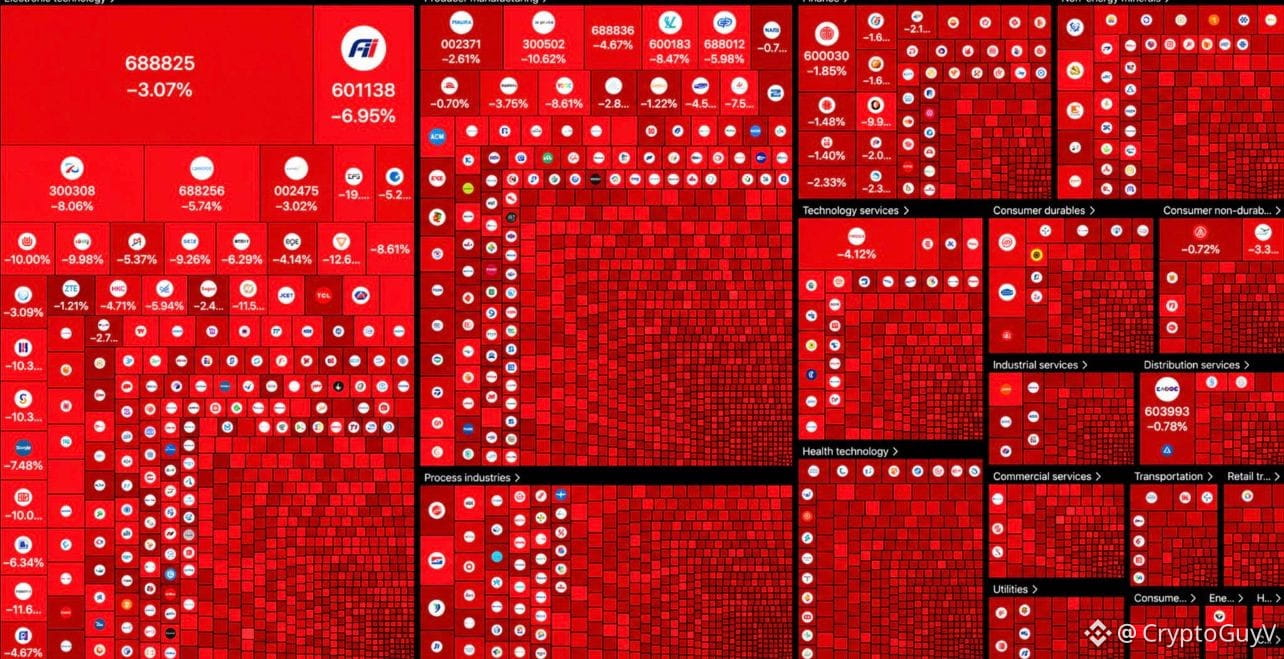
ABSOLUTE BLOODBATH IN CHINA'S STOCK MARKET.
¥1.1 TRILLION has been wiped out from Chinese stocks today as China's AI bubble bursts.
#stock
ABSOLUTE BLOODBATH IN CHINA'S STOCK MARKET.
¥1.1 TRILLION has been wiped out from Chinese stocks today as China's AI bubble bursts.
#stock
¥1.1 TRILLION has been wiped out from Chinese stocks today as China's AI bubble bursts.
#stock
1
697

·
--
ສັນຍານກະທິງ
An AI can analyze a stock, track market movements, and find a trading opportunity. But there's another side to making a financial decision that market data alone cannot answer, what does the AI actually know about the person it is trading for?
Verona × Stockcoin
Stockcoin brings AI-powered trading into one account across US, Hong Kong, and Korean stock markets, alongside stock perpetuals and IPO and pre-IPO opportunities. It gives users a way to explore markets and let AI help carry out their strategies.
But finding an opportunity is only part of the process. An AI may need to know whether someone qualifies for an IPO allocation or what assets they already hold on another platform. Those details belong to the user, not the market, and accessing them can mean exposing sensitive financial information.
Verona approaches this problem through verification. It can turn information into reusable proofs, allowing authorized agents to verify relevant facts without seeing the underlying data.
The roles are different, but the connection is meaningful.
Stockcoin brings AI closer to financial action. Verona can help give that AI verified context about the person behind the decision, without requiring access to every piece of their private information.
Market intelligence helps an AI find an opportunity. Verified personal facts can help it understand whether that opportunity makes sense for the user.
As AI takes on a bigger role in financial decisions, that distinction becomes harder to ignore. The next step is seeing how this verification capability takes shape within Stockcoin.
#stock
An AI can analyze a stock, track market movements, and find a trading opportunity. But there's another side to making a financial decision that market data alone cannot answer, what does the AI actually know about the person it is trading for?
Verona × Stockcoin
Stockcoin brings AI-powered trading into one account across US, Hong Kong, and Korean stock markets, alongside stock perpetuals and IPO and pre-IPO opportunities. It gives users a way to explore markets and let AI help carry out their strategies.
But finding an opportunity is only part of the process. An AI may need to know whether someone qualifies for an IPO allocation or what assets they already hold on another platform. Those details belong to the user, not the market, and accessing them can mean exposing sensitive financial information.
Verona approaches this problem through verification. It can turn information into reusable proofs, allowing authorized agents to verify relevant facts without seeing the underlying data.
The roles are different, but the connection is meaningful.
Stockcoin brings AI closer to financial action. Verona can help give that AI verified context about the person behind the decision, without requiring access to every piece of their private information.
Market intelligence helps an AI find an opportunity. Verified personal facts can help it understand whether that opportunity makes sense for the user.
As AI takes on a bigger role in financial decisions, that distinction becomes harder to ignore. The next step is seeing how this verification capability takes shape within Stockcoin.
#stock
Verona × Stockcoin
Stockcoin brings AI-powered trading into one account across US, Hong Kong, and Korean stock markets, alongside stock perpetuals and IPO and pre-IPO opportunities. It gives users a way to explore markets and let AI help carry out their strategies.
But finding an opportunity is only part of the process. An AI may need to know whether someone qualifies for an IPO allocation or what assets they already hold on another platform. Those details belong to the user, not the market, and accessing them can mean exposing sensitive financial information.
Verona approaches this problem through verification. It can turn information into reusable proofs, allowing authorized agents to verify relevant facts without seeing the underlying data.
The roles are different, but the connection is meaningful.
Stockcoin brings AI closer to financial action. Verona can help give that AI verified context about the person behind the decision, without requiring access to every piece of their private information.
Market intelligence helps an AI find an opportunity. Verified personal facts can help it understand whether that opportunity makes sense for the user.
As AI takes on a bigger role in financial decisions, that distinction becomes harder to ignore. The next step is seeing how this verification capability takes shape within Stockcoin.
#stock

1
63
ເຂົ້າສູ່ລະບົບເພື່ອສຳຫຼວດເນື້ອຫາເພີ່ມເຕີມ
ເຂົ້າຮ່ວມກຸ່ມຜູ້ໃຊ້ຄຣິບໂຕທົ່ວໂລກໃນ Binance Square.
⚡️ ໄດ້ຮັບຂໍ້ມູນຫຼ້າສຸດ ແລະ ທີ່ມີປະໂຫຍດກ່ຽວກັບຄຣິບໂຕ.
💬 ໄດ້ຮັບຄວາມໄວ້ວາງໃຈຈາກຕະຫຼາດແລກປ່ຽນຄຣິບໂຕທີ່ໃຫຍ່ທີ່ສຸດໃນໂລກ.
👍 ຄົ້ນຫາຂໍ້ມູນເຊີງເລິກທີ່ແທ້ຈາກນັກສ້າງທີ່ໄດ້ຮັບການຢືນຢັນ.
ອີເມວ / ເບີໂທລະສັບ
ຫົວຂໍ້ທີ່ກໍາລັງນິຍົມ
1
#JobsReportRaisesHikeOdds
409,802 ຄັ້ງທີ່ເບິ່ງ
2,912 ກຳລັງສົນທະນາ
2
#CPITestsDecemberRateOutlook
97,578 ຄັ້ງທີ່ເບິ່ງ
868 ກຳລັງສົນທະນາ
3
#BitcoinRebounds$75KAsChipsLead
35,294 ຄັ້ງທີ່ເບິ່ງ
291 ກຳລັງສົນທະນາ
4
#US Data Center Rules May Constrain AI Expansion
59,104 ຄັ້ງທີ່ເບິ່ງ
202 ກຳລັງສົນທະນາ
5
#ARKPlans14ThematicETFsCoveringAIAndTokenizedMarkets
2,407 ຄັ້ງທີ່ເບິ່ງ
41 ກຳລັງສົນທະນາ
6
#WillAnthropicListOnTime
115,326 ຄັ້ງທີ່ເບິ່ງ
1,180 ກຳລັງສົນທະນາ
7
#WillUS-IranTensionsBoostSafe-HavenDemand?
44,928 ຄັ້ງທີ່ເບິ່ງ
378 ກຳລັງສົນທະນາ
8
#BitcoinETFsSee$412MNetOutflows
10,130 ຄັ້ງທີ່ເບິ່ງ
55 ກຳລັງສົນທະນາ
9
#HKSFCPlansToRestrictCryptoAndExchangeTerms
40,248 ຄັ້ງທີ່ເບິ່ງ
433 ກຳລັງສົນທະນາ
10
#TradFiForBeginners
72,357 ຄັ້ງທີ່ເບິ່ງ
883 ກຳລັງສົນທະນາ