

#cryptohistory
cryptohistory
2.4M views
2,422 ກຳລັງສົນທະນາ
ມາແຮງ
ຫຼ້າສຸດ

·
--
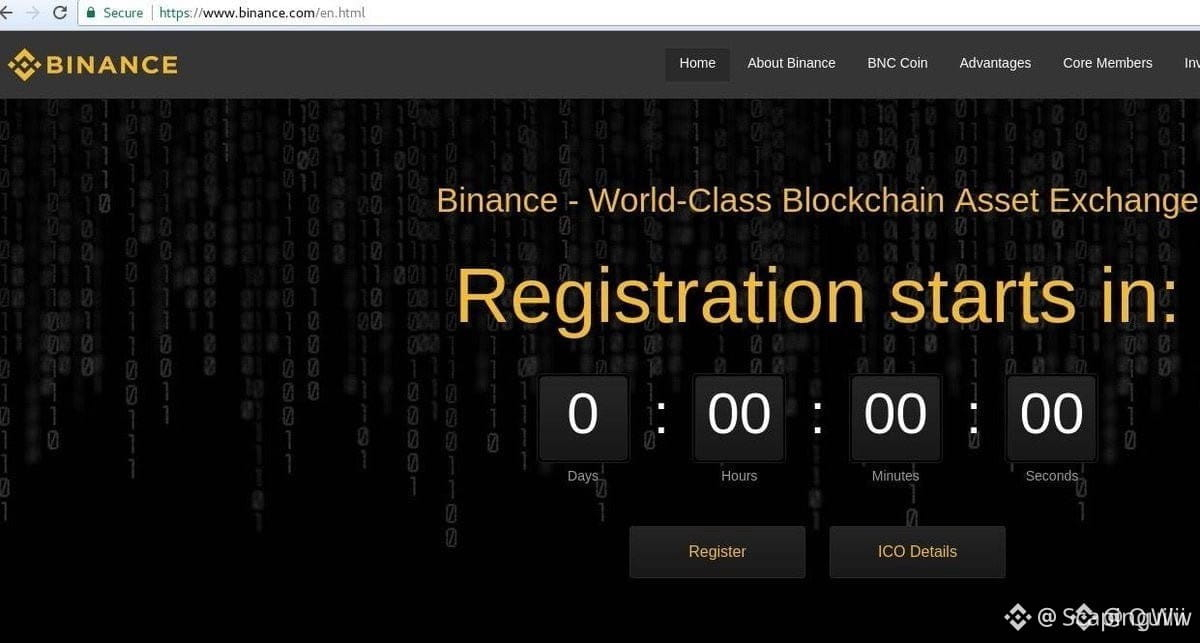
FROM A $0.10 ICO TO GLOBAL MARKET LEADERSHIP: THE 9-YEAR $BNB EVOLUTION 🌕 💥
📌 Back in the summer of 2017, $BNB offered early believers a seat at the table for just $0.10 to $0.15 per token during its initial raise. 📊 Nearly a decade later, that modest start has transformed into one of the most liquid assets and powerful ecosystem hubs in financial history.
💡 Reminders like this prove that generational market shifts are forged through full cycles of infrastructure building and relentless conviction. 💬 Were you around during the early $BNB accumulation days, or did you catch the wave later in the cycle? 👇
⚠️ Not financial advice. Always manage your risk. 🛡️
🏷️ #BNB #Altcoins #CryptoHistory #BNBChain
💎 🚀
FROM A $0.10 ICO TO GLOBAL MARKET LEADERSHIP: THE 9-YEAR $BNB EVOLUTION 🌕 💥
📌 Back in the summer of 2017, $BNB offered early believers a seat at the table for just $0.10 to $0.15 per token during its initial raise. 📊 Nearly a decade later, that modest start has transformed into one of the most liquid assets and powerful ecosystem hubs in financial history.
💡 Reminders like this prove that generational market shifts are forged through full cycles of infrastructure building and relentless conviction. 💬 Were you around during the early $BNB accumulation days, or did you catch the wave later in the cycle? 👇
⚠️ Not financial advice. Always manage your risk. 🛡️
🏷️ #BNB #Altcoins #CryptoHistory #BNBChain
💎 🚀
📌 Back in the summer of 2017, $BNB offered early believers a seat at the table for just $0.10 to $0.15 per token during its initial raise. 📊 Nearly a decade later, that modest start has transformed into one of the most liquid assets and powerful ecosystem hubs in financial history.
💡 Reminders like this prove that generational market shifts are forged through full cycles of infrastructure building and relentless conviction. 💬 Were you around during the early $BNB accumulation days, or did you catch the wave later in the cycle? 👇
⚠️ Not financial advice. Always manage your risk. 🛡️
🏷️ #BNB #Altcoins #CryptoHistory #BNBChain
💎 🚀
13

·
--
ສັນຍານກະທິງ
TWO PIZZAS FOR 10,000 BTC: BITCOIN MAKES HISTORY!
Imagine paying 10,000 Bitcoin for two pizzas. In 2010, that was worth roughly $41.
On May 18, Florida programmer Laszlo Hanyecz offered 10,000 BTC to anyone willing to deliver two large pizzas.
Four days later, Jeremy Sturdivant, known online as "jercos," arranged the order from Papa John's and received the Bitcoin.
May 22, 2010, became Bitcoin Pizza Day.
The remarkable part? The restaurant didn't accept Bitcoin directly. Another person paid for the pizzas and accepted BTC in return.
At the time, each Bitcoin was worth approximately $0.0041. What looked like an ordinary dinner became a milestone in cryptocurrency history.
MY FINAL TAKE
This wasn't simply an expensive meal. It demonstrated that Bitcoin could be exchanged for something tangible, helping establish its usefulness beyond mining and transfers.
Today, Bitcoin's payment utility, adoption and long-term value remain important subjects of debate.
Was spending 10,000 BTC on pizza a costly mistake or a necessary milestone in Bitcoin's history?
#Bitcoin #CryptoHistory
$BTC
{spot}(BTCUSDT)
TWO PIZZAS FOR 10,000 BTC: BITCOIN MAKES HISTORY!
Imagine paying 10,000 Bitcoin for two pizzas. In 2010, that was worth roughly $41.
On May 18, Florida programmer Laszlo Hanyecz offered 10,000 BTC to anyone willing to deliver two large pizzas.
Four days later, Jeremy Sturdivant, known online as "jercos," arranged the order from Papa John's and received the Bitcoin.
May 22, 2010, became Bitcoin Pizza Day.
The remarkable part? The restaurant didn't accept Bitcoin directly. Another person paid for the pizzas and accepted BTC in return.
At the time, each Bitcoin was worth approximately $0.0041. What looked like an ordinary dinner became a milestone in cryptocurrency history.
MY FINAL TAKE
This wasn't simply an expensive meal. It demonstrated that Bitcoin could be exchanged for something tangible, helping establish its usefulness beyond mining and transfers.
Today, Bitcoin's payment utility, adoption and long-term value remain important subjects of debate.
Was spending 10,000 BTC on pizza a costly mistake or a necessary milestone in Bitcoin's history?
#Bitcoin #CryptoHistory
$BTC
Imagine paying 10,000 Bitcoin for two pizzas. In 2010, that was worth roughly $41.
On May 18, Florida programmer Laszlo Hanyecz offered 10,000 BTC to anyone willing to deliver two large pizzas.
Four days later, Jeremy Sturdivant, known online as "jercos," arranged the order from Papa John's and received the Bitcoin.
May 22, 2010, became Bitcoin Pizza Day.
The remarkable part? The restaurant didn't accept Bitcoin directly. Another person paid for the pizzas and accepted BTC in return.
At the time, each Bitcoin was worth approximately $0.0041. What looked like an ordinary dinner became a milestone in cryptocurrency history.
MY FINAL TAKE
This wasn't simply an expensive meal. It demonstrated that Bitcoin could be exchanged for something tangible, helping establish its usefulness beyond mining and transfers.
Today, Bitcoin's payment utility, adoption and long-term value remain important subjects of debate.
Was spending 10,000 BTC on pizza a costly mistake or a necessary milestone in Bitcoin's history?
#Bitcoin #CryptoHistory
$BTC

24

·
--
Cápsula do Tempo: Onde você estava em 22 de Setembro de 2015? ⏳⏳
Olhar para o passado do mercado cripto nos dá uma perspectiva única sobre ciclos, volatilidade e, acima de tudo, resiliência.
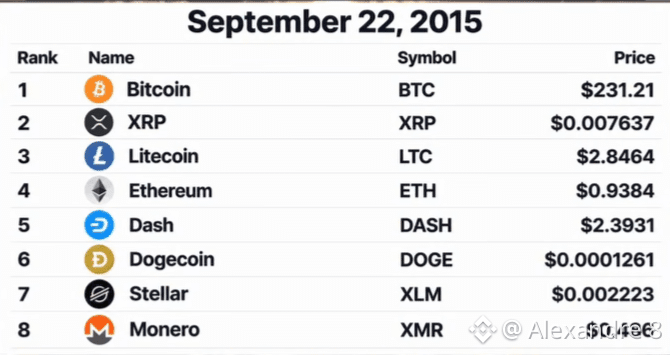
Em 22 de Setembro de 2015 — exatamente há alguns anos —, este era o Top 8 das maiores criptomoedas por capitalização de mercado:
Bitcoin ($BTC): $231,21 2. XRP ($XRP): $0,0076 3. Litecoin ($LTC): $2,84 4. Ethereum ($ETH): $0,93 5. Dash ($DASH): $2,39 6. Dogecoin ($DOGE): $0,00012 7. Stellar ($XLM): $0,0022 8. Monero ($XMR): $0,48
O que este raio-X nos ensina?
A Ascensão do Ethereum: Lançado poucos meses antes desta foto, o ETH custava menos de $1,00. Quem enxergou o potencial dos contratos inteligentes na época presenciou uma das maiores valorizações da história.
A Resiliência do Bitcoin: Comprar BTC a $231 parecia "caro" ou "arriscado" para muitos. Hoje, ele se consolidou como a principal reserva de valor digital global.
A Evoluição das Narrativas: Projetos pioneiros como Dash e Monero eram a grande febre de privacidade e pagamentos. Hoje, o mercado abriu espaço para novas teses como DePIN, Inteligência Artificial e Layer 2s.
Sobreviver aos ciclos exige paciência e visão de longo prazo.
Se pudesse voltar no tempo com apenas $100 no bolso em 2015, em qual destas moedas colocaria a sua aposta?
#Bitcoin #Ethereum #CryptoHistory
Cápsula do Tempo: Onde você estava em 22 de Setembro de 2015? ⏳⏳
Olhar para o passado do mercado cripto nos dá uma perspectiva única sobre ciclos, volatilidade e, acima de tudo, resiliência.
Em 22 de Setembro de 2015 — exatamente há alguns anos —, este era o Top 8 das maiores criptomoedas por capitalização de mercado:
Bitcoin ($BTC): $231,21 2. XRP ($XRP): $0,0076 3. Litecoin ($LTC): $2,84 4. Ethereum ($ETH): $0,93 5. Dash ($DASH): $2,39 6. Dogecoin ($DOGE): $0,00012 7. Stellar ($XLM): $0,0022 8. Monero ($XMR): $0,48
O que este raio-X nos ensina?
A Ascensão do Ethereum: Lançado poucos meses antes desta foto, o ETH custava menos de $1,00. Quem enxergou o potencial dos contratos inteligentes na época presenciou uma das maiores valorizações da história.
A Resiliência do Bitcoin: Comprar BTC a $231 parecia "caro" ou "arriscado" para muitos. Hoje, ele se consolidou como a principal reserva de valor digital global.
A Evoluição das Narrativas: Projetos pioneiros como Dash e Monero eram a grande febre de privacidade e pagamentos. Hoje, o mercado abriu espaço para novas teses como DePIN, Inteligência Artificial e Layer 2s.
Sobreviver aos ciclos exige paciência e visão de longo prazo.
Se pudesse voltar no tempo com apenas $100 no bolso em 2015, em qual destas moedas colocaria a sua aposta?
#Bitcoin #Ethereum #CryptoHistory
Olhar para o passado do mercado cripto nos dá uma perspectiva única sobre ciclos, volatilidade e, acima de tudo, resiliência.
Em 22 de Setembro de 2015 — exatamente há alguns anos —, este era o Top 8 das maiores criptomoedas por capitalização de mercado:
Bitcoin ($BTC): $231,21 2. XRP ($XRP): $0,0076 3. Litecoin ($LTC): $2,84 4. Ethereum ($ETH): $0,93 5. Dash ($DASH): $2,39 6. Dogecoin ($DOGE): $0,00012 7. Stellar ($XLM): $0,0022 8. Monero ($XMR): $0,48
O que este raio-X nos ensina?
A Ascensão do Ethereum: Lançado poucos meses antes desta foto, o ETH custava menos de $1,00. Quem enxergou o potencial dos contratos inteligentes na época presenciou uma das maiores valorizações da história.
A Resiliência do Bitcoin: Comprar BTC a $231 parecia "caro" ou "arriscado" para muitos. Hoje, ele se consolidou como a principal reserva de valor digital global.
A Evoluição das Narrativas: Projetos pioneiros como Dash e Monero eram a grande febre de privacidade e pagamentos. Hoje, o mercado abriu espaço para novas teses como DePIN, Inteligência Artificial e Layer 2s.
Sobreviver aos ciclos exige paciência e visão de longo prazo.
Se pudesse voltar no tempo com apenas $100 no bolso em 2015, em qual destas moedas colocaria a sua aposta?
#Bitcoin #Ethereum #CryptoHistory
4
2k

Title: The $500 Million Pizza That Changed Finance Forever
On May 22, 2010, a developer named Laszlo Hanyecz made history by buying two Papa John’s pizzas for 10,000 Bitcoins.
At the time, 10,000 BTC was worth roughly $41. Today, those same Bitcoins are worth hundreds of millions of dollars!
Why does this story matter?
First Real Transaction: Before this purchase, Bitcoin was just a theoretical experiment. This moment proved that crypto could actually function as a real-world currency.
Patience & Vision: Early believers who held onto their assets (HODL) changed their financial lives forever.
#bitcoin #CryptoHistory #BTC #BinanceSquare #HoldOnTight
Title: The $500 Million Pizza That Changed Finance Forever
On May 22, 2010, a developer named Laszlo Hanyecz made history by buying two Papa John’s pizzas for 10,000 Bitcoins.
At the time, 10,000 BTC was worth roughly $41. Today, those same Bitcoins are worth hundreds of millions of dollars!
Why does this story matter?
First Real Transaction: Before this purchase, Bitcoin was just a theoretical experiment. This moment proved that crypto could actually function as a real-world currency.
Patience & Vision: Early believers who held onto their assets (HODL) changed their financial lives forever.
#bitcoin #CryptoHistory #BTC #BinanceSquare #HoldOnTight
On May 22, 2010, a developer named Laszlo Hanyecz made history by buying two Papa John’s pizzas for 10,000 Bitcoins.
At the time, 10,000 BTC was worth roughly $41. Today, those same Bitcoins are worth hundreds of millions of dollars!
Why does this story matter?
First Real Transaction: Before this purchase, Bitcoin was just a theoretical experiment. This moment proved that crypto could actually function as a real-world currency.
Patience & Vision: Early believers who held onto their assets (HODL) changed their financial lives forever.
#bitcoin #CryptoHistory #BTC #BinanceSquare #HoldOnTight
1
120

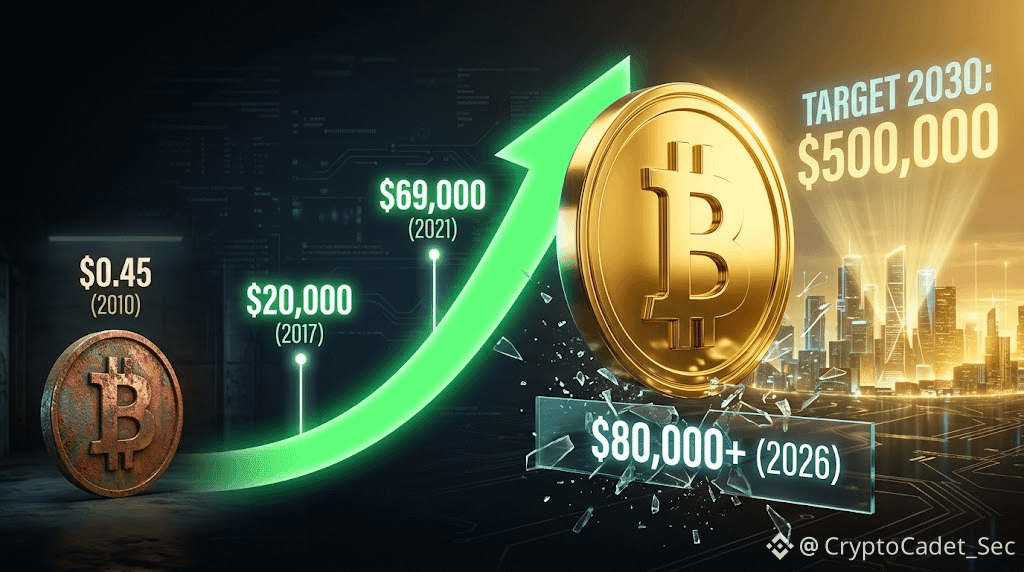
🚀 FROM $0.45 TO $80,000+: THE UNSTOPPABLE EVOLUTION OF BITCOIN! 💸📈
If you ever think you are "too late" to crypto, look closely at the macroeconomic timeline. The structural growth of digital gold over the last two decades tells a story that traditional finance simply cannot replicate.
📈 The Historic Timeline:
• 2010 Baseline: In its earliest trading days, a single $BTC was valued at a humble $0.45.
• 2013 Halving Cycle: Bitcoin witnessed its first major paradigm shift, violently breaking past $1,000 for the first time.
• 2017 Retail Boom: The world took notice as institutional infrastructure started taking shape, driving the asset to a peak near $20,000.
• 2021 Institutional Wave: Corporate balance sheets and corporate trust fueled a historic expansion, pushing Bitcoin up to $69,000.
• 2026 Macro Era: Defying legacy financial tightening, Bitcoin shattered all expectations to confidently cross the monumental $80,000 psychological milestone.
🔮 The 2030 Predictive Outlook:
As global central bank policies shift and supply inflation drops closer to absolute zero following future halving events, institutional models point toward an aggressive macro valuation expansion. Major asset management frameworks project that by 2030, $BTC is mathematically positioned to target a conservative range of $250,000 to $500,000 per coin.
The structural chart proves that volatility is simply the price you pay for generational value expansion. Plan for the long horizon.
#Bitcoin #CryptoHistory #SmartInvesting
🚀 FROM $0.45 TO $80,000+: THE UNSTOPPABLE EVOLUTION OF BITCOIN! 💸📈
If you ever think you are "too late" to crypto, look closely at the macroeconomic timeline. The structural growth of digital gold over the last two decades tells a story that traditional finance simply cannot replicate.
📈 The Historic Timeline:
• 2010 Baseline: In its earliest trading days, a single $BTC was valued at a humble $0.45.
• 2013 Halving Cycle: Bitcoin witnessed its first major paradigm shift, violently breaking past $1,000 for the first time.
• 2017 Retail Boom: The world took notice as institutional infrastructure started taking shape, driving the asset to a peak near $20,000.
• 2021 Institutional Wave: Corporate balance sheets and corporate trust fueled a historic expansion, pushing Bitcoin up to $69,000.
• 2026 Macro Era: Defying legacy financial tightening, Bitcoin shattered all expectations to confidently cross the monumental $80,000 psychological milestone.
🔮 The 2030 Predictive Outlook:
As global central bank policies shift and supply inflation drops closer to absolute zero following future halving events, institutional models point toward an aggressive macro valuation expansion. Major asset management frameworks project that by 2030, $BTC is mathematically positioned to target a conservative range of $250,000 to $500,000 per coin.
The structural chart proves that volatility is simply the price you pay for generational value expansion. Plan for the long horizon.
#Bitcoin #CryptoHistory #SmartInvesting
If you ever think you are "too late" to crypto, look closely at the macroeconomic timeline. The structural growth of digital gold over the last two decades tells a story that traditional finance simply cannot replicate.
📈 The Historic Timeline:
• 2010 Baseline: In its earliest trading days, a single $BTC was valued at a humble $0.45.
• 2013 Halving Cycle: Bitcoin witnessed its first major paradigm shift, violently breaking past $1,000 for the first time.
• 2017 Retail Boom: The world took notice as institutional infrastructure started taking shape, driving the asset to a peak near $20,000.
• 2021 Institutional Wave: Corporate balance sheets and corporate trust fueled a historic expansion, pushing Bitcoin up to $69,000.
• 2026 Macro Era: Defying legacy financial tightening, Bitcoin shattered all expectations to confidently cross the monumental $80,000 psychological milestone.
🔮 The 2030 Predictive Outlook:
As global central bank policies shift and supply inflation drops closer to absolute zero following future halving events, institutional models point toward an aggressive macro valuation expansion. Major asset management frameworks project that by 2030, $BTC is mathematically positioned to target a conservative range of $250,000 to $500,000 per coin.
The structural chart proves that volatility is simply the price you pay for generational value expansion. Plan for the long horizon.
#Bitcoin #CryptoHistory #SmartInvesting
66

·
--
ສັນຍານກະທິງ
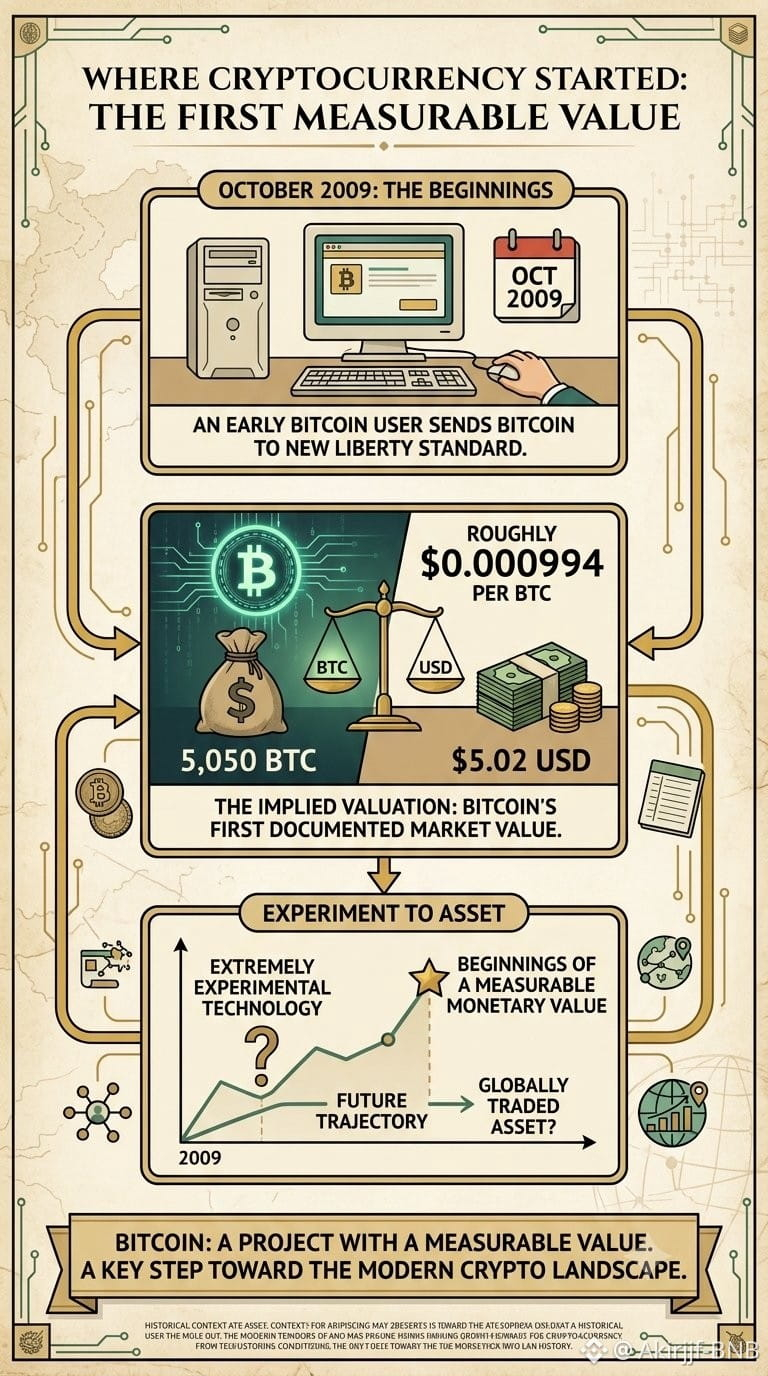
En octubre de 2009, se intercambiaron 5.050 bitcoins por solo $5.02 ($0.000994/BTC). 💰
Lo que comenzó como un proyecto experimental de código obtuvo su primer valor monetario medible—sentando las bases para la revolución financiera global de hoy. 📈
#bitcoin #CryptoHistory $BTC $ETH $BNB
{spot}(BTCUSDT)
#Blockchai
En octubre de 2009, se intercambiaron 5.050 bitcoins por solo $5.02 ($0.000994/BTC). 💰
Lo que comenzó como un proyecto experimental de código obtuvo su primer valor monetario medible—sentando las bases para la revolución financiera global de hoy. 📈
#bitcoin #CryptoHistory $BTC $ETH $BNB
#Blockchai
Lo que comenzó como un proyecto experimental de código obtuvo su primer valor monetario medible—sentando las bases para la revolución financiera global de hoy. 📈
#bitcoin #CryptoHistory $BTC $ETH $BNB
#Blockchai
1
82

·
--
Picture this: you wake up to find an anonymous wallet just created 184 billion coins out of thin air, completely breaking the core protocol rules.
Every investor knows the stomach-dropping fear of an infinite mint glitch that destroys asset value in seconds. It is the exact nightmare people experienced during the $LUNC hyper-inflation spiral, where unbacked supply crushed market confidence.
Back in August 2010, the Bitcoin network faced its most terrifying bug known as the value overflow incident. At that moment, only about 3.8 million $BTC existed in total circulation. Suddenly, block 74638 generated an output of over 184.4 billion coins, meaning one person had just printed almost 8,800 times the entire 21 million supply that will ever exist.
Unlike modern protocol disasters that drag on for months across governance forums, the early developers patched the code and rolled back the chain within five hours. The phantom coins vanished, but the event proved that even the most robust monetary design is only as strong as the code securing it.
Where do you think modern crypto networks would land if an exploit of this magnitude happened today?
#Bitcoin #CryptoHistory #Blockchain
Picture this: you wake up to find an anonymous wallet just created 184 billion coins out of thin air, completely breaking the core protocol rules.
Every investor knows the stomach-dropping fear of an infinite mint glitch that destroys asset value in seconds. It is the exact nightmare people experienced during the $LUNC hyper-inflation spiral, where unbacked supply crushed market confidence.
Back in August 2010, the Bitcoin network faced its most terrifying bug known as the value overflow incident. At that moment, only about 3.8 million $BTC existed in total circulation. Suddenly, block 74638 generated an output of over 184.4 billion coins, meaning one person had just printed almost 8,800 times the entire 21 million supply that will ever exist.
Unlike modern protocol disasters that drag on for months across governance forums, the early developers patched the code and rolled back the chain within five hours. The phantom coins vanished, but the event proved that even the most robust monetary design is only as strong as the code securing it.
Where do you think modern crypto networks would land if an exploit of this magnitude happened today?
#Bitcoin #CryptoHistory #Blockchain
Every investor knows the stomach-dropping fear of an infinite mint glitch that destroys asset value in seconds. It is the exact nightmare people experienced during the $LUNC hyper-inflation spiral, where unbacked supply crushed market confidence.
Back in August 2010, the Bitcoin network faced its most terrifying bug known as the value overflow incident. At that moment, only about 3.8 million $BTC existed in total circulation. Suddenly, block 74638 generated an output of over 184.4 billion coins, meaning one person had just printed almost 8,800 times the entire 21 million supply that will ever exist.
Unlike modern protocol disasters that drag on for months across governance forums, the early developers patched the code and rolled back the chain within five hours. The phantom coins vanished, but the event proved that even the most robust monetary design is only as strong as the code securing it.
Where do you think modern crypto networks would land if an exploit of this magnitude happened today?
#Bitcoin #CryptoHistory #Blockchain
247

everyone thinks hard caps in crypto are untouchable math from day one, but actually even the cleanest ledgers have survived insane inflation bugs.
most of us obsess over tokenomics and supply schedules, only to get rekt the second an exploit bypasses the contract limits completely.
back in 2010, when only about 3.8 million $BTC existed, a single overflow glitch allowed someone to mint 184 billion coins out of thin air. that was almost 8,800 times the entire 21 million supply cap that will ever exist, nearly destroying the network overnight before satoshi pushed an emergency patch.
ngl if an infinite mint bug hit $ETH or major alts today like that value overflow did back then, half the market cap would vanish before devs could coordinate a fix. we take bulletproof code for granted ser, but early on it was pure chaos and luck that kept the supply intact.
how do you think the market would react if a top 10 chain had an unchecked mint exploit tomorrow?
#CryptoHistory #Bitcoin #Tokenomics
everyone thinks hard caps in crypto are untouchable math from day one, but actually even the cleanest ledgers have survived insane inflation bugs.
most of us obsess over tokenomics and supply schedules, only to get rekt the second an exploit bypasses the contract limits completely.
back in 2010, when only about 3.8 million $BTC existed, a single overflow glitch allowed someone to mint 184 billion coins out of thin air. that was almost 8,800 times the entire 21 million supply cap that will ever exist, nearly destroying the network overnight before satoshi pushed an emergency patch.
ngl if an infinite mint bug hit $ETH or major alts today like that value overflow did back then, half the market cap would vanish before devs could coordinate a fix. we take bulletproof code for granted ser, but early on it was pure chaos and luck that kept the supply intact.
how do you think the market would react if a top 10 chain had an unchecked mint exploit tomorrow?
#CryptoHistory #Bitcoin #Tokenomics
most of us obsess over tokenomics and supply schedules, only to get rekt the second an exploit bypasses the contract limits completely.
back in 2010, when only about 3.8 million $BTC existed, a single overflow glitch allowed someone to mint 184 billion coins out of thin air. that was almost 8,800 times the entire 21 million supply cap that will ever exist, nearly destroying the network overnight before satoshi pushed an emergency patch.
ngl if an infinite mint bug hit $ETH or major alts today like that value overflow did back then, half the market cap would vanish before devs could coordinate a fix. we take bulletproof code for granted ser, but early on it was pure chaos and luck that kept the supply intact.
how do you think the market would react if a top 10 chain had an unchecked mint exploit tomorrow?
#CryptoHistory #Bitcoin #Tokenomics
9
In August 2010, a single transaction created 184,467,440,737 bitcoins out of nothing.
Most traders lose sleep worrying about market dumps and liquidations, but few realize that the hardest lesson in crypto is understanding that even foundational code can fail.
An integer overflow in block 74638 suddenly spawned billions of $BTC, completely breaking the 21 million supply limit. For a few tense hours, the scarcity model that underpins this entire asset class was broken.
Having seen multiple market cycles, you realize that survival comes down to how networks handle catastrophic failure. Satoshi and early developers pushed a fix within hours, resetting the chain and wiping the phantom coins away. We saw similar resilience tested years later across ecosystems like $ETH and $SOL during their own major network events.
How much protocol risk do you actually price into your long-term holdings?
#Bitcoin #CryptoHistory #Blockchain
In August 2010, a single transaction created 184,467,440,737 bitcoins out of nothing.
Most traders lose sleep worrying about market dumps and liquidations, but few realize that the hardest lesson in crypto is understanding that even foundational code can fail.
An integer overflow in block 74638 suddenly spawned billions of $BTC , completely breaking the 21 million supply limit. For a few tense hours, the scarcity model that underpins this entire asset class was broken.
Having seen multiple market cycles, you realize that survival comes down to how networks handle catastrophic failure. Satoshi and early developers pushed a fix within hours, resetting the chain and wiping the phantom coins away. We saw similar resilience tested years later across ecosystems like $ETH and $SOL during their own major network events.
How much protocol risk do you actually price into your long-term holdings?
#Bitcoin #CryptoHistory #Blockchain
Most traders lose sleep worrying about market dumps and liquidations, but few realize that the hardest lesson in crypto is understanding that even foundational code can fail.
An integer overflow in block 74638 suddenly spawned billions of $BTC , completely breaking the 21 million supply limit. For a few tense hours, the scarcity model that underpins this entire asset class was broken.
Having seen multiple market cycles, you realize that survival comes down to how networks handle catastrophic failure. Satoshi and early developers pushed a fix within hours, resetting the chain and wiping the phantom coins away. We saw similar resilience tested years later across ecosystems like $ETH and $SOL during their own major network events.
How much protocol risk do you actually price into your long-term holdings?
#Bitcoin #CryptoHistory #Blockchain
17
Picture this: a developer logs into an obscure forum on a quiet August afternoon and posts a thread titled simply "Strange block 74638."
We often trade under the illusion that blockchain code is completely infallible, but few things create more dread than realizing a hidden software glitch could break market confidence in seconds.
That unassuming forum post by Jeff Garzik documented the infamous value overflow bug, where an integer overflow generated over 184 billion $BTC out of thin air. It instantly shattered the 21 million supply cap and threatened the survival of the entire network before Satoshi and the core developers patched the chain within five hours.
When we compare that early incident to multi-million dollar smart contract exploits on $ETH today, the fundamental lesson remains identical. Code is written by humans, and true network resilience depends on how swiftly a community can detect an anomaly and coordinate a fix under pressure.
How do you think the market would react if an exploit of that scale hit a top network today?
#Bitcoin #CryptoHistory #Blockchain
Picture this: a developer logs into an obscure forum on a quiet August afternoon and posts a thread titled simply "Strange block 74638."
We often trade under the illusion that blockchain code is completely infallible, but few things create more dread than realizing a hidden software glitch could break market confidence in seconds.
That unassuming forum post by Jeff Garzik documented the infamous value overflow bug, where an integer overflow generated over 184 billion $BTC out of thin air. It instantly shattered the 21 million supply cap and threatened the survival of the entire network before Satoshi and the core developers patched the chain within five hours.
When we compare that early incident to multi-million dollar smart contract exploits on $ETH today, the fundamental lesson remains identical. Code is written by humans, and true network resilience depends on how swiftly a community can detect an anomaly and coordinate a fix under pressure.
How do you think the market would react if an exploit of that scale hit a top network today?
#Bitcoin #CryptoHistory #Blockchain
We often trade under the illusion that blockchain code is completely infallible, but few things create more dread than realizing a hidden software glitch could break market confidence in seconds.
That unassuming forum post by Jeff Garzik documented the infamous value overflow bug, where an integer overflow generated over 184 billion $BTC out of thin air. It instantly shattered the 21 million supply cap and threatened the survival of the entire network before Satoshi and the core developers patched the chain within five hours.
When we compare that early incident to multi-million dollar smart contract exploits on $ETH today, the fundamental lesson remains identical. Code is written by humans, and true network resilience depends on how swiftly a community can detect an anomaly and coordinate a fix under pressure.
How do you think the market would react if an exploit of that scale hit a top network today?
#Bitcoin #CryptoHistory #Blockchain
13

·
--
$ZEC History Lesson from 2016
I was actively trading when $ZECwas launched in 2016.
Here's something most new traders won't believe: It reached 3,000 BTC at its peak.
Yes, 3,000 BTC - not USD.
Back then we didn't have USD pairs like today, we traded alts against BTC.
And because of Zcash's slow-start mining, the initial circulating supply was extremely low, which created that historic pump.
Were you trading back then? Let's see how many OGs are still here.
#zec #CryptoHistory #Binance
$BTC
{spot}(BTCUSDT)
$ZEC
{spot}(ZECUSDT)
$ZEC History Lesson from 2016
I was actively trading when $ZECwas launched in 2016.
Here's something most new traders won't believe: It reached 3,000 BTC at its peak.
Yes, 3,000 BTC - not USD.
Back then we didn't have USD pairs like today, we traded alts against BTC.
And because of Zcash's slow-start mining, the initial circulating supply was extremely low, which created that historic pump.
Were you trading back then? Let's see how many OGs are still here.
#zec #CryptoHistory #Binance
$BTC
$ZEC
I was actively trading when $ZECwas launched in 2016.
Here's something most new traders won't believe: It reached 3,000 BTC at its peak.
Yes, 3,000 BTC - not USD.
Back then we didn't have USD pairs like today, we traded alts against BTC.
And because of Zcash's slow-start mining, the initial circulating supply was extremely low, which created that historic pump.
Were you trading back then? Let's see how many OGs are still here.
#zec #CryptoHistory #Binance
$BTC
$ZEC
330

·
--
EXPLOSIVE SCARCITY MEMORY: WHEN $ZEC TRADED AT 3,000 BTC PER TOKEN! 🦈 📊
Looking back at $ZEC market structure from 2016 reveals one of the most extreme supply-side liquidity squeezes in crypto history. 🔍 Due to the slow-start mining architecture, initial circulating supply was near zero, causing bid-ask spreads to explode across BTC pair order books.
During initial price discovery, aggressive demand met non-existent sell-side liquidity, briefly driving $ZEC to an astonishing peak of 3,000 BTC per token. 📊 It remains a textbook case of how severe order book illiquidity and structural supply scarcity distort asset valuation. 💬 Did you trade during the BTC-pair era, or did you enter after stablecoin liquidity took over? 👇
⚠️ Not financial advice. Always manage your risk. 🛡️
🏷️ #ZEC #MarketStructure #OrderFlow #CryptoHistory
🧠 🛡️
EXPLOSIVE SCARCITY MEMORY: WHEN $ZEC TRADED AT 3,000 BTC PER TOKEN! 🦈 📊
Looking back at $ZEC market structure from 2016 reveals one of the most extreme supply-side liquidity squeezes in crypto history. 🔍 Due to the slow-start mining architecture, initial circulating supply was near zero, causing bid-ask spreads to explode across BTC pair order books.
During initial price discovery, aggressive demand met non-existent sell-side liquidity, briefly driving $ZEC to an astonishing peak of 3,000 BTC per token. 📊 It remains a textbook case of how severe order book illiquidity and structural supply scarcity distort asset valuation. 💬 Did you trade during the BTC-pair era, or did you enter after stablecoin liquidity took over? 👇
⚠️ Not financial advice. Always manage your risk. 🛡️
🏷️ #ZEC #MarketStructure #OrderFlow #CryptoHistory
🧠 🛡️
Looking back at $ZEC market structure from 2016 reveals one of the most extreme supply-side liquidity squeezes in crypto history. 🔍 Due to the slow-start mining architecture, initial circulating supply was near zero, causing bid-ask spreads to explode across BTC pair order books.
During initial price discovery, aggressive demand met non-existent sell-side liquidity, briefly driving $ZEC to an astonishing peak of 3,000 BTC per token. 📊 It remains a textbook case of how severe order book illiquidity and structural supply scarcity distort asset valuation. 💬 Did you trade during the BTC-pair era, or did you enter after stablecoin liquidity took over? 👇
⚠️ Not financial advice. Always manage your risk. 🛡️
🏷️ #ZEC #MarketStructure #OrderFlow #CryptoHistory
🧠 🛡️
267
·
--
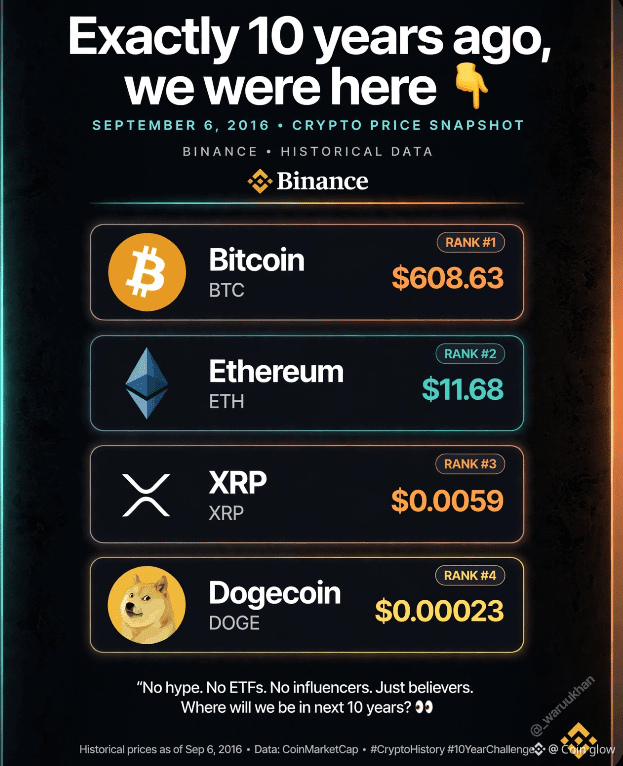
Exactly 10 years ago, we were here 👇
September 6, 2016
₿ Bitcoin: $608.63
Ξ Ethereum: $11.68
XRP: $0.0059
Ð Dogecoin: $0.00023
No hype. No ETFs. No influencers. Just believers.
Where will we be in next 10 years? 👀
#CryptoHistory #10YearChallenge #BinanceSquareFamily
$BTC $XRP $ETH
Exactly 10 years ago, we were here 👇
September 6, 2016
₿ Bitcoin: $608.63
Ξ Ethereum: $11.68
XRP: $0.0059
Ð Dogecoin: $0.00023
No hype. No ETFs. No influencers. Just believers.
Where will we be in next 10 years? 👀
#CryptoHistory #10YearChallenge #BinanceSquareFamily
$BTC $XRP $ETH
September 6, 2016
₿ Bitcoin: $608.63
Ξ Ethereum: $11.68
XRP: $0.0059
Ð Dogecoin: $0.00023
No hype. No ETFs. No influencers. Just believers.
Where will we be in next 10 years? 👀
#CryptoHistory #10YearChallenge #BinanceSquareFamily
$BTC $XRP $ETH
47

·
--
ບົດຄວາມ
Ancient $BTC Wallets Turn $120 Into $3 Million: What It Means for New InvestorsHave you ever wondered how a handful of old Bitcoin wallets can still move millions of dollars? The recent surge of activity from decade‑old wallets—moving a combined $15.7 million in just a week—shows that even the earliest adopters are still in the game, and their moves can teach us a lot about the market’s hidden dynamics.
The Concept
Bitcoin’s early days were all about experimentation and a small community of enthusiasts. Those first wallets, created in 2014 and earlier, were often left untouched, like a time capsule. When a wallet finally decides to move its funds, it can signal a shift in sentiment or a strategic sale. Think of it as a veteran investor deciding to cash out after years of holding, which can ripple through the market. #BitcoinBasics #CryptoHistory
Real‑World Example
Between August 29 and September 4, four old wallets collectively transferred $15.7 million. One notable batch was sent to Coinbase, a move that many interpret as a sale. This isn’t just a random dump; it’s a calculated exit that can influence price movements. When large holders (whales) move their coins, it often precedes market swings, giving traders a chance to adjust their strategies. The fact that these wallets are decades old adds a layer of intrigue—imagine a 2010 investor suddenly deciding to liquidate a massive position in 2026.
Takeaway
If you’re new to crypto, keep an eye on wallet activity. Tools like blockchain explorers let you track large transfers and spot potential market catalysts. Remember, the market is a living ecosystem where even the oldest players can still shape the future. Start by monitoring $BTC wallet movements and use that data to inform your own buying or selling decisions. #CryptoEducation
What do you think—will the next wave of old wallet activity signal a new trend, or is it just a one‑off event?
Ancient $BTC Wallets Turn $120 Into $3 Million: What It Means for New Investors
Have you ever wondered how a handful of old Bitcoin wallets can still move millions of dollars? The recent surge of activity from decade‑old wallets—moving a combined $15.7 million in just a week—shows that even the earliest adopters are still in the game, and their moves can teach us a lot about the market’s hidden dynamics.
The Concept
Bitcoin’s early days were all about experimentation and a small community of enthusiasts. Those first wallets, created in 2014 and earlier, were often left untouched, like a time capsule. When a wallet finally decides to move its funds, it can signal a shift in sentiment or a strategic sale. Think of it as a veteran investor deciding to cash out after years of holding, which can ripple through the market. #BitcoinBasics #CryptoHistory
Real‑World Example
Between August 29 and September 4, four old wallets collectively transferred $15.7 million. One notable batch was sent to Coinbase, a move that many interpret as a sale. This isn’t just a random dump; it’s a calculated exit that can influence price movements. When large holders (whales) move their coins, it often precedes market swings, giving traders a chance to adjust their strategies. The fact that these wallets are decades old adds a layer of intrigue—imagine a 2010 investor suddenly deciding to liquidate a massive position in 2026.
Takeaway
If you’re new to crypto, keep an eye on wallet activity. Tools like blockchain explorers let you track large transfers and spot potential market catalysts. Remember, the market is a living ecosystem where even the oldest players can still shape the future. Start by monitoring $BTC wallet movements and use that data to inform your own buying or selling decisions. #CryptoEducation
What do you think—will the next wave of old wallet activity signal a new trend, or is it just a one‑off event?
The Concept
Bitcoin’s early days were all about experimentation and a small community of enthusiasts. Those first wallets, created in 2014 and earlier, were often left untouched, like a time capsule. When a wallet finally decides to move its funds, it can signal a shift in sentiment or a strategic sale. Think of it as a veteran investor deciding to cash out after years of holding, which can ripple through the market. #BitcoinBasics #CryptoHistory
Real‑World Example
Between August 29 and September 4, four old wallets collectively transferred $15.7 million. One notable batch was sent to Coinbase, a move that many interpret as a sale. This isn’t just a random dump; it’s a calculated exit that can influence price movements. When large holders (whales) move their coins, it often precedes market swings, giving traders a chance to adjust their strategies. The fact that these wallets are decades old adds a layer of intrigue—imagine a 2010 investor suddenly deciding to liquidate a massive position in 2026.
Takeaway
If you’re new to crypto, keep an eye on wallet activity. Tools like blockchain explorers let you track large transfers and spot potential market catalysts. Remember, the market is a living ecosystem where even the oldest players can still shape the future. Start by monitoring $BTC wallet movements and use that data to inform your own buying or selling decisions. #CryptoEducation
What do you think—will the next wave of old wallet activity signal a new trend, or is it just a one‑off event?
20

·
--
Bitcoin (BTC) officially went live on the internet on January 3, 2009.
Whitepaper Release: On October 31, 2008, an anonymous individual or group using the pseudonym Satoshi Nakamoto published the Bitcoin whitepaper titled "Bitcoin: A Peer-to-Peer Electronic Cash System."
Launch & Genesis Block: On January 3, 2009, the Bitcoin network was officially launched with the mining of the Genesis Block (Block 0).
First Commercial Transaction: Although launched in 2009, Bitcoin had no active trading or market price at the time. On May 22, 2010, the first real-world commercial transaction took place when 10,000 Bitcoins were used to buy two pizzas—an event now celebrated annually as "Bitcoin Pizza Day."
#Bitcoin #BTC #SatoshiNakamoto #BitcoinHistory #CryptoHistory
#Crypto #Binance #BinanceSquare #CryptoEducation #Blockchain
Bitcoin (BTC) officially went live on the internet on January 3, 2009.
Whitepaper Release: On October 31, 2008, an anonymous individual or group using the pseudonym Satoshi Nakamoto published the Bitcoin whitepaper titled "Bitcoin: A Peer-to-Peer Electronic Cash System."
Launch & Genesis Block: On January 3, 2009, the Bitcoin network was officially launched with the mining of the Genesis Block (Block 0).
First Commercial Transaction: Although launched in 2009, Bitcoin had no active trading or market price at the time. On May 22, 2010, the first real-world commercial transaction took place when 10,000 Bitcoins were used to buy two pizzas—an event now celebrated annually as "Bitcoin Pizza Day."
#Bitcoin #BTC #SatoshiNakamoto #BitcoinHistory #CryptoHistory
#Crypto #Binance #BinanceSquare #CryptoEducation #Blockchain
Whitepaper Release: On October 31, 2008, an anonymous individual or group using the pseudonym Satoshi Nakamoto published the Bitcoin whitepaper titled "Bitcoin: A Peer-to-Peer Electronic Cash System."
Launch & Genesis Block: On January 3, 2009, the Bitcoin network was officially launched with the mining of the Genesis Block (Block 0).
First Commercial Transaction: Although launched in 2009, Bitcoin had no active trading or market price at the time. On May 22, 2010, the first real-world commercial transaction took place when 10,000 Bitcoins were used to buy two pizzas—an event now celebrated annually as "Bitcoin Pizza Day."
#Bitcoin #BTC #SatoshiNakamoto #BitcoinHistory #CryptoHistory
#Crypto #Binance #BinanceSquare #CryptoEducation #Blockchain
84

ARTICLE 1: What Was Money Before Crypto? 💰
1. What is it?
Money is anything people agree has value. It changed a lot over time.
2. Why should you care?
Crypto is just the next version of money. To understand it, we need to know where we came from.
3. The 4 stages of money:
1.Barter: Trade rice for fish. Problem: What if I want fish but you want shoes?
2. Commodity Money: Gold, salt, shells. Value was inside the item.
3. Paper Money: Governments said "this paper = value". Easier to carry.
4. Digital Money: Bank app, credit cards. Money became numbers on a screen.
4. The Problem:
Banks control digital money. They can freeze it, charge fees, and print more which causes inflation.
5. Pro Tip:
Crypto tries to fix this by making money digital, but WITHOUT a bank controlling it.
#CryptoHistory #Money #Blockchain #Web3 #BinanceSquare
ARTICLE 1: What Was Money Before Crypto? 💰
1. What is it?
Money is anything people agree has value. It changed a lot over time.
2. Why should you care?
Crypto is just the next version of money. To understand it, we need to know where we came from.
3. The 4 stages of money:
1.Barter: Trade rice for fish. Problem: What if I want fish but you want shoes?
2. Commodity Money: Gold, salt, shells. Value was inside the item.
3. Paper Money: Governments said "this paper = value". Easier to carry.
4. Digital Money: Bank app, credit cards. Money became numbers on a screen.
4. The Problem:
Banks control digital money. They can freeze it, charge fees, and print more which causes inflation.
5. Pro Tip:
Crypto tries to fix this by making money digital, but WITHOUT a bank controlling it.
#CryptoHistory #Money #Blockchain #Web3 #BinanceSquare
1. What is it?
Money is anything people agree has value. It changed a lot over time.
2. Why should you care?
Crypto is just the next version of money. To understand it, we need to know where we came from.
3. The 4 stages of money:
1.Barter: Trade rice for fish. Problem: What if I want fish but you want shoes?
2. Commodity Money: Gold, salt, shells. Value was inside the item.
3. Paper Money: Governments said "this paper = value". Easier to carry.
4. Digital Money: Bank app, credit cards. Money became numbers on a screen.
4. The Problem:
Banks control digital money. They can freeze it, charge fees, and print more which causes inflation.
5. Pro Tip:
Crypto tries to fix this by making money digital, but WITHOUT a bank controlling it.
#CryptoHistory #Money #Blockchain #Web3 #BinanceSquare

81

ບົດຄວາມ
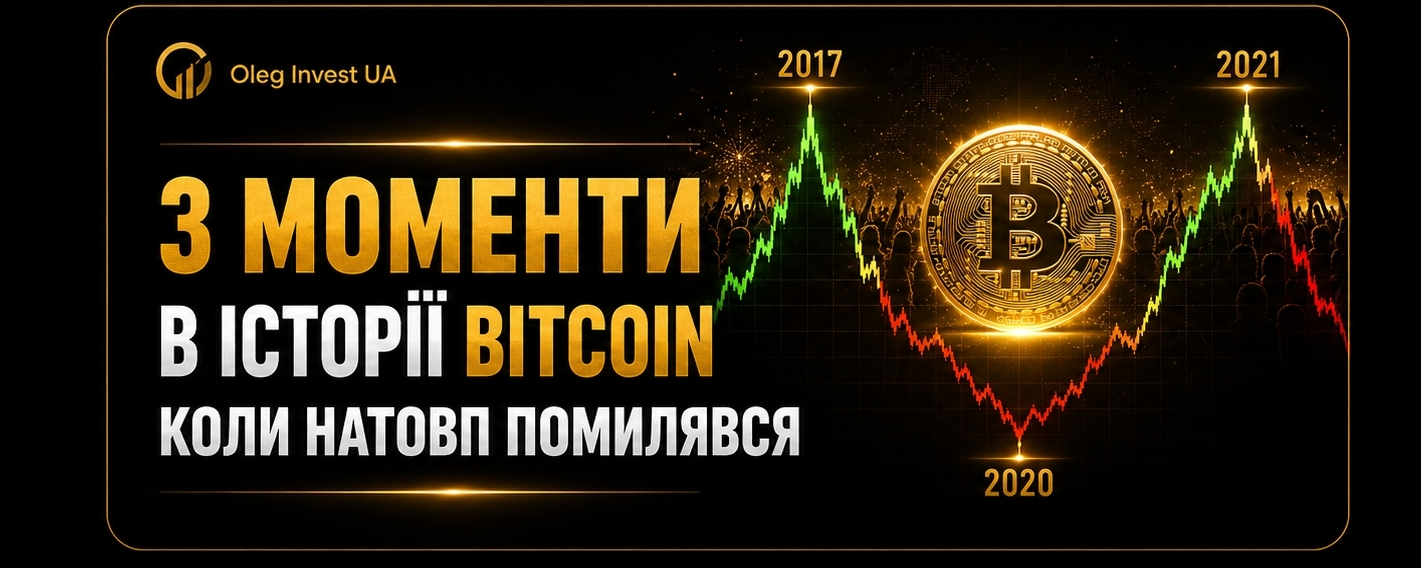
3 моменти в історії Bitcoin, коли натовп помилявсяУ крипті змінюються біржі, технології, тренди й улюблені монети. Але одна річ майже не змінюється — поведінка людей. Коли ціна росте місяцями, здається, що падіння вже неможливе. Коли ринок обвалюється, виникає протилежне відчуття: «цього разу все справді закінчилося».
🔹 Грудень 2017
$BTC майже досяг $20 000. Про Bitcoin говорили всюди, на ринок приходили нові люди, а прогнози ставали дедалі сміливішими. Логіка була простою: якщо вже $20 000, то $50 000 десь поруч.
А потім тренд змінився. Наприкінці 2018 року Bitcoin торгувався приблизно біля $3 200–3 500. На вершині люди боялися не встигнути купити, а після падіння вже боялися купувати взагалі.
🔹 Березень 2020
Пандемія COVID-19 викликала паніку на світових ринках. Bitcoin за дуже короткий час обвалився приблизно до $4–5 тис. Новини були страшними, фондові ринки падали, а майбутнє виглядало максимально невизначеним.
Саме тоді легко було сказати: «Почекаю, поки стане безпечніше». Але через рік $BTC уже торгувався в десятках тисяч доларів. Це не означає, що треба купувати кожне падіння. Але хороші ціни дуже рідко приходять разом із хорошими новинами.
🔹 Листопад 2021 — листопад 2022
У листопаді 2021 року Bitcoin встановив історичний максимум близько $69 000. Знову з’явилися прогнози про $100 000+, альткоїни росли, а ризик здавався другорядним.
Через рік, після серії проблем у криптоіндустрії та краху FTX, $BTC опускався приблизно до $15–16 тис. І знову повторилася знайома картина: біля максимуму — «дешевше вже не буде», біля мінімуму — «крипта закінчилася».
Чи означає це, що натовп завжди помиляється? Ні. І це важливо. Падіння може мати серйозну фундаментальну причину, а багато монет із минулих циклів так і не повернули свої максимуми.
Тому головний урок для мене не «купуй усе, що впало». Він інший: не плутати страх з аналізом, а ейфорію — з упевненістю.
Коли актив росте, позитивні аргументи знаходяться дуже легко. Коли падає — так само легко знаходяться причини, чому він «нікому більше не потрібен». Тому перед рішенням я намагаюся питати себе: що реально змінилося в активі? Чи проблема стосується самого проєкту, чи всього ринку? Чи купив би я його сьогодні, якби не знав своєї старої ціни входу?
2017, 2020 і 2021–2022 були абсолютно різними періодами, але поведінка людей була дуже схожою. На вершинах з’являється впевненість. На дні — страх.
І тепер цікаво: через 5 років, дивлячись на ціни 2026 року, ми скажемо «як же дешево тоді все було» чи «добре, що не купили»? 😄
#Bitcoin #Crypto #Binance #Investing #CryptoHistory
3 моменти в історії Bitcoin, коли натовп помилявся
У крипті змінюються біржі, технології, тренди й улюблені монети. Але одна річ майже не змінюється — поведінка людей. Коли ціна росте місяцями, здається, що падіння вже неможливе. Коли ринок обвалюється, виникає протилежне відчуття: «цього разу все справді закінчилося».
🔹 Грудень 2017
$BTC майже досяг $20 000. Про Bitcoin говорили всюди, на ринок приходили нові люди, а прогнози ставали дедалі сміливішими. Логіка була простою: якщо вже $20 000, то $50 000 десь поруч.
А потім тренд змінився. Наприкінці 2018 року Bitcoin торгувався приблизно біля $3 200–3 500. На вершині люди боялися не встигнути купити, а після падіння вже боялися купувати взагалі.
🔹 Березень 2020
Пандемія COVID-19 викликала паніку на світових ринках. Bitcoin за дуже короткий час обвалився приблизно до $4–5 тис. Новини були страшними, фондові ринки падали, а майбутнє виглядало максимально невизначеним.
Саме тоді легко було сказати: «Почекаю, поки стане безпечніше». Але через рік $BTC уже торгувався в десятках тисяч доларів. Це не означає, що треба купувати кожне падіння. Але хороші ціни дуже рідко приходять разом із хорошими новинами.
🔹 Листопад 2021 — листопад 2022
У листопаді 2021 року Bitcoin встановив історичний максимум близько $69 000. Знову з’явилися прогнози про $100 000+, альткоїни росли, а ризик здавався другорядним.
Через рік, після серії проблем у криптоіндустрії та краху FTX, $BTC опускався приблизно до $15–16 тис. І знову повторилася знайома картина: біля максимуму — «дешевше вже не буде», біля мінімуму — «крипта закінчилася».
Чи означає це, що натовп завжди помиляється? Ні. І це важливо. Падіння може мати серйозну фундаментальну причину, а багато монет із минулих циклів так і не повернули свої максимуми.
Тому головний урок для мене не «купуй усе, що впало». Він інший: не плутати страх з аналізом, а ейфорію — з упевненістю.
Коли актив росте, позитивні аргументи знаходяться дуже легко. Коли падає — так само легко знаходяться причини, чому він «нікому більше не потрібен». Тому перед рішенням я намагаюся питати себе: що реально змінилося в активі? Чи проблема стосується самого проєкту, чи всього ринку? Чи купив би я його сьогодні, якби не знав своєї старої ціни входу?
2017, 2020 і 2021–2022 були абсолютно різними періодами, але поведінка людей була дуже схожою. На вершинах з’являється впевненість. На дні — страх.
І тепер цікаво: через 5 років, дивлячись на ціни 2026 року, ми скажемо «як же дешево тоді все було» чи «добре, що не купили»? 😄
#Bitcoin #Crypto #Binance #Investing #CryptoHistory
🔹 Грудень 2017
$BTC майже досяг $20 000. Про Bitcoin говорили всюди, на ринок приходили нові люди, а прогнози ставали дедалі сміливішими. Логіка була простою: якщо вже $20 000, то $50 000 десь поруч.
А потім тренд змінився. Наприкінці 2018 року Bitcoin торгувався приблизно біля $3 200–3 500. На вершині люди боялися не встигнути купити, а після падіння вже боялися купувати взагалі.
🔹 Березень 2020
Пандемія COVID-19 викликала паніку на світових ринках. Bitcoin за дуже короткий час обвалився приблизно до $4–5 тис. Новини були страшними, фондові ринки падали, а майбутнє виглядало максимально невизначеним.
Саме тоді легко було сказати: «Почекаю, поки стане безпечніше». Але через рік $BTC уже торгувався в десятках тисяч доларів. Це не означає, що треба купувати кожне падіння. Але хороші ціни дуже рідко приходять разом із хорошими новинами.
🔹 Листопад 2021 — листопад 2022
У листопаді 2021 року Bitcoin встановив історичний максимум близько $69 000. Знову з’явилися прогнози про $100 000+, альткоїни росли, а ризик здавався другорядним.
Через рік, після серії проблем у криптоіндустрії та краху FTX, $BTC опускався приблизно до $15–16 тис. І знову повторилася знайома картина: біля максимуму — «дешевше вже не буде», біля мінімуму — «крипта закінчилася».
Чи означає це, що натовп завжди помиляється? Ні. І це важливо. Падіння може мати серйозну фундаментальну причину, а багато монет із минулих циклів так і не повернули свої максимуми.
Тому головний урок для мене не «купуй усе, що впало». Він інший: не плутати страх з аналізом, а ейфорію — з упевненістю.
Коли актив росте, позитивні аргументи знаходяться дуже легко. Коли падає — так само легко знаходяться причини, чому він «нікому більше не потрібен». Тому перед рішенням я намагаюся питати себе: що реально змінилося в активі? Чи проблема стосується самого проєкту, чи всього ринку? Чи купив би я його сьогодні, якби не знав своєї старої ціни входу?
2017, 2020 і 2021–2022 були абсолютно різними періодами, але поведінка людей була дуже схожою. На вершинах з’являється впевненість. На дні — страх.
І тепер цікаво: через 5 років, дивлячись на ціни 2026 року, ми скажемо «як же дешево тоді все було» чи «добре, що не купили»? 😄
#Bitcoin #Crypto #Binance #Investing #CryptoHistory
1
173

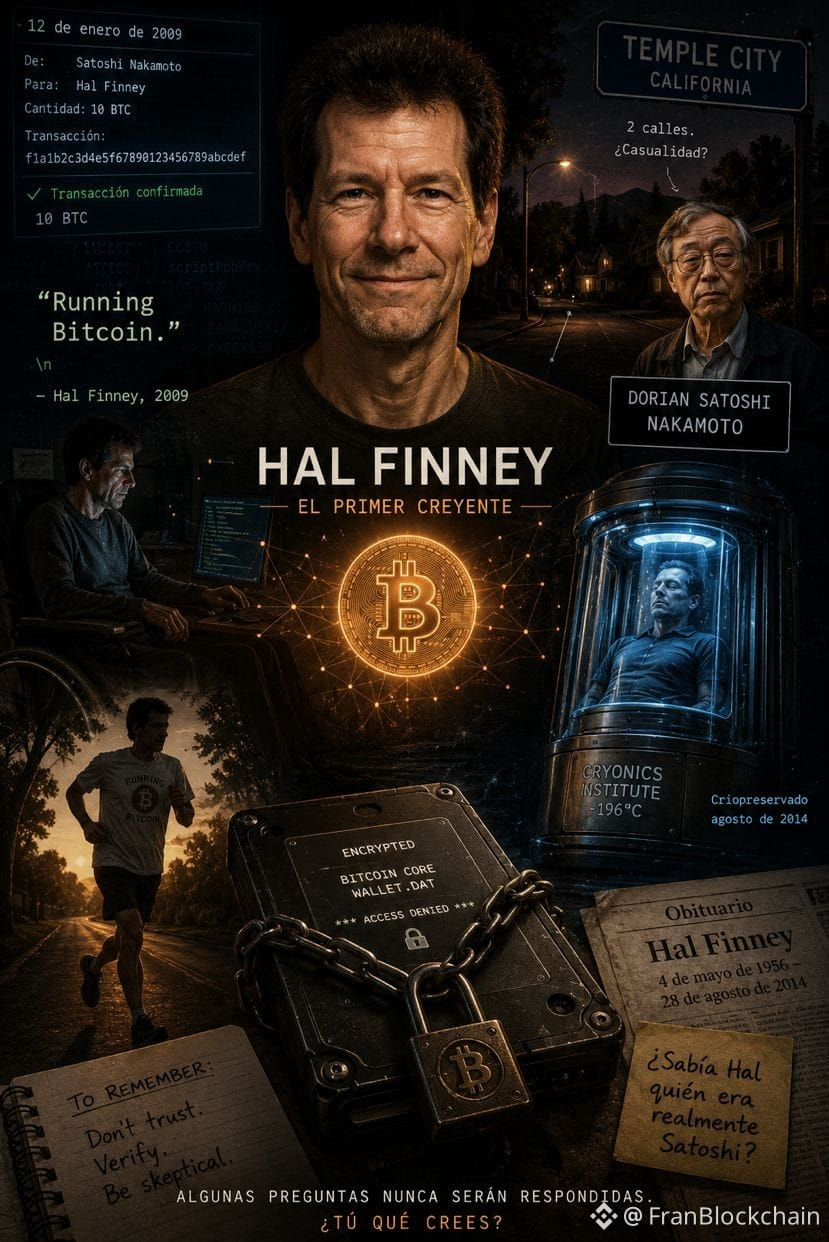
₿ 💥 Recibió la primera transacción de Bitcoin $BTC de la historia.
Vivió a dos cuadras de alguien llamado Satoshi Nakamoto.
Y murió con sus discos duros encriptados.
Su nombre era Hal Finney.
Criptógrafo. Corredor de maratones. Empleado de una empresa de videojuegos en California.
El 12 de enero de 2009, Satoshi Nakamoto le envió 10 BTC.
La primera transacción de Bitcoin en la historia del mundo.
Hal fue el primer creyente. El primero en ejecutar el nodo.
El primero en decirle a Satoshi: “esto funciona.”
En 2009 tuiteó algo que hoy parece una profecía:
“Corriendo Bitcoin.”
Dos palabras. Sin contexto. Sin fanfarria.
En 2013 le diagnosticaron ELA — esclerosis lateral amiotrófica.
Siguió programando desde su silla de ruedas.
Dictando código con los ojos cuando ya no podía mover los dedos.
Murió en agosto de 2014.
Su cuerpo fue criopreservado. Sigue congelado hoy.
Pero aquí viene lo que casi nadie sabe.
Hal Finney vivía en Temple City, California.
A dos cuadras de su casa vivía un hombre mayor, jubilado, japonés-americano.
Su nombre: Dorian Satoshi Nakamoto.
Coincidencia, dicen los que investigan el caso.
Demasiada coincidencia, dicen los otros.
Los discos duros de Hal Finney nunca fueron descifrados.
Nadie sabe qué hay dentro.
¿Sabía Hal quién era realmente Satoshi?
¿Se lo llevó a la criocámara?
Hay preguntas en crypto que el mercado nunca va a responder.
Esta es una de ellas.
¿Tú qué crees?
Fran Berlín | Instituto Blockchain.
#bitcoin #CryptoHistory #halfinney #FranBerlin #InstitutoBlockchain
{spot}(BTCUSDT)
₿ 💥 Recibió la primera transacción de Bitcoin $BTC de la historia.
Vivió a dos cuadras de alguien llamado Satoshi Nakamoto.
Y murió con sus discos duros encriptados.
Su nombre era Hal Finney.
Criptógrafo. Corredor de maratones. Empleado de una empresa de videojuegos en California.
El 12 de enero de 2009, Satoshi Nakamoto le envió 10 BTC.
La primera transacción de Bitcoin en la historia del mundo.
Hal fue el primer creyente. El primero en ejecutar el nodo.
El primero en decirle a Satoshi: “esto funciona.”
En 2009 tuiteó algo que hoy parece una profecía:
“Corriendo Bitcoin.”
Dos palabras. Sin contexto. Sin fanfarria.
En 2013 le diagnosticaron ELA — esclerosis lateral amiotrófica.
Siguió programando desde su silla de ruedas.
Dictando código con los ojos cuando ya no podía mover los dedos.
Murió en agosto de 2014.
Su cuerpo fue criopreservado. Sigue congelado hoy.
Pero aquí viene lo que casi nadie sabe.
Hal Finney vivía en Temple City, California.
A dos cuadras de su casa vivía un hombre mayor, jubilado, japonés-americano.
Su nombre: Dorian Satoshi Nakamoto.
Coincidencia, dicen los que investigan el caso.
Demasiada coincidencia, dicen los otros.
Los discos duros de Hal Finney nunca fueron descifrados.
Nadie sabe qué hay dentro.
¿Sabía Hal quién era realmente Satoshi?
¿Se lo llevó a la criocámara?
Hay preguntas en crypto que el mercado nunca va a responder.
Esta es una de ellas.
¿Tú qué crees?
Fran Berlín | Instituto Blockchain.
#bitcoin #CryptoHistory #halfinney #FranBerlin #InstitutoBlockchain
Vivió a dos cuadras de alguien llamado Satoshi Nakamoto.
Y murió con sus discos duros encriptados.
Su nombre era Hal Finney.
Criptógrafo. Corredor de maratones. Empleado de una empresa de videojuegos en California.
El 12 de enero de 2009, Satoshi Nakamoto le envió 10 BTC.
La primera transacción de Bitcoin en la historia del mundo.
Hal fue el primer creyente. El primero en ejecutar el nodo.
El primero en decirle a Satoshi: “esto funciona.”
En 2009 tuiteó algo que hoy parece una profecía:
“Corriendo Bitcoin.”
Dos palabras. Sin contexto. Sin fanfarria.
En 2013 le diagnosticaron ELA — esclerosis lateral amiotrófica.
Siguió programando desde su silla de ruedas.
Dictando código con los ojos cuando ya no podía mover los dedos.
Murió en agosto de 2014.
Su cuerpo fue criopreservado. Sigue congelado hoy.
Pero aquí viene lo que casi nadie sabe.
Hal Finney vivía en Temple City, California.
A dos cuadras de su casa vivía un hombre mayor, jubilado, japonés-americano.
Su nombre: Dorian Satoshi Nakamoto.
Coincidencia, dicen los que investigan el caso.
Demasiada coincidencia, dicen los otros.
Los discos duros de Hal Finney nunca fueron descifrados.
Nadie sabe qué hay dentro.
¿Sabía Hal quién era realmente Satoshi?
¿Se lo llevó a la criocámara?
Hay preguntas en crypto que el mercado nunca va a responder.
Esta es una de ellas.
¿Tú qué crees?
Fran Berlín | Instituto Blockchain.
#bitcoin #CryptoHistory #halfinney #FranBerlin #InstitutoBlockchain
3
2
1.9k

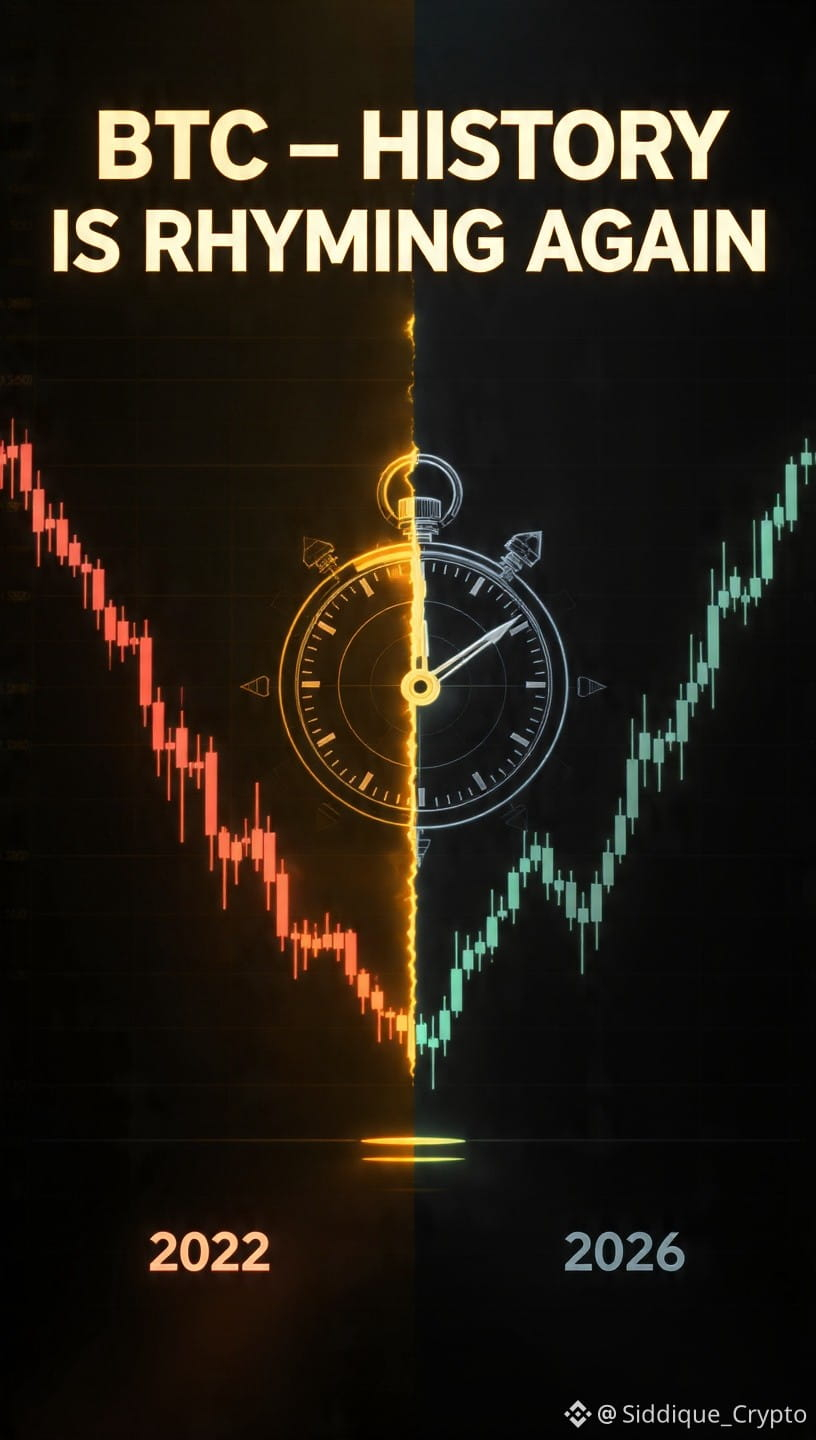
$BTC — History Is Rhyming Again 👀📊
One of the most powerful concepts in markets — history does not repeat exactly but it rhymes. And right now Bitcoin is showing a familiar pattern.
2022 Cycle:
📉 Lost key support level
💀 Massive capitulation followed
😱 Maximum fear and panic
📊 Everyone called Bitcoin dead
🚀 That exact zone became the launchpad for the next bull run
2026 Right Now:
📊 Similar consolidation pattern forming
👀 Same type of fear and uncertainty present
🔄 Identical structure playing out on the charts
⚡ Current zone mirrors previous bull run ignition point
Why cycle comparisons matter:
📊 Bitcoin has followed remarkably similar macro patterns each cycle
👥 Human psychology drives markets — fear and greed repeat
🔄 Capitulation zones historically become accumulation zones
🧠 Those who understood the pattern in 2022 were rewarded
Important reality check:
⚠️ History rhymes — it does not repeat exactly
⚠️ Macro conditions in 2026 are different from 2022
⚠️ New Fed Chair and geopolitical tensions add uncertainty
⚠️ Pattern recognition is a tool — not a guarantee
The key question:
Is 2026 consolidation zone the same ignition point that 2022 created? 👀
Time will tell — but the pattern is impossible to ignore. 📊
💬 Do you think history is repeating for BTC? Drop below!
DYOR — Not financial advice! 🙏
#bitcoin #BTC #MarketCycles #CryptoHistory #dyor
$BTC — History Is Rhyming Again 👀📊
One of the most powerful concepts in markets — history does not repeat exactly but it rhymes. And right now Bitcoin is showing a familiar pattern.
2022 Cycle:
📉 Lost key support level
💀 Massive capitulation followed
😱 Maximum fear and panic
📊 Everyone called Bitcoin dead
🚀 That exact zone became the launchpad for the next bull run
2026 Right Now:
📊 Similar consolidation pattern forming
👀 Same type of fear and uncertainty present
🔄 Identical structure playing out on the charts
⚡ Current zone mirrors previous bull run ignition point
Why cycle comparisons matter:
📊 Bitcoin has followed remarkably similar macro patterns each cycle
👥 Human psychology drives markets — fear and greed repeat
🔄 Capitulation zones historically become accumulation zones
🧠 Those who understood the pattern in 2022 were rewarded
Important reality check:
⚠️ History rhymes — it does not repeat exactly
⚠️ Macro conditions in 2026 are different from 2022
⚠️ New Fed Chair and geopolitical tensions add uncertainty
⚠️ Pattern recognition is a tool — not a guarantee
The key question:
Is 2026 consolidation zone the same ignition point that 2022 created? 👀
Time will tell — but the pattern is impossible to ignore. 📊
💬 Do you think history is repeating for BTC? Drop below!
DYOR — Not financial advice! 🙏
#bitcoin #BTC #MarketCycles #CryptoHistory #dyor
One of the most powerful concepts in markets — history does not repeat exactly but it rhymes. And right now Bitcoin is showing a familiar pattern.
2022 Cycle:
📉 Lost key support level
💀 Massive capitulation followed
😱 Maximum fear and panic
📊 Everyone called Bitcoin dead
🚀 That exact zone became the launchpad for the next bull run
2026 Right Now:
📊 Similar consolidation pattern forming
👀 Same type of fear and uncertainty present
🔄 Identical structure playing out on the charts
⚡ Current zone mirrors previous bull run ignition point
Why cycle comparisons matter:
📊 Bitcoin has followed remarkably similar macro patterns each cycle
👥 Human psychology drives markets — fear and greed repeat
🔄 Capitulation zones historically become accumulation zones
🧠 Those who understood the pattern in 2022 were rewarded
Important reality check:
⚠️ History rhymes — it does not repeat exactly
⚠️ Macro conditions in 2026 are different from 2022
⚠️ New Fed Chair and geopolitical tensions add uncertainty
⚠️ Pattern recognition is a tool — not a guarantee
The key question:
Is 2026 consolidation zone the same ignition point that 2022 created? 👀
Time will tell — but the pattern is impossible to ignore. 📊
💬 Do you think history is repeating for BTC? Drop below!
DYOR — Not financial advice! 🙏
#bitcoin #BTC #MarketCycles #CryptoHistory #dyor
140

·
--
ສັນຍານກະທິງ
We all know the legendary story: on May 22, 2010, Laszlo Hanyecz bought two pizzas for 10,000 $BTC. At the time, it was just a fun experiment worth about $41. Today? Those pizzas are worth hundreds of millions of dollars! 🤯
But Binance Pizza Day isn't just a meme—it's a reminder of how fast the crypto space evolves.
What started as a niche digital currency used to buy fast food has transformed into a global financial ecosystem. With institutional adoption rising, Layer-2 scaling, and massive ecosystems built on networks like $BNB and $SOL, the utility of crypto is expanding way beyond just a store of value.
💡 The Big Takeaway: Market cycles will always have ups and downs, but the long-term trend of adoption hasn't stopped. Every pullback in history has eventually led to new infrastructure and new highs.
Are you a HODLer waiting for the next big wave, or are you actively trading the daily ranges? Drop your strategy below! 👇
#BinancePizzaDay🍕 #CryptoHistory $BTC # #bitcoin #writetoearn
We all know the legendary story: on May 22, 2010, Laszlo Hanyecz bought two pizzas for 10,000 $BTC . At the time, it was just a fun experiment worth about $41. Today? Those pizzas are worth hundreds of millions of dollars! 🤯
But Binance Pizza Day isn't just a meme—it's a reminder of how fast the crypto space evolves.
What started as a niche digital currency used to buy fast food has transformed into a global financial ecosystem. With institutional adoption rising, Layer-2 scaling, and massive ecosystems built on networks like $BNB and $SOL, the utility of crypto is expanding way beyond just a store of value.
💡 The Big Takeaway: Market cycles will always have ups and downs, but the long-term trend of adoption hasn't stopped. Every pullback in history has eventually led to new infrastructure and new highs.
Are you a HODLer waiting for the next big wave, or are you actively trading the daily ranges? Drop your strategy below! 👇
#BinancePizzaDay🍕 #CryptoHistory $BTC # #bitcoin #writetoearn
But Binance Pizza Day isn't just a meme—it's a reminder of how fast the crypto space evolves.
What started as a niche digital currency used to buy fast food has transformed into a global financial ecosystem. With institutional adoption rising, Layer-2 scaling, and massive ecosystems built on networks like $BNB and $SOL, the utility of crypto is expanding way beyond just a store of value.
💡 The Big Takeaway: Market cycles will always have ups and downs, but the long-term trend of adoption hasn't stopped. Every pullback in history has eventually led to new infrastructure and new highs.
Are you a HODLer waiting for the next big wave, or are you actively trading the daily ranges? Drop your strategy below! 👇
#BinancePizzaDay🍕 #CryptoHistory $BTC # #bitcoin #writetoearn
1
1
162
ເຂົ້າສູ່ລະບົບເພື່ອສຳຫຼວດເນື້ອຫາເພີ່ມເຕີມ
ເຂົ້າຮ່ວມກຸ່ມຜູ້ໃຊ້ຄຣິບໂຕທົ່ວໂລກໃນ Binance Square.
⚡️ ໄດ້ຮັບຂໍ້ມູນຫຼ້າສຸດ ແລະ ທີ່ມີປະໂຫຍດກ່ຽວກັບຄຣິບໂຕ.
💬 ໄດ້ຮັບຄວາມໄວ້ວາງໃຈຈາກຕະຫຼາດແລກປ່ຽນຄຣິບໂຕທີ່ໃຫຍ່ທີ່ສຸດໃນໂລກ.
👍 ຄົ້ນຫາຂໍ້ມູນເຊີງເລິກທີ່ແທ້ຈາກນັກສ້າງທີ່ໄດ້ຮັບການຢືນຢັນ.
ອີເມວ / ເບີໂທລະສັບ
ຫົວຂໍ້ທີ່ກໍາລັງນິຍົມ
1
#ChainlinkLaunchesCCIP2WithEnterpriseVerification
3,198 views
255 ກຳລັງສົນທະນາ
2
#GoldFallsTo$4144
2,872 views
78 ກຳລັງສົນທະນາ
3
#QNTFallsOver40%FromMorningHigh
25,627 views
683 ກຳລັງສົນທະນາ
4
#USDTAdds845900HoldersInPast7Days
0 views
19 ກຳລັງສົນທະນາ
5
#KospiFalls2.7%SamsungSKHynixDropOver5%
4,886 views
306 ກຳລັງສົນທະນາ
6
#BitgetCEOConfirms$388MStolenInHack
2,042 views
32 ກຳລັງສົນທະນາ
7
#BTCFallsBelow$83000
14,931 views
125 ກຳລັງສົນທະນາ
8
#BitgetDetailsSecurityIncidentTimeline
15,394 views
454 ກຳລັງສົນທະນາ
9
#BitcoinSpotETFs$2.39BWeeklyNetInflow
6,176 views
27 ກຳລັງສົນທະນາ
10
#FedProposesPaymentStablecoinRules
45,474 views
814 ກຳລັງສົນທະນາ