

TheNewsCrypto
19.1k Жариялаулар

TheNewsCrypto
Хабарлау
Пайдаланушыны блоктау
TheNewsCrypto is an online crypto media publication that helps to educate readers about news, exchanges, and markets in the crypto and blockchain industry.
14 Жазылым
84.5K+ Жазылушылар
349.3K+ лайк басылған
Жазбалар
Мақала
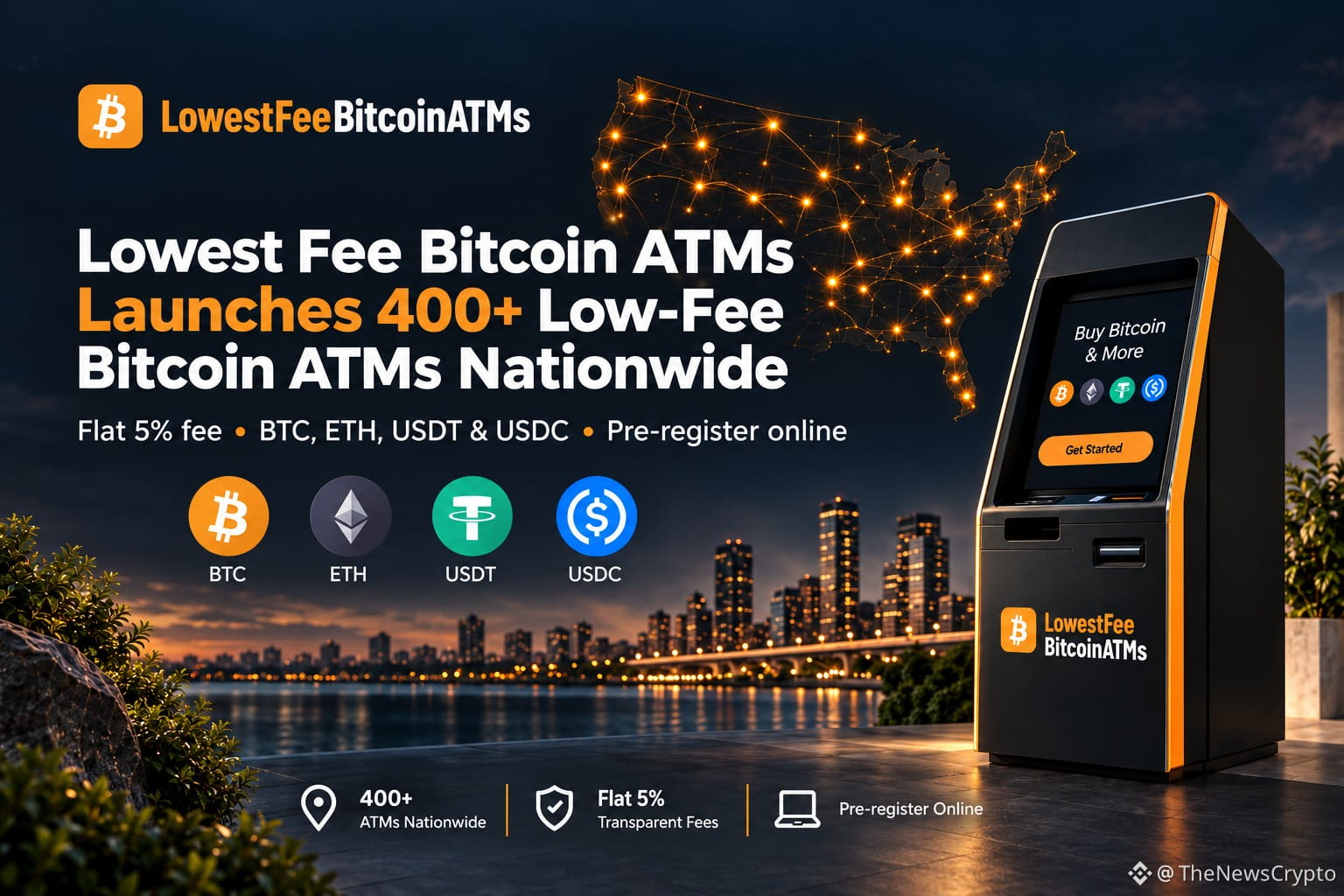
Lowest Fee Bitcoin ATMs Announces Launch of More Than 400 ATMs NationwideLas Vegas, NV, October 1st, 2026, Chainwire
Lowest Fee Bitcoin ATMs announced the launch of more than 400 cryptocurrency ATMs across the United States. The machines allow customers to purchase Bitcoin, Ethereum, USDT and USDC with cash at a stated flat 5% fee. Customers can also pre-register online before visiting an ATM.
Lowest Fee Bitcoin ATMs, a new nationwide low-fee Bitcoin ATM operator, launched today with an initial rollout of more than 400 Bitcoin ATMs across the United States, a footprint that places it amongst the largest Bitcoin ATM operators in the country on its first day. It also launched with a name that does most of the marketing department’s job for it. The brand charges a flat 5% Bitcoin ATM fee to buy Bitcoin, Ethereum, USDT or USDC with cash, displays the fee and exchange rate on screen before the customer confirms, and, as of today, lets first-time customers register online in about two minutes so they can skip onboarding at the machine entirely.
400+ Bitcoin ATM locations on day one
Most Bitcoin ATM operators in the U.S. run a few dozen machines. Lowest Fee Bitcoin ATMs opens with more than 400 Bitcoin ATM locations in the convenience stores, gas stations and shopping centers people already visit, with machines in Florida, California, Arizona and Texas among other states, as the first phase of a larger rollout.
“Four hundred machines is not a pilot. It’s a network,” said Quincy Mathis, Operations Manager at Lowest Fee Bitcoin ATMs. “We wanted to be one of the biggest Bitcoin ATM operators in the country on the day we opened, because a low fee only matters if there’s a machine near you. This is phase one.”
Buy Bitcoin, Ethereum, USDT and USDC with cash: coins, limits and one fee
Every Lowest Fee Bitcoin ATM sells Bitcoin (BTC), Ethereum (ETH), Tether (USDT) and USD Coin (USDC) for cash, all at the same 5% fee, all sent directly to the customer’s own wallet. No bank account or credit card is needed. The machines are non-custodial: the company never holds customer funds.
Bitcoin ATM daily limits are set by verification tier:
Tier 1, phone number only: up to $2,000 per day
Tier 2, government ID and Tax ID: up to $50,000 per day
Bitcoin ATM fees compared: what $1,000 buys
The typical Bitcoin ATM in the United States charges roughly 12% to 15% to buy, and some of the largest national brands charge 20% or more. Here is what that looks like when a customer walks up with $1,000 in cash:
Illustrative, based on posted percentage fees only and before exchange rate. Many operators add an exchange-rate markup on top of the posted fee; Lowest Fee Bitcoin ATMs shows both the fee and the rate on screen before a transaction is confirmed. Industry figures reflect publicly reported U.S. Bitcoin ATM fee ranges. See how the Bitcoin ATM fees compare.
At a 20% machine, one dollar in every five never becomes crypto. At Lowest Fee Bitcoin ATMs, it’s one in twenty. The name is not subtle; neither is a 20% fee.
“We wanted a rate people can look at on the receipt and feel good about, not one they have to make peace with,” said Quincy Mathis. “Five percent, shown up front, with the exchange rate right next to it. That’s the whole pitch.”
Stablecoin ATMs are becoming the way people send money overseas
A growing share of customers are using the machines as USDT and USDC ATMs, buying dollar pegged stable coins to send money to family and friends overseas and to pay suppliers and contractors abroad. A customer inserts cash, the stable coins arrive in the recipient’s wallet within minutes, and the recipient holds dollars they can keep or cash out locally. No wire counter, no multi-day wait, and no bank account needed to send.
That makes the fee gap matter more, not less. Someone sending $1,000 home once a month pays about $600 a year in fees at a 5% machine, $1,440 to $1,800 at a typical machine, and $2,400 at a 20% machine. The difference is real money to the people who can least afford to lose it, which is why low fees matter most to remittance customers.
“The people using stable coins to support family abroad are exactly the people who shouldn’t be paying 20% for the privilege,” said Quincy Mathis.
How to use a Bitcoin ATM: four steps, under two minutes, now with online pre-registration
New with today’s launch is online Bitcoin ATM pre-registration. First-time customers can pre-register online before they ever visit a machine, so the first visit is as fast as the tenth. At any of the 400+ machines, they simply enter their phone number.
Register online, once. About two minutes on a phone.
Walk up and enter your phone number. The machine recognizes you. No paperwork at the kiosk.
Pick a coin, scan your wallet, insert cash. Scan your wallet’s QR code and feed in the bills.
Check the screen and confirm. The fee and exchange rate are displayed before you press anything. Crypto lands in your wallet within minutes.
Customers who would rather register at the machine still can. It just takes a little longer, and the company would like to gently point out that it no longer has to. A full walkthrough of how a Bitcoin ATM works is on the company’s website.
Compliance, briefly
Lowest Fee Bitcoin ATMs is a FinCEN-registered money services business, and every machine operates in compliance with federal and state regulations. Customer data is encrypted, and transactions are non-custodial and irreversible. No government agency, bank, utility or tech-support line will ever ask anyone to pay them at a Bitcoin ATM; if someone does, it is a scam. Common questions are answered in the company’s Bitcoin ATM FAQ.
Find a low-fee Bitcoin ATM near you
Lowest Fee Bitcoin ATMs are live now at 400+ locations across the United States, with further phases of the rollout to follow. Customers can find a Bitcoin ATM near them and pre-register at lowestfeebitcoinatms.com. New customers can use code LOWEST at the machine for 20% off the transaction fee, which brings the fee on that $1,000 transaction down to $40.
About Lowest Fee Bitcoin ATMs
Lowest Fee Bitcoin ATMs is a nationwide low-fee Bitcoin ATM operator whose initial network of more than 400 machines ranks among the largest in the United States. Customers can buy Bitcoin, Ethereum, USDT and USDC with cash for a flat 5% fee, with the fee and exchange rate displayed on screen before every transaction. The company is a FinCEN-registered money services business. Users can learn more at lowestfeebitcoinatms.com.
Contact
Marketing DirectorBrian S. SmithLowest Fee Bitcoin ATMssupport@lowestfeebitcoinatms.com
Lowest Fee Bitcoin ATMs Announces Launch of More Than 400 ATMs Nationwide
Las Vegas, NV, October 1st, 2026, Chainwire
Lowest Fee Bitcoin ATMs announced the launch of more than 400 cryptocurrency ATMs across the United States. The machines allow customers to purchase Bitcoin, Ethereum, USDT and USDC with cash at a stated flat 5% fee. Customers can also pre-register online before visiting an ATM.
Lowest Fee Bitcoin ATMs, a new nationwide low-fee Bitcoin ATM operator, launched today with an initial rollout of more than 400 Bitcoin ATMs across the United States, a footprint that places it amongst the largest Bitcoin ATM operators in the country on its first day. It also launched with a name that does most of the marketing department’s job for it. The brand charges a flat 5% Bitcoin ATM fee to buy Bitcoin, Ethereum, USDT or USDC with cash, displays the fee and exchange rate on screen before the customer confirms, and, as of today, lets first-time customers register online in about two minutes so they can skip onboarding at the machine entirely.
400+ Bitcoin ATM locations on day one
Most Bitcoin ATM operators in the U.S. run a few dozen machines. Lowest Fee Bitcoin ATMs opens with more than 400 Bitcoin ATM locations in the convenience stores, gas stations and shopping centers people already visit, with machines in Florida, California, Arizona and Texas among other states, as the first phase of a larger rollout.
“Four hundred machines is not a pilot. It’s a network,” said Quincy Mathis, Operations Manager at Lowest Fee Bitcoin ATMs. “We wanted to be one of the biggest Bitcoin ATM operators in the country on the day we opened, because a low fee only matters if there’s a machine near you. This is phase one.”
Buy Bitcoin, Ethereum, USDT and USDC with cash: coins, limits and one fee
Every Lowest Fee Bitcoin ATM sells Bitcoin (BTC), Ethereum (ETH), Tether (USDT) and USD Coin (USDC) for cash, all at the same 5% fee, all sent directly to the customer’s own wallet. No bank account or credit card is needed. The machines are non-custodial: the company never holds customer funds.
Bitcoin ATM daily limits are set by verification tier:
Tier 1, phone number only: up to $2,000 per day
Tier 2, government ID and Tax ID: up to $50,000 per day
Bitcoin ATM fees compared: what $1,000 buys
The typical Bitcoin ATM in the United States charges roughly 12% to 15% to buy, and some of the largest national brands charge 20% or more. Here is what that looks like when a customer walks up with $1,000 in cash:
Illustrative, based on posted percentage fees only and before exchange rate. Many operators add an exchange-rate markup on top of the posted fee; Lowest Fee Bitcoin ATMs shows both the fee and the rate on screen before a transaction is confirmed. Industry figures reflect publicly reported U.S. Bitcoin ATM fee ranges. See how the Bitcoin ATM fees compare.
At a 20% machine, one dollar in every five never becomes crypto. At Lowest Fee Bitcoin ATMs, it’s one in twenty. The name is not subtle; neither is a 20% fee.
“We wanted a rate people can look at on the receipt and feel good about, not one they have to make peace with,” said Quincy Mathis. “Five percent, shown up front, with the exchange rate right next to it. That’s the whole pitch.”
Stablecoin ATMs are becoming the way people send money overseas
A growing share of customers are using the machines as USDT and USDC ATMs, buying dollar pegged stable coins to send money to family and friends overseas and to pay suppliers and contractors abroad. A customer inserts cash, the stable coins arrive in the recipient’s wallet within minutes, and the recipient holds dollars they can keep or cash out locally. No wire counter, no multi-day wait, and no bank account needed to send.
That makes the fee gap matter more, not less. Someone sending $1,000 home once a month pays about $600 a year in fees at a 5% machine, $1,440 to $1,800 at a typical machine, and $2,400 at a 20% machine. The difference is real money to the people who can least afford to lose it, which is why low fees matter most to remittance customers.
“The people using stable coins to support family abroad are exactly the people who shouldn’t be paying 20% for the privilege,” said Quincy Mathis.
How to use a Bitcoin ATM: four steps, under two minutes, now with online pre-registration
New with today’s launch is online Bitcoin ATM pre-registration. First-time customers can pre-register online before they ever visit a machine, so the first visit is as fast as the tenth. At any of the 400+ machines, they simply enter their phone number.
Register online, once. About two minutes on a phone.
Walk up and enter your phone number. The machine recognizes you. No paperwork at the kiosk.
Pick a coin, scan your wallet, insert cash. Scan your wallet’s QR code and feed in the bills.
Check the screen and confirm. The fee and exchange rate are displayed before you press anything. Crypto lands in your wallet within minutes.
Customers who would rather register at the machine still can. It just takes a little longer, and the company would like to gently point out that it no longer has to. A full walkthrough of how a Bitcoin ATM works is on the company’s website.
Compliance, briefly
Lowest Fee Bitcoin ATMs is a FinCEN-registered money services business, and every machine operates in compliance with federal and state regulations. Customer data is encrypted, and transactions are non-custodial and irreversible. No government agency, bank, utility or tech-support line will ever ask anyone to pay them at a Bitcoin ATM; if someone does, it is a scam. Common questions are answered in the company’s Bitcoin ATM FAQ.
Find a low-fee Bitcoin ATM near you
Lowest Fee Bitcoin ATMs are live now at 400+ locations across the United States, with further phases of the rollout to follow. Customers can find a Bitcoin ATM near them and pre-register at lowestfeebitcoinatms.com. New customers can use code LOWEST at the machine for 20% off the transaction fee, which brings the fee on that $1,000 transaction down to $40.
About Lowest Fee Bitcoin ATMs
Lowest Fee Bitcoin ATMs is a nationwide low-fee Bitcoin ATM operator whose initial network of more than 400 machines ranks among the largest in the United States. Customers can buy Bitcoin, Ethereum, USDT and USDC with cash for a flat 5% fee, with the fee and exchange rate displayed on screen before every transaction. The company is a FinCEN-registered money services business. Users can learn more at lowestfeebitcoinatms.com.
Contact
Marketing DirectorBrian S. SmithLowest Fee Bitcoin ATMssupport@lowestfeebitcoinatms.com
Lowest Fee Bitcoin ATMs announced the launch of more than 400 cryptocurrency ATMs across the United States. The machines allow customers to purchase Bitcoin, Ethereum, USDT and USDC with cash at a stated flat 5% fee. Customers can also pre-register online before visiting an ATM.
Lowest Fee Bitcoin ATMs, a new nationwide low-fee Bitcoin ATM operator, launched today with an initial rollout of more than 400 Bitcoin ATMs across the United States, a footprint that places it amongst the largest Bitcoin ATM operators in the country on its first day. It also launched with a name that does most of the marketing department’s job for it. The brand charges a flat 5% Bitcoin ATM fee to buy Bitcoin, Ethereum, USDT or USDC with cash, displays the fee and exchange rate on screen before the customer confirms, and, as of today, lets first-time customers register online in about two minutes so they can skip onboarding at the machine entirely.
400+ Bitcoin ATM locations on day one
Most Bitcoin ATM operators in the U.S. run a few dozen machines. Lowest Fee Bitcoin ATMs opens with more than 400 Bitcoin ATM locations in the convenience stores, gas stations and shopping centers people already visit, with machines in Florida, California, Arizona and Texas among other states, as the first phase of a larger rollout.
“Four hundred machines is not a pilot. It’s a network,” said Quincy Mathis, Operations Manager at Lowest Fee Bitcoin ATMs. “We wanted to be one of the biggest Bitcoin ATM operators in the country on the day we opened, because a low fee only matters if there’s a machine near you. This is phase one.”
Buy Bitcoin, Ethereum, USDT and USDC with cash: coins, limits and one fee
Every Lowest Fee Bitcoin ATM sells Bitcoin (BTC), Ethereum (ETH), Tether (USDT) and USD Coin (USDC) for cash, all at the same 5% fee, all sent directly to the customer’s own wallet. No bank account or credit card is needed. The machines are non-custodial: the company never holds customer funds.
Bitcoin ATM daily limits are set by verification tier:
Tier 1, phone number only: up to $2,000 per day
Tier 2, government ID and Tax ID: up to $50,000 per day
Bitcoin ATM fees compared: what $1,000 buys
The typical Bitcoin ATM in the United States charges roughly 12% to 15% to buy, and some of the largest national brands charge 20% or more. Here is what that looks like when a customer walks up with $1,000 in cash:
Illustrative, based on posted percentage fees only and before exchange rate. Many operators add an exchange-rate markup on top of the posted fee; Lowest Fee Bitcoin ATMs shows both the fee and the rate on screen before a transaction is confirmed. Industry figures reflect publicly reported U.S. Bitcoin ATM fee ranges. See how the Bitcoin ATM fees compare.
At a 20% machine, one dollar in every five never becomes crypto. At Lowest Fee Bitcoin ATMs, it’s one in twenty. The name is not subtle; neither is a 20% fee.
“We wanted a rate people can look at on the receipt and feel good about, not one they have to make peace with,” said Quincy Mathis. “Five percent, shown up front, with the exchange rate right next to it. That’s the whole pitch.”
Stablecoin ATMs are becoming the way people send money overseas
A growing share of customers are using the machines as USDT and USDC ATMs, buying dollar pegged stable coins to send money to family and friends overseas and to pay suppliers and contractors abroad. A customer inserts cash, the stable coins arrive in the recipient’s wallet within minutes, and the recipient holds dollars they can keep or cash out locally. No wire counter, no multi-day wait, and no bank account needed to send.
That makes the fee gap matter more, not less. Someone sending $1,000 home once a month pays about $600 a year in fees at a 5% machine, $1,440 to $1,800 at a typical machine, and $2,400 at a 20% machine. The difference is real money to the people who can least afford to lose it, which is why low fees matter most to remittance customers.
“The people using stable coins to support family abroad are exactly the people who shouldn’t be paying 20% for the privilege,” said Quincy Mathis.
How to use a Bitcoin ATM: four steps, under two minutes, now with online pre-registration
New with today’s launch is online Bitcoin ATM pre-registration. First-time customers can pre-register online before they ever visit a machine, so the first visit is as fast as the tenth. At any of the 400+ machines, they simply enter their phone number.
Register online, once. About two minutes on a phone.
Walk up and enter your phone number. The machine recognizes you. No paperwork at the kiosk.
Pick a coin, scan your wallet, insert cash. Scan your wallet’s QR code and feed in the bills.
Check the screen and confirm. The fee and exchange rate are displayed before you press anything. Crypto lands in your wallet within minutes.
Customers who would rather register at the machine still can. It just takes a little longer, and the company would like to gently point out that it no longer has to. A full walkthrough of how a Bitcoin ATM works is on the company’s website.
Compliance, briefly
Lowest Fee Bitcoin ATMs is a FinCEN-registered money services business, and every machine operates in compliance with federal and state regulations. Customer data is encrypted, and transactions are non-custodial and irreversible. No government agency, bank, utility or tech-support line will ever ask anyone to pay them at a Bitcoin ATM; if someone does, it is a scam. Common questions are answered in the company’s Bitcoin ATM FAQ.
Find a low-fee Bitcoin ATM near you
Lowest Fee Bitcoin ATMs are live now at 400+ locations across the United States, with further phases of the rollout to follow. Customers can find a Bitcoin ATM near them and pre-register at lowestfeebitcoinatms.com. New customers can use code LOWEST at the machine for 20% off the transaction fee, which brings the fee on that $1,000 transaction down to $40.
About Lowest Fee Bitcoin ATMs
Lowest Fee Bitcoin ATMs is a nationwide low-fee Bitcoin ATM operator whose initial network of more than 400 machines ranks among the largest in the United States. Customers can buy Bitcoin, Ethereum, USDT and USDC with cash for a flat 5% fee, with the fee and exchange rate displayed on screen before every transaction. The company is a FinCEN-registered money services business. Users can learn more at lowestfeebitcoinatms.com.
Contact
Marketing DirectorBrian S. SmithLowest Fee Bitcoin ATMssupport@lowestfeebitcoinatms.com
159
Мақала
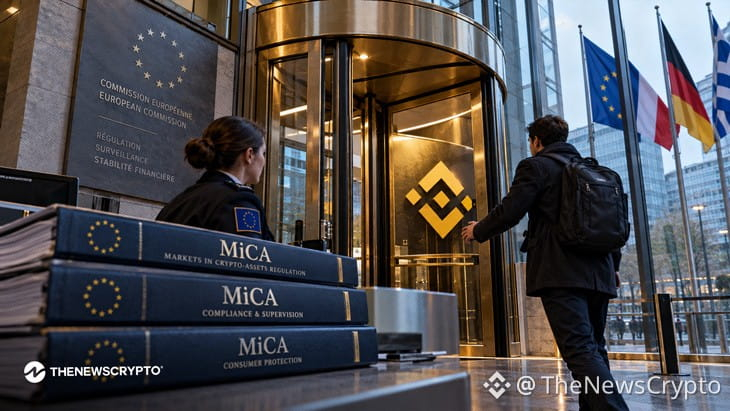
Binance Faces Fresh EU Scrutiny Over MiCA Reverse SolicitationEU regulators are examining Binance’s use of MiCA’s reverse solicitation exemption to determine whether its current approach complies with the framework.
The review follows Binance’s failure to secure a MiCA license, raising questions over its continued EU operations after the July 1 transition deadline.
Binance is facing regulatory scrutiny across Europe over its use of MiCA’s reverse solicitation exemption, a legal provision that allows non-EU companies to serve European clients, but only when those clients independently seek out the relationship without any solicitation or marketing from the firm.
The European Securities and Markets Authority, alongside national regulators in France, Germany, and Greece, is now examining whether Binance’s current service model genuinely meets those conditions.
Significantly, the review follows Binance’s failure to secure a MiCA license this summer. A setback that should have required the exchange to wind down its EU operations from July 1. It limits the activity to help existing customers transfer or sell their holdings.
What Reverse Solicitation Actually Means, and Why It Matters
Reverse solicitation became prominent in Europe after Brexit, when UK-based firms tried to use it to continue serving EU clients without separate licensing. The provision is narrow by design. ESMA said the exemption should be regarded as the exception and not be used to circumvent MiCA requirements. Moreover, crypto firms cannot simply claim it; clear requirements and guidelines must be met.
Binance’s position is that it operates under reverse solicitation in EU countries where it holds no local licence, with customers onboarding of their own volition. Its Abu Dhabi-regulated entity, active since December 2025, serves traders outside countries where local licences previously existed.
Local licences in France, Spain, and Poland have since lapsed under the MiCA regime. In addition, Binance said it complies with applicable regulatory requirements and is actively working toward MiCA authorisation. That process is still ongoing.
What Enforcement Could Look Like?
If regulators conclude that Binance’s use of the exemption doesn’t hold up, enforcement action, including fines, could result. Binance is not the only firm under review; smaller platforms are also being examined.
This is not Binance’s first significant regulatory confrontation. The exchange paid a record $4.3 billion fine in the US in 2023. Also pleaded guilty to criminal charges related to money laundering and breaching international financial sanctions.
For the broader crypto market, this probe adds another layer of regulatory uncertainty in one of the world’s largest trading regions. If enforcement action follows and Binance faces restrictions on EU operations, liquidity and trading volume across European markets could take a meaningful hit. Particularly for retail traders who rely on Binance as their primary platform.
Crypto Market Highlights
MetaMask Staking Begins Lido Validator Exit After Security Incident
Binance Faces Fresh EU Scrutiny Over MiCA Reverse Solicitation
EU regulators are examining Binance’s use of MiCA’s reverse solicitation exemption to determine whether its current approach complies with the framework.
The review follows Binance’s failure to secure a MiCA license, raising questions over its continued EU operations after the July 1 transition deadline.
Binance is facing regulatory scrutiny across Europe over its use of MiCA’s reverse solicitation exemption, a legal provision that allows non-EU companies to serve European clients, but only when those clients independently seek out the relationship without any solicitation or marketing from the firm.
The European Securities and Markets Authority, alongside national regulators in France, Germany, and Greece, is now examining whether Binance’s current service model genuinely meets those conditions.
Significantly, the review follows Binance’s failure to secure a MiCA license this summer. A setback that should have required the exchange to wind down its EU operations from July 1. It limits the activity to help existing customers transfer or sell their holdings.
What Reverse Solicitation Actually Means, and Why It Matters
Reverse solicitation became prominent in Europe after Brexit, when UK-based firms tried to use it to continue serving EU clients without separate licensing. The provision is narrow by design. ESMA said the exemption should be regarded as the exception and not be used to circumvent MiCA requirements. Moreover, crypto firms cannot simply claim it; clear requirements and guidelines must be met.
Binance’s position is that it operates under reverse solicitation in EU countries where it holds no local licence, with customers onboarding of their own volition. Its Abu Dhabi-regulated entity, active since December 2025, serves traders outside countries where local licences previously existed.
Local licences in France, Spain, and Poland have since lapsed under the MiCA regime. In addition, Binance said it complies with applicable regulatory requirements and is actively working toward MiCA authorisation. That process is still ongoing.
What Enforcement Could Look Like?
If regulators conclude that Binance’s use of the exemption doesn’t hold up, enforcement action, including fines, could result. Binance is not the only firm under review; smaller platforms are also being examined.
This is not Binance’s first significant regulatory confrontation. The exchange paid a record $4.3 billion fine in the US in 2023. Also pleaded guilty to criminal charges related to money laundering and breaching international financial sanctions.
For the broader crypto market, this probe adds another layer of regulatory uncertainty in one of the world’s largest trading regions. If enforcement action follows and Binance faces restrictions on EU operations, liquidity and trading volume across European markets could take a meaningful hit. Particularly for retail traders who rely on Binance as their primary platform.
Crypto Market Highlights
MetaMask Staking Begins Lido Validator Exit After Security Incident
The review follows Binance’s failure to secure a MiCA license, raising questions over its continued EU operations after the July 1 transition deadline.
Binance is facing regulatory scrutiny across Europe over its use of MiCA’s reverse solicitation exemption, a legal provision that allows non-EU companies to serve European clients, but only when those clients independently seek out the relationship without any solicitation or marketing from the firm.
The European Securities and Markets Authority, alongside national regulators in France, Germany, and Greece, is now examining whether Binance’s current service model genuinely meets those conditions.
Significantly, the review follows Binance’s failure to secure a MiCA license this summer. A setback that should have required the exchange to wind down its EU operations from July 1. It limits the activity to help existing customers transfer or sell their holdings.
What Reverse Solicitation Actually Means, and Why It Matters
Reverse solicitation became prominent in Europe after Brexit, when UK-based firms tried to use it to continue serving EU clients without separate licensing. The provision is narrow by design. ESMA said the exemption should be regarded as the exception and not be used to circumvent MiCA requirements. Moreover, crypto firms cannot simply claim it; clear requirements and guidelines must be met.
Binance’s position is that it operates under reverse solicitation in EU countries where it holds no local licence, with customers onboarding of their own volition. Its Abu Dhabi-regulated entity, active since December 2025, serves traders outside countries where local licences previously existed.
Local licences in France, Spain, and Poland have since lapsed under the MiCA regime. In addition, Binance said it complies with applicable regulatory requirements and is actively working toward MiCA authorisation. That process is still ongoing.
What Enforcement Could Look Like?
If regulators conclude that Binance’s use of the exemption doesn’t hold up, enforcement action, including fines, could result. Binance is not the only firm under review; smaller platforms are also being examined.
This is not Binance’s first significant regulatory confrontation. The exchange paid a record $4.3 billion fine in the US in 2023. Also pleaded guilty to criminal charges related to money laundering and breaching international financial sanctions.
For the broader crypto market, this probe adds another layer of regulatory uncertainty in one of the world’s largest trading regions. If enforcement action follows and Binance faces restrictions on EU operations, liquidity and trading volume across European markets could take a meaningful hit. Particularly for retail traders who rely on Binance as their primary platform.
Crypto Market Highlights
MetaMask Staking Begins Lido Validator Exit After Security Incident
1
73
Мақала
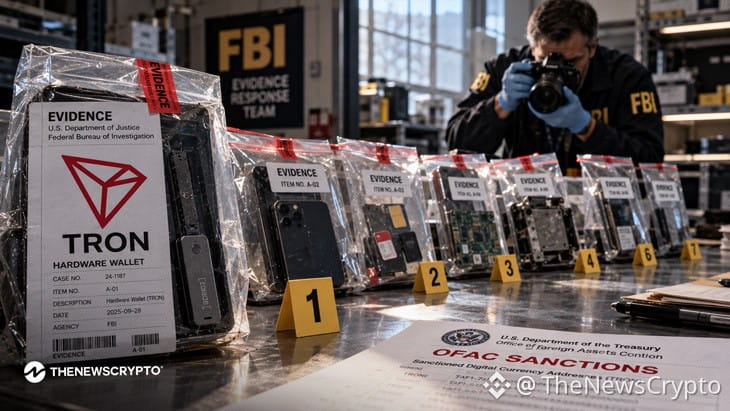
OFAC Sanctions Seven TRON Addresses Linked to Tren De Aragua ATM SchemeOFAC sanctioned seven TRON addresses linked to an alleged Tren de Aragua money-laundering network.
The seven addresses received about $6.1M in crypto inflows since March 2022, according to TRM Labs.
The U.S. Department of the Treasury’s Office of Foreign Assets Control (OFAC) has sanctioned seven TRON blockchain addresses linked to an alleged ATM jackpotting and money-laundering operation connected to Tren de Aragua (TdA).
The action, announced on September 30, designated eight individuals and two Mexico-based companies tied to the alleged scheme, while also targeting TdA leader Juan Gabriel Rivas Nunez, known as “Juancho.” The seven TRON addresses were added to OFAC’s Specially Designated Nationals and Blocked Persons List.
According to Treasury, the operation used malware to force U.S. ATMs and interactive teller machines to dispense cash without charging a customer account. The stolen money was then moved between TdA members and associates to hide its origin, including through cryptocurrency transactions.
Treasury said reported losses from alleged TdA jackpotting attacks in the U.S. reached $40.73 million across more than 1,500 attacks as of August 2025. The Justice Department has also indicted 98 people since October 21, 2025 for alleged involvement in ATM jackpotting schemes.
Seven TRON Addresses Received $6.1M Since 2022
Blockchain analytics firm TRM Labs found that the seven sanctioned TRON addresses received about $6.1 million in total inflows since March 2022. The largest share, around $2.1 million, went to an address attributed to Eric Gabriel Cardenas Arzola.
TRM said all seven addresses were deposit addresses hosted by a centralized cryptocurrency exchange. The addresses received funds from multiple sources and later transferred money to other addresses associated with TdA. TRM also cautioned that the full $6.1 million cannot necessarily be attributed to the alleged ATM jackpotting operation.
(Source: TRM Labs)
The seven addresses subsequently sent funds to other TdA-linked addresses, which in turn transferred about $35 million to a network U.S. authorities have associated with Venezuelan national Jorge Figueira, who has been charged with laundering about $1 billion. Figueira has not been convicted, and those charges remain allegations.
OFAC’s action blocks property and interests in property of the designated persons that are in the United States or under the control of U.S. persons. The designation also means U.S. persons generally cannot conduct transactions involving the blocked property unless authorized by OFAC.
OFAC Sanctions Seven TRON Addresses Linked to Tren De Aragua ATM Scheme
OFAC sanctioned seven TRON addresses linked to an alleged Tren de Aragua money-laundering network.
The seven addresses received about $6.1M in crypto inflows since March 2022, according to TRM Labs.
The U.S. Department of the Treasury’s Office of Foreign Assets Control (OFAC) has sanctioned seven TRON blockchain addresses linked to an alleged ATM jackpotting and money-laundering operation connected to Tren de Aragua (TdA).
The action, announced on September 30, designated eight individuals and two Mexico-based companies tied to the alleged scheme, while also targeting TdA leader Juan Gabriel Rivas Nunez, known as “Juancho.” The seven TRON addresses were added to OFAC’s Specially Designated Nationals and Blocked Persons List.
According to Treasury, the operation used malware to force U.S. ATMs and interactive teller machines to dispense cash without charging a customer account. The stolen money was then moved between TdA members and associates to hide its origin, including through cryptocurrency transactions.
Treasury said reported losses from alleged TdA jackpotting attacks in the U.S. reached $40.73 million across more than 1,500 attacks as of August 2025. The Justice Department has also indicted 98 people since October 21, 2025 for alleged involvement in ATM jackpotting schemes.
Seven TRON Addresses Received $6.1M Since 2022
Blockchain analytics firm TRM Labs found that the seven sanctioned TRON addresses received about $6.1 million in total inflows since March 2022. The largest share, around $2.1 million, went to an address attributed to Eric Gabriel Cardenas Arzola.
TRM said all seven addresses were deposit addresses hosted by a centralized cryptocurrency exchange. The addresses received funds from multiple sources and later transferred money to other addresses associated with TdA. TRM also cautioned that the full $6.1 million cannot necessarily be attributed to the alleged ATM jackpotting operation.
(Source: TRM Labs)
The seven addresses subsequently sent funds to other TdA-linked addresses, which in turn transferred about $35 million to a network U.S. authorities have associated with Venezuelan national Jorge Figueira, who has been charged with laundering about $1 billion. Figueira has not been convicted, and those charges remain allegations.
OFAC’s action blocks property and interests in property of the designated persons that are in the United States or under the control of U.S. persons. The designation also means U.S. persons generally cannot conduct transactions involving the blocked property unless authorized by OFAC.
The seven addresses received about $6.1M in crypto inflows since March 2022, according to TRM Labs.
The U.S. Department of the Treasury’s Office of Foreign Assets Control (OFAC) has sanctioned seven TRON blockchain addresses linked to an alleged ATM jackpotting and money-laundering operation connected to Tren de Aragua (TdA).
The action, announced on September 30, designated eight individuals and two Mexico-based companies tied to the alleged scheme, while also targeting TdA leader Juan Gabriel Rivas Nunez, known as “Juancho.” The seven TRON addresses were added to OFAC’s Specially Designated Nationals and Blocked Persons List.
According to Treasury, the operation used malware to force U.S. ATMs and interactive teller machines to dispense cash without charging a customer account. The stolen money was then moved between TdA members and associates to hide its origin, including through cryptocurrency transactions.
Treasury said reported losses from alleged TdA jackpotting attacks in the U.S. reached $40.73 million across more than 1,500 attacks as of August 2025. The Justice Department has also indicted 98 people since October 21, 2025 for alleged involvement in ATM jackpotting schemes.
Seven TRON Addresses Received $6.1M Since 2022
Blockchain analytics firm TRM Labs found that the seven sanctioned TRON addresses received about $6.1 million in total inflows since March 2022. The largest share, around $2.1 million, went to an address attributed to Eric Gabriel Cardenas Arzola.
TRM said all seven addresses were deposit addresses hosted by a centralized cryptocurrency exchange. The addresses received funds from multiple sources and later transferred money to other addresses associated with TdA. TRM also cautioned that the full $6.1 million cannot necessarily be attributed to the alleged ATM jackpotting operation.
(Source: TRM Labs)
The seven addresses subsequently sent funds to other TdA-linked addresses, which in turn transferred about $35 million to a network U.S. authorities have associated with Venezuelan national Jorge Figueira, who has been charged with laundering about $1 billion. Figueira has not been convicted, and those charges remain allegations.
OFAC’s action blocks property and interests in property of the designated persons that are in the United States or under the control of U.S. persons. The designation also means U.S. persons generally cannot conduct transactions involving the blocked property unless authorized by OFAC.
311
Мақала
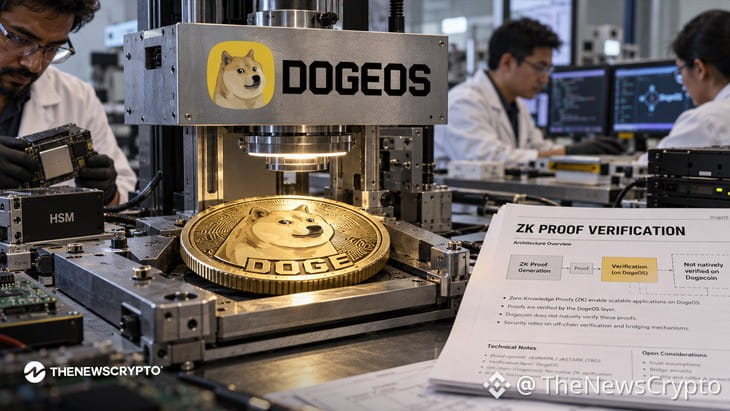
DogeOS Launches Public Testnet With EVM Smart Contracts for DogecoinDogeOS has opened its public testnet, bringing EVM-compatible smart contracts to the Dogecoin ecosystem.
DOGE will power transaction fees, while developers can build DeFi, trading, stablecoin, and gaming applications on DogeOS.
DogeOS has opened its public Chikyū testnet, bringing an EVM-compatible smart contract layer to the Dogecoin ecosystem through a zero-knowledge rollup.
The testnet went live on September 30, giving developers a place to build and test applications on top of Dogecoin without changing the network’s underlying Layer 1. DOGE is used as the native token for transaction fees on DogeOS.
The launch gives Dogecoin developers access to Ethereum-compatible smart contract infrastructure. Developers can use familiar tools including Hardhat, Foundry and Remix, while the Chikyū testnet currently operates with chain ID 6281971.
DogeOS Brings DeFi and Other Applications to Dogecoin
DogeOS is designed to support applications that are not available directly on Dogecoin’s base layer, including decentralized exchanges, lending platforms, perpetual trading, stablecoins, prediction markets and games. Several projects are already building on the testnet, including Barkswap, Superposition Finance, Derps, Split Markets and USDoge.
The network targets about 300 transactions per second, compared with roughly 30 transactions per second on Dogecoin’s Layer 1. DogeOS also uses a separate application layer so that smart contract activity can run without requiring changes to Dogecoin’s core network.
The zero-knowledge rollup is designed to settle its state to Dogecoin. However, Dogecoin does not currently verify DogeOS’s zero-knowledge proofs directly. The testnet instead uses a trusted execution environment, validators and a permissioned sequencer, with bridge state transitions requiring valid proofs along with validator and TEE signatures.
DogeOS has previously proposed a Dogecoin Core upgrade that would allow the base network to verify ZK proofs directly, but that upgrade has not yet been implemented.
For DOGE, the immediate change is therefore on the application side rather than the base blockchain. The cryptocurrency can be used to pay fees for smart contract activity, while developers get an EVM-compatible environment for building applications around Dogecoin.
DogeOS has not announced a mainnet launch date. The current public testnet is being used to allow developers to build and test applications before the project moves toward mainnet.
DOGE was trading around $0.0976 on October 1, up about 2.5% over the previous 24 hours, according to CoinMarketCap data at the time of writing.
DogeOS Launches Public Testnet With EVM Smart Contracts for Dogecoin
DogeOS has opened its public testnet, bringing EVM-compatible smart contracts to the Dogecoin ecosystem.
DOGE will power transaction fees, while developers can build DeFi, trading, stablecoin, and gaming applications on DogeOS.
DogeOS has opened its public Chikyū testnet, bringing an EVM-compatible smart contract layer to the Dogecoin ecosystem through a zero-knowledge rollup.
The testnet went live on September 30, giving developers a place to build and test applications on top of Dogecoin without changing the network’s underlying Layer 1. DOGE is used as the native token for transaction fees on DogeOS.
The launch gives Dogecoin developers access to Ethereum-compatible smart contract infrastructure. Developers can use familiar tools including Hardhat, Foundry and Remix, while the Chikyū testnet currently operates with chain ID 6281971.
DogeOS Brings DeFi and Other Applications to Dogecoin
DogeOS is designed to support applications that are not available directly on Dogecoin’s base layer, including decentralized exchanges, lending platforms, perpetual trading, stablecoins, prediction markets and games. Several projects are already building on the testnet, including Barkswap, Superposition Finance, Derps, Split Markets and USDoge.
The network targets about 300 transactions per second, compared with roughly 30 transactions per second on Dogecoin’s Layer 1. DogeOS also uses a separate application layer so that smart contract activity can run without requiring changes to Dogecoin’s core network.
The zero-knowledge rollup is designed to settle its state to Dogecoin. However, Dogecoin does not currently verify DogeOS’s zero-knowledge proofs directly. The testnet instead uses a trusted execution environment, validators and a permissioned sequencer, with bridge state transitions requiring valid proofs along with validator and TEE signatures.
DogeOS has previously proposed a Dogecoin Core upgrade that would allow the base network to verify ZK proofs directly, but that upgrade has not yet been implemented.
For DOGE, the immediate change is therefore on the application side rather than the base blockchain. The cryptocurrency can be used to pay fees for smart contract activity, while developers get an EVM-compatible environment for building applications around Dogecoin.
DogeOS has not announced a mainnet launch date. The current public testnet is being used to allow developers to build and test applications before the project moves toward mainnet.
DOGE was trading around $0.0976 on October 1, up about 2.5% over the previous 24 hours, according to CoinMarketCap data at the time of writing.
DOGE will power transaction fees, while developers can build DeFi, trading, stablecoin, and gaming applications on DogeOS.
DogeOS has opened its public Chikyū testnet, bringing an EVM-compatible smart contract layer to the Dogecoin ecosystem through a zero-knowledge rollup.
The testnet went live on September 30, giving developers a place to build and test applications on top of Dogecoin without changing the network’s underlying Layer 1. DOGE is used as the native token for transaction fees on DogeOS.
The launch gives Dogecoin developers access to Ethereum-compatible smart contract infrastructure. Developers can use familiar tools including Hardhat, Foundry and Remix, while the Chikyū testnet currently operates with chain ID 6281971.
DogeOS Brings DeFi and Other Applications to Dogecoin
DogeOS is designed to support applications that are not available directly on Dogecoin’s base layer, including decentralized exchanges, lending platforms, perpetual trading, stablecoins, prediction markets and games. Several projects are already building on the testnet, including Barkswap, Superposition Finance, Derps, Split Markets and USDoge.
The network targets about 300 transactions per second, compared with roughly 30 transactions per second on Dogecoin’s Layer 1. DogeOS also uses a separate application layer so that smart contract activity can run without requiring changes to Dogecoin’s core network.
The zero-knowledge rollup is designed to settle its state to Dogecoin. However, Dogecoin does not currently verify DogeOS’s zero-knowledge proofs directly. The testnet instead uses a trusted execution environment, validators and a permissioned sequencer, with bridge state transitions requiring valid proofs along with validator and TEE signatures.
DogeOS has previously proposed a Dogecoin Core upgrade that would allow the base network to verify ZK proofs directly, but that upgrade has not yet been implemented.
For DOGE, the immediate change is therefore on the application side rather than the base blockchain. The cryptocurrency can be used to pay fees for smart contract activity, while developers get an EVM-compatible environment for building applications around Dogecoin.
DogeOS has not announced a mainnet launch date. The current public testnet is being used to allow developers to build and test applications before the project moves toward mainnet.
DOGE was trading around $0.0976 on October 1, up about 2.5% over the previous 24 hours, according to CoinMarketCap data at the time of writing.
1
360
Мақала
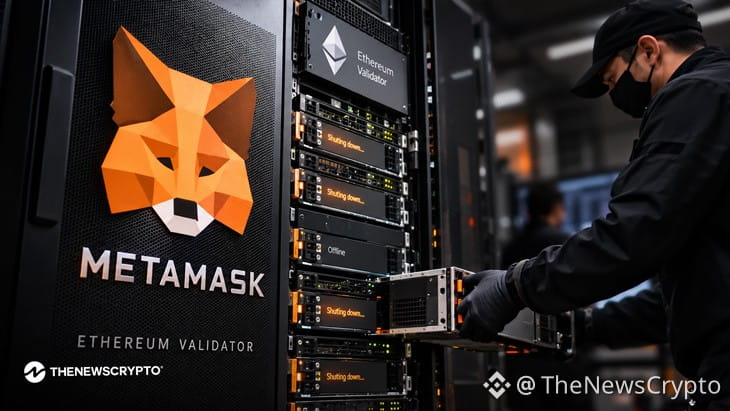
MetaMask Staking Begins Lido Validator Exit After Security IncidentMetaMask Staking has started exiting its Ethereum validators from Lido following a security incident affecting part of MetaMask’s infrastructure.
The final validators are expected to complete their exit by October 7, 2026, according to Lido.
MetaMask is responding to a security incident affecting part of its infrastructure, and while the wallet provider has been clear that no immediate threat to user wallets has been identified, the precautionary steps it’s taking are significant enough to pay attention to.
As a direct response to the incident, MetaMask Staking, formerly known as Consensys Staking, has begun exiting its Ethereum validators from the Lido protocol. The exit process is being carried out in coordination with clients, partners, and external security advisors. Lido confirmed the exits began this week, with the final validators expected to complete their exit by October 7, 2026.
The nature of the incident, its cause, and the full scope of affected infrastructure have not been disclosed. In addition, MetaMask has confirmed it is actively remediating the issue internally while working alongside external partners.
What Happens to the ETH?
The Ethereum withdrawn from MetaMask Staking’s validators will not disappear. It will likely return to the Lido protocol gradually as each validator completes the exit, withdrawal, and re-entry cycle. According to Lido Finance developer Will Shannon, that process could take up to 45 days due to an extended entry queue currently affecting the network.
Furthermore, Lido has been clear that no action is required from stETH holders. The protocol’s diverse Node Operator set, combined with its ad hoc reserve fund holding over 6,750 stETH, is designed to absorb and contain exactly this type of disruption without impacting normal protocol operations.
One important clarification MetaMask has made, its staking operations are non-custodial. Moreover, the company does not manage withdrawal keys for staked ETH on behalf of clients. The exit process is a protective measure rather than a fund recovery operation.
The Implication
A security incident at MetaMask’s infrastructure level, even one where no direct wallet threat has been confirmed, carries weight. MetaMask is one of the most widely used Ethereum wallets in the world. Any compromise of its backend infrastructure raises questions about how attackers gained access and what data or systems were exposed.
The validator exit from Lido also means foregone staking rewards and possible downtime penalties if validators are taken offline quickly to reduce network penalty risk, a financial cost the company is absorbing to protect client assets. Also, the investigation is ongoing, and the next update will matter significantly for how the market and the broader Ethereum staking community respond.
Crypto Market Highlights
HSBC RedCoin Takes Shape With Phased Stablecoin Rollout in Hong Kong
MetaMask Staking Begins Lido Validator Exit After Security Incident
MetaMask Staking has started exiting its Ethereum validators from Lido following a security incident affecting part of MetaMask’s infrastructure.
The final validators are expected to complete their exit by October 7, 2026, according to Lido.
MetaMask is responding to a security incident affecting part of its infrastructure, and while the wallet provider has been clear that no immediate threat to user wallets has been identified, the precautionary steps it’s taking are significant enough to pay attention to.
As a direct response to the incident, MetaMask Staking, formerly known as Consensys Staking, has begun exiting its Ethereum validators from the Lido protocol. The exit process is being carried out in coordination with clients, partners, and external security advisors. Lido confirmed the exits began this week, with the final validators expected to complete their exit by October 7, 2026.
The nature of the incident, its cause, and the full scope of affected infrastructure have not been disclosed. In addition, MetaMask has confirmed it is actively remediating the issue internally while working alongside external partners.
What Happens to the ETH?
The Ethereum withdrawn from MetaMask Staking’s validators will not disappear. It will likely return to the Lido protocol gradually as each validator completes the exit, withdrawal, and re-entry cycle. According to Lido Finance developer Will Shannon, that process could take up to 45 days due to an extended entry queue currently affecting the network.
Furthermore, Lido has been clear that no action is required from stETH holders. The protocol’s diverse Node Operator set, combined with its ad hoc reserve fund holding over 6,750 stETH, is designed to absorb and contain exactly this type of disruption without impacting normal protocol operations.
One important clarification MetaMask has made, its staking operations are non-custodial. Moreover, the company does not manage withdrawal keys for staked ETH on behalf of clients. The exit process is a protective measure rather than a fund recovery operation.
The Implication
A security incident at MetaMask’s infrastructure level, even one where no direct wallet threat has been confirmed, carries weight. MetaMask is one of the most widely used Ethereum wallets in the world. Any compromise of its backend infrastructure raises questions about how attackers gained access and what data or systems were exposed.
The validator exit from Lido also means foregone staking rewards and possible downtime penalties if validators are taken offline quickly to reduce network penalty risk, a financial cost the company is absorbing to protect client assets. Also, the investigation is ongoing, and the next update will matter significantly for how the market and the broader Ethereum staking community respond.
Crypto Market Highlights
HSBC RedCoin Takes Shape With Phased Stablecoin Rollout in Hong Kong
The final validators are expected to complete their exit by October 7, 2026, according to Lido.
MetaMask is responding to a security incident affecting part of its infrastructure, and while the wallet provider has been clear that no immediate threat to user wallets has been identified, the precautionary steps it’s taking are significant enough to pay attention to.
As a direct response to the incident, MetaMask Staking, formerly known as Consensys Staking, has begun exiting its Ethereum validators from the Lido protocol. The exit process is being carried out in coordination with clients, partners, and external security advisors. Lido confirmed the exits began this week, with the final validators expected to complete their exit by October 7, 2026.
The nature of the incident, its cause, and the full scope of affected infrastructure have not been disclosed. In addition, MetaMask has confirmed it is actively remediating the issue internally while working alongside external partners.
What Happens to the ETH?
The Ethereum withdrawn from MetaMask Staking’s validators will not disappear. It will likely return to the Lido protocol gradually as each validator completes the exit, withdrawal, and re-entry cycle. According to Lido Finance developer Will Shannon, that process could take up to 45 days due to an extended entry queue currently affecting the network.
Furthermore, Lido has been clear that no action is required from stETH holders. The protocol’s diverse Node Operator set, combined with its ad hoc reserve fund holding over 6,750 stETH, is designed to absorb and contain exactly this type of disruption without impacting normal protocol operations.
One important clarification MetaMask has made, its staking operations are non-custodial. Moreover, the company does not manage withdrawal keys for staked ETH on behalf of clients. The exit process is a protective measure rather than a fund recovery operation.
The Implication
A security incident at MetaMask’s infrastructure level, even one where no direct wallet threat has been confirmed, carries weight. MetaMask is one of the most widely used Ethereum wallets in the world. Any compromise of its backend infrastructure raises questions about how attackers gained access and what data or systems were exposed.
The validator exit from Lido also means foregone staking rewards and possible downtime penalties if validators are taken offline quickly to reduce network penalty risk, a financial cost the company is absorbing to protect client assets. Also, the investigation is ongoing, and the next update will matter significantly for how the market and the broader Ethereum staking community respond.
Crypto Market Highlights
HSBC RedCoin Takes Shape With Phased Stablecoin Rollout in Hong Kong
301
Мақала
Exclusive Interview: Bitcoin Is More Than an Investment, Says LABITCONF Founder Rodolfo AndragnesRodolfo Andragnes discusses Bitcoin’s evolution, growing institutional participation, self-custody, stablecoins, regulation and how digital-asset adoption is developing across Latin America.
Bitcoin has changed significantly since Rodolfo Andragnes, co-founder of ONG Bitcoin Argentina and founder of LABITCONF, first became involved with it in 2011. What was once a small community outside the traditional financial system has grown into a global market, with Bitcoin ETFs, institutional investors and governments now part of the conversation.
For Andragnes, however, Bitcoin’s importance goes beyond its price or its growing presence in traditional finance. The LABITCONF founder has spent more than a decade advocating for Bitcoin in Argentina, building communities and taking part in discussions around its use and regulation.
In an exclusive interview with TheNewsCrypto, Andragnes spoke about Bitcoin’s early years, the rise of institutional adoption, why he continues to see self-custody as important, and where he believes regulators still misunderstand the technology. He also discussed stablecoins, financial privacy, the U.S. crypto regulatory debate and what years of bringing the industry together through LABITCONF have taught him.
TheNewsCrypto (TNC): Can you tell us about your journey in Bitcoin and what initially convinced you that it could become important?
Rodolfo Andragnes (RA): Back in 1997 I’d already started a project with the same name and owned the domain bitcoins.com and I first got involved with it in 2011. What made me realize this mattered was how it reshaped the way I understood Money, Power and where value, Trust and its role really come from. They’re simple concepts on the surface, but we rarely stop to consider how powerful they are, or how an entirely new kind of society could be built around them.
TNC: You entered the Bitcoin ecosystem more than a decade ago, when it was still largely outside the mainstream. Looking back, what has changed most in the way people understand Bitcoin, and what misunderstanding still remains?
RA: People still struggle to see this as more than an investment – to grasp that it’s really about recognizing that the monetary and power system is broken, and that Bitcoin is a key part of the solution. What’s easier now, at least, is finding clear, digestible information in multiple languages to help people start down that path of discovery.
TNC: Right now, Bitcoin ETFs and institutional adoption have become two of the biggest trends in the market. Do you think this institutionalization is changing what Bitcoin represents, or simply creating new ways to access it?
RA: Not at all. Bitcoin is free for anyone to adopt. Some people adopting it that way doesn’t stop others from adopting it directly or self-custodying it themselves. It’s simply another entry point for people who aren’t quite confident to take that step, or for companies that have no other way to do it. That said, it’s obviously not the same as holding your own Bitcoin.
TNC: As more financial institutions enter the market, how important is it to preserve the ideas of self-custody, decentralization and financial independence that originally attracted people to Bitcoin?
RA: As important as ever, maybe more so. Bitcoin is the only asset in the world, and the only sound money, with guaranteed scarcity, and that awareness keeps spreading. Why would anyone hand that over to a third party and have to ask permission to use it? Real ownership only exists through self-custody.
TNC: You’ve been involved in Bitcoin advocacy in Argentina for more than a decade, including discussions with regulators. What is one thing policymakers still misunderstand about Bitcoin today?
RA: Almost everything. For starters, they assume Bitcoin and crypto are the same thing, that blockchain is inherently secure, that it’s just another financial asset, just to name a few. These are all fundamental misunderstandings. There’s no such thing as “the blockchain” – there are many different networks, each with its own risks and problems.
And unlike nearly everything else out there, Bitcoin isn’t a promise or a claim on something, the way a financial asset, a stablecoin or a tokenized instrument is – or the way yield-bearing tokens, infinitely issued coins, or entity-controlled cryptocurrencies are. So the basic concepts they work with are simply wrong, and no law or regulation to date has actually drawn that distinction.
TNC: With the CLARITY Act becoming an important part of the U.S. crypto regulatory debate, how do you think it could affect the broader crypto industry?
RA: The U.S wields enormous power globally, which can shape the decisions and regulations of other countries. The CLARITY Act would have brought more clarity to the crypto world as a whole, even though it doesn’t affect Bitcoin at all. I think it could have given a potential boost for developing projects operating under clear, favorable regulatory frameworks in the US. Stille, the CLARITY Act is just one of several steps the current US administration is trying to take in that direction.
TNC: From your experience working with regulators in Argentina, where do you think regulation can help the crypto industry, and where can it create problems?
RA: Regulation helps companies understand and define the legal and operational boundaries they need to work within, while also giving them legitimacy as recognized players and better access to relationships with banks and other institutions. That doesn’t mean regulation is automatically positive. Often, the requirements are so strict or impractical that smaller projects can’t survive them, or companies simply choose to leave the market instead.
TNC: At the same time, stablecoins have become one of the most widely used parts of the digital-asset ecosystem, particularly in emerging markets. From what you have observed in Latin America, what problems are stablecoins solving that Bitcoin alone has not solved as effectively?
RA: That’s comparing apples and oranges, as my math teacher used to say. Stablecoins are essentially a version of the dollar, gaining blockchain’s traceability, global reach and speed, but also taking on greater execution risks, control, state abuse or system failures. Bitcoin, on the other hand, definitely doesn’t try to be a dollar. It’s something fundamentally different: the only asset in the world with certainty of scarcity that’s also divisible, transferable, unforgeable and portable, all hallmarks of sound money, while also being digital and programmable. No other asset has managed to combine all of that.
TNC: You have also raised concerns about digital currencies that could give governments greater visibility or control over financial transactions. As payments become increasingly digital, how do you see the balance between financial regulation and individual privacy?
RA: Well, that path is already mapped out, and it ties into my previous answer. CBDCs and stablecoins represent that scenario, though it’s hardly unfamiliar territory, since the whole world already runs on financial transactions that can be, and often are, traced or blocked. Stablecoins and CBDCs simply take that control even further. Bitcoin, by contrast, can’t be frozen or blocked unilaterally: it’s a pseudonymous system, and it’s entirely up to each person whether to reveal their identity to states or companies.
TNC: Looking across Latin America today, which differences between countries do you think are most important for understanding how crypto adoption will develop in the region?
RA: Every country is its own world, honestly, but a few key factors stand out: how much people trust and have adopted the financial system, past experiences with inflation, the level of international payments, how heavy the tax burden is, and so on. Together, these shape how willing citizens are to use cryptocurrencies, treat Bitcoin as a store of value, or embrace circular economies.
TNC: You have spent years building communities and bringing people together through LABITCONF. Beyond the conference itself, what have you observed from watching developers, entrepreneurs, investors and policymakers interact in the same room that you would not necessarily see from following the industry online?
RA: That’s the big difference: going into meatspace – meaning meeting in person, flesh and blood – not only allows you to understand what’s happening but also builds relationships that let you find partners, save time, debate and dig deeper live on the topics you care about with others who share the same interests.
TNC: Finally, after more than a decade in Bitcoin, what do you think is the biggest question the Bitcoin and digital-asset industry still needs to answer?
RA: I´m not sure it needs an answer. I think it’s mostly a matter of time before society fully recognizes Bitcoin as the best asset for storing value, thanks to its unique qualities as money, especially heading into an AI-driven future built on abundance. As for crypto more broadly, I expect it will keep gaining ground, gradually being adopted for more and more solutions and control.
Disclaimer: The information provided in this interview article is for informational purposes only. It is not intended to be, nor should it be construed as, investment advice, financial guidance, or a recommendation to make any specific decisions. Readers are encouraged to conduct their own research.
Exclusive Interview: Bitcoin Is More Than an Investment, Says LABITCONF Founder Rodolfo Andragnes
Rodolfo Andragnes discusses Bitcoin’s evolution, growing institutional participation, self-custody, stablecoins, regulation and how digital-asset adoption is developing across Latin America.
Bitcoin has changed significantly since Rodolfo Andragnes, co-founder of ONG Bitcoin Argentina and founder of LABITCONF, first became involved with it in 2011. What was once a small community outside the traditional financial system has grown into a global market, with Bitcoin ETFs, institutional investors and governments now part of the conversation.
For Andragnes, however, Bitcoin’s importance goes beyond its price or its growing presence in traditional finance. The LABITCONF founder has spent more than a decade advocating for Bitcoin in Argentina, building communities and taking part in discussions around its use and regulation.
In an exclusive interview with TheNewsCrypto, Andragnes spoke about Bitcoin’s early years, the rise of institutional adoption, why he continues to see self-custody as important, and where he believes regulators still misunderstand the technology. He also discussed stablecoins, financial privacy, the U.S. crypto regulatory debate and what years of bringing the industry together through LABITCONF have taught him.
TheNewsCrypto (TNC): Can you tell us about your journey in Bitcoin and what initially convinced you that it could become important?
Rodolfo Andragnes (RA): Back in 1997 I’d already started a project with the same name and owned the domain bitcoins.com and I first got involved with it in 2011. What made me realize this mattered was how it reshaped the way I understood Money, Power and where value, Trust and its role really come from. They’re simple concepts on the surface, but we rarely stop to consider how powerful they are, or how an entirely new kind of society could be built around them.
TNC: You entered the Bitcoin ecosystem more than a decade ago, when it was still largely outside the mainstream. Looking back, what has changed most in the way people understand Bitcoin, and what misunderstanding still remains?
RA: People still struggle to see this as more than an investment – to grasp that it’s really about recognizing that the monetary and power system is broken, and that Bitcoin is a key part of the solution. What’s easier now, at least, is finding clear, digestible information in multiple languages to help people start down that path of discovery.
TNC: Right now, Bitcoin ETFs and institutional adoption have become two of the biggest trends in the market. Do you think this institutionalization is changing what Bitcoin represents, or simply creating new ways to access it?
RA: Not at all. Bitcoin is free for anyone to adopt. Some people adopting it that way doesn’t stop others from adopting it directly or self-custodying it themselves. It’s simply another entry point for people who aren’t quite confident to take that step, or for companies that have no other way to do it. That said, it’s obviously not the same as holding your own Bitcoin.
TNC: As more financial institutions enter the market, how important is it to preserve the ideas of self-custody, decentralization and financial independence that originally attracted people to Bitcoin?
RA: As important as ever, maybe more so. Bitcoin is the only asset in the world, and the only sound money, with guaranteed scarcity, and that awareness keeps spreading. Why would anyone hand that over to a third party and have to ask permission to use it? Real ownership only exists through self-custody.
TNC: You’ve been involved in Bitcoin advocacy in Argentina for more than a decade, including discussions with regulators. What is one thing policymakers still misunderstand about Bitcoin today?
RA: Almost everything. For starters, they assume Bitcoin and crypto are the same thing, that blockchain is inherently secure, that it’s just another financial asset, just to name a few. These are all fundamental misunderstandings. There’s no such thing as “the blockchain” – there are many different networks, each with its own risks and problems.
And unlike nearly everything else out there, Bitcoin isn’t a promise or a claim on something, the way a financial asset, a stablecoin or a tokenized instrument is – or the way yield-bearing tokens, infinitely issued coins, or entity-controlled cryptocurrencies are. So the basic concepts they work with are simply wrong, and no law or regulation to date has actually drawn that distinction.
TNC: With the CLARITY Act becoming an important part of the U.S. crypto regulatory debate, how do you think it could affect the broader crypto industry?
RA: The U.S wields enormous power globally, which can shape the decisions and regulations of other countries. The CLARITY Act would have brought more clarity to the crypto world as a whole, even though it doesn’t affect Bitcoin at all. I think it could have given a potential boost for developing projects operating under clear, favorable regulatory frameworks in the US. Stille, the CLARITY Act is just one of several steps the current US administration is trying to take in that direction.
TNC: From your experience working with regulators in Argentina, where do you think regulation can help the crypto industry, and where can it create problems?
RA: Regulation helps companies understand and define the legal and operational boundaries they need to work within, while also giving them legitimacy as recognized players and better access to relationships with banks and other institutions. That doesn’t mean regulation is automatically positive. Often, the requirements are so strict or impractical that smaller projects can’t survive them, or companies simply choose to leave the market instead.
TNC: At the same time, stablecoins have become one of the most widely used parts of the digital-asset ecosystem, particularly in emerging markets. From what you have observed in Latin America, what problems are stablecoins solving that Bitcoin alone has not solved as effectively?
RA: That’s comparing apples and oranges, as my math teacher used to say. Stablecoins are essentially a version of the dollar, gaining blockchain’s traceability, global reach and speed, but also taking on greater execution risks, control, state abuse or system failures. Bitcoin, on the other hand, definitely doesn’t try to be a dollar. It’s something fundamentally different: the only asset in the world with certainty of scarcity that’s also divisible, transferable, unforgeable and portable, all hallmarks of sound money, while also being digital and programmable. No other asset has managed to combine all of that.
TNC: You have also raised concerns about digital currencies that could give governments greater visibility or control over financial transactions. As payments become increasingly digital, how do you see the balance between financial regulation and individual privacy?
RA: Well, that path is already mapped out, and it ties into my previous answer. CBDCs and stablecoins represent that scenario, though it’s hardly unfamiliar territory, since the whole world already runs on financial transactions that can be, and often are, traced or blocked. Stablecoins and CBDCs simply take that control even further. Bitcoin, by contrast, can’t be frozen or blocked unilaterally: it’s a pseudonymous system, and it’s entirely up to each person whether to reveal their identity to states or companies.
TNC: Looking across Latin America today, which differences between countries do you think are most important for understanding how crypto adoption will develop in the region?
RA: Every country is its own world, honestly, but a few key factors stand out: how much people trust and have adopted the financial system, past experiences with inflation, the level of international payments, how heavy the tax burden is, and so on. Together, these shape how willing citizens are to use cryptocurrencies, treat Bitcoin as a store of value, or embrace circular economies.
TNC: You have spent years building communities and bringing people together through LABITCONF. Beyond the conference itself, what have you observed from watching developers, entrepreneurs, investors and policymakers interact in the same room that you would not necessarily see from following the industry online?
RA: That’s the big difference: going into meatspace – meaning meeting in person, flesh and blood – not only allows you to understand what’s happening but also builds relationships that let you find partners, save time, debate and dig deeper live on the topics you care about with others who share the same interests.
TNC: Finally, after more than a decade in Bitcoin, what do you think is the biggest question the Bitcoin and digital-asset industry still needs to answer?
RA: I´m not sure it needs an answer. I think it’s mostly a matter of time before society fully recognizes Bitcoin as the best asset for storing value, thanks to its unique qualities as money, especially heading into an AI-driven future built on abundance. As for crypto more broadly, I expect it will keep gaining ground, gradually being adopted for more and more solutions and control.
Disclaimer: The information provided in this interview article is for informational purposes only. It is not intended to be, nor should it be construed as, investment advice, financial guidance, or a recommendation to make any specific decisions. Readers are encouraged to conduct their own research.
Bitcoin has changed significantly since Rodolfo Andragnes, co-founder of ONG Bitcoin Argentina and founder of LABITCONF, first became involved with it in 2011. What was once a small community outside the traditional financial system has grown into a global market, with Bitcoin ETFs, institutional investors and governments now part of the conversation.
For Andragnes, however, Bitcoin’s importance goes beyond its price or its growing presence in traditional finance. The LABITCONF founder has spent more than a decade advocating for Bitcoin in Argentina, building communities and taking part in discussions around its use and regulation.
In an exclusive interview with TheNewsCrypto, Andragnes spoke about Bitcoin’s early years, the rise of institutional adoption, why he continues to see self-custody as important, and where he believes regulators still misunderstand the technology. He also discussed stablecoins, financial privacy, the U.S. crypto regulatory debate and what years of bringing the industry together through LABITCONF have taught him.
TheNewsCrypto (TNC): Can you tell us about your journey in Bitcoin and what initially convinced you that it could become important?
Rodolfo Andragnes (RA): Back in 1997 I’d already started a project with the same name and owned the domain bitcoins.com and I first got involved with it in 2011. What made me realize this mattered was how it reshaped the way I understood Money, Power and where value, Trust and its role really come from. They’re simple concepts on the surface, but we rarely stop to consider how powerful they are, or how an entirely new kind of society could be built around them.
TNC: You entered the Bitcoin ecosystem more than a decade ago, when it was still largely outside the mainstream. Looking back, what has changed most in the way people understand Bitcoin, and what misunderstanding still remains?
RA: People still struggle to see this as more than an investment – to grasp that it’s really about recognizing that the monetary and power system is broken, and that Bitcoin is a key part of the solution. What’s easier now, at least, is finding clear, digestible information in multiple languages to help people start down that path of discovery.
TNC: Right now, Bitcoin ETFs and institutional adoption have become two of the biggest trends in the market. Do you think this institutionalization is changing what Bitcoin represents, or simply creating new ways to access it?
RA: Not at all. Bitcoin is free for anyone to adopt. Some people adopting it that way doesn’t stop others from adopting it directly or self-custodying it themselves. It’s simply another entry point for people who aren’t quite confident to take that step, or for companies that have no other way to do it. That said, it’s obviously not the same as holding your own Bitcoin.
TNC: As more financial institutions enter the market, how important is it to preserve the ideas of self-custody, decentralization and financial independence that originally attracted people to Bitcoin?
RA: As important as ever, maybe more so. Bitcoin is the only asset in the world, and the only sound money, with guaranteed scarcity, and that awareness keeps spreading. Why would anyone hand that over to a third party and have to ask permission to use it? Real ownership only exists through self-custody.
TNC: You’ve been involved in Bitcoin advocacy in Argentina for more than a decade, including discussions with regulators. What is one thing policymakers still misunderstand about Bitcoin today?
RA: Almost everything. For starters, they assume Bitcoin and crypto are the same thing, that blockchain is inherently secure, that it’s just another financial asset, just to name a few. These are all fundamental misunderstandings. There’s no such thing as “the blockchain” – there are many different networks, each with its own risks and problems.
And unlike nearly everything else out there, Bitcoin isn’t a promise or a claim on something, the way a financial asset, a stablecoin or a tokenized instrument is – or the way yield-bearing tokens, infinitely issued coins, or entity-controlled cryptocurrencies are. So the basic concepts they work with are simply wrong, and no law or regulation to date has actually drawn that distinction.
TNC: With the CLARITY Act becoming an important part of the U.S. crypto regulatory debate, how do you think it could affect the broader crypto industry?
RA: The U.S wields enormous power globally, which can shape the decisions and regulations of other countries. The CLARITY Act would have brought more clarity to the crypto world as a whole, even though it doesn’t affect Bitcoin at all. I think it could have given a potential boost for developing projects operating under clear, favorable regulatory frameworks in the US. Stille, the CLARITY Act is just one of several steps the current US administration is trying to take in that direction.
TNC: From your experience working with regulators in Argentina, where do you think regulation can help the crypto industry, and where can it create problems?
RA: Regulation helps companies understand and define the legal and operational boundaries they need to work within, while also giving them legitimacy as recognized players and better access to relationships with banks and other institutions. That doesn’t mean regulation is automatically positive. Often, the requirements are so strict or impractical that smaller projects can’t survive them, or companies simply choose to leave the market instead.
TNC: At the same time, stablecoins have become one of the most widely used parts of the digital-asset ecosystem, particularly in emerging markets. From what you have observed in Latin America, what problems are stablecoins solving that Bitcoin alone has not solved as effectively?
RA: That’s comparing apples and oranges, as my math teacher used to say. Stablecoins are essentially a version of the dollar, gaining blockchain’s traceability, global reach and speed, but also taking on greater execution risks, control, state abuse or system failures. Bitcoin, on the other hand, definitely doesn’t try to be a dollar. It’s something fundamentally different: the only asset in the world with certainty of scarcity that’s also divisible, transferable, unforgeable and portable, all hallmarks of sound money, while also being digital and programmable. No other asset has managed to combine all of that.
TNC: You have also raised concerns about digital currencies that could give governments greater visibility or control over financial transactions. As payments become increasingly digital, how do you see the balance between financial regulation and individual privacy?
RA: Well, that path is already mapped out, and it ties into my previous answer. CBDCs and stablecoins represent that scenario, though it’s hardly unfamiliar territory, since the whole world already runs on financial transactions that can be, and often are, traced or blocked. Stablecoins and CBDCs simply take that control even further. Bitcoin, by contrast, can’t be frozen or blocked unilaterally: it’s a pseudonymous system, and it’s entirely up to each person whether to reveal their identity to states or companies.
TNC: Looking across Latin America today, which differences between countries do you think are most important for understanding how crypto adoption will develop in the region?
RA: Every country is its own world, honestly, but a few key factors stand out: how much people trust and have adopted the financial system, past experiences with inflation, the level of international payments, how heavy the tax burden is, and so on. Together, these shape how willing citizens are to use cryptocurrencies, treat Bitcoin as a store of value, or embrace circular economies.
TNC: You have spent years building communities and bringing people together through LABITCONF. Beyond the conference itself, what have you observed from watching developers, entrepreneurs, investors and policymakers interact in the same room that you would not necessarily see from following the industry online?
RA: That’s the big difference: going into meatspace – meaning meeting in person, flesh and blood – not only allows you to understand what’s happening but also builds relationships that let you find partners, save time, debate and dig deeper live on the topics you care about with others who share the same interests.
TNC: Finally, after more than a decade in Bitcoin, what do you think is the biggest question the Bitcoin and digital-asset industry still needs to answer?
RA: I´m not sure it needs an answer. I think it’s mostly a matter of time before society fully recognizes Bitcoin as the best asset for storing value, thanks to its unique qualities as money, especially heading into an AI-driven future built on abundance. As for crypto more broadly, I expect it will keep gaining ground, gradually being adopted for more and more solutions and control.
Disclaimer: The information provided in this interview article is for informational purposes only. It is not intended to be, nor should it be construed as, investment advice, financial guidance, or a recommendation to make any specific decisions. Readers are encouraged to conduct their own research.
149
Мақала
Standard Chartered Sets $2 Target for Ethena’s ENA After September RallyStandard Chartered predicts Ethena’s ENA to reach $2 by the end of 2028, with targets of $0.42 for 2026 and $1.10 for 2027.
ENA is trading above $0.25 after a strong September rally.
Around 1.4B ENA tokens will unlock on October 5, adding selling pressure.
The leading global bank, Standard Chartered has made a first research coverage of Ethena’s ENA token and set a $2 price target for the end of 2028, putting the bank’s forecast at roughly seven times ENA’s current market price. The report, published on September 30, focuses on Ethena’s position across yield-bearing stablecoins, perpetual futures and tokenized real-world assets. The bank also forecasts ENA to reach $0.42 by the end of 2026 and $1.10 by the end of 2027.
The bank’s case is built largely around USDe, Ethena’s synthetic dollar stablecoin. Standard Chartered expects USDe supply to reach about $40 billion worth by the end of 2028. Right now Ethena issued USDe value stands at $4.98B, meaning the bank’s projection is about 8x higher.
Standard Chartered has initiated research coverage of Ethena. They forecast potential USDe growth of ~8x in the next 2 years as the convergence of DeFi and TradFi accelerates. Unclear why they are so bearish, but worth a read regardless: pic.twitter.com/JlzXqrqc07
— Ethena (@ethena) September 30, 2026
This comes as the bank expects real-world assets deployed on blockchains to expand from around $40 billion currently to $2 trillion over the same period, creating a larger market for Ethena’s tokenized-asset and yield strategies.
Ethena initially generated USDe’s yield mainly through the crypto basis trade, holding spot assets while shorting perpetual futures to hedge price exposure. The protocol has since expanded into institutional credit, tokenized U.S. equities and equity perpetual futures.
As well as, its latest equity strategy uses Binance bStocks as tokenized spot exposure and stock perpetuals as the hedge. Since then, open interest in Binance’s equity perpetuals had surpassed $2.9 billion, while the reported six-month annualized basis return averaged 3.56%.
The ENA token’s economics are another part of Standard Chartered’s valuation argument. Ethena’s approved revenue-allocation framework links future ENA buybacks to USDe supply milestones. The first threshold is $7.5 billion in USDe supply. At that level, 5% of eligible net revenue is allocated to buybacks, rising to 10% at $10 billion, 15% at $15 billion and 20% at $20 billion.
ENA Regains Key Support as 1.4B Token Unlock Approaches
ENA is trading at around $0.2586 at the time of writing, according to CoinMarketCap. The daily chart indicates that ENA has pulled back after a sharp September advance, nearly to $0.3. Binance historical data shows ENA closed to $0.2566 on Sep, 28 and $0.2484 on Sep. 29. The Sep. 30 session has so far traded between $0.2441 and $0.2633.
Technical readings also hint that the short-term trend has slightly weakened. In the 4-hours EN/USDT snapshot, ENA is trading around $0.2586, a modest recovery after finding support near the $0.24-0.250 area.
Zooming in, the recent candles indicate that buyers have returned, with ENA moving back above its 9-day MA at $0.2514. Still, the token is trading just below the 21-day MA at $0.2603, making that level an important near-term resistance.
(Source: TradingView)
That puts RSI at 54.55, moving back above the neutral 50 level. This suggests that buying momentum has improved, but the indicator is still well below the 70 overbought zone, leaving room for further movement if buyers remain active.
So, a sustained move above $0.2603 would strengthen the short-term setup and bring the next resistance around $0.2675 into focus. A break above that level could open the way toward the $0.275-$0.280 region, while the recent September high near $0.3 remains a larger resistance area.
But there is also a major supply event ahead. Around 1.4 billion ENA is expected to be released on October 5, bringing a large amount of previously locked tokens into circulation.
Due to that, if ENA price faces rejection, $0.2514 is the first support to watch, as it currently aligns with the 9-day MA. If ENA falls below that level, attention would shift toward the $0.245-$0.250 zone, where the latest rebound began. A clear break below that area would weaken the current recovery structure.
Standard Chartered Sets $2 Target for Ethena’s ENA After September Rally
Standard Chartered predicts Ethena’s ENA to reach $2 by the end of 2028, with targets of $0.42 for 2026 and $1.10 for 2027.
ENA is trading above $0.25 after a strong September rally.
Around 1.4B ENA tokens will unlock on October 5, adding selling pressure.
The leading global bank, Standard Chartered has made a first research coverage of Ethena’s ENA token and set a $2 price target for the end of 2028, putting the bank’s forecast at roughly seven times ENA’s current market price. The report, published on September 30, focuses on Ethena’s position across yield-bearing stablecoins, perpetual futures and tokenized real-world assets. The bank also forecasts ENA to reach $0.42 by the end of 2026 and $1.10 by the end of 2027.
The bank’s case is built largely around USDe, Ethena’s synthetic dollar stablecoin. Standard Chartered expects USDe supply to reach about $40 billion worth by the end of 2028. Right now Ethena issued USDe value stands at $4.98B, meaning the bank’s projection is about 8x higher.
Standard Chartered has initiated research coverage of Ethena. They forecast potential USDe growth of ~8x in the next 2 years as the convergence of DeFi and TradFi accelerates. Unclear why they are so bearish, but worth a read regardless: pic.twitter.com/JlzXqrqc07
— Ethena (@ethena) September 30, 2026
This comes as the bank expects real-world assets deployed on blockchains to expand from around $40 billion currently to $2 trillion over the same period, creating a larger market for Ethena’s tokenized-asset and yield strategies.
Ethena initially generated USDe’s yield mainly through the crypto basis trade, holding spot assets while shorting perpetual futures to hedge price exposure. The protocol has since expanded into institutional credit, tokenized U.S. equities and equity perpetual futures.
As well as, its latest equity strategy uses Binance bStocks as tokenized spot exposure and stock perpetuals as the hedge. Since then, open interest in Binance’s equity perpetuals had surpassed $2.9 billion, while the reported six-month annualized basis return averaged 3.56%.
The ENA token’s economics are another part of Standard Chartered’s valuation argument. Ethena’s approved revenue-allocation framework links future ENA buybacks to USDe supply milestones. The first threshold is $7.5 billion in USDe supply. At that level, 5% of eligible net revenue is allocated to buybacks, rising to 10% at $10 billion, 15% at $15 billion and 20% at $20 billion.
ENA Regains Key Support as 1.4B Token Unlock Approaches
ENA is trading at around $0.2586 at the time of writing, according to CoinMarketCap. The daily chart indicates that ENA has pulled back after a sharp September advance, nearly to $0.3. Binance historical data shows ENA closed to $0.2566 on Sep, 28 and $0.2484 on Sep. 29. The Sep. 30 session has so far traded between $0.2441 and $0.2633.
Technical readings also hint that the short-term trend has slightly weakened. In the 4-hours EN/USDT snapshot, ENA is trading around $0.2586, a modest recovery after finding support near the $0.24-0.250 area.
Zooming in, the recent candles indicate that buyers have returned, with ENA moving back above its 9-day MA at $0.2514. Still, the token is trading just below the 21-day MA at $0.2603, making that level an important near-term resistance.
(Source: TradingView)
That puts RSI at 54.55, moving back above the neutral 50 level. This suggests that buying momentum has improved, but the indicator is still well below the 70 overbought zone, leaving room for further movement if buyers remain active.
So, a sustained move above $0.2603 would strengthen the short-term setup and bring the next resistance around $0.2675 into focus. A break above that level could open the way toward the $0.275-$0.280 region, while the recent September high near $0.3 remains a larger resistance area.
But there is also a major supply event ahead. Around 1.4 billion ENA is expected to be released on October 5, bringing a large amount of previously locked tokens into circulation.
Due to that, if ENA price faces rejection, $0.2514 is the first support to watch, as it currently aligns with the 9-day MA. If ENA falls below that level, attention would shift toward the $0.245-$0.250 zone, where the latest rebound began. A clear break below that area would weaken the current recovery structure.
ENA is trading above $0.25 after a strong September rally.
Around 1.4B ENA tokens will unlock on October 5, adding selling pressure.
The leading global bank, Standard Chartered has made a first research coverage of Ethena’s ENA token and set a $2 price target for the end of 2028, putting the bank’s forecast at roughly seven times ENA’s current market price. The report, published on September 30, focuses on Ethena’s position across yield-bearing stablecoins, perpetual futures and tokenized real-world assets. The bank also forecasts ENA to reach $0.42 by the end of 2026 and $1.10 by the end of 2027.
The bank’s case is built largely around USDe, Ethena’s synthetic dollar stablecoin. Standard Chartered expects USDe supply to reach about $40 billion worth by the end of 2028. Right now Ethena issued USDe value stands at $4.98B, meaning the bank’s projection is about 8x higher.
Standard Chartered has initiated research coverage of Ethena. They forecast potential USDe growth of ~8x in the next 2 years as the convergence of DeFi and TradFi accelerates. Unclear why they are so bearish, but worth a read regardless: pic.twitter.com/JlzXqrqc07
— Ethena (@ethena) September 30, 2026
This comes as the bank expects real-world assets deployed on blockchains to expand from around $40 billion currently to $2 trillion over the same period, creating a larger market for Ethena’s tokenized-asset and yield strategies.
Ethena initially generated USDe’s yield mainly through the crypto basis trade, holding spot assets while shorting perpetual futures to hedge price exposure. The protocol has since expanded into institutional credit, tokenized U.S. equities and equity perpetual futures.
As well as, its latest equity strategy uses Binance bStocks as tokenized spot exposure and stock perpetuals as the hedge. Since then, open interest in Binance’s equity perpetuals had surpassed $2.9 billion, while the reported six-month annualized basis return averaged 3.56%.
The ENA token’s economics are another part of Standard Chartered’s valuation argument. Ethena’s approved revenue-allocation framework links future ENA buybacks to USDe supply milestones. The first threshold is $7.5 billion in USDe supply. At that level, 5% of eligible net revenue is allocated to buybacks, rising to 10% at $10 billion, 15% at $15 billion and 20% at $20 billion.
ENA Regains Key Support as 1.4B Token Unlock Approaches
ENA is trading at around $0.2586 at the time of writing, according to CoinMarketCap. The daily chart indicates that ENA has pulled back after a sharp September advance, nearly to $0.3. Binance historical data shows ENA closed to $0.2566 on Sep, 28 and $0.2484 on Sep. 29. The Sep. 30 session has so far traded between $0.2441 and $0.2633.
Technical readings also hint that the short-term trend has slightly weakened. In the 4-hours EN/USDT snapshot, ENA is trading around $0.2586, a modest recovery after finding support near the $0.24-0.250 area.
Zooming in, the recent candles indicate that buyers have returned, with ENA moving back above its 9-day MA at $0.2514. Still, the token is trading just below the 21-day MA at $0.2603, making that level an important near-term resistance.
(Source: TradingView)
That puts RSI at 54.55, moving back above the neutral 50 level. This suggests that buying momentum has improved, but the indicator is still well below the 70 overbought zone, leaving room for further movement if buyers remain active.
So, a sustained move above $0.2603 would strengthen the short-term setup and bring the next resistance around $0.2675 into focus. A break above that level could open the way toward the $0.275-$0.280 region, while the recent September high near $0.3 remains a larger resistance area.
But there is also a major supply event ahead. Around 1.4 billion ENA is expected to be released on October 5, bringing a large amount of previously locked tokens into circulation.
Due to that, if ENA price faces rejection, $0.2514 is the first support to watch, as it currently aligns with the 9-day MA. If ENA falls below that level, attention would shift toward the $0.245-$0.250 zone, where the latest rebound began. A clear break below that area would weaken the current recovery structure.
137
Расталды
Мақала
HSBC RedCoin Takes Shape With Phased Stablecoin Rollout in Hong KongHSBC RedCoin marks a major stablecoin move by a traditional bank in Asia, with the name reflecting HSBC’s Hong Kong roots.
The rollout will be phased, beginning with P2P and P2M payments before moving to corporate and institutional applications.
HSBC has officially named its forthcoming Hong Kong stablecoin HSBC RedCoin. It is one of the most significant moves by a traditional bank into the digital asset space in Asia. The name reflects the bank’s Hong Kong heritage. The launch strategy is deliberately phased. It starts with person-to-person and person-to-merchant payments before expanding into corporate and institutional use cases aligned with Hong Kong’s evolving digital asset landscape.
In addition, the announcement came alongside a survey of over 1,000 local customers. The findings tell a more nuanced story than a simple headline about stablecoin adoption.
What the Survey Actually Shows?
74% of respondents could identify at least one stablecoin use case, a higher number than most banks would have expected. Digital asset trading and tokenised investments led the list at 57%, followed by P2P transfers at 53%, with cross-border remittances and merchant payments both sitting at 52%.
On the understanding side, 60% correctly defined a stablecoin as a fiat-backed digital asset. 26% assumed stablecoins were government-issued, and 10% viewed them as interest-bearing, a feature not included in Hong Kong’s current regulatory framework.
What’s Still Holding People Back
When asked what would build their trust, respondents pointed to fraud protection (53%), seamless cash conversion (51%), and reserve transparency (39%). Also, the two most powerful confidence-boosters, however, were stronger regulatory clarity at 62% and enhanced education at 55%.
That is why HSBC is launching a comprehensive public education series across its banking apps, website, and social media. It is focused on scam prevention and transparent redemption mechanisms. The bank isn’t just launching a product. It’s trying to build the trust infrastructure around it at the same time.
HSBC RedCoin is not arriving in a vacuum. Traditional financial institutions are accelerating their stablecoin strategies globally, from Circle’s partnerships with Visa and Mastercard to JPMorgan’s own tokenisation efforts. For HSBC, one of Hong Kong‘s three note-issuing banks. Notably, naming a stablecoin is a statement of intent rather than just a product launch.
Moreover, the phased rollout, P2P and P2M first, wholesale corporate use cases soon after, reflects a careful read of where customer comfort actually sits right now versus where the institution wants to take it.
On the other hand, a bank of HSBC’s scale entering the stablecoin market with a named product, a survey-backed strategy, and a public education commitment signals that institutional stablecoin adoption in Asia is no longer a future conversation.
Crypto Market Highlights
Kalshi Eyes $40B Valuation in Fresh $1B Funding Push
HSBC RedCoin Takes Shape With Phased Stablecoin Rollout in Hong Kong
HSBC RedCoin marks a major stablecoin move by a traditional bank in Asia, with the name reflecting HSBC’s Hong Kong roots.
The rollout will be phased, beginning with P2P and P2M payments before moving to corporate and institutional applications.
HSBC has officially named its forthcoming Hong Kong stablecoin HSBC RedCoin. It is one of the most significant moves by a traditional bank into the digital asset space in Asia. The name reflects the bank’s Hong Kong heritage. The launch strategy is deliberately phased. It starts with person-to-person and person-to-merchant payments before expanding into corporate and institutional use cases aligned with Hong Kong’s evolving digital asset landscape.
In addition, the announcement came alongside a survey of over 1,000 local customers. The findings tell a more nuanced story than a simple headline about stablecoin adoption.
What the Survey Actually Shows?
74% of respondents could identify at least one stablecoin use case, a higher number than most banks would have expected. Digital asset trading and tokenised investments led the list at 57%, followed by P2P transfers at 53%, with cross-border remittances and merchant payments both sitting at 52%.
On the understanding side, 60% correctly defined a stablecoin as a fiat-backed digital asset. 26% assumed stablecoins were government-issued, and 10% viewed them as interest-bearing, a feature not included in Hong Kong’s current regulatory framework.
What’s Still Holding People Back
When asked what would build their trust, respondents pointed to fraud protection (53%), seamless cash conversion (51%), and reserve transparency (39%). Also, the two most powerful confidence-boosters, however, were stronger regulatory clarity at 62% and enhanced education at 55%.
That is why HSBC is launching a comprehensive public education series across its banking apps, website, and social media. It is focused on scam prevention and transparent redemption mechanisms. The bank isn’t just launching a product. It’s trying to build the trust infrastructure around it at the same time.
HSBC RedCoin is not arriving in a vacuum. Traditional financial institutions are accelerating their stablecoin strategies globally, from Circle’s partnerships with Visa and Mastercard to JPMorgan’s own tokenisation efforts. For HSBC, one of Hong Kong‘s three note-issuing banks. Notably, naming a stablecoin is a statement of intent rather than just a product launch.
Moreover, the phased rollout, P2P and P2M first, wholesale corporate use cases soon after, reflects a careful read of where customer comfort actually sits right now versus where the institution wants to take it.
On the other hand, a bank of HSBC’s scale entering the stablecoin market with a named product, a survey-backed strategy, and a public education commitment signals that institutional stablecoin adoption in Asia is no longer a future conversation.
Crypto Market Highlights
Kalshi Eyes $40B Valuation in Fresh $1B Funding Push
The rollout will be phased, beginning with P2P and P2M payments before moving to corporate and institutional applications.
HSBC has officially named its forthcoming Hong Kong stablecoin HSBC RedCoin. It is one of the most significant moves by a traditional bank into the digital asset space in Asia. The name reflects the bank’s Hong Kong heritage. The launch strategy is deliberately phased. It starts with person-to-person and person-to-merchant payments before expanding into corporate and institutional use cases aligned with Hong Kong’s evolving digital asset landscape.
In addition, the announcement came alongside a survey of over 1,000 local customers. The findings tell a more nuanced story than a simple headline about stablecoin adoption.
What the Survey Actually Shows?
74% of respondents could identify at least one stablecoin use case, a higher number than most banks would have expected. Digital asset trading and tokenised investments led the list at 57%, followed by P2P transfers at 53%, with cross-border remittances and merchant payments both sitting at 52%.
On the understanding side, 60% correctly defined a stablecoin as a fiat-backed digital asset. 26% assumed stablecoins were government-issued, and 10% viewed them as interest-bearing, a feature not included in Hong Kong’s current regulatory framework.
What’s Still Holding People Back
When asked what would build their trust, respondents pointed to fraud protection (53%), seamless cash conversion (51%), and reserve transparency (39%). Also, the two most powerful confidence-boosters, however, were stronger regulatory clarity at 62% and enhanced education at 55%.
That is why HSBC is launching a comprehensive public education series across its banking apps, website, and social media. It is focused on scam prevention and transparent redemption mechanisms. The bank isn’t just launching a product. It’s trying to build the trust infrastructure around it at the same time.
HSBC RedCoin is not arriving in a vacuum. Traditional financial institutions are accelerating their stablecoin strategies globally, from Circle’s partnerships with Visa and Mastercard to JPMorgan’s own tokenisation efforts. For HSBC, one of Hong Kong‘s three note-issuing banks. Notably, naming a stablecoin is a statement of intent rather than just a product launch.
Moreover, the phased rollout, P2P and P2M first, wholesale corporate use cases soon after, reflects a careful read of where customer comfort actually sits right now versus where the institution wants to take it.
On the other hand, a bank of HSBC’s scale entering the stablecoin market with a named product, a survey-backed strategy, and a public education commitment signals that institutional stablecoin adoption in Asia is no longer a future conversation.
Crypto Market Highlights
Kalshi Eyes $40B Valuation in Fresh $1B Funding Push
1
3
4k
Расталды
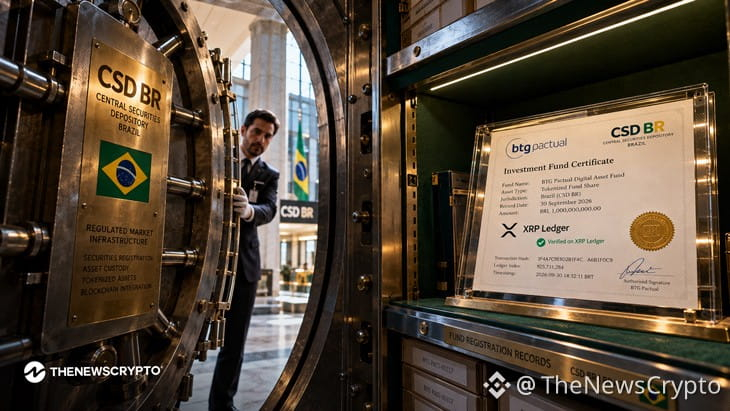
Мақала
Ripple and CSD BR Bring XRP Ledger Into Brazil’s BRL 22 Trillion MarketRipple and CSD BR will employ the XRP Ledger to reflect ownership data for Brazilian investment funds.
This initiative begins with BTG Pactual fund shares and might expand to include native issuance as well as other securities.
Brazil is integrating public blockchain technology into regulated financial infrastructure through a cooperation with Ripple and CSD BR. On September 29, CSD BR announced this initiative, which involves BTG Pactual investment fund shares. The operator has over BRL 22 trillion worth of assets registered. The XRP Ledger will reflect ownership data but will not substitute official records of CSD BR. CSD BR stated that the initiative marks the first use of public blockchain technology by the central securities depository for ownership mirroring. The operator has permission from Brazil’s Central Bank and CVM.
Tokenized Shares Will Be Subject to Institutional Controls
The shares issued by the fund will be based on the multi-purpose token standard of the XRP Ledger used by Ripple and CSD BR. The multi-purpose token standard allows for the setup of rules regarding financial assets and includes restrictions for approved participants as well as asset recovery processes. Corporate and banking institutions need to go through the verification process and anti-money laundering processes prior to gaining entry to the platform. CSD BR will control token issuance, participant approval, administration, and asset freezing. It will also manage clawbacks when regulatory or judicial action requires asset recovery. The blockchain infrastructure will be provided by Ripple together with the custody system.
Project May Be Expanding Beyond Brazilian Securities
This project can go further from simple record mirroring depending on whether the project meets its objectives at this stage. In subsequent stages, there may be the issuance of native financial instruments within the XRP ledger. Tokenized instruments would then be traded through the blockchain network by approved participants. These may include Real Estate Receivables Certificates which are known as CRIs and Agribusiness Receivables Certificates that are called CRAs.
These are Brazilian fixed income securities which are backed by sector-specific receivables. Other tokenization activities in Brazil already have projects that are being undertaken by VERT and Mercado Bitcoin. For instance, VERT created a private credit platform which is based on XRPL, and it holds a BRL 700 million agribusiness receivables certificate. On the other hand, Mercado Bitcoin planned to tokenize more than $200 million worth of real-world assets.
Highlighted Crypto News:
Illinois Drafts Rules for 0.2% Crypto Transaction Tax
Ripple and CSD BR Bring XRP Ledger Into Brazil’s BRL 22 Trillion Market
Ripple and CSD BR will employ the XRP Ledger to reflect ownership data for Brazilian investment funds.
This initiative begins with BTG Pactual fund shares and might expand to include native issuance as well as other securities.
Brazil is integrating public blockchain technology into regulated financial infrastructure through a cooperation with Ripple and CSD BR. On September 29, CSD BR announced this initiative, which involves BTG Pactual investment fund shares. The operator has over BRL 22 trillion worth of assets registered. The XRP Ledger will reflect ownership data but will not substitute official records of CSD BR. CSD BR stated that the initiative marks the first use of public blockchain technology by the central securities depository for ownership mirroring. The operator has permission from Brazil’s Central Bank and CVM.
Tokenized Shares Will Be Subject to Institutional Controls
The shares issued by the fund will be based on the multi-purpose token standard of the XRP Ledger used by Ripple and CSD BR. The multi-purpose token standard allows for the setup of rules regarding financial assets and includes restrictions for approved participants as well as asset recovery processes. Corporate and banking institutions need to go through the verification process and anti-money laundering processes prior to gaining entry to the platform. CSD BR will control token issuance, participant approval, administration, and asset freezing. It will also manage clawbacks when regulatory or judicial action requires asset recovery. The blockchain infrastructure will be provided by Ripple together with the custody system.
Project May Be Expanding Beyond Brazilian Securities
This project can go further from simple record mirroring depending on whether the project meets its objectives at this stage. In subsequent stages, there may be the issuance of native financial instruments within the XRP ledger. Tokenized instruments would then be traded through the blockchain network by approved participants. These may include Real Estate Receivables Certificates which are known as CRIs and Agribusiness Receivables Certificates that are called CRAs.
These are Brazilian fixed income securities which are backed by sector-specific receivables. Other tokenization activities in Brazil already have projects that are being undertaken by VERT and Mercado Bitcoin. For instance, VERT created a private credit platform which is based on XRPL, and it holds a BRL 700 million agribusiness receivables certificate. On the other hand, Mercado Bitcoin planned to tokenize more than $200 million worth of real-world assets.
Highlighted Crypto News:
Illinois Drafts Rules for 0.2% Crypto Transaction Tax
This initiative begins with BTG Pactual fund shares and might expand to include native issuance as well as other securities.
Brazil is integrating public blockchain technology into regulated financial infrastructure through a cooperation with Ripple and CSD BR. On September 29, CSD BR announced this initiative, which involves BTG Pactual investment fund shares. The operator has over BRL 22 trillion worth of assets registered. The XRP Ledger will reflect ownership data but will not substitute official records of CSD BR. CSD BR stated that the initiative marks the first use of public blockchain technology by the central securities depository for ownership mirroring. The operator has permission from Brazil’s Central Bank and CVM.
Tokenized Shares Will Be Subject to Institutional Controls
The shares issued by the fund will be based on the multi-purpose token standard of the XRP Ledger used by Ripple and CSD BR. The multi-purpose token standard allows for the setup of rules regarding financial assets and includes restrictions for approved participants as well as asset recovery processes. Corporate and banking institutions need to go through the verification process and anti-money laundering processes prior to gaining entry to the platform. CSD BR will control token issuance, participant approval, administration, and asset freezing. It will also manage clawbacks when regulatory or judicial action requires asset recovery. The blockchain infrastructure will be provided by Ripple together with the custody system.
Project May Be Expanding Beyond Brazilian Securities
This project can go further from simple record mirroring depending on whether the project meets its objectives at this stage. In subsequent stages, there may be the issuance of native financial instruments within the XRP ledger. Tokenized instruments would then be traded through the blockchain network by approved participants. These may include Real Estate Receivables Certificates which are known as CRIs and Agribusiness Receivables Certificates that are called CRAs.
These are Brazilian fixed income securities which are backed by sector-specific receivables. Other tokenization activities in Brazil already have projects that are being undertaken by VERT and Mercado Bitcoin. For instance, VERT created a private credit platform which is based on XRPL, and it holds a BRL 700 million agribusiness receivables certificate. On the other hand, Mercado Bitcoin planned to tokenize more than $200 million worth of real-world assets.
Highlighted Crypto News:
Illinois Drafts Rules for 0.2% Crypto Transaction Tax
3
2
2.1k
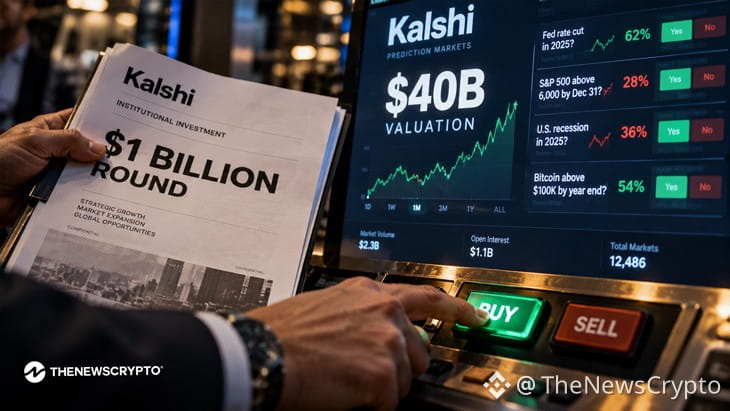
Мақала
Kalshi Eyes $40B Valuation in Fresh $1B Funding PushKalshi is discussing a roughly $1 billion funding round at a $40 billion valuation, an 82% increase from the $22 billion valuation in its May financing round.
Sequoia Capital and Wellington Management are in talks to lead the round, with Tiger Global Management and Dragoneer Investment Group expected as new participants.
Kalshi is in advanced talks to raise approximately $1 billion in fresh capital at a valuation of around $40 billion, an 82% jump from the $22 billion valuation it commanded just three months ago in its May financing round. The deal is expected to close in the coming weeks, with Sequoia Capital and Wellington Management in talks to lead. Also joining are Tiger Global Management and Dragoneer Investment Group as new participants.
Alfred Lin, a co-leader at Sequoia and current member of Kalshi’s five-person board, adds institutional weight to the round. It signals serious confidence in the platform’s trajectory. Early discussions around a potential IPO in the coming years have also begun, though no timeline has been set.
From Prediction Markets to Full Trading Platform
Kalshi’s ambitions have grown well beyond election outcomes and sports contracts. The New York-based firm is pushing to become a one-stop trading platform across a wide range of asset classes. This puts it in direct competition with CME Group and Intercontinental Exchange, the parent of the New York Stock Exchange.
Over the past year, Kalshi has leapfrogged Polymarket in market share, according to Dune Analytics data, as its rival has struggled with the launch of its U.S. platform and an ongoing CFTC investigation. Polymarket, backed by Intercontinental Exchange among others, is separately seeking $1 billion in fresh capital of its own.
Regulators Are Paying Attention
The explosive growth of prediction markets has not gone unnoticed in Washington. Furthermore, platforms now offer contracts tied to financial markets, economic data releases, company events, and public outcomes. It gives traders new ways to take positions that increasingly overlap with traditional regulated markets.
Moreover, the CFTC has been examining how prediction market contracts are structured and whether existing frameworks adequately cover the products being offered. Kalshi’s own path to offering regulated event contracts required years of legal battles with the CFTC before it secured its Designated Contract Market license, a fight that ultimately shaped how the industry views regulatory positioning today.
Binance US recently announced plans to apply for a DCM license in August. In addition, Polymarket filed its own FCM application in July. The regulatory conversation around prediction markets is no longer theoretical; it’s active, contested, and moving fast.
Significantly, a $40 billion valuation for Kalshi three months after a $22 billion raise reflects genuine institutional conviction in prediction markets as an asset class. Whether regulators keep pace with that growth, or move to constrain it, will define the next chapter for the entire sector.
Crypto Market Highlights
Kakao Pay Securities Pushes Korean Equities Toward the Tokenised Market
Kalshi Eyes $40B Valuation in Fresh $1B Funding Push
Kalshi is discussing a roughly $1 billion funding round at a $40 billion valuation, an 82% increase from the $22 billion valuation in its May financing round.
Sequoia Capital and Wellington Management are in talks to lead the round, with Tiger Global Management and Dragoneer Investment Group expected as new participants.
Kalshi is in advanced talks to raise approximately $1 billion in fresh capital at a valuation of around $40 billion, an 82% jump from the $22 billion valuation it commanded just three months ago in its May financing round. The deal is expected to close in the coming weeks, with Sequoia Capital and Wellington Management in talks to lead. Also joining are Tiger Global Management and Dragoneer Investment Group as new participants.
Alfred Lin, a co-leader at Sequoia and current member of Kalshi’s five-person board, adds institutional weight to the round. It signals serious confidence in the platform’s trajectory. Early discussions around a potential IPO in the coming years have also begun, though no timeline has been set.
From Prediction Markets to Full Trading Platform
Kalshi’s ambitions have grown well beyond election outcomes and sports contracts. The New York-based firm is pushing to become a one-stop trading platform across a wide range of asset classes. This puts it in direct competition with CME Group and Intercontinental Exchange, the parent of the New York Stock Exchange.
Over the past year, Kalshi has leapfrogged Polymarket in market share, according to Dune Analytics data, as its rival has struggled with the launch of its U.S. platform and an ongoing CFTC investigation. Polymarket, backed by Intercontinental Exchange among others, is separately seeking $1 billion in fresh capital of its own.
Regulators Are Paying Attention
The explosive growth of prediction markets has not gone unnoticed in Washington. Furthermore, platforms now offer contracts tied to financial markets, economic data releases, company events, and public outcomes. It gives traders new ways to take positions that increasingly overlap with traditional regulated markets.
Moreover, the CFTC has been examining how prediction market contracts are structured and whether existing frameworks adequately cover the products being offered. Kalshi’s own path to offering regulated event contracts required years of legal battles with the CFTC before it secured its Designated Contract Market license, a fight that ultimately shaped how the industry views regulatory positioning today.
Binance US recently announced plans to apply for a DCM license in August. In addition, Polymarket filed its own FCM application in July. The regulatory conversation around prediction markets is no longer theoretical; it’s active, contested, and moving fast.
Significantly, a $40 billion valuation for Kalshi three months after a $22 billion raise reflects genuine institutional conviction in prediction markets as an asset class. Whether regulators keep pace with that growth, or move to constrain it, will define the next chapter for the entire sector.
Crypto Market Highlights
Kakao Pay Securities Pushes Korean Equities Toward the Tokenised Market
Sequoia Capital and Wellington Management are in talks to lead the round, with Tiger Global Management and Dragoneer Investment Group expected as new participants.
Kalshi is in advanced talks to raise approximately $1 billion in fresh capital at a valuation of around $40 billion, an 82% jump from the $22 billion valuation it commanded just three months ago in its May financing round. The deal is expected to close in the coming weeks, with Sequoia Capital and Wellington Management in talks to lead. Also joining are Tiger Global Management and Dragoneer Investment Group as new participants.
Alfred Lin, a co-leader at Sequoia and current member of Kalshi’s five-person board, adds institutional weight to the round. It signals serious confidence in the platform’s trajectory. Early discussions around a potential IPO in the coming years have also begun, though no timeline has been set.
From Prediction Markets to Full Trading Platform
Kalshi’s ambitions have grown well beyond election outcomes and sports contracts. The New York-based firm is pushing to become a one-stop trading platform across a wide range of asset classes. This puts it in direct competition with CME Group and Intercontinental Exchange, the parent of the New York Stock Exchange.
Over the past year, Kalshi has leapfrogged Polymarket in market share, according to Dune Analytics data, as its rival has struggled with the launch of its U.S. platform and an ongoing CFTC investigation. Polymarket, backed by Intercontinental Exchange among others, is separately seeking $1 billion in fresh capital of its own.
Regulators Are Paying Attention
The explosive growth of prediction markets has not gone unnoticed in Washington. Furthermore, platforms now offer contracts tied to financial markets, economic data releases, company events, and public outcomes. It gives traders new ways to take positions that increasingly overlap with traditional regulated markets.
Moreover, the CFTC has been examining how prediction market contracts are structured and whether existing frameworks adequately cover the products being offered. Kalshi’s own path to offering regulated event contracts required years of legal battles with the CFTC before it secured its Designated Contract Market license, a fight that ultimately shaped how the industry views regulatory positioning today.
Binance US recently announced plans to apply for a DCM license in August. In addition, Polymarket filed its own FCM application in July. The regulatory conversation around prediction markets is no longer theoretical; it’s active, contested, and moving fast.
Significantly, a $40 billion valuation for Kalshi three months after a $22 billion raise reflects genuine institutional conviction in prediction markets as an asset class. Whether regulators keep pace with that growth, or move to constrain it, will define the next chapter for the entire sector.
Crypto Market Highlights
Kakao Pay Securities Pushes Korean Equities Toward the Tokenised Market
1
175
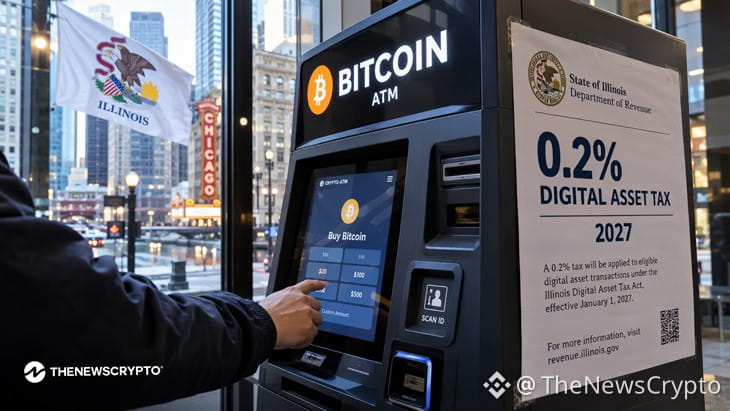
Мақала
Illinois Drafts Rules for 0.2% Crypto Transaction TaxIllinois has released draft rules for its 0.2% crypto transaction tax, including stablecoins and memecoins.
The tax is scheduled to take effect on January 1, 2027.
NFTs are excluded from the proposed digital asset tax rules.
The U.S. state of Illinois has released draft rules for its new 0.2% digital asset tax, giving crypto exchanges and other service providers more detail on how the levy could work when it takes effect next year.
The Illinois Department of Revenue (IDOR) posted the draft rules on September 28 and is accepting public comments through October 30, 2026. The rules have not yet been filed with the Secretary of State or submitted to the Joint Committee on Administrative Rules.
The underlying Digital Asset Tax Act was signed into law in June and is scheduled to take effect on January 1, 2027. It applies a 0.2% tax to the value of a digital asset involved in covered business activity received by an Illinois customer. Digital asset brokers are responsible for collecting the tax.
What the Draft Rules Cover
The proposed rules define taxable activity as the exchange, transfer or storage of digital assets through a business or for a customer. Exchanges include buying or selling crypto for dollars, trading one digital asset for another, converting fiat into crypto, converting crypto back into fiat and bridging assets between blockchains.
Transfers can also fall under the tax when a broker performs them for a fee. The draft specifically includes transfers between accounts belonging to the same customer when a digital asset broker facilitates the transaction for consideration. Direct peer-to-peer transfers without an intermediary are not covered.
The proposal also covers stablecoins and memecoins, while specifically excluding NFTs. Network or gas fees paid directly to miners and validators are not treated as taxable consideration. DeFi transactions generally fall outside the tax unless a platform receives qualifying fees, such as protocol fees.
The tax is based on the dollar value of the digital asset when the taxable activity is completed, rather than on whether the customer made a profit.
How It Compares With U.S. Federal Crypto Taxes
Illinois’ levy is separate from federal crypto taxation. The IRS treats digital assets as property, meaning sales and exchanges can create taxable capital gains or losses. Federal rules also require certain brokers to report digital asset transactions to the IRS through Form 1099-DA.
Illinois is currently the first U.S. state to enact a transaction-based tax specifically targeting digital asset activity. A separate Illinois bill, HB 5798, has been introduced to repeal the Digital Asset Tax Act, but it has not repealed the law.
Illinois Drafts Rules for 0.2% Crypto Transaction Tax
Illinois has released draft rules for its 0.2% crypto transaction tax, including stablecoins and memecoins.
The tax is scheduled to take effect on January 1, 2027.
NFTs are excluded from the proposed digital asset tax rules.
The U.S. state of Illinois has released draft rules for its new 0.2% digital asset tax, giving crypto exchanges and other service providers more detail on how the levy could work when it takes effect next year.
The Illinois Department of Revenue (IDOR) posted the draft rules on September 28 and is accepting public comments through October 30, 2026. The rules have not yet been filed with the Secretary of State or submitted to the Joint Committee on Administrative Rules.
The underlying Digital Asset Tax Act was signed into law in June and is scheduled to take effect on January 1, 2027. It applies a 0.2% tax to the value of a digital asset involved in covered business activity received by an Illinois customer. Digital asset brokers are responsible for collecting the tax.
What the Draft Rules Cover
The proposed rules define taxable activity as the exchange, transfer or storage of digital assets through a business or for a customer. Exchanges include buying or selling crypto for dollars, trading one digital asset for another, converting fiat into crypto, converting crypto back into fiat and bridging assets between blockchains.
Transfers can also fall under the tax when a broker performs them for a fee. The draft specifically includes transfers between accounts belonging to the same customer when a digital asset broker facilitates the transaction for consideration. Direct peer-to-peer transfers without an intermediary are not covered.
The proposal also covers stablecoins and memecoins, while specifically excluding NFTs. Network or gas fees paid directly to miners and validators are not treated as taxable consideration. DeFi transactions generally fall outside the tax unless a platform receives qualifying fees, such as protocol fees.
The tax is based on the dollar value of the digital asset when the taxable activity is completed, rather than on whether the customer made a profit.
How It Compares With U.S. Federal Crypto Taxes
Illinois’ levy is separate from federal crypto taxation. The IRS treats digital assets as property, meaning sales and exchanges can create taxable capital gains or losses. Federal rules also require certain brokers to report digital asset transactions to the IRS through Form 1099-DA.
Illinois is currently the first U.S. state to enact a transaction-based tax specifically targeting digital asset activity. A separate Illinois bill, HB 5798, has been introduced to repeal the Digital Asset Tax Act, but it has not repealed the law.
The tax is scheduled to take effect on January 1, 2027.
NFTs are excluded from the proposed digital asset tax rules.
The U.S. state of Illinois has released draft rules for its new 0.2% digital asset tax, giving crypto exchanges and other service providers more detail on how the levy could work when it takes effect next year.
The Illinois Department of Revenue (IDOR) posted the draft rules on September 28 and is accepting public comments through October 30, 2026. The rules have not yet been filed with the Secretary of State or submitted to the Joint Committee on Administrative Rules.
The underlying Digital Asset Tax Act was signed into law in June and is scheduled to take effect on January 1, 2027. It applies a 0.2% tax to the value of a digital asset involved in covered business activity received by an Illinois customer. Digital asset brokers are responsible for collecting the tax.
What the Draft Rules Cover
The proposed rules define taxable activity as the exchange, transfer or storage of digital assets through a business or for a customer. Exchanges include buying or selling crypto for dollars, trading one digital asset for another, converting fiat into crypto, converting crypto back into fiat and bridging assets between blockchains.
Transfers can also fall under the tax when a broker performs them for a fee. The draft specifically includes transfers between accounts belonging to the same customer when a digital asset broker facilitates the transaction for consideration. Direct peer-to-peer transfers without an intermediary are not covered.
The proposal also covers stablecoins and memecoins, while specifically excluding NFTs. Network or gas fees paid directly to miners and validators are not treated as taxable consideration. DeFi transactions generally fall outside the tax unless a platform receives qualifying fees, such as protocol fees.
The tax is based on the dollar value of the digital asset when the taxable activity is completed, rather than on whether the customer made a profit.
How It Compares With U.S. Federal Crypto Taxes
Illinois’ levy is separate from federal crypto taxation. The IRS treats digital assets as property, meaning sales and exchanges can create taxable capital gains or losses. Federal rules also require certain brokers to report digital asset transactions to the IRS through Form 1099-DA.
Illinois is currently the first U.S. state to enact a transaction-based tax specifically targeting digital asset activity. A separate Illinois bill, HB 5798, has been introduced to repeal the Digital Asset Tax Act, but it has not repealed the law.
233

Мақала
Where Is the Next 100x Meme Coin? Robinhood Chain Erupts, and BSC Could Be Next — MUBARAK Ignites MaThe crypto world never runs short of legends. What matters is whether you can stay clear-headed and decisive at the moment an opportunity appears. Over the past 24 hours, nearly all attention across the crypto market has been pulled toward one name: Robinhood Chain.
Originally positioned as compliant infrastructure for traditional financial assets, real-world assets (RWA), and tokenized U.S. equities, Robinhood Chain has unexpectedly been swept up in a wave of meme-driven speculation. Daily on-chain trading volume has surged into the hundreds of millions of dollars, with a significant share of activity centered on the emerging combination of meme tokens and tokenized equity-related assets. Amid this frenzy, MUBARAK has become one of the market’s most talked-about names, driven by sharp price action and rapidly expanding community attention.
Why MUBARAK? The Hype Is Taking Over the Market
Across trading platforms and crypto communities, MUBARAK is appearing everywhere. This is no longer being discussed as simply another token rally; supporters are treating it as a broader experiment in the combination of meme culture and speculative capital.
1. The Rise of a Powerful Meme Symbol
MUBARAK appears to fit the kind of emotional narrative that on-chain traders often rally around. Its strong cultural identity and viral spread have helped it build attention and community consensus at a speed that traditional projects can take years to achieve.
2. Capital Spillover From a Surging Narrative
As RWA and meme-related activity on Robinhood Chain generates hundreds of millions of dollars in daily volume, MUBARAK has emerged as a leading sentiment-driven asset within the narrative. Capital has poured into the market, and each pullback is being closely watched by traders looking for another entry.
3. Missed Base? Missed Solana? Is BSC Next?
Did you miss the early opportunities on Base? Did you miss the last cycle’s 100x stories on Solana? The market is now asking whether MUBARAK’s momentum on Robinhood Chain could spill over elsewhere. History does not repeat itself exactly, but market narratives often rhyme — and the original article argues that BSC (BNB Chain) could be positioned to follow the trend.
The Narrative Is Spreading: Why BSC Could Follow
Capital is both aggressive and highly responsive to momentum. In the article’s framing, the current Robinhood Chain frenzy may only be the beginning. Major market narratives frequently trigger imitation, cross-chain activity, and sector-wide speculation across other ecosystems.
The potential next stage is framed around three ideas:
1. Capital Seeking the Next High-Activity Ecosystem
As Robinhood Chain faces increasing activity and pressure on capacity and gas, speculative capital may look for another ecosystem capable of supporting high-frequency trading and a large retail audience. BSC (BNB Chain) has a mature retail user base, fast-moving liquidity, and a long history of reacting quickly to meme-coin narratives.
2. Cross-Chain Spillover of the MUBARAK Narrative
Once an IP, meme, or narrative becomes associated with outsized returns, attention often stops being confined to a single chain. The original article argues that BSC is unlikely to ignore such a wave of market interest. From this perspective, MUBARAK’s narrative and speculative energy could naturally attract participants within the BSC ecosystem.
3. A Familiar Pattern From Previous Cycles
Looking back across previous market cycles — from Ethereum to Solana and later Layer 2 ecosystems — major traffic and speculation trends have rarely remained isolated to one chain. If the BSC community begins actively participating in the MUBARAK narrative, the article argues that cross-chain attention could push the trend into a second or even third wave.
The Rallying Cry: Spectator or Participant?
The original article closes with an intentionally provocative message: wealth does not simply knock on the door; speculative markets tend to reward participants willing to take risks at decisive moments.
In that framing, today’s MUBARAK is compared with the early stages of previous tokens that later produced extraordinary returns, while the BSC community is portrayed as waiting for the next catalyst.
The message is deliberately urgent: do not wait until the token is dominating trending lists and everyone around you is asking how to buy MUBARAK. By then, the article argues, early positioning may already have passed and late entrants could be taking on substantially greater risk.
The storm, in this narrative, is already forming. Robinhood Chain is presented as the opening act, with BSC positioned as a potential next stage of the trend.
Watch the market closely, manage fear, and stay connected to the community. The article’s central message is that missing the early phase could mean missing one of 2026’s most aggressive speculative waves.
Disclaimer: The cryptocurrency market is highly volatile, and meme coins are particularly speculative. Participate rationally according to your own risk tolerance and assume responsibility for your own investment decisions and outcomes.
Where Is the Next 100x Meme Coin? Robinhood Chain Erupts, and BSC Could Be Next — MUBARAK Ignites Ma
The crypto world never runs short of legends. What matters is whether you can stay clear-headed and decisive at the moment an opportunity appears. Over the past 24 hours, nearly all attention across the crypto market has been pulled toward one name: Robinhood Chain.
Originally positioned as compliant infrastructure for traditional financial assets, real-world assets (RWA), and tokenized U.S. equities, Robinhood Chain has unexpectedly been swept up in a wave of meme-driven speculation. Daily on-chain trading volume has surged into the hundreds of millions of dollars, with a significant share of activity centered on the emerging combination of meme tokens and tokenized equity-related assets. Amid this frenzy, MUBARAK has become one of the market’s most talked-about names, driven by sharp price action and rapidly expanding community attention.
Why MUBARAK? The Hype Is Taking Over the Market
Across trading platforms and crypto communities, MUBARAK is appearing everywhere. This is no longer being discussed as simply another token rally; supporters are treating it as a broader experiment in the combination of meme culture and speculative capital.
1. The Rise of a Powerful Meme Symbol
MUBARAK appears to fit the kind of emotional narrative that on-chain traders often rally around. Its strong cultural identity and viral spread have helped it build attention and community consensus at a speed that traditional projects can take years to achieve.
2. Capital Spillover From a Surging Narrative
As RWA and meme-related activity on Robinhood Chain generates hundreds of millions of dollars in daily volume, MUBARAK has emerged as a leading sentiment-driven asset within the narrative. Capital has poured into the market, and each pullback is being closely watched by traders looking for another entry.
3. Missed Base? Missed Solana? Is BSC Next?
Did you miss the early opportunities on Base? Did you miss the last cycle’s 100x stories on Solana? The market is now asking whether MUBARAK’s momentum on Robinhood Chain could spill over elsewhere. History does not repeat itself exactly, but market narratives often rhyme — and the original article argues that BSC (BNB Chain) could be positioned to follow the trend.
The Narrative Is Spreading: Why BSC Could Follow
Capital is both aggressive and highly responsive to momentum. In the article’s framing, the current Robinhood Chain frenzy may only be the beginning. Major market narratives frequently trigger imitation, cross-chain activity, and sector-wide speculation across other ecosystems.
The potential next stage is framed around three ideas:
1. Capital Seeking the Next High-Activity Ecosystem
As Robinhood Chain faces increasing activity and pressure on capacity and gas, speculative capital may look for another ecosystem capable of supporting high-frequency trading and a large retail audience. BSC (BNB Chain) has a mature retail user base, fast-moving liquidity, and a long history of reacting quickly to meme-coin narratives.
2. Cross-Chain Spillover of the MUBARAK Narrative
Once an IP, meme, or narrative becomes associated with outsized returns, attention often stops being confined to a single chain. The original article argues that BSC is unlikely to ignore such a wave of market interest. From this perspective, MUBARAK’s narrative and speculative energy could naturally attract participants within the BSC ecosystem.
3. A Familiar Pattern From Previous Cycles
Looking back across previous market cycles — from Ethereum to Solana and later Layer 2 ecosystems — major traffic and speculation trends have rarely remained isolated to one chain. If the BSC community begins actively participating in the MUBARAK narrative, the article argues that cross-chain attention could push the trend into a second or even third wave.
The Rallying Cry: Spectator or Participant?
The original article closes with an intentionally provocative message: wealth does not simply knock on the door; speculative markets tend to reward participants willing to take risks at decisive moments.
In that framing, today’s MUBARAK is compared with the early stages of previous tokens that later produced extraordinary returns, while the BSC community is portrayed as waiting for the next catalyst.
The message is deliberately urgent: do not wait until the token is dominating trending lists and everyone around you is asking how to buy MUBARAK. By then, the article argues, early positioning may already have passed and late entrants could be taking on substantially greater risk.
The storm, in this narrative, is already forming. Robinhood Chain is presented as the opening act, with BSC positioned as a potential next stage of the trend.
Watch the market closely, manage fear, and stay connected to the community. The article’s central message is that missing the early phase could mean missing one of 2026’s most aggressive speculative waves.
Disclaimer: The cryptocurrency market is highly volatile, and meme coins are particularly speculative. Participate rationally according to your own risk tolerance and assume responsibility for your own investment decisions and outcomes.
Originally positioned as compliant infrastructure for traditional financial assets, real-world assets (RWA), and tokenized U.S. equities, Robinhood Chain has unexpectedly been swept up in a wave of meme-driven speculation. Daily on-chain trading volume has surged into the hundreds of millions of dollars, with a significant share of activity centered on the emerging combination of meme tokens and tokenized equity-related assets. Amid this frenzy, MUBARAK has become one of the market’s most talked-about names, driven by sharp price action and rapidly expanding community attention.
Why MUBARAK? The Hype Is Taking Over the Market
Across trading platforms and crypto communities, MUBARAK is appearing everywhere. This is no longer being discussed as simply another token rally; supporters are treating it as a broader experiment in the combination of meme culture and speculative capital.
1. The Rise of a Powerful Meme Symbol
MUBARAK appears to fit the kind of emotional narrative that on-chain traders often rally around. Its strong cultural identity and viral spread have helped it build attention and community consensus at a speed that traditional projects can take years to achieve.
2. Capital Spillover From a Surging Narrative
As RWA and meme-related activity on Robinhood Chain generates hundreds of millions of dollars in daily volume, MUBARAK has emerged as a leading sentiment-driven asset within the narrative. Capital has poured into the market, and each pullback is being closely watched by traders looking for another entry.
3. Missed Base? Missed Solana? Is BSC Next?
Did you miss the early opportunities on Base? Did you miss the last cycle’s 100x stories on Solana? The market is now asking whether MUBARAK’s momentum on Robinhood Chain could spill over elsewhere. History does not repeat itself exactly, but market narratives often rhyme — and the original article argues that BSC (BNB Chain) could be positioned to follow the trend.
The Narrative Is Spreading: Why BSC Could Follow
Capital is both aggressive and highly responsive to momentum. In the article’s framing, the current Robinhood Chain frenzy may only be the beginning. Major market narratives frequently trigger imitation, cross-chain activity, and sector-wide speculation across other ecosystems.
The potential next stage is framed around three ideas:
1. Capital Seeking the Next High-Activity Ecosystem
As Robinhood Chain faces increasing activity and pressure on capacity and gas, speculative capital may look for another ecosystem capable of supporting high-frequency trading and a large retail audience. BSC (BNB Chain) has a mature retail user base, fast-moving liquidity, and a long history of reacting quickly to meme-coin narratives.
2. Cross-Chain Spillover of the MUBARAK Narrative
Once an IP, meme, or narrative becomes associated with outsized returns, attention often stops being confined to a single chain. The original article argues that BSC is unlikely to ignore such a wave of market interest. From this perspective, MUBARAK’s narrative and speculative energy could naturally attract participants within the BSC ecosystem.
3. A Familiar Pattern From Previous Cycles
Looking back across previous market cycles — from Ethereum to Solana and later Layer 2 ecosystems — major traffic and speculation trends have rarely remained isolated to one chain. If the BSC community begins actively participating in the MUBARAK narrative, the article argues that cross-chain attention could push the trend into a second or even third wave.
The Rallying Cry: Spectator or Participant?
The original article closes with an intentionally provocative message: wealth does not simply knock on the door; speculative markets tend to reward participants willing to take risks at decisive moments.
In that framing, today’s MUBARAK is compared with the early stages of previous tokens that later produced extraordinary returns, while the BSC community is portrayed as waiting for the next catalyst.
The message is deliberately urgent: do not wait until the token is dominating trending lists and everyone around you is asking how to buy MUBARAK. By then, the article argues, early positioning may already have passed and late entrants could be taking on substantially greater risk.
The storm, in this narrative, is already forming. Robinhood Chain is presented as the opening act, with BSC positioned as a potential next stage of the trend.
Watch the market closely, manage fear, and stay connected to the community. The article’s central message is that missing the early phase could mean missing one of 2026’s most aggressive speculative waves.
Disclaimer: The cryptocurrency market is highly volatile, and meme coins are particularly speculative. Participate rationally according to your own risk tolerance and assume responsibility for your own investment decisions and outcomes.
2
812

Мақала
BlockCon Global Confirms 2026 Speaker Roster: Investors, IGaming Operators and the Web3 Infrastru...BlockCon Global has confirmed the speaker roster for its 2026 executive business retreat, a four-day program dedicated to the infrastructure layer of the digital economy. The retreat convenes attendees from 60+ countries, 50% of them C-level, with 50 curated speakers and over 90 companies represented.
Gulf capital anchors the program. Shaikh Ali Sultan Al Nuaimi of the Royal Family of the Emirate of Ajman, BOF Investments and Ajman Bank is joined by Imad Al-Abdulgader, Partner at DGA–Albright Stonebridge Group; Sarah Abuagela of Ceras Ventures; and Danish Chotani from Burj Financial.
Regulatory and public-sector authority sits in the same room. Camila Santana of Revolut, a regulatory expert and former supervisor in Colombia, is joined by Julio César Valentín, Superintendent of Insurance of the Dominican Republic; Senator Mario Ishii of Buenos Aires Province, and more.
The institutional and infrastructure layer is represented by Tomás Pérez Quevedo, Co-Founder at Makachain; Geraldine Pacheco, Account Executive for Latin America and the Caribbean at Chainalysis; Donald Lavoile founder of Venturis13 Global Holdings.
“Convergence is not something you announce. It is something you produce,” said Raymond Ratti, CEO and Co-Founder of BlockCon Global. “A central bank supervisor, a Gulf investor, a compliance architect and an infrastructure founder each hold one part of the same system. BlockCon exists to put those parts in the same room, for four days, under conditions where a conversation becomes a decision.”
BlockCon is built on decision density: what matters is the concentration of decision-making power in the room. The agenda spans stablecoins and digital payments, tokenization and real-world assets, prediction markets, iGaming infrastructure, regulatory architecture and cross-border payment rails, delivered through closed-door sessions, business roundtables, a Casino Experience, and the Cigar & Rum Room.
Three access tiers are available: starting at $195. Registration is open at https://www.gevme.com/blockcon-punta-cana-2026-69652010ABOUT BLOCKCON GLOBAL
BlockCon Global is an international executive business retreat dedicated to the infrastructure of the digital economy, the convergence point where capital, builders, financial institutions and regulatory architects meet to execute. The 2026 edition takes place November 25–28 at Barceló Bávaro Grand Resort, Punta Cana, Dominican Republic.
MEDIA CONTACT
marketing@blockcon.co · Partnerships: partners@blockcon.co · https://www.blockcon.co/partner-with-us
BlockCon Global Confirms 2026 Speaker Roster: Investors, IGaming Operators and the Web3 Infrastru...
BlockCon Global has confirmed the speaker roster for its 2026 executive business retreat, a four-day program dedicated to the infrastructure layer of the digital economy. The retreat convenes attendees from 60+ countries, 50% of them C-level, with 50 curated speakers and over 90 companies represented.
Gulf capital anchors the program. Shaikh Ali Sultan Al Nuaimi of the Royal Family of the Emirate of Ajman, BOF Investments and Ajman Bank is joined by Imad Al-Abdulgader, Partner at DGA–Albright Stonebridge Group; Sarah Abuagela of Ceras Ventures; and Danish Chotani from Burj Financial.
Regulatory and public-sector authority sits in the same room. Camila Santana of Revolut, a regulatory expert and former supervisor in Colombia, is joined by Julio César Valentín, Superintendent of Insurance of the Dominican Republic; Senator Mario Ishii of Buenos Aires Province, and more.
The institutional and infrastructure layer is represented by Tomás Pérez Quevedo, Co-Founder at Makachain; Geraldine Pacheco, Account Executive for Latin America and the Caribbean at Chainalysis; Donald Lavoile founder of Venturis13 Global Holdings.
“Convergence is not something you announce. It is something you produce,” said Raymond Ratti, CEO and Co-Founder of BlockCon Global. “A central bank supervisor, a Gulf investor, a compliance architect and an infrastructure founder each hold one part of the same system. BlockCon exists to put those parts in the same room, for four days, under conditions where a conversation becomes a decision.”
BlockCon is built on decision density: what matters is the concentration of decision-making power in the room. The agenda spans stablecoins and digital payments, tokenization and real-world assets, prediction markets, iGaming infrastructure, regulatory architecture and cross-border payment rails, delivered through closed-door sessions, business roundtables, a Casino Experience, and the Cigar & Rum Room.
Three access tiers are available: starting at $195. Registration is open at https://www.gevme.com/blockcon-punta-cana-2026-69652010ABOUT BLOCKCON GLOBAL
BlockCon Global is an international executive business retreat dedicated to the infrastructure of the digital economy, the convergence point where capital, builders, financial institutions and regulatory architects meet to execute. The 2026 edition takes place November 25–28 at Barceló Bávaro Grand Resort, Punta Cana, Dominican Republic.
MEDIA CONTACT
marketing@blockcon.co · Partnerships: partners@blockcon.co · https://www.blockcon.co/partner-with-us
Gulf capital anchors the program. Shaikh Ali Sultan Al Nuaimi of the Royal Family of the Emirate of Ajman, BOF Investments and Ajman Bank is joined by Imad Al-Abdulgader, Partner at DGA–Albright Stonebridge Group; Sarah Abuagela of Ceras Ventures; and Danish Chotani from Burj Financial.
Regulatory and public-sector authority sits in the same room. Camila Santana of Revolut, a regulatory expert and former supervisor in Colombia, is joined by Julio César Valentín, Superintendent of Insurance of the Dominican Republic; Senator Mario Ishii of Buenos Aires Province, and more.
The institutional and infrastructure layer is represented by Tomás Pérez Quevedo, Co-Founder at Makachain; Geraldine Pacheco, Account Executive for Latin America and the Caribbean at Chainalysis; Donald Lavoile founder of Venturis13 Global Holdings.
“Convergence is not something you announce. It is something you produce,” said Raymond Ratti, CEO and Co-Founder of BlockCon Global. “A central bank supervisor, a Gulf investor, a compliance architect and an infrastructure founder each hold one part of the same system. BlockCon exists to put those parts in the same room, for four days, under conditions where a conversation becomes a decision.”
BlockCon is built on decision density: what matters is the concentration of decision-making power in the room. The agenda spans stablecoins and digital payments, tokenization and real-world assets, prediction markets, iGaming infrastructure, regulatory architecture and cross-border payment rails, delivered through closed-door sessions, business roundtables, a Casino Experience, and the Cigar & Rum Room.
Three access tiers are available: starting at $195. Registration is open at https://www.gevme.com/blockcon-punta-cana-2026-69652010ABOUT BLOCKCON GLOBAL
BlockCon Global is an international executive business retreat dedicated to the infrastructure of the digital economy, the convergence point where capital, builders, financial institutions and regulatory architects meet to execute. The 2026 edition takes place November 25–28 at Barceló Bávaro Grand Resort, Punta Cana, Dominican Republic.
MEDIA CONTACT
marketing@blockcon.co · Partnerships: partners@blockcon.co · https://www.blockcon.co/partner-with-us
124
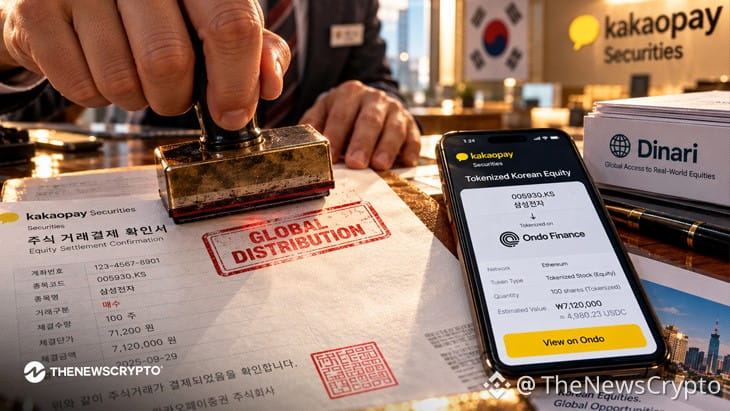
Мақала
Kakao Pay Securities Pushes Korean Equities Toward the Tokenised MarketKakao Pay Securities has signed MOUs with Ondo Finance and Dinari Global to explore the tokenisation and international distribution of South Korean-listed stocks.
The partnerships could provide global investors with blockchain-based access to Korean equities.
Kakao Pay Securities has signed MOUs with both Ondo Finance and Dinari Global to explore the tokenisation and international distribution of South Korean-listed stocks. The partnership marks one of the most concrete moves yet to open Korean public markets to global investors through blockchain infrastructure, rather than the traditional and limited depositary receipt route.
Right now, international access to Korean equities is narrow. Only a subset of Korean companies have depositary receipts listed on overseas exchanges. SK Hynix, one of the world’s largest chipmakers and a trillion-dollar company, only reached Nasdaq this July. Tokenisation offers a direct alternative, one tied to the underlying share rather than a derivative instrument built around it.
What Dinari’s dShares Model Actually Does?
Dinari’s dShares are backed one-to-one by the corresponding underlying security, held with licensed custodians. Moreover, that structure is designed to preserve core shareholder rights, cash dividends, automated corporate actions, voting where applicable, redemption, and a protected claim to the backing securities.
The proof of concept will test that standard specifically on Korean-listed equities, covering issuance, redemption, reconciliation, and shareholder rights. Distribution would run through Dinari’s existing partner network, which already serves eligible investors in the United States and more than 85 jurisdictions worldwide. Also, Dinari currently provides access to 724 tokenised U.S. stocks and ETFs through this infrastructure.
What the Joint Task Force Will Cover
Kakao Pay Securities and Dinari plan to establish a joint task force later this year. In addition, the work will examine the operational and technical requirements for applying the dShares model to Korean equities, including token issuance and redemption against underlying shares, reconciliation between tokenised and underlying securities, and the infrastructure needed for international distribution.
Inyoung Chung, Executive Vice President of Kakao Pay Securities, stated:
“Through this partnership with Dinari, which has experience operating tokenized securities within the U.S. regulatory framework, we are working to develop a concrete framework for the international distribution of Korean equities. Starting with the sourcing of Korean-listed equities and advancing through a proof of concept for equity tokenization, we will carefully assess the technical feasibility and help create new pathways connecting shares of leading Korean companies with a broader global market.”
On the other hand, if the proof of concept clears technical and regulatory requirements, Korean equities could reach global investors through a channel that does not depend on which exchanges a company chooses to list on, a structural shift for both Korean public markets and the tokenised securities space more broadly.
Crypto Market Highlights
Coinbase Clearing Gets CFTC Nod, Bringing USDC Into Regulated Derivatives
Kakao Pay Securities Pushes Korean Equities Toward the Tokenised Market
Kakao Pay Securities has signed MOUs with Ondo Finance and Dinari Global to explore the tokenisation and international distribution of South Korean-listed stocks.
The partnerships could provide global investors with blockchain-based access to Korean equities.
Kakao Pay Securities has signed MOUs with both Ondo Finance and Dinari Global to explore the tokenisation and international distribution of South Korean-listed stocks. The partnership marks one of the most concrete moves yet to open Korean public markets to global investors through blockchain infrastructure, rather than the traditional and limited depositary receipt route.
Right now, international access to Korean equities is narrow. Only a subset of Korean companies have depositary receipts listed on overseas exchanges. SK Hynix, one of the world’s largest chipmakers and a trillion-dollar company, only reached Nasdaq this July. Tokenisation offers a direct alternative, one tied to the underlying share rather than a derivative instrument built around it.
What Dinari’s dShares Model Actually Does?
Dinari’s dShares are backed one-to-one by the corresponding underlying security, held with licensed custodians. Moreover, that structure is designed to preserve core shareholder rights, cash dividends, automated corporate actions, voting where applicable, redemption, and a protected claim to the backing securities.
The proof of concept will test that standard specifically on Korean-listed equities, covering issuance, redemption, reconciliation, and shareholder rights. Distribution would run through Dinari’s existing partner network, which already serves eligible investors in the United States and more than 85 jurisdictions worldwide. Also, Dinari currently provides access to 724 tokenised U.S. stocks and ETFs through this infrastructure.
What the Joint Task Force Will Cover
Kakao Pay Securities and Dinari plan to establish a joint task force later this year. In addition, the work will examine the operational and technical requirements for applying the dShares model to Korean equities, including token issuance and redemption against underlying shares, reconciliation between tokenised and underlying securities, and the infrastructure needed for international distribution.
Inyoung Chung, Executive Vice President of Kakao Pay Securities, stated:
“Through this partnership with Dinari, which has experience operating tokenized securities within the U.S. regulatory framework, we are working to develop a concrete framework for the international distribution of Korean equities. Starting with the sourcing of Korean-listed equities and advancing through a proof of concept for equity tokenization, we will carefully assess the technical feasibility and help create new pathways connecting shares of leading Korean companies with a broader global market.”
On the other hand, if the proof of concept clears technical and regulatory requirements, Korean equities could reach global investors through a channel that does not depend on which exchanges a company chooses to list on, a structural shift for both Korean public markets and the tokenised securities space more broadly.
Crypto Market Highlights
Coinbase Clearing Gets CFTC Nod, Bringing USDC Into Regulated Derivatives
The partnerships could provide global investors with blockchain-based access to Korean equities.
Kakao Pay Securities has signed MOUs with both Ondo Finance and Dinari Global to explore the tokenisation and international distribution of South Korean-listed stocks. The partnership marks one of the most concrete moves yet to open Korean public markets to global investors through blockchain infrastructure, rather than the traditional and limited depositary receipt route.
Right now, international access to Korean equities is narrow. Only a subset of Korean companies have depositary receipts listed on overseas exchanges. SK Hynix, one of the world’s largest chipmakers and a trillion-dollar company, only reached Nasdaq this July. Tokenisation offers a direct alternative, one tied to the underlying share rather than a derivative instrument built around it.
What Dinari’s dShares Model Actually Does?
Dinari’s dShares are backed one-to-one by the corresponding underlying security, held with licensed custodians. Moreover, that structure is designed to preserve core shareholder rights, cash dividends, automated corporate actions, voting where applicable, redemption, and a protected claim to the backing securities.
The proof of concept will test that standard specifically on Korean-listed equities, covering issuance, redemption, reconciliation, and shareholder rights. Distribution would run through Dinari’s existing partner network, which already serves eligible investors in the United States and more than 85 jurisdictions worldwide. Also, Dinari currently provides access to 724 tokenised U.S. stocks and ETFs through this infrastructure.
What the Joint Task Force Will Cover
Kakao Pay Securities and Dinari plan to establish a joint task force later this year. In addition, the work will examine the operational and technical requirements for applying the dShares model to Korean equities, including token issuance and redemption against underlying shares, reconciliation between tokenised and underlying securities, and the infrastructure needed for international distribution.
Inyoung Chung, Executive Vice President of Kakao Pay Securities, stated:
“Through this partnership with Dinari, which has experience operating tokenized securities within the U.S. regulatory framework, we are working to develop a concrete framework for the international distribution of Korean equities. Starting with the sourcing of Korean-listed equities and advancing through a proof of concept for equity tokenization, we will carefully assess the technical feasibility and help create new pathways connecting shares of leading Korean companies with a broader global market.”
On the other hand, if the proof of concept clears technical and regulatory requirements, Korean equities could reach global investors through a channel that does not depend on which exchanges a company chooses to list on, a structural shift for both Korean public markets and the tokenised securities space more broadly.
Crypto Market Highlights
Coinbase Clearing Gets CFTC Nod, Bringing USDC Into Regulated Derivatives
83
Мақала
Amaze Holdings (NYSE: AMZE) Executes Binding LOI to Acquire BullionFX | Alchemy, a Decentralized ...NEWPORT BEACH, California, September 29th, 2026, Chainwire
Proposed acquisition would bring a gold-backed decentralized financial ecosystem, including decentralized financial infrastructure targeting retail, institutional, and blockchain markets.
A retail and institutional platform designed for the rapidly growing stablecoin industry, delivering compliance-focused infrastructure for payments, yield, lending and open-ecosystem, industry-wide decentralized financial applications.
Institutional gold-based infrastructure spanning gold as a currency, gold-collateralized USD products and gold-backed financial products, anchored to an Ethereum-based Layer 2 network designed as a stable foundation for the next generation of industry products.
Proprietary yield engines designed to power institutional products targeting competitive returns by bridging traditional and decentralized markets.
Amaze Holdings, Inc. (NYSE American: AMZE) (“Amaze” or the “Company”) today announced it has entered into a binding Letter of Intent (“LOI”) to acquire the assets of BullionFX, including its core platform Alchemy (collectively, the “BullionFX Assets”), for stock valued at approximately $155 million.
The BullionFX Assets comprise the technology, infrastructure and intellectual property behind a blockchain financial ecosystem built around auditable physical gold. If completed, the acquisition would mark a strategic expansion for Amaze beyond creator commerce and into gold-backed digital-asset infrastructure. The transaction comes amid a broad resurgence in cryptocurrency markets, rapid growth in volume within the stablecoin industry, renewed institutional engagement with digital assets, and continued strength in gold as a long-established store of value. Adjusted stablecoin transaction volume hit $1.79 trillion in June 2026, up 125% year on year, according to Visa Onchain Analytics (Allium).
“Crypto’s renewed momentum and gold’s enduring role as a store of value have opened a rare window for infrastructure built on both,” said Joel Krutz, Interim Chief Executive Officer of Amaze. “Alchemy is a full-stack, gold-backed financial ecosystem, and we believe bringing it into the public markets can create meaningful long-term value for our stockholders.”
The acquisition gives Amaze the technology, infrastructure and intellectual property behind a comprehensive decentralized finance (DeFi) ecosystem in which every unit of digital value is tied to physical gold held by independent custodians. The platform’s architecture supports lending and borrowing protocols, yield products, cross-chain interoperability, and an Ethereum-based Layer 2 network that links traditional and decentralized finance while offering the rapidly growing market of gold- and USD-backed stablecoins users’ broad functionality, including access to yield opportunities.
Following closing, Amaze intends to prioritize activation of the self-custody retail wallet and yield engines and, as an initial institutional application, to pursue a listed Stable Asset Treasury (“SAT”) vehicle for gold and USD, subject to applicable regulatory approvals.
“We have seen traditional financial markets adopt blockchain, and more recently stablecoins, as a direct result of retail users seeking more control, custody, and transferability of their own assets. We believe traditional finance will increasingly bridge with decentralized finance to extract the ideal attributes of both industries. Alchemy is well-positioned to compete in bringing to market a range of bridged traditional and decentralized financial products to introduce innovative financial offerings on a retail and institutional level while seeking to mitigate certain risks associated with traditional stablecoin models,” said Stephen Moss, Founder, BullionFX. “Joining a publicly listed company gives Alchemy the access and institutional credibility to accelerate our mission. That mission is a stable, transparent financial ecosystem for retail users that bridges traditional and decentralized finance.”
INSIDE THE ALCHEMY PLATFORM
$GOLD, Backed by Physical Gold. Alchemy’s core $GOLD token is designed to be backed one-to-one by vaulted, independently custodied and audited physical gold, with reserves intended to be subject to real-time attestation through third-party, institutional-grade audit mechanisms. $GOLD is designed to serve as the network’s settlement asset, combining the stability of a hard asset with the speed and transparency of blockchain settlement.
Built for the Stablecoin Industry. Alchemy is a retail and institutional platform designed for the rapidly growing stablecoin industry. Its compliance-focused architecture is built to support gold-linked payments, yield, lending and borrowing, cross-chain interoperability and open-ecosystem DeFi applications that third-party developers can build on.
Institutional Gold Infrastructure on Ethereum Layer 2. For institutions, Alchemy provides gold-based infrastructure spanning gold as a currency, gold-collateralized USD products and gold-backed financial products. Running on an Ethereum-based Layer 2 network, it is designed to bring gold’s stability on-chain as a foundation for future industry products.
Proprietary Yield Engines. Alchemy’s proprietary yield engines for gold and USD are designed to power institutional products targeting competitive returns by bridging traditional and decentralized markets.
Self-Custody for Retail. A planned self-custody retail wallet is designed to give users direct access to gold-linked payments, yield and DeFi applications while keeping control of their own assets.
“Stablecoins have proven the demand for digital money. The next question is what that money is anchored to,” said Simon Rahme, Co-Founder and CTO, BullionFX | Alchemy. “We engineered Alchemy’s Layer 2 so that gold sits inside the settlement layer itself rather than on top of it. That gives developers and institutions a base for payments, lending and yield products, with reserves designed to be verifiable on-chain.”
Transaction Terms
Under the LOI, which contains certain binding provisions, the parties will work toward definitive agreements. The transaction, if consummated, will result in significant issuance of Amaze common stock to BullionFX. Final terms are subject to due diligence, regulatory review, approval by each party’s board of directors and other customary closing conditions.
About Amaze Holdings, Inc. (NYSE American: AMZE)
Amaze Holdings, Inc. is an end-to-end, creator-powered commerce platform offering tools for brand development, product creation, advanced e-commerce, audience growth and scalable managed services. By helping people turn what they know, create and share into sustainable income, Amaze enables creators to build deeper audience relationships and more flexible paths to a better life. Discover more at www.amaze.co.
Cautionary Note Regarding Forward-Looking Statements
This news release contains “forward-looking statements” within the meaning of Section 27A of the Securities Act of 1933, and Section 21E of the Securities Exchange Act of 1934, and the Private Securities Litigation Reform Act of 1995, including statements regarding the proposed acquisition of the BullionFX Assets; the anticipated benefits, capabilities and potential of those assets; the parties’ ability to negotiate and enter into definitive agreements; the ability to successfully integrate the BullionFX Assets and realize anticipated synergies and value creation; the ability to generate anticipated yields or returns from proprietary yield engines or other platform features; the timing and success of planned product launches, including the self-custody retail wallet and Stable Asset Treasury vehicle; and expectations regarding the adoption and growth of decentralized finance, stablecoins, and gold-backed digital assets. Forward-looking statements often contain words such as “expects,” “anticipates,” “intends,” “plans,” “believes,” “will,” “should,” “could,” “may,” “designed to,” or “targeted.” These statements are based on management’s current views and assumptions and are not guarantees of future performance. Important factors that could cause actual results to differ materially include, without limitation: the ability of the parties to negotiate and execute definitive agreements; the completion of due diligence; the receipt of required regulatory, stockholder and board approvals and the satisfaction of other closing conditions; the occurrence of any event that could give rise to termination; the significant dilution to Amaze stockholders in connection with the transaction; the continued availability of capital and financing; the ability to commercialize and operationalize the BullionFX Assets; Amaze’s lack of operating history in digital asset infrastructure and decentralized finance; the performance and security of blockchain-based technology and digital assets; risks related to smart contract vulnerabilities, software bugs, cyberattacks, hacking incidents, and operational failures affecting blockchain-based systems; evolving federal and state laws, regulations and guidance applicable to digital assets, stablecoins, decentralized finance platforms and related custodial arrangements, including potential classification of tokens as securities; the creditworthiness, performance and regulatory status of third-party custodians holding physical gold reserves; the ability to maintain one-to-one gold backing and real-time attestation as described, and the risk that reserves may not be verified as anticipated; competition from established and emerging participants in the digital asset, stablecoin and decentralized finance industries; the ability to protect and enforce intellectual property rights in the acquired technology; the volatility of cryptocurrency and gold markets; prevailing market, regulatory and business conditions; and other risks and uncertainties described in Amaze’s filings with the Securities and Exchange Commission, including its most recent Annual Report on Form 10-K. Readers are cautioned not to place undue reliance on these forward-looking statements, which speak only as of the date of this release. Amaze undertakes no obligation to update any forward-looking statement except as required by law.
Contact
Amaze Investor RelationsAmaze Holdings, Inc.ir@amaze.co888-672-0365
Amaze Holdings (NYSE: AMZE) Executes Binding LOI to Acquire BullionFX | Alchemy, a Decentralized ...
NEWPORT BEACH, California, September 29th, 2026, Chainwire
Proposed acquisition would bring a gold-backed decentralized financial ecosystem, including decentralized financial infrastructure targeting retail, institutional, and blockchain markets.
A retail and institutional platform designed for the rapidly growing stablecoin industry, delivering compliance-focused infrastructure for payments, yield, lending and open-ecosystem, industry-wide decentralized financial applications.
Institutional gold-based infrastructure spanning gold as a currency, gold-collateralized USD products and gold-backed financial products, anchored to an Ethereum-based Layer 2 network designed as a stable foundation for the next generation of industry products.
Proprietary yield engines designed to power institutional products targeting competitive returns by bridging traditional and decentralized markets.
Amaze Holdings, Inc. (NYSE American: AMZE) (“Amaze” or the “Company”) today announced it has entered into a binding Letter of Intent (“LOI”) to acquire the assets of BullionFX, including its core platform Alchemy (collectively, the “BullionFX Assets”), for stock valued at approximately $155 million.
The BullionFX Assets comprise the technology, infrastructure and intellectual property behind a blockchain financial ecosystem built around auditable physical gold. If completed, the acquisition would mark a strategic expansion for Amaze beyond creator commerce and into gold-backed digital-asset infrastructure. The transaction comes amid a broad resurgence in cryptocurrency markets, rapid growth in volume within the stablecoin industry, renewed institutional engagement with digital assets, and continued strength in gold as a long-established store of value. Adjusted stablecoin transaction volume hit $1.79 trillion in June 2026, up 125% year on year, according to Visa Onchain Analytics (Allium).
“Crypto’s renewed momentum and gold’s enduring role as a store of value have opened a rare window for infrastructure built on both,” said Joel Krutz, Interim Chief Executive Officer of Amaze. “Alchemy is a full-stack, gold-backed financial ecosystem, and we believe bringing it into the public markets can create meaningful long-term value for our stockholders.”
The acquisition gives Amaze the technology, infrastructure and intellectual property behind a comprehensive decentralized finance (DeFi) ecosystem in which every unit of digital value is tied to physical gold held by independent custodians. The platform’s architecture supports lending and borrowing protocols, yield products, cross-chain interoperability, and an Ethereum-based Layer 2 network that links traditional and decentralized finance while offering the rapidly growing market of gold- and USD-backed stablecoins users’ broad functionality, including access to yield opportunities.
Following closing, Amaze intends to prioritize activation of the self-custody retail wallet and yield engines and, as an initial institutional application, to pursue a listed Stable Asset Treasury (“SAT”) vehicle for gold and USD, subject to applicable regulatory approvals.
“We have seen traditional financial markets adopt blockchain, and more recently stablecoins, as a direct result of retail users seeking more control, custody, and transferability of their own assets. We believe traditional finance will increasingly bridge with decentralized finance to extract the ideal attributes of both industries. Alchemy is well-positioned to compete in bringing to market a range of bridged traditional and decentralized financial products to introduce innovative financial offerings on a retail and institutional level while seeking to mitigate certain risks associated with traditional stablecoin models,” said Stephen Moss, Founder, BullionFX. “Joining a publicly listed company gives Alchemy the access and institutional credibility to accelerate our mission. That mission is a stable, transparent financial ecosystem for retail users that bridges traditional and decentralized finance.”
INSIDE THE ALCHEMY PLATFORM
$GOLD, Backed by Physical Gold. Alchemy’s core $GOLD token is designed to be backed one-to-one by vaulted, independently custodied and audited physical gold, with reserves intended to be subject to real-time attestation through third-party, institutional-grade audit mechanisms. $GOLD is designed to serve as the network’s settlement asset, combining the stability of a hard asset with the speed and transparency of blockchain settlement.
Built for the Stablecoin Industry. Alchemy is a retail and institutional platform designed for the rapidly growing stablecoin industry. Its compliance-focused architecture is built to support gold-linked payments, yield, lending and borrowing, cross-chain interoperability and open-ecosystem DeFi applications that third-party developers can build on.
Institutional Gold Infrastructure on Ethereum Layer 2. For institutions, Alchemy provides gold-based infrastructure spanning gold as a currency, gold-collateralized USD products and gold-backed financial products. Running on an Ethereum-based Layer 2 network, it is designed to bring gold’s stability on-chain as a foundation for future industry products.
Proprietary Yield Engines. Alchemy’s proprietary yield engines for gold and USD are designed to power institutional products targeting competitive returns by bridging traditional and decentralized markets.
Self-Custody for Retail. A planned self-custody retail wallet is designed to give users direct access to gold-linked payments, yield and DeFi applications while keeping control of their own assets.
“Stablecoins have proven the demand for digital money. The next question is what that money is anchored to,” said Simon Rahme, Co-Founder and CTO, BullionFX | Alchemy. “We engineered Alchemy’s Layer 2 so that gold sits inside the settlement layer itself rather than on top of it. That gives developers and institutions a base for payments, lending and yield products, with reserves designed to be verifiable on-chain.”
Transaction Terms
Under the LOI, which contains certain binding provisions, the parties will work toward definitive agreements. The transaction, if consummated, will result in significant issuance of Amaze common stock to BullionFX. Final terms are subject to due diligence, regulatory review, approval by each party’s board of directors and other customary closing conditions.
About Amaze Holdings, Inc. (NYSE American: AMZE)
Amaze Holdings, Inc. is an end-to-end, creator-powered commerce platform offering tools for brand development, product creation, advanced e-commerce, audience growth and scalable managed services. By helping people turn what they know, create and share into sustainable income, Amaze enables creators to build deeper audience relationships and more flexible paths to a better life. Discover more at www.amaze.co.
Cautionary Note Regarding Forward-Looking Statements
This news release contains “forward-looking statements” within the meaning of Section 27A of the Securities Act of 1933, and Section 21E of the Securities Exchange Act of 1934, and the Private Securities Litigation Reform Act of 1995, including statements regarding the proposed acquisition of the BullionFX Assets; the anticipated benefits, capabilities and potential of those assets; the parties’ ability to negotiate and enter into definitive agreements; the ability to successfully integrate the BullionFX Assets and realize anticipated synergies and value creation; the ability to generate anticipated yields or returns from proprietary yield engines or other platform features; the timing and success of planned product launches, including the self-custody retail wallet and Stable Asset Treasury vehicle; and expectations regarding the adoption and growth of decentralized finance, stablecoins, and gold-backed digital assets. Forward-looking statements often contain words such as “expects,” “anticipates,” “intends,” “plans,” “believes,” “will,” “should,” “could,” “may,” “designed to,” or “targeted.” These statements are based on management’s current views and assumptions and are not guarantees of future performance. Important factors that could cause actual results to differ materially include, without limitation: the ability of the parties to negotiate and execute definitive agreements; the completion of due diligence; the receipt of required regulatory, stockholder and board approvals and the satisfaction of other closing conditions; the occurrence of any event that could give rise to termination; the significant dilution to Amaze stockholders in connection with the transaction; the continued availability of capital and financing; the ability to commercialize and operationalize the BullionFX Assets; Amaze’s lack of operating history in digital asset infrastructure and decentralized finance; the performance and security of blockchain-based technology and digital assets; risks related to smart contract vulnerabilities, software bugs, cyberattacks, hacking incidents, and operational failures affecting blockchain-based systems; evolving federal and state laws, regulations and guidance applicable to digital assets, stablecoins, decentralized finance platforms and related custodial arrangements, including potential classification of tokens as securities; the creditworthiness, performance and regulatory status of third-party custodians holding physical gold reserves; the ability to maintain one-to-one gold backing and real-time attestation as described, and the risk that reserves may not be verified as anticipated; competition from established and emerging participants in the digital asset, stablecoin and decentralized finance industries; the ability to protect and enforce intellectual property rights in the acquired technology; the volatility of cryptocurrency and gold markets; prevailing market, regulatory and business conditions; and other risks and uncertainties described in Amaze’s filings with the Securities and Exchange Commission, including its most recent Annual Report on Form 10-K. Readers are cautioned not to place undue reliance on these forward-looking statements, which speak only as of the date of this release. Amaze undertakes no obligation to update any forward-looking statement except as required by law.
Contact
Amaze Investor RelationsAmaze Holdings, Inc.ir@amaze.co888-672-0365
Proposed acquisition would bring a gold-backed decentralized financial ecosystem, including decentralized financial infrastructure targeting retail, institutional, and blockchain markets.
A retail and institutional platform designed for the rapidly growing stablecoin industry, delivering compliance-focused infrastructure for payments, yield, lending and open-ecosystem, industry-wide decentralized financial applications.
Institutional gold-based infrastructure spanning gold as a currency, gold-collateralized USD products and gold-backed financial products, anchored to an Ethereum-based Layer 2 network designed as a stable foundation for the next generation of industry products.
Proprietary yield engines designed to power institutional products targeting competitive returns by bridging traditional and decentralized markets.
Amaze Holdings, Inc. (NYSE American: AMZE) (“Amaze” or the “Company”) today announced it has entered into a binding Letter of Intent (“LOI”) to acquire the assets of BullionFX, including its core platform Alchemy (collectively, the “BullionFX Assets”), for stock valued at approximately $155 million.
The BullionFX Assets comprise the technology, infrastructure and intellectual property behind a blockchain financial ecosystem built around auditable physical gold. If completed, the acquisition would mark a strategic expansion for Amaze beyond creator commerce and into gold-backed digital-asset infrastructure. The transaction comes amid a broad resurgence in cryptocurrency markets, rapid growth in volume within the stablecoin industry, renewed institutional engagement with digital assets, and continued strength in gold as a long-established store of value. Adjusted stablecoin transaction volume hit $1.79 trillion in June 2026, up 125% year on year, according to Visa Onchain Analytics (Allium).
“Crypto’s renewed momentum and gold’s enduring role as a store of value have opened a rare window for infrastructure built on both,” said Joel Krutz, Interim Chief Executive Officer of Amaze. “Alchemy is a full-stack, gold-backed financial ecosystem, and we believe bringing it into the public markets can create meaningful long-term value for our stockholders.”
The acquisition gives Amaze the technology, infrastructure and intellectual property behind a comprehensive decentralized finance (DeFi) ecosystem in which every unit of digital value is tied to physical gold held by independent custodians. The platform’s architecture supports lending and borrowing protocols, yield products, cross-chain interoperability, and an Ethereum-based Layer 2 network that links traditional and decentralized finance while offering the rapidly growing market of gold- and USD-backed stablecoins users’ broad functionality, including access to yield opportunities.
Following closing, Amaze intends to prioritize activation of the self-custody retail wallet and yield engines and, as an initial institutional application, to pursue a listed Stable Asset Treasury (“SAT”) vehicle for gold and USD, subject to applicable regulatory approvals.
“We have seen traditional financial markets adopt blockchain, and more recently stablecoins, as a direct result of retail users seeking more control, custody, and transferability of their own assets. We believe traditional finance will increasingly bridge with decentralized finance to extract the ideal attributes of both industries. Alchemy is well-positioned to compete in bringing to market a range of bridged traditional and decentralized financial products to introduce innovative financial offerings on a retail and institutional level while seeking to mitigate certain risks associated with traditional stablecoin models,” said Stephen Moss, Founder, BullionFX. “Joining a publicly listed company gives Alchemy the access and institutional credibility to accelerate our mission. That mission is a stable, transparent financial ecosystem for retail users that bridges traditional and decentralized finance.”
INSIDE THE ALCHEMY PLATFORM
$GOLD, Backed by Physical Gold. Alchemy’s core $GOLD token is designed to be backed one-to-one by vaulted, independently custodied and audited physical gold, with reserves intended to be subject to real-time attestation through third-party, institutional-grade audit mechanisms. $GOLD is designed to serve as the network’s settlement asset, combining the stability of a hard asset with the speed and transparency of blockchain settlement.
Built for the Stablecoin Industry. Alchemy is a retail and institutional platform designed for the rapidly growing stablecoin industry. Its compliance-focused architecture is built to support gold-linked payments, yield, lending and borrowing, cross-chain interoperability and open-ecosystem DeFi applications that third-party developers can build on.
Institutional Gold Infrastructure on Ethereum Layer 2. For institutions, Alchemy provides gold-based infrastructure spanning gold as a currency, gold-collateralized USD products and gold-backed financial products. Running on an Ethereum-based Layer 2 network, it is designed to bring gold’s stability on-chain as a foundation for future industry products.
Proprietary Yield Engines. Alchemy’s proprietary yield engines for gold and USD are designed to power institutional products targeting competitive returns by bridging traditional and decentralized markets.
Self-Custody for Retail. A planned self-custody retail wallet is designed to give users direct access to gold-linked payments, yield and DeFi applications while keeping control of their own assets.
“Stablecoins have proven the demand for digital money. The next question is what that money is anchored to,” said Simon Rahme, Co-Founder and CTO, BullionFX | Alchemy. “We engineered Alchemy’s Layer 2 so that gold sits inside the settlement layer itself rather than on top of it. That gives developers and institutions a base for payments, lending and yield products, with reserves designed to be verifiable on-chain.”
Transaction Terms
Under the LOI, which contains certain binding provisions, the parties will work toward definitive agreements. The transaction, if consummated, will result in significant issuance of Amaze common stock to BullionFX. Final terms are subject to due diligence, regulatory review, approval by each party’s board of directors and other customary closing conditions.
About Amaze Holdings, Inc. (NYSE American: AMZE)
Amaze Holdings, Inc. is an end-to-end, creator-powered commerce platform offering tools for brand development, product creation, advanced e-commerce, audience growth and scalable managed services. By helping people turn what they know, create and share into sustainable income, Amaze enables creators to build deeper audience relationships and more flexible paths to a better life. Discover more at www.amaze.co.
Cautionary Note Regarding Forward-Looking Statements
This news release contains “forward-looking statements” within the meaning of Section 27A of the Securities Act of 1933, and Section 21E of the Securities Exchange Act of 1934, and the Private Securities Litigation Reform Act of 1995, including statements regarding the proposed acquisition of the BullionFX Assets; the anticipated benefits, capabilities and potential of those assets; the parties’ ability to negotiate and enter into definitive agreements; the ability to successfully integrate the BullionFX Assets and realize anticipated synergies and value creation; the ability to generate anticipated yields or returns from proprietary yield engines or other platform features; the timing and success of planned product launches, including the self-custody retail wallet and Stable Asset Treasury vehicle; and expectations regarding the adoption and growth of decentralized finance, stablecoins, and gold-backed digital assets. Forward-looking statements often contain words such as “expects,” “anticipates,” “intends,” “plans,” “believes,” “will,” “should,” “could,” “may,” “designed to,” or “targeted.” These statements are based on management’s current views and assumptions and are not guarantees of future performance. Important factors that could cause actual results to differ materially include, without limitation: the ability of the parties to negotiate and execute definitive agreements; the completion of due diligence; the receipt of required regulatory, stockholder and board approvals and the satisfaction of other closing conditions; the occurrence of any event that could give rise to termination; the significant dilution to Amaze stockholders in connection with the transaction; the continued availability of capital and financing; the ability to commercialize and operationalize the BullionFX Assets; Amaze’s lack of operating history in digital asset infrastructure and decentralized finance; the performance and security of blockchain-based technology and digital assets; risks related to smart contract vulnerabilities, software bugs, cyberattacks, hacking incidents, and operational failures affecting blockchain-based systems; evolving federal and state laws, regulations and guidance applicable to digital assets, stablecoins, decentralized finance platforms and related custodial arrangements, including potential classification of tokens as securities; the creditworthiness, performance and regulatory status of third-party custodians holding physical gold reserves; the ability to maintain one-to-one gold backing and real-time attestation as described, and the risk that reserves may not be verified as anticipated; competition from established and emerging participants in the digital asset, stablecoin and decentralized finance industries; the ability to protect and enforce intellectual property rights in the acquired technology; the volatility of cryptocurrency and gold markets; prevailing market, regulatory and business conditions; and other risks and uncertainties described in Amaze’s filings with the Securities and Exchange Commission, including its most recent Annual Report on Form 10-K. Readers are cautioned not to place undue reliance on these forward-looking statements, which speak only as of the date of this release. Amaze undertakes no obligation to update any forward-looking statement except as required by law.
Contact
Amaze Investor RelationsAmaze Holdings, Inc.ir@amaze.co888-672-0365
1
56
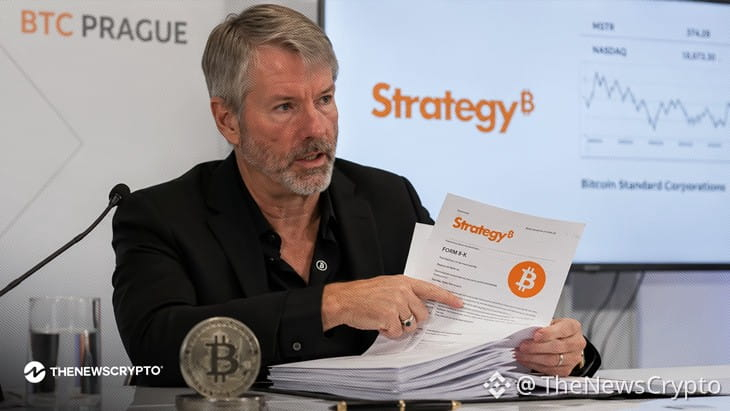
Мақала
Strategy’s 3,568 BTC Transfers Explained: Fidelity Custody Move, Not a SaleThe wallets linked to Strategy transferred 3,568 BTC, which is approximately $297 million in value. It was thought that there might be another sale of Bitcoin.
According to Arkham, the movements were regular Fidelity Custody operations. It had no information suggesting that Strategy had sold Bitcoin.
Bitcoin wallets tied to Strategy have been involved in transferring out 3,568 BTC, which is equal to roughly $297 million. The Lookonchain blockchain tracking tool picked up 12 transfers within nine hours. Single transfers ranged from 138 BTC to 452 BTC in value. The transfers attracted attention because Strategy is one of the biggest corporates holding Bitcoin. But Emmett Gallic, an Arkham Intelligence analyst, argued that the transfers were not indicative of any Bitcoin sell-off. Gallic noted that the transfers were regular activity within Fidelity Custody. Arkham had previously flagged those addresses as Fidelity wallets.
These are neither selling or moving. These are normal movements within Fidelity Custody. Fidelity treats all customer BTC deposits as fungible and will move the funds as needed. Addresses are already reflected as Fidelity on Arkham
— Emmett Gallic (@emmettgallic) September 29, 2026
Previous Bitcoin Sales Have Contributed to the Confusion
The market reaction was also caused by the recent activities of Strategy in terms of monetizing Bitcoin. The Bitcoin Monetization Program of Strategy was launched on June 29. It is aimed at selling Bitcoin in cycles for USD reserves. With the help of the program, the company can get up to $1.25 billion.
In addition, Strategy had already revealed such actions. Strategy sold 1,363 BTC from June 29 to June 30. Such sales were made at the price of $59,256 per Bitcoin. Next, 2,225 BTC were sold from July 1 to July 5. In this case, the average price was $60,773 per Bitcoin. Therefore, the new wallet transactions were especially interesting for traders. However, Arkham did not reveal any sales in the recent transactions.
Bitcoin Buy Continues for Strategy
Unlike the previous filing, Strategy filed a new Bitcoin purchase report. In the period from September 21 to September 27, Strategy purchased 1,665 Bitcoins. The total expenditure to buy those Bitcoins amounted to approximately $142.7 million. Thus, the average price of acquiring each coin is approximately $85,681.
After buying 1,665 Bitcoins, the total number of Strategy’s Bitcoin holdings reached 847,666 BTC. Strategy purchased those Bitcoins with approximately $63.95 billion, which means that its average purchase price of Bitcoin amounts to $75,437.
Considering that Bitcoin is valued around $83,800, the approximate market value of the holdings is nearly $71 billion. In other words, the Bitcoin price is currently more than 10% above the average acquisition price of Strategy. The recent purchase was financed not only by MSTR sales but also by allocating $103.5 million for the purchase of STRC preferred shares. Strategy still holds $6.02 billion in its U.S. dollar reserves.
Highlighted Crypto News:
Tether’s USDT Faces Senate Scrutiny Over Iran Crypto Transactions
Strategy’s 3,568 BTC Transfers Explained: Fidelity Custody Move, Not a Sale
The wallets linked to Strategy transferred 3,568 BTC, which is approximately $297 million in value. It was thought that there might be another sale of Bitcoin.
According to Arkham, the movements were regular Fidelity Custody operations. It had no information suggesting that Strategy had sold Bitcoin.
Bitcoin wallets tied to Strategy have been involved in transferring out 3,568 BTC, which is equal to roughly $297 million. The Lookonchain blockchain tracking tool picked up 12 transfers within nine hours. Single transfers ranged from 138 BTC to 452 BTC in value. The transfers attracted attention because Strategy is one of the biggest corporates holding Bitcoin. But Emmett Gallic, an Arkham Intelligence analyst, argued that the transfers were not indicative of any Bitcoin sell-off. Gallic noted that the transfers were regular activity within Fidelity Custody. Arkham had previously flagged those addresses as Fidelity wallets.
These are neither selling or moving. These are normal movements within Fidelity Custody. Fidelity treats all customer BTC deposits as fungible and will move the funds as needed. Addresses are already reflected as Fidelity on Arkham
— Emmett Gallic (@emmettgallic) September 29, 2026
Previous Bitcoin Sales Have Contributed to the Confusion
The market reaction was also caused by the recent activities of Strategy in terms of monetizing Bitcoin. The Bitcoin Monetization Program of Strategy was launched on June 29. It is aimed at selling Bitcoin in cycles for USD reserves. With the help of the program, the company can get up to $1.25 billion.
In addition, Strategy had already revealed such actions. Strategy sold 1,363 BTC from June 29 to June 30. Such sales were made at the price of $59,256 per Bitcoin. Next, 2,225 BTC were sold from July 1 to July 5. In this case, the average price was $60,773 per Bitcoin. Therefore, the new wallet transactions were especially interesting for traders. However, Arkham did not reveal any sales in the recent transactions.
Bitcoin Buy Continues for Strategy
Unlike the previous filing, Strategy filed a new Bitcoin purchase report. In the period from September 21 to September 27, Strategy purchased 1,665 Bitcoins. The total expenditure to buy those Bitcoins amounted to approximately $142.7 million. Thus, the average price of acquiring each coin is approximately $85,681.
After buying 1,665 Bitcoins, the total number of Strategy’s Bitcoin holdings reached 847,666 BTC. Strategy purchased those Bitcoins with approximately $63.95 billion, which means that its average purchase price of Bitcoin amounts to $75,437.
Considering that Bitcoin is valued around $83,800, the approximate market value of the holdings is nearly $71 billion. In other words, the Bitcoin price is currently more than 10% above the average acquisition price of Strategy. The recent purchase was financed not only by MSTR sales but also by allocating $103.5 million for the purchase of STRC preferred shares. Strategy still holds $6.02 billion in its U.S. dollar reserves.
Highlighted Crypto News:
Tether’s USDT Faces Senate Scrutiny Over Iran Crypto Transactions
According to Arkham, the movements were regular Fidelity Custody operations. It had no information suggesting that Strategy had sold Bitcoin.
Bitcoin wallets tied to Strategy have been involved in transferring out 3,568 BTC, which is equal to roughly $297 million. The Lookonchain blockchain tracking tool picked up 12 transfers within nine hours. Single transfers ranged from 138 BTC to 452 BTC in value. The transfers attracted attention because Strategy is one of the biggest corporates holding Bitcoin. But Emmett Gallic, an Arkham Intelligence analyst, argued that the transfers were not indicative of any Bitcoin sell-off. Gallic noted that the transfers were regular activity within Fidelity Custody. Arkham had previously flagged those addresses as Fidelity wallets.
These are neither selling or moving. These are normal movements within Fidelity Custody. Fidelity treats all customer BTC deposits as fungible and will move the funds as needed. Addresses are already reflected as Fidelity on Arkham
— Emmett Gallic (@emmettgallic) September 29, 2026
Previous Bitcoin Sales Have Contributed to the Confusion
The market reaction was also caused by the recent activities of Strategy in terms of monetizing Bitcoin. The Bitcoin Monetization Program of Strategy was launched on June 29. It is aimed at selling Bitcoin in cycles for USD reserves. With the help of the program, the company can get up to $1.25 billion.
In addition, Strategy had already revealed such actions. Strategy sold 1,363 BTC from June 29 to June 30. Such sales were made at the price of $59,256 per Bitcoin. Next, 2,225 BTC were sold from July 1 to July 5. In this case, the average price was $60,773 per Bitcoin. Therefore, the new wallet transactions were especially interesting for traders. However, Arkham did not reveal any sales in the recent transactions.
Bitcoin Buy Continues for Strategy
Unlike the previous filing, Strategy filed a new Bitcoin purchase report. In the period from September 21 to September 27, Strategy purchased 1,665 Bitcoins. The total expenditure to buy those Bitcoins amounted to approximately $142.7 million. Thus, the average price of acquiring each coin is approximately $85,681.
After buying 1,665 Bitcoins, the total number of Strategy’s Bitcoin holdings reached 847,666 BTC. Strategy purchased those Bitcoins with approximately $63.95 billion, which means that its average purchase price of Bitcoin amounts to $75,437.
Considering that Bitcoin is valued around $83,800, the approximate market value of the holdings is nearly $71 billion. In other words, the Bitcoin price is currently more than 10% above the average acquisition price of Strategy. The recent purchase was financed not only by MSTR sales but also by allocating $103.5 million for the purchase of STRC preferred shares. Strategy still holds $6.02 billion in its U.S. dollar reserves.
Highlighted Crypto News:
Tether’s USDT Faces Senate Scrutiny Over Iran Crypto Transactions
362
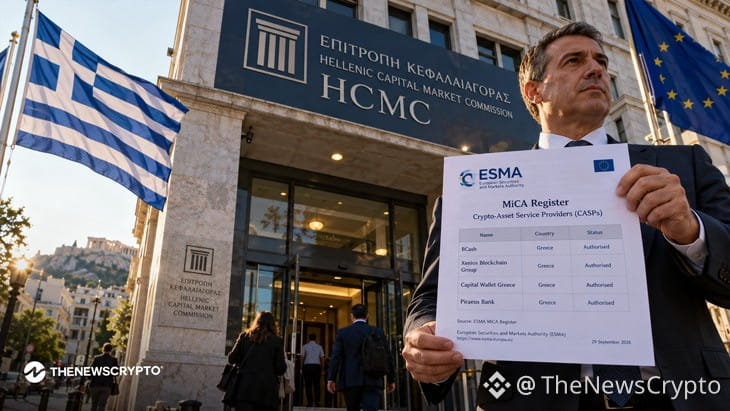
Мақала
Greece Enters ESMA MiCA Register With Four Crypto FirmsFour Greek crypto firms have appeared in the latest ESMA MiCA register.
The firms are BCash, Xenios Blockchain Group, Capital Wallet Greece and Piraeus Bank.
Greece has entered the European Union’s MiCA crypto regulatory register with four crypto-asset service providers, marking the country’s first appearance in the European Securities and Markets Authority’s (ESMA) updated list.
The four Greek firms are BCASH, Xenios Blockchain Group, Capital Wallet Greece and Piraeus Bank. They appear in ESMA’s register of authorized crypto-asset service providers under Greece. The latest register update was published on September 24 and was reported as a new development for Greece on September 29.
BCASH received its authorization on June 30, allowing it to provide crypto-to-fiat exchange services. Xenios Blockchain Group and Capital Wallet Greece were authorized on July 22. Xenios can receive and transmit crypto-asset orders, while Capital Wallet Greece received authorization for several services, including custody, crypto-to-fiat and crypto-to-crypto exchanges, order execution and crypto transfers.
Piraeus Bank was authorized on August 7 by the Bank of Greece. Its permitted services include custody and administration of crypto-assets, order execution, reception and transmission of orders, and crypto-asset transfers.
Greece Joins the EU’s MiCA Framework
The four entries also highlight how Greece has divided MiCA oversight between its financial-market regulator and central bank. The Hellenic Capital Market Commission (HCMC) is the competent authority listed for BCASH, Xenios Blockchain Group and Capital Wallet Greece, while the Bank of Greece is listed for Piraeus Bank.
The broader ESMA update added 10 crypto-asset service providers from several EU countries, bringing the register to 359 unique providers, according to today’s report. MiCA establishes common rules for crypto-asset services across the European Union, covering authorization, supervision, transparency and disclosure requirements.
The development comes after Greece completed its first MiCA authorizations earlier this year, giving locally authorized firms a regulatory route to provide permitted crypto services under the EU framework.
Highlighted Crypto News:
Tether’s USDT Faces Senate Scrutiny Over Iran Crypto Transactions
Greece Enters ESMA MiCA Register With Four Crypto Firms
Four Greek crypto firms have appeared in the latest ESMA MiCA register.
The firms are BCash, Xenios Blockchain Group, Capital Wallet Greece and Piraeus Bank.
Greece has entered the European Union’s MiCA crypto regulatory register with four crypto-asset service providers, marking the country’s first appearance in the European Securities and Markets Authority’s (ESMA) updated list.
The four Greek firms are BCASH, Xenios Blockchain Group, Capital Wallet Greece and Piraeus Bank. They appear in ESMA’s register of authorized crypto-asset service providers under Greece. The latest register update was published on September 24 and was reported as a new development for Greece on September 29.
BCASH received its authorization on June 30, allowing it to provide crypto-to-fiat exchange services. Xenios Blockchain Group and Capital Wallet Greece were authorized on July 22. Xenios can receive and transmit crypto-asset orders, while Capital Wallet Greece received authorization for several services, including custody, crypto-to-fiat and crypto-to-crypto exchanges, order execution and crypto transfers.
Piraeus Bank was authorized on August 7 by the Bank of Greece. Its permitted services include custody and administration of crypto-assets, order execution, reception and transmission of orders, and crypto-asset transfers.
Greece Joins the EU’s MiCA Framework
The four entries also highlight how Greece has divided MiCA oversight between its financial-market regulator and central bank. The Hellenic Capital Market Commission (HCMC) is the competent authority listed for BCASH, Xenios Blockchain Group and Capital Wallet Greece, while the Bank of Greece is listed for Piraeus Bank.
The broader ESMA update added 10 crypto-asset service providers from several EU countries, bringing the register to 359 unique providers, according to today’s report. MiCA establishes common rules for crypto-asset services across the European Union, covering authorization, supervision, transparency and disclosure requirements.
The development comes after Greece completed its first MiCA authorizations earlier this year, giving locally authorized firms a regulatory route to provide permitted crypto services under the EU framework.
Highlighted Crypto News:
Tether’s USDT Faces Senate Scrutiny Over Iran Crypto Transactions
The firms are BCash, Xenios Blockchain Group, Capital Wallet Greece and Piraeus Bank.
Greece has entered the European Union’s MiCA crypto regulatory register with four crypto-asset service providers, marking the country’s first appearance in the European Securities and Markets Authority’s (ESMA) updated list.
The four Greek firms are BCASH, Xenios Blockchain Group, Capital Wallet Greece and Piraeus Bank. They appear in ESMA’s register of authorized crypto-asset service providers under Greece. The latest register update was published on September 24 and was reported as a new development for Greece on September 29.
BCASH received its authorization on June 30, allowing it to provide crypto-to-fiat exchange services. Xenios Blockchain Group and Capital Wallet Greece were authorized on July 22. Xenios can receive and transmit crypto-asset orders, while Capital Wallet Greece received authorization for several services, including custody, crypto-to-fiat and crypto-to-crypto exchanges, order execution and crypto transfers.
Piraeus Bank was authorized on August 7 by the Bank of Greece. Its permitted services include custody and administration of crypto-assets, order execution, reception and transmission of orders, and crypto-asset transfers.
Greece Joins the EU’s MiCA Framework
The four entries also highlight how Greece has divided MiCA oversight between its financial-market regulator and central bank. The Hellenic Capital Market Commission (HCMC) is the competent authority listed for BCASH, Xenios Blockchain Group and Capital Wallet Greece, while the Bank of Greece is listed for Piraeus Bank.
The broader ESMA update added 10 crypto-asset service providers from several EU countries, bringing the register to 359 unique providers, according to today’s report. MiCA establishes common rules for crypto-asset services across the European Union, covering authorization, supervision, transparency and disclosure requirements.
The development comes after Greece completed its first MiCA authorizations earlier this year, giving locally authorized firms a regulatory route to provide permitted crypto services under the EU framework.
Highlighted Crypto News:
Tether’s USDT Faces Senate Scrutiny Over Iran Crypto Transactions
54
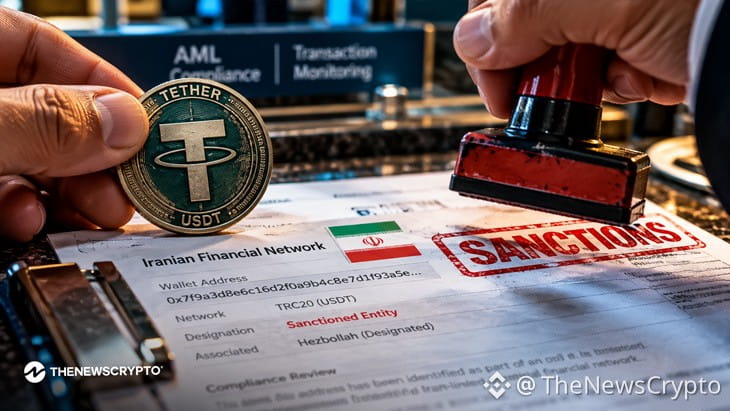
Мақала
Tether’s USDT Faces Senate Scrutiny Over Iran Crypto TransactionsAccording to a report from the Senate Democrats, USDT was seen in 84% of 846 sanctioned crypto wallets associated with Iran.
The Tether company challenges the description and claims that it helped block around $550 million worth of USDT associated with Iran in 2026.
The Senate of the United States is now investigating Tether’s USDT in relation to crypto dealings that have connections to Iran. This investigation was led by Senator Richard Blumenthal through the Senate Permanent Subcommittee on Investigations. The Senate analyzed transactions involving 846 crypto wallets that it had sanctioned or considered for seizure due to their links to Iran and its regional proxies. It turned out that in 84 percent of these crypto wallets, USDT was the only crypto coin being transacted. According to the report, such deals made it possible for Iranians to shift money across the globe while evading U.S. sanctions. The report also mentioned crypto dealings with Iran’s currency and the Central Bank of Iran.
How Tether Defended Its Freeze Practices
Tether refuted the label that USDT provides a safe haven for sanctioned individuals. The firm said that it works with U.S. regulators and assists in fighting any illicit crypto activity. Additionally, Tether mentioned that it was able to freeze $550 million of Iran-related USDT in 2026. The CEO of Tether, Paolo Ardoino, said that the company has been working against sanctioned actors, terrorists, and criminals from the very beginning.
This statement differs greatly from the allegations stated by the Senate in its investigation report. According to the report, Tether did not always freeze the wallets of those who were designated before 2024. Furthermore, there is no proof that Tether actively freezes wallets that are associated with illicit Iranian finance.
Sanctions Against Iran Spark Scrutiny of Cryptocurrency
These findings come at a time when the US government is increasing pressure on Iran through sanctions, along with reviewing the use of cryptocurrency in evading sanctions. Blumenthal had earlier asked the Treasury and Justice Department to look into the sanctions and anti-money laundering procedures of Tether. This committee had already expressed concern about the use of USDT on Iranian cryptocurrency exchanges and their shadow banking systems.
Treasury had already flagged cryptocurrency as one of the components of Iran’s shadow banking system. These new findings now include analysis of transactions on wallets, alongside the previous concerns. For crypto markets, the findings put more focus on compliance and control measures for stablecoins. The ability of Tether to freeze USDT is an important aspect of the discussion.
Highlighted Crypto News:
Chainlink Enables Bank Access to Swift’s Blockchain Ledger for 24/7 Payments
Tether’s USDT Faces Senate Scrutiny Over Iran Crypto Transactions
According to a report from the Senate Democrats, USDT was seen in 84% of 846 sanctioned crypto wallets associated with Iran.
The Tether company challenges the description and claims that it helped block around $550 million worth of USDT associated with Iran in 2026.
The Senate of the United States is now investigating Tether’s USDT in relation to crypto dealings that have connections to Iran. This investigation was led by Senator Richard Blumenthal through the Senate Permanent Subcommittee on Investigations. The Senate analyzed transactions involving 846 crypto wallets that it had sanctioned or considered for seizure due to their links to Iran and its regional proxies. It turned out that in 84 percent of these crypto wallets, USDT was the only crypto coin being transacted. According to the report, such deals made it possible for Iranians to shift money across the globe while evading U.S. sanctions. The report also mentioned crypto dealings with Iran’s currency and the Central Bank of Iran.
How Tether Defended Its Freeze Practices
Tether refuted the label that USDT provides a safe haven for sanctioned individuals. The firm said that it works with U.S. regulators and assists in fighting any illicit crypto activity. Additionally, Tether mentioned that it was able to freeze $550 million of Iran-related USDT in 2026. The CEO of Tether, Paolo Ardoino, said that the company has been working against sanctioned actors, terrorists, and criminals from the very beginning.
This statement differs greatly from the allegations stated by the Senate in its investigation report. According to the report, Tether did not always freeze the wallets of those who were designated before 2024. Furthermore, there is no proof that Tether actively freezes wallets that are associated with illicit Iranian finance.
Sanctions Against Iran Spark Scrutiny of Cryptocurrency
These findings come at a time when the US government is increasing pressure on Iran through sanctions, along with reviewing the use of cryptocurrency in evading sanctions. Blumenthal had earlier asked the Treasury and Justice Department to look into the sanctions and anti-money laundering procedures of Tether. This committee had already expressed concern about the use of USDT on Iranian cryptocurrency exchanges and their shadow banking systems.
Treasury had already flagged cryptocurrency as one of the components of Iran’s shadow banking system. These new findings now include analysis of transactions on wallets, alongside the previous concerns. For crypto markets, the findings put more focus on compliance and control measures for stablecoins. The ability of Tether to freeze USDT is an important aspect of the discussion.
Highlighted Crypto News:
Chainlink Enables Bank Access to Swift’s Blockchain Ledger for 24/7 Payments
The Tether company challenges the description and claims that it helped block around $550 million worth of USDT associated with Iran in 2026.
The Senate of the United States is now investigating Tether’s USDT in relation to crypto dealings that have connections to Iran. This investigation was led by Senator Richard Blumenthal through the Senate Permanent Subcommittee on Investigations. The Senate analyzed transactions involving 846 crypto wallets that it had sanctioned or considered for seizure due to their links to Iran and its regional proxies. It turned out that in 84 percent of these crypto wallets, USDT was the only crypto coin being transacted. According to the report, such deals made it possible for Iranians to shift money across the globe while evading U.S. sanctions. The report also mentioned crypto dealings with Iran’s currency and the Central Bank of Iran.
How Tether Defended Its Freeze Practices
Tether refuted the label that USDT provides a safe haven for sanctioned individuals. The firm said that it works with U.S. regulators and assists in fighting any illicit crypto activity. Additionally, Tether mentioned that it was able to freeze $550 million of Iran-related USDT in 2026. The CEO of Tether, Paolo Ardoino, said that the company has been working against sanctioned actors, terrorists, and criminals from the very beginning.
This statement differs greatly from the allegations stated by the Senate in its investigation report. According to the report, Tether did not always freeze the wallets of those who were designated before 2024. Furthermore, there is no proof that Tether actively freezes wallets that are associated with illicit Iranian finance.
Sanctions Against Iran Spark Scrutiny of Cryptocurrency
These findings come at a time when the US government is increasing pressure on Iran through sanctions, along with reviewing the use of cryptocurrency in evading sanctions. Blumenthal had earlier asked the Treasury and Justice Department to look into the sanctions and anti-money laundering procedures of Tether. This committee had already expressed concern about the use of USDT on Iranian cryptocurrency exchanges and their shadow banking systems.
Treasury had already flagged cryptocurrency as one of the components of Iran’s shadow banking system. These new findings now include analysis of transactions on wallets, alongside the previous concerns. For crypto markets, the findings put more focus on compliance and control measures for stablecoins. The ability of Tether to freeze USDT is an important aspect of the discussion.
Highlighted Crypto News:
Chainlink Enables Bank Access to Swift’s Blockchain Ledger for 24/7 Payments
652

Мақала
Beldex Launches $1M Global Developer Grants ProgramBeldex, a privacy-centric blockchain ecosystem, announces the establishment of the Beldex Grants Program, a $1 million fund dedicated to fostering the development of privacy-preserving applications, tools, and infrastructure. The program operates as an ongoing initiative with flexible funding cycles, allowing developers globally to submit proposals based on project readiness rather than arbitrary deadlines.
The Beldex Grants Program was announced during Korea Blockchain Week 2026 in Seoul. The program is open to developers and teams worldwide, supporting the development of privacy-preserving applications, tools, and infrastructure. Beldex has historically focused on building its own privacy infrastructure and applications, including BChat, BelNet, BNS and the Beldex Browser. The Grants Program marks the next stage in that evolution, opening Beldex infrastructure to external developers and supporting a broader ecosystem of privacy-preserving applications, integrations and tooling Cris Blanco, Chief Strategy Officer at Beldex, said: “Beldex has spent years building privacy infrastructure and products. The next phase is about opening that foundation to developers and growing an ecosystem beyond what Beldex builds itself. We don’t expect the most important privacy applications of the future to all come from inside one organisation. The Grants Program is about giving builders the infrastructure, support and capital to take those ideas from concept to production.” The $1 million allocation is not divided into fixed tranche amounts. Instead, grant sizes are determined individually based on the scope of the proposal and the complexity of the required deliverables. The program accepts applications for:
Privacy-Preserving Applications: Consumer and enterprise applications spanning areas such as private payments, identity, communications, networking and other privacy-focused use cases.
Infrastructure, Research & Tooling: Core protocol contributions, developer tooling, SDK enhancements, privacy-focused middleware, and research that can advance Beldex’s privacy stack.
Integration & Interoperability: Integrations, wallet extensions and interoperability layers that connect applications and external ecosystems to Beldex infrastructure.
Applications are evaluated on five distinct criteria: innovation in privacy architecture, technical feasibility, potential ecosystem impact, adherence to security standards, and the clarity of proposed milestones. To ensure fiscal responsibility and project momentum, funding is released incrementally upon the verification of specific deliverables.
Depending on the nature of the project, milestone-based funding may include stages such as:
Prototype: A functional proof-of-concept demonstrating core privacy features.
Testing: Deployment, integration and testing in an appropriate test environment, including the Beldex testnet where applicable.
Mainnet/Production: Mainnet launch or production deployment, where applicable.
Chairman Afanddy Bin Hushni of Beldex, said: “We are not interested in handing out lump sums and hoping for the best. Funding is tied to clear, verifiable milestones, so ambition is matched by real delivery. The goal is simple: help strong teams turn promising ideas into technology people actually use”
The program provides direct technical integration support. Selected grantees receive access to Beldex’s Software Development Kits (SDKs), detailed wallet extension integration guides, and priority access to core repository maintainers via GitHub. This support structure is designed to reduce the engineering overhead typically associated with implementing zero-knowledge proofs (ZKPs) and ring signatures in custom applications.
Proposals are accepted via the official Beldex application portal, which will go live concurrently with the announcement at Korea Blockchain Week. Applications are accepted on a rolling basis rather than through fixed hackathon or cohort deadlines, allowing teams to apply when their projects are ready for funding. Grants will be awarded while program funding remains available and proposals continue to meet the program’s technical and delivery criteria.
For more information on the Beldex Grants Program, including the application form and technical documentation, please visit beldex.io/grants. ENDS
Beldex Launches $1M Global Developer Grants Program
Beldex, a privacy-centric blockchain ecosystem, announces the establishment of the Beldex Grants Program, a $1 million fund dedicated to fostering the development of privacy-preserving applications, tools, and infrastructure. The program operates as an ongoing initiative with flexible funding cycles, allowing developers globally to submit proposals based on project readiness rather than arbitrary deadlines.
The Beldex Grants Program was announced during Korea Blockchain Week 2026 in Seoul. The program is open to developers and teams worldwide, supporting the development of privacy-preserving applications, tools, and infrastructure. Beldex has historically focused on building its own privacy infrastructure and applications, including BChat, BelNet, BNS and the Beldex Browser. The Grants Program marks the next stage in that evolution, opening Beldex infrastructure to external developers and supporting a broader ecosystem of privacy-preserving applications, integrations and tooling Cris Blanco, Chief Strategy Officer at Beldex, said: “Beldex has spent years building privacy infrastructure and products. The next phase is about opening that foundation to developers and growing an ecosystem beyond what Beldex builds itself. We don’t expect the most important privacy applications of the future to all come from inside one organisation. The Grants Program is about giving builders the infrastructure, support and capital to take those ideas from concept to production.” The $1 million allocation is not divided into fixed tranche amounts. Instead, grant sizes are determined individually based on the scope of the proposal and the complexity of the required deliverables. The program accepts applications for:
Privacy-Preserving Applications: Consumer and enterprise applications spanning areas such as private payments, identity, communications, networking and other privacy-focused use cases.
Infrastructure, Research & Tooling: Core protocol contributions, developer tooling, SDK enhancements, privacy-focused middleware, and research that can advance Beldex’s privacy stack.
Integration & Interoperability: Integrations, wallet extensions and interoperability layers that connect applications and external ecosystems to Beldex infrastructure.
Applications are evaluated on five distinct criteria: innovation in privacy architecture, technical feasibility, potential ecosystem impact, adherence to security standards, and the clarity of proposed milestones. To ensure fiscal responsibility and project momentum, funding is released incrementally upon the verification of specific deliverables.
Depending on the nature of the project, milestone-based funding may include stages such as:
Prototype: A functional proof-of-concept demonstrating core privacy features.
Testing: Deployment, integration and testing in an appropriate test environment, including the Beldex testnet where applicable.
Mainnet/Production: Mainnet launch or production deployment, where applicable.
Chairman Afanddy Bin Hushni of Beldex, said: “We are not interested in handing out lump sums and hoping for the best. Funding is tied to clear, verifiable milestones, so ambition is matched by real delivery. The goal is simple: help strong teams turn promising ideas into technology people actually use”
The program provides direct technical integration support. Selected grantees receive access to Beldex’s Software Development Kits (SDKs), detailed wallet extension integration guides, and priority access to core repository maintainers via GitHub. This support structure is designed to reduce the engineering overhead typically associated with implementing zero-knowledge proofs (ZKPs) and ring signatures in custom applications.
Proposals are accepted via the official Beldex application portal, which will go live concurrently with the announcement at Korea Blockchain Week. Applications are accepted on a rolling basis rather than through fixed hackathon or cohort deadlines, allowing teams to apply when their projects are ready for funding. Grants will be awarded while program funding remains available and proposals continue to meet the program’s technical and delivery criteria.
For more information on the Beldex Grants Program, including the application form and technical documentation, please visit beldex.io/grants. ENDS
The Beldex Grants Program was announced during Korea Blockchain Week 2026 in Seoul. The program is open to developers and teams worldwide, supporting the development of privacy-preserving applications, tools, and infrastructure. Beldex has historically focused on building its own privacy infrastructure and applications, including BChat, BelNet, BNS and the Beldex Browser. The Grants Program marks the next stage in that evolution, opening Beldex infrastructure to external developers and supporting a broader ecosystem of privacy-preserving applications, integrations and tooling Cris Blanco, Chief Strategy Officer at Beldex, said: “Beldex has spent years building privacy infrastructure and products. The next phase is about opening that foundation to developers and growing an ecosystem beyond what Beldex builds itself. We don’t expect the most important privacy applications of the future to all come from inside one organisation. The Grants Program is about giving builders the infrastructure, support and capital to take those ideas from concept to production.” The $1 million allocation is not divided into fixed tranche amounts. Instead, grant sizes are determined individually based on the scope of the proposal and the complexity of the required deliverables. The program accepts applications for:
Privacy-Preserving Applications: Consumer and enterprise applications spanning areas such as private payments, identity, communications, networking and other privacy-focused use cases.
Infrastructure, Research & Tooling: Core protocol contributions, developer tooling, SDK enhancements, privacy-focused middleware, and research that can advance Beldex’s privacy stack.
Integration & Interoperability: Integrations, wallet extensions and interoperability layers that connect applications and external ecosystems to Beldex infrastructure.
Applications are evaluated on five distinct criteria: innovation in privacy architecture, technical feasibility, potential ecosystem impact, adherence to security standards, and the clarity of proposed milestones. To ensure fiscal responsibility and project momentum, funding is released incrementally upon the verification of specific deliverables.
Depending on the nature of the project, milestone-based funding may include stages such as:
Prototype: A functional proof-of-concept demonstrating core privacy features.
Testing: Deployment, integration and testing in an appropriate test environment, including the Beldex testnet where applicable.
Mainnet/Production: Mainnet launch or production deployment, where applicable.
Chairman Afanddy Bin Hushni of Beldex, said: “We are not interested in handing out lump sums and hoping for the best. Funding is tied to clear, verifiable milestones, so ambition is matched by real delivery. The goal is simple: help strong teams turn promising ideas into technology people actually use”
The program provides direct technical integration support. Selected grantees receive access to Beldex’s Software Development Kits (SDKs), detailed wallet extension integration guides, and priority access to core repository maintainers via GitHub. This support structure is designed to reduce the engineering overhead typically associated with implementing zero-knowledge proofs (ZKPs) and ring signatures in custom applications.
Proposals are accepted via the official Beldex application portal, which will go live concurrently with the announcement at Korea Blockchain Week. Applications are accepted on a rolling basis rather than through fixed hackathon or cohort deadlines, allowing teams to apply when their projects are ready for funding. Grants will be awarded while program funding remains available and proposals continue to meet the program’s technical and delivery criteria.
For more information on the Beldex Grants Program, including the application form and technical documentation, please visit beldex.io/grants. ENDS
107
Мақала
Chainlink Enables Bank Access to Swift’s Blockchain Ledger for 24/7 PaymentsChainlink is working to connect financial institutions to Swift’s blockchain ledger through its Chainlink Runtime Environment (CRE), while banks retain control of their transaction-signing keys.
Swift’s ledger is designed to support 24/7 cross-border payments using tokenized bank deposits, with 17 financial institutions preparing to pilot live transactions.
Chainlink is working to enable financial institutions to connect their existing systems and transaction-signing infrastructure directly to Swift’s blockchain-based ledger through the Chainlink Platform, opening a path for 24/7 cross-border payments using tokenized bank deposits.
Chainlink announced the initiative on September 28, saying its Chainlink Runtime Environment (CRE) will coordinate workflows between financial institutions and Swift’s ledger. Banks will retain control of the private keys used to authorize transactions rather than handing that authority to Chainlink.
Banks to Keep Control of Transaction Signing
The setup is designed to allow banks to use their existing security and approval processes while connecting to Swift’s blockchain infrastructure. CRE handles the workflow coordination, while financial institutions continue to control their transaction-signing keys.
TODAY: Chainlink announced it is working to enable financial institutions to connect to @swiftcommunity’s blockchain ledger through the Chainlink platform. Swift moves the equivalent of the world's GDP roughly every three days pic.twitter.com/ntIHTlOwH3
— Chainlink (@chainlink) September 28, 2026
Swift’s ledger is designed to coordinate 24/7 cross-border payments using tokenized deposits. The deposits remain on participating banks’ own ledgers and represent bank-issued money. Swift’s ledger coordinates the movement of funds between institutions, including during nights and weekends, before final settlement through existing mechanisms such as real-time gross settlement systems.
Swift said in July that its ledger had moved into initial use, with 17 financial institutions across six continents preparing to pilot live tokenized-deposit transactions. The broader initiative was developed with more than 40 financial institutions, while Swift’s network connects more than 11,500 financial institutions and corporates across more than 200 markets.
The ledger uses an EVM-compatible architecture based on Hyperledger Besu and is operated by Swift as an orchestration layer for transaction workflows and funding commitments. Banks retain authority over their keys, assets, funding and final settlement arrangements.
The Chainlink initiative comes as financial institutions continue expanding work around tokenized deposits and on-chain payments. Chainlink also launched CCIP 2.0 on September 28, aimed at providing institutional interoperability across public and private blockchains.
The latest announcement does not provide a specific date for a full rollout of the Chainlink-Swift connection across participating banks.
Chainlink Enables Bank Access to Swift’s Blockchain Ledger for 24/7 Payments
Chainlink is working to connect financial institutions to Swift’s blockchain ledger through its Chainlink Runtime Environment (CRE), while banks retain control of their transaction-signing keys.
Swift’s ledger is designed to support 24/7 cross-border payments using tokenized bank deposits, with 17 financial institutions preparing to pilot live transactions.
Chainlink is working to enable financial institutions to connect their existing systems and transaction-signing infrastructure directly to Swift’s blockchain-based ledger through the Chainlink Platform, opening a path for 24/7 cross-border payments using tokenized bank deposits.
Chainlink announced the initiative on September 28, saying its Chainlink Runtime Environment (CRE) will coordinate workflows between financial institutions and Swift’s ledger. Banks will retain control of the private keys used to authorize transactions rather than handing that authority to Chainlink.
Banks to Keep Control of Transaction Signing
The setup is designed to allow banks to use their existing security and approval processes while connecting to Swift’s blockchain infrastructure. CRE handles the workflow coordination, while financial institutions continue to control their transaction-signing keys.
TODAY: Chainlink announced it is working to enable financial institutions to connect to @swiftcommunity’s blockchain ledger through the Chainlink platform. Swift moves the equivalent of the world's GDP roughly every three days pic.twitter.com/ntIHTlOwH3
— Chainlink (@chainlink) September 28, 2026
Swift’s ledger is designed to coordinate 24/7 cross-border payments using tokenized deposits. The deposits remain on participating banks’ own ledgers and represent bank-issued money. Swift’s ledger coordinates the movement of funds between institutions, including during nights and weekends, before final settlement through existing mechanisms such as real-time gross settlement systems.
Swift said in July that its ledger had moved into initial use, with 17 financial institutions across six continents preparing to pilot live tokenized-deposit transactions. The broader initiative was developed with more than 40 financial institutions, while Swift’s network connects more than 11,500 financial institutions and corporates across more than 200 markets.
The ledger uses an EVM-compatible architecture based on Hyperledger Besu and is operated by Swift as an orchestration layer for transaction workflows and funding commitments. Banks retain authority over their keys, assets, funding and final settlement arrangements.
The Chainlink initiative comes as financial institutions continue expanding work around tokenized deposits and on-chain payments. Chainlink also launched CCIP 2.0 on September 28, aimed at providing institutional interoperability across public and private blockchains.
The latest announcement does not provide a specific date for a full rollout of the Chainlink-Swift connection across participating banks.
Swift’s ledger is designed to support 24/7 cross-border payments using tokenized bank deposits, with 17 financial institutions preparing to pilot live transactions.
Chainlink is working to enable financial institutions to connect their existing systems and transaction-signing infrastructure directly to Swift’s blockchain-based ledger through the Chainlink Platform, opening a path for 24/7 cross-border payments using tokenized bank deposits.
Chainlink announced the initiative on September 28, saying its Chainlink Runtime Environment (CRE) will coordinate workflows between financial institutions and Swift’s ledger. Banks will retain control of the private keys used to authorize transactions rather than handing that authority to Chainlink.
Banks to Keep Control of Transaction Signing
The setup is designed to allow banks to use their existing security and approval processes while connecting to Swift’s blockchain infrastructure. CRE handles the workflow coordination, while financial institutions continue to control their transaction-signing keys.
TODAY: Chainlink announced it is working to enable financial institutions to connect to @swiftcommunity’s blockchain ledger through the Chainlink platform. Swift moves the equivalent of the world's GDP roughly every three days pic.twitter.com/ntIHTlOwH3
— Chainlink (@chainlink) September 28, 2026
Swift’s ledger is designed to coordinate 24/7 cross-border payments using tokenized deposits. The deposits remain on participating banks’ own ledgers and represent bank-issued money. Swift’s ledger coordinates the movement of funds between institutions, including during nights and weekends, before final settlement through existing mechanisms such as real-time gross settlement systems.
Swift said in July that its ledger had moved into initial use, with 17 financial institutions across six continents preparing to pilot live tokenized-deposit transactions. The broader initiative was developed with more than 40 financial institutions, while Swift’s network connects more than 11,500 financial institutions and corporates across more than 200 markets.
The ledger uses an EVM-compatible architecture based on Hyperledger Besu and is operated by Swift as an orchestration layer for transaction workflows and funding commitments. Banks retain authority over their keys, assets, funding and final settlement arrangements.
The Chainlink initiative comes as financial institutions continue expanding work around tokenized deposits and on-chain payments. Chainlink also launched CCIP 2.0 on September 28, aimed at providing institutional interoperability across public and private blockchains.
The latest announcement does not provide a specific date for a full rollout of the Chainlink-Swift connection across participating banks.
1
1
270
Көбірек контент көру үшін кіріңіз
Binance Square платформасында әлемдік криптоқоғамдастыққа қосылыңыз
⚡️ Криптовалюта туралы ең соңғы және пайдалы ақпаратты алыңыз.
💬 Әлемдегі ең ірі криптобиржаның сеніміне ие.
👍 Расталған авторлардың нақты пікірлерін табыңыз.
Электрондық пошта/телефон нөмірі
Трендтегі тақырыптар
NFPWatch
10.5M рет көрілді
17,711 адам талқылап жатыр
Crypto News | Bitcoin Rises Toward $85K as Treasury Yields Fall Ahead of U.S. NFP Report
Binance News
·30 лайк
·36.7k рет көрілді
BitcoinFundingRateTriplesTo10%
1,852 рет көрілді
115 адам талқылап жатыр
BitcoinSurpasses$86KUp2.99%
1,116 рет көрілді
25 адам талқылап жатыр