Yield Guild Games: The Network Effect No One Is Pricing Correctly
YGG has always been fundamentally misunderstood because the market continues to view it through the lens of the 2021 play-to-earn mania, while the guild itself evolved into something far more structural than a gaming hype token. What's interesting about YGG now is not nostalgia-it's the quiet consolidation of digital labor networks, skill-based gaming cohorts, and asset-coordinated communities forming around it. Most gaming-related assets are mercurial in that they rely on attention cycles, while YGG operates like an infrastructure layer masquerading as a community token. It allocates resources, structures human coordination, and amplifies player liquidity across ecosystems. That coordination becomes incredibly valuable when gaming is an economic layer rather than a leisure activity. The market is missing that pivot. YGG is no longer a "guild"; it's becoming a distribution engine for digital economies. Distribution engines eventually become unavoidable. The reason YGG keeps resurfacing every cycle is because it sits at the intersection of two forces the market continuously underestimates: gaming adoption and human coordination. Chains compete for devs; games compete for players; but ecosystems compete for communities. YGG built an early moat by capturing the most valuable community asset of all-organized, incentivized participation. When thousands of players move in sync, they create liquidity, traffic, user data, and economic density. Projects pay millions to acquire this type of user energy. YGG already has it. And unlike game-tokens tied to a single title, YGG's upside expands as the number of supported games grows. It's a network effect model, not a single-IP gamble. The market will eventually price that difference in. What makes YGG dangerous to ignore is its ability to redirect user attention with precision. Attention is the most valuable currency in gaming, not some speculative variety, but concentrated, task-driven, gameplay-active attention that affects early traction. YGG can deploy that attention like capital: funneling thousands of players into a new game, stress testing an economy, accelerating reward loops, and creating visible day-one momentum. No publisher, no L1 chain, no gaming studio can replicate that organically. They need intermediaries who understand user behavior at scale. And that's YGG. The token becomes the mechanism that governs and rewards this coordination, which turns it into a leverage point rather than a passive asset. The global footprint of YGG is a silent strength. Most gaming ecosystems remain fragmented by region, language, or economic barriers. YGG operates across borders because digital labor knows no boundaries. A player in the Philippines, Pakistan, Brazil, India, Turkey, or Nigeria contributes equal economic weight to an early-stage game as a user in the US or Europe. The crypto market still hasn't priced in the power of low-cost, high-engagement digital economies. YGG thrives where traditional gaming studios fail: emerging markets with massive populations and high time-on-task. When gaming becomes an income layer again-as it will under AI-accelerated virtual worlds-YGG becomes the distribution rail for this new class of digital workers. The real unlock for YGG is in the shift happening in crypto gaming architecture. The next generation of games isn't built around play-to-earn mechanics; it's about skill economies, digital identity, and modular ownership. These require structured communities that can enter, learn, compete, and scale inside the ecosystem. Casual users don't do that. Organized communities do. YGG's early guild structure becomes a competitive advantage when games resemble evolving economies rather than static products. You don't onboard 10,000 power users with a marketing banner; you onboard them with a guild that already knows how to operate like a workforce. YGG's token behavior reflects something that the market forgets-supply is irrelevant when community conviction remains intact. The token can be distributed, vested, unlocked-yet still move aggressively because the economic base doesn't treat it as disposable. YGG holders tend to be participants, not spectators. They use the token for quests, rewards, contribution funnels, and coordination layers. A token used by a living organism-an active network-is shaped by utility, not by speculative cycles alone. That's why YGG's chart doesn't resemble dead gaming coins; it resembles assets that found new purpose after a washout. Tokens that survive identity collapse and rebuild always outperform later. YGG is doing exactly that. The narrative pivot coming for YGG is tied to digital identity. Players are no longer anonymous resource grinders; they're evolving into skill-based identities with reputational value. Guilds become the verification layer for those identities: They validate skill, track contributions, measure performance, and distribute rewards. In the old Web2 gaming world, this was invisible. In Web3, it becomes tokenized. YGG sits in the center of that transition. If gaming organizations become economic institutions, YGG becomes one of the earliest prototypes-and the token becomes a representation of its economic footprint. What sets YGG apart is its ability to scale without becoming a monolith. Rather than centralizing control like a corporation, it functions like a decentralized labor network-many sub-guilds, many player groups, many regions, all coordinated under one economic token. That flexibility lets it adapt to new games, new genres, new monetization mechanics instantly. The most scalable systems in crypto are those that behave organically, not rigidly. YGG behaves like a living network that expands where opportunity appears. And in a gaming world shifting faster than any L1 cycle, adaptability is the ultimate currency. To most investors, YGG means "gaming coin." That's wrong. YGG is a meta-infrastructure asset controlling user liquidity across digital economies. It's one layer above games, not within the games themselves. While individual game tokens depend on whether their title does well, YGG depends on whether gaming in general does well. That is a monumental difference. Gaming is going to grow. The question is who will coordinate that growth. Already, YGG owns one of the strongest early positions. YGG's future is not reliant on hype returning-it's reliant on the inevitability of digital economies becoming tokenized, skill-driven, globally accessible, and community-coordinated. The further crypto gaming evolves, the more indispensible a guild structure becomes. And when something becomes indispensible, its token eventually becomes unavoidable. YGG isn't waiting for a narrative; it is a narrative the market hasn't yet fully understood. When it does, the re-pricing will happen violently, because the foundation has been quietly rebuilt for years. YGG is not a memory of 2021-it's a blueprint for what gaming economies will look like in 2026 and beyond. @Yield Guild Games #YGGPlay $YGG
Injective: Building the Future of Finance, One Transaction at a Time $INJ @Injective #injective Injective started in 2018 from frustration: existing blockchains weren’t built for real financial markets. Founders Eric Chen and Albert Chon imagined a chain for fast, low-fee, interoperable finance, supporting trading, derivatives, and tokenized assets natively on-chain.
After years of testing, mainnet launched in November 2021, bringing on-chain order books, cross-chain bridges, and developer tools. The community — validators, developers, and early believers — became the heartbeat of the network.
At the center is INJ, used for staking, fees, governance, and burn mechanisms, aligning incentives and growing with the ecosystem. With upgrades like INJ 3.0, scarcity and purpose are reinforced, rewarding long-term commitment.
Today, Injective is a living, evolving financial ecosystem, bridging DeFi and traditional finance, fostering innovation, and empowering builders and traders alike. Its story is one of dreams, persistence, and community, shaping a new era of decentralized finance.
Yield Guild Games started with a simple idea: let players who couldn’t afford blockchain games participate. By lending NFTs, YGG created scholarships that turned gaming into income, not just entertainment.
Today, YGG is a global DAO connecting players, developers, and communities across multiple games. SubDAOs manage local ecosystems, vaults tie staking to real in-game rewards, and the YGG token powers governance and shared growth.
YGG’s model prioritizes community, opportunity, and sustainability over hype, helping players earn, learn, and own their virtual lives. It’s not just a guild—it’s a living economy and movement shaping the future of Web3 gaming.
Injective 2026: A Human-Centered EVM Era $INJ @Injective #Injective Injective isn’t just a fast, low-latency chain—it’s a Layer-1 built for traders and developers alike. With the new EVM integration, Ethereum developers feel at home while traders benefit from sub-second execution, deep liquidity, and low fees.
Its architecture blends Cosmos speed, CosmWasm flexibility, and EVM familiarity, creating a seamless, unified environment. Trades confirm instantly, strategies flow naturally, and markets feel alive—giving users efficiency, predictability, and confidence.
Risks remain, but Injective’s modular, cross-compatible design aims to build trust, resilience, and long-term adoption. In 2026, it’s not just technology—it’s a trading experience shaped for real people, not algorithms.
Yield Guild Games has evolved from a simple play-to-earn guild into the heartbeat of Web3 gaming communities. It connects players, SubDAOs, and developers, creating sustainable digital economies where ownership, skill, and participation matter.
Key strengths:
Global SubDAOs: Localized guilds that manage games, regions, and communities.
YGG Vaults: Stake tokens and earn rewards tied to real gameplay.
Reputation & Ownership: Players gain long-term identity, influence, and digital assets.
Developer Support: Bridges studios with active communities, tools, and insights.
YGG focuses on play-and-own models, sustainability, and community-driven growth, preparing the ecosystem for the next generation of polished, long-term Web3 games. It’s more than a guild—it’s building digital societies and economies that reward real participation worldwide.
Injective is a Layer-1 blockchain built for fast, deterministic, low-latency trading, giving users a direct economic edge. Its native orderbook, Tendermint-based consensus, and deterministic matching reduce slippage, improve trade timing, and boost market efficiency.
Traders benefit from:
Better entries/exits & reduced slippage
Faster arbitrage & HFT opportunities
More stable, liquid markets
This speed isn’t just technical—it enhances earnings, reduces risk, and supports profitable strategies for retail and institutional participants alike. Injective turns high-performance infrastructure into measurable financial advantage, setting a new standard for decentralized trading.
YGG Play transforms Yield Guild Games from a guild into a full-featured Web3 gaming platform, combining publishing, questing, creator programs, and token launch mechanisms. Players earn allocations through engagement and achievements, while studios gain high-intent communities.
Early adoption, like the Manila City of Play Summit and studio partnerships, shows promise, but long-term success depends on sustainable engagement, careful token economics, and effective governance. YGG Play aims to build a creator-driven, persistent gaming economy—not just short-term hype.
YGG began as a small, passionate guild aiming to give players access to digital worlds they couldn’t afford. Through its scholarship system, players borrow NFTs, earn in-game rewards, and share value, turning digital assets into opportunities.
As it grew, SubDAOs allowed focused communities by game or region, while vaults and the YGG token created a financial backbone linking participation and reward.
YGG Play evolved the guild further—guiding studios, launching new games, and fostering communities that support, test, and grow alongside them.
Today, YGG is more than a guild—it’s a living network of players, vaults, and SubDAOs, proving that digital economies can be inclusive, shared, and enduring.
Yield Guild Games is a living network of players united by purpose—a DAO proving that virtual economies can be real and rewarding. It brings together communities, talent, and resources, using NFTs and digital assets to build a treasury that benefits everyone. Players stake, earn, vote, and grow through vaults and SubDAOs, exploring new games and opportunities. YGG expands quietly, turning play into shared value and proving the future of gaming belongs to its players.
Injective isn’t just another blockchain—it’s a Layer-1 built for finance, designed to handle derivatives, tokenized real-world assets, high-frequency trading, and cross-chain liquidity.
Key Strengths:
Market-Centric Architecture: Order books, matching engines, and derivatives are native, not layered on.
Speed & Efficiency: Instant finality, high throughput, and low fees make professional trading possible.
Cross-Chain Interoperability: IBC, Ethereum, Solana, and Cosmos bridges unlock global liquidity.
INJ Token: Powers staking, governance, fees, and deflationary mechanisms, aligning incentives across the ecosystem.
Impact: Traders, developers, and institutions can access global markets without intermediaries—finance without borders.
Injective is more than a blockchain; it’s a market engine and a foundation for decentralized global
Injective didn’t aim to be another L1. It was built to be the backbone for on-chain markets, not general-purpose apps.
Why It Matters DeFi lacked professional-grade market infrastructure: Ethereum was slow, Solana too generic, L2s immature, and most DEXes were inefficient. Injective solved this by making the DEX native to the chain. Orderbooks, matching engines, oracles, fees—all are built-in. Trades are fast, predictable, and fair, with no public mempool, protecting against frontrunning and MEV.
Ecosystem & Interoperability Injective hosts markets, not apps: perps, derivatives, synthetic assets, predictive markets, and structured products. Cross-chain connectivity ensures liquidity flows freely from Ethereum, Solana, Cosmos, and L2s.
Tokenomics INJ value comes from real usage, not hype. Fees from every market buy and burn INJ, creating deflation tied directly to trading activity and ecosystem growth.
Positioning While other chains chase universality, Injective focuses on traders, quants, and financial protocols. It’s not an L1—it’s a market engine, a decentralized exchange backbone built for the financialized, automated crypto future.
Yield Guild Games isn’t just a company—it’s a movement. A global network of players, builders, and investors, YGG empowers gamers to earn real value in virtual worlds.
Why YGG Was Created Early blockchain gaming was expensive—players needed costly NFTs to start. YGG’s scholarship model changed that: the guild provides assets, players earn, and everyone benefits. This opened doors worldwide and kickstarted a new digital economy.
Three Pillars of YGG 1️⃣ Global Gaming Community – Players train, compete, and support each other across multiple games. 2️⃣ Asset-Backed Treasury – NFTs, tokens, virtual land, and characters generate rewards for the community. 3️⃣ Infrastructure & Tools – Protocols for tracking achievements, managing guilds, and coordinating rewards.
DAO Governance & YGG Token Token holders vote on partnerships, treasury use, and growth plans. Staking in vaults aligns long-term support with rewards.
Scholarship Model & SubDAOs Players use guild-owned NFTs to play and share earnings. SubDAOs expand YGG globally while preserving local focus—by game, region, or community.
From Play-to-Earn to Reputation & Identity YGG shifted from yield-focused P2E to skill and reputation-based systems. The Guild Protocol issues non-transferable badges tracking achievements across games, creating lasting digital identity.
YGG Play: Supporting New Games YGG provides discovery, community quests, testing, and launch support—helping new games grow with ready-made communities.
The Bigger Vision YGG is more than a guild—it’s a digital society with citizens (players), governance (DAO), economy (assets & rewards), infrastructure (protocols), and identity (badges & reputation).
Conclusion YGG proves gamers are partners, not customers, and continues building a future where skill, reputation, and community power shape the global gaming economy.
YGG: The Oversold Gaming Bounce Capitulation Over, Accumulation Begins 🟢 LONG (Reversal)
Price: $0.07605 (+3.89% today)
Chart Insight: 7D chart shows a sharp -15.46% flush, but 24H sparkline signals a V-shaped bottom. Selling pressure is easing, and buyers are defending the $0.070 level.
Trade Setup ($YGG ):
Entry: $0.0740 – $0.0755
Targets: T1 $0.0820 | T2 $0.0900
Stop Loss: < $0.0690
Why: Oversold conditions with $22M in volume suggest a classic mean reversion “relief rally” is the highest probability move.
Why Pineapple Financial’s $100M INJ Treasury Quietly Signals the Start of Institutional Accumulation
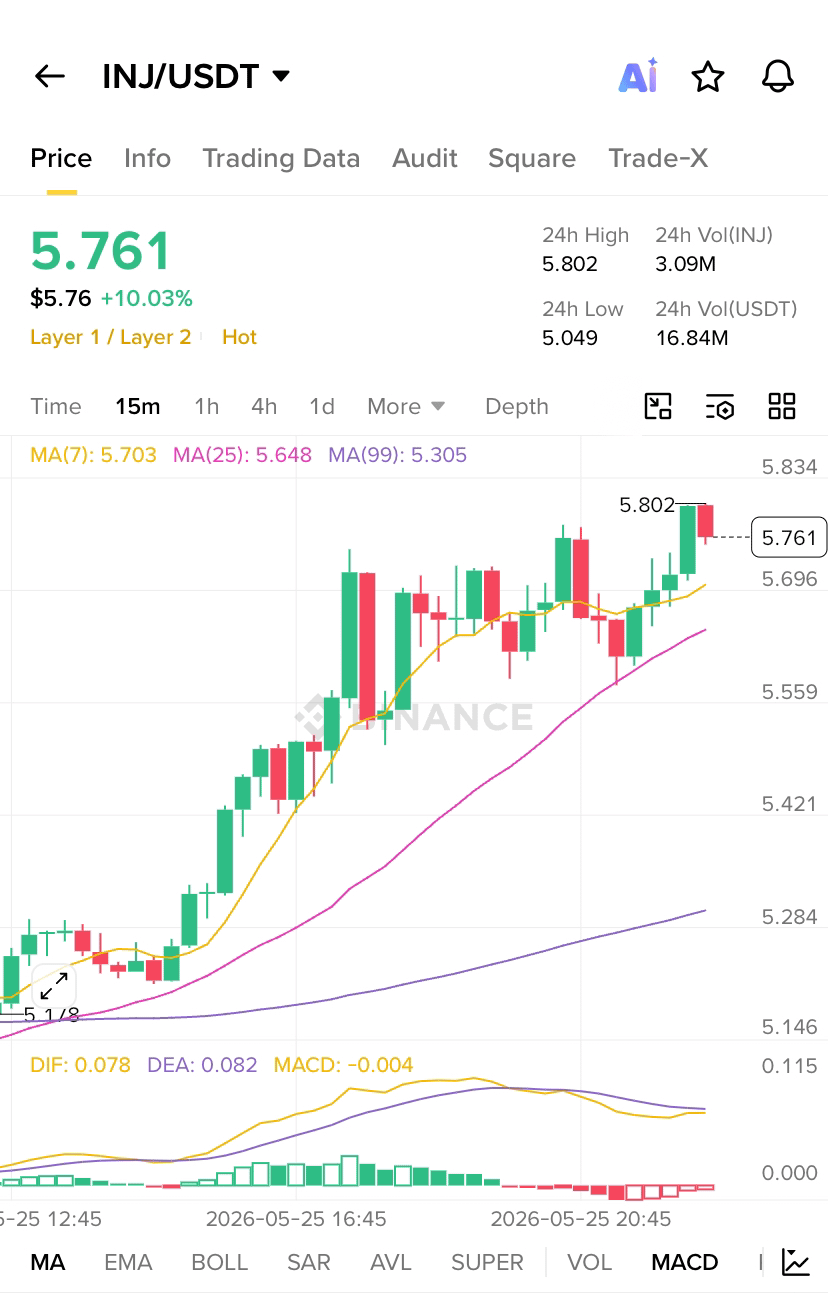
Institutional adoption in crypto rarely begins with noise. It starts with a silent move, an unexpected allocation, a decision hidden behind boardroom doors—long before the market realizes what just happened. The.Injective has now entered that phase. A New York Stock Exchange–listed firm, Pineapple Financial (NYSE: PAPL), has raised a $100 million digital asset treasury specifically for Injective (INJ). Even more surprising, the company is actively purchasing INJ from the open market, not through private sales or OTC deals. This is no press-release stunt. This is no speculative experiment. This is real institutional capital quietly flowing into one of the fastest-growing ecosystems in Web3. The implications are much deeper than most people understand. In this article, we break down why Pineapple Financial’s move is a turning point—not only for Injective, but for crypto’s next institutional cycle. The First Major Signal: Institutions Are Now Treating INJ as a Treasury Asset A $100 million allocation from a listed company does not happen overnight. It passes through: • Approvals corporate Assessments of risk • Compliance checks • strategic long-term planning Which means Pineapple Financial isn’t buying INJ for a short-term flip. They are treating INJ as a long-term balance sheet asset—similar to how companies treated Bitcoin during its early treasury adoption phase. It is a moment when: Bitcoin became something more than just cryptocurrency. Ethereum grew bigger than a platform. with Injective, it is growing beyond a simple blockchain. The narrative has changed institutionally. INJ is no longer just a “DeFi chain” — it’s becoming an institutional-grade financial ecosystem. Why Injective? Understanding the Corporate Logic Behind the Move Hype doesn’t prompt investing by institutions. They invest because the risk-to-upside ratio makes business sense. Pineapple Financial choosing Injective tells us three things: 1. Institutions are all in on onchain finance's future Injective's architecture is built for: • institutional trading • High-Speed Settlement • Advanced financial applications • Compliant: issuing of on-chain assets This matches the business direction of Pineapple Financial almost precisely. They view Injective as a base layer for next-generation Wall Street markets. 2. MultiVM + native EVM = future-proof ecosystem Injective isn't glued to one virtual machine. The chain is expanding to a MultiVM environment, including its own native EVM. This means: • Easier onboarding for Solidity developers • more dApps • More liquidity • More composability • More institutional-grade applications It's making investments ahead of that expansion — a classic institutional move. 3. The RWA leadership changed the narrative. Institutions don't care about memecoins. They are interested in assets that mimic tangible financial instruments: • shares • Gold • Fx • U.S. Treasury-like instruments • Institutional credit instruments Injective is the first chain enabling some of these in a fully decentralized, lightning-fast, low-fee environment. Pineapple’s move signals that traditional finance sees this as a future market infrastructure, not just a crypto ecosystem. Open-Market Purchasing: The Most Bullish Detail Most institutions negotiate OTC deals: • at discounted rates • with vesting • in private tranches Whereas others are folding up, Pineapple Financial does the opposite. They are purchasing INJ straight from the open market, which means: 1. They accept the real price — no discounts 2. They opt for transparency instead of backdoor dealings. 3. They create real buying pressure 4. They plan to build up over time This is extremely rare for a listed company. It also proves one thing: They believe Injective is undervalued long-term, even at current levels. How This Quietly Sets a New Benchmark for Institutional Crypto Treasuries Bitcoin had MicroStrategy. Ethereum had early accumulation of funds. Solana had hedge funds and VCs. Injective now has Pineapple Financial, but with a key difference: That is venture capital money. This is strategy of corporate treasury. That makes it: • more credible • more long-term • more regulated • More strategic • More sustainable Pineapple Financial has essentially become the first corporate bull of Injective. Others will be forthcoming—because institutions follow patterns: One apportions, others analyze, and the silent wave starts. Why Institutional Demand Matters More for INJ Than for Any Other Token The dynamics of supply are unique for INJ: • fixed supply • deflationary economics • high burn rates • Consistent dApp activity • High staking participation When a corporate buyer enters a deflationary token economy, something powerful happens: Circulating supply quietly tightens. One company building a $100M INJ treasury is enough to impact long-term scarcity. Imagine what happens when: • a second • a third • or a quarter institution follows. This is the structural basis for a long-term supply shock. A Listed Company Buying INJ = A Signal for US Regulators and Financial Institutions The fact that Pineapple Financial is NYSE-listed is no minor detail. It means: • SEC regulation • strict reporting • quarterly disclosures • Corporate transparency • Investor Accountability If such a company chooses Injective, it indirectly places INJ in a regulatory-comfort zone. This makes it easier for: • American funds • Private wealth offices • broker-dealers • Fintech companies • corporate treasuries be considered as an alternative strategic option. Combine this with Injective’s upcoming US ETF, and you get a narrative that is perfectly aligned with institutional adoption. The quiet phase before the recognition phase Institutional accumulation is always silent. Here's the typical cycle: 1. Latent Phase Institutions buy slowly, accumulate without attention. 2. Recognition Phase More companies and funds start announcing positions. 3. Legitimization Phase The media, analysts, and banks initiate coverage. 4. Expansion Phase Products explode: ETFs, derivatives, structured notes. Injective is currently at phase 1, edging into phase 2. The first domino: Pineapple Financial. The next few will revolutionize Injective's position in global markets. What this means for the Injective Ecosystem Investment from Pineapple is not merely a price catalyst. It's a confidence catalyst. Expect the following trends: 1. More liquidity enters Injective markets. Corporate treasury money is deep and consistent. 2. Higher developer confidence Institutions don't spring up around weak ecosystems. This contributes to long-term developer retention. 3. More legacy finance partnerships A listed firm supporting INJ strengthens credibility immensely. 4. Greater adoption of Injective's RWA infrastructure Especially as Pineapple Financial aligns its financial products with blockchain rails. 5. Stronger story going into the ETF launch Institutions love narratives backed by real capital. Conclusion: The Start of Something Much Bigger Pineapple Financial’s $100 million INJ treasury is not an isolated event. It is the first major institutional validation of Injective as a global financial infrastructure. It signals: • Confidence • long-term strategy • Aligned with RWA and Institutional DeFi • Belief in Injective's MultiVM future • recognition of INJ as a treasury-grade asset This is how institutional cycles begin—quietly, silently, with a single decisive move. And this move belongs to Injective. #Injective🔥 @Injective $INJ INJ 5.88 +10.94%
Most blockchains try to be everything at once. Injective takes the opposite route—it specializes. Instead of chasing gaming, NFTs, or social apps, it focuses entirely on building the most advanced decentralized trading infrastructure in crypto.
A Chain Designed for Markets Injective is built around a fully decentralized orderbook, giving traders fast execution, low slippage, and shared liquidity. Developers get ready-made market infrastructure without needing to build exchanges from the ground up.
Fair Trading With MEV Protection Front-running and bot manipulation ruin many DeFi markets. Injective solves this with strong MEV protection through batch auctions and fair ordering, creating transparent trading conditions that appeal to serious traders and institutions.
Interoperable by Design Using the Cosmos SDK, Tendermint, IBC, Wormhole, and bridges to Ethereum and Solana, Injective enables seamless cross-chain liquidity. Builders can create derivatives, options, synthetics, and cross-chain platforms without worrying about fragmentation.
The Power of INJ INJ fuels staking, governance, collateral, insurance funds, and a continuous fee buyback-and-burn mechanism. As trading volume grows, INJ becomes increasingly deflationary, aligning value with ecosystem activity.
A Focused Financial Vision Injective doesn’t aim to be a general-purpose chain—it’s a finance-first ecosystem built for high-performance markets. That focus positions it as a future backbone for decentralized derivatives and institutional-grade financial products.
The Bottom Line Injective isn’t just another blockchain. It’s a decentralized market engine—fast, fair, interoperable, and built for real financial innovation.
WHY YIELD GUILD GAMES MATTERS IN A DIGITAL ECONOMY
Yield Guild Games didn’t start as a corporation—it started as a response to unfair barriers. In 2020, many gamers wanted to join Web3, but high NFT costs kept them out. YGG stepped in with a simple idea: buy in-game NFTs and lend them to players who couldn’t afford them. For many early scholars, these assets weren’t just digital items—they became a source of income, survival, and dignity during difficult times. That human impact shaped the soul of the guild.
As Web3 gaming grew, YGG expanded across multiple regions and multiple games. SubDAOs became local homes for players worldwide, giving YGG the structure of a global network rather than a single guild. At the core, the main DAO guided the ecosystem—allocating resources, forming partnerships, and adapting rapidly as the GameFi landscape changed.
The YGG Vault aligned long-term supporters with the guild’s future, while smart-contract transparency kept the system simple and fair. But the scholarship model remained the heart of YGG—turning NFTs into tools of empowerment rather than collectibles.
What truly kept YGG alive through market crashes wasn’t yield—it was community. Managers, scholars, and players formed bonds that outlasted token prices. Even when Play-to-Earn collapsed, YGG didn’t walk away. It adapted, focusing on sustainable games, education, and real onboarding.
This evolution led to the YGG Guild Protocol, a system that gives players cross-game digital identities based on skill, trust, and achievement. It connects players, guilds, and games into one living network where progress actually matters.
Today, YGG is more than a guild—it’s a gateway into Web3 gaming, a support system for new communities, and an early force shaping an open, fair digital economy. With global access through exchanges like Binance, its reach continues to grow.
Anyone joining YGG isn’t just entering a gaming group—they’re becoming part of a movement built on opportunity, community, and the belief that gaming can change lives.
INJECTIVE MADE BLOCKCHAIN FEEL LIKE A PLACE TO BUILD — NOT ESCAPE
Most people enter crypto looking for escape—from slow systems, old rules, and limits. But many blockchains still feel like escape rooms: confusing, unstable, and directionless. For a long time, that’s exactly how I treated blockchain too—something temporary, not somewhere you could build long-term.
Injective changed that.
It didn’t feel like running away from old systems. It felt like entering a new one—quiet, structured, and prepared. No constant narrative shifts, no weekly identity changes. Just consistent performance and a clear direction.
Injective works because its foundation is built for speed, low cost, and reliability from day one. The chain behaves the same under pressure, which changes the entire experience. When a system works correctly again and again, you finally relax. Blockchain becomes a tool, not a headache.
Staking on Injective reinforces this. Rewards feel less like “earnings” and more like participation—you support the network, and it supports you back. Simple, direct, sustainable.
For developers, Injective offers something rare: freedom. With predictable fees, clean tooling, and no network chaos, builders actually get to build. That’s why the ecosystem spans markets, automation, finance, payments, and new experiments. Better tools → better apps → better users.
And the real magic is the real-world utility: – instant global payments – fast, low-cost trading – beginner-friendly experience – tools for farmers and businesses – apps that can launch without fear
Injective doesn’t just talk use cases. It lets you feel them.
Some chains chase attention. Injective builds structure. Quietly, steadily, correctly. It respects your time and gives you space to grow.
That’s why Injective feels different. Not because of one feature, but because it turns blockchain into a place you can build— not escape.
Metaverse Integration: YGG’s Evolution Into a Digital Nation
Yield Guild Games started as a gaming guild, but its real trajectory is much bigger—becoming a roaming civilization across the metaverse. Instead of anchoring to one world, YGG establishes influence wherever digital economies emerge.
Its integration isn’t cosmetic. Through asset ownership, active gameplay, and long-term economic roles, YGG helps shape the worlds it enters. SubDAOs give each metaverse local expertise, allowing the guild to adapt to different cultures, economies, and systems.
YGG brings more than assets: it adds governance power, liquidity, and a vibrant community of players, creators, and strategists. Its presence boosts activity, strengthens economies, and accelerates growth for every ecosystem it joins.
As YGG expands, it builds a unified identity across many worlds—one guild with shared culture and purpose. Metaverse integration is the path that transforms YGG from a guild into a true digital nation.