
NewbieToNode
4.4k Жариялаулар

NewbieToNode
 «Square расталған+» белгісі
Planting tokens 🌱 Waiting for sun 🌞 Watering with hope 💧 Soft degen vibes only

Traders League Badge Expert
Жиі сауда жасайтын трейдер
4.4 жыл
183 Жазылым
33.0K+ Жазылушылар
27.9K+ лайк басылған
1 Белгішелер
Жазбалар
Барлығы
Баға ұсыныстары
Видеолар
Тікелей эфир
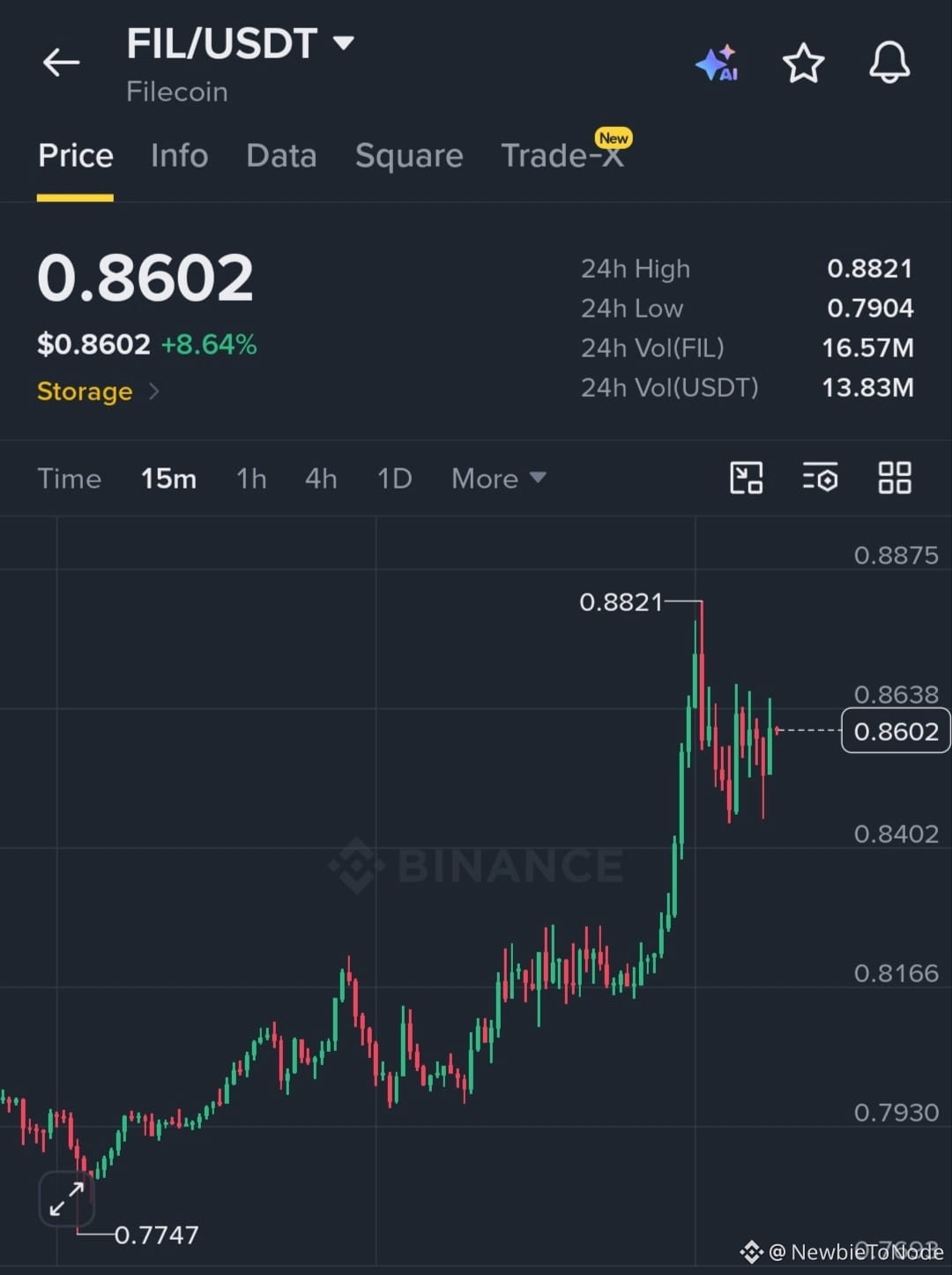
$FIL is looking interesting here 👀
FIL just made a strong move from around $0.82 to $0.882, but instead of immediately giving everything back, it’s holding around $0.85–0.86.
On the 15m chart, I’m watching:
📍 Support: $0.850–0.840
📍 Major support: $0.816
📍 Resistance: $0.864
📍 Breakout level: $0.882
🎯 Targets: $0.90 → $0.92
If FIL can reclaim $0.882 with volume, I’d expect the next push toward $0.90+.
But if $0.84 breaks, I’d rather wait than chase the move.
For now, $0.84–0.882 is the range I’m watching.
FIL just made a strong move from around $0.82 to $0.882, but instead of immediately giving everything back, it’s holding around $0.85–0.86.
On the 15m chart, I’m watching:
📍 Support: $0.850–0.840
📍 Major support: $0.816
📍 Resistance: $0.864
📍 Breakout level: $0.882
🎯 Targets: $0.90 → $0.92
If FIL can reclaim $0.882 with volume, I’d expect the next push toward $0.90+.
But if $0.84 breaks, I’d rather wait than chase the move.
For now, $0.84–0.882 is the range I’m watching.
The Iran-US tanker war just escalated to its worst point yet. 🚨
US destroyed/disabled 3 Iranian tankers this weekend. Iran fired ballistic missiles at a US carrier group in response (missed), then hit US-linked ships in the strait.
six months of conflict. negotiations dead. both sides now openly threatening more strikes.
Strait of Hormuz risk = oil price risk = inflation risk = risk-asset volatility. this isn't just a headline, it's a macro backdrop everyone's charts will feel this week.
stay sharp out there. 👀
#USIranTradeTankerStrikesEscalate
US destroyed/disabled 3 Iranian tankers this weekend. Iran fired ballistic missiles at a US carrier group in response (missed), then hit US-linked ships in the strait.
six months of conflict. negotiations dead. both sides now openly threatening more strikes.
Strait of Hormuz risk = oil price risk = inflation risk = risk-asset volatility. this isn't just a headline, it's a macro backdrop everyone's charts will feel this week.
stay sharp out there. 👀
#USIranTradeTankerStrikesEscalate

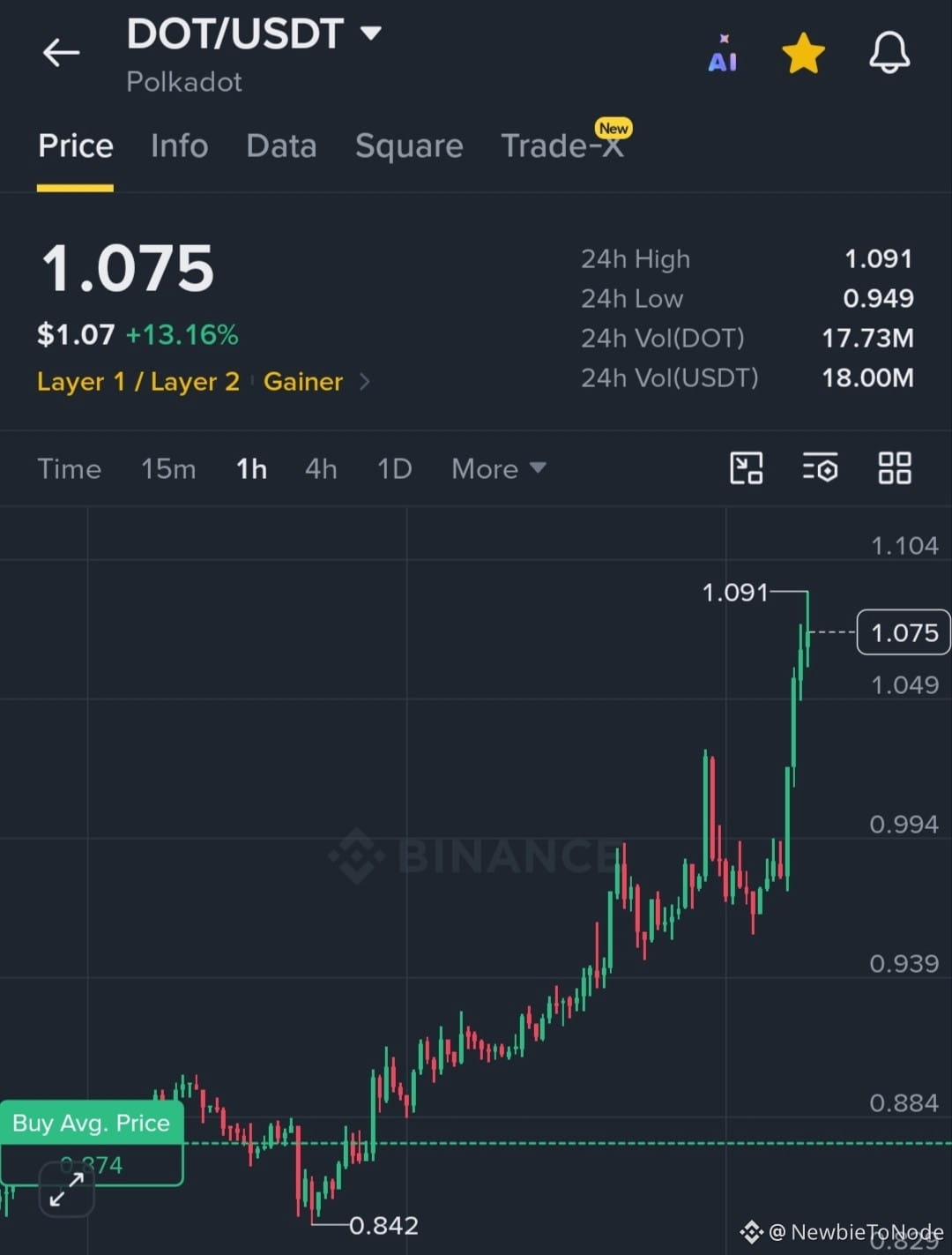
$DOT update: yesterday it was $0.961, barely above my $0.874 average. today it's $1.075, up 13% in a day, after touching $1.091.
from "please just get back to breakeven" to "actually pumping" in one day.
📍 new support: $0.994
📍 resistance: $1.091
fundamentals (capped supply, Agile Coretime, JAM upgrade) haven't changed. what changed is the market woke up. still holding.
from "please just get back to breakeven" to "actually pumping" in one day.
📍 new support: $0.994
📍 resistance: $1.091
fundamentals (capped supply, Agile Coretime, JAM upgrade) haven't changed. what changed is the market woke up. still holding.
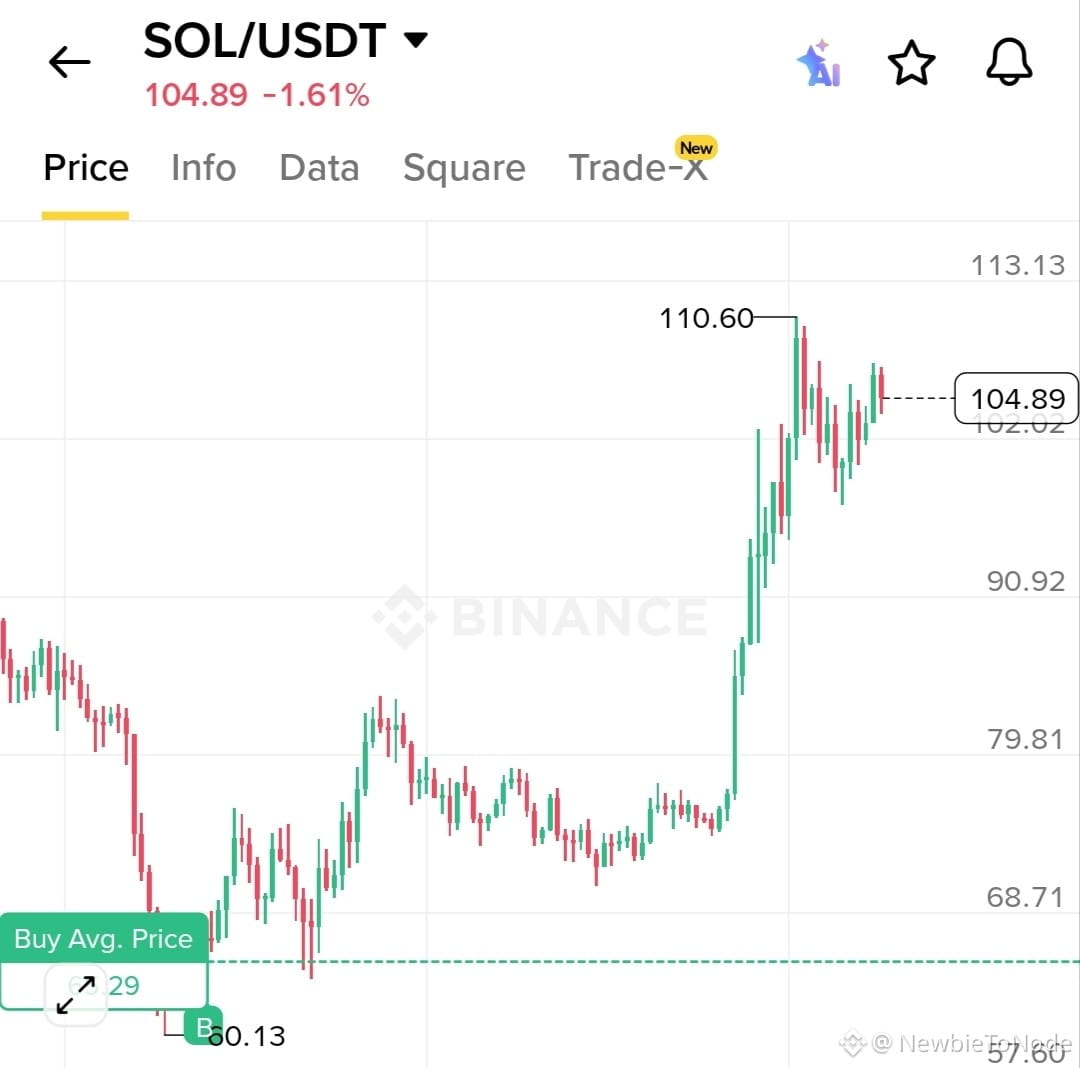
my $SOL entries: 1 at $250, 1 at $65. average $157.50. price today: $104.89. still red, still holding. 😅
why: ETF inflows just hit their best week since October 2025, exchange supply is dropping, and Solana's leading all chains in RWA inflows.
📍 support: $102.02
📍 resistance: $110.60
long-term investing isn't about your entry looking smart in year one. it's about whether you still believe in the thesis in year two. I still do.
why: ETF inflows just hit their best week since October 2025, exchange supply is dropping, and Solana's leading all chains in RWA inflows.
📍 support: $102.02
📍 resistance: $110.60
long-term investing isn't about your entry looking smart in year one. it's about whether you still believe in the thesis in year two. I still do.
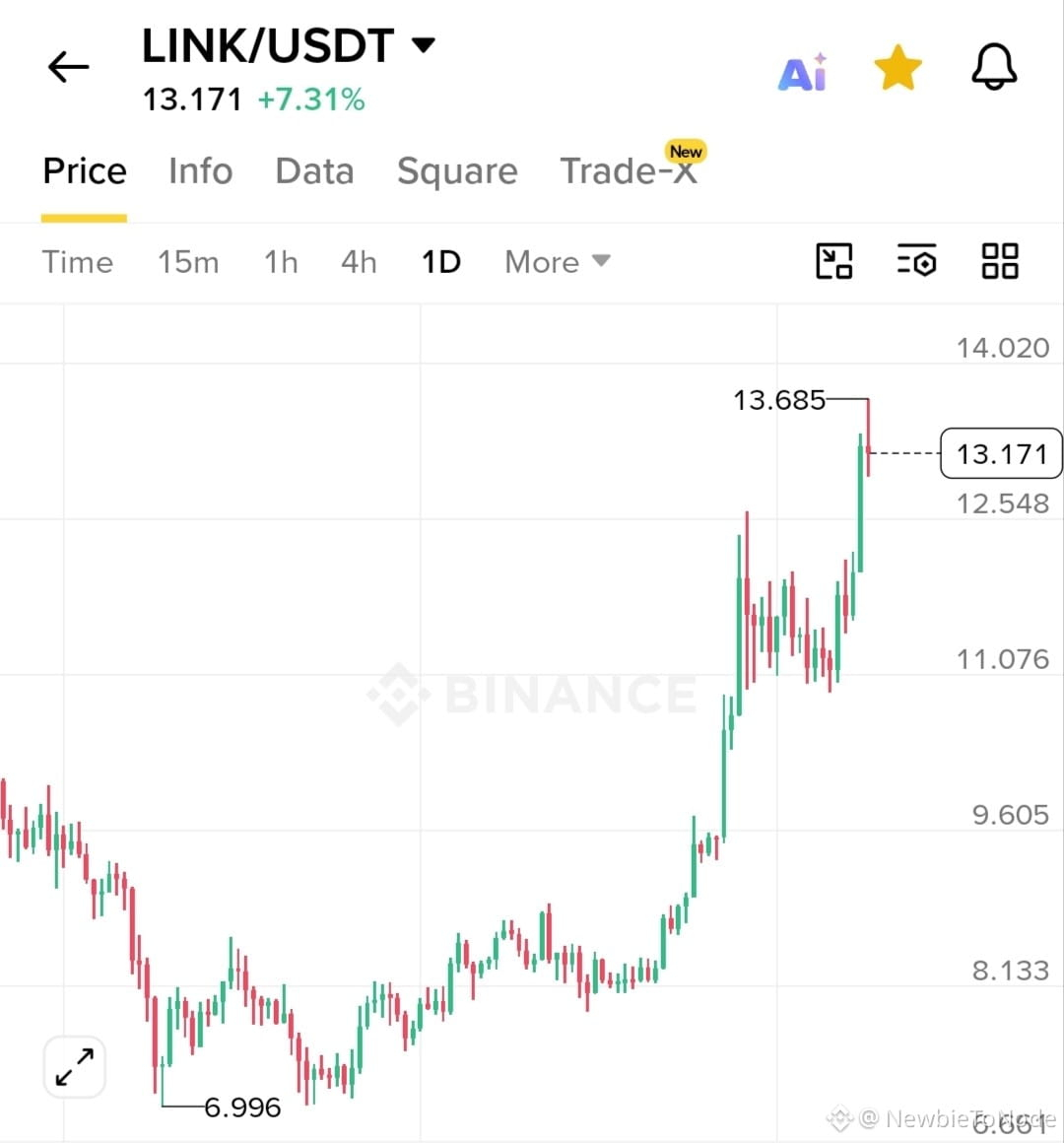
$LINK just broke $13 for the first time in weeks. 🔗
real reasons: Schwab added it for retail access, Coinbase picked Chainlink as the oracle for tokenized stocks, and a fresh Bottomline payments partnership dropped today.
📍 support: $11.076
📍 resistance: $13.685
🎯 clear that with volume = $15, then $20 targets are already on the table.
real reasons: Schwab added it for retail access, Coinbase picked Chainlink as the oracle for tokenized stocks, and a fresh Bottomline payments partnership dropped today.
📍 support: $11.076
📍 resistance: $13.685
🎯 clear that with volume = $15, then $20 targets are already on the table.
🚨 $ZEC just flipped HYPE too.
$1,250+ high today. now sitting at $1,188.
DOGE → flipped
HYPE → flipped
9th largest crypto. top 10, secured.
$2.4B in open interest. $34M in shorts liquidated this week alone.
RSI is sitting above 80, deep overbought. this is either the start of true price discovery or the first crack before a real pullback.
how high does this actually go? 👀
$1,250+ high today. now sitting at $1,188.
DOGE → flipped
HYPE → flipped
9th largest crypto. top 10, secured.
$2.4B in open interest. $34M in shorts liquidated this week alone.
RSI is sitting above 80, deep overbought. this is either the start of true price discovery or the first crack before a real pullback.
how high does this actually go? 👀
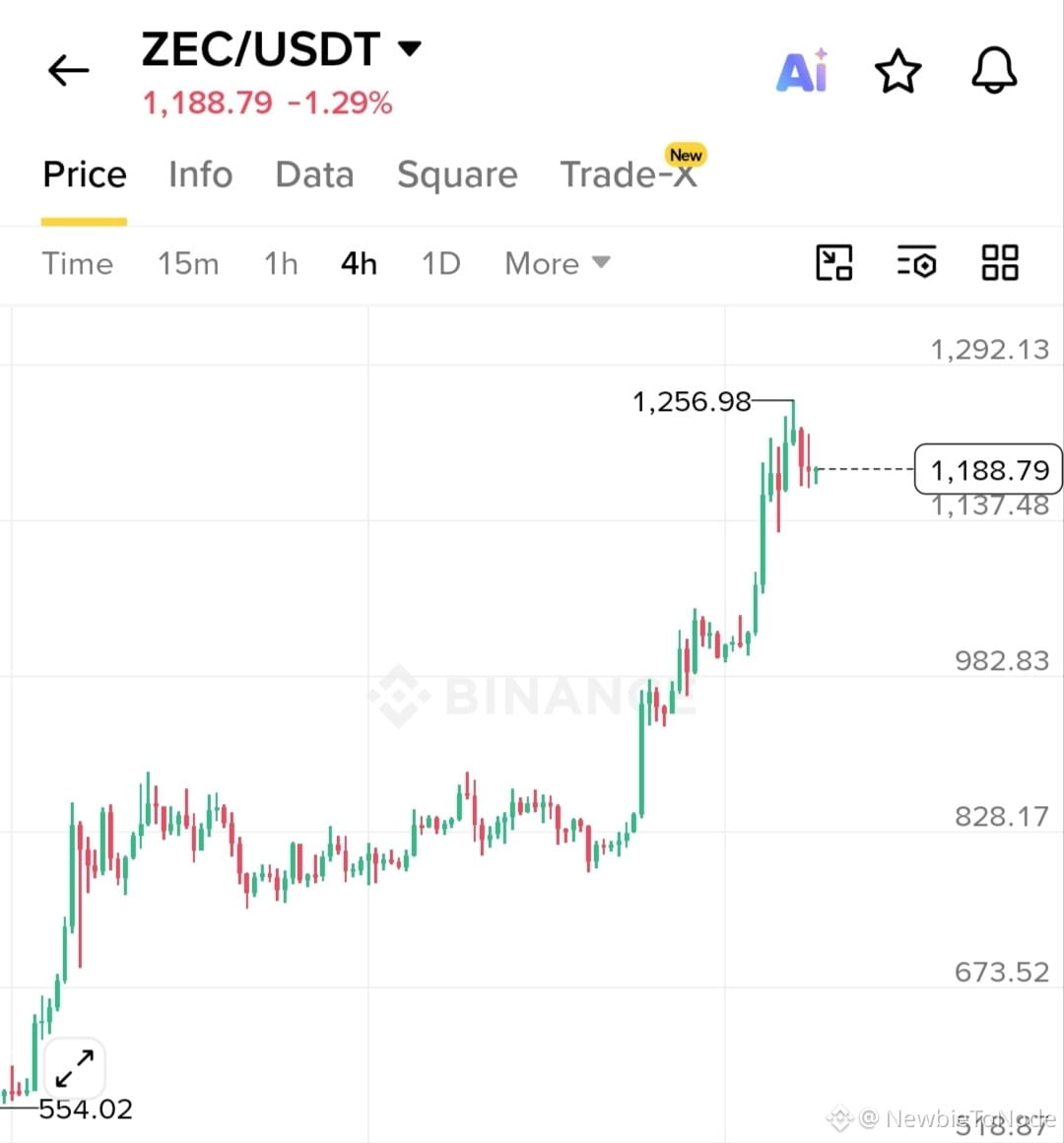
$ARB update from yesterday's post: no specific bad news here, this is a straightforward "priced in too much, too fast" pullback.
went from a high of $0.2066 down to $0.1646, a 15.8%+ drop today. searched for a reason and there isn't one... no hack, no exploit, no negative headline. this was a sentiment-driven spike that ran ahead of itself, and now it's giving a chunk back.
that September 23 unlock (139M ARB) is still sitting out there as the next real catalyst to watch, today's drop looks more like early profit-taking/de-risking than anything unlock-specific, but the overhang doesn't help.
levels now: $0.1601 was today's low,
$0.1782 is the resistance to reclaim if buyers want to prove yesterday's high wasn't the top. lose $0.1601 and this likely keeps grinding lower into the unlock date.
moves like this are why I don't chase green candles, the fade after the pump is usually just as violent as the pump itself.
went from a high of $0.2066 down to $0.1646, a 15.8%+ drop today. searched for a reason and there isn't one... no hack, no exploit, no negative headline. this was a sentiment-driven spike that ran ahead of itself, and now it's giving a chunk back.
that September 23 unlock (139M ARB) is still sitting out there as the next real catalyst to watch, today's drop looks more like early profit-taking/de-risking than anything unlock-specific, but the overhang doesn't help.
levels now: $0.1601 was today's low,
$0.1782 is the resistance to reclaim if buyers want to prove yesterday's high wasn't the top. lose $0.1601 and this likely keeps grinding lower into the unlock date.
moves like this are why I don't chase green candles, the fade after the pump is usually just as violent as the pump itself.
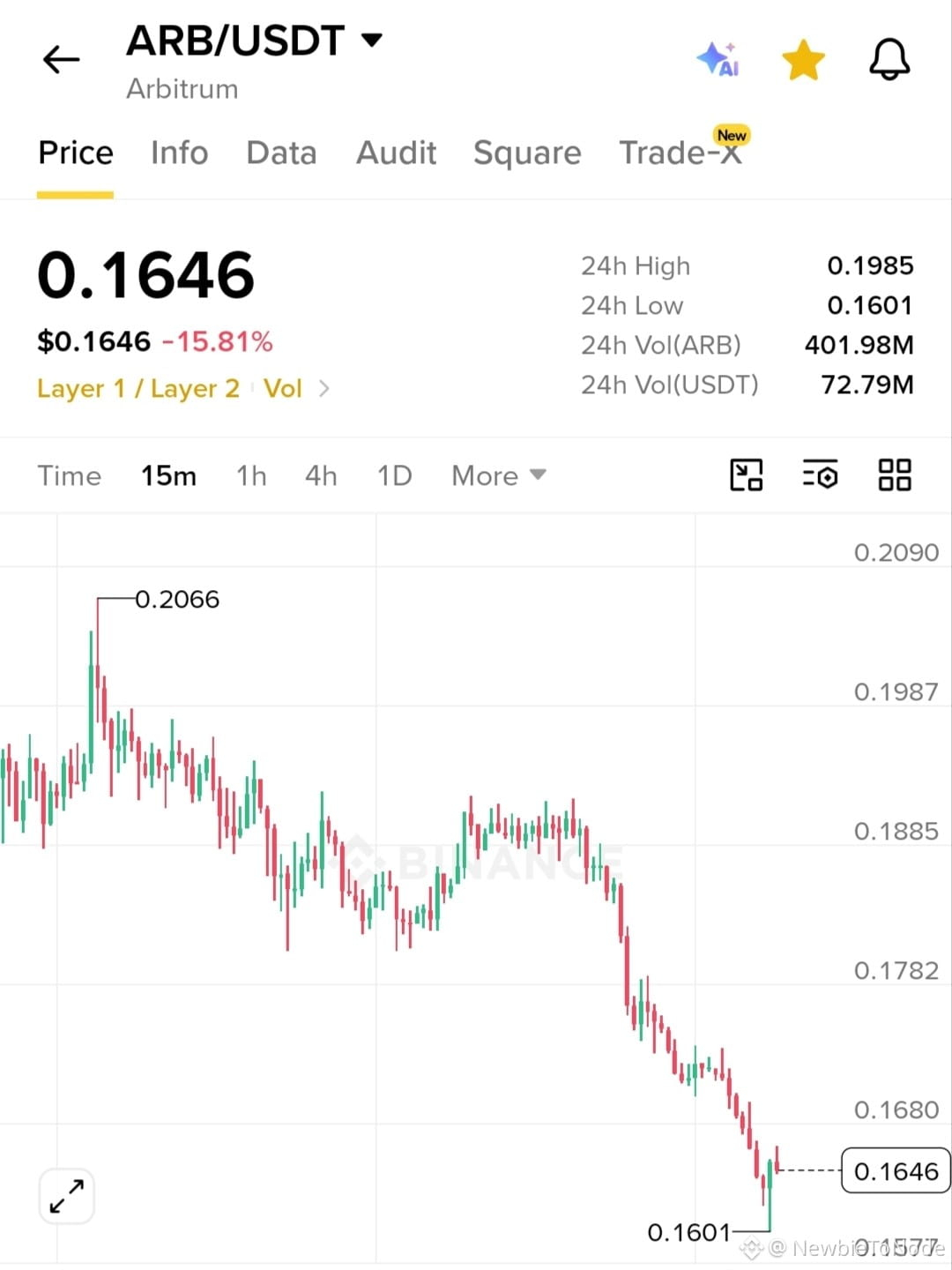
$NEIRO : lots of noise, no clear direction. 📉
down 2.3% today at $0.00008882. 50k+ trades, $1.38M volume... real activity, not a ghost chart.
but price is sitting near session lows despite all that action. that's the tell: activity ≠ demand right now.
range to watch: $0.0000850 - $0.0000960. break out of that with real volume and it gets interesting. until then, it's just chop.
down 2.3% today at $0.00008882. 50k+ trades, $1.38M volume... real activity, not a ghost chart.
but price is sitting near session lows despite all that action. that's the tell: activity ≠ demand right now.
range to watch: $0.0000850 - $0.0000960. break out of that with real volume and it gets interesting. until then, it's just chop.
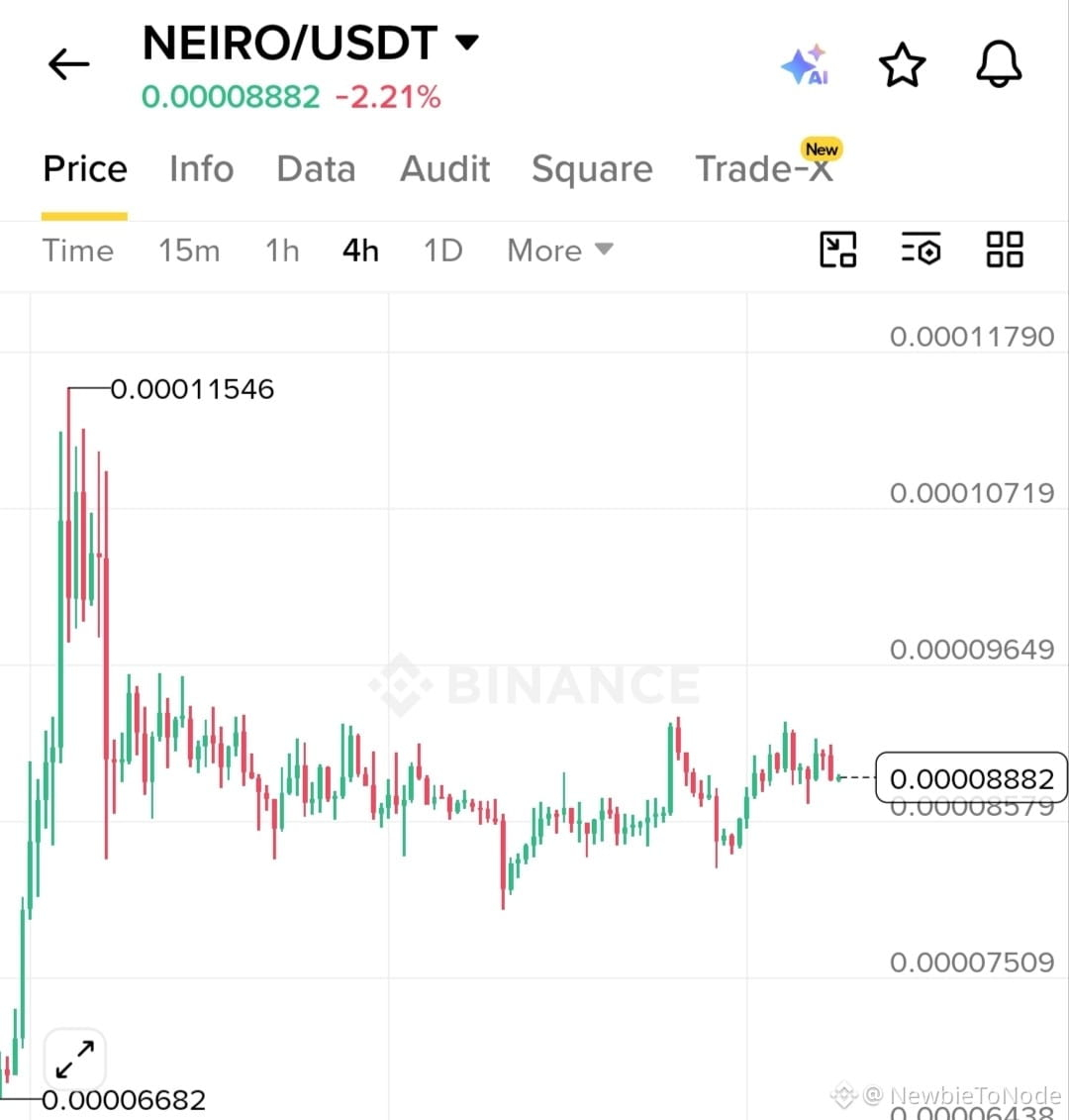
my $DOT journey in one line: bought at $10, averaged down to $0.874, now watching it finally push to $0.961 (+5.5% today). 😅
why I held through all of it: 2.1B hard supply cap locked in (no more endless inflation), Agile Coretime live, JAM upgrade still cooking for Polkadot 3.0, and network activity just spiked 150%.
📍 support: $0.845
📍 resistance: $1.002
🎯 clear that and this starts looking like a real reversal, not just a bounce
long-term holding isn't about being early. it's about not giving up on the thesis when the price makes you want to. still holding. 🫡
why I held through all of it: 2.1B hard supply cap locked in (no more endless inflation), Agile Coretime live, JAM upgrade still cooking for Polkadot 3.0, and network activity just spiked 150%.
📍 support: $0.845
📍 resistance: $1.002
🎯 clear that and this starts looking like a real reversal, not just a bounce
long-term holding isn't about being early. it's about not giving up on the thesis when the price makes you want to. still holding. 🫡
Расталды
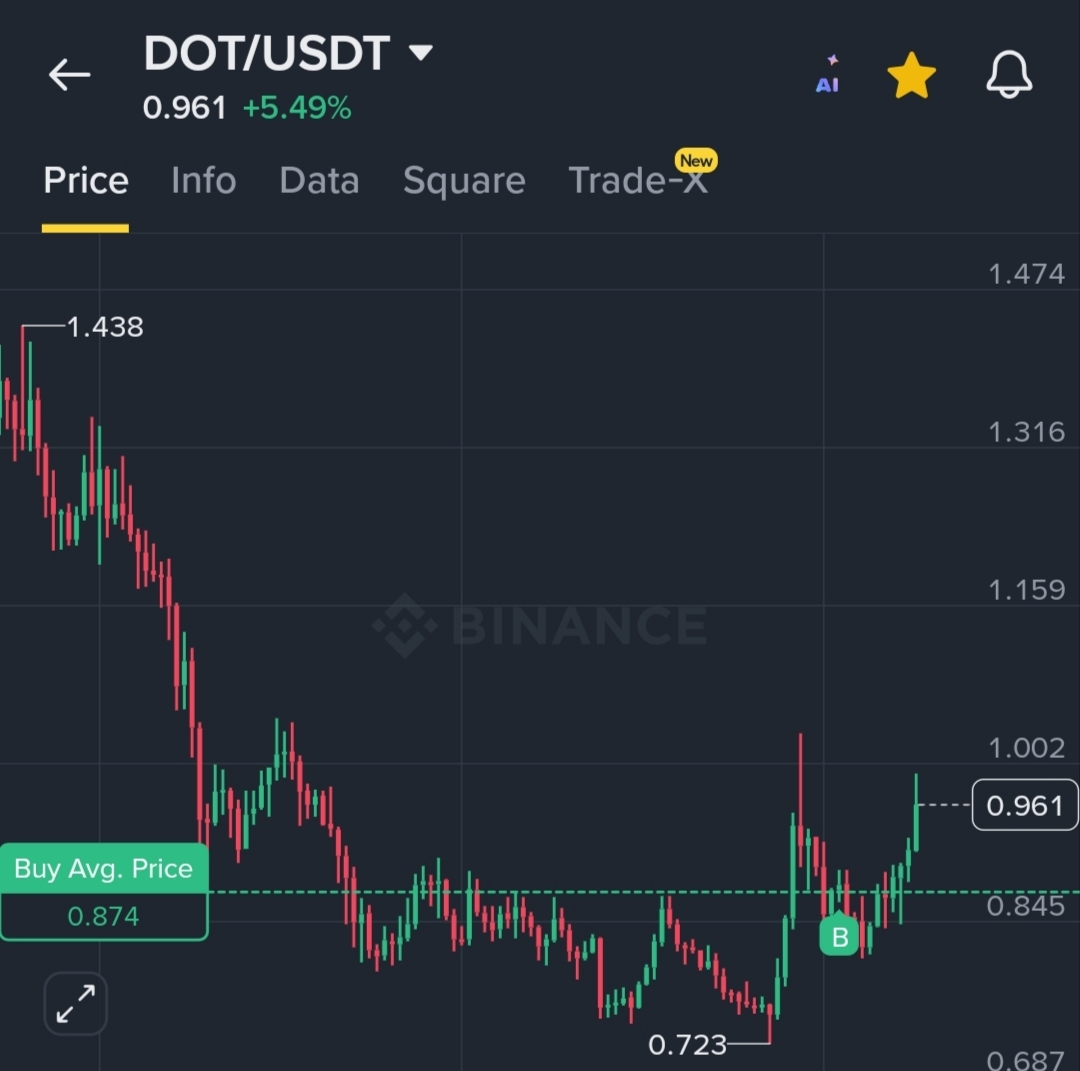
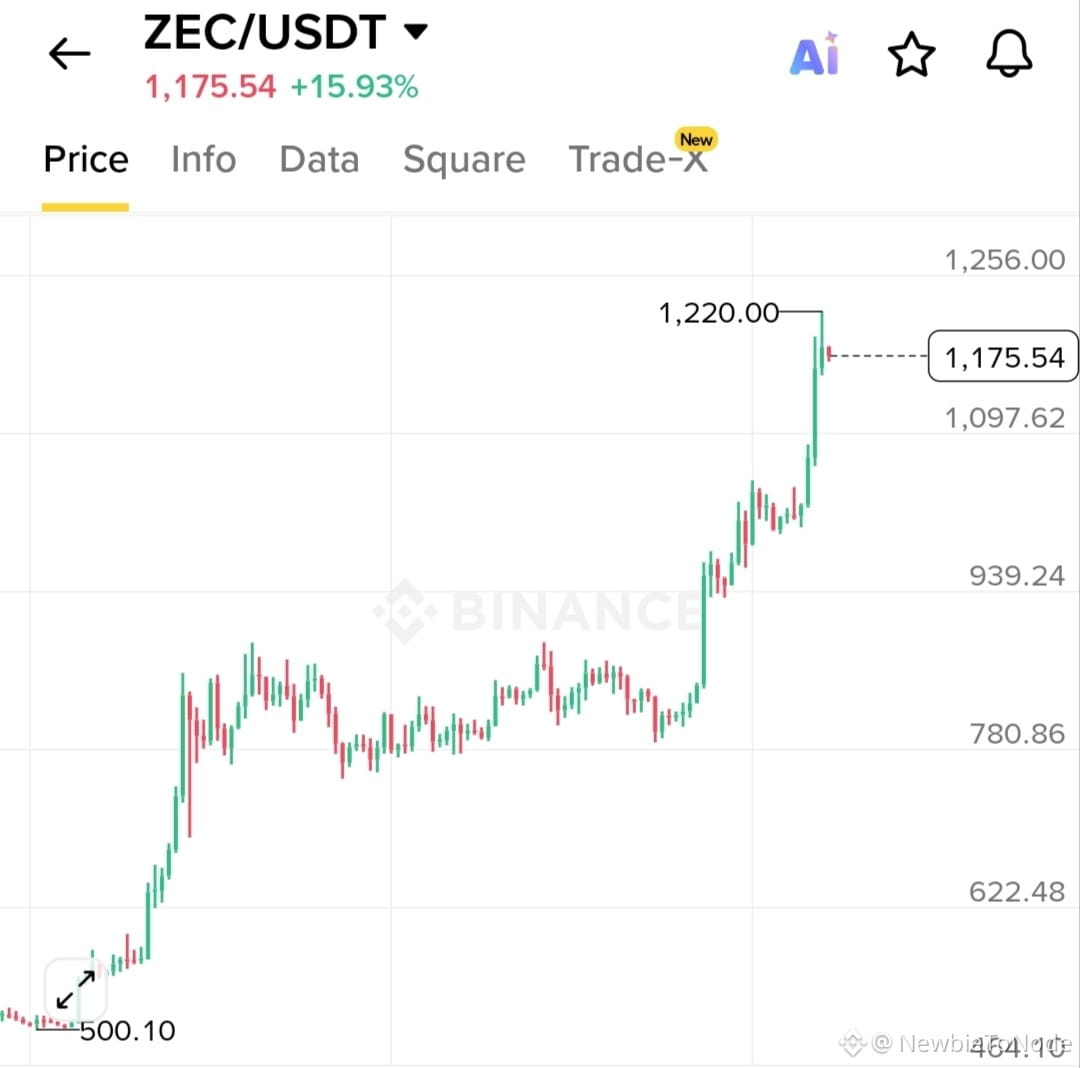
called it yesterday, updating today: $ZEC just hit $1,220 and flipped Dogecoin's market cap. 🤯
$17B market cap. top 10 crypto. and the SEC just closed its multi-year investigation into Zcash with zero enforcement action, a real overhang lifted, not just hype.
📍 new support: $1,097
📍 resistance: $1,220 (today's high)
🎯 no ceiling above this level historically, pure price discovery now
from $15 to flipping Dogecoin. this is officially the comeback story of the cycle.
#ZEC'sMarketCapSurpassedDOGE
#ZECHitsANewAllTimeHigh
$17B market cap. top 10 crypto. and the SEC just closed its multi-year investigation into Zcash with zero enforcement action, a real overhang lifted, not just hype.
📍 new support: $1,097
📍 resistance: $1,220 (today's high)
🎯 no ceiling above this level historically, pure price discovery now
from $15 to flipping Dogecoin. this is officially the comeback story of the cycle.
#ZEC'sMarketCapSurpassedDOGE
#ZECHitsANewAllTimeHigh
Расталды
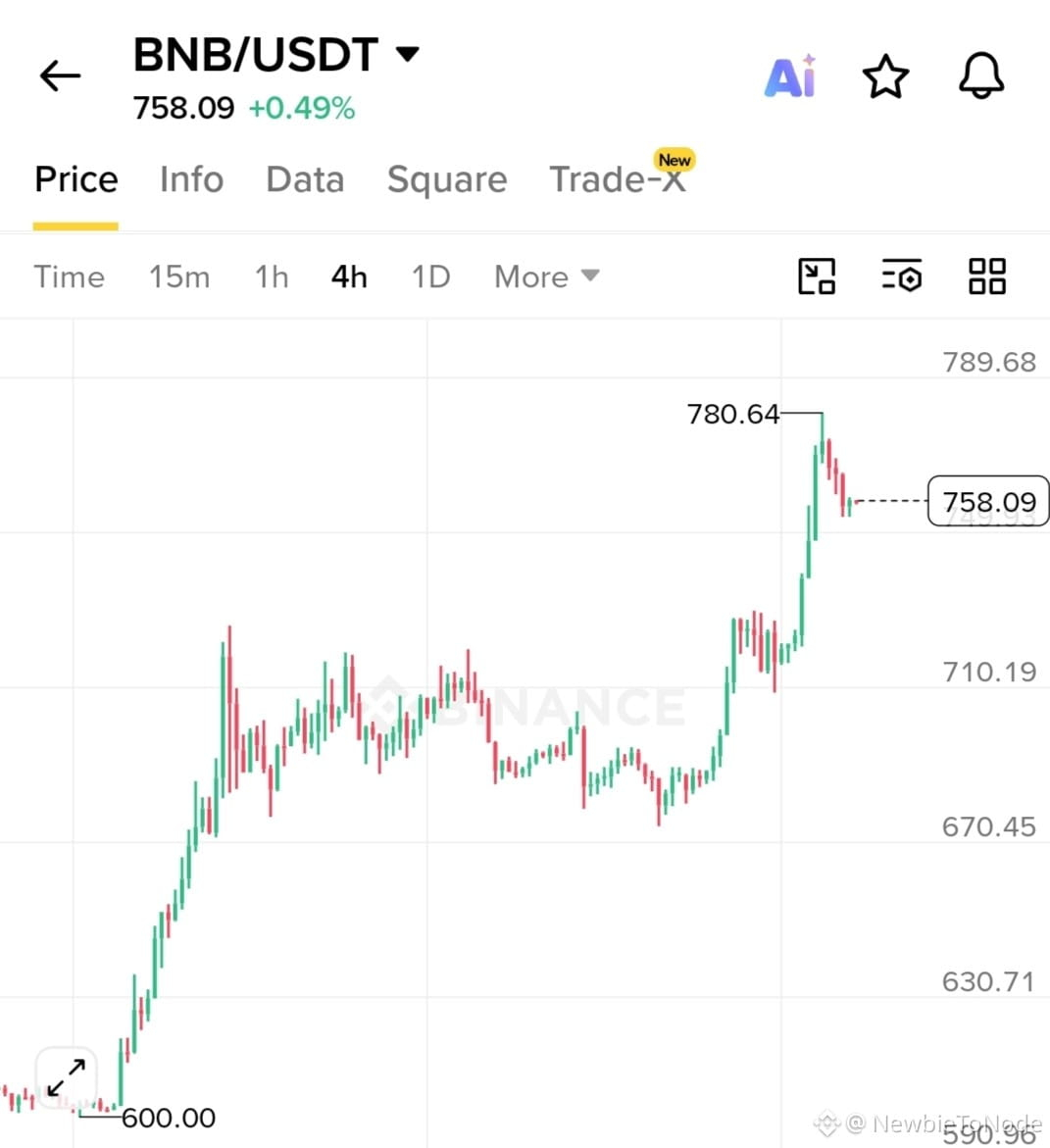
$BNB quietly climbed from $600 to $780 while everyone was watching meme coins. 👀
real reasons behind it: Lorentz hard fork just went live, US-regulated perpetuals are coming to BNB Chain, and Polymarket just added BNB to its new leverage trading platform.
📍 support: $710
📍 resistance: $780 (today's high)
🎯 clear it = next stop is testing higher, old ATH is $1,369.99
boring chart, solid story. sometimes that's the better trade.
real reasons behind it: Lorentz hard fork just went live, US-regulated perpetuals are coming to BNB Chain, and Polymarket just added BNB to its new leverage trading platform.
📍 support: $710
📍 resistance: $780 (today's high)
🎯 clear it = next stop is testing higher, old ATH is $1,369.99
boring chart, solid story. sometimes that's the better trade.
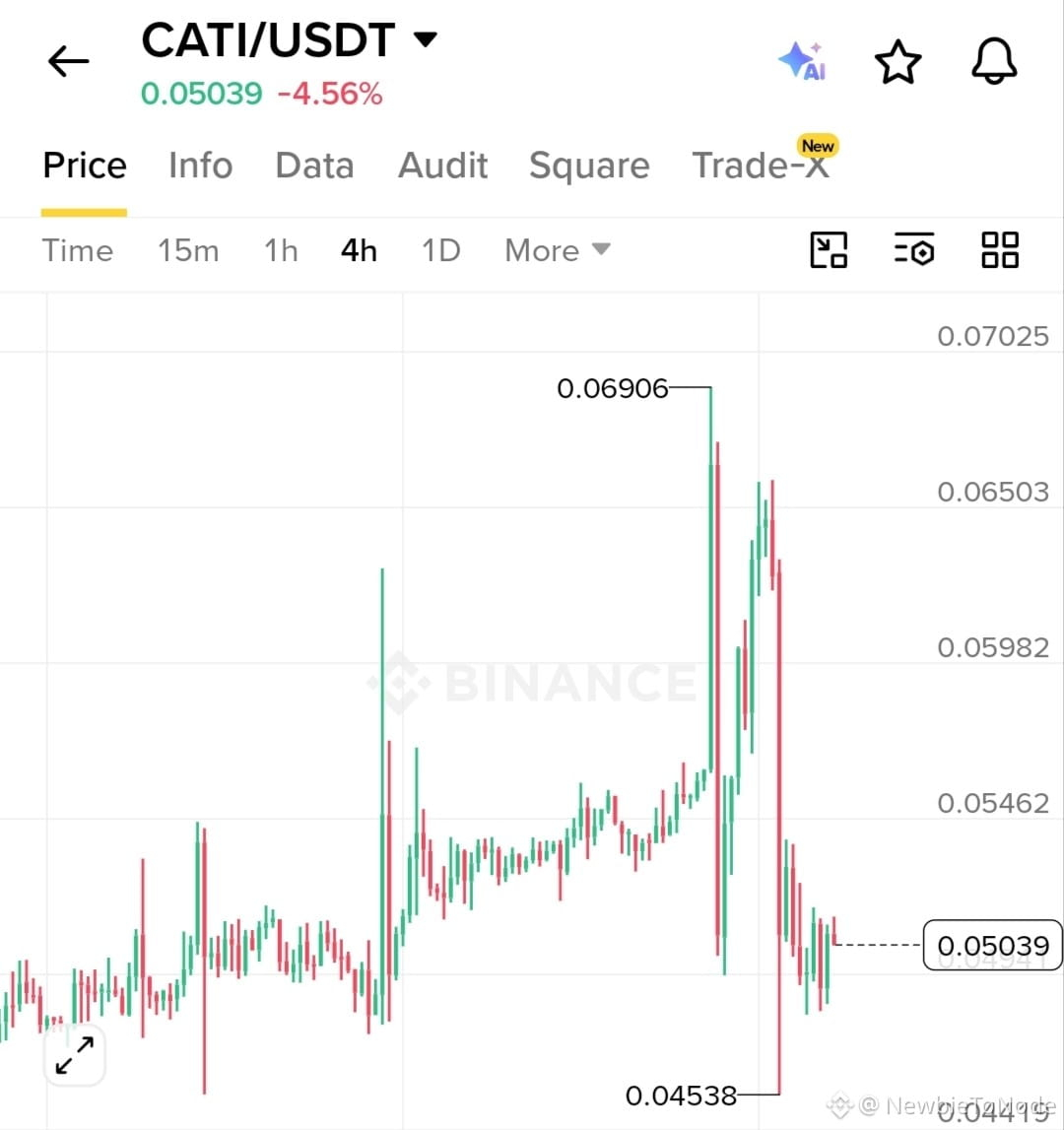
$CATI spiked to $0.069, dumped back to $0.050, no news anywhere. 🐱📉
this is a Telegram tap-to-earn coin that's down 96% from its 2024 peak of $1.11, so moves like this are pure liquidity/leverage games, not fundamentals.
📍 support: $0.04538
📍 resistance: $0.06906
🎯 no reason to chase this one right now, range trade or skip it
sometimes the best post is just "be careful out there."
this is a Telegram tap-to-earn coin that's down 96% from its 2024 peak of $1.11, so moves like this are pure liquidity/leverage games, not fundamentals.
📍 support: $0.04538
📍 resistance: $0.06906
🎯 no reason to chase this one right now, range trade or skip it
sometimes the best post is just "be careful out there."
Расталды
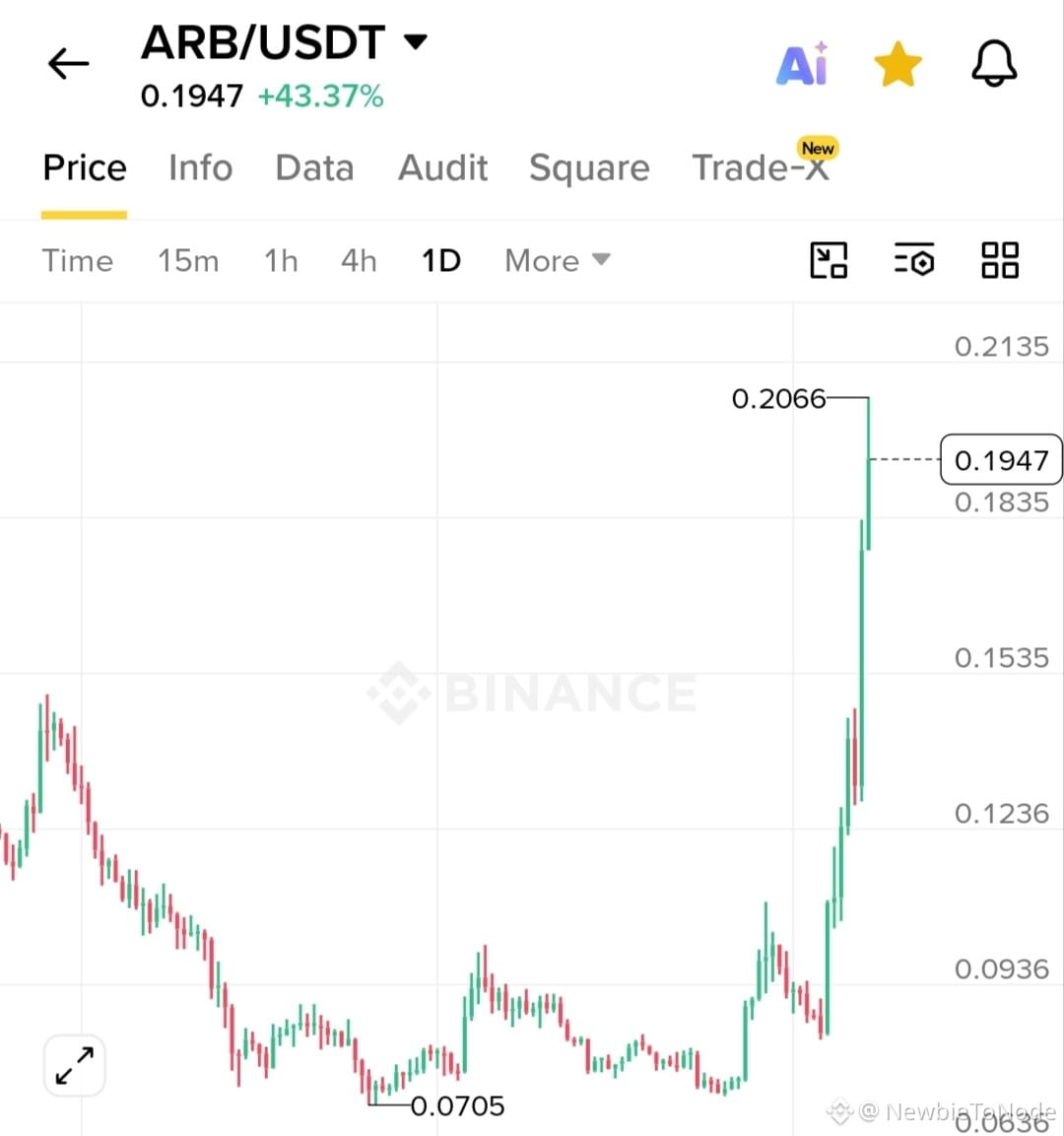
$ARB just went from $0.07 to $0.20+ and actually has a reason behind it 👀
Robinhood Chain, an L2 built on Arbitrum... just set a new all-time-high in daily DEX volume. that's real ecosystem activity feeding into the token.
📍 support: $0.1535
📍 resistance: $0.2066 (today's high)
🎯 reclaim it = momentum continues
⚠️ watch out: 139M ARB token unlock hits September 23, that's the next real test
good fundamentals, real supply risk. don't get greedy near the top.
Robinhood Chain, an L2 built on Arbitrum... just set a new all-time-high in daily DEX volume. that's real ecosystem activity feeding into the token.
📍 support: $0.1535
📍 resistance: $0.2066 (today's high)
🎯 reclaim it = momentum continues
⚠️ watch out: 139M ARB token unlock hits September 23, that's the next real test
good fundamentals, real supply risk. don't get greedy near the top.
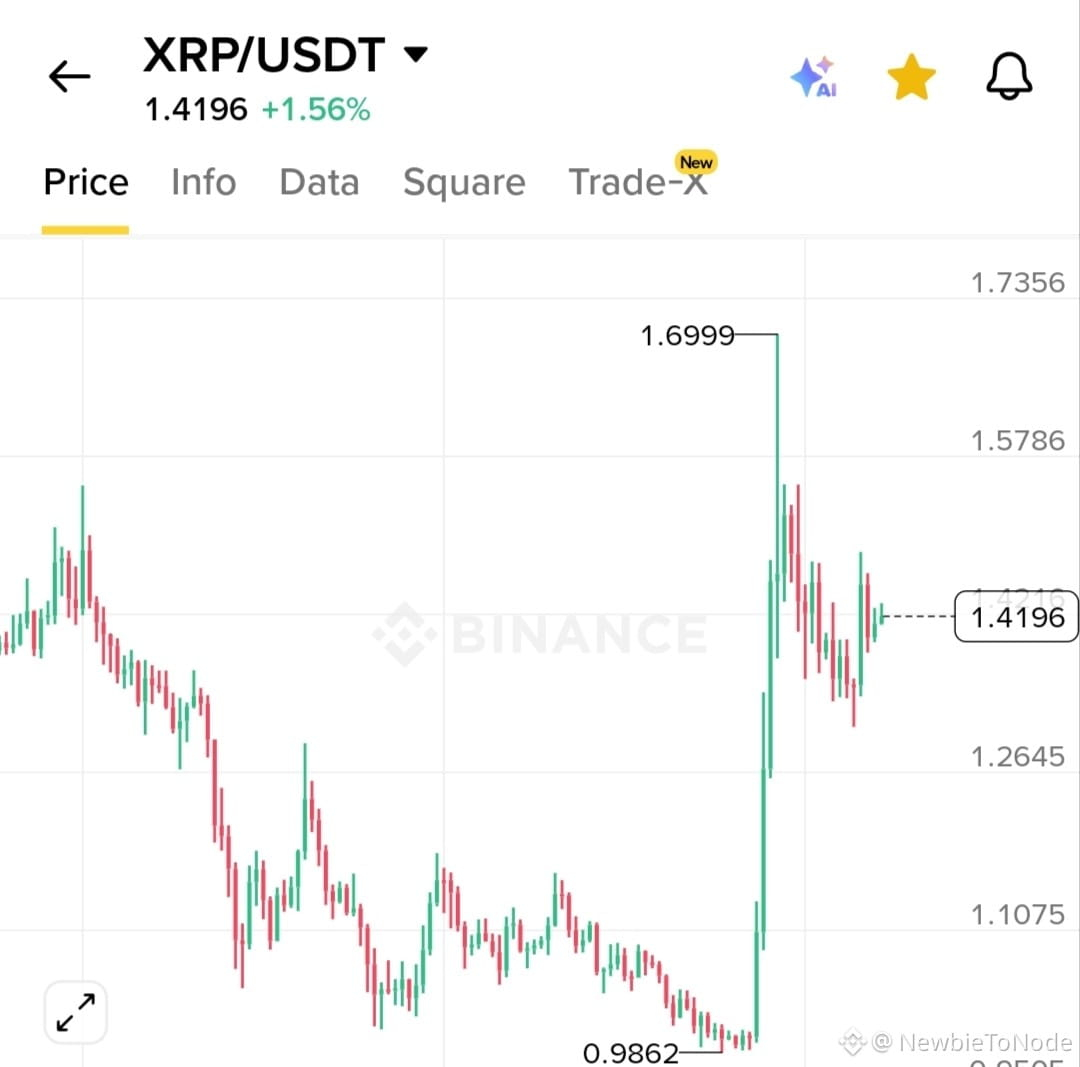
XRP is coiled and everyone knows why: September 15.
that's the Senate cloture vote on the CLARITY Act... the bill that could finally give XRP legal clarity as a commodity, not a security in limbo.
the smart money angle: Goldman Sachs, Jane Street, and Millennium are already stacked into spot XRP ETFs. institutions aren't waiting around, they're positioning now.
📍 support: $1.2645
📍 resistance: $1.6999 (recent spike high)
🎯 vote passes = that high gets retested fast
⚠️ vote fails = back toward $1.10-1.26
this is a binary week for XRP. trade it accordingly, not emotionally.
that's the Senate cloture vote on the CLARITY Act... the bill that could finally give XRP legal clarity as a commodity, not a security in limbo.
the smart money angle: Goldman Sachs, Jane Street, and Millennium are already stacked into spot XRP ETFs. institutions aren't waiting around, they're positioning now.
📍 support: $1.2645
📍 resistance: $1.6999 (recent spike high)
🎯 vote passes = that high gets retested fast
⚠️ vote fails = back toward $1.10-1.26
this is a binary week for XRP. trade it accordingly, not emotionally.
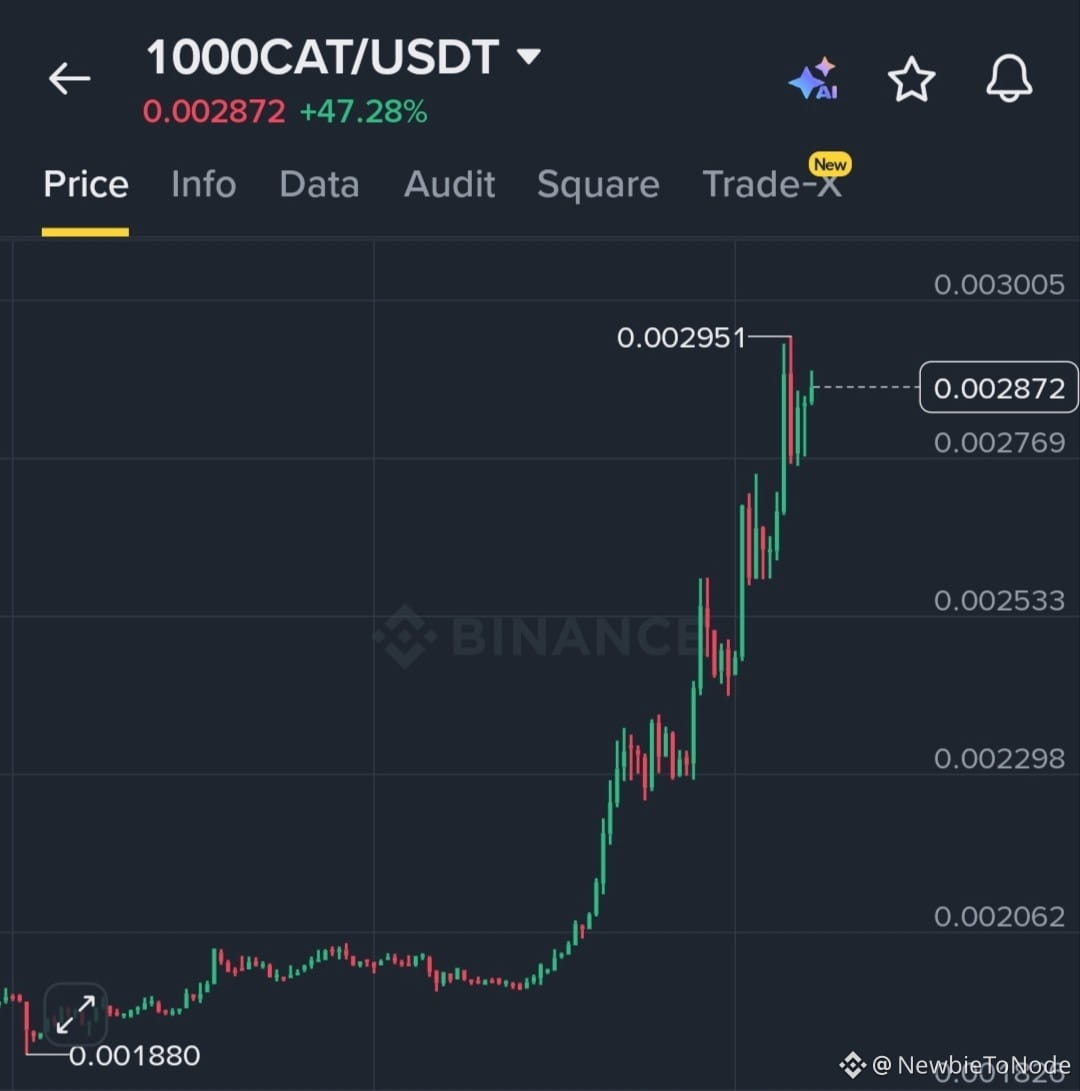
was scrolling top gainers and $1000CAT caught my eye... up 47% today, straight vertical candle. went looking for the "why" like I usually do... and there isn't one. no ETF, no partnership, no announcement. just a low-cap meme coin that got picked up by momentum traders and ran.
chart-wise: it broke out of a long sideways range around $0.0019-$0.0023, pushed to a high of $0.002951, and is now consolidating around $0.002872. $0.002769 is the support to watch... that's roughly where the last pullback held. lose that and this looks like a classic pump-and-fade. hold it and push through $0.002951 again, and it could keep grinding higher purely on FOMO volume.
coins like this move on liquidity and hype, not fundamentals. fun to watch, dangerous to overexpose to. 🐱
chart-wise: it broke out of a long sideways range around $0.0019-$0.0023, pushed to a high of $0.002951, and is now consolidating around $0.002872. $0.002769 is the support to watch... that's roughly where the last pullback held. lose that and this looks like a classic pump-and-fade. hold it and push through $0.002951 again, and it could keep grinding higher purely on FOMO volume.
coins like this move on liquidity and hype, not fundamentals. fun to watch, dangerous to overexpose to. 🐱
Расталды
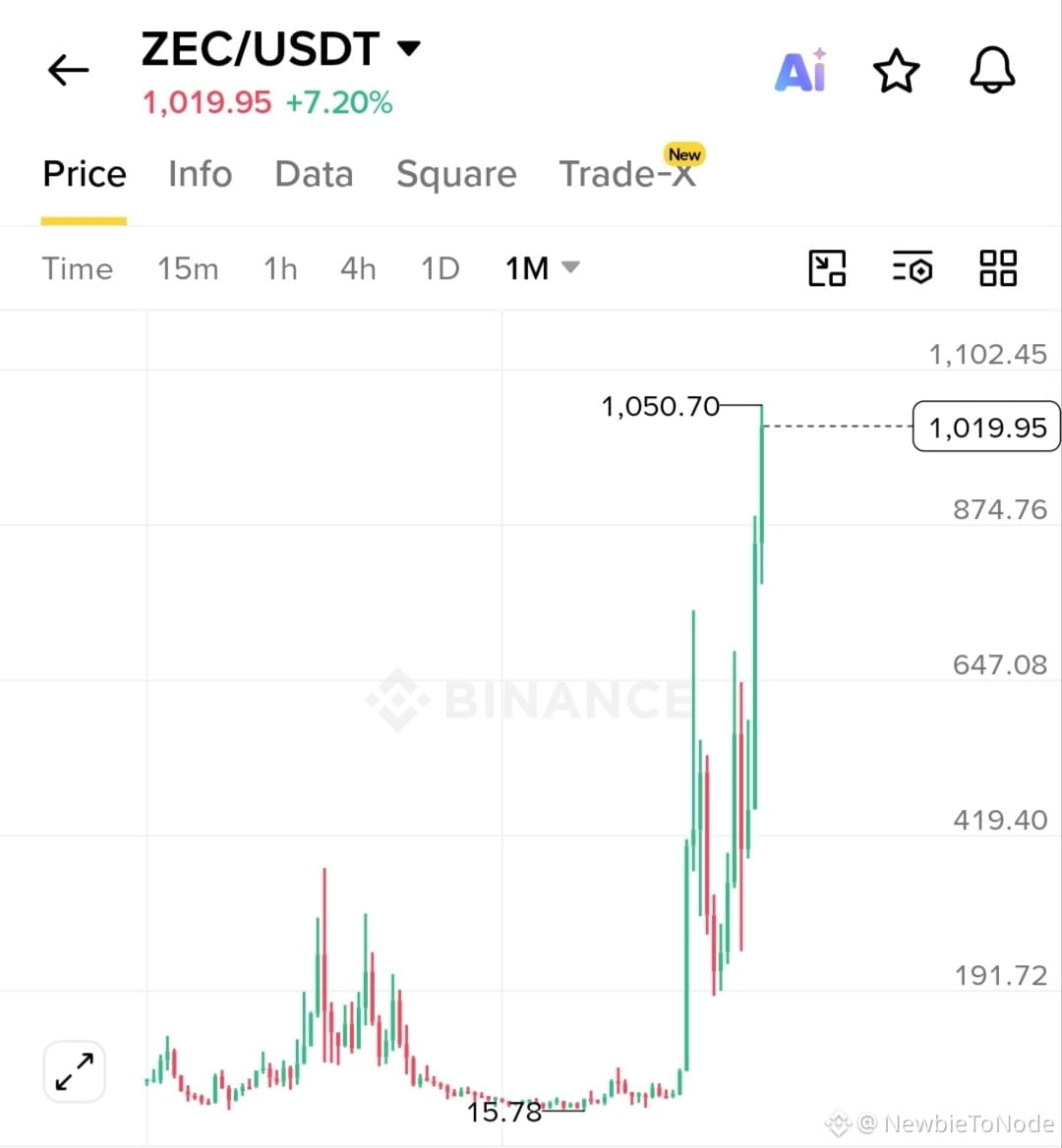
$ZEC just broke $1,000 for the first time since 2018. 🤯
this coin was $15 not that long ago. the comeback story of the cycle, honestly.
📍 support: $850 (old high, now the floor to watch)
📍 resistance: $1,050 (fresh high it just tapped)
🎯 clears that = price discovery, no real ceiling above it historically
what's actually driving it: the Grayscale Zcash ETF going live gave institutions a clean regulated entry, and nearly a third of all ZEC is now sitting in shielded (private) wallets, meaning people are actually using this thing for what it was built for, not just trading it.
wild chart. wilder story. we'll see if it holds.
#ZECHitsANewAllTimeHigh
this coin was $15 not that long ago. the comeback story of the cycle, honestly.
📍 support: $850 (old high, now the floor to watch)
📍 resistance: $1,050 (fresh high it just tapped)
🎯 clears that = price discovery, no real ceiling above it historically
what's actually driving it: the Grayscale Zcash ETF going live gave institutions a clean regulated entry, and nearly a third of all ZEC is now sitting in shielded (private) wallets, meaning people are actually using this thing for what it was built for, not just trading it.
wild chart. wilder story. we'll see if it holds.
#ZECHitsANewAllTimeHigh
Расталды
@Dusk
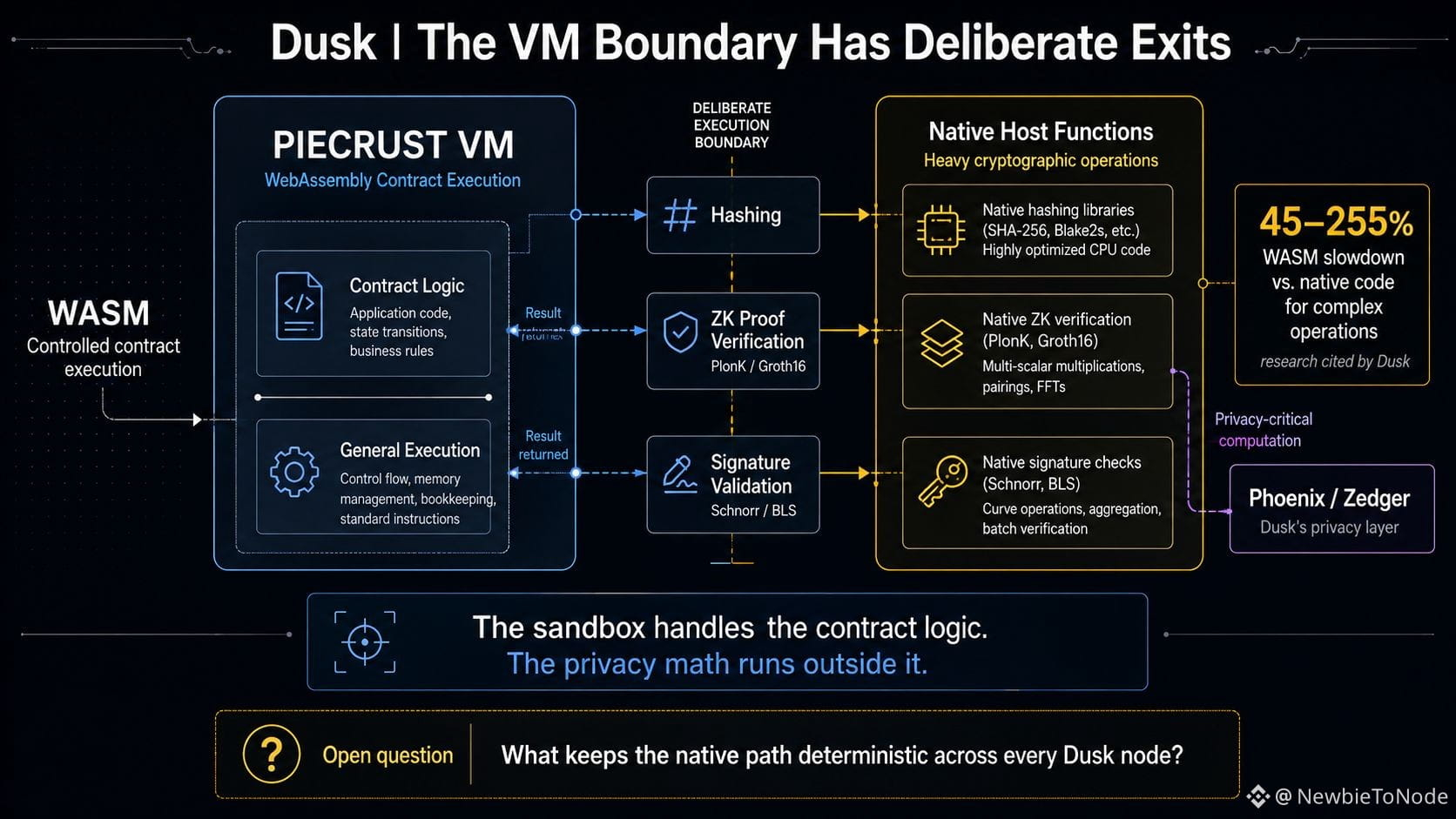
Somewhere in Piecrust's design is a quiet admission that the sandbox isn't the right place for everything.
Contracts run as WebAssembly, which gives the VM its controlled execution environment.
What's interesting is how much of the heavy work never touches that WASM environment at all.
Hashing gets computed natively.
So does ZK proof verification, both PlonK and Groth16.
Signature checks too, Schnorr and BLS.
None of that runs inside the sandbox executing the contract.
The reason is a number, and it's a rough one.
Research Dusk cites puts WASM somewhere between 45 and 255 percent slower than native code once the operations get complex. Cryptographic verification is exactly the kind of work where that difference matters.
Running that penalty on every transaction wasn't a trade Dusk was willing to make, so those operations are handled through native host functions instead.
Here's what got me.
The operations that get pulled out aren't random.
Hashing, proof verification, signatures. that's much of the cryptographic machinery privacy-heavy applications like Phoenix and Zedger depend on.
The sandbox handles the contract logic.
The privacy math runs somewhere else.
So there isn't really one execution boundary here. There's the general VM boundary, and then there are deliberate exits for the operations where native execution matters most.
What I still want to understand is what keeps that native path deterministic across every node. WASM gives you a very explicit execution environment; once a contract calls outside it, what guarantees that every node still arrives at exactly the same result?
$DUSK gets more interesting to me once that question has a real answer behind it, not just a native function doing the work faster.
#dusk
Somewhere in Piecrust's design is a quiet admission that the sandbox isn't the right place for everything.
Contracts run as WebAssembly, which gives the VM its controlled execution environment.
What's interesting is how much of the heavy work never touches that WASM environment at all.
Hashing gets computed natively.
So does ZK proof verification, both PlonK and Groth16.
Signature checks too, Schnorr and BLS.
None of that runs inside the sandbox executing the contract.
The reason is a number, and it's a rough one.
Research Dusk cites puts WASM somewhere between 45 and 255 percent slower than native code once the operations get complex. Cryptographic verification is exactly the kind of work where that difference matters.
Running that penalty on every transaction wasn't a trade Dusk was willing to make, so those operations are handled through native host functions instead.
Here's what got me.
The operations that get pulled out aren't random.
Hashing, proof verification, signatures. that's much of the cryptographic machinery privacy-heavy applications like Phoenix and Zedger depend on.
The sandbox handles the contract logic.
The privacy math runs somewhere else.
So there isn't really one execution boundary here. There's the general VM boundary, and then there are deliberate exits for the operations where native execution matters most.
What I still want to understand is what keeps that native path deterministic across every node. WASM gives you a very explicit execution environment; once a contract calls outside it, what guarantees that every node still arrives at exactly the same result?
$DUSK gets more interesting to me once that question has a real answer behind it, not just a native function doing the work faster.
#dusk
@Dusk
Force transfers. Issuer-initiated. Sitting inside Zedger's contract spec like it belongs there.
I stopped on that clause longer than it probably deserved.
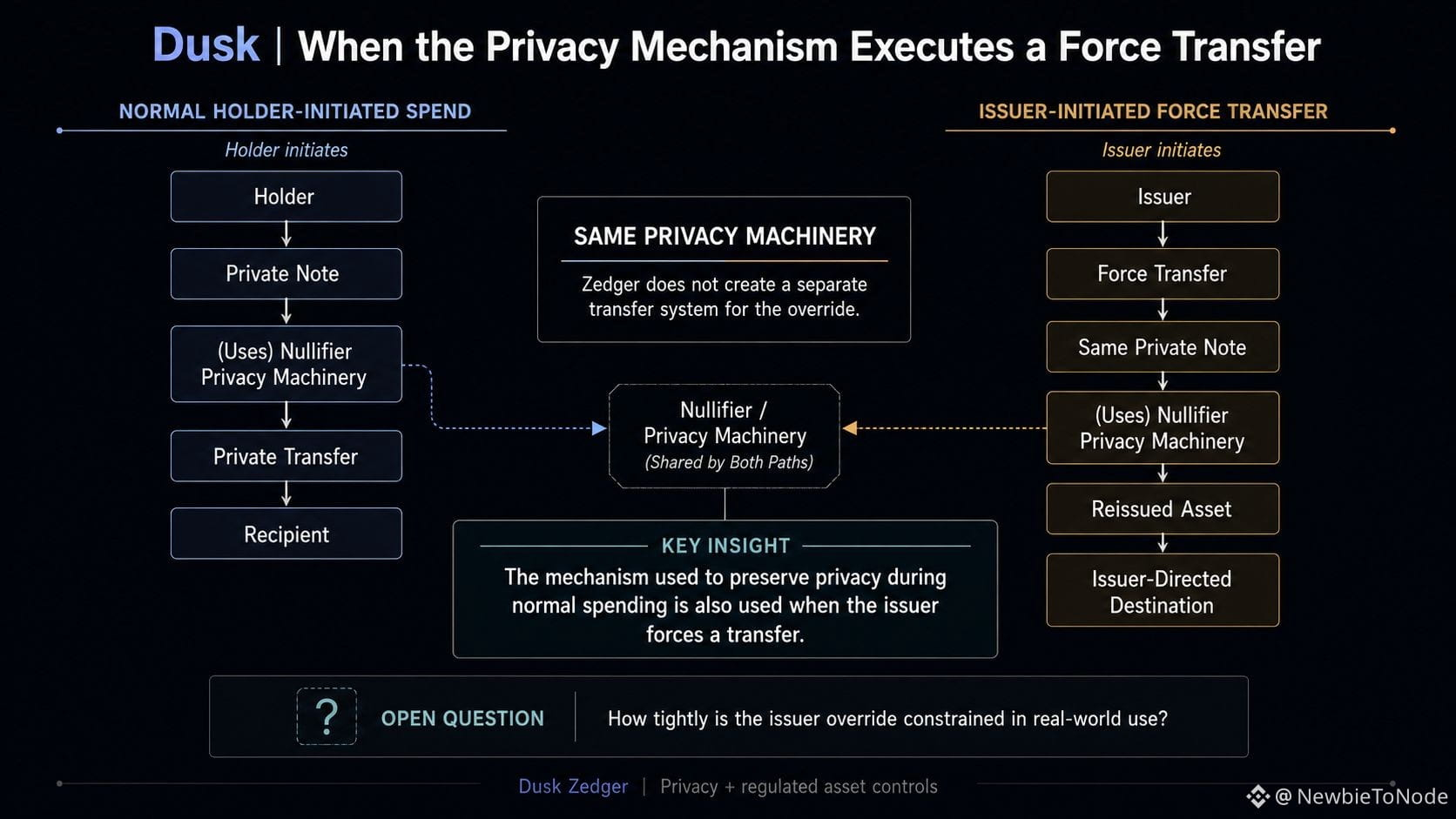
Zedger is built for securities and real-world assets, where the holder normally controls their assets through their own keys. But the contract also gives the issuer a force-transfer capability.
Not a bug someone missed.
A designed capability, sitting alongside minting, burning and dividends.
Here's the part I hadn't traced yet.
When that override fires, it doesn't bypass the privacy machinery. It uses it.
The holder's note gets nullified through the same mechanism used when a normal Phoenix note is spent. The asset can then be reissued to the destination specified by the issuer, with the transfer still handled through the protocol's proof-based machinery.
So the mechanism that normally lets a holder prove control without exposing unnecessary information is also involved in executing a transfer the holder didn't initiate.
That's the part I find interesting.
A tokenized bond isn't just a balance sitting in a wallet. It's a legal claim, and Zedger's contract already accounts for things like dividends, corporate actions and events triggered outside the chain. Those obligations don't disappear because the asset becomes tokenized.
Zedger's answer isn't to bolt on a completely separate transfer system.
It reuses the machinery already there.
What I can't tell from the whitepaper alone is how narrow that override stays once real issuers are using it. Who can trigger it. Under what conditions. Whether the boundary remains narrow as more asset types get added.
$DUSK only becomes more interesting to me here once that boundary has been tested against something other than the contract describing it.
#dusk
Force transfers. Issuer-initiated. Sitting inside Zedger's contract spec like it belongs there.
I stopped on that clause longer than it probably deserved.
Zedger is built for securities and real-world assets, where the holder normally controls their assets through their own keys. But the contract also gives the issuer a force-transfer capability.
Not a bug someone missed.
A designed capability, sitting alongside minting, burning and dividends.
Here's the part I hadn't traced yet.
When that override fires, it doesn't bypass the privacy machinery. It uses it.
The holder's note gets nullified through the same mechanism used when a normal Phoenix note is spent. The asset can then be reissued to the destination specified by the issuer, with the transfer still handled through the protocol's proof-based machinery.
So the mechanism that normally lets a holder prove control without exposing unnecessary information is also involved in executing a transfer the holder didn't initiate.
That's the part I find interesting.
A tokenized bond isn't just a balance sitting in a wallet. It's a legal claim, and Zedger's contract already accounts for things like dividends, corporate actions and events triggered outside the chain. Those obligations don't disappear because the asset becomes tokenized.
Zedger's answer isn't to bolt on a completely separate transfer system.
It reuses the machinery already there.
What I can't tell from the whitepaper alone is how narrow that override stays once real issuers are using it. Who can trigger it. Under what conditions. Whether the boundary remains narrow as more asset types get added.
$DUSK only becomes more interesting to me here once that boundary has been tested against something other than the contract describing it.
#dusk
Расталды
I kept assuming network privacy came with a tax.
Extra hops, more traffic, some cost you eat to make a message harder to trace.
Then I actually looked at how @Dusk moves messages around and had to stop.
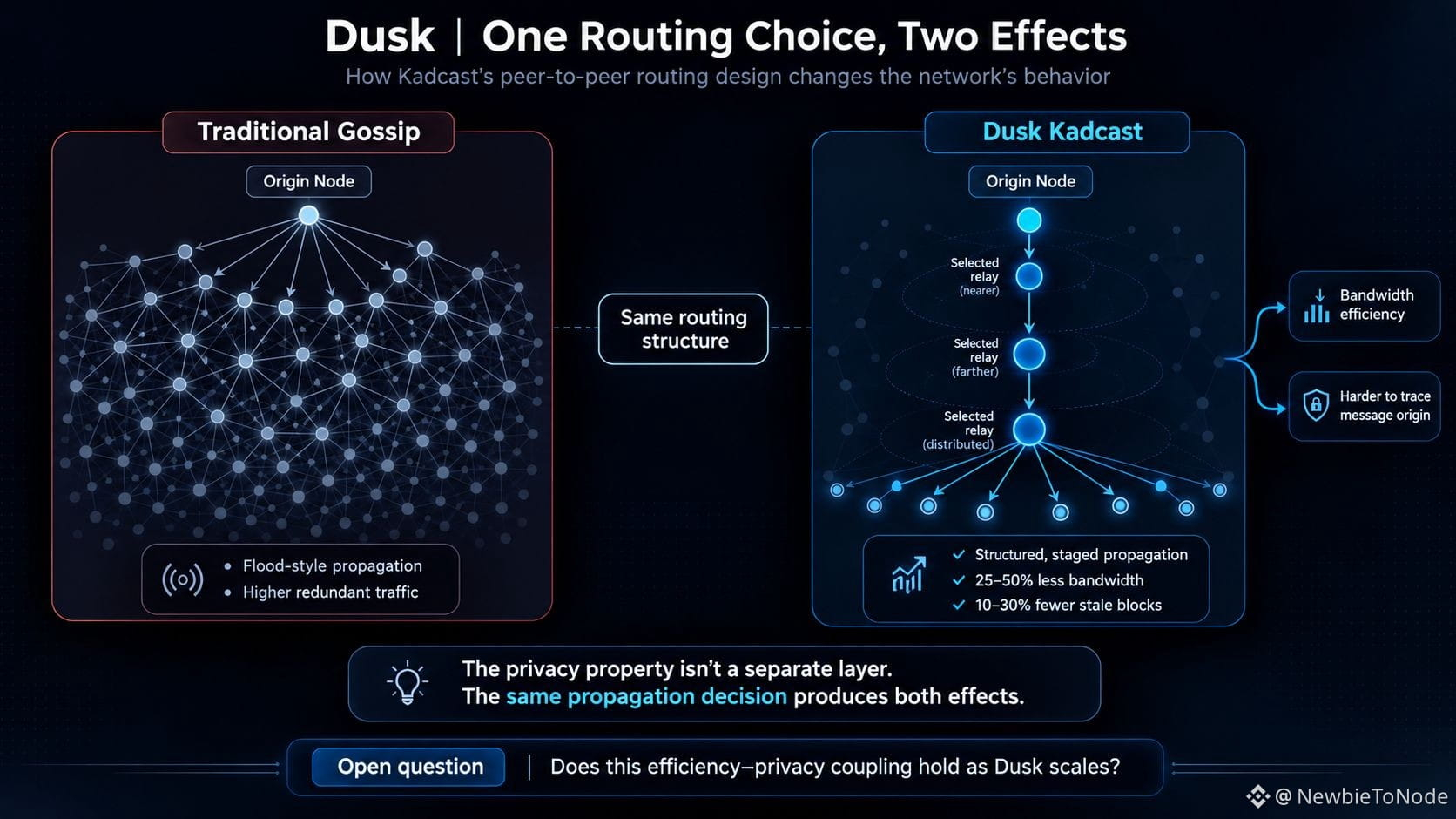
Traditional gossip-style broadcasting can flood a message outward. A node gets it, sends it to neighbors, they do the same, and the whole thing repeats.
Dusk's Kadcast doesn't do that.
A node forwards to a select set of peers, further out each hop. Staged instead of blasted.
25 to 50 percent less bandwidth than gossip-style broadcasting. That's the number the whitepaper gives for it.
Fewer stale blocks too: 10 to 30 percent in the faster-block conditions they compare it against.
Fine, efficient routing. I expected that part once I saw the structure.
What I didn't expect is that the same staging is also why a message gets harder to trace back to whoever sent it first.
Not a separate privacy feature stacked on top.
The same routing choice is doing both jobs. A message moving through layered relays instead of one direct broadcast doesn't leave the same obvious trail back to its starting point.
I don't think I've seen that pairing before, where the efficiency move and the privacy property come from the same decision instead of two things bolted together.
Still don't know if that holds once the network gets much bigger.
Maybe the coupling is solid. Maybe somewhere past a certain scale, squeezing more efficiency out of it starts costing the privacy side something it isn't costing today.
$DUSK gets more interesting to me once that's actually been stress-tested, not just true on paper.
#dusk
Extra hops, more traffic, some cost you eat to make a message harder to trace.
Then I actually looked at how @Dusk moves messages around and had to stop.
Traditional gossip-style broadcasting can flood a message outward. A node gets it, sends it to neighbors, they do the same, and the whole thing repeats.
Dusk's Kadcast doesn't do that.
A node forwards to a select set of peers, further out each hop. Staged instead of blasted.
25 to 50 percent less bandwidth than gossip-style broadcasting. That's the number the whitepaper gives for it.
Fewer stale blocks too: 10 to 30 percent in the faster-block conditions they compare it against.
Fine, efficient routing. I expected that part once I saw the structure.
What I didn't expect is that the same staging is also why a message gets harder to trace back to whoever sent it first.
Not a separate privacy feature stacked on top.
The same routing choice is doing both jobs. A message moving through layered relays instead of one direct broadcast doesn't leave the same obvious trail back to its starting point.
I don't think I've seen that pairing before, where the efficiency move and the privacy property come from the same decision instead of two things bolted together.
Still don't know if that holds once the network gets much bigger.
Maybe the coupling is solid. Maybe somewhere past a certain scale, squeezing more efficiency out of it starts costing the privacy side something it isn't costing today.
$DUSK gets more interesting to me once that's actually been stress-tested, not just true on paper.
#dusk
Көбірек контент көру үшін кіріңіз