
Ali Abbas514
3.9k Жариялаулар

Ali Abbas514
Хабарлау
Пайдаланушыны блоктау
crypto been my rabbit hole since 20XX.Still falling let's go
162 Жазылым
20.8K+ Жазылушылар
10.2K+ лайк басылған
Жазбалар
Барлығы
Баға ұсыныстары
Тікелей эфир
·
--
Жоғары (өспелі)
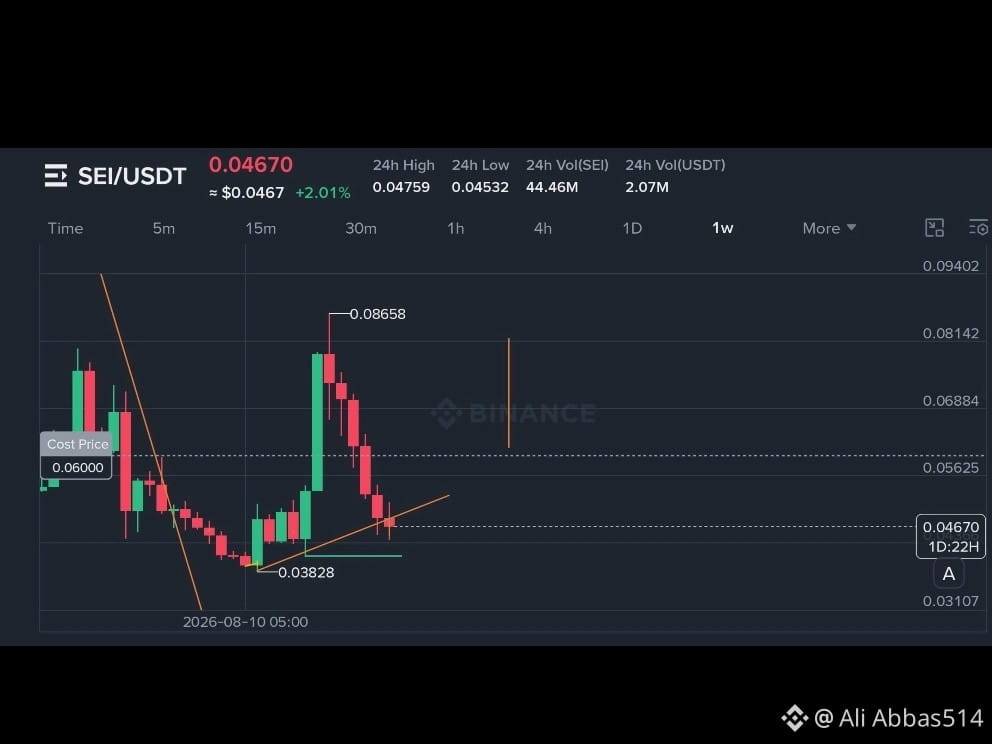
$SEI HOLDERS, PAY ATTENTION! 👀🔥
The red candles are getting smaller as price moves down toward the liquidity zone. Selling pressure appears to be fading, and buyers may be preparing for their next opportunity.
The coming weeks could get interesting. Keep $SEI on your radar! 🚀📈
Less selling pressure, more room for a potential reversal!
{spot}(SEIUSDT)
$SEI HOLDERS, PAY ATTENTION! 👀🔥
The red candles are getting smaller as price moves down toward the liquidity zone. Selling pressure appears to be fading, and buyers may be preparing for their next opportunity.
The coming weeks could get interesting. Keep $SEI on your radar! 🚀📈
Less selling pressure, more room for a potential reversal!
2
597
·
--
Жоғары (өспелі)
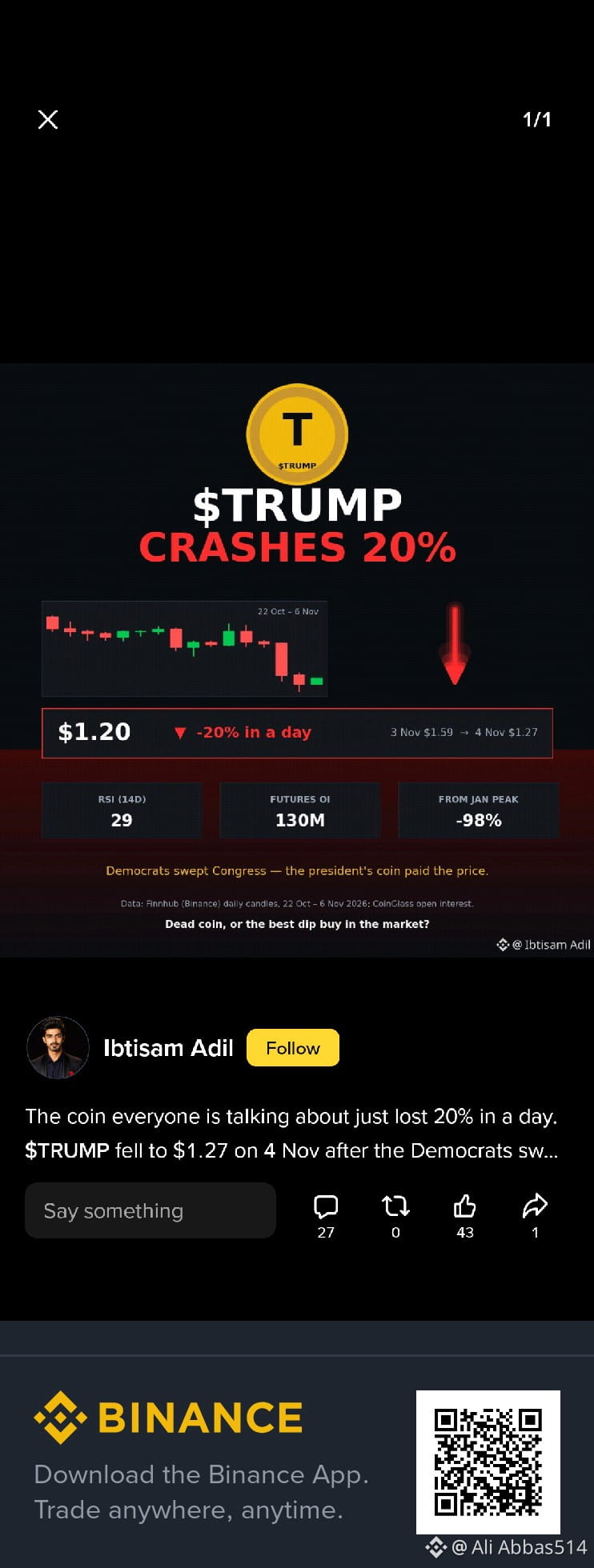
🚨 $TRUMP IS GETTING CRUSHED!
A brutal 20% wipeout has shaken the market. After hitting $1.27 on Nov 4 following the Democrats’ congressional sweep, $TRUMP plunged to $1.18 the next day — a new record low. Now hovering near $1.20 (around $1.168 on the latest quote), it’s almost 98% below its January peak.
RSI at 29 signals oversold conditions, but futures open interest has surged from 100M to 130M tokens. Bears may be loading up for another drop… or could this be the setup for a powerful bounce? 👀🔥
Dead coin or ultimate dip opportunity? Which side are you betting on?
Follow for tomorrow’s key levels. 🚀
{spot}(TRUMPUSDT)
🚨 $TRUMP IS GETTING CRUSHED!
A brutal 20% wipeout has shaken the market. After hitting $1.27 on Nov 4 following the Democrats’ congressional sweep, $TRUMP plunged to $1.18 the next day — a new record low. Now hovering near $1.20 (around $1.168 on the latest quote), it’s almost 98% below its January peak.
RSI at 29 signals oversold conditions, but futures open interest has surged from 100M to 130M tokens. Bears may be loading up for another drop… or could this be the setup for a powerful bounce? 👀🔥
Dead coin or ultimate dip opportunity? Which side are you betting on?
Follow for tomorrow’s key levels. 🚀
598
·
--
Жоғары (өспелі)
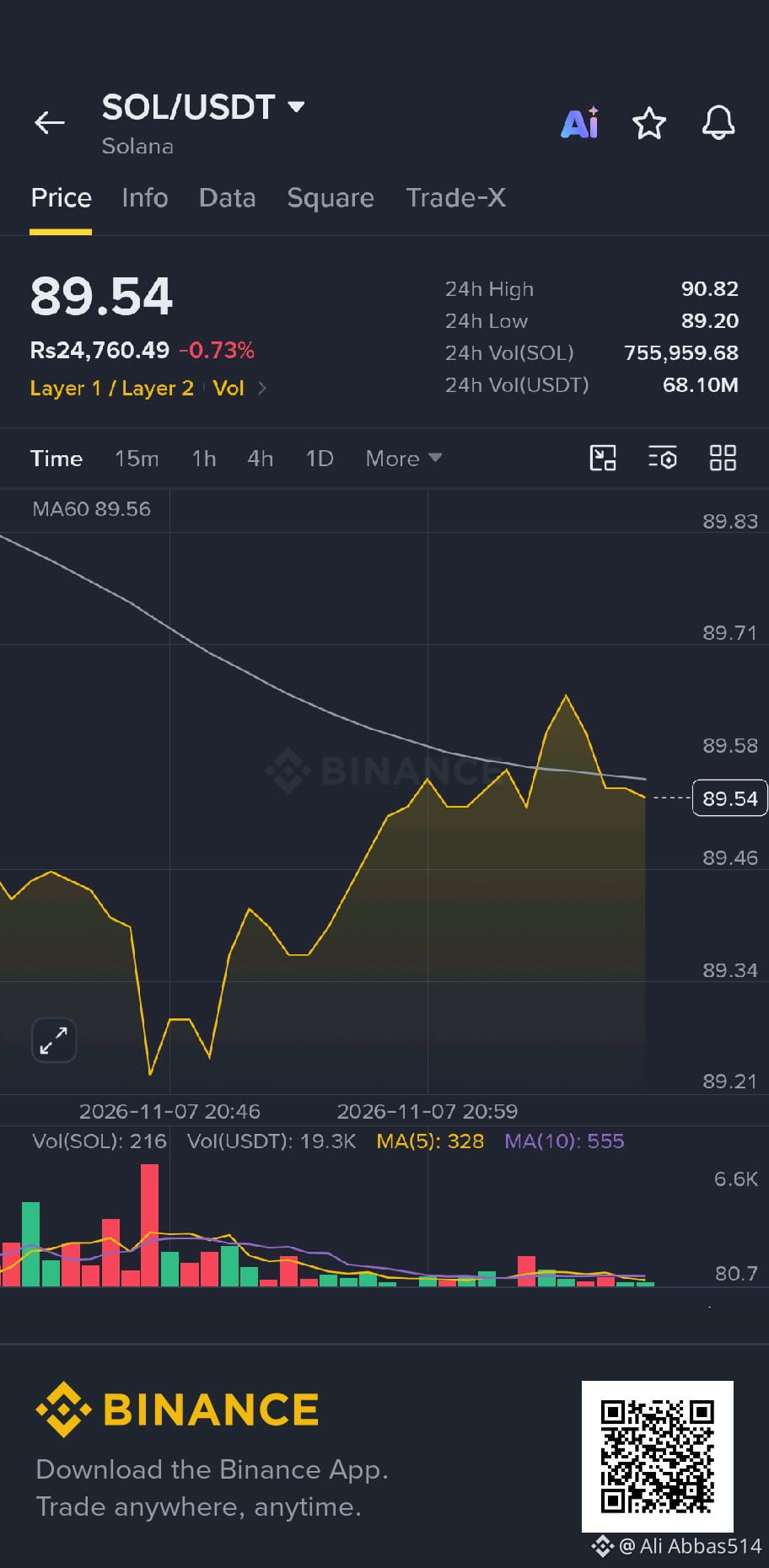
🚀 $SOL : FROM $2 TO A POSSIBLE $500? 🔥
2020: ~$2
2021: ~$260
2022: ~$8
2023: ~$125
2024: ~$260
2025: ~$295
Solana has survived brutal crashes, bounced back stronger, and proved its resilience. Now the big question is: What’s the next destination? 👀
Our dream target: $500 ATH ❤️🔥🚀
Could SOL surprise the entire market again? Or are we aiming too high?
What’s your next target for $SOL? 👇
{spot}(SOLUSDT)
🚀 $SOL : FROM $2 TO A POSSIBLE $500? 🔥
2020: ~$2
2021: ~$260
2022: ~$8
2023: ~$125
2024: ~$260
2025: ~$295
Solana has survived brutal crashes, bounced back stronger, and proved its resilience. Now the big question is: What’s the next destination? 👀
Our dream target: $500 ATH ❤️🔥🚀
Could SOL surprise the entire market again? Or are we aiming too high?
What’s your next target for $SOL ? 👇
177
·
--
Жоғары (өспелі)
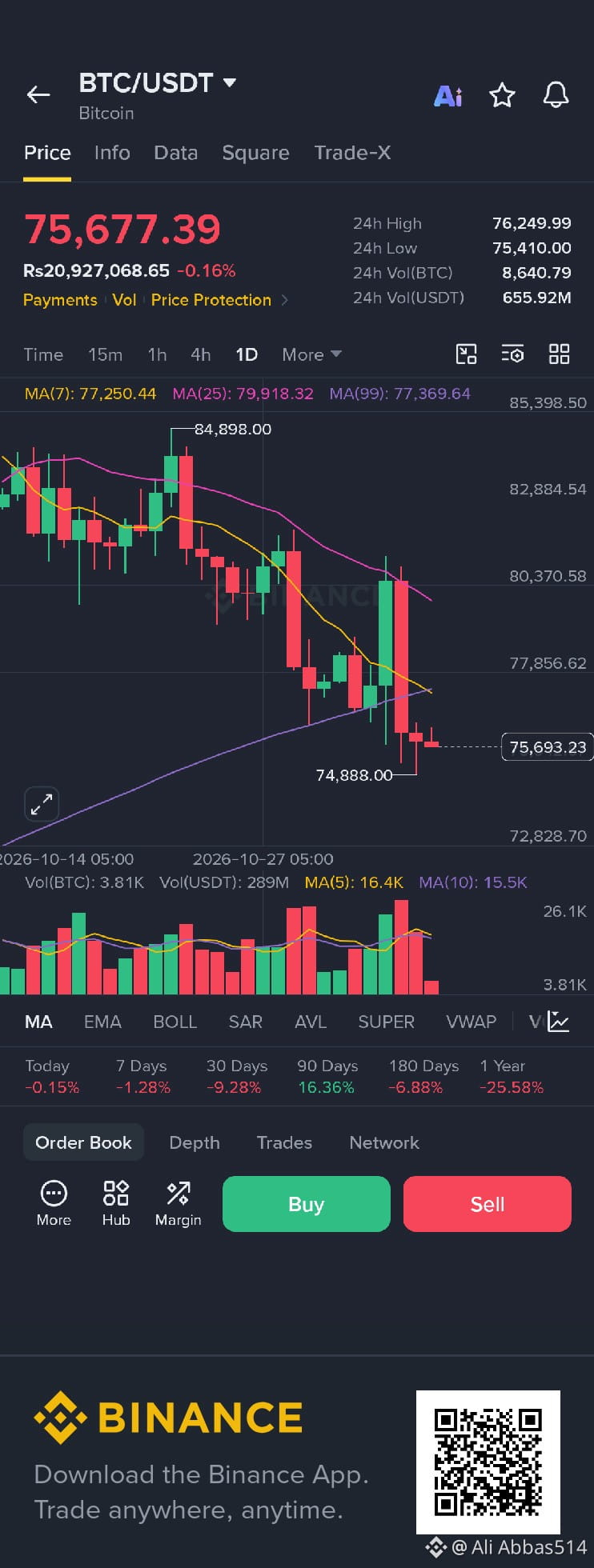
🚨 DON’T BECOME EXIT LIQUIDITY!
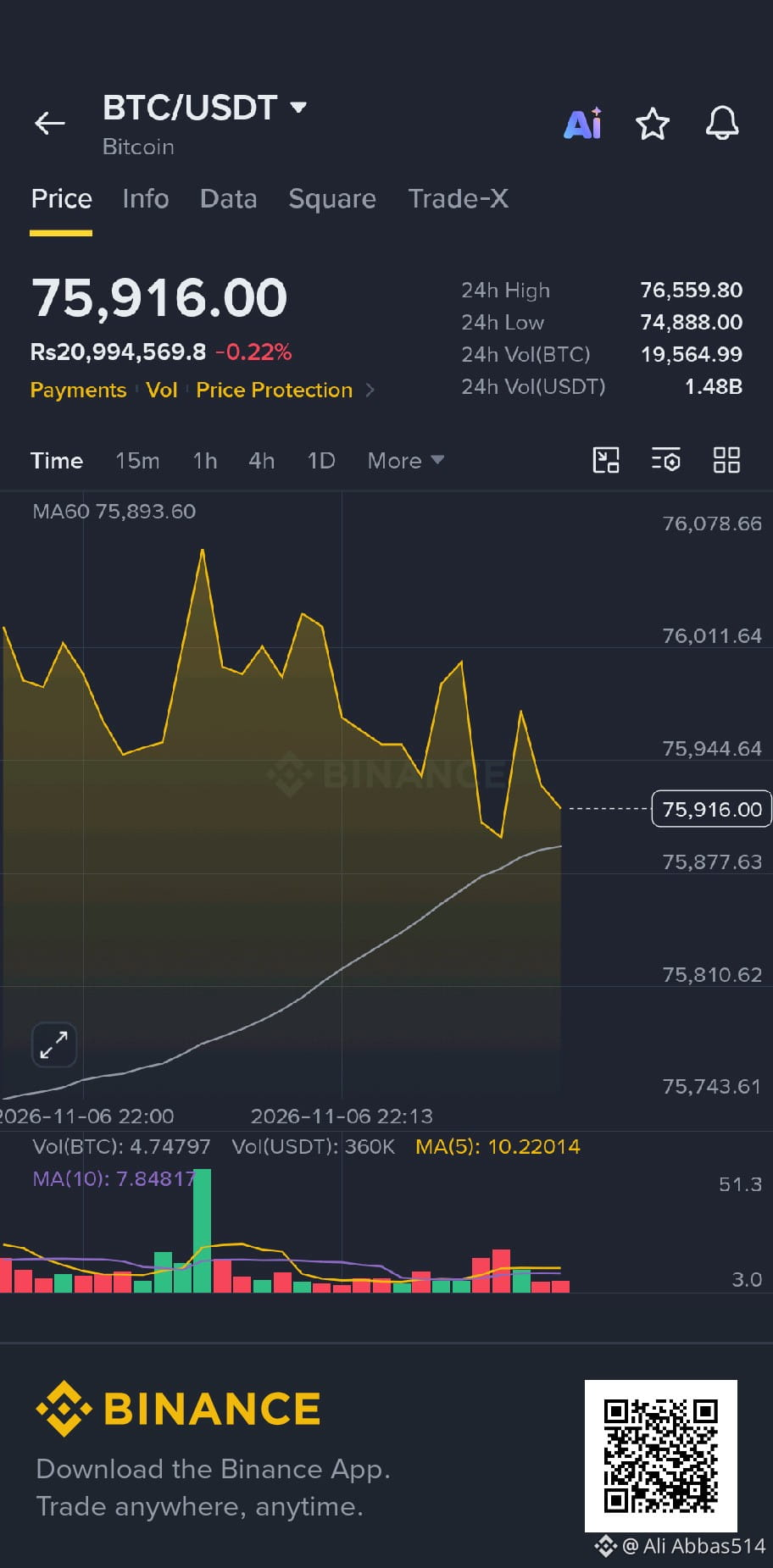
$BTC Bitcoin’s $81K breakout may have been a trap, and the next shakeout could catch late buyers off guard. My downside roadmap remains unchanged:
🎯 $75K → $70K → $67K → BREAKOUT?
Patience is key. I’m watching these levels closely before making my next move. Save this post, follow me, and turn on notifications so you don’t miss the next update. 👀
Stay sharp. Don’t chase the hype!
{spot}(BTCUSDT)
🚨 DON’T BECOME EXIT LIQUIDITY!
$BTC Bitcoin’s $81K breakout may have been a trap, and the next shakeout could catch late buyers off guard. My downside roadmap remains unchanged:
🎯 $75K → $70K → $67K → BREAKOUT?
Patience is key. I’m watching these levels closely before making my next move. Save this post, follow me, and turn on notifications so you don’t miss the next update. 👀
Stay sharp. Don’t chase the hype!
144
·
--
Жоғары (өспелі)
Ішінара рас
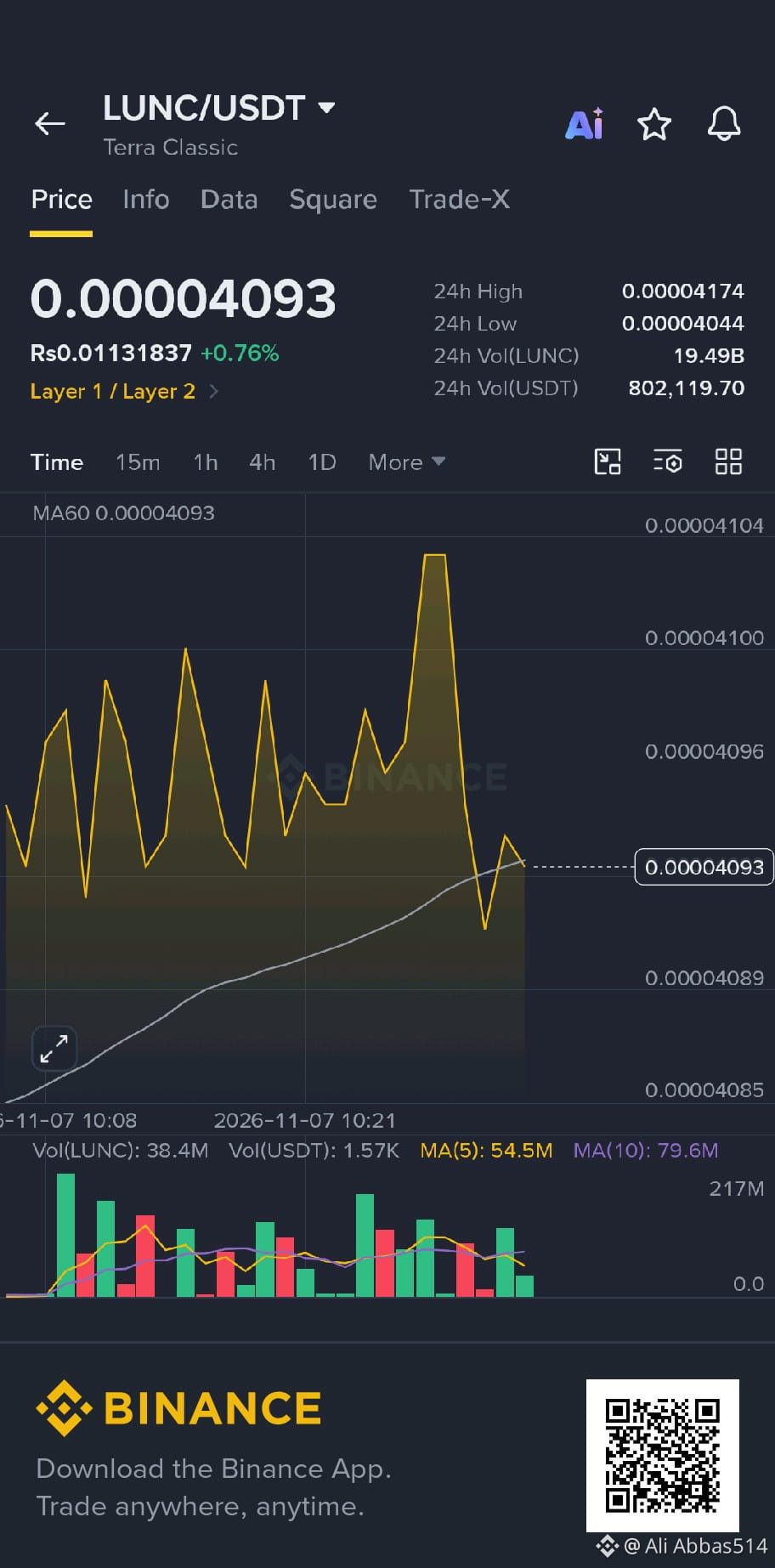
🔥 $LUNC JUST TOOK ANOTHER STEP TOWARD A LEANER SUPPLY!
The Terra Classic burn continues, and November 6 brought another 150,390,455 LUNC out of circulation. Every burn adds another small piece to the long-term supply-reduction story. 🔥
📊 Daily $LUNC Burn Report — November 06, 2026
🔥 Burned Today: 150,390,455 LUNC
📉 Supply Reduction: 0.0023%
💰 Total Supply: 6,444,090,264,382 LUNC
One day's burn may look small compared with the enormous supply, but the bigger picture is the consistency of the process. The real question is whether the community can sustain this momentum over the long run.
I'm watching the burn numbers closely. What matters next is continued progress, stronger ecosystem activity, and genuine demand.
🚀 Are you still holding $LUNC for the long term? What price target are you waiting for?
❤️ Like if you believe in the long-term journey
🔁 Repost to keep the LUNC community informed
👇 Drop your target in the comments!
{spot}(LUNCUSDT)
🔥 $LUNC JUST TOOK ANOTHER STEP TOWARD A LEANER SUPPLY!
The Terra Classic burn continues, and November 6 brought another 150,390,455 LUNC out of circulation. Every burn adds another small piece to the long-term supply-reduction story. 🔥
📊 Daily $LUNC Burn Report — November 06, 2026
🔥 Burned Today: 150,390,455 LUNC
📉 Supply Reduction: 0.0023%
💰 Total Supply: 6,444,090,264,382 LUNC
One day's burn may look small compared with the enormous supply, but the bigger picture is the consistency of the process. The real question is whether the community can sustain this momentum over the long run.
I'm watching the burn numbers closely. What matters next is continued progress, stronger ecosystem activity, and genuine demand.
🚀 Are you still holding $LUNC for the long term? What price target are you waiting for?
❤️ Like if you believe in the long-term journey
🔁 Repost to keep the LUNC community informed
👇 Drop your target in the comments!
1
5
592
·
--
Жоғары (өспелі)
🚀 $BTC — PAUSE BEFORE THE NEXT EXPLOSION?
Bitcoin just surged from $75,690 to $81,188, pushing toward $80,537! Bulls are clearly in control, but a short cooldown could be next. 👀
📊 My Market View:
- 24H Range: $75,690 – $81,188
- EMA Bullish: 80,452 > 79,532 > 78,409
- RSI: 66.2 — momentum is strong, but overheating.
- Volume: $17.91B — heavy trading activity.
🎯 Key Levels:
- Support: $79,510
- Upside Target: $82,266
- Bullish structure remains intact above key EMA levels.
My view? A healthy pullback toward $79.5K could give buyers another opportunity before the next push toward $82K. But can BTC break higher without taking a breather?
🔥 Direct pump or temporary correction? What's your call?
{spot}(BTCUSDT)
🚀 $BTC — PAUSE BEFORE THE NEXT EXPLOSION?
Bitcoin just surged from $75,690 to $81,188, pushing toward $80,537! Bulls are clearly in control, but a short cooldown could be next. 👀
📊 My Market View:
- 24H Range: $75,690 – $81,188
- EMA Bullish: 80,452 > 79,532 > 78,409
- RSI: 66.2 — momentum is strong, but overheating.
- Volume: $17.91B — heavy trading activity.
🎯 Key Levels:
- Support: $79,510
- Upside Target: $82,266
- Bullish structure remains intact above key EMA levels.
My view? A healthy pullback toward $79.5K could give buyers another opportunity before the next push toward $82K. But can BTC break higher without taking a breather?
🔥 Direct pump or temporary correction? What's your call?
103
·
--
Жоғары (өспелі)
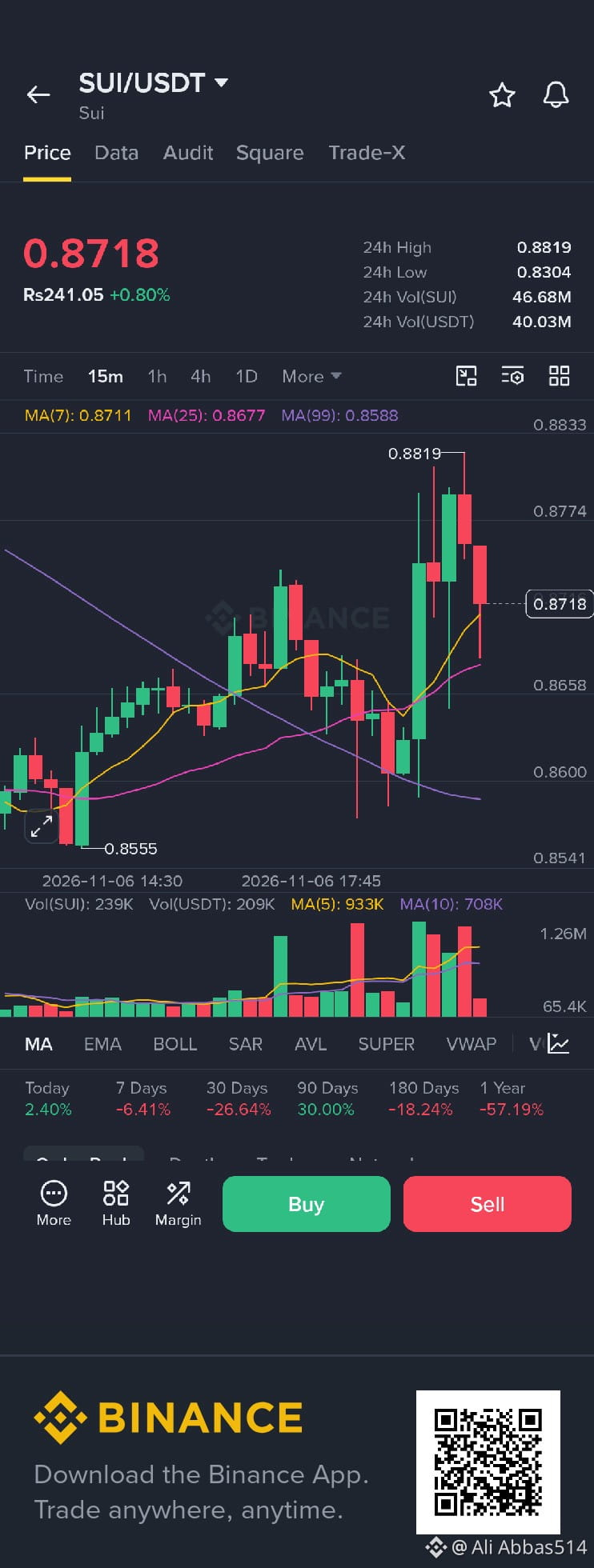
🚀 $SUI LONG — Recovery Mode Loading?
SUI is holding its ground around the $0.83 support zone after an extended downtrend. I'm watching this area closely because a successful defense could open the door for a strong relief rally. 👀
📍 Entry: $0.860
🎯 TP1: $0.950
🎯 TP2: $1.050
🛑 Stop Loss: $0.748
Current Price: $0.8689 (+0.63%)
The first challenge is reclaiming momentum toward $0.95. If buyers step in with strength, $1.05 could become the next destination. Patience is key — let the price action confirm the move! 🔥
#SUIUSDT
{spot}(SUIUSDT)
🚀 $SUI LONG — Recovery Mode Loading?
SUI is holding its ground around the $0.83 support zone after an extended downtrend. I'm watching this area closely because a successful defense could open the door for a strong relief rally. 👀
📍 Entry: $0.860
🎯 TP1: $0.950
🎯 TP2: $1.050
🛑 Stop Loss: $0.748
Current Price: $0.8689 (+0.63%)
The first challenge is reclaiming momentum toward $0.95. If buyers step in with strength, $1.05 could become the next destination. Patience is key — let the price action confirm the move! 🔥
#SUIUSDT
1
213
·
--
Жоғары (өспелі)
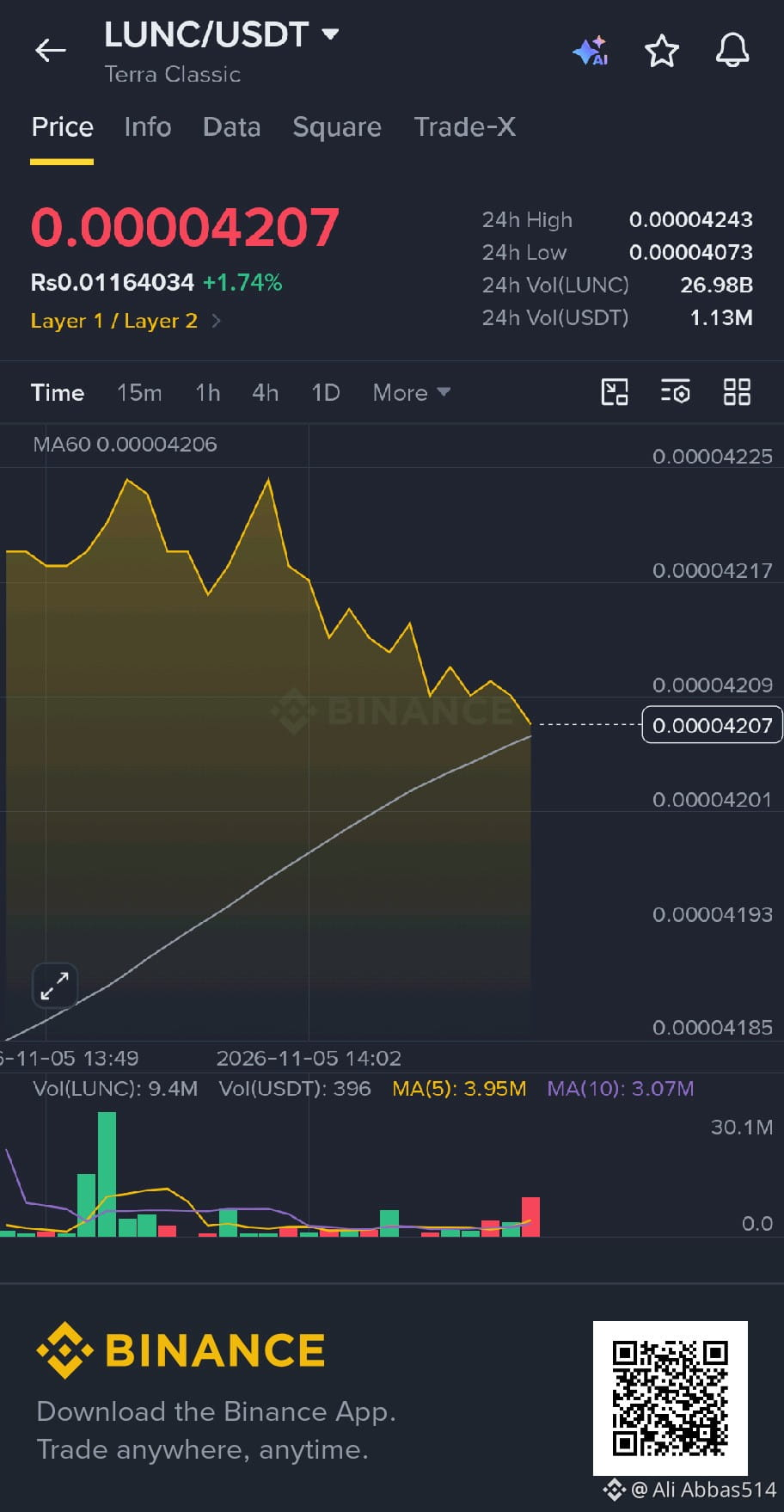
They Ignore It Today, They May Chase It Tomorrow
$LUNC at $0.00004 — nobody seems interested right now. 😔 But imagine the sentiment if it ever reaches $1! 🚀 Everyone wants to buy after the big move, but few have the patience during the quiet days.
Stay patient, watch the journey, and never confuse a dream target with a guaranteed outcome.
Today's silence, tomorrow's FOMO? 👀
{spot}(LUNCUSDT)
They Ignore It Today, They May Chase It Tomorrow
$LUNC at $0.00004 — nobody seems interested right now. 😔 But imagine the sentiment if it ever reaches $1! 🚀 Everyone wants to buy after the big move, but few have the patience during the quiet days.
Stay patient, watch the journey, and never confuse a dream target with a guaranteed outcome.
Today's silence, tomorrow's FOMO? 👀
11
1.3k
·
--
Жоғары (өспелі)
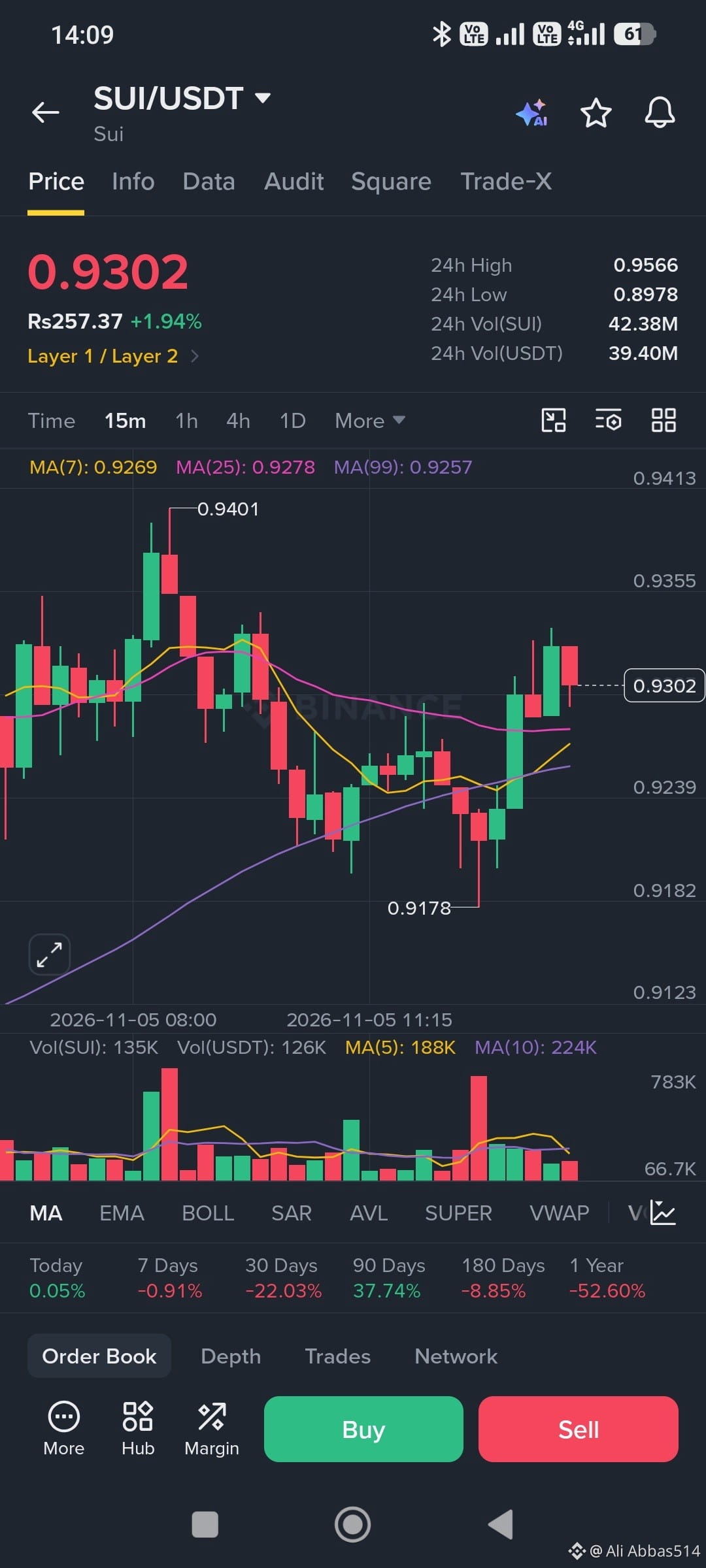
👀 $SUI at $0.88 — Is History About to Repeat?
SUI is back in a zone that previously kicked off an explosive 837% rally! 🚀 Now, a second accumulation zone appears to be taking shape while market attention remains surprisingly quiet.
If history rhymes, my aggressive upside targets are $6–$7. That's potentially another massive move!
Sounds crazy? The last rally did too. 👀
I'm keeping $SUI firmly on my watchlist. PUMP ZONE 2 loading? 🔥
{spot}(SUIUSDT)
👀 $SUI at $0.88 — Is History About to Repeat?
SUI is back in a zone that previously kicked off an explosive 837% rally! 🚀 Now, a second accumulation zone appears to be taking shape while market attention remains surprisingly quiet.
If history rhymes, my aggressive upside targets are $6–$7. That's potentially another massive move!
Sounds crazy? The last rally did too. 👀
I'm keeping $SUI firmly on my watchlist. PUMP ZONE 2 loading? 🔥
126
·
--
Жоғары (өспелі)
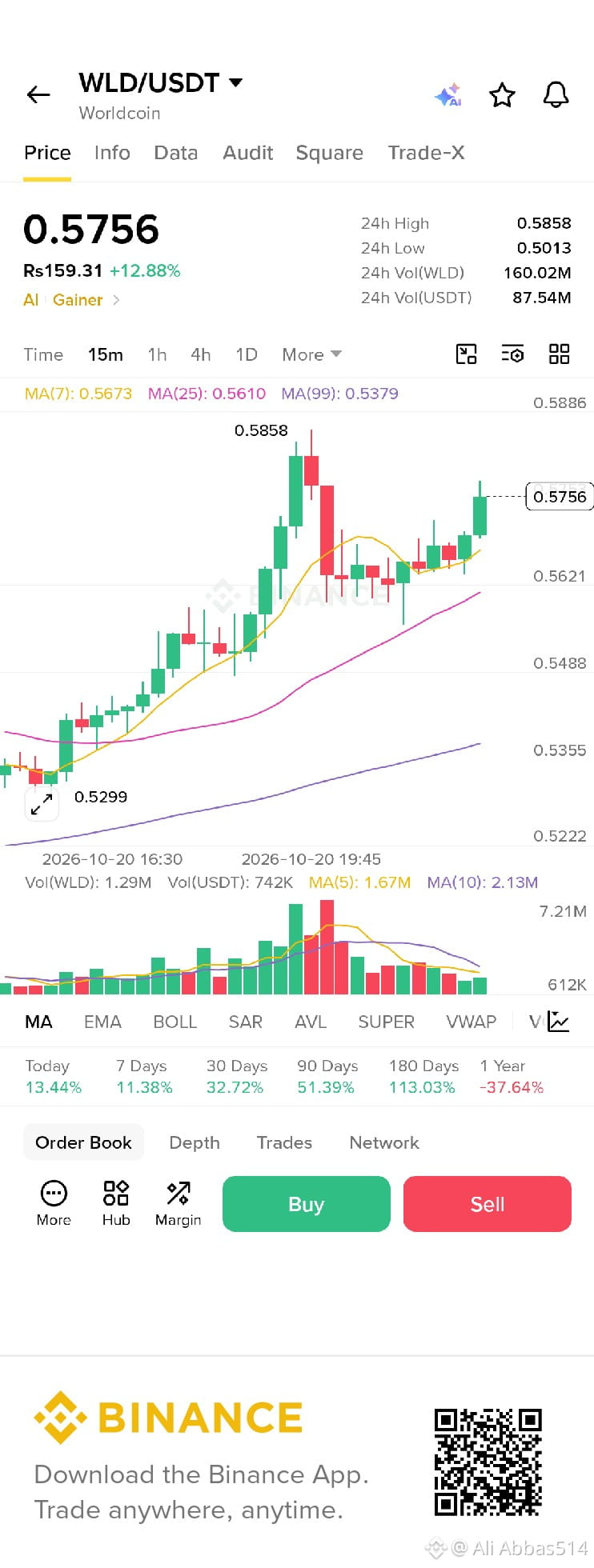
$WLD BEARS ARE READY TO STRIKE! 🐻
Price is facing a tough rejection zone at $0.545–$0.560. If resistance holds, a sharp downside move could be next! 📉🔥
🎯 Targets: $0.520 → $0.500 → $0.460
⚠️ Watch the rejection closely — the next move could get wild! DYOR.
$WLD BEARS ARE READY TO STRIKE! 🐻
Price is facing a tough rejection zone at $0.545–$0.560. If resistance holds, a sharp downside move could be next! 📉🔥
🎯 Targets: $0.520 → $0.500 → $0.460
⚠️ Watch the rejection closely — the next move could get wild! DYOR.
Price is facing a tough rejection zone at $0.545–$0.560. If resistance holds, a sharp downside move could be next! 📉🔥
🎯 Targets: $0.520 → $0.500 → $0.460
⚠️ Watch the rejection closely — the next move could get wild! DYOR.
263
·
--
Жоғары (өспелі)
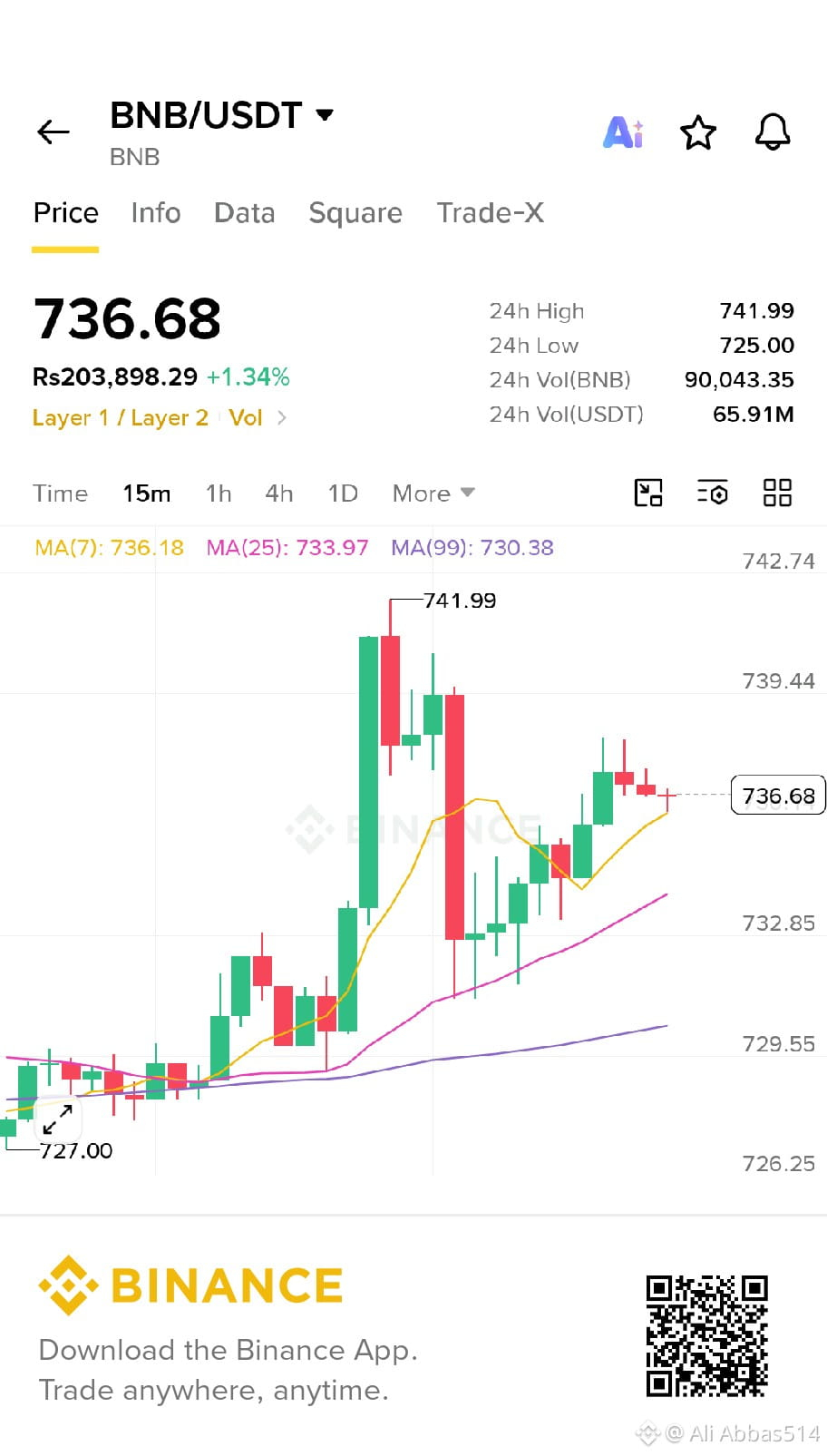
$BNB BULLISH BOUNCE IN PLAY!
Buyers are stepping in! 👀🔥
📍 Long Entry: $727.50–$729.00
🛑 Stop Loss: $725.50
🎯 TP1: $730.50 | TP2: $732.00 | TP3: $734.00
Bulls need momentum to break higher! 📈 Eyes on $732! ⚡ DYOR.
$BNB BULLISH BOUNCE IN PLAY!
Buyers are stepping in! 👀🔥
📍 Long Entry: $727.50–$729.00
🛑 Stop Loss: $725.50
🎯 TP1: $730.50 | TP2: $732.00 | TP3: $734.00
Bulls need momentum to break higher! 📈 Eyes on $732! ⚡ DYOR.
Buyers are stepping in! 👀🔥
📍 Long Entry: $727.50–$729.00
🛑 Stop Loss: $725.50
🎯 TP1: $730.50 | TP2: $732.00 | TP3: $734.00
Bulls need momentum to break higher! 📈 Eyes on $732! ⚡ DYOR.
67
·
--
Жоғары (өспелі)
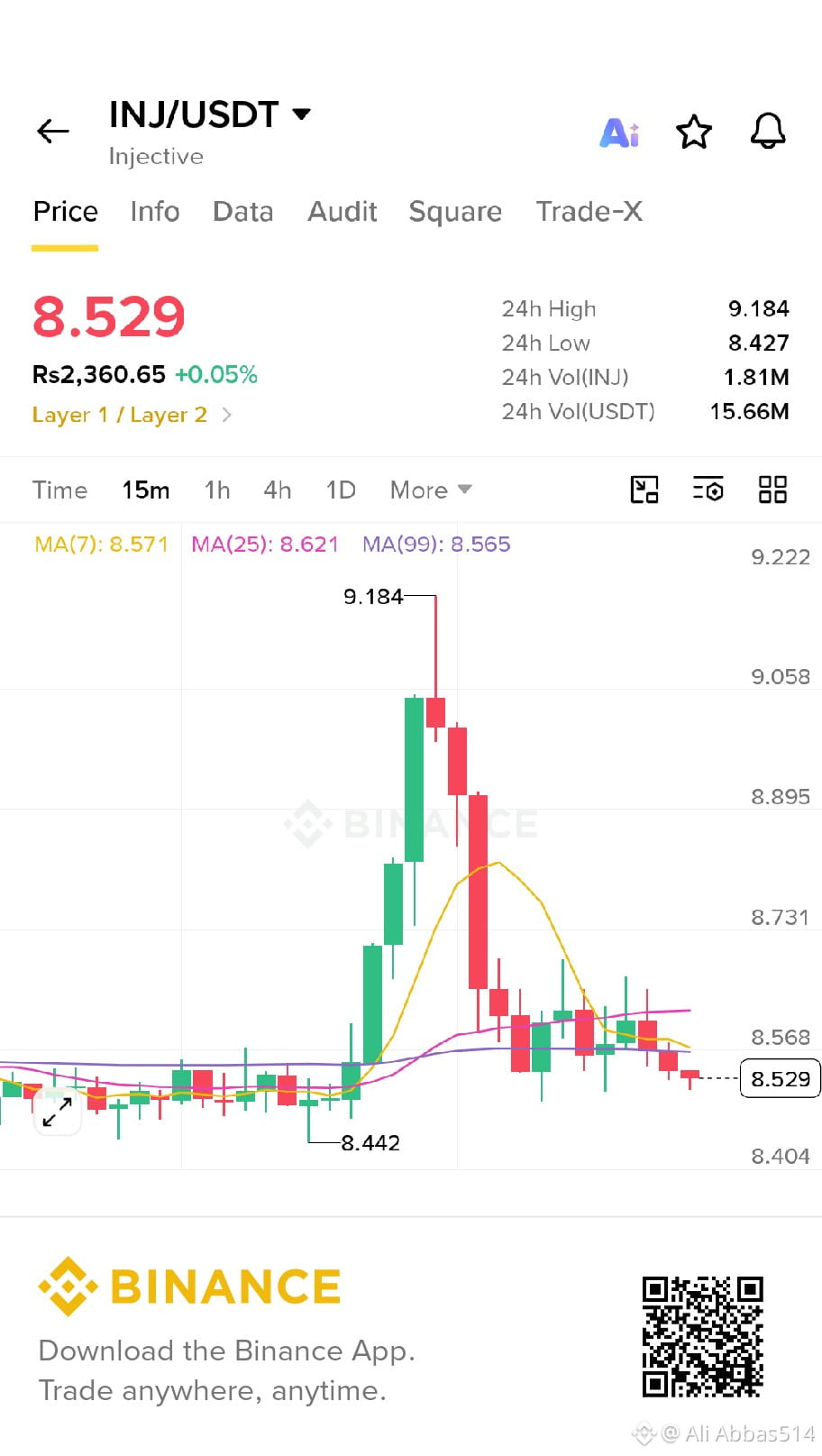
$INJ IS READY TO MAKE ITS NEXT MOVE!
Support is holding, the chart looks clean, and bullish momentum could be building. 👀📈
🎯 Next target: $9.50+
Patience now, potential fireworks next! 🔥 DYOR.
#injective @Injective
$INJ IS READY TO MAKE ITS NEXT MOVE!
Support is holding, the chart looks clean, and bullish momentum could be building. 👀📈
🎯 Next target: $9.50+
Patience now, potential fireworks next! 🔥 DYOR.
#injective @Injective
Support is holding, the chart looks clean, and bullish momentum could be building. 👀📈
🎯 Next target: $9.50+
Patience now, potential fireworks next! 🔥 DYOR.
#injective @Injective
255
·
--
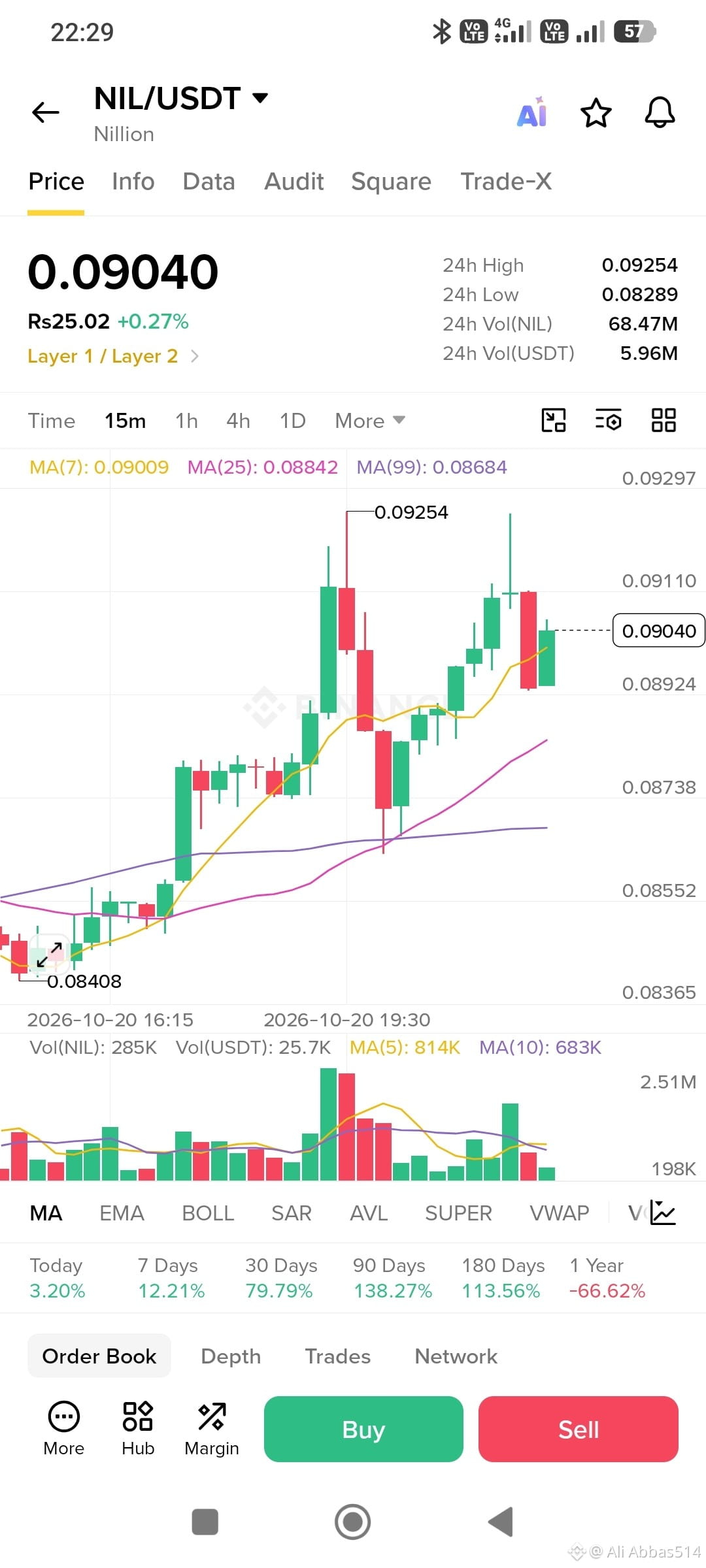
I should be at the top of the portfolio loss leaderboard for the past 30 days, so this badge system needs another look 🙃
I should be at the top of the portfolio loss leaderboard for the past 30 days, so this badge system needs another look 🙃
101
·
--
Жоғары (өспелі)
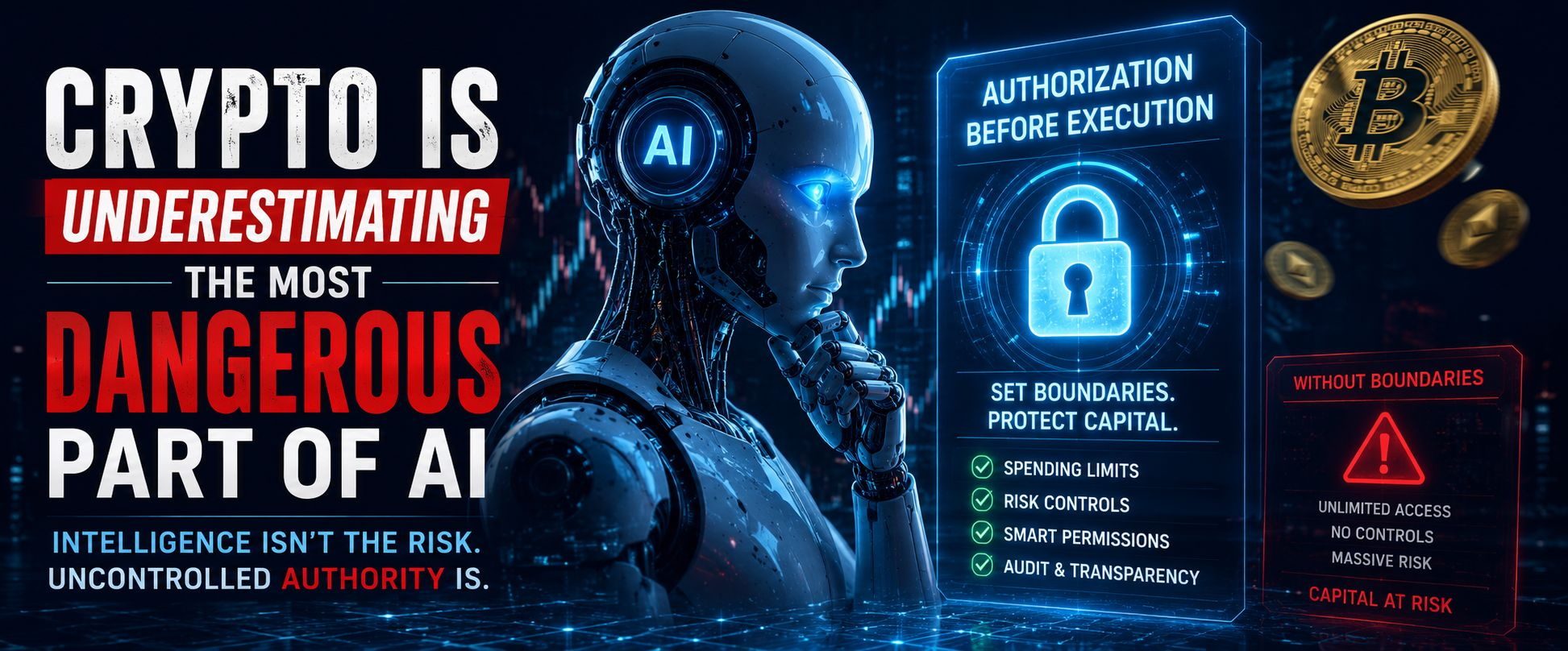
I Think Crypto Is Underestimating the Most Dangerous Part of AI
The more I watch AI evolve inside crypto, the more I feel like the industry is focusing on the wrong thing. Everyone is obsessed with building smarter models, faster agents, and fully autonomous trading systems. But I honestly think intelligence is not the biggest risk anymore. Authority is.
A few years ago AI was mostly helping people analyze markets or summarize information. Now it is slowly becoming a direct financial participant. AI can already optimize portfolios, monitor liquidity, execute trades, and react to market conditions faster than humans ever could. And soon, I think AI will move billions on-chain without waiting for constant human approval.
That’s where things become dangerous.
Because blockchain does not understand judgment. It only executes instructions exactly as they are signed. If an AI system has permission, the transaction happens. No questions asked.
This is why Newton Protocol caught my attention. Instead of blindly trusting AI, the idea of “Authorization Before Execution” feels much smarter to me. Giving AI programmable boundaries before capital moves could become one of the most important security layers in autonomous finance.
I honestly believe the future won’t belong to the smartest AI.
It will belong to the AI that understands its limits.
@NewtonProtocol #Newt $NEWT
{spot}(NEWTUSDT)
I Think Crypto Is Underestimating the Most Dangerous Part of AI
The more I watch AI evolve inside crypto, the more I feel like the industry is focusing on the wrong thing. Everyone is obsessed with building smarter models, faster agents, and fully autonomous trading systems. But I honestly think intelligence is not the biggest risk anymore. Authority is.
A few years ago AI was mostly helping people analyze markets or summarize information. Now it is slowly becoming a direct financial participant. AI can already optimize portfolios, monitor liquidity, execute trades, and react to market conditions faster than humans ever could. And soon, I think AI will move billions on-chain without waiting for constant human approval.
That’s where things become dangerous.
Because blockchain does not understand judgment. It only executes instructions exactly as they are signed. If an AI system has permission, the transaction happens. No questions asked.
This is why Newton Protocol caught my attention. Instead of blindly trusting AI, the idea of “Authorization Before Execution” feels much smarter to me. Giving AI programmable boundaries before capital moves could become one of the most important security layers in autonomous finance.
I honestly believe the future won’t belong to the smartest AI.
It will belong to the AI that understands its limits.
@NewtonProtocol #Newt $NEWT
5
2
77
·
--

Мақала
The Real Risk Isn’t AI Intelligence — It’s Who Gives AI Permission to Move CapitalEveryone in crypto keeps talking about how powerful AI is becoming. Every week there’s a new discussion about smarter trading models, autonomous agents, AI-driven portfolios, and automated financial systems that can supposedly outperform humans. But the more I watch this space evolve, the more I feel like the industry is asking the wrong question entirely. The real issue is no longer whether AI can manage money. The scary part is whether AI should be trusted with unlimited authority once billions of dollars are already moving on-chain.
That’s what made Binance’s recent discussion around tokenized assets and on-chain capital feel so important to me. The numbers coming from RWA.xyz show that this market is no longer some experimental niche inside crypto. Hundreds of thousands of holders are already involved with tokenized assets, while billions in monthly volume continue flowing through blockchain-based systems. At this point, capital has already migrated on-chain faster than most people expected. The infrastructure is growing rapidly, but the rules around authority, accountability, and execution still feel unfinished. And honestly, that gap could become one of the biggest financial risks of the next decade.
A few years ago AI mostly existed as an assistant. It answered questions, summarized data, and helped traders analyze markets. But now the role of AI is changing completely. AI is slowly becoming an active participant inside financial systems. It can optimize portfolios, rebalance positions, monitor liquidity, execute trades, and react to market conditions faster than humans ever could. Eventually AI won’t just recommend actions. It will directly move capital by itself. And that completely changes the conversation because blockchain networks don’t actually judge decisions. They simply execute instructions exactly as they are given. If the authorization exists, the transaction goes through. The blockchain doesn’t ask whether the action was intelligent, dangerous, manipulated, or reckless. It only follows instructions.
That’s why I think many people misunderstand what “trust” really means in crypto. Blockchain never solved the problem of judgment. It solved the problem of execution. Even tokenized assets today still depend on trust layers outside pure technology. Investors still care about governance, transparency, asset backing, compliance, and accountability. Once AI agents begin interacting directly with financial infrastructure, the challenge becomes even bigger because machine-speed execution combined with unlimited permissions can create risks that scale globally within seconds.
This is exactly why Newton Protocol feels different from most AI projects entering crypto right now. While many projects are racing to build smarter AI systems, Newton seems focused on something much deeper — programmable authorization before execution. Instead of giving autonomous agents unlimited freedom, the system can verify whether specific actions are allowed before capital actually moves. That may sound simple at first, but it completely changes the security model behind autonomous finance. Execution becomes conditional instead of automatic. AI doesn’t operate through blind trust. It operates inside verifiable boundaries.
And honestly, I think that idea could become far more important than people realize today. The future of finance probably won’t be defined by whichever AI is the smartest or fastest. It will be defined by whichever systems create the safest balance between automation and control. As more real-world assets move on-chain and autonomous financial systems continue growing, permissions may eventually become just as important as private keys themselves. Because in the end, the real challenge was never about teaching AI how to act. The real challenge is deciding who gives AI the authority to act in the first place. And that’s the future Newton Protocol appears to be trying to build.
@NewtonProtocol #NEWT $NEWT
{spot}(NEWTUSDT)
The Real Risk Isn’t AI Intelligence — It’s Who Gives AI Permission to Move Capital
Everyone in crypto keeps talking about how powerful AI is becoming. Every week there’s a new discussion about smarter trading models, autonomous agents, AI-driven portfolios, and automated financial systems that can supposedly outperform humans. But the more I watch this space evolve, the more I feel like the industry is asking the wrong question entirely. The real issue is no longer whether AI can manage money. The scary part is whether AI should be trusted with unlimited authority once billions of dollars are already moving on-chain.
That’s what made Binance’s recent discussion around tokenized assets and on-chain capital feel so important to me. The numbers coming from RWA.xyz show that this market is no longer some experimental niche inside crypto. Hundreds of thousands of holders are already involved with tokenized assets, while billions in monthly volume continue flowing through blockchain-based systems. At this point, capital has already migrated on-chain faster than most people expected. The infrastructure is growing rapidly, but the rules around authority, accountability, and execution still feel unfinished. And honestly, that gap could become one of the biggest financial risks of the next decade.
A few years ago AI mostly existed as an assistant. It answered questions, summarized data, and helped traders analyze markets. But now the role of AI is changing completely. AI is slowly becoming an active participant inside financial systems. It can optimize portfolios, rebalance positions, monitor liquidity, execute trades, and react to market conditions faster than humans ever could. Eventually AI won’t just recommend actions. It will directly move capital by itself. And that completely changes the conversation because blockchain networks don’t actually judge decisions. They simply execute instructions exactly as they are given. If the authorization exists, the transaction goes through. The blockchain doesn’t ask whether the action was intelligent, dangerous, manipulated, or reckless. It only follows instructions.
That’s why I think many people misunderstand what “trust” really means in crypto. Blockchain never solved the problem of judgment. It solved the problem of execution. Even tokenized assets today still depend on trust layers outside pure technology. Investors still care about governance, transparency, asset backing, compliance, and accountability. Once AI agents begin interacting directly with financial infrastructure, the challenge becomes even bigger because machine-speed execution combined with unlimited permissions can create risks that scale globally within seconds.
This is exactly why Newton Protocol feels different from most AI projects entering crypto right now. While many projects are racing to build smarter AI systems, Newton seems focused on something much deeper — programmable authorization before execution. Instead of giving autonomous agents unlimited freedom, the system can verify whether specific actions are allowed before capital actually moves. That may sound simple at first, but it completely changes the security model behind autonomous finance. Execution becomes conditional instead of automatic. AI doesn’t operate through blind trust. It operates inside verifiable boundaries.
And honestly, I think that idea could become far more important than people realize today. The future of finance probably won’t be defined by whichever AI is the smartest or fastest. It will be defined by whichever systems create the safest balance between automation and control. As more real-world assets move on-chain and autonomous financial systems continue growing, permissions may eventually become just as important as private keys themselves. Because in the end, the real challenge was never about teaching AI how to act. The real challenge is deciding who gives AI the authority to act in the first place. And that’s the future Newton Protocol appears to be trying to build.
@NewtonProtocol #NEWT $NEWT
2
2
68
·
--
Жоғары (өспелі)
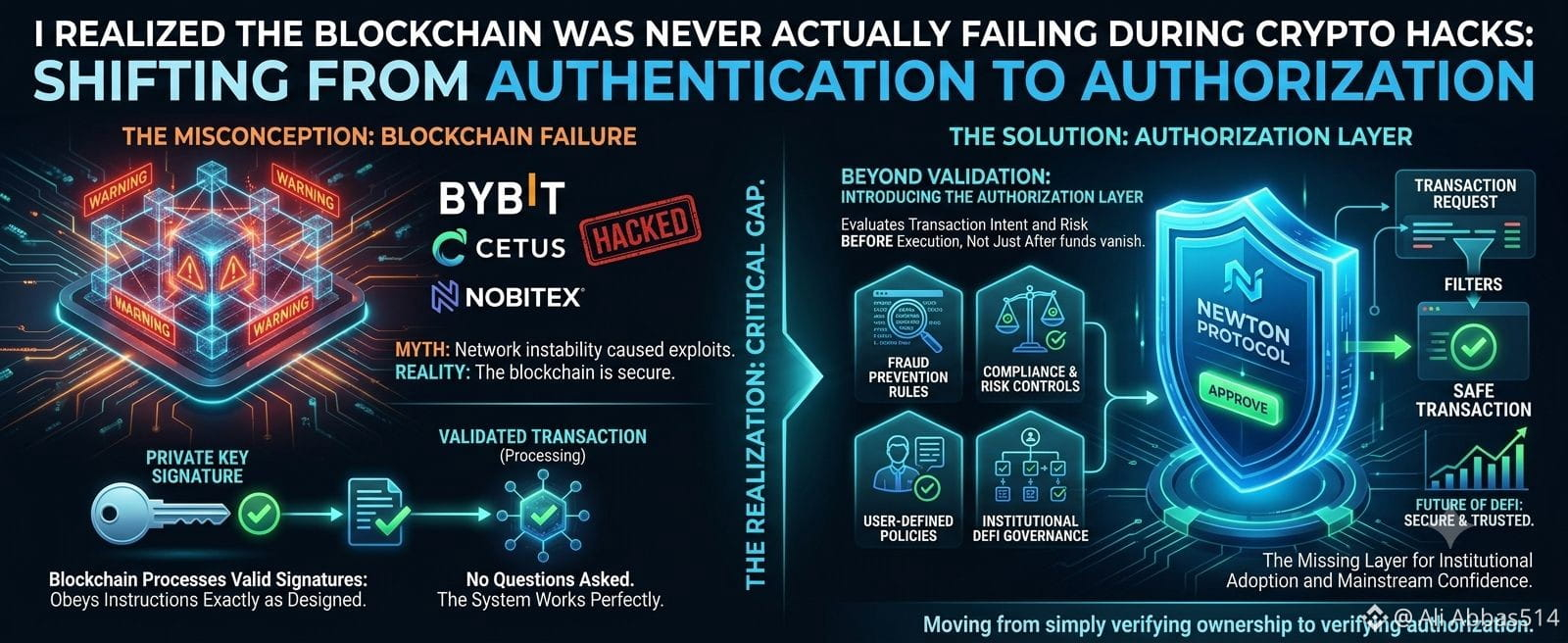
I Realized the Blockchain Was Never Actually Failing During Crypto Hacks
For a long time, I used to think major crypto hacks happened because blockchains were insecure. Every time platforms like Bybit, Cetus, or Nobitex got exploited, I assumed the network itself somehow failed. But the deeper I looked into these incidents, the more I realized something uncomfortable — the blockchain usually works exactly as designed during the attack.
If a valid private key signs a transaction, the network processes it. No emotions. No hesitation. No questions asked. The system simply obeys instructions. That made me realize the real problem may not be authentication anymore. Crypto is already extremely good at verifying signatures and ownership. The bigger issue is authorization.
I started comparing this to traditional finance. When I use my Visa card, payments are constantly checked against fraud systems, spending patterns, compliance rules, and risk controls before approval happens. In crypto, most transactions still move purely because the signature is valid.
That’s why I find Newton Protocol interesting. Instead of only tracking attacks after funds disappear, it introduces an Authorization Layer that evaluates whether a transaction should happen before execution itself.
Honestly, I think this could become one of the most important missing layers for institutional DeFi in the future.
@NewtonProtocol $NEWT #NEWT
{future}(NEWTUSDT)
$NVDAB
{spot}(NVDABUSDT)
$MSFTB
{spot}(MSFTBUSDT)
I Realized the Blockchain Was Never Actually Failing During Crypto Hacks
For a long time, I used to think major crypto hacks happened because blockchains were insecure. Every time platforms like Bybit, Cetus, or Nobitex got exploited, I assumed the network itself somehow failed. But the deeper I looked into these incidents, the more I realized something uncomfortable — the blockchain usually works exactly as designed during the attack.
If a valid private key signs a transaction, the network processes it. No emotions. No hesitation. No questions asked. The system simply obeys instructions. That made me realize the real problem may not be authentication anymore. Crypto is already extremely good at verifying signatures and ownership. The bigger issue is authorization.
I started comparing this to traditional finance. When I use my Visa card, payments are constantly checked against fraud systems, spending patterns, compliance rules, and risk controls before approval happens. In crypto, most transactions still move purely because the signature is valid.
That’s why I find Newton Protocol interesting. Instead of only tracking attacks after funds disappear, it introduces an Authorization Layer that evaluates whether a transaction should happen before execution itself.
Honestly, I think this could become one of the most important missing layers for institutional DeFi in the future.
@NewtonProtocol $NEWT #NEWT
$NVDAB
$MSFTB
2
3
142
·
--
Мақала
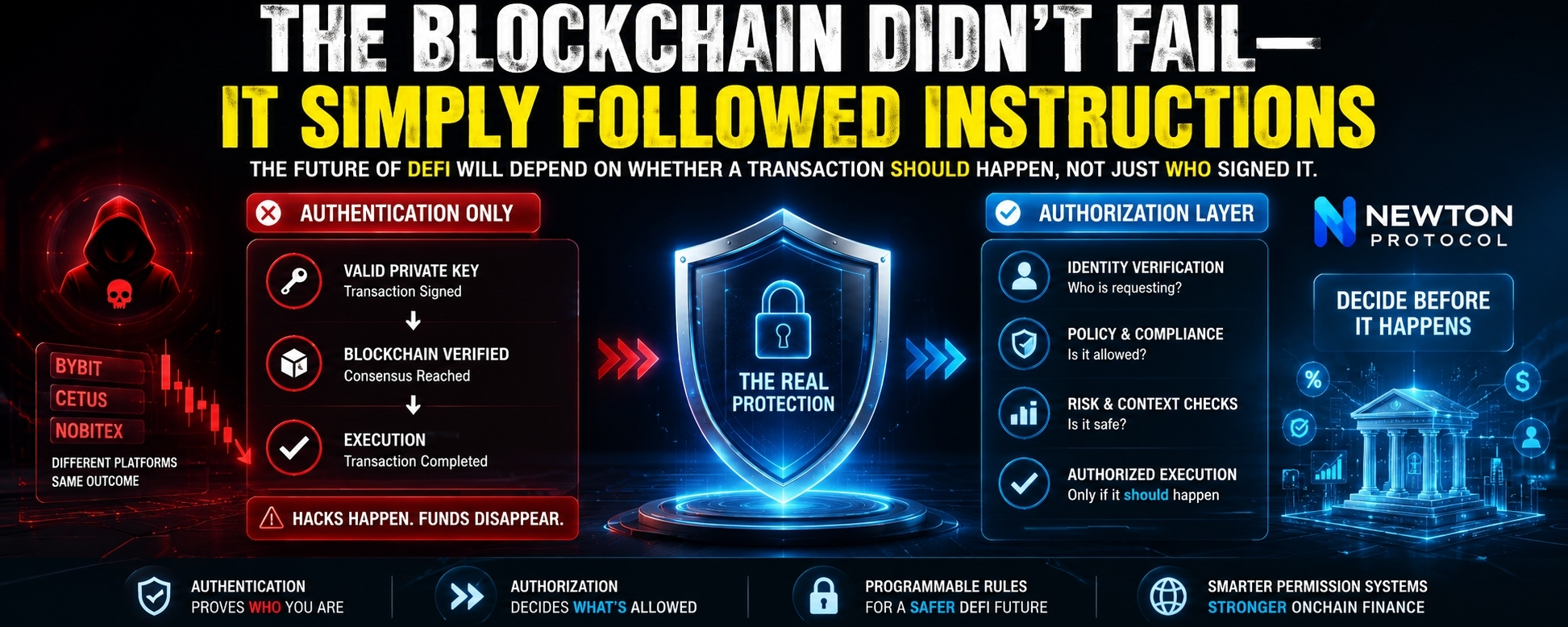
The Blockchain Didn’t Fail — It Simply Followed Instructions@NewtonProtocol Every time a major crypto hack happens, the conversation usually follows the same pattern. People rush to investigate wallets, trace transactions, and figure out who signed the transfer. We saw it happen after incidents involving Bybit, Cetus, and Nobitex. Different platforms, different exploits, same reaction from the industry. Everyone focuses on the identity behind the transaction as if finding the signer automatically explains the real problem. But lately I’ve started thinking that crypto might be asking the wrong question entirely.
The uncomfortable truth is that most blockchains are not actually failing during these hacks. In fact, they are working exactly as designed. If a valid private key signs a transaction, the network verifies it, reaches consensus, and executes the instruction without hesitation. From the blockchain’s perspective, everything is functioning perfectly. The system is doing what it was built to do. It does not understand human intent, emotional context, or financial consequences. It only understands whether an instruction is valid. Once the signature checks out, execution becomes automatic.
That is why blaming the blockchain itself sometimes misses the deeper issue. Authentication alone cannot protect billions of dollars. Knowing who initiated a transaction is important, but it does not answer the question that actually matters when capital is at risk: should this transaction even be allowed to happen? Those are two completely different layers of security. One confirms identity. The other evaluates permission and risk. Crypto has become incredibly advanced at authentication over the last decade, but authorization is still surprisingly underdeveloped across most of the ecosystem.
Traditional finance figured this out years ago. When someone taps a Visa card at a store, the payment is not approved simply because the card is real. Behind the scenes, there are countless checks happening in milliseconds. Banks analyze spending patterns, transaction size, merchant reputation, fraud signals, location anomalies, and compliance rules before settlement ever takes place. The system is constantly evaluating whether the transaction itself looks safe enough to approve. In other words, execution only happens after authorization decides it should.
Onchain finance is now reaching the stage where it probably needs a similar layer. DeFi is no longer a small experimental corner of the internet. Today, billions of dollars move through protocols securing stablecoins, lending markets, treasury systems, and tokenized real-world assets. In the future, autonomous AI agents could also begin managing assets directly onchain. As this ecosystem grows larger, signatures alone are not enough to protect capital anymore. Finance needs programmable rules, not just programmable money.
That is why the idea behind Newton Protocol stands out to me. Instead of focusing only on tracking activity after something goes wrong, Newton is building an authorization layer that evaluates transactions before settlement happens. Rather than reacting after funds disappear, the system checks whether transactions satisfy predefined policies in real time. Those policies can involve identity verification, compliance screening, sanctions checks, leverage controls, oracle conditions, and broader risk management logic. The important part is that the decision happens before execution, not after damage is already done.
What makes this approach interesting is the shift in philosophy. Most monitoring systems only tell users what already happened. Authorization systems determine what is allowed to happen in the first place. That difference sounds small at first, but it completely changes the security model of onchain finance. One records history after the fact. The other actively shapes outcomes before irreversible transactions occur.
The more I think about recent hacks across crypto, the more I feel the industry may be entering a new phase. For years, the focus was entirely on making finance permissionless and accessible without intermediaries. That innovation changed the internet forever. But the next stage may be about building smarter permission systems around transactions themselves. Not to remove decentralization, but to make risk management programmable at the protocol level.
Maybe the future of DeFi will not depend only on proving who signed a transaction. Maybe the real breakthrough will come from systems capable of deciding whether the transaction should happen at all. And if that shift becomes mainstream, it could end up being one of the most important infrastructure upgrades the crypto industry has ever seen.
#NEWT $NEWT
{future}(NEWTUSDT)
$LAB
{future}(LABUSDT)
$PORTAL
{future}(PORTALUSDT)
The Blockchain Didn’t Fail — It Simply Followed Instructions
@NewtonProtocol Every time a major crypto hack happens, the conversation usually follows the same pattern. People rush to investigate wallets, trace transactions, and figure out who signed the transfer. We saw it happen after incidents involving Bybit, Cetus, and Nobitex. Different platforms, different exploits, same reaction from the industry. Everyone focuses on the identity behind the transaction as if finding the signer automatically explains the real problem. But lately I’ve started thinking that crypto might be asking the wrong question entirely.
The uncomfortable truth is that most blockchains are not actually failing during these hacks. In fact, they are working exactly as designed. If a valid private key signs a transaction, the network verifies it, reaches consensus, and executes the instruction without hesitation. From the blockchain’s perspective, everything is functioning perfectly. The system is doing what it was built to do. It does not understand human intent, emotional context, or financial consequences. It only understands whether an instruction is valid. Once the signature checks out, execution becomes automatic.
That is why blaming the blockchain itself sometimes misses the deeper issue. Authentication alone cannot protect billions of dollars. Knowing who initiated a transaction is important, but it does not answer the question that actually matters when capital is at risk: should this transaction even be allowed to happen? Those are two completely different layers of security. One confirms identity. The other evaluates permission and risk. Crypto has become incredibly advanced at authentication over the last decade, but authorization is still surprisingly underdeveloped across most of the ecosystem.
Traditional finance figured this out years ago. When someone taps a Visa card at a store, the payment is not approved simply because the card is real. Behind the scenes, there are countless checks happening in milliseconds. Banks analyze spending patterns, transaction size, merchant reputation, fraud signals, location anomalies, and compliance rules before settlement ever takes place. The system is constantly evaluating whether the transaction itself looks safe enough to approve. In other words, execution only happens after authorization decides it should.
Onchain finance is now reaching the stage where it probably needs a similar layer. DeFi is no longer a small experimental corner of the internet. Today, billions of dollars move through protocols securing stablecoins, lending markets, treasury systems, and tokenized real-world assets. In the future, autonomous AI agents could also begin managing assets directly onchain. As this ecosystem grows larger, signatures alone are not enough to protect capital anymore. Finance needs programmable rules, not just programmable money.
That is why the idea behind Newton Protocol stands out to me. Instead of focusing only on tracking activity after something goes wrong, Newton is building an authorization layer that evaluates transactions before settlement happens. Rather than reacting after funds disappear, the system checks whether transactions satisfy predefined policies in real time. Those policies can involve identity verification, compliance screening, sanctions checks, leverage controls, oracle conditions, and broader risk management logic. The important part is that the decision happens before execution, not after damage is already done.
What makes this approach interesting is the shift in philosophy. Most monitoring systems only tell users what already happened. Authorization systems determine what is allowed to happen in the first place. That difference sounds small at first, but it completely changes the security model of onchain finance. One records history after the fact. The other actively shapes outcomes before irreversible transactions occur.
The more I think about recent hacks across crypto, the more I feel the industry may be entering a new phase. For years, the focus was entirely on making finance permissionless and accessible without intermediaries. That innovation changed the internet forever. But the next stage may be about building smarter permission systems around transactions themselves. Not to remove decentralization, but to make risk management programmable at the protocol level.
Maybe the future of DeFi will not depend only on proving who signed a transaction. Maybe the real breakthrough will come from systems capable of deciding whether the transaction should happen at all. And if that shift becomes mainstream, it could end up being one of the most important infrastructure upgrades the crypto industry has ever seen.
#NEWT $NEWT
$LAB
$PORTAL
3
3
287
·
--
Жоғары (өспелі)
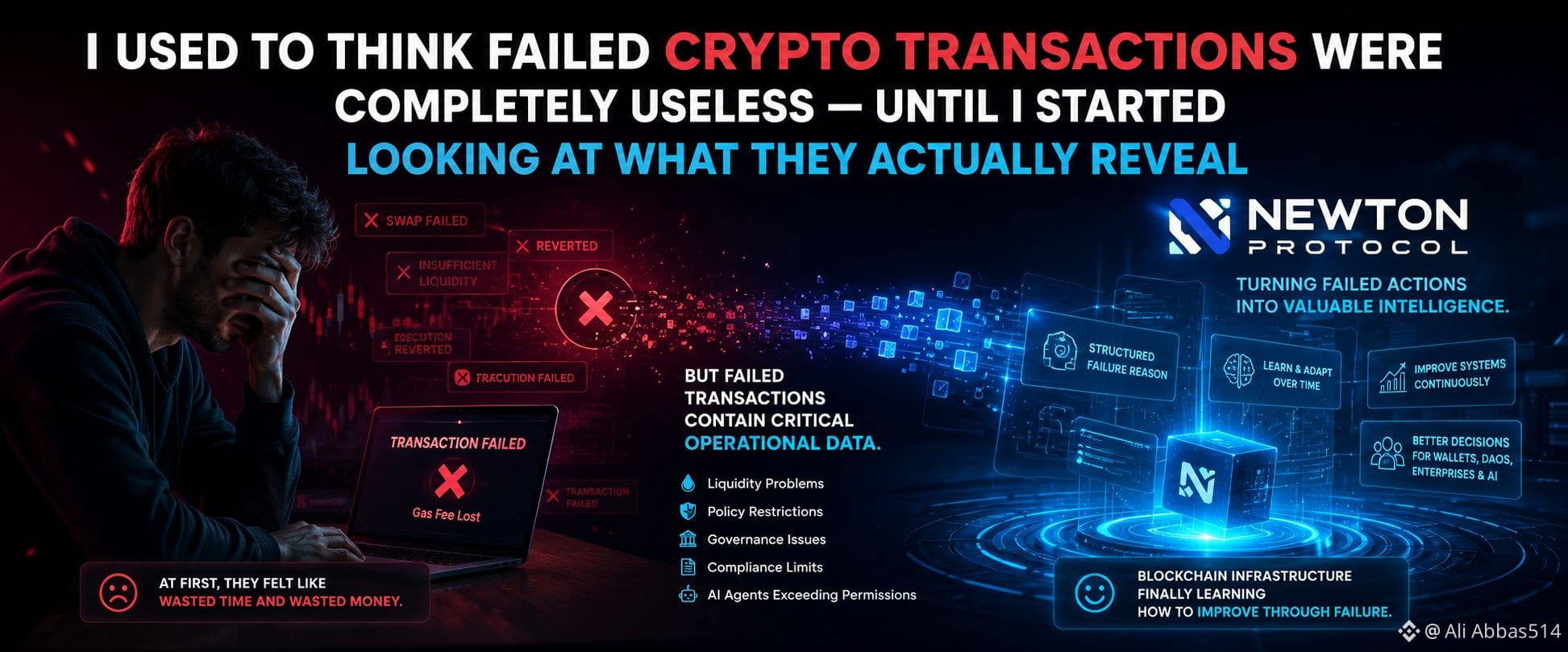
I Used to Think Failed Crypto Transactions Were Completely Useless — Until I Started Looking at What They Actually Reveal
@NewtonProtocol For the longest time, I saw failed crypto transactions the same way most users do. A swap fails, gas fees disappear, frustration kicks in, and everyone moves on. Nobody celebrates rejected transactions because they usually feel like wasted time and wasted money.
But recently I started realizing something important: failed transactions may actually contain some of the most valuable operational data in crypto.
Outside blockchain, major industries learn from failure constantly. Banks analyze rejected payments. Airlines investigate near misses. Businesses study failed customer actions because friction often reveals more than success does.
Crypto still ignores most of that intelligence.
When an onchain action fails today, the system usually throws out a generic error message and forgets the deeper context behind it. But that failure could reveal liquidity problems, policy restrictions, governance issues, compliance limits, or even AI agents attempting actions outside their permissions.
That’s why Newton Protocol caught my attention.
What makes it interesting to me is the idea that failed execution should not become dead data. If blockchain systems can preserve structured reasons behind rejected actions, wallets, DAOs, enterprises, and even AI agents could gradually learn from repeated mistakes instead of endlessly repeating them.
Honestly, that feels bigger than transaction speed.
It feels like blockchain infrastructure finally learning how to improve through failure instead of pretending failure has no value.
$BASED
{future}(BASEDUSDT)
$LAB
{future}(LABUSDT)
$TAIKO
{future}(TAIKOUSDT)
#OilPriceFalls
#SolanaGains7%InSevenDays
#ShutterstockFallsAfterGettyEndsMerger
#Aİ #ShutterstockFallsAfterGettyEndsMerger
I Used to Think Failed Crypto Transactions Were Completely Useless — Until I Started Looking at What They Actually Reveal
@NewtonProtocol For the longest time, I saw failed crypto transactions the same way most users do. A swap fails, gas fees disappear, frustration kicks in, and everyone moves on. Nobody celebrates rejected transactions because they usually feel like wasted time and wasted money.
But recently I started realizing something important: failed transactions may actually contain some of the most valuable operational data in crypto.
Outside blockchain, major industries learn from failure constantly. Banks analyze rejected payments. Airlines investigate near misses. Businesses study failed customer actions because friction often reveals more than success does.
Crypto still ignores most of that intelligence.
When an onchain action fails today, the system usually throws out a generic error message and forgets the deeper context behind it. But that failure could reveal liquidity problems, policy restrictions, governance issues, compliance limits, or even AI agents attempting actions outside their permissions.
That’s why Newton Protocol caught my attention.
What makes it interesting to me is the idea that failed execution should not become dead data. If blockchain systems can preserve structured reasons behind rejected actions, wallets, DAOs, enterprises, and even AI agents could gradually learn from repeated mistakes instead of endlessly repeating them.
Honestly, that feels bigger than transaction speed.
It feels like blockchain infrastructure finally learning how to improve through failure instead of pretending failure has no value.
$BASED
$LAB
$TAIKO
#OilPriceFalls
#SolanaGains7%InSevenDays
#ShutterstockFallsAfterGettyEndsMerger
#Aİ #ShutterstockFallsAfterGettyEndsMerger
1
2
347
·
--
Мақала
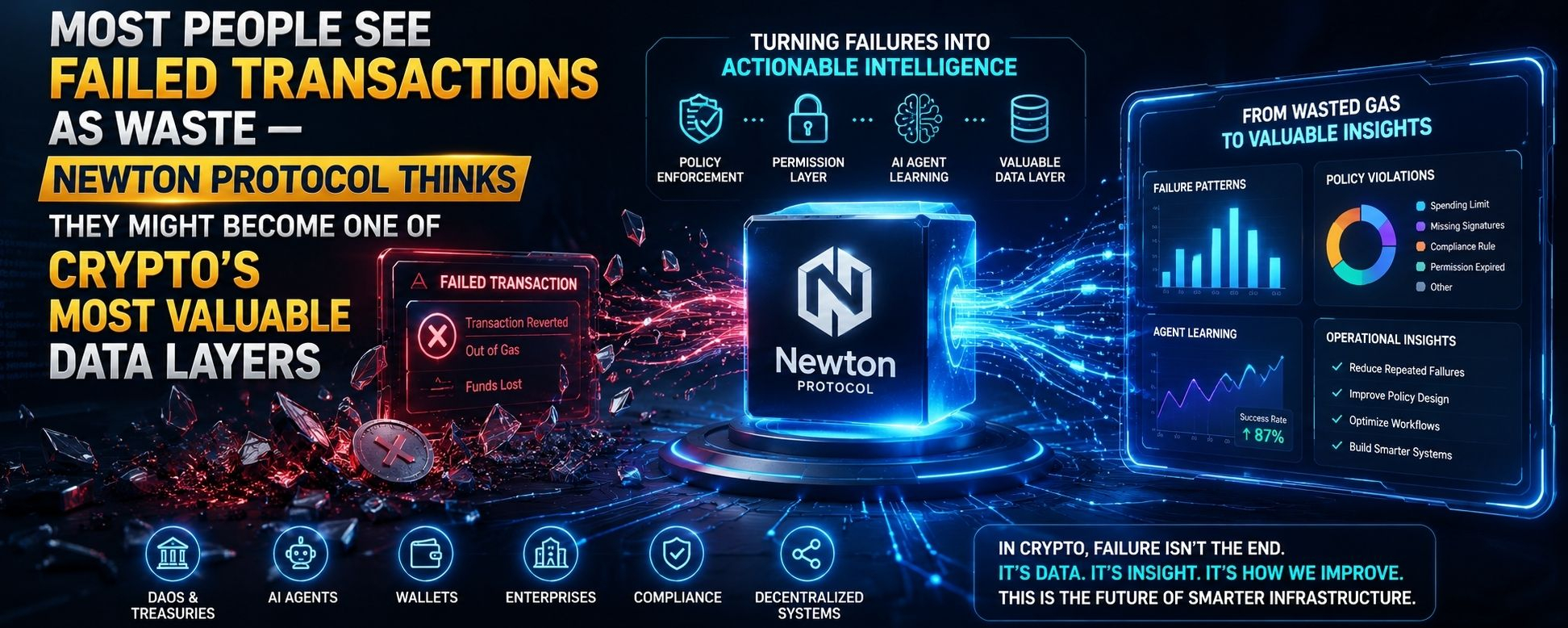
Most People See Failed Transactions as Waste — Newton Protocol Thinks They Might Become One of Crypt@NewtonProtocol For a long time, I looked at failed crypto transactions the same way almost everyone else does. A transaction fails, gas gets burned, frustration follows, and people move on. Nobody celebrates a rejected swap or a blocked payment. In most cases, users treat those moments like useless mistakes that only exist to waste money and time. But lately I have started thinking that crypto may actually be ignoring something important hidden inside those failures.
Outside blockchain, the world already understands that failed actions can carry valuable information. Airlines investigate near misses. Banks spend billions studying rejected payments and suspicious activity. Online stores analyze abandoned carts because they reveal customer behavior better than completed purchases sometimes do. Mature systems improve because they learn from friction, not because everything works perfectly all the time.
Crypto still feels early in this area.
Right now, when a transaction fails onchain, most of the discussion immediately becomes about gas fees. People understandably get angry because they paid for something that never happened. But the failed transaction itself often contains useful operational context that simply disappears afterward. Maybe liquidity vanished before execution. Maybe a permission expired seconds earlier. Maybe an AI agent tried to perform an action outside its assigned rules. Maybe a treasury policy blocked a payment because it exceeded spending limits. All of those failures mean completely different things, yet most blockchain systems reduce them into the same generic error message.
That is what made Newton Protocol interesting to me.
Not because it promises a world where failures disappear completely. Honestly, decentralized systems will probably always have friction. Markets move too fast, automation creates unpredictable situations, and users themselves are inconsistent. Failure is part of every complex system. The real question is whether failed actions can leave behind something useful instead of becoming dead ends that nobody learns from.
Newton seems to approach this from a policy-driven perspective rather than focusing only on raw transaction execution. At first that sounds technical, but the idea is actually familiar to almost every industry. Banks rely on internal rules before approving transactions. Companies use layered authorization systems. Governments operate through policy enforcement and procedural validation. Decisions usually pass through conditions before approval happens.
Blockchain infrastructure is slowly evolving toward the same reality.
As wallets become programmable and AI agents begin handling financial tasks automatically, policy systems become more important than people realize. Once transactions start operating through permissions, delegated access, treasury restrictions, compliance checks, and automated workflows, failures stop being random errors. They become signals that explain where coordination broke down.
That changes everything.
Imagine a DAO treasury where three separate payments fail on the same day. One exceeds the approved spending cap. Another lacks enough signatures from governance members. The third violates compliance restrictions connected to a sanctioned wallet. Technically all three transactions failed. But operationally they tell completely different stories about how the system is functioning.
Most infrastructure today throws those stories away.
That feels shortsighted because organizations rarely improve by studying successful actions alone. They improve by identifying recurring friction points. If the same rule repeatedly blocks legitimate payments every week, maybe the policy itself needs adjustment. If one team constantly triggers failed approvals while another rarely does, maybe the workflow is confusing rather than secure. Those patterns become visible only when failed activity is treated as meaningful data instead of useless noise.
The AI side of this becomes even more important.
Everyone talks about intelligent agents managing wallets, executing DeFi strategies, and automating financial decisions. But intelligence without memory does not create improvement. If an autonomous agent keeps repeating the same failed request over and over again, it is not learning anything. It is just burning resources faster.
However, if systems preserve structured explanations behind failed actions, AI agents can gradually recognize patterns and avoid repeating identical mistakes. Over time the quality of execution improves naturally because the system remembers what previously caused rejection. That kind of operational memory may eventually become more valuable than simply making blockchains faster.
And honestly, this entire conversation feels bigger than transaction efficiency.
Crypto has spent years obsessing over speed, scalability, lower fees, and higher throughput. Those things matter, but resilience matters too. Mature financial systems are not powerful because everything succeeds instantly. They are powerful because they understand failure deeply enough to reduce repeated mistakes over time.
That is where Newton Protocol feels different to me. It is not only asking how transactions can succeed. It is asking whether failed execution itself can become reusable intelligence for wallets, DAOs, AI agents, enterprises, and permission systems.
Of course, there are still challenges. Privacy matters. Not every rejected transaction deserves permanent storage. Enterprises will want confidentiality. Developers need shared standards. Regulators will demand transparency without exposing sensitive operational data. Building systems that balance all of those pressures will not be easy.
But the core idea still feels important.
Maybe crypto has been measuring the wrong thing this entire time. Successful transactions are easy to count, so they dominate dashboards, analytics, and headlines. Failed transactions usually disappear the moment people complain about gas fees.
Yet in almost every mature industry, long-term improvement comes from understanding failure in uncomfortable detail.
If Newton Protocol can transform failed transactions into reusable permission intelligence while keeping policy enforcement transparent and privacy-aware, then it may be solving something far deeper than simple transaction optimization. It may be helping blockchain systems evolve from networks that only process actions into systems capable of learning from their own mistakes.
$NEWT #NEWT
{future}(NEWTUSDT)
$LAB
{future}(LABUSDT)
Most People See Failed Transactions as Waste — Newton Protocol Thinks They Might Become One of Crypt
@NewtonProtocol For a long time, I looked at failed crypto transactions the same way almost everyone else does. A transaction fails, gas gets burned, frustration follows, and people move on. Nobody celebrates a rejected swap or a blocked payment. In most cases, users treat those moments like useless mistakes that only exist to waste money and time. But lately I have started thinking that crypto may actually be ignoring something important hidden inside those failures.
Outside blockchain, the world already understands that failed actions can carry valuable information. Airlines investigate near misses. Banks spend billions studying rejected payments and suspicious activity. Online stores analyze abandoned carts because they reveal customer behavior better than completed purchases sometimes do. Mature systems improve because they learn from friction, not because everything works perfectly all the time.
Crypto still feels early in this area.
Right now, when a transaction fails onchain, most of the discussion immediately becomes about gas fees. People understandably get angry because they paid for something that never happened. But the failed transaction itself often contains useful operational context that simply disappears afterward. Maybe liquidity vanished before execution. Maybe a permission expired seconds earlier. Maybe an AI agent tried to perform an action outside its assigned rules. Maybe a treasury policy blocked a payment because it exceeded spending limits. All of those failures mean completely different things, yet most blockchain systems reduce them into the same generic error message.
That is what made Newton Protocol interesting to me.
Not because it promises a world where failures disappear completely. Honestly, decentralized systems will probably always have friction. Markets move too fast, automation creates unpredictable situations, and users themselves are inconsistent. Failure is part of every complex system. The real question is whether failed actions can leave behind something useful instead of becoming dead ends that nobody learns from.
Newton seems to approach this from a policy-driven perspective rather than focusing only on raw transaction execution. At first that sounds technical, but the idea is actually familiar to almost every industry. Banks rely on internal rules before approving transactions. Companies use layered authorization systems. Governments operate through policy enforcement and procedural validation. Decisions usually pass through conditions before approval happens.
Blockchain infrastructure is slowly evolving toward the same reality.
As wallets become programmable and AI agents begin handling financial tasks automatically, policy systems become more important than people realize. Once transactions start operating through permissions, delegated access, treasury restrictions, compliance checks, and automated workflows, failures stop being random errors. They become signals that explain where coordination broke down.
That changes everything.
Imagine a DAO treasury where three separate payments fail on the same day. One exceeds the approved spending cap. Another lacks enough signatures from governance members. The third violates compliance restrictions connected to a sanctioned wallet. Technically all three transactions failed. But operationally they tell completely different stories about how the system is functioning.
Most infrastructure today throws those stories away.
That feels shortsighted because organizations rarely improve by studying successful actions alone. They improve by identifying recurring friction points. If the same rule repeatedly blocks legitimate payments every week, maybe the policy itself needs adjustment. If one team constantly triggers failed approvals while another rarely does, maybe the workflow is confusing rather than secure. Those patterns become visible only when failed activity is treated as meaningful data instead of useless noise.
The AI side of this becomes even more important.
Everyone talks about intelligent agents managing wallets, executing DeFi strategies, and automating financial decisions. But intelligence without memory does not create improvement. If an autonomous agent keeps repeating the same failed request over and over again, it is not learning anything. It is just burning resources faster.
However, if systems preserve structured explanations behind failed actions, AI agents can gradually recognize patterns and avoid repeating identical mistakes. Over time the quality of execution improves naturally because the system remembers what previously caused rejection. That kind of operational memory may eventually become more valuable than simply making blockchains faster.
And honestly, this entire conversation feels bigger than transaction efficiency.
Crypto has spent years obsessing over speed, scalability, lower fees, and higher throughput. Those things matter, but resilience matters too. Mature financial systems are not powerful because everything succeeds instantly. They are powerful because they understand failure deeply enough to reduce repeated mistakes over time.
That is where Newton Protocol feels different to me. It is not only asking how transactions can succeed. It is asking whether failed execution itself can become reusable intelligence for wallets, DAOs, AI agents, enterprises, and permission systems.
Of course, there are still challenges. Privacy matters. Not every rejected transaction deserves permanent storage. Enterprises will want confidentiality. Developers need shared standards. Regulators will demand transparency without exposing sensitive operational data. Building systems that balance all of those pressures will not be easy.
But the core idea still feels important.
Maybe crypto has been measuring the wrong thing this entire time. Successful transactions are easy to count, so they dominate dashboards, analytics, and headlines. Failed transactions usually disappear the moment people complain about gas fees.
Yet in almost every mature industry, long-term improvement comes from understanding failure in uncomfortable detail.
If Newton Protocol can transform failed transactions into reusable permission intelligence while keeping policy enforcement transparent and privacy-aware, then it may be solving something far deeper than simple transaction optimization. It may be helping blockchain systems evolve from networks that only process actions into systems capable of learning from their own mistakes.
$NEWT #NEWT
$LAB
3
2
313
Көбірек контент көру үшін кіріңіз
Binance Square платформасында әлемдік криптоқоғамдастыққа қосылыңыз
⚡️ Криптовалюта туралы ең соңғы және пайдалы ақпаратты алыңыз.
💬 Әлемдегі ең ірі криптобиржаның сеніміне ие.
👍 Расталған авторлардың нақты пікірлерін табыңыз.
Электрондық пошта/телефон нөмірі
Трендтегі тақырыптар
BinanceReopensWithdrawalsForHYPE&APT
89,367 рет көрілді
989 адам талқылап жатыр
Binance Re-Enables Withdrawals for HYPE and APT, Extends List of Restored Assets
Binance News
·32 лайк
·27.2k рет көрілді
SouthKoreaDraftLawTargets15To20%ShareholderCap
89,138 рет көрілді
658 адам талқылап жатыр
TradFiForBeginners
184,292 рет көрілді
1,859 адам талқылап жатыр