

MAYA_
41k Жариялаулар

MAYA_
 «Square расталған+» белгісі
Хабарлау
Пайдаланушыны блоктау
Alhamdulillah always and forever.

API3 ұстаушы
Жиі сауда жасайтын трейдер
4 жыл
1.1K+ Жазылым
46.6K+ Жазылушылар
202.8K+ лайк басылған
Жазбалар
Барлығы
Баға ұсыныстары
Видеолар
Тікелей эфир
PINNED

·
--
SEC says more crypto regulatory proposals are coming.
This could be an important development for the market. New proposals may bring more clarity around how crypto assets and related platforms are regulated in the U.S.
Now, the details matter.
$AAPLB $GOOGL.US
SEC says more crypto regulatory proposals are coming.
This could be an important development for the market. New proposals may bring more clarity around how crypto assets and related platforms are regulated in the U.S.
Now, the details matter.
$AAPLB $GOOGL.US
This could be an important development for the market. New proposals may bring more clarity around how crypto assets and related platforms are regulated in the U.S.
Now, the details matter.
$AAPLB $GOOGL.US
3
515
·
--
$TLM BREAKOUT🟢
SPOT / FUTURE BUY 🟢
{future}(TLMUSDT)
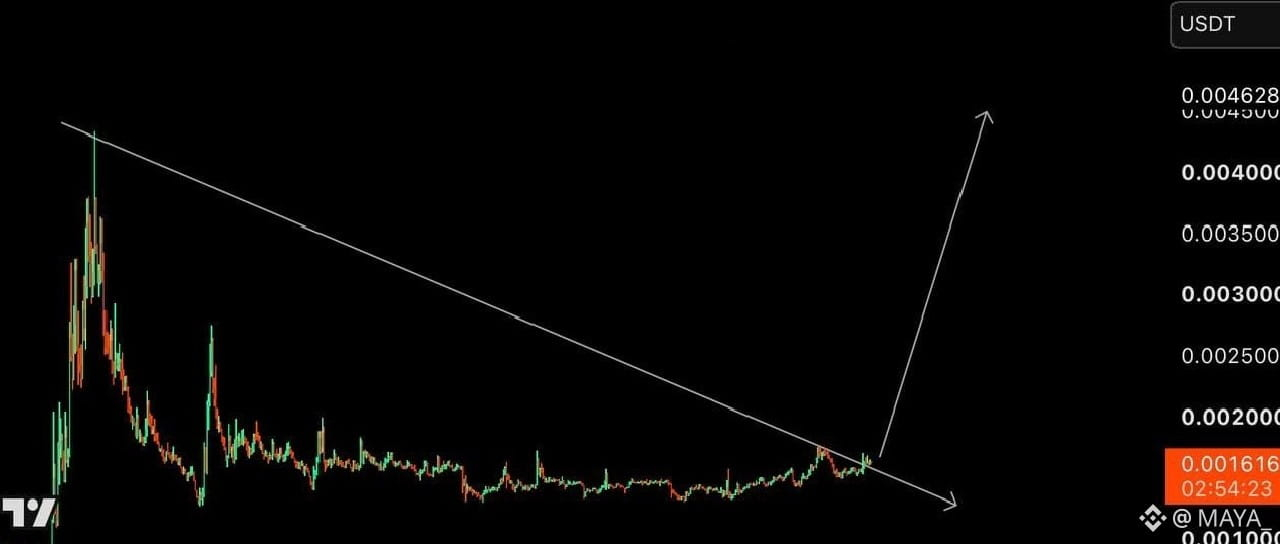
TLM is finally pushing above the descending trendline on the 4H chart. The breakout is looking interesting, but I’d still want to see some confirmation and acceptance above the level. If momentum holds, the next area on the chart comes near $0.0045.
$TLM BREAKOUT🟢
SPOT / FUTURE BUY 🟢
TLM is finally pushing above the descending trendline on the 4H chart. The breakout is looking interesting, but I’d still want to see some confirmation and acceptance above the level. If momentum holds, the next area on the chart comes near $0.0045.
SPOT / FUTURE BUY 🟢
TLM is finally pushing above the descending trendline on the 4H chart. The breakout is looking interesting, but I’d still want to see some confirmation and acceptance above the level. If momentum holds, the next area on the chart comes near $0.0045.
3
534

·
--
$RECALL GIVE ME GOLD CANDLE
SPOT BUY 🟢
TARGET : 0.06+ 🟢🚀
{alpha}(84530x1f16e03c1a5908818f47f6ee7bb16690b40d0671)
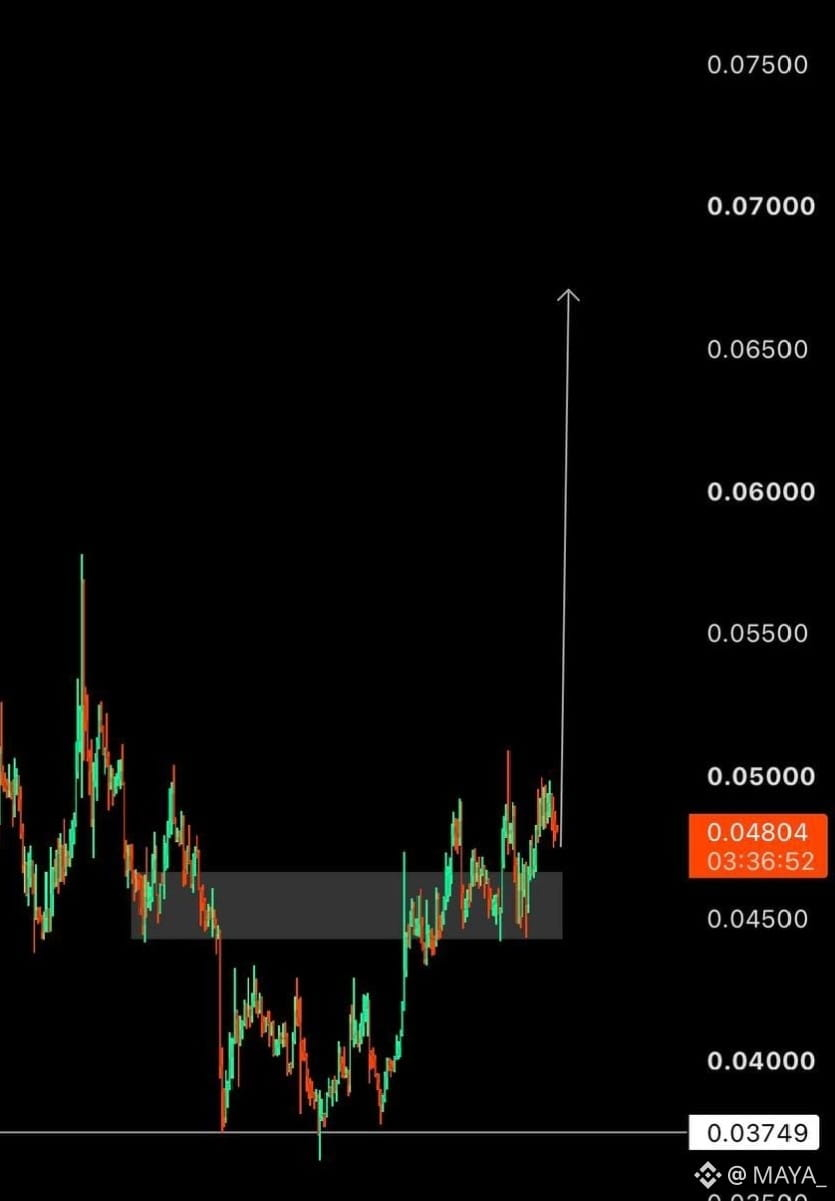
$RECALL is holding the $0.045–$0.048 zone nicely, and price is now pushing around the upper side of the range. If buyers can keep this structure intact, I’m watching the move toward $0.060 first, with the chart showing a bigger upside area around $0.068. Still watching how price reacts here.
$RECALL GIVE ME GOLD CANDLE
SPOT BUY 🟢
TARGET : 0.06+ 🟢🚀
$RECALL is holding the $0.045–$0.048 zone nicely, and price is now pushing around the upper side of the range. If buyers can keep this structure intact, I’m watching the move toward $0.060 first, with the chart showing a bigger upside area around $0.068. Still watching how price reacts here.
SPOT BUY 🟢
TARGET : 0.06+ 🟢🚀
$RECALL is holding the $0.045–$0.048 zone nicely, and price is now pushing around the upper side of the range. If buyers can keep this structure intact, I’m watching the move toward $0.060 first, with the chart showing a bigger upside area around $0.068. Still watching how price reacts here.
3
208
·
--
Расталды
One thing that caught my eye is that Citigroup has once again raised its 12-month price target for Bitcoin. They have increased the figure from the previous $82,000 to $113,000. The target for Ethereum has also been raised to $3,028.
What I find interesting is that they are attributing this shift to factors like institutional demand, fund inflows into Bitcoin ETFs, and the recovery of the crypto market. However, it is important to keep in mind that the $113,000 figure is not a guaranteed outcome; it is simply Citigroup's current market estimate.
In short, while the target has indeed been raised, the ultimate question remains: how will the market actually perform?
One thing that caught my eye is that Citigroup has once again raised its 12-month price target for Bitcoin. They have increased the figure from the previous $82,000 to $113,000. The target for Ethereum has also been raised to $3,028.
What I find interesting is that they are attributing this shift to factors like institutional demand, fund inflows into Bitcoin ETFs, and the recovery of the crypto market. However, it is important to keep in mind that the $113,000 figure is not a guaranteed outcome; it is simply Citigroup's current market estimate.
In short, while the target has indeed been raised, the ultimate question remains: how will the market actually perform?
What I find interesting is that they are attributing this shift to factors like institutional demand, fund inflows into Bitcoin ETFs, and the recovery of the crypto market. However, it is important to keep in mind that the $113,000 figure is not a guaranteed outcome; it is simply Citigroup's current market estimate.
In short, while the target has indeed been raised, the ultimate question remains: how will the market actually perform?
1.6k
67
132
1.6k
·
--
Yes, Republicans in the US Senate have indeed introduced a new crypto tax bill, dubbed the ADAPT Act. Senator Steve Daines introduced it.
The bill calls for several major changes — such as tax breaks for purchases made with stablecoins, tax breaks for network fees under $10, and clear tax rules for mining and staking income. But it’s worth remembering that this is just a proposed bill. It would need to pass both the Senate and the House and be signed by the president to become law.
$NVDAB $AAPLB $NVDA.US
Yes, Republicans in the US Senate have indeed introduced a new crypto tax bill, dubbed the ADAPT Act. Senator Steve Daines introduced it.
The bill calls for several major changes — such as tax breaks for purchases made with stablecoins, tax breaks for network fees under $10, and clear tax rules for mining and staking income. But it’s worth remembering that this is just a proposed bill. It would need to pass both the Senate and the House and be signed by the president to become law.
$NVDAB $AAPLB $NVDA.US
The bill calls for several major changes — such as tax breaks for purchases made with stablecoins, tax breaks for network fees under $10, and clear tax rules for mining and staking income. But it’s worth remembering that this is just a proposed bill. It would need to pass both the Senate and the House and be signed by the president to become law.
$NVDAB $AAPLB $NVDA.US
1
281
·
--
$AVAX 🟢🟢
{future}(AVAXUSDT)
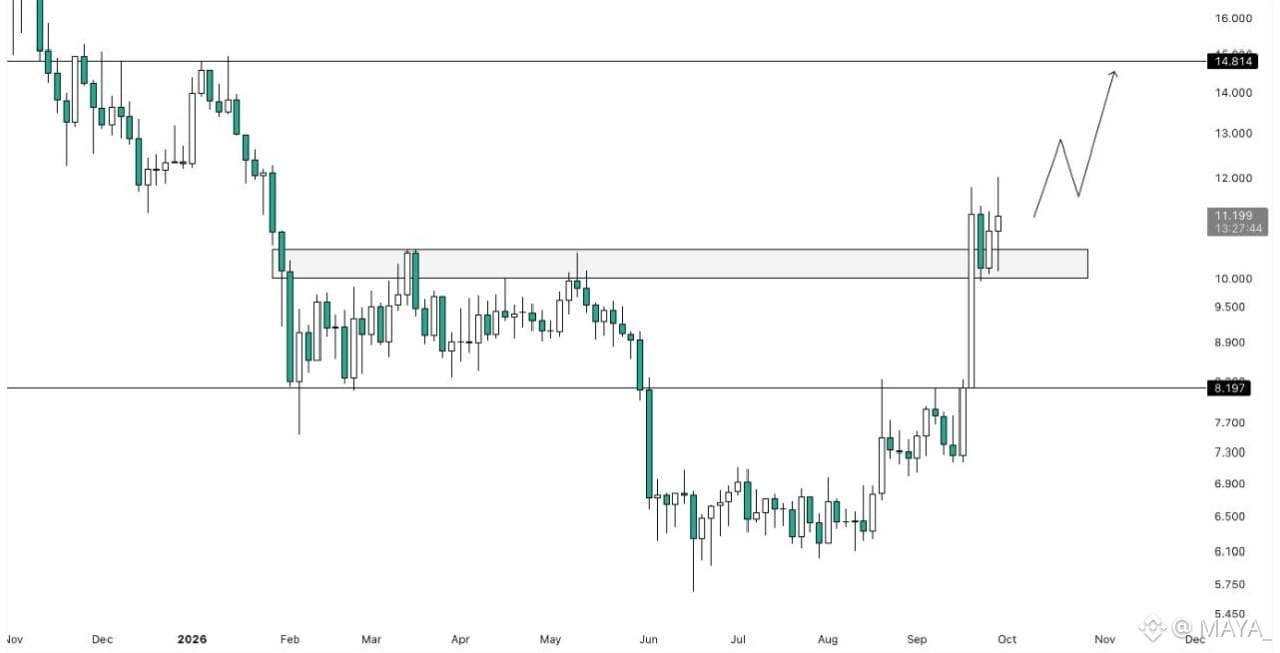
AVAX is starting to look pretty interesting on the higher timeframe.
What caught my attention is that the bearish structure has already been invalidated, and price has also managed to reclaim an important resistance level. We broke above the highs of this roughly 4-month accumulation range, came back to retest that area, and now price is bouncing from it.
So for me, the next thing to watch is pretty simple: can AVAX actually hold above the grey zone and build acceptance there?
If that happens, I think the structure opens the door for a move toward $14.8. Still, I’d rather see that confirmation first than get ahead of the move.
$AVAX 🟢🟢
AVAX is starting to look pretty interesting on the higher timeframe.
What caught my attention is that the bearish structure has already been invalidated, and price has also managed to reclaim an important resistance level. We broke above the highs of this roughly 4-month accumulation range, came back to retest that area, and now price is bouncing from it.
So for me, the next thing to watch is pretty simple: can AVAX actually hold above the grey zone and build acceptance there?
If that happens, I think the structure opens the door for a move toward $14.8. Still, I’d rather see that confirmation first than get ahead of the move.
AVAX is starting to look pretty interesting on the higher timeframe.
What caught my attention is that the bearish structure has already been invalidated, and price has also managed to reclaim an important resistance level. We broke above the highs of this roughly 4-month accumulation range, came back to retest that area, and now price is bouncing from it.
So for me, the next thing to watch is pretty simple: can AVAX actually hold above the grey zone and build acceptance there?
If that happens, I think the structure opens the door for a move toward $14.8. Still, I’d rather see that confirmation first than get ahead of the move.
3
542
·
--
#BTC 👇👇👇
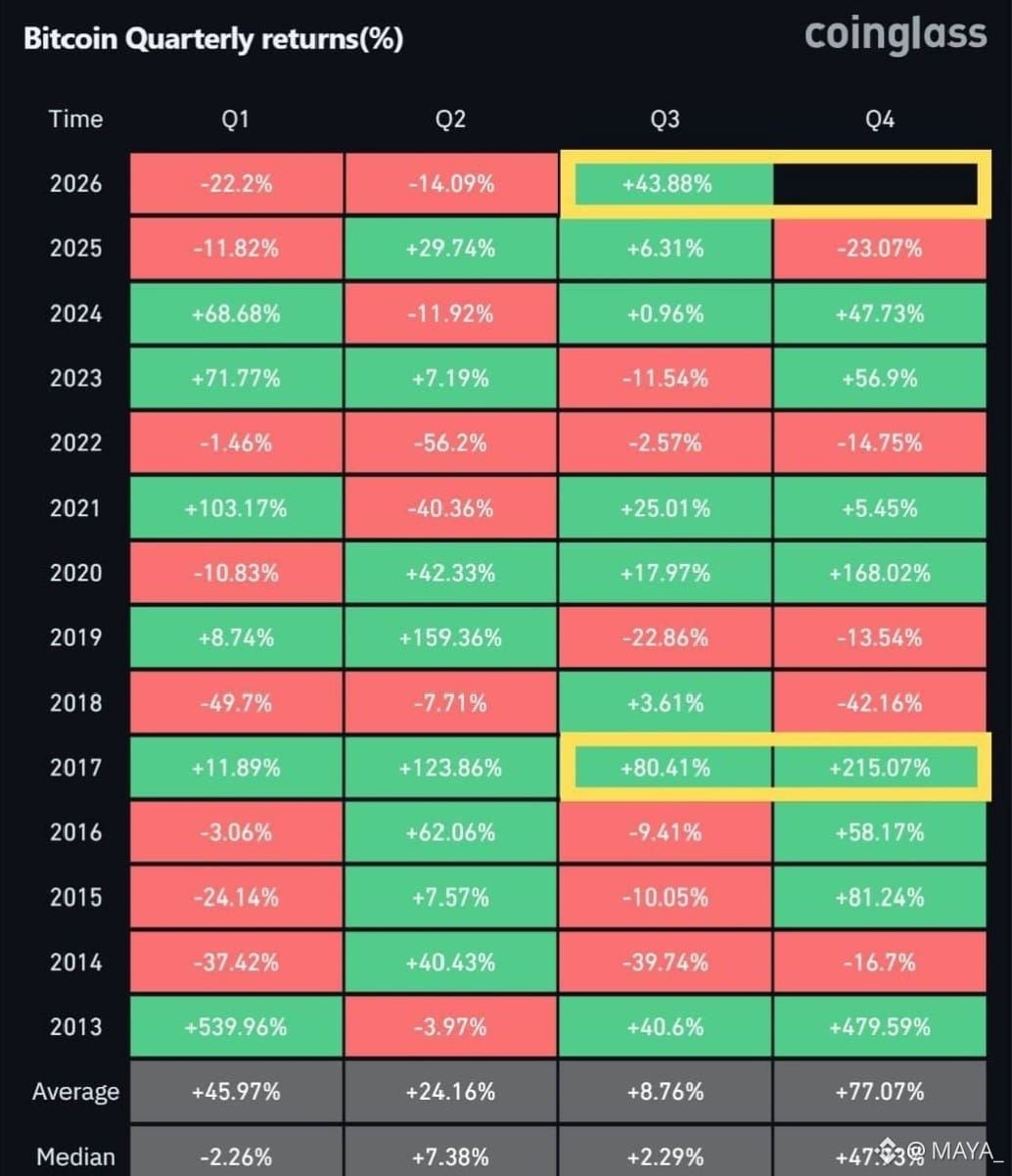
Something about BTC’s Q3 performance caught my attention.
It’s reportedly shaping up to be the second-strongest Q3 in Bitcoin’s history. The last time we saw a Q3 this strong was back in 2017, and what happened afterward is obviously hard to ignore. Q4 went on to deliver a massive rally. But I don’t want to treat history like a guarantee. Markets love to rhyme, but they don’t always repeat.
Still, Q4 has historically been one of Bitcoin’s stronger quarters, and with this kind of Q3 behind us, I’m definitely watching closely to see whether the seasonal pattern shows up again.
$NVDA.US
{stock_us}(NVDA.US)
$AAPL.US
{stock_us}(AAPL.US)
$BTC
{future}(BTCUSDT)
#BTC 👇👇👇
Something about BTC’s Q3 performance caught my attention.
It’s reportedly shaping up to be the second-strongest Q3 in Bitcoin’s history. The last time we saw a Q3 this strong was back in 2017, and what happened afterward is obviously hard to ignore. Q4 went on to deliver a massive rally. But I don’t want to treat history like a guarantee. Markets love to rhyme, but they don’t always repeat.
Still, Q4 has historically been one of Bitcoin’s stronger quarters, and with this kind of Q3 behind us, I’m definitely watching closely to see whether the seasonal pattern shows up again.
$NVDA.US
$AAPL.US
$BTC
Something about BTC’s Q3 performance caught my attention.
It’s reportedly shaping up to be the second-strongest Q3 in Bitcoin’s history. The last time we saw a Q3 this strong was back in 2017, and what happened afterward is obviously hard to ignore. Q4 went on to deliver a massive rally. But I don’t want to treat history like a guarantee. Markets love to rhyme, but they don’t always repeat.
Still, Q4 has historically been one of Bitcoin’s stronger quarters, and with this kind of Q3 behind us, I’m definitely watching closely to see whether the seasonal pattern shows up again.
$NVDA.US
$AAPL.US
$BTC
3
218
·
--
$BTC 100k SOON 🟢
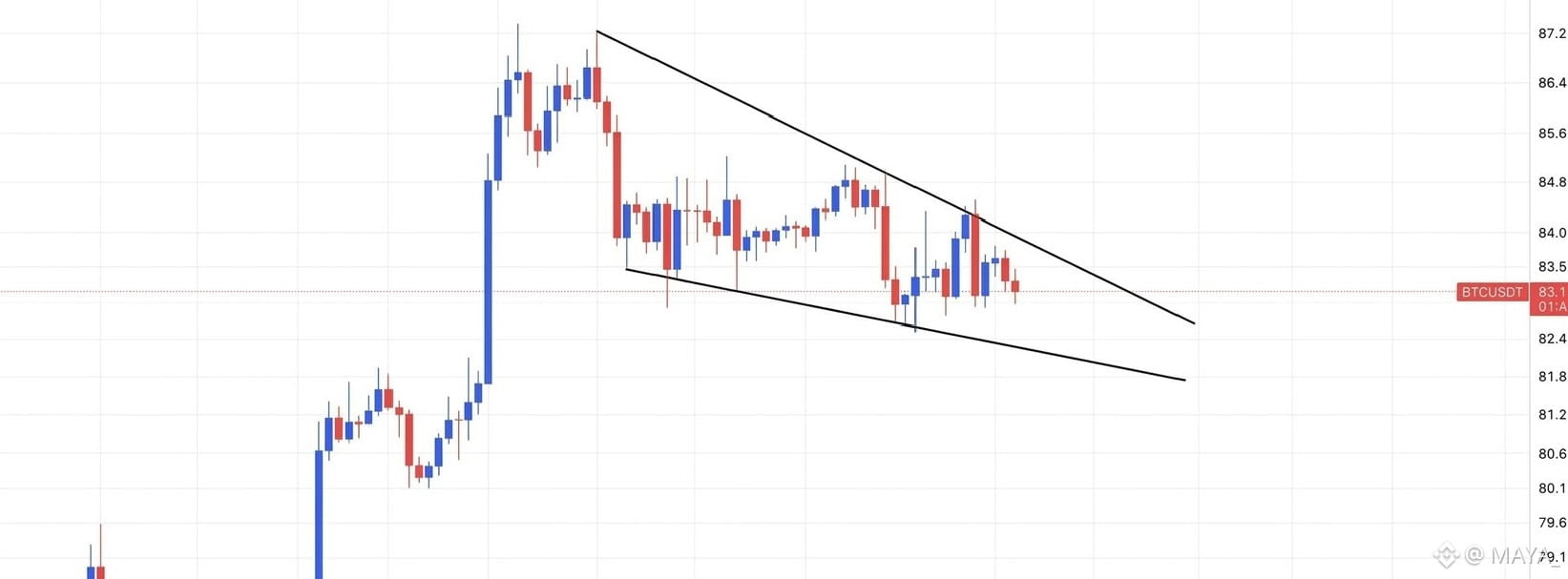
$BTC FALLING WEDGE WATCH🟢🟢
BTC is trading inside a falling wedge, and honestly, this setup is getting interesting.
The bullish case is pretty simple: if price breaks above the wedge and then successfully retests the breakout zone, that could open the door for a much stronger move higher.
Now we just need confirmation.
$BTC 100k SOON 🟢
$BTC FALLING WEDGE WATCH🟢🟢
BTC is trading inside a falling wedge, and honestly, this setup is getting interesting.
The bullish case is pretty simple: if price breaks above the wedge and then successfully retests the breakout zone, that could open the door for a much stronger move higher.
Now we just need confirmation.
$BTC FALLING WEDGE WATCH🟢🟢
BTC is trading inside a falling wedge, and honestly, this setup is getting interesting.
The bullish case is pretty simple: if price breaks above the wedge and then successfully retests the breakout zone, that could open the door for a much stronger move higher.
Now we just need confirmation.
1.3k
38
111
1.3k
·
--
Жоғары (өспелі)
When shopping in Japan, you no longer need to worry about exchanging local currency or dealing with credit card exchange fees. This is because Binance Pay has now integrated with PayPay, a popular payment network in Japan. Thanks to the HIVEX system, you can make direct payments using the USDT held in your wallet. Hmm, the best part is that even though you pay in crypto, local shopkeepers receive their payment in Japanese Yen (JPY). Consequently, merchants face no hassle regarding cryptocurrency. Using crypto for everyday purchases once seemed like a mere fantasy, but this serves as a fantastic example of how rapidly the practical use of crypto is spreading across Asia 🚀
$BNB
{future}(BNBUSDT)
$BTC
{future}(BTCUSDT)
$ETH
{future}(ETHUSDT)
#CEARenamesToBNBStandardUnderBNC #Binance @CZ @heyi
When shopping in Japan, you no longer need to worry about exchanging local currency or dealing with credit card exchange fees. This is because Binance Pay has now integrated with PayPay, a popular payment network in Japan. Thanks to the HIVEX system, you can make direct payments using the USDT held in your wallet. Hmm, the best part is that even though you pay in crypto, local shopkeepers receive their payment in Japanese Yen (JPY). Consequently, merchants face no hassle regarding cryptocurrency. Using crypto for everyday purchases once seemed like a mere fantasy, but this serves as a fantastic example of how rapidly the practical use of crypto is spreading across Asia 🚀
$BNB
$BTC
$ETH
#CEARenamesToBNBStandardUnderBNC #Binance @CZ @Yi He
$BNB
$BTC
$ETH
#CEARenamesToBNBStandardUnderBNC #Binance @CZ @Yi He

3
424
·
--
Tom Lee, co-founder of Fundstrat and a well-known market analyst, recently stated that the crypto market has entered a "bull market" phase.
He based this long-term bullish forecast on several major institutional catalysts and the recent market dynamics of Bitcoin and Ethereum. However, it is worth noting that Tom Lee is widely recognized in Wall Street and crypto circles as a prominent bullish analyst. Since markets are inherently volatile, it is crucial to conduct your own research and practice proper risk management before making any trading decisions based on such hype or predictions.
$NVDA.US $GOOGL.US
Tom Lee, co-founder of Fundstrat and a well-known market analyst, recently stated that the crypto market has entered a "bull market" phase.
He based this long-term bullish forecast on several major institutional catalysts and the recent market dynamics of Bitcoin and Ethereum. However, it is worth noting that Tom Lee is widely recognized in Wall Street and crypto circles as a prominent bullish analyst. Since markets are inherently volatile, it is crucial to conduct your own research and practice proper risk management before making any trading decisions based on such hype or predictions.
$NVDA.US $GOOGL.US
He based this long-term bullish forecast on several major institutional catalysts and the recent market dynamics of Bitcoin and Ethereum. However, it is worth noting that Tom Lee is widely recognized in Wall Street and crypto circles as a prominent bullish analyst. Since markets are inherently volatile, it is crucial to conduct your own research and practice proper risk management before making any trading decisions based on such hype or predictions.
$NVDA.US $GOOGL.US

4
811
·
--

Мақала
IS BTC REALLY READY TO BREAK THE RANGE OR IS THIS ANOTHER TRAP ?I mean.....
Looking at BTC right now, one question keeps coming to mind: are we truly on the verge of a major move, or is the price just wearing everyone out within this narrow $83K–$85K range?
The situation is quite peculiar.
BTC has once again defended the lower end of the range. Buyers stepped in around $83K and held the price up. However, I’m pausing here because defending the lows doesn't automatically guarantee an upward continuation.
Still...
If buyers can genuinely hold this level, my eyes will immediately turn toward the range high.
Meaning, another push toward $85K.
And this is where the psychology gets interesting.
Those repeatedly shorting within this range are likely banking on a rejection at the lows. If the price moves back toward $85K, many of them might have their stop-losses placed just above that area. Consequently, even a small push could force some short positions to close.
This is the kind of scenario where the price can catch many people on the wrong side of the trade without needing to travel very far.
I’m not saying this will happen for sure; rather, that’s exactly why I find the setup interesting.
First, a push toward the highs...
Then, if liquidity is swept there, the price could drop back into the range.
And that raises the real question: is BTC aiming to sweep the entire range from the opposite side?
Because if it drops below $83K, the picture becomes far more intriguing.
There is a significant liquidity cluster there. At the same time, the previous range highs are nearby—a potential zone for a retest as support.
The convergence of these two factors is what stands out to me.
If the price moves toward $85K first, hunts some shorts, then drops to sweep liquidity below $83K—that wouldn't just be random volatility. To me, at least, it would look like a very deliberate move. And if buyers can absorb that downside sweep, it could set the stage for a major move towards the $90K region.
However, there is a catch here.
It is very easy to spin a nice narrative—the range low holds, then the high is tested, followed by a liquidity sweep, and finally a move to $90K.
The market, of course, doesn't follow a script.
Right now, the clearest thing about BTC is that the price remains stuck between $83K and $85K. Until either end of this range is decisively reclaimed or lost, I am not inclined to place too much importance on the price action in between.
Maybe the high comes first.
Maybe the low comes first.
And perhaps the most annoying possibility is that the price might just chop around for a while before moving in either direction.
So, my focus is primarily on the two extremes of the range: how the price behaves above $85K, and how buyers react if it drops below $83K.
Ultimately, knowing where the liquidity lies is one thing.
But what the price actually does when it gets there—that is what truly matters.
$BTC
{future}(BTCUSDT)
#
IS BTC REALLY READY TO BREAK THE RANGE OR IS THIS ANOTHER TRAP ?
I mean.....
Looking at BTC right now, one question keeps coming to mind: are we truly on the verge of a major move, or is the price just wearing everyone out within this narrow $83K–$85K range?
The situation is quite peculiar.
BTC has once again defended the lower end of the range. Buyers stepped in around $83K and held the price up. However, I’m pausing here because defending the lows doesn't automatically guarantee an upward continuation.
Still...
If buyers can genuinely hold this level, my eyes will immediately turn toward the range high.
Meaning, another push toward $85K.
And this is where the psychology gets interesting.
Those repeatedly shorting within this range are likely banking on a rejection at the lows. If the price moves back toward $85K, many of them might have their stop-losses placed just above that area. Consequently, even a small push could force some short positions to close.
This is the kind of scenario where the price can catch many people on the wrong side of the trade without needing to travel very far.
I’m not saying this will happen for sure; rather, that’s exactly why I find the setup interesting.
First, a push toward the highs...
Then, if liquidity is swept there, the price could drop back into the range.
And that raises the real question: is BTC aiming to sweep the entire range from the opposite side?
Because if it drops below $83K, the picture becomes far more intriguing.
There is a significant liquidity cluster there. At the same time, the previous range highs are nearby—a potential zone for a retest as support.
The convergence of these two factors is what stands out to me.
If the price moves toward $85K first, hunts some shorts, then drops to sweep liquidity below $83K—that wouldn't just be random volatility. To me, at least, it would look like a very deliberate move. And if buyers can absorb that downside sweep, it could set the stage for a major move towards the $90K region.
However, there is a catch here.
It is very easy to spin a nice narrative—the range low holds, then the high is tested, followed by a liquidity sweep, and finally a move to $90K.
The market, of course, doesn't follow a script.
Right now, the clearest thing about BTC is that the price remains stuck between $83K and $85K. Until either end of this range is decisively reclaimed or lost, I am not inclined to place too much importance on the price action in between.
Maybe the high comes first.
Maybe the low comes first.
And perhaps the most annoying possibility is that the price might just chop around for a while before moving in either direction.
So, my focus is primarily on the two extremes of the range: how the price behaves above $85K, and how buyers react if it drops below $83K.
Ultimately, knowing where the liquidity lies is one thing.
But what the price actually does when it gets there—that is what truly matters.
$BTC
#
Looking at BTC right now, one question keeps coming to mind: are we truly on the verge of a major move, or is the price just wearing everyone out within this narrow $83K–$85K range?
The situation is quite peculiar.
BTC has once again defended the lower end of the range. Buyers stepped in around $83K and held the price up. However, I’m pausing here because defending the lows doesn't automatically guarantee an upward continuation.
Still...
If buyers can genuinely hold this level, my eyes will immediately turn toward the range high.
Meaning, another push toward $85K.
And this is where the psychology gets interesting.
Those repeatedly shorting within this range are likely banking on a rejection at the lows. If the price moves back toward $85K, many of them might have their stop-losses placed just above that area. Consequently, even a small push could force some short positions to close.
This is the kind of scenario where the price can catch many people on the wrong side of the trade without needing to travel very far.
I’m not saying this will happen for sure; rather, that’s exactly why I find the setup interesting.
First, a push toward the highs...
Then, if liquidity is swept there, the price could drop back into the range.
And that raises the real question: is BTC aiming to sweep the entire range from the opposite side?
Because if it drops below $83K, the picture becomes far more intriguing.
There is a significant liquidity cluster there. At the same time, the previous range highs are nearby—a potential zone for a retest as support.
The convergence of these two factors is what stands out to me.
If the price moves toward $85K first, hunts some shorts, then drops to sweep liquidity below $83K—that wouldn't just be random volatility. To me, at least, it would look like a very deliberate move. And if buyers can absorb that downside sweep, it could set the stage for a major move towards the $90K region.
However, there is a catch here.
It is very easy to spin a nice narrative—the range low holds, then the high is tested, followed by a liquidity sweep, and finally a move to $90K.
The market, of course, doesn't follow a script.
Right now, the clearest thing about BTC is that the price remains stuck between $83K and $85K. Until either end of this range is decisively reclaimed or lost, I am not inclined to place too much importance on the price action in between.
Maybe the high comes first.
Maybe the low comes first.
And perhaps the most annoying possibility is that the price might just chop around for a while before moving in either direction.
So, my focus is primarily on the two extremes of the range: how the price behaves above $85K, and how buyers react if it drops below $83K.
Ultimately, knowing where the liquidity lies is one thing.
But what the price actually does when it gets there—that is what truly matters.
$BTC
#
3
442
·
--
Жоғары (өспелі)
$RECALL LONGED 🚀
SPOT BUY 🟢
{future}(RECALLUSDT)
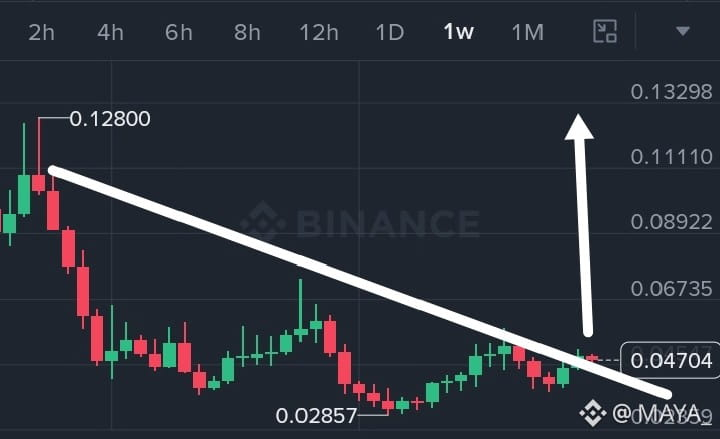
$RECALL is sitting right around $0.047, testing that long-term descending trendline on the weekly chart. I’ve taken a long here, but I’m not treating the breakout as confirmed yet. If price can reclaim and hold above this trendline, I’d be watching the $0.067 area first, then potentially $0.09 – $0.11.
Still keeping risk in mind👈
$RECALL LONGED 🚀
SPOT BUY 🟢
$RECALL is sitting right around $0.047, testing that long-term descending trendline on the weekly chart. I’ve taken a long here, but I’m not treating the breakout as confirmed yet. If price can reclaim and hold above this trendline, I’d be watching the $0.067 area first, then potentially $0.09 – $0.11.
Still keeping risk in mind👈
SPOT BUY 🟢
$RECALL is sitting right around $0.047, testing that long-term descending trendline on the weekly chart. I’ve taken a long here, but I’m not treating the breakout as confirmed yet. If price can reclaim and hold above this trendline, I’d be watching the $0.067 area first, then potentially $0.09 – $0.11.
Still keeping risk in mind👈
4
756
·
--
$ESPORTS BREAKOUT 🚀🟢
SPOT BUY 🟢
{future}(ESPORTSUSDT)
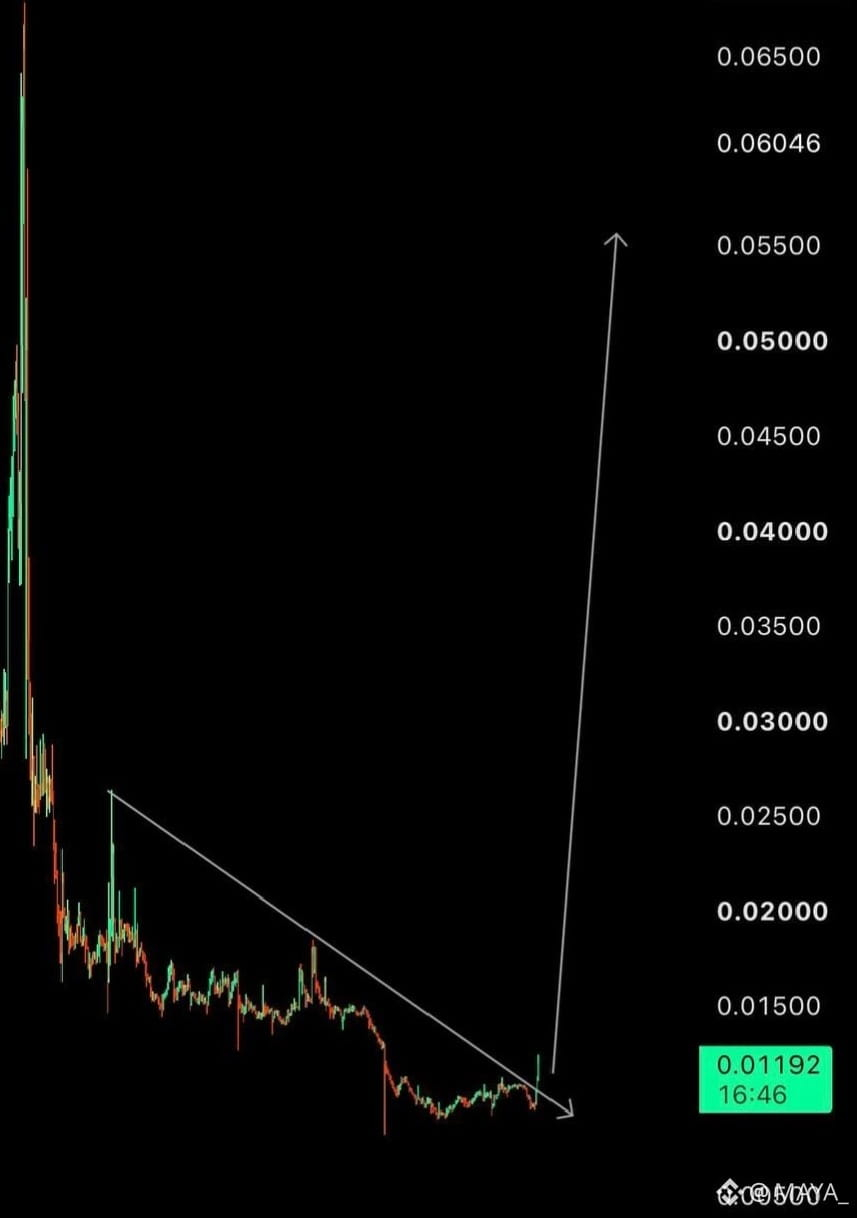
$ESPORTS is finally breaking out of the long-term descending trendline, and this move is starting to look interesting.
Price is around $0.0119 right now. If the breakout holds and momentum continues, I’m watching the $0.015–$0.020 area first, with the chart pointing toward $0.055.
Confirmation matters here✅
$ESPORTS BREAKOUT 🚀🟢
SPOT BUY 🟢
$ESPORTS is finally breaking out of the long-term descending trendline, and this move is starting to look interesting.
Price is around $0.0119 right now. If the breakout holds and momentum continues, I’m watching the $0.015–$0.020 area first, with the chart pointing toward $0.055.
Confirmation matters here✅
SPOT BUY 🟢
$ESPORTS is finally breaking out of the long-term descending trendline, and this move is starting to look interesting.
Price is around $0.0119 right now. If the breakout holds and momentum continues, I’m watching the $0.015–$0.020 area first, with the chart pointing toward $0.055.
Confirmation matters here✅
4
1k
·
--
#XRPUpdate
D’CENT Wallet Hack : Over 12.4 Million $XRP Stolen
{future}(XRPUSDT)
This is a major incident. Reports indicate that hackers have stolen more than 12.4 million XRP from over 7,000 D’CENT app wallets.
It has also come to light that users holding assets in Bitcoin, Ethereum, and Stellar have been affected. Approximately 6.3 million of the stolen XRP has already been moved to the Ethereum network via cross-chain swaps. Security is now the top priority; if you use D’CENT, it is crucial to check the official security notice and transfer your funds from potentially compromised wallets to new ones using a fresh recovery phrase.
This incident serves as a reminder that owning a wallet does not eliminate risk entirely. In particular, a vulnerability within the wallet infrastructure can impact a large number of users simultaneously.
#XRPUpdate
D’CENT Wallet Hack : Over 12.4 Million $XRP Stolen
This is a major incident. Reports indicate that hackers have stolen more than 12.4 million XRP from over 7,000 D’CENT app wallets.
It has also come to light that users holding assets in Bitcoin, Ethereum, and Stellar have been affected. Approximately 6.3 million of the stolen XRP has already been moved to the Ethereum network via cross-chain swaps. Security is now the top priority; if you use D’CENT, it is crucial to check the official security notice and transfer your funds from potentially compromised wallets to new ones using a fresh recovery phrase.
This incident serves as a reminder that owning a wallet does not eliminate risk entirely. In particular, a vulnerability within the wallet infrastructure can impact a large number of users simultaneously.
D’CENT Wallet Hack : Over 12.4 Million $XRP Stolen
This is a major incident. Reports indicate that hackers have stolen more than 12.4 million XRP from over 7,000 D’CENT app wallets.
It has also come to light that users holding assets in Bitcoin, Ethereum, and Stellar have been affected. Approximately 6.3 million of the stolen XRP has already been moved to the Ethereum network via cross-chain swaps. Security is now the top priority; if you use D’CENT, it is crucial to check the official security notice and transfer your funds from potentially compromised wallets to new ones using a fresh recovery phrase.
This incident serves as a reminder that owning a wallet does not eliminate risk entirely. In particular, a vulnerability within the wallet infrastructure can impact a large number of users simultaneously.
6
488
·
--
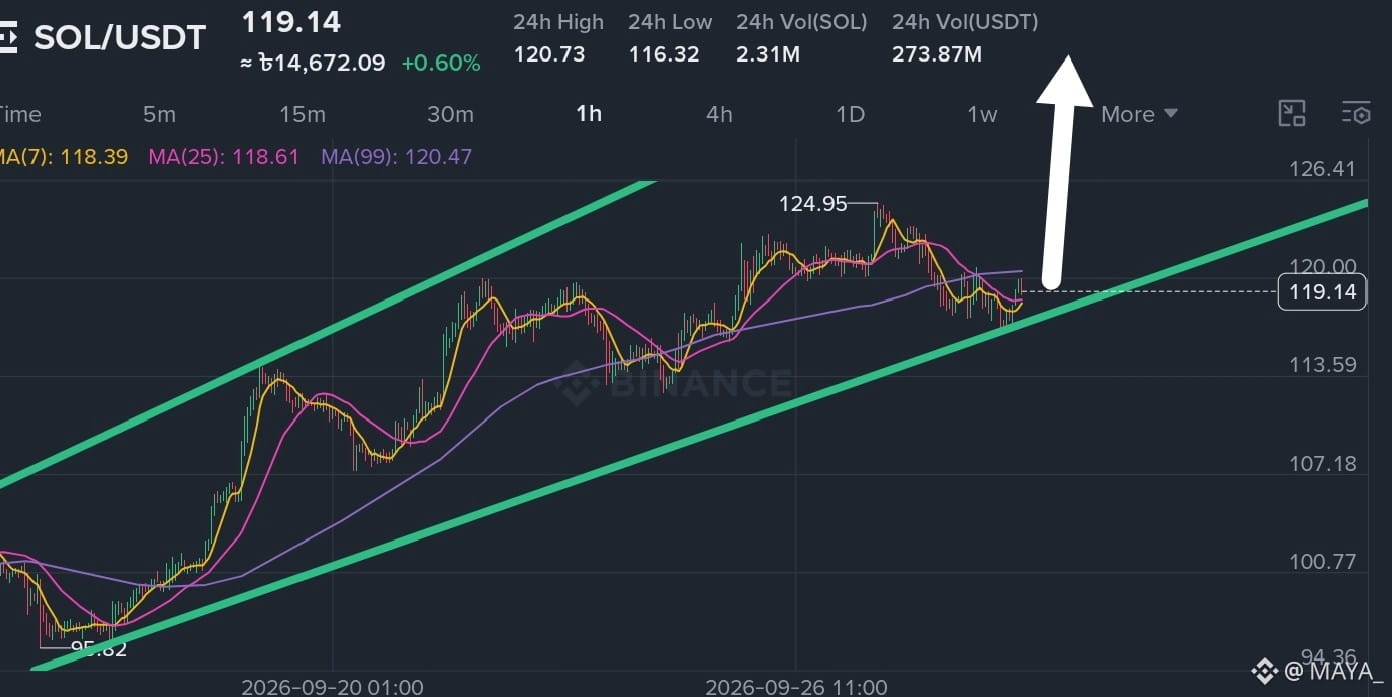
$SOL Long Entry 🟢
Target : 126 👈 🚀
$SOL Trade here👇👇👇👇
$SOL Long Entry 🟢
Target : 126 👈 🚀
$SOL Trade here👇👇👇👇
Target : 126 👈 🚀
$SOL Trade here👇👇👇👇
5
451
·
--
Расталды
#StrategyAdds1666BTCHoldingsReach847666
One thing that caught my eye is that Michael Saylor and his company, Strategy, have once again purchased Bitcoin. According to SEC filings and Saylor's official announcement, they have added 1,665 BTC this time. The total expenditure was approximately $142.7 million, with an average purchase price of around $85,681 per Bitcoin.
Interestingly, while many are citing the figure as 1,666, the actual number is 1,665. Following this purchase, Strategy's total Bitcoin holdings now stand at 847,666 BTC.
What stands out most to me here is that they are continuing to accumulate BTC despite already holding such a massive amount. The question now is whether this buying activity signals even larger accumulation ahead, or if Strategy is simply maintaining its existing position. Only time will tell.
$BTC
{future}(BTCUSDT)
#StrategyAdds1666BTCHoldingsReach847666
One thing that caught my eye is that Michael Saylor and his company, Strategy, have once again purchased Bitcoin. According to SEC filings and Saylor's official announcement, they have added 1,665 BTC this time. The total expenditure was approximately $142.7 million, with an average purchase price of around $85,681 per Bitcoin.
Interestingly, while many are citing the figure as 1,666, the actual number is 1,665. Following this purchase, Strategy's total Bitcoin holdings now stand at 847,666 BTC.
What stands out most to me here is that they are continuing to accumulate BTC despite already holding such a massive amount. The question now is whether this buying activity signals even larger accumulation ahead, or if Strategy is simply maintaining its existing position. Only time will tell.
$BTC
One thing that caught my eye is that Michael Saylor and his company, Strategy, have once again purchased Bitcoin. According to SEC filings and Saylor's official announcement, they have added 1,665 BTC this time. The total expenditure was approximately $142.7 million, with an average purchase price of around $85,681 per Bitcoin.
Interestingly, while many are citing the figure as 1,666, the actual number is 1,665. Following this purchase, Strategy's total Bitcoin holdings now stand at 847,666 BTC.
What stands out most to me here is that they are continuing to accumulate BTC despite already holding such a massive amount. The question now is whether this buying activity signals even larger accumulation ahead, or if Strategy is simply maintaining its existing position. Only time will tell.
$BTC

4
330
·
--
Мақала
BTC LIQUIDITY GAME : WHICH SIDE GETS SWEPT FIRST ?I mean.....
There’s one thing I keep thinking about—will BTC make a decisive move in one direction right from here, or will it first lure everyone the wrong way at the start of the month?
Looking at the chart, the situation seems a bit peculiar to me right now.
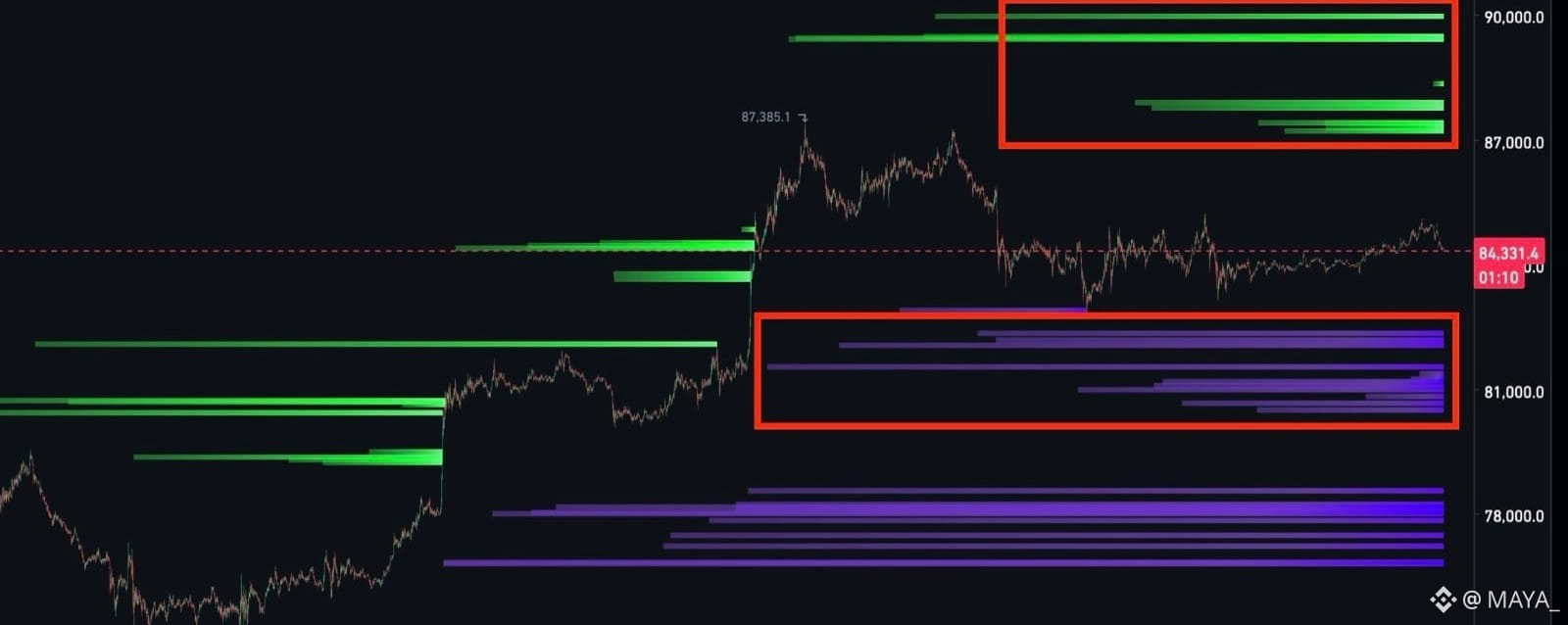
That’s because BTC is currently hovering between two major liquidity clusters. Above, there is liquidity sitting near the recent highs, ranging from roughly $87K to $90K. Meanwhile, the cluster below—around the $80K–$81K mark—appears significantly larger.
Interestingly, that lower region is also where the recent breakout occurred. This means if the price drops back there, it’s not just about sweeping liquidity; the validity of the entire breakout itself would come into question.
This is the specific aspect that has me thinking.
With the new monthly open approaching, price action at the start of the month can be deceptive; the initial candles might suggest a clear direction, only for the reality to turn out quite different. I’m not saying this will happen, but if BTC sweeps liquidity in one direction first and then undergoes a sharp reversal, the positioning of these two clusters becomes very interesting. For instance, suppose BTC rallies toward $87K–$90K first; after clearing that upper liquidity, the price could then turn downward to retest the $80K–$81K level.
The reverse scenario is also possible.
The $80K–$81K level gets swept first—leading everyone to believe the breakout has failed and a downtrend is starting—only for the price to reverse from there and head back toward $87K or $90K.
For some reason, this second scenario keeps playing on my mind. Often, when the market consensus leans heavily toward one direction, the liquidity actually lies on the opposite side.
Ultimately, though, the real clue likely lies in where BTC breaks out.
If the price makes a strong return above $85.6K, my focus will shift to the $87K–$90K zone. I’ll be watching closely to see how the price reacts once it gets there. And if the $83K level is decisively lost, a retest of the $80K–$81K range will seem much more likely.
In other words, rather than trying to make a prediction while sitting in the middle, it is easier to simply watch how the price reacts at these two levels:
How it reacts if it moves up.
How it holds if it moves down.
One more thing—I don't believe the initial move is necessarily the "real" move. Sometimes, the first push serves merely to clear out market positioning before the actual move begins.
That is why I will view the first few moves of the new month with a degree of skepticism.
There is no need to jump to conclusions the moment a level is touched. Whether BTC sweeps liquidity at $87K first or heads toward the $80K–$81K range—that sequence will likely be the key to understanding the next major move.
Right now, the most interesting question for me is simply this—
Which side's liquidity will BTC sweep first?
$BTC
BTC LIQUIDITY GAME : WHICH SIDE GETS SWEPT FIRST ?
I mean.....
There’s one thing I keep thinking about—will BTC make a decisive move in one direction right from here, or will it first lure everyone the wrong way at the start of the month?
Looking at the chart, the situation seems a bit peculiar to me right now.
That’s because BTC is currently hovering between two major liquidity clusters. Above, there is liquidity sitting near the recent highs, ranging from roughly $87K to $90K. Meanwhile, the cluster below—around the $80K–$81K mark—appears significantly larger.
Interestingly, that lower region is also where the recent breakout occurred. This means if the price drops back there, it’s not just about sweeping liquidity; the validity of the entire breakout itself would come into question.
This is the specific aspect that has me thinking.
With the new monthly open approaching, price action at the start of the month can be deceptive; the initial candles might suggest a clear direction, only for the reality to turn out quite different. I’m not saying this will happen, but if BTC sweeps liquidity in one direction first and then undergoes a sharp reversal, the positioning of these two clusters becomes very interesting. For instance, suppose BTC rallies toward $87K–$90K first; after clearing that upper liquidity, the price could then turn downward to retest the $80K–$81K level.
The reverse scenario is also possible.
The $80K–$81K level gets swept first—leading everyone to believe the breakout has failed and a downtrend is starting—only for the price to reverse from there and head back toward $87K or $90K.
For some reason, this second scenario keeps playing on my mind. Often, when the market consensus leans heavily toward one direction, the liquidity actually lies on the opposite side.
Ultimately, though, the real clue likely lies in where BTC breaks out.
If the price makes a strong return above $85.6K, my focus will shift to the $87K–$90K zone. I’ll be watching closely to see how the price reacts once it gets there. And if the $83K level is decisively lost, a retest of the $80K–$81K range will seem much more likely.
In other words, rather than trying to make a prediction while sitting in the middle, it is easier to simply watch how the price reacts at these two levels:
How it reacts if it moves up.
How it holds if it moves down.
One more thing—I don't believe the initial move is necessarily the "real" move. Sometimes, the first push serves merely to clear out market positioning before the actual move begins.
That is why I will view the first few moves of the new month with a degree of skepticism.
There is no need to jump to conclusions the moment a level is touched. Whether BTC sweeps liquidity at $87K first or heads toward the $80K–$81K range—that sequence will likely be the key to understanding the next major move.
Right now, the most interesting question for me is simply this—
Which side's liquidity will BTC sweep first?
$BTC
There’s one thing I keep thinking about—will BTC make a decisive move in one direction right from here, or will it first lure everyone the wrong way at the start of the month?
Looking at the chart, the situation seems a bit peculiar to me right now.
That’s because BTC is currently hovering between two major liquidity clusters. Above, there is liquidity sitting near the recent highs, ranging from roughly $87K to $90K. Meanwhile, the cluster below—around the $80K–$81K mark—appears significantly larger.
Interestingly, that lower region is also where the recent breakout occurred. This means if the price drops back there, it’s not just about sweeping liquidity; the validity of the entire breakout itself would come into question.
This is the specific aspect that has me thinking.
With the new monthly open approaching, price action at the start of the month can be deceptive; the initial candles might suggest a clear direction, only for the reality to turn out quite different. I’m not saying this will happen, but if BTC sweeps liquidity in one direction first and then undergoes a sharp reversal, the positioning of these two clusters becomes very interesting. For instance, suppose BTC rallies toward $87K–$90K first; after clearing that upper liquidity, the price could then turn downward to retest the $80K–$81K level.
The reverse scenario is also possible.
The $80K–$81K level gets swept first—leading everyone to believe the breakout has failed and a downtrend is starting—only for the price to reverse from there and head back toward $87K or $90K.
For some reason, this second scenario keeps playing on my mind. Often, when the market consensus leans heavily toward one direction, the liquidity actually lies on the opposite side.
Ultimately, though, the real clue likely lies in where BTC breaks out.
If the price makes a strong return above $85.6K, my focus will shift to the $87K–$90K zone. I’ll be watching closely to see how the price reacts once it gets there. And if the $83K level is decisively lost, a retest of the $80K–$81K range will seem much more likely.
In other words, rather than trying to make a prediction while sitting in the middle, it is easier to simply watch how the price reacts at these two levels:
How it reacts if it moves up.
How it holds if it moves down.
One more thing—I don't believe the initial move is necessarily the "real" move. Sometimes, the first push serves merely to clear out market positioning before the actual move begins.
That is why I will view the first few moves of the new month with a degree of skepticism.
There is no need to jump to conclusions the moment a level is touched. Whether BTC sweeps liquidity at $87K first or heads toward the $80K–$81K range—that sequence will likely be the key to understanding the next major move.
Right now, the most interesting question for me is simply this—
Which side's liquidity will BTC sweep first?
$BTC
8
911
Көбірек контент көру үшін кіріңіз
Binance Square платформасында әлемдік криптоқоғамдастыққа қосылыңыз
⚡️ Криптовалюта туралы ең соңғы және пайдалы ақпаратты алыңыз.
💬 Әлемдегі ең ірі криптобиржаның сеніміне ие.
👍 Расталған авторлардың нақты пікірлерін табыңыз.
Электрондық пошта/телефон нөмірі
Трендтегі тақырыптар
NFPWatch
10.7M рет көрілді
18,980 адам талқылап жатыр
Crypto News | Bitcoin Rises Toward $85K as Treasury Yields Fall Ahead of U.S. NFP Report
Binance News
·36 лайк
·46.9k рет көрілді
BitcoinFundingRateTriplesTo10%
110,051 рет көрілді
988 адам талқылап жатыр
BitcoinSurpasses$86KUp2.99%
32,766 рет көрілді
95 адам талқылап жатыр