
EquityPlainTalk
859 Жариялаулар
EquityPlainTalk
Хабарлау
Пайдаланушыны блоктау
Clear, common-sense market notes for U.S. stock investors navigating noise, data, and human behavior.
0 Жазылым
81 Жазылушылар
175 лайк басылған
Жазбалар
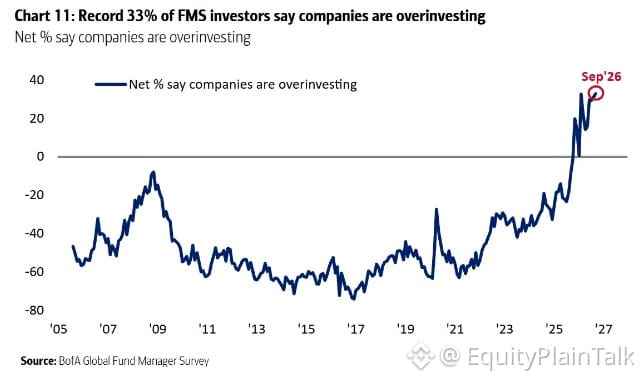
Fund managers are flashing a warning sign: a record 33% now think companies are overinvesting.
This matters because when corporate capex gets too aggressive relative to demand, it usually ends badly. Excess capacity leads to margin compression, then layoffs, then cuts.
We saw this play out in 2000 with telecom, 2008 with housing and financials, and 2015 with energy. Companies chase growth at the peak, then get stuck with bloated balance sheets when the cycle turns.
Right now, AI infrastructure spending is the obvious candidate. Nvidia's customers are building data centers at a pace that assumes explosive AI revenue growth. If that growth disappoints or takes longer to materialize, there's going to be a painful adjustment.
Watch capex guidance in upcoming earnings. If companies start trimming plans, that's your early signal that the cycle is shifting.
Fund managers are flashing a warning sign: a record 33% now think companies are overinvesting.
This matters because when corporate capex gets too aggressive relative to demand, it usually ends badly. Excess capacity leads to margin compression, then layoffs, then cuts.
We saw this play out in 2000 with telecom, 2008 with housing and financials, and 2015 with energy. Companies chase growth at the peak, then get stuck with bloated balance sheets when the cycle turns.
Right now, AI infrastructure spending is the obvious candidate. Nvidia's customers are building data centers at a pace that assumes explosive AI revenue growth. If that growth disappoints or takes longer to materialize, there's going to be a painful adjustment.
Watch capex guidance in upcoming earnings. If companies start trimming plans, that's your early signal that the cycle is shifting.
This matters because when corporate capex gets too aggressive relative to demand, it usually ends badly. Excess capacity leads to margin compression, then layoffs, then cuts.
We saw this play out in 2000 with telecom, 2008 with housing and financials, and 2015 with energy. Companies chase growth at the peak, then get stuck with bloated balance sheets when the cycle turns.
Right now, AI infrastructure spending is the obvious candidate. Nvidia's customers are building data centers at a pace that assumes explosive AI revenue growth. If that growth disappoints or takes longer to materialize, there's going to be a painful adjustment.
Watch capex guidance in upcoming earnings. If companies start trimming plans, that's your early signal that the cycle is shifting.
41
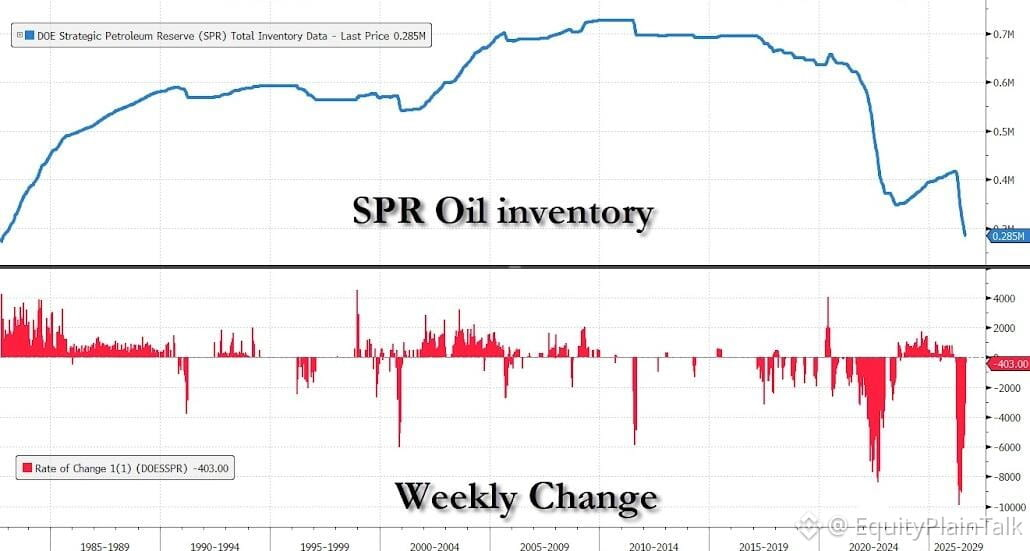
U.S. Strategic Petroleum Reserve just hit its lowest level since 1982.
That's 40+ years of buffer gone. When oil shocks hit, we have less cushion than we did during the Cold War.
This isn't just an energy story—it's a geopolitical one. Less reserve = more vulnerability to supply disruptions, which means more volatility in oil prices and ripple effects across inflation, consumer spending, and equity markets.
Keep an eye on energy stocks and how this plays into Fed policy if crude spikes again.
U.S. Strategic Petroleum Reserve just hit its lowest level since 1982.
That's 40+ years of buffer gone. When oil shocks hit, we have less cushion than we did during the Cold War.
This isn't just an energy story—it's a geopolitical one. Less reserve = more vulnerability to supply disruptions, which means more volatility in oil prices and ripple effects across inflation, consumer spending, and equity markets.
Keep an eye on energy stocks and how this plays into Fed policy if crude spikes again.
That's 40+ years of buffer gone. When oil shocks hit, we have less cushion than we did during the Cold War.
This isn't just an energy story—it's a geopolitical one. Less reserve = more vulnerability to supply disruptions, which means more volatility in oil prices and ripple effects across inflation, consumer spending, and equity markets.
Keep an eye on energy stocks and how this plays into Fed policy if crude spikes again.
131
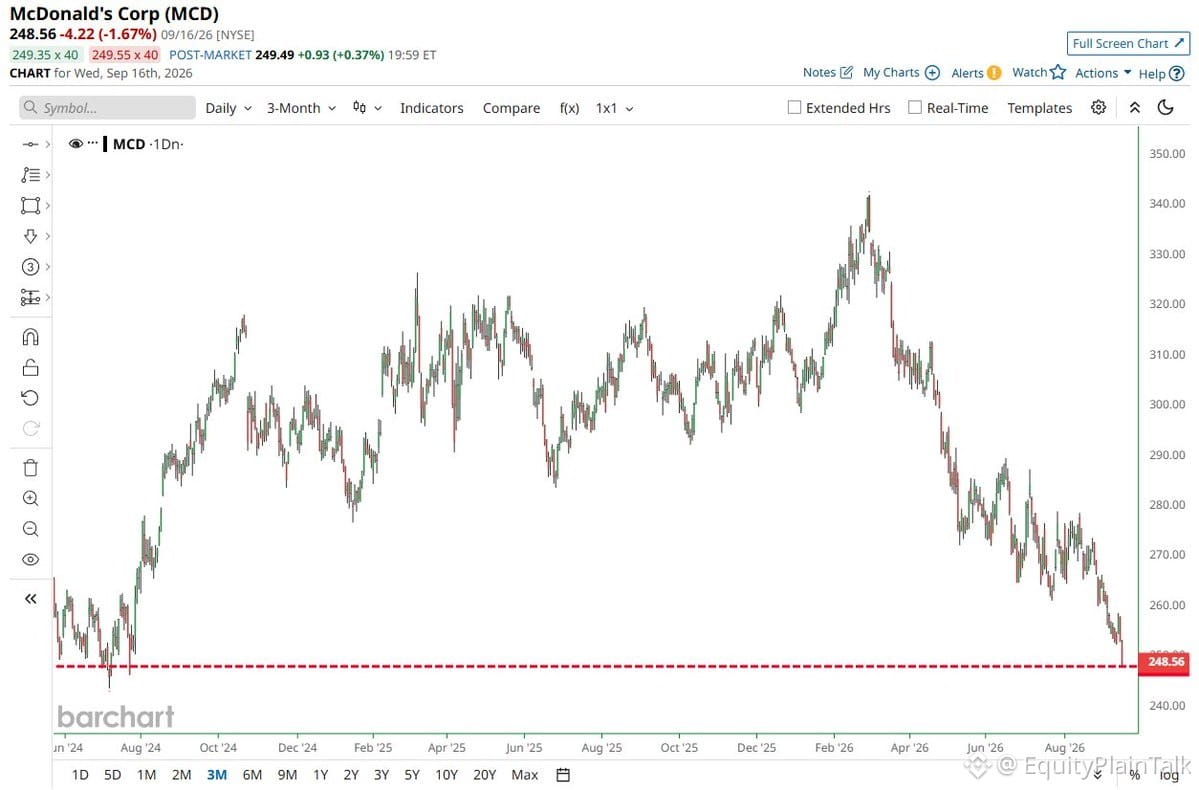
$MCD hitting its lowest level in over two years. That's a 26-month low for a Dow component and defensive consumer name.
Worth watching if this is just profit-taking after a long run, or if something deeper is shifting in how investors view fast food margins and traffic trends. When a stock like McDonald's breaks multi-year support, it usually says something about either the company's outlook or broader consumer spending patterns.
Not panic territory, but definitely a name to keep on the radar if you're tracking large-cap consumer discretionary or looking for potential value setups.
$MCD hitting its lowest level in over two years. That's a 26-month low for a Dow component and defensive consumer name.
Worth watching if this is just profit-taking after a long run, or if something deeper is shifting in how investors view fast food margins and traffic trends. When a stock like McDonald's breaks multi-year support, it usually says something about either the company's outlook or broader consumer spending patterns.
Not panic territory, but definitely a name to keep on the radar if you're tracking large-cap consumer discretionary or looking for potential value setups.
Worth watching if this is just profit-taking after a long run, or if something deeper is shifting in how investors view fast food margins and traffic trends. When a stock like McDonald's breaks multi-year support, it usually says something about either the company's outlook or broader consumer spending patterns.
Not panic territory, but definitely a name to keep on the radar if you're tracking large-cap consumer discretionary or looking for potential value setups.
144
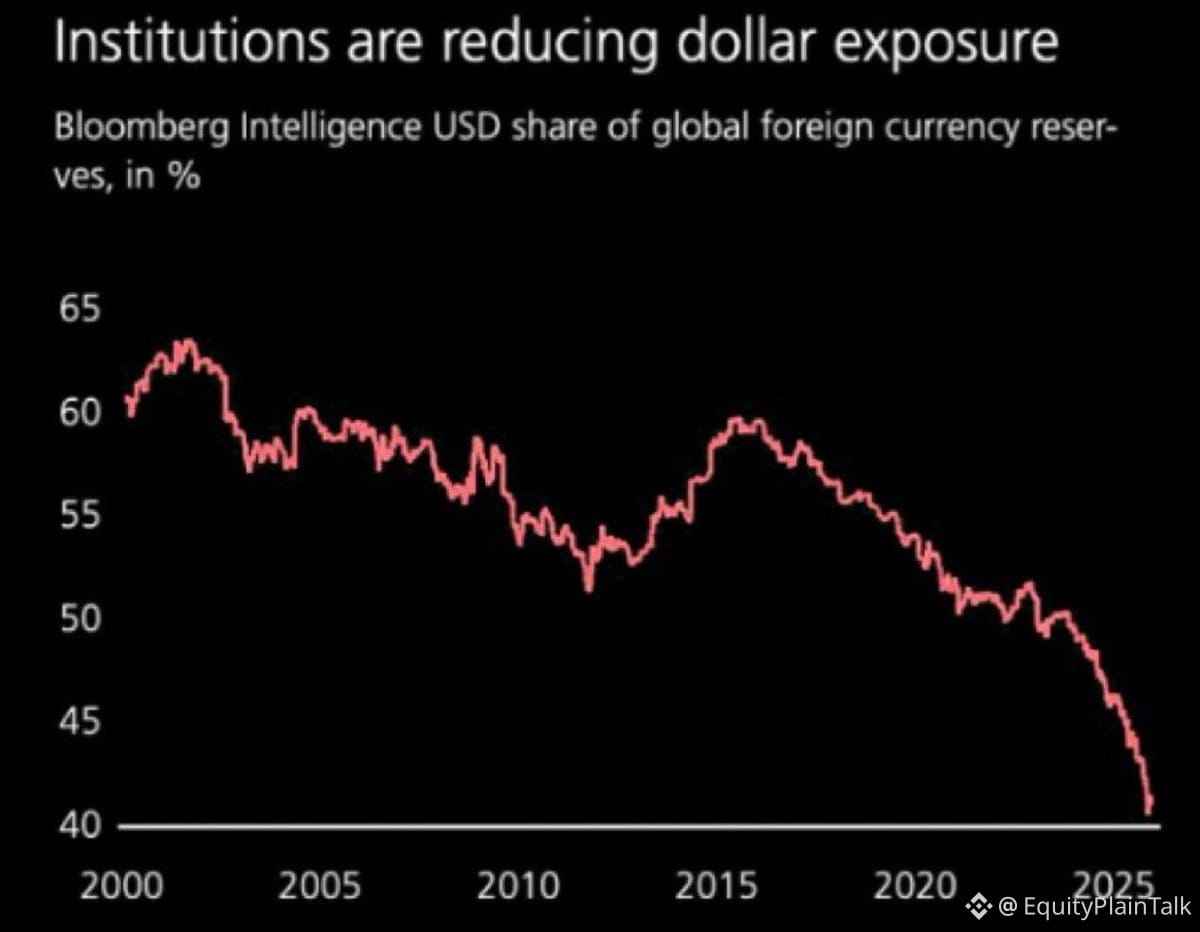
The dollar's share of global reserves just hit its lowest point in 20+ years.
Central banks worldwide are quietly diversifying away. Not a panic move, but the trend is real.
This matters for:
• Long-term dollar strength
• U.S. borrowing costs
• How the Fed navigates policy
Still the dominant reserve currency by far, but the slow erosion continues. Worth watching as geopolitics and trade patterns shift.
The dollar's share of global reserves just hit its lowest point in 20+ years.
Central banks worldwide are quietly diversifying away. Not a panic move, but the trend is real.
This matters for:
• Long-term dollar strength
• U.S. borrowing costs
• How the Fed navigates policy
Still the dominant reserve currency by far, but the slow erosion continues. Worth watching as geopolitics and trade patterns shift.
Central banks worldwide are quietly diversifying away. Not a panic move, but the trend is real.
This matters for:
• Long-term dollar strength
• U.S. borrowing costs
• How the Fed navigates policy
Still the dominant reserve currency by far, but the slow erosion continues. Worth watching as geopolitics and trade patterns shift.
1
283
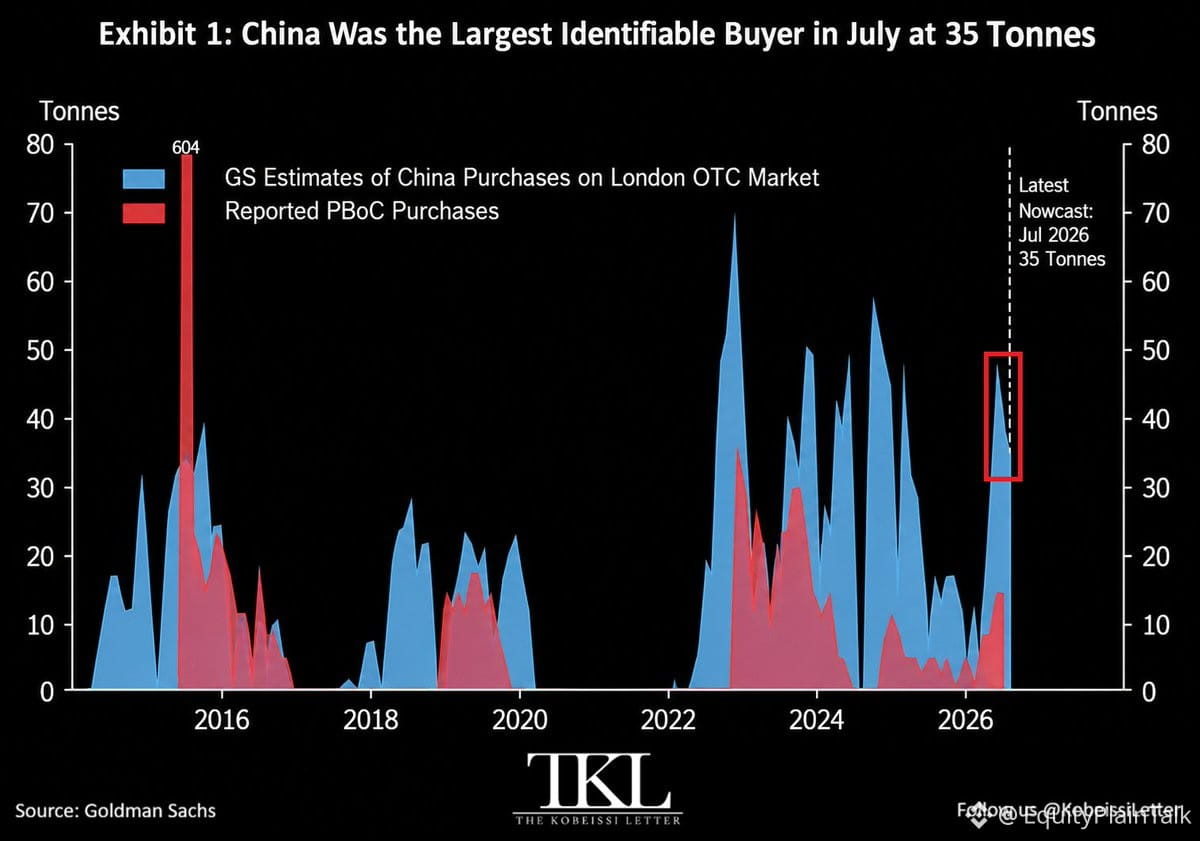
China just bought 35 tonnes of gold in July through London's OTC market—that's 75% more than what their central bank officially reported.
The real story: Over the past 3 months (May-July), China quietly accumulated 123 tonnes via OTC channels. Meanwhile, their official reserve increase for the entire 8 months? Only 80 tonnes.
The gap is massive. China's actual gold buying is far bigger than the headline numbers suggest. They're stacking gold aggressively while keeping most of it off the official books.
This matters because it signals how seriously major central banks are positioning for currency instability and geopolitical risk. When the world's second-largest economy quietly doubles down on gold, it's worth paying attention to what they see coming.
China just bought 35 tonnes of gold in July through London's OTC market—that's 75% more than what their central bank officially reported.
The real story: Over the past 3 months (May-July), China quietly accumulated 123 tonnes via OTC channels. Meanwhile, their official reserve increase for the entire 8 months? Only 80 tonnes.
The gap is massive. China's actual gold buying is far bigger than the headline numbers suggest. They're stacking gold aggressively while keeping most of it off the official books.
This matters because it signals how seriously major central banks are positioning for currency instability and geopolitical risk. When the world's second-largest economy quietly doubles down on gold, it's worth paying attention to what they see coming.
The real story: Over the past 3 months (May-July), China quietly accumulated 123 tonnes via OTC channels. Meanwhile, their official reserve increase for the entire 8 months? Only 80 tonnes.
The gap is massive. China's actual gold buying is far bigger than the headline numbers suggest. They're stacking gold aggressively while keeping most of it off the official books.
This matters because it signals how seriously major central banks are positioning for currency instability and geopolitical risk. When the world's second-largest economy quietly doubles down on gold, it's worth paying attention to what they see coming.
1
488
Расталды
Trump just called for rates at 1% or lower. Right now we're at 3.75-4.00%.
That's a 300+ basis point cut he's asking for. The biggest single cut in history? 100 bps during 2008 and 2020.
He's basically asking for triple the record cut.
This isn't just policy disagreement anymore. This is the President publicly pushing the Fed into a corner while markets are already on edge.
The Fed's supposed to be independent. But when the guy in the Oval Office is this loud about where rates should be, it changes the game. Markets start pricing in political pressure, not just data.
Historically, when Presidents lean this hard on the Fed, it doesn't end cleanly. Either the Fed folds and loses credibility, or they hold firm and get blamed for whatever comes next.
Either way, volatility goes up.
Q4 just got a lot more interesting.
Trump just called for rates at 1% or lower. Right now we're at 3.75-4.00%.
That's a 300+ basis point cut he's asking for. The biggest single cut in history? 100 bps during 2008 and 2020.
He's basically asking for triple the record cut.
This isn't just policy disagreement anymore. This is the President publicly pushing the Fed into a corner while markets are already on edge.
The Fed's supposed to be independent. But when the guy in the Oval Office is this loud about where rates should be, it changes the game. Markets start pricing in political pressure, not just data.
Historically, when Presidents lean this hard on the Fed, it doesn't end cleanly. Either the Fed folds and loses credibility, or they hold firm and get blamed for whatever comes next.
Either way, volatility goes up.
Q4 just got a lot more interesting.
That's a 300+ basis point cut he's asking for. The biggest single cut in history? 100 bps during 2008 and 2020.
He's basically asking for triple the record cut.
This isn't just policy disagreement anymore. This is the President publicly pushing the Fed into a corner while markets are already on edge.
The Fed's supposed to be independent. But when the guy in the Oval Office is this loud about where rates should be, it changes the game. Markets start pricing in political pressure, not just data.
Historically, when Presidents lean this hard on the Fed, it doesn't end cleanly. Either the Fed folds and loses credibility, or they hold firm and get blamed for whatever comes next.
Either way, volatility goes up.
Q4 just got a lot more interesting.
767
Расталды
Trump just commented on inflation and the Fed—says inflation is "too high" but wants Chair Warsh to stay independent. Also noted he "still has confidence" in Warsh even after today's rate hike.
Interesting dynamic here. Presidents usually avoid commenting on Fed decisions to preserve that independence firewall. But Trump's never been shy about his views on rates.
Market's watching this closely. Any hint of political pressure on the Fed tends to spook bond traders and create volatility in rate-sensitive sectors. The "confidence" language is reassuring, but the inflation comment signals he wants easier policy.
For now, the Fed's path seems intact. But if inflation stays sticky and Trump keeps talking, this could get messy. Rate expectations and dollar strength will be key to watch.
Trump just commented on inflation and the Fed—says inflation is "too high" but wants Chair Warsh to stay independent. Also noted he "still has confidence" in Warsh even after today's rate hike.
Interesting dynamic here. Presidents usually avoid commenting on Fed decisions to preserve that independence firewall. But Trump's never been shy about his views on rates.
Market's watching this closely. Any hint of political pressure on the Fed tends to spook bond traders and create volatility in rate-sensitive sectors. The "confidence" language is reassuring, but the inflation comment signals he wants easier policy.
For now, the Fed's path seems intact. But if inflation stays sticky and Trump keeps talking, this could get messy. Rate expectations and dollar strength will be key to watch.
Interesting dynamic here. Presidents usually avoid commenting on Fed decisions to preserve that independence firewall. But Trump's never been shy about his views on rates.
Market's watching this closely. Any hint of political pressure on the Fed tends to spook bond traders and create volatility in rate-sensitive sectors. The "confidence" language is reassuring, but the inflation comment signals he wants easier policy.
For now, the Fed's path seems intact. But if inflation stays sticky and Trump keeps talking, this could get messy. Rate expectations and dollar strength will be key to watch.
2.9k
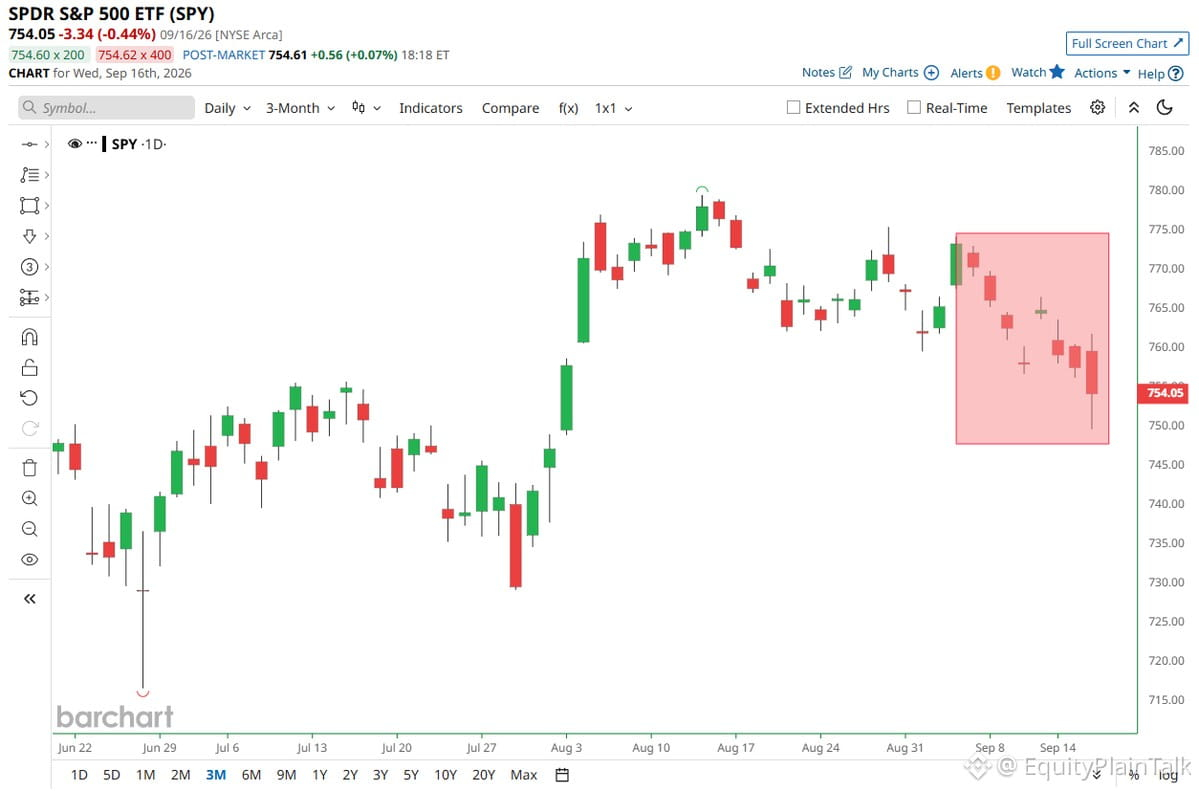
$SPY just went red 7 out of the last 8 sessions. Last time we saw this pattern? April 2024.
Not panic territory yet, but definitely worth noting. Markets don't move in straight lines, and this kind of consistent weakness usually means something's shifting under the surface—whether it's positioning, sentiment, or actual fundamentals catching up.
Keep an eye on volume and breadth. If selling accelerates with conviction, we could see more downside. If it's just profit-taking after a strong run, buyers might step in soon.
$SPY just went red 7 out of the last 8 sessions. Last time we saw this pattern? April 2024.
Not panic territory yet, but definitely worth noting. Markets don't move in straight lines, and this kind of consistent weakness usually means something's shifting under the surface—whether it's positioning, sentiment, or actual fundamentals catching up.
Keep an eye on volume and breadth. If selling accelerates with conviction, we could see more downside. If it's just profit-taking after a strong run, buyers might step in soon.
Not panic territory yet, but definitely worth noting. Markets don't move in straight lines, and this kind of consistent weakness usually means something's shifting under the surface—whether it's positioning, sentiment, or actual fundamentals catching up.
Keep an eye on volume and breadth. If selling accelerates with conviction, we could see more downside. If it's just profit-taking after a strong run, buyers might step in soon.
13
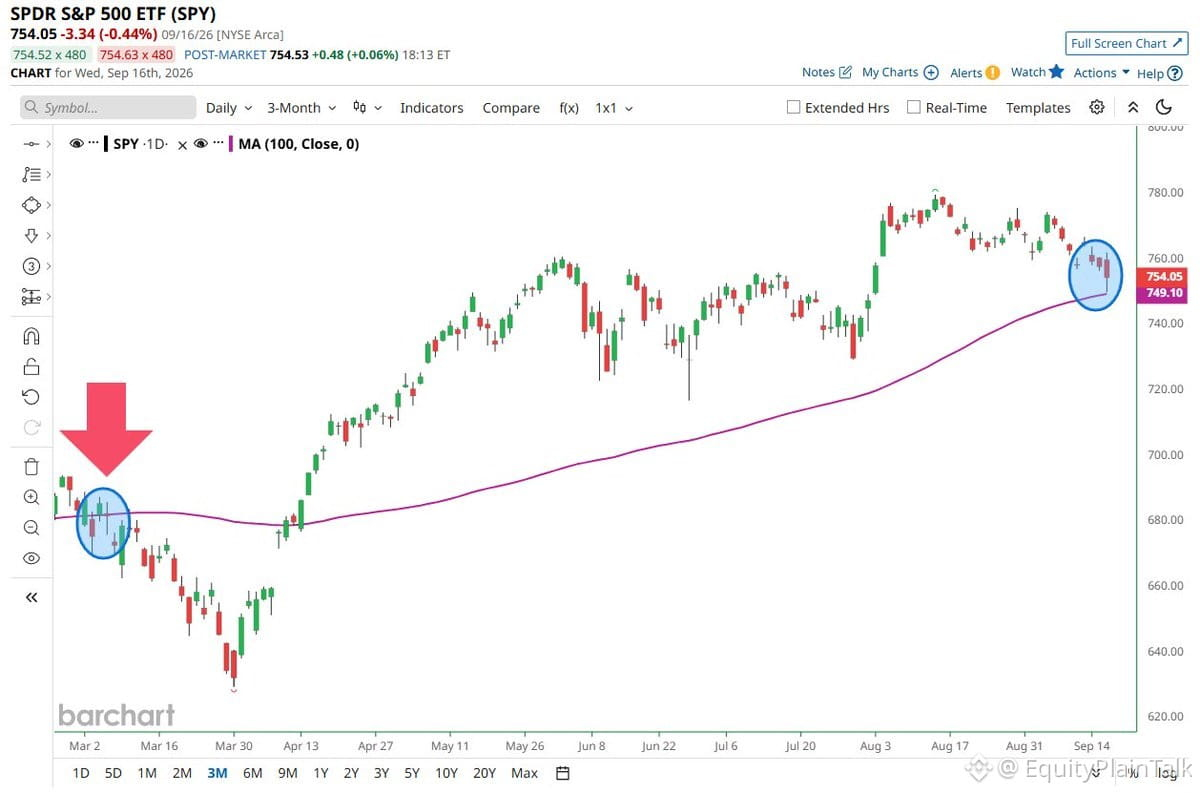
The $SPY has been bleeding—red in 6 of the last 7 sessions. Now sitting right on its 100-day moving average, which hasn't been tested since March.
This level matters. It's held as support for months during the rally. If it breaks, we're looking at the first real technical crack in the structure since spring.
Watch how price behaves here. A clean bounce could reset short-term sentiment. A break below opens the door to deeper pullback—next support zones would be around the 200-day and key retracement levels.
Not panic time, but definitely time to pay attention. Market's telling us something.
The $SPY has been bleeding—red in 6 of the last 7 sessions. Now sitting right on its 100-day moving average, which hasn't been tested since March.
This level matters. It's held as support for months during the rally. If it breaks, we're looking at the first real technical crack in the structure since spring.
Watch how price behaves here. A clean bounce could reset short-term sentiment. A break below opens the door to deeper pullback—next support zones would be around the 200-day and key retracement levels.
Not panic time, but definitely time to pay attention. Market's telling us something.
This level matters. It's held as support for months during the rally. If it breaks, we're looking at the first real technical crack in the structure since spring.
Watch how price behaves here. A clean bounce could reset short-term sentiment. A break below opens the door to deeper pullback—next support zones would be around the 200-day and key retracement levels.
Not panic time, but definitely time to pay attention. Market's telling us something.
18
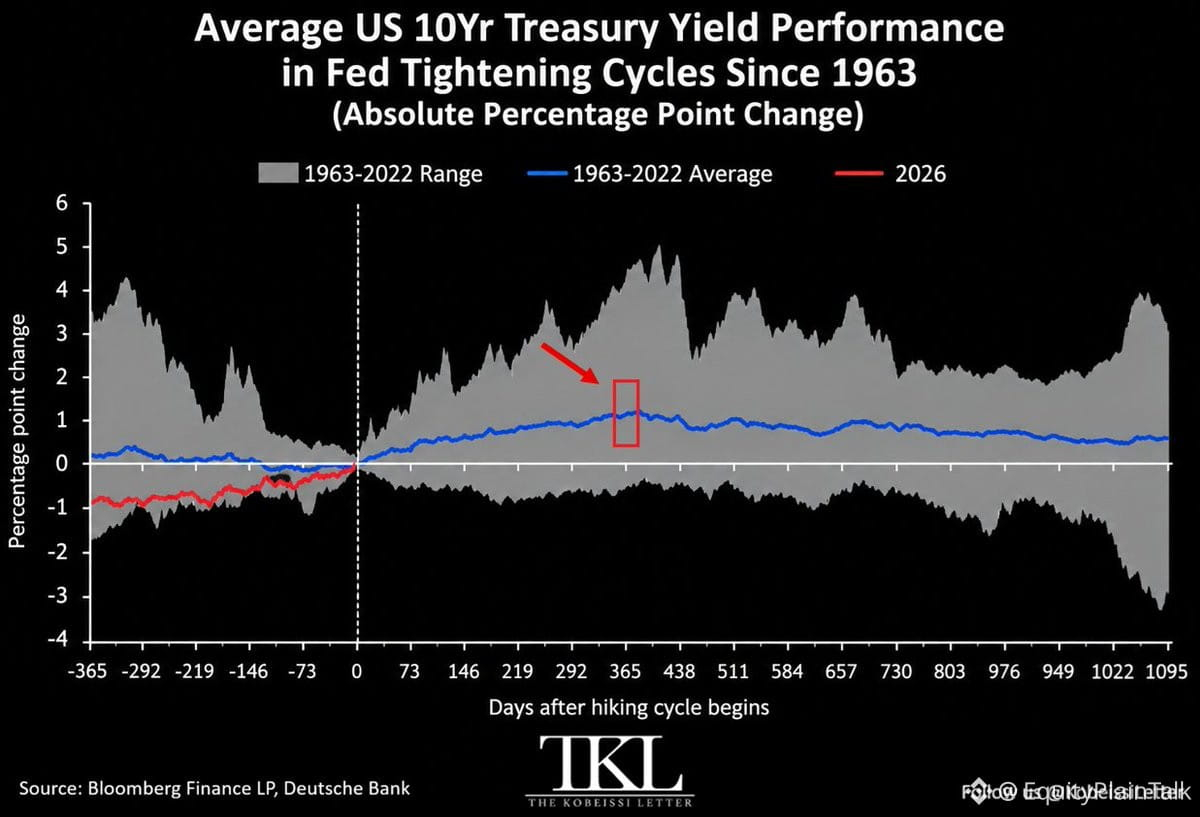
The 10-year yield could be heading toward 6% if history repeats.
Looking back at Fed tightening cycles since 1963, the 10Y typically climbed +50 bps in the first 6 months after the first hike, and +110 bps over 12 months.
If that pattern holds, we'd see the 10Y above 6% next year—first time since August 2000.
The range is wide though. Some cycles saw spikes of +400 bps, others saw drops of -70 bps.
Either way, Treasury intervention is probably on the table if yields keep pushing higher. Rate-sensitive sectors and refinancing costs are already feeling the pressure.
The 10-year yield could be heading toward 6% if history repeats.
Looking back at Fed tightening cycles since 1963, the 10Y typically climbed +50 bps in the first 6 months after the first hike, and +110 bps over 12 months.
If that pattern holds, we'd see the 10Y above 6% next year—first time since August 2000.
The range is wide though. Some cycles saw spikes of +400 bps, others saw drops of -70 bps.
Either way, Treasury intervention is probably on the table if yields keep pushing higher. Rate-sensitive sectors and refinancing costs are already feeling the pressure.
Looking back at Fed tightening cycles since 1963, the 10Y typically climbed +50 bps in the first 6 months after the first hike, and +110 bps over 12 months.
If that pattern holds, we'd see the 10Y above 6% next year—first time since August 2000.
The range is wide though. Some cycles saw spikes of +400 bps, others saw drops of -70 bps.
Either way, Treasury intervention is probably on the table if yields keep pushing higher. Rate-sensitive sectors and refinancing costs are already feeling the pressure.
35
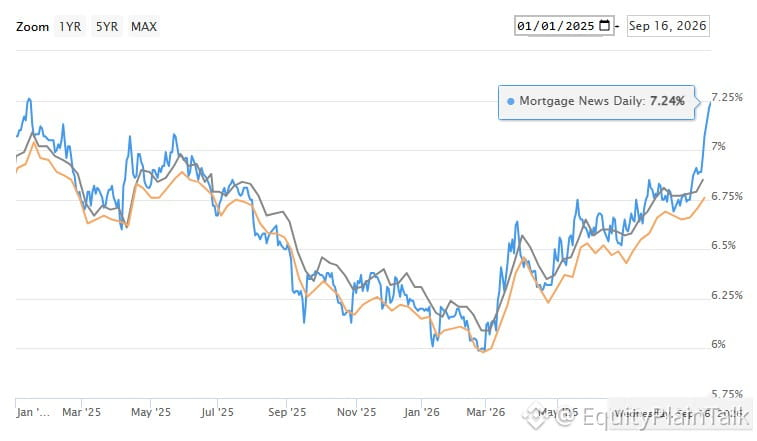
Mortgage rates just hit 7.24% for a 30-year fixed—highest we've seen since January.
If you're thinking about buying a house or refinancing, this matters. Every quarter point adds real money to your monthly payment. On a $400k loan, that's roughly $60-70 more per month compared to rates just a few months ago.
Higher rates cool demand, which eventually pressures home prices. But we're not there yet. Inventory is still tight in most markets, so sellers aren't panicking.
For now, affordability is getting squeezed. Watch how this plays into consumer spending and the broader economy over the next few months.
Mortgage rates just hit 7.24% for a 30-year fixed—highest we've seen since January.
If you're thinking about buying a house or refinancing, this matters. Every quarter point adds real money to your monthly payment. On a $400k loan, that's roughly $60-70 more per month compared to rates just a few months ago.
Higher rates cool demand, which eventually pressures home prices. But we're not there yet. Inventory is still tight in most markets, so sellers aren't panicking.
For now, affordability is getting squeezed. Watch how this plays into consumer spending and the broader economy over the next few months.
If you're thinking about buying a house or refinancing, this matters. Every quarter point adds real money to your monthly payment. On a $400k loan, that's roughly $60-70 more per month compared to rates just a few months ago.
Higher rates cool demand, which eventually pressures home prices. But we're not there yet. Inventory is still tight in most markets, so sellers aren't panicking.
For now, affordability is getting squeezed. Watch how this plays into consumer spending and the broader economy over the next few months.
47
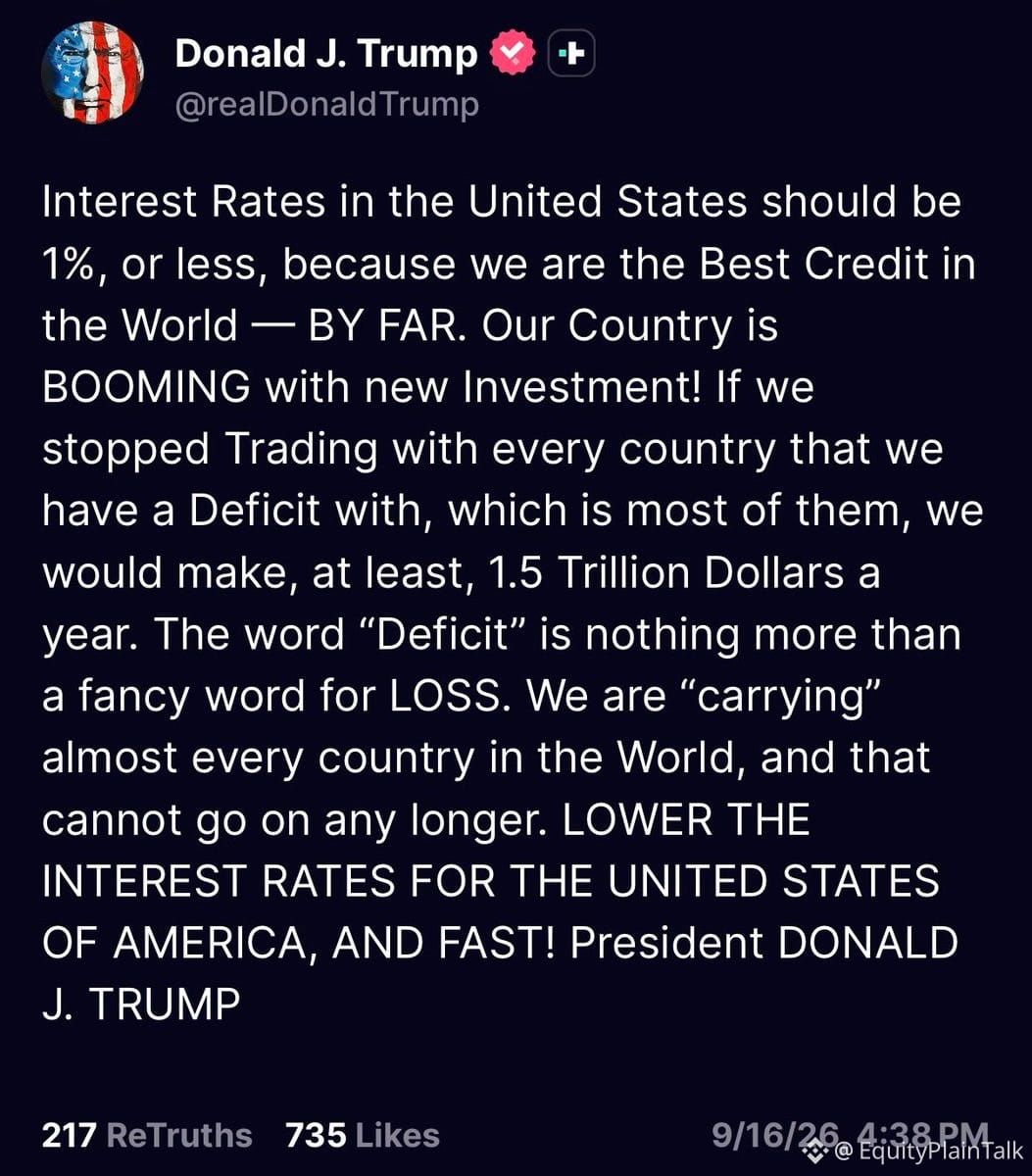
Trump just said the Fed should've cut rates to 1% or lower. Also claims the US is "carrying" countries we run trade deficits with.
This is classic Trump monetary policy thinking—push rates as low as possible to juice growth and markets. Problem is we're nowhere near the zero-rate emergency environment of 2020. Inflation's still sticky, labor market's solid, and the economy doesn't need 1% rates right now.
If the Fed actually did this, you'd likely see:
- Dollar weakness (bad for import costs)
- Asset bubbles accelerate
- Inflation risks resurface
The trade deficit angle is a separate issue—lower rates won't fix structural trade imbalances. Those come from consumption patterns, production costs, and currency dynamics.
Markets love rate cuts, but context matters. Cutting to 1% without a crisis would be reckless monetary policy, not smart stimulus.
Trump just said the Fed should've cut rates to 1% or lower. Also claims the US is "carrying" countries we run trade deficits with.
This is classic Trump monetary policy thinking—push rates as low as possible to juice growth and markets. Problem is we're nowhere near the zero-rate emergency environment of 2020. Inflation's still sticky, labor market's solid, and the economy doesn't need 1% rates right now.
If the Fed actually did this, you'd likely see:
- Dollar weakness (bad for import costs)
- Asset bubbles accelerate
- Inflation risks resurface
The trade deficit angle is a separate issue—lower rates won't fix structural trade imbalances. Those come from consumption patterns, production costs, and currency dynamics.
Markets love rate cuts, but context matters. Cutting to 1% without a crisis would be reckless monetary policy, not smart stimulus.
This is classic Trump monetary policy thinking—push rates as low as possible to juice growth and markets. Problem is we're nowhere near the zero-rate emergency environment of 2020. Inflation's still sticky, labor market's solid, and the economy doesn't need 1% rates right now.
If the Fed actually did this, you'd likely see:
- Dollar weakness (bad for import costs)
- Asset bubbles accelerate
- Inflation risks resurface
The trade deficit angle is a separate issue—lower rates won't fix structural trade imbalances. Those come from consumption patterns, production costs, and currency dynamics.
Markets love rate cuts, but context matters. Cutting to 1% without a crisis would be reckless monetary policy, not smart stimulus.
271
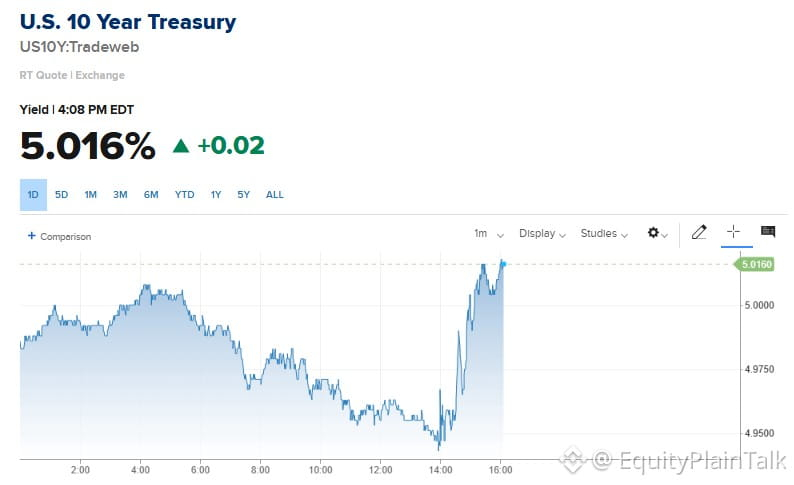
10-year Treasury just hit 5% again.
This matters more than most people think. When the 10-year moves this fast, it reprices everything—mortgages, corporate debt, equity valuations, the whole stack.
Last time we saw 5% was October 2023. Market didn't love it then either. Growth stocks got hammered, tech multiples compressed, and volatility spiked.
If yields stay here or push higher, expect:
- More pressure on high-multiple names
- Financials might catch a bid
- Refinancing costs for companies with debt coming due just got uglier
- Real estate and utilities usually hate this
Keep an eye on how long it stays above 5%. A quick spike is noise. Sustained pressure changes the game.
10-year Treasury just hit 5% again.
This matters more than most people think. When the 10-year moves this fast, it reprices everything—mortgages, corporate debt, equity valuations, the whole stack.
Last time we saw 5% was October 2023. Market didn't love it then either. Growth stocks got hammered, tech multiples compressed, and volatility spiked.
If yields stay here or push higher, expect:
- More pressure on high-multiple names
- Financials might catch a bid
- Refinancing costs for companies with debt coming due just got uglier
- Real estate and utilities usually hate this
Keep an eye on how long it stays above 5%. A quick spike is noise. Sustained pressure changes the game.
This matters more than most people think. When the 10-year moves this fast, it reprices everything—mortgages, corporate debt, equity valuations, the whole stack.
Last time we saw 5% was October 2023. Market didn't love it then either. Growth stocks got hammered, tech multiples compressed, and volatility spiked.
If yields stay here or push higher, expect:
- More pressure on high-multiple names
- Financials might catch a bid
- Refinancing costs for companies with debt coming due just got uglier
- Real estate and utilities usually hate this
Keep an eye on how long it stays above 5%. A quick spike is noise. Sustained pressure changes the game.
225
Nine months changes everything.
Last summer the market priced in three rate cuts for 2026. $WTI sat at $60. Now we're staring at $100+ oil, diesel at record highs, and the Fed signaling rate hikes again.
The math is simple: you don't cut rates when oil's above $100 and inflation's still running 3.5%+. Not unless the economy collapses.
What's keeping the $SPX afloat? AI. The tech revolution is doing heavy lifting right now. Strip that out and this market looks very different.
If energy settles down, we could see $SPX push past 8,000. But until then, expect chop. The Fed's been fighting inflation for 60 straight months and they're not done.
Higher for longer is back on the table.
Nine months changes everything.
Last summer the market priced in three rate cuts for 2026. $WTI sat at $60. Now we're staring at $100+ oil, diesel at record highs, and the Fed signaling rate hikes again.
The math is simple: you don't cut rates when oil's above $100 and inflation's still running 3.5%+. Not unless the economy collapses.
What's keeping the $SPX afloat? AI. The tech revolution is doing heavy lifting right now. Strip that out and this market looks very different.
If energy settles down, we could see $SPX push past 8,000. But until then, expect chop. The Fed's been fighting inflation for 60 straight months and they're not done.
Higher for longer is back on the table.
Last summer the market priced in three rate cuts for 2026. $WTI sat at $60. Now we're staring at $100+ oil, diesel at record highs, and the Fed signaling rate hikes again.
The math is simple: you don't cut rates when oil's above $100 and inflation's still running 3.5%+. Not unless the economy collapses.
What's keeping the $SPX afloat? AI. The tech revolution is doing heavy lifting right now. Strip that out and this market looks very different.
If energy settles down, we could see $SPX push past 8,000. But until then, expect chop. The Fed's been fighting inflation for 60 straight months and they're not done.
Higher for longer is back on the table.
145
Dow just dropped 800 points after the Fed basically said "we're not done yet" on rate hikes.
Market was pricing in cuts. Fed's still talking hikes. That's the gap causing the selloff.
This is what happens when investors get too comfortable too early. The Fed's been pretty clear they care more about killing inflation than protecting your portfolio.
Watch how sectors react from here. Rate-sensitive stuff (tech, growth, housing) usually bleeds first. Defensives and value might hold better if this continues.
No panic needed, but the easy money trade is definitely over.
Dow just dropped 800 points after the Fed basically said "we're not done yet" on rate hikes.
Market was pricing in cuts. Fed's still talking hikes. That's the gap causing the selloff.
This is what happens when investors get too comfortable too early. The Fed's been pretty clear they care more about killing inflation than protecting your portfolio.
Watch how sectors react from here. Rate-sensitive stuff (tech, growth, housing) usually bleeds first. Defensives and value might hold better if this continues.
No panic needed, but the easy money trade is definitely over.
Market was pricing in cuts. Fed's still talking hikes. That's the gap causing the selloff.
This is what happens when investors get too comfortable too early. The Fed's been pretty clear they care more about killing inflation than protecting your portfolio.
Watch how sectors react from here. Rate-sensitive stuff (tech, growth, housing) usually bleeds first. Defensives and value might hold better if this continues.
No panic needed, but the easy money trade is definitely over.
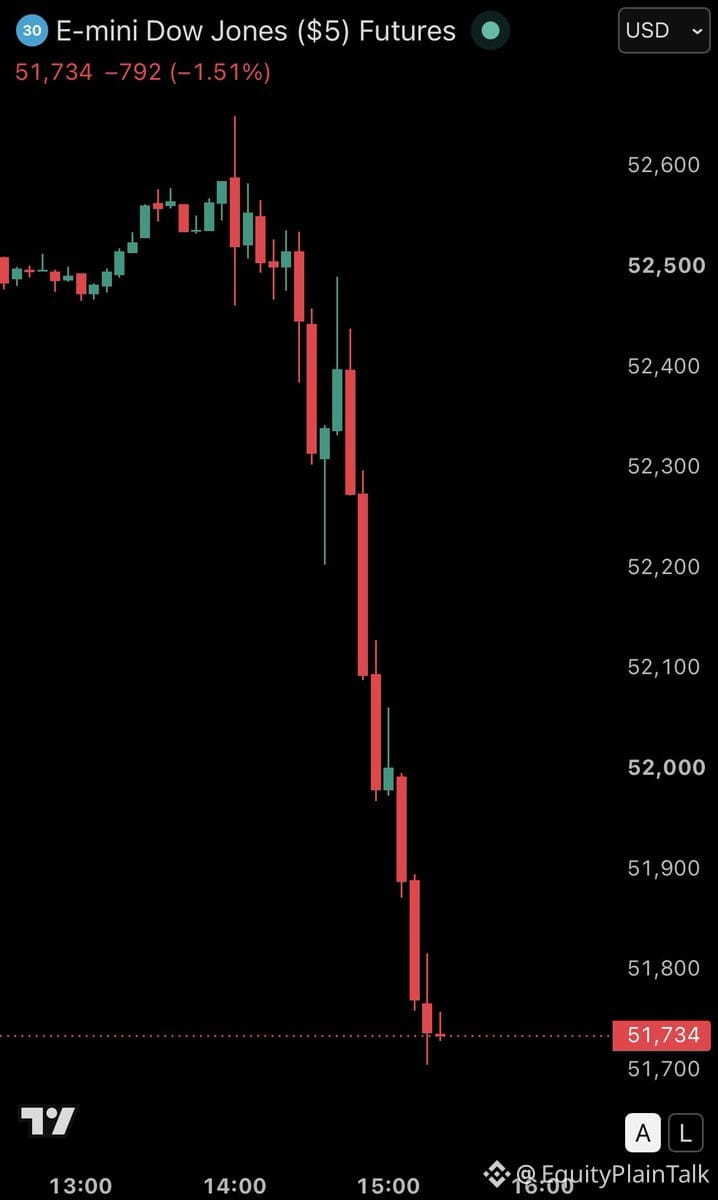
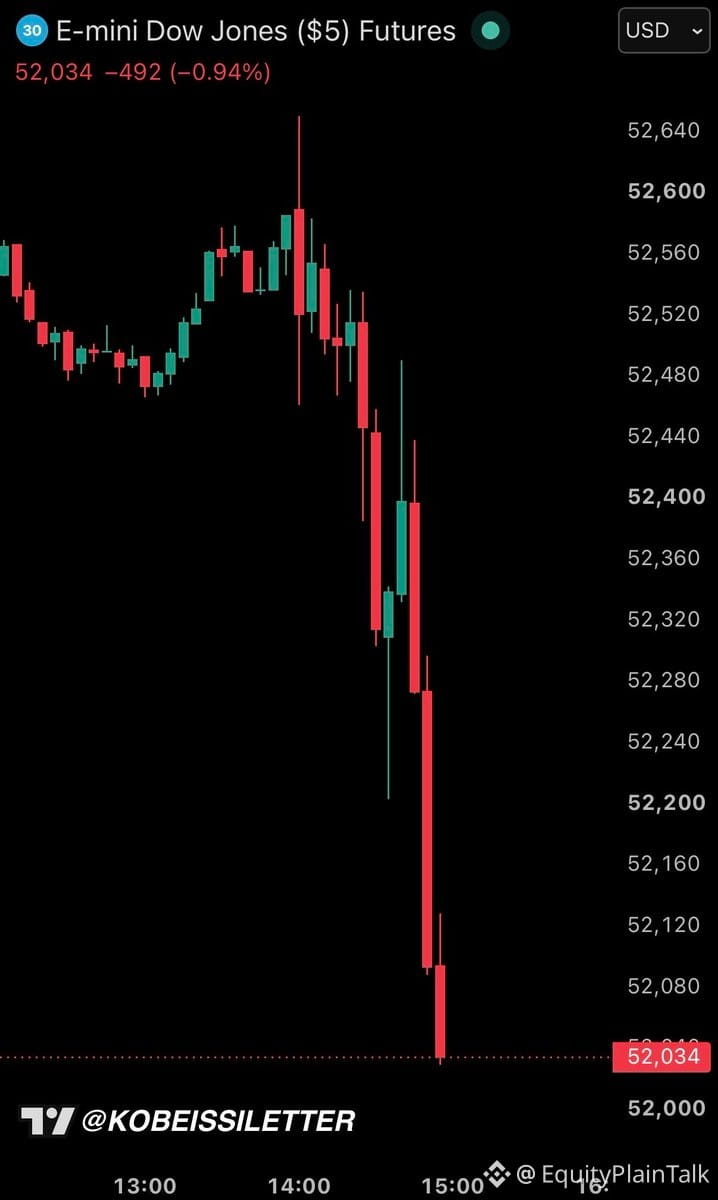
33
The Dow just dropped over 500 points after the Fed hiked rates and made it clear more hikes are coming.
Wild to think that exactly a year ago, they were cutting rates.
The whiplash in policy is real. Markets hate uncertainty, and right now the Fed's playbook looks anything but predictable. Rate hikes kill momentum, especially when investors were pricing in a pause or even cuts later this year.
This isn't just about today's move—it's about what comes next. Higher rates mean higher borrowing costs, pressure on valuations, and a tougher environment for growth stocks. If you're holding anything rate-sensitive, you're feeling it.
The exchange rate and currency markets are reacting too. A stronger dollar from rate hikes impacts everything from euro exchange rates to how much your money is worth when you convert currency abroad. Even something as simple as finding the best exchange rate for euros or using a currency converter gets more volatile in this environment.
Bottom line: the Fed just reminded everyone they're willing to inflict pain to control inflation. That's a tough pill for equities to swallow.
The Dow just dropped over 500 points after the Fed hiked rates and made it clear more hikes are coming.
Wild to think that exactly a year ago, they were cutting rates.
The whiplash in policy is real. Markets hate uncertainty, and right now the Fed's playbook looks anything but predictable. Rate hikes kill momentum, especially when investors were pricing in a pause or even cuts later this year.
This isn't just about today's move—it's about what comes next. Higher rates mean higher borrowing costs, pressure on valuations, and a tougher environment for growth stocks. If you're holding anything rate-sensitive, you're feeling it.
The exchange rate and currency markets are reacting too. A stronger dollar from rate hikes impacts everything from euro exchange rates to how much your money is worth when you convert currency abroad. Even something as simple as finding the best exchange rate for euros or using a currency converter gets more volatile in this environment.
Bottom line: the Fed just reminded everyone they're willing to inflict pain to control inflation. That's a tough pill for equities to swallow.
Wild to think that exactly a year ago, they were cutting rates.
The whiplash in policy is real. Markets hate uncertainty, and right now the Fed's playbook looks anything but predictable. Rate hikes kill momentum, especially when investors were pricing in a pause or even cuts later this year.
This isn't just about today's move—it's about what comes next. Higher rates mean higher borrowing costs, pressure on valuations, and a tougher environment for growth stocks. If you're holding anything rate-sensitive, you're feeling it.
The exchange rate and currency markets are reacting too. A stronger dollar from rate hikes impacts everything from euro exchange rates to how much your money is worth when you convert currency abroad. Even something as simple as finding the best exchange rate for euros or using a currency converter gets more volatile in this environment.
Bottom line: the Fed just reminded everyone they're willing to inflict pain to control inflation. That's a tough pill for equities to swallow.
24
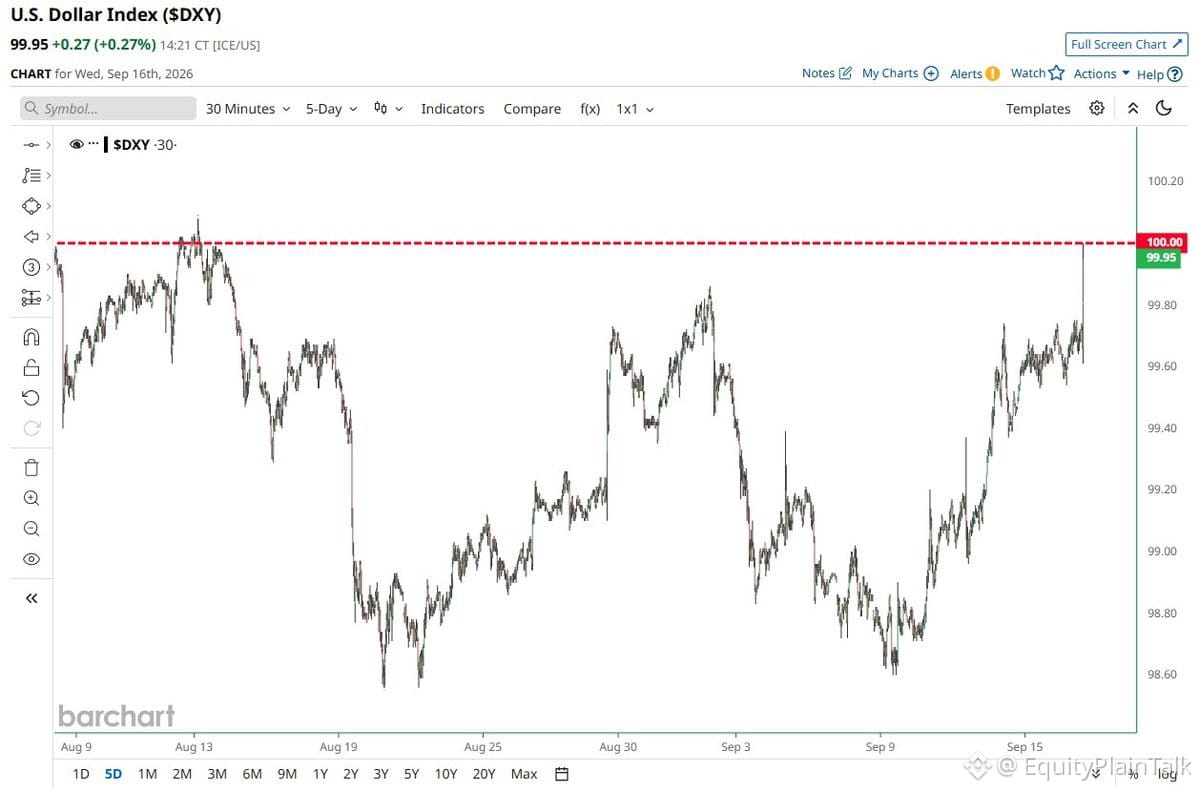
The $DXY just hit 100 for the first time in over a month.
That's a meaningful move. Dollar strength tends to create headwinds for:
• Commodities (priced in dollars)
• Emerging markets (dollar-denominated debt)
• U.S. multinationals (translation effects)
Worth watching if this holds. A stronger dollar usually doesn't happen in isolation—it reflects shifting rate expectations, risk sentiment, or capital flows back to the U.S.
If you're in international stocks or commodity-heavy sectors, pay attention. The currency converter math just got less favorable.
The $DXY just hit 100 for the first time in over a month.
That's a meaningful move. Dollar strength tends to create headwinds for:
• Commodities (priced in dollars)
• Emerging markets (dollar-denominated debt)
• U.S. multinationals (translation effects)
Worth watching if this holds. A stronger dollar usually doesn't happen in isolation—it reflects shifting rate expectations, risk sentiment, or capital flows back to the U.S.
If you're in international stocks or commodity-heavy sectors, pay attention. The currency converter math just got less favorable.
That's a meaningful move. Dollar strength tends to create headwinds for:
• Commodities (priced in dollars)
• Emerging markets (dollar-denominated debt)
• U.S. multinationals (translation effects)
Worth watching if this holds. A stronger dollar usually doesn't happen in isolation—it reflects shifting rate expectations, risk sentiment, or capital flows back to the U.S.
If you're in international stocks or commodity-heavy sectors, pay attention. The currency converter math just got less favorable.
5
Fed Chair Warsh just hiked rates despite a "strengthening" economy. His reasoning? Financial conditions aren't actually restrictive.
Here's what matters:
The FOMC broadly agrees conditions aren't tight enough. Warsh's singular focus: getting inflation back to 2%, no matter what. He even skipped submitting a dot-plot forecast.
Translation: The Fed isn't done. They'll keep tightening until inflation convincingly moves toward 2%.
Markets betting on a pivot might want to reconsider. When the Fed tells you their priority, believe them the first time.
Fed Chair Warsh just hiked rates despite a "strengthening" economy. His reasoning? Financial conditions aren't actually restrictive.
Here's what matters:
The FOMC broadly agrees conditions aren't tight enough. Warsh's singular focus: getting inflation back to 2%, no matter what. He even skipped submitting a dot-plot forecast.
Translation: The Fed isn't done. They'll keep tightening until inflation convincingly moves toward 2%.
Markets betting on a pivot might want to reconsider. When the Fed tells you their priority, believe them the first time.
Here's what matters:
The FOMC broadly agrees conditions aren't tight enough. Warsh's singular focus: getting inflation back to 2%, no matter what. He even skipped submitting a dot-plot forecast.
Translation: The Fed isn't done. They'll keep tightening until inflation convincingly moves toward 2%.
Markets betting on a pivot might want to reconsider. When the Fed tells you their priority, believe them the first time.
24
Fed just raised rates 25bps — first hike since July 2023. Unanimous 12-0 vote.
They're projecting one more 25bp hike this year. Translation: higher for longer is officially back on the table.
Fed's view: job market still solid, unemployment stable, and they're committed to getting inflation back to 2%.
Market had gotten comfortable with the pause. Now we're repricing. Rate-sensitive sectors (tech, real estate, small caps) will feel this first. Bond yields climbing, dollar strengthening.
This isn't panic mode — it's the Fed saying inflation isn't dead yet. If you've been overweight duration or speculative growth, time to reassess.
Watch how the next few sessions digest this. Powell's tone matters more than the hike itself.
Fed just raised rates 25bps — first hike since July 2023. Unanimous 12-0 vote.
They're projecting one more 25bp hike this year. Translation: higher for longer is officially back on the table.
Fed's view: job market still solid, unemployment stable, and they're committed to getting inflation back to 2%.
Market had gotten comfortable with the pause. Now we're repricing. Rate-sensitive sectors (tech, real estate, small caps) will feel this first. Bond yields climbing, dollar strengthening.
This isn't panic mode — it's the Fed saying inflation isn't dead yet. If you've been overweight duration or speculative growth, time to reassess.
Watch how the next few sessions digest this. Powell's tone matters more than the hike itself.
They're projecting one more 25bp hike this year. Translation: higher for longer is officially back on the table.
Fed's view: job market still solid, unemployment stable, and they're committed to getting inflation back to 2%.
Market had gotten comfortable with the pause. Now we're repricing. Rate-sensitive sectors (tech, real estate, small caps) will feel this first. Bond yields climbing, dollar strengthening.
This isn't panic mode — it's the Fed saying inflation isn't dead yet. If you've been overweight duration or speculative growth, time to reassess.
Watch how the next few sessions digest this. Powell's tone matters more than the hike itself.
48
Ішінара рас
Fed just raised rates 25bps — first hike since July 2023.
That's the longest pause we've seen since 2008. Market had been pricing in cuts, not hikes.
This changes the game for equities, especially growth stocks that were banking on easier money. Bond yields spiking. Dollar strengthening.
If you're long high-multiple tech or unprofitable names, today just got a lot more expensive.
Fed just raised rates 25bps — first hike since July 2023.
That's the longest pause we've seen since 2008. Market had been pricing in cuts, not hikes.
This changes the game for equities, especially growth stocks that were banking on easier money. Bond yields spiking. Dollar strengthening.
If you're long high-multiple tech or unprofitable names, today just got a lot more expensive.
That's the longest pause we've seen since 2008. Market had been pricing in cuts, not hikes.
This changes the game for equities, especially growth stocks that were banking on easier money. Bond yields spiking. Dollar strengthening.
If you're long high-multiple tech or unprofitable names, today just got a lot more expensive.
2
2.9k
Көбірек контент көру үшін кіріңіз
Binance Square платформасында әлемдік криптоқоғамдастыққа қосылыңыз
⚡️ Криптовалюта туралы ең соңғы және пайдалы ақпаратты алыңыз.
💬 Әлемдегі ең ірі криптобиржаның сеніміне ие.
👍 Расталған авторлардың нақты пікірлерін табыңыз.
Электрондық пошта/телефон нөмірі
Трендтегі тақырыптар
MemeLaunchpads82%OfArcDayOneVolume
99 рет көрілді
25 адам талқылап жатыр
$BTC BITCOIN (BTC) — DECISION ZONE!
BTC is currently trading around 76,527 USDT.
Key Levels to Watch:
Support: $75K–$73.5K
Resistance: $78K–$80K
Breakout Zone: $82K+
Bitcoin is showing signs of recovery after the recent correction, but short-term momentum still needs confirmation.
👀 The real question:
Will BTC break $80K → $82K+ or revisit the $75K–$73.5K support zone?
Don't chase the candle. Watch price action + volume + confirmation.
💬 What's your view? BTC → $82K or $73K first?
#Bitcoin #BTC #BTCUSDT #Binance #BinanceSquare #Crypto #CryptoTrading #Web3
#MemeLaunchpads82%OfArcDayOneVolume #Binance #FedSEPProjects2026RateAt4.1%
MrAwaisBilal
·0 лайк
·3 рет көрілді
OstiumLoanDisputeHearingSetInNYFederalCourt
1,604 рет көрілді
66 адам талқылап жатыр
SKPoliceRefer18PolymarketUsersToProsecutors
2,815 рет көрілді
132 адам талқылап жатыр