

Crypto Man MAB
18.3k Жариялаулар

Crypto Man MAB
 «Square расталған+» белгісі
Хабарлау
Пайдаланушыны блоктау
Binance Sqaure Top KOL - Streamer - Binance PAC Product Advisory Counsel Member - X @MabMan338

#BinanceTurns7 task 2

#BinanceTurns7

Top Voices
Ашық сауда
Жиі сауда жасайтын трейдер
5.6 жыл
851 Жазылым
83.6K+ Жазылушылар
175.9K+ лайк басылған
4 Белгішелер
Жазбалар
Портфолио
Барлығы
Баға ұсыныстары
Видеолар
Тікелей эфир
PINNED
Two Legends Are Following me one on X and other one on Binance Sqaure😇
Two Legends Are Following me one on X and other one on Binance Sqaure😇

19
1
93
1.6k
·
--
Жоғары (өспелі)
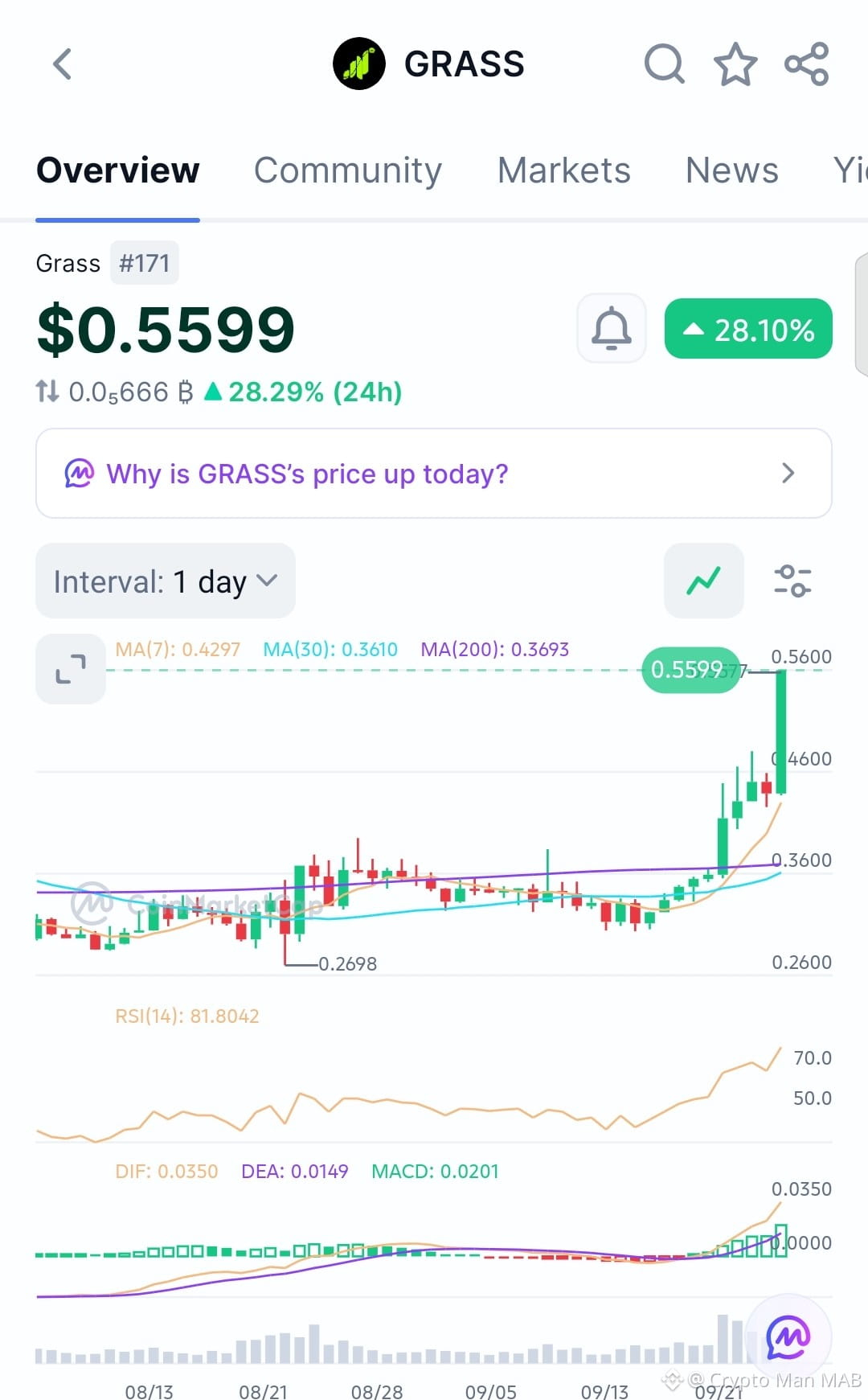
$GRASS just ripped 28% today, breaking out to $0.5599 after basically going sideways for a month.
{future}(GRASSUSDT)
Chart's pretty clear about what happened price was chopping around $0.26-$0.37 for weeks, then today's candle just blew through everything. All three moving averages are now stacked below price, which is the setup you want to see for a real trend change.
RSI is sitting at 81.8 though, so this is stretched. Not saying it can't keep going, but chasing green candles at 80+ RSI has burned people before. MACD just turned positive too, which lines up with the move.
Volume looks like it actually backed this up, not just a low-liquidity wick. That matters breakouts on no volume tend to fade fast.
$GRASS just ripped 28% today, breaking out to $0.5599 after basically going sideways for a month.
Chart's pretty clear about what happened price was chopping around $0.26-$0.37 for weeks, then today's candle just blew through everything. All three moving averages are now stacked below price, which is the setup you want to see for a real trend change.
RSI is sitting at 81.8 though, so this is stretched. Not saying it can't keep going, but chasing green candles at 80+ RSI has burned people before. MACD just turned positive too, which lines up with the move.
Volume looks like it actually backed this up, not just a low-liquidity wick. That matters breakouts on no volume tend to fade fast.
Chart's pretty clear about what happened price was chopping around $0.26-$0.37 for weeks, then today's candle just blew through everything. All three moving averages are now stacked below price, which is the setup you want to see for a real trend change.
RSI is sitting at 81.8 though, so this is stretched. Not saying it can't keep going, but chasing green candles at 80+ RSI has burned people before. MACD just turned positive too, which lines up with the move.
Volume looks like it actually backed this up, not just a low-liquidity wick. That matters breakouts on no volume tend to fade fast.
1
3
748
That's it for today's episode will see another amazing episode
That's it for today's episode will see another amazing episode
Crypto Man MAB
·
--
[Қайта ойнату] Crypto Grit Opens Up About Crypto | Web3 Room With MAB - Episode 3
35 а 26 с · 186 рет көрілді
2
730
·
--
Жоғары (өспелі)
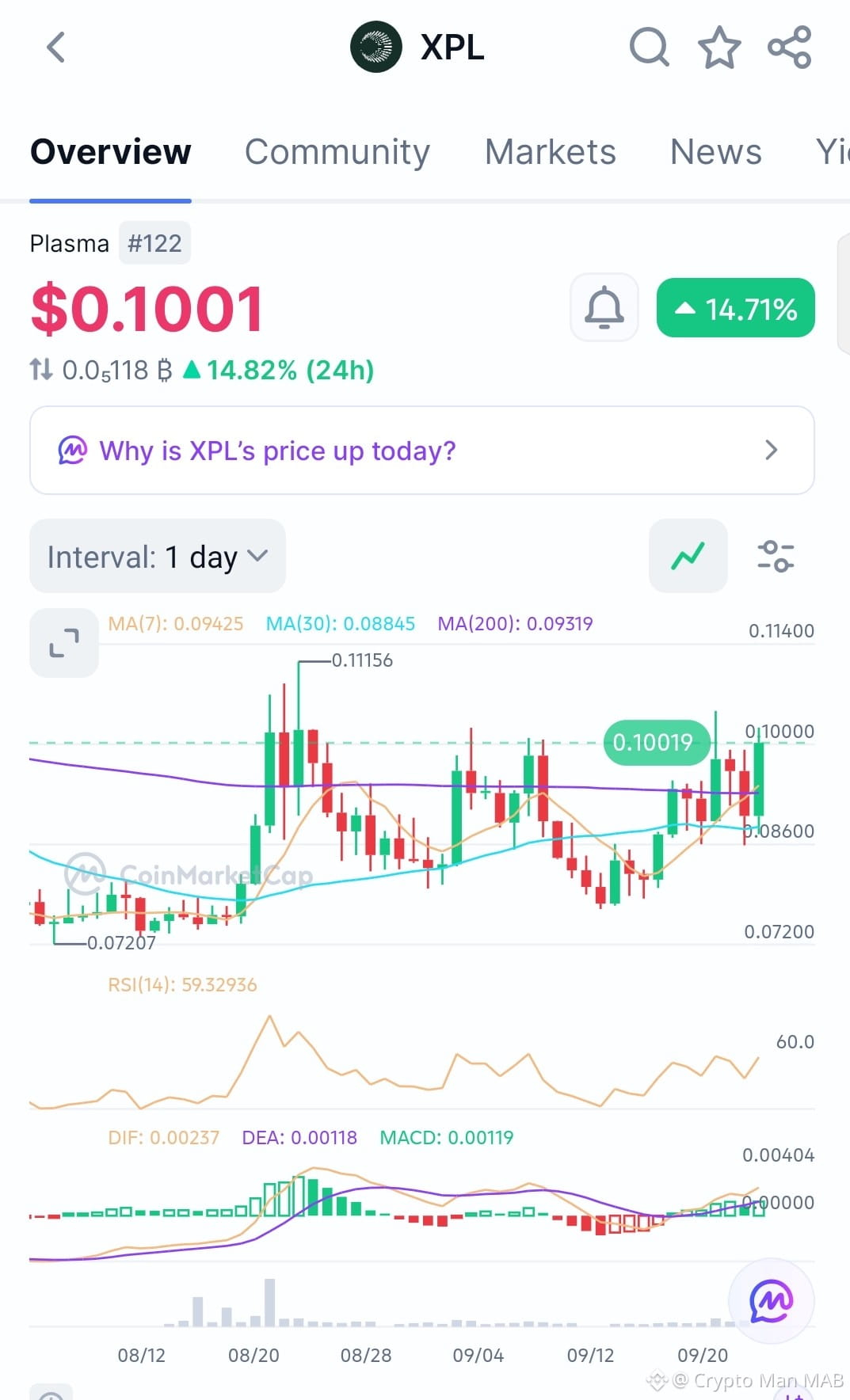
$XPL is showing strong short term momentum but it’s now testing an important resistance zone around $0.10.
Price is trading around $0.1001 and has reclaimed the MA200 while staying above the MA7 and MA30. The MA7 has also crossed back above the MA30 which supports the short term bullish structure.
RSI is around 59 and MACD has turned positive, so momentum is improving. But there’s one thing I’m watching closely: volume.
The recent move is strong but volume is still much lower than the spike we saw around the August 20 high. That makes this look more like a range recovery than a confirmed breakout for now.
Key levels:
Resistance: $0.100–$0.105
Major resistance: $0.1116
Support: $0.093–$0.094
Next support: $0.086–$0.088
Major range support: $0.072
A daily close above $0.105 with strong volume could open the way toward $0.1116.
If price gets rejected here a pullback toward $0.093–$0.095 would not be surprising.
For now I’m watching how XPL reacts around $0.10 rather than chasing the move after a 15% daily rally.
Technical analysis only. Not financial advice.
$XPL is showing strong short term momentum but it’s now testing an important resistance zone around $0.10.
Price is trading around $0.1001 and has reclaimed the MA200 while staying above the MA7 and MA30. The MA7 has also crossed back above the MA30 which supports the short term bullish structure.
RSI is around 59 and MACD has turned positive, so momentum is improving. But there’s one thing I’m watching closely: volume.
The recent move is strong but volume is still much lower than the spike we saw around the August 20 high. That makes this look more like a range recovery than a confirmed breakout for now.
Key levels:
Resistance: $0.100–$0.105
Major resistance: $0.1116
Support: $0.093–$0.094
Next support: $0.086–$0.088
Major range support: $0.072
A daily close above $0.105 with strong volume could open the way toward $0.1116.
If price gets rejected here a pullback toward $0.093–$0.095 would not be surprising.
For now I’m watching how XPL reacts around $0.10 rather than chasing the move after a 15% daily rally.
Technical analysis only. Not financial advice.
Price is trading around $0.1001 and has reclaimed the MA200 while staying above the MA7 and MA30. The MA7 has also crossed back above the MA30 which supports the short term bullish structure.
RSI is around 59 and MACD has turned positive, so momentum is improving. But there’s one thing I’m watching closely: volume.
The recent move is strong but volume is still much lower than the spike we saw around the August 20 high. That makes this look more like a range recovery than a confirmed breakout for now.
Key levels:
Resistance: $0.100–$0.105
Major resistance: $0.1116
Support: $0.093–$0.094
Next support: $0.086–$0.088
Major range support: $0.072
A daily close above $0.105 with strong volume could open the way toward $0.1116.
If price gets rejected here a pullback toward $0.093–$0.095 would not be surprising.
For now I’m watching how XPL reacts around $0.10 rather than chasing the move after a 15% daily rally.
Technical analysis only. Not financial advice.
3
705
Расталды
$ONDO pumped because BlackRock partners with $ONDO to launch tokenized investment portfolios.
{future}(ONDOUSDT)
$ONDO pumped because BlackRock partners with $ONDO to launch tokenized investment portfolios.
1
2
1.9k
·
--
Жоғары (өспелі)
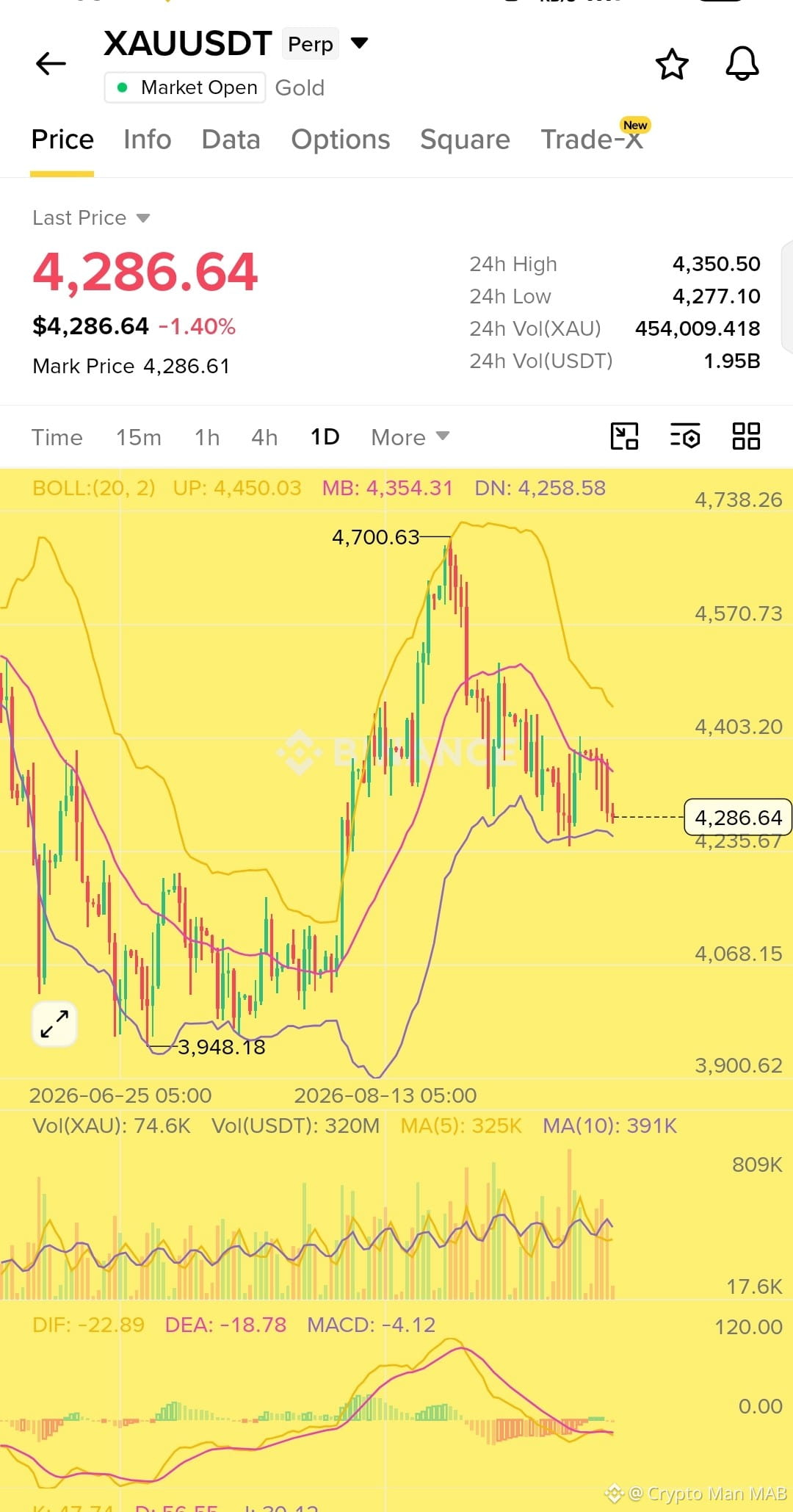
$XAU is showing strong buying pressure around the current zone and so far buyers are doing a good job defending the downside.
{future}(XAUUSDT)
The key area I’m watching is $4280 to $4300. If gold continues to hold this zone and starts gaining momentum, we could see another push toward the upside levels.
The first targets I’m watching are $4330 and $4360. If momentum remains strong, $4400, $4450, $4500 and potentially $4700 could come into play.
On the downside, $4220 is the level I’d want to see hold. A break below it would weaken this setup and could signal a deeper pullback.
For now, the structure remains interesting for a potential long.
Entry: $4280 - $4300
TP: $4330 - $4360 - $4400 - $4450 - $4500 - $4700
SL: $4220
$XAU is showing strong buying pressure around the current zone and so far buyers are doing a good job defending the downside.
The key area I’m watching is $4280 to $4300. If gold continues to hold this zone and starts gaining momentum, we could see another push toward the upside levels.
The first targets I’m watching are $4330 and $4360. If momentum remains strong, $4400, $4450, $4500 and potentially $4700 could come into play.
On the downside, $4220 is the level I’d want to see hold. A break below it would weaken this setup and could signal a deeper pullback.
For now, the structure remains interesting for a potential long.
Entry: $4280 - $4300
TP: $4330 - $4360 - $4400 - $4450 - $4500 - $4700
SL: $4220
The key area I’m watching is $4280 to $4300. If gold continues to hold this zone and starts gaining momentum, we could see another push toward the upside levels.
The first targets I’m watching are $4330 and $4360. If momentum remains strong, $4400, $4450, $4500 and potentially $4700 could come into play.
On the downside, $4220 is the level I’d want to see hold. A break below it would weaken this setup and could signal a deeper pullback.
For now, the structure remains interesting for a potential long.
Entry: $4280 - $4300
TP: $4330 - $4360 - $4400 - $4450 - $4500 - $4700
SL: $4220
2
733
·
--
Жоғары (өспелі)
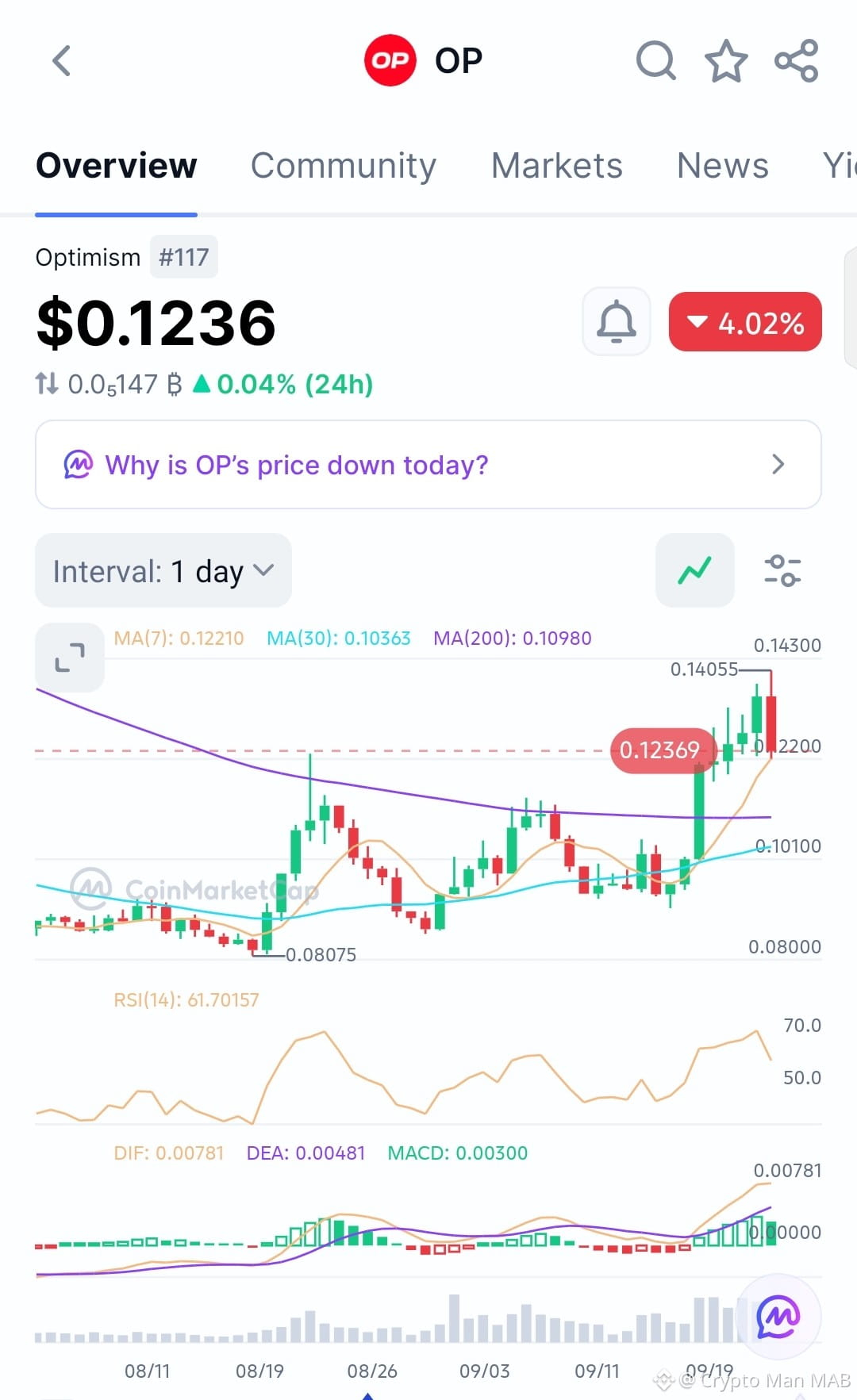
$OP is still holding a bullish structure after breaking out of its 3 week base but today’s rejection near $0.1405 is something to watch.
{future}(OPUSDT)
Price is currently around $0.1236 and remains above the MA7 MA30 and MA200 which keeps the short term structure positive.
However RSI has cooled from the 70 area and MACD momentum is starting to flatten. The long upper wick from $0.1405 also shows strong selling pressure around resistance.
Key levels I’m watching:
Resistance: $0.1405 to $0.143
Support: $0.122
Major support: $0.110
If OP holds $0.122 to $0.110 the breakout structure remains intact and we could see another attempt toward $0.14.
A daily close above $0.143 would strengthen the continuation setup.
On the other hand a daily close below $0.122 could bring the $0.110 MA200 retest into play.
For now I’m watching the daily close. Today’s rejection doesn’t automatically mean the breakout is over.
Technical analysis only. Not financial advice.
$OP is still holding a bullish structure after breaking out of its 3 week base but today’s rejection near $0.1405 is something to watch.
Price is currently around $0.1236 and remains above the MA7 MA30 and MA200 which keeps the short term structure positive.
However RSI has cooled from the 70 area and MACD momentum is starting to flatten. The long upper wick from $0.1405 also shows strong selling pressure around resistance.
Key levels I’m watching:
Resistance: $0.1405 to $0.143
Support: $0.122
Major support: $0.110
If OP holds $0.122 to $0.110 the breakout structure remains intact and we could see another attempt toward $0.14.
A daily close above $0.143 would strengthen the continuation setup.
On the other hand a daily close below $0.122 could bring the $0.110 MA200 retest into play.
For now I’m watching the daily close. Today’s rejection doesn’t automatically mean the breakout is over.
Technical analysis only. Not financial advice.
Price is currently around $0.1236 and remains above the MA7 MA30 and MA200 which keeps the short term structure positive.
However RSI has cooled from the 70 area and MACD momentum is starting to flatten. The long upper wick from $0.1405 also shows strong selling pressure around resistance.
Key levels I’m watching:
Resistance: $0.1405 to $0.143
Support: $0.122
Major support: $0.110
If OP holds $0.122 to $0.110 the breakout structure remains intact and we could see another attempt toward $0.14.
A daily close above $0.143 would strengthen the continuation setup.
On the other hand a daily close below $0.122 could bring the $0.110 MA200 retest into play.
For now I’m watching the daily close. Today’s rejection doesn’t automatically mean the breakout is over.
Technical analysis only. Not financial advice.
1
3
1.3k
🚨 $230M in crypto longs liquidated in the past hour as $BTC falls below $84,000
🚨 $230M in crypto longs liquidated in the past hour as $BTC falls below $84,000
3
713
·
--
Жоғары (өспелі)
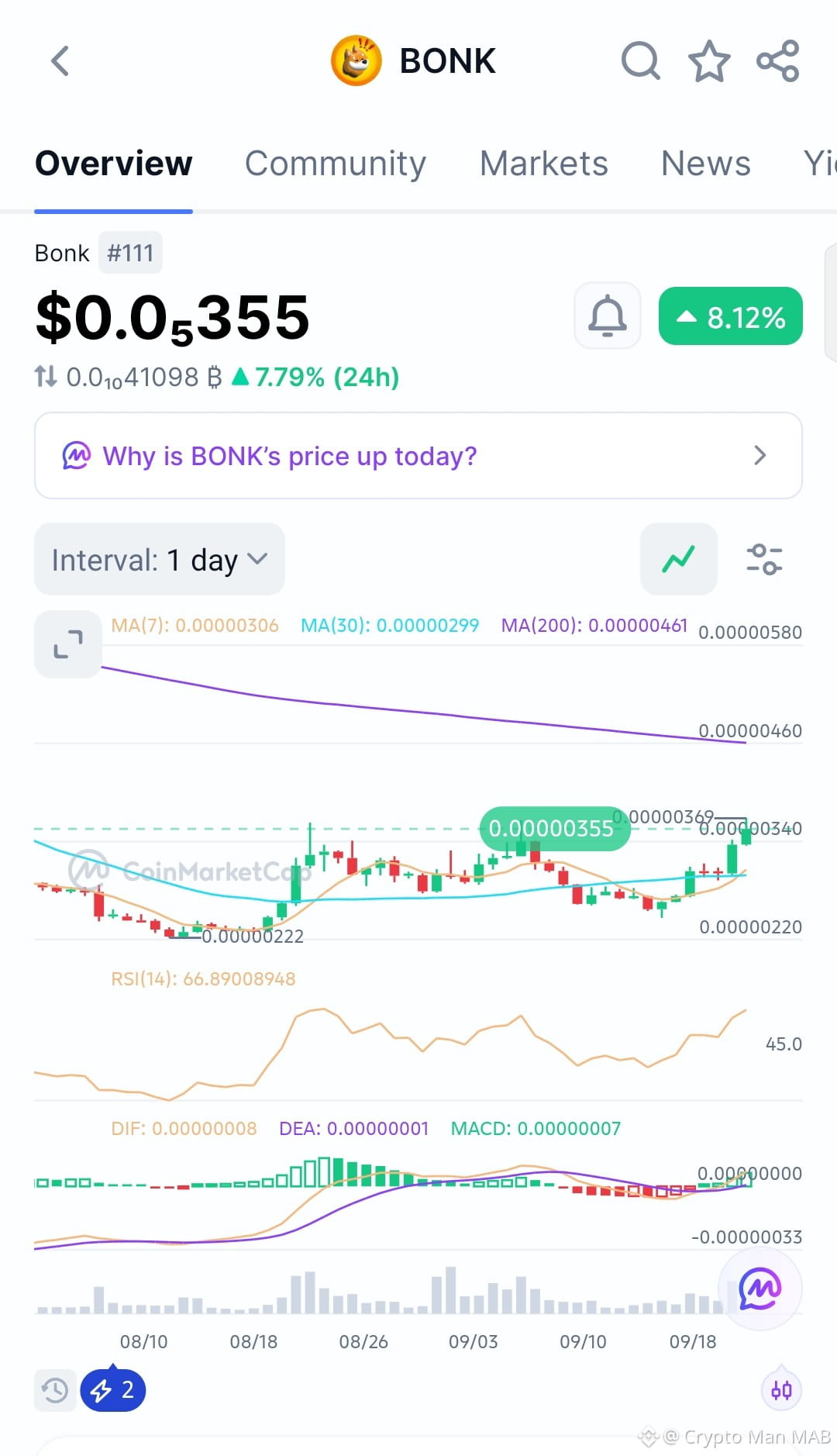
$BONK is starting to look interesting here 👀
{spot}(BONKUSDT)
BONK is trading around $0.00000355 after pushing higher and breaking above the recent range. The short term momentum is clearly improving.
Price is now above both the MA7 and MA30 which is a positive sign. RSI is around 67 showing strong momentum but it is also getting closer to overbought territory.
MACD has turned positive as well with the histogram expanding which suggests buyers are gaining control.
The bigger resistance sits around $0.00000460 near the MA200. If BONK can hold above $0.00000340 to $0.00000355 and continue building momentum then a move toward $0.00000400 and potentially $0.00000460 could come into play.
I would watch the $0.00000340 area closely. Losing that level could bring the price back toward the $0.00000300 zone.
Momentum is with the bulls for now but confirmation and volume are important from here.
$BONK is starting to look interesting here 👀
BONK is trading around $0.00000355 after pushing higher and breaking above the recent range. The short term momentum is clearly improving.
Price is now above both the MA7 and MA30 which is a positive sign. RSI is around 67 showing strong momentum but it is also getting closer to overbought territory.
MACD has turned positive as well with the histogram expanding which suggests buyers are gaining control.
The bigger resistance sits around $0.00000460 near the MA200. If BONK can hold above $0.00000340 to $0.00000355 and continue building momentum then a move toward $0.00000400 and potentially $0.00000460 could come into play.
I would watch the $0.00000340 area closely. Losing that level could bring the price back toward the $0.00000300 zone.
Momentum is with the bulls for now but confirmation and volume are important from here.
BONK is trading around $0.00000355 after pushing higher and breaking above the recent range. The short term momentum is clearly improving.
Price is now above both the MA7 and MA30 which is a positive sign. RSI is around 67 showing strong momentum but it is also getting closer to overbought territory.
MACD has turned positive as well with the histogram expanding which suggests buyers are gaining control.
The bigger resistance sits around $0.00000460 near the MA200. If BONK can hold above $0.00000340 to $0.00000355 and continue building momentum then a move toward $0.00000400 and potentially $0.00000460 could come into play.
I would watch the $0.00000340 area closely. Losing that level could bring the price back toward the $0.00000300 zone.
Momentum is with the bulls for now but confirmation and volume are important from here.
1.2k
See You On Friday
See You On Friday


Binance Square Official
·
--
Жоғары (өспелі)Watch Trading Live Daily
Interested to stream? Sign up for our Binance Square Live Trading Incubation Group HERE
📅 Sep 22, 2026 to Sep 25, 2026
@Yellow Panther : 22 Sep, 2PM UTC
Risking 1000 in Yield Fields gamefi ft. Skarly interview
@CryptoJobs3 : 23 Sep, 9AM UTC
BTC After 87K | 1B ETF Day | Ichimoku Levels
@Yash_CX : 23 Sep, 3.30PM UTC
🔥 Live market Execution / Binance futures
@cryptozidezi : 24 Sep, 2PM UTC
🎙️ How does my Crypto Trade Club work? -How does the LIVE TRADING HUB ?
@Sujal : 24 Sep, 3PM UTC
AI CEO: "Companies Are Using AI As An Excuse For Layoffs" | Alex Svanevik
@Crypto Man MAB : 25 Sep, 7.30AM UTC
Crypto Grit Opens Up About Crypto | Web3 Room With MAB - Episode 3
Get your trading edge, learn about Macro Topics, TradFi and more with our daily livestreams on Binance Square!
Interested to stream? Sign up for our Binance Square Live Trading Incubation Group HERE
📅 Sep 22, 2026 to Sep 25, 2026
@Yellow Panther : 22 Sep, 2PM UTC
Risking 1000 in Yield Fields gamefi ft. Skarly interview
@CryptoJobs3 : 23 Sep, 9AM UTC
BTC After 87K | 1B ETF Day | Ichimoku Levels
@Yash_CX : 23 Sep, 3.30PM UTC
🔥 Live market Execution / Binance futures
@cryptozidezi : 24 Sep, 2PM UTC
🎙️ How does my Crypto Trade Club work? -How does the LIVE TRADING HUB ?
@Sujal : 24 Sep, 3PM UTC
AI CEO: "Companies Are Using AI As An Excuse For Layoffs" | Alex Svanevik
@Crypto Man MAB : 25 Sep, 7.30AM UTC
Crypto Grit Opens Up About Crypto | Web3 Room With MAB - Episode 3
Get your trading edge, learn about Macro Topics, TradFi and more with our daily livestreams on Binance Square!

261
·
--
Жоғары (өспелі)
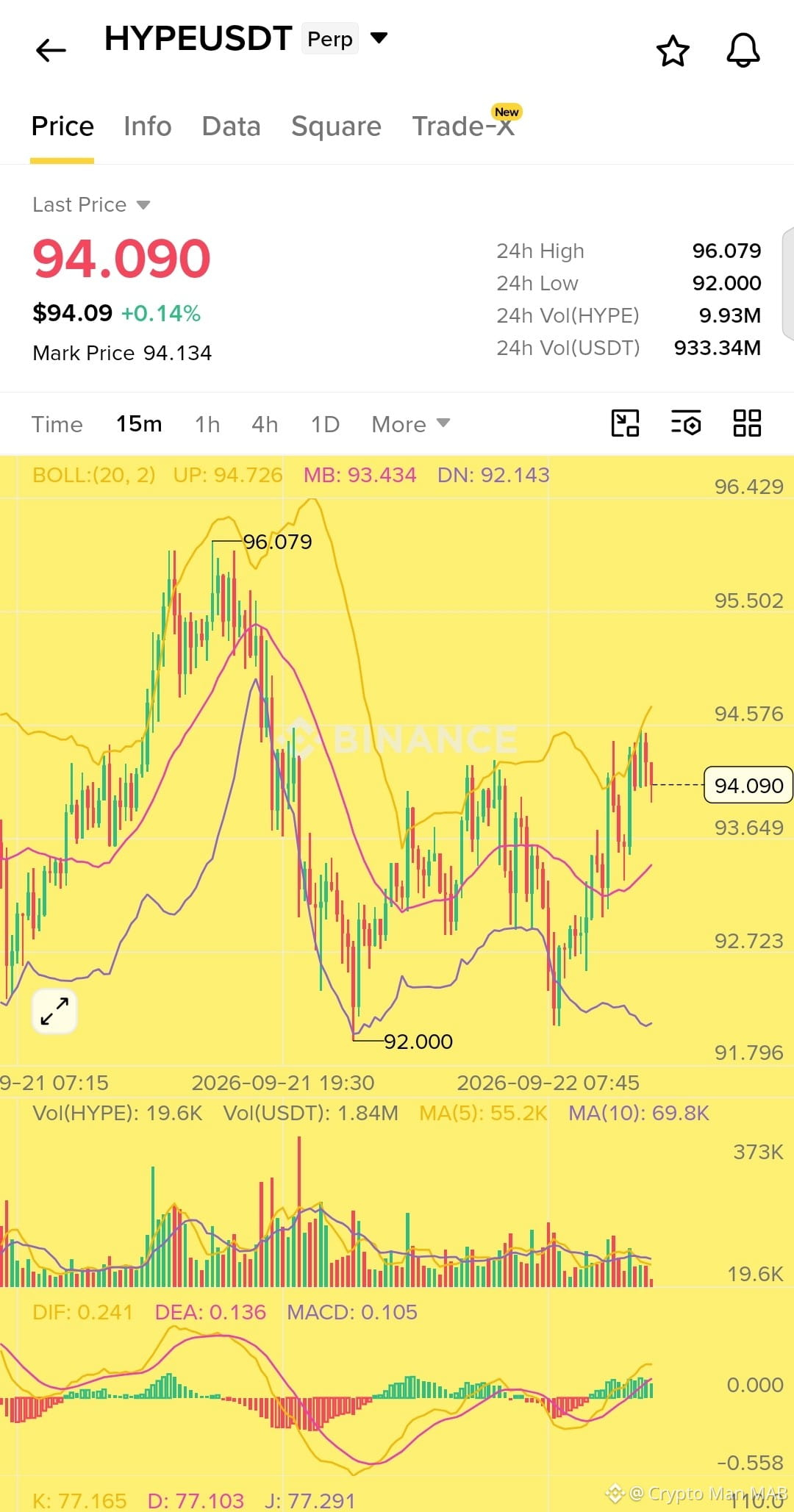
$HYPE looks ready for another move higher. The current zone around $93–$95 looks interesting for a long if buyers continue to hold this area.
{future}(HYPEUSDT)
Long setup 👀
Entry: $93 - $95
TP: $96 - $98 - $100 - $105 - $110
SL: $87
I’m watching how price reacts around the entry zone before adding more exposure. If momentum stays strong and $100 breaks cleanly, the move toward $105 and $110 could come into play.
Trade safe and manage your risk.
$HYPE looks ready for another move higher. The current zone around $93–$95 looks interesting for a long if buyers continue to hold this area.
Long setup 👀
Entry: $93 - $95
TP: $96 - $98 - $100 - $105 - $110
SL: $87
I’m watching how price reacts around the entry zone before adding more exposure. If momentum stays strong and $100 breaks cleanly, the move toward $105 and $110 could come into play.
Trade safe and manage your risk.
Long setup 👀
Entry: $93 - $95
TP: $96 - $98 - $100 - $105 - $110
SL: $87
I’m watching how price reacts around the entry zone before adding more exposure. If momentum stays strong and $100 breaks cleanly, the move toward $105 and $110 could come into play.
Trade safe and manage your risk.
1
547
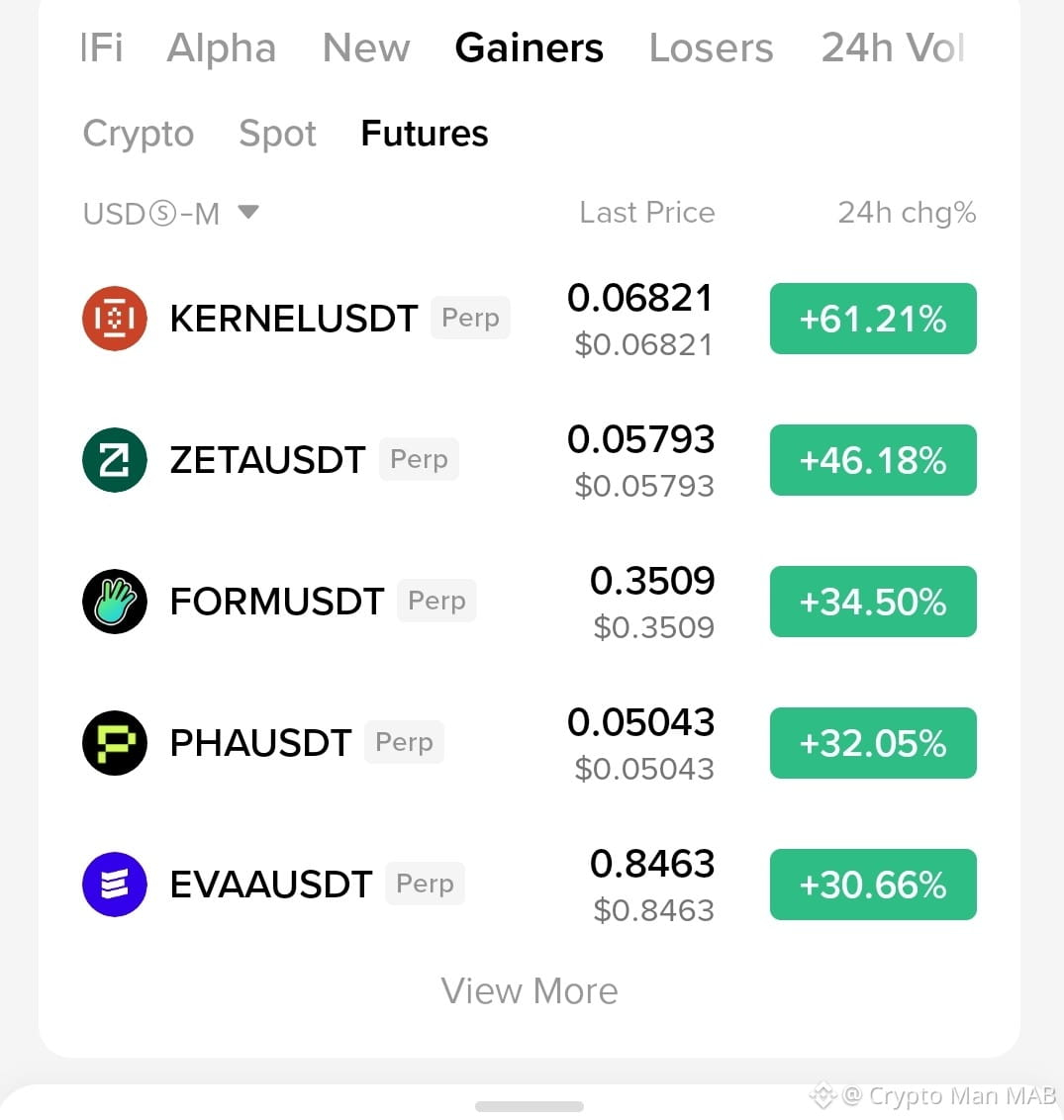
Morning Wow $ZETA $KERNEL $FORM in gainers
{future}(FORMUSDT)
{future}(KERNELUSDT)
{future}(ZETAUSDT)
Morning Wow $ZETA $KERNEL $FORM in gainers
1
1.4k
·
--
Жоғары (өспелі)
Ішінара рас
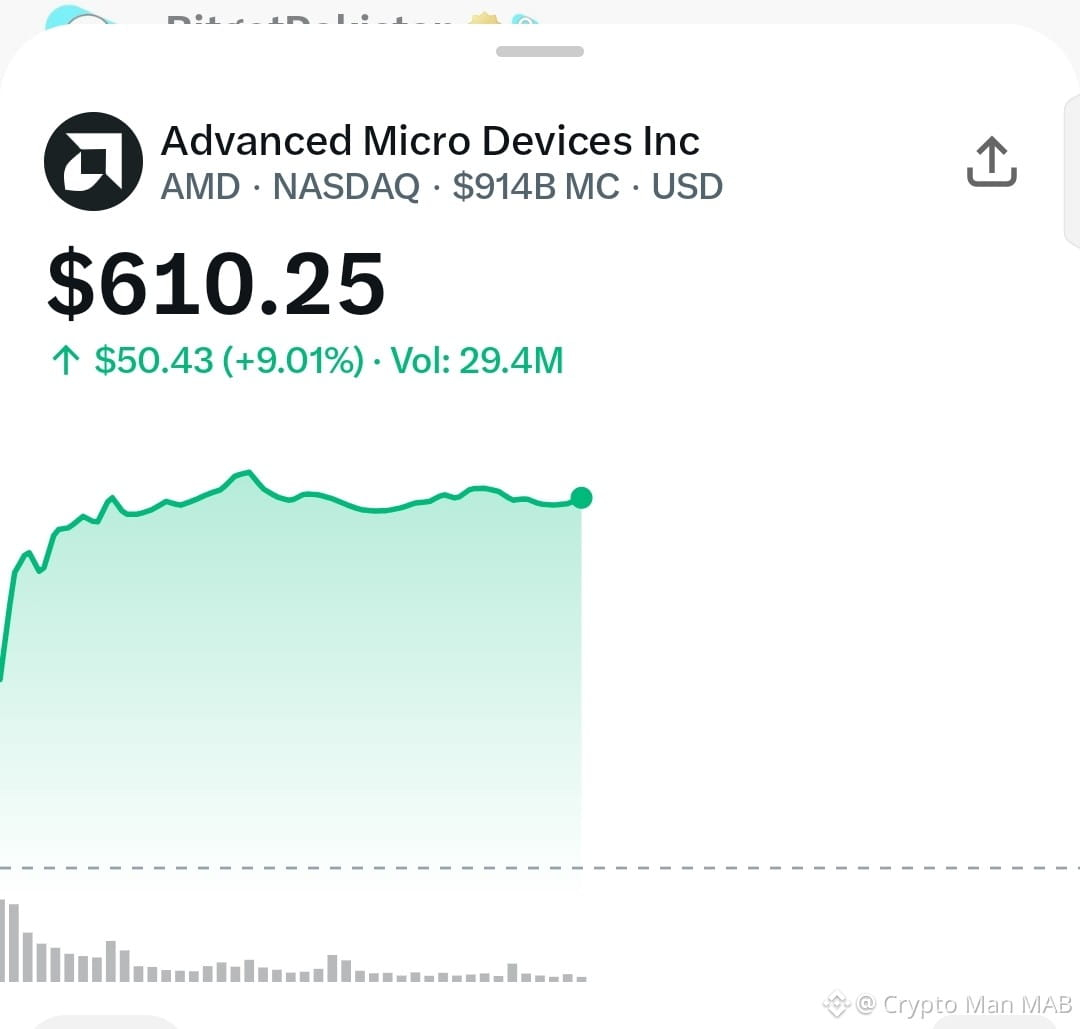
$AMDB just crossed $1T. 🚀
10 years. +30,400% reported return.
$AMDB just crossed $1T. 🚀
10 years. +30,400% reported return.
10 years. +30,400% reported return.
3
787
·
--
Жоғары (өспелі)
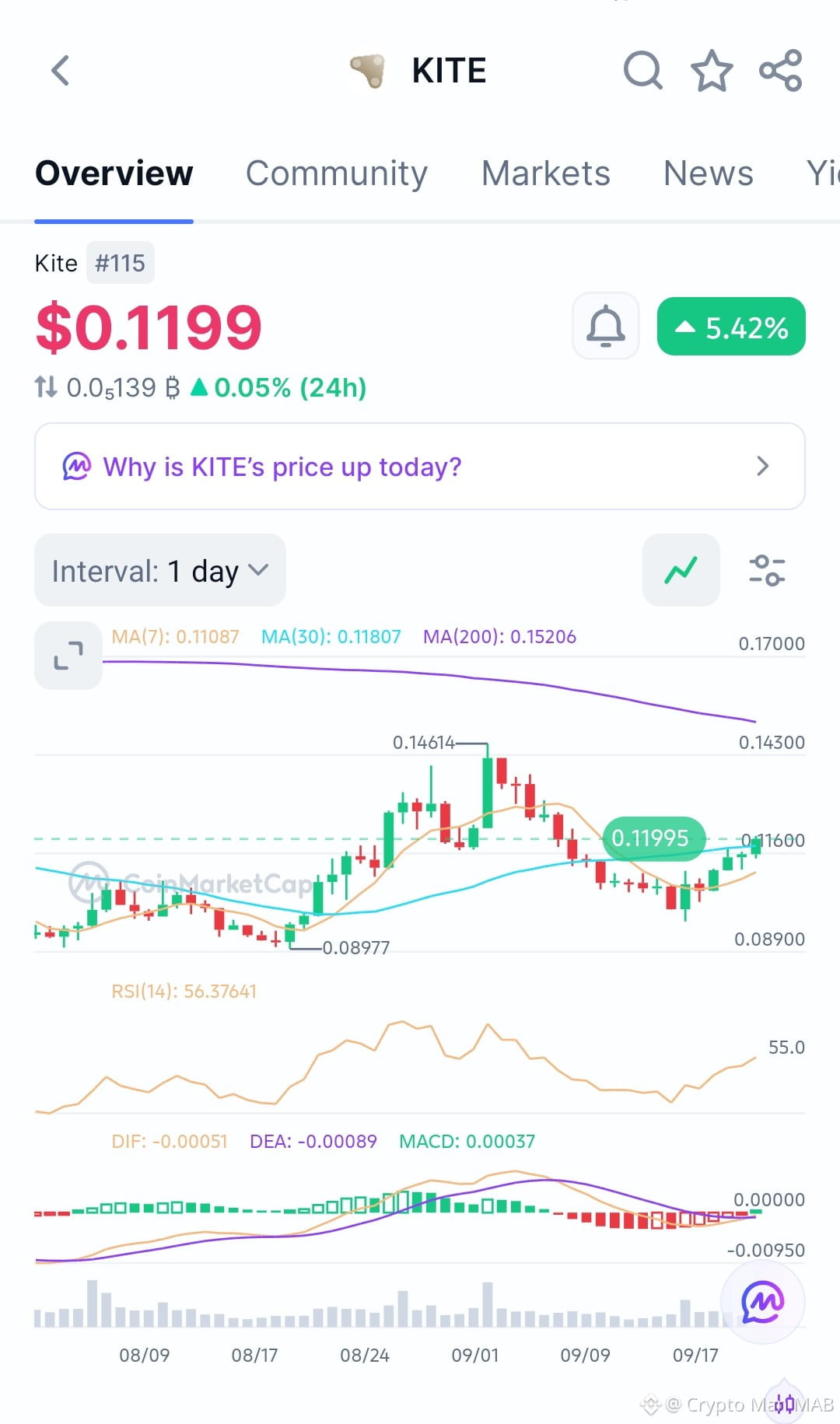
$KITE is showing some strength after bouncing from the $0.10 area.
{future}(KITEUSDT)
Short term momentum looks positive with RSI improving and MACD turning bullish. But KITE is now facing a key resistance zone around $0.120–$0.125.
A clean daily close above $0.125 with strong volume could open the way toward $0.130 → $0.140 → $0.146.
If it gets rejected here and loses $0.111 the recovery could weaken and $0.0898 may come back into focus.
For now I’m watching the $0.125 breakout closely. Confirmation matters. 📈
Not financial advice. Always manage your risk.
$KITE is showing some strength after bouncing from the $0.10 area.
Short term momentum looks positive with RSI improving and MACD turning bullish. But KITE is now facing a key resistance zone around $0.120–$0.125.
A clean daily close above $0.125 with strong volume could open the way toward $0.130 → $0.140 → $0.146.
If it gets rejected here and loses $0.111 the recovery could weaken and $0.0898 may come back into focus.
For now I’m watching the $0.125 breakout closely. Confirmation matters. 📈
Not financial advice. Always manage your risk.
Short term momentum looks positive with RSI improving and MACD turning bullish. But KITE is now facing a key resistance zone around $0.120–$0.125.
A clean daily close above $0.125 with strong volume could open the way toward $0.130 → $0.140 → $0.146.
If it gets rejected here and loses $0.111 the recovery could weaken and $0.0898 may come back into focus.
For now I’m watching the $0.125 breakout closely. Confirmation matters. 📈
Not financial advice. Always manage your risk.
2
585
·
--
Жоғары (өспелі)
Даулы
IRAN ANNOUNCES IT WILL BE INVESTING 100 BILLION USD INTO $BTC #BITCOIN
IRAN ANNOUNCES IT WILL BE INVESTING 100 BILLION USD INTO $BTC #BITCOIN
4
674
·
--
Жоғары (өспелі)
524
·
--
Жоғары (өспелі)
Trader Garett Jin took a $35.44 million loss on his Zcash $ZEC short position!
{future}(ZECUSDT)
Trader Garett Jin took a $35.44 million loss on his Zcash $ZEC short position!


2
1.2k
Көбірек контент көру үшін кіріңіз
Binance Square платформасында әлемдік криптоқоғамдастыққа қосылыңыз
⚡️ Криптовалюта туралы ең соңғы және пайдалы ақпаратты алыңыз.
💬 Әлемдегі ең ірі криптобиржаның сеніміне ие.
👍 Расталған авторлардың нақты пікірлерін табыңыз.
Электрондық пошта/телефон нөмірі
Трендтегі тақырыптар
StrategyStriveAdd2305BitcoinThisWeek
2,780 рет көрілді
188 адам талқылап жатыр
🔥 2,305 BTC In One Week — Watch $BTC
Corporate Bitcoin treasuries continue expanding.
Strategy + Strive added 2,305 $BTC, taking their combined reported holdings to about 872K BTC.
This doesn't guarantee where price goes next — but it shows why Bitcoin's fixed supply remains a major part of the investment discussion.
Spot $BTC. Real ownership. No leverage required. 📊🟠
#strategystriveadd2305bitcointhisweek
CryptoMahibaloch
·1 лайк
·561 рет көрілді
TrumpRejectsIranHormuzReopening
7,171 рет көрілді
288 адам талқылап жатыр
RLUSDSupplyHits2.49BMarketCapNears$2.5B
3 рет көрілді
20 адам талқылап жатыр