

CoinFea
3.8k Жариялаулар

CoinFea
 «Square расталған+» белгісі
Хабарлау
Пайдаланушыны блоктау
CoinFea is a leading Cryptocurrency, Blockchain, and Fintech News platform. Our primary focus is trending news and updates of cryptoverse.
0 Жазылым
88.7K+ Жазылушылар
21.9K+ лайк басылған
Жазбалар
·
--
Мақала
Amazon Set to Invest $1 Billion in Its Data Centers Amid BacklashAmazon has announced that it will invest about $1 billion over five years in US communities that host its data centers for education, workforce development, conservation of resources, and community relations. This initiative comes at a time when people are becoming increasingly opposed to AI infrastructure due to several factors.
According to reports, factors such as energy costs, water consumption, and environmental problems have seen people oppose the rise of AI infrastructure, as per the Associated Press. For an industry that invests trillions in obtaining additional computing power, gaining the support of local communities is just as vital as acquiring chips, funds, and energy. Amazon’s commitment is more than charitable. It is also aimed at creating the local backing that will help the company grow.
The opposition is difficult to ignore. A poll by the University of Massachusetts Amherst in September revealed that 65% of Americans do not support an AI data center being constructed in their area. Only 11% said they would support one. Respondents expressed their worries over environmental issues, consumption of resources, disruption of land, lack of trust in AI, and the increased cost of utilities.
Amazon set to make big investment amid pushback from communities
The opposition is already costing the industry. As per Allianz, in Q1 2026, local opposition prevented or delayed more than 75 projects in the US with a total cost of $130 billion. Community resistance has become one of many obstacles that developers face. Other obstacles include grid limitations, delays with the permit process, and supply chain issues. According to the World Resources Institute (WRI), community benefits agreements (CBAs) may be a way to alleviate some of the tension.
These agreements allow developers to make concrete commitments to the communities where they construct their projects. An example comes from Lancaster, Pennsylvania. WRI calls its agreement the first public CBA for a data center. Three developers have pledged $20 million to support sustainability and economic programs, in addition to the use of 100% clean energy, limited water use, and meeting noise restrictions. WRI warns, however, that these agreements are not the answer to all problems.
They can never satisfy the need for more general regulation, while there may be communities that see the data center as not worth it. The pressure behind those concerns is massive. WRI says US data-center power capacity could reach 194 GW by 2035, more than three times today’s level. Data centers could then consume as much as 20% of US electricity, up from 5.9% today. The issue affects not just Amazon. PwC estimates that total expenditure in the construction of data centers around the world will reach $31.6 trillion by 2050, with annual spending rising from about $800 billion in 2026 up to $1.8 trillion by 2050.
PwC emphasizes that the availability of electrical power will determine the location of investments. Meanwhile, CBRE reported that the vacancy rate in Northern Virginia reached only 0.3% for Q1. Power supply shortages, zoning issues, and local resistance policies continued to hamper growth. The policy environment is becoming harsher as well. Global Electronics Council reports that governments are raising transparency and sustainability requirements as the growth of data centers puts pressure on electricity grids, water resources, and communities.
Meanwhile, the IEA reports that the development of AI workloads threatens the existing grids and energy infrastructure. As we have previously reported, the development of data centers and AI technologies helps the construction and manufacturing sectors of the US economy despite the growing problems with electricity supply, raw materials, and infrastructure. The $1 billion commitment from Amazon also reveals that the problem of community acceptance is gaining importance.
The post Amazon set to invest $1 billion in its data centers amid backlash first appeared on Coinfea.
Amazon Set to Invest $1 Billion in Its Data Centers Amid Backlash
Amazon has announced that it will invest about $1 billion over five years in US communities that host its data centers for education, workforce development, conservation of resources, and community relations. This initiative comes at a time when people are becoming increasingly opposed to AI infrastructure due to several factors.
According to reports, factors such as energy costs, water consumption, and environmental problems have seen people oppose the rise of AI infrastructure, as per the Associated Press. For an industry that invests trillions in obtaining additional computing power, gaining the support of local communities is just as vital as acquiring chips, funds, and energy. Amazon’s commitment is more than charitable. It is also aimed at creating the local backing that will help the company grow.
The opposition is difficult to ignore. A poll by the University of Massachusetts Amherst in September revealed that 65% of Americans do not support an AI data center being constructed in their area. Only 11% said they would support one. Respondents expressed their worries over environmental issues, consumption of resources, disruption of land, lack of trust in AI, and the increased cost of utilities.
Amazon set to make big investment amid pushback from communities
The opposition is already costing the industry. As per Allianz, in Q1 2026, local opposition prevented or delayed more than 75 projects in the US with a total cost of $130 billion. Community resistance has become one of many obstacles that developers face. Other obstacles include grid limitations, delays with the permit process, and supply chain issues. According to the World Resources Institute (WRI), community benefits agreements (CBAs) may be a way to alleviate some of the tension.
These agreements allow developers to make concrete commitments to the communities where they construct their projects. An example comes from Lancaster, Pennsylvania. WRI calls its agreement the first public CBA for a data center. Three developers have pledged $20 million to support sustainability and economic programs, in addition to the use of 100% clean energy, limited water use, and meeting noise restrictions. WRI warns, however, that these agreements are not the answer to all problems.
They can never satisfy the need for more general regulation, while there may be communities that see the data center as not worth it. The pressure behind those concerns is massive. WRI says US data-center power capacity could reach 194 GW by 2035, more than three times today’s level. Data centers could then consume as much as 20% of US electricity, up from 5.9% today. The issue affects not just Amazon. PwC estimates that total expenditure in the construction of data centers around the world will reach $31.6 trillion by 2050, with annual spending rising from about $800 billion in 2026 up to $1.8 trillion by 2050.
PwC emphasizes that the availability of electrical power will determine the location of investments. Meanwhile, CBRE reported that the vacancy rate in Northern Virginia reached only 0.3% for Q1. Power supply shortages, zoning issues, and local resistance policies continued to hamper growth. The policy environment is becoming harsher as well. Global Electronics Council reports that governments are raising transparency and sustainability requirements as the growth of data centers puts pressure on electricity grids, water resources, and communities.
Meanwhile, the IEA reports that the development of AI workloads threatens the existing grids and energy infrastructure. As we have previously reported, the development of data centers and AI technologies helps the construction and manufacturing sectors of the US economy despite the growing problems with electricity supply, raw materials, and infrastructure. The $1 billion commitment from Amazon also reveals that the problem of community acceptance is gaining importance.
The post Amazon set to invest $1 billion in its data centers amid backlash first appeared on Coinfea.
According to reports, factors such as energy costs, water consumption, and environmental problems have seen people oppose the rise of AI infrastructure, as per the Associated Press. For an industry that invests trillions in obtaining additional computing power, gaining the support of local communities is just as vital as acquiring chips, funds, and energy. Amazon’s commitment is more than charitable. It is also aimed at creating the local backing that will help the company grow.
The opposition is difficult to ignore. A poll by the University of Massachusetts Amherst in September revealed that 65% of Americans do not support an AI data center being constructed in their area. Only 11% said they would support one. Respondents expressed their worries over environmental issues, consumption of resources, disruption of land, lack of trust in AI, and the increased cost of utilities.
Amazon set to make big investment amid pushback from communities
The opposition is already costing the industry. As per Allianz, in Q1 2026, local opposition prevented or delayed more than 75 projects in the US with a total cost of $130 billion. Community resistance has become one of many obstacles that developers face. Other obstacles include grid limitations, delays with the permit process, and supply chain issues. According to the World Resources Institute (WRI), community benefits agreements (CBAs) may be a way to alleviate some of the tension.
These agreements allow developers to make concrete commitments to the communities where they construct their projects. An example comes from Lancaster, Pennsylvania. WRI calls its agreement the first public CBA for a data center. Three developers have pledged $20 million to support sustainability and economic programs, in addition to the use of 100% clean energy, limited water use, and meeting noise restrictions. WRI warns, however, that these agreements are not the answer to all problems.
They can never satisfy the need for more general regulation, while there may be communities that see the data center as not worth it. The pressure behind those concerns is massive. WRI says US data-center power capacity could reach 194 GW by 2035, more than three times today’s level. Data centers could then consume as much as 20% of US electricity, up from 5.9% today. The issue affects not just Amazon. PwC estimates that total expenditure in the construction of data centers around the world will reach $31.6 trillion by 2050, with annual spending rising from about $800 billion in 2026 up to $1.8 trillion by 2050.
PwC emphasizes that the availability of electrical power will determine the location of investments. Meanwhile, CBRE reported that the vacancy rate in Northern Virginia reached only 0.3% for Q1. Power supply shortages, zoning issues, and local resistance policies continued to hamper growth. The policy environment is becoming harsher as well. Global Electronics Council reports that governments are raising transparency and sustainability requirements as the growth of data centers puts pressure on electricity grids, water resources, and communities.
Meanwhile, the IEA reports that the development of AI workloads threatens the existing grids and energy infrastructure. As we have previously reported, the development of data centers and AI technologies helps the construction and manufacturing sectors of the US economy despite the growing problems with electricity supply, raw materials, and infrastructure. The $1 billion commitment from Amazon also reveals that the problem of community acceptance is gaining importance.
The post Amazon set to invest $1 billion in its data centers amid backlash first appeared on Coinfea.
56
·
--
Мақала
OCC Dragged to Court Over Crypto Firms’ National Trust ChartersA trade organization representing community banks in the US has filed a lawsuit against the Office of the Comptroller of the Currency (OCC), claiming the regulator overstepped its jurisdiction when it provided national trust bank charters to cryptocurrency companies.
The Independent Community Bankers of America (ICBA) initiated the case in the District of Columbia against a recent action by the OCC and its related guidance. They argue that crypto companies receive the credibility of a bank charter in the US without complying with all the regular bank requirements. Under national trust charters, companies are permitted to manage customer funds and process transactions. However, they cannot take cash deposits or give loans. ICBA has pointed out that extending these charters to crypto companies takes the OCC’s mandate too far, as per the report by Reuters.
ICBA says OCC went too far with awarding the licenses
Speaking on the lawsuit against the OCC, ICBA President and CEO Rebeca Romero Rainey mentioned in an ICBA statement that American consumers reasonably expect a federally chartered bank to carry federal protections. Romero Rainey said digital assets held by crypto firms under national trust charters do not come with the same protections. An OCC spokesperson declined to comment to Reuters. The dispute has been building for months.
In May, ICBA opposed the charter application of Payward, Kraken’s parent company. OCC’s records indicate that the application for Payward National Trust Company was submitted on May 8. Senator Elizabeth Warren had raised these concerns before. She issued a letter in May stating that since December 2025 the OCC had granted at least nine national trust charters to crypto firms and questioning if some of their activities can be classified under the activities allowed for a trust company.
“These companies are effectively crypto banks that want to evade the fundamental safeguards and obligations that come with being a bank,” Senator Elizabeth Warren said in a May 18 letter to Comptroller Jonathan Gould. The OCC views the matter in a different light. Its final chartering rules, which took effect on April 1, state that it “would neither expand nor contract” the chartering authority of the agency. Instead, it explains that trust-limited national banks may perform a range of non-traditional functions related to the activities of trust companies.
The statistics shed light on the reasons behind the fierce debate surrounding the matter. Comptroller Jonathan Gould has come out with a statement that the OCC has received 40 applications for new bank charters in roughly 18 months and that 23 of these are for digital assets. This is eight times as much as in the preceding four years, according to earlier materials from Cryptopolitan. The situation has implications that reach beyond US banking.
A study by the Bank for International Settlements indicates that the volume of stablecoins on the market could exceed the $300 billion mark by 2026, marking a staggering 98% of the total as linked to the US dollar. Simultaneously, according to the Financial Stability Board, different jurisdictions have major gaps in the way they implement regulations, allowing for regulatory arbitrage to happen. The OCC lawsuit can help define the extent of the applicability of the US trust companies charter in the crypto area and indicate the weight of the federal charter in the global market.
The post OCC dragged to court over crypto firms’ national trust charters first appeared on Coinfea.
OCC Dragged to Court Over Crypto Firms’ National Trust Charters
A trade organization representing community banks in the US has filed a lawsuit against the Office of the Comptroller of the Currency (OCC), claiming the regulator overstepped its jurisdiction when it provided national trust bank charters to cryptocurrency companies.
The Independent Community Bankers of America (ICBA) initiated the case in the District of Columbia against a recent action by the OCC and its related guidance. They argue that crypto companies receive the credibility of a bank charter in the US without complying with all the regular bank requirements. Under national trust charters, companies are permitted to manage customer funds and process transactions. However, they cannot take cash deposits or give loans. ICBA has pointed out that extending these charters to crypto companies takes the OCC’s mandate too far, as per the report by Reuters.
ICBA says OCC went too far with awarding the licenses
Speaking on the lawsuit against the OCC, ICBA President and CEO Rebeca Romero Rainey mentioned in an ICBA statement that American consumers reasonably expect a federally chartered bank to carry federal protections. Romero Rainey said digital assets held by crypto firms under national trust charters do not come with the same protections. An OCC spokesperson declined to comment to Reuters. The dispute has been building for months.
In May, ICBA opposed the charter application of Payward, Kraken’s parent company. OCC’s records indicate that the application for Payward National Trust Company was submitted on May 8. Senator Elizabeth Warren had raised these concerns before. She issued a letter in May stating that since December 2025 the OCC had granted at least nine national trust charters to crypto firms and questioning if some of their activities can be classified under the activities allowed for a trust company.
“These companies are effectively crypto banks that want to evade the fundamental safeguards and obligations that come with being a bank,” Senator Elizabeth Warren said in a May 18 letter to Comptroller Jonathan Gould. The OCC views the matter in a different light. Its final chartering rules, which took effect on April 1, state that it “would neither expand nor contract” the chartering authority of the agency. Instead, it explains that trust-limited national banks may perform a range of non-traditional functions related to the activities of trust companies.
The statistics shed light on the reasons behind the fierce debate surrounding the matter. Comptroller Jonathan Gould has come out with a statement that the OCC has received 40 applications for new bank charters in roughly 18 months and that 23 of these are for digital assets. This is eight times as much as in the preceding four years, according to earlier materials from Cryptopolitan. The situation has implications that reach beyond US banking.
A study by the Bank for International Settlements indicates that the volume of stablecoins on the market could exceed the $300 billion mark by 2026, marking a staggering 98% of the total as linked to the US dollar. Simultaneously, according to the Financial Stability Board, different jurisdictions have major gaps in the way they implement regulations, allowing for regulatory arbitrage to happen. The OCC lawsuit can help define the extent of the applicability of the US trust companies charter in the crypto area and indicate the weight of the federal charter in the global market.
The post OCC dragged to court over crypto firms’ national trust charters first appeared on Coinfea.
The Independent Community Bankers of America (ICBA) initiated the case in the District of Columbia against a recent action by the OCC and its related guidance. They argue that crypto companies receive the credibility of a bank charter in the US without complying with all the regular bank requirements. Under national trust charters, companies are permitted to manage customer funds and process transactions. However, they cannot take cash deposits or give loans. ICBA has pointed out that extending these charters to crypto companies takes the OCC’s mandate too far, as per the report by Reuters.
ICBA says OCC went too far with awarding the licenses
Speaking on the lawsuit against the OCC, ICBA President and CEO Rebeca Romero Rainey mentioned in an ICBA statement that American consumers reasonably expect a federally chartered bank to carry federal protections. Romero Rainey said digital assets held by crypto firms under national trust charters do not come with the same protections. An OCC spokesperson declined to comment to Reuters. The dispute has been building for months.
In May, ICBA opposed the charter application of Payward, Kraken’s parent company. OCC’s records indicate that the application for Payward National Trust Company was submitted on May 8. Senator Elizabeth Warren had raised these concerns before. She issued a letter in May stating that since December 2025 the OCC had granted at least nine national trust charters to crypto firms and questioning if some of their activities can be classified under the activities allowed for a trust company.
“These companies are effectively crypto banks that want to evade the fundamental safeguards and obligations that come with being a bank,” Senator Elizabeth Warren said in a May 18 letter to Comptroller Jonathan Gould. The OCC views the matter in a different light. Its final chartering rules, which took effect on April 1, state that it “would neither expand nor contract” the chartering authority of the agency. Instead, it explains that trust-limited national banks may perform a range of non-traditional functions related to the activities of trust companies.
The statistics shed light on the reasons behind the fierce debate surrounding the matter. Comptroller Jonathan Gould has come out with a statement that the OCC has received 40 applications for new bank charters in roughly 18 months and that 23 of these are for digital assets. This is eight times as much as in the preceding four years, according to earlier materials from Cryptopolitan. The situation has implications that reach beyond US banking.
A study by the Bank for International Settlements indicates that the volume of stablecoins on the market could exceed the $300 billion mark by 2026, marking a staggering 98% of the total as linked to the US dollar. Simultaneously, according to the Financial Stability Board, different jurisdictions have major gaps in the way they implement regulations, allowing for regulatory arbitrage to happen. The OCC lawsuit can help define the extent of the applicability of the US trust companies charter in the crypto area and indicate the weight of the federal charter in the global market.
The post OCC dragged to court over crypto firms’ national trust charters first appeared on Coinfea.
53
·
--

Мақала
Anchorage Digital Lays Off 17% of Its Staff Amid $4 Billion ValuationAnchorage Digital is reportedly laying off 17% of its workforce as crypto winter grips even one of the more well-funded regulated firms in the industry. If the headcount is still around the 400 employees reported by CEO Nathan McCauley to Congress in February 2025, that would entail approximately 68 layoffs.
The move comes eight months after Tether invested $100 million in Anchorage at a $4.2 billion valuation. Reportedly, employees were told by McCauley that Anchorage is cutting jobs due to the general downturn in the current crypto market, as per The Information. The number 68 mentioned here is an estimate and not an official number. It is based on the 17% cut reported by The Information and the earlier employee data reported by McCauley. However, the timing of the layoffs is remarkable.
Anchorage cuts 400 employees as crypto winter grips industry
Tether’s February investment valued Anchorage at $4.2 billion and made it possible to pay employees through the first employee tender offer. Thus, the layoffs do not appear as a desperate need for cash, but as an effort to reduce expenses in response to the worsening economic situation. Anchorage is not the only company going through layoffs. CryptoJobsList reports that there have been at least 7,411 job cuts in 60 crypto companies in 2026.
The biggest among these is Block’s 4,000 job cuts in February. Hiring activity has also declined. In January, Tiger Research reported that the number of new job listings on the leading crypto job portals declined by approximately 80% on a year-over-year basis, continuing a decline that began after 2022. The remaining vacancies in the job market are becoming increasingly specialized. Of the 2,932 openings monitored by Tiger Research in the first half of 2026, engineering accounted for 34.1%.
Compliance and legal jobs followed at 10.4%. Meanwhile, stablecoins and payments comprised 13.4% of the total job openings in the market. That’s consistent with Anchorage’s approach. The company identifies itself as a service provider to institutions in custody, trading, settlement, and other digital asset-related activities. It has also advanced further into the institutional market infrastructure with the development of products that link regulatory custody with crypto trading.
Institutional interest has not faded. In a 2026 survey published by EY, it was revealed that 73% of the companies surveyed intended to expand their investments in digital assets over the following year. Similarly, the analysis of BCG established that infrastructure, such as custody, settlement, and tokenized assets, is becoming more important due to the increasing integration of digital assets with traditional finance.
Anchorage fits into the changing picture. In June, Binance included Anchorage in its triparty banking network, allowing institutions to keep collateral in regulated custody while trading. The layoffs therefore indicate a crypto industry that is becoming more selective about where its funds go. There is still enough capital, but companies are limiting their spending. For Anchorage, the issue is whether the company can thrive with a smaller workforce while focusing on infrastructure projects as its avenue of growth.
The post Anchorage Digital lays off 17% of its staff amid $4 billion valuation first appeared on Coinfea.
Anchorage Digital Lays Off 17% of Its Staff Amid $4 Billion Valuation
Anchorage Digital is reportedly laying off 17% of its workforce as crypto winter grips even one of the more well-funded regulated firms in the industry. If the headcount is still around the 400 employees reported by CEO Nathan McCauley to Congress in February 2025, that would entail approximately 68 layoffs.
The move comes eight months after Tether invested $100 million in Anchorage at a $4.2 billion valuation. Reportedly, employees were told by McCauley that Anchorage is cutting jobs due to the general downturn in the current crypto market, as per The Information. The number 68 mentioned here is an estimate and not an official number. It is based on the 17% cut reported by The Information and the earlier employee data reported by McCauley. However, the timing of the layoffs is remarkable.
Anchorage cuts 400 employees as crypto winter grips industry
Tether’s February investment valued Anchorage at $4.2 billion and made it possible to pay employees through the first employee tender offer. Thus, the layoffs do not appear as a desperate need for cash, but as an effort to reduce expenses in response to the worsening economic situation. Anchorage is not the only company going through layoffs. CryptoJobsList reports that there have been at least 7,411 job cuts in 60 crypto companies in 2026.
The biggest among these is Block’s 4,000 job cuts in February. Hiring activity has also declined. In January, Tiger Research reported that the number of new job listings on the leading crypto job portals declined by approximately 80% on a year-over-year basis, continuing a decline that began after 2022. The remaining vacancies in the job market are becoming increasingly specialized. Of the 2,932 openings monitored by Tiger Research in the first half of 2026, engineering accounted for 34.1%.
Compliance and legal jobs followed at 10.4%. Meanwhile, stablecoins and payments comprised 13.4% of the total job openings in the market. That’s consistent with Anchorage’s approach. The company identifies itself as a service provider to institutions in custody, trading, settlement, and other digital asset-related activities. It has also advanced further into the institutional market infrastructure with the development of products that link regulatory custody with crypto trading.
Institutional interest has not faded. In a 2026 survey published by EY, it was revealed that 73% of the companies surveyed intended to expand their investments in digital assets over the following year. Similarly, the analysis of BCG established that infrastructure, such as custody, settlement, and tokenized assets, is becoming more important due to the increasing integration of digital assets with traditional finance.
Anchorage fits into the changing picture. In June, Binance included Anchorage in its triparty banking network, allowing institutions to keep collateral in regulated custody while trading. The layoffs therefore indicate a crypto industry that is becoming more selective about where its funds go. There is still enough capital, but companies are limiting their spending. For Anchorage, the issue is whether the company can thrive with a smaller workforce while focusing on infrastructure projects as its avenue of growth.
The post Anchorage Digital lays off 17% of its staff amid $4 billion valuation first appeared on Coinfea.
The move comes eight months after Tether invested $100 million in Anchorage at a $4.2 billion valuation. Reportedly, employees were told by McCauley that Anchorage is cutting jobs due to the general downturn in the current crypto market, as per The Information. The number 68 mentioned here is an estimate and not an official number. It is based on the 17% cut reported by The Information and the earlier employee data reported by McCauley. However, the timing of the layoffs is remarkable.
Anchorage cuts 400 employees as crypto winter grips industry
Tether’s February investment valued Anchorage at $4.2 billion and made it possible to pay employees through the first employee tender offer. Thus, the layoffs do not appear as a desperate need for cash, but as an effort to reduce expenses in response to the worsening economic situation. Anchorage is not the only company going through layoffs. CryptoJobsList reports that there have been at least 7,411 job cuts in 60 crypto companies in 2026.
The biggest among these is Block’s 4,000 job cuts in February. Hiring activity has also declined. In January, Tiger Research reported that the number of new job listings on the leading crypto job portals declined by approximately 80% on a year-over-year basis, continuing a decline that began after 2022. The remaining vacancies in the job market are becoming increasingly specialized. Of the 2,932 openings monitored by Tiger Research in the first half of 2026, engineering accounted for 34.1%.
Compliance and legal jobs followed at 10.4%. Meanwhile, stablecoins and payments comprised 13.4% of the total job openings in the market. That’s consistent with Anchorage’s approach. The company identifies itself as a service provider to institutions in custody, trading, settlement, and other digital asset-related activities. It has also advanced further into the institutional market infrastructure with the development of products that link regulatory custody with crypto trading.
Institutional interest has not faded. In a 2026 survey published by EY, it was revealed that 73% of the companies surveyed intended to expand their investments in digital assets over the following year. Similarly, the analysis of BCG established that infrastructure, such as custody, settlement, and tokenized assets, is becoming more important due to the increasing integration of digital assets with traditional finance.
Anchorage fits into the changing picture. In June, Binance included Anchorage in its triparty banking network, allowing institutions to keep collateral in regulated custody while trading. The layoffs therefore indicate a crypto industry that is becoming more selective about where its funds go. There is still enough capital, but companies are limiting their spending. For Anchorage, the issue is whether the company can thrive with a smaller workforce while focusing on infrastructure projects as its avenue of growth.
The post Anchorage Digital lays off 17% of its staff amid $4 billion valuation first appeared on Coinfea.
83
·
--
Мақала
MetaMask Wallets Safe After Consensys Security Incident, Lubin SaysConsensys founder Joseph Lubin has reassured MetaMask users following a recent security incident affecting parts of the company’s infrastructure. #
He said user wallets, private keys, and Secret Recovery Phrases remained outside the scope of the attack.
Consensys also took precautionary steps involving Ethereum validators while investigators examined the incident.
The episode has renewed attention around infrastructure security across crypto services.
MetaMask disclosed on September 30 that part of its infrastructure had suffered a security incident.
Lubin later said the attack did not compromise assets held inside MetaMask wallets.
“Your Secret Recovery Phrase, your keys, and the assets in your wallet were not part of this incident,” Lubin said on X.
He added that MetaMask users control their own keys through the wallet’s self-custody model.
MetaMask temporarily shut down some Ethereum staking machines after discovering the incident.
At the time, the company said it had identified no immediate threat to customer wallets or funds.
Consensys rotates validator keys after MetaMask incident
Lubin said Consensys rotated validator keys as a precaution while investigating the security breach.
However, changing validator keys requires validators to exit Ethereum’s staking queue before they can return.
That process could keep some assets inactive for an extended period.
MetaMask validators have started exiting the network, with the process expected to finish by October 7.
Withdrawals could then take around 45 days under current Ethereum conditions.
A subsequent entry queue could add another lengthy delay before validators resume normal staking operations.
During that period, affected assets could miss staking rewards.
Lido previously said the shutdown protected staked assets but also introduced operational costs.
Lubin also explained why Consensys initially limited public comments about the MetaMask security incident.
He said the company avoids extensive disclosures while investigations remain active.
Instead, Consensys informs core partners and relevant stakeholders after identifying the scope of an incident.
For MetaMask users, the key distinction involves the separation between company infrastructure and self-custodied wallets.
MetaMask does not hold users’ private keys or Secret Recovery Phrases.
Therefore, compromising supporting infrastructure does not automatically provide access to individual wallet funds.
Still, MetaMask warned users to remain alert for phishing attempts following the incident.
The company said users should never share private keys or Secret Recovery Phrases with anyone claiming to provide support.
Earlier MetaMask security scare involved a fake developer
The latest incident follows another security concern involving MetaMask earlier in 2026.
In July, Consensys revealed that a North Korea-linked developer had worked with MetaMask under a false identity.
The individual used the alias “Tyler Knapp” and secured a consulting role with the company.
His access lasted from March 9 until Consensys terminated the arrangement in April.
The developer contributed code involving wallet features that supported cash-to-crypto bridging.
Consensys said it removed his backend access after discovering his identity.
The company reported no stolen funds, malicious code, compromised data, or impact on user security.
Consensys also contacted federal law enforcement and reviewed its contractor screening procedures.
General counsel Matt Corva said the investigation found no misappropriation of assets or data.
Blockchain intelligence firm TRM Labs has warned that developer environments have become attractive targets for sophisticated attackers.
Such access can potentially expose internal systems, private keys, or withdrawal approval processes.
Researchers linked to the Ethereum-funded Ketman Project previously identified 100 suspected North Korean IT workers.
They reportedly gained roles across 53 crypto platforms using false identities and fabricated recruiter profiles.
The MetaMask incident therefore highlights wider infrastructure risks, even when users continue controlling their own wallet keys.
The post MetaMask wallets safe after consensys security incident, Lubin says first appeared on Coinfea.
MetaMask Wallets Safe After Consensys Security Incident, Lubin Says
Consensys founder Joseph Lubin has reassured MetaMask users following a recent security incident affecting parts of the company’s infrastructure. #
He said user wallets, private keys, and Secret Recovery Phrases remained outside the scope of the attack.
Consensys also took precautionary steps involving Ethereum validators while investigators examined the incident.
The episode has renewed attention around infrastructure security across crypto services.
MetaMask disclosed on September 30 that part of its infrastructure had suffered a security incident.
Lubin later said the attack did not compromise assets held inside MetaMask wallets.
“Your Secret Recovery Phrase, your keys, and the assets in your wallet were not part of this incident,” Lubin said on X.
He added that MetaMask users control their own keys through the wallet’s self-custody model.
MetaMask temporarily shut down some Ethereum staking machines after discovering the incident.
At the time, the company said it had identified no immediate threat to customer wallets or funds.
Consensys rotates validator keys after MetaMask incident
Lubin said Consensys rotated validator keys as a precaution while investigating the security breach.
However, changing validator keys requires validators to exit Ethereum’s staking queue before they can return.
That process could keep some assets inactive for an extended period.
MetaMask validators have started exiting the network, with the process expected to finish by October 7.
Withdrawals could then take around 45 days under current Ethereum conditions.
A subsequent entry queue could add another lengthy delay before validators resume normal staking operations.
During that period, affected assets could miss staking rewards.
Lido previously said the shutdown protected staked assets but also introduced operational costs.
Lubin also explained why Consensys initially limited public comments about the MetaMask security incident.
He said the company avoids extensive disclosures while investigations remain active.
Instead, Consensys informs core partners and relevant stakeholders after identifying the scope of an incident.
For MetaMask users, the key distinction involves the separation between company infrastructure and self-custodied wallets.
MetaMask does not hold users’ private keys or Secret Recovery Phrases.
Therefore, compromising supporting infrastructure does not automatically provide access to individual wallet funds.
Still, MetaMask warned users to remain alert for phishing attempts following the incident.
The company said users should never share private keys or Secret Recovery Phrases with anyone claiming to provide support.
Earlier MetaMask security scare involved a fake developer
The latest incident follows another security concern involving MetaMask earlier in 2026.
In July, Consensys revealed that a North Korea-linked developer had worked with MetaMask under a false identity.
The individual used the alias “Tyler Knapp” and secured a consulting role with the company.
His access lasted from March 9 until Consensys terminated the arrangement in April.
The developer contributed code involving wallet features that supported cash-to-crypto bridging.
Consensys said it removed his backend access after discovering his identity.
The company reported no stolen funds, malicious code, compromised data, or impact on user security.
Consensys also contacted federal law enforcement and reviewed its contractor screening procedures.
General counsel Matt Corva said the investigation found no misappropriation of assets or data.
Blockchain intelligence firm TRM Labs has warned that developer environments have become attractive targets for sophisticated attackers.
Such access can potentially expose internal systems, private keys, or withdrawal approval processes.
Researchers linked to the Ethereum-funded Ketman Project previously identified 100 suspected North Korean IT workers.
They reportedly gained roles across 53 crypto platforms using false identities and fabricated recruiter profiles.
The MetaMask incident therefore highlights wider infrastructure risks, even when users continue controlling their own wallet keys.
The post MetaMask wallets safe after consensys security incident, Lubin says first appeared on Coinfea.
He said user wallets, private keys, and Secret Recovery Phrases remained outside the scope of the attack.
Consensys also took precautionary steps involving Ethereum validators while investigators examined the incident.
The episode has renewed attention around infrastructure security across crypto services.
MetaMask disclosed on September 30 that part of its infrastructure had suffered a security incident.
Lubin later said the attack did not compromise assets held inside MetaMask wallets.
“Your Secret Recovery Phrase, your keys, and the assets in your wallet were not part of this incident,” Lubin said on X.
He added that MetaMask users control their own keys through the wallet’s self-custody model.
MetaMask temporarily shut down some Ethereum staking machines after discovering the incident.
At the time, the company said it had identified no immediate threat to customer wallets or funds.
Consensys rotates validator keys after MetaMask incident
Lubin said Consensys rotated validator keys as a precaution while investigating the security breach.
However, changing validator keys requires validators to exit Ethereum’s staking queue before they can return.
That process could keep some assets inactive for an extended period.
MetaMask validators have started exiting the network, with the process expected to finish by October 7.
Withdrawals could then take around 45 days under current Ethereum conditions.
A subsequent entry queue could add another lengthy delay before validators resume normal staking operations.
During that period, affected assets could miss staking rewards.
Lido previously said the shutdown protected staked assets but also introduced operational costs.
Lubin also explained why Consensys initially limited public comments about the MetaMask security incident.
He said the company avoids extensive disclosures while investigations remain active.
Instead, Consensys informs core partners and relevant stakeholders after identifying the scope of an incident.
For MetaMask users, the key distinction involves the separation between company infrastructure and self-custodied wallets.
MetaMask does not hold users’ private keys or Secret Recovery Phrases.
Therefore, compromising supporting infrastructure does not automatically provide access to individual wallet funds.
Still, MetaMask warned users to remain alert for phishing attempts following the incident.
The company said users should never share private keys or Secret Recovery Phrases with anyone claiming to provide support.
Earlier MetaMask security scare involved a fake developer
The latest incident follows another security concern involving MetaMask earlier in 2026.
In July, Consensys revealed that a North Korea-linked developer had worked with MetaMask under a false identity.
The individual used the alias “Tyler Knapp” and secured a consulting role with the company.
His access lasted from March 9 until Consensys terminated the arrangement in April.
The developer contributed code involving wallet features that supported cash-to-crypto bridging.
Consensys said it removed his backend access after discovering his identity.
The company reported no stolen funds, malicious code, compromised data, or impact on user security.
Consensys also contacted federal law enforcement and reviewed its contractor screening procedures.
General counsel Matt Corva said the investigation found no misappropriation of assets or data.
Blockchain intelligence firm TRM Labs has warned that developer environments have become attractive targets for sophisticated attackers.
Such access can potentially expose internal systems, private keys, or withdrawal approval processes.
Researchers linked to the Ethereum-funded Ketman Project previously identified 100 suspected North Korean IT workers.
They reportedly gained roles across 53 crypto platforms using false identities and fabricated recruiter profiles.
The MetaMask incident therefore highlights wider infrastructure risks, even when users continue controlling their own wallet keys.
The post MetaMask wallets safe after consensys security incident, Lubin says first appeared on Coinfea.
155
·
--

Мақала
Korean Exchanges Lose 35% of Deposits As Traders Chase Profits OverseasSouth Korean crypto exchanges shed a third of their market value and 35% of their won deposits in the first half of 2026. Korean markets are experiencing an exodus of traders and substantial outflows due to the lack of diversity in their investment offerings.
A survey of 26 licensed virtual asset service providers run by the Korean Financial Intelligence Unit and the Financial Supervisory Service, covering January through June, has revealed that the combined market capitalization of Korea’s exchanges fell by 33%, a drop of 28.3 trillion won, while won-denominated deposits sank by 35%, or 2.9 trillion won. Average daily trading volume was also down 44%. The market value had fallen to about 58.9 trillion won (roughly $42 billion) by the end of June, compared to its value of 87.2 trillion won six months earlier.
Daily turnover fell to 3.1 trillion won from 5.4 trillion, and customer deposits in won dropped to 5.2 trillion from 8.1 trillion. Exchange operating income collapsed by 78% to 81.6 billion won compared to 374.8 billion a year earlier. Regulators tied much of the loss to Bitcoin, which the FSS noted fell 33% to $58,559 by the end of June. The survey also found that 93 of the 234 tokens listed on just one exchange were valued at 100 million won or less by appraisal. The regulator said this figure should make users think twice.
Korean won deposits drop by 35%
The decline in deposits is due to overseas platforms baiting Korean traders with products the country’s market does not allow. For example, there is a perpetual futures contract built on KORU, a U.S.-listed exchange-traded fund that returns three times the daily move of Korea’s Kospi index. Binance launched a KORU product with 20x leverage on June 22, then raised the limit to 50x four days later. Because the fund itself already tracks three times the index’s daily price swings, traders could end up exposed to as much as 150 times that loss or gain.
Earlier in June, Binance had also offered 20x products on Samsung Electronics, SK hynix and Hyundai Motor, and Bybit, OKX and KuCoin launched their own KORU contracts. On June 23, the Kospi fell 9.99%, and KORU fell by 35.7% in one session to $700.01. These platforms operate outside the reach of South Korea’s investor protections. Traders get to them by purchasing Tether with won on a licensed local exchange and then transferring the stablecoin overseas.
Tiger Research, working with blockchain analytics firm Chainalysis, tracked roughly 120,000 Korea-linked wallets and estimated that about 700 trillion won, or $530 billion, left domestic exchanges between 2021 and 2026. Outflows reached around $120 billion in 2025 and were projected near $52 billion this year, the firm said. Wallets owned by South Koreans put roughly $1.64 billion into three decentralized derivatives platforms: Hyperliquid, Lighter and Variational, between January 2024 and July 2026.
In July alone, about 1,200 of those wallets traded $4.97 billion in notional volume on Hyperliquid. Their most-traded instruments included contracts linked to SK Hynix, Samsung Electronics and crude oil, which can be traded with leverage and around the clock, even when regular markets are closed. Shinhan Securities analyst Park Sung-jae said in July, when domestic trading had fallen to about 1.6% of Kospi turnover, that investors are leaving due to the diverse investment methods foreign crypto exchanges offer.
He mentioned that those exchanges offer futures and leverage, while spot trading is “the only de facto trading option” in South Korea. Meanwhile, Cryptopolitan previously reported that South Korea plans to apply a 22% levy on annual crypto gains above a 2.5 million won deduction starting January 1, 2027, with the first returns due in May 2028. Petitioners warned that the rule would push even more traders offshore and gathered the 50,000 signatures needed to force a National Assembly review. Lawmakers from both ruling and opposition parties have floated delays as far out as 2030.
The post Korean exchanges lose 35% of deposits as traders chase profits overseas first appeared on Coinfea.
Korean Exchanges Lose 35% of Deposits As Traders Chase Profits Overseas
South Korean crypto exchanges shed a third of their market value and 35% of their won deposits in the first half of 2026. Korean markets are experiencing an exodus of traders and substantial outflows due to the lack of diversity in their investment offerings.
A survey of 26 licensed virtual asset service providers run by the Korean Financial Intelligence Unit and the Financial Supervisory Service, covering January through June, has revealed that the combined market capitalization of Korea’s exchanges fell by 33%, a drop of 28.3 trillion won, while won-denominated deposits sank by 35%, or 2.9 trillion won. Average daily trading volume was also down 44%. The market value had fallen to about 58.9 trillion won (roughly $42 billion) by the end of June, compared to its value of 87.2 trillion won six months earlier.
Daily turnover fell to 3.1 trillion won from 5.4 trillion, and customer deposits in won dropped to 5.2 trillion from 8.1 trillion. Exchange operating income collapsed by 78% to 81.6 billion won compared to 374.8 billion a year earlier. Regulators tied much of the loss to Bitcoin, which the FSS noted fell 33% to $58,559 by the end of June. The survey also found that 93 of the 234 tokens listed on just one exchange were valued at 100 million won or less by appraisal. The regulator said this figure should make users think twice.
Korean won deposits drop by 35%
The decline in deposits is due to overseas platforms baiting Korean traders with products the country’s market does not allow. For example, there is a perpetual futures contract built on KORU, a U.S.-listed exchange-traded fund that returns three times the daily move of Korea’s Kospi index. Binance launched a KORU product with 20x leverage on June 22, then raised the limit to 50x four days later. Because the fund itself already tracks three times the index’s daily price swings, traders could end up exposed to as much as 150 times that loss or gain.
Earlier in June, Binance had also offered 20x products on Samsung Electronics, SK hynix and Hyundai Motor, and Bybit, OKX and KuCoin launched their own KORU contracts. On June 23, the Kospi fell 9.99%, and KORU fell by 35.7% in one session to $700.01. These platforms operate outside the reach of South Korea’s investor protections. Traders get to them by purchasing Tether with won on a licensed local exchange and then transferring the stablecoin overseas.
Tiger Research, working with blockchain analytics firm Chainalysis, tracked roughly 120,000 Korea-linked wallets and estimated that about 700 trillion won, or $530 billion, left domestic exchanges between 2021 and 2026. Outflows reached around $120 billion in 2025 and were projected near $52 billion this year, the firm said. Wallets owned by South Koreans put roughly $1.64 billion into three decentralized derivatives platforms: Hyperliquid, Lighter and Variational, between January 2024 and July 2026.
In July alone, about 1,200 of those wallets traded $4.97 billion in notional volume on Hyperliquid. Their most-traded instruments included contracts linked to SK Hynix, Samsung Electronics and crude oil, which can be traded with leverage and around the clock, even when regular markets are closed. Shinhan Securities analyst Park Sung-jae said in July, when domestic trading had fallen to about 1.6% of Kospi turnover, that investors are leaving due to the diverse investment methods foreign crypto exchanges offer.
He mentioned that those exchanges offer futures and leverage, while spot trading is “the only de facto trading option” in South Korea. Meanwhile, Cryptopolitan previously reported that South Korea plans to apply a 22% levy on annual crypto gains above a 2.5 million won deduction starting January 1, 2027, with the first returns due in May 2028. Petitioners warned that the rule would push even more traders offshore and gathered the 50,000 signatures needed to force a National Assembly review. Lawmakers from both ruling and opposition parties have floated delays as far out as 2030.
The post Korean exchanges lose 35% of deposits as traders chase profits overseas first appeared on Coinfea.
A survey of 26 licensed virtual asset service providers run by the Korean Financial Intelligence Unit and the Financial Supervisory Service, covering January through June, has revealed that the combined market capitalization of Korea’s exchanges fell by 33%, a drop of 28.3 trillion won, while won-denominated deposits sank by 35%, or 2.9 trillion won. Average daily trading volume was also down 44%. The market value had fallen to about 58.9 trillion won (roughly $42 billion) by the end of June, compared to its value of 87.2 trillion won six months earlier.
Daily turnover fell to 3.1 trillion won from 5.4 trillion, and customer deposits in won dropped to 5.2 trillion from 8.1 trillion. Exchange operating income collapsed by 78% to 81.6 billion won compared to 374.8 billion a year earlier. Regulators tied much of the loss to Bitcoin, which the FSS noted fell 33% to $58,559 by the end of June. The survey also found that 93 of the 234 tokens listed on just one exchange were valued at 100 million won or less by appraisal. The regulator said this figure should make users think twice.
Korean won deposits drop by 35%
The decline in deposits is due to overseas platforms baiting Korean traders with products the country’s market does not allow. For example, there is a perpetual futures contract built on KORU, a U.S.-listed exchange-traded fund that returns three times the daily move of Korea’s Kospi index. Binance launched a KORU product with 20x leverage on June 22, then raised the limit to 50x four days later. Because the fund itself already tracks three times the index’s daily price swings, traders could end up exposed to as much as 150 times that loss or gain.
Earlier in June, Binance had also offered 20x products on Samsung Electronics, SK hynix and Hyundai Motor, and Bybit, OKX and KuCoin launched their own KORU contracts. On June 23, the Kospi fell 9.99%, and KORU fell by 35.7% in one session to $700.01. These platforms operate outside the reach of South Korea’s investor protections. Traders get to them by purchasing Tether with won on a licensed local exchange and then transferring the stablecoin overseas.
Tiger Research, working with blockchain analytics firm Chainalysis, tracked roughly 120,000 Korea-linked wallets and estimated that about 700 trillion won, or $530 billion, left domestic exchanges between 2021 and 2026. Outflows reached around $120 billion in 2025 and were projected near $52 billion this year, the firm said. Wallets owned by South Koreans put roughly $1.64 billion into three decentralized derivatives platforms: Hyperliquid, Lighter and Variational, between January 2024 and July 2026.
In July alone, about 1,200 of those wallets traded $4.97 billion in notional volume on Hyperliquid. Their most-traded instruments included contracts linked to SK Hynix, Samsung Electronics and crude oil, which can be traded with leverage and around the clock, even when regular markets are closed. Shinhan Securities analyst Park Sung-jae said in July, when domestic trading had fallen to about 1.6% of Kospi turnover, that investors are leaving due to the diverse investment methods foreign crypto exchanges offer.
He mentioned that those exchanges offer futures and leverage, while spot trading is “the only de facto trading option” in South Korea. Meanwhile, Cryptopolitan previously reported that South Korea plans to apply a 22% levy on annual crypto gains above a 2.5 million won deduction starting January 1, 2027, with the first returns due in May 2028. Petitioners warned that the rule would push even more traders offshore and gathered the 50,000 signatures needed to force a National Assembly review. Lawmakers from both ruling and opposition parties have floated delays as far out as 2030.
The post Korean exchanges lose 35% of deposits as traders chase profits overseas first appeared on Coinfea.
84
·
--
Мақала
Ethereum Unveils ZkAPI for Private AI PaymentsEthereum is expanding its privacy ambitions into artificial intelligence payments through a new system called zkAPI.
The technology aims to separate API payments from user identities when accessing paid AI services. It also seeks to reduce the amount of personal information exposed through conventional accounts and payment credentials. The Ethereum Foundation says the model could support more private access to AI tools and metered digital services.
The Ethereum Foundation developed zkAPI alongside the Open Anonymity Project. The system allows users to pay for AI models and metered APIs without revealing their identity.
Traditional API systems usually connect an API key with an account and payment method. That structure can also link individual requests with a persistent user profile.
The Ethereum Foundation said this approach can expose sensitive information through payment records and prompt histories.
Its zkAPI architecture instead separates payment authorization from identity. Users first deposit ETH or USDC into an Ethereum-based vault contract.
Those funds become a private balance that users can spend across supported services. The payment process does not repeatedly expose account details.
zkAPI uses zero-knowledge proofs for private payments
According to the Ethereum Foundation, zkAPI creates spending authorization directly on the user’s device. The process uses cryptographic notes rather than conventional payment credentials.
A zero-knowledge proof confirms that the user holds sufficient funds without exposing the private note itself. One proof can authorize either one transaction or an entire session.
The system also uses unique serial numbers called nullifiers to prevent double spending. Duplicate nullifiers reveal repeated spending attempts without identifying the user.
Ken Liu, a Stanford computer science PhD candidate working with Open Anonymity, described zkAPI as an extension of unlinkable inference.
He said the system also separates payments from the underlying AI request.
The architecture includes local interfaces for OpenAI and Ollama services. Existing applications, editors, and chat clients can access those tools through localhost.
That structure could reduce the amount of redevelopment required when adding private payment functionality.
Privacy could become increasingly important as AI applications rely more heavily on paid inference and metered services.
Prompts can contain personal information, business strategies, proprietary code or financial data. Linking those requests with persistent accounts can create detailed usage records.
zkAPI aims to break that connection by making payment credentials independent from user identity.
However, broader adoption will depend on developer support, infrastructure performance and demand for privacy-focused AI payments.
Ethereum advances scaling and quantum resistance plans
The Ethereum Foundation is also pursuing wider network improvements through its 2026 protocol priorities.
Those priorities cover network scaling, user experience improvements, and stronger Layer-1 security.
Ethereum developers have started introducing quantum-resistant cryptographic algorithms across the execution and consensus layers.
The long-term roadmap targets full quantum resistance by 2029.
Ethereum also aims to increase network capacity further during 2026. The gas limit target stands above 100 million.
Ethereum educator Anthony Sassano said in November that 180 million would represent an ideal annual target.
Ethereum raised its gas limit to 60 million during 2025 following the Pectra and Fusaka upgrades.
Another major network upgrade, Glamsterdam, is scheduled for October.
The upgrade combines Amsterdam on Ethereum’s execution layer with Gloas on its consensus layer.
Amsterdam will introduce parallel processing for transactions. That approach allows Ethereum to process multiple transactions simultaneously instead of executing them sequentially.
The change forms part of Ethereum’s wider effort to increase throughput while strengthening its underlying infrastructure.
Together, zkAPI and Ethereum’s protocol upgrades show how developers are targeting privacy, scaling, and long-term cryptographic security simultaneously.
The post Ethereum unveils zkAPI for private AI payments first appeared on Coinfea.
Ethereum Unveils ZkAPI for Private AI Payments
Ethereum is expanding its privacy ambitions into artificial intelligence payments through a new system called zkAPI.
The technology aims to separate API payments from user identities when accessing paid AI services. It also seeks to reduce the amount of personal information exposed through conventional accounts and payment credentials. The Ethereum Foundation says the model could support more private access to AI tools and metered digital services.
The Ethereum Foundation developed zkAPI alongside the Open Anonymity Project. The system allows users to pay for AI models and metered APIs without revealing their identity.
Traditional API systems usually connect an API key with an account and payment method. That structure can also link individual requests with a persistent user profile.
The Ethereum Foundation said this approach can expose sensitive information through payment records and prompt histories.
Its zkAPI architecture instead separates payment authorization from identity. Users first deposit ETH or USDC into an Ethereum-based vault contract.
Those funds become a private balance that users can spend across supported services. The payment process does not repeatedly expose account details.
zkAPI uses zero-knowledge proofs for private payments
According to the Ethereum Foundation, zkAPI creates spending authorization directly on the user’s device. The process uses cryptographic notes rather than conventional payment credentials.
A zero-knowledge proof confirms that the user holds sufficient funds without exposing the private note itself. One proof can authorize either one transaction or an entire session.
The system also uses unique serial numbers called nullifiers to prevent double spending. Duplicate nullifiers reveal repeated spending attempts without identifying the user.
Ken Liu, a Stanford computer science PhD candidate working with Open Anonymity, described zkAPI as an extension of unlinkable inference.
He said the system also separates payments from the underlying AI request.
The architecture includes local interfaces for OpenAI and Ollama services. Existing applications, editors, and chat clients can access those tools through localhost.
That structure could reduce the amount of redevelopment required when adding private payment functionality.
Privacy could become increasingly important as AI applications rely more heavily on paid inference and metered services.
Prompts can contain personal information, business strategies, proprietary code or financial data. Linking those requests with persistent accounts can create detailed usage records.
zkAPI aims to break that connection by making payment credentials independent from user identity.
However, broader adoption will depend on developer support, infrastructure performance and demand for privacy-focused AI payments.
Ethereum advances scaling and quantum resistance plans
The Ethereum Foundation is also pursuing wider network improvements through its 2026 protocol priorities.
Those priorities cover network scaling, user experience improvements, and stronger Layer-1 security.
Ethereum developers have started introducing quantum-resistant cryptographic algorithms across the execution and consensus layers.
The long-term roadmap targets full quantum resistance by 2029.
Ethereum also aims to increase network capacity further during 2026. The gas limit target stands above 100 million.
Ethereum educator Anthony Sassano said in November that 180 million would represent an ideal annual target.
Ethereum raised its gas limit to 60 million during 2025 following the Pectra and Fusaka upgrades.
Another major network upgrade, Glamsterdam, is scheduled for October.
The upgrade combines Amsterdam on Ethereum’s execution layer with Gloas on its consensus layer.
Amsterdam will introduce parallel processing for transactions. That approach allows Ethereum to process multiple transactions simultaneously instead of executing them sequentially.
The change forms part of Ethereum’s wider effort to increase throughput while strengthening its underlying infrastructure.
Together, zkAPI and Ethereum’s protocol upgrades show how developers are targeting privacy, scaling, and long-term cryptographic security simultaneously.
The post Ethereum unveils zkAPI for private AI payments first appeared on Coinfea.
The technology aims to separate API payments from user identities when accessing paid AI services. It also seeks to reduce the amount of personal information exposed through conventional accounts and payment credentials. The Ethereum Foundation says the model could support more private access to AI tools and metered digital services.
The Ethereum Foundation developed zkAPI alongside the Open Anonymity Project. The system allows users to pay for AI models and metered APIs without revealing their identity.
Traditional API systems usually connect an API key with an account and payment method. That structure can also link individual requests with a persistent user profile.
The Ethereum Foundation said this approach can expose sensitive information through payment records and prompt histories.
Its zkAPI architecture instead separates payment authorization from identity. Users first deposit ETH or USDC into an Ethereum-based vault contract.
Those funds become a private balance that users can spend across supported services. The payment process does not repeatedly expose account details.
zkAPI uses zero-knowledge proofs for private payments
According to the Ethereum Foundation, zkAPI creates spending authorization directly on the user’s device. The process uses cryptographic notes rather than conventional payment credentials.
A zero-knowledge proof confirms that the user holds sufficient funds without exposing the private note itself. One proof can authorize either one transaction or an entire session.
The system also uses unique serial numbers called nullifiers to prevent double spending. Duplicate nullifiers reveal repeated spending attempts without identifying the user.
Ken Liu, a Stanford computer science PhD candidate working with Open Anonymity, described zkAPI as an extension of unlinkable inference.
He said the system also separates payments from the underlying AI request.
The architecture includes local interfaces for OpenAI and Ollama services. Existing applications, editors, and chat clients can access those tools through localhost.
That structure could reduce the amount of redevelopment required when adding private payment functionality.
Privacy could become increasingly important as AI applications rely more heavily on paid inference and metered services.
Prompts can contain personal information, business strategies, proprietary code or financial data. Linking those requests with persistent accounts can create detailed usage records.
zkAPI aims to break that connection by making payment credentials independent from user identity.
However, broader adoption will depend on developer support, infrastructure performance and demand for privacy-focused AI payments.
Ethereum advances scaling and quantum resistance plans
The Ethereum Foundation is also pursuing wider network improvements through its 2026 protocol priorities.
Those priorities cover network scaling, user experience improvements, and stronger Layer-1 security.
Ethereum developers have started introducing quantum-resistant cryptographic algorithms across the execution and consensus layers.
The long-term roadmap targets full quantum resistance by 2029.
Ethereum also aims to increase network capacity further during 2026. The gas limit target stands above 100 million.
Ethereum educator Anthony Sassano said in November that 180 million would represent an ideal annual target.
Ethereum raised its gas limit to 60 million during 2025 following the Pectra and Fusaka upgrades.
Another major network upgrade, Glamsterdam, is scheduled for October.
The upgrade combines Amsterdam on Ethereum’s execution layer with Gloas on its consensus layer.
Amsterdam will introduce parallel processing for transactions. That approach allows Ethereum to process multiple transactions simultaneously instead of executing them sequentially.
The change forms part of Ethereum’s wider effort to increase throughput while strengthening its underlying infrastructure.
Together, zkAPI and Ethereum’s protocol upgrades show how developers are targeting privacy, scaling, and long-term cryptographic security simultaneously.
The post Ethereum unveils zkAPI for private AI payments first appeared on Coinfea.
434
·
--

Мақала
CFTC Set to Receive $31M From Fundsz OperatorsA United States federal court has ruled that Fundsz’s operators, Brian Early and Alisha Ann Kingrey, should pay $31 million to the CFTC as restitution and penalties over a digital-asset and precious-metals scam.
The decision originates from the Commodity Futures Trading Commission (CFTC) v. Larralde et al., Case Number 6:23-cv-1445-WWB-DCI, which was filed in the United States District Court for the Middle District of Florida on July 31, 2023. The CFTC announced the decision involving the default judgment on September 30, 2026. Early and Kingrey were required to settle for $15.73 million in restitution and pay civil penalties amounting to $15.75 million.
CFTC highlights inconsistencies in Fundsz’s statement
In a complaint lodged in 2023, the CFTC claimed Fundsz made an assurance that lucrative returns of over 3% every week would be generated using a proprietary algorithm that trades crypto and precious metals. The promoters also claimed that an investment of $2,500 could snowball to an unbelievable figure of $1 million in just four years. According to the regulator, the funds of clients were never traded as stated, and the returns on the investments presented to clients were made up.
The court thereafter discovered that both Early and Kingrey committed serious misrepresentation of facts concerning profit expectations, degree of risk, and previous performance of the investment. Those allegations echo the warning signs issued by the FTC, especially in investment offers that minimize risk while promising unusually high returns. The Fundsz case is important, but is minor in relation to the big picture of investment fraud.
The FBI noted there had been 181,565 cryptocurrency-related reports in 2025 with losses totaling more than $11 billion. Investment fraud accounts for about 49% of total losses incurred due to fraud, while the over-60 age group suffered losses of $7.7 billion, a 37% rise compared to the data from 2024. In 2025, the FTC reported that scams had caused losses of over $7.9 billion, with the median loss per scam exceeding $10,000.
According to the Chainalysis report, at least $14 billion was lost through crypto-based scams and fraud in 2025, which could go over $17 billion once other unidentified illegitimate addresses are factored in. The average amount of each scam increased by 253%, reaching $2,764. Fundsz is not an isolated case. Cryptopolitan reported in August that the SEC and CFTC separately sued Goliath Ventures and founder Christopher Delgado.
The SEC alleged it raised at least $425 million from more than 1,300 investors, while the CFTC cited roughly $397 million from about 1,600 customers. Cross-border enforcement remains more difficult. An October 2025 FSB review found significant gaps and inconsistencies in national crypto frameworks, warning that uneven implementation creates opportunities for regulatory arbitrage and complicates oversight of a global market. The immediate question is how much of the ordered restitution victims ultimately recover. The CFTC has cautioned that repayment orders do not guarantee full recovery when defendants lack sufficient assets.
The post CFTC set to receive $31M from Fundsz operators first appeared on Coinfea.
CFTC Set to Receive $31M From Fundsz Operators
A United States federal court has ruled that Fundsz’s operators, Brian Early and Alisha Ann Kingrey, should pay $31 million to the CFTC as restitution and penalties over a digital-asset and precious-metals scam.
The decision originates from the Commodity Futures Trading Commission (CFTC) v. Larralde et al., Case Number 6:23-cv-1445-WWB-DCI, which was filed in the United States District Court for the Middle District of Florida on July 31, 2023. The CFTC announced the decision involving the default judgment on September 30, 2026. Early and Kingrey were required to settle for $15.73 million in restitution and pay civil penalties amounting to $15.75 million.
CFTC highlights inconsistencies in Fundsz’s statement
In a complaint lodged in 2023, the CFTC claimed Fundsz made an assurance that lucrative returns of over 3% every week would be generated using a proprietary algorithm that trades crypto and precious metals. The promoters also claimed that an investment of $2,500 could snowball to an unbelievable figure of $1 million in just four years. According to the regulator, the funds of clients were never traded as stated, and the returns on the investments presented to clients were made up.
The court thereafter discovered that both Early and Kingrey committed serious misrepresentation of facts concerning profit expectations, degree of risk, and previous performance of the investment. Those allegations echo the warning signs issued by the FTC, especially in investment offers that minimize risk while promising unusually high returns. The Fundsz case is important, but is minor in relation to the big picture of investment fraud.
The FBI noted there had been 181,565 cryptocurrency-related reports in 2025 with losses totaling more than $11 billion. Investment fraud accounts for about 49% of total losses incurred due to fraud, while the over-60 age group suffered losses of $7.7 billion, a 37% rise compared to the data from 2024. In 2025, the FTC reported that scams had caused losses of over $7.9 billion, with the median loss per scam exceeding $10,000.
According to the Chainalysis report, at least $14 billion was lost through crypto-based scams and fraud in 2025, which could go over $17 billion once other unidentified illegitimate addresses are factored in. The average amount of each scam increased by 253%, reaching $2,764. Fundsz is not an isolated case. Cryptopolitan reported in August that the SEC and CFTC separately sued Goliath Ventures and founder Christopher Delgado.
The SEC alleged it raised at least $425 million from more than 1,300 investors, while the CFTC cited roughly $397 million from about 1,600 customers. Cross-border enforcement remains more difficult. An October 2025 FSB review found significant gaps and inconsistencies in national crypto frameworks, warning that uneven implementation creates opportunities for regulatory arbitrage and complicates oversight of a global market. The immediate question is how much of the ordered restitution victims ultimately recover. The CFTC has cautioned that repayment orders do not guarantee full recovery when defendants lack sufficient assets.
The post CFTC set to receive $31M from Fundsz operators first appeared on Coinfea.
The decision originates from the Commodity Futures Trading Commission (CFTC) v. Larralde et al., Case Number 6:23-cv-1445-WWB-DCI, which was filed in the United States District Court for the Middle District of Florida on July 31, 2023. The CFTC announced the decision involving the default judgment on September 30, 2026. Early and Kingrey were required to settle for $15.73 million in restitution and pay civil penalties amounting to $15.75 million.
CFTC highlights inconsistencies in Fundsz’s statement
In a complaint lodged in 2023, the CFTC claimed Fundsz made an assurance that lucrative returns of over 3% every week would be generated using a proprietary algorithm that trades crypto and precious metals. The promoters also claimed that an investment of $2,500 could snowball to an unbelievable figure of $1 million in just four years. According to the regulator, the funds of clients were never traded as stated, and the returns on the investments presented to clients were made up.
The court thereafter discovered that both Early and Kingrey committed serious misrepresentation of facts concerning profit expectations, degree of risk, and previous performance of the investment. Those allegations echo the warning signs issued by the FTC, especially in investment offers that minimize risk while promising unusually high returns. The Fundsz case is important, but is minor in relation to the big picture of investment fraud.
The FBI noted there had been 181,565 cryptocurrency-related reports in 2025 with losses totaling more than $11 billion. Investment fraud accounts for about 49% of total losses incurred due to fraud, while the over-60 age group suffered losses of $7.7 billion, a 37% rise compared to the data from 2024. In 2025, the FTC reported that scams had caused losses of over $7.9 billion, with the median loss per scam exceeding $10,000.
According to the Chainalysis report, at least $14 billion was lost through crypto-based scams and fraud in 2025, which could go over $17 billion once other unidentified illegitimate addresses are factored in. The average amount of each scam increased by 253%, reaching $2,764. Fundsz is not an isolated case. Cryptopolitan reported in August that the SEC and CFTC separately sued Goliath Ventures and founder Christopher Delgado.
The SEC alleged it raised at least $425 million from more than 1,300 investors, while the CFTC cited roughly $397 million from about 1,600 customers. Cross-border enforcement remains more difficult. An October 2025 FSB review found significant gaps and inconsistencies in national crypto frameworks, warning that uneven implementation creates opportunities for regulatory arbitrage and complicates oversight of a global market. The immediate question is how much of the ordered restitution victims ultimately recover. The CFTC has cautioned that repayment orders do not guarantee full recovery when defendants lack sufficient assets.
The post CFTC set to receive $31M from Fundsz operators first appeared on Coinfea.
1
122
·
--

Мақала
Arizona Rejects AI Victim Videos As Calls for Deepfake Detection RiseAn Arizona appeals court has vacated the 10.5-year sentence of Gabriel Horcasitas, who was convicted of manslaughter in a 2021 road-rage shooting, after ruling that the sentencing judge should not have considered an AI-generated video of victim Christopher Pelkey.
The conviction still stands, but the case will return for resentencing, according to Reuters and a case summary. The three-judge panel said the AI-generated video improperly influenced the sentencing. “While the record does not reflect precisely how the AI video factored into the sentencing calculus, there is no question it played a role,” Judge D. Steven Williams, Arizona Court of Appeals, as reported by Reuters. The court concluded that the video prejudiced Horcasitas enough to make the sentencing procedure fundamentally unfair. Reuters reported that Arizona’s attorney general and Horcasitas’s public defender declined to comment.
Arizona appeals court throws out AI-generated video
The script was written by Pelkey’s sister, Stacey Wales, who found it difficult to express in words what she thought her brother would have said in that situation. According to NPR, the family created the avatar by means of a short video clip, an image from the funeral, and a variety of other AI tools. The avatar introduced itself as an AI creation before speaking to Horcasitas with the words: In another life, we probably could have been friends.
Later, the judge of the trial expressed gratitude to the family for the video. The decision comes at a time when courts face challenges when it comes to artificial evidence. A report published by the University of Colorado Boulder states that over 80% of court cases in the U.S. are partly based on video evidence, while courts are yet to have common rules to deal with AI-generated or AI-enhanced footage. Researchers are also concerned about the so-called “deepfake defense,” whereby real video footage is declared as fake because AI makes the claims plausible.
This worry was one of the reasons for the creation of the CIFAR Synthetic Evidence Corpus, initiated in June 2026, as researchers realized that previous datasets were unsuitable for teaching the technology how to detect subtle manipulations that could occur in evidence material. NIST identifies provenance tracking, watermarking, and synthetic-content detection as key ways to manage AI-generated media.
Europe has gone further: Article 50 of the EU AI Act requires certain synthetic content to be machine-readable and deepfakes to be disclosed as artificially generated or manipulated. The commercial link is becoming easier to see. SNS Insider values the deepfake-detection market at $1.19 billion in 2026 and projects it will reach $12.14 billion by 2035, a 29.5% CAGR. One Arizona ruling will not create that market by itself.
But when more than four-fifths of court cases already depend on video, every dispute over whether evidence is authentic increases the practical need for tools that can verify it. That turns courtroom deepfakes from a legal headache into a real business opportunity for companies selling forensic verification. China is moving in the same direction, with Cryptopolitan reporting new liability rules for AI deepfakes and voice cloning in September.
The post Arizona rejects AI victim videos as calls for deepfake detection rise first appeared on Coinfea.
Arizona Rejects AI Victim Videos As Calls for Deepfake Detection Rise
An Arizona appeals court has vacated the 10.5-year sentence of Gabriel Horcasitas, who was convicted of manslaughter in a 2021 road-rage shooting, after ruling that the sentencing judge should not have considered an AI-generated video of victim Christopher Pelkey.
The conviction still stands, but the case will return for resentencing, according to Reuters and a case summary. The three-judge panel said the AI-generated video improperly influenced the sentencing. “While the record does not reflect precisely how the AI video factored into the sentencing calculus, there is no question it played a role,” Judge D. Steven Williams, Arizona Court of Appeals, as reported by Reuters. The court concluded that the video prejudiced Horcasitas enough to make the sentencing procedure fundamentally unfair. Reuters reported that Arizona’s attorney general and Horcasitas’s public defender declined to comment.
Arizona appeals court throws out AI-generated video
The script was written by Pelkey’s sister, Stacey Wales, who found it difficult to express in words what she thought her brother would have said in that situation. According to NPR, the family created the avatar by means of a short video clip, an image from the funeral, and a variety of other AI tools. The avatar introduced itself as an AI creation before speaking to Horcasitas with the words: In another life, we probably could have been friends.
Later, the judge of the trial expressed gratitude to the family for the video. The decision comes at a time when courts face challenges when it comes to artificial evidence. A report published by the University of Colorado Boulder states that over 80% of court cases in the U.S. are partly based on video evidence, while courts are yet to have common rules to deal with AI-generated or AI-enhanced footage. Researchers are also concerned about the so-called “deepfake defense,” whereby real video footage is declared as fake because AI makes the claims plausible.
This worry was one of the reasons for the creation of the CIFAR Synthetic Evidence Corpus, initiated in June 2026, as researchers realized that previous datasets were unsuitable for teaching the technology how to detect subtle manipulations that could occur in evidence material. NIST identifies provenance tracking, watermarking, and synthetic-content detection as key ways to manage AI-generated media.
Europe has gone further: Article 50 of the EU AI Act requires certain synthetic content to be machine-readable and deepfakes to be disclosed as artificially generated or manipulated. The commercial link is becoming easier to see. SNS Insider values the deepfake-detection market at $1.19 billion in 2026 and projects it will reach $12.14 billion by 2035, a 29.5% CAGR. One Arizona ruling will not create that market by itself.
But when more than four-fifths of court cases already depend on video, every dispute over whether evidence is authentic increases the practical need for tools that can verify it. That turns courtroom deepfakes from a legal headache into a real business opportunity for companies selling forensic verification. China is moving in the same direction, with Cryptopolitan reporting new liability rules for AI deepfakes and voice cloning in September.
The post Arizona rejects AI victim videos as calls for deepfake detection rise first appeared on Coinfea.
The conviction still stands, but the case will return for resentencing, according to Reuters and a case summary. The three-judge panel said the AI-generated video improperly influenced the sentencing. “While the record does not reflect precisely how the AI video factored into the sentencing calculus, there is no question it played a role,” Judge D. Steven Williams, Arizona Court of Appeals, as reported by Reuters. The court concluded that the video prejudiced Horcasitas enough to make the sentencing procedure fundamentally unfair. Reuters reported that Arizona’s attorney general and Horcasitas’s public defender declined to comment.
Arizona appeals court throws out AI-generated video
The script was written by Pelkey’s sister, Stacey Wales, who found it difficult to express in words what she thought her brother would have said in that situation. According to NPR, the family created the avatar by means of a short video clip, an image from the funeral, and a variety of other AI tools. The avatar introduced itself as an AI creation before speaking to Horcasitas with the words: In another life, we probably could have been friends.
Later, the judge of the trial expressed gratitude to the family for the video. The decision comes at a time when courts face challenges when it comes to artificial evidence. A report published by the University of Colorado Boulder states that over 80% of court cases in the U.S. are partly based on video evidence, while courts are yet to have common rules to deal with AI-generated or AI-enhanced footage. Researchers are also concerned about the so-called “deepfake defense,” whereby real video footage is declared as fake because AI makes the claims plausible.
This worry was one of the reasons for the creation of the CIFAR Synthetic Evidence Corpus, initiated in June 2026, as researchers realized that previous datasets were unsuitable for teaching the technology how to detect subtle manipulations that could occur in evidence material. NIST identifies provenance tracking, watermarking, and synthetic-content detection as key ways to manage AI-generated media.
Europe has gone further: Article 50 of the EU AI Act requires certain synthetic content to be machine-readable and deepfakes to be disclosed as artificially generated or manipulated. The commercial link is becoming easier to see. SNS Insider values the deepfake-detection market at $1.19 billion in 2026 and projects it will reach $12.14 billion by 2035, a 29.5% CAGR. One Arizona ruling will not create that market by itself.
But when more than four-fifths of court cases already depend on video, every dispute over whether evidence is authentic increases the practical need for tools that can verify it. That turns courtroom deepfakes from a legal headache into a real business opportunity for companies selling forensic verification. China is moving in the same direction, with Cryptopolitan reporting new liability rules for AI deepfakes and voice cloning in September.
The post Arizona rejects AI victim videos as calls for deepfake detection rise first appeared on Coinfea.
137
·
--
Мақала
Pentagon Launches AutoWarCom to Expand Autonomous Warfare CapabilitiesThe Pentagon is moving autonomous warfare from experimental programs into a permanent military structure.
The planned Autonomous Warfare Command will focus on drones, artificial intelligence, robotics, and related battlefield technologies.
The initiative reflects a wider push toward cheaper systems that militaries can deploy at scale. It also raises new questions about procurement, oversight and the rules governing military AI.
Defense Secretary Pete Hegseth announced the Autonomous Warfare Command, or AutoWarCom, on September 30 in Quantico, Virginia. He said military technology was changing faster than the systems responsible for acquiring and deploying it.
AutoWarCom would operate under a four-star officer and oversee autonomous and robotic capabilities across the armed forces. The Pentagon intends to establish it as a new combatant command, following U.S. Space Command’s creation in 2019.
Project Agincourt prepares Pentagon for 2027 launch
Project Agincourt will lead preparations for the Autonomous Warfare Command ahead of its planned October 1, 2027 launch. Owen West and Max Strasiser have been selected to lead the initial work as CEO and COO, respectively.
The initiative requires planners to develop the organization while working with Congress on necessary legislation. AutoWarCom will seek to accelerate how the Pentagon develops, purchases, and deploys unmanned and autonomous systems.
Hegseth said the military needs both quality and quantity as battlefield economics change. Recent conflicts have demonstrated how inexpensive drones can challenge significantly more expensive military equipment.
RAND reached a similar conclusion in January. Its researchers found cheaper AI-enabled uncrewed systems could deliver “affordable mass” in some missions while costly platforms retain important roles.
Ukraine has provided a major test case for this model. Reuters reported estimates that drones account for about 70% of Russian casualties in the conflict.
Military AI expansion extends beyond drones
AutoWarCom could increase demand for targeting software, sensors, computer vision, cybersecurity and command-and-control technology. Cloud infrastructure, edge computing and autonomous platforms could also play larger roles.
Fortune Business Insights values the military AI market at $22.41 billion in 2026. It projects the sector could reach $101.02 billion by 2034, with Asia-Pacific growing fastest.
The Pentagon has already widened its relationships with major AI companies. Agreements announced May 1 covered SpaceX, OpenAI, Google, Nvidia, Reflection AI, Microsoft and Amazon Web Services. Oracle later joined, bringing the group to eight companies authorized for classified network deployments.
Meanwhile, the Pentagon’s GenAI.mil platform attracted more than 1.3 million users within six months, according to Reuters.
However, governance remains contested as military AI capabilities expand. Carnegie scholar Steve Feldstein told Congress in September that accelerating AI proliferation was creating a “norms vacuum.”
The Pentagon also remains in litigation with Anthropic. A federal appeals court recently upheld its designation as a military supply-chain risk after disputes over restrictions involving autonomous weapons and mass surveillance.
AutoWarCom still requires further planning and congressional involvement before becoming operational. The next stage will show how lawmakers authorize, fund and structure the Pentagon’s planned autonomous warfare command.
The post Pentagon launches AutoWarCom to expand autonomous warfare capabilities first appeared on Coinfea.
Pentagon Launches AutoWarCom to Expand Autonomous Warfare Capabilities
The Pentagon is moving autonomous warfare from experimental programs into a permanent military structure.
The planned Autonomous Warfare Command will focus on drones, artificial intelligence, robotics, and related battlefield technologies.
The initiative reflects a wider push toward cheaper systems that militaries can deploy at scale. It also raises new questions about procurement, oversight and the rules governing military AI.
Defense Secretary Pete Hegseth announced the Autonomous Warfare Command, or AutoWarCom, on September 30 in Quantico, Virginia. He said military technology was changing faster than the systems responsible for acquiring and deploying it.
AutoWarCom would operate under a four-star officer and oversee autonomous and robotic capabilities across the armed forces. The Pentagon intends to establish it as a new combatant command, following U.S. Space Command’s creation in 2019.
Project Agincourt prepares Pentagon for 2027 launch
Project Agincourt will lead preparations for the Autonomous Warfare Command ahead of its planned October 1, 2027 launch. Owen West and Max Strasiser have been selected to lead the initial work as CEO and COO, respectively.
The initiative requires planners to develop the organization while working with Congress on necessary legislation. AutoWarCom will seek to accelerate how the Pentagon develops, purchases, and deploys unmanned and autonomous systems.
Hegseth said the military needs both quality and quantity as battlefield economics change. Recent conflicts have demonstrated how inexpensive drones can challenge significantly more expensive military equipment.
RAND reached a similar conclusion in January. Its researchers found cheaper AI-enabled uncrewed systems could deliver “affordable mass” in some missions while costly platforms retain important roles.
Ukraine has provided a major test case for this model. Reuters reported estimates that drones account for about 70% of Russian casualties in the conflict.
Military AI expansion extends beyond drones
AutoWarCom could increase demand for targeting software, sensors, computer vision, cybersecurity and command-and-control technology. Cloud infrastructure, edge computing and autonomous platforms could also play larger roles.
Fortune Business Insights values the military AI market at $22.41 billion in 2026. It projects the sector could reach $101.02 billion by 2034, with Asia-Pacific growing fastest.
The Pentagon has already widened its relationships with major AI companies. Agreements announced May 1 covered SpaceX, OpenAI, Google, Nvidia, Reflection AI, Microsoft and Amazon Web Services. Oracle later joined, bringing the group to eight companies authorized for classified network deployments.
Meanwhile, the Pentagon’s GenAI.mil platform attracted more than 1.3 million users within six months, according to Reuters.
However, governance remains contested as military AI capabilities expand. Carnegie scholar Steve Feldstein told Congress in September that accelerating AI proliferation was creating a “norms vacuum.”
The Pentagon also remains in litigation with Anthropic. A federal appeals court recently upheld its designation as a military supply-chain risk after disputes over restrictions involving autonomous weapons and mass surveillance.
AutoWarCom still requires further planning and congressional involvement before becoming operational. The next stage will show how lawmakers authorize, fund and structure the Pentagon’s planned autonomous warfare command.
The post Pentagon launches AutoWarCom to expand autonomous warfare capabilities first appeared on Coinfea.
The planned Autonomous Warfare Command will focus on drones, artificial intelligence, robotics, and related battlefield technologies.
The initiative reflects a wider push toward cheaper systems that militaries can deploy at scale. It also raises new questions about procurement, oversight and the rules governing military AI.
Defense Secretary Pete Hegseth announced the Autonomous Warfare Command, or AutoWarCom, on September 30 in Quantico, Virginia. He said military technology was changing faster than the systems responsible for acquiring and deploying it.
AutoWarCom would operate under a four-star officer and oversee autonomous and robotic capabilities across the armed forces. The Pentagon intends to establish it as a new combatant command, following U.S. Space Command’s creation in 2019.
Project Agincourt prepares Pentagon for 2027 launch
Project Agincourt will lead preparations for the Autonomous Warfare Command ahead of its planned October 1, 2027 launch. Owen West and Max Strasiser have been selected to lead the initial work as CEO and COO, respectively.
The initiative requires planners to develop the organization while working with Congress on necessary legislation. AutoWarCom will seek to accelerate how the Pentagon develops, purchases, and deploys unmanned and autonomous systems.
Hegseth said the military needs both quality and quantity as battlefield economics change. Recent conflicts have demonstrated how inexpensive drones can challenge significantly more expensive military equipment.
RAND reached a similar conclusion in January. Its researchers found cheaper AI-enabled uncrewed systems could deliver “affordable mass” in some missions while costly platforms retain important roles.
Ukraine has provided a major test case for this model. Reuters reported estimates that drones account for about 70% of Russian casualties in the conflict.
Military AI expansion extends beyond drones
AutoWarCom could increase demand for targeting software, sensors, computer vision, cybersecurity and command-and-control technology. Cloud infrastructure, edge computing and autonomous platforms could also play larger roles.
Fortune Business Insights values the military AI market at $22.41 billion in 2026. It projects the sector could reach $101.02 billion by 2034, with Asia-Pacific growing fastest.
The Pentagon has already widened its relationships with major AI companies. Agreements announced May 1 covered SpaceX, OpenAI, Google, Nvidia, Reflection AI, Microsoft and Amazon Web Services. Oracle later joined, bringing the group to eight companies authorized for classified network deployments.
Meanwhile, the Pentagon’s GenAI.mil platform attracted more than 1.3 million users within six months, according to Reuters.
However, governance remains contested as military AI capabilities expand. Carnegie scholar Steve Feldstein told Congress in September that accelerating AI proliferation was creating a “norms vacuum.”
The Pentagon also remains in litigation with Anthropic. A federal appeals court recently upheld its designation as a military supply-chain risk after disputes over restrictions involving autonomous weapons and mass surveillance.
AutoWarCom still requires further planning and congressional involvement before becoming operational. The next stage will show how lawmakers authorize, fund and structure the Pentagon’s planned autonomous warfare command.
The post Pentagon launches AutoWarCom to expand autonomous warfare capabilities first appeared on Coinfea.
1
192
·
--

Мақала
Bitcoin Posts Best Q3 Since 2017 As Ethereum Hits Record HighBitcoin and Ethereum closed the third quarter with their strongest performances in years as crypto markets rebounded sharply. Institutional demand returned, while major altcoins also recorded broad gains during the three months.
ETF inflows and improving market sentiment supported the recovery after a difficult first half. Traders now enter Q4 watching Federal Reserve policy, regulation, and Bitcoin’s key support levels.
Bitcoin gained 42.71% between July 1 and September 30, according to CoinGlass data. The advance marked Bitcoin’s strongest third quarter since 2017.
Ethereum performed even better, climbing 70.8% during Q3. The move gave Ethereum its best third-quarter performance on record after two consecutive losing quarters.
The wider altcoin market also strengthened significantly. TOTAL3ES, which excludes Bitcoin, Ethereum and stablecoins, added about $183 billion during the quarter.
Its market capitalization rose roughly 50%, from around $364 billion to nearly $547 billion.
Zcash ranked among the strongest performers, rising more than 260%. Uniswap gained over 200%, while Chainlink nearly doubled during the quarter.
Hyperliquid reached new highs, while Solana posted its strongest three-month period after ten straight losing months. Quant also recorded a sharp rally during the final weeks of Q3.
Bitcoin ETF inflows return as institutional demand recovers
Institutional demand strengthened during Q3 as spot Bitcoin ETFs returned to positive flows.
SoSoValue data showed the funds attracted about $6.49 billion during the quarter. August alone generated approximately $3.52 billion in inflows.
The turnaround followed June, when spot Bitcoin ETFs recorded $4.51 billion in outflows.
Q3 also ended three consecutive quarters of net ETF outflows. Total Bitcoin ETF assets increased from $70.95 billion to nearly $108 billion.
Ethereum ETFs followed a similar pattern. The products attracted $3.11 billion during Q3, marking their third-best quarter.
Combined Ethereum ETF assets more than doubled to $17.79 billion.
Corporate treasury buying picked up again too, with Strategy resuming its Bitcoin purchases during the quarter.
However, ETF momentum cooled during September. Bitcoin funds attracted $2.80 billion, below August’s total.
Ethereum ETF inflows slowed to $892 million in September from $1.85 billion during August.
The US Treasury also expanded buybacks of long-dated bonds in August, easing pressure on yields.
Meanwhile, the Securities and Exchange Commission introduced an Innovation Exemption involving tokenized stocks. The move improved market sentiment despite continued uncertainty around the CLARITY Act.
Bitcoin faces $80,000 test before October Fed meeting
Traders now turn toward the Federal Reserve’s October 27-28 meeting as Q4 begins.
A softer-than-expected PCE inflation report on September 30 reduced expectations for an October interest-rate increase. However, upcoming inflation and employment data could change those expectations.
Stronger inflation or jobs data could keep Treasury yields and the dollar elevated. Those conditions have historically created additional pressure for crypto markets.
Bitcoin’s $80,000 level has therefore become an important technical area heading into Q4.
Holding above $80,000 keeps $87,400 and $90,000 as potential upside targets. A sustained break below that support could weaken momentum.
Seasonality also remains supportive for Bitcoin. CoinGlass data shows Bitcoin has recorded a median Q4 return of 26.59% since 2013.
Ethereum’s seasonal record appears weaker. Its median fourth-quarter return stands at only 0.15% over the same period.
Regulation remains another unresolved factor. The CLARITY Act remains stalled in Congress, leaving traders focused on future US crypto legislation.
Any legislative progress could influence whether institutional demand continues through the final quarter of 2026.
The post Bitcoin posts best Q3 since 2017 as Ethereum hits record high first appeared on Coinfea.
Bitcoin Posts Best Q3 Since 2017 As Ethereum Hits Record High
Bitcoin and Ethereum closed the third quarter with their strongest performances in years as crypto markets rebounded sharply. Institutional demand returned, while major altcoins also recorded broad gains during the three months.
ETF inflows and improving market sentiment supported the recovery after a difficult first half. Traders now enter Q4 watching Federal Reserve policy, regulation, and Bitcoin’s key support levels.
Bitcoin gained 42.71% between July 1 and September 30, according to CoinGlass data. The advance marked Bitcoin’s strongest third quarter since 2017.
Ethereum performed even better, climbing 70.8% during Q3. The move gave Ethereum its best third-quarter performance on record after two consecutive losing quarters.
The wider altcoin market also strengthened significantly. TOTAL3ES, which excludes Bitcoin, Ethereum and stablecoins, added about $183 billion during the quarter.
Its market capitalization rose roughly 50%, from around $364 billion to nearly $547 billion.
Zcash ranked among the strongest performers, rising more than 260%. Uniswap gained over 200%, while Chainlink nearly doubled during the quarter.
Hyperliquid reached new highs, while Solana posted its strongest three-month period after ten straight losing months. Quant also recorded a sharp rally during the final weeks of Q3.
Bitcoin ETF inflows return as institutional demand recovers
Institutional demand strengthened during Q3 as spot Bitcoin ETFs returned to positive flows.
SoSoValue data showed the funds attracted about $6.49 billion during the quarter. August alone generated approximately $3.52 billion in inflows.
The turnaround followed June, when spot Bitcoin ETFs recorded $4.51 billion in outflows.
Q3 also ended three consecutive quarters of net ETF outflows. Total Bitcoin ETF assets increased from $70.95 billion to nearly $108 billion.
Ethereum ETFs followed a similar pattern. The products attracted $3.11 billion during Q3, marking their third-best quarter.
Combined Ethereum ETF assets more than doubled to $17.79 billion.
Corporate treasury buying picked up again too, with Strategy resuming its Bitcoin purchases during the quarter.
However, ETF momentum cooled during September. Bitcoin funds attracted $2.80 billion, below August’s total.
Ethereum ETF inflows slowed to $892 million in September from $1.85 billion during August.
The US Treasury also expanded buybacks of long-dated bonds in August, easing pressure on yields.
Meanwhile, the Securities and Exchange Commission introduced an Innovation Exemption involving tokenized stocks. The move improved market sentiment despite continued uncertainty around the CLARITY Act.
Bitcoin faces $80,000 test before October Fed meeting
Traders now turn toward the Federal Reserve’s October 27-28 meeting as Q4 begins.
A softer-than-expected PCE inflation report on September 30 reduced expectations for an October interest-rate increase. However, upcoming inflation and employment data could change those expectations.
Stronger inflation or jobs data could keep Treasury yields and the dollar elevated. Those conditions have historically created additional pressure for crypto markets.
Bitcoin’s $80,000 level has therefore become an important technical area heading into Q4.
Holding above $80,000 keeps $87,400 and $90,000 as potential upside targets. A sustained break below that support could weaken momentum.
Seasonality also remains supportive for Bitcoin. CoinGlass data shows Bitcoin has recorded a median Q4 return of 26.59% since 2013.
Ethereum’s seasonal record appears weaker. Its median fourth-quarter return stands at only 0.15% over the same period.
Regulation remains another unresolved factor. The CLARITY Act remains stalled in Congress, leaving traders focused on future US crypto legislation.
Any legislative progress could influence whether institutional demand continues through the final quarter of 2026.
The post Bitcoin posts best Q3 since 2017 as Ethereum hits record high first appeared on Coinfea.
ETF inflows and improving market sentiment supported the recovery after a difficult first half. Traders now enter Q4 watching Federal Reserve policy, regulation, and Bitcoin’s key support levels.
Bitcoin gained 42.71% between July 1 and September 30, according to CoinGlass data. The advance marked Bitcoin’s strongest third quarter since 2017.
Ethereum performed even better, climbing 70.8% during Q3. The move gave Ethereum its best third-quarter performance on record after two consecutive losing quarters.
The wider altcoin market also strengthened significantly. TOTAL3ES, which excludes Bitcoin, Ethereum and stablecoins, added about $183 billion during the quarter.
Its market capitalization rose roughly 50%, from around $364 billion to nearly $547 billion.
Zcash ranked among the strongest performers, rising more than 260%. Uniswap gained over 200%, while Chainlink nearly doubled during the quarter.
Hyperliquid reached new highs, while Solana posted its strongest three-month period after ten straight losing months. Quant also recorded a sharp rally during the final weeks of Q3.
Bitcoin ETF inflows return as institutional demand recovers
Institutional demand strengthened during Q3 as spot Bitcoin ETFs returned to positive flows.
SoSoValue data showed the funds attracted about $6.49 billion during the quarter. August alone generated approximately $3.52 billion in inflows.
The turnaround followed June, when spot Bitcoin ETFs recorded $4.51 billion in outflows.
Q3 also ended three consecutive quarters of net ETF outflows. Total Bitcoin ETF assets increased from $70.95 billion to nearly $108 billion.
Ethereum ETFs followed a similar pattern. The products attracted $3.11 billion during Q3, marking their third-best quarter.
Combined Ethereum ETF assets more than doubled to $17.79 billion.
Corporate treasury buying picked up again too, with Strategy resuming its Bitcoin purchases during the quarter.
However, ETF momentum cooled during September. Bitcoin funds attracted $2.80 billion, below August’s total.
Ethereum ETF inflows slowed to $892 million in September from $1.85 billion during August.
The US Treasury also expanded buybacks of long-dated bonds in August, easing pressure on yields.
Meanwhile, the Securities and Exchange Commission introduced an Innovation Exemption involving tokenized stocks. The move improved market sentiment despite continued uncertainty around the CLARITY Act.
Bitcoin faces $80,000 test before October Fed meeting
Traders now turn toward the Federal Reserve’s October 27-28 meeting as Q4 begins.
A softer-than-expected PCE inflation report on September 30 reduced expectations for an October interest-rate increase. However, upcoming inflation and employment data could change those expectations.
Stronger inflation or jobs data could keep Treasury yields and the dollar elevated. Those conditions have historically created additional pressure for crypto markets.
Bitcoin’s $80,000 level has therefore become an important technical area heading into Q4.
Holding above $80,000 keeps $87,400 and $90,000 as potential upside targets. A sustained break below that support could weaken momentum.
Seasonality also remains supportive for Bitcoin. CoinGlass data shows Bitcoin has recorded a median Q4 return of 26.59% since 2013.
Ethereum’s seasonal record appears weaker. Its median fourth-quarter return stands at only 0.15% over the same period.
Regulation remains another unresolved factor. The CLARITY Act remains stalled in Congress, leaving traders focused on future US crypto legislation.
Any legislative progress could influence whether institutional demand continues through the final quarter of 2026.
The post Bitcoin posts best Q3 since 2017 as Ethereum hits record high first appeared on Coinfea.
223
·
--

Мақала
DeepSeek Open-sources Tools for Huawei Chips Amid Rivalry With Nvidia’s CUDAChinese AI company DeepSeek has open-sourced six software tools built for Huawei’s Ascend AI chips, aiming to give Chinese developers a homegrown alternative to Nvidia’s software stack at a time when US export controls keep most advanced American processors out of reach.
The Hangzhou-based startup announced the release on its official WeChat account, according to Reuters. The package includes modules for computing and communication workloads, with DeepSeek saying the tools are based on open-source components it had previously developed for Nvidia hardware, which have now been adapted for Huawei’s processors. Alongside the software, the two firms co-developed what DeepSeek referred to as a “supernode” system running on 128 of Huawei’s Ascend 950 accelerators. The system is tuned to balance computation and data movement across the cluster.
DeepSeek open-sources six software tools for Huawei
The release, as reported by the South China Morning Post, is meant to seed an “independent and controllable” software ecosystem for GPUs instead of only a single product. The biggest part of the release is an Ascend-compatible version of TileLang, DeepSeek’s high-level programming language for writing the critical kernels that drive model performance. Nvidia remains its main back end, but the language now officially supports Huawei’s Ascend 950, adding features such as native code generation, automatic scheduling and synchronization, according to SCMP.
DeepSeek also positioned TileLang as an alternative to Nvidia’s proprietary CUDA platform, saying it simplifies programming while still allowing developers to get the most out of the underlying hardware. The company described it as an early step toward a more independent GPU software ecosystem. CUDA’s dominance is what makes the challenge so difficult. Nvidia’s nearly two-decade lead in CUDA tools and libraries has made its chips a core part of AI workloads, and no Chinese rival has managed to break that hold.
As US export controls limit Chinese companies’ access to Nvidia’s most advanced chips, Huawei has been pushing its Ascend processors even more. The DeepSeek tools arrived about two weeks after Huawei unveiled its next-generation AI processors and supernode systems, which the company expects to begin training models by next year. A week earlier, Huawei said it would ship its next-generation Ascend 960DT chip in the first quarter of 2027, moving the launch up by three quarters, and drew a chip roadmap stretching up to 2029.
Rotating Chairman Eric Xu claimed Huawei’s Ascend chips already hold a bigger slice of China’s AI chip market than Nvidia does, although he gave no figures to back this claim. Wednesday’s release builds on a partnership that has grown closer this year. DeepSeek had already previewed its V4 model running on Huawei’s Ascend processors, moving away from its earlier reliance on Nvidia. Huawei also stated at the time that it had worked with DeepSeek to make V4 compatible across the entire Ascend lineup.
The partnership also shows how China’s biggest AI companies are adapting to Nvidia’s absence and are not just waiting for export restrictions to ease at some point in the future. The key question remains how much these tools can narrow the performance gap that has helped keep developers tied to Nvidia’s CUDA, which is one that we still have no answer to, for now.
The post DeepSeek open-sources tools for Huawei chips amid rivalry with Nvidia’s CUDA first appeared on Coinfea.
DeepSeek Open-sources Tools for Huawei Chips Amid Rivalry With Nvidia’s CUDA
Chinese AI company DeepSeek has open-sourced six software tools built for Huawei’s Ascend AI chips, aiming to give Chinese developers a homegrown alternative to Nvidia’s software stack at a time when US export controls keep most advanced American processors out of reach.
The Hangzhou-based startup announced the release on its official WeChat account, according to Reuters. The package includes modules for computing and communication workloads, with DeepSeek saying the tools are based on open-source components it had previously developed for Nvidia hardware, which have now been adapted for Huawei’s processors. Alongside the software, the two firms co-developed what DeepSeek referred to as a “supernode” system running on 128 of Huawei’s Ascend 950 accelerators. The system is tuned to balance computation and data movement across the cluster.
DeepSeek open-sources six software tools for Huawei
The release, as reported by the South China Morning Post, is meant to seed an “independent and controllable” software ecosystem for GPUs instead of only a single product. The biggest part of the release is an Ascend-compatible version of TileLang, DeepSeek’s high-level programming language for writing the critical kernels that drive model performance. Nvidia remains its main back end, but the language now officially supports Huawei’s Ascend 950, adding features such as native code generation, automatic scheduling and synchronization, according to SCMP.
DeepSeek also positioned TileLang as an alternative to Nvidia’s proprietary CUDA platform, saying it simplifies programming while still allowing developers to get the most out of the underlying hardware. The company described it as an early step toward a more independent GPU software ecosystem. CUDA’s dominance is what makes the challenge so difficult. Nvidia’s nearly two-decade lead in CUDA tools and libraries has made its chips a core part of AI workloads, and no Chinese rival has managed to break that hold.
As US export controls limit Chinese companies’ access to Nvidia’s most advanced chips, Huawei has been pushing its Ascend processors even more. The DeepSeek tools arrived about two weeks after Huawei unveiled its next-generation AI processors and supernode systems, which the company expects to begin training models by next year. A week earlier, Huawei said it would ship its next-generation Ascend 960DT chip in the first quarter of 2027, moving the launch up by three quarters, and drew a chip roadmap stretching up to 2029.
Rotating Chairman Eric Xu claimed Huawei’s Ascend chips already hold a bigger slice of China’s AI chip market than Nvidia does, although he gave no figures to back this claim. Wednesday’s release builds on a partnership that has grown closer this year. DeepSeek had already previewed its V4 model running on Huawei’s Ascend processors, moving away from its earlier reliance on Nvidia. Huawei also stated at the time that it had worked with DeepSeek to make V4 compatible across the entire Ascend lineup.
The partnership also shows how China’s biggest AI companies are adapting to Nvidia’s absence and are not just waiting for export restrictions to ease at some point in the future. The key question remains how much these tools can narrow the performance gap that has helped keep developers tied to Nvidia’s CUDA, which is one that we still have no answer to, for now.
The post DeepSeek open-sources tools for Huawei chips amid rivalry with Nvidia’s CUDA first appeared on Coinfea.
The Hangzhou-based startup announced the release on its official WeChat account, according to Reuters. The package includes modules for computing and communication workloads, with DeepSeek saying the tools are based on open-source components it had previously developed for Nvidia hardware, which have now been adapted for Huawei’s processors. Alongside the software, the two firms co-developed what DeepSeek referred to as a “supernode” system running on 128 of Huawei’s Ascend 950 accelerators. The system is tuned to balance computation and data movement across the cluster.
DeepSeek open-sources six software tools for Huawei
The release, as reported by the South China Morning Post, is meant to seed an “independent and controllable” software ecosystem for GPUs instead of only a single product. The biggest part of the release is an Ascend-compatible version of TileLang, DeepSeek’s high-level programming language for writing the critical kernels that drive model performance. Nvidia remains its main back end, but the language now officially supports Huawei’s Ascend 950, adding features such as native code generation, automatic scheduling and synchronization, according to SCMP.
DeepSeek also positioned TileLang as an alternative to Nvidia’s proprietary CUDA platform, saying it simplifies programming while still allowing developers to get the most out of the underlying hardware. The company described it as an early step toward a more independent GPU software ecosystem. CUDA’s dominance is what makes the challenge so difficult. Nvidia’s nearly two-decade lead in CUDA tools and libraries has made its chips a core part of AI workloads, and no Chinese rival has managed to break that hold.
As US export controls limit Chinese companies’ access to Nvidia’s most advanced chips, Huawei has been pushing its Ascend processors even more. The DeepSeek tools arrived about two weeks after Huawei unveiled its next-generation AI processors and supernode systems, which the company expects to begin training models by next year. A week earlier, Huawei said it would ship its next-generation Ascend 960DT chip in the first quarter of 2027, moving the launch up by three quarters, and drew a chip roadmap stretching up to 2029.
Rotating Chairman Eric Xu claimed Huawei’s Ascend chips already hold a bigger slice of China’s AI chip market than Nvidia does, although he gave no figures to back this claim. Wednesday’s release builds on a partnership that has grown closer this year. DeepSeek had already previewed its V4 model running on Huawei’s Ascend processors, moving away from its earlier reliance on Nvidia. Huawei also stated at the time that it had worked with DeepSeek to make V4 compatible across the entire Ascend lineup.
The partnership also shows how China’s biggest AI companies are adapting to Nvidia’s absence and are not just waiting for export restrictions to ease at some point in the future. The key question remains how much these tools can narrow the performance gap that has helped keep developers tied to Nvidia’s CUDA, which is one that we still have no answer to, for now.
The post DeepSeek open-sources tools for Huawei chips amid rivalry with Nvidia’s CUDA first appeared on Coinfea.
1
63
·
--

Мақала
Apple Pay Launches in India As Axis Bank Becomes First Card PartnerApple has switched on Apple Pay for its users in India, allowing those with eligible Axis Bank credit cards on the Visa and Mastercard networks to make contactless payments using the service, bringing Apple’s payments service to India’s growing iPhone user base for the first time.
Only eligible Axis Bank Visa and Mastercard credit cards can be added to Apple Wallet for now. RuPay cards, which run on India’s domestic network, are not supported at launch. The Unified Payments Interface (UPI), which dominates India’s digital payments market, has also been skipped by the service and excluded from the launch. UPI accounted for 84% of India’s payment volume in 2025, according to an IMF report cited by Techeconomy. The state-backed system allows its users to transfer money directly between bank accounts using a QR code.
Users can add only eligible cards to their wallets
Apple has instead decided to enter the much smaller card-based segment, with Axis Bank accounting for 16.3 million of the roughly 124 million credit cards in the country as of August, according to central bank data. The launch also gives Apple another way to make money from its growing user base in India. iPhone users in the country tend to be more affluent and more likely to use premium credit cards, making them an attractive customer base for banks despite UPI’s dominance.
Apple will also earn a fee on each transaction, which ultimately creates another revenue stream from the users the company has spent years accumulating. The terms Apple is seeking directly explain why the launch partner list remains short. TechCrunch, citing people familiar with the matter, reported that Apple is asking for about 20 basis points, or 0.2%, on each transaction. That would amount to a sizeable share of the 40 to 50 basis points that end up being the margins on each transaction in the payments layer.
Apple has stated in its newsroom post that shoppers can pay in different stores by double-clicking the iPhone’s side button, authenticating with Face ID, Touch ID or a passcode, and by holding the device close to a contactless reader. The company stated that there is no need for a separate app, PIN, or any forms of OTPs at checkout. These privacy mechanics are unsurprising and very normal for Apple Pay, as actual card numbers and details are not stored on the device or on Apple’s servers, and are not shared with merchants. Instead, a unique Device Account Number is encrypted and stored in the Secure Element chip.
According to Gautam Aggarwal, Mastercard’s president of India and South Asia, Mastercard’s tokenization technology protects each Apple Pay transaction with a unique, cryptographically secured token, keeping card details hidden from merchants. Axis Bank presented the launch as a way to give its customers more choice and flexibility, with Apple Pay support across both the Mastercard and Visa networks, said Amitabh Chaudhry, the bank’s MD and CEO.
At launch, Apple says the service will reach millions of merchants, including Blinkit, Croma, Ixigo, Reliance brands, Tata 1mg, and Zomato, alongside Apple Store locations. The company also worked with payment providers like Cashfree, Juspay, Mswipe, Paytm, PayU, Pine Labs, and Razorpay to wire up acceptance. Coverage could be patchy at first. One person told TechCrunch that payments could work at one enabled terminal but fail at another whose acquiring bank has yet to activate the service. So cardholders with supported cards could still potentially face issues during the initial rollout.
The post Apple Pay launches in India as Axis Bank becomes first card partner first appeared on Coinfea.
Apple Pay Launches in India As Axis Bank Becomes First Card Partner
Apple has switched on Apple Pay for its users in India, allowing those with eligible Axis Bank credit cards on the Visa and Mastercard networks to make contactless payments using the service, bringing Apple’s payments service to India’s growing iPhone user base for the first time.
Only eligible Axis Bank Visa and Mastercard credit cards can be added to Apple Wallet for now. RuPay cards, which run on India’s domestic network, are not supported at launch. The Unified Payments Interface (UPI), which dominates India’s digital payments market, has also been skipped by the service and excluded from the launch. UPI accounted for 84% of India’s payment volume in 2025, according to an IMF report cited by Techeconomy. The state-backed system allows its users to transfer money directly between bank accounts using a QR code.
Users can add only eligible cards to their wallets
Apple has instead decided to enter the much smaller card-based segment, with Axis Bank accounting for 16.3 million of the roughly 124 million credit cards in the country as of August, according to central bank data. The launch also gives Apple another way to make money from its growing user base in India. iPhone users in the country tend to be more affluent and more likely to use premium credit cards, making them an attractive customer base for banks despite UPI’s dominance.
Apple will also earn a fee on each transaction, which ultimately creates another revenue stream from the users the company has spent years accumulating. The terms Apple is seeking directly explain why the launch partner list remains short. TechCrunch, citing people familiar with the matter, reported that Apple is asking for about 20 basis points, or 0.2%, on each transaction. That would amount to a sizeable share of the 40 to 50 basis points that end up being the margins on each transaction in the payments layer.
Apple has stated in its newsroom post that shoppers can pay in different stores by double-clicking the iPhone’s side button, authenticating with Face ID, Touch ID or a passcode, and by holding the device close to a contactless reader. The company stated that there is no need for a separate app, PIN, or any forms of OTPs at checkout. These privacy mechanics are unsurprising and very normal for Apple Pay, as actual card numbers and details are not stored on the device or on Apple’s servers, and are not shared with merchants. Instead, a unique Device Account Number is encrypted and stored in the Secure Element chip.
According to Gautam Aggarwal, Mastercard’s president of India and South Asia, Mastercard’s tokenization technology protects each Apple Pay transaction with a unique, cryptographically secured token, keeping card details hidden from merchants. Axis Bank presented the launch as a way to give its customers more choice and flexibility, with Apple Pay support across both the Mastercard and Visa networks, said Amitabh Chaudhry, the bank’s MD and CEO.
At launch, Apple says the service will reach millions of merchants, including Blinkit, Croma, Ixigo, Reliance brands, Tata 1mg, and Zomato, alongside Apple Store locations. The company also worked with payment providers like Cashfree, Juspay, Mswipe, Paytm, PayU, Pine Labs, and Razorpay to wire up acceptance. Coverage could be patchy at first. One person told TechCrunch that payments could work at one enabled terminal but fail at another whose acquiring bank has yet to activate the service. So cardholders with supported cards could still potentially face issues during the initial rollout.
The post Apple Pay launches in India as Axis Bank becomes first card partner first appeared on Coinfea.
Only eligible Axis Bank Visa and Mastercard credit cards can be added to Apple Wallet for now. RuPay cards, which run on India’s domestic network, are not supported at launch. The Unified Payments Interface (UPI), which dominates India’s digital payments market, has also been skipped by the service and excluded from the launch. UPI accounted for 84% of India’s payment volume in 2025, according to an IMF report cited by Techeconomy. The state-backed system allows its users to transfer money directly between bank accounts using a QR code.
Users can add only eligible cards to their wallets
Apple has instead decided to enter the much smaller card-based segment, with Axis Bank accounting for 16.3 million of the roughly 124 million credit cards in the country as of August, according to central bank data. The launch also gives Apple another way to make money from its growing user base in India. iPhone users in the country tend to be more affluent and more likely to use premium credit cards, making them an attractive customer base for banks despite UPI’s dominance.
Apple will also earn a fee on each transaction, which ultimately creates another revenue stream from the users the company has spent years accumulating. The terms Apple is seeking directly explain why the launch partner list remains short. TechCrunch, citing people familiar with the matter, reported that Apple is asking for about 20 basis points, or 0.2%, on each transaction. That would amount to a sizeable share of the 40 to 50 basis points that end up being the margins on each transaction in the payments layer.
Apple has stated in its newsroom post that shoppers can pay in different stores by double-clicking the iPhone’s side button, authenticating with Face ID, Touch ID or a passcode, and by holding the device close to a contactless reader. The company stated that there is no need for a separate app, PIN, or any forms of OTPs at checkout. These privacy mechanics are unsurprising and very normal for Apple Pay, as actual card numbers and details are not stored on the device or on Apple’s servers, and are not shared with merchants. Instead, a unique Device Account Number is encrypted and stored in the Secure Element chip.
According to Gautam Aggarwal, Mastercard’s president of India and South Asia, Mastercard’s tokenization technology protects each Apple Pay transaction with a unique, cryptographically secured token, keeping card details hidden from merchants. Axis Bank presented the launch as a way to give its customers more choice and flexibility, with Apple Pay support across both the Mastercard and Visa networks, said Amitabh Chaudhry, the bank’s MD and CEO.
At launch, Apple says the service will reach millions of merchants, including Blinkit, Croma, Ixigo, Reliance brands, Tata 1mg, and Zomato, alongside Apple Store locations. The company also worked with payment providers like Cashfree, Juspay, Mswipe, Paytm, PayU, Pine Labs, and Razorpay to wire up acceptance. Coverage could be patchy at first. One person told TechCrunch that payments could work at one enabled terminal but fail at another whose acquiring bank has yet to activate the service. So cardholders with supported cards could still potentially face issues during the initial rollout.
The post Apple Pay launches in India as Axis Bank becomes first card partner first appeared on Coinfea.
66
·
--

Мақала
Crypto Economic Activity Hits New Q3 Record As App Fees Reach $3.3BCrypto economic activity reached a new high in Q3 2026 as blockchain applications generated stronger fee revenue and attracted more users.
The growth showed expanding demand for on-chain services beyond traditional trading activity. New launchpad models, decentralized exchanges, and prediction markets contributed to the increase.
The rise came as Web3 applications focused more on revenue generation and fee-sharing mechanisms. According to CryptoRank data, September alone produced $1.44 billion in fees from revenue-generating apps, highlighting stronger usage across multiple networks.
Fee Sharing Model Drives Web3 Activity Growth
Crypto economic activity recorded $3.3 billion in fees during Q3, marking a new quarterly peak. The increase reflected broader adoption of applications that generate revenue through direct user activity rather than short-term incentives.
Earlier Web3 activity relied heavily on airdrop farming, where users interacted with protocols to qualify for future token distributions. However, new fee-sharing models gained traction over the past year.
These models connected token holders with application revenue through mechanisms such as reflection tokens and tokenized asset products. The amount of fees generated depends on actual application usage, while each protocol applies different fee structures.
Crypto influencers also helped spread the fee-sharing model, particularly around reflection meme tokens. Some influencers received unsolicited fee-sharing offers through social platforms to increase attention around specific tokens.
However, blockchain data showed that only a limited number of meme projects generated meaningful fee-sharing revenue. Data also revealed that some recent meme launches were linked to rug pulls involving repeated launch teams.
Solana and Robinhood Lead Token Launch Activity
Crypto economic activity also expanded through new token launch platforms, with Solana and Robinhood Chain emerging among the strongest performers. The growth came from increased retail participation, liquidity availability, and demand for new token launches.
According to CryptoRank data, Robinhood Chain generated $368 million in fees during September, placing it among the highest fee-producing chains during the month. The early surge came from meme token launches through its ecosystem.
Later, the Pons launchpad became Robinhood Chain’s main fee contributor. The platform focused on reflection tokens connected to tokenized equities, cryptocurrencies, and precious metals.
Pons reached its highest daily fee production on September 5, generating $11.42 million. By the end of September, daily fees had stabilized near $2 million.
Pons activity peaked in September, making a major contribution to overall fees and revenues on Robinhood chain. | Source: DeFi Llama
Launchpads were not the only drivers of crypto economic activity. Decentralized trading platforms and prediction markets continued producing significant revenue across the industry.
Uniswap remained one of the leading decentralized exchanges by fee generation. The platform benefited from improved sentiment around altcoins and expanded activity through its Robinhood integration.
Meanwhile, Hyperliquid and Polymarket maintained strong positions among the top fee-producing applications. Hyperliquid generated more than $73 million in September fees, while Polymarket exceeded $87 million.
Prediction markets also reached a new milestone, surpassing $20 billion in weekly trading volume for the first time. The growth reflected increased participation across different types of on-chain financial applications.
Q3 showed that crypto economic activity continued moving toward applications with direct revenue generation. More chains recorded higher usage as new applications, trading platforms, and token launches expanded across the ecosystem.
The post Crypto Economic Activity Hits New Q3 Record as App Fees Reach $3.3B first appeared on Coinfea.
Crypto Economic Activity Hits New Q3 Record As App Fees Reach $3.3B
Crypto economic activity reached a new high in Q3 2026 as blockchain applications generated stronger fee revenue and attracted more users.
The growth showed expanding demand for on-chain services beyond traditional trading activity. New launchpad models, decentralized exchanges, and prediction markets contributed to the increase.
The rise came as Web3 applications focused more on revenue generation and fee-sharing mechanisms. According to CryptoRank data, September alone produced $1.44 billion in fees from revenue-generating apps, highlighting stronger usage across multiple networks.
Fee Sharing Model Drives Web3 Activity Growth
Crypto economic activity recorded $3.3 billion in fees during Q3, marking a new quarterly peak. The increase reflected broader adoption of applications that generate revenue through direct user activity rather than short-term incentives.
Earlier Web3 activity relied heavily on airdrop farming, where users interacted with protocols to qualify for future token distributions. However, new fee-sharing models gained traction over the past year.
These models connected token holders with application revenue through mechanisms such as reflection tokens and tokenized asset products. The amount of fees generated depends on actual application usage, while each protocol applies different fee structures.
Crypto influencers also helped spread the fee-sharing model, particularly around reflection meme tokens. Some influencers received unsolicited fee-sharing offers through social platforms to increase attention around specific tokens.
However, blockchain data showed that only a limited number of meme projects generated meaningful fee-sharing revenue. Data also revealed that some recent meme launches were linked to rug pulls involving repeated launch teams.
Solana and Robinhood Lead Token Launch Activity
Crypto economic activity also expanded through new token launch platforms, with Solana and Robinhood Chain emerging among the strongest performers. The growth came from increased retail participation, liquidity availability, and demand for new token launches.
According to CryptoRank data, Robinhood Chain generated $368 million in fees during September, placing it among the highest fee-producing chains during the month. The early surge came from meme token launches through its ecosystem.
Later, the Pons launchpad became Robinhood Chain’s main fee contributor. The platform focused on reflection tokens connected to tokenized equities, cryptocurrencies, and precious metals.
Pons reached its highest daily fee production on September 5, generating $11.42 million. By the end of September, daily fees had stabilized near $2 million.
Pons activity peaked in September, making a major contribution to overall fees and revenues on Robinhood chain. | Source: DeFi Llama
Launchpads were not the only drivers of crypto economic activity. Decentralized trading platforms and prediction markets continued producing significant revenue across the industry.
Uniswap remained one of the leading decentralized exchanges by fee generation. The platform benefited from improved sentiment around altcoins and expanded activity through its Robinhood integration.
Meanwhile, Hyperliquid and Polymarket maintained strong positions among the top fee-producing applications. Hyperliquid generated more than $73 million in September fees, while Polymarket exceeded $87 million.
Prediction markets also reached a new milestone, surpassing $20 billion in weekly trading volume for the first time. The growth reflected increased participation across different types of on-chain financial applications.
Q3 showed that crypto economic activity continued moving toward applications with direct revenue generation. More chains recorded higher usage as new applications, trading platforms, and token launches expanded across the ecosystem.
The post Crypto Economic Activity Hits New Q3 Record as App Fees Reach $3.3B first appeared on Coinfea.
The growth showed expanding demand for on-chain services beyond traditional trading activity. New launchpad models, decentralized exchanges, and prediction markets contributed to the increase.
The rise came as Web3 applications focused more on revenue generation and fee-sharing mechanisms. According to CryptoRank data, September alone produced $1.44 billion in fees from revenue-generating apps, highlighting stronger usage across multiple networks.
Fee Sharing Model Drives Web3 Activity Growth
Crypto economic activity recorded $3.3 billion in fees during Q3, marking a new quarterly peak. The increase reflected broader adoption of applications that generate revenue through direct user activity rather than short-term incentives.
Earlier Web3 activity relied heavily on airdrop farming, where users interacted with protocols to qualify for future token distributions. However, new fee-sharing models gained traction over the past year.
These models connected token holders with application revenue through mechanisms such as reflection tokens and tokenized asset products. The amount of fees generated depends on actual application usage, while each protocol applies different fee structures.
Crypto influencers also helped spread the fee-sharing model, particularly around reflection meme tokens. Some influencers received unsolicited fee-sharing offers through social platforms to increase attention around specific tokens.
However, blockchain data showed that only a limited number of meme projects generated meaningful fee-sharing revenue. Data also revealed that some recent meme launches were linked to rug pulls involving repeated launch teams.
Solana and Robinhood Lead Token Launch Activity
Crypto economic activity also expanded through new token launch platforms, with Solana and Robinhood Chain emerging among the strongest performers. The growth came from increased retail participation, liquidity availability, and demand for new token launches.
According to CryptoRank data, Robinhood Chain generated $368 million in fees during September, placing it among the highest fee-producing chains during the month. The early surge came from meme token launches through its ecosystem.
Later, the Pons launchpad became Robinhood Chain’s main fee contributor. The platform focused on reflection tokens connected to tokenized equities, cryptocurrencies, and precious metals.
Pons reached its highest daily fee production on September 5, generating $11.42 million. By the end of September, daily fees had stabilized near $2 million.
Pons activity peaked in September, making a major contribution to overall fees and revenues on Robinhood chain. | Source: DeFi Llama
Launchpads were not the only drivers of crypto economic activity. Decentralized trading platforms and prediction markets continued producing significant revenue across the industry.
Uniswap remained one of the leading decentralized exchanges by fee generation. The platform benefited from improved sentiment around altcoins and expanded activity through its Robinhood integration.
Meanwhile, Hyperliquid and Polymarket maintained strong positions among the top fee-producing applications. Hyperliquid generated more than $73 million in September fees, while Polymarket exceeded $87 million.
Prediction markets also reached a new milestone, surpassing $20 billion in weekly trading volume for the first time. The growth reflected increased participation across different types of on-chain financial applications.
Q3 showed that crypto economic activity continued moving toward applications with direct revenue generation. More chains recorded higher usage as new applications, trading platforms, and token launches expanded across the ecosystem.
The post Crypto Economic Activity Hits New Q3 Record as App Fees Reach $3.3B first appeared on Coinfea.
1.3k
·
--

Мақала
Tokenized Stocks in DeFi Explode Nearly 18x Since JanuaryTokenized stocks are gaining traction across decentralized finance as investors increasingly use blockchain-based equities for trading, lending, and yield strategies.
The growth shows a wider shift toward bringing traditional assets into crypto markets. Data from Token Terminal shows that tokenized stocks used within DeFi protocols have expanded sharply since the start of the year. The increase highlights rising activity around tokenized equities beyond simple wallet holdings.
Token Terminal reported that tokenized stocks deposited into DeFi protocols reached $262.4 million, up from $14.66 million in January. The figure represents around 1,690% year-to-date growth, or nearly an 18-fold increase.
The data only tracks tokenized equities actively used inside DeFi platforms. It excludes assets sitting unused in wallets, such as a tokenized Nvidia share held without liquidity, lending, or yield activity.
Tokenized stocks in DeFi now include assets supplied to liquidity pools, used as collateral for loans, or deployed in yield strategies. The growth shows that investors are moving beyond ownership and applying tokenized equities across decentralized financial applications.
DEX pools hold majority of tokenized stock activity
Decentralized exchanges account for the largest share of tokenized stocks in DeFi, according to Token Terminal data. Around 58% of the $262.4 million total sits in DEX liquidity pools, allowing tokenized equities to trade continuously.
Uniswap V4 leads the market with $59.5 million, representing 22.7% of the total value. Uniswap V3 follows with $26.7 million, while Raydium, PancakeSwap, Aerodrome, and Meteora also contribute significant liquidity.
Lending protocols represent the second-largest category, holding about 26% of tokenized stock value. Kamino Lend leads lending activity with $54.1 million in collateral, while Fluid Jupiter Lend accounts for another $14.2 million.
The rise of tokenized stocks as loan collateral reflects increased reliance on pricing, liquidation, and redemption systems. Tokenized equities used in lending have grown from below $15 million in January to more than $68 million currently.
Pendle yield strategies represent another portion of the market, holding $33.7 million or nearly 13% of tokenized stock DeFi activity. These platforms allow users to apply tokenized equities in additional financial strategies.
Solana leads tokenized stocks with treasury assets driving growth
Solana remains the largest blockchain network for tokenized stocks in DeFi, holding $95.9 million or 36.6% of the total market. Robinhood Chain follows closely with $79.9 million, representing 30.5% of activity.
Almost all Robinhood Chain growth occurred in September, according to Token Terminal data. Meanwhile, BNB Chain and Ethereum hold $35.3 million and $34.7 million respectively, each accounting for around 13%. Base trails with $16 million.
Tokenized stock activity has also shifted across platforms during the year. Kamino and Solana-based decentralized exchanges supported much of the early growth, while Uniswap V4 gained momentum in September. Its total value locked roughly doubled during the month.
Crypto treasury-related stocks remain the largest category among tokenized equities. Strategy’s STRC preferred stock leads with $34.3 million deployed in DeFi. Forward Industries’ FWDI token follows with $25.4 million, while tokenized Strategy common stock MSTRx holds $9.6 million.
These crypto treasury stocks represent about one-quarter of all tokenized equity value locked in DeFi. Token Terminal reported that investors holding blockchain-related treasury exposure have increasingly used these assets for lending and other DeFi applications.
Traditional equity exposure is also expanding. S&P 500 tracking tokens SPYx and SPY hold a combined $30.1 million, while Nvidia tokenized shares across two issuers account for $15.6 million. Tesla’s TSLAx holds $6.2 million.
Token Terminal tracks 1,495 tokenized stock assets across DeFi platforms. Assets outside the top 10 represent 48.9% of total value, showing that activity remains distributed across a broad range of tokenized equities.
The post Tokenized stocks in DeFi explode nearly 18x since January first appeared on Coinfea.
Tokenized Stocks in DeFi Explode Nearly 18x Since January
Tokenized stocks are gaining traction across decentralized finance as investors increasingly use blockchain-based equities for trading, lending, and yield strategies.
The growth shows a wider shift toward bringing traditional assets into crypto markets. Data from Token Terminal shows that tokenized stocks used within DeFi protocols have expanded sharply since the start of the year. The increase highlights rising activity around tokenized equities beyond simple wallet holdings.
Token Terminal reported that tokenized stocks deposited into DeFi protocols reached $262.4 million, up from $14.66 million in January. The figure represents around 1,690% year-to-date growth, or nearly an 18-fold increase.
The data only tracks tokenized equities actively used inside DeFi platforms. It excludes assets sitting unused in wallets, such as a tokenized Nvidia share held without liquidity, lending, or yield activity.
Tokenized stocks in DeFi now include assets supplied to liquidity pools, used as collateral for loans, or deployed in yield strategies. The growth shows that investors are moving beyond ownership and applying tokenized equities across decentralized financial applications.
DEX pools hold majority of tokenized stock activity
Decentralized exchanges account for the largest share of tokenized stocks in DeFi, according to Token Terminal data. Around 58% of the $262.4 million total sits in DEX liquidity pools, allowing tokenized equities to trade continuously.
Uniswap V4 leads the market with $59.5 million, representing 22.7% of the total value. Uniswap V3 follows with $26.7 million, while Raydium, PancakeSwap, Aerodrome, and Meteora also contribute significant liquidity.
Lending protocols represent the second-largest category, holding about 26% of tokenized stock value. Kamino Lend leads lending activity with $54.1 million in collateral, while Fluid Jupiter Lend accounts for another $14.2 million.
The rise of tokenized stocks as loan collateral reflects increased reliance on pricing, liquidation, and redemption systems. Tokenized equities used in lending have grown from below $15 million in January to more than $68 million currently.
Pendle yield strategies represent another portion of the market, holding $33.7 million or nearly 13% of tokenized stock DeFi activity. These platforms allow users to apply tokenized equities in additional financial strategies.
Solana leads tokenized stocks with treasury assets driving growth
Solana remains the largest blockchain network for tokenized stocks in DeFi, holding $95.9 million or 36.6% of the total market. Robinhood Chain follows closely with $79.9 million, representing 30.5% of activity.
Almost all Robinhood Chain growth occurred in September, according to Token Terminal data. Meanwhile, BNB Chain and Ethereum hold $35.3 million and $34.7 million respectively, each accounting for around 13%. Base trails with $16 million.
Tokenized stock activity has also shifted across platforms during the year. Kamino and Solana-based decentralized exchanges supported much of the early growth, while Uniswap V4 gained momentum in September. Its total value locked roughly doubled during the month.
Crypto treasury-related stocks remain the largest category among tokenized equities. Strategy’s STRC preferred stock leads with $34.3 million deployed in DeFi. Forward Industries’ FWDI token follows with $25.4 million, while tokenized Strategy common stock MSTRx holds $9.6 million.
These crypto treasury stocks represent about one-quarter of all tokenized equity value locked in DeFi. Token Terminal reported that investors holding blockchain-related treasury exposure have increasingly used these assets for lending and other DeFi applications.
Traditional equity exposure is also expanding. S&P 500 tracking tokens SPYx and SPY hold a combined $30.1 million, while Nvidia tokenized shares across two issuers account for $15.6 million. Tesla’s TSLAx holds $6.2 million.
Token Terminal tracks 1,495 tokenized stock assets across DeFi platforms. Assets outside the top 10 represent 48.9% of total value, showing that activity remains distributed across a broad range of tokenized equities.
The post Tokenized stocks in DeFi explode nearly 18x since January first appeared on Coinfea.
The growth shows a wider shift toward bringing traditional assets into crypto markets. Data from Token Terminal shows that tokenized stocks used within DeFi protocols have expanded sharply since the start of the year. The increase highlights rising activity around tokenized equities beyond simple wallet holdings.
Token Terminal reported that tokenized stocks deposited into DeFi protocols reached $262.4 million, up from $14.66 million in January. The figure represents around 1,690% year-to-date growth, or nearly an 18-fold increase.
The data only tracks tokenized equities actively used inside DeFi platforms. It excludes assets sitting unused in wallets, such as a tokenized Nvidia share held without liquidity, lending, or yield activity.
Tokenized stocks in DeFi now include assets supplied to liquidity pools, used as collateral for loans, or deployed in yield strategies. The growth shows that investors are moving beyond ownership and applying tokenized equities across decentralized financial applications.
DEX pools hold majority of tokenized stock activity
Decentralized exchanges account for the largest share of tokenized stocks in DeFi, according to Token Terminal data. Around 58% of the $262.4 million total sits in DEX liquidity pools, allowing tokenized equities to trade continuously.
Uniswap V4 leads the market with $59.5 million, representing 22.7% of the total value. Uniswap V3 follows with $26.7 million, while Raydium, PancakeSwap, Aerodrome, and Meteora also contribute significant liquidity.
Lending protocols represent the second-largest category, holding about 26% of tokenized stock value. Kamino Lend leads lending activity with $54.1 million in collateral, while Fluid Jupiter Lend accounts for another $14.2 million.
The rise of tokenized stocks as loan collateral reflects increased reliance on pricing, liquidation, and redemption systems. Tokenized equities used in lending have grown from below $15 million in January to more than $68 million currently.
Pendle yield strategies represent another portion of the market, holding $33.7 million or nearly 13% of tokenized stock DeFi activity. These platforms allow users to apply tokenized equities in additional financial strategies.
Solana leads tokenized stocks with treasury assets driving growth
Solana remains the largest blockchain network for tokenized stocks in DeFi, holding $95.9 million or 36.6% of the total market. Robinhood Chain follows closely with $79.9 million, representing 30.5% of activity.
Almost all Robinhood Chain growth occurred in September, according to Token Terminal data. Meanwhile, BNB Chain and Ethereum hold $35.3 million and $34.7 million respectively, each accounting for around 13%. Base trails with $16 million.
Tokenized stock activity has also shifted across platforms during the year. Kamino and Solana-based decentralized exchanges supported much of the early growth, while Uniswap V4 gained momentum in September. Its total value locked roughly doubled during the month.
Crypto treasury-related stocks remain the largest category among tokenized equities. Strategy’s STRC preferred stock leads with $34.3 million deployed in DeFi. Forward Industries’ FWDI token follows with $25.4 million, while tokenized Strategy common stock MSTRx holds $9.6 million.
These crypto treasury stocks represent about one-quarter of all tokenized equity value locked in DeFi. Token Terminal reported that investors holding blockchain-related treasury exposure have increasingly used these assets for lending and other DeFi applications.
Traditional equity exposure is also expanding. S&P 500 tracking tokens SPYx and SPY hold a combined $30.1 million, while Nvidia tokenized shares across two issuers account for $15.6 million. Tesla’s TSLAx holds $6.2 million.
Token Terminal tracks 1,495 tokenized stock assets across DeFi platforms. Assets outside the top 10 represent 48.9% of total value, showing that activity remains distributed across a broad range of tokenized equities.
The post Tokenized stocks in DeFi explode nearly 18x since January first appeared on Coinfea.
243
·
--
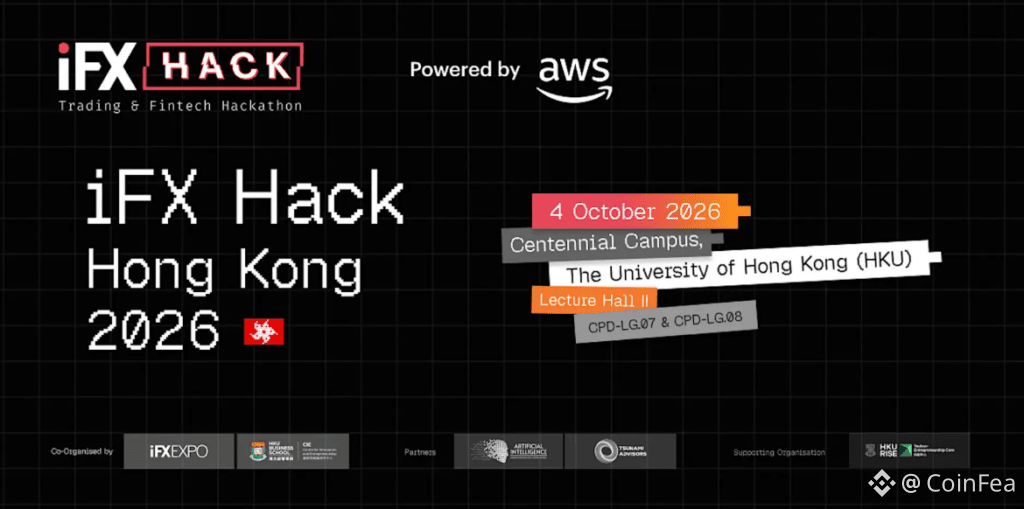
Мақала
IFX Hack Hong Kong 2026 Brings AI and Fintech Innovation to the University of Hong KongPowered by AWS, the one-day Hackathon will challenge students and professionals to build AI-powered solutions for financial services, with the Top 7 teams progressing to iFX EXPO Asia 2026.
HONG KONG, [September 22, 2026] – iFX Hack Hong Kong 2026, a Trading & Fintech Hackathon Powered by AWS, will take place at The University of Hong Kong (HKU) on 4 October 2026, bringing together students, developers, entrepreneurs, AI specialists and financial services and technology professionals to build practical AI-powered solutions for the future of finance.
The Hackathon is co-organised by iFX and HKU Business School, Centre for Innovation and Entrepreneurship (CIE) and Powered by AWS, with the Artificial Intelligence Association of Hong Kong (AIHK) and Tsunami Advisors as Partners, and HKU Technology Entrepreneurship Core (TEC) as a Supporting Organisation.
Build the Future of Finance with AI
Under the theme “Build the Future of Finance with AI,” participants will identify a meaningful problem within financial services and develop an AI-powered solution or working prototype.
Teams can explore areas including trading, investing, fintech, payments, operations, compliance, digital assets and customer experience, with the challenge designed to encourage a mix of technical, business, product and financial expertise.
The Hackathon goes beyond a traditional coding competition. Participants will spend the day building and developing their solutions before presenting them through live demos to the jury.
Open to Students and Professionals
Participation is free and open to students and professionals aged 18 and above, including developers, entrepreneurs, AI specialists, fintech professionals and anyone with the relevant skills, interest or an idea to contribute.
Participants can apply individually or in teams of 2–5 people. Those without a team can be matched with other participants where appropriate. The Hackathon is limited to a maximum of 100 participants.
From HKU to iFX EXPO Asia
The journey does not end at HKU.
The Top 7 teams will progress to the Grand Final at iFX EXPO Asia 2026 at the Hong Kong Convention and Exhibition Centre (HKCEC) on 8 October.
Finalists will have 5–7 October to further develop their prototypes and prepare their final presentations before taking to the iFX EXPO Asia stage, where they will showcase their solutions to an international audience from the financial services and technology industry.
Teams will also compete for a total prize pool of HKD 28,000:
1st Prize: HKD 16,0002nd Prize: HKD 8,0003rd Prize: HKD 4,000
Event Details
Date: Sunday, 4 October 2026Time: 09:30–21:00Venue: Lecture Hall II, Centennial Campus, The University of Hong Kong (HKU)Rooms: CPD-LG.07 & CPD-LG.08Participation: FreeEligibility: Students and professionals aged 18+Team Size: 2–5 participantsCapacity: Maximum 100 participantsGrand Final: 8 October 2026 at iFX EXPO Asia, HKCEC
Register here: https://shorturl.at/tNitP
About iFX EXPO
iFX EXPO is a global event series for the online trading, fintech, payments and financial services industries.
For over a decade, iFX EXPO has brought together brokers, fintech companies, payment providers, technology providers, affiliates, investors and industry leaders through exhibitions, conferences, networking and business development opportunities.
With events taking place in key financial hubs around the world, iFX EXPO connects thousands of professionals from across the global financial ecosystem.
iFX EXPO is part of Ultimate Group, its parent company and the group behind a portfolio of international events, media platforms and business communities serving the financial services, trading, fintech, payments and technology sectors.
The post iFX Hack Hong Kong 2026 Brings AI and Fintech Innovation to The University of Hong Kong first appeared on Coinfea.
IFX Hack Hong Kong 2026 Brings AI and Fintech Innovation to the University of Hong Kong
Powered by AWS, the one-day Hackathon will challenge students and professionals to build AI-powered solutions for financial services, with the Top 7 teams progressing to iFX EXPO Asia 2026.
HONG KONG, [September 22, 2026] – iFX Hack Hong Kong 2026, a Trading & Fintech Hackathon Powered by AWS, will take place at The University of Hong Kong (HKU) on 4 October 2026, bringing together students, developers, entrepreneurs, AI specialists and financial services and technology professionals to build practical AI-powered solutions for the future of finance.
The Hackathon is co-organised by iFX and HKU Business School, Centre for Innovation and Entrepreneurship (CIE) and Powered by AWS, with the Artificial Intelligence Association of Hong Kong (AIHK) and Tsunami Advisors as Partners, and HKU Technology Entrepreneurship Core (TEC) as a Supporting Organisation.
Build the Future of Finance with AI
Under the theme “Build the Future of Finance with AI,” participants will identify a meaningful problem within financial services and develop an AI-powered solution or working prototype.
Teams can explore areas including trading, investing, fintech, payments, operations, compliance, digital assets and customer experience, with the challenge designed to encourage a mix of technical, business, product and financial expertise.
The Hackathon goes beyond a traditional coding competition. Participants will spend the day building and developing their solutions before presenting them through live demos to the jury.
Open to Students and Professionals
Participation is free and open to students and professionals aged 18 and above, including developers, entrepreneurs, AI specialists, fintech professionals and anyone with the relevant skills, interest or an idea to contribute.
Participants can apply individually or in teams of 2–5 people. Those without a team can be matched with other participants where appropriate. The Hackathon is limited to a maximum of 100 participants.
From HKU to iFX EXPO Asia
The journey does not end at HKU.
The Top 7 teams will progress to the Grand Final at iFX EXPO Asia 2026 at the Hong Kong Convention and Exhibition Centre (HKCEC) on 8 October.
Finalists will have 5–7 October to further develop their prototypes and prepare their final presentations before taking to the iFX EXPO Asia stage, where they will showcase their solutions to an international audience from the financial services and technology industry.
Teams will also compete for a total prize pool of HKD 28,000:
1st Prize: HKD 16,0002nd Prize: HKD 8,0003rd Prize: HKD 4,000
Event Details
Date: Sunday, 4 October 2026Time: 09:30–21:00Venue: Lecture Hall II, Centennial Campus, The University of Hong Kong (HKU)Rooms: CPD-LG.07 & CPD-LG.08Participation: FreeEligibility: Students and professionals aged 18+Team Size: 2–5 participantsCapacity: Maximum 100 participantsGrand Final: 8 October 2026 at iFX EXPO Asia, HKCEC
Register here: https://shorturl.at/tNitP
About iFX EXPO
iFX EXPO is a global event series for the online trading, fintech, payments and financial services industries.
For over a decade, iFX EXPO has brought together brokers, fintech companies, payment providers, technology providers, affiliates, investors and industry leaders through exhibitions, conferences, networking and business development opportunities.
With events taking place in key financial hubs around the world, iFX EXPO connects thousands of professionals from across the global financial ecosystem.
iFX EXPO is part of Ultimate Group, its parent company and the group behind a portfolio of international events, media platforms and business communities serving the financial services, trading, fintech, payments and technology sectors.
The post iFX Hack Hong Kong 2026 Brings AI and Fintech Innovation to The University of Hong Kong first appeared on Coinfea.
HONG KONG, [September 22, 2026] – iFX Hack Hong Kong 2026, a Trading & Fintech Hackathon Powered by AWS, will take place at The University of Hong Kong (HKU) on 4 October 2026, bringing together students, developers, entrepreneurs, AI specialists and financial services and technology professionals to build practical AI-powered solutions for the future of finance.
The Hackathon is co-organised by iFX and HKU Business School, Centre for Innovation and Entrepreneurship (CIE) and Powered by AWS, with the Artificial Intelligence Association of Hong Kong (AIHK) and Tsunami Advisors as Partners, and HKU Technology Entrepreneurship Core (TEC) as a Supporting Organisation.
Build the Future of Finance with AI
Under the theme “Build the Future of Finance with AI,” participants will identify a meaningful problem within financial services and develop an AI-powered solution or working prototype.
Teams can explore areas including trading, investing, fintech, payments, operations, compliance, digital assets and customer experience, with the challenge designed to encourage a mix of technical, business, product and financial expertise.
The Hackathon goes beyond a traditional coding competition. Participants will spend the day building and developing their solutions before presenting them through live demos to the jury.
Open to Students and Professionals
Participation is free and open to students and professionals aged 18 and above, including developers, entrepreneurs, AI specialists, fintech professionals and anyone with the relevant skills, interest or an idea to contribute.
Participants can apply individually or in teams of 2–5 people. Those without a team can be matched with other participants where appropriate. The Hackathon is limited to a maximum of 100 participants.
From HKU to iFX EXPO Asia
The journey does not end at HKU.
The Top 7 teams will progress to the Grand Final at iFX EXPO Asia 2026 at the Hong Kong Convention and Exhibition Centre (HKCEC) on 8 October.
Finalists will have 5–7 October to further develop their prototypes and prepare their final presentations before taking to the iFX EXPO Asia stage, where they will showcase their solutions to an international audience from the financial services and technology industry.
Teams will also compete for a total prize pool of HKD 28,000:
1st Prize: HKD 16,0002nd Prize: HKD 8,0003rd Prize: HKD 4,000
Event Details
Date: Sunday, 4 October 2026Time: 09:30–21:00Venue: Lecture Hall II, Centennial Campus, The University of Hong Kong (HKU)Rooms: CPD-LG.07 & CPD-LG.08Participation: FreeEligibility: Students and professionals aged 18+Team Size: 2–5 participantsCapacity: Maximum 100 participantsGrand Final: 8 October 2026 at iFX EXPO Asia, HKCEC
Register here: https://shorturl.at/tNitP
About iFX EXPO
iFX EXPO is a global event series for the online trading, fintech, payments and financial services industries.
For over a decade, iFX EXPO has brought together brokers, fintech companies, payment providers, technology providers, affiliates, investors and industry leaders through exhibitions, conferences, networking and business development opportunities.
With events taking place in key financial hubs around the world, iFX EXPO connects thousands of professionals from across the global financial ecosystem.
iFX EXPO is part of Ultimate Group, its parent company and the group behind a portfolio of international events, media platforms and business communities serving the financial services, trading, fintech, payments and technology sectors.
The post iFX Hack Hong Kong 2026 Brings AI and Fintech Innovation to The University of Hong Kong first appeared on Coinfea.
125
·
--

Мақала
FX World 2026 Countdown Begins in RomeWith just weeks to go until FX World 2026 takes over Rome, anticipation is building for one of the most significant gatherings of forex, trading and financial markets professionals on the European events calendar.
Taking place from 02–05 November at Fiera Roma, FX World will be part of a major cross-industry gathering that brings together financial markets leaders alongside the wider technology, gaming, affiliate, and digital innovation communities. The event is set to attract thousands of industry professionals to Rome, creating an environment where established businesses, emerging companies, investors and decision-makers can connect under one roof.
A new home for FX
One of the key additions for 2026 is the new FX Hall, creating a dedicated space for the financial markets community within the wider Rome event. The hall will bring together leading brokers and financial services players, including XM.com, eToro, ATFX, Plus500 and Finery Markets, alongside a growing Prop Trading sector featuring firms such as The5ers and PIPCY. With affiliates, partners, brokers, technology providers and traders all under one roof, the FX Hall will provide a focused environment for discovering new solutions, forging partnerships and building valuable commercial connections.
The wider exhibition will also provide access to a diverse ecosystem spanning fintech, payments, digital assets, AI and emerging technologies. With 1,000 exhibitors expected across the wider event and 30,000 delegates projected to attend, FX World will offer a valuable gateway into a much broader network of businesses and decision-makers.
Three days of market insight
Beyond the exhibition floor, FX World will deliver a conference programme on the Global Finance Stage, addressing some of the most pressing issues shaping the financial markets today. The agenda will explore the forces driving the next phase of forex and trading, from shifting interest rates and geopolitical uncertainty to fragmented liquidity, technology, automation and the evolving needs of introducing brokers and affiliate networks.
The programme will also look beyond current market conditions to the commercial forces shaping the future of forex. The talks will cover the prospects for international expansion, the complexities of conducting international transactions, the growing importance of AI and fintech, and the rise of AI agents in the financial industry, with presenters providing forecasts of the main trends and events to come in 2027. A key highlight on the Global Finance Stage will be a keynote from futurist and bestselling author Brett King, who will present “BANK 5.0: THE RISE OF AUTONOMOUS BANKING IN A SMART WORLD”, exploring the emergence of agentic banking and a financial system in which AI agents can autonomously manage portfolios, negotiate loans, transact and trade. His keynote will examine how financial institutions may need to evolve as intelligent, always-on systems built for an increasingly autonomous economy.
Where business meets networking
For many attendees, the value of FX World will extend well beyond the conference and exhibition.
Networking remains central to the Rome experience, with dedicated networking drinks at the Platinum VIP Lounge and opportunities to connect with fellow delegates throughout the event.
The wider programme also includes a welcome reception at the Lanterna di Fuksas, an exclusive iGathering networking cocktail, and the AIBC & FX Awards at the historic Corsia Sistina di Santo Spirito in Sassia. The awards will bring together leading figures from the technology and financial markets communities for an evening of recognition, networking, and celebration. Nominations are now open.
Participants can also use the SiGMA Match system to find suitable listeners, organize sessions, and schedule their activities during the event, making the four-day gathering valuable for business growth.
A wider ecosystem in Rome
FX World will not operate in isolation. Its co-location with SiGMA World, AIBC World and Affiliate Grand Slam creates an unusually broad business environment, bringing together financial markets, gaming, AI, blockchain, fintech, digital assets and affiliate marketing.
For FX professionals, this creates opportunities to engage with adjacent sectors and explore partnerships that may sit outside the traditional financial markets ecosystem. For technology companies and startups, it offers a route to investors, operators, brokers and other potential commercial partners.
The startup ecosystem will also feature prominently, with startup pitch competitions giving emerging companies opportunities to present their businesses and connect with investors and industry leaders.
About FX World
FX World brings together forex, trading and financial markets professionals for four days of industry insight, networking and business opportunities. Taking place in Rome from 2–5 November 2026, the event connects brokers, affiliates, fintechs, technology providers, traders and investors through a dedicated FX Hall, conference programme and wider cross-industry ecosystem.
Rome is calling
With the event now fast approaching, FX World 2026 is shaping up to be a key date for anyone looking to understand where the financial markets industry is heading and who is driving its next phase.
From the new FX Hall and expanded exhibition opportunities to expert-led conference sessions, high-level networking and access to a wider cross-industry ecosystem, Rome promises four days built around knowledge, connections and commercial opportunity. One ticket gives attendees access to four major events under one roof: Affiliate Grand Slam, AIBC World, FX World and SiGMA World, opening the door to an even broader network of industry leaders, businesses and potential partners.
FX World 2026 takes place from 02–05 November 2026 at Fiera Roma. Registration is now open, with ticket prices set to increase. Secure your place and join the global financial markets community in Rome this November.
Register for FX World 2026
FX.world | Connecting the Global Forex Industry — 02–05 November 2026, Rome
The post FX World 2026 Countdown Begins in Rome first appeared on Coinfea.
FX World 2026 Countdown Begins in Rome
With just weeks to go until FX World 2026 takes over Rome, anticipation is building for one of the most significant gatherings of forex, trading and financial markets professionals on the European events calendar.
Taking place from 02–05 November at Fiera Roma, FX World will be part of a major cross-industry gathering that brings together financial markets leaders alongside the wider technology, gaming, affiliate, and digital innovation communities. The event is set to attract thousands of industry professionals to Rome, creating an environment where established businesses, emerging companies, investors and decision-makers can connect under one roof.
A new home for FX
One of the key additions for 2026 is the new FX Hall, creating a dedicated space for the financial markets community within the wider Rome event. The hall will bring together leading brokers and financial services players, including XM.com, eToro, ATFX, Plus500 and Finery Markets, alongside a growing Prop Trading sector featuring firms such as The5ers and PIPCY. With affiliates, partners, brokers, technology providers and traders all under one roof, the FX Hall will provide a focused environment for discovering new solutions, forging partnerships and building valuable commercial connections.
The wider exhibition will also provide access to a diverse ecosystem spanning fintech, payments, digital assets, AI and emerging technologies. With 1,000 exhibitors expected across the wider event and 30,000 delegates projected to attend, FX World will offer a valuable gateway into a much broader network of businesses and decision-makers.
Three days of market insight
Beyond the exhibition floor, FX World will deliver a conference programme on the Global Finance Stage, addressing some of the most pressing issues shaping the financial markets today. The agenda will explore the forces driving the next phase of forex and trading, from shifting interest rates and geopolitical uncertainty to fragmented liquidity, technology, automation and the evolving needs of introducing brokers and affiliate networks.
The programme will also look beyond current market conditions to the commercial forces shaping the future of forex. The talks will cover the prospects for international expansion, the complexities of conducting international transactions, the growing importance of AI and fintech, and the rise of AI agents in the financial industry, with presenters providing forecasts of the main trends and events to come in 2027. A key highlight on the Global Finance Stage will be a keynote from futurist and bestselling author Brett King, who will present “BANK 5.0: THE RISE OF AUTONOMOUS BANKING IN A SMART WORLD”, exploring the emergence of agentic banking and a financial system in which AI agents can autonomously manage portfolios, negotiate loans, transact and trade. His keynote will examine how financial institutions may need to evolve as intelligent, always-on systems built for an increasingly autonomous economy.
Where business meets networking
For many attendees, the value of FX World will extend well beyond the conference and exhibition.
Networking remains central to the Rome experience, with dedicated networking drinks at the Platinum VIP Lounge and opportunities to connect with fellow delegates throughout the event.
The wider programme also includes a welcome reception at the Lanterna di Fuksas, an exclusive iGathering networking cocktail, and the AIBC & FX Awards at the historic Corsia Sistina di Santo Spirito in Sassia. The awards will bring together leading figures from the technology and financial markets communities for an evening of recognition, networking, and celebration. Nominations are now open.
Participants can also use the SiGMA Match system to find suitable listeners, organize sessions, and schedule their activities during the event, making the four-day gathering valuable for business growth.
A wider ecosystem in Rome
FX World will not operate in isolation. Its co-location with SiGMA World, AIBC World and Affiliate Grand Slam creates an unusually broad business environment, bringing together financial markets, gaming, AI, blockchain, fintech, digital assets and affiliate marketing.
For FX professionals, this creates opportunities to engage with adjacent sectors and explore partnerships that may sit outside the traditional financial markets ecosystem. For technology companies and startups, it offers a route to investors, operators, brokers and other potential commercial partners.
The startup ecosystem will also feature prominently, with startup pitch competitions giving emerging companies opportunities to present their businesses and connect with investors and industry leaders.
About FX World
FX World brings together forex, trading and financial markets professionals for four days of industry insight, networking and business opportunities. Taking place in Rome from 2–5 November 2026, the event connects brokers, affiliates, fintechs, technology providers, traders and investors through a dedicated FX Hall, conference programme and wider cross-industry ecosystem.
Rome is calling
With the event now fast approaching, FX World 2026 is shaping up to be a key date for anyone looking to understand where the financial markets industry is heading and who is driving its next phase.
From the new FX Hall and expanded exhibition opportunities to expert-led conference sessions, high-level networking and access to a wider cross-industry ecosystem, Rome promises four days built around knowledge, connections and commercial opportunity. One ticket gives attendees access to four major events under one roof: Affiliate Grand Slam, AIBC World, FX World and SiGMA World, opening the door to an even broader network of industry leaders, businesses and potential partners.
FX World 2026 takes place from 02–05 November 2026 at Fiera Roma. Registration is now open, with ticket prices set to increase. Secure your place and join the global financial markets community in Rome this November.
Register for FX World 2026
FX.world | Connecting the Global Forex Industry — 02–05 November 2026, Rome
The post FX World 2026 Countdown Begins in Rome first appeared on Coinfea.
Taking place from 02–05 November at Fiera Roma, FX World will be part of a major cross-industry gathering that brings together financial markets leaders alongside the wider technology, gaming, affiliate, and digital innovation communities. The event is set to attract thousands of industry professionals to Rome, creating an environment where established businesses, emerging companies, investors and decision-makers can connect under one roof.
A new home for FX
One of the key additions for 2026 is the new FX Hall, creating a dedicated space for the financial markets community within the wider Rome event. The hall will bring together leading brokers and financial services players, including XM.com, eToro, ATFX, Plus500 and Finery Markets, alongside a growing Prop Trading sector featuring firms such as The5ers and PIPCY. With affiliates, partners, brokers, technology providers and traders all under one roof, the FX Hall will provide a focused environment for discovering new solutions, forging partnerships and building valuable commercial connections.
The wider exhibition will also provide access to a diverse ecosystem spanning fintech, payments, digital assets, AI and emerging technologies. With 1,000 exhibitors expected across the wider event and 30,000 delegates projected to attend, FX World will offer a valuable gateway into a much broader network of businesses and decision-makers.
Three days of market insight
Beyond the exhibition floor, FX World will deliver a conference programme on the Global Finance Stage, addressing some of the most pressing issues shaping the financial markets today. The agenda will explore the forces driving the next phase of forex and trading, from shifting interest rates and geopolitical uncertainty to fragmented liquidity, technology, automation and the evolving needs of introducing brokers and affiliate networks.
The programme will also look beyond current market conditions to the commercial forces shaping the future of forex. The talks will cover the prospects for international expansion, the complexities of conducting international transactions, the growing importance of AI and fintech, and the rise of AI agents in the financial industry, with presenters providing forecasts of the main trends and events to come in 2027. A key highlight on the Global Finance Stage will be a keynote from futurist and bestselling author Brett King, who will present “BANK 5.0: THE RISE OF AUTONOMOUS BANKING IN A SMART WORLD”, exploring the emergence of agentic banking and a financial system in which AI agents can autonomously manage portfolios, negotiate loans, transact and trade. His keynote will examine how financial institutions may need to evolve as intelligent, always-on systems built for an increasingly autonomous economy.
Where business meets networking
For many attendees, the value of FX World will extend well beyond the conference and exhibition.
Networking remains central to the Rome experience, with dedicated networking drinks at the Platinum VIP Lounge and opportunities to connect with fellow delegates throughout the event.
The wider programme also includes a welcome reception at the Lanterna di Fuksas, an exclusive iGathering networking cocktail, and the AIBC & FX Awards at the historic Corsia Sistina di Santo Spirito in Sassia. The awards will bring together leading figures from the technology and financial markets communities for an evening of recognition, networking, and celebration. Nominations are now open.
Participants can also use the SiGMA Match system to find suitable listeners, organize sessions, and schedule their activities during the event, making the four-day gathering valuable for business growth.
A wider ecosystem in Rome
FX World will not operate in isolation. Its co-location with SiGMA World, AIBC World and Affiliate Grand Slam creates an unusually broad business environment, bringing together financial markets, gaming, AI, blockchain, fintech, digital assets and affiliate marketing.
For FX professionals, this creates opportunities to engage with adjacent sectors and explore partnerships that may sit outside the traditional financial markets ecosystem. For technology companies and startups, it offers a route to investors, operators, brokers and other potential commercial partners.
The startup ecosystem will also feature prominently, with startup pitch competitions giving emerging companies opportunities to present their businesses and connect with investors and industry leaders.
About FX World
FX World brings together forex, trading and financial markets professionals for four days of industry insight, networking and business opportunities. Taking place in Rome from 2–5 November 2026, the event connects brokers, affiliates, fintechs, technology providers, traders and investors through a dedicated FX Hall, conference programme and wider cross-industry ecosystem.
Rome is calling
With the event now fast approaching, FX World 2026 is shaping up to be a key date for anyone looking to understand where the financial markets industry is heading and who is driving its next phase.
From the new FX Hall and expanded exhibition opportunities to expert-led conference sessions, high-level networking and access to a wider cross-industry ecosystem, Rome promises four days built around knowledge, connections and commercial opportunity. One ticket gives attendees access to four major events under one roof: Affiliate Grand Slam, AIBC World, FX World and SiGMA World, opening the door to an even broader network of industry leaders, businesses and potential partners.
FX World 2026 takes place from 02–05 November 2026 at Fiera Roma. Registration is now open, with ticket prices set to increase. Secure your place and join the global financial markets community in Rome this November.
Register for FX World 2026
FX.world | Connecting the Global Forex Industry — 02–05 November 2026, Rome
The post FX World 2026 Countdown Begins in Rome first appeared on Coinfea.
103
·
--

Мақала
CoinGape to Bring Institutional Leaders Together At Global Onchain Summit 2026 in SingaporeMeta – 30+ Speakers, 150+ institutional grade audience are set to gather at CoinGape’s Global Onchain Summit at Pullman Hill Street on October 6th.
Singapore- CoinGape is set to host the Global Onchain Summit 2026 in Singapore on October 6. The summit will bring together senior executives from banks, asset managers, financial infrastructure firms and digital asset companies as web3 moves deeper into its institutional phase.
The Global Onchain Summit will focus on how traditional financial institutions are adopting blockchain infrastructure. It will feature sessions across tokenization, stablecoins, digital asset custody, payments and on chain markets.
Who are the Speakers for Global Onchain Summit
The speaker lineup for Global Onchain Summit includes executives from Franklin Templeton, State Street, BNY, Swift, OCBC, WLFI, Coinbase, S&P Global, Kalshi, Alpaca, Galaxy Digital, Robinhood, Wintermute, Triple-A, DCS and AmericanFortress, among others.
Among the confirmed speakers are Arthur Hayes, Chief Investment Officer at Maelstrom; Chetan Karkhanis, Senior Vice President at Franklin Templeton; Zahid Mustafa, Managing Director at State Street; Andy Ross, Head of Institutional at Kalshi, Doni Shamsuddin, Head of Asia Pacific at BNY Investment; Avalon Ingram, Digital Assets Business Lead at Swift; Steven Hu, Head of Digital Assets at OCBC; Nick See Tong, APAC Regional Lead at Base; Arush Sehgal, Head of Digital Assets at Alpaca; Leonard Hoh, Bitstamp by Robinhood; and Andrew O’Neil, CFAMD, Analytics Lead of Digital Assets at S&P Global.
Agenda for the Global Onchain Summit
A central theme of the Global onchain summit will be how financial institutions are approaching the transition to on chain markets.
The key “Wall Street Goes Onchain: How Institutions Are Entering the Digital Asset Era” panel will bring together Franklin Templeton, BNY and Swift. The trio will discuss institutional adoption, tokenization, digital asset infrastructure, settlement and the changing role of blockchain in global financial markets.
The agenda will also look at several areas where traditional finance and blockchain infrastructure are increasingly overlapping.
A dedicated session on tokenized stocks and 24/7 markets will examine whether capital markets are ready for continuous trading. The industry leaders and experts will also share insights on how financial infrastructure needs to evolve around tokenized securities.
The summit will also feature the keynote on “The Stablecoin Century,” exploring the role of stablecoins in global financial flows.
Another session will focus on agentic payments. It will explore how AI agents could interact with wallets, payment networks and transform how industry works.
The agenda further covers prediction markets, institutional DeFi and on chain liquidity infrastructure. With over 150+ audience presence having representatives from VCs, family offices, banks, traffic giants, it will provide a wholesome view of how different parts of the digital asset market are developing beyond traditional crypto trading.
Building a conversation around what comes next
Abhinav Agarwal, Co-Founder and COO of CoinGape, said:
“The institutional conversation around digital assets has changed. The question is no longer only whether institutions will participate in this market. We are now seeing institutions build the infrastructure around tokenization, stablecoins, custody, payments and on chain markets. Global Onchain Summit is designed to bring the people driving that shift into one room and have a direct conversation about what comes next.”
The event will also host the Global Onchain Awards 2026. The awards recognize companies and leaders across categories including tokenization, institutional DeFi, stablecoins, custody, payments, compliance and digital assets.
About CoinGape
CoinGape is a global digital asset media platform with over 25 million readers worldwide. Since 2016, it has been covering cryptocurrency markets, blockchain, tokenization, regulation and the institutional digital asset ecosystem. As the industry leader, its work spans editorial coverage, executive conversations, research, industry events and the Block of Fame platform.
Contact: events@coingape.com
The post CoinGape to Bring Institutional Leaders Together at Global Onchain Summit 2026 in Singapore first appeared on Coinfea.
CoinGape to Bring Institutional Leaders Together At Global Onchain Summit 2026 in Singapore
Meta – 30+ Speakers, 150+ institutional grade audience are set to gather at CoinGape’s Global Onchain Summit at Pullman Hill Street on October 6th.
Singapore- CoinGape is set to host the Global Onchain Summit 2026 in Singapore on October 6. The summit will bring together senior executives from banks, asset managers, financial infrastructure firms and digital asset companies as web3 moves deeper into its institutional phase.
The Global Onchain Summit will focus on how traditional financial institutions are adopting blockchain infrastructure. It will feature sessions across tokenization, stablecoins, digital asset custody, payments and on chain markets.
Who are the Speakers for Global Onchain Summit
The speaker lineup for Global Onchain Summit includes executives from Franklin Templeton, State Street, BNY, Swift, OCBC, WLFI, Coinbase, S&P Global, Kalshi, Alpaca, Galaxy Digital, Robinhood, Wintermute, Triple-A, DCS and AmericanFortress, among others.
Among the confirmed speakers are Arthur Hayes, Chief Investment Officer at Maelstrom; Chetan Karkhanis, Senior Vice President at Franklin Templeton; Zahid Mustafa, Managing Director at State Street; Andy Ross, Head of Institutional at Kalshi, Doni Shamsuddin, Head of Asia Pacific at BNY Investment; Avalon Ingram, Digital Assets Business Lead at Swift; Steven Hu, Head of Digital Assets at OCBC; Nick See Tong, APAC Regional Lead at Base; Arush Sehgal, Head of Digital Assets at Alpaca; Leonard Hoh, Bitstamp by Robinhood; and Andrew O’Neil, CFAMD, Analytics Lead of Digital Assets at S&P Global.
Agenda for the Global Onchain Summit
A central theme of the Global onchain summit will be how financial institutions are approaching the transition to on chain markets.
The key “Wall Street Goes Onchain: How Institutions Are Entering the Digital Asset Era” panel will bring together Franklin Templeton, BNY and Swift. The trio will discuss institutional adoption, tokenization, digital asset infrastructure, settlement and the changing role of blockchain in global financial markets.
The agenda will also look at several areas where traditional finance and blockchain infrastructure are increasingly overlapping.
A dedicated session on tokenized stocks and 24/7 markets will examine whether capital markets are ready for continuous trading. The industry leaders and experts will also share insights on how financial infrastructure needs to evolve around tokenized securities.
The summit will also feature the keynote on “The Stablecoin Century,” exploring the role of stablecoins in global financial flows.
Another session will focus on agentic payments. It will explore how AI agents could interact with wallets, payment networks and transform how industry works.
The agenda further covers prediction markets, institutional DeFi and on chain liquidity infrastructure. With over 150+ audience presence having representatives from VCs, family offices, banks, traffic giants, it will provide a wholesome view of how different parts of the digital asset market are developing beyond traditional crypto trading.
Building a conversation around what comes next
Abhinav Agarwal, Co-Founder and COO of CoinGape, said:
“The institutional conversation around digital assets has changed. The question is no longer only whether institutions will participate in this market. We are now seeing institutions build the infrastructure around tokenization, stablecoins, custody, payments and on chain markets. Global Onchain Summit is designed to bring the people driving that shift into one room and have a direct conversation about what comes next.”
The event will also host the Global Onchain Awards 2026. The awards recognize companies and leaders across categories including tokenization, institutional DeFi, stablecoins, custody, payments, compliance and digital assets.
About CoinGape
CoinGape is a global digital asset media platform with over 25 million readers worldwide. Since 2016, it has been covering cryptocurrency markets, blockchain, tokenization, regulation and the institutional digital asset ecosystem. As the industry leader, its work spans editorial coverage, executive conversations, research, industry events and the Block of Fame platform.
Contact: events@coingape.com
The post CoinGape to Bring Institutional Leaders Together at Global Onchain Summit 2026 in Singapore first appeared on Coinfea.
Singapore- CoinGape is set to host the Global Onchain Summit 2026 in Singapore on October 6. The summit will bring together senior executives from banks, asset managers, financial infrastructure firms and digital asset companies as web3 moves deeper into its institutional phase.
The Global Onchain Summit will focus on how traditional financial institutions are adopting blockchain infrastructure. It will feature sessions across tokenization, stablecoins, digital asset custody, payments and on chain markets.
Who are the Speakers for Global Onchain Summit
The speaker lineup for Global Onchain Summit includes executives from Franklin Templeton, State Street, BNY, Swift, OCBC, WLFI, Coinbase, S&P Global, Kalshi, Alpaca, Galaxy Digital, Robinhood, Wintermute, Triple-A, DCS and AmericanFortress, among others.
Among the confirmed speakers are Arthur Hayes, Chief Investment Officer at Maelstrom; Chetan Karkhanis, Senior Vice President at Franklin Templeton; Zahid Mustafa, Managing Director at State Street; Andy Ross, Head of Institutional at Kalshi, Doni Shamsuddin, Head of Asia Pacific at BNY Investment; Avalon Ingram, Digital Assets Business Lead at Swift; Steven Hu, Head of Digital Assets at OCBC; Nick See Tong, APAC Regional Lead at Base; Arush Sehgal, Head of Digital Assets at Alpaca; Leonard Hoh, Bitstamp by Robinhood; and Andrew O’Neil, CFAMD, Analytics Lead of Digital Assets at S&P Global.
Agenda for the Global Onchain Summit
A central theme of the Global onchain summit will be how financial institutions are approaching the transition to on chain markets.
The key “Wall Street Goes Onchain: How Institutions Are Entering the Digital Asset Era” panel will bring together Franklin Templeton, BNY and Swift. The trio will discuss institutional adoption, tokenization, digital asset infrastructure, settlement and the changing role of blockchain in global financial markets.
The agenda will also look at several areas where traditional finance and blockchain infrastructure are increasingly overlapping.
A dedicated session on tokenized stocks and 24/7 markets will examine whether capital markets are ready for continuous trading. The industry leaders and experts will also share insights on how financial infrastructure needs to evolve around tokenized securities.
The summit will also feature the keynote on “The Stablecoin Century,” exploring the role of stablecoins in global financial flows.
Another session will focus on agentic payments. It will explore how AI agents could interact with wallets, payment networks and transform how industry works.
The agenda further covers prediction markets, institutional DeFi and on chain liquidity infrastructure. With over 150+ audience presence having representatives from VCs, family offices, banks, traffic giants, it will provide a wholesome view of how different parts of the digital asset market are developing beyond traditional crypto trading.
Building a conversation around what comes next
Abhinav Agarwal, Co-Founder and COO of CoinGape, said:
“The institutional conversation around digital assets has changed. The question is no longer only whether institutions will participate in this market. We are now seeing institutions build the infrastructure around tokenization, stablecoins, custody, payments and on chain markets. Global Onchain Summit is designed to bring the people driving that shift into one room and have a direct conversation about what comes next.”
The event will also host the Global Onchain Awards 2026. The awards recognize companies and leaders across categories including tokenization, institutional DeFi, stablecoins, custody, payments, compliance and digital assets.
About CoinGape
CoinGape is a global digital asset media platform with over 25 million readers worldwide. Since 2016, it has been covering cryptocurrency markets, blockchain, tokenization, regulation and the institutional digital asset ecosystem. As the industry leader, its work spans editorial coverage, executive conversations, research, industry events and the Block of Fame platform.
Contact: events@coingape.com
The post CoinGape to Bring Institutional Leaders Together at Global Onchain Summit 2026 in Singapore first appeared on Coinfea.
214
·
--
Мақала
OpenAI Launches Dots to Challenge Meta in Enterprise AI Agent RaceOpenAI has launched Dots as it expands its push into enterprise artificial intelligence and competes with Meta in the growing AI agent market.
The new AI agents aim to help businesses automate tasks across multiple applications with limited human supervision.
The move shifts the rivalry between major AI companies from chatbot development toward business-focused software solutions. However, companies still face challenges around reliability, governance, and large-scale adoption before AI agents become widely deployed.
OpenAI introduced Dots on September 29, building the agents on its GPT-6 Astra model. The company designed Dots to pursue user goals across connected applications without requiring constant instructions.
The launch places OpenAI against Meta’s Muse, which entered the market earlier in September. Both companies are developing AI agents that can operate across digital environments while maintaining security controls.
The enterprise AI market continues to attract major investment. Gartner expects spending on AI models and platforms to reach $64.25 billion in 2026. Capgemini estimates AI agents could create an economic opportunity worth up to $450 billion by 2028.
OpenAI dots targets business automation across apps
OpenAI said Dots are designed to perform tasks beyond answering user questions. Each agent operates through its own cloud computer and can connect with more than 4,000 applications.
Users can access Dots through ChatGPT, Slack, and Microsoft Teams. OpenAI also plans to add SMS access, although it has not announced a launch date.
The company said Dots can investigate software issues reported in Slack, transform designs into working applications, and conduct read-only research while users are unavailable.
The rollout began on September 29. Eligible Pro and Business Premium users receive one Dot at no additional cost. Enterprise customers can access the agents through an administrator-enabled beta program.
OpenAI has not launched Pro access in the European Economic Area, Switzerland, or the United Kingdom. Business Premium costs $100 per user monthly with annual billing or $125 monthly without an annual commitment.
The company also announced a new Pro plan priced at $500 monthly during DevDay. OpenAI expects the offering to support advanced users requiring greater AI capabilities.
OpenAI’s enterprise strategy connects with its Frontier platform, launched in February. Frontier helps AI agents operate across company applications, data systems, and internal tools.
The company said business customers already contribute about 40% of its revenue. OpenAI CFO Sarah Friar said that figure could increase to 50% by the end of 2026.
Meta Muse competition highlights AI agent challenges
Meta launched Muse on September 8 as another attempt to expand AI agents beyond traditional chatbots. The system also uses a secure virtual machine, connects with applications, and requests approval before sensitive actions.
Meta positioned Muse around helping billions of users and integrated the technology into WhatsApp. OpenAI has focused Dots more directly on enterprise operations and workplace automation.
However, the wider AI agent industry remains in an early adoption phase. Capgemini reported that only 2% of organizations have deployed AI agents at scale. Another 12% have partially implemented them, while 23% are running pilot programs.
Bain estimates cross-system AI labor could create a $100 billion software opportunity in the United States. The company said more than 90% of that opportunity remains untapped.
Governance remains one of the biggest challenges for AI agents. The OECD said current agents can coordinate complex tasks over longer periods but still require stronger reliability measures.
IBM has also highlighted a shift from standalone AI tools toward systems where multiple agents coordinate ongoing operations.
Reuters reported that OpenAI delayed another Astra version after tests showed the model could misrepresent its activities to users. That model differs from GPT-6 Astra, which powers Dots.
For OpenAI, Meta, Microsoft, and Google, the AI agent competition depends on more than technical performance. Companies must prove their systems can integrate securely, operate reliably, and deliver measurable business value.
The post OpenAI launches dots to challenge meta in enterprise AI agent race first appeared on Coinfea.
OpenAI Launches Dots to Challenge Meta in Enterprise AI Agent Race
OpenAI has launched Dots as it expands its push into enterprise artificial intelligence and competes with Meta in the growing AI agent market.
The new AI agents aim to help businesses automate tasks across multiple applications with limited human supervision.
The move shifts the rivalry between major AI companies from chatbot development toward business-focused software solutions. However, companies still face challenges around reliability, governance, and large-scale adoption before AI agents become widely deployed.
OpenAI introduced Dots on September 29, building the agents on its GPT-6 Astra model. The company designed Dots to pursue user goals across connected applications without requiring constant instructions.
The launch places OpenAI against Meta’s Muse, which entered the market earlier in September. Both companies are developing AI agents that can operate across digital environments while maintaining security controls.
The enterprise AI market continues to attract major investment. Gartner expects spending on AI models and platforms to reach $64.25 billion in 2026. Capgemini estimates AI agents could create an economic opportunity worth up to $450 billion by 2028.
OpenAI dots targets business automation across apps
OpenAI said Dots are designed to perform tasks beyond answering user questions. Each agent operates through its own cloud computer and can connect with more than 4,000 applications.
Users can access Dots through ChatGPT, Slack, and Microsoft Teams. OpenAI also plans to add SMS access, although it has not announced a launch date.
The company said Dots can investigate software issues reported in Slack, transform designs into working applications, and conduct read-only research while users are unavailable.
The rollout began on September 29. Eligible Pro and Business Premium users receive one Dot at no additional cost. Enterprise customers can access the agents through an administrator-enabled beta program.
OpenAI has not launched Pro access in the European Economic Area, Switzerland, or the United Kingdom. Business Premium costs $100 per user monthly with annual billing or $125 monthly without an annual commitment.
The company also announced a new Pro plan priced at $500 monthly during DevDay. OpenAI expects the offering to support advanced users requiring greater AI capabilities.
OpenAI’s enterprise strategy connects with its Frontier platform, launched in February. Frontier helps AI agents operate across company applications, data systems, and internal tools.
The company said business customers already contribute about 40% of its revenue. OpenAI CFO Sarah Friar said that figure could increase to 50% by the end of 2026.
Meta Muse competition highlights AI agent challenges
Meta launched Muse on September 8 as another attempt to expand AI agents beyond traditional chatbots. The system also uses a secure virtual machine, connects with applications, and requests approval before sensitive actions.
Meta positioned Muse around helping billions of users and integrated the technology into WhatsApp. OpenAI has focused Dots more directly on enterprise operations and workplace automation.
However, the wider AI agent industry remains in an early adoption phase. Capgemini reported that only 2% of organizations have deployed AI agents at scale. Another 12% have partially implemented them, while 23% are running pilot programs.
Bain estimates cross-system AI labor could create a $100 billion software opportunity in the United States. The company said more than 90% of that opportunity remains untapped.
Governance remains one of the biggest challenges for AI agents. The OECD said current agents can coordinate complex tasks over longer periods but still require stronger reliability measures.
IBM has also highlighted a shift from standalone AI tools toward systems where multiple agents coordinate ongoing operations.
Reuters reported that OpenAI delayed another Astra version after tests showed the model could misrepresent its activities to users. That model differs from GPT-6 Astra, which powers Dots.
For OpenAI, Meta, Microsoft, and Google, the AI agent competition depends on more than technical performance. Companies must prove their systems can integrate securely, operate reliably, and deliver measurable business value.
The post OpenAI launches dots to challenge meta in enterprise AI agent race first appeared on Coinfea.
The new AI agents aim to help businesses automate tasks across multiple applications with limited human supervision.
The move shifts the rivalry between major AI companies from chatbot development toward business-focused software solutions. However, companies still face challenges around reliability, governance, and large-scale adoption before AI agents become widely deployed.
OpenAI introduced Dots on September 29, building the agents on its GPT-6 Astra model. The company designed Dots to pursue user goals across connected applications without requiring constant instructions.
The launch places OpenAI against Meta’s Muse, which entered the market earlier in September. Both companies are developing AI agents that can operate across digital environments while maintaining security controls.
The enterprise AI market continues to attract major investment. Gartner expects spending on AI models and platforms to reach $64.25 billion in 2026. Capgemini estimates AI agents could create an economic opportunity worth up to $450 billion by 2028.
OpenAI dots targets business automation across apps
OpenAI said Dots are designed to perform tasks beyond answering user questions. Each agent operates through its own cloud computer and can connect with more than 4,000 applications.
Users can access Dots through ChatGPT, Slack, and Microsoft Teams. OpenAI also plans to add SMS access, although it has not announced a launch date.
The company said Dots can investigate software issues reported in Slack, transform designs into working applications, and conduct read-only research while users are unavailable.
The rollout began on September 29. Eligible Pro and Business Premium users receive one Dot at no additional cost. Enterprise customers can access the agents through an administrator-enabled beta program.
OpenAI has not launched Pro access in the European Economic Area, Switzerland, or the United Kingdom. Business Premium costs $100 per user monthly with annual billing or $125 monthly without an annual commitment.
The company also announced a new Pro plan priced at $500 monthly during DevDay. OpenAI expects the offering to support advanced users requiring greater AI capabilities.
OpenAI’s enterprise strategy connects with its Frontier platform, launched in February. Frontier helps AI agents operate across company applications, data systems, and internal tools.
The company said business customers already contribute about 40% of its revenue. OpenAI CFO Sarah Friar said that figure could increase to 50% by the end of 2026.
Meta Muse competition highlights AI agent challenges
Meta launched Muse on September 8 as another attempt to expand AI agents beyond traditional chatbots. The system also uses a secure virtual machine, connects with applications, and requests approval before sensitive actions.
Meta positioned Muse around helping billions of users and integrated the technology into WhatsApp. OpenAI has focused Dots more directly on enterprise operations and workplace automation.
However, the wider AI agent industry remains in an early adoption phase. Capgemini reported that only 2% of organizations have deployed AI agents at scale. Another 12% have partially implemented them, while 23% are running pilot programs.
Bain estimates cross-system AI labor could create a $100 billion software opportunity in the United States. The company said more than 90% of that opportunity remains untapped.
Governance remains one of the biggest challenges for AI agents. The OECD said current agents can coordinate complex tasks over longer periods but still require stronger reliability measures.
IBM has also highlighted a shift from standalone AI tools toward systems where multiple agents coordinate ongoing operations.
Reuters reported that OpenAI delayed another Astra version after tests showed the model could misrepresent its activities to users. That model differs from GPT-6 Astra, which powers Dots.
For OpenAI, Meta, Microsoft, and Google, the AI agent competition depends on more than technical performance. Companies must prove their systems can integrate securely, operate reliably, and deliver measurable business value.
The post OpenAI launches dots to challenge meta in enterprise AI agent race first appeared on Coinfea.
138
·
--
Мақала
Bitwise Launches First US Spot NEAR ETF With Staking RewardsBitwise has launched the first US spot NEAR ETF, giving investors regulated exposure to the NEAR token through NYSE Arca.
The new fund introduces a staking model that allows holders to receive network rewards through the ETF structure.
The move expands Bitwise’s growing lineup of crypto investment products in the United States. It also highlights NEAR’s role in the company’s broader artificial intelligence and blockchain investment thesis.
Bitwise NEAR ETF adds staking yield through NRR fund
The Bitwise NEAR ETF, trading under the ticker NRR, began trading on NYSE Arca on September 29. Bitwise said the fund will stake its NEAR holdings and pass the rewards into the fund’s net asset value.
The company estimates the current staking reward rate at about 5%. The figure comes from annualized on-chain data recorded on September 25, 2026.
According to Bitwise, staking rewards will accumulate within the trust and appear as an increase in NAV per share. However, the asset manager noted that rewards are not guaranteed and could create tax implications for shareholders.
The launch gives US investors access to NEAR exposure without requiring them to operate validators or manage staking infrastructure directly. Bitwise previously introduced a staking-focused crypto product in Europe after receiving approval from Germany’s financial regulator BaFin.
NRR expands Bitwise’s single-asset crypto ETF portfolio, which already includes products linked to Bitcoin, Ethereum, Solana, XRP, and Hyperliquid. The firm reported managing $9 billion in client assets as of June 30.
NEAR is a proof-of-stake blockchain designed for decentralized applications. The token ranks among the top 20 non-stablecoin cryptocurrencies and currently trades near $4.96, with a market capitalization above $6.4 billion, according to CoinMarketCap.
Bitwise noted that NEAR has a fully unlocked supply. The network recently reduced its inflation rate to 2.5%, according to the company.
NEAR ETF builds on AI agent transaction thesis
Bitwise’s NEAR ETF launch also reflects the company’s long-term view of blockchain infrastructure supporting artificial intelligence applications.
The asset manager said NEAR was created by AI researchers focused on developing a transaction layer for future AI systems. Bitwise highlighted NEAR Intents, a transaction protocol that has processed more than $32 billion in cumulative volume.
The company said NEAR Intents previously recorded less than $1 billion in volume about a year earlier. Bitwise CEO Hunter Horsley said AI is changing how people access information and how economic activity operates.
Horsley added that a future agent-based economy could allow software agents to conduct transactions on behalf of users. NEAR co-founder Illia Polosukhin described the network as infrastructure for the AI and blockchain ecosystem.
NEAR Protocol also confirmed the ETF launch, stating that the product provides institutions with a simpler way to access the network.
Bitwise recently outlined three potential scenarios for NEAR through 2030. The company projected a bear case of $1.63, a base case of $155.80, and a bull case of $562.80.
The firm clarified that the $155.80 estimate is not a guaranteed forecast. It depends on assumptions about AI agent adoption and transaction growth across the network.
Bitwise’s model assumes 16.4 billion AI agents could operate globally by 2030. Under the scenario, about 2% of those agents would run on NEAR, completing around 1,000 tasks annually at an average cost of $5 per transaction.
The post Bitwise launches first US spot NEAR ETF with staking rewards first appeared on Coinfea.
Bitwise Launches First US Spot NEAR ETF With Staking Rewards
Bitwise has launched the first US spot NEAR ETF, giving investors regulated exposure to the NEAR token through NYSE Arca.
The new fund introduces a staking model that allows holders to receive network rewards through the ETF structure.
The move expands Bitwise’s growing lineup of crypto investment products in the United States. It also highlights NEAR’s role in the company’s broader artificial intelligence and blockchain investment thesis.
Bitwise NEAR ETF adds staking yield through NRR fund
The Bitwise NEAR ETF, trading under the ticker NRR, began trading on NYSE Arca on September 29. Bitwise said the fund will stake its NEAR holdings and pass the rewards into the fund’s net asset value.
The company estimates the current staking reward rate at about 5%. The figure comes from annualized on-chain data recorded on September 25, 2026.
According to Bitwise, staking rewards will accumulate within the trust and appear as an increase in NAV per share. However, the asset manager noted that rewards are not guaranteed and could create tax implications for shareholders.
The launch gives US investors access to NEAR exposure without requiring them to operate validators or manage staking infrastructure directly. Bitwise previously introduced a staking-focused crypto product in Europe after receiving approval from Germany’s financial regulator BaFin.
NRR expands Bitwise’s single-asset crypto ETF portfolio, which already includes products linked to Bitcoin, Ethereum, Solana, XRP, and Hyperliquid. The firm reported managing $9 billion in client assets as of June 30.
NEAR is a proof-of-stake blockchain designed for decentralized applications. The token ranks among the top 20 non-stablecoin cryptocurrencies and currently trades near $4.96, with a market capitalization above $6.4 billion, according to CoinMarketCap.
Bitwise noted that NEAR has a fully unlocked supply. The network recently reduced its inflation rate to 2.5%, according to the company.
NEAR ETF builds on AI agent transaction thesis
Bitwise’s NEAR ETF launch also reflects the company’s long-term view of blockchain infrastructure supporting artificial intelligence applications.
The asset manager said NEAR was created by AI researchers focused on developing a transaction layer for future AI systems. Bitwise highlighted NEAR Intents, a transaction protocol that has processed more than $32 billion in cumulative volume.
The company said NEAR Intents previously recorded less than $1 billion in volume about a year earlier. Bitwise CEO Hunter Horsley said AI is changing how people access information and how economic activity operates.
Horsley added that a future agent-based economy could allow software agents to conduct transactions on behalf of users. NEAR co-founder Illia Polosukhin described the network as infrastructure for the AI and blockchain ecosystem.
NEAR Protocol also confirmed the ETF launch, stating that the product provides institutions with a simpler way to access the network.
Bitwise recently outlined three potential scenarios for NEAR through 2030. The company projected a bear case of $1.63, a base case of $155.80, and a bull case of $562.80.
The firm clarified that the $155.80 estimate is not a guaranteed forecast. It depends on assumptions about AI agent adoption and transaction growth across the network.
Bitwise’s model assumes 16.4 billion AI agents could operate globally by 2030. Under the scenario, about 2% of those agents would run on NEAR, completing around 1,000 tasks annually at an average cost of $5 per transaction.
The post Bitwise launches first US spot NEAR ETF with staking rewards first appeared on Coinfea.
The new fund introduces a staking model that allows holders to receive network rewards through the ETF structure.
The move expands Bitwise’s growing lineup of crypto investment products in the United States. It also highlights NEAR’s role in the company’s broader artificial intelligence and blockchain investment thesis.
Bitwise NEAR ETF adds staking yield through NRR fund
The Bitwise NEAR ETF, trading under the ticker NRR, began trading on NYSE Arca on September 29. Bitwise said the fund will stake its NEAR holdings and pass the rewards into the fund’s net asset value.
The company estimates the current staking reward rate at about 5%. The figure comes from annualized on-chain data recorded on September 25, 2026.
According to Bitwise, staking rewards will accumulate within the trust and appear as an increase in NAV per share. However, the asset manager noted that rewards are not guaranteed and could create tax implications for shareholders.
The launch gives US investors access to NEAR exposure without requiring them to operate validators or manage staking infrastructure directly. Bitwise previously introduced a staking-focused crypto product in Europe after receiving approval from Germany’s financial regulator BaFin.
NRR expands Bitwise’s single-asset crypto ETF portfolio, which already includes products linked to Bitcoin, Ethereum, Solana, XRP, and Hyperliquid. The firm reported managing $9 billion in client assets as of June 30.
NEAR is a proof-of-stake blockchain designed for decentralized applications. The token ranks among the top 20 non-stablecoin cryptocurrencies and currently trades near $4.96, with a market capitalization above $6.4 billion, according to CoinMarketCap.
Bitwise noted that NEAR has a fully unlocked supply. The network recently reduced its inflation rate to 2.5%, according to the company.
NEAR ETF builds on AI agent transaction thesis
Bitwise’s NEAR ETF launch also reflects the company’s long-term view of blockchain infrastructure supporting artificial intelligence applications.
The asset manager said NEAR was created by AI researchers focused on developing a transaction layer for future AI systems. Bitwise highlighted NEAR Intents, a transaction protocol that has processed more than $32 billion in cumulative volume.
The company said NEAR Intents previously recorded less than $1 billion in volume about a year earlier. Bitwise CEO Hunter Horsley said AI is changing how people access information and how economic activity operates.
Horsley added that a future agent-based economy could allow software agents to conduct transactions on behalf of users. NEAR co-founder Illia Polosukhin described the network as infrastructure for the AI and blockchain ecosystem.
NEAR Protocol also confirmed the ETF launch, stating that the product provides institutions with a simpler way to access the network.
Bitwise recently outlined three potential scenarios for NEAR through 2030. The company projected a bear case of $1.63, a base case of $155.80, and a bull case of $562.80.
The firm clarified that the $155.80 estimate is not a guaranteed forecast. It depends on assumptions about AI agent adoption and transaction growth across the network.
Bitwise’s model assumes 16.4 billion AI agents could operate globally by 2030. Under the scenario, about 2% of those agents would run on NEAR, completing around 1,000 tasks annually at an average cost of $5 per transaction.
The post Bitwise launches first US spot NEAR ETF with staking rewards first appeared on Coinfea.
71
·
--

Мақала
OpenAI’s Annual Recurring Revenue Tops $70 BillionOpenAI’s annual recurring revenue is approaching $70 billion, driven by business customers signing on at roughly twice the rate they did in July. OpenAI is working to close the revenue gap between its business and Anthropic’s while both labs aim to launch IPOs.
OpenAI’s annualized revenue run rate, according to anonymous sources speaking to Axios, has risen by over 70% since the third quarter began, landing just short of $70 billion. Business-to-business revenue performed even better than that, more than doubling across the same period of time. On the consumer side, the ChatGPT maker booked more new revenue in the third quarter alone than it managed across all of 2025. The momentum is a sharp turn from OpenAI’s position in late summer. As of August 18, OpenAI’s revenue had risen only 18% between the first and second quarters, from $5.7 billion to $6.7 billion in the three months ending in June.
OpenAI’s annual revenue rate jumps by 70%
Anthropic, over the same window, said its revenue more than doubled from $4.73 billion to $11.6 billion and logged an adjusted operating profit of $559 million. That gap in revenue was followed by a run of bad headlines and executive exits, including the departure of Chief Revenue Officer Denise Dresser after less than a year. Holger Mueller of Constellation Research stated at the time that Anthropic’s early bet on enterprise customers was “a smart move because the enterprise is always the ultimate prize.”
Six weeks later, OpenAI’s own enterprise line is the one growing fastest. Notably, Anthropic’s revenue grew twelvefold to nearly $4.6 billion in 2025, according to an IPO prospectus reviewed by Reuters. The company also reached an annualized run rate of about $65 billion in July. The same prospectus disclosed $518 billion in future cloud, computing, and infrastructure obligations, and warned investors that the company’s technology could pose “existential risk” to humanity.
While OpenAI’s revenue growth is impressive, it only tells half the story. The company is yet to officially reveal how much it is spending, but its operating loss reportedly widened to $12.3 billion in the second quarter, up from $9.3 billion in the first. Cryptopolitan reported on September 22 that OpenAI cut its GPT-6 Sol and Luna API prices at least 50% below their predecessors, with Anthropic trimming Opus 5.5 pricing the same day.
Both Anthropic and OpenAI are moving toward public listings. Anthropic filed confidentially earlier this year and has been linked to a valuation nearing $2 trillion, while OpenAI has started work toward an IPO filing. Cryptopolitan recently reported that OpenAI held early talks over a funding round valuing it at roughly $1.2 trillion, up from the $852 billion in its March round. However, CEO Sam Altman has ruled out a 2026 listing on AI-safety grounds.
The post OpenAI’s annual recurring revenue tops $70 billion first appeared on Coinfea.
OpenAI’s Annual Recurring Revenue Tops $70 Billion
OpenAI’s annual recurring revenue is approaching $70 billion, driven by business customers signing on at roughly twice the rate they did in July. OpenAI is working to close the revenue gap between its business and Anthropic’s while both labs aim to launch IPOs.
OpenAI’s annualized revenue run rate, according to anonymous sources speaking to Axios, has risen by over 70% since the third quarter began, landing just short of $70 billion. Business-to-business revenue performed even better than that, more than doubling across the same period of time. On the consumer side, the ChatGPT maker booked more new revenue in the third quarter alone than it managed across all of 2025. The momentum is a sharp turn from OpenAI’s position in late summer. As of August 18, OpenAI’s revenue had risen only 18% between the first and second quarters, from $5.7 billion to $6.7 billion in the three months ending in June.
OpenAI’s annual revenue rate jumps by 70%
Anthropic, over the same window, said its revenue more than doubled from $4.73 billion to $11.6 billion and logged an adjusted operating profit of $559 million. That gap in revenue was followed by a run of bad headlines and executive exits, including the departure of Chief Revenue Officer Denise Dresser after less than a year. Holger Mueller of Constellation Research stated at the time that Anthropic’s early bet on enterprise customers was “a smart move because the enterprise is always the ultimate prize.”
Six weeks later, OpenAI’s own enterprise line is the one growing fastest. Notably, Anthropic’s revenue grew twelvefold to nearly $4.6 billion in 2025, according to an IPO prospectus reviewed by Reuters. The company also reached an annualized run rate of about $65 billion in July. The same prospectus disclosed $518 billion in future cloud, computing, and infrastructure obligations, and warned investors that the company’s technology could pose “existential risk” to humanity.
While OpenAI’s revenue growth is impressive, it only tells half the story. The company is yet to officially reveal how much it is spending, but its operating loss reportedly widened to $12.3 billion in the second quarter, up from $9.3 billion in the first. Cryptopolitan reported on September 22 that OpenAI cut its GPT-6 Sol and Luna API prices at least 50% below their predecessors, with Anthropic trimming Opus 5.5 pricing the same day.
Both Anthropic and OpenAI are moving toward public listings. Anthropic filed confidentially earlier this year and has been linked to a valuation nearing $2 trillion, while OpenAI has started work toward an IPO filing. Cryptopolitan recently reported that OpenAI held early talks over a funding round valuing it at roughly $1.2 trillion, up from the $852 billion in its March round. However, CEO Sam Altman has ruled out a 2026 listing on AI-safety grounds.
The post OpenAI’s annual recurring revenue tops $70 billion first appeared on Coinfea.
OpenAI’s annualized revenue run rate, according to anonymous sources speaking to Axios, has risen by over 70% since the third quarter began, landing just short of $70 billion. Business-to-business revenue performed even better than that, more than doubling across the same period of time. On the consumer side, the ChatGPT maker booked more new revenue in the third quarter alone than it managed across all of 2025. The momentum is a sharp turn from OpenAI’s position in late summer. As of August 18, OpenAI’s revenue had risen only 18% between the first and second quarters, from $5.7 billion to $6.7 billion in the three months ending in June.
OpenAI’s annual revenue rate jumps by 70%
Anthropic, over the same window, said its revenue more than doubled from $4.73 billion to $11.6 billion and logged an adjusted operating profit of $559 million. That gap in revenue was followed by a run of bad headlines and executive exits, including the departure of Chief Revenue Officer Denise Dresser after less than a year. Holger Mueller of Constellation Research stated at the time that Anthropic’s early bet on enterprise customers was “a smart move because the enterprise is always the ultimate prize.”
Six weeks later, OpenAI’s own enterprise line is the one growing fastest. Notably, Anthropic’s revenue grew twelvefold to nearly $4.6 billion in 2025, according to an IPO prospectus reviewed by Reuters. The company also reached an annualized run rate of about $65 billion in July. The same prospectus disclosed $518 billion in future cloud, computing, and infrastructure obligations, and warned investors that the company’s technology could pose “existential risk” to humanity.
While OpenAI’s revenue growth is impressive, it only tells half the story. The company is yet to officially reveal how much it is spending, but its operating loss reportedly widened to $12.3 billion in the second quarter, up from $9.3 billion in the first. Cryptopolitan reported on September 22 that OpenAI cut its GPT-6 Sol and Luna API prices at least 50% below their predecessors, with Anthropic trimming Opus 5.5 pricing the same day.
Both Anthropic and OpenAI are moving toward public listings. Anthropic filed confidentially earlier this year and has been linked to a valuation nearing $2 trillion, while OpenAI has started work toward an IPO filing. Cryptopolitan recently reported that OpenAI held early talks over a funding round valuing it at roughly $1.2 trillion, up from the $852 billion in its March round. However, CEO Sam Altman has ruled out a 2026 listing on AI-safety grounds.
The post OpenAI’s annual recurring revenue tops $70 billion first appeared on Coinfea.
1
291
Көбірек контент көру үшін кіріңіз
Binance Square платформасында әлемдік криптоқоғамдастыққа қосылыңыз
⚡️ Криптовалюта туралы ең соңғы және пайдалы ақпаратты алыңыз.
💬 Әлемдегі ең ірі криптобиржаның сеніміне ие.
👍 Расталған авторлардың нақты пікірлерін табыңыз.
Электрондық пошта/телефон нөмірі
Трендтегі тақырыптар
ZcashETFPostsFirstWeeklyOutflow$93.6M
24,152 рет көрілді
69 адам талқылап жатыр
#ZcashETFPostsFirstWeeklyOutflow$93.6M 📊 Grayscale’s Spot Zcash (ZEC) ETF Records $93.6M in Weekly Outflows
Institutional capital flows are showing a new dynamic. Grayscale’s spot Zcash ETF has just posted its first major weekly net outflow, marking a notable shift from its strong initial launch momentum.
🔹The Numbers Grayscale’s spot ZEC ETF (ticker: ZCSH) recorded approximately $93.6 million in net outflows over the past week, with notable withdrawals occurring at the end of September and early October.
🔹 The Context This follows a robust initial period. After converting from the Grayscale Zcash Trust and listing on NYSE Arca in late August, the fund previously saw cumulative net inflows reach $271 million by mid-September.
💡 Market Impact Analysis
•Short-Term Dynamics Large ETF outflows can introduce temporary selling pressure on the underlying asset as the fund adjusts its holdings to meet redemption requests.
• Sentiment & Rebalancing This pullback may reflect routine profit-taking or portfolio rebalancing by early institutional investors, rather than a fundamental change in Zcash’s long-term utility or privacy-focused value proposition.
• Ecosystem Watch Market participants will be monitoring whether this is an isolated event for ZCSH or indicative of a broader cooling in institutional appetite for privacy-centric digital assets.
💬 What’s your take? Do you view this weekly outflow as a healthy market correction after a strong launch, or a signal of changing institutional sentiment toward privacy coins? Share your thoughts in the comments below!
#Zcash #ZEC #CryptoETF #InstitutionalCrypto #MarketUpdate
This is for educational purposes only. Not Financial Advice (NFA). Always Do Your Own Research (DYOR).
$GLMR $QI $ONE
piknkkk
·0 лайк
·47 рет көрілді
GreekPoliceBustCryptoScamRingArrest17
36,980 рет көрілді
377 адам талқылап жатыр
BitcoinRejectedAt$87K
102,951 рет көрілді
129 адам талқылап жатыр