

CipherX
5.5k Жариялаулар

CipherX
 «Square расталған+» белгісі
Хабарлау
Пайдаланушыны блоктау
X: Cipher2x :KOL
Жоғары жиілікті трейдер
4.9 жыл
172 Жазылым
33.3K+ Жазылушылар
38.0K+ лайк басылған
Жазбалар
Барлығы
Баға ұсыныстары
Тікелей эфир
PINNED
·
--

Мақала
My Journey With Binance and how Binance Square Changed the Way I Learn, Trade, and Share CryptoI Underestimated Binance Square Until It Became One of the Most Important Parts of My Crypto Journey
When I first noticed Binance Square inside the Binance app, I completely misunderstood it
To me, it looked like just another feed a place to scroll through opinions, news, or random posts when the market was quiet.
I didn’t see it as something serious.
I definitely didn’t see it as something that could play a role in growth, learning, or income.
That was my mistake
Because Binance Square is not a feed
It is a full content, creator, and earning ecosystem, deeply integrated into the Binance experience.And once you understand how it actually works, you realize how powerful it really is.
My Early Phase
Trading With Capital, But Without Direction
Like most people, I started crypto with a very small amount.
Not money I was careless with money that mattered. Every trade felt heavy. Every mistake felt painful. I was trading, but I wasn’t confident. I was reacting more than thinking.
At that stage, my learning was scattered. I relied on external platforms for ideas, opinions, and analysis. The problem was that learning happened in one place, trading in another, and reflection nowhere.
I didn’t know it at the time, but what I needed wasn’t another signal or strategy.
What I needed was a space where I could develop my own thinking.
That space turned out to be Binance Square.
Discovering Binance Square as a Living, Real-Time Environment
As I started spending more time on Binance Square, I noticed something important.
People weren’t posting hindsight analysis
They weren’t posting edited success stories
They were sharing thoughts while the market was moving
Chart views, scenarios, levels, invalidations everything felt live and honest.
Because Binance Square exists inside Binance, the experience is different.
You read a post, open the chart, compare the idea, and think for yourself all in one flow. There’s no disconnect between learning and execution.
This is one of the biggest reasons Binance Square works so well.
The Moment I Started Posting My Own Views
Eventually, I stopped just reading.
I started posting my own chart views simple, direct, and honest. I explained what I was seeing, why certain levels mattered, and where my idea would fail.
I wasn’t trying to impress anyone.
I wasn’t predicting tops or bottoms.
I was simply sharing how I think.
What surprised me was the response. People didn’t just react they engaged. They questioned my logic, added perspectives, and sometimes corrected me.
That feedback loop forced me to be more precise, more responsible, and more disciplined.Posting on Binance Square slowly became a habit.And that habit changed how I traded.
Articles
Where My Thinking Became Structured
One of the most powerful parts of Binance Square is long-form articles.
Articles allow you to go beyond quick thoughts. They give you space to explain ideas properly, share full journeys, and document lessons learned over time.
Unlike many platforms where long content gets ignored, Binance Square actually values and distributes it.
Writing articles forced me to slow down. If I couldn’t explain something clearly, it meant I didn’t understand it deeply enough. That realization alone improved my market discipline.
Articles weren’t just content they became a record of growth.
CreatorPad
Where Binance Square Becomes an Earning Ecosystem
This is the part most people either don’t know about or don’t understand properly.
CreatorPad is not just a label.
It is a structured system inside Binance Square where official campaigns are launched.
These campaigns are often tied to:
- Binance features
- partnered projects
- educational initiatives
Creators participate by publishing relevant content posts, articles, videos and their performance is tracked.
Engagement matters.
Consistency matters.
Quality matters.
This is where leaderboards come in.
Leaderboards, Rankings, and Real Rewards
Inside CreatorPad campaigns, creators are ranked on leaderboards sometimes campaign-based, sometimes project-based.
Your rank depends on how well your content performs and how valuable your contribution is. And here’s the important part;
Top-ranked creators earn real, meaningful rewards.
Not symbolic rewards.
Not “exposure only.”
People earn handsome amounts through these campaigns.
For many users, this becomes one of the most practical ways to earn in crypto without taking trading risk by contributing knowledge, experience, and perspective.
If someone understands CreatorPad properly and stays consistent, it can become a serious opportunity.
How Binance Square Changed My Own Growth and Income
I didn’t enter Binance Square thinking about money
I entered by sharing thoughts.
Over time, something changed.
My thinking improved.
My discipline improved.
My confidence stabilized.
I started with a very small amount. Slowly, through better decisions and consistent learning, that grew into something respectable and meaningful. Today, crypto has become a real part of my income and Binance Square played a direct role by shaping how I think, not just how I trade.
Gratitude, Honestly
I’m genuinely thankful for Binance Square.
It gave me:
a place to express ideas
a system to grow as a creator
campaigns that reward effort
an ecosystem that values thinking over noise
It didn’t force growth.
It allowed it.
Videos and Live Streams
Learning in Real Time
Text is powerful, but Binance Square goes further.
With video content, creators can explain charts visually, walk through ideas step by step, and make complex concepts easier to understand. It adds a human layer that text alone can’t provide.
Then there is live streaming one of the most underestimated features on Binance Square.
Going live means discussing the market as it moves, answering questions instantly, and sharing real-time thought processes. There’s no editing, no scripting just raw market logic.
Very few platforms allow this level of transparency inside a trading ecosystem.
Where This Took Me Personally
I didn’t come here to earn.
I came here to share thoughts.
But clarity compounds.
I started with very little. Over time, through better thinking, discipline, and consistency, crypto became a real part of my income.
Binance Square didn’t give me money.
It gave me structure.
And structure is what actually pays.
Final Thoughts
I once thought Binance Square was just a feed.
Now I know it’s a complete content, creator, and earning ecosystem, built directly into the Binance experience.
For those who take it seriously, it’s one of the most powerful features Binance has ever created.
It changed my journey.
And I believe it can change many more
We Binance 💛
#Square #BinanceSquare
My Journey With Binance and how Binance Square Changed the Way I Learn, Trade, and Share Crypto
I Underestimated Binance Square Until It Became One of the Most Important Parts of My Crypto Journey
When I first noticed Binance Square inside the Binance app, I completely misunderstood it
To me, it looked like just another feed a place to scroll through opinions, news, or random posts when the market was quiet.
I didn’t see it as something serious.
I definitely didn’t see it as something that could play a role in growth, learning, or income.
That was my mistake
Because Binance Square is not a feed
It is a full content, creator, and earning ecosystem, deeply integrated into the Binance experience.And once you understand how it actually works, you realize how powerful it really is.
My Early Phase
Trading With Capital, But Without Direction
Like most people, I started crypto with a very small amount.
Not money I was careless with money that mattered. Every trade felt heavy. Every mistake felt painful. I was trading, but I wasn’t confident. I was reacting more than thinking.
At that stage, my learning was scattered. I relied on external platforms for ideas, opinions, and analysis. The problem was that learning happened in one place, trading in another, and reflection nowhere.
I didn’t know it at the time, but what I needed wasn’t another signal or strategy.
What I needed was a space where I could develop my own thinking.
That space turned out to be Binance Square.
Discovering Binance Square as a Living, Real-Time Environment
As I started spending more time on Binance Square, I noticed something important.
People weren’t posting hindsight analysis
They weren’t posting edited success stories
They were sharing thoughts while the market was moving
Chart views, scenarios, levels, invalidations everything felt live and honest.
Because Binance Square exists inside Binance, the experience is different.
You read a post, open the chart, compare the idea, and think for yourself all in one flow. There’s no disconnect between learning and execution.
This is one of the biggest reasons Binance Square works so well.
The Moment I Started Posting My Own Views
Eventually, I stopped just reading.
I started posting my own chart views simple, direct, and honest. I explained what I was seeing, why certain levels mattered, and where my idea would fail.
I wasn’t trying to impress anyone.
I wasn’t predicting tops or bottoms.
I was simply sharing how I think.
What surprised me was the response. People didn’t just react they engaged. They questioned my logic, added perspectives, and sometimes corrected me.
That feedback loop forced me to be more precise, more responsible, and more disciplined.Posting on Binance Square slowly became a habit.And that habit changed how I traded.
Articles
Where My Thinking Became Structured
One of the most powerful parts of Binance Square is long-form articles.
Articles allow you to go beyond quick thoughts. They give you space to explain ideas properly, share full journeys, and document lessons learned over time.
Unlike many platforms where long content gets ignored, Binance Square actually values and distributes it.
Writing articles forced me to slow down. If I couldn’t explain something clearly, it meant I didn’t understand it deeply enough. That realization alone improved my market discipline.
Articles weren’t just content they became a record of growth.
CreatorPad
Where Binance Square Becomes an Earning Ecosystem
This is the part most people either don’t know about or don’t understand properly.
CreatorPad is not just a label.
It is a structured system inside Binance Square where official campaigns are launched.
These campaigns are often tied to:
- Binance features
- partnered projects
- educational initiatives
Creators participate by publishing relevant content posts, articles, videos and their performance is tracked.
Engagement matters.
Consistency matters.
Quality matters.
This is where leaderboards come in.
Leaderboards, Rankings, and Real Rewards
Inside CreatorPad campaigns, creators are ranked on leaderboards sometimes campaign-based, sometimes project-based.
Your rank depends on how well your content performs and how valuable your contribution is. And here’s the important part;
Top-ranked creators earn real, meaningful rewards.
Not symbolic rewards.
Not “exposure only.”
People earn handsome amounts through these campaigns.
For many users, this becomes one of the most practical ways to earn in crypto without taking trading risk by contributing knowledge, experience, and perspective.
If someone understands CreatorPad properly and stays consistent, it can become a serious opportunity.
How Binance Square Changed My Own Growth and Income
I didn’t enter Binance Square thinking about money
I entered by sharing thoughts.
Over time, something changed.
My thinking improved.
My discipline improved.
My confidence stabilized.
I started with a very small amount. Slowly, through better decisions and consistent learning, that grew into something respectable and meaningful. Today, crypto has become a real part of my income and Binance Square played a direct role by shaping how I think, not just how I trade.
Gratitude, Honestly
I’m genuinely thankful for Binance Square.
It gave me:
a place to express ideas
a system to grow as a creator
campaigns that reward effort
an ecosystem that values thinking over noise
It didn’t force growth.
It allowed it.
Videos and Live Streams
Learning in Real Time
Text is powerful, but Binance Square goes further.
With video content, creators can explain charts visually, walk through ideas step by step, and make complex concepts easier to understand. It adds a human layer that text alone can’t provide.
Then there is live streaming one of the most underestimated features on Binance Square.
Going live means discussing the market as it moves, answering questions instantly, and sharing real-time thought processes. There’s no editing, no scripting just raw market logic.
Very few platforms allow this level of transparency inside a trading ecosystem.
Where This Took Me Personally
I didn’t come here to earn.
I came here to share thoughts.
But clarity compounds.
I started with very little. Over time, through better thinking, discipline, and consistency, crypto became a real part of my income.
Binance Square didn’t give me money.
It gave me structure.
And structure is what actually pays.
Final Thoughts
I once thought Binance Square was just a feed.
Now I know it’s a complete content, creator, and earning ecosystem, built directly into the Binance experience.
For those who take it seriously, it’s one of the most powerful features Binance has ever created.
It changed my journey.
And I believe it can change many more
We Binance 💛
#Square #BinanceSquare
When I first noticed Binance Square inside the Binance app, I completely misunderstood it
To me, it looked like just another feed a place to scroll through opinions, news, or random posts when the market was quiet.
I didn’t see it as something serious.
I definitely didn’t see it as something that could play a role in growth, learning, or income.
That was my mistake
Because Binance Square is not a feed
It is a full content, creator, and earning ecosystem, deeply integrated into the Binance experience.And once you understand how it actually works, you realize how powerful it really is.
My Early Phase
Trading With Capital, But Without Direction
Like most people, I started crypto with a very small amount.
Not money I was careless with money that mattered. Every trade felt heavy. Every mistake felt painful. I was trading, but I wasn’t confident. I was reacting more than thinking.
At that stage, my learning was scattered. I relied on external platforms for ideas, opinions, and analysis. The problem was that learning happened in one place, trading in another, and reflection nowhere.
I didn’t know it at the time, but what I needed wasn’t another signal or strategy.
What I needed was a space where I could develop my own thinking.
That space turned out to be Binance Square.
Discovering Binance Square as a Living, Real-Time Environment
As I started spending more time on Binance Square, I noticed something important.
People weren’t posting hindsight analysis
They weren’t posting edited success stories
They were sharing thoughts while the market was moving
Chart views, scenarios, levels, invalidations everything felt live and honest.
Because Binance Square exists inside Binance, the experience is different.
You read a post, open the chart, compare the idea, and think for yourself all in one flow. There’s no disconnect between learning and execution.
This is one of the biggest reasons Binance Square works so well.
The Moment I Started Posting My Own Views
Eventually, I stopped just reading.
I started posting my own chart views simple, direct, and honest. I explained what I was seeing, why certain levels mattered, and where my idea would fail.
I wasn’t trying to impress anyone.
I wasn’t predicting tops or bottoms.
I was simply sharing how I think.
What surprised me was the response. People didn’t just react they engaged. They questioned my logic, added perspectives, and sometimes corrected me.
That feedback loop forced me to be more precise, more responsible, and more disciplined.Posting on Binance Square slowly became a habit.And that habit changed how I traded.
Articles
Where My Thinking Became Structured
One of the most powerful parts of Binance Square is long-form articles.
Articles allow you to go beyond quick thoughts. They give you space to explain ideas properly, share full journeys, and document lessons learned over time.
Unlike many platforms where long content gets ignored, Binance Square actually values and distributes it.
Writing articles forced me to slow down. If I couldn’t explain something clearly, it meant I didn’t understand it deeply enough. That realization alone improved my market discipline.
Articles weren’t just content they became a record of growth.
CreatorPad
Where Binance Square Becomes an Earning Ecosystem
This is the part most people either don’t know about or don’t understand properly.
CreatorPad is not just a label.
It is a structured system inside Binance Square where official campaigns are launched.
These campaigns are often tied to:
- Binance features
- partnered projects
- educational initiatives
Creators participate by publishing relevant content posts, articles, videos and their performance is tracked.
Engagement matters.
Consistency matters.
Quality matters.
This is where leaderboards come in.
Leaderboards, Rankings, and Real Rewards
Inside CreatorPad campaigns, creators are ranked on leaderboards sometimes campaign-based, sometimes project-based.
Your rank depends on how well your content performs and how valuable your contribution is. And here’s the important part;
Top-ranked creators earn real, meaningful rewards.
Not symbolic rewards.
Not “exposure only.”
People earn handsome amounts through these campaigns.
For many users, this becomes one of the most practical ways to earn in crypto without taking trading risk by contributing knowledge, experience, and perspective.
If someone understands CreatorPad properly and stays consistent, it can become a serious opportunity.
How Binance Square Changed My Own Growth and Income
I didn’t enter Binance Square thinking about money
I entered by sharing thoughts.
Over time, something changed.
My thinking improved.
My discipline improved.
My confidence stabilized.
I started with a very small amount. Slowly, through better decisions and consistent learning, that grew into something respectable and meaningful. Today, crypto has become a real part of my income and Binance Square played a direct role by shaping how I think, not just how I trade.
Gratitude, Honestly
I’m genuinely thankful for Binance Square.
It gave me:
a place to express ideas
a system to grow as a creator
campaigns that reward effort
an ecosystem that values thinking over noise
It didn’t force growth.
It allowed it.
Videos and Live Streams
Learning in Real Time
Text is powerful, but Binance Square goes further.
With video content, creators can explain charts visually, walk through ideas step by step, and make complex concepts easier to understand. It adds a human layer that text alone can’t provide.
Then there is live streaming one of the most underestimated features on Binance Square.
Going live means discussing the market as it moves, answering questions instantly, and sharing real-time thought processes. There’s no editing, no scripting just raw market logic.
Very few platforms allow this level of transparency inside a trading ecosystem.
Where This Took Me Personally
I didn’t come here to earn.
I came here to share thoughts.
But clarity compounds.
I started with very little. Over time, through better thinking, discipline, and consistency, crypto became a real part of my income.
Binance Square didn’t give me money.
It gave me structure.
And structure is what actually pays.
Final Thoughts
I once thought Binance Square was just a feed.
Now I know it’s a complete content, creator, and earning ecosystem, built directly into the Binance experience.
For those who take it seriously, it’s one of the most powerful features Binance has ever created.
It changed my journey.
And I believe it can change many more
We Binance 💛
#Square #BinanceSquare
61
10
175
79.5k
·
--
$ACU
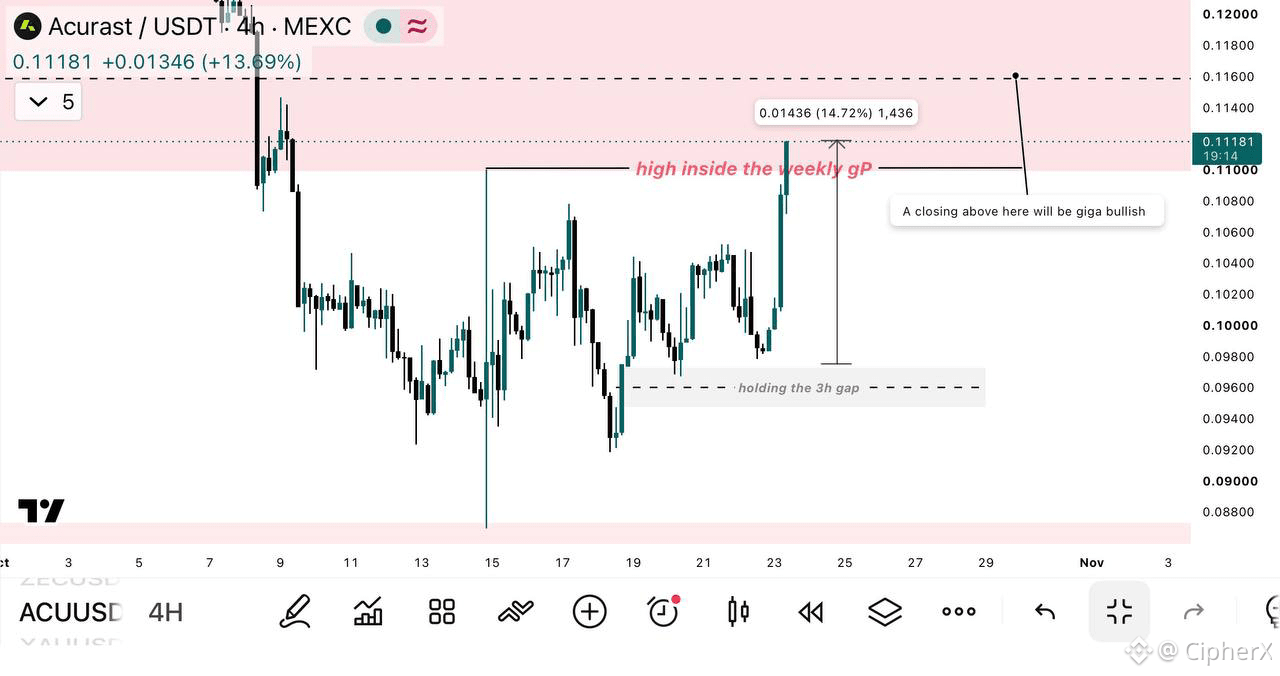
The 3H gap held, consolidation broke out, and price is now hitting the highs I marked out way earlier.
The plan is playing out exactly as expected
Let it run.
$ACU
The 3H gap held, consolidation broke out, and price is now hitting the highs I marked out way earlier.
The plan is playing out exactly as expected
Let it run.
The 3H gap held, consolidation broke out, and price is now hitting the highs I marked out way earlier.
The plan is playing out exactly as expected
Let it run.
1
4
180
·
--
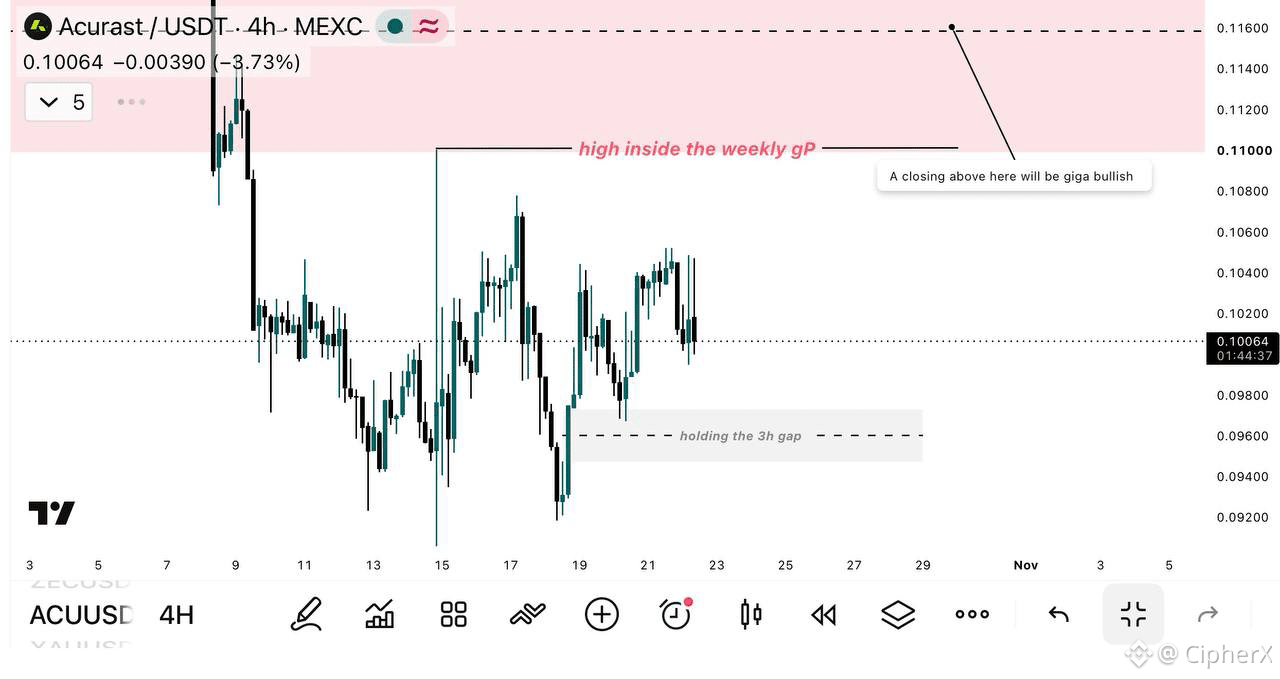
$ACU Update
Price is consolidating after rejecting the 4H gap, with a resweep of lows inside the 3H gap
Expecting strong moves once consolidation breaks
A close above 0.1100 would be bullish.
JOIN NOW:p0ha7j
$ACU Update
Price is consolidating after rejecting the 4H gap, with a resweep of lows inside the 3H gap
Expecting strong moves once consolidation breaks
A close above 0.1100 would be bullish.
JOIN NOW:p0ha7j
Price is consolidating after rejecting the 4H gap, with a resweep of lows inside the 3H gap
Expecting strong moves once consolidation breaks
A close above 0.1100 would be bullish.
JOIN NOW:p0ha7j
2
131
·
--
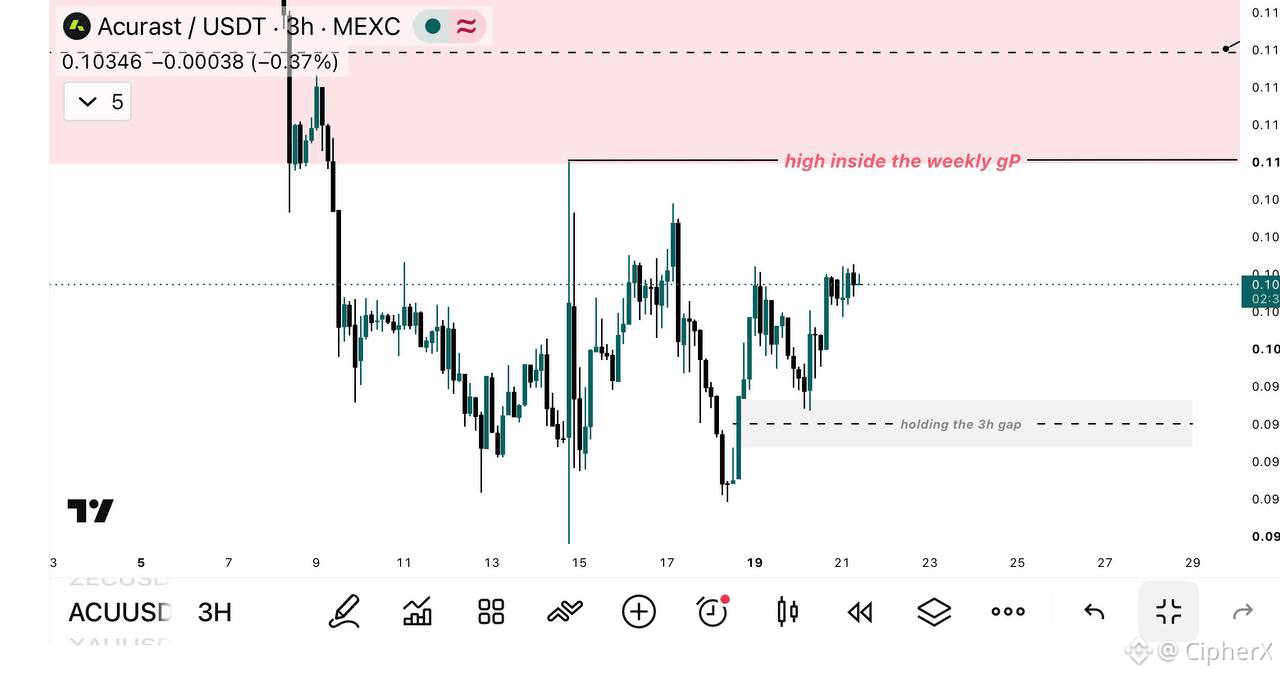
$ACU is holding the 3H gap pretty strongly
I’m expecting a bullish move towards the high inside the weekly gap above
That’s looking like a strong draw on liquidity
That’s a short term bullish move that im expecting
🤝
$ACU is holding the 3H gap pretty strongly
I’m expecting a bullish move towards the high inside the weekly gap above
That’s looking like a strong draw on liquidity
That’s a short term bullish move that im expecting
🤝
I’m expecting a bullish move towards the high inside the weekly gap above
That’s looking like a strong draw on liquidity
That’s a short term bullish move that im expecting
🤝
1
3
129
·
--
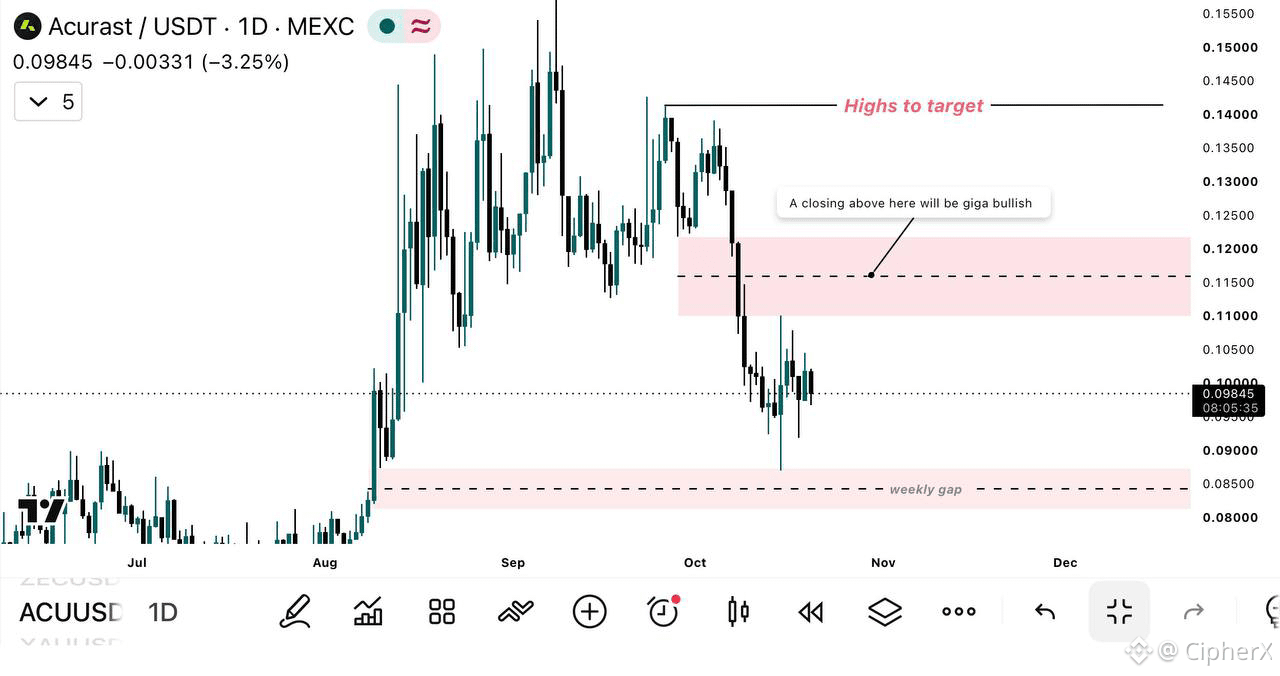
$ACU Longs
This is the whole plan 👇🏻
- Daily close above the higher gap → bullish confirmation
- Stop hunt at the weekly gap + reclaim → potential long opportunity
I’ll be taking longs confidently if either of these conditions plays out.
JOIN NOW:p0ha7j
$ACU Longs
This is the whole plan 👇🏻
- Daily close above the higher gap → bullish confirmation
- Stop hunt at the weekly gap + reclaim → potential long opportunity
I’ll be taking longs confidently if either of these conditions plays out.
JOIN NOW:p0ha7j
This is the whole plan 👇🏻
- Daily close above the higher gap → bullish confirmation
- Stop hunt at the weekly gap + reclaim → potential long opportunity
I’ll be taking longs confidently if either of these conditions plays out.
JOIN NOW:p0ha7j
2
150
·
--
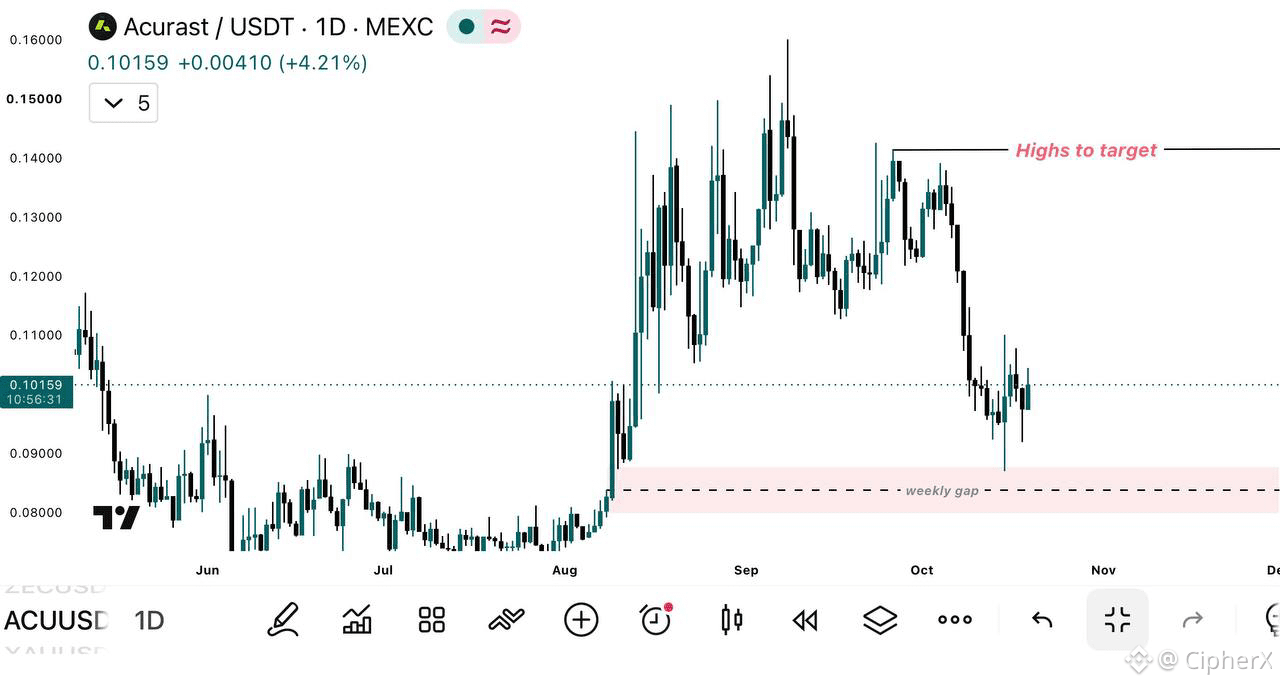
$ACU looks interesting again
Price has pulled back to my zone of interest that i mentioned earlier → the weekly gap around $0.080–$0.088
Giving a good reaction
And retest of the previous highs near $0.14 could be on the table.
Let it run.
JOIN NOW:p0ha7j
$ACU looks interesting again
Price has pulled back to my zone of interest that i mentioned earlier → the weekly gap around $0.080–$0.088
Giving a good reaction
And retest of the previous highs near $0.14 could be on the table.
Let it run.
JOIN NOW:p0ha7j
Price has pulled back to my zone of interest that i mentioned earlier → the weekly gap around $0.080–$0.088
Giving a good reaction
And retest of the previous highs near $0.14 could be on the table.
Let it run.
JOIN NOW:p0ha7j
1
3
151
·
--
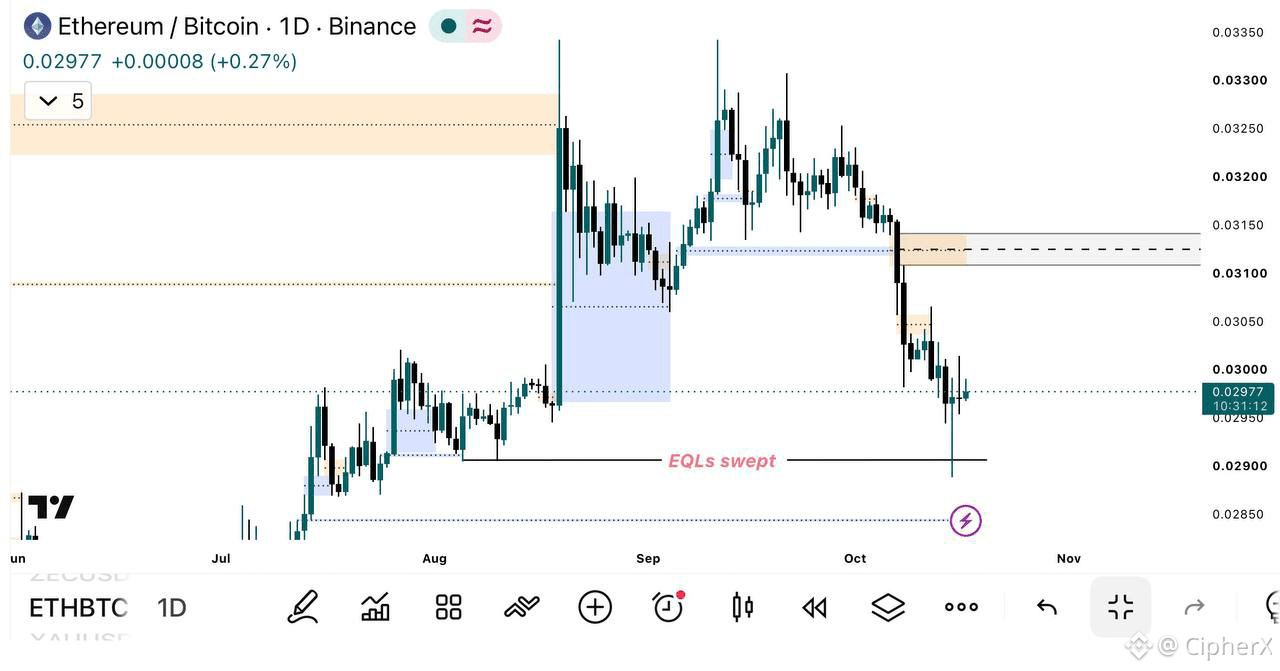
ETH/BTC has wiped out months of upside
And bringing price back to a key area of interest
With liquidity cleared below the recent structure
The stage could be set for a strong recovery
imo
Time for the next leg up
And for $ETH to outperform $BTC
And alts will get a chance to breathe.
ETH/BTC has wiped out months of upside
And bringing price back to a key area of interest
With liquidity cleared below the recent structure
The stage could be set for a strong recovery
imo
Time for the next leg up
And for $ETH to outperform $BTC
And alts will get a chance to breathe.
And bringing price back to a key area of interest
With liquidity cleared below the recent structure
The stage could be set for a strong recovery
imo
Time for the next leg up
And for $ETH to outperform $BTC
And alts will get a chance to breathe.
2
534
·
--
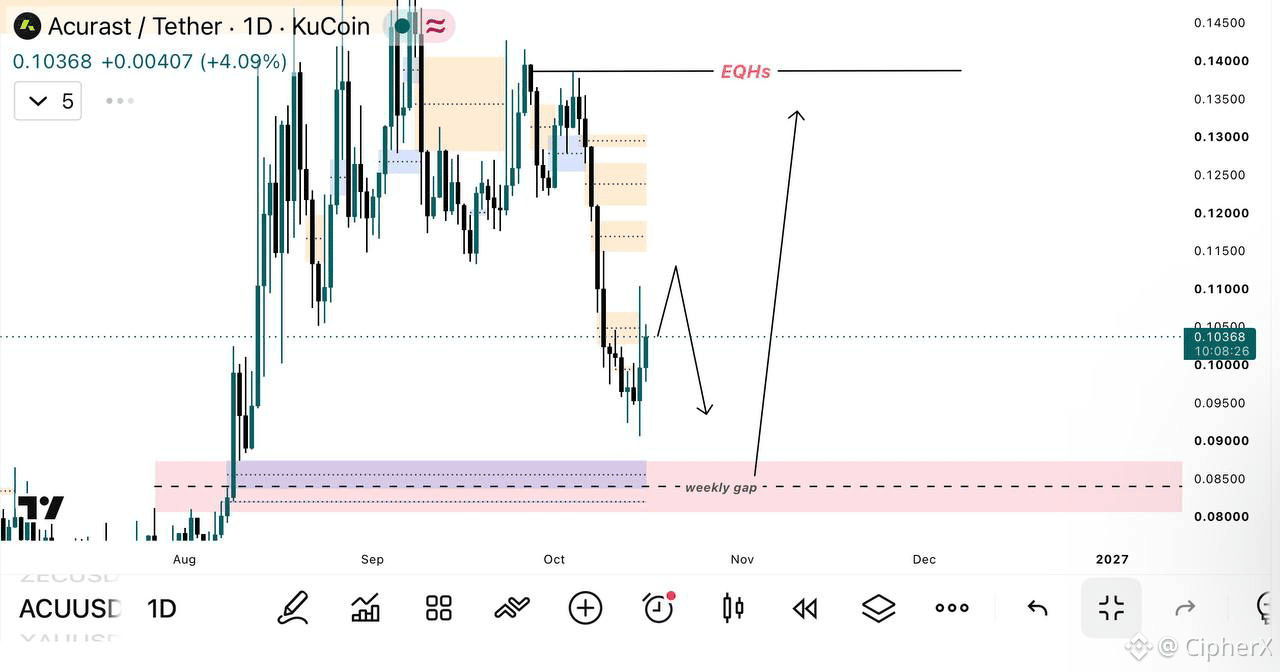
$ACU
I’m still looking for a move into the weekly gap around $0.081–$0.087
It’s the one which would be a healthy retracement for the overall market structure
From there I’ll be looking for potential longs
And with the upcoming listing I’m expecting a potentially strong move so I’m DCAing here.
$ACU
I’m still looking for a move into the weekly gap around $0.081–$0.087
It’s the one which would be a healthy retracement for the overall market structure
From there I’ll be looking for potential longs
And with the upcoming listing I’m expecting a potentially strong move so I’m DCAing here.
I’m still looking for a move into the weekly gap around $0.081–$0.087
It’s the one which would be a healthy retracement for the overall market structure
From there I’ll be looking for potential longs
And with the upcoming listing I’m expecting a potentially strong move so I’m DCAing here.
1
5
130
·
--
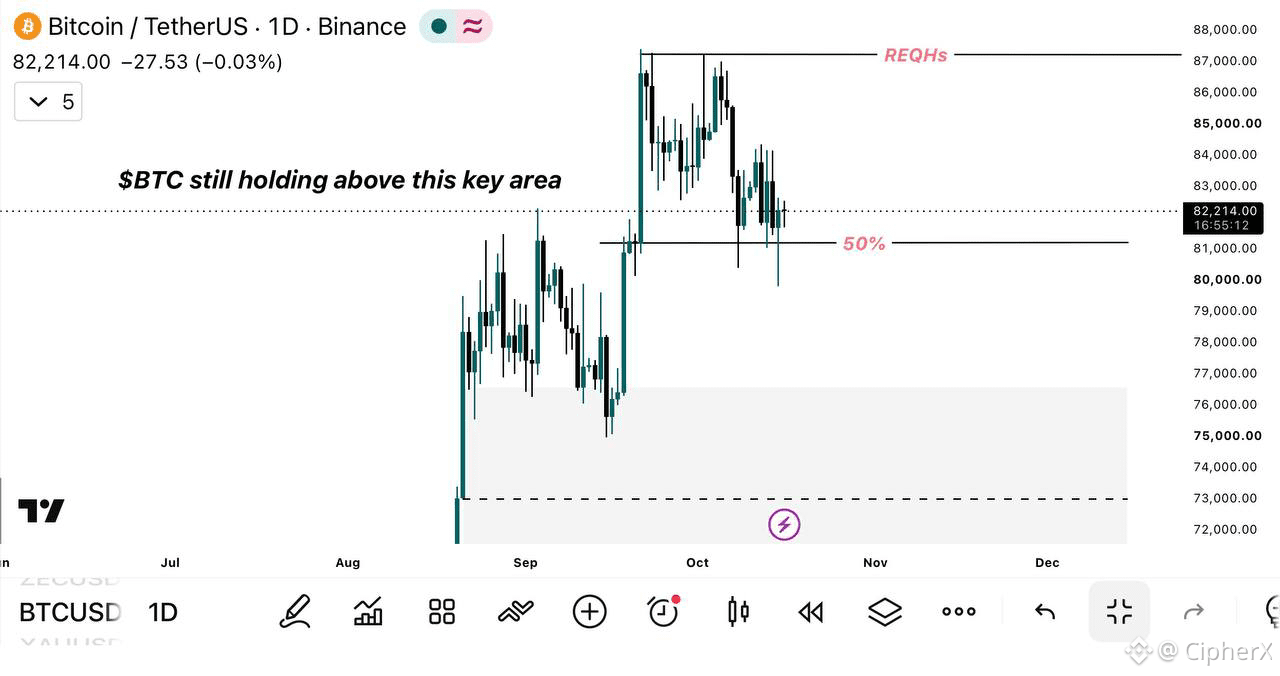
For my $BTC analysis 🚨
$BTC still holding the 50% range
CPI came PPI came both were negative for markets but still BTC not losing this zone
And that’s a positive signal
And those highs above will be a great target
We also have a monthly SMT with $ETH
Things are looking good here
I’m expecting BUYSIDE.
For my $BTC analysis 🚨
$BTC still holding the 50% range
CPI came PPI came both were negative for markets but still BTC not losing this zone
And that’s a positive signal
And those highs above will be a great target
We also have a monthly SMT with $ETH
Things are looking good here
I’m expecting BUYSIDE.
$BTC still holding the 50% range
CPI came PPI came both were negative for markets but still BTC not losing this zone
And that’s a positive signal
And those highs above will be a great target
We also have a monthly SMT with $ETH
Things are looking good here
I’m expecting BUYSIDE.
2
728
·
--
This is a major step forward for Acurast 👏
Been adding to $ACU on every retracement
And now seeing the team push for a #BithumbOfficial listing is exactly the kind of progress you want to see
Another milestone for the network
Now let’s see some of that green on the chart
$ACU
Time to move.
This is a major step forward for Acurast 👏
Been adding to $ACU on every retracement
And now seeing the team push for a #BithumbOfficial listing is exactly the kind of progress you want to see
Another milestone for the network
Now let’s see some of that green on the chart
$ACU
Time to move.
Been adding to $ACU on every retracement
And now seeing the team push for a #BithumbOfficial listing is exactly the kind of progress you want to see
Another milestone for the network
Now let’s see some of that green on the chart
$ACU
Time to move.

1
5
128
·
--
$ACU
As I’ve said a million times the weekly gap is where I’ll be looking for longs
With the same initial targets i provided earlier →$0.14
Until price reaches that zone any valid short setup is fair game from my point of view
Once we reach the weekly gap, I’ll be fully focused on longs
Until then, shorts are valid.
JOIN NOW:p0ha7j
$ACU
As I’ve said a million times the weekly gap is where I’ll be looking for longs
With the same initial targets i provided earlier →$0.14
Until price reaches that zone any valid short setup is fair game from my point of view
Once we reach the weekly gap, I’ll be fully focused on longs
Until then, shorts are valid.
JOIN NOW:p0ha7j
As I’ve said a million times the weekly gap is where I’ll be looking for longs
With the same initial targets i provided earlier →$0.14
Until price reaches that zone any valid short setup is fair game from my point of view
Once we reach the weekly gap, I’ll be fully focused on longs
Until then, shorts are valid.
JOIN NOW:p0ha7j
2
4
926
·
--
AI needs compute
But who controls it?
That’s what makes Acurast interesting to me.
Instead of relying only on big data centers, Acurast uses smartphones to power a decentralized compute network.
What stands out to me:
• Turning smartphones into compute providers
• Making AI compute more accessible
• Focusing on privacy and verifiable execution
The idea is pretty simple 👇🏻
Just put unused devices to work instead of depending on a few big players.
Still early, but definitely worth keeping an eye on as Crypto AI grows.
It’s going to make some good noise in this space, imo.
You can join using my referral code: p0ha7j
LFG $ACU
AI needs compute
But who controls it?
That’s what makes Acurast interesting to me.
Instead of relying only on big data centers, Acurast uses smartphones to power a decentralized compute network.
What stands out to me:
• Turning smartphones into compute providers
• Making AI compute more accessible
• Focusing on privacy and verifiable execution
The idea is pretty simple 👇🏻
Just put unused devices to work instead of depending on a few big players.
Still early, but definitely worth keeping an eye on as Crypto AI grows.
It’s going to make some good noise in this space, imo.
You can join using my referral code: p0ha7j
LFG $ACU
But who controls it?
That’s what makes Acurast interesting to me.
Instead of relying only on big data centers, Acurast uses smartphones to power a decentralized compute network.
What stands out to me:
• Turning smartphones into compute providers
• Making AI compute more accessible
• Focusing on privacy and verifiable execution
The idea is pretty simple 👇🏻
Just put unused devices to work instead of depending on a few big players.
Still early, but definitely worth keeping an eye on as Crypto AI grows.
It’s going to make some good noise in this space, imo.
You can join using my referral code: p0ha7j
LFG $ACU
1
2
106
·
--
GM
$BTC falls below $82k now recovering towards $83.7k
$ETH drops to $2400 now recovering towards $2500
More than $200 million worth of long positions liquidated in just 4 hours
Typical Monday market opening
It was a great move to secure half and set the rest to BE.
GM
$BTC falls below $82k now recovering towards $83.7k
$ETH drops to $2400 now recovering towards $2500
More than $200 million worth of long positions liquidated in just 4 hours
Typical Monday market opening
It was a great move to secure half and set the rest to BE.
$BTC falls below $82k now recovering towards $83.7k
$ETH drops to $2400 now recovering towards $2500
More than $200 million worth of long positions liquidated in just 4 hours
Typical Monday market opening
It was a great move to secure half and set the rest to BE.
1
244
·
--
$ACU
For my plan moving forward
I'm waiting to see how it reacts if it bleeds down into the weekly demand zone
That is sitting between $0.082 and $0.088
That’s the key area I'm keeping on my radar to watch for a potential base and a strong bullish reaction for the next move up
Targeting the local range high around $0.125.
JOIN NOW:p0ha7j
$ACU
For my plan moving forward
I'm waiting to see how it reacts if it bleeds down into the weekly demand zone
That is sitting between $0.082 and $0.088
That’s the key area I'm keeping on my radar to watch for a potential base and a strong bullish reaction for the next move up
Targeting the local range high around $0.125.
JOIN NOW:p0ha7j
For my plan moving forward
I'm waiting to see how it reacts if it bleeds down into the weekly demand zone
That is sitting between $0.082 and $0.088
That’s the key area I'm keeping on my radar to watch for a potential base and a strong bullish reaction for the next move up
Targeting the local range high around $0.125.
JOIN NOW:p0ha7j
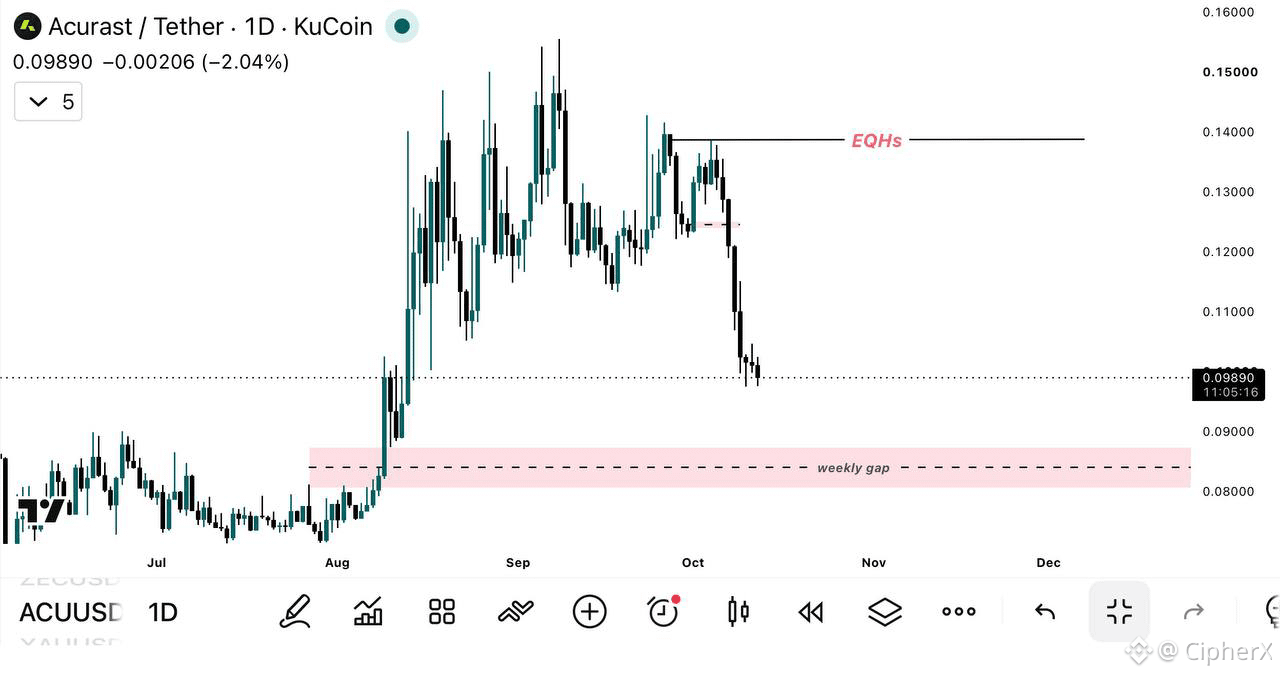
2
2
126
·
--
$BNB UPDATE
$BNB started moving up from exactly our given level and we’re in profit
Now, all eyes on $758
A confirmed close above $758 could open the way toward our next ultimate targets:
$800–$810
Stay patient and let the price action confirm.
GM.
$BNB UPDATE
$BNB started moving up from exactly our given level and we’re in profit
Now, all eyes on $758
A confirmed close above $758 could open the way toward our next ultimate targets:
$800–$810
Stay patient and let the price action confirm.
GM.
$BNB started moving up from exactly our given level and we’re in profit
Now, all eyes on $758
A confirmed close above $758 could open the way toward our next ultimate targets:
$800–$810
Stay patient and let the price action confirm.
GM.
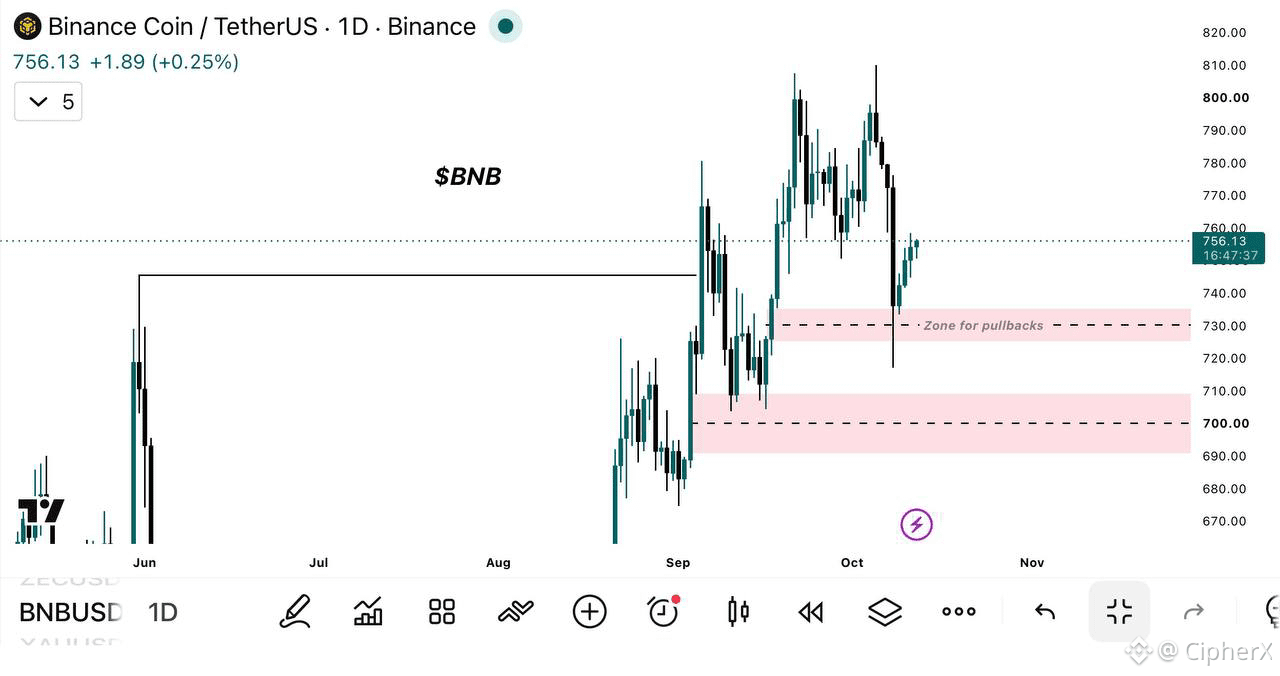
2
343
·
--
$BTC Trade Update
As expected $BTC bounced from the 50% level around $81K and moved up to $83K
With Monday’s market opening approaching
I’d prefer moving my SL to break-even to protect the trade
Or you may scale half
The move played out as expected.
$BTC Trade Update
As expected $BTC bounced from the 50% level around $81K and moved up to $83K
With Monday’s market opening approaching
I’d prefer moving my SL to break-even to protect the trade
Or you may scale half
The move played out as expected.
As expected $BTC bounced from the 50% level around $81K and moved up to $83K
With Monday’s market opening approaching
I’d prefer moving my SL to break-even to protect the trade
Or you may scale half
The move played out as expected.
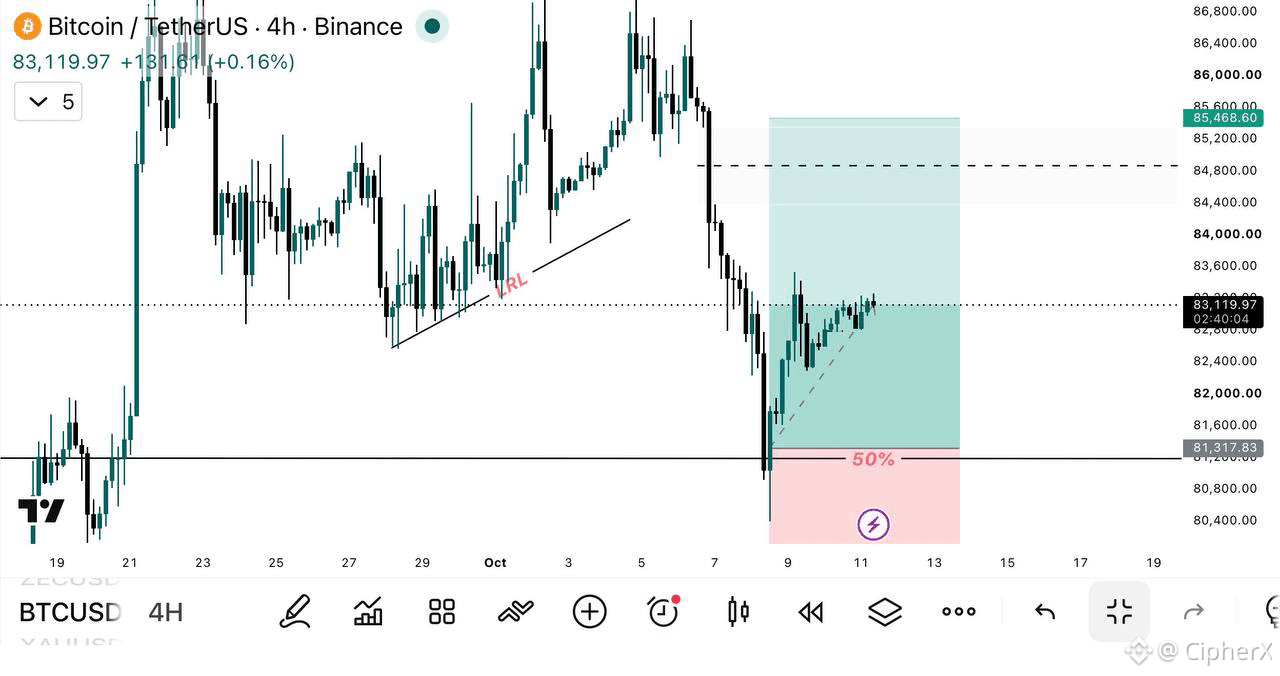
2
437
·
--
$BTC Trade update 🚨
Price reacted strongly from the 50% retracement zone I marked out
And has now pumped to the $83.5K area
I entered at the 15min inversion as my confirmation
This is exactly the reaction I was looking for
Clean enough?
$BTC Trade update 🚨
Price reacted strongly from the 50% retracement zone I marked out
And has now pumped to the $83.5K area
I entered at the 15min inversion as my confirmation
This is exactly the reaction I was looking for
Clean enough?
Price reacted strongly from the 50% retracement zone I marked out
And has now pumped to the $83.5K area
I entered at the 15min inversion as my confirmation
This is exactly the reaction I was looking for
Clean enough?
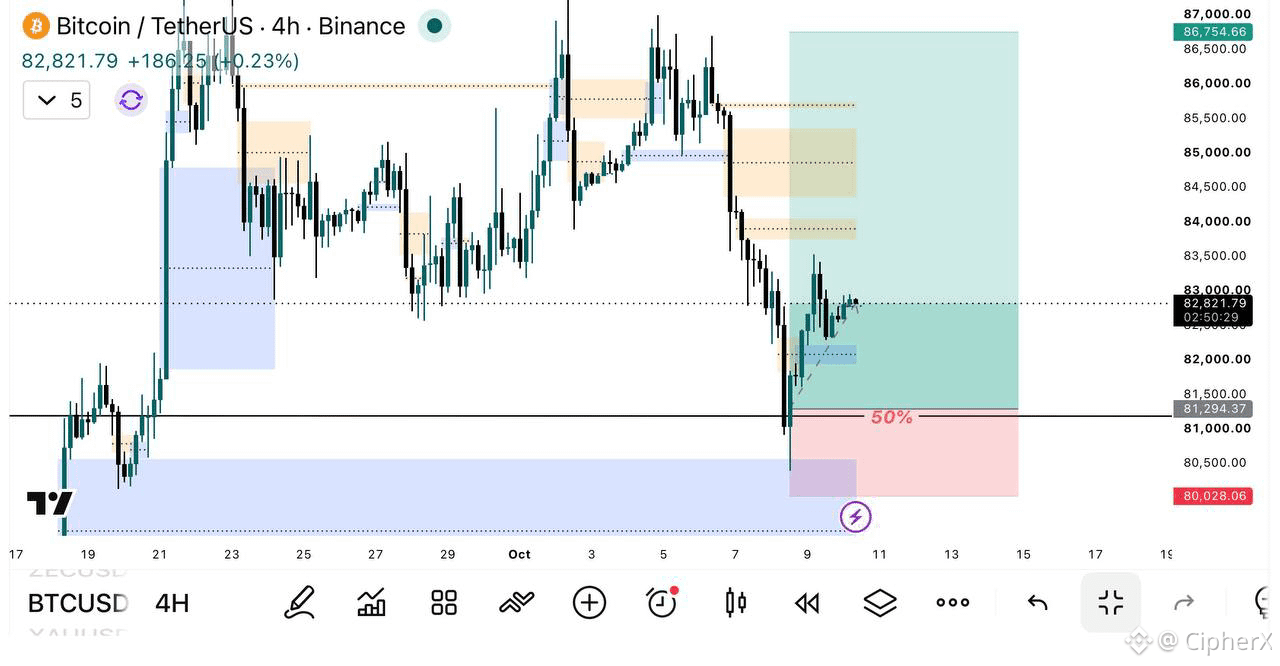
293
·
--
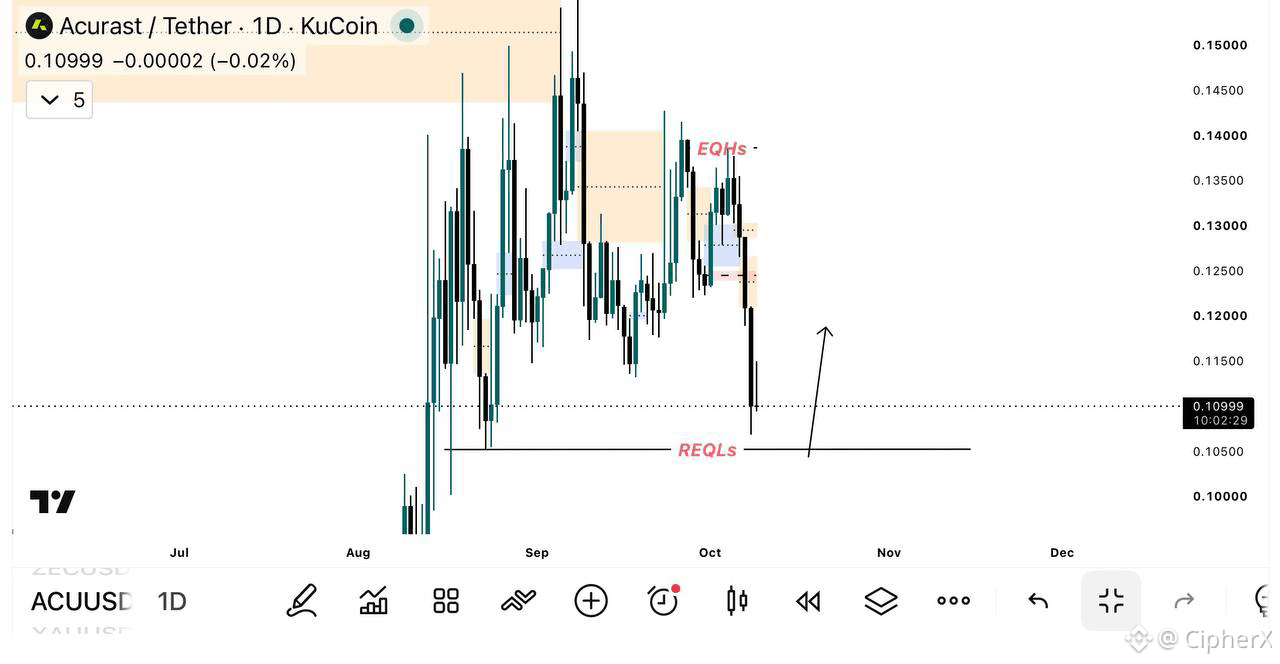
$ACU UPDATE
I’m looking for a sweep of those marked REQLs right around $0.1050
From there you can expect a strong bullish reversal
Targeting the UMG daily and 4h gaps above
So a fakeout below $0.105 followed by a reclaim should trigger a big move
Towards $0.125 and beyond.
$ACU UPDATE
I’m looking for a sweep of those marked REQLs right around $0.1050
From there you can expect a strong bullish reversal
Targeting the UMG daily and 4h gaps above
So a fakeout below $0.105 followed by a reclaim should trigger a big move
Towards $0.125 and beyond.
I’m looking for a sweep of those marked REQLs right around $0.1050
From there you can expect a strong bullish reversal
Targeting the UMG daily and 4h gaps above
So a fakeout below $0.105 followed by a reclaim should trigger a big move
Towards $0.125 and beyond.
2
1
151
·
--
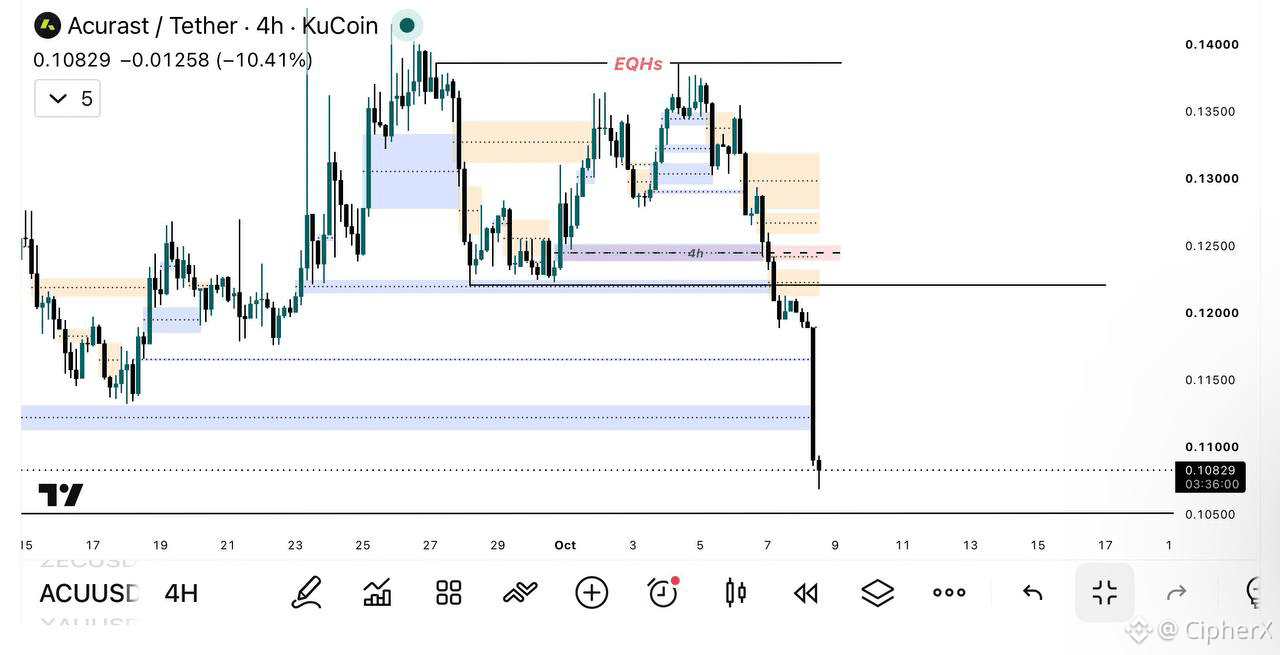
$ACU Still Playing the Bigger Picture 👇🏻
ACU continued to retrace but I’m taking this dip as an opportunity to fill my bags
We also have a weekly gap below
And after confirmation I’ll be looking for buying from there
I’m still very strong on this one
Nothing has changed in my conviction
I believe $ACU will print real good in the coming months
Targets remains same - $0.2 and higher
JOIN NOW:ns2rdj
$ACU Still Playing the Bigger Picture 👇🏻
ACU continued to retrace but I’m taking this dip as an opportunity to fill my bags
We also have a weekly gap below
And after confirmation I’ll be looking for buying from there
I’m still very strong on this one
Nothing has changed in my conviction
I believe $ACU will print real good in the coming months
Targets remains same - $0.2 and higher
JOIN NOW:ns2rdj
ACU continued to retrace but I’m taking this dip as an opportunity to fill my bags
We also have a weekly gap below
And after confirmation I’ll be looking for buying from there
I’m still very strong on this one
Nothing has changed in my conviction
I believe $ACU will print real good in the coming months
Targets remains same - $0.2 and higher
JOIN NOW:ns2rdj
1
1
93
·
--
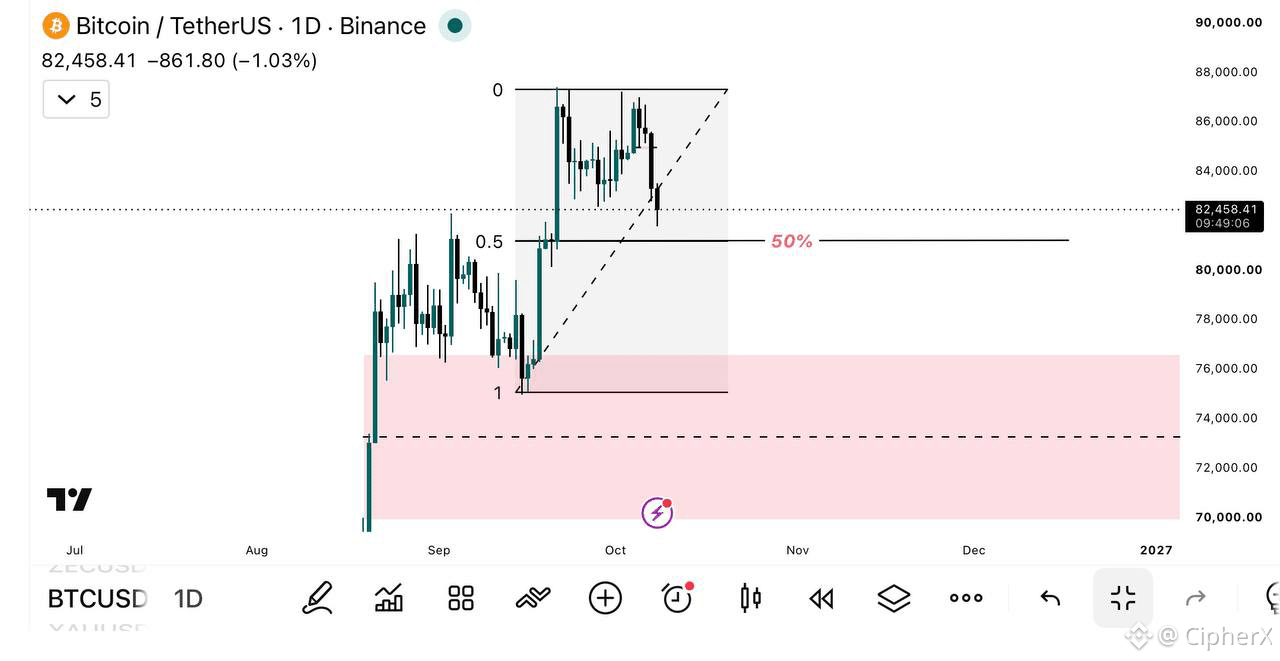
$BTC dropped below $82K
And liquidating $82M in longs within 60 minutes.
I’m adding to my $BTC position around the 50% retracement of this leg
As I’ve marked out on my chart
$BTC left equal highs above making $87K my target
Let’s play it out.
$BTC dropped below $82K
And liquidating $82M in longs within 60 minutes.
I’m adding to my $BTC position around the 50% retracement of this leg
As I’ve marked out on my chart
$BTC left equal highs above making $87K my target
Let’s play it out.
And liquidating $82M in longs within 60 minutes.
I’m adding to my $BTC position around the 50% retracement of this leg
As I’ve marked out on my chart
$BTC left equal highs above making $87K my target
Let’s play it out.
1
472
Көбірек контент көру үшін кіріңіз
Binance Square платформасында әлемдік криптоқоғамдастыққа қосылыңыз
⚡️ Криптовалюта туралы ең соңғы және пайдалы ақпаратты алыңыз.
💬 Әлемдегі ең ірі криптобиржаның сеніміне ие.
👍 Расталған авторлардың нақты пікірлерін табыңыз.
Электрондық пошта/телефон нөмірі
Трендтегі тақырыптар
BinancePick
3M рет көрілді
152,357 адам талқылап жатыр
Join #EarningsSeason: Predict Earnings on Binance Pick, Share Your Take on Binance Square!
Binance Square Official
·409 лайк
·342.8k рет көрілді
EarningsSeason
5.3M рет көрілді
25,894 адам талқылап жатыр
AnthropicTTMRevenueGrewAbout1200%
24,782 рет көрілді
372 адам талқылап жатыр