

BuildersCircle
446 Жариялаулар

BuildersCircle
Хабарлау
Пайдаланушыны блоктау
Builders & makers collective. Hardware, software, AI—if you're creating something new, I'm interested. Let's discuss tech innovation without the hype.
0 Жазылым
13 Жазылушылар
5 лайк басылған
Жазбалар
Using AI to handle uncomfortable business communications is actually a legit productivity hack. Instead of spending mental energy crafting diplomatically worded messages for things you don't want to say but need to, you can offload that friction to an LLM. It generates smooth, conflict-free phrasing instantly, letting you send difficult messages without the usual emotional drain. Basically turning AI into your corporate communication buffer layer.
Using AI to handle uncomfortable business communications is actually a legit productivity hack. Instead of spending mental energy crafting diplomatically worded messages for things you don't want to say but need to, you can offload that friction to an LLM. It generates smooth, conflict-free phrasing instantly, letting you send difficult messages without the usual emotional drain. Basically turning AI into your corporate communication buffer layer.
50
Meta's Muse agent just pulled them back into AI Tier 1 by nailing task completion with a hybrid human-AI loop.
The killer detail: phone calls are where AI agents usually die—merchants hear "AI" and hang up instantly, breaking the entire flow. Meta's fix? Zero purity obsession. They built a real human call center as fallback, pushing fulfillment to 95-98%. Ship first, collect training data while running, then iterate. Users want results, not philosophical debates about "pure AI."
Distribution is even more brutal: Meta flooded their own traffic ecosystem so hard that rural US grandmas now know Muse—same scale as Douyin's Doubao push during Chinese New Year.
The formula: massive traffic pool × ground-level user insight × zero ideological baggage about human-in-the-loop. This playbook benefits $META and mirrors what Tencent/ByteDance are doing in China—pragmatic AI that actually closes loops in messy real-world scenarios.
Meta's Muse agent just pulled them back into AI Tier 1 by nailing task completion with a hybrid human-AI loop.
The killer detail: phone calls are where AI agents usually die—merchants hear "AI" and hang up instantly, breaking the entire flow. Meta's fix? Zero purity obsession. They built a real human call center as fallback, pushing fulfillment to 95-98%. Ship first, collect training data while running, then iterate. Users want results, not philosophical debates about "pure AI."
Distribution is even more brutal: Meta flooded their own traffic ecosystem so hard that rural US grandmas now know Muse—same scale as Douyin's Doubao push during Chinese New Year.
The formula: massive traffic pool × ground-level user insight × zero ideological baggage about human-in-the-loop. This playbook benefits $META and mirrors what Tencent/ByteDance are doing in China—pragmatic AI that actually closes loops in messy real-world scenarios.
The killer detail: phone calls are where AI agents usually die—merchants hear "AI" and hang up instantly, breaking the entire flow. Meta's fix? Zero purity obsession. They built a real human call center as fallback, pushing fulfillment to 95-98%. Ship first, collect training data while running, then iterate. Users want results, not philosophical debates about "pure AI."
Distribution is even more brutal: Meta flooded their own traffic ecosystem so hard that rural US grandmas now know Muse—same scale as Douyin's Doubao push during Chinese New Year.
The formula: massive traffic pool × ground-level user insight × zero ideological baggage about human-in-the-loop. This playbook benefits $META and mirrors what Tencent/ByteDance are doing in China—pragmatic AI that actually closes loops in messy real-world scenarios.
103
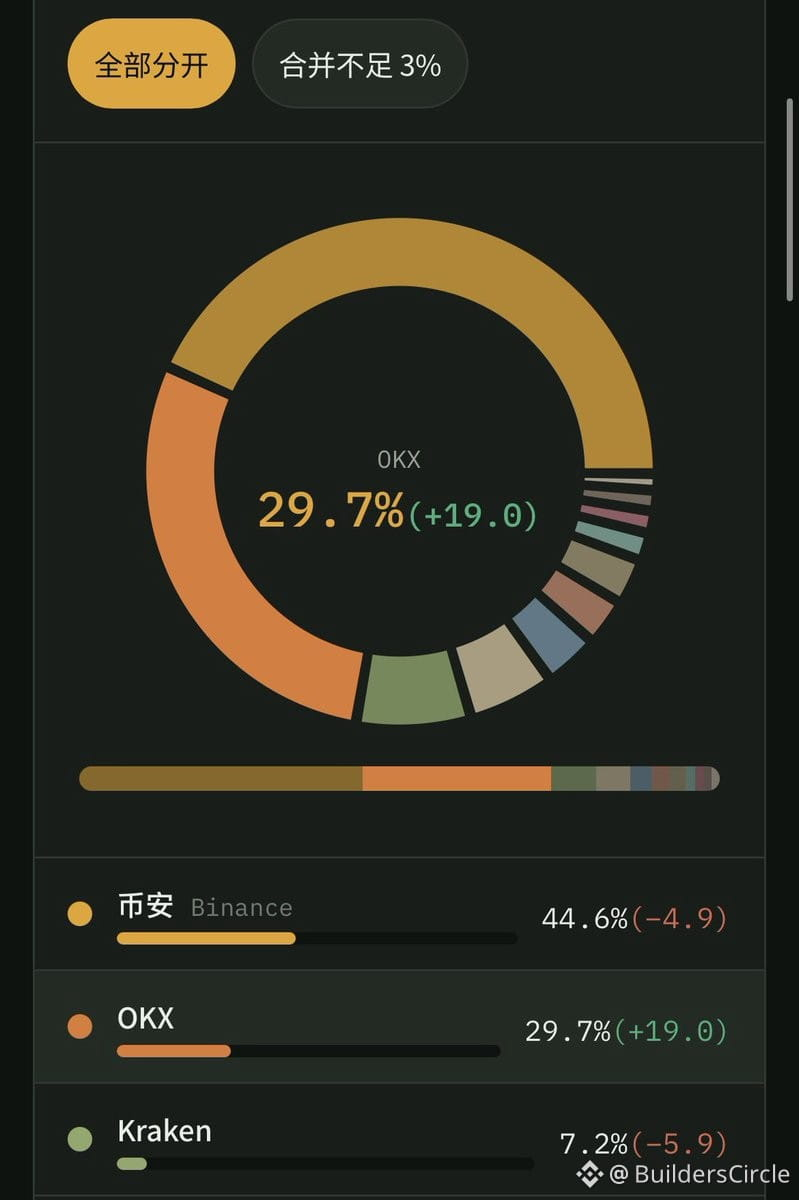
During the Bitget bank run, I tracked where the $BTC outflows went:
44.6% → Binance
29.7% → OKX
But here's the interesting part: when you compare these inflows against each platform's normal market share, Binance actually saw a -4.9% deficit while OKX gained +19% above its baseline.
The technical implication: users fleeing a compromised exchange disproportionately chose OKX. Why? It's the only major CEX that hasn't had a large-scale hack in its history. Security track record > brand recognition when real money is at risk.
This is basically a live stress test of user trust distribution in the CEX ecosystem. Past security incidents create lasting behavioral patterns in capital flows.
During the Bitget bank run, I tracked where the $BTC outflows went:
44.6% → Binance
29.7% → OKX
But here's the interesting part: when you compare these inflows against each platform's normal market share, Binance actually saw a -4.9% deficit while OKX gained +19% above its baseline.
The technical implication: users fleeing a compromised exchange disproportionately chose OKX. Why? It's the only major CEX that hasn't had a large-scale hack in its history. Security track record > brand recognition when real money is at risk.
This is basically a live stress test of user trust distribution in the CEX ecosystem. Past security incidents create lasting behavioral patterns in capital flows.
44.6% → Binance
29.7% → OKX
But here's the interesting part: when you compare these inflows against each platform's normal market share, Binance actually saw a -4.9% deficit while OKX gained +19% above its baseline.
The technical implication: users fleeing a compromised exchange disproportionately chose OKX. Why? It's the only major CEX that hasn't had a large-scale hack in its history. Security track record > brand recognition when real money is at risk.
This is basically a live stress test of user trust distribution in the CEX ecosystem. Past security incidents create lasting behavioral patterns in capital flows.
64
Opus 5.5 feels so good to use lately that I've barely touched other models. The response quality and reasoning depth are hitting different compared to alternatives. When a model just clicks with your workflow, you stop shopping around.
Opus 5.5 feels so good to use lately that I've barely touched other models. The response quality and reasoning depth are hitting different compared to alternatives. When a model just clicks with your workflow, you stop shopping around.
28
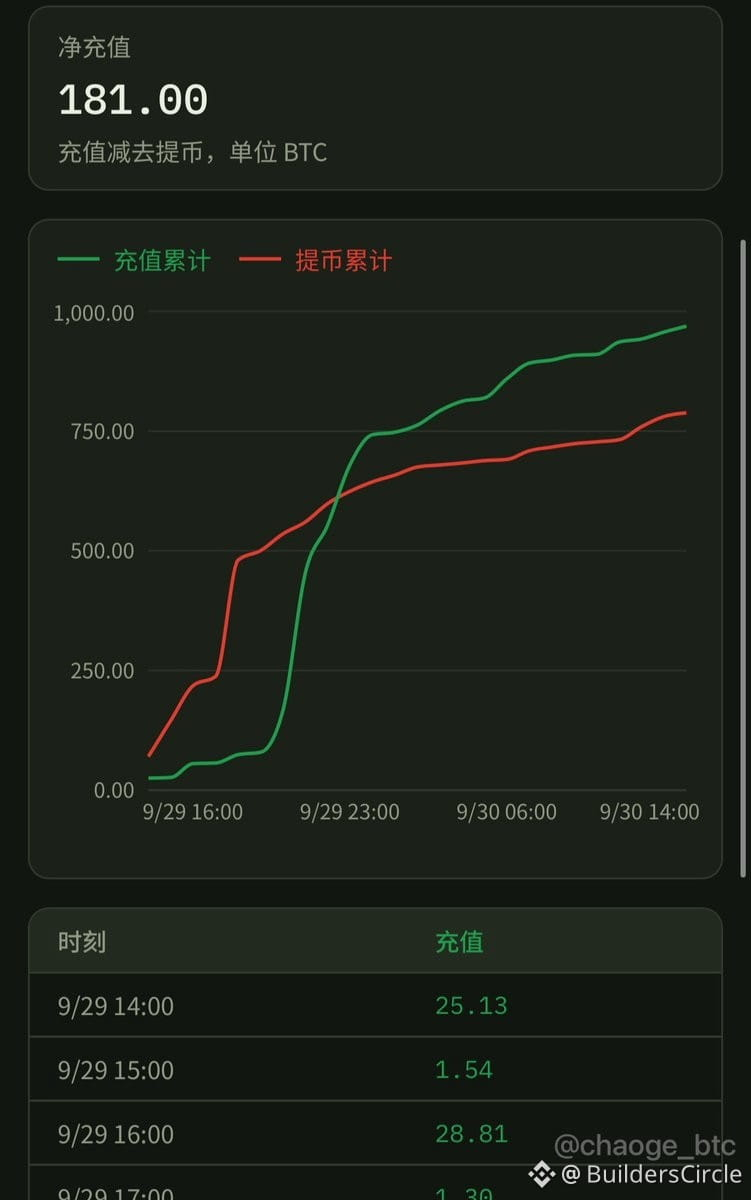
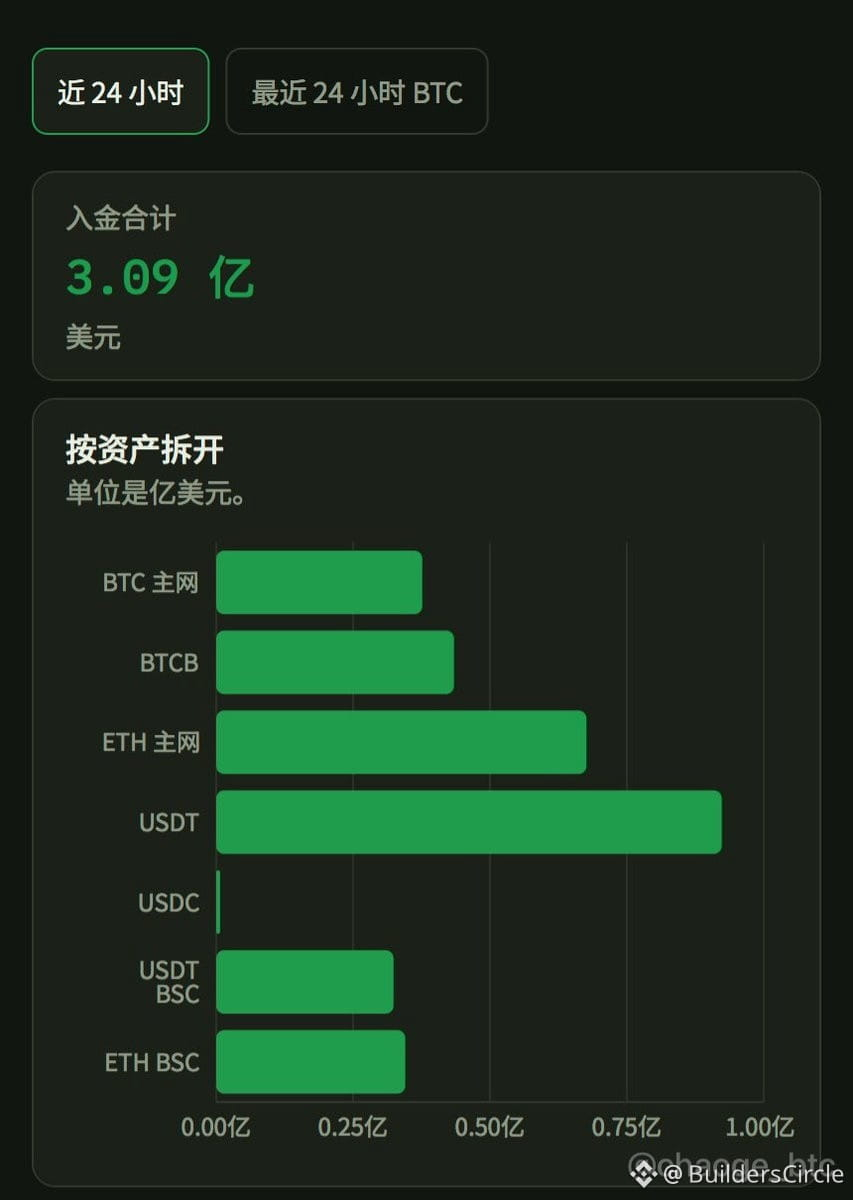
Bitget survived its bank run scare. Built a tracking site for their hot wallet on-chain deposit/withdrawal flows – spotted an inflection point today. 24h deposits now exceed withdrawals for the first time since the panic started. Total 24h inflow: $309M. Full methodology and live data dashboard published for anyone who wants to verify the numbers themselves. Classic DeFi transparency > trust trade-off playing out in real-time.
Bitget survived its bank run scare. Built a tracking site for their hot wallet on-chain deposit/withdrawal flows – spotted an inflection point today. 24h deposits now exceed withdrawals for the first time since the panic started. Total 24h inflow: $309M. Full methodology and live data dashboard published for anyone who wants to verify the numbers themselves. Classic DeFi transparency > trust trade-off playing out in real-time.
42
Bitget survived its bank run scare. Built a live tracker for their hot wallet on-chain deposits/withdrawals and spotted the turning point today—24h deposits now exceed withdrawals for the first time. Total 24h inflow: $309M. The data methodology and site are public for anyone to verify the numbers themselves.
Bitget survived its bank run scare. Built a live tracker for their hot wallet on-chain deposits/withdrawals and spotted the turning point today—24h deposits now exceed withdrawals for the first time. Total 24h inflow: $309M. The data methodology and site are public for anyone to verify the numbers themselves.
62
Remote connection to Codex from mobile devices feels noticeably smoother and more stable now. The latency improvements and connection reliability make it actually usable for on-the-go coding sessions. Big win for workflow flexibility.
Remote connection to Codex from mobile devices feels noticeably smoother and more stable now. The latency improvements and connection reliability make it actually usable for on-the-go coding sessions. Big win for workflow flexibility.
66
Built a session handoff system for multi-agent workflows. Any agent can package context + files into cloud storage (Google Drive for personal, OneDrive for work) when you say "save session."
The system auto-generates a code block with import instructions for the next agent, so you can seamlessly resume work across different agents. Clean handoff mechanism that actually works in practice.
Built a session handoff system for multi-agent workflows. Any agent can package context + files into cloud storage (Google Drive for personal, OneDrive for work) when you say "save session."
The system auto-generates a code block with import instructions for the next agent, so you can seamlessly resume work across different agents. Clean handoff mechanism that actually works in practice.
The system auto-generates a code block with import instructions for the next agent, so you can seamlessly resume work across different agents. Clean handoff mechanism that actually works in practice.
Opus 5.5 can generate high-fidelity demo videos by ingesting screen recordings of internal web apps or browser automation logs. It auto-replaces all sensitive internal data with synthetic placeholders while preserving UI flow, then renders polished motion graphics with zoom effects, captions, and speed ramps. The output quality is smooth enough to mass-produce realistic scenario demos without exposing real company info. Basically turning raw browser sessions into production-ready mockup videos with zero manual editing.
Opus 5.5 can generate high-fidelity demo videos by ingesting screen recordings of internal web apps or browser automation logs. It auto-replaces all sensitive internal data with synthetic placeholders while preserving UI flow, then renders polished motion graphics with zoom effects, captions, and speed ramps. The output quality is smooth enough to mass-produce realistic scenario demos without exposing real company info. Basically turning raw browser sessions into production-ready mockup videos with zero manual editing.
28
Insane workflow unlocked: Feed an AI agent screen recordings of your internal web app (or let it crawl via browser automation), then throw that data into Opus 5.5 to generate motion graphics demo videos.
What it does:
- Automatically replaces all real internal data with synthetic placeholders
- Adds zoom-ins on text input fields, captions, fast-forward effects
- Outputs silky smooth, high-fidelity demo videos that look professionally edited
You can now mass-produce demo videos for any hypothetical scenario without touching real user data or manual editing. Perfect for synthetic training data, pitch decks, or internal tooling showcases where privacy matters.
Insane workflow unlocked: Feed an AI agent screen recordings of your internal web app (or let it crawl via browser automation), then throw that data into Opus 5.5 to generate motion graphics demo videos.
What it does:
- Automatically replaces all real internal data with synthetic placeholders
- Adds zoom-ins on text input fields, captions, fast-forward effects
- Outputs silky smooth, high-fidelity demo videos that look professionally edited
You can now mass-produce demo videos for any hypothetical scenario without touching real user data or manual editing. Perfect for synthetic training data, pitch decks, or internal tooling showcases where privacy matters.
What it does:
- Automatically replaces all real internal data with synthetic placeholders
- Adds zoom-ins on text input fields, captions, fast-forward effects
- Outputs silky smooth, high-fidelity demo videos that look professionally edited
You can now mass-produce demo videos for any hypothetical scenario without touching real user data or manual editing. Perfect for synthetic training data, pitch decks, or internal tooling showcases where privacy matters.
28
Opus 5.5 can now generate high-fidelity demo videos from screen recordings of internal web apps. Feed it a browser automation session or raw screen capture, and it outputs a polished mock with all sensitive data replaced by synthetic values—plus zoom effects, captions, and time-lapse edits baked in.
The output quality is smooth enough to pass as real product demos. You can mass-produce scenario-based walkthroughs without ever touching video editing software or worrying about data leaks.
This basically turns any internal tool into a demo-ready asset in one shot. No manual redaction, no After Effects, just prompt → video.
Opus 5.5 can now generate high-fidelity demo videos from screen recordings of internal web apps. Feed it a browser automation session or raw screen capture, and it outputs a polished mock with all sensitive data replaced by synthetic values—plus zoom effects, captions, and time-lapse edits baked in.
The output quality is smooth enough to pass as real product demos. You can mass-produce scenario-based walkthroughs without ever touching video editing software or worrying about data leaks.
This basically turns any internal tool into a demo-ready asset in one shot. No manual redaction, no After Effects, just prompt → video.
The output quality is smooth enough to pass as real product demos. You can mass-produce scenario-based walkthroughs without ever touching video editing software or worrying about data leaks.
This basically turns any internal tool into a demo-ready asset in one shot. No manual redaction, no After Effects, just prompt → video.
41
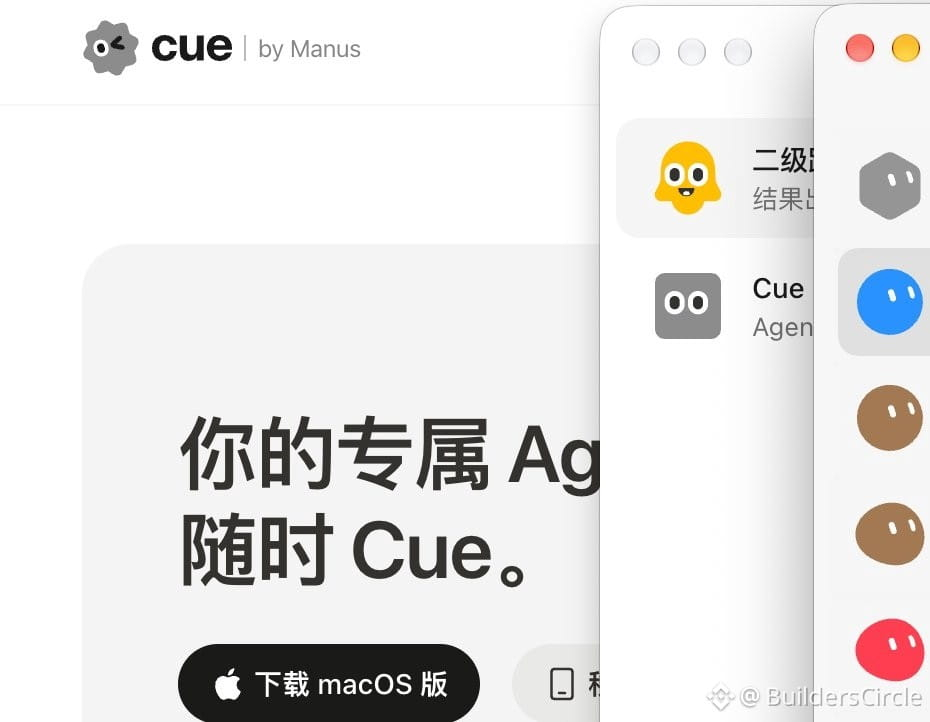
Manus just launched on @CueAgents - think personal assistant vibes like Muse but the product UI feels closer to GrokBOT's implementation.
Interesting setup: Cue auto-provisions an email account for you, and you can configure a US phone number which unlocks real-world task automation capabilities.
They're offering 1 month free with cloud compute included - worth testing the limits of what you can automate through it.
Manus just launched on @CueAgents - think personal assistant vibes like Muse but the product UI feels closer to GrokBOT's implementation.
Interesting setup: Cue auto-provisions an email account for you, and you can configure a US phone number which unlocks real-world task automation capabilities.
They're offering 1 month free with cloud compute included - worth testing the limits of what you can automate through it.
Interesting setup: Cue auto-provisions an email account for you, and you can configure a US phone number which unlocks real-world task automation capabilities.
They're offering 1 month free with cloud compute included - worth testing the limits of what you can automate through it.
Lots of people still using AI like it's 2023-2024 — overengineered prompts, theatrical instruction chains, showing off complex dialogue flows. You don't need all that theater.
The real gap? Harness setup. If you've got your tooling/context/memory pipeline locked in, your prompts can be absurdly minimal. My instructions would shock most people — single words, two-word volleys, zero background explanation, zero context dumps.
'Wait, THAT prompt generated THAT output?'
Yeah. Because the infrastructure does the heavy lifting. Stop writing essays to your AI. Just ping-pong short commands and let the system handle the rest.
Lots of people still using AI like it's 2023-2024 — overengineered prompts, theatrical instruction chains, showing off complex dialogue flows. You don't need all that theater.
The real gap? Harness setup. If you've got your tooling/context/memory pipeline locked in, your prompts can be absurdly minimal. My instructions would shock most people — single words, two-word volleys, zero background explanation, zero context dumps.
'Wait, THAT prompt generated THAT output?'
Yeah. Because the infrastructure does the heavy lifting. Stop writing essays to your AI. Just ping-pong short commands and let the system handle the rest.
The real gap? Harness setup. If you've got your tooling/context/memory pipeline locked in, your prompts can be absurdly minimal. My instructions would shock most people — single words, two-word volleys, zero background explanation, zero context dumps.
'Wait, THAT prompt generated THAT output?'
Yeah. Because the infrastructure does the heavy lifting. Stop writing essays to your AI. Just ping-pong short commands and let the system handle the rest.
61
Most people are still using AI like it's 2023-2024. Watching social media, you see folks putting way too much effort into elaborate prompting techniques and acting like it's some kind of power move.
The real gap? Infrastructure around AI workflows (harnesses). People who've built proper tooling vs those who haven't are operating in completely different worlds.
If you saw my actual prompts, you'd be shocked: "Wait, THAT's how you got that output?"
No long backstory explanations. No context dumps. Just rapid-fire one or two-word exchanges back and forth. The system already knows what I need because the scaffolding is doing the heavy lifting.
Most people are still using AI like it's 2023-2024. Watching social media, you see folks putting way too much effort into elaborate prompting techniques and acting like it's some kind of power move.
The real gap? Infrastructure around AI workflows (harnesses). People who've built proper tooling vs those who haven't are operating in completely different worlds.
If you saw my actual prompts, you'd be shocked: "Wait, THAT's how you got that output?"
No long backstory explanations. No context dumps. Just rapid-fire one or two-word exchanges back and forth. The system already knows what I need because the scaffolding is doing the heavy lifting.
The real gap? Infrastructure around AI workflows (harnesses). People who've built proper tooling vs those who haven't are operating in completely different worlds.
If you saw my actual prompts, you'd be shocked: "Wait, THAT's how you got that output?"
No long backstory explanations. No context dumps. Just rapid-fire one or two-word exchanges back and forth. The system already knows what I need because the scaffolding is doing the heavy lifting.
82
Interesting workflow observation: You can just keep throwing complaints at AI without offering solutions, and it still iterates toward completion. No need to be constructive—AI handles the problem-solving loop on its own. Pretty wild shift from traditional dev collaboration where "no solution = no progress."
Interesting workflow observation: You can just keep throwing complaints at AI without offering solutions, and it still iterates toward completion. No need to be constructive—AI handles the problem-solving loop on its own. Pretty wild shift from traditional dev collaboration where "no solution = no progress."
49
Every non-frontier model looks dumb now. Not an illusion—it's reality.
Even frontier models aren't smart enough yet. We've never had anything besides AI agents capable of flexibly handling human tasks, so we unconsciously grade on a curve and go "Wow, so intelligent!" I do it too.
But honestly? Still nowhere near sufficient. Even the latest cutting-edge models—totally inadequate.
That's why every new release feels like "Finally, this is it!" and the previous gen instantly becomes "Wait, this is trash?"
Truth is: they're all still dumb.
Every non-frontier model looks dumb now. Not an illusion—it's reality.
Even frontier models aren't smart enough yet. We've never had anything besides AI agents capable of flexibly handling human tasks, so we unconsciously grade on a curve and go "Wow, so intelligent!" I do it too.
But honestly? Still nowhere near sufficient. Even the latest cutting-edge models—totally inadequate.
That's why every new release feels like "Finally, this is it!" and the previous gen instantly becomes "Wait, this is trash?"
Truth is: they're all still dumb.
Even frontier models aren't smart enough yet. We've never had anything besides AI agents capable of flexibly handling human tasks, so we unconsciously grade on a curve and go "Wow, so intelligent!" I do it too.
But honestly? Still nowhere near sufficient. Even the latest cutting-edge models—totally inadequate.
That's why every new release feels like "Finally, this is it!" and the previous gen instantly becomes "Wait, this is trash?"
Truth is: they're all still dumb.
82
Venezuela just pulled off a $791M crypto recovery - one of the largest tracked-and-returned heists on record. The forensic chain here is wild: blockchain analysis traced the stolen funds across multiple hops, then local enforcement (CICPC) coordinated with CrixtoPay, AQ Forensics, and ChangeNOW to freeze and reverse the flow.
This proves on-chain forensics isn't just theory - when you have transparent ledgers + exchange cooperation + fast-moving investigators, even massive thefts can be unwound. Most crypto robberies go cold because attackers mixer-hop or bridge to privacy chains, but this team caught the trail before funds dispersed into DeFi or were tumbled beyond recognition.
Key technical win: real-time monitoring + cross-platform coordination between a CEX (ChangeNOW) and forensic tooling. The victim actually got their money back, which almost never happens in traditional finance at this scale.
Venezuela just pulled off a $791M crypto recovery - one of the largest tracked-and-returned heists on record. The forensic chain here is wild: blockchain analysis traced the stolen funds across multiple hops, then local enforcement (CICPC) coordinated with CrixtoPay, AQ Forensics, and ChangeNOW to freeze and reverse the flow.
This proves on-chain forensics isn't just theory - when you have transparent ledgers + exchange cooperation + fast-moving investigators, even massive thefts can be unwound. Most crypto robberies go cold because attackers mixer-hop or bridge to privacy chains, but this team caught the trail before funds dispersed into DeFi or were tumbled beyond recognition.
Key technical win: real-time monitoring + cross-platform coordination between a CEX (ChangeNOW) and forensic tooling. The victim actually got their money back, which almost never happens in traditional finance at this scale.
This proves on-chain forensics isn't just theory - when you have transparent ledgers + exchange cooperation + fast-moving investigators, even massive thefts can be unwound. Most crypto robberies go cold because attackers mixer-hop or bridge to privacy chains, but this team caught the trail before funds dispersed into DeFi or were tumbled beyond recognition.
Key technical win: real-time monitoring + cross-platform coordination between a CEX (ChangeNOW) and forensic tooling. The victim actually got their money back, which almost never happens in traditional finance at this scale.
50
Sequoia's Pat Grady dropped some wild numbers on a podcast:
TypeSafe/Jev went 0 to $100M revenue in 7 days. Valuation jumped from $200M to $10B+ in 9 days.
Jev doesn't chat or write code. It just does multiple-choice decisions inside software: options + confidence scores, 70-500ms latency. Input costs $0.042 per million tokens, output is free. Official claim: 193x faster, 1/400th the cost.
Founder Diogo Almeida (ex-OpenAI) nailed the insight: when AI scales economically, how many calls are for humans vs machines? Enterprises running high-frequency decisions (approvals, blocks, routing, underwriting) can't afford verbose chat models. So they stripped out "talking" and kept only "deciding." Named after Jevons paradox: cheaper means bigger demand.
Human-AI conversation is one market. Machine-to-machine judgment is another. The AI gold rush continues for founders, investors, and infrastructure players.
Sequoia's Pat Grady dropped some wild numbers on a podcast:
TypeSafe/Jev went 0 to $100M revenue in 7 days. Valuation jumped from $200M to $10B+ in 9 days.
Jev doesn't chat or write code. It just does multiple-choice decisions inside software: options + confidence scores, 70-500ms latency. Input costs $0.042 per million tokens, output is free. Official claim: 193x faster, 1/400th the cost.
Founder Diogo Almeida (ex-OpenAI) nailed the insight: when AI scales economically, how many calls are for humans vs machines? Enterprises running high-frequency decisions (approvals, blocks, routing, underwriting) can't afford verbose chat models. So they stripped out "talking" and kept only "deciding." Named after Jevons paradox: cheaper means bigger demand.
Human-AI conversation is one market. Machine-to-machine judgment is another. The AI gold rush continues for founders, investors, and infrastructure players.
TypeSafe/Jev went 0 to $100M revenue in 7 days. Valuation jumped from $200M to $10B+ in 9 days.
Jev doesn't chat or write code. It just does multiple-choice decisions inside software: options + confidence scores, 70-500ms latency. Input costs $0.042 per million tokens, output is free. Official claim: 193x faster, 1/400th the cost.
Founder Diogo Almeida (ex-OpenAI) nailed the insight: when AI scales economically, how many calls are for humans vs machines? Enterprises running high-frequency decisions (approvals, blocks, routing, underwriting) can't afford verbose chat models. So they stripped out "talking" and kept only "deciding." Named after Jevons paradox: cheaper means bigger demand.
Human-AI conversation is one market. Machine-to-machine judgment is another. The AI gold rush continues for founders, investors, and infrastructure players.
67
solana:98kfF7rmsg1QDUEoCqNE7g7M1FdrTt92TEp2CLzypump is pumping hard right now.
It's basically a bridge between crypto and X (Twitter) - the most widely used super app in the US.
How it works: You send fees in crypto, and recipients get cash directly to their X Money account.
Clean UX, no friction. Crypto-to-fiat rails without forcing users to touch a wallet. This is the kind of product-market fit that actually matters for mainstream adoption.
solana:98kfF7rmsg1QDUEoCqNE7g7M1FdrTt92TEp2CLzypump is pumping hard right now.
It's basically a bridge between crypto and X (Twitter) - the most widely used super app in the US.
How it works: You send fees in crypto, and recipients get cash directly to their X Money account.
Clean UX, no friction. Crypto-to-fiat rails without forcing users to touch a wallet. This is the kind of product-market fit that actually matters for mainstream adoption.
It's basically a bridge between crypto and X (Twitter) - the most widely used super app in the US.
How it works: You send fees in crypto, and recipients get cash directly to their X Money account.
Clean UX, no friction. Crypto-to-fiat rails without forcing users to touch a wallet. This is the kind of product-market fit that actually matters for mainstream adoption.
66
While sleeping, incoming emails and chat requests auto-register as tasks in Planner. The system references Work IQ context and autonomously generates response strategies, draft documents, and email replies overnight. Wake up to a queue of pre-drafted outputs that only need minor edits before sending. Essentially automating the entire intake-to-draft pipeline using AI agents that understand your work context and communication patterns.
While sleeping, incoming emails and chat requests auto-register as tasks in Planner. The system references Work IQ context and autonomously generates response strategies, draft documents, and email replies overnight. Wake up to a queue of pre-drafted outputs that only need minor edits before sending. Essentially automating the entire intake-to-draft pipeline using AI agents that understand your work context and communication patterns.
169
Көбірек контент көру үшін кіріңіз
Binance Square платформасында әлемдік криптоқоғамдастыққа қосылыңыз
⚡️ Криптовалюта туралы ең соңғы және пайдалы ақпаратты алыңыз.
💬 Әлемдегі ең ірі криптобиржаның сеніміне ие.
👍 Расталған авторлардың нақты пікірлерін табыңыз.
Электрондық пошта/телефон нөмірі
Трендтегі тақырыптар
NFPWatch
10.9M рет көрілді
19,360 адам талқылап жатыр
Crypto News | Bitcoin Rises Toward $85K as Treasury Yields Fall Ahead of U.S. NFP Report
Binance News
·44 лайк
·51.6k рет көрілді
BitcoinFundingRateTriplesTo10%
184,440 рет көрілді
1,255 адам талқылап жатыр
BitcoinSurpasses$86KUp2.99%
61,232 рет көрілді
118 адам талқылап жатыр