
Bluechip
8.6k Жариялаулар

Bluechip
 «Square расталған+» белгісі
Хабарлау
Пайдаланушыны блоктау
Жиі сауда жасайтын трейдер
5.6 жыл
24 Жазылым
67.2K+ Жазылушылар
93.7K+ лайк басылған
Жазбалар
Барлығы
Баға ұсыныстары
Видеолар
Тікелей эфир
PINNED
·
--
Жоғары (өспелі)
🚨 THE ALPHA BOARD – FOUNDERS ACCESS 🚨
After multiple requests from some followers, I’ve decided to open something private.
What I share publicly is only a fraction of the full picture.
The market is a game of liquidity, timing, and understanding.
Most people always arrive… too late.
Today, I’m officially opening The Alpha Board, a private group built for those who want to see the move before it happens, not after.
Inside, you’ll get:
• Advanced market analysis ($BTC , Stocks, macro)
• Key liquidity zones & forward scenarios
• Smart money flow breakdowns
• Clear market structure insights
• Direct access + a serious community
This is NOT a signals group.
This is where you build a real edge.
If you’re tired of:
- following the crowd
- entering too late
- not understanding why the market moves
Then this is exactly for you.
Founder one-time access: $39
Limited spots available
Scan the QR code or click on the link to join instantly
This post will be auto-deleted in 15 days
The market doesn’t reward the fastest.
It rewards the most prepared.
[The Alpha Board link](https://app.binance.com/uni-qr/group-chat-landing?channelToken=uxZ207Vrh6cPhZPhAovsaQ&type=1&entrySource=sharing_link)
#BTC #crypto #trading #smartmoney #BinanceSquare
🚨 THE ALPHA BOARD – FOUNDERS ACCESS 🚨
After multiple requests from some followers, I’ve decided to open something private.
What I share publicly is only a fraction of the full picture.
The market is a game of liquidity, timing, and understanding.
Most people always arrive… too late.
Today, I’m officially opening The Alpha Board, a private group built for those who want to see the move before it happens, not after.
Inside, you’ll get:
• Advanced market analysis ($BTC , Stocks, macro)
• Key liquidity zones & forward scenarios
• Smart money flow breakdowns
• Clear market structure insights
• Direct access + a serious community
This is NOT a signals group.
This is where you build a real edge.
If you’re tired of:
- following the crowd
- entering too late
- not understanding why the market moves
Then this is exactly for you.
Founder one-time access: $39
Limited spots available
Scan the QR code or click on the link to join instantly
This post will be auto-deleted in 15 days
The market doesn’t reward the fastest.
It rewards the most prepared.
The Alpha Board link
#BTC #crypto #trading #smartmoney #BinanceSquare
After multiple requests from some followers, I’ve decided to open something private.
What I share publicly is only a fraction of the full picture.
The market is a game of liquidity, timing, and understanding.
Most people always arrive… too late.
Today, I’m officially opening The Alpha Board, a private group built for those who want to see the move before it happens, not after.
Inside, you’ll get:
• Advanced market analysis ($BTC , Stocks, macro)
• Key liquidity zones & forward scenarios
• Smart money flow breakdowns
• Clear market structure insights
• Direct access + a serious community
This is NOT a signals group.
This is where you build a real edge.
If you’re tired of:
- following the crowd
- entering too late
- not understanding why the market moves
Then this is exactly for you.
Founder one-time access: $39
Limited spots available
Scan the QR code or click on the link to join instantly
This post will be auto-deleted in 15 days
The market doesn’t reward the fastest.
It rewards the most prepared.
The Alpha Board link
#BTC #crypto #trading #smartmoney #BinanceSquare
64
28
2.8k
PINNED
·
--
$BTC squiggles
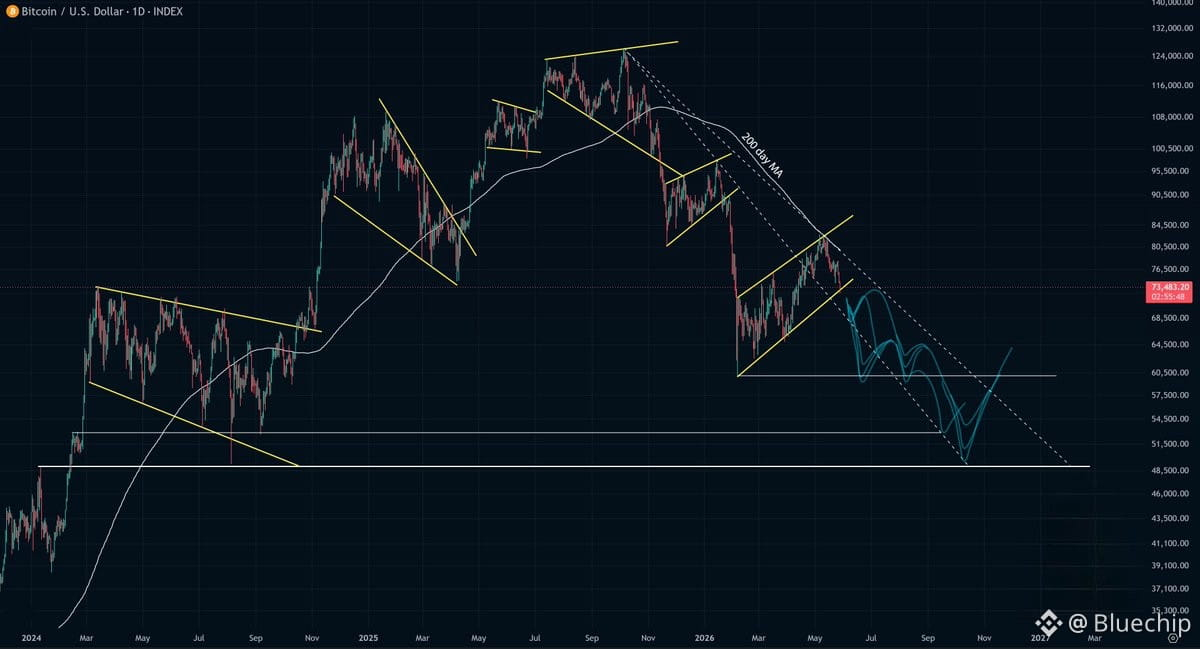
Here's a rough visualization of how I see the most likely scenarios playing out. If you average them, you'll get a feel for the broad concept I have. I can absolutely be wrong, but it's my take on things currently.
Note that I give the diagonal (dotted) trend lines some importance in controlling the price movements as well as the horizontal support levels.
This falls in alignment with my other post on the odds I give these Bitcoin scenarios.
{future}(BTCUSDT)
$BTC squiggles
Here's a rough visualization of how I see the most likely scenarios playing out. If you average them, you'll get a feel for the broad concept I have. I can absolutely be wrong, but it's my take on things currently.
Note that I give the diagonal (dotted) trend lines some importance in controlling the price movements as well as the horizontal support levels.
This falls in alignment with my other post on the odds I give these Bitcoin scenarios.
Here's a rough visualization of how I see the most likely scenarios playing out. If you average them, you'll get a feel for the broad concept I have. I can absolutely be wrong, but it's my take on things currently.
Note that I give the diagonal (dotted) trend lines some importance in controlling the price movements as well as the horizontal support levels.
This falls in alignment with my other post on the odds I give these Bitcoin scenarios.
23
7
92
99.6k
·
--
$BTC
Spot volume across the entire crypto market is still extremely low.
This is something that concerns me a lot because it is a strong sign of retail disengagement and of holders choosing to sit on their positions across the crypto market.
At the same time, derivatives and leverage are becoming increasingly normalized among inexperienced traders, while the number of traders losing money is among the highest we’ve seen historically.
Traders, come back to the spot market. Your chances of long-term success are much higher there.
{future}(BTCUSDT)
$BTC
Spot volume across the entire crypto market is still extremely low.
This is something that concerns me a lot because it is a strong sign of retail disengagement and of holders choosing to sit on their positions across the crypto market.
At the same time, derivatives and leverage are becoming increasingly normalized among inexperienced traders, while the number of traders losing money is among the highest we’ve seen historically.
Traders, come back to the spot market. Your chances of long-term success are much higher there.
Spot volume across the entire crypto market is still extremely low.
This is something that concerns me a lot because it is a strong sign of retail disengagement and of holders choosing to sit on their positions across the crypto market.
At the same time, derivatives and leverage are becoming increasingly normalized among inexperienced traders, while the number of traders losing money is among the highest we’ve seen historically.
Traders, come back to the spot market. Your chances of long-term success are much higher there.
6
944
·
--
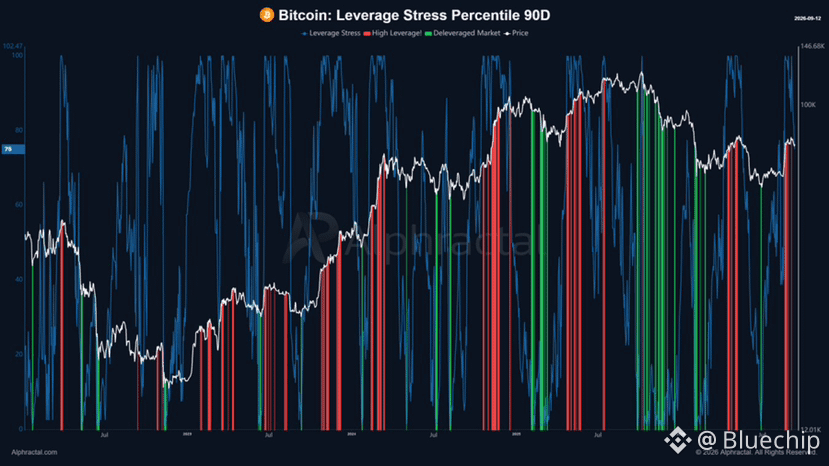
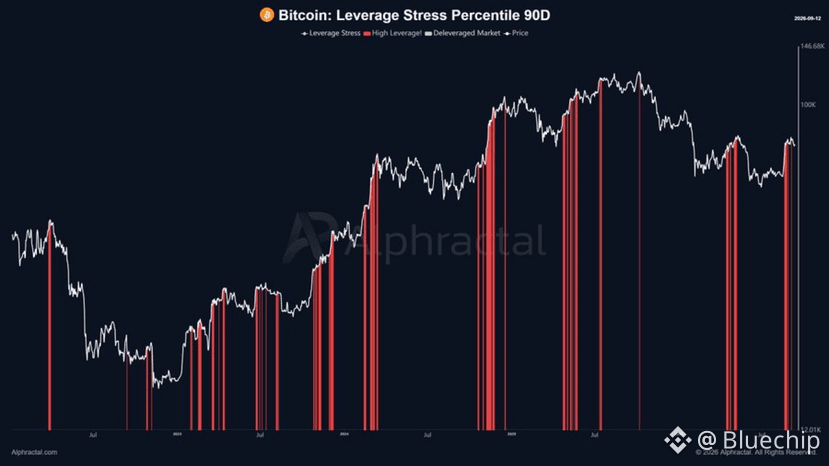
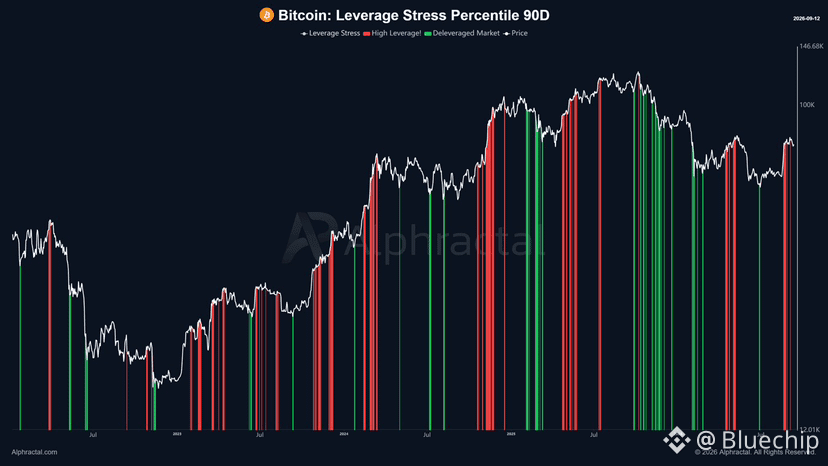
$BTC was highly leveraged over the past few days. Now, that excess leverage has started to unwind.
The market usually resolves this in one of two ways: a correction or sideways consolidation.
If price can hold while leverage declines, that could be a much healthier signal for the next move. If not, it would suggest a broader deleveraging process, with downside becoming the more likely scenario.
{future}(BTCUSDT)
$BTC was highly leveraged over the past few days. Now, that excess leverage has started to unwind.
The market usually resolves this in one of two ways: a correction or sideways consolidation.
If price can hold while leverage declines, that could be a much healthier signal for the next move. If not, it would suggest a broader deleveraging process, with downside becoming the more likely scenario.
The market usually resolves this in one of two ways: a correction or sideways consolidation.
If price can hold while leverage declines, that could be a much healthier signal for the next move. If not, it would suggest a broader deleveraging process, with downside becoming the more likely scenario.
5
947
·
--
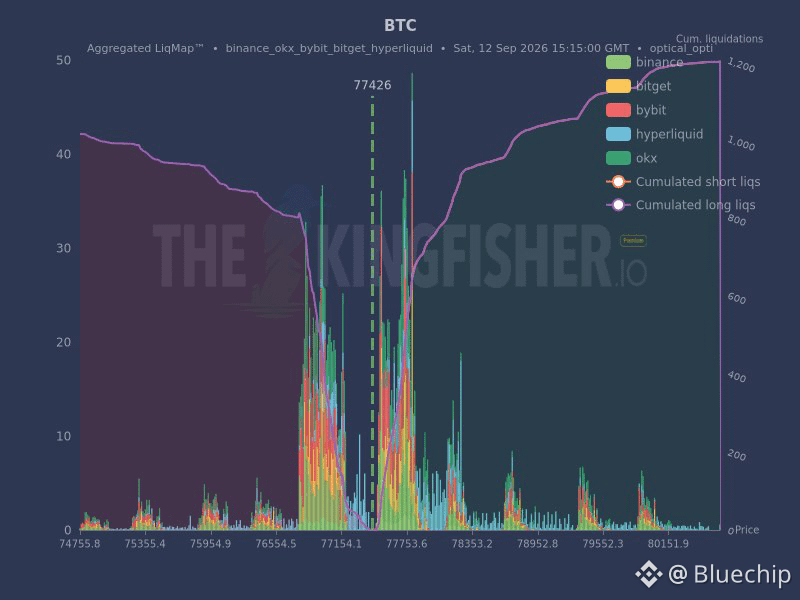
$BTC potential liquidations map - high leverage (>x20).
{future}(BTCUSDT)
$BTC potential liquidations map - high leverage (>x20).
3
492
·
--
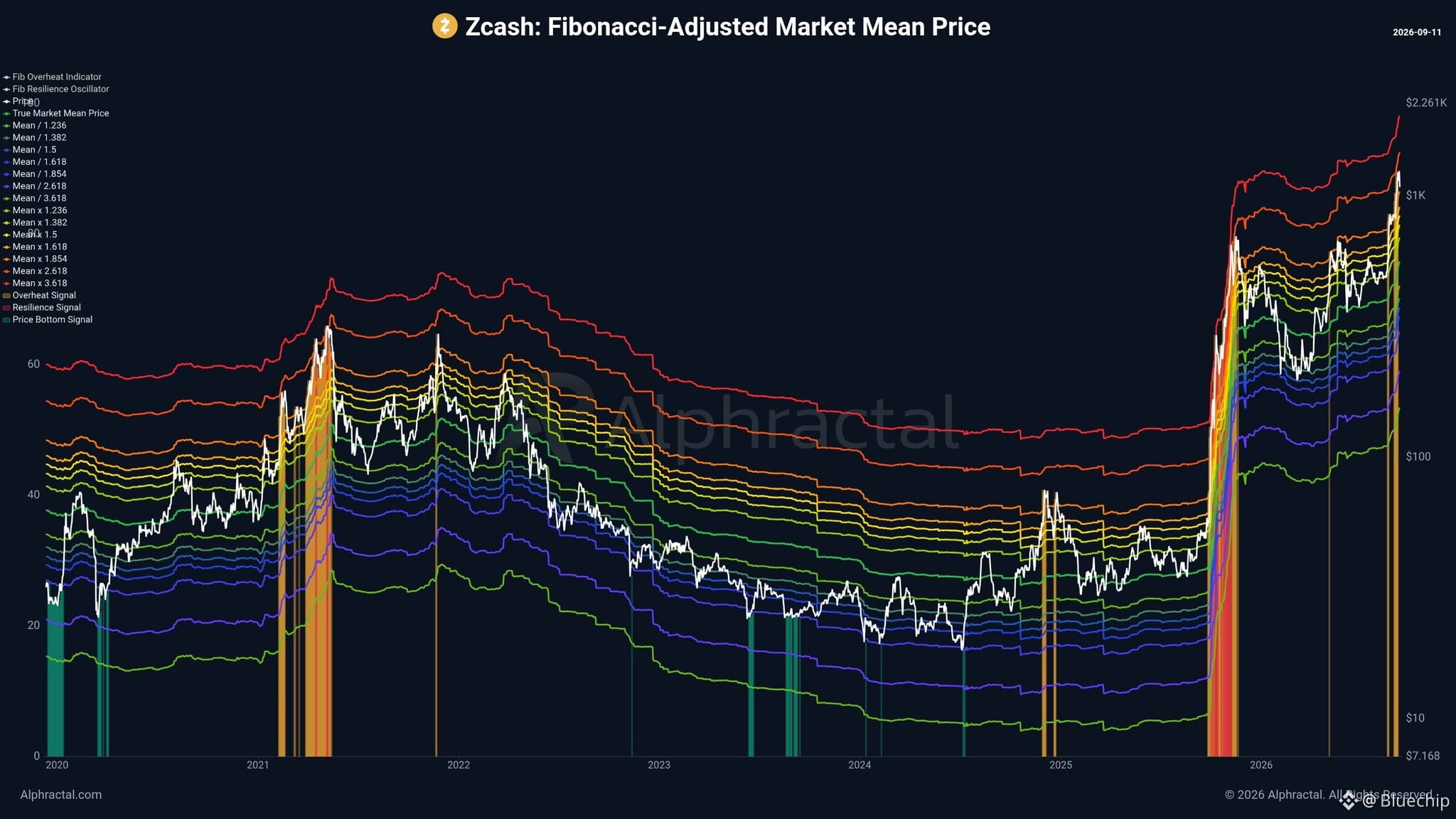
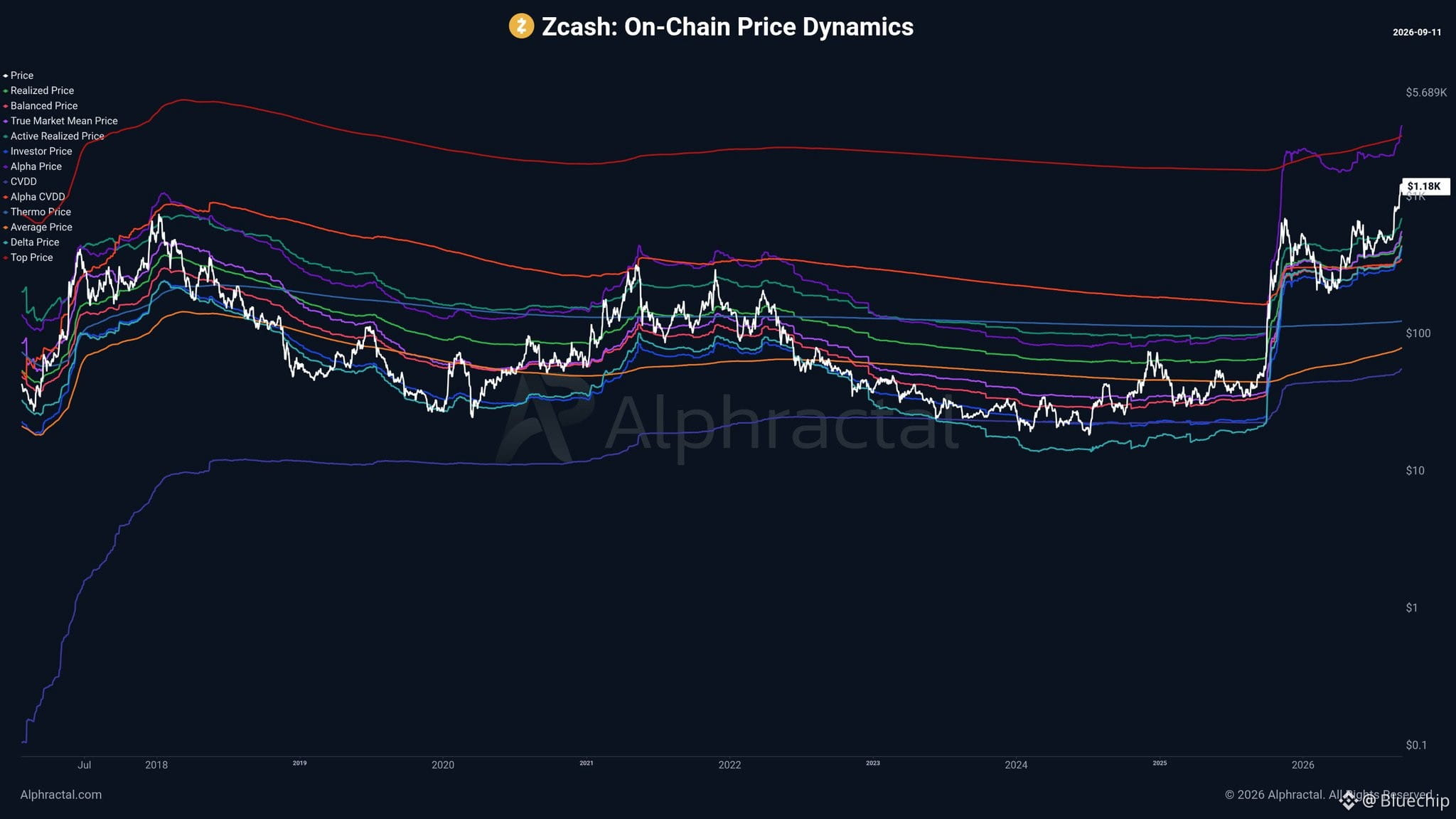
$ZEC has entered a region where taking some profits starts to make sense.
Price is now above several important on-chain levels and has also moved significantly higher within the Fibonacci-Adjusted Market Mean Price, entering a more stretched zone.
Market stress has also reached the second-highest level of the model, which is usually an interesting area to start reducing exposure.
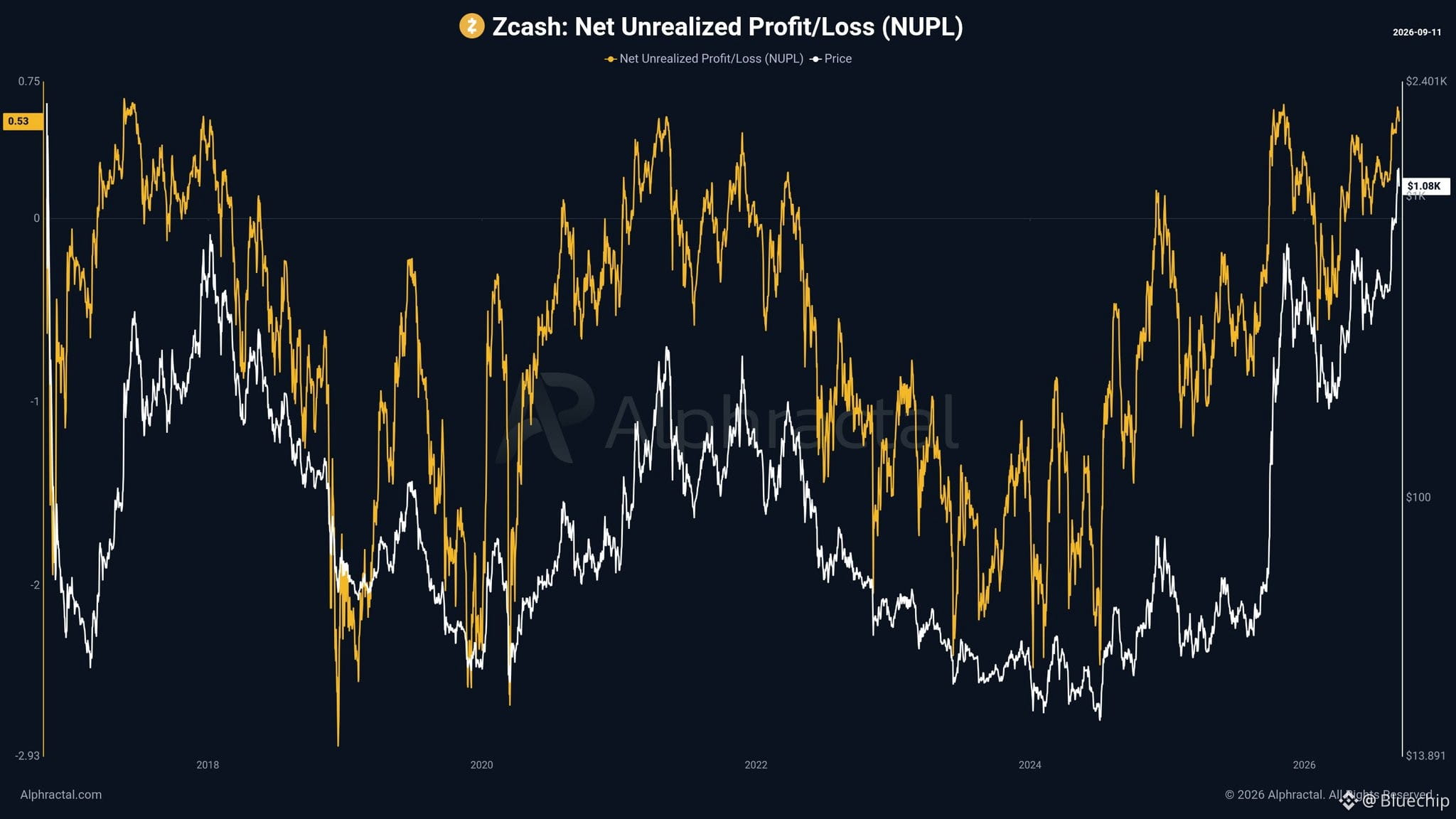
The NUPL remains positive as well, showing that the network is holding a significant amount of unrealized profit.
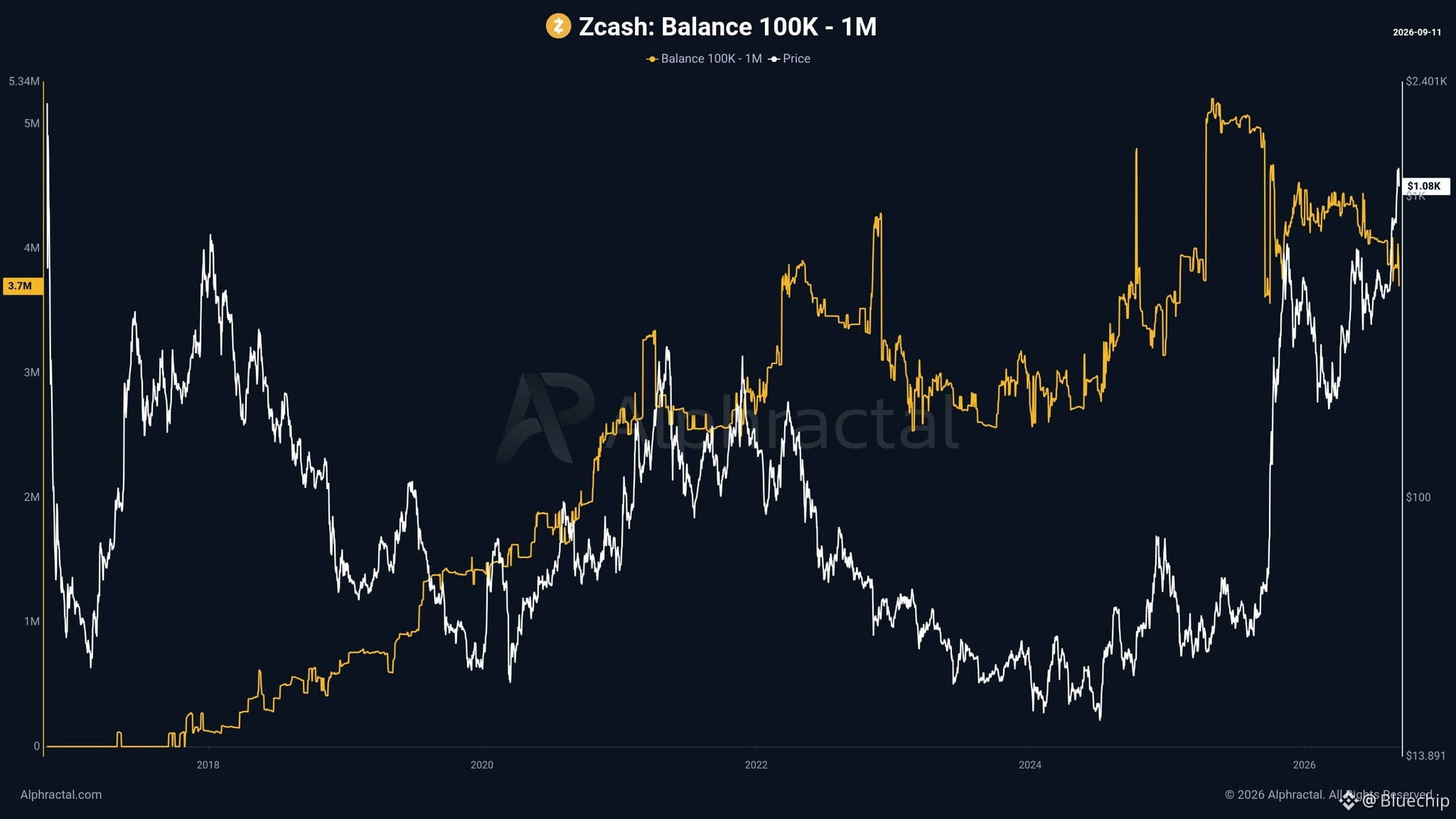
And there is one more important detail. Addresses holding 100K to 1M ZEC have started to decline slightly, which is a typical sign of profit-taking by whales.
For those who accumulated much lower, this is already a region worth paying attention to.
{future}(ZECUSDT)
$ZEC has entered a region where taking some profits starts to make sense.
Price is now above several important on-chain levels and has also moved significantly higher within the Fibonacci-Adjusted Market Mean Price, entering a more stretched zone.
Market stress has also reached the second-highest level of the model, which is usually an interesting area to start reducing exposure.
The NUPL remains positive as well, showing that the network is holding a significant amount of unrealized profit.
And there is one more important detail. Addresses holding 100K to 1M ZEC have started to decline slightly, which is a typical sign of profit-taking by whales.
For those who accumulated much lower, this is already a region worth paying attention to.
Price is now above several important on-chain levels and has also moved significantly higher within the Fibonacci-Adjusted Market Mean Price, entering a more stretched zone.
Market stress has also reached the second-highest level of the model, which is usually an interesting area to start reducing exposure.
The NUPL remains positive as well, showing that the network is holding a significant amount of unrealized profit.
And there is one more important detail. Addresses holding 100K to 1M ZEC have started to decline slightly, which is a typical sign of profit-taking by whales.
For those who accumulated much lower, this is already a region worth paying attention to.
1
5
1.3k
·
--
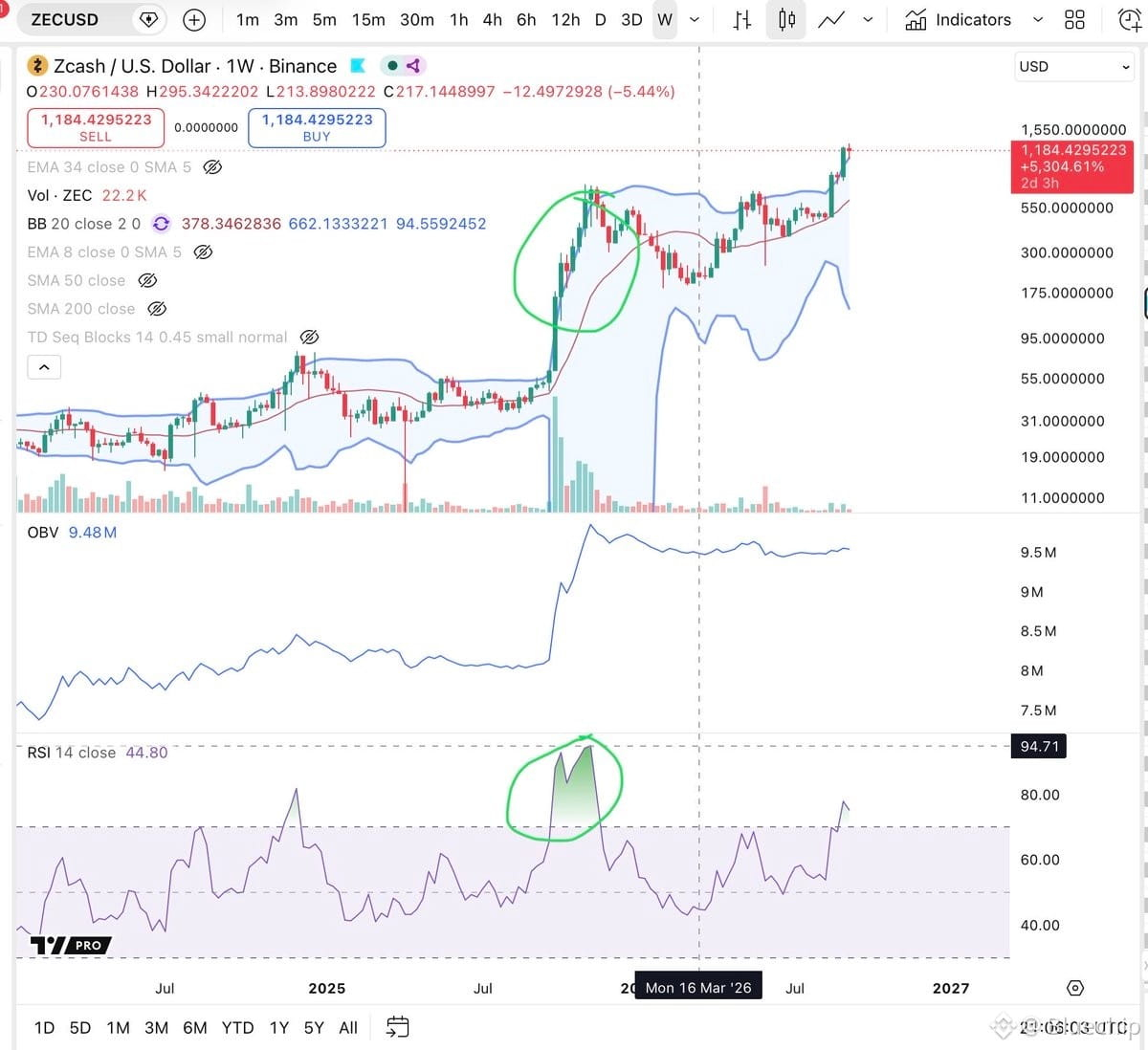
$ZEC should have some room to run based on weekly RSI
Note behavior on last power zone entry
{future}(ZECUSDT)
$ZEC should have some room to run based on weekly RSI
Note behavior on last power zone entry
Note behavior on last power zone entry
2
976
·
--
$BTC IS SITTING ON A LOADED SPRING
BTC: $77.2K
Power-law trend: $140K
BTC is trading at just 56% of trend.
30-day core inflows: +$3.2B
Estimated BTC absorbed: 41,147 BTC
That is 1.65% of modeled liquid float in one month.
Now the trigger:
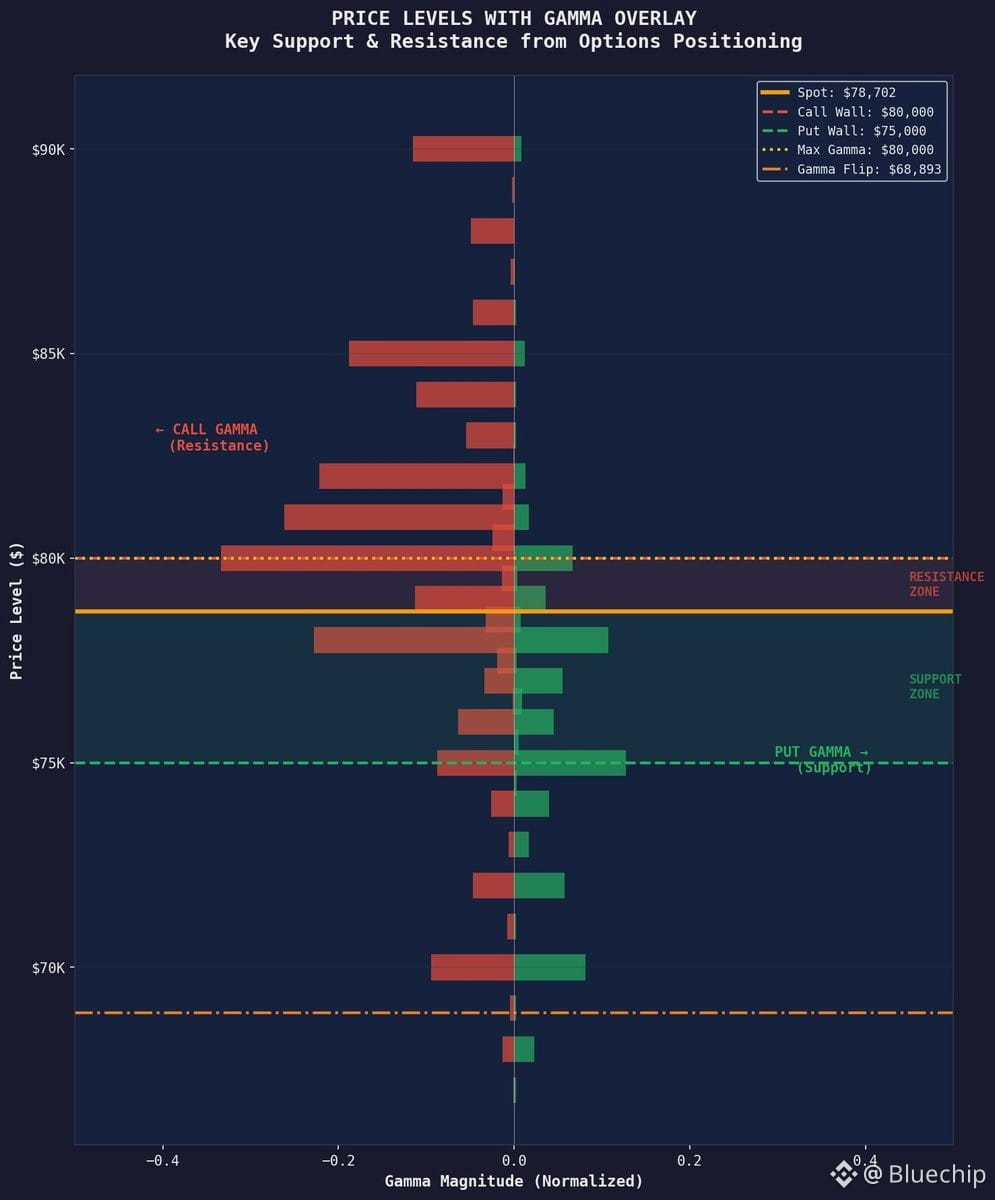
$80K
Dealer GEX proxy: −$309M
If BTC breaks +5% higher, the derivatives model estimates roughly:
+$1.56B of forced dealer buying.
And the long-term asymmetry is extreme:
8-year structural model:
P95: $493K
Median: $1.28M
P5: $5.39M
This is the setup:
BTC is cheap.
Supply is being absorbed.
$80K can trigger reflexive buying.
{future}(BTCUSDT)
$BTC IS SITTING ON A LOADED SPRING
BTC: $77.2K
Power-law trend: $140K
BTC is trading at just 56% of trend.
30-day core inflows: +$3.2B
Estimated BTC absorbed: 41,147 BTC
That is 1.65% of modeled liquid float in one month.
Now the trigger:
$80K
Dealer GEX proxy: −$309M
If BTC breaks +5% higher, the derivatives model estimates roughly:
+$1.56B of forced dealer buying.
And the long-term asymmetry is extreme:
8-year structural model:
P95: $493K
Median: $1.28M
P5: $5.39M
This is the setup:
BTC is cheap.
Supply is being absorbed.
$80K can trigger reflexive buying.
BTC: $77.2K
Power-law trend: $140K
BTC is trading at just 56% of trend.
30-day core inflows: +$3.2B
Estimated BTC absorbed: 41,147 BTC
That is 1.65% of modeled liquid float in one month.
Now the trigger:
$80K
Dealer GEX proxy: −$309M
If BTC breaks +5% higher, the derivatives model estimates roughly:
+$1.56B of forced dealer buying.
And the long-term asymmetry is extreme:
8-year structural model:
P95: $493K
Median: $1.28M
P5: $5.39M
This is the setup:
BTC is cheap.
Supply is being absorbed.
$80K can trigger reflexive buying.
1
7
1.4k
·
--
$BTC
That was fun! 🔥
One of the best trading days we’ve had in ages.
And it might not be over yet.
Liquidity maps are already showing new clusters forming 👀
{spot}(BTCUSDT)
$BTC
That was fun! 🔥
One of the best trading days we’ve had in ages.
And it might not be over yet.
Liquidity maps are already showing new clusters forming 👀
That was fun! 🔥
One of the best trading days we’ve had in ages.
And it might not be over yet.
Liquidity maps are already showing new clusters forming 👀
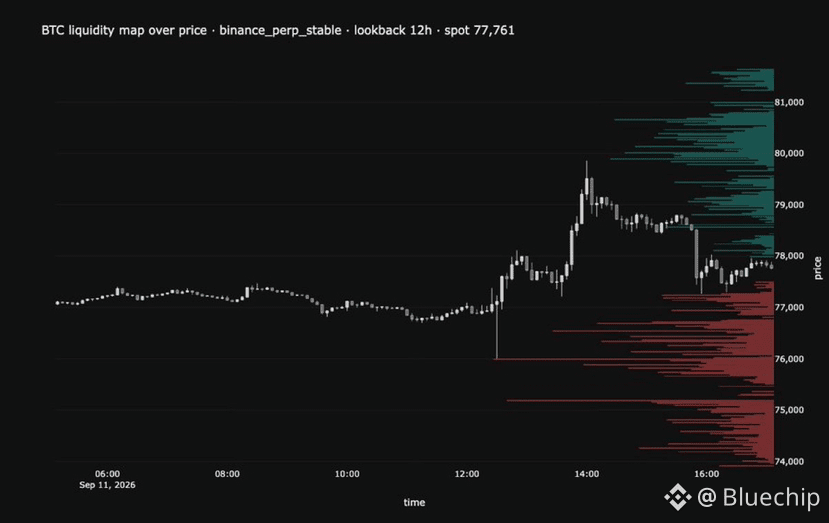
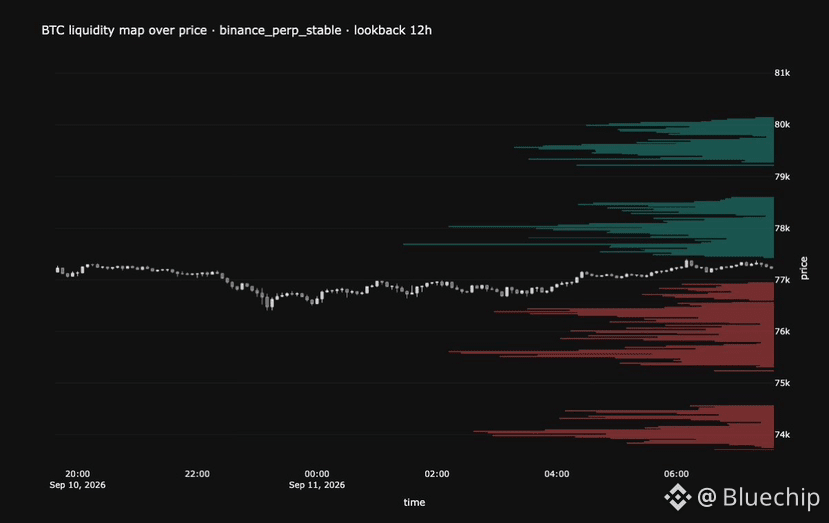
1
5
1.1k
·
--
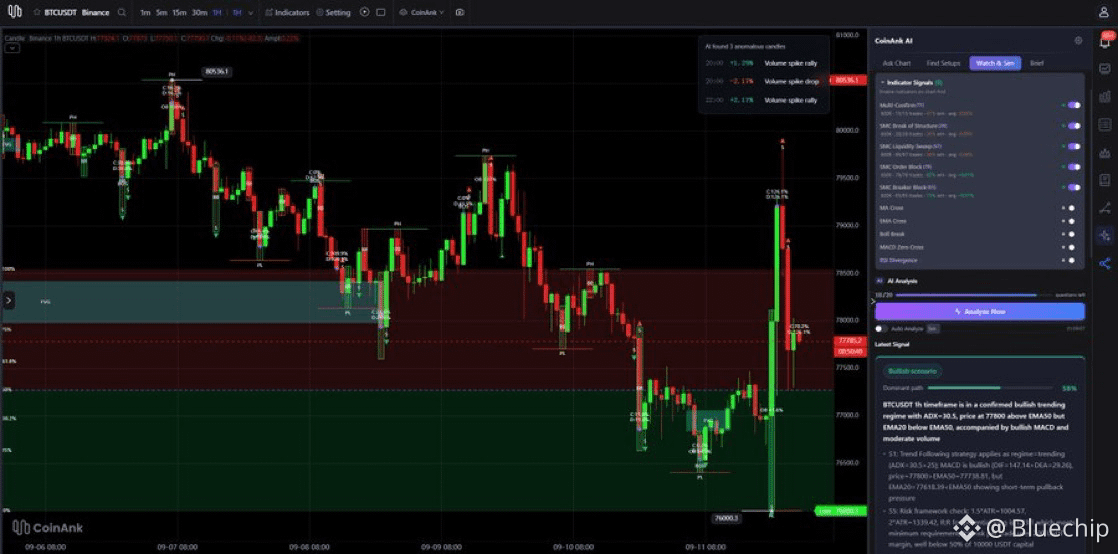
$BTC 1H Chart Analysis
BTC is currently trading around $77,785, after a sharp reclaim from the low of $76,000.
The 1H printed a V-shaped bounce: selloff into $76k, then a volume-spike rally back through $79,000 before pulling back into the mid-range. Swing high remains at $80,536.
CoinAnk AI flags a bullish scenario (58%): 1H is in a trending regime (ADX 30.5), price is back above EMA50, with bullish MACD. EMA20 still sits below EMA50, so this is a reclaim — not a fully cleaned-up trend yet.
{future}(BTCUSDT)
$BTC 1H Chart Analysis
BTC is currently trading around $77,785, after a sharp reclaim from the low of $76,000.
The 1H printed a V-shaped bounce: selloff into $76k, then a volume-spike rally back through $79,000 before pulling back into the mid-range. Swing high remains at $80,536.
CoinAnk AI flags a bullish scenario (58%): 1H is in a trending regime (ADX 30.5), price is back above EMA50, with bullish MACD. EMA20 still sits below EMA50, so this is a reclaim — not a fully cleaned-up trend yet.
BTC is currently trading around $77,785, after a sharp reclaim from the low of $76,000.
The 1H printed a V-shaped bounce: selloff into $76k, then a volume-spike rally back through $79,000 before pulling back into the mid-range. Swing high remains at $80,536.
CoinAnk AI flags a bullish scenario (58%): 1H is in a trending regime (ADX 30.5), price is back above EMA50, with bullish MACD. EMA20 still sits below EMA50, so this is a reclaim — not a fully cleaned-up trend yet.
1
1
6
1.4k
·
--
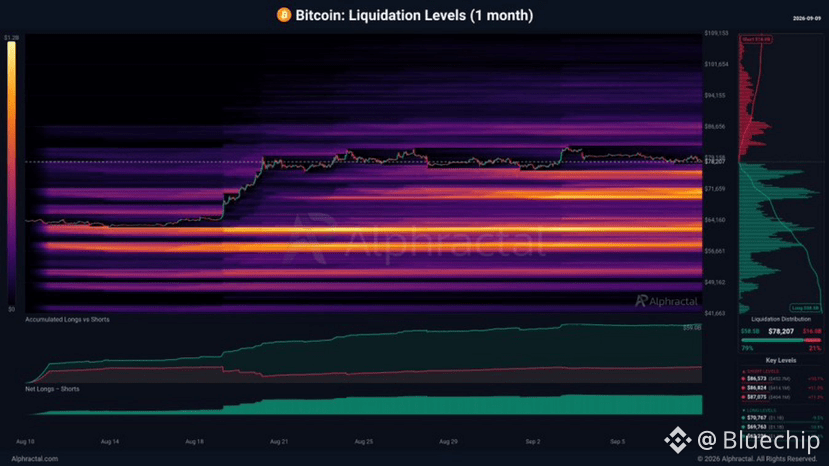
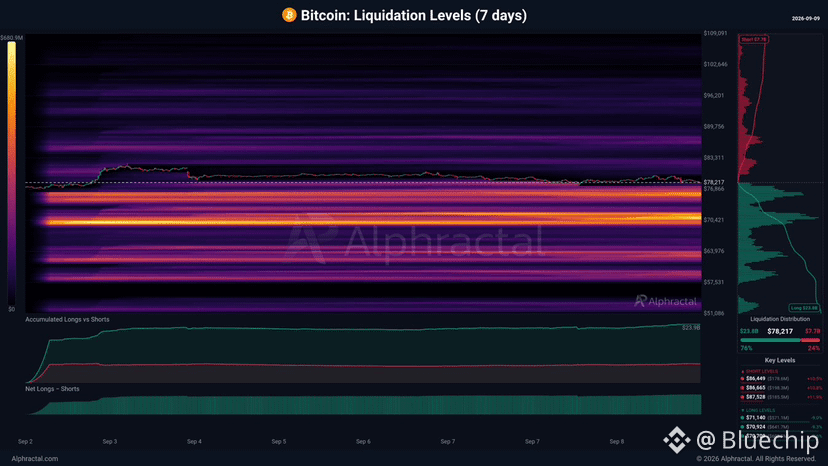
$BTC Liquidity Heat Map
The 75,000$ area stands out on the heat map. Liquidity below is still strong, and I’m watching closely to see how price reacts around these zones.
{future}(BTCUSDT)
$BTC Liquidity Heat Map
The 75,000$ area stands out on the heat map. Liquidity below is still strong, and I’m watching closely to see how price reacts around these zones.
The 75,000$ area stands out on the heat map. Liquidity below is still strong, and I’m watching closely to see how price reacts around these zones.

Bluechip
·
--
$BTC Spot selling pressure remains strong.
Negative Spot Delta is especially noticeable on Coinbase and Binance. Until we see fresh and sustained spot inflows, I don’t expect any lasting strength in the market.
The market may remain weak until spot demand returns.
Negative Spot Delta is especially noticeable on Coinbase and Binance. Until we see fresh and sustained spot inflows, I don’t expect any lasting strength in the market.
The market may remain weak until spot demand returns.
4
1.8k

·
--
The $BTC : Short-Term Holder Net Position Change is getting very close to turning positive again.
This suggests that Short-Term Holders are reducing distribution and moving back toward net accumulation.
Historically, a move into positive territory has not always been bullish for Bitcoin. In some cases, it preceded strong price appreciation, while in others the impact was limited.
What really matters is the intensity and persistence of the accumulation.
The stronger and more sustained the move into positive territory, the more relevant this signal becomes for Bitcoin’s short-term market structure.
{future}(BTCUSDT)
The $BTC : Short-Term Holder Net Position Change is getting very close to turning positive again.
This suggests that Short-Term Holders are reducing distribution and moving back toward net accumulation.
Historically, a move into positive territory has not always been bullish for Bitcoin. In some cases, it preceded strong price appreciation, while in others the impact was limited.
What really matters is the intensity and persistence of the accumulation.
The stronger and more sustained the move into positive territory, the more relevant this signal becomes for Bitcoin’s short-term market structure.
This suggests that Short-Term Holders are reducing distribution and moving back toward net accumulation.
Historically, a move into positive territory has not always been bullish for Bitcoin. In some cases, it preceded strong price appreciation, while in others the impact was limited.
What really matters is the intensity and persistence of the accumulation.
The stronger and more sustained the move into positive territory, the more relevant this signal becomes for Bitcoin’s short-term market structure.

1
10
859
·
--
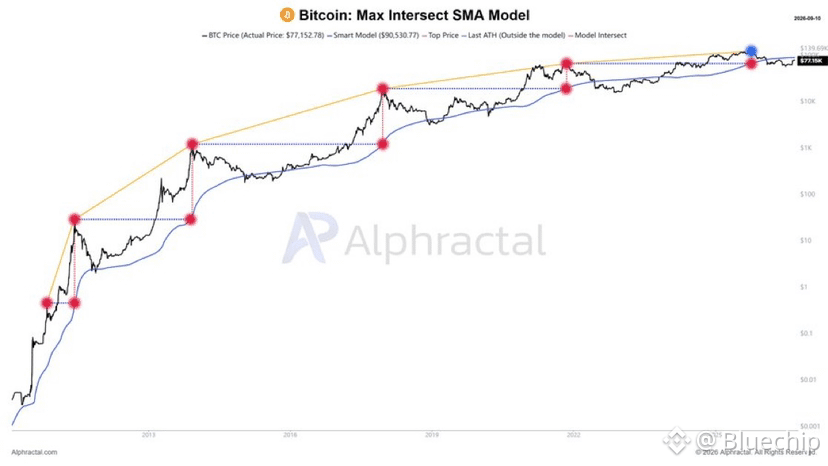
$BTC ‘s price follows remarkably precise mathematics and is highly predictable in many ways.
Yet many people still refuse to believe it.
Those who truly understand Bitcoin’s code will understand exactly what I mean.
{future}(BTCUSDT)
$BTC ‘s price follows remarkably precise mathematics and is highly predictable in many ways.
Yet many people still refuse to believe it.
Those who truly understand Bitcoin’s code will understand exactly what I mean.
Yet many people still refuse to believe it.
Those who truly understand Bitcoin’s code will understand exactly what I mean.
6
38
28.6k
·
--
So are we now in a Distribution or Reaccumulation phase for $BTC ?
Whoever said Reaccumulation, do you still hold that view after the recent drop from $82k to $77k?
{future}(BTCUSDT)
So are we now in a Distribution or Reaccumulation phase for $BTC ?
Whoever said Reaccumulation, do you still hold that view after the recent drop from $82k to $77k?
Whoever said Reaccumulation, do you still hold that view after the recent drop from $82k to $77k?
3
9
2.4k
·
--
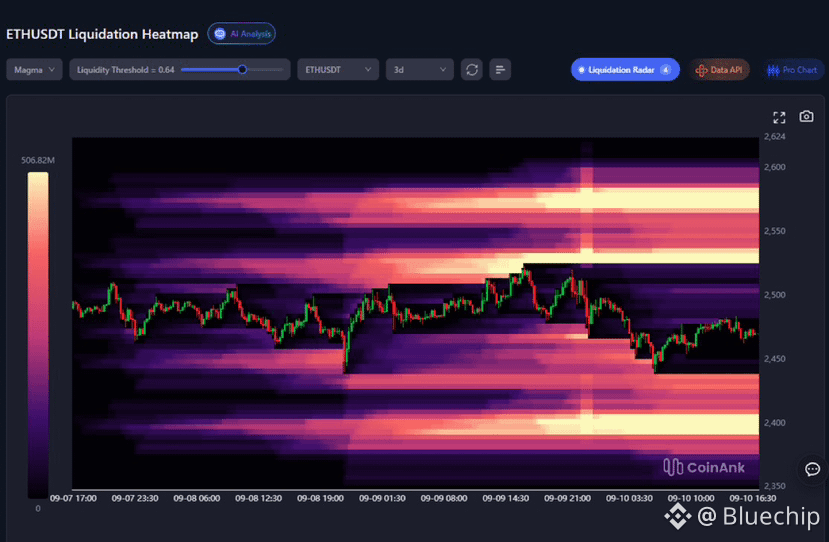
$ETH Liquidation Heatmap
ETH is boxed between two high-intensity liquidity bands.
The 3-day heatmap shows:
Overhead: a bright short-liquidation cluster around $2,530 – $2,540, with more leverage stacked toward $2,580 – $2,600
Below: a dense long-liquidation pocket near $2,410 – $2,420
Price dipped into the lower zone, bounced, and is now holding mid-range. The $2,530 band has not been cleared.
{future}(ETHUSDT)
$ETH Liquidation Heatmap
ETH is boxed between two high-intensity liquidity bands.
The 3-day heatmap shows:
Overhead: a bright short-liquidation cluster around $2,530 – $2,540, with more leverage stacked toward $2,580 – $2,600
Below: a dense long-liquidation pocket near $2,410 – $2,420
Price dipped into the lower zone, bounced, and is now holding mid-range. The $2,530 band has not been cleared.
ETH is boxed between two high-intensity liquidity bands.
The 3-day heatmap shows:
Overhead: a bright short-liquidation cluster around $2,530 – $2,540, with more leverage stacked toward $2,580 – $2,600
Below: a dense long-liquidation pocket near $2,410 – $2,420
Price dipped into the lower zone, bounced, and is now holding mid-range. The $2,530 band has not been cleared.
4
18
15.7k
·
--
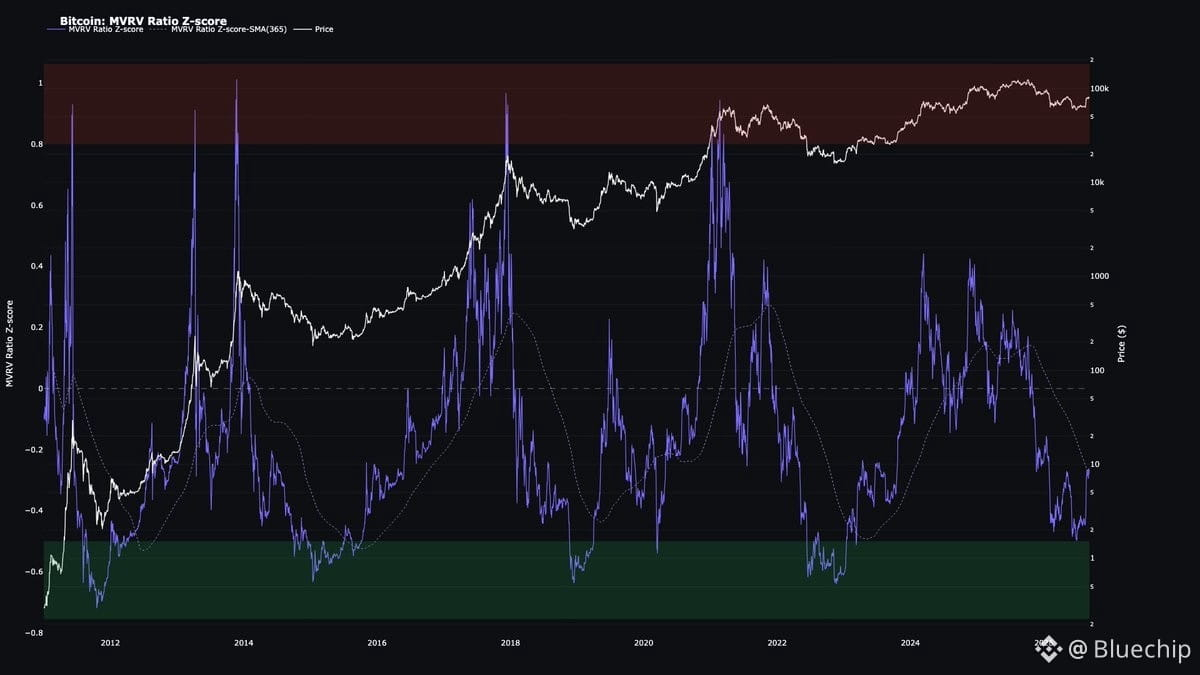
$BTC is at a key inflection point
The MVRV Z-Score is testing its 365-day moving average.
In 2015, 2019, and 2023, reclaiming this level marked the transition from a bear market into a new bull market.
A close above could be a major signal.
{future}(BTCUSDT)
$BTC is at a key inflection point
The MVRV Z-Score is testing its 365-day moving average.
In 2015, 2019, and 2023, reclaiming this level marked the transition from a bear market into a new bull market.
A close above could be a major signal.
The MVRV Z-Score is testing its 365-day moving average.
In 2015, 2019, and 2023, reclaiming this level marked the transition from a bear market into a new bull market.
A close above could be a major signal.
1
9
995
·
--
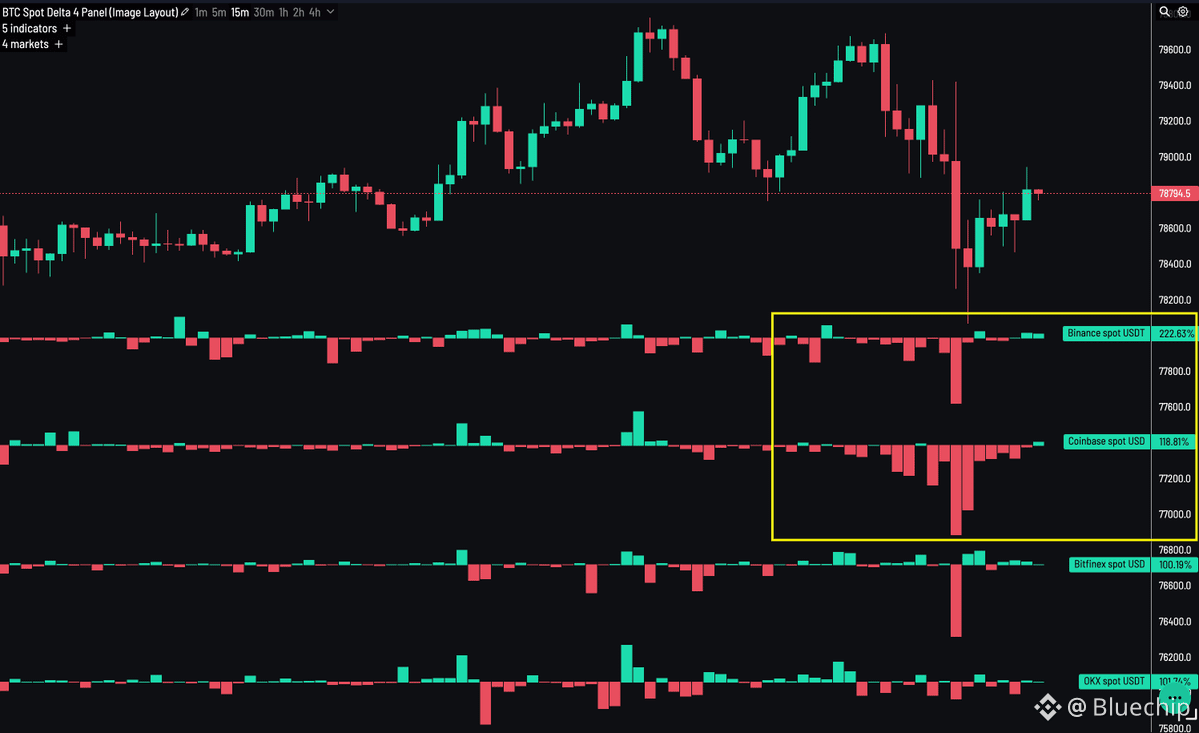
$BTC Spot selling pressure remains strong.
Negative Spot Delta is especially noticeable on Coinbase and Binance. Until we see fresh and sustained spot inflows, I don’t expect any lasting strength in the market.
The market may remain weak until spot demand returns.
{future}(BTCUSDT)
$BTC Spot selling pressure remains strong.
Negative Spot Delta is especially noticeable on Coinbase and Binance. Until we see fresh and sustained spot inflows, I don’t expect any lasting strength in the market.
The market may remain weak until spot demand returns.
Negative Spot Delta is especially noticeable on Coinbase and Binance. Until we see fresh and sustained spot inflows, I don’t expect any lasting strength in the market.
The market may remain weak until spot demand returns.
3
1
9
901
·
--
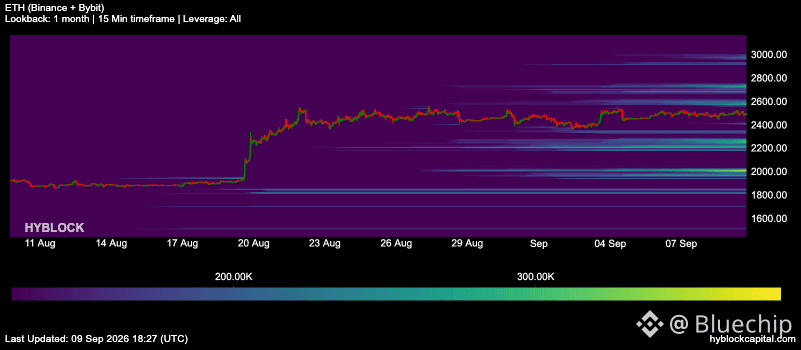
20 Days of Ranging 👀
$ETH has been moving sideways around $2,500, while liquidity keeps building on both sides.
* Above price: $2,700, $2,800, $3,000
* Below price: $2,300, $2,200, $2,000
Hectic price action soon!
{future}(ETHUSDT)
20 Days of Ranging 👀
$ETH has been moving sideways around $2,500, while liquidity keeps building on both sides.
* Above price: $2,700, $2,800, $3,000
* Below price: $2,300, $2,200, $2,000
Hectic price action soon!
$ETH has been moving sideways around $2,500, while liquidity keeps building on both sides.
* Above price: $2,700, $2,800, $3,000
* Below price: $2,300, $2,200, $2,000
Hectic price action soon!
1
9
2.7k
·
--
$BTC
Good chances that bulls will come under pressure. That’s what the exchange data is showing.
{future}(BTCUSDT)
$BTC
Good chances that bulls will come under pressure. That’s what the exchange data is showing.
Good chances that bulls will come under pressure. That’s what the exchange data is showing.
8
2.4k
Көбірек контент көру үшін кіріңіз
Binance Square платформасында әлемдік криптоқоғамдастыққа қосылыңыз
⚡️ Криптовалюта туралы ең соңғы және пайдалы ақпаратты алыңыз.
💬 Әлемдегі ең ірі криптобиржаның сеніміне ие.
👍 Расталған авторлардың нақты пікірлерін табыңыз.
Электрондық пошта/телефон нөмірі
Трендтегі тақырыптар
ClarityActFacesProceduralVoteSept15
50,199 рет көрілді
739 адам талқылап жатыр
Tuesday, September 15, 2:15pm ET. Mark it. 🗓️
The Senate votes on whether to even debate the CLARITY Act, the bill that would finally define which coins are securities vs commodities under US law.
Needs 60 votes. Republicans have 53. Several Democrats need to cross over, and it's not guaranteed.
Fail this vote = the bill is dead for 2026, likely until 2029 (midterms eat the calendar after this).
Pass this vote = doors open to real debate, still a long way to actual law.
Biggest crypto regulation moment of the year happens in a few days.
#ClarityActFacesProceduralVoteSept15
NewbieToNode
·5 лайк
·5.5k рет көрілді
US2YearYieldRisesTo4.61%
36,274 рет көрілді
686 адам талқылап жатыр
US10YearTreasuryYieldNears5%
22,193 рет көрілді
405 адам талқылап жатыр