
Dr Mubashar Ata
523 Жариялаулар

Dr Mubashar Ata
Хабарлау
Пайдаланушыны блоктау
71 Жазылым
49 Жазылушылар
85 лайк басылған
Жазбалар
Барлығы
Баға ұсыныстары
#dusk $DUSK @Dusk_Foundation
I still think the most interesting part of DuskEVM isn't EVM compatibility itself.
It's what happens when familiar Solidity workflows meet confidential execution.
The more I looked into @dusk, the more Hedger stood out to me. It is designed to bring privacy-focused EVM workflows using homomorphic encryption and zero-knowledge proofs, while keeping regulated financial use cases in mind.
That creates an interesting possibility: privacy doesn't have to mean abandoning the developer experience that already makes EVMs attractive.
But there is still a real question here.
Can developers actually use confidential execution at scale without sacrificing the composability, tooling and familiarity that made the EVM ecosystem so powerful in the first place?
I don't think that answer is obvious yet.
If DuskEVM can make that balance work, could confidential EVM infrastructure become a meaningful building block for regulated onchain finance?
$DUSK @dusk #dusk
#dusk $DUSK @Dusk
I still think the most interesting part of DuskEVM isn't EVM compatibility itself.
It's what happens when familiar Solidity workflows meet confidential execution.
The more I looked into @dusk, the more Hedger stood out to me. It is designed to bring privacy-focused EVM workflows using homomorphic encryption and zero-knowledge proofs, while keeping regulated financial use cases in mind.
That creates an interesting possibility: privacy doesn't have to mean abandoning the developer experience that already makes EVMs attractive.
But there is still a real question here.
Can developers actually use confidential execution at scale without sacrificing the composability, tooling and familiarity that made the EVM ecosystem so powerful in the first place?
I don't think that answer is obvious yet.
If DuskEVM can make that balance work, could confidential EVM infrastructure become a meaningful building block for regulated onchain finance?
$DUSK @dusk #dusk
I still think the most interesting part of DuskEVM isn't EVM compatibility itself.
It's what happens when familiar Solidity workflows meet confidential execution.
The more I looked into @dusk, the more Hedger stood out to me. It is designed to bring privacy-focused EVM workflows using homomorphic encryption and zero-knowledge proofs, while keeping regulated financial use cases in mind.
That creates an interesting possibility: privacy doesn't have to mean abandoning the developer experience that already makes EVMs attractive.
But there is still a real question here.
Can developers actually use confidential execution at scale without sacrificing the composability, tooling and familiarity that made the EVM ecosystem so powerful in the first place?
I don't think that answer is obvious yet.
If DuskEVM can make that balance work, could confidential EVM infrastructure become a meaningful building block for regulated onchain finance?
$DUSK @dusk #dusk
77
#dusk $DUSK @Dusk_Foundation
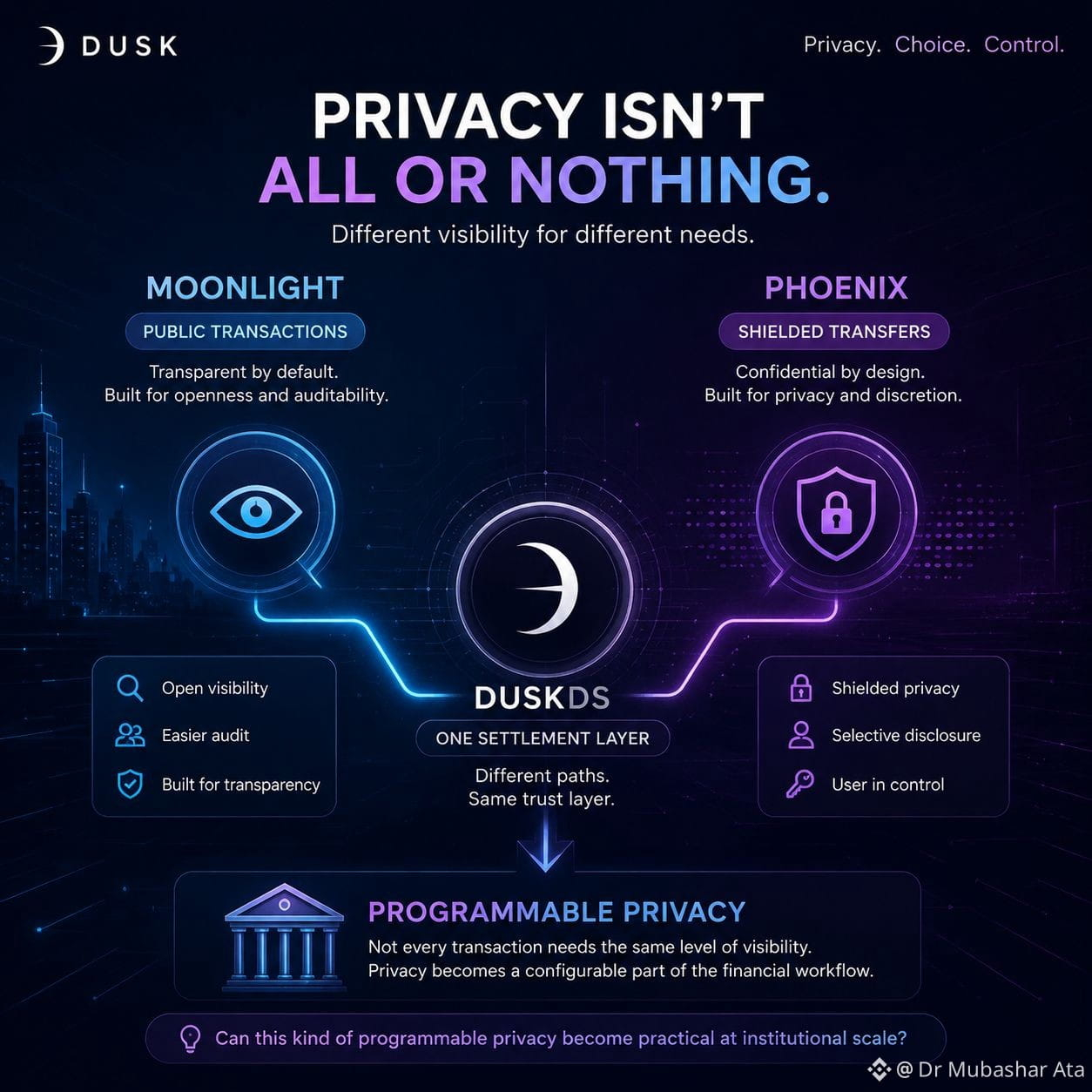
One thing I find interesting about @dusk is that privacy isn't treated as an all-or-nothing choice.
Dusk's architecture has used Moonlight for public transactions and Phoenix for shielded transfers, showing how different visibility models can coexist at the protocol level.
That makes privacy feel less like a permanent label and more like a configurable part of financial infrastructure.
For regulated markets, that distinction matters: not every transaction needs the same level of visibility.
The bigger question is whether programmable privacy can become practical at institutional scale.
#dusk $DUSK @Dusk
One thing I find interesting about @dusk is that privacy isn't treated as an all-or-nothing choice.
Dusk's architecture has used Moonlight for public transactions and Phoenix for shielded transfers, showing how different visibility models can coexist at the protocol level.
That makes privacy feel less like a permanent label and more like a configurable part of financial infrastructure.
For regulated markets, that distinction matters: not every transaction needs the same level of visibility.
The bigger question is whether programmable privacy can become practical at institutional scale.
One thing I find interesting about @dusk is that privacy isn't treated as an all-or-nothing choice.
Dusk's architecture has used Moonlight for public transactions and Phoenix for shielded transfers, showing how different visibility models can coexist at the protocol level.
That makes privacy feel less like a permanent label and more like a configurable part of financial infrastructure.
For regulated markets, that distinction matters: not every transaction needs the same level of visibility.
The bigger question is whether programmable privacy can become practical at institutional scale.
73
{spot}(DUSKUSDT)
I still think most people are looking at blockchain privacy from the wrong angle.
The real question may not be “How do we hide everything?” but “Who should be able to see what, and when?”
The more I looked at @dusk, the more I realized its interesting proposition isn't simply privacy — it's deciding where privacy ends and verifiability begins.
DuskEVM brings a familiar Solidity/EVM environment, while DuskDS handles settlement and data availability. Then Hedger adds confidential transaction workflows using homomorphic encryption and zero-knowledge proofs.
What makes this more interesting is the compliance angle. Dusk isn't treating privacy as “nobody can ever see anything.” Its approach is closer to selective disclosure and controlled visibility for regulated workflows.
But that's also where the real test begins. Selective disclosure sounds ideal on paper, but can that balance between confidentiality and accountability actually work at institutional scale?
Maybe programmable privacy isn't about hiding finance. Maybe it's about making financial data visible to the right people, at the right time.
Is that a requirement for institutional blockchain adoption?
$DUSK @Dusk_Foundation #dusk
I still think most people are looking at blockchain privacy from the wrong angle.
The real question may not be “How do we hide everything?” but “Who should be able to see what, and when?”
The more I looked at @dusk, the more I realized its interesting proposition isn't simply privacy — it's deciding where privacy ends and verifiability begins.
DuskEVM brings a familiar Solidity/EVM environment, while DuskDS handles settlement and data availability. Then Hedger adds confidential transaction workflows using homomorphic encryption and zero-knowledge proofs.
What makes this more interesting is the compliance angle. Dusk isn't treating privacy as “nobody can ever see anything.” Its approach is closer to selective disclosure and controlled visibility for regulated workflows.
But that's also where the real test begins. Selective disclosure sounds ideal on paper, but can that balance between confidentiality and accountability actually work at institutional scale?
Maybe programmable privacy isn't about hiding finance. Maybe it's about making financial data visible to the right people, at the right time.
Is that a requirement for institutional blockchain adoption?
$DUSK @Dusk #dusk
The real question may not be “How do we hide everything?” but “Who should be able to see what, and when?”
The more I looked at @dusk, the more I realized its interesting proposition isn't simply privacy — it's deciding where privacy ends and verifiability begins.
DuskEVM brings a familiar Solidity/EVM environment, while DuskDS handles settlement and data availability. Then Hedger adds confidential transaction workflows using homomorphic encryption and zero-knowledge proofs.
What makes this more interesting is the compliance angle. Dusk isn't treating privacy as “nobody can ever see anything.” Its approach is closer to selective disclosure and controlled visibility for regulated workflows.
But that's also where the real test begins. Selective disclosure sounds ideal on paper, but can that balance between confidentiality and accountability actually work at institutional scale?
Maybe programmable privacy isn't about hiding finance. Maybe it's about making financial data visible to the right people, at the right time.
Is that a requirement for institutional blockchain adoption?
$DUSK @Dusk #dusk
81


Binance Africa
·
--
🚀 Flash Quest: Stocks Are Moving Fast on Binance! The markets are on the move. 📈
Trade your favourite stocks on Binance, then share your trade on Binance Square for a chance to win rewards from our $ 1,000 USDC Prize pool
How to Participate:
🔸 Follow @Binance Africa
🔸 Like this post and repost
🔸 Share your bStocks trades on Square using the tradingcard with hashtag #TradebStocks #BinanceAfrica
🔸 Fill in this survey 👉🏾 Click on the Link to Participate Prizes: A total of 200 winners will receive 5 USDC each.
🔸 📆 Period: Aug 13, 2026 10:00 UTC – Aug 23, 2026 23:59 UTC
$TSLAB
Trade your favourite stocks on Binance, then share your trade on Binance Square for a chance to win rewards from our $ 1,000 USDC Prize pool
How to Participate:
🔸 Follow @Binance Africa
🔸 Like this post and repost
🔸 Share your bStocks trades on Square using the tradingcard with hashtag #TradebStocks #BinanceAfrica
🔸 Fill in this survey 👉🏾 Click on the Link to Participate Prizes: A total of 200 winners will receive 5 USDC each.
🔸 📆 Period: Aug 13, 2026 10:00 UTC – Aug 23, 2026 23:59 UTC
$TSLAB

2
#dusk $DUSK @Dusk_Foundation
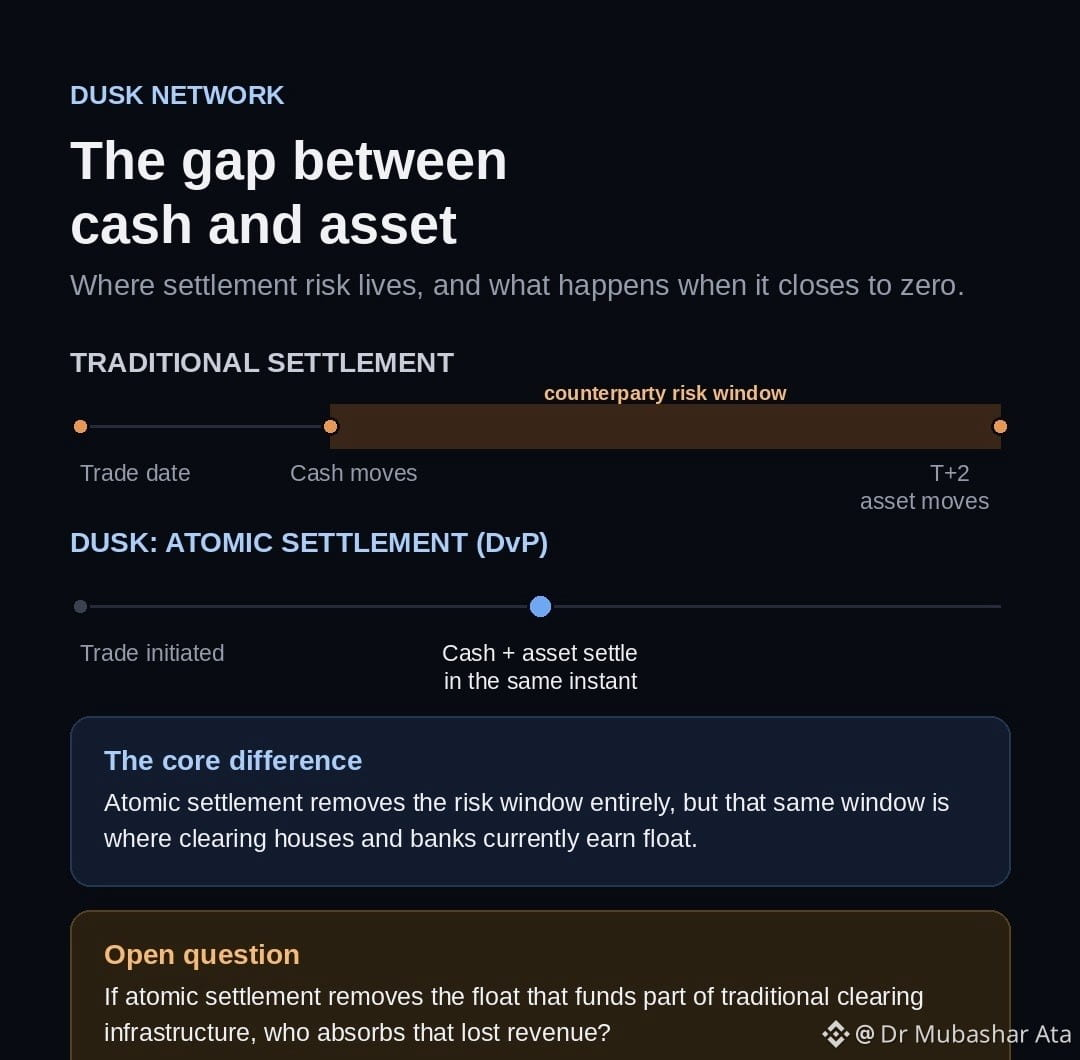
A friend who works in trade ops once explained why settlement still takes T+2 in traditional markets. Not a tech limit, it's counterparty risk protocol, built around the gap between when cash moves and when the asset actually moves.
Dusk's own site describes deterministic finality and delivery-versus-payment-ready workflows for settlement between assets and payments. Atomic means the asset and the cash move in the same instant. Neither side is exposed while waiting on the other.
That gap Dusk removes is exactly the one that caused Herstatt risk decades ago and still shows up in modern settlement failures today. But that same gap is also where clearing houses and banks quietly earn float during the settlement window.
Not saying that's wrong. Just noting where the money currently sits.
If atomic settlement removes the float that funds part of traditional clearing infrastructure, who exactly absorbs that lost revenue?
#dusk $DUSK @Dusk
A friend who works in trade ops once explained why settlement still takes T+2 in traditional markets. Not a tech limit, it's counterparty risk protocol, built around the gap between when cash moves and when the asset actually moves.
Dusk's own site describes deterministic finality and delivery-versus-payment-ready workflows for settlement between assets and payments. Atomic means the asset and the cash move in the same instant. Neither side is exposed while waiting on the other.
That gap Dusk removes is exactly the one that caused Herstatt risk decades ago and still shows up in modern settlement failures today. But that same gap is also where clearing houses and banks quietly earn float during the settlement window.
Not saying that's wrong. Just noting where the money currently sits.
If atomic settlement removes the float that funds part of traditional clearing infrastructure, who exactly absorbs that lost revenue?
A friend who works in trade ops once explained why settlement still takes T+2 in traditional markets. Not a tech limit, it's counterparty risk protocol, built around the gap between when cash moves and when the asset actually moves.
Dusk's own site describes deterministic finality and delivery-versus-payment-ready workflows for settlement between assets and payments. Atomic means the asset and the cash move in the same instant. Neither side is exposed while waiting on the other.
That gap Dusk removes is exactly the one that caused Herstatt risk decades ago and still shows up in modern settlement failures today. But that same gap is also where clearing houses and banks quietly earn float during the settlement window.
Not saying that's wrong. Just noting where the money currently sits.
If atomic settlement removes the float that funds part of traditional clearing infrastructure, who exactly absorbs that lost revenue?
1
1
76
#dusk $DUSK @Dusk_Foundation
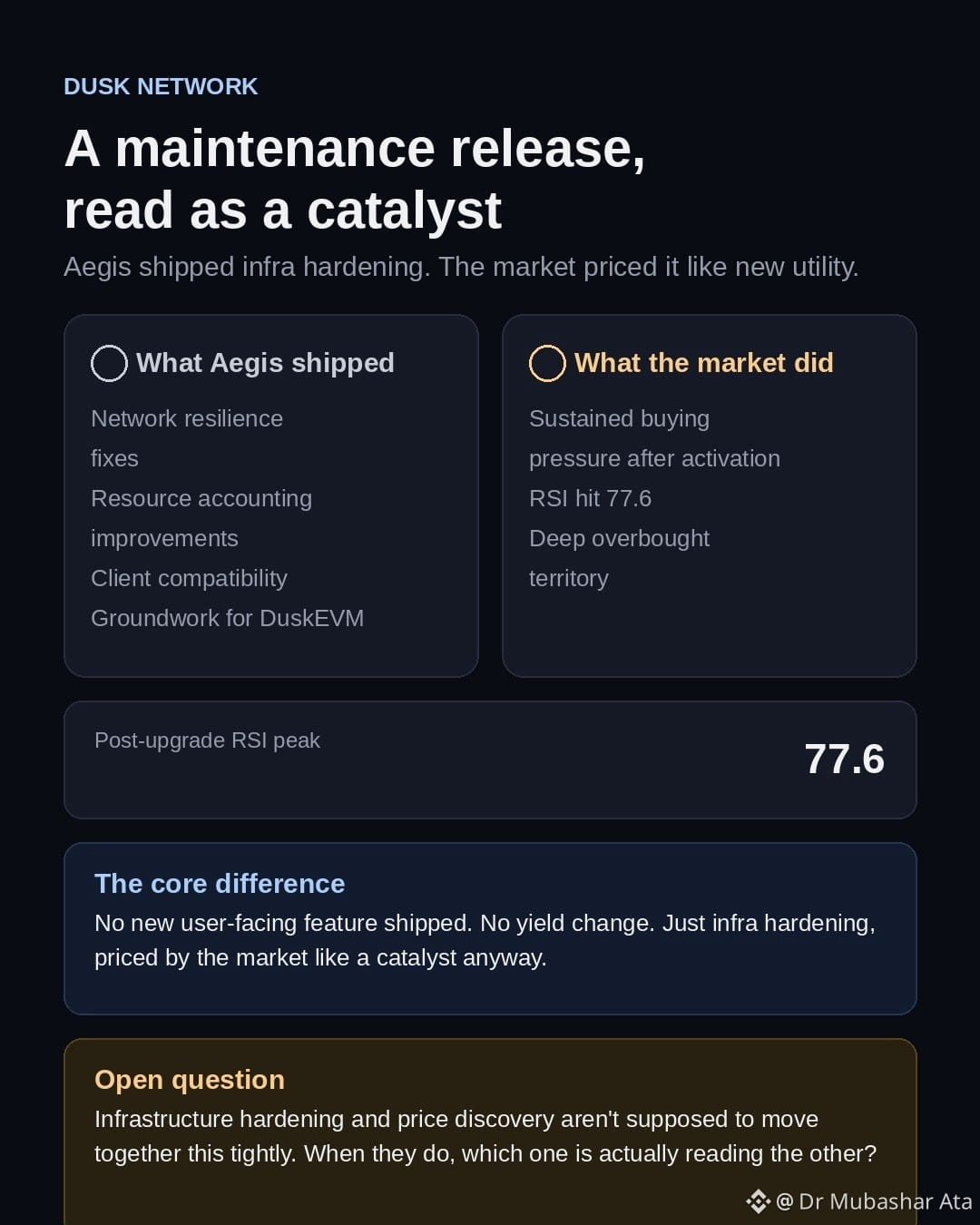
I went back and actually read the Aegis upgrade notes instead of just scrolling past the headline. Most people clearly didn't.
Aegis activated March 3, 2026, a mandatory upgrade for every node operator, described by the Dusk Foundation as their most significant upgrade to date. What it actually shipped: network resilience improvements, better resource accounting, client compatibility fixes, groundwork for DuskEVM. No new user-facing feature. No yield change. Pure infrastructure hardening.
Within weeks, DUSK's RSI hit 77.6, deep overbought territory, on buying pressure that followed the upgrade.
That gap is the part worth sitting with. The upgrade itself was a maintenance release dressed as a milestone. The market treated it like a catalyst anyway.
Infrastructure hardening and price discovery aren't supposed to move together this tightly. When they do, which one is actually reading the other?
#dusk $DUSK @Dusk_Foundation
#dusk $DUSK @Dusk
I went back and actually read the Aegis upgrade notes instead of just scrolling past the headline. Most people clearly didn't.
Aegis activated March 3, 2026, a mandatory upgrade for every node operator, described by the Dusk Foundation as their most significant upgrade to date. What it actually shipped: network resilience improvements, better resource accounting, client compatibility fixes, groundwork for DuskEVM. No new user-facing feature. No yield change. Pure infrastructure hardening.
Within weeks, DUSK's RSI hit 77.6, deep overbought territory, on buying pressure that followed the upgrade.
That gap is the part worth sitting with. The upgrade itself was a maintenance release dressed as a milestone. The market treated it like a catalyst anyway.
Infrastructure hardening and price discovery aren't supposed to move together this tightly. When they do, which one is actually reading the other?
#dusk $DUSK @Dusk
I went back and actually read the Aegis upgrade notes instead of just scrolling past the headline. Most people clearly didn't.
Aegis activated March 3, 2026, a mandatory upgrade for every node operator, described by the Dusk Foundation as their most significant upgrade to date. What it actually shipped: network resilience improvements, better resource accounting, client compatibility fixes, groundwork for DuskEVM. No new user-facing feature. No yield change. Pure infrastructure hardening.
Within weeks, DUSK's RSI hit 77.6, deep overbought territory, on buying pressure that followed the upgrade.
That gap is the part worth sitting with. The upgrade itself was a maintenance release dressed as a milestone. The market treated it like a catalyst anyway.
Infrastructure hardening and price discovery aren't supposed to move together this tightly. When they do, which one is actually reading the other?
#dusk $DUSK @Dusk
82
#dusk $DUSK @Dusk_Foundation
I kept refreshing a testnet explorer waiting for confirmations to stack up, out of habit. They didn't need to.
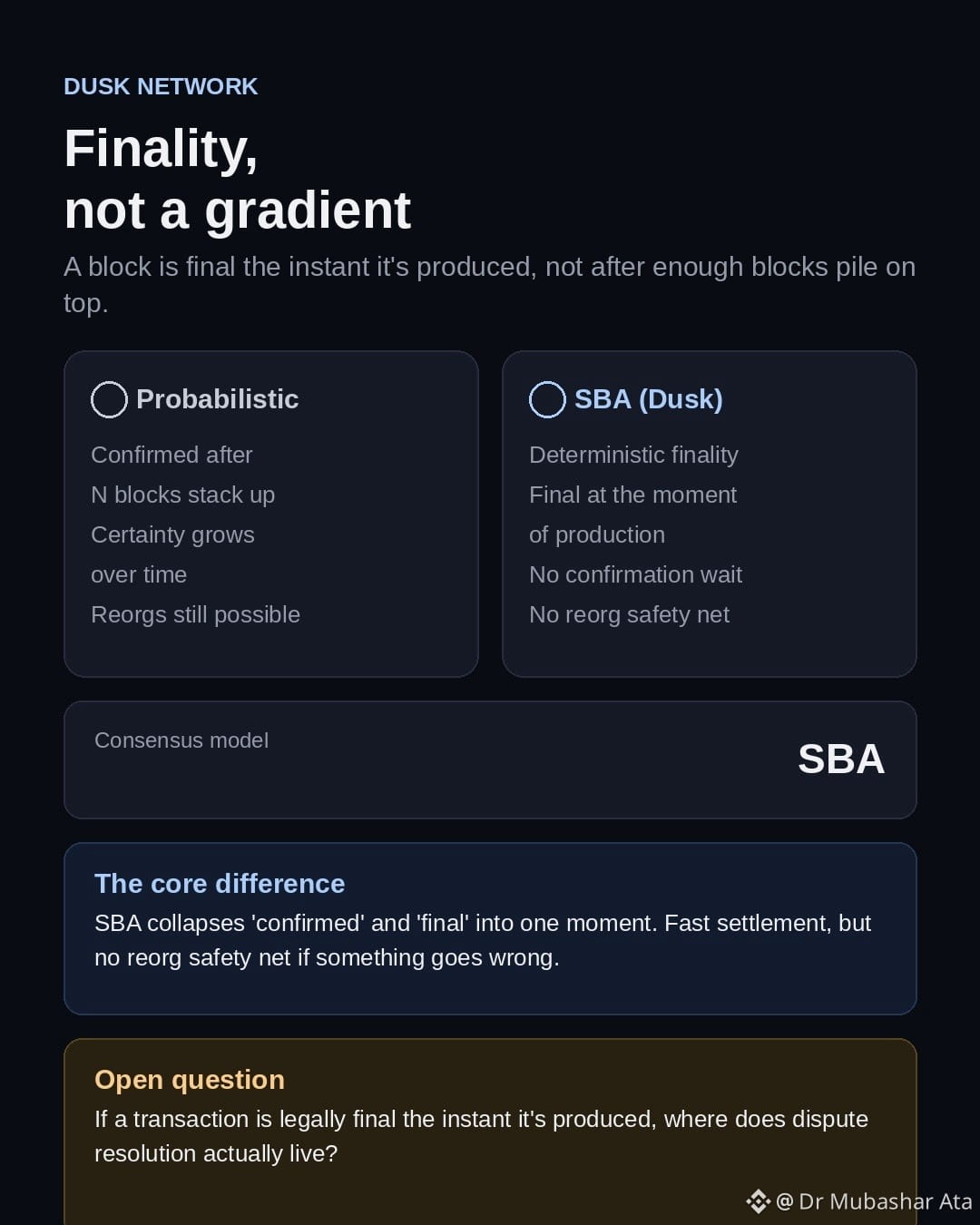
Dusk runs on Segregated Byzantine Agreement (SBA) consensus, deterministic finality, not probabilistic. A block is final the moment it's produced, there's no "wait for 6 confirmations" logic layered on top.
Most chains treat "confirmed" and "final" as a gradient, more blocks stacked on top means more certainty. SBA collapses that gradient into a single point. Good for settlement speed. But it also removes the reorg safety net that probabilistic chains quietly rely on when something goes wrong.
Not calling that a flaw. Just a different bet.
If a transaction is legally final the instant it's produced, where does dispute resolution actually live, off-chain courts, or protocol-level governance?
#dusk $DUSK @Dusk
I kept refreshing a testnet explorer waiting for confirmations to stack up, out of habit. They didn't need to.
Dusk runs on Segregated Byzantine Agreement (SBA) consensus, deterministic finality, not probabilistic. A block is final the moment it's produced, there's no "wait for 6 confirmations" logic layered on top.
Most chains treat "confirmed" and "final" as a gradient, more blocks stacked on top means more certainty. SBA collapses that gradient into a single point. Good for settlement speed. But it also removes the reorg safety net that probabilistic chains quietly rely on when something goes wrong.
Not calling that a flaw. Just a different bet.
If a transaction is legally final the instant it's produced, where does dispute resolution actually live, off-chain courts, or protocol-level governance?
I kept refreshing a testnet explorer waiting for confirmations to stack up, out of habit. They didn't need to.
Dusk runs on Segregated Byzantine Agreement (SBA) consensus, deterministic finality, not probabilistic. A block is final the moment it's produced, there's no "wait for 6 confirmations" logic layered on top.
Most chains treat "confirmed" and "final" as a gradient, more blocks stacked on top means more certainty. SBA collapses that gradient into a single point. Good for settlement speed. But it also removes the reorg safety net that probabilistic chains quietly rely on when something goes wrong.
Not calling that a flaw. Just a different bet.
If a transaction is legally final the instant it's produced, where does dispute resolution actually live, off-chain courts, or protocol-level governance?
6
3
90
I checked Dusk's TVL last night mostly out of curiosity — expecting a number that matched everything shipped this year. Mainnet, DuskEVM, the bridge to BNB Chain, Dusk Pay, Cordial integration, Chainlink CCIP. I found under $1M locked.
That's not a typo. Development activity on Dusk has been aggressive since mainnet, new components shipping almost every quarter, NPEX alone targeting €200M+ in tokenized securities. But the TVL sitting on top of all that infrastructure is still sub-$1M as of this year.
Most chains I've watched go the other way, usage arrives before the tooling is ready, forcing teams to catch up. Dusk built the rails first.
I'm not calling that a red flag. Regulated finance moves slower than DeFi by design, and NPEX volume alone could close that gap fast if it lands.
Still sitting with it though. how long can infrastructure stay ahead of the assets it was built for before the gap becomes the story itself?
#dusk $DUSK @Dusk_Foundation
I checked Dusk's TVL last night mostly out of curiosity — expecting a number that matched everything shipped this year. Mainnet, DuskEVM, the bridge to BNB Chain, Dusk Pay, Cordial integration, Chainlink CCIP. I found under $1M locked.
That's not a typo. Development activity on Dusk has been aggressive since mainnet, new components shipping almost every quarter, NPEX alone targeting €200M+ in tokenized securities. But the TVL sitting on top of all that infrastructure is still sub-$1M as of this year.
Most chains I've watched go the other way, usage arrives before the tooling is ready, forcing teams to catch up. Dusk built the rails first.
I'm not calling that a red flag. Regulated finance moves slower than DeFi by design, and NPEX volume alone could close that gap fast if it lands.
Still sitting with it though. how long can infrastructure stay ahead of the assets it was built for before the gap becomes the story itself?
#dusk $DUSK @Dusk
That's not a typo. Development activity on Dusk has been aggressive since mainnet, new components shipping almost every quarter, NPEX alone targeting €200M+ in tokenized securities. But the TVL sitting on top of all that infrastructure is still sub-$1M as of this year.
Most chains I've watched go the other way, usage arrives before the tooling is ready, forcing teams to catch up. Dusk built the rails first.
I'm not calling that a red flag. Regulated finance moves slower than DeFi by design, and NPEX volume alone could close that gap fast if it lands.
Still sitting with it though. how long can infrastructure stay ahead of the assets it was built for before the gap becomes the story itself?
#dusk $DUSK @Dusk
4
3
74
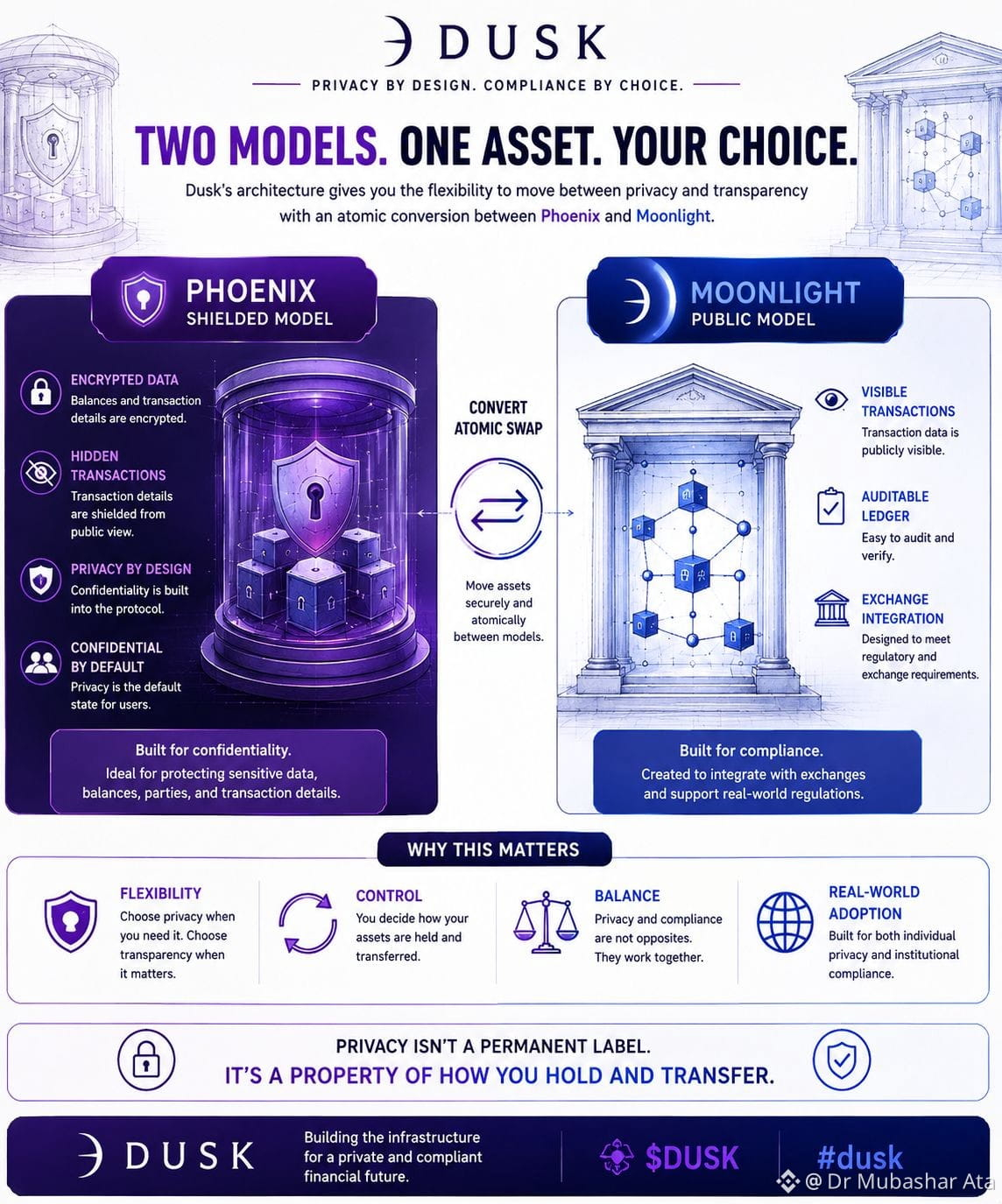
The more I look at @Dusk, the more interesting the separation between Phoenix and Moonlight becomes. Phoenix focuses on shielded transactions and confidentiality, while Moonlight provides a public, auditable model for compliance-focused use cases. That dual approach makes $DUSK stand out to me. #dusk @Dusk_Foundation
The more I look at @Dusk, the more interesting the separation between Phoenix and Moonlight becomes. Phoenix focuses on shielded transactions and confidentiality, while Moonlight provides a public, auditable model for compliance-focused use cases. That dual approach makes $DUSK stand out to me. #dusk @Dusk
65
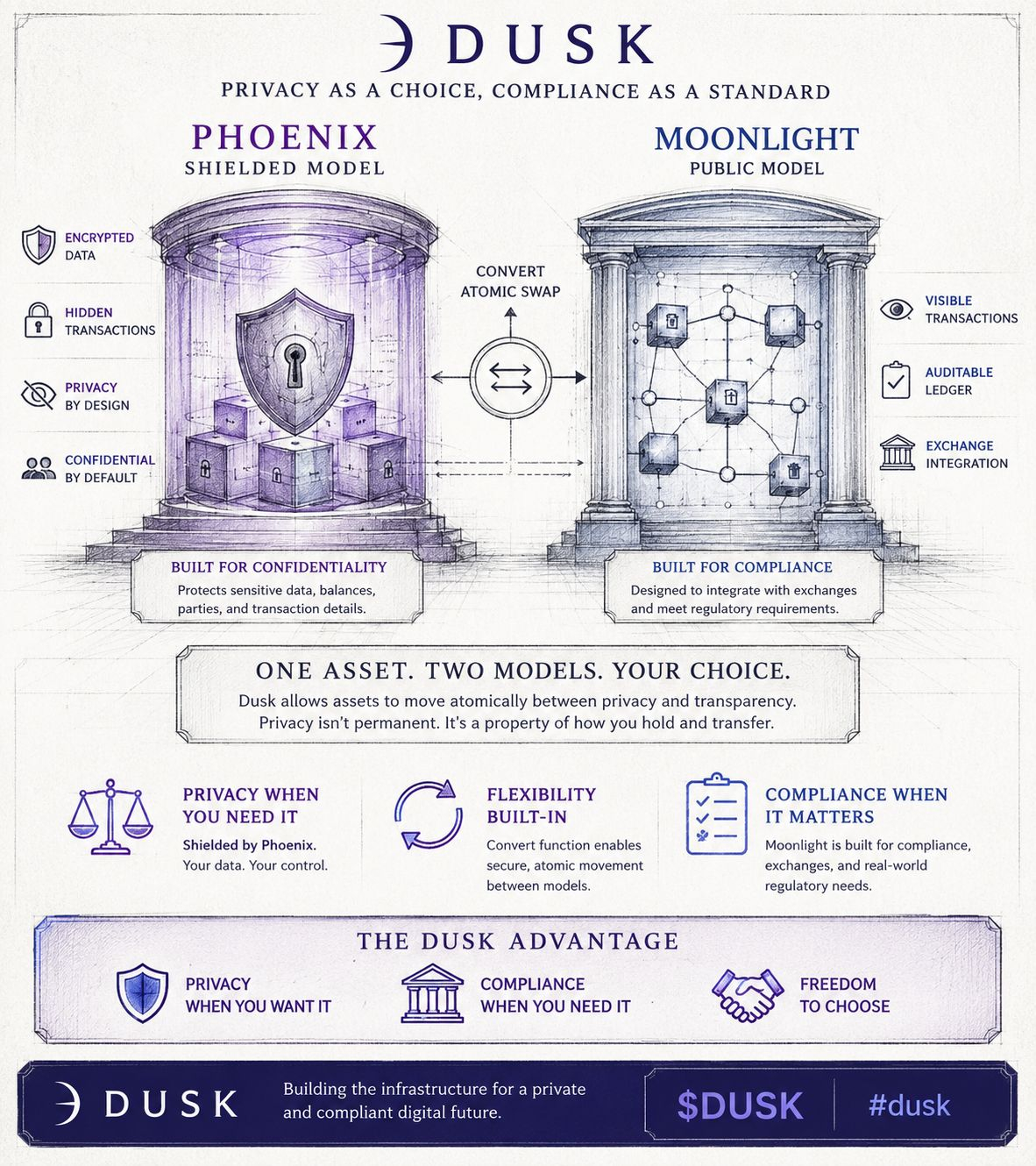
@Dusk’s two-model architecture is what caught my attention. Phoenix is the shielded model, while Moonlight is the public model designed around transparency and compliance. The interesting part is the ability to move between them through an atomic conversion—making privacy a property of how an asset is used, rather than a permanent choice. #dusk $DUSK @Dusk_Foundation
@Dusk’s two-model architecture is what caught my attention. Phoenix is the shielded model, while Moonlight is the public model designed around transparency and compliance. The interesting part is the ability to move between them through an atomic conversion—making privacy a property of how an asset is used, rather than a permanent choice. #dusk $DUSK @Dusk
3
70
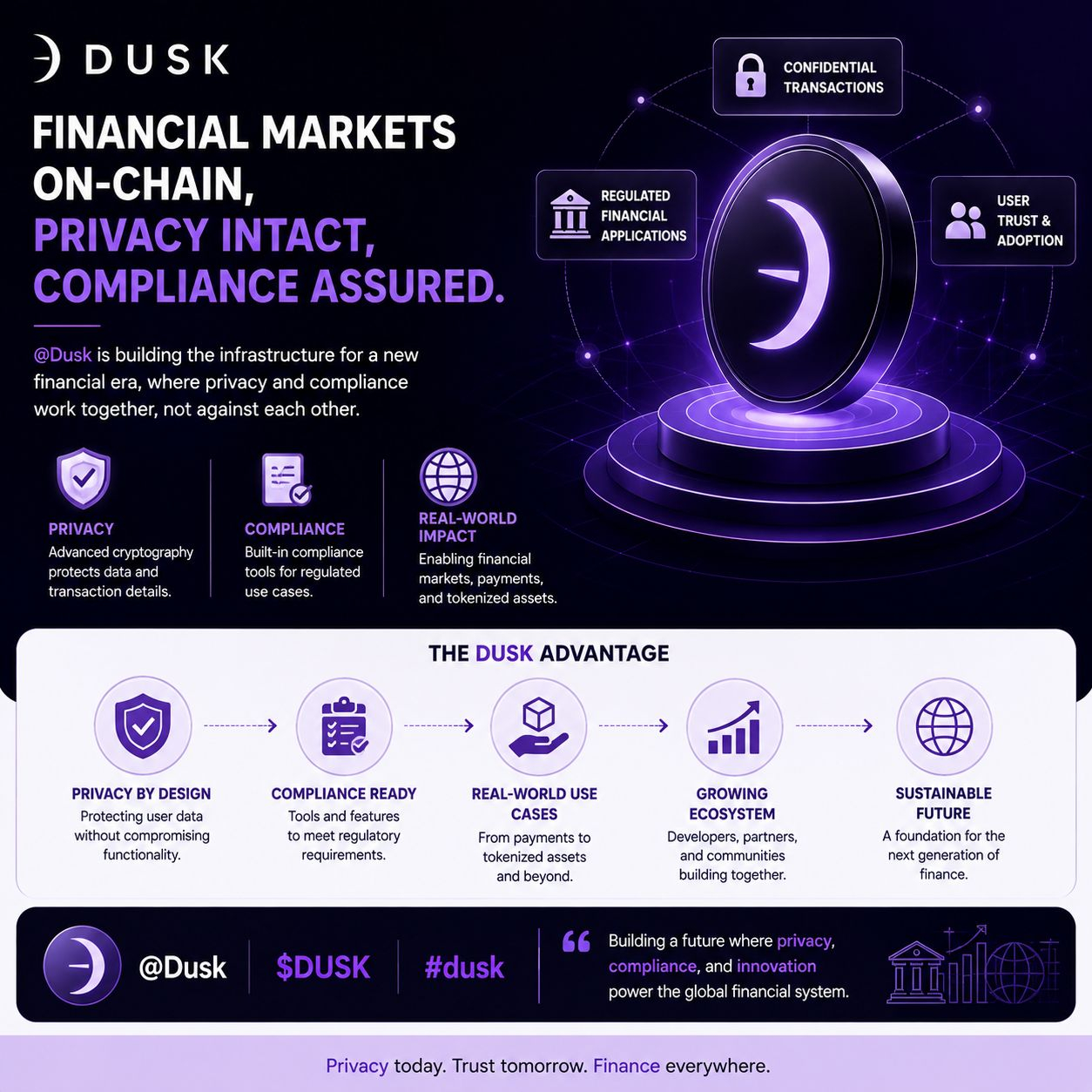
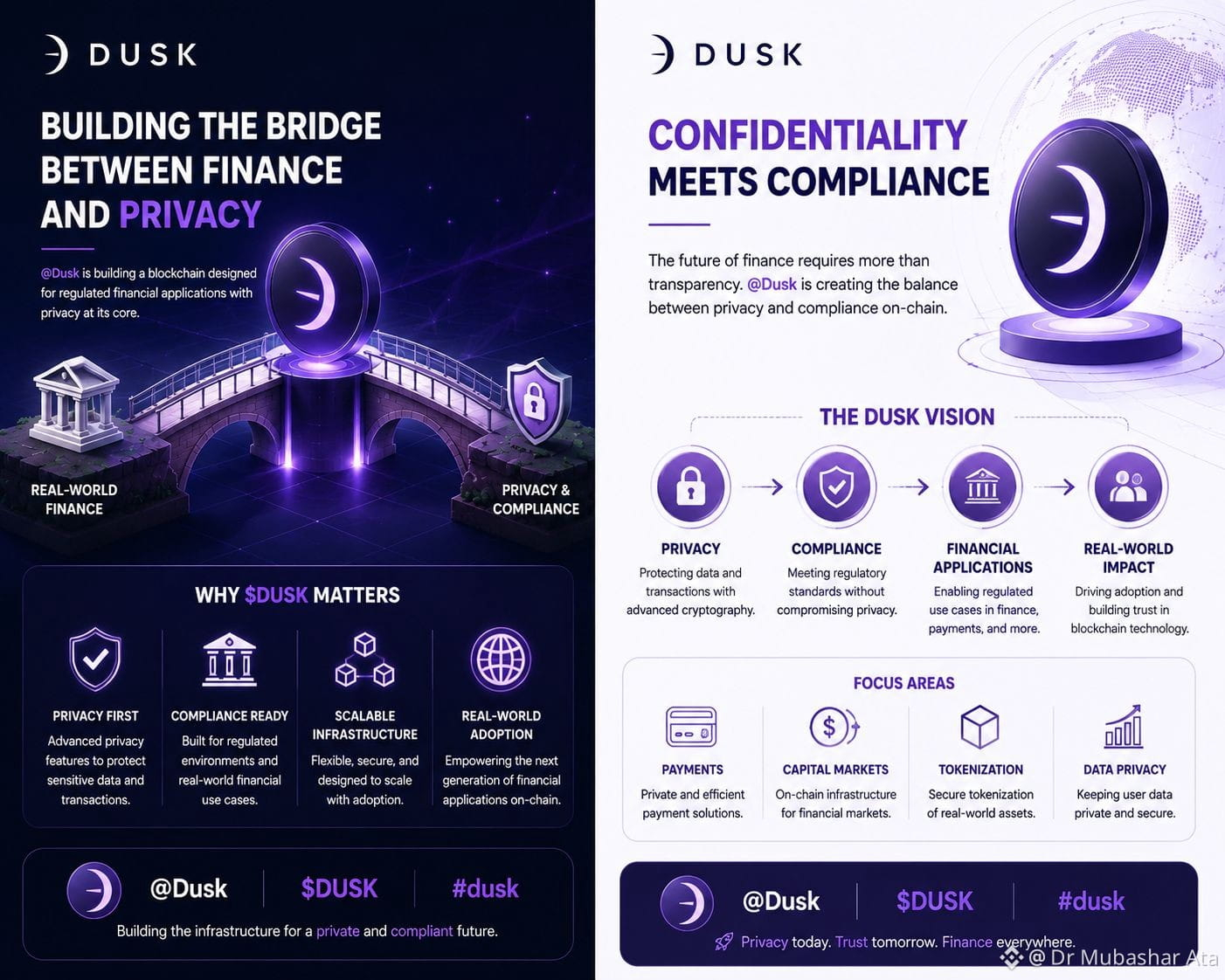
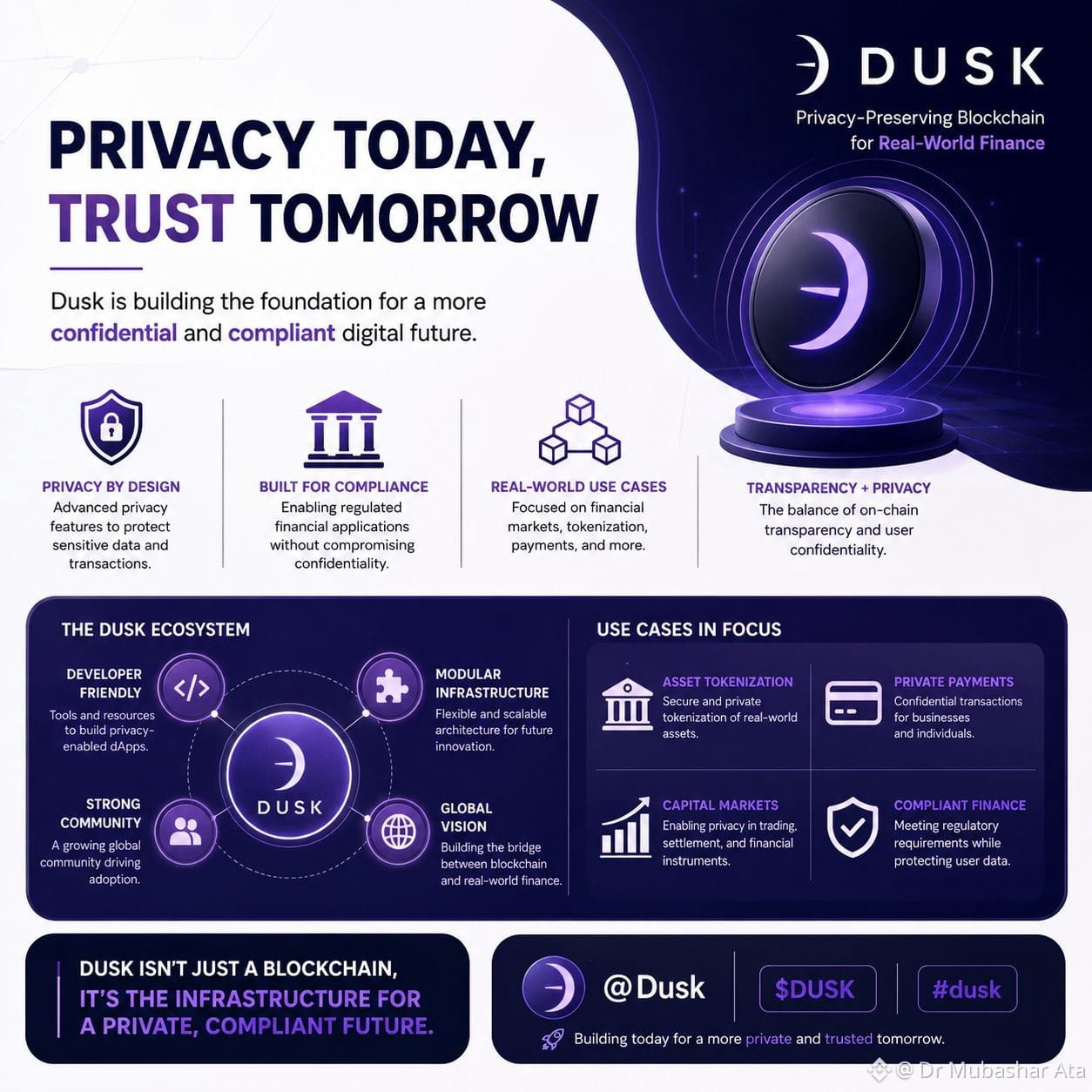
Spent way longer than expected reading about @BabylonLabs_io today.
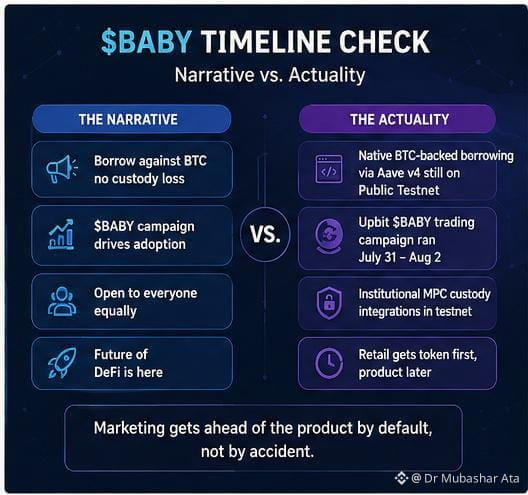
It actually started because my timeline was flooded with $BABY posts. Trading screenshots, leaderboard updates, campaign rewards—everything made it feel like the entire ecosystem was already in full swing.
But after closing X for a minute, I found myself asking a different question.
How much of the attention is coming from the product itself, and how much is coming from the market?
That distinction matters more than people think.
Crypto has always been good at pricing the future before the future arrives. Communities grow around expectations long before infrastructure reaches everyone.
That's not necessarily a bad thing. It's simply how this industry works.
Builders continue improving protocols while the market trades possibilities.
The interesting part is watching those two worlds slowly meet.
Campaigns introduce people.
Technology is what convinces them to stay.
That's why I spend more time reading development updates than watching hourly candles these days.
The chart tells me what's happening.
The roadmap tells me what might happen next.
Curious to see where @babylonlabs_io goes from here.
#baby $BABY
Spent way longer than expected reading about @BabylonLabs_io today.
It actually started because my timeline was flooded with $BABY posts. Trading screenshots, leaderboard updates, campaign rewards—everything made it feel like the entire ecosystem was already in full swing.
But after closing X for a minute, I found myself asking a different question.
How much of the attention is coming from the product itself, and how much is coming from the market?
That distinction matters more than people think.
Crypto has always been good at pricing the future before the future arrives. Communities grow around expectations long before infrastructure reaches everyone.
That's not necessarily a bad thing. It's simply how this industry works.
Builders continue improving protocols while the market trades possibilities.
The interesting part is watching those two worlds slowly meet.
Campaigns introduce people.
Technology is what convinces them to stay.
That's why I spend more time reading development updates than watching hourly candles these days.
The chart tells me what's happening.
The roadmap tells me what might happen next.
Curious to see where @BabylonLabs_io goes from here.
#baby $BABY
It actually started because my timeline was flooded with $BABY posts. Trading screenshots, leaderboard updates, campaign rewards—everything made it feel like the entire ecosystem was already in full swing.
But after closing X for a minute, I found myself asking a different question.
How much of the attention is coming from the product itself, and how much is coming from the market?
That distinction matters more than people think.
Crypto has always been good at pricing the future before the future arrives. Communities grow around expectations long before infrastructure reaches everyone.
That's not necessarily a bad thing. It's simply how this industry works.
Builders continue improving protocols while the market trades possibilities.
The interesting part is watching those two worlds slowly meet.
Campaigns introduce people.
Technology is what convinces them to stay.
That's why I spend more time reading development updates than watching hourly candles these days.
The chart tells me what's happening.
The roadmap tells me what might happen next.
Curious to see where @BabylonLabs_io goes from here.
#baby $BABY
2
2
79
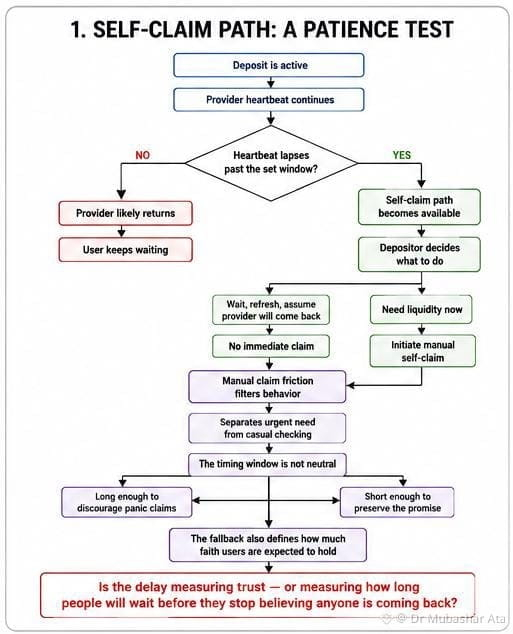
At first I thought the heartbeat mechanism was simply there to detect whether a provider was online. The longer I looked at it, the more it felt like a coordination tool rather than just a technical safeguard.
Most users never experience the self-claim path because nothing goes wrong. But when the heartbeat stops, the protocol quietly asks a different question: How much should users rely on automation before acting for themselves?
That balance between provider responsibility and user agency is what makes Babylon Trustless Bitcoin Vaults interesting to me. It isn't only protecting assets—it is defining expectations.
Where do you think that balance should be? @babylonlabs_io #baby $BABY
At first I thought the heartbeat mechanism was simply there to detect whether a provider was online. The longer I looked at it, the more it felt like a coordination tool rather than just a technical safeguard.
Most users never experience the self-claim path because nothing goes wrong. But when the heartbeat stops, the protocol quietly asks a different question: How much should users rely on automation before acting for themselves?
That balance between provider responsibility and user agency is what makes Babylon Trustless Bitcoin Vaults interesting to me. It isn't only protecting assets—it is defining expectations.
Where do you think that balance should be? @BabylonLabs_io #baby $BABY
Most users never experience the self-claim path because nothing goes wrong. But when the heartbeat stops, the protocol quietly asks a different question: How much should users rely on automation before acting for themselves?
That balance between provider responsibility and user agency is what makes Babylon Trustless Bitcoin Vaults interesting to me. It isn't only protecting assets—it is defining expectations.
Where do you think that balance should be? @BabylonLabs_io #baby $BABY
55
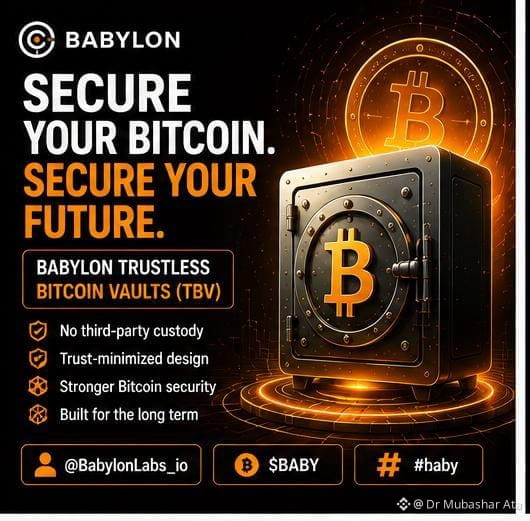
What if Bitcoin’s biggest breakthrough this cycle isn’t price, but security? Babylon Trustless Bitcoin Vaults are building infrastructure that minimizes trust assumptions while keeping users in control of their BTC. If Bitcoin is about self-sovereignty, this direction makes a lot of sense. Would you use a trustless vault? @babylonlabs_io #baby $BABY
What if Bitcoin’s biggest breakthrough this cycle isn’t price, but security? Babylon Trustless Bitcoin Vaults are building infrastructure that minimizes trust assumptions while keeping users in control of their BTC. If Bitcoin is about self-sovereignty, this direction makes a lot of sense. Would you use a trustless vault? @BabylonLabs_io #baby $BABY
68
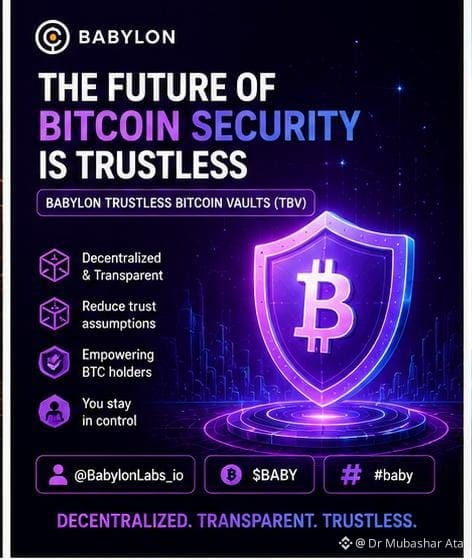
🔥 Bitcoin isn't just about holding coins—it's about protecting them wisely. Babylon Trustless Bitcoin Vaults are building infrastructure that reduces trust assumptions while giving users greater control. If Bitcoin is the future of finance, shouldn't its security evolve too? Share your thoughts! @babylonlabs_io #baby $BABY
🔥 Bitcoin isn't just about holding coins—it's about protecting them wisely. Babylon Trustless Bitcoin Vaults are building infrastructure that reduces trust assumptions while giving users greater control. If Bitcoin is the future of finance, shouldn't its security evolve too? Share your thoughts! @BabylonLabs_io #baby $BABY
66
Көбірек контент көру үшін кіріңіз
Binance Square платформасында әлемдік криптоқоғамдастыққа қосылыңыз
⚡️ Криптовалюта туралы ең соңғы және пайдалы ақпаратты алыңыз.
💬 Әлемдегі ең ірі криптобиржаның сеніміне ие.
👍 Расталған авторлардың нақты пікірлерін табыңыз.
Электрондық пошта/телефон нөмірі
Трендтегі тақырыптар
XRPRises8%
1,602 рет көрілді
180 адам талқылап жатыр
🚨 $XRP JUST JUMPED 8% — AND THIS MOVE HAS A REAL CATALYST BEHIND IT.
XRP rallied after Ripple said asset managers and commercial projects are preparing to use the XRP Ledger’s Batch V1.1 payments upgrade. The upgrade currently has support from 30 of 35 tracked validators and could activate after September 29 if support stays above the required threshold.
That gives XRP a much stronger narrative than a simple market bounce:
Payments upgrade → institutional/commercial usage → stronger network utility → renewed speculation.
And traders are already watching the next major levels:
$1.50 = first key breakout zone
$1.80 = next major target area if momentum keeps expanding.
Crypto risk appetite has also improved broadly, with XRP recently outperforming alongside a wider altcoin rebound.
The trigger now is simple:
Hold the breakout → reclaim $1.50 → momentum can accelerate.
But after an 8% move, chasing blindly is dangerous.
If Batch V1.1 activates successfully and institutional usage follows, this could become a much bigger XRP narrative than traders are pricing in right now. 👀
#xrprises8% #AppleGoogleSeekStablecoinTokenizedDepositTalent #NvidiaToBuyAnother$1.5BSBEnergySharesPreIPO #NEARRisesNearly80%InAWeek #MultiversXPlansHardForkRecovery
KimHotbae
·0 лайк
·137 рет көрілді
AppleGoogleSeekStablecoinTokenizedDepositTalent
1,491 рет көрілді
141 адам талқылап жатыр
NvidiaToBuyAnother$1.5BSBEnergySharesPreIPO
310 рет көрілді
13 адам талқылап жатыр