
J U L I E
8.9k Жариялаулар

J U L I E
 «Square расталған+» белгісі
Хабарлау
Пайдаланушыны блоктау
Crypto learner | Trader | Content creator
135 Жазылым
35.0K+ Жазылушылар
24.1K+ лайк басылған
Жазбалар
Барлығы
Баға ұсыныстары
Тікелей эфир
PINNED
·
--
Расталды
CPI COULD CHANGE THE FED’S NEXT MOVE
Nonfarm payrolls came in stronger than expected, so I’m paying even more attention to the inflation data now.
CPI is the next big test. If price pressures stay sticky, I could see Treasury yields moving higher and markets dialing back expectations for easier policy. That would likely keep pressure on rate sensitive stocks, while gold could see some volatility.
If CPI cools, I think the conversation shifts quickly back toward rate cuts and a softer Fed stance.
I’m watching headline CPI, core CPI, payroll strength and Treasury yields together. For me, the key is not just whether CPI beats or misses expectations, but how the Fed and markets interpret the combination of strong jobs and inflation.
Right now, I’m leaning toward a Fed hold, but I’m keeping that view flexible until the CPI number lands.
Bullish or bearish into CPI? What stock or gold trade are you holding? 👀
#CPIWatch
$BTC $ETH $SOL
CPI COULD CHANGE THE FED’S NEXT MOVE
Nonfarm payrolls came in stronger than expected, so I’m paying even more attention to the inflation data now.
CPI is the next big test. If price pressures stay sticky, I could see Treasury yields moving higher and markets dialing back expectations for easier policy. That would likely keep pressure on rate sensitive stocks, while gold could see some volatility.
If CPI cools, I think the conversation shifts quickly back toward rate cuts and a softer Fed stance.
I’m watching headline CPI, core CPI, payroll strength and Treasury yields together. For me, the key is not just whether CPI beats or misses expectations, but how the Fed and markets interpret the combination of strong jobs and inflation.
Right now, I’m leaning toward a Fed hold, but I’m keeping that view flexible until the CPI number lands.
Bullish or bearish into CPI? What stock or gold trade are you holding? 👀
#CPIWatch
$BTC $ETH $SOL
Nonfarm payrolls came in stronger than expected, so I’m paying even more attention to the inflation data now.
CPI is the next big test. If price pressures stay sticky, I could see Treasury yields moving higher and markets dialing back expectations for easier policy. That would likely keep pressure on rate sensitive stocks, while gold could see some volatility.
If CPI cools, I think the conversation shifts quickly back toward rate cuts and a softer Fed stance.
I’m watching headline CPI, core CPI, payroll strength and Treasury yields together. For me, the key is not just whether CPI beats or misses expectations, but how the Fed and markets interpret the combination of strong jobs and inflation.
Right now, I’m leaning toward a Fed hold, but I’m keeping that view flexible until the CPI number lands.
Bullish or bearish into CPI? What stock or gold trade are you holding? 👀
#CPIWatch
$BTC $ETH $SOL

19
3
21
3.9k
·
--
Жоғары (өспелі)
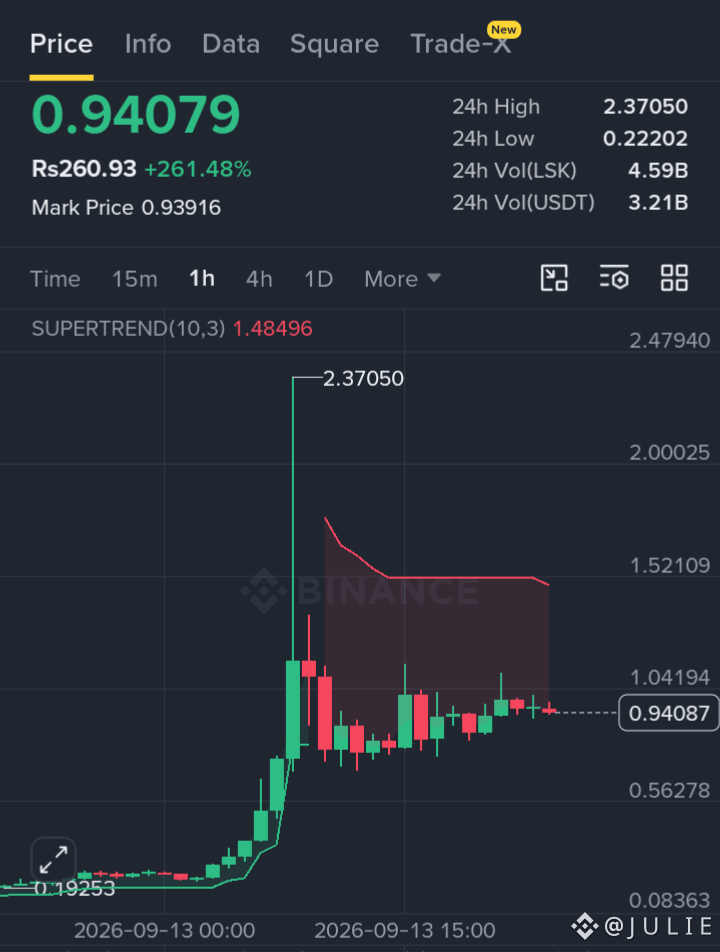
$LSK cooling at 0.940 after that 2.37 wick
Short :
🎯 EP: 0.952
✅ TP1: 0.800
✅ TP2: 0.560
✅ TP3: 0.400
🛑 SL: 1.050
Parabolic spike then a hard rejection. Supertrend flipped red at 1.485 and LSK is stuck under it while volume fades. Until price reclaims 1.05, this looks like a failed squeeze not a fresh breakout. DYOR.
#LSK $BR $币安人生
$LSK cooling at 0.940 after that 2.37 wick
Short :
🎯 EP: 0.952
✅ TP1: 0.800
✅ TP2: 0.560
✅ TP3: 0.400
🛑 SL: 1.050
Parabolic spike then a hard rejection. Supertrend flipped red at 1.485 and LSK is stuck under it while volume fades. Until price reclaims 1.05, this looks like a failed squeeze not a fresh breakout. DYOR.
#LSK $BR $币安人生
Short :
🎯 EP: 0.952
✅ TP1: 0.800
✅ TP2: 0.560
✅ TP3: 0.400
🛑 SL: 1.050
Parabolic spike then a hard rejection. Supertrend flipped red at 1.485 and LSK is stuck under it while volume fades. Until price reclaims 1.05, this looks like a failed squeeze not a fresh breakout. DYOR.
#LSK $BR $币安人生
4
352
·
--
Төмен (кемімелі)
ALTCOINS TAKING A HIT
I’m watching $ETHFI , $MARSCOIN and $ESP slide sharply today, with losses reaching around 10–15%.
The pullback is getting hard to ignore. I’m keeping these three on my watchlist for now.
Which one are you watching most closely? 👀
#ETHFİ #MARSCOINUSDT
ALTCOINS TAKING A HIT
I’m watching $ETHFI , $MARSCOIN and $ESP slide sharply today, with losses reaching around 10–15%.
The pullback is getting hard to ignore. I’m keeping these three on my watchlist for now.
Which one are you watching most closely? 👀
#ETHFİ #MARSCOINUSDT
I’m watching $ETHFI , $MARSCOIN and $ESP slide sharply today, with losses reaching around 10–15%.
The pullback is getting hard to ignore. I’m keeping these three on my watchlist for now.
Which one are you watching most closely? 👀
#ETHFİ #MARSCOINUSDT
ETHFI
25%
MARSCOIN
67%
ESP
8%
75 дауыс • Дауыс беру жабық
5
3.8k
·
--
My trading strategy is simple:
Buy high. Panic. Sell low.
Money gone. Strategy unchanged. 😂💸
guys
Be honest, how many of you trade like this? .........
#memes
$LSK $CVC $STEEM
My trading strategy is simple:
Buy high. Panic. Sell low.
Money gone. Strategy unchanged. 😂💸
guys
Be honest, how many of you trade like this? .........
#memes
$LSK $CVC $STEEM
Buy high. Panic. Sell low.
Money gone. Strategy unchanged. 😂💸
guys
Be honest, how many of you trade like this? .........
#memes
$LSK $CVC $STEEM

1
3
383
·
--
STRAIT OF HORMUZ UPDATE
I’m watching the latest reports from the Strait of Hormuz closely. Iranian media say a commercial ship was hit near Qeshm Island, with 1 dead and 4 wounded, while UK maritime monitors also reported a vessel being struck by a projectile.
For me, the bigger concern is what continued incidents could mean for shipping, oil, and broader markets.
Do you think markets are underestimating the risk around Hormuz?
$LAYER $ETHFI $ZAMA
STRAIT OF HORMUZ UPDATE
I’m watching the latest reports from the Strait of Hormuz closely. Iranian media say a commercial ship was hit near Qeshm Island, with 1 dead and 4 wounded, while UK maritime monitors also reported a vessel being struck by a projectile.
For me, the bigger concern is what continued incidents could mean for shipping, oil, and broader markets.
Do you think markets are underestimating the risk around Hormuz?
$LAYER $ETHFI $ZAMA
I’m watching the latest reports from the Strait of Hormuz closely. Iranian media say a commercial ship was hit near Qeshm Island, with 1 dead and 4 wounded, while UK maritime monitors also reported a vessel being struck by a projectile.
For me, the bigger concern is what continued incidents could mean for shipping, oil, and broader markets.
Do you think markets are underestimating the risk around Hormuz?
$LAYER $ETHFI $ZAMA

1
3
614
·
--
Жоғары (өспелі)
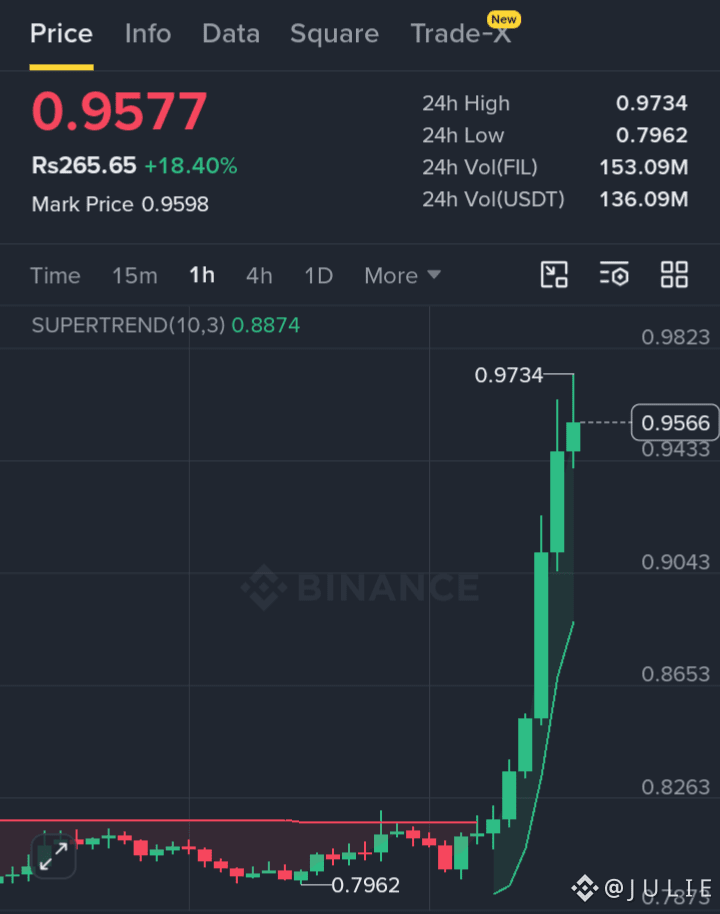
$FIL pushing through 0.9577 after a solid range breakout
🎯 EP: 0.9540
✅ TP1: 0.9734
✅ TP2: 1.0200
✅ TP3: 1.0800
🛑 SL: 0.8820
After building around 0.80, $FIL broke higher with strong volume. Supertrend turned green at 0.8874, and price is now pressing toward 0.9734.
Holding above 0.882 keeps the setup constructive. A break below it would weaken the move. DYOR.
#fil
$FIL pushing through 0.9577 after a solid range breakout
🎯 EP: 0.9540
✅ TP1: 0.9734
✅ TP2: 1.0200
✅ TP3: 1.0800
🛑 SL: 0.8820
After building around 0.80, $FIL broke higher with strong volume. Supertrend turned green at 0.8874, and price is now pressing toward 0.9734.
Holding above 0.882 keeps the setup constructive. A break below it would weaken the move. DYOR.
#fil
🎯 EP: 0.9540
✅ TP1: 0.9734
✅ TP2: 1.0200
✅ TP3: 1.0800
🛑 SL: 0.8820
After building around 0.80, $FIL broke higher with strong volume. Supertrend turned green at 0.8874, and price is now pressing toward 0.9734.
Holding above 0.882 keeps the setup constructive. A break below it would weaken the move. DYOR.
#fil
1
2
281
·
--
Жоғары (өспелі)
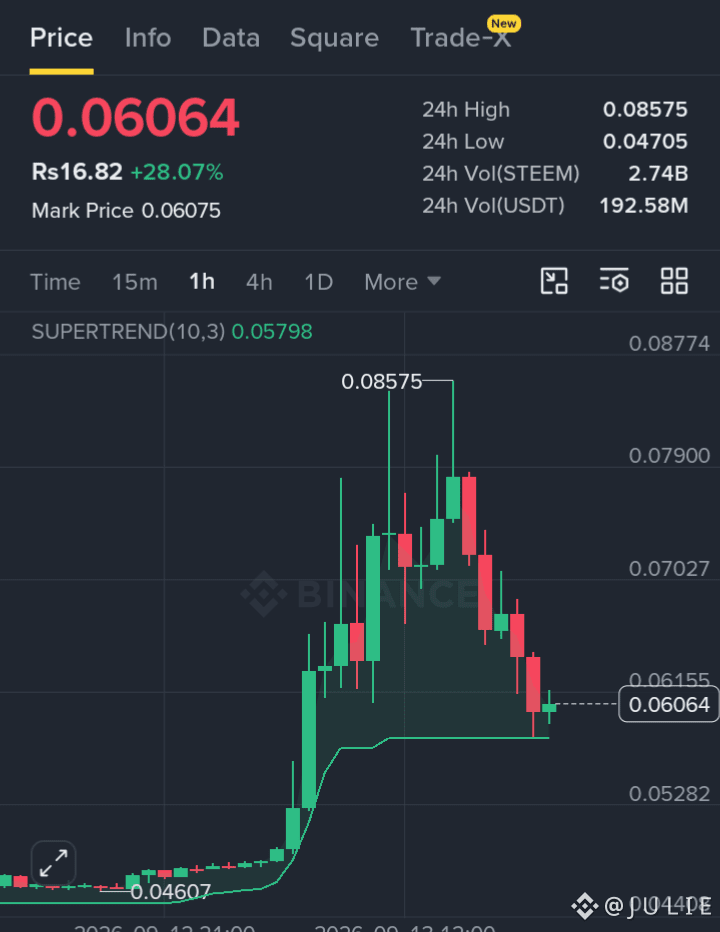
$STEEM WATCHING THE RECLAIM
it is holding around 0.06064 after that sharp push to 0.085 🔥
🎯 EP: 0.06040
✅ TP1: 0.07030
✅ TP2: 0.07900
✅ TP3: 0.08575
🛑 SL: 0.05680
The move started from 0.046 before sellers stepped in and dragged price back toward the Supertrend. The green level around 0.05798 is still acting as a key area.
For me, 0.05680 is the line to watch. Hold it, and another attempt at the highs becomes interesting. Lose it, and the setup weakens quickly.
DYOR.
#STEEM $牛来 $CATI
$STEEM WATCHING THE RECLAIM
it is holding around 0.06064 after that sharp push to 0.085 🔥
🎯 EP: 0.06040
✅ TP1: 0.07030
✅ TP2: 0.07900
✅ TP3: 0.08575
🛑 SL: 0.05680
The move started from 0.046 before sellers stepped in and dragged price back toward the Supertrend. The green level around 0.05798 is still acting as a key area.
For me, 0.05680 is the line to watch. Hold it, and another attempt at the highs becomes interesting. Lose it, and the setup weakens quickly.
DYOR.
#STEEM $牛来 $CATI
it is holding around 0.06064 after that sharp push to 0.085 🔥
🎯 EP: 0.06040
✅ TP1: 0.07030
✅ TP2: 0.07900
✅ TP3: 0.08575
🛑 SL: 0.05680
The move started from 0.046 before sellers stepped in and dragged price back toward the Supertrend. The green level around 0.05798 is still acting as a key area.
For me, 0.05680 is the line to watch. Hold it, and another attempt at the highs becomes interesting. Lose it, and the setup weakens quickly.
DYOR.
#STEEM $牛来 $CATI
4
185
·
--
Жоғары (өспелі)
TODAY’S BIGGEST MOVERS
I’ve got my eye on three names that completely changed the pace today.
$LSK is up nearly 319%, with short liquidations adding serious fuel to the move.
$牛来 jumped around 85%, backed by strong volume and growing meme-community attention.
$STEEM is up roughly 67%, as fresh buying interest pushes volume higher.
Which one are you watching most closely today?
#GAINERS #STEEMUSDT #牛来
TODAY’S BIGGEST MOVERS
I’ve got my eye on three names that completely changed the pace today.
$LSK is up nearly 319%, with short liquidations adding serious fuel to the move.
$牛来 jumped around 85%, backed by strong volume and growing meme-community attention.
$STEEM is up roughly 67%, as fresh buying interest pushes volume higher.
Which one are you watching most closely today?
#GAINERS #STEEMUSDT #牛来
I’ve got my eye on three names that completely changed the pace today.
$LSK is up nearly 319%, with short liquidations adding serious fuel to the move.
$牛来 jumped around 85%, backed by strong volume and growing meme-community attention.
$STEEM is up roughly 67%, as fresh buying interest pushes volume higher.
Which one are you watching most closely today?
#GAINERS #STEEMUSDT #牛来
LSK
54%
STEEM
13%
牛来
33%
120 дауыс • Дауыс беру жабық
3
2.8k
·
--
Жоғары (өспелі)
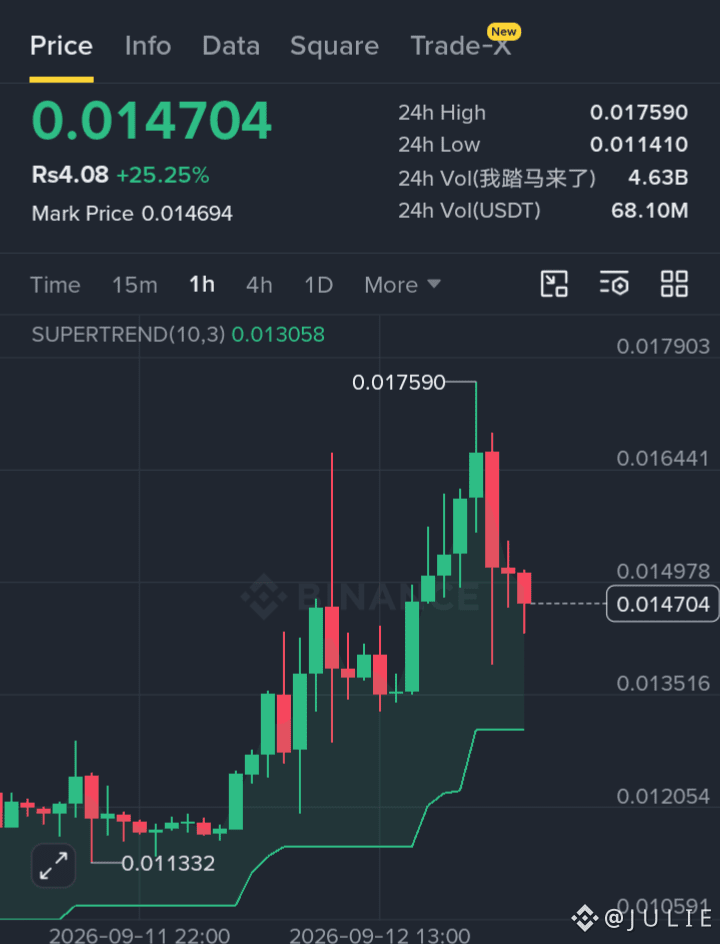
$我踏马来了 is cooling around 0.01470 after the sharp move to 0.0176 🔥
🎯 Entry: 0.01465
✅ TP1: 0.01644
✅ TP2: 0.01759
✅ TP3: 0.01920
🛑 SL: 0.01290
After climbing from 0.0113, price is now consolidating below the recent high. Supertrend remains green at 0.01306, while price is still holding above it.
As long as 0.0129 holds, another test of 0.0176 remains possible. Losing that level would weaken the setup.
DYOR.
#我踏马来了
$我踏马来了 is cooling around 0.01470 after the sharp move to 0.0176 🔥
🎯 Entry: 0.01465
✅ TP1: 0.01644
✅ TP2: 0.01759
✅ TP3: 0.01920
🛑 SL: 0.01290
After climbing from 0.0113, price is now consolidating below the recent high. Supertrend remains green at 0.01306, while price is still holding above it.
As long as 0.0129 holds, another test of 0.0176 remains possible. Losing that level would weaken the setup.
DYOR.
#我踏马来了
🎯 Entry: 0.01465
✅ TP1: 0.01644
✅ TP2: 0.01759
✅ TP3: 0.01920
🛑 SL: 0.01290
After climbing from 0.0113, price is now consolidating below the recent high. Supertrend remains green at 0.01306, while price is still holding above it.
As long as 0.0129 holds, another test of 0.0176 remains possible. Losing that level would weaken the setup.
DYOR.
#我踏马来了
5
300
·
--
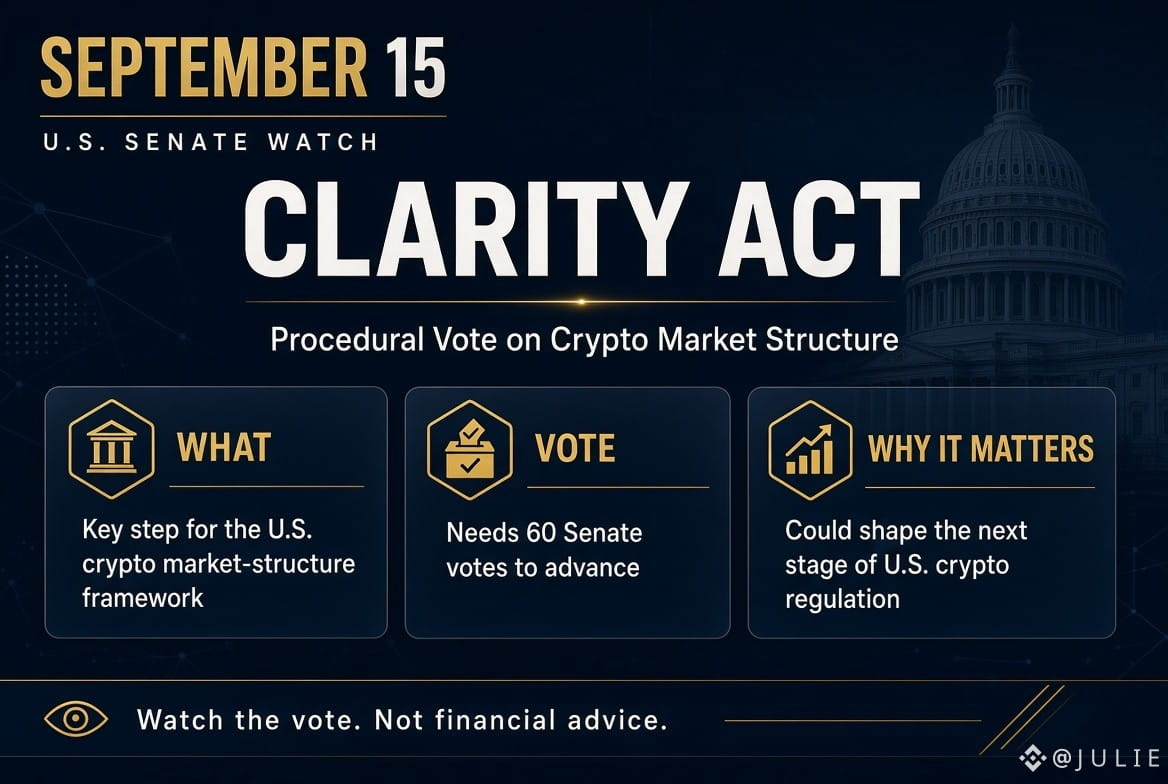
CLARITY ACT: SEPTEMBER 15 MATTERS
I'm watching September 15 closely.
The U.S. Senate is set for a procedural vote on the CLARITY Act, a key step for the bill’s crypto market-structure framework. It needs 60 votes to move forward, so this one could be important for the next stage of U.S. crypto regulation.
#ClarityAct #CryptoRegulation #ClarityActFacesProceduralVoteSept15
$TA $SC $AT
CLARITY ACT: SEPTEMBER 15 MATTERS
I'm watching September 15 closely.
The U.S. Senate is set for a procedural vote on the CLARITY Act, a key step for the bill’s crypto market-structure framework. It needs 60 votes to move forward, so this one could be important for the next stage of U.S. crypto regulation.
#ClarityAct #CryptoRegulation #ClarityActFacesProceduralVoteSept15
$TA $SC $AT
I'm watching September 15 closely.
The U.S. Senate is set for a procedural vote on the CLARITY Act, a key step for the bill’s crypto market-structure framework. It needs 60 votes to move forward, so this one could be important for the next stage of U.S. crypto regulation.
#ClarityAct #CryptoRegulation #ClarityActFacesProceduralVoteSept15
$TA $SC $AT
1
3
148
·
--
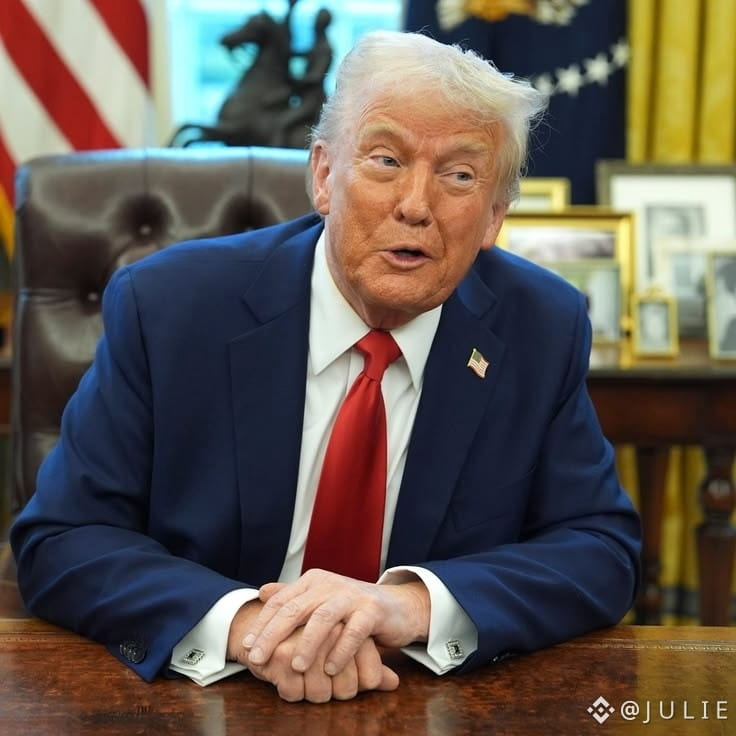
TRUMP ON THE US ECONOMY 🇺🇸
Trump says the U.S. stock market is now significantly higher than when he previously left office, describing the current economy as the most successful in American history.
A strong claim that puts the spotlight back on markets and economic performance.
#Trump #Stocks #markets
$TRUMP $BTC $CHILLGUY
TRUMP ON THE US ECONOMY 🇺🇸
Trump says the U.S. stock market is now significantly higher than when he previously left office, describing the current economy as the most successful in American history.
A strong claim that puts the spotlight back on markets and economic performance.
#Trump #Stocks #markets
$TRUMP $BTC $CHILLGUY
Trump says the U.S. stock market is now significantly higher than when he previously left office, describing the current economy as the most successful in American history.
A strong claim that puts the spotlight back on markets and economic performance.
#Trump #Stocks #markets
$TRUMP $BTC $CHILLGUY
2
86
·
--
Жоғары (өспелі)
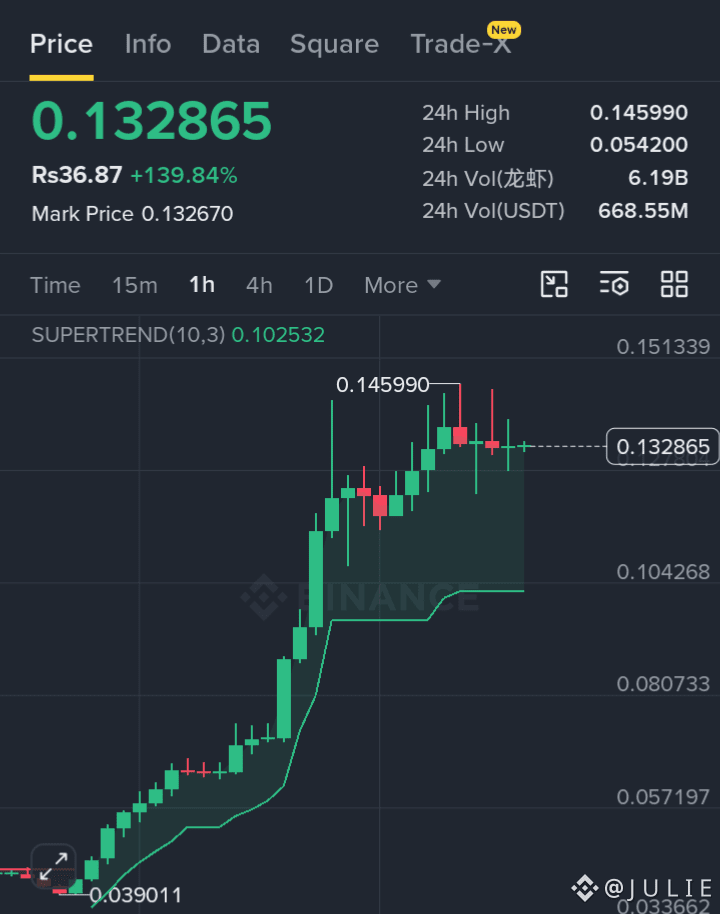
$龙虾 is sitting around 0.1328 after tagging 0.146
🎯 Entry: 0.13220
TP1: 0.14600
TP2: 0.15800
TP3: 0.17500
🛑 Invalidation: 0.10180
The interesting part for me is how well it’s holding after that huge run from 0.039. Price is still building above the old range, with Supertrend green around 0.1025.
If 0.1018 holds, I’d keep the higher levels on watch. If it breaks, the setup changes quickly.
DYOR.
#龙虾 #gainers
$龙虾 is sitting around 0.1328 after tagging 0.146
🎯 Entry: 0.13220
TP1: 0.14600
TP2: 0.15800
TP3: 0.17500
🛑 Invalidation: 0.10180
The interesting part for me is how well it’s holding after that huge run from 0.039. Price is still building above the old range, with Supertrend green around 0.1025.
If 0.1018 holds, I’d keep the higher levels on watch. If it breaks, the setup changes quickly.
DYOR.
#龙虾 #gainers
🎯 Entry: 0.13220
TP1: 0.14600
TP2: 0.15800
TP3: 0.17500
🛑 Invalidation: 0.10180
The interesting part for me is how well it’s holding after that huge run from 0.039. Price is still building above the old range, with Supertrend green around 0.1025.
If 0.1018 holds, I’d keep the higher levels on watch. If it breaks, the setup changes quickly.
DYOR.
#龙虾 #gainers
3
292
·
--
Төмен (кемімелі)
WHEN THE CHART SAYS “ENOUGH”
$TFUEL said “I’m done.”
$GPS said “same.”
$FF didn’t even say goodbye.
Three names getting hit hard today. I’d rather watch for stabilization than chase the first bounce.
Which one got cooked the hardest?
#losers
WHEN THE CHART SAYS “ENOUGH”
$TFUEL said “I’m done.”
$GPS said “same.”
$FF didn’t even say goodbye.
Three names getting hit hard today. I’d rather watch for stabilization than chase the first bounce.
Which one got cooked the hardest?
#losers
$TFUEL said “I’m done.”
$GPS said “same.”
$FF didn’t even say goodbye.
Three names getting hit hard today. I’d rather watch for stabilization than chase the first bounce.
Which one got cooked the hardest?
#losers
TFUEL
63%
GPS
0%
FF
37%
8 дауыс • Дауыс беру жабық
3
997
·
--
Жоғары (өспелі)
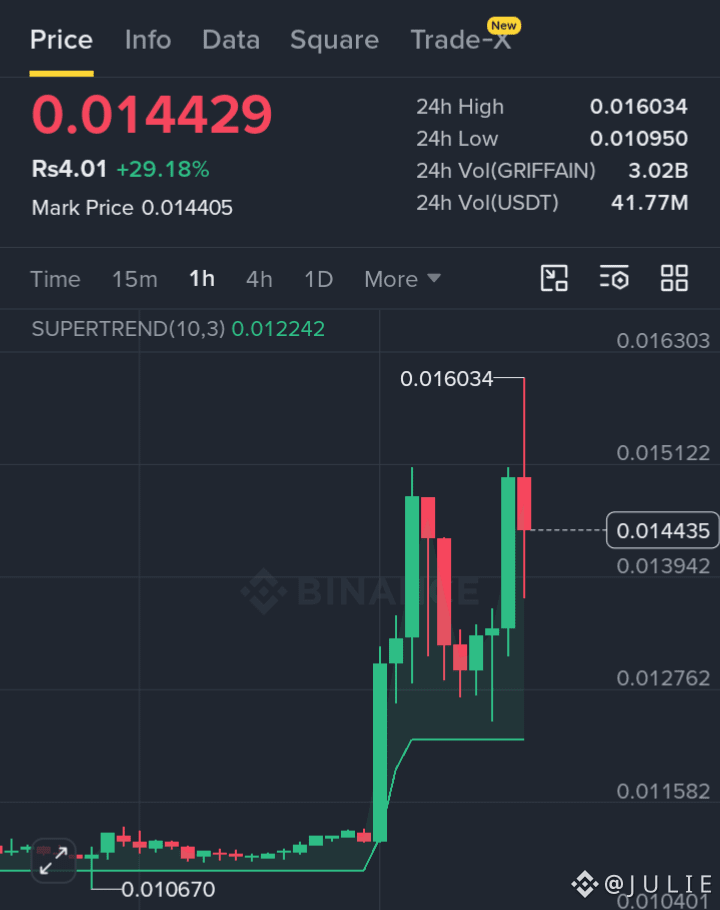
$GRIFFAIN pulling back to 0.01443 after that 0.0160 spike
Long $GRIFFAIN
🎯 EP: 0.01430
✅ TP1: 0.01603
✅ TP2: 0.01750
✅ TP3: 0.01920
🛑 SL: 0.01210
The move started from the 0.0106 base with strong volume, and the pullback is still holding above the key 0.0121 level. Supertrend remains green around 0.0122.
If 0.0121 holds, another test of the recent high could come into play. Lose it, and the setup weakens fast.
DYOR.
#Griffain
$GRIFFAIN pulling back to 0.01443 after that 0.0160 spike
Long $GRIFFAIN
🎯 EP: 0.01430
✅ TP1: 0.01603
✅ TP2: 0.01750
✅ TP3: 0.01920
🛑 SL: 0.01210
The move started from the 0.0106 base with strong volume, and the pullback is still holding above the key 0.0121 level. Supertrend remains green around 0.0122.
If 0.0121 holds, another test of the recent high could come into play. Lose it, and the setup weakens fast.
DYOR.
#Griffain
Long $GRIFFAIN
🎯 EP: 0.01430
✅ TP1: 0.01603
✅ TP2: 0.01750
✅ TP3: 0.01920
🛑 SL: 0.01210
The move started from the 0.0106 base with strong volume, and the pullback is still holding above the key 0.0121 level. Supertrend remains green around 0.0122.
If 0.0121 holds, another test of the recent high could come into play. Lose it, and the setup weakens fast.
DYOR.
#Griffain
4
151
·
--
Жоғары (өспелі)
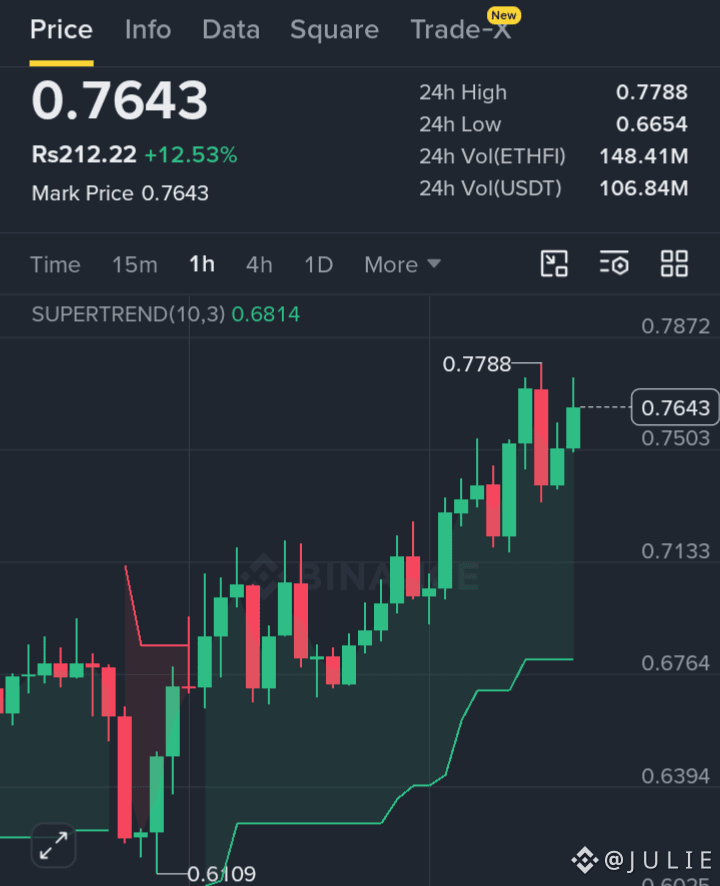
$ETHFI is testing the upper side after reclaiming its momentum
Long $ETHFI
🎯 EP: 0.7610
✅ TP1: 0.7788
✅ TP2: 0.8120
✅ TP3: 0.8480
🛑 SL: 0.7120
From the 0.6109 low, buyers have steadily rebuilt the chart. The 0.7788 level has already been tagged, and the pullback is staying controlled.
Above 0.7120, the bullish structure remains intact. Below it, the setup loses its strength.
DYOR.
#ETHFİ
$ETHFI is testing the upper side after reclaiming its momentum
Long $ETHFI
🎯 EP: 0.7610
✅ TP1: 0.7788
✅ TP2: 0.8120
✅ TP3: 0.8480
🛑 SL: 0.7120
From the 0.6109 low, buyers have steadily rebuilt the chart. The 0.7788 level has already been tagged, and the pullback is staying controlled.
Above 0.7120, the bullish structure remains intact. Below it, the setup loses its strength.
DYOR.
#ETHFİ
Long $ETHFI
🎯 EP: 0.7610
✅ TP1: 0.7788
✅ TP2: 0.8120
✅ TP3: 0.8480
🛑 SL: 0.7120
From the 0.6109 low, buyers have steadily rebuilt the chart. The 0.7788 level has already been tagged, and the pullback is staying controlled.
Above 0.7120, the bullish structure remains intact. Below it, the setup loses its strength.
DYOR.
#ETHFİ
3
105
·
--
Жоғары (өспелі)
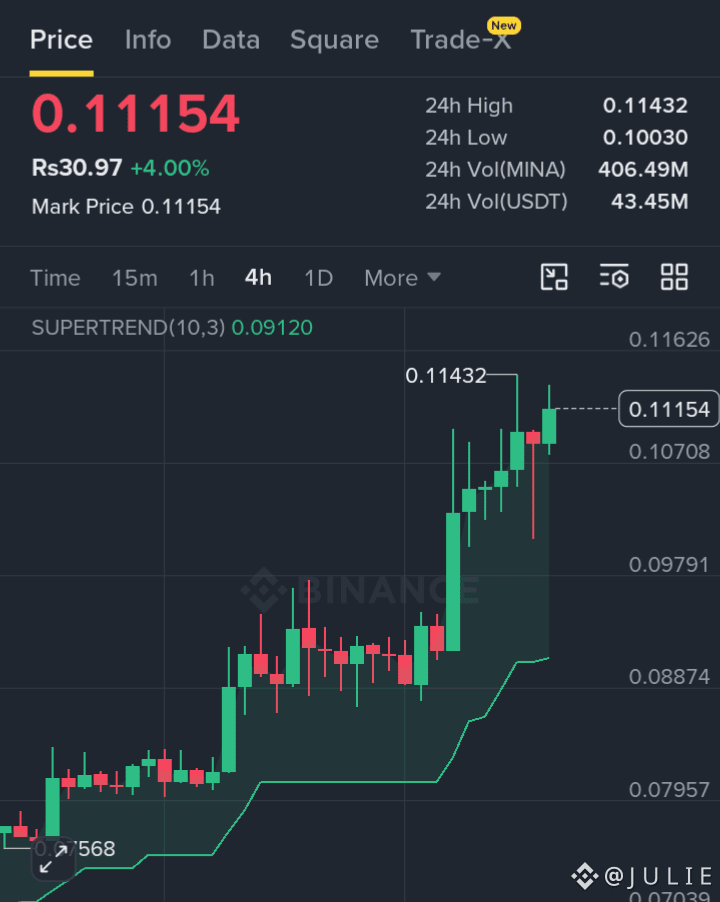
$MINA is quietly building momentum around $0.1115
I’m watching this one from the long side.
🎯 Entry: 0.11080
TP1: 0.11430
TP2: 0.12000
TP3: 0.12800
🛑 SL: 0.09980
The move from $0.075 has been steady, and Supertrend remains green around 0.0912. After touching 0.1143, MINA is holding the pullback so far.
For me, 0.0998 is the level that matters. Hold it, and the structure stays interesting. Lose it, and I’d reassess.
Would you take this setup or wait for a cleaner confirmation?
DYOR.
#MİNA
$币安人生 $龙虾
$MINA is quietly building momentum around $0.1115
I’m watching this one from the long side.
🎯 Entry: 0.11080
TP1: 0.11430
TP2: 0.12000
TP3: 0.12800
🛑 SL: 0.09980
The move from $0.075 has been steady, and Supertrend remains green around 0.0912. After touching 0.1143, MINA is holding the pullback so far.
For me, 0.0998 is the level that matters. Hold it, and the structure stays interesting. Lose it, and I’d reassess.
Would you take this setup or wait for a cleaner confirmation?
DYOR.
#MİNA
$币安人生 $龙虾
I’m watching this one from the long side.
🎯 Entry: 0.11080
TP1: 0.11430
TP2: 0.12000
TP3: 0.12800
🛑 SL: 0.09980
The move from $0.075 has been steady, and Supertrend remains green around 0.0912. After touching 0.1143, MINA is holding the pullback so far.
For me, 0.0998 is the level that matters. Hold it, and the structure stays interesting. Lose it, and I’d reassess.
Would you take this setup or wait for a cleaner confirmation?
DYOR.
#MİNA
$币安人生 $龙虾
1
106
·
--
Жоғары (өспелі)
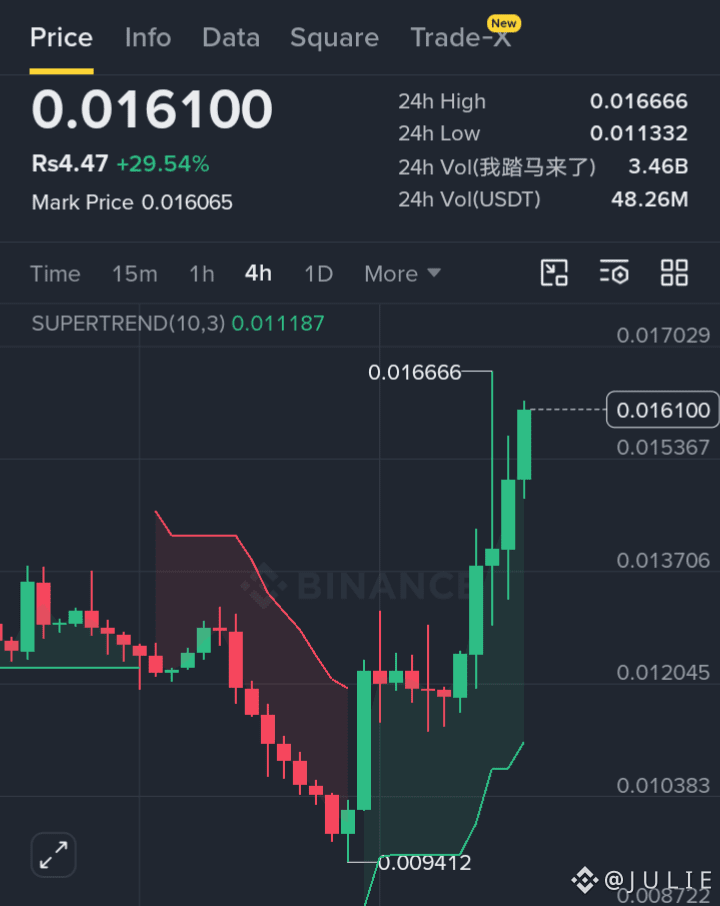
$我踏马来了 is holding the breakout zone
Price is sitting around 0.01610 after pushing hard from the 0.0094 flush. The 4H chart started showing real buyer strength, and Supertrend flipped green near 0.0112.
Now the interesting part: price is cooling just below 0.01667 instead of immediately giving back the move.
🎯 EP: 0.01590
✅ TP1: 0.01667
✅ TP2: 0.01820
✅ TP3: 0.02000
🛑 SL: 0.01340
The level I’m watching most is 0.01340. As long as that area holds, the breakout structure remains interesting and another push toward fresh highs could develop.
But if that level breaks, I’d want to see how quickly momentum disappears. After a squeeze like this, the reaction matters just as much as the breakout itself.
I’m watching the next few 4H candles closely. 👀
Breakout continuation or another pullback first?
DYOR.
#我踏马来了 $龙虾 $牛来
$我踏马来了 is holding the breakout zone
Price is sitting around 0.01610 after pushing hard from the 0.0094 flush. The 4H chart started showing real buyer strength, and Supertrend flipped green near 0.0112.
Now the interesting part: price is cooling just below 0.01667 instead of immediately giving back the move.
🎯 EP: 0.01590
✅ TP1: 0.01667
✅ TP2: 0.01820
✅ TP3: 0.02000
🛑 SL: 0.01340
The level I’m watching most is 0.01340. As long as that area holds, the breakout structure remains interesting and another push toward fresh highs could develop.
But if that level breaks, I’d want to see how quickly momentum disappears. After a squeeze like this, the reaction matters just as much as the breakout itself.
I’m watching the next few 4H candles closely. 👀
Breakout continuation or another pullback first?
DYOR.
#我踏马来了 $龙虾 $牛来
Price is sitting around 0.01610 after pushing hard from the 0.0094 flush. The 4H chart started showing real buyer strength, and Supertrend flipped green near 0.0112.
Now the interesting part: price is cooling just below 0.01667 instead of immediately giving back the move.
🎯 EP: 0.01590
✅ TP1: 0.01667
✅ TP2: 0.01820
✅ TP3: 0.02000
🛑 SL: 0.01340
The level I’m watching most is 0.01340. As long as that area holds, the breakout structure remains interesting and another push toward fresh highs could develop.
But if that level breaks, I’d want to see how quickly momentum disappears. After a squeeze like this, the reaction matters just as much as the breakout itself.
I’m watching the next few 4H candles closely. 👀
Breakout continuation or another pullback first?
DYOR.
#我踏马来了 $龙虾 $牛来
1
715
·
--

Мақала
BITCOIN’S $80K TEST ISN’T OVER BITCOIN IS AT AN INTERESTING POINT
I’ve been looking at Bitcoin less from the “up or down today?” angle and more from what the numbers are actually telling us.
Right now, BTC is around $77.4K, with a market cap close to $1.55T and roughly $31B in 24h trading volume. The intraday range has been wide too, from about $76.2K to $79.8K.
That tells me the market is active, but conviction is still being tested. Buyers are trying to push higher, while sellers continue to show up as price approaches the $80K area.
A few numbers caught my attention:
🔹 Market dominance: roughly 58–61%
🔹 Circulating supply: around 20.1M BTC
🔹 Maximum supply: 21M BTC
🔹 Sentiment: CryptoQuant’s sentiment reading recently reached 89/100, firmly in extreme greed territory.
The supply number is interesting on its own. With around 20.1M BTC already circulating out of the 21M maximum, the remaining supply is limited but that doesn’t mean price can only move higher. Demand, liquidity and market positioning still matter.
Then there’s the macro pict7ure.
The latest U.S. inflation data is keeping the market focused on interest-rate expectations. August CPI was reported at 3.4% year over year, while core CPI increased 0.3% month over month.
That’s why I’m not treating the current BTC range as just another technical setup. Macro expectations can quickly change the amount of risk traders are willing to take.
For me, $80K is the level I’m watching most closely.
A quick move above it would be interesting, but I’d care much more about whether BTC can actually hold above the level with healthy volume. A breakout that immediately gets rejected tells a very different story from a breakout followed by sustained buying.
And this is where extreme greed makes me a little more cautious.
When sentiment is already elevated, there’s less room for disappointment. Strong optimism can support momentum, but it can also make the market more sensitive to negative news, leverage and profit-taking.
So I’m watching four things together:
Price structure
Trading volume
Liquidity and positioning
U.S. macro data
I don’t think one indicator is enough to explain the next Bitcoin move. The interesting part is how all of these pieces interact.
For now, I’m watching whether BTC can turn $80K from resistance into support. That would tell me much more than simply seeing another green candle.
Do you think BTC needs a clean and sustained break above $80K before the next major move?
#bitcoin #crypto
$BTC
BITCOIN’S $80K TEST ISN’T OVER
BITCOIN IS AT AN INTERESTING POINT
I’ve been looking at Bitcoin less from the “up or down today?” angle and more from what the numbers are actually telling us.
Right now, BTC is around $77.4K, with a market cap close to $1.55T and roughly $31B in 24h trading volume. The intraday range has been wide too, from about $76.2K to $79.8K.
That tells me the market is active, but conviction is still being tested. Buyers are trying to push higher, while sellers continue to show up as price approaches the $80K area.
A few numbers caught my attention:
🔹 Market dominance: roughly 58–61%
🔹 Circulating supply: around 20.1M BTC
🔹 Maximum supply: 21M BTC
🔹 Sentiment: CryptoQuant’s sentiment reading recently reached 89/100, firmly in extreme greed territory.
The supply number is interesting on its own. With around 20.1M BTC already circulating out of the 21M maximum, the remaining supply is limited but that doesn’t mean price can only move higher. Demand, liquidity and market positioning still matter.
Then there’s the macro pict7ure.
The latest U.S. inflation data is keeping the market focused on interest-rate expectations. August CPI was reported at 3.4% year over year, while core CPI increased 0.3% month over month.
That’s why I’m not treating the current BTC range as just another technical setup. Macro expectations can quickly change the amount of risk traders are willing to take.
For me, $80K is the level I’m watching most closely.
A quick move above it would be interesting, but I’d care much more about whether BTC can actually hold above the level with healthy volume. A breakout that immediately gets rejected tells a very different story from a breakout followed by sustained buying.
And this is where extreme greed makes me a little more cautious.
When sentiment is already elevated, there’s less room for disappointment. Strong optimism can support momentum, but it can also make the market more sensitive to negative news, leverage and profit-taking.
So I’m watching four things together:
Price structure
Trading volume
Liquidity and positioning
U.S. macro data
I don’t think one indicator is enough to explain the next Bitcoin move. The interesting part is how all of these pieces interact.
For now, I’m watching whether BTC can turn $80K from resistance into support. That would tell me much more than simply seeing another green candle.
Do you think BTC needs a clean and sustained break above $80K before the next major move?
#bitcoin #crypto
$BTC
I’ve been looking at Bitcoin less from the “up or down today?” angle and more from what the numbers are actually telling us.
Right now, BTC is around $77.4K, with a market cap close to $1.55T and roughly $31B in 24h trading volume. The intraday range has been wide too, from about $76.2K to $79.8K.
That tells me the market is active, but conviction is still being tested. Buyers are trying to push higher, while sellers continue to show up as price approaches the $80K area.
A few numbers caught my attention:
🔹 Market dominance: roughly 58–61%
🔹 Circulating supply: around 20.1M BTC
🔹 Maximum supply: 21M BTC
🔹 Sentiment: CryptoQuant’s sentiment reading recently reached 89/100, firmly in extreme greed territory.
The supply number is interesting on its own. With around 20.1M BTC already circulating out of the 21M maximum, the remaining supply is limited but that doesn’t mean price can only move higher. Demand, liquidity and market positioning still matter.
Then there’s the macro pict7ure.
The latest U.S. inflation data is keeping the market focused on interest-rate expectations. August CPI was reported at 3.4% year over year, while core CPI increased 0.3% month over month.
That’s why I’m not treating the current BTC range as just another technical setup. Macro expectations can quickly change the amount of risk traders are willing to take.
For me, $80K is the level I’m watching most closely.
A quick move above it would be interesting, but I’d care much more about whether BTC can actually hold above the level with healthy volume. A breakout that immediately gets rejected tells a very different story from a breakout followed by sustained buying.
And this is where extreme greed makes me a little more cautious.
When sentiment is already elevated, there’s less room for disappointment. Strong optimism can support momentum, but it can also make the market more sensitive to negative news, leverage and profit-taking.
So I’m watching four things together:
Price structure
Trading volume
Liquidity and positioning
U.S. macro data
I don’t think one indicator is enough to explain the next Bitcoin move. The interesting part is how all of these pieces interact.
For now, I’m watching whether BTC can turn $80K from resistance into support. That would tell me much more than simply seeing another green candle.
Do you think BTC needs a clean and sustained break above $80K before the next major move?
#bitcoin #crypto
$BTC
1
93
·
--
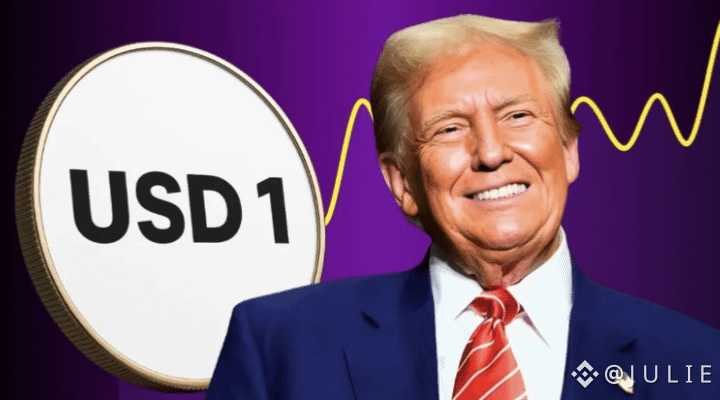
$150M USD1 just flowed into Binance in 13 days.
A Fireblocks custody wallet linked to Trump backed USD1 reportedly moved another ~$19.4M to Binance, pushing the estimated 13-day total to around $150M.
I’m watching this closely because that’s a serious amount of stablecoin liquidity moving through one exchange in a short window. 👀
Is this routine liquidity movement, or something bigger taking shape?
#USD1 #Binance
$USD1 $SC $1000XEC
$150M USD1 just flowed into Binance in 13 days.
A Fireblocks custody wallet linked to Trump backed USD1 reportedly moved another ~$19.4M to Binance, pushing the estimated 13-day total to around $150M.
I’m watching this closely because that’s a serious amount of stablecoin liquidity moving through one exchange in a short window. 👀
Is this routine liquidity movement, or something bigger taking shape?
#USD1 #Binance
$USD1 $SC $1000XEC
A Fireblocks custody wallet linked to Trump backed USD1 reportedly moved another ~$19.4M to Binance, pushing the estimated 13-day total to around $150M.
I’m watching this closely because that’s a serious amount of stablecoin liquidity moving through one exchange in a short window. 👀
Is this routine liquidity movement, or something bigger taking shape?
#USD1 #Binance
$USD1 $SC $1000XEC
1
351
Көбірек контент көру үшін кіріңіз
Binance Square платформасында әлемдік криптоқоғамдастыққа қосылыңыз
⚡️ Криптовалюта туралы ең соңғы және пайдалы ақпаратты алыңыз.
💬 Әлемдегі ең ірі криптобиржаның сеніміне ие.
👍 Расталған авторлардың нақты пікірлерін табыңыз.
Электрондық пошта/телефон нөмірі
Трендтегі тақырыптар
BOJRaisesRatesTo31YearHigh
65,870 рет көрілді
1,097 адам талқылап жатыр
#bojraisesratesto31yearhigh ¿El BOJ en máximos de 31 años y Bitcoin subiendo? La madurez institucional de $BTC en un solo gráfico 🇯🇵📈⚡
El Banco de Japón elevó su tasa al 1.25% (máximo histórico en más de tres décadas), y lo que muchos pronosticaban como un colapso del carry trade terminó mostrando la fortaleza más limpia del mercado cripto.
🧠 3 lecturas clave de la mesa técnica:
1️⃣ Desacoplamiento Macro: El yen no se fortaleció como proyectaban los analistas tradicionales y BTC respondió con un rebote contundente, demostrando que la demanda en Spot sigue intacta.
2️⃣ Superando a los gigantes tecnológicos: Con una capitalización de más de $1.63 billones, Bitcoin vuelve a colocarse por delante de Tesla ($1.438B), reafirmando su papel como activo de reserva y refugio de liquidez global.
3️⃣ Estructura en 4H y 1D: La absorción en los soportes valida que las correcciones macro son ventanas de acumulación institucional, no de capitulación.
$Mientras el retail entra en pánico por los titulares de tipos de interés, la gestión profesional sigue el rastro de la liquidez real. 💎🛡️
💬 Debate para la comunidad: ¿Consideran que este desacoplamiento confirma el inicio del tramo final del ciclo alcista hacia nuevos máximos históricos, o la liquidez global aún pondrá a prueba los soportes? ¡Dejen su análisis abajo! 👇🔥
#bojraisesratesto31yearhigh #MacroEconomy #Trading #BinanceSquare
Jacktraders
·1 лайк
·5k рет көрілді
BuffettStepsDownAsBerkshireChairman
28,574 рет көрілді
511 адам талқылап жатыр
XRPExchangeReservesHitSevenYearLow
34,555 рет көрілді
479 адам талқылап жатыр