
Crypto A_24
346 Жариялаулар

Crypto A_24
Хабарлау
Пайдаланушыны блоктау
No need to verify me because i am always verified✅
11 Жазылым
34 Жазылушылар
91 лайк басылған
Жазбалар
Барлығы
Баға ұсыныстары
·
--
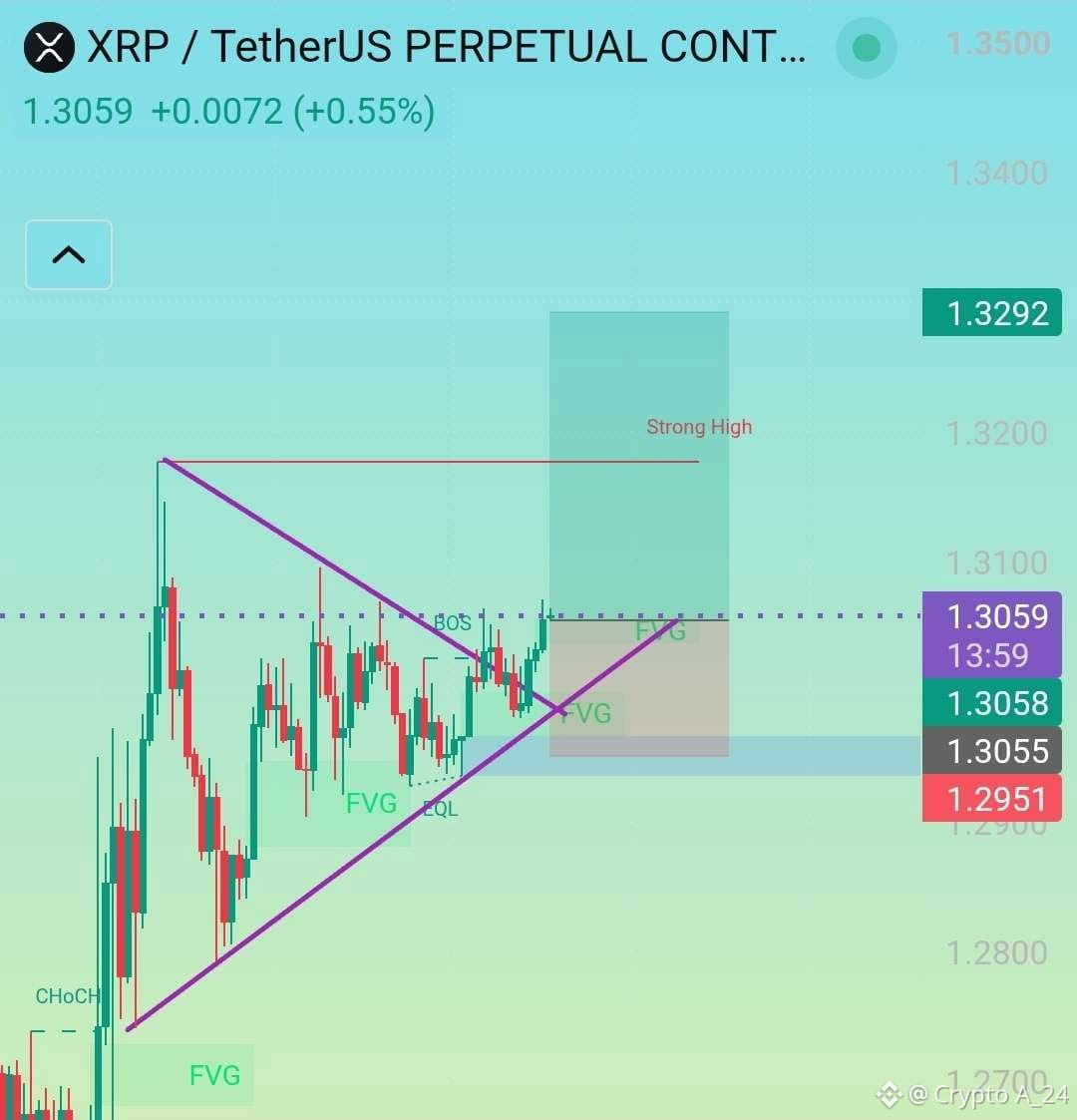
Clean higher-low structure holding. Watching for volume to clear the $1.32 high. $XRP handle the super support level...
Entry: $1.295 – $1.305 (FVG retest)
SL: $1.290
TP: $1.329
Clean higher-low structure holding. Watching for volume to clear the $1.32 high. $XRP handle the super support level...
Entry: $1.295 – $1.305 (FVG retest)
SL: $1.290
TP: $1.329
Entry: $1.295 – $1.305 (FVG retest)
SL: $1.290
TP: $1.329
60
·
--
USDT Moved the Money - but It Couldn’t Remove Counterparty Risk
$USDT sat at the center of a $230M Venezuelan oil transaction that ultimately delivered only a fraction of the contracted cargo, according to a Financial Times investigation into Poland’s state-controlled energy group Orlen.
The deal can be reduced to one chain:
Orlen Trading Switzerland → $230M advance → intermediaries → USDT conversion → local brokers → PDVSA-linked oil supply
The original contract covered roughly 6M barrels worth $345M. Yet only one fuel-oil cargo valued at about $28.8M was reportedly delivered. Including shipping and legal costs, the Polish government now estimates Orlen’s wider losses at around $424M.
What stands out is where the risk actually accumulated. USDT solved the settlement problem created by restricted banking access: value could move quickly across borders and outside conventional correspondent-bank rails. But every additional intermediary introduced another layer of execution, custody and counterparty risk. At one point, according to the FT, staff physically carried USB devices containing tens of millions of dollars in USDT to meetings in Caracas.
That makes this less a story about stablecoin technology failing and more about what stablecoins cannot solve. A payment rail can make settlement faster and more accessible; it cannot guarantee that the seller, broker or intermediary on the other side of the transaction will ultimately deliver the underlying asset.
USDT Moved the Money - but It Couldn’t Remove Counterparty Risk
$USDT sat at the center of a $230M Venezuelan oil transaction that ultimately delivered only a fraction of the contracted cargo, according to a Financial Times investigation into Poland’s state-controlled energy group Orlen.
The deal can be reduced to one chain:
Orlen Trading Switzerland → $230M advance → intermediaries → USDT conversion → local brokers → PDVSA-linked oil supply
The original contract covered roughly 6M barrels worth $345M. Yet only one fuel-oil cargo valued at about $28.8M was reportedly delivered. Including shipping and legal costs, the Polish government now estimates Orlen’s wider losses at around $424M.
What stands out is where the risk actually accumulated. USDT solved the settlement problem created by restricted banking access: value could move quickly across borders and outside conventional correspondent-bank rails. But every additional intermediary introduced another layer of execution, custody and counterparty risk. At one point, according to the FT, staff physically carried USB devices containing tens of millions of dollars in USDT to meetings in Caracas.
That makes this less a story about stablecoin technology failing and more about what stablecoins cannot solve. A payment rail can make settlement faster and more accessible; it cannot guarantee that the seller, broker or intermediary on the other side of the transaction will ultimately deliver the underlying asset.
$USDT sat at the center of a $230M Venezuelan oil transaction that ultimately delivered only a fraction of the contracted cargo, according to a Financial Times investigation into Poland’s state-controlled energy group Orlen.
The deal can be reduced to one chain:
Orlen Trading Switzerland → $230M advance → intermediaries → USDT conversion → local brokers → PDVSA-linked oil supply
The original contract covered roughly 6M barrels worth $345M. Yet only one fuel-oil cargo valued at about $28.8M was reportedly delivered. Including shipping and legal costs, the Polish government now estimates Orlen’s wider losses at around $424M.
What stands out is where the risk actually accumulated. USDT solved the settlement problem created by restricted banking access: value could move quickly across borders and outside conventional correspondent-bank rails. But every additional intermediary introduced another layer of execution, custody and counterparty risk. At one point, according to the FT, staff physically carried USB devices containing tens of millions of dollars in USDT to meetings in Caracas.
That makes this less a story about stablecoin technology failing and more about what stablecoins cannot solve. A payment rail can make settlement faster and more accessible; it cannot guarantee that the seller, broker or intermediary on the other side of the transaction will ultimately deliver the underlying asset.

1
·
--
$XRP 3. Scenarios And What To Watch Next
Commentary from macro and crypto analysts broadly sketches three paths. First, a hike plus hawkish guidance, with talk of further increases or a slow path to cuts, which tends to pressure non-yielding assets and favors Bitcoin over smaller, illiquid tokens. Second, a hike framed as near the end of tightening, which could support a relief bid into majors and later into altcoins if real yields stabilize. Third, a no-hike outcome, which is lower probability and would likely spark short term volatility as traders unwind positioned bets.
Overlaying this, the same week also brings the US CLARITY Act vote and Bank of England and Bank of Japan decisions, so funding conditions and regulation headlines can amplify any Fed-driven crypto move.
What this means: Watching the tone of the Fed statement, Bitcoin's behavior around its identified support and resistance band, and follow-on ETF flows will be more useful than reacting to the headline rate number alone.
#XRP
$XRP 3. Scenarios And What To Watch Next
Commentary from macro and crypto analysts broadly sketches three paths. First, a hike plus hawkish guidance, with talk of further increases or a slow path to cuts, which tends to pressure non-yielding assets and favors Bitcoin over smaller, illiquid tokens. Second, a hike framed as near the end of tightening, which could support a relief bid into majors and later into altcoins if real yields stabilize. Third, a no-hike outcome, which is lower probability and would likely spark short term volatility as traders unwind positioned bets.
Overlaying this, the same week also brings the US CLARITY Act vote and Bank of England and Bank of Japan decisions, so funding conditions and regulation headlines can amplify any Fed-driven crypto move.
What this means: Watching the tone of the Fed statement, Bitcoin's behavior around its identified support and resistance band, and follow-on ETF flows will be more useful than reacting to the headline rate number alone.
#XRP
Commentary from macro and crypto analysts broadly sketches three paths. First, a hike plus hawkish guidance, with talk of further increases or a slow path to cuts, which tends to pressure non-yielding assets and favors Bitcoin over smaller, illiquid tokens. Second, a hike framed as near the end of tightening, which could support a relief bid into majors and later into altcoins if real yields stabilize. Third, a no-hike outcome, which is lower probability and would likely spark short term volatility as traders unwind positioned bets.
Overlaying this, the same week also brings the US CLARITY Act vote and Bank of England and Bank of Japan decisions, so funding conditions and regulation headlines can amplify any Fed-driven crypto move.
What this means: Watching the tone of the Fed statement, Bitcoin's behavior around its identified support and resistance band, and follow-on ETF flows will be more useful than reacting to the headline rate number alone.
#XRP
107
·
--
$BTC Bitcoin Warning: Is BTC Still a Risk Asset?
- Bloomberg Intelligence strategist Mike McGlone has issued a bearish warning about Bitcoin’s current setup
- His concern: $BTC has delivered returns broadly comparable to the S&P 500 over the past five years, but with roughly 3× more volatility
- That creates a difficult risk-reward profile for traditional portfolio managers
- Bitcoin is also facing resistance near the $80,000 area while equity valuations remain elevated
- Futures markets are reportedly pricing in approximately 70 basis points of potential Fed rate hikes over the next year
- If liquidity tightens, high-beta assets such as Bitcoin could face serious selling pressure
- McGlone argues that Bitcoin has recently behaved more like a leveraged risk asset than a completely independent store of value
- His extreme downside scenario points toward the $10,000 zone if the S&P 500 suffers a sustained decline of around 20%
- But this is the key condition that could invalidate the bearish thesis:
- $BTC must decouple from equities and continue performing strongly even if the stock market falls
- If Bitcoin holds its strength during an equity sell-off, it could prove that the asset is maturing beyond its traditional high-beta profile
- That would be a major signal for the entire crypto market
- The real question is no longer only “Can Bitcoin reach higher?”
- The bigger question is: “Can Bitcoin remain strong when traditional markets weaken?”
- Watch the $80,000 resistance zone, Fed expectations, S&P 500 momentum, ETF flows, and Bitcoin’s correlation with equities
- One analyst’s warning is not a guaranteed prediction, but it highlights the macro risks every crypto investor should monitor
Is Bitcoin becoming a true macro hedge — or is it still just the riskiest trade in the room?
$BTC Bitcoin Warning: Is BTC Still a Risk Asset?
- Bloomberg Intelligence strategist Mike McGlone has issued a bearish warning about Bitcoin’s current setup
- His concern: $BTC has delivered returns broadly comparable to the S&P 500 over the past five years, but with roughly 3× more volatility
- That creates a difficult risk-reward profile for traditional portfolio managers
- Bitcoin is also facing resistance near the $80,000 area while equity valuations remain elevated
- Futures markets are reportedly pricing in approximately 70 basis points of potential Fed rate hikes over the next year
- If liquidity tightens, high-beta assets such as Bitcoin could face serious selling pressure
- McGlone argues that Bitcoin has recently behaved more like a leveraged risk asset than a completely independent store of value
- His extreme downside scenario points toward the $10,000 zone if the S&P 500 suffers a sustained decline of around 20%
- But this is the key condition that could invalidate the bearish thesis:
- $BTC must decouple from equities and continue performing strongly even if the stock market falls
- If Bitcoin holds its strength during an equity sell-off, it could prove that the asset is maturing beyond its traditional high-beta profile
- That would be a major signal for the entire crypto market
- The real question is no longer only “Can Bitcoin reach higher?”
- The bigger question is: “Can Bitcoin remain strong when traditional markets weaken?”
- Watch the $80,000 resistance zone, Fed expectations, S&P 500 momentum, ETF flows, and Bitcoin’s correlation with equities
- One analyst’s warning is not a guaranteed prediction, but it highlights the macro risks every crypto investor should monitor
Is Bitcoin becoming a true macro hedge — or is it still just the riskiest trade in the room?
- Bloomberg Intelligence strategist Mike McGlone has issued a bearish warning about Bitcoin’s current setup
- His concern: $BTC has delivered returns broadly comparable to the S&P 500 over the past five years, but with roughly 3× more volatility
- That creates a difficult risk-reward profile for traditional portfolio managers
- Bitcoin is also facing resistance near the $80,000 area while equity valuations remain elevated
- Futures markets are reportedly pricing in approximately 70 basis points of potential Fed rate hikes over the next year
- If liquidity tightens, high-beta assets such as Bitcoin could face serious selling pressure
- McGlone argues that Bitcoin has recently behaved more like a leveraged risk asset than a completely independent store of value
- His extreme downside scenario points toward the $10,000 zone if the S&P 500 suffers a sustained decline of around 20%
- But this is the key condition that could invalidate the bearish thesis:
- $BTC must decouple from equities and continue performing strongly even if the stock market falls
- If Bitcoin holds its strength during an equity sell-off, it could prove that the asset is maturing beyond its traditional high-beta profile
- That would be a major signal for the entire crypto market
- The real question is no longer only “Can Bitcoin reach higher?”
- The bigger question is: “Can Bitcoin remain strong when traditional markets weaken?”
- Watch the $80,000 resistance zone, Fed expectations, S&P 500 momentum, ETF flows, and Bitcoin’s correlation with equities
- One analyst’s warning is not a guaranteed prediction, but it highlights the macro risks every crypto investor should monitor
Is Bitcoin becoming a true macro hedge — or is it still just the riskiest trade in the room?
57
·
--
🚨 Market Brief: Oil Is Driving the Market Again
Markets enter Fed week with a difficult macro setup: Brent above $107, US 10Y near 5%, and $BTC below $77K.
₿ Crypto: Bitcoin is trading around $76.7K, while ETH is near $2.48K. Macro remains the main pressure point. For a stronger risk-on signal, I want to see BTC reclaim $80K + Treasury yields move lower.
🇺🇸 US Macro:
CPI: 3.4% YoY
PPI: 5.4% YoY
Payrolls: +162K
Unemployment: 4.1%
US 10Y: ~4.97%
The market is heavily pricing another Fed hike.
📉 Stocks: US futures are under pressure as higher oil and yields hit growth valuations. A sustained 10Y >5% remains the key risk for Nasdaq.
🇨🇳 China & Geopolitics: China is pushing for deeper BRICS cooperation and Middle East de-escalation. For markets, diplomacy matters because it could directly affect oil:
De-escalation → Oil ↓ → Inflation ↓ → Yields ↓ → Risk assets ↑
🤖 AI: the AI race is entering a new phase. Anthropic is calling for slower frontier-model development and stronger safety standards, while capital continues chasing major AI opportunities.
🎯 My view: today, oil matters more than Bitcoin.
Brent >$110 → Fed hawkish → 10Y >5% → Nasdaq ↓ → BTC pressure
The bullish alternative:
Oil ↓ → Yields ↓ → #BTC >$80K → Risk-On
Key levels: BTC $80K | Brent $110 | US 10Y 5% | DXY 100
#BTC #Price #Analysis
🚨 Market Brief: Oil Is Driving the Market Again
Markets enter Fed week with a difficult macro setup: Brent above $107, US 10Y near 5%, and $BTC below $77K.
₿ Crypto: Bitcoin is trading around $76.7K, while ETH is near $2.48K. Macro remains the main pressure point. For a stronger risk-on signal, I want to see BTC reclaim $80K + Treasury yields move lower.
🇺🇸 US Macro:
CPI: 3.4% YoY
PPI: 5.4% YoY
Payrolls: +162K
Unemployment: 4.1%
US 10Y: ~4.97%
The market is heavily pricing another Fed hike.
📉 Stocks: US futures are under pressure as higher oil and yields hit growth valuations. A sustained 10Y >5% remains the key risk for Nasdaq.
🇨🇳 China & Geopolitics: China is pushing for deeper BRICS cooperation and Middle East de-escalation. For markets, diplomacy matters because it could directly affect oil:
De-escalation → Oil ↓ → Inflation ↓ → Yields ↓ → Risk assets ↑
🤖 AI: the AI race is entering a new phase. Anthropic is calling for slower frontier-model development and stronger safety standards, while capital continues chasing major AI opportunities.
🎯 My view: today, oil matters more than Bitcoin.
Brent >$110 → Fed hawkish → 10Y >5% → Nasdaq ↓ → BTC pressure
The bullish alternative:
Oil ↓ → Yields ↓ → #BTC >$80K → Risk-On
Key levels: BTC $80K | Brent $110 | US 10Y 5% | DXY 100
#BTC #Price #Analysis
Markets enter Fed week with a difficult macro setup: Brent above $107, US 10Y near 5%, and $BTC below $77K.
₿ Crypto: Bitcoin is trading around $76.7K, while ETH is near $2.48K. Macro remains the main pressure point. For a stronger risk-on signal, I want to see BTC reclaim $80K + Treasury yields move lower.
🇺🇸 US Macro:
CPI: 3.4% YoY
PPI: 5.4% YoY
Payrolls: +162K
Unemployment: 4.1%
US 10Y: ~4.97%
The market is heavily pricing another Fed hike.
📉 Stocks: US futures are under pressure as higher oil and yields hit growth valuations. A sustained 10Y >5% remains the key risk for Nasdaq.
🇨🇳 China & Geopolitics: China is pushing for deeper BRICS cooperation and Middle East de-escalation. For markets, diplomacy matters because it could directly affect oil:
De-escalation → Oil ↓ → Inflation ↓ → Yields ↓ → Risk assets ↑
🤖 AI: the AI race is entering a new phase. Anthropic is calling for slower frontier-model development and stronger safety standards, while capital continues chasing major AI opportunities.
🎯 My view: today, oil matters more than Bitcoin.
Brent >$110 → Fed hawkish → 10Y >5% → Nasdaq ↓ → BTC pressure
The bullish alternative:
Oil ↓ → Yields ↓ → #BTC >$80K → Risk-On
Key levels: BTC $80K | Brent $110 | US 10Y 5% | DXY 100
#BTC #Price #Analysis

70
·
--
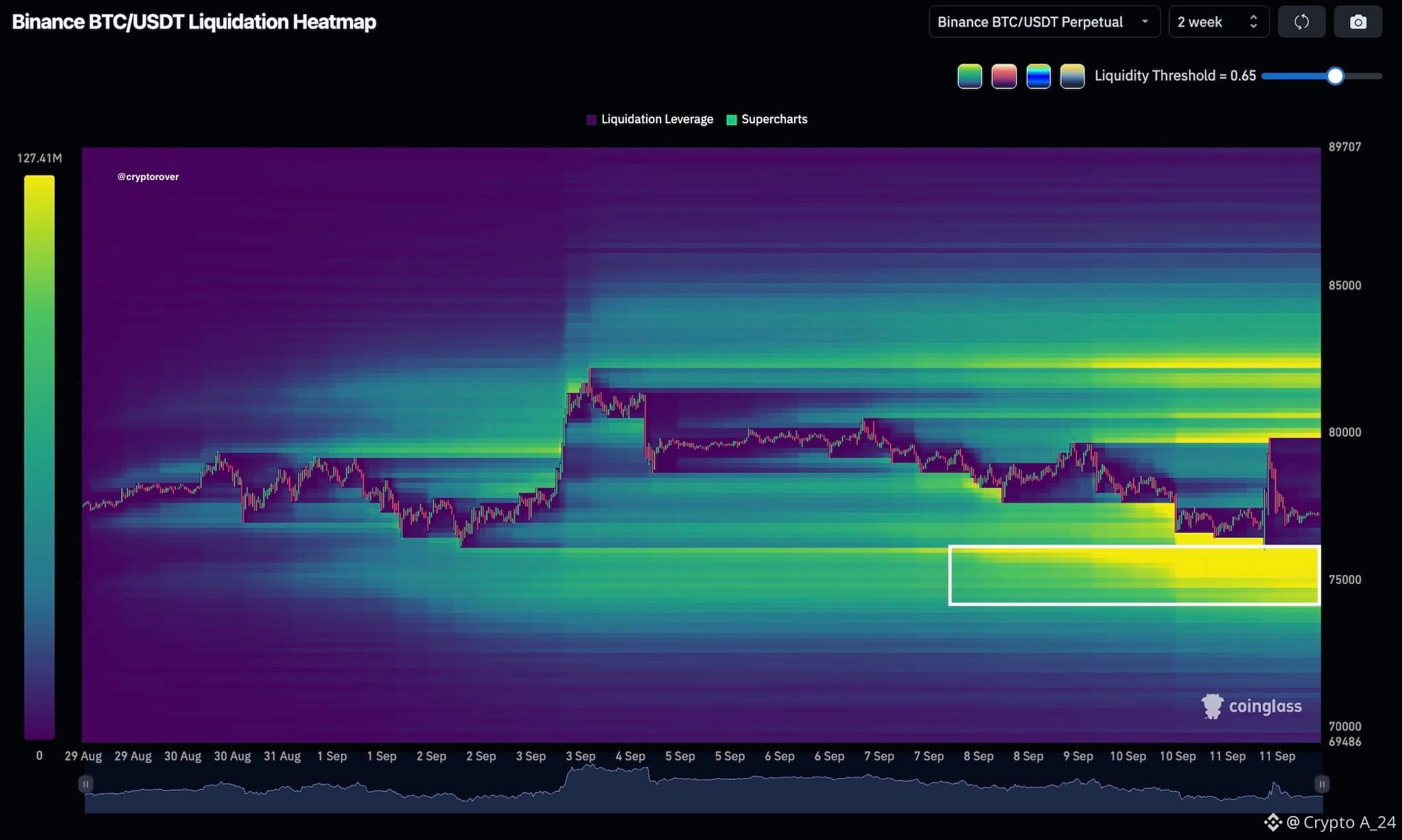
Most of the upside liquidity has already been swept.
That changes the short-term setup for BTC.
When price clears a large amount of liquidity above the market, the easy upside fuel can start drying up. From here, Bitcoin may need fresh spot demand to push meaningfully higher instead of simply continuing to squeeze shorts.
That doesn’t mean a reversal is guaranteed. It means the next move becomes more dependent on real buying pressure and how BTC reacts around key resistance.
After the recent volatility, I’m watching whether buyers can keep absorbing supply.
The liquidity has been taken. Now we see if demand is still there.
#BTC #Price #Analysis
#BTC $BTC $ETH
Most of the upside liquidity has already been swept.
That changes the short-term setup for BTC.
When price clears a large amount of liquidity above the market, the easy upside fuel can start drying up. From here, Bitcoin may need fresh spot demand to push meaningfully higher instead of simply continuing to squeeze shorts.
That doesn’t mean a reversal is guaranteed. It means the next move becomes more dependent on real buying pressure and how BTC reacts around key resistance.
After the recent volatility, I’m watching whether buyers can keep absorbing supply.
The liquidity has been taken. Now we see if demand is still there.
#BTC #Price #Analysis
#BTC $BTC $ETH
That changes the short-term setup for BTC.
When price clears a large amount of liquidity above the market, the easy upside fuel can start drying up. From here, Bitcoin may need fresh spot demand to push meaningfully higher instead of simply continuing to squeeze shorts.
That doesn’t mean a reversal is guaranteed. It means the next move becomes more dependent on real buying pressure and how BTC reacts around key resistance.
After the recent volatility, I’m watching whether buyers can keep absorbing supply.
The liquidity has been taken. Now we see if demand is still there.
#BTC #Price #Analysis
#BTC $BTC $ETH
52
·
--
$BTC is testing the 50W EMA 👀
This level could decide the next major move.
If BTC gets a weekly close below the 50W EMA, I’d be watching the $72K–$74K zone next.
Key support. Key week.
$BTC #Crypto
Follow for more signals & updates
$BTC is testing the 50W EMA 👀
This level could decide the next major move.
If BTC gets a weekly close below the 50W EMA, I’d be watching the $72K–$74K zone next.
Key support. Key week.
$BTC #Crypto
Follow for more signals & updates
This level could decide the next major move.
If BTC gets a weekly close below the 50W EMA, I’d be watching the $72K–$74K zone next.
Key support. Key week.
$BTC #Crypto
Follow for more signals & updates

69
·
--
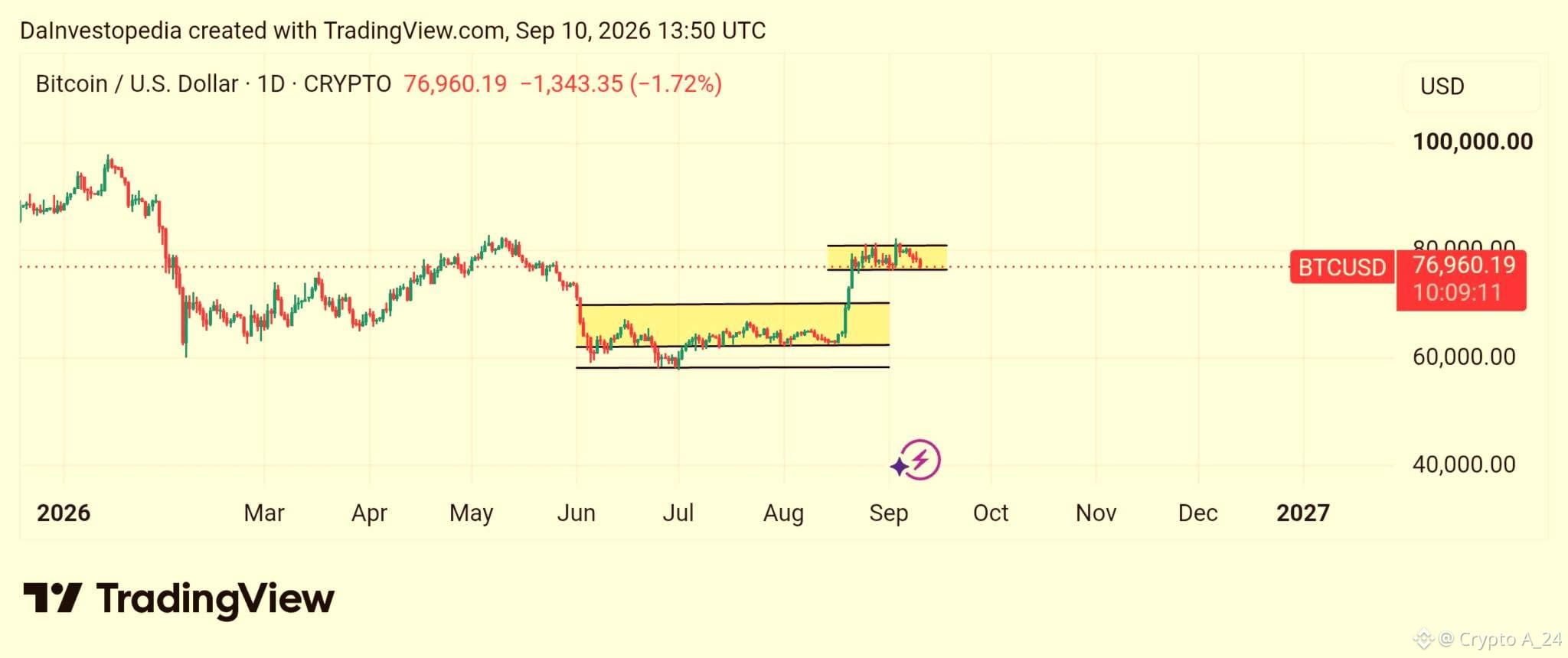
$BTC remains structurally bullish after breaking above the $70K range. Price is now consolidating around $77K–$80K, with $80K as the key resistance. A clean breakout above $80K could target $85K–$90K, while losing $75K may bring a retest of the $70K breakout zone. Overall, the trend remains bullish, but confirmation above $80K is crucial.
#BTC #BTC #Price #Analysis
$BTC remains structurally bullish after breaking above the $70K range. Price is now consolidating around $77K–$80K, with $80K as the key resistance. A clean breakout above $80K could target $85K–$90K, while losing $75K may bring a retest of the $70K breakout zone. Overall, the trend remains bullish, but confirmation above $80K is crucial.
#BTC #BTC #Price #Analysis
#BTC #BTC #Price #Analysis
53
·
--
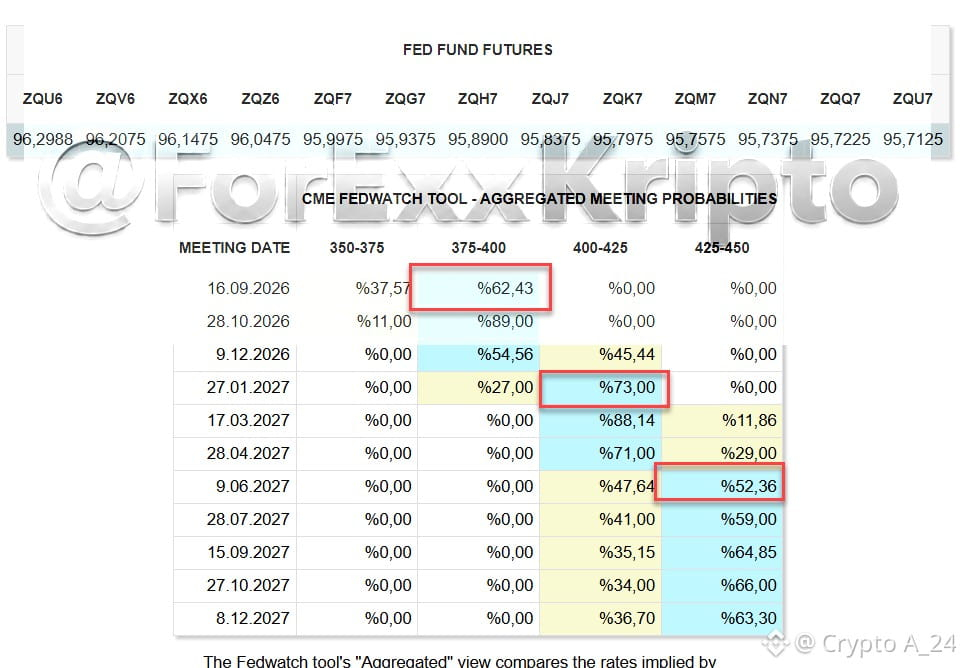
$BTC Ahead of Friday’s CPI data, the probability of a **rate hike** at the September 16 meeting is currently around 62%. Today’s PPI data at 15:30 TRT could serve as a preview of tomorrow’s CPI report, and the market could react sharply to today’s figure as well.
Markets are now pricing **three Fed rate hikes across 2026–2027**, whereas just last week the expectation was for a total of only one rate hike.
Pricing has been extremely aggressive because the environment remains highly uncertain, and this uncertainty is driving elevated volatility across markets.
$BTC Ahead of Friday’s CPI data, the probability of a **rate hike** at the September 16 meeting is currently around 62%. Today’s PPI data at 15:30 TRT could serve as a preview of tomorrow’s CPI report, and the market could react sharply to today’s figure as well.
Markets are now pricing **three Fed rate hikes across 2026–2027**, whereas just last week the expectation was for a total of only one rate hike.
Pricing has been extremely aggressive because the environment remains highly uncertain, and this uncertainty is driving elevated volatility across markets.
Markets are now pricing **three Fed rate hikes across 2026–2027**, whereas just last week the expectation was for a total of only one rate hike.
Pricing has been extremely aggressive because the environment remains highly uncertain, and this uncertainty is driving elevated volatility across markets.
55
·
--
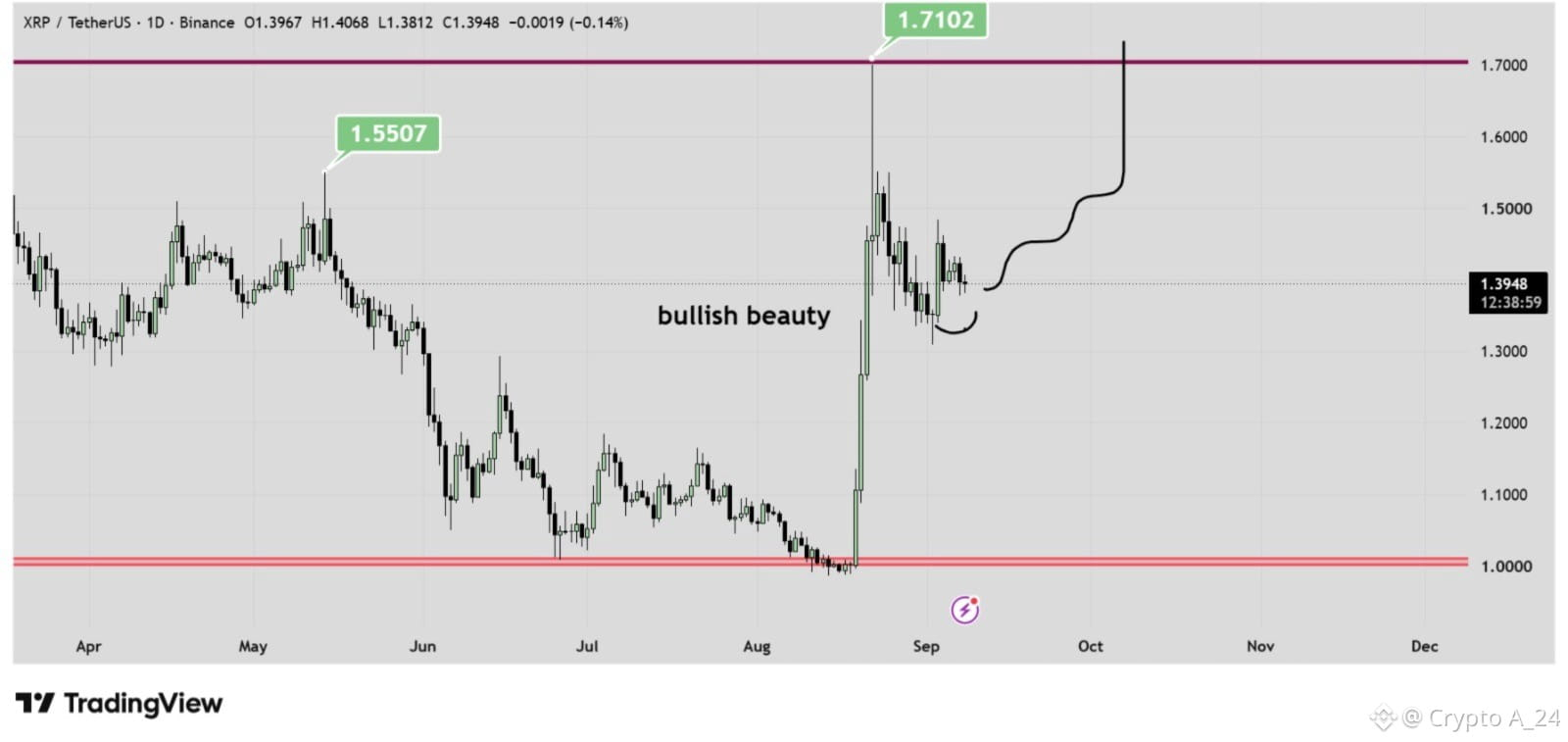
$XRP bounced hard from the $1.00 support and is now holding around $1.39 after the breakout.
If buyers keep this momentum, $1.55 is the first level to reclaim, followed by the major $1.70 target.
$XRP bounced hard from the $1.00 support and is now holding around $1.39 after the breakout.
If buyers keep this momentum, $1.55 is the first level to reclaim, followed by the major $1.70 target.
If buyers keep this momentum, $1.55 is the first level to reclaim, followed by the major $1.70 target.
38
·
--
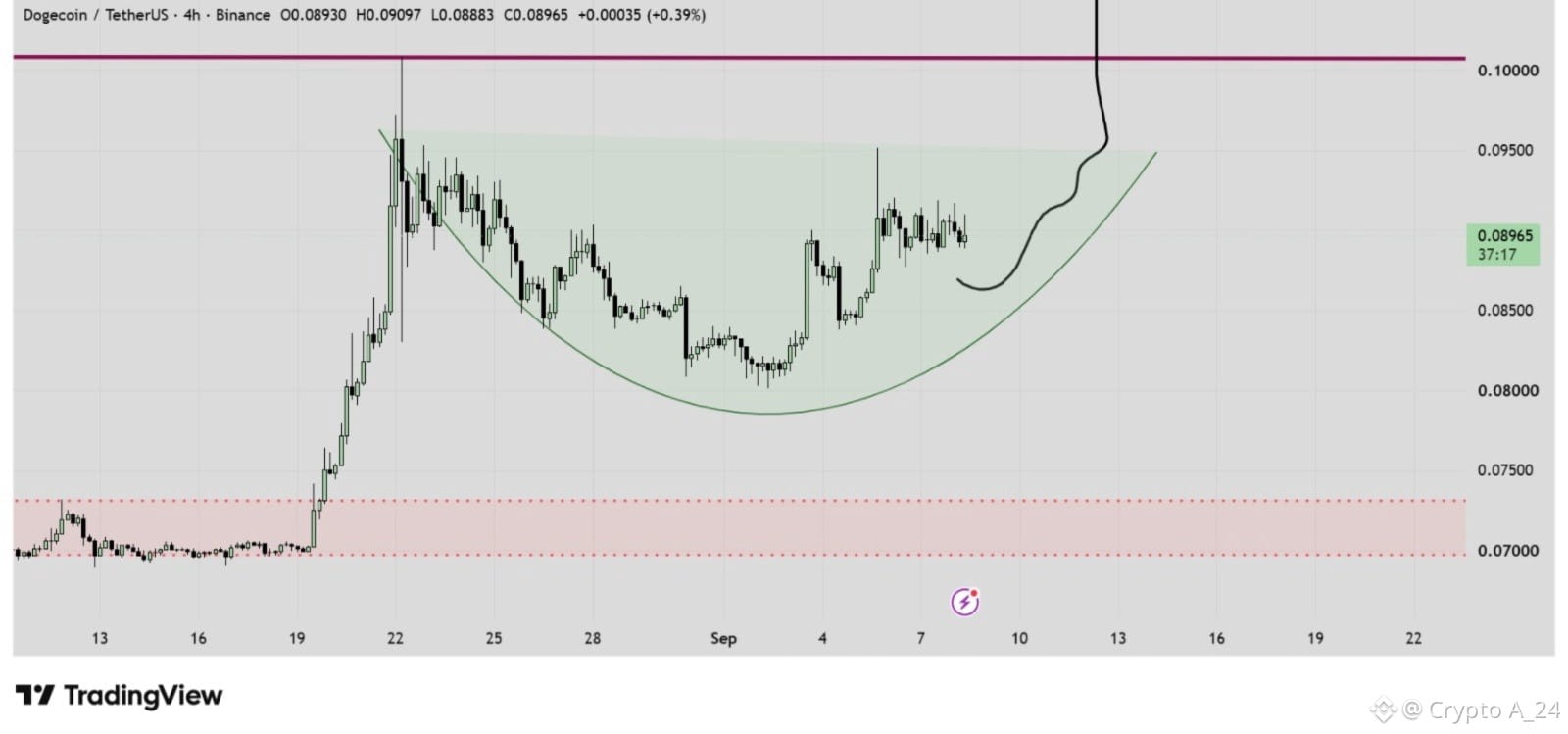
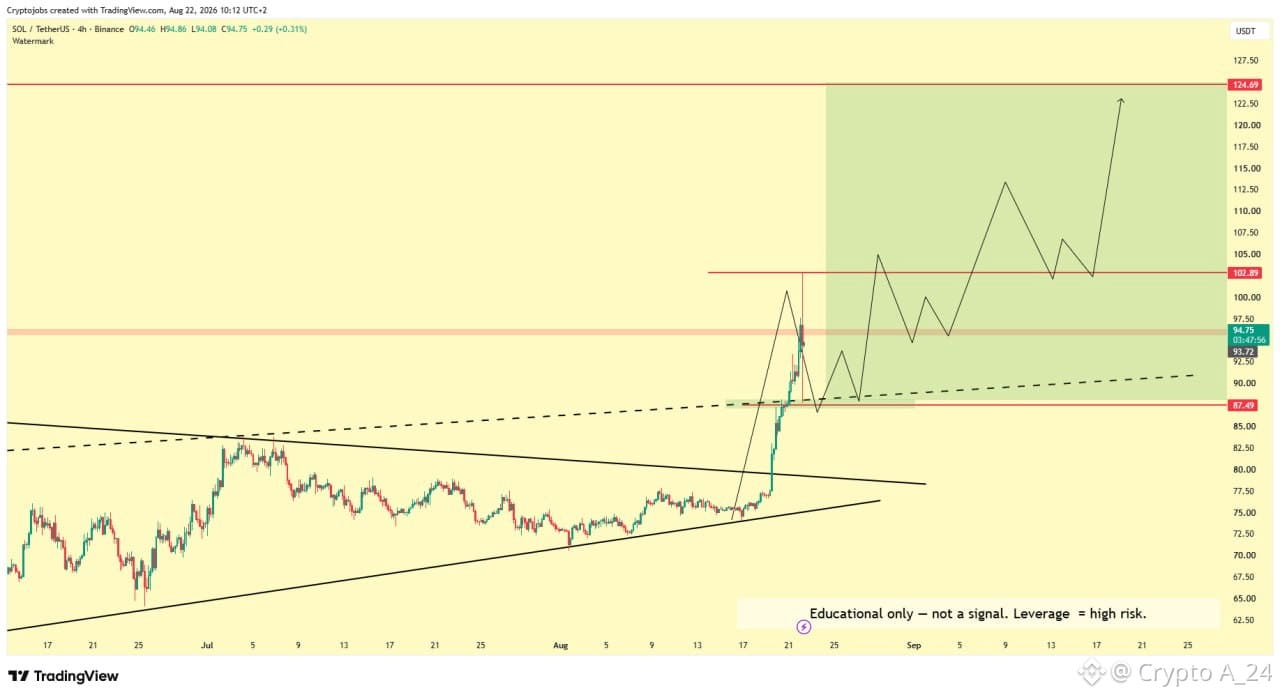
$DOGE is forming a rounded bullish structure around $0.089.
If buyers keep control and price breaks above $0.095, the next big target sits around $0.10.
$DOGE is forming a rounded bullish structure around $0.089.
If buyers keep control and price breaks above $0.095, the next big target sits around $0.10.
If buyers keep control and price breaks above $0.095, the next big target sits around $0.10.
40
·
--
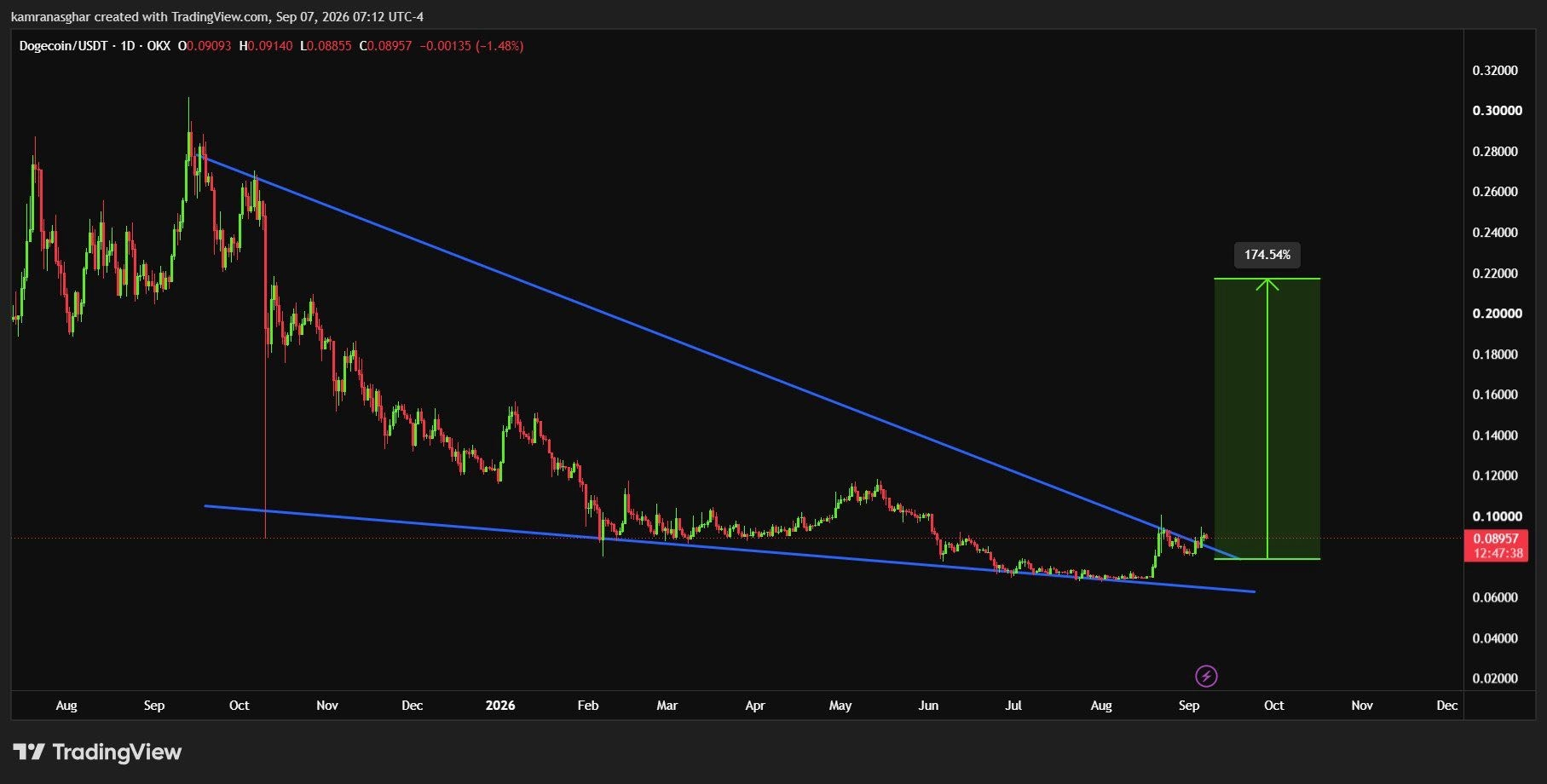
🚀 $DOGE Descending Wedge Breakout:
Price breaks out of a multi-month wedge structure, targeting $0.2180
🚀 $DOGE Descending Wedge Breakout:
Price breaks out of a multi-month wedge structure, targeting $0.2180
Price breaks out of a multi-month wedge structure, targeting $0.2180
54
·
--
ANCIENT BITCOIN WALLETS WAKE UP
• Galaxy Research: 4 long-dormant BTC wallets moved 202.84 BTC (~15.73M USD) from Aug. 29–Sept. 4.
• Largest: 146.06 BTC (~11.31M USD), untouched since Nov. 2013, up ~12,902% on cost.
• A 40 BTC wallet from Nov. 2011 turned roughly 120 USD into more than 3M USD.
• 6.78 BTC moved to an address associated with Coinbase, often linked to potential trading.
Please do your own research carefully before making any transactions (DYOR). $BTC
#Bitcoin
ANCIENT BITCOIN WALLETS WAKE UP
• Galaxy Research: 4 long-dormant BTC wallets moved 202.84 BTC (~15.73M USD) from Aug. 29–Sept. 4.
• Largest: 146.06 BTC (~11.31M USD), untouched since Nov. 2013, up ~12,902% on cost.
• A 40 BTC wallet from Nov. 2011 turned roughly 120 USD into more than 3M USD.
• 6.78 BTC moved to an address associated with Coinbase, often linked to potential trading.
Please do your own research carefully before making any transactions (DYOR). $BTC
#Bitcoin
• Galaxy Research: 4 long-dormant BTC wallets moved 202.84 BTC (~15.73M USD) from Aug. 29–Sept. 4.
• Largest: 146.06 BTC (~11.31M USD), untouched since Nov. 2013, up ~12,902% on cost.
• A 40 BTC wallet from Nov. 2011 turned roughly 120 USD into more than 3M USD.
• 6.78 BTC moved to an address associated with Coinbase, often linked to potential trading.
Please do your own research carefully before making any transactions (DYOR). $BTC
#Bitcoin

80
·
--
📊 FUTURES (BINANCE)
$GLM
LONG Below : 0.11300
MAX 👉3x-7x LEVERAGE Hold
TAKE PROFIT:0.13000 |0.16000|0.18000+
Sl 0.0850
📊 FUTURES (BINANCE)
$GLM
LONG Below : 0.11300
MAX 👉3x-7x LEVERAGE Hold
TAKE PROFIT:0.13000 |0.16000|0.18000+
Sl 0.0850
$GLM
LONG Below : 0.11300
MAX 👉3x-7x LEVERAGE Hold
TAKE PROFIT:0.13000 |0.16000|0.18000+
Sl 0.0850
69
·
--
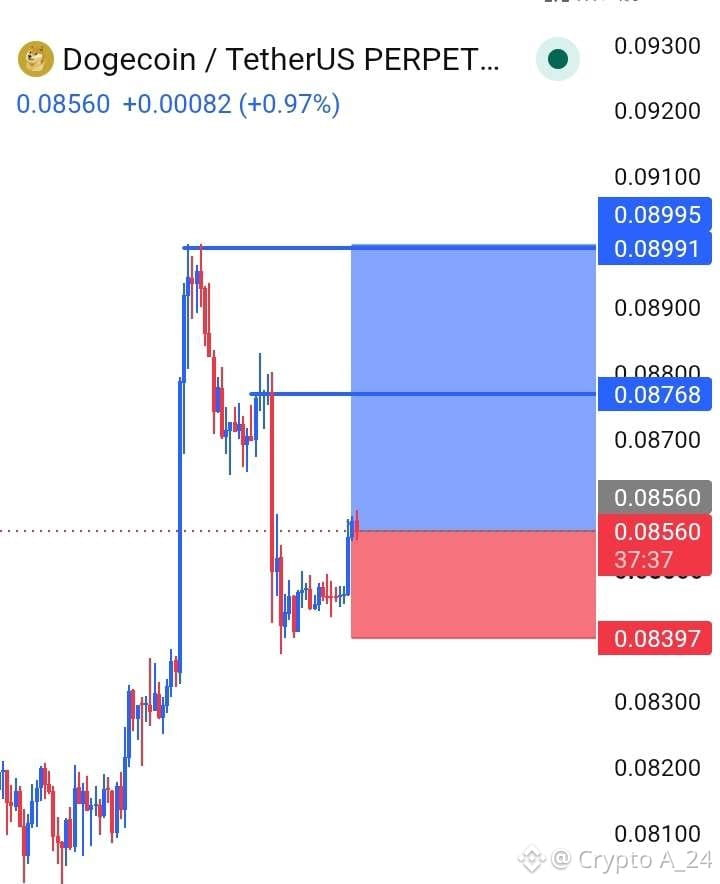
🪙 $DOGE ...!!...Bullish Breakout Setup...!!...
Price is holding above the recent base and buyers are pushing for a recovery... I am going long in 🪙 $DOGE with max 30x leverage...
The next move could come quickly...!!
SL: 0.08397
TP: 0.08768
BUY and TRADE 🪙 $DOGE
🪙 $DOGE ...!!...Bullish Breakout Setup...!!...
Price is holding above the recent base and buyers are pushing for a recovery... I am going long in 🪙 $DOGE with max 30x leverage...
The next move could come quickly...!!
SL: 0.08397
TP: 0.08768
BUY and TRADE 🪙 $DOGE
Price is holding above the recent base and buyers are pushing for a recovery... I am going long in 🪙 $DOGE with max 30x leverage...
The next move could come quickly...!!
SL: 0.08397
TP: 0.08768
BUY and TRADE 🪙 $DOGE
73
·
--
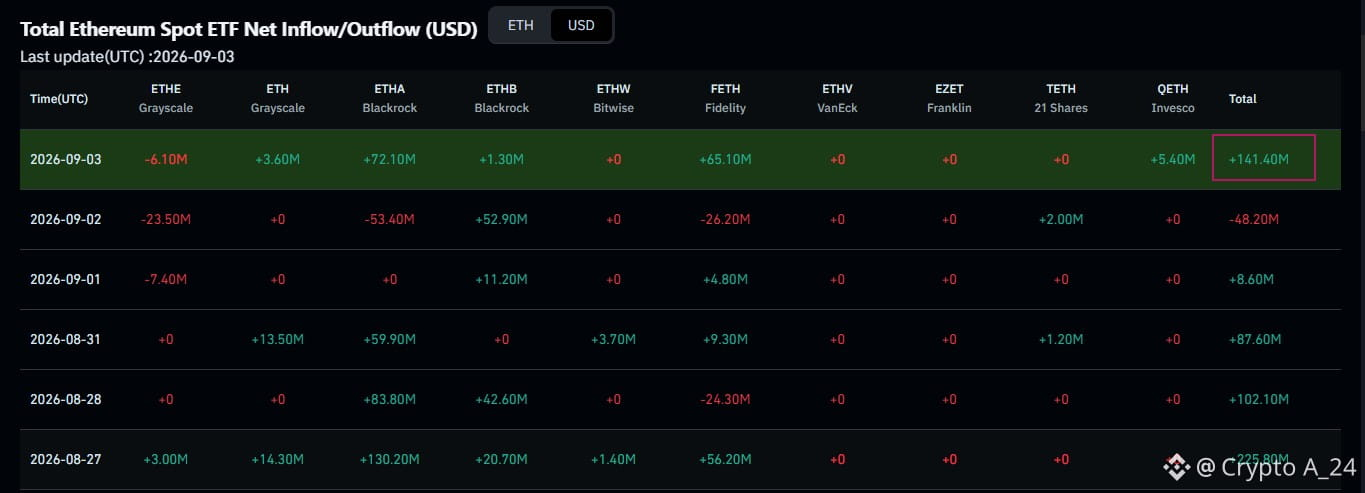
$XRP 3.65% move to $1.37 stands out because the rally has real institutional support behind it. Spot ETFs recorded $14.38 million in net inflows without any outflows, while Bitwise's XRP ETF reached $507 million in assets. That suggests regulated demand is still growing steadily.
I also like that #XRP isn't relying only on ETF excitement. Ripple's partnership with SettleMint and growing XRP Ledger activity show progress on the utility side. RLUSD supply passing $1 billion on the ledger adds another layer to the broader ecosystem story.
$1.34 is the level to watch now. Holding above it could bring $1.40 to $1.43 back into focus. But upcoming events may create volatility. Continued ETF inflows would strengthen the bullish case. Do you see institutions becoming XRP's biggest growth driver?
#Macro #Insights #Altcoin #Season
$XRP 3.65% move to $1.37 stands out because the rally has real institutional support behind it. Spot ETFs recorded $14.38 million in net inflows without any outflows, while Bitwise's XRP ETF reached $507 million in assets. That suggests regulated demand is still growing steadily.
I also like that #XRP isn't relying only on ETF excitement. Ripple's partnership with SettleMint and growing XRP Ledger activity show progress on the utility side. RLUSD supply passing $1 billion on the ledger adds another layer to the broader ecosystem story.
$1.34 is the level to watch now. Holding above it could bring $1.40 to $1.43 back into focus. But upcoming events may create volatility. Continued ETF inflows would strengthen the bullish case. Do you see institutions becoming XRP's biggest growth driver?
#Macro #Insights #Altcoin #Season
I also like that #XRP isn't relying only on ETF excitement. Ripple's partnership with SettleMint and growing XRP Ledger activity show progress on the utility side. RLUSD supply passing $1 billion on the ledger adds another layer to the broader ecosystem story.
$1.34 is the level to watch now. Holding above it could bring $1.40 to $1.43 back into focus. But upcoming events may create volatility. Continued ETF inflows would strengthen the bullish case. Do you see institutions becoming XRP's biggest growth driver?
#Macro #Insights #Altcoin #Season
78
·
--
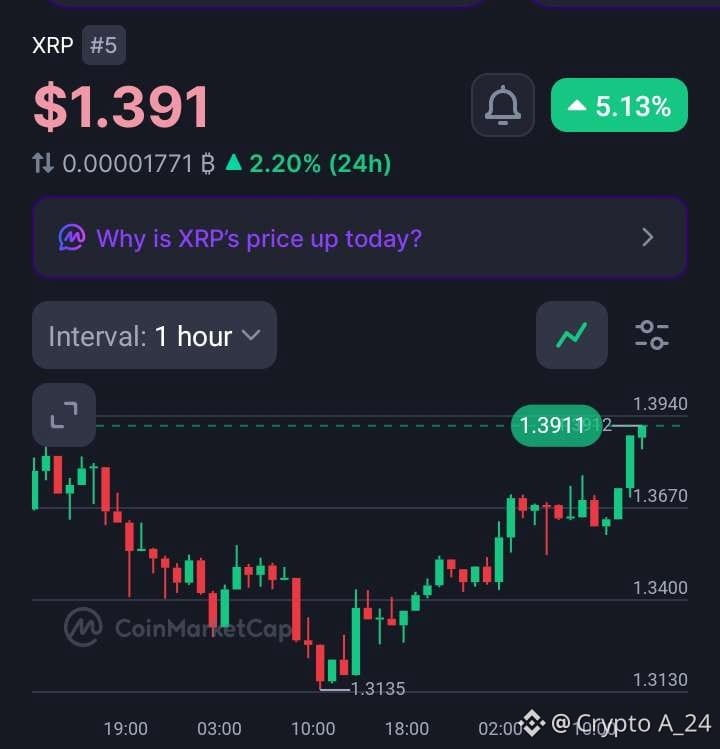
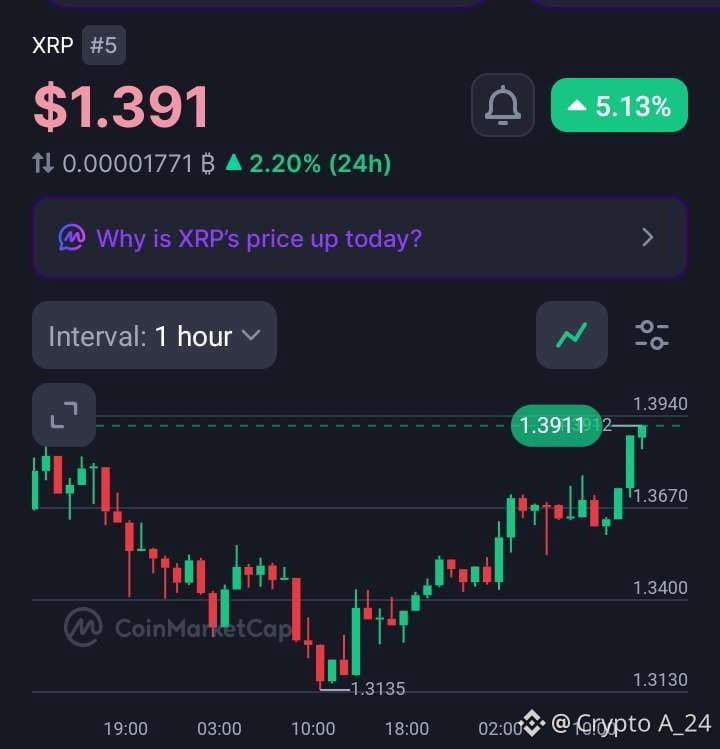
$XRP 3.65% move to $1.37 stands out because the rally has real institutional support behind it. Spot ETFs recorded $14.38 million in net inflows without any outflows, while Bitwise's XRP ETF reached $507 million in assets. That suggests regulated demand is still growing steadily.
I also like that #XRP isn't relying only on ETF excitement. Ripple's partnership with SettleMint and growing XRP Ledger activity show progress on the utility side. RLUSD supply passing $1 billion on the ledger adds another layer to the broader ecosystem story.
$1.34 is the level to watch now. Holding above it could bring $1.40 to $1.43 back into focus. But upcoming events may create volatility. Continued ETF inflows would strengthen the bullish case. Do you see institutions becoming XRP's biggest growth driver?
#Macro #Insights #Altcoin #Season
$XRP 3.65% move to $1.37 stands out because the rally has real institutional support behind it. Spot ETFs recorded $14.38 million in net inflows without any outflows, while Bitwise's XRP ETF reached $507 million in assets. That suggests regulated demand is still growing steadily.
I also like that #XRP isn't relying only on ETF excitement. Ripple's partnership with SettleMint and growing XRP Ledger activity show progress on the utility side. RLUSD supply passing $1 billion on the ledger adds another layer to the broader ecosystem story.
$1.34 is the level to watch now. Holding above it could bring $1.40 to $1.43 back into focus. But upcoming events may create volatility. Continued ETF inflows would strengthen the bullish case. Do you see institutions becoming XRP's biggest growth driver?
#Macro #Insights #Altcoin #Season
I also like that #XRP isn't relying only on ETF excitement. Ripple's partnership with SettleMint and growing XRP Ledger activity show progress on the utility side. RLUSD supply passing $1 billion on the ledger adds another layer to the broader ecosystem story.
$1.34 is the level to watch now. Holding above it could bring $1.40 to $1.43 back into focus. But upcoming events may create volatility. Continued ETF inflows would strengthen the bullish case. Do you see institutions becoming XRP's biggest growth driver?
#Macro #Insights #Altcoin #Season
80
·
--
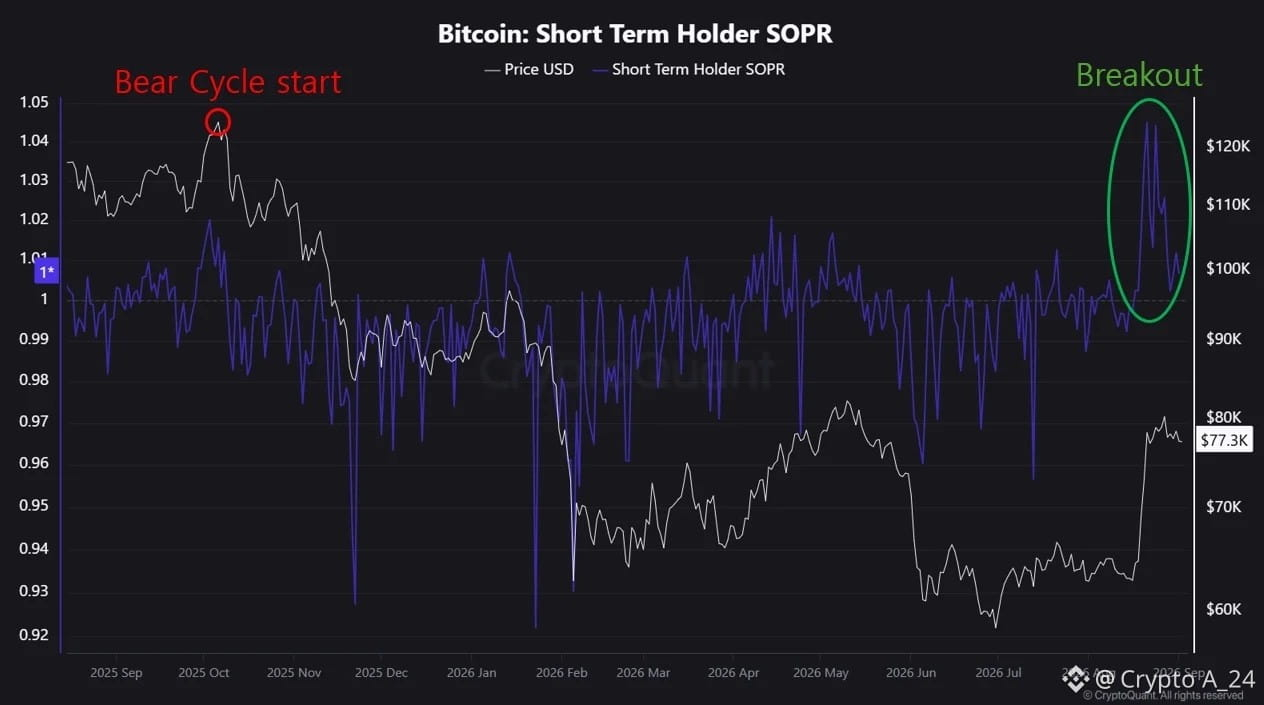
$BTC MAY BE SIGNALING A CYCLE
REVERSAL
After the $126K TOP, Bitcoin spent ~11 months
under Heavy Selling Pressure, with many
Holders selling at a loss or near Breakeven.
BTC Eventually fell to ~$58K.
Now, Profit-Taking is back but Price is
Holding.
Is The Bear Cycle finally Ending?
$BTC MAY BE SIGNALING A CYCLE
REVERSAL
After the $126K TOP, Bitcoin spent ~11 months
under Heavy Selling Pressure, with many
Holders selling at a loss or near Breakeven.
BTC Eventually fell to ~$58K.
Now, Profit-Taking is back but Price is
Holding.
Is The Bear Cycle finally Ending?
REVERSAL
After the $126K TOP, Bitcoin spent ~11 months
under Heavy Selling Pressure, with many
Holders selling at a loss or near Breakeven.
BTC Eventually fell to ~$58K.
Now, Profit-Taking is back but Price is
Holding.
Is The Bear Cycle finally Ending?
79
Көбірек контент көру үшін кіріңіз
Binance Square платформасында әлемдік криптоқоғамдастыққа қосылыңыз
⚡️ Криптовалюта туралы ең соңғы және пайдалы ақпаратты алыңыз.
💬 Әлемдегі ең ірі криптобиржаның сеніміне ие.
👍 Расталған авторлардың нақты пікірлерін табыңыз.
Электрондық пошта/телефон нөмірі
Трендтегі тақырыптар
BTCBreaks80K
120,477 рет көрілді
1,884 адам талқылап жатыр
¿Liquidaciones sorpresivas o cazada de liquidez? La verdad tras los $80K de Bitcoin 📉🚀
Si tenías posiciones en Short cerca de los $80,000, muy probablemente sentiste la presión de las últimas horas. Muchos catalogan esta subida repentina de "manipulación sin volumen", pero la mecánica del mercado en futuros nos cuenta una historia totalmente diferente.
Esto es lo que realmente sucedió detrás de la vela semanal:
1️⃣ Libro de órdenes delgado: Cuando la mayoría del mercado se posiciona a la baja (short), las órdenes límite de venta arriba del precio se vuelven muy escasas. Un volumen moderado de compras basta para barrer los stops.
2️⃣ Efecto en cascada (Short Squeeze): Al tocar los niveles de liquidación de los cortos, el exchange ejecuta compras automáticas a mercado para cerrar esas posiciones en pérdida. No fue un "manipulador secreto" impulsando el precio; fueron los propios stop-loss de los vendedores financiando el pump.
3️⃣ Cierre de vela semanal: Los algoritmos e instituciones suelen buscar cierres por encima de medias móviles clave antes del cambio de vela para sostener la tendencia.
Moraleja de gestión de riesgo: Nunca operes apalancado sin un stop técnico bien ubicado y evita entrar en short cuando el mercado está sobrecargado de ventas.
¿Qué opinas tú? ¿Crees que consolidamos por encima de $80K para buscar nuevos máximos o se viene un re-testeo a la zona de $78,000? ¡Te leo en los comentarios!
$BTC #BTC #BTCBreaks80K #BinanceSquar
Angelo_Coin
·0 лайк
·1.1k рет көрілді
比特币突破8万
93,413 рет көрілді
272 адам талқылап жатыр
SOLJumpsAbout10%
3 рет көрілді
5 адам талқылап жатыр