
Crypto Habibi 1
213 Жариялаулар

Crypto Habibi 1
Хабарлау
Пайдаланушыны блоктау
Live by faith, not by fear. Because fear hesitates, but faith moves forward - even in the unknown. Stand up Comedian - Trading & Investing - Stay Humble Always
0 Жазылым
13 Жазылушылар
42 лайк басылған
Жазбалар
One thing I think gets underestimated in robotics is deployment friction.
Building one impressive robot is hard.
Deploying 1,000 robots across different environments, keeping them connected to the same spatial context, managing fleets and updating them remotely is a completely different problem.
This is where $AUKI gets interesting to me.
QR-based onboarding, existing digital twins, shared spatial context, fleet management through Cactus and remote updates may sound boring compared with a humanoid demo.
But boring infrastructure is often what determines whether something can actually scale.
If robotics moves from showcase demos to thousands of machines working every day, the question won't just be:
How smart is the robot?”
It'll be:
How easily can you deploy and operate the fleet?
That's the AUKI angle I'm watching.
One thing I think gets underestimated in robotics is deployment friction.
Building one impressive robot is hard.
Deploying 1,000 robots across different environments, keeping them connected to the same spatial context, managing fleets and updating them remotely is a completely different problem.
This is where $AUKI gets interesting to me.
QR-based onboarding, existing digital twins, shared spatial context, fleet management through Cactus and remote updates may sound boring compared with a humanoid demo.
But boring infrastructure is often what determines whether something can actually scale.
If robotics moves from showcase demos to thousands of machines working every day, the question won't just be:
How smart is the robot?”
It'll be:
How easily can you deploy and operate the fleet?
That's the AUKI angle I'm watching.
Building one impressive robot is hard.
Deploying 1,000 robots across different environments, keeping them connected to the same spatial context, managing fleets and updating them remotely is a completely different problem.
This is where $AUKI gets interesting to me.
QR-based onboarding, existing digital twins, shared spatial context, fleet management through Cactus and remote updates may sound boring compared with a humanoid demo.
But boring infrastructure is often what determines whether something can actually scale.
If robotics moves from showcase demos to thousands of machines working every day, the question won't just be:
How smart is the robot?”
It'll be:
How easily can you deploy and operate the fleet?
That's the AUKI angle I'm watching.

56
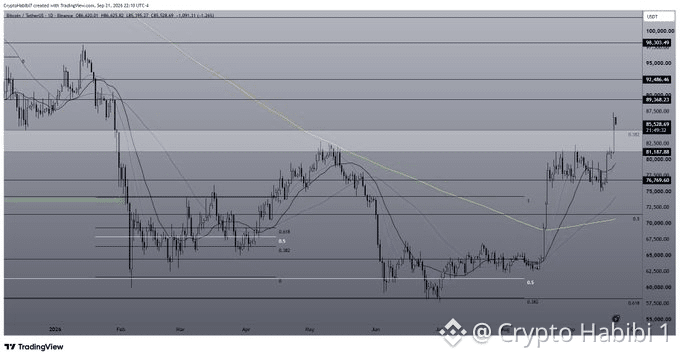
$87,738
$BTC
touched.
You see as humans we can make mistakes but not understanding when the tide has changed and adjust like a bamboo will cost you in this market.
This weekly open nailed it and confirmed the tide is shifting by this Bullish PA. Gray box smashed.
Higher, much higher.
$87,738
$BTC
touched.
You see as humans we can make mistakes but not understanding when the tide has changed and adjust like a bamboo will cost you in this market.
This weekly open nailed it and confirmed the tide is shifting by this Bullish PA. Gray box smashed.
Higher, much higher.
$BTC
touched.
You see as humans we can make mistakes but not understanding when the tide has changed and adjust like a bamboo will cost you in this market.
This weekly open nailed it and confirmed the tide is shifting by this Bullish PA. Gray box smashed.
Higher, much higher.
118
Welcome back to the Game broda 🫡 It’s time fam. We waiting for this. No ego. No I have come here to prove a point. We are all here to change everything they told us we can’t achieve No hand outs. No rich Dad to help. Few guys and girls with bigger dreams and didn’t get help. At times I think we are the chosen ones from God. Maybe I am delusional but the rush I feel now it’s keeping me alive !
Welcome back to the Game broda 🫡 It’s time fam. We waiting for this. No ego. No I have come here to prove a point. We are all here to change everything they told us we can’t achieve No hand outs. No rich Dad to help. Few guys and girls with bigger dreams and didn’t get help. At times I think we are the chosen ones from God. Maybe I am delusional but the rush I feel now it’s keeping me alive !
My $AUKI conviction comes down to one thing: I think the market is watching the robots, while Auki is building part of the infrastructure they may need.
Cactus is the application layer, already showing how spatial AI can solve real retail problems.
posemesh is the underlying protocol, enabling machines and devices to share spatial information and build a common understanding of physical environments.
That distinction matters.
I don't need Auki to build the winning robot. I want the winning robots to need the infrastructure Auki is building.
If Physical AI scales, spatial intelligence could become a critical layer underneath it.
That's the bet. DYOR 🫡
My $AUKI conviction comes down to one thing: I think the market is watching the robots, while Auki is building part of the infrastructure they may need.
Cactus is the application layer, already showing how spatial AI can solve real retail problems.
posemesh is the underlying protocol, enabling machines and devices to share spatial information and build a common understanding of physical environments.
That distinction matters.
I don't need Auki to build the winning robot. I want the winning robots to need the infrastructure Auki is building.
If Physical AI scales, spatial intelligence could become a critical layer underneath it.
That's the bet. DYOR 🫡
Cactus is the application layer, already showing how spatial AI can solve real retail problems.
posemesh is the underlying protocol, enabling machines and devices to share spatial information and build a common understanding of physical environments.
That distinction matters.
I don't need Auki to build the winning robot. I want the winning robots to need the infrastructure Auki is building.
If Physical AI scales, spatial intelligence could become a critical layer underneath it.
That's the bet. DYOR 🫡
51
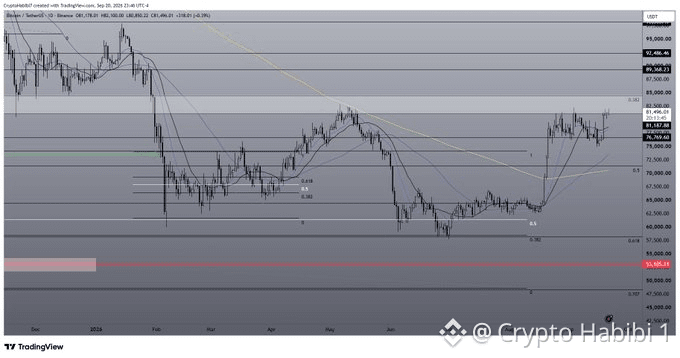
Fresh week,
$BTC $81,178. A strong open after such a long time. Good to see this , there are some calling for 83K$ top max this year and we are going down.
I feel sorry for them. They say in Japan be flexible like a bamboo. Tides are shifting in the market, a bear market goes crashing, the crash happened.
ETH run will be glorious and the Alt one to follow it.
Fresh week,
$BTC $81,178. A strong open after such a long time. Good to see this , there are some calling for 83K$ top max this year and we are going down.
I feel sorry for them. They say in Japan be flexible like a bamboo. Tides are shifting in the market, a bear market goes crashing, the crash happened.
ETH run will be glorious and the Alt one to follow it.
$BTC $81,178. A strong open after such a long time. Good to see this , there are some calling for 83K$ top max this year and we are going down.
I feel sorry for them. They say in Japan be flexible like a bamboo. Tides are shifting in the market, a bear market goes crashing, the crash happened.
ETH run will be glorious and the Alt one to follow it.
183
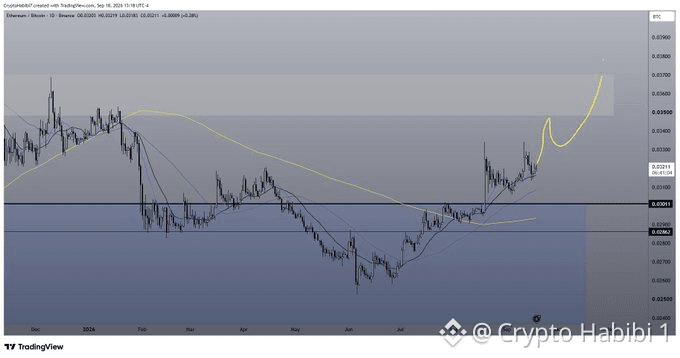
Its about to get so wild
$ETH
/BTC
Most of us waiting for ALT season, my interest is very low in what BTC is doing, I am watching ETH, historically the insane 2017 run started when ETH out performed BTC and then after the money went into alts.
This is the only thing which matters for what we want.
Its about to get so wild
$ETH
/BTC
Most of us waiting for ALT season, my interest is very low in what BTC is doing, I am watching ETH, historically the insane 2017 run started when ETH out performed BTC and then after the money went into alts.
This is the only thing which matters for what we want.
$ETH
/BTC
Most of us waiting for ALT season, my interest is very low in what BTC is doing, I am watching ETH, historically the insane 2017 run started when ETH out performed BTC and then after the money went into alts.
This is the only thing which matters for what we want.
180
Greylock just wrote a $32 million check into Physical AI infrastructure. Not a consumer app. Not another LLM. Physical AI. The category that actually requires robots to function reliably in the real world. That is a signal worth reading carefully. When a firm like Greylock commits that kind of capital into a sector it does two things. It validates the thesis for every other fund sitting on the fence. And it starts mapping the full infrastructure stack because serious investors do not back one layer without eventually asking what sits beside it and beneath it. Simulation is one layer. Greylock just funded it. Spatial intelligence and real world coordination is another. That is the layer the Auki network has been quietly building inside live retail environments since before most people had heard the words Physical AI. The stack is becoming visible to institutional money. $AUKI is already in it. 🤝
Greylock just wrote a $32 million check into Physical AI infrastructure. Not a consumer app. Not another LLM. Physical AI. The category that actually requires robots to function reliably in the real world. That is a signal worth reading carefully. When a firm like Greylock commits that kind of capital into a sector it does two things. It validates the thesis for every other fund sitting on the fence. And it starts mapping the full infrastructure stack because serious investors do not back one layer without eventually asking what sits beside it and beneath it. Simulation is one layer. Greylock just funded it. Spatial intelligence and real world coordination is another. That is the layer the Auki network has been quietly building inside live retail environments since before most people had heard the words Physical AI. The stack is becoming visible to institutional money. $AUKI is already in it. 🤝
68
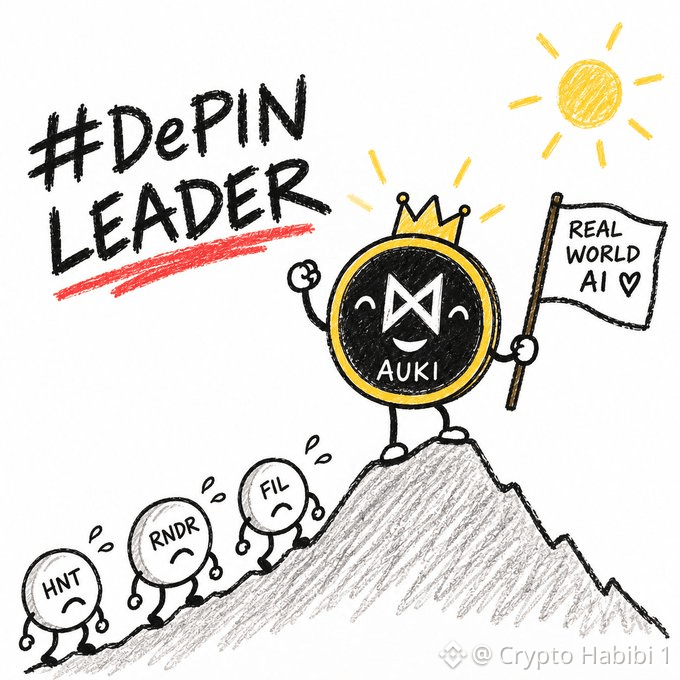
People throw the word DePIN around way too casually.
If you don't understand the “physical” part, you're missing the entire point.
The projects that matter aren't just slapping “AI + DePIN” onto a token and calling it real-world infrastructure.
$AUKI is actually commercializing it. And succeeding.
Robots.
Spatial intelligence.
Retail.
Digital twins.
Real-world deployments.
Businesses actually using the infrastructure.
That is what real-world DePIN exposure looks like.
The strongest part of the Auki thesis isn't simply AI + robots + DePIN.
It's that the technology is being turned into something businesses can actually use.
That's the difference between a narrative and a network being built in the real world.
Keep building, Auki team. 🫡
People throw the word DePIN around way too casually.
If you don't understand the “physical” part, you're missing the entire point.
The projects that matter aren't just slapping “AI + DePIN” onto a token and calling it real-world infrastructure.
$AUKI is actually commercializing it. And succeeding.
Robots.
Spatial intelligence.
Retail.
Digital twins.
Real-world deployments.
Businesses actually using the infrastructure.
That is what real-world DePIN exposure looks like.
The strongest part of the Auki thesis isn't simply AI + robots + DePIN.
It's that the technology is being turned into something businesses can actually use.
That's the difference between a narrative and a network being built in the real world.
Keep building, Auki team. 🫡
If you don't understand the “physical” part, you're missing the entire point.
The projects that matter aren't just slapping “AI + DePIN” onto a token and calling it real-world infrastructure.
$AUKI is actually commercializing it. And succeeding.
Robots.
Spatial intelligence.
Retail.
Digital twins.
Real-world deployments.
Businesses actually using the infrastructure.
That is what real-world DePIN exposure looks like.
The strongest part of the Auki thesis isn't simply AI + robots + DePIN.
It's that the technology is being turned into something businesses can actually use.
That's the difference between a narrative and a network being built in the real world.
Keep building, Auki team. 🫡
58
Most people are still missing the real angle on $AUKI . Robots need to understand the space they walk into. The layout. The shelves. The products. The workflow. Without that context the robot is just expensive hardware standing in the way of staff. Cactus solves that. A self updating digital twin of the retail environment. An AI copilot that understands your specific store and helps make the right call every time. Now look at what is forming around it. Bracketbot. Galbot. Realman Robotics. All piloting with Cactus in Q1. Three different robotics platforms plugging into the same intelligence layer simultaneously. When multiple robot manufacturers integrate with the same system it stops being a feature and starts being infrastructure. The kind that becomes very hard to displace once it is embedded across thousands of environments. Hardware gets replaced. Infrastructure gets deeper. That is the angle most investors have not priced in yet.
Most people are still missing the real angle on $AUKI . Robots need to understand the space they walk into. The layout. The shelves. The products. The workflow. Without that context the robot is just expensive hardware standing in the way of staff. Cactus solves that. A self updating digital twin of the retail environment. An AI copilot that understands your specific store and helps make the right call every time. Now look at what is forming around it. Bracketbot. Galbot. Realman Robotics. All piloting with Cactus in Q1. Three different robotics platforms plugging into the same intelligence layer simultaneously. When multiple robot manufacturers integrate with the same system it stops being a feature and starts being infrastructure. The kind that becomes very hard to displace once it is embedded across thousands of environments. Hardware gets replaced. Infrastructure gets deeper. That is the angle most investors have not priced in yet.
60
Privacy is coming for Ethereum. 🔲
For years, we were told transparency was the price of doing business onchain.
Every transaction.
Every wallet.
Every movement of capital.
Visible to the world.
That might work for speculation.
It does NOT work for institutions moving serious capital.
You don't want your competitors seeing your treasury.
You don't want the entire market tracking every move.
And you shouldn't have to choose between privacy and compliance.
That’s why Memento Confido has my attention.
Private transfers on Ethereum.
ZK privacy.
Compliance preserved.
Institutions AND retail.
This isn't about hiding from the system.
It's about deciding who gets to see what.
Privacy isn't a luxury anymore.
It's infrastructure.
$DEXTF 🔲
Privacy is coming for Ethereum. 🔲
For years, we were told transparency was the price of doing business onchain.
Every transaction.
Every wallet.
Every movement of capital.
Visible to the world.
That might work for speculation.
It does NOT work for institutions moving serious capital.
You don't want your competitors seeing your treasury.
You don't want the entire market tracking every move.
And you shouldn't have to choose between privacy and compliance.
That’s why Memento Confido has my attention.
Private transfers on Ethereum.
ZK privacy.
Compliance preserved.
Institutions AND retail.
This isn't about hiding from the system.
It's about deciding who gets to see what.
Privacy isn't a luxury anymore.
It's infrastructure.
$DEXTF 🔲
For years, we were told transparency was the price of doing business onchain.
Every transaction.
Every wallet.
Every movement of capital.
Visible to the world.
That might work for speculation.
It does NOT work for institutions moving serious capital.
You don't want your competitors seeing your treasury.
You don't want the entire market tracking every move.
And you shouldn't have to choose between privacy and compliance.
That’s why Memento Confido has my attention.
Private transfers on Ethereum.
ZK privacy.
Compliance preserved.
Institutions AND retail.
This isn't about hiding from the system.
It's about deciding who gets to see what.
Privacy isn't a luxury anymore.
It's infrastructure.
$DEXTF 🔲
106
Doubling the global economy through robots requires those robots to actually function in the physical world. Right now most robots are brilliant in isolation and lost the moment the environment around them changes. A new store layout. A moved shelf. A different warehouse configuration. No shared understanding of the space they are in. That is the problem nobody is talking about loudly enough. Cactus already closed that loop in retail. Staff member asks why a product is not selling. AI dispatches a robot. Minutes later it returns with a photo of an empty shelf. No human walked the floor. The space was already understood. ESL manufacturers are now approaching Auki unprompted asking for location data. Robot manufacturers are integrating. The real world web is being built one environment at a time. If the AI and robotics era is even half as big as projected, the infrastructure layer underneath it matters more than anyone is currently pricing. $AUKI
Doubling the global economy through robots requires those robots to actually function in the physical world. Right now most robots are brilliant in isolation and lost the moment the environment around them changes. A new store layout. A moved shelf. A different warehouse configuration. No shared understanding of the space they are in. That is the problem nobody is talking about loudly enough. Cactus already closed that loop in retail. Staff member asks why a product is not selling. AI dispatches a robot. Minutes later it returns with a photo of an empty shelf. No human walked the floor. The space was already understood. ESL manufacturers are now approaching Auki unprompted asking for location data. Robot manufacturers are integrating. The real world web is being built one environment at a time. If the AI and robotics era is even half as big as projected, the infrastructure layer underneath it matters more than anyone is currently pricing. $AUKI
59
The $AUKI network and Zappar just made shelf scanning dramatically faster. Before price tags scanned one at a time. Now every robot friendly marker on a shelf read simultaneously, from a distance, in seconds. That is not an incremental update. That is a completely different speed of operation. Faster shelf scanning means faster digital twin creation. Faster digital twin creation means faster robot deployment across more locations. And the real world impact is already showing. This upgrade reportedly helped close a deal with a retail chain running 500 core locations and 1,600 more across its wider group. The Auki network keeps shipping. Every update compounds on the last one.
The $AUKI network and Zappar just made shelf scanning dramatically faster. Before price tags scanned one at a time. Now every robot friendly marker on a shelf read simultaneously, from a distance, in seconds. That is not an incremental update. That is a completely different speed of operation. Faster shelf scanning means faster digital twin creation. Faster digital twin creation means faster robot deployment across more locations. And the real world impact is already showing. This upgrade reportedly helped close a deal with a retail chain running 500 core locations and 1,600 more across its wider group. The Auki network keeps shipping. Every update compounds on the last one.
34
This is what scaling Physical AI actually looks like. Not a humanoid doing a backflip. A robot looking at an entire shelf and understanding it in seconds. Auki and Zappar combined dense shelf markers with optimized scanning so an entire shelf gets captured in one pass. Not marker by marker. The whole shelf. Instantly. That might sound like a small technical improvement. It is not. The faster physical spaces become machine readable the faster robots can be deployed across them. And now ESL manufacturers are approaching Auki about making their displays more robot friendly. That is the signal. They are not just building robots. They are building the infrastructure that makes the physical world readable to machines. That is a much bigger game than most people are paying attention to. $AUKI
This is what scaling Physical AI actually looks like. Not a humanoid doing a backflip. A robot looking at an entire shelf and understanding it in seconds. Auki and Zappar combined dense shelf markers with optimized scanning so an entire shelf gets captured in one pass. Not marker by marker. The whole shelf. Instantly. That might sound like a small technical improvement. It is not. The faster physical spaces become machine readable the faster robots can be deployed across them. And now ESL manufacturers are approaching Auki about making their displays more robot friendly. That is the signal. They are not just building robots. They are building the infrastructure that makes the physical world readable to machines. That is a much bigger game than most people are paying attention to. $AUKI

50
The robot isn't the whole Physical AI story. The infrastructure underneath it may be bigger.
NVIDIA is projecting a massive expansion in Physical AI. If that thesis plays out, millions of machines will eventually operate in the real world.
And every one of them has the same fundamental problem:
Where am I? What is around me? What is happening here? How do I coordinate with everything else?
That's where $AUKI gets interesting.
Auki is building decentralized infrastructure for machine perception and spatial computing, allowing robots, devices and AI systems to share spatial data and build a common understanding of physical environments.
Think of the stack:
AI → understands information
Physical AI → acts in the real world
Spatial AI → understands the environment
That third layer could become increasingly important as robotics scales.
One robot can map a room.
Millions of robots shouldn't need to map the same room from scratch.
That's the opportunity I'm watching with Auki.
The market is already assigning enormous valuations to the companies building the machines.
I'm interested in the infrastructure that could allow many different machines to understand and operate in the same physical world.
You don't necessarily need to build the winning robot.
You need to build something the winners need.
That's why $AUKI deserves to be on the radar of anyone researching "Physical AI, robotics and DePIN."
DYOR. 🫡
The robot isn't the whole Physical AI story. The infrastructure underneath it may be bigger.
NVIDIA is projecting a massive expansion in Physical AI. If that thesis plays out, millions of machines will eventually operate in the real world.
And every one of them has the same fundamental problem:
Where am I? What is around me? What is happening here? How do I coordinate with everything else?
That's where $AUKI gets interesting.
Auki is building decentralized infrastructure for machine perception and spatial computing, allowing robots, devices and AI systems to share spatial data and build a common understanding of physical environments.
Think of the stack:
AI → understands information
Physical AI → acts in the real world
Spatial AI → understands the environment
That third layer could become increasingly important as robotics scales.
One robot can map a room.
Millions of robots shouldn't need to map the same room from scratch.
That's the opportunity I'm watching with Auki.
The market is already assigning enormous valuations to the companies building the machines.
I'm interested in the infrastructure that could allow many different machines to understand and operate in the same physical world.
You don't necessarily need to build the winning robot.
You need to build something the winners need.
That's why $AUKI deserves to be on the radar of anyone researching "Physical AI, robotics and DePIN."
DYOR. 🫡
NVIDIA is projecting a massive expansion in Physical AI. If that thesis plays out, millions of machines will eventually operate in the real world.
And every one of them has the same fundamental problem:
Where am I? What is around me? What is happening here? How do I coordinate with everything else?
That's where $AUKI gets interesting.
Auki is building decentralized infrastructure for machine perception and spatial computing, allowing robots, devices and AI systems to share spatial data and build a common understanding of physical environments.
Think of the stack:
AI → understands information
Physical AI → acts in the real world
Spatial AI → understands the environment
That third layer could become increasingly important as robotics scales.
One robot can map a room.
Millions of robots shouldn't need to map the same room from scratch.
That's the opportunity I'm watching with Auki.
The market is already assigning enormous valuations to the companies building the machines.
I'm interested in the infrastructure that could allow many different machines to understand and operate in the same physical world.
You don't necessarily need to build the winning robot.
You need to build something the winners need.
That's why $AUKI deserves to be on the radar of anyone researching "Physical AI, robotics and DePIN."
DYOR. 🫡
65
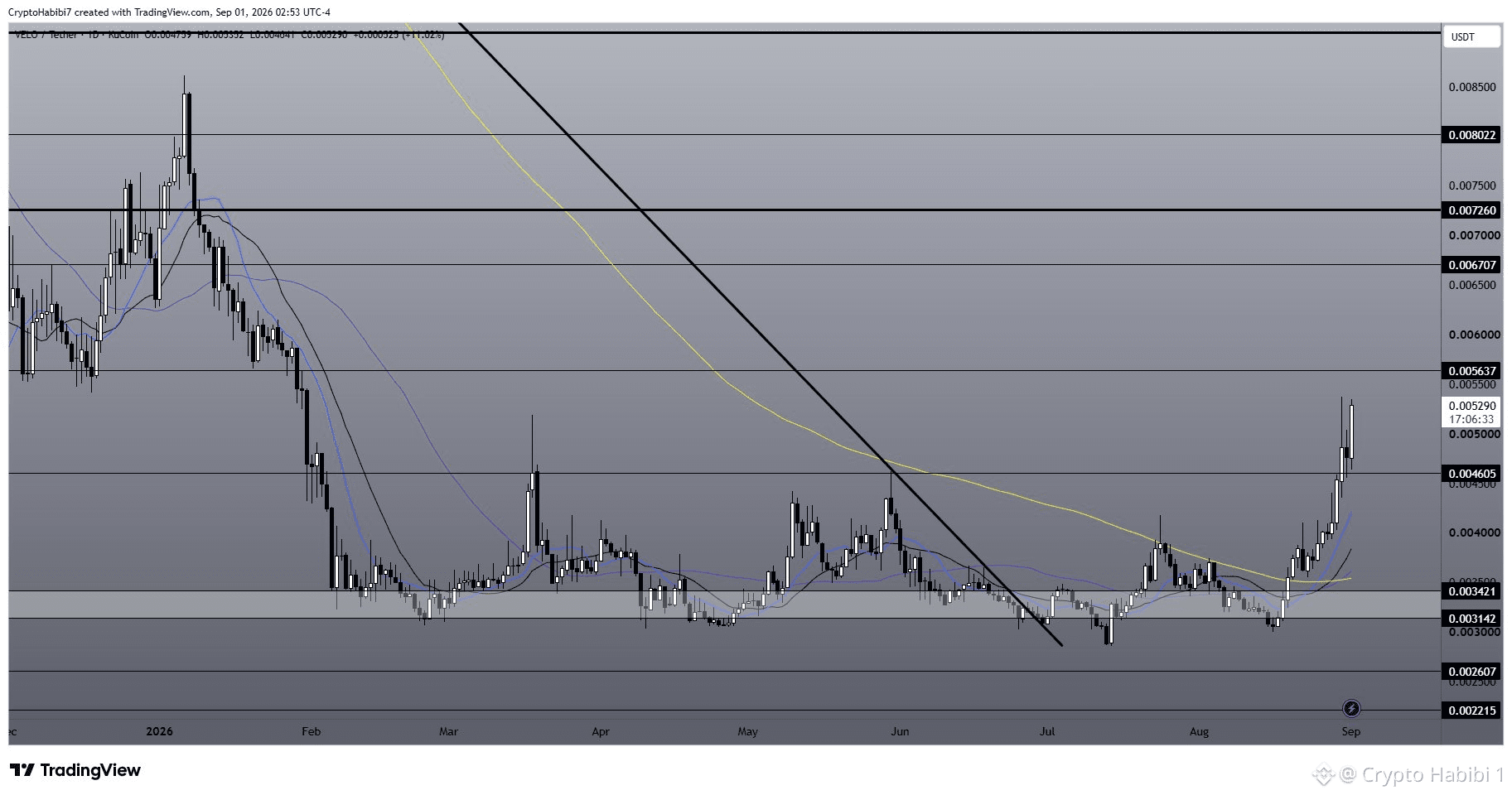
Its happening isnt it? $VELO
is about to go parabolic, pay attention.
My conviction and my bag size remains strong from day 1, I have added some on the way.
Everything I choose is from research and conviction.
The next one which is about to wake up is $AUKI .
Same feels, silence, anger, no pa, then suddenly Boom!
If you have been with me on
@veloprotocol
its time you pay attention to the Robotics Legends / King
@Auki
Its happening isnt it? $VELO
is about to go parabolic, pay attention.
My conviction and my bag size remains strong from day 1, I have added some on the way.
Everything I choose is from research and conviction.
The next one which is about to wake up is $AUKI .
Same feels, silence, anger, no pa, then suddenly Boom!
If you have been with me on
@veloprotocol
its time you pay attention to the Robotics Legends / King
@Auki
is about to go parabolic, pay attention.
My conviction and my bag size remains strong from day 1, I have added some on the way.
Everything I choose is from research and conviction.
The next one which is about to wake up is $AUKI .
Same feels, silence, anger, no pa, then suddenly Boom!
If you have been with me on
@veloprotocol
its time you pay attention to the Robotics Legends / King
@Auki
44
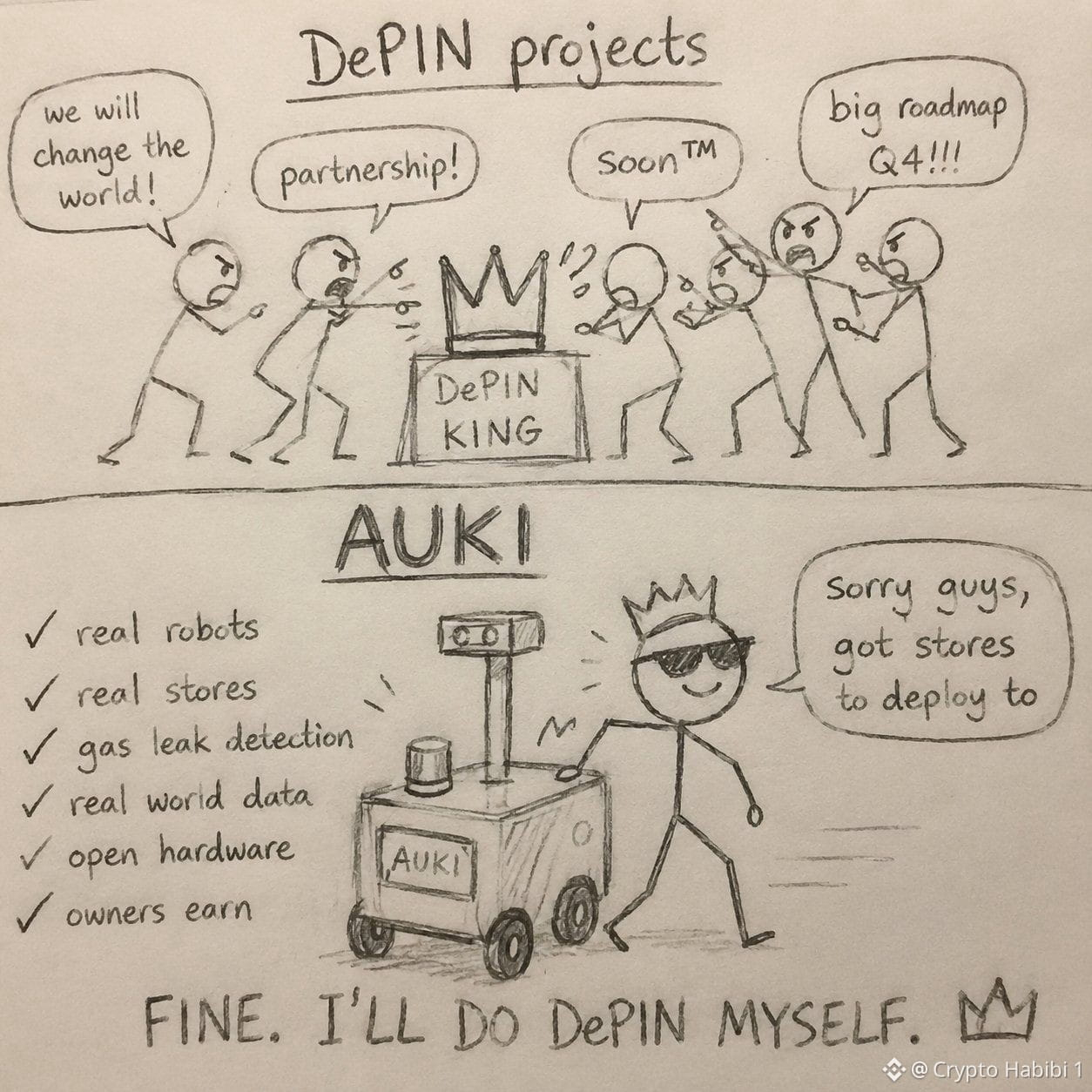
Why $AUKI deserves attention 👇
The robotics narrative is dominated by hardware: who builds the best robot, who deploys the most units, who wins the race.
But there's another layer most people aren't watching closely enough:
the infrastructure that helps machines understand and navigate the physical world.
Auki is building around:
🔹 Spatial intelligence
🔹 Machine perception
🔹 Shared environments
🔹 Robot coordination
The posemesh allows robots, devices and AI systems to share spatial data and computing, creating a common spatial understanding.
That opens a much bigger thesis than a single robotics product.
Different manufacturers can build different machines.
They can still operate on the same spatial infrastructure.
If Physical AI moves from demos to millions of machines operating in the real world, this layer becomes increasingly important.
The robots may get the headlines.
The infrastructure underneath them could capture the network.
Why $AUKI deserves attention 👇
The robotics narrative is dominated by hardware: who builds the best robot, who deploys the most units, who wins the race.
But there's another layer most people aren't watching closely enough:
the infrastructure that helps machines understand and navigate the physical world.
Auki is building around:
🔹 Spatial intelligence
🔹 Machine perception
🔹 Shared environments
🔹 Robot coordination
The posemesh allows robots, devices and AI systems to share spatial data and computing, creating a common spatial understanding.
That opens a much bigger thesis than a single robotics product.
Different manufacturers can build different machines.
They can still operate on the same spatial infrastructure.
If Physical AI moves from demos to millions of machines operating in the real world, this layer becomes increasingly important.
The robots may get the headlines.
The infrastructure underneath them could capture the network.
The robotics narrative is dominated by hardware: who builds the best robot, who deploys the most units, who wins the race.
But there's another layer most people aren't watching closely enough:
the infrastructure that helps machines understand and navigate the physical world.
Auki is building around:
🔹 Spatial intelligence
🔹 Machine perception
🔹 Shared environments
🔹 Robot coordination
The posemesh allows robots, devices and AI systems to share spatial data and computing, creating a common spatial understanding.
That opens a much bigger thesis than a single robotics product.
Different manufacturers can build different machines.
They can still operate on the same spatial infrastructure.
If Physical AI moves from demos to millions of machines operating in the real world, this layer becomes increasingly important.
The robots may get the headlines.
The infrastructure underneath them could capture the network.
66
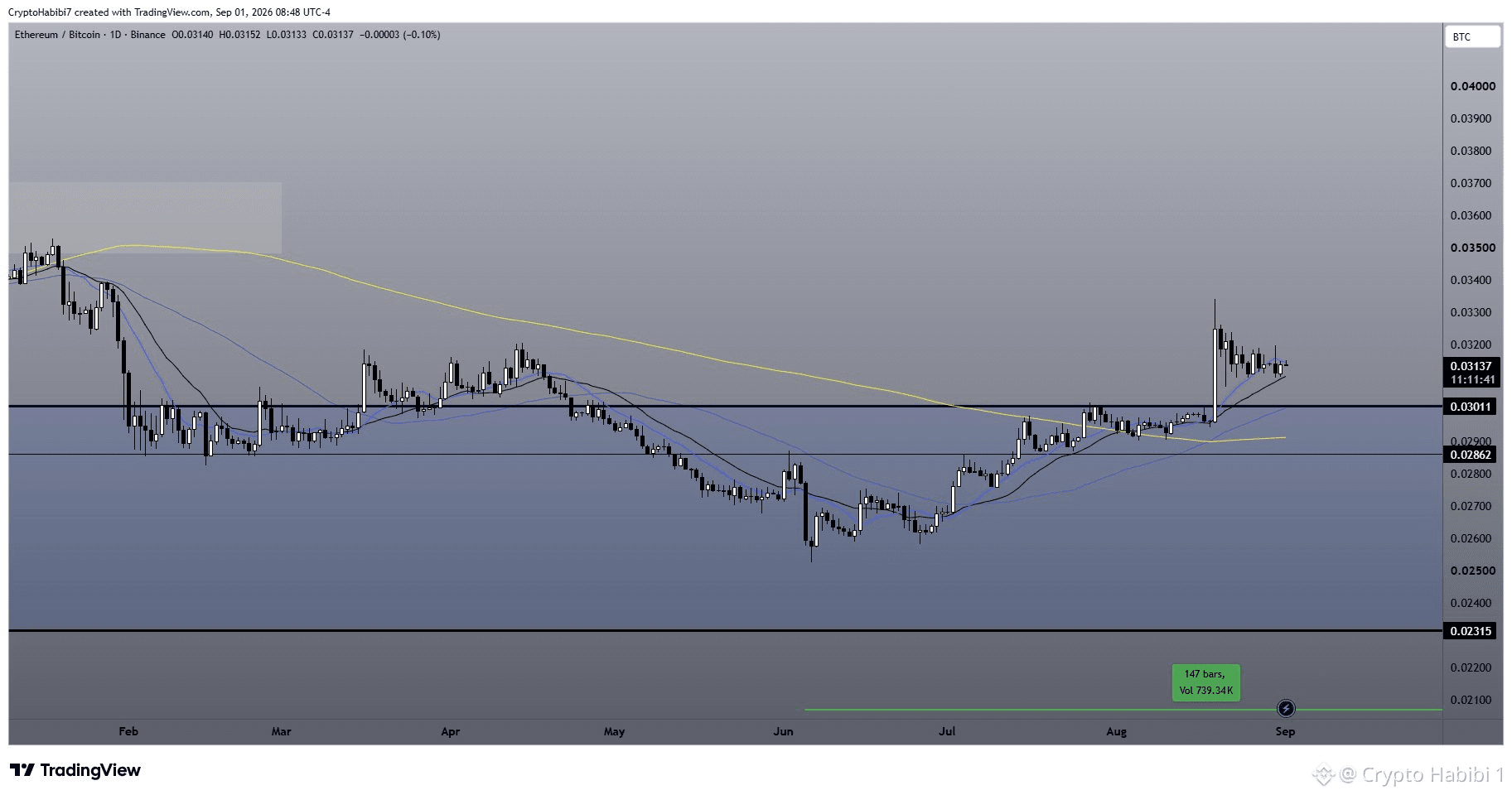
$ETH
/BTC - You see this squeeze happening? Its about to go crazy from here. The moment we have been waiting so patiently, month after month.
The next leg /wave what ever you want to call it is coming imo.
Be ready because its going to be exciting going into Q4.
$ETH
/BTC - You see this squeeze happening? Its about to go crazy from here. The moment we have been waiting so patiently, month after month.
The next leg /wave what ever you want to call it is coming imo.
Be ready because its going to be exciting going into Q4.
/BTC - You see this squeeze happening? Its about to go crazy from here. The moment we have been waiting so patiently, month after month.
The next leg /wave what ever you want to call it is coming imo.
Be ready because its going to be exciting going into Q4.
93
Beijing just hosted humanoid robot games. Robots competing in public like it is already normal. Back in March Nils explained exactly why China got here first. More humanoids broken in China this year than America produced. Not a GPU problem. An iteration speed problem. Western teams fry three robots and wait months for replacements. Chinese teams drive to Shenzhen and have parts the same day. Every robot deployed at that pace needs to understand where it is. Every fleet scaling across factories, warehouses and stores needs spatial intelligence connecting all those machines in real time. That infrastructure layer is what the Auki network is building, in Hong Kong. Shenzhen a car ride away. The only place on earth where you can iterate hardware at the same speed you normally iterate software. Nils closed his entire essay with one line $AUKI is hiring. Worth paying attention to why imo!
Beijing just hosted humanoid robot games. Robots competing in public like it is already normal. Back in March Nils explained exactly why China got here first. More humanoids broken in China this year than America produced. Not a GPU problem. An iteration speed problem. Western teams fry three robots and wait months for replacements. Chinese teams drive to Shenzhen and have parts the same day. Every robot deployed at that pace needs to understand where it is. Every fleet scaling across factories, warehouses and stores needs spatial intelligence connecting all those machines in real time. That infrastructure layer is what the Auki network is building, in Hong Kong. Shenzhen a car ride away. The only place on earth where you can iterate hardware at the same speed you normally iterate software. Nils closed his entire essay with one line $AUKI is hiring. Worth paying attention to why imo!

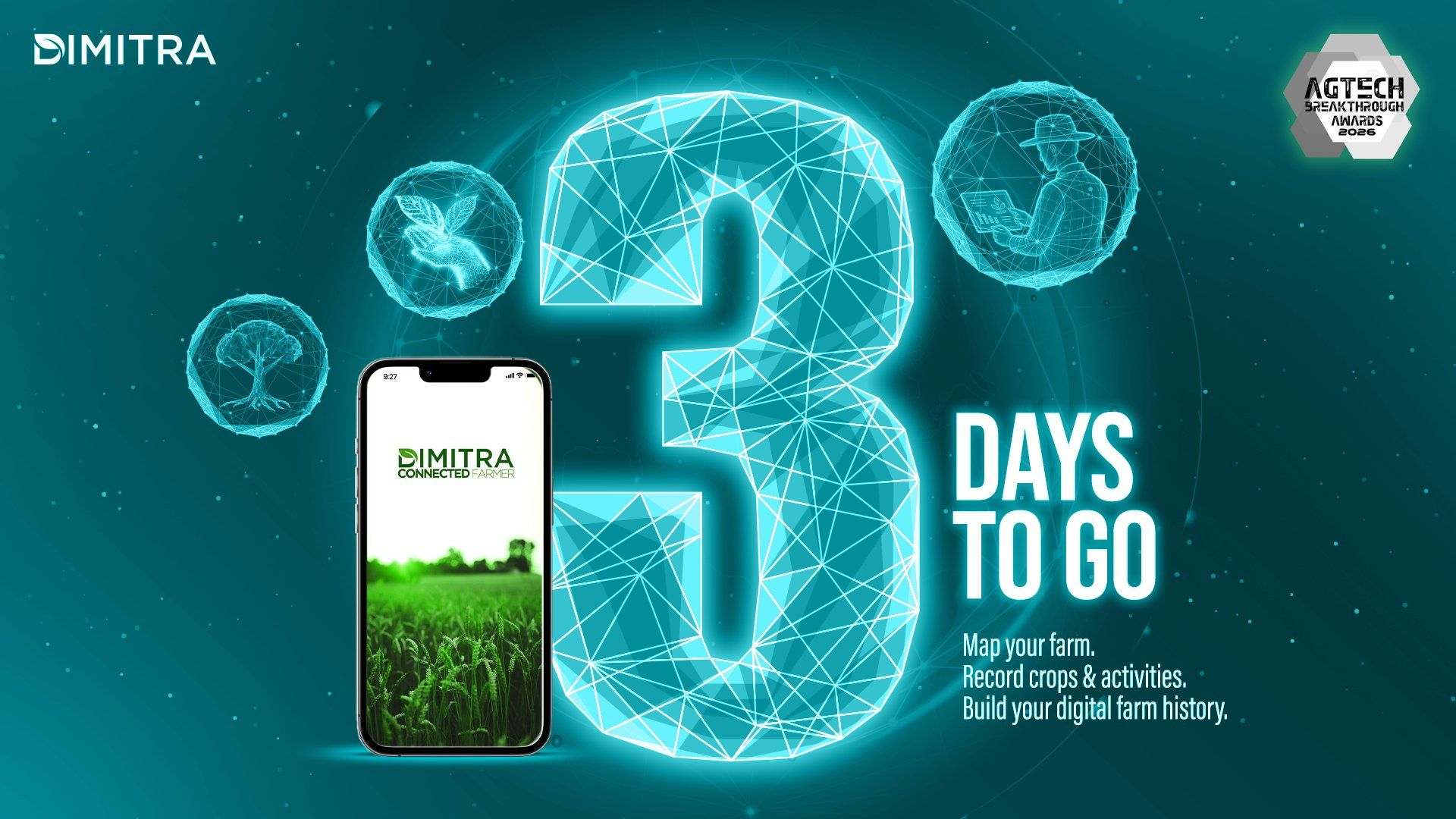
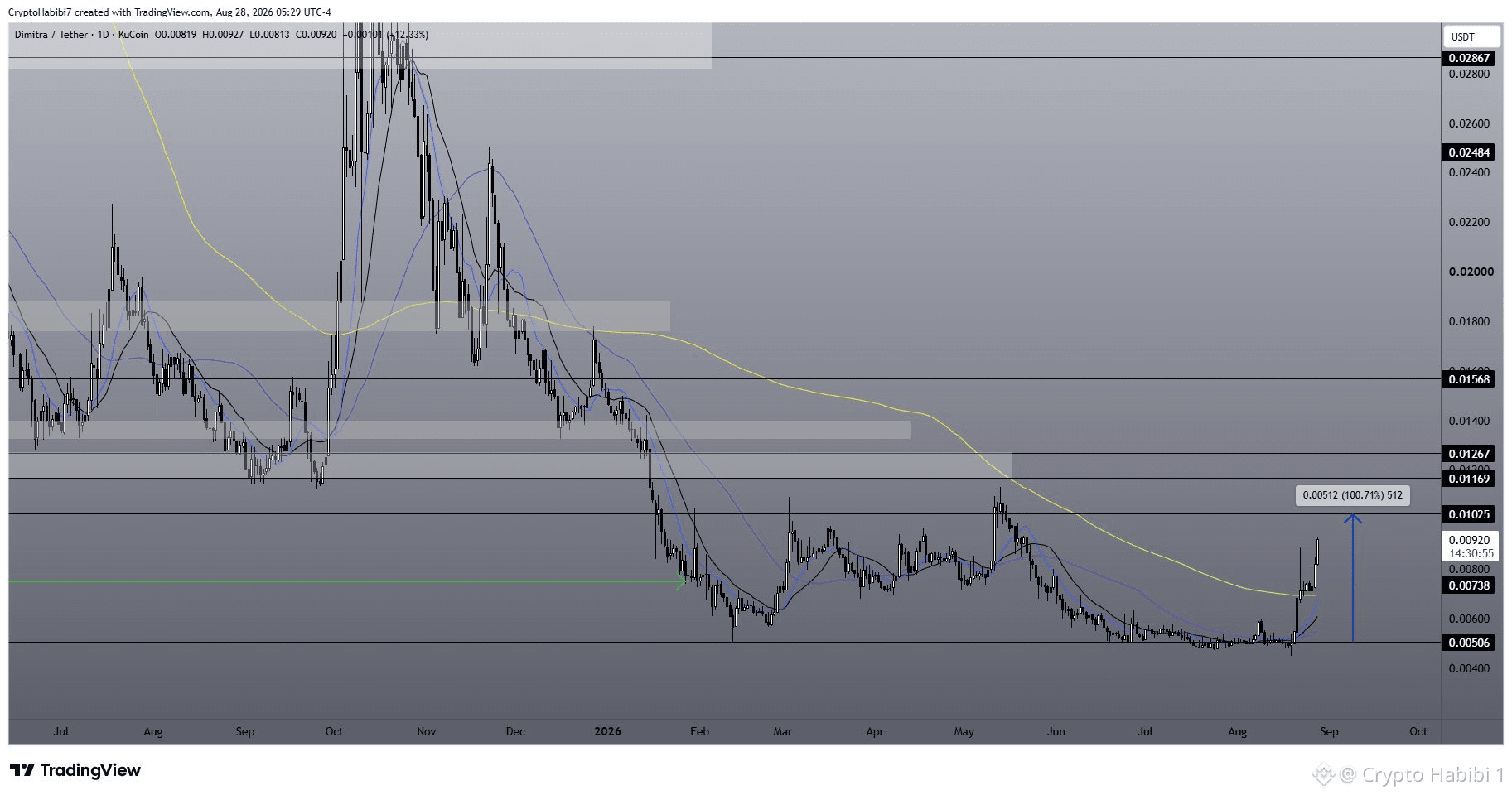
This is the kind of rollout I like seeing from
$DMTR
Not another complicated platform that expects farmers to become tech experts.
Map the farm → record what happens → build a verifiable digital history.
That data becomes valuable far beyond the farm itself, agronomy, monitoring, traceability and eventually easier access to markets that demand proof.
And making that infrastructure accessible to the farming community is the real unlock.
3 days. Connected Farmer Community Edition is almost here. 🌱
The next chapter of real-world AgTech !!! LFG !
This is the kind of rollout I like seeing from
$DMTR
Not another complicated platform that expects farmers to become tech experts.
Map the farm → record what happens → build a verifiable digital history.
That data becomes valuable far beyond the farm itself, agronomy, monitoring, traceability and eventually easier access to markets that demand proof.
And making that infrastructure accessible to the farming community is the real unlock.
3 days. Connected Farmer Community Edition is almost here. 🌱
The next chapter of real-world AgTech !!! LFG !
$DMTR
Not another complicated platform that expects farmers to become tech experts.
Map the farm → record what happens → build a verifiable digital history.
That data becomes valuable far beyond the farm itself, agronomy, monitoring, traceability and eventually easier access to markets that demand proof.
And making that infrastructure accessible to the farming community is the real unlock.
3 days. Connected Farmer Community Edition is almost here. 🌱
The next chapter of real-world AgTech !!! LFG !
62
0.01$ with haste is coming for
$DMTR
- So many were under mining this gem. But like I always said, stay focused in the market and keep jumping ships.
No which ship to stay on. We hold 0.01$ and boy we are going in for the Green Life!
@dimitratech
Ready for some great run!
0.01$ with haste is coming for
$DMTR
- So many were under mining this gem. But like I always said, stay focused in the market and keep jumping ships.
No which ship to stay on. We hold 0.01$ and boy we are going in for the Green Life!
@dimitratech
Ready for some great run!
$DMTR
- So many were under mining this gem. But like I always said, stay focused in the market and keep jumping ships.
No which ship to stay on. We hold 0.01$ and boy we are going in for the Green Life!
@dimitratech
Ready for some great run!
Көбірек контент көру үшін кіріңіз
Binance Square платформасында әлемдік криптоқоғамдастыққа қосылыңыз
⚡️ Криптовалюта туралы ең соңғы және пайдалы ақпаратты алыңыз.
💬 Әлемдегі ең ірі криптобиржаның сеніміне ие.
👍 Расталған авторлардың нақты пікірлерін табыңыз.
Электрондық пошта/телефон нөмірі
Трендтегі тақырыптар
AIStocksWhatNext
868,187 рет көрілді
6,557 адам талқылап жатыр
Share & Win Traffic Reward in our Trending Hashtag Campaign
✨Topic: What Other Investment Opportunities Remain as AI Stocks Keep Rising?
👉How to Join:
Publish a short post or article with hashtag #AIStocksWhatNext
Share whether you’re bullish or bearish, and post your AI stock holdings or trade — using the trade widget may improve your eligibility.
You can also strengthen your post by sharing data or charts, and avoiding AI-generated images.
✍️Create content based on the below angles:
- Nvidia says chip sales will double next year, and top AI companies keep hitting record revenue, the compute spend behind it is just as staggering. Is AI demand really taking off? And how long can it last? AI stocks are up across the board. Is this a real breakout, or just a short-term bounce?
- Industry leaders are calling to slow down AI development, while Trump plans to build an “AI Force”, claiming AI could account for 25% of U.S. GDP in the future. Whose side are you on? Will state-level backing be a long-term win for AI stocks?
- Are you buying AI stocks? Share your AI-related trade/holdings with our trade sharing widget.
⏰Campaign Period:
- 2026-09-22 7:00 - 2026-09-24 4:00 UTC
🎁Reward:
- Qualified posts that comply with the above guidelines and contain more than 100 words will be reviewed and may receive a random traffic boost of 500 to 3,000 views. You will receive a notification from your feed secretary if your post is selected.
- Get a chance to have your article featured on Binance Square Official
Need ideas for your post? Visit the topic page #AIStocksWhatNext or the Square Guide on How to Post for Better Reach.
Binance Square Official
·581 лайк
·1.7M рет көрілді
BitcoinRejectedAt$87,300Twice
0 рет көрілді
0 адам талқылап жатыр
BCHJumps28%OnCMEFuturesListing
9,477 рет көрілді
471 адам талқылап жатыр