

Mrpeter0
196 Жариялаулар

Mrpeter0
Хабарлау
Пайдаланушыны блоктау
$TRX $BNB $SUI
Ашық сауда
Кездейсоқ трейдер
2.2 жыл
110 Жазылым
54 Жазылушылар
85 лайк басылған
Жазбалар
Портфолио
Барлығы
Баға ұсыныстары
·
--
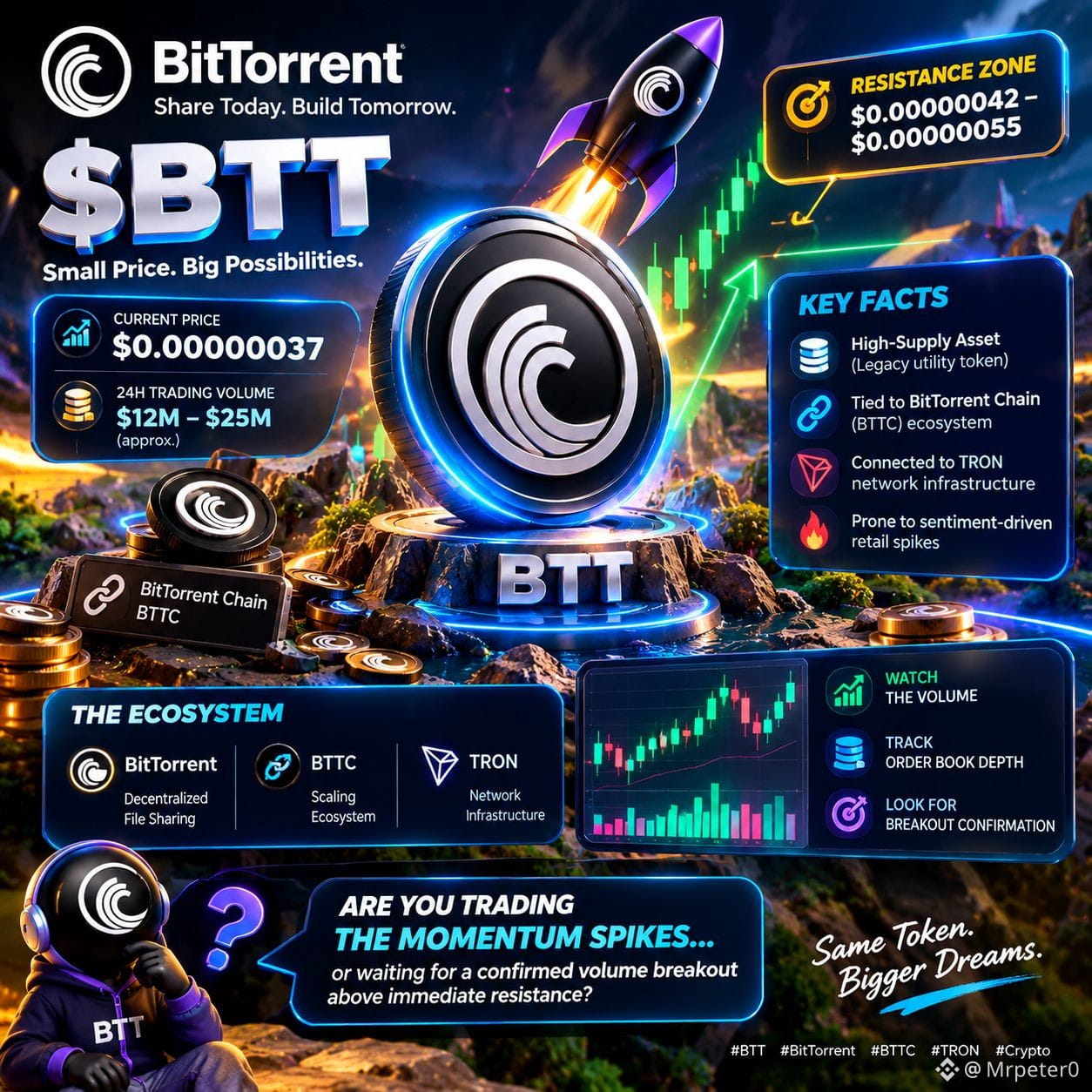
$BTT IS STILL ONE TO WATCH
At around $0.00000037, $BTT is trading in a price range where even relatively small moves can translate into noticeable percentage changes.
But the interesting part isn't just the number of zeros.
It’s the volume.
With daily spot activity moving around the $12M–$25M range, BTT continues to attract attention when liquidity and market sentiment rotate toward high-supply assets.
And now the market is watching an important area:
$0.00000042 → $0.00000055
That's the resistance zone traders are paying attention to.
If volume starts accelerating and buyers push through those levels, the market could become much more interesting.
But smart traders don't chase candles.
They watch the volume.
They watch the liquidity.
They watch the price reaction.
BTT also isn't starting from zero.
Behind the token is the broader BitTorrent ecosystem, connected to BTTC and the TRON network, with a long history in decentralized file sharing and Web3 infrastructure.
And that's what makes the conversation interesting:
Low unit price attracts attention.
Volume creates momentum.
Utility gives the ecosystem a reason to keep building.
The market will always create opportunities.
But the people who last through different cycles understand one thing:
Don't just watch the price.
Understand what is moving it.
$BTTC is back on the radar.
Now the market gets to decide whether this is just another volume spike...
or the beginning of something bigger. 👀
Keep watching. Keep learning. Keep building.
#BTT
@BitTorrent_Official @JustinSun #TRONEcoStar
$BTT IS STILL ONE TO WATCH
At around $0.00000037, $BTT is trading in a price range where even relatively small moves can translate into noticeable percentage changes.
But the interesting part isn't just the number of zeros.
It’s the volume.
With daily spot activity moving around the $12M–$25M range, BTT continues to attract attention when liquidity and market sentiment rotate toward high-supply assets.
And now the market is watching an important area:
$0.00000042 → $0.00000055
That's the resistance zone traders are paying attention to.
If volume starts accelerating and buyers push through those levels, the market could become much more interesting.
But smart traders don't chase candles.
They watch the volume.
They watch the liquidity.
They watch the price reaction.
BTT also isn't starting from zero.
Behind the token is the broader BitTorrent ecosystem, connected to BTTC and the TRON network, with a long history in decentralized file sharing and Web3 infrastructure.
And that's what makes the conversation interesting:
Low unit price attracts attention.
Volume creates momentum.
Utility gives the ecosystem a reason to keep building.
The market will always create opportunities.
But the people who last through different cycles understand one thing:
Don't just watch the price.
Understand what is moving it.
$BTTC is back on the radar.
Now the market gets to decide whether this is just another volume spike...
or the beginning of something bigger. 👀
Keep watching. Keep learning. Keep building.
#BTT
@BitTorrent_Official @Justin Sun孙宇晨 #TRONEcoStar
At around $0.00000037, $BTT is trading in a price range where even relatively small moves can translate into noticeable percentage changes.
But the interesting part isn't just the number of zeros.
It’s the volume.
With daily spot activity moving around the $12M–$25M range, BTT continues to attract attention when liquidity and market sentiment rotate toward high-supply assets.
And now the market is watching an important area:
$0.00000042 → $0.00000055
That's the resistance zone traders are paying attention to.
If volume starts accelerating and buyers push through those levels, the market could become much more interesting.
But smart traders don't chase candles.
They watch the volume.
They watch the liquidity.
They watch the price reaction.
BTT also isn't starting from zero.
Behind the token is the broader BitTorrent ecosystem, connected to BTTC and the TRON network, with a long history in decentralized file sharing and Web3 infrastructure.
And that's what makes the conversation interesting:
Low unit price attracts attention.
Volume creates momentum.
Utility gives the ecosystem a reason to keep building.
The market will always create opportunities.
But the people who last through different cycles understand one thing:
Don't just watch the price.
Understand what is moving it.
$BTTC is back on the radar.
Now the market gets to decide whether this is just another volume spike...
or the beginning of something bigger. 👀
Keep watching. Keep learning. Keep building.
#BTT
@BitTorrent_Official @Justin Sun孙宇晨 #TRONEcoStar
1
163
·
--
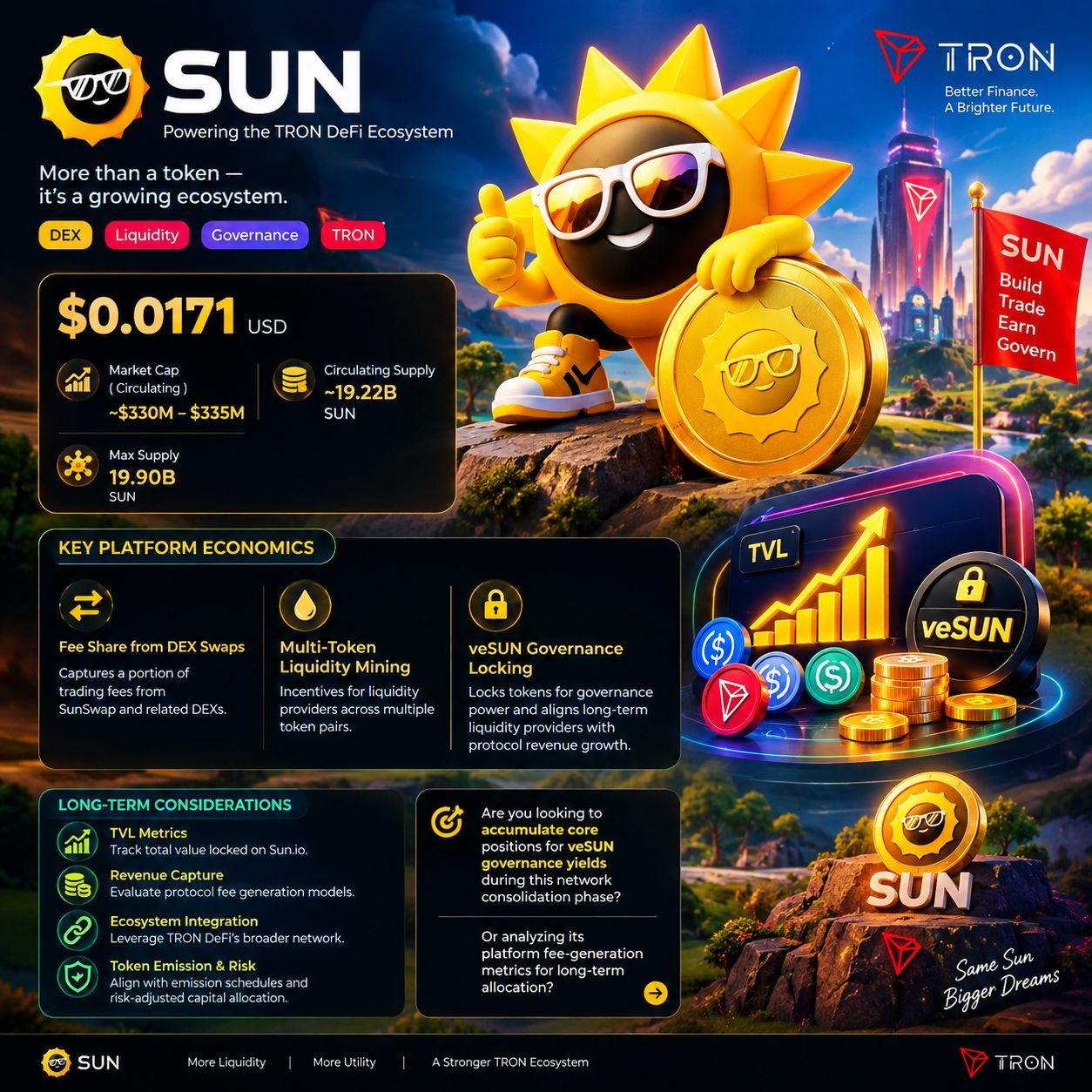
$SUN IS MORE THAN JUST A TOKEN
At around $0.0171, SUN is sitting on a circulating market cap of roughly $330M–$335M, with about 19.22B SUN in circulation out of a 19.90B maximum supply.
But the numbers are only one part of the story.
What makes $SUN interesting is the ecosystem behind it.
🔹 DEX fee generation
Trading activity can feed into the economics of the platform.
🔹 Liquidity incentives
Multiple token pools create opportunities for liquidity providers across the ecosystem.
🔹 veSUN governance
Locking SUN connects governance participation with the long-term direction of the protocol.
And this is where the conversation becomes bigger than price.
“LOCK IN / BUILD FOR THE LONG TERM” or futuristic DeFi animation
Long-term participants can look beyond the chart and track:
• TVL growth on Sun.io
• Protocol fee generation
• Liquidity depth
• veSUN participation
• Token emissions
• Integration across TRON DeFi
The real question isn't simply:
“What is $SUN trading at today?”
It’s:
“How much activity, liquidity, governance and value can the ecosystem continue to build?”
TRON ecosystem / rocket / building animation
DeFi is built in cycles.
Markets consolidate.
Liquidity moves.
Builders keep building.
And protocols with real utility have to prove their value through usage, liquidity and sustainable ecosystem activity.
☀️ $SUN is one of the pieces to watch as TRON DeFi continues to evolve.
Build. Provide liquidity. Participate. Govern.
@JustinSun @SunPump_meme #TRONEcoStar
$SUN IS MORE THAN JUST A TOKEN
At around $0.0171, SUN is sitting on a circulating market cap of roughly $330M–$335M, with about 19.22B SUN in circulation out of a 19.90B maximum supply.
But the numbers are only one part of the story.
What makes $SUN interesting is the ecosystem behind it.
🔹 DEX fee generation
Trading activity can feed into the economics of the platform.
🔹 Liquidity incentives
Multiple token pools create opportunities for liquidity providers across the ecosystem.
🔹 veSUN governance
Locking SUN connects governance participation with the long-term direction of the protocol.
And this is where the conversation becomes bigger than price.
“LOCK IN / BUILD FOR THE LONG TERM” or futuristic DeFi animation
Long-term participants can look beyond the chart and track:
• TVL growth on Sun.io
• Protocol fee generation
• Liquidity depth
• veSUN participation
• Token emissions
• Integration across TRON DeFi
The real question isn't simply:
“What is $SUN trading at today?”
It’s:
“How much activity, liquidity, governance and value can the ecosystem continue to build?”
TRON ecosystem / rocket / building animation
DeFi is built in cycles.
Markets consolidate.
Liquidity moves.
Builders keep building.
And protocols with real utility have to prove their value through usage, liquidity and sustainable ecosystem activity.
☀️ $SUN is one of the pieces to watch as TRON DeFi continues to evolve.
Build. Provide liquidity. Participate. Govern.
@Justin Sun孙宇晨 @OfficialSUNio #TRONEcoStar
At around $0.0171, SUN is sitting on a circulating market cap of roughly $330M–$335M, with about 19.22B SUN in circulation out of a 19.90B maximum supply.
But the numbers are only one part of the story.
What makes $SUN interesting is the ecosystem behind it.
🔹 DEX fee generation
Trading activity can feed into the economics of the platform.
🔹 Liquidity incentives
Multiple token pools create opportunities for liquidity providers across the ecosystem.
🔹 veSUN governance
Locking SUN connects governance participation with the long-term direction of the protocol.
And this is where the conversation becomes bigger than price.
“LOCK IN / BUILD FOR THE LONG TERM” or futuristic DeFi animation
Long-term participants can look beyond the chart and track:
• TVL growth on Sun.io
• Protocol fee generation
• Liquidity depth
• veSUN participation
• Token emissions
• Integration across TRON DeFi
The real question isn't simply:
“What is $SUN trading at today?”
It’s:
“How much activity, liquidity, governance and value can the ecosystem continue to build?”
TRON ecosystem / rocket / building animation
DeFi is built in cycles.
Markets consolidate.
Liquidity moves.
Builders keep building.
And protocols with real utility have to prove their value through usage, liquidity and sustainable ecosystem activity.
☀️ $SUN is one of the pieces to watch as TRON DeFi continues to evolve.
Build. Provide liquidity. Participate. Govern.
@Justin Sun孙宇晨 @OfficialSUNio #TRONEcoStar
1
15
·
--
🇺🇸 𝐓𝐑𝐎𝐍 𝐈𝐍 𝐖𝐀𝐒𝐇𝐈𝐍𝐆𝐓𝐎𝐍, 𝐃.𝐂.
Blockchain is no longer something happening somewhere far away from traditional institutions.
The conversation is reaching the places where the future of financial technology, digital assets, and regulation is being discussed.
TRON being present in Washington, D.C. reflects a broader shift in how the blockchain industry is engaging with policymakers, institutions, and the wider financial system.
From stablecoins and payments to digital assets and on-chain infrastructure, the technology is becoming part of a much bigger conversation.
The next phase of Web3 will not only be about building networks.
It will also be about creating useful infrastructure, supporting responsible innovation, and helping more people understand how blockchain technology can work in the real world.
TRON is part of that conversation.
🇺🇸 From on-chain activity to Washington, D.C.
The journey continues.
@JustinSun @TRONDAO #TRONEcoStar
🇺🇸 𝐓𝐑𝐎𝐍 𝐈𝐍 𝐖𝐀𝐒𝐇𝐈𝐍𝐆𝐓𝐎𝐍, 𝐃.𝐂.
Blockchain is no longer something happening somewhere far away from traditional institutions.
The conversation is reaching the places where the future of financial technology, digital assets, and regulation is being discussed.
TRON being present in Washington, D.C. reflects a broader shift in how the blockchain industry is engaging with policymakers, institutions, and the wider financial system.
From stablecoins and payments to digital assets and on-chain infrastructure, the technology is becoming part of a much bigger conversation.
The next phase of Web3 will not only be about building networks.
It will also be about creating useful infrastructure, supporting responsible innovation, and helping more people understand how blockchain technology can work in the real world.
TRON is part of that conversation.
🇺🇸 From on-chain activity to Washington, D.C.
The journey continues.
@Justin Sun孙宇晨 @TRON DAO #TRONEcoStar
Blockchain is no longer something happening somewhere far away from traditional institutions.
The conversation is reaching the places where the future of financial technology, digital assets, and regulation is being discussed.
TRON being present in Washington, D.C. reflects a broader shift in how the blockchain industry is engaging with policymakers, institutions, and the wider financial system.
From stablecoins and payments to digital assets and on-chain infrastructure, the technology is becoming part of a much bigger conversation.
The next phase of Web3 will not only be about building networks.
It will also be about creating useful infrastructure, supporting responsible innovation, and helping more people understand how blockchain technology can work in the real world.
TRON is part of that conversation.
🇺🇸 From on-chain activity to Washington, D.C.
The journey continues.
@Justin Sun孙宇晨 @TRON DAO #TRONEcoStar


Justin Sun孙宇晨
·
--
TRON in Washington, D.C. 🇺🇸
1
30
·
--
𝐓𝐑𝐎𝐍 𝐇𝐚𝐬 𝐌𝐨𝐯𝐞𝐝 $𝟑𝟎 𝐓𝐫𝐢𝐥𝐥𝐢𝐨𝐧 𝐢𝐧 𝐓𝐨𝐭𝐚𝐥 𝐓𝐫𝐚𝐧𝐬𝐟𝐞𝐫 𝐕𝐨𝐥𝐮𝐦𝐞
Eight years is a long time in crypto.
Networks come and go, narratives change, and entire parts of the industry can look completely different from one year to the next.
Through all of that, TRON has continued building and processing activity across its network.
Now, the network is marking a major milestone: $30 trillion in total transfer volume over its eight-year journey.
That number represents more than a headline.
Behind every transaction is someone moving value, using an application, interacting with a protocol, transferring stablecoins, or simply taking part in the growing on-chain economy.
It also shows how much activity can accumulate when infrastructure continues operating over years rather than chasing every short-term trend.
From payments and stablecoins to DeFi and other on-chain applications, TRON has become a network where a large amount of value continues to move.
And the journey is still ongoing.
The next stage will be about continuing to improve the infrastructure, bringing more useful applications on-chain, and making blockchain technology easier for more people to actually use.
$30T is a major milestone.
But after eight years of building, TRON's next chapter is already underway.
Thank you to everyone who has contributed to the journey so far.
There is still much more to build.
@JustinSun @TRONDAO #TRONEcoStar
𝐓𝐑𝐎𝐍 𝐇𝐚𝐬 𝐌𝐨𝐯𝐞𝐝 $𝟑𝟎 𝐓𝐫𝐢𝐥𝐥𝐢𝐨𝐧 𝐢𝐧 𝐓𝐨𝐭𝐚𝐥 𝐓𝐫𝐚𝐧𝐬𝐟𝐞𝐫 𝐕𝐨𝐥𝐮𝐦𝐞
Eight years is a long time in crypto.
Networks come and go, narratives change, and entire parts of the industry can look completely different from one year to the next.
Through all of that, TRON has continued building and processing activity across its network.
Now, the network is marking a major milestone: $30 trillion in total transfer volume over its eight-year journey.
That number represents more than a headline.
Behind every transaction is someone moving value, using an application, interacting with a protocol, transferring stablecoins, or simply taking part in the growing on-chain economy.
It also shows how much activity can accumulate when infrastructure continues operating over years rather than chasing every short-term trend.
From payments and stablecoins to DeFi and other on-chain applications, TRON has become a network where a large amount of value continues to move.
And the journey is still ongoing.
The next stage will be about continuing to improve the infrastructure, bringing more useful applications on-chain, and making blockchain technology easier for more people to actually use.
$30T is a major milestone.
But after eight years of building, TRON's next chapter is already underway.
Thank you to everyone who has contributed to the journey so far.
There is still much more to build.
@Justin Sun孙宇晨 @TRON DAO #TRONEcoStar
Eight years is a long time in crypto.
Networks come and go, narratives change, and entire parts of the industry can look completely different from one year to the next.
Through all of that, TRON has continued building and processing activity across its network.
Now, the network is marking a major milestone: $30 trillion in total transfer volume over its eight-year journey.
That number represents more than a headline.
Behind every transaction is someone moving value, using an application, interacting with a protocol, transferring stablecoins, or simply taking part in the growing on-chain economy.
It also shows how much activity can accumulate when infrastructure continues operating over years rather than chasing every short-term trend.
From payments and stablecoins to DeFi and other on-chain applications, TRON has become a network where a large amount of value continues to move.
And the journey is still ongoing.
The next stage will be about continuing to improve the infrastructure, bringing more useful applications on-chain, and making blockchain technology easier for more people to actually use.
$30T is a major milestone.
But after eight years of building, TRON's next chapter is already underway.
Thank you to everyone who has contributed to the journey so far.
There is still much more to build.
@Justin Sun孙宇晨 @TRON DAO #TRONEcoStar

Justin Sun孙宇晨
·
--
$30 trillion in total transfer volume.
Eight years of building for global impact.
Thank you to everyone who has been part of TRON’s journey. We’re just getting started.
Eight years of building for global impact.
Thank you to everyone who has been part of TRON’s journey. We’re just getting started.
1
28
·
--
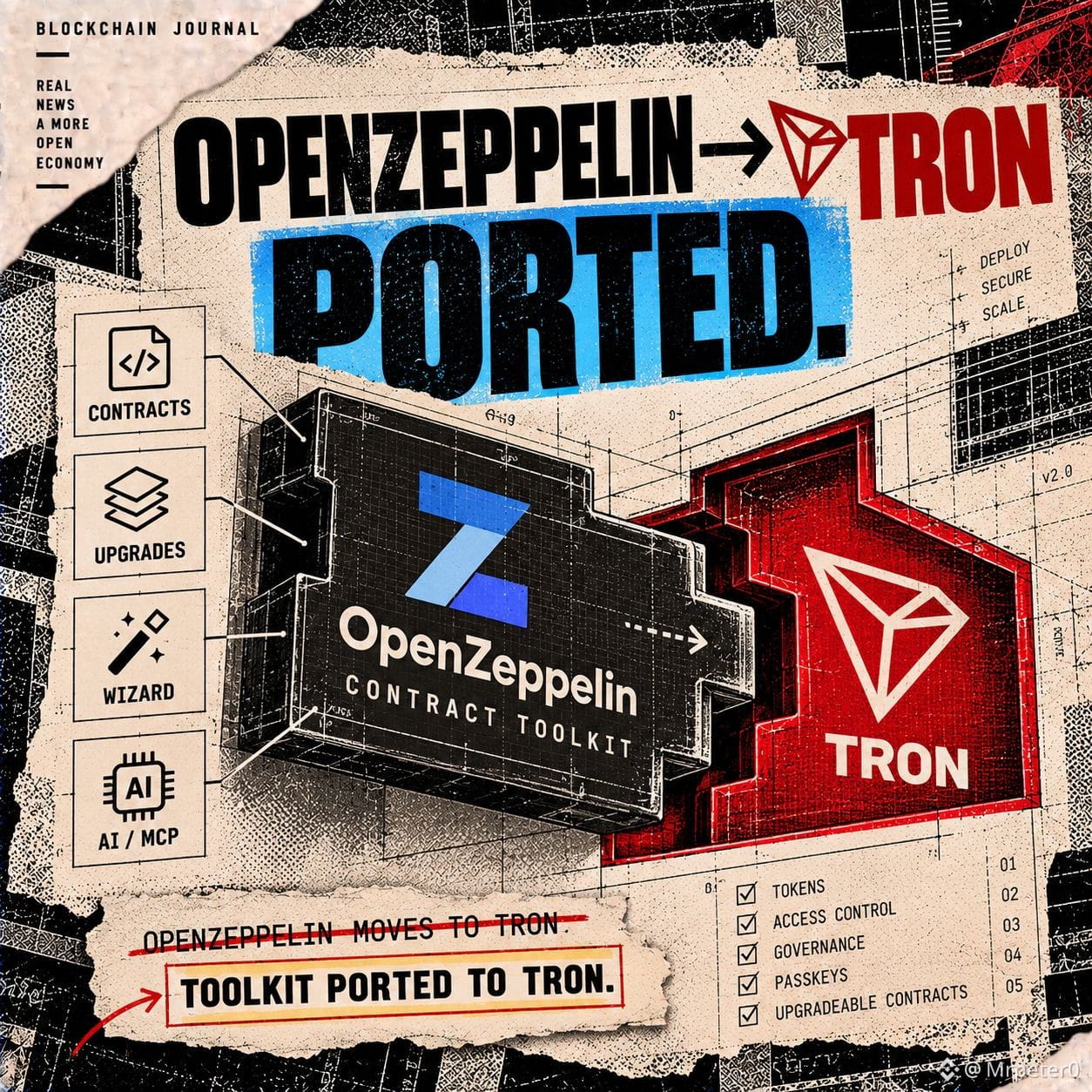
𝐎𝐩𝐞𝐧𝐙𝐞𝐩𝐩𝐞𝐥𝐢𝐧 𝐃𝐞𝐯𝐞𝐥𝐨𝐩𝐦𝐞𝐧𝐭 𝐓𝐨𝐨𝐥𝐬 𝐀𝐫𝐫𝐢𝐯𝐞 𝐨𝐧 𝐓𝐑𝐎𝐍
Building smart contracts on a new network is not just about deploying code. Developers also need reliable libraries, testing tools, upgrade systems, security patterns, and a workflow that makes development easier.
That is where this OpenZeppelin integration with TRON becomes interesting.
The toolkit is being adapted for TRON, giving developers access to familiar OpenZeppelin development primitives while working within the TRON environment.
The suite includes TRON-compatible contract libraries, upgrade plugins, Contracts Wizard, and an MCP server designed to support AI-assisted development workflows with tools such as Cursor and Claude.
Developers can work with common building blocks for things like token contracts, access control, governance, passkeys, and upgradeable contracts.
Instead of starting everything from scratch, developers can work with established contract patterns and adapt them to their TRON applications.
The AI side is also worth paying attention to.
With an MCP server available for development workflows, AI coding tools can become part of the process of creating and working with smart contracts on TRON.
That can make it easier to explore contract structures, generate components, understand implementations, and move from an idea toward a working application.
And there is an important distinction here.
This does not mean OpenZeppelin is moving its entire operation to TRON.
The key development is that its smart contract development stack is being adapted for the TRON network.
For builders, that means more familiar tooling around the development process and another option for creating applications on TRON.
Infrastructure like this may not always get as much attention as a new token or protocol launch
And more accessible development workflows can help bring new applications into the TRON ecosystem.
@JustinSun @TRONDAO #TRONEcoStar
𝐎𝐩𝐞𝐧𝐙𝐞𝐩𝐩𝐞𝐥𝐢𝐧 𝐃𝐞𝐯𝐞𝐥𝐨𝐩𝐦𝐞𝐧𝐭 𝐓𝐨𝐨𝐥𝐬 𝐀𝐫𝐫𝐢𝐯𝐞 𝐨𝐧 𝐓𝐑𝐎𝐍
Building smart contracts on a new network is not just about deploying code. Developers also need reliable libraries, testing tools, upgrade systems, security patterns, and a workflow that makes development easier.
That is where this OpenZeppelin integration with TRON becomes interesting.
The toolkit is being adapted for TRON, giving developers access to familiar OpenZeppelin development primitives while working within the TRON environment.
The suite includes TRON-compatible contract libraries, upgrade plugins, Contracts Wizard, and an MCP server designed to support AI-assisted development workflows with tools such as Cursor and Claude.
Developers can work with common building blocks for things like token contracts, access control, governance, passkeys, and upgradeable contracts.
Instead of starting everything from scratch, developers can work with established contract patterns and adapt them to their TRON applications.
The AI side is also worth paying attention to.
With an MCP server available for development workflows, AI coding tools can become part of the process of creating and working with smart contracts on TRON.
That can make it easier to explore contract structures, generate components, understand implementations, and move from an idea toward a working application.
And there is an important distinction here.
This does not mean OpenZeppelin is moving its entire operation to TRON.
The key development is that its smart contract development stack is being adapted for the TRON network.
For builders, that means more familiar tooling around the development process and another option for creating applications on TRON.
Infrastructure like this may not always get as much attention as a new token or protocol launch
And more accessible development workflows can help bring new applications into the TRON ecosystem.
@Justin Sun孙宇晨 @TRON DAO #TRONEcoStar
Building smart contracts on a new network is not just about deploying code. Developers also need reliable libraries, testing tools, upgrade systems, security patterns, and a workflow that makes development easier.
That is where this OpenZeppelin integration with TRON becomes interesting.
The toolkit is being adapted for TRON, giving developers access to familiar OpenZeppelin development primitives while working within the TRON environment.
The suite includes TRON-compatible contract libraries, upgrade plugins, Contracts Wizard, and an MCP server designed to support AI-assisted development workflows with tools such as Cursor and Claude.
Developers can work with common building blocks for things like token contracts, access control, governance, passkeys, and upgradeable contracts.
Instead of starting everything from scratch, developers can work with established contract patterns and adapt them to their TRON applications.
The AI side is also worth paying attention to.
With an MCP server available for development workflows, AI coding tools can become part of the process of creating and working with smart contracts on TRON.
That can make it easier to explore contract structures, generate components, understand implementations, and move from an idea toward a working application.
And there is an important distinction here.
This does not mean OpenZeppelin is moving its entire operation to TRON.
The key development is that its smart contract development stack is being adapted for the TRON network.
For builders, that means more familiar tooling around the development process and another option for creating applications on TRON.
Infrastructure like this may not always get as much attention as a new token or protocol launch
And more accessible development workflows can help bring new applications into the TRON ecosystem.
@Justin Sun孙宇晨 @TRON DAO #TRONEcoStar
1
60
·
--
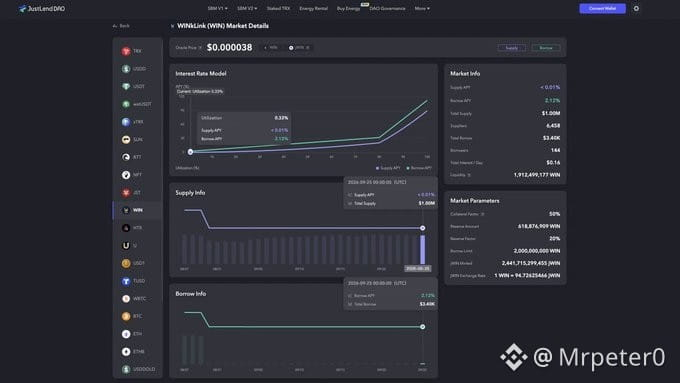
𝐖𝐈𝐍 𝐑𝐞𝐦𝐚𝐢𝐧𝐬 𝐀𝐜𝐭𝐢𝐯𝐞 𝐨𝐧 𝐉𝐮𝐬𝐭𝐋𝐞𝐧𝐝𝐃𝐀𝐎
The latest weekly numbers for WIN on JustLendDAO show something simple but worth watching: total supply is still around $1M.
While borrowing activity is lighter this week at about $3.40K, the supply side continues to hold its ground.
That means a significant amount of WIN remains supplied within the lending market rather than simply sitting outside the ecosystem.
For a lending protocol, these numbers give a useful view of how users are interacting with the market.
Some users are supplying assets.
Others are borrowing.
And as these figures change from week to week, they provide a clearer picture of the activity taking place around WIN on TRON.
The current numbers may not tell the whole story, but steady supply is certainly a metric worth keeping an eye on.
JustLendDAO continues to give users a place to put their assets to work within TRON's DeFi ecosystem, while market data makes it easier to follow how participation is developing.
If you're tracking WIN, the weekly stats are worth checking regularly.
@WINkLink_Official @JustinSun #TRONEcoStar #JUSTLENDDAO
𝐖𝐈𝐍 𝐑𝐞𝐦𝐚𝐢𝐧𝐬 𝐀𝐜𝐭𝐢𝐯𝐞 𝐨𝐧 𝐉𝐮𝐬𝐭𝐋𝐞𝐧𝐝𝐃𝐀𝐎
The latest weekly numbers for WIN on JustLendDAO show something simple but worth watching: total supply is still around $1M.
While borrowing activity is lighter this week at about $3.40K, the supply side continues to hold its ground.
That means a significant amount of WIN remains supplied within the lending market rather than simply sitting outside the ecosystem.
For a lending protocol, these numbers give a useful view of how users are interacting with the market.
Some users are supplying assets.
Others are borrowing.
And as these figures change from week to week, they provide a clearer picture of the activity taking place around WIN on TRON.
The current numbers may not tell the whole story, but steady supply is certainly a metric worth keeping an eye on.
JustLendDAO continues to give users a place to put their assets to work within TRON's DeFi ecosystem, while market data makes it easier to follow how participation is developing.
If you're tracking WIN, the weekly stats are worth checking regularly.
@WINkLink_Official @Justin Sun孙宇晨 #TRONEcoStar #JUSTLENDDAO
The latest weekly numbers for WIN on JustLendDAO show something simple but worth watching: total supply is still around $1M.
While borrowing activity is lighter this week at about $3.40K, the supply side continues to hold its ground.
That means a significant amount of WIN remains supplied within the lending market rather than simply sitting outside the ecosystem.
For a lending protocol, these numbers give a useful view of how users are interacting with the market.
Some users are supplying assets.
Others are borrowing.
And as these figures change from week to week, they provide a clearer picture of the activity taking place around WIN on TRON.
The current numbers may not tell the whole story, but steady supply is certainly a metric worth keeping an eye on.
JustLendDAO continues to give users a place to put their assets to work within TRON's DeFi ecosystem, while market data makes it easier to follow how participation is developing.
If you're tracking WIN, the weekly stats are worth checking regularly.
@WINkLink_Official @Justin Sun孙宇晨 #TRONEcoStar #JUSTLENDDAO
1
3
157
·
--
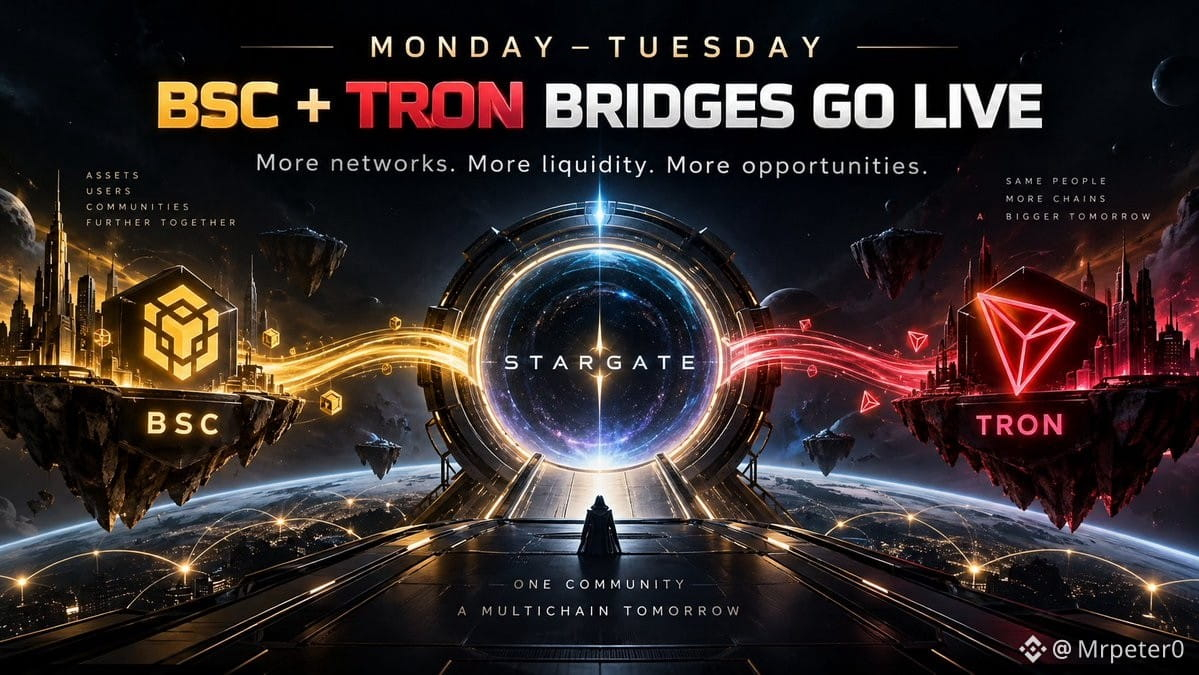
𝐒𝐓𝐀𝐑𝐆𝐀𝐓𝐄 𝐈𝐬 𝐄𝐱𝐩𝐚𝐧𝐝𝐢𝐧𝐠 𝐀𝐜𝐫𝐨𝐬𝐬 𝐌𝐨𝐫𝐞 𝐍𝐞𝐭𝐰𝐨𝐫𝐤𝐬 🔥
The multichain journey is getting bigger.
Sl8 is bringing both Binance Smart Chain and TRON into the picture, with the two bridges set to launch Monday–Tuesday.
For users, this means fewer limitations when moving between ecosystems.
You don't have to think about staying inside one network just because that's where your assets started. As more chains become connected, moving liquidity and exploring different opportunities becomes much more straightforward.
One wallet can become the place where you manage activity across multiple networks.
More networks means more places to move.
More connections can mean more liquidity.
And for users exploring different parts of Web3, it creates more opportunities without constantly switching between completely different environments.
Adding TRON is especially interesting because of the network's large stablecoin activity and growing role in on-chain payments and DeFi.
With Binance Smart Chain and TRON joining the expansion, Sl8 is taking another step toward making its ecosystem more connected.
The goal is simple:
Use one wallet.
Access more networks.
Move assets with less friction.
Explore more of what Web3 has to offer.
STARGATE keeps moving, and the multichain expansion is only getting started. 🔥
@JustinSun @TRONDAO
$TRX #TRONEcoStar
𝐒𝐓𝐀𝐑𝐆𝐀𝐓𝐄 𝐈𝐬 𝐄𝐱𝐩𝐚𝐧𝐝𝐢𝐧𝐠 𝐀𝐜𝐫𝐨𝐬𝐬 𝐌𝐨𝐫𝐞 𝐍𝐞𝐭𝐰𝐨𝐫𝐤𝐬 🔥
The multichain journey is getting bigger.
Sl8 is bringing both Binance Smart Chain and TRON into the picture, with the two bridges set to launch Monday–Tuesday.
For users, this means fewer limitations when moving between ecosystems.
You don't have to think about staying inside one network just because that's where your assets started. As more chains become connected, moving liquidity and exploring different opportunities becomes much more straightforward.
One wallet can become the place where you manage activity across multiple networks.
More networks means more places to move.
More connections can mean more liquidity.
And for users exploring different parts of Web3, it creates more opportunities without constantly switching between completely different environments.
Adding TRON is especially interesting because of the network's large stablecoin activity and growing role in on-chain payments and DeFi.
With Binance Smart Chain and TRON joining the expansion, Sl8 is taking another step toward making its ecosystem more connected.
The goal is simple:
Use one wallet.
Access more networks.
Move assets with less friction.
Explore more of what Web3 has to offer.
STARGATE keeps moving, and the multichain expansion is only getting started. 🔥
@Justin Sun孙宇晨 @TRON DAO
$TRX #TRONEcoStar
The multichain journey is getting bigger.
Sl8 is bringing both Binance Smart Chain and TRON into the picture, with the two bridges set to launch Monday–Tuesday.
For users, this means fewer limitations when moving between ecosystems.
You don't have to think about staying inside one network just because that's where your assets started. As more chains become connected, moving liquidity and exploring different opportunities becomes much more straightforward.
One wallet can become the place where you manage activity across multiple networks.
More networks means more places to move.
More connections can mean more liquidity.
And for users exploring different parts of Web3, it creates more opportunities without constantly switching between completely different environments.
Adding TRON is especially interesting because of the network's large stablecoin activity and growing role in on-chain payments and DeFi.
With Binance Smart Chain and TRON joining the expansion, Sl8 is taking another step toward making its ecosystem more connected.
The goal is simple:
Use one wallet.
Access more networks.
Move assets with less friction.
Explore more of what Web3 has to offer.
STARGATE keeps moving, and the multichain expansion is only getting started. 🔥
@Justin Sun孙宇晨 @TRON DAO
$TRX #TRONEcoStar
1
66
·
--
𝐂𝐡𝐚𝐢𝐧𝐟𝐥𝐢𝐩 𝐓𝐑𝐎𝐍 𝐔𝐒𝐃𝐓 𝐈𝐧𝐜𝐢𝐝𝐞𝐧𝐭: 𝐖𝐡𝐚𝐭 𝐇𝐚𝐩𝐩𝐞𝐧𝐞𝐝?
Chainflip recently faced a serious security incident involving its TRON USDT integration, resulting in 736,442.17 USDT being taken through six unauthorized payouts. Chainflip said the issue came from how its system handled transaction memos on TRON, rather than from a compromise of the TRON blockchain or USDT itself.
The interesting part of the incident is how simple the weakness sounds.
Chainflip uses transaction memos on TRON to read swap instructions. An attacker found a way to attach their own memo to a transaction that had already been signed by Chainflip validators.
The system then interpreted that additional memo as another swap.
When that swap appeared to fail, the protocol issued a refund.
The problem was that the original transaction had already resulted in a payout.
So the same underlying deposit could effectively trigger two payouts.
The attacker repeated this process eight times over roughly 90 minutes. Six attempts resulted in unauthorized payouts, with the total reaching 736,442.17 USDT.
Chainflip responded by pausing its network while the team investigated the issue and prepared a fix.
The vulnerability has since been patched, and Chainflip later restored the protocol through a network upgrade. Its status page now lists the TRON USDT incident as resolved.
What stands out here is that cross-chain infrastructure has many moving parts.
A blockchain can continue operating normally while an application built around it can still have a vulnerability in the way it interprets transactions.
That distinction is important.
The incident was tied to Chainflip's own TRON integration and memo-processing logic. Chainflip said other funds were unaffected and that affected LPs would be made whole. Later, its Proposal 008 passed with 91 of 128 validators supporting the use of surplus protocol funds to cover the affected TRON USDT LPs.
@JustinSun @TRONDAO #TRONEcoStar
𝐂𝐡𝐚𝐢𝐧𝐟𝐥𝐢𝐩 𝐓𝐑𝐎𝐍 𝐔𝐒𝐃𝐓 𝐈𝐧𝐜𝐢𝐝𝐞𝐧𝐭: 𝐖𝐡𝐚𝐭 𝐇𝐚𝐩𝐩𝐞𝐧𝐞𝐝?
Chainflip recently faced a serious security incident involving its TRON USDT integration, resulting in 736,442.17 USDT being taken through six unauthorized payouts. Chainflip said the issue came from how its system handled transaction memos on TRON, rather than from a compromise of the TRON blockchain or USDT itself.
The interesting part of the incident is how simple the weakness sounds.
Chainflip uses transaction memos on TRON to read swap instructions. An attacker found a way to attach their own memo to a transaction that had already been signed by Chainflip validators.
The system then interpreted that additional memo as another swap.
When that swap appeared to fail, the protocol issued a refund.
The problem was that the original transaction had already resulted in a payout.
So the same underlying deposit could effectively trigger two payouts.
The attacker repeated this process eight times over roughly 90 minutes. Six attempts resulted in unauthorized payouts, with the total reaching 736,442.17 USDT.
Chainflip responded by pausing its network while the team investigated the issue and prepared a fix.
The vulnerability has since been patched, and Chainflip later restored the protocol through a network upgrade. Its status page now lists the TRON USDT incident as resolved.
What stands out here is that cross-chain infrastructure has many moving parts.
A blockchain can continue operating normally while an application built around it can still have a vulnerability in the way it interprets transactions.
That distinction is important.
The incident was tied to Chainflip's own TRON integration and memo-processing logic. Chainflip said other funds were unaffected and that affected LPs would be made whole. Later, its Proposal 008 passed with 91 of 128 validators supporting the use of surplus protocol funds to cover the affected TRON USDT LPs.
@Justin Sun孙宇晨 @TRON DAO #TRONEcoStar
Chainflip recently faced a serious security incident involving its TRON USDT integration, resulting in 736,442.17 USDT being taken through six unauthorized payouts. Chainflip said the issue came from how its system handled transaction memos on TRON, rather than from a compromise of the TRON blockchain or USDT itself.
The interesting part of the incident is how simple the weakness sounds.
Chainflip uses transaction memos on TRON to read swap instructions. An attacker found a way to attach their own memo to a transaction that had already been signed by Chainflip validators.
The system then interpreted that additional memo as another swap.
When that swap appeared to fail, the protocol issued a refund.
The problem was that the original transaction had already resulted in a payout.
So the same underlying deposit could effectively trigger two payouts.
The attacker repeated this process eight times over roughly 90 minutes. Six attempts resulted in unauthorized payouts, with the total reaching 736,442.17 USDT.
Chainflip responded by pausing its network while the team investigated the issue and prepared a fix.
The vulnerability has since been patched, and Chainflip later restored the protocol through a network upgrade. Its status page now lists the TRON USDT incident as resolved.
What stands out here is that cross-chain infrastructure has many moving parts.
A blockchain can continue operating normally while an application built around it can still have a vulnerability in the way it interprets transactions.
That distinction is important.
The incident was tied to Chainflip's own TRON integration and memo-processing logic. Chainflip said other funds were unaffected and that affected LPs would be made whole. Later, its Proposal 008 passed with 91 of 128 validators supporting the use of surplus protocol funds to cover the affected TRON USDT LPs.
@Justin Sun孙宇晨 @TRON DAO #TRONEcoStar
1
6
·
--

Мақала
𝐖𝐈𝐍𝐤𝐋𝐢𝐧𝐤 𝐈𝐬 𝐌𝐚𝐤𝐢𝐧𝐠 𝐎𝐧-𝐂𝐡𝐚𝐢𝐧 𝐃𝐚𝐭𝐚 𝐄𝐚𝐬𝐢𝐞𝐫 𝐓𝐨 𝐖𝐨𝐫𝐤 𝐖𝐢𝐭𝐡
OneOne of the things that can slow down development in Web3 is not always the coding itself.
Sometimes, the frustrating part comes before the building even starts.
You need a specific market feed.
You need to check the right asset.
You need to understand the feed parameters.
Then you move between different places trying to confirm that everything matches.
That may sound small, but when you're working on multiple integrations, those extra steps quickly become a real headache.
This is where WINkLink is making things more straightforward.
By bringing important oracle information such as market data, feed parameters, and asset details into one place, developers can spend less time searching and more time actually building.
Instead of constantly asking:
“Where is the data I need?”
“Which feed should I use?”
“Are these the right parameters?”
You can get the information, understand what you're working with, and keep moving.
That matters because good infrastructure isn't only about what happens behind the scenes.
It is also about how easy it is for developers to use.
When the process is simpler, integrations can become easier to manage. Developers can test faster, reduce unnecessary back-and-forth, and focus more of their attention on the actual application they are creating.
And as more DeFi protocols, trading applications, and on-chain products depend on reliable external data, the role of oracle infrastructure becomes even more important.
The data feeding an application needs to be accessible, understandable, and ready for developers to work with.
WINkLink is helping bring that experience closer together.
Less searching.
Less switching between resources.
Less unnecessary friction.
Just the information you need to get started and keep building.
That's the kind of improvement that may look simple on the surface, but can make a meaningful difference to the people building inside Web3.
@WINkLink_Official @JustinSun #TRONEcoStar
𝐖𝐈𝐍𝐤𝐋𝐢𝐧𝐤 𝐈𝐬 𝐌𝐚𝐤𝐢𝐧𝐠 𝐎𝐧-𝐂𝐡𝐚𝐢𝐧 𝐃𝐚𝐭𝐚 𝐄𝐚𝐬𝐢𝐞𝐫 𝐓𝐨 𝐖𝐨𝐫𝐤 𝐖𝐢𝐭𝐡 One
One of the things that can slow down development in Web3 is not always the coding itself.
Sometimes, the frustrating part comes before the building even starts.
You need a specific market feed.
You need to check the right asset.
You need to understand the feed parameters.
Then you move between different places trying to confirm that everything matches.
That may sound small, but when you're working on multiple integrations, those extra steps quickly become a real headache.
This is where WINkLink is making things more straightforward.
By bringing important oracle information such as market data, feed parameters, and asset details into one place, developers can spend less time searching and more time actually building.
Instead of constantly asking:
“Where is the data I need?”
“Which feed should I use?”
“Are these the right parameters?”
You can get the information, understand what you're working with, and keep moving.
That matters because good infrastructure isn't only about what happens behind the scenes.
It is also about how easy it is for developers to use.
When the process is simpler, integrations can become easier to manage. Developers can test faster, reduce unnecessary back-and-forth, and focus more of their attention on the actual application they are creating.
And as more DeFi protocols, trading applications, and on-chain products depend on reliable external data, the role of oracle infrastructure becomes even more important.
The data feeding an application needs to be accessible, understandable, and ready for developers to work with.
WINkLink is helping bring that experience closer together.
Less searching.
Less switching between resources.
Less unnecessary friction.
Just the information you need to get started and keep building.
That's the kind of improvement that may look simple on the surface, but can make a meaningful difference to the people building inside Web3.
@WINkLink_Official @Justin Sun孙宇晨 #TRONEcoStar
Sometimes, the frustrating part comes before the building even starts.
You need a specific market feed.
You need to check the right asset.
You need to understand the feed parameters.
Then you move between different places trying to confirm that everything matches.
That may sound small, but when you're working on multiple integrations, those extra steps quickly become a real headache.
This is where WINkLink is making things more straightforward.
By bringing important oracle information such as market data, feed parameters, and asset details into one place, developers can spend less time searching and more time actually building.
Instead of constantly asking:
“Where is the data I need?”
“Which feed should I use?”
“Are these the right parameters?”
You can get the information, understand what you're working with, and keep moving.
That matters because good infrastructure isn't only about what happens behind the scenes.
It is also about how easy it is for developers to use.
When the process is simpler, integrations can become easier to manage. Developers can test faster, reduce unnecessary back-and-forth, and focus more of their attention on the actual application they are creating.
And as more DeFi protocols, trading applications, and on-chain products depend on reliable external data, the role of oracle infrastructure becomes even more important.
The data feeding an application needs to be accessible, understandable, and ready for developers to work with.
WINkLink is helping bring that experience closer together.
Less searching.
Less switching between resources.
Less unnecessary friction.
Just the information you need to get started and keep building.
That's the kind of improvement that may look simple on the surface, but can make a meaningful difference to the people building inside Web3.
@WINkLink_Official @Justin Sun孙宇晨 #TRONEcoStar
2
79
·
--
Расталды
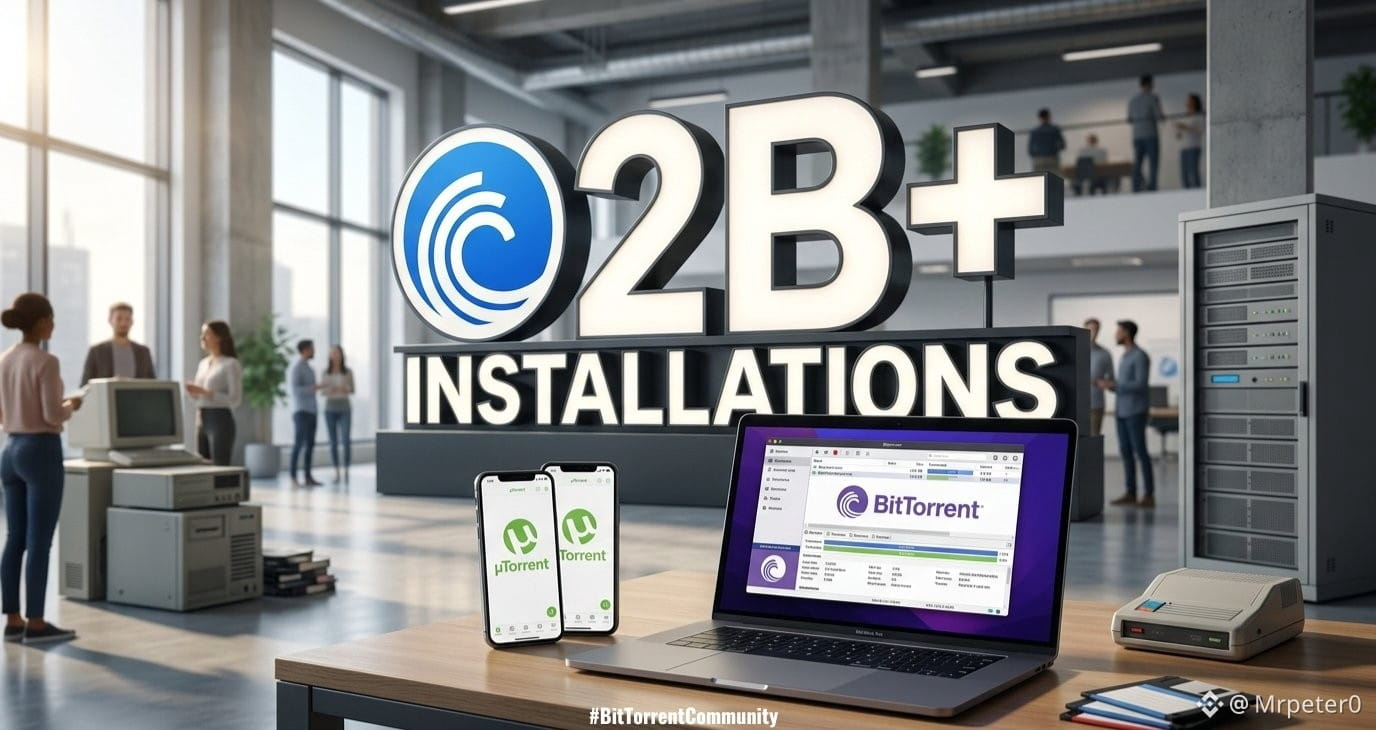
𝐁𝐈𝐓𝐓𝐎𝐑𝐑𝐄𝐍𝐓 𝐇𝐀𝐒 𝐀 𝐍𝐔𝐌𝐁𝐄𝐑 𝐖𝐎𝐑𝐓𝐇 𝐑𝐄𝐌𝐄𝐌𝐁𝐄𝐑𝐈𝐍𝐆 🤯
2+ billion installations.
That’s the combined milestone reached by BitTorrent and µTorrent a scale built over years of people using their products to share and access digital content.
Numbers like this are more than just a headline.
They represent a massive history of adoption, repeated usage, and a technology that has remained relevant through multiple generations of the internet.
And the story isn’t simply about what happened in the past.
BitTorrent continues to evolve alongside the wider Web3 landscape, with blockchain infrastructure such as BTTC adding another layer to the ecosystem and $BTT playing a role within it.
From peer-to-peer file sharing to decentralized blockchain infrastructure, the technology has continued moving with the changing internet.
2+ billion installations behind it.
New infrastructure ahead.
Still evolving.
@BitTorrent_Official @JustinSun #TRONEcoStar
𝐁𝐈𝐓𝐓𝐎𝐑𝐑𝐄𝐍𝐓 𝐇𝐀𝐒 𝐀 𝐍𝐔𝐌𝐁𝐄𝐑 𝐖𝐎𝐑𝐓𝐇 𝐑𝐄𝐌𝐄𝐌𝐁𝐄𝐑𝐈𝐍𝐆 🤯
2+ billion installations.
That’s the combined milestone reached by BitTorrent and µTorrent a scale built over years of people using their products to share and access digital content.
Numbers like this are more than just a headline.
They represent a massive history of adoption, repeated usage, and a technology that has remained relevant through multiple generations of the internet.
And the story isn’t simply about what happened in the past.
BitTorrent continues to evolve alongside the wider Web3 landscape, with blockchain infrastructure such as BTTC adding another layer to the ecosystem and $BTT playing a role within it.
From peer-to-peer file sharing to decentralized blockchain infrastructure, the technology has continued moving with the changing internet.
2+ billion installations behind it.
New infrastructure ahead.
Still evolving.
@BitTorrent_Official @Justin Sun孙宇晨 #TRONEcoStar
2+ billion installations.
That’s the combined milestone reached by BitTorrent and µTorrent a scale built over years of people using their products to share and access digital content.
Numbers like this are more than just a headline.
They represent a massive history of adoption, repeated usage, and a technology that has remained relevant through multiple generations of the internet.
And the story isn’t simply about what happened in the past.
BitTorrent continues to evolve alongside the wider Web3 landscape, with blockchain infrastructure such as BTTC adding another layer to the ecosystem and $BTT playing a role within it.
From peer-to-peer file sharing to decentralized blockchain infrastructure, the technology has continued moving with the changing internet.
2+ billion installations behind it.
New infrastructure ahead.
Still evolving.
@BitTorrent_Official @Justin Sun孙宇晨 #TRONEcoStar
3
304
·
--
𝐓𝐀𝐋𝐊𝐈𝐍𝐆 𝐀𝐁𝐎𝐔𝐓 𝐓𝐇𝐄 𝐅𝐔𝐓𝐔𝐑𝐄 𝐈𝐒 𝐄𝐀𝐒𝐘.
Almost every crypto project has a vision for what Web3 could look like years from now.
But there’s a more important question to ask:
What can you actually show today? 👀
Real infrastructure can be tested.
Real products can be used.
Real networks can process activity.
Real data can be checked.
That difference matters.
Instead of only making promises about what might happen in the future, projects can point to the technology, products, users, transactions, and infrastructure that already exist.
For the BitTorrent ecosystem, the conversation goes beyond a token. There is a broader network of products and infrastructure being developed around BitTorrent, BTTC, and $BTTC .
The future is always worth discussing.
But sometimes the better question is much simpler:
What have you already built that people can see, use, and verify?
@BitTorrent_Official @JustinSun #TRONEcoStar
𝐓𝐀𝐋𝐊𝐈𝐍𝐆 𝐀𝐁𝐎𝐔𝐓 𝐓𝐇𝐄 𝐅𝐔𝐓𝐔𝐑𝐄 𝐈𝐒 𝐄𝐀𝐒𝐘.
Almost every crypto project has a vision for what Web3 could look like years from now.
But there’s a more important question to ask:
What can you actually show today? 👀
Real infrastructure can be tested.
Real products can be used.
Real networks can process activity.
Real data can be checked.
That difference matters.
Instead of only making promises about what might happen in the future, projects can point to the technology, products, users, transactions, and infrastructure that already exist.
For the BitTorrent ecosystem, the conversation goes beyond a token. There is a broader network of products and infrastructure being developed around BitTorrent, BTTC, and $BTTC .
The future is always worth discussing.
But sometimes the better question is much simpler:
What have you already built that people can see, use, and verify?
@BitTorrent_Official @Justin Sun孙宇晨 #TRONEcoStar
Almost every crypto project has a vision for what Web3 could look like years from now.
But there’s a more important question to ask:
What can you actually show today? 👀
Real infrastructure can be tested.
Real products can be used.
Real networks can process activity.
Real data can be checked.
That difference matters.
Instead of only making promises about what might happen in the future, projects can point to the technology, products, users, transactions, and infrastructure that already exist.
For the BitTorrent ecosystem, the conversation goes beyond a token. There is a broader network of products and infrastructure being developed around BitTorrent, BTTC, and $BTTC .
The future is always worth discussing.
But sometimes the better question is much simpler:
What have you already built that people can see, use, and verify?
@BitTorrent_Official @Justin Sun孙宇晨 #TRONEcoStar
2
164
·
--
𝐃𝐄𝐂𝐄𝐍𝐓𝐑𝐀𝐋𝐈𝐙𝐀𝐓𝐈𝐎𝐍 𝐈𝐒 𝐄𝐀𝐒𝐘 𝐓𝐎 𝐓𝐀𝐋𝐊 𝐀𝐁𝐎𝐔𝐓.
But the real test starts when people actually have to use the infrastructure.
Nobody wants to choose a decentralized network just because it sounds good on paper. Users eventually ask the practical questions:
⚡ How fast is it?
🔒 Can I rely on it?
💰 What does it cost?
🌐 Can it handle real-world demand?
🔗 Can it connect with the rest of the ecosystem?
These questions matter because infrastructure is only useful when it can deliver a smooth experience at scale.
That’s where projects like BitTorrent and BTTC become interesting to watch. The conversation moves beyond the idea of decentralization and toward how decentralized infrastructure performs when real users, applications, assets, and transactions start depending on it.
The future of Web3 won’t be built on decentralization alone.
It will also depend on speed, reliability, accessibility, and actual utility.
That’s where the real conversation begins.
@BitTorrent_Official @JustinSun #TRONEcoStar
𝐃𝐄𝐂𝐄𝐍𝐓𝐑𝐀𝐋𝐈𝐙𝐀𝐓𝐈𝐎𝐍 𝐈𝐒 𝐄𝐀𝐒𝐘 𝐓𝐎 𝐓𝐀𝐋𝐊 𝐀𝐁𝐎𝐔𝐓.
But the real test starts when people actually have to use the infrastructure.
Nobody wants to choose a decentralized network just because it sounds good on paper. Users eventually ask the practical questions:
⚡ How fast is it?
🔒 Can I rely on it?
💰 What does it cost?
🌐 Can it handle real-world demand?
🔗 Can it connect with the rest of the ecosystem?
These questions matter because infrastructure is only useful when it can deliver a smooth experience at scale.
That’s where projects like BitTorrent and BTTC become interesting to watch. The conversation moves beyond the idea of decentralization and toward how decentralized infrastructure performs when real users, applications, assets, and transactions start depending on it.
The future of Web3 won’t be built on decentralization alone.
It will also depend on speed, reliability, accessibility, and actual utility.
That’s where the real conversation begins.
@BitTorrent_Official @Justin Sun孙宇晨 #TRONEcoStar
But the real test starts when people actually have to use the infrastructure.
Nobody wants to choose a decentralized network just because it sounds good on paper. Users eventually ask the practical questions:
⚡ How fast is it?
🔒 Can I rely on it?
💰 What does it cost?
🌐 Can it handle real-world demand?
🔗 Can it connect with the rest of the ecosystem?
These questions matter because infrastructure is only useful when it can deliver a smooth experience at scale.
That’s where projects like BitTorrent and BTTC become interesting to watch. The conversation moves beyond the idea of decentralization and toward how decentralized infrastructure performs when real users, applications, assets, and transactions start depending on it.
The future of Web3 won’t be built on decentralization alone.
It will also depend on speed, reliability, accessibility, and actual utility.
That’s where the real conversation begins.
@BitTorrent_Official @Justin Sun孙宇晨 #TRONEcoStar
2
208
·
--
𝐁𝐈𝐓𝐓𝐎𝐑𝐑𝐄𝐍𝐓 𝐇𝐀𝐒 𝐓𝐖𝐎 𝐕𝐄𝐑𝐘 𝐃𝐈𝐅𝐅𝐄𝐑𝐄𝐍𝐓 𝐍𝐔𝐌𝐁𝐄𝐑𝐒 👀
One number represents activity.
The other represents token ownership.
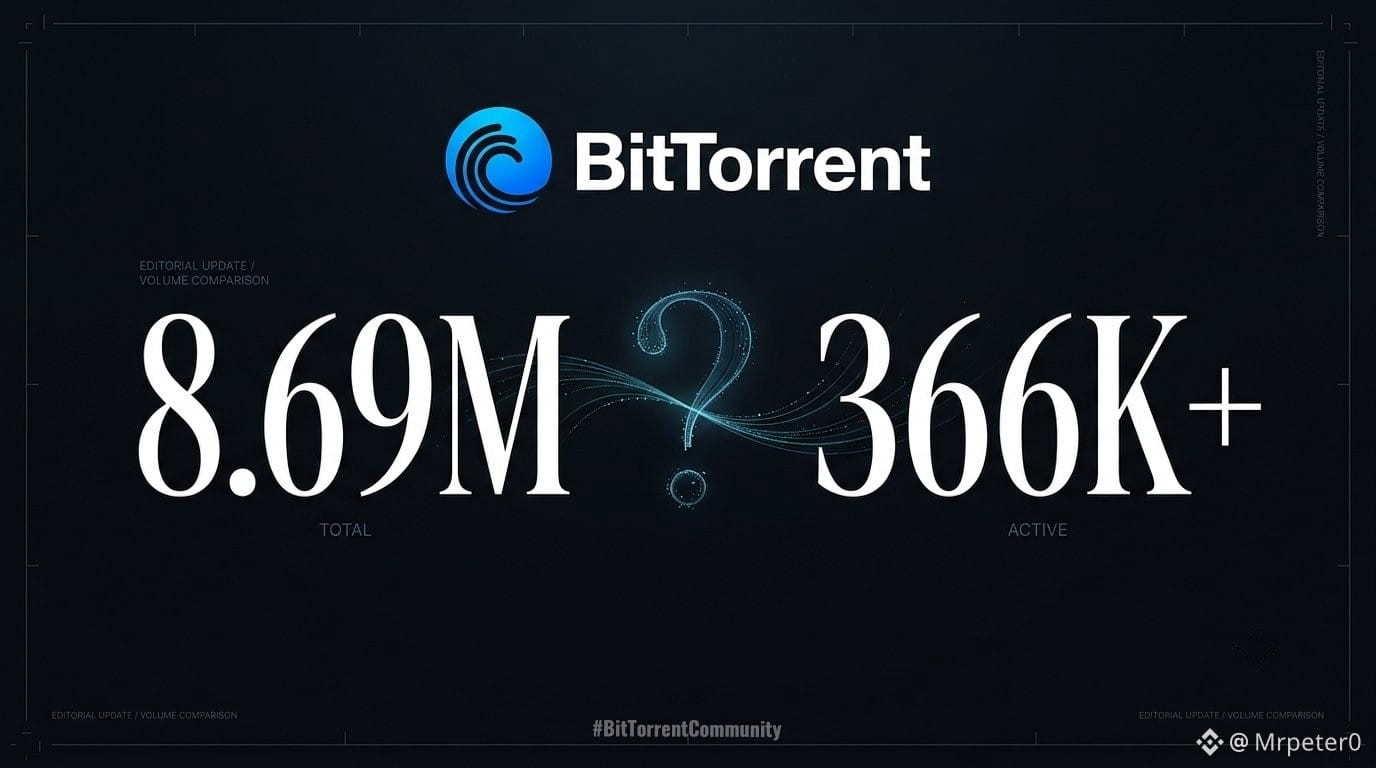
BitTorrent has reported around 8.69M daily active users, showing the scale of activity around its broader user base.
At the same time, there are 366K+ $BTT holders.
These numbers measure completely different things, so they shouldn’t be treated as if they mean the same thing. Daily active users indicate people interacting with the BitTorrent ecosystem, while holder numbers show the size of the group holding $BTT.
Still, putting the two figures side by side creates an interesting point to watch.
There is a large user base and a much smaller group of token holders. How that relationship develops over time could be worth monitoring as the BitTorrent ecosystem continues to evolve.
For $BTT, the interesting story isn’t always just the price.
Sometimes, the relationship between users, holders, activity, and adoption tells you more.
@BitTorrent_Official @JustinSun #TRONEcoStar
𝐁𝐈𝐓𝐓𝐎𝐑𝐑𝐄𝐍𝐓 𝐇𝐀𝐒 𝐓𝐖𝐎 𝐕𝐄𝐑𝐘 𝐃𝐈𝐅𝐅𝐄𝐑𝐄𝐍𝐓 𝐍𝐔𝐌𝐁𝐄𝐑𝐒 👀
One number represents activity.
The other represents token ownership.
BitTorrent has reported around 8.69M daily active users, showing the scale of activity around its broader user base.
At the same time, there are 366K+ $BTT holders.
These numbers measure completely different things, so they shouldn’t be treated as if they mean the same thing. Daily active users indicate people interacting with the BitTorrent ecosystem, while holder numbers show the size of the group holding $BTT.
Still, putting the two figures side by side creates an interesting point to watch.
There is a large user base and a much smaller group of token holders. How that relationship develops over time could be worth monitoring as the BitTorrent ecosystem continues to evolve.
For $BTT, the interesting story isn’t always just the price.
Sometimes, the relationship between users, holders, activity, and adoption tells you more.
@BitTorrent_Official @Justin Sun孙宇晨 #TRONEcoStar
One number represents activity.
The other represents token ownership.
BitTorrent has reported around 8.69M daily active users, showing the scale of activity around its broader user base.
At the same time, there are 366K+ $BTT holders.
These numbers measure completely different things, so they shouldn’t be treated as if they mean the same thing. Daily active users indicate people interacting with the BitTorrent ecosystem, while holder numbers show the size of the group holding $BTT.
Still, putting the two figures side by side creates an interesting point to watch.
There is a large user base and a much smaller group of token holders. How that relationship develops over time could be worth monitoring as the BitTorrent ecosystem continues to evolve.
For $BTT, the interesting story isn’t always just the price.
Sometimes, the relationship between users, holders, activity, and adoption tells you more.
@BitTorrent_Official @Justin Sun孙宇晨 #TRONEcoStar
1
1
·
--
𝐓𝐇𝐄 𝐍𝐄𝐗𝐓 $𝐁𝐓𝐓 𝐍𝐔𝐌𝐁𝐄𝐑 𝐓𝐎 𝐖𝐀𝐓𝐂𝐇
Price and volume often get most of the attention, but another number could become important for $BTT: the amount of tokens burned.
The expected update is set for mid-October, when the burn activity should provide a clearer picture of how many BTT tokens are being removed from circulation.
What makes this especially interesting is that the transaction should be verifiable on-chain.
That means the community won’t have to rely only on a headline or announcement. The blockchain can provide the transaction data and allow anyone to verify what actually happened.
So as October approaches, keep an eye on one simple metric:
🔥 How much $BTT was actually burned?
The number itself could give the market more information about BTT’s supply activity and the mechanics behind the ecosystem.
@BitTorrent_Official @JustinSun #TRONEcoStar
𝐓𝐇𝐄 𝐍𝐄𝐗𝐓 $𝐁𝐓𝐓 𝐍𝐔𝐌𝐁𝐄𝐑 𝐓𝐎 𝐖𝐀𝐓𝐂𝐇
Price and volume often get most of the attention, but another number could become important for $BTT: the amount of tokens burned.
The expected update is set for mid-October, when the burn activity should provide a clearer picture of how many BTT tokens are being removed from circulation.
What makes this especially interesting is that the transaction should be verifiable on-chain.
That means the community won’t have to rely only on a headline or announcement. The blockchain can provide the transaction data and allow anyone to verify what actually happened.
So as October approaches, keep an eye on one simple metric:
🔥 How much $BTT was actually burned?
The number itself could give the market more information about BTT’s supply activity and the mechanics behind the ecosystem.
@BitTorrent_Official @Justin Sun孙宇晨 #TRONEcoStar
Price and volume often get most of the attention, but another number could become important for $BTT: the amount of tokens burned.
The expected update is set for mid-October, when the burn activity should provide a clearer picture of how many BTT tokens are being removed from circulation.
What makes this especially interesting is that the transaction should be verifiable on-chain.
That means the community won’t have to rely only on a headline or announcement. The blockchain can provide the transaction data and allow anyone to verify what actually happened.
So as October approaches, keep an eye on one simple metric:
🔥 How much $BTT was actually burned?
The number itself could give the market more information about BTT’s supply activity and the mechanics behind the ecosystem.
@BitTorrent_Official @Justin Sun孙宇晨 #TRONEcoStar
1
1
·
--
Жоғары (өспелі)
𝐁𝐓𝐓 𝐉𝐔𝐒𝐓 𝐒𝐀𝐖 𝐀 𝐌𝐀𝐉𝐎𝐑 𝐋𝐄𝐀𝐏 𝐈𝐍 𝐕𝐎𝐋𝐔𝐌𝐄
The $BTT market looked very different from one day to the next.
On September 22, trading volume was around $11.8M.
By September 23, that figure had climbed to approximately $52.2M.
That’s roughly a 4.4× increase in daily volume.
At a price around $0.000000384, the most interesting part isn’t simply the token price. It’s the sudden change in the amount of trading activity happening around $BTTC .
A move like this means significantly more value was changing hands within a single day compared with the previous session.
It’s a useful metric to watch because volume can reveal changes in market participation that may not immediately be obvious from price alone.
The next question is whether this higher level of activity continues or quickly fades.
For $BTT, volume is definitely a metric worth watching right now.
#BTT @BitTorrent_Official @JustinSun #TRONEcoStar
𝐁𝐓𝐓 𝐉𝐔𝐒𝐓 𝐒𝐀𝐖 𝐀 𝐌𝐀𝐉𝐎𝐑 𝐋𝐄𝐀𝐏 𝐈𝐍 𝐕𝐎𝐋𝐔𝐌𝐄
The $BTT market looked very different from one day to the next.
On September 22, trading volume was around $11.8M.
By September 23, that figure had climbed to approximately $52.2M.
That’s roughly a 4.4× increase in daily volume.
At a price around $0.000000384, the most interesting part isn’t simply the token price. It’s the sudden change in the amount of trading activity happening around $BTTC .
A move like this means significantly more value was changing hands within a single day compared with the previous session.
It’s a useful metric to watch because volume can reveal changes in market participation that may not immediately be obvious from price alone.
The next question is whether this higher level of activity continues or quickly fades.
For $BTT, volume is definitely a metric worth watching right now.
#BTT @BitTorrent_Official @Justin Sun孙宇晨 #TRONEcoStar
The $BTT market looked very different from one day to the next.
On September 22, trading volume was around $11.8M.
By September 23, that figure had climbed to approximately $52.2M.
That’s roughly a 4.4× increase in daily volume.
At a price around $0.000000384, the most interesting part isn’t simply the token price. It’s the sudden change in the amount of trading activity happening around $BTTC .
A move like this means significantly more value was changing hands within a single day compared with the previous session.
It’s a useful metric to watch because volume can reveal changes in market participation that may not immediately be obvious from price alone.
The next question is whether this higher level of activity continues or quickly fades.
For $BTT, volume is definitely a metric worth watching right now.
#BTT @BitTorrent_Official @Justin Sun孙宇晨 #TRONEcoStar
1
154
·
--
𝐁𝐓𝐓’𝐬 𝐒𝐔𝐏𝐏𝐋𝐘 𝐈𝐒 𝐀𝐋𝐑𝐄𝐀𝐃𝐘 𝐍𝐄𝐀𝐑𝐋𝐘 𝐅𝐔𝐋𝐋𝐘 𝐈𝐍 𝐂𝐈𝐑𝐂𝐔𝐋𝐀𝐓𝐈𝐎𝐍 👀
Most conversations around $BTT usually start with price.
But there’s another number worth paying attention to: how much of the total supply is already circulating.
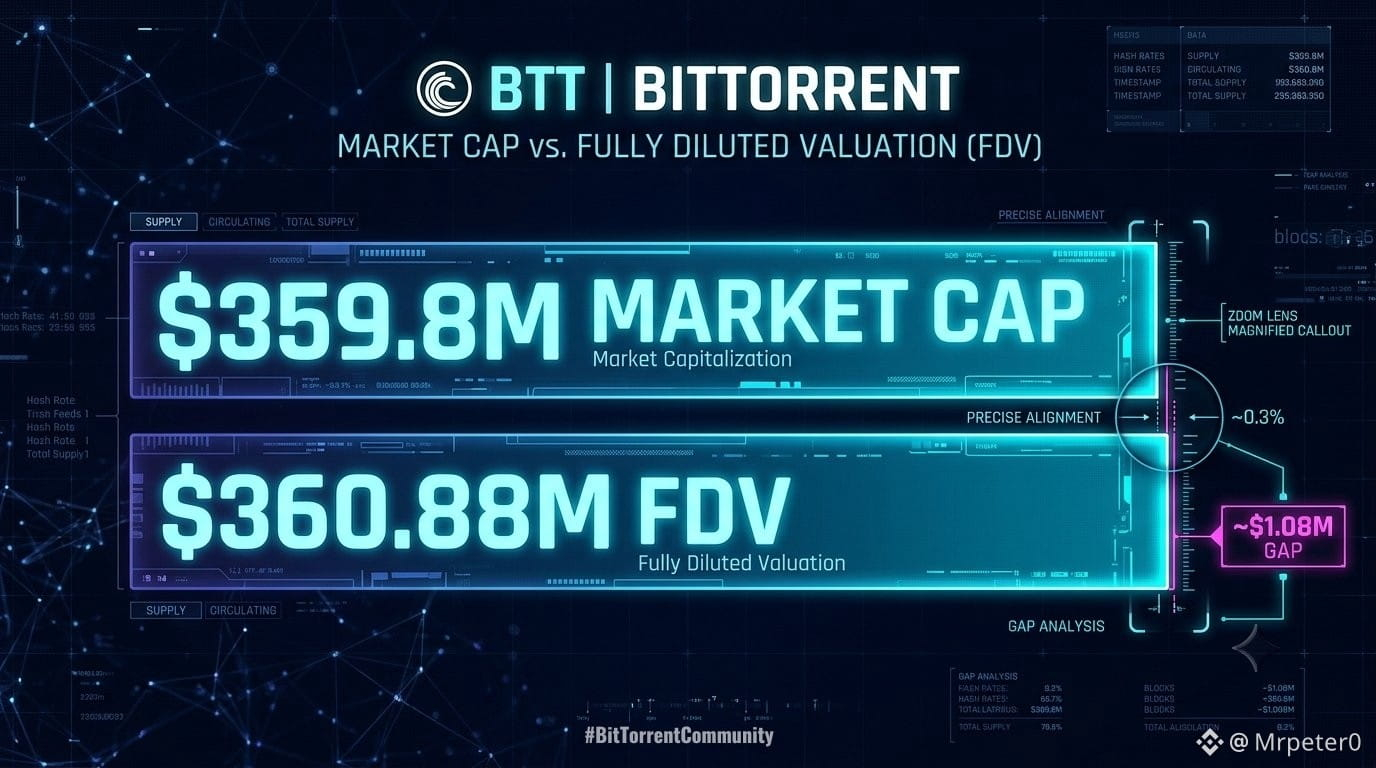
Based on the figures here, around 99.7% of BTT’s supply is already in circulation, leaving only a very small portion outside the circulating supply.
The numbers make the difference even clearer:
💰 Market Cap: $359.8M
📊 FDV: $360.88M
🔎 Difference: ~$1.08M
That puts the market cap and fully diluted valuation extremely close together.
In simple terms, the current circulating supply is already very close to the reported maximum supply, so there isn’t a large supply gap sitting between today’s market valuation and the fully diluted figure.
For anyone studying $BTT, this is an important part of the tokenomics to keep in mind.
Price tells you where the token is trading.
Supply tells you more about how much of the asset is already out in the market.
And with ~99.7% of BTT already circulating, the supply structure is definitely a number worth keeping on the radar.
@JustinSun @BitTorrent_Official #TRONEcoStar
𝐁𝐓𝐓’𝐬 𝐒𝐔𝐏𝐏𝐋𝐘 𝐈𝐒 𝐀𝐋𝐑𝐄𝐀𝐃𝐘 𝐍𝐄𝐀𝐑𝐋𝐘 𝐅𝐔𝐋𝐋𝐘 𝐈𝐍 𝐂𝐈𝐑𝐂𝐔𝐋𝐀𝐓𝐈𝐎𝐍 👀
Most conversations around $BTT usually start with price.
But there’s another number worth paying attention to: how much of the total supply is already circulating.
Based on the figures here, around 99.7% of BTT’s supply is already in circulation, leaving only a very small portion outside the circulating supply.
The numbers make the difference even clearer:
💰 Market Cap: $359.8M
📊 FDV: $360.88M
🔎 Difference: ~$1.08M
That puts the market cap and fully diluted valuation extremely close together.
In simple terms, the current circulating supply is already very close to the reported maximum supply, so there isn’t a large supply gap sitting between today’s market valuation and the fully diluted figure.
For anyone studying $BTT, this is an important part of the tokenomics to keep in mind.
Price tells you where the token is trading.
Supply tells you more about how much of the asset is already out in the market.
And with ~99.7% of BTT already circulating, the supply structure is definitely a number worth keeping on the radar.
@Justin Sun孙宇晨 @BitTorrent_Official #TRONEcoStar
Most conversations around $BTT usually start with price.
But there’s another number worth paying attention to: how much of the total supply is already circulating.
Based on the figures here, around 99.7% of BTT’s supply is already in circulation, leaving only a very small portion outside the circulating supply.
The numbers make the difference even clearer:
💰 Market Cap: $359.8M
📊 FDV: $360.88M
🔎 Difference: ~$1.08M
That puts the market cap and fully diluted valuation extremely close together.
In simple terms, the current circulating supply is already very close to the reported maximum supply, so there isn’t a large supply gap sitting between today’s market valuation and the fully diluted figure.
For anyone studying $BTT, this is an important part of the tokenomics to keep in mind.
Price tells you where the token is trading.
Supply tells you more about how much of the asset is already out in the market.
And with ~99.7% of BTT already circulating, the supply structure is definitely a number worth keeping on the radar.
@Justin Sun孙宇晨 @BitTorrent_Official #TRONEcoStar
1
1
·
--
𝐁𝐓𝐓𝐂 𝐈𝐒 𝐁𝐔𝐈𝐋𝐓 𝐅𝐎𝐑 𝐒𝐏𝐄𝐄𝐃 ⚡
When people look at a blockchain, they often focus on token price, transaction volume, or the number of users. But one important part of the infrastructure is easy to overlook: how quickly the network can produce blocks.
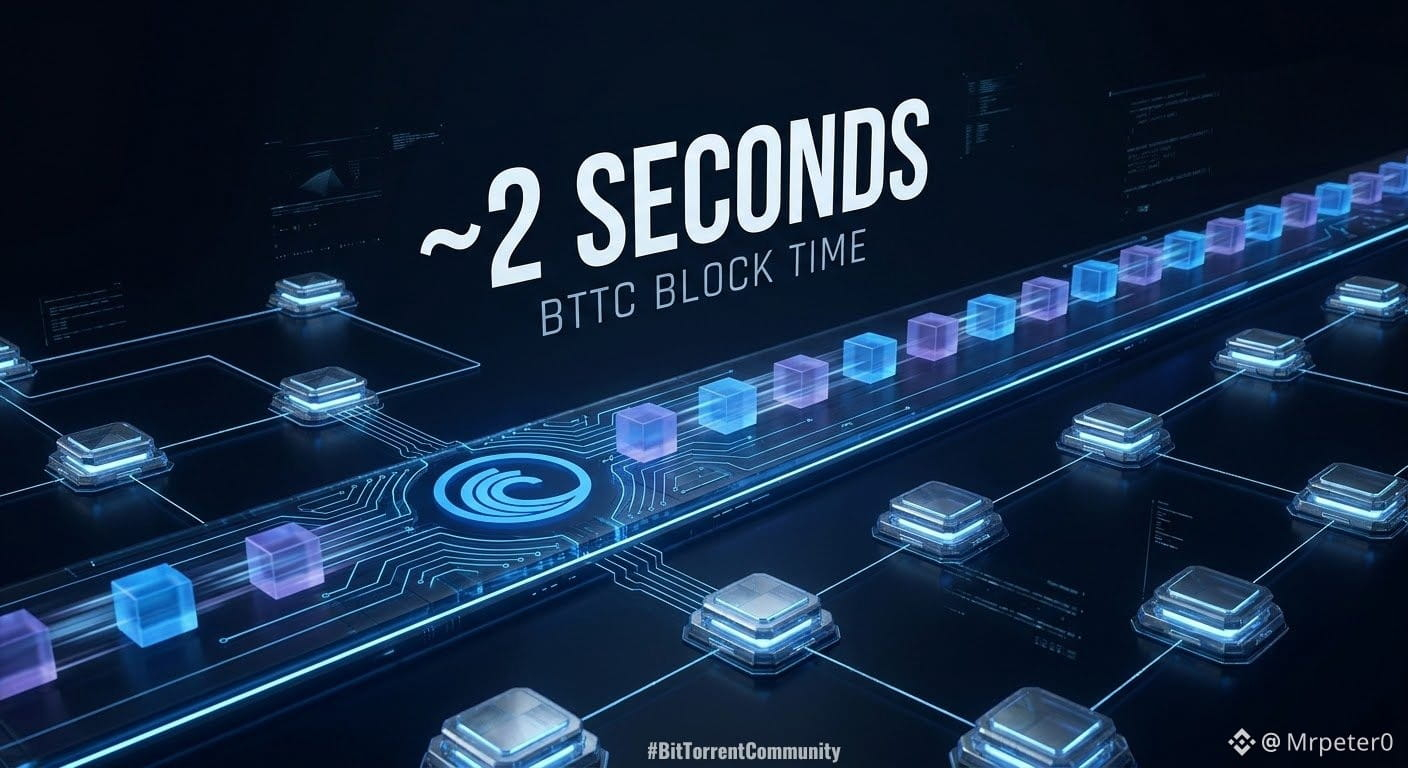
According to BitTorrent Chain documentation, BTTC has an approximate 2-second block production time.
That means the network is designed to keep block creation moving at a fast pace, giving applications and users a quicker environment for processing on-chain activity.
And BTTC is not only focused on speed.
The chain is designed around cross-chain infrastructure, creating a framework for assets and applications to operate across different blockchain environments.
At the center of the ecosystem is $BTT, which plays a role within the BitTorrent Chain network.
So, when you put the pieces together:
⚡ ~2-second block production
🌐 Cross-chain infrastructure
🔗 Blockchain interoperability
💰 $BTT supporting the ecosystem
The important point is that blockchain infrastructure is not only about what happens on the surface. The underlying architecture matters too.
Fast block production can help create a responsive network, while cross-chain functionality expands the environments BTTC can connect with.
That combination gives BTTC a design focused on speed, connectivity, and blockchain utility.
Sometimes, a simple number like 2 seconds tells you more about a blockchain’s architecture than a long list of marketing claims.
@BitTorrent_Official @JustinSun #TRONEcoStar
𝐁𝐓𝐓𝐂 𝐈𝐒 𝐁𝐔𝐈𝐋𝐓 𝐅𝐎𝐑 𝐒𝐏𝐄𝐄𝐃 ⚡
When people look at a blockchain, they often focus on token price, transaction volume, or the number of users. But one important part of the infrastructure is easy to overlook: how quickly the network can produce blocks.
According to BitTorrent Chain documentation, BTTC has an approximate 2-second block production time.
That means the network is designed to keep block creation moving at a fast pace, giving applications and users a quicker environment for processing on-chain activity.
And BTTC is not only focused on speed.
The chain is designed around cross-chain infrastructure, creating a framework for assets and applications to operate across different blockchain environments.
At the center of the ecosystem is $BTT, which plays a role within the BitTorrent Chain network.
So, when you put the pieces together:
⚡ ~2-second block production
🌐 Cross-chain infrastructure
🔗 Blockchain interoperability
💰 $BTT supporting the ecosystem
The important point is that blockchain infrastructure is not only about what happens on the surface. The underlying architecture matters too.
Fast block production can help create a responsive network, while cross-chain functionality expands the environments BTTC can connect with.
That combination gives BTTC a design focused on speed, connectivity, and blockchain utility.
Sometimes, a simple number like 2 seconds tells you more about a blockchain’s architecture than a long list of marketing claims.
@BitTorrent_Official @Justin Sun孙宇晨 #TRONEcoStar
When people look at a blockchain, they often focus on token price, transaction volume, or the number of users. But one important part of the infrastructure is easy to overlook: how quickly the network can produce blocks.
According to BitTorrent Chain documentation, BTTC has an approximate 2-second block production time.
That means the network is designed to keep block creation moving at a fast pace, giving applications and users a quicker environment for processing on-chain activity.
And BTTC is not only focused on speed.
The chain is designed around cross-chain infrastructure, creating a framework for assets and applications to operate across different blockchain environments.
At the center of the ecosystem is $BTT, which plays a role within the BitTorrent Chain network.
So, when you put the pieces together:
⚡ ~2-second block production
🌐 Cross-chain infrastructure
🔗 Blockchain interoperability
💰 $BTT supporting the ecosystem
The important point is that blockchain infrastructure is not only about what happens on the surface. The underlying architecture matters too.
Fast block production can help create a responsive network, while cross-chain functionality expands the environments BTTC can connect with.
That combination gives BTTC a design focused on speed, connectivity, and blockchain utility.
Sometimes, a simple number like 2 seconds tells you more about a blockchain’s architecture than a long list of marketing claims.
@BitTorrent_Official @Justin Sun孙宇晨 #TRONEcoStar
1
2
·
--
TRON Crosses $30 Trillion in Cumulative Transfer Volume
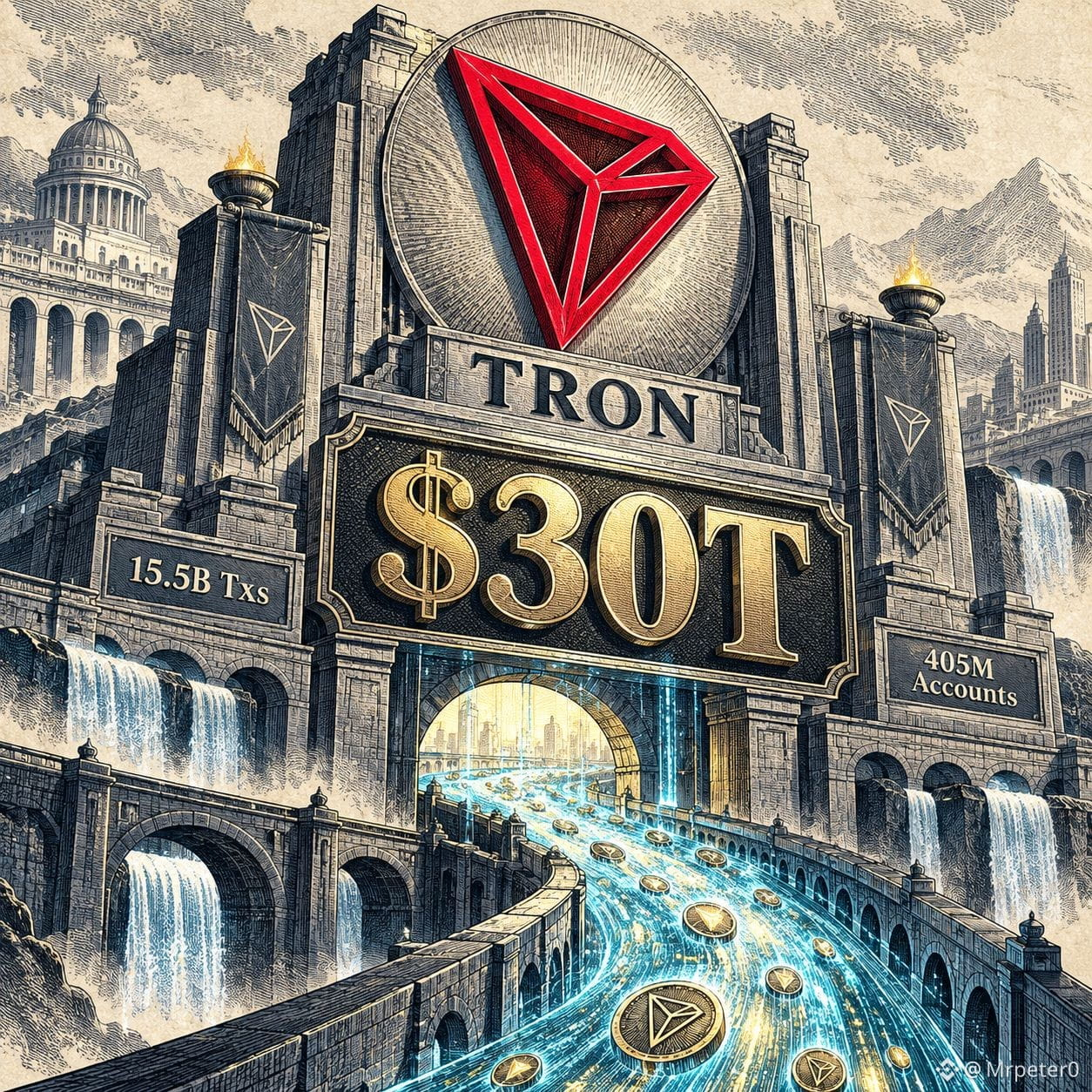
TRON has reached a major network milestone, surpassing $30 trillion in cumulative value transferred, according to TRONSCAN data.
The figure represents the total value transferred across the network, not the number of transactions. TRON has separately processed more than 15.5 billion transactions across over 405 million accounts.
The milestone highlights the scale of activity TRON has accumulated as its network continues to serve as a major settlement layer for digital assets, particularly stablecoins.
@JustinSun @TRONDAO #TRONEcoStar
TRON Crosses $30 Trillion in Cumulative Transfer Volume
TRON has reached a major network milestone, surpassing $30 trillion in cumulative value transferred, according to TRONSCAN data.
The figure represents the total value transferred across the network, not the number of transactions. TRON has separately processed more than 15.5 billion transactions across over 405 million accounts.
The milestone highlights the scale of activity TRON has accumulated as its network continues to serve as a major settlement layer for digital assets, particularly stablecoins.
@Justin Sun孙宇晨 @TRON DAO #TRONEcoStar
TRON has reached a major network milestone, surpassing $30 trillion in cumulative value transferred, according to TRONSCAN data.
The figure represents the total value transferred across the network, not the number of transactions. TRON has separately processed more than 15.5 billion transactions across over 405 million accounts.
The milestone highlights the scale of activity TRON has accumulated as its network continues to serve as a major settlement layer for digital assets, particularly stablecoins.
@Justin Sun孙宇晨 @TRON DAO #TRONEcoStar
1
32
·
--
𝐓𝐑𝐎𝐍 𝐈𝐍𝐂𝐄𝐍𝐓𝐈𝐕𝐄𝐒 𝐀𝐑𝐄 𝐆𝐄𝐓𝐓𝐈𝐍𝐆 𝐒𝐓𝐑𝐎𝐍𝐆𝐄𝐑
Sometimes, the most important changes in Web3 aren't the loudest ones.
They are the changes that make people want to participate more.
This update is a good example of that.
Here’s what changed:
→ All-chains mission: 300 → 3,000 miles
→ TRON volume-based miles: 25% → 100%
→ Other supported networks: remain at 25% of eligible swap volume.
So what does that actually mean?
A qualifying $100 cross-chain swap to or from TRON can now generate 100 miles, compared with just 25 miles before.
That is a major shift in the incentive structure.
It gives users a stronger reason to explore cross-chain activity involving TRON while making the campaign more rewarding for eligible participants.
But there’s an important point to remember:
→ Miles are campaign points.
→ They are not trading profits or investment returns.
What I find interesting here is the strategy behind it.
Good incentive design can turn attention into participation.
More attractive incentives → more user activity → more interaction with the ecosystem → more opportunities for people to discover what TRON is building.
Web3 isn't only about technology.
It's also about creating systems that give people a reason to participate.
And when the incentives are designed well, even a small change can create a much bigger difference.
@JustinSun @TRONDAO #TRONEcoStar
𝐓𝐑𝐎𝐍 𝐈𝐍𝐂𝐄𝐍𝐓𝐈𝐕𝐄𝐒 𝐀𝐑𝐄 𝐆𝐄𝐓𝐓𝐈𝐍𝐆 𝐒𝐓𝐑𝐎𝐍𝐆𝐄𝐑
Sometimes, the most important changes in Web3 aren't the loudest ones.
They are the changes that make people want to participate more.
This update is a good example of that.
Here’s what changed:
→ All-chains mission: 300 → 3,000 miles
→ TRON volume-based miles: 25% → 100%
→ Other supported networks: remain at 25% of eligible swap volume.
So what does that actually mean?
A qualifying $100 cross-chain swap to or from TRON can now generate 100 miles, compared with just 25 miles before.
That is a major shift in the incentive structure.
It gives users a stronger reason to explore cross-chain activity involving TRON while making the campaign more rewarding for eligible participants.
But there’s an important point to remember:
→ Miles are campaign points.
→ They are not trading profits or investment returns.
What I find interesting here is the strategy behind it.
Good incentive design can turn attention into participation.
More attractive incentives → more user activity → more interaction with the ecosystem → more opportunities for people to discover what TRON is building.
Web3 isn't only about technology.
It's also about creating systems that give people a reason to participate.
And when the incentives are designed well, even a small change can create a much bigger difference.
@Justin Sun孙宇晨 @TRON DAO #TRONEcoStar
Sometimes, the most important changes in Web3 aren't the loudest ones.
They are the changes that make people want to participate more.
This update is a good example of that.
Here’s what changed:
→ All-chains mission: 300 → 3,000 miles
→ TRON volume-based miles: 25% → 100%
→ Other supported networks: remain at 25% of eligible swap volume.
So what does that actually mean?
A qualifying $100 cross-chain swap to or from TRON can now generate 100 miles, compared with just 25 miles before.
That is a major shift in the incentive structure.
It gives users a stronger reason to explore cross-chain activity involving TRON while making the campaign more rewarding for eligible participants.
But there’s an important point to remember:
→ Miles are campaign points.
→ They are not trading profits or investment returns.
What I find interesting here is the strategy behind it.
Good incentive design can turn attention into participation.
More attractive incentives → more user activity → more interaction with the ecosystem → more opportunities for people to discover what TRON is building.
Web3 isn't only about technology.
It's also about creating systems that give people a reason to participate.
And when the incentives are designed well, even a small change can create a much bigger difference.
@Justin Sun孙宇晨 @TRON DAO #TRONEcoStar
65
·
--
𝐒𝐌𝐀𝐑𝐓 𝐂𝐎𝐍𝐓𝐑𝐀𝐂𝐓 𝐒𝐄𝐂𝐔𝐑𝐈𝐓𝐘 𝐈𝐒 𝐂𝐎𝐌𝐈𝐍𝐆 𝐓𝐎 𝐓𝐑𝐎𝐍
@OpenZeppelin is bringing its smart contract security stack to TRON, and this is the kind of infrastructure that can quietly make a big difference.
→ Audited contract libraries
→ Upgrade plugins
→ Contracts Wizard
→ TRC20 & TRC721 support
→ Role-based access control
→ Upgradeable contracts
→ Passkey-based account architectures
And the experience behind it is serious.
OpenZeppelin says its Contracts library has facilitated more than $37T in value transferred, with 900+ security engagements since 2015.
What makes this interesting is that the tooling isn't simply being copied from Ethereum.
→ OpenZeppelin has adapted the libraries to TRON's TVM
→ TRON-specific standards are supported
→ Execution differences are taken into account
That matters because TRON already plays a major role in stablecoin activity, especially USDT.
As more money, users and applications move onchain, security can't remain an afterthought.
𝐓𝐡𝐞 𝐫𝐞𝐚𝐥 𝐨𝐩𝐩𝐨𝐫𝐭𝐮𝐧𝐢𝐭𝐲 𝐢𝐬 𝐛𝐮𝐢𝐥𝐝𝐢𝐧𝐠 𝐬𝐚𝐟𝐞𝐫.
Better tools → better development practices → stronger applications → more confidence for builders and users.
Of course, no security framework makes a protocol automatically safe. Testing, audits, access controls, governance and dependency reviews still matter.
But giving TRON developers stronger tools from the start raises the standard of what can be built.
And that's what makes this integration worth watching.
The infrastructure is getting stronger. Now it's up to developers to build something meaningful with it.
@JustinSun @TRONDAO #TRONEcoStar
𝐒𝐌𝐀𝐑𝐓 𝐂𝐎𝐍𝐓𝐑𝐀𝐂𝐓 𝐒𝐄𝐂𝐔𝐑𝐈𝐓𝐘 𝐈𝐒 𝐂𝐎𝐌𝐈𝐍𝐆 𝐓𝐎 𝐓𝐑𝐎𝐍
@OpenZeppelin is bringing its smart contract security stack to TRON, and this is the kind of infrastructure that can quietly make a big difference.
→ Audited contract libraries
→ Upgrade plugins
→ Contracts Wizard
→ TRC20 & TRC721 support
→ Role-based access control
→ Upgradeable contracts
→ Passkey-based account architectures
And the experience behind it is serious.
OpenZeppelin says its Contracts library has facilitated more than $37T in value transferred, with 900+ security engagements since 2015.
What makes this interesting is that the tooling isn't simply being copied from Ethereum.
→ OpenZeppelin has adapted the libraries to TRON's TVM
→ TRON-specific standards are supported
→ Execution differences are taken into account
That matters because TRON already plays a major role in stablecoin activity, especially USDT.
As more money, users and applications move onchain, security can't remain an afterthought.
𝐓𝐡𝐞 𝐫𝐞𝐚𝐥 𝐨𝐩𝐩𝐨𝐫𝐭𝐮𝐧𝐢𝐭𝐲 𝐢𝐬 𝐛𝐮𝐢𝐥𝐝𝐢𝐧𝐠 𝐬𝐚𝐟𝐞𝐫.
Better tools → better development practices → stronger applications → more confidence for builders and users.
Of course, no security framework makes a protocol automatically safe. Testing, audits, access controls, governance and dependency reviews still matter.
But giving TRON developers stronger tools from the start raises the standard of what can be built.
And that's what makes this integration worth watching.
The infrastructure is getting stronger. Now it's up to developers to build something meaningful with it.
@Justin Sun孙宇晨 @TRON DAO #TRONEcoStar
@OpenZeppelin is bringing its smart contract security stack to TRON, and this is the kind of infrastructure that can quietly make a big difference.
→ Audited contract libraries
→ Upgrade plugins
→ Contracts Wizard
→ TRC20 & TRC721 support
→ Role-based access control
→ Upgradeable contracts
→ Passkey-based account architectures
And the experience behind it is serious.
OpenZeppelin says its Contracts library has facilitated more than $37T in value transferred, with 900+ security engagements since 2015.
What makes this interesting is that the tooling isn't simply being copied from Ethereum.
→ OpenZeppelin has adapted the libraries to TRON's TVM
→ TRON-specific standards are supported
→ Execution differences are taken into account
That matters because TRON already plays a major role in stablecoin activity, especially USDT.
As more money, users and applications move onchain, security can't remain an afterthought.
𝐓𝐡𝐞 𝐫𝐞𝐚𝐥 𝐨𝐩𝐩𝐨𝐫𝐭𝐮𝐧𝐢𝐭𝐲 𝐢𝐬 𝐛𝐮𝐢𝐥𝐝𝐢𝐧𝐠 𝐬𝐚𝐟𝐞𝐫.
Better tools → better development practices → stronger applications → more confidence for builders and users.
Of course, no security framework makes a protocol automatically safe. Testing, audits, access controls, governance and dependency reviews still matter.
But giving TRON developers stronger tools from the start raises the standard of what can be built.
And that's what makes this integration worth watching.
The infrastructure is getting stronger. Now it's up to developers to build something meaningful with it.
@Justin Sun孙宇晨 @TRON DAO #TRONEcoStar
72
Көбірек контент көру үшін кіріңіз
Binance Square платформасында әлемдік криптоқоғамдастыққа қосылыңыз
⚡️ Криптовалюта туралы ең соңғы және пайдалы ақпаратты алыңыз.
💬 Әлемдегі ең ірі криптобиржаның сеніміне ие.
👍 Расталған авторлардың нақты пікірлерін табыңыз.
Электрондық пошта/телефон нөмірі
Трендтегі тақырыптар
CircleMints500MUSDCOnSolana
30,312 рет көрілді
843 адам талқылап жатыр
$SOL — CIRCLE تطبع للتو دفعة جديدة بقيمة 500 مليون دولار من USDC على سولانا. 🚨
قامت شركة Circle بإصدار 500 مليون USDC على سولانا على دفعتين بقيمة 250 مليون دولار، ما أضاف ضخّ سيولة رئيسي آخر إلى الشبكة. يؤكد الإبلاغ على السلسلة عمليات الإصدار، على الرغم من أن الرموز ظلت في البداية ضمن مخزون الخزانة الخاضع لسيطرة Circle بدلًا من دخول التداول فورًا.
وهذا ليس تحركًا معزولًا.
وصل إجمالي المعروض من العملات المستقرة على سولانا إلى مستوى تاريخي جديد عند 17.3 مليار دولار، بينما أفادت التقارير أن Circle قامت بإصدار ما يقارب 11 مليار دولار من USDC على سولانا خلال شهر أغسطس وحده.
لماذا هذا مهم بالنسبة إلى $SOL ؟
زيادة سيولة العملات المستقرة يمكن أن تعني وقودًا أكبر لتداول DEX وDeFi والمدفوعات والنشاط على السلسلة.
الأموال لا تغادر سولانا.
المزيد من الدولارات يتم سكّها باستمرار عليها. 👀
متابعة من فضلكم
$CRCL
#circlemints500musdconsolana #PolymarketBankFailureBetsDrawFDICConcern #BlackRockBuildsTokenizedPortfoliosForOndo #BitwiseFilesToListNEARETFOnNYSEArca #SECCommissionerPeirceToLeaveOct2
Shamika Metting
·6 лайк
·4.8k рет көрілді
PolymarketBankFailureBetsDrawFDICConcern
44,292 рет көрілді
1,001 адам талқылап жатыр
BlackRockBuildsTokenizedPortfoliosForOndo
37,400 рет көрілді
672 адам талқылап жатыр