

Bronu Silva 1
102 Жариялаулар
Bronu Silva 1
Хабарлау
Пайдаланушыны блоктау
Crypto Shiller, Ambassador, Marketer, #BTC, #ETH, #SOL
0 Жазылым
3 Жазылушылар
2 лайк басылған
Жазбалар
Agents Can Trade. They Still Cannot Borrow 🏦
$AAVE and $MORPHO made onchain lending a primitive and then rebuilt it around isolated risk. Neither was designed for a borrower with no legal identity.
That gap showed up clearly at Bankr's Runtime Agent Week. Advance, which won the Dynamic track and took first in the Uniswap track, applies continuous clearing auctions to issuing credit for agents. The judges called out the approach to agent borrowing specifically.
It is worth being precise about why this is hard.
Credit is a claim on a future person. Underwriting rests on identity, recourse, and a reputation that survives default. An agent has a wallet and an instruction set. It can hold collateral, but it cannot be sued, and a fresh keypair costs nothing, so the usual penalty for walking away does not exist.
That leaves two honest paths. Overcollateralise, which is not really credit. Or price the loan by auction and let the market decide what an anonymous automated borrower is worth.
The second is what Advance is testing, and it is the more interesting of the two.
T3tris, the grand prize winner, approaches the same problem from the other side with permissionless vaults for traders, curators and agents. Capital allocated to software rather than by it.
Neither is a product yet. A hackathon build demonstrates that something is possible, not that anyone wants it.
Still, this is the piece the agent economy has been missing.
#AI #DeFi
Agents Can Trade. They Still Cannot Borrow 🏦
$AAVE and $MORPHO made onchain lending a primitive and then rebuilt it around isolated risk. Neither was designed for a borrower with no legal identity.
That gap showed up clearly at Bankr's Runtime Agent Week. Advance, which won the Dynamic track and took first in the Uniswap track, applies continuous clearing auctions to issuing credit for agents. The judges called out the approach to agent borrowing specifically.
It is worth being precise about why this is hard.
Credit is a claim on a future person. Underwriting rests on identity, recourse, and a reputation that survives default. An agent has a wallet and an instruction set. It can hold collateral, but it cannot be sued, and a fresh keypair costs nothing, so the usual penalty for walking away does not exist.
That leaves two honest paths. Overcollateralise, which is not really credit. Or price the loan by auction and let the market decide what an anonymous automated borrower is worth.
The second is what Advance is testing, and it is the more interesting of the two.
T3tris, the grand prize winner, approaches the same problem from the other side with permissionless vaults for traders, curators and agents. Capital allocated to software rather than by it.
Neither is a product yet. A hackathon build demonstrates that something is possible, not that anyone wants it.
Still, this is the piece the agent economy has been missing.
#AI #DeFi
$AAVE and $MORPHO made onchain lending a primitive and then rebuilt it around isolated risk. Neither was designed for a borrower with no legal identity.
That gap showed up clearly at Bankr's Runtime Agent Week. Advance, which won the Dynamic track and took first in the Uniswap track, applies continuous clearing auctions to issuing credit for agents. The judges called out the approach to agent borrowing specifically.
It is worth being precise about why this is hard.
Credit is a claim on a future person. Underwriting rests on identity, recourse, and a reputation that survives default. An agent has a wallet and an instruction set. It can hold collateral, but it cannot be sued, and a fresh keypair costs nothing, so the usual penalty for walking away does not exist.
That leaves two honest paths. Overcollateralise, which is not really credit. Or price the loan by auction and let the market decide what an anonymous automated borrower is worth.
The second is what Advance is testing, and it is the more interesting of the two.
T3tris, the grand prize winner, approaches the same problem from the other side with permissionless vaults for traders, curators and agents. Capital allocated to software rather than by it.
Neither is a product yet. A hackathon build demonstrates that something is possible, not that anyone wants it.
Still, this is the piece the agent economy has been missing.
#AI #DeFi

56
Web3 replaced loyalty points with rankings 🧠
Leaderboards around $LIT and $DRV show how naturally crypto audiences respond to visible progress, with Web3 making status public and turning participation into something the wider community can follow.
That visibility changes how people engage, and to me, this is why leaderboards have become a crypto-native loyalty layer.
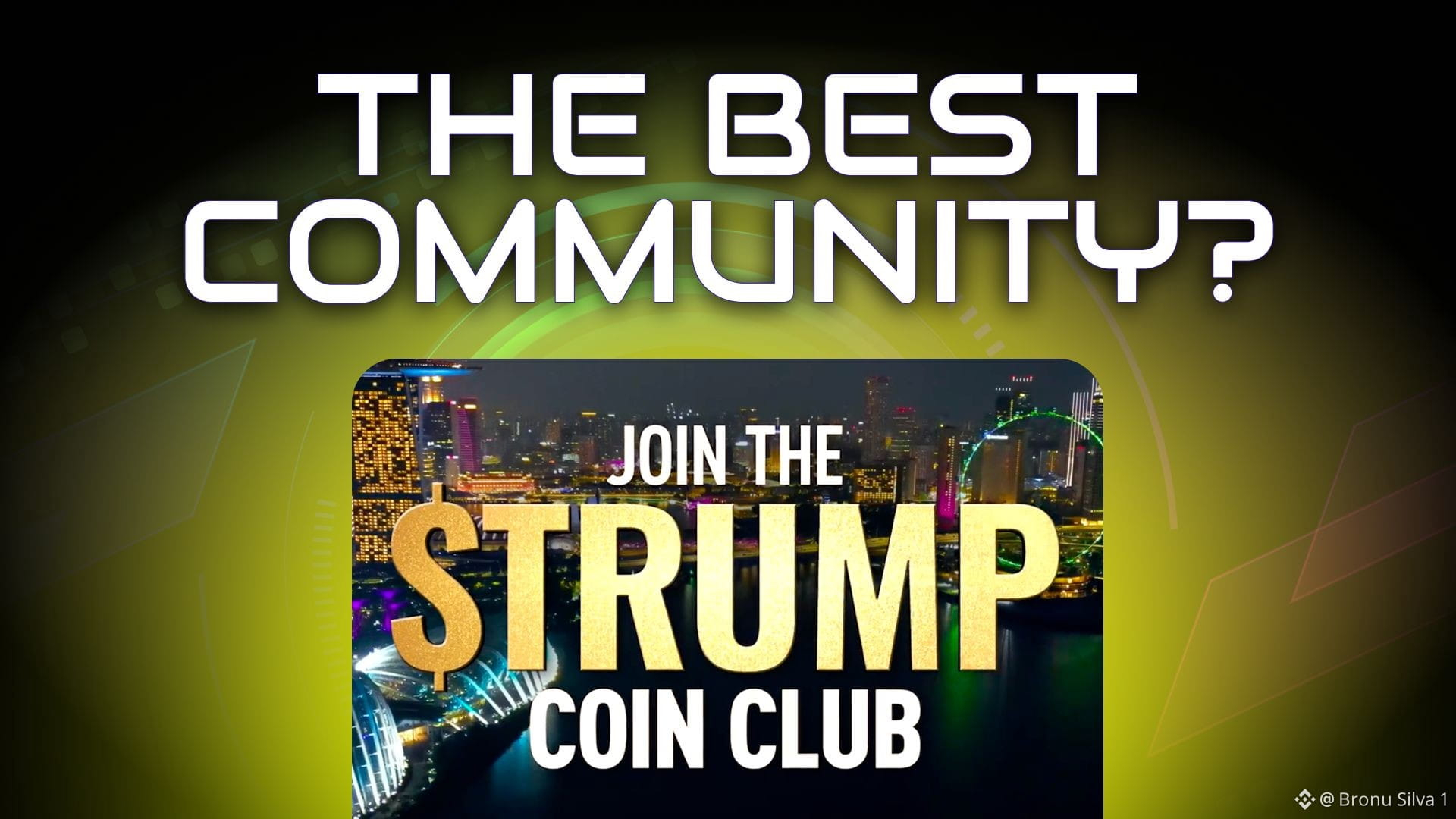
But while dome leaderboards culminate in digital recognition or rewards, the $Trump Coin Club applies the format to the build-up toward its planned Singapore experience.
A snapshot is scheduled for October 1 ahead of a three-day experience structured around 23 eligible attendees, and here, the leaderboard functions as a full system while building anticipation for a real event.
The familiar habit of checking digital progress becomes connected to potential IRL participation 🔥
#Macro Insights#
Web3 replaced loyalty points with rankings 🧠
Leaderboards around $LIT and $DRV show how naturally crypto audiences respond to visible progress, with Web3 making status public and turning participation into something the wider community can follow.
That visibility changes how people engage, and to me, this is why leaderboards have become a crypto-native loyalty layer.
But while dome leaderboards culminate in digital recognition or rewards, the $Trump Coin Club applies the format to the build-up toward its planned Singapore experience.
A snapshot is scheduled for October 1 ahead of a three-day experience structured around 23 eligible attendees, and here, the leaderboard functions as a full system while building anticipation for a real event.
The familiar habit of checking digital progress becomes connected to potential IRL participation 🔥
#Macro Insights#
Leaderboards around $LIT and $DRV show how naturally crypto audiences respond to visible progress, with Web3 making status public and turning participation into something the wider community can follow.
That visibility changes how people engage, and to me, this is why leaderboards have become a crypto-native loyalty layer.
But while dome leaderboards culminate in digital recognition or rewards, the $Trump Coin Club applies the format to the build-up toward its planned Singapore experience.
A snapshot is scheduled for October 1 ahead of a three-day experience structured around 23 eligible attendees, and here, the leaderboard functions as a full system while building anticipation for a real event.
The familiar habit of checking digital progress becomes connected to potential IRL participation 🔥
#Macro Insights#

115
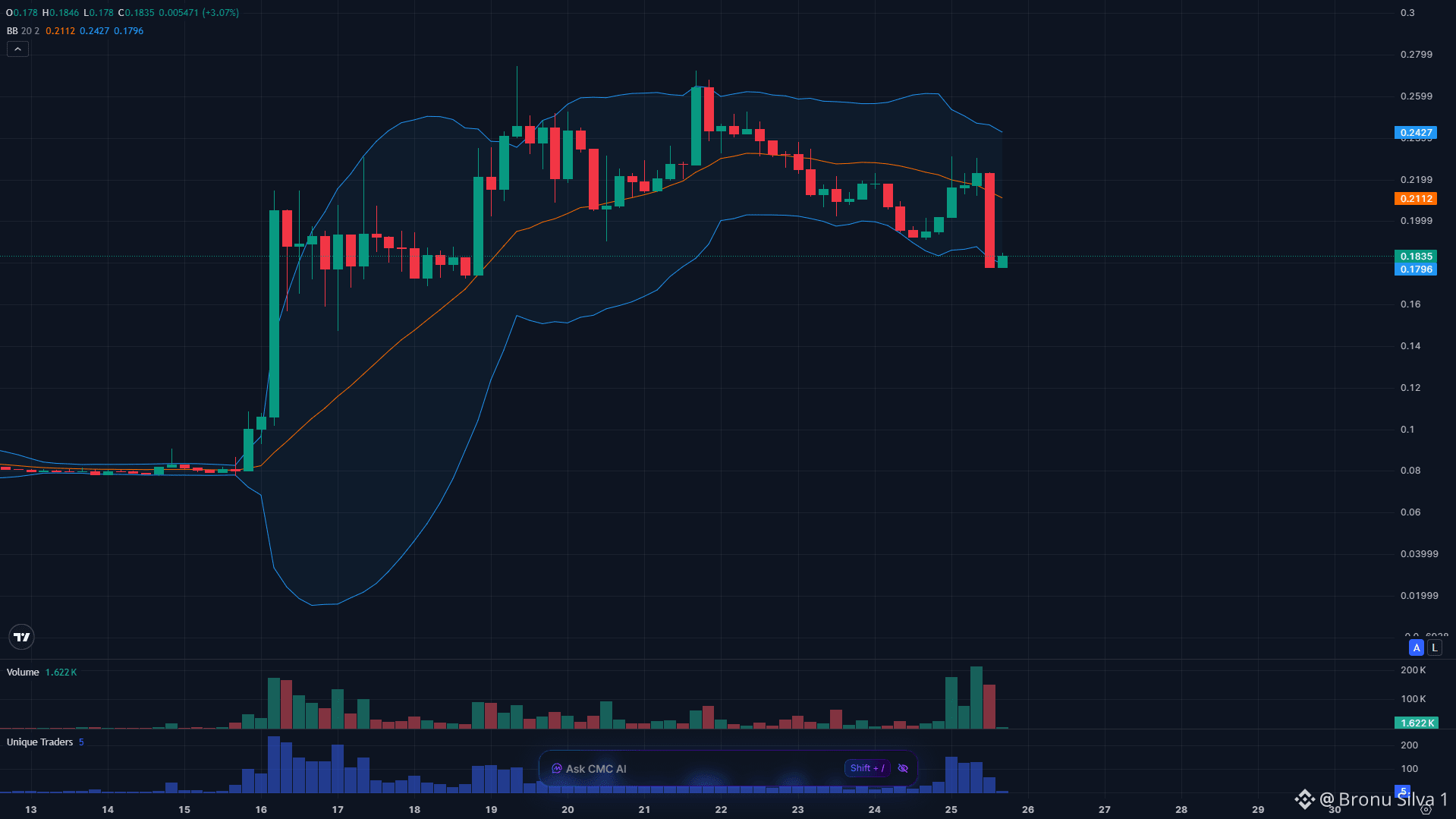
$SYN Reclaims The Lower Band 🔥
$SYN is showing an early bullish reaction while onchain finance assets such as $ONDO remain in focus.
After briefly trading below the lower Bollinger Band near 0.1796 USD, SYN has rebounded to approximately 0.1835 USD and moved back inside the band.
That reclaim matters. A move below the band followed by a recovery inside it can signal seller exhaustion and the beginning of a mean-reversion setup.
The first level to recover is 0.20 USD. The stronger confirmation sits at the Bollinger midline near 0.2112 USD.
A sustained move above that midline would return SYN to the upper half of its Bollinger range and bring the upper band near 0.2427 USD back into focus.
The latest candle is also showing a 3% rebound from its low, giving buyers the first response needed for a bullish reversal.
#Altcoin Season#
$SYN Reclaims The Lower Band 🔥
$SYN is showing an early bullish reaction while onchain finance assets such as $ONDO remain in focus.
After briefly trading below the lower Bollinger Band near 0.1796 USD, SYN has rebounded to approximately 0.1835 USD and moved back inside the band.
That reclaim matters. A move below the band followed by a recovery inside it can signal seller exhaustion and the beginning of a mean-reversion setup.
The first level to recover is 0.20 USD. The stronger confirmation sits at the Bollinger midline near 0.2112 USD.
A sustained move above that midline would return SYN to the upper half of its Bollinger range and bring the upper band near 0.2427 USD back into focus.
The latest candle is also showing a 3% rebound from its low, giving buyers the first response needed for a bullish reversal.
#Altcoin Season#
$SYN is showing an early bullish reaction while onchain finance assets such as $ONDO remain in focus.
After briefly trading below the lower Bollinger Band near 0.1796 USD, SYN has rebounded to approximately 0.1835 USD and moved back inside the band.
That reclaim matters. A move below the band followed by a recovery inside it can signal seller exhaustion and the beginning of a mean-reversion setup.
The first level to recover is 0.20 USD. The stronger confirmation sits at the Bollinger midline near 0.2112 USD.
A sustained move above that midline would return SYN to the upper half of its Bollinger range and bring the upper band near 0.2427 USD back into focus.
The latest candle is also showing a 3% rebound from its low, giving buyers the first response needed for a bullish reversal.
#Altcoin Season#
58
This Is The RWA Test 🏦
I'm less interested in whether institutions can tokenize an asset now.
We know they can.
I'm interested in whether that regulated asset can enter DeFi, become collateral, generate additional utility and still preserve the controls that made institutions comfortable owning it.
That's what the DigiFT x Theoriq pilot is trying to test.
The plan is to use a regulated tokenized money-market fund distributed through DigiFT as collateral in a Morpho lending market curated by Theoriq.
DigiFT remains responsible for the regulated asset layer onboarding, permissioning, distribution and redemption.
Theoriq handles the strategy layer above it: vault configuration, market deployment, risk parameters and monitoring.
I think that separation is important.
You don't need DeFi to replace the regulated infrastructure underneath the asset.
You need the two systems to cooperate without either pretending the other doesn't exist.
As ecosystems such as $AVAX compete for institutional RWA activity, this kind of architecture may matter far more than raw transaction throughput.
The institutional unlock isn't tokenization alone.
It's composability without breaking compliance.
#Altcoin Season#
This Is The RWA Test 🏦
I'm less interested in whether institutions can tokenize an asset now.
We know they can.
I'm interested in whether that regulated asset can enter DeFi, become collateral, generate additional utility and still preserve the controls that made institutions comfortable owning it.
That's what the DigiFT x Theoriq pilot is trying to test.
The plan is to use a regulated tokenized money-market fund distributed through DigiFT as collateral in a Morpho lending market curated by Theoriq.
DigiFT remains responsible for the regulated asset layer onboarding, permissioning, distribution and redemption.
Theoriq handles the strategy layer above it: vault configuration, market deployment, risk parameters and monitoring.
I think that separation is important.
You don't need DeFi to replace the regulated infrastructure underneath the asset.
You need the two systems to cooperate without either pretending the other doesn't exist.
As ecosystems such as $AVAX compete for institutional RWA activity, this kind of architecture may matter far more than raw transaction throughput.
The institutional unlock isn't tokenization alone.
It's composability without breaking compliance.
#Altcoin Season#
I'm less interested in whether institutions can tokenize an asset now.
We know they can.
I'm interested in whether that regulated asset can enter DeFi, become collateral, generate additional utility and still preserve the controls that made institutions comfortable owning it.
That's what the DigiFT x Theoriq pilot is trying to test.
The plan is to use a regulated tokenized money-market fund distributed through DigiFT as collateral in a Morpho lending market curated by Theoriq.
DigiFT remains responsible for the regulated asset layer onboarding, permissioning, distribution and redemption.
Theoriq handles the strategy layer above it: vault configuration, market deployment, risk parameters and monitoring.
I think that separation is important.
You don't need DeFi to replace the regulated infrastructure underneath the asset.
You need the two systems to cooperate without either pretending the other doesn't exist.
As ecosystems such as $AVAX compete for institutional RWA activity, this kind of architecture may matter far more than raw transaction throughput.
The institutional unlock isn't tokenization alone.
It's composability without breaking compliance.
#Altcoin Season#
58
Compliance After The Fact Is Expensive 📋
I've seen enough crypto projects bolt compliance onto a product after everything else is finished.
That gets harder as the market grows up.
Space and Time is taking almost the opposite route with its CLARITY Compliance Framework.
The framework is built around verifiable source data, automated reporting and continuous audit trails rather than reconstructing everything when someone eventually asks for it.
That sounds boring until you're the institution trying to explain thousands of transactions to an auditor.
Then it's very useful.
As ecosystems like $AVAX attract more institutional and tokenized-asset activity, I think infrastructure will increasingly need to answer two questions at once:
Does it work?
And can you prove how it worked?
The projects preparing for that standard before they're forced to are the ones I'd rather watch.
#Altcoin Season#
Compliance After The Fact Is Expensive 📋
I've seen enough crypto projects bolt compliance onto a product after everything else is finished.
That gets harder as the market grows up.
Space and Time is taking almost the opposite route with its CLARITY Compliance Framework.
The framework is built around verifiable source data, automated reporting and continuous audit trails rather than reconstructing everything when someone eventually asks for it.
That sounds boring until you're the institution trying to explain thousands of transactions to an auditor.
Then it's very useful.
As ecosystems like $AVAX attract more institutional and tokenized-asset activity, I think infrastructure will increasingly need to answer two questions at once:
Does it work?
And can you prove how it worked?
The projects preparing for that standard before they're forced to are the ones I'd rather watch.
#Altcoin Season#
I've seen enough crypto projects bolt compliance onto a product after everything else is finished.
That gets harder as the market grows up.
Space and Time is taking almost the opposite route with its CLARITY Compliance Framework.
The framework is built around verifiable source data, automated reporting and continuous audit trails rather than reconstructing everything when someone eventually asks for it.
That sounds boring until you're the institution trying to explain thousands of transactions to an auditor.
Then it's very useful.
As ecosystems like $AVAX attract more institutional and tokenized-asset activity, I think infrastructure will increasingly need to answer two questions at once:
Does it work?
And can you prove how it worked?
The projects preparing for that standard before they're forced to are the ones I'd rather watch.
#Altcoin Season#
65
The RWA race has two directions 👀
$ONDO has made institutional tokenization one of the most visible narratives across the RWA market, and at the same time now, $PONS is showing how strongly crypto-native trading activity can shape market attention.
These are usually treated as separate paths where one begins with traditional assets moving onchain, while the other begins with onchain markets finding product-market fit among crypto users.
I think the more interesting opportunity appears when both paths meet.
Injective is approaching the RWA sector from the opposite direction to Ondo, as it began with crypto-native market infrastructure and built an ecosystem around active onchain trading.
Both approaches can work, but they create different starting advantages as Injective is bringing the trading DNA needed to turn tokenized assets into active onchain markets.
For me, this is the reverse Ondo thesis.
If RWA adoption moves from issuing assets toward making them usable, Injective’s existing market base could become one of its strongest advantages 🔥
#Altcoin Season#
The RWA race has two directions 👀
$ONDO has made institutional tokenization one of the most visible narratives across the RWA market, and at the same time now, $PONS is showing how strongly crypto-native trading activity can shape market attention.
These are usually treated as separate paths where one begins with traditional assets moving onchain, while the other begins with onchain markets finding product-market fit among crypto users.
I think the more interesting opportunity appears when both paths meet.
Injective is approaching the RWA sector from the opposite direction to Ondo, as it began with crypto-native market infrastructure and built an ecosystem around active onchain trading.
Both approaches can work, but they create different starting advantages as Injective is bringing the trading DNA needed to turn tokenized assets into active onchain markets.
For me, this is the reverse Ondo thesis.
If RWA adoption moves from issuing assets toward making them usable, Injective’s existing market base could become one of its strongest advantages 🔥
#Altcoin Season#
$ONDO has made institutional tokenization one of the most visible narratives across the RWA market, and at the same time now, $PONS is showing how strongly crypto-native trading activity can shape market attention.
These are usually treated as separate paths where one begins with traditional assets moving onchain, while the other begins with onchain markets finding product-market fit among crypto users.
I think the more interesting opportunity appears when both paths meet.
Injective is approaching the RWA sector from the opposite direction to Ondo, as it began with crypto-native market infrastructure and built an ecosystem around active onchain trading.
Both approaches can work, but they create different starting advantages as Injective is bringing the trading DNA needed to turn tokenized assets into active onchain markets.
For me, this is the reverse Ondo thesis.
If RWA adoption moves from issuing assets toward making them usable, Injective’s existing market base could become one of its strongest advantages 🔥
#Altcoin Season#
2
1
430
$SUI Just Shit On The Haters 💩
Seven days ago, SUI closed near $0.69.
Today it trades around $1.02 after briefly reaching $1.08.
That is a roughly 50% move in one week, backed by nearly $2B in 24-hour volume.
The most important development is the breakout above $0.9725, a level that had capped price for months.
SUI is cooling today (as is the whole market as expected), but price remains above that breakout zone.
That keeps the long-term falling-wedge thesis firmly alive.
If $0.9725 becomes support, $1.08 is the first level bulls need to clear again.
Above it, I’m watching $1.16 followed by the $1.28 Fibonacci extension.
A convincing break through $1.28 would bring the previous $1.40 region back into focus.
The chart is stretched after such a fast run, with the seven-day RSI recently reaching 87.6.
A controlled retest would strengthen the structure by proving former resistance has become genuine demand.
Losing $0.9725 would weaken the breakout and expose $0.91, so that is my invalidation level.
With Basecamp approaching and speculation building around Sui’s new finance product, the catalyst window remains open.
My bullish thesis is simple. Hold the breakout, consolidate above $1 and let volume build the next leg.
#Altcoin Season#
$SUI Just Shit On The Haters 💩
Seven days ago, SUI closed near $0.69.
Today it trades around $1.02 after briefly reaching $1.08.
That is a roughly 50% move in one week, backed by nearly $2B in 24-hour volume.
The most important development is the breakout above $0.9725, a level that had capped price for months.
SUI is cooling today (as is the whole market as expected), but price remains above that breakout zone.
That keeps the long-term falling-wedge thesis firmly alive.
If $0.9725 becomes support, $1.08 is the first level bulls need to clear again.
Above it, I’m watching $1.16 followed by the $1.28 Fibonacci extension.
A convincing break through $1.28 would bring the previous $1.40 region back into focus.
The chart is stretched after such a fast run, with the seven-day RSI recently reaching 87.6.
A controlled retest would strengthen the structure by proving former resistance has become genuine demand.
Losing $0.9725 would weaken the breakout and expose $0.91, so that is my invalidation level.
With Basecamp approaching and speculation building around Sui’s new finance product, the catalyst window remains open.
My bullish thesis is simple. Hold the breakout, consolidate above $1 and let volume build the next leg.
#Altcoin Season#
Seven days ago, SUI closed near $0.69.
Today it trades around $1.02 after briefly reaching $1.08.
That is a roughly 50% move in one week, backed by nearly $2B in 24-hour volume.
The most important development is the breakout above $0.9725, a level that had capped price for months.
SUI is cooling today (as is the whole market as expected), but price remains above that breakout zone.
That keeps the long-term falling-wedge thesis firmly alive.
If $0.9725 becomes support, $1.08 is the first level bulls need to clear again.
Above it, I’m watching $1.16 followed by the $1.28 Fibonacci extension.
A convincing break through $1.28 would bring the previous $1.40 region back into focus.
The chart is stretched after such a fast run, with the seven-day RSI recently reaching 87.6.
A controlled retest would strengthen the structure by proving former resistance has become genuine demand.
Losing $0.9725 would weaken the breakout and expose $0.91, so that is my invalidation level.
With Basecamp approaching and speculation building around Sui’s new finance product, the catalyst window remains open.
My bullish thesis is simple. Hold the breakout, consolidate above $1 and let volume build the next leg.
#Altcoin Season#
69
Faster Access To Better Trades ⚡
Every trader knows the pain of finding a good opportunity right after someone else already traded it or a bot beating you to it.
Finding and getting to the better trades faster is one advantage of Pear Protocol's Agent Pear Vault.
Its strategy continuously monitors asset relationships for statistical divergences and can automatically enter when a qualifying opportunity appears, rather than waiting for you to find it and pull the trigger.
So if a temporary gap develops between a pair like $HYPE and $UNI , the strategy can respond to the signal while it's there.
You won't have to research the pair first or calculate the position manually. There's no hesitation between finding the trade and entering it.
The Vault Fact Sheet specifically identifies continuous automated execution as a way of removing latency and discretion when capturing temporary inefficiencies on Hyperliquid.
That's one of those trading edges that make all the difference.
Get AI-speed execution at pear.garden
#Altcoin Season#
Faster Access To Better Trades ⚡
Every trader knows the pain of finding a good opportunity right after someone else already traded it or a bot beating you to it.
Finding and getting to the better trades faster is one advantage of Pear Protocol's Agent Pear Vault.
Its strategy continuously monitors asset relationships for statistical divergences and can automatically enter when a qualifying opportunity appears, rather than waiting for you to find it and pull the trigger.
So if a temporary gap develops between a pair like $HYPE and $UNI , the strategy can respond to the signal while it's there.
You won't have to research the pair first or calculate the position manually. There's no hesitation between finding the trade and entering it.
The Vault Fact Sheet specifically identifies continuous automated execution as a way of removing latency and discretion when capturing temporary inefficiencies on Hyperliquid.
That's one of those trading edges that make all the difference.
Get AI-speed execution at pear.garden
#Altcoin Season#
Every trader knows the pain of finding a good opportunity right after someone else already traded it or a bot beating you to it.
Finding and getting to the better trades faster is one advantage of Pear Protocol's Agent Pear Vault.
Its strategy continuously monitors asset relationships for statistical divergences and can automatically enter when a qualifying opportunity appears, rather than waiting for you to find it and pull the trigger.
So if a temporary gap develops between a pair like $HYPE and $UNI , the strategy can respond to the signal while it's there.
You won't have to research the pair first or calculate the position manually. There's no hesitation between finding the trade and entering it.
The Vault Fact Sheet specifically identifies continuous automated execution as a way of removing latency and discretion when capturing temporary inefficiencies on Hyperliquid.
That's one of those trading edges that make all the difference.
Get AI-speed execution at pear.garden
#Altcoin Season#
58
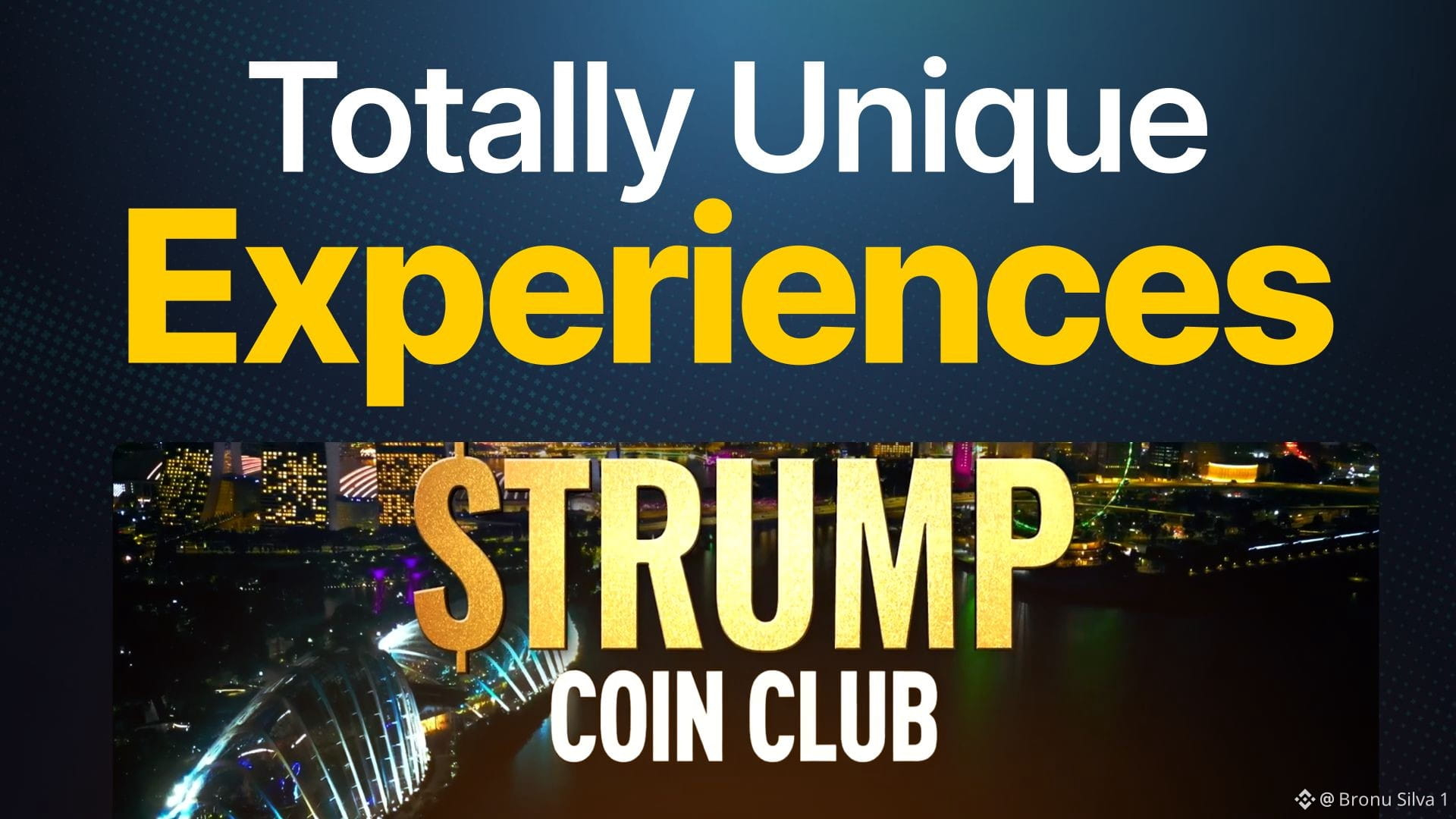
The culture of communities is changing 🧠
When I look at the cultures around $SHIB and $PENGU I see how strongly a crypto community can become part of personal identity.
Most conversations about status still focus on what someone can display, but at the end of day anyone can sell an NFT or a bag they got, as the community means nothing but a group chat.
That is why experiential luxury interests me.
Its most enduring element can be the story people carry away, and that's what the Trump Coin Club is about.
Its New York football final experience gave 19 verified attendees a shared occasion to remember, while the planned Singapore experience is expected to create a different set of memories through race-viewing hospitality and time together across the city.
That is when an event begins contributing to the identity of a group 🔥
#Altcoin Season#
The culture of communities is changing 🧠
When I look at the cultures around $SHIB and $PENGU I see how strongly a crypto community can become part of personal identity.
Most conversations about status still focus on what someone can display, but at the end of day anyone can sell an NFT or a bag they got, as the community means nothing but a group chat.
That is why experiential luxury interests me.
Its most enduring element can be the story people carry away, and that's what the Trump Coin Club is about.
Its New York football final experience gave 19 verified attendees a shared occasion to remember, while the planned Singapore experience is expected to create a different set of memories through race-viewing hospitality and time together across the city.
That is when an event begins contributing to the identity of a group 🔥
#Altcoin Season#
When I look at the cultures around $SHIB and $PENGU I see how strongly a crypto community can become part of personal identity.
Most conversations about status still focus on what someone can display, but at the end of day anyone can sell an NFT or a bag they got, as the community means nothing but a group chat.
That is why experiential luxury interests me.
Its most enduring element can be the story people carry away, and that's what the Trump Coin Club is about.
Its New York football final experience gave 19 verified attendees a shared occasion to remember, while the planned Singapore experience is expected to create a different set of memories through race-viewing hospitality and time together across the city.
That is when an event begins contributing to the identity of a group 🔥
#Altcoin Season#
64
What makes a community feel real 👀
I have watched communities around $INJ and $SUI build recognizable identities online as crypto makes it unusually easy for people with shared interests to find one another across the world.
A crypto community can grow quickly without most of its members ever entering the same room, and the harder part is giving that online identity some substance in real life.
For me, a club begins to feel real when familiar usernames become actual conversations.
The Trump Coin Club is an example of the perfect community.
In July, 19 attendees joined a private-suite football final weekend in New York, and next is a three-day Trump Coin Club experience planned for Singapore from October 9 to 11.
What stands out to me is the continuity from one destination to the next.
The Club is building its identity through experiences its community can share in person 🔥
#Altcoin Season#
What makes a community feel real 👀
I have watched communities around $INJ and $SUI build recognizable identities online as crypto makes it unusually easy for people with shared interests to find one another across the world.
A crypto community can grow quickly without most of its members ever entering the same room, and the harder part is giving that online identity some substance in real life.
For me, a club begins to feel real when familiar usernames become actual conversations.
The Trump Coin Club is an example of the perfect community.
In July, 19 attendees joined a private-suite football final weekend in New York, and next is a three-day Trump Coin Club experience planned for Singapore from October 9 to 11.
What stands out to me is the continuity from one destination to the next.
The Club is building its identity through experiences its community can share in person 🔥
#Altcoin Season#
I have watched communities around $INJ and $SUI build recognizable identities online as crypto makes it unusually easy for people with shared interests to find one another across the world.
A crypto community can grow quickly without most of its members ever entering the same room, and the harder part is giving that online identity some substance in real life.
For me, a club begins to feel real when familiar usernames become actual conversations.
The Trump Coin Club is an example of the perfect community.
In July, 19 attendees joined a private-suite football final weekend in New York, and next is a three-day Trump Coin Club experience planned for Singapore from October 9 to 11.
What stands out to me is the continuity from one destination to the next.
The Club is building its identity through experiences its community can share in person 🔥
#Altcoin Season#
70
$BNB Is Now Inside Zora’s Orbit 🔥
$ZORA has launched Custom Pairs and crosschain trading to the $BNB ecosystem.
Supported BNB Chain assets can now enter Zora’s pairing flow.
Creators gain more assets to build around, while traders gain another route into those markets.
Zora began as a Base-only platform.
Issuance has since expanded to Robinhood Chain and Solana.
BNB now broadens the trading and pairing surface again.
The update brings more liquidity sources into the same product experience.
More pair choices create more room for memes, RWAs, majors, and entirely new markets.
Users do not need to stay inside one ecosystem to participate.
Zora is steadily becoming a multichain interface for creating and trading attention.
That is the update.
Another major ecosystem is now within reach.
The expansion gives Zora a considerably larger arena in which to grow.
#Altcoin Season#
$BNB Is Now Inside Zora’s Orbit 🔥
$ZORA has launched Custom Pairs and crosschain trading to the $BNB ecosystem.
Supported BNB Chain assets can now enter Zora’s pairing flow.
Creators gain more assets to build around, while traders gain another route into those markets.
Zora began as a Base-only platform.
Issuance has since expanded to Robinhood Chain and Solana.
BNB now broadens the trading and pairing surface again.
The update brings more liquidity sources into the same product experience.
More pair choices create more room for memes, RWAs, majors, and entirely new markets.
Users do not need to stay inside one ecosystem to participate.
Zora is steadily becoming a multichain interface for creating and trading attention.
That is the update.
Another major ecosystem is now within reach.
The expansion gives Zora a considerably larger arena in which to grow.
#Altcoin Season#
$ZORA has launched Custom Pairs and crosschain trading to the $BNB ecosystem.
Supported BNB Chain assets can now enter Zora’s pairing flow.
Creators gain more assets to build around, while traders gain another route into those markets.
Zora began as a Base-only platform.
Issuance has since expanded to Robinhood Chain and Solana.
BNB now broadens the trading and pairing surface again.
The update brings more liquidity sources into the same product experience.
More pair choices create more room for memes, RWAs, majors, and entirely new markets.
Users do not need to stay inside one ecosystem to participate.
Zora is steadily becoming a multichain interface for creating and trading attention.
That is the update.
Another major ecosystem is now within reach.
The expansion gives Zora a considerably larger arena in which to grow.
#Altcoin Season#

67
Sui’s Co-Founder Just Raised The Stakes 🔥
$SUI holders have been waiting for Basecamp reveals.
Now a Sui co-founder has called the event a potential turning point for the entire community.
The message was unusually direct.
What they are bringing goes beyond technology.
It includes things the community has actively requested and developments intended to matter directly to holders.
The exact details are still being kept under wraps.
That raises expectations, but it also tells me Basecamp is carrying far more weight than a normal conference.
I’ve watched plenty of crypto events arrive with big promises and little substance.
Sui is putting its reputation behind this one.
Basecamp lands in Singapore on October 7 and 8 with major reveals, AI finance demonstrations and the ecosystem’s biggest voices in one place.
If the announcements match the language coming from leadership, the market may need to rethink how it values SUI.
For an altcoin trading far below its previous highs, that is exactly the kind of catalyst that can rebuild momentum quickly.
Basecamp just became unmissable.
#Sui #Altcoin Season#
Sui’s Co-Founder Just Raised The Stakes 🔥
$SUI holders have been waiting for Basecamp reveals.
Now a Sui co-founder has called the event a potential turning point for the entire community.
The message was unusually direct.
What they are bringing goes beyond technology.
It includes things the community has actively requested and developments intended to matter directly to holders.
The exact details are still being kept under wraps.
That raises expectations, but it also tells me Basecamp is carrying far more weight than a normal conference.
I’ve watched plenty of crypto events arrive with big promises and little substance.
Sui is putting its reputation behind this one.
Basecamp lands in Singapore on October 7 and 8 with major reveals, AI finance demonstrations and the ecosystem’s biggest voices in one place.
If the announcements match the language coming from leadership, the market may need to rethink how it values SUI.
For an altcoin trading far below its previous highs, that is exactly the kind of catalyst that can rebuild momentum quickly.
Basecamp just became unmissable.
#Sui #Altcoin Season#
$SUI holders have been waiting for Basecamp reveals.
Now a Sui co-founder has called the event a potential turning point for the entire community.
The message was unusually direct.
What they are bringing goes beyond technology.
It includes things the community has actively requested and developments intended to matter directly to holders.
The exact details are still being kept under wraps.
That raises expectations, but it also tells me Basecamp is carrying far more weight than a normal conference.
I’ve watched plenty of crypto events arrive with big promises and little substance.
Sui is putting its reputation behind this one.
Basecamp lands in Singapore on October 7 and 8 with major reveals, AI finance demonstrations and the ecosystem’s biggest voices in one place.
If the announcements match the language coming from leadership, the market may need to rethink how it values SUI.
For an altcoin trading far below its previous highs, that is exactly the kind of catalyst that can rebuild momentum quickly.
Basecamp just became unmissable.
#Sui #Altcoin Season#

56
Consumer Crypto Is Waking Up Again 🔥
Look across $SOL and the cultural liquidity gathering around $PENGU and the opportunity becomes obvious.
The next major consumer platform may emerge from the point where creation, trading, and social interaction finally meet.
Most projects still specialise in only one part of that loop.
The real upside belongs to platforms capable of owning the entire experience.
I think the market is seriously underestimating how close Zora is getting.
More than 4,000 Custom Pairs have already been created across memes, majors, RWAs, and tokenized stocks.
Issuance has expanded beyond Base to Robinhood and Solana, with broader crosschain trading support.
Zora Agent brings trading into DMs, while Custom Pairs are heading to mobile.
Now add a leaner team, fresh leadership, renewed community incentives, and plans for buybacks and tokenholder rewards.
Execution still matters, especially after a major reset.
But this is one of those setups where the platform narrative and token narrative could finally begin strengthening each other.
If Zora improves distribution and reconnects with its community, I genuinely think it could rip.
The product has expanded far faster than the attention around it.
Zora looks primed for a much louder chapter.
#RWA #Altcoin Season#
Consumer Crypto Is Waking Up Again 🔥
Look across $SOL and the cultural liquidity gathering around $PENGU and the opportunity becomes obvious.
The next major consumer platform may emerge from the point where creation, trading, and social interaction finally meet.
Most projects still specialise in only one part of that loop.
The real upside belongs to platforms capable of owning the entire experience.
I think the market is seriously underestimating how close Zora is getting.
More than 4,000 Custom Pairs have already been created across memes, majors, RWAs, and tokenized stocks.
Issuance has expanded beyond Base to Robinhood and Solana, with broader crosschain trading support.
Zora Agent brings trading into DMs, while Custom Pairs are heading to mobile.
Now add a leaner team, fresh leadership, renewed community incentives, and plans for buybacks and tokenholder rewards.
Execution still matters, especially after a major reset.
But this is one of those setups where the platform narrative and token narrative could finally begin strengthening each other.
If Zora improves distribution and reconnects with its community, I genuinely think it could rip.
The product has expanded far faster than the attention around it.
Zora looks primed for a much louder chapter.
#RWA #Altcoin Season#
Look across $SOL and the cultural liquidity gathering around $PENGU and the opportunity becomes obvious.
The next major consumer platform may emerge from the point where creation, trading, and social interaction finally meet.
Most projects still specialise in only one part of that loop.
The real upside belongs to platforms capable of owning the entire experience.
I think the market is seriously underestimating how close Zora is getting.
More than 4,000 Custom Pairs have already been created across memes, majors, RWAs, and tokenized stocks.
Issuance has expanded beyond Base to Robinhood and Solana, with broader crosschain trading support.
Zora Agent brings trading into DMs, while Custom Pairs are heading to mobile.
Now add a leaner team, fresh leadership, renewed community incentives, and plans for buybacks and tokenholder rewards.
Execution still matters, especially after a major reset.
But this is one of those setups where the platform narrative and token narrative could finally begin strengthening each other.
If Zora improves distribution and reconnects with its community, I genuinely think it could rip.
The product has expanded far faster than the attention around it.
Zora looks primed for a much louder chapter.
#RWA #Altcoin Season#
68
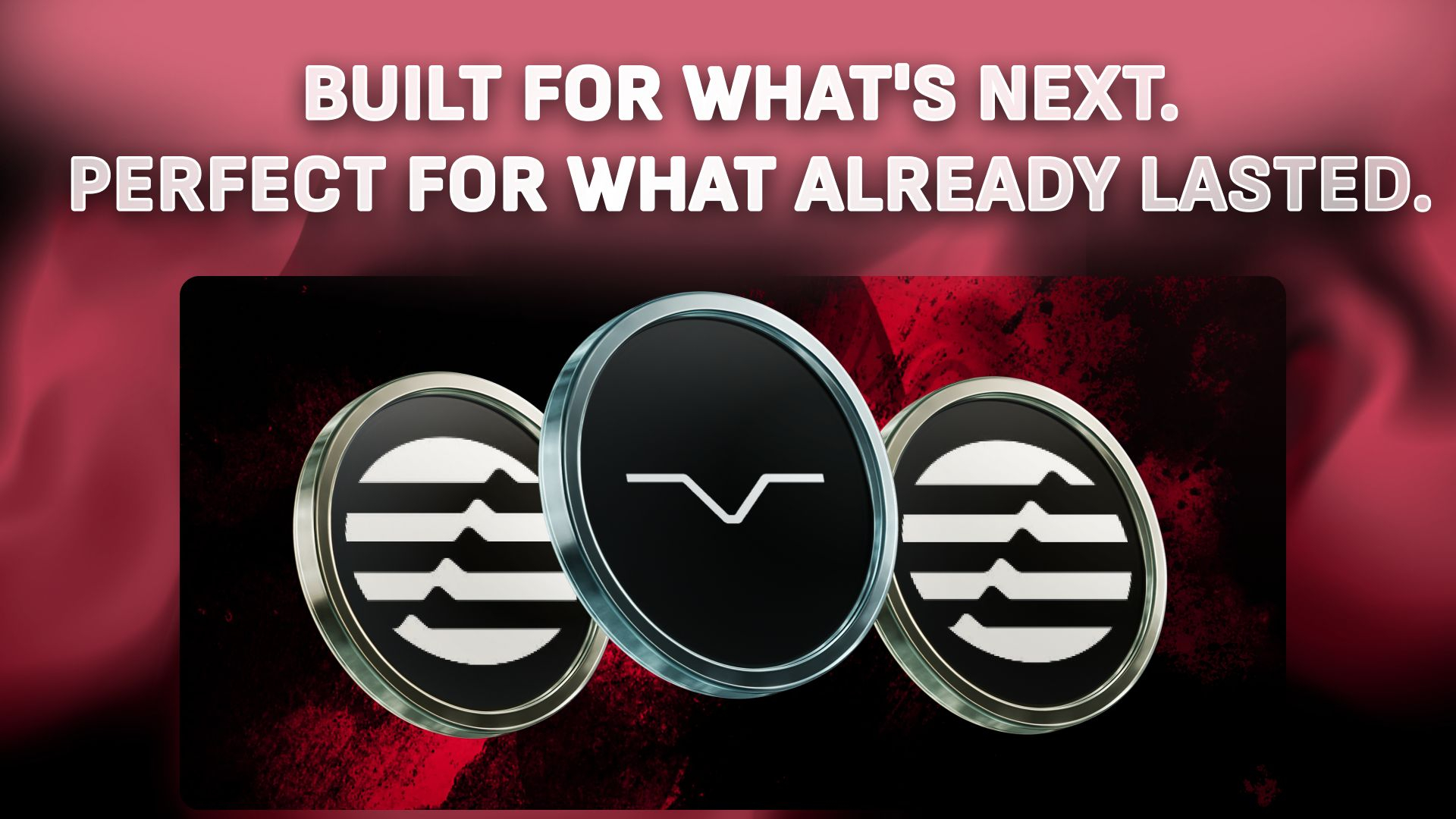
Some chains are built for the future. Some assets already survived one.
$APT holders back a chain engineered for what onchain activity becomes in ten years. Throughput, safety, infrastructure built ahead of the curve.
The DeLorean already survived four decades of trends.
Films, culture, generational handoffs, all of it now tokenized through $DMC . Infrastructure built for the future meets IP that already proved it lasts.
One is engineered to outlast a cycle. The other already outlasted several. 🚗
#Altcoin Season#
Some chains are built for the future. Some assets already survived one.
$APT holders back a chain engineered for what onchain activity becomes in ten years. Throughput, safety, infrastructure built ahead of the curve.
The DeLorean already survived four decades of trends.
Films, culture, generational handoffs, all of it now tokenized through $DMC . Infrastructure built for the future meets IP that already proved it lasts.
One is engineered to outlast a cycle. The other already outlasted several. 🚗
#Altcoin Season#
$APT holders back a chain engineered for what onchain activity becomes in ten years. Throughput, safety, infrastructure built ahead of the curve.
The DeLorean already survived four decades of trends.
Films, culture, generational handoffs, all of it now tokenized through $DMC . Infrastructure built for the future meets IP that already proved it lasts.
One is engineered to outlast a cycle. The other already outlasted several. 🚗
#Altcoin Season#
57
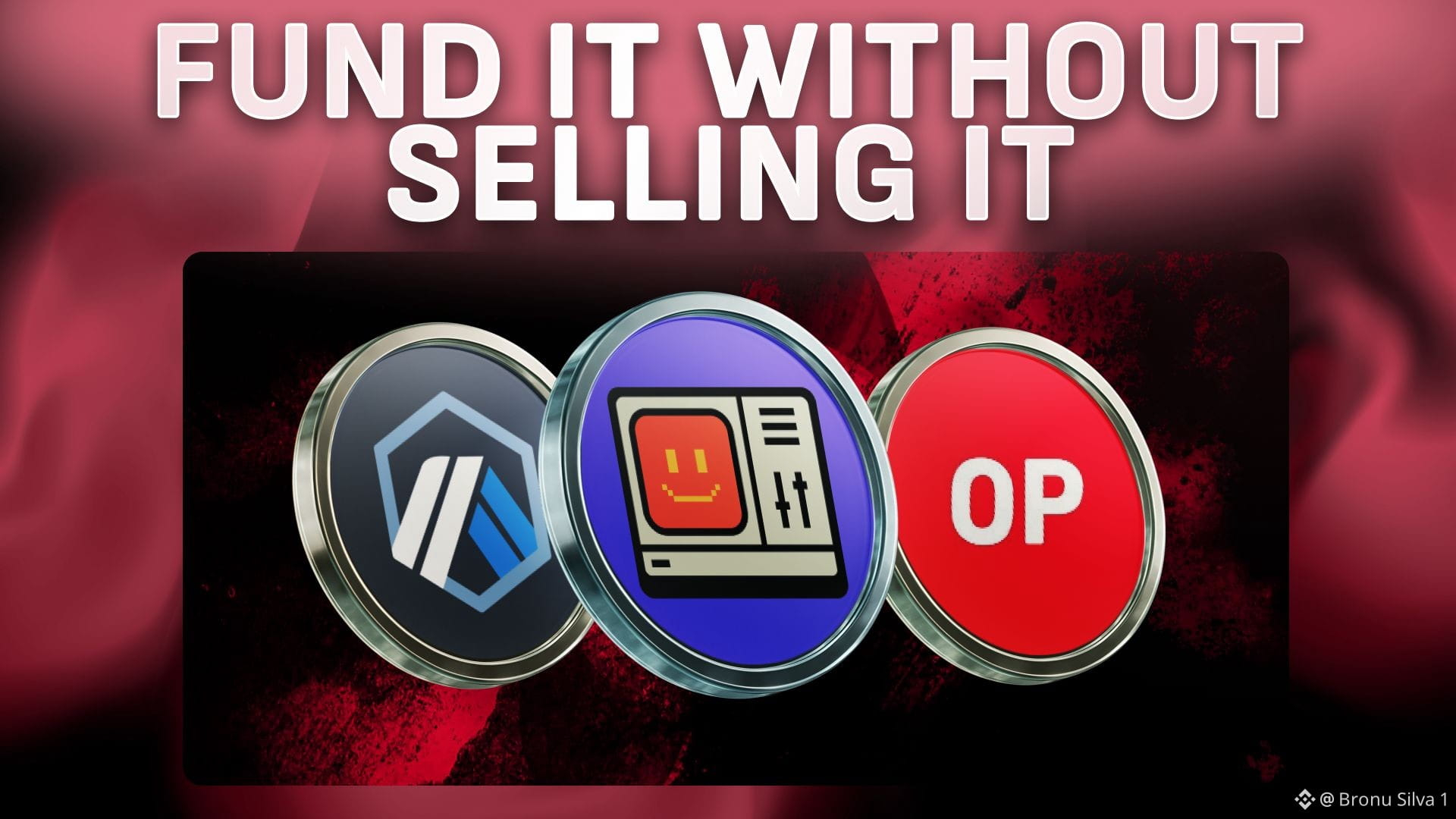
Fund A Project Without Selling Your Token 💰
Treasuries at $ARB and Optimism scale look enormous until you notice how much of the balance is the project's own token. Spending it means selling into your own market.
Small builders have the same problem with none of the cushion. Raise, chase grants, or quietly sell supply to cover costs.
$BNKR 's stock pairing opens a different route, and the six new Coinbase stock tokens on Base widen it.
The mechanic is simple. A builder launching a token on Bankr chooses the asset on the other side of the liquidity pool. Every swap pays a fee, and that fee arrives denominated in the paired asset.
Pair against Amazon, Microsoft, Strategy, SanDisk, SpaceX or Tesla, and the fees your market produces accumulate as a position in that company.
The treasury then grows from usage instead of issuance. Nobody sells supply to cover costs, because the money coming in was never the project's own token.
Investors should care for one plain reason. A team funding itself by selling its own token is one of the most reliable drags on an early market, and this removes the reason to do it.
It is also a more useful role for RWAs than holding them and waiting.
And it gives builders a decision they did not have before. What a project accumulates says something about what it is building toward.
The limits are real. Fees need volume, so a quiet market funds nothing. Paired pools carry liquidity risk. A stock position rises and falls with the stock.
But a builder funded by activity rather than dilution is the healthier version of this market, and the tooling for it is now live.
#RWA #Base
Fund A Project Without Selling Your Token 💰
Treasuries at $ARB and Optimism scale look enormous until you notice how much of the balance is the project's own token. Spending it means selling into your own market.
Small builders have the same problem with none of the cushion. Raise, chase grants, or quietly sell supply to cover costs.
$BNKR 's stock pairing opens a different route, and the six new Coinbase stock tokens on Base widen it.
The mechanic is simple. A builder launching a token on Bankr chooses the asset on the other side of the liquidity pool. Every swap pays a fee, and that fee arrives denominated in the paired asset.
Pair against Amazon, Microsoft, Strategy, SanDisk, SpaceX or Tesla, and the fees your market produces accumulate as a position in that company.
The treasury then grows from usage instead of issuance. Nobody sells supply to cover costs, because the money coming in was never the project's own token.
Investors should care for one plain reason. A team funding itself by selling its own token is one of the most reliable drags on an early market, and this removes the reason to do it.
It is also a more useful role for RWAs than holding them and waiting.
And it gives builders a decision they did not have before. What a project accumulates says something about what it is building toward.
The limits are real. Fees need volume, so a quiet market funds nothing. Paired pools carry liquidity risk. A stock position rises and falls with the stock.
But a builder funded by activity rather than dilution is the healthier version of this market, and the tooling for it is now live.
#RWA #Base
Treasuries at $ARB and Optimism scale look enormous until you notice how much of the balance is the project's own token. Spending it means selling into your own market.
Small builders have the same problem with none of the cushion. Raise, chase grants, or quietly sell supply to cover costs.
$BNKR 's stock pairing opens a different route, and the six new Coinbase stock tokens on Base widen it.
The mechanic is simple. A builder launching a token on Bankr chooses the asset on the other side of the liquidity pool. Every swap pays a fee, and that fee arrives denominated in the paired asset.
Pair against Amazon, Microsoft, Strategy, SanDisk, SpaceX or Tesla, and the fees your market produces accumulate as a position in that company.
The treasury then grows from usage instead of issuance. Nobody sells supply to cover costs, because the money coming in was never the project's own token.
Investors should care for one plain reason. A team funding itself by selling its own token is one of the most reliable drags on an early market, and this removes the reason to do it.
It is also a more useful role for RWAs than holding them and waiting.
And it gives builders a decision they did not have before. What a project accumulates says something about what it is building toward.
The limits are real. Fees need volume, so a quiet market funds nothing. Paired pools carry liquidity risk. A stock position rises and falls with the stock.
But a builder funded by activity rather than dilution is the healthier version of this market, and the tooling for it is now live.
#RWA #Base
50
Tokenization's next phase is here 🧠
Across the RWA market around $XLM and $XDC attention still tends to concentrate on how many assets are issued and what they are worth.
I think this misses the harder part of bringing financial assets onchain, because creating a token establishes its digital representation, but the asset still needs ownership and transfer rules that remain attached throughout its lifecycle.
For securities, the official ownership record must also remain aligned as those assets move, this is the point where tokenization becomes financial infrastructure.
Injective is way ahead of others regarding this, as Injective Mint and Injective are now becoming an SEC-registered transfer agent, so Injective can support the complete tokenization lifecycle within one ecosystem.
It is building the infrastructure needed after issuance, where long-term institutional adoption will actually be decided 🔥
#RWA
Tokenization's next phase is here 🧠
Across the RWA market around $XLM and $XDC attention still tends to concentrate on how many assets are issued and what they are worth.
I think this misses the harder part of bringing financial assets onchain, because creating a token establishes its digital representation, but the asset still needs ownership and transfer rules that remain attached throughout its lifecycle.
For securities, the official ownership record must also remain aligned as those assets move, this is the point where tokenization becomes financial infrastructure.
Injective is way ahead of others regarding this, as Injective Mint and Injective are now becoming an SEC-registered transfer agent, so Injective can support the complete tokenization lifecycle within one ecosystem.
It is building the infrastructure needed after issuance, where long-term institutional adoption will actually be decided 🔥
#RWA
Across the RWA market around $XLM and $XDC attention still tends to concentrate on how many assets are issued and what they are worth.
I think this misses the harder part of bringing financial assets onchain, because creating a token establishes its digital representation, but the asset still needs ownership and transfer rules that remain attached throughout its lifecycle.
For securities, the official ownership record must also remain aligned as those assets move, this is the point where tokenization becomes financial infrastructure.
Injective is way ahead of others regarding this, as Injective Mint and Injective are now becoming an SEC-registered transfer agent, so Injective can support the complete tokenization lifecycle within one ecosystem.
It is building the infrastructure needed after issuance, where long-term institutional adoption will actually be decided 🔥
#RWA

66
The first option trade is now necessary ⚡️
Trading $SOL or $HYPE with leverage creates a familiar problem: the thesis can still be intact while a sharp move forces the trader to choose between taking the loss or staying exposed.
Most perp traders answer that with a stop, which closes the position once its trigger is reached.
That works when the thesis is broken, but it also removes the trader from any recovery that follows.
Options offer another approach by placing protection around the position for a chosen period, and for me, this is the most practical reason for a DeFi perp trader to learn what an option can do.
Aevo gives perps that trait through PERPS+.
It is selected when the perp is opened, together with the protection level and duration.
If price moves beyond that level, the attached option offsets further losses while the protection remains active.
The structure does not close the position at the protection level, leaving room to participate if the market recovers.
It gives traders a practical first use of options around a perp trade they already understand 🔥
#Altcoin Season#
The first option trade is now necessary ⚡️
Trading $SOL or $HYPE with leverage creates a familiar problem: the thesis can still be intact while a sharp move forces the trader to choose between taking the loss or staying exposed.
Most perp traders answer that with a stop, which closes the position once its trigger is reached.
That works when the thesis is broken, but it also removes the trader from any recovery that follows.
Options offer another approach by placing protection around the position for a chosen period, and for me, this is the most practical reason for a DeFi perp trader to learn what an option can do.
Aevo gives perps that trait through PERPS+.
It is selected when the perp is opened, together with the protection level and duration.
If price moves beyond that level, the attached option offsets further losses while the protection remains active.
The structure does not close the position at the protection level, leaving room to participate if the market recovers.
It gives traders a practical first use of options around a perp trade they already understand 🔥
#Altcoin Season#
Trading $SOL or $HYPE with leverage creates a familiar problem: the thesis can still be intact while a sharp move forces the trader to choose between taking the loss or staying exposed.
Most perp traders answer that with a stop, which closes the position once its trigger is reached.
That works when the thesis is broken, but it also removes the trader from any recovery that follows.
Options offer another approach by placing protection around the position for a chosen period, and for me, this is the most practical reason for a DeFi perp trader to learn what an option can do.
Aevo gives perps that trait through PERPS+.
It is selected when the perp is opened, together with the protection level and duration.
If price moves beyond that level, the attached option offsets further losses while the protection remains active.
The structure does not close the position at the protection level, leaving room to participate if the market recovers.
It gives traders a practical first use of options around a perp trade they already understand 🔥
#Altcoin Season#

66
Know What Is Trending With $KAITO ’s Mindshare Arena
Content creators are constantly asking the same question: what should I post about next?
Most of the time KOLs just steal others posts or copy the same idea they have seen 100 times.
An example is $PONS which we have seen every talk about reaching an ATH recently. It's the same post over and over. There’s nothing wrong with the posting, its just the fact we have seen it 100 times.
Kaito AI’s Mindshare Arena turns that question into something you can investigate with data.
The Arena measures how much attention projects, companies and narratives are capturing relative to their competitors. Creators can explore crypto, stocks and AI, compare multiple timeframes, monitor changes in mindshare and identify the fastest-growing topics.
The data goes beyond a basic popularity list. You can examine top gainers, absolute and relative changes, sector level trends, regional mindshare and smart-follower movement. This helps separate a one day spike from a narrative attracting sustained attention.
For creators, the benefit is better timing. A rising project can become a research opportunity before the timeline becomes saturated. A falling topic may signal that audiences are moving elsewhere. Longer timeframes can also reveal durable themes that deserve deeper educational content instead of another reaction post.
The goal is not to copy whatever is trending. It is to identify where attention is moving, research why it is moving and add an original perspective while the conversation is still developing.
Kaito AI gives creators an intelligence layer for deciding what to cover, when to publish and where their expertise can add the most value.
Stop guessing what the market wants to discuss, follow the mindshare and gain your edge with Kaito AI.
#Altcoin Season# #Meme Alpha#
Know What Is Trending With $KAITO ’s Mindshare Arena
Content creators are constantly asking the same question: what should I post about next?
Most of the time KOLs just steal others posts or copy the same idea they have seen 100 times.
An example is $PONS which we have seen every talk about reaching an ATH recently. It's the same post over and over. There’s nothing wrong with the posting, its just the fact we have seen it 100 times.
Kaito AI’s Mindshare Arena turns that question into something you can investigate with data.
The Arena measures how much attention projects, companies and narratives are capturing relative to their competitors. Creators can explore crypto, stocks and AI, compare multiple timeframes, monitor changes in mindshare and identify the fastest-growing topics.
The data goes beyond a basic popularity list. You can examine top gainers, absolute and relative changes, sector level trends, regional mindshare and smart-follower movement. This helps separate a one day spike from a narrative attracting sustained attention.
For creators, the benefit is better timing. A rising project can become a research opportunity before the timeline becomes saturated. A falling topic may signal that audiences are moving elsewhere. Longer timeframes can also reveal durable themes that deserve deeper educational content instead of another reaction post.
The goal is not to copy whatever is trending. It is to identify where attention is moving, research why it is moving and add an original perspective while the conversation is still developing.
Kaito AI gives creators an intelligence layer for deciding what to cover, when to publish and where their expertise can add the most value.
Stop guessing what the market wants to discuss, follow the mindshare and gain your edge with Kaito AI.
#Altcoin Season# #Meme Alpha#
Content creators are constantly asking the same question: what should I post about next?
Most of the time KOLs just steal others posts or copy the same idea they have seen 100 times.
An example is $PONS which we have seen every talk about reaching an ATH recently. It's the same post over and over. There’s nothing wrong with the posting, its just the fact we have seen it 100 times.
Kaito AI’s Mindshare Arena turns that question into something you can investigate with data.
The Arena measures how much attention projects, companies and narratives are capturing relative to their competitors. Creators can explore crypto, stocks and AI, compare multiple timeframes, monitor changes in mindshare and identify the fastest-growing topics.
The data goes beyond a basic popularity list. You can examine top gainers, absolute and relative changes, sector level trends, regional mindshare and smart-follower movement. This helps separate a one day spike from a narrative attracting sustained attention.
For creators, the benefit is better timing. A rising project can become a research opportunity before the timeline becomes saturated. A falling topic may signal that audiences are moving elsewhere. Longer timeframes can also reveal durable themes that deserve deeper educational content instead of another reaction post.
The goal is not to copy whatever is trending. It is to identify where attention is moving, research why it is moving and add an original perspective while the conversation is still developing.
Kaito AI gives creators an intelligence layer for deciding what to cover, when to publish and where their expertise can add the most value.
Stop guessing what the market wants to discuss, follow the mindshare and gain your edge with Kaito AI.
#Altcoin Season# #Meme Alpha#

65
This product changes institutional lending forever. 🏦
Space and Time built Virtual Vaults and I think a lot of people are still not fully understanding what it actually does so let me break it down.
Borrower side: you link your exchange accounts once, Space and Time starts proving your collateral balance continuously, you keep full custody of everything, and you get better loan terms because the information gap with your lender just closed.
Lender side: you read live cryptographically verified collateral state directly, margin calls and liquidations trigger automatically on proven data, you price risk on what is actually true right now instead of what was true last Tuesday.
Neither side waits on a third party.
Neither side has to trust the other's report.
The vault state is proven continuously by Space and Time's verified compute layer and readable by both sides simultaneously.
$SOL 's institutional DeFi ecosystem is scaling fast and the collateral verification problem is the exact wall every serious lending protocol eventually hits.
Virtual Vaults is the first product that makes that wall disappear without asking anyone on either side to give anything up.
Vaults without tradeoffs is not marketing.
It is the actual architecture.
#Altcoin Season# #RWA
This product changes institutional lending forever. 🏦
Space and Time built Virtual Vaults and I think a lot of people are still not fully understanding what it actually does so let me break it down.
Borrower side: you link your exchange accounts once, Space and Time starts proving your collateral balance continuously, you keep full custody of everything, and you get better loan terms because the information gap with your lender just closed.
Lender side: you read live cryptographically verified collateral state directly, margin calls and liquidations trigger automatically on proven data, you price risk on what is actually true right now instead of what was true last Tuesday.
Neither side waits on a third party.
Neither side has to trust the other's report.
The vault state is proven continuously by Space and Time's verified compute layer and readable by both sides simultaneously.
$SOL 's institutional DeFi ecosystem is scaling fast and the collateral verification problem is the exact wall every serious lending protocol eventually hits.
Virtual Vaults is the first product that makes that wall disappear without asking anyone on either side to give anything up.
Vaults without tradeoffs is not marketing.
It is the actual architecture.
#Altcoin Season# #RWA
Space and Time built Virtual Vaults and I think a lot of people are still not fully understanding what it actually does so let me break it down.
Borrower side: you link your exchange accounts once, Space and Time starts proving your collateral balance continuously, you keep full custody of everything, and you get better loan terms because the information gap with your lender just closed.
Lender side: you read live cryptographically verified collateral state directly, margin calls and liquidations trigger automatically on proven data, you price risk on what is actually true right now instead of what was true last Tuesday.
Neither side waits on a third party.
Neither side has to trust the other's report.
The vault state is proven continuously by Space and Time's verified compute layer and readable by both sides simultaneously.
$SOL 's institutional DeFi ecosystem is scaling fast and the collateral verification problem is the exact wall every serious lending protocol eventually hits.
Virtual Vaults is the first product that makes that wall disappear without asking anyone on either side to give anything up.
Vaults without tradeoffs is not marketing.
It is the actual architecture.
#Altcoin Season# #RWA

51
Banks Cannot Paste Their Book Anywhere 🔒
A bank cannot put its positions into a chatbot, a hospital cannot put patient records in, and a law firm cannot put discovery in.
So the work that would be worth the most simply never runs.
More than $130M has gone into $ZAMA to build confidential computation for exactly those institutions, which is a lot of capital chasing a problem nobody outside the category talks about.
$CC is the other half of that picture, settling more than $4 trillion of tokenized RWA volume a year with Goldman Sachs, BNP Paribas, Visa and Nasdaq running the network themselves.
Those are the same institutions that cannot let a model near their books.
Sealed chips looked like the answer for a while, and the problem is that almost nobody has them.
Most of the world's compute sits on ordinary GPUs, which is where this work is going to run whether the guarantee is ready or not.
That gap is the thing I find most interesting in the whole AI trade right now.
Everybody is pricing compute capacity and almost nobody is pricing whether the operator can read the job.
Arcium replaces the sealed chip with cryptography, splitting a computation across a cluster of nodes so each one holds a fragment and none can read the input.
So it runs on ordinary hardware, which is the entire point of doing it this way.
The network underneath has been live on Solana since February 2, with more than 4,000 nodes and over 30 apps, and teams building there have raised more than $7.5M.
But Blackthorn is the AI protocol meant to bring this to models, and it is still to come.
Banks and hospitals have had the data the whole time, and the first network that computes on it without ever receiving it will take the enterprise side of this market.
#AI #RWA
Banks Cannot Paste Their Book Anywhere 🔒
A bank cannot put its positions into a chatbot, a hospital cannot put patient records in, and a law firm cannot put discovery in.
So the work that would be worth the most simply never runs.
More than $130M has gone into $ZAMA to build confidential computation for exactly those institutions, which is a lot of capital chasing a problem nobody outside the category talks about.
$CC is the other half of that picture, settling more than $4 trillion of tokenized RWA volume a year with Goldman Sachs, BNP Paribas, Visa and Nasdaq running the network themselves.
Those are the same institutions that cannot let a model near their books.
Sealed chips looked like the answer for a while, and the problem is that almost nobody has them.
Most of the world's compute sits on ordinary GPUs, which is where this work is going to run whether the guarantee is ready or not.
That gap is the thing I find most interesting in the whole AI trade right now.
Everybody is pricing compute capacity and almost nobody is pricing whether the operator can read the job.
Arcium replaces the sealed chip with cryptography, splitting a computation across a cluster of nodes so each one holds a fragment and none can read the input.
So it runs on ordinary hardware, which is the entire point of doing it this way.
The network underneath has been live on Solana since February 2, with more than 4,000 nodes and over 30 apps, and teams building there have raised more than $7.5M.
But Blackthorn is the AI protocol meant to bring this to models, and it is still to come.
Banks and hospitals have had the data the whole time, and the first network that computes on it without ever receiving it will take the enterprise side of this market.
#AI #RWA
A bank cannot put its positions into a chatbot, a hospital cannot put patient records in, and a law firm cannot put discovery in.
So the work that would be worth the most simply never runs.
More than $130M has gone into $ZAMA to build confidential computation for exactly those institutions, which is a lot of capital chasing a problem nobody outside the category talks about.
$CC is the other half of that picture, settling more than $4 trillion of tokenized RWA volume a year with Goldman Sachs, BNP Paribas, Visa and Nasdaq running the network themselves.
Those are the same institutions that cannot let a model near their books.
Sealed chips looked like the answer for a while, and the problem is that almost nobody has them.
Most of the world's compute sits on ordinary GPUs, which is where this work is going to run whether the guarantee is ready or not.
That gap is the thing I find most interesting in the whole AI trade right now.
Everybody is pricing compute capacity and almost nobody is pricing whether the operator can read the job.
Arcium replaces the sealed chip with cryptography, splitting a computation across a cluster of nodes so each one holds a fragment and none can read the input.
So it runs on ordinary hardware, which is the entire point of doing it this way.
The network underneath has been live on Solana since February 2, with more than 4,000 nodes and over 30 apps, and teams building there have raised more than $7.5M.
But Blackthorn is the AI protocol meant to bring this to models, and it is still to come.
Banks and hospitals have had the data the whole time, and the first network that computes on it without ever receiving it will take the enterprise side of this market.
#AI #RWA
55
Көбірек контент көру үшін кіріңіз
Binance Square платформасында әлемдік криптоқоғамдастыққа қосылыңыз
⚡️ Криптовалюта туралы ең соңғы және пайдалы ақпаратты алыңыз.
💬 Әлемдегі ең ірі криптобиржаның сеніміне ие.
👍 Расталған авторлардың нақты пікірлерін табыңыз.
Электрондық пошта/телефон нөмірі
Трендтегі тақырыптар
BitwiseFilesFinalNEARSpotETFProspectus
49,121 рет көрілді
1,126 адам талқылап жатыр
#bitwisefilesfinalnearspotetfprospectus
Can $NEAR REALLY reach $562 with an ETF approval? 🚀
The crypto market is buzzing as Bitwise files its final prospectus for a Spot NEAR ETF (Ticker: NRR on NYSE Arca)! 📊🔥
Is institutional money about to unleash the biggest pump in NEAR’s history? Analysts are throwing around mind-blowing price targets:
🎯 Intermediate Target: $155
🎯 2030 Long-Term Target: $562
💡 Let's do the math:
At $562, $NEAR would sit at roughly a $680 Billion market cap—putting it right up there with Ethereum's potential valuation. With NEAR leading the Chain Abstraction & AI crypto narrative, this might not be as crazy as it sounds!
With SEC regulations turning more crypto-friendly and Wall Street knocking on the door, are you Accumulating or Holding?
👇 Drop your realistic price prediction for $NEAR in the comments! 👇
#BitwiseFilesFinalNEARSpotETFProspectus #Altcoins #CryptoNews #ETF
Doomsday-Trader
·5 лайк
·3.4k рет көрілді
BitgetHackerMoves$83MStolenXRP
24,526 рет көрілді
149 адам талқылап жатыр
SOLSpotETFWeeklyInflow$188M
14,186 рет көрілді
117 адам талқылап жатыр